Names so good, they were used (at least) twice
In these litigious times, car makers can’t just choose whatever name they please for a new model.
They have to make sure that no other manufacturer already owns the rights to use it, otherwise things will become very complicated and expensive.
It was much easier in the past, when not much thought was given to the matter, and cars were given generic names like Type A and Model B.
The transition from the earlier situation to the current one was long, slow and, if you like this sort of thing, rather interesting.
To illustrate it, we’re presenting an alphabetical list of 13 car model names that have been shared by one American and one non-American marque, usually, though not always, without causing any trouble.
We’re giving the US example first in every pair and although Ford is of course an American car maker, both the models that feature in this gallery were by Ford of Europe, so in these cases we’re treating it as a brand from outside the USA.
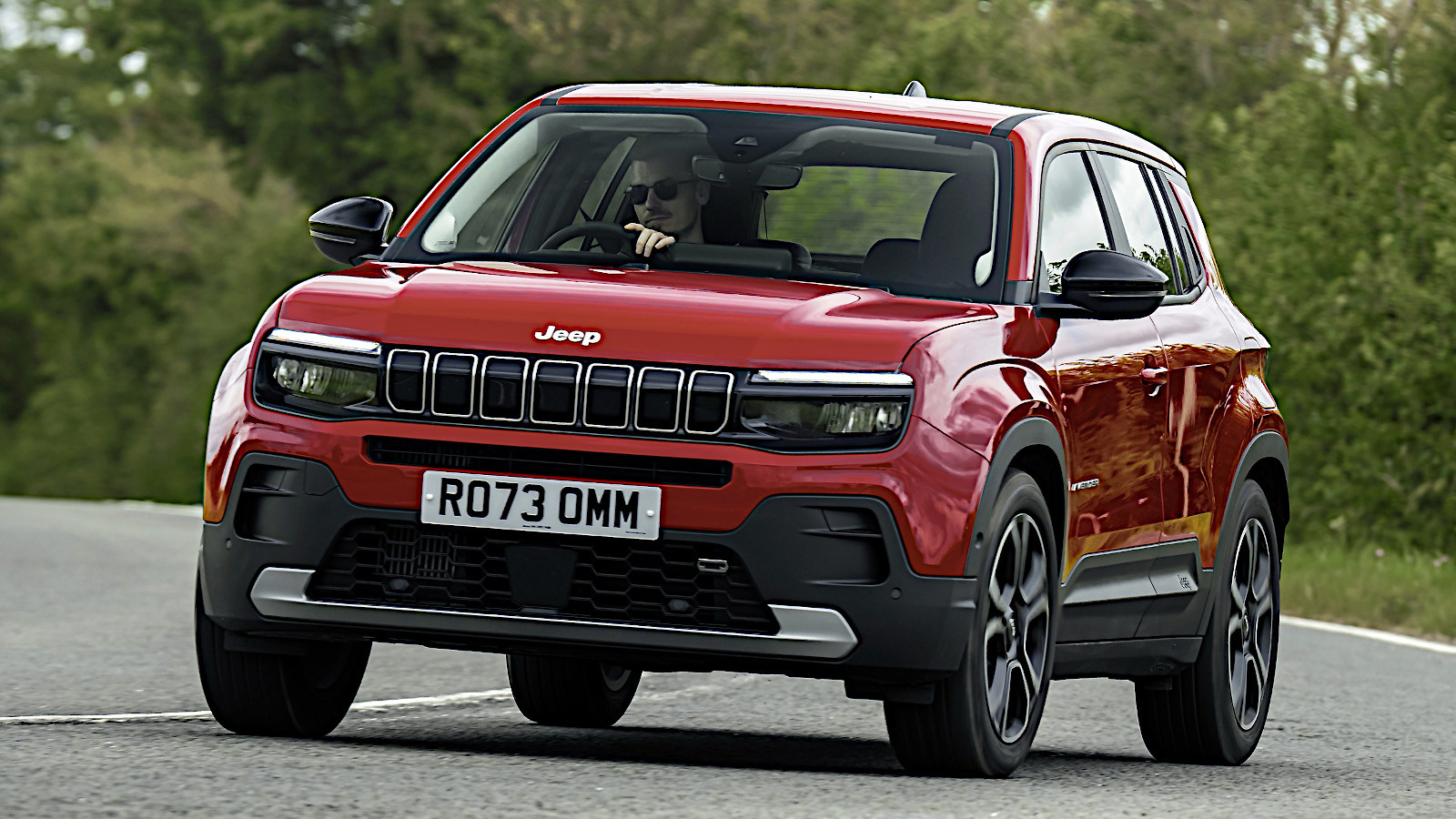
1. Jeep Avenger
Although, as we shall come to soon, the original Avenger was latterly produced by PSA Peugeot Citroën, Chrysler has since been able to use the name.
It was applied to two Dodge models around the turn of the 21st century, the first being a two-door coupe developed in association with Mitsubishi and the second an all-American, four-door sedan.
That car was discontinued in 2014, but nine years later the name made its fourth appearance on a compact Jeep.
In 2023, that model became the first Avenger, and indeed the first Jeep, ever to win the European Car of the Year award, and did so by an enormous margin, scoring 328 points to the 241 of the Volkswagen ID. Buzz and 211 of the Nissan Ariya.
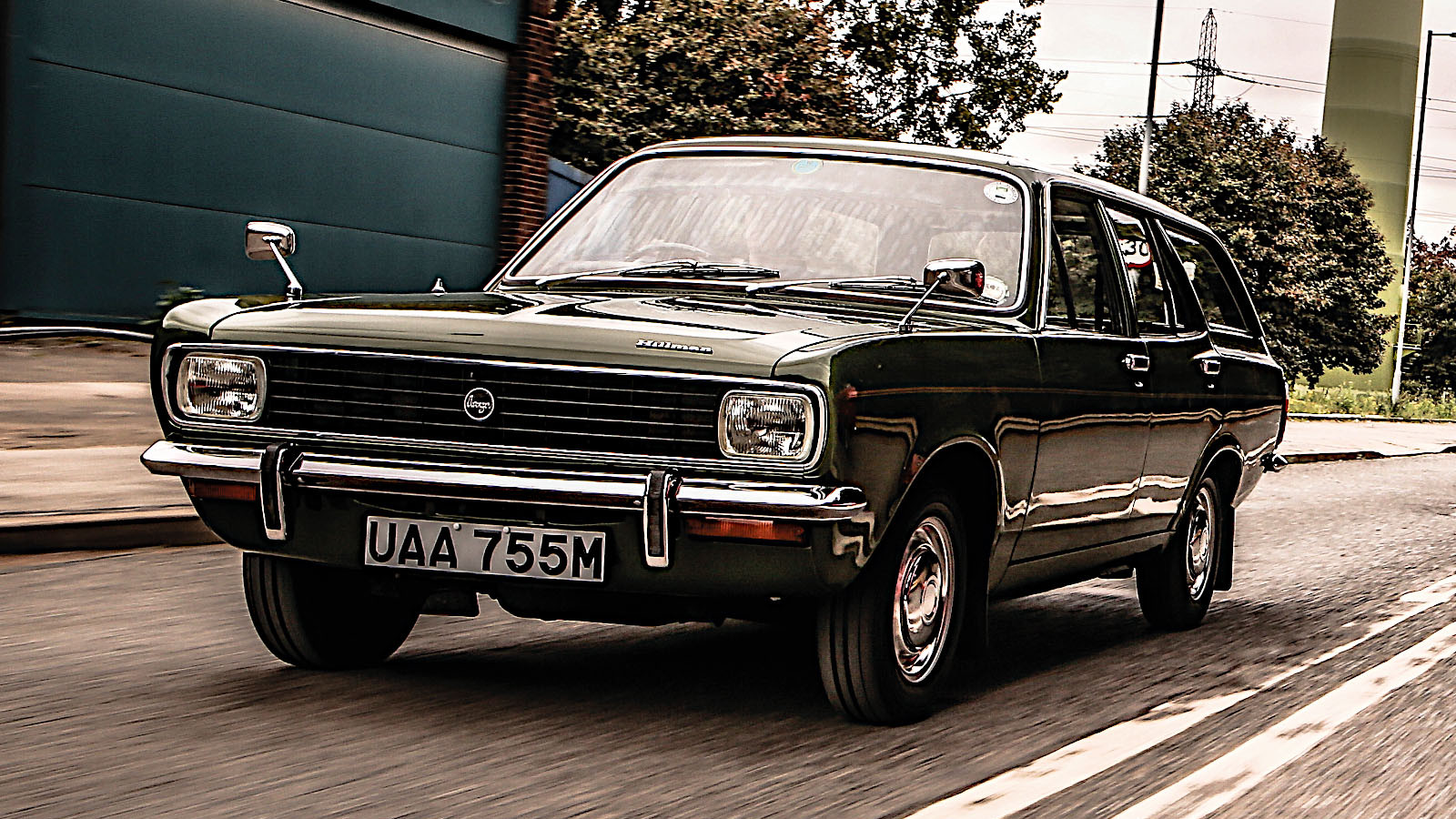
Hillman Avenger (cont.)
The Avenger was the first car developed by Hillman after its parent company, the Rootes Group, became part of the new Chrysler Europe in 1967.
Introduced in 1970, it was a conventional, mid-sized model for its time, available as a saloon or an estate and with a front-mounted, four-cylinder petrol engine driving the rear wheels.
In Europe, it was rebranded first as a Chrysler (receiving a facelift at the same time) and then, after Chrysler Europe was taken over by PSA Peugeot Citroën, as a Talbot, and was also briefly sold in North America as the Plymouth Cricket.
Avengers manufactured in South America were known as the Dodge 1800, Dodge Polara and, surprisingly, Volkswagen 1500.
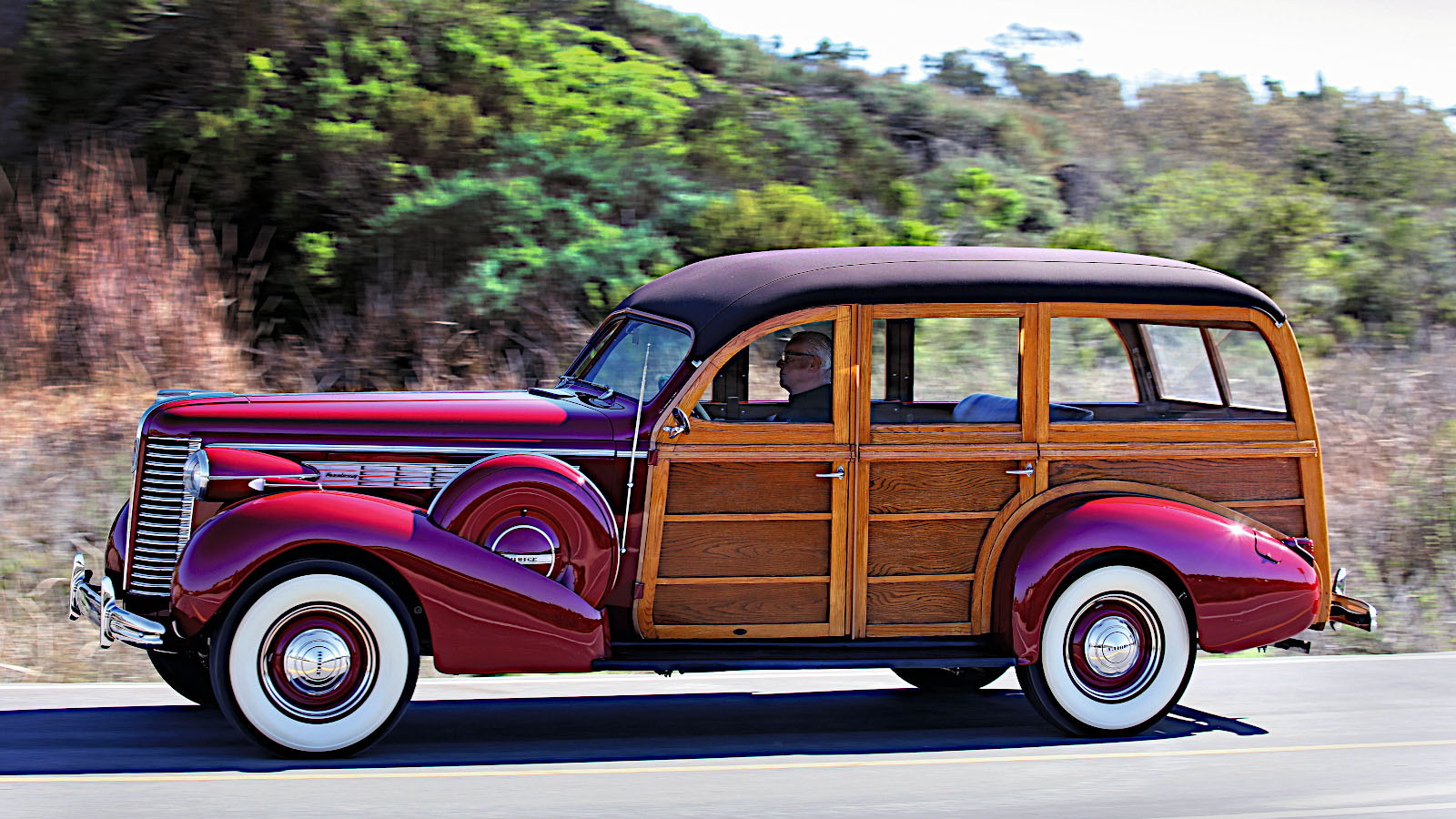
2. Buick Century
As part of a wide-ranging overhaul of its model names for 1936, Buick chose Century for what would otherwise have been known as the second-generation Series 60.
The reason for this was that, by fitting its largest and more powerful engine – a 5247cc straight-eight – into what was by no means its largest car, Buick had come up with something it claimed was capable of travelling at 100mph, an unusually high though not unique speed for an automobile of its period.
Production stopped in 1942, and a second Century was produced relatively briefly in the 1950s, but a further four were built and sold for more than 30 years from 1973 to 2005.
The car pictured here was built in 1938, and features an unusual ‘woodie’ station-wagon body by the Joseph Wildanger Company of New Jersey.
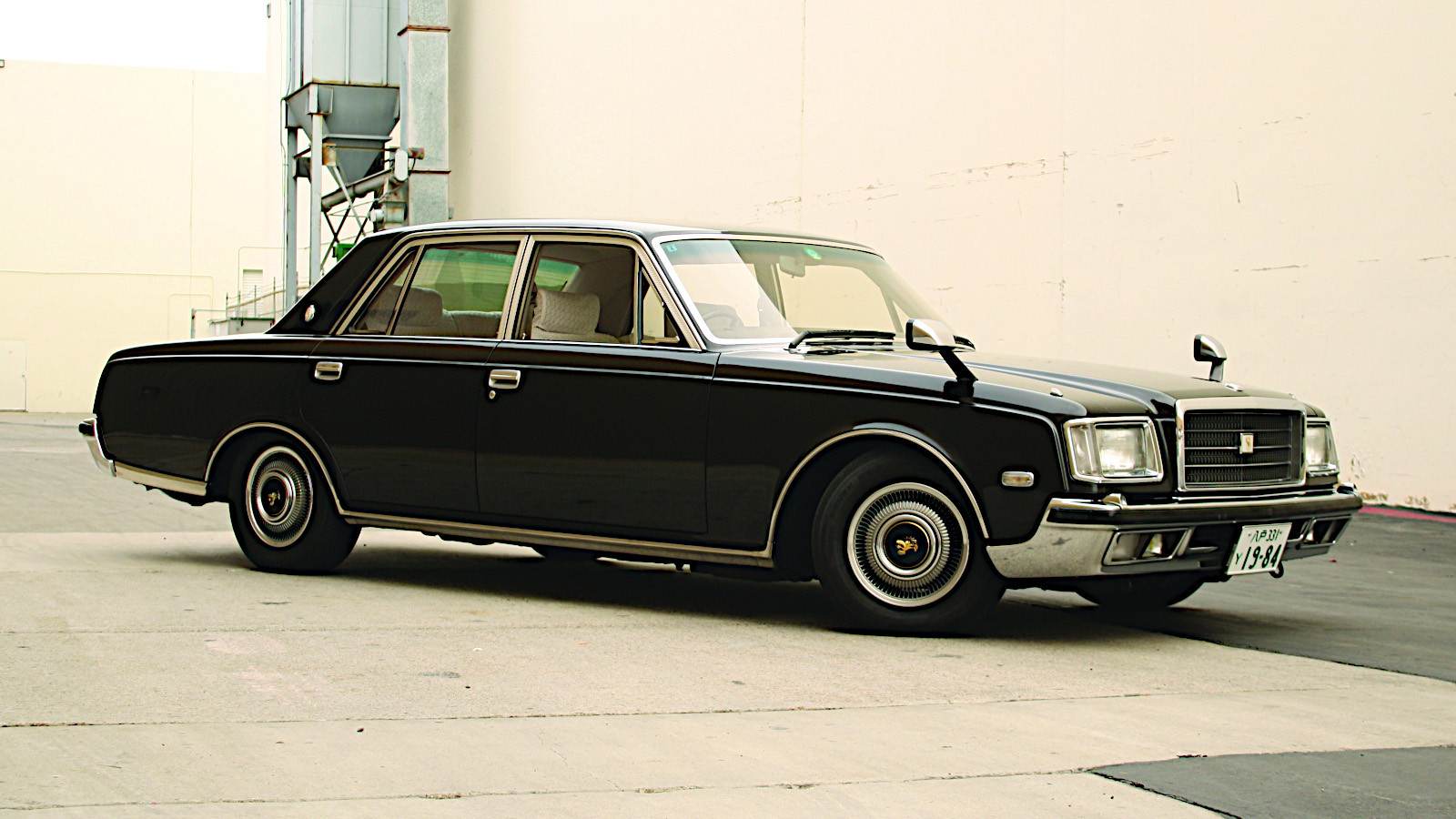
Toyota Century (cont.)
Despite usually being powered by large V8 engines, and in its second generation by a 5-litre V12, the Toyota Century has always been about luxury rather than performance.
Unlike the Buick case, the name does not refer to speed but to the birth of Toyota founder Sakichi Toyoda, whose centenary was reached in 1967, the same year that the car was launched.
The Century has been redesigned only twice, once in 1997 (13 years after the car pictured here was built) and again in 2018, though there is a clear visual connection between the oldest and the newest.
Toyota has also produced a Century luxury SUV, which could be seen as a rival to the Bentley Bentayga and Rolls-Royce Cullinan.
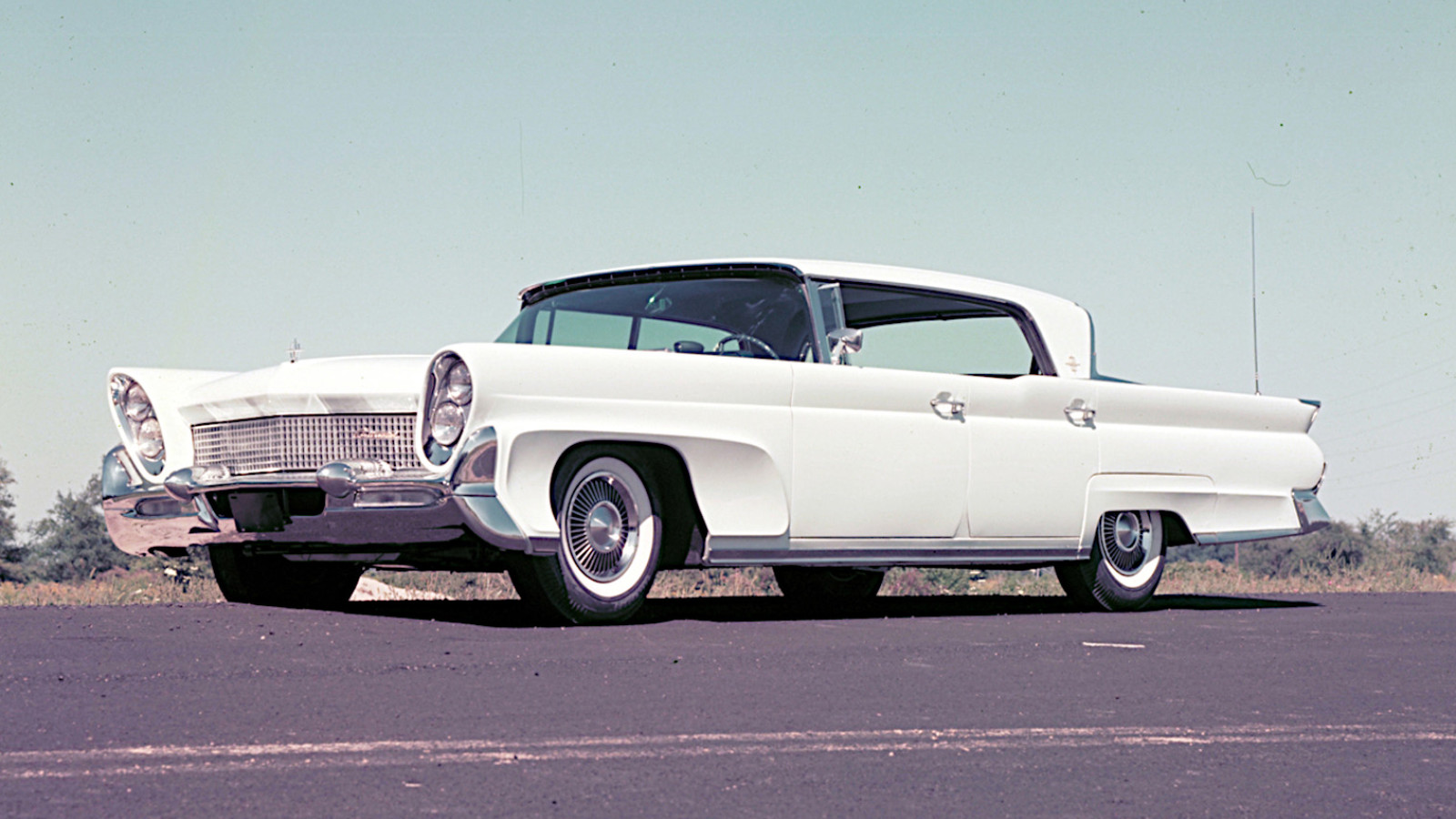
3. Lincoln Continental
The relatively casual attitude towards the use of model names in the past is demonstrated by the fact that both Bentley and Lincoln used Continental for many years.
Lincoln got there first, introducing it for the 1940 model year but then abandoning it after 1948 and not returning to it until after the original Bentley Continental came along.
The second car in the series was not strictly a Lincoln at all, since owner Ford had created a new Continental division whose only product was the fabulous, and startlingly expensive, MkII.
All subsequent American Continentals, including the 1958 MkIII pictured here, were branded as Lincolns up to the second cancellation in late 2020.
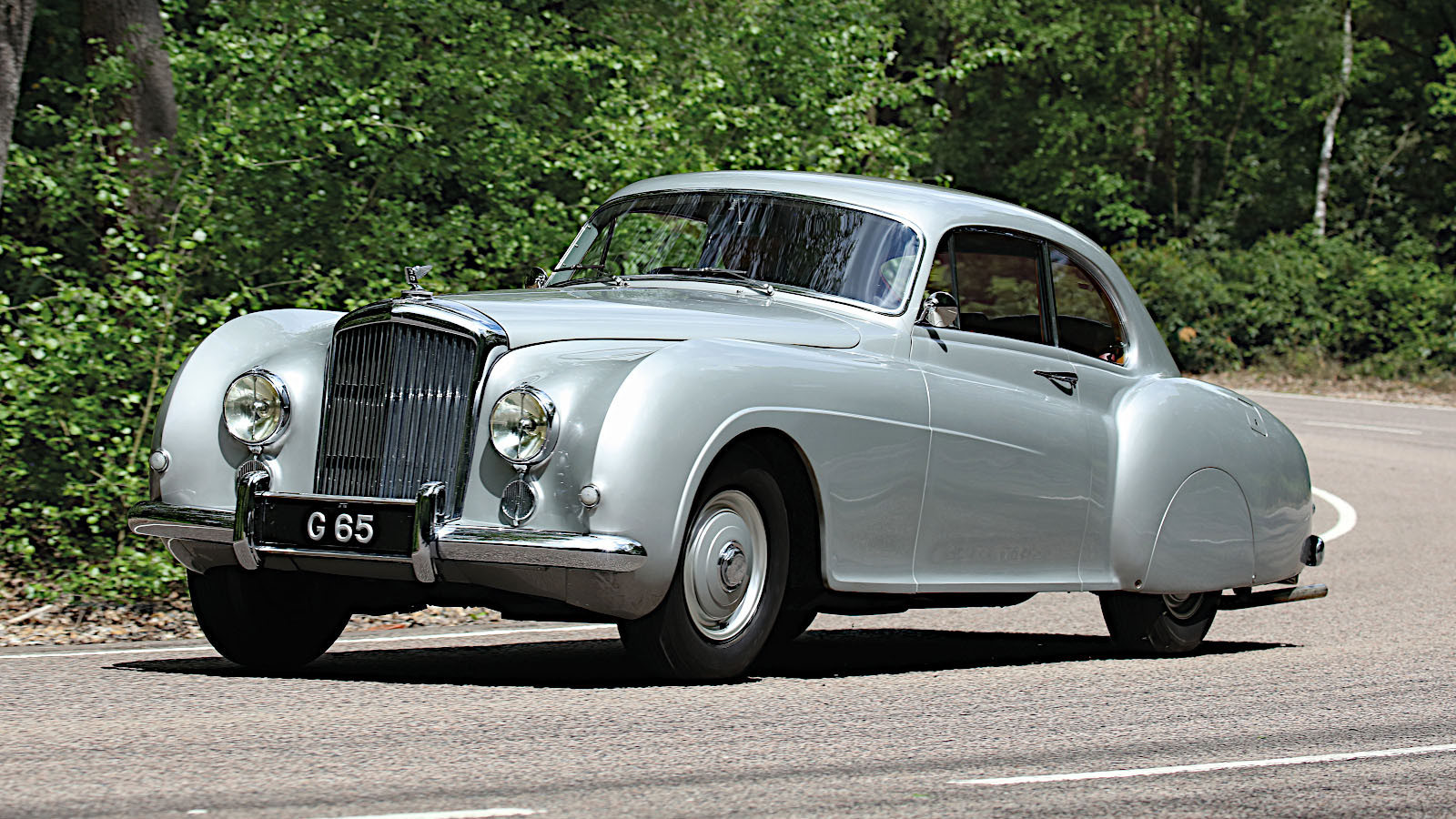
Bentley Continental (cont.)
The Bentley Continental introduced in 1952, pictured here, was a high-performance derivative of the R-type with a more powerful, higher-compression version of the 4566cc, straight-eight engine (enlarged to 4887cc in 1954) and a more aerodynamic body with aluminium panels.
There would be Continental versions of the subsequent S1, S2 and S3 – cars barely distinguishable from the first three generations of Rolls-Royce Silver Cloud – until the mid 1960s.
The name was withdrawn after that, but was applied in 1984 to the Corniche convertible which by then had already been in production for 13 years, and was still being used in the early part of the 21st century.
The first completely new Bentley launched after the marque was acquired by the Volkswagen Group was also called Continental, and entered its fourth generation in 2024.
4. Graham Crusader
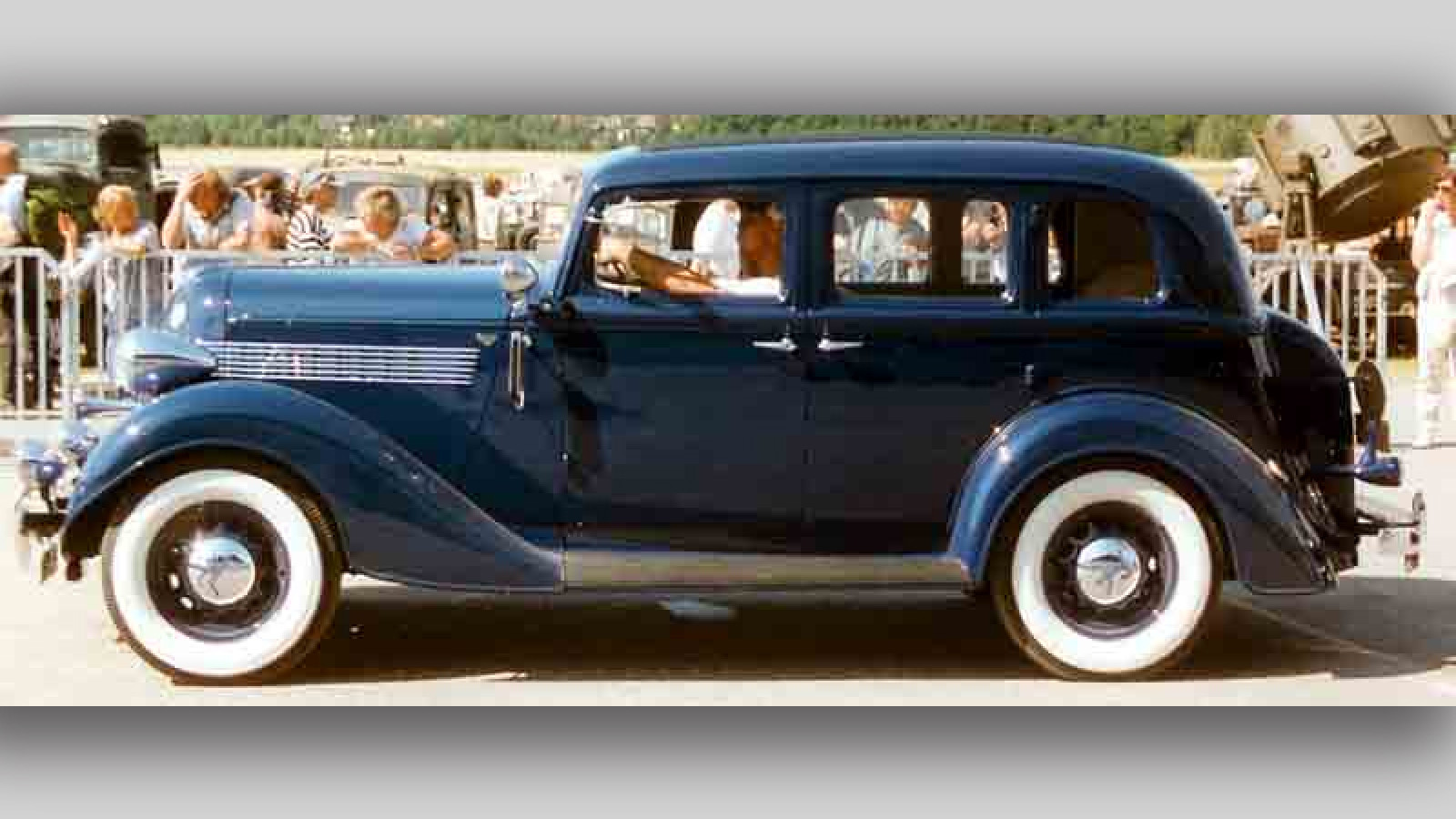
Manufactured only in the 1936 and 1937 model years, the Graham Crusader was a revamped version of the Standard Six, the cheapest model in the 1935 Graham model line.
Once production had ended, American marque Graham-Paige, which had its headquarters in Indiana, sold some of the equipment it had employed to build the Crusader to Japanese firm Nissan, which used this to make its first large car, the Model 70.
As an aside, the Crusader name was later taken up by Dodge, though not for cars offered in its home market.
Two Dodge Crusaders, the first a rebadged and slightly altered Plymouth Cambridge and the second a similarly adapted Plymouth Plaza, were produced and sold in Canada, while one of the three Australian Dodges with the model name Kingsway was marketed as the Kingsway Crusader.
Clan Crusader (cont.)
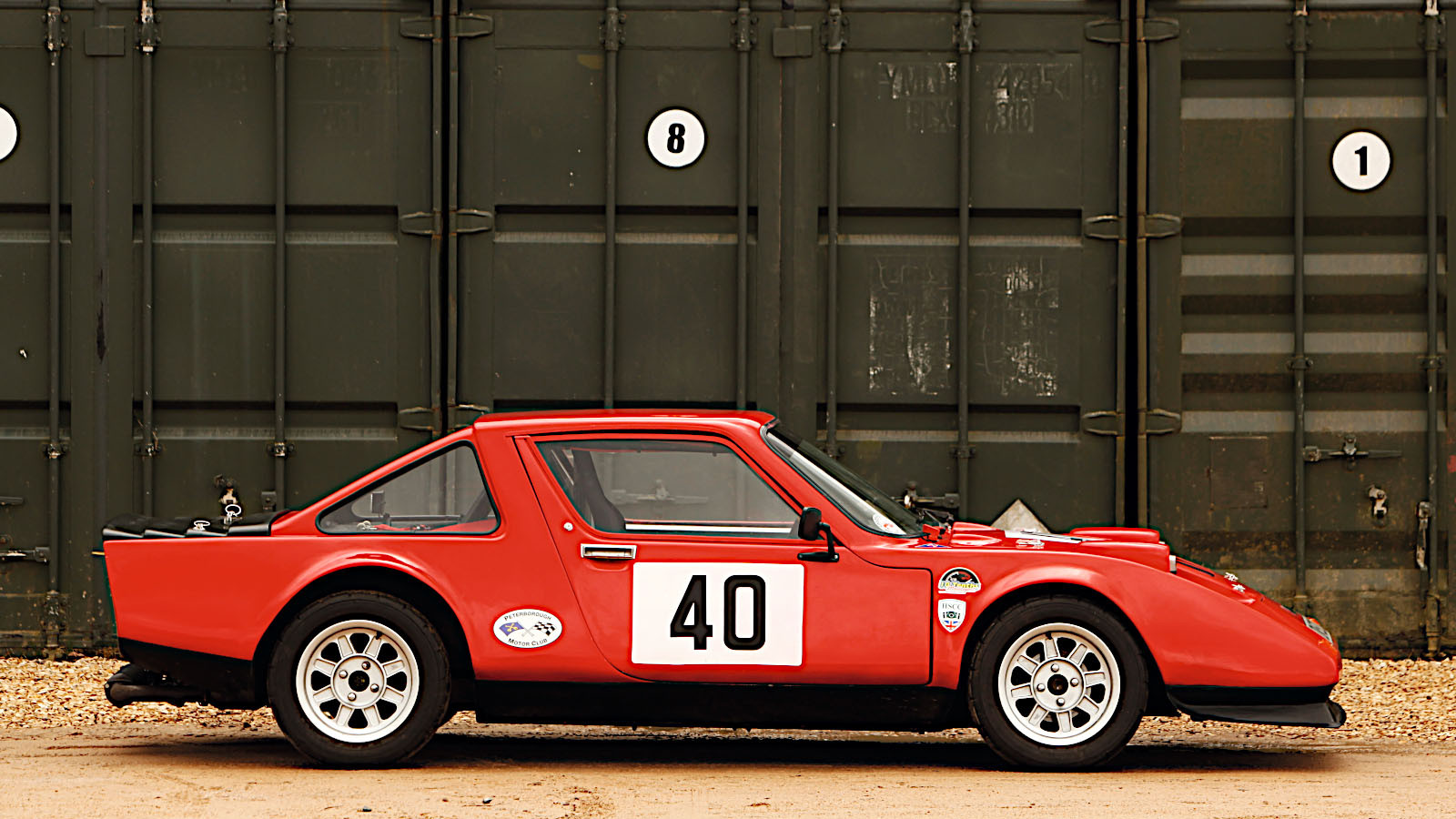
Along with the Ginetta G15 and various Davrians, the Clan Crusader was one of the most memorable British kit cars to use Hillman Imp mechanicals.
With a light and strong, though not particularly elegant, glassfibre body and the Imp’s engine, transmission and suspension, it was an impressively quick road car, and exceptionally competitive in various forms of motorsport including rallying and circuit racing.
Production began in 1971 and might have lasted for a long time if it hadn’t been for a series of difficulties, notably a sudden increase in taxation, which brought the project to a halt in 1973.
The rights were later acquired by a company in Northern Ireland which produced a revised and arguably prettier version in the 1980s, but this was known simply as the Clan, without the Crusader model name.
5. Dodge Dart
Chrysler first applied the Dart name to a 1956 concept car, then brought it back for a production model introduced by its Dodge subsidiary for the 1960 model year.
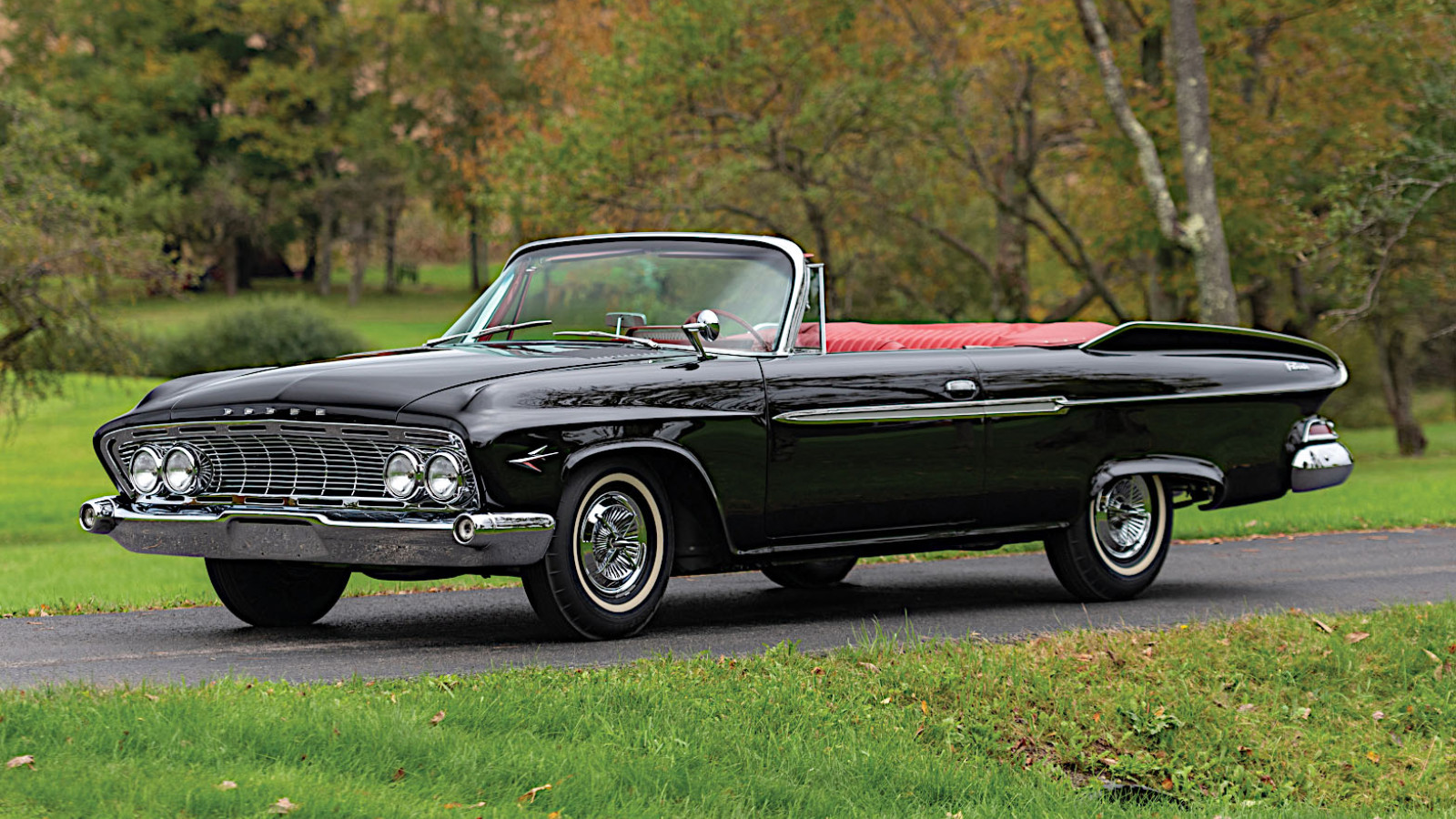
The Dodge Dart was restyled almost immediately (as shown in the 1961 Phoenix convertible pictured here) and went into its second of what would be four generations produced in the 20th century in 1962.
The fourth generation lasted longer than the previous three put together, remaining on the market from 1967 until 1976.
In the 21st century, after the merger of Chrysler and Fiat, a new Dart based on a Fiat platform was produced for several years.
Daimler Dart (cont.)
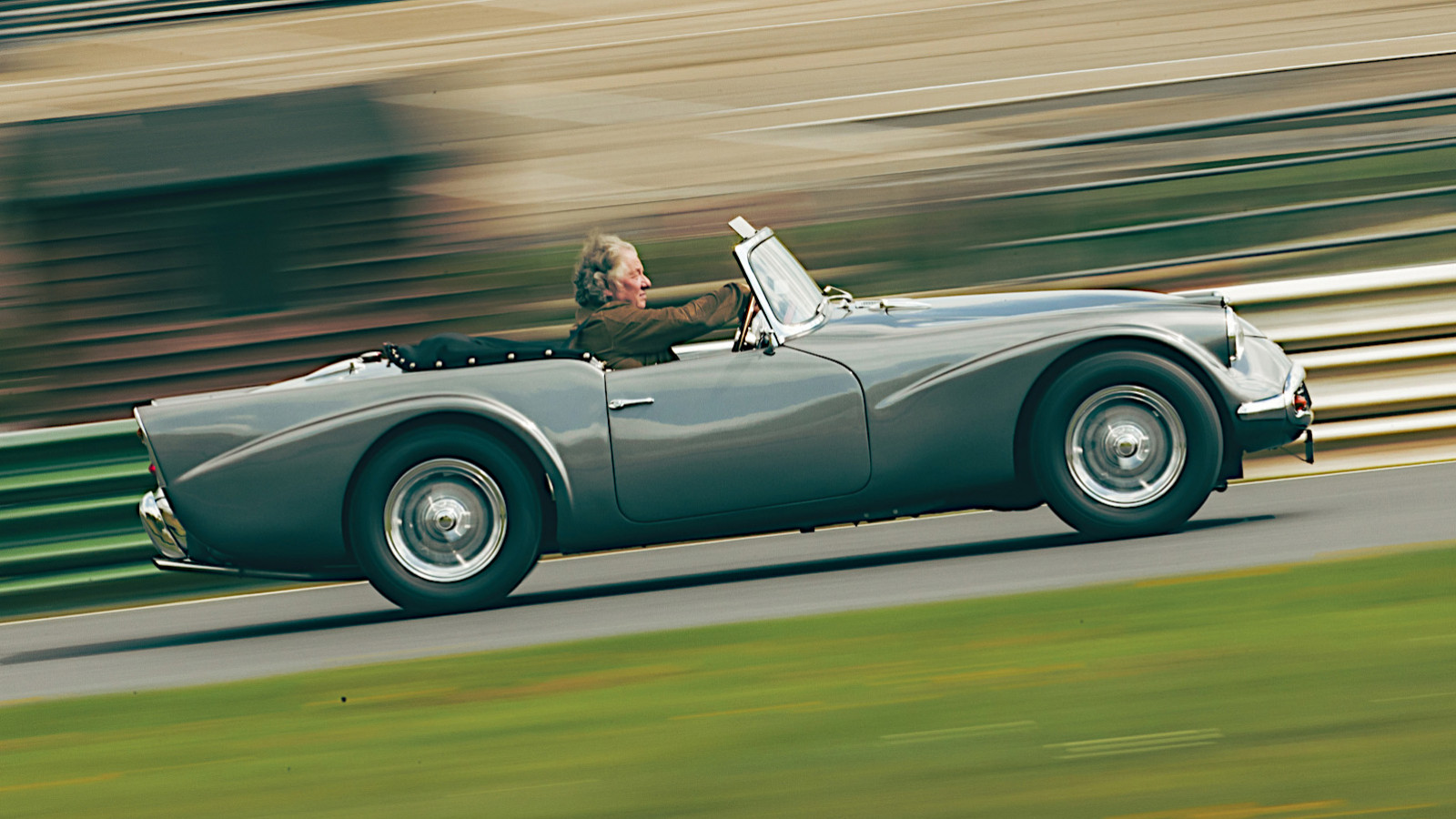
A certain loosening of the corsets is required to include this car in our list, because it was always sold as the SP250.
However, Daimler’s last sports car, with a 2548cc V8 engine which would later be used in the Jaguar Mk2-derived Daimler 2.5 V8, was originally known as the Dart and is still widely referred to by that name.
In an early example of one manufacturer telling another that it had the rights to a name another marque wanted to use, Chrysler complained (for reasons explained in the previous slide) about the car being displayed as the Dart at the 1959 New York show, which obliged Daimler to use SP250, its project number during the development process, instead.
6. Dodge Diplomat
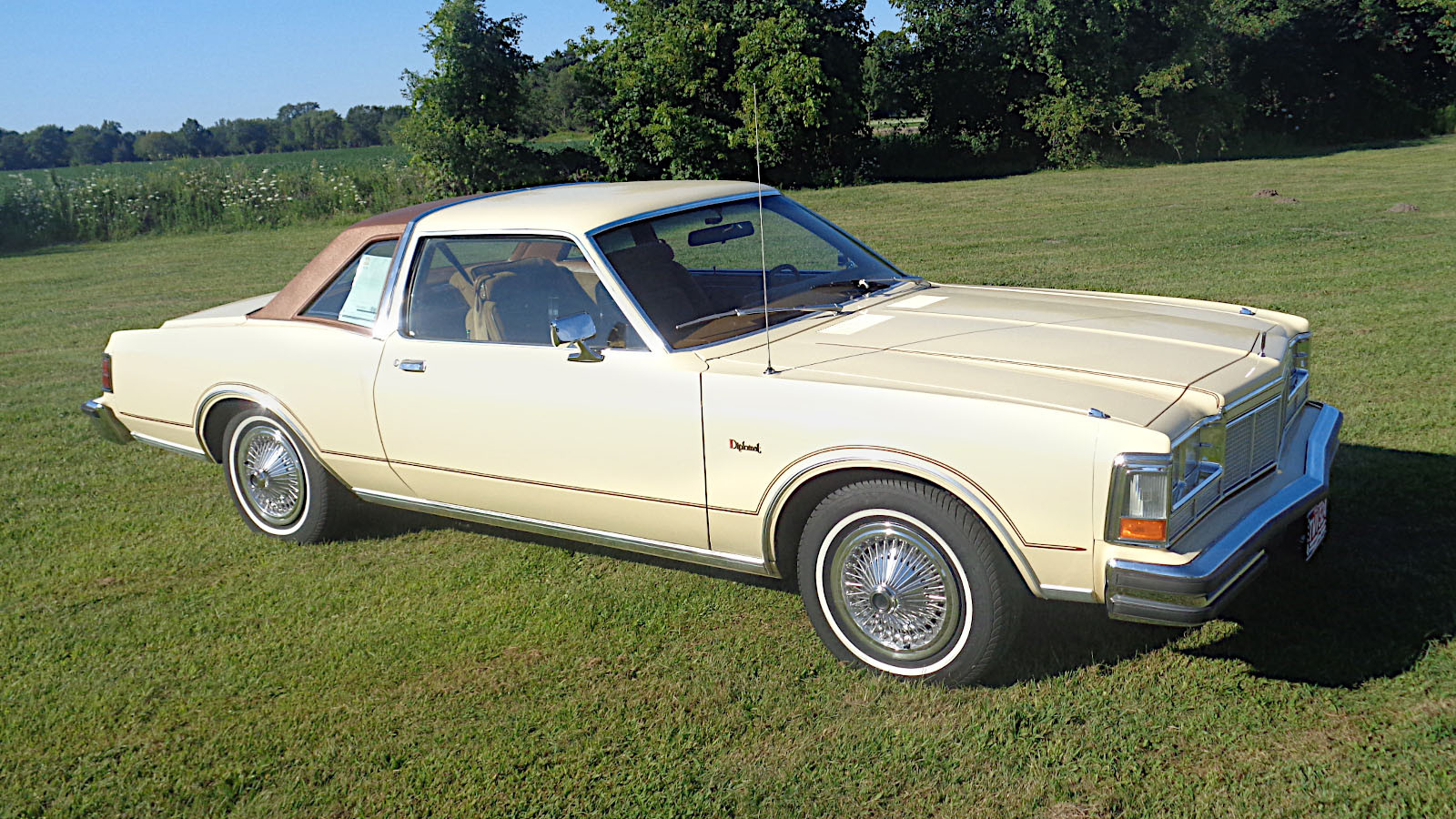
Dodge built the Diplomat in two generations between the 1977 and 1989 model years (first-year model pictured), mostly as a saloon but also occasionally as a coupe or a station wagon.
The engine might be a 3.7-litre slant-six or a larger, Chrysler LA V8, but in each case it always drove the rear wheels, a layout which was starting to become an anachronism by the end of the production run.
Sales to regular customers were not particularly impressive, but Diplomats were in common use both as taxis and sometimes, more dramatically, as police cars.
This wasn’t Chrysler’s first application of the Diplomat name, which had previously been used for a non-US DeSoto model built in Australia, Canada and South Africa.
Opel Diplomat (cont.)
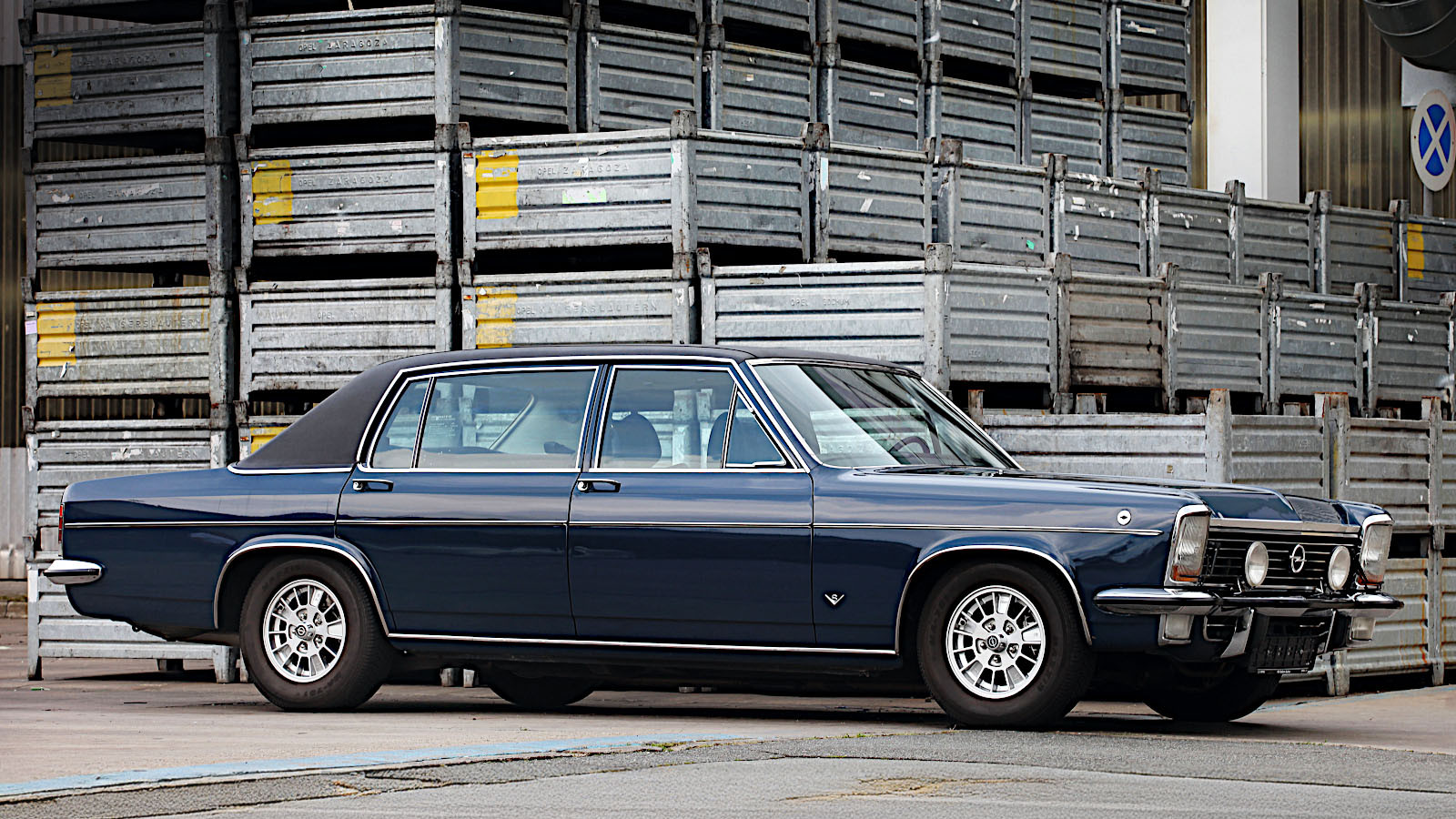
Opel first used the Diplomat name in 1964 for the most expensive of three very similar flagship models, the others being called (in ascending order of impressiveness) Kapitän and Admiral.
The car maker fitted its own straight-six engines, but there was also a V8 supplied by Chevrolet, one of the marque’s partners within General Motors.
All three models were replaced in 1969 (Diplomat pictured here), but the general principle was the same, except that this time only the Diplomat was available with a V8.
In contrast to the Dart situation, there appears to have been no argument between Opel and Dodge – owned by rivals GM and Chrysler respectively – about sharing a model name, perhaps in this case because the cars were never sold in the same country.
7. Oldsmobile Fiesta
Is this the Fiesta you might never have heard of?
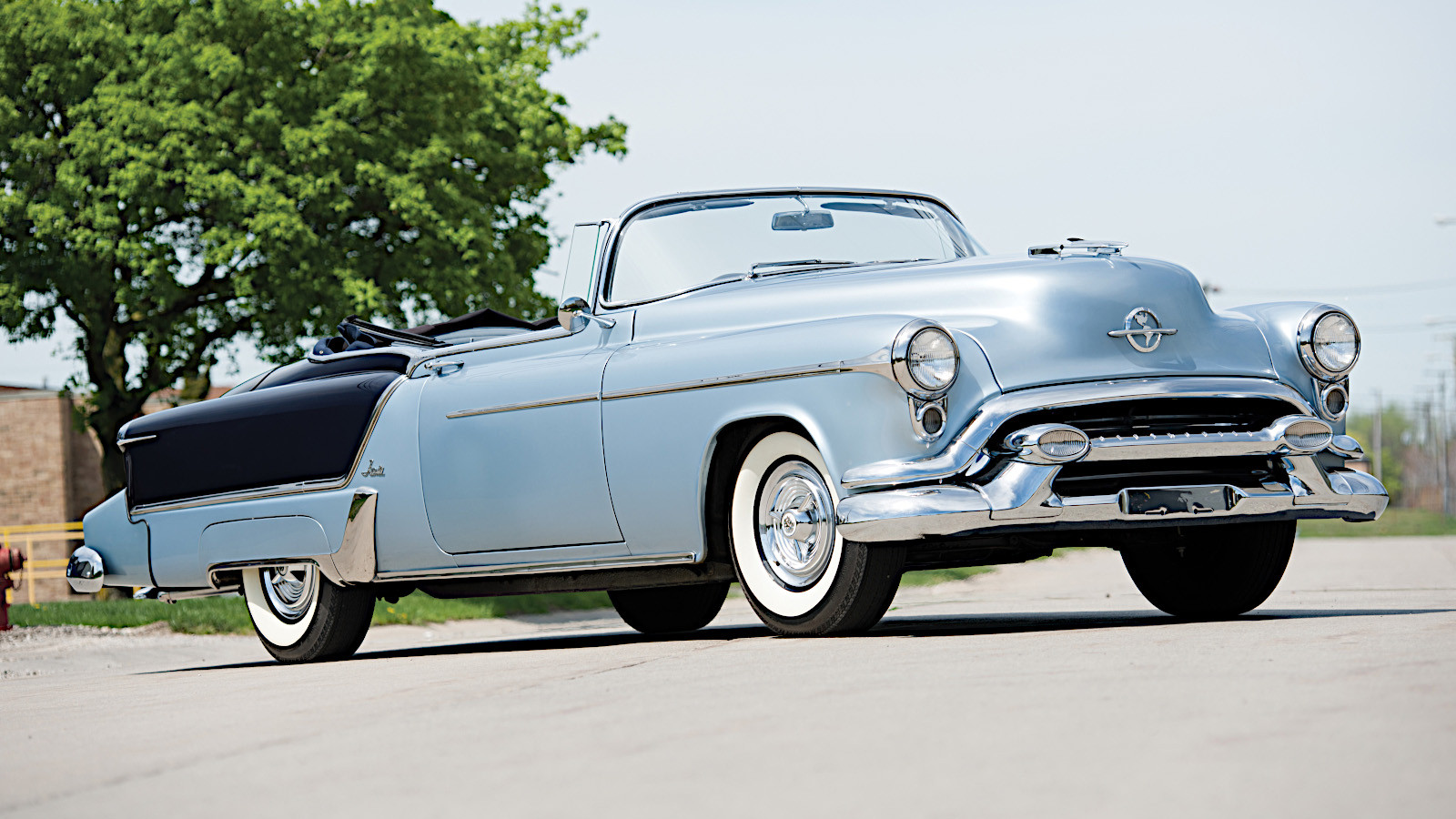
General Motors’ Fiestas were always produced by its Oldsmobile marque, the first being a limited-edition convertible version (pictured) of the 98, available only in 1953.
Powered by an uprated version of the 5-litre Rocket V8 engine, this Fiesta was very expensive and sold in tiny numbers, and is perhaps most famous today for its distinctive wheel covers, which were copied by accessory manufacturers and became popular across the custom-car community.
Oldsmobile later used the Fiesta name again for station wagons in its 88 range.
Ford Fiesta (cont.)
Here we come to our first non-American Ford.
As we’ve just seen, the immediate barrier to the Blue Oval using the Fiesta nameplate was that General Motors already owned it, but because it hadn’t been bestowed on any model for nearly two decades and wasn’t likely to be again, GM passed it over without any fuss to its great rival.
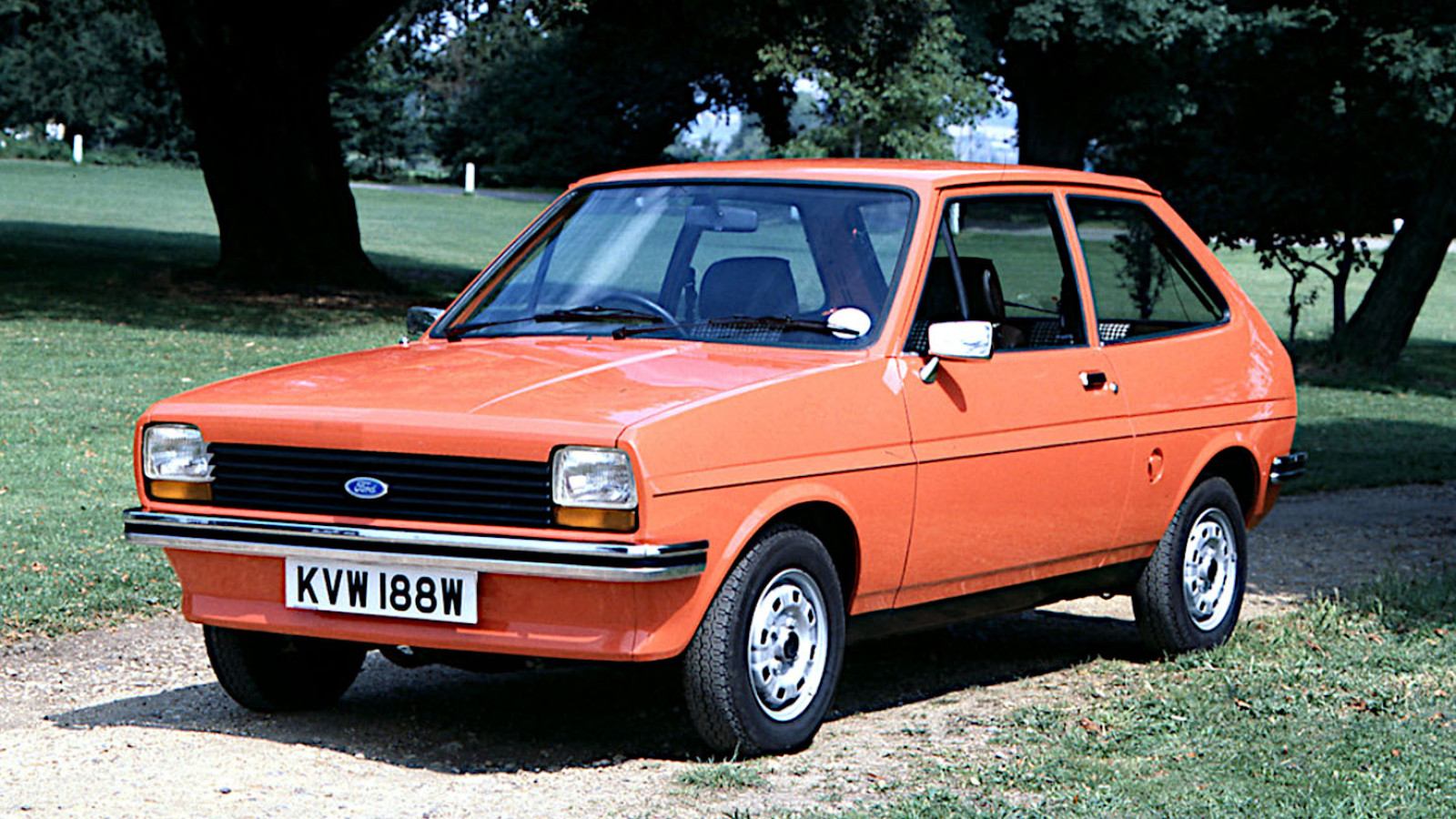
The process of developing Ford’s first front-wheel-drive hatchback was known as Project Bobcat, and the car nearly went on sale as the Bravo until company CEO Henry Ford II decided it should be called Fiesta instead.
The Ford Fiesta was introduced in 1976 and continued through seven generations (1980 model pictured) for nearly half a century.
According to the Society of Motor Manufacturers and Traders, it achieved the highest annual registration figures in the UK 17 times between 1990 and its cancellation in 2023, including an unbroken 12-year run from 2009 to 2020.
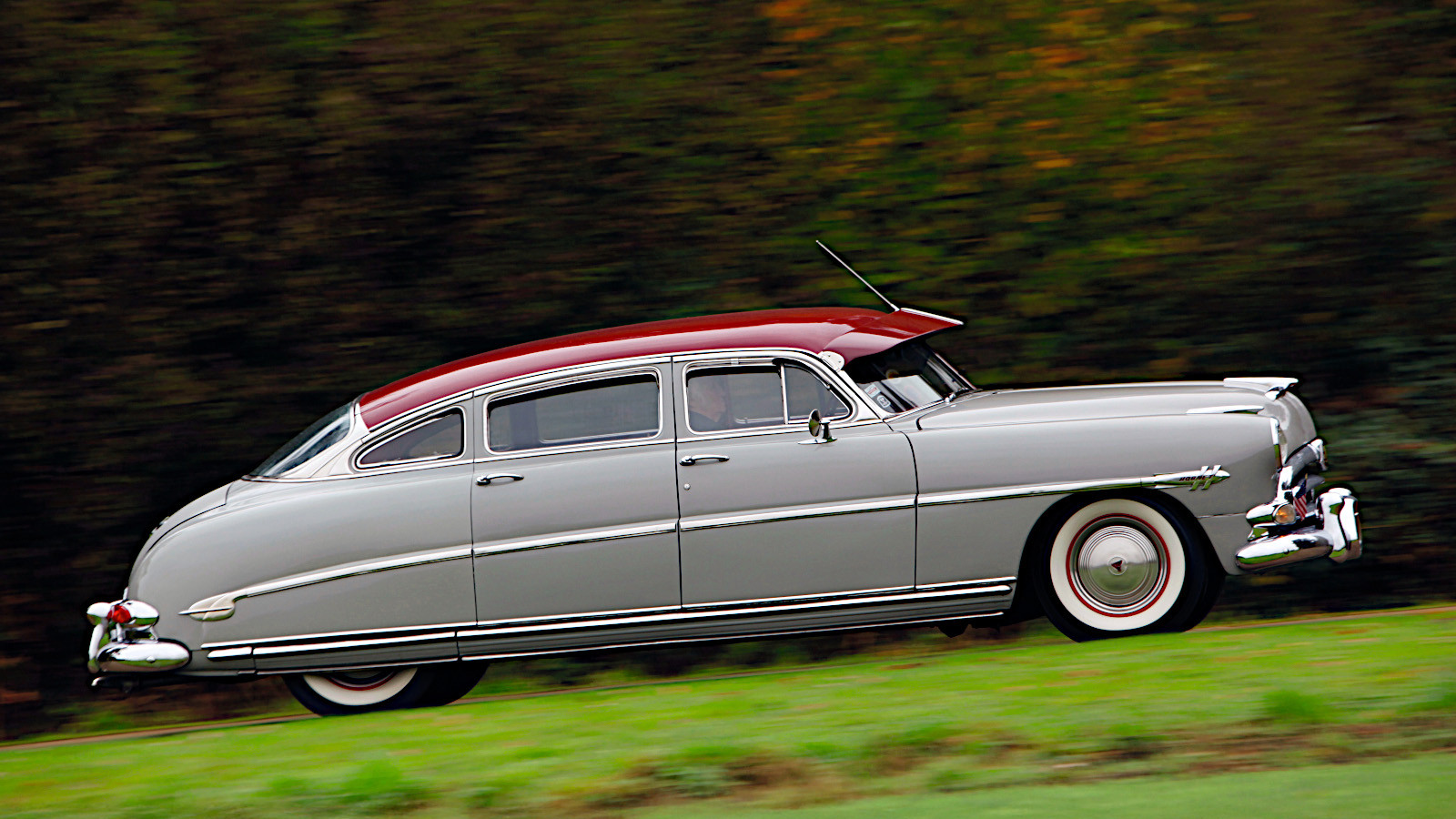
8. Hudson Hornet
Hudson produced two generations of a car called the Hornet in the 1950s.
The first featured a ‘step-down’ design with a very low floorpan, and the resulting low centre of gravity, along with a powerful, 5-litre, straight-six engine, are regarded as being responsible for the car’s great success in NASCAR racing.
The second-generation Hornet, introduced shortly after Hudson was merged with Nash-Kelvinator to form the American Motors Corporation, did not have the ‘step-down’ construction, and was essentially a Nash with Hudson styling.
Hudson lasted as a distinct marque only until 1957, but the famous model name was brought back for the AMC Hornet of the 1970s.
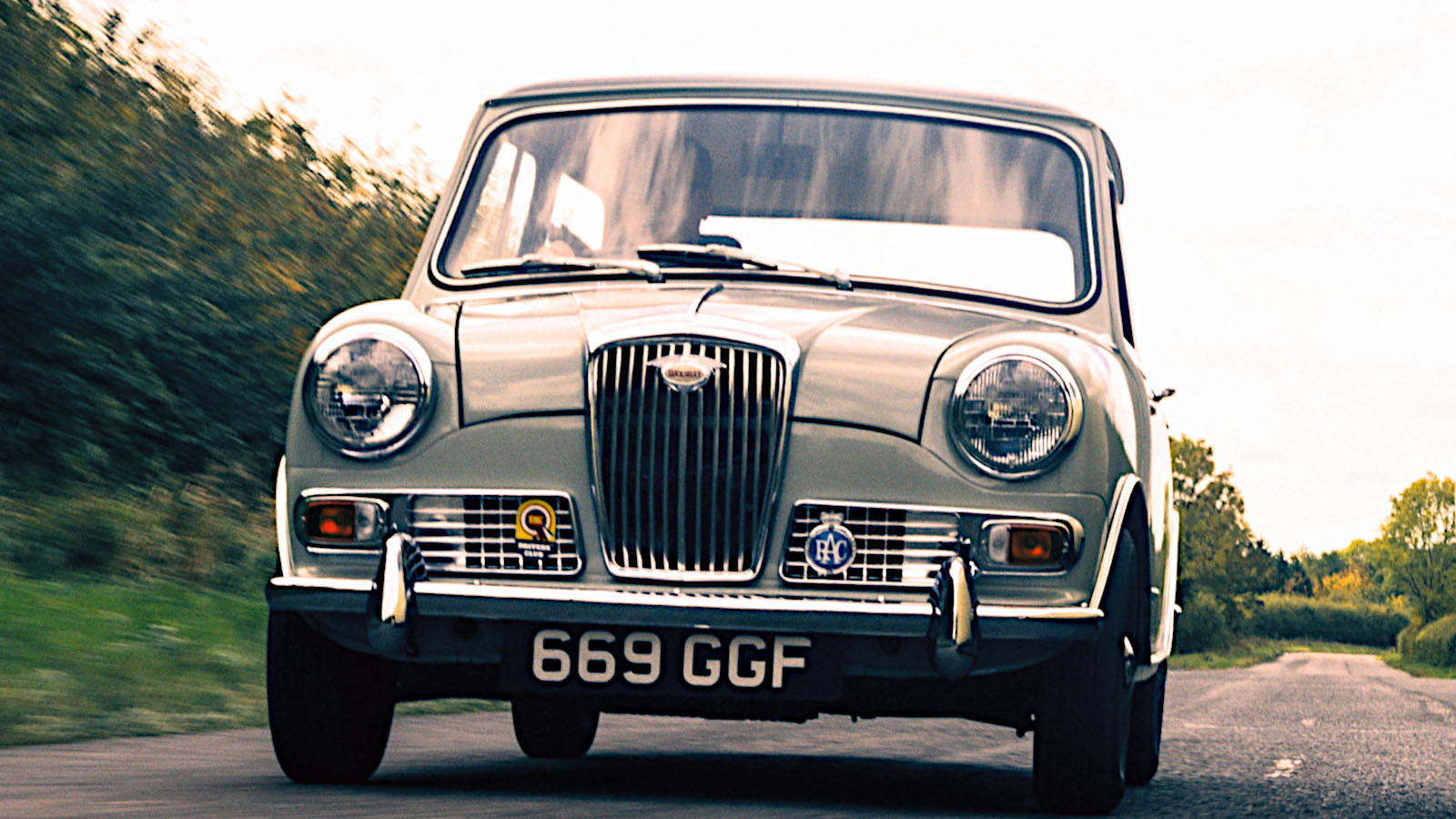
Wolseley Hornet (cont.)
Wolseley produced two models called Hornet in distinctly different eras, avoiding (presumably unconsciously) almost any overlap with the Hudson and AMC cars of the same name.
The original Wolseley Hornet was a small car manufactured from 1930 to 1936, and available with a variety of body styles and a straight-six engine whose capacity varied between 1271cc and 1604cc.
After a 25-year gap, which encompassed the entire career of the Hudson Hornet, Wolseley brought out its second version (pictured), an upmarket derivative of the Mini with a three-box saloon body also used for the Riley Elf and the South African Mini Mk3.
Both that Hornet and its Riley cousin were sold from 1961 to 1969, the latter year being, coincidentally, when production of the AMC Hornet began.
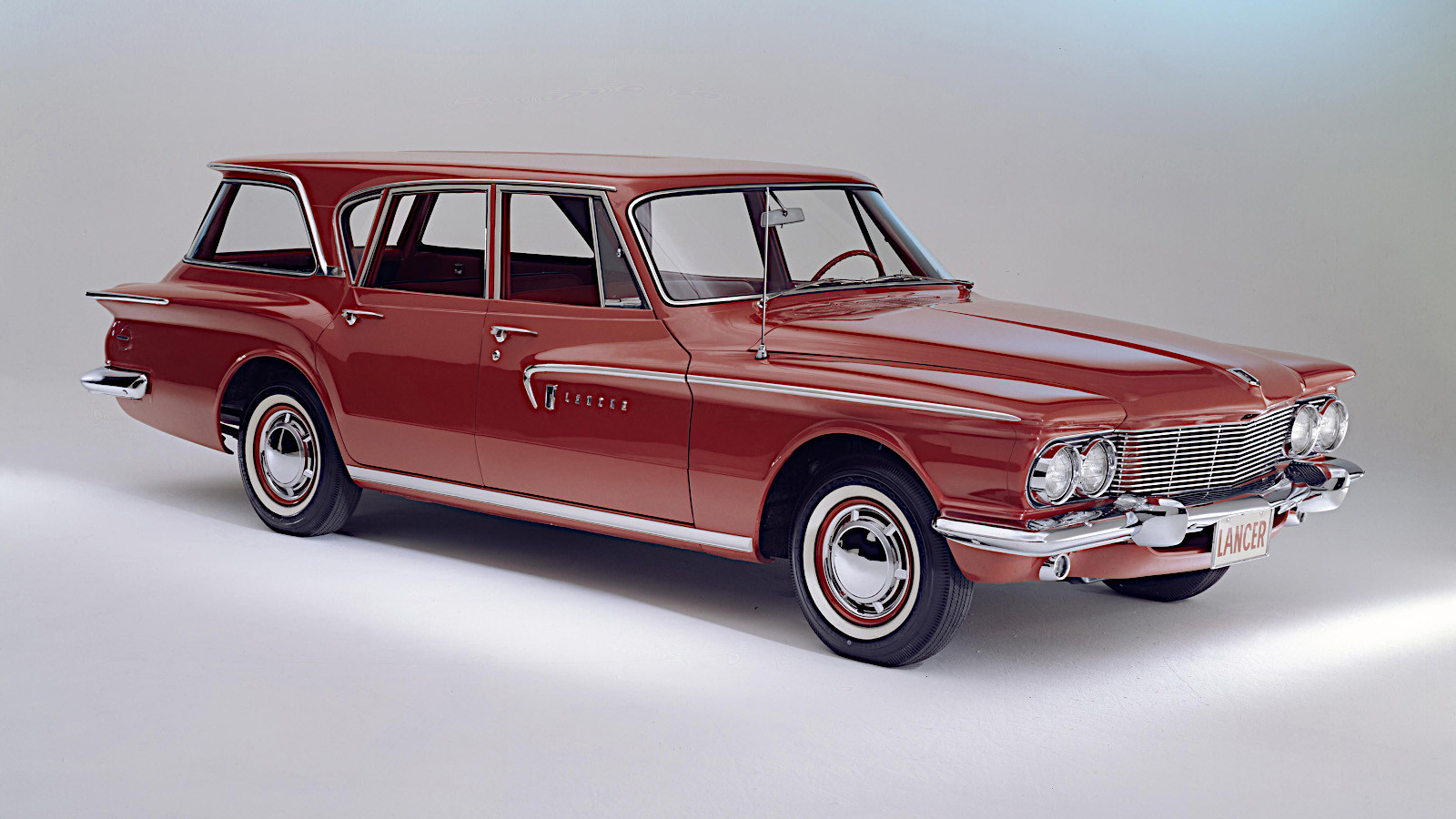
9. Dodge Lancer
Dodge used the name Lancer in the mid to late 1950s for certain body styles – mostly hardtop coupes but also a convertible – in its Coronet, Royal and Custom Royal ranges.
Lancer became a model name in 1961 for Dodge’s version of the Plymouth Valiant, available as a saloon, station wagon (pictured) or hardtop coupe, but this turned out to be a very brief arrangement because that car’s replacement, launched in 1963, was marketed as the third-generation Dart.
The final Dodge Lancer, a five-door hatchback, was a slightly reworked Chrysler LeBaron GTS produced from 1985 to 1989.
This Lancer was also available in higher-performance form as the Shelby Lancer of 1987, which evolved into the Dodge Lancer Shelby produced over the following two years.
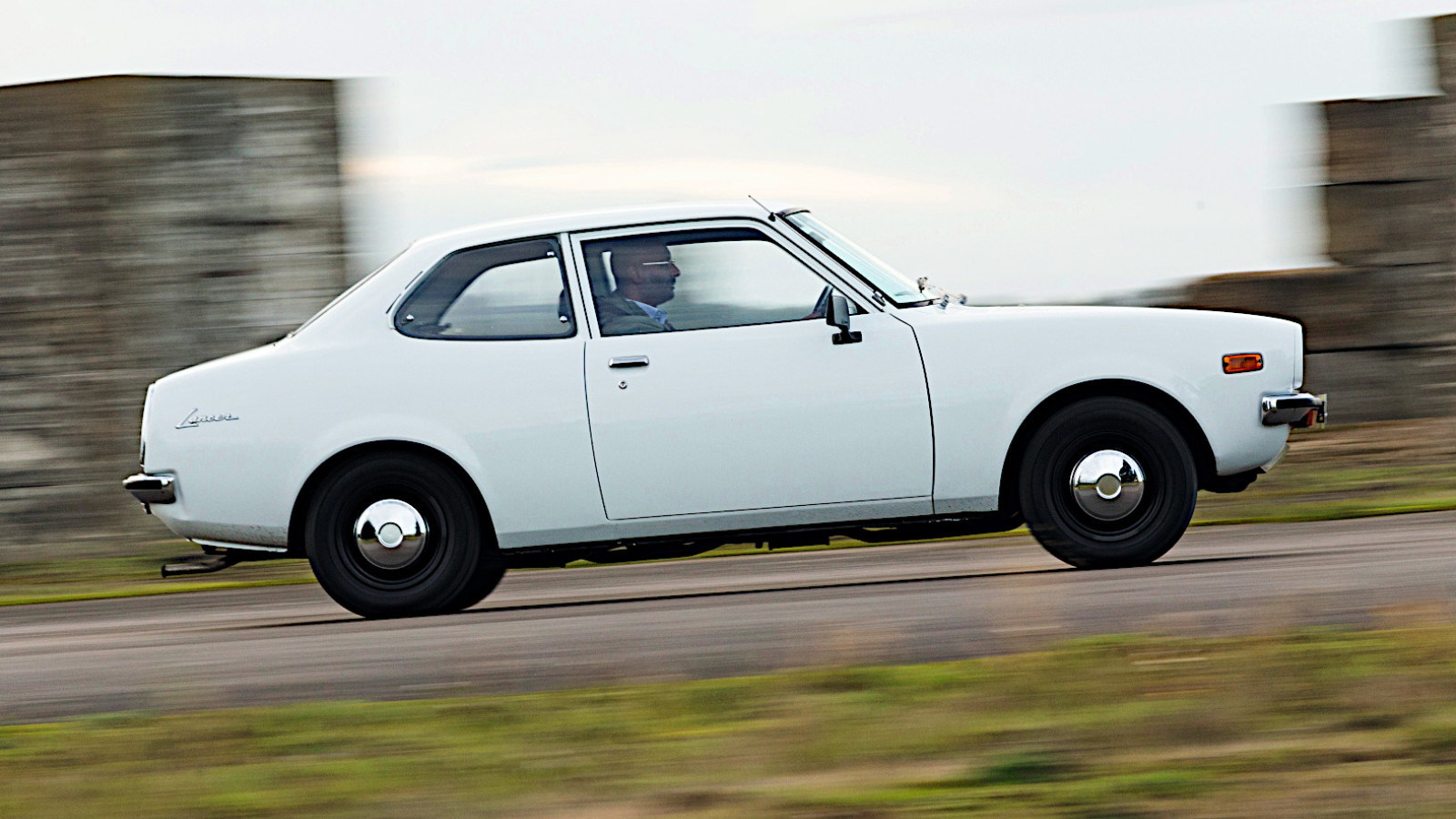
Mitsubishi Lancer (cont.)
As with Diplomat, though definitely not Dart, Dodge seems to have been unconcerned by another manufacturer calling its cars Lancer.
Mitsubishi started doing this in 1973 with a small saloon which soon proved to be extremely potent in some of the world’s most difficult rallies, winning the Safari (Kenya), Southern Cross (Australia), Ivory Coast (Côte d’Ivoire) and Safari du Zaïre (in what is now called the Democratic Republic of the Congo) events.
The Lancer went on to become one of Mitsubishi’s longest-lived models, being built over several generations for more than 40 years.
A series of Lancer Evolution derivatives, all with turbocharged, 2-litre engines and four-wheel drive, were memorable road cars, while competition versions were formidable in rallying, Tommi Mäkinen using them to win the World Rally Championship drivers’ title every year from 1996 to 1999.
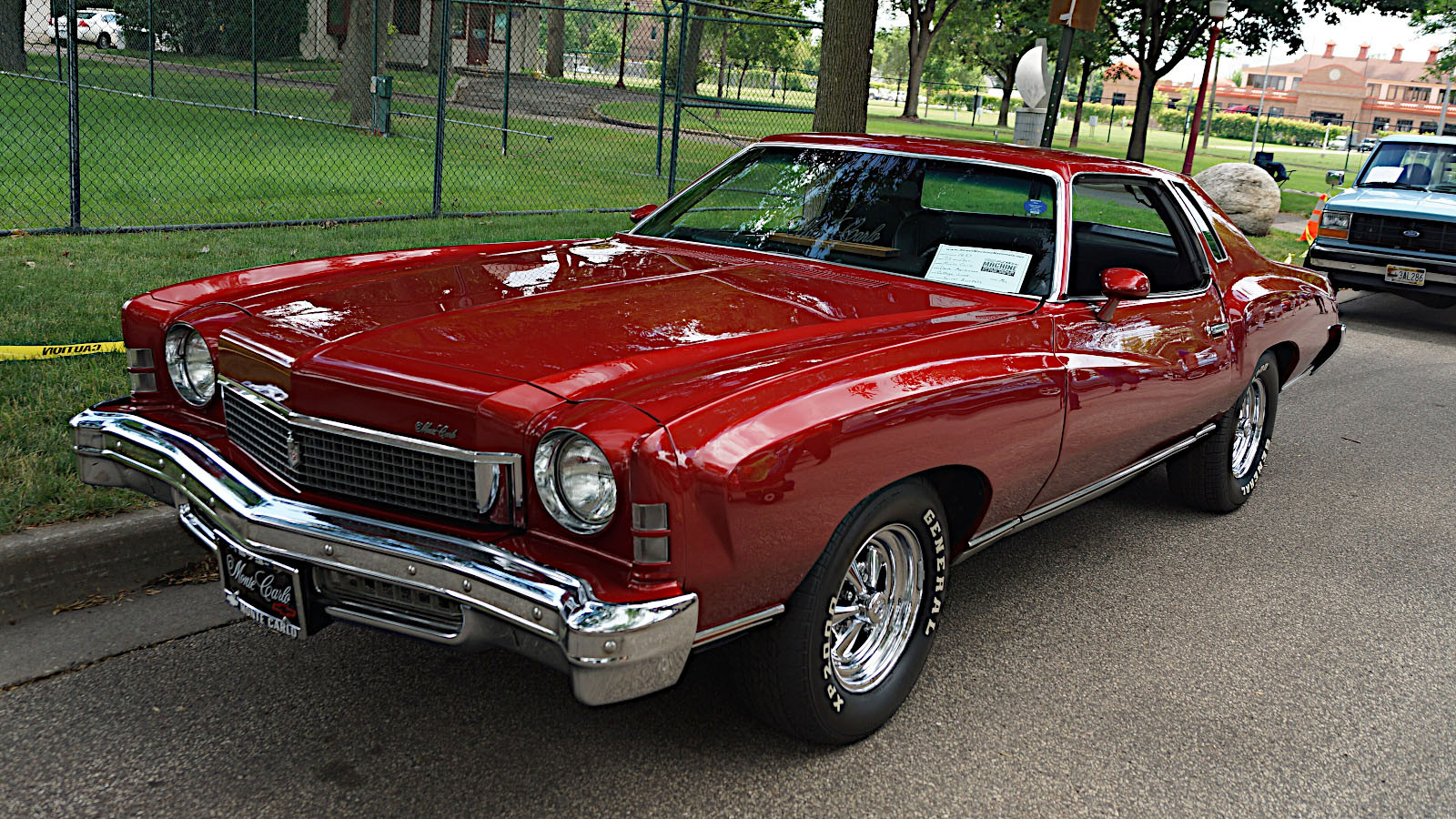
10. Chevrolet Monte Carlo
Chevrolet’s use of the Monte Carlo nameplate spanned nearly 40 years, though there was a gap between 1988 and 1995.
Either side of that gap, the cars were fundamentally different.
For the first four generations (second-generation 1973 car pictured here), Monte Carlos had their engines, usually though not always V8s, mounted longitudinally up front and driving the rear wheels.
From 1995 to 2007, the engines were mounted transversely across the front axle and drove the front wheels, and for a while there were no V8s at all.
The Monte Carlo was always the counterpart of at least one other GM product, which was sometimes all too obvious.
The front cover of the 22 August 1983 issue of Fortune magazine showed the side views of a Monte Carlo, a Buick Century, an Oldsmobile Cutlass Ciera and a Pontiac 6000, demonstrating that from that angle they all looked almost exactly the same.
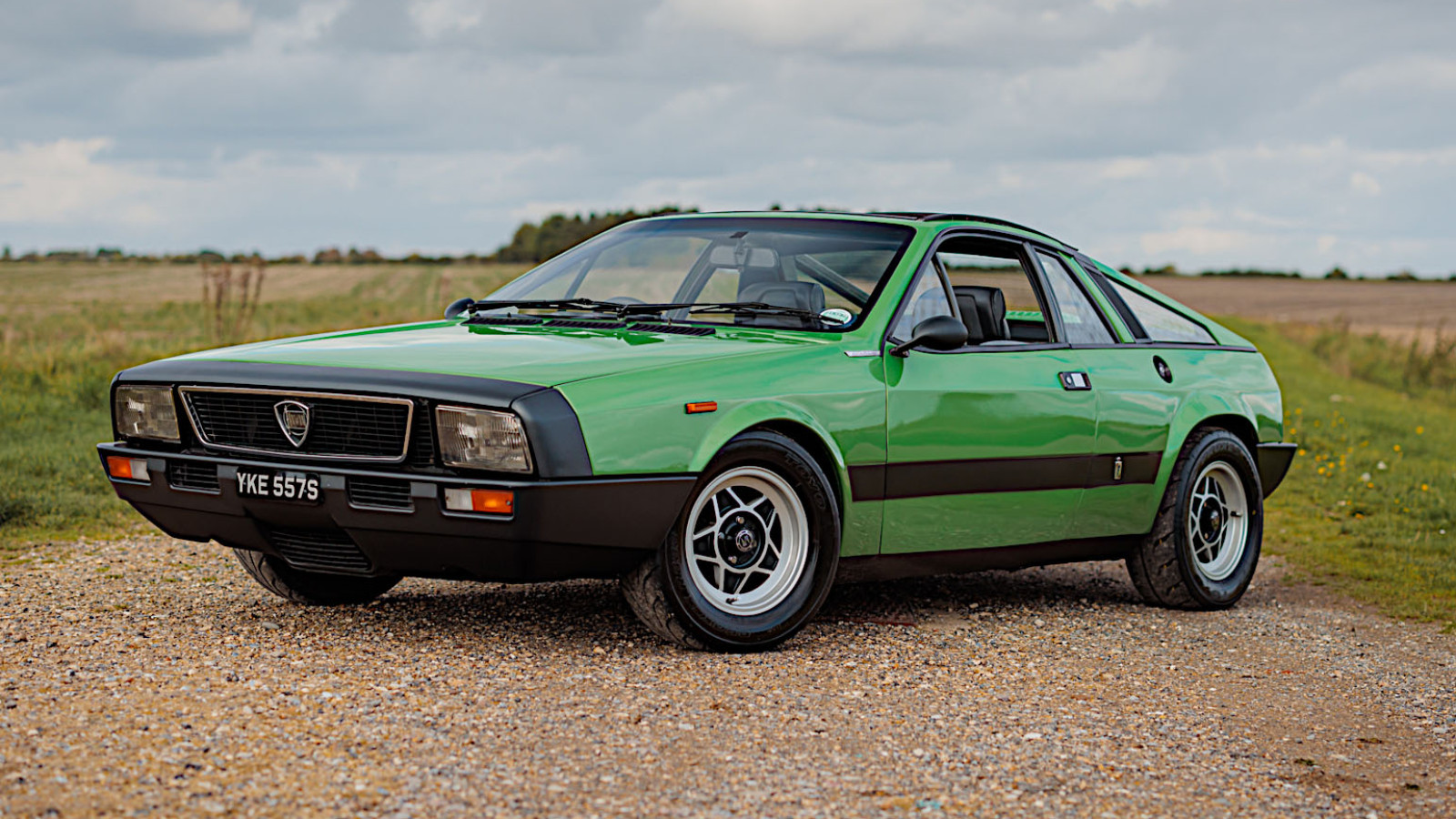
Lancia Beta Monte-Carlo (cont.)
Designed and built by Pininfarina rather than by Lancia itself, this mid-engined coupé was originally known as the Beta Monte-Carlo.
The car’s connection to the contemporary front-engined Beta, available in various body styles, was minimal, and following a 1980 revision the Beta part of the name was dropped for the last two years, after which it was marketed simply as the Lancia Montecarlo.
Montecarlos adapted for, and sold in, the US were known as Scorpions.
Competition versions were successful both in circuit racing and, under the name 037, in rallying, the 037 being the last two-wheel-drive car to win the World Rally Championship manufacturers’ title before four-wheel drive became indispensable in the sport.
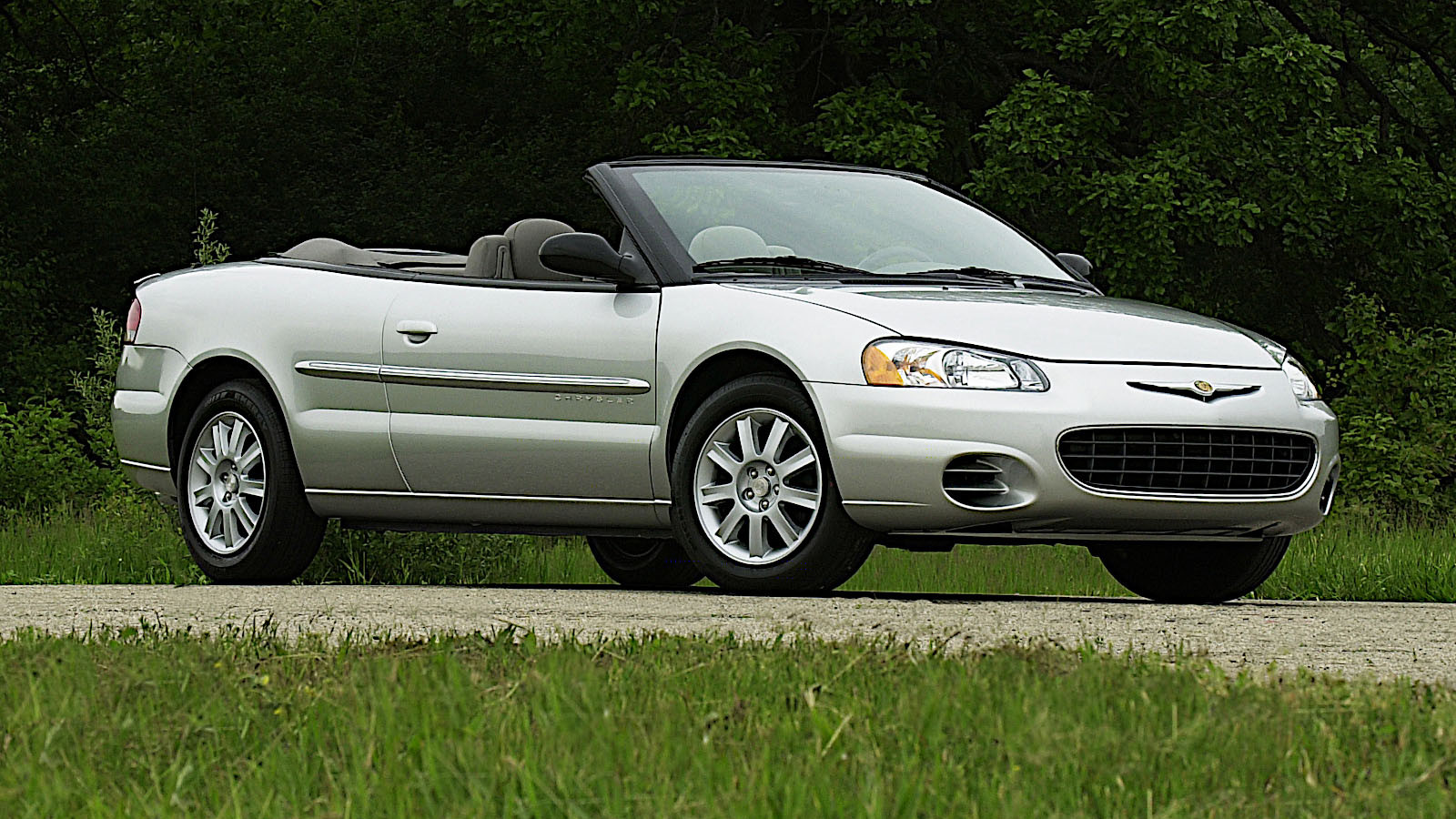
11. Chrysler Sebring
Sebring International Raceway in Florida is one of the most famous motorsport venues in the USA, and therefore a natural inspiration for car model names.
Plymouth used it for a variant of its third-generation Satellite in the early 1970s and, after a two-decade pause, parent company Chrysler applied it to three generations of cars sold under its own brand.
In each of these, there was at least one solid-roofed body style – a sedan or a coupe or both – plus a convertible (2003 example pictured here).
For the first two generations, different platforms, always including one developed in association with Mitsubishi, were used for the open and closed cars.
Following what might otherwise have been a normal mid-cycle refresh of the third Sebring for the 2011 model year, the original name was dropped and the car became the Chrysler 200.
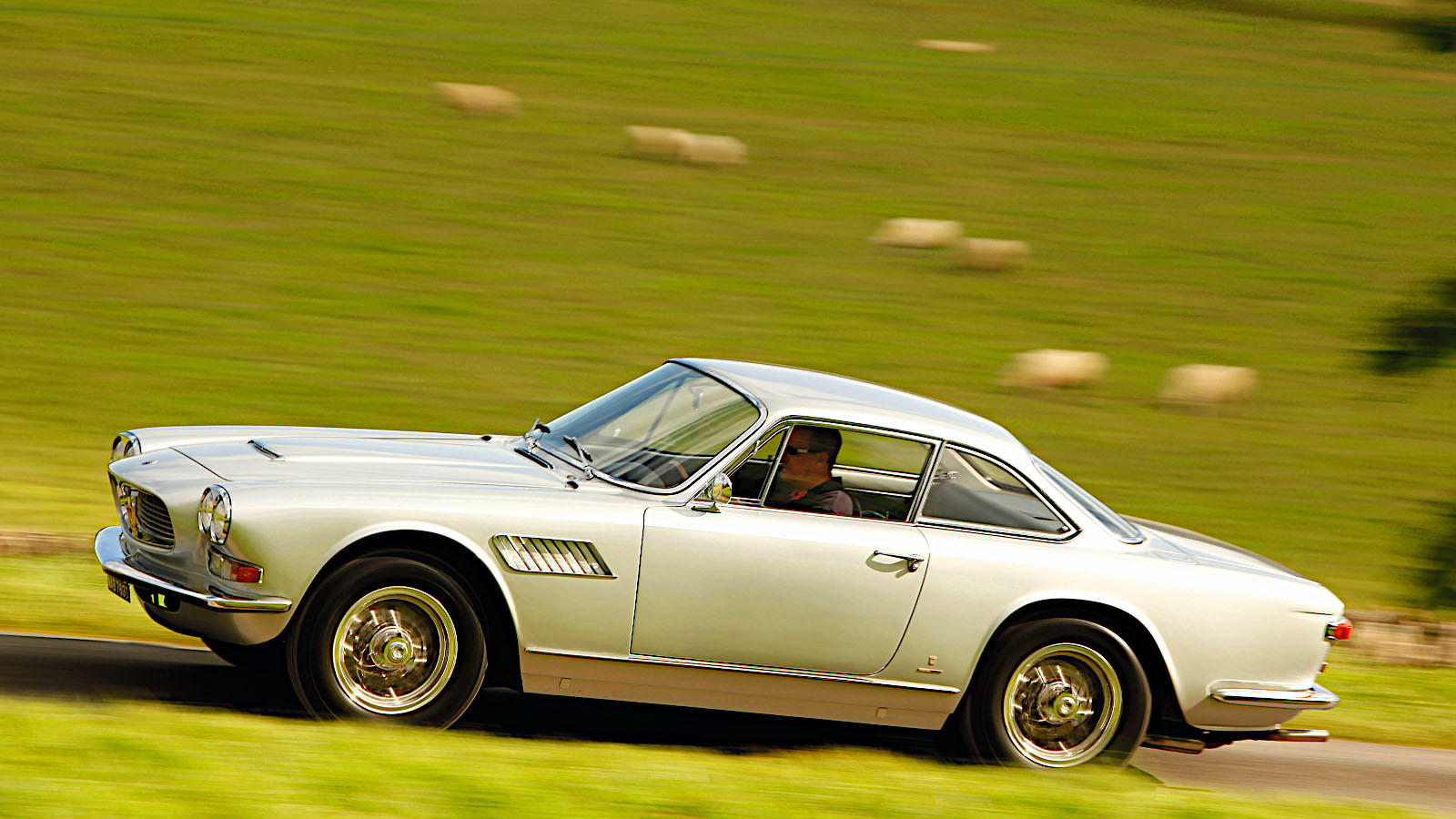
Maserati Sebring (cont.)
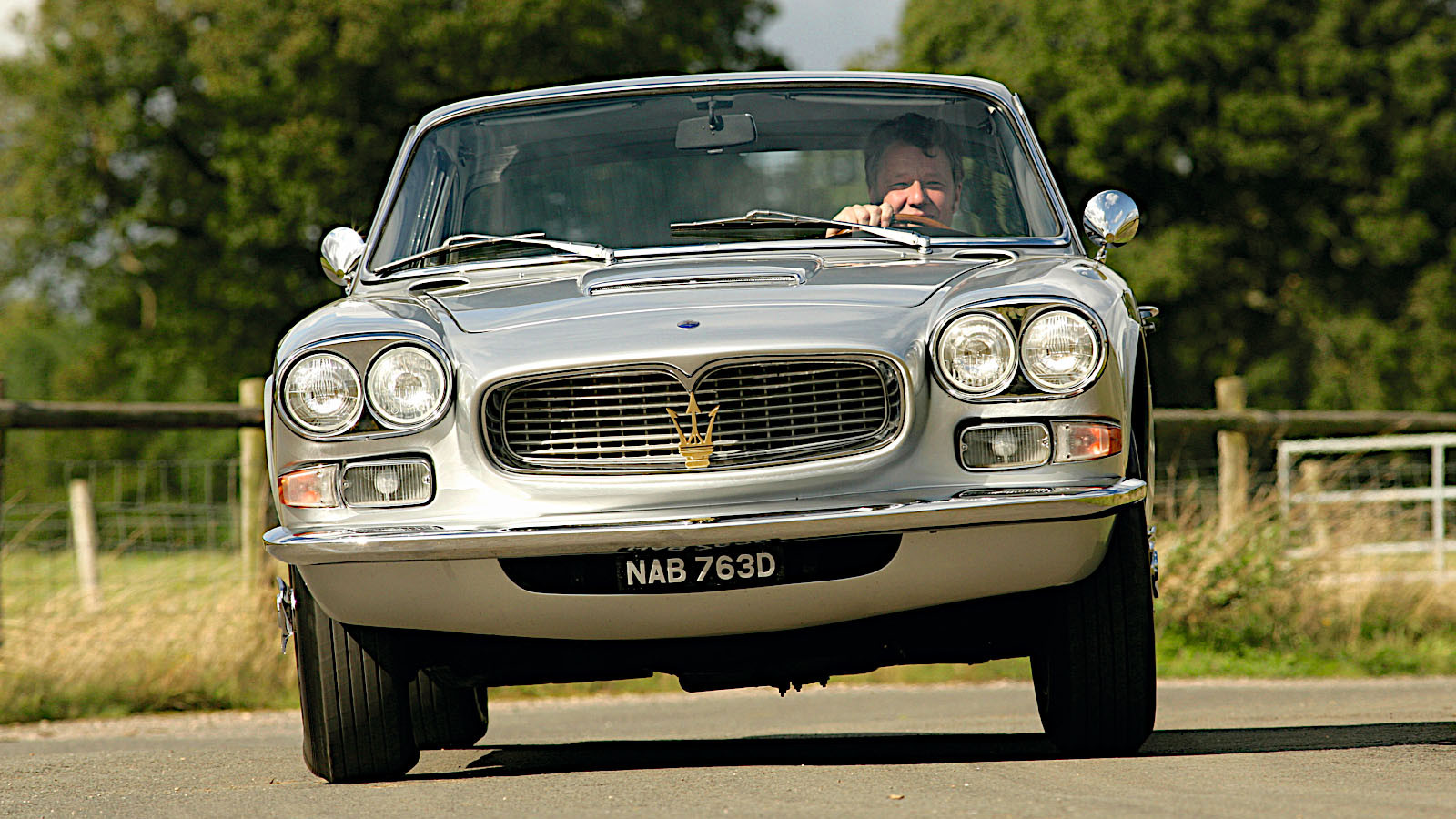
Maserati had a good reason to choose the Sebring name for its new model for 1962, namely that Juan Manuel Fangio and Jean Behra had won the annual 12-hour race at the Florida circuit five years before in their works-entered 450S.
The roadgoing Sebring model had a new body designed by Giovanni Michelotti at Vignale, but was based on the short-wheelbase Spyder version of the existing 3500GT, and shared that car’s 3485cc, twin-cam, straight-six engine.
Unlike the 3500GT, the Maserati Sebring was available with Borrani wire wheels, air conditioning and an automatic transmission, making it, in its maker’s opinion at least, ‘the ultimate luxury GT of its day’.
A revised, second-series Sebring (pictured) arrived in 1964, and by the time production ended seven years after that the engine had been enlarged twice, first to 3692cc and then to 4014cc.
12. GMC Sierra
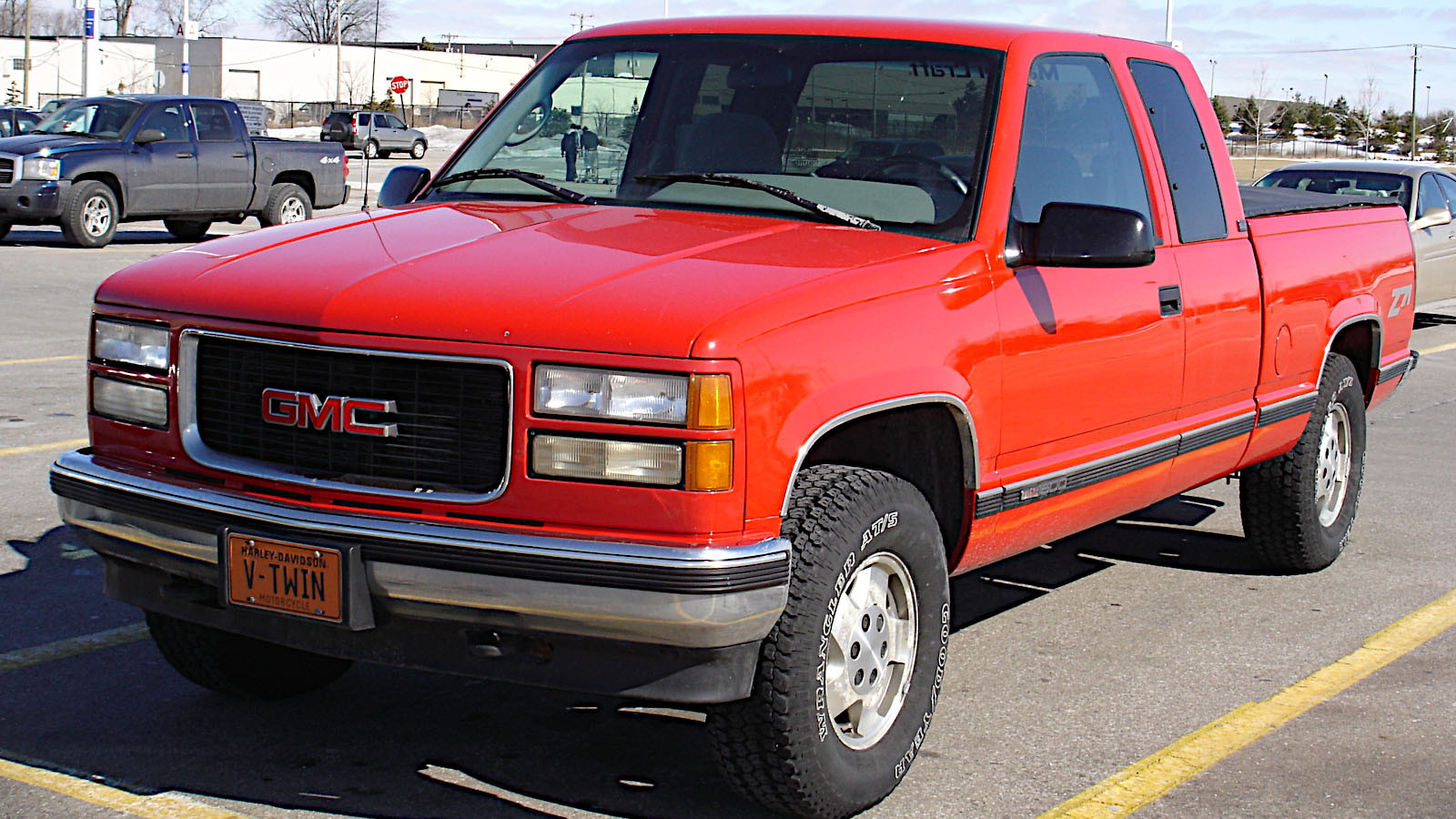
Since the 1999 model year, the GMC Sierra has been a badge-engineered counterpart of the Chevrolet Silverado pick-up truck, the successor to the Chevrolet C/K range.
The Ford Sierra (which we will come to next) had long since been replaced by 1999, so at first glance it seems that Ford has priority over GM in terms of using the name.
In fact, General Motors got there first by several years, using Sierra to denote specific versions of the C/K-based GMC trucks introduced in 1967.
The GMC equivalent of the fourth-generation C/K launched in 1988 was given the Sierra model name right from the start (1996 model pictured), and it was only when this vehicle was replaced 11 years later that Chevrolet began calling its trucks Silverado.
Ford Sierra (cont.)
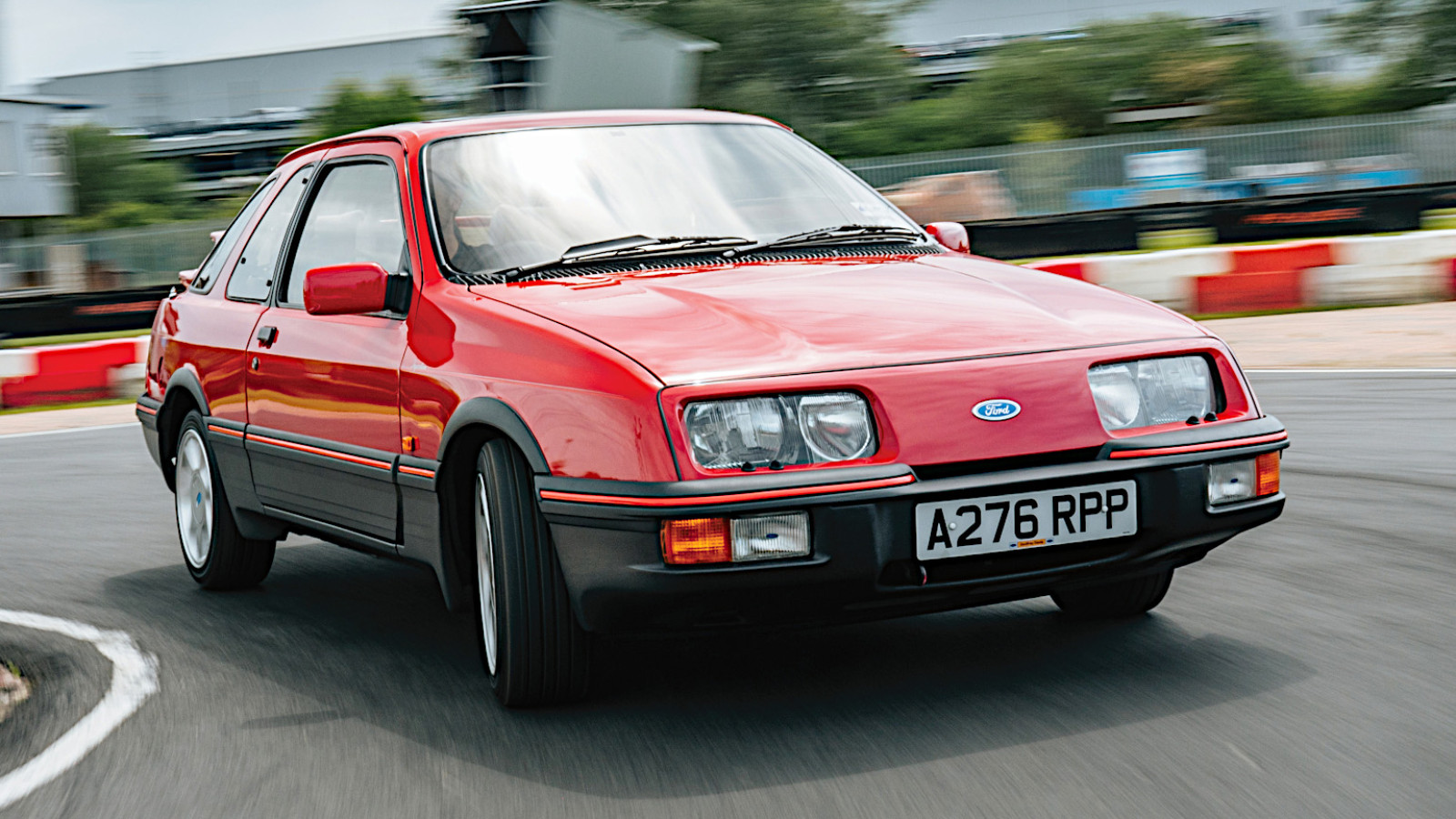
Our second Ford of Europe car is this, the Sierra.
This was the marque’s 1982 replacement for the mid-sized Cortina, initially with the same front-engined, rear-wheel-drive mechanical layout (though Ford would later introduce four-wheel-drive variants).
According to Bob Lutz, the boss of Ford Europe at the time, his plan was to follow other manufacturers by making the new car front-wheel drive in an attempt to reduce weight and therefore increase fuel economy, but he was told by Detroit that there wasn’t enough money available to do this.
The answer was to give the Sierra a very aerodynamic body, which was badly received in the UK at first but, Lutz has said, attracted much more positive responses in other countries.
The car sold in the US as the Merkur XR4Ti was an Americanised version of the Sierra XR4i (pictured), with a turbocharged, 2.3-litre, four-cylinder engine rather than the European model’s naturally aspirated, 2.8-litre V6, but it couldn’t be marketed as a Sierra in that part of the world because, as we’ve seen, the name was already taken.
13. Chrysler TC
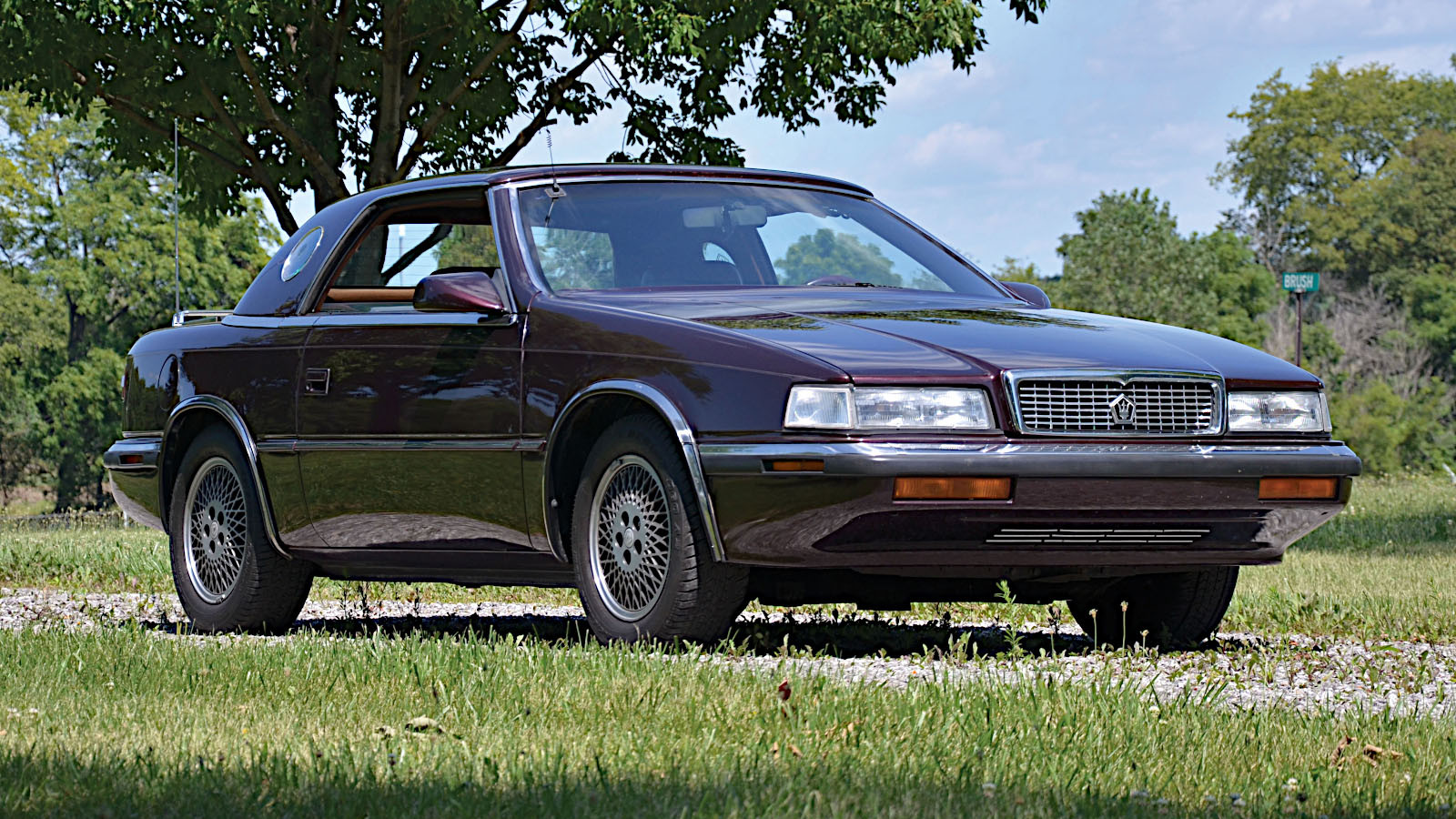
The full name of this car – Chrysler TC by Maserati – indicates that both marques were closely involved with it.
To cut a very long story short, the hardtop convertible shared several components with the Chrysler LeBaron but was assembled by Maserati in Italy, then shipped across the Atlantic to be sold in North America for a brief period around 1990.
Despite being slammed in the media, it has occasionally been described as a very high-quality model, but never as a successful one.
The total cost of the project has been estimated at $600 million which, if true, means that each car, though an expensive purchase for its owner, was sold at a gigantic loss.
MG TC (cont.)
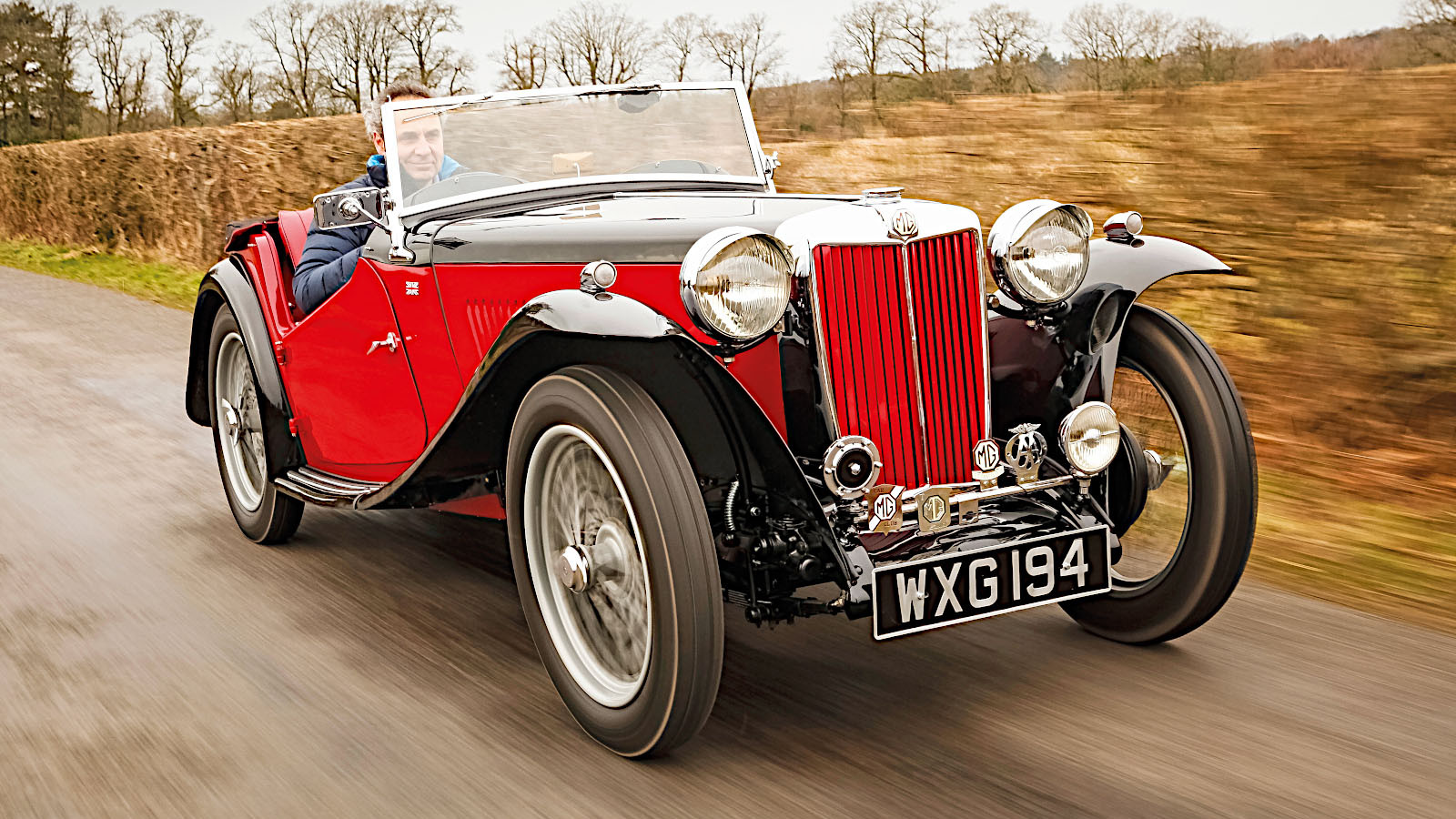
The TC was the third in a series of T-type MGs produced between 1936 and 1955, the first sold after the Second World War, the first to make an impact in the USA and the first MG of any kind with a production run of 10,000, easily beating the marque’s previous record of 3235 for the M-type Midget.
The TC wasn’t very much different from the original TA, but it made a big impact in export markets, notably, as aforementioned, the US, where a car of this type was virtually unknown, even though MG never made it available with left-hand drive.
There was no argument about Chrysler later using a similar moniker for the TC by Maserati, because that was a completely different kind of car, and by the time it arrived the MG had been out of production for 40 years.
We hope you enjoyed reading. Please click the ‘Follow’ button for more super stories from Classic & Sports Car.