





100 years and not out
In 2025, Rolls-Royce has become the first manufacturer in motoring history to use a nameplate – albeit not consistently – for a full century.
The original Phantom went on sale in 1925, and the name has been used for a total of eight generations since then.
Here we look at the history of the flagship model from one of the world’s grandest marques.
The predecessor
Within two years of its creation, Rolls-Royce was already producing the car which established its reputation.
Powered by a straight-six engine measuring 7 litres at first and later 7.4, it was called the 40/50hp, but the name Silver Ghost, originally applied by commercial manager Claude Johnson only to a single example, was soon being used informally for all of them, a habit not given official recognition until 1925.
Johnson called a 1907 40/50hp the Green Phantom, and while this car was definitely not a Phantom model it was the first to have the great name bestowed on it.
The tradition moved into its second stage in 1909, when two 40/50s were christened Silver Phantom.
Rolls-Royce Phantom I
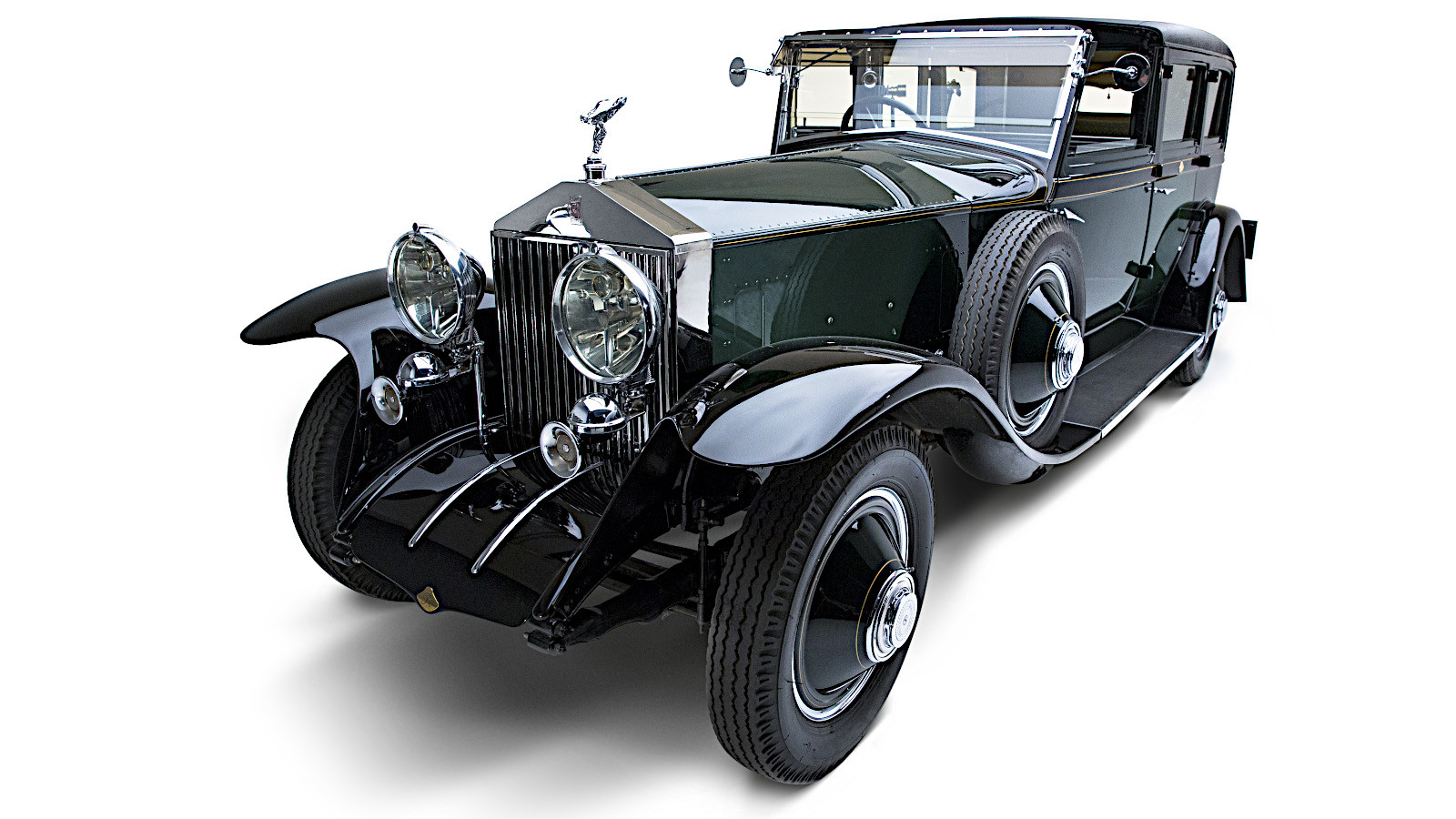
‘Phantom I’ is the retrospective name for the car marketed in its time as the New Phantom.
According to Rolls-Royce’s own account, Henry Royce had decided by 1921 that ‘the Silver Ghost’s design was reaching the point where no further developments would be possible without compromising either smoothness or reliability’, and began working on its replacement.
In some ways the Silver Ghost and the Phantom were very similar, leading to the latter being nicknamed ‘Super Ghost’, but the new model did have a different engine – still a straight-six, but one with a capacity of 7.7 litres and overhead rather than side valves.
Following Rolls-Royce policy of the time, the company did not build bodies for these Phantoms, selling them instead as rolling chassis and leaving the customer to decide which of various eager-to-serve coachbuilders (Brewster in the case of the car pictured here) should complete the job.
Transatlantic Phantoms
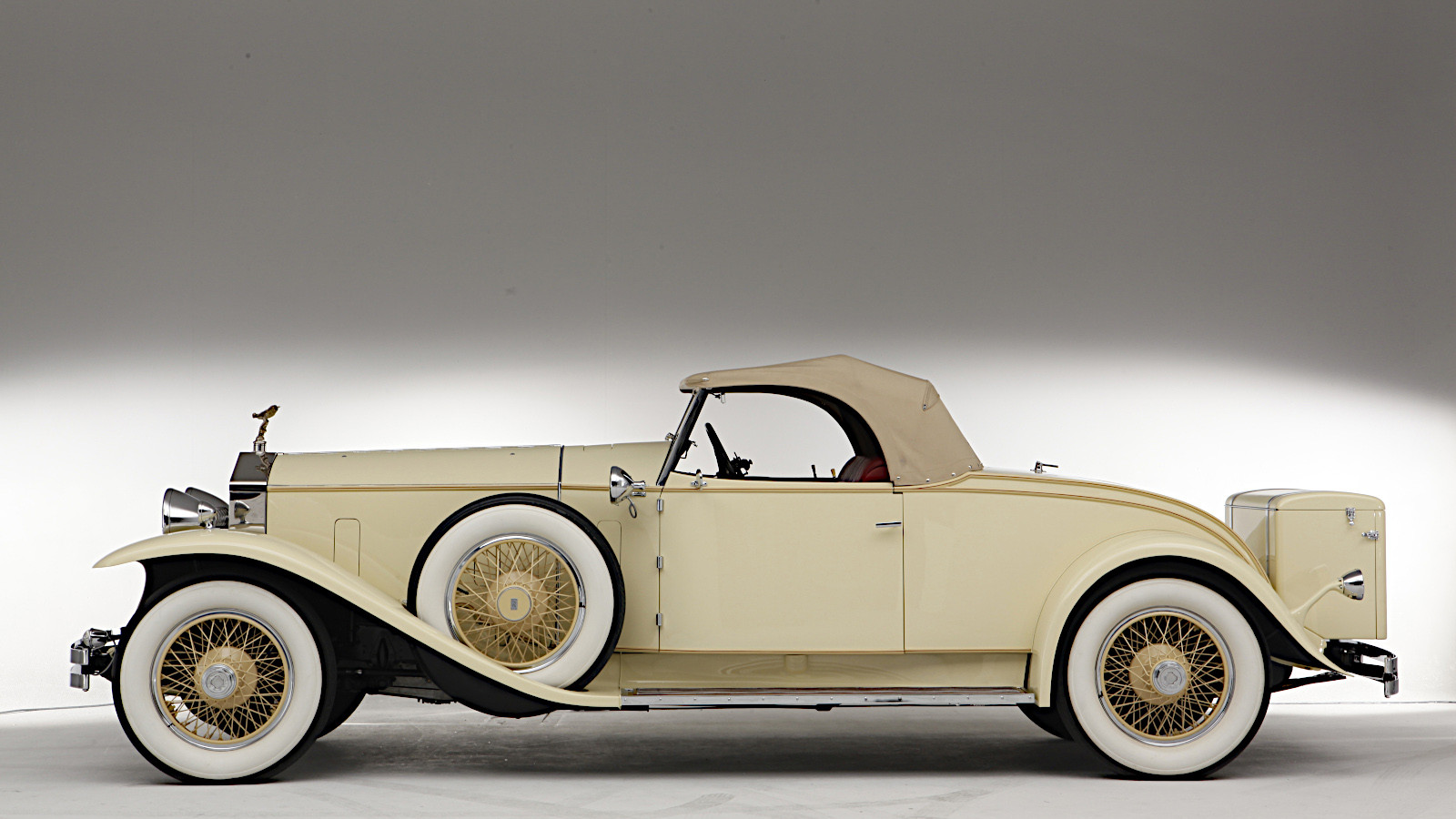
Most first-generation Phantoms were manufactured at the Rolls-Royce factory in Derby, in the UK, but some were built – as Silver Ghosts had also been – several thousand miles to the west in Springfield, Massachusetts, USA.
The car pictured here was made in Springfield in 1931, and indeed could not have been made anywhere else, since by that time Derby was building the replacement model while the US operation persevered with the original.
Its body was created by Brewster and is known as Playboy Roadster, a name difficult to imagine being applied to any British Rolls-Royce.
The Fred Astaire Phantom I
By the time the Phantom had been launched, a young Nebraskan of German and Austrian heritage born as Frederick Austerlitz had become known as Fred Astaire, of whom Robert Benchley wrote in 1930, ‘I don’t think that I will plunge the nation into war by stating that Fred is the greatest tap dancer in the world’.
Only slightly older than the 20th century, Astaire became one of the first global stars to buy a Rolls-Royce Phantom, a Sedanca de Ville whose roof, as is characteristic of this body style, did not extend as far forward as the front seats.
In 2017, the Astaire car, now owned by the Petersen Museum in Los Angeles, was the oldest model to take part in the Great Eight Phantoms exhibition in London, an event which previewed the launch of the Phantom VIII.
Rolls-Royce Phantom II
The Rolls-Royce Phantom II, as it was officially called, had a similar engine to the New (though by this time in fact old) Phantom, but the 7.7-litre straight-six now had a crossflow cylinder head.
Other developments included a new chassis, hypoid final drive and a gearbox mounted directly to the engine rather than being distantly connected to it.
No Phantom IIs were built at Springfield, so left-hand-drive cars of this generation sold in North America were imported from Derby.
Rolls-Royce Phantom II Continental
The Phantom II was offered with wheelbases of 144in (3658mm) or 150in (3810mm), but Henry Royce felt that even the shorter version was too large and cumbersome for his personal use.
He therefore requested a sportier derivative to be created, and since others within Rolls-Royce disapproved of the idea this might have been the only example ever built.
As word of the car spread, however, it became clear that there was in fact a market for a high-performance Phantom II.
This led to the development of the Continental, which would go on to make up about one sixth of total Rolls-Royce Phantom II production.
Lord Mountbatten’s Phantom II
Like other Rolls-Royces, Phantoms were often acquired by very famous people.
This 1929 Phantom II was bought new by Lord Louis Mountbatten, second cousin of the man who, seven years later, would ascend to the British throne as King George VI.
Its Sedanca de Ville bodywork was created by Barker, the coachbuilder which had performed the same job on the 40/50hp named Silver Ghost by Claude Johnson in 1907, and it wears what would now be called a personalised numberplate, ‘LM’ standing for ‘Louis Mountbatten’ and 3698 being the telephone number at his home in the Mayfair district of London.
It also has the usual Spirit of Ecstasy mascot, which Mountbatten had asked (apparently to Rolls-Royce’s consternation) to be replaced by an emblem of a naval signaller on a Silver Ghost he ordered in 1924.
Rolls-Royce Phantom II Shooting Brake
Although Rolls-Royce is not known for estate cars, the fact that Phantom buyers commissioned bodies from independent coachbuilders meant there was no reason why a version with this body style should not exist.
The car pictured here started out in 1930 as a Weymann-bodied saloon, but within a few years this was replaced by a ‘woodie’ shooting-brake body, whose attractiveness may be a matter of opinion but whose practicality is beyond question.
Now in private hands, the car was displayed for several years in the former Doune Motor Museum (now an antiques and arts centre), near Stirling in Scotland, within earshot of what is often described as Britain’s most intimidating hillclimb course.
Rolls-Royce Phantom III
Around 1930, the year he became a baronet, Sir (as he now was) Henry Royce decided that a six-cylinder engine, even one with a very large capacity, was no longer suitable for a luxury car.
At 7.3 litres, the unit in the Phantom III was actually smaller than the one used in its two predecessors, but it was a V12, a layout Rolls-Royce had never previously used in a roadgoing vehicle.
The V12 had two spark plugs per cylinder and hydraulic tappets.
Among many other notable features, the Phantom III was the first Rolls-Royce with independent front suspension, which provided far better ride quality than the previous set up.
Rolls-Royce Phantom III timeline
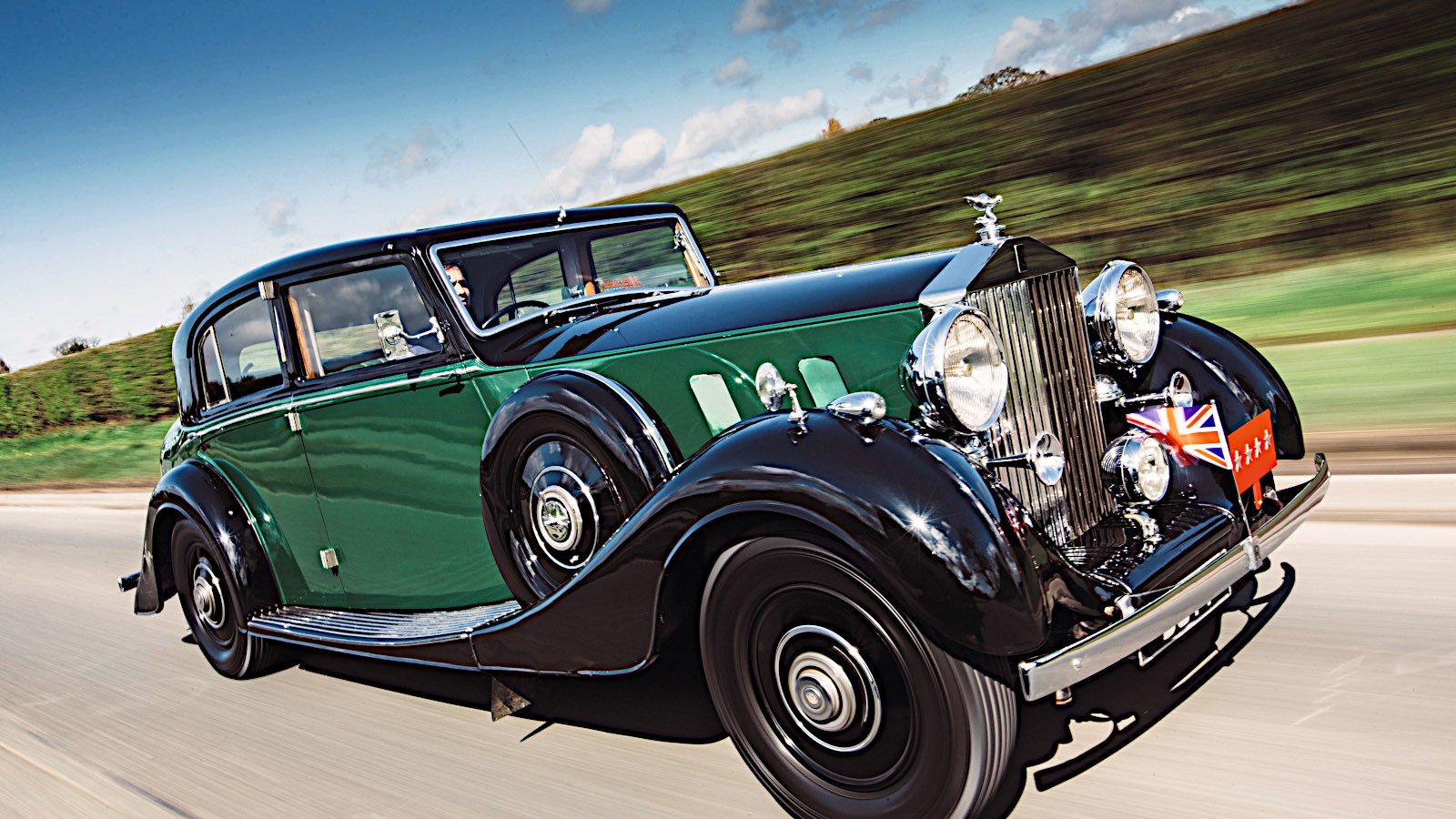
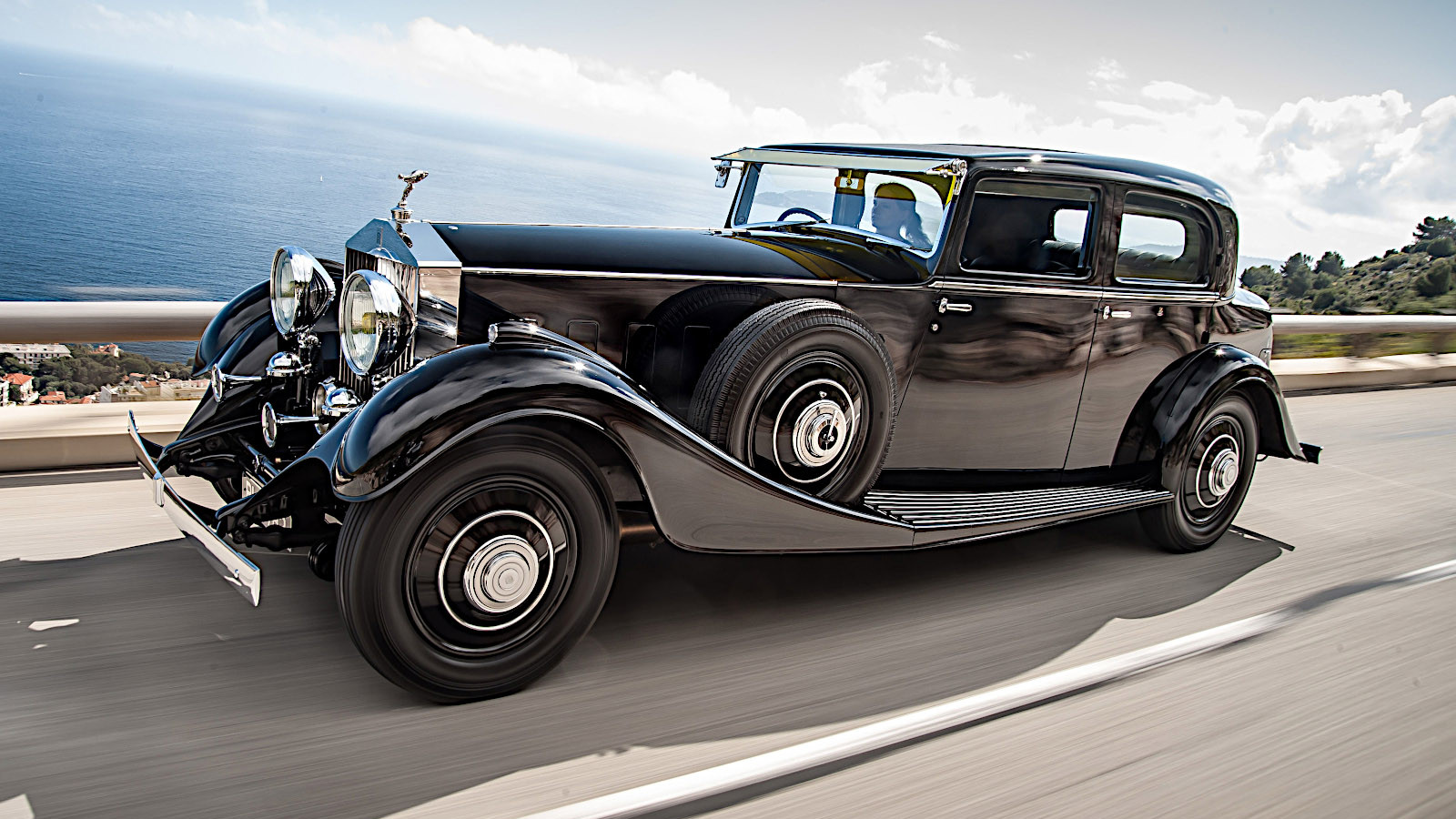
The Rolls-Royce Phantom III was introduced in 1936, and the Barker-bodied car pictured here is one of the earlier examples, delivered in January 1937 to American department-store magnate and yachtsman Louis D Beaumont’s villa at Cap d’Antibes in southern France.
Sir Henry Royce did not live to see this or any of the 710 Phantom IIIs built – he died in 1933, a year before the first prototypes (called Spectre, a name Rolls-Royce subsequently used for its first electric model) were ready to run.
Production ended in 1939, and there was not to be another V12-engined Rolls-Royce until the BMW-powered Silver Seraph came along in 1998.
The Phantom III two-seater
Rolls-Royce Phantom IIIs generally had a great deal of room for at least four people, but a very special example could accommodate just two.
It was ordered by Polish count Stefan Czarniecki, although it’s believed that he was acting on behalf of military leader, and briefly Prime Minister of Poland, General Władysław Sikorski.
Completed in 1937, the car had an open two-seater body (similar in principle to that of the Phantom I Playboy Roadster) designed and constructed by the Parisian coachbuilder Vanvooren, which also made bodies for other Rolls-Royces as well as Bugattis and Hispano-Suizas, among other high-end vehicles.
Montgomery’s Phantoms
The most extraordinary of all Phantom IIIs was built in 1937 and first owned by Alan Butler (chairman of the De Havilland Aircraft Company), who commissioned HJ Mulliner to build a unique body with a reverse-angled windscreen.
Butler loaned it to the British Government during the Second World War, and it is most closely associated with Field Marshal Bernard Montgomery, though this is because Montgomery bought it for his own use once the conflict was over.
During the war itself, Montgomery frequently drove a more conventional Phantom III made available by Frederick Wilcock.
For the duration of their loans, both cars were driven only in the UK, since Butler and Wilcock wanted them back when they were no longer needed, and did not want them to be damaged on visits to other countries.
Rolls-Royce Phantom IV
Rolls-Royce abandoned the motor industry during the Second World War to concentrate on building aircraft engines, and when it turned its attention back to cars in peacetime its first models were the Silver Wraith and Silver Dawn, both fitted with straight-six motors and, in the latter case, a body created by the company itself rather than a coachbuilder.
However, Rolls-Royce also developed a straight-eight related to a family of military engines, and this was used in several experimental vehicles developed by Bentley (under Rolls-Royce ownership at the time) including one called the Scalded Cat.
Prince Philip drove this car and, shortly afterwards, expressed the hope that something like it could be supplied for the private use of him and his new wife, Princess Elizabeth, later Queen Elizabeth II.
Keen to supply its products to British royalty, which normally bought Daimlers, Rolls-Royce obliged, and the car they built in 1950 became the first in more than a decade to be called Phantom.
More Phantom IVs
More than 70 years later, the original Phantom IV is still being used for royal occasions, usually at far slower speeds than Prince Philip would have preferred.
More were to follow, though production of this exceptionally grand vehicle was very limited, and anyone who wasn’t a head of state (or, as in the case of the car pictured here, held the title Aga Khan) could forget about placing an order.
Only 18 examples were ever built, though this made the Phantom IV far more successful than the earlier Bugatti Royale, which was intended for a similar clientele.
Rolls-Royce Phantom V
While it would be too much of a stretch to describe the Phantom V as a car for the proletariat, it was certainly far more widely available than the Phantom IV.
Along with the Silver Cloud II and the Bentley S2, it was one of three cars introduced in 1959 powered by Rolls-Royce’s most famous engine, a V8 which at the time had a capacity of 6.2 litres.
In all, 832 examples were built in 13 years, mostly bodied by Rolls-Royce’s in-house coachbuilder Park Ward or the independent James Young and Mulliner, the latter being taken over and merged with Park Ward in 1961.
The Phantom V facelift
Regardless of who built the bodies, early Phantom Vs generally had one headlight mounted on each side of the imposing radiator.
Later ones, though mechanically very similar apart from a slight power upgrade, looked significantly different because of their quad-headlight arrangement.
The revised appearance is evident in the car pictured here, which was delivered to Harry Saltzman (producer or executive producer of several James Bond and Harry Palmer films, among many others) in January 1966.
Musicians’ Phantom Vs
Very few people who make their living from music could possibly afford a Rolls-Royce, but there have been some exceptions.
In the case of the Phantom V, one of these was Liberace, who owned a highly decorated 1961 Sedanca de Ville which can be seen in the 2013 Liberace biopic, Behind the Candelabra.
Elvis Presley’s 1963 Touring was less flashy, though it had several unusual features including a microphone, and is reputed to have been resprayed after chickens owned by the singer’s mother pecked the original midnight blue paintwork to destruction.
Elton John was far too young to own a car of any kind when his 1960 Phantom V was built, but he acquired it later and (as seen in the picture here) had it painted in an eye-catching combination of white and pink.
The John Lennon Phantom V
Perhaps the most famous Rolls-Royce Phantom V was the one bought new in 1964 by John Lennon.
As the story goes, its black paintwork was damaged when Lennon was in Spain during the filming of the 1967 movie How I Won the War.
Famously, Lennon commissioned a unique and very colourful paintjob which is often referred to as ‘psychedelic’.
Since 1992, the car has been in the Royal British Columbia Museum in Victoria, Canada, though for practical reasons it is only rarely put on display.
Rolls-Royce Phantom VI
By its own account, Rolls-Royce decided after building 832 Phantom Vs that enough changes had been made to warrant a new name.
Although only 374 examples were built from 1968 until the early 1990s, development continued.
The 6.2-litre V8 engine was replaced by the 6.75-litre version of the same unit, and the original four-speed automatic transmission gave way to a more modern three-speed.
The last Phantom VI commissioned by a customer (who, according to Rolls-Royce, specified 117 bespoke items including a solid-silver fruit bowl held in place by concealed magnets) was delivered in 1991.
The last 20th-century Phantom
The 374th and final Rolls-Royce Phantom VI was a black and red landaulette originally intended to be retained by the company.
‘Recessionary pressures’, as the marque expresses it, forced a change of policy, and the car was sold in 1993.
It was the very last Rolls-Royce with a separate body and chassis (unitary construction having been employed in other models since the launch of the Silver Shadow in 1965), the last Phantom of the 1900s and, for all anyone knew at the time, the last Phantom there would ever be.
(Representative Phantom VI pictured)
Rolls-Royce Phantom VII
By 2003, Rolls-Royce was a dramatically different company from the one which had sold its last Phantom VI a decade earlier.
It was now owned by BMW, and based in its new (and current) home at Goodwood in West Sussex, UK.
In the first minute of the year, the keys of its latest production model were handed over to a customer.
This was the Phantom VII, a continuation of the line started 78 years before, and the only model in the company’s range until the announcement of the Ghost in 2009.
Return of the V12
As the Phantom III had been in the 1930s, the Phantom VII was powered by a V12 engine.
Essentially, this was the 6-litre unit fitted to the most prestigious versions of the BMW 7 Series, but in a nod to Rolls-Royce’s past it was enlarged to 6.75 litres, the same size as most examples of the famous V8.
The rear-hinged back doors referred to earlier models, too, but in other respects the Phantom VII was unquestionably forward-looking.
Unlike any previous car from the marque (a Phantom in particular or Rolls-Royce in general), it was based on an aluminium spaceframe and mostly clothed with aluminium body panels, an arrangement even the brilliant Henry Royce would have had difficulty imagining.
Rolls-Royce Phantom VII Extended Wheelbase
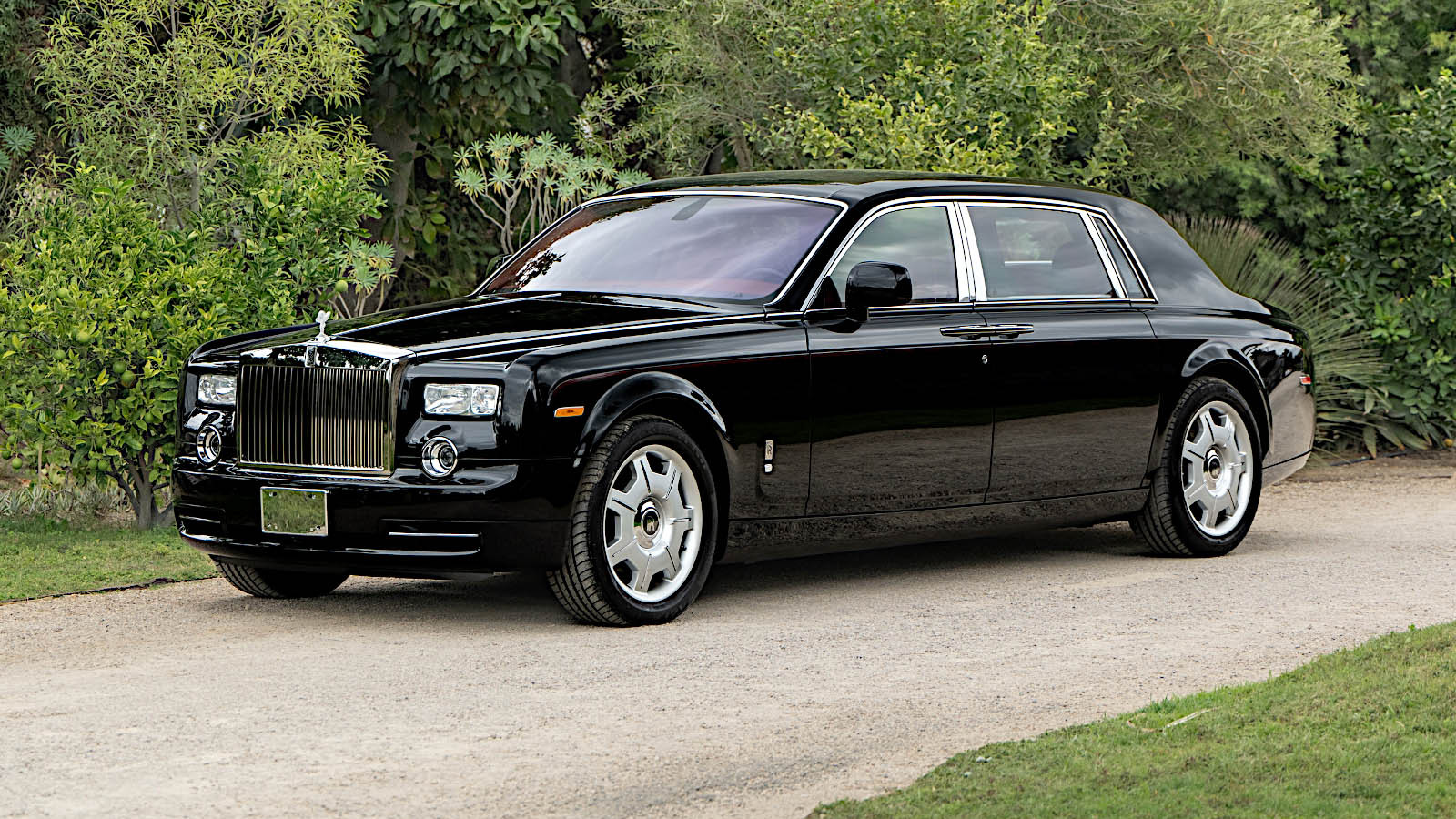
While it was unlikely that many people would consider the rear passenger area of the regular Phantom VII to be cramped, Rolls-Royce nevertheless enlarged it for a new derivative introduced in 2005.
The Phantom VII was 9.8in (249mm) longer than the standard car, specifically to create more space in the back.
At the time, this was the most expensive production Rolls-Royce in history, priced at £260,500 (US$395,000/€388,500) not including local taxes, delivery charges or optional extras.
Rolls-Royce Phantom VII Drophead Coupé
At the 2004 Geneva motor show, Rolls-Royce unveiled a concept called the 100EX, a convertible based on the Phantom VII but 4in (102mm) shorter and powered by a V16 engine.
The V16 has never been made available to customers, but an otherwise very similar car, with the usual 6.75-litre V12, went into production in 2007 as the Phantom VII Drophead Coupé.
It was normally priced at £260,000 (US$407,000/€370,000), but in its debut year examples sold for £800,000 and $2 million at charity auctions organised by the Naples Winter Wine Festival and the Elton John AIDS Foundation respectively.
Rolls-Royce Phantom VII Coupé
The 100EX concept was followed in 2006 by the 101EX, which was more or less the same thing except that it had a fixed roof.
It led directly to the Phantom VII Coupé, which went on sale two years later and had a 25% larger fuel tank than the Drophead.
This was the first model available with the Starlight Headliner (giving occupants the impression that they are sitting under a clear night sky), which has since become a characteristic Rolls-Royce feature.
Rolls-Royce Phantom VIII
After 14 years, the Phantom VII was replaced in 2017 by the Phantom VIII, which was still in production as the nameplate reached the end of its first century.
Like its predecessor, it had a 6.75-litre V12 engine designed by BMW, but this was not the same thing as the earlier V12, not least because it had, unlike any previous Phantom, two turbochargers.
In another bold move, the famous Rolls-Royce radiator grille, while still as imposing as ever, was for the first time completely integrated into the front bodywork, rather than standing proud of it.
Architecture of Luxury
The structure of the Rolls-Royce Phantom VIII was similar to that of the Phantom VII, with mechanical components and body panels attached to an aluminium spaceframe.
The actual design, however, was new for this model, and was named Architecture of Luxury.
While not perhaps of much interest to many buyers, this was a historic development, because it moved Rolls-Royce into the era of modular platforms which could be used for different vehicles, leading designer Giles Taylor to remark, ‘In essence, this is one big coachbuild project’.
The Architecture of Luxury has since become the basis of the smaller, second-generation Ghost and the Cullinan SUV.
Rolls-Royce Phantom VIII Series II
Announced in May 2022, the Series II was what might, in other contexts, have been called an upgrade of the Phantom VIII, though Rolls-Royce artfully described it as a ‘new expression’.
There were no mechanical changes to speak of – instead, there was a new feature called Rolls-Royce Connected, along with ‘visual and aesthetic enhancements in line with client requests and feedback’.
The radiator grille was now illuminated, as in the Ghost, and the Rolls-Royce badge and Spirit of Ecstasy mascot were more prominent than in the original Phantom VIII.
The only alteration to the already magnificent interior was a slightly thicker steering wheel.
Rolls-Royce Phantom VIII Cherry Blossom
Right from the start, owners had been able to personalise their Rolls-Royce Phantoms.
This is no longer a case of commissioning a body from a specialist coachbuilder, but of asking Rolls-Royce itself to make adaptations.
A recent example from the centenary year is the Cherry Blossom, a unique car built to the order of a Japanese customer.
In tribute to Japan’s Hanami tradition, this Phantom’s headlining features images of a cherry tree bough and white blossoms. The embroidery work took three weeks, and involved 250,000 stitches.
We hope you enjoyed this gallery. Please click the ‘Follow’ button above for more super stories from Classic & Sports Car.