
20 Audis that didn’t make production
Audi is renowned for its innovation and experimentation, which has led to some iconic models.
However, not all of its cars have made it past the prototype stage, leading to many tantalising one-offs and what-ifs.
Here’s our look at some of the best Audis never made, from covetable convertibles to single-minded rally cars.
There are also different takes on the luxury car and even an early plug-in hybrid.
Some of these cars ended up missing production through projected lack of sales, while others were the victims of shifting priorities, but all are intriguing.
The list is presented in chronological order.
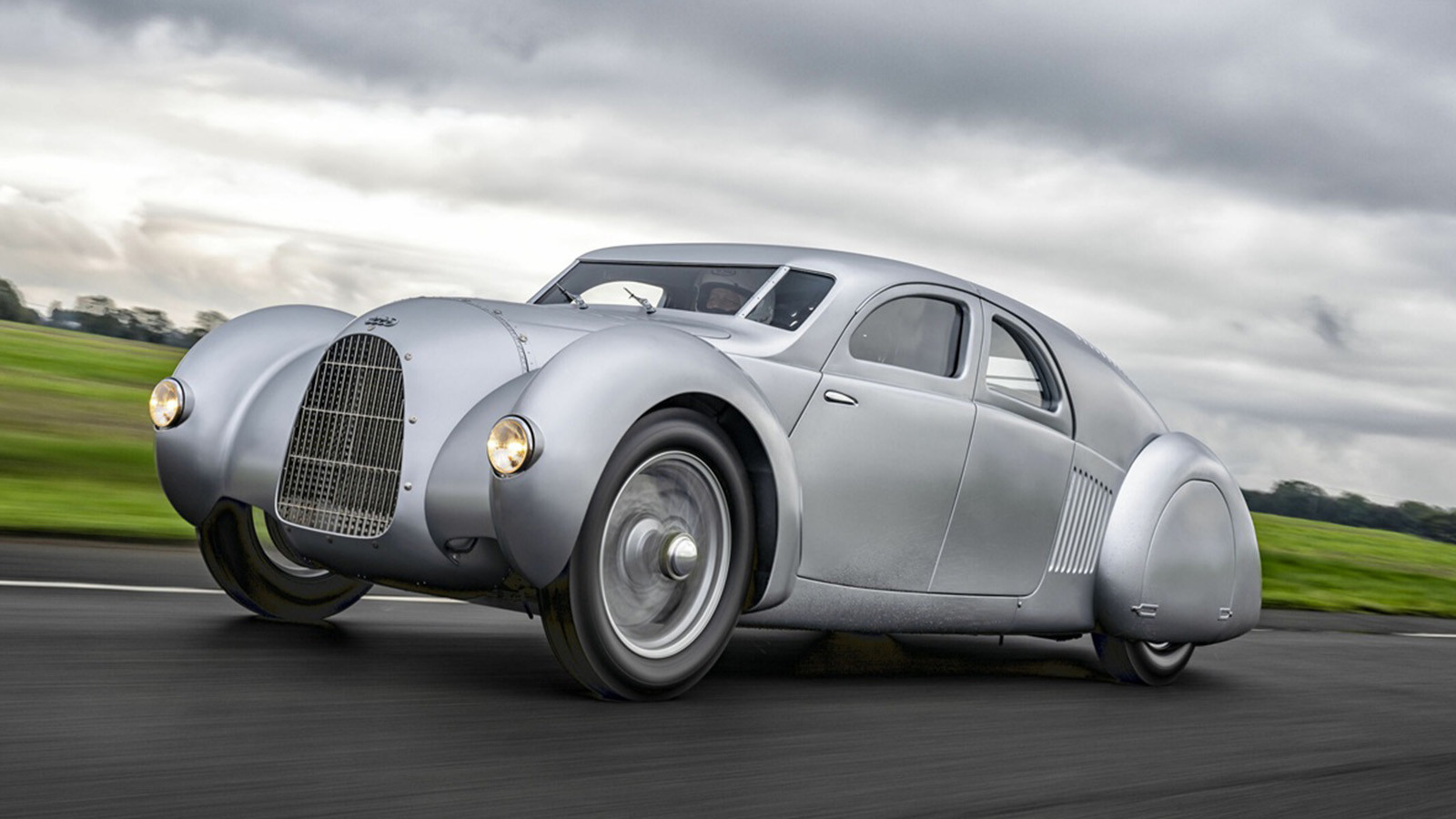
1. 1934 Auto Union Type 52
Alongside the successful Auto Union Type 22 mid-engined racing car, the German firm planned to make a roadgoing model with the same 16-cylinder engine.
It would have been one of the world’s most powerful road-legal cars and was appropriately known as the Schnellsportswagen.
Auto Union, of which Audi was one of the four constituent companies, did not complete the Ferdinand Porsche-designed car.
However, in 2023, Audi presented a finished Type 52 commissioned from and built by British specialists Crosthwaite & Gardiner.
Using original drawings and design sketches, the car uses a Type C 6-litre, 16-cylinder engine with supercharger, though the 1934 original would have used a 4.4-litre motor.
As a result, the newly created Type 52 has 512bhp compared to 197bhp that was intended in the 1930s.
The Type 52 is a three-seater, with the driver placed centrally and one passenger set back on either side.
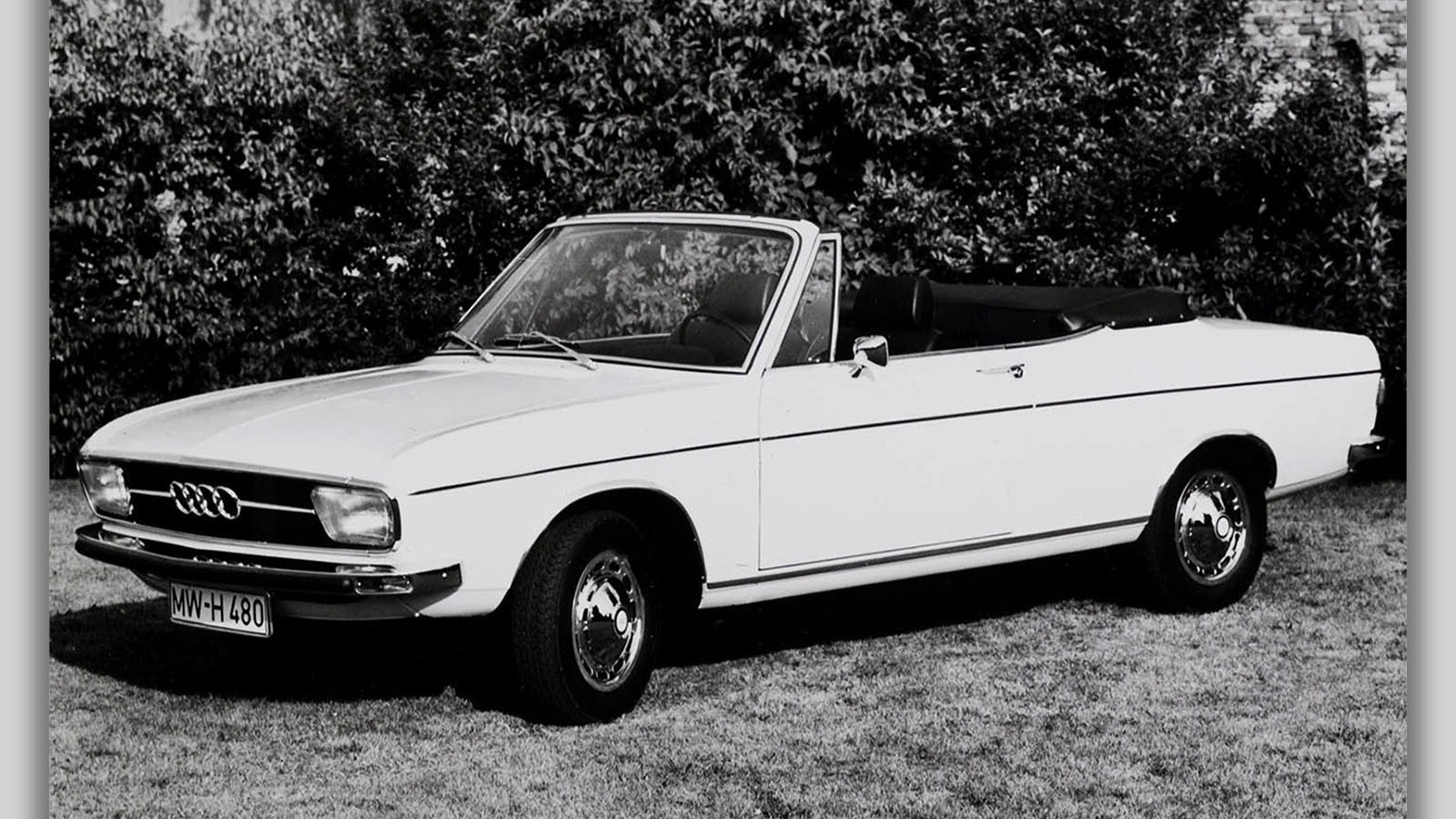
2. 1969 Audi 100 LS Cabriolet
There was serious intent behind the Audi 100 LS Cabriolet and Karmann was charged with creating the drop-top version of 100 two-door saloon.
The front of the Cabriolet stuck with the same headlights and grille as the saloon, rather than the 100S Coupé’s sportier twin headlights.
Even so, it was a good-looking convertible and drew a favourable reaction at the 1969 Frankfurt motor show where it made its debut.
With a 1.9-litre, four-cylinder engine, the LS Cabriolet would have offered decent performance.
However, Audi decided not to progress the idea following the Frankfurt show and this convertible model remained a one-off.
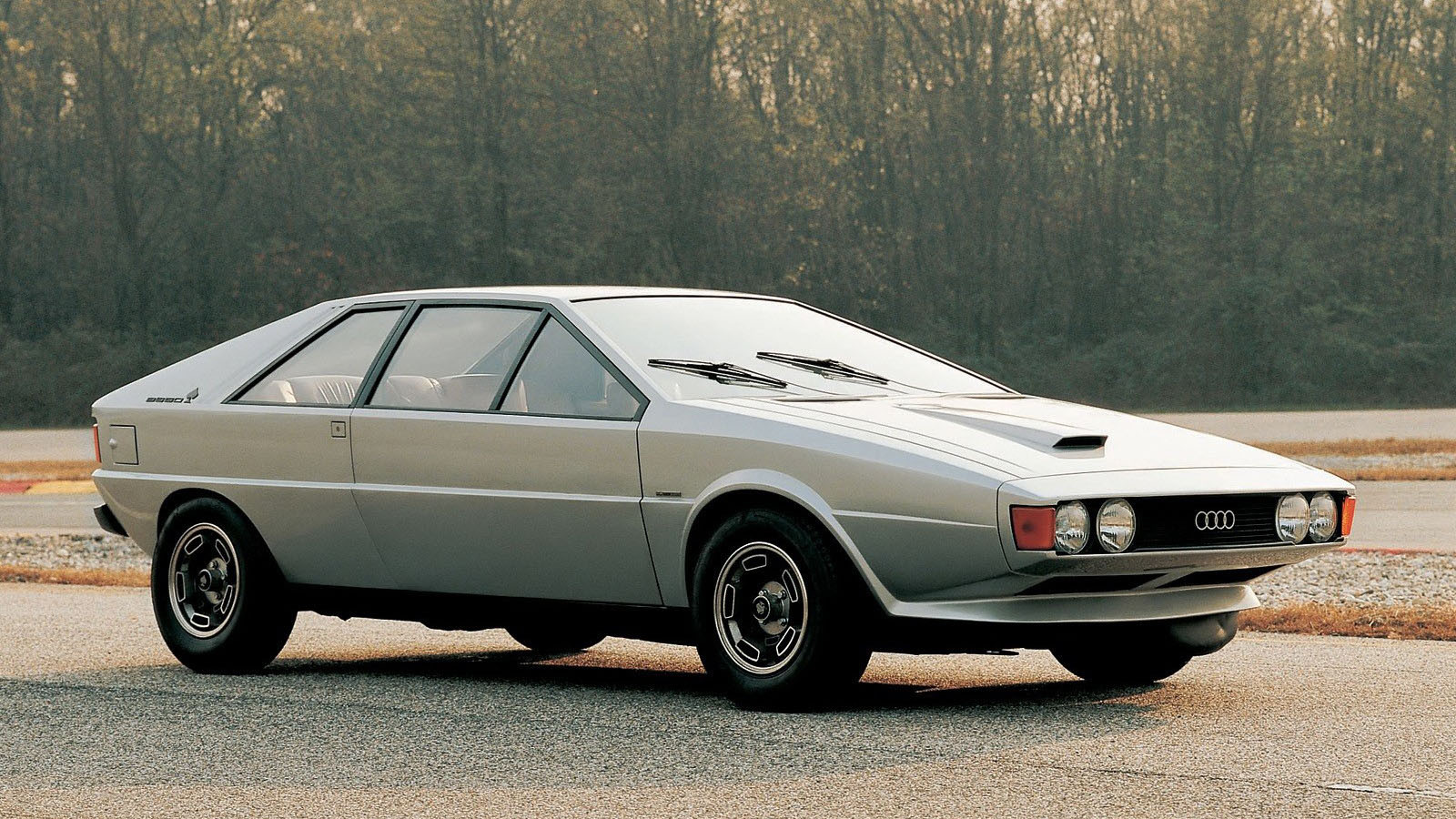
3. 1973 Audi Karmann Asso Di Picche
German coachbuilder Karmann was keen to land more business from Audi and commissioned ItalDesign to come up with a coupé as a promotional tool – Giorgetto Giugiaro designed the Asso Di Picche, which is Italian for Ace of Spades.
With clear similarities to the Volkswagen Scirocco that Giugiaro also styled, the Asso Di Picche used an Audi 80 platform as its base.
The low-slung, sharp-edged coupé had a very short rear overhang, but needed a longer nose to accommodate the Audi engine layout. However, this also meant the cabin had room for four seats.
The interior came with a rounded binnacle, which would make it easy to switch between left- and right-hand drive for a production version. The satchel-style door pockets were less practical.
While the Asso Di Picche never progressed further, there are hints of its looks in the Coupé that arrived in 1980.
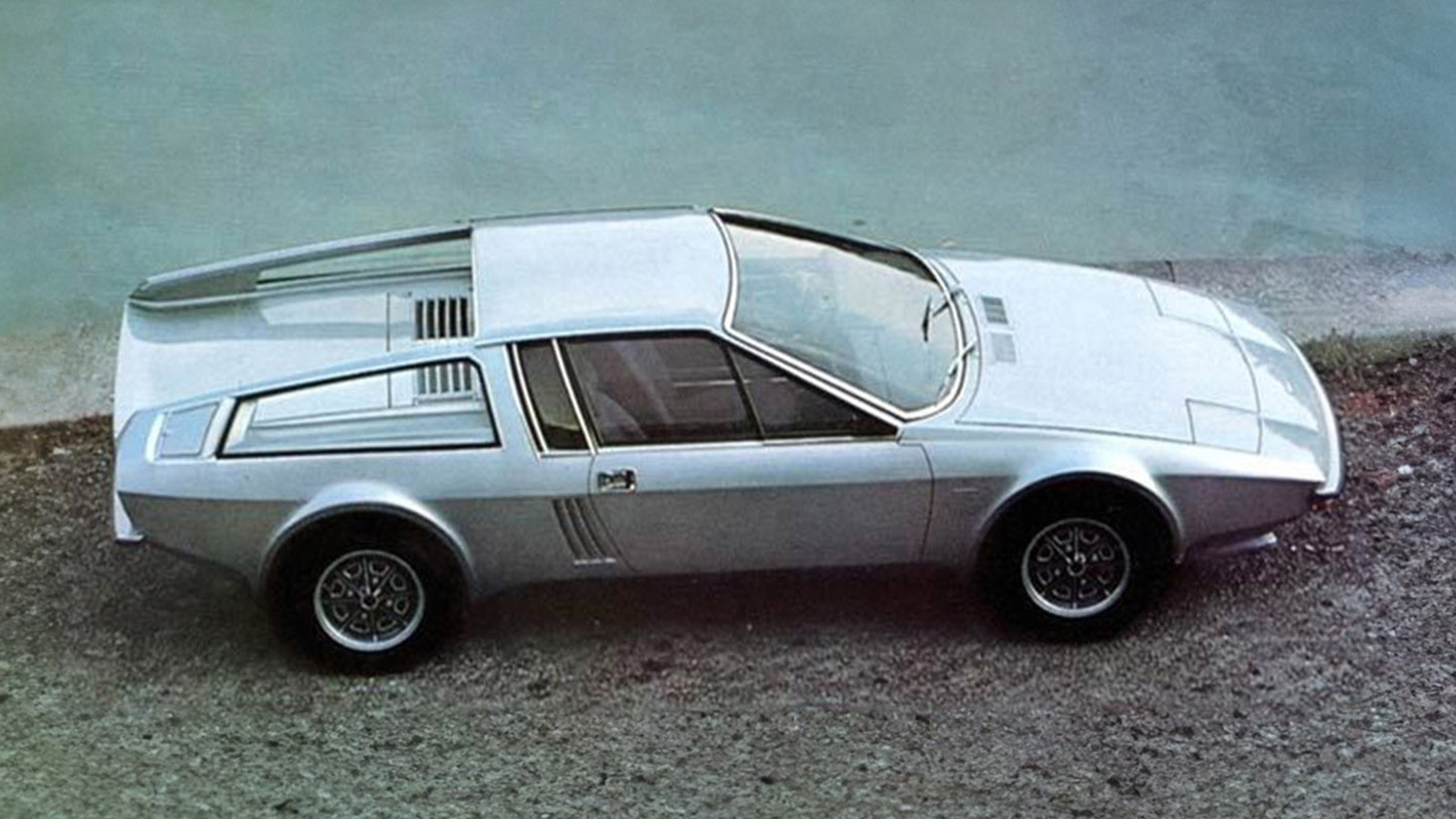
4. 1974 Audi 100S Coupé Speciale Frua
It might have shared its name with Audi’s existing 100S Coupé, but the 100S Coupé Speciale Frua was a very different machine.
For starters, the Speciale from Frua took the 1871cc, four-cylinder engine and placed it in the middle of the car, rather than hanging over the front wheels.
This allowed Frua to create a low-lying, two-door sports car that resembled a Maserati Merak in appearance.
The Audi 100S Coupé Speciale Frua was first seen at the 1974 Geneva show and was warmly received.
The interior was not quite as dramatic as the exterior, but it was roomy for driver and passenger. However, severely limited luggage space was a flaw of this design.
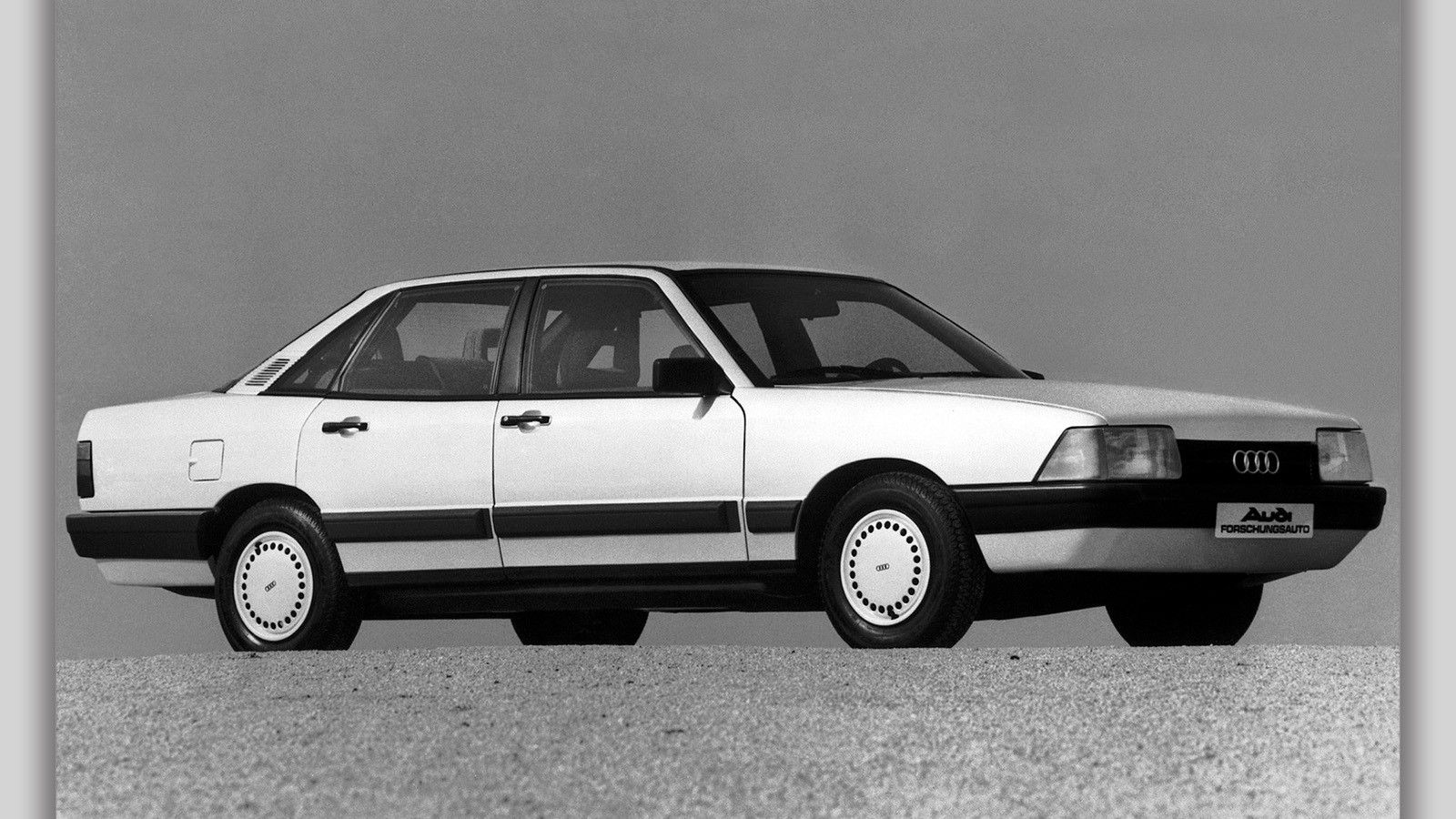
5. 1981 Audi Auto 2000
The Auto 2000 project was initiated by the German Ministry of Research and Technology to push the country’s car makers to produce more fuel-efficient models for the new millennium. Along with Mercedes-Benz and Volkswagen, Audi embraced this challenge.
The Audi Auto 2000 arrived at the 1981 Frankfurt motor show. It’s clear this one-off demonstrated how the new 100 model of 1982 would look, but at the time it was more of an experiment in aerodynamics.
With its smooth lines and flat wheel trims, the Audi Auto 2000 had a drag coefficient of 0.30Cd. It also used lightweight aluminium for the roof, and plastic for the bonnet and bootlid.
A 1.6-litre petrol engine powered the Auto 2000, mated to a manual gearbox with intentionally long gearing to maximise fuel economy.
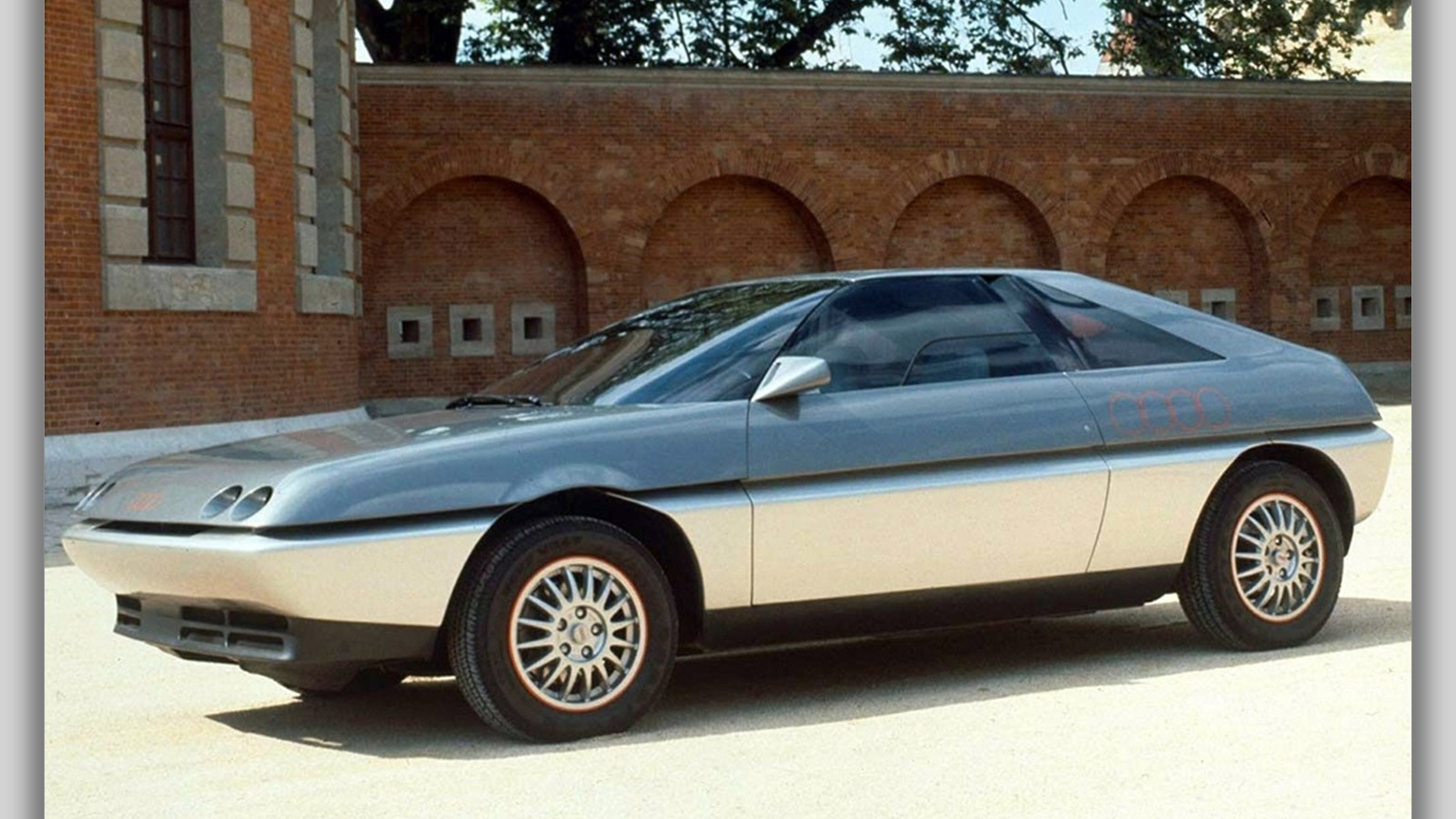
6. 1981 Audi Pininfarina Quartz
The Audi Pininfarina Quartz came about as a 75th-birthday present for Swiss car magazine Automobile Revue.
Sergio Pininfarina was friends with the magazine’s publisher and decided to build a fully functioning coupé as a gift.
With Audi’s consent and backing, a quattro coupé was delivered to Pininfarina, albeit with no exterior body panels fitted.
The Italian coachbuilder then created the Quartz, which ended up 30cm (nearly 12in) shorter than the original Audi, but still complete with its engine, transmission and four-wheel drive.
The car was shown at the 1981 Geneva show and Audi subsequently bought the car, which was 90kg (198lb) lighter than a standard quattro, thanks to using carbonfibre for much of its bodywork.
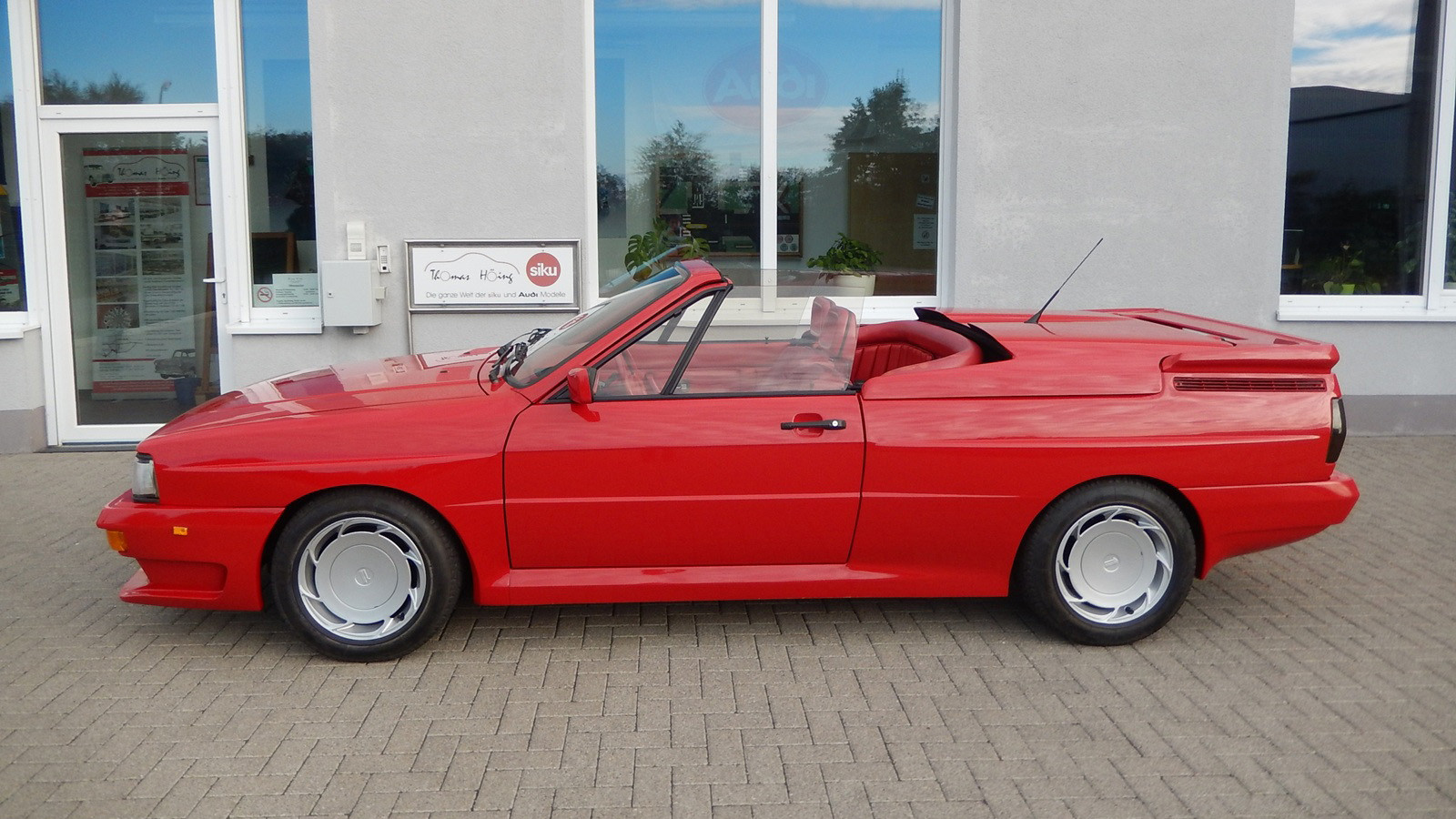
7. 1983 Audi Treser quattro Roadster
Walter Treser was already very close to Audi when he conceived his Treser quattro Roadster, which became an icon of 1980s car modifying.
Having helped develop Audi’s four-wheel-drive rally car, Treser knew there were other possibilities with the model, including a convertible.
Rather than just lop off the roof and replace it with a soft-top, Treser designed a clever folding hardtop that disappeared under the rear deck.
The only downside was this used up all the rear-seat space, so this was a two-seat car. Another consequence of the design was the very long rear deck, which was not universally admired.
Around 40 of these cars were made by Treser, but Audi showed no interest in developing it further.
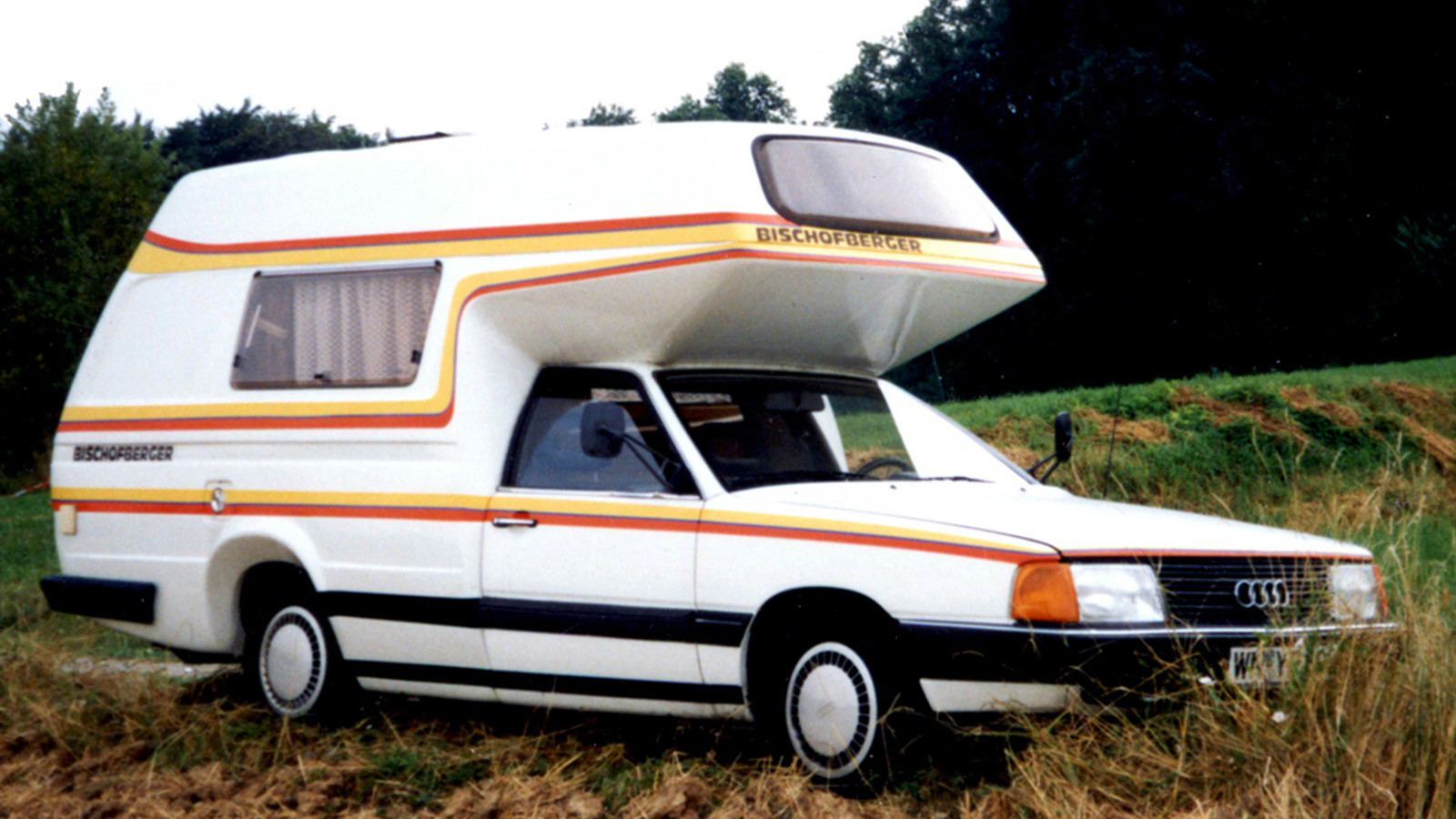
8. 1985 Audi Bischofberger 100 Family
Audi did not sell these converted campervans through its dealers and the conversion was carried out on cars bought by a customer, so there was no official acknowledgement.
None of this stopped Bischofberger turning around 40 examples of the second-generation Audi 100 into a home on wheels.
The glassfibre camper conversion was grafted onto the Audi, which had the rear doors, roof and boot cut away to accommodate this.
Inside, the Bischofberger 100 Family could sleep four, with two in the over-cab bunk and two more on a bed that converted from the seats either side of the central dining table.
The Bischofberger 100 Family was certified by Germany’s TÜV, so it was well engineered, but its high price limited sales.
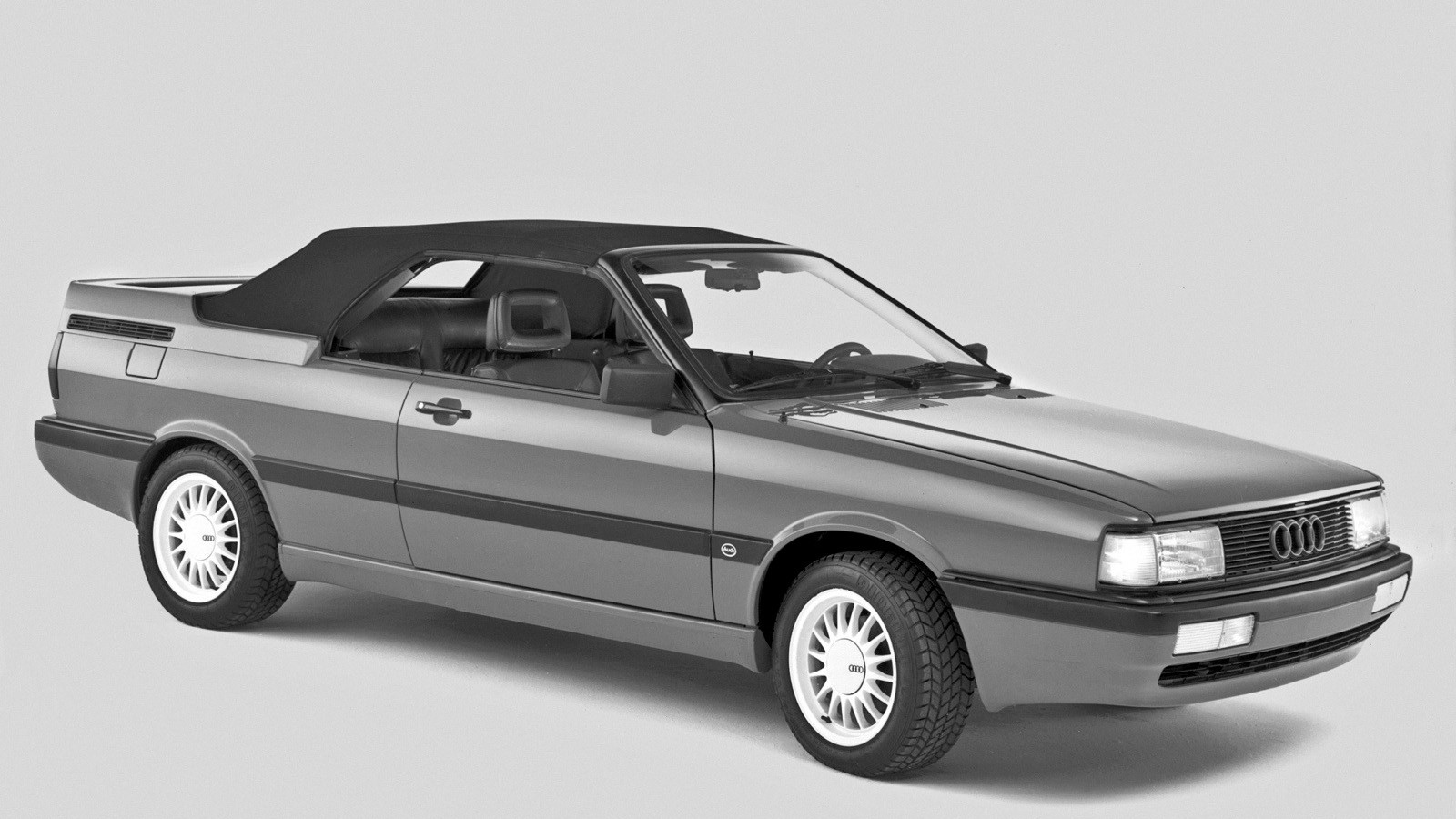
9. 1986 Audi GT Cabriolet
If Audi in Germany had shown no enthusiasm for Walter Treser’s quattro Roadster, the company’s US division was much keener on the idea of a convertible.
Audi of America commissioned the GT Cabriolet based on the B2 Coupé from the American Sunroof Company, which had helped develop the original Saab 900 Cabriolet.
ASC’s conversion was much less radical than Treser’s and used a fabric roof. It also retained the car’s rear seats, though there was a higher bootlid to let the roof fold down without looking like it was protruding too much from the body.
Although completed to a very high standard, the GT Cabriolet went no further than a single prototype.
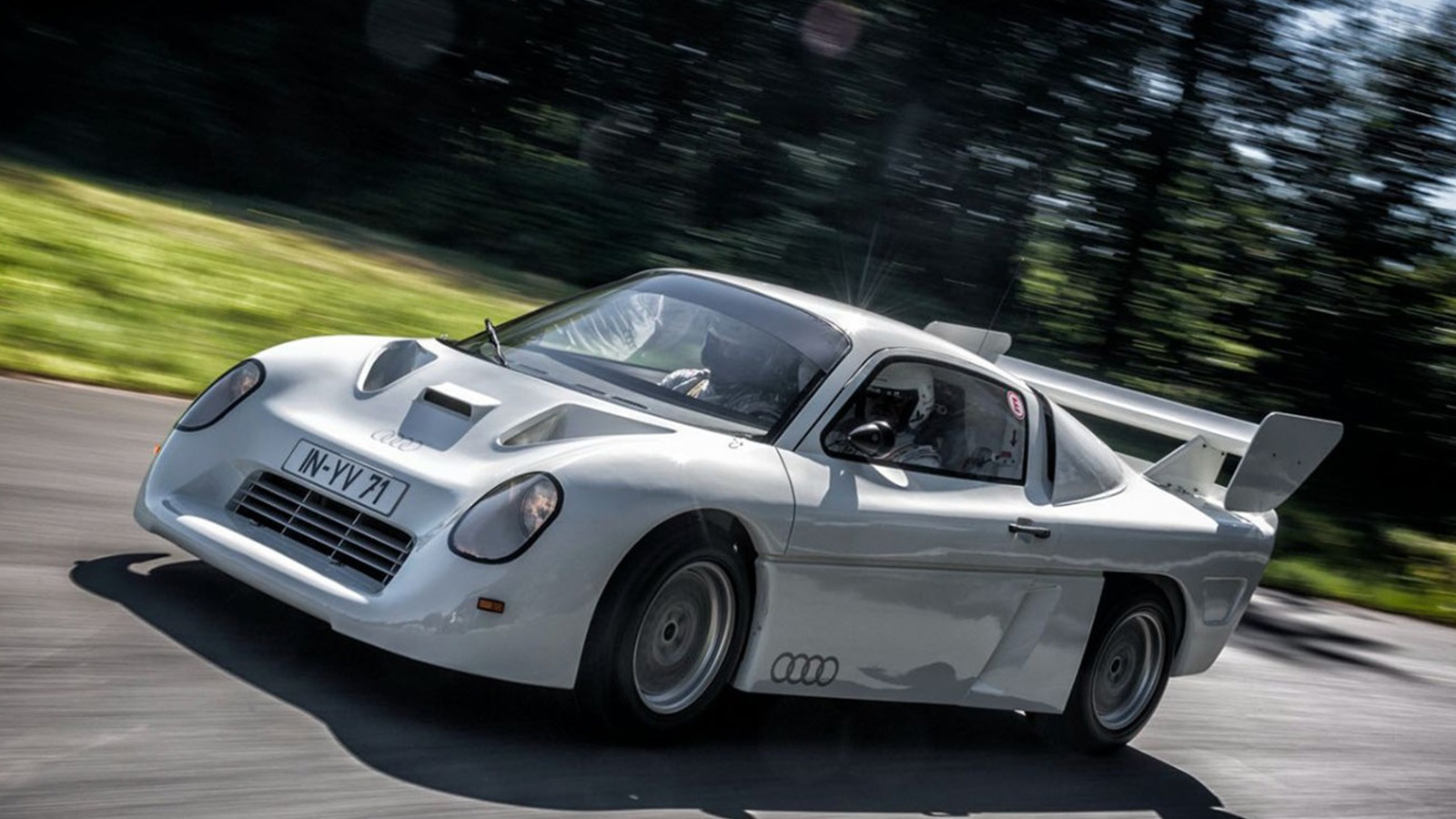
10. 1987 Audi RS 002
Audi developed the RS 002 with an eye on new Group S regulations that were set to take over from the hard-charging Group B rally era.
However, when Group B was banned, the Group S category was also scrapped and that left the RS 002 as a one-off with no natural outlet as a competition car.
The RS 002 took its 2.1-litre, five-cylinder engine from the Group B quattro S1 and had up to c690bhp on tap when it was tested by Walter Röhrl.
That sort of power was enough for a top speed of 186mph in its fastest set-up, and the mid-mounted engine sent drive to all four wheels.
Audi resurrected the RS 002 to run at the 2017 Goodwood Festival of Speed and occasionally brings it out for demonstrations of what might have been.
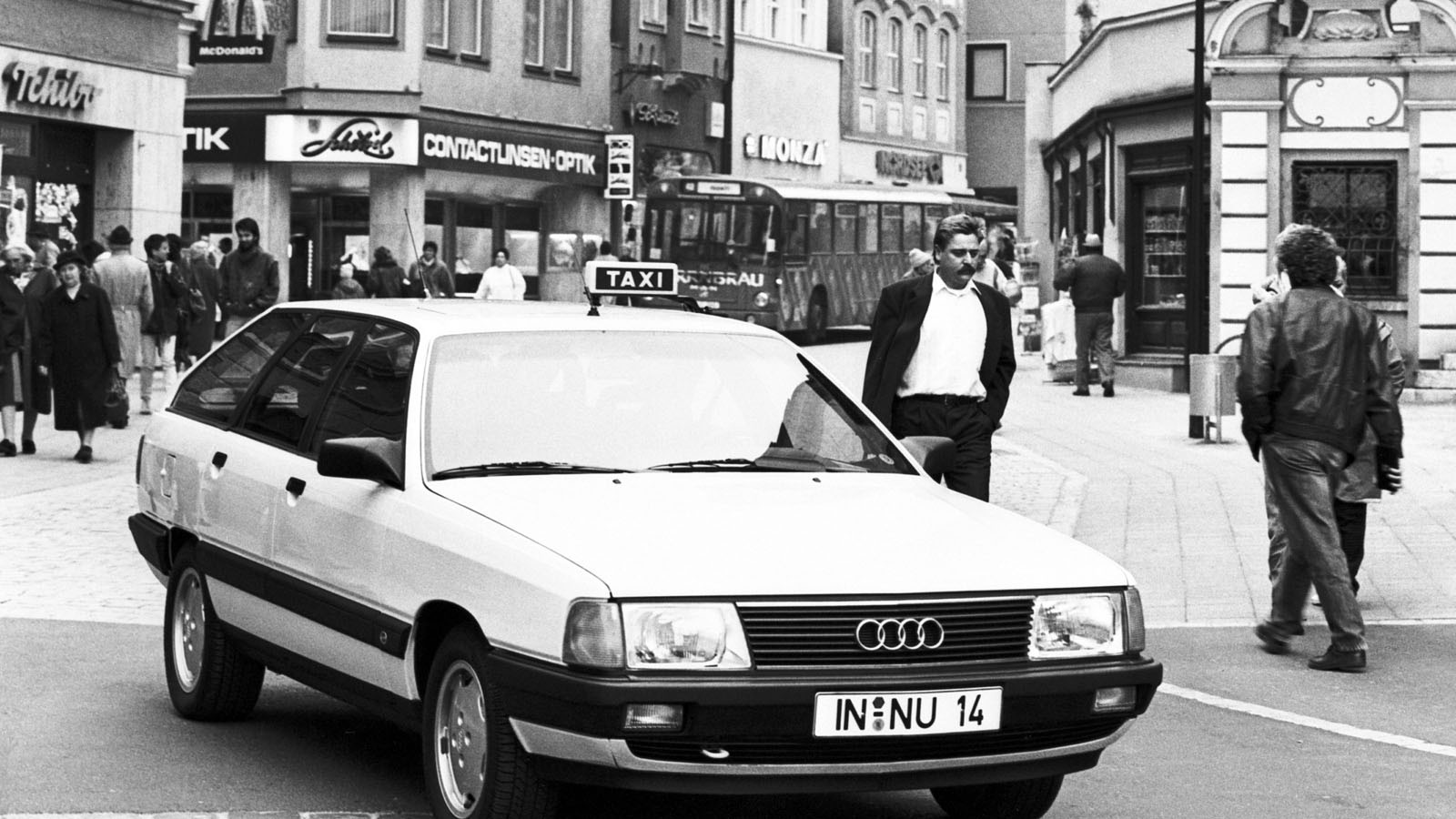
11. 1989 Audi Duo
Looking identical to an Audi 100 Avant from the outside, 1989’s Duo was radical under the skin because it was Audi’s first plug-in hybrid vehicle.
While the 100’s standard, 134bhp, five-cylinder, petrol engine powered the front wheels, a 12bhp electric motor drove the rear pair.
Nickel-cadmium batteries positioned under the boot floor provided the necessary electricity, plus the Duo was capable of up to 24 miles on battery power alone at up to 31mph.
Audi never intended to put the Duo into production, instead using it as a rolling test bed. However, 10 Duos were made and one was trialled as a taxi in Audi’s home town of Ingolstadt.
As well as being able to charge from a plug socket, the Duo could also harvest power from regenerative braking and from solar panels on its roof.
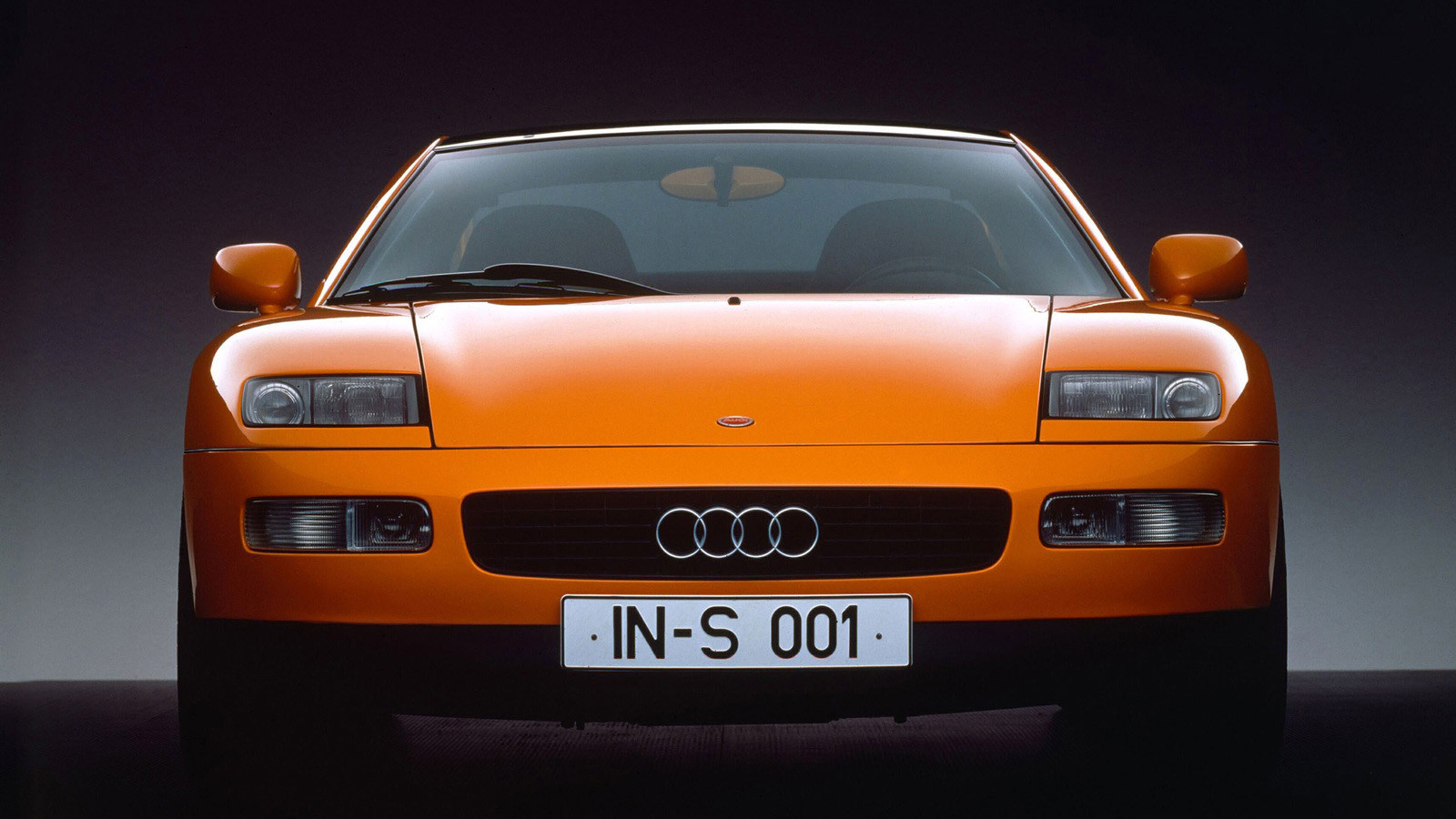
12. 1991 Audi quattro Spyder
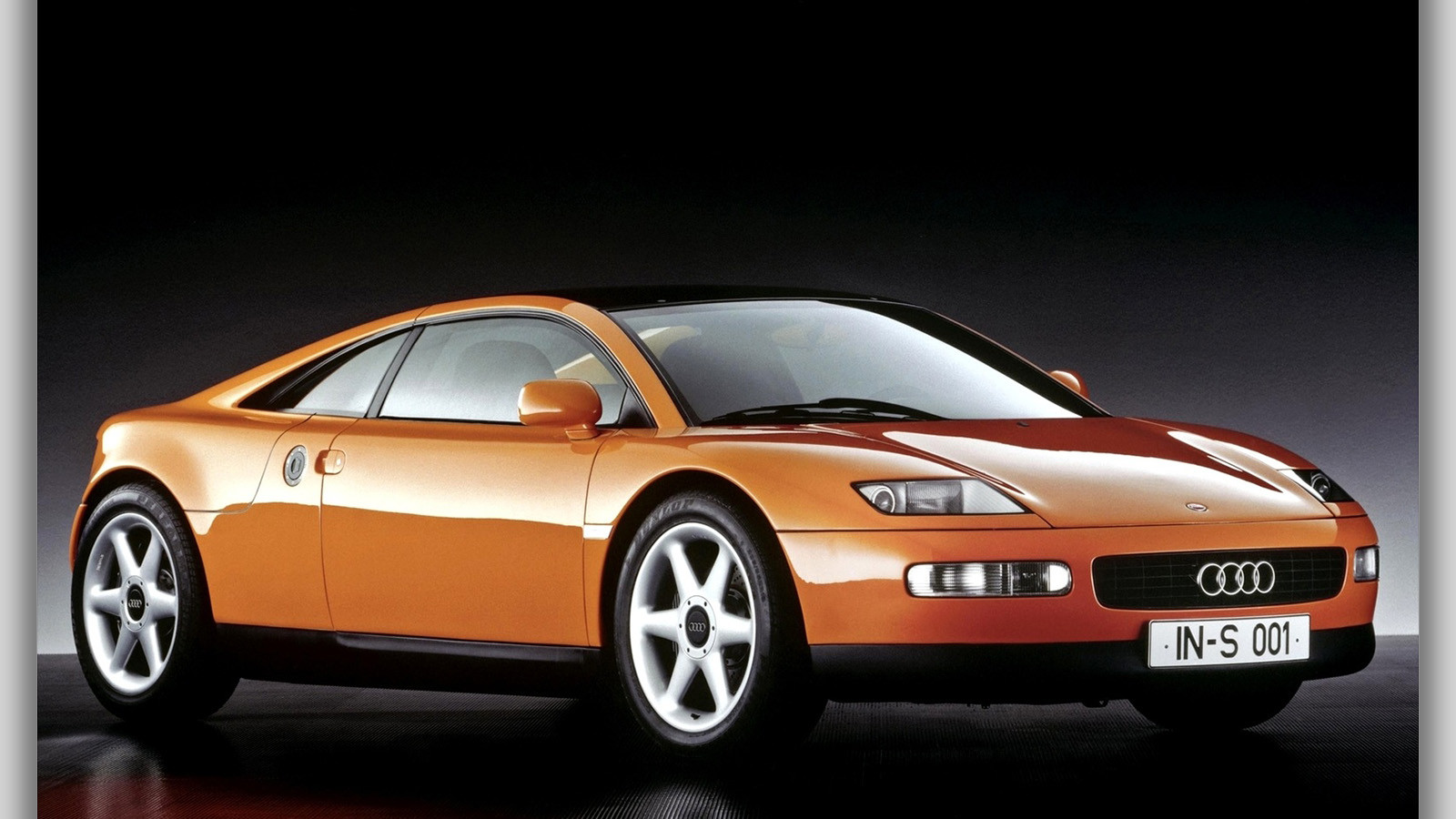
The Audi quattro Spyder looked every inch ready to arrive in showrooms when it was displayed at the 1991 Frankfurt motor show.
From the fit and finish of the body to the classily restrained cabin, the Spyder seemed destined for production and could have given the Honda NSX a run for its money as an everyday supercar.
The only downside was its 2.8-litre V6 that came with a very modest 172bhp and Audi reckoned buyers would not pay the required sum for a car with this output.
The removable roof panel and drop-down rear window gave the Spyder showroom appeal, and dealers fielded requests from customers keen to put down a deposit.
In the end, they would have to wait for the R8 of 2007 for a mid-engined Audi supercar.
13. 1991 Audi Avus quattro
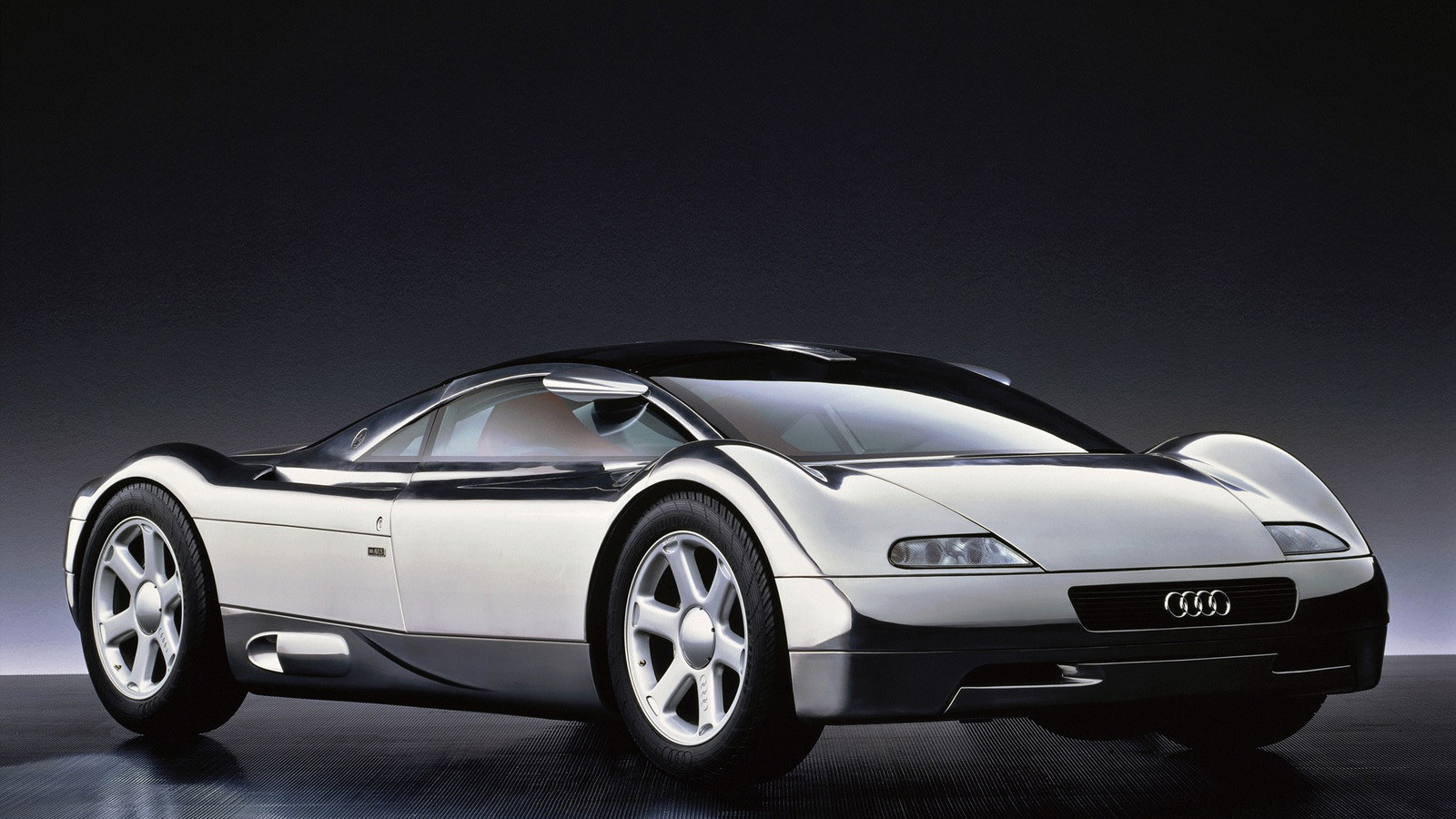
Audi chose to leave the aluminium body of the Avus quattro unpainted for a very deliberate reason, because this car showcased the firm’s plans to use the lightweight material in production models.
The Avus quattro looked like a viable supercar halo for Audi with its sleek styling by J Mays and Martin Smith.
It was also claimed to be capable of 0-62mph in 3 secs and a top speed of 211mph, thanks to a 502bhp, 6-litre, W12 engine.
However, the car exhibited at the 1991 Tokyo motor show had a wooden dummy engine, because the real thing wasn’t ready in time.
Regardless of this, the Avus quattro grabbed headlines and alerted the world to Audi’s new aluminium architecture that would see production with the A8 in 1994.
14. 1997 Audi A8 Coupé
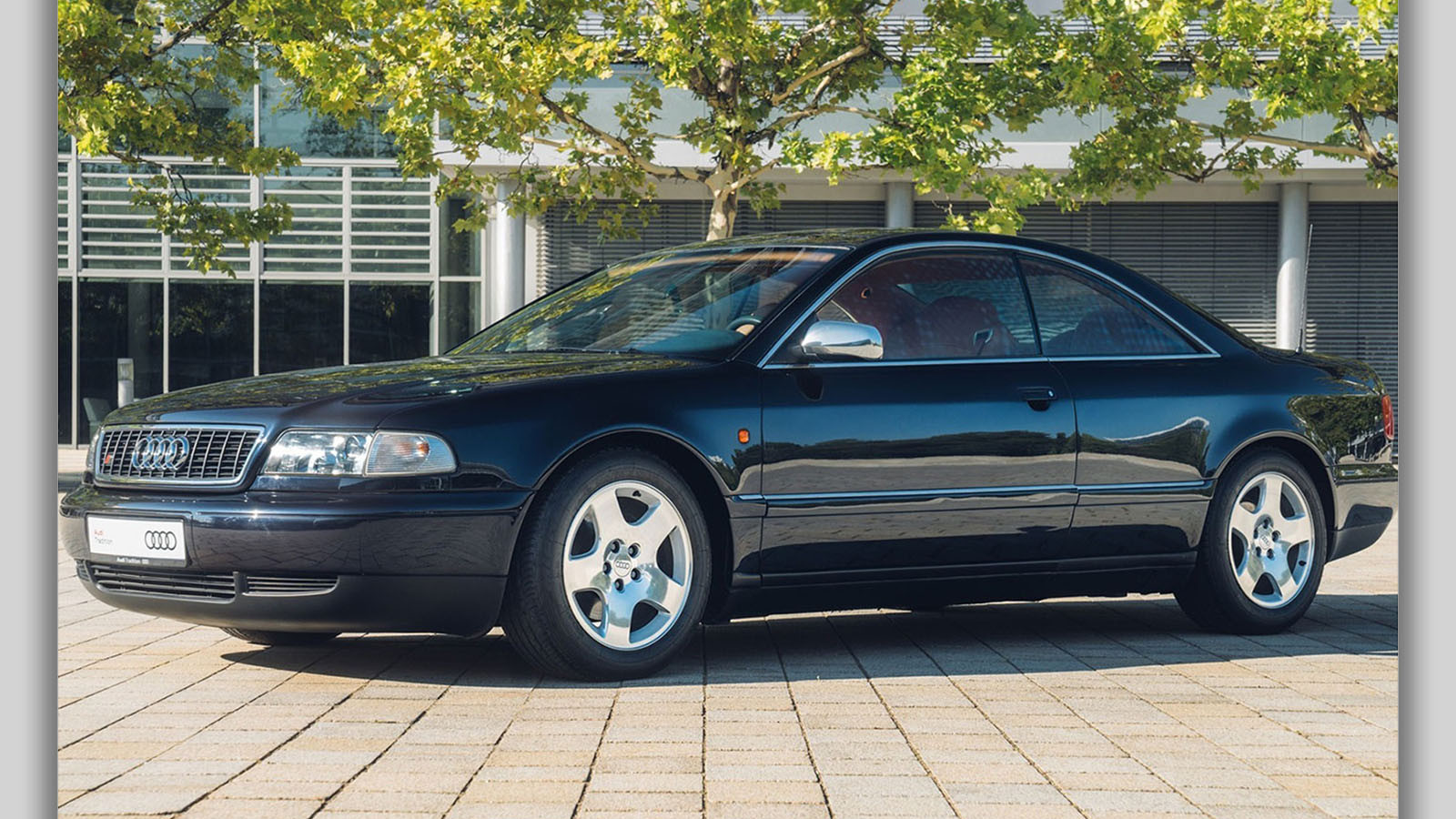
Mercedes-Benz had its CL and BMW had the 8 Series, so Audi reckoned the market was there for an A8 Coupé.
Audi worked with IVM Automotive, a German company specialising in prototype builds, to create a two-door version of the A8 saloon.
The work was made more complicated because Audi insisted on a pillarless design that gave the A8 Coupé a sleek profile.
The finished A8 Coupé was revealed at the 1997 Geneva show with a four-seat cabin and using the same aluminium architecture as the A8 saloon.
However, concerns over sales numbers for a luxury coupé convinced Audi to end the A8 Coupé project just as it seemed ripe for production.
15. 1997 Audi Al2 Open End
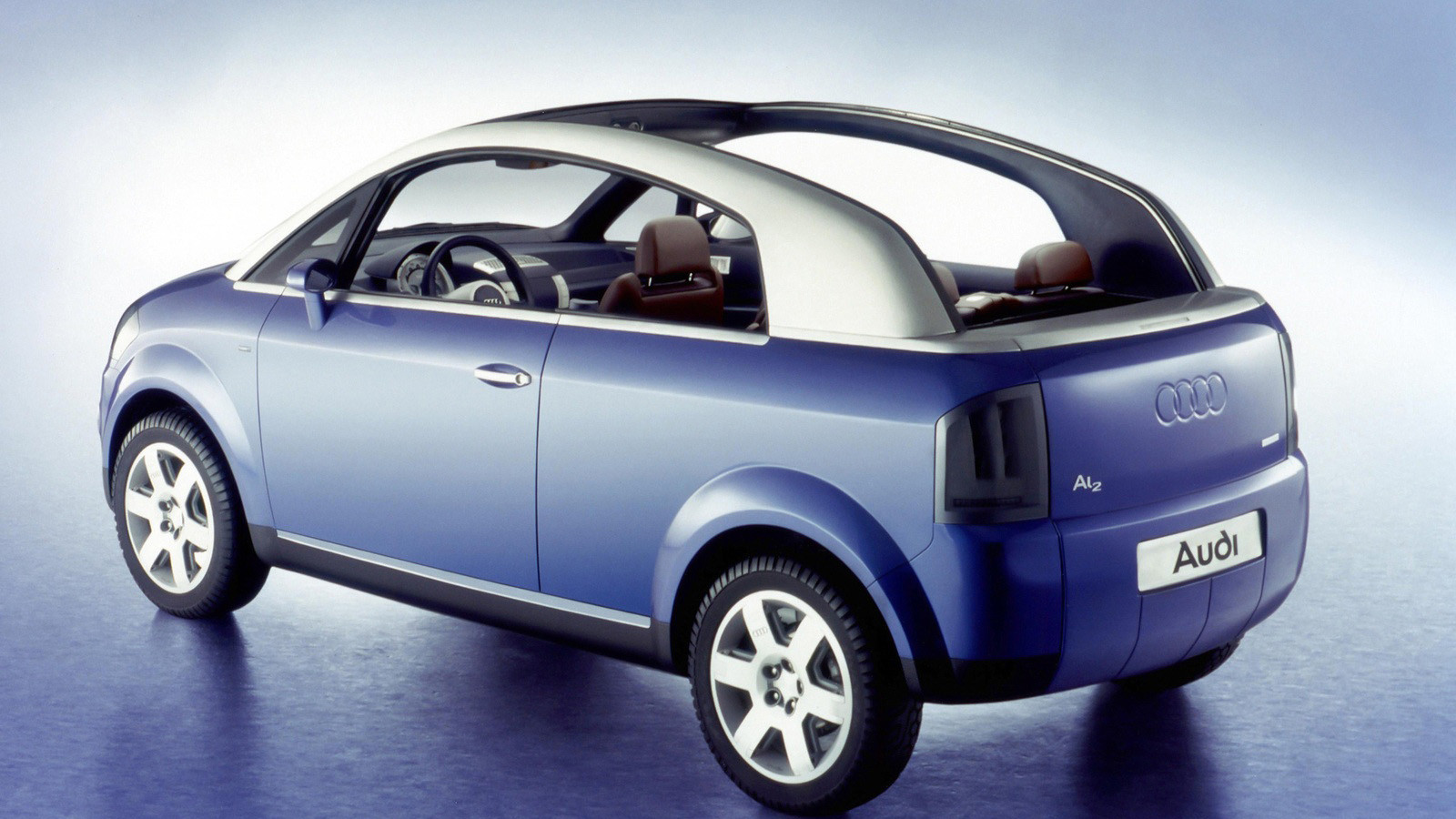
The Audi A2 went on sale in 2000 and was a revelation in the small-car market, but even more radical was the Audi Al2 Open End first seen in 1997.
This idea was based on the Audi Al2, which was a thinly disguised, production-ready A2, but the Open End was a much more playful take on the theme.
Perhaps inspired by the Škoda Felicia Fun, the Open End had two doors rather than four, while its rear tailgate section dropped down for easy loading – the back seats folded and were lined with aluminium to give an almost pick-up-like load bay.
None of this made it into production, but the Al2 Open End’s dual, five-spoke alloy wheels did see the light of day on the Audi A6 Allroad in 1999.
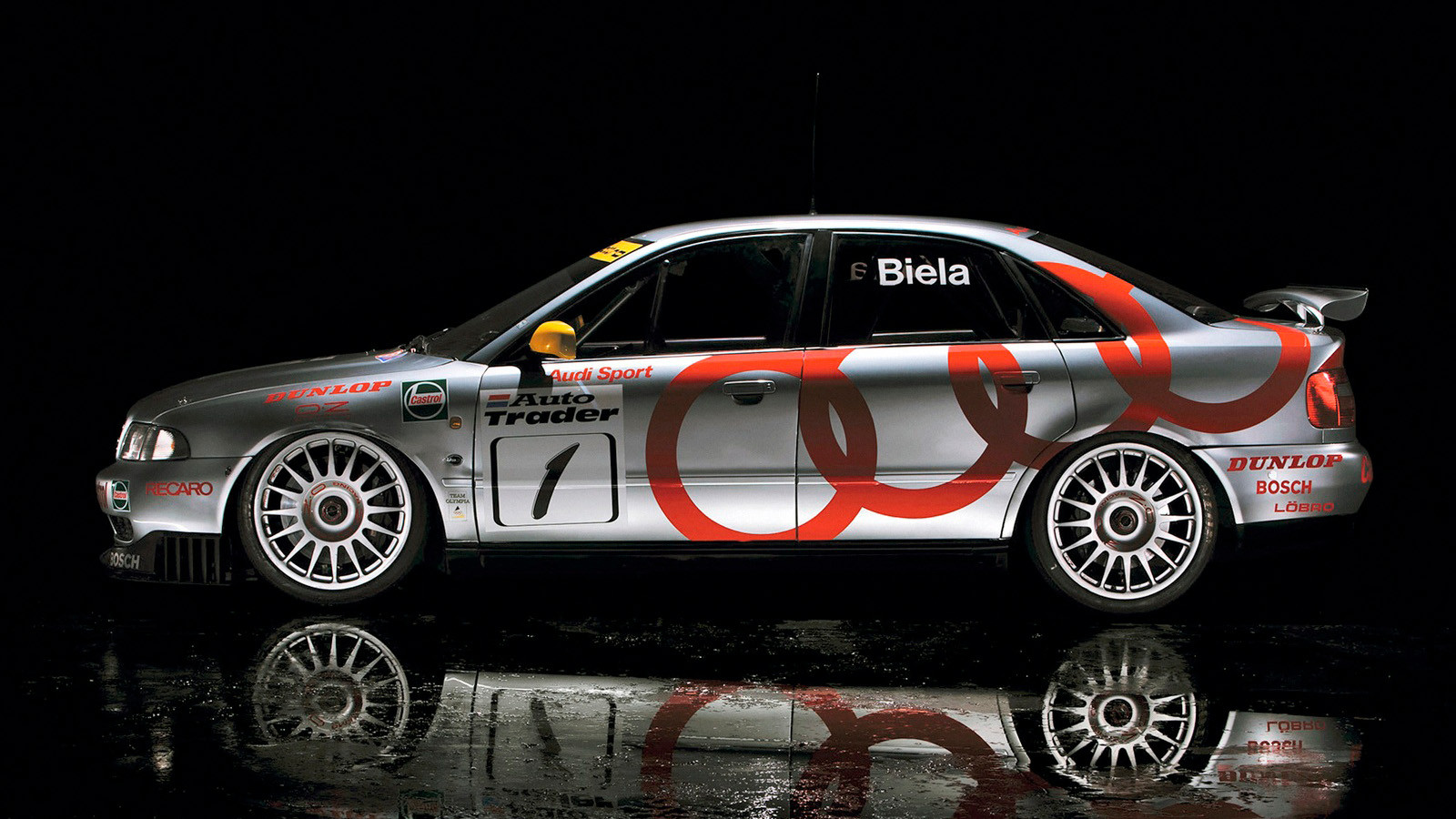
16. 1999 Audi RS4 saloon
Following on from the Audi RS2 Avant, it was logical the RS4 of 1999 would be an estate. However, with Audi competing in Touring Car racing with its A4 saloon, an RS4 saloon was a possibility.
The marque is rumoured to have built a single first-generation RS4 saloon to test, but the decision was made to stick with the Avant body for production models.
If Audi customers wanted a performance version of the A4 saloon, they could buy the S4 with its twin turbo, 2.7-litre V6 that produced 261bhp, which was some way short of the RS4’s 375bhp.
If an RS4 remained a tantalisingly unobtainable prospect, at least Audi built 6030 RS4 Avants between 1999 and 2001.
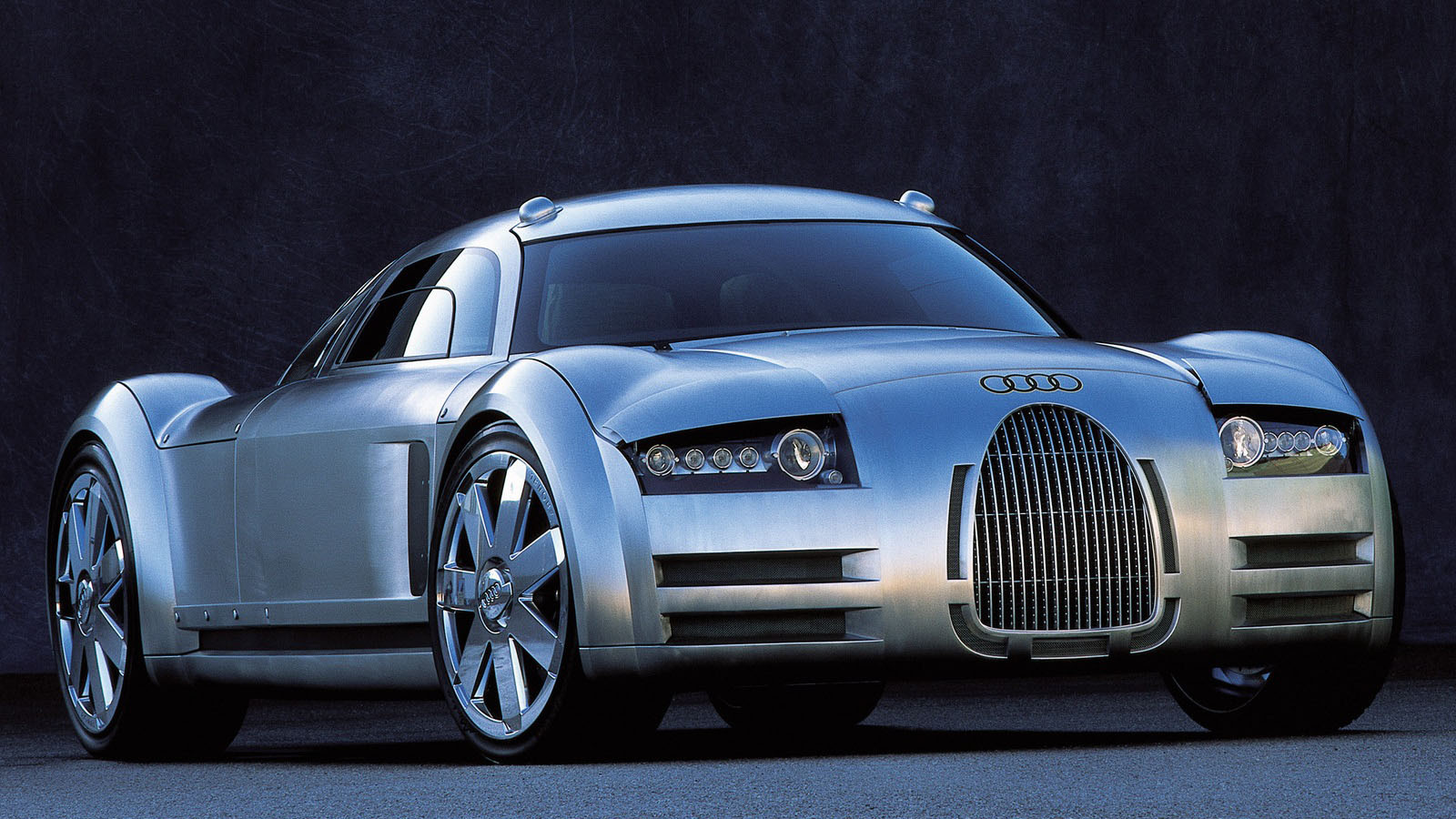
17. 2000 Audi Rosemeyer
By 2000, the world had become accustomed to Audi’s aluminium body-frame technology and even the idea of a W12 engine, which would go on to be used in the A8 as well as the Bentley Continental GT. Then the Rosemeyer arrived with its W16 unit.
With styling that referenced the company’s 1930s racers, the new car took its name from one of Auto Union’s most famous drivers, Bernd Rosemeyer.
While the Rosemeyer seemed an unlikely prospect to go into production, it was an important step in the journey that resulted in the Bugatti Veyron of 2005.
The 8-litre W16 in the Rosemeyer produced a claimed 700bhp, but it went on to deliver 987bhp in the first Veyron and propel it to a top speed of 253mph.
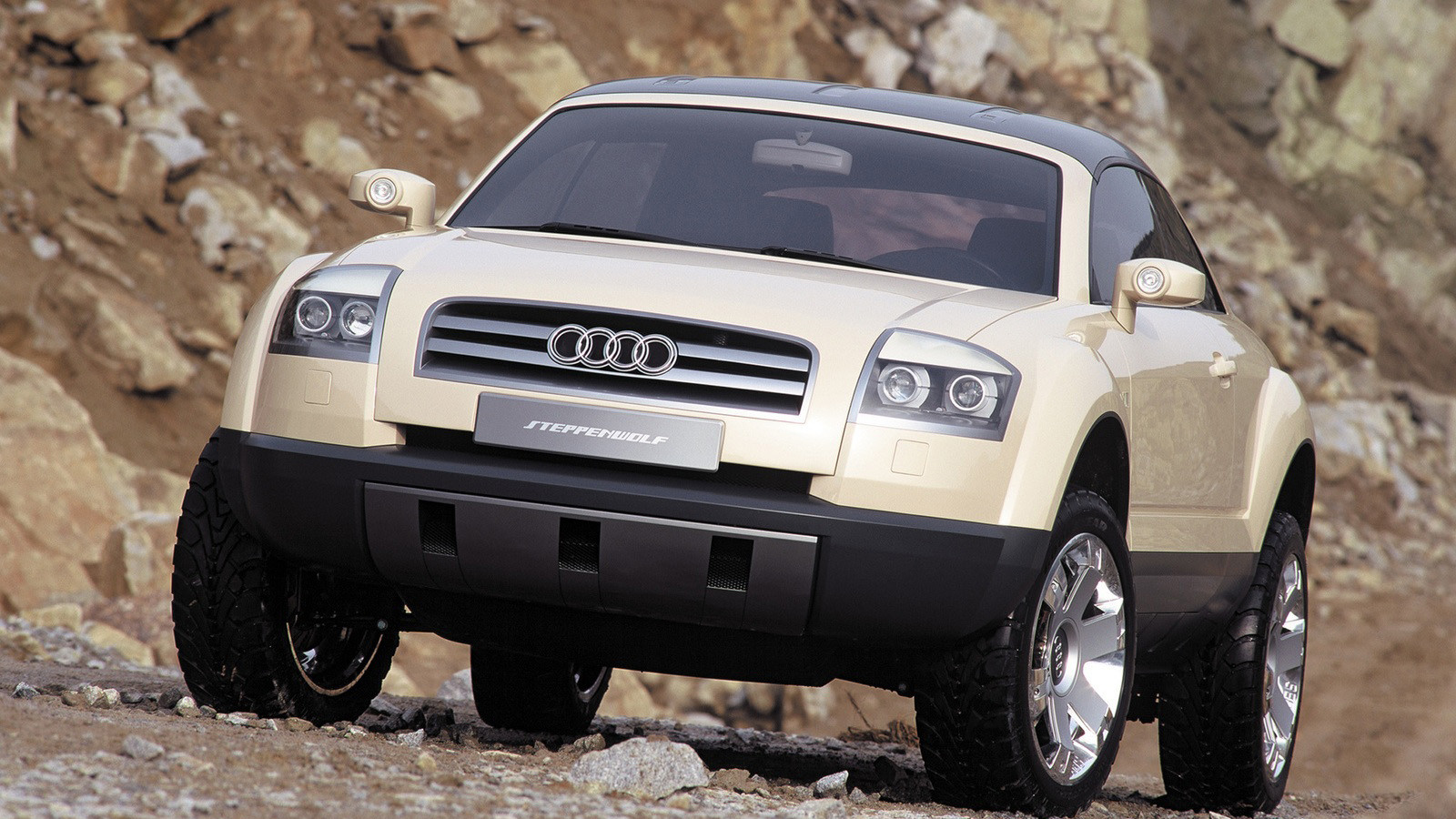
18. 2000 Audi Steppenwolf
It seems more likely Audi’s Steppenwolf was named after the 1927 novel of the same name rather than a comic-book character or a rock band.
Whatever the origins of its name, the Audi presaged the trend towards SUVs long before most car makers.
Revealed at the Paris motor show in 2000, the Steppenwolf used the 3.2-litre V6 engine and quattro four-wheel drive from a TT coupé.
To give the Steppenwolf credible off-road ability, it came with air suspension that offered four ride-height settings.
The world wasn’t ready for an Audi TT-like off-roader in 2000, but there are obvious influences from the Steppenwolf in the Q5 SUV that arrived in 2008.
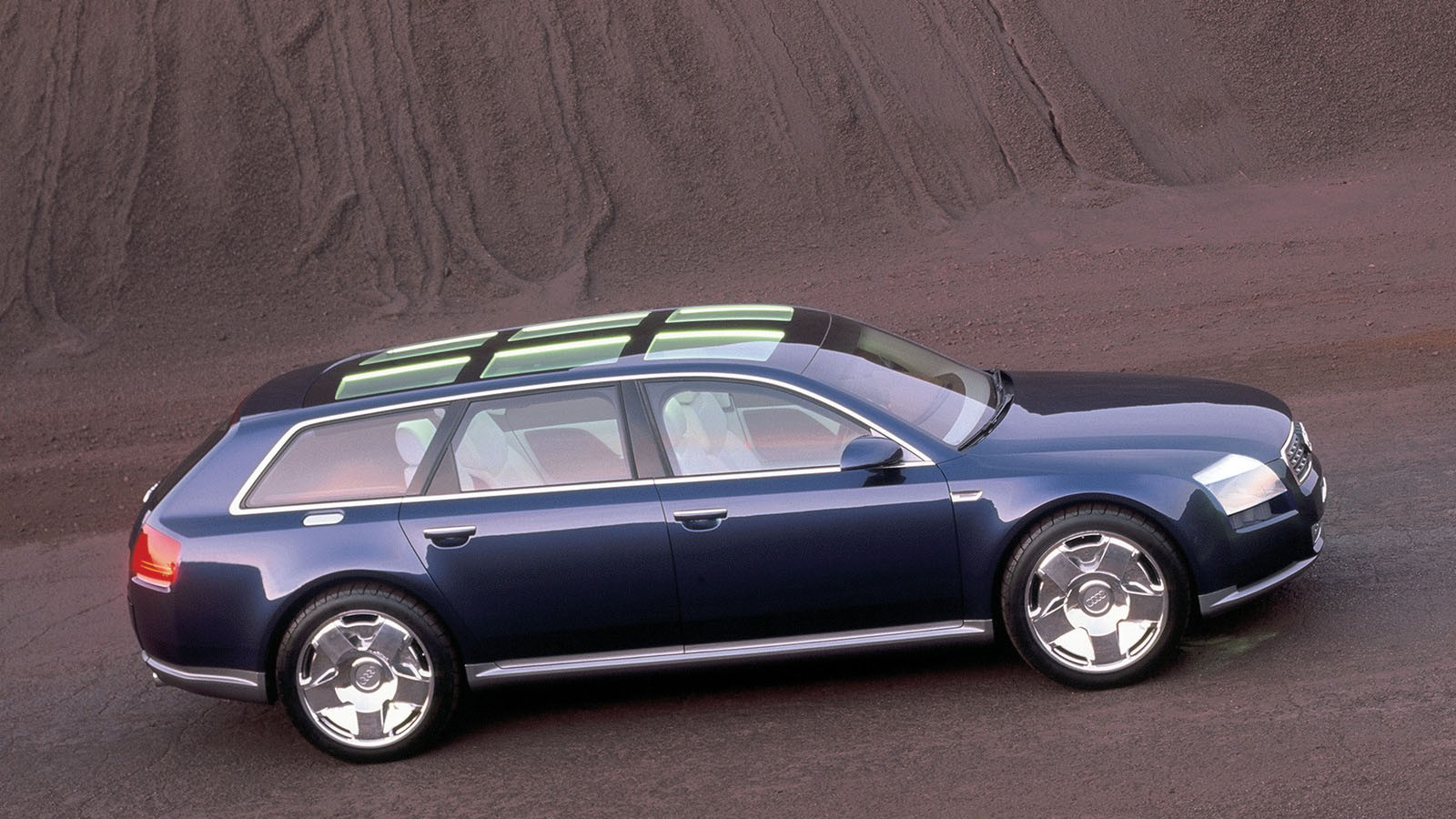
19. 2001 Audi Avantissimo
Audi was noted for its Avant models and the high-tech A8 by the early 2000s, so why not put the two ideas together to create the ultimate luxury estate car?
The company did just that with the Avantissimo of 2001 that made its entrance at the Frankfurt motor show.
With four-wheel drive and a twin-turbo, 4.2-litre, V8 engine making about 424bhp, it easily had the measure of the yet-to-be-launched, third-generation Range Rover.
All of Audi’s latest technology was channelled into its Avantissimo, including adaptive air suspension and bi-xenon headlights, as well as security that used fingerprint identification to start the car.
There was also an electrochromatic sunroof that could swap from transparent to opaque at the press of a button.
In the end, the Avantissimo didn’t progress any further, but many of its gadgets appeared on the second-generation Audi A8 that arrived in 2002.
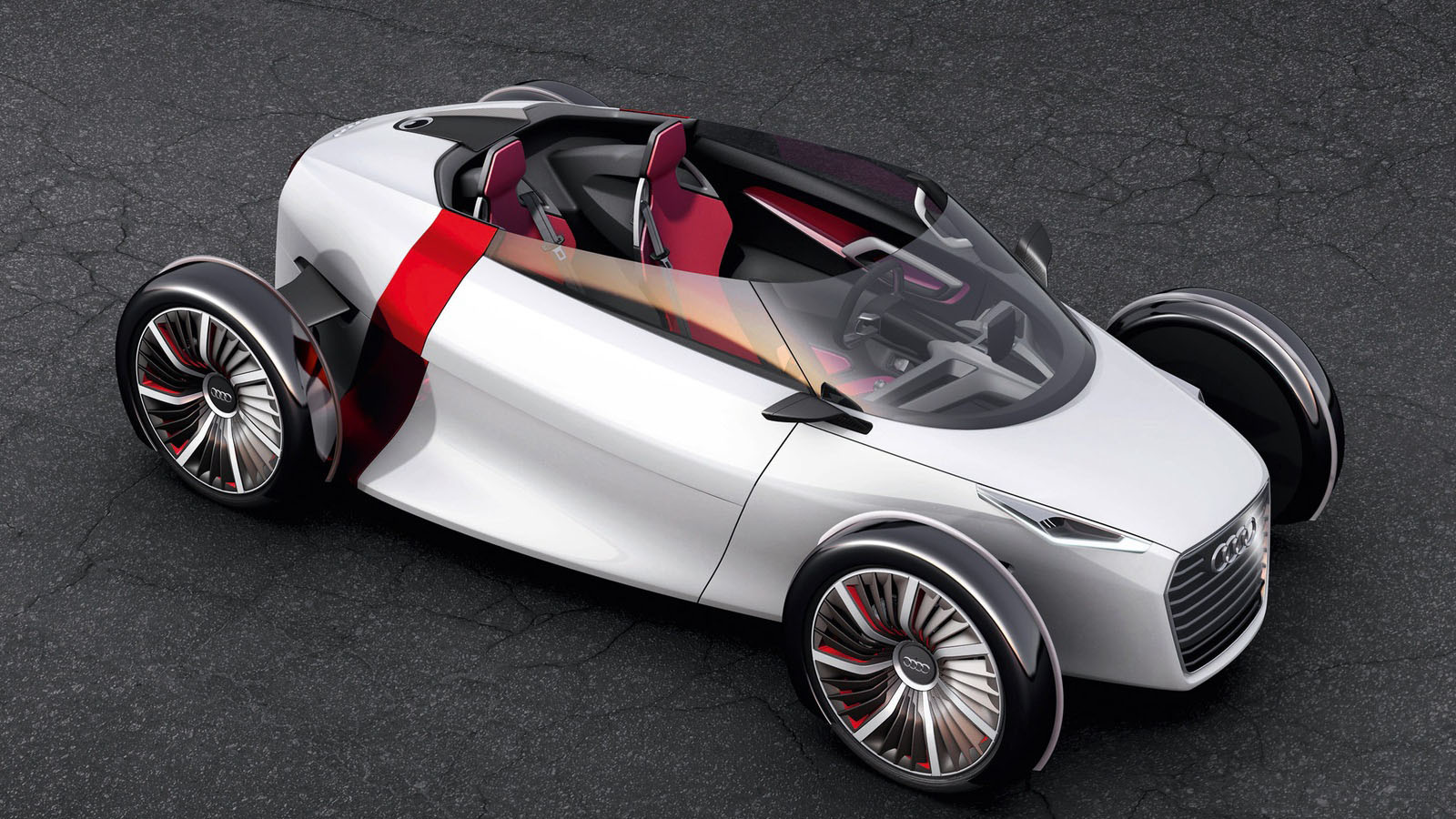
20. 2011 Audi Urban Spyder
The Urban Spyder is one of Audi’s more recent glimpses into its thinking, offering the world its take on an electric sports car.
The 1+1 tandem seating of the Urban Spyder is the same as a Messerschmitt’s, while its pared-back design also follows the principles of that 1950s bubble car.
Furthering the idea of a modern-day Messerschmitt, the Audi Urban Spyder’s twin electric motors are mounted at the back to drive the rear wheels.
A combined 20bhp offered a top speed of 43mph, so this was a car aimed at city driving only.
Audi’s Urban Spyder did not make production, but its mix of carbonfibre and aluminium construction has been used for cars like the e-tron GT.
We hope you enjoyed this gallery. Please click the ‘Follow’ button above for more super stories from Classic & Sports Car.