
Absolutely fin-tastic
Along with General Motors’ Harley Earl, Virgil Exner was one of the most influential US car designers of the last century.
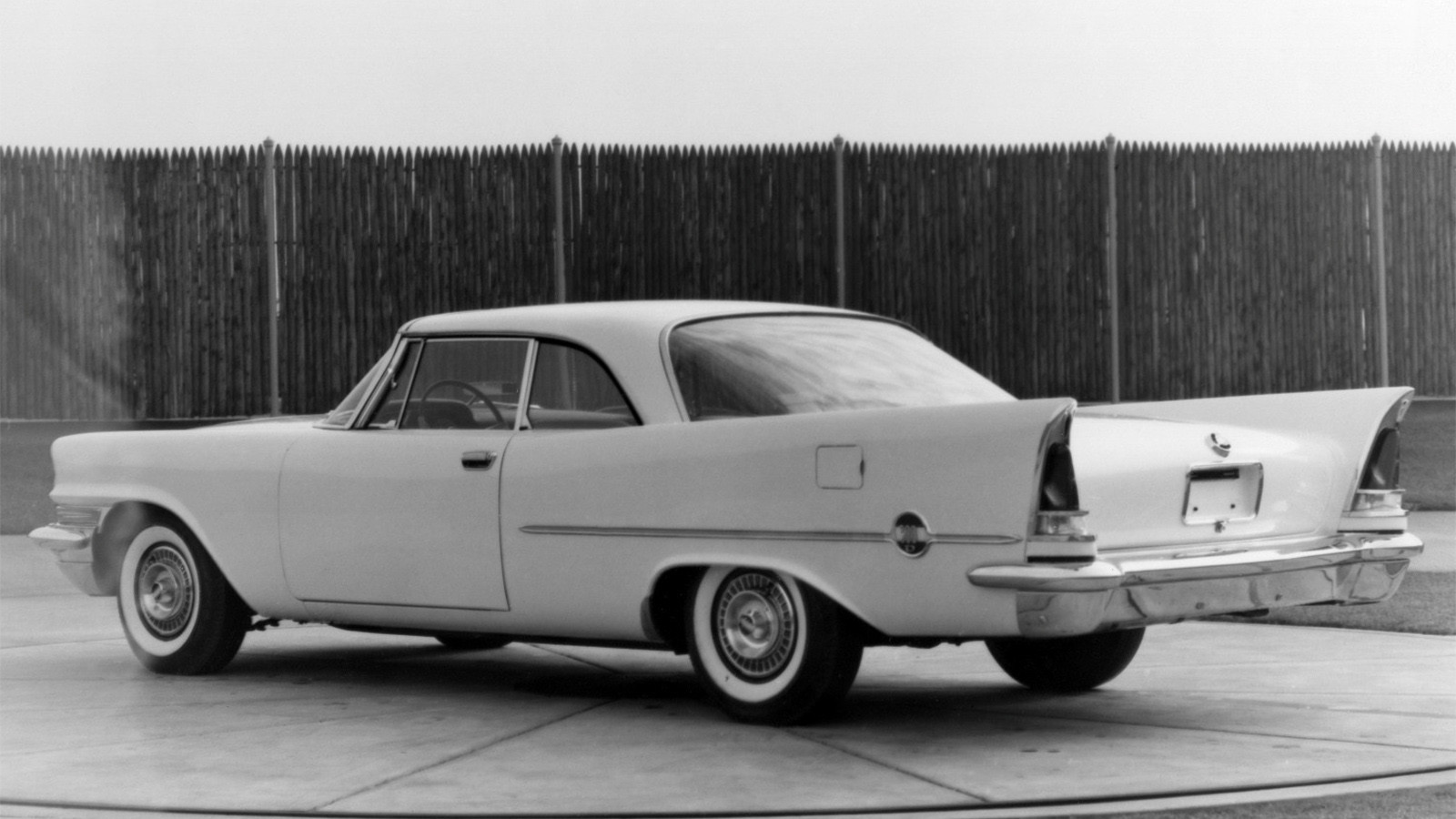
Earl was the first to incorporate fins in his designs, however it was Exner who really ran with the styling cue from the mid-1950s, developing ‘The New 100-Million Dollar Look’ for Chrysler’s products: low and wide designs, with ever-more prominent, razor-sharp fins as each model year passed.
While Exner’s fin-heavy designs are now as emblematic of America’s immediate post-war culture as Route 66 road signs or McDonald’s Golden Arches, the tide had turned at the dawn of the 1960s. But, as we shall see, that didn’t stop Exner’s desire for excess…
So here, in all its glory, is our 21-car, chronological tribute to Virgil Exner, charting his path from fledgling designer to the man who created the ‘Forward Look’.
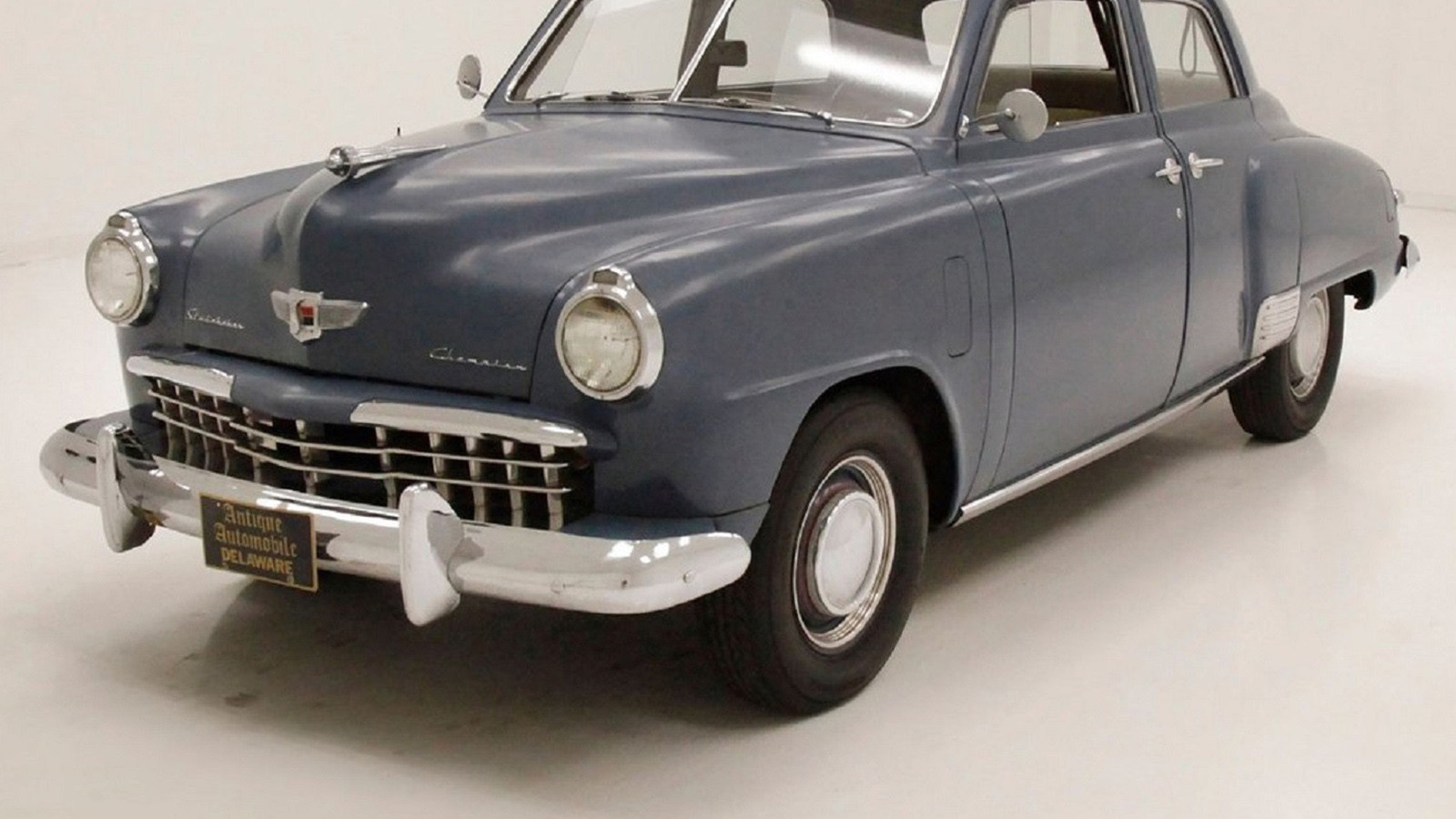
1947 Studebaker Champion
Early work from Virgil Exner came during his time with Loewry Associates, when he was given responsibility for Studebaker’s third-generation Champion.
Even then, Exner’s crisp and clear styling lines are evident on the model, which was aimed at the lower-middle-class end of the market.
A compact car with a 112.5in wheelbase, the Studebaker Champion was powered by a 2.8 litre straight-six and could achieve a top speed of 80mph.
It was a cinch to drive, with a clutch-pedal starter, and, for the first time, the option of an automatic transmission.
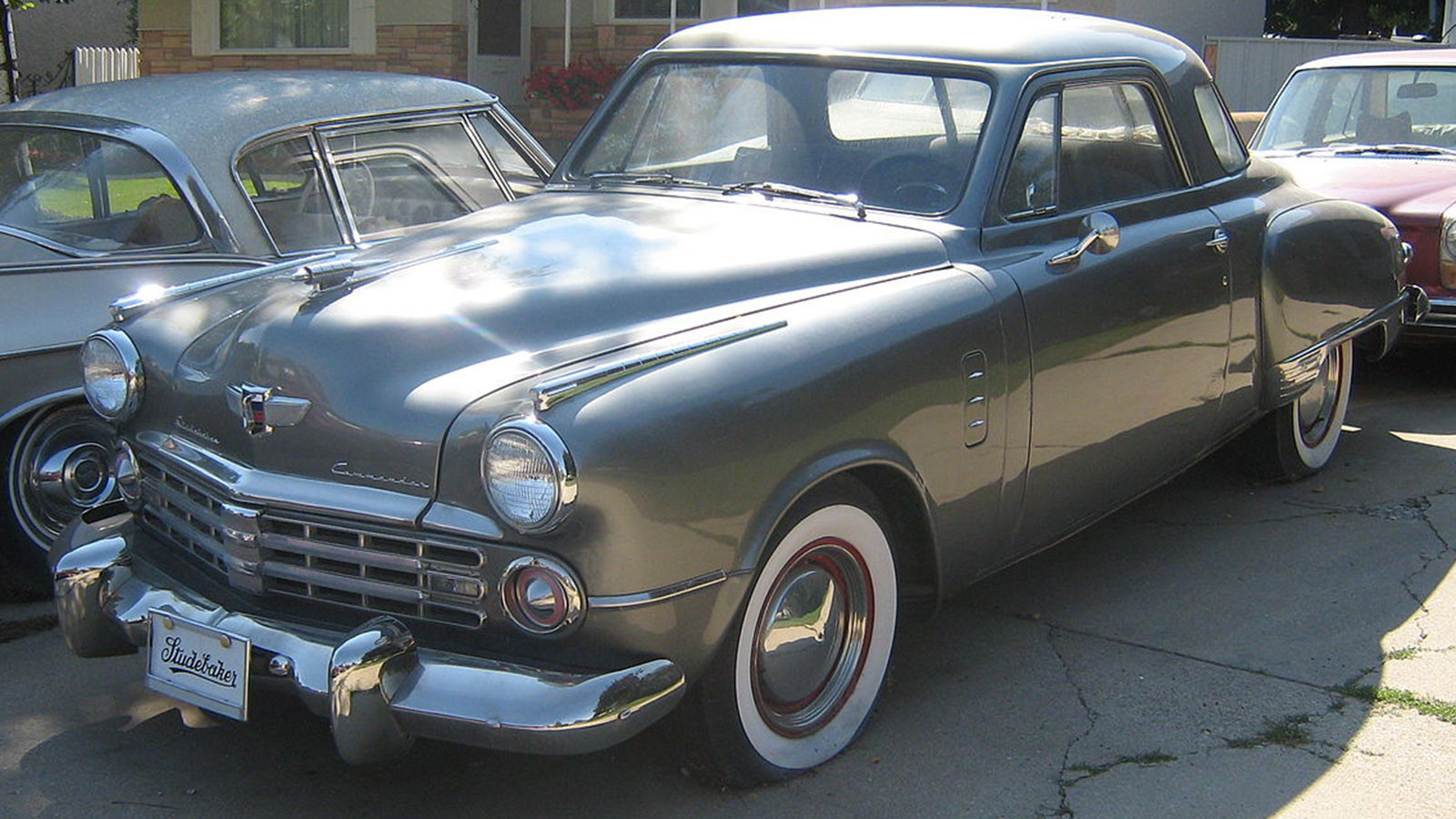
1947 Studebaker Starlight Coupe
Exner wasn’t afraid to court controversy with his designs, and when you look at Studebaker’s Starlight Coupe (originally called simply a ‘five-passenger coupe’), you can see why.
Based on the Champion, the Starlight used a bonnet-like panel to cover the long boot area, leading some critics to quip: ‘which way is it going?’
But more prescient was the Starlight’s four-piece rear window, which wrapped around the car providing a panoramic view for back-seat passengers.
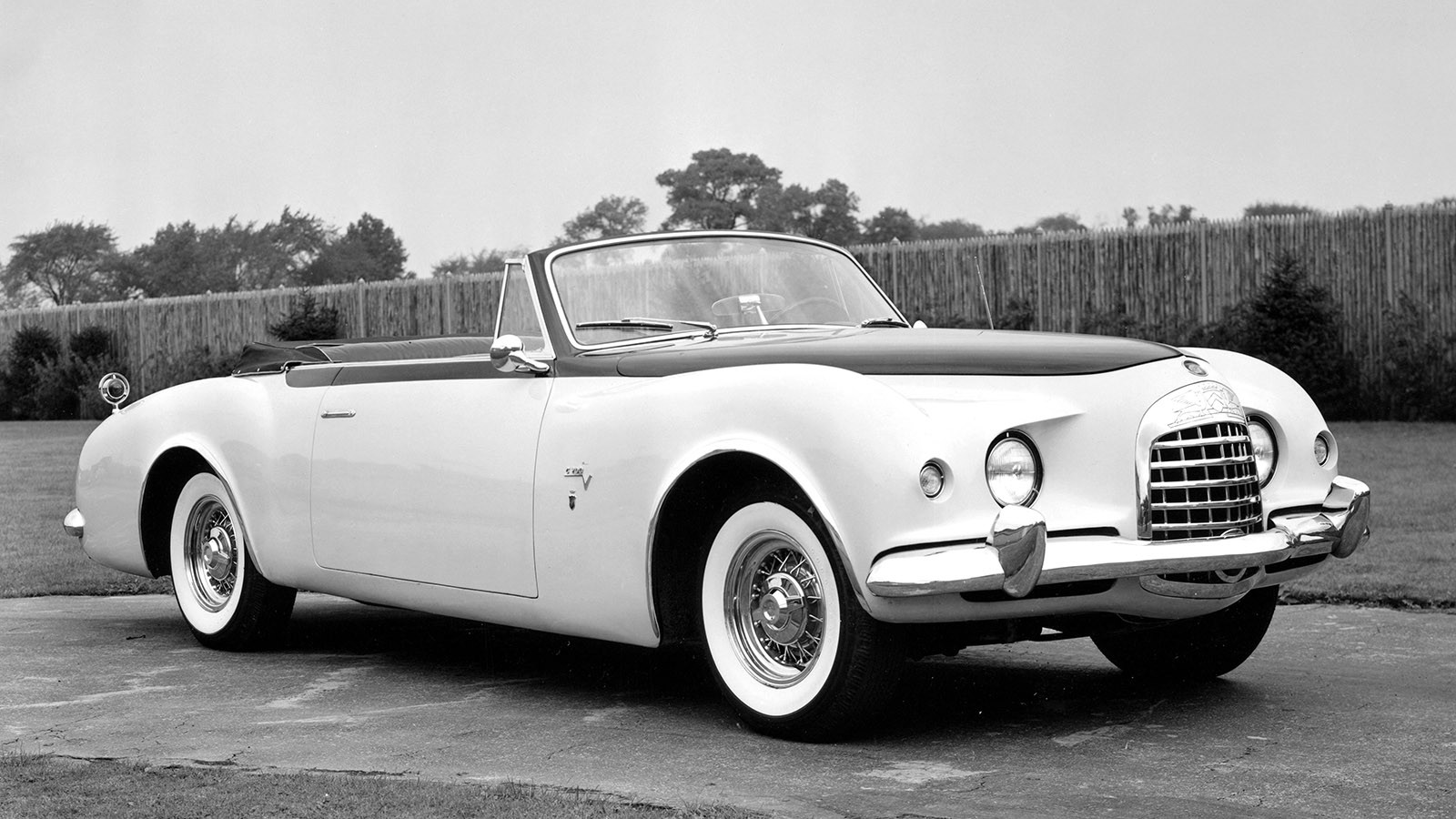
1952 Chrysler C-200 concept
The Chrysler C-200 concept was Exner’s second collaboration (the first being the K-310 concept) with Italian styling house Ghia.
A V8-powered, five-passenger convertible-coupé, the C-200 claimed to offer American style with European sophistication.
The concept also showcased styling cues that would appear in later Chrysler production cars, such as ‘blistered’ front wings, a depressed beltline and gun-sight tail-lights.
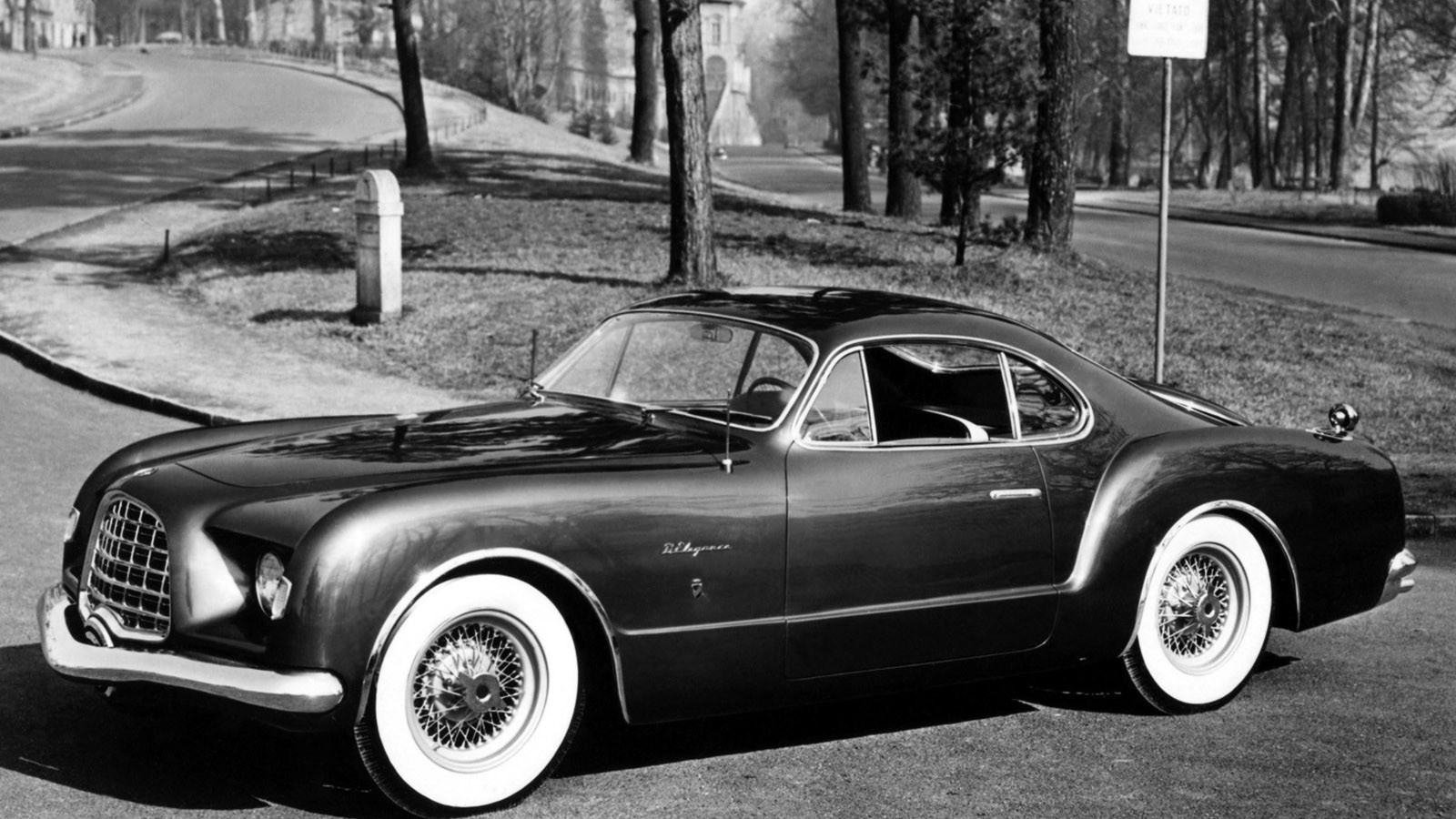
1953 Chrysler d’Elegance concept
Of the three concepts Exner penned in collaboration with coachbuilder Ghia in Turin, the ’53 D’Elegance was perhaps the best resolved.
The car’s blend of European elegance and American exuberance resulted in a showstopping profile, and one that was to later inspire the design of the Karmann Ghia coupé.
As before, cues from the D’Elegance were to emerge in Chrysler’s production cars, such as the ’55 Imperial’s gun-sight tail-lights, as well as the mesh front grilles on late-1950s 300 models.
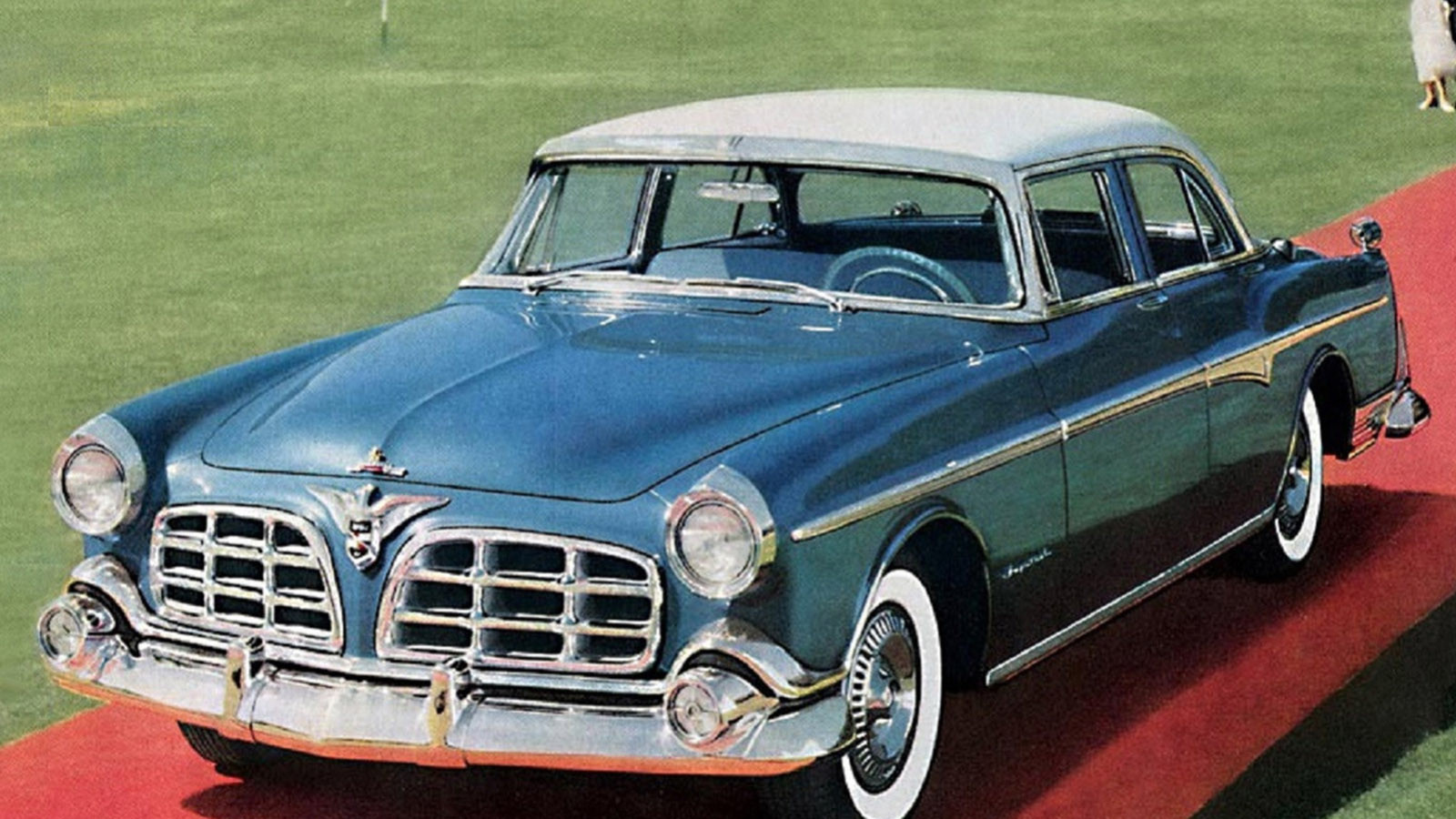
1955 Imperial
From 1955, Imperial became a stand-alone brand, vying with Ford’s Lincoln and GM’s Cadillac to capture the prestigious end of the market.
Inspired by Exner’s Chrysler Imperial Parade Phaeton show cars, the Imperial had a 4in-longer wheelbase than even its full-size Chrysler siblings.
Powered by a 5.4-litre, 249bhp FirePower V8, fitted with Chrysler’s first-generation Hemi cylinder head, the Imperial came as standard with the PowerFlite automatic transmission.
Also standard were power brakes and power steering, with optional air conditioning costing a princely $535.
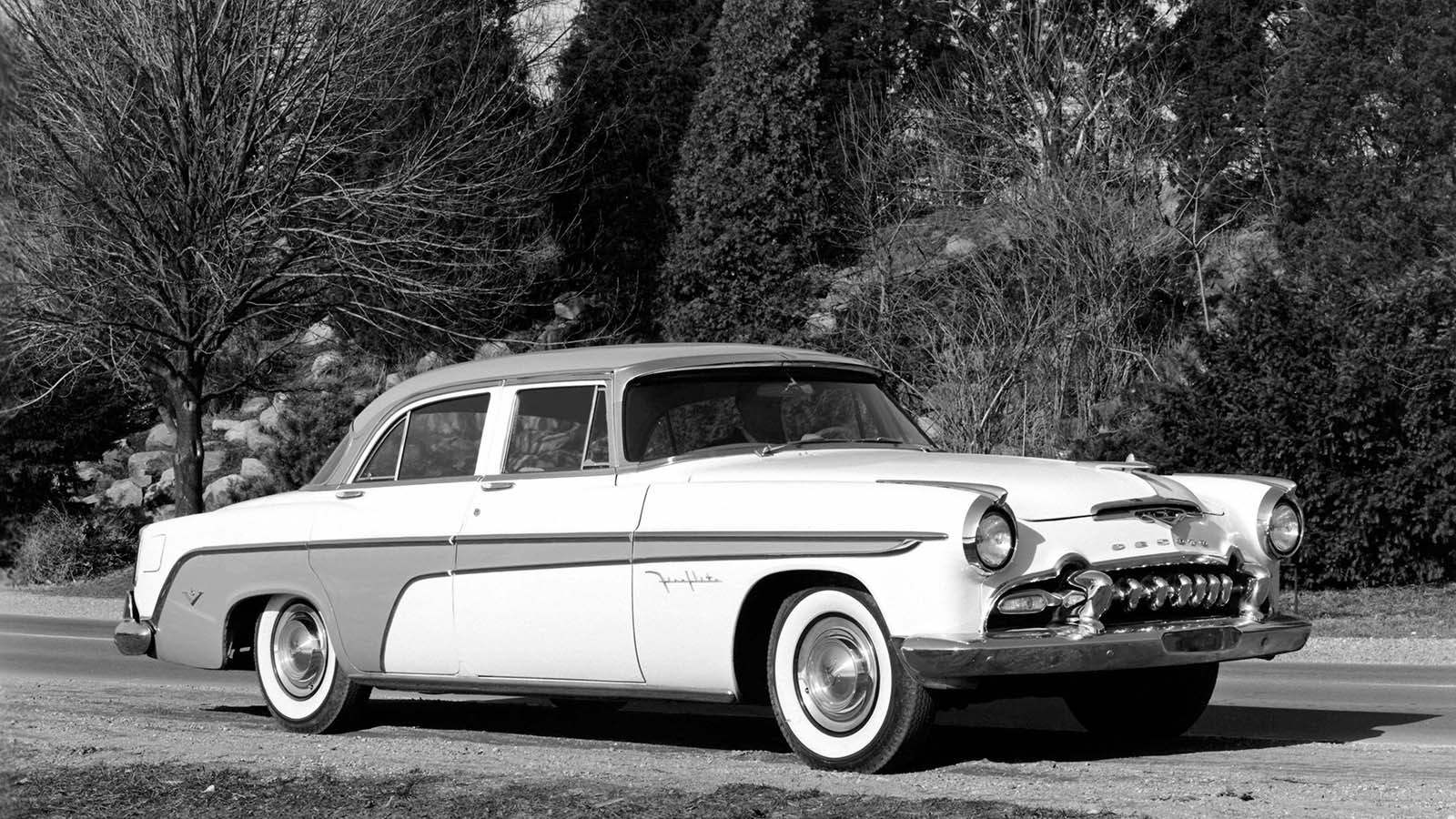
1955 DeSoto Fireflite
The new-for-’55 Fireflite was introduced as DeSoto’s range-topper in its Firedome line-up.
It was to be the first and last Fireflite without rear fins, with 1956 seeing their introduction and steady growth until Fireflite production ceased in 1960.
Wider and longer than the Firedome, in its first year the Fireflite was powered by a 200bhp, 4.8-litre V8 delivering drive via Chrysler’s PowerFlite auto transmission.
A large car, even by American standards, the DeSoto Fireflite weighed 1850kg (4079lb) and cost $3544.
1957 Chrysler Diablo concept
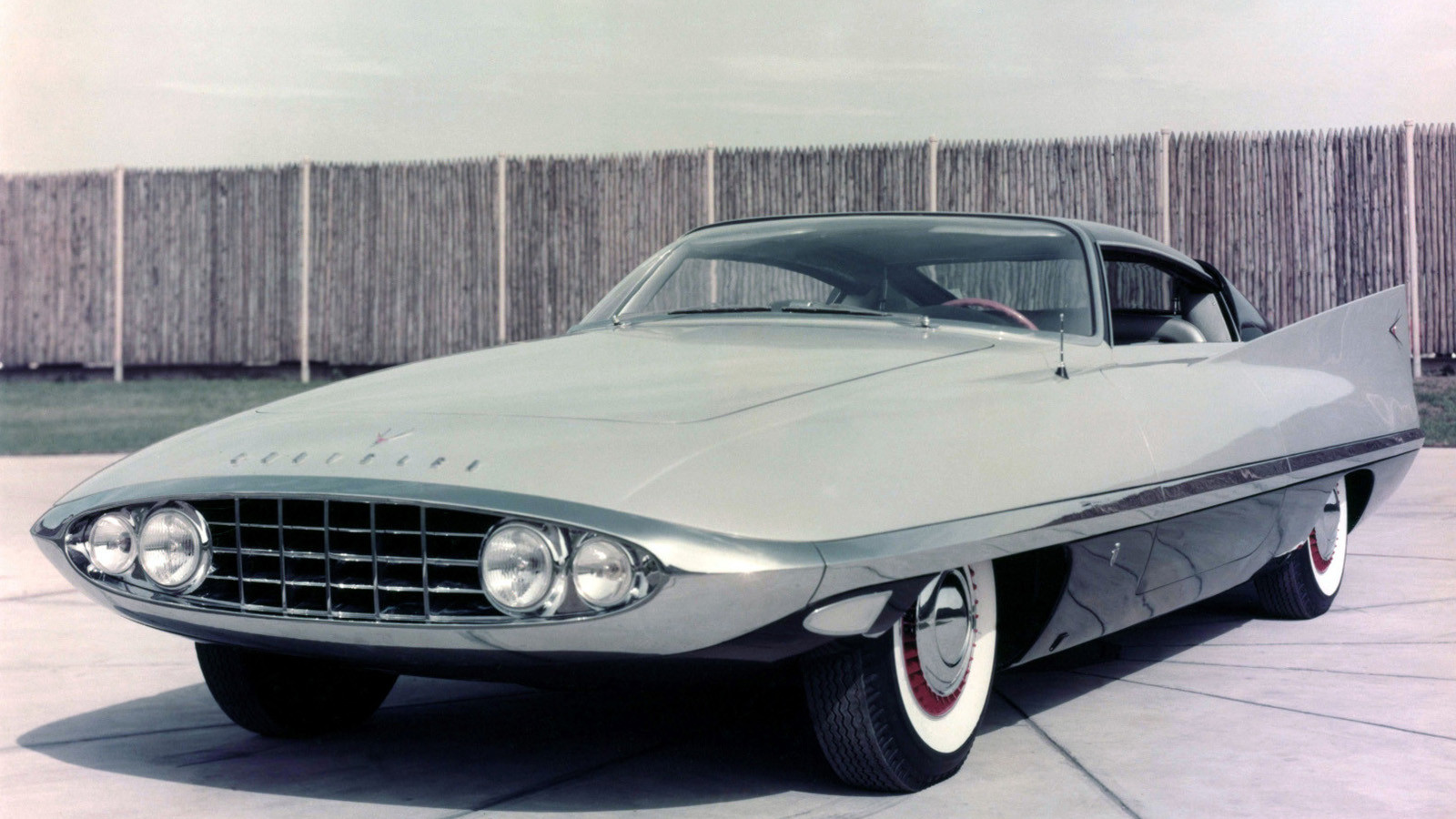
One of the largest concept cars ever produced, the Chrysler Diablo measured an incredible 21ft (6.4m) long, and was designed to carry four occupants in opulent splendour.
Another Virgil Exner design, the Diablo was built on a 1956 Chrysler 300 platform, using a modified powerplant from that model with two, four-barrel carburettors and a pushbutton automatic transmission.
Capturing the jet-age zeitgeist of the mid-1950s perfectly, the Diablo was first revealed at the 1958 Chicago show, after costing Chrysler $250,000 to develop it.
1957 Chrysler New Yorker Town and Country Station Wagon
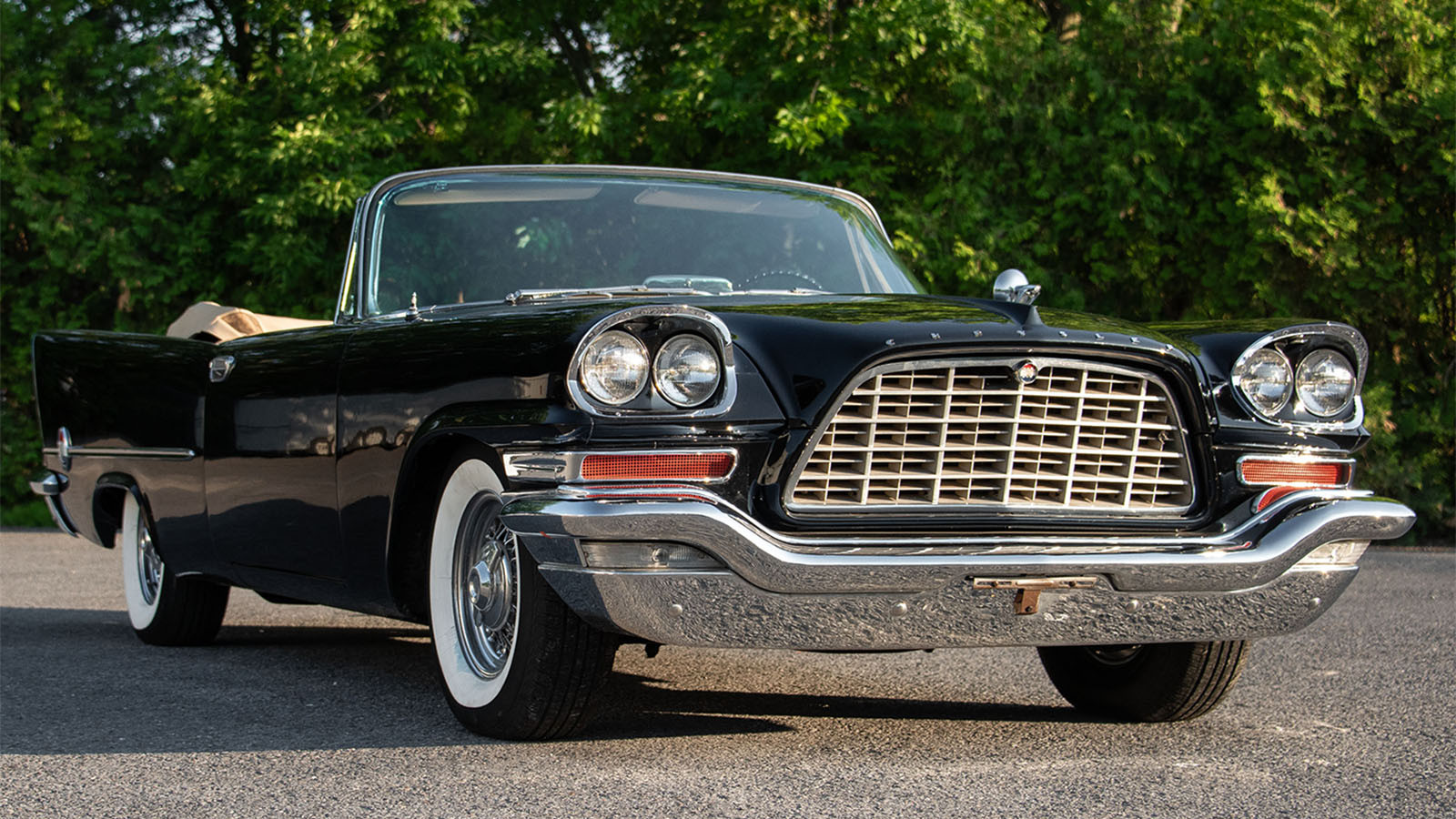
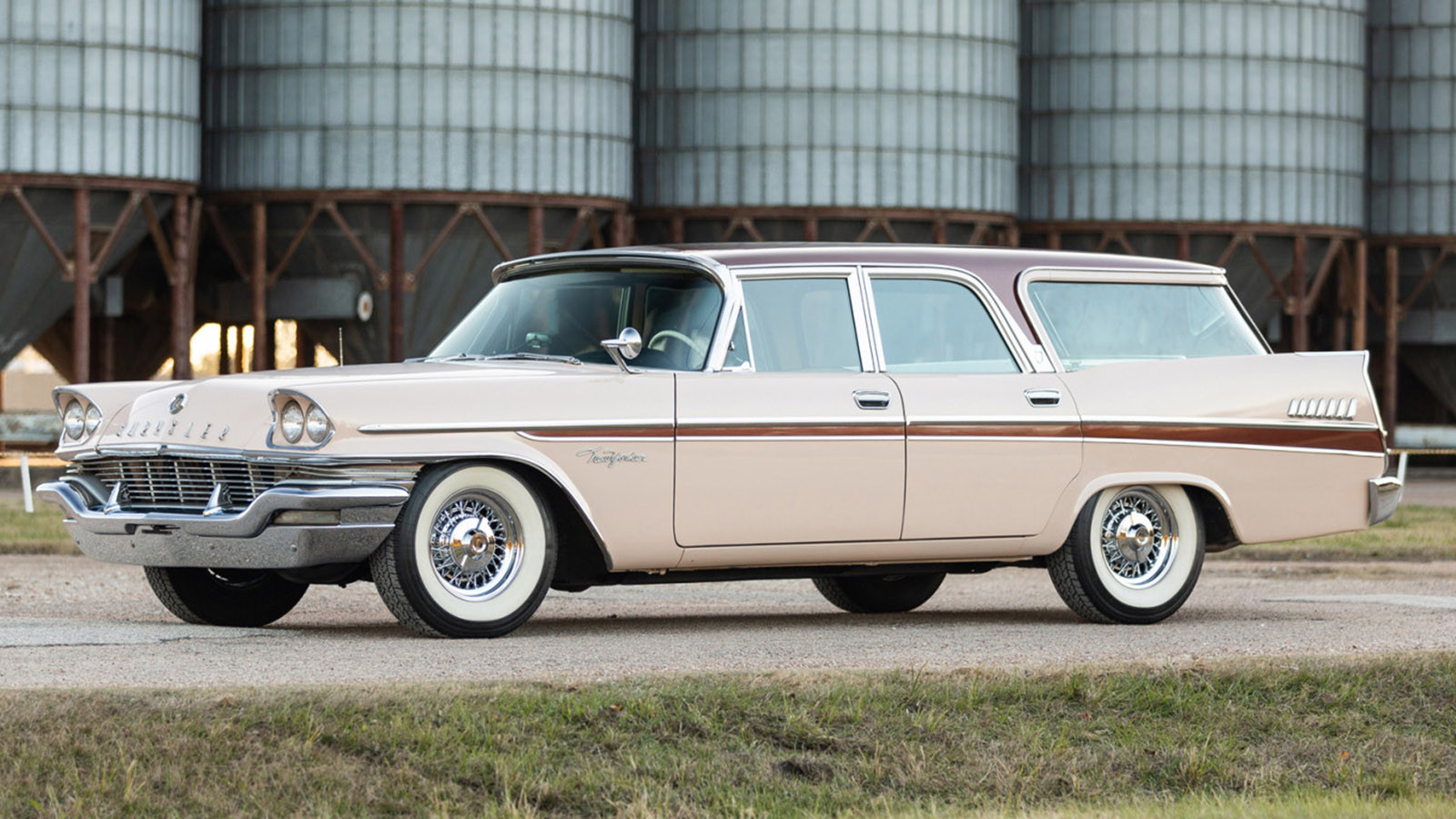
Chrysler’s 1957 New Yorker was an important part of Virgil Exner’s $300m ‘Forward Look’ design programme, and the capacious Country Station Wagon was arguably the icing on an already glamorous cake.
In saloon guise, the New Yorker was Awarded Motor Trend’s prestigious Car of the Year gong, and praised for its handling, performance and design.
Powered by Chrysler’s 6.4-litre FirePower V8, producing 325bhp, that was no surprise, nor was the improvement made to the car’s chassis by the new ‘Torsion Aire’ torsion-bar suspension.
As Chrysler’s range-topper (Imperial was a separate brand), little more than 10,000 New Yorkers were sold, and only a handful of those were the Country Station Wagon.
1957 Plymouth Belvedere
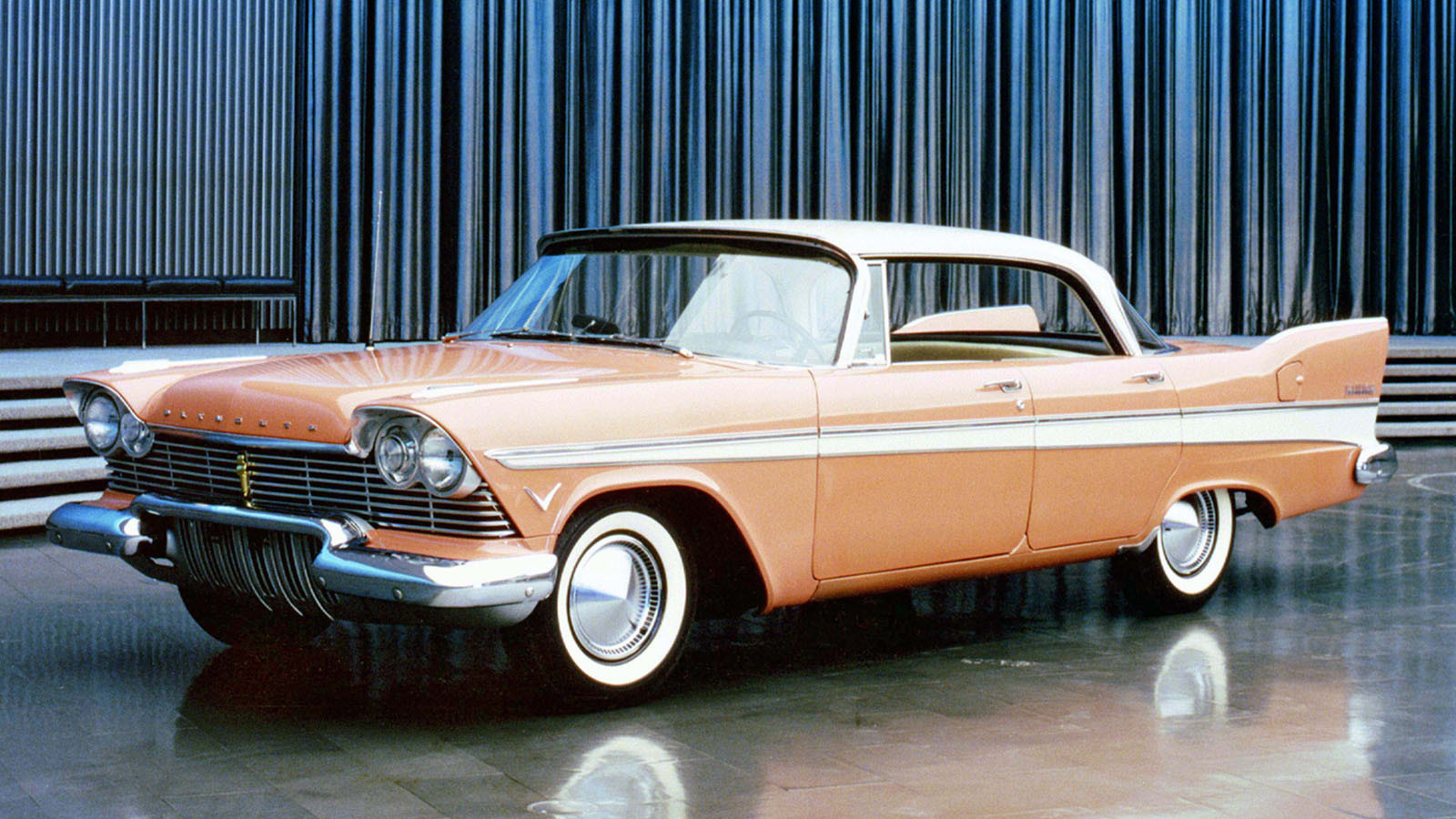
Probably best known (in slightly upmarket Fury guise) for its starring role in Stephen King’s 1983 film Christine, the Belvedere marked such a design breakthrough that Chrysler used the slogan, ‘Suddenly, it’s 1960!’ in its advertising.
Gloriously be-finned and decked out with acres of chrome across its front and rear ends, the Plymouth Belvedere was available as a two- and four-door saloon, a hardtop, a convertible and a station wagon.
In base form, it was equipped with Chrysler’s 3.8-litre Flathead ‘six’, but also (during its two-year life) with the option of V8 power from 3.9 to 5.7 litres, driving through either a two- or three-speed automatic gearbox.
1957 Plymouth Savoy
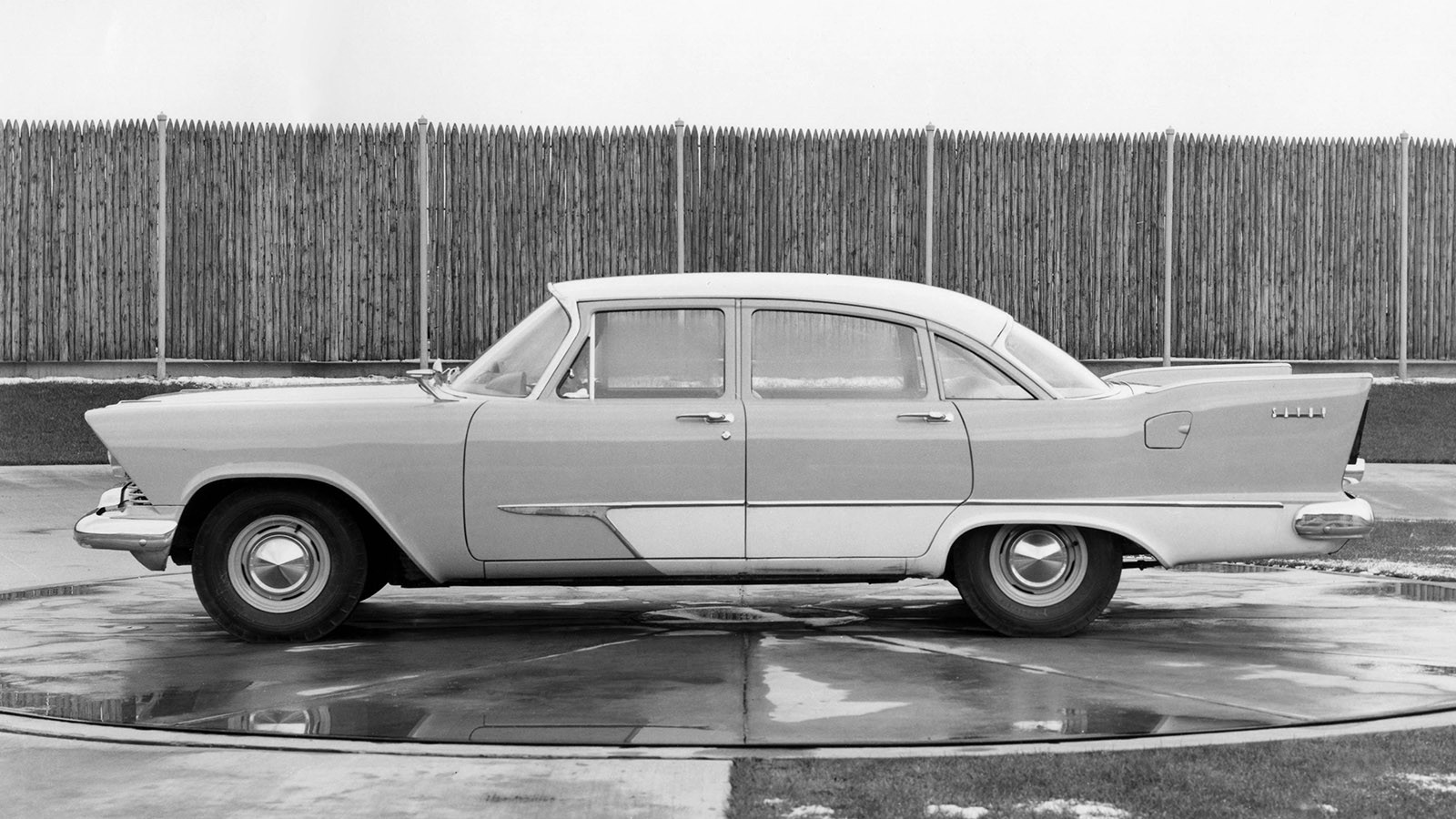
Previously an upscale version of the Suburban station wagon, for the 1957 model year, the Savoy was also introduced as a four-door hardtop saloon.
As the entry-level, full-sized Plymouth, it became the darling of police forces, taxi operators and company fleets across America, for whom its competitive price, size and wide range of engines were appealing.
Related closely to Chrysler’s Firedome and Belvedere ranges, the Plymouth Savoy was powered by engines ranging from a 3.8-litre ‘six’ to a 5.2-litre V8, with either two- or three-speed transmissions, or a three-speed manual gearbox.
1958 Chrysler 300D
Chrysler’s first letter-series model, the ‘B’, was near fin-less, but by the time the 300D appeared, design chief Virgil Exner was clearly on a roll.
The last of Chrysler’s 300 letter-series models to use the FirePower V8 engine, its capacity remained the same as its predecessor at 6.4 litres, yet power rose to 375bhp.
Optional fuel injection was also offered, though this proved unreliable, and most vehicles were retrofitted with dual four-barrel carburettors.
Blisteringly fast, one 300D was driven to 156.387mph on the Bonneville Salt Flats.
1960 DeSoto Adventurer
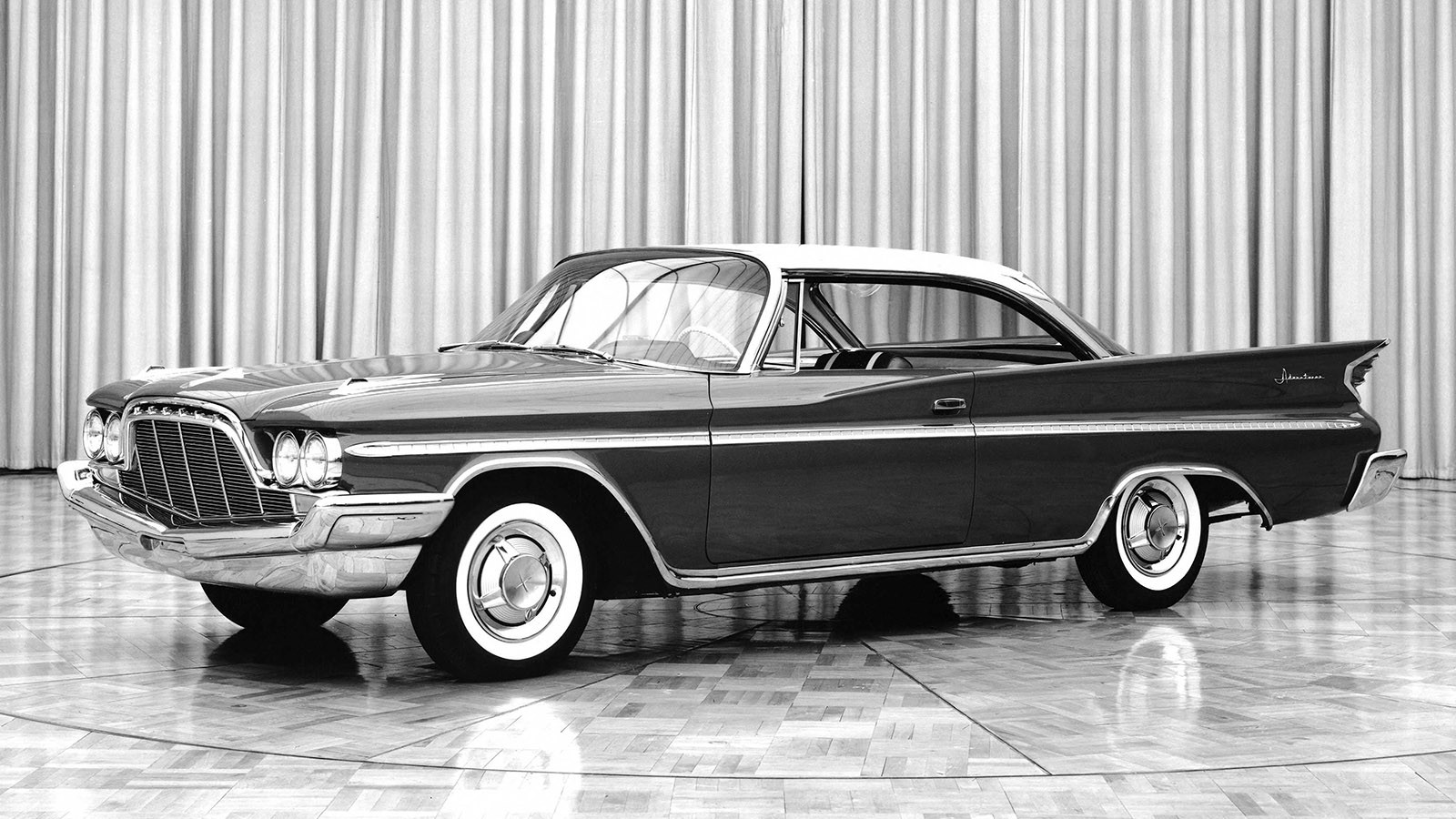
By 1960, Virgil Exner’s beloved fins had reached their zenith – metaphorically and physically – and the DeSoto Adventurer’s design was one of Chrysler Corp’s final hurrahs to a styling cue which now grew skyward from the doors of the car to its rear extremities.
It was also the final year for the DeSoto brand, with the Adventurer and Fireflite the only remaining trim lines, and the Adventurer now available in DeSoto’s full range of colours and body styles, instead of being only a two-door hardtop or convertible.
Factory options included an under-dash 45rpm record player and an automatic swivel seat that swung out when the door was opened with a cable.
Power for the Adventurer was from a 6276cc V8, producing 301bhp.
1960 Plymouth Valiant
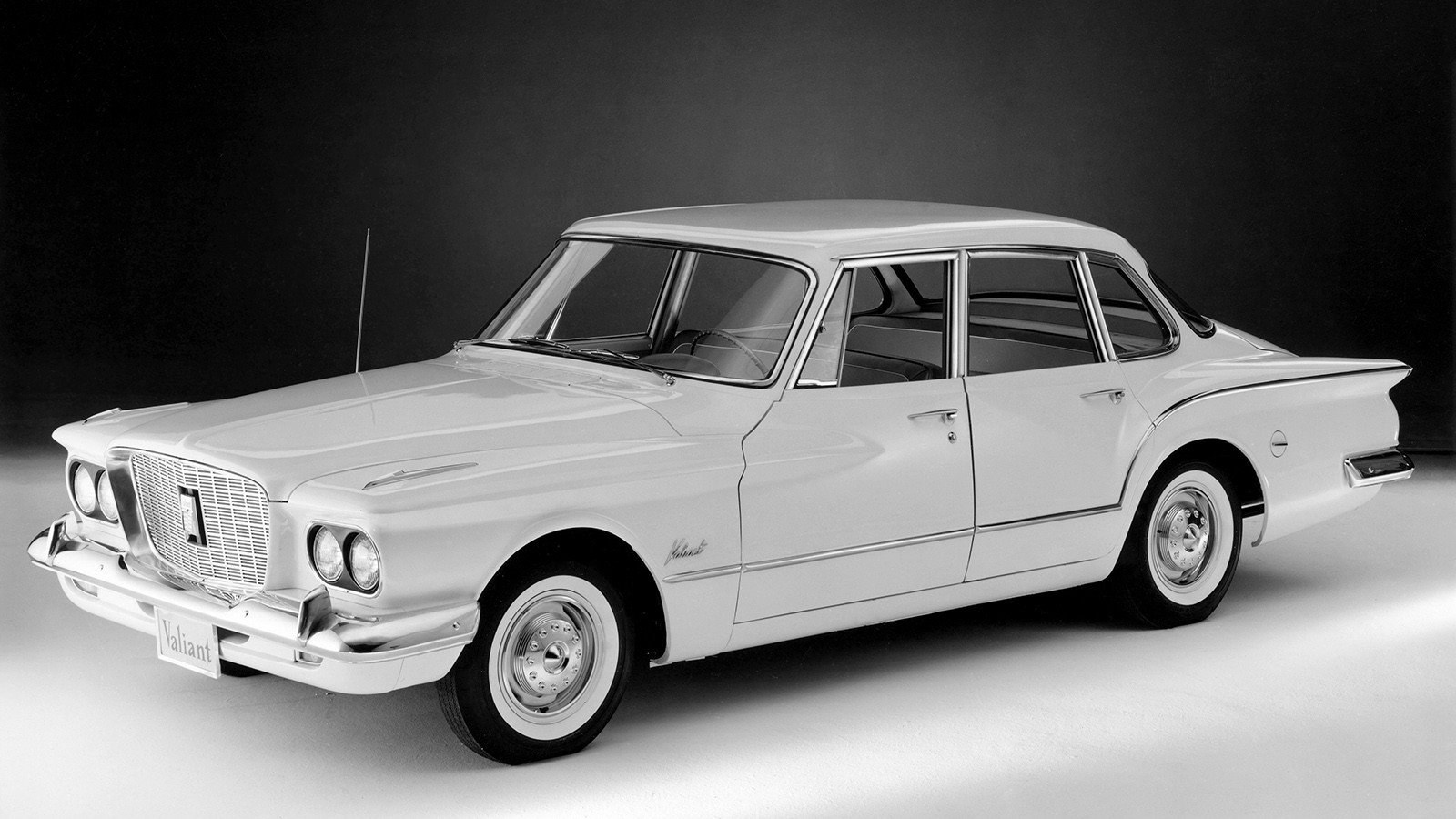
In response to US buyers’ growing demand for compact cars, catered for by the likes of VW’s Beetle, as well as domestically by models like AMC’s Rambler, Chrysler tasked Exner with developing its own entry into the market.
The Valiant made its debut at the British Motor Show in October 1959. Its A-body’s design took styling cues from Exner’s earlier D’Elegance concept, and was a stiffer and stronger monocoque, rather than the separate chassis Chrysler had used previously.
At 15ft (4.6m) in length, the Valiant was significantly shorter than other Chrysler products, but cleverly packaged, with hardly any reduction in passenger or luggage space.
To achieve a lower bonnet line, its overhead-valve ‘six’ was canted over by 30 degrees.
1960 Plymouth XNR
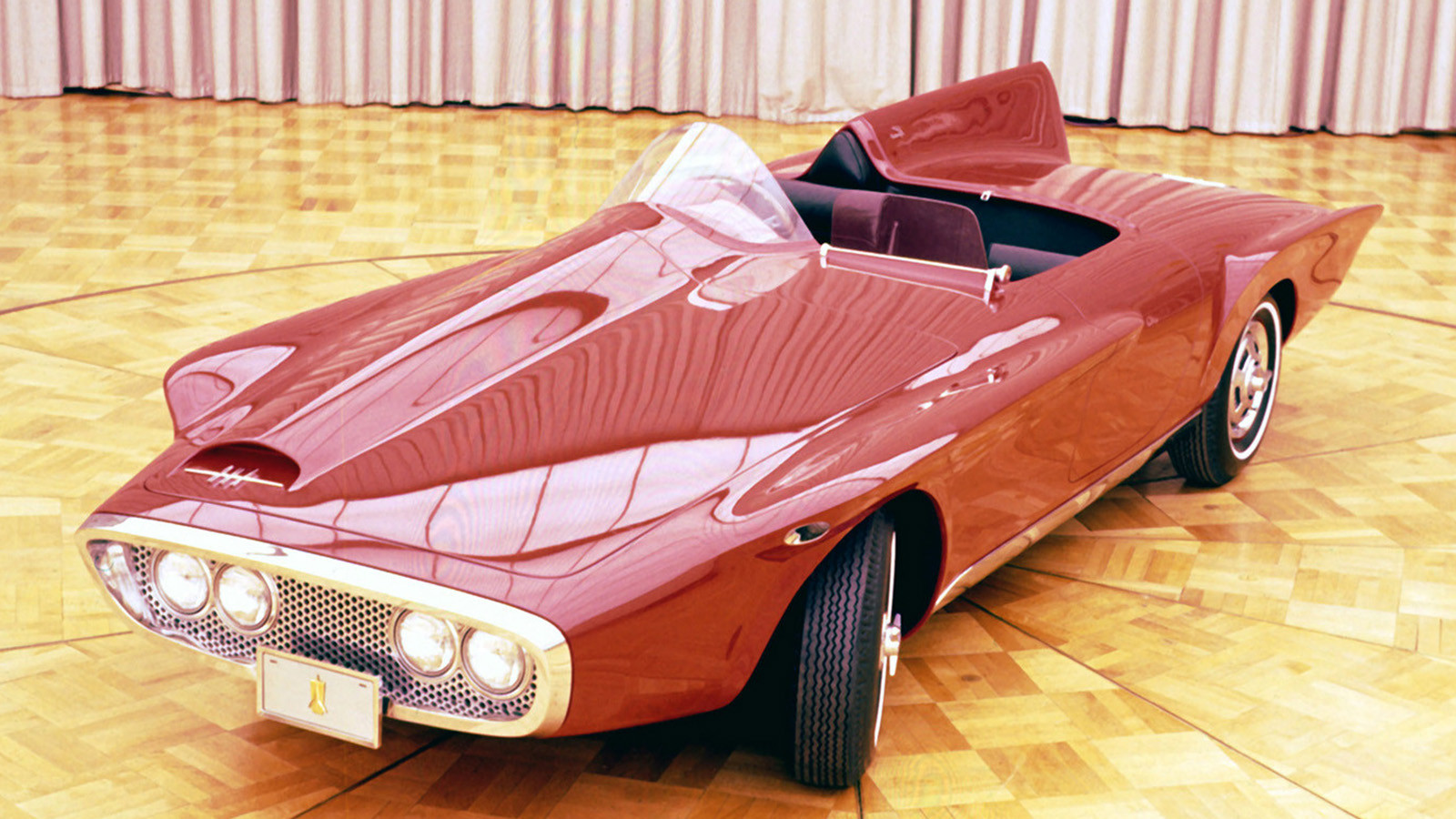
Chrysler had Chevrolet’s Corvette and Ford’s Thunderbird in its sights when it conceived the Plymouth XNR (‘XNR’ a vowel-free nod to Virgil Exner’s surname).
Another concept built by Ghia in Italy, the design inspiration was in part from the Jaguar D-type. And possibly its performance, too: at one point, Chrysler tested the car to a top speed of 146mph.
First revealed at the 1960 New York motor show, the Plymouth XNR was based around the monocoque chassis from Chrysler’s Valiant, with which it also shared a 2.8-litre, straight-six engine.
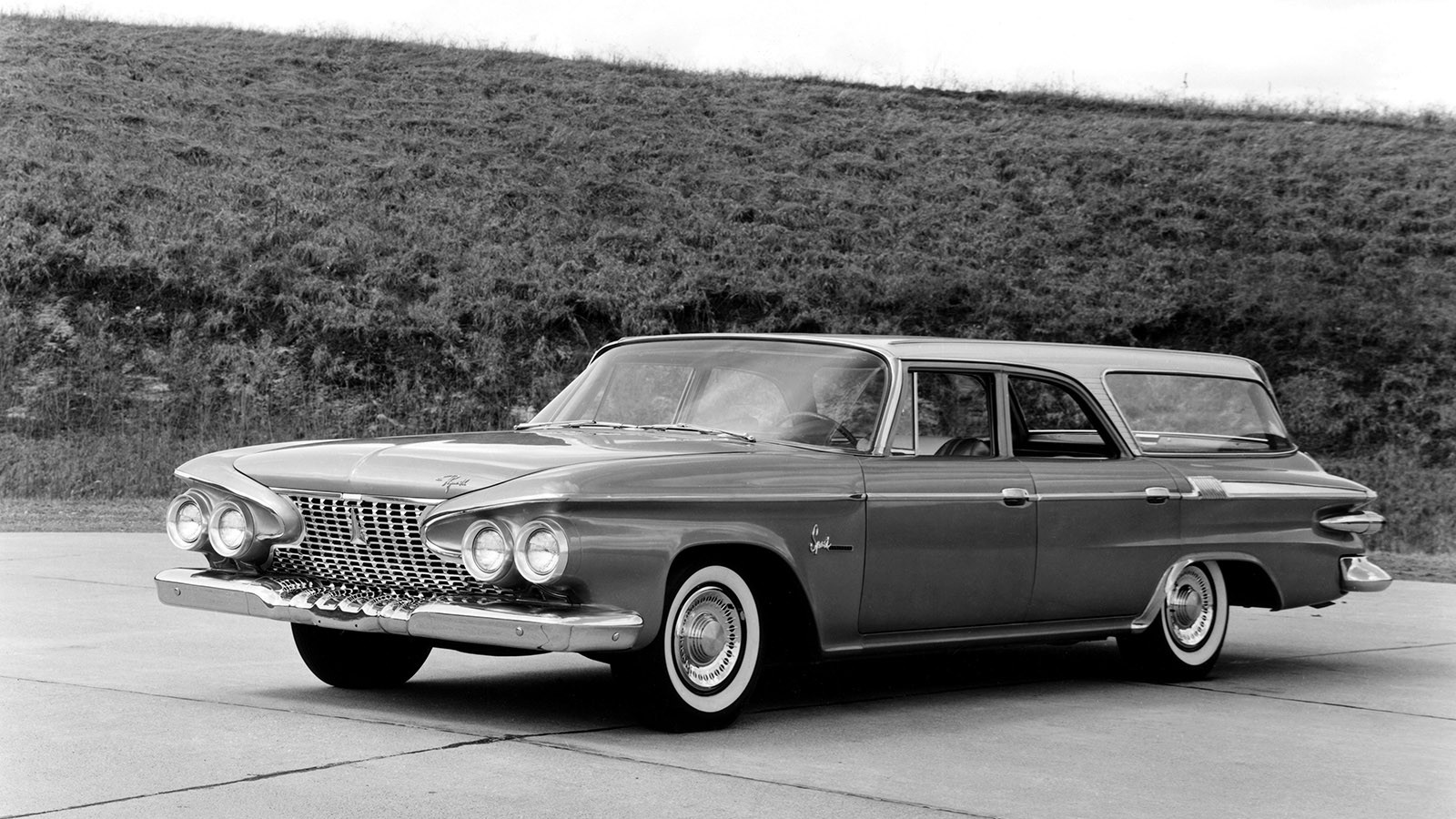
1961 Plymouth Sport Suburban Wagon
At 18ft (5.5m) long and 6.6ft (2m) wide, and with an all-up cargo capacity of 2710 litres, Plymouth’s ’61 Sport Suburban Wagon was the very definition of a land yacht.
While this model’s styling perhaps didn’t fall quite so easily on the eye as Exner’s earlier designs (it also marked the end of his ‘Forward Look’ language), it was well-endowed on the engine front, with a range that extended from an all-new, 3.7-litre slant-six, all the way to the wonderfully named SonoRamic Commando V8, displacing 6.3 litres.
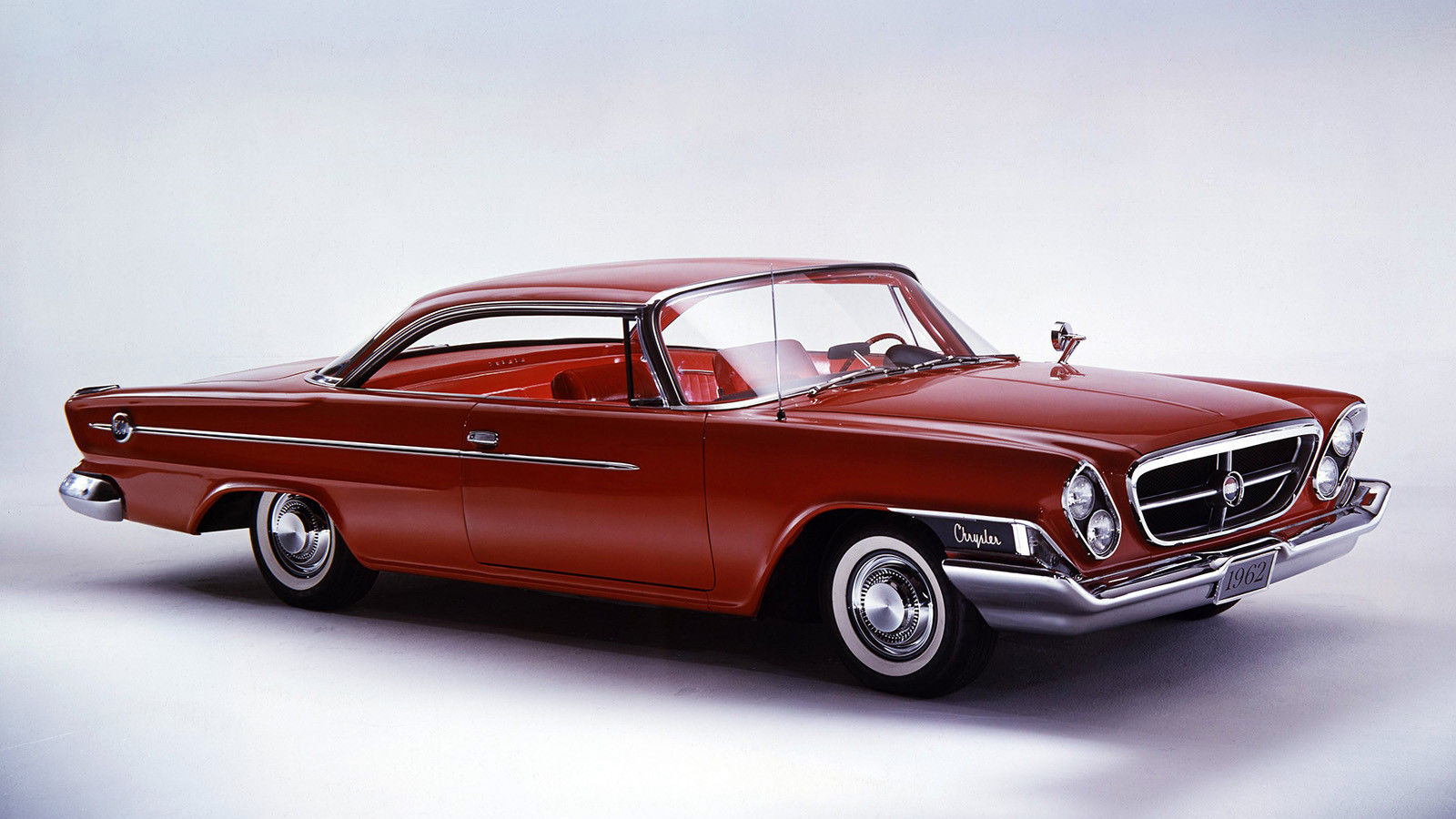
1962 Chrysler 300 (non-letter)
Chrysler’s 300 range received a design change in 1962 coincident with its letter series, which shifted to the 300H for that year.
Known as the 300 Sport Series, it was available as a saloon, coupé or convertible, whereas the 300H was coupé only.
Initially powered by Chrysler’s 6.3-litre, big-block V8, the model received a sheet-metal redesign in 1963, when the canted headlights were also dropped.
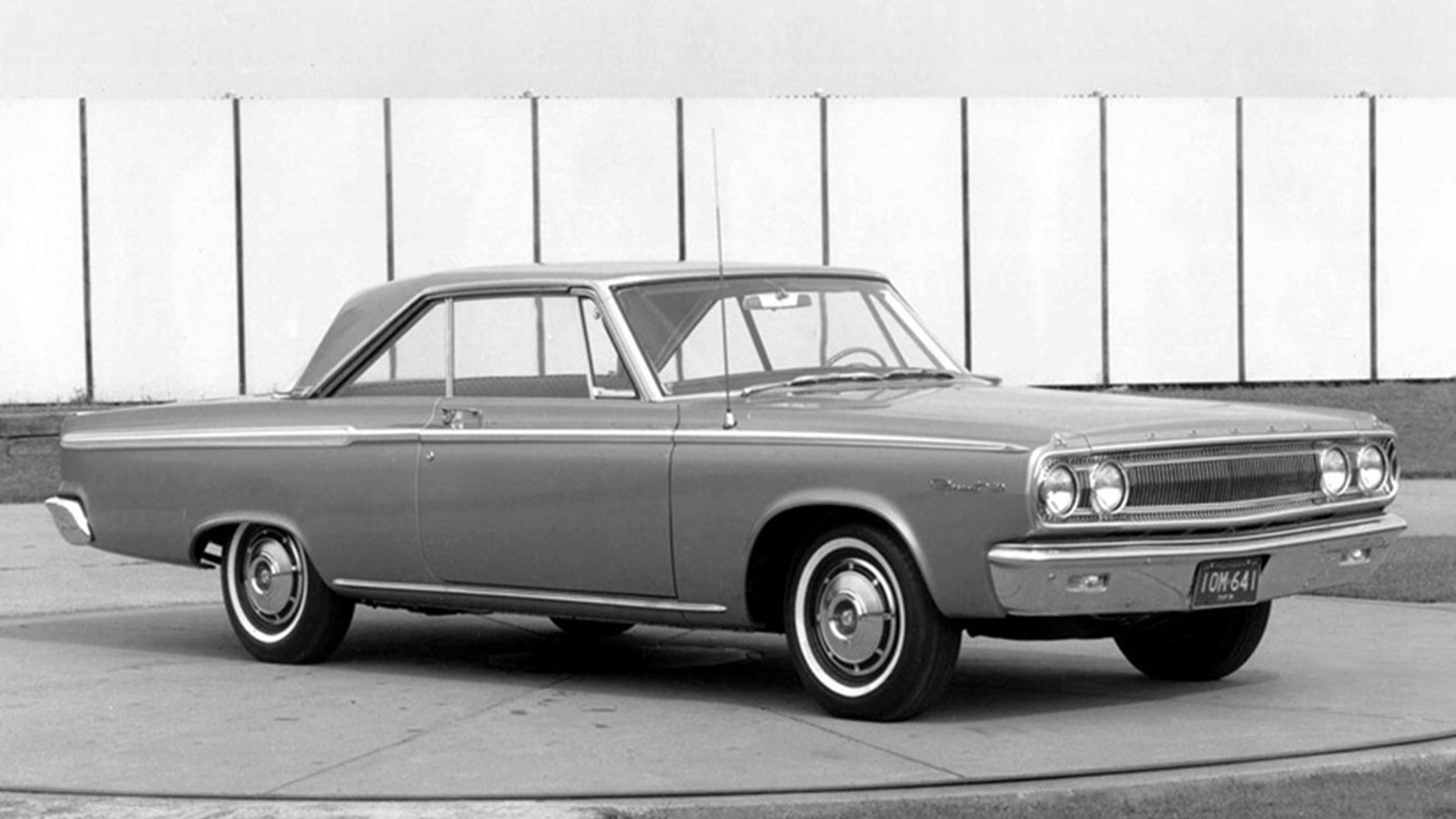
1965 Dodge Coronet
After a six-year break from the market, the fifth-generation Dodge Coronet appeared in 1965, based around Chrysler’s intermediate B-body platform, with a 117in wheelbase.
One of Exner’s final designs for Chrysler, the ’65’s appearance was in stark contrast to its be-finned predecessor, with clean and elegant lines.
While engine choices started with Chrysler’s humble, 3.7-litre slant-six, there was a full range of V8s, up to the 7.2-litre Magnum big-block.
There was even a model known as the A990, which used a racing version of the 7-litre Hemi and was stripped of much of its kit to reduce weight.
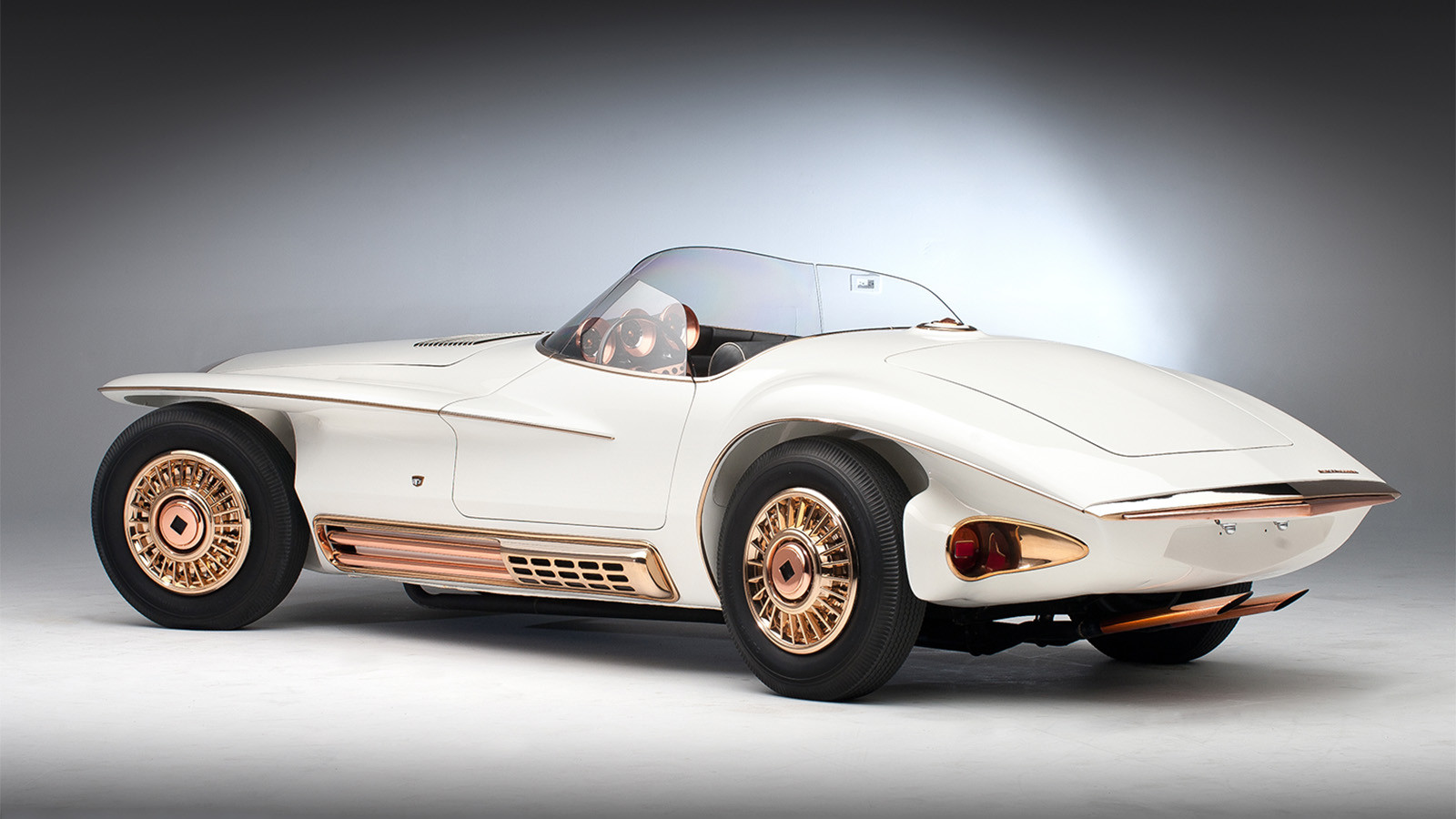
1965 Mercer-Cobra Roadster
Retired from corporate life Exner may have been, but his passion for design was alive and well.
In 1963, he produced a series of Revival Car concepts for Esquire magazine, interpreting what certain models from defunct prestige car brands would look like if they’d been created for a modern audience.
Exner’s design for a Mercer (a brand which had died 40 years before) was produced by Carrozzeria Sibona-Basano in Turin as a concept car using a shortened Shelby Cobra chassis.
Funded by the Copper Development Association, a total of 11 different alloys and finishes were employed in the construction of the car to demonstrate the usability of copper and brass.
Using a Ford drivetrain, Exner completed the design of the Mercer-Cobra in collaboration with his son, Virgil M Exner Jnr.
1966 Bugatti T101C Roadster Ghia
Another of Exner and son’s Revival cars was the Bugatti T101C Roadster.
Using one of six original 101 chassis produced by Bugatti in 1951 and purchased by Exner in the early 1960s, final construction of the car was completed by Ghia in Turin, with the chassis shortened by 18in.
Exner’s trademark sloping rear deck and crisp lines brought the latter-day Bugatti’s design up to date, although you’ll need to form your own opinion about the rather chunky horseshoe grille and rectangular headlights.
Power for the T101C was from the very last Type 57 engine produced by Bugatti in 1951: a supercharged, 3257cc, straight-eight unit.
1966 Duesenberg Model D
In 1966, Augie Duesenberg’s son, Fritz, partnered with a Texas real-estate millionaire to revive the Duesenberg brand.
Using a 1966 Imperial as a base, Duesenberg commissioned Virgil Exner to design a sumptuous body for the new car, which would be handcrafted by Ghia in Turin.
Lavishly specified and powered by a 7.2-litre V8 engine, plans were made to built 1000 of the born-again models, with 50 orders received early on, including from Elvis Presley and comedian Jerry Lewis.
Alas, after corporate funding dried up, only one show car was produced, which still exists today.
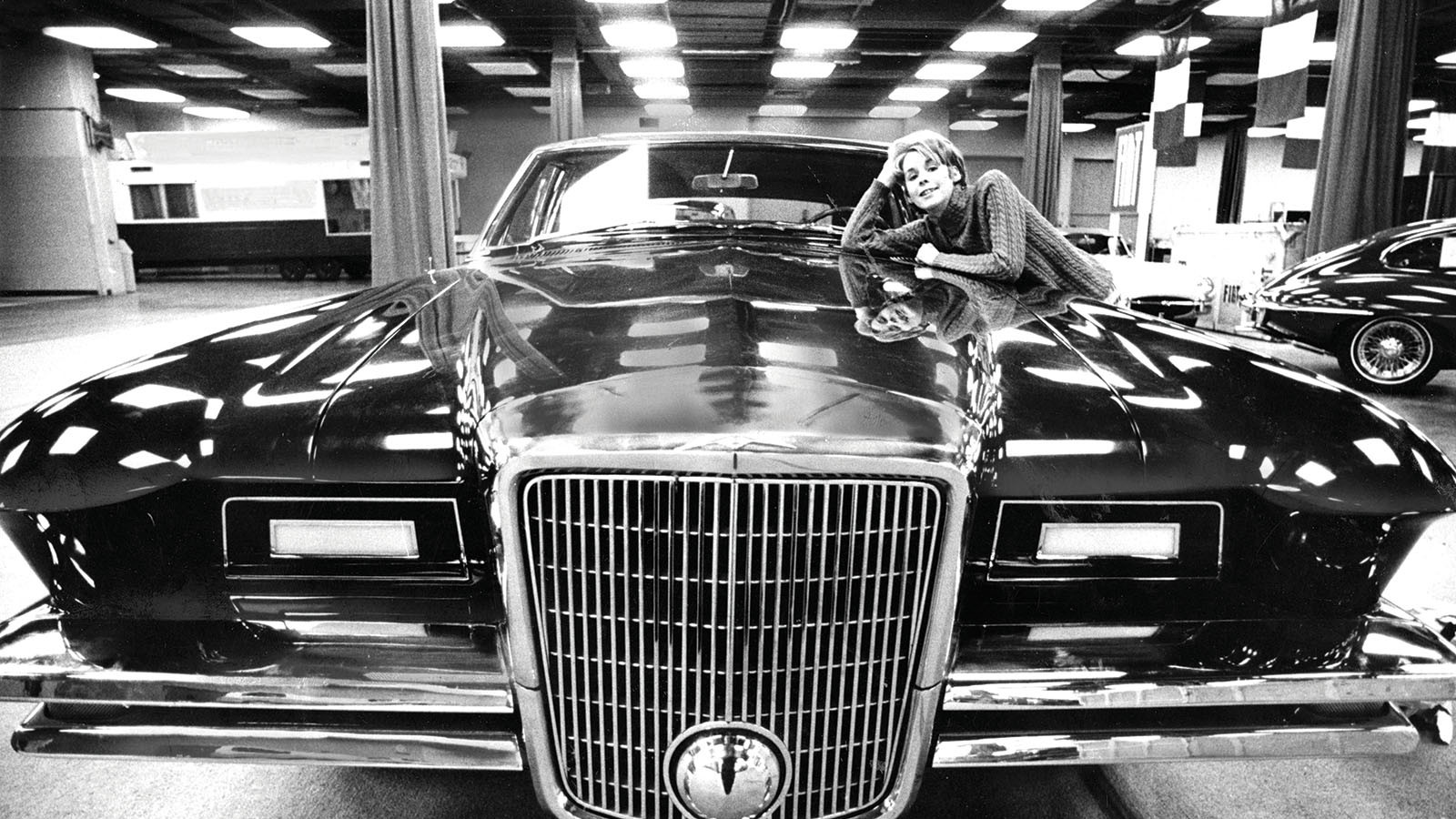
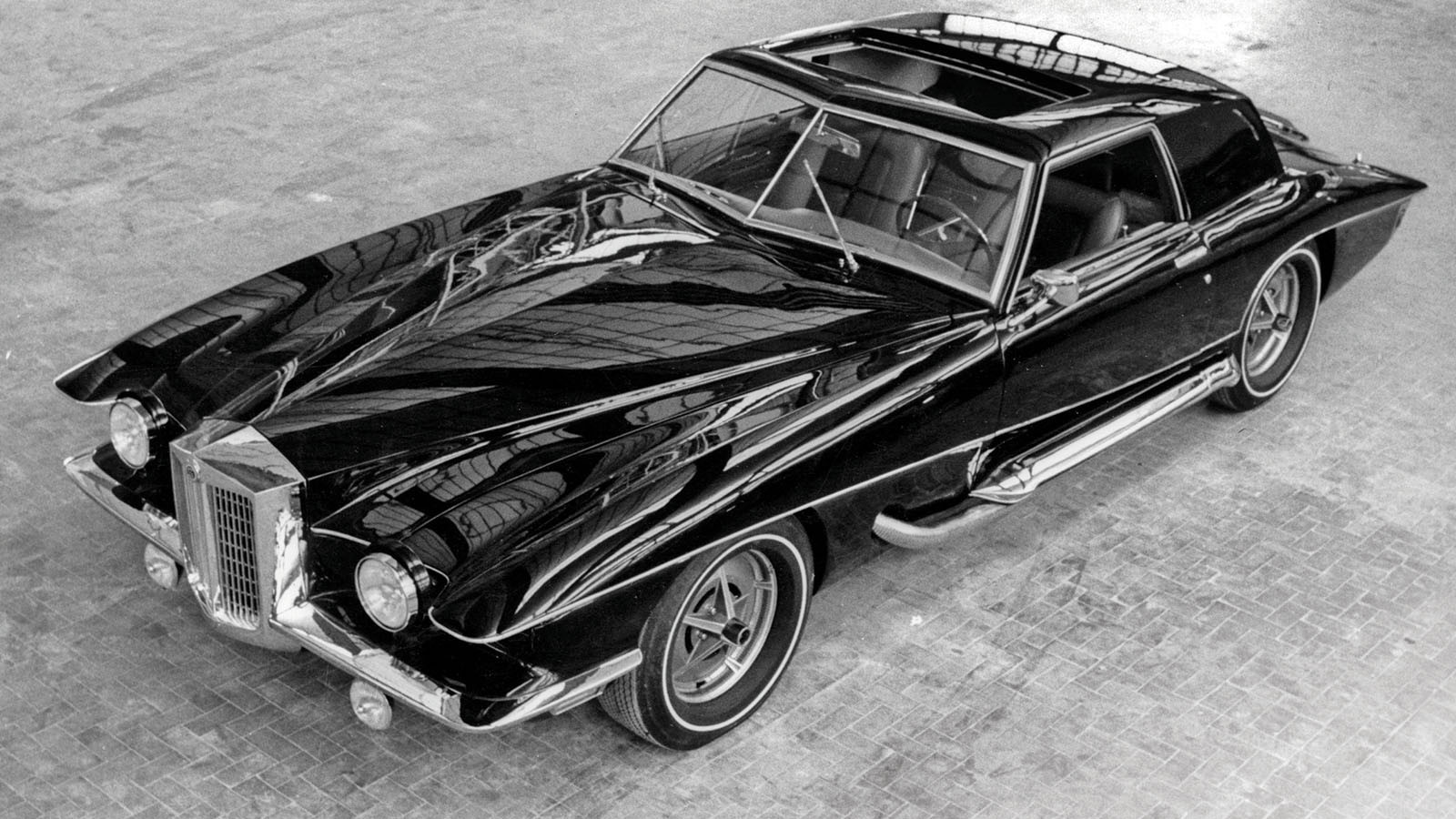
1971 Stutz Blackhawk
Another historic US car brand to be revived was Stutz in 1968, and once again Virgil Exner was called upon to style its new model.
Exner’s design included a spare tyre that protruded through the bootlid, a false, shell-type radiator grille and freestanding headlights.
The Blackhawk was prototyped by Ghia in Turin using Pontiac Grand Prix underpinnings, plus a 7.5-litre V8 engine to power the 19ft (5.8m) leviathan to a top speed of 130mph (many other powertrains were used through the Blackhawk’s life).
By 1980, 350 Stutz Blackhawks had been sold, with up to 600 cars being built by the time production ceased in 1987.
We hope you enjoyed this gallery. Please click the ‘Follow’ button above for more super stories from Classic & Sports Car.