Before the union
The marque we know today as Mercedes-Benz has been a single entity for around a century, but its history before that is a great deal more complicated.
It was formed in 1926 by merging two German companies which had been rivals for 40 years – since the dawn of car production, in fact, and not long after Germany itself had been established as a unified state.
Those manufacturers were, of course, Benz and Daimler, and here we’re going to take a chronological look at what they were both up to from their inceptions until the year they became one.
1. Benz Patent Motorwagen (1886)
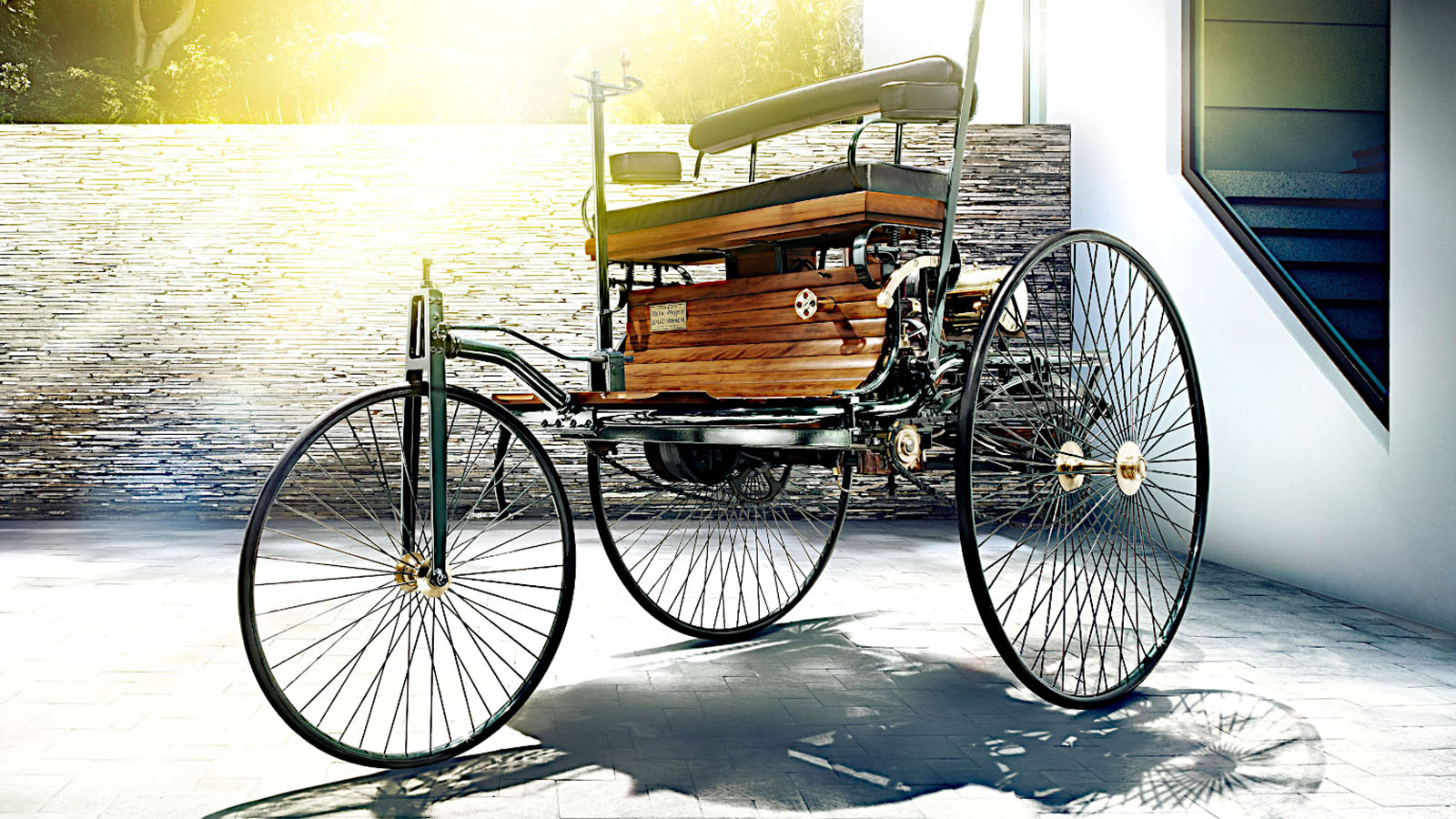
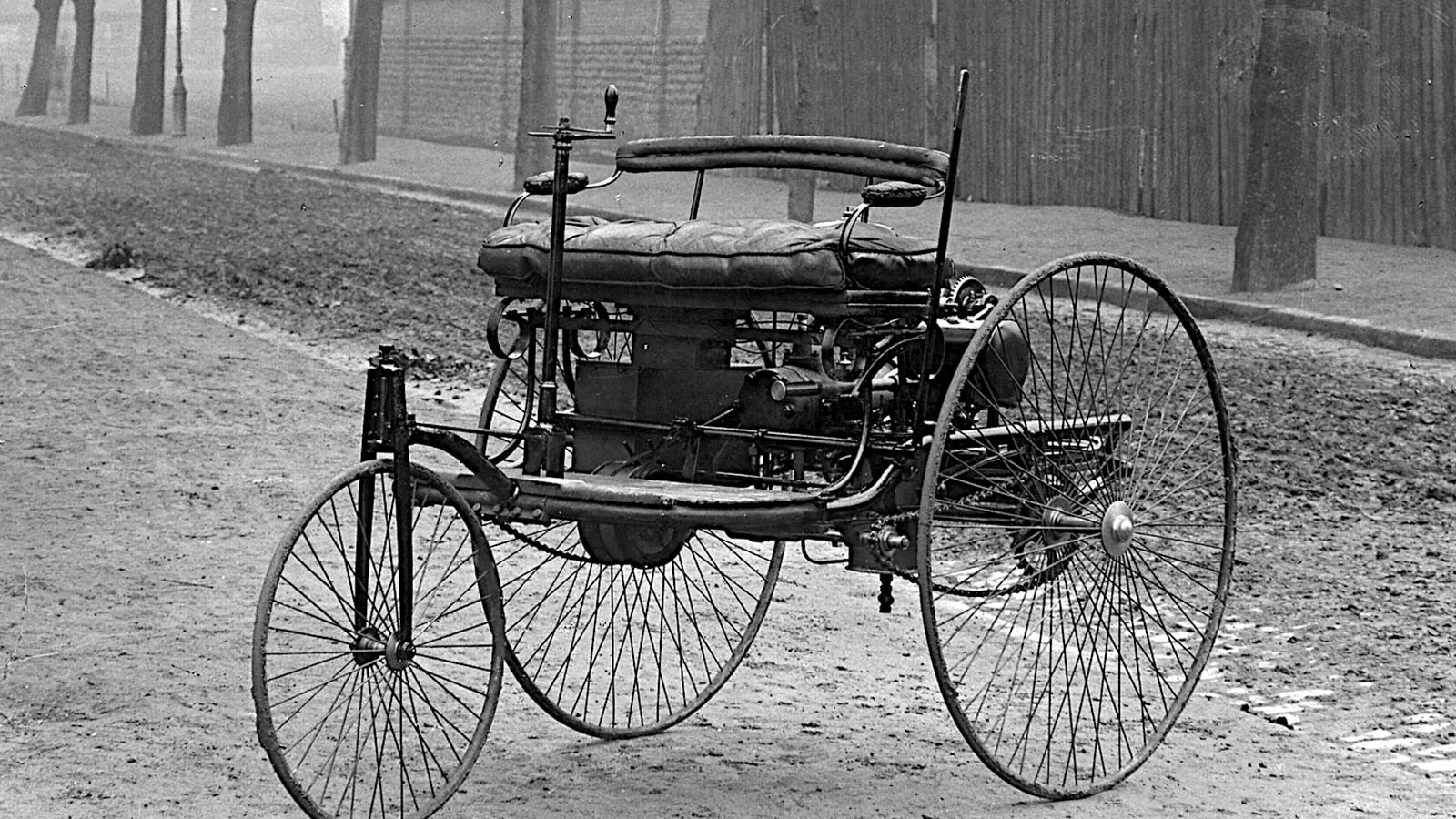
Arguments about what should be described as the world’s first car could rage for centuries, but Carl Benz’s Patent Motorwagen seems to be the most popular choice.
Where others might simply have fitted a proprietary engine to an existing carriage as a replacement for the horse, Benz designed the whole vehicle himself, though he later admitted that his skills did not, at the time, extend to making two front wheels share the steering duties.
Around 25 examples were built up to 1894, with single-cylinder engines ranging in size from the original 954cc to the final 1990cc.
A major factor in the car’s success was a road trip from Mannheim to Pforzheim undertaken in 1888, without Carl’s knowledge, by his wife Bertha and two of their sons, a monumental undertaking which made Herr Benz and his curious machine famous.
2. Daimler Motor Carriage (1886)
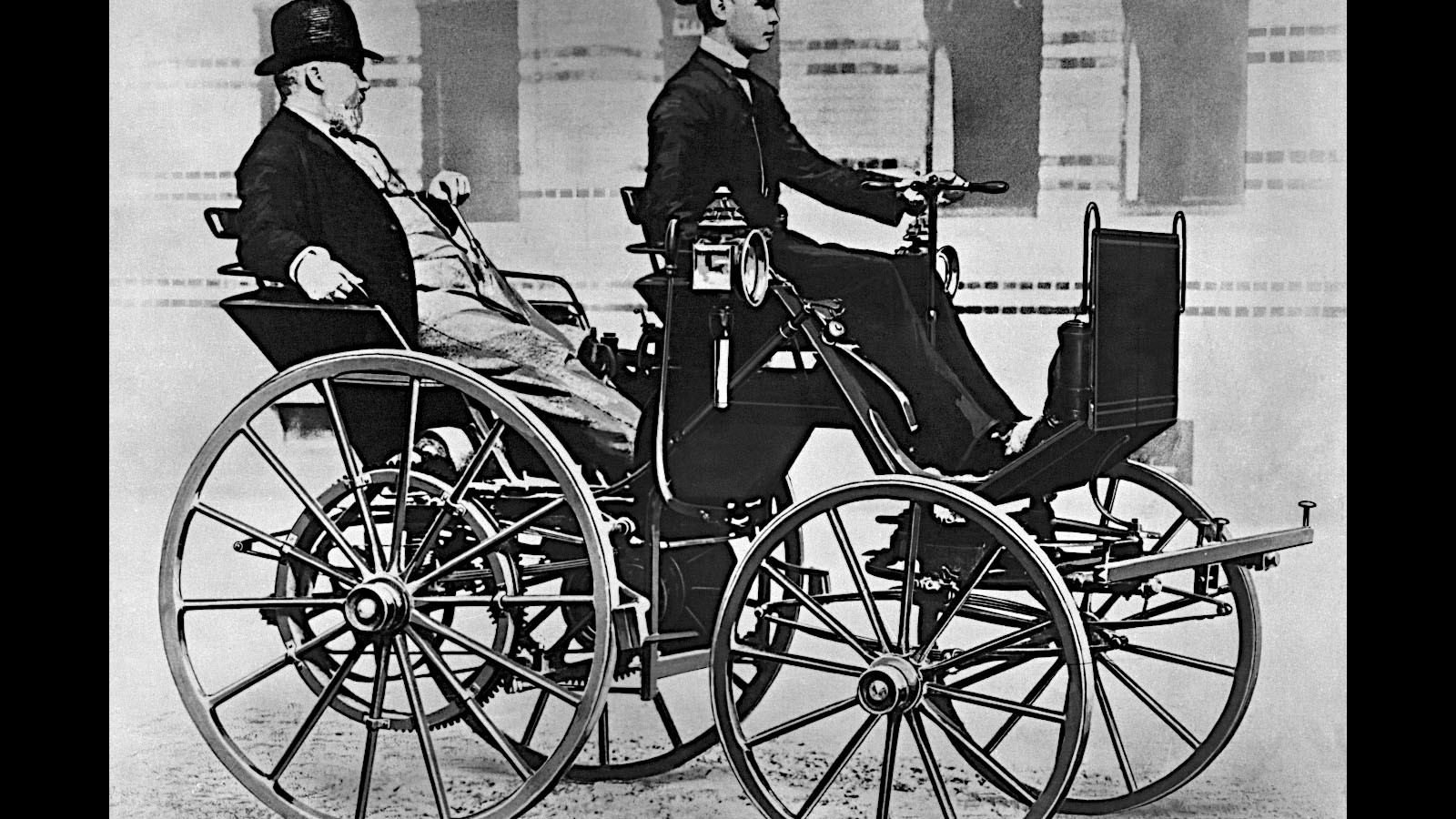
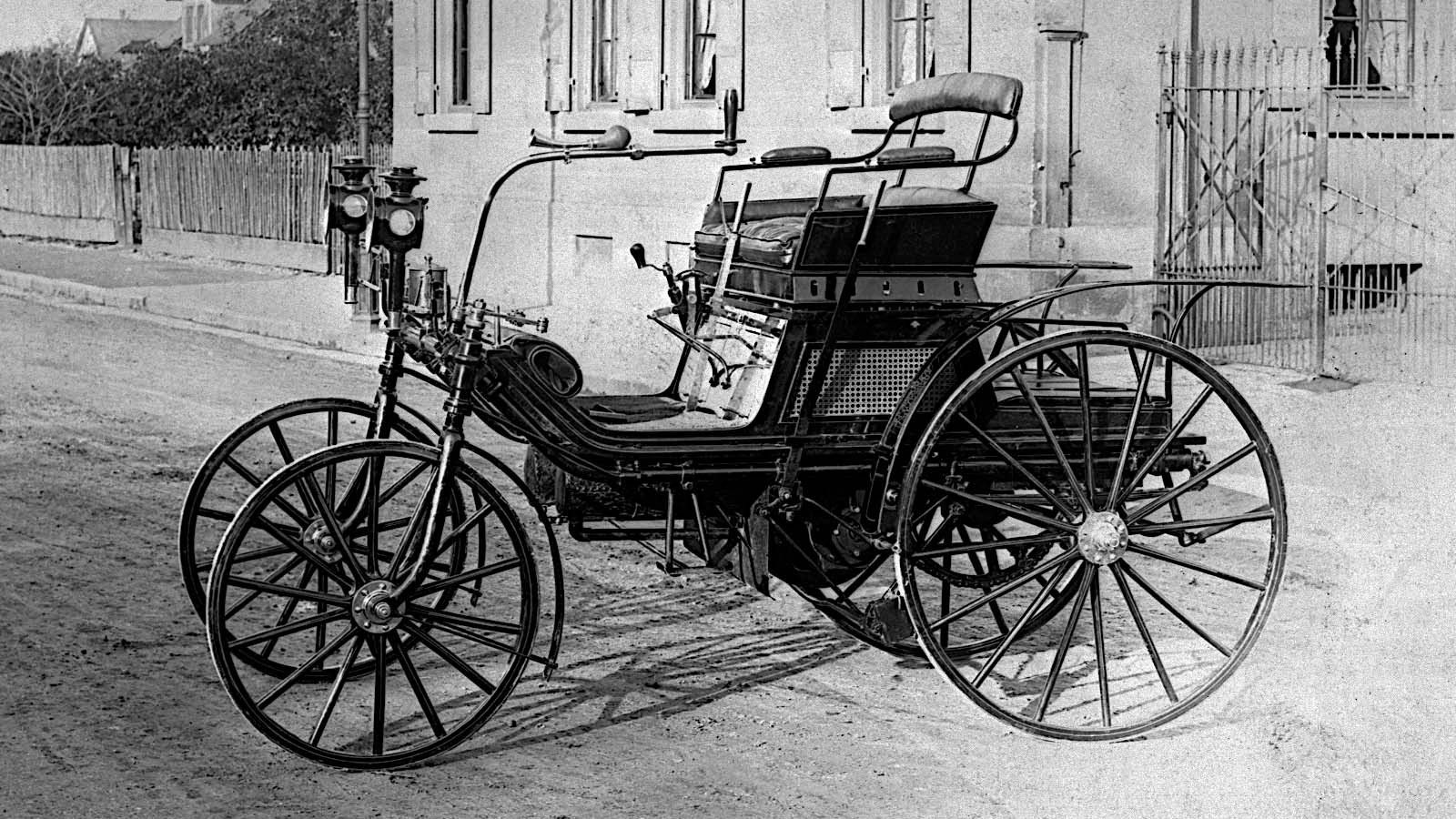
Unlike the first Benz, the earliest Daimler was a carriage of the normally horse-drawn variety, bought new from Wilhelm Wimpff & Son and used as a test bed for an engine designed by Gottlieb Daimler and Wilhelm Maybach.
Known as the ‘grandfather clock’, this vertically mounted, single-cylinder engine was a 462cc development of a 264cc unit used in Daimler’s Reitwagen, or ‘riding car’, of 1885. Despite its name, the riding car wasn’t really a car at all – the fact that it had only two wheels firmly defines it as a motorcycle.
Returning to the Daimler Motor Carriage, only one example was ever built, so it can’t possibly be considered as a production model, but it has its place in motoring history as the world’s first four-wheeled car powered by an internal-combustion engine.
3. Daimler Schroedter car (1892)
The first Daimler made available to the public, known as the ‘wire-wheel car’, was introduced in 1889 and featured a 565cc V-twin engine (built under licence by Panhard et Levassor in France and supplied by that company to Peugeot, among others) whose power was transferred to the rear axle entirely by gears.
In 1892, it was heavily revised with a larger, but still two-cylinder, engine of either 760cc or 1060cc and, in what now seems a retrograde step, chain-drive transmission.
It was sold as the Daimler Motorwagen but is also known as the Schroedter car, because the development work had been done by Daimler’s new technical director Max Schroedter, on account of Gottlieb Daimler and Wilhelm Maybach having left the company after falling out with the new partners they gained when it was reorganised.
Although Mercedes-Benz now describes it as ‘the world’s oldest prestige car’, sales of the Schroedter model were so poor that an already perilous financial situation became even worse, and by 1895 Daimler was facing bankruptcy.
4. Benz Victoria and Vis-à-Vis (1893)
Having caught up with Daimler in the matter of steering, Carl Benz introduced his first four-wheeled models in 1893.
They were identical in most respects, but the Victoria was a two-seater, while the Vis-à-Vis had an extra two seats mounted further forward but facing to the rear – hence the name, which is the French for ‘face-to-face’.
As with the Benz Patent Motorwagen, the single-cylinder engine’s capacity increased substantially up to the end of production in 1900, from 1730cc to a mighty 2915cc.
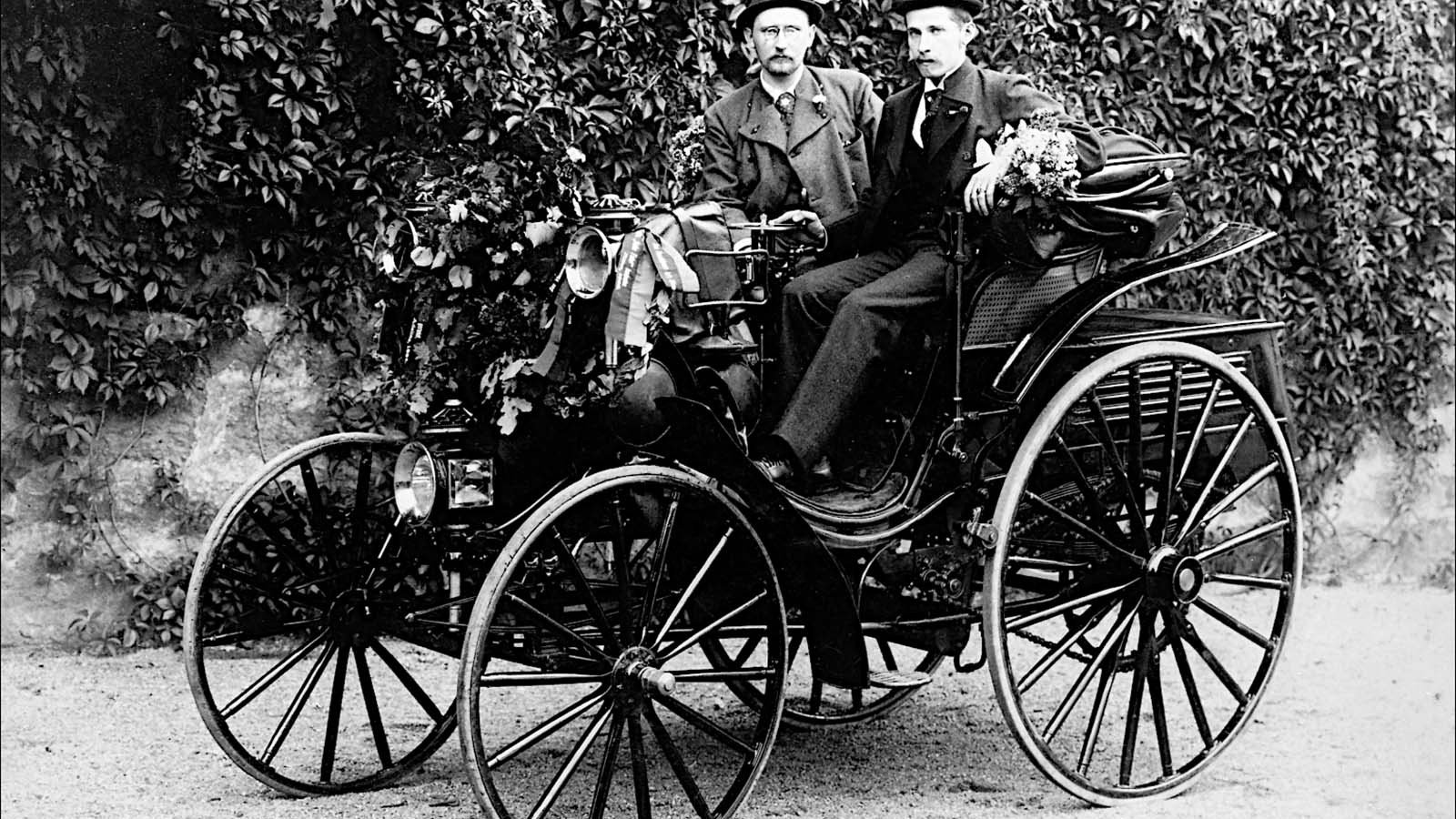
The first buyer of a Victoria, narrowly beating the Grand Duke of Baden to this honour, was the 21-year-old Baron Theodor von Liebieg, who, in the summer of 1894, drove his car the 583 miles (939km) from his home in Reichenberg, Austria-Hungary (now the Czech city of Liberec) to his mother’s home in Gondorf, Germany, and back – a much longer, though admittedly less significant, journey than Bertha Benz’s in the Patent Motorwagen six years earlier.
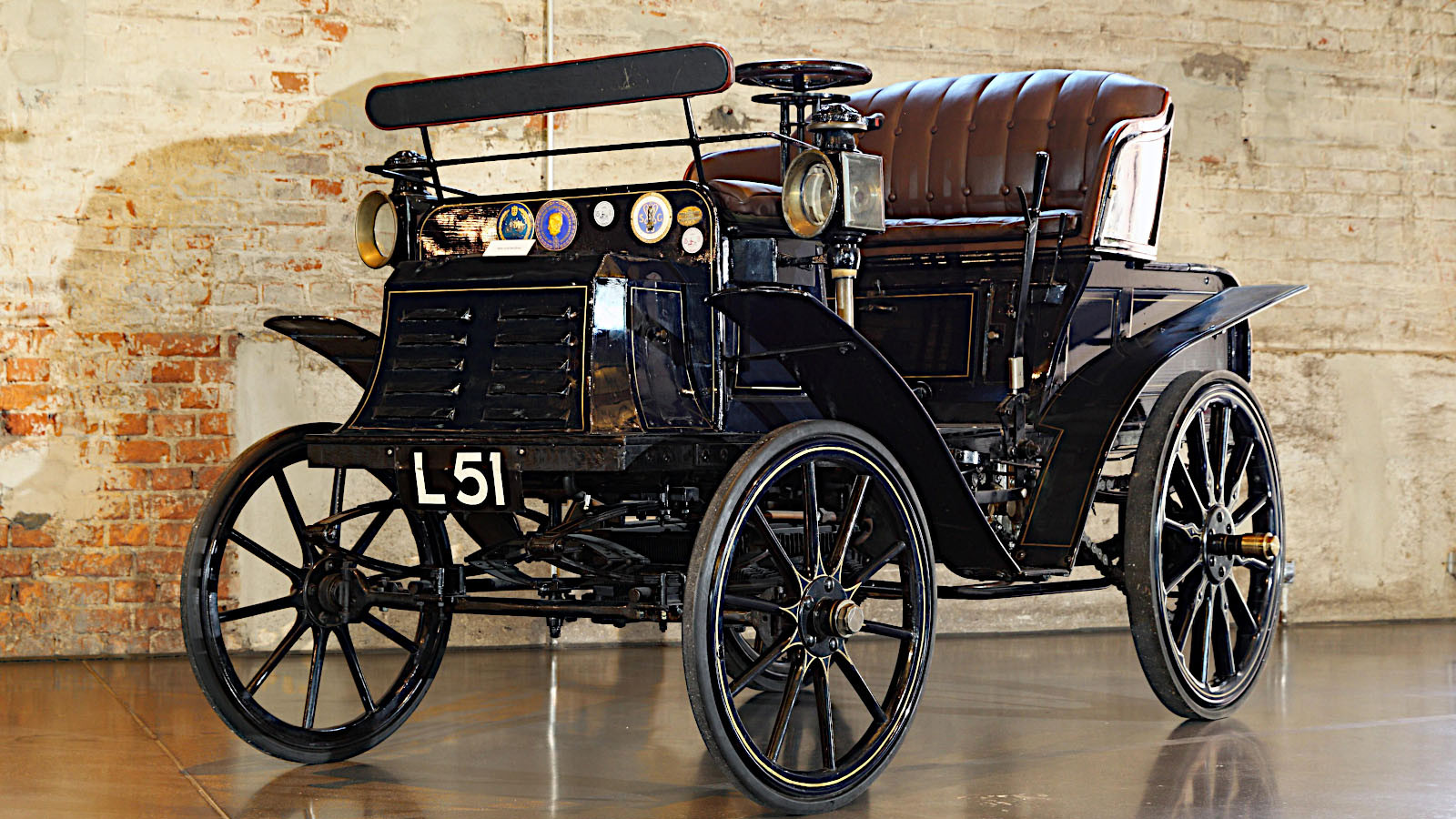
5. Benz Velo (1894)
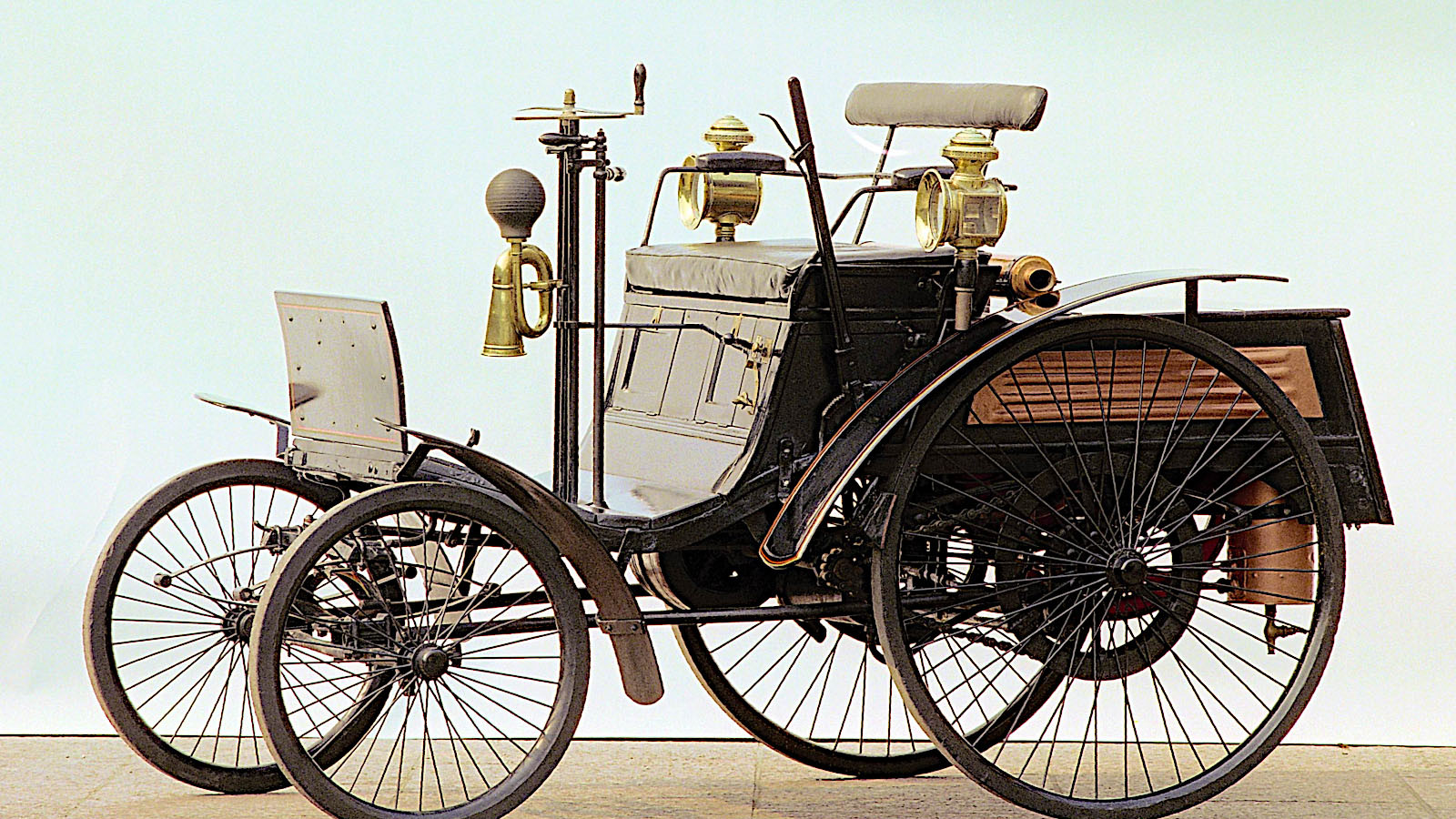
On the subject of the car officially known as the Velocipede but more commonly as the Velo, Carl Benz has been quoted as saying, “This vehicle was quite literally grabbed out of our hands. What we made was sold immediately.”
Smaller, and therefore cheaper, than the Victoria and Vis-à-Vis, it was joined in 1896 by a better-equipped derivative called the Comfortable.
Contrary to previous Benz practice, the engine was always a 1045cc, horizontally mounted, single-cylinder unit, but its power output more than doubled from 1.5bhp in 1894 to 3.5bhp in 1901.
In support of the Benz quote, around 1200 Velos (Comfortable or otherwise) were built – an astonishing number for the 19th century, and one which has led to the claim that this was the world’s first mass-produced car.
6. Benz bus (1895)
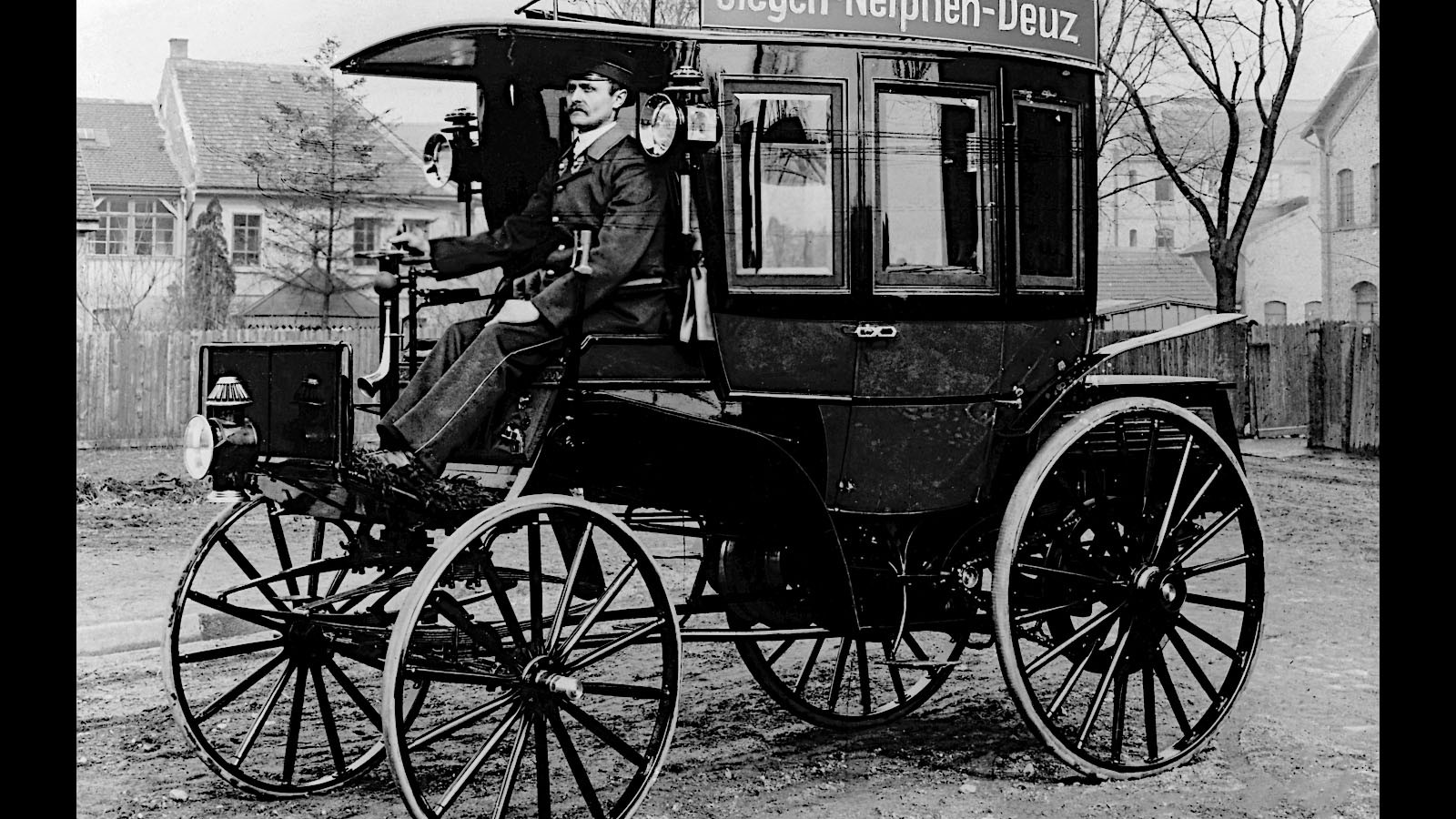
What is believed to be the first bus with an internal-combustion engine was supplied by Benz to the Netphener Omnibus Gesellschaft for use on a route from Siegen to Deuz, with a stop in Netphen.
It could carry eight passengers, who were required to get out and push on uphill stretches which were beyond the capability of its 5bhp engine.
This, along with reliability issues, led to the service lasting for only a few months, but the bus remained in production until 1898, when it was replaced by the more powerful Benz Break.
Daimler began taking buses seriously in 1897, having previously adopted the more cautious approach of fitting bus bodies to its existing cars.
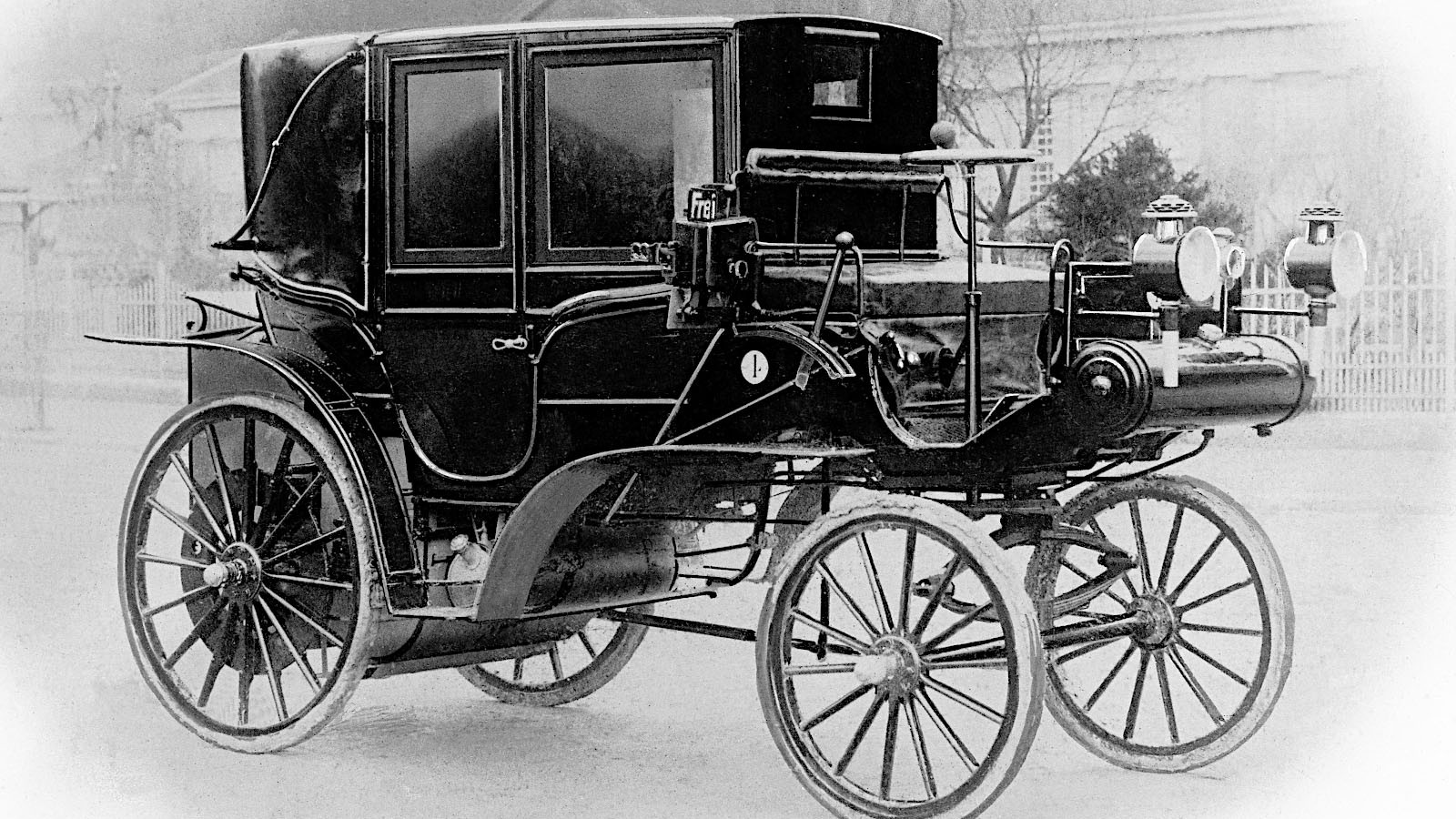
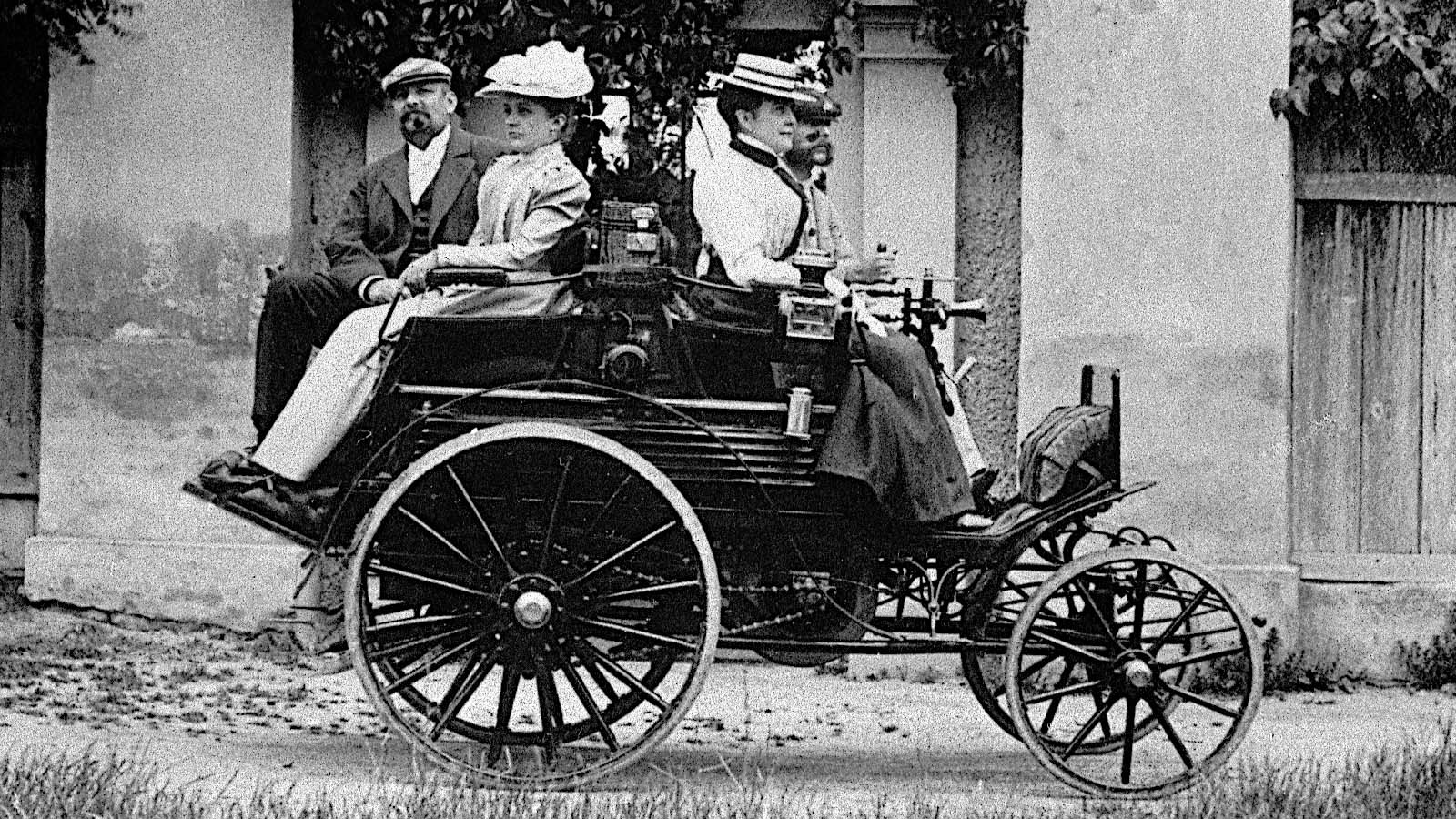
7. Daimler Riemenwagen (1895)
Officially known simply as the Daimler Motor Carriage, this vehicle looked old-fashioned even by the standards of the mid-1890s, but it was more innovative than a first glance might suggest.
The rear-mounted, two-cylinder engine (known as the Phoenix and designed by Wilhelm Maybach who, along with Gottlieb Daimler, had returned to the company) was available in an incredible variety of capacities from 760cc to 2190cc, and had a spray-nozzle carburettor.
Power from whichever engine was used was transferred to the rear axle by a belt – hence the nickname Riemenwagen, which can be translated into English as ‘belt-driven car’.
According to Mercedes-Benz, variants of the Riemenwagen were definitely Daimler’s, and perhaps the world’s, first motorised taxi and truck.
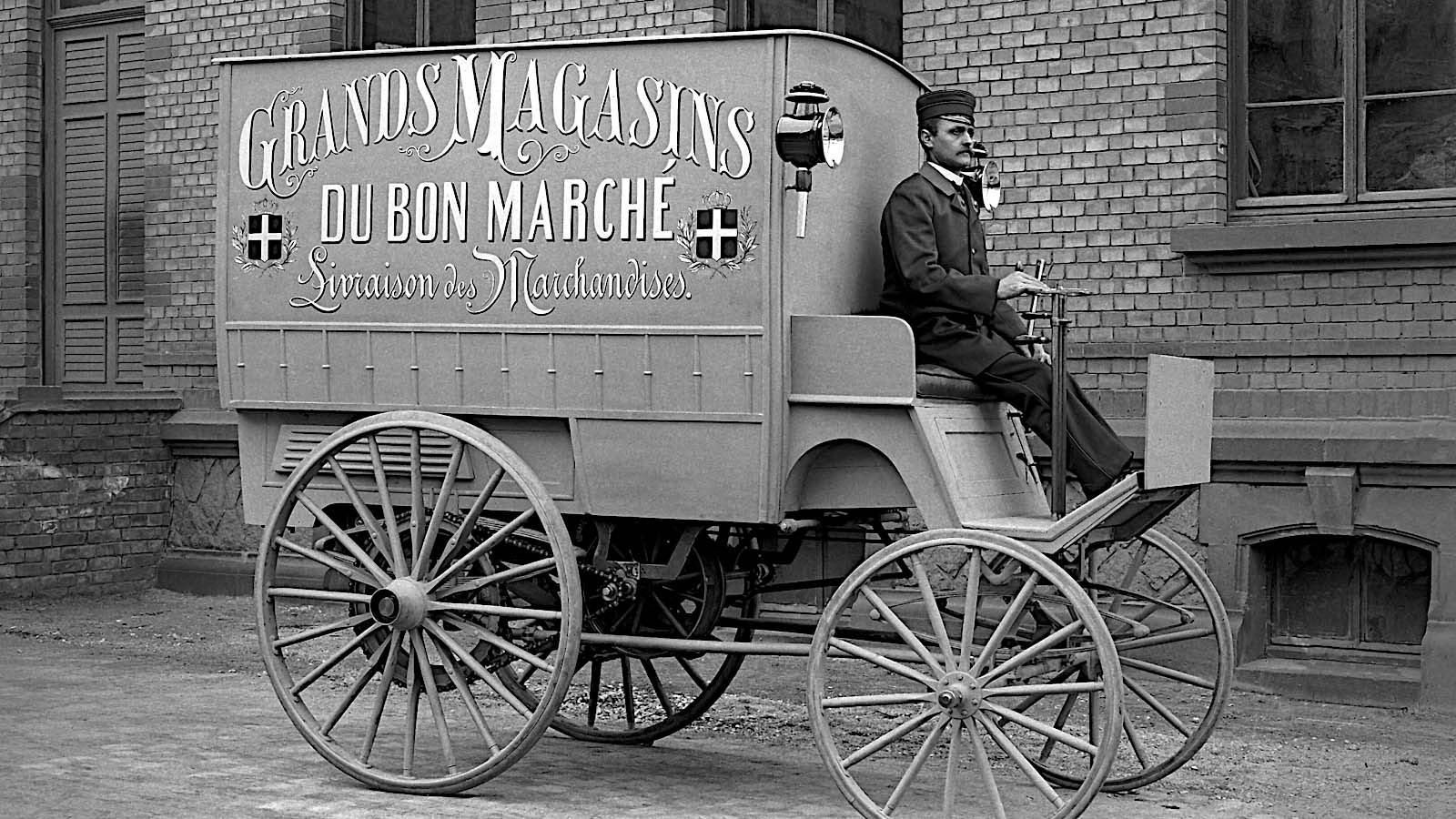
8. Benz vans (1896)
In 1896, Benz introduced what were known at the time as delivery vehicles, but which we would now call vans, both of them based on existing passenger models.
The first (pictured) was a derivative of the Victoria, and had a 600kg (1323lb) payload and a 5bhp engine, the latter being replaced by a 6bhp unit in 1898.
The Velo-based Combination, whose body could be removed and replaced by one with room for two passengers (essentially turning it back into a Velo), went through a similar development process, its power output increasing gradually from 2.75bhp to 4.5bhp.
The heavier of the two models was discontinued in 1900, but the Combination remained in production until 1902.
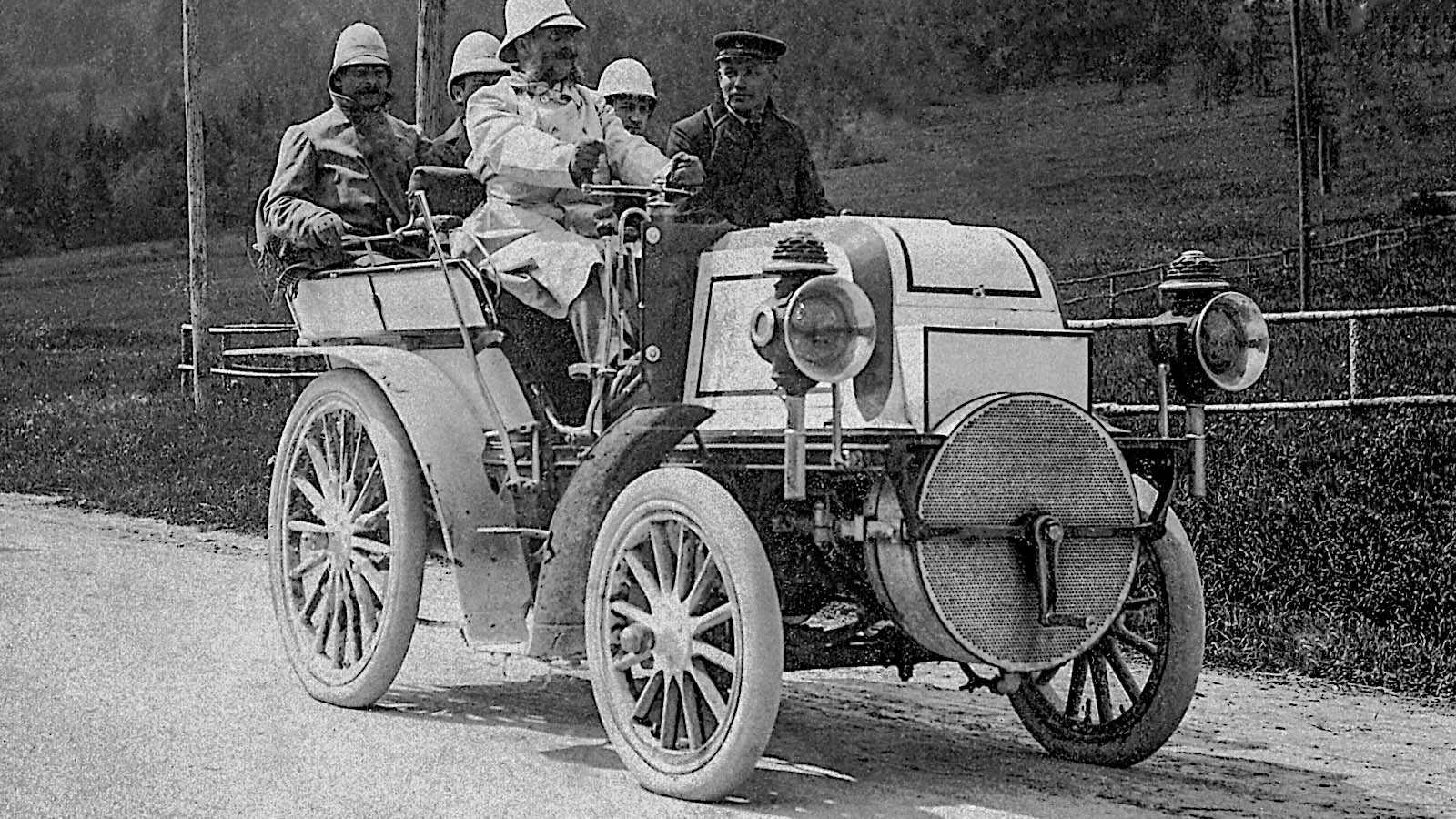
9. Daimler Phoenix (1897)
The Phoenix was named after the two-cylinder engine carried over from the Riemenwagen, though in this case Daimler abandoned the belt-drive idea and went back to transferring power from the motor to the axle by means of a chain.
In contrast to these cautious aspects, the Phoenix also had a new Maybach-designed radiator which improved cooling efficiency enormously, and opened the door to a rapid increase in power outputs over the next few years.
Other advances included mounting the engine in the front for the first time in Daimler’s history and, in 1898, building two examples with four-cylinder versions of the Phoenix engine for the Nice-based German Emil Jellinek.
Despite having many other things to occupy his time, Jellinek embarked on a new career in motorsport with a Phoenix, and this would soon lead to an epoch-making development.
10. Benz Ideal (1898)
At first sight, the Ideal represented only a small advance over the Velo, whose 1045cc, single-cylinder engine it shared for three years.
However, in 1902, its last year of production, this unit was replaced by a 2090cc flat-twin known as the Contra engine, which is regarded as being the first ‘boxer’ engine ever used in a production car.
The Contra had been introduced in 1899, and was fitted – in capacities ranging from 1710cc to 4245cc – to a wide variety of regular cars, racers and commercial vehicles.
11. Benz Dos-à-Dos (1899)
The Benz to be powered by the Contra engine mentioned previously was the Dos-à-Dos, whose French title (meaning ‘back-to-back’) indicated that its front passengers faced forwards while those behind faced to the rear.
The Contra was available here in two forms, neither of them quite the same as the one in the Ideal – a 1710cc unit producing 5bhp and a more purposeful, 2690cc version with 8bhp.
At around the same time, the Contra was also used in the Mylord, the Elegant and the Tonneau, and also in the Break, which could transport either eight or 12 people depending on which body was fitted.
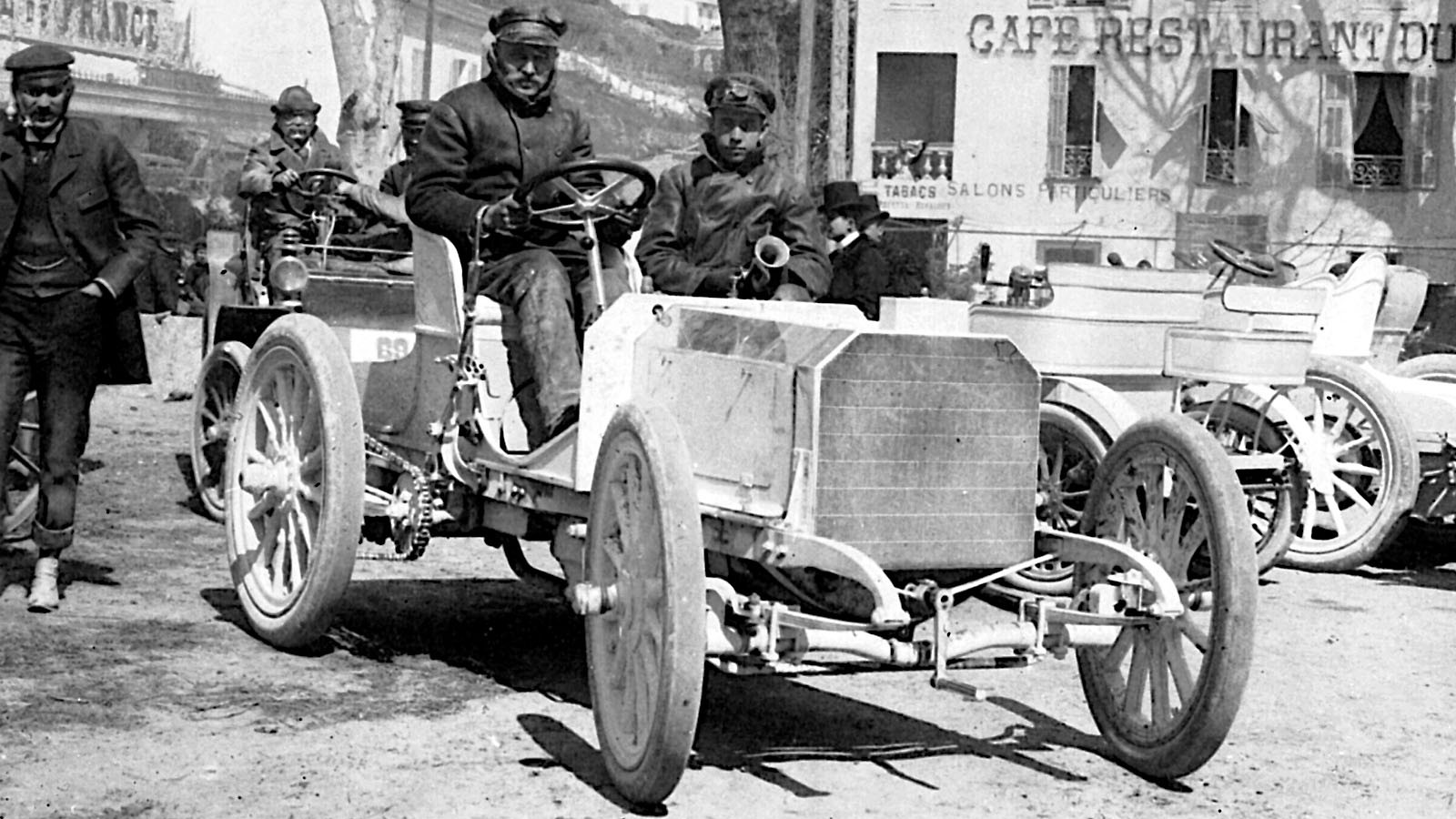
12. Mercedes 35hp (1900)
Daimler responded gloriously to Emil Jellenik’s request for something faster than the competition version of his Phoenix.
Bearing the name of Jellinek’s daughter, which he bestowed upon almost everything within reach, the Mercedes 35hp was longer, lower and, thanks to its 5913cc engine, far more powerful than the Phoenix.
With these advantages, it proved to be so devastatingly fast in motorsport events of 1901 that the French motoring journalist Paul Meyan felt obliged to warn his fellow citizens, “We have entered the Mercedes era.”
Daimler soon brought out two similar, though slower, models in the same series – the 2860cc 12/16hp and the 1760cc 8/11hp – but it was the wonderful 35hp that made history.
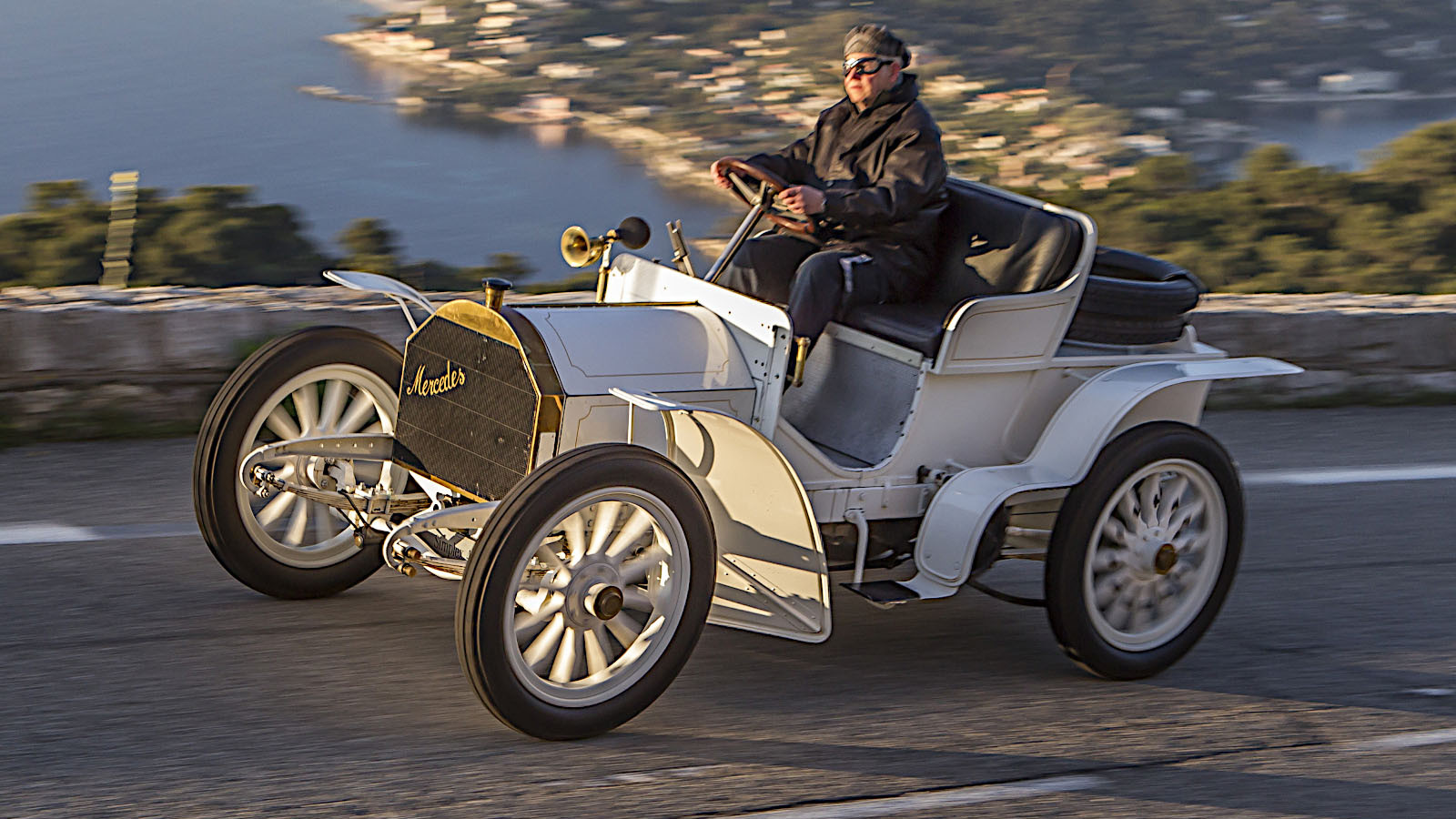
13. Mercedes Simplex (1902)
The 35hp and its siblings were very quickly replaced by the even faster Simplex models, whose engines reached a capacity of 6785cc in the range-topping 40hp (pictured).
These in turn gave way in 1903 to a new Simplex range, which was developed almost constantly right through to 1910.
The mightiest of them all was the 36/65hp, whose engine measured 9235cc and was therefore nearly 20 times larger than the single-cylinder ‘grandfather clock’ which had powered the 1886 Daimler Motor Carriage.
1902 was also the year the Phoenix was discontinued, and Daimler, though remaining the name of the company, was no longer that of any of its models, which from now on would all be called Mercedes.
14. Benz Parsifal (1903)
In a rather peculiar arrangement, the Parsifal range featured the work of two separate design teams, one consisting of French people and the other of Germans.
At launch, there were three versions powered by two-cylinder engines of 1527, 1727 and 2250cc, all of them fitted with a driveshaft (a first for Benz, and not matched by Daimler until five years later), and a 3100cc ‘four’ with the more traditional chain arrangement.
The situation became both more straightforward and more complicated in 1905, when the Parsifal name was dropped and the cars were known simply by their taxable and actual horsepower ratings, 28/30hp being one example.
From then until the end of production, all versions had four-cylinder engines (though also wildly differing capacities of 3160, 4520 and 5880cc), but a choice of chain or shaft drive was available for all of them.
15. Benz 50hp (1906)
The 50hp, or 28/50hp as it later became, was one of the first of a new generation of large Benzes which gradually replaced the Parsifal models.
Available, as was becoming common practice, with either chain or shaft drive, the 50hp had a 7430cc engine which provided splendid performance for the time.
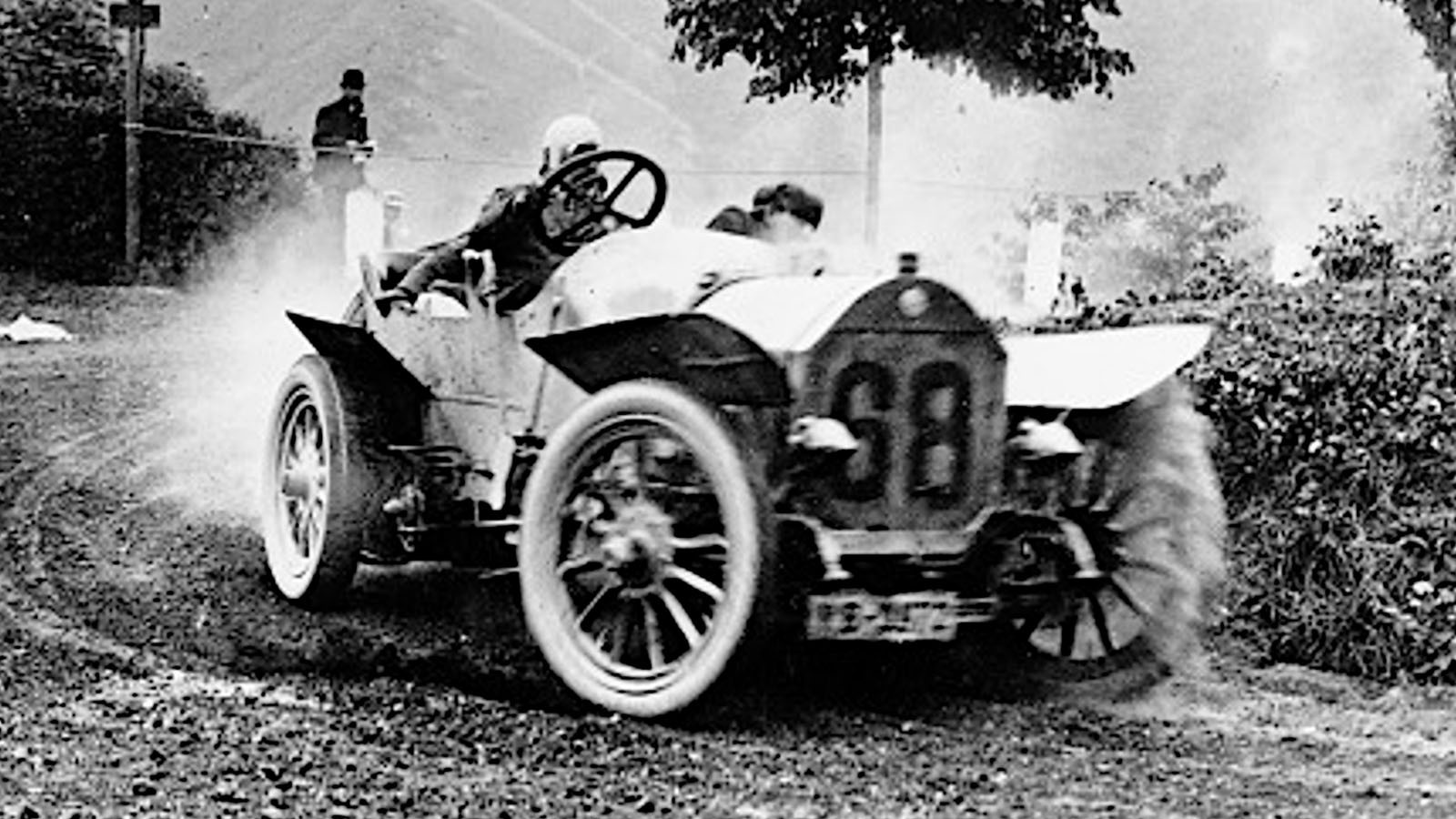
In 1908, as pictured here, a 50hp driven by Fritz Erle won the first of the Prince Henry Trials, named after the motoring enthusiast Prince Henry of Prussia (son of Emperor Frederick III and younger brother of Wilhelm II).
The trial, which was open only to production-touring cars, ran from 9-17 July, covering 2200km (1367 miles) of German roads, and Erle beat into second place the Mercedes of Willy Pöge, a result which must have caused great satisfaction at Benz headquarters.
16. Benz 70hp (1907)
Benz saw fit to manufacture the 70hp only from 1907 to 1909, no doubt because anyone with both the enthusiasm and the means to buy one had already done so by the end of that period.
Well beyond the scope of most people, it cost 30,000 Marks at a time when, according to one source, the average annual income of a German employee in industry, trade or transportation was around 900 Marks.
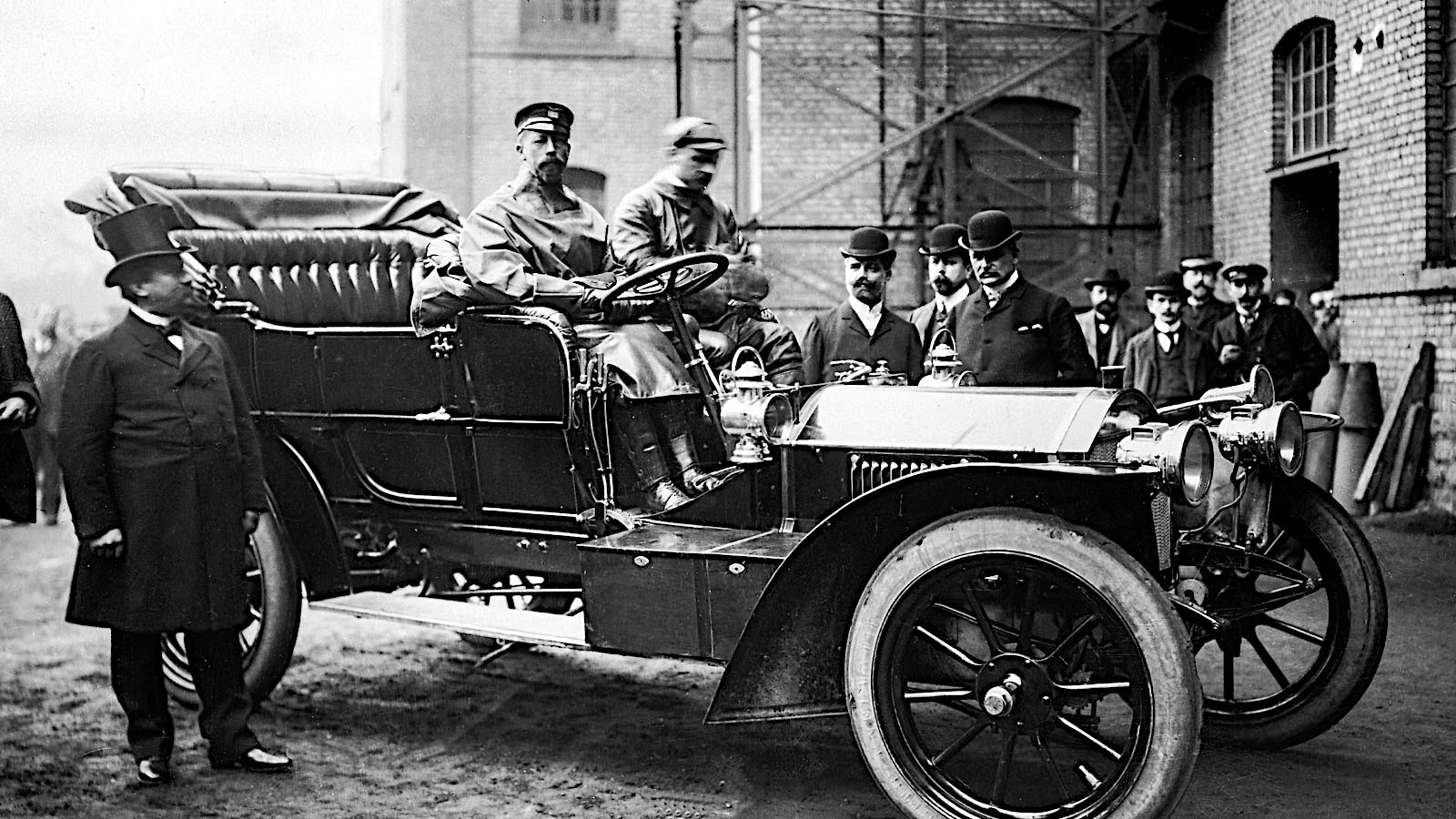
This was not a problem for Prince Henry (after whom the aforementioned trials were named), who is pictured here at the wheel of a 70hp Phaeton.
Each of the engine’s four cylinders had a capacity of nearly 2.5 litres, giving a total of 9850cc, and its very substantial power was transferred to the rear axle by chain, perhaps because a shaft was not considered sufficiently strong.
17. Mercedes 75hp (1907)
Formidable though the Benz 70hp undoubtedly was, it was exceeded by the contemporary Mercedes 75hp.
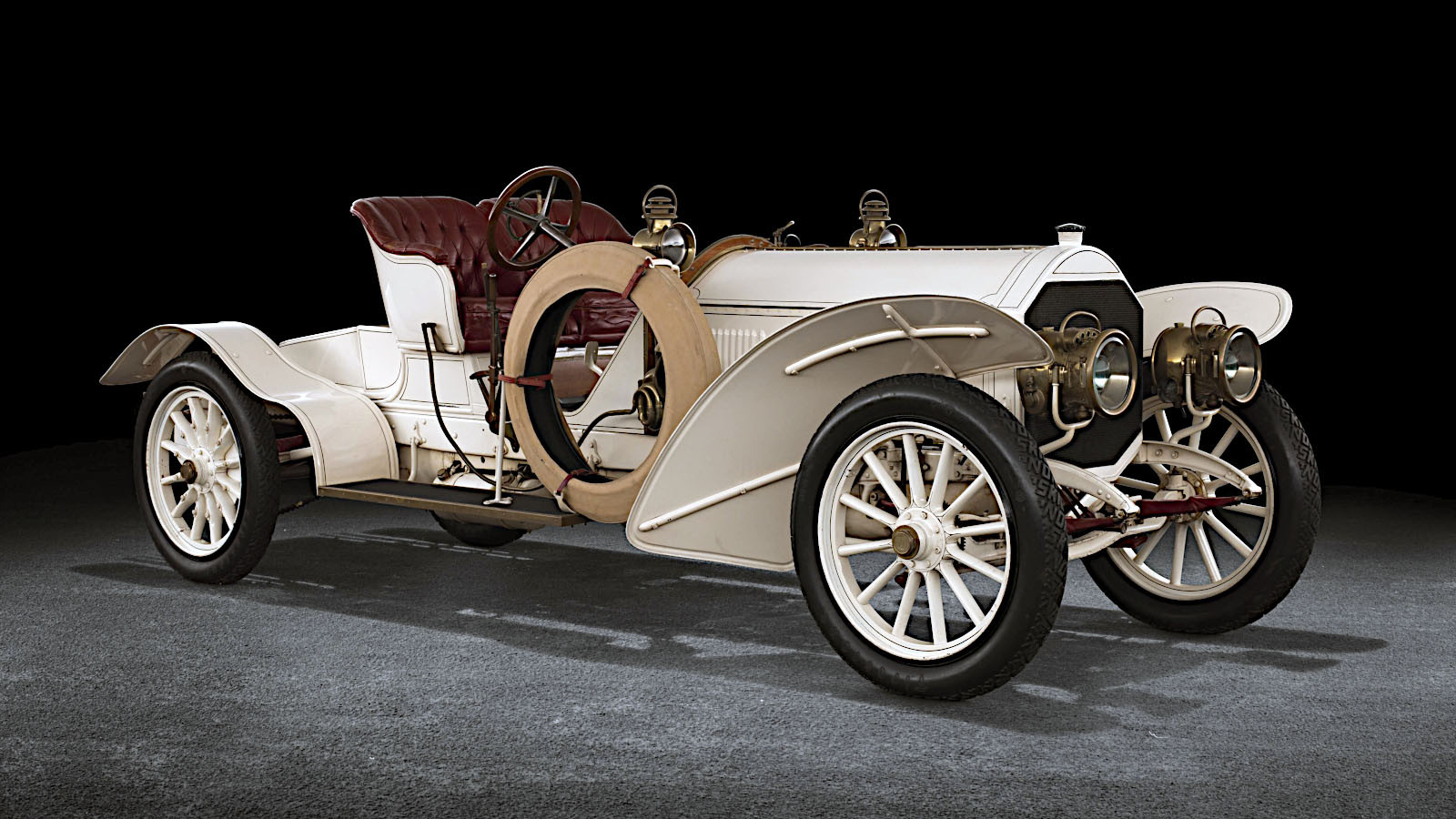
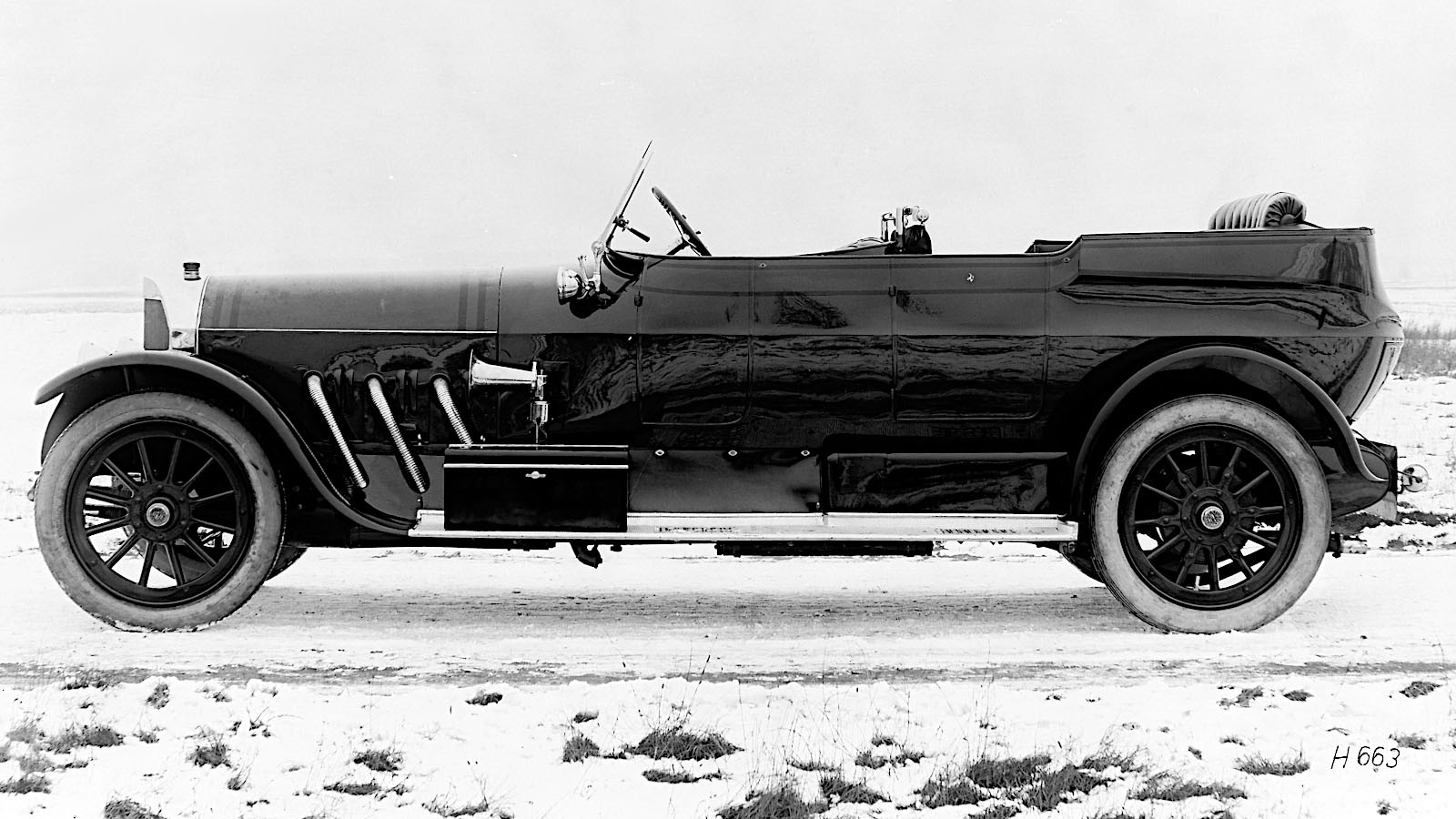
Shortly before leaving Daimler for the second and final time, Wilhelm Maybach designed a series of straight-six engines, one of which, with a remarkable capacity of 10,180cc, was fitted to the chain-driven 75hp (pictured here with Spider bodywork).
Another, with the same bore but a shorter stroke and measuring 9495cc, was fitted to the 65hp, which became the 37/70hp in 1909, the same year the 75hp was renamed 39/80hp.
The less powerful car came to the end of its production life in 1910 and the more powerful in 1911, at which point Daimler briefly abandoned the six-cylinder engine.
18. Mercedes 35hp (1908)
This 35hp did not make history in anything like the same way as its predecessor of 1900, but it did break new ground for Daimler.
Having previously sent power from the engine to the driven wheels by a belt or a chain (or, in the case of the Schroedter car, by gears), the company decided to use a shaft instead for the 35hp, as Benz had done with the Parsifal five years earlier.
At first, Daimler was cautious about subjecting the shaft to too much torque, but by 1910 it was prepared to use the technology in the 28/50hp, whose engine measured 7.2 litres.
The engine in the new 35hp was much the same as the one in the old, though a little smaller at 5319cc.
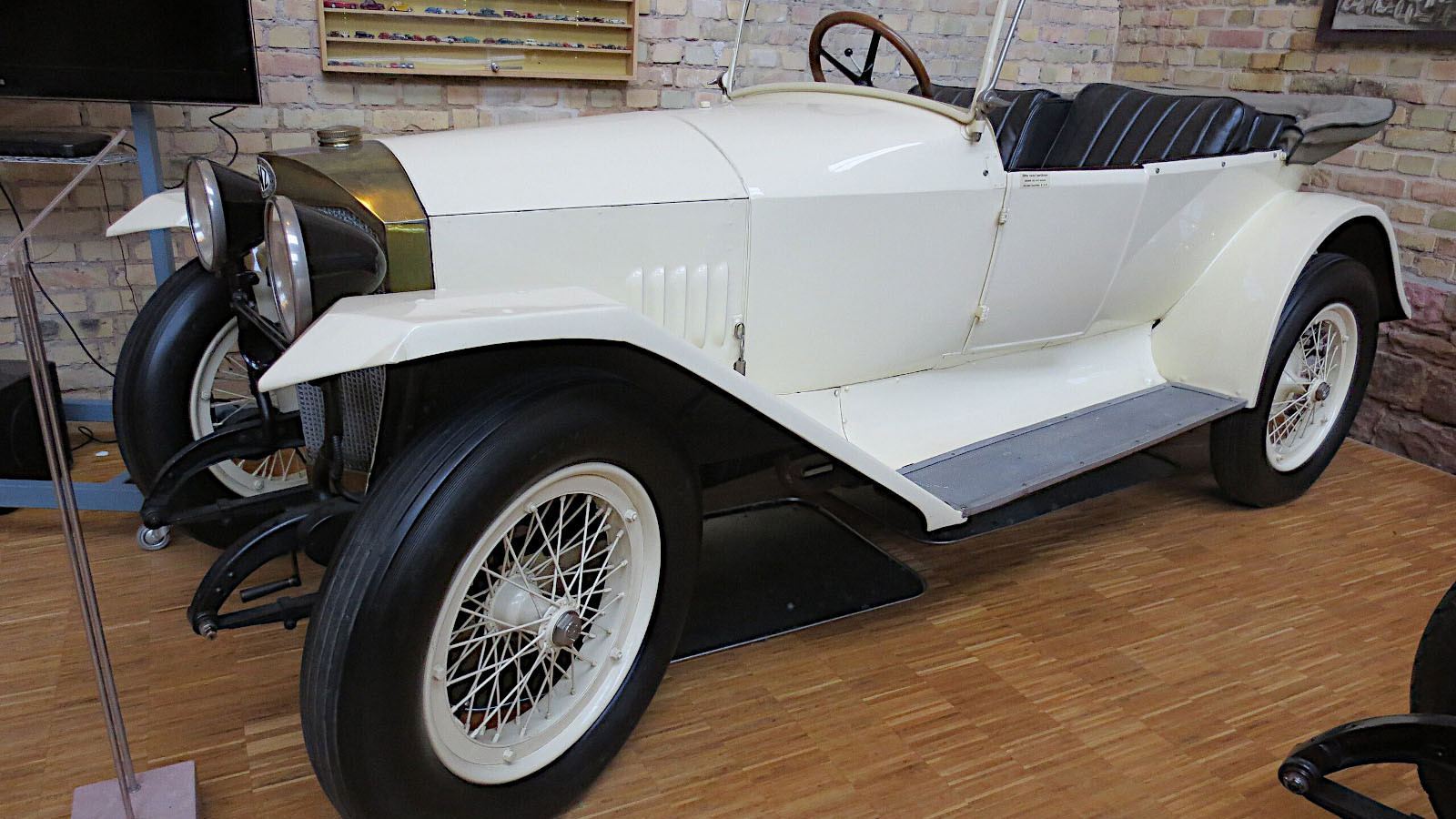
19. Benz 8/18hp (1910)
From 1908 to 1922, Benz produced a large number of small and relatively sporty cars with a huge variety of engines, including a 200bhp 21,495cc unit designed for use in an airship.
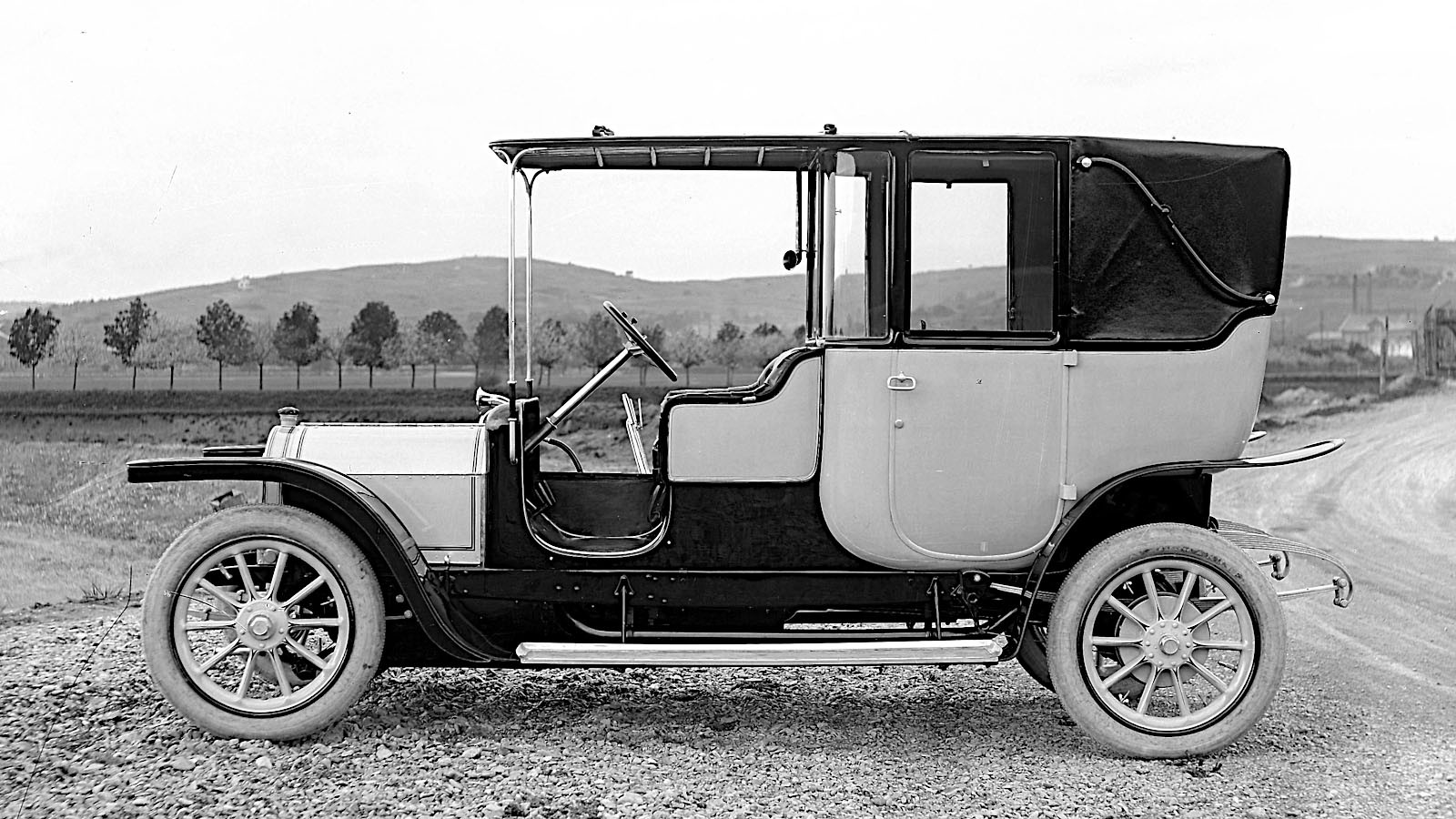
Mercedes-Benz says now that the most important model in the series – on account of it selling ‘in large numbers’ – was the one known originally as the 8/18hp, which had a far more modest 1950cc engine and was available as a bare chassis or supplied with runabout (pictured), saloon and landau bodywork.
The car became known as the 8/20hp in 1912, and two years later the engine’s bore was enlarged slightly, raising the capacity to 2090cc.
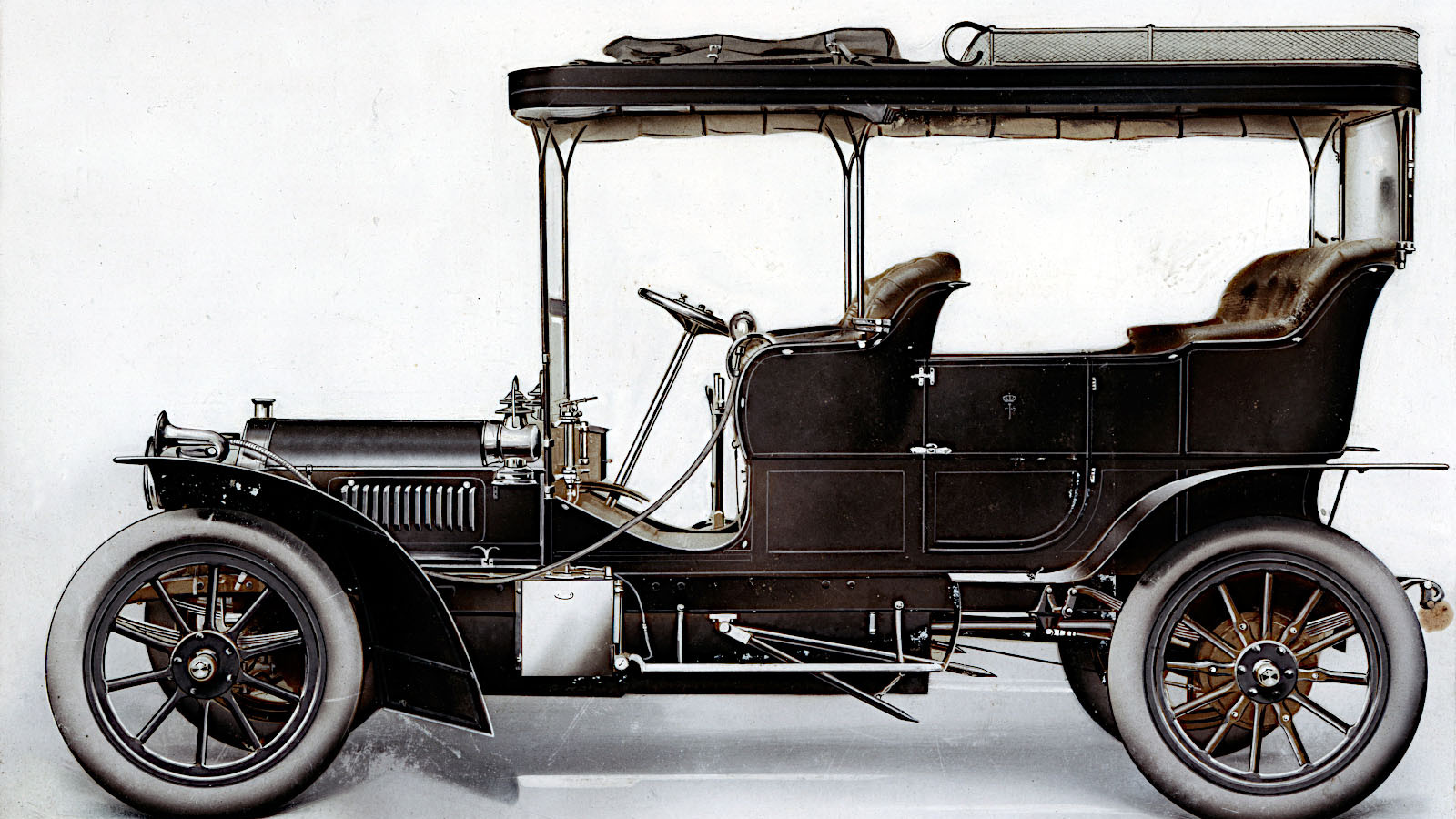
20. Mercedes-Knight (1910)
From 1910 to 1924, Daimler built around 5500 cars whose engines, based on a design by the American inventor Charles Yale Knight, had their intake and exhaust ports covered and uncovered by sleeves rather than by the much more common poppet valves.
The engines were expensive to build, but produced a lot of power (at least at relatively low revs) and were very refined, all of which made them suitable for upmarket cars.
The 4080cc Mercedes 16/40hp (pictured) and its successors were in production for the full 14-year period, but there were also shorter-lived models with different engine capacities, such as the 2610cc 10/30hp and the 6330cc 25/65hp.
Sleeve-valve engines eventually fell out of favour, but Belgian racing driver Théodore Pilette demonstrated their potential very effectively by finishing fifth with a Mercedes-Knight in the 1913 Indianapolis 500.
21. Mercedes 8/18hp (1911)
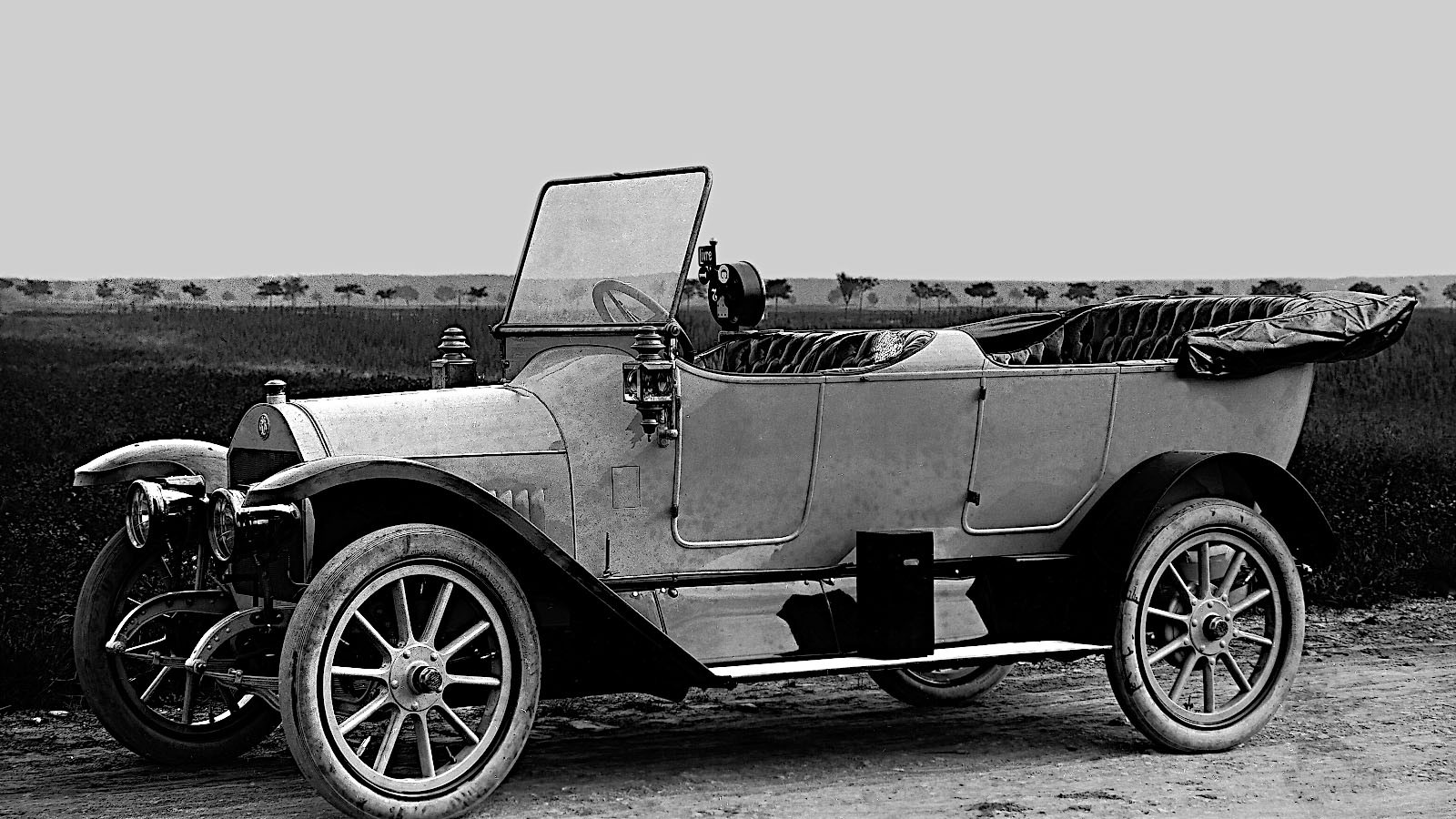
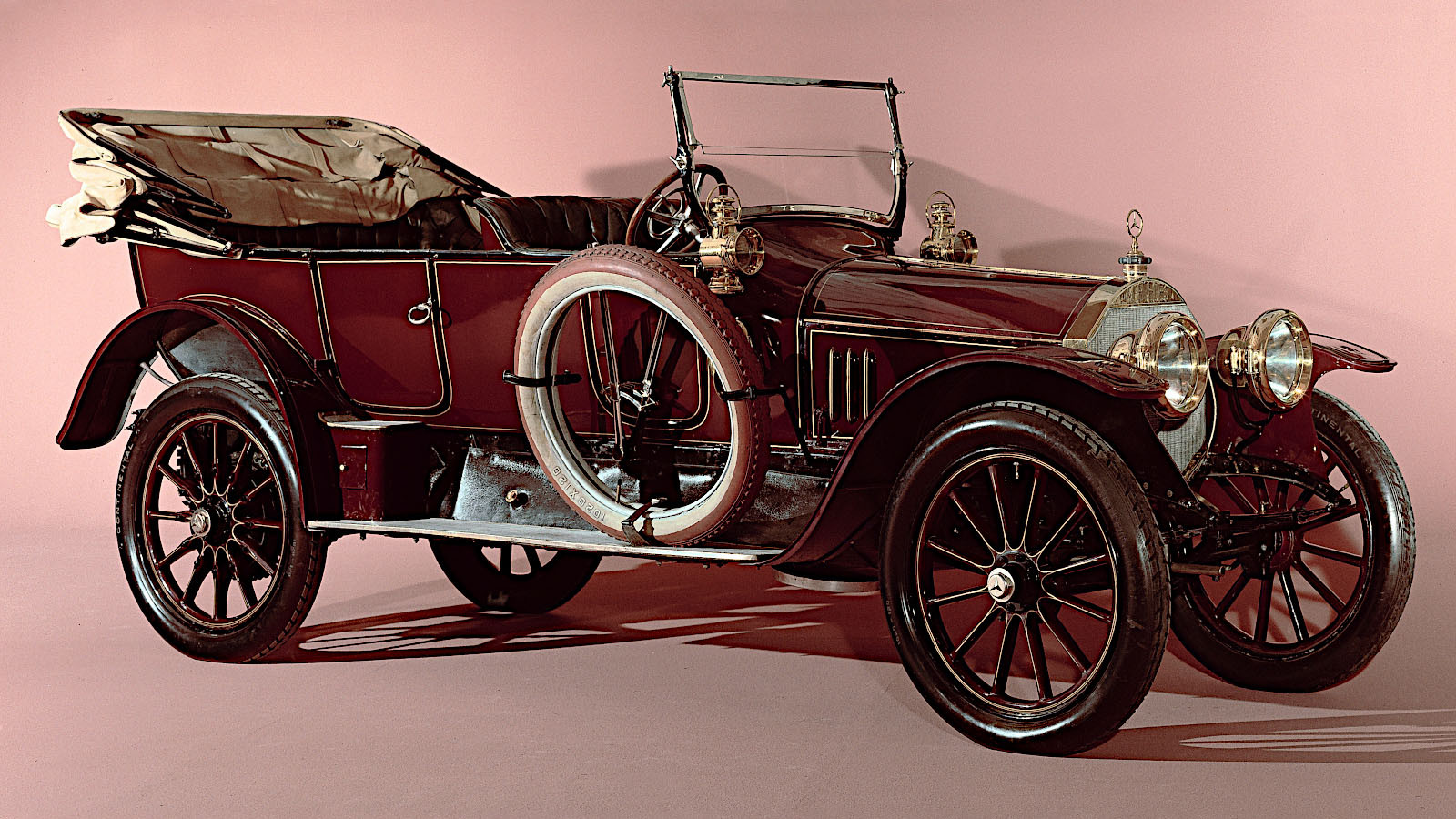
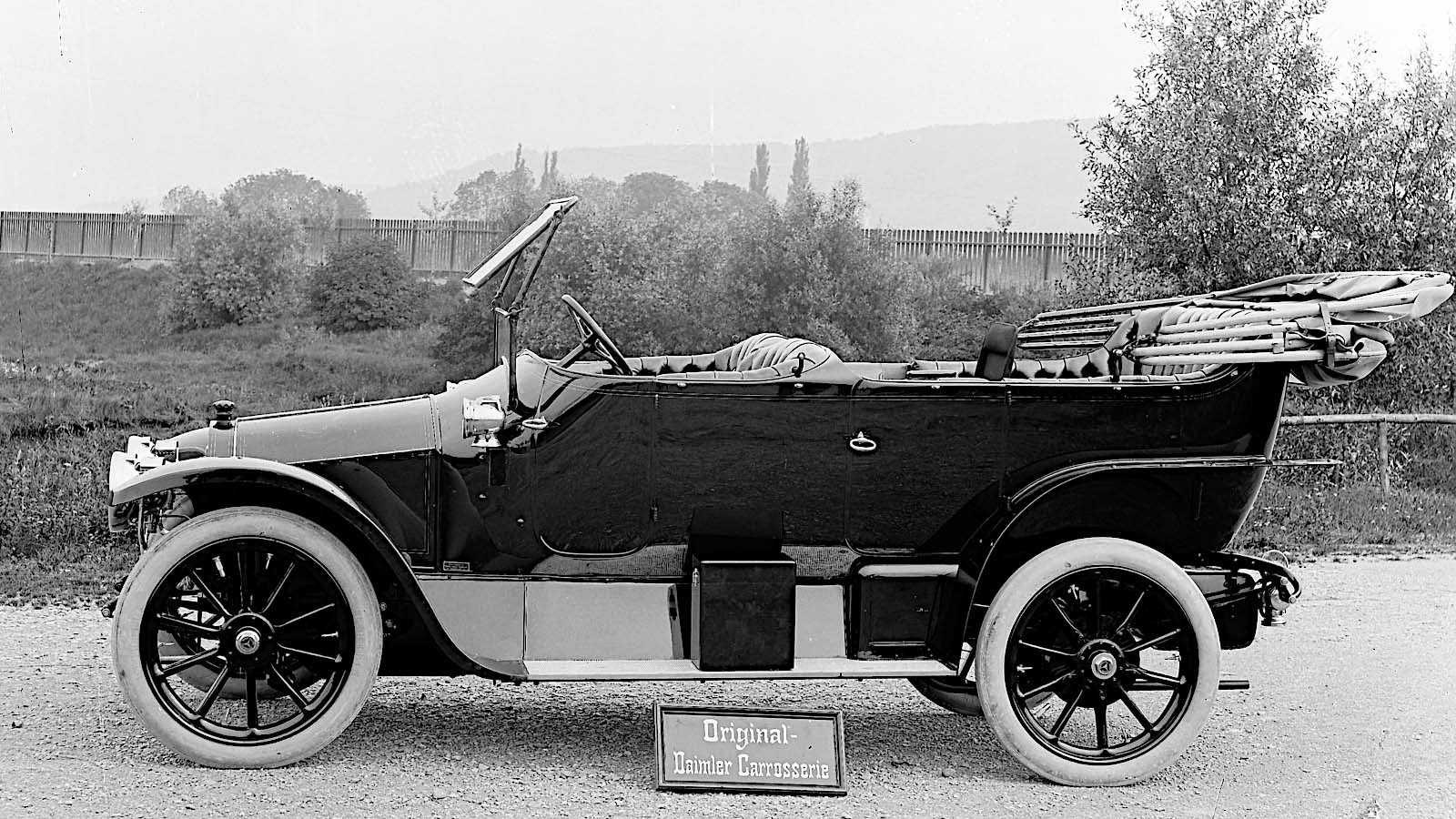
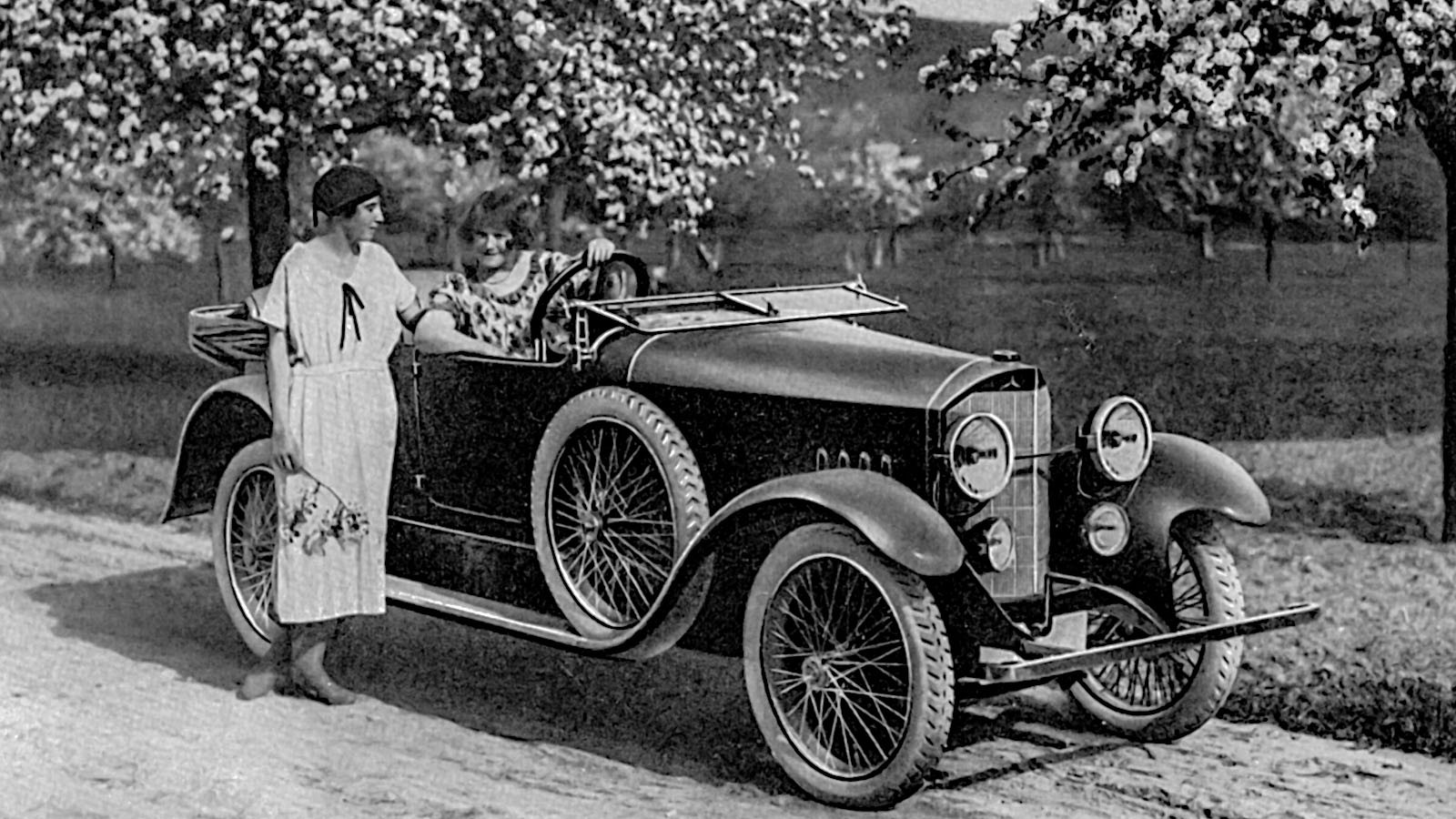
A year after Benz launched a model of the same name, Daimler introduced its own, similarly modest 8/18hp (pictured with phaeton body), whose four-cylinder engine had a capacity of 1846cc.
The unit might also be described as a pair of in-line-twins joined together, since Daimler had followed its familiar practice of casting blocks which held two cylinders each.
The car was renamed 8/20hp in 1913, and soon after that became the 8/22hp when Daimler fitted a new 2064cc engine with a single, four-cylinder block.
Vehicles in the same series with 3013cc engines were used almost entirely as ambulances in the First World War.
22. Mercedes 37/90hp (1911)
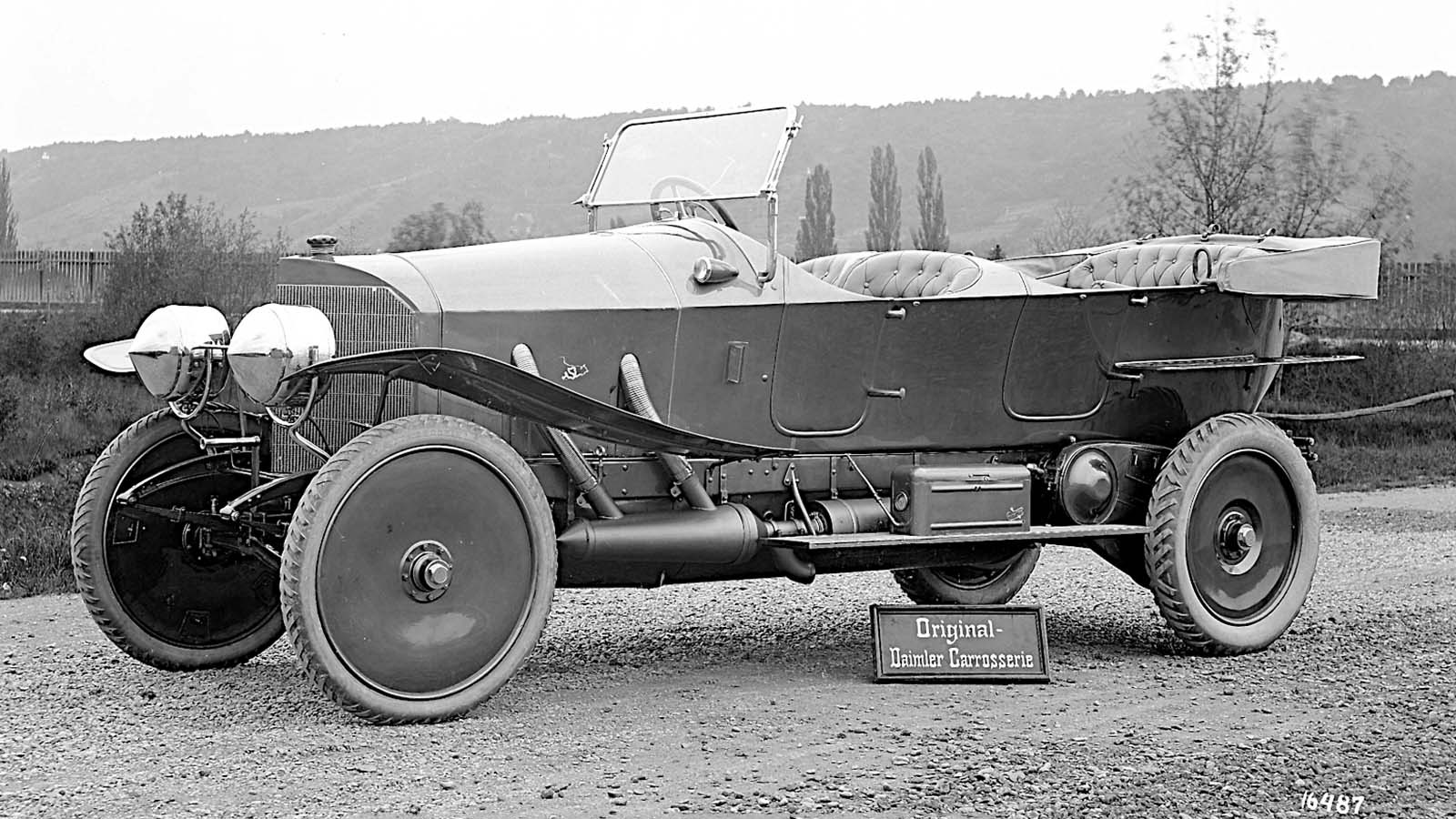
Built mostly as a high-performance open tourer (though the King of Bulgaria requested a luxury saloon body), the range-topping 37/90hp, or 37/95hp as it became known in 1913, had a four-cylinder engine rather than any of the departed Wilhelm Maybach’s six-cylinder motors.
Initially measuring 9530cc, it had an unusual valve arrangement, with one large inlet valve and two smaller exhaust valves per cylinder, and was powerful enough to help Ralph DePalma win the Vanderbilt Cup races in 1912 and 1914.
A slight increase in the diameter of the cylinders raised the capacity to 9850cc and led to the car being renamed 38/100hp in 1915, its final year of production.
All versions used chain drive, a technology which Daimler abandoned for good after the last 38/100hp was built.
23. Mercedes 28/95hp (1914)
The 28/95hp was the first Mercedes car fitted with an overhead-camshaft engine.
Derived from the DF 80 which had finished second to the Benz FX in the Kaiserpreis competition to find the best German aero engine, the 7280cc straight-six had individual cylinders made of spun steel, each pair of which was surrounded by a sheet-steel water jacket.
Only a few examples of the 28/95hp were built before war was declared, and when production began in earnest Daimler reverted to casting the cylinders in pairs, and putting covers over what had previously been the exposed valvetrain.
Nearly 600 cars were built up to 1924 (1921 Sport version pictured), and some of these had the extra innovation of front-wheel brakes, which had never been used in any previous Daimler.
24. Benz 6/18hp (1918)
Some existing models were carried over when Benz production resumed in 1918, but the 6/18hp was the marque’s first new, post-war car.
Its four-cylinder engine measured just 1570cc, the same as that of the 6/14hp produced briefly in 1910, though this time Benz chose a slightly narrower bore and longer stroke, while also placing the camshaft above the cylinders rather than alongside them.
A delicate model compared with some of the earlier behemoths, the 6/18hp had a fairly short run, being discontinued in 1921.
25. Benz 27/70hp (1918)
Like the 6/18hp, the Benz 27/70hp made its debut in 1918, but it takes some believing that these models were built by the same company at the same time.
The first six-cylinder Benz of the post-war era had a 7065cc engine which was noticeably less modern than that of the 6/18hp, having an L-head (one set of valves mounted vertically, the other horizontally) and a camshaft in the block.
Clearly far more expensive than the 6/18hp, it nevertheless survived longer, with production lasting until 1923.
26. Benz 10/30hp and 16/50hp (1921)
Powered by a 2610cc, four-cylinder engine and a 4160cc straight-six respectively, these otherwise very similar vehicles are described in combination by Mercedes-Benz as “the most important model in the Benz car range” up to the 1926 merger.
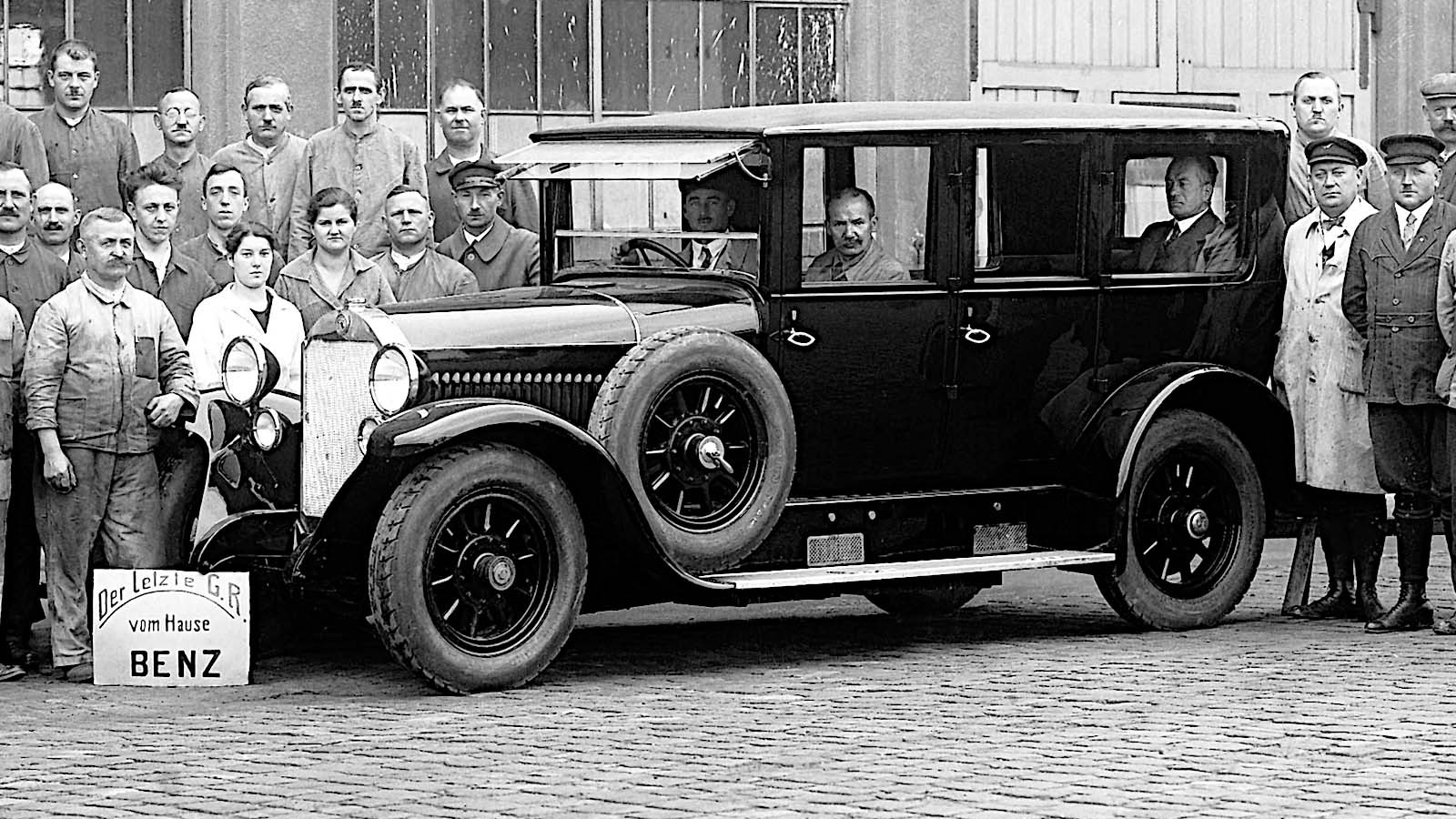
They represent both an end and a beginning. Not only were they the final cars produced by the standalone Benz marque (the 16/50hp pictured here being the very last of all), they were also the first Benzes to be renamed Mercedes-Benz when that merger took place.
This does not apply to the 16/50hp Sport or the 2860cc, six-cylinder 11/40hp, neither of which was popular enough to be worth building after 1925.
27. Mercedes 6/25hp (1923)
The first two supercharged Mercedes models were displayed in Berlin in September 1921, and went into production in the spring of 1923.
The 10/40hp’s 2614cc ‘four’ was a naturally aspirated unit to which a compressor was later added, but the little 1568cc unit in the 6/25hp was designed to be supercharged right from the start, and might therefore be said to be slightly more significant historically.
A new naming system introduced in 1924 led to the car being called the 6/25/38hp, the three numbers standing for taxable horsepower, actual horsepower without supercharging and actual horsepower when the supercharger was engaged.
Its short production life came to an end later that year, but not because Daimler had lost its enthusiasm for supercharging.
28. Mercedes 15/70/100hp (1924)
The 15/70/100hp was introduced in the same year that Daimler and Benz agreed to a joint venture which foreshadowed their later merger, and a year after Ferdinand Porsche had become head of the design office as a replacement for Paul Daimler (Gottlieb’s son), who had walked out after a dispute with the supervisory board.
Its 3920cc, overhead-cam, straight-six engine had a Roots supercharger which, when engaged by the driver, raised the maximum output from 69bhp at 2800rpm to 99bhp at 3100rpm.
Manufactured until 1929, the 15/70/100hp offered tremendous performance, but more was available higher up the new Mercedes-Benz range, if a customer wanted it.
29. Mercedes 24/100/140hp (1924)
Differences between the two supercharged, six-cylinder Mercedes models introduced in 1924 were generally minor, but one which definitely wasn’t was the fact that the 24/100/140hp’s engine was much larger, at 6240cc.
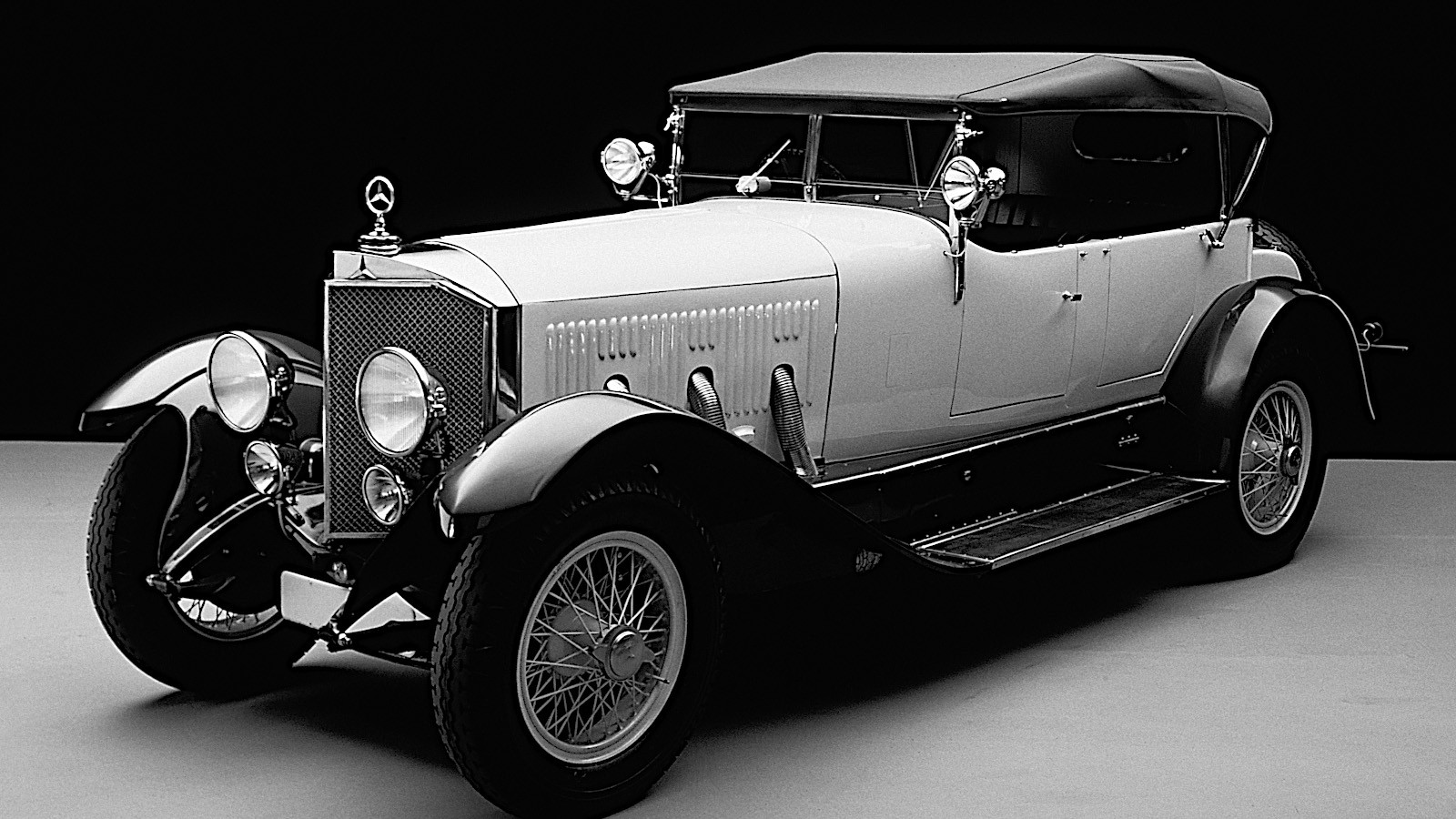
As the car’s name suggested, it produced a maximum of 140hp (138bhp), though this was raised to 158bhp for the sportier Model K, the K standing for kurzer radstand, or ‘short wheelbase’.
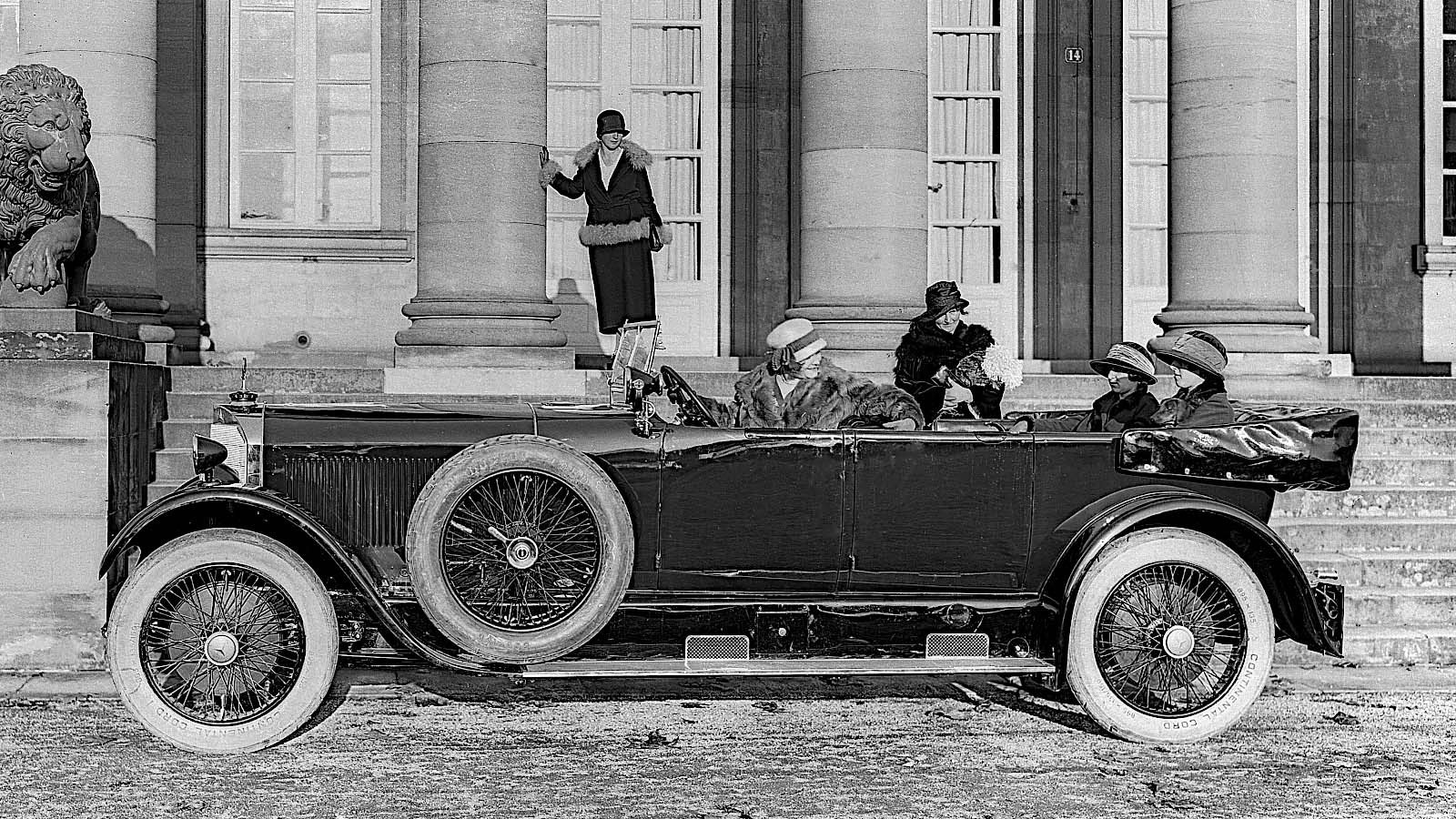
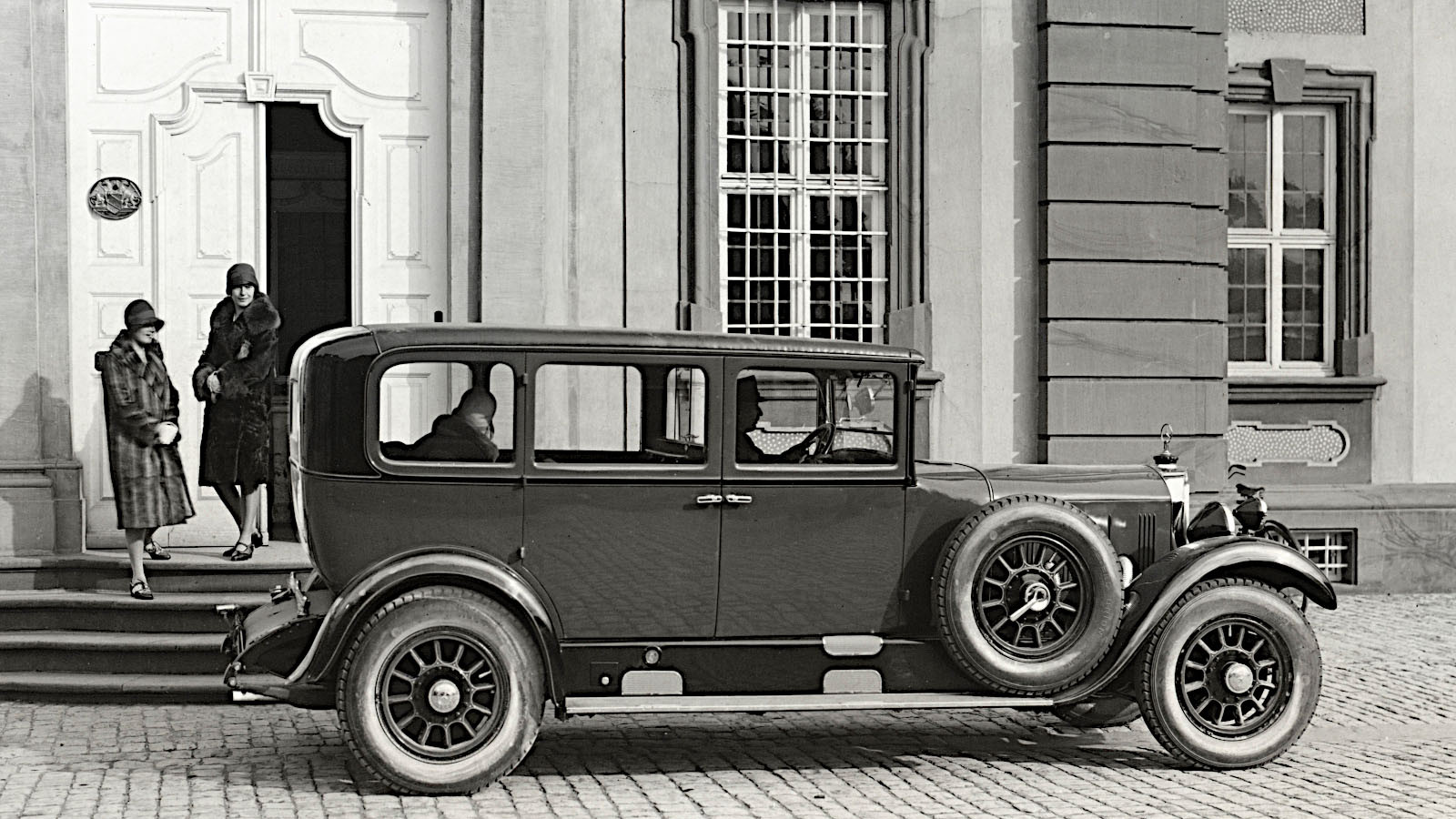
From 1928 to 1930, the Model K’s engine was fitted to the regular-wheelbase Type 630, pictured here with a Pullman saloon body.
The grandeur of these cars can’t be denied, but they were less important than the much more humble and straightforward Stuttgart 200, which in 1927 (its first full year of production) attracted more than twice as many customers as all the Benz, Daimler and Mercedes-Benz models combined had done in 1926.
We hope you enjoyed this gallery. Please click the ‘Follow’ button above for more super stories from Classic & Sports Car.