Great coupes from Mercedes
Mercedes-Benz is rightly regarded for its solid sedans, sleek roadsters and opulent luxury models, but it’s also been responsible for its fair share of coupes.
Going right back to the company’s early days, stylish, two-door fastbacks have been a feature of the marque’s line-up.
Some of Mercedes’ coupes have resided at the very exclusive end of the market, while others have gone for a broader appeal – but all ooze class.
Whichever Mercedes coupes catch your eye, here’s our look at some of these stylish machines, both standout models and model ranges, presented in chronological order.
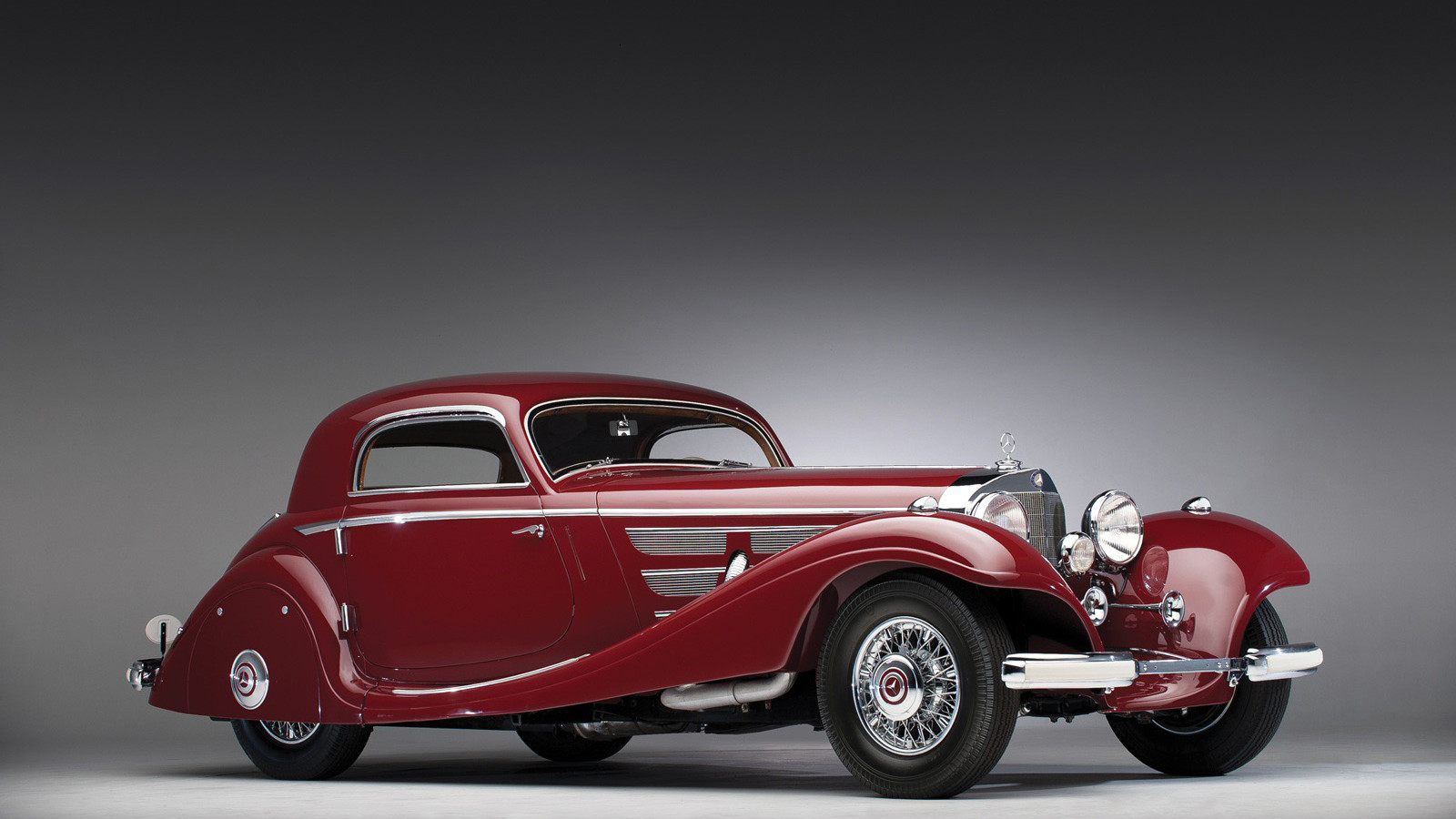
1. 1936 Mercedes-Benz 540K (W29)
Of all the body styles offered by Mercedes-Benz on its 540K, the coupe shape was the most rare and only a dozen were factory built.
This was in addition to the Autobahn-Kurier fastback coupe model, which it’s reckoned between four and six were made to make the most of Germany’s new highway network.
The majority of 540K coupes had more traditional coachwork and used the same supercharged, 5401cc, straight-eight engine, which produced 180HP in full flight.
Some other 540K coupes were bodied outside of the factory on rolling chassis sold for this purpose, though it’s not known how many were made or how many survive.
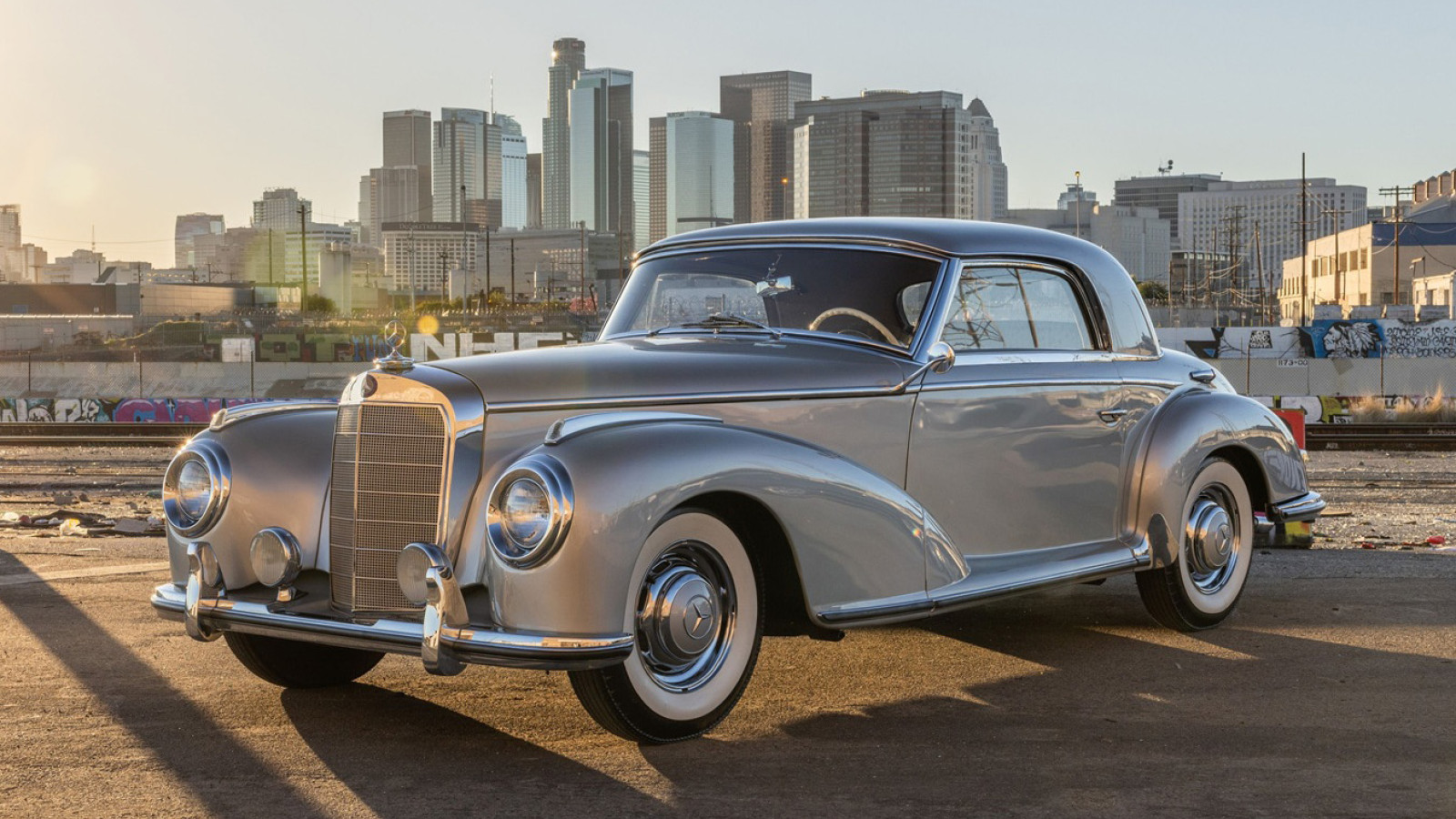
2. 1952 Mercedes-Benz 300S Coupe (W188)
A spiritual successor to the pre-war 540K in sophistication and price, if not mechanical specification, the 300S was a very glamorous car.
A mark of how far up the Mercedes-Benz ranks this car was is that it cost more than the 300SL Gullwing when the two were sold alongside each other.
Using a shortened 300 sedan chassis, the coupe came with a triple-carburetor, 2996cc, straight-six engine with 150HP, which grew to 175HP when fuel injection arrived with the Sc iteration in 1955.
The Mercedes-Benz 300Sc Coupe could reach a top speed of 112mph and do 0-62mph in 14 secs.
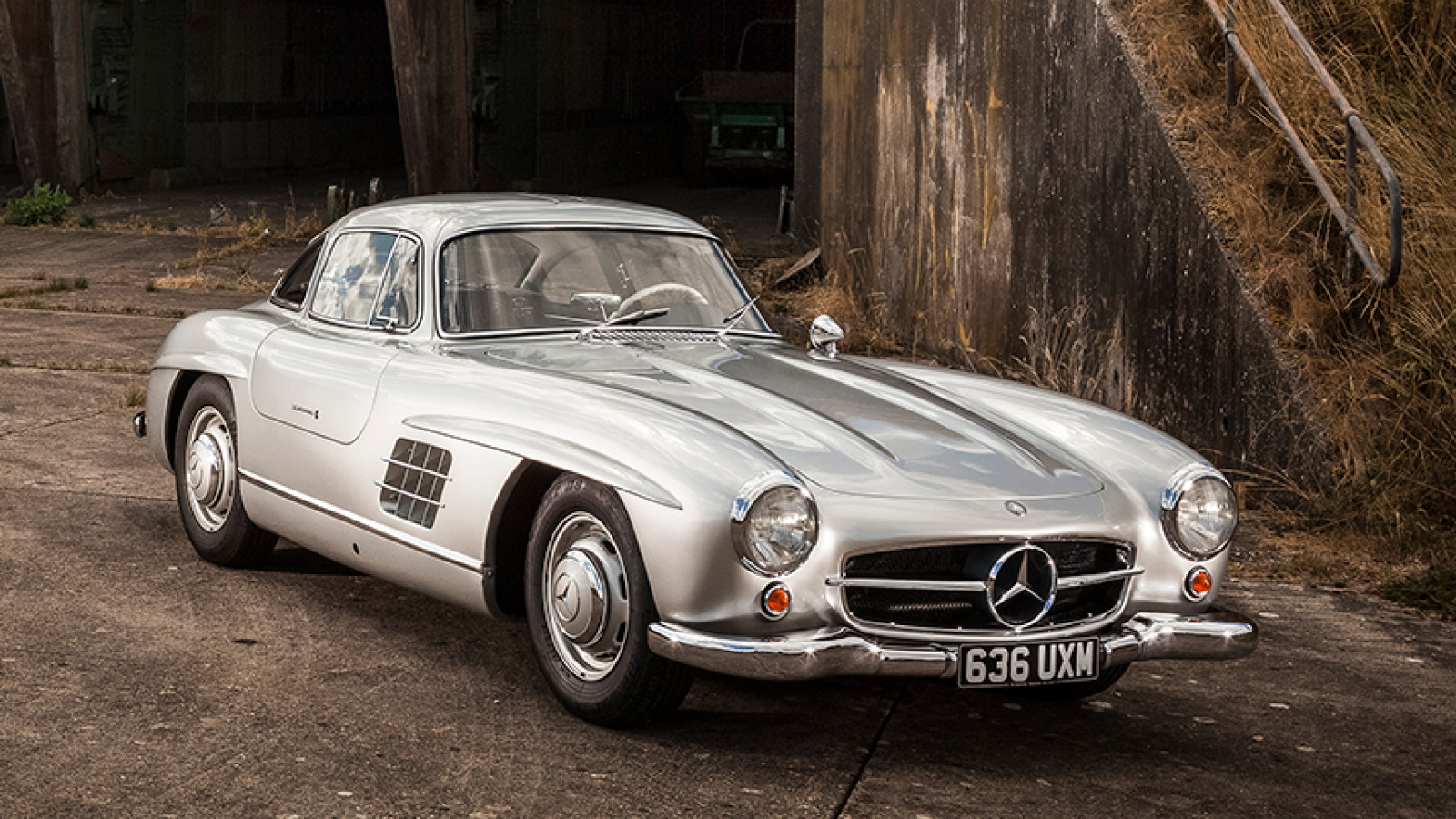
3. 1954 Mercedes-Benz 300SL Gullwing (W198)
For many people, the 300SL is the definitive Mercedes-Benz coupe thanks to its appearance, rarity, sporting ability and mechanical design.
It emerged as a roadgoing model from the W194 race car that in 1952, took top honors at Le Mans, driven by Hermann Lang and Fritz Riess, and also the Carrera Panamericana with Karl Kling and Hans Klenk.
That sort of pedigree already made it special, but then there were the Gullwing doors that gave the model its commonly used name.
These doors were needed to allow access to the cabin over the wide sills, while power came from an inclined, 2996cc, straight-six engine with 215HP and a top speed of up to 162mph, depending on the car’s rear-axle ratio.
Even so, the 300SL’s handling could be tricky, in part because of its swing-axle rear suspension.
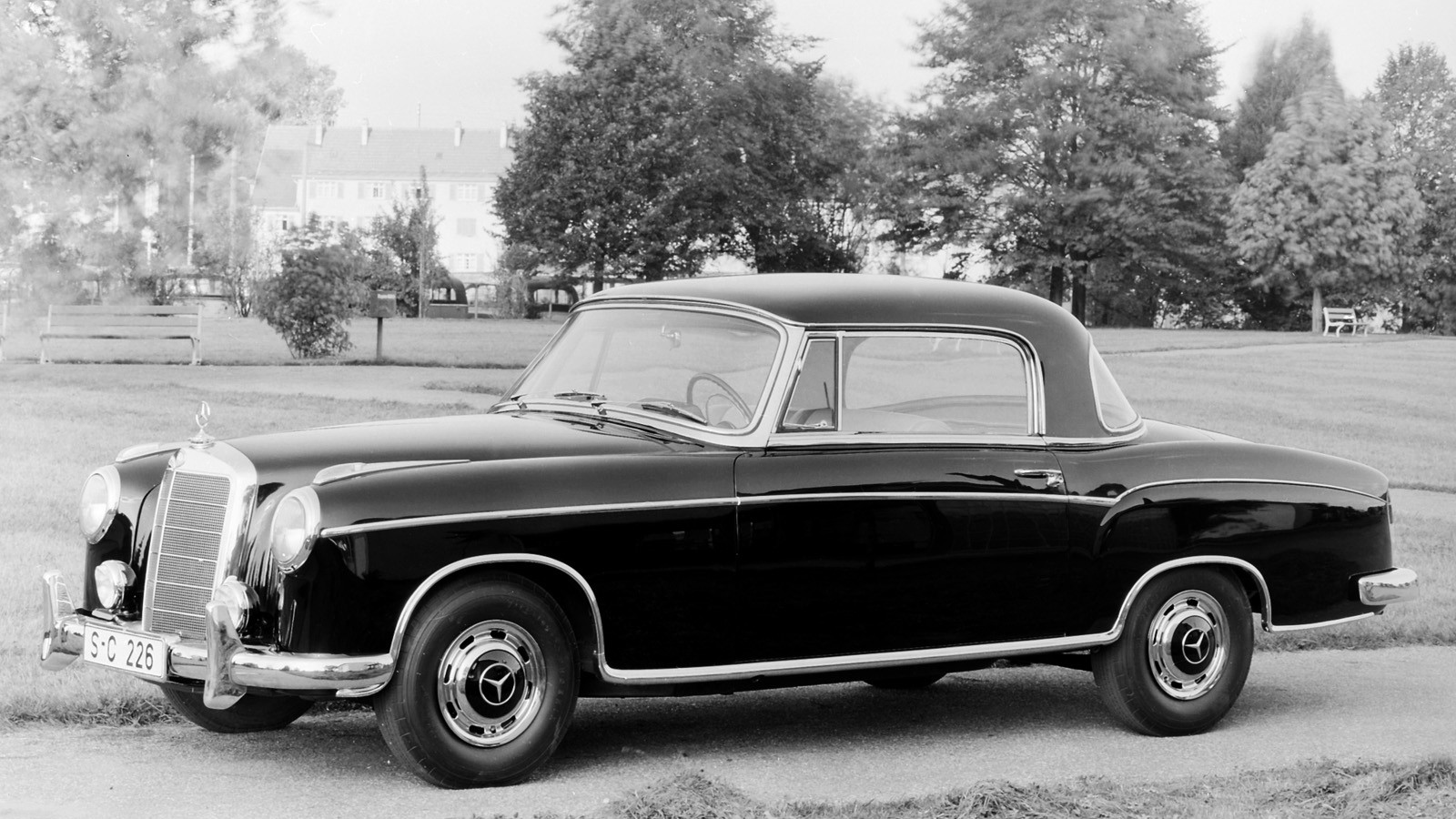
4. 1956 Mercedes-Benz 220S Coupe (W180)
Based on the 220A Ponton sedan, the Mercedes-Benz 220S Coupe had its wheelbase shortened by 3in (76mm) and received longer doors to balance out its appearance.
All of the coupes used a twin-carburetor version of the 2195cc, straight-six engine that initially had 100HP when the model went on sale in 1956, this raised to 106HP the following year.
And there was more to come. The updated SE version, that arrived in 1958 with the model designation W128 offered 115HP from its now fuel-injected ‘six’, which was upped to 120HP in ’59.
The 220S used a four-speed manual gearbox as standard, but could also be ordered with a Hydrak automatic clutch from 1957.
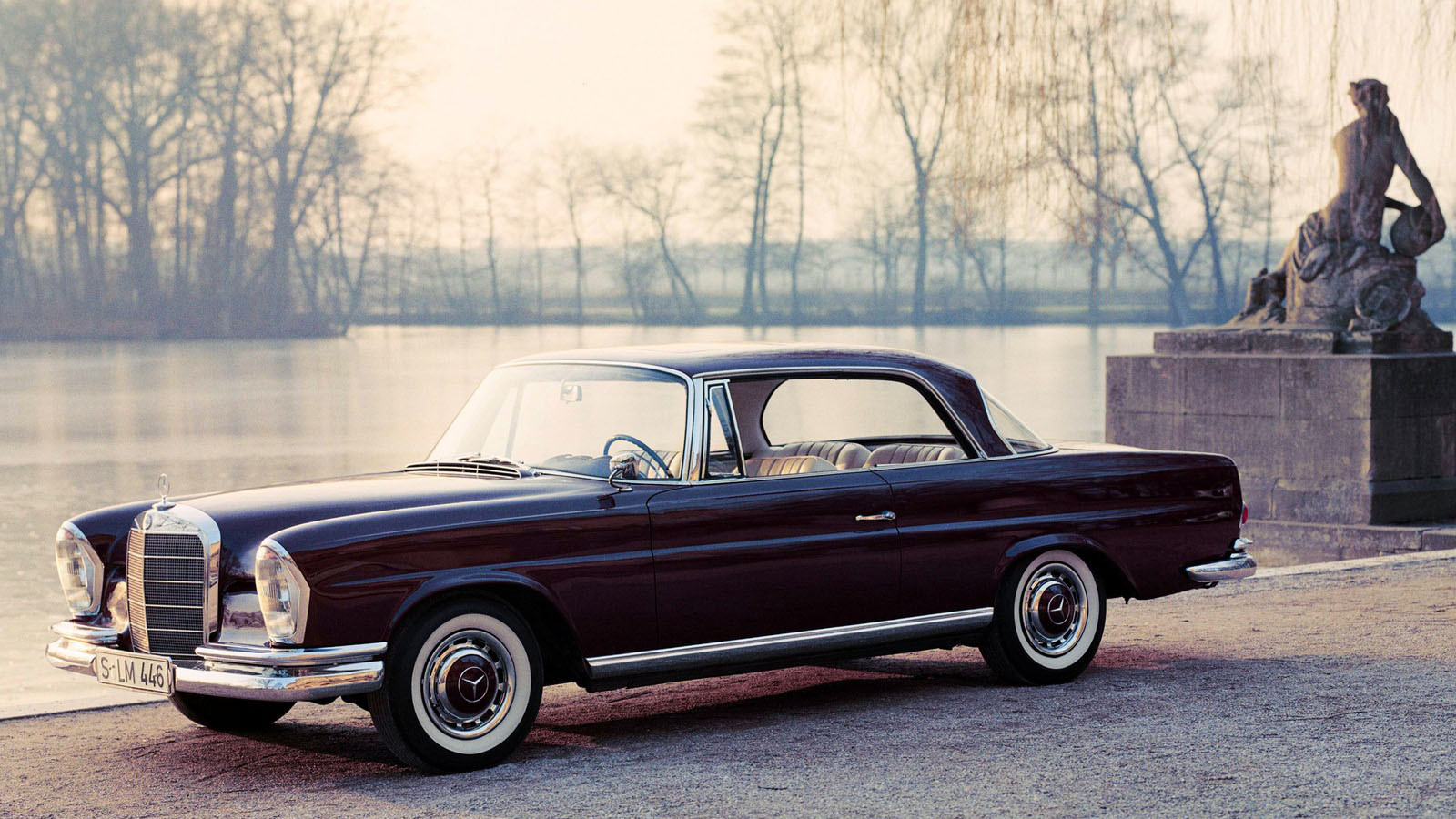
5. 1960 Mercedes-Benz W111 coupes
When Mercedes-Benz revealed its new, Paul Bracq-styled coupe, it was clearly a big step on from its predecessors.
Where the earlier coupes were almost too restrained, the W111 was just the right mix of elegance and elevated style.
Unlike its sedan counterpart, the coupe had almost imperceptible rear fins, along with an airy cabin and pillarless side windows.
The 220SEb Coupe was powered by a 2.2-liter straight-six, while the 250SE which replaced it in 1965 had a 2.5-liter ‘six’, plus disc brakes all round and mild styling updates.
From 1968, the W111 280SE Coupe was available, a 160HP, 2778cc straight-six under its long hood.
But the ultimate iteration arrived the following year. With its 200HP, 3.5-liter V8 and 130mph potential, the W111 280SE 3.5 Coupe truly was a cut above the rest.
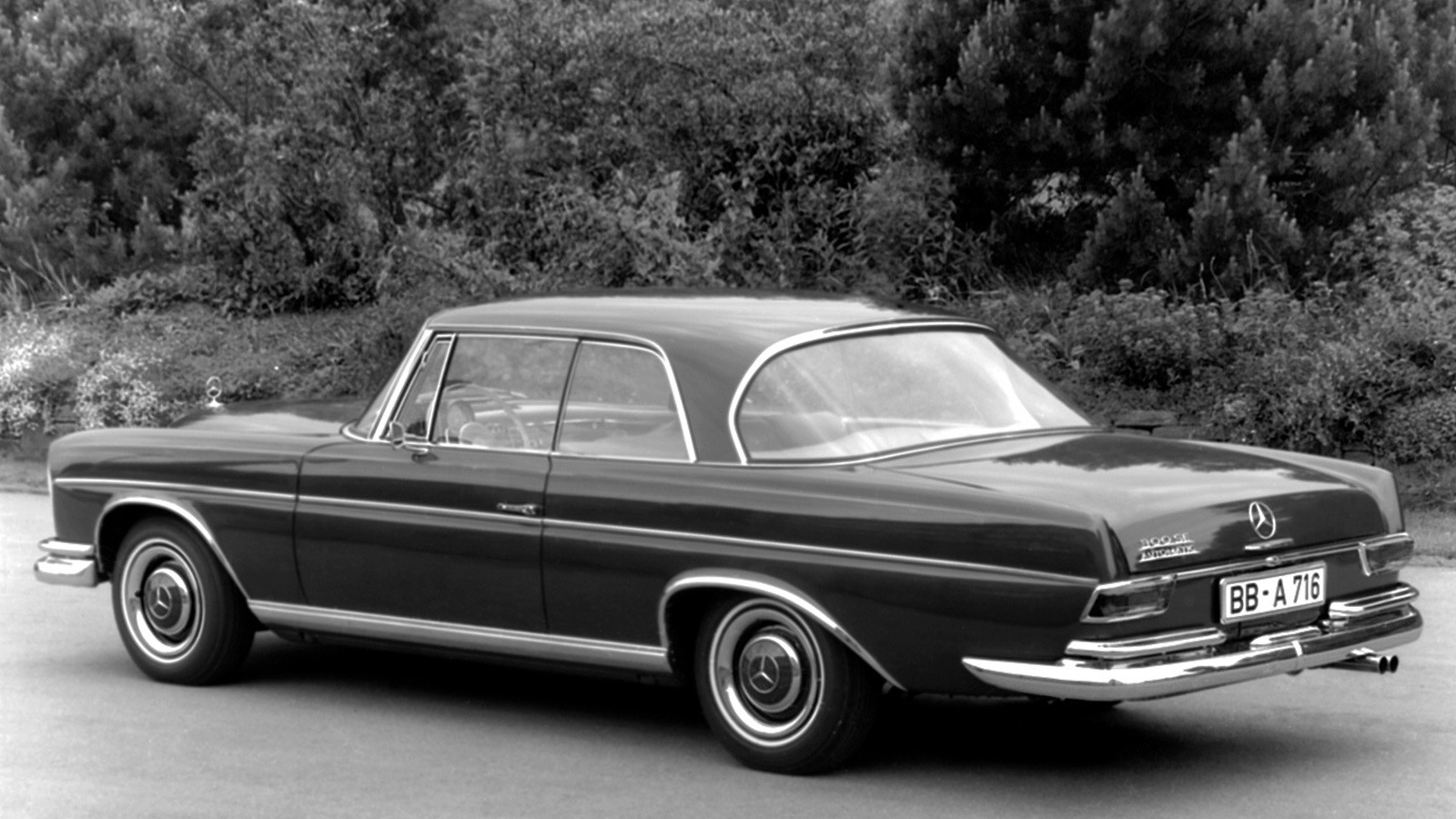
6. 1961 Mercedes-Benz 300SE Coupe (W112)
The W112 300SE Coupe may have looked very similar to its W111 stablemates, but this was a very different machine from Mercedes-Benz.
As well as the larger, 3-liter, fuel-injected straight-six, this flagship four-seat coupe came with air suspension like that of the 600 limousine (which you can read more about in the next slide).
Together with its impressively comfortable interior, the W112 was a very expensive car when new and could be ordered with an automatic gearbox in place of its four-speed manual.
Its cost meant the W112 was outsold five to one by its W111 sibling, with sales believed to be around 2400 cars when production ended in 1967.
7. 1965 Mercedes-Benz 600 Coupe (W100)
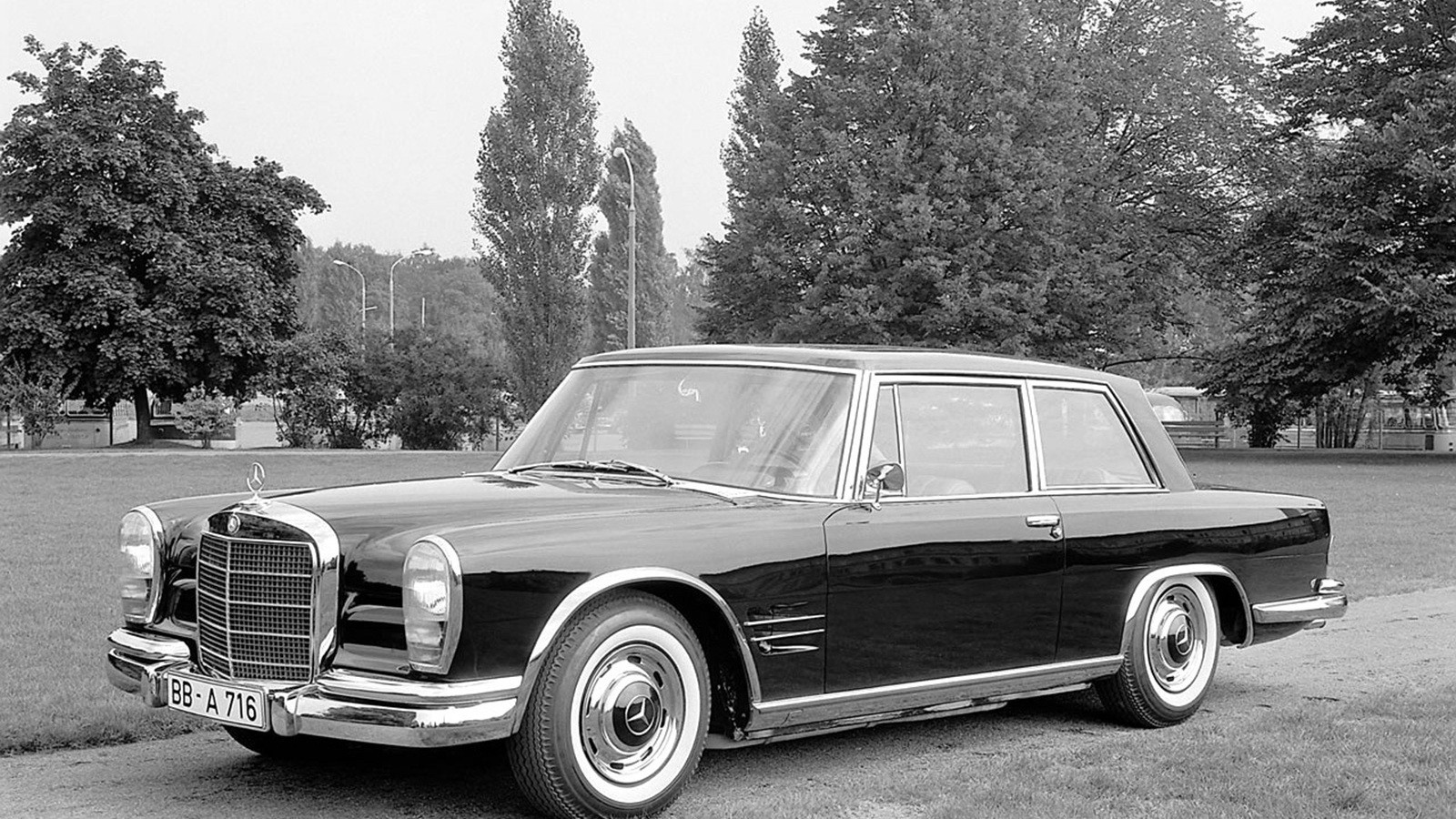
One of Mercedes’ most unusual coupes is the W100 600 – just two were built, but the model was never offered to the public.
The two cars made were as gifts for Mercedes-Benz engineers Rudolf Uhlenhaut and Fritz Nallinger, on 600 chassis shortened by 22cm (8.6in).
One of these was built by the factory, then another short-wheelbase sedan was later converted privately into a coupe.
Longer doors were fashioned to allow easy access to the rear seats, while tipping front seats and unique side glass were also required.
The 600’s 250HP 6.3-liter V8 was retained, as well as all the other luxuries of this pinnacle of Mercedes-Benz engineering such as air suspension, powered windows and the air-conditioning system.
8. 1968 Mercedes-Benz 114-series coupes
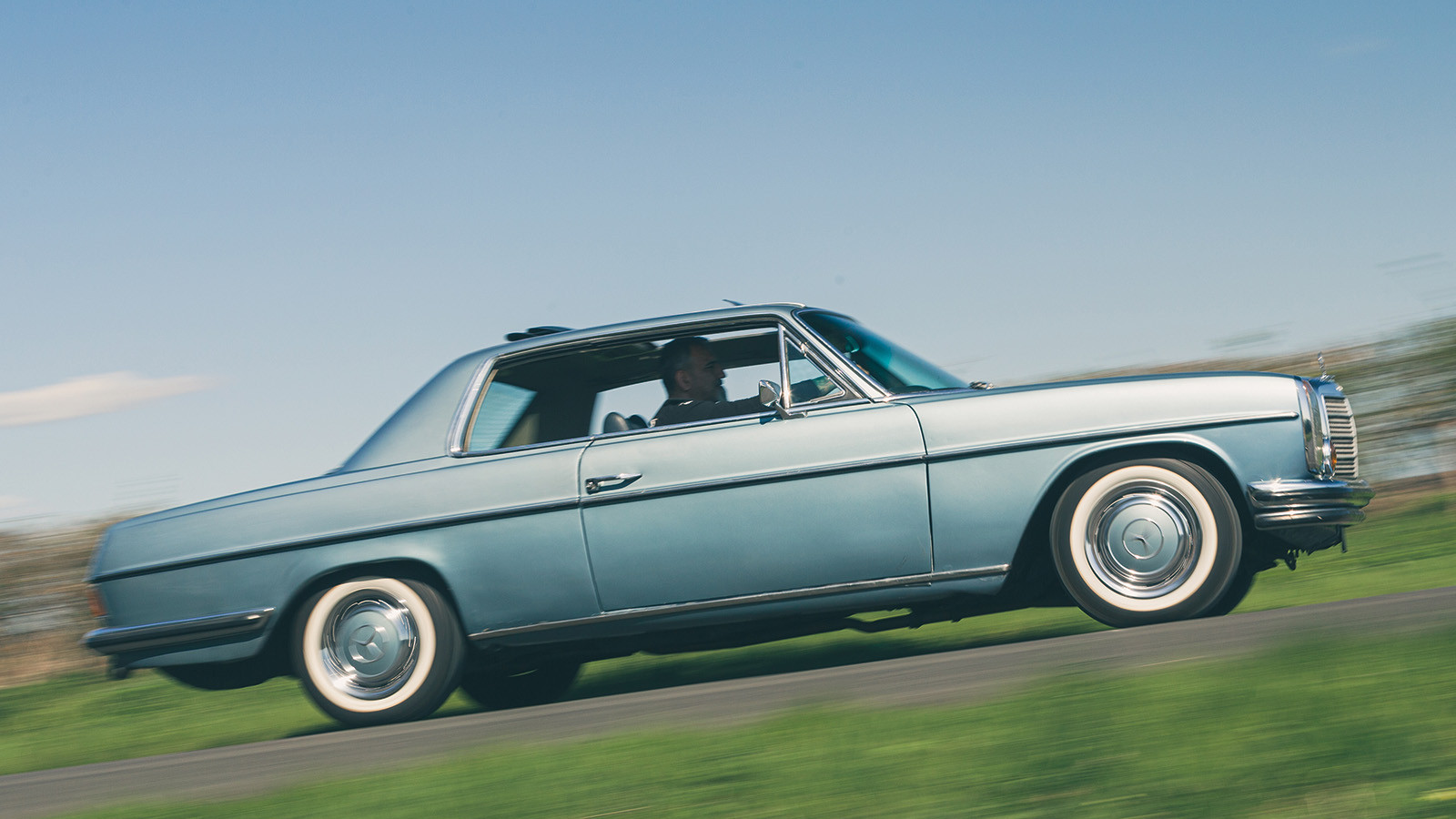
When the world’s media gathered at Hockenheim in November 1968, it was introduced to the first coupe version of a mid-sized Mercedes-Benz sedan, when the two-door versions of the four-door W114 were revealed.
The 250 came first in 1968 with a 2496cc, straight-six engine with twin Zenith carburetors for the C and fuel injection for the CE, giving 130HP and 150HP respectively.
In 1971, the 280 arrived with 160HP for the carb-fed model and 185HP for the injected version.
There was also a 250C with a 130HP, 2.8-liter engine built exclusively for the North American market.
Paul Bracq’s neat styling with pillarless side windows made the 114-series coupes popular, even if they were pricier and more cramped in the back seats than their sedan counterparts.
In all, Mercedes-Benz sold 55,280 114-series coupes.
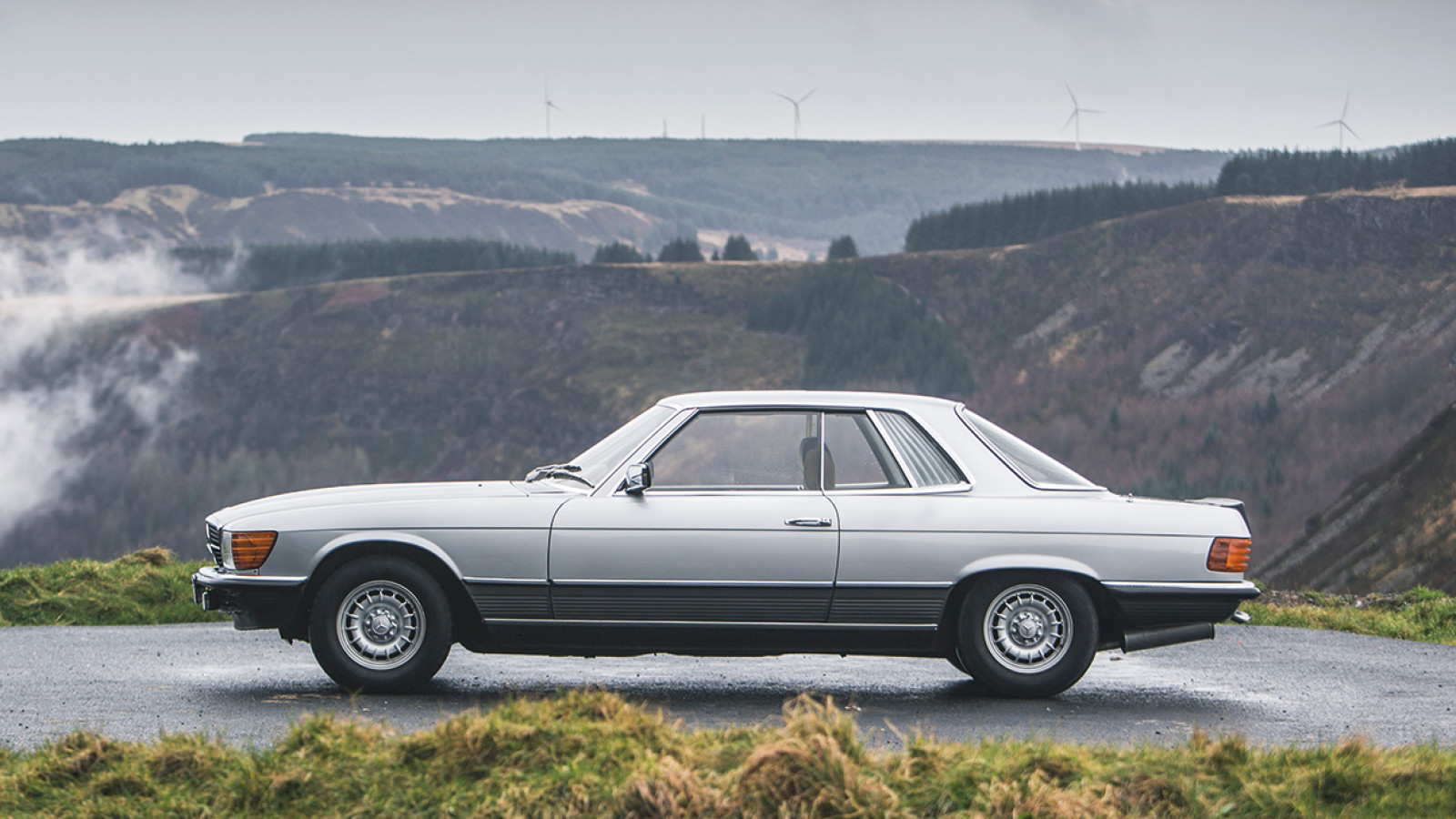
9. 1972 Mercedes-Benz SLC (C107)
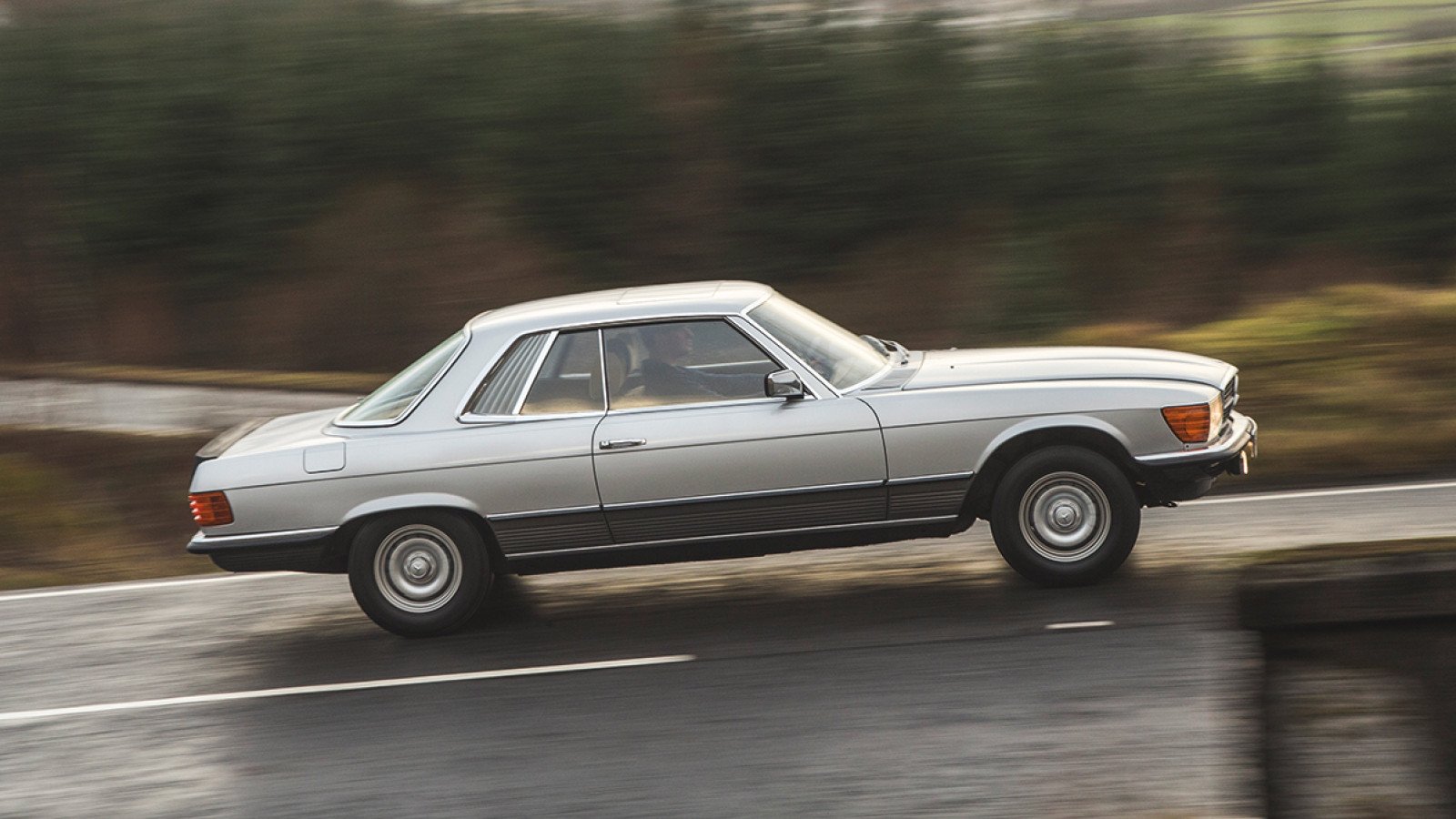
Usually a coupe gives rise to a convertible, but it was the other way around for the Mercedes SLC.
It followed the new R107 SL launched a year earlier with a 14in (356mm) extended wheelbase over its roadster sibling.
This additional length made the SLC a proper four-seater, plus it still had a large trunk so it could work as a touring car, too.
Mechanically, the SLC was identical to the SL with 3.5- and 4.5-liter V8s at launch, with a 5-liter V8 and a 2.8-liter straight-six coming later.
Performance was a little slower than that of the SL thanks to the coupe’s increased weight, though that didn’t stop it from being used as a works rally car.
10. 1976 Mercedes-Benz C123
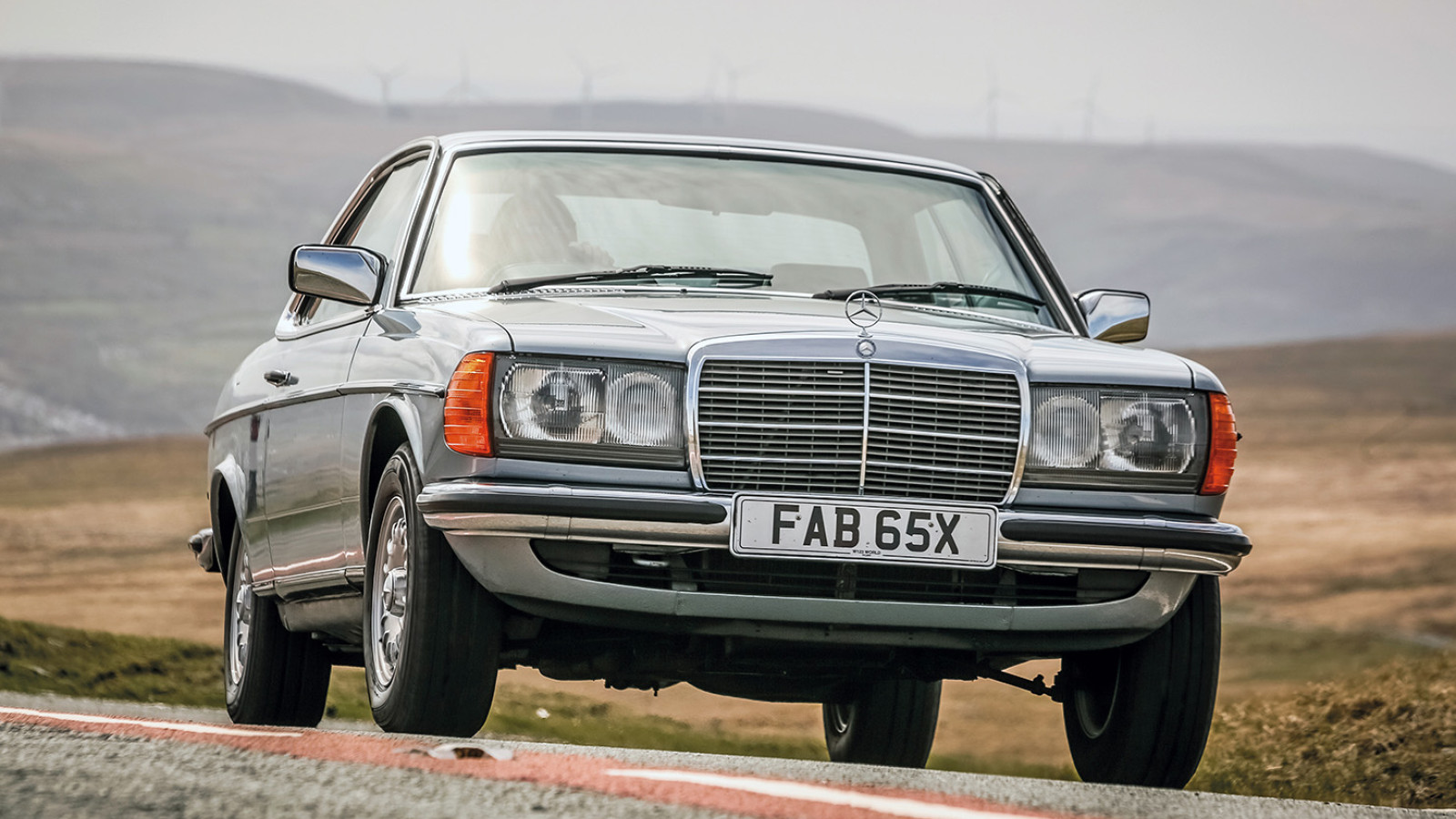
The launch of Mercedes’ W123 executive sedan meant a coupe version was all but inevitable – and it duly arrived at the Geneva motor show in March 1977.
At first, there was the 230C with a 2.3-liter, single-carb ‘four’, the 280C which, as you might have guessed, was powered by a single-carb, 2.8-liter ‘six’, as well as the 280CE that used a 2.8-liter, fuel-injected straight-six.
In 1980, the 230C and 280C were replaced by the 230CE, which used a 2299cc, four-cylinder motor with 136HP.
Plus, there were two diesel-fueled, five-cylinder export models for North America, the 300CD (1977-’81) and 300CD Turbodiesel (1981-’85).
Handsome styling was helped by a 3.3in (84mm) wheelbase reduction from the sedan.
Mercedes’ 123-series coupe sold an impressive 84,375 units by the time sales ended in 1985.
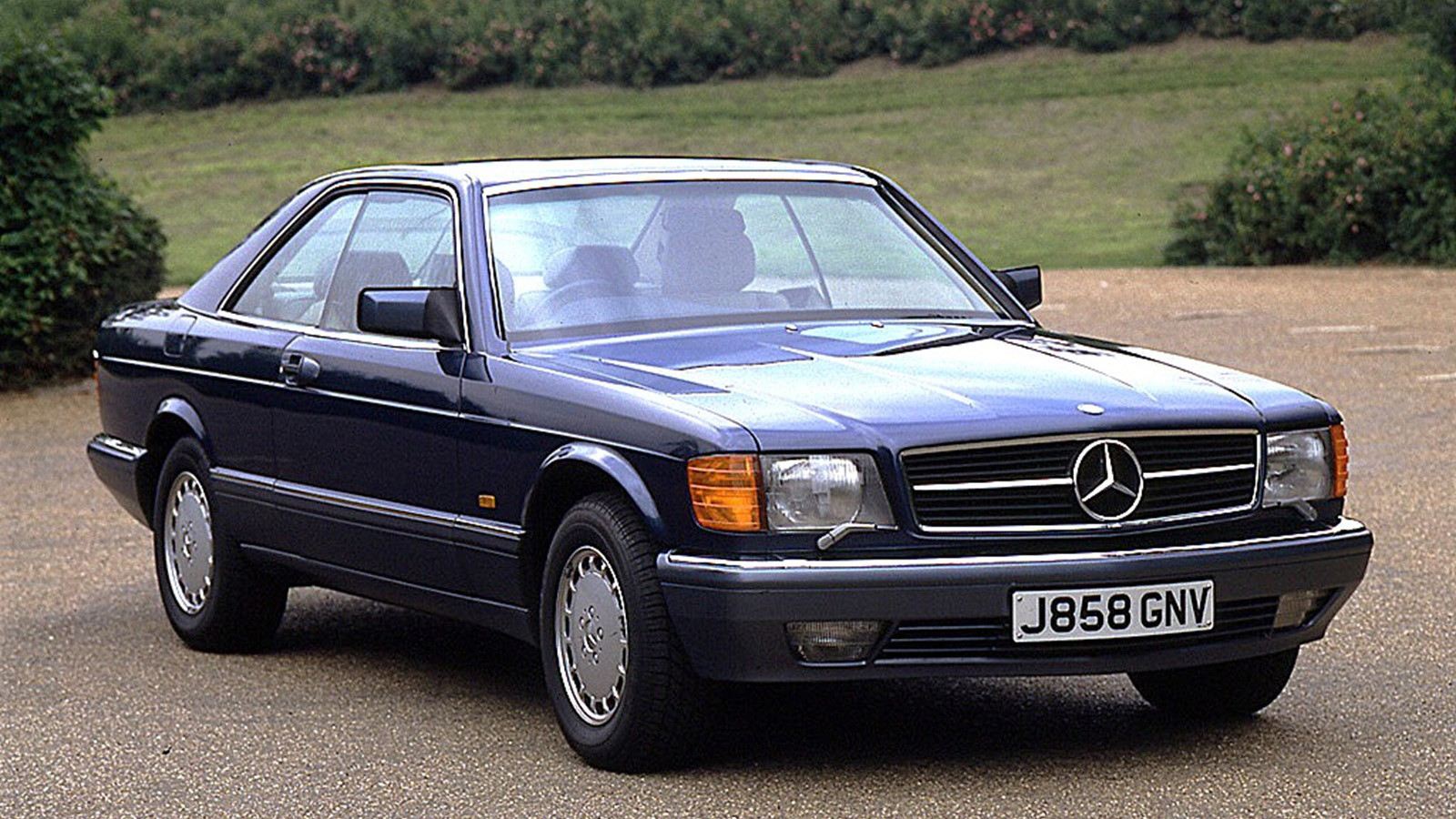
11. 1981 Mercedes-Benz SEC (C126)
The new Mercedes S-Class, launched at the Frankfurt motor show in September 1979, was simply brilliant, so the SEC coupe that broke cover at the same event two years later was off to a flying start.
Using a shortened version of the S-Class platform, the 126-series coupe also had its own unique front-end style, along with the sleek, pillarless profile.
This was very much a return to a flagship Mercedes coupe after the demise of the 280SE 3.5 Coupe a decade earlier.
Launched with 3.8- and 5-liter V8s, a facelift, revealed at Frankfurt in 1985, saw the smaller motor replaced with a 4.2-liter unit.
The big news, though, was the arrival of the range-topping 560SEC with its 5.6-liter V8 and effortless performance.
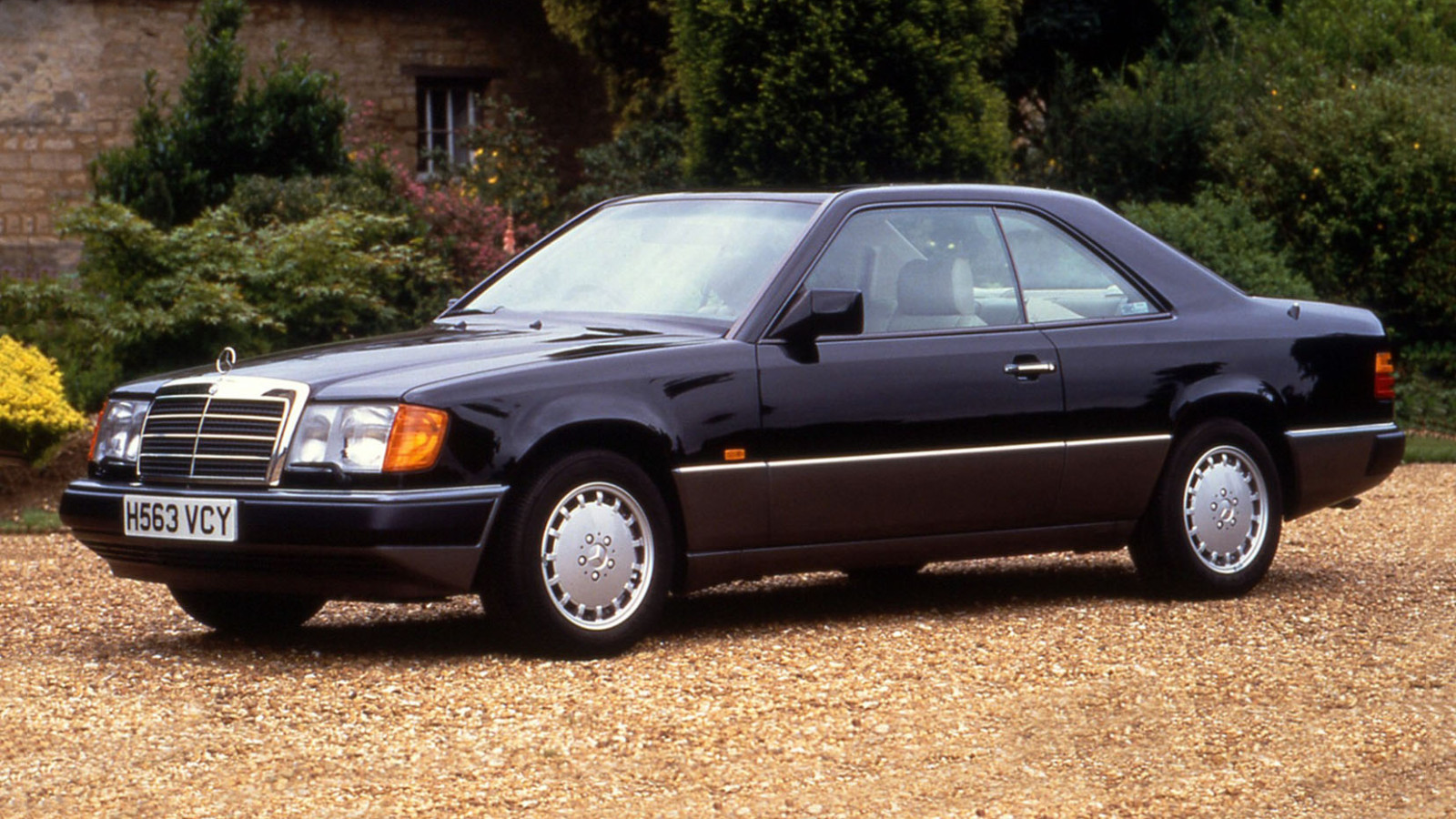
12. 1987 Mercedes-Benz C124
Mercedes made clever use of its new-for-1985, 124-series executive sedan to create a coupe version.
Sitting on a wheelbase that was 3.5in (89mm) shorter than the sedan, the coupe still retained the W124’s entire front end and doors, to keep a control on costs.
That was important when it was widely acknowledged that the coupe and its convertible sibling were built to an even higher standard than the range’s already superb sedan and station-wagon models.
The sleek coupe came with a selection of 2.2- and 2.3-liter four-cylinder engines and 3- and 3.2-liter straight-sixes, plus some 2-liter, four-cylinder models for Italy, Portugal and Greece, and almost all were sold with Merc’s tough four-speed auto.
There was also the rare, and now highly prized, E36 AMG Coupe, its 272HP, 3.6-liter straight-six helping it achieve 0-62mph in 7 secs, en route to a 155mph top speed.
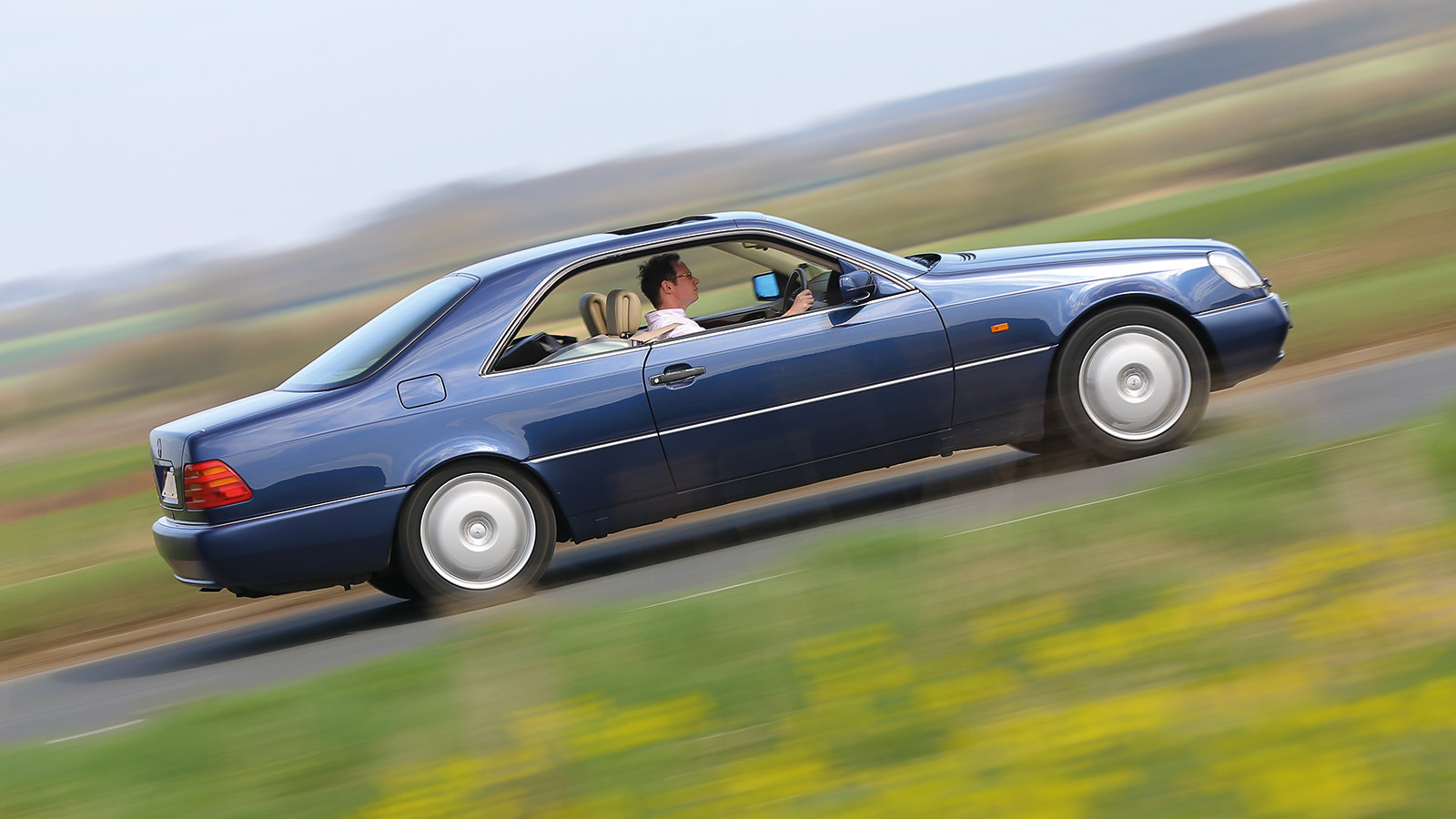
13. 1992 Mercedes-Benz S-Class coupe (C140)
Mercedes threw everything it had at the W140 S-Class sedan, and the C140 coupe benefitted from this technical tour de force.
There was no pretence at a modestly engined, entry-point model: you had a simple choice between a 5-liter V8 or 6-liter V12, and both easily wafted past 150mph on the autobahn.
Some felt the S-Class coupe missed the delicate styling of its predecessors, but comfort, refinement and a plethora of technology made up for that.
It could also seat four with ease and had a huge trunk, so this was a superb touring car – if you could afford the very steep list prices and to keep it fueled.
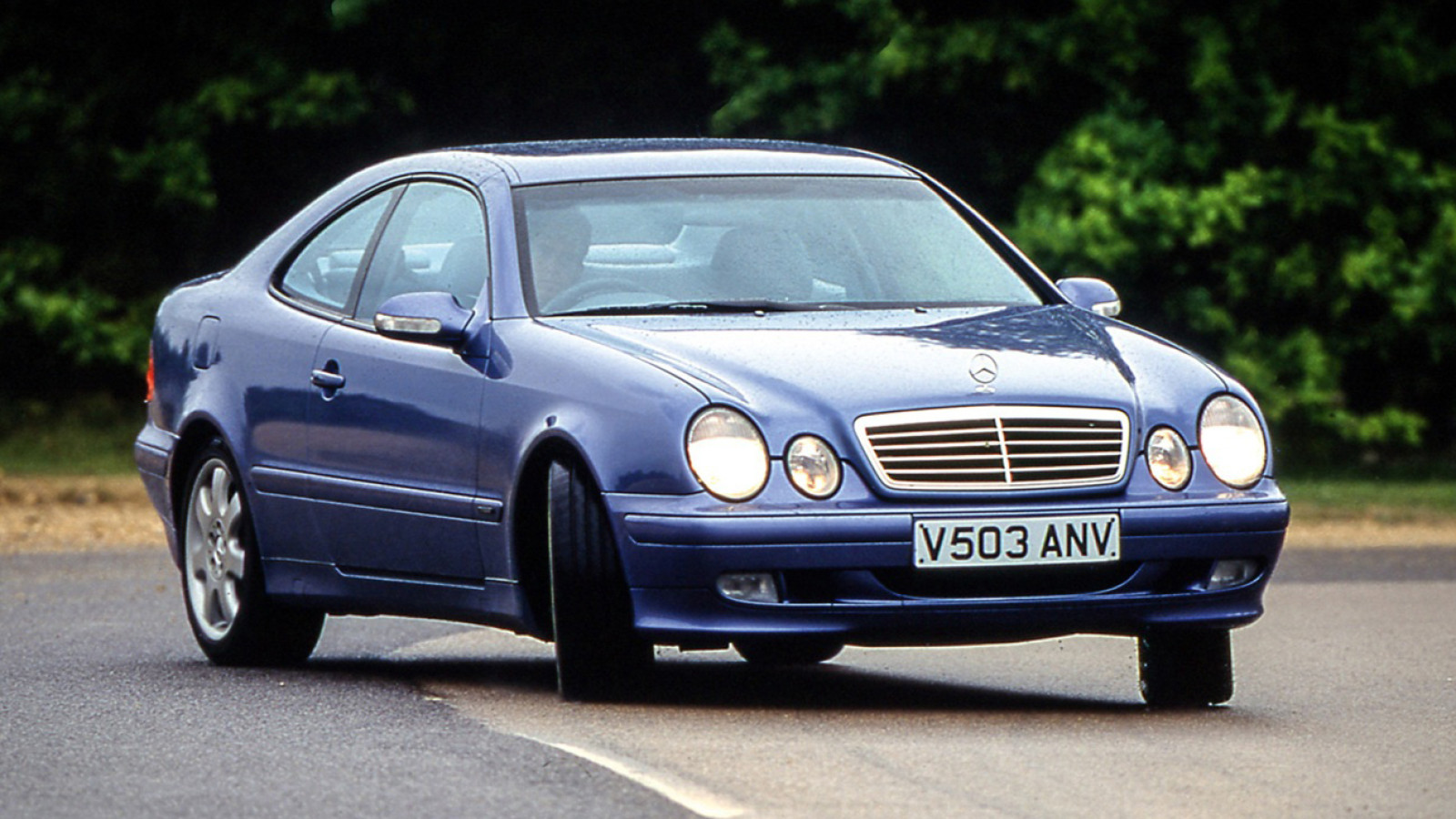
14. 1997 Mercedes-Benz CLK (C208)
A change of name for Mercedes’ mid-size coupe showed it was more of a rival than its predecessor to the BMW 3 Series coupe.
The C208 CLK still gave the impression of being an E-Class-derived model, because it had the same front-end look as the executive sedan.
However, underneath the CLK was based on the W202 C-Class and shared this smaller sedan’s 1.8- and 2.3-liter four-cylinder engines, and its 3.2 V6.
There was eight-cylinder power for the CLK, too, with the 4.3-liter V8 in the CLK430 giving 279HP. Or you could order the very rapid CLK55 AMG with its 347HP, 5.4-liter V8.
Not as sporty as the BMW, the CLK coupe still found 204,062 eager buyers.
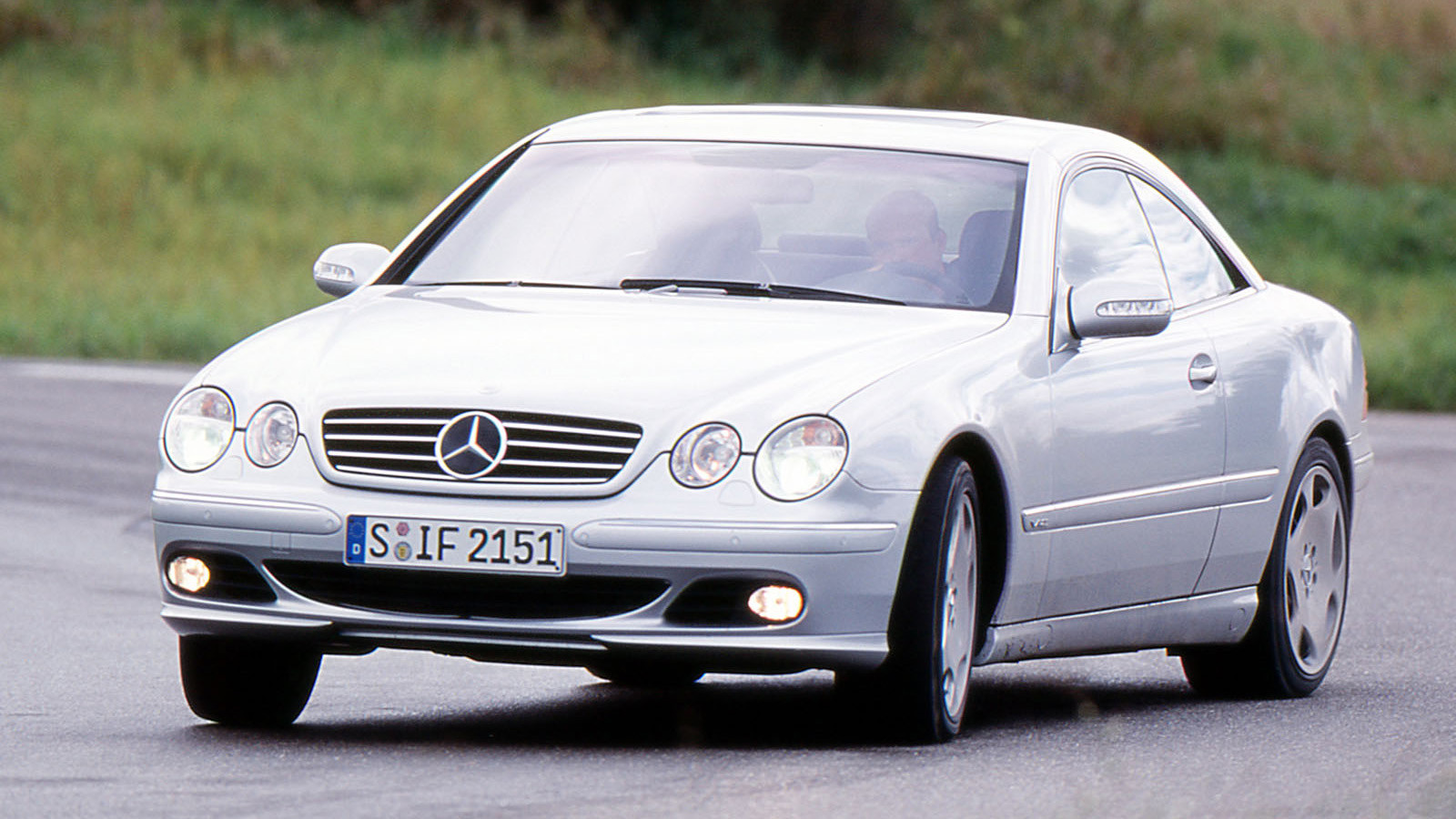
15. 1999 Mercedes-Benz CL (C215)
Mercedes’ new luxury coupe for the late 1990s was lighter and more compact than the car it replaced.
The CL – a name adopted by the previous generation in 1996 – sat on an S-Class platform that was reduced by 5in (127mm), and used the sedan’s V8 and V12 engines, including the CL65 AMG with 612HP and 738LB FT of torque.
In keeping with the CL now being classed as a separate model range rather than an S-Class coupe, there was also unique-to-the-range styling.
In addition, the C215 used aluminum, magnesium and plastic in its construction to be some 340KG (750LB) lighter than the car it replaced.
A third-generation CL arrived in 2006 and lasted until 2014.
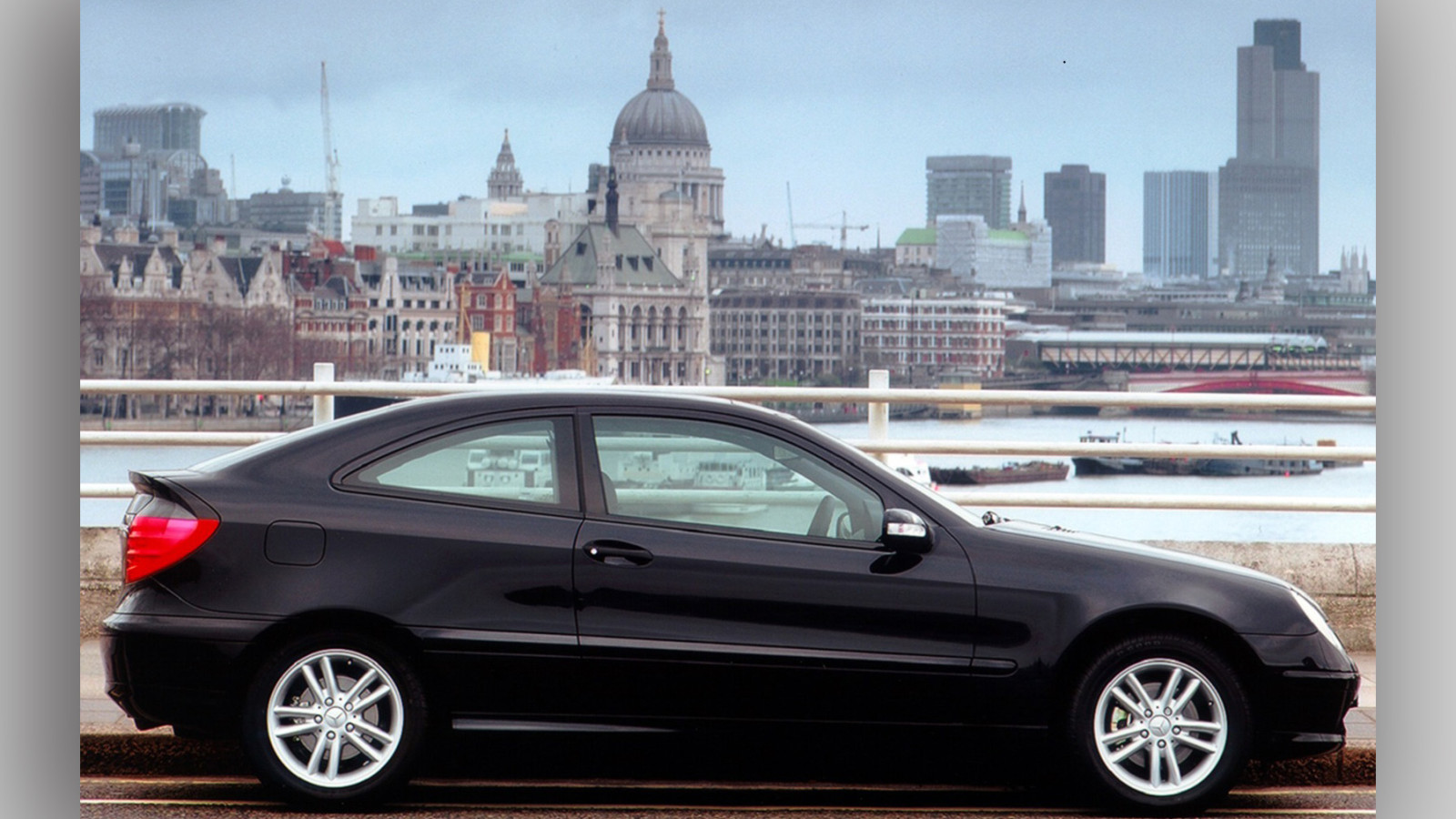
16. 2000 Mercedes-Benz C-Class Sports Coupe (CL203)
With the CL and CLK occupying the top and mid-range coupe sectors, Mercedes provided a more affordable two-door with the C-Class Sports Coupe.
Based on the W203 C-Class, the Sports Coupe kept the same wheelbase as the sedan, but was 7in (178mm) shorter overall.
Its looks divided opinion, because some felt it was more of a three-door hatch than a coupe, but Mercedes was happy it now had an answer to the BMW 3 Series Compact.
Most Sports Coupes used four-cylinder engines, but V6s were an option including the C32 AMG with a supercharged 354HP.
The Sports Coupe was replaced by the CLC that ran from 2008 to 2011.
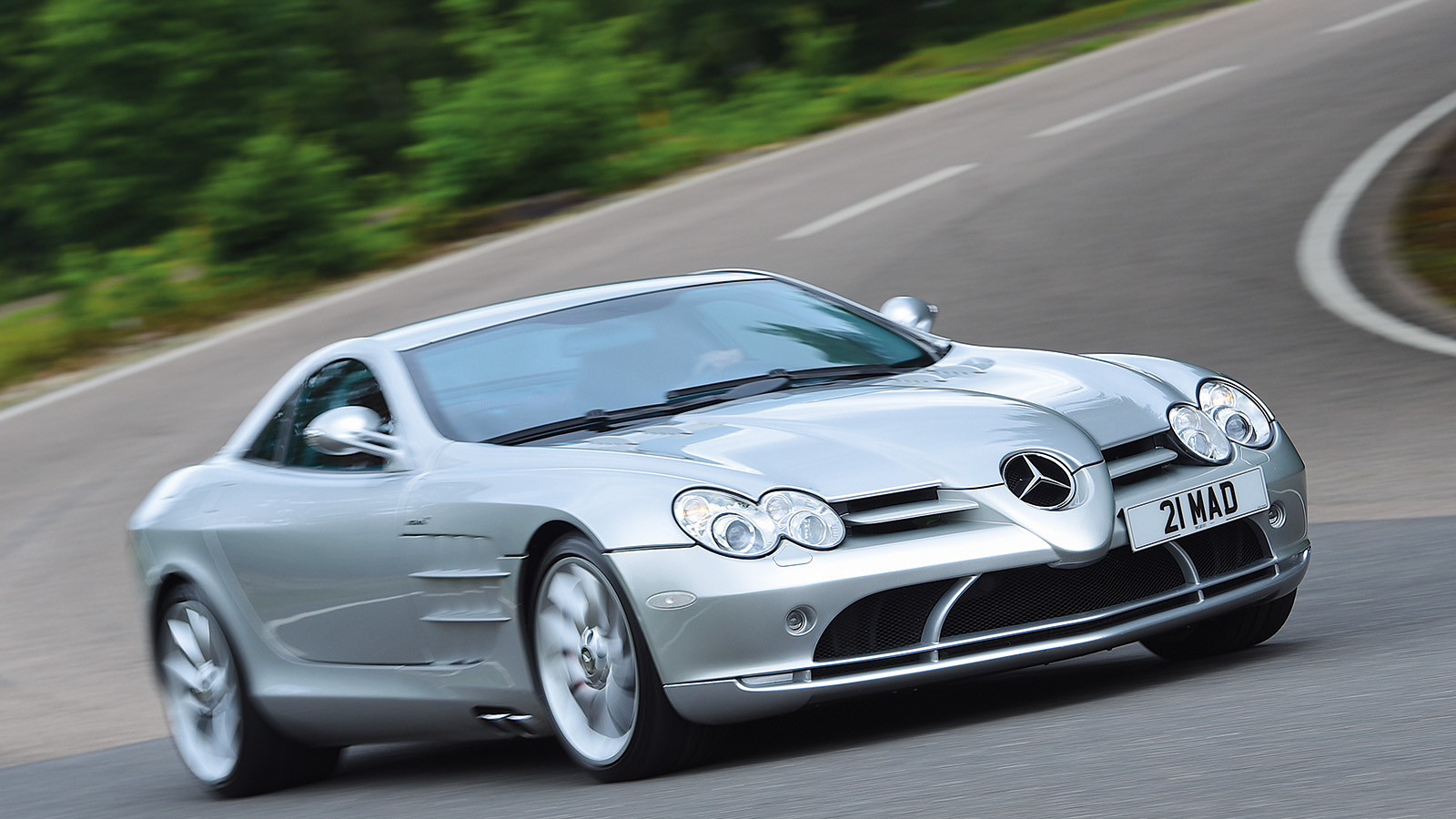
17. 2004 Mercedes-Benz SLR McLaren (C199)
The Mercedes-Benz SLR McLaren was a joint venture brought on by the German marque supplying the British company with engines in Formula One.
A 626HP, supercharged, 5.4-liter V8 was mounted ahead of the cabin but far enough back to qualify as mid-engined.
This gave the 208mph SLR coupe odd looks to many eyes, though the 2007 Roadster was considered an improvement.
In either version, the V8 motor was the star thanks to its power and noise, though the coupe also attracted looks for its butterfly-action door opening.
A total of 1262 SLR coupes were built, plus 150 limited-edition 722 variants.
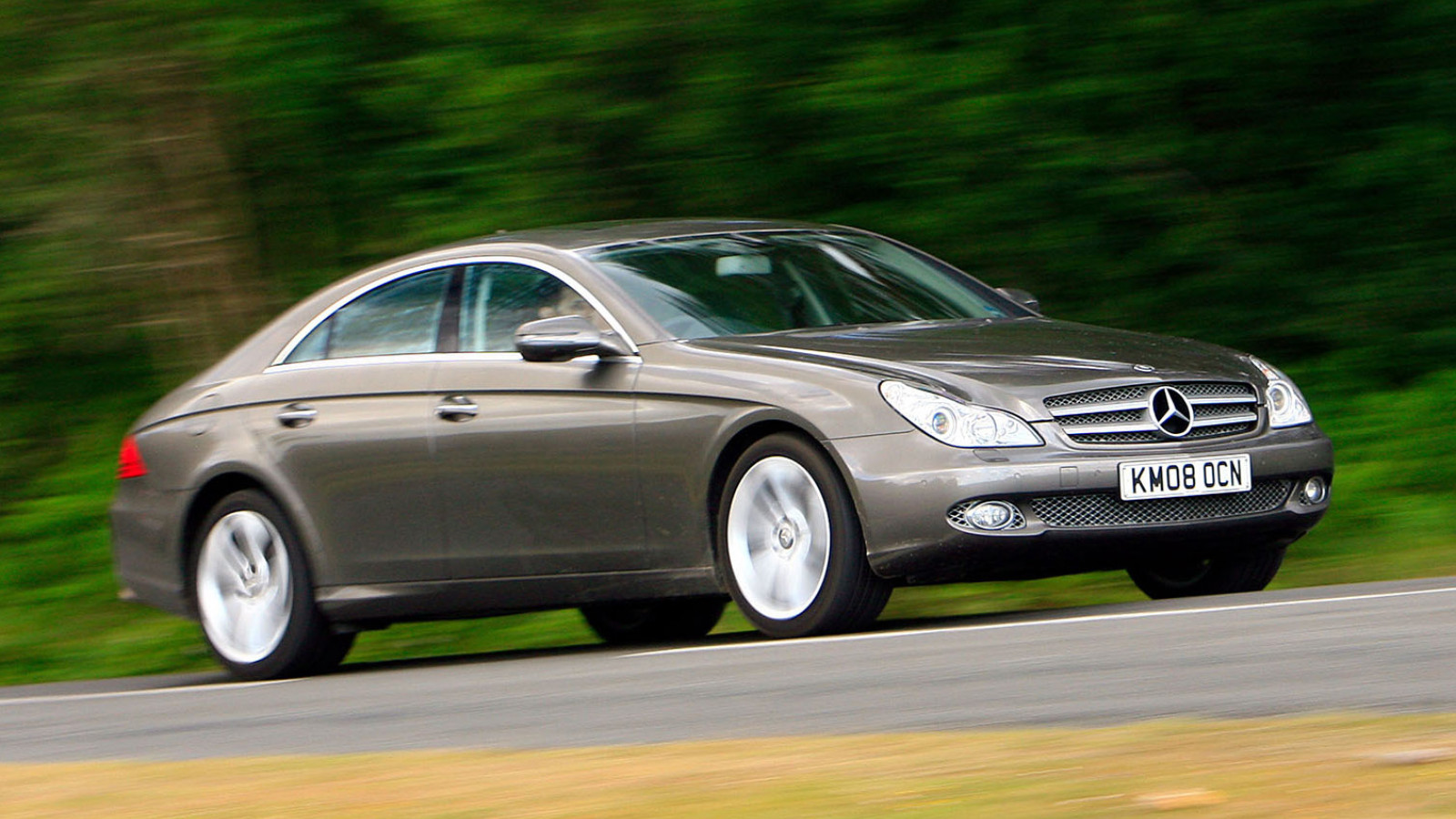
18. 2004 Mercedes-Benz CLS (C219)
Mercedes-Benz caught all of its major rivals off guard when it launched the CLS in 2004 at the Geneva show.
Here was an executive car that mixed all the sensible attributes of the E-Class it was based on with stunning, four-door, coupe looks.
It took Audi, BMW and even Porsche a long time to catch up, and in the meantime the CLS enjoyed great sales success.
For anyone who says this isn’t a coupe, Mercedes clearly decided it was as the car was given a C-code design number: C219.
The first-generation CLS used gasoline V6 and V8 motors, and a diesel V6, and all gave rapid, smooth performance to match its eye-catching looks.
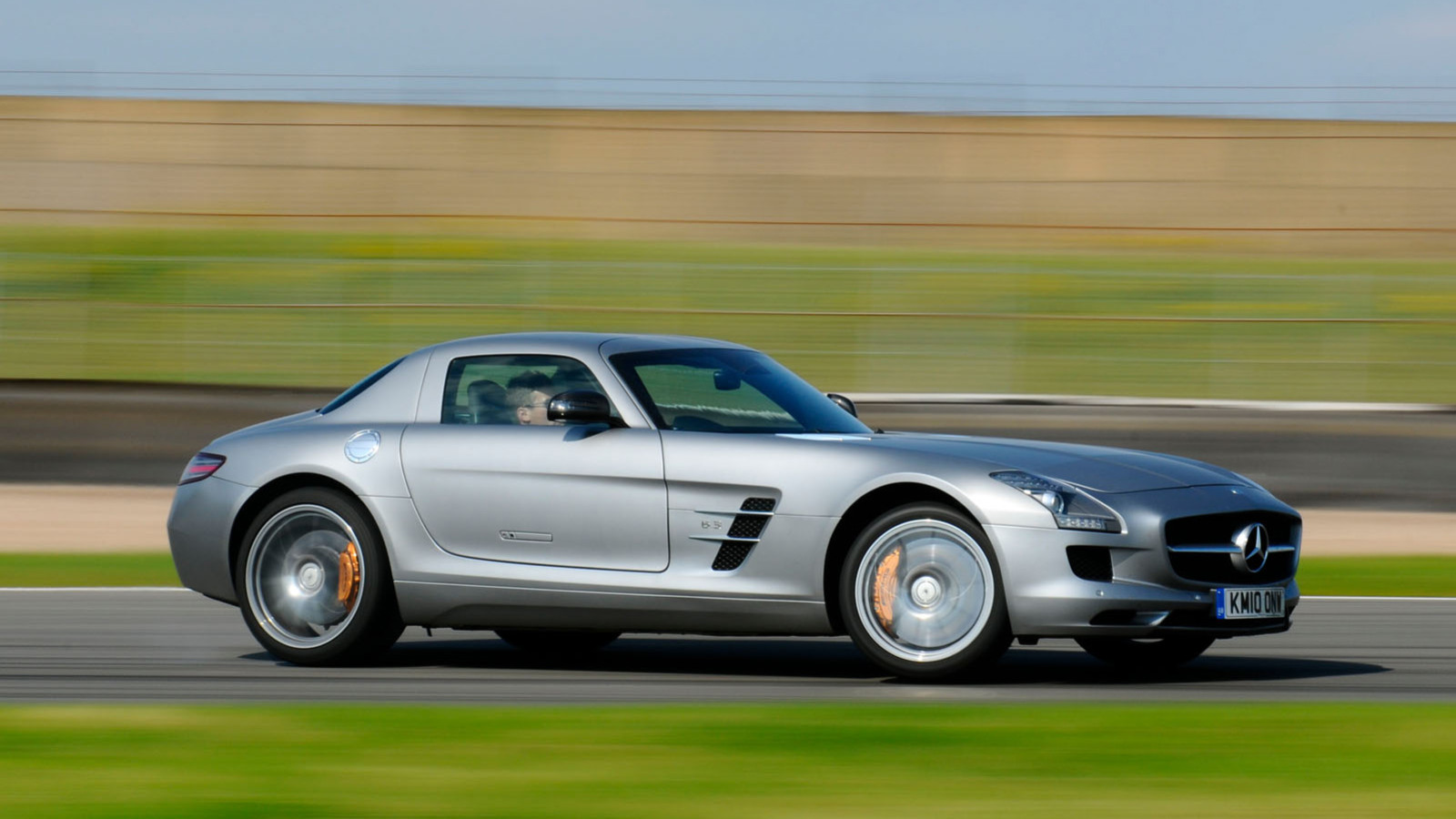
19. 2010 Mercedes-Benz SLS AMG (C197)
Following the slightly awkward union with McLaren that led to the SLR, Mercedes kept it in-house for its SLS AMG.
Taking its cues from the 300SL Gullwing, the styling of the SLS was less challenging than the SLR’s, even though its front-mounted engine was pushed way back in the chassis.
A thumping 571HP was delivered from the 6.2-liter V8, and this was upped to as much as 631HP in the Black Series version.
The combination of high sills and gullwing doors made the SLS cabin quite cramped, but few worried about that and Mercedes-Benz sold more than 10,000 (including the Roadster version).
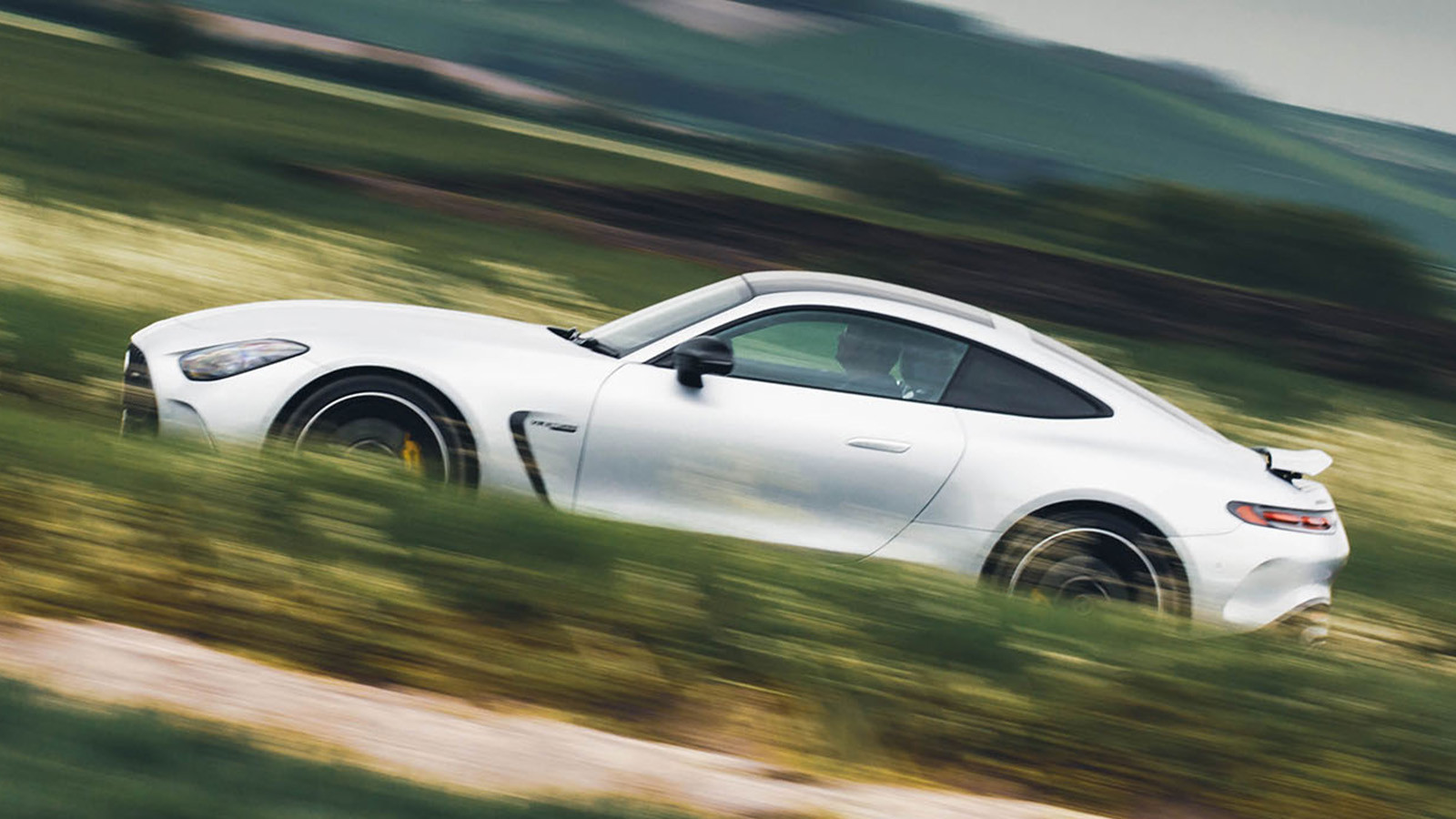
20. 2014 Mercedes-AMG GT (C190)
When Mercedes-Benz pulled the covers off its new AMG GT coupe at the 2014 Paris motor show, it revealed a serious rival to the Porsche 911.
Unlike the SLR and SLS that preceded it, the GT was a much more compact coupe and had volume sales in mind.
At its heart, though, remained an AMG V8 engine, in this case a 4-liter twin-turbo offering 462HP in GT trim or 510HP for the GT S model.
More power arrived with the 585HP GT R in 2017, and there was a run of 750 R Pro cars with an even greater focus on track use.
The second-generation AMG GT, codenamed C192, arrived in 2023 with hybrid power as an option – and there was a limited-run Mercedes-AMG GT 63 APXGP Edition revealed in June 2025 to tie in with the F1 movie.
We hope you enjoyed reading. Please click the ‘Follow’ button for more super stories from Classic & Sports Car.