





Forward thinking
In the years immediately following the Second World War, Renault became an early adopter (among European manufacturers, at least) of the rear-engined layout, and it must have seemed unlikely that it would at some point move the entire drivetrain forward and build almost nothing but front-wheel-drive cars instead.
As we know, this did happen, but the transition took many years to complete, which in our view makes it seem all the more interesting.
We’re exploring it here by looking at all the front-wheel-drive Renaults produced in the second half of the 20th century, listed in chronological order of the years they first went on sale.
From the 1980s, this becomes almost a list of all Renaults available during the period, but there were exceptions including the rear-engined GTA (actually built by Alpine, but marketed as a Renault in the UK), and the mid-engined 5 Turbo and Spider.
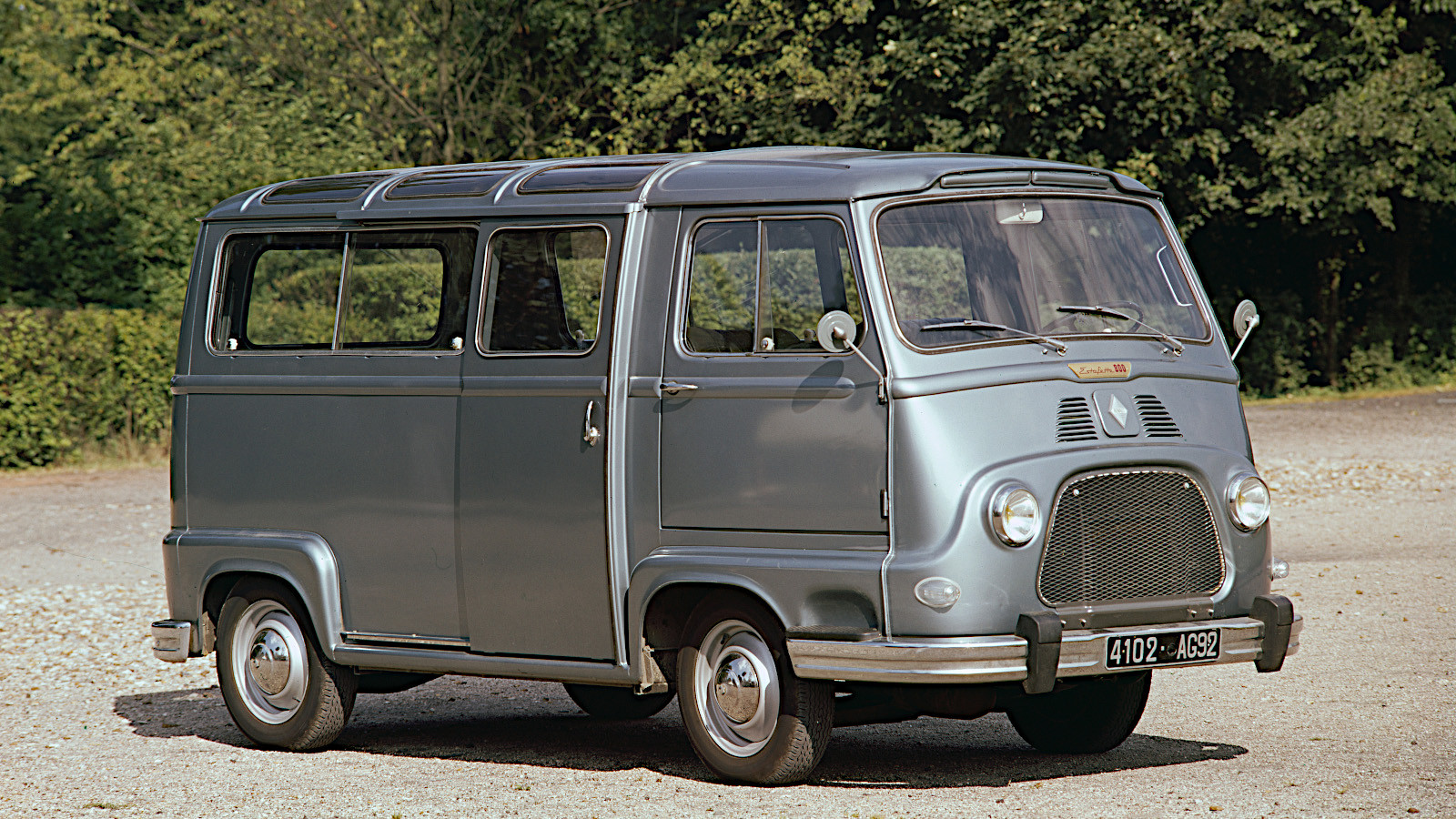
1. 1959 Renault Estafette
Available as both a commercial and a passenger vehicle, the Estafette was Renault’s first front-wheel-drive model, and an impressive display of technical flexibility from a marque whose small cars of the 1950s (the 4CV, Dauphine and Caravelle, though not the Dauphinoise) were generally rear-engined, while the larger ones (the Frégate and the Colorale) had front-mounted motors and rear-wheel drive.
The Estafette’s engines (initially the Billancourt, replaced in 1962 by the larger Cléon-Fonte) had previously been found at the back of whatever car they were fitted to, but concerns about limiting cargo space led Renault to place them ahead of the front axle, with the gearbox just behind – the obvious solution in a period when hardly anyone was thinking of mounting engines transversely.
The same layout was also used (with the Cléon-Fonte unit, and around the rear axle rather than the front), for the René Bonnet (later Matra) Djet, which is widely regarded as being the world’s first mid-engined production car.
2. 1961 Renault 3
The Renault 3 was a derivative of the 4, which will be discussed in more detail shortly.
While the 4 was, very successfully, designed to be simple and cost-effective, the 3 went a stage further with its extremely low equipment levels (including fewer windows) and the smallest, 603cc version of the Billancourt engine, making it cheaper both to buy and to tax.
Even for French customers, normally enthusiastic about cheap, basic cars, this was all a bit much, and their response could be summed up as, “No, Renault. This time you have gone too far.”
As a result, while the 4 almost single-handedly saved Renault from financial collapse after Americans decided they didn’t want to buy Dauphines any more, and remained in production for more than 30 years, the unloved 3 was gone by the end of 1962.
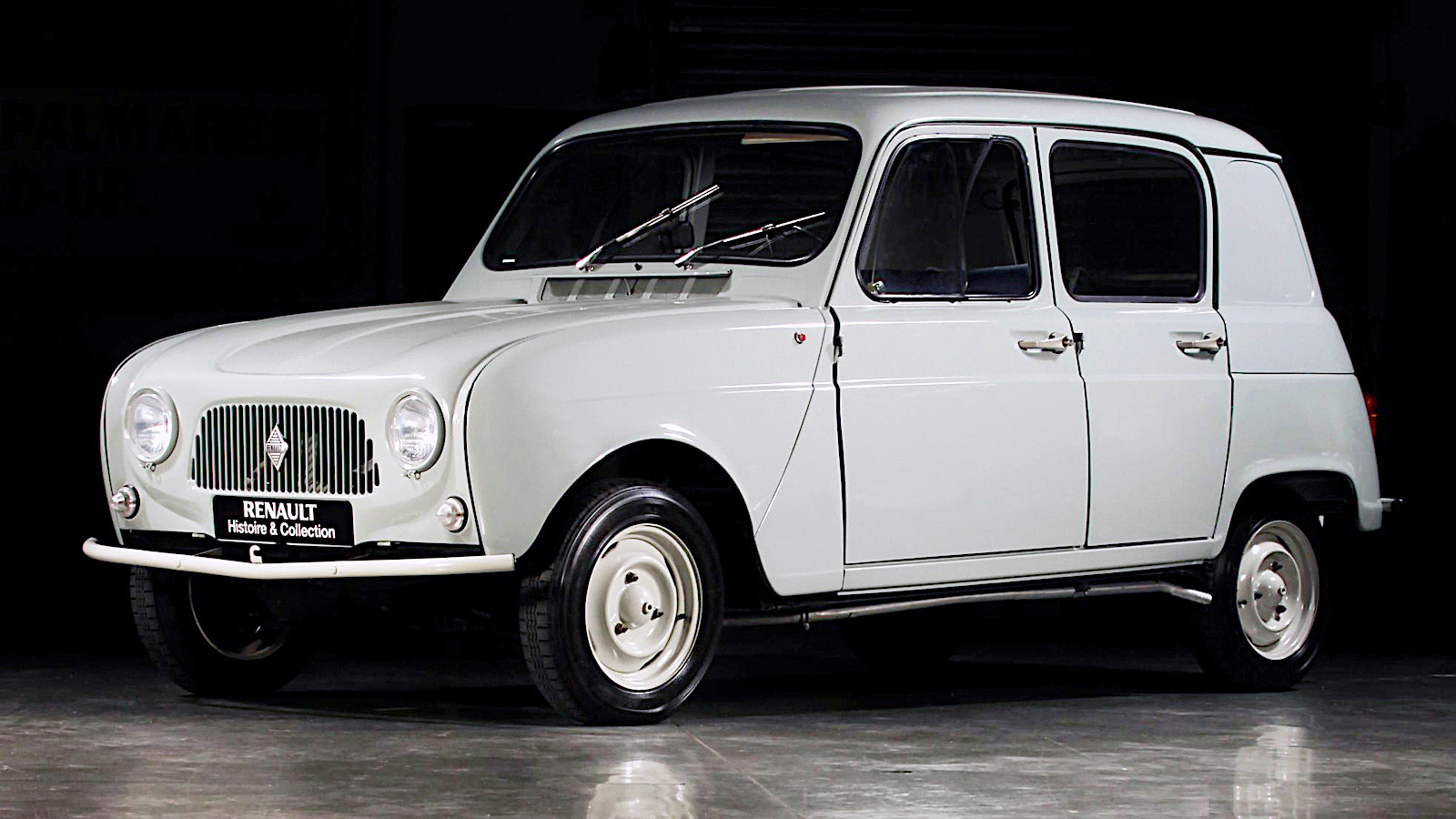
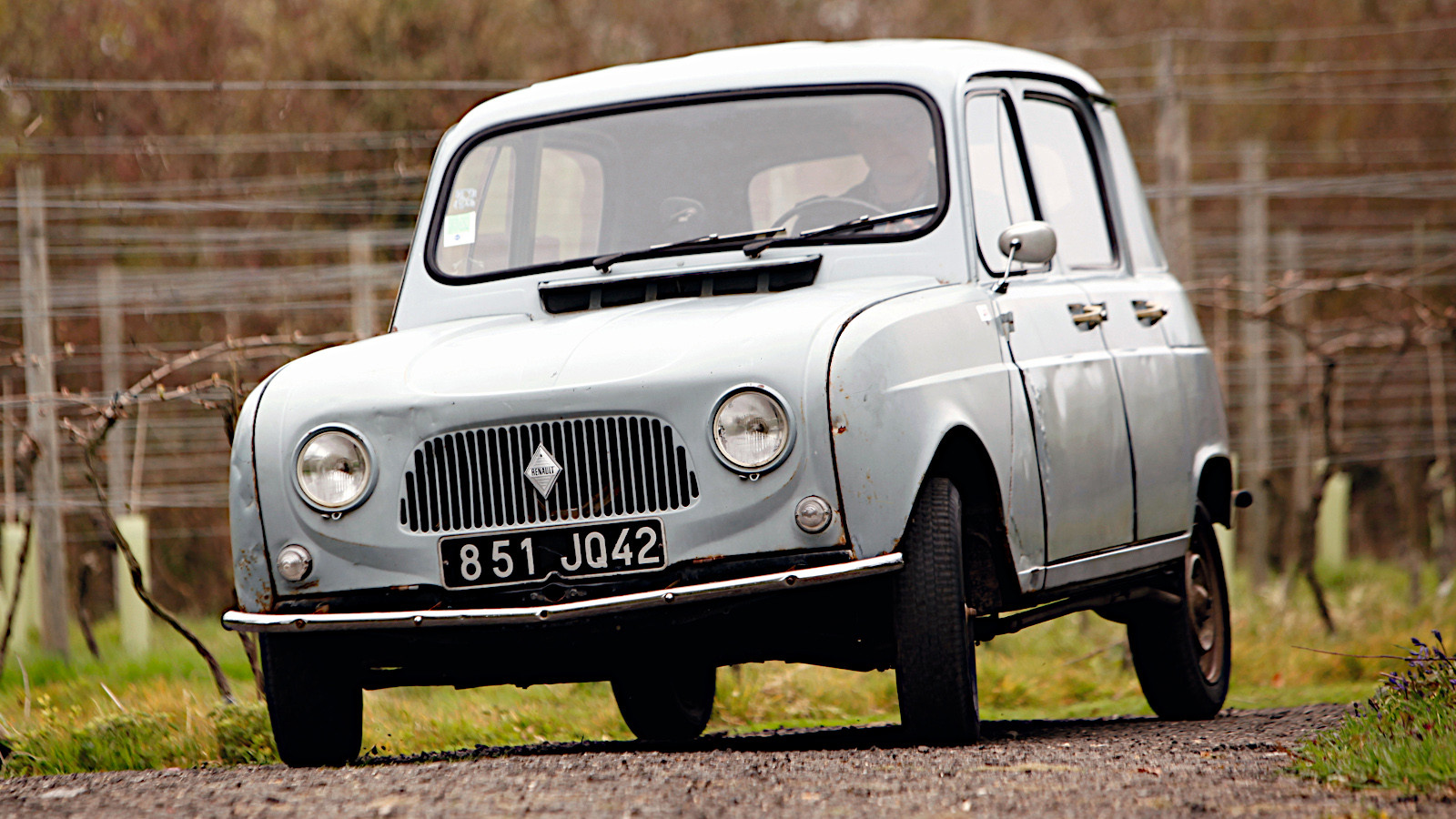
3. 1961 Renault 4
Second equal with the 3 on a chronological list of front-wheel-drive Renaults, the 4 was one of the company’s most successful cars and – due to its crucially high sales in the first few years – perhaps its most important.
For this application, Renault used the reverse of the Estafette layout, mounting the Billancourt unit behind the gearbox rather than ahead of it, which was better for weight distribution but not so good for engine access.
It also created a problem of how to connect the gearlever to the gearbox, though Renault got round that by mounting the lever on the dashboard and running the linkage over the top of the engine.
As with most of the long-running cars initially fitted with the Billancourt engine, Renault replaced it with the Cléon-Fonte, though in the 4’s case this process did not begin until the car had been in production for 17 years.
To put the 4’s longevity into context, it was launched less than halfway through the production life of the Dauphine, and was still being manufactured after the introduction of the first-generation Clio.
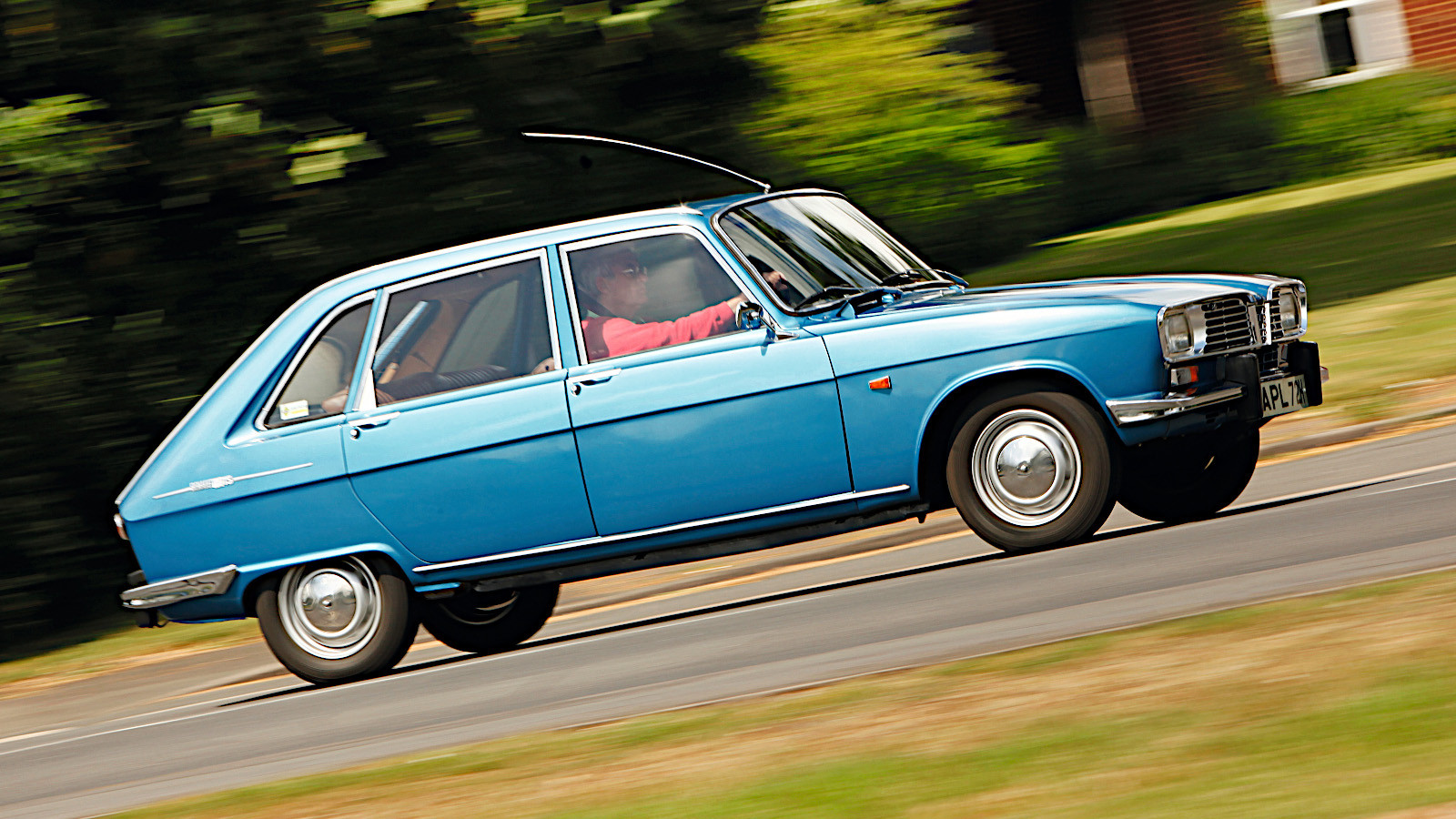
4. 1965 Renault 16
While the 4 was simplistic and old-fashioned, the Renault 16 introduced only four years later was so radical it was difficult to describe.
The word ‘hatchback’ was not in common use at the time, so journalists had to devise circumlocutions to explain what it was to their readers, Jean-Francis Held’s ‘a synthesis of a station wagon with a saloon, relying on the former’s advantages to overcome other saloons, yet retaining the advantages of a saloon sufficiently to outsmart other station wagons’ being a spectacular example.
The 16 was also the first car fitted with the Cléon-Alu engine, which would power many other Renaults along with the Lotus Europa and, perhaps most dramatically of all, the Alpine A110 which dominated the World Rally Championship in 1973.
Hardly anything found on the Renault 16 resembled its counterpart on the 4 (even the gear linkage was different, because the lever was mounted on the steering column rather than the dashboard), but they did share one feature: in each case, the engine was mounted directly in front of the gearbox.
5. 1968 Renault 6
In one sense, the Renault 6 was a cheaper alternative to the 16, but in another it was a simply a rebodied and better-equipped 4 with precisely the same drivetrain: a Billancourt engine whose power was sent backwards to the gearbox and then forwards again to the axle, which lay between them.
This must have made sense during the design process, but Renault had made a misstep in assuming that the little Billancourt motor would be effective in a significantly heavier car.
Not everyone objected, and in fact the Billancourt was not completely replaced, but by 1970 various grumblings about the Renault 6’s lack of performance persuaded its maker to add the Cléon-Fonte unit, which had already been in production for several years before the 6 was announced and could quite easily have been fitted to it right from the start.
6. 1969 Renault 12
The Renault 12 was devised to fill a gap in the car maker’s line-up between the 6 and the 16, and thereby entering an increasingly competitive (and, if you didn’t mess things up, profitable) market sector.
Less radical than the 16, it was initially sold as a saloon, and later as an estate and pick-up, and was mostly powered by the Cléon-Fonte engine, though the Cléon-Alu was used for high-performance derivatives such as the 12 Gordini.
In a reversal of the recent trend, Renault mounted the engine ahead of the front axle rather than behind it, as it had done with the Estafette a decade before, increasing cabin space at the cost of less favourable weight distribution.
Outside France, the Renault 12 was assembled in Australia (where it later became known as the Virage), and manufactured both in Turkey (first as the 12 and then as the Toros) and in Romania as the Dacia 1300, which survived in pick-up form into the 21st century and was the last production vehicle ever powered by the Cléon-Fonte engine.
7. 1970 Renault Rodeo
Although it was marketed as a Renault, and largely consisted of Renault parts, the Rodeo was in fact built by a much smaller French company called ACL.
With its open body made of laminated polyester, the Renault Rodeo was a beach car whose most obvious rival was the 2CV-based Citroën Méhari, though it can also be spoken of in the same sentence as the Mini Moke, the Renault 4 Plein Air, and Ghia’s Jolly versions of the Fiat 500 and 600.
It was based on the R4 platform, and initially powered only by the Billancourt motor, but within three years this had been joined by the more powerful Cléon-Fonte.
Regardless of which engine was used, it was always mounted behind the gearbox, like every other front-wheel-drive Renault up to this point except the Estafette and the 12.
8. 1971 Renault 15
To emphasise its impressive combination of stylish looks, a spacious interior and ample luggage room, Renault marketed the 15 as ‘a true coupé for those who can’t do without a saloon’.
The 15’s outward appearance gave no hint that it had anything to do with the 12, but under the skin it was essentially the same car, with the same choice of Cléon-Fonte and Cléon-Alu engines.
Needless to say, this also meant it was another of Renault’s front-wheel-drive vehicles, with the still rare (but now less so than before) engine-before-gearbox layout.
A total of 209,887 Renault 15s were built before the model was discontinued in 1979, three years after a mild facelift.
9. 1971 Renault 17
The Renault 17 was a more upmarket version of the 15, with four round headlights instead of two rectangular ones, an extra rear pillar and louvred grilles over the rear side windows (apparently in an attempt to make the car more difficult to see out of), as well as a more restricted engine range consisting only of the Cléon-Alu in various capacities.
Being more expensive than the Renaut 15, it was inevitably less popular, with total sales not quite reaching 100,000.
However, the 17 occupies an interesting space in Renault history, being the first of the marque’s cars to win a round of the World Rally Championship.
This was the US-based Press On Regardless event held in 1974, and while it was perhaps less prestigious than some of the other rounds it did have a very strong entry.
Nevertheless, Jean-Luc Thérier and Christian Delferier took their Renault 17 Gordini to victory, beating Markku Alén and Atso Aho’s Fiat 124 Abarth Rallye, three Alpine A110s and a Porsche 911, while other 17s finished third and sixth.
10. 1972 Renault 5
By 1970, Renault’s small-car line-up was starting to look problematic: the 4 was popular but very basic, the 6 was less popular and still basic, and the rear-engined 8 was verging on anachronistic.
The R5, which went on sale two years later, was more modern than any of them and was a big hit right from the start in France, helped by an ingenious advertising campaign which suggested that the car was more a member of the family than a mere functional object.
Renault’s first small, unibody, front-wheel-drive hatchback was very close to what would later be called a supermini, with the single exception that its engine (either Billancourt or Cléon-Fonte) was not placed transversely alongside the gearbox.
While Fiat had already adopted this layout twice, for the 128 of 1969 and the 127 of 1971, Renault was still not ready to do so.
Instead, the 5 followed the 3, 4, 6, 16 and Rodeo in having its engine mounted behind the gearbox, forcing the designers to place the gearlever on the dashboard.
11. 1974 Renault 7
Every R5 of the first generation built by Renault in France was a hatchback, no doubt because the company did not feel that any other style was necessary.
In Spain, the FASA-Renault subsidiary, which knew its own market better than the French did, had a different opinion, and created its own four-door saloon derivative.
Globally, nearly all Renaults during this period were given single- or double-digit names, but this one was originally sold as the Siete (the Spanish word for ‘seven’) before officially becoming the 7 a few years after its launch.
Other than the different shape, the extra doors, the much larger, 400-litre luggage compartment and a few minor details, the Siete/7 was almost identical to the 5, and shared its gearbox-before-engine layout.
12. 1975 Renault 20
With the exception of its companion vehicle, which we’ll be looking at next, the 20 was the largest, most prestigious and most expensive Renault since the company was nationalised in 1945, a move which had added force to founder Louis Renault’s determination that the immediate post-war cars should be small, cheap and economical.
Distinguishable from its near-twin by its one-per-side rectangular headlights, the 20 was fitted at first with the Cléon-Alu engine, but this – like the Billancourt unit in the 6 – was not powerful enough for the car, and the introduction of the larger Douvrin in 1977 was a welcome development.
Whatever engine was used (a 2.1-litre diesel was also available), it was always placed ahead of the front axle, in the manner of the 12, 15 and 17.
13. 1975 Renault 30
Introduced a few months before the 20, the 30 was Renault’s flagship model, and instantly recognisable as such to keen-eyed observers thanks to its different grille and four round headlights.
It also sounded different, because the engine (again mounted in front of the gearbox) was the 2.7-litre PRV V6, co-designed with Peugeot and Volvo.
A 2.1-litre turbocharged diesel motor, which didn’t sound nearly as good as the V6 but used much less fuel, was added to the range in 1982.
As is usually the way of these things, the more expensive model found far fewer buyers than the cheaper one.
In all, 136,403 Renault 30s left the factory in eight years, compared with 607,405 20s in the same time period.
14. 1976 Renault 14
Nicknamed the pear (sometimes with affection, sometimes not), the Renault 14 attracted around a million customers in seven years – a decent figure, but one overshadowed by the fact that the same number of R4s were built in just four and a half years.
It was powered by a new engine which had been co-developed with Peugeot and was used in a variety of Citroëns, Peugeots and Talbots, though Renault only ever fitted it to this model.
The significance of the 14 to the story we’re telling here is that it was the first front-wheel-drive Renault whose engine was mounted transversely and alongside the gearbox, as opposed to in front of or behind it.
Other manufacturers including Fiat, Ford, Simca, Volkswagen and even (briefly) Audi had already adopted this layout, but Renault still wasn’t ready to abandon those it had used before.
15. 1978 Renault 18
The Renault 18 was effectively the replacement for the 12 (though there was some production overlap), and it shared the earlier car’s Cléon-Fonte and Cléon-Alu engines, while also being fitted with petrol and diesel units from the Douvrin family.
All of these had been mounted longitudinally ahead of the front axle in front-wheel-drive Renaults of the past, and they were again now.
Manufactured both as a four-door, three-box saloon and as a five-door estate, the 18 was generally offered as a practical car rather than a high-performance one.
By this time, however, Renault had become very enthusiastic about turbocharging, being the first manufacturer to use it in Formula One and winning the 1978 Le Mans 24 Hours with a turbo car.
It can’t have come as a surprise to anyone, therefore, when the company added a compressor to the Cléon-Alu engine and fitted the resulting unit into the 18 Turbo (pictured), which was produced between 1980 and 1986.
16. 1980 Renault Fuego
With the Fuego, Renault repeated a formula which had proved successful nearly a decade earlier.
The 15 and 17 had both been two-door, four-seat coupés based on the 12, a front-wheel-drive saloon with a longitudinally mounted engine placed ahead of the front axle, and the Fuego was derived from the 18 in exactly the same way.
There was, of course, a Turbo version with a forced-induction Cléon-Alu motor, but in this respect the cars differed considerably.
In the 18 Turbo, the engine produced just under 110bhp, or about the same as the naturally aspirated 1255cc 8 Gordini was capable of in the 1960s, but for the Fuego Turbo it was uprated to the point where it produced around 130bhp.
17. 1981 Renault 9
The curvy 14 was replaced by the sharp-edged Renault 9, which no one in possession of their senses could possibly have mistaken for a pear.
In two respects, the 9 represented a step backwards from the 14: it was a saloon rather than a hatchback, and the Douvrin motor was replaced by the now nearly two-decade old Cléon-Fonte.
However, the 9 retained the older car’s layout of a transverse engine placed alongside the gearbox, which from now on would be a feature of all its smaller front-wheel-drive cars.
After two years, the 9 was joined by the 11, which was almost exactly the same car with a hatchback body.
Both were available with turbocharged 1.4-litre engines, and – thanks to Renault’s partnership with AMC – were also manufactured and sold in the USA, where the 9 was known as the Alliance and the 11 as the Encore.
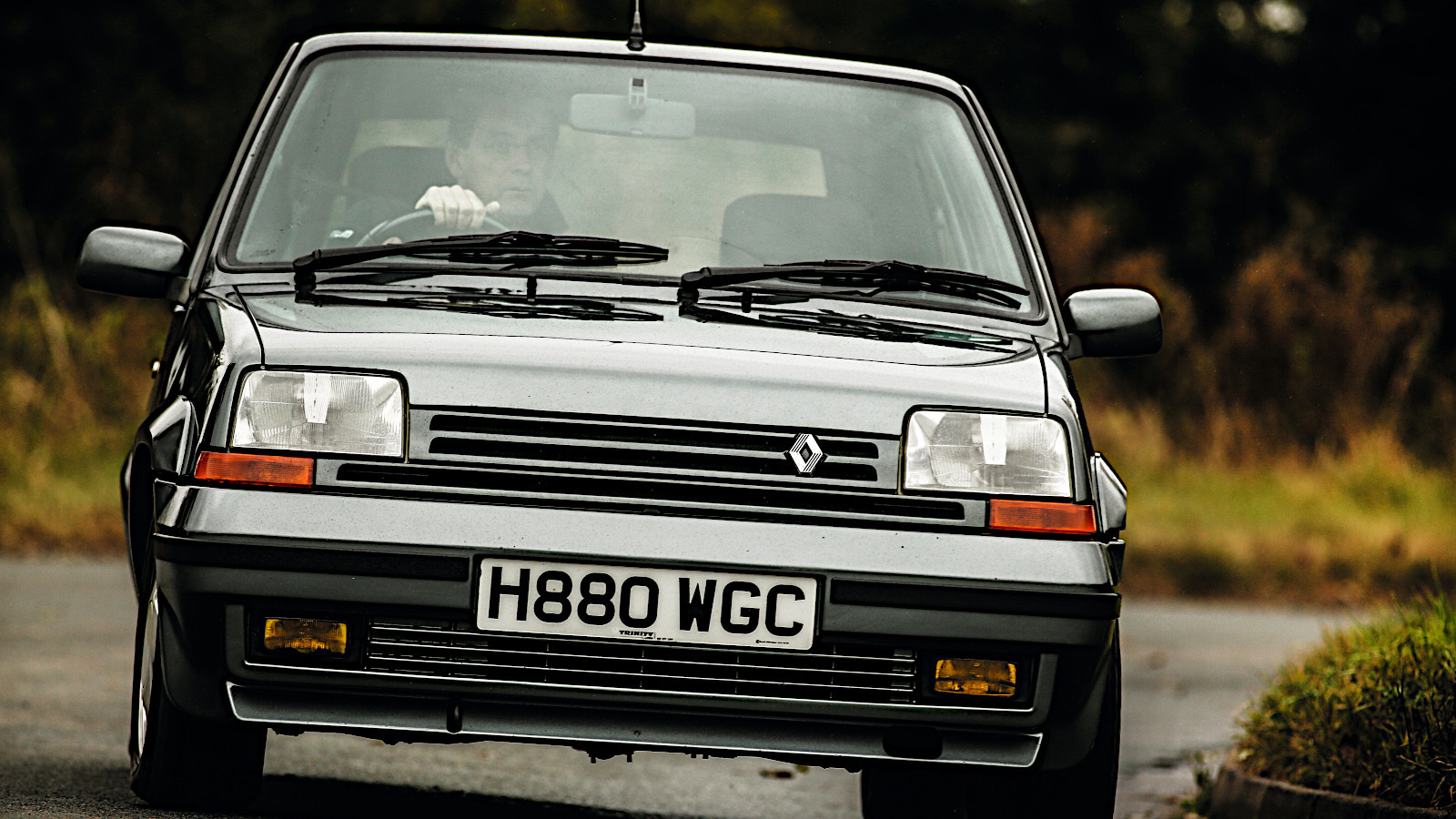
18. 1984 Renault 5
The second-generation R5 retained some of the appearance of the original model, a carry-over Renault would repeat when it designed the all-electric 5 launched in the 21st century.
In the case of both comebacks, the similarity to previous Renault 5s was superficial.
Of particular relevance here, the second 5’s engine and gearbox sat next to each other across the front axle line, as they ought to have done in any respectable supermini sold in the mid 1980s and later.
At first sight, it appears that this 5 was shorter-lived than its predecessor, but things aren’t quite that simple.
It was officially replaced by the first Clio in 1991, which suggests a seven-year run, but cheaper versions remained in production for another five years.
19. 1984 Renault 25
Arriving nine years after the 20 and 30 it replaced, the Renault 25 was a large hatchback cleverly designed to look like a saloon, because the saloon body style was considered at the time to be more prestigious.
A wide variety of engines, whose outputs ranged from below 65bhp to over 200, included a development of the PRV V6 which Renault had first used in the 30, and was now available in turbocharged form.
They were all mounted longitudinally ahead of the gearbox, one of the very few features shared by the 25 and Estafette.
Renault built 780,976 25s in just under a decade before the model was replaced by the Safrane.
20. 1984 Renault Espace
Designed at Chrysler and developed by Matra, which built every example in the first three generations, the Espace kick-started the trend for MPVs, also known as ‘people carriers’, in European markets.
Longitudinal engine mounting was chosen partly because it made four-wheel drive relatively easy to engineer as an alternative to the normal front-wheel drive, but putting the motor ahead of the axle rather than behind it was also logical because it caused the least intrusion into the cabin of a vehicle whose main selling point was its remarkable amount of interior space.
Two more generations of Espace using the same layout were launched before the century came to an end, and it wasn’t until 2002 that a Renault Espace with a transverse engine went on sale.
21. 1986 Renault 21
In a world where manufacturers of front-wheel-drive cars had two choices of which way the engine should be oriented (north-south or east-west), and generally picked one and stuck with it, the 21 was the answer to the question, “Why not both?”
Renault used a wide variety of engines, from a modest 1.4 to a 2-litre turbo and would ideally have fitted them all transversely, but it did not have a gearbox which was both suitable for that layout or able to cope with the power and torque of the more muscular units.
Rather than limit the engine choice or spend a great deal of money developing a new gearbox, it went to the trouble of making the 21 capable of accepting both transverse and longitudinal motors, the latter mounted ahead of the axle in the now customary manner.
22. 1988 Renault 19
The 9 and 11 were replaced at the same time by the Renault 19, which was available as a hatchback, a saloon (generally known as the Chamade) and, unlike the earlier models, a convertible.
The available engines covered quite a lot of ground, the strongest being a 1.8 with the still relatively unusual feature of four valves per cylinder, but none of them was beyond the capabilities of the transverse gearbox Renault was using at the time.
Designing a car which could accept both layouts was probably not something the engineers would have wanted to deal with twice, so it no doubt came as a relief that the 21 solution was not required, and all 19s had their engines mounted beside the gearbox on the front axle.
23. 1990 Renault Clio
Renault’s supermini for the 1990s might easily have been known as the third generation 5, but the company had decided that its policy of using only numbers for its model names (which had begun nearly 30 years earlier with the 3 and 4, and was no longer being applied universally) should come to an end.
The new car was instead called Clio, and, to distance it further from its predecessors, it looked nothing like either of the R5s.
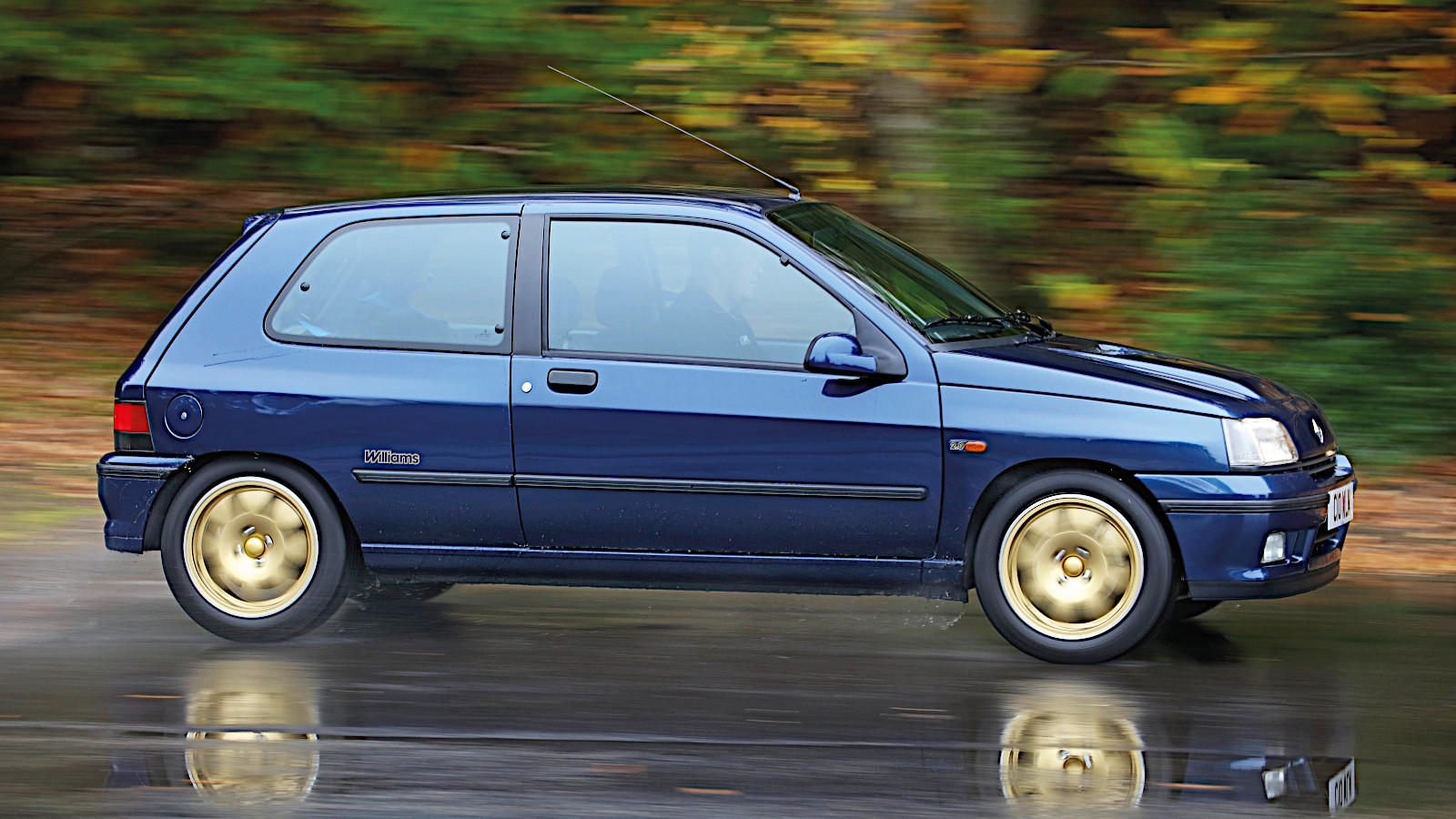
A longitudinal drivetrain would by now have seemed absurd in any car of this class, so every Clio of this and the second generation (launched in 1998) had a transverse layout, even in the Williams (pictured) and later Renaultsport high-performance derivatives.
24. 1992 Renault Safrane
Unlike the 25, which it replaced as Renault’s flagship model, the Safrane had its engine mounted sideways across the front axle.
Technology had now reached the point where using this layout with either front- or four-wheel drive was not a problem, and there was a manual gearbox that could cope with the twin-turbo, 3-litre, V6 engine added to the range in 1994.
As impressive as this sounds, customer interest in the Biturbo was so muted that Renault felt the need to build only 806 examples, which reflected a more general lack of enthusiasm for the Safrane line-up as a whole.
Only around 310,000 Safranes of any kind were manufactured, compared with more than double that number of 25s.
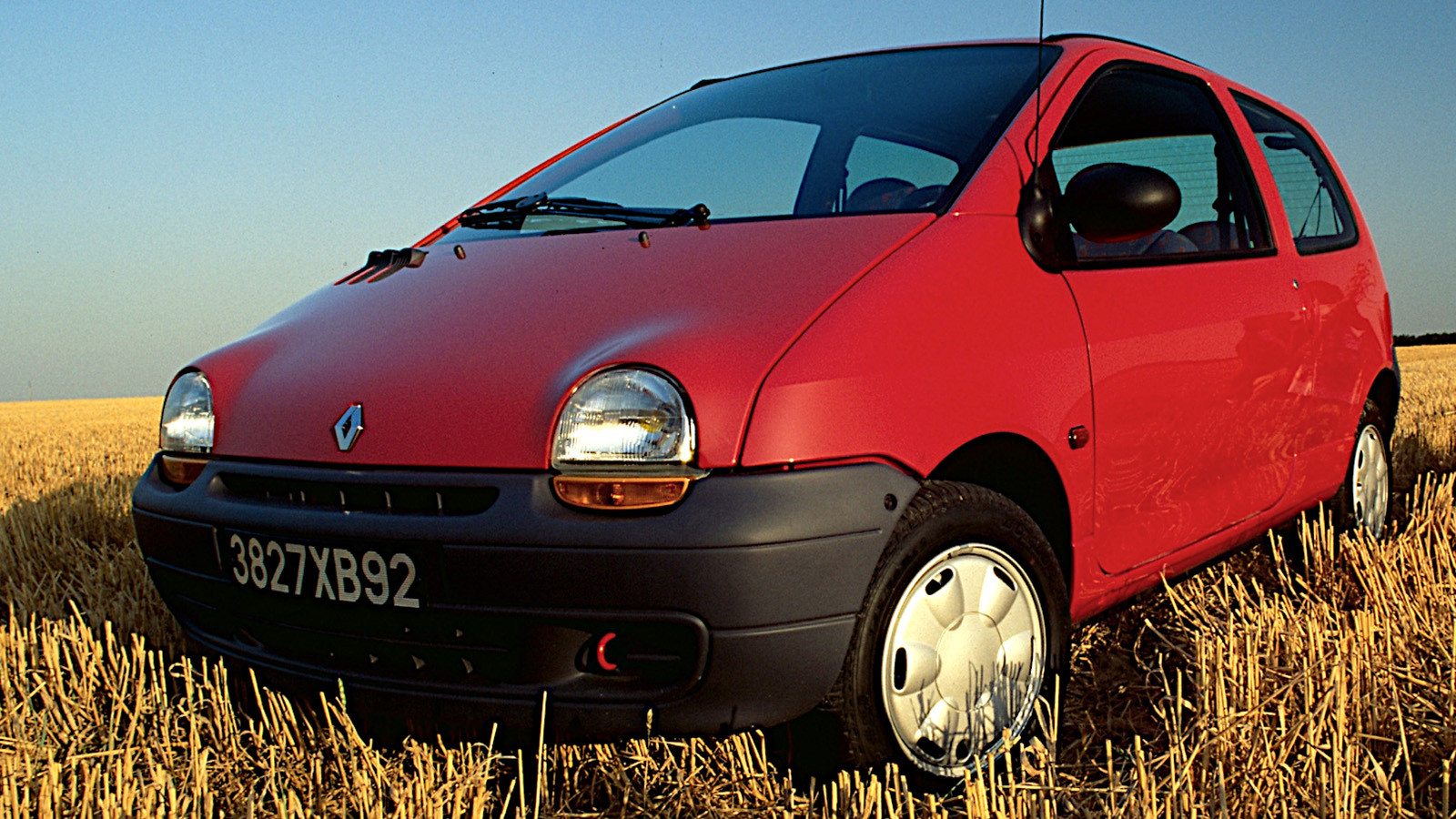
25. 1993 Renault Twingo
Utterly modern though it may have been in other ways, the first-generation Renault Twingo combined the one-box body design of the Espace (introduced in 1984), the Cléon-Fonte engine (1962) and the stark simplicity of the 4 (1961).
A transverse engine was the only possible option in a car with such a short nose, and this was also the reason why it was initially powered by the Cléon-Fonte, because a more modern motor of suitable dimensions would not become available until 1996.
Customer choice in the early days was limited to picking one of four colours, but Renault soon realised the benefit of offering special editions such as the Benetton, Elite, Kenzo and Perrier.
Very much unlike the Safrane, the Twingo was a big hit, and Renault saw no need to replace it until it had been in production for 14 years.
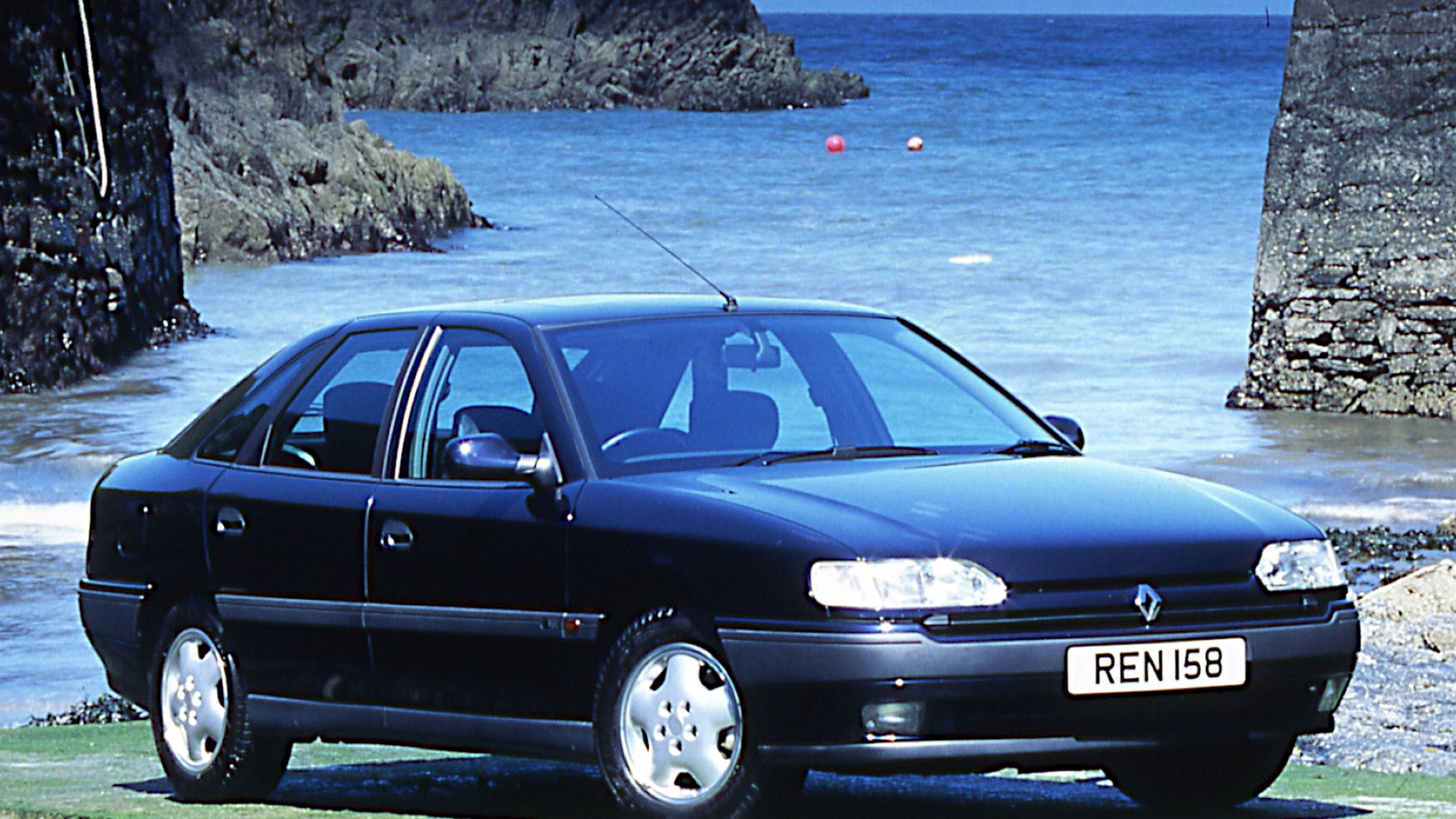
26. 1994 Renault Laguna
With less angular bodywork than its predecessor, the 21, and the lack of a saloon body style (leaving only a hatchback and an estate), the Renault Laguna demonstrated how motoring tastes had evolved in less than a decade.
Equally, this new model demonstrated how technological advances had made choosing a drivetrain layout easier than before.
The Laguna was available with a considerable variety of engines, from a modest 1.6-litre ‘four’ to a far stronger, 3-litre V6, and Renault could now pair all of them with gearboxes suitable for a transverse application, rather than having to offer both front-to-rear and side-to-side arrangements (as it had in the 21) depending on which engine was fitted.
27. 1995 Renault Mégane
Looking a little like a downsized Laguna, the Mégane carried over a lot of the technology from the 19 it replaced.
Transversely mounted engines driving the front wheels were therefore the norm, though body styles varied considerably.
The regular Mégane was a five-door hatchback, but there was also a four-door saloon, a two-door coupé (available in some cases with the engine and gearbox used in the Clio Williams, and later deployed at the opposite end of the Spider) and a convertible.
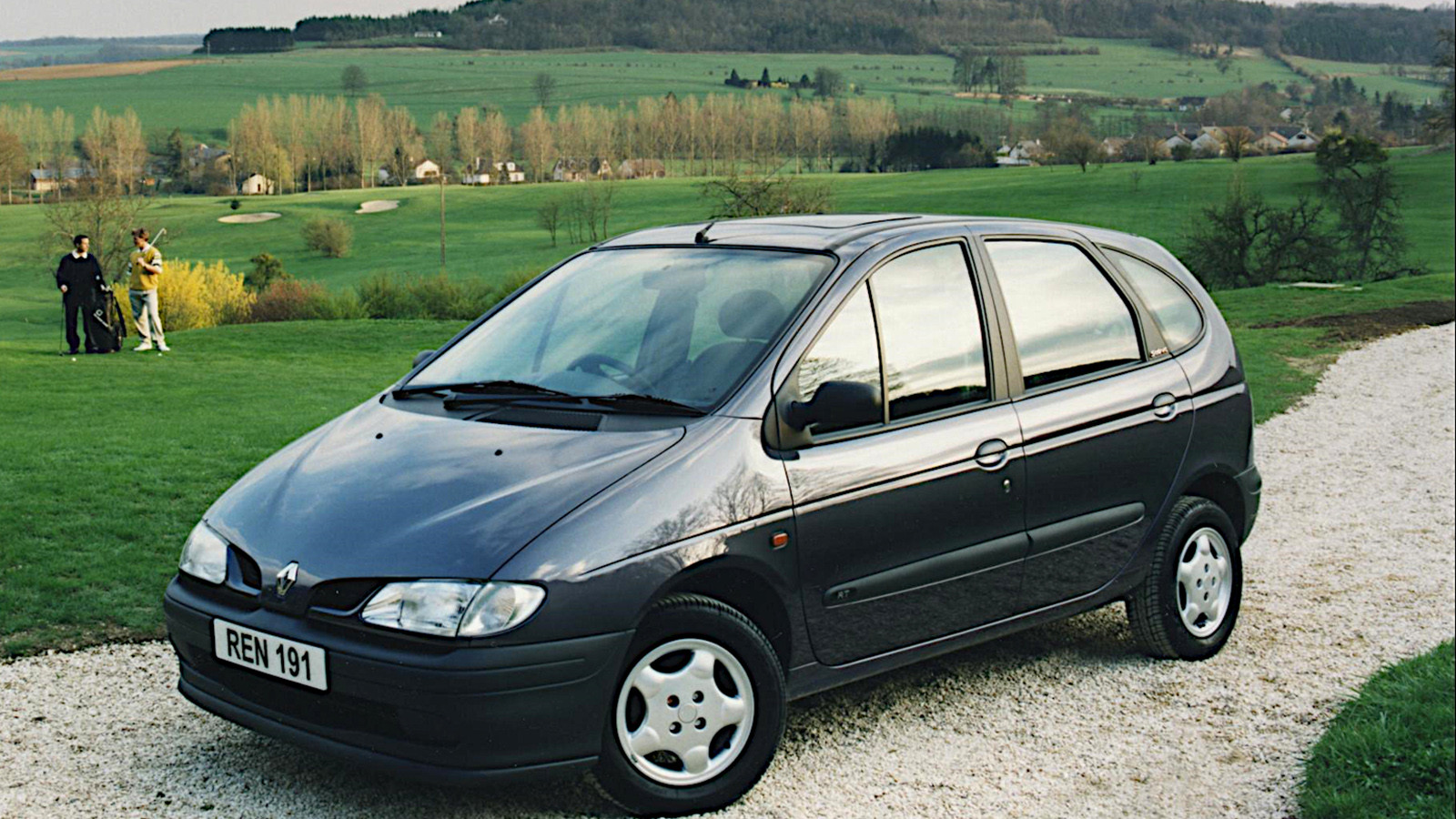
On top of all that, Renault also offered a one-box MPV version called the Mégane Scenic (pictured), which was later eased away from the rest of the range and became a model in its own right.
We hope you enjoyed reading. Please click the ‘Follow’ button for more super stories from Classic & Sports Car.