
Reach for the sky
Gullwing doors are more difficult to design and build than conventional ones and, unless the car manufacturer has taken steps to address this, they might be a cause for regret if you land upside down in a model fitted with them.
Despite these apparent disadvantages, they have been a subject of fascination for more than 80 years, and here we’re listing 24 cars fitted with them (including both production vehicles and concepts) in alphabetical order.
To be clear, we’re using a strict definition of ‘gullwing’ doors, namely that they are hinged only on the roof.
Other upward-opening designs have been tried, namely scissor and butterfly doors, but they are not gullwings, so they don’t have a place here.
1. Apollo Intensa Emozione
Apollo is a revival of the marque formerly known as Gumpert, which, as we’ll see later, already had experience of gullwing doors.
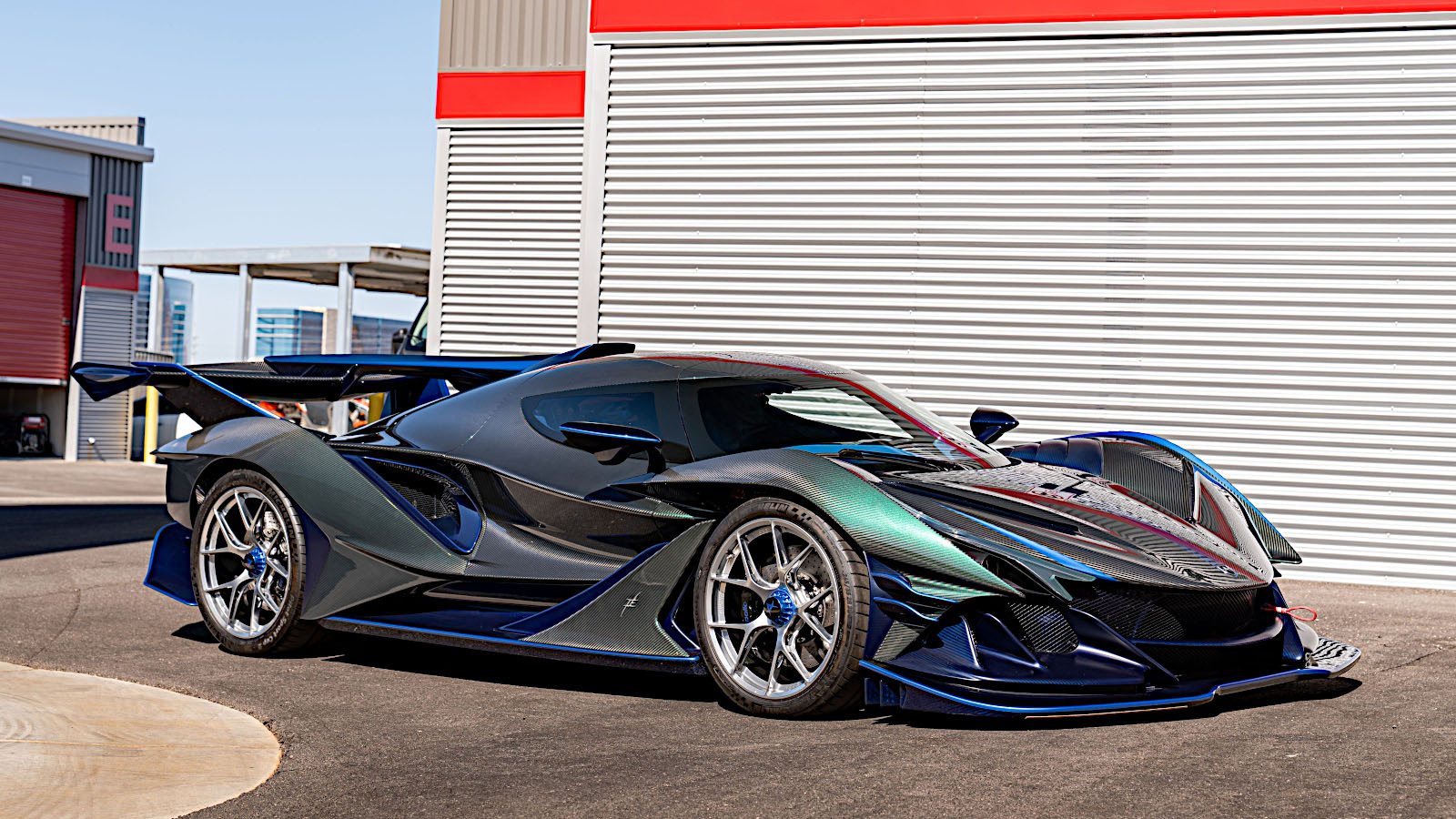
The Intensa Emozione – a name that even people who don’t speak the language will probably guess is the Italian for ‘intense emotion’ – was a limited-production, two-door coupé with a mid-mounted, Ferrari-derived, 6.3-litre V12 engine producing around 770bhp and driving the rear wheels through a six-speed sequential transmission.
Each of the 10 examples built when production got under way in 2019 (the one pictured here being known as the Ocean Dragon) was different in several ways from the other nine, but the basic structure was identical in every instance – and they all had gullwing doors.
2. Aston Martin Bulldog
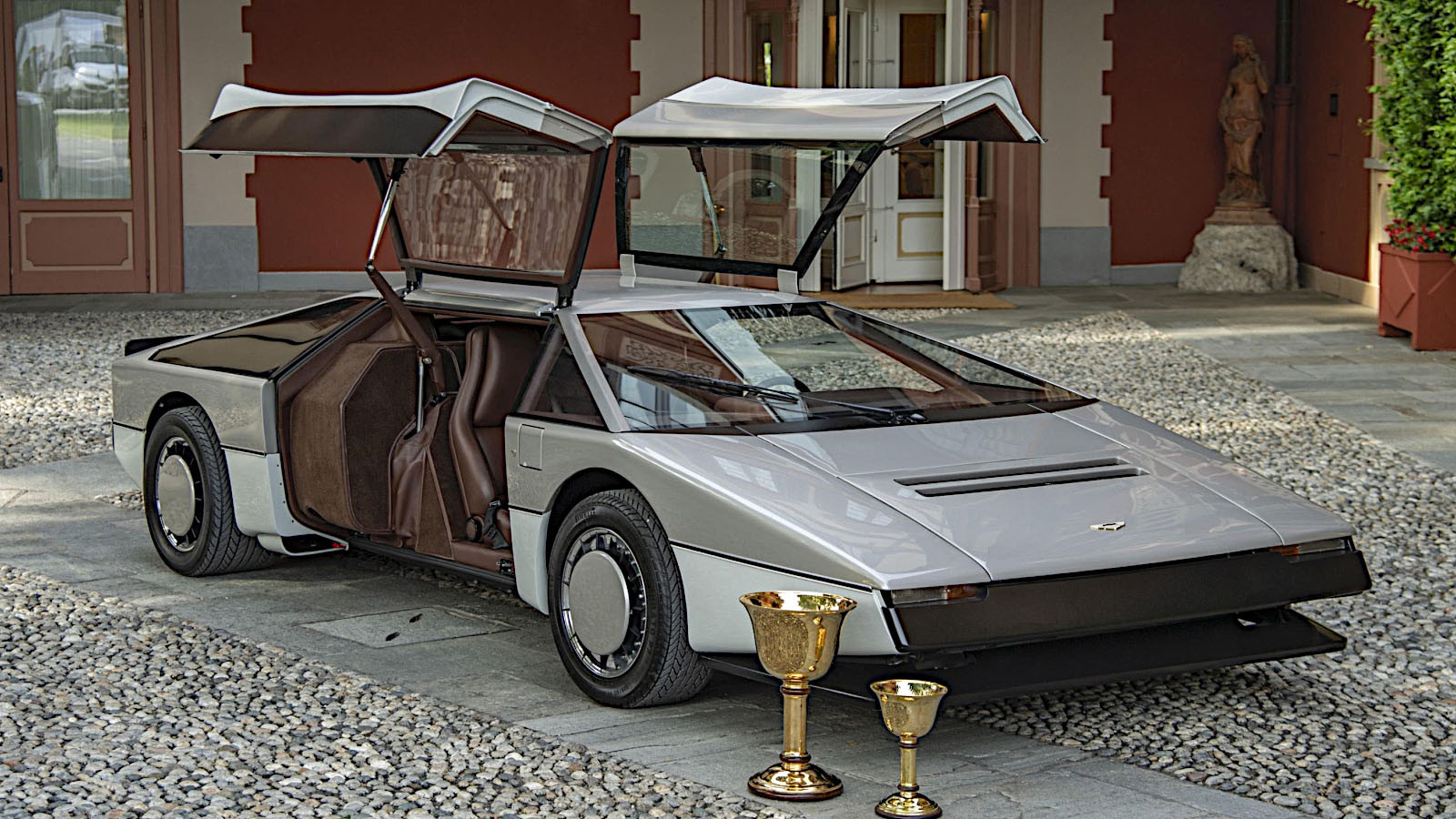
With a twin-turbocharged, 5.3-litre, V8 engine, gullwing doors and a characteristically sharp-edged body design by William Towns, the Aston Martin Bulldog was intended to be capable of travelling at in excess of 200mph – a tall order for any car built in 1979.
The speed was not achieved before the project was cancelled, but the one and only Bulldog (pictured here after winning the Coppa d’Oro award at the 2022 Concorso d’Eleganza Villa d’Este) finally reached its target on 6 June 2023 at Campbeltown Airport in the Kintyre region of west Scotland.
This was partly possible because Campbeltown’s main runway is 3049m (10,003ft), making it the longest of any public airport in the UK.
The venue was previously the site of a successful attempt on the British rooftop ski speed record, though in that case neither the Bulldog, nor indeed any car with gullwing doors, was involved.
3. Aston Martin Valkyrie
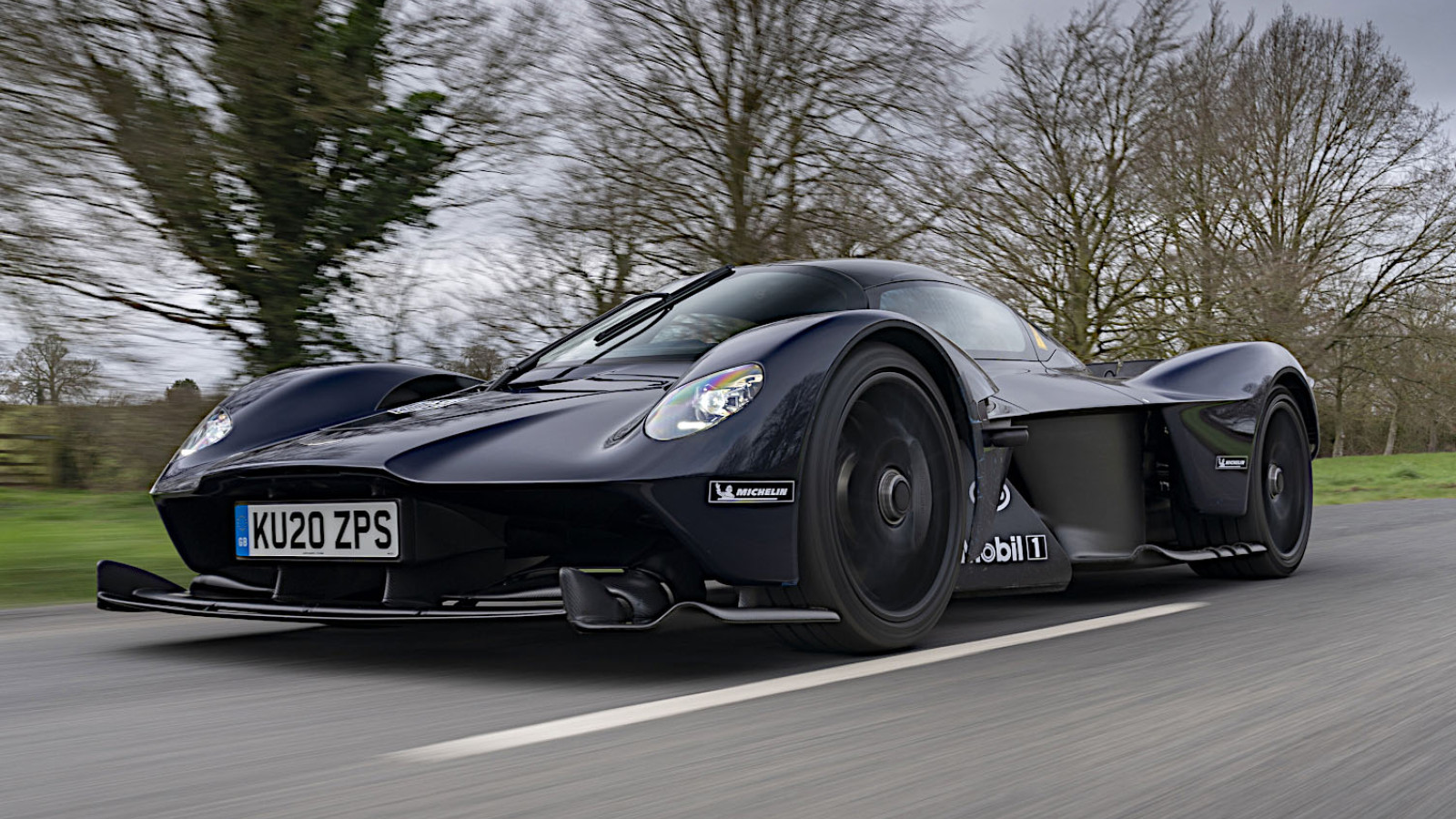
Co-developed with Red Bull Racing Advanced Technology, the Valkyrie (named after figures in Norse mythology) is, according to the Aston Martin website, ‘as close as possible to being a Formula One car without being restricted to the track’, a reasonable enough claim for a vehicle with a power output of 1140bhp and an overall weight of 1270kg (2800lb).
In coupé form, it has gullwing doors, but these are impossible on the Spider variant, which does not have a solid roof for the doors to be attached to.
Instead, the Spider’s doors are hinged further forward and lower down, an arrangement known as ‘butterfly’.
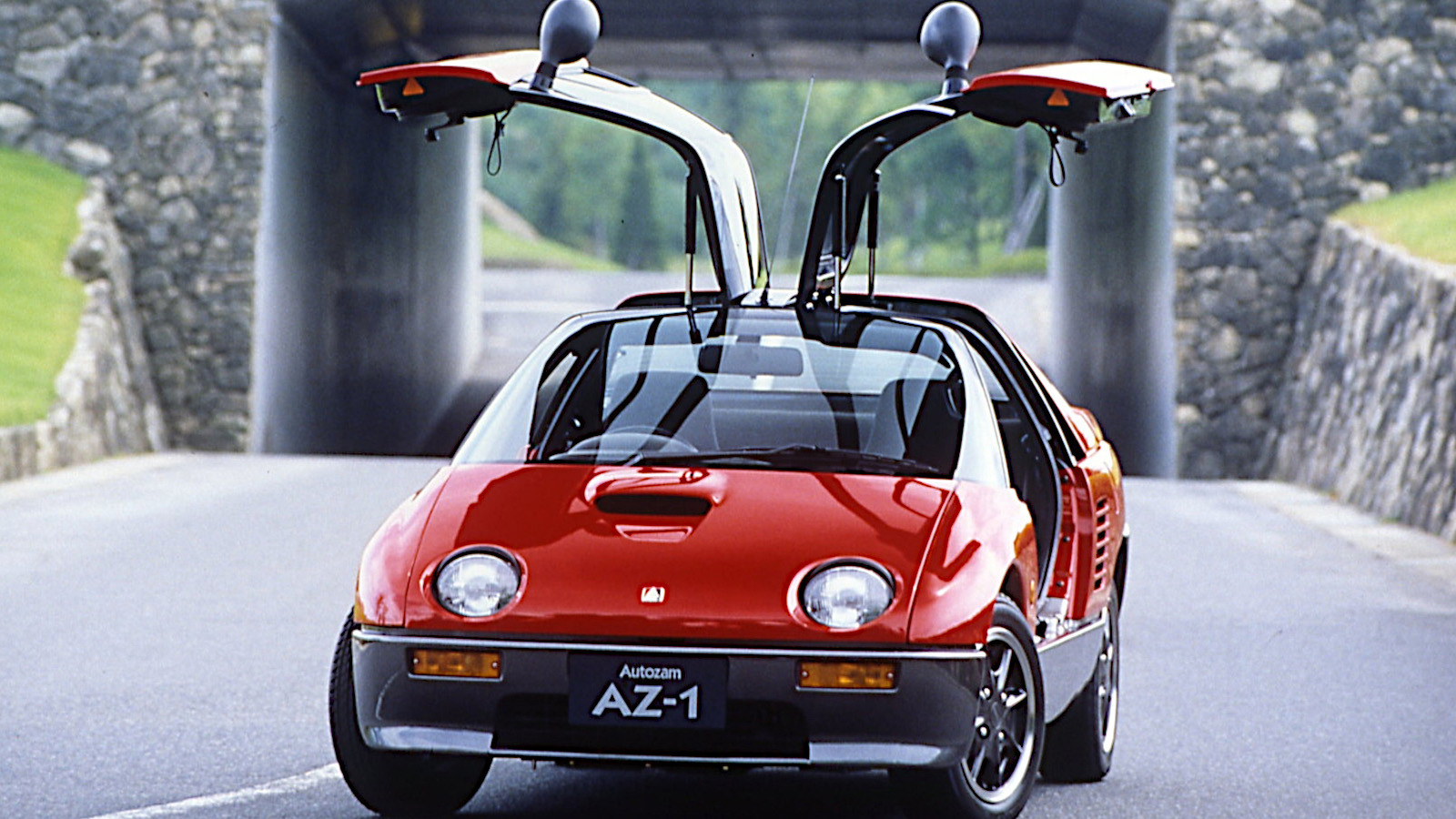
4. Autozam AZ-1
Behind the name Autozam, unfamiliar to most people outside Japan, lies Mazda, which ran it as a separate brand for most of the 1990s.
The AZ-1 was a kei class sports car with a mid-mounted, 659cc, turbocharged, petrol engine produced by Suzuki, the company which began the whole project before passing it on to Mazda.
Introduced in 1992, a year after its close rivals the Honda Beat and the Suzuki Cappuccino, the AZ-1 was unique among the three in having gullwing doors.
By a curious twist of fate, it was also sold as the Suzuki Cara, with minor alterations but the same structure, drivetrain and door arrangement.
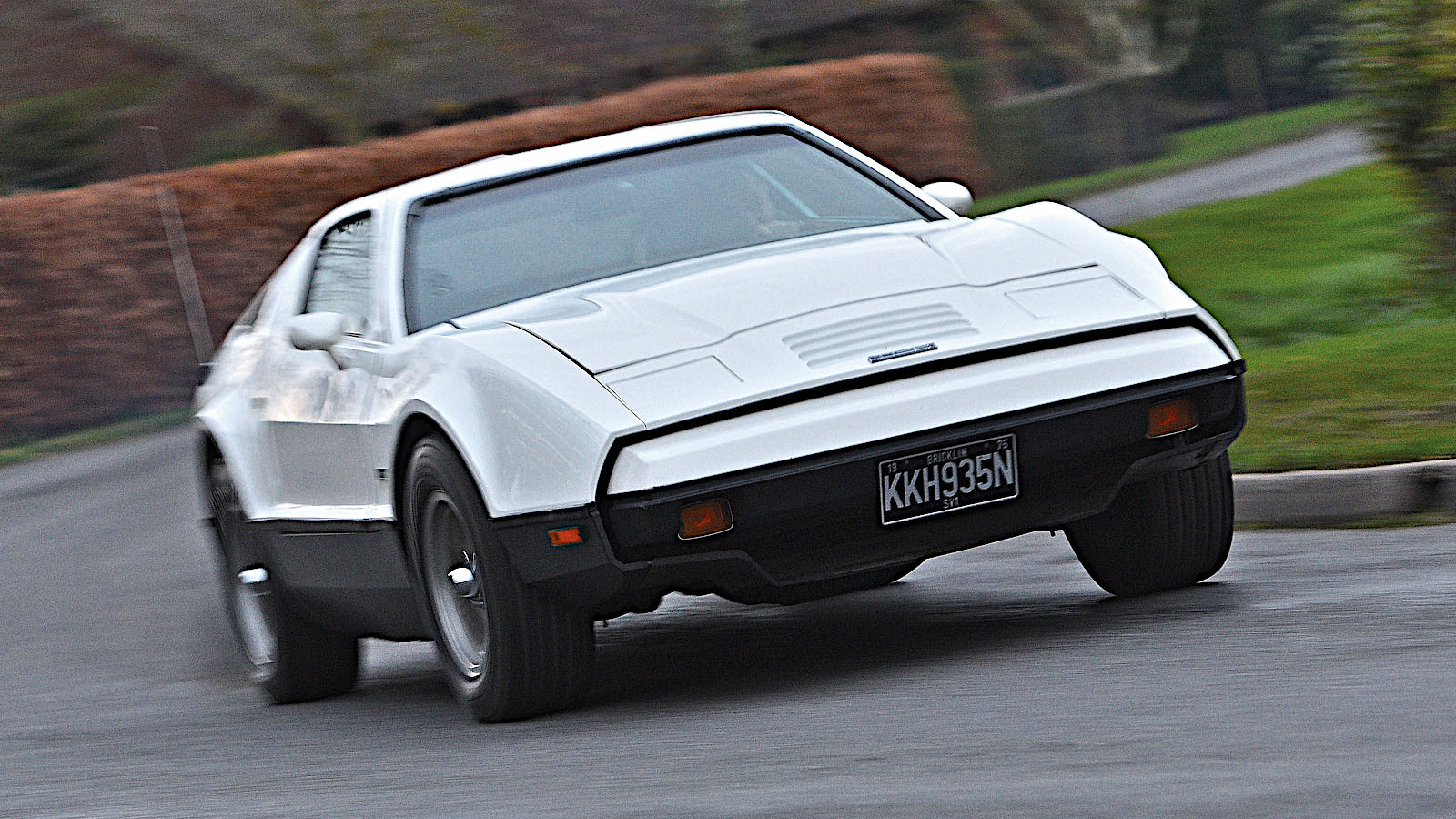
5. Bricklin SV-1
Famous for importing first Subaru 360s and later Yugos to the USA, Malcolm Bricklin also devised the SV-1 sports car (the initials standing for ‘safety vehicle’) which was produced briefly in the mid 1970s.
Manufactured in, and largely financed by, the Canadian province of New Brunswick, the SV-1 featured gullwing doors, an innovative composite material for the bodywork and one of two V8 engines with capacities of just under 6 litres – either AMC or Ford, depending on the model year.
For various reasons, including quality issues, the project soon folded, and fewer than 3000 Bricklin SV-1s are believed to have been assembled from 1974-’76.
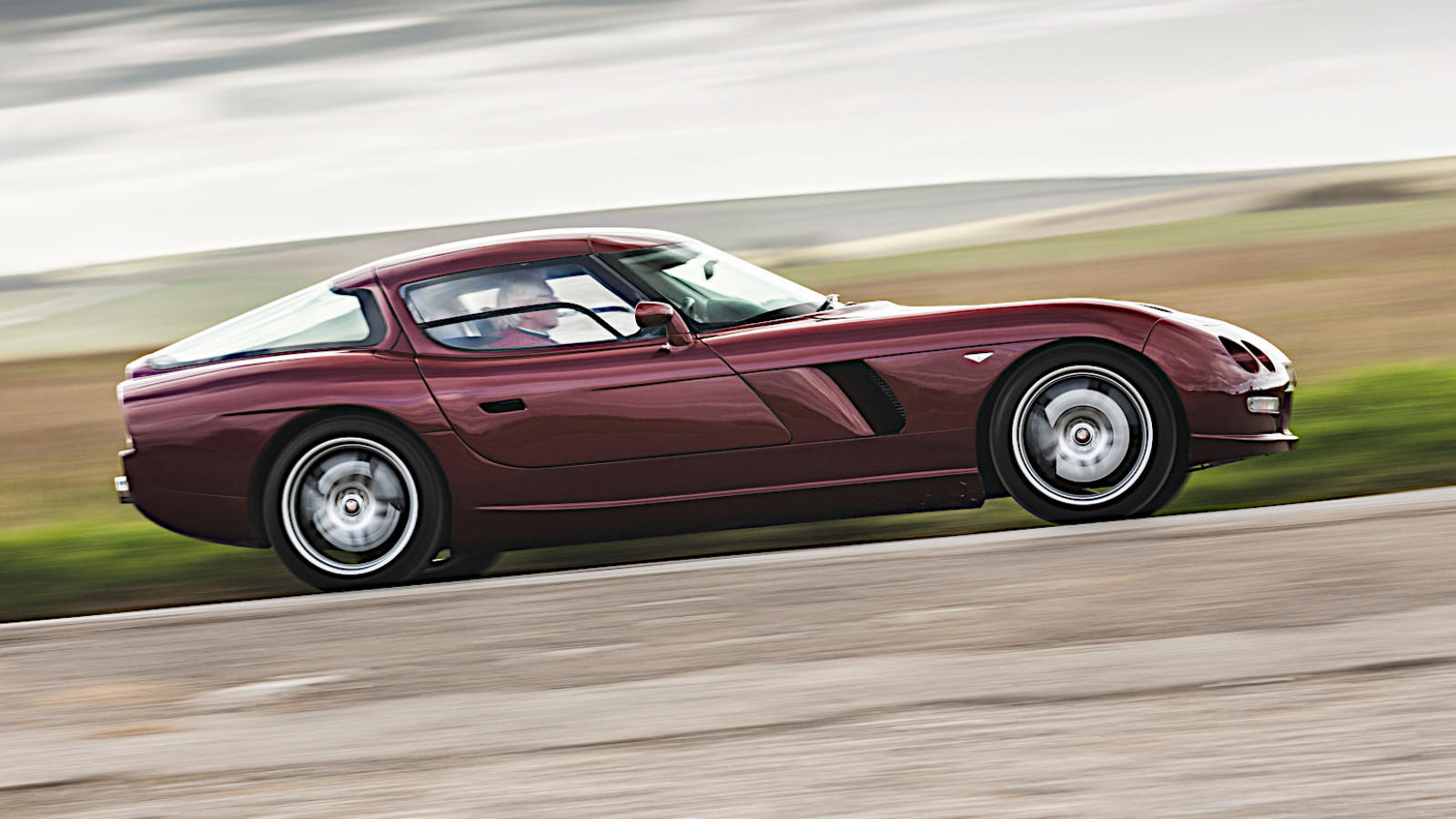
6. Bristol Fighter
The Fighter was one of the last Bristol models still being built when the marque suspended production in 2011.
Its styling was neither classic nor modern, but suggested that this was the sort of thing Bristol would be making in the new century if you extended a line drawn between the cars it had built from the mid 1940s to the early 1970s.
The gullwing doors were a recent development, though, and while using engines supplied by Chrysler had become a matter of tradition for Bristol there was a change in that, rather than a V8, the Fighter was powered by an 8-litre V10 (as used in the Dodge Viper sports car) which allowed it to exceed 200mph.
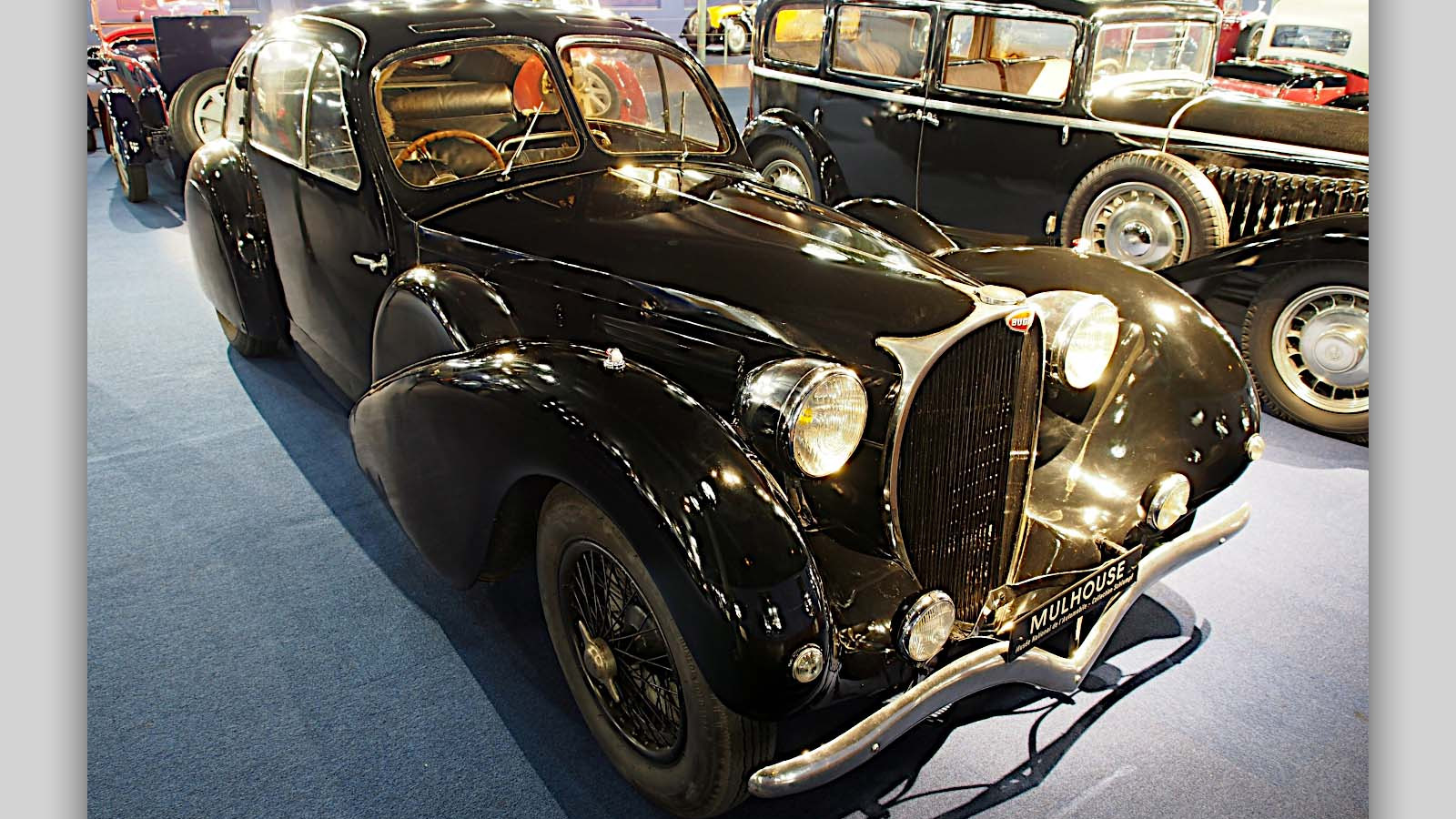
7. Bugatti Type 64
The Type 64 prototype, powered by a 4.4-litre, straight-eight engine, was the last car designed by Ettore Bugatti’s son Jean, who died in a car accident in 1939 at the age of just 30.
More positively, the Type 64 represents a first, because it is believed to be the earliest car ever built with gullwing doors.
There is some confusion about this, since the doors were described in period as being of the papillon, or ‘butterfly’ style, which today means something different.
However, contemporary pictures show that the doors were hinged only at the roof, so they therefore meet the modern definition of ‘gullwing’.
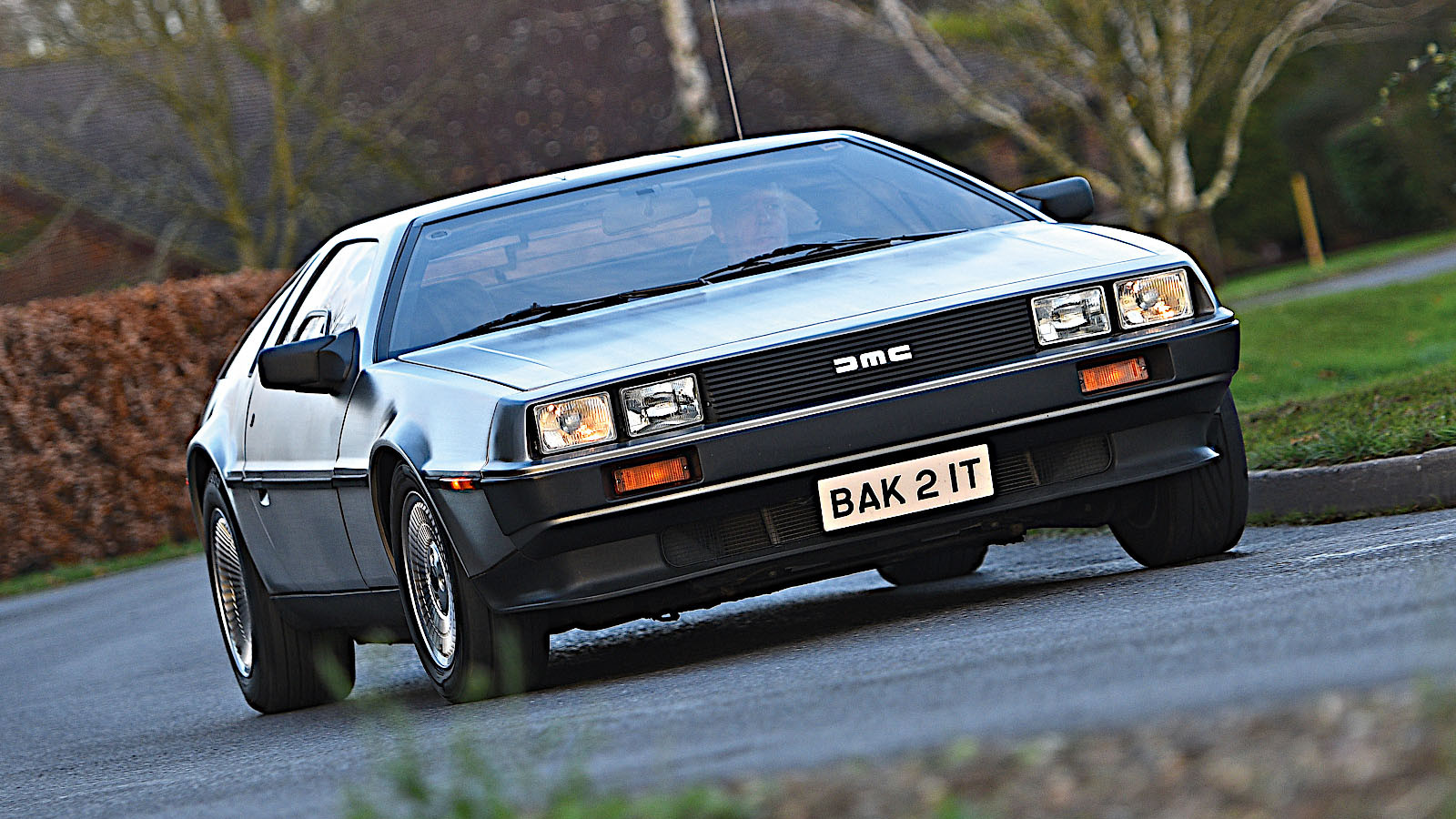
8. De Lorean DMC-12
The only car produced (in Northern Ireland) by the (Detroit-based) De Lorean Motor Company was famous in its day for underwhelming performance in relation to its looks, and for questionable business procedure which led to court cases and prison sentences.
The DMC-12 was built from 1981-’82. However, since the middle of the 1980s it has become one of the best-loved cars in the world thanks to its role as a time machine in the Back to the Future film franchise.
Part of its appeal was its pair of gullwing doors, which made it look even more dramatic and exciting to people with little interest in cars, many of whom might not have been aware that they could once have bought one.
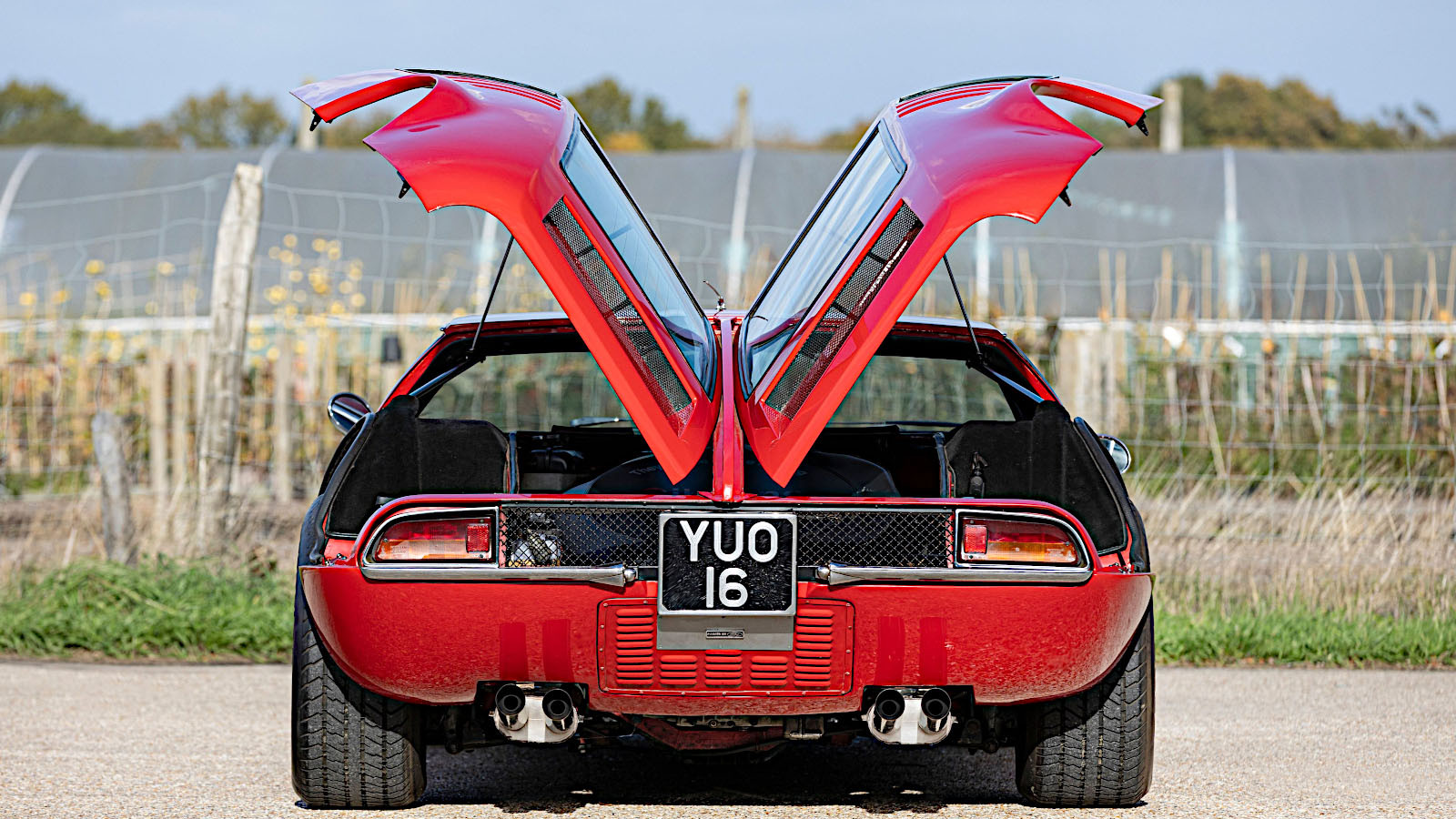
9. De Tomaso Mangusta
The driver and passenger doors of the 1967-’72 De Tomaso Mangusta, a Ghia-designed coupé with a mid-mounted Ford V8 engine, were hinged conventionally at the front, which of course disqualifies them immediately from being called gullwings.
But we didn’t say that gullwing doors were only there to allow people to get in and out of the car, did we? No, we did not.
In this case, the gullwings extended from the rear of the passenger compartment to the end of the tail, and provided access to the engine, spare wheel, battery and luggage compartment.
This idea was not transferred to the Mangusta’s successor, the Pantera, which had a much longer production life and was regarded as being less challenging to drive.
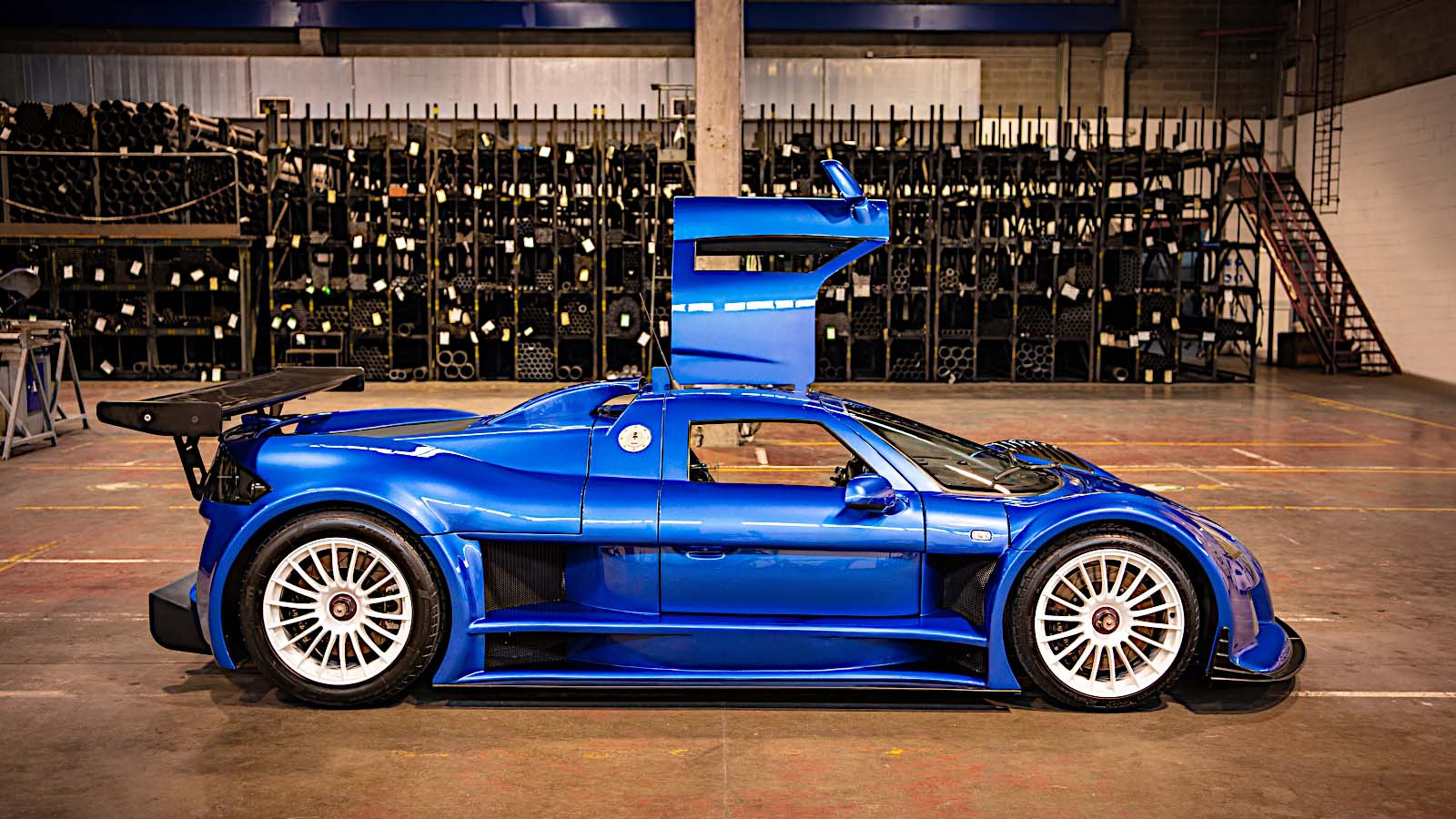
10. Gumpert Apollo
The ancestor of the Apollo Intensa Emozione mentioned earlier was the Gumpert Apollo, conceived by Audi engineer Roland Gumpert.
Fast and expensive, but not necessarily a first choice for luxurious cruising, the Apollo could not be faulted for access.
As well as gullwing doors, it had a detachable front end and a rear cover which hinged forwards from roof level to reveal, among other things, a twin-turbocharged, 4.2-litre, Audi V8 engine whose output varied between about 640bhp and 790bhp, depending on which specification was chosen by the customer.
Production of the Apollo was suspended when the company was liquidated in 2013, though it was reconstituted three years later.
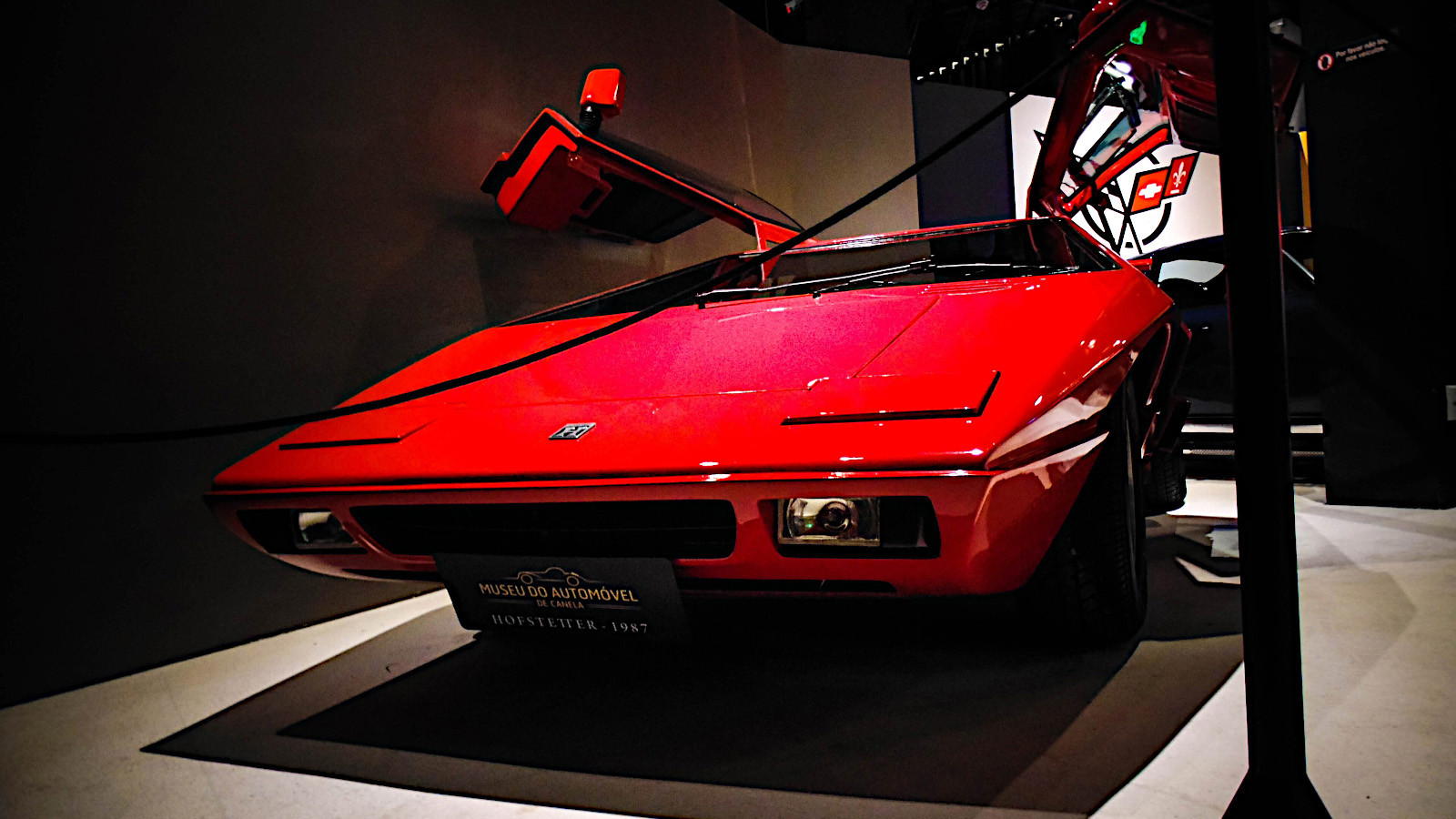
11. Hofstetter Turbo
The Turbo was a spectacular attempt by Mário Richard Hofstetter to create a Brazilian mid-engined sports car in the 1980s.
Some of the parts were supplied by other manufacturers, the engine, for example, being a four-cylinder Volkswagen unit with a turbocharger added.
The chassis, however, was Hofstetter’s own, as was a body reputedly inspired by earlier European concepts and featuring gullwing doors.
The Turbo was never planned to be a high-volume model, with intended annual production (and hoped-for sales) reported to be in the region of 30 cars.
Even this was impossible to achieve, and although the Turbo was on the market for several years no more than 20 appear to have found customers.
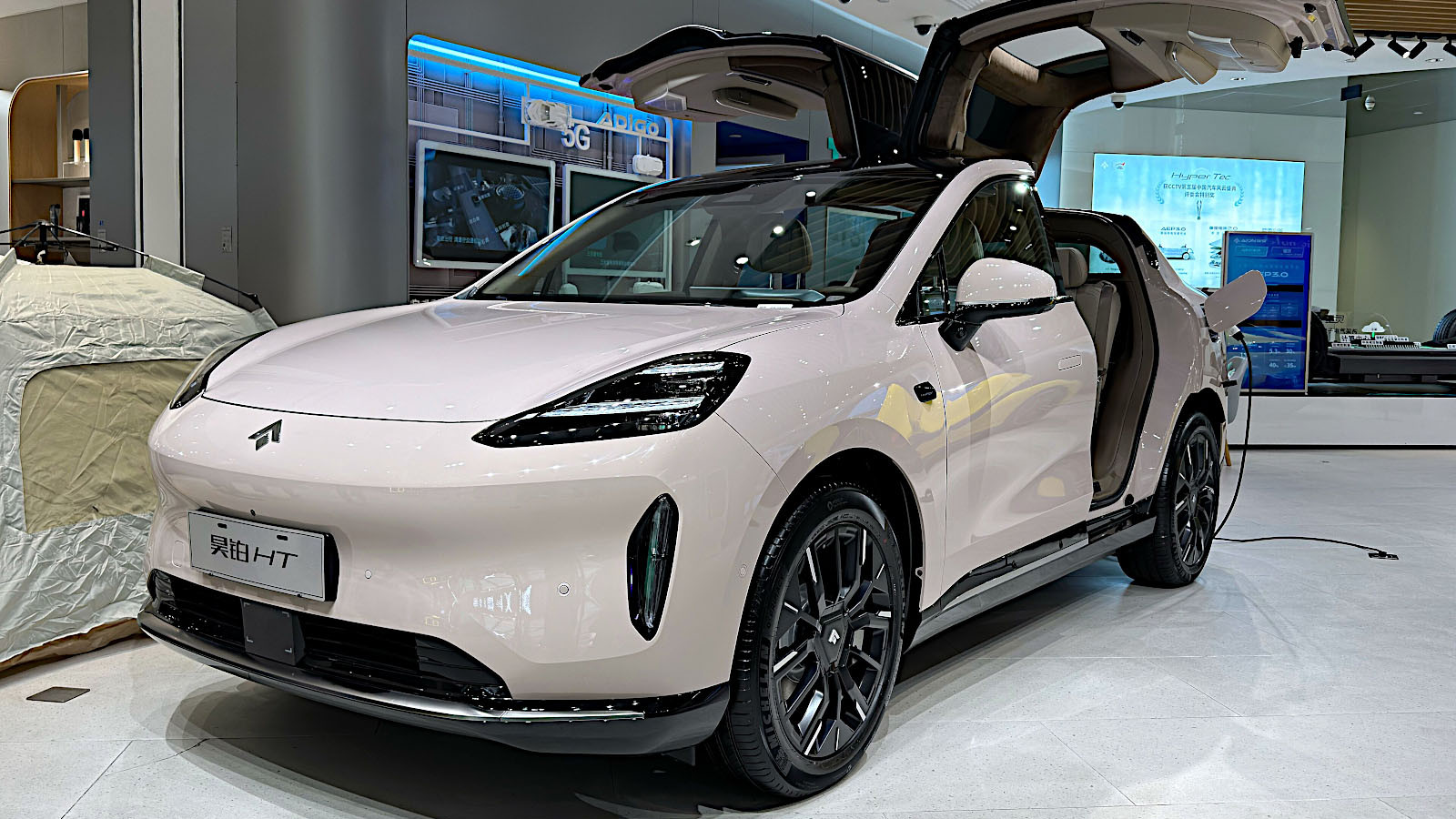
12. Hyptec HT
Known from its launch in 2022 as Hyper, this Chinese marque’s name was changed to Hyptec by its owner GAC Aion two years later.
The all-electric HT SUV, introduced in 2023, was its third model, following the exceptionally powerful SSR and the more restrained GT saloon.
At the front, both the SSR and the GT had scissor doors (which, as we know, are not the same as gullwings, even though both types open upwards), but for the HT the designers adopted the far more conventional approach of hinging the doors from the front pillars.
For the rear, however, they used gullwing doors, a new development for a still very young brand.
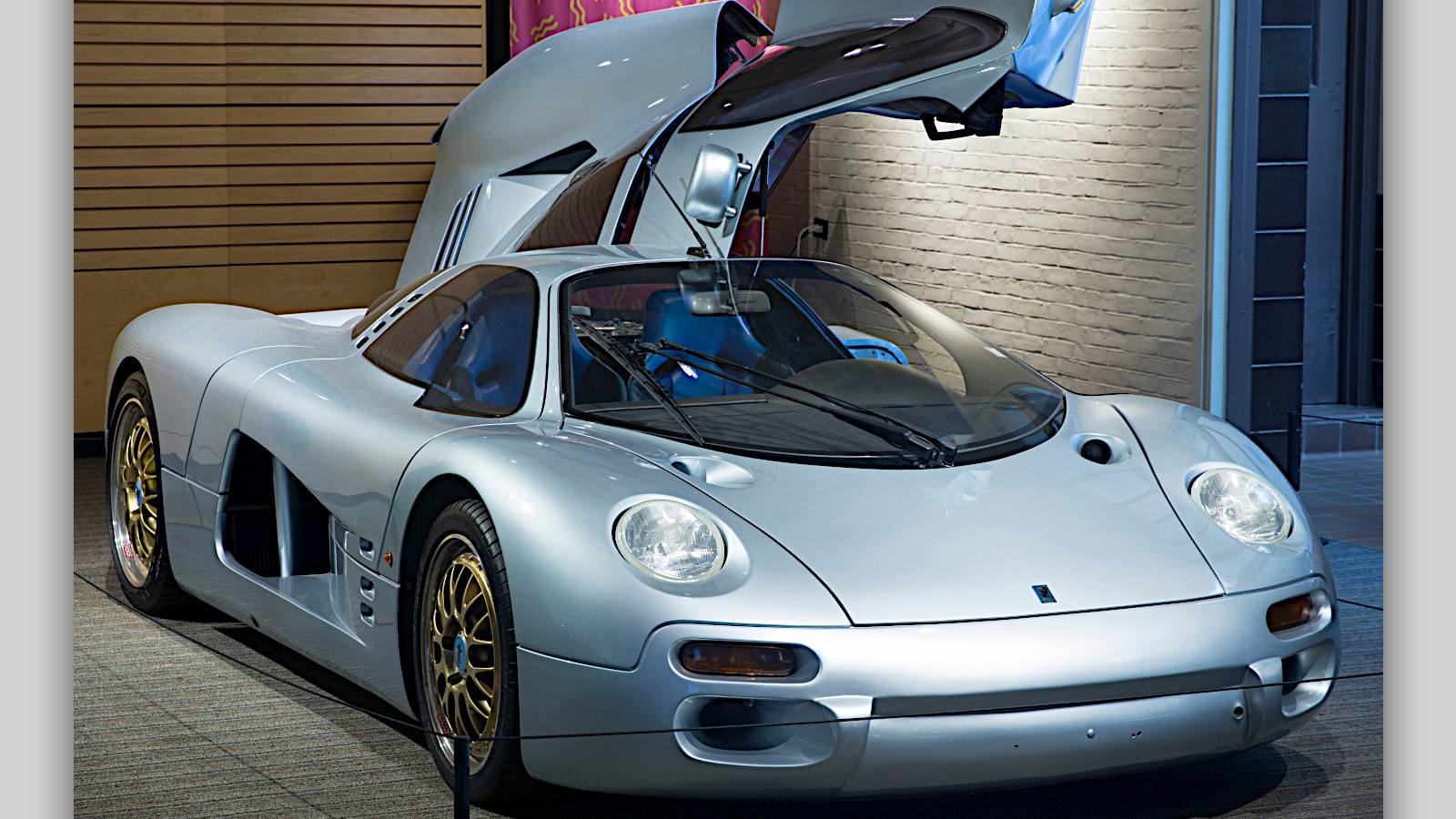
13. Isdera Commendatore 112i
The Commendatore 112i, which was displayed at the Frankfurt motor show in 1993 but never went into production, was unusual even by the standards of cars with gullwing doors, due to the fact that it had two pairs of them.
The further forward set allowed the driver and passenger to get in and out, while the pair behind gave access, as they had done years before in the De Tomaso Mangusta, to the engine (a 6-litre, Mercedes-Benz M120 V12), the gearbox and the rear suspension.
The car was later given a larger version of the same engine, and was renamed Silver Arrow C112i.
Isdera brought the model name back in 2018 for the all-electric Commendatore GT, which had gullwing passenger doors, like its predecessor, but a conventional rear hatch.
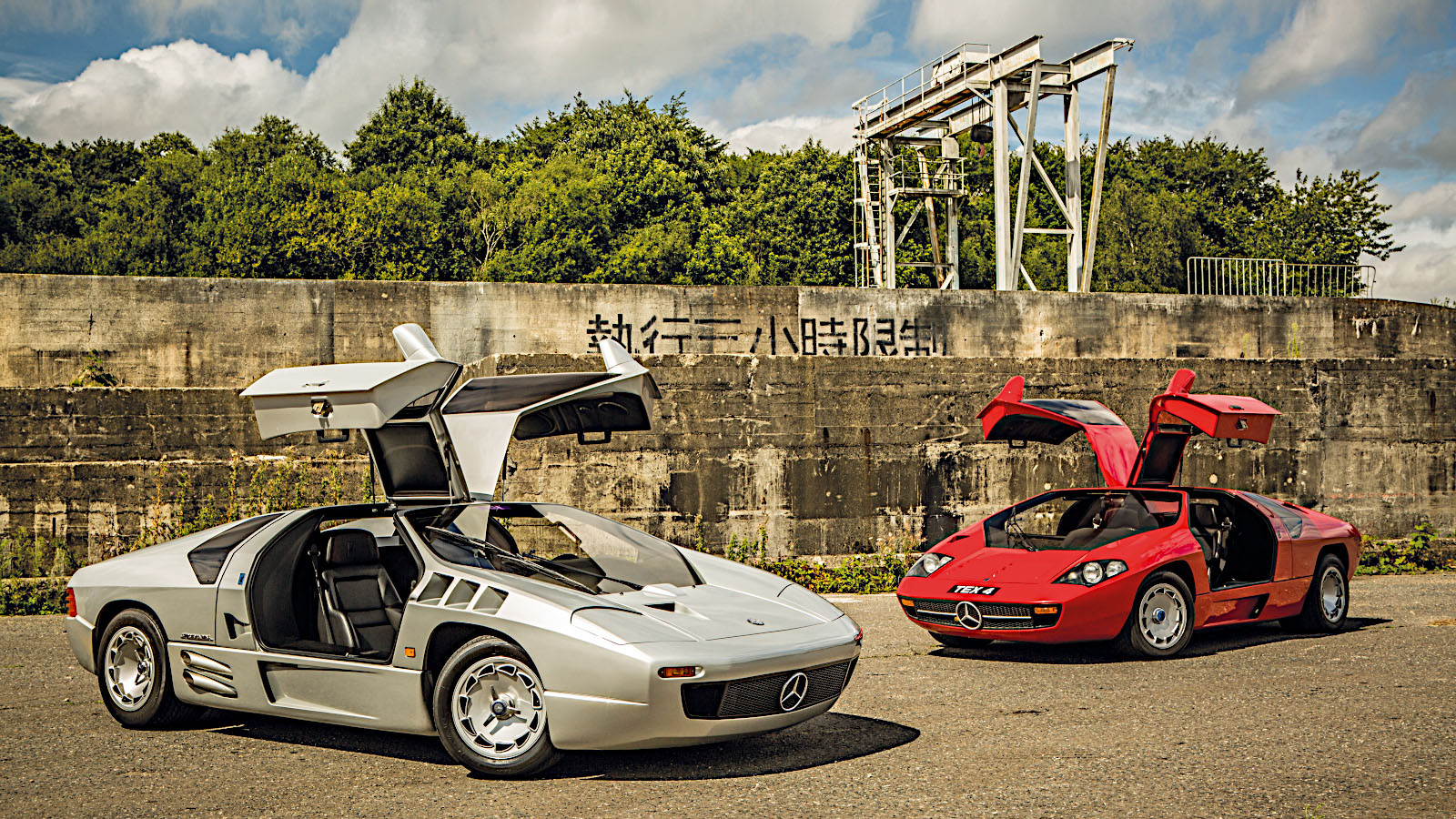
14. Isdera Imperator 108i
Isdera’s first model was derived from the CW311, itself inspired by the series of Mercedes-Benz C111 concepts.
Gullwing doors had been a feature of the C111s, and they were carried through to the Imperator 108i, both in its initial (pictured here on the right) and facelifted (left) versions, the latter having a curvier shape and pop-up headlights.
Every example had a Mercedes-Benz V8 engine mounted ahead of the rear axle, though the capacity could be anything from 5 to 6 litres.
Capable, Isdera said, of being driven at 175mph, the Imperator 108i was the marque’s most successful model, with around 30 believed to have been built between 1984 and 1993.
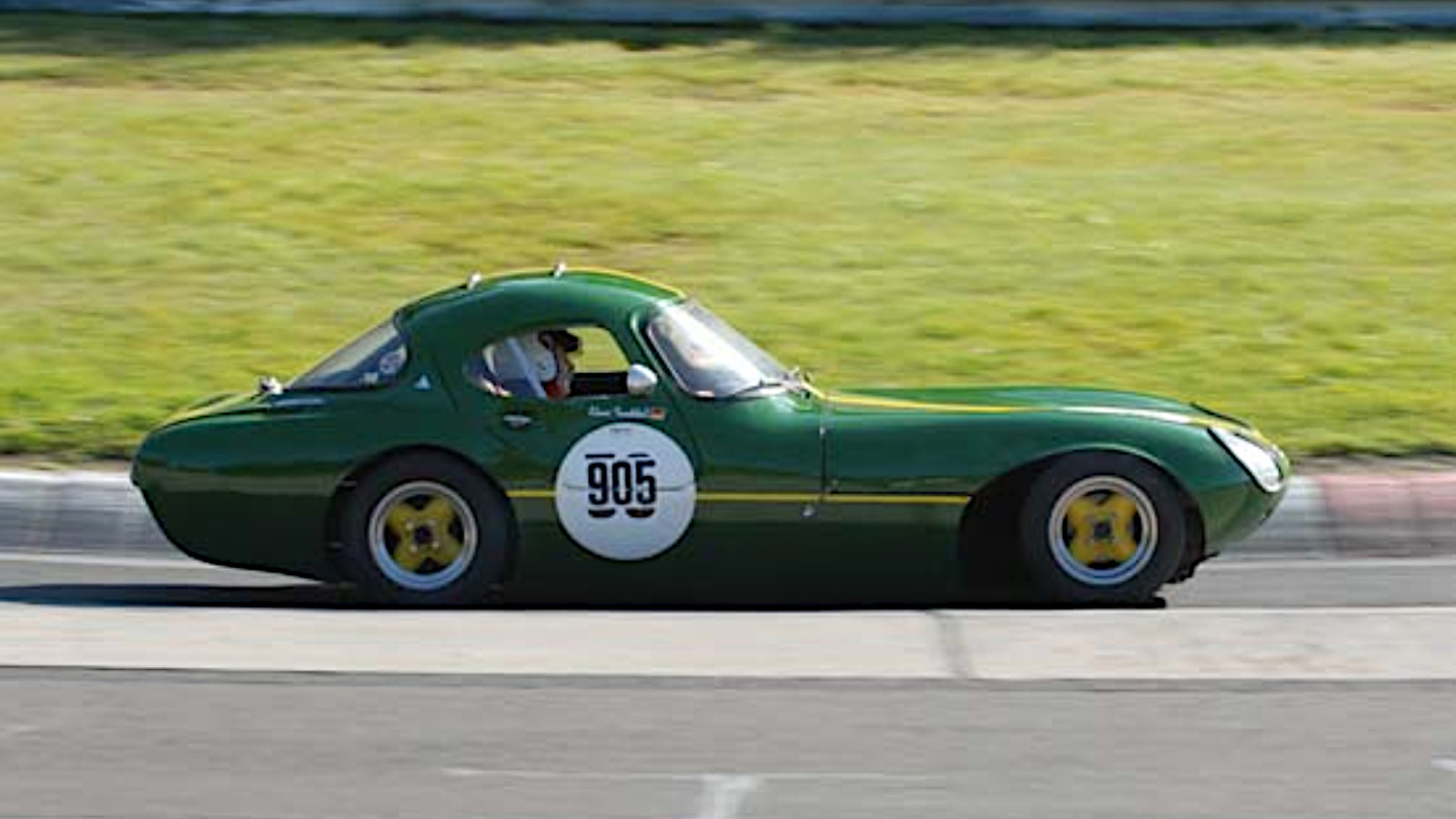
15. Marcos Luton Gullwing
The first car produced by Marcos was known variously as the Xylon (derived from the Greek word for wood, which is what the chassis was made of) or Ugly Duckling (due to its distinctive appearance).
It was primarily a racing car, playing an important role in the early career of Jackie Stewart, and had gullwing doors because space was so limited that it would have been difficult to use anything else.
It was also the basis of the first Marcos intended for road use, named after the town in which it was built and the door layout carried over from the Xylon.
Despite being intended for a wider market, namely people who didn’t necessarily want to race, the Luton Gullwing was in fact very successful in competition during 1961 and 1962.
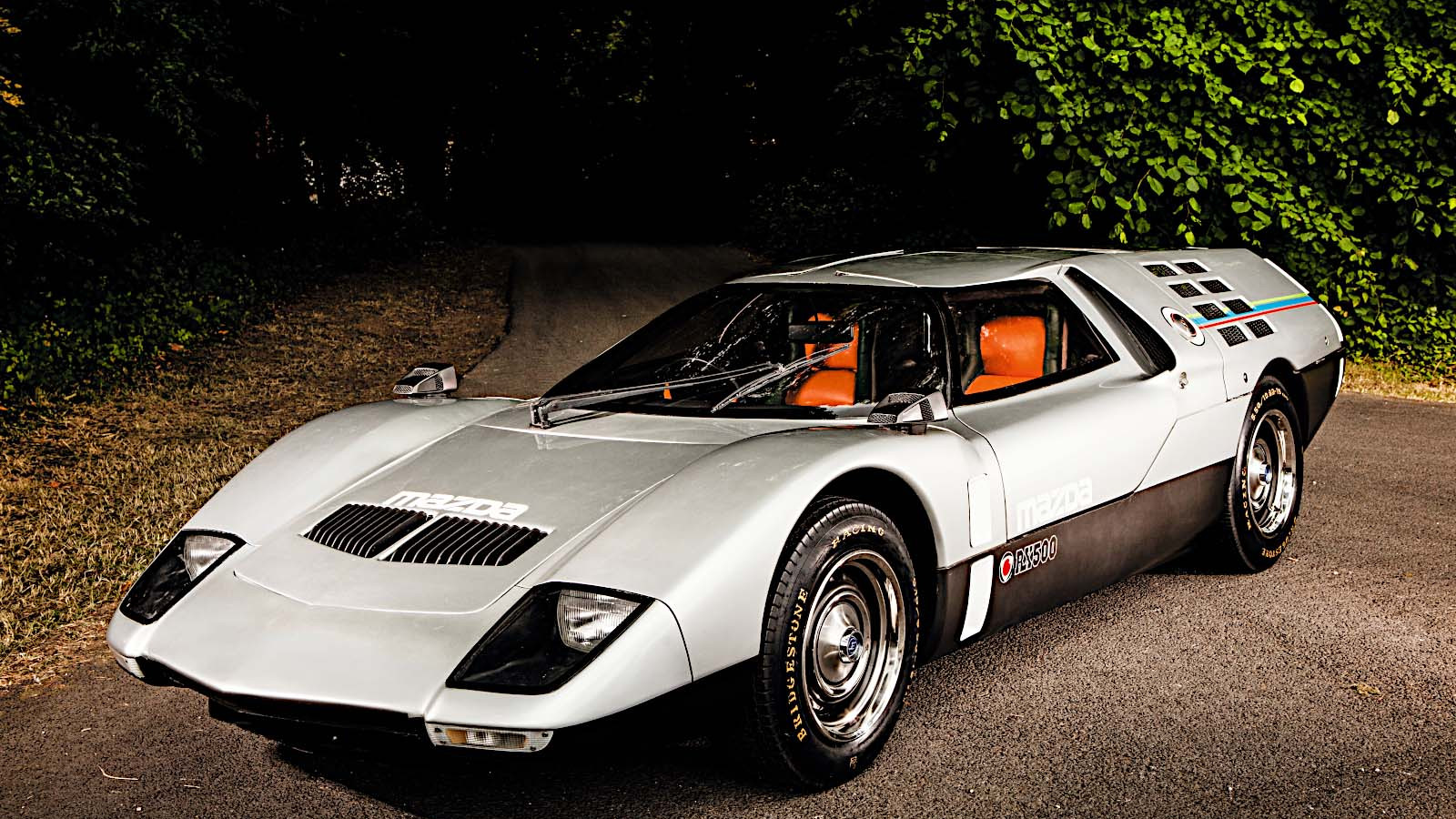
16. Mazda RX500
The RX500 of 1970 was a concept developed mainly to showcase Mazda’s work on safety features, including rear lights whose colours changed according to how the car was being driven, but possibly better known for its remarkable appearance and rotary engine.
For the moment, its doors are what we’re most interested in, and this is yet another case – as with the earlier De Tomaso Mangusta and the later Isdera Commendatore 112i – where gullwings provided access to the rear-mounted engine.
In terms of their passenger doors, the three cars were quite different.
While those on the De Tomaso used conventional hinging, and the Isdera had another pair of gullwings, the Mazda RX500 was fitted with butterfly doors.
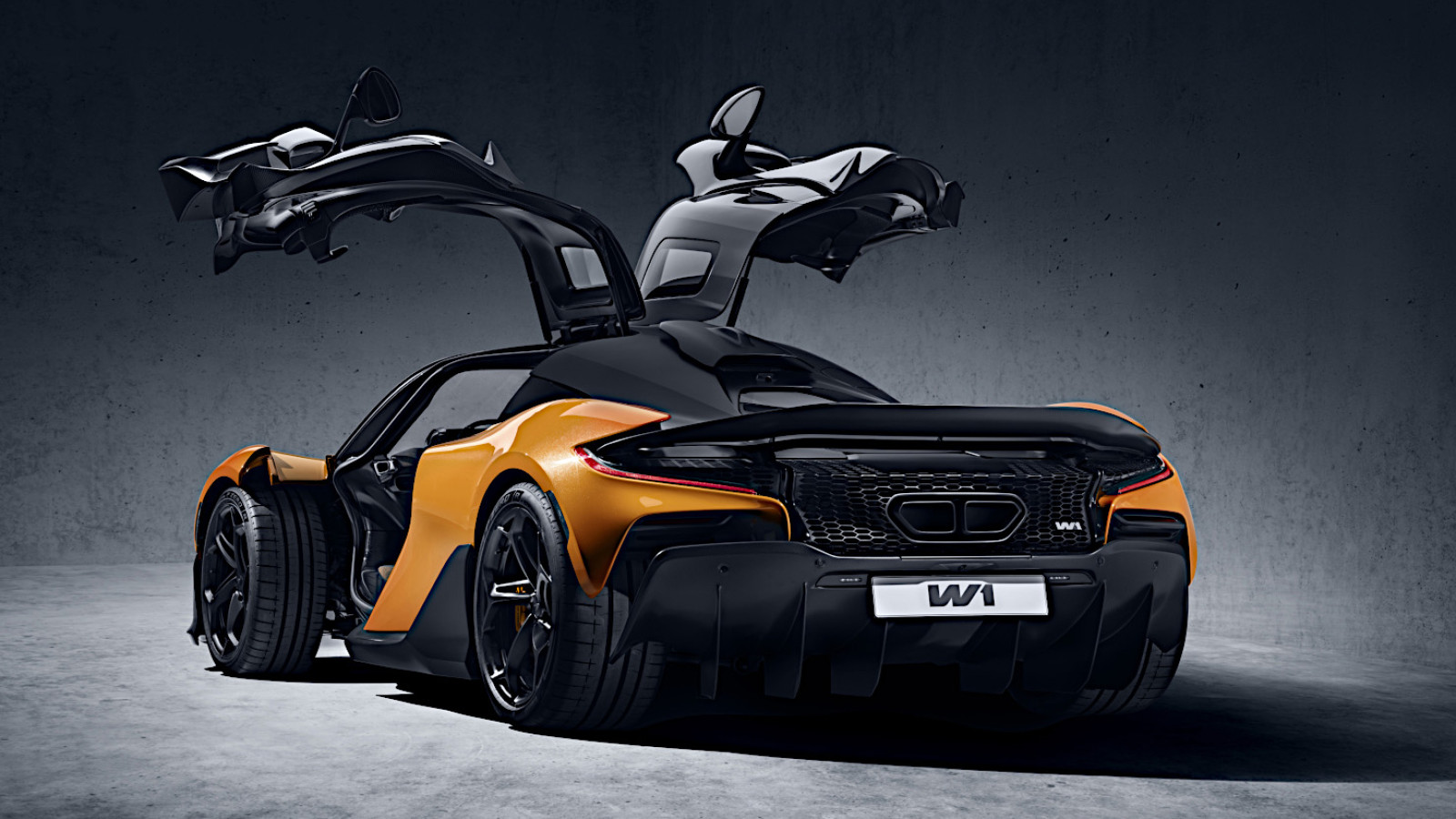
17. McLaren W1
The third of McLaren’s ‘1’ models after the F1 and the P1 was unveiled on 6 October 2024, at which time all 399 of the examples due to be built had already found customers.
And that date was significant, because it was 50 years to the day since the Formula One team won its first World Constructors’ Championship.
Even by McLaren standards, it is a formidable machine, with a combined output of 1258bhp supplied by a 3988cc, twin-turbo, V8 engine and an electric motor.
It also has gullwing doors, which of course is the reason why we’re mentioning it here, though McLaren prefers to use the more technical term ‘anhedral’.
In aeronautical terms, anhedral refers to wings which slope downwards from the centre of the aircraft.
The lower parts of the W1’s doors do indeed slope downwards when fully opened, though attempting to test the aerodynamic effect of this by driving the car with its doors open would be unwise.
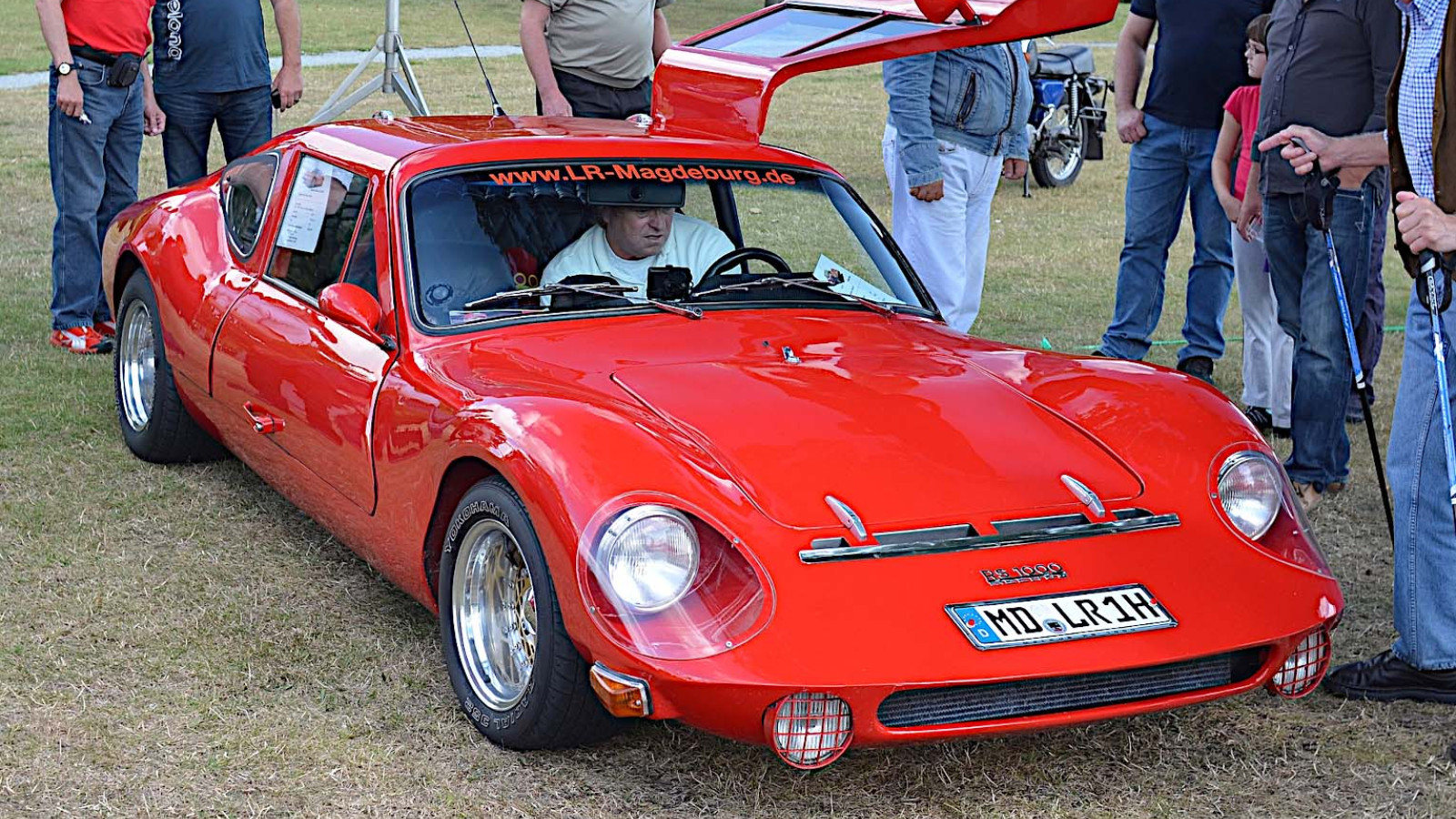
18. Melkus RS 1000
Perhaps you rarely, if ever, associate gullwing doors with two-stroke engines, and might even refuse to believe that they have ever featured in the same car.
If so, welcome to the Melkus RS 1000.
This attractive little coupé, built in what was then the communist state of East Germany, did indeed have gullwing doors, and was powered by a mid-mounted, 1-litre, three-cylinder, two-stroke engine which normally appeared at the front end of Wartburg saloons and estates.
Production began in 1969 and ended 10 years later, after around 100 examples had been manufactured.
Building a car for road use was an unusual diversion for Melkus, which usually specialised in competition-only single-seaters and sports cars.
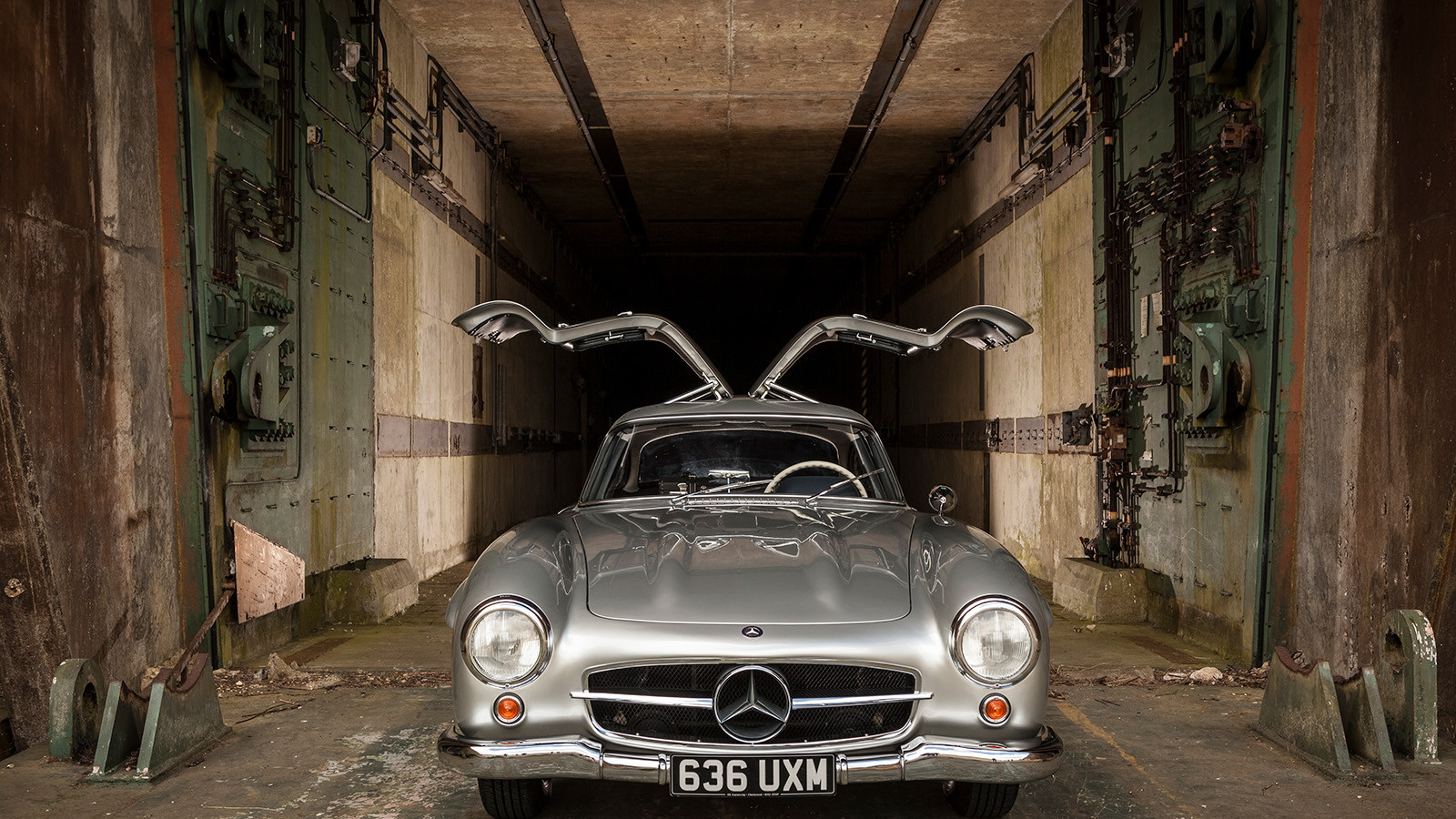
19. Mercedes-Benz 300SL
The first of many roadgoing Mercedes-Benz SL models was created at the suggestion of US importer Max Hoffman and based on an existing sports-racing car.
Its use of gullwing doors was, as they say, iconic, but also a matter of practicality – the spaceframe chassis would have occupied too much of the space uncovered by conventional doors when they were opened.
In all, 1400 300SL coupés were built between August 1954 and March 1957, by which time Mercedes-Benz had adapted the chassis so that conventional doors could now be used.
This made it possible for 300SLs built from 1957 to 1963 to have open bodies, which pleased Hoffman (who felt that a convertible version would be a big seller), but also marked the end of the gullwings, because you can’t attach doors to a car’s roof when it doesn’t have a roof to attach them to.
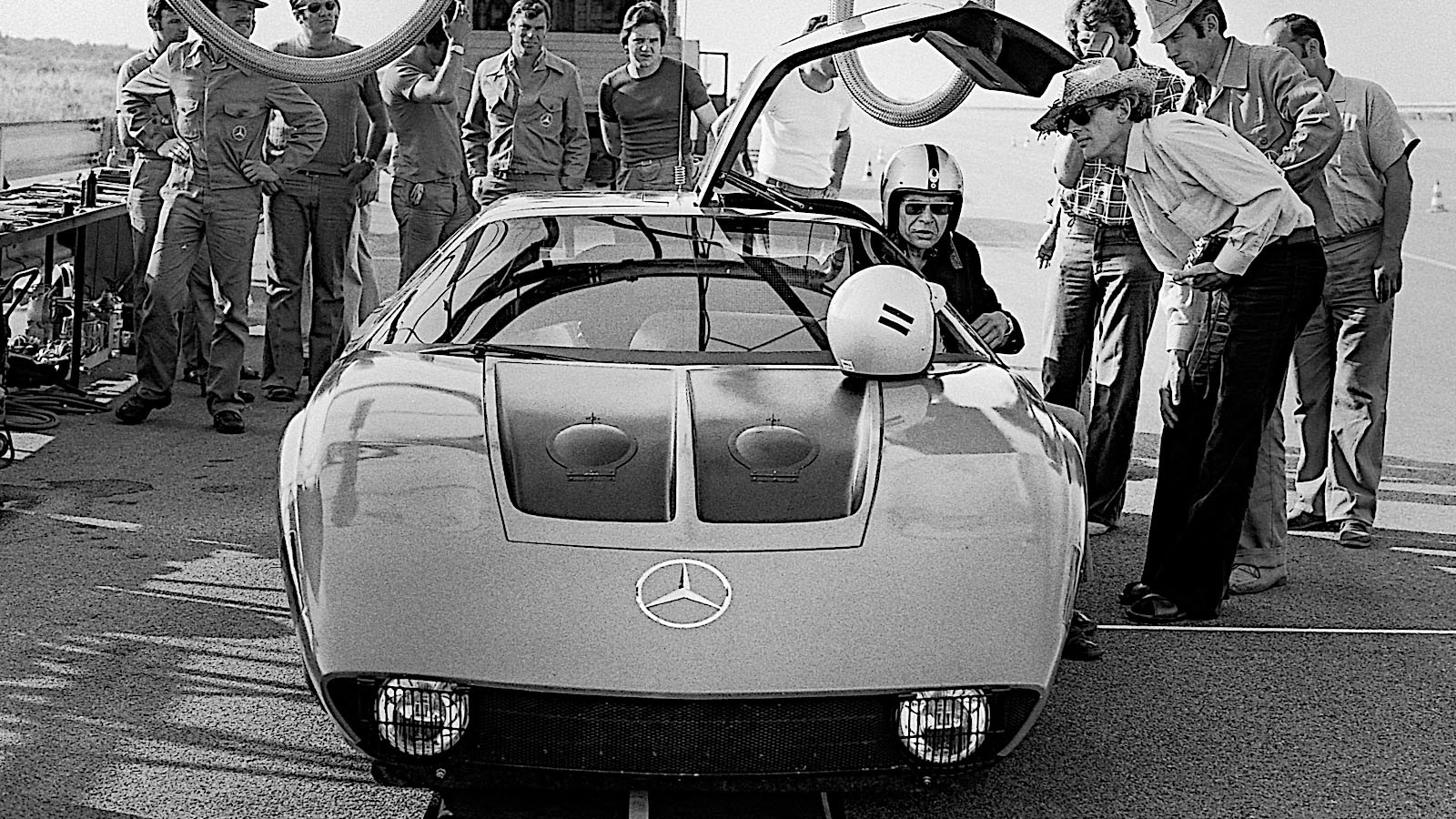
20. Mercedes-Benz C111
The C111 was not a single concept car but a whole series of them built from 1969-’75.
Mercedes-Benz used the basic structure to test a variety of drivetrains.
Several of the cars were powered by rotary engines (excitingly fashionable at the time but soon to be abandoned by most manufacturers apart from Mazda and NSU), though there were also some petrol V8s as well as a five-cylinder, turbocharged diesel.
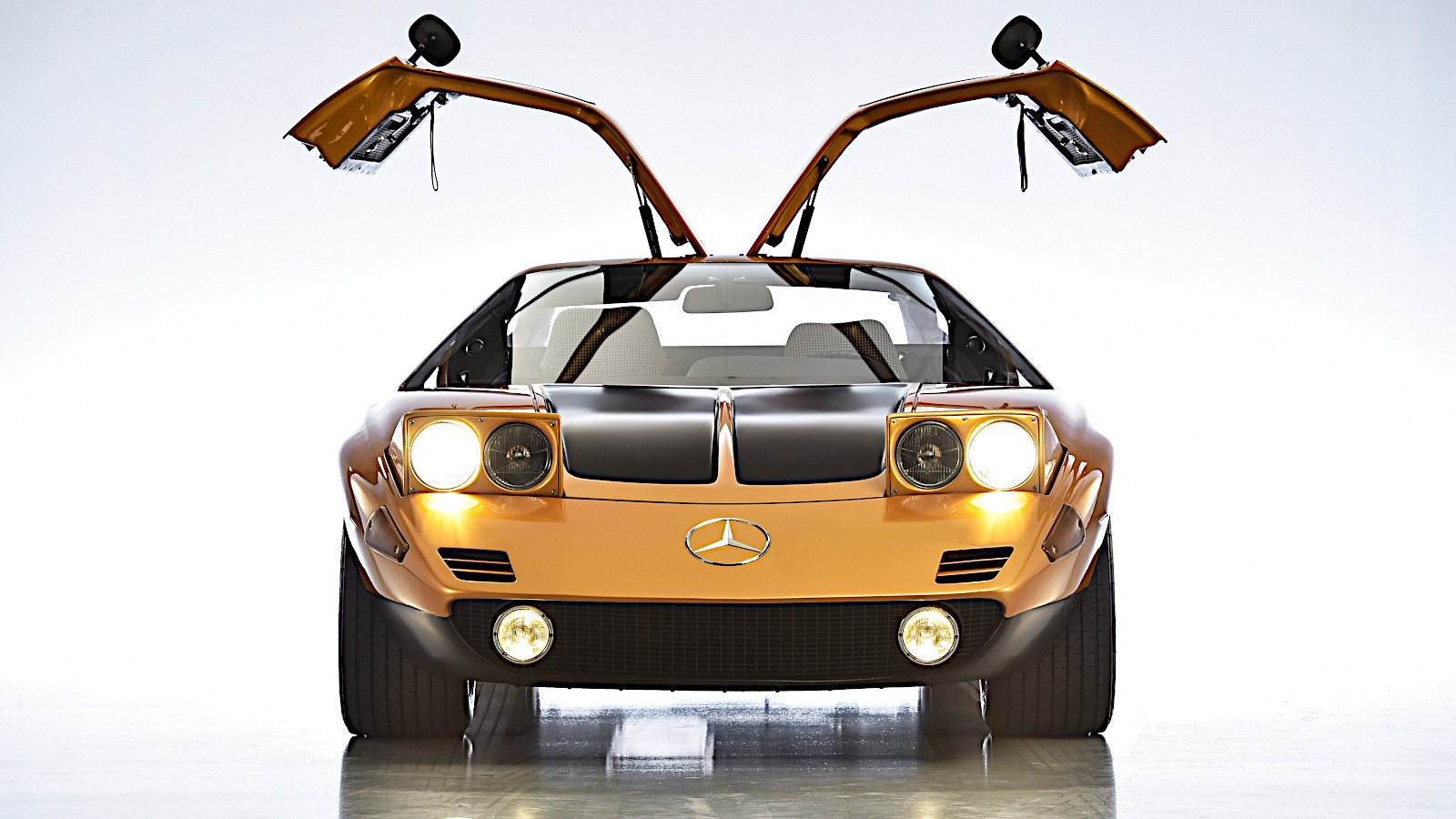
In every case, the engine was mounted just ahead of the rear axle, and another thing all the cars shared was a pair of gullwing doors.
The Mercedes-Benz C111 pictured here is a diesel which averaged 251.798kph (156.460mph) over 10,000km at the Nardò test track in Italy in June 1976.
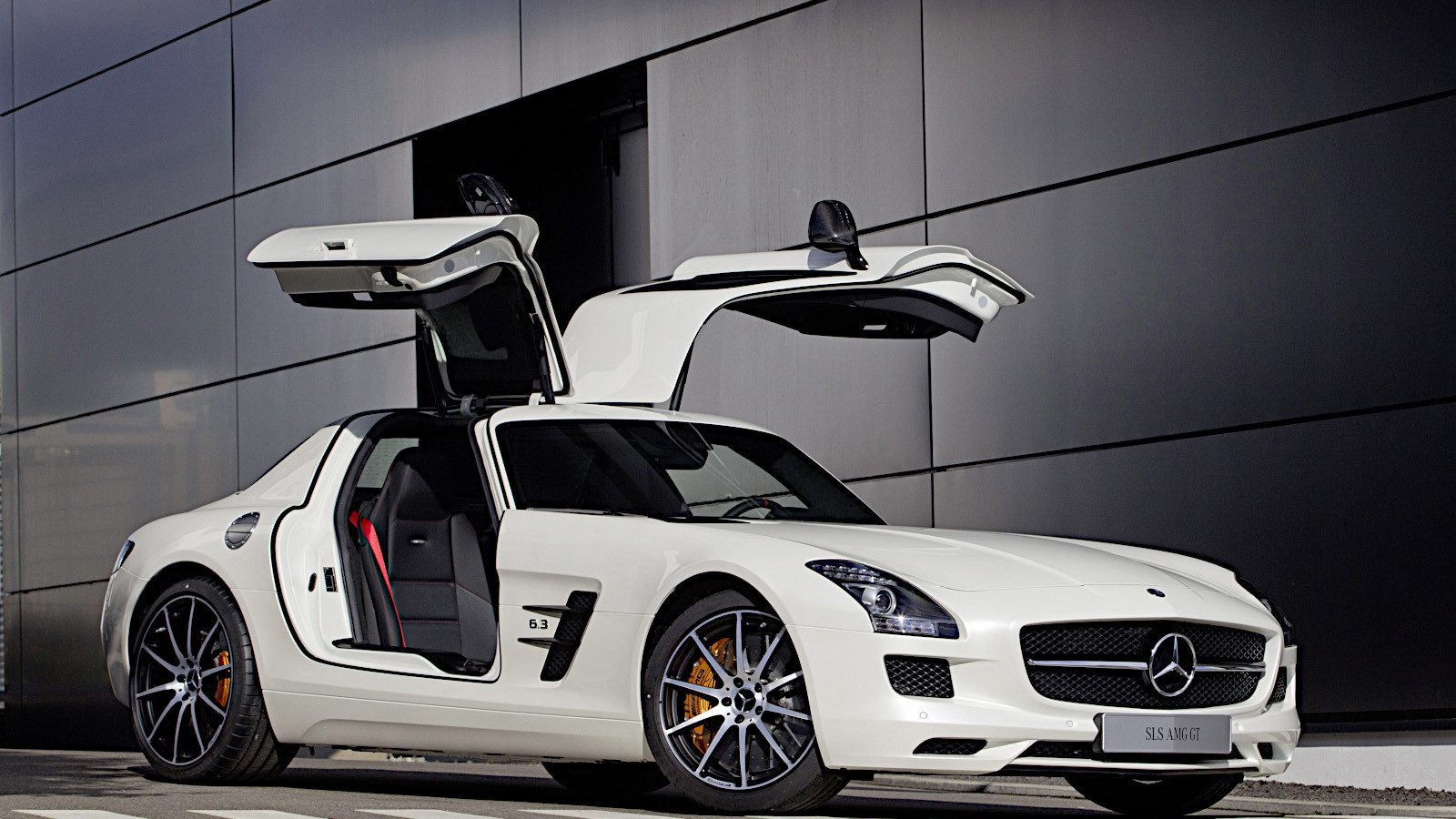
21. Mercedes-Benz SLS AMG
The appearance of the first car developed entirely by AMG after it became a wholly owned subsidiary of Mercedes-Benz was referred to as a ‘reinterpretation’ of the 300SL, which had been out of production for 46 years by the time the SLS was unveiled at the Frankfurt motor show in September 2009.
In one sense, an even more significant period of time is the 52 years which separated the last gullwing-doored 300SL (discontinued in 1957 to make way for the convertible) and the new model, which also had this distinctive feature.
This applied, at least, to the coupé versions, which were powered either by a V8 engine branded as a 6.3 but actually measuring 6208cc, or an all-electric drivetrain introduced in 2012.
The open-topped Roadster, added to the range in 2011 and always fitted with the V8, did not have gullwing doors, for the usual reason that there was nothing solid for them to be attached to.
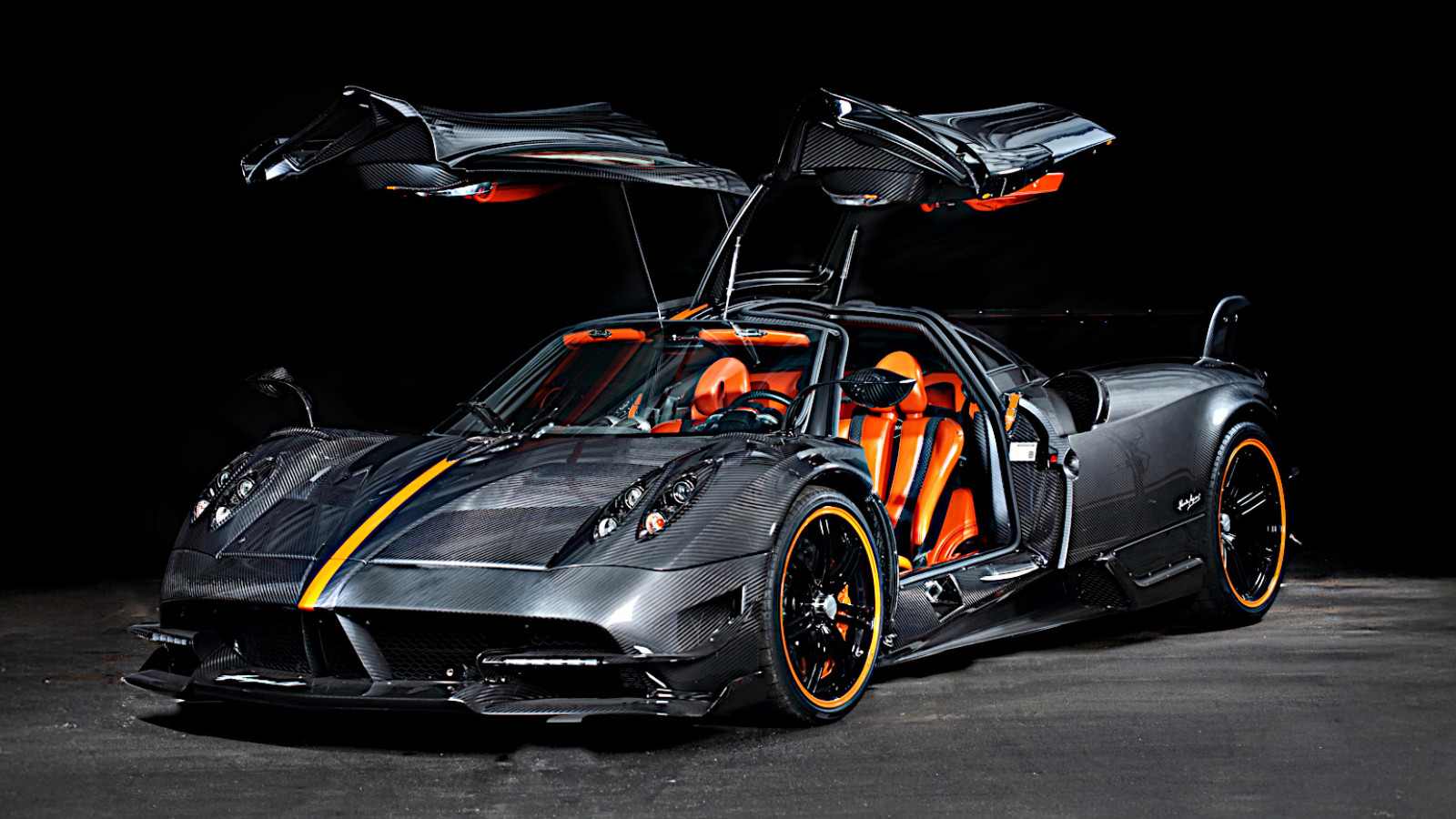
22. Pagani Huayra
The second of three models produced by Italian supercar manufacturer Pagani at the time of writing was powered, like the original Zonda and later Utopia, by a mid-mounted, Mercedes-Benz V12 (in this case a 6-litre twin-turbo), but differed from the others in being the only one available with gullwing doors.
This did not apply to every Huayra – a name derived from that of a South American wind god – because some derivatives were instead fitted with butterfly doors, hinged from the front pillars.
Butterfly doors have since been used for the Utopia, for which they are suitable whether the specific car is a coupé or a roadster.
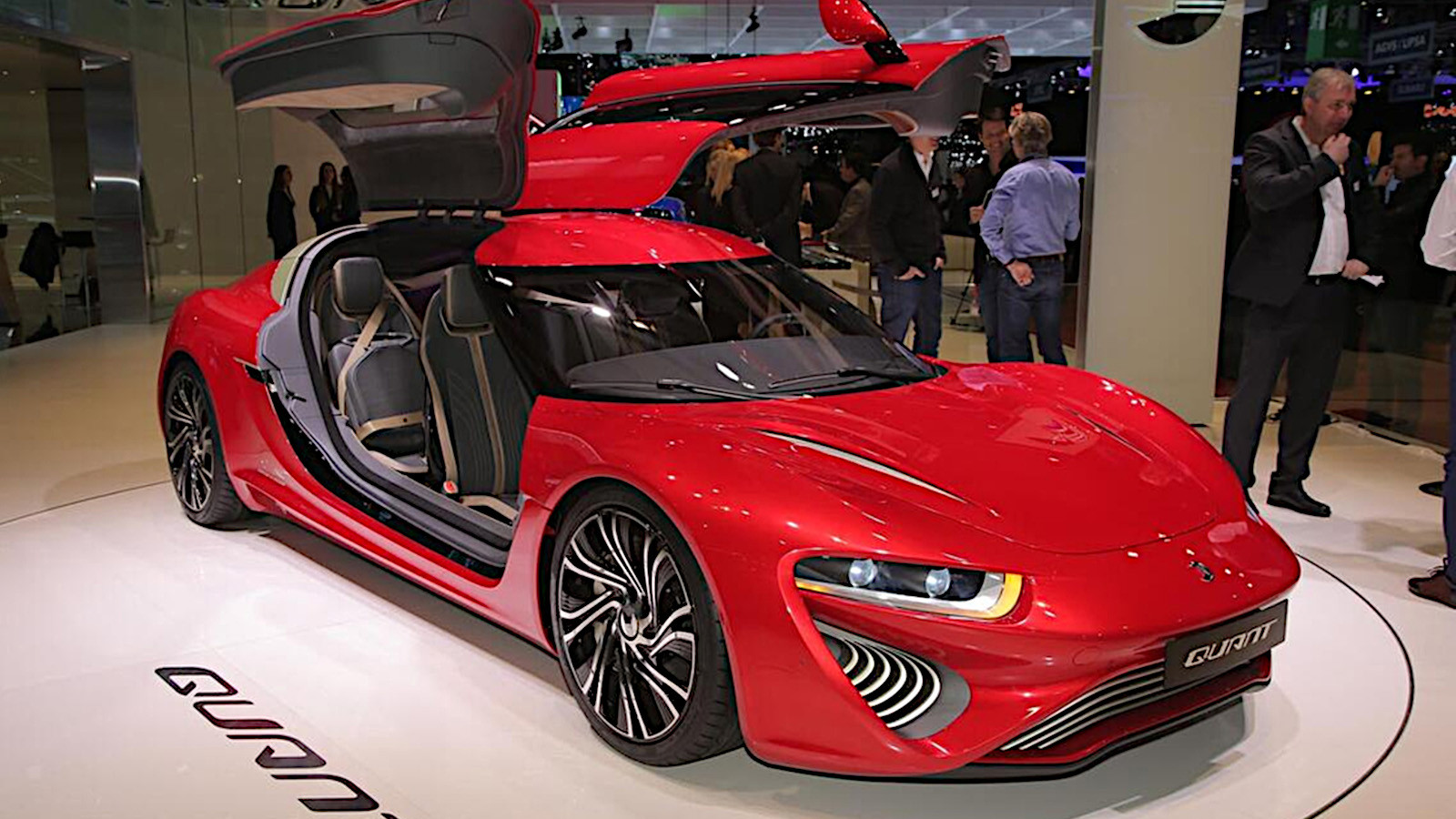
23. Quant F
Quant is the name used for cars built by the Swiss company nanoFlowcell Holdings, which is not a manufacturer but a research company devoted to the creation of electricity using electrolyte fluids.
There is some controversy about the effectiveness of that, but this isn’t the place to discuss it.
Of more interest here is the fact that nanoFlowcell has generally favoured the use of gullwing doors, as in the case of the Quant F four-seat saloon unveiled at the Geneva motor show in 2015.
They were also employed in other Quants, such as the FE and the e-Sportlimousine, but not in the smaller Quantino, which has conventional doors.
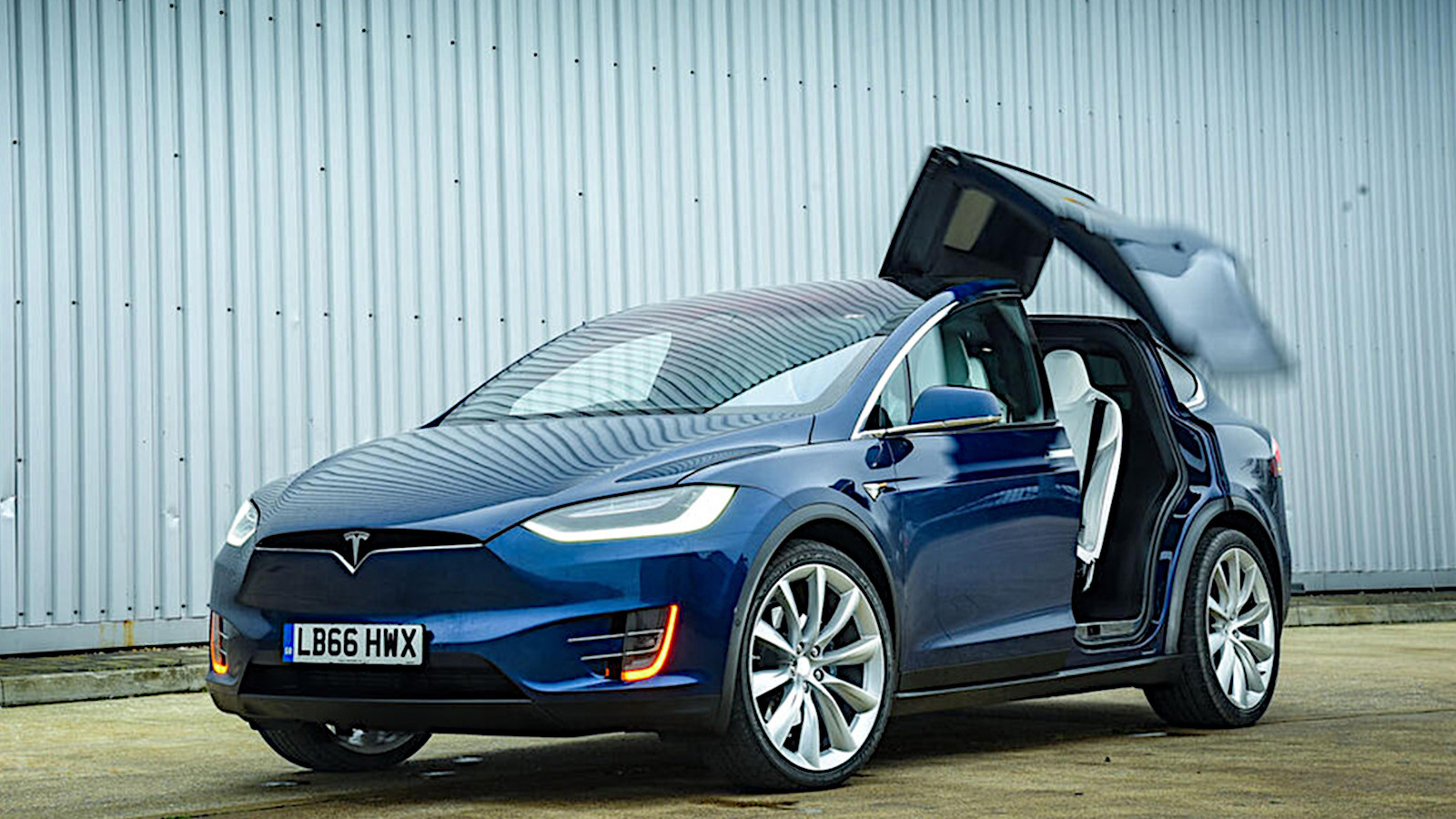
24. Tesla Model X
The Model X was launched in late 2015, long before electric SUVs became a common part of the motoring landscape.
It was technically related to the Model S saloon, but differed from it in having a more daring door arrangement.
All four doors on the Model S were hinged as normal, and so were the fronts on the Model X, but the rears were gullwings, an arrangement used several years later for the Chinese Hyptec (formerly Hyper) HT mentioned previously.
In 2026, it was announced that both the Model S (which had by then been on sale for nearly 14 years) and the only slightly younger Model X were both being discontinued due to increasingly stringent safety requirements.