Stuck on you
What we have here are – quite literally – 25 graphic illustrations of how car manufacturers have attempted to visually enhance or reinforce their models’ performance credentials.
By judicious use of some flamboyantly designed vinyls, even a 31bhp Bond Bug could start to look quite sporting.
Although in the case of most of the classic cars we have here, it was more about raising awareness of the latent power beneath their bonnets.
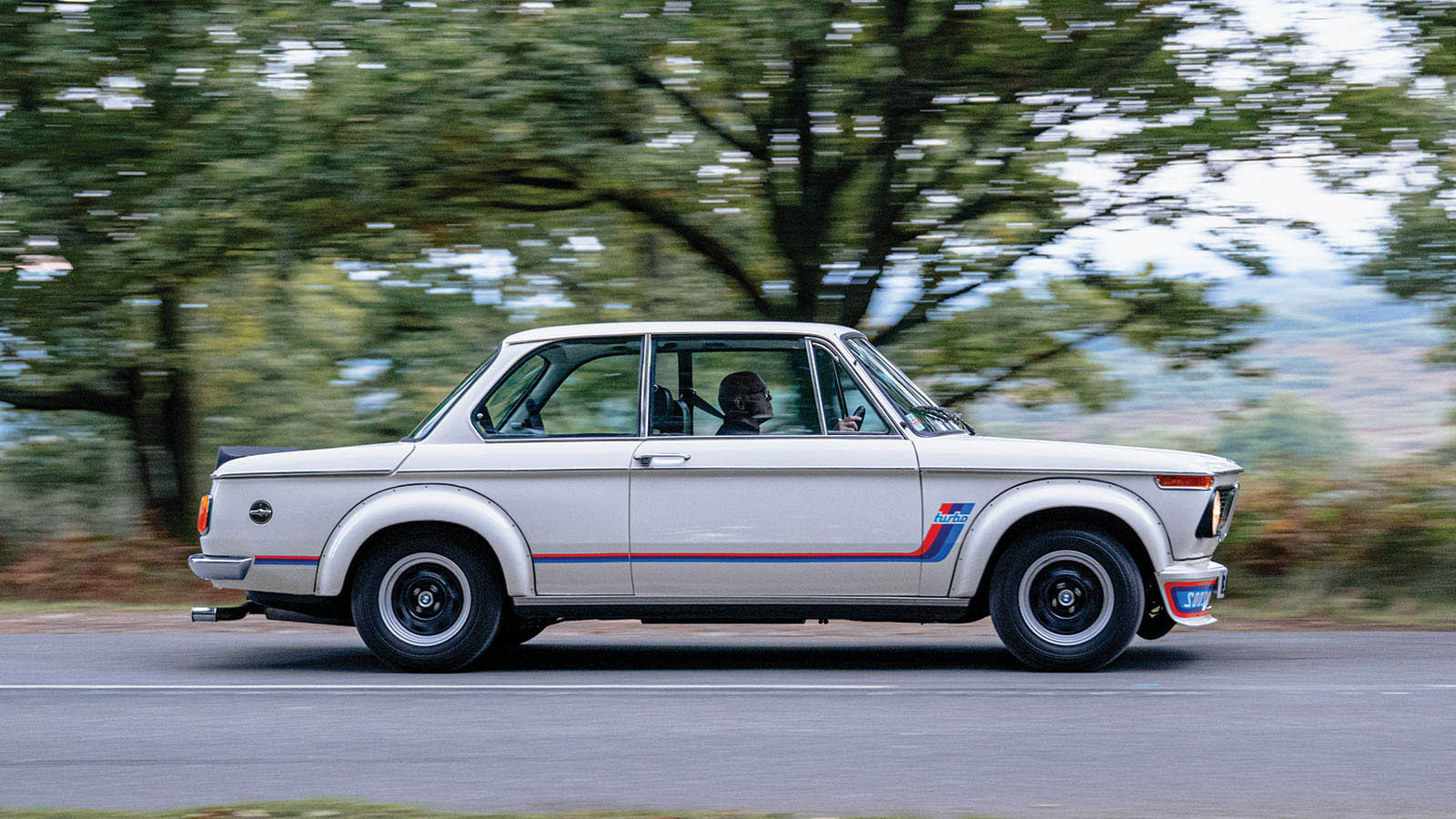
BMW was first to use some rather natty stickers to shout about its 2002 turbo’s blown engine, the wording artfully reversed on its deep front spoiler for the benefit of slower drivers needing a prompt through their rear-view mirrors.
Alas, save for supercars like Porsche’s current 911 GT3 RS, adhesive go-faster adornments are near-extinct today, but here, in alphabetical order, are some of the most eye-catching from years past.
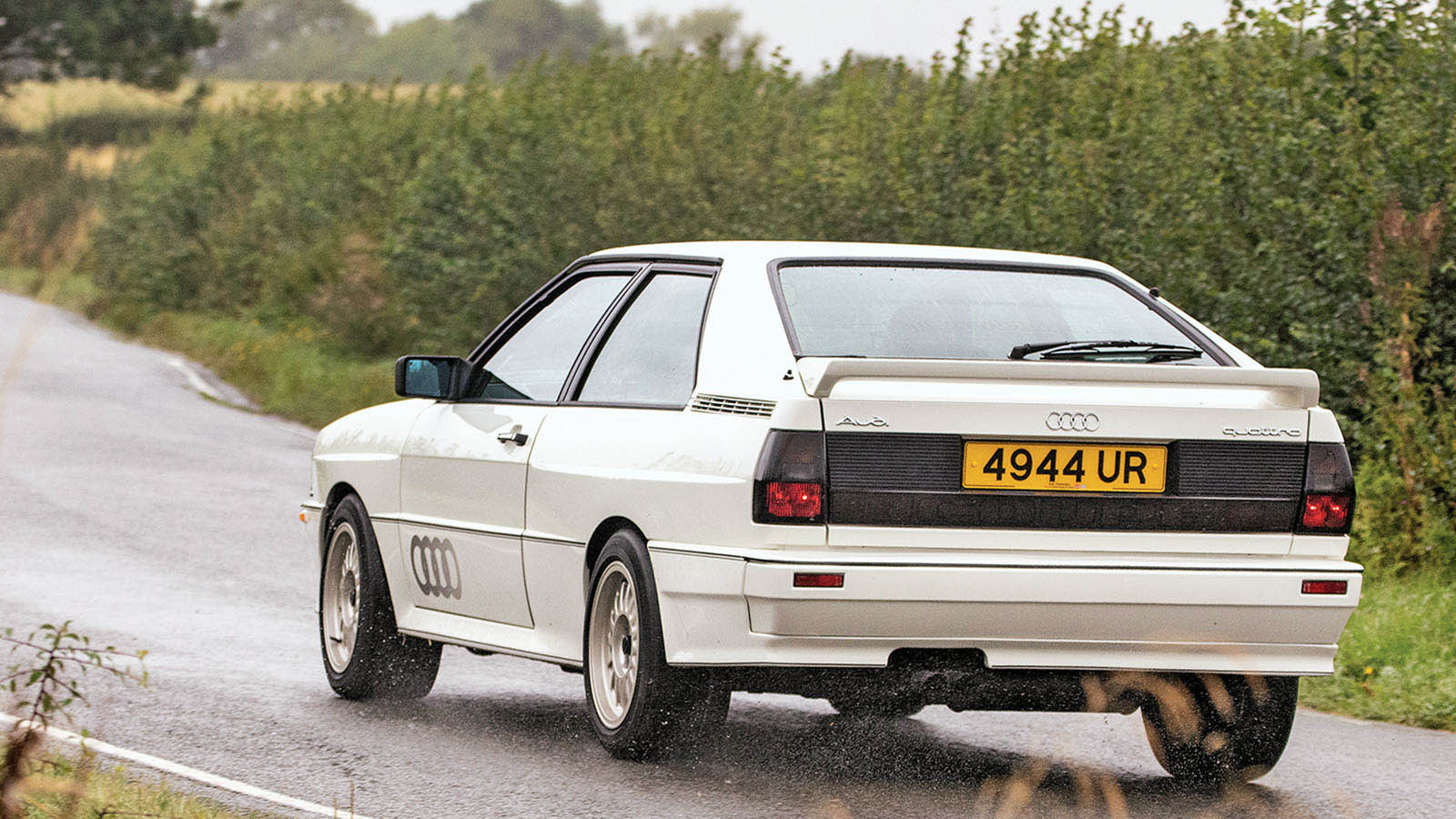
1. Audi quattro
The production version of the Audi quattro was unveiled at the Geneva motor show on 3 March 1980.
From then until 1984, prominent decals with Audi’s ring branding were standard on the car’s lower side flanks.
Based on the existing Audi Coupé but externally defined by wider wings, more prominent bumpers and a rear spoiler, the road car was powered (in its first iteration) by a 10-valve, 2.1-litre, in-line, five-cylinder engine, delivering 0-60mph acceleration of 7.1 secs.
Its all-wheel-drive transmission made it an immensely capable point-to-point machine.
Successful on road and stage, it claimed the World Rally Championship manufacturers’ title in 1982 and ’84, and had an 11-year life as a production car, selling 11,452 units.
2. BMW 2002 turbo
When launched at the 1973 Frankfurt show, the BMW 2002 turbo was Europe’s first turbocharged production car, and its parent company wanted to be sure that no one would mistake it for anything less, hence the tricolour M Sport graphics along its flanks (the reversed ‘turbo’ decals were only used for the press launch, although it’s now a popular owner enhancement).
The BMW 2002 turbo’s M10 ‘four’ employed mechanical Kugelfischer fuel injection, with a reduction in compression ratio from 9.5:1 to 6.9:1 to cater for the up-to 7psi of inlet-manifold pressure generated by the single Kühnle, Kopp & Kausch turbocharger.
This gave the car 168bhp, a 0-60mph time of 7.3 secs and a top speed of 130mph.
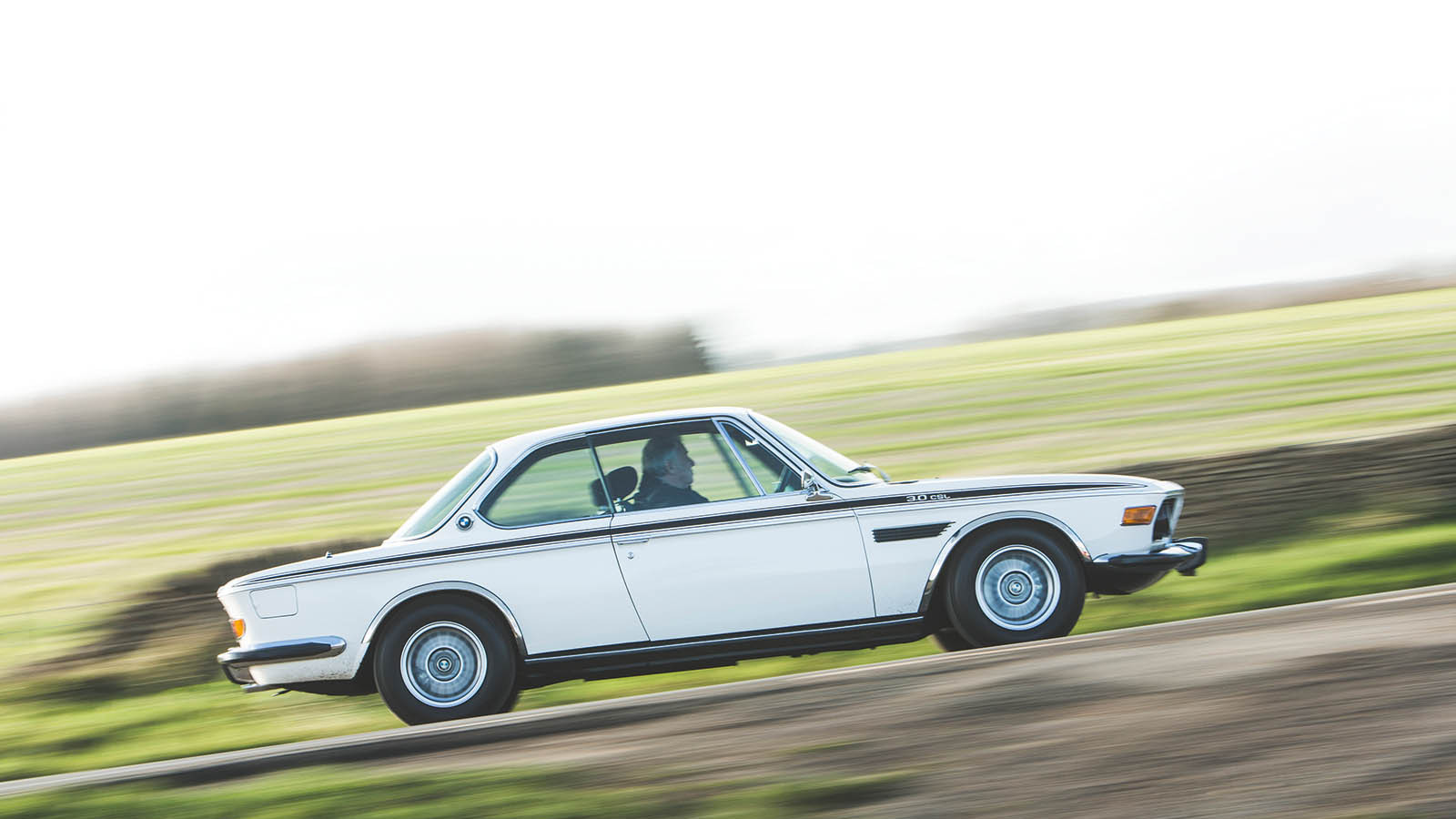
3. BMW 3.0 CSL
Once again, BMW rolled out its signature tricolour decals for its lightweight, 3.0 CS-based CSL (for Coupé Sport Leicht).
Created as a homologation special for the European Touring Car Championship, its combination of thinner steel and aluminium panels helped the CSL shed around 400lb (181kg) versus the standard CS.
The CSL’s overhead-cam straight-six was originally fed by twin carburettors, but soon received a power and torque increase thanks to a transition to Bosch D-Jetronic fuel injection.
In its ultimate form, the CSL was known as the ‘Batmobile’, with slightly more power and torque from its M30 engine, along with distinctive body addenda, including a large rear wing.
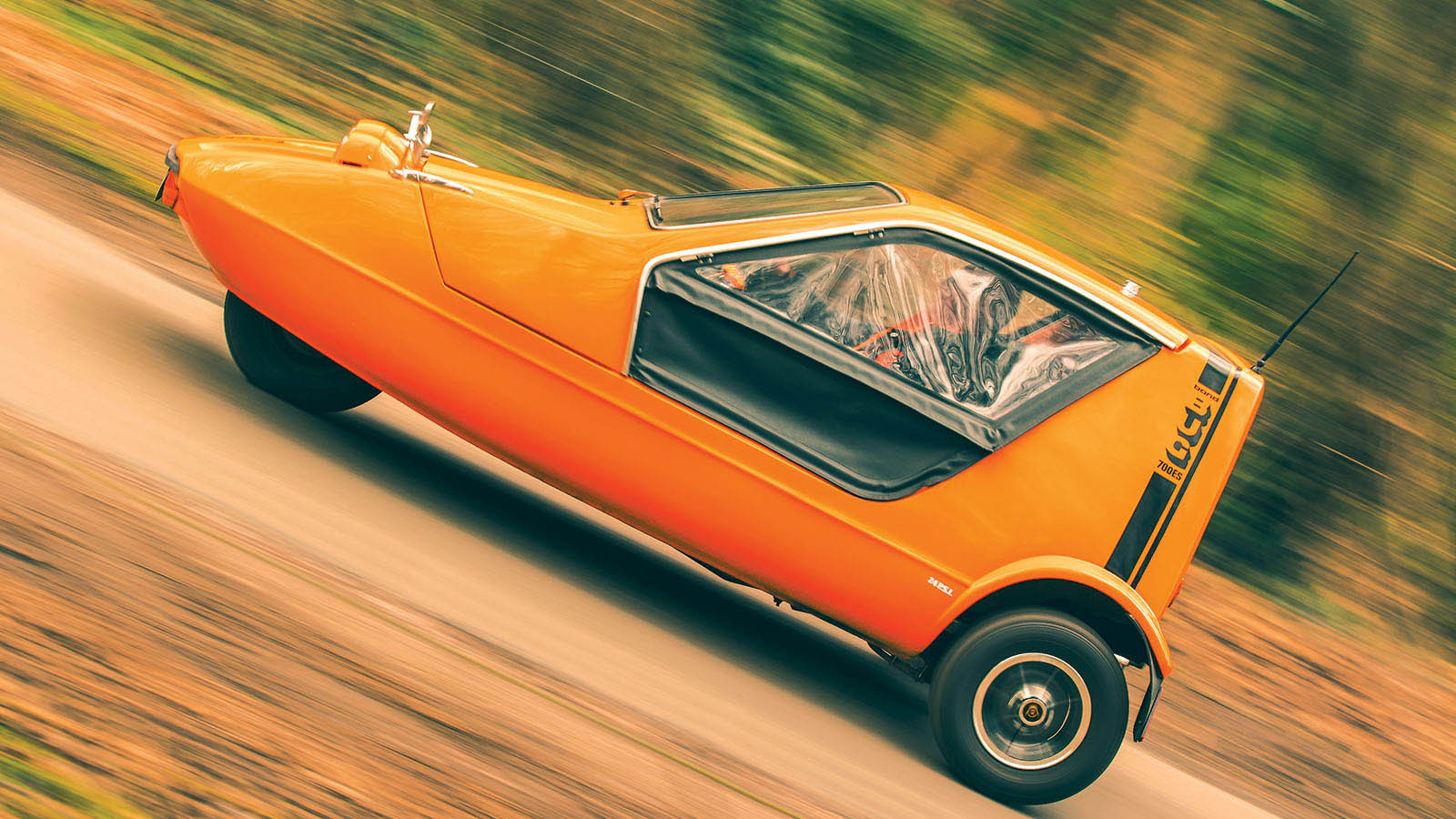
4. Bond Bug 700ES
The black vinyl graphic that looped around the Bond Bug’s bluff rear bodywork really did appear to give the diminutive car some sporting intent.
Wedge-shaped and always orange in colour, the three-wheeled microcar was actually manufactured by the Reliant Motor Company after it purchased Bond at the start of the 1970s.
Designed by Ogle Design’s Tom Karen, the Bug was powered by a 701cc four-cylinder engine producing just 31bhp, with the ES (pictured) receiving a higher-compression engine, a spare wheel, mud flaps and a sportier steering wheel. The top speed was a mildly concerning 76mph.
Now a cult classic car, slightly fewer than 2500 Bugs left Reliant’s production line.
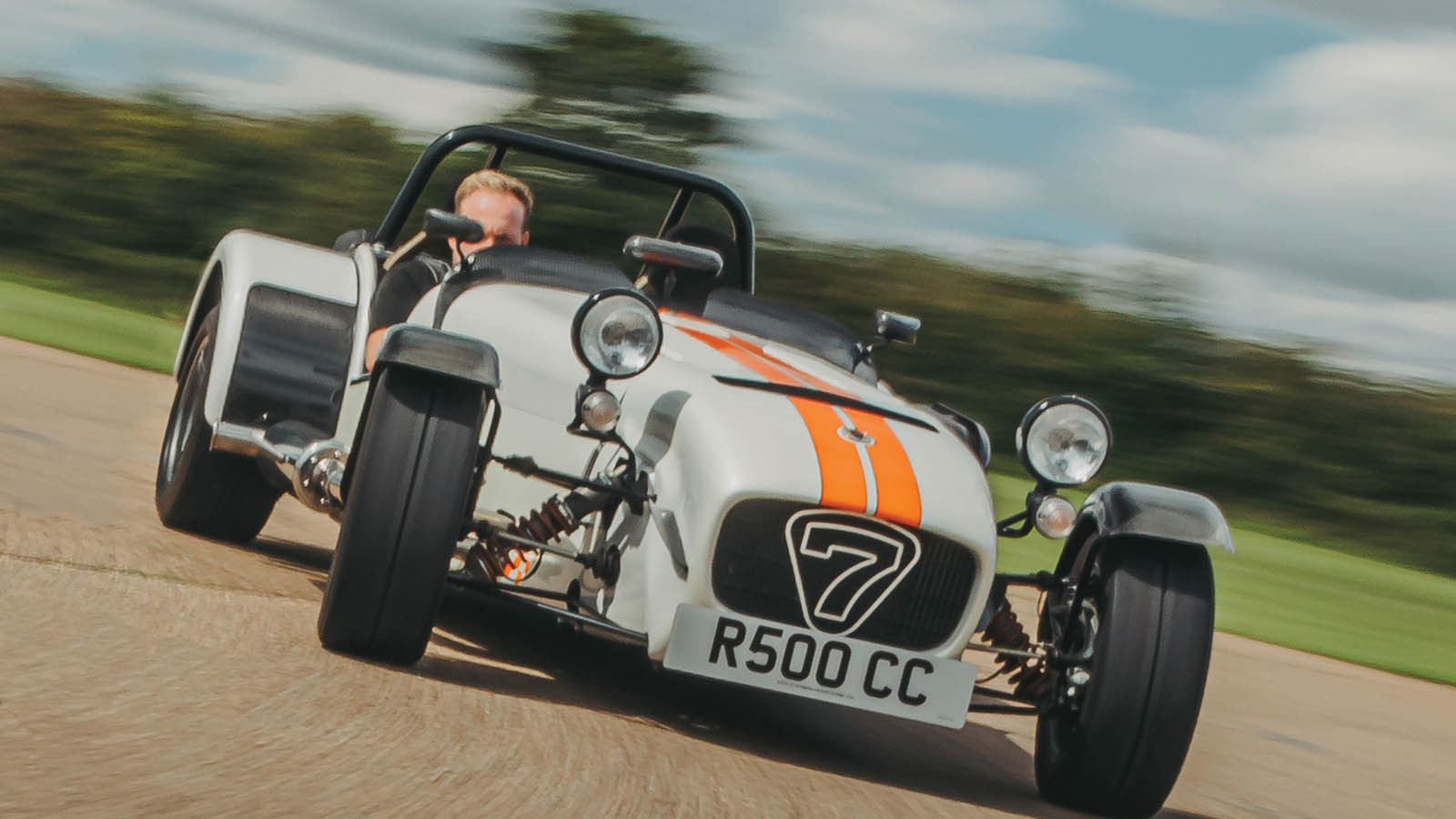
5. Caterham Superlight R500
The Caterham R500’s double-stripe bonnet graphics dominated the model’s pared-down bodywork and came in a variety of colours, being duplicated on the car’s flanks, containing a ‘CATERHAM’ script.
This was the marque’s pinnacle Superlight model, powered by a 1999cc Ford Duratec ‘four’ with a cylinder head fettled by ex-Formula One engineer Simon Armstrong.
True to its ‘Superlight’ moniker, the R500 gained a lighter-weight chassis mated to a carbonfibre nose cone and cycle wings for a kerbweight of only 506kg (1116lb).
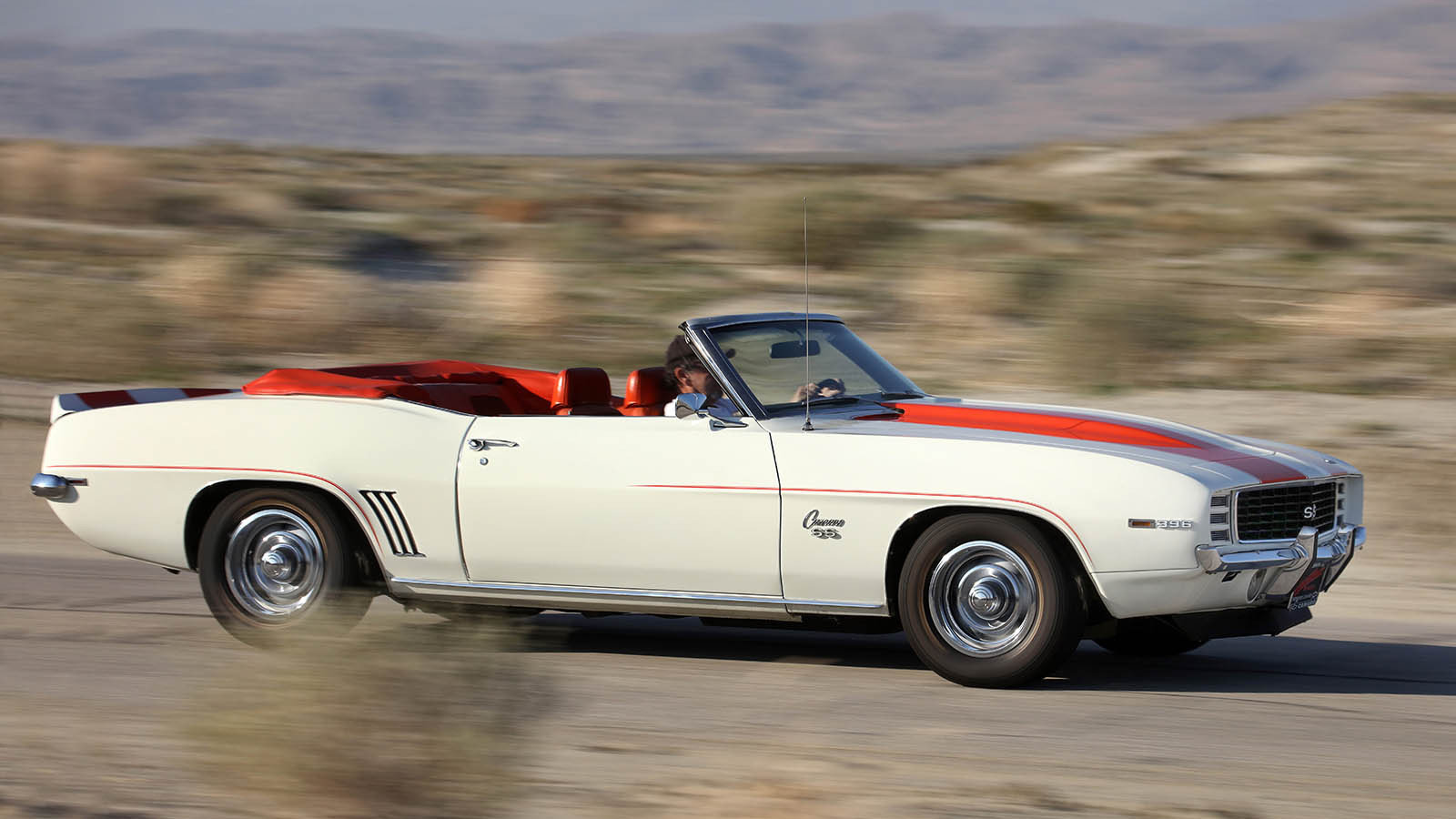
6. Chevrolet Camaro SS 396 Indy Pace Car
When Chevrolet took over pace-car duties for the Indianapolis 500 in 1969, it wasted no time in recognising a golden marketing opportunity and produced a run of 3675 replicas.
Each car began life as a Dover White SS, before being modified with a ZL2 ‘Super Scoop’ bonnet adorned with Hugger Orange stripes, white-painted sills and a white, rather than black, rear panel.
While many pace-car replicas were powered by a lowly L48 350cu in V8, the car you see here benefitted from the more potent L35 396 unit.
7. Colt Cordia Turbo
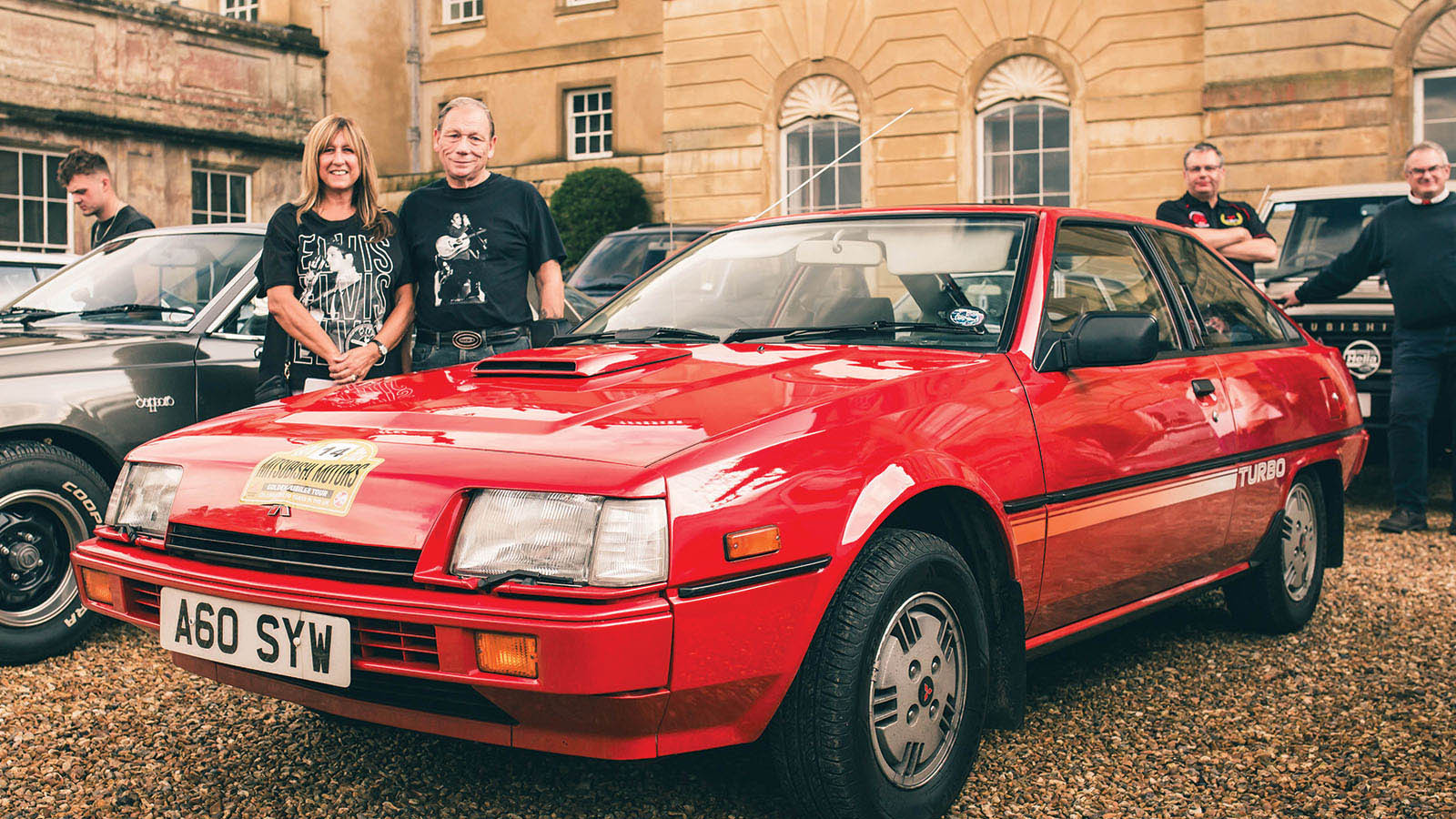
Perhaps not the most glamorous of 1980s Japanese coupés, but the inoffensive styling of Colt’s Cordia Turbo was at least lifted with the application of a neat ‘TURBO’ decal running just below its trim line on the sides of its body.
Produced from 1983-’90, the Cordia Turbo was a three-door, front-wheel-drive coupé with the added practicality of a lift-back rear hatch.
With an output of 133bhp from its blown 1.6-litre ‘four’, the Cordia could muster a respectable 9-sec 0-60mph time and on to a top speed of 118mph.
In contrast to its rather so-so exterior styling, Colt boasted about the Cordia’s ‘spacious and futuristic’ interior, along with the model’s front disc brakes, fully independent suspension and electronic ignition.
8. Dodge Charger 440
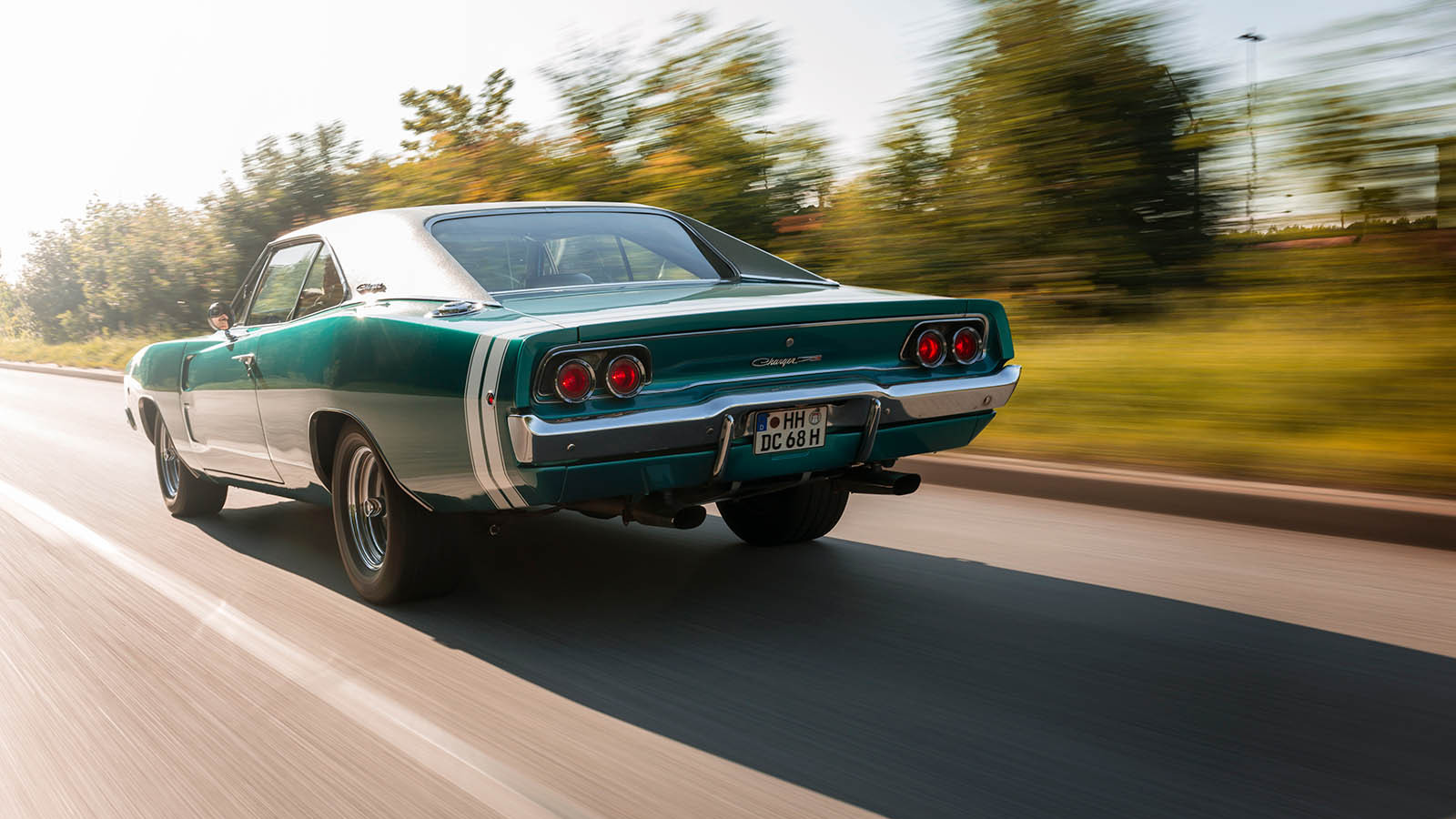
Originally based on the humble Dodge Coronet when its first iteration was launched in 1966, two years later Chrysler’s designers had put the Charger on the rack, stretching its dimensions for it to become one of the most beguiling muscle-car profiles of the 1960s.
And setting off that shape still further was a twin-band graphic that wrapped around the car’s rear wings and boot, emphasising its performance intent.
That wasn’t mere window-dressing, either, especially when the top-of-the-range Charger’s 426cu in hemi V8 produced 419bhp.
The Charger 440 pictured here is a notch down from this, its 440cu in V8 giving around 375bhp.
9. Fiat Uno Turbo ie
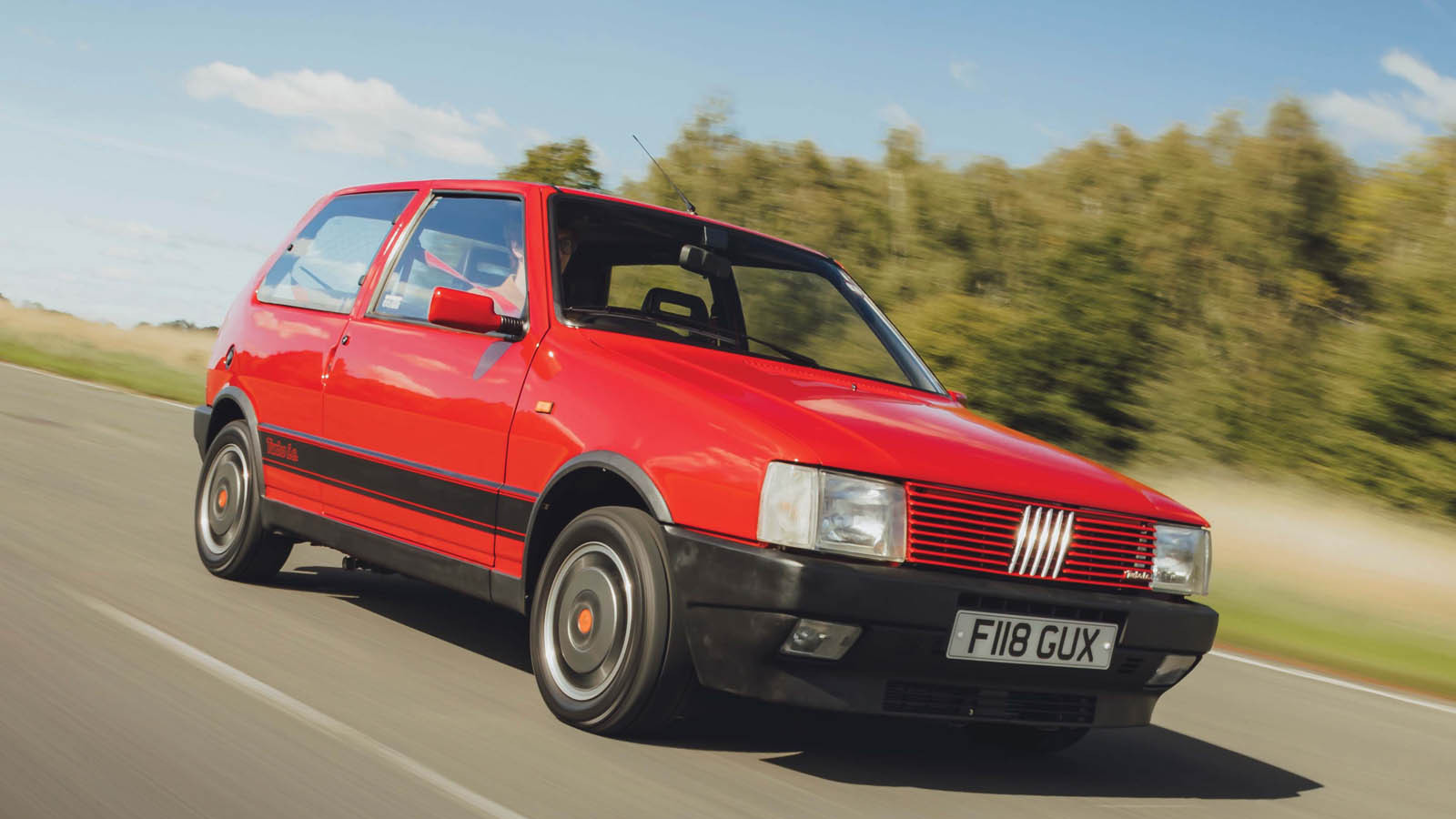
Compared with many in its 1980s cohort, the Fiat Uno Turbo’s graphic display was quite restrained, with a subtle ‘Turbo i.e’ (for Iniezione Elettronica) marked out in red in a black decal that ran along the side of the car.
But priced to compete head-on with the Peugeot 205 GTI and the Renault 5 GT Turbo, the Uno Turbo was as potent as any small, blown hatchback had a right to be.
Lowered and with wider tracks than the standard, Giugiaro-designed Uno, the Turbo used a Japanese IHI RHB4 turbocharger to boost power from its 1299cc (later 1301cc) four-cylinder engine.
Performance was exceptional, with a top speed of 122mph and 60mph arriving in just 8 secs from standstill.
10. Fiat X1/9
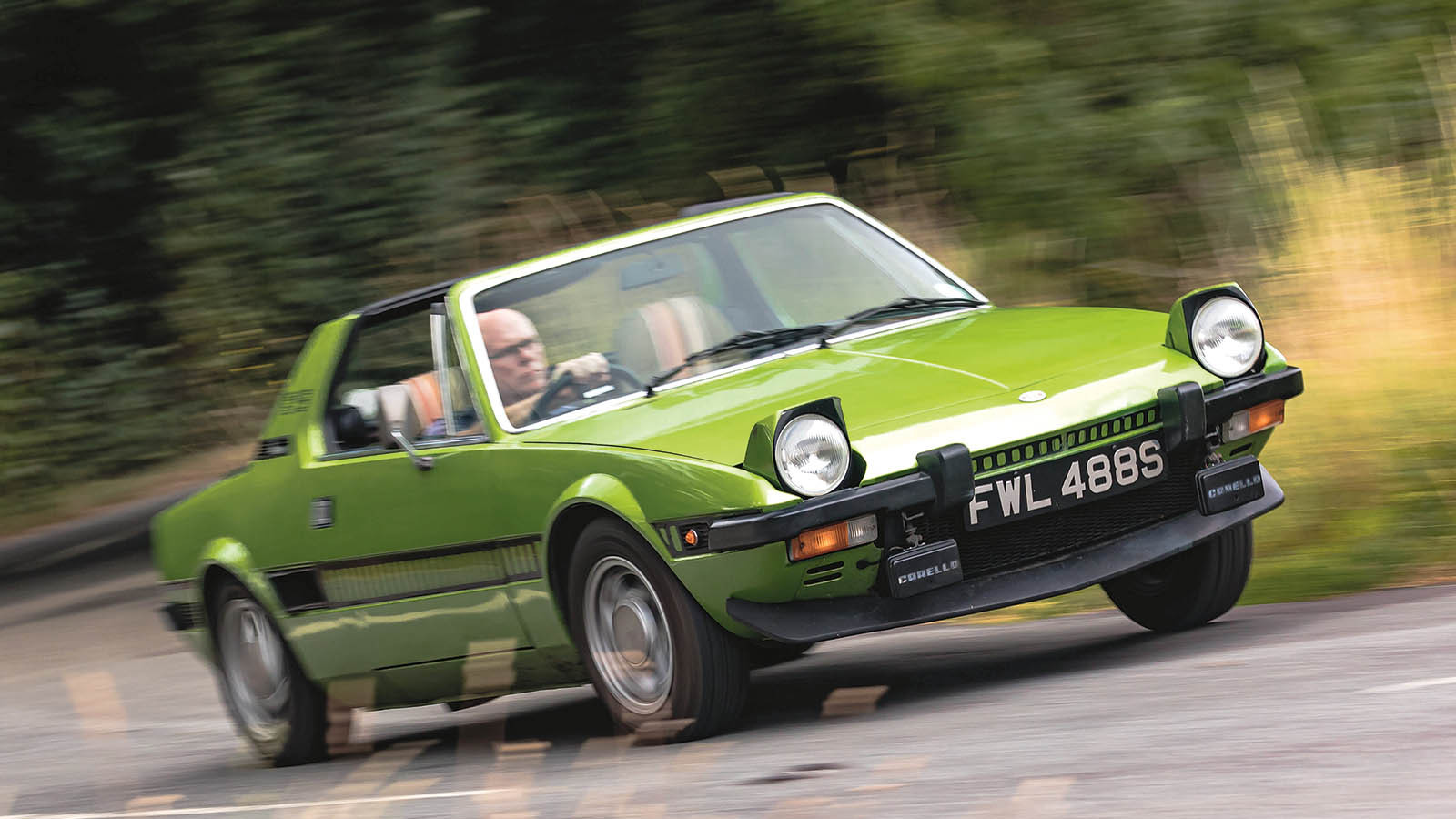
Designed by Bertone, Fiat’s two-seat, targa-topped X1/9 was superbly packaged and a lot of fun to drive, its mid-engined set-up providing pin-sharp, finely balanced handling.
It took a while for first-series cars to arrive in the UK, and when they did, many owners took up the option of having ladder-style graphics applied along the sides and rear of the car.
Initially powered by Aurelio Lampredi’s oversquare, 1.3-litre, single-overhead-cam ‘four’, taken from the 128 saloon, two-thirds of Fiat X1/9s were sold in North America where it scored high in safety tests.
Production ceased in 1989, and from ’82 all X1/9s were manufactured by Bertone and badged as such.
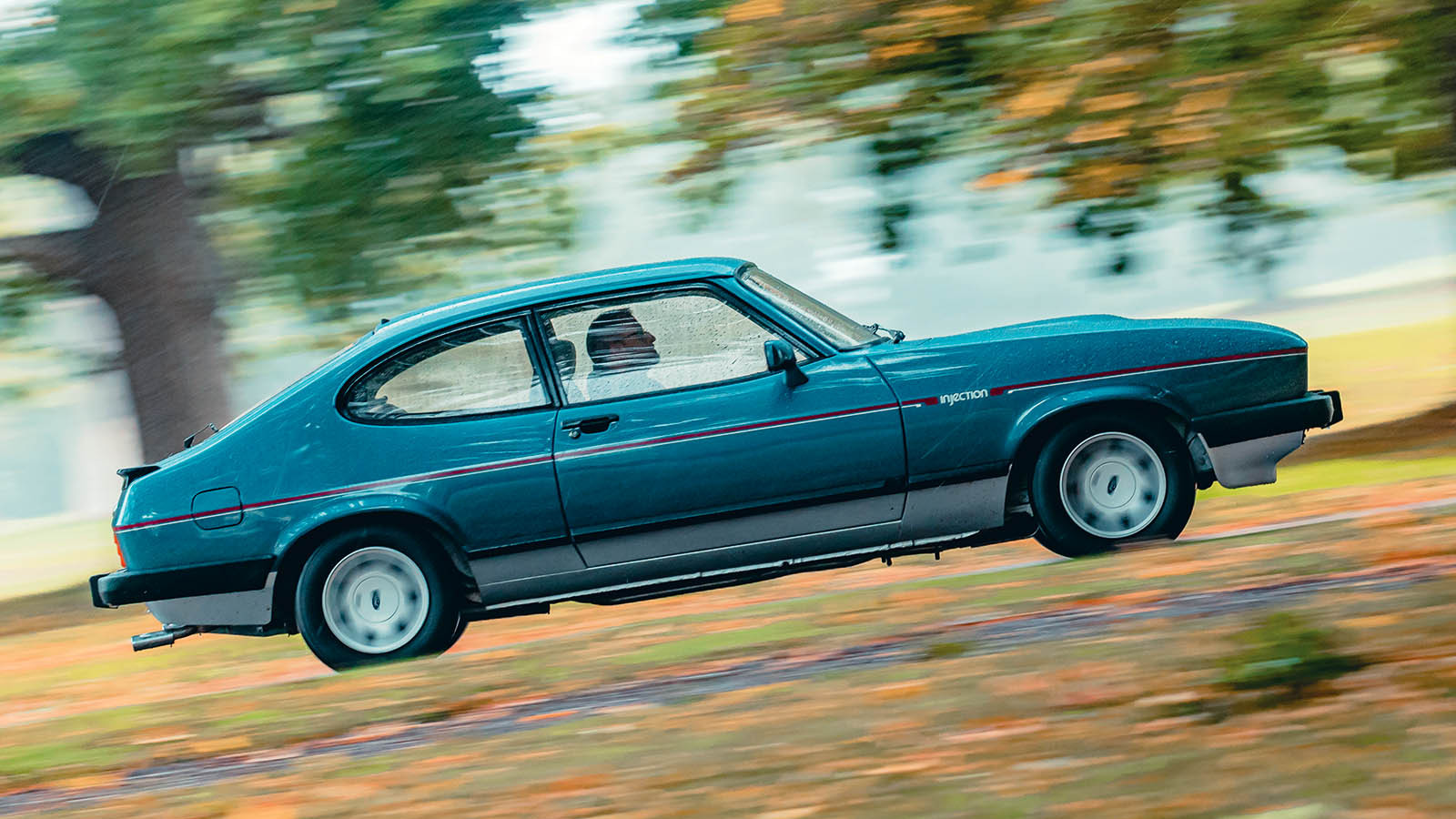
11. Ford Capri 2.8i
Its styling may have had a flavour of Cannes in the south of France, but its underpinnings were strictly Canvey Island, in the south of the English county of Essex.
However, for the Ford Capri’s UK-dominant fanbase, that was never an obstacle – even when it was powered by a 158bhp Cologne V6.
The Capri 2.8 injection was the final hurrah for Ford’s evergreen coupé.
Manufactured from 1981-’86 (with the final two years devoted solely to right-hand-drive production), its two-tone paintwork was lifted by a bold red graphic along its swage line, incorporating ‘2.8 injection’, repeated with decals across its rear hatch.
Despite its live, cart-sprung rear axle, the 2.8i’s build quality was decent, and with a top speed of 133mph and 0-60mph taking just 8.2 secs, it was a fitting farewell to a model name born in the late 1960s.
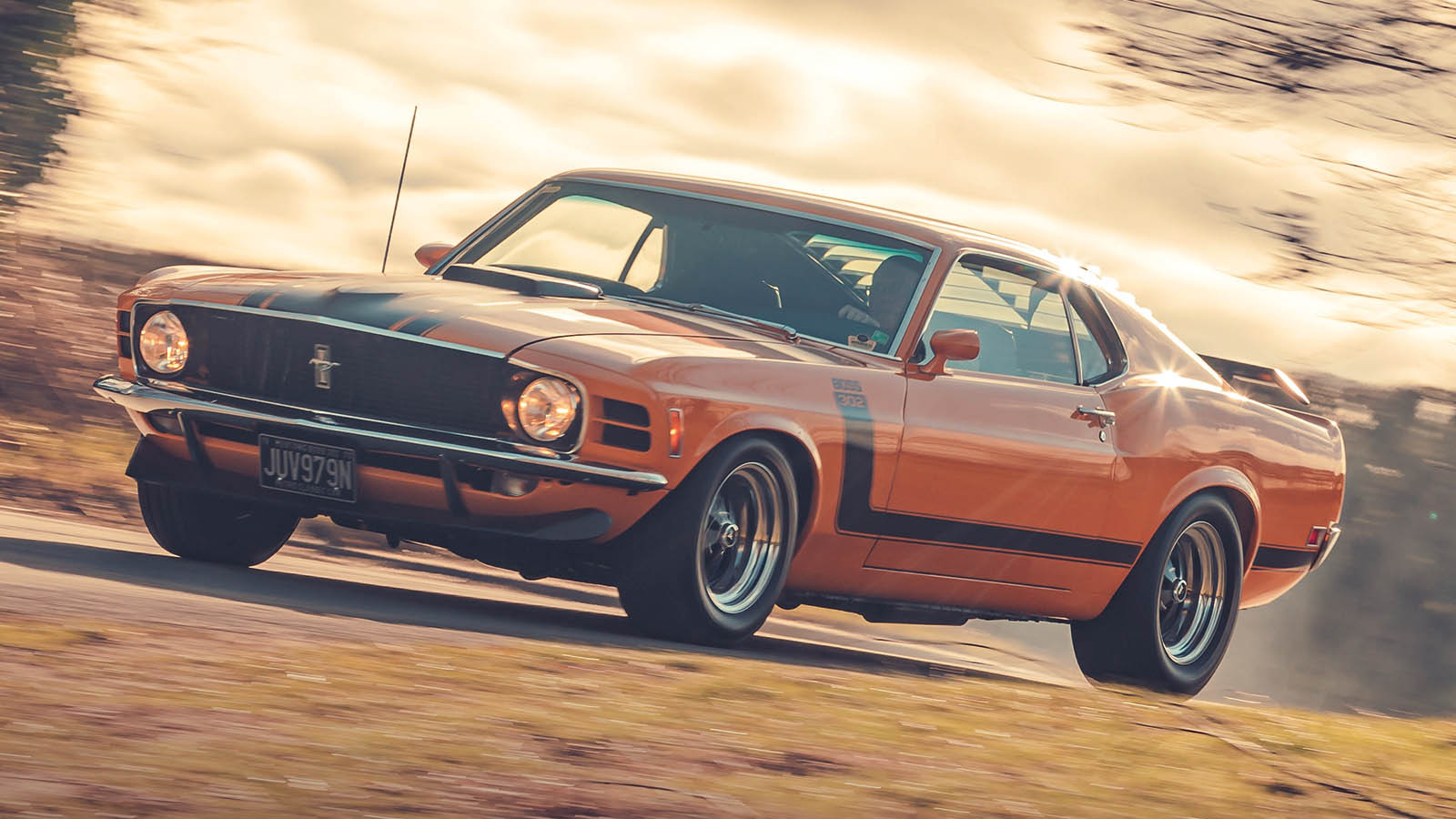
12. Ford Mustang Boss 302
Wanting to take its fight to Chevrolet’s Camaro in the Trans-Am road-racing series, Ford concocted the Mustang Boss 302 to comply with the Sports Car Club of America’s regulations that dictated an engine displacement of under 305cu in.
As if the (optional) rear spoiler and slatted rear window shield weren’t enough, Ford visually lifted the Boss still further with suitably aggressive bonnet stripes up to and over its Shaker scoop, and ‘BOSS 302’-topped decals stretching from its upper front wings down and along its flanks.
It looked like – and really was – the pinnacle of muscle-car cool.
Only 7013 Ford Mustang Boss 302s were built from 1969-’70 and their performance truly lived up to the promise of those graphics.
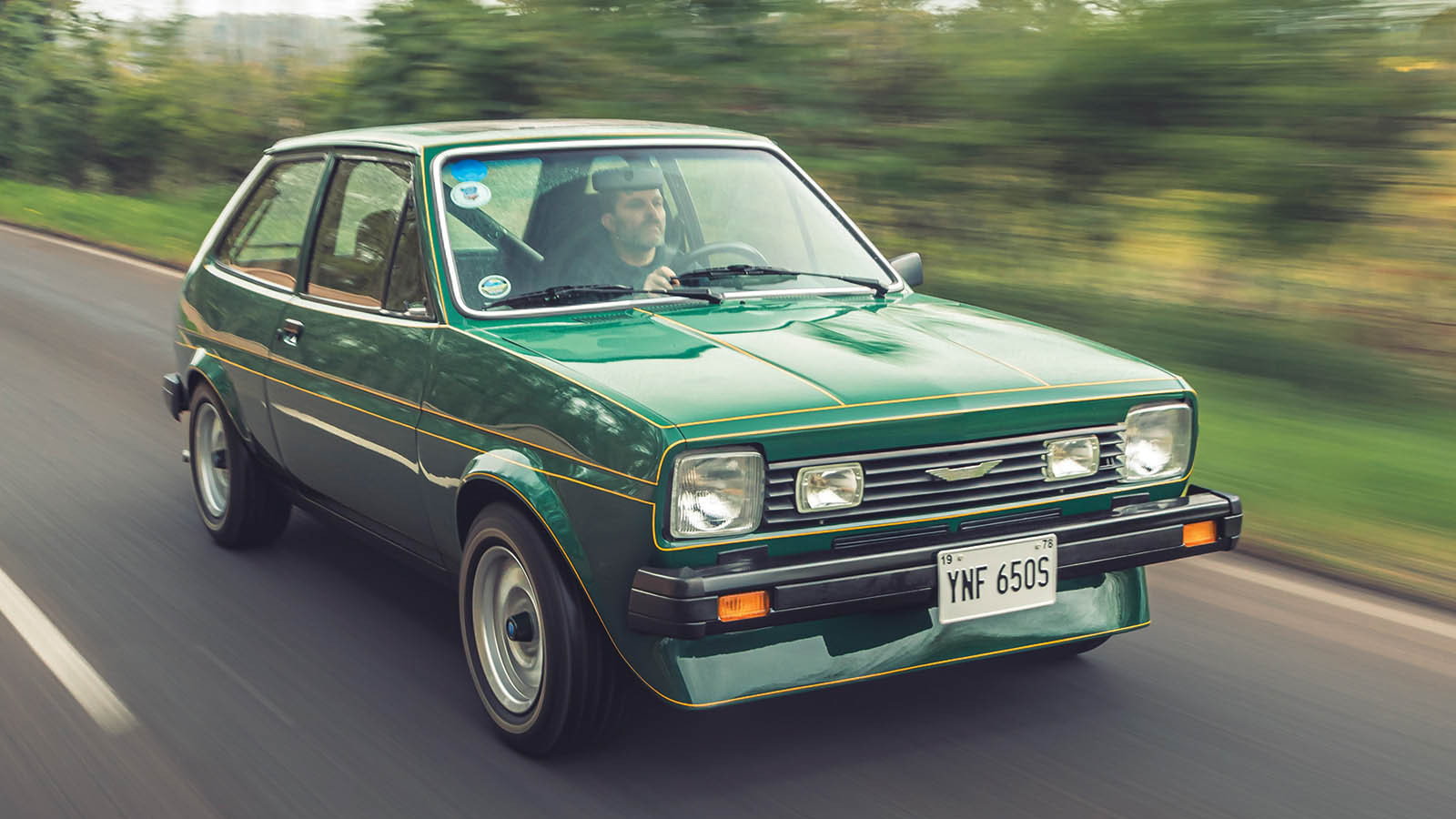
13. Healey Fiesta
With its dark-green paintwork, yellow pinstriping on the outer edges of every single body panel, four smart Minilite wheels, and ‘Ford Fiesta by Healey’ badging, there was no mistaking this early precursor to the more mainstream XR2.
The Healey Fiesta was conceived for the American market, where sales of Ford’s new global supermini were struggling following its recent launch.
Based on US buyers’ fondness for cars like the Sprite and Big Healeys, Ford tasked Detroit businessman Gary Kohs to work with Healey Automobile Consultants in the UK to come up with a spicier package for the Fiesta.
Healey boosted output from the Fiesta’s 1.6-litre unit, thanks to work on carburation, raising the compression ratio and fitting a hotter camshaft.
Underneath, the Healey Fiesta ran stiffer, lower springs, Koni dampers and harder brake pads.
Alas, the car never reached production, making the example shown here unique.
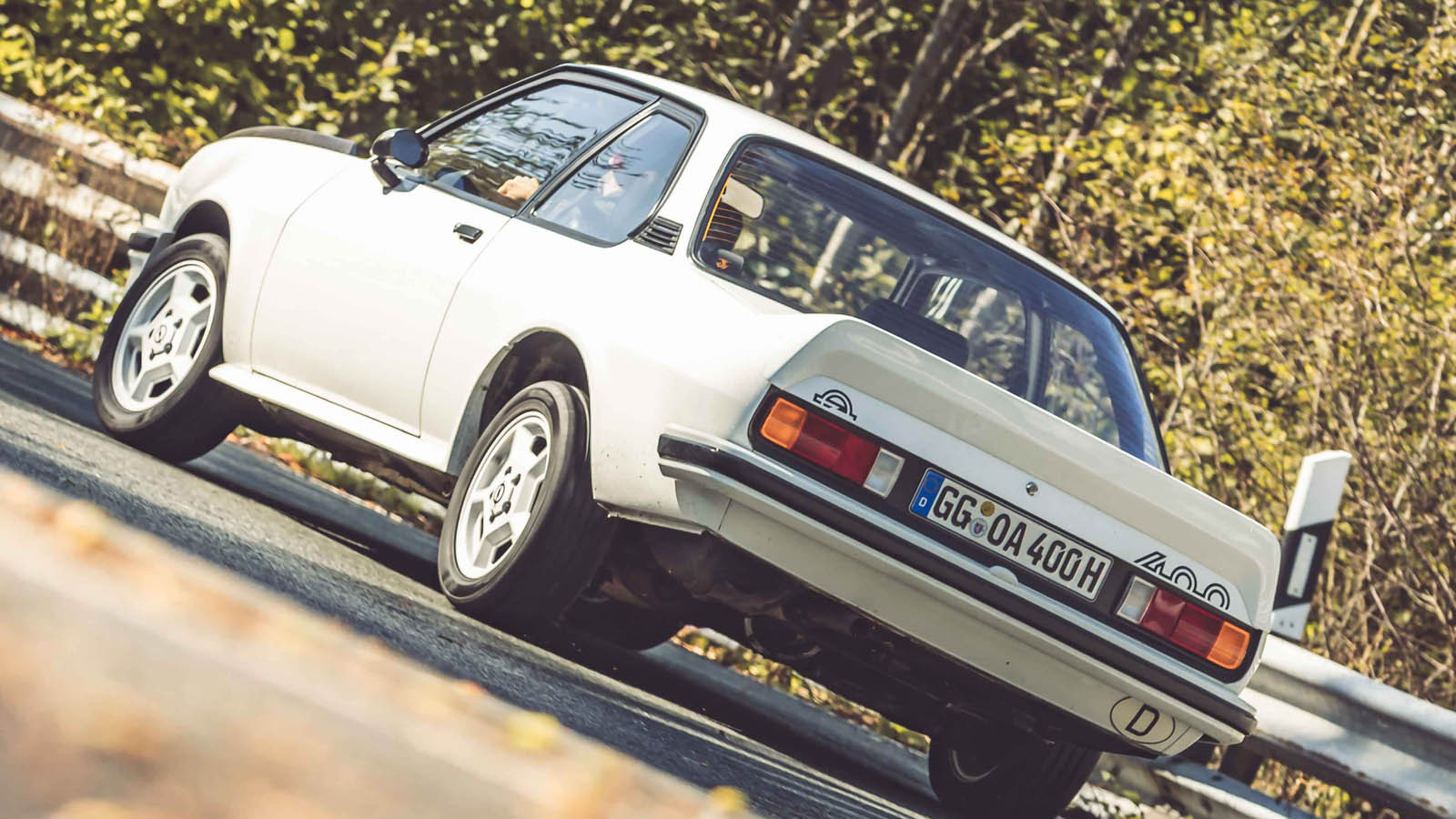
14. Opel Ascona 400
Homologated for the World Rally Championship, the Opel Ascona 400’s visual performance cues were subtle to say the least.
For the rear panel, just below its pronounced boot spoiler, were cut-down Opel Blitz and ‘400’ graphics, while on the bonnet’s leading edge were ‘Opel’ and ‘Ascona’ decals.
The competition variants were rated at around 230-340bhp.
For the roadgoing production car, its 2.4-litre, 16-valve, double-overhead-cam ‘four’ produced 142bhp and was equipped with Bosch L-Jetronic fuel injection, enough for a 0-60mph time of 7.2 secs and a top speed of 124mph.
Combined with a lightweight body and a five-speed ZF gearbox sending drive to the rear wheels, the Ascona 400 was an accomplished handler, and in rally guise propelled Opel’s works driver Walter Röhrl to win the 1982 WRC drivers’ championship.
15. Peugeot 205 Rallye
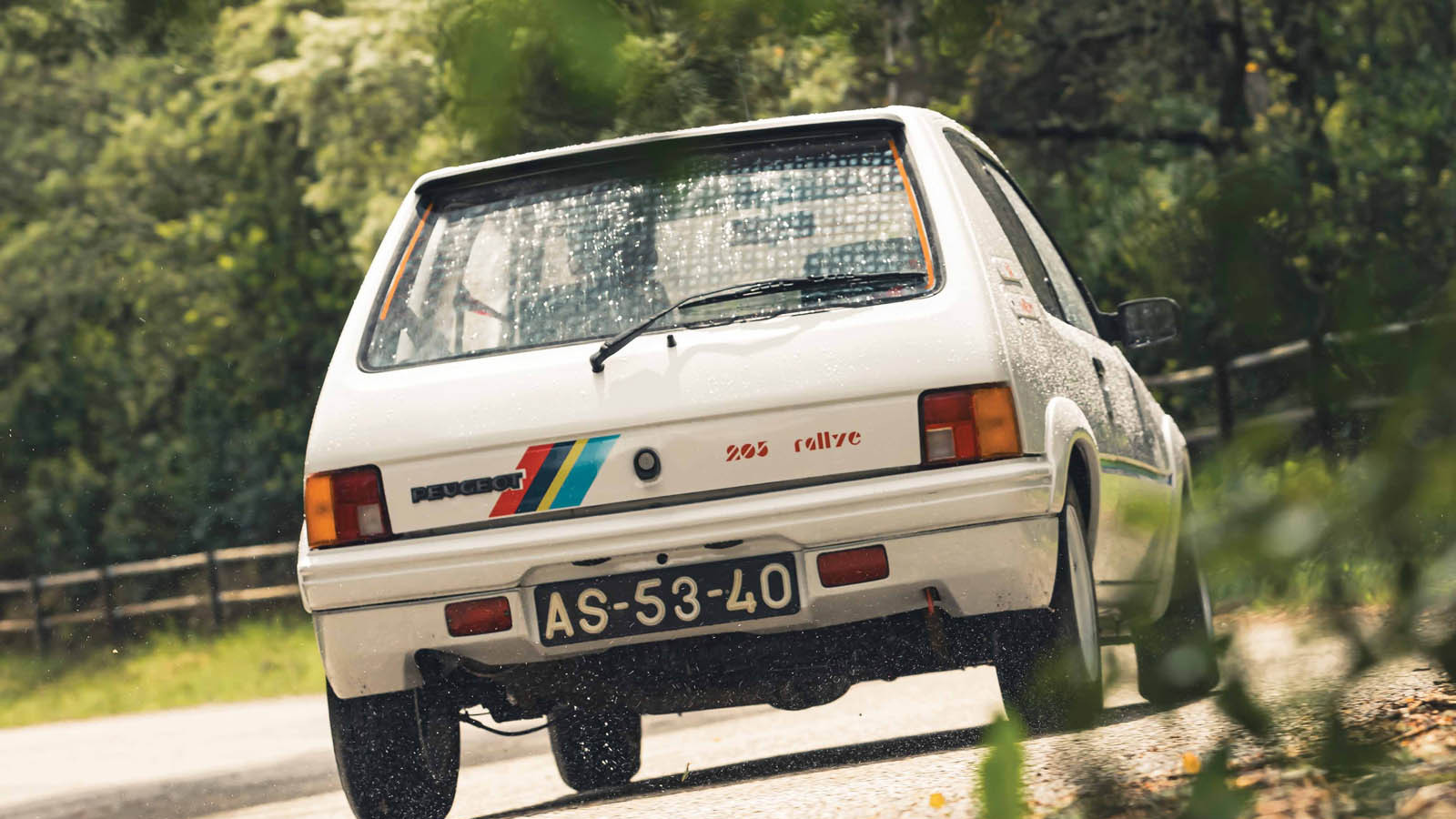
Needing to produce 5000 cars to satisfy WRC’s Group A homologation rules, Peugeot created the 205 Rallye, an ultra-lightweight (793kg/1748lb), pared-down version of the diminutive hatchback, with most soundproofing and extraneous kit removed.
Contributing to its light kerbweight were some rather snazzy decals, rather than badges, which suited the car’s minimalist vibe.
A ‘205 Rallye’ sticker adorned the rear panel, along with a diagonal, four-colour graphic, which was replicated across the front grille.
Purposeful, white-painted, 13in steel rims completed the exterior’s visual package.
Mechanically, the Rallye’s 1.3-litre, all-aluminium, overhead-cam ‘four’ gained a hotter cam and twin Weber 40 carburettors, meaning 0-60mph in 9.4 secs and 118mph top speed.
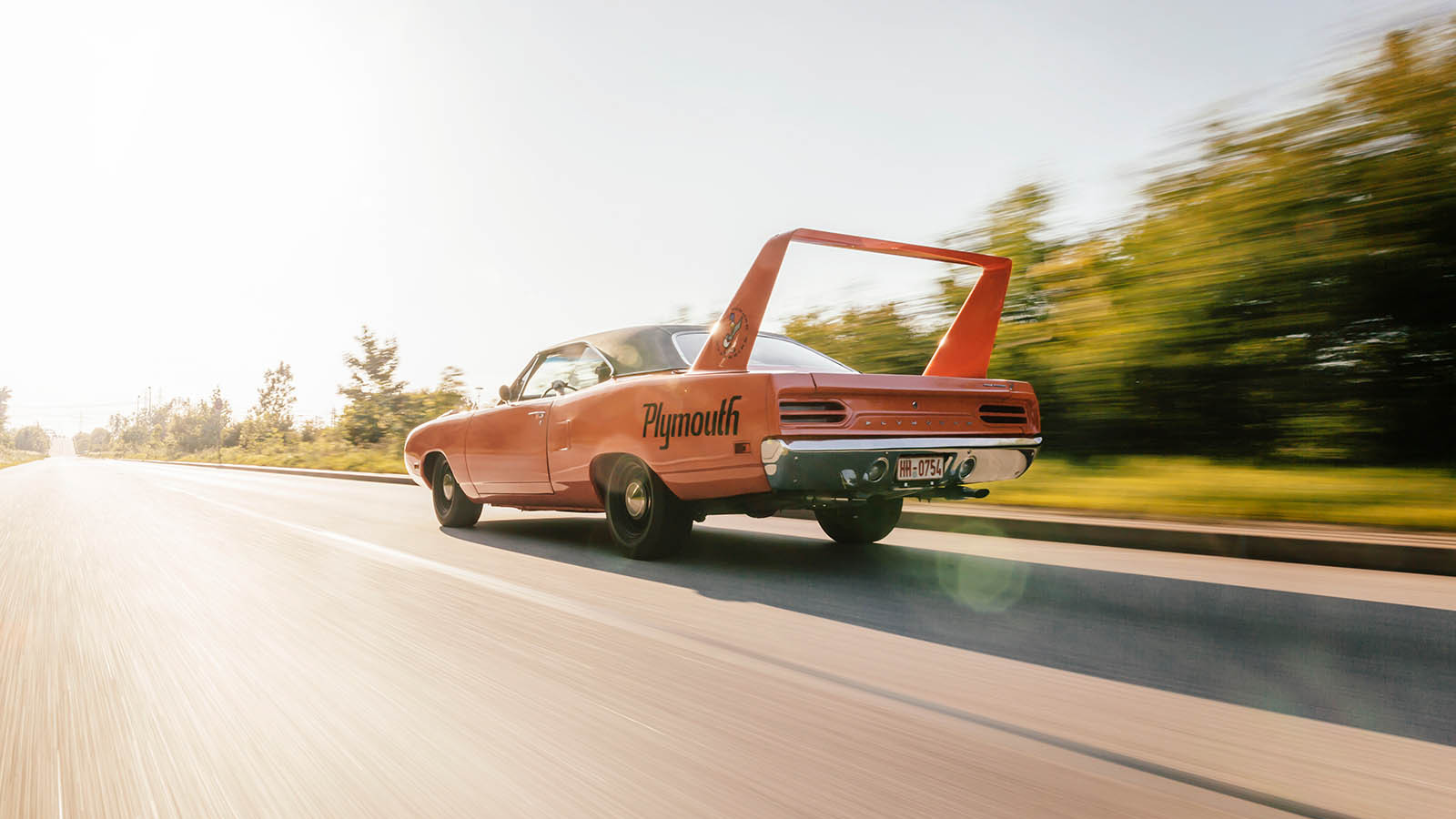
16. Plymouth Road Runner Superbird
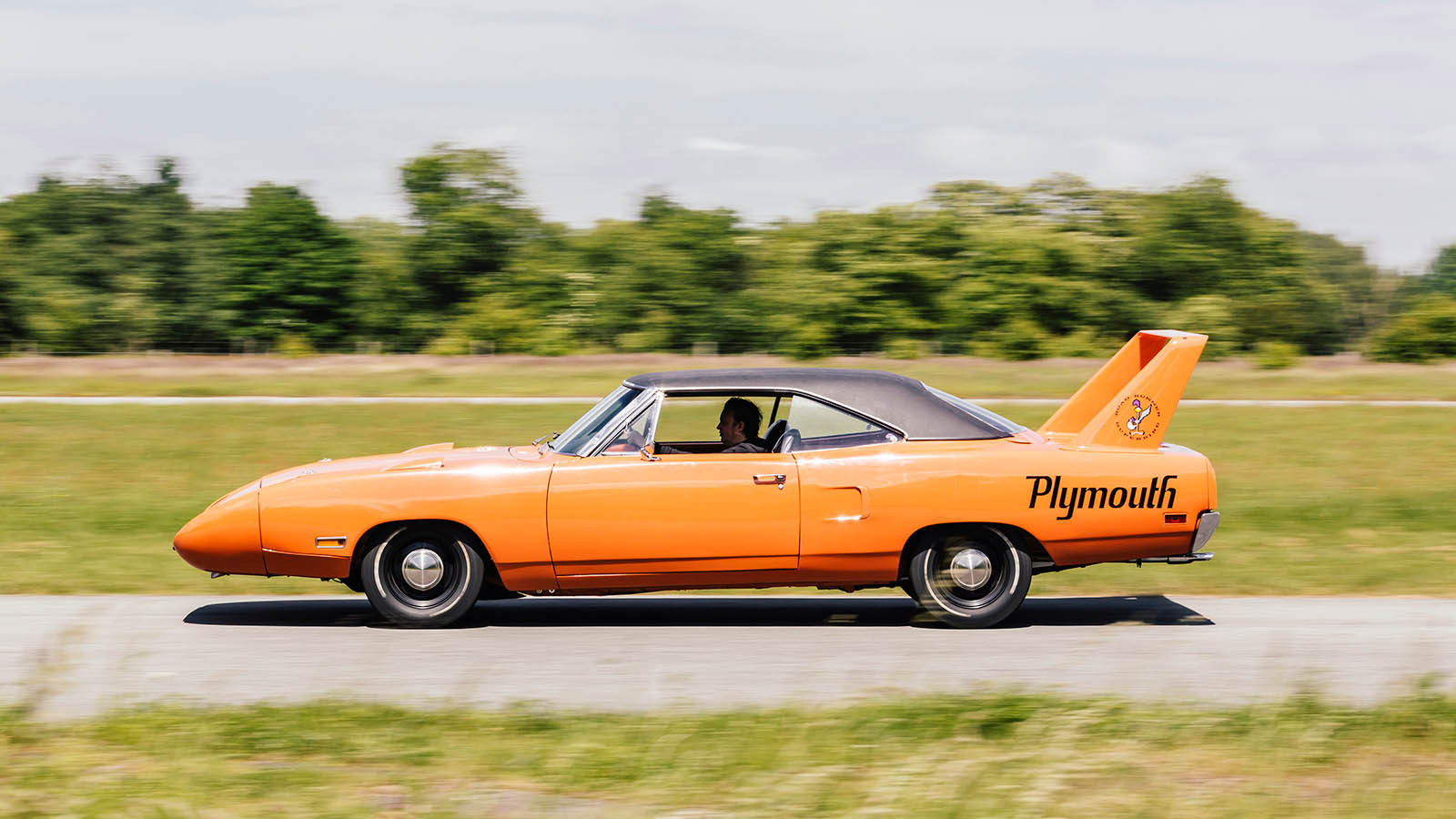
Has there ever been a more zany graphic applied to a car?
The fact that Looney Tunes’ Road Runner character had been immortalised on each side of an outrageous 58cm/23in-high rear spoiler was eye-catching in itself, but along with bold ‘Plymouth’ decals along the car’s rear flanks, and that cartoon-like snout, the Road Runner Superbird was something to behold.
Conceived so that Plymouth could go racing, the Superbird was less than practical in road guise (although the insane height of its rear spoiler was partly to allow for the boot to open), and dynamically more suited to oval tracks than any remotely sinuous highway.
Its Super Commando, 7.2-litre V8 produced 375bhp and delivered a vast 480lb ft of torque to its rear wheels via a three-speed automatic gearbox.
Acceleration of 0-60mph in 6.4 secs was impressive, and – if you were brave enough – you could go on to a top speed of around 160mph.
17. Pontiac Firebird Trans Am
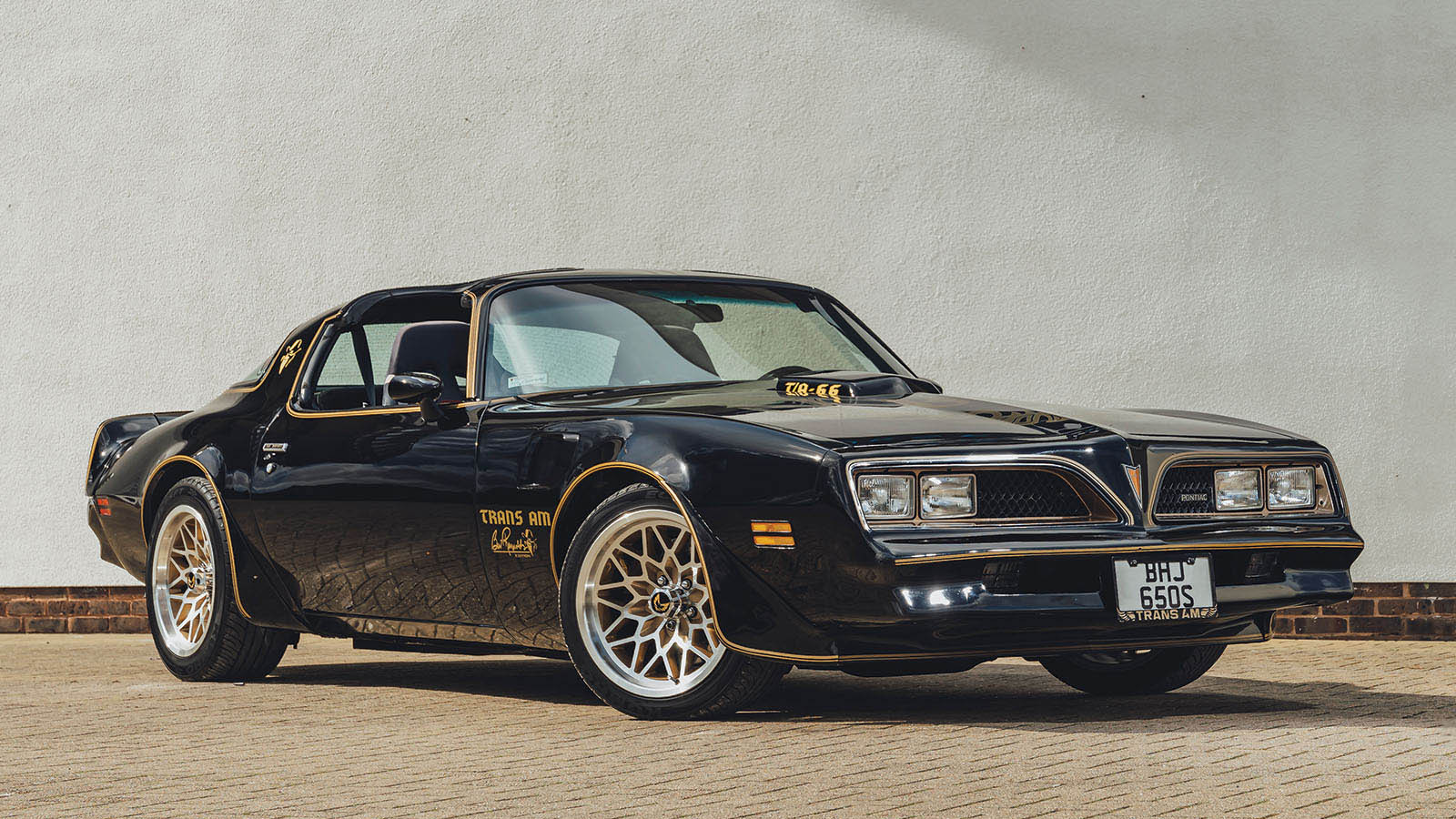
Famed for its starring role in the 1977 comedy film Smokey and the Bandit, Pontiac’s Firebird Trans Am was perhaps the quintessential ’70s muscle car.
Various performance packages were available from the factory, with toughened suspension, larger wheels and the promise of 0-60mph times in the 6.5-sec ballpark.
(Although when Autocar tested the Trans Am in 1978, the numbers were more sedate, its team recording a rather sober 9.4 secs to 60mph.)
Defining the Firebird visually was its optional ‘Trans Am Hood Decal’ – sometimes known as the ‘screaming chicken’, the vast eagle graphic was inspired by Native American art.
18. Porsche 911 Carrera RS 2.7
The 911 Carrera RS 2.7 was a homologation special conceived for Porsche to take the fight to Ford and BMW in the European Touring Car Championship.
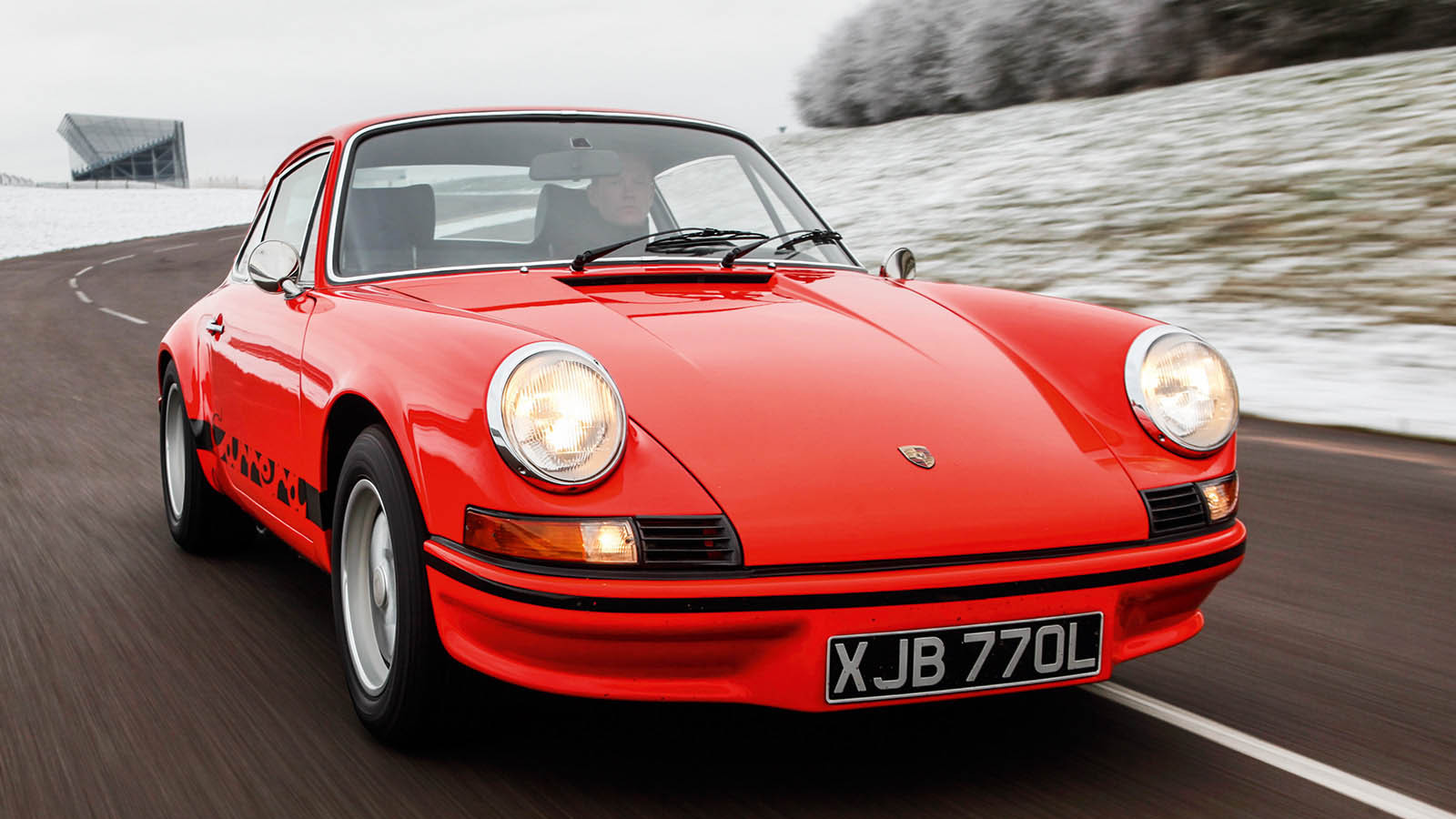
Aside from its whale-tail rear spoiler, lowered stance and Fuchs alloy wheels snuggled within subtly flared arches, its standout visual cue was a stylishly drawn and body-coloured ‘Carrera’ graphic along the car’s flanks.
With its flat-six engine based around the crankcase of a 2.4 S, it was bored out as far as it would go to 2687cc to save the cost of developing an all-new unit.
Bosch fuel injection was used, and the RS could sprint from 0-60mph in 5.5 secs and on to 149mph.
19. Porsche 911 Carrera RSR
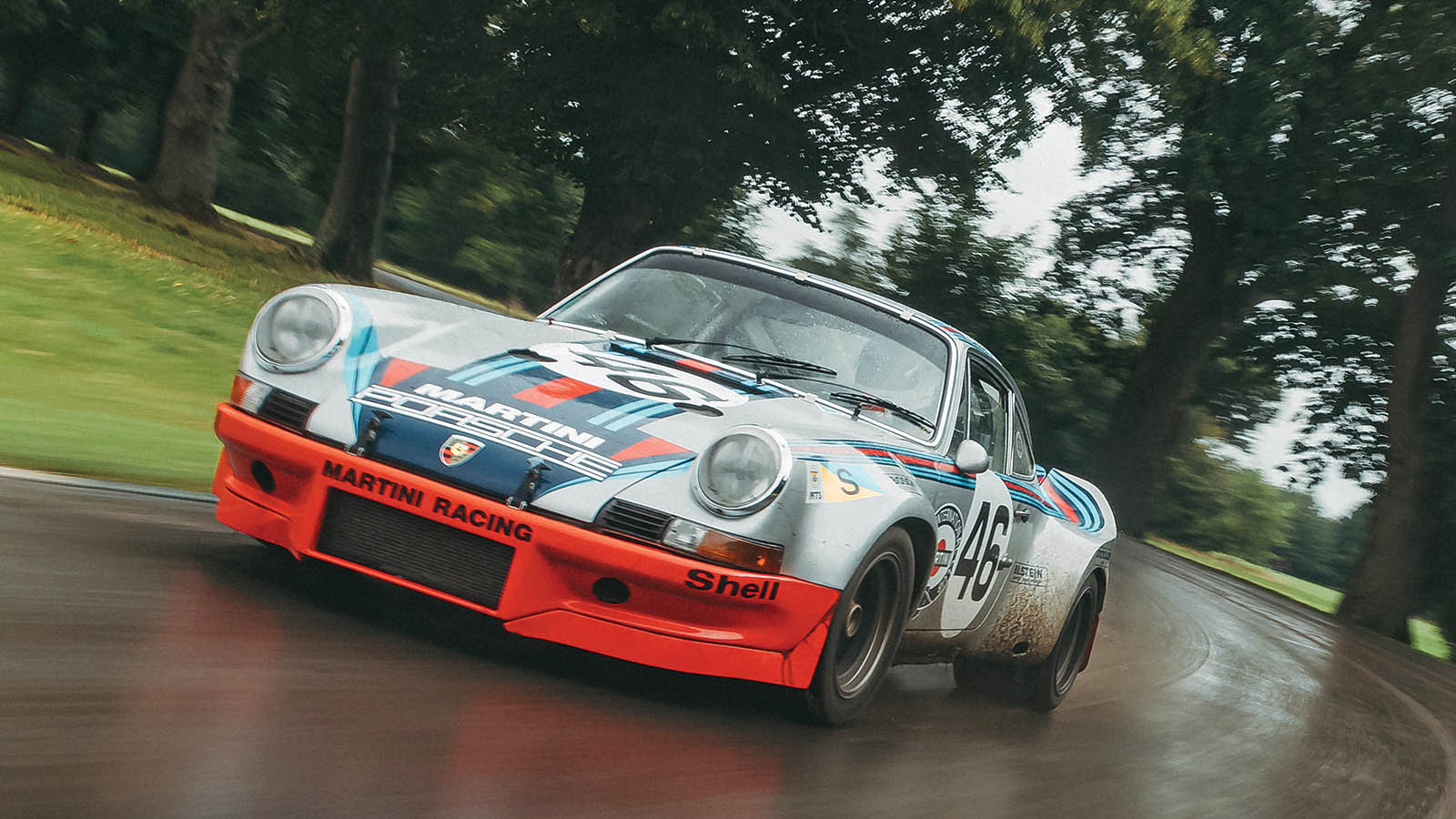
While Porsche’s fearsome 911 RSR racer made its competition debut at the opening round of the 1973 World Sportscar Championship held at the 24 Hours of Daytona in February, the first time the model was seen with its now-famous Martini Racing livery was the following month at the 6 Hours of Vallelunga, where the cars came first and second in class.
Based on the 911 RS, but with almost every component modified for competition, the 3-litre works cars weighed a mere 839kg (1850lb), thanks to the extraction of almost all interior items and the use of some glassfibre exterior panels.
The factory racing car, pictured, was powered by an all-alloy flat-six with mechanical fuel injection, which helped it almost achieve 180mph down the Mulsanne Straight at Le Mans, where the top-placed Martini RSR finished fourth at the 1973 edition of the round-the-clock enduro.
20. Renault 5 Turbo
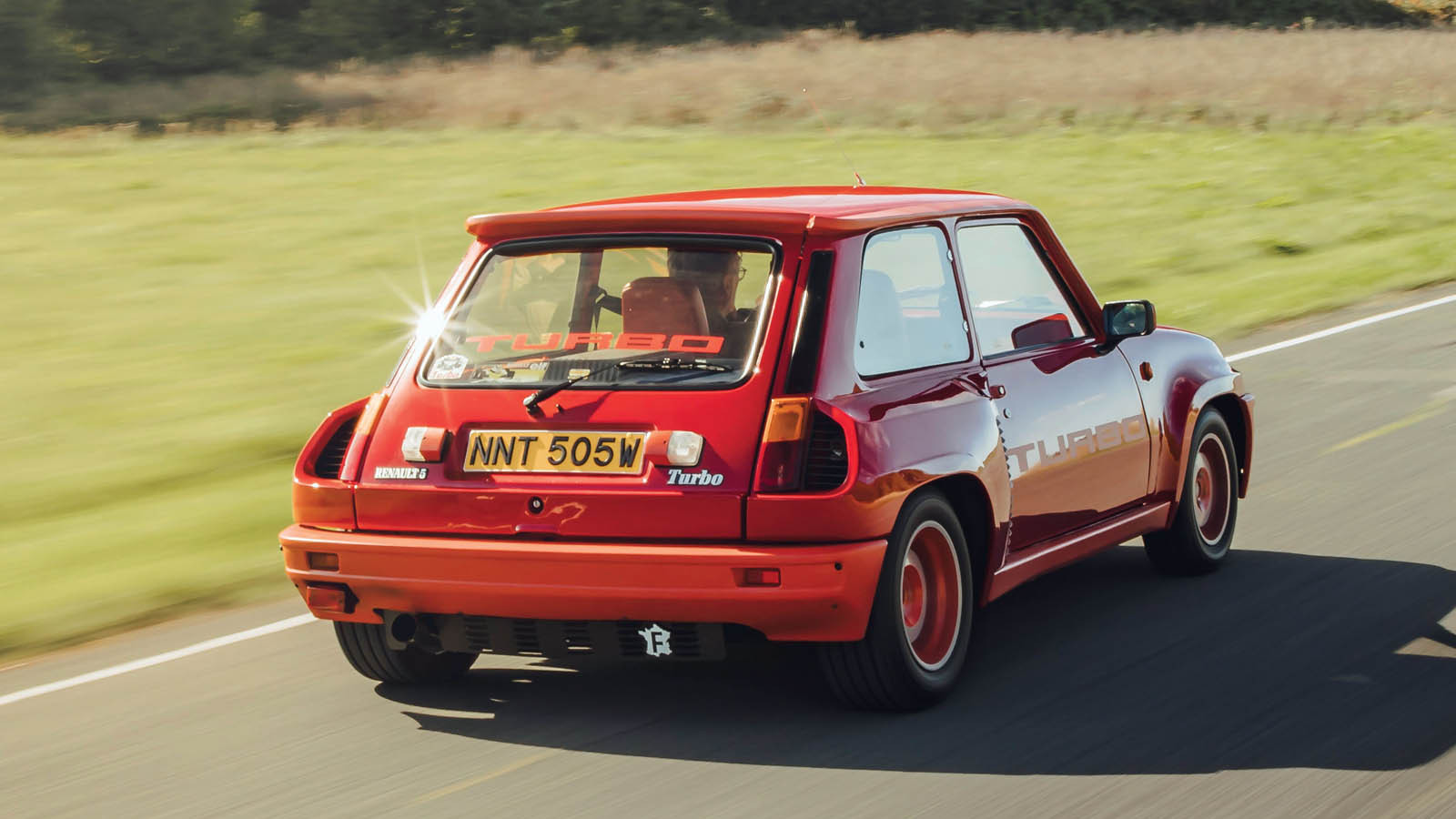
Few cars have advertised their means of propulsion so blatantly as Renault’s 5 Turbo.
As well as the prominent tailgate badge, ‘TURBO’ graphics shouted out from the rear window and filled both doors.
But, frankly, they were hardly needed, when the Renault 5 Turbo was already such an aesthetic departure from its humble hatch brethren.
Unveiled at the 1978 Paris show, this wild R5 was powered by a mid-mounted, 1.4-litre ‘four’, boosted to produce 158bhp thanks to an intercooled Garrett T3 turbocharger.
Its doors, roof and tailgate were aluminium, and its swollen wings, bumpers and bonnet were formed in glassfibre, all adding up to a kerbweight of only 970kg (2138lb).
Works competition cars were pumping out up to 350bhp, but even a standard production model could clip 124mph and accelerate from 0-60mph in around 6 secs.
21. Renault Fuego Turbo
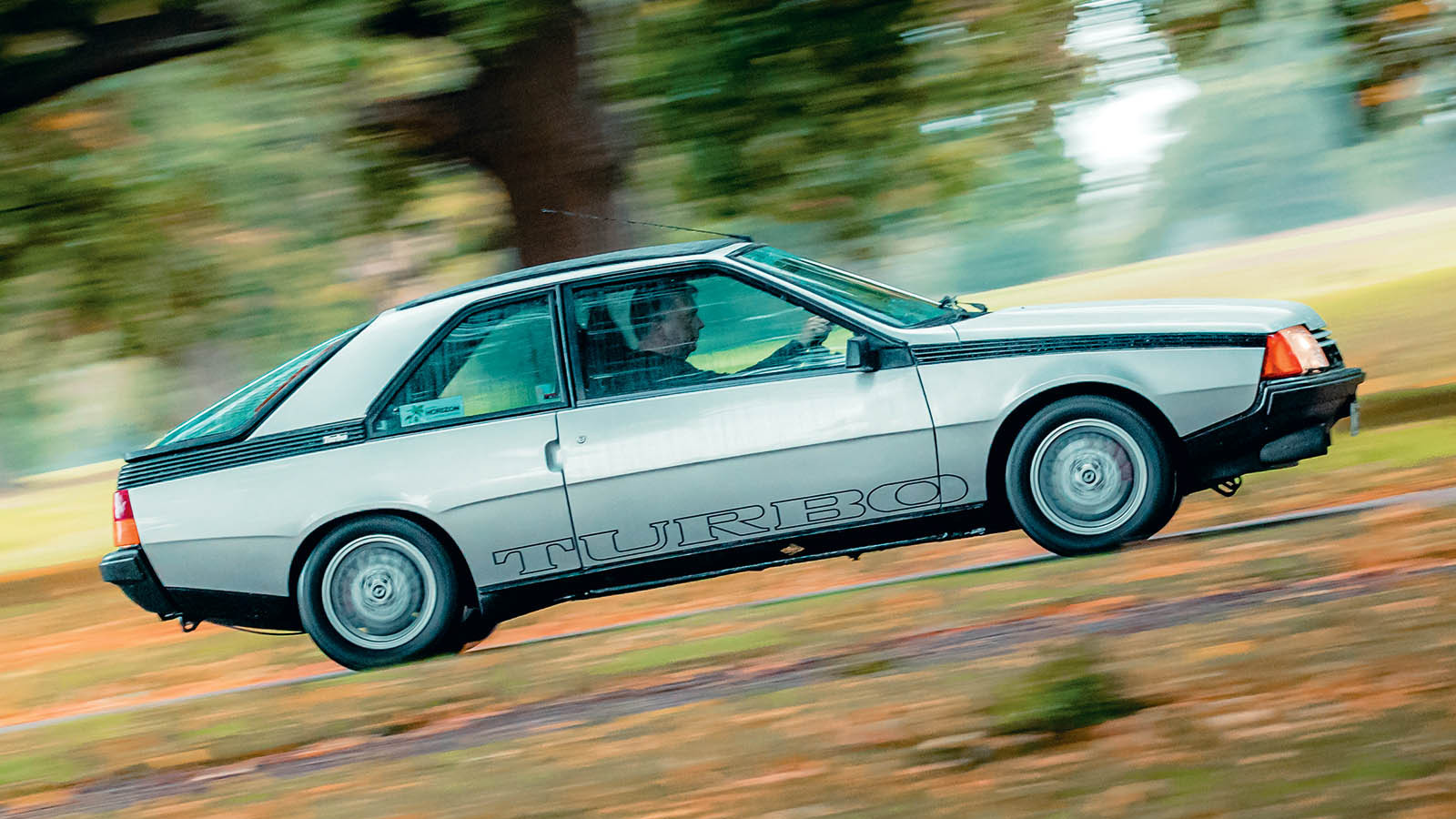
Renault’s Fuego Turbo was a perfect illustration of a car manufacturer mixing the improved fuel economy and emissions of a smaller engine with the performance of a bigger one.
With an intercooled Garrett T3 turbocharger boosting output from the Fuego’s overhead-valve, 1565cc ‘four’, there was perhaps ample justification to emblazon the word ‘TURBO’ in large letters down the sides of Renault’s sleek, Robert Opron-designed coupé.
However, beneath the skin, the R18-based Fuego Turbo was more or less unchanged from the standard model, with no modifications made to the suspension.
That said, a smart set of BBS alloy wheels and a deep chin spoiler did help lift it visually.
22. Shelby GT500 KR
Despite Carroll Shelby telling Ford boss Lee Iacocca that he couldn’t ‘turn a mule into a racehorse’ after being asked to turn up the Mustang’s wick to compete with the Pontiac GTO and Plymouth Barracuda, the Texan took on the challenge and created what became one of the most potent versions ever.
Ford claimed 330bhp for the 428cu in V8, but that was smoke and mirrors. Think 400bhp-plus and you’re nearer the mark.
He also deleted the rear seat bench to save weight, and fitted a strut brace, Koni shock absorbers and a lighter, close-ratio Borg Warner T10 transmission.
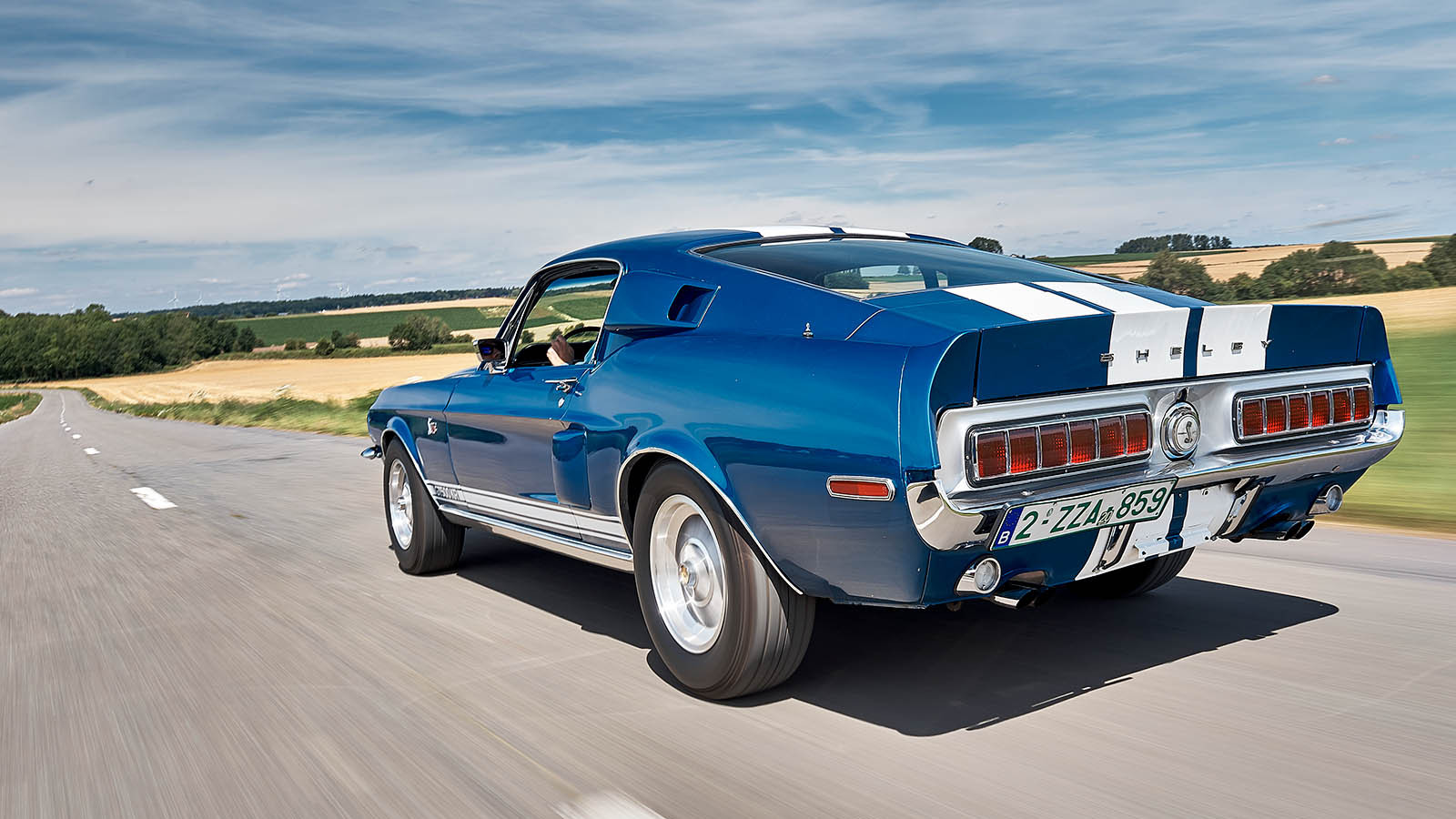
Completing the package was a set of graphics that defined the model more than anything else: two broad stripes that run over the top of the car from nose to tail, and ‘GT500 KR’ (for King of the Road) stickers that ran above the sill line on each side of the body.
23. Subaru Impreza WRX STi 555 edition
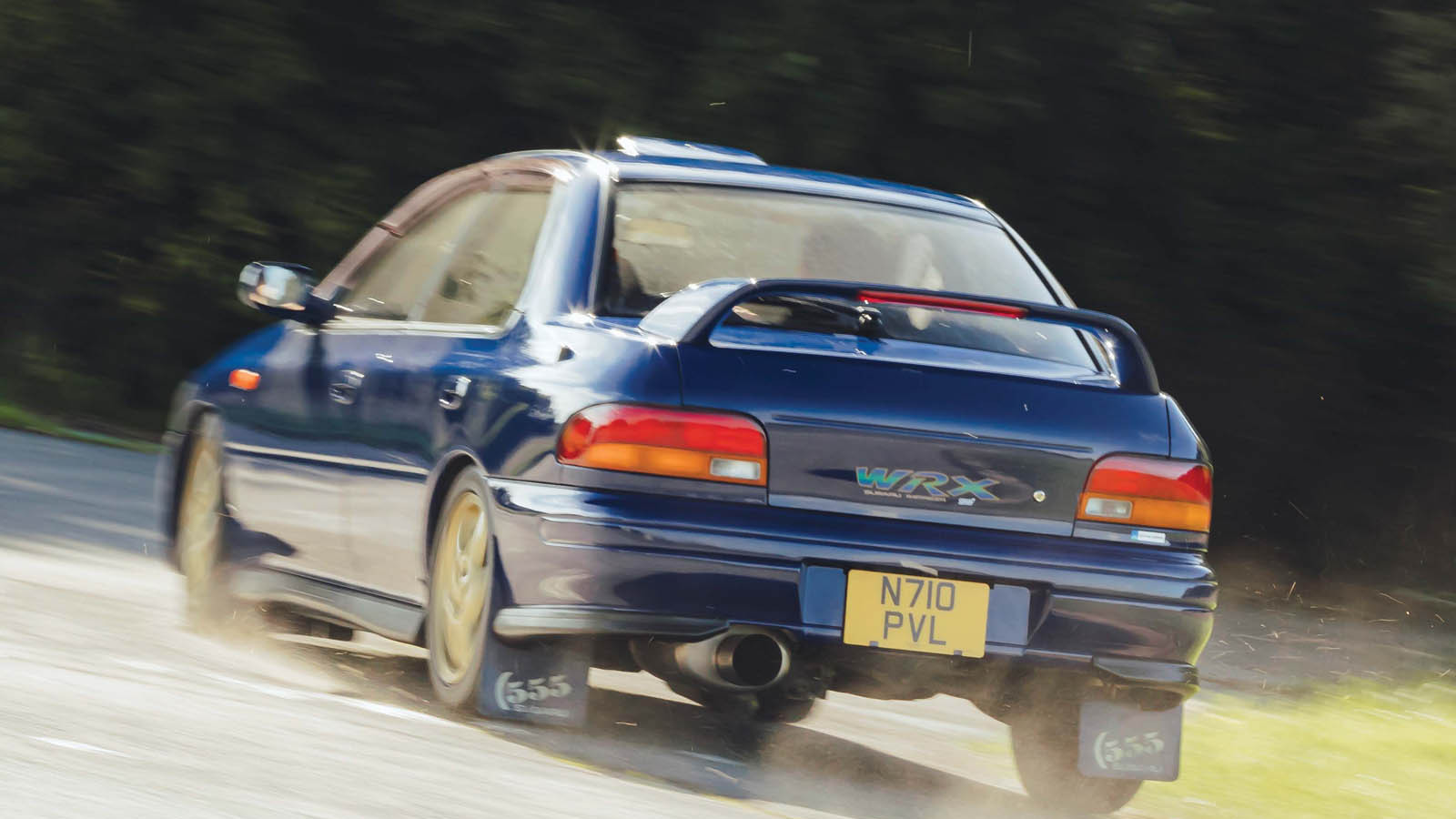
By the standard of other 1990s Japanese rivals, the graphics adorning the rear panel – and only the rear panel – of Subaru’s Impreza WRX STi 555 were amazingly restrained; just a rather apologetic ‘WRX’ decal applied between the tail-lights, underscored by a tiny ‘SUBARU INTERNATIONAL STi’ script.
But there was nothing apologetic about the WRX itself.
The STi (named for Subaru’s in-house motorsport department) version arrived in early 1994 with a blueprinted engine, forged pistons, a steel crankshaft, a better intercooler and an upgraded turbo.
All this meant 0-60mph in 5 secs, en route to a top speed just shy of 150mph.
The 555 edition pictured here also gained a water spray into the intercooler to keep the boost dense, as well as a roof flap for extra cabin ventilation.
24. Toyota Land Cruiser (HJ61)
Launched in 1980, Toyota’s 60-series Land Cruiser helped transform perceptions about the model by ditching its rugged, pared-down image with a vehicle that was something altogether more salubrious.
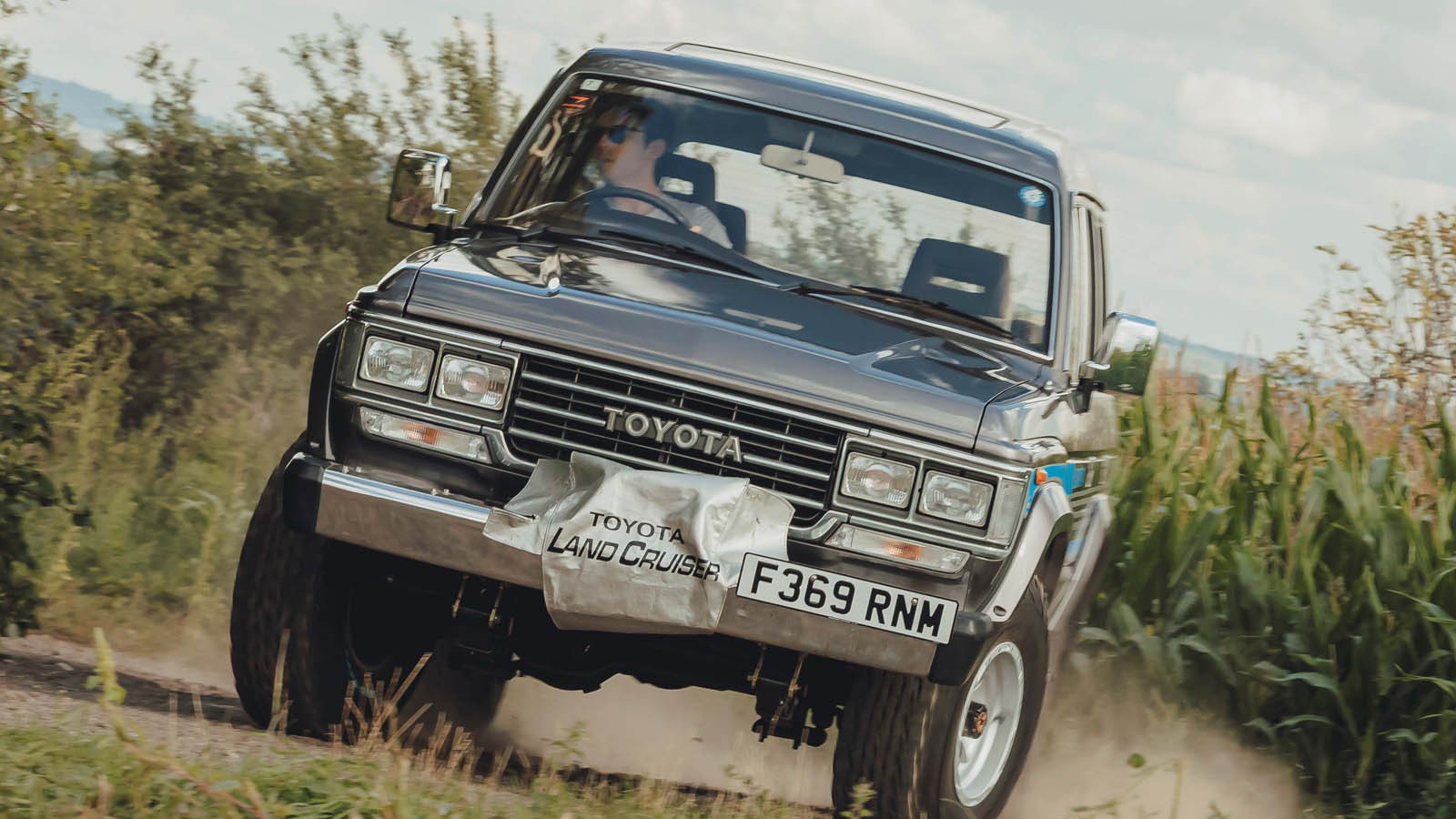
The HJ61 derivative pictured here took that a stage further with a bold graphics pack running down the Land Cruiser’s deep side panels, incorporating the words ‘turbo’ and ‘FOUR WHEEL DRIVE’ (just in case you mistook it for something that couldn’t plug the deepest of mud).
Now with full carpeting, a proper plastic dashboard, electric door-mirror adjustment and air conditioning, this Land Cruiser started to bridge the gap between it and the Range Rover.
And, as the sticker said, it was now powered by a turbocharged, 4-litre ‘six’ with mechanical fuel injection, producing 134bhp, but a substantial 232lb ft of torque at just 1800rpm.
25. Vauxhall Chevette HS
Created as a homologation special to allow Vauxhall to go rallying – a programme funded by its dealer network, because parent company GM refused – the Chevette HS was based on GM’s global T-car platform.
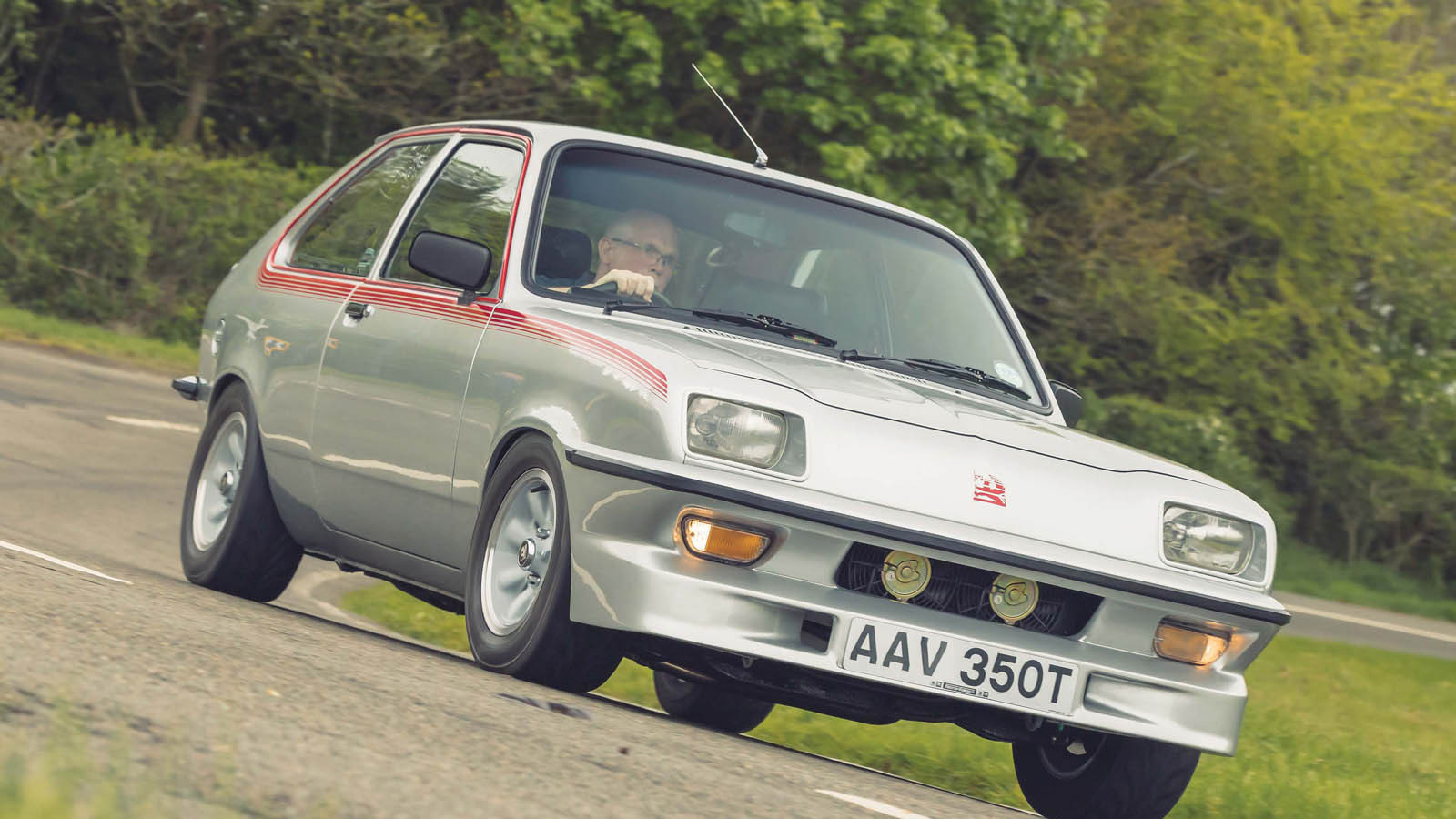
With its Silver Starfire paint (common to all HS models), pronounced spoilers, Avon-lookalike alloy wheels and an in-your-face ‘VAUXHALL’ graphic filling its rear panel, there was no doubting this hot Chevette’s sporting intent.
A sweeping red decal around the car’s glasshouse and stylised ‘HS’ sticker on the rear panel added further to the effect.
Gone was the stock Chevette’s wheezy Viva 1300 engine, replaced by Vauxhall’s 2279cc slant-four, upgraded with a 16-valve, twin-cam cylinder head to produce 135bhp.
Mated to a five-speed Getrag gearbox, the HS could clip 60mph in 8.5 secs and go on to a top speed of 115mph.