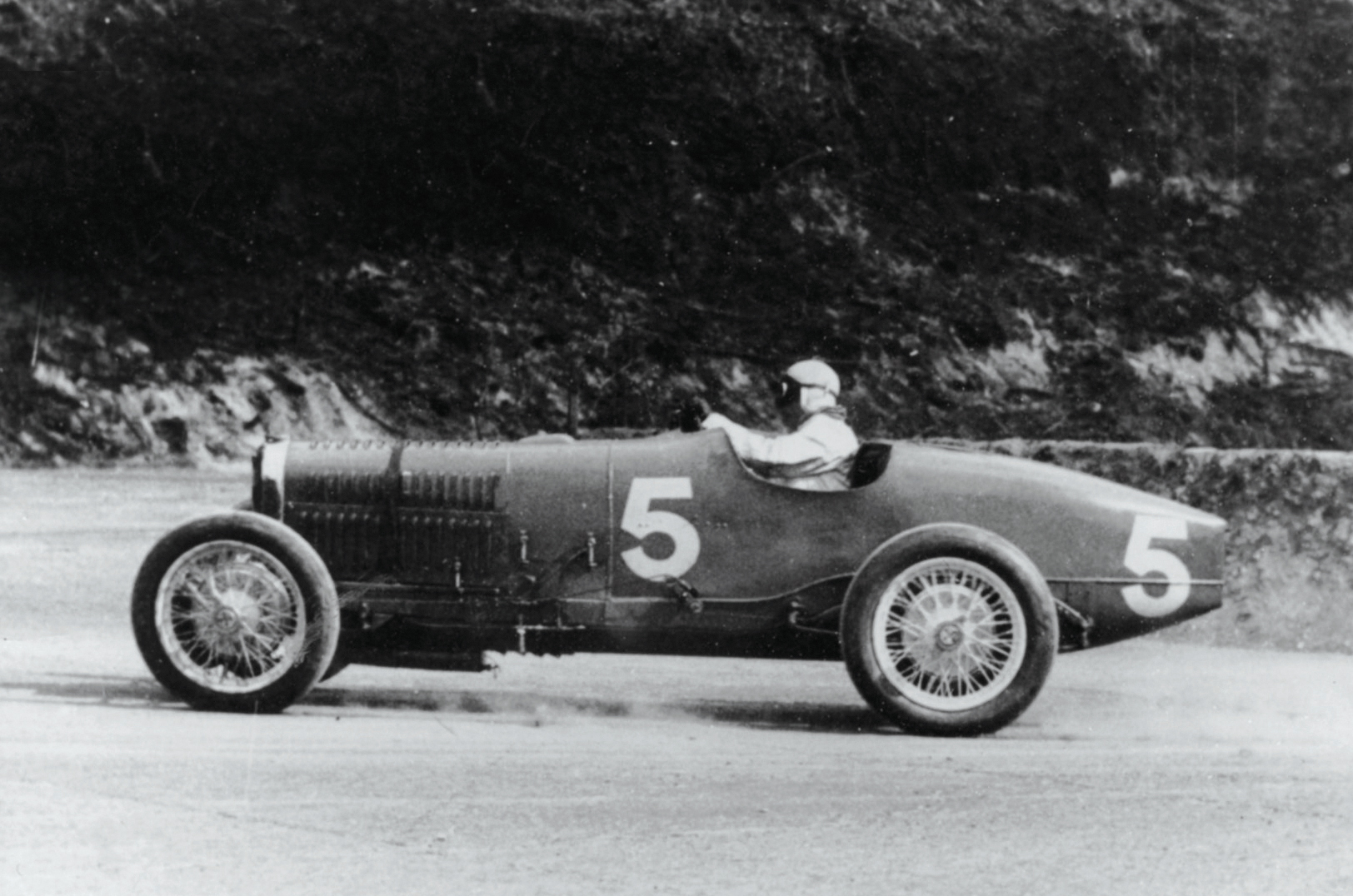
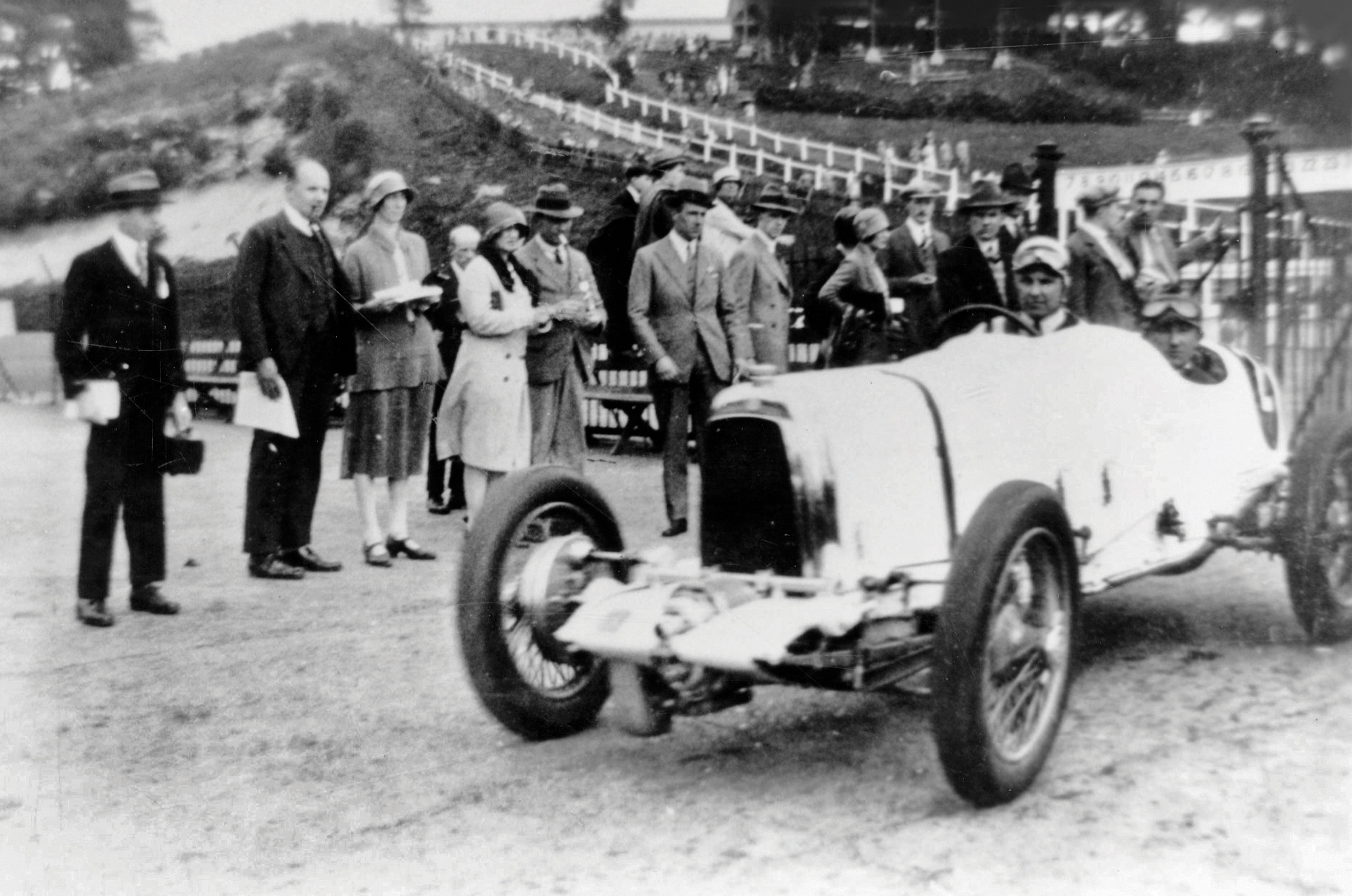
After 70 laps, it was Benoist, Sénéchal, Divo, with Halford 1.5 miles behind and Campbell a further 1.5 miles back; the Halford and Bugatti were easily the strongest performers at this point, with The Autocar observing: ‘The Halford had been running extremely well… its driver, handicapped at the turns by having to use one hand on the lever which alone operated all four brakes.’
But the reporter then saw Halford struggling to engage first midway through a bend.
‘Then, when it did engage, the engine “revved” but did not drive,’ he continued. The universal joint had failed, bringing the car to a halt under the bridge.
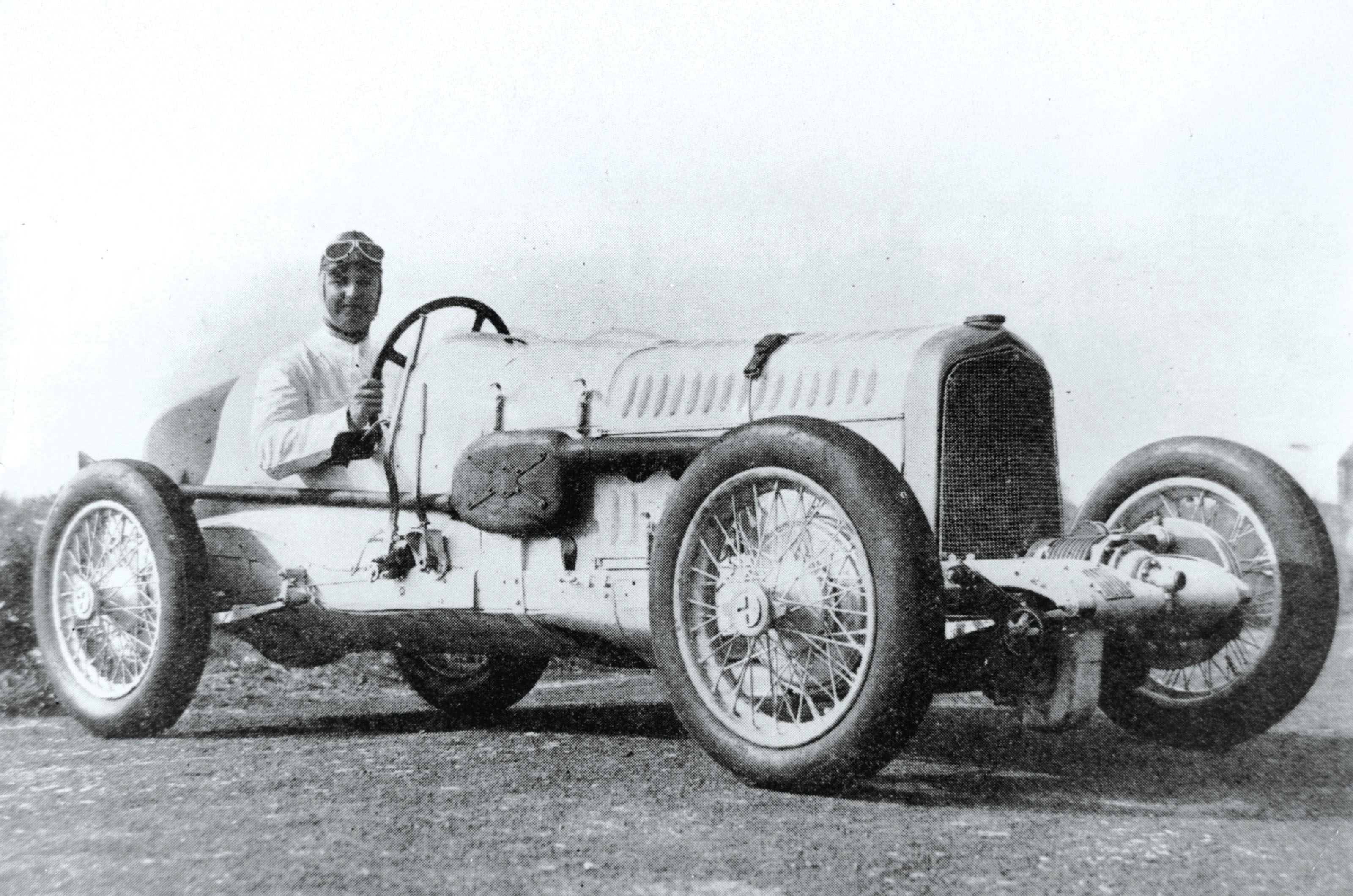
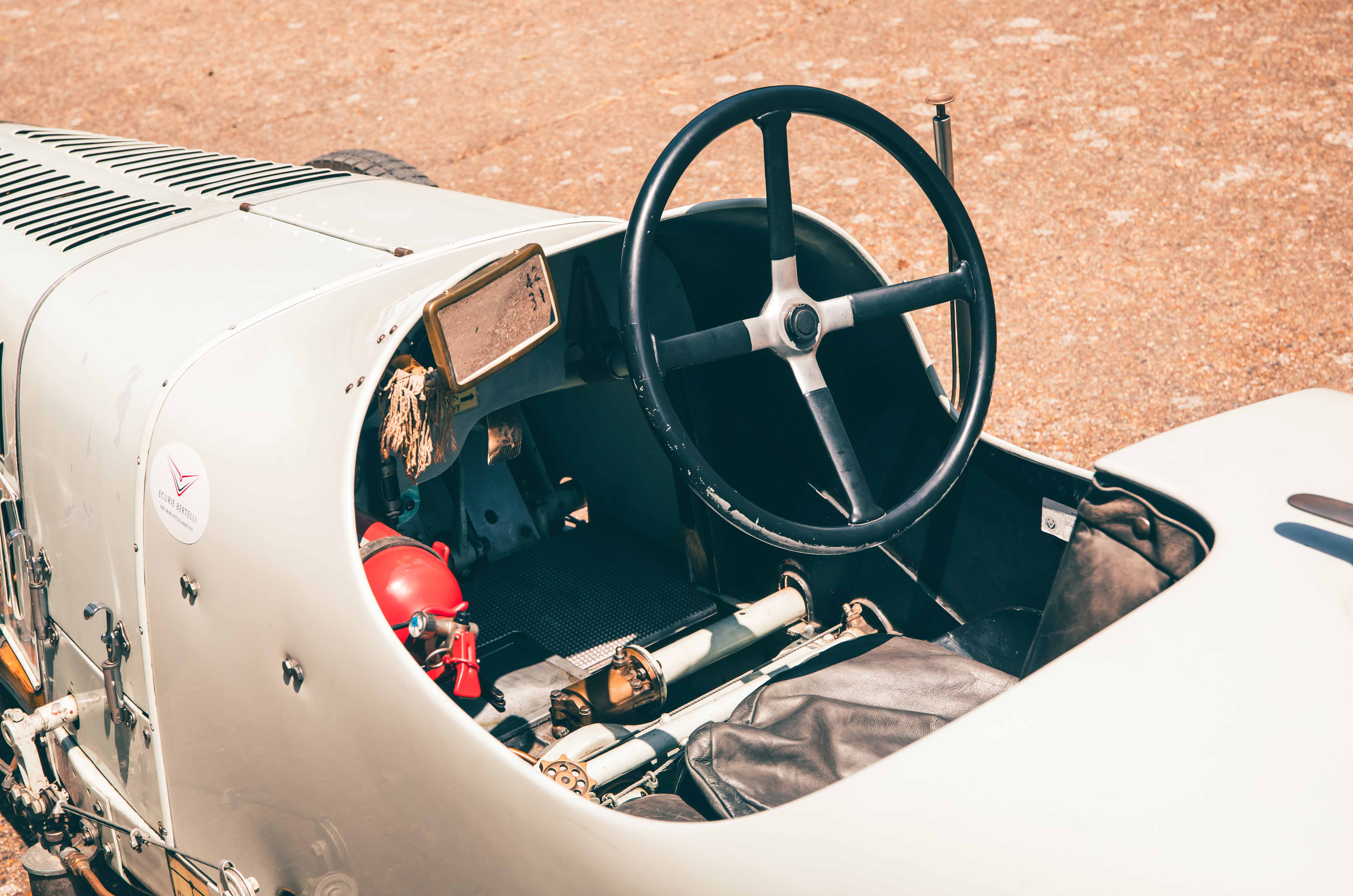
This unique Aston Martin has a large steering wheel
Plucky Halford refused to admit defeat and, with spectators ‘loudly applauding’, he pushed the Special back to the paddock in the hope of effecting a repair.
But it was game over. Halford had completed 83 laps and, running in fourth when he retired, he was the highest-placed DNF of the race.
The podium for which Halford had made such a tantalising pitch was occupied by winners Robert Sénéchal and Louis Wagner in their Delage (posting an average speed of 71.61mph), with Campbell second (68.82mph), and Benoist and Dubonnet third (68.12mph).
In its post-race analysis, The Autocar concluded: ‘It seems possible that rather more power was being put through the [Halford Special’s] chassis than it was designed to stand.’
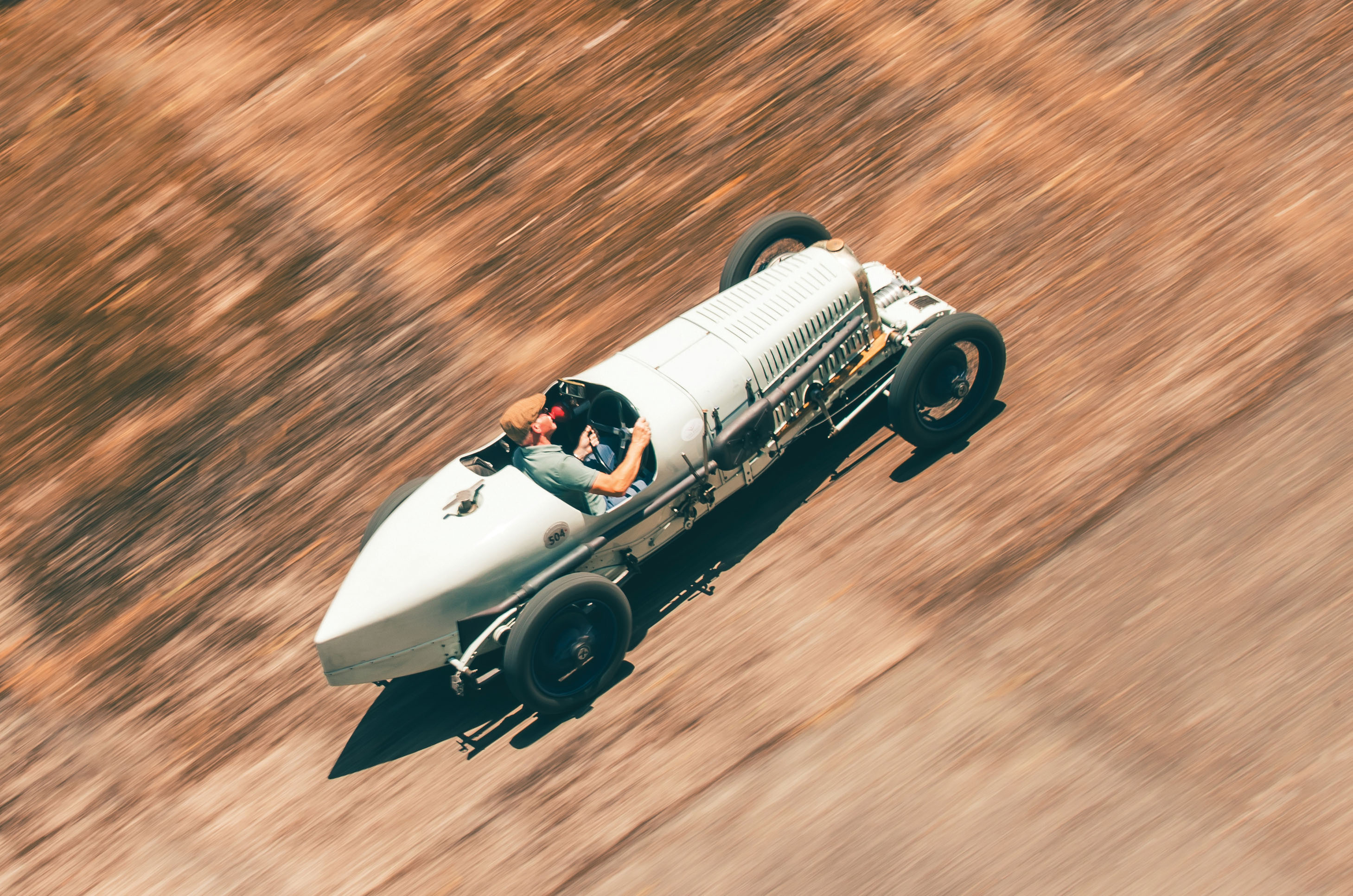
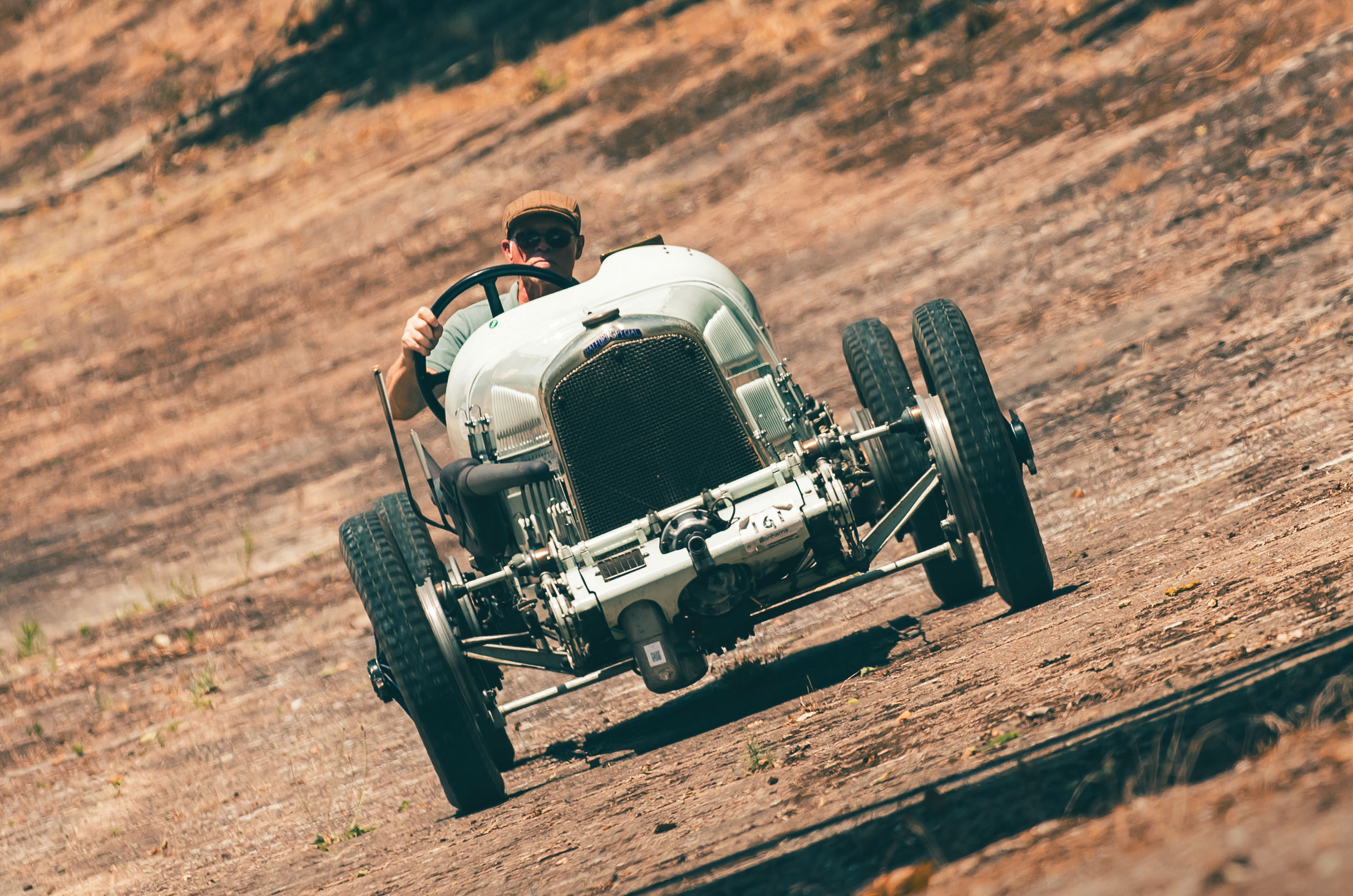
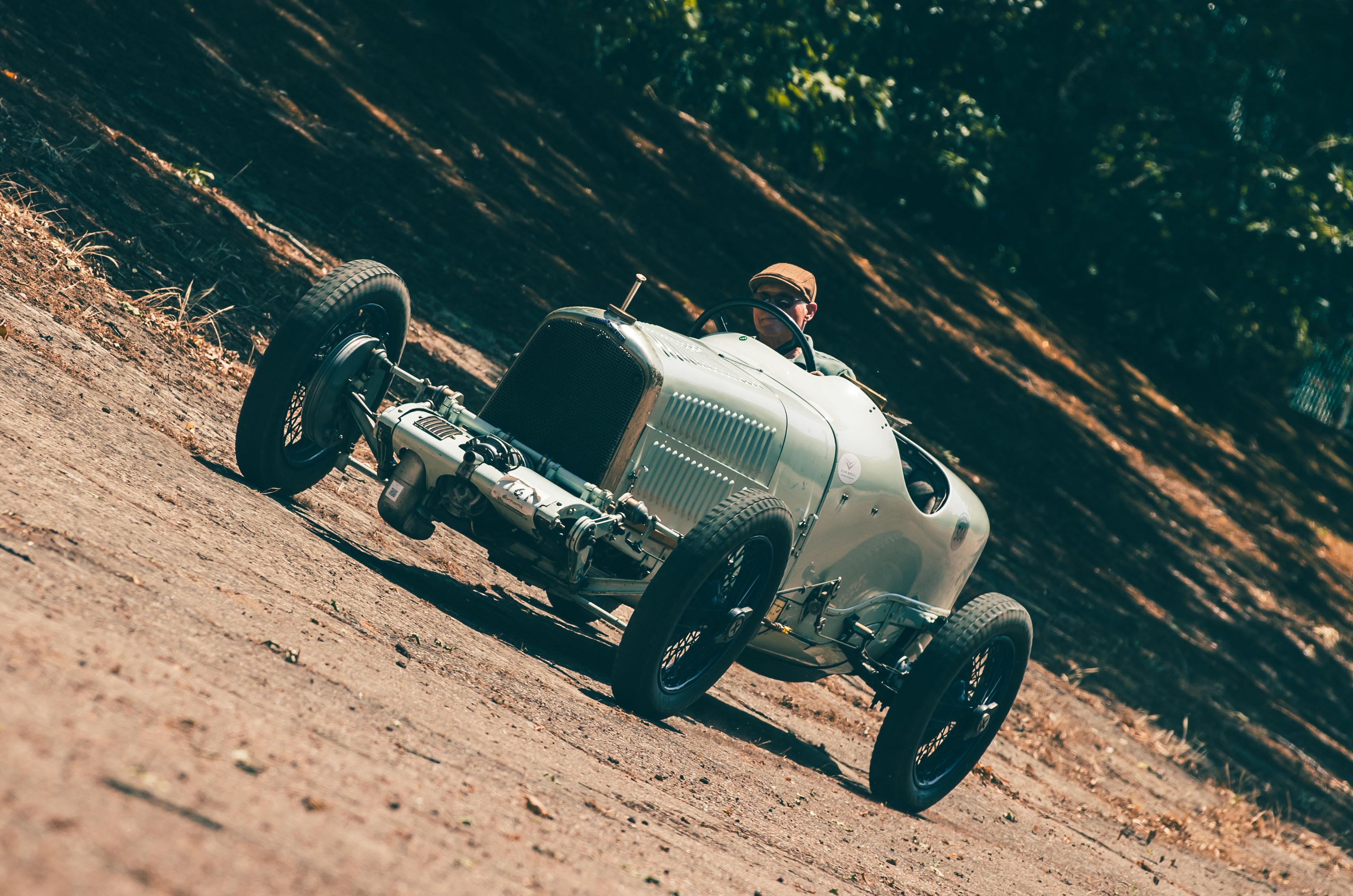
The Aston Martin Halford Special on Brooklands’ broken but storied banking
Halford raced the Special once more in 1926 at Brooklands’ JCC 200 Mile event, in which he finished 10th.
The car was then sold to Eyston for 1927, when, in addition to two further Brooklands races, the new owner took it to fifth at the French Grand Prix at Montlhéry.
In 1928, the Special was sold to Viscount Ridley, along with a second, identical engine Halford had built as a spare.
Ridley removed the Special’s engine: one was installed in a speedboat, the other in a Bugatti Type 35.
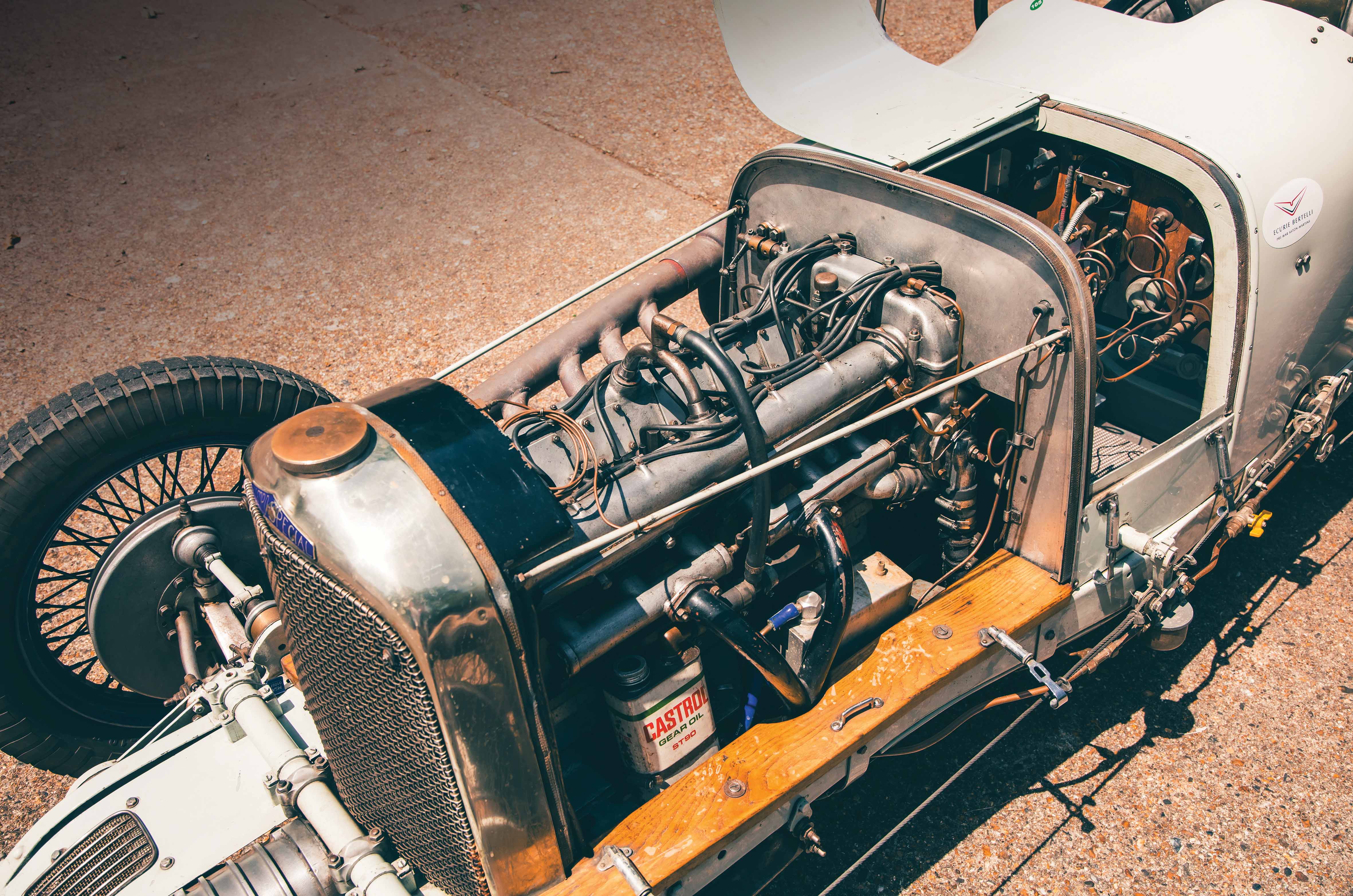
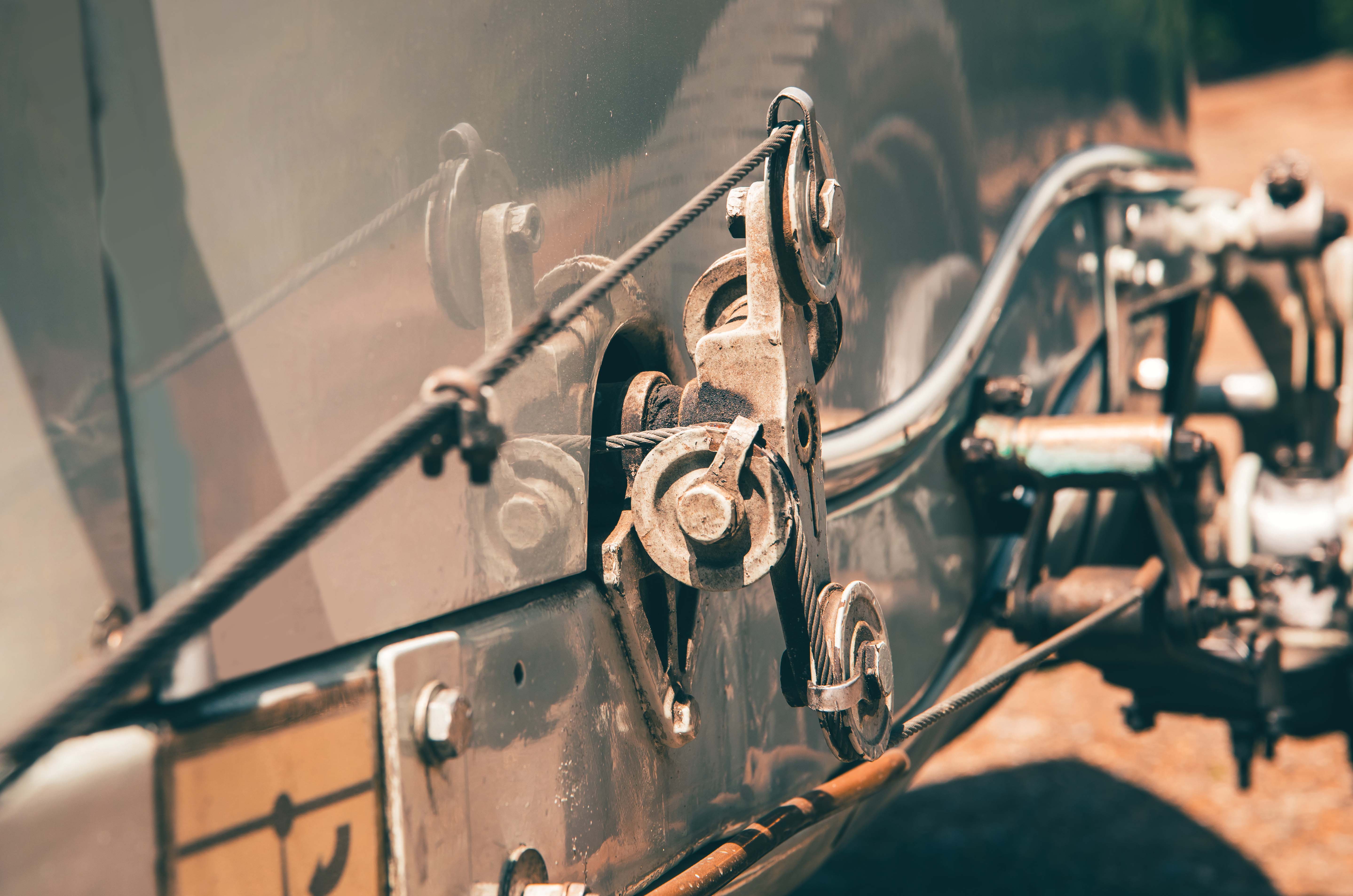
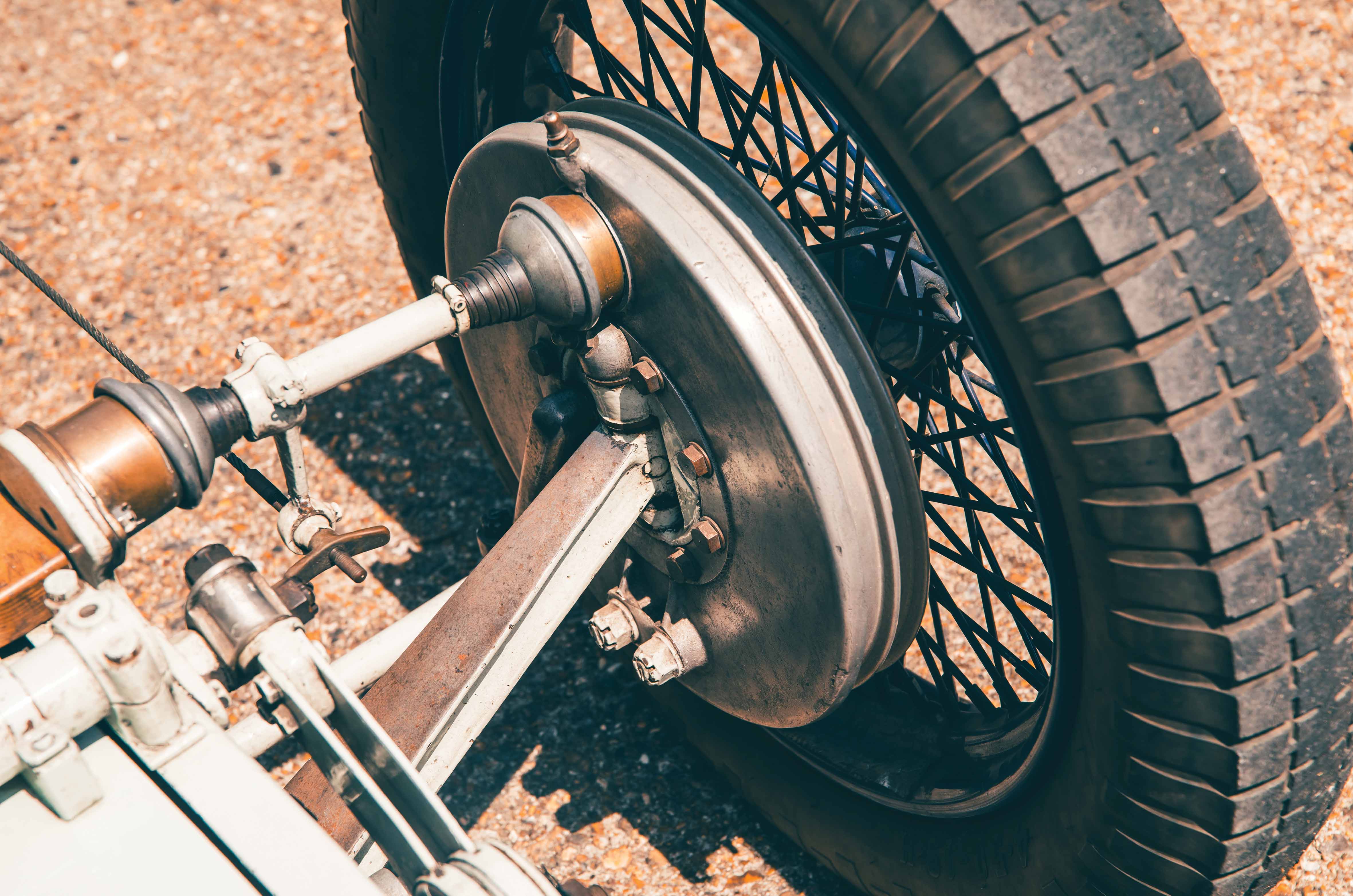
Complicated linkages operate the Aston Martin Halford Special’s four brakes via an external lever
For many years the Special itself was thought lost, until the 1970s, when current owner James Cheyne, a sidevalve Aston enthusiast, embarked on a project to recreate the Halford.
After acquiring a long-wheelbase chassis from a racing Aston Martin, James learned that Morntane Engineering was using the Halford’s original chassis as a base for a recreation of John Benson’s ’24 twin-cam racer for Nick Mason.
The latter agreed to swap chassis with James, who commissioned Nick Jarvis to craft a replica of the original body.
James tracked down the engine Ridley had put to marine use in the ’30s – it was on display in an engineering firm’s lobby.
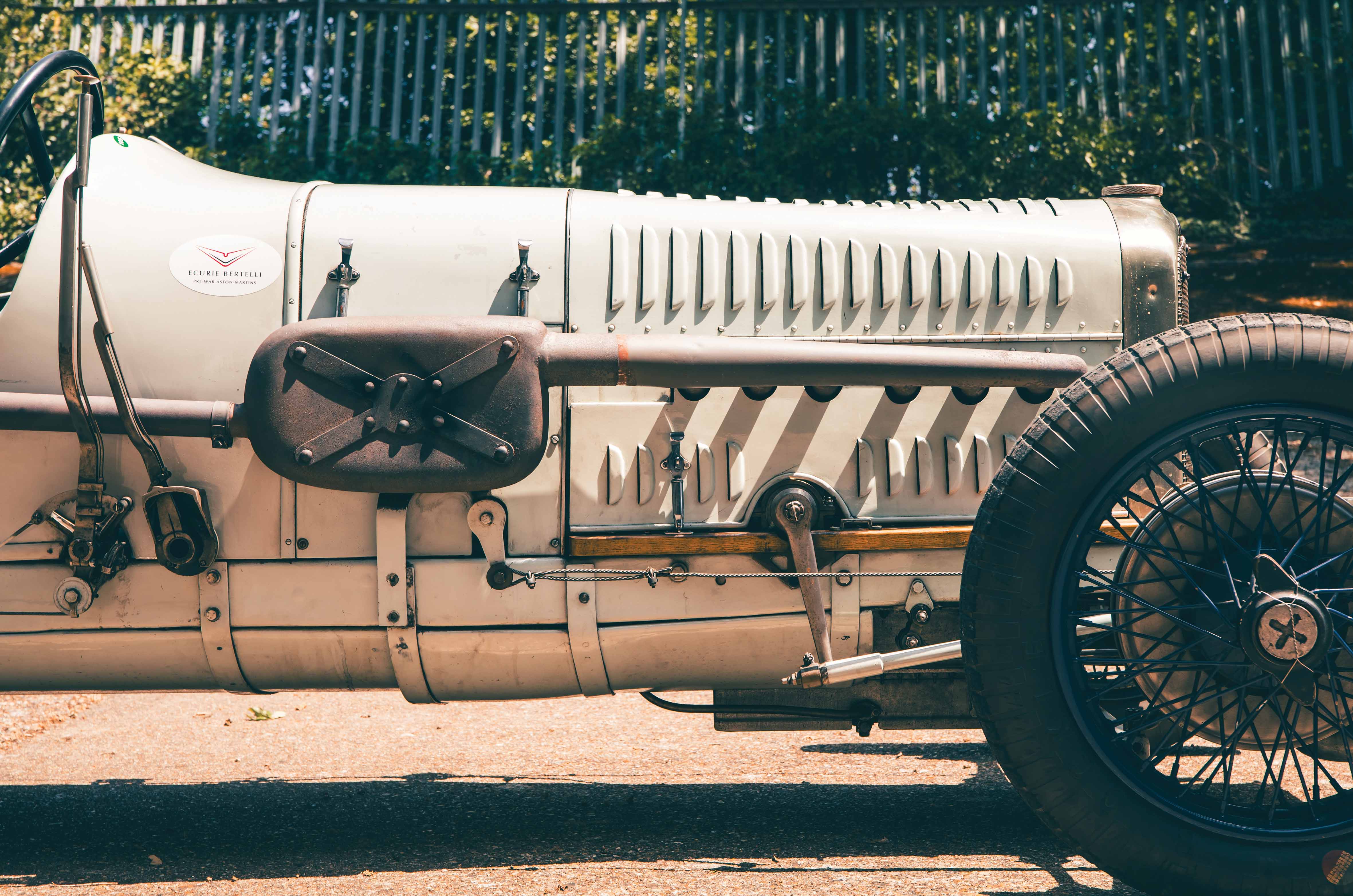
The Aston Martin Special’s brake lever and exhaust are positioned close to the driver’s arm
What began as a well-conceived tribute car ended up as the original racer with fresh but authentic bodywork.
After 10 years’ work, James presented the reborn Halford at the ’81 Aston Martin Owners’ Club Wiscombe hillclimb.
Since then he has campaigned it mainly at Vintage Sports-Car Club events in the UK and Europe, collecting a raft of trophies.
Today it is back at the circuit that gifted it such fine provenance.
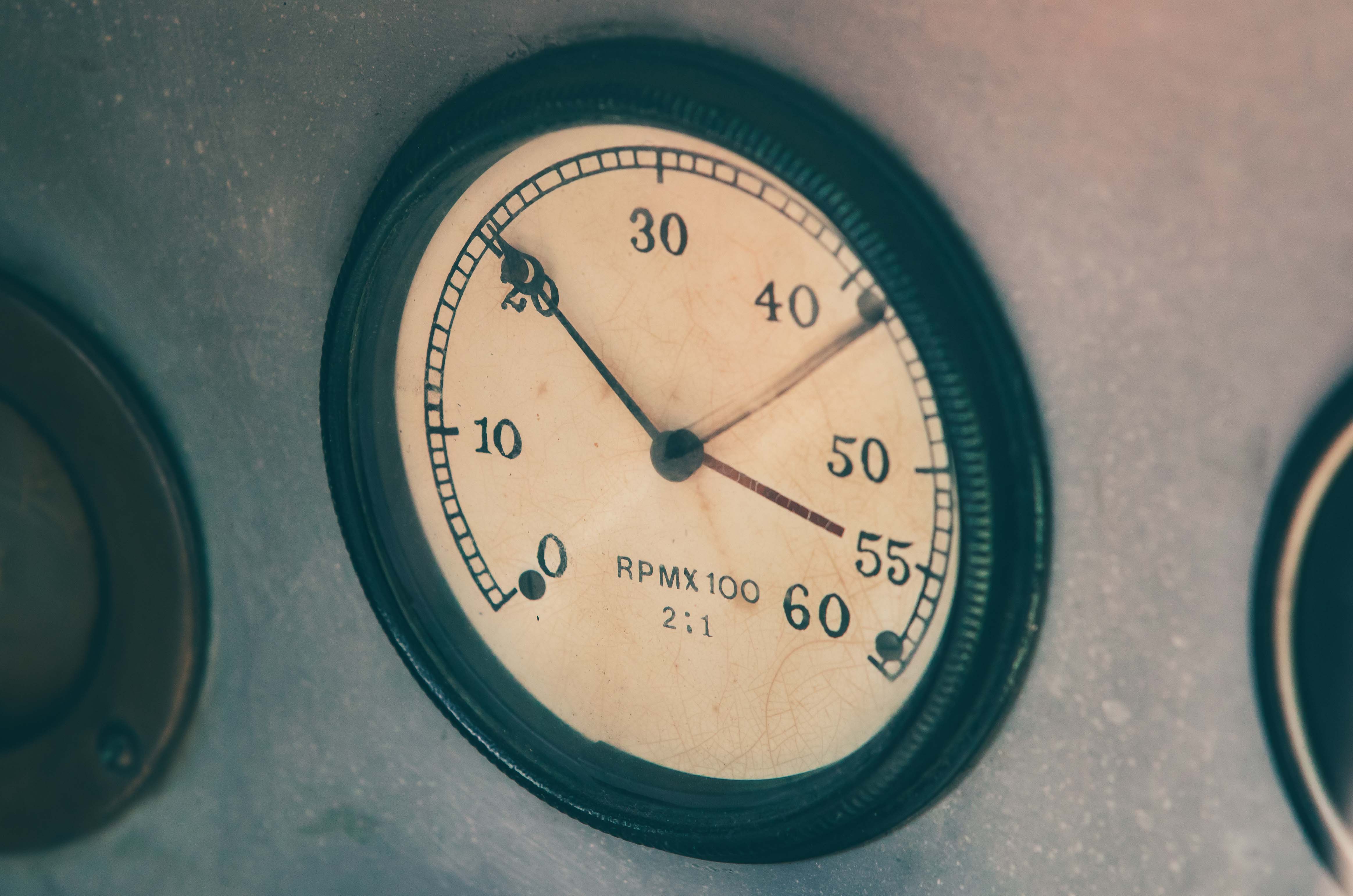
The Aston Martin Halford Special’s rev counter is one of the few instruments in the driver’s field of view
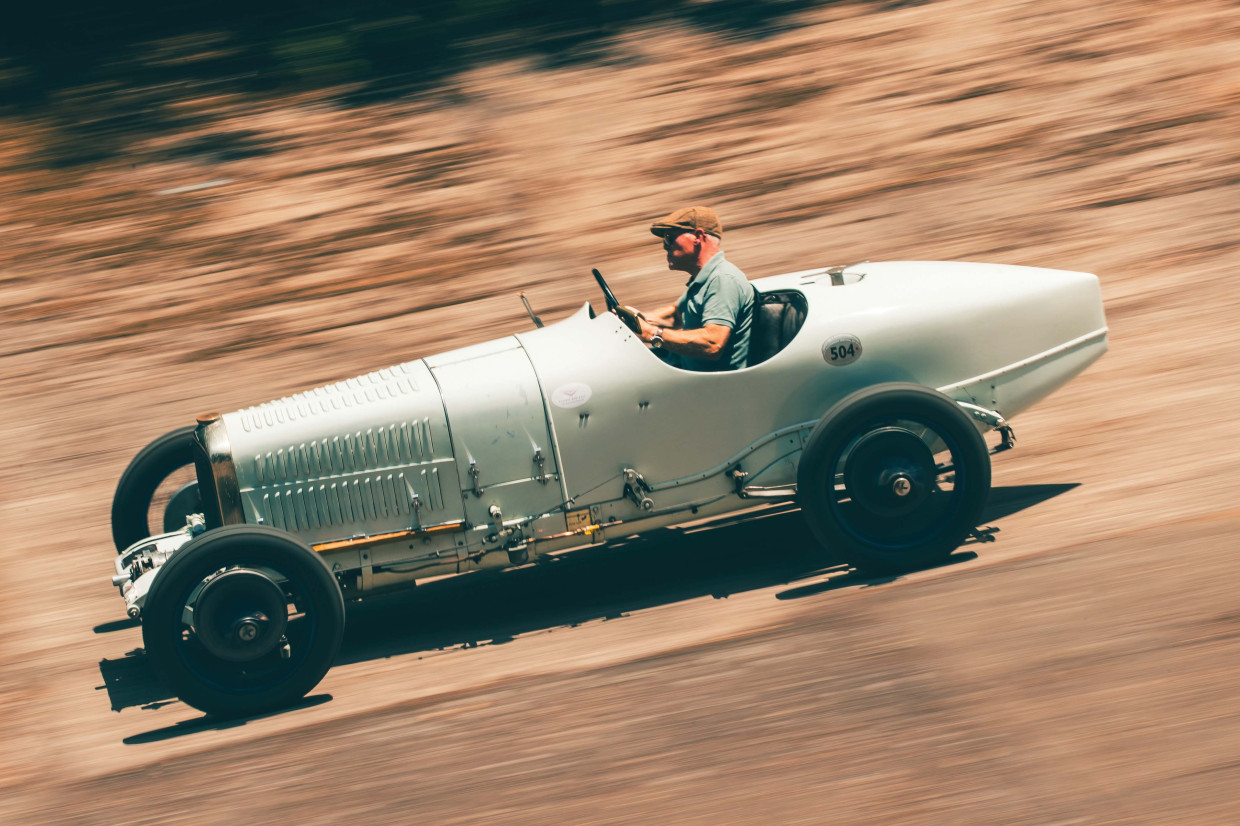
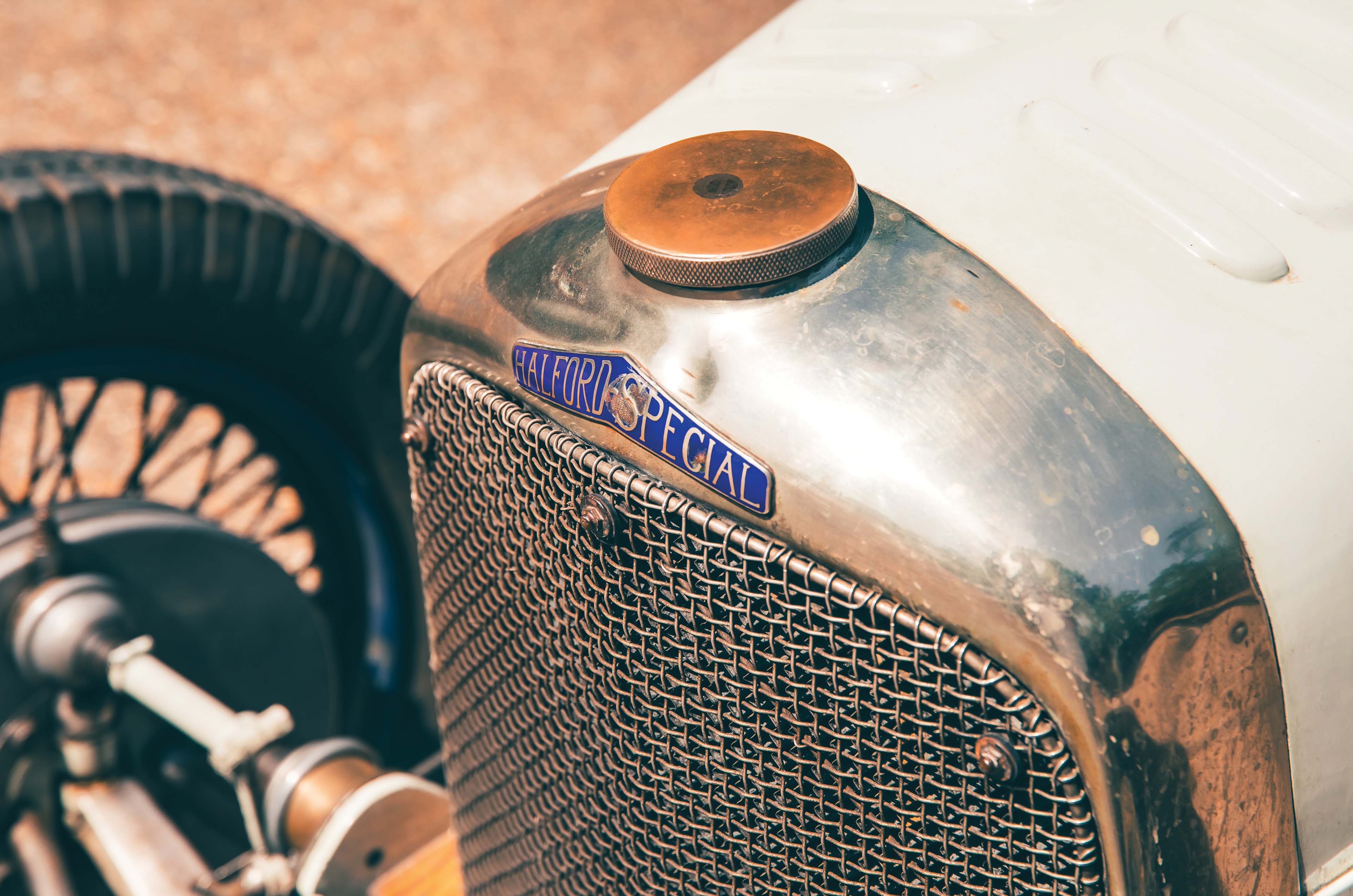
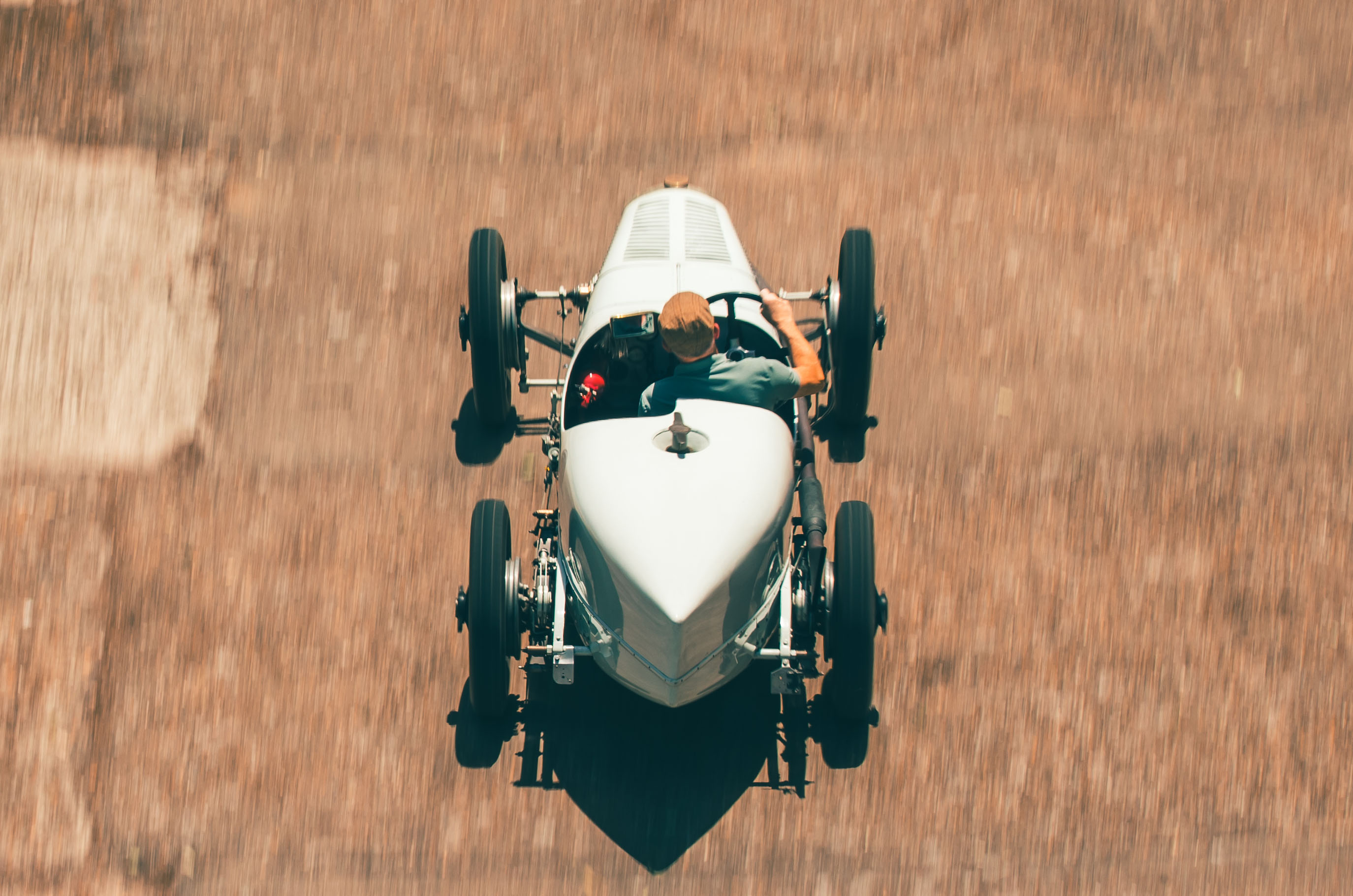
Handsome and spare, the Special’s body neatly sandwiches its chassis, fairing in the gubbins beneath.
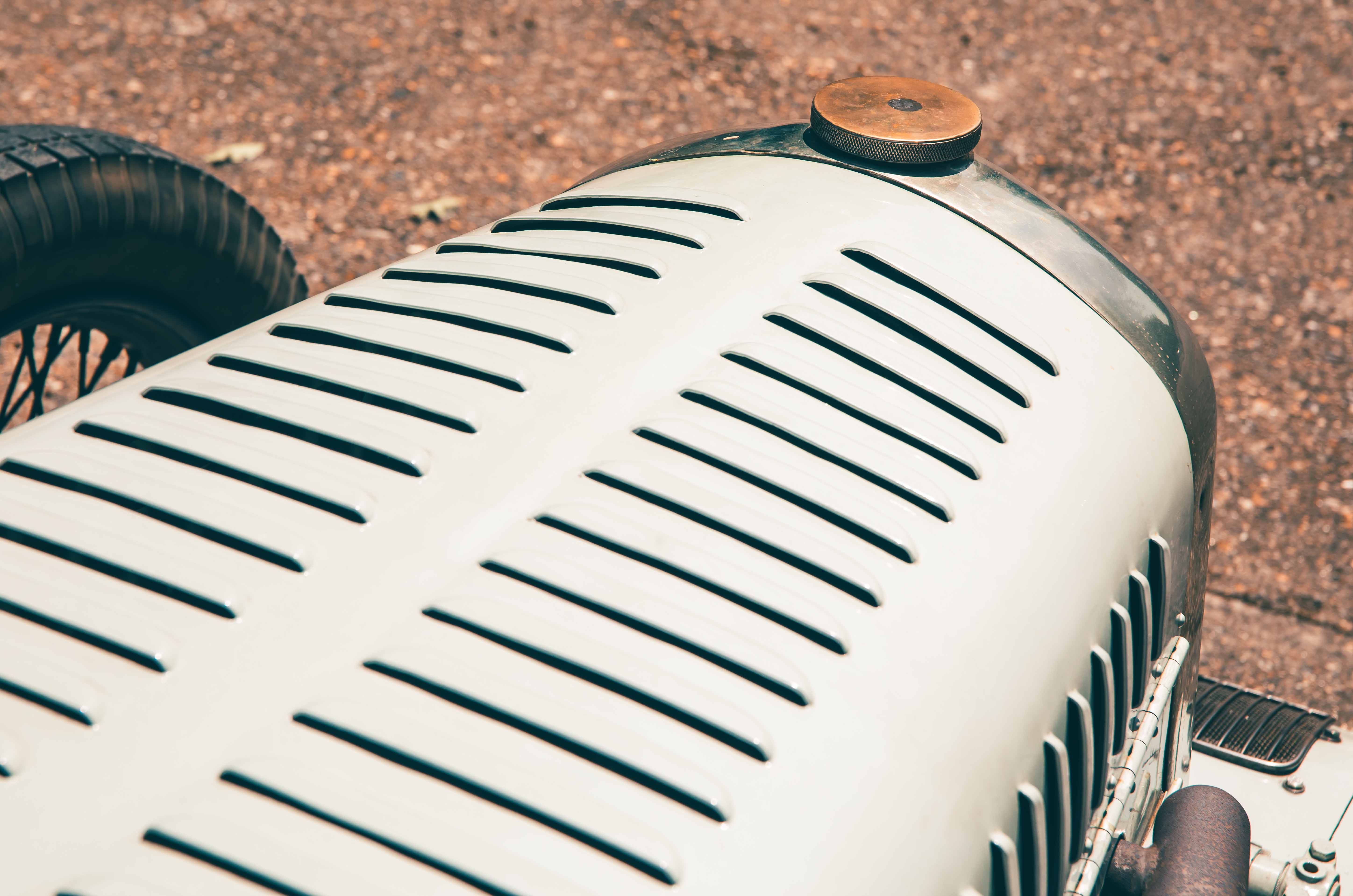
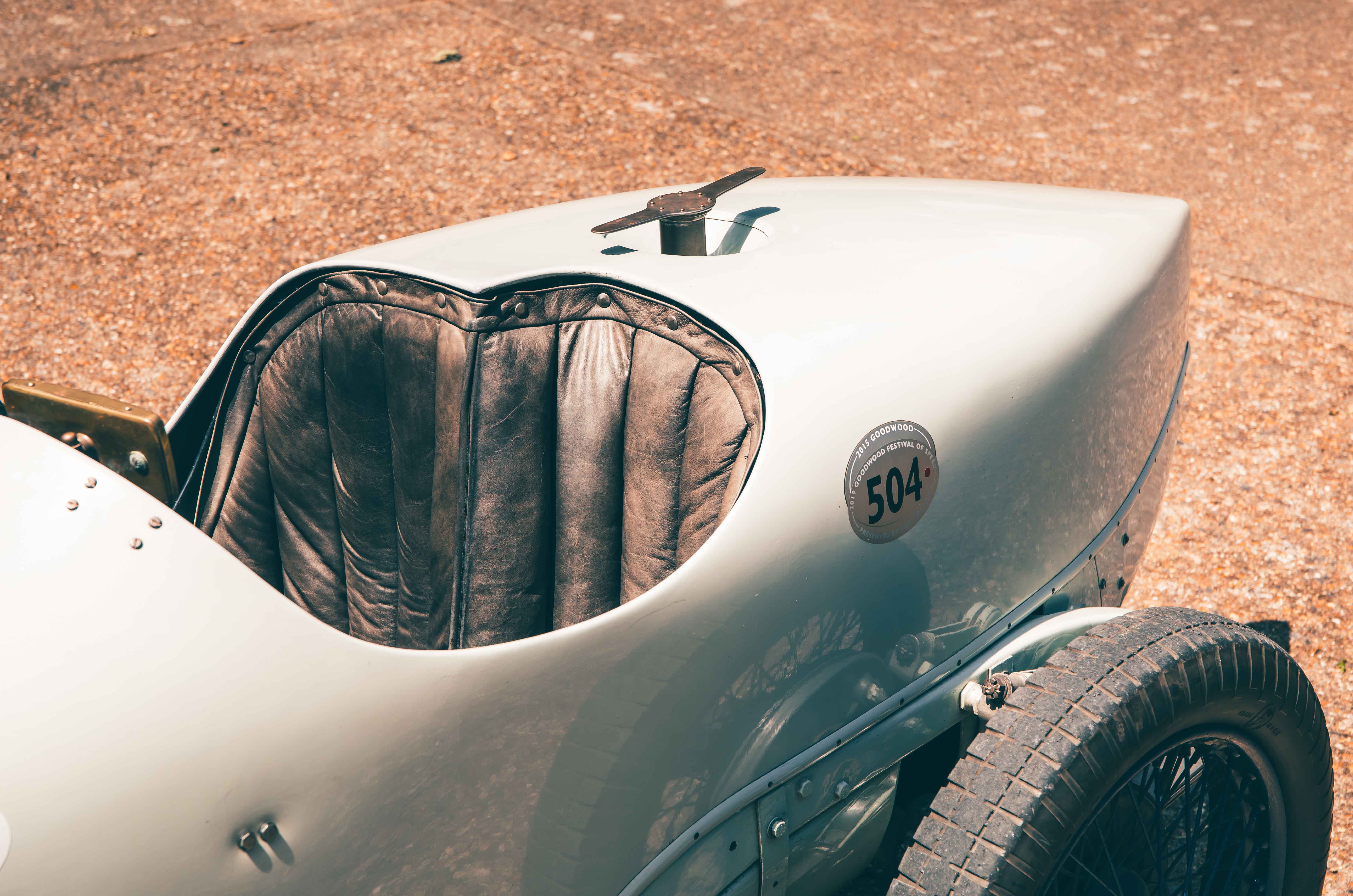
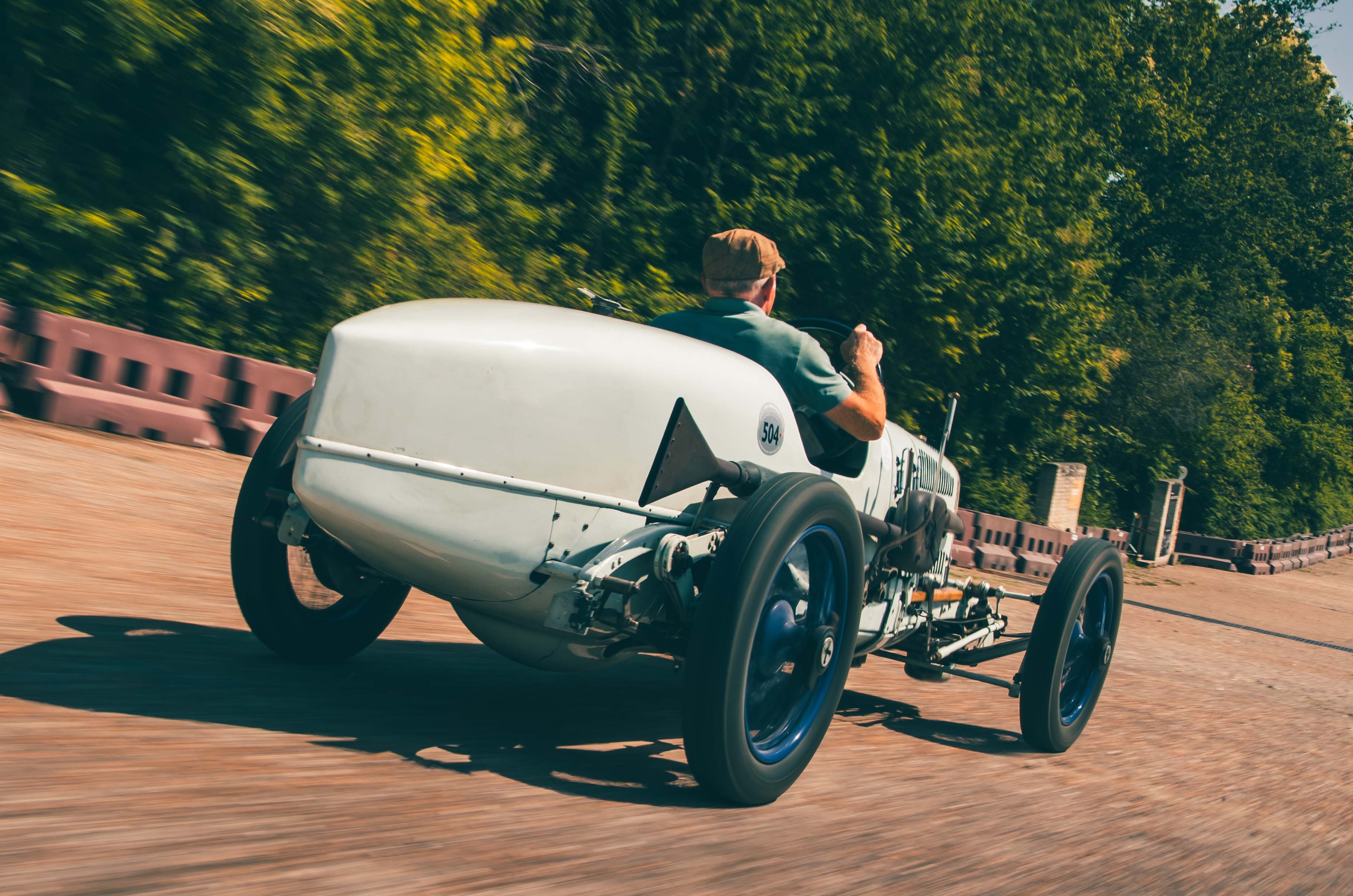
Louvred panels dominate the front, while the boat-tailed rear, with its fantail exhaust on the driver’s side, would have been a view familiar to many a rival.
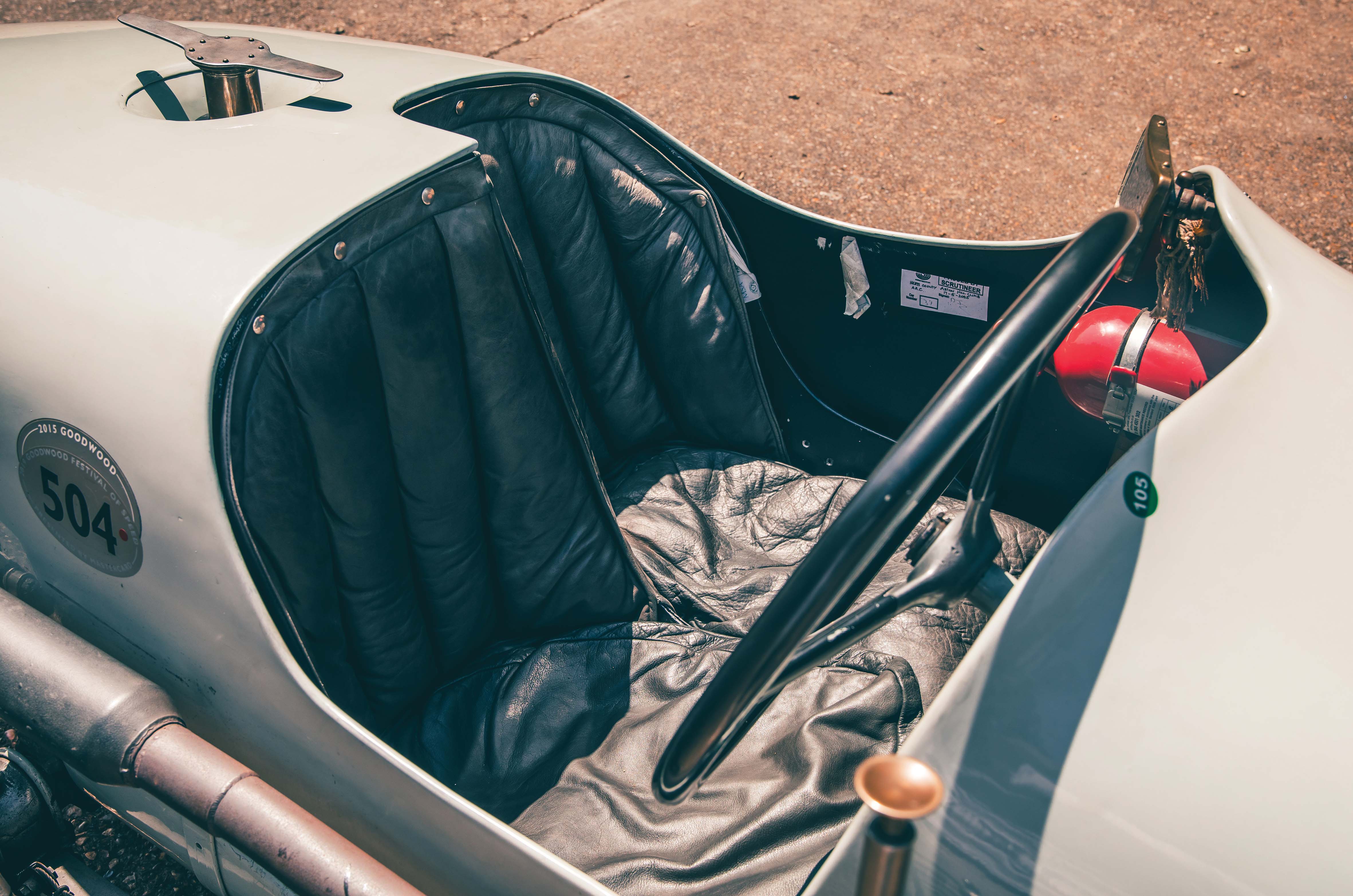
Drop awkwardly into the cockpit, squeezing under the huge wheel and making yourself comfortable in the leather-trimmed driver’s bucket, and you’re faced with the usual mish-mash of dials and levers.
Boost, air and oil pressure are all buried on the riding mechanic’s side, with only the tacho – redlined at 5500rpm, but not working today – truly visible to the driver.
‘Halford entered every race he could at the Weybridge circuit, and he nearly always landed on the podium’
Two small brass wheels look after brake bias, and the clutch and steel loop of a centre throttle are sited so close that driving in socks alone is almost essential.
Pump up the air pressure, spray in some fuel via the Ki-Gas, flick on the twin magnetos and, after a few hand cranks, the Halford Special fires – noisily.
It’s almost impossible to achieve a steady idle, so you’re perpetually revving the engine to avoid stalling.
Forget the right-hand footbrake, which only operates on the front axle; you need the surprisingly effective outside lever working all four stoppers.
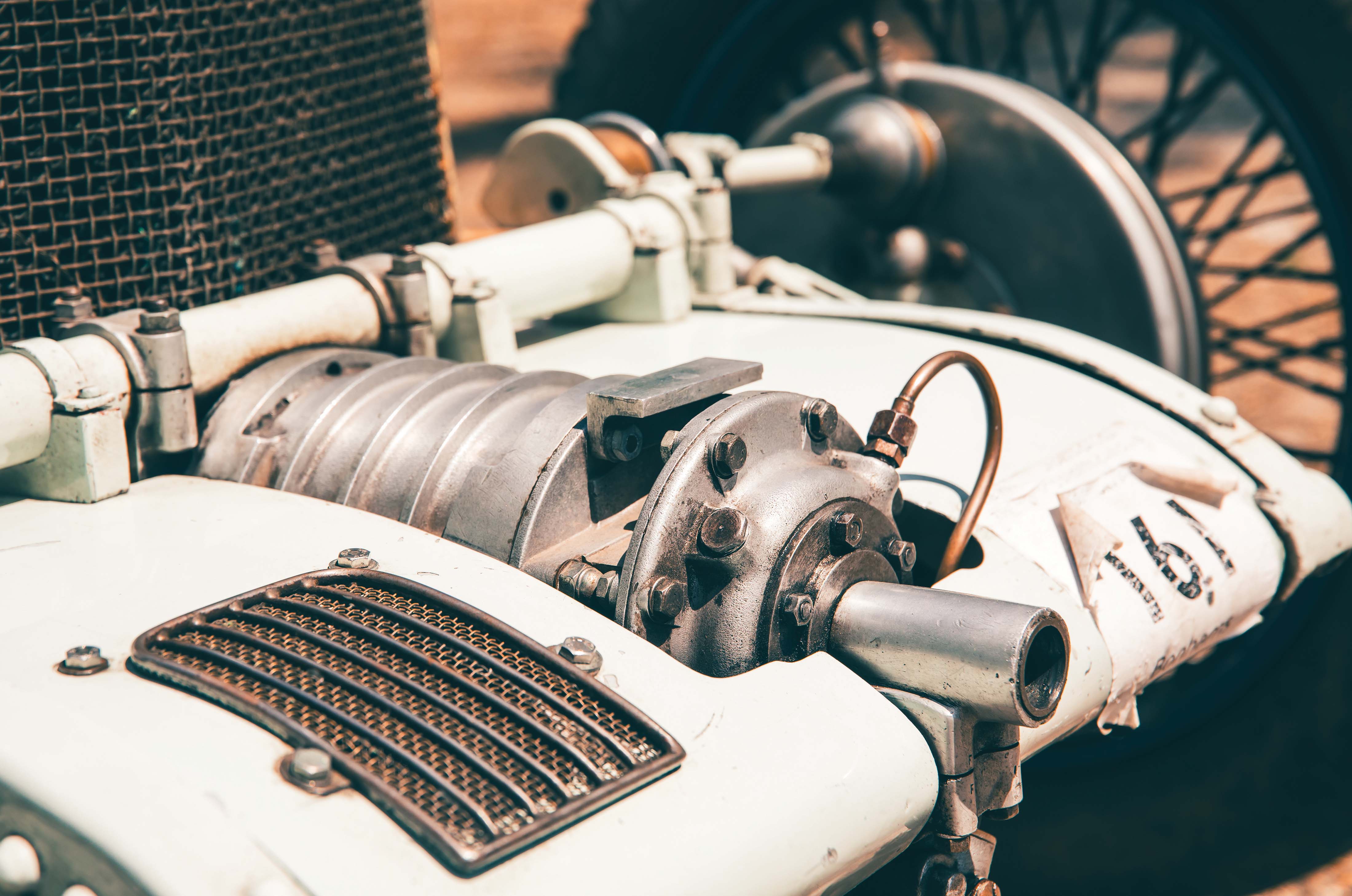
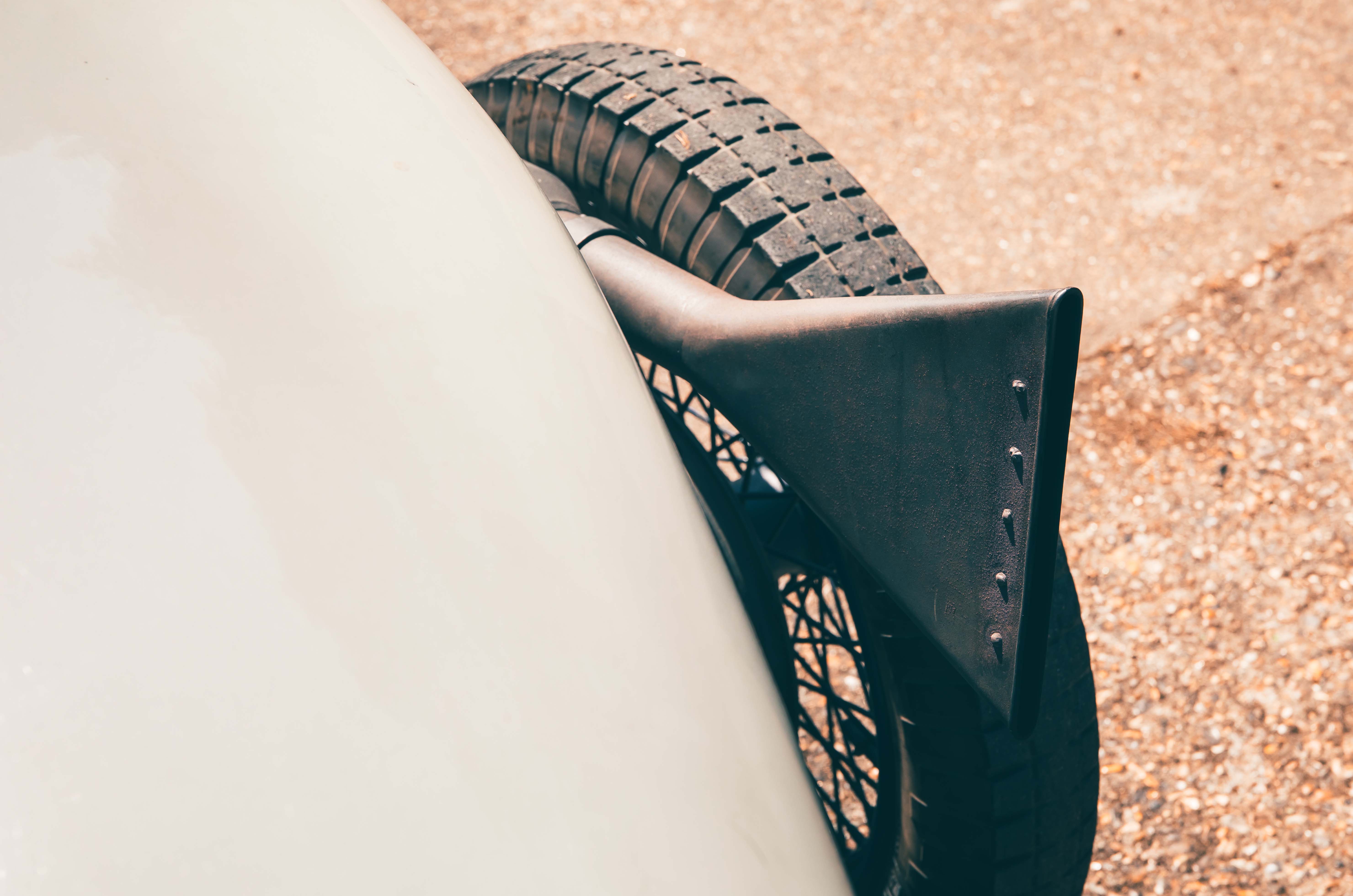
The Aston Martin Halford Special’s fishtail silencer
The external gearlever has first away from you and back, second straight forward, with third and fourth on the inner plane.
The gearbox, based heavily on a Bugatti design, is short of throw and quick-changing, with first and second ratios tall enough for all the speed we’re able to carry on the Members’ Banking and Finishing Straight today.
With plenty of revs we tear up the banking, working the steering hard given that we’re nowhere near the 120mph ‘hands-off’ nirvana for which Brooklands’ fastest drivers would have striven.
The Aston Martin Halford Special’s drum brakes are effective
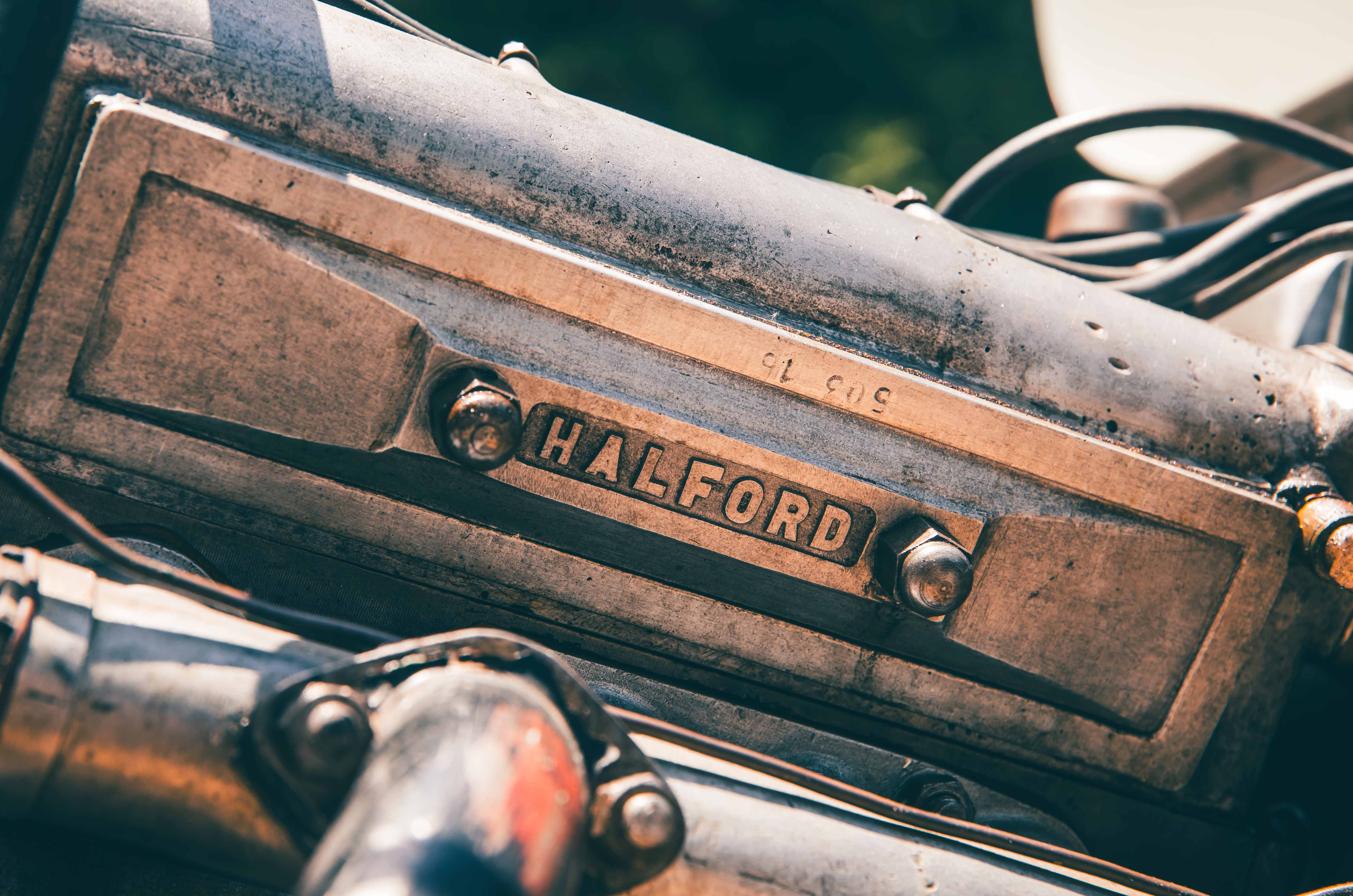
Halford’s engine is epic: thriving on revs like few would have done in this era, yet heroically torquey, with its gears, blower and barely silenced exhaust delivering a screaming chorus around this hallowed course.
It feels trite to say that the Grand Prix racers of a century past were made of sterner stuff, but experiencing this remarkable car on what’s left of Brooklands’ challenging circuit gives a tiny insight into the bravery, skill, stamina and resilience expected from drivers of yore.
And Major Halford in his very special racer was certainly among the best of them.
Images: Jack Harrison
Thanks to: Brooklands Museum; Ecurie Bertelli; Allan Winn; Jonathan Gill
Factfile
Aston Martin Halford Special
- Sold/number built 1923 and ’25/one
- Construction separate steel chassis, aluminium/wood body
- Engine alloy-block/crankcase, iron-head, dohc 1499cc straight-six, two inclined valves per cylinder, Berk supercharger, Type 48RB Zenith Gipsy Major carburettor
- Max power 120bhp
- Max torque n/a
- Transmission four-speed manual, RWD
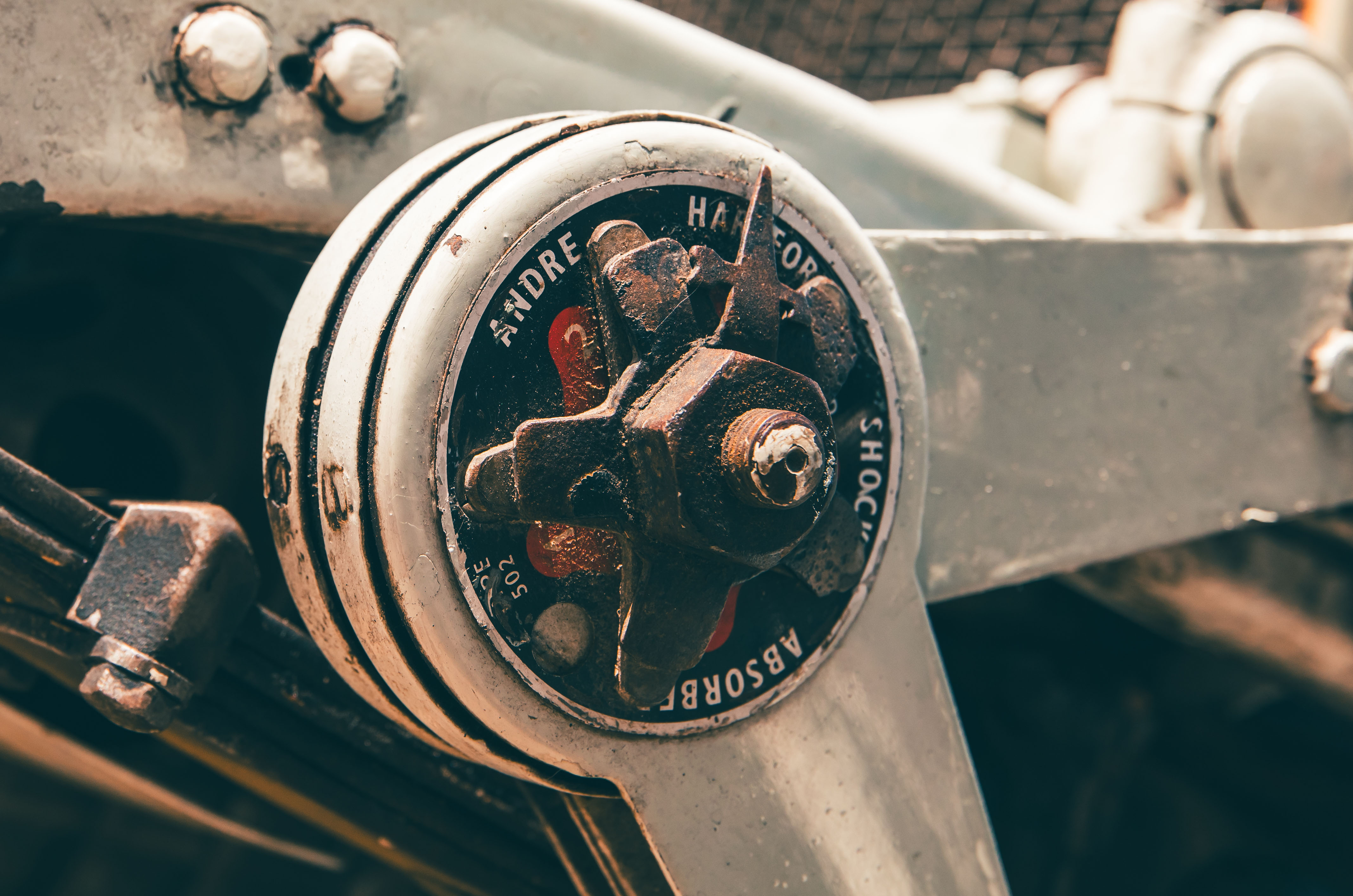
- Suspension solid axles, semi-elliptic leaf springs, Hartford friction dampers f/r
- Steering Marles worm and sector
- Brakes drums f/r
- Length 12ft 1¾in (3700mm)
- Width 5ft 3in (1600mm)
- Height n/a
- Wheelbase 7ft 10½in (2400mm)
- Weight 1642lb (745kg)
- 0-60mph n/a
- Top speed 110mph (est)
- Mpg n/a
- Price new n/a
- Price now £300,000*
*Price correct at date of original publication
Enjoy more of the world’s best classic car content every month when you subscribe to C&SC – get our latest deals here
READ MORE
Felcom Special: Portugal’s motorsport pioneer
Bentley 4½ Litre: history repeating
Alfa Romeo 8C-2300: the story of the ‘Wrigley Special’
Simon Hucknall
Simon Hucknall is a senior contributor to Classic & Sports Car