Alfa Spider spinning its web for 60 years
Alfa Romeo struck a rich seam of sports-car gold when it launched its 105 series Spider in 1966.
Now, 60 years on, the Spider has given the world some of the most arrestingly pretty sports cars of all time, regardless of price.
During its life, the Spider has run through four generations of the original plus a further two modern-day versions, all with the marque’s trademark style.
Here’s our look at the Alfa Romeo Spider as it reaches its 60th anniversary; the cars are arranged in chronological order.
1961 Alfa Romeo Giulietta SS Spider
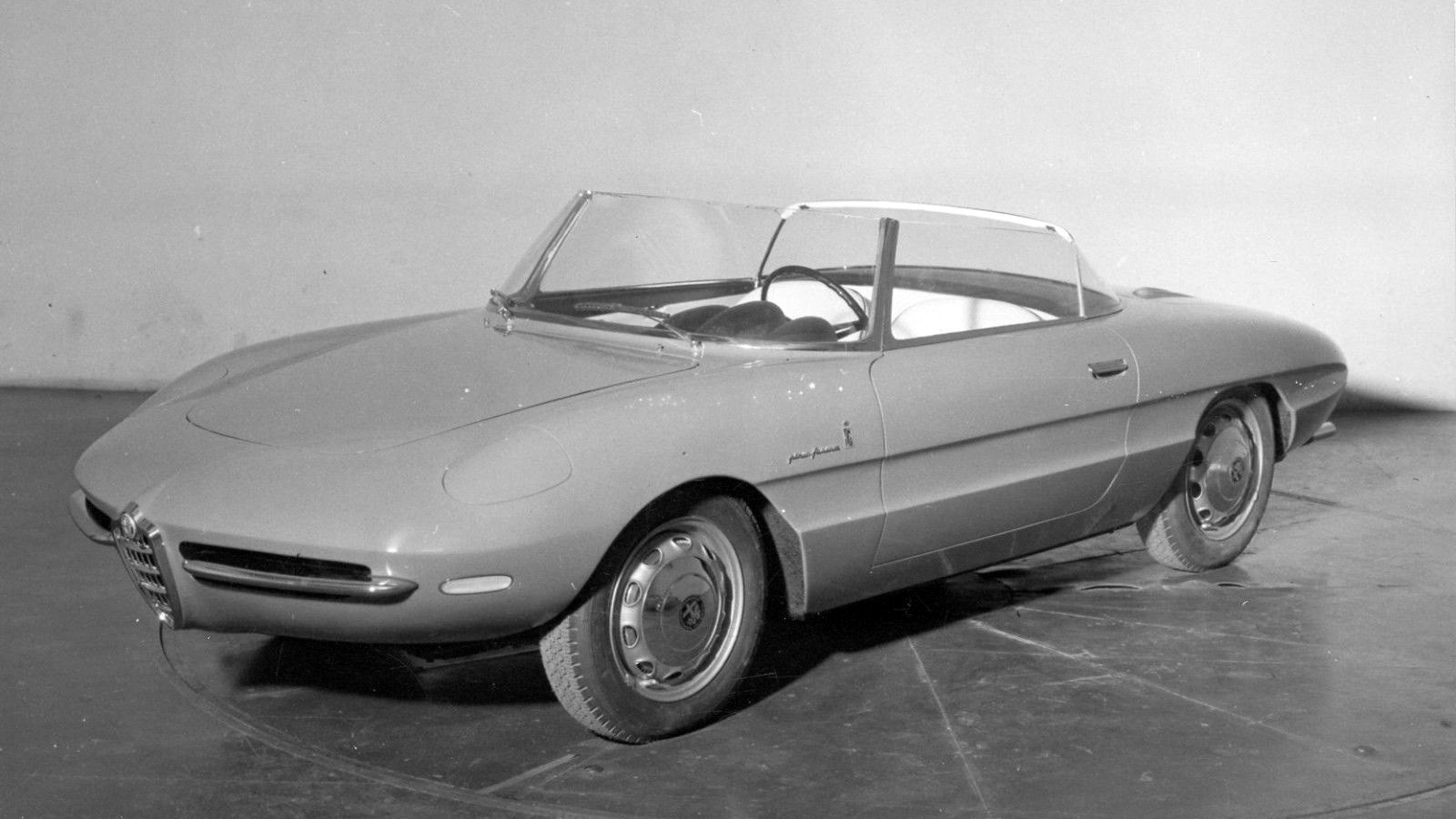
Following its four Super Flow styling exercises, Pininfarina came up with the Giulietta SS Spider for 1961.
This low-slung two-seater had pop-up headlights and a wraparound glass rear windscreen, but it was very clearly the basis of the new Spider that would come along five years later.
That time frame is telling, because Alfa Romeo was slow to decide on the final shape of its new sports car, yet the production model was not radically different from the concept.
It was, however, quite a departure from the existing Giulia Spider, which was still selling strongly at this point.
1962 Alfa Romeo Giulia Spider
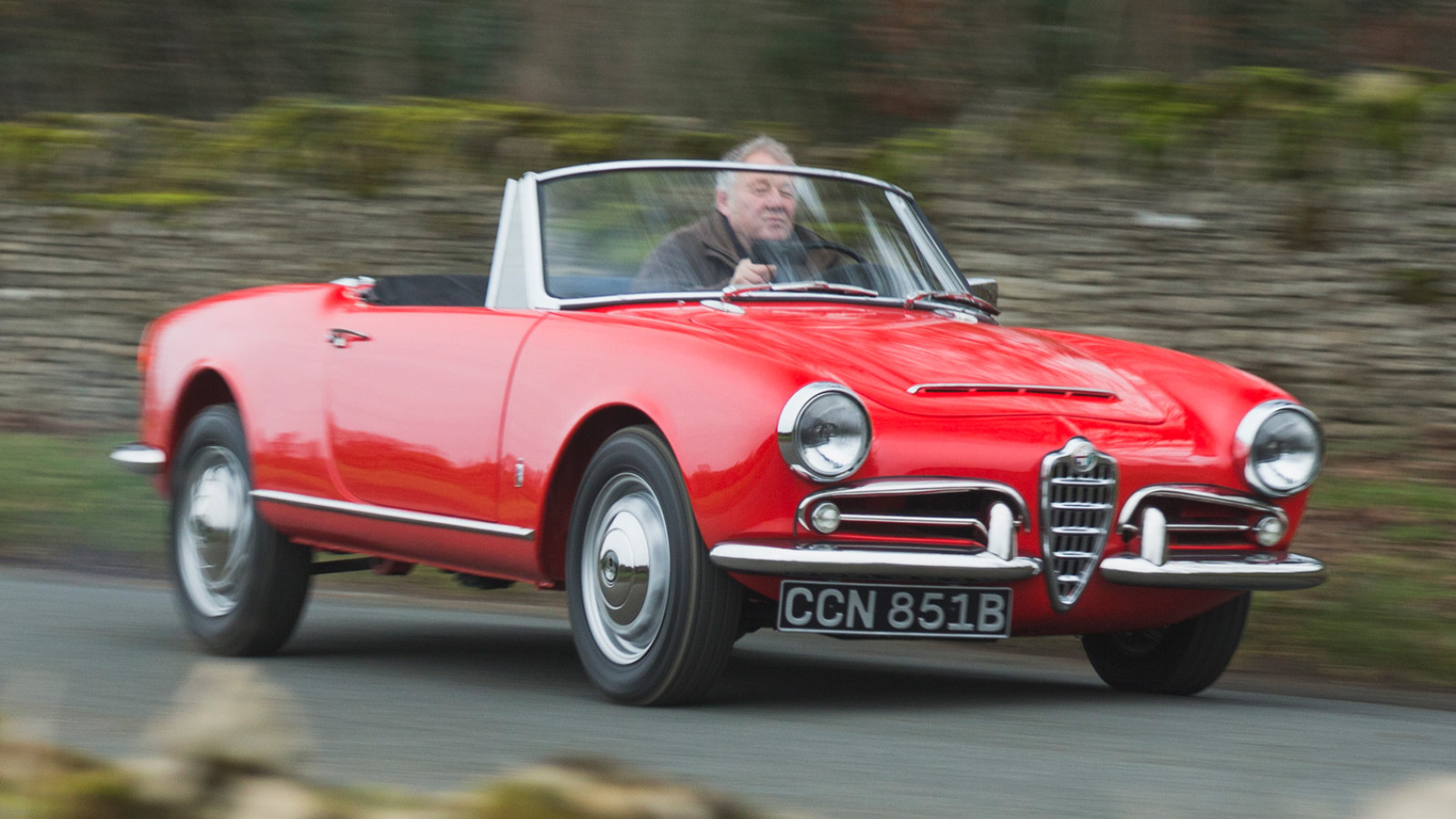
A very pretty car, the Alfa Romeo Giulia Spider was the final step in a design look that dated back to the mid-1950s.
Offered in 91bhp Spider form or as the 110bhp Spider Veloce with twin carburettors, it was brisk and fun to drive.
This set the template for the new Spider Duetto, which would be based on the latest 105-series platform that would make its debut in 1962 with the boxy, four-door saloon.
The Giulia Spider provided the 1570cc, four-cylinder, twin-cam engine for the Duetto when it bowed out in 1965.
By then, 9250 Giulia Spiders had been built, along with a further 1091 Spider Veloce versions.
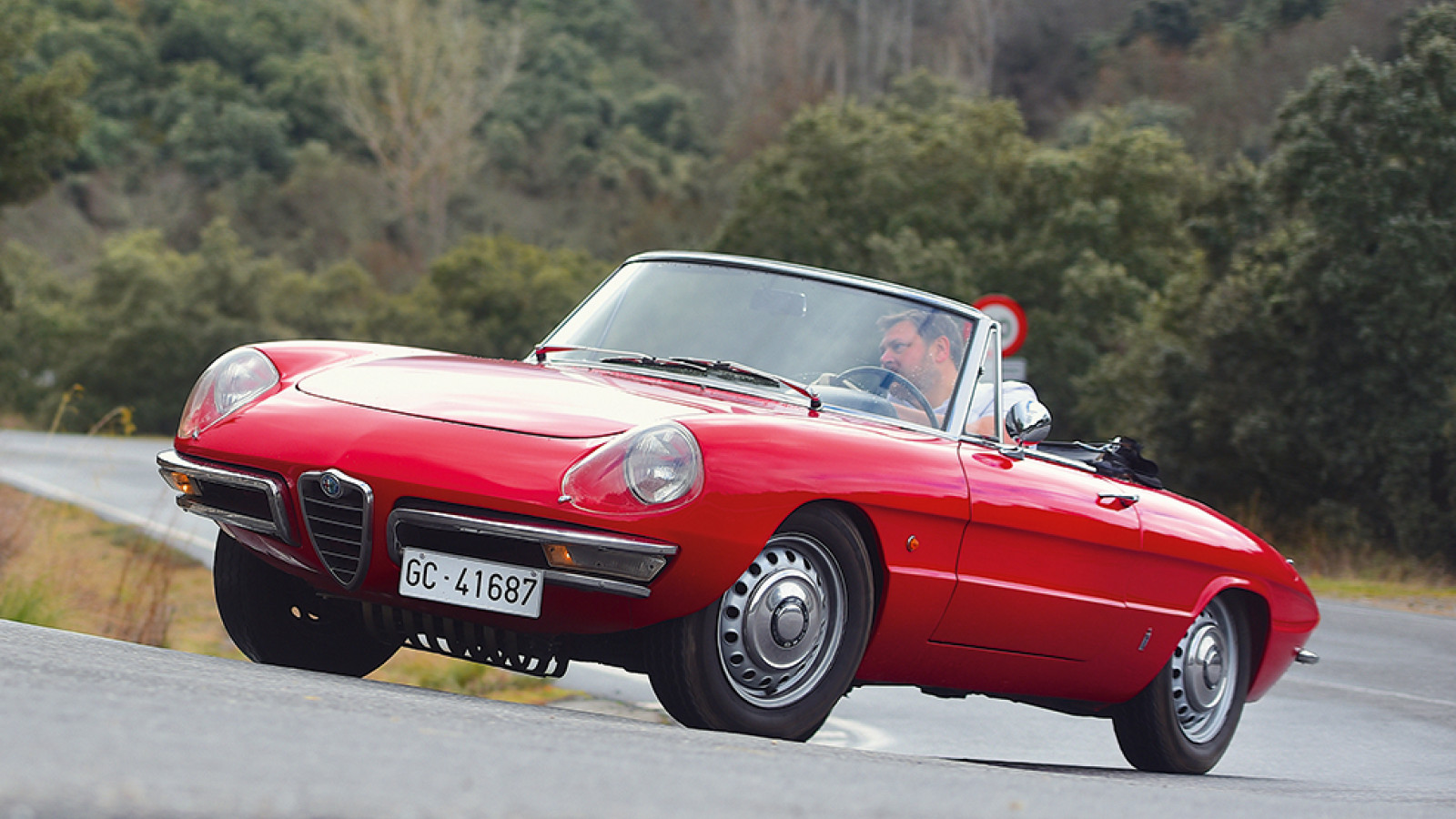
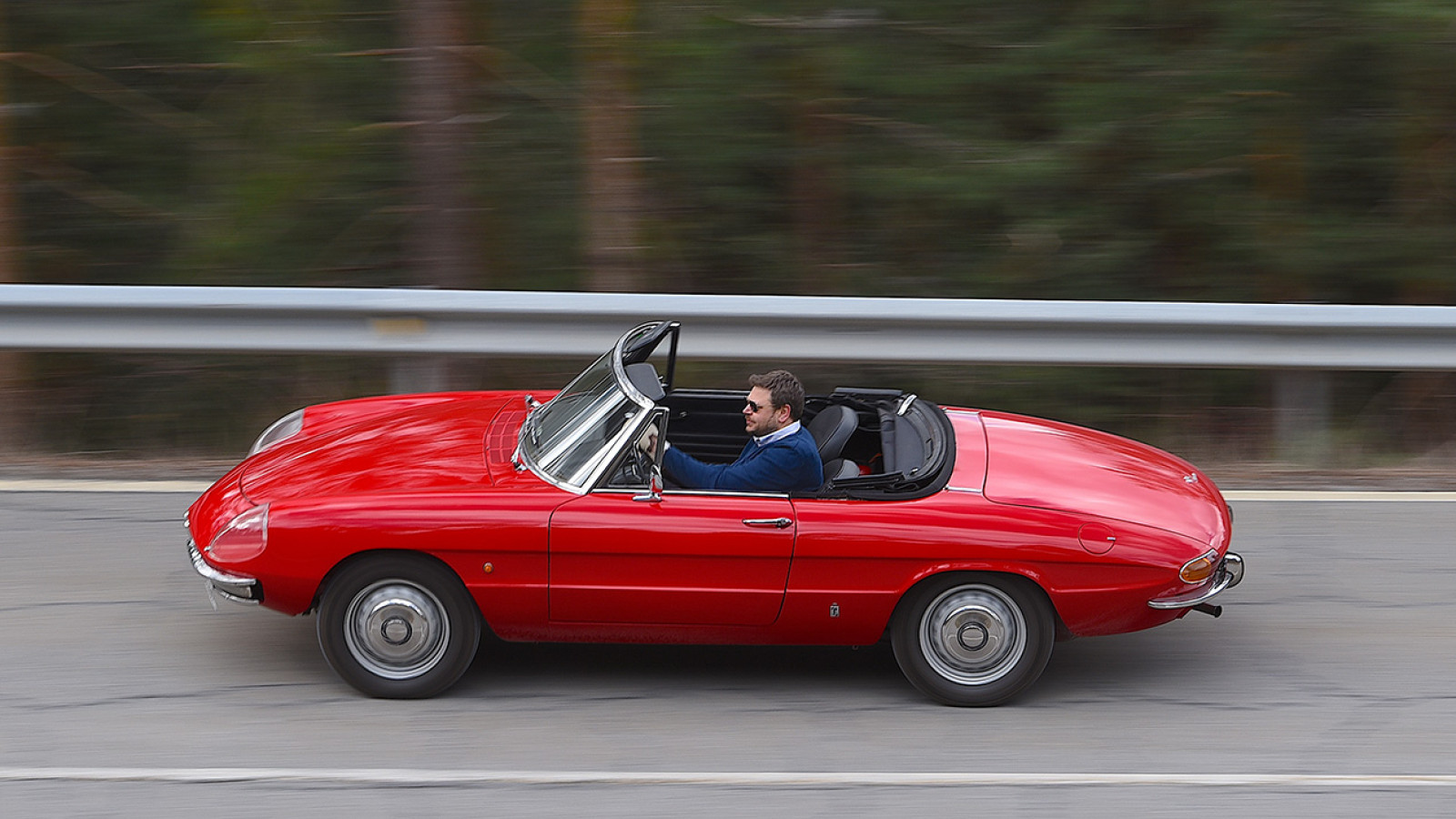
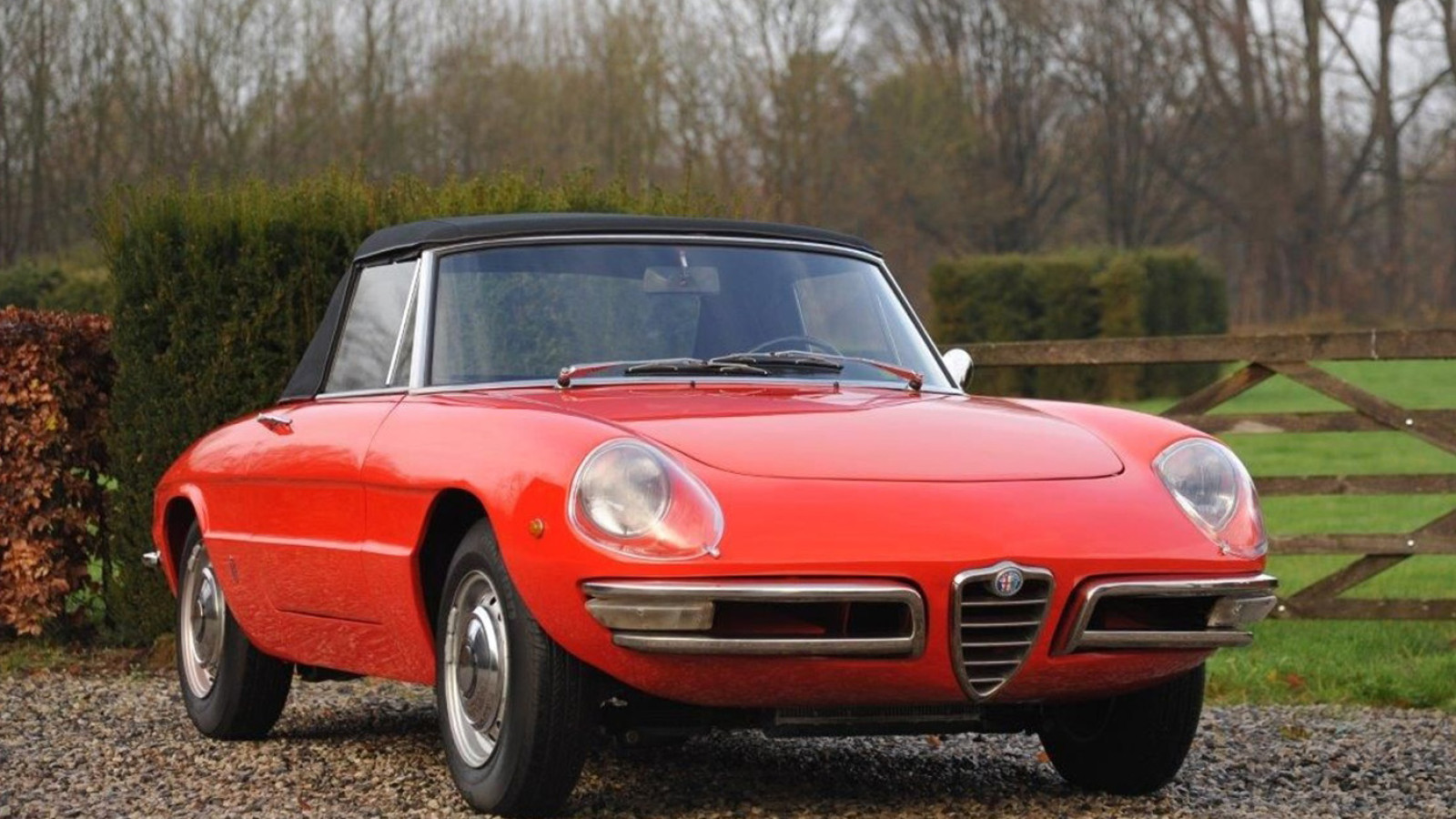
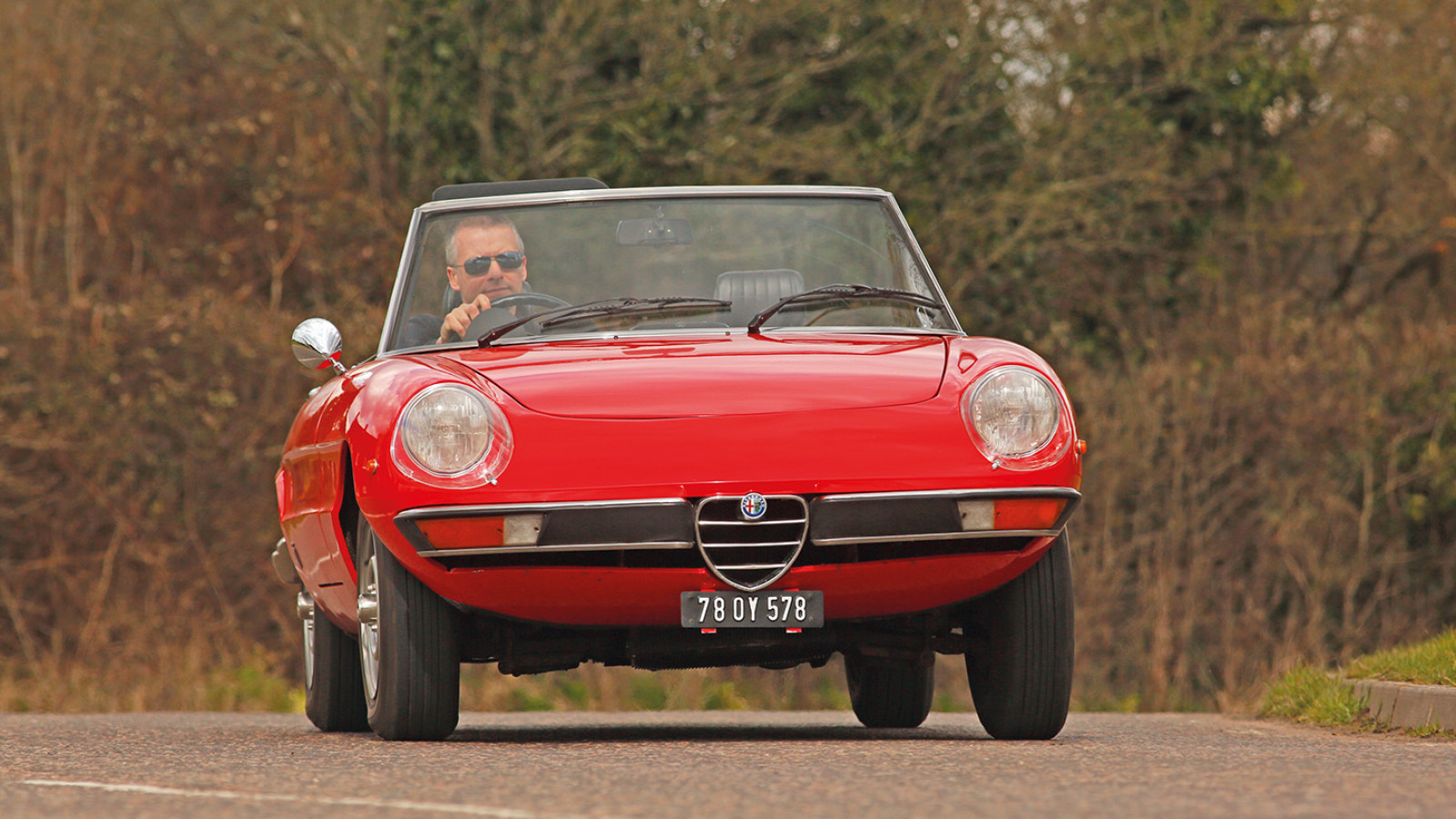
1966 Alfa Romeo Spider Duetto
Unveiled at the Geneva motor show in March 1966, the new Alfa Romeo Spider 1600 was a sleek, two-seat roadster.
While some felt it was too bold, Alfa Romeo’s bosses had toned down some features of the 1961 Giulietta Speciale Aerodinamica.
As a result, there were plastic cowls covering the headlamps in place of pop-up lights and no glass rear canopy.
To name the car, Alfa Romeo ran a competition, with the winning Duetto moniker chosen to reflect its two seats, twin cams and twin carburettors. This was suggested by Guidobaldo Trionfi, who received a Spider as his prize.
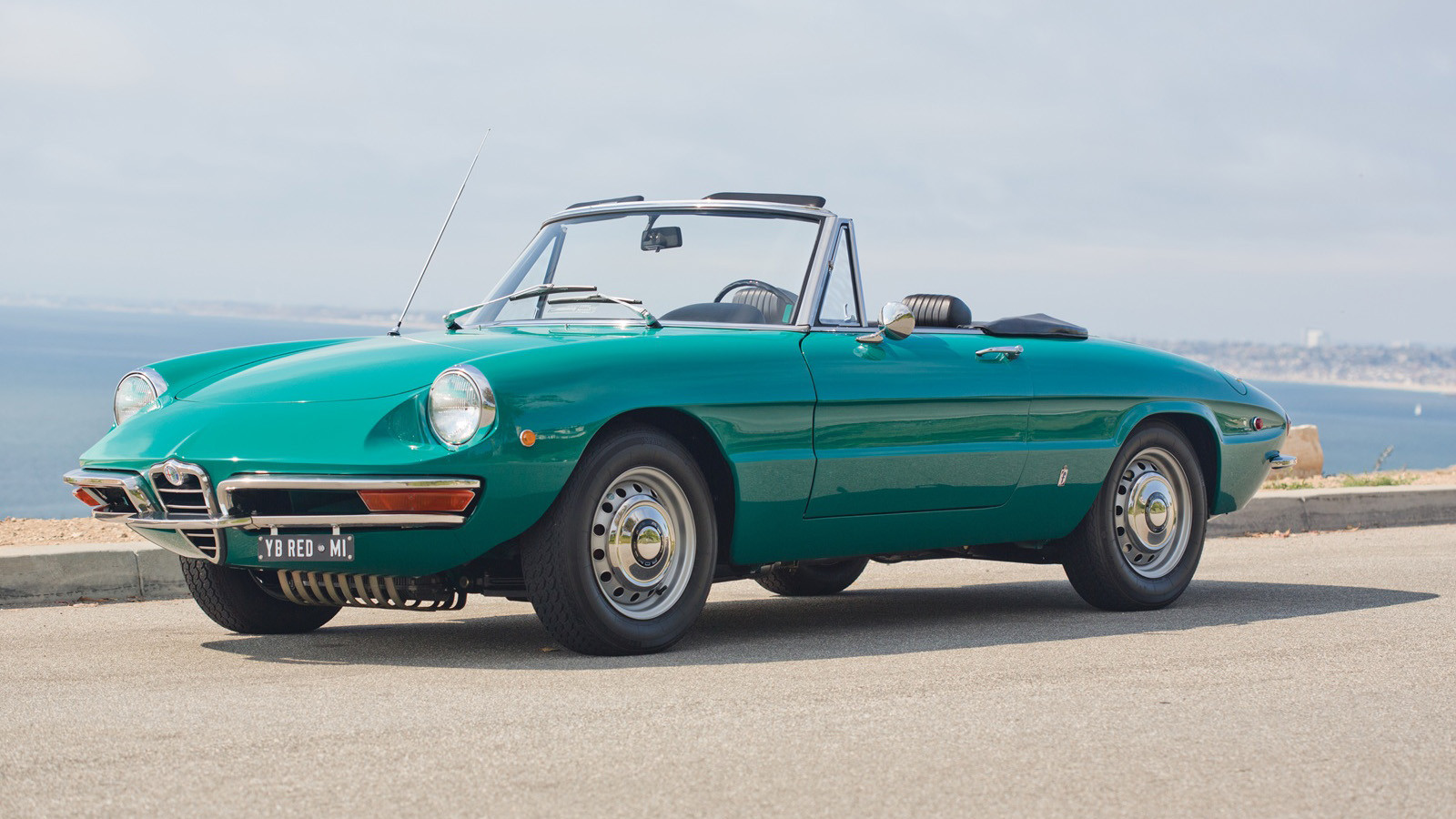
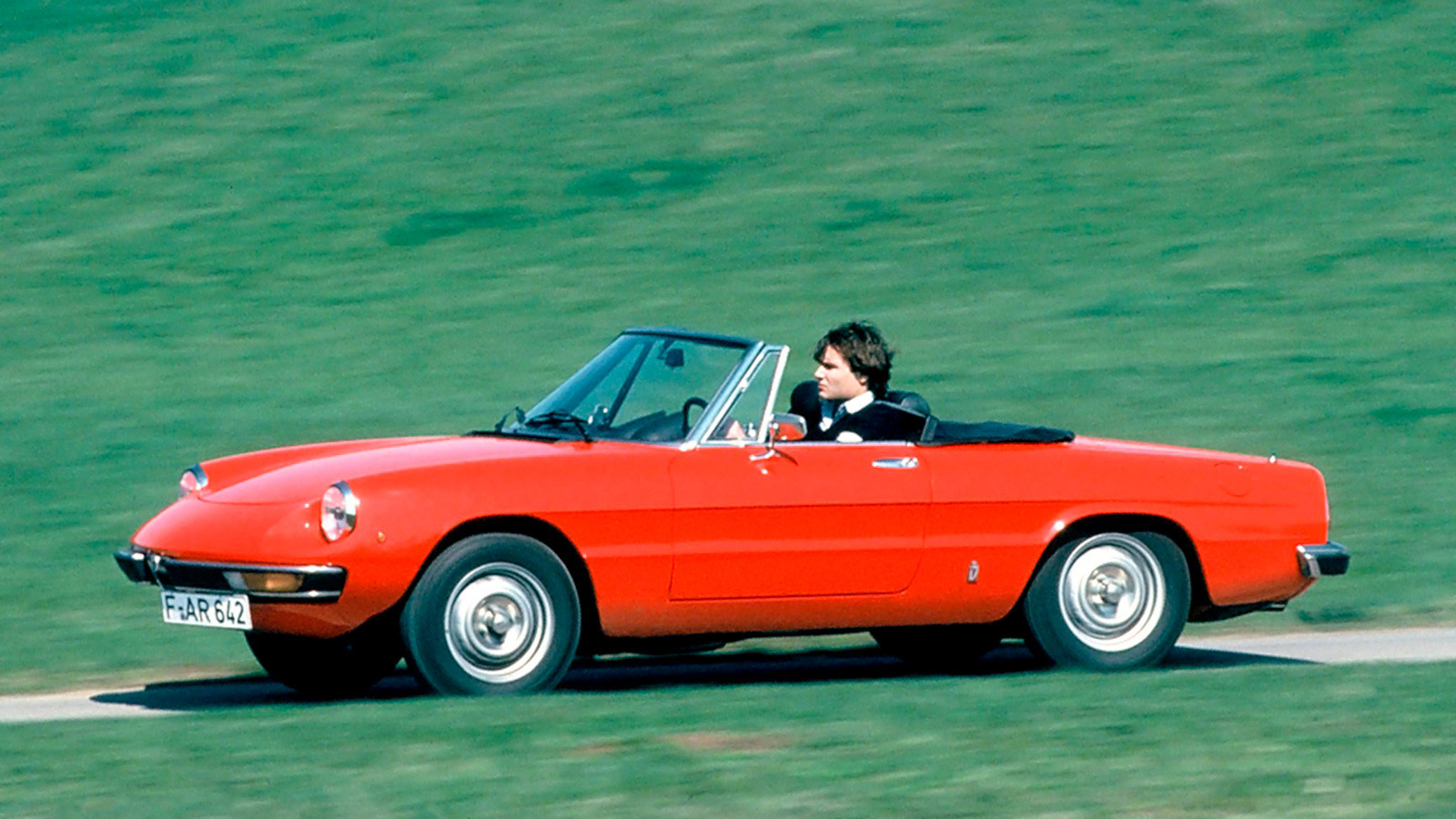
1968 Alfa Romeo Spider 1750 Veloce
At the beginning of 1968, Alfa Romeo fitted a 1779cc version of its four-cylinder engine to the Spider and christened it with the firm’s classic 1750 name.
It replaced the 1600, though the two sold alongside each other until 1600 stock ran out.
Other changes included a switch to 14in wheels, as well as a new wooden steering wheel that gave the cabin a touch more glamour.
There were also larger front disc brakes to deal with the model’s increase in power and performance.
1968 Alfa Romeo Spider 1300 Junior
Hot on the heels of the 1750 Veloce, Alfa Romeo offered a new entry-level Spider with the 1300 Junior.
As the name makes clear, this used a 1.3-litre motor with a still very perky 87bhp.
This engine could whisk the Spider from rest to 60mph in 13 secs and on to 106mph, helped by its modest 990kg (2183lb) kerbweight and aerodynamic shape.
To keep the Junior’s price down, Alfa Romeo pared back the amount of chrome exterior detailing and a two-spoke steering wheel sufficed in place of the 1750’s three-spoke item.
Never sold in the US, a total of 2680 Juniors were produced between 1968 and 1969.
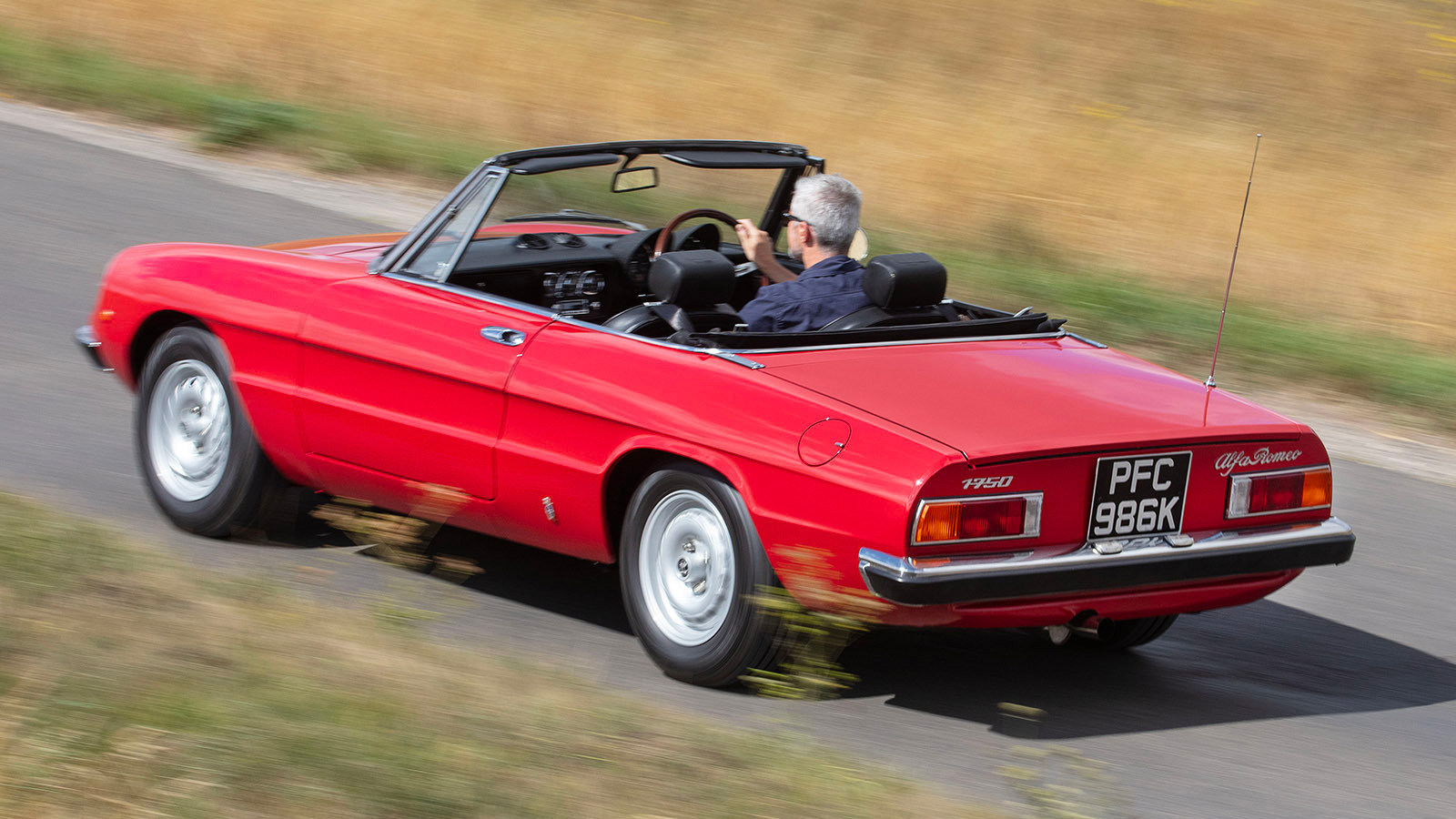
1970 Alfa Romeo Spider Series 2
While the Series 2 Alfa Romeo Spider was gently updated at the front, the big news was round the back.
Alfa added a Kamm-tail shape that was claimed to make the sports car more aerodynamic.
It gained the name Coda Tronca, meaning short tail, and this was the basic shape that would see the Spider through to its end in 1993.
Other changes included flush-fitting doorhandles and a more steeply raked windscreen.
The 1750’s engine remained, plus this second generation also offered a 1300 Junior model.
1971 Alfa Romeo Spider 2000 Veloce
With an eye on the US market and its tightening emissions laws, Alfa Romeo introduced the Spider 2000 Veloce in 1971.
It took the engine to its largest capacity to date and the 1962cc unit delivered around 130bhp, depending on the market and year of production.
Initially, the Alfa Romeo Spider 2000 Veloce’s cabin was largely the same as the 1750’s it replaced until, in 1979, when a different seat and a fresh door-panel design arrived.
The 2000 Veloce became the best-selling Spider, with 40,534 finding buyers.
1972 Alfa Romeo Spider 1600 Junior
The original, 1.6-litre engine capacity made a return to the Spider in 1972 when Alfa Romeo launched the 1600 Junior.
Fitting in between the 1300 and 2000 models, the 1600 had a 1570cc motor initially producing 109bhp (later dropping in 1974).
The 1600 could reach 112mph and cover 0-60mph in 11.3 secs, which was almost identical to the original 1966 Duetto’s pace.
Towards the end of its 4848-car production run, Alfa Romeo gave the 1600 the same exterior and interior style as the 2000 Veloce.
This was from 1980 until the model was dropped in 1981, ahead of the Series 3’s launch.
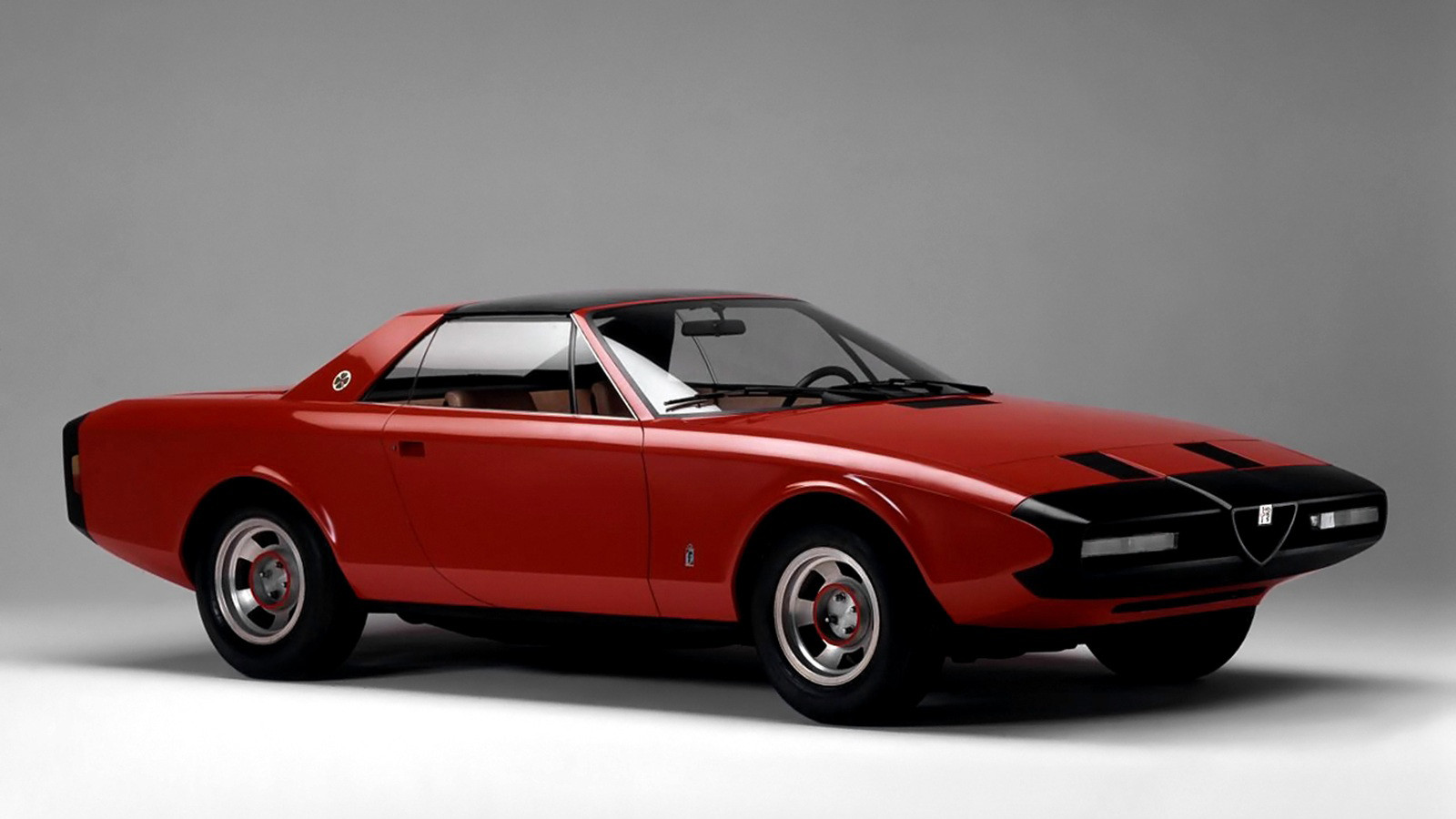
1972 Alfa Romeo Alfetta Spider Concept 116
Alfa Romeo considered replacing the Spider with a wedge-shaped car to align with 1970s fashions.
Called the Alfetta Spider Concept 116, it was first seen at the 1972 Turin motor show based on an Alfetta saloon platform.
Typical of the period, this was not a fully open car, but had a targa roof instead with a lift-out panel and a fixed rollover bar.
Styled by Pininfarina and close to being ready for production, Alfa Romeo stuck with its existing Spider because sales remained strong.
Alfa revisited the idea of a Spider replacement in 1975 with the Eagle prototype but, again, nothing came of it.
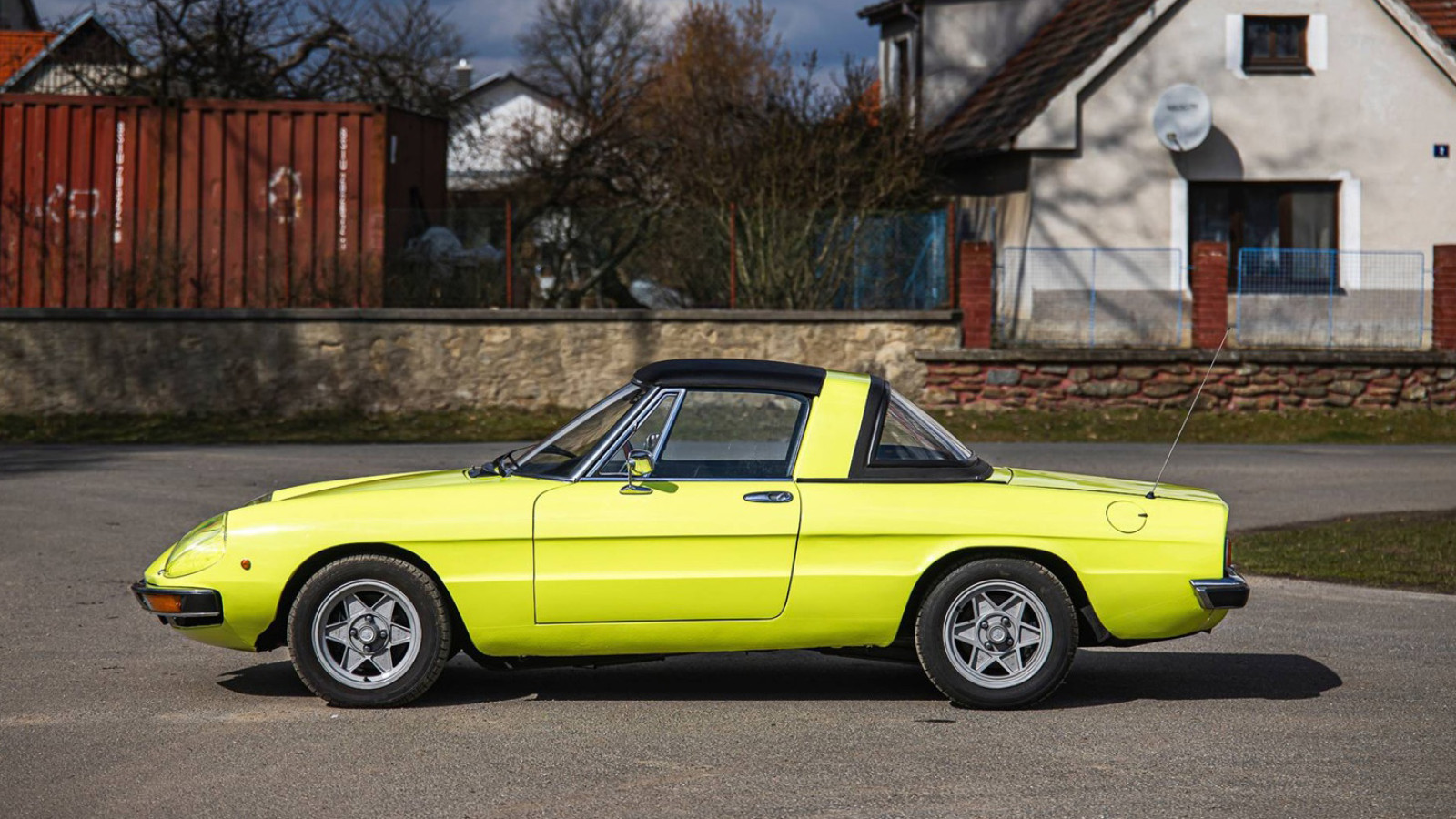
1974 Alfa Romeo Spider-Targa
The Alfetta Spider Concept didn’t replace the Spider, but it did inspire Alfa Romeo to offer its roadster with a targa-roof option.
Essentially a hardtop fixed in place with removable panels above the driver and passenger, the Spider Targa was aimed primarily at the US market.
This was not the prettiest Spider model and the Targa found few takers – indeed, fewer than 2000 were built before it was quietly dropped from the range.
In later years, Alfa Romeo added a lift-off hardtop as an option for the Spider to add some welcome all-weather protection for owners using their cars during the winter.
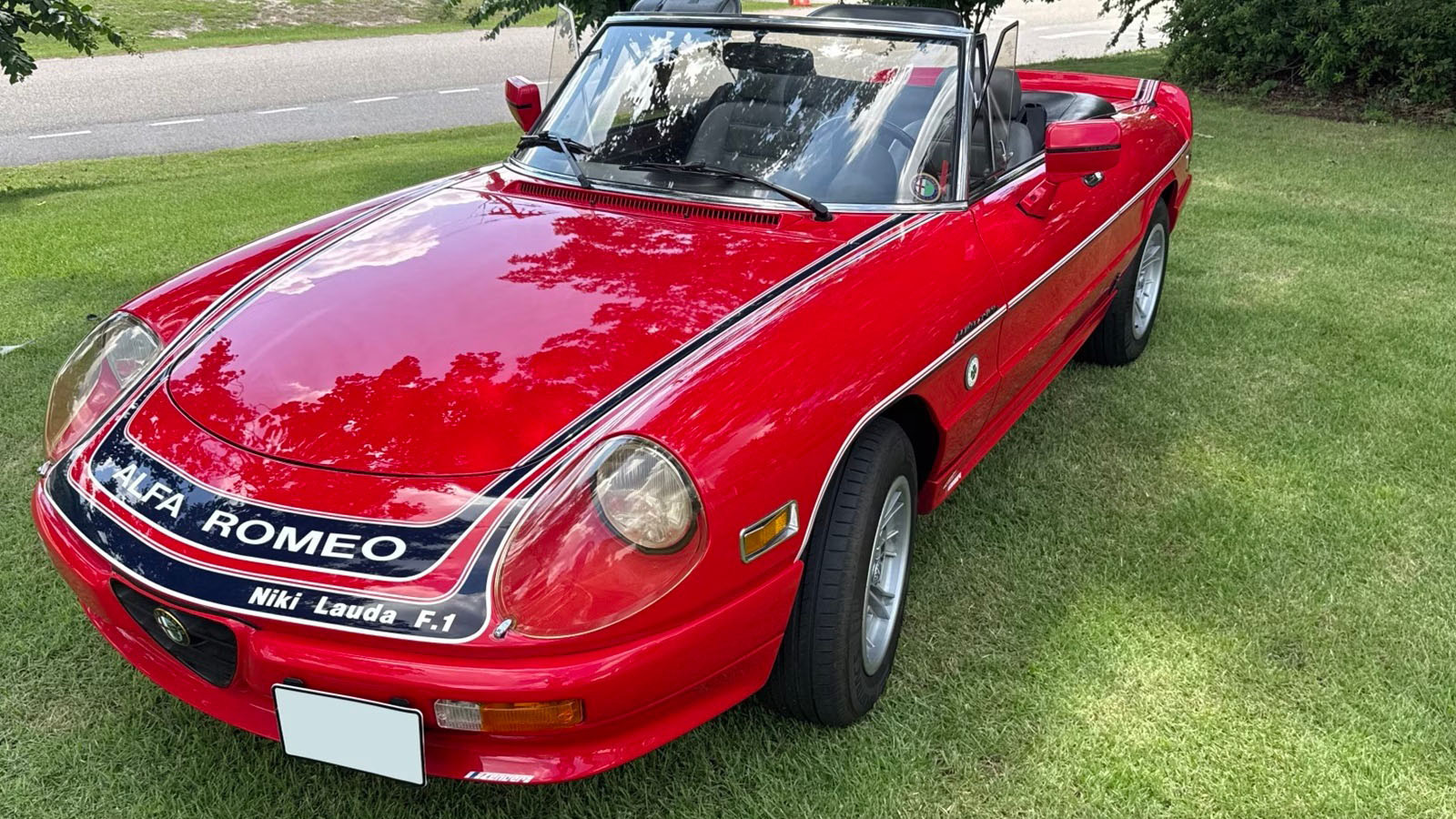
1978 Alfa Romeo Spider 2000 Veloce Niki Lauda
As part of its engine deal with Formula One team Brabham, Alfa Romeo offered the Niki Lauda Limited Edition based on the Spider 2000 Veloce.
It marked Lauda’s switch from Ferrari to Brabham at the beginning of the 1978 season and the car was launched at the Long Beach Grand Prix.
Based on a US-spec car, the Lauda model came with Parmalat stripes to mimic those on the F1 car, as well as a three-piece rear spoiler.
It also came with a chromed exhaust tailpipe and unique-to-the-model badges.
In addition, in 1982, Alfa Romeo offered the Enthusiast’s Special Edition in the US, and 400 were made with ivory paint, a brown interior and steel wheels.
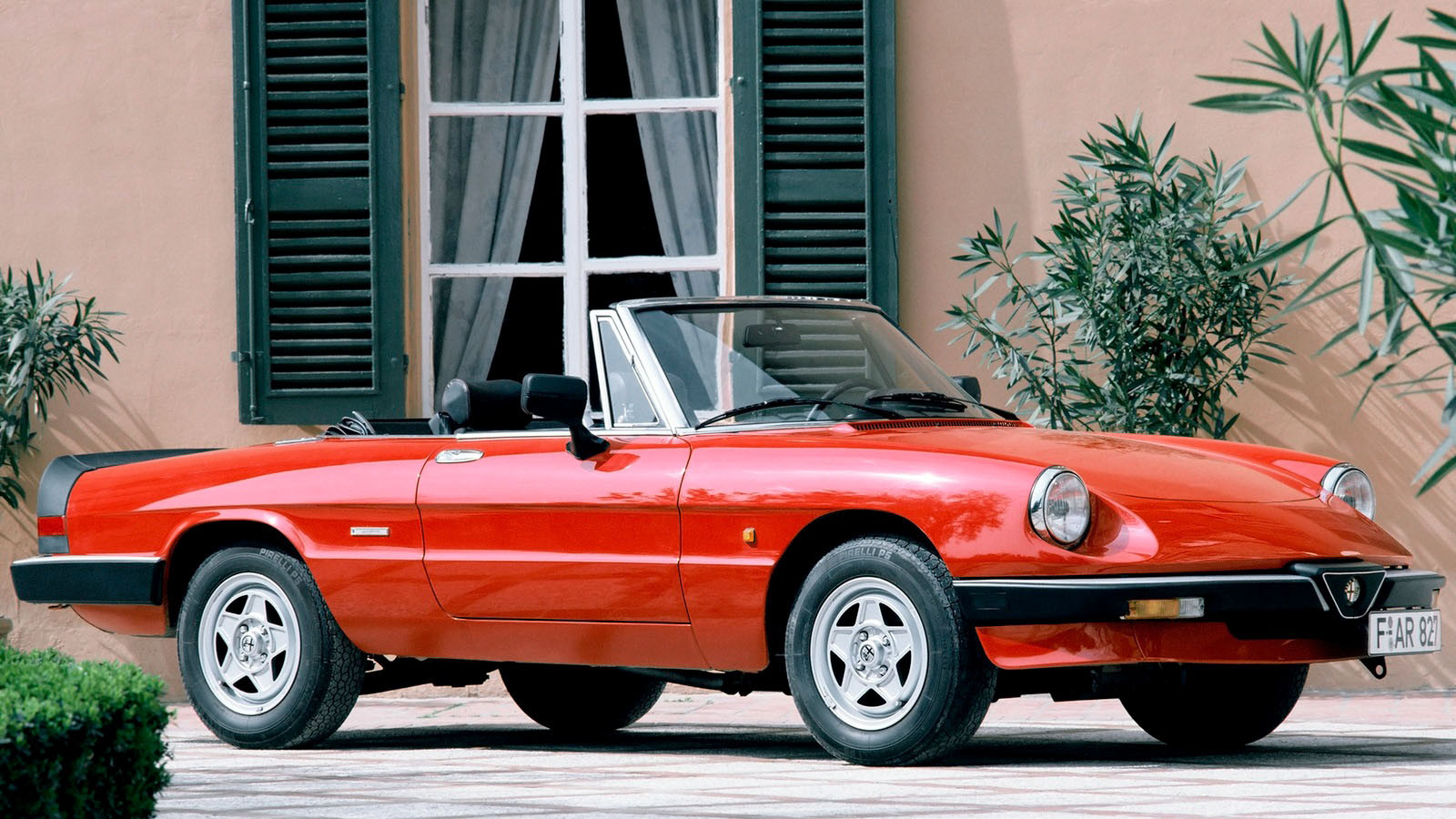
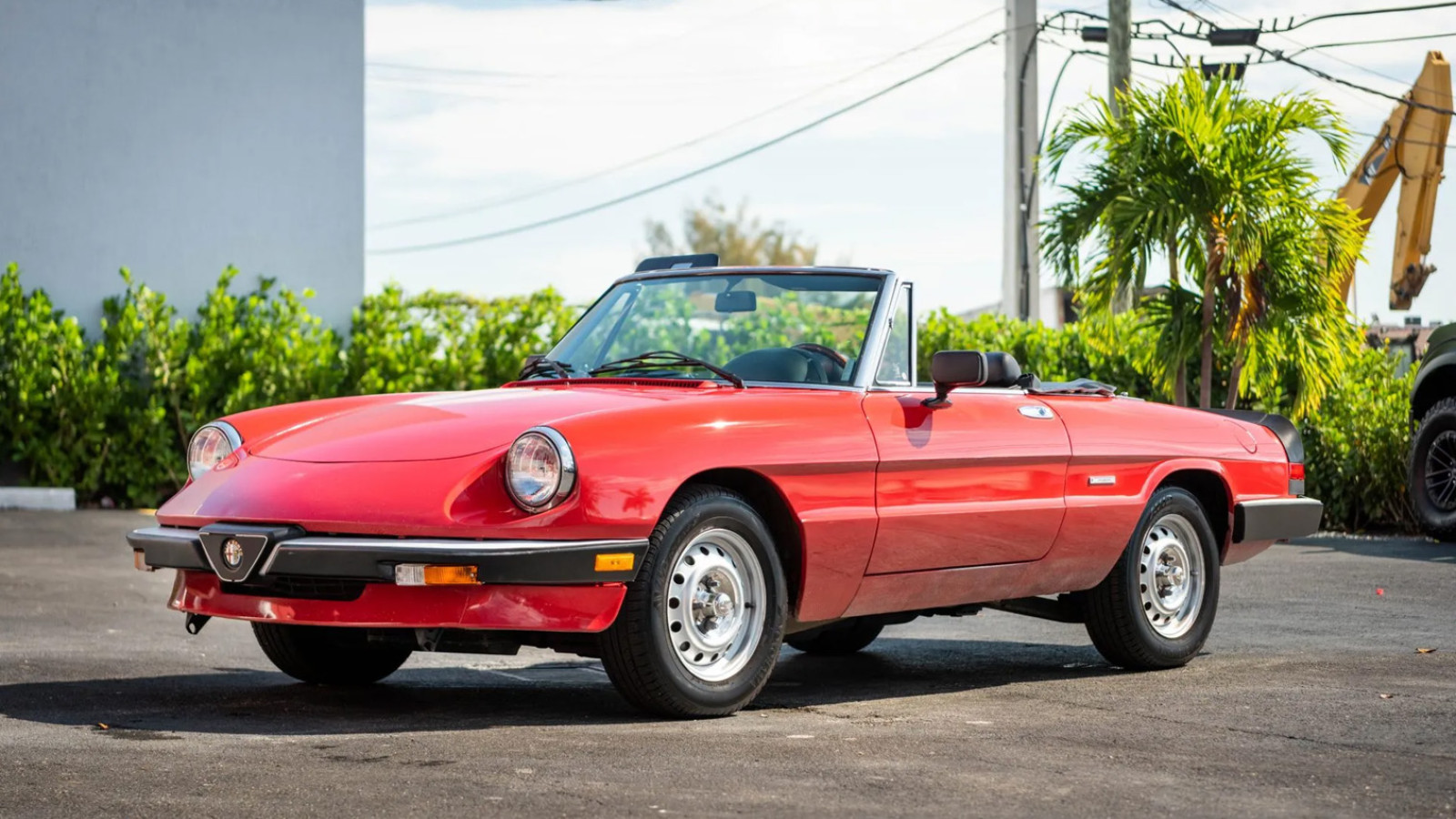
1982 Alfa Romeo Spider Series 3
For the next major revision of its sports car, Alfa Romeo decided to standardise the look of the Spider whether it was sold in Europe or the US.
This brought larger, impact-absorbing bumpers that were more smoothly integrated into the design than the Series 2 US car, plus a pronounced front spoiler.
At the back, the three-piece spoiler of the Niki Lauda special edition was adopted but finished in black, set above new rear light clusters.
The interior was largely the same, while the 1.6- and 2-litre engines remained unchanged, though from 1984 the larger engine gained electronic ignition.
1985 Alfa Romeo Spider The Graduate
Given how closely the Alfa Romeo Spider is associated with the 1967 film The Graduate starring Dustin Hoffman, it’s surprising it took Alfa nearly two decades to capitalise on this.
The Graduate special edition arrived in 1985 for the US market as a more affordable model than the standard Series 3 2-litre car.
It came with the same engine and five-speed manual transmission, but there were steel wheels in place of alloys and no electric windows.
This version also made do with vinyl for the hood and seats, and it carried on as an option until 1990.
1986 Alfa Romeo Spider Quadrifoglio Verde
The Quadrifoglio Verde (QV) version of the Alfa Romeo Spider was introduced at the 1986 Geneva motor show.
It featured a sporty bodykit with a deeper front spoiler and a larger air intake, a matching rear valance and side skirts.
All of this was finished in the car’s body colour, with a choice of red or silver paint, plus buyers could have a matching hardtop as an option.
The QV also gained 15in Campagnolo alloy wheels, but the engine remained in the same state of tune as the standard 2-litre Spider.
This was also the first Alfa Romeo Spider with the new, squarer style of seats with greater padding and side support.
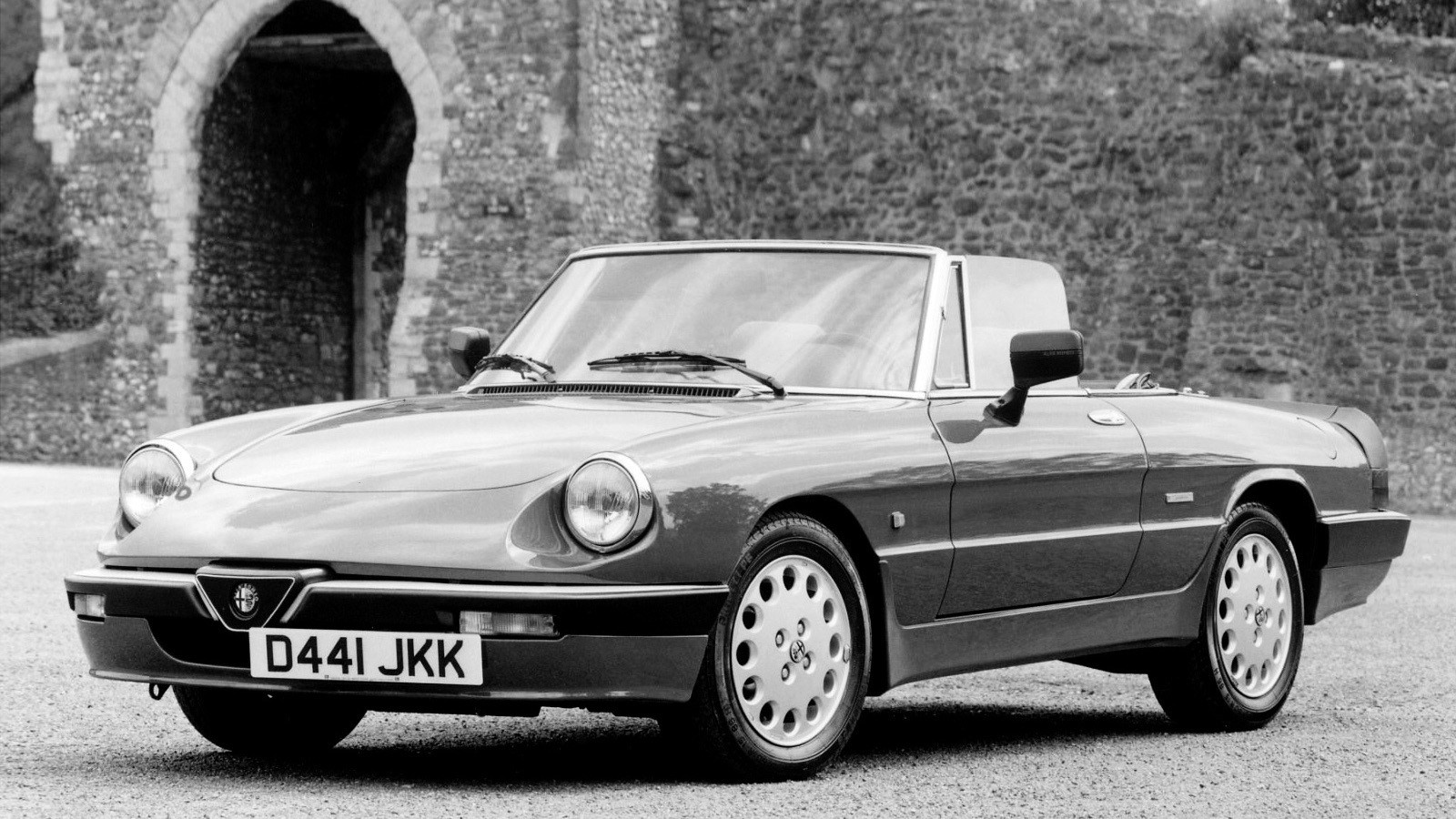
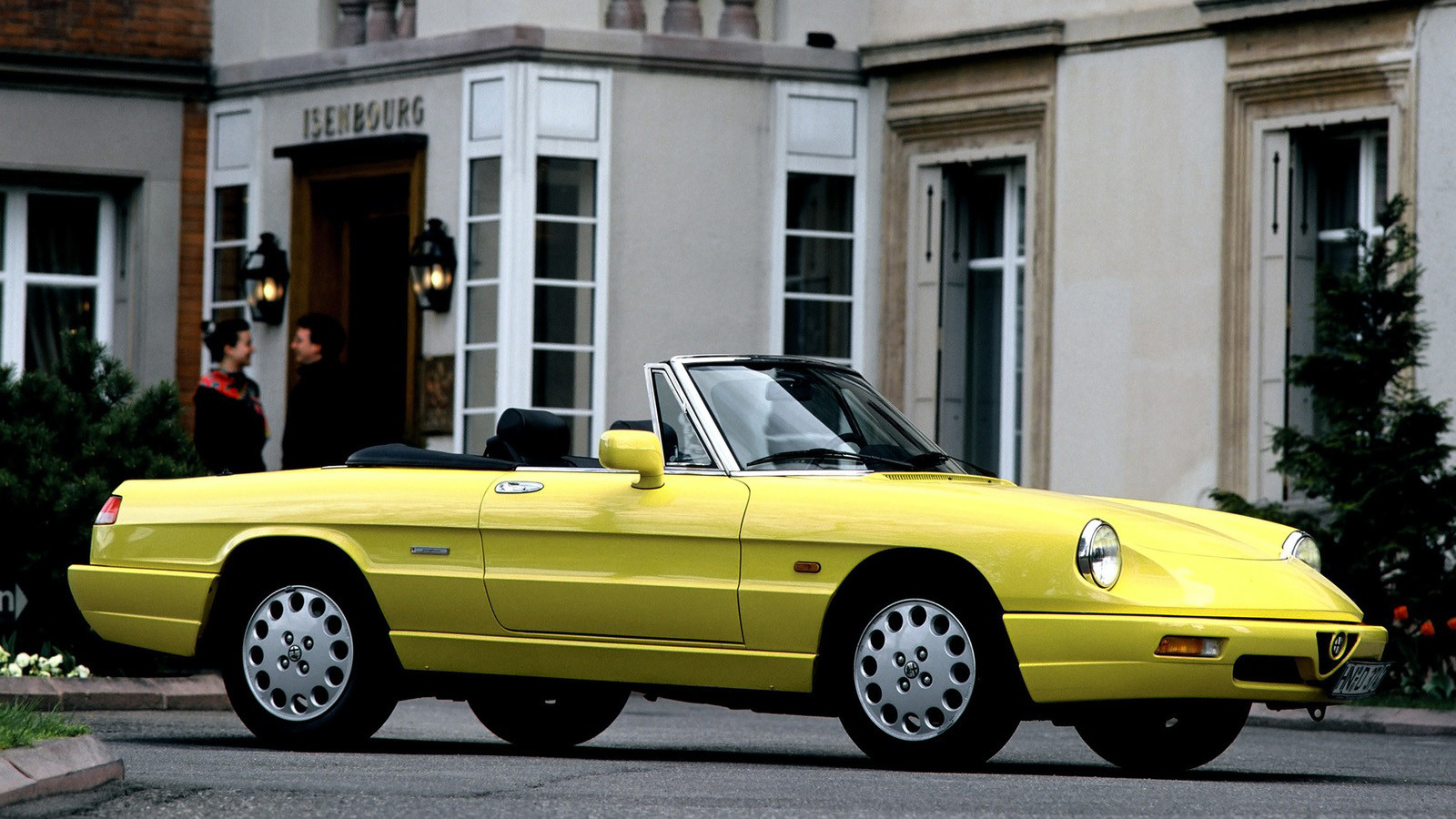
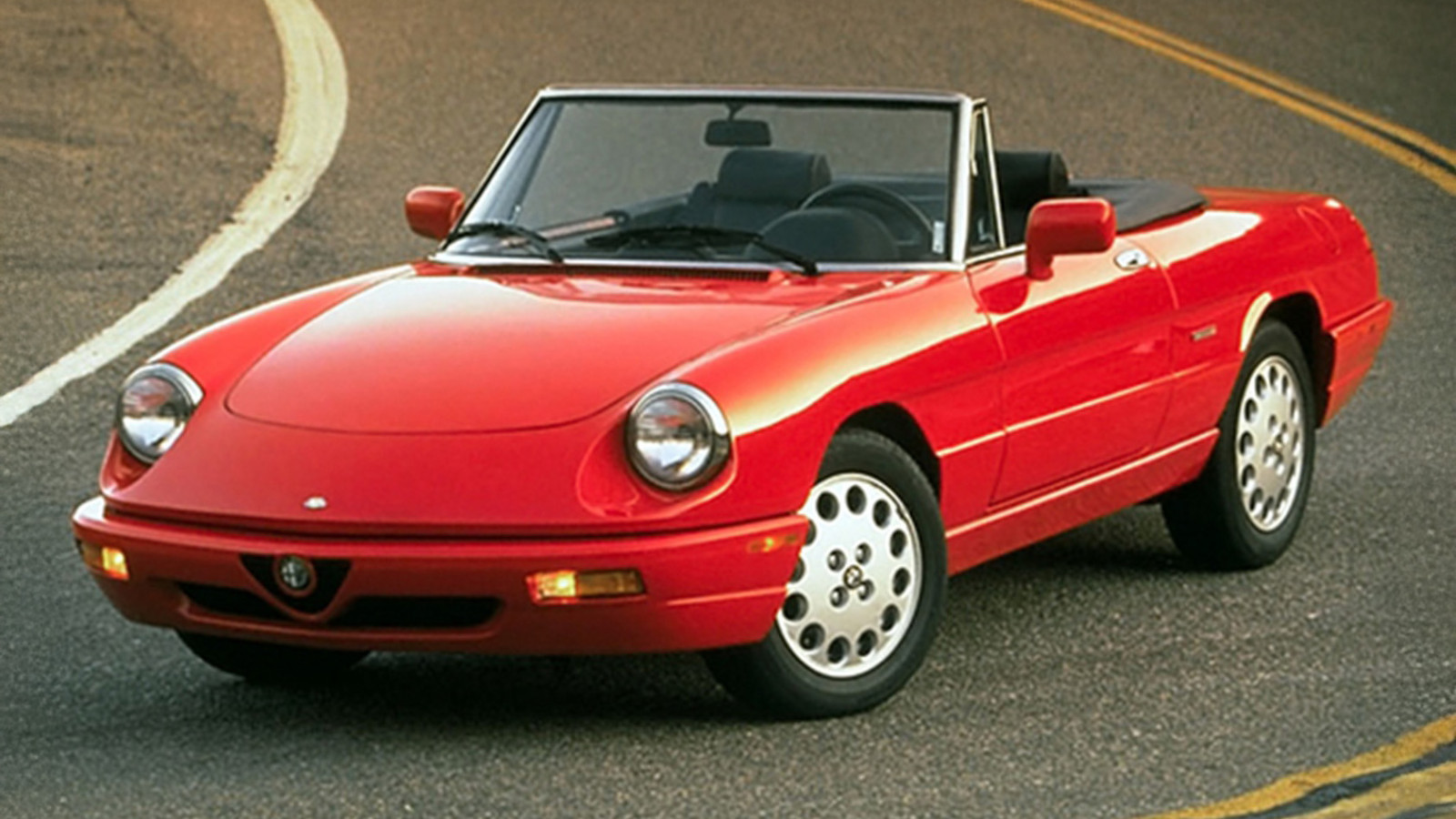
1990 Alfa Romeo Spider Series 4
Pininfarina was tasked with updating the Alfa Romeo Spider for the 1990s as interest in roadsters boomed.
The outcome was a clean, neat refresh with a one-piece front bumper and new rear lights with a full-width reflective strip.
All of this was finished in the body colour for a cohesive look, while inside there were more supportive seats and the dashboard taken from the late Series 3 car.
In Europe, the steering wheel was trimmed in black vinyl for the 1.6-litre Spider, while the 2-litre came with leather.
US cars now had a four-spoke steering wheel from the 164 saloon to accommodate an airbag.
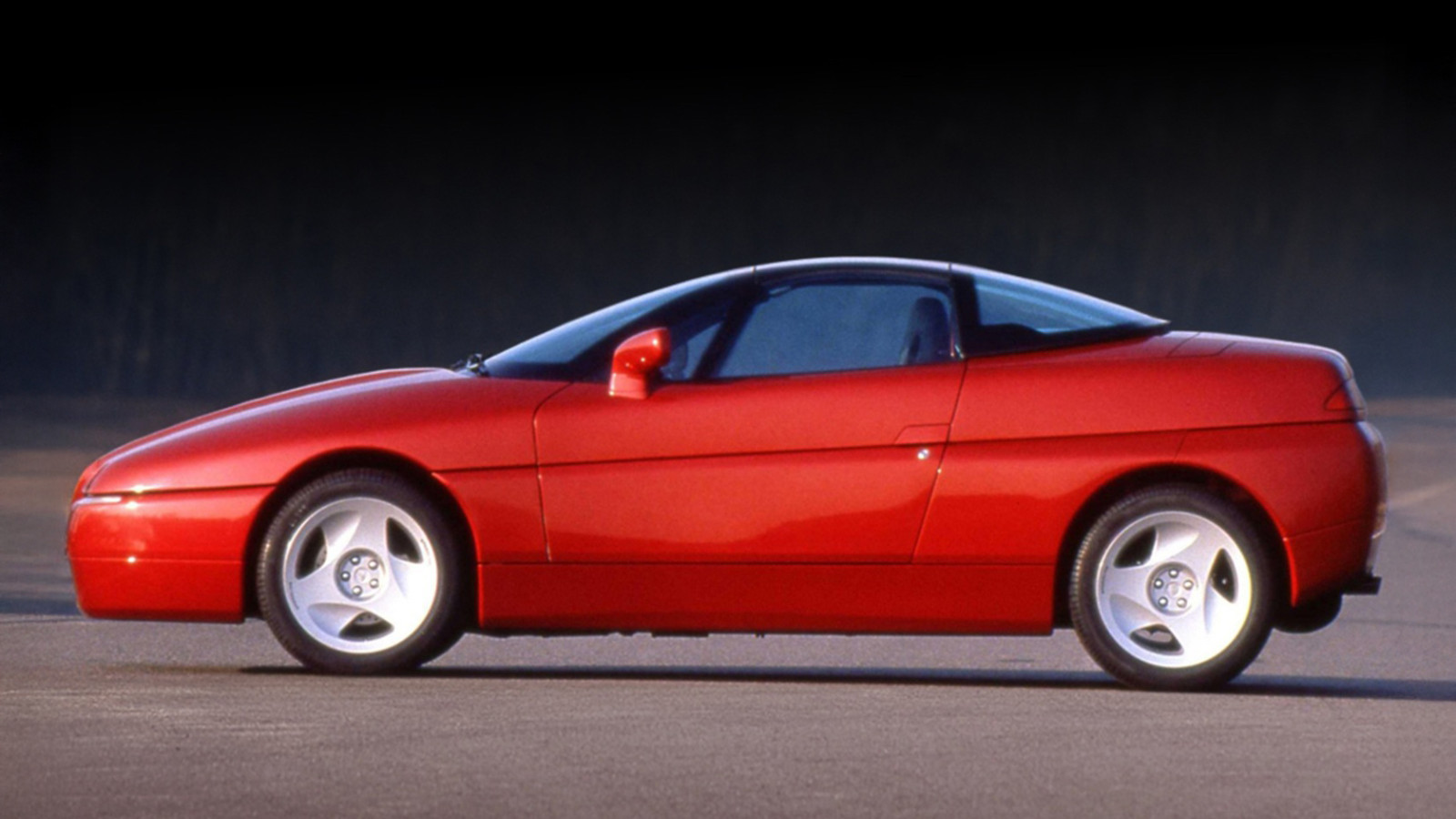
1991 Alfa Romeo Proteo
Two decades on from the Alfetta Spider concept, Alfa Romeo revealed another show car to hint at the future direction of its two-seater.
The Proteo broke cover at the 1991 Geneva motor show with an unashamedly wedge-shaped profile styled in house by Alberto Bertelli.
It used an Alfa 164 saloon floorpan and 3-litre V6, which meant 256bhp for strong performance.
The Proteo also had four-wheel drive to make the most of its power and its top speed was claimed to be 155mph.
The four-wheel drive didn’t make production, but the Proteo clearly predicted the new generation of Alfa’s Spider.
1993 Alfa Romeo Spider Veloce Commemorative Edition
As the end of production neared for the long-running Alfa Romeo Spider, the car maker introduced run-out special editions.
In France, there were 120 Beauté versions in white and blue, while in the USA there was the final Commemorative Edition.
Only 190 of the latter were sold, each with a numbered plaque on the dashboard and gold wheel caps.
Inside, the Commemorative Edition had wooden dash and door trims, as well as unique-to-the-model ‘Spider Duetto 1966-1994’ badges that denoted the final model year of the car in the US.
As this chapter of the Spider story closed, Alfa had built 124,104 of all types across a 27-year run.
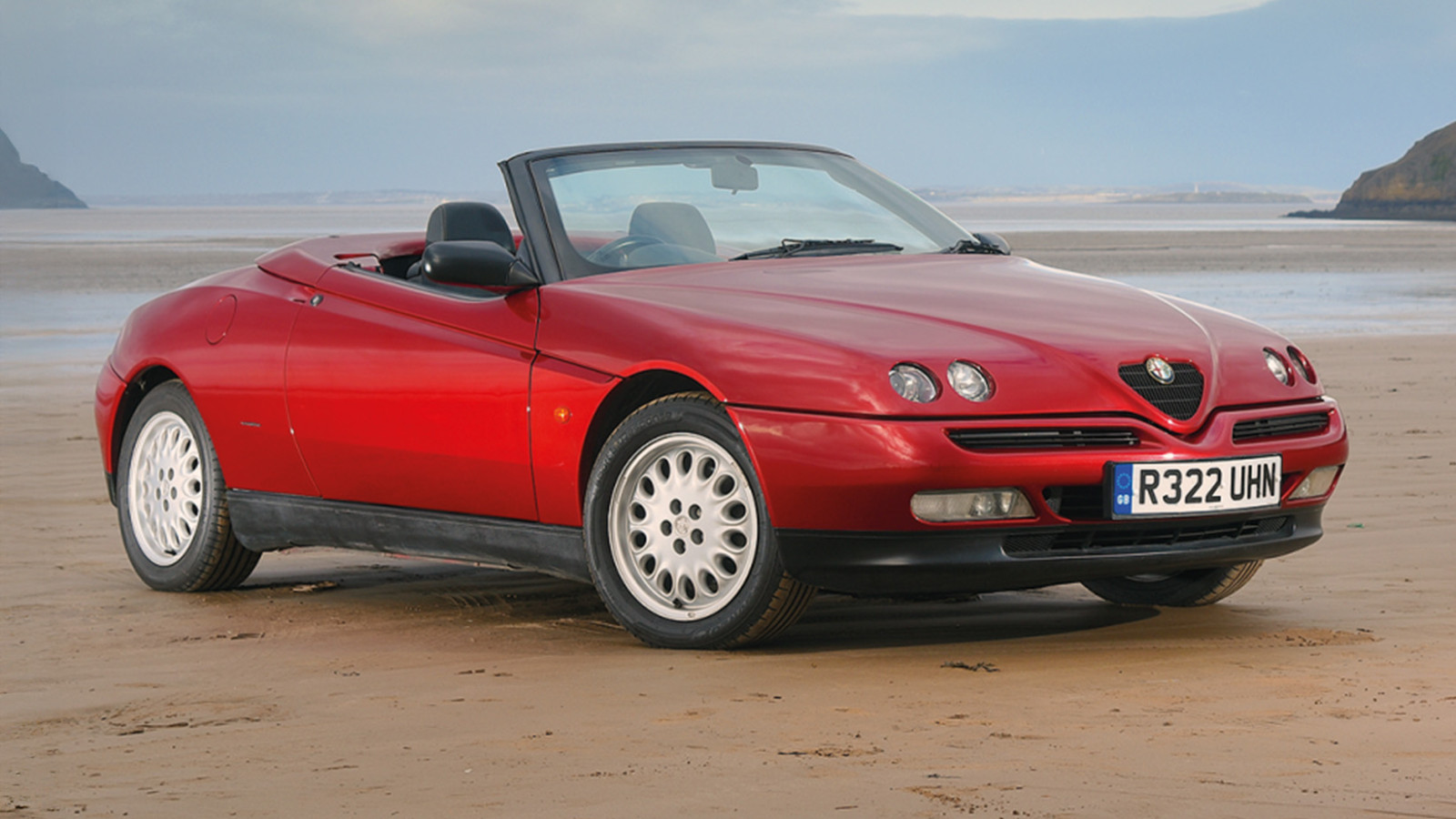
1995 Alfa Romeo Spider Type 916
After a three-year hiatus, Alfa Romeo was back with its new Type 916 Spider, with styling clearly derived from the Proteo concept.
For this new two-seater drop-top, the only connections between it and the earlier Spider were the name and the design work by Pininfarina.
A 1.8-litre engine provided the entry point to the range, or a 2-litre depending on market, but it was now transversely mounted and driving the front wheels.
A 3-litre V6 gave serious pace and was later uprated to a 3.2 V6.
There was also a powered fabric roof, which was a major step on from the earlier Spider’s manually operated item.
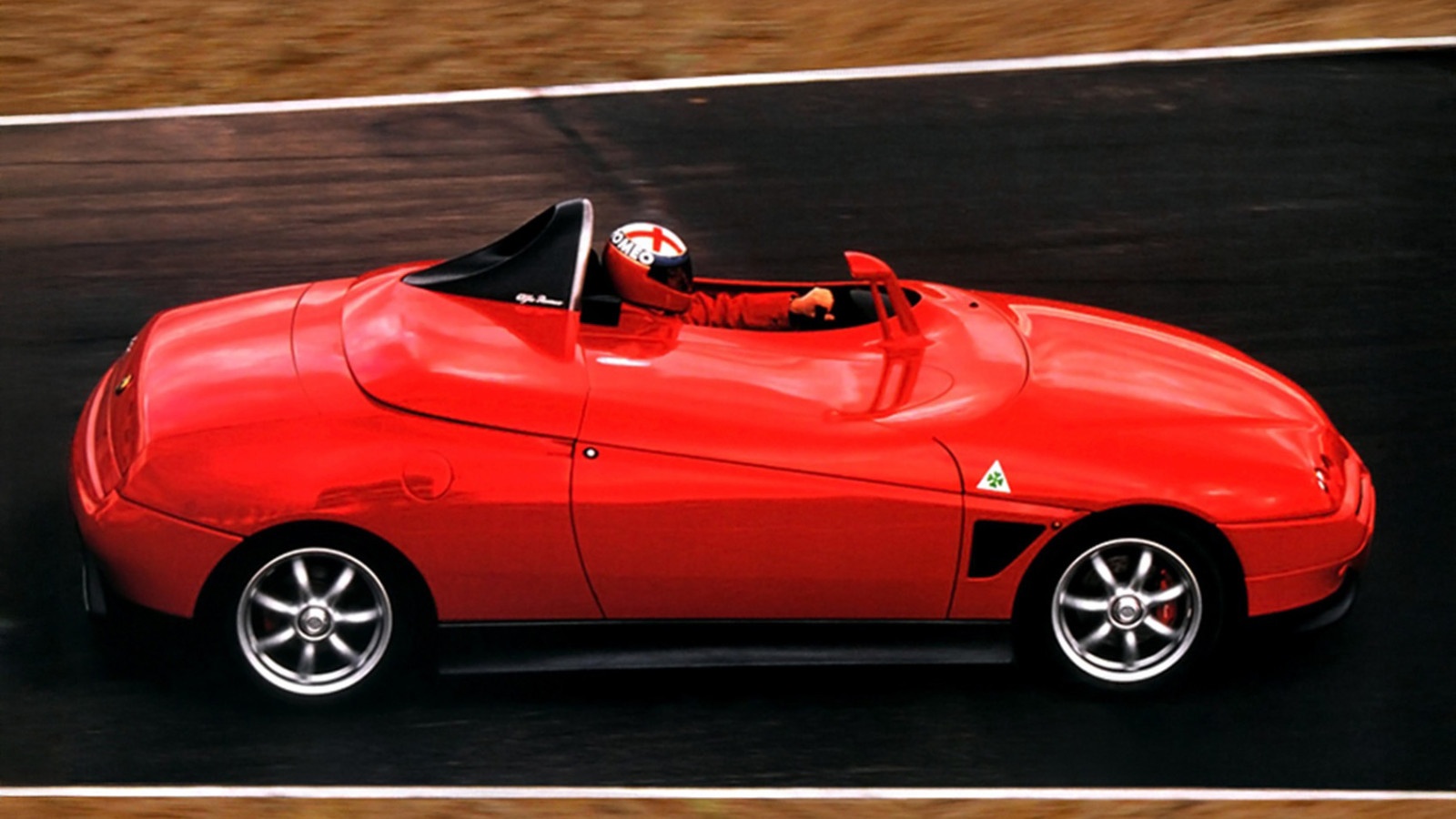
1998 Alfa Romeo Spider Monoposto Concept
A combined effort between Alfa Romeo’s Centro Stile design studio and Zagato, the Spider Monoposto revived an old name for this one-off single-seater.
As the likes of Lotus and Renault dabbled with ever-more-extreme roadsters, Alfa did likewise with a version of its Spider without a windscreen.
A fixed cover was placed over the passenger side of the cockpit, while a rollbar looked after the driver.
A stalk-like rear-view mirror was a nod to practicality, while additional vents behind the front wheels hinted at extra performance, though no official numbers were published.
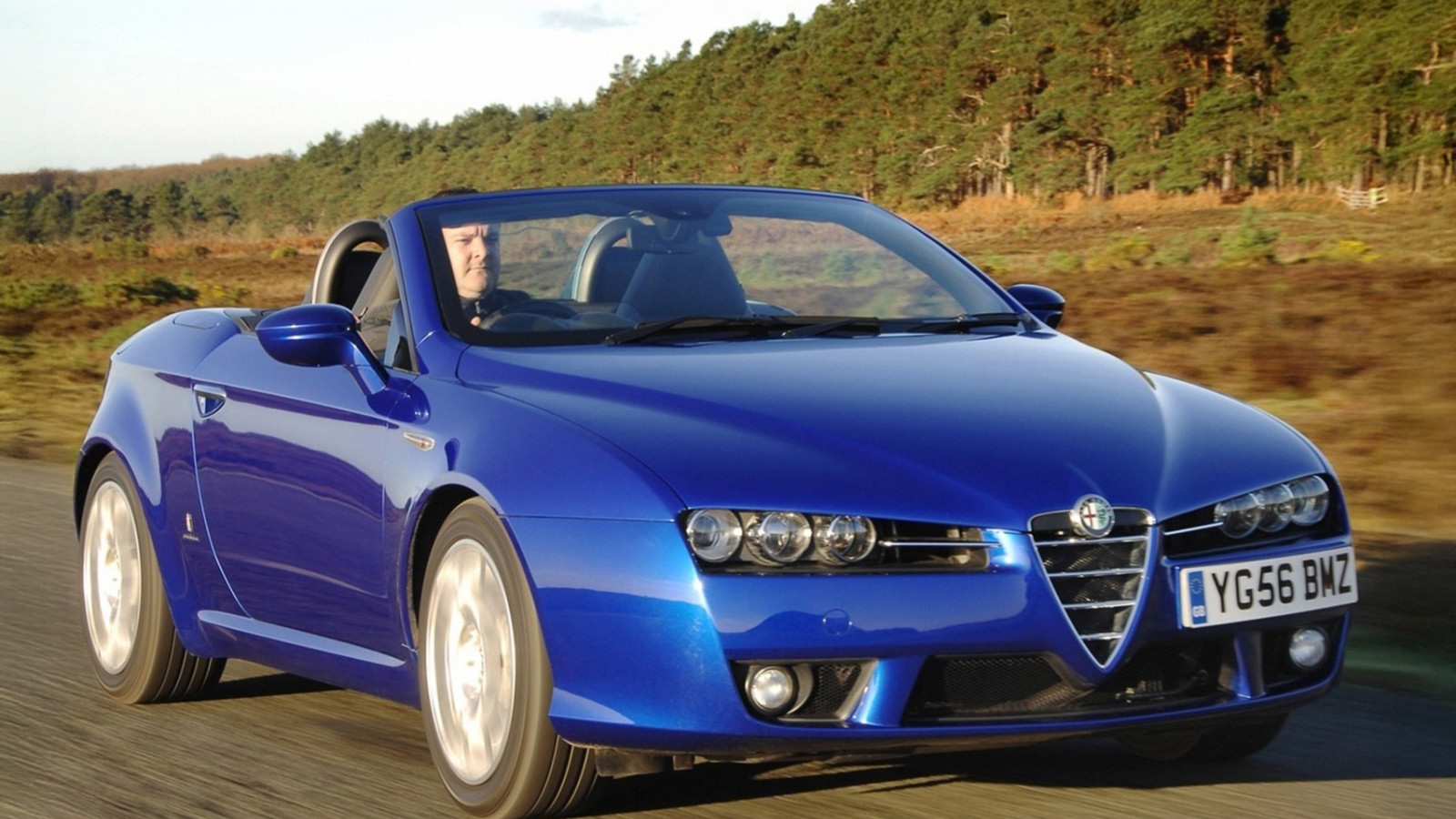
2006 Alfa Romeo Spider Type 939
Sharing its platform with the Brera coupé, Alfa Romeo’s Type 939 generation of Spider was again styled by Pininfarina.
It broke cover at the 2006 Geneva show, a year after the Brera was launched, and was offered with 1.8- and 2.2-litre four-cylinder and 3.2 V6 petrol motors.
For the first time in the Alfa Romeo Spider’s history, it was also available with a diesel engine courtesy of the five-cylinder 2.4 JTD unit, in a bid to balance performance with economy.
This edition of the Spider proved to be short-lived and production ended in 2010, after a modest 12,488 cars had rolled out of the Alfa factory.
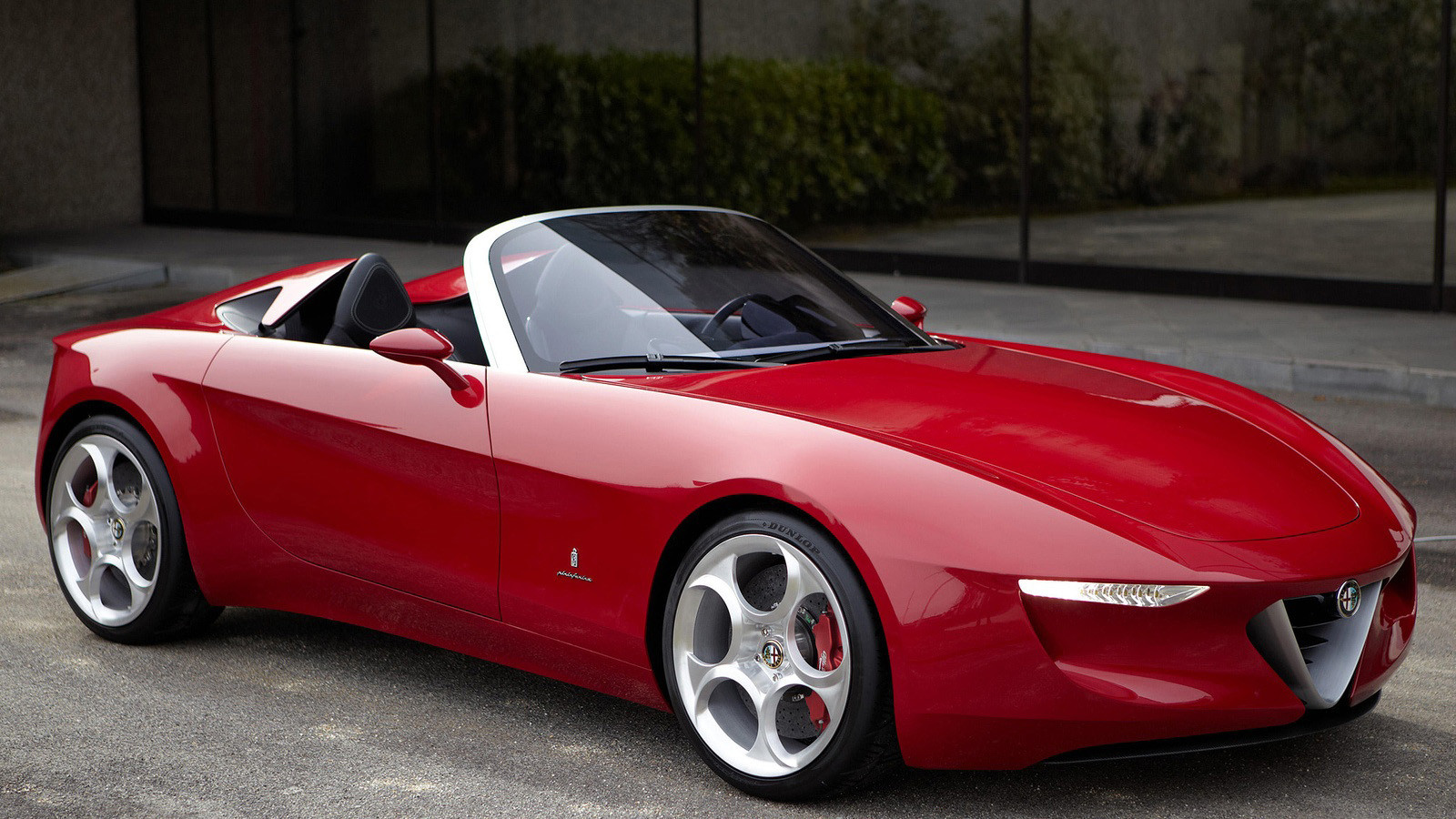
2010 Alfa Romeo 2uettottanta
The idea of a Spider replacement was evidently high among Alfa Romeo’s priorities as the Type 939 went off sale.
The 2uettottanta, a play on the original 1966 car’s Duetto name, was displayed at the 2010 Geneva motor show as a celebration of Alfa Romeo’s centenary and also Pininfarina’s 80th anniversary.
The sleek looks were backed by the marque’s turbocharged 1750cc engine and a paddle-shift, six-speed, manual gearbox.
It weighed just 1220kg (2690lb) and claimed 0-60mph in less than 6 secs, but after a few press drives of the concept car, the 2uettottanta sadly faded into obscurity along with the Spider name.