Ford Escort RS Cosworth vs Subaru Impreza P1: feel the heat

| 26 May 2026
Classic & Sports Car - Black & Blue: Ford Escort RS Cosworth vs Subaru Impreza P1
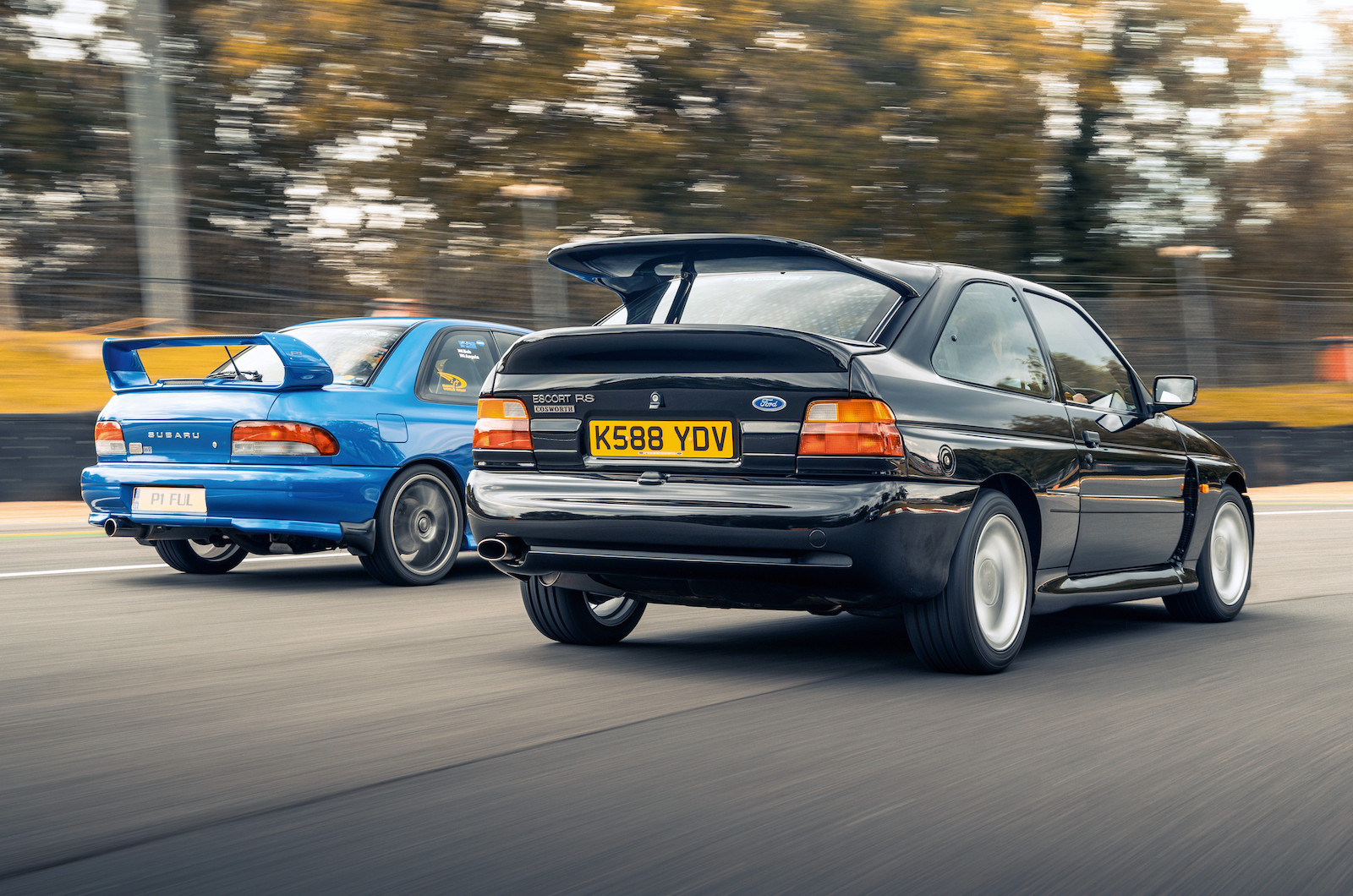
Ford and Subaru’s works rally teams enjoyed great World Rally Championship success in the 1990s and noughties, and were responsible for creating two of the wildest and most potent turbocharged road cars on the market.

But they appeared in showrooms for very different reasons.

Whatever your allegiance to a particular manufacturer in the world of rallying, you’d have to be an anti-Ford diehard to deny the success of the Escort during the 1970s and early ’80s.

The works RS 1800 roundly trounced its opposition until the all-wheel-drive might of Audi’s quattro became an unassailable obstacle to rivals with only one driven axle.

Classic & Sports Car - Black & Blue: Ford Escort RS Cosworth vs Subaru Impreza P1
Even today, Ford Escorts from the ’60s and ’70s are competitive rally cars

But that winning streak, while it lasted, allied to the then mainstream popularity of the sport, made a blue-chip business case for production-car spin-offs such as the Mexico, RS 2000 and RS 1800.

Within a few years, would-be Björn Waldegårds were everywhere on British roads.

But nothing lasts for ever, and coincident with the launch of an all-new front-wheel-drive Escort platform in 1980, Ford’s works rally team instead started to focus its attention on the Sierra RS Cosworth and mid-engined RS 200.

It wasn’t until the end of the decade that, with a new Mk5 production car imminent, Ford turned again to the Escort as both a potential WRC contender and a high-performance road car.

Classic & Sports Car - Black & Blue: Ford Escort RS Cosworth vs Subaru Impreza P1
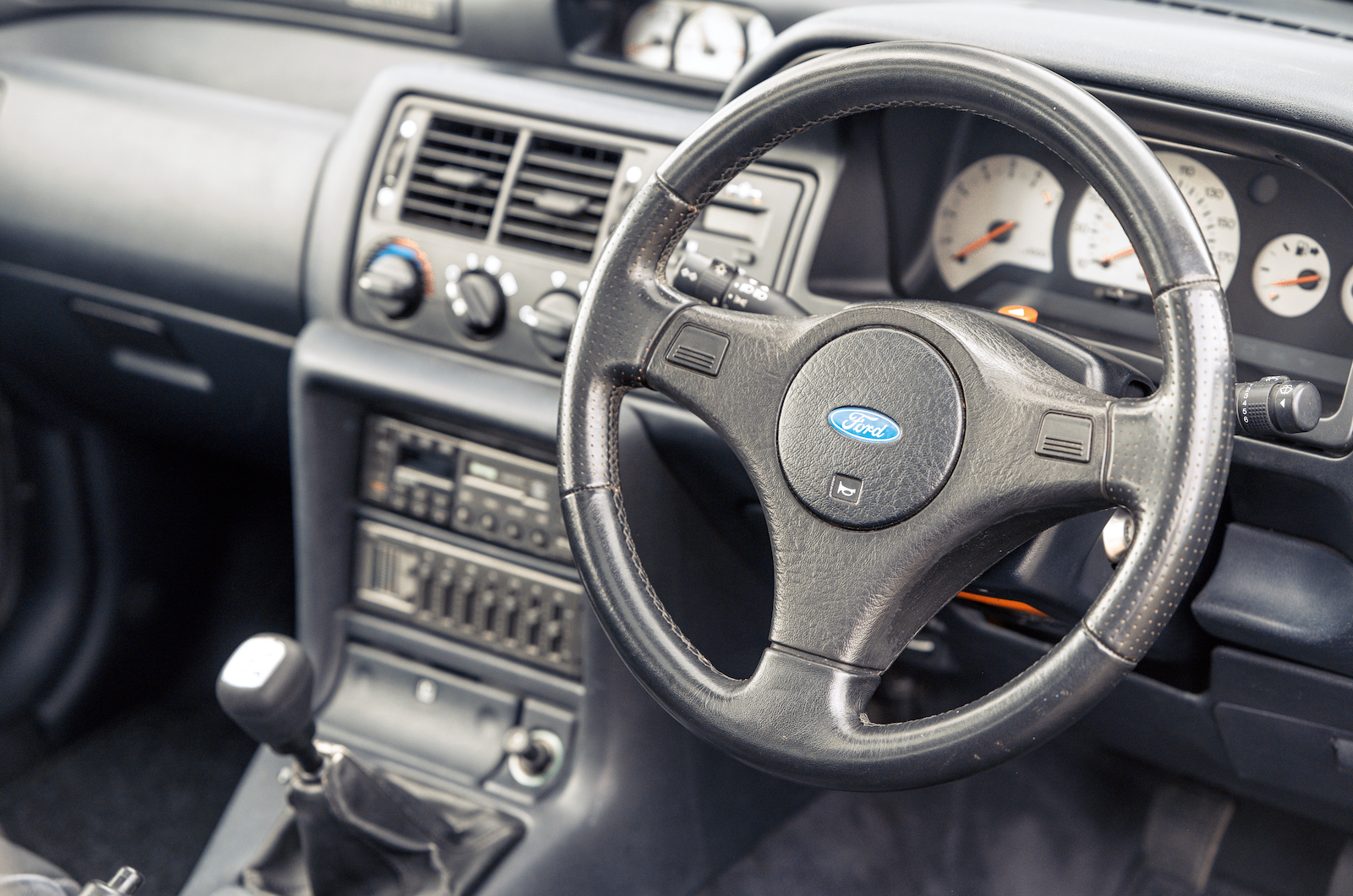
Apart from some additional gages, the Ford Escort RS Cosworth’s interior is largely that of a regular Mk5 Escort

At around the same time, David Richards’ Prodrive group had become the de facto works team for Subaru, rapidly scoring rally successes initially with the Legacy and then, from 1995 onwards, the more compact and agile Impreza.

Three drivers’ championships and three manufacturers’ titles followed, and that exposure spawned a voracious appetite among enthusiasts for more hardcore versions of the already quick Impreza Turbo and later WRX production models.

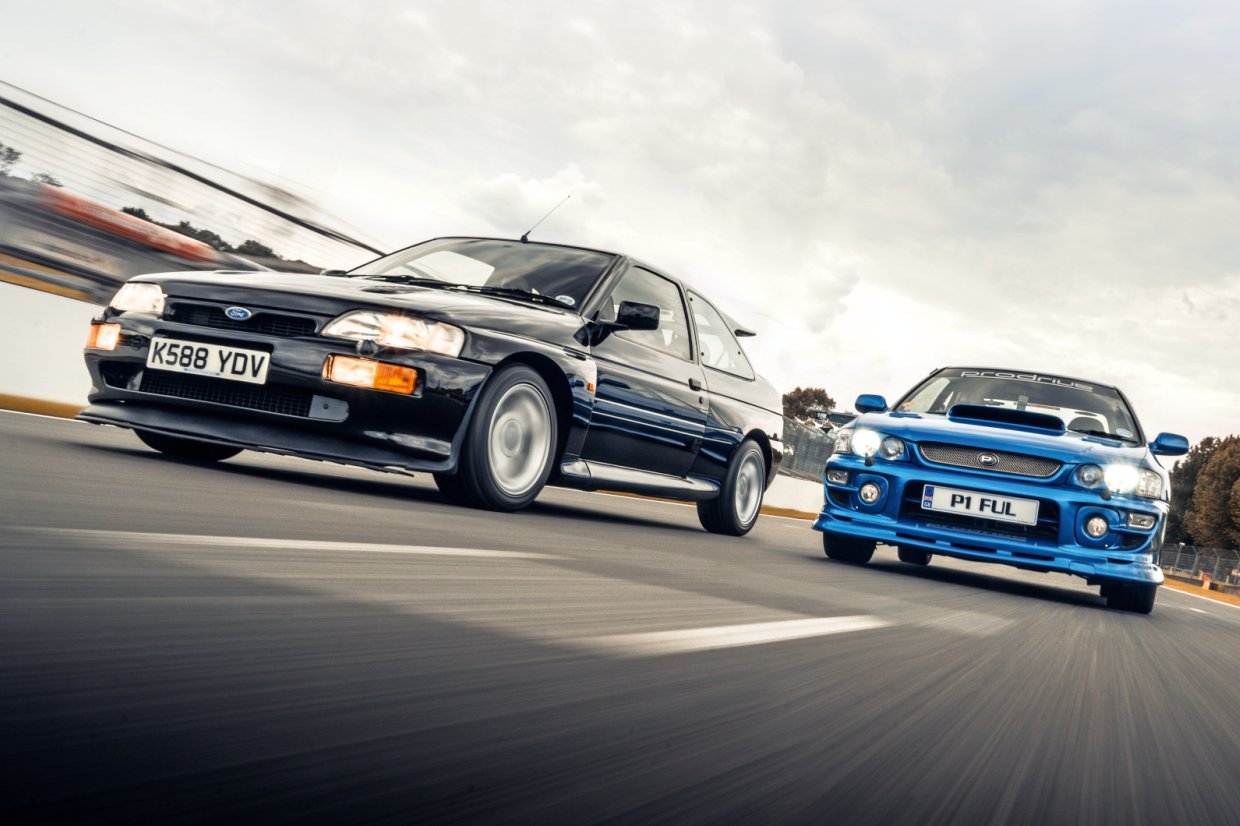
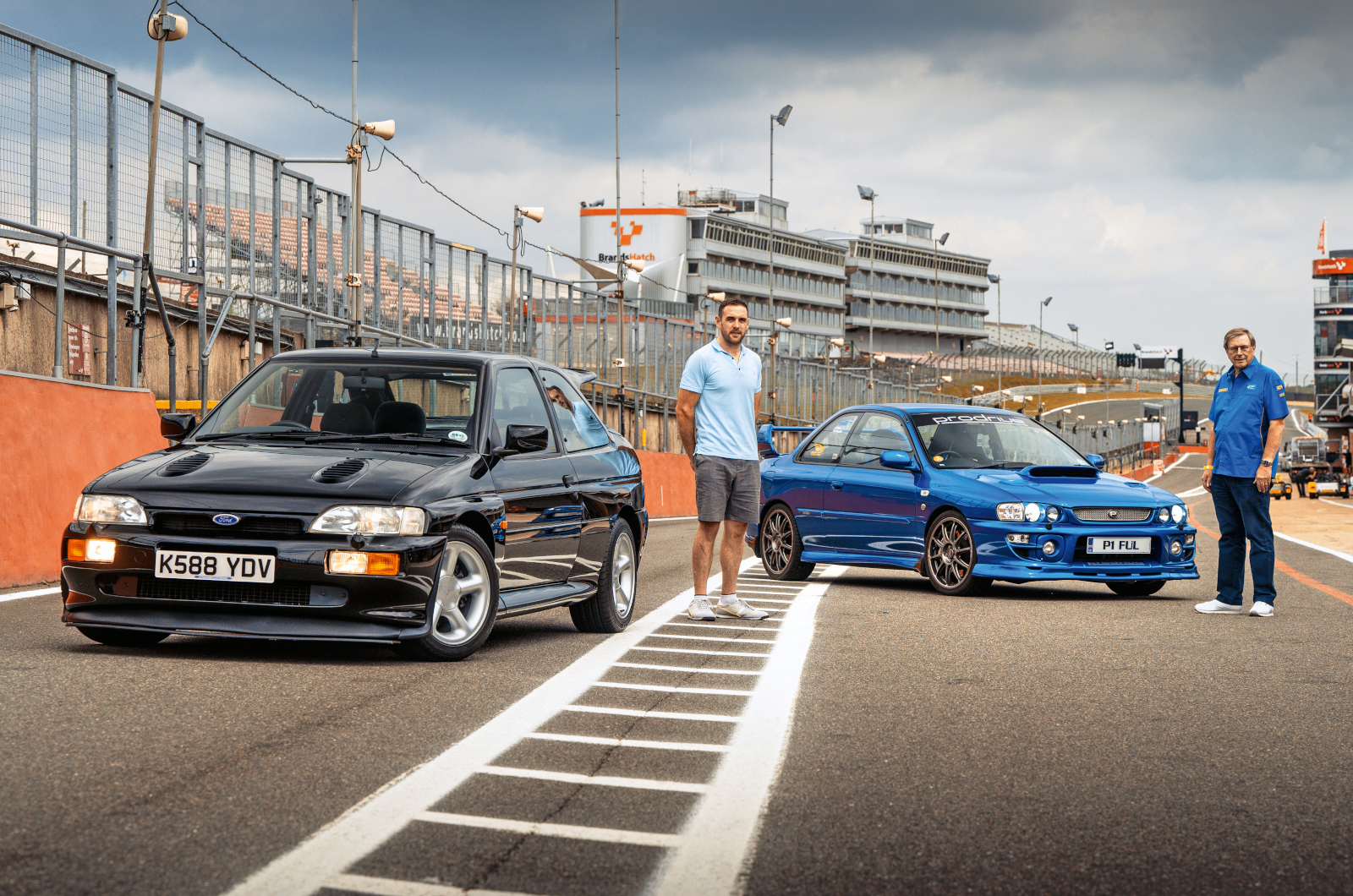
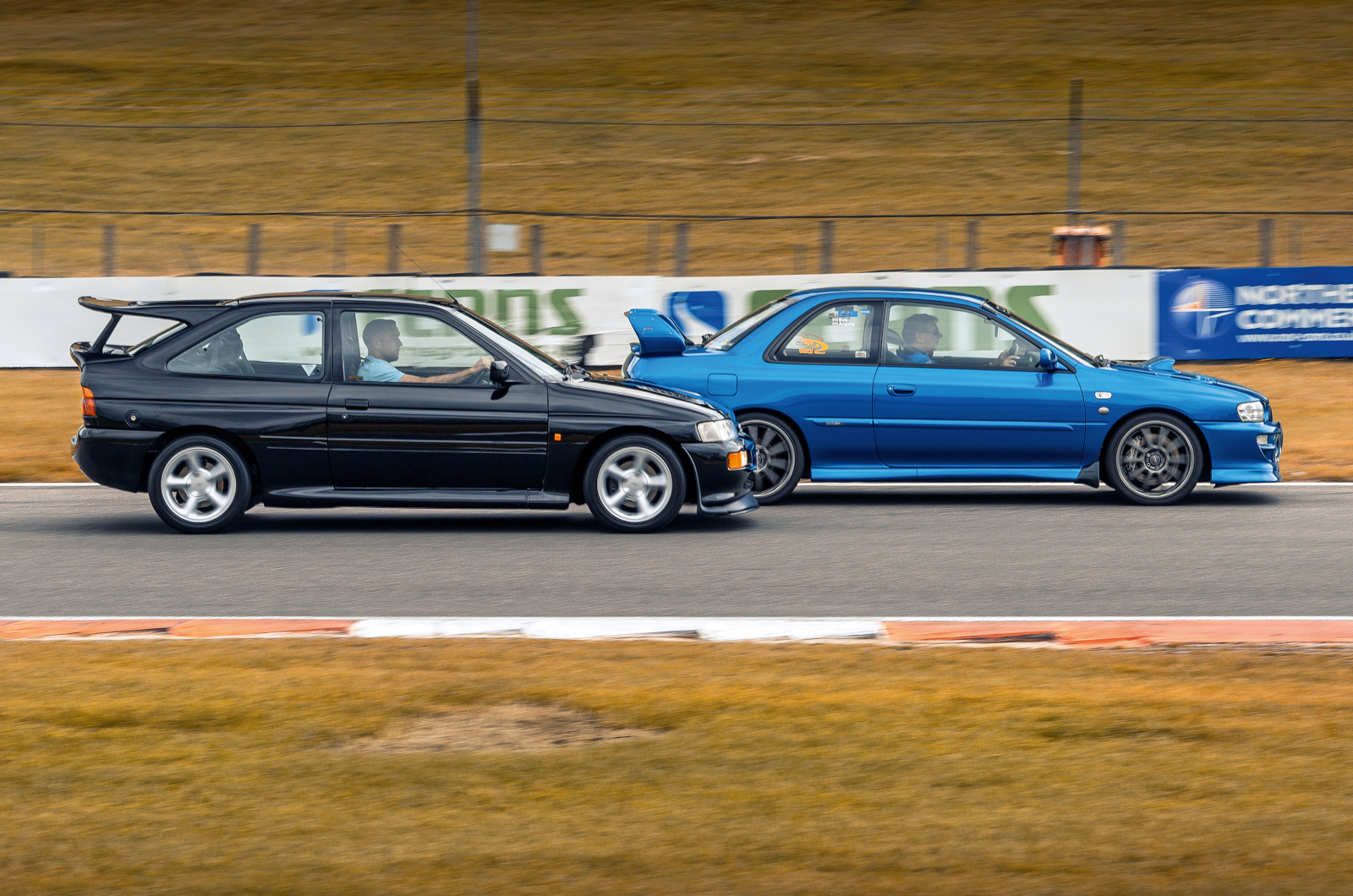
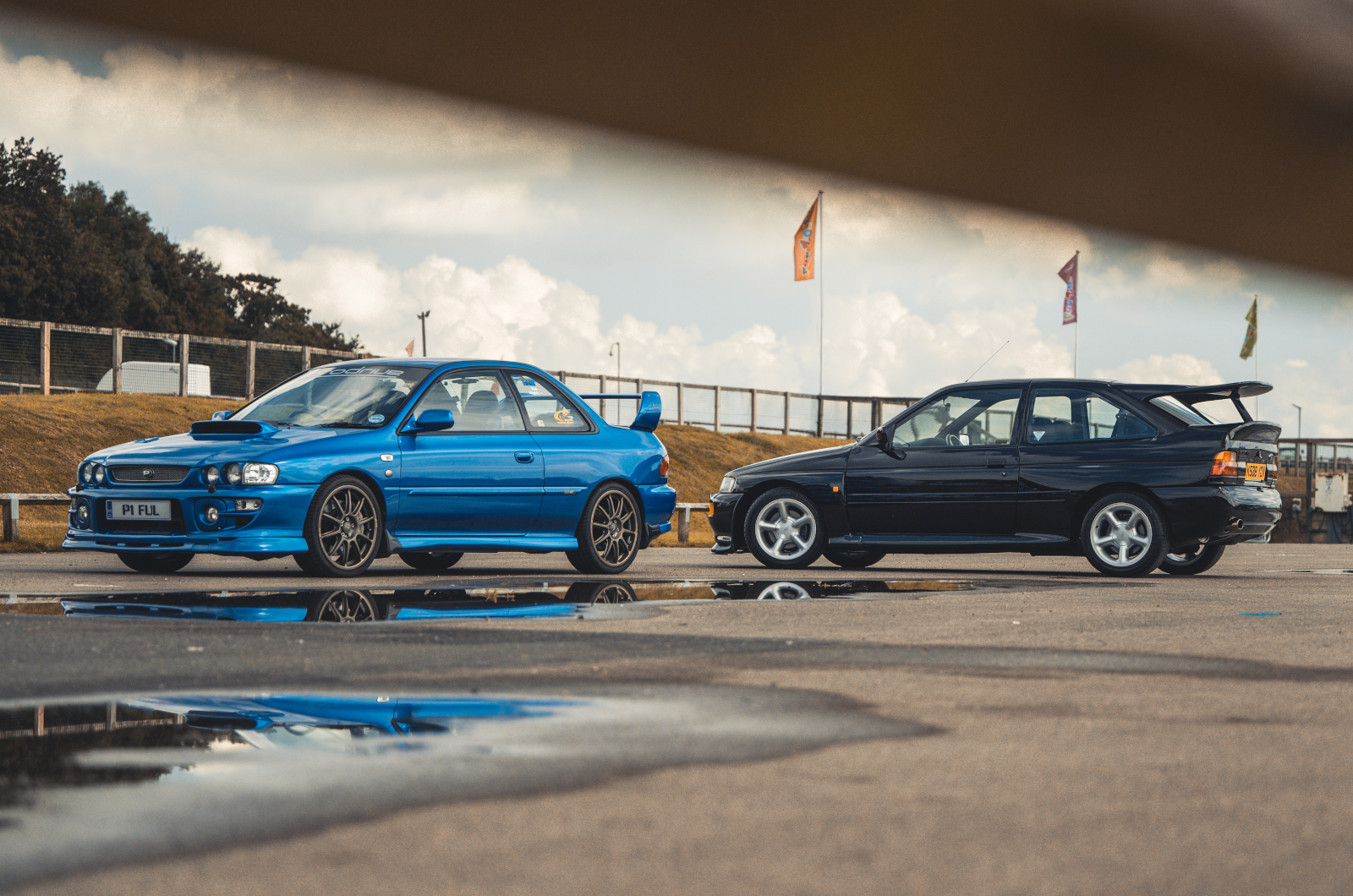
What you see here, in the Brands Hatch pitlane, are the road cars that were developed with Ford and Subaru works teams’ expertise: the Escort RS Cosworth and the Impreza P1.

Classic & Sports Car - Black & Blue: Ford Escort RS Cosworth vs Subaru Impreza P1
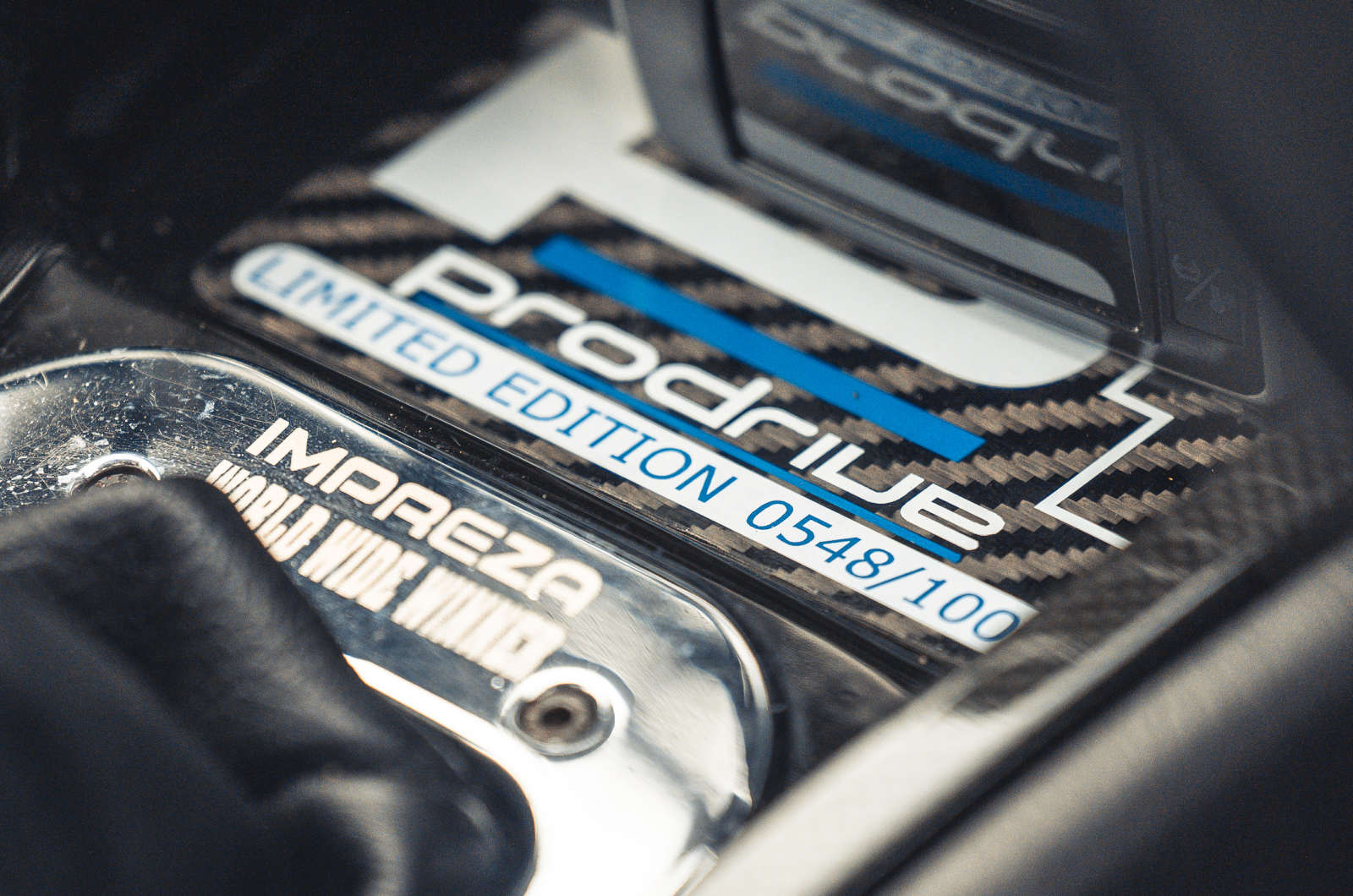
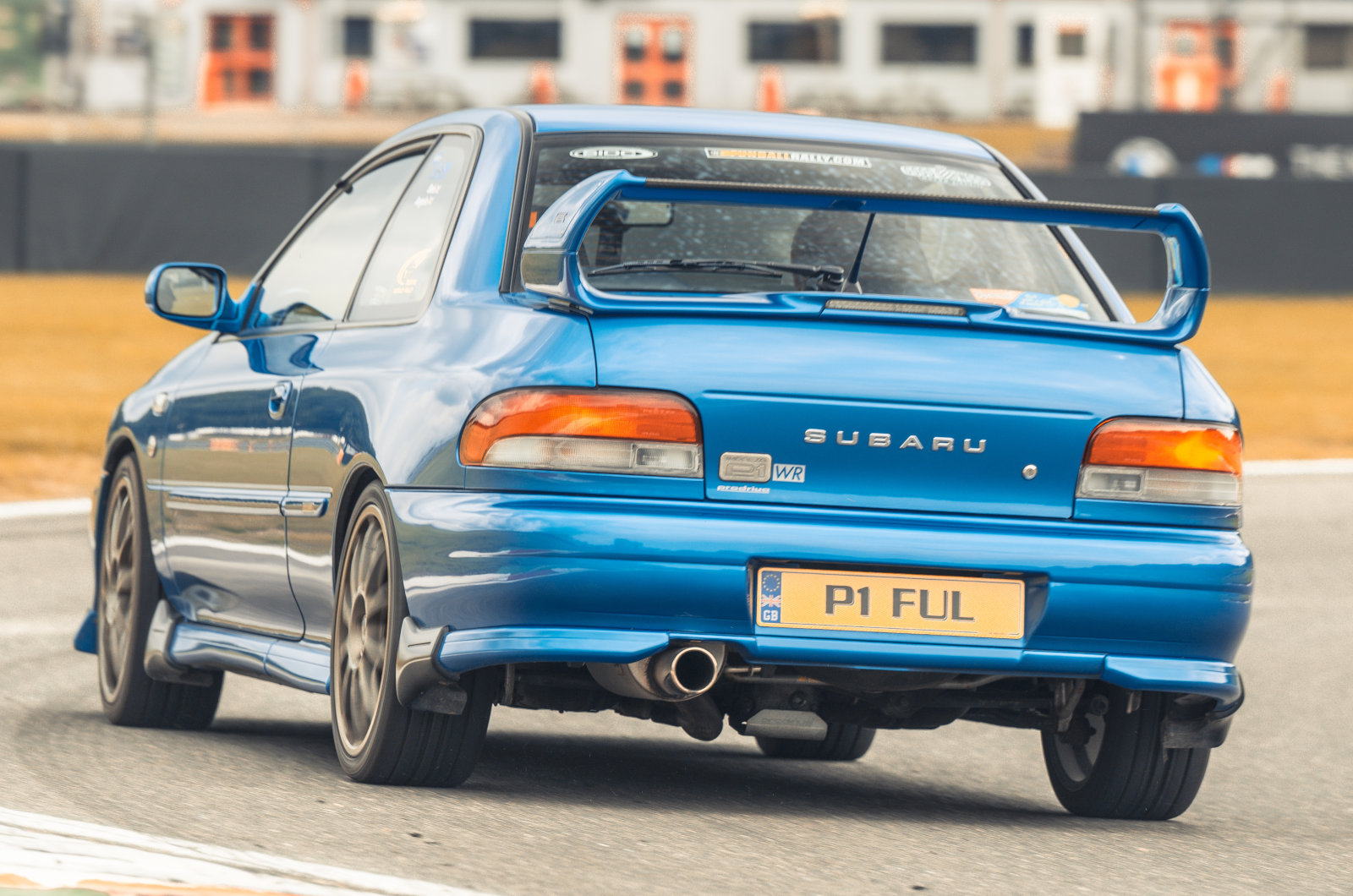
Only 1000 Subaru Impreza P1s were built, and each was given a commemorative plaque

Both these classic cars are increasingly rare (in unmodified form, at least), both have the requisite all-wheel-drive system and each has a turbocharged, four-cylinder engine of a 2-liter capacity, along with five manual gears.

But while there’s parity in their core specifications, their respective routes to market were fundamentally different.

“In the late 1990s there were many performance Imprezas being brought into the UK from Japan as ‘gray’ imports,” Prodrive chairman David Richards recalls.

“At the time, we were working with International Motors [Subaru’s UK importer], providing a range of performance upgrades for the Impreza Turbo.”

Classic & Sports Car - Black & Blue: Ford Escort RS Cosworth vs Subaru Impreza P1
Evans (left) with his immaculate, all-original Ford Escort RS Cosworth; Fuller bought his Subaru Impreza P1 new in 2000

Richards adds: “Together, we saw an opportunity to capitalize on the obvious demand that there was in the UK for the ultimate Impreza and conceived the P1, which, unlike all of the imported cars, would have European whole vehicle type approval and so could be sold through the main dealer network.

“Our USP was that the Impreza P1 was specifically developed for UK roads, which none of the gray-import cars were.”

“Our chassis engineers developed bespoke suspension tuned specifically for British B-roads and gave the P1 taller gear ratios, so it was relaxing to use for longer journeys on highways,” continues Richards.

Classic & Sports Car - Black & Blue: Ford Escort RS Cosworth vs Subaru Impreza P1
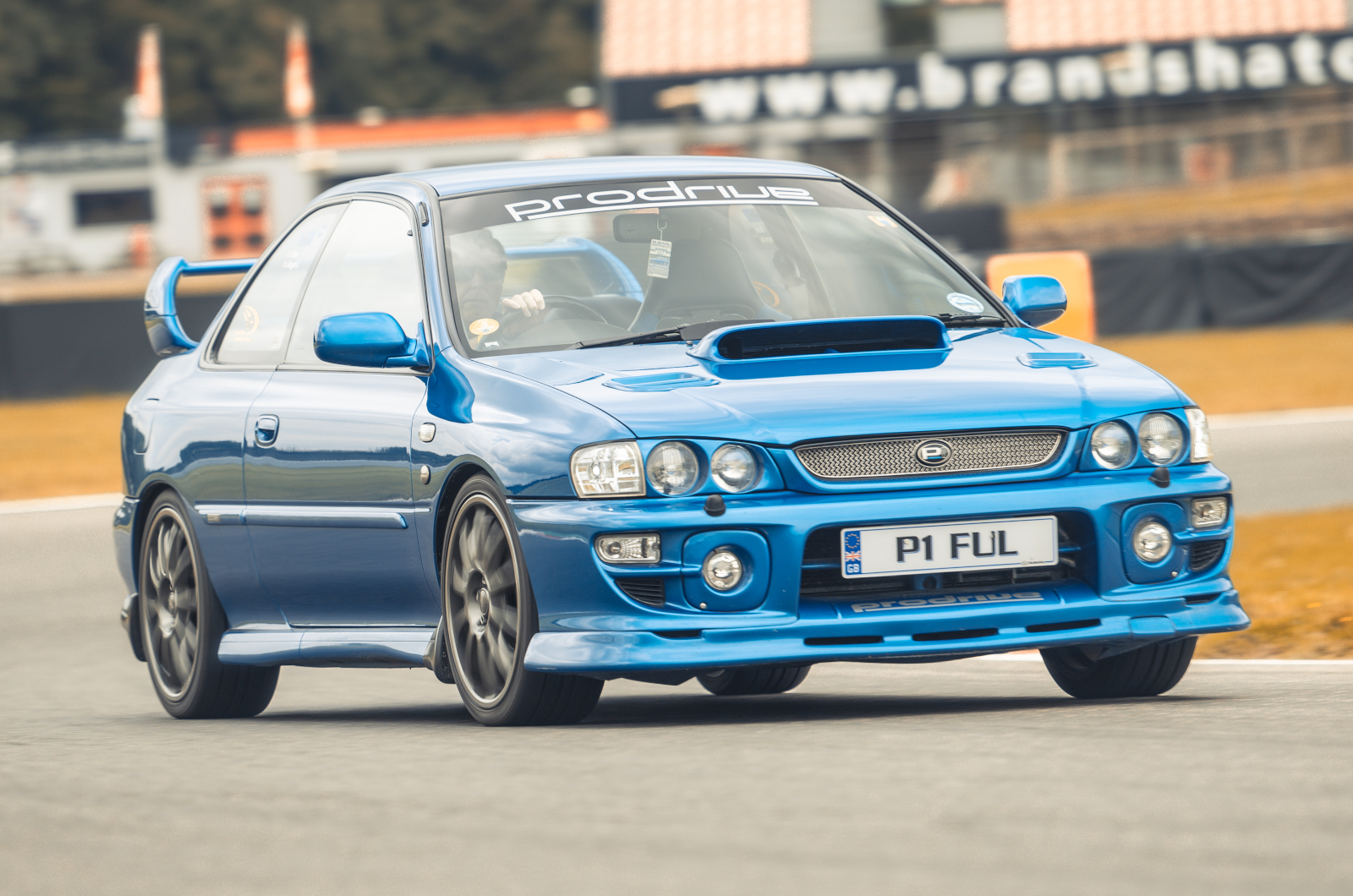
The Subaru Impreza’s booted shape became a noughties icon

“Despite having to conform to European type approval and emissions/noise regulations, we still created a car that could reach 60mph in just 4.6 secs – which in 2000 was supercar performance.”

However, the Ford works team’s rationale for producing the Escort RS Cosworth can be summarized in one word: homologation.

A minimum of 2500 cars had to be sold in order to achieve Ford’s aim of taking Group A WRC top honors.

So in 1989 design work started under the auspices of Ford Special Vehicle Engineering’s Rod Mansfield, the year before the cooking Mk5 road car, on which its exterior profile was based, was due to launch.

Classic & Sports Car - Black & Blue: Ford Escort RS Cosworth vs Subaru Impreza P1
Ford designed the Escort RS Cosworth to take the Group A WRC crown from the Lancia Delta Integrale

The Cosworth’s lines were, however, pretty much the only link with the showroom model.

Under the skin lay a shortened Sierra Cosworth platform, which, according to Geoff Fox, SVE’s manager for special products at the time, had around 50mm (about 2in) trimmed from its wheelbase, making it shorter than a Sierra but longer than a standard Escort.

The only interchangeable body parts between an Escort Cosworth and a regular Escort were the doors (all RSs were based on the three-door Escort’s design) and the roof.

Such was Ford’s keenness to homologate the car, which was manufactured by Karmann in Germany, that few concessions were made for road driving in the initial production run of 2500.

Classic & Sports Car - Black & Blue: Ford Escort RS Cosworth vs Subaru Impreza P1
The Ford Escort RS Cosworth’s underpinnings were taken from the proven Sierra RS Cosworth

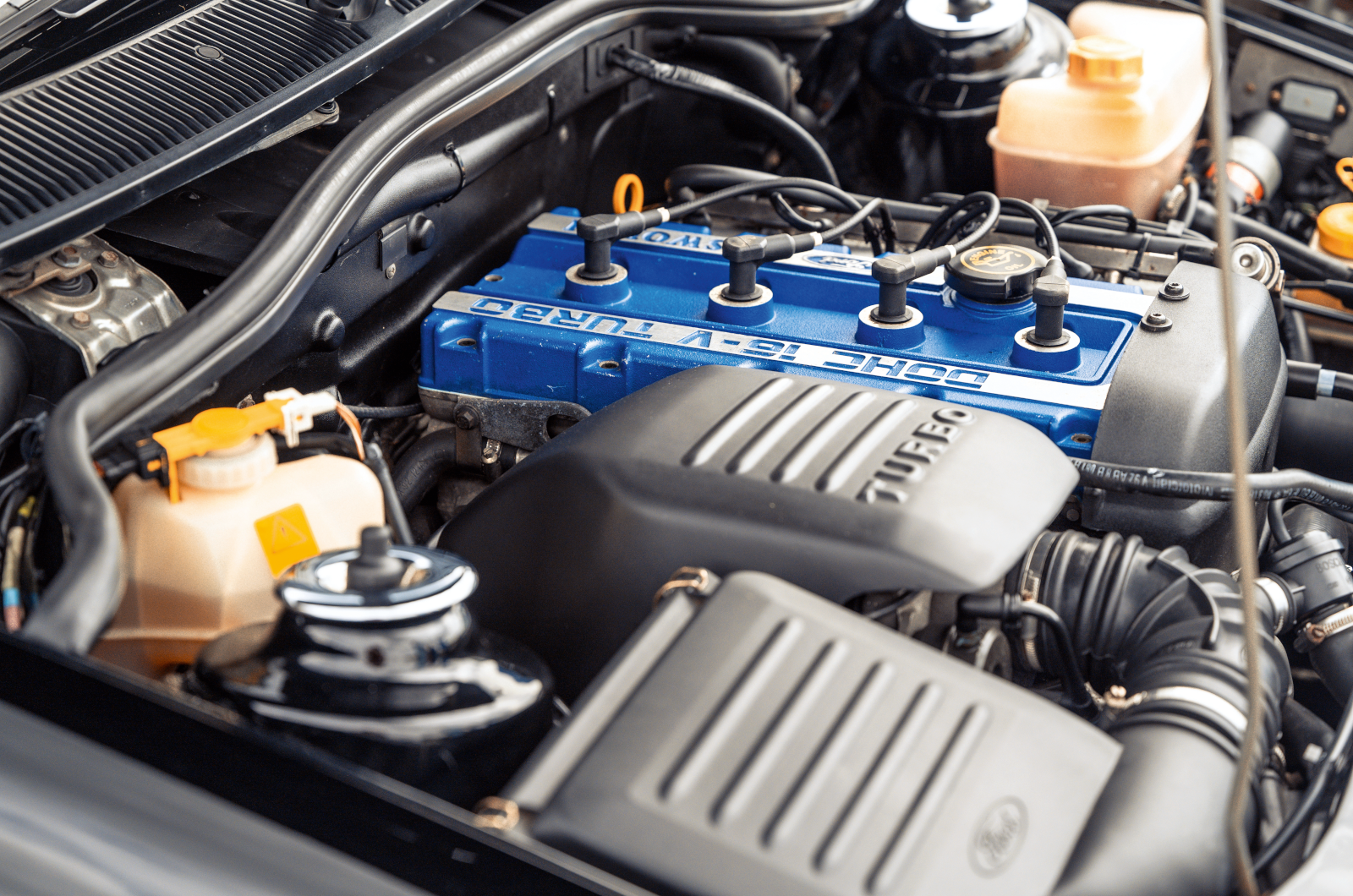
The first cars arrived with customers in late 1992, costing £20,524 and equipped with Garrett T34 turbos, essentially a hybrid unit comprising a different compressor wheel and turbine designed to cater for outputs of up to 350bhp in competition tune.

Known as the ‘Big Turbo’ cars, they had something of a reputation for all-or-nothing performance due to the inherent lag during acceleration.

They were also equipped with a redundant water-injection system, fitted purely to appease the FIA.

Later, post-homologation cars used a smaller Garrett T25 turbo, good for 300bhp outputs, which offered a more linear, road-friendly delivery.

Classic & Sports Car - Black & Blue: Ford Escort RS Cosworth vs Subaru Impreza P1

The early ‘Big Turbo’ engine gives up to 224bhp with a kick

All Escort RS Cosworths were fitted with the Sierra Cosworth’s powertrain, including its viscous-coupled all-wheel-drive system and center differential, delivering a 34% front, 66% rear torque split.

Len Irwin, who worked at SVE during development, recalls: “We did a lot of testing on frozen lakes in Finland, and I was responsible for tuning the diff.

“We were pleased with the result. Compared with the Impreza, the rear bias gave the Escort more oversteer and greater predictability for a skilled driver.”

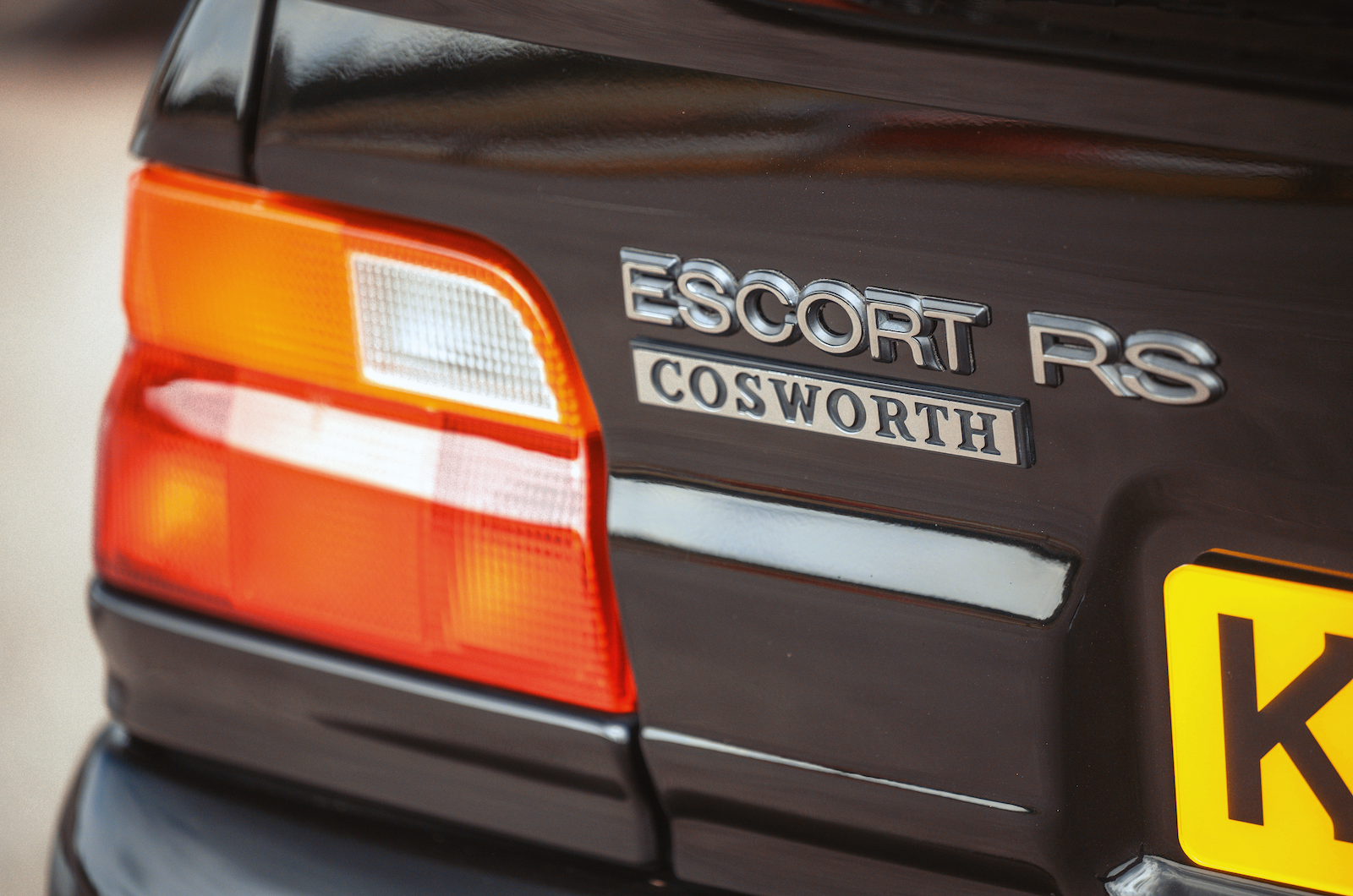
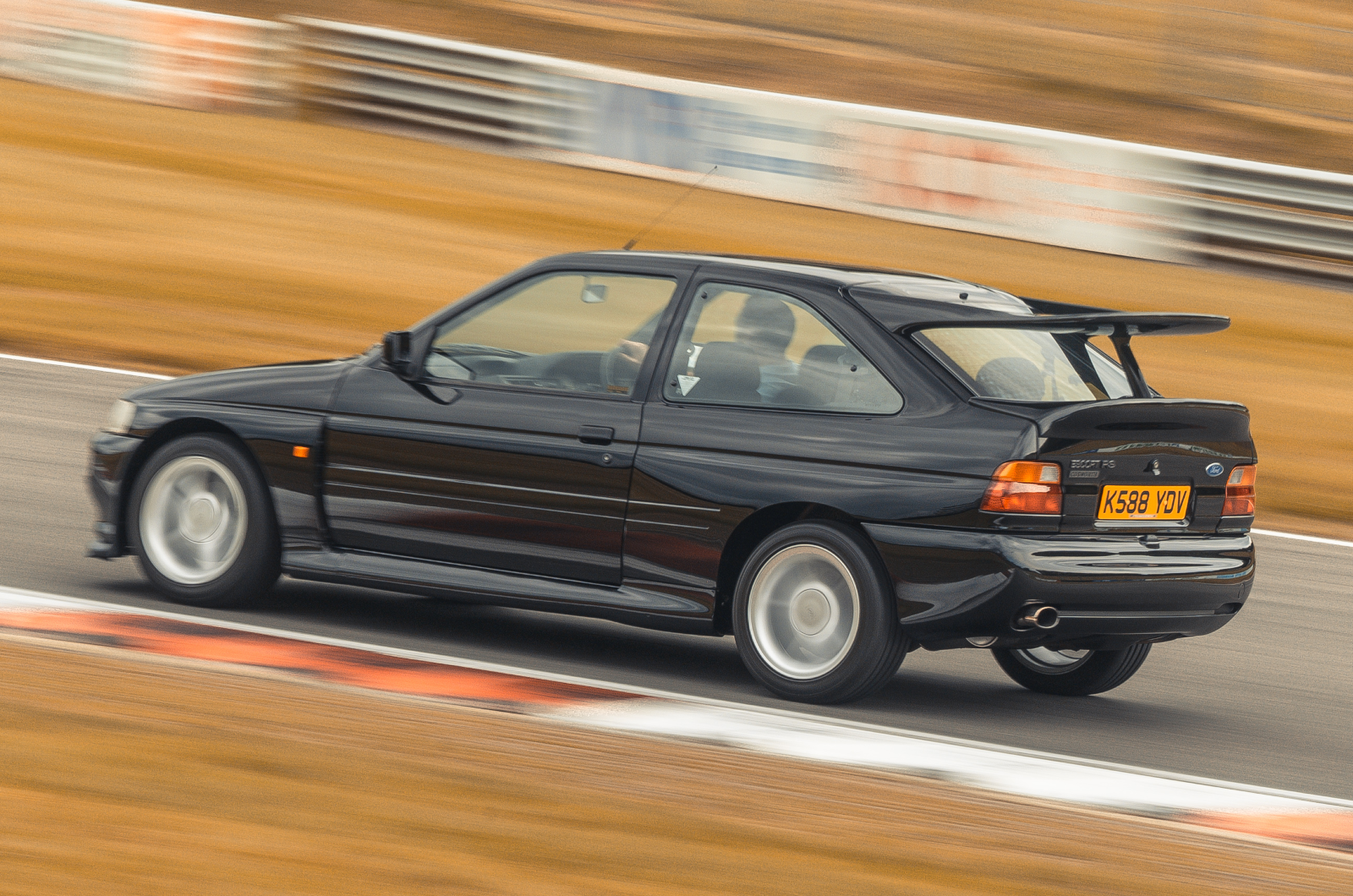
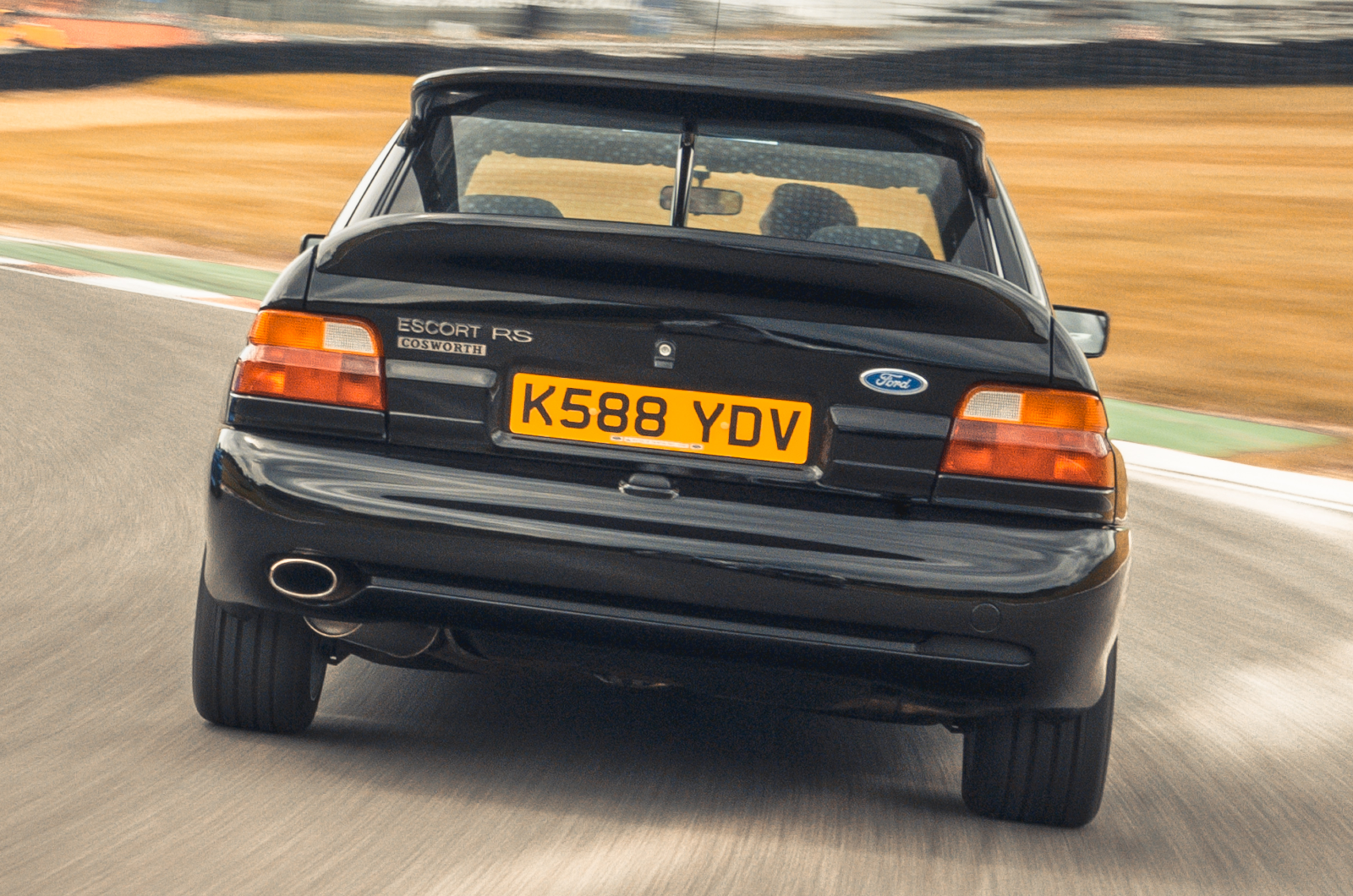
Then there’s the RS Cosworth’s trademark ‘whale-tail’ rear wing, designed by Frank Stephenson.

Classic & Sports Car - Black & Blue: Ford Escort RS Cosworth vs Subaru Impreza P1

Sending more torque to the rear than the Subaru Impreza is supposed to make the Ford Escort RS Cosworth feel more predictable on the limit

Combined with the adjustable front splitter, this distinctive appendage created real downforce for the first time in a mass-produced road car: up to 43LB (19.5KG) over the rear axle and more than 10LB (4.5KG) at the front.

There was talk of a proposed three-way rear wing, but according to Geoff Fox: “It was never even put forward for approval. It remained in Frank’s sketchbook!”

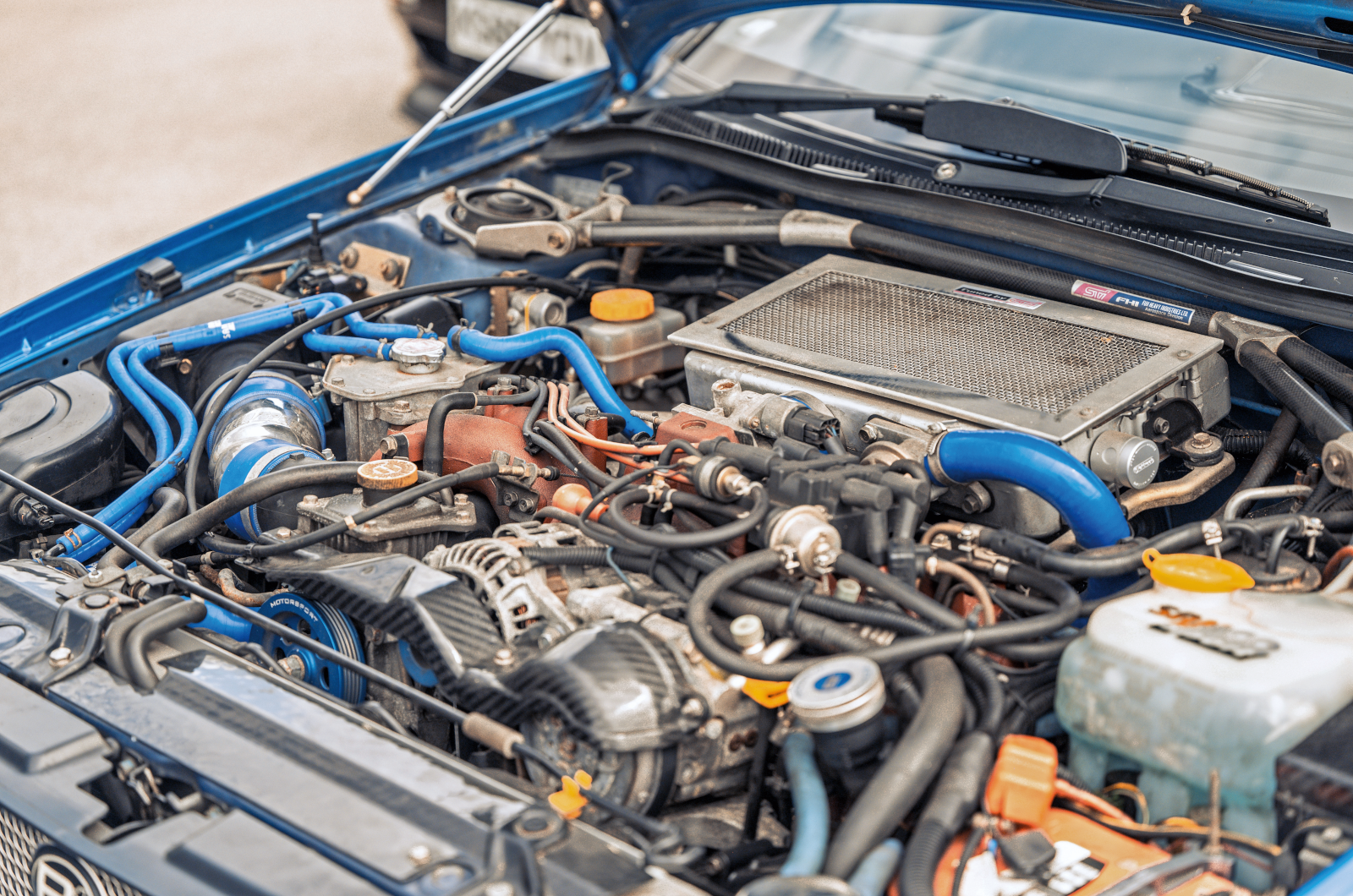
Eight years separate the Impreza P1 (‘P’ for Prodrive) from the earlier Escort, so if you take this period as one where the power-bar would naturally rise, it’s no surprise to learn that the P1’s 1994cc horizontally opposed ‘boxer’ engine makes 276bhp, up 52bhp on that of the Escort.

Classic & Sports Car - Black & Blue: Ford Escort RS Cosworth vs Subaru Impreza P1

Frank Stephenson, who later designed the BMW MINI, penned the Ford Escort RS Cosworth

While the P1 was not a homologation exercise, it ended up being the only official Impreza on sale in the UK to use the two-door body also employed by the R22B, which was the car used to homologate the Impreza for the WRC.

The P1 was based around the Japan-only Subaru WRX STi Type R, with Peter Stevens, of Lotus Esprit and McLaren F1 fame, penning the front and rear spoilers plus the unique alloys.

David Richards is satisfied with the result: “When you look at the whole package, the engine, suspension, interior and Peter Stevens’ unique styling with the Sonic Blue color, I don’t think there is anything we would have, or could have, changed within the limitations of European type approval.

“The Impreza P1 was probably the best and most successful limited edition we ever created and was a great commercial success for Subaru UK.”

Classic & Sports Car - Black & Blue: Ford Escort RS Cosworth vs Subaru Impreza P1

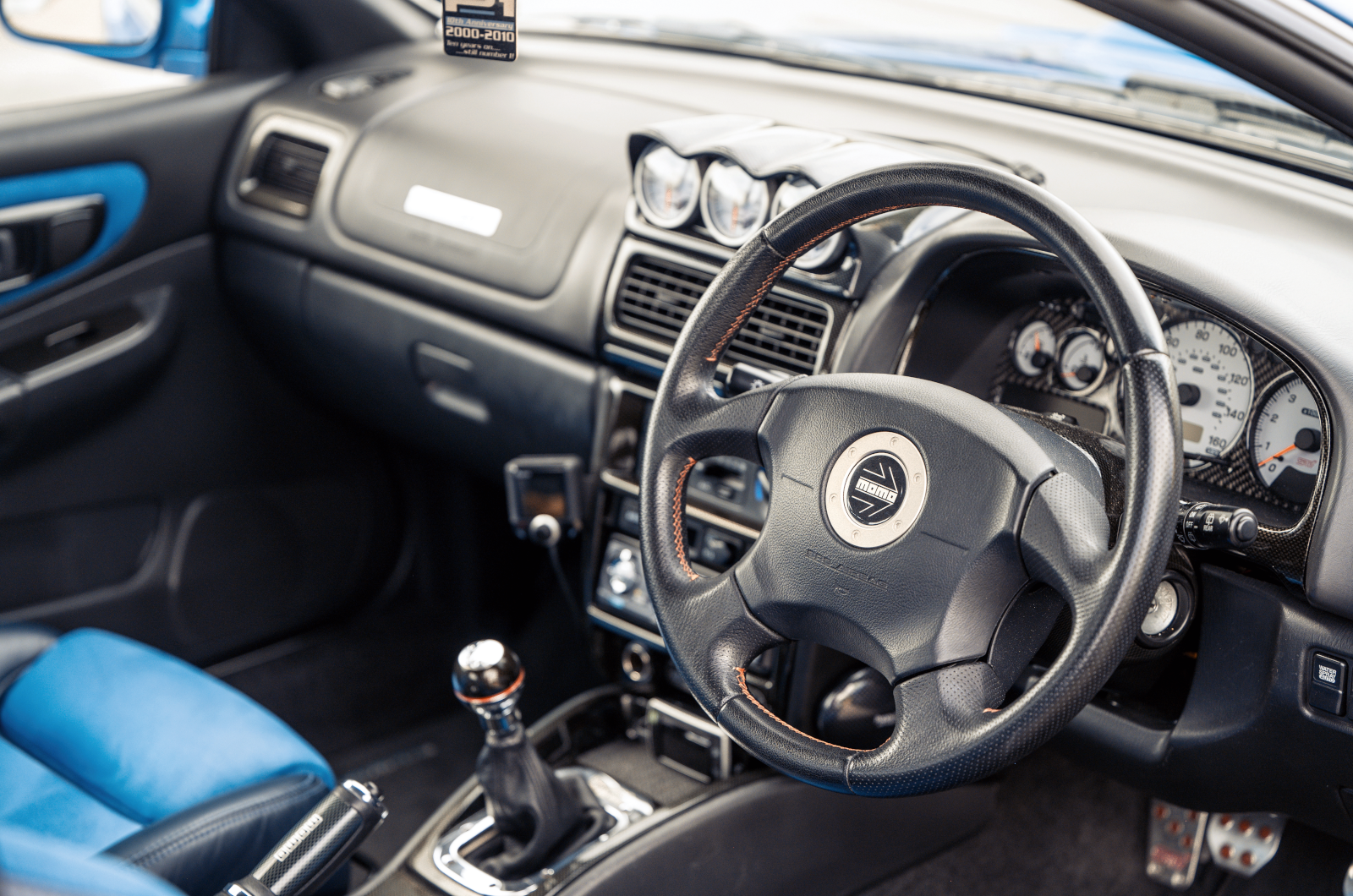
The Subaru Impreza P1’s large steering wheel is an advantage at higher speeds

“Initially we targeted just 500 cars, but demand was so strong that we quickly increased the run to 1000,” Richards continues.

“The cars were being snapped up as quickly as we could make them here in the UK.”

Bob Fuller was among the first in line, having owned his Impreza P1 from new in 2000 after a six-month wait for delivery.

Showing build number 548 out of 1000, Fuller’s car has clearly evolved during his tenure with it.

“When Prodrive launched the P1, it offered owners a wide range of official ‘WR’-branded upgrades,” he says. “In an effort to set my car apart, I fitted quite a few of them.”

Classic & Sports Car - Black & Blue: Ford Escort RS Cosworth vs Subaru Impreza P1

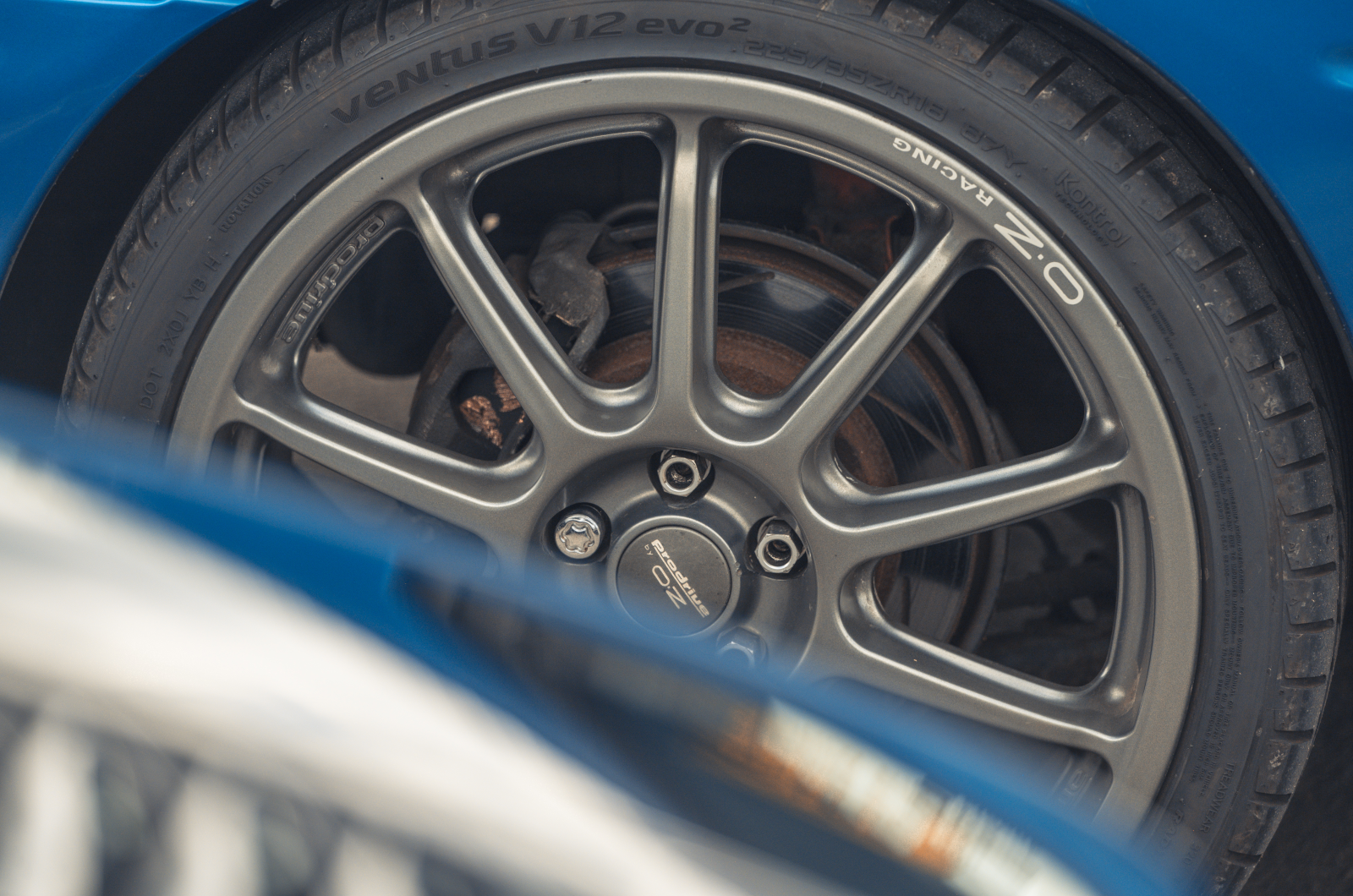
Fuller chose the optional 18in ‘WR’-branded rims for his Subaru Impreza P1

As a result, his Subaru Impreza P1 sits on 18in wheels, as opposed to the standard 17in items, which also meant larger 330mm front brake discs could be fitted.

From the outside, you clock the two HiD lights on either side of the grille (the only non-approved upgrade), replacing the single-lens units that, according to Fuller, were no match for the car’s performance at night.

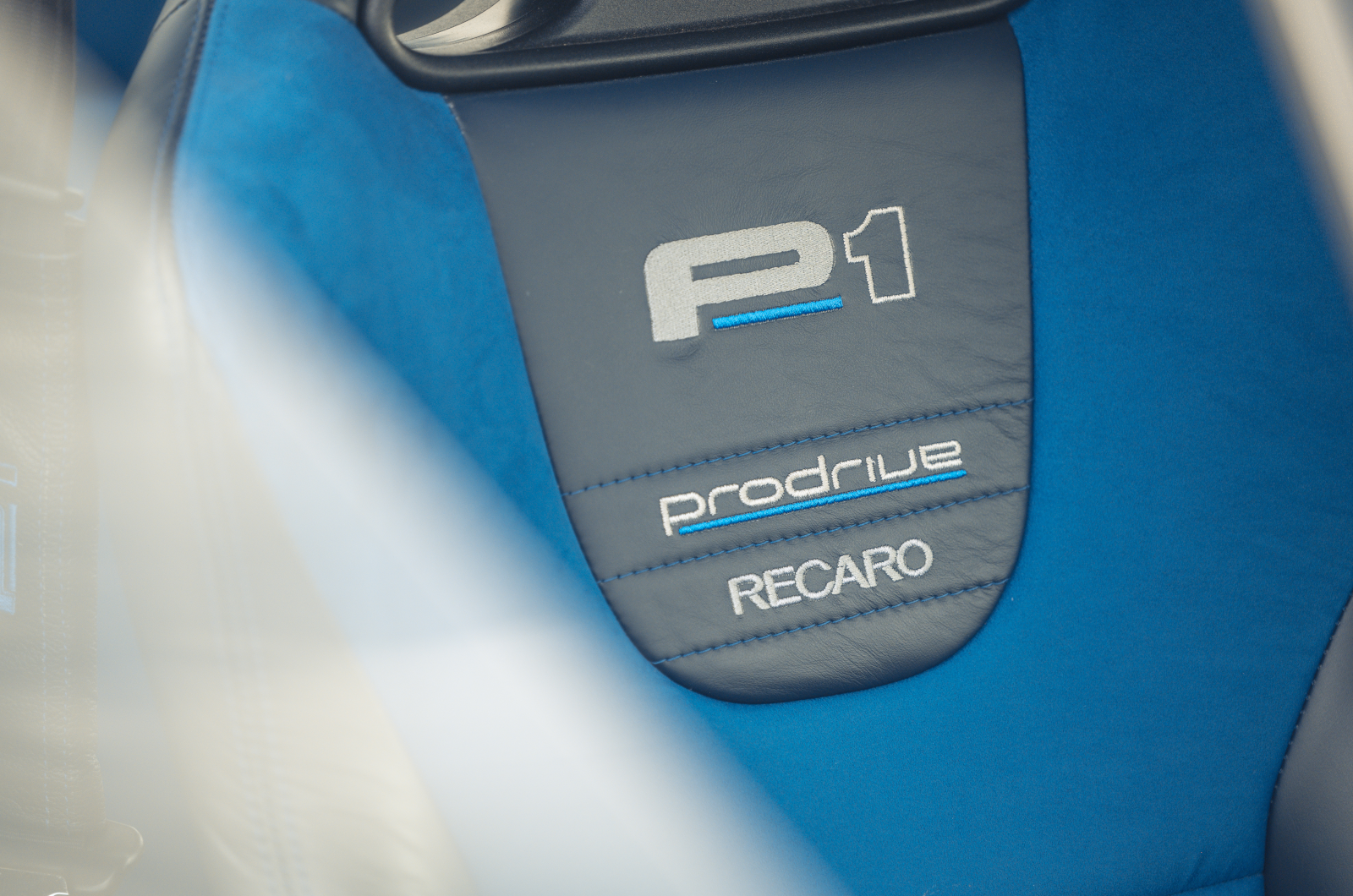
Completing the package is a Prodrive-approved, larger-bore exhaust, which was fitted post-production to get around type-approval restrictions, as well as upgraded front Recaro seats with deeper bolsters and more upmarket trim.

Classic & Sports Car - Black & Blue: Ford Escort RS Cosworth vs Subaru Impreza P1

Other upgrades on this Subaru Impreza P1 include a larger exhaust and deeper bucket seats up front

Inside, it’s clear that the Recaro seats were a very good investment, and you instantly feel comfortable behind the surprisingly large (by today’s standards, at least) red-stitched leather steering wheel.

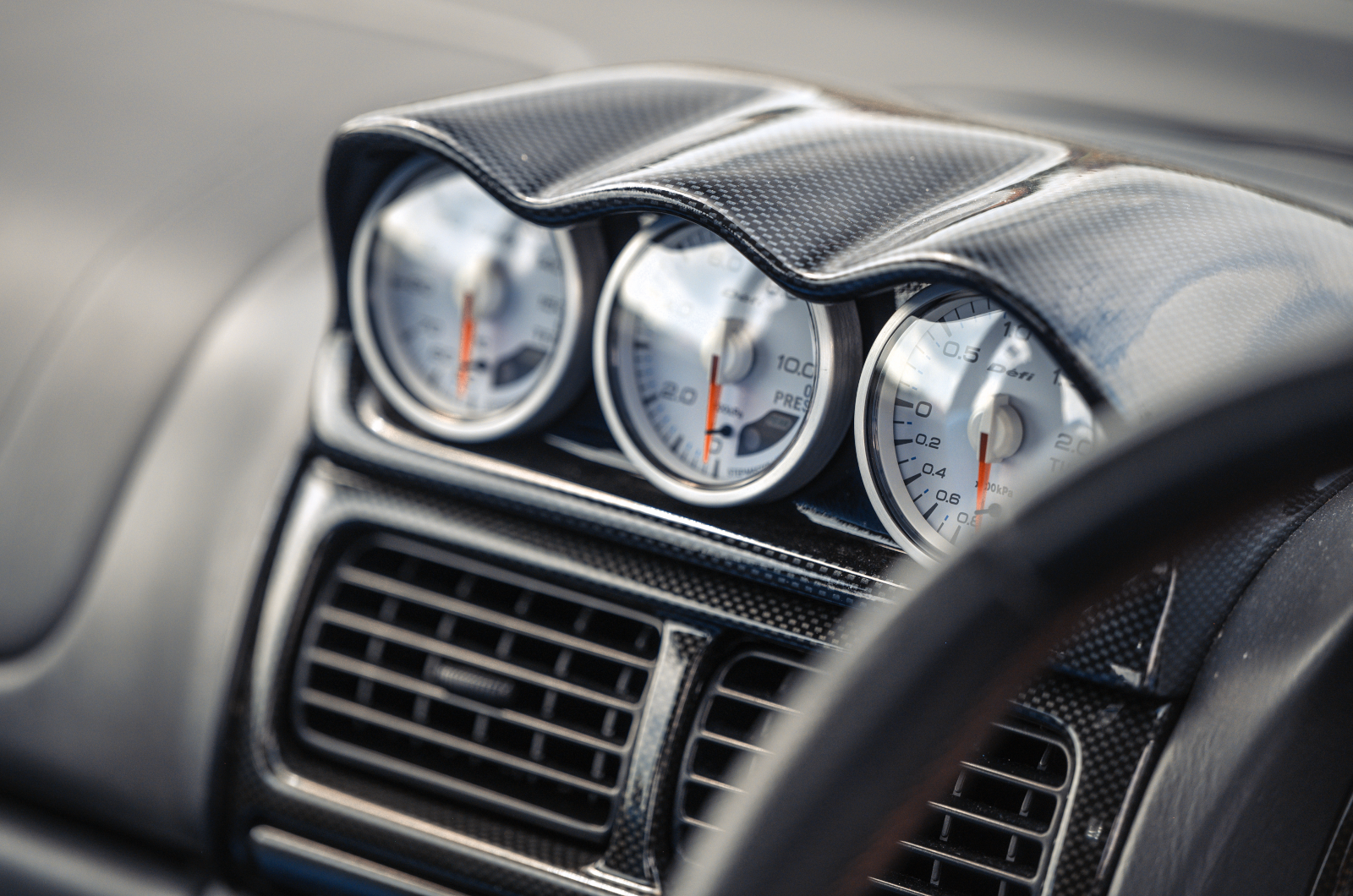
The dashboard is typical early-century Subaru: scratchy plastics and faux carbonfiber frame a plethora of dials and switches, including three high-mounted clocks monitoring engine status.

Your view ahead is dominated by the hood scoop, mounted just in front of the scuttle.

Turn the key and you just know that the distinctive, deep boxer rumble is a portent for the fireworks that are to follow.

Classic & Sports Car - Black & Blue: Ford Escort RS Cosworth vs Subaru Impreza P1

Hard cabin plastics inside the Subaru Impreza are typical of the era

The P1 is happy to burble around at low speeds, with light steering and a progressive clutch action, but once you start to dip into its well of power the P1 comes alive; now you’re in Richard Burns’ car.

The rumble takes on a hard edge, and while acceleration is surprisingly linear, from 4500rpm to its 8000rpm redline the P1’s full turbocharged majesty can be felt as you grab each higher gear through the notchy, short-throw ’box.

The large wheel makes the power steering feel lower-geared than it is, but at higher speeds that’s no bad thing, and you delight in its friction-free precision as you dive deeper and faster into bends, failing comprehensively to unstick the wheels from either axle.

Classic & Sports Car - Black & Blue: Ford Escort RS Cosworth vs Subaru Impreza P1

The Subaru Impreza P1 is biased toward understeer, but offers reassuring grip

The P1’s 45:55 front-to-rear torque split means a degree of default understeer that can be manipulated on the throttle, but overall the P1 has an assured authority over seemingly any road surface.

Greg Evans has owned his October ’92 Escort RS Cosworth for six years. It was in storage for nine years before that, which explains why, after nearly 30 years, its odometer reads just 50,600, including the mere 1000 miles added by Evans.

Still in its original Flat Black (a Sierra color), this completely standard car in factory-fresh condition is one of the first registered in the UK, with build number 851 out of a total run of 7145.

Classic & Sports Car - Black & Blue: Ford Escort RS Cosworth vs Subaru Impreza P1

This Ford Escort RS Cosworth was one of the first to hit British roads

That also marks it as a genuine ‘Big Turbo’ homologation model from the first batch.

Drop into the RS Cosworth’s high-bolstered driving seat and you’re greeted by that familiar smell, which seems to pervade all Ford cabins from this era.

Like in the Subaru P1, a trio of dials perches atop an otherwise normal-looking Escort Mk5 dashboard.

You sit behind a smaller three-spoke wheel than in the Subaru, with the pedals offset to the right to clear the broad transmission tunnel and a relatively low-mounted gearlever sited behind the factory radio/cassette player with its separate graphic equalizer.

Classic & Sports Car - Black & Blue: Ford Escort RS Cosworth vs Subaru Impreza P1

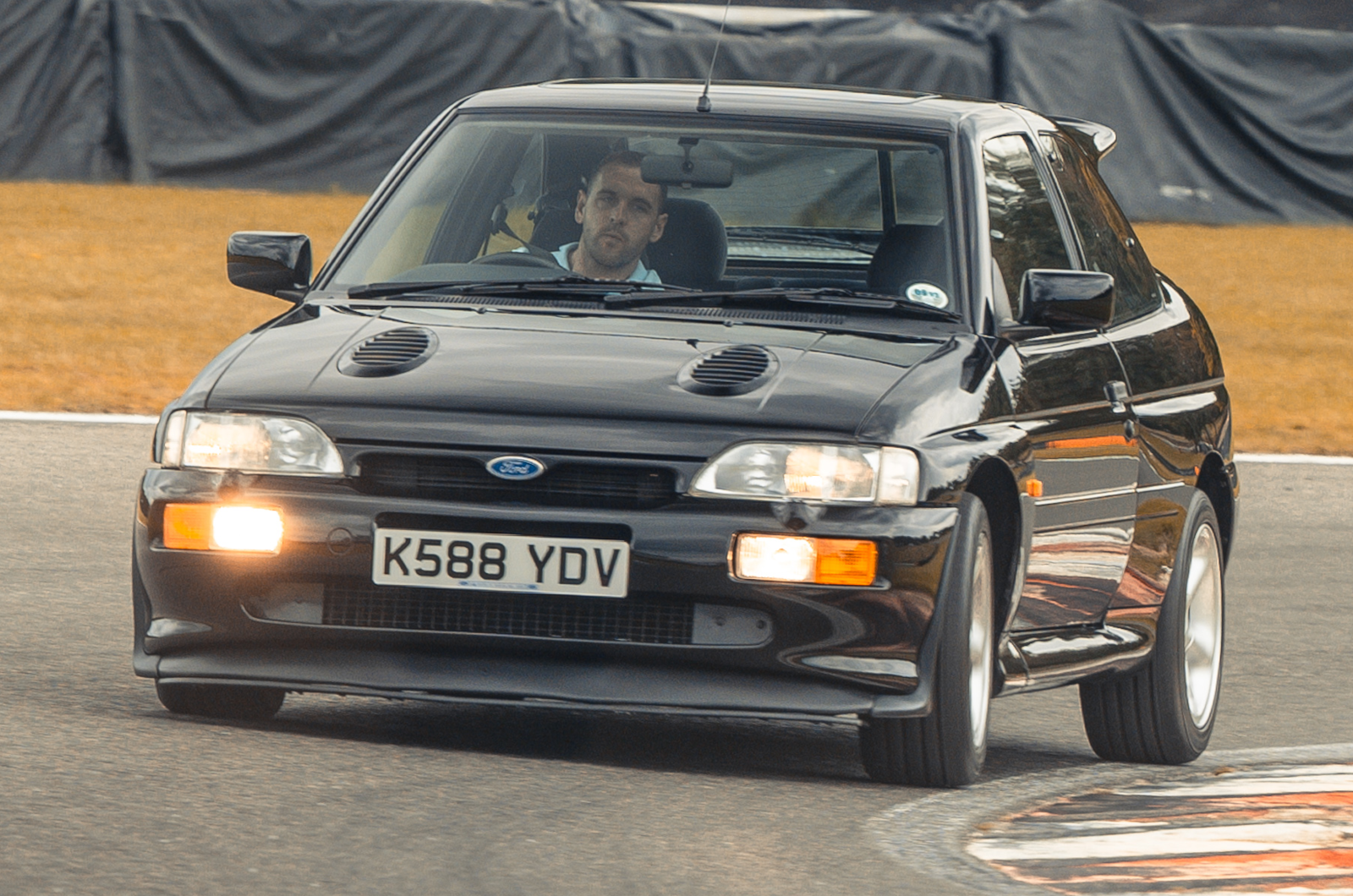
Below 3500rpm, the Ford feels like an everyday family hatchback

The feeling of normality extends to driving the Ford Escort RS Cosworth at regular speeds.

It feels softer than the P1, with more rubber in the main controls and suspension making for a more pliant secondary ride versus the Impreza, allied to an engine that at low-to-moderate revs sounds quite anodyne.

You know what’s coming, though: performance is tepid (but less so than expected) until around 3500rpm, when the Garrett T34 turbo starts to spool up, and then comes on full song from 4500rpm.

With 224bhp, and with a curbweight of 2811LB (1275KG), the RS Cosworth is no rocketship by today’s standards.

Classic & Sports Car - Black & Blue: Ford Escort RS Cosworth vs Subaru Impreza P1

This duo’s rally pedigree shines through, although neither was built to leave the Tarmac

But the hefty turbo punch it delivers provides the kind of old-school drama that is sadly missing from modern turbo engines.

Sadly? It’s certainly an acquired taste, and the later RSs, which pulled from 1000rpm lower down, were easier to live with.

But it remains the Big Turbo’s calling card, and that we should applaud.

That both cars were so heavily influenced by motorsport at a technical level rarely seen today is refreshing.

The results were unashamedly road-biased and unlikely ever to see a forest track, but knowing that the teams which created them were at the forefront of world rallying gives each an unmistakable aura.

Images: Olgun Kordal

Thanks to Brands Hatch; Paul Painter; P1 WebOwners’ Club

This was first in our March 2022 magazine; all information was correct at the date of original publication


Success on the world rally stage

Much of the works Escort RS Cosworth’s development work was carried out on the fly by then works driver Malcolm Wilson.

The car made an early, non-competitive appearance with him on the 1992 Scottish Rally; had it been an official entry it might have won, setting faster stage times than Colin McRae’s winning Subaru Legacy.

Ford never achieved its goal of clinching an overall Group A WRC manufacturers’ title, but in its first year, 1993, it won in Portugal, Corsica, Greece, Sanremo and Catalunya.

It then took two more wins in each of the following two years, plus a further two in 1997 in its final ‘WRC’ iteration.

Classic & Sports Car - Black & Blue: Ford Escort RS Cosworth vs Subaru Impreza P1

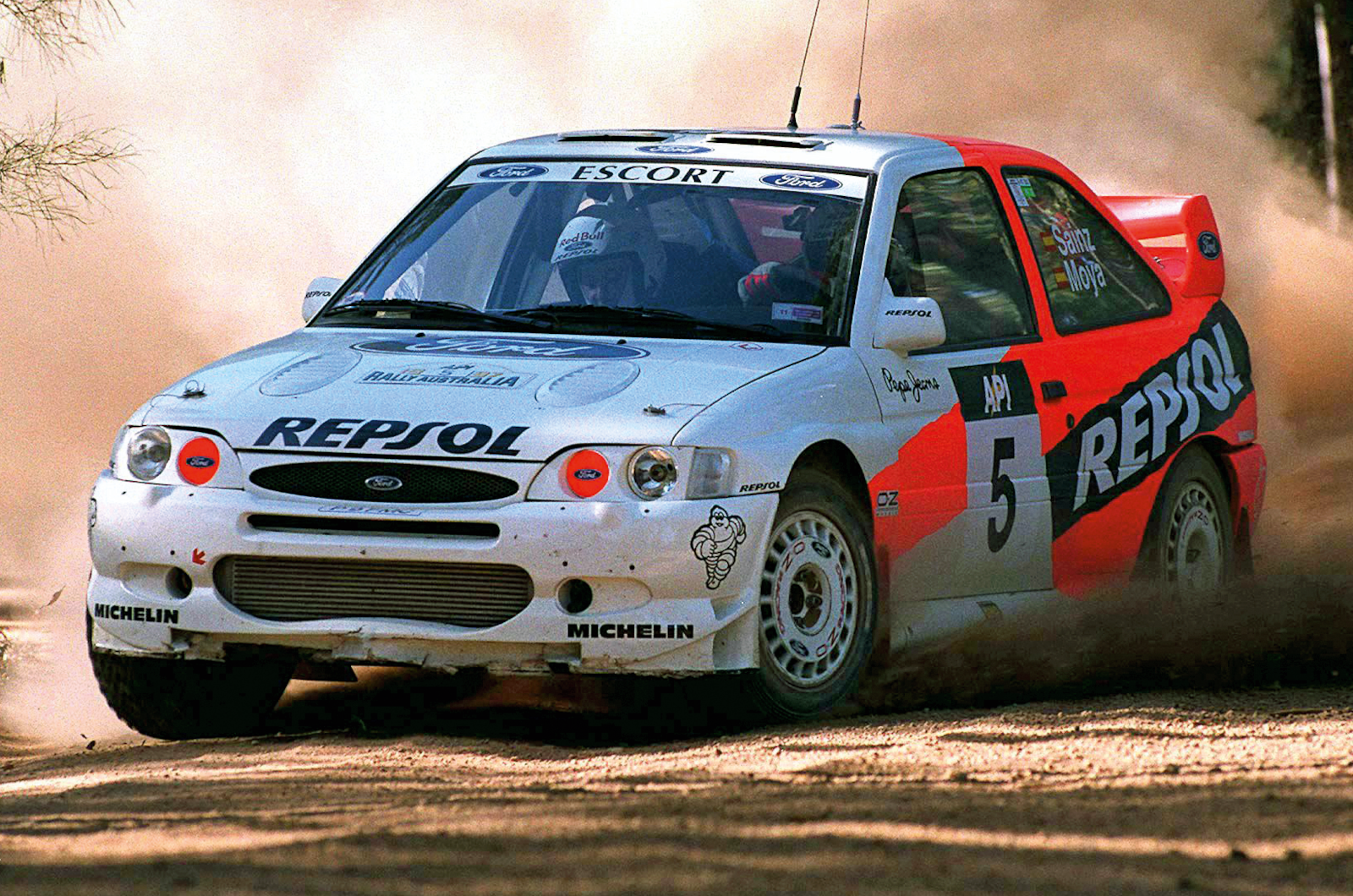
Carlos Sainz’s Ford Escort RS Cosworth tackles Rally Australia in 1997 © Getty Images

While the P1 didn’t exist to homologate Subaru’s works rally car, the two-door GC8-series Impreza on which it was based was the platform that underpinned the competition machine in which the Prodrive team enjoyed so much success between 1997 and 2001.

It won the WRC Constructors’ Championship in 1997 as well as the Drivers’ Championship in 2001 with the late Richard Burns.

The car evolved significantly during its five-year life and never more so than in 2000, when 80% of its mechanical and electronic components were redesigned, in effect providing the technology for the next-generation Impreza.


Classic & Sports Car - Black & Blue: Ford Escort RS Cosworth vs Subaru Impreza P1

Factfiles

Ford Escort RS Cosworth

  • Sold/number built 1992-’96/7145
  • Construction steel monocoque
  • Engine iron-block, alloy-head, dohc 1993cc ‘four’, with Bosch injection and intercooled Garrett T34 turbocharger (Garrett T25 on non-homologation cars)
  • Max power 224bhp @ 6250rpm
  • Max torque 224lb ft @ 3500rpm
  • Transmission five-speed manual, 4WD
  • Suspension independent, at front by MacPherson struts rear semi-trailing arms, coil springs, telescopic dampers; anti-roll bar f/r
  • Steering power-assisted rack and pinion
  • Brakes vented discs, with servo and anti-lock
  • Length 13ft 9¾in (4211mm)
  • Width 5ft 8½in (1742mm)
  • Height 4ft 8in (1425mm)
  • Wheelbase 8ft 4½in (2551mm)
  • Weight 2811lb (1275kg)
  • 0-60mph 5.7 secs
  • Top speed 144mph
  • Mpg 28
  • Price new £20,524 (Roadsport trim)
     

Subaru Impreza P1

  • Sold/number built 2000-’01/1000
  • Construction steel monocoque
  • Engine iron-block, alloy-head, dohc 1994cc flat-four, with fuel injection and intercooled IHI VF28 turbocharger
  • Max power 276bhp @ 6500rpm
  • Max torque 260lb ft @ 4020rpm
  • Transmission five-speed manual, 4WD
  • Suspension independent, at front by MacPherson struts rear semi-trailing arms, coil springs, telescopic dampers; anti-roll bar f/r
  • Steering power-assisted rack and pinion
  • Brakes vented discs, with servo and anti-lock
  • Length 14ft 3¼in (4350mm)
  • Width 5ft 6½in (1690mm)
  • Height 4ft 7in (1400mm)
  • Wheelbase 8ft 3¼in (2520mm)
  • Weight 2855lb (1295kg)
  • 0-60mph 4.7 secs
  • Top speed 150mph
  • Mpg 24
  • Price new £31,500

We hope you enjoyed reading. Please click the ‘Follow’ button for more super stories from Classic & Sports Car.