Maserati Kyalami vs De Tomaso Longchamp: the same, but different

| 3 Mar 2026
Classic & Sports Car – Maserati Kyalami vs De Tomaso Longchamp: the same, but different
Alejandro de Tomaso was an industrialist and tycoon first, and an automobile enthusiast second.

Long on ideas but short on attention span, the Argentinian former race-car driver had married into North American old money, had a feral business sense and was determined to build exotic road cars bearing his own name in his ancestral homeland of Italy.

Having set up shop in Modena in 1959 as De Tomaso Automobili – and made his name in the early 1970s courting Ford with the Pantera – he was an irascible outsider who saw the chance to secure his legacy with the acquisition of noble but beleaguered Maserati in 1975.

Classic & Sports Car – Maserati Kyalami vs De Tomaso Longchamp: the same, but different
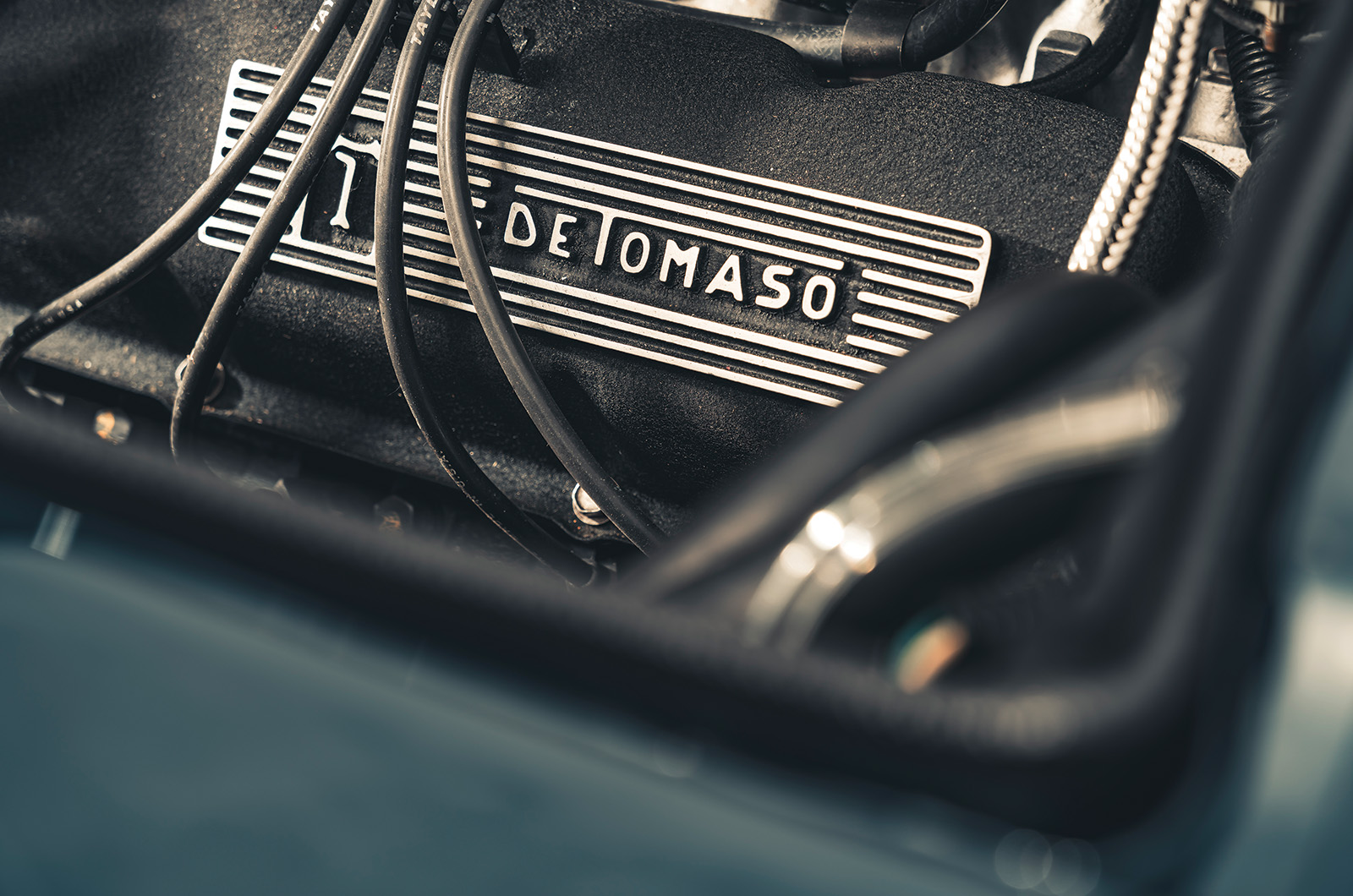
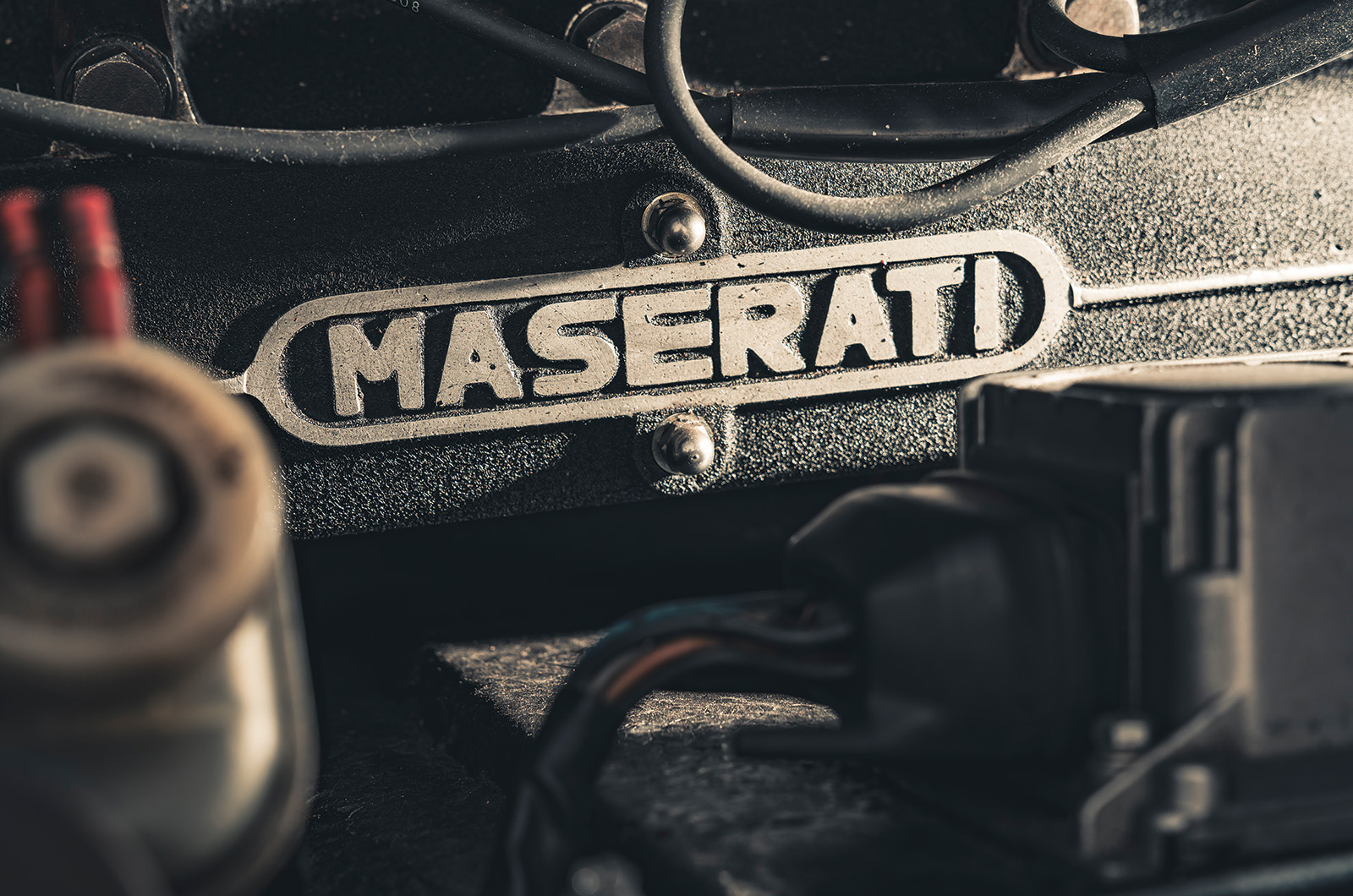
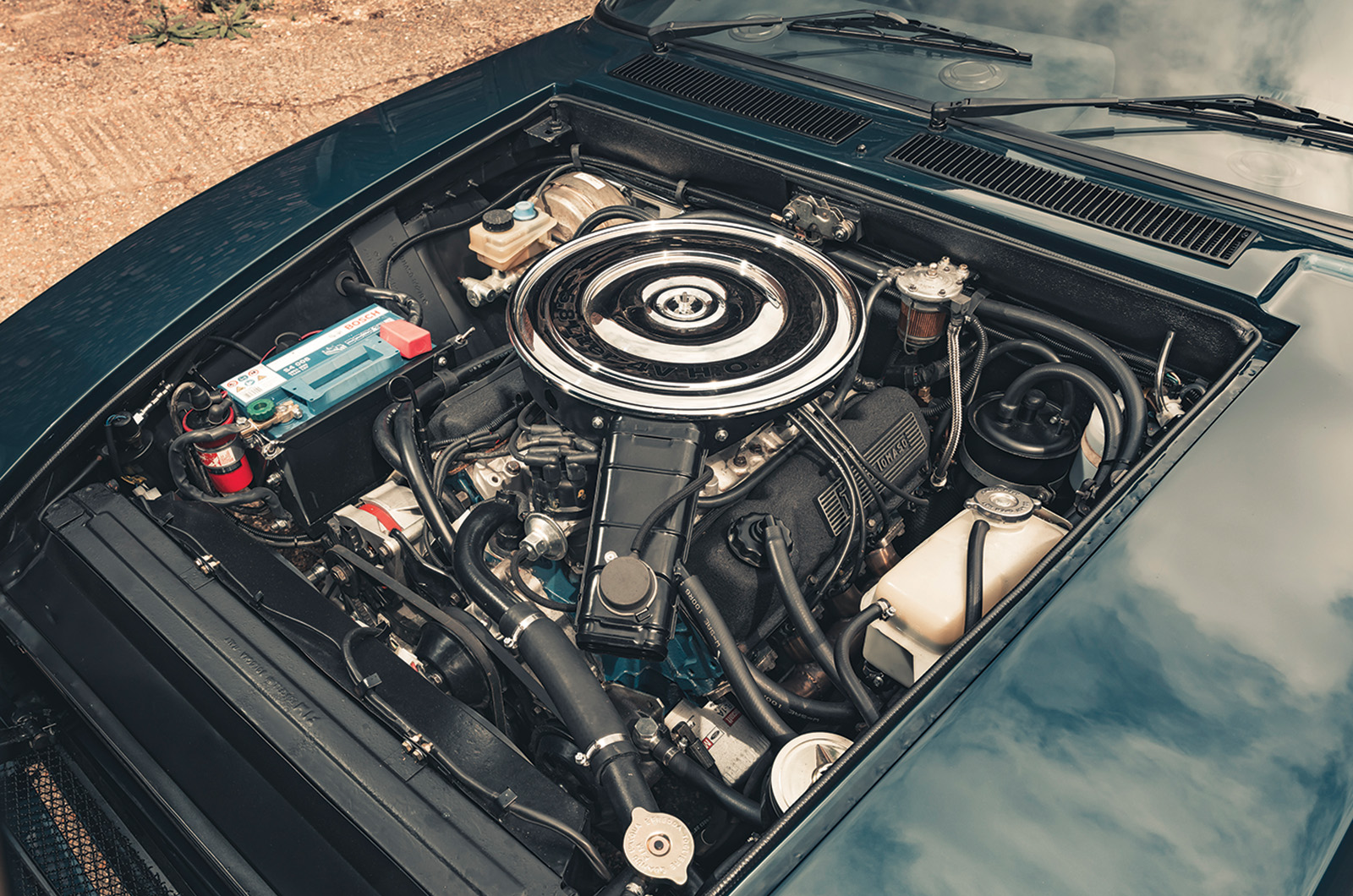
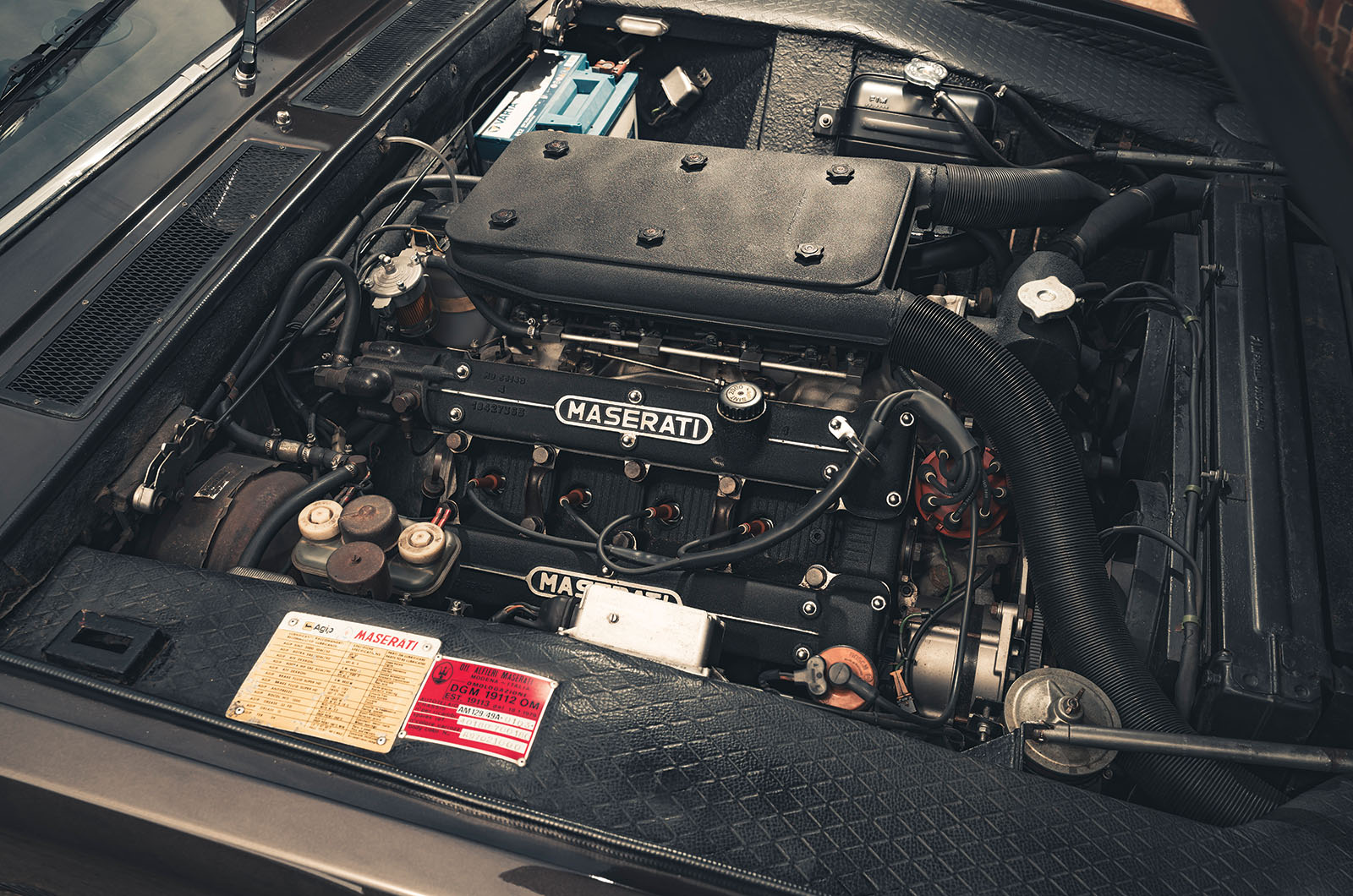
Bespoke rocker covers on the De Tomaso Longchamp’s Ford V8 (left); the Maserati Kyalami’s crackle-black cam covers

Prior to Citroën’s purchase of the Italian company in 1968, it had prospered building small but significant quantities of refined, beautifully finished straight-six and V8 grand-touring automobiles.

These cars traded on fading memories of the make’s Grand Prix and sports-racing successes, and prioritized elegance and exclusivity over headline-making technical solutions.

Cart-sprung Salisbury rear axles and other off-the-shelf componentry prevailed well into the ’70s at Maserati, and Citroën’s attempts to integrate high-pressure hydraulics for the brakes and the steering had met with mixed success.

Classic & Sports Car – Maserati Kyalami vs De Tomaso Longchamp: the same, but different
‘Pre-1980 Longchamps were restrained, but the GTS-E appears to have gone on a Miami Vice-themed shopping spree’

In any case, they had little time to reach maturity before the Oil Crisis (and the Peugeot takeover) triggered the fire sale of Maserati in 1975.

With his feet under the table, de Tomaso’s long-term plan was to build an Italian answer to BMW in the guise of the 1981-on Biturbo, a semi-volume-production ‘executive’ Maserati for the ’80s that all but squandered the marque’s reputation over the ensuing two decades.

In the short term, he focused his efforts on the most efficient means of keeping the factory doors open and bringing the unruly workforce to heel, while stripping out all vestiges of the firm’s years under French ownership (about which he was openly critical) in a post-Fuel Crisis world where there was no guarantee the once-healthy market for expensive, thirsty, handbuilt grand tourers would ever return.

Classic & Sports Car – Maserati Kyalami vs De Tomaso Longchamp: the same, but different
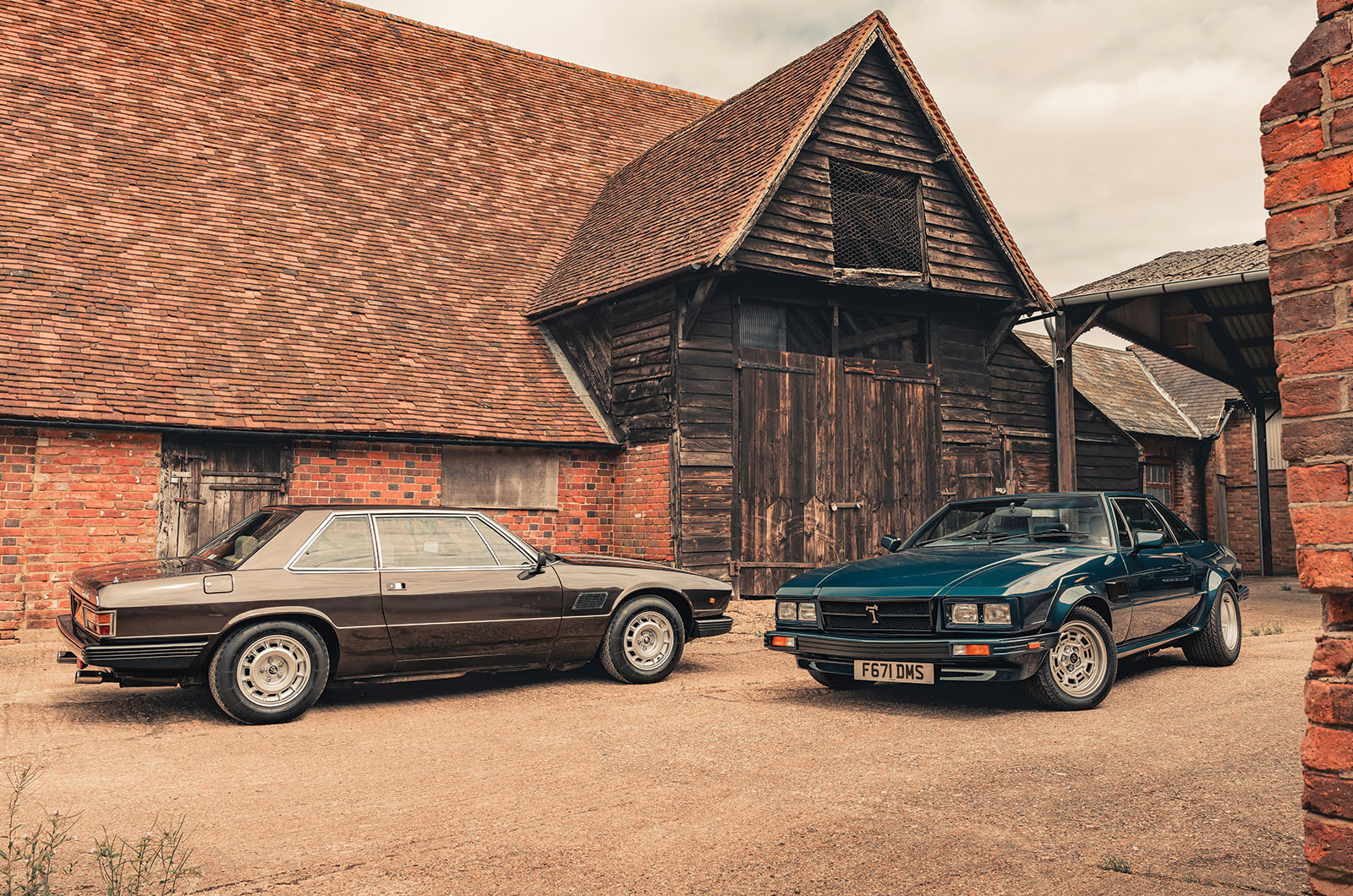
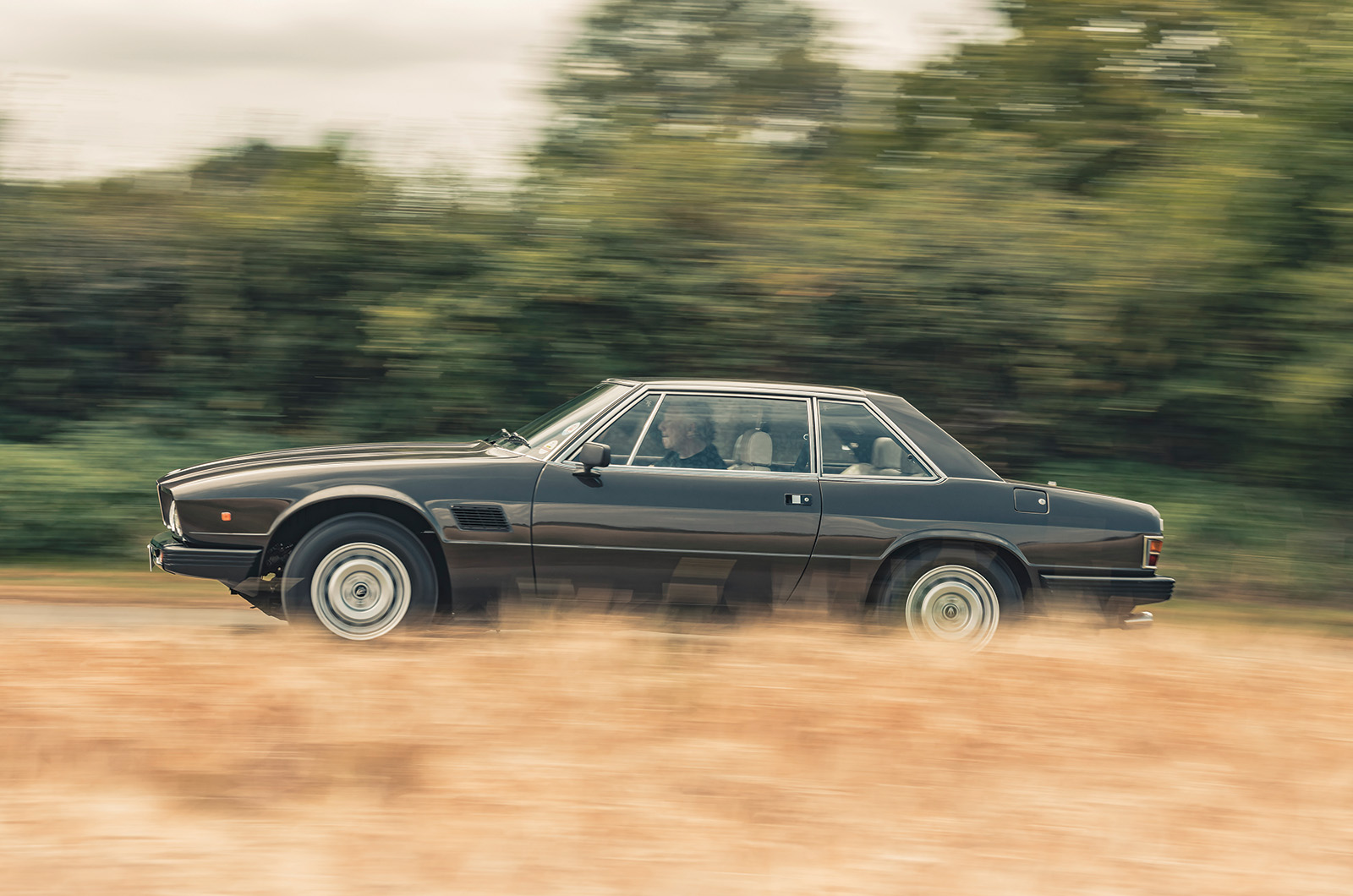
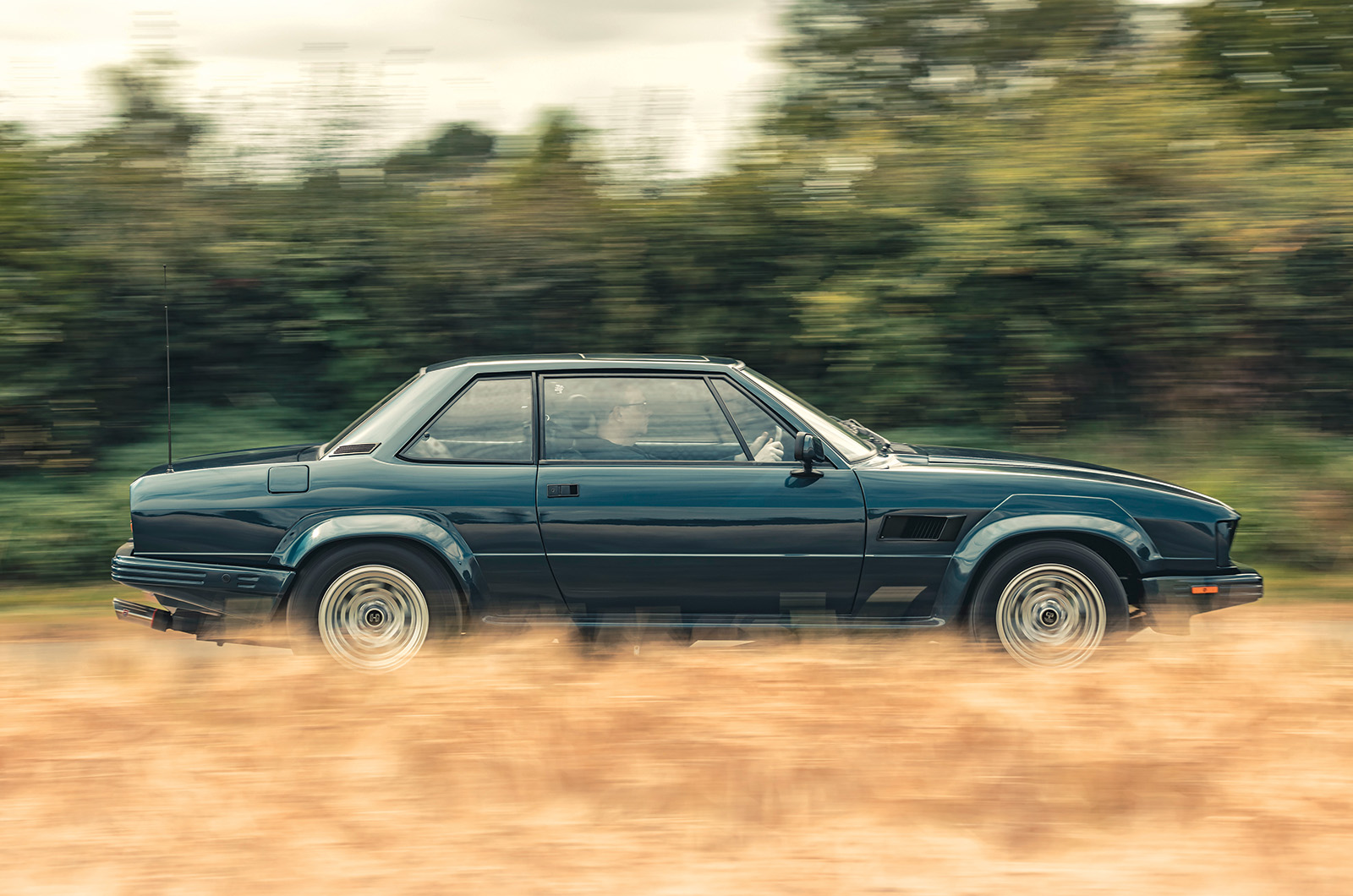
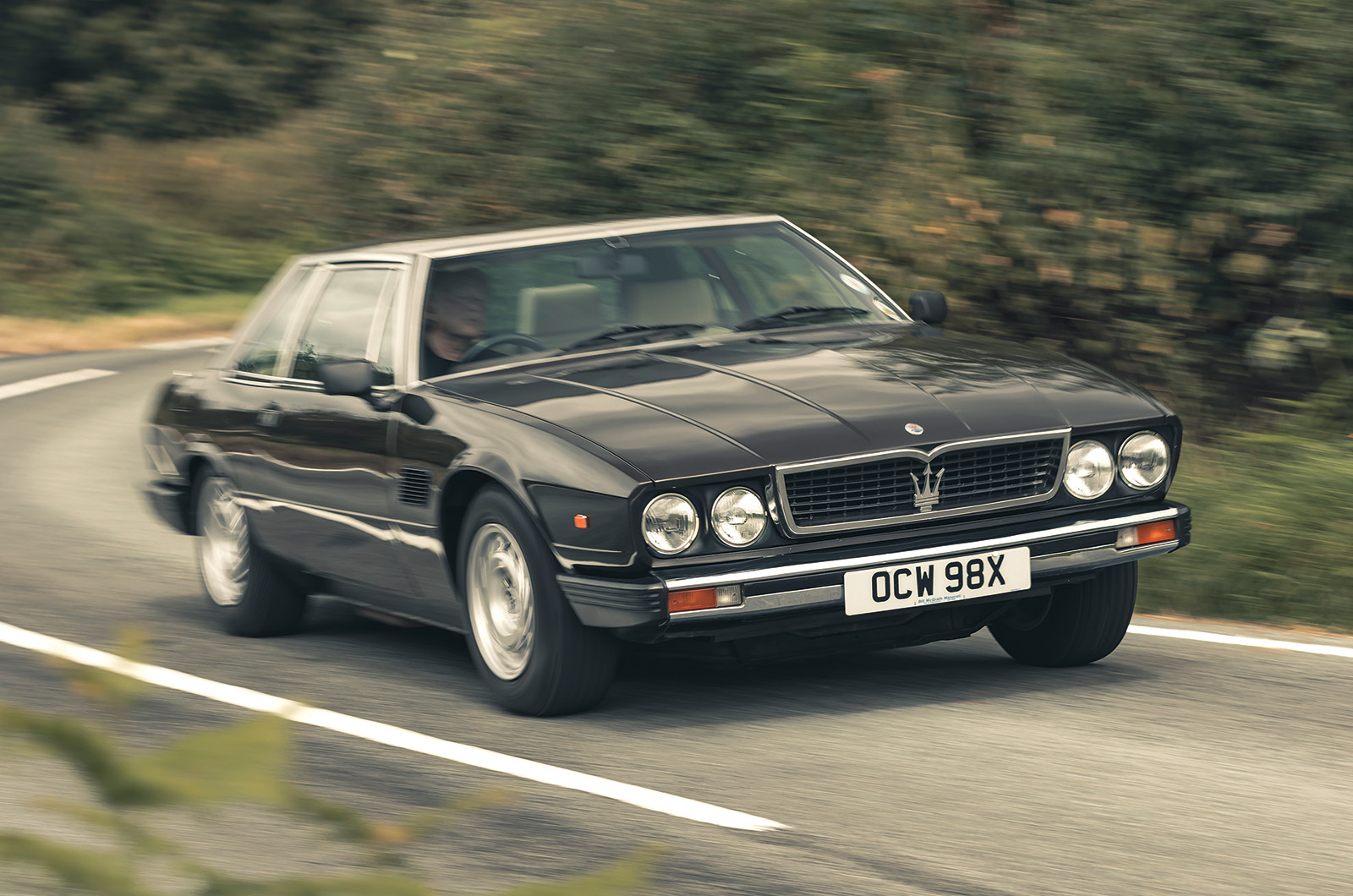
The Maserati Kyalami’s understated three-box shape has hints of Mercedes-Benz

De Tomaso had a hunch that it would: the continued success of expensive mass-produced luxury cars such as the Mercedes-Benz SLC told him that, beyond the specialist mid-engined Bora and Merak, there remained an appetite for a 2+2 Maserati that was more exclusive than the German offerings and not so visually extreme as the Khamsin, which was still servicing the needs of former Ghibli customers.

He considered the Bertone-styled Khamsin two-seater to be a tactical mistake, and felt that success lay with the close-coupled four-seater concept.

So the creation of an Indy replacement was an urgent priority.

Classic & Sports Car – Maserati Kyalami vs De Tomaso Longchamp: the same, but different
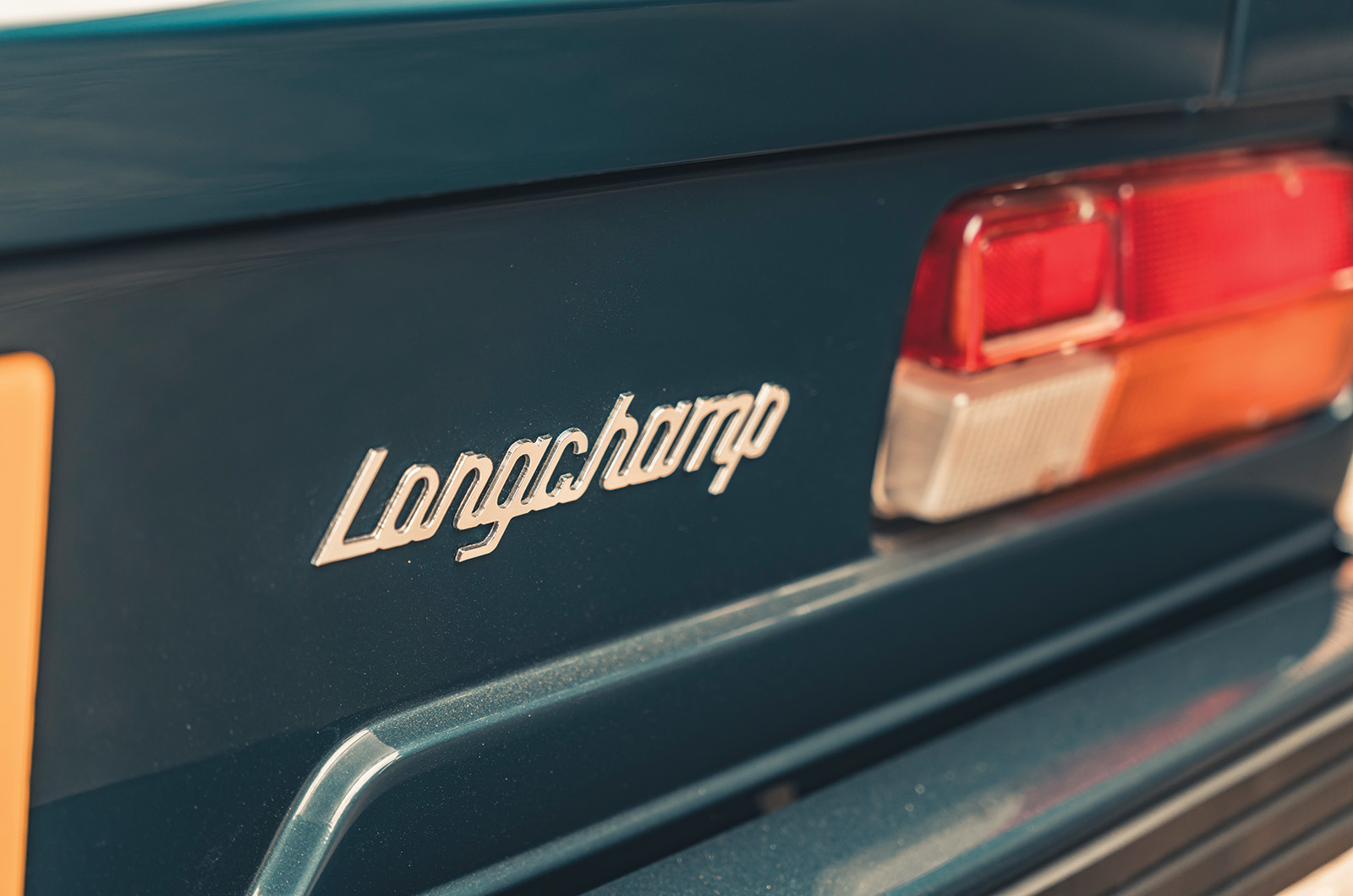
The De Tomaso Longchamp was named after the French horse-racing track

Enter, at the ’76 Geneva Salon, the Kyalami: designed in 90 days and in effect Maserati’s replacement for the Indy, the Ghia-styled four-seater that had underpinned much of the firm’s sales success from 1969 until the beginning of the Fuel Crisis.

The new car was based on the Giampaolo Dallara-designed underpinnings of the Ghia/Tom Tjaarda-styled four-door De Tomaso Deauville and two-door Longchamp, complete with Jaguar-like quad-damper rear end (with inboard discs) and ZF power-assisted rack-and-pinion steering.

That the Kyalami looked suspiciously like the Longchamp was a rationalization too far for purists, particularly when you realize how few body panels were, in the end, interchangeable.

Classic & Sports Car – Maserati Kyalami vs De Tomaso Longchamp: the same, but different
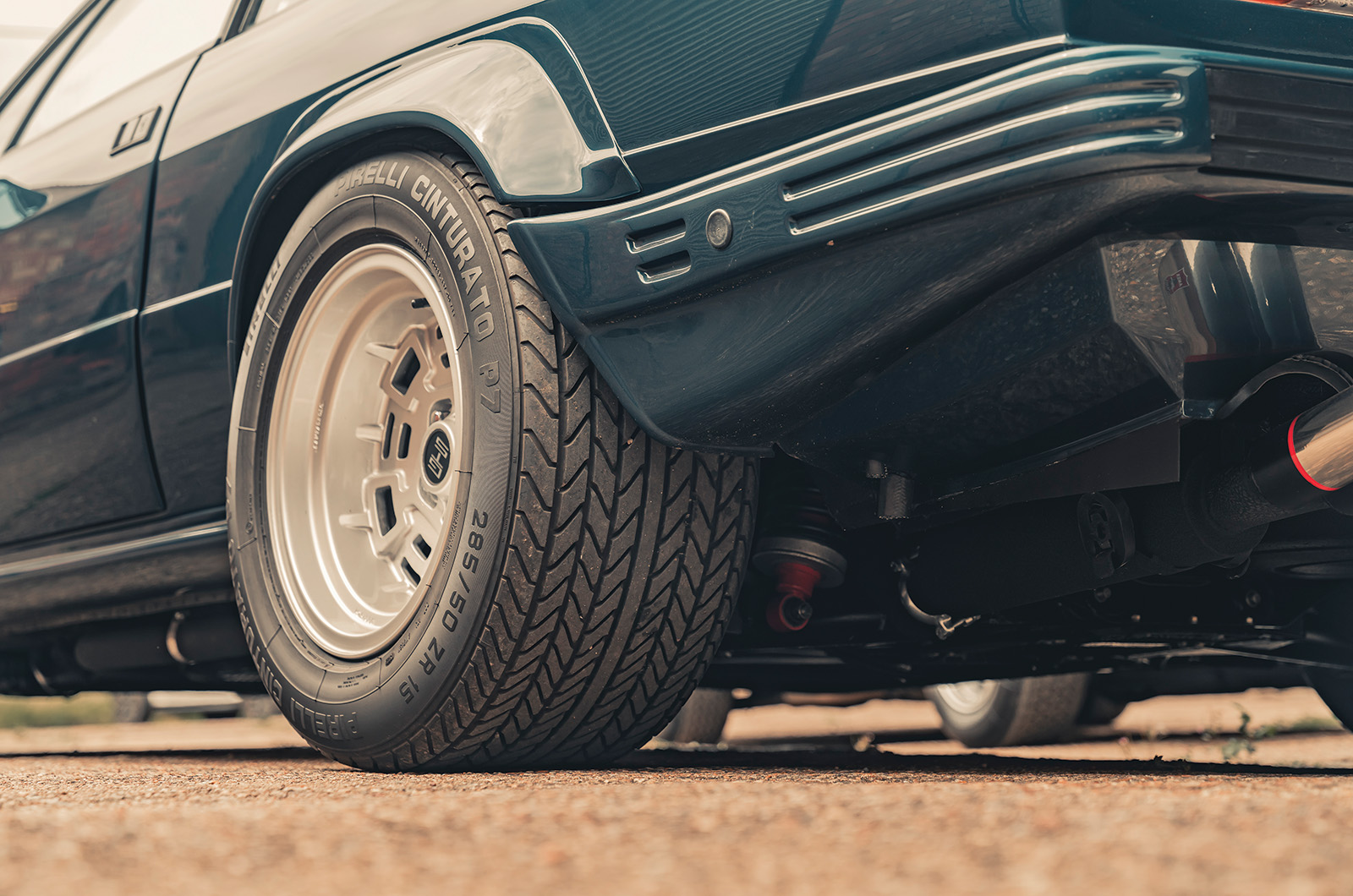
Familiar De Tomaso rims on the Longchamp

In Italy, the benefit of the quad-cam Maserati V8 and a more lavish interior befitting the firm’s suave reputation boosted the price-tag by £1500, at late-’70s prices, over the Longchamp.

First seen at the Turin Salon in 1972 (the prototype had odd-looking ribbed wedges of rubber as bumpers, dropped for production), the Longchamp entered showrooms in 1973 and appeared to complete the De Tomaso family.

It was still available in 1989, although the cars were built in erratic batches to the tune of just 409 examples.

The near-4000lb coupe, with its twin fuel tanks and twin fuel pumps, was powered by the same 5.8-liter Ford Cleveland V8 as the Pantera.

Classic & Sports Car – Maserati Kyalami vs De Tomaso Longchamp: the same, but different
This De Tomaso Longchamp’s electric sunroof and slim pillars keep the cabin light and airy

It was a car of which de Tomaso was particularly proud, despite criticisms of the detail finish: the dashboard was functional rather than lavish, its use of US Ford column stalks a shade too obvious.

Yet it was praised for its urge, space (front and rear), and for being different and individualistic in a world where advanced products from Porsche, Jaguar and Mercedes-Benz made hybrid exotica an increasingly difficult sell.

Like the Deauville, the Longchamp was never homologated for North America, where buyers had perhaps become wary of hit-and-miss De Tomaso build quality after the Pantera debacle.

About 20 are thought to have been brought into the States as gray imports.

Classic & Sports Car – Maserati Kyalami vs De Tomaso Longchamp: the same, but different
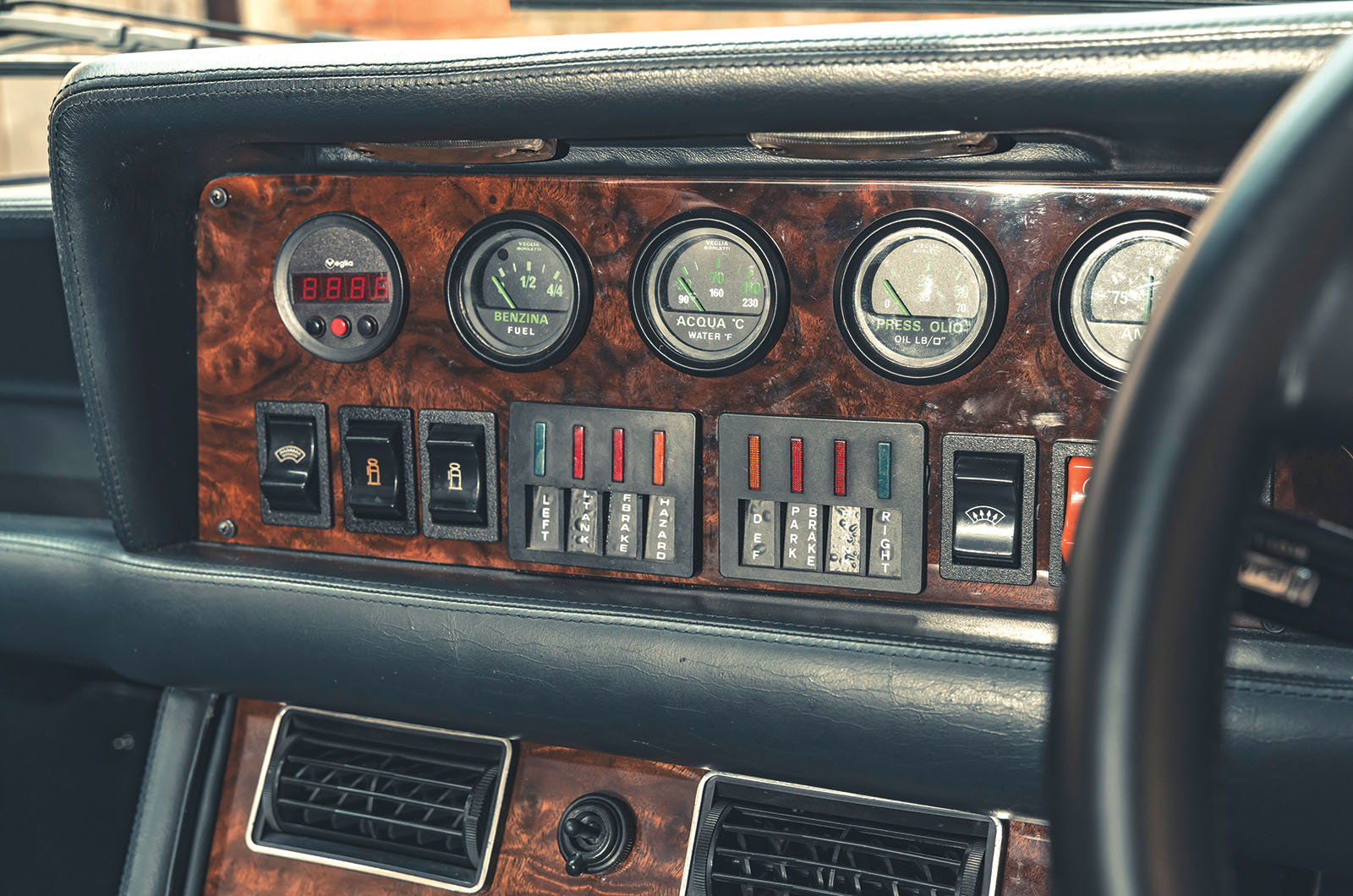
Black instrument bezels were among the options specified by this De Tomaso’s first owner

The carbureted 351 Cleveland V8, latterly sourced from Australia, was good for as much as 330bhp by way of large valves and free-breathing head porting: if you were willing to ignore the limits imposed by the gearing and redline, it could urge the coupe to 149mph.

Most Longchamps were fixed-head autos with the Ford C6 transmission, but there were 17 ZF manuals and a handful of cabriolets by Pavesi.

De Tomaso owned Ghia, and it was Ghia’s Tom Tjaarda who evolved the Longchamp from his 1969 Lancia Flaminia Marica show car, making it as Mercedes-like as possible on the instructions of his boss.

Classic & Sports Car – Maserati Kyalami vs De Tomaso Longchamp: the same, but different

The De Tomaso Longchamp’s upright and angular shape results in a spacious cabin

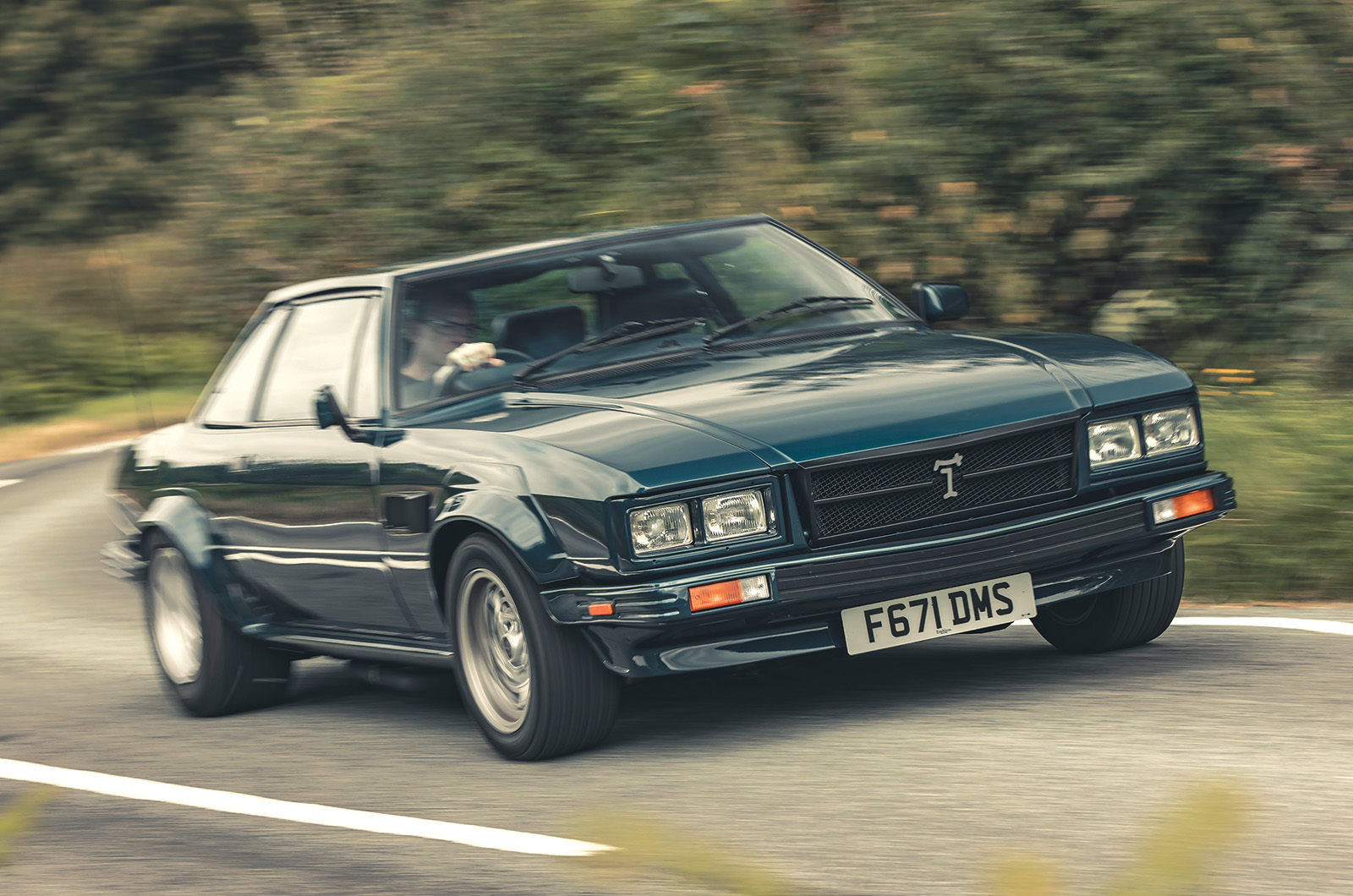
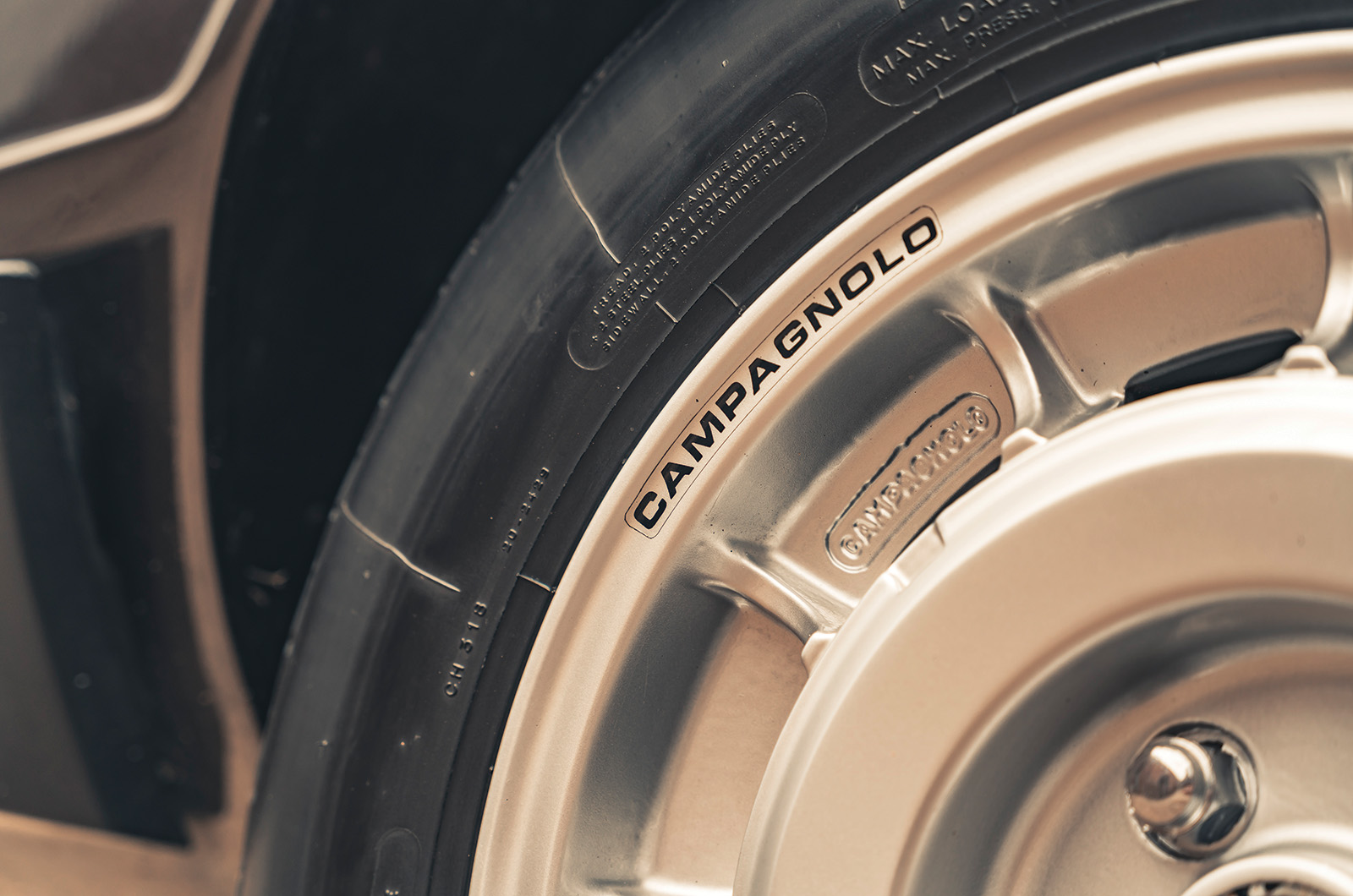
It is hard to reconcile de Tomaso’s Benz-baiting ambitions with the post-1980 GTS, with its fat fiberglass arches, Pantera-style Campagnolo alloys (wider at the rear, and shod with the latest Pirelli P7s) and quad rectangular, Audi-esque headlamps.

The Longchamp was named after the French horse-racing track, the Kyalami in honor of the South African circuit that hosted Maserati’s final Grand Prix win.

Pietro Frua gave it a front end with four round lamps (early Longchamps had Ford Granada Mk1 lights) in the style of his 1974 Quattroporte for the Aga Khan.

Embo, one of myriad bodyshops serving Turin’s carrozzerie, supplied the metalwork, with Marchesi doing the floorpan/chassis.

Classic & Sports Car – Maserati Kyalami vs De Tomaso Longchamp: the same, but different

The De Tomaso Longchamp’s Australian-sourced Ford Cleveland 5.7 V8 musters 330bhp

The Kyalami had a wider hood pressing than the Longchamp, subtly different C-pillars (necessitating a narrower rear windshield) and a faux rollbar pressed into the back of the roof panel.

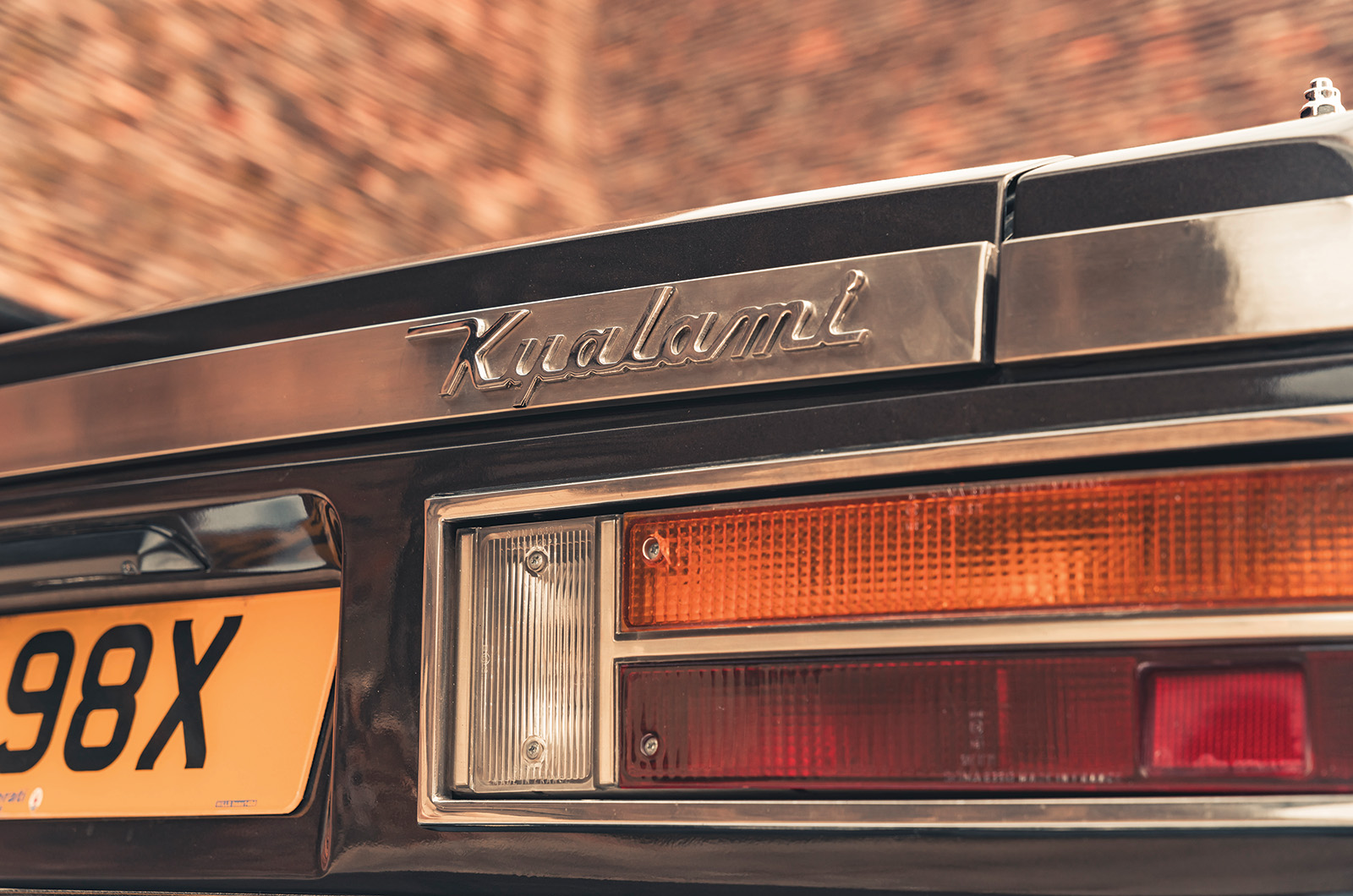
Where the Longchamp wore Alfa Romeo 1750/2000 Berlina tail-light lenses, the Kyalami used leftover Citroën SM units.

The quad-cam Maserati V8 was a third lighter than the Ford unit but a tighter fit under the hood, requiring differently shaped headers, a compromised exhaust (that took into account the firing order of the Italian V8) and relocation of the powered steering rack (a Maserati first) under the bellhousing of the ZF five-speed ’box or (later) Chrysler Torqueflite automatic.

Classic & Sports Car – Maserati Kyalami vs De Tomaso Longchamp: the same, but different

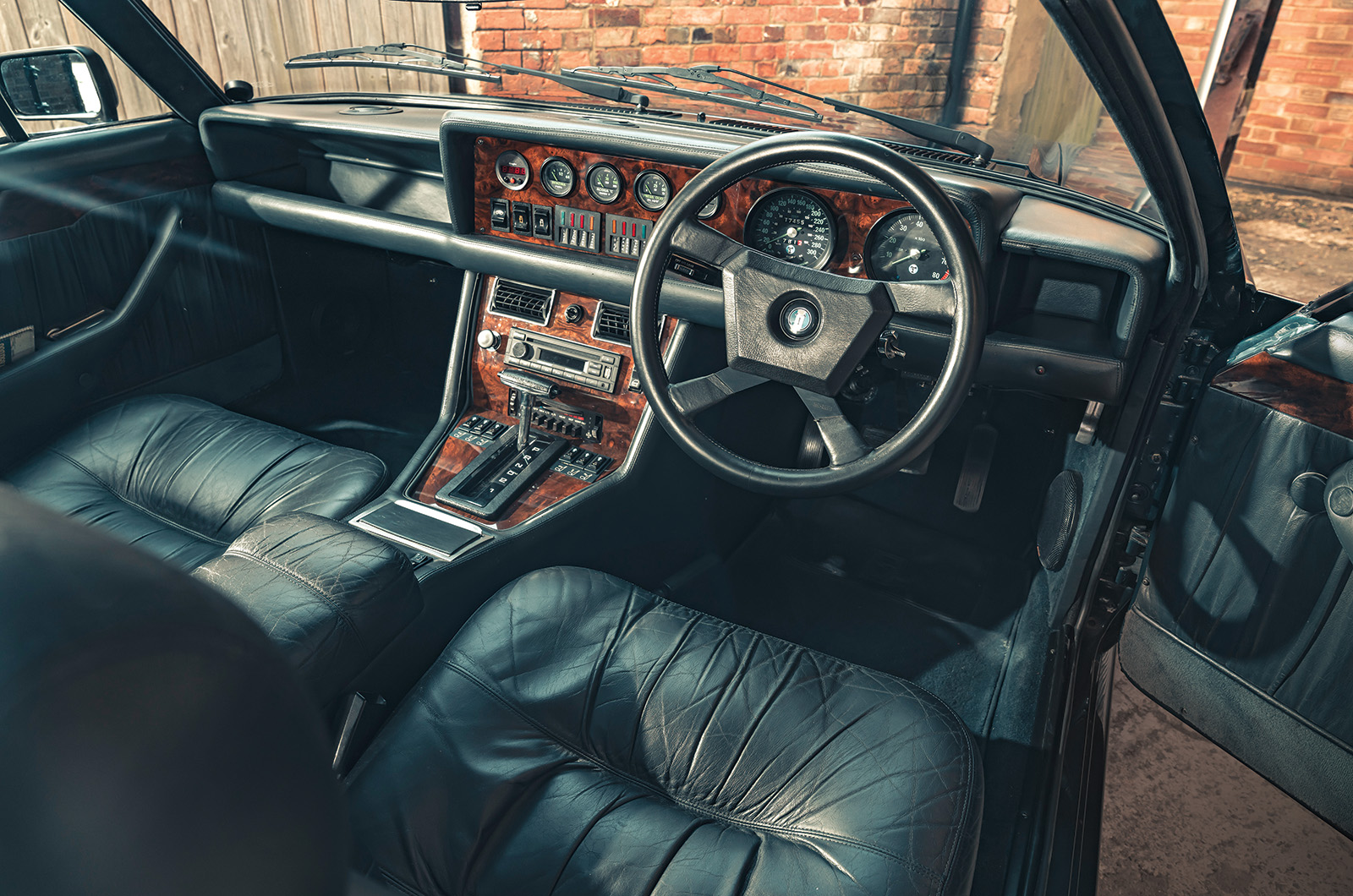
Powered seats in the De Tomaso Longchamp’s interior

Manual Kyalamis mostly had the 255bhp 4.2-liter engine, the autos generally 4.9s with 280bhp; the only external difference was the twin electric fans on the larger unit.

This was the final time the classic, Alfieri-designed V8 – first seen in the 450S sports-racers of the ’50s – would be found in a two-door, although it lived on to 1990 with conspicuous success in the Quattroporte III, thanks to the big four-door’s popularity in North America.

Of the 200 Kyalamis built, 44 were right-hand drive: 30 for the UK, the other 14 for Australia, Hong Kong and South Africa, making Britain a relatively strong market for this £21k Maserati when the first examples arrived in 1978.

Classic & Sports Car – Maserati Kyalami vs De Tomaso Longchamp: the same, but different

Wide wheelarches make the De Tomaso Longchamp (above) feel bulkier than the Maserati Kyalami on the road

The Longchamp was priced at around £17,000 at that stage, rising to £41,000 by the end of the decade.

The final UK Maserati Kyalamis – including eight 4.9 autos such as the example photographed here, property of British-based McGrath Maserati’s Andy Heywood – were delivered in 1981, by which time Modena Concessionaires of West Bromwich was listing them at just under £30,000.

“I bought it in 2005 from a customer/friend who had been using it to commute,” says Andy.

“It was a bit tatty, so we did an engine top-end overhaul, some bodywork – including a color change from red – and a few other bits.”

Classic & Sports Car – Maserati Kyalami vs De Tomaso Longchamp: the same, but different

‘The Kyalami was named in honor of the South African circuit that hosted Maserati’s final Grand Prix win’

“I used it like that until 2019 when I had the interior done, just before our trimmer retired,” he explains.

“We also rebuilt the gearbox with a more oil-tight alloy sump and a tweak to sharpen the changes.”

In terms of the availability of spares, Andy confirms that body parts are, unsurprisingly, non-existent, but having broken a couple over the years he can usually find any smaller bits he needs: “The doorhandles are the same as the Longchamp and QPIII, as is all the suspension.

“The brakes are Girling, and the Jag rear end looks exactly the same as an XJ6 – until you measure it!”

Classic & Sports Car – Maserati Kyalami vs De Tomaso Longchamp: the same, but different

Power-assisted rack-and-pinion steering transforms the way the Maserati Kyalami attacks the bends compared to its older V8-powered relations

Doug Blair bought this De Tomaso Longchamp via an obscure auction in Scotland: “It had been languishing in a barn for years – I think the owner was hoping it would fix itself.

“I jumped on it because it is so rare and among the last made.”

This classic is one of maybe three currently on the road in the UK. Today, it is fresh from restoration and Doug is keen to point out that it’s a GTS-E, one of six or eight made (all of which were right-hand drive) in 1988-’89.

That means not only bigger wheelarches and tires, but also different bumpers, lights and side skirts.

Both cars have a certain road presence.

Classic & Sports Car – Maserati Kyalami vs De Tomaso Longchamp: the same, but different

The Maserati Kyalami’s silky quad-cam V8, stretched to 4.9 liters for this automatic model

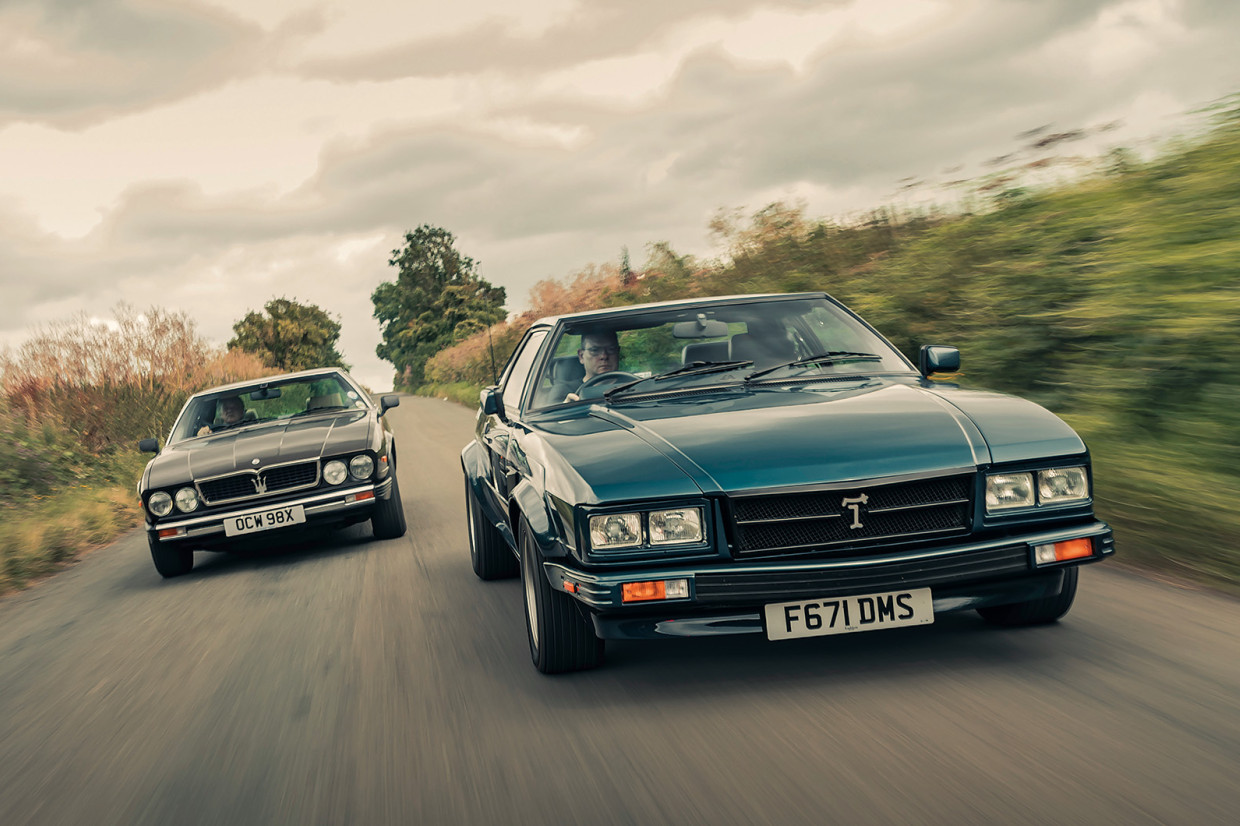
Closer in concept to the three-box Maserati Mexico than the hatchback Indy, to my eyes the Kyalami is pugnacious rather than elegant: a wide and angular coupe with crisp edges and a sliced-off rear end, somewhat akin to a Fiat 130, although the overall effect is more squat, rather like the Momo Mirage.

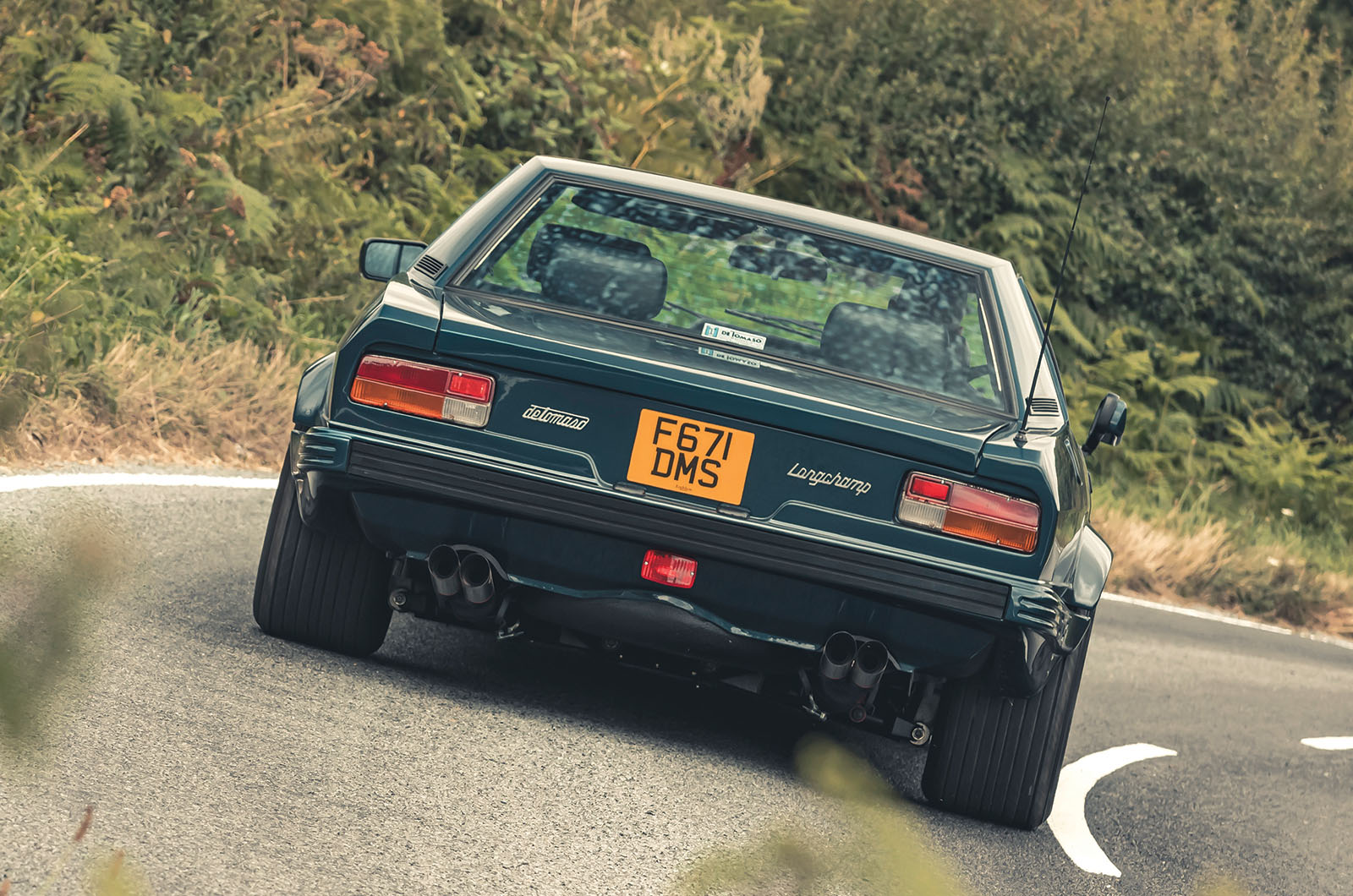
Pre-1980 Longchamps were handsome and restrained, but the GTS-E appears to have gone on a Miami Vice-themed shopping spree, with brutish wheelarches worthy of a Group 2 race car and four assertive tailpipes where the Kyalami makes do with a pair.

Even so, the shape is well balanced and, inside, most of the Detroit-sourced parts that offended ’70s sensibilities have been banished in favor of Biturbo bits in this plush world of ruched leather.

Classic & Sports Car – Maserati Kyalami vs De Tomaso Longchamp: the same, but different

Subtle Campagnolo alloy wheels on the stylish Maserati Kyalami

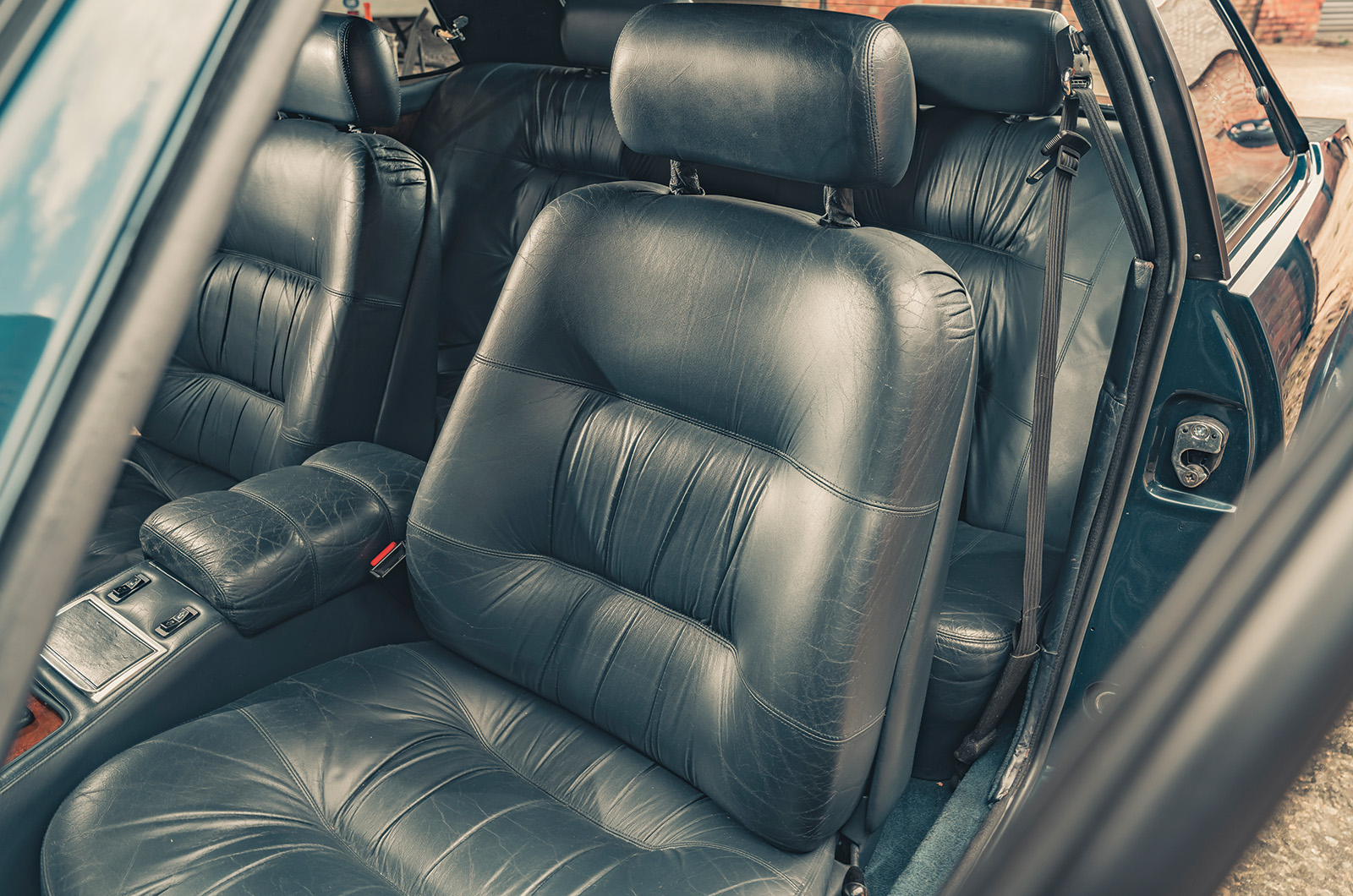
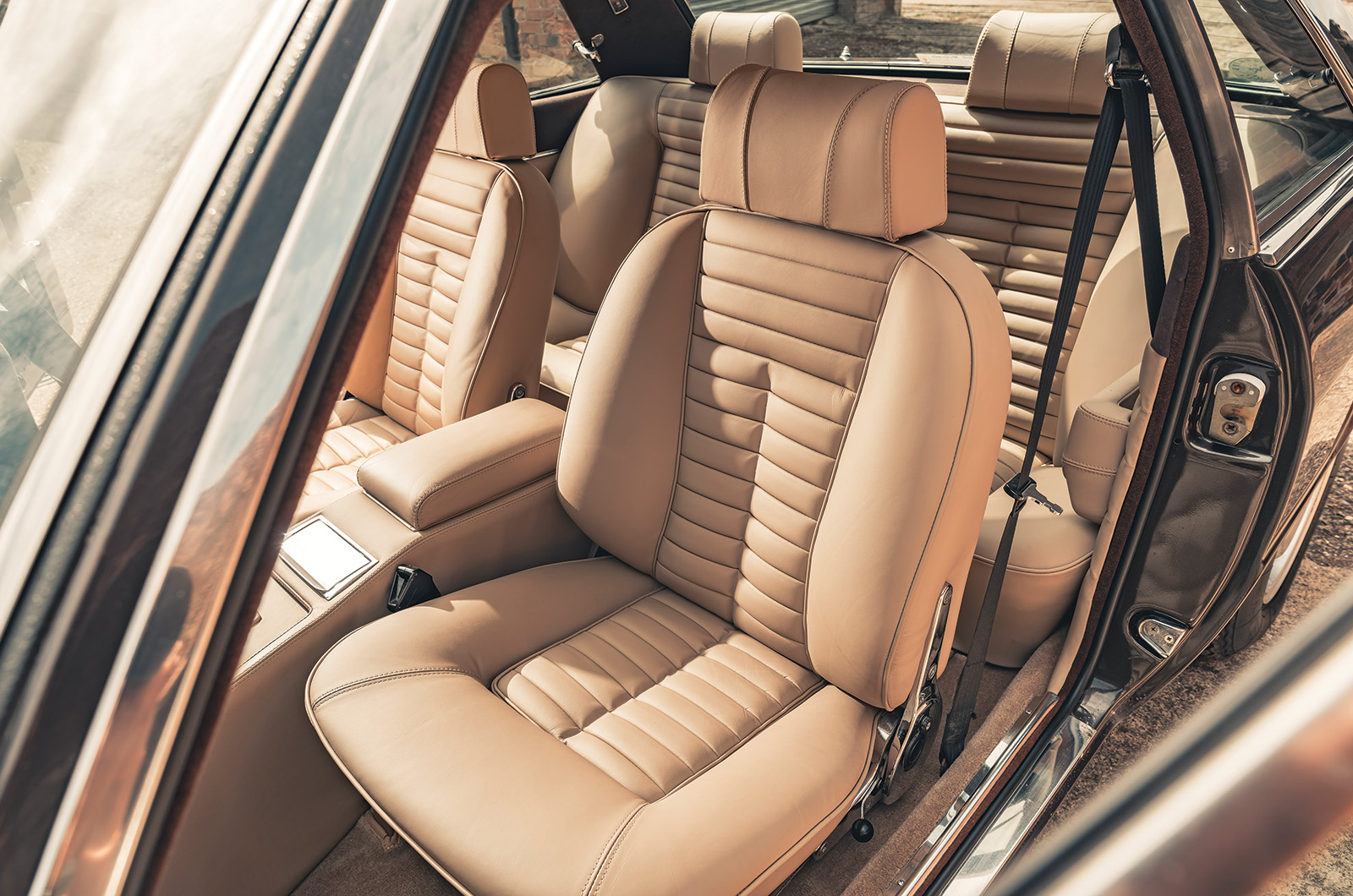
Doug has kept the Longchamp’s interior original and it smells glorious.

The front chairs are fatter and softer than those in the Maserati Kyalami, stealing rear knee-room, but headroom in both these classics is generous, while attention was paid to avoiding the compromised driving positions so often found in Italian cars.

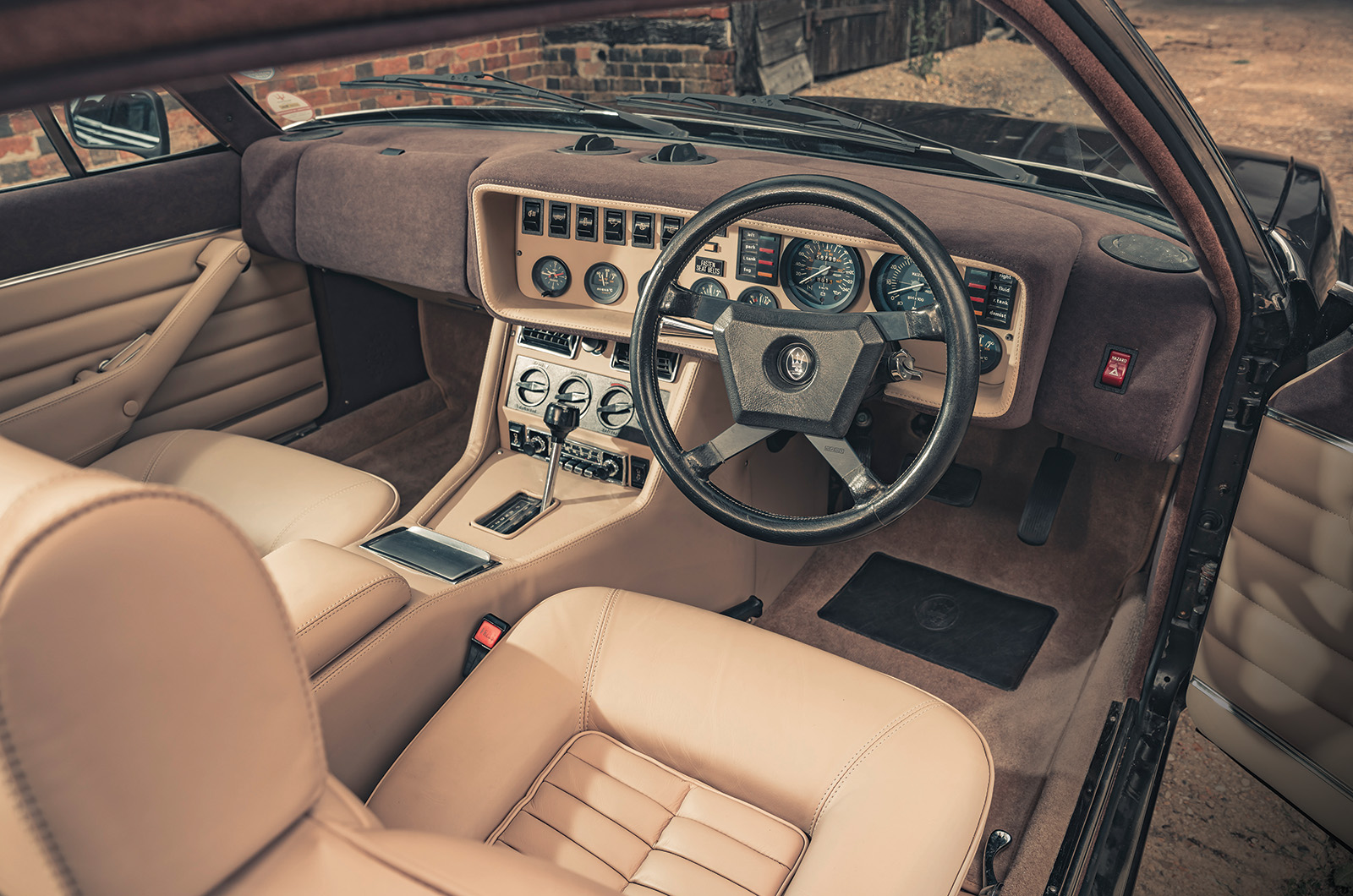
The adjustable steering wheel and optional powered seats mean most people should be able to get comfortable in the De Tomaso, which in GTS-E form has wood trim; the boxier fascia of the Maserati is leather-covered, with Jaguar-style rocker switches and Trident-badged dials.

Classic & Sports Car – Maserati Kyalami vs De Tomaso Longchamp: the same, but different

The Maserati Kyalami’s interior is clearly derived from the De Tomaso, but feels more restrained

Under way the De Tomaso Longchamp feels wider and bulkier, simply because you sense the presence of those bulging wheelarches.

Otherwise, these two cars are surprisingly similar to drive.

The Longchamp hastens away with a lusty burble whereas there is a silkier, more sonorous feel to the way the Maserati unit revs out.

The four-cam sounds busier at tickover than the pushrod Ford, but is equally well suited to the automatic ’box, with its eager kickdown and nicely modulated shifts.

You don’t miss the extra gear and, as in the Longchamp, acceleration can be effortlessly brisk or urgent on command.

Classic & Sports Car – Maserati Kyalami vs De Tomaso Longchamp: the same, but different

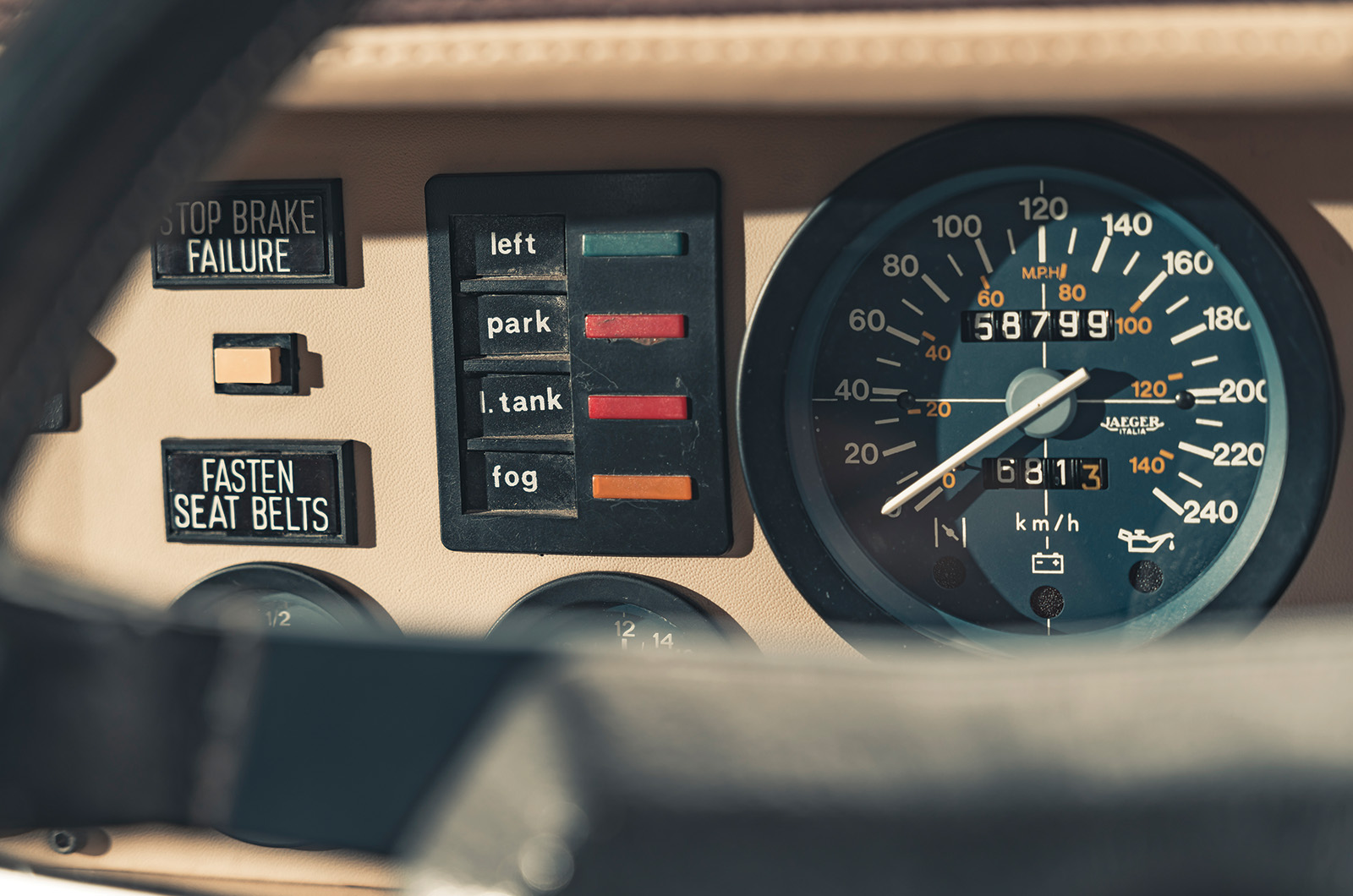
Rudimentary warning lights on the Maserati Kyalami’s dashboard

I recall feeling a bit underwhelmed by my first outing in a 4.2 manual Kyalami 30 years ago, but the bigger engine makes all the difference.

Although it doesn’t feel quite such a quality product in terms of detail fit and finish, the Kyalami trumps the older generation of V8 Maseratis with its steering.

The rack-and-pinion step-up, while not the last word in feel, brings a new dimension of accuracy and you can place the four-square coupe just where you want it, in a way that was never possible with models of the Ghibli/Indy era.

Neither car would win any prizes for a nifty turning circle, but steering kickback seems a small price to pay for the poise you get as they turn in.

Classic & Sports Car – Maserati Kyalami vs De Tomaso Longchamp: the same, but different

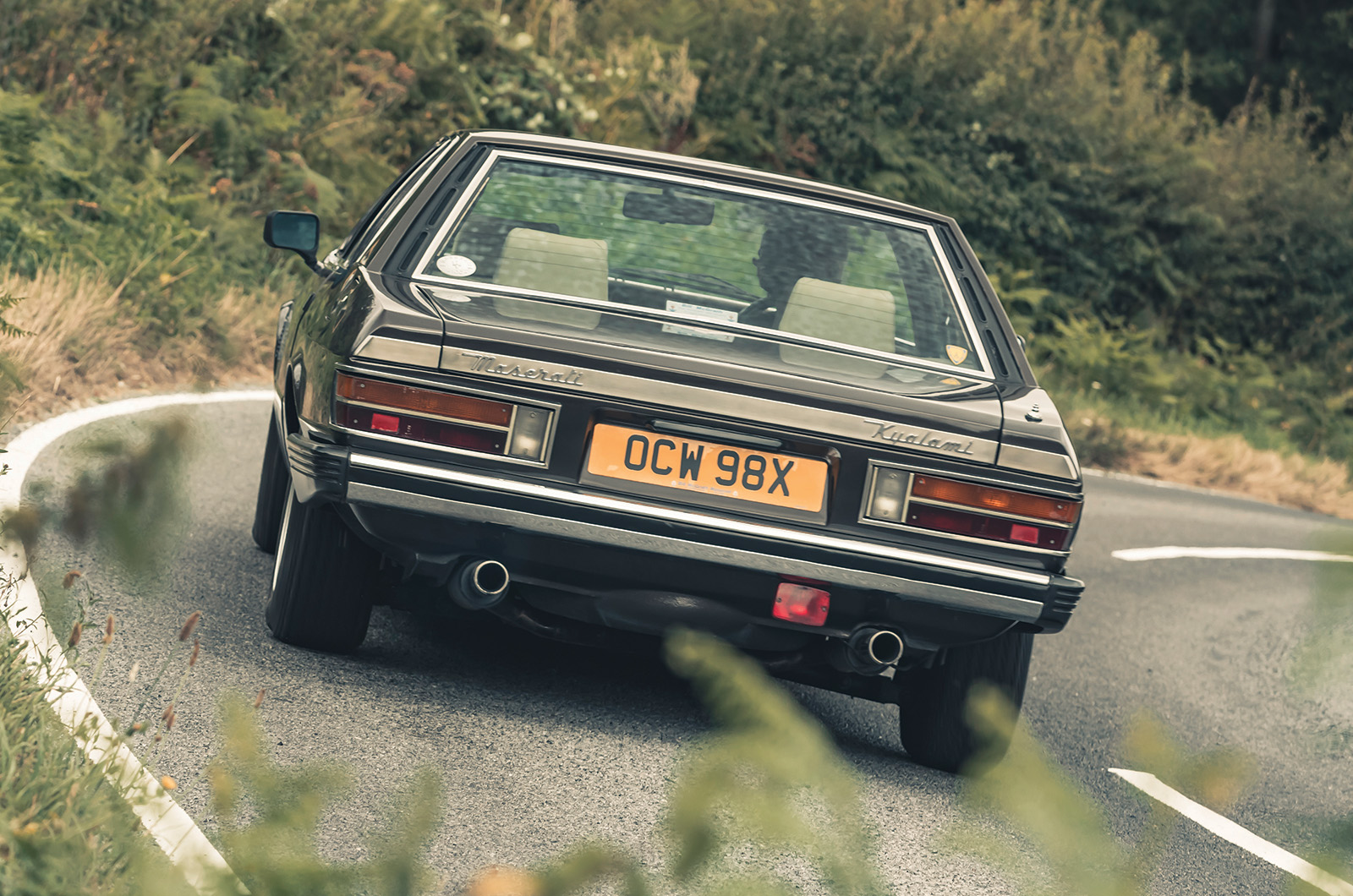
The Maserati Kyalami’s twin tailpipes emit a deep, sonorous tone

You sit quite low in both of these classic GTs, with good views out around reasonably slim pillars.

And I found that strong brakes and modest body roll allow you to get the measure of them both quite quickly.

The lighter engine of the Maserati Kyalami should give it the edge in terms of cornering power, but neither of these cars can be persuaded to roll or understeer all that much during our time with them, and both generate impressive dry grip.

The discrepancy in development budgets between mainstream GTs and specialist exotica was really beginning to tell by the mid-’70s.

Classic & Sports Car – Maserati Kyalami vs De Tomaso Longchamp: the same, but different

The Maserati Kyalami has slimmer front chairs, resulting in more rear legroom

Neither of these cars can approach the totally developed, sorted feel of a Jaguar XJ-S or a Mercedes-Benz 450SLC in terms of low-speed ride or road- and/or wind-noise suppression, or the driver appeal of a Porsche 928.

But in a time when the word ‘exotic’ was already being used a bit too freely in relation to automobiles – and when even Ferrari, backed by Fiat, was ramping up production – the De Tomaso Longchamp and Maserati Kyalami kept the meaning of the word alive for a few hundred brave, non-price-sensitive buyers who valued distinction and exclusivity above all else.

Images: Max Edleston

Thanks to: McGrath Maserati


Factfiles

Classic & Sports Car – Maserati Kyalami vs De Tomaso Longchamp: the same, but different

Maserati Kyalami

  • Sold/number built 1976-’83/200
  • Construction steel monocoque
  • Engine all-alloy, dohc-per-bank 4930cc 90° V8, four Weber 42DCNF6 carburetors
  • Max power 280bhp @ 5600rpm
  • Max torque 289lb ft @ 3000rpm
  • Transmission three-speed Chrysler Torqueflite automatic, RWD via limited-slip differential
  • Suspension double wishbones, coil springs, telescopic dampers, anti-roll bar f/r
  • Steering power-assisted rack and pinion
  • Brakes ventilated discs, with servo
  • Length 15ft (4752mm)
  • Width 6ft ¾in (1849mm)
  • Height 4ft 1in (1245mm)
  • Wheelbase 8ft 5in (2565mm)
  • Weight 3749lb (1701kg)
  • Mpg 11.6
  • 0-60mph 7.6 secs
  • Top speed 147mph
  • Price new £21,189


De Tomaso Longchamp GTS-E

  • Sold/number built 1972-’89/409
  • Construction steel monocoque
  • Engine all-iron, ohv 5763cc 90° V8, four-barrel Holley carburetor
  • Max power 330bhp @ 5400rpm
  • Max torque 326lb ft @ 3400rpm
  • Transmission three-speed Ford C6 auto, RWD via limited-slip differential
  • Suspension double wishbones, coil springs, telescopic dampers, anti-roll bar f/r
  • Steering power-assisted rack and pinion
  • Brakes ventilated discs, with servo
  • Length 15ft 1in (4597mm)
  • Width 6ft 4¾in (1948mm)
  • Height 4ft 2¾in (1290mm)
  • Wheelbase 8ft 5in (2565mm)
  • Weight 3858lb (1751kg)
  • Mpg 13
  • 0-60mph 6.4 secs
  • Top speed 149mph
  • Price new £41,000

We hope you enjoyed reading. Please click the ‘Follow’ button for more super stories from Classic & Sports Car.