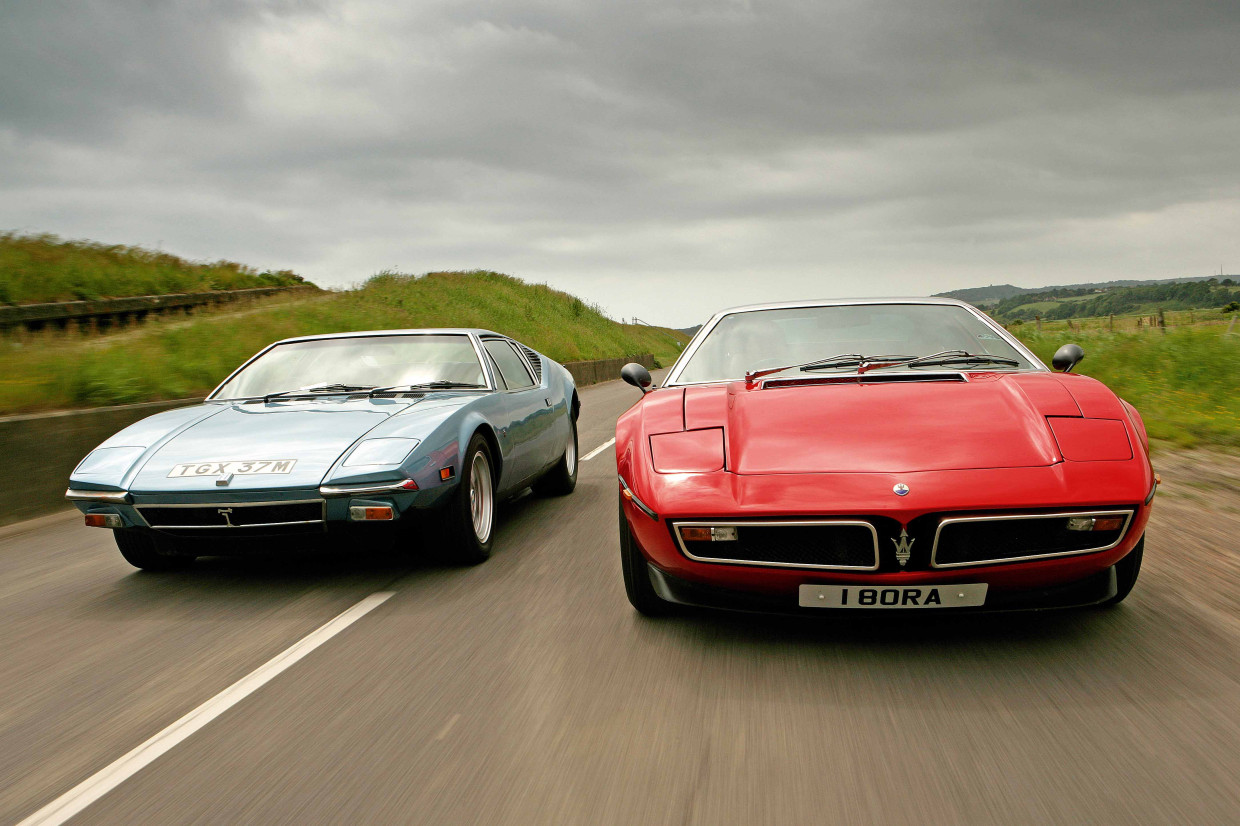
Motoring watersheds don’t come much grander than the mid-engined road car revolution.
De Tomaso has form, of course, the Vallelunga having kick-started the goldrush in 1963 and the Mangusta later bringing the power to complement the looks and latent potential.
By the late 1960s and the dawn of the ’70s, though, Lamborghini had stolen De Tomaso’s thunder – and its sales – with the Miura.
The word ‘supercar’ had been coined and the new genre already had its pin-up.
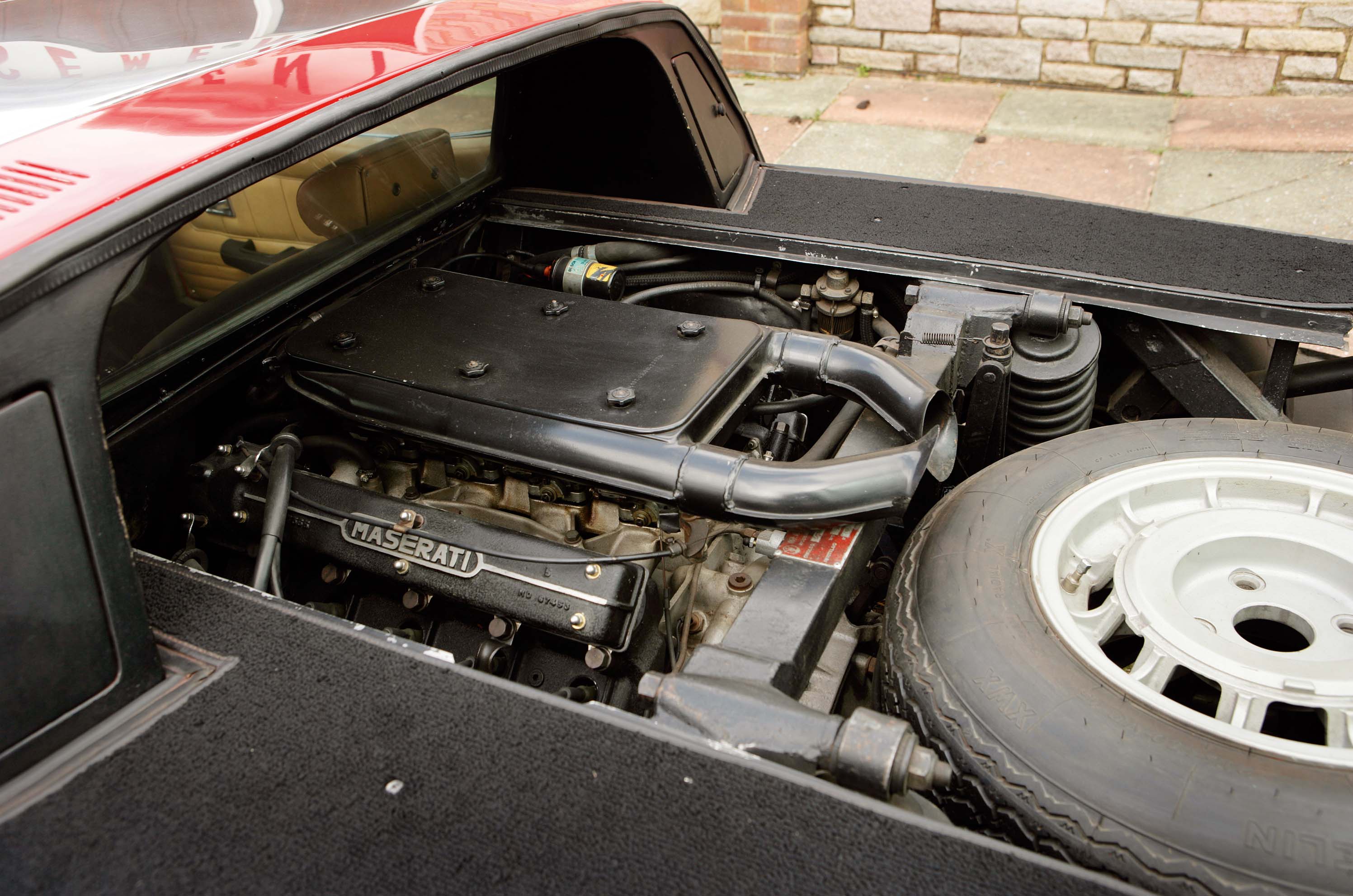
The Maserati Bora’s 310bhp quad-cam V8 was first seen in the 450S sports-racer
It was time for Alejandro – and everyone else – to fight back.
Even Ferrari, which still talked a good fight with the Daytona, knew the end was nigh for long-bonneted brute force, having already filtered the mid-engined Dino into the fold.
Few apart from Lamborghini were crazy enough at the outset to lob a transversely mounted V12 in the spot where you would traditionally have your umbrella lolling around, but V8s were a natural fit for a new type of motor.
Most of the new breed came without quite the outright top speed to catapult the cars into the lofty strata of Top Trumps champions (the Miura’s claimed 180mph still ruled there).
De Tomaso finally realised its potential with the Ford V8-powered Pantera, here in GTS form
These cars compromised those headline-grabbing figures in return for greater usability and better handling – a formula that considered a mere 160-170mph as plenty, and that drivers should be able to speak to their passengers without using headphones.
The glut of new cars usually flaunted their exoticism with vowel-laden Italian names, the two most intriguing and most akin to each other being the De Tomaso Pantera and the Maserati Bora.
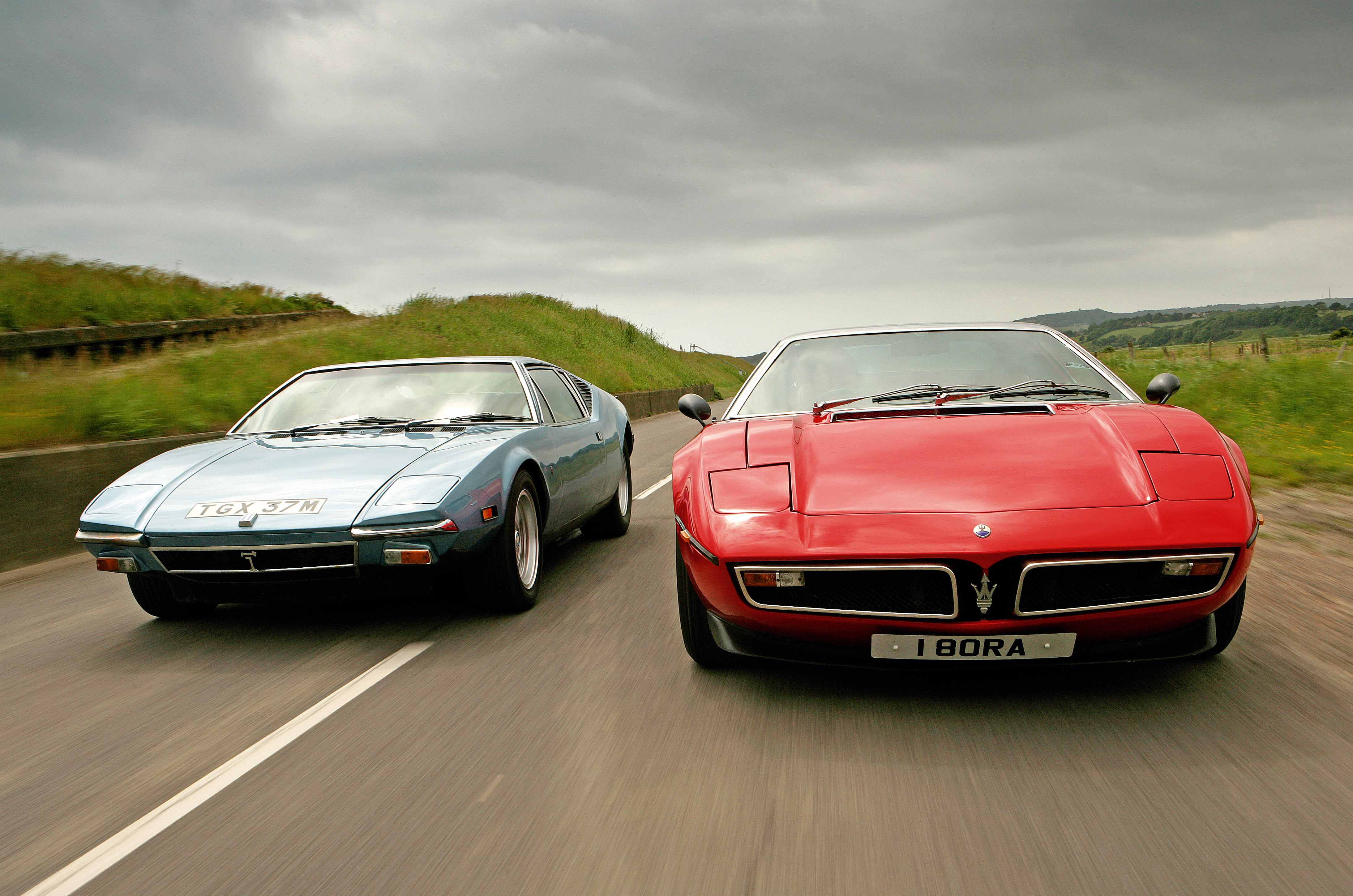
One an out-and-out hybrid, the other a virtual hybrid (by way of Citroën’s takeover), this pairing shares layout, V8 power, a ZF transaxle, Campagnolo alloy wheels and, stationary at least, demeanour.
Coming from completely different angles, but offering extremely similar performance figures, these were two very serious and genuine rivals to Lamborghini’s hegemony, but at much more tempting prices.
Infighting delayed the Maserati Bora, but it was worth the wait
In the UK in 1973, a Pantera GTS such as this could be yours for £7875 and a Bora would set you back £9831, while even in the previous year the outgoing Miura was a heady £10,250.
And in ’73 it would be followed by the Countach at an eye-watering £16,314.
Argentinian Alejandro De Tomaso had originally developed his Mangusta to gorge itself on AC Cobras, the Vallelunga’s baby Ferrari curves replaced with a new, menacing shape from Giorgetto Giugiaro.
But the Ford V8 was too much for what was essentially the old Vallelunga backbone chassis (which originally carried a Ford Cortina unit), and the whole Mangusta experience was cramped and usually terrifying.
That changed with De Tomaso’s next offering.
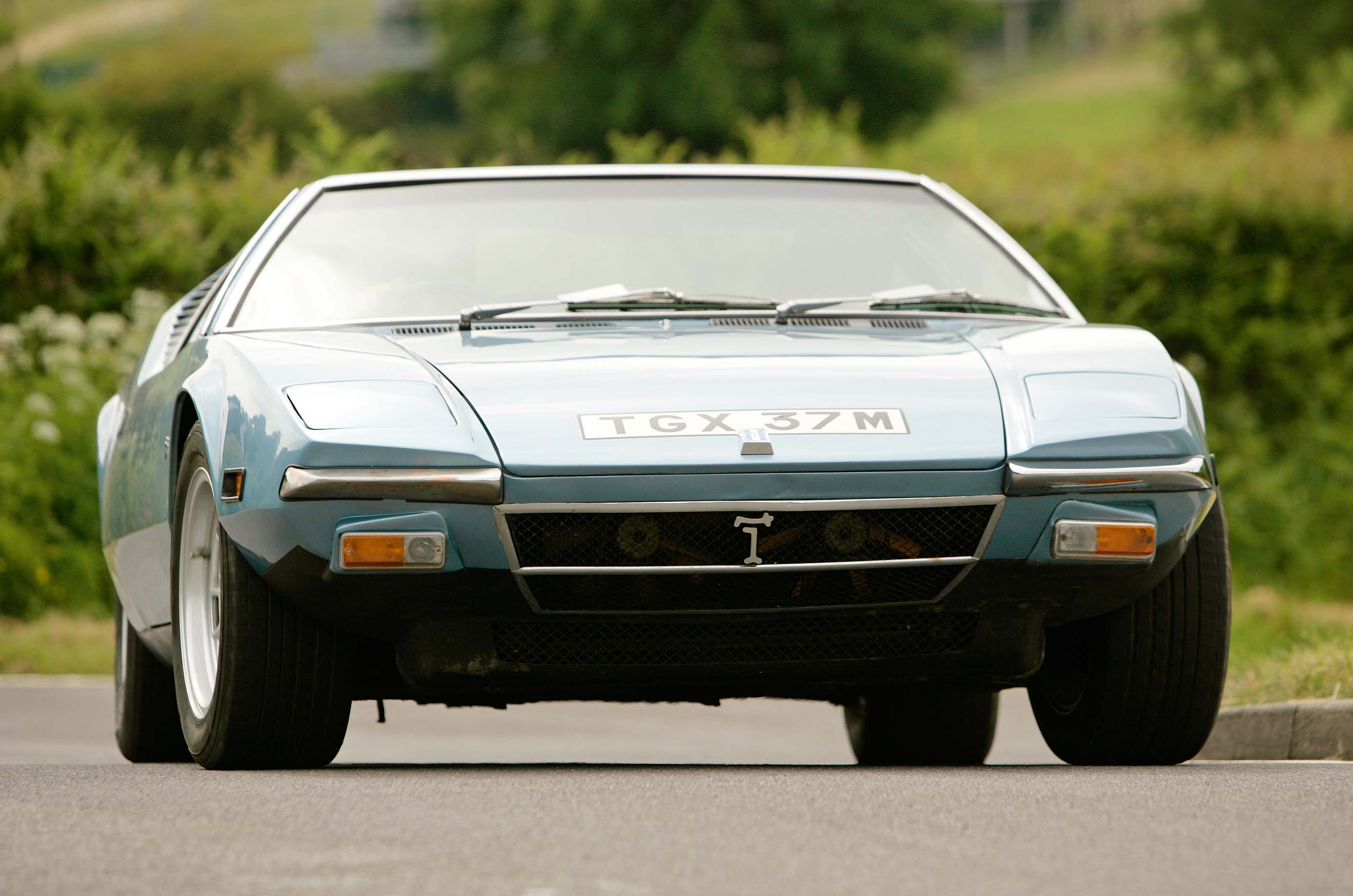
The De Tomaso Pantera’s hunched aggression was shaped by designer Tom Tjaarda
Although superficially similar, the Pantera was a very different beast to the Mangusta, with a very different beast in its sights.
The Giampaolo Dallara-designed monocoque featured independent suspension all round and was dressed in a body by Ghia’s Tom Tjaarda. It shared its aggressive stance with its predecessor, but little else.
At 5763cc, the 351cu in Cleveland V8 pushing out up to 350bhp in GTS form (from 1973) was a whole litre bigger than the Mangusta unit and found a much happier home in the Pantera.
The car may still have come from a boutique manufacturer, but its two-decade longevity (Panteras only went out of production in 1991) ensured that the Italian company finally got a taste of the big league by initially selling 1000 cars a year.
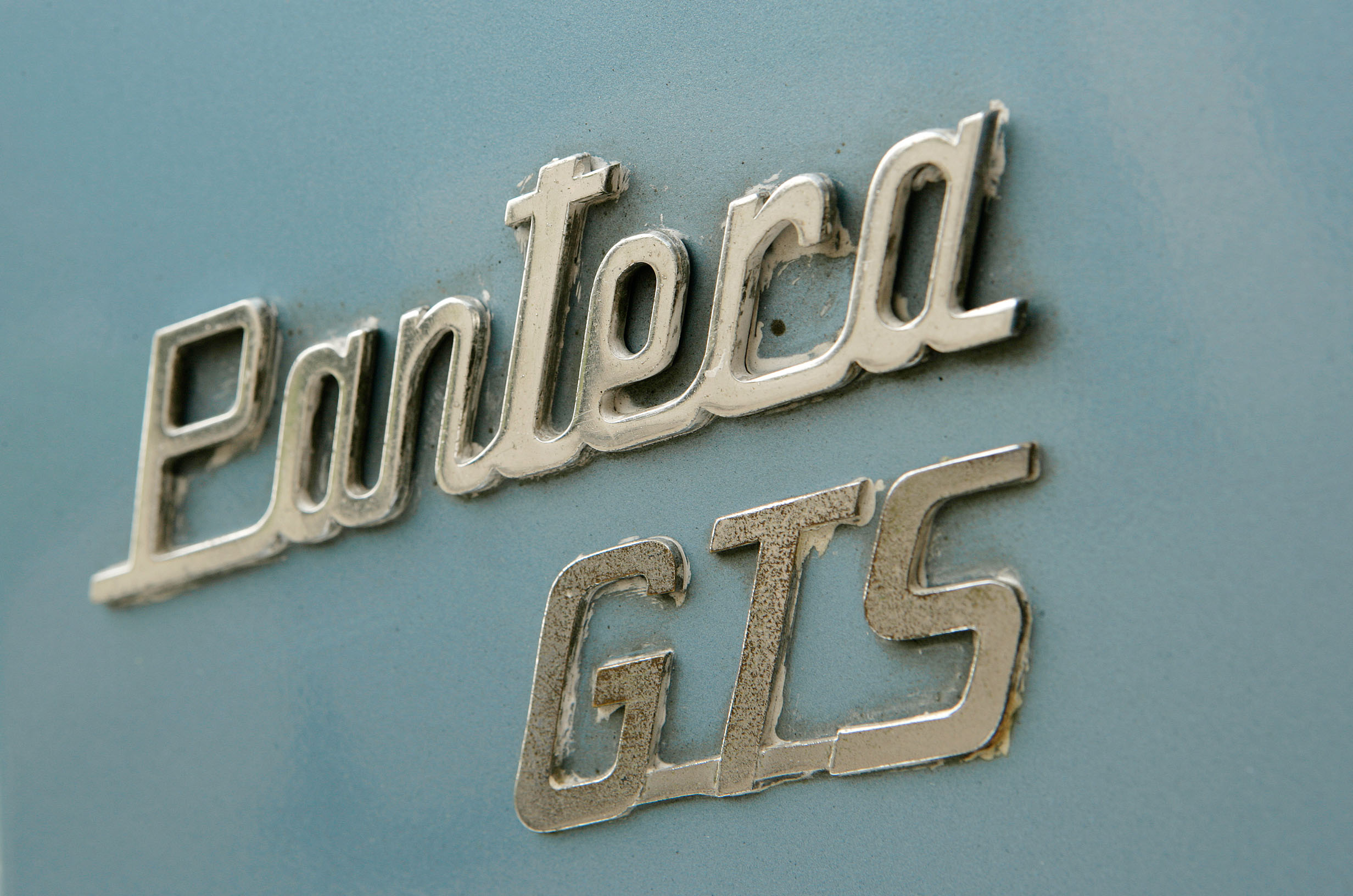
This De Tomaso Pantera GTS is a rare, right-hand-drive example
This was greatly aided by De Tomaso’s masterstroke of flogging Ghia to Ford, and thereby gaining access to Lincoln-Mercury dealerships in the States.
Maserati’s first mid-engined road car was a rather better-resourced pot-shot at the Miura, clothed in a sensational skin styled by Giugiaro and with the engineering masterminded by long-serving genius Giulio Alfieri.
It was the hyper-competitive Alfieri who was the driving force behind the Bora and who pushed it through despite internal resistance, not least from Ghibli-adoring chief tester Guerrino Bertocchi.
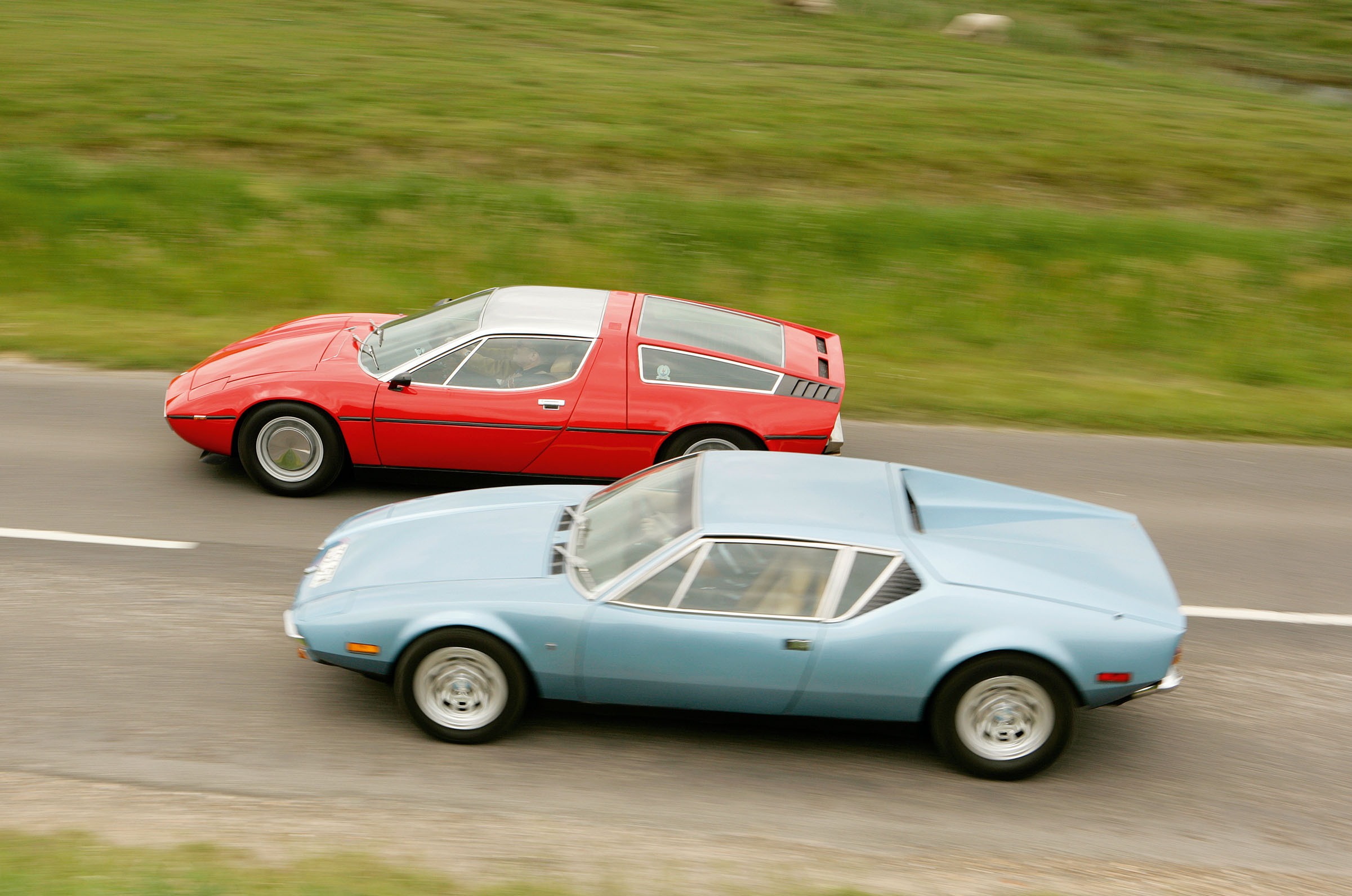
The De Tomaso Pantera GTS (closest) and Maserati Bora aimed to deliver Lamborghini Miura thrills for less
Launched in 1971 after a difficult gestation that included the Citroën buyout of Maserati in 1968 – and meaning that it only shared a year in production with the Miura it was built to best – the Bora survived for seven years, shifting fewer than 100 cars in each of them.
It was designed around the Modenese marque’s fabulous 4.7-litre (4.9-litre from ’76) quad-cam V8 that had been in service since the 450S sports-racer, with a quartet of twin-choke 42DCNF Weber carbs atop the vee.
The detailing of the car is some of the most beautiful ever, with those dished hubcaps on the alloys, the chromed moustache in the air intake, that sensational, satin-finish steel roof panel and A-pillars, even the rear windows that actually transform rearward vision.
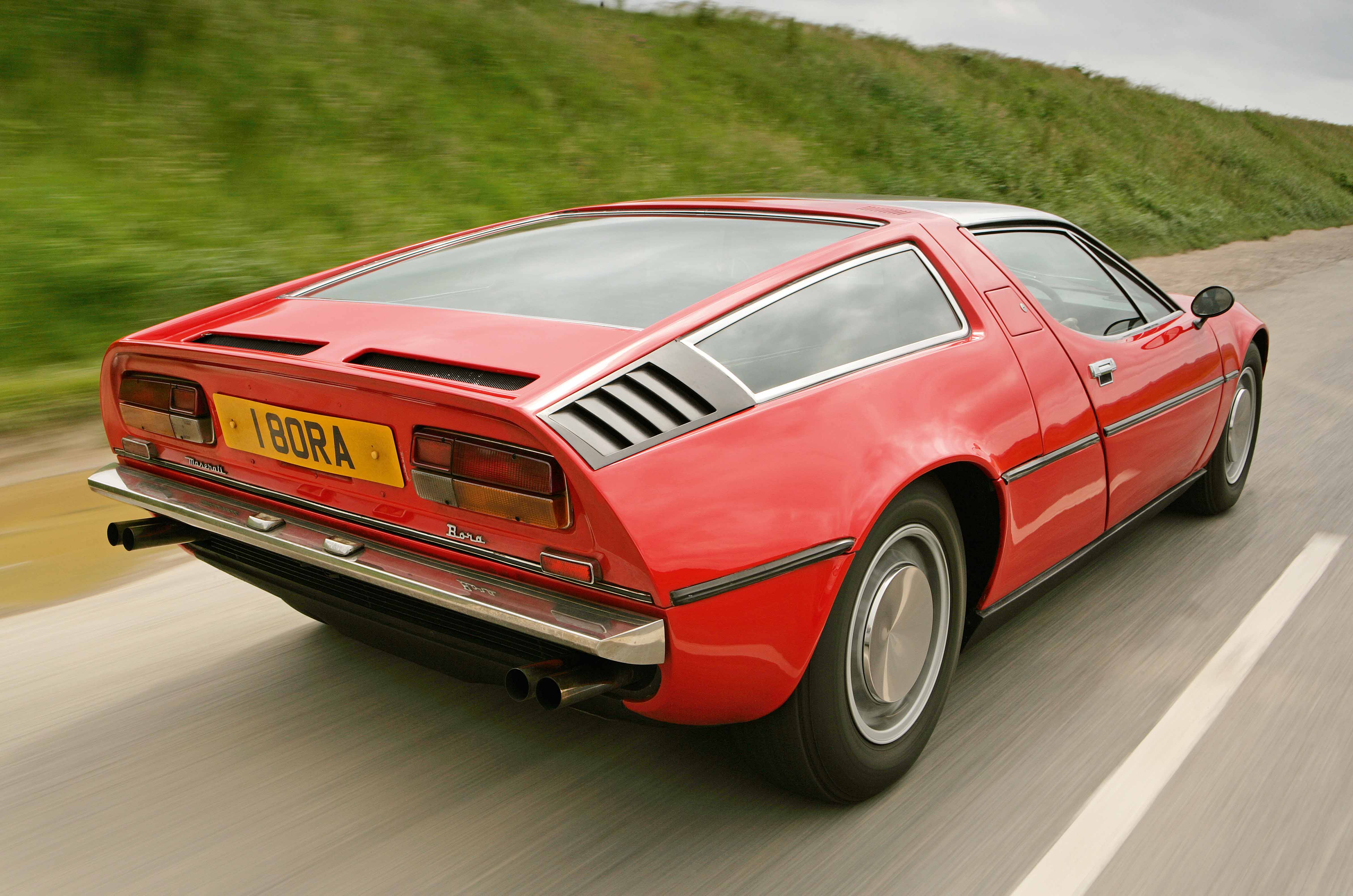
‘You guide the Maserati Bora through switchbacks with deft flicks of the steering wheel’
The Bora is a mesmerising shape outside and in. Even looking at the seats, snaking from engine cover to floor like a falling blind, you know that this car is not a case of style over substance.
It is an enormously roomy cockpit for what is a relatively slender car.
From the driver’s seat, everything is angled towards you, including the 200mph speedo and 8000rpm rev counter (with redline kicking off at 5500rpm).
Everything is adjustable: why have a seat on runners when you could wire it into the hydraulic braking system, add a switch and move the pedals to the driver instead of vice versa?
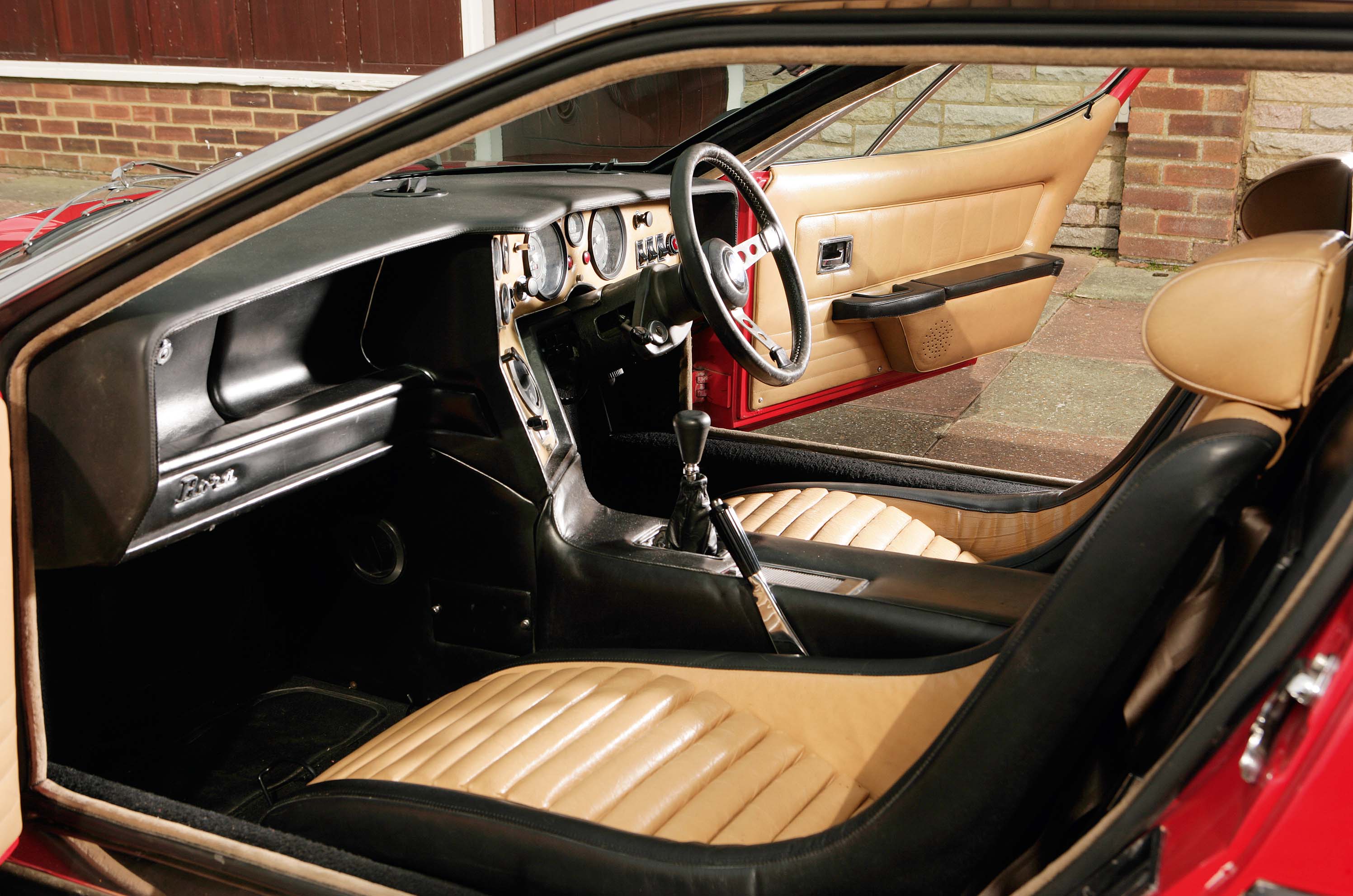
The Maserati Bora’s classy interior and gorgeous seats
The seat height is similarly adjustable, and the combinations you can play on the steering column to get the wheel just where you want it are mind-boggling.
It is a very comfortable and beautiful place to be and those are undoubtedly the best-looking seats ever installed in a car.
Turn the key and, surprisingly, those levels of comfort are left intact.
The V8 is audible through the double-glazed rear window, but not intrusive, its sophisticated, complicated patter of pulses emitting a gentleman fighter’s tune from the exhausts, the downdraught Webers feeding it in genteel sips rather than great gulps.
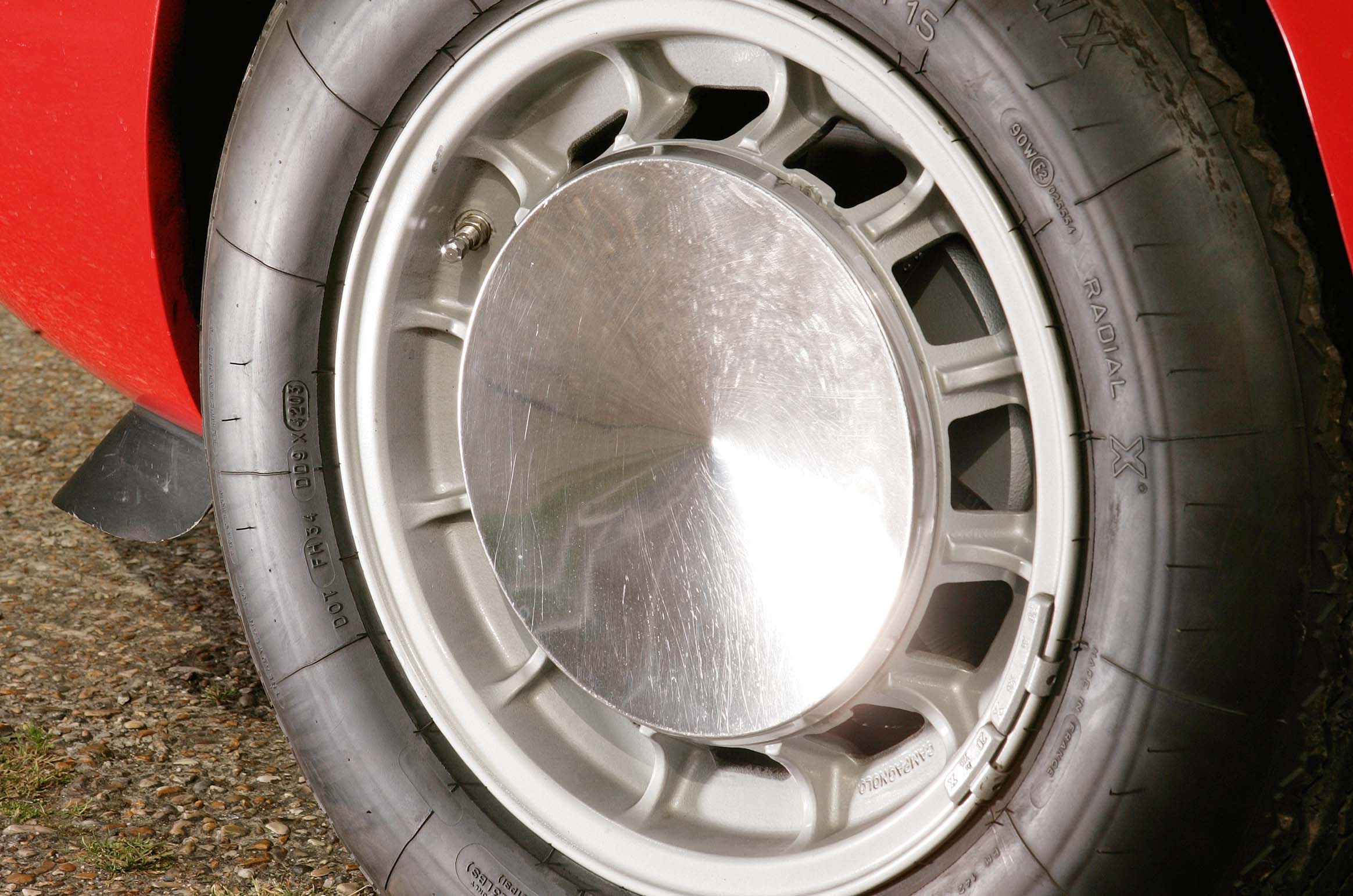
The Maserati Bora’s hubcaps are fiercely expensive today
On the move, it remains similarly unruffled. The transaxle takes some getting used to – it is easy to rush and miss changes at first – but it is so torquey and third so tall that you could probably do all your day-to-day driving in that gear.
The steering is a bit too heavy at walking pace, but is perfectly weighted on the move and the ride and handling are sensational, one of the finest combinations of sporting responses and cabin comfort.
Such is the grip that it’s hard to believe it is riding on relatively skinny 215/70 VR15 tyres.
Yet the fact that they are the same front and back definitely adds to the car’s excellent cornering poise, allowing you to just guide the Bora through switchbacks with deft flicks of the steering wheel and not a hint of drama.
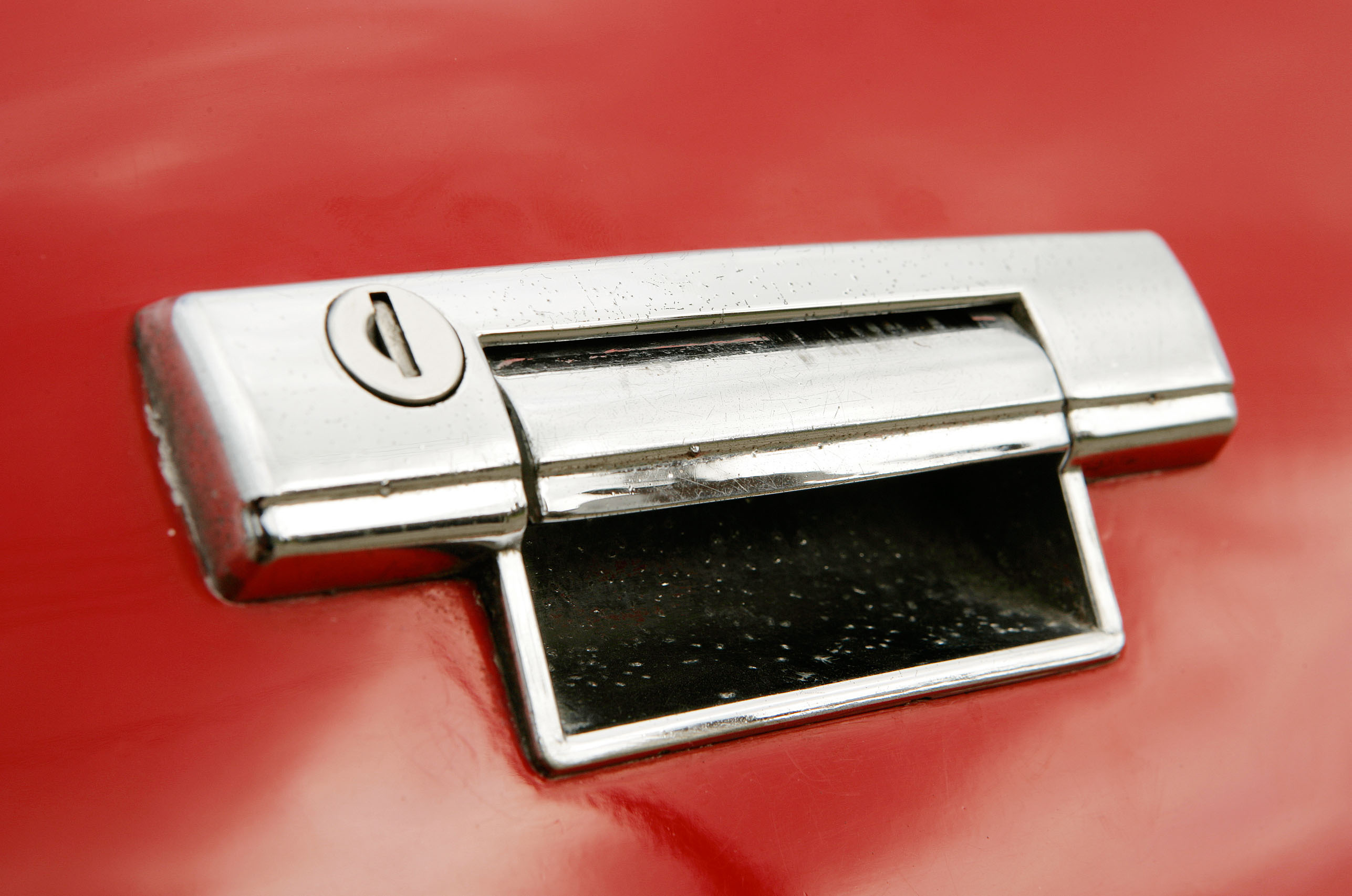
The Maserati Bora’s stylish doorhandle
Then there are the brakes – Citroën’s high-pressure hydraulic system, which is so efficient that it takes time for the driver to fully adjust to it, or to trust it.
But it is excellent, even if the rock-solid pedal means you are unlikely to ever be able to heel-and-toe a Bora. Then again, that rarely feels as if it would be necessary.
Owner Tony Bernstein has had this example for 15 years – barring three months when he sold it and promptly bought it back – and enjoys lots of track days and long-distance tours in it.
It is easy to see the appeal: this Maserati is an incredibly good car, especially rare for its day and type in being one that is always travelling a great deal faster than it feels to its occupants.
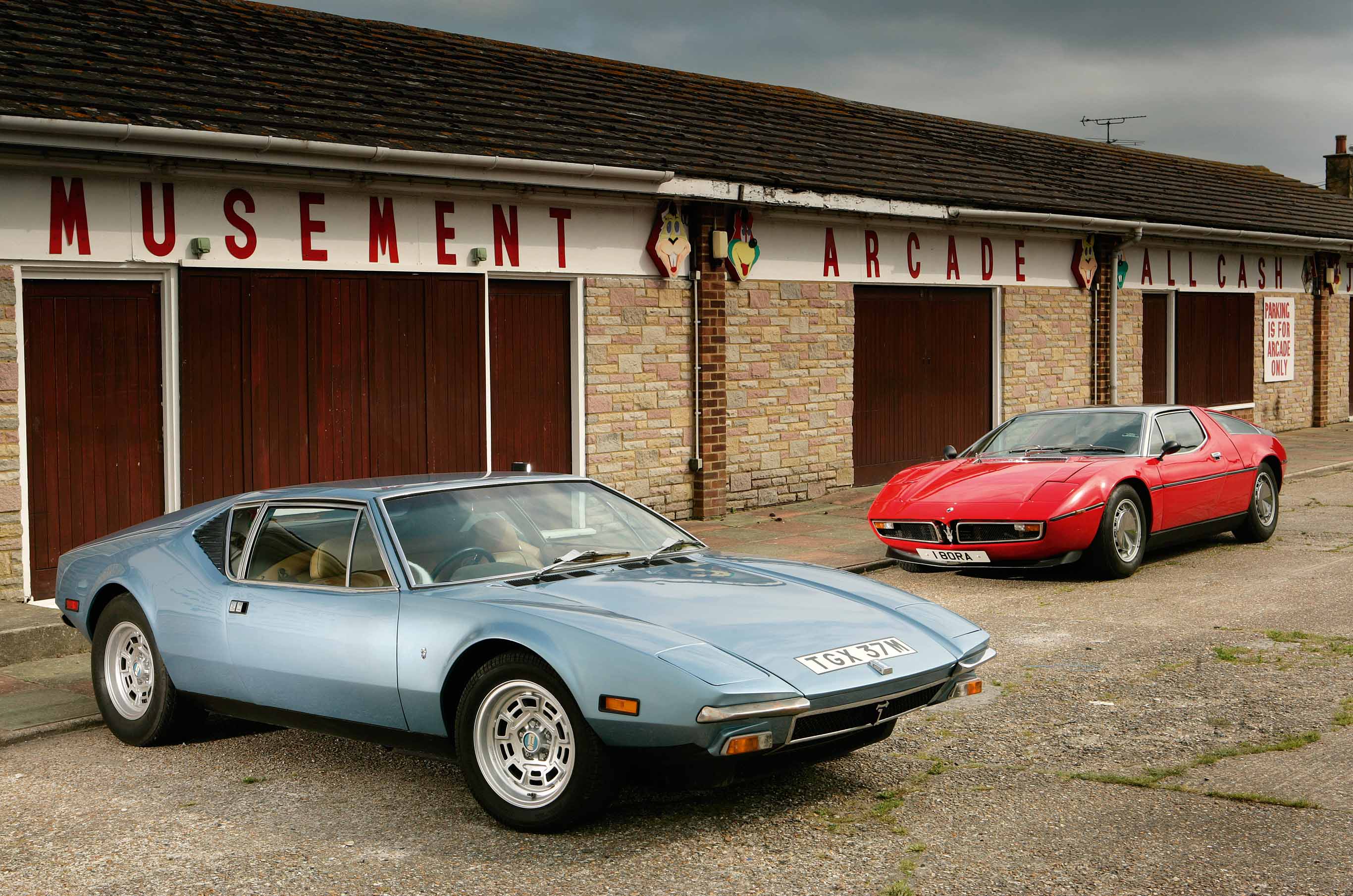
Can the savage De Tomaso Pantera GTS (closest) challenge the sophisticated Maserati Bora?
The same cannot be said of the De Tomaso Pantera, in which any rolling speed feels as if it could cause your vision to streak.
This rare, right-hand-drive GTS was sold not long ago by Anthony Godin who, by his own admission, is becoming a Pantera specialist purely by chance.
Many of the recently sold UK cars have passed through his hands.
He says that this original and unmolested example could be the 1973 Earls Court Motor Show car, and it is certainly a low-mileage and well cared for motor.
Resprayed a decade or so back, it is in very tidy condition, but not so immaculate that you wouldn’t want to drive it. Thankfully.
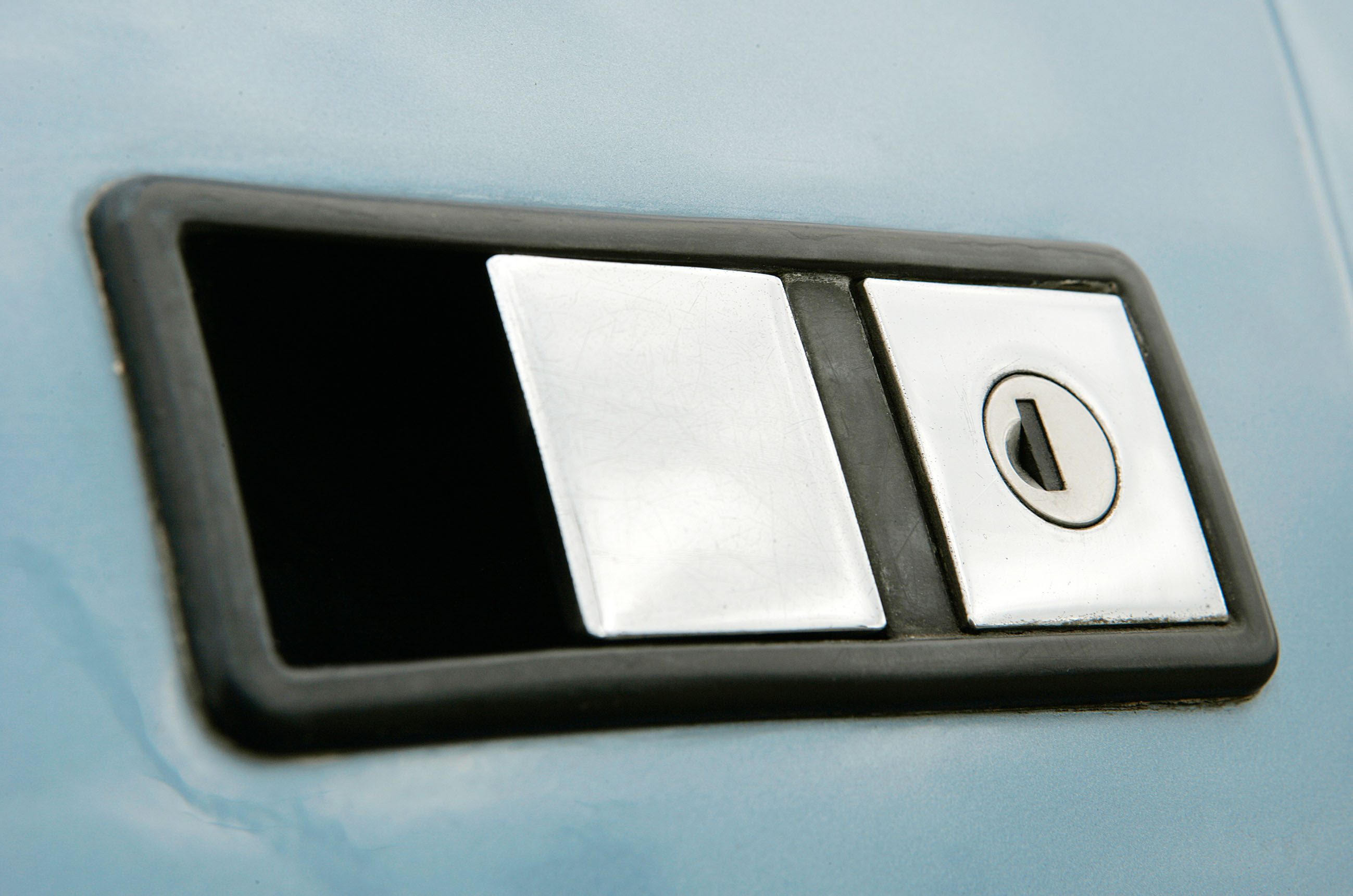
Entry to the De Tomaso Pantera GTS is by simple, pull-out handles
It also illustrates how much more pretty – dainty, even – the Pantera was before it acquired all those ugly piercings.
Tjaarda’s lines are supremely eloquent, the profile purposeful yet delicate, the nose designed for splicing air, the tail squared off in perfectly period fashion.
From the moment you step into the Pantera, it is clear how far and how quickly the company had progressed when it started to sell proper numbers of cars.
Except for the horribly out of place and too-small plastic steering wheel (Ford Capri?), it doesn’t have any of the rickety feel of a hybrid, though admittedly it also doesn’t have quite the exotic aura of the Bora.
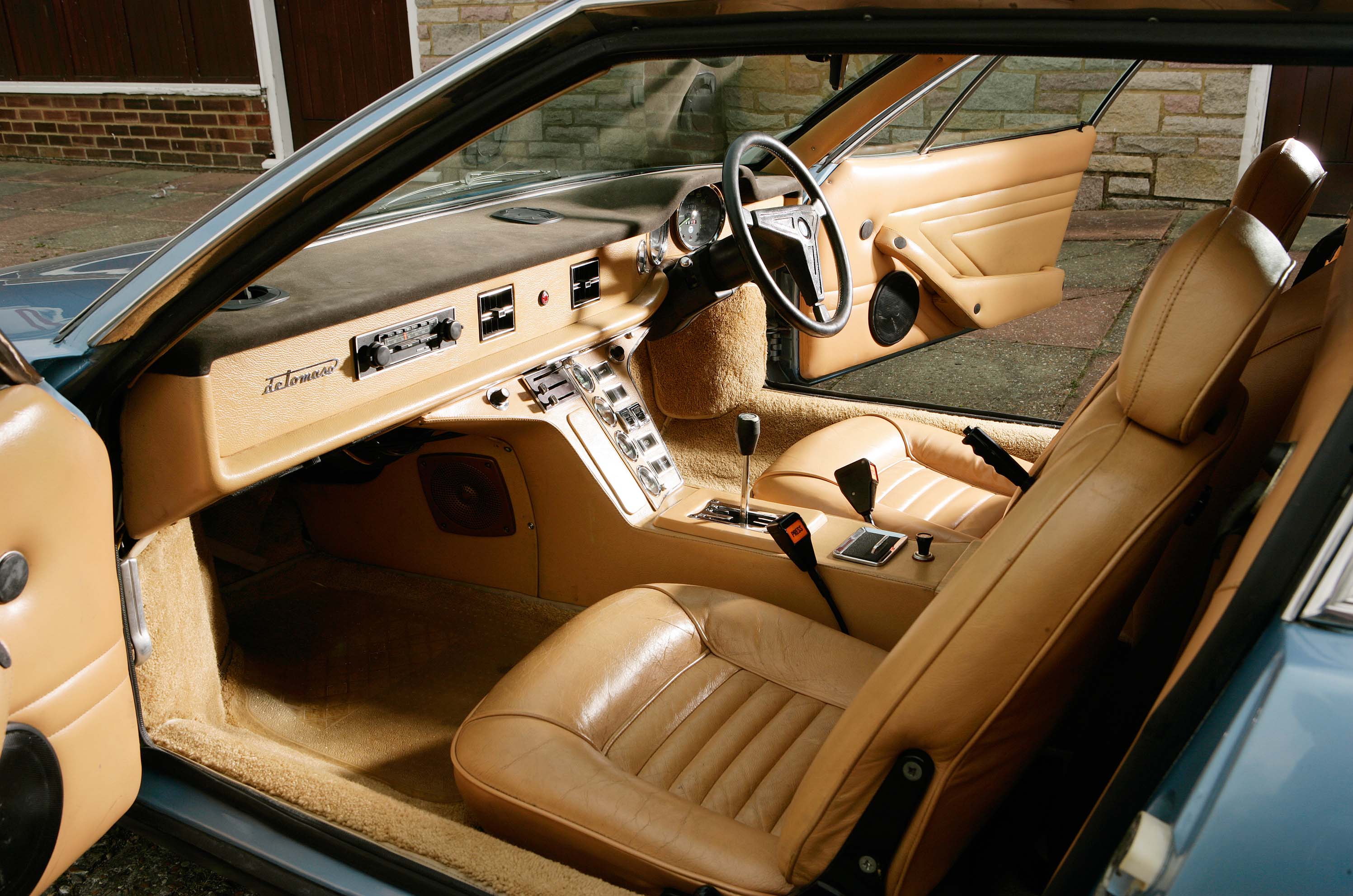
The De Tomaso Pantera’s interior is surprisingly well put together
The interior is plush and spacious, a suede dash top the first sign of quality, the seats comfortable and cosseting, the way the tunnel guides your feet to the slightly offset pedals not as intrusive as it should be.
In front of the driver are two big dials (200mph speedo and 8000rpm rev counter with redline starting at 5900), while most of the furniture is neatly placed in the centre console.
It’s not exactly poverty-spec, but between the two you can start to see some of the price differential.
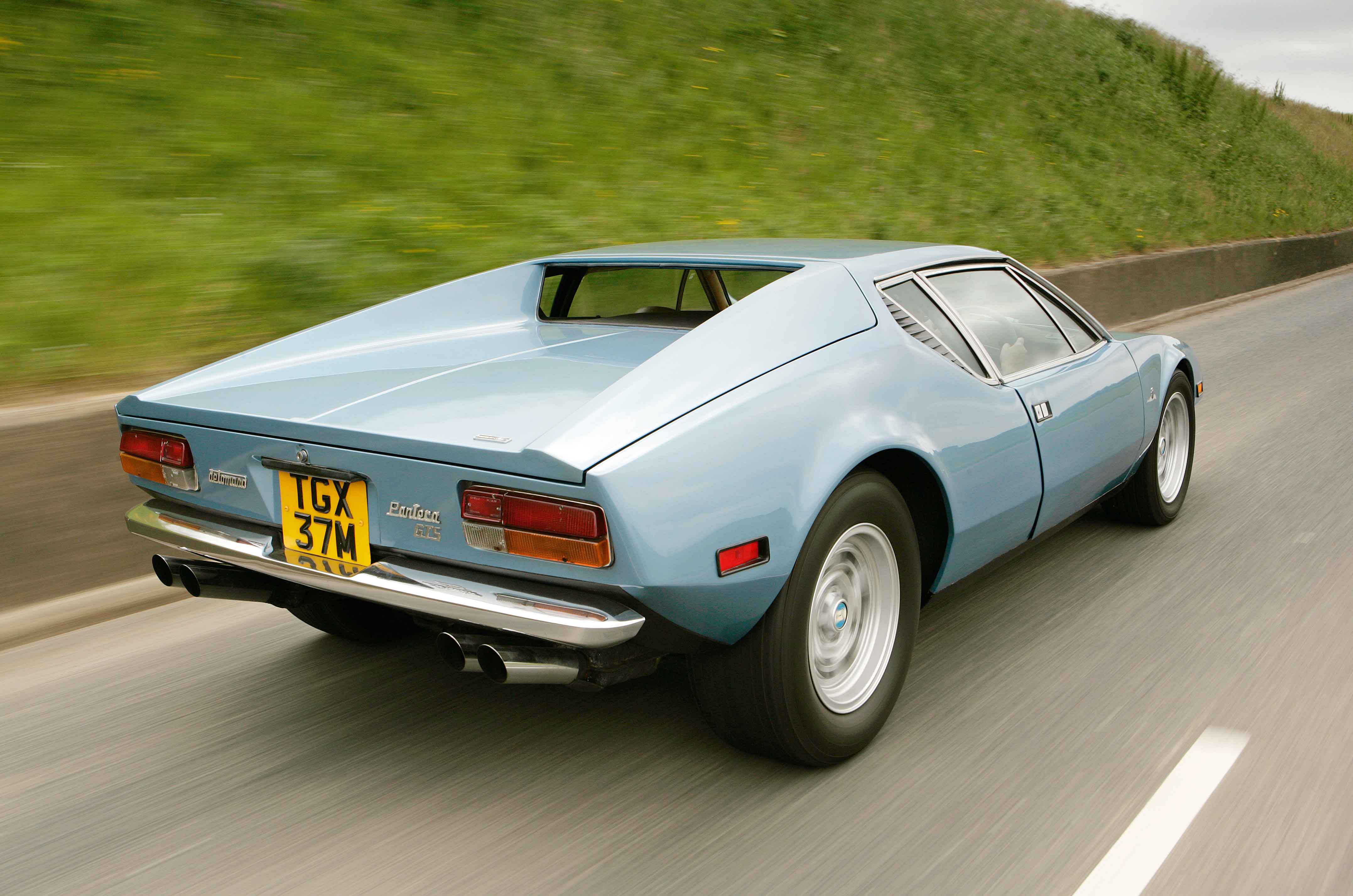
The De Tomaso Pantera GTS is noisier inside than the more refined Maserati
The De Tomaso doesn’t so much start up as erupt.
If you are going to have a hybrid, it’s not a bad start to fit it with a multiple Le Mans-winning engine and transmission, especially one you could buy crated.
And that snarling, shatteringly brutal racing engine is the heart and soul of this car’s appeal.
It is gloriously unsophisticated, the single, massive four-barrel Holley carburettor on this car lets the engine chug fuel like a teenager at their first keg party, but it is so winningly straightforward that you can’t help but fall in love with it.
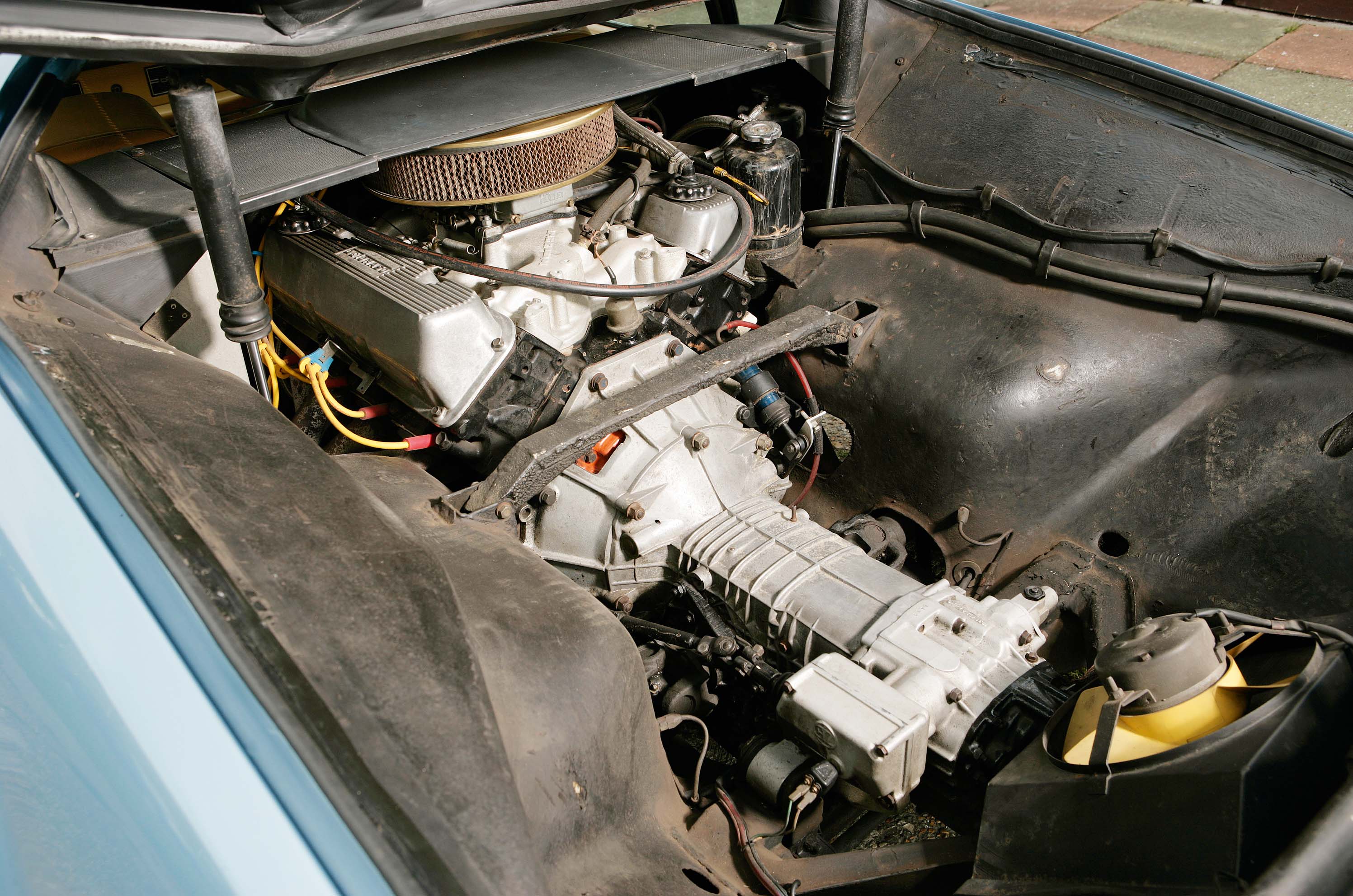
The De Tomaso Pantera GTS has a monster 351cu in V8 mounted amidships
The Ferrari-esque open gearlever gate initially feels baulky, but actually serves a proper purpose.
By enforcing slower, more determined changes, it means that you are never rushing the transaxle and the shift feels far easier and smoother than in the Bora.
From the dog-leg first, guide it upwards and the length of the gears astounds, with the legal limit flashing up midway through second, and third stretching just as far.
Who knows where you would be by the time you topped out in fifth? Airborne, probably.
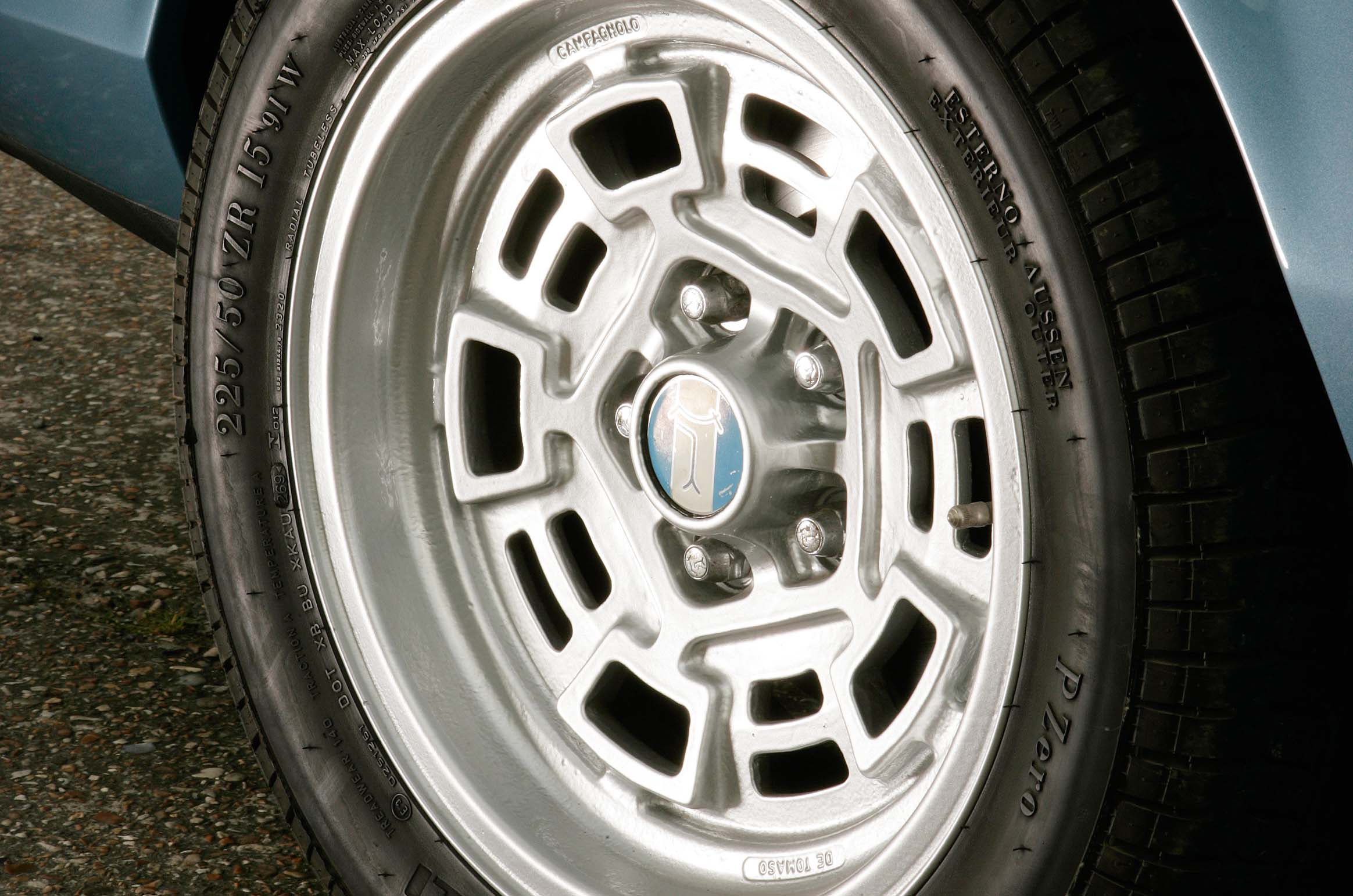
The De Tomaso Pantera’s Campagnolo alloys add to its Italianate pedigree
But these are considerations you don’t have time to contend with, because you need to focus to drive the Pantera.
Unlike the Bora, which allows the driver to indulge themselves in some relaxed high-speed cruising, the De Tomaso demands total concentration 100% of the time.
It is twitchy and skittish as it puts down its power, the steering is a little too light and prone to bump-steer, that cheapo wheel jittering all the time in your hands.
The back end is forever reminding you how easily it could switch to autopilot and take the control of the car out of your hands.
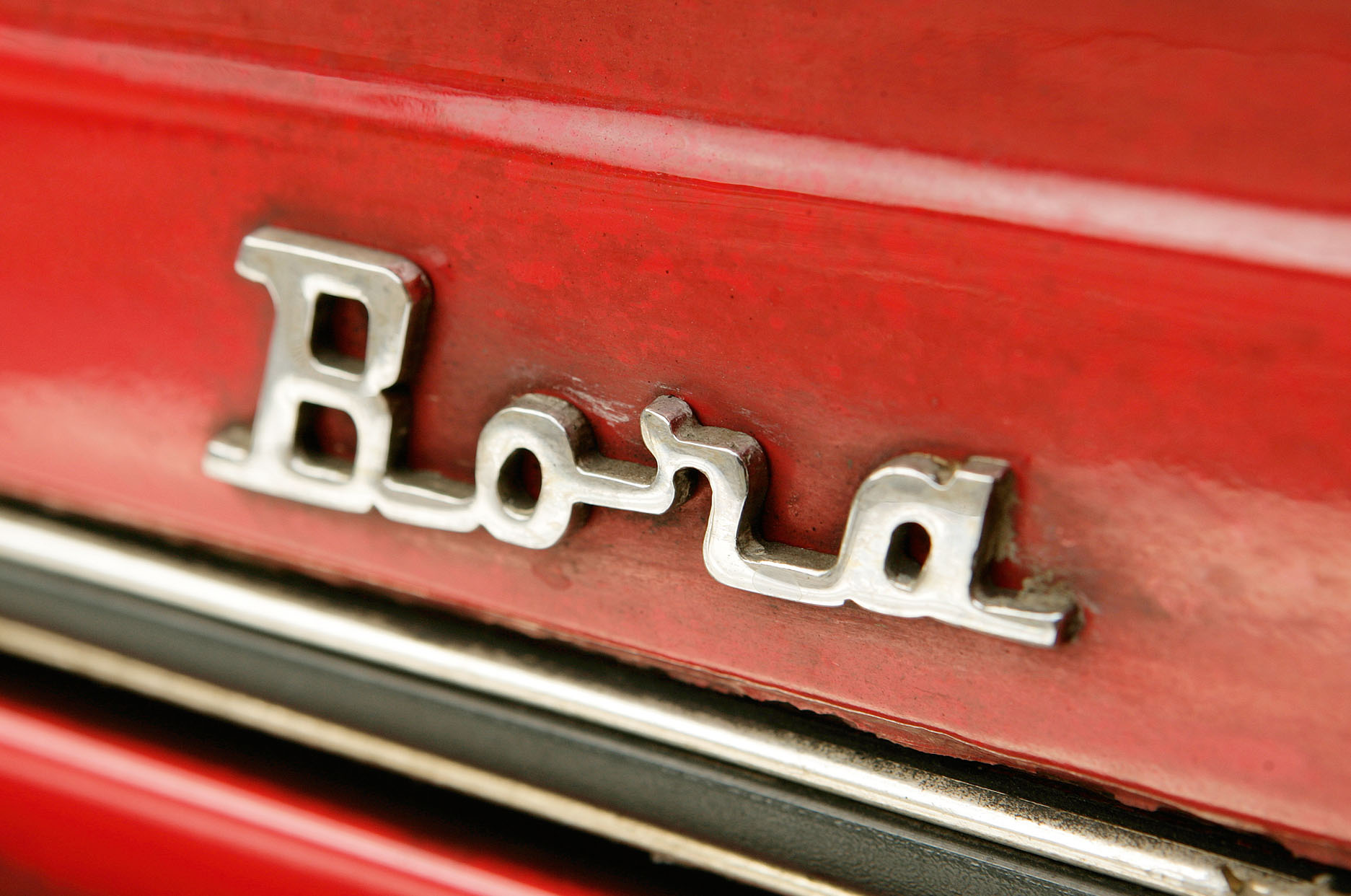
‘The detailing of the Maserati Bora is some of the most beautiful ever’
It lacks the quiet smoothness that the Maserati’s innovative, rubber-mounted rear subframe affords the transmission.
On far fatter tyres – with lower-profile 225s on the front and 275s on the back, even the steering tyres are bulkier than the Bora’s rears – it doesn’t have the grip or the balance of the Maserati.
Though you can never relax in the Pantera – its ride is a good deal harsher, too – it doesn’t make this bucking bronco any less enjoyable.
It is one long dangerous adrenalin rush, like indulging in an illicit fling, while the Bora is like finding your soulmate.
That the Maserati has the same performance, but goes about it with such unflustered civility, is astonishing.
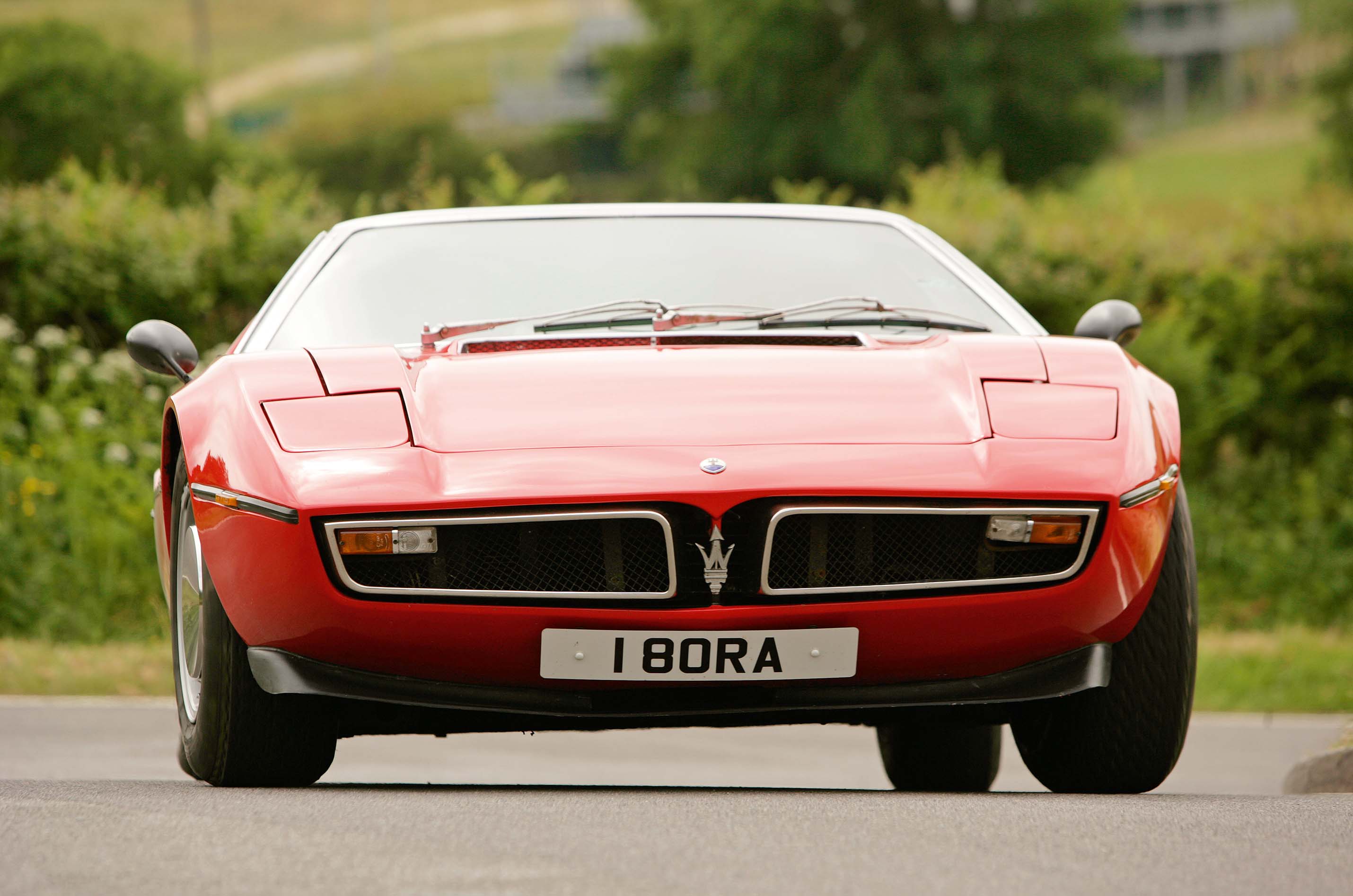
The Maserati Bora’s purposeful lines were penned by Giorgetto Giugiaro
For cars that have so much in common – not least their Lambo-lambasting raison d’être – the characters of this pair are so different that comparison almost seems pointless.
A waste of time, then? Not at all.
We had to do the story to discover that fact, and we learned a lot more besides.
Namely that, for seat-of-the-pants driving and raw thrills – and, bizarrely, also for trickling along in traffic jams – you need a Pantera. Nothing comes close for the money.
Yet for Continental touring with genuine pace, refined GT comfort and capability, the Bora is equally essential.
Again, you’d have to spend double to find something that would make you feel better as the lines of poplars flash past on a deserted French blue route, or to get you over the Alps as quickly and comfortably.
The Maserati Bora has always been near the summit of the ‘must-have’ list and it still is, but it has been joined by the De Tomaso Pantera.
If you were thinking of buying either of these classic cars, the good news is that neither will disappoint.
The bad news is that you really need both…
Images: Tony Baker
This was first in our August 2009 magazine; all information was correct at the date of original publication
Factfiles
Maserati Bora
- Sold/number built 1971-’78/571
- Construction steel platform chassis with rubber-insulated subframes, steel body
- Engine all-alloy, dohc-per-bank 4719/4930cc V8, four Weber 42DCNF carburettors
- Max power 310bhp @ 6000rpm
- Max torque 325lb ft @ 4200rpm
- Transmission five-speed manual transaxle, RWD
- Suspension independent, by double wishbones, coil springs, telescopic dampers, anti-roll bar f/r
- Steering rack and pinion
- Brakes powered Girling discs
- Length 14ft 3in (4343mm)
- Width 5ft 10in (1784mm)
- Height 3ft 11in (1200mm)
- Wheelbase 8ft 6in (2590mm)
- Weight 3416lb (1549kg)
- 0-60mph 6.4 secs
- Top speed 160mph
- Mpg 14
- Price new £9831 (1973)
De Tomaso Pantera GTS
- Sold/number built 1973-’92/7165 (to 1990)
- Construction steel monocoque
- Engine all-iron, ohv 5763cc V8, single four-barrel Autolite carburettor
- Max power 350bhp @ 5400rpm
- Max torque 345lb ft @ 4000rpm
- Transmission five-speed manual transaxle, RWD
- Suspension independent, by double wishbones, coil springs, telescopic dampers, anti-roll bar f/r
- Steering rack and pinion
- Brakes ventilated discs, with servo
- Length 13ft 11in (4241mm)
- Width 5ft 11in (1803mm)
- Height 3ft 7½in (1092mm)
- Wheelbase 8ft 3in (2514mm)
- Weight 3050lb (1383kg)
- 0-60mph 5.5 secs
- Top speed 170mph
- Mpg 17
- Price new £7875 (1973)
Enjoy more of the world’s best classic car content every month when you subscribe to C&SC – get our latest deals here
READ MORE
De Tomaso Pantera: cat from the cradle
Maserati Khamsin: Marcello Gandini’s forgotten jewel
De Tomaso Vallelunga: mid-engined marvel

James Elliott is a former Editor of Classic & Sports Car