Dodge Polara: real-life rocket ship

| 3 Feb 2026
Classic & Sports Car – Ex marks the spot: driving the Dodge Polara

As the early post-war period gave way to the 1950s, the interstate highways and parking lots of middle America were still populated by the stuffy, serious and ordinary designs of an earlier generation.

The offerings appealed more to taxmen and accountants than the boom generation of rockers and jivers that was just around the corner.

Chryslers were best summed up by the firm’s own president, KT Keller – though perhaps not quite in the same way as he intended.

Here were cars that wouldn’t: “Knock a man’s eyes out or his hat off.”

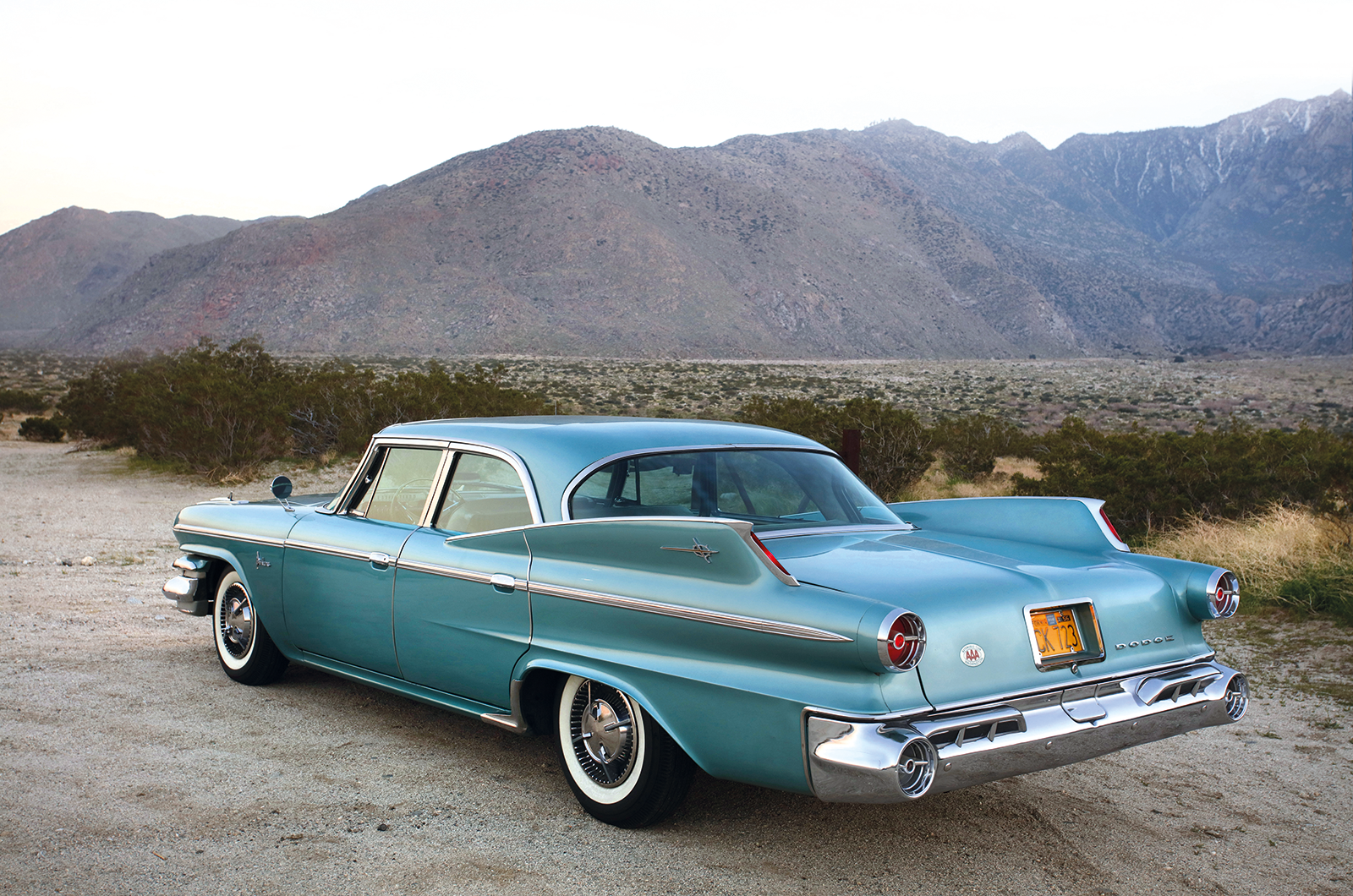
That all changed with the arrival of a young stylist by the name of Virgil Exner, whose cutting-edge designs inspired by the dawning space age replaced the staid salesmen’s expresses with the finned excess of models such as the 1960 Dodge Polara.

Classic & Sports Car – Ex marks the spot: driving the Dodge Polara

Virgil Exner’s designs revolutionised styling with new excesses

The Michigan man, who passed away in December 1973, altered the course of automotive styling more than most, but it wasn’t always easy.

When Exner arrived at Chrysler from Studebaker in 1949, the marque’s model line-up was upright and uninspiring for a reason.

Cars were, first and foremost, created by engineers rather than by designers, and they reflected little of the changing culture and fashion that would mark out the 1950s.

Legend has it that Keller would step into new models wearing his hat, and proceeded to bounce up and down: if his Stetson hit the roof lining then it was back to the drawing board.

Classic & Sports Car – Ex marks the spot: driving the Dodge Polara

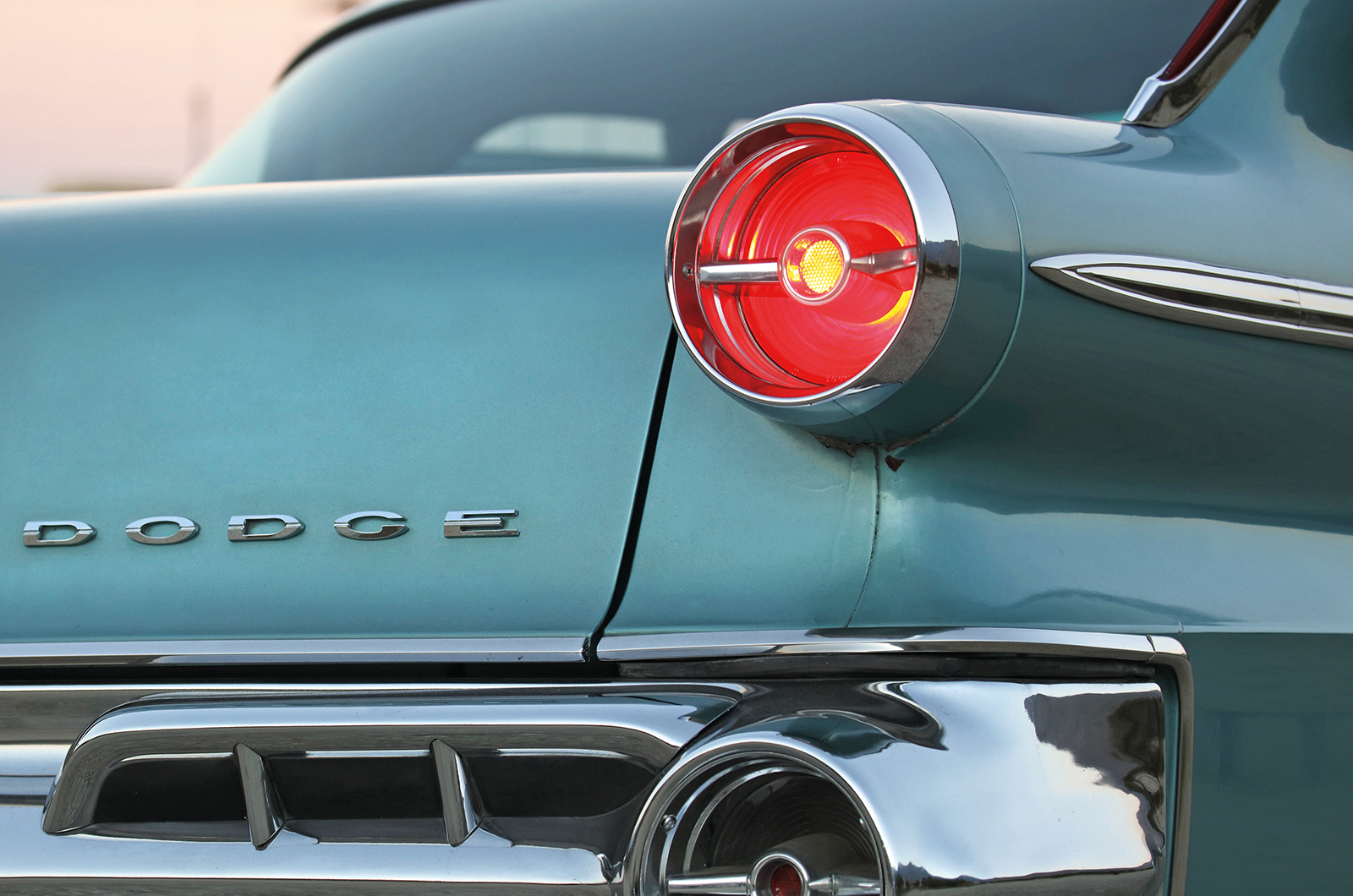
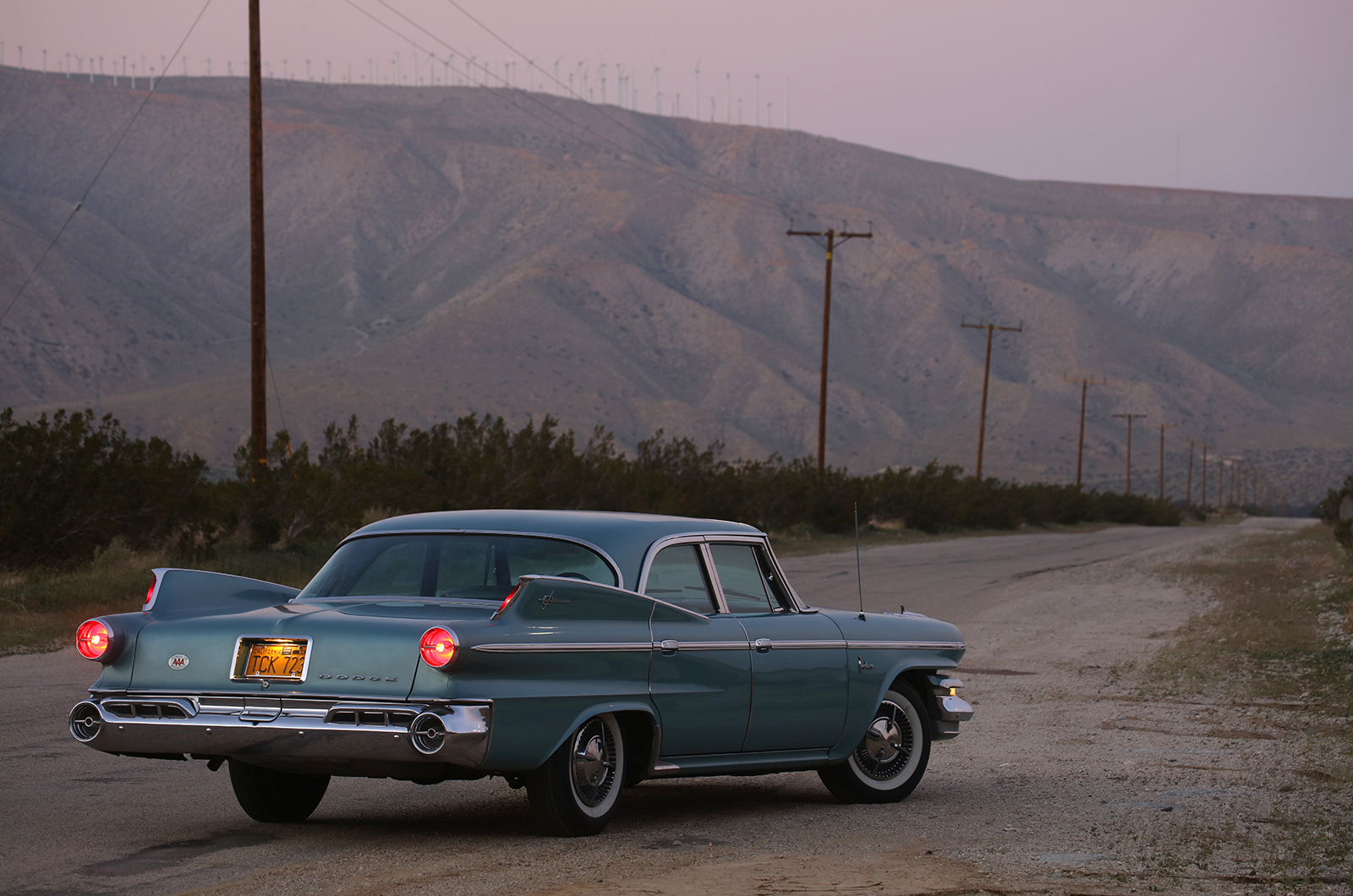
Exner’s jet-pod tail-lights still seem futuristic

Keller handed over the reins to Lester Lum Colbert in 1950, and Exner rose to become director of styling two years later.

He made the most of the shackles being loosened for the 1955 model year, taking inspiration from Harley Earl and the P-38 Lightning-style tailfins of the 1948 Cadillac with a bold styling language dubbed ‘The New 100-Million Dollar Look’.

By 1957 these ‘Forward Look’ designs, with their low rooflines, long bonnets, flamboyant fins and jet-pod tail-lights, were the talk of Detroit.

The cars were so striking, so modern, that rival General Motors was forced into a last-minute rethink of its own line-up, bringing about a shift in styling that reverberated around the world – even influencing British-built cars such as the Ford Consul and Vauxhall Cresta.

Classic & Sports Car – Ex marks the spot: driving the Dodge Polara

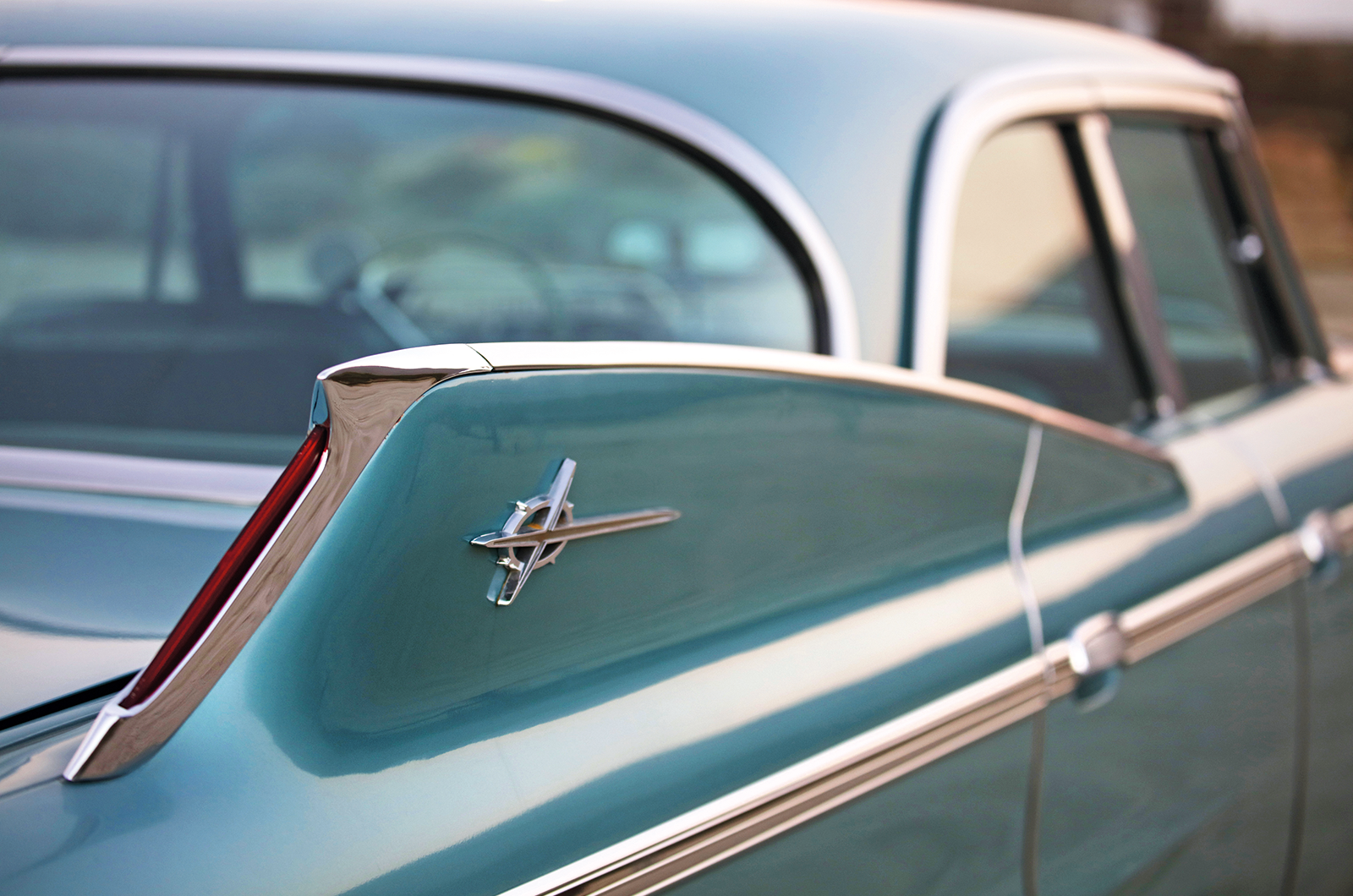
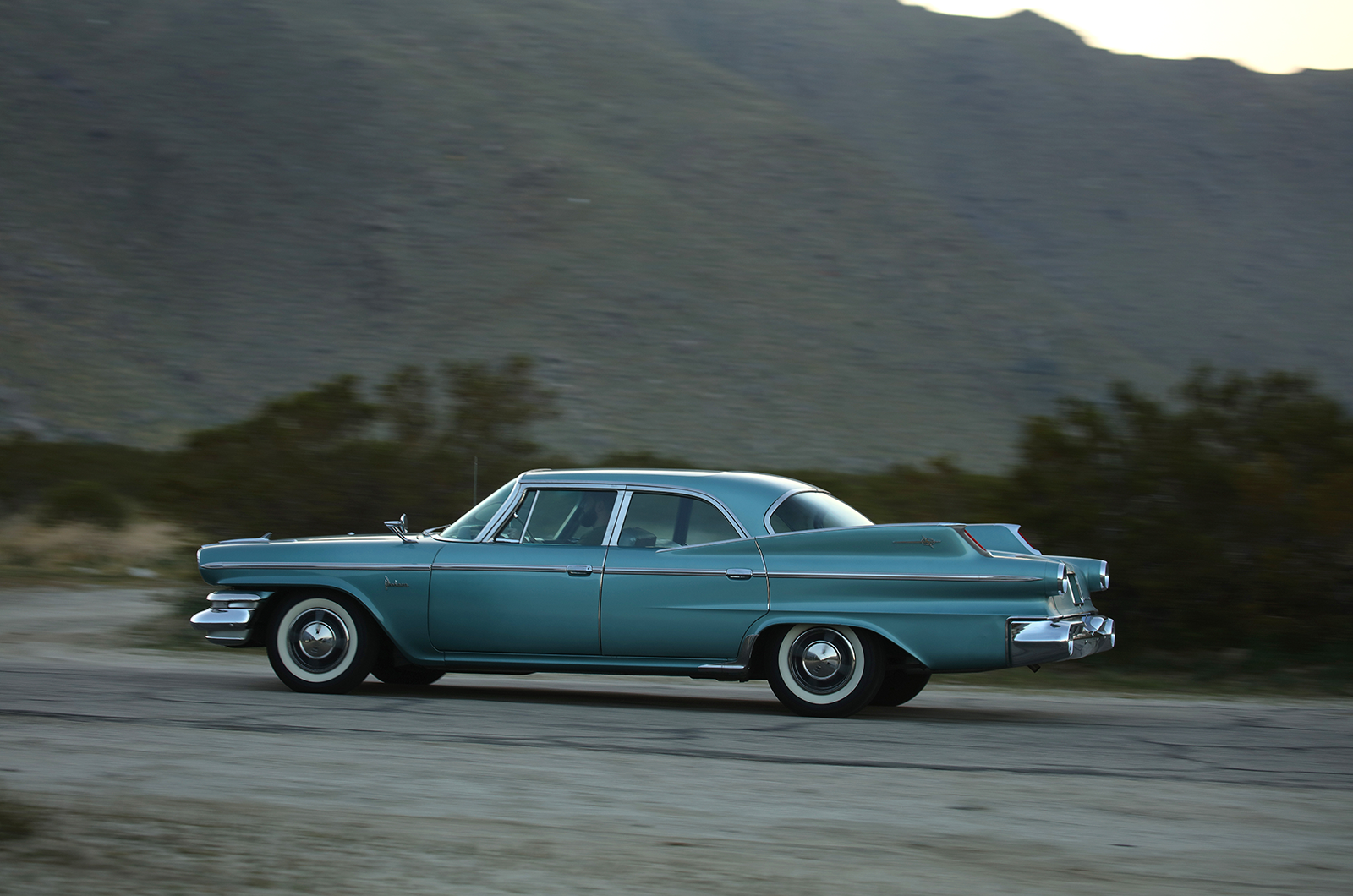
Shorter fins accentuate the length of the Dodge Polara’s light pods

Plymouth’s marketing team hailed the arrival of 1960 three years early, and by the time the new decade really had rolled around the era of fins was beginning to wane in favour of crisp, sleek new models such as the fourth-generation Lincoln Continental.

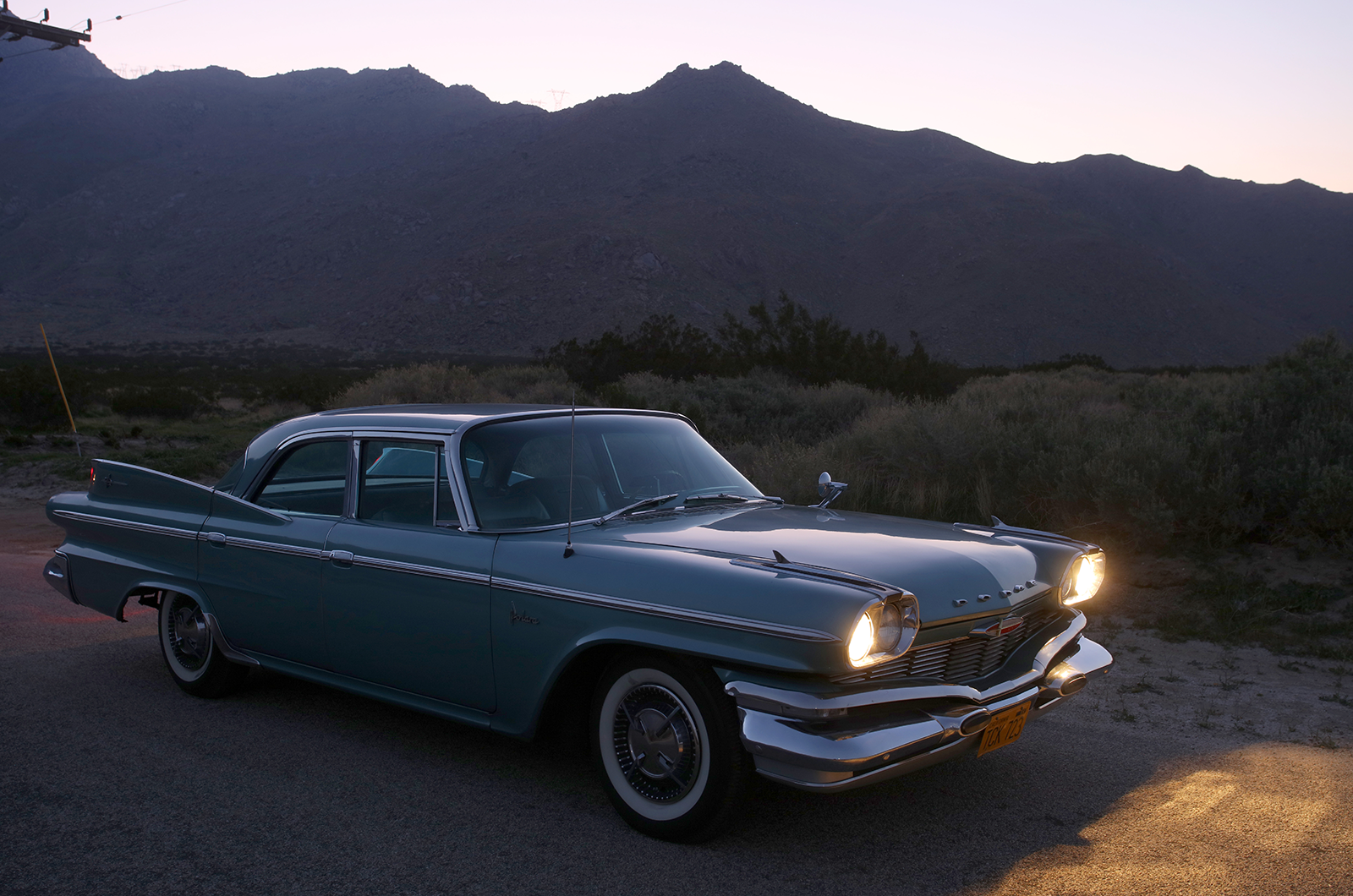
Dodge’s Polara, the pole star sitting at the top of its range, represents one of the final iterations of the space-age beauties that exemplified 1950s design, with trademark shortened tailfins and rear light pods that, when illuminated, look like the afterburner of a Starfighter at full throttle.

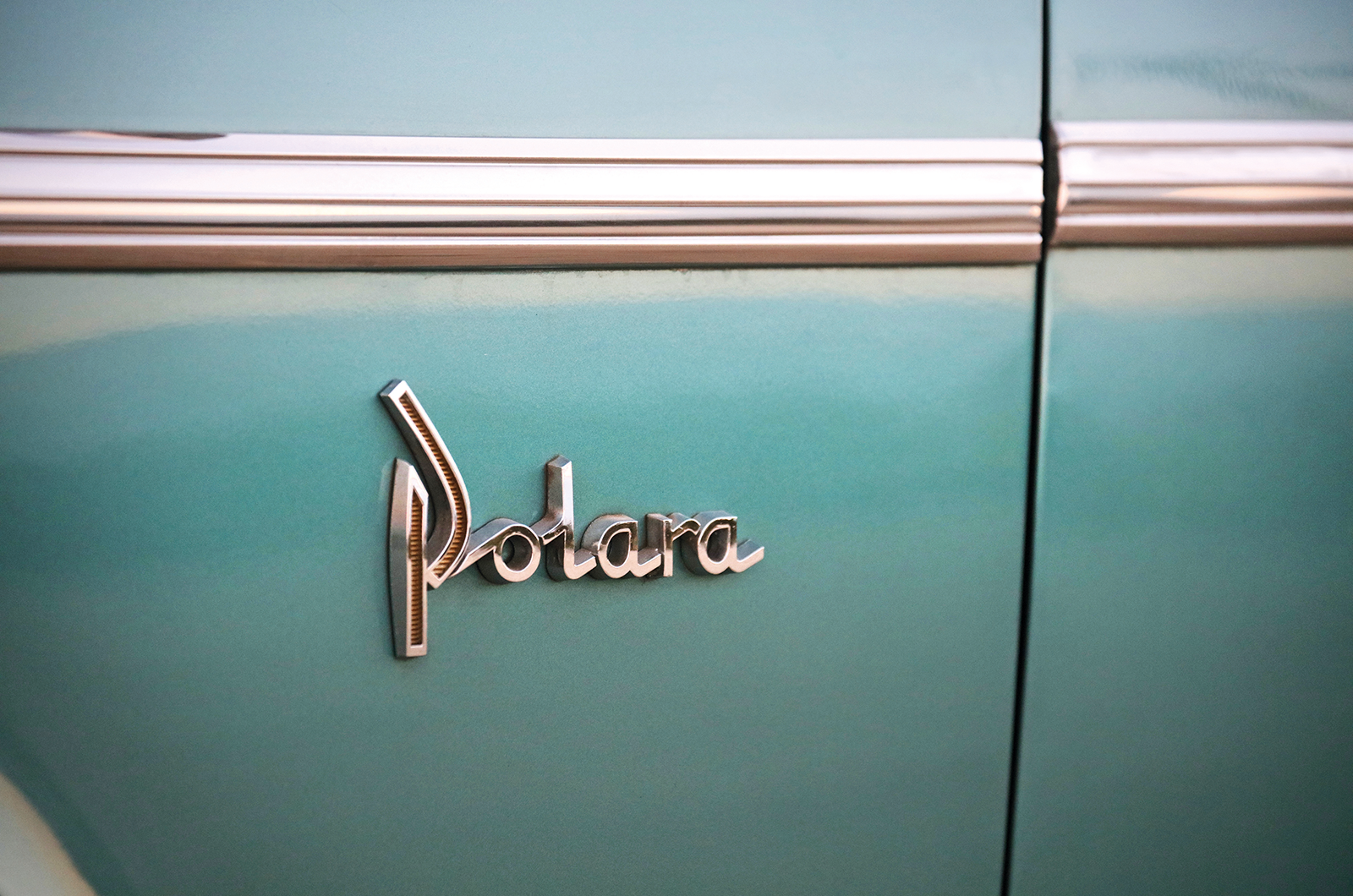
It isn’t difficult to imagine the Polara script attached not to the wing, but towering above a Las Vegas hotel in massive letters encrusted with a thousand twinkling filament bulbs, or as the backdrop to a glittering black-and-white gameshow fronted by a penguin suit with a Hollywood smile.

Classic & Sports Car – Ex marks the spot: driving the Dodge Polara

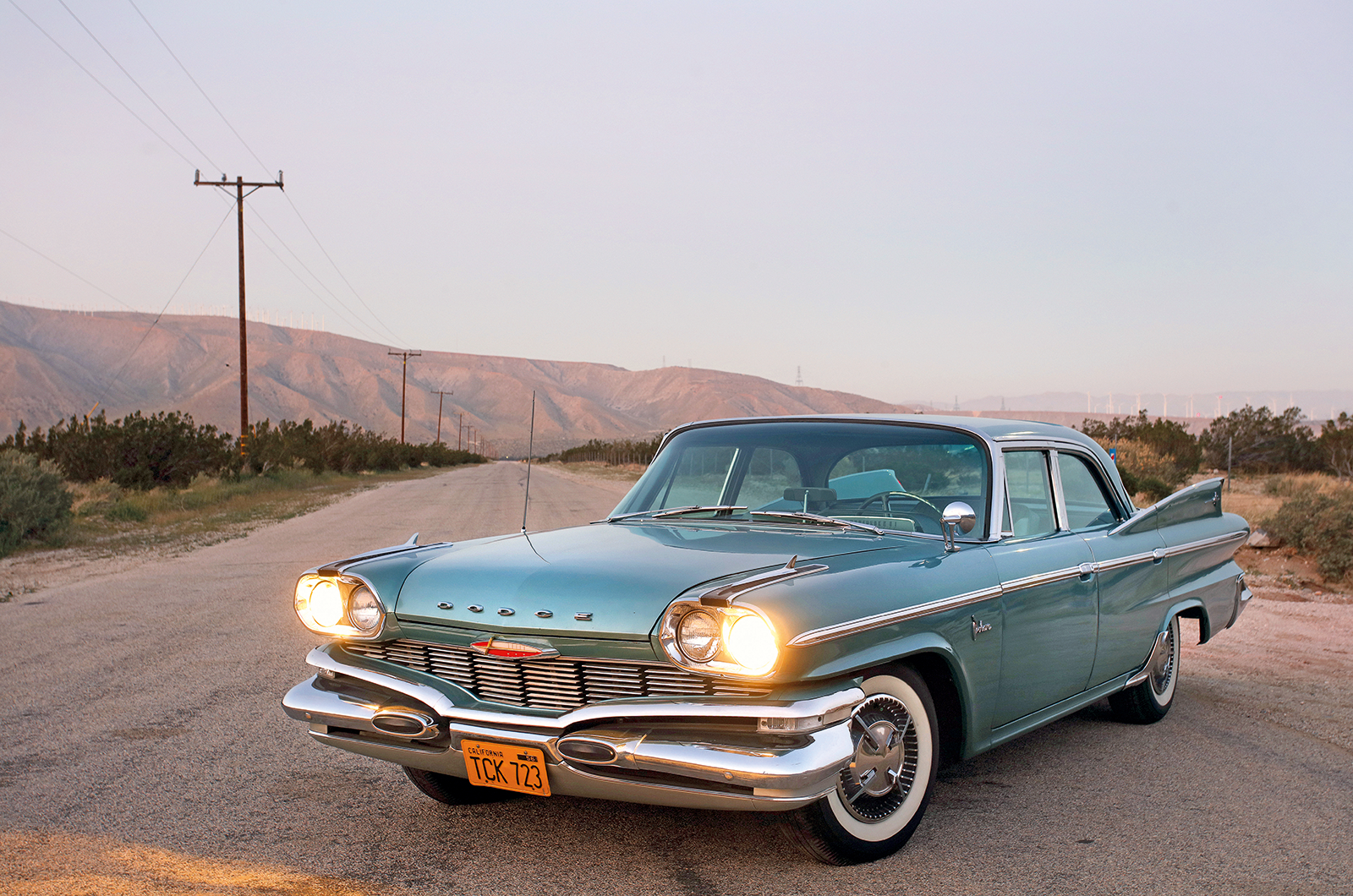
The weighty and extravagant bumpers were slimmed down for the 1961 model year, reducing production costs

It’s a car that oozes romance and glamour.

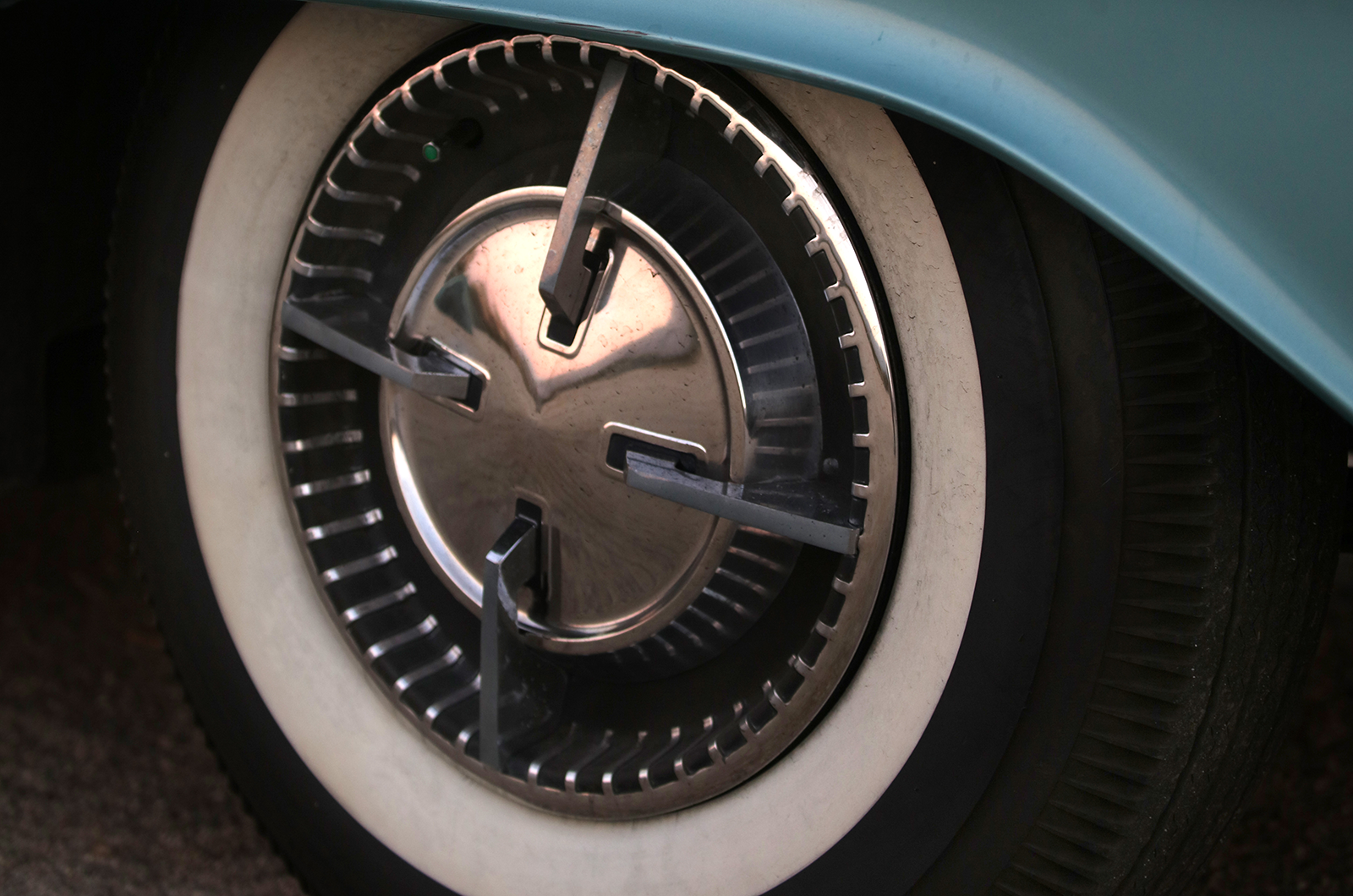
Chris Menrad’s example is dripping with chrome everywhere you look, from the expensive and complex three-tier front bumper to the headlight housings and the windscreen surround.

All of it is in remarkable condition, as is the aquamarine paint, slightly dulled over the decades but straight and honest – the mark of a car that’s been cosseted its entire life.

“It belonged to a spinster named Katherine Levy – the proverbial little old lady you always hear about,” explains Menrad.

“She lived in Seattle and was a secretary at Merrill Lynch stockbrokers.”

Classic & Sports Car – Ex marks the spot: driving the Dodge Polara

Chris Menrad could not resist the Polara once he’d laid eyes on it

“She lived in a neighbourhood by the lakes, right by downtown, so it was easier to take the bus to the office,” he continues.

“She bought it for cash and it was the only car she ever owned.

“Around 25 years ago she just left it in her garage. Everyone tried to buy it, but she never wanted to sell. 

“And then she died and the estate agent said it was the only thing of value she had.”

By the time Menrad was able to buy the car, striking a deal before it was auctioned in Indian Canyons, it had covered just 29,000 miles and was in remarkably original condition, down to the light discolouration caused by Ms Levy’s beehive hairdo brushing the headlining.

Classic & Sports Car – Ex marks the spot: driving the Dodge Polara

The Dodge was in surprisingly original condition when Menrad acquired it, both inside and out

The interior had been protected by thick, yellowing plastic; the original tyres barely held air.

“The Polara is one of those Holy Grail cars for me: I just knew I had to have it,” he admits.

Menrad quickly discovered that more work needed to be done after the car let him down on a trip up the west coast, despite a recent rebuild: “A number of components had to be replaced, from plug wires to suspension.

“Some paintwork was also done, but I tried to preserve as much of the original finish as I could.

“We had to find about five different shades of teal because it’s all faded in different ways.

“It isn’t as simple as just picking the colour – you have to match each panel and blend. It isn’t perfect but I’m happy with it.”

Classic & Sports Car – Ex marks the spot: driving the Dodge Polara

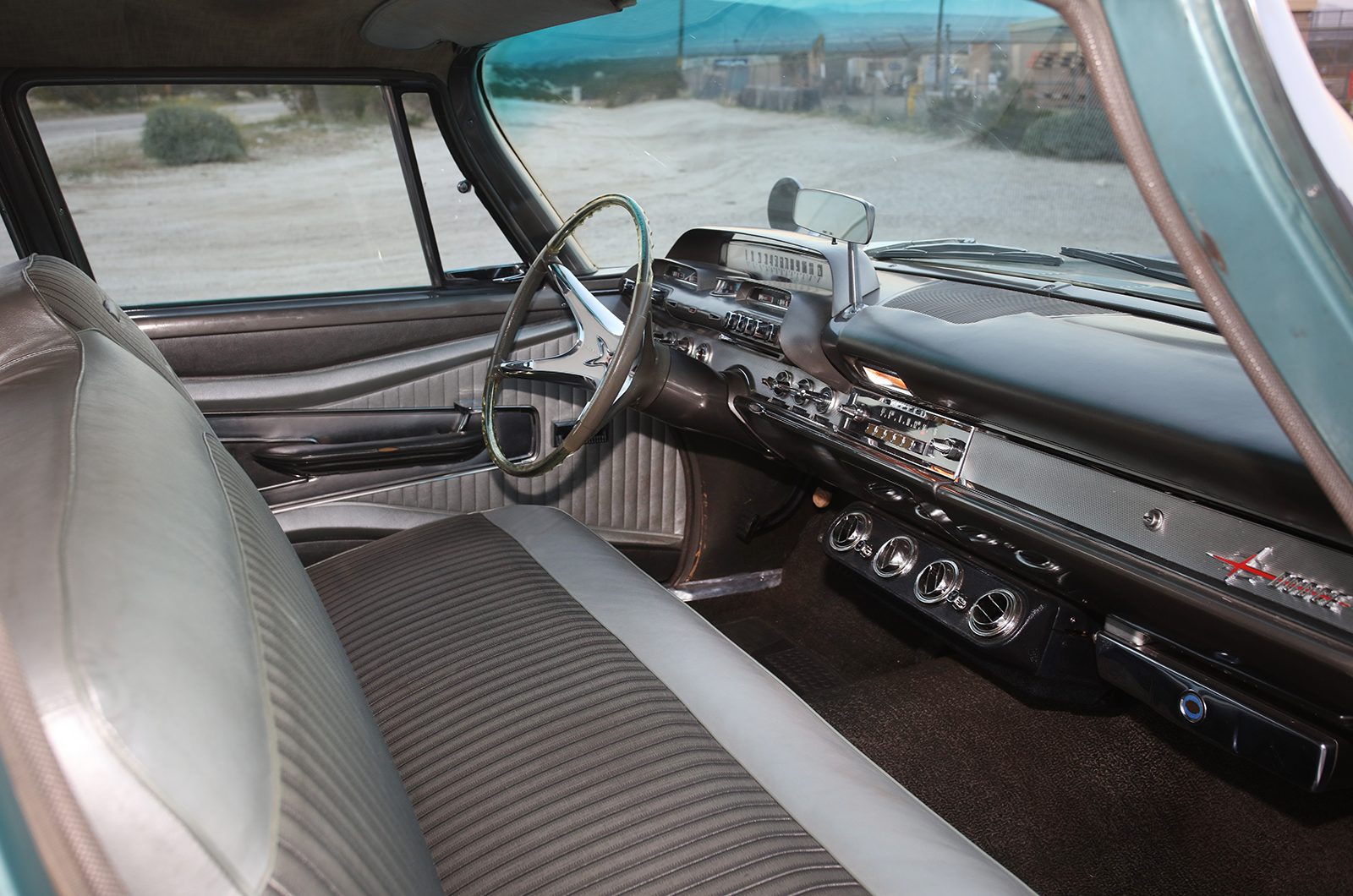
There’s lots to take in inside the Dodge Polara

The interior of the Dodge Polara takes your breath away, in terms of both condition and styling.

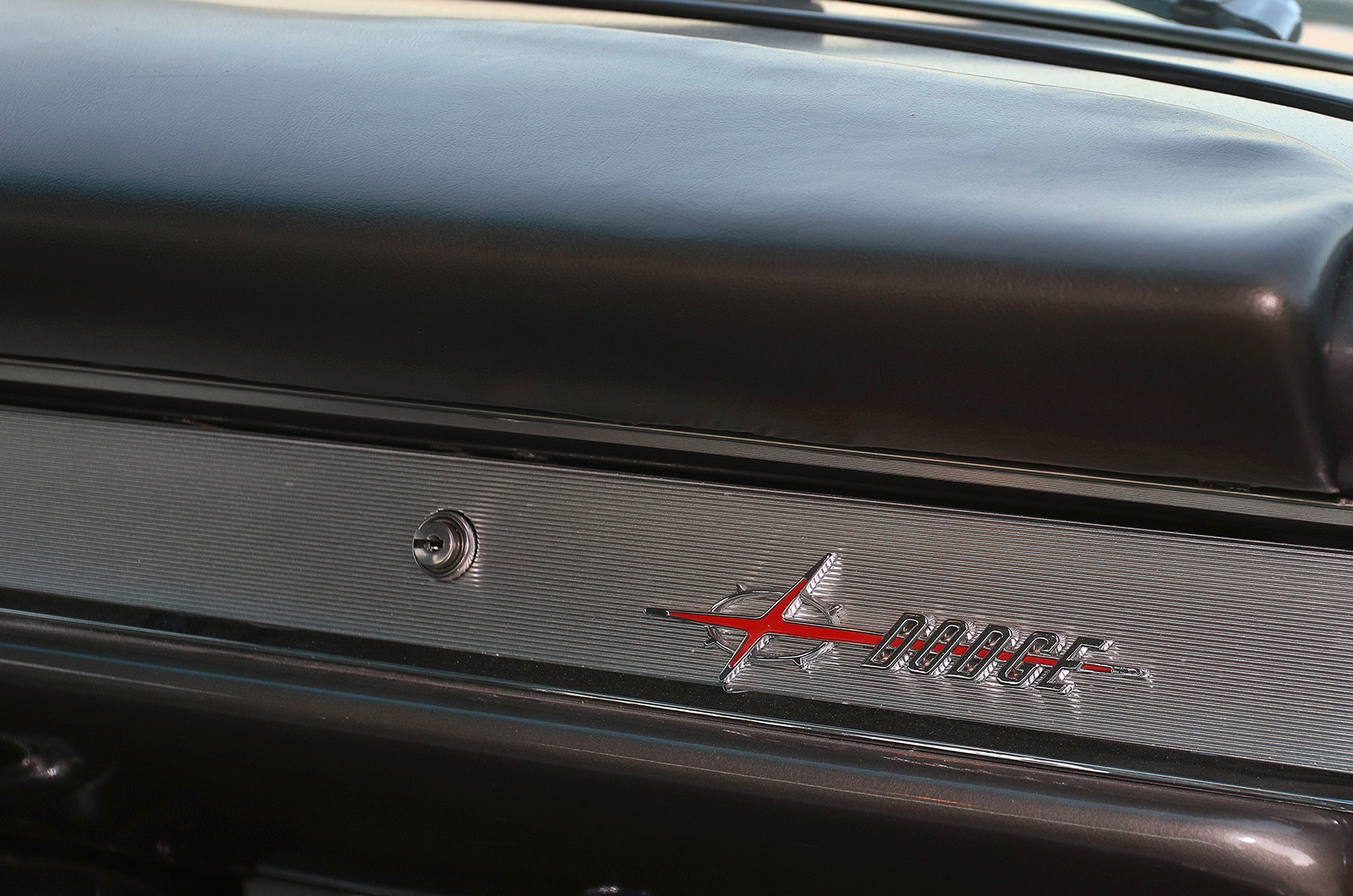
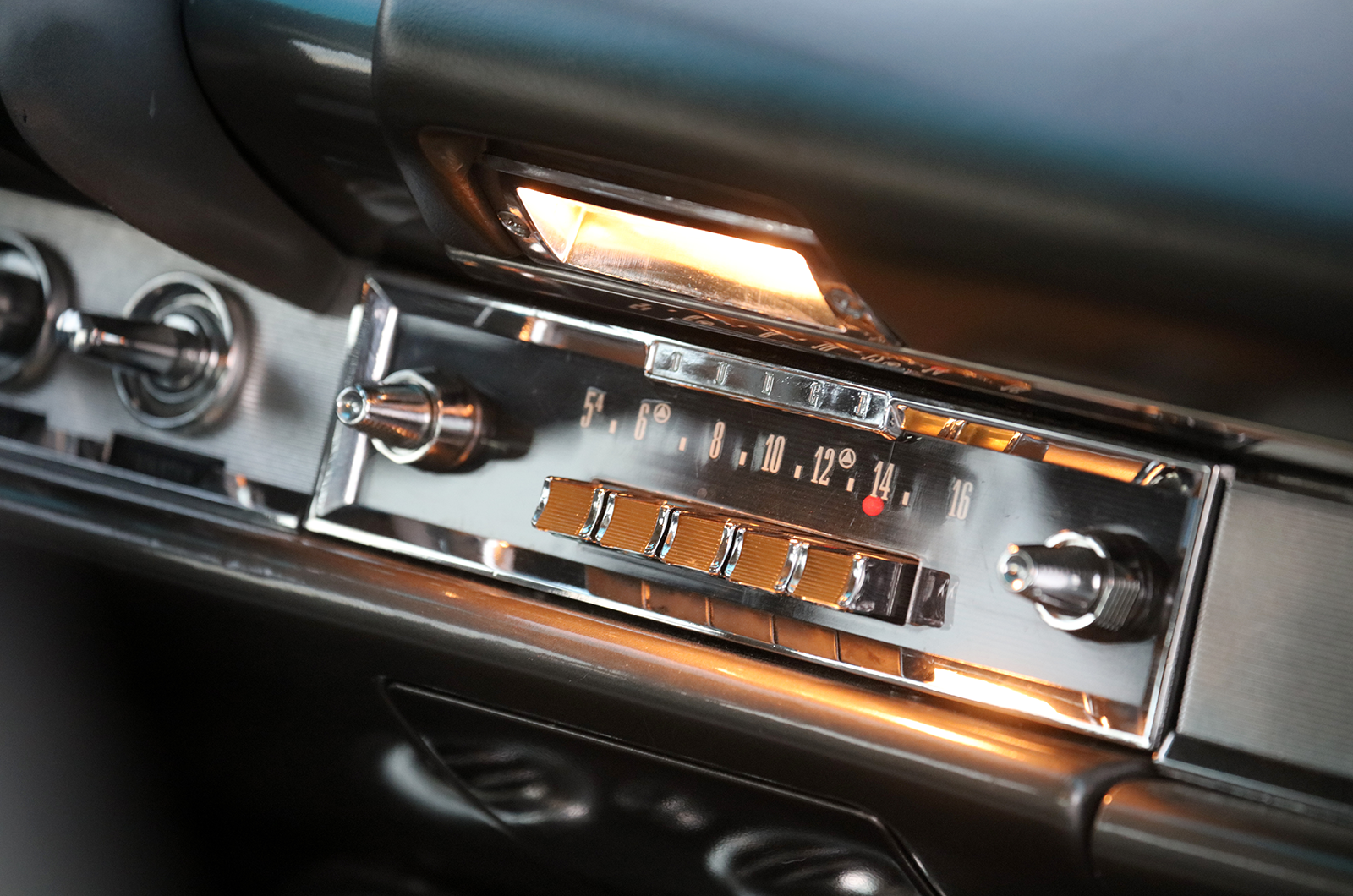
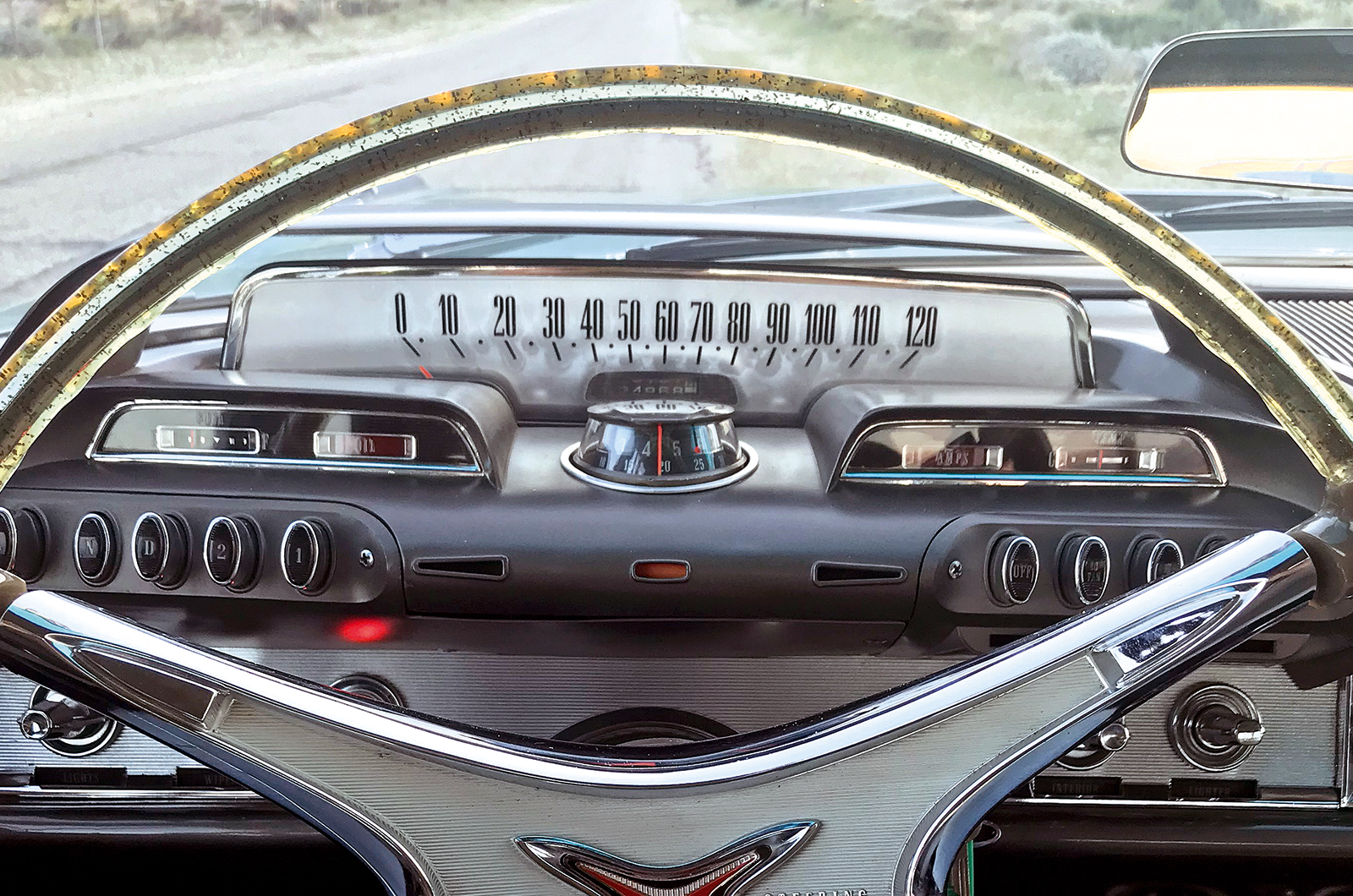
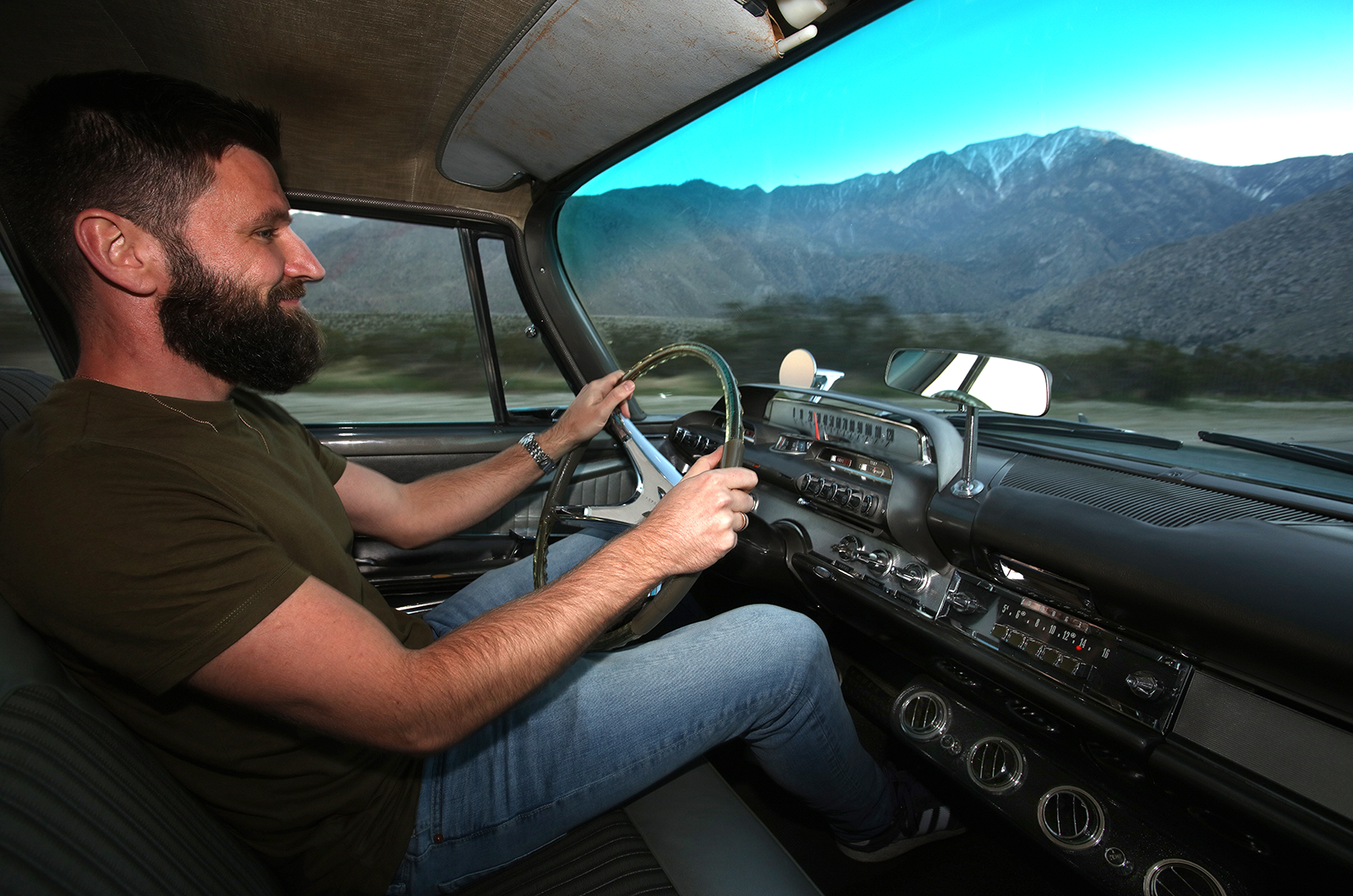
The dashboard is a multi-tiered affair finished in body colour and brushed aluminium, with a forest of instrument pods and buttons rising from every level.

A bridge of metal flies over the strip speedometer, itself made from chrome-trimmed translucent glass lit from within and flanked by the warm red glow of the handbrake warning light like something out of Buck Rogers’ spaceship.

This steering wheel was an optional extra on the Dodge Matador, but standard fitment on the Polara – though to describe it in those terms does it a disservice.

Classic & Sports Car – Ex marks the spot: driving the Dodge Polara

The dished steering wheel shape reflects the metres of chrome bumper out front on the nose, accompanied by immaculately presented instruments

The steering wheel is truly beautiful, with clear cast sections set with flakes of glitter, as well as a bold, X-shaped centre section that echoes the outline of the Dodge’s front bumper.

However, the crowning glory of the Polara’s space-age dashboard is the fascinating clock, which is formed of two central revolving cylinders sitting behind glass, with a small round second hand that orbits like a planet with each tick.

“When I bought the car it didn’t come with a clock, but I was so enamoured with it that I spent a fortune,” concedes Menrad, who has a keen eye for design elements of the period.

Classic & Sports Car – Ex marks the spot: driving the Dodge Polara

The ultra-rare clock is the centrepiece of the interior in every way

“It cost me $1000. They barely even exist, but I found a boxed one at a small Mopar place in Atlanta, Georgia.

“It’s got a little bit of damage on the top so we believe it may have been returned by a customer in the ’60s, and when it gets cold it stops; I’m probably going to have to rebuild it.”

“Sometimes they go for years and years, other times they don’t,” he adds, as the planetary second hand again hangs up and for a moment freezes time.

“It was expensive, but it’s worth it to me – I’ve never seen another. It was only fitted to this model, so was available for just two years.”

Completely understandable, we think, and it is this attention to detail that contributes to the very special overall finish.

Classic & Sports Car – Ex marks the spot: driving the Dodge Polara

The addition of the clock was the icing on the cake for this classic Dodge’s interior

At the point Katherine Levy walked into her local Dodge dealership she would have been met by radical changes compared with even a year earlier.

Save the choice of engines, almost nothing was carried over from the Coronet, Royal, Sierra and Custom that came before, and even Plymouth had been banished to its own showrooms.

Shimmering behind glass and under lights were three all-new models in the Dart, Matador and top-of-the-line Polara.

Though the Polara bore a resemblance to the outgoing Dodges of the previous year, and was in many ways a development of the Forward Look style that had caused such waves in 1957, it was completely new underneath.

Classic & Sports Car – Ex marks the spot: driving the Dodge Polara

‘Hit the throttle and it picks up well, with a sense of power overcoming inertia as the prow rises gently towards the horizon’

Dodge abandoned perimeter-frame chassis altogether, with the new line-up featuring unitary body construction.

Or, as the ad people put it: ‘Body and frame are united in a one-piece “fortress of steel”,’ adding to a cutting-edge image burnished by adopting torsion-bar front suspension.

Menrad’s superb example was specified with all the mod-cons you could imagine, from all-round power windows to air conditioning – luxuries that would have been unimaginable in most British saloons of the same era.

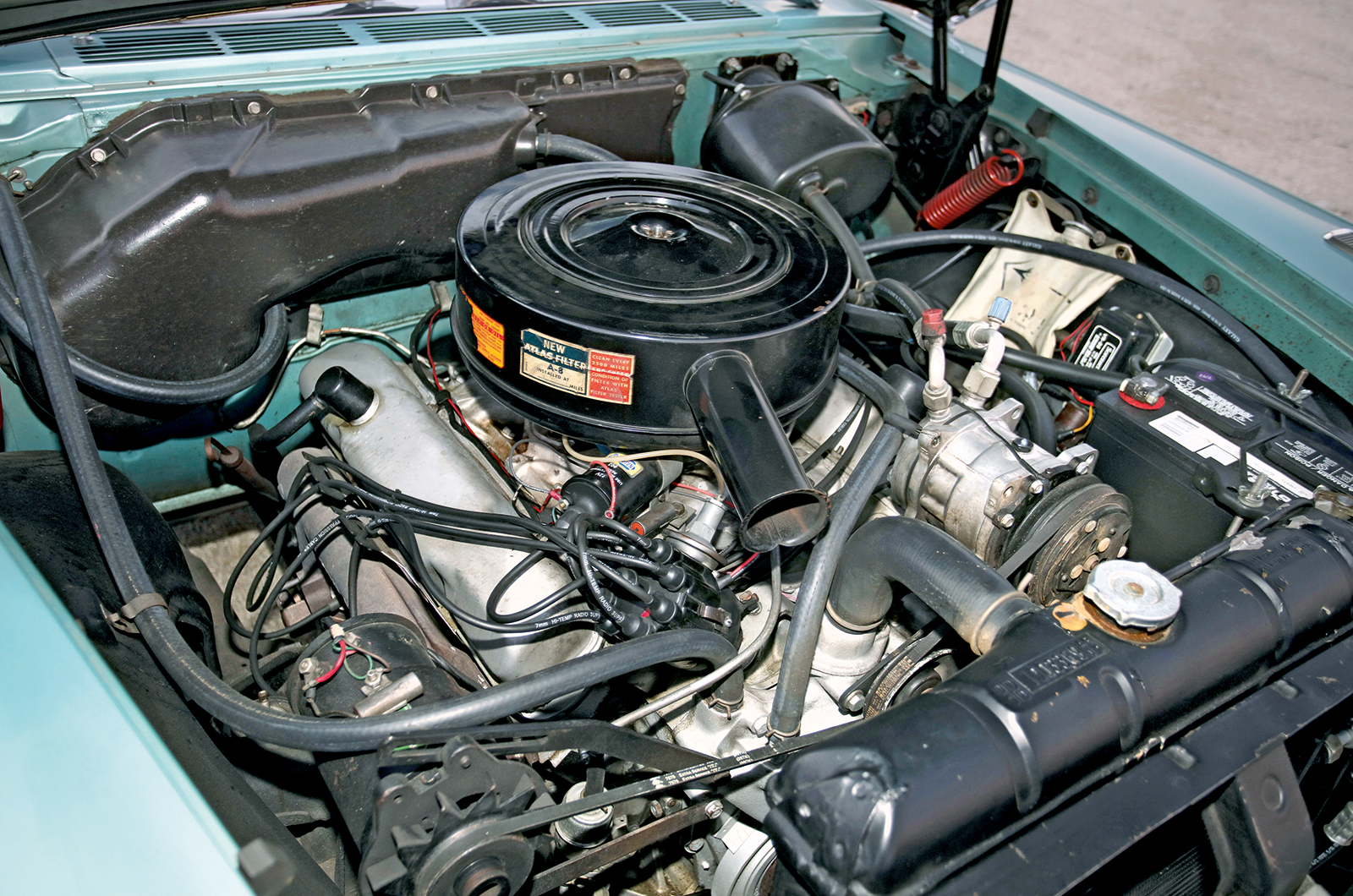
At its heart was a 383cu in V8 mated to a three-speed TorqueFlite gearbox, operated via a series of dashboard-mounted buttons.

Classic & Sports Car – Ex marks the spot: driving the Dodge Polara

The Polara was at the top of Dodge’s model range, above the Dart and the Matador

Simply select Drive by depressing the corresponding button and the big Dodge wafts forward with an ease unique to big American ‘eights’.

The all-new-for-1958 big-block Chrysler B engines, with wedge-shaped combustion chambers, could be specified in racy ‘Ram Induction’ format in the Polara, but even here in entry-level trim it’s something of a bruiser, putting out a healthy 325bhp – more than enough to imbue the big Yank with sprightly performance and a fruity exhaust note.

In later life the B engine served as a truck motor, but powering a superyacht would perhaps feel more appropriate: spinning the big power-assisted wheel feels like trimming the bow of a ship rather than a car.

Classic & Sports Car – Ex marks the spot: driving the Dodge Polara

The 6.3-litre V8 offers effortless pace

Hit the throttle and the Dodge picks up well, with a sense of power overcoming inertia as the prow rises gently towards the horizon.

Incredibly, despite its striking looks and impressive performance, Polaras made up just 16,000 of more than 350,000 Dodges that left showrooms in 1960; the smaller Dart accounted for almost nine out of every 10 sales.

Things were little better when its successor arrived in 1961, a more subdued machine with barely more than vestigial fins along its rear wings, as well as controversial rear lights that divided opinion and which contributed to a 50% crash in sales.

Classic & Sports Car – Ex marks the spot: driving the Dodge Polara

A wide two-tone front bench, a relaxed driving position and a big glasshouse: the archetypal classic Americana setting

The following year the Exner era came to a shuddering halt as the newly designed ’62 cars bombed with the public.

Though ‘Ex’ took the bullet, replaced by slab-sided Continental mastermind Elwood Engel, the blame lay elsewhere.

Exner had suffered a heart attack in 1956, halfway through styling the ’61 model year, and while in recovery his ’62 designs were butchered by colleagues, shrunk to fit a smaller platform in response to a downsizing rumour from GM that proved nothing more than hot air.

All great fashion trends eventually enjoy a renaissance, and while the Polara was unloved for a time it now stands as one of the swansongs of the golden age of US car design – and its star is rising.

Classic & Sports Car – Ex marks the spot: driving the Dodge Polara

There’s a definite timeless quality about the Polara’s design

Virgil Exner’s work couldn’t be more of its time, and yet there’s something undeniably timeless about it, too.

It’s kitsch and quirky and, to my mind, it is completely irresistible.

After a few hours spent carving through the desert, cruising along dust-swept roads with no markings and even less traffic, you’re left in no doubt whatsoever that the Dodge Polara was as much a statement piece in period as it is today.

Terry Pratchett wrote of night pouring over the desert, of stars drilled down out of the sky and a bottomless infinity that men have a desperate urge to fill with something higher.

Classic & Sports Car – Ex marks the spot: driving the Dodge Polara

This rare classic Dodge feels like a combination of a bygone age and one yet to come

As we drive deeper into the wilderness, the last vestiges of sunlight dipping beneath the San Jacinto Mountains to the west, his words roll around in my mind. 

Out here, where the mid-century bungalows and exotic trees of Palm Springs have long since given way to cacti and tumbleweed, and road signs provide the only anchor to tie us to a time and place, it feels almost as if you might drift away into Pratchett’s purple night.

What car would be better to do it in than this gorgeous Dodge Polara?

It is part spaceship, part time machine, with its otherworldly luminescent dashboard and a sea of translucent coloured plastics and twinkling lights.

At times it feels like being in 1960; at others, it still feels like the future.

Images: James Mann


Factfile

Dodge Polara

  • Sold/number built 1960/c16,000
  • Construction unitary body with subframes front and rear
  • Engine all-iron, ohv 6277cc ‘Wedge’ V8 with four-barrel Holley carburettor
  • Max power 325bhp @ 4600rpm
  • Max torque 420lb ft @ 2400rpm
  • Transmission three-speed TorqueFlite automatic, RWD
  • Suspension at front wishbones, torsion bars rear live-axle, semi-elliptic asymmetric leaf springs; telescopic dampers f/r
  • Steering power-assisted worm and sector
  • Brakes drums
  • Length 17ft 10in (5436mm)
  • Width 6ft 6in (1981mm)
  • Height 4ft 6in (1379mm)
  • Wheelbase 10ft 2in (3099mm)
  • Weight 3875lb (1758kg)
  • 0-60mph 8.8 secs
  • Top speed 130mph
  • Mpg 11.8
  • Price new $3141

We hope you enjoyed reading. Please click the ‘Follow’ button for more super stories from Classic & Sports Car.​​​​​​