Jaguar XJ220 vs JaguarSport XJR-15: thunder cats

| 3 Feb 2026
Classic & Sports Car – Jaguar XJ220 vs JaguarSport XJR-15: thunder cats
What’s the price of indifference? In the case of TWR’s Tom Walkinshaw, it was the development of an alternative to Jaguar’s XJ220, the prototype of which he’d just surveyed at the 1988 British Motor Show.

Browns Lane promised a V12, all-wheel-drive and Ferrari F40-rivalling performance, but Walkinshaw was nonplussed and told designer Peter Stevens that it “left a place for something more spectacular”.

True to his word, that something emerged two years later: the JaguarSport XJR-15, which in many ways fulfilled the promises the XJ220 failed to keep.

Classic & Sports Car – Jaguar XJ220 vs JaguarSport XJR-15: thunder cats
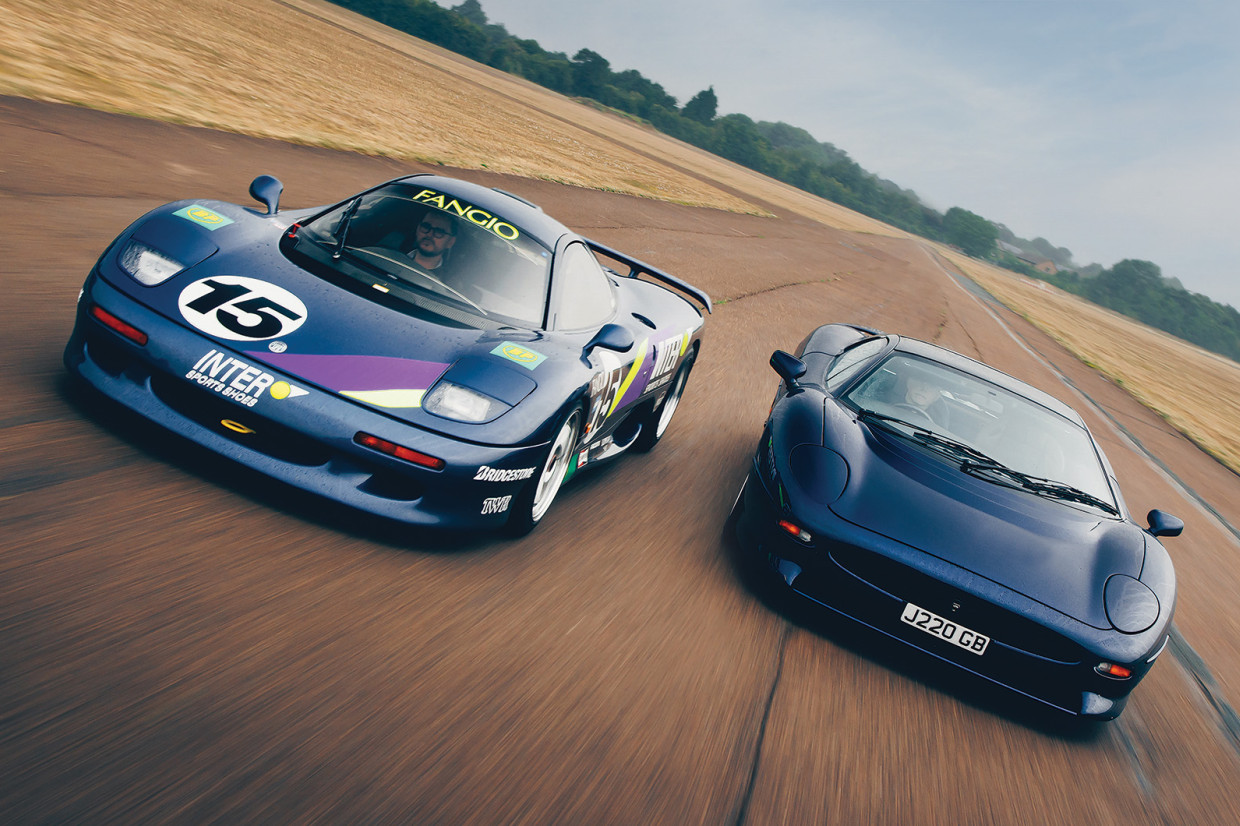
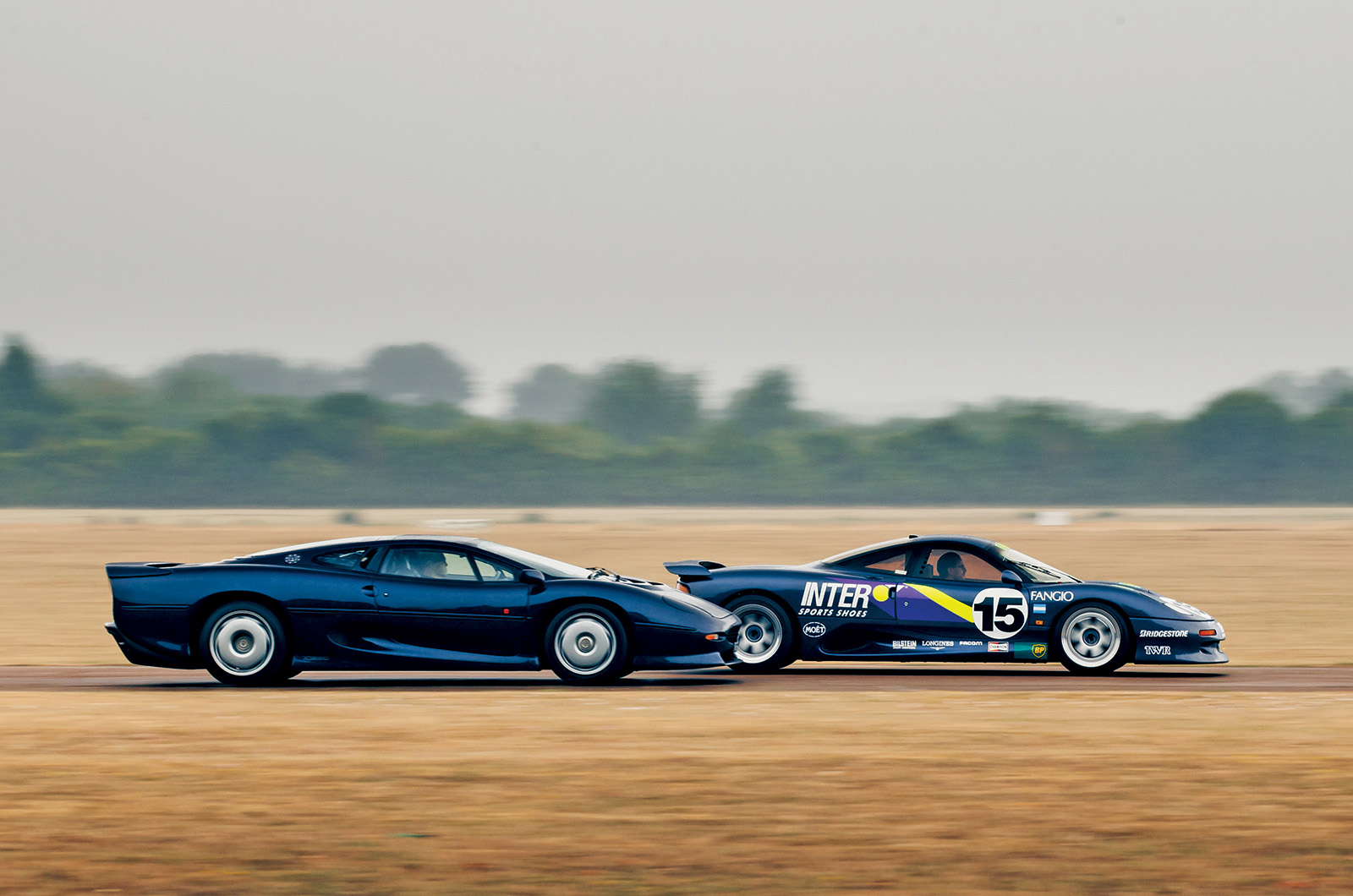
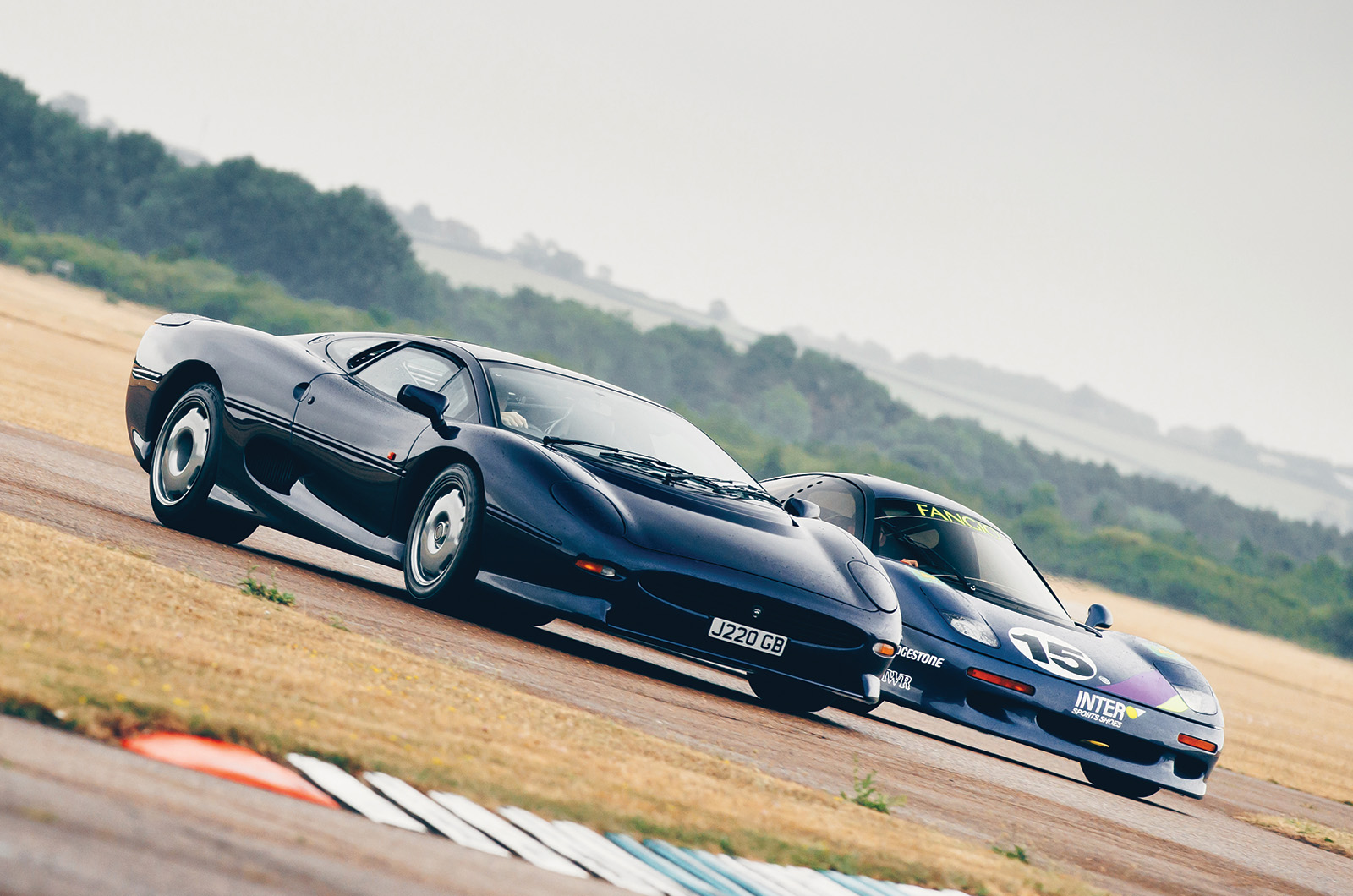
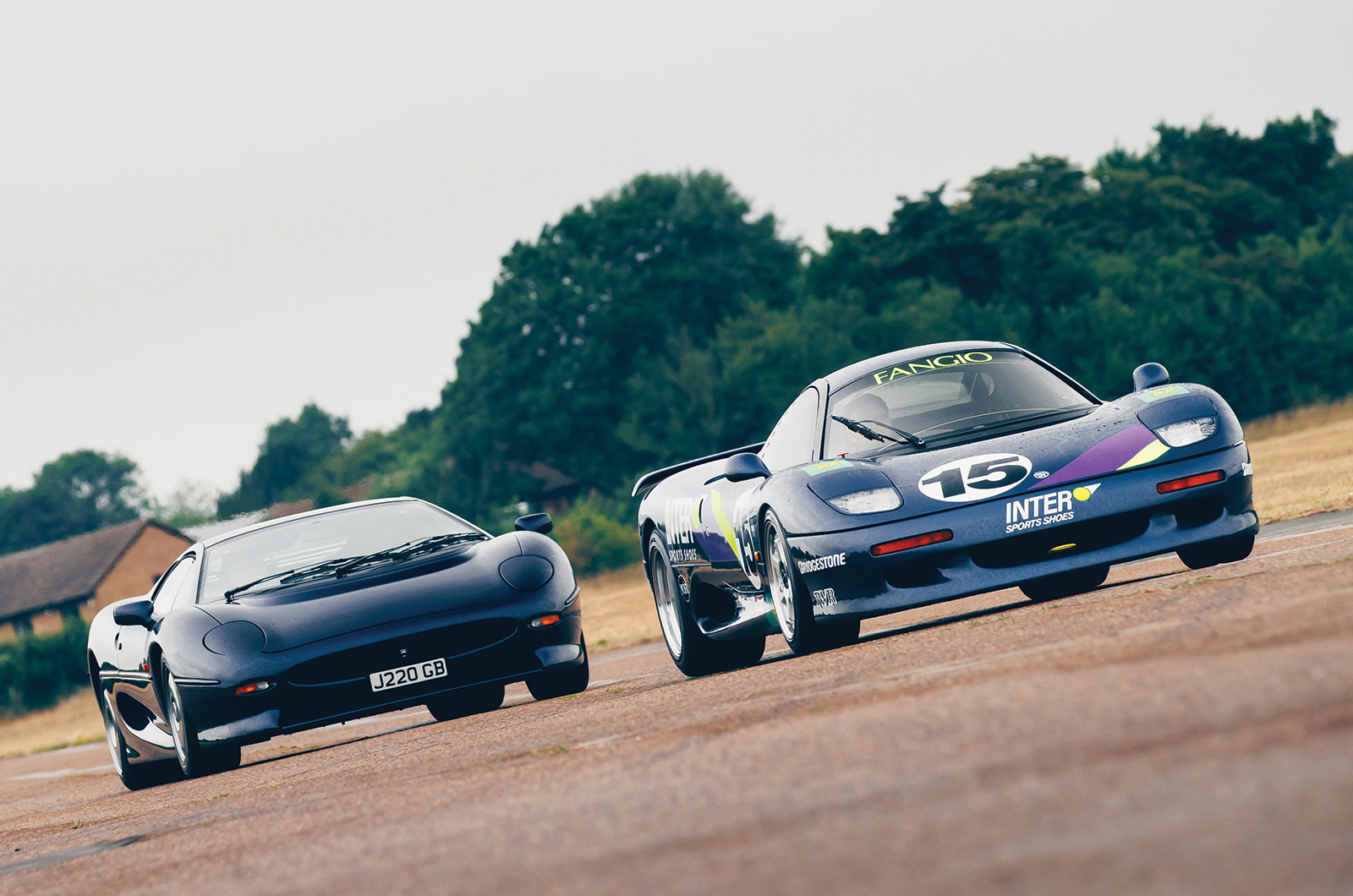
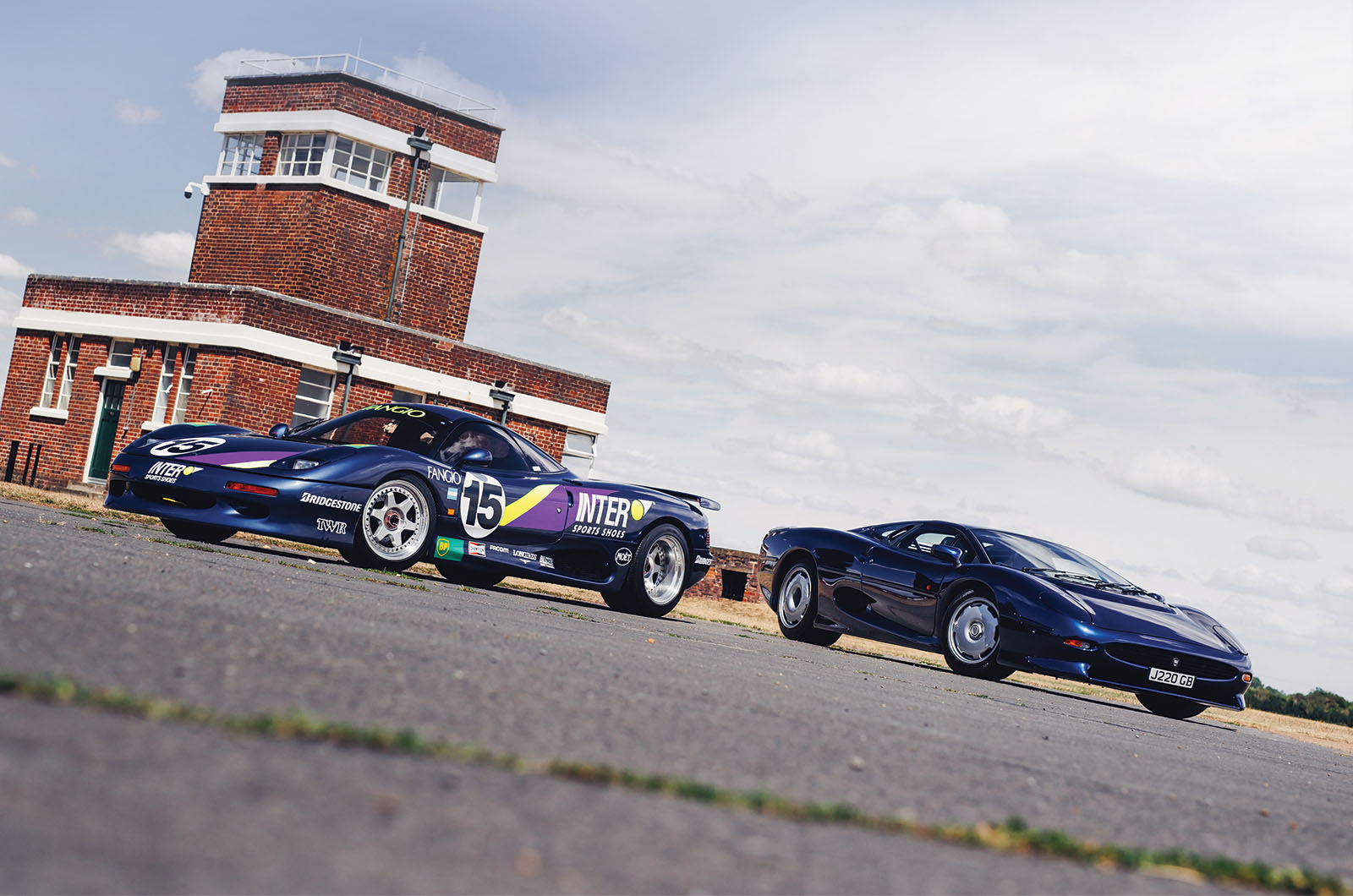
The JaguarSport XJR-15 racer (right) plays with the XJ220 super-GT on the track

Bringing substance to this intriguing tale of British supercar divergence 36 years on, we’ve brought together the two protagonists, albeit with a caveat.

The XJR-15 became better known as a production racing car, whereas the XJ220 – despite a surprise class win at Le Mans in ’93, after which it was disqualified on a technicality – was only ever a roadgoing super-GT.

As such, ‘our’ JaguarSport XJR-15 is in original, pared-back race specification, and the XJ220 remains the 200mph-plus mile-muncher on which Jaguar bet the farm – nearly losing it in the process.

Classic & Sports Car – Jaguar XJ220 vs JaguarSport XJR-15: thunder cats
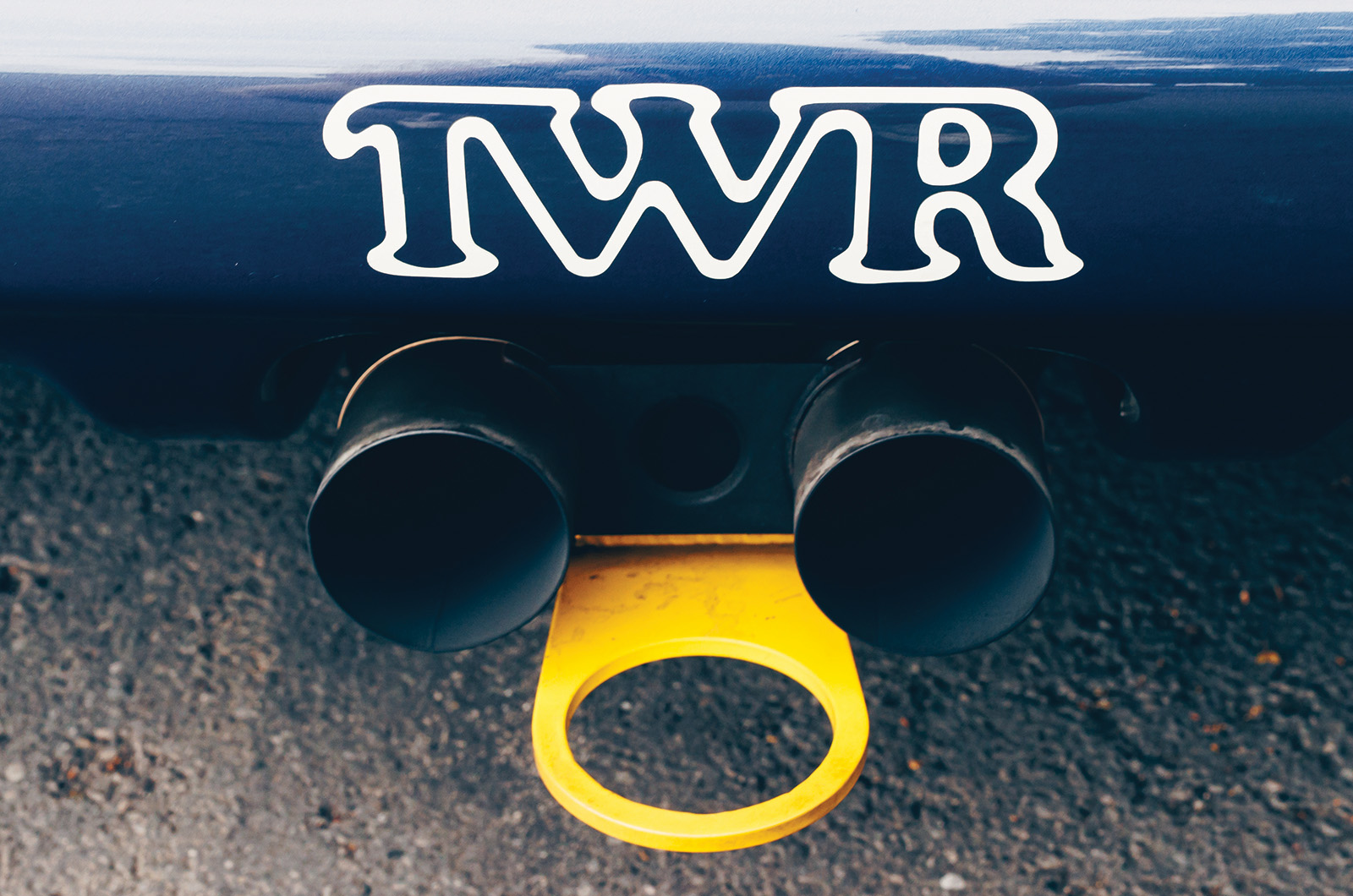
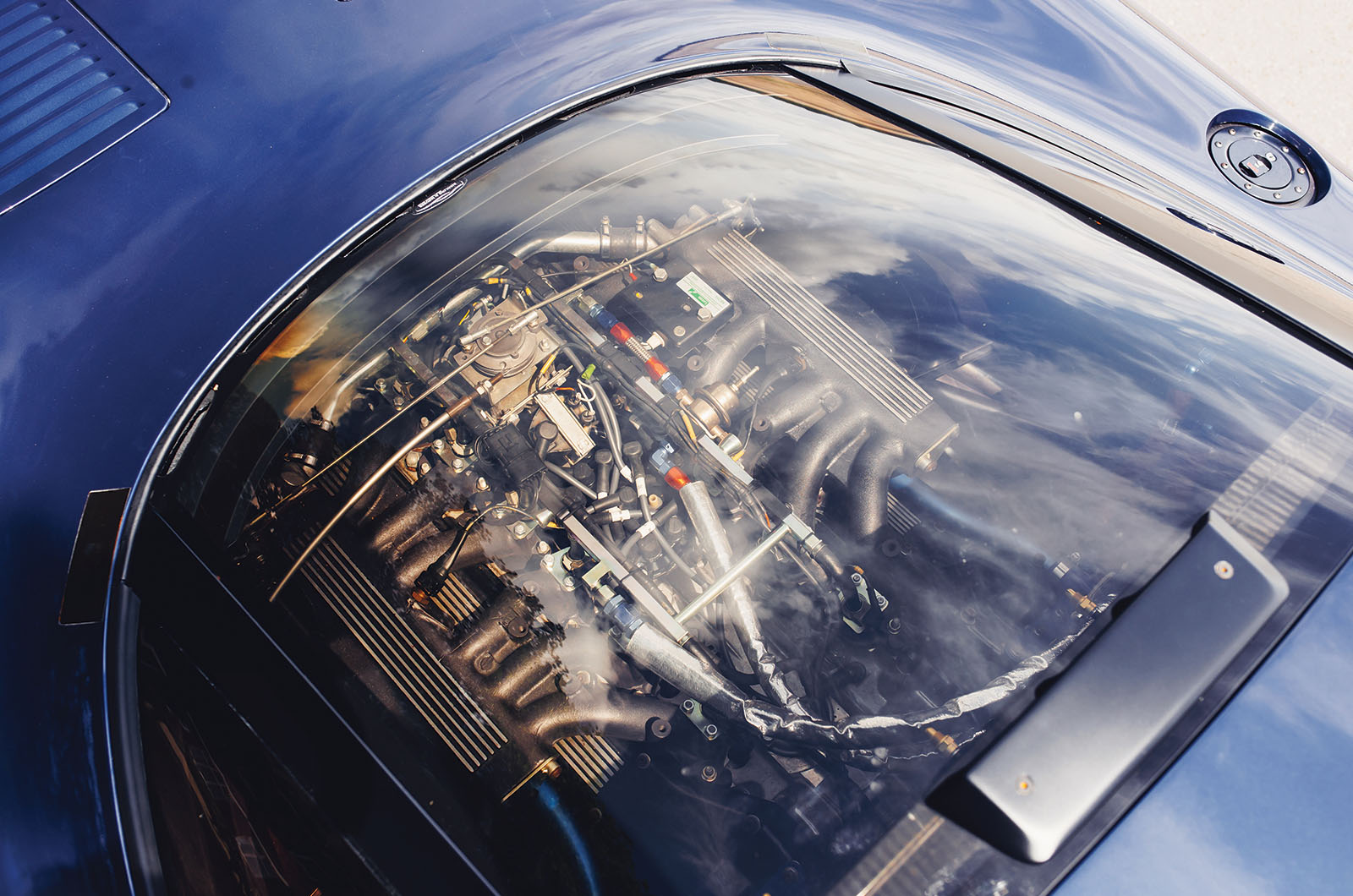
The JaguarSport XJR-15 has a 6-litre V12 and twin tailpipes

Back in the boom-time mid-1980s, when Jaguar’s Jim Randle sketched out a proposal for a car that would outperform an F40 yet have the driveability of a Porsche 959, there was zero risk for the company – because then it knew nothing of Randle’s plans.

Only a group of 12 employees, mainly engineers and designers, were party to the then unnamed car’s early gestation.

A top speed in excess of 200mph, 0-100mph in 8 secs and 500bhp were all essential to rival the Italians and Germans, but the team was also committed to a design that was unashamedly Jaguar-like to guarantee board-level buy-in when the time was right.

Such a project would have looked audacious even with Jaguar’s support, but, working as a skunkworks group, it became a voluntary labour of love, with staff and suppliers giving up their time in the evenings and at weekends.

Classic & Sports Car – Jaguar XJ220 vs JaguarSport XJR-15: thunder cats
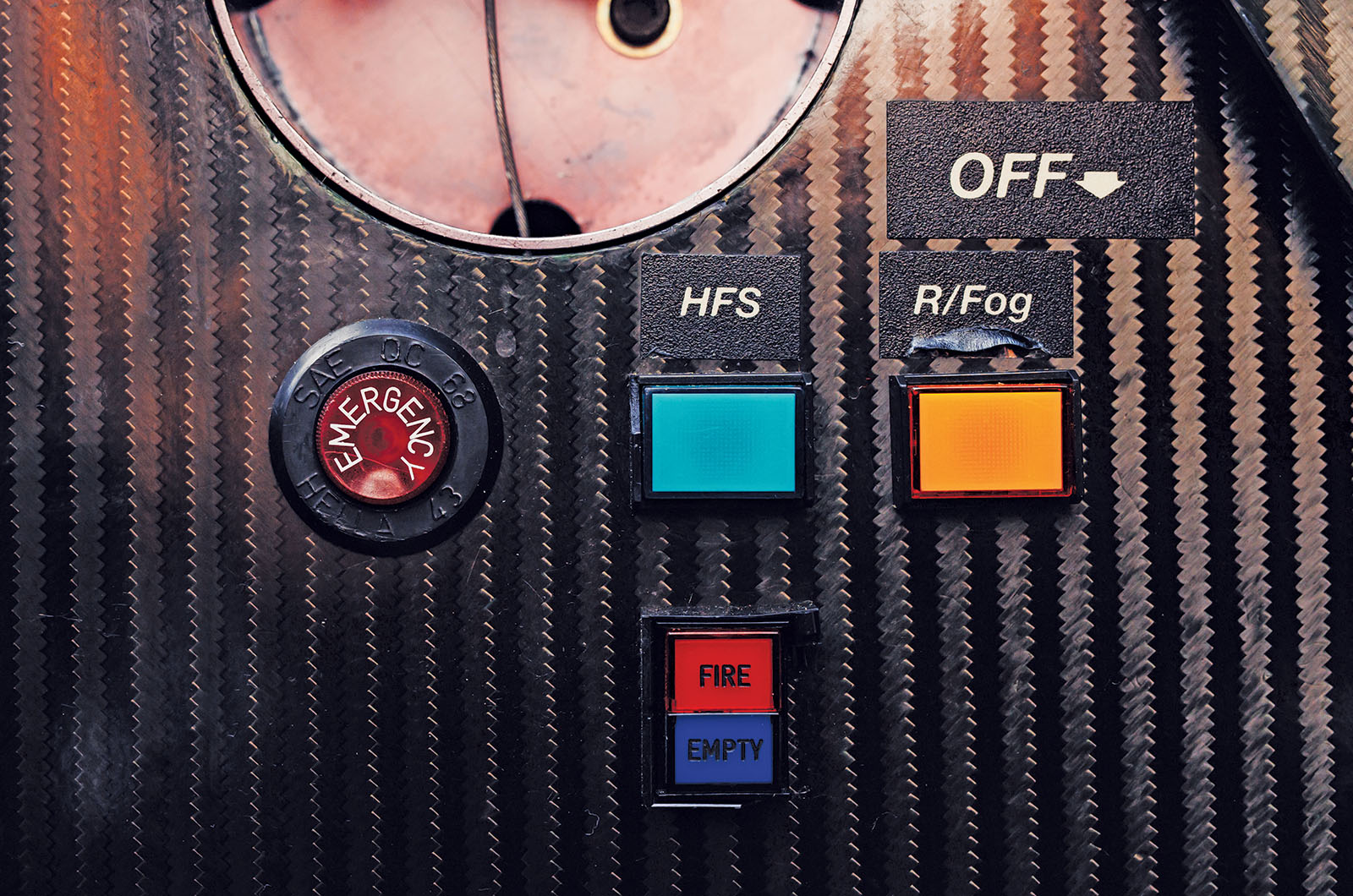
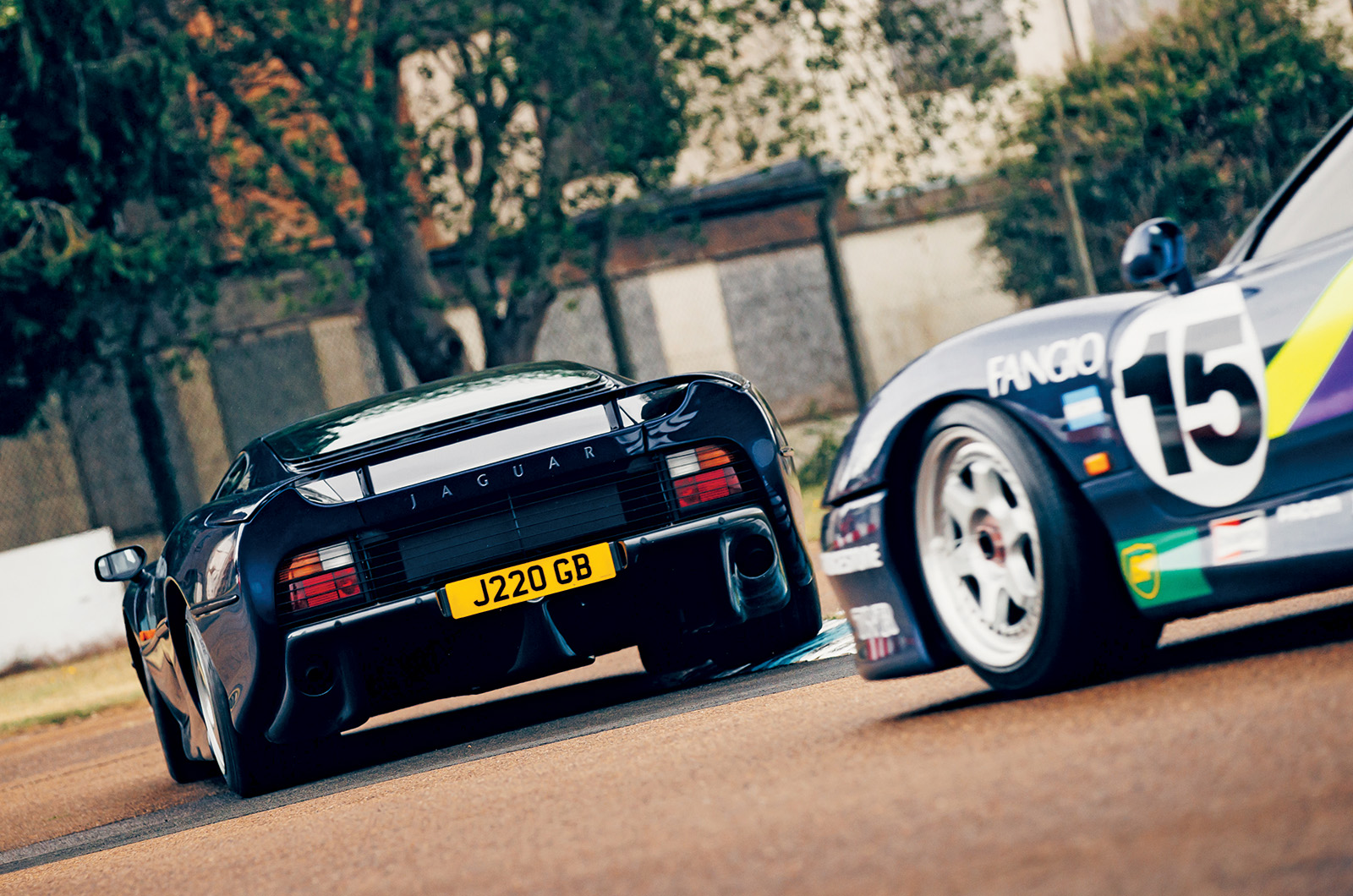
Airflow under the slippery Jaguar XJ220 aids downforce

Decisions about the XJ220’s design and powertrain, however, were never outsourced.

Two options were presented internally for the exterior design, but in the end it was Keith Helfet’s suitably dramatic shape that impressed the most, while still remaining recognisably a Jaguar.

The choice of engine was equally radical. As far back as the 1960s, Jaguar had developed four-valve heads for a competition version of its V12.

Tom Walkinshaw Racing had the option of running the 48-valve unit for Jaguar’s Group C cars it was to take to Le Mans in 1988, but opted instead for the regular 24-valve V12 – and duly won.

Classic & Sports Car – Jaguar XJ220 vs JaguarSport XJR-15: thunder cats
‘A Le Mans rep and a high-powered GT, both built by the same company, had great potential to clash in the market’

That had left Randle with five complete, 48-valve V12 engines going spare, the unit’s relatively compact dimensions and 500bhp-plus power potential making it an obvious choice for the XJ220’s mid-mounted installation.

By early 1988 the XJ220 was on Jaguar’s radar, and company chief John Egan had signed off on a display car for that year’s British Motor Show.

The XJ220’s reveal was hotly anticipated, and Jaguar was inundated with expressions of interest, even though production had not yet been confirmed.

That a wholesale change in mechanical spec barely a year later did little to dampen the XJ220’s popularity says much for Helfet’s original design. 

Classic & Sports Car – Jaguar XJ220 vs JaguarSport XJR-15: thunder cats
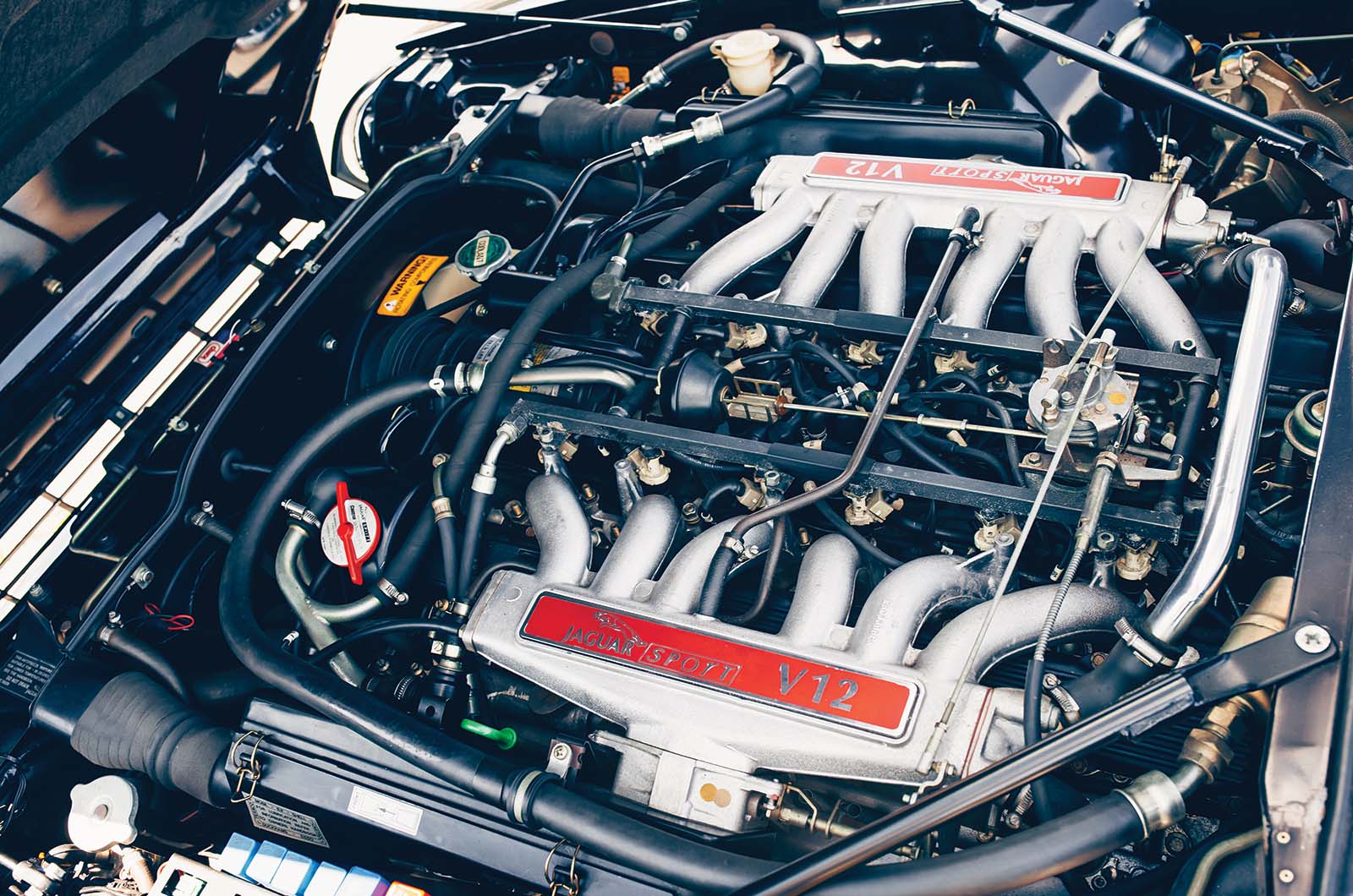
The Jaguar XJR-9’s V12 was reduced to 6 litres for the XJR-15

Hints that the V12 might be dropped emerged after work on an engineering proposal had started in the spring of 1989, led by JaguarSport’s Walkinshaw.

“It didn’t take long to establish that we couldn’t put the car into production,” the Scotsman told Autocar & Motor in August 1992. 

“It couldn’t be V12, four-wheel drive and have everything in it. The packaging was not acceptable; it wouldn’t meet roadgoing legislation or the performance parameters that were perceived for it.”

With Jaguar about to be bought out by Ford in ’89, affirmation of the XJ220’s finer details was delayed.

But once the £1.6billion deal had been confirmed in November, so too was the final specification of the XJ220 the following month.

Classic & Sports Car – Jaguar XJ220 vs JaguarSport XJR-15: thunder cats
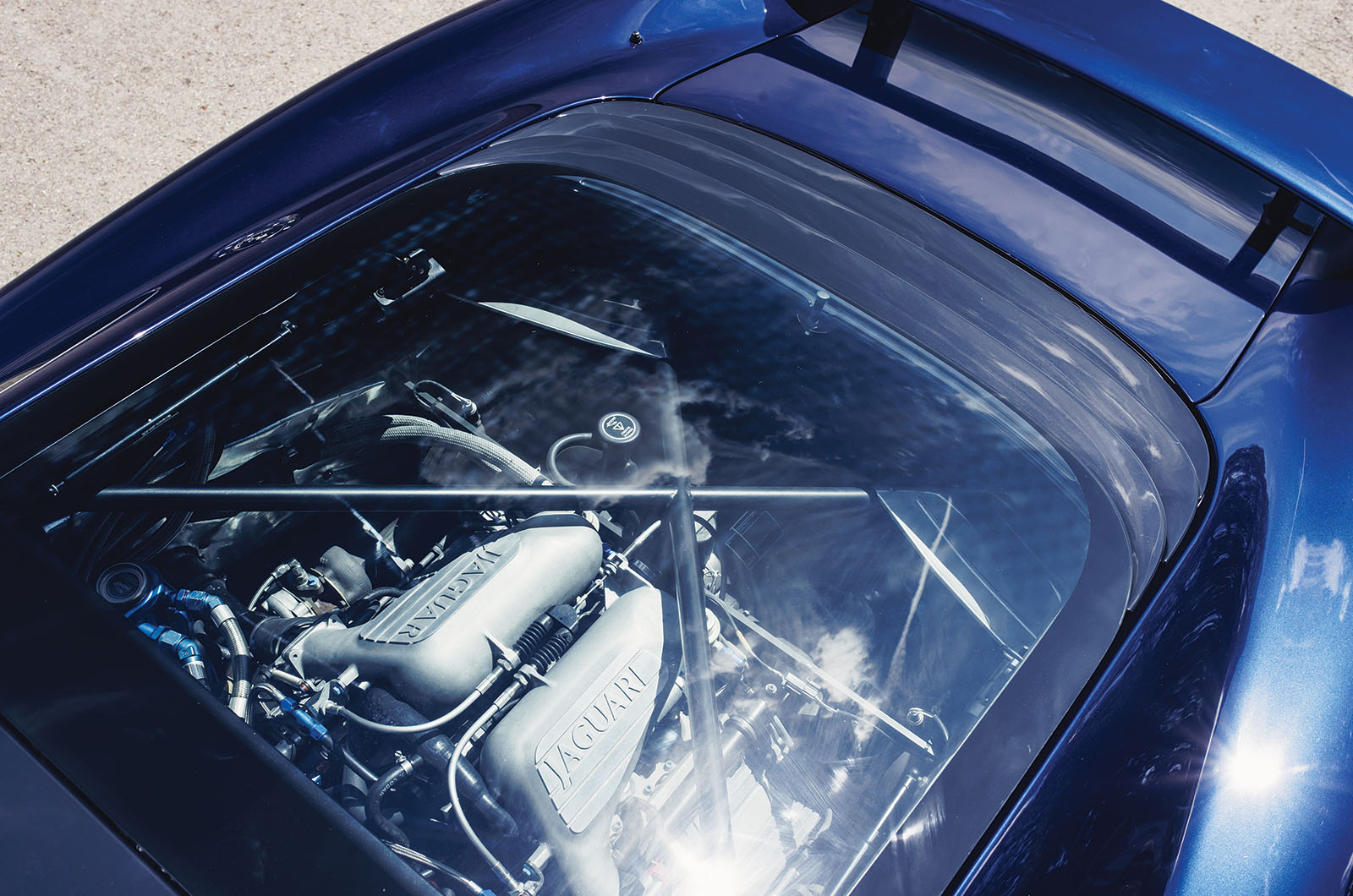
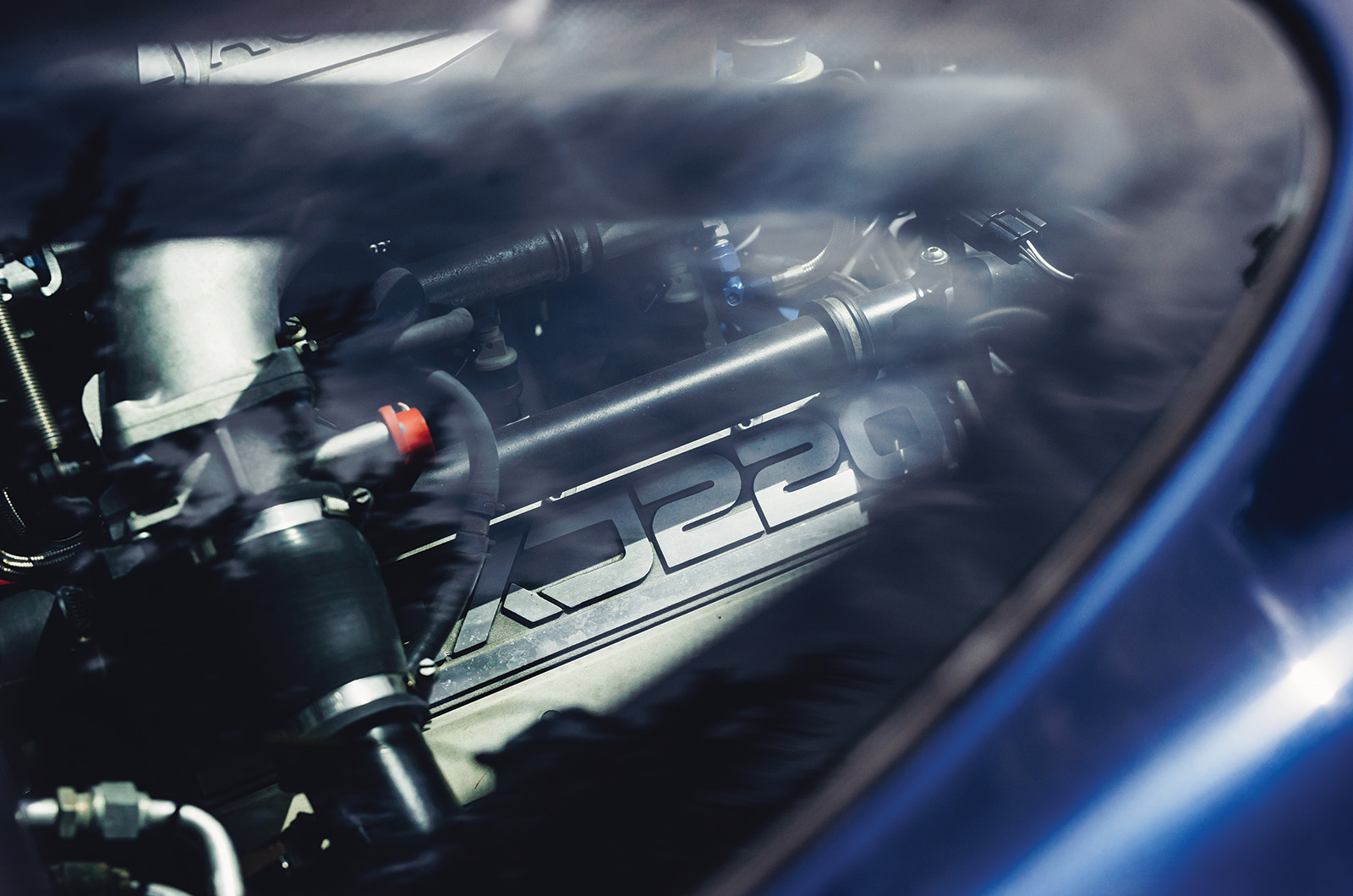
The Jaguar XJ220 ended up with a twin-turbo 3.5-litre V6

The car was now shorter, lower and lighter, but it was powered by a twin-turbo, 24-valve, 3.5-litre V6 replacing the V12 (though still with 542bhp).

Four-wheel drive, ABS, power steering and adaptive suspension were all off the menu, despite the confirmed production car’s £361,000 price-tag, inflation-linked to delivery dates that were to start in 1992.

Orders for the promised 350-car run flooded in, even though each had to be secured with a £50,000 deposit.

Interest was reinforced still further in May ’91, when a prototype was clocked at 212mph at Firestone’s Fort Stockton test track in Texas, officially making it (briefly) the world’s fastest production car.

Classic & Sports Car – Jaguar XJ220 vs JaguarSport XJR-15: thunder cats
The XJ220’s V6 makes 542bhp

None of this mattered, though, because the very people who had committed to buying their XJ220s were now caught up in a fierce implosion of global economies.

When production finally started in February 1992, deposit-holders were getting cold feet; some had been speculators out to make a fast buck, but even genuine buyers were finding it hard to stump up the balance needed to secure their cars.

In the end, Jaguar held firm and sought legal redress to prevent people from backing out – although reputationally this did the brand no favours.

In total, only 286 XJ220s were to leave JaguarSport’s Bloxham factory.

Classic & Sports Car – Jaguar XJ220 vs JaguarSport XJR-15: thunder cats
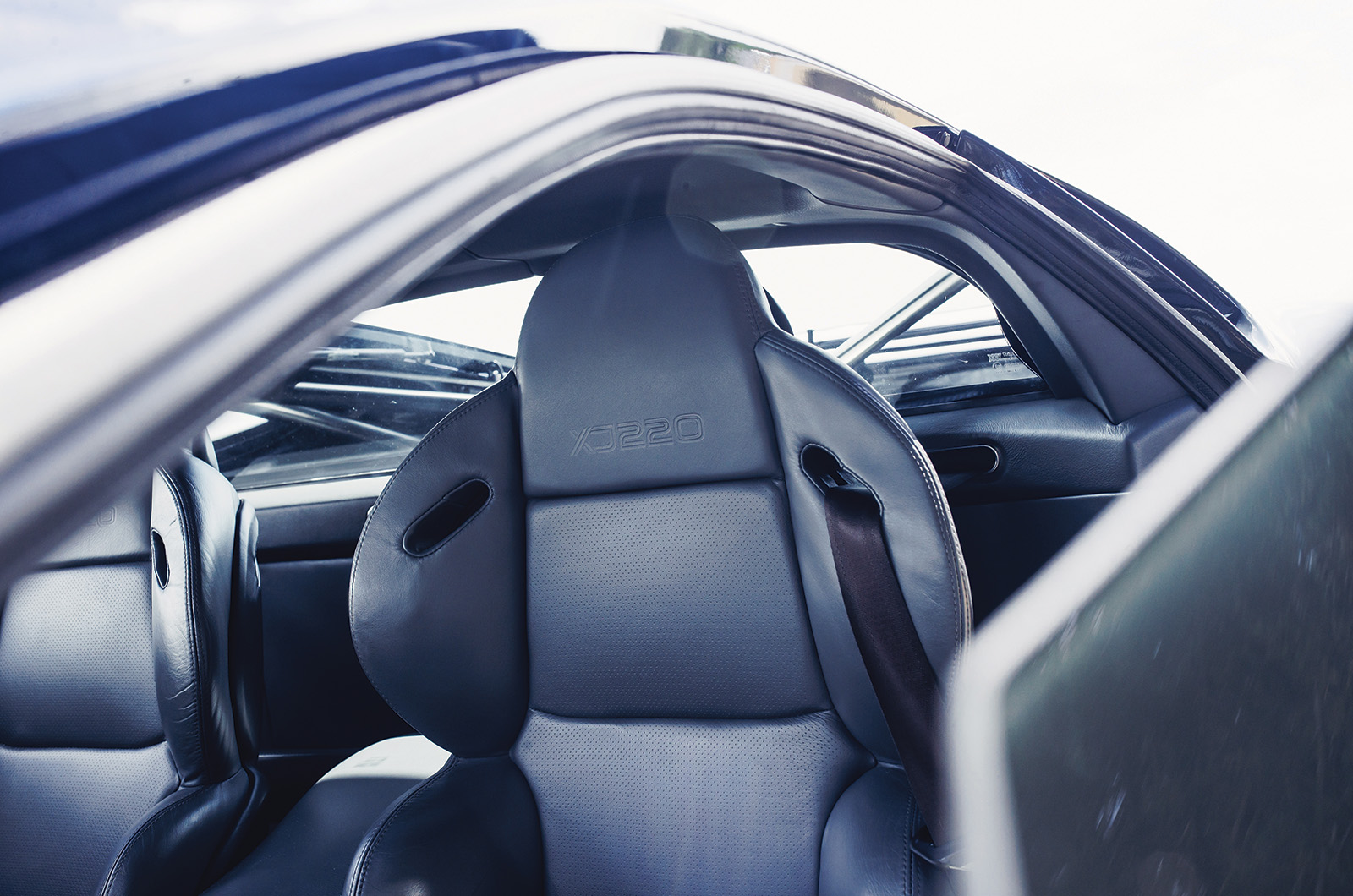
The Jaguar XJ220’s sculpted bucket seats

‘Our’ three-owner, Le Mans Blue-over-grey example, showing just over 10,000 miles from new, has been maintained by marque specialist Don Law since 2004 and benefits from an upgrade kit that includes a sports exhaust and revised suspension.

At nearly 5m long and 2.2m wide, it’s every bit as vast in the metal as its figures suggest.

There’s hardly a flat panel on Helfet’s design, which couldn’t be mistaken for anything but a Jaguar. 

Below, the undertray is shaped so nothing interferes with the car’s aerodynamics: it ends with the massive rear venturi, said to create up to 318kg of downforce at 200mph.

Classic & Sports Car – Jaguar XJ220 vs JaguarSport XJR-15: thunder cats
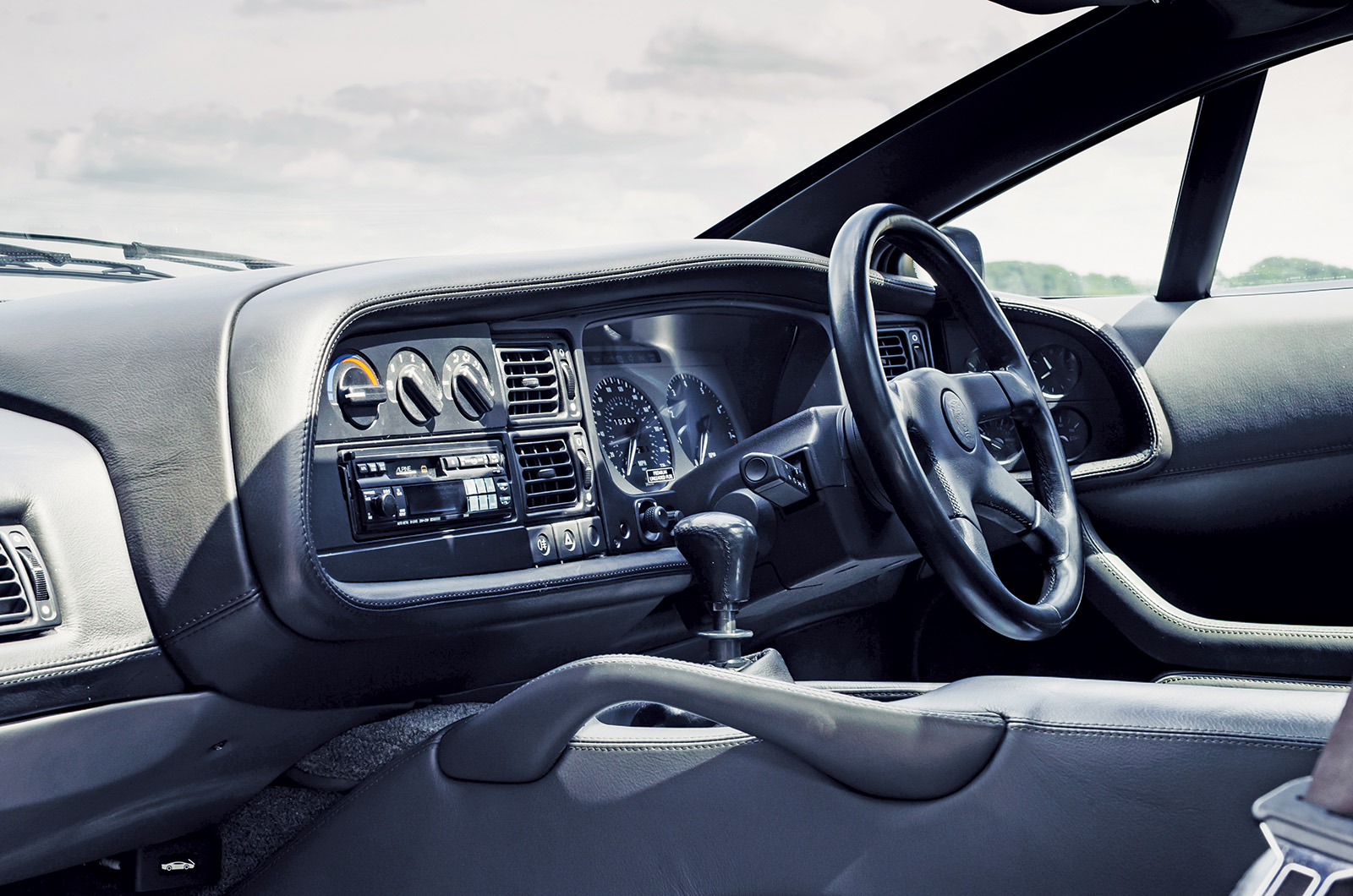
The Jaguar XJ220’s cabin is cocooning but comfortable – note the passenger grabhandle

Traverse the broad sill to enter the leather-lined cabin and your head almost nudges the header rail, or at least the sunvisor below it.

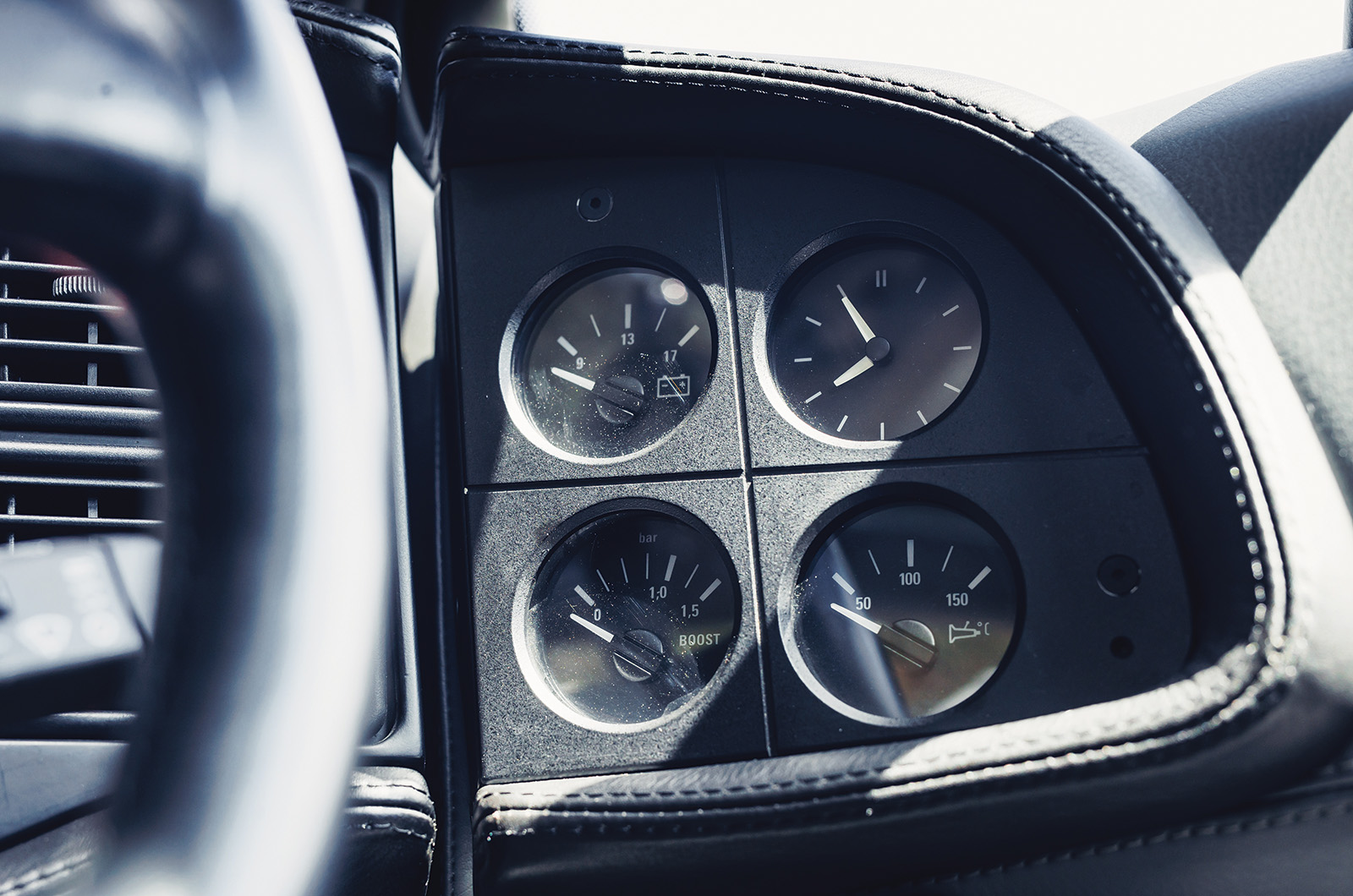
There’s a four-spoke steering wheel and a wide pod, incorporating heater controls and a six-dial binnacle (including a 220mph speedometer, naturally) that extends from the centre to join with a door-mounted section on the driver’s side with more instruments, for boost, charge, time and gearbox temperature.

Start the engine (key, then button) and the noise behind you sounds distinctly blue-collar at idle.

Classic & Sports Car – Jaguar XJ220 vs JaguarSport XJR-15: thunder cats
The XJ220’s dials extend into the driver’s door

Moving off, you note the heavy clutch, tepid throttle pick-up and gearing so high in the lower ratios that you think you’ve selected third, not first.

But as speeds rise, you find that the XJ220 is stupidly easy to drive.

The gearshift and unassisted steering are heavy, the latter accurate and quite direct with 2.6 turns from lock to lock.

Only on the damp Bicester Motion test track’s back straight is it possible to get a measure of the XJ220’s explosive acceleration, which Autocar – the only outlet to officially run figures on the car – clocked at 3.6 secs to 60mph and 7.9 secs to 100mph.

Classic & Sports Car – Jaguar XJ220 vs JaguarSport XJR-15: thunder cats
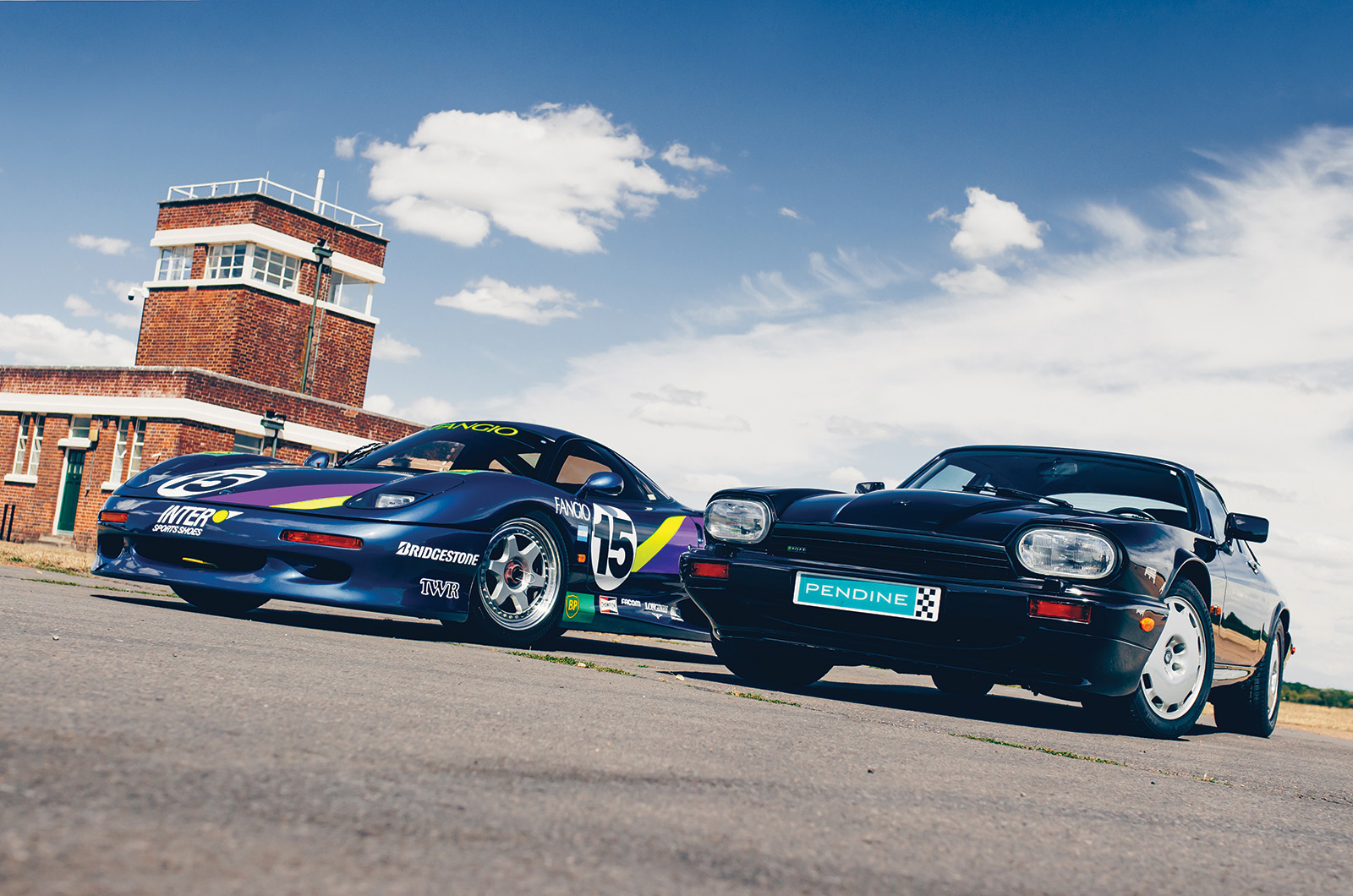
‘The JaguarSport XJR-15 [furthest] became better known as a production racing car, whereas the XJ220 was only ever a roadgoing super-GT’

Once you’ve overcome the lag of the twin Garrett turbos, those figures are borne out.

Pin the throttle and the XJ220 takes a deep breath before unleashing all of its 542bhp, accompanied by a big-lunged, guttural blare from the 3.5-litre V6. 

Even left in second it gets us close to 90mph before we have to brake hard for the tight right-hander, which can be taken ever faster as the track gradually dries, thanks to the Jag’s huge mechanical grip and flat, secure cornering attitude.

Would a more weighty and perhaps hardly more powerful V12 have really added to the XJ220’s appeal? On paper, undoubtedly, but on track, Walkinshaw surely made the right call.

Classic & Sports Car – Jaguar XJ220 vs JaguarSport XJR-15: thunder cats

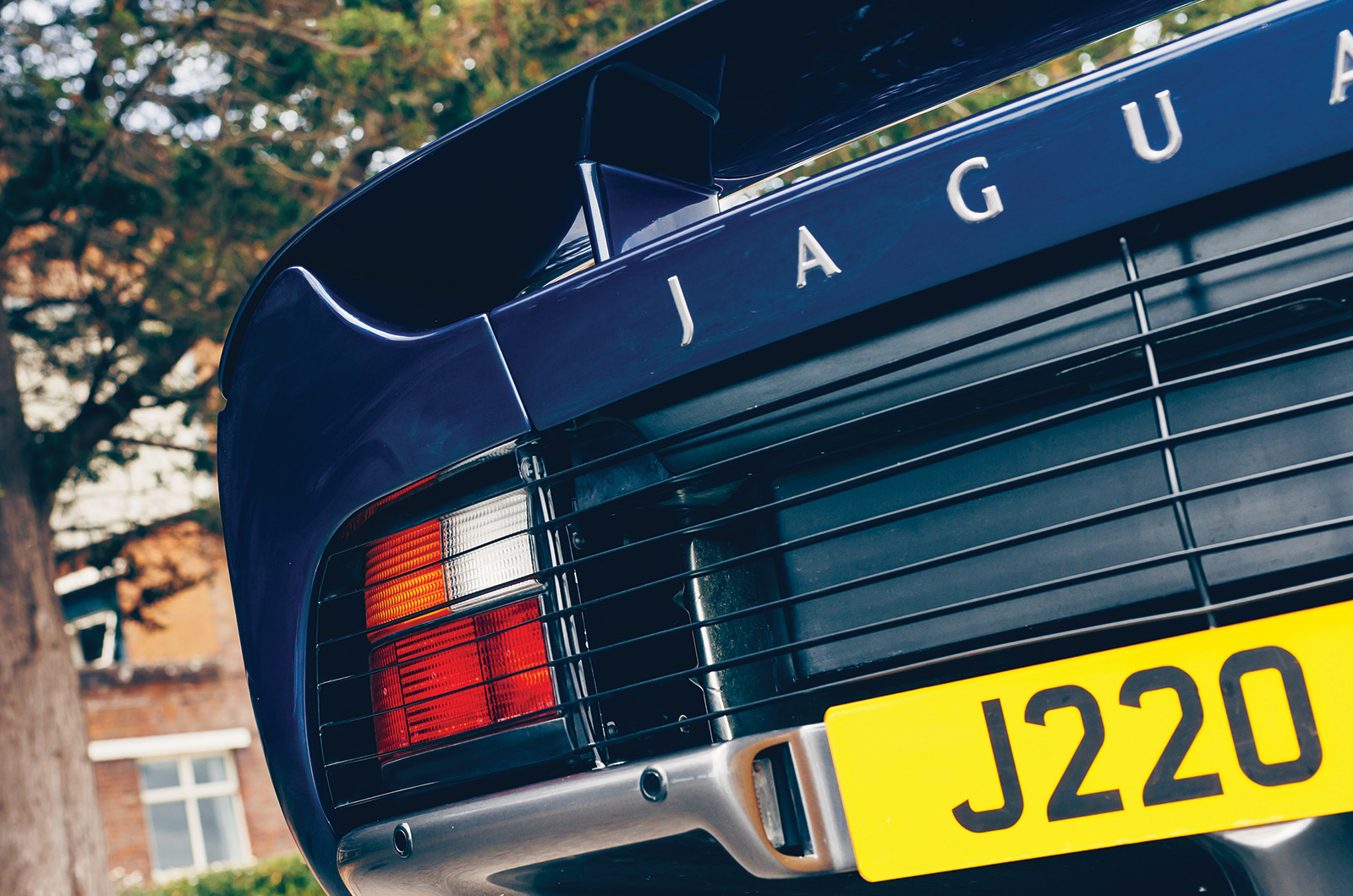
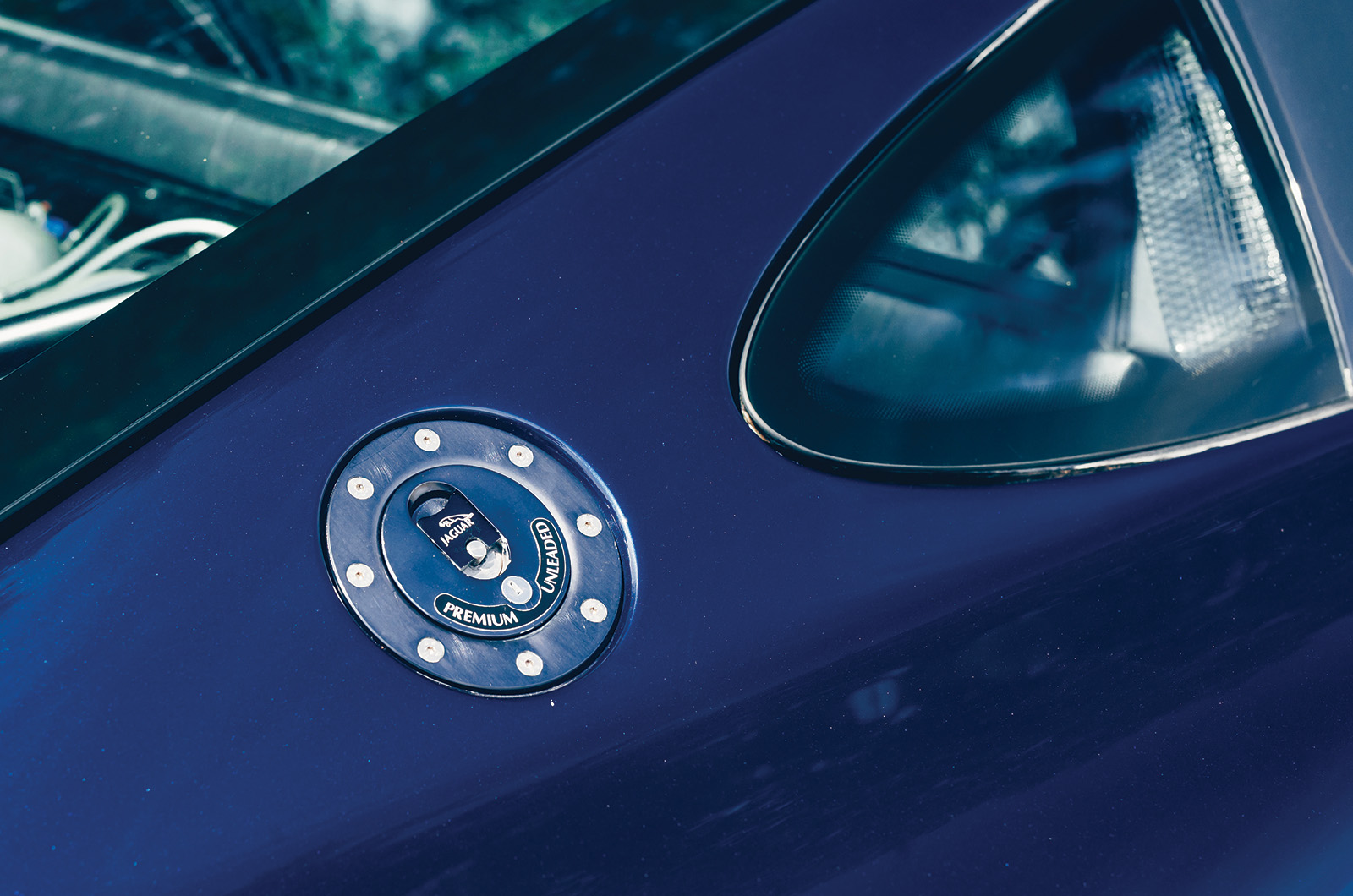
The Jaguar XJ220’s neat, flush-fitting, fuel-filler cap

He did so knowing that he could still get his V12 kicks with the XJR-15, which was being simultaneously developed by JaguarSport, the Walkinshaw-run company that partnered with Jaguar to manage the brand’s race programmes.

Having seen an opportunity for something more hardcore than the XJ220, Walkinshaw used the chassis and V12 mechanicals from the Le Mans-winning Jaguar XJR-9 as a basis for the new car, rather than starting from scratch.

His right-hand man, Andy Morrison, secured the monocoque from Win Percy’s wrecked 1988 Le Mans car and adapted it to Walkinshaw’s brief. 

The Scotsman had also employed Peter Stevens to manage the car’s design, which, as Peter recalls today, was far from a straightforward process.

Classic & Sports Car – Jaguar XJ220 vs JaguarSport XJR-15: thunder cats

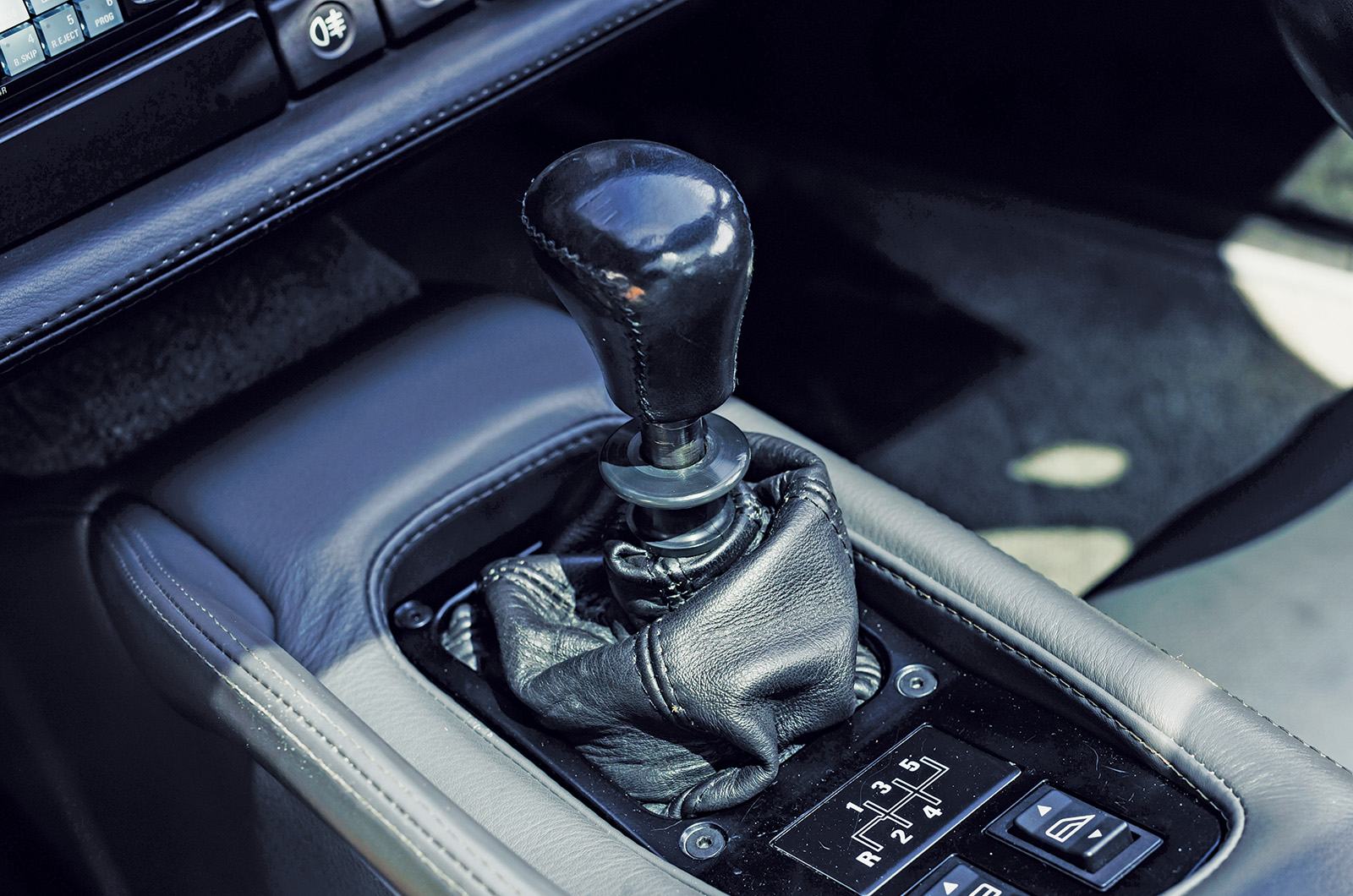
The Jaguar XJ220’s five-speed gearbox is heavy

“Tom wanted me to sketch an XJR-8 Le Mans car that you could drive on the road,” says Peter, “but with its required ride height it looked awful, so I suggested starting again just using the race car’s carbonfibre tub.

“However, the tub’s dimensions were too tight for potential customers, so my engineering friend Jim Router kept the design philosophy of the XJR-8 but enlarged the cockpit in all dimensions.

“Jaguar knew nothing of the R9R project, but when John Egan heard about it he instructed Tom to name it a ‘JaguarSport’, as part of the joint venture between TWR and Jaguar. Thus, the car became the JaguarSport XJR-15.”

Classic & Sports Car – Jaguar XJ220 vs JaguarSport XJR-15: thunder cats

The finely balanced JaguarSport XJR-15 strains at the leash on a tight test track

The new Stevens-designed car – set to be the world’s first carbonfibre production vehicle – was far and away a more salubrious machine than the racing car from which it derived.

As well as a raised ride height, a passenger seat was fitted, along with door seals for better refinement.

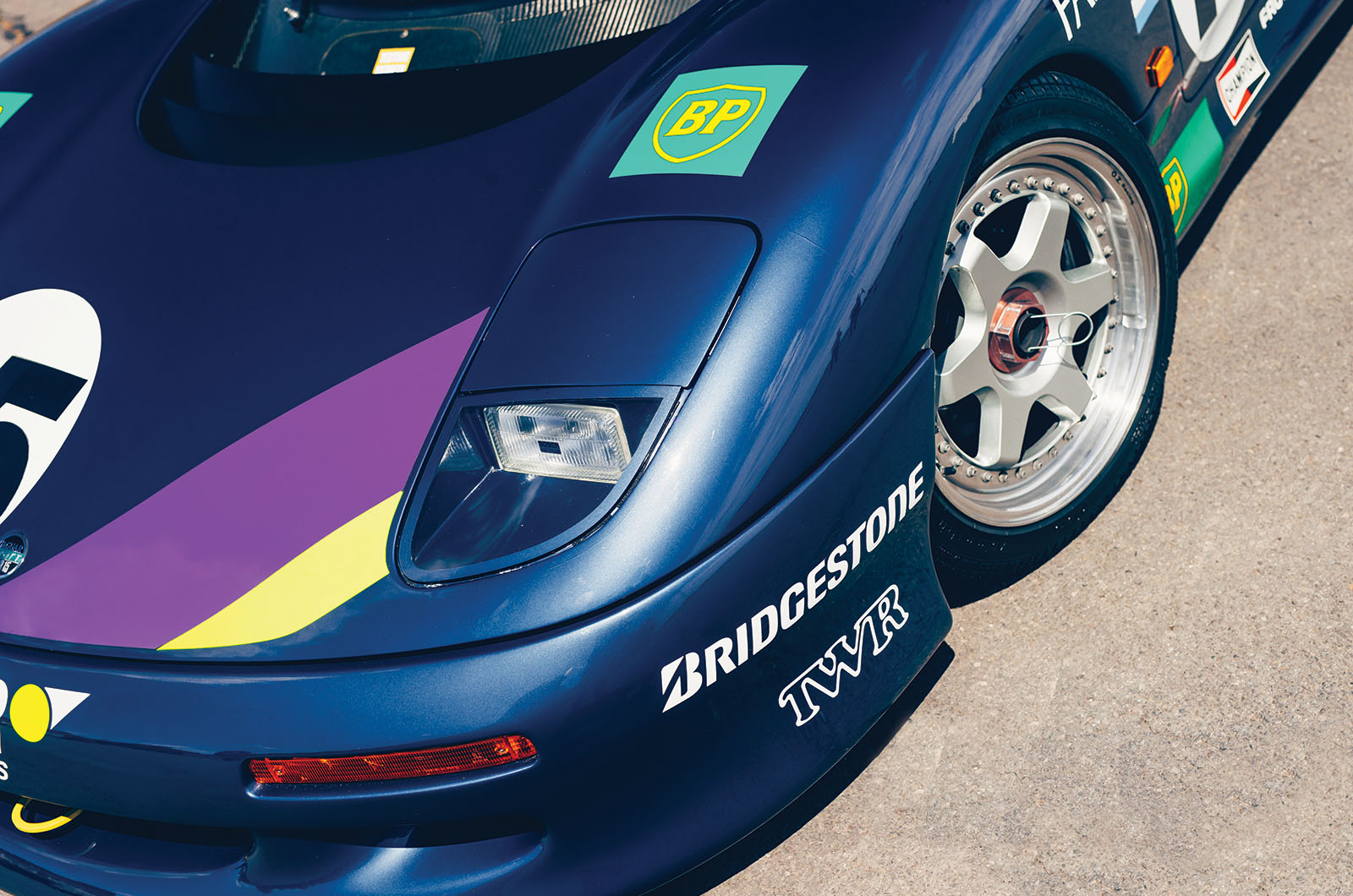
A fixed windscreen replaced the racer’s clip-on item, and the XJR-15’s headlights and tail-lights met roadgoing type approval – a general requirement that was mirrored throughout the vehicle.

Finally, the XJR-9’s mid-mounted, 7-litre, 750bhp, all-alloy V12’s displacement was reduced to 6 litres, while its output dropped (at least in road specification) to 450bhp.

Classic & Sports Car – Jaguar XJ220 vs JaguarSport XJR-15: thunder cats

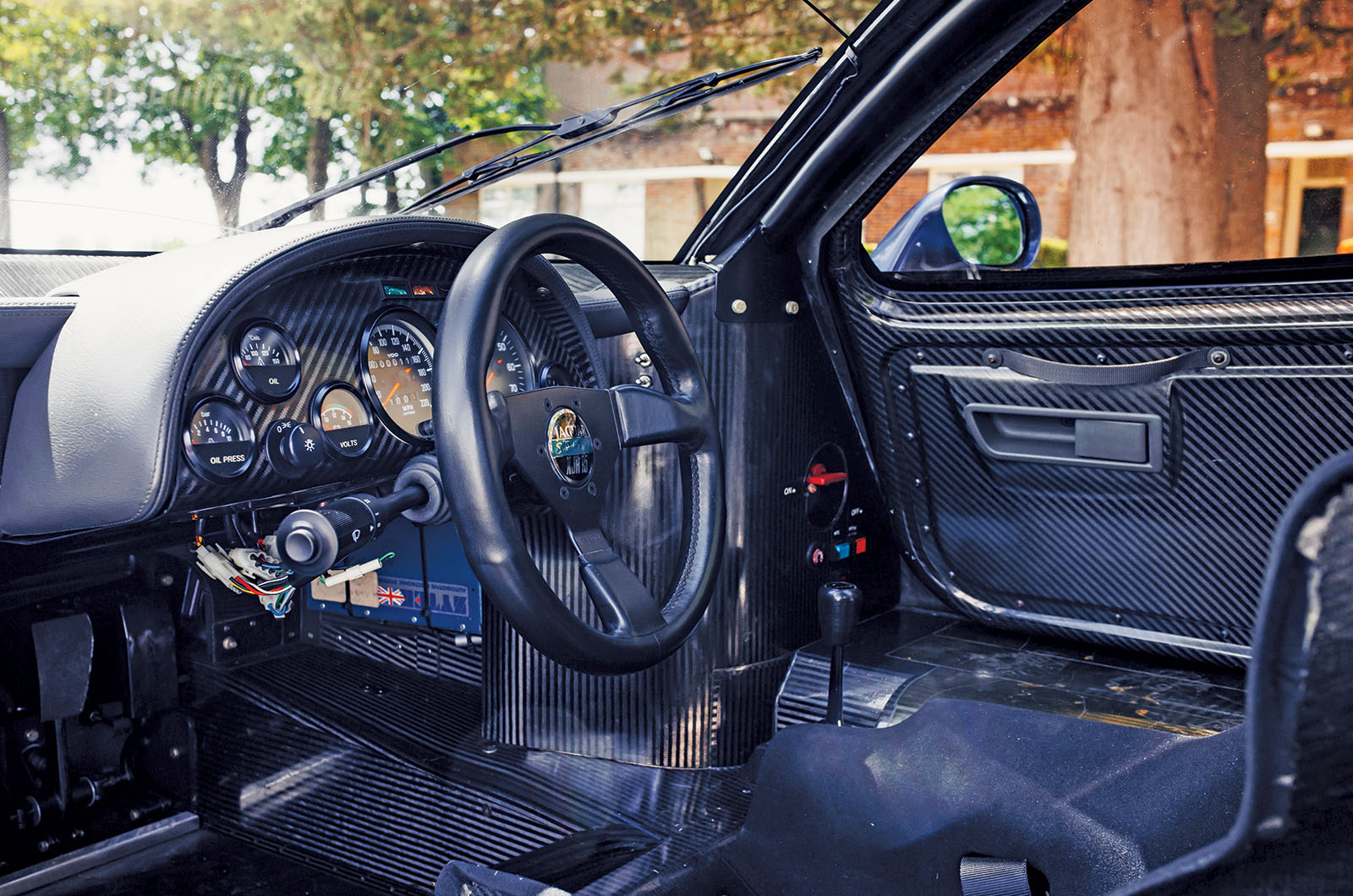
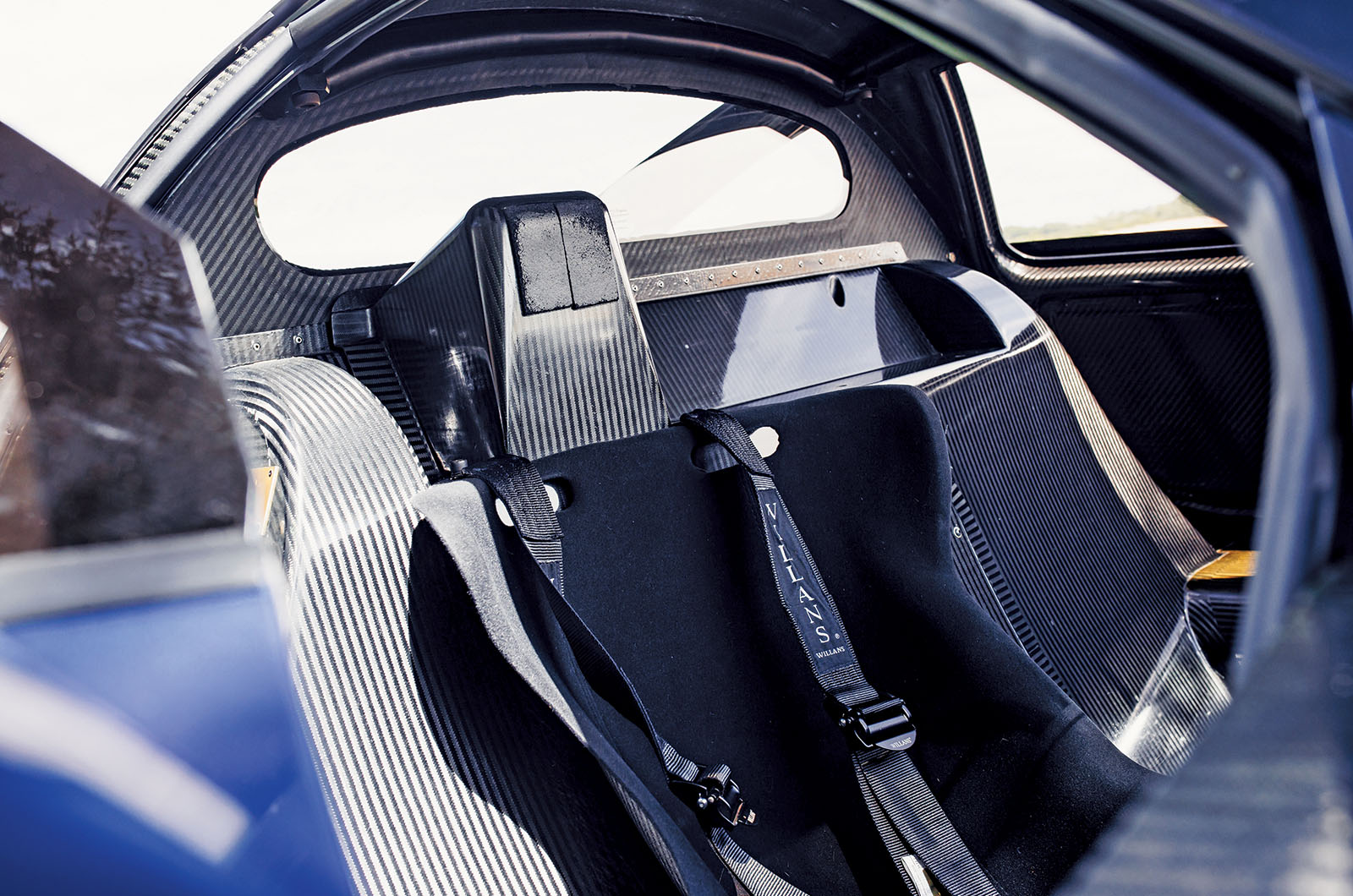
Bare carbonfibre adorns the JaguarSport XJR-15’s cockpit

JaguarSport said it was to improve the car’s tractability, but the fact that it carried only around two-thirds of the XJ220’s weight meant that it would have put the road car’s performance too far in the shade.

Just prior to the XJR-15’s launch in 1990, two years ahead of the XJ220 reaching production, it became clear that a roadgoing Le Mans rep and a high-powered GT, both mid-engined, both with phenomenal performance and both built by the same company, had great potential to clash with one another in the marketplace.

As Peter remembers: “Andy Morrison was tasked with explaining how Jaguar appeared to be developing two high-performance sports cars at the same time.

“He came up with the idea of a three-race Intercontinental Challenge for XJR-15s, as support races for the Monaco, Silverstone and Spa Grands Prix.”

Classic & Sports Car – Jaguar XJ220 vs JaguarSport XJR-15: thunder cats

The XJR-15’s bare carbonfibre seat

Entries were open to all XJR-15 buyers, with the winning prize a brand-new Jaguar XJR-S (see below) for the Monaco and Silverstone races, and $1m – equivalent to the cost of the XJR-15 – for the winner of the final at Spa.

As such, the XJR-15 went from being a race-derived road car to an out-and-out racer at its official launch.

In the end, 50 XJR-15s were produced, plus two R9Rs – the prototype and the final car – but only 16 of the 50 were prepared for the race series; most of the remainder were converted to road specification, which was a relatively easy process.

‘Our’ car is chassis number 048, first purchased by Lee Kun-hee, the owner of Samsung, and driven by Juan Manuel Fangio II, nephew of the five-time Formula One World Champion.

Classic & Sports Car – Jaguar XJ220 vs JaguarSport XJR-15: thunder cats

Road-legal lights on the JaguarSport XJR-15’s elegant nose

Fangio won the Silverstone race in ’91, hence why this XJR-15 is being offered for sale with its original XJR-S prize.

As a racer, chassis 048 used a six-speed dog ’box instead of the roadgoing car’s five-speed synchromesh transmission.

The car was also stripped of unnecessary weight – reputedly 100-200kg – and given a marginal improvement in power.

But Peter’s thrilling homage to a Group C racer remains. “I don’t believe there’s anything I would change,” he says. “Not because the car is perfect, but because it is what it is.”

Classic & Sports Car – Jaguar XJ220 vs JaguarSport XJR-15: thunder cats

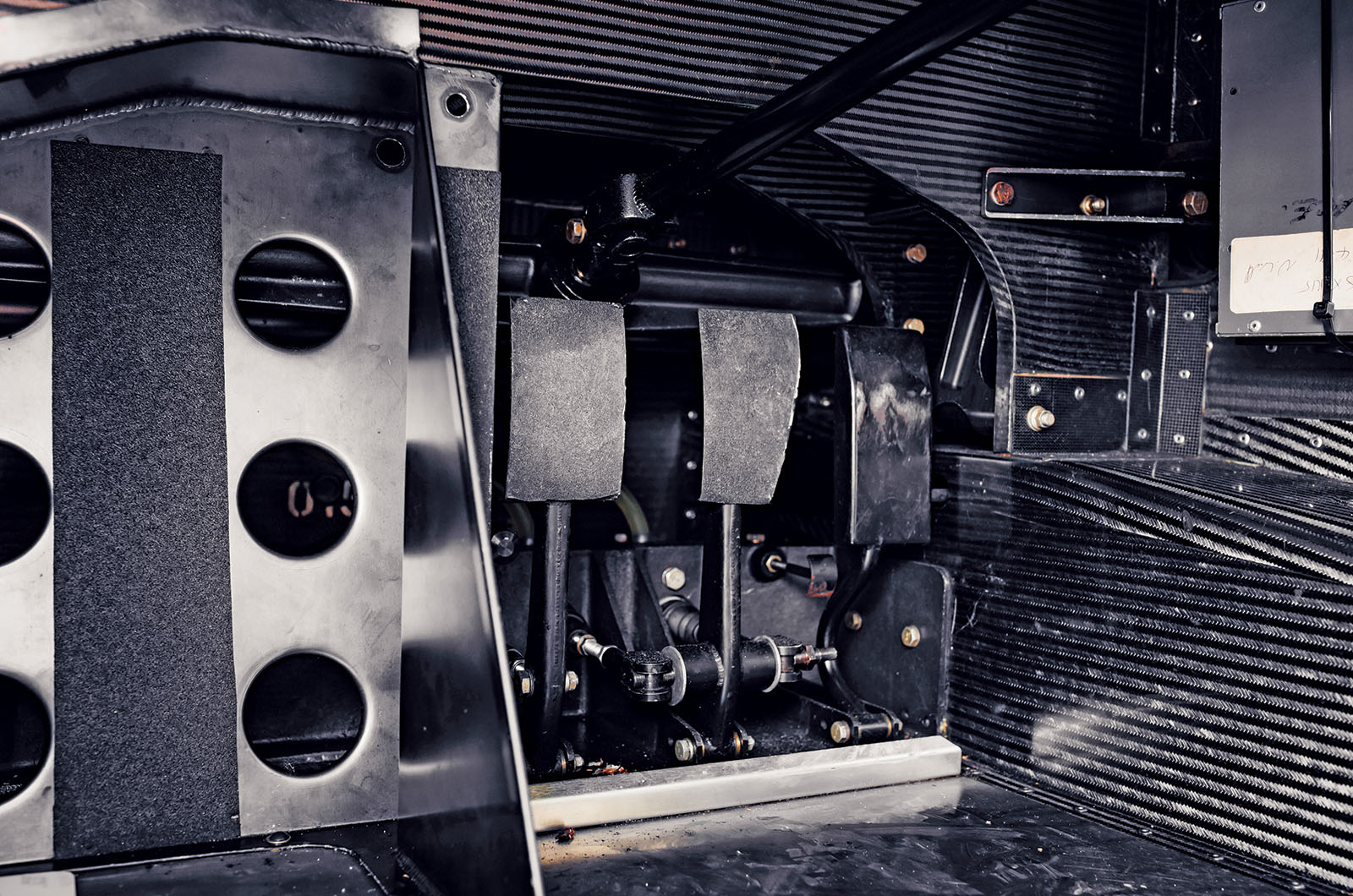
The JaguarSport XJR-15’s pedalbox is straight from the track

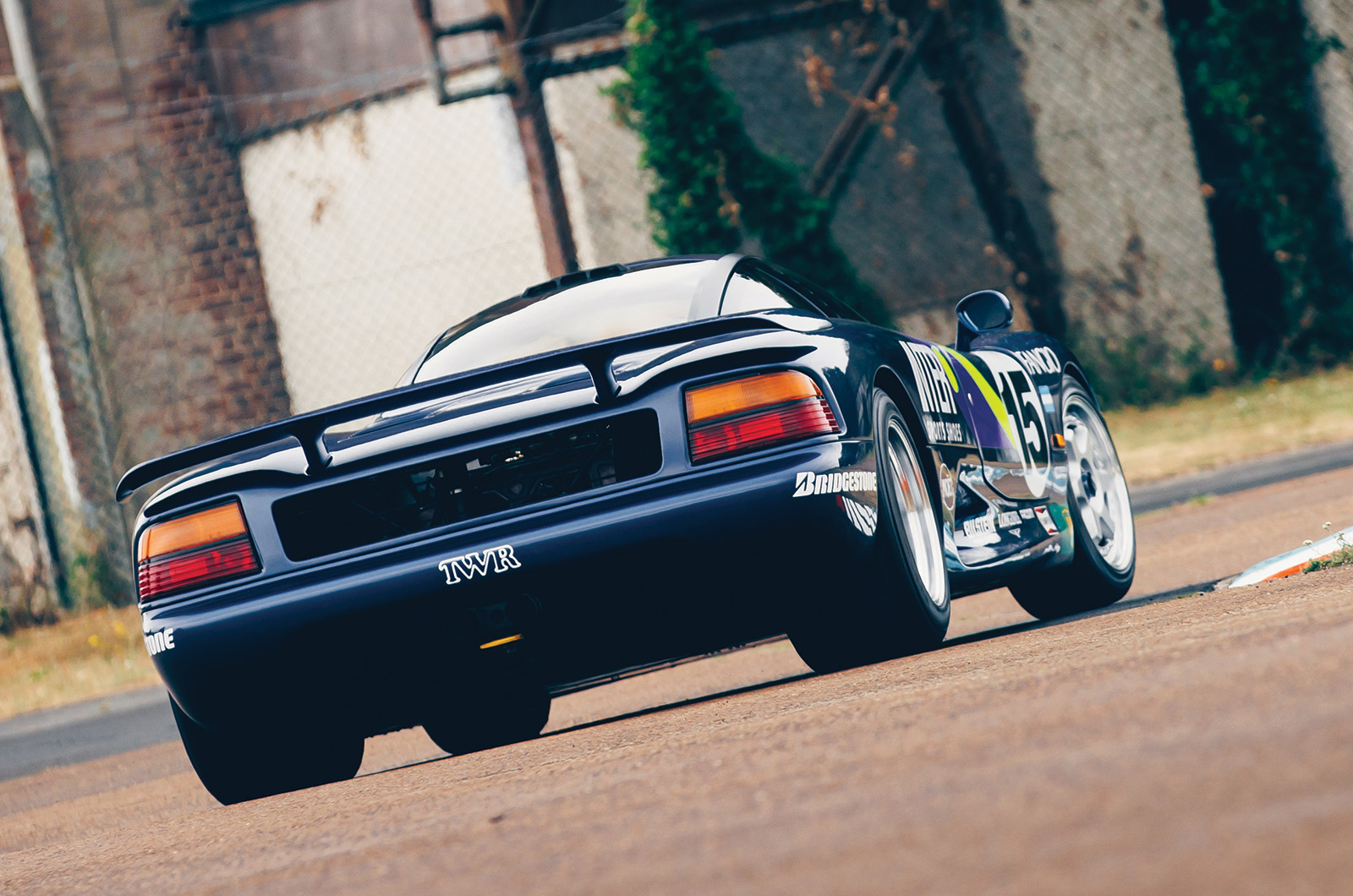
I ask whether the rear wing, which integrates so well with the body, serves a purpose beyond the aesthetic.

“It was purely for aerodynamic stability,” he admits. “The car had only a small amount of downforce; the wing balanced front and rear loads roughly 60% rear, 40% front.”

Not that we’ll be taxing the XJR-15’s aero today, when even our tracking car is going sideways on the greasy track.

Classic & Sports Car – Jaguar XJ220 vs JaguarSport XJR-15: thunder cats

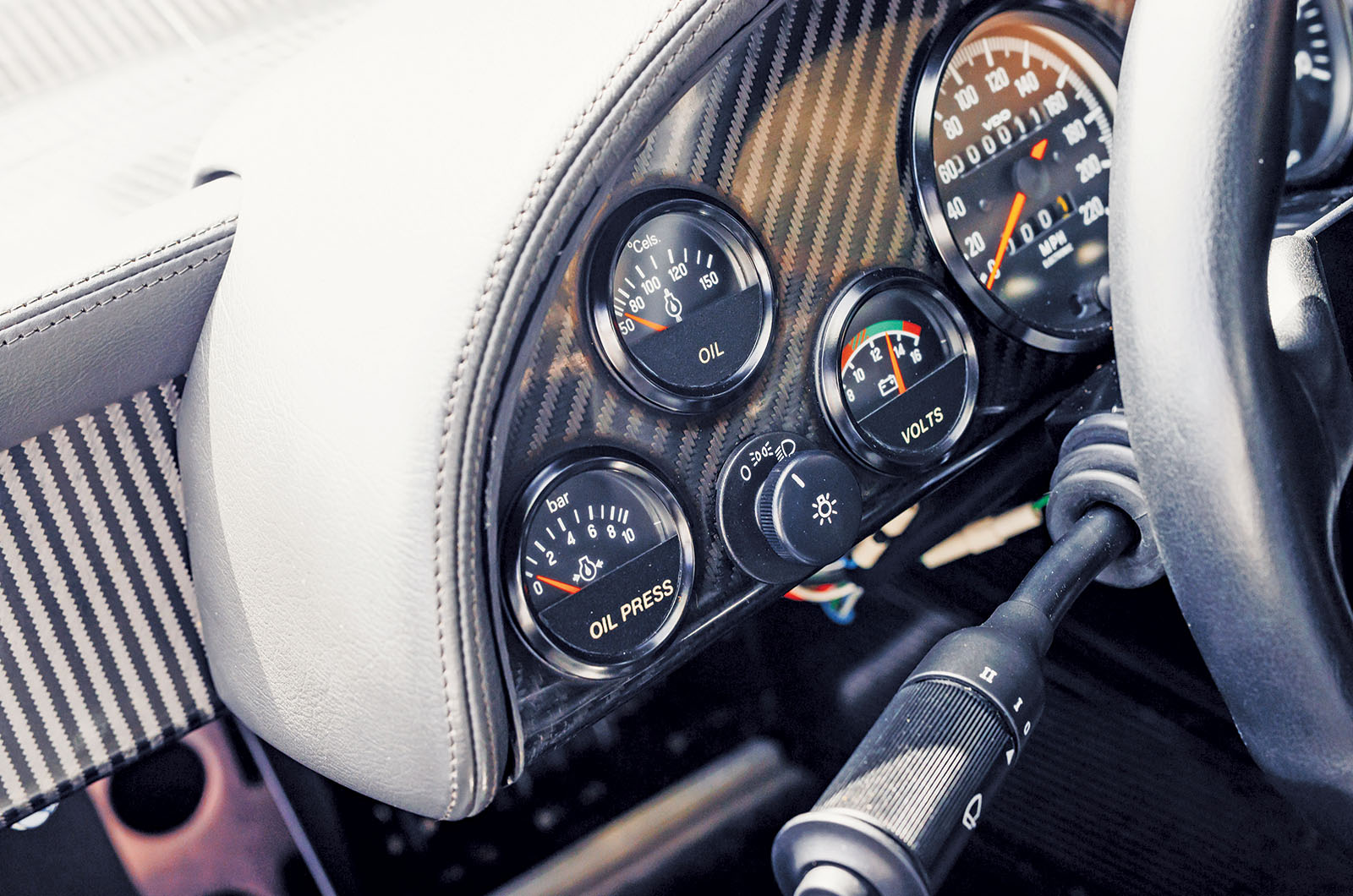
The JaguarSport XJR-15’s clear instruments

Listening to the XJR-15 come to life from outside, photographer Jack nails the soundtrack perfectly: “Just like a Spitfire’s Merlin on start-up.”

And once you’ve performed the acrobatics needed to install yourself in the driver’s bucket seat (outstretched legs first, contorted torso second) that noise is amplified through every pore of the car’s carbonfibre innards. Earplugs are a must.

Behind a three-spoke wheel a simple leather-topped binnacle faces you, containing six VDO clocks.

Floor-mounted pedals, a bank of four switches (ignition, injectors, pumps and ‘start’) is set into the carbonfibre by your right knee, below which sprouts the stubby gearlever for the six-speed ’box.

Classic & Sports Car – Jaguar XJ220 vs JaguarSport XJR-15: thunder cats

The JaguarSport XJR-15’s switchgear swaps luxury for functionality

You sit near the car’s centre line due to its wide sills, but once the Willans harness has you in its grip, the driving position is excellent.

Engage first with commitment – this is a dog ’box – and use plenty of revs to avoid a stall, and once again the gearing is epically high for this short track.

Once you’re accustomed to the painful, glorious din from the V12 and start to work some heat into its Pirelli P-Zero road tyres (slicks were used in competition), this is one of the sweetest-handling racing cars I’ve driven, albeit briefly: light, communicative steering, finely balanced body control, superlative brakes and meteoric acceleration within the track’s tight confines.

Classic & Sports Car – Jaguar XJ220 vs JaguarSport XJR-15: thunder cats

Parallel development paths, but idiosyncratic and quite different end products: both the XJR-15 (right) and XJ220 define an era for Jaguar

You can only imagine what a piece of work the XJR-15 would have been in road specification.

But better than the XJ220? It’s an apples or pears question, really. 

The XJR-15’s light weight and pared-back design philosophy give it a purity with which the XJ220 cannot compete.

Faced with a 1000-mile schlep to Monaco, though, there would only be one leather-lined, 200mph-plus choice.

Images: Jack Harrison

Thanks to: Pendine Historic Cars; Peter Stevens


The winner’s Jaguar XJR-S 

Classic & Sports Car – Jaguar XJ220 vs JaguarSport XJR-15: thunder cats

Jaguar XJR-15 chassis 048 has remained with its owner’s XJR-S prize since the 1991 British Grand Prix

Given that it was also produced by JaguarSport, there couldn’t have been a more appropriate prize for the victors of the 1991 Intercontinental Challenge than a Jaguar XJR-S. 

Gifted to the owner of the winning Monaco and Silverstone XJR-15s – ‘our’ car being for the latter event – the XJR-Ss were later models, fitted with the larger 6-litre engine, up from the previous version’s 5.3 litres.

A higher compression ratio (of 11.0:1) and a modified air intake and exhaust system liberated 328bhp and 365lb ft.

Classic & Sports Car – Jaguar XJ220 vs JaguarSport XJR-15: thunder cats

The Jaguar XJR-S has a 328bhp V12

Externally, the XJR-S wore a bespoke bodykit, set off by 16in Dunlop alloy wheels.

The suspension used uprated springs and Bilstein dampers, while on the inside the cars were trimmed in Connolly Autolux leather.

This winner’s car, in Mica over grey, has remained with XJR-15 chassis 048 since its 1991 Silverstone win, and it has covered just 600 miles.


Factfiles

Classic & Sports Car – Jaguar XJ220 vs JaguarSport XJR-15: thunder cats

JaguarSport XJR-15 
(figures for road car)

  • Sold/number built 1990-’92/50 (plus two R9Rs)
  • Construction carbonfibre/Kevlar monocoque, carbonfibre panels
  • Engine all-alloy, sohc-per-bank 5993cc 60° V12, with two valves per cylinder, Zytek sequential fuel injection and coil-on-plug ignition management system
  • Max power 450bhp @ 6250rpm
  • Max torque 420lb ft @ 4500rpm
  • Transmission five-speed manual, RWD
  • Suspension independent, at front by pushrod-operated horizontal dampers, anti-roll bar rear telescopic dampers; double wishbones, coil springs f/r
  • Steering rack and pinion
  • Brakes ventilated discs
  • Length 15ft 9in (4800mm)
  • Width 6ft 2¾in (1900mm)
  • Height 3ft 7¼in (1100mm)
  • Wheelbase 8ft 10in (2718mm)
  • Weight 2822lb (1050kg)
  • 0-60mph 3.5 secs (est)
  • Top speed 185mph
  • Mpg n/a
  • Price new £500,000
  • Price now £1-1.5million*


Jaguar XJ220

  • Sold/number built 1992-’94/286
  • Construction aluminium honeycomb monocoque tub and floorpan, aluminium panels
  • Engine all-alloy, dohc-per-bank 3498cc V6, with four valves per cylinder, twin Garrett T3 turbochargers and intercoolers, and Zytek multi-point fuel injection with electronic boost control
  • Max power 542bhp @ 6500rpm
  • Max torque 475lb ft @ 4500rpm
  • Transmission five-speed manual, RWD
  • Suspension independent, at front by pushrod-and-rocker-operated spring/damper units rear toe-control links, twin rocker-operated spring/damper units; double wishbones, anti-roll bar f/r
  • Steering rack and pinion
  • Brakes ventilated discs
  • Length 16ft 2½in (4930mm)
  • Width 7ft 3½in (2220mm)
  • Height 3ft 9¼in (1150mm)
  • Wheelbase 8ft 8in (2642mm)
  • Weight 3209lb (1456kg)
  • 0-60mph 3.6 secs
  • Top speed 213mph
  • Mpg 13.8
  • Price new £361,000
  • Price now £400-500,000*

*Prices correct at date of original publication


Enjoy more of the world’s best classic car content every month when you subscribe to C&SC – get our latest deals here


READ MORE

Before the wildest cat was tamed: driving a rare Jaguar XJ220 prototype

10 forgotten motorsport championships

Jaguar XJ-S vs Lotus Elite: new order grand tourers