Humber’s Super Snipe and Hawk: smooth operators

| 27 Aug 2025
Classic & Sports Car – Humber’s Super Snipe and Hawk: smooth operators

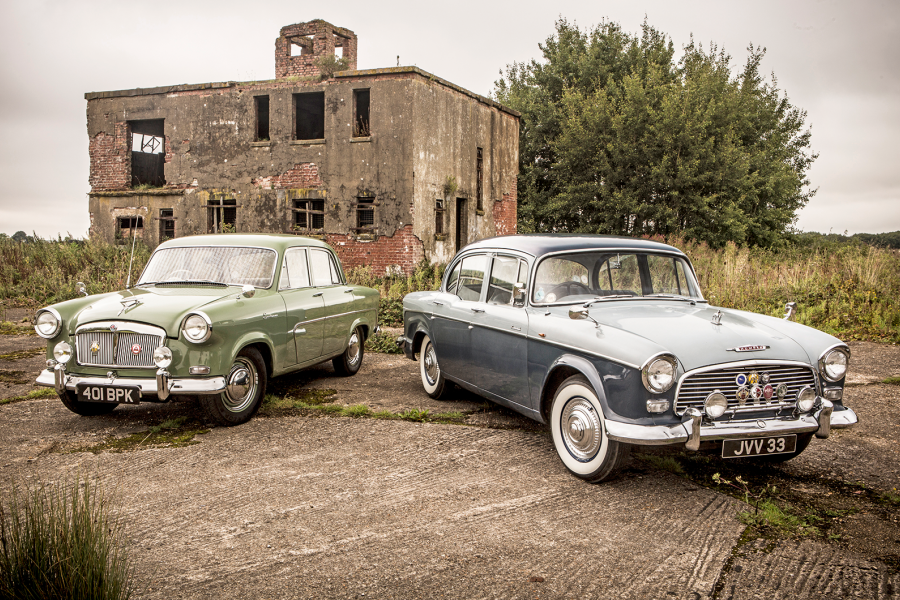
Pre-Beatles, pre-Profumo affair, the ‘own brand’ British luxury saloon market was in full swing in the late 1950s and early ’60s.

These cars – Ford Zodiacs, Vauxhall Crestas and Humber Super Snipes – brought glamour to high streets and driveways that would rarely play host to a Jaguar or Bentley, never mind the import-duty-loaded European offerings.

Generally viewed as being somewhere between the well-engineered Rover 3 Litre and the somewhat flashier Ford/Vauxhall barges in the hierarchy of such vehicles, the Humbers, either six-cylinder Super Snipe or four-cylinder Hawk, didn’t pretend to be ‘driver’s cars’.

Classic & Sports Car – Humber’s Super Snipe and Hawk: smooth operators

The Humber Hawk and Super Snipe were beloved by executives and politicians alike

Yet for the audience at which they were aimed they were transports of delight, offering smooth, roomy and quiet travel with effortless urge in a spacious and over-engineered, but under-rust-proofed, mass-produced unitary body that was noted for its good finish and solidity.

With room for six, this was Rootes’ first monocoque and for a while the largest unitary car built in the UK.

The panels were pressed in London, the saloons assembled in Ryton-on-Dunsmore, Warwickshire.

Classic & Sports Car – Humber’s Super Snipe and Hawk: smooth operators

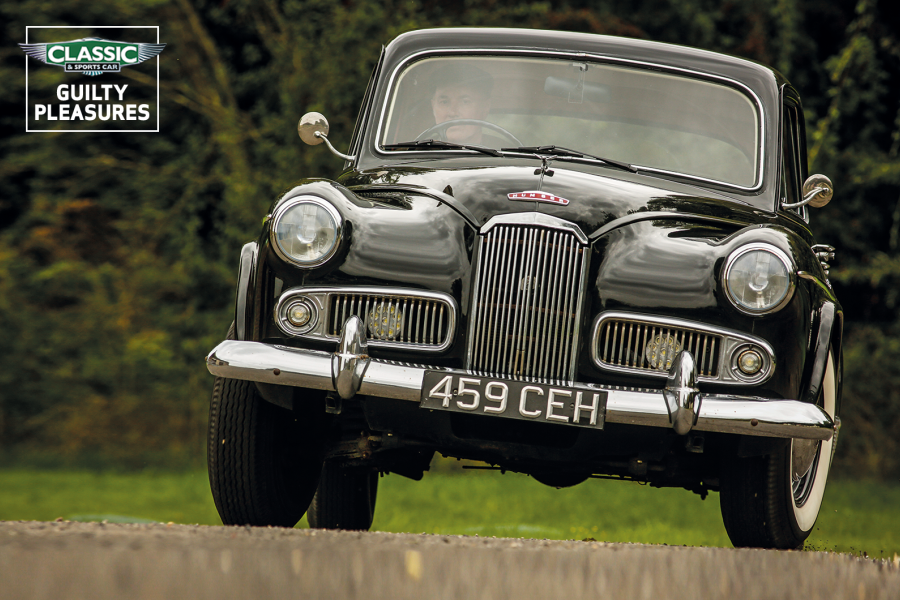
The Humber Super Snipe’s quad lights and wraparound grille arrived on the SIII model

Carbodies, famous for its Austin taxi bodies, produced the stylish Hawk and Super Snipe estate shells from late ’57.

These impressively finished load-carriers – good for hauling 850lb – were really Britain’s first mass-produced luxury station wagons, offered at a £200 premium over the saloons.

The Hawk and Super Snipe were the first Humbers designed around an automatic transmission (the Borg-Warner DG), but they were routinely sold with column-shift manuals, often with Laycock overdrive, for those still mistrustful of clutchless driving: four speeds on the Hawk, a US-inspired three-speeder on the Super Snipe.

Classic & Sports Car – Humber’s Super Snipe and Hawk: smooth operators

Subtle fins for the Humber Super Snipe Series V

Torque peaked at 1800rpm in the Snipe, so there was little need to change gear often, and you could play tunes on the overdrive on second and top.

Later, the Super Snipe pioneered the option of power-assisted steering on a sub-3-litre British car, although the Hydrosteer system was a dealer- rather than factory-fitted extra at first.

These cars are from an era when automotive roles were more clearly defined and drivers more sedate.

Gear ratios, spring rates and power outputs were tweaked over the years, but nobody buying into this ultimate Rootesmobile expected exciting performance or nimble handling, even if modest successes in the RAC Rally (driven by Raymond Baxter) and the East African Safari at least suggested they were robust enough to go the distance.

Classic & Sports Car – Humber’s Super Snipe and Hawk: smooth operators
The Humber Super Snipe’s chrome details bring a hint of Americana

Fit and finish, as with most of the Rootes output, was above average.

Tellingly, the range had a good right-hand-drive ‘colonial’ reputation: Hawks and Super Snipes were assembled from knocked-down kits in both Australia and New Zealand.

Visually the ‘Series’ Humbers (as opposed to the previous ‘Mark’ types) pandered to the still-popular weakness for subtle Americana: neutered tailfins and fairly generous chrome, decorating a Chevrolet-inspired shape that always appeared, tastefully, just out of fashion. 

Classic & Sports Car – Humber’s Super Snipe and Hawk: smooth operators

The Humber Hawk Estate’s ‘four’ isn’t far behind the Super Snipe’s straight-six in terms of performance

Underneath, they came from a big-car tradition of unexciting mechanisms and rudimentary chassis design.

A long, hefty, all-iron, in-line engine – sited well forward of the front wheels and driving a leaf-sprung live rear axle – was the default layout.

The wishbone front suspension was carried on a subframe; noise-isolating rubber mountings and a space-saving divided propshaft were new ideas, even if the 20 grease points – needing attention every 1000 miles – had a very pre-war feel.

As the 1960s dawned, these high-nesting birds of the Rootes flock were already quite elderly designs.

Classic & Sports Car – Humber’s Super Snipe and Hawk: smooth operators
Elegant wire retainers on the Humber Hawk’s split tailgate

The four-cylinder 2267cc Hawk had appeared first in May 1957, with its 75bhp overhead-valve engine carried over from the old Hawk MkIV, with modifications to the distributor position to get a lower bonnet line.

The aim had been to build a car with a longer wheelbase (the engine and ’box were moved forward), but that was no larger overall than its predecessor while at the same time being roomier.

This was achieved, along with a giant boot.

After whitewall tyres and a choice of radios, perhaps the ultimate option (on both the Hawk and Super Snipe) was a divider to create a ‘Touring Limousine’ for penny-pinching tycoons, with a wind-up privacy glass. Woodall Nicholson did a few stretched limos, plus some hearses for the funeral trade.

Classic & Sports Car – Humber’s Super Snipe and Hawk: smooth operators
The stretched script on the Humber Hawk Estate

The Super Snipe supplemented the Hawk in 1958, using the same body but with suitable chrome embellishments to denote its flagship status – and a heater as standard.

It was pitched half a class higher, with an Armstrong Siddeley-designed, 2.6-litre crossflow ‘six’ making a conservative 105bhp.

Not earth-shattering, but almost as much as the old 4-litre ‘Blue Riband’ engine derived from a Commer truck unit. 

The new ‘six’ was hefty but fairly advanced, with hemispherical combustion chambers, dual valve springs and solid-skirt pistons (with chrome-plated top rings).

Classic & Sports Car – Humber’s Super Snipe and Hawk: smooth operators
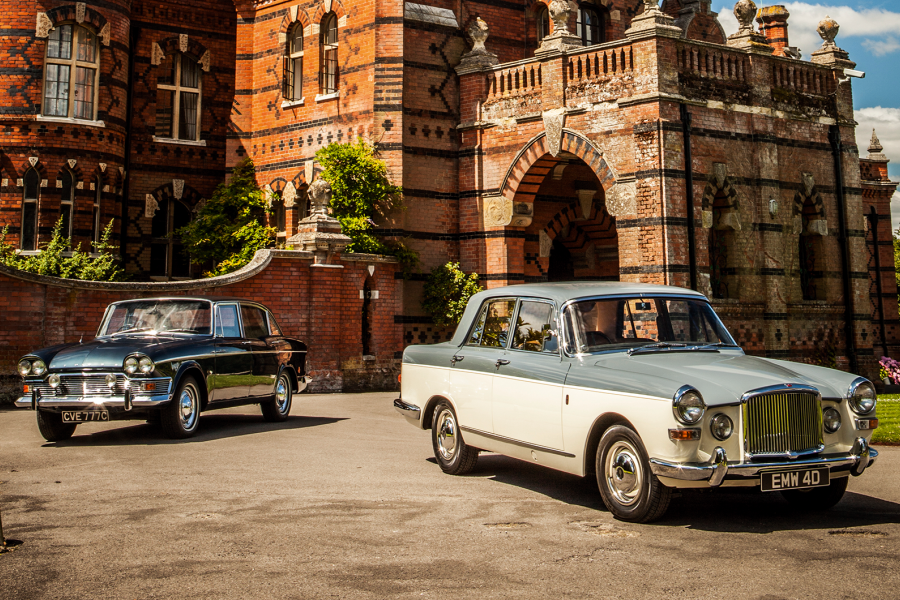
Humber’s Super Snipe is effortlessly smooth

It grew from 2.6 to 3 litres in October 1959 (as the disc-braked, 95mph Series II, with 121bhp), but never got the alloy cylinder block and seven-bearing crank that were planned developments.

From here the six-cylinder Humber evolved through another three series, memorable changes being the paired headlights on the 1960 Series III (a first on a British car, giving 120W of light on main beam), with an extended front-wing line and full-width wraparound grille.

The squared-off roof and rubber-bumper inserts came with the 1964 Series V, which, on twin sidedraught Stromberg carbs and a freer-breathing exhaust, was the first true 100mph Humber.

It had power steering as standard now, and an alternator rather than a dynamo.

Classic & Sports Car – Humber’s Super Snipe and Hawk: smooth operators

The 100mph Humber Super Snipe was the Rootes Group’s regal range-topper

The Hawk never got the quad headlights, but it did gain front discs while at the same time losing its leather seats in favour of PVC – but it got a standard heater at last.

Confusingly, the square-roofed Hawk saloons are known as Series IVs, but in all cases the Chevrolet Nomad-like styling of the wagons was unchanged, presumably because volumes were too low to justify the tooling investment.

That even takes into account the widely advertised patronage of various British police forces, which used Super Snipe estates – often painted white, and with their carpets and rear seats removed – as motorway patrol cars.

Classic & Sports Car – Humber’s Super Snipe and Hawk: smooth operators

The Humber Super Snipe Series V features an eye-catching kick in the window line

Estate production figures are elusive; ditto Harold Radford’s 1958 Countryman conversion on the Super Snipe, although at £800 I doubt it had many takers.

It featured a pull-out picnic table, butane gas stove and washbasin in the boot, plus a hidden spirit case and even a coffee percolator.

The front seats became a makeshift bed while the rear squabs folded to extend the luggage area.

The rear armrest, meanwhile, concealed a cigarette case and toilet ‘requisites’. 

Classic & Sports Car – Humber’s Super Snipe and Hawk: smooth operators

The Humber Hawk Estate Series IV makes do with a conventional grille

‘Our’ Hawk Estate and Super Snipe were sampled courtesy of the Great British Car Journey museum near Belper, Derbyshire.

Both are late and original E-plate examples; the Hawk might even be the last estate built and was sold new to Fenton Atkinson, the judge who tried the Moors murderers.

Riding on 15in wheels, they retain a dignified presence even among modern machinery.

Detail features, such as fuel caps that double as reflectors in the offside tail-light clusters and the wagon’s pleasingly finished load bay, exude an air of quality.

Classic & Sports Car – Humber’s Super Snipe and Hawk: smooth operators

The Humber Hawk Estate’s 2267cc ‘four’ makes 78bhp

The Hawk’s split rear hatch, suspended by tensioned wires on its bottom half, shuts with a hefty precision.

Beneath their soundproofed bonnets, the engines of both appear simple and logical: generic mid-century analogue engineering.

Both are three-pedal manuals with beautifully preserved original interiors.

The doors open unusually wide, close pleasingly and have smooth-acting manual window-winders.

Classic & Sports Car – Humber’s Super Snipe and Hawk: smooth operators

The Humber Hawk Estate Series IV’s boot is satisfyingly well finished

Inside, it is hard to see where the Humber Hawk is less luxurious than the Super Snipe, but the wooden door cappings are not so lavish on the estate, and it does without the Super Snipe’s rear picnic tables.

They both have lots of oddment storage and generous gloveboxes, and there are Rolls-Royce-like sliding door bins in the Super Snipe.

The walnut used throughout is genuine but has a glossy, unreal quality.

The dashboards are inlaid with Jelly Tot-like, multi-coloured warning lights for choke, main beam and ignition, plus smooth-acting flick-switches and sliders for heating, booster fan and choke.

Classic & Sports Car – Humber’s Super Snipe and Hawk: smooth operators

The Humber Super Snipe rolls and understeers if driven hard

The Super Snipe’s green leather smells and looks just right; the Hawk’s pristine PVC could have emerged from Rootes’ Ryton factory last week.

The 3-litre, hemi-head straight-six whisks the Super Snipe effortlessly off the mark up to 40mph, its solid torque giving little cause to use the column gearshift as it eases the car quietly along.

There is a soft-edged burble to the Hawk’s long-stroke ‘four’, but the Super Snipe is soothing and almost silent at tickover.

In both cases the column shifts have a light, precise action, and both four- and six-cylinder cars will pull away briskly in second. Changing gear is not a chore, although it cannot be rushed.

Classic & Sports Car – Humber’s Super Snipe and Hawk: smooth operators

The Humber Super Snipe’s walnut dashboard is busy with warning lights

Cruising at 80mph would have been enough to sweep the Super Snipe past most things in its prime; the Hawk only has another 5mph to go at that speed.

Subjectively, though, it doesn’t feel that much slower than the 3-litre car. 

Servo front disc brakes mean these Humbers pull up efficiently. Even without going very far, or very fast, you sense that both would be stable in a straight line.

The manual steering of the Hawk lightens up nicely under way and castors back efficiently; the vague, lightweight assisted helm of the Super Snipe needs coaxing to centre.

Classic & Sports Car – Humber’s Super Snipe and Hawk: smooth operators

Fold-out picnic tables for the Super Snipe’s rear passengers

Both become conspicuous if handled aggressively, with body roll, understeer and audible front-end scrub.

Somehow Michael Caine’s enthusiasm for the black Super Snipe he drives briefly as a chauffeur in Alfie underlines that both car and character are out of step with the newly swinging times.

Yet among those who didn’t ‘swing’, the respect for and recognition factor of the big Humbers remained high: the Super Snipe was favoured by big-band leader Joe Loss (he had one with a record player fitted) and comedian Harry Worth, and was the ministerial car favoured by Harold Wilson.

Classic & Sports Car – Humber’s Super Snipe and Hawk: smooth operators

The Humber Super Snipe’s door-card armrest

TV appearances in No Hiding Place and The Human Jungle did not do the respectable image any harm.

Disgraced Liberal leader Jeremy Thorpe was still driving his big Humber in the ’70s at the time of the Norman Scott affair, but by then the name was becoming a fading memory.

Thorpe’s car was an Imperial, incidentally, with leatherette roof and Thrupp & Maberly trim.

Hoping to boost interest in its ageing big cars in the face of BMC’s Vanden Plas division, Rootes’ 1964 Imperial revived a name that had been dormant for a decade on a specially trimmed ‘executive’ Super Snipe that came with automatic transmission, power steering, reclining seats and Selectaride dampers.

Classic & Sports Car – Humber’s Super Snipe and Hawk: smooth operators

The Humber Hawk’s unassisted steering is nicely weighted

The range was still selling in healthy numbers in the early 1960s, but they had already had their best years.

Hawk sales had peaked at 15,539 between 1957 and ’59, but dropped to fewer than 2000 a year towards the end of production.

The Super Snipes sold at a steady 6500-7500 a year between 1958 and ’65, but sales had dwindled to just over 1000 annually in its final two seasons, when prices were reduced by £104-175 to clear stock.

Waiting in the wings was a generation of younger, sportier luxury cars from Triumph and Rover – plus a raft of foreign marques – that could do with just two thrifty litres what the luxobarge generation needed three to achieve.

Classic & Sports Car – Humber’s Super Snipe and Hawk: smooth operators

This Humber Hawk Estate’s original PVC trim is still like new

The plan to build the Imperial and Super Snipe models with Chrysler V8 power reached quite a late stage before the plug was pulled.

There was a back-up plan for a replacement full-size Humber based on the Chrysler Valiant, but it was deemed more prudent to simply offer right-hand-drive Valiants to the firm’s large-car buyers. 

For all their transatlantic overtures, there was something very British about the Hawk and Super Snipe that made them so beloved of a certain kind of buyer: a person who would not be fooled by a generic American car wearing this once respected name.

Images: Jack Harrison

Thanks to: Great British Car Journey


Factfiles

Classic & Sports Car – Humber’s Super Snipe and Hawk: smooth operators

Humber Super Snipe Series V

  • Sold/number built 1958-’67/30,031 (all series)
  • Construction steel unitary
  • Engine all-iron, ohv 2965cc straight-six, twin Stromberg carburettors
  • Max power 128bhp @ 5000rpm (Series V)
  • Max torque 167lb ft @ 2600rpm (Series V)
  • Transmission three-speed manual, RWD
  • Suspension: front independent, by wishbones, coil springs, anti-roll bar rear live axle, semi-elliptic leaf springs; telescopic dampers f/r
  • Steering power-assisted recirculating ball
  • Brakes discs front, drums rear, with servo
  • Length 15ft 8in (4775mm) 
  • Width 5ft 9in (1753mm) 
  • Height 5ft 1in (1549mm) 
  • Wheelbase 9ft 2in (2794mm) 
  • Weight 3651lb (1656kg)
  • 0-60mph 16.2 secs 
  • Top speed 100mph
  • Mpg 16-22
  • Price new £1495
  • Price now £6-12,000*


Humber Hawk Estate Series IV

  • Sold/number built 1957-’67/41,191 (all series)
  • Construction steel unitary
  • Engine all-iron, ohv 2267cc ‘four’, single Zenith carburettor
  • Max power 78bhp @ 4400rpm
  • Max torque 120lb ft @ 2300rpm
  • Transmission four-speed manual, RWD
  • Suspension: front independent, by wishbones, coil springs, anti-roll bar rear live axle, semi-elliptic leaf springs; telescopic dampers f/r
  • Steering recirculating ball
  • Brakes discs front, drums rear, with servo
  • Length 15ft 4½in (4686mm) 
  • Width 5ft 9in (1753mm) 
  • Height 5ft 1in (1549mm) 
  • Wheelbase 9ft 2in (2794mm) 
  • Weight 3311lb (1502kg)
  • 0-60mph 25 secs 
  • Top speed 85mph
  • Mpg 17-25
  • Price new £1341
  • Price now £8-12,000*

*Prices correct at date of original publication


Enjoy more of the world’s best classic car content every month when you subscribe to C&SC – get our latest deals here


READ MORE

Mercedes-Benz Universal vs Vanden Plas Countryman: beautifully functional

Austin A110 Westminster vs Ford Zodiac MkIII vs Vauxhall Cresta PB: symbols of success

Estates of the nations: Fiat vs Volvo vs Triumph