Amazing 1983 Dakar-winning Mercedes-Benz G-Wagen reborn

| 2 Feb 2026
Classic & Sports Car – Mercedes-Benz G-Wagen: Paris-Dakar winner recreated

Catastrophic mechanical failure, complete mental disorientation, or becoming victim to local criminals.

These and others were the more likely outcomes of entering the Paris-Dakar endurance rally than even finishing the event – let alone claiming victory.

Yet La Grande Aventure Africaine summoned adventurers and spectators from across the globe in their droves, inspired to tackle the 10,000km (c6200-mile), 20-day overland run from the French capital, across the Sahara to Senegal, West Africa, with motorcycles, cars and trucks.

Its creator, Thierry Sabine, was the archetype for this breed of adventurers.

Classic & Sports Car – Mercedes-Benz G-Wagen: Paris-Dakar winner recreated

A Mercedes-Benz G-Wagen with AMG power won 1983’s Paris-Dakar rally and this is a faithful recreation

A successful racing driver with a decade-long career, which included stints in the World Rally Championship, the Tour de France Automobile and the 24 Hours of Le Mans (where he placed 13th overall in a Porsche 911 Carrera RSR), he became fascinated with desert motorsport.

While attempting the 1977 Rallye Côte-Côte, an event running from the French Riviera to the Ivory Coast, on a motorbike, he was stranded in the endless sand for three days.

Having evaded death, he set up his own motorcycle rallies and, for 1978, the Paris-Dakar, where he would become the legendary organizer in the sky, overseeing competitors from his helicopter.

Classic & Sports Car – Mercedes-Benz G-Wagen: Paris-Dakar winner recreated

After a fifth-place finish in 1982, Mercedes-Benz France doubled down on its Paris-Dakar efforts for 1983; the G-Wagen got improved cooling and a new aero package

In that very first year, 170 motorbikes and cars competed through France to the coast, on to Algiers (the capital of Algeria) and through Niger, Mali, the former Republic of Upper Volta (since 1984 known as Burkina Faso) and finally Senegal.

As it gained popularity and the entry list rose to 216 vehicles with the addition of trucks, the route would stay largely the same, but would sweep out a little further to include new, more challenging sections.

For the 1983 edition, it incorporated the Ténéré region of the Sahara Desert, in which Thierry Sabine had contemplated his own mortality in 1976.

Classic & Sports Car – Mercedes-Benz G-Wagen: Paris-Dakar winner recreated

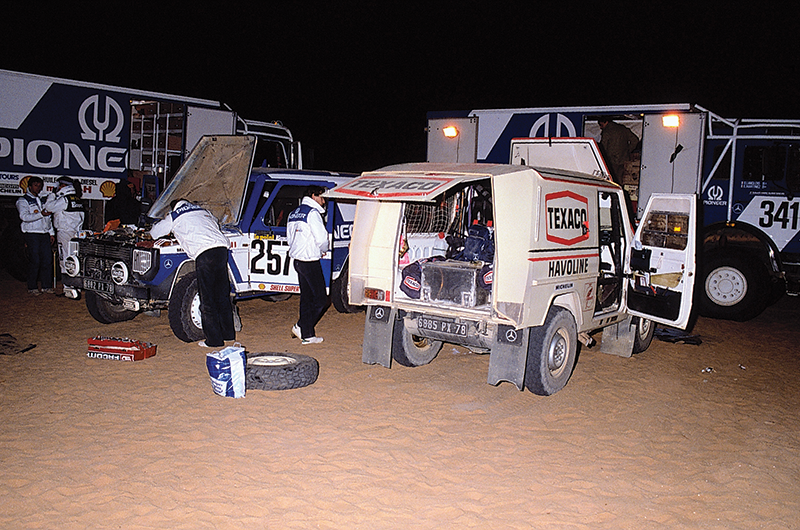
A service stop for both cars and trucks on the 1983 Paris-Dakar © Mercedes-Benz Archive

It would also include a reinvigorated Jacky Ickx and Claude Brasseur partnership, aboard the Mercedes-Benz France Geländewagen they had fielded to fifth place the previous year.

An even more successful race-car driver turned enthusiast of the dust, Ickx followed his 25 Formula One podium finishes and four 24 Hours of Le Mans wins with a first foray on the Paris-Dakar in January 1981.

He bowed out when the engine in his Citroën CX 2400 expired midway through and, instead of choosing to pursue a front-wheel-drive class victory with the known talents of these hydropneumatically sprung sedans, he decided to sign up with the promise of four-wheel drive for 1982.

After all, a Range Rover had won the 1976 Rallye Côte-Côte and the 1981 Paris-Dakar.

Classic & Sports Car – Mercedes-Benz G-Wagen: Paris-Dakar winner recreated

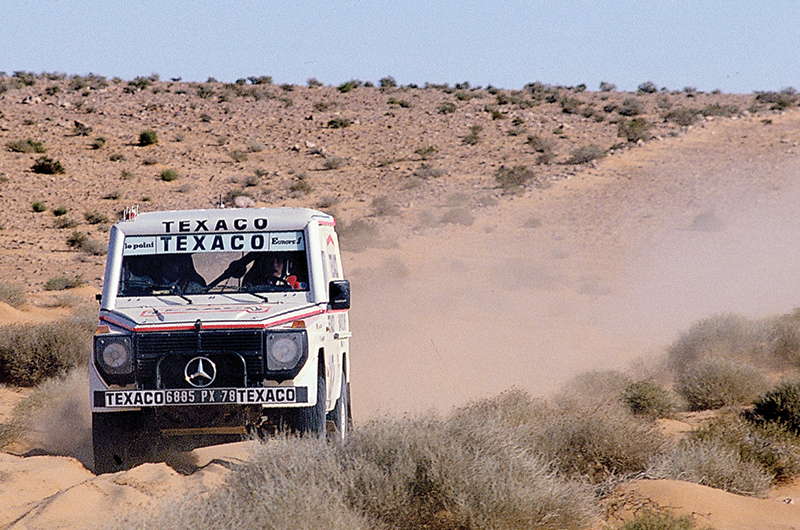
The Jacky Ickx/Claude Brasseur Mercedes-Benz G-Wagen in the sand, on its way to Paris-Dakar victory © Mercedes-Benz Archive

Plenty of Mercedes-Benz G-Wagens had been competing in the rally, too, in a variety of forms, but the one prepared for Ickx and teammate Claude Brassuer, the one-time Olympic bobsledder and latterly a prolific movie actor, was a 280GE.

Fettled by Mercedes-Benz France, with engineering and bodywork support from the factory team in Germany, the specification was elevated for durability, endurance and outright performance.

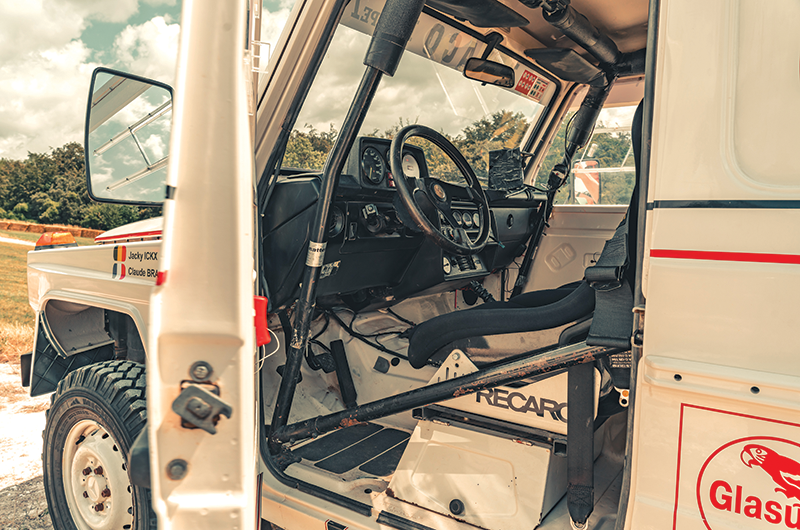
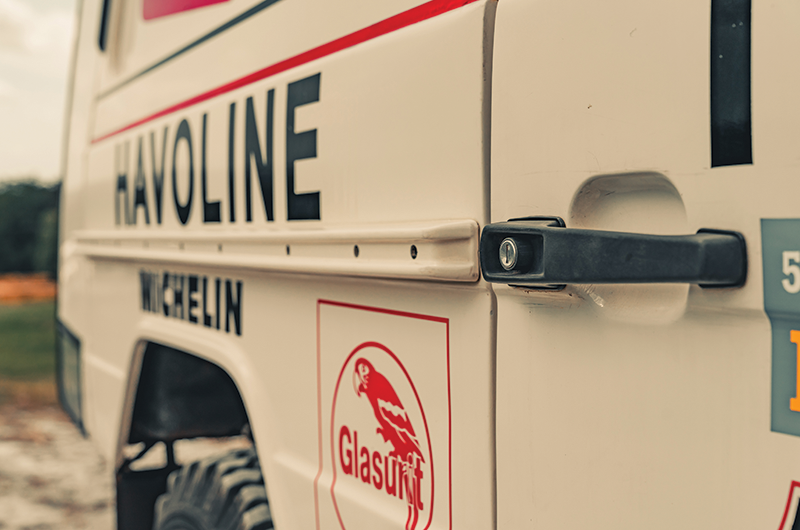
Offsetting the extra weight of protective aluminum underbody skidplates and a rollcage were Makrolon windows, as well as fiberglass panels for the fenders, the hood and the doors.

Classic & Sports Car – Mercedes-Benz G-Wagen: Paris-Dakar winner recreated

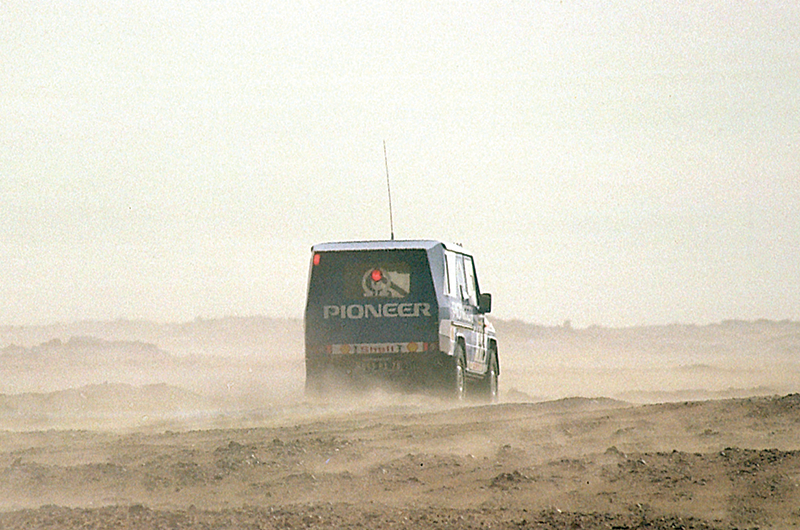
The sister Mercedes-Benz G-Wagen of Jean-Pierre Jaussaud and Michel Brière failed to finish, but eight 280GEs made the top 10 © Mercedes-Benz Archive

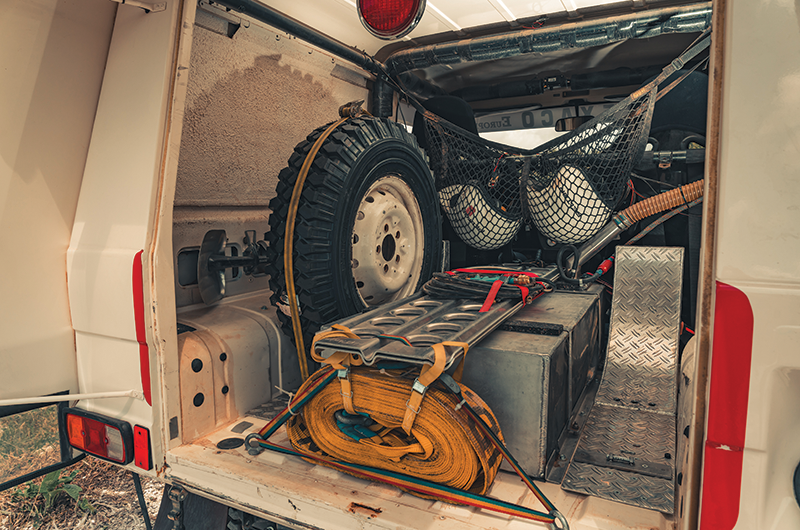
Lightweight bucket seats were bolted on to exposed bodywork – with no carpets – and an additional 124-liter fuel tank joined two spare tires as well as shovels and sand-ladders in the vehicle’s rear.

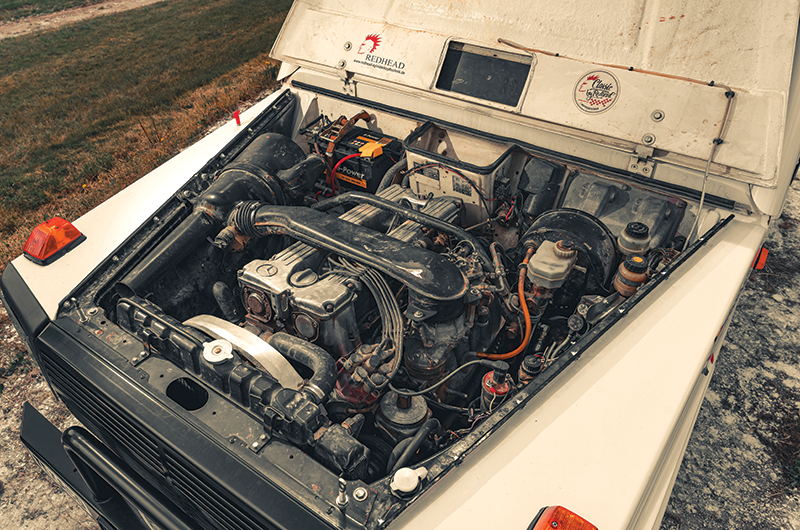
Meanwhile, power from the 2.8-liter, twin-cam, M110 straight-six engine was pushed up to around 200HP – which was substantially greater than the standard model’s 156HP, and even more than the super-rare, roadgoing 280GE AMG’s c180HP output.

The pace of the big Benz was immediately impressive, winning several of the 17 stages, but victory eluded the newly formed Ickx/Brasseur duo, who finished fifth.

Classic & Sports Car – Mercedes-Benz G-Wagen: Paris-Dakar winner recreated

Despite a hefty fuel tank, the 1835kg (4045lb) G-Wagen racer was 110kg (243lb) lighter than the standard Mercedes-Benz 280GE

The 1982 ‘car’ category was won by the Marreau brothers in a four-wheel-drive Renault 20 Turbo; the highest-placed G-Wagen, one of two Avia-sponsored cars, piloted by Jean-Pierre Jaussaud and Michel Brière, came home in third.

For 1983, the Mercedes-Benz France team saw the potential for full honors and searched for even more performance out of the 280GE.

With the engine already fitted with high-lift camshafts and hemispherical pistons, there was a resistance to push the internals further for fear of losing reliability, yet airflow remained a problem and none of the larger production inlet systems available would fit.

Classic & Sports Car – Mercedes-Benz G-Wagen: Paris-Dakar winner recreated

Jacky Ickx’s steering wheel is the only-surviving part from the original Mercedes-Benz G-Wagen racer

The W126 S-Class inlet was close enough, it turned out, that it would squeeze in if the engine was canted over by a few degrees, causing only a minor relocation of the steering column.

With that, power was up to 220HP, but even more performance was unlocked by the reworked aerodynamics.

Bringing in Rüdiger Faul, the airflow ace behind the C111-IV Nardò speed-record car, was a shrewd move.

As in the trucks category, most of the larger four-wheel-drive teams relied on outright power and tractability to compensate for their machines’ unyielding, brick-like profiles, with few gestures towards aerodynamic efficiency.

Classic & Sports Car – Mercedes-Benz G-Wagen: Paris-Dakar winner recreated

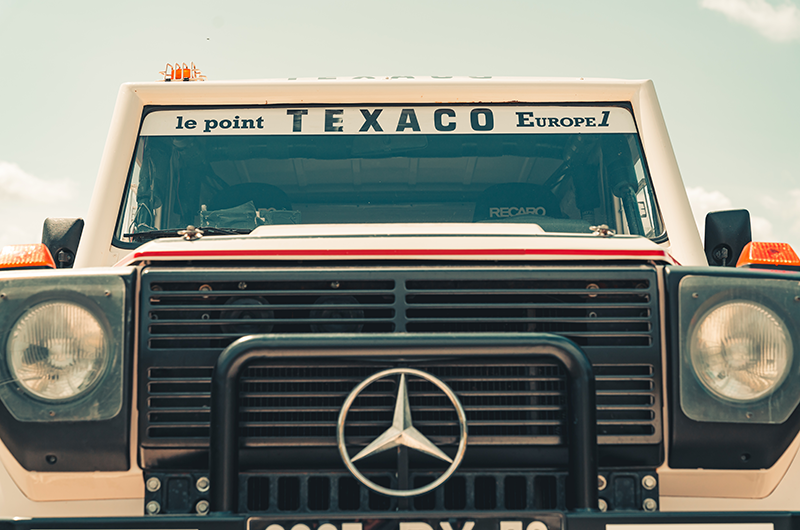
The Paris-Dakar Mercedes-Benz G-Wagen’s engine was tilted to accommodate a W126 Mercedes-Benz S-Class inlet, for improved airflow

For the rally’s 1983 running, Mercedes’ 280GE not only found another 20kph at the top end – up to a useful 195kph (121mph) from the standard G-Wagen’s 150kph (93mph), but the reduction of drag from 0.52 to 0.41Cd also dramatically improved fuel consumption.

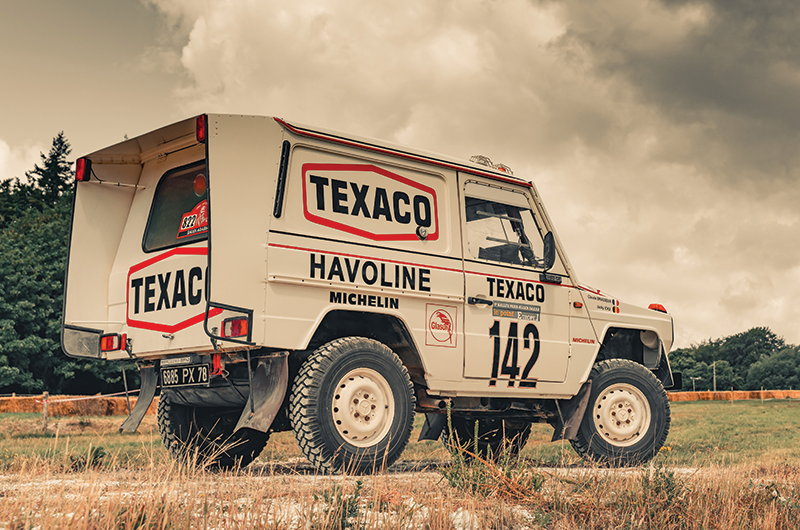
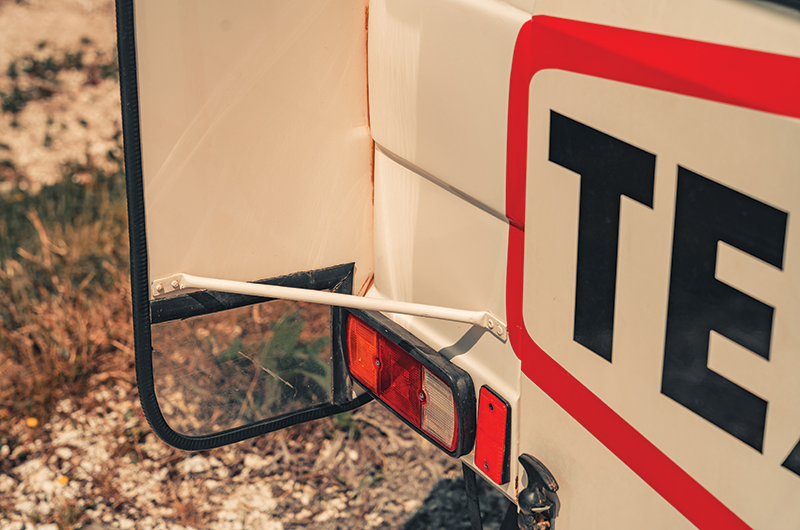
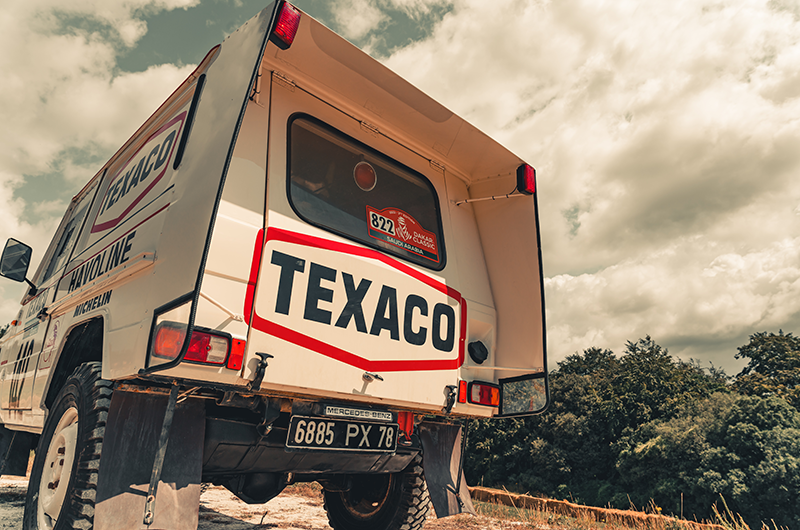
The modifications were actually quite simple: rounding off the external rollcage to become flush with the G-Wagen’s windshield; removing the leading edge of the side rubbing strips; and, perhaps most elegant as well as effective, a three-sided fender extension to the rear to improve airflow separation.

And they were timely. The 1983 enduro was a greater challenge than ever.

Classic & Sports Car – Mercedes-Benz G-Wagen: Paris-Dakar winner recreated

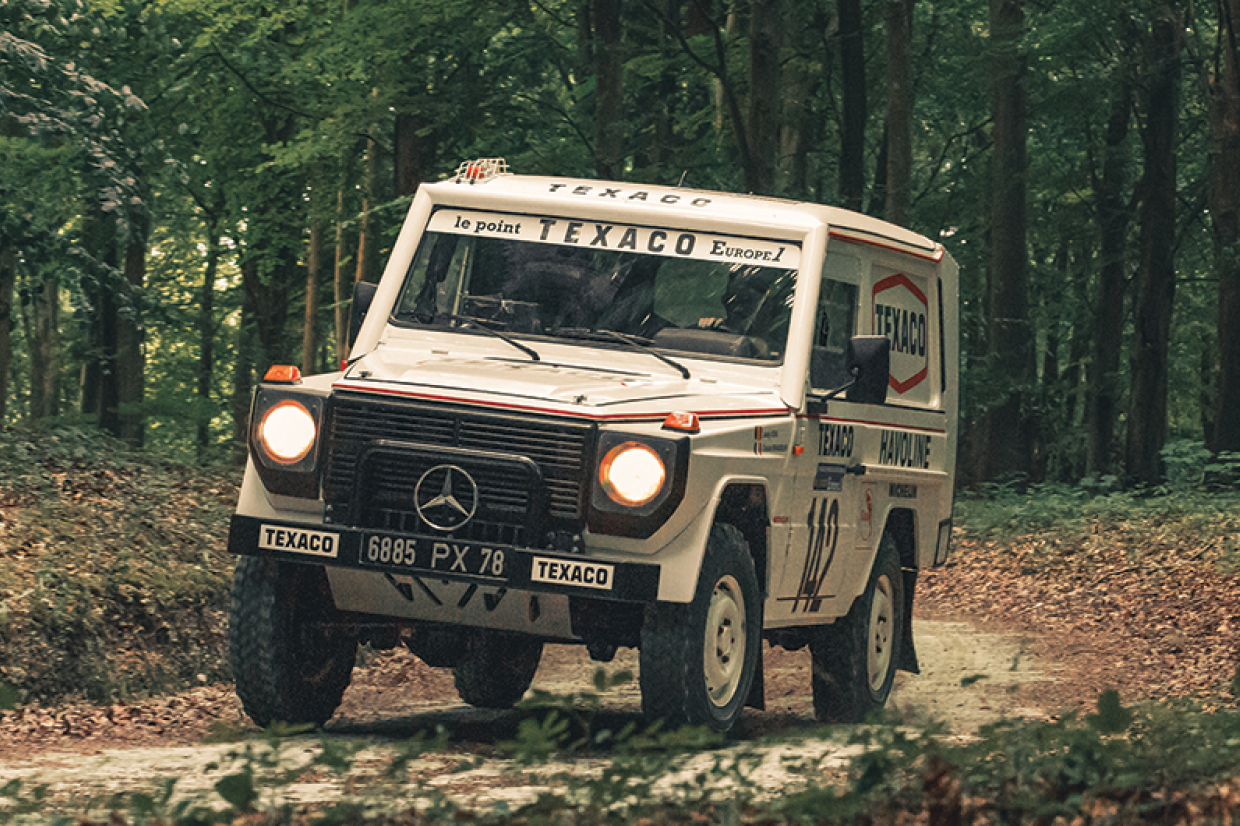
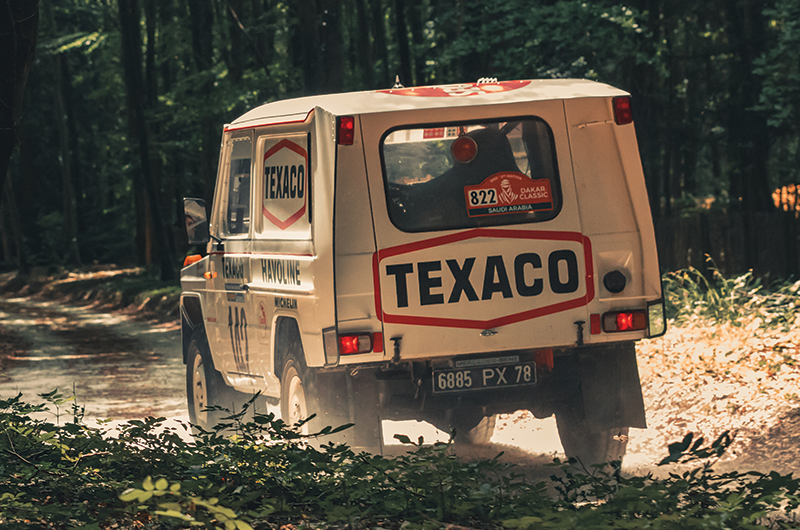
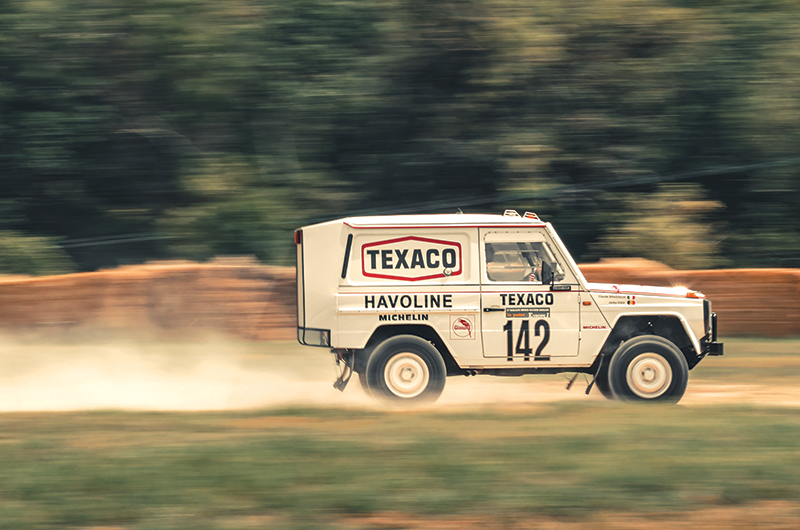
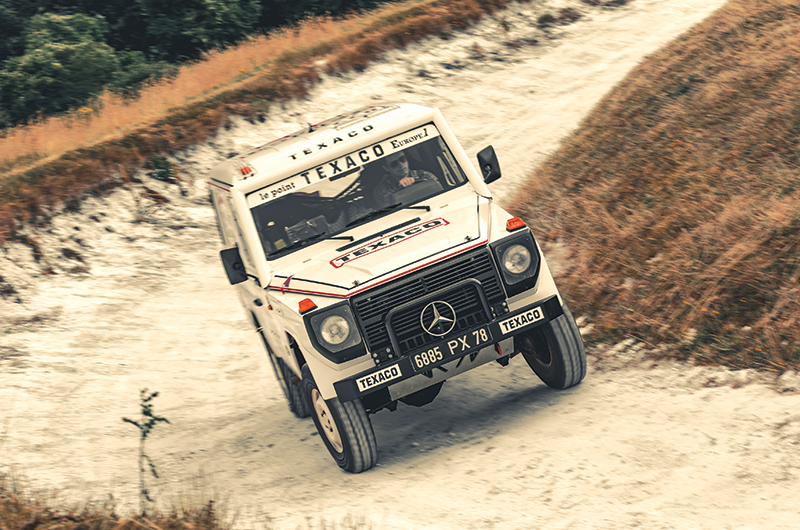
The Mercedes-Benz G-Wagen heads off-road – although Goodwood is a far cry from Africa

The previous year’s winners, the Marreau brothers, returned to defend their victory aboard a V6-powered Renault 18 4x4, while the second-placed Lada Niva works car was now fitted with a 2.5-liter Chrysler engine, plus two-time European Rally Champion Bernard Darniche was making his Paris-Dakar debut, behind the wheel of a 280ZX-powered Nissan Patrol.

What’s more, for 1983 the route now included the devilish Ténéré region of the Sahara.

It began on the morning of January 1 from the Place de la Concorde in Paris, with 110 motorcycles and 209 cars heading south to the majority of the timed stages in Africa.

Classic & Sports Car – Mercedes-Benz G-Wagen: Paris-Dakar winner recreated

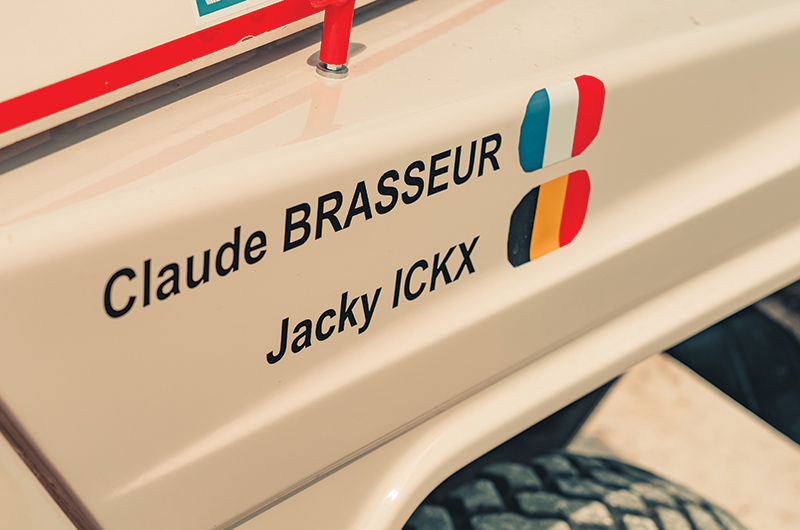
F1- and Le Mans-winner Jacky Ickx and Olympic bobsledder Claude Brassuer were, perhaps, an unlikely duo

Ickx and Brassuer had made a flying start and took the lead on day six of 20, somewhere in the northern Sahara, hotly pursued by rival G-Wageneers Jean-Pierre Jaussaud/Jean da Silva, the André Trossat/Eric Briavoine Lada and a gaggle of Range Rovers headed by 1981 winner René Metge.

But the pace of the 280GE hot rod was unassailable, across some stages even edging a gap over the rapid motorbikes.

On the other side of a sandstorm that halted a number of competitors through the Ténéré, the Ickx/Brasseur G-Wagen stumbled in Niger, with a loss of power, and then in Mali, tantalizingly close to the finish, when the front axle cracked.

Classic & Sports Car – Mercedes-Benz G-Wagen: Paris-Dakar winner recreated

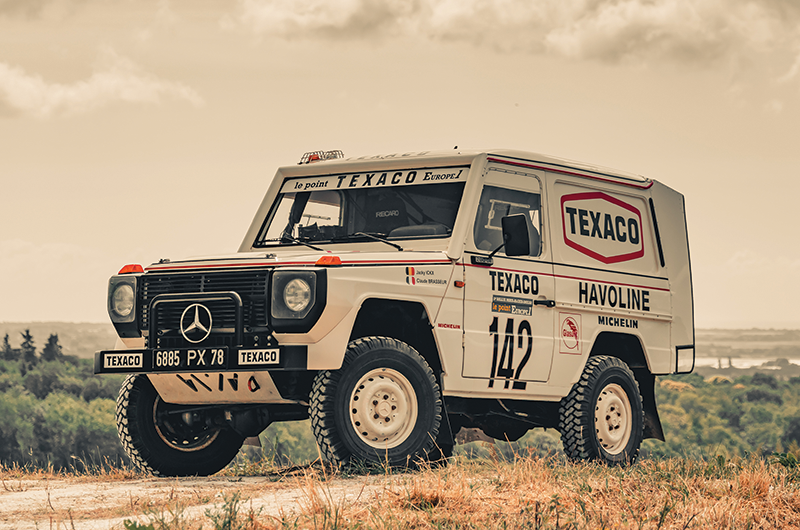
The G-Wagen has slender stays to hold its aero addenda in place

As was by then standard among the bigger teams, an identical service car was on hand to sacrifice its engine and front axle, both hastily fitted against a lead that had, at one time, been up to around an hour.

Declared winner after only a brief argument over the legitimacy of the fresh components, the Ickx/Brasseur 280GE took the car category, producing a publicity fanfare bolstered by a Mercedes-Benz 1936 AK placing first among the trucks, too.

Quickly becoming a globally recognized trophy, the following year the Dakar was claimed by newcomer Porsche, fielding a 3.2-liter 911 with four-wheel drive.

Classic & Sports Car – Mercedes-Benz G-Wagen: Paris-Dakar winner recreated

‘When pushed, the thumping growl of the AMG-tuned engine turns to a raspy cacophony of vibrating exhausts and bellowing intakes’

Then Mitsubishi was on the charge, for a 1-2 in 1985, before Peugeot brought in the 1981 World Rally Drivers’ Champion Ari Vatanen for the ultimate works run of victories into the 1990s.

As more bespoke, rally-raid-type vehicles began to take over, the Mercedes-Benz G-Wagens soldiered on in the lower ranks, making valiant efforts to keep up with V8 engines – even the Porsche team supported its 959 with one in 1985.

The 1983-winning 280GE received a V8 swap, too, after being sold off to a private buyer who campaigned it in the 1985 and ’86 Paris-Dakar rallies. Then it seems to have disappeared.

Classic & Sports Car – Mercedes-Benz G-Wagen: Paris-Dakar winner recreated

The sensational attention to detail, aided by Mercedes-Benz, means that this Paris-Dakar replica is near-indistinguishable from the lost original

When enthusiast Jörg Sand set about building this replica back in 2007, even Mercedes-Benz itself wasn’t sure exactly which chassis number was the winning car: it narrowed it down to two.

Jörg then bought a 1982 280GE, built within 200 cars of the original, and spent a year rebuilding it into a meticulous recreation.

Mercedes-Benz provided him with archive access as well as engineering guidance, settling details such as the design and placement of the additional fuel tank.

The manufacturer also offering him the precious, sole remaining part from the Ickx/Brasseur winning car: the steering wheel.

Classic & Sports Car – Mercedes-Benz G-Wagen: Paris-Dakar winner recreated

The Mercedes-Benz G-Wagen’s extended rear improves airflow

As well as building the closest thing to the real deal that Mercedes-Benz could display in its museum and at shows, Jörg was determined to match the mechanical upgrades that gave the original 280GE its Paris-Dakar capability.

“It was sent to AMG for all the engine work, and we sourced a five-speed dog-leg gearbox and 1:528 differential for the reduced gearing,” he explains.

“The only change I made was to increase the spring stiffness, because I found the original spec a little uncontrollable!”

In the 2022 Dakar Classic, both the GE and Jörg had the chance to test their mettle over 7500km (c4600 miles) of desert from Ha’il to Jeddah, Saudi Arabia: “The car was spectacular, although we did suffer a flat tire while wading a river. And it was a steel-banded tire at that.”

Classic & Sports Car – Mercedes-Benz G-Wagen: Paris-Dakar winner recreated

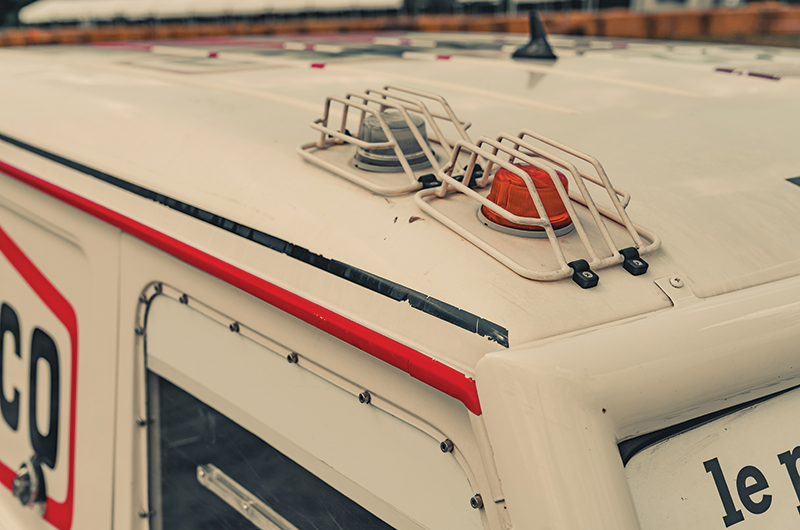
Roof lights helped organizers to track Paris-Dakar competitors from the air

A quick run around Goodwood’s off-road arena and forest rally stage, ahead of its debut appearance at the 2023 Festival of Speed, is hardly a challenge for this classic, cross-Continental warrior, but the G-Wagen reveals a wild character almost immediately.

The AMG-tuned ‘six’ catches, hot cams spinning with a flare of revs accelerated by its short ratios, a thumping growl turning into a raspy cacophony of vibrating exhausts and bellowing intakes when pushed to the limiter.

It takes great lunges, elasticated on its tall suspension by the motion, and picks up staggering pace in the higher gears.

Classic & Sports Car – Mercedes-Benz G-Wagen: Paris-Dakar winner recreated

‘The win produced a publicity fanfare bolstered by a Mercedes 1936 AK placing first among the trucks, too’

Up to modest speeds, the engine noise settles and a remarkable absence of transmission whine means you can begin to hear the stones and other terrain rumbling beneath.

It is a raw experience, but less exhausting than you might expect.

The main controls are easy to manage, no more strenuous than a standard G-Wagen’s, and through-ventilation is mercifully effective from the fitted vents, if not so much the sliding Perspex windows.

The prospect of thousands of tough miles ahead seems tempting.

It attacks the rally stage with a voracious appetite for gears on the straights, shooting the sharp-edged sound of its twin-cam ‘six’ into the trees, then wobbles and rolls as the weight shifts around the course’s tighter bends.

Classic & Sports Car – Mercedes-Benz G-Wagen: Paris-Dakar winner recreated

This recreation of the Paris-Dakar Mercedes-Benz G-Wagen competed in the 2022 Dakar Classic

There’s enough power for the confident rally driver to slither all four wheels out of corners, on the unusually hard, almost slick dirt surface. Ickx must have had a lot of fun behind the wheel of this thing.

Out in the arena at Goodwood there is tougher terrain to tackle, but, no matter which axle-twisting path you attempt, there’s hardly a scramble for traction on the dry clay before the Mercedes bursts forward once again.

It must have been more of a challenge in sand, but the conclusion would be the same.

Like Sabine, Ickx and Jörg, it simply looks ahead into the horizon – and then goes for it.

Images: Max Edleston/Mercedes-Benz Archive


We hope you enjoyed reading. Please click the ‘Follow’ button for more super stories from Classic & Sports Car.