Ferrari 365GT4 BB vs 512BB vs 512BBi: boxing clever

| 26 Nov 2025
Classic & Sports Car – Ferrari 365GT4 BB vs 512BB vs 512BBi: boxing clever

It was nine years after a mid-engined Ferrari first appeared on a race track that a proper production road car left Maranello with its engine mounted amidships.

Even then it was badged Dino, not Ferrari, and fitted with just a 2-liter V6.

Old Enzo was resistant to the idea of selling a mid-engined sports car to the public, well aware of the configuration’s tendency to give little quarter to inexperience behind the wheel.

In 1973, though, he bowed to pressure from rivals to offer a mid-engined 12-cylinder supercar.

The configuration is considered the peak of Ferrari today, but at first the Prancing Horse was playing catch-up.

Classic & Sports Car – Ferrari 365GT4 BB vs 512BB vs 512BBi: boxing clever

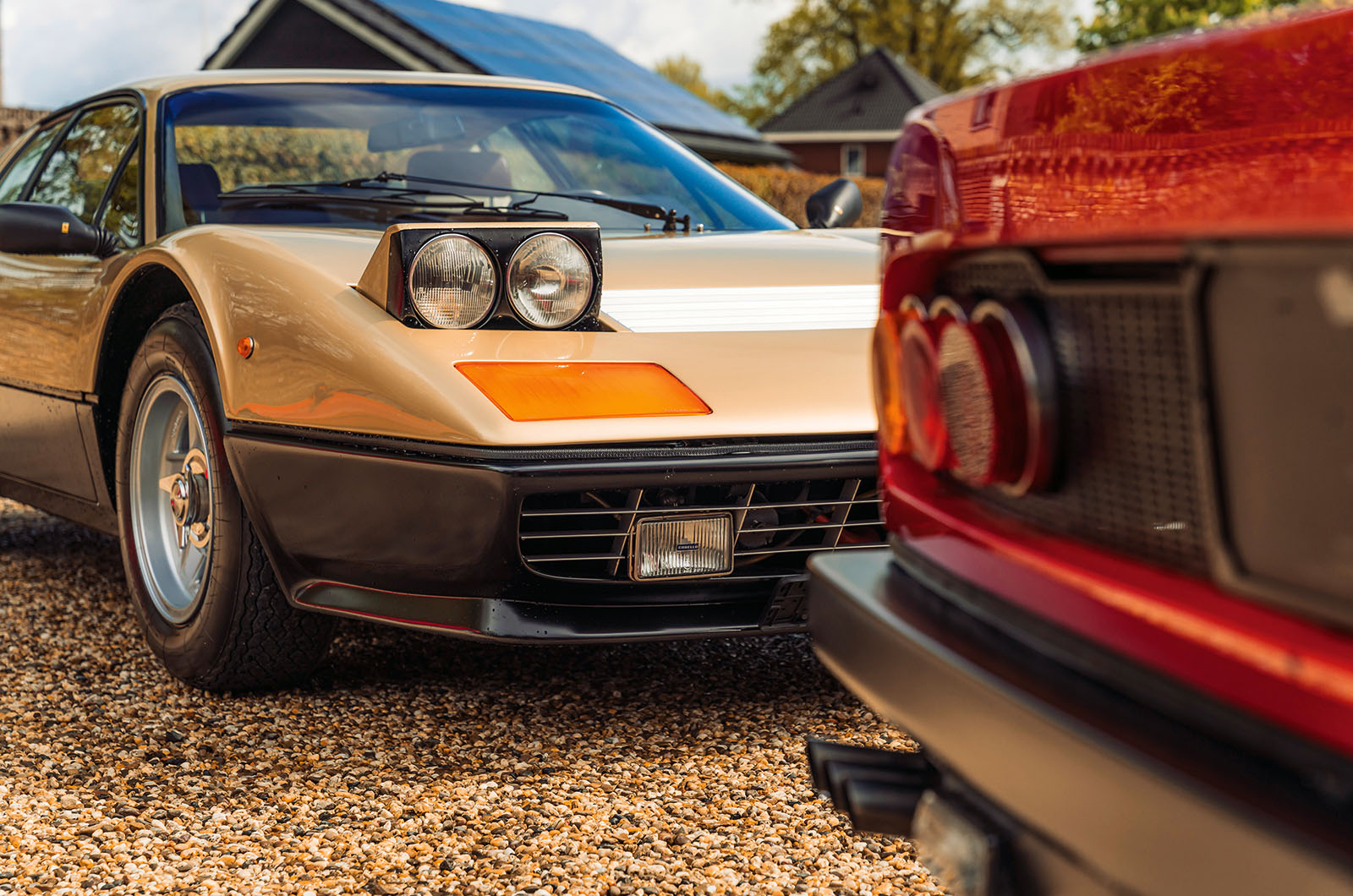
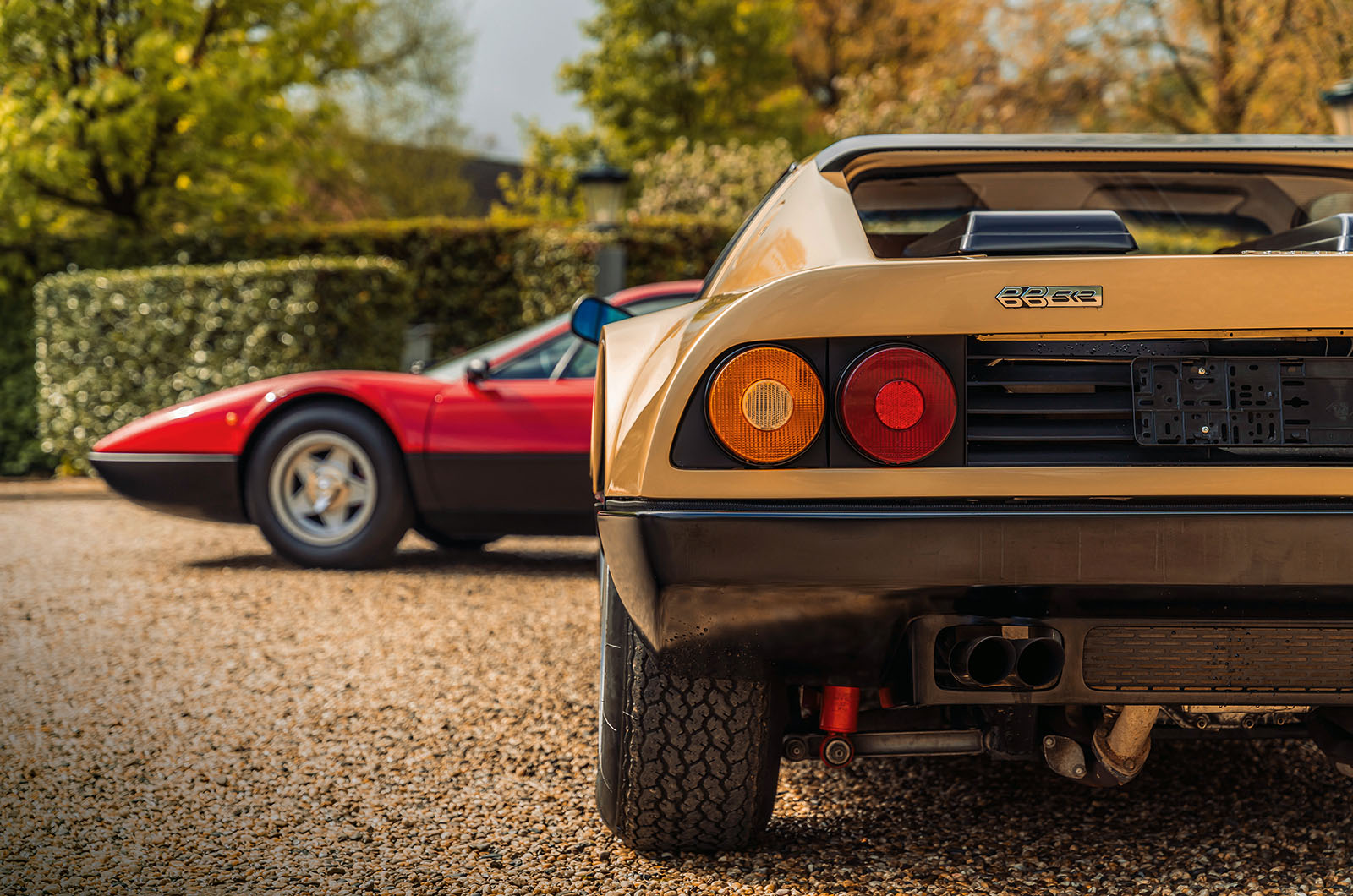
The Ferrari Berlinetta Boxer’s indicator lenses were orange or clear depending on territory; six pea-shooter exhausts for the 365GT4 BB

Refugees of the great Maranello walkout built the mid-engined V8 ATS 2500GT as early as 1963, while another friend-turned-enemy, Ferruccio Lamborghini, amazed the world with the glorious, V12-powered Miura in 1966.

Ferrari’s initial response was the 365GTB/4 Daytona.

Still stubbornly front-engined, the super-GT was brilliant but could never be quite as agile or exotic-looking as a middie.

The Lamborghini Miura redefined the meaning of the word ‘supercar’.

Before it, the term simply meant the top class of sporting automobiles; since the Lamborghini, most have understood the term to be exclusive to mid-engined exotics.

The decision to succeed the Daytona with a car featuring a mid-mounted engine was not born solely from peer pressure.

Since 1970, Ferrari had exclusively used flat-12s in its Formula One cars – the configuration’s low center of gravity and low profile aided handling and streamlining respectively.

Classic & Sports Car – Ferrari 365GT4 BB vs 512BB vs 512BBi: boxing clever

The Ferrari Berlinetta Boxer shape (here the carbureted 512BB) is by Leonardo Fioravanti, who also styled the 308GTB

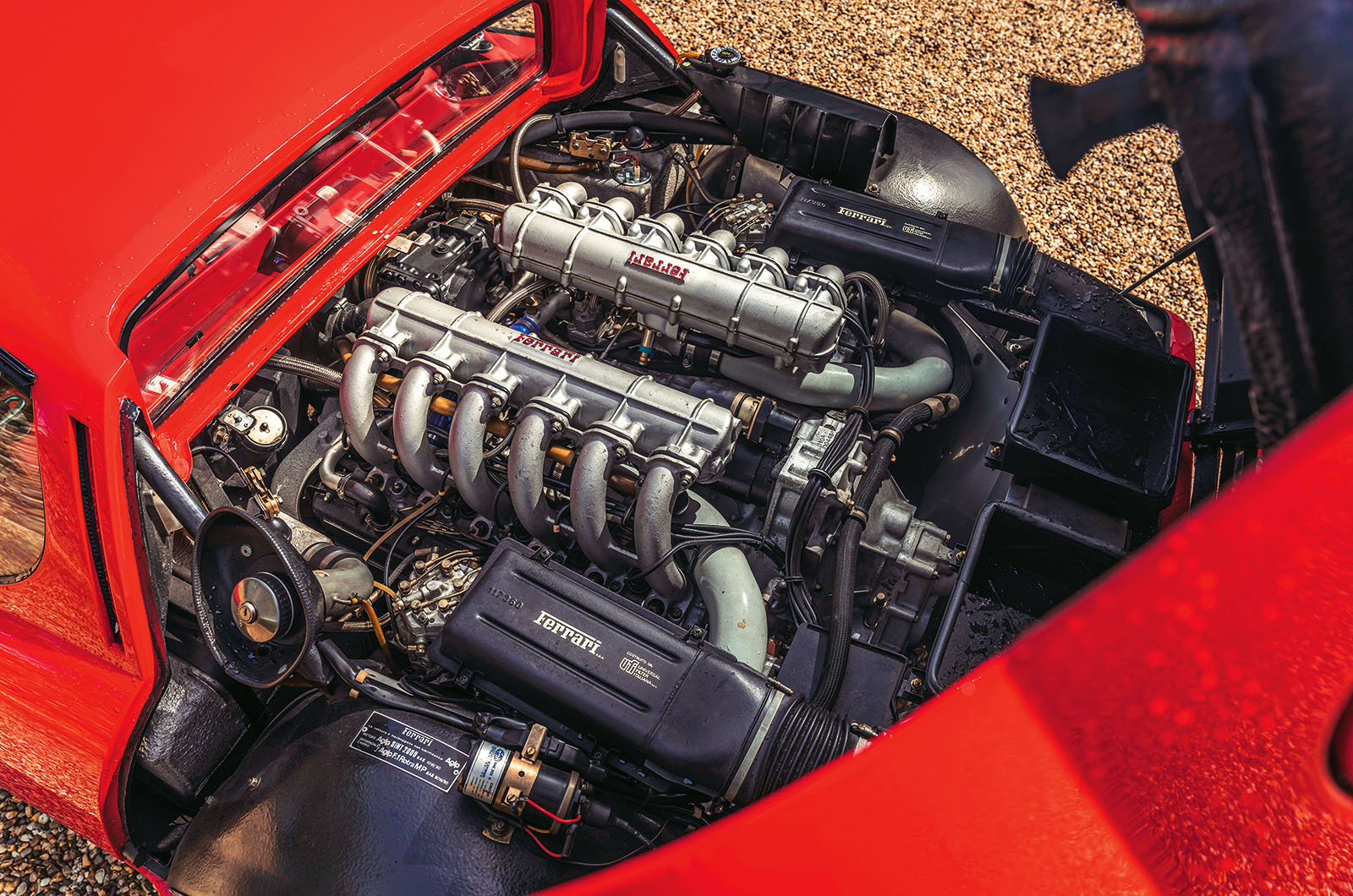
Although it would continue producing the old Colombo V12 for the 365GT4 2+2 grand tourer and its descendants, it made both engineering and marketing sense for the two-seater flagship to follow the F1 team’s example, and the only way of fitting a flat-12 was behind the driver.

Let’s get everyone’s favorite Berlinetta Boxer-related pub fact out of the way first: the motor is technically a flattened V12, not a true ‘boxer’.

Mauro Forghieri, designer of the F1-bound Tipo 001 flat-12 that is the direct ancestor of the units in all three of these cars, was the first to point that out to anyone who cared to listen; Ferrari’s marketing department clearly did not.

Classic & Sports Car – Ferrari 365GT4 BB vs 512BB vs 512BBi: boxing clever

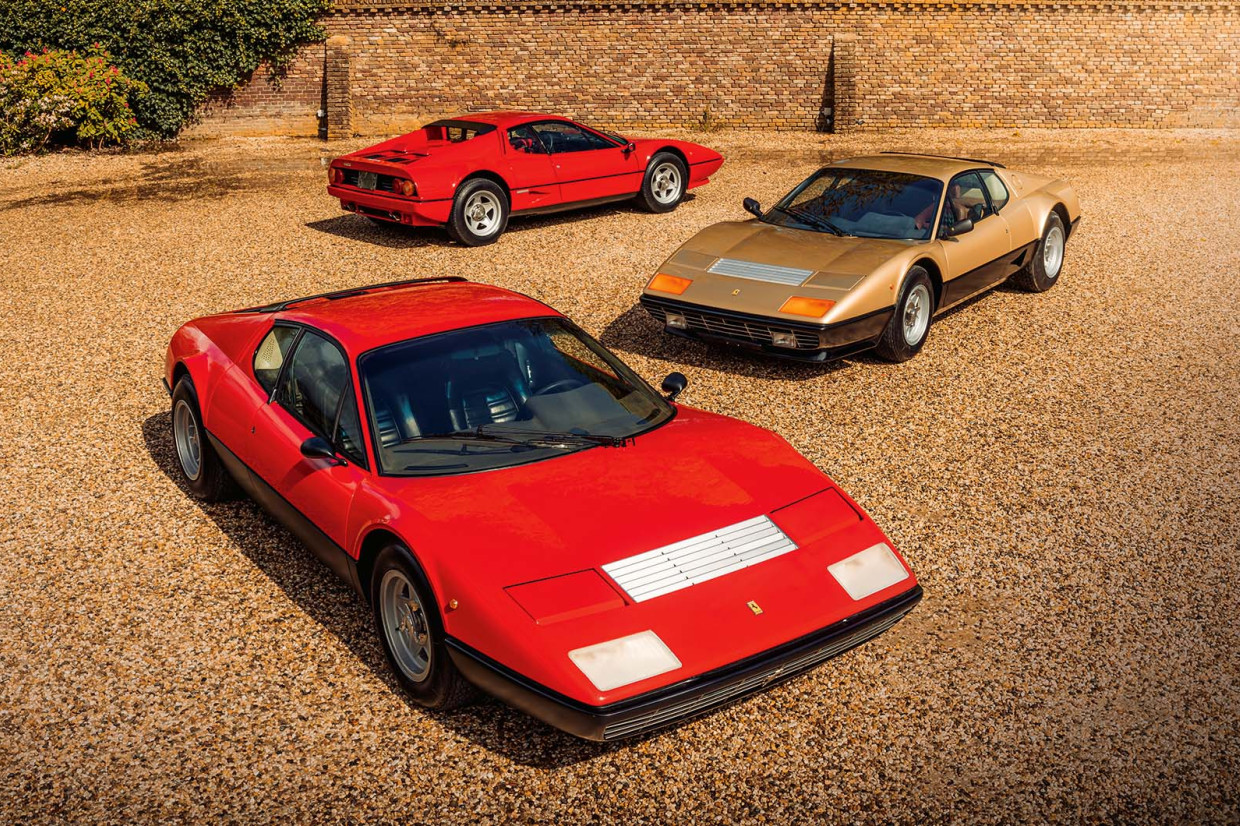
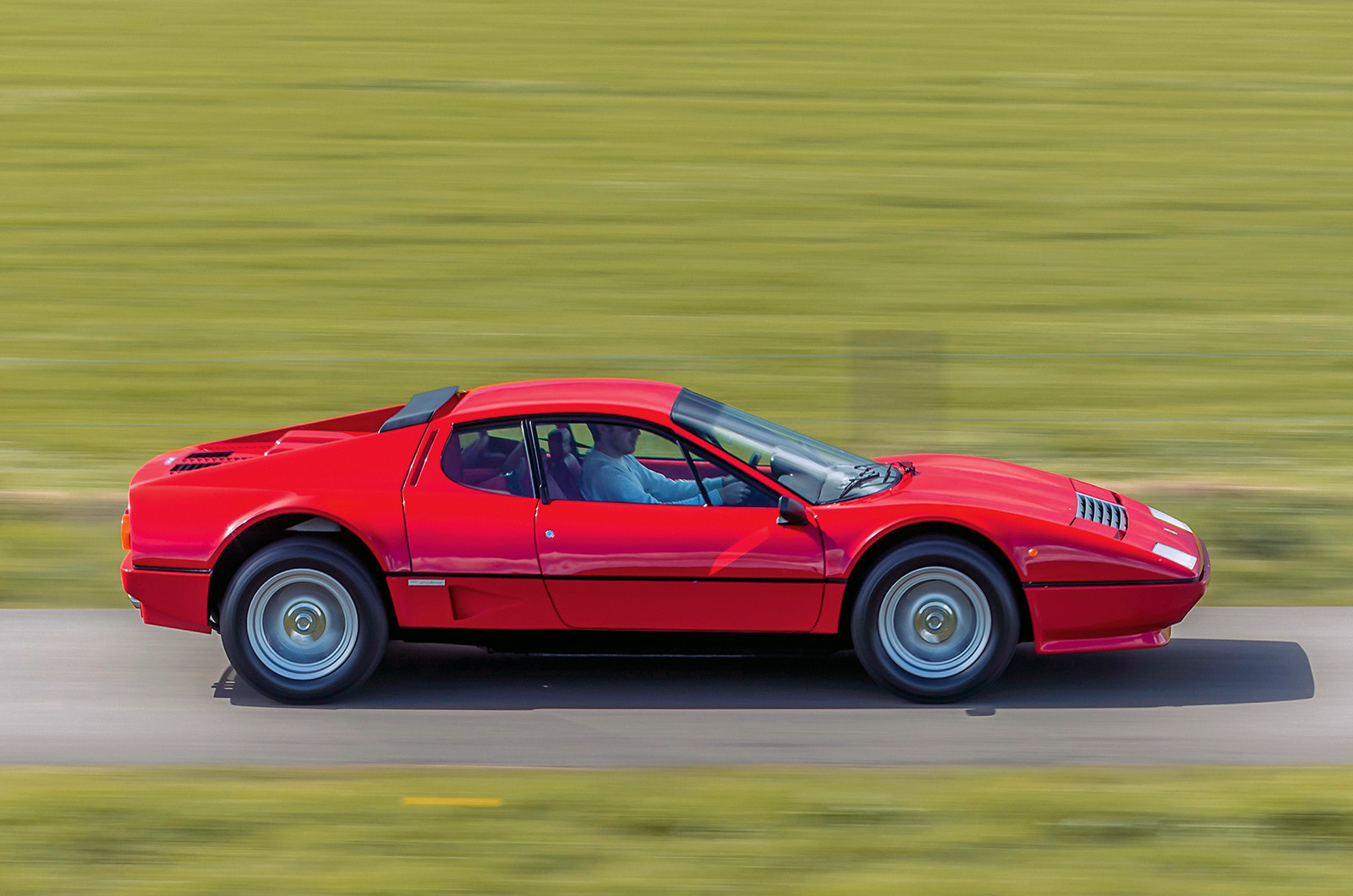
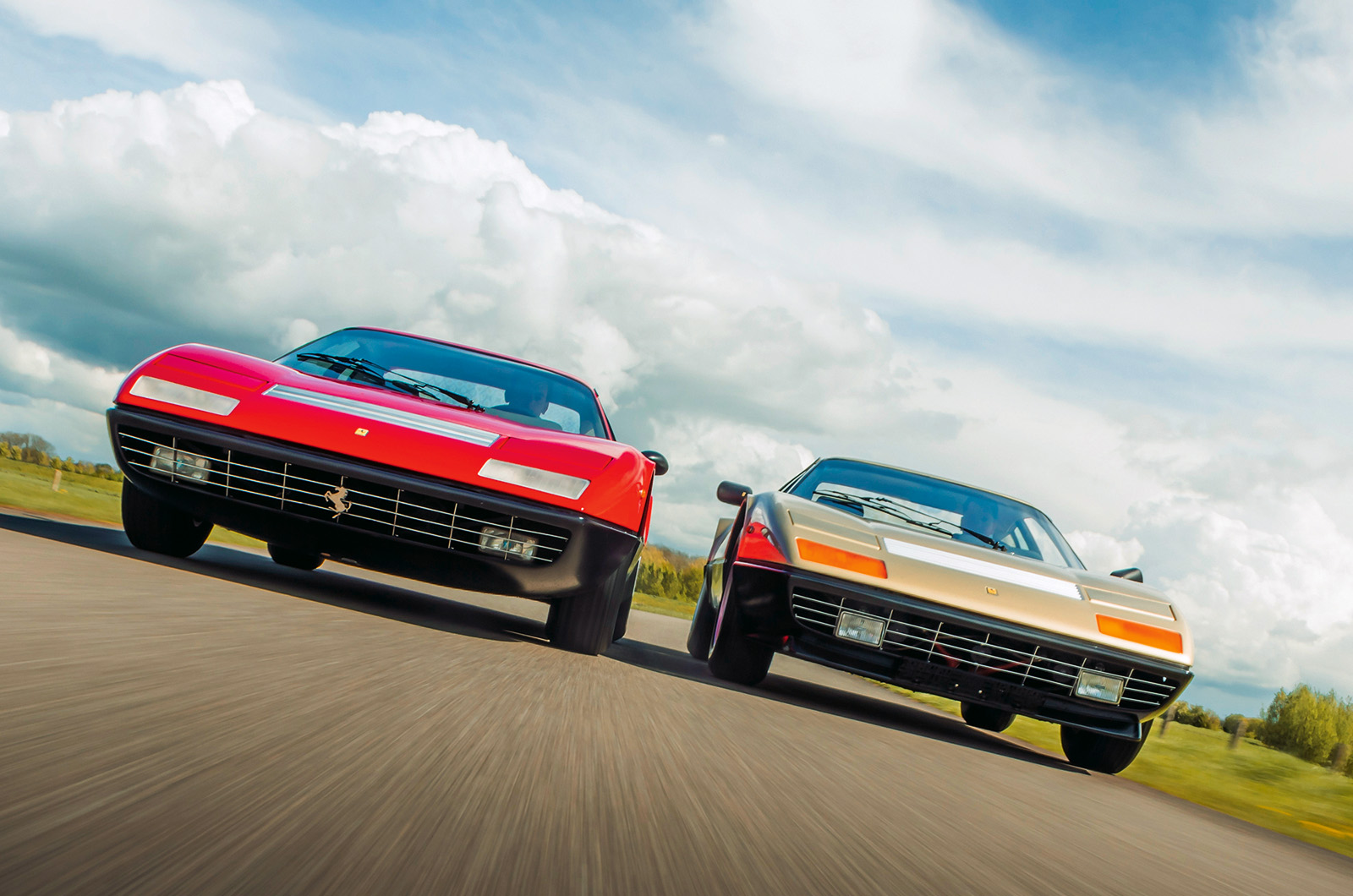
The Ferrari 512BBi’s body-colored lower panels give a more modern look

Where a boxer’s opposing pistons do their upstrokes and downstrokes in sync to create balance, the Ferrari’s pistons go out when its opposite goes in, and vice versa.

Ferrari is the only manufacturer to have committed such an engine to the road in any meaningful numbers, but plenty of others have built flat-12s to go racing.

Porsche built one rather than a boxer ‘12’ for 1969’s 917, despite all its experience with boxer units.

Alfa Romeo and Mercedes-Benz did the same.

Classic & Sports Car – Ferrari 365GT4 BB vs 512BB vs 512BBi: boxing clever

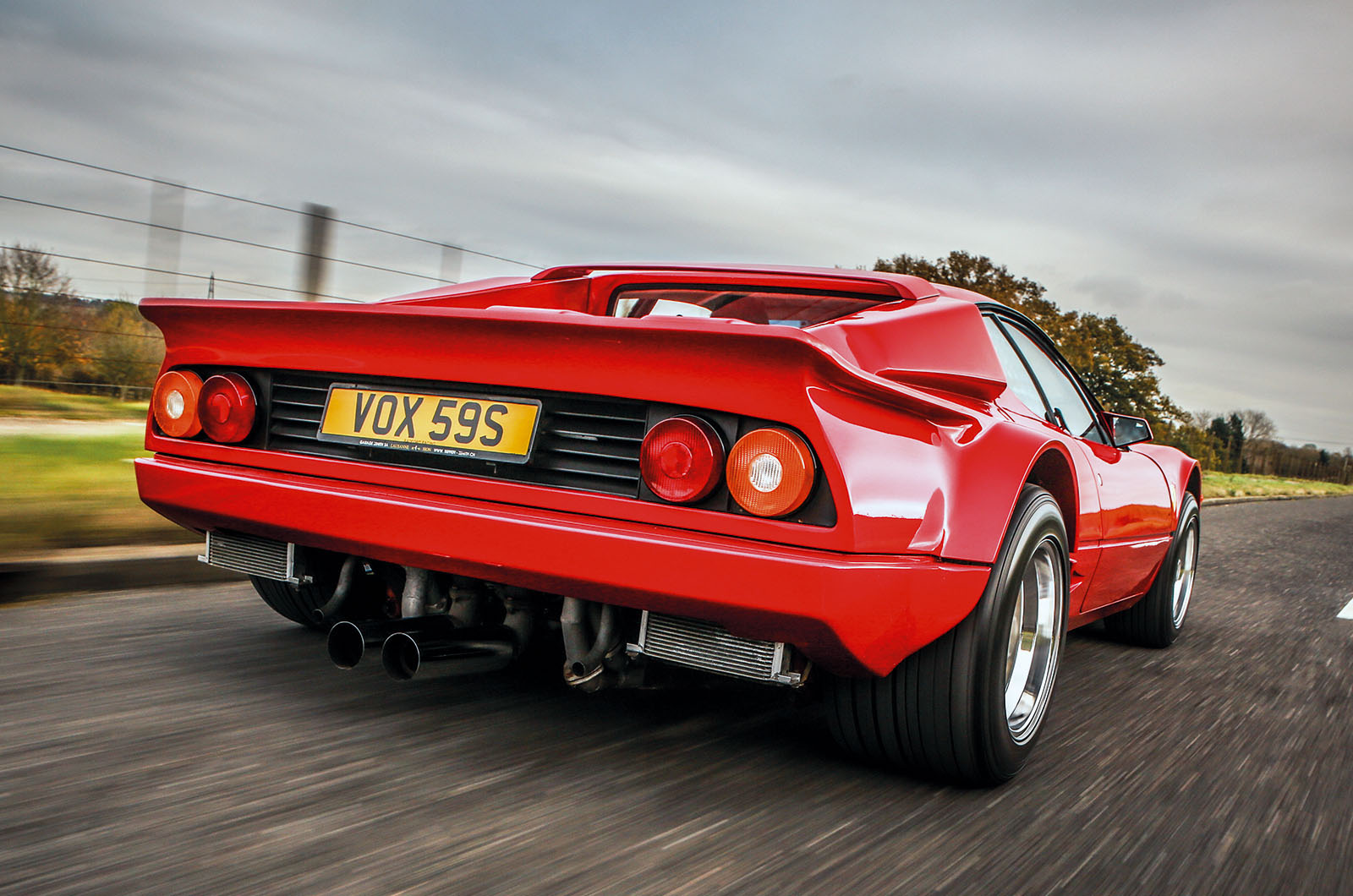
The Ferrari 365GT4 BB’s spoiler creates a low-pressure zone above the engine to boost cooling

A V12, flat or not, is already perfectly balanced – configuring it as a boxer would add complication, size and weight for little to no gain.

The only one to have tried it is Subaru, and the Carlo Chiti-designed 1235 was an abject failure.

Ferrari had plenty of form in building V12s already, and the switch to a 180° angle didn’t require a clean-sheet redesign – but that’s where things begin to get confusing.

On its debut in 1973, the F102A engine matched the displacement, bore, stroke, rods and pistons of the 4.4-liter Colombo V12, and, as per Ferrari’s naming convention of the time, that meant any car it would go into would similarly be labeled 365. This time it was 365GT4 BB.

Classic & Sports Car – Ferrari 365GT4 BB vs 512BB vs 512BBi: boxing clever

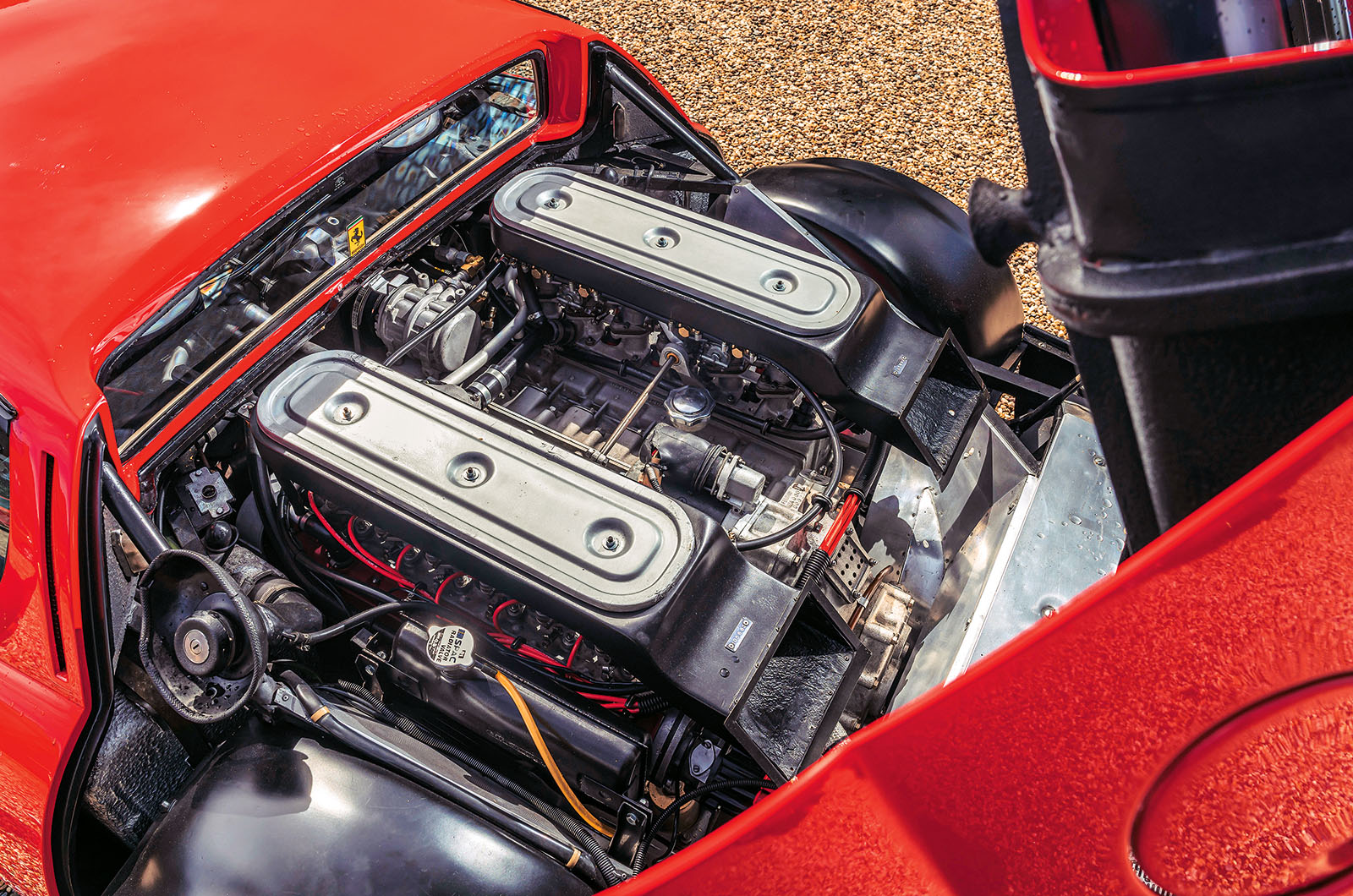
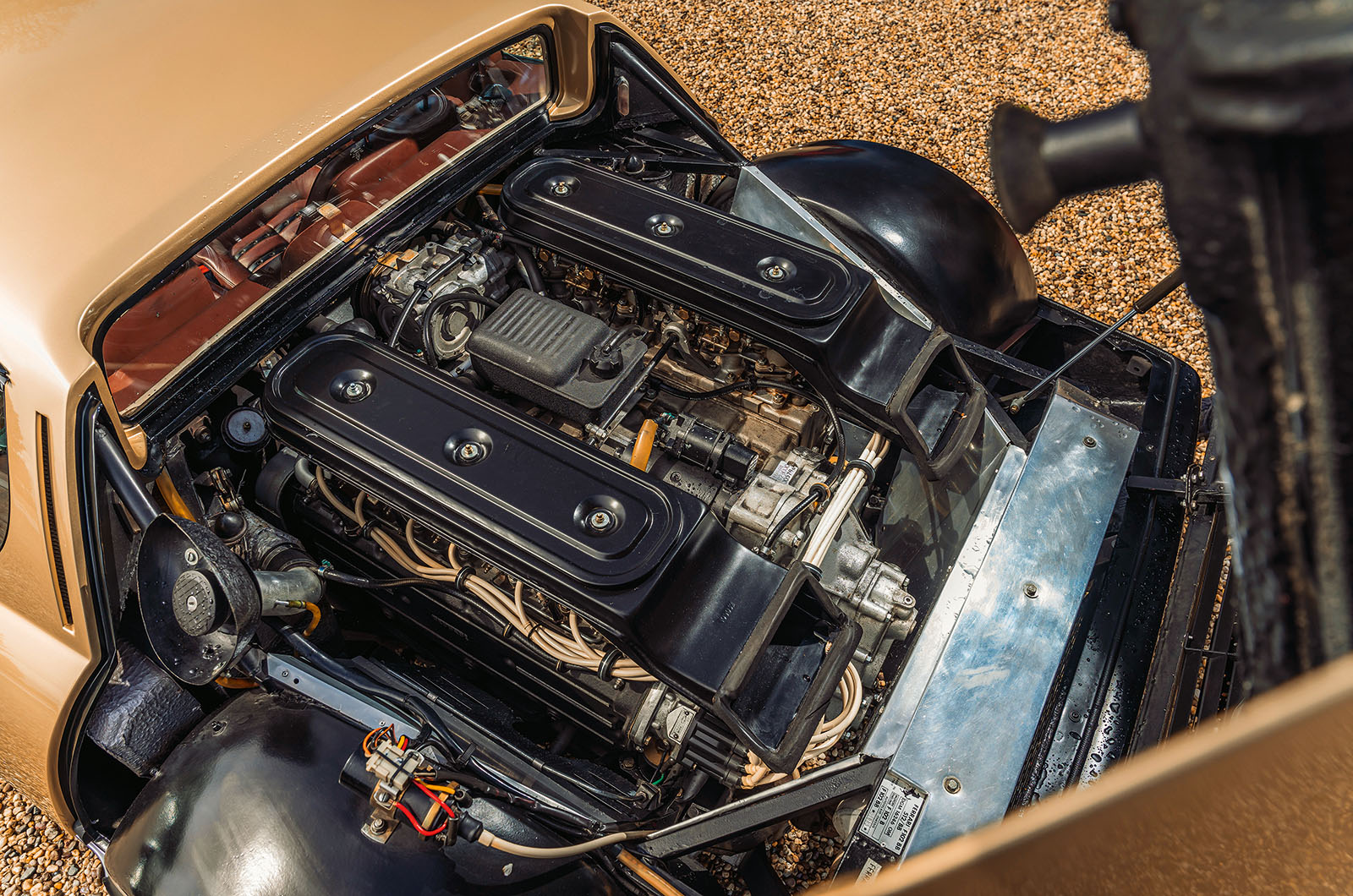
The 365GT4 BB’s early flat-12 was the joint-first Ferrari unit to use a timing belt – the 308GT4 launched with one at the same time

The second hackneyed old critique you might hear of the BB is that, once Ferrari had mounted the transmission below the flat-12 and the ancillaries above, it wasn’t much lower than a conventional V12.

That’s true, but that’s also exactly what Maranello intended.

What often goes unsaid in that particular analysis is what Ferrari gained by having the space under the engine to put the transmission.

Lamborghini stuffed in the Miura’s V12 transversely with a gearbox in the sump, Mini style, making for a packaging nightmare that jammed the powertrain right up against the occupants’ eardrums, and forced the engine oil to be shared with the transmission.

Classic & Sports Car – Ferrari 365GT4 BB vs 512BB vs 512BBi: boxing clever

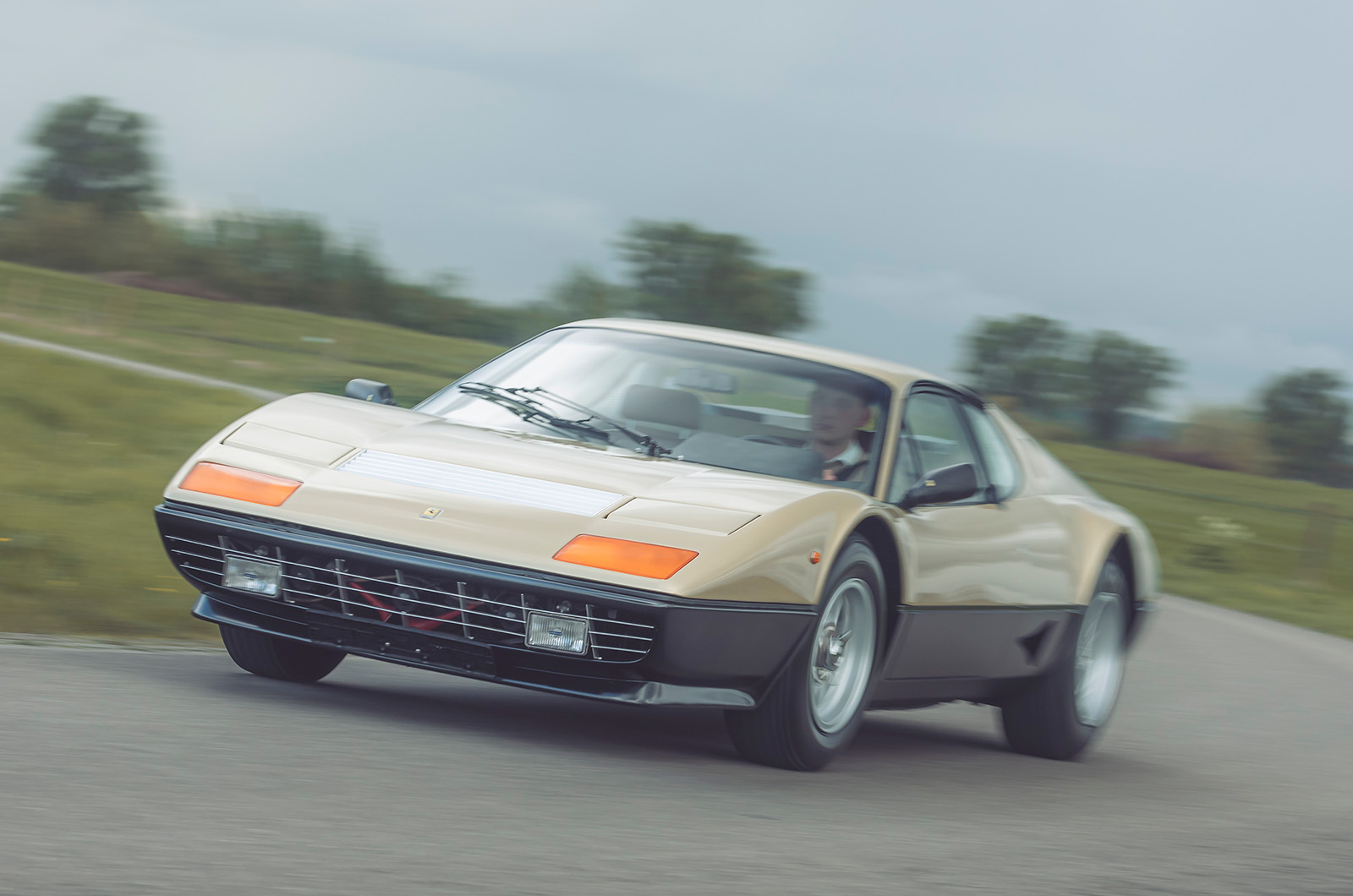
The Ferrari 512BB kept the 365GT4 BB’s two-tone theme

Sant’Agata learnt its lesson for the Lamborghini Countach, launched just after the BB, and put the gearbox in front of the (longitudinal) engine.

It was a good solution dynamically, but one that seriously impinged on interior space.

The other option was to put the ’box at the back, as Ferrari would in later models – but this would make for a longer car with a greater polar moment of inertia, which was an obsession of Ferrari’s engineers in the 1970s.

Instead, the BB’s flat engine allowed the entire drivetrain to be packaged in a column in the middle of the car, freeing up interior space and allowing a small amount of luggage room behind the rear seats to augment the ‘frunk’.

Classic & Sports Car – Ferrari 365GT4 BB vs 512BB vs 512BBi: boxing clever

The Ferrari 512BB’s flat-12 got a dry-sump oil system

That latter point might seem tangential in a V12 supercar, but the BB was a successor to the Daytona, which, while a strict two-seater, was still a grand tourer.

The Ferrari 365GT4 BB was to do the same job, but with a mid-mounted engine.

The 308GTB, the start of Ferrari’s long line of mid-engined V8 sports cars, would shortly arrive in 1975 to fulfill the out-and-out sporting brief.

Approach the first of this trio, the red-over-black 1974 365GT4 BB, and the clever packaging of the Pininfarina-designed and Scaglietti-built body is obvious.

Its rear is surprisingly stubby for a car of this size, and far shorter than the aerodynamic nose. Its two-tone color betrays further innovation.

At the front and rear are Ferrari’s first integrated plastic bumpers: the whole front and rear valances are in reinforced resin rather than with separate additions.

The sills and opening panels are aluminum, while the main body on top of that is built from steel. 

Classic & Sports Car – Ferrari 365GT4 BB vs 512BB vs 512BBi: boxing clever

The Ferrari 512BBi swapped carburetors for fuel injection

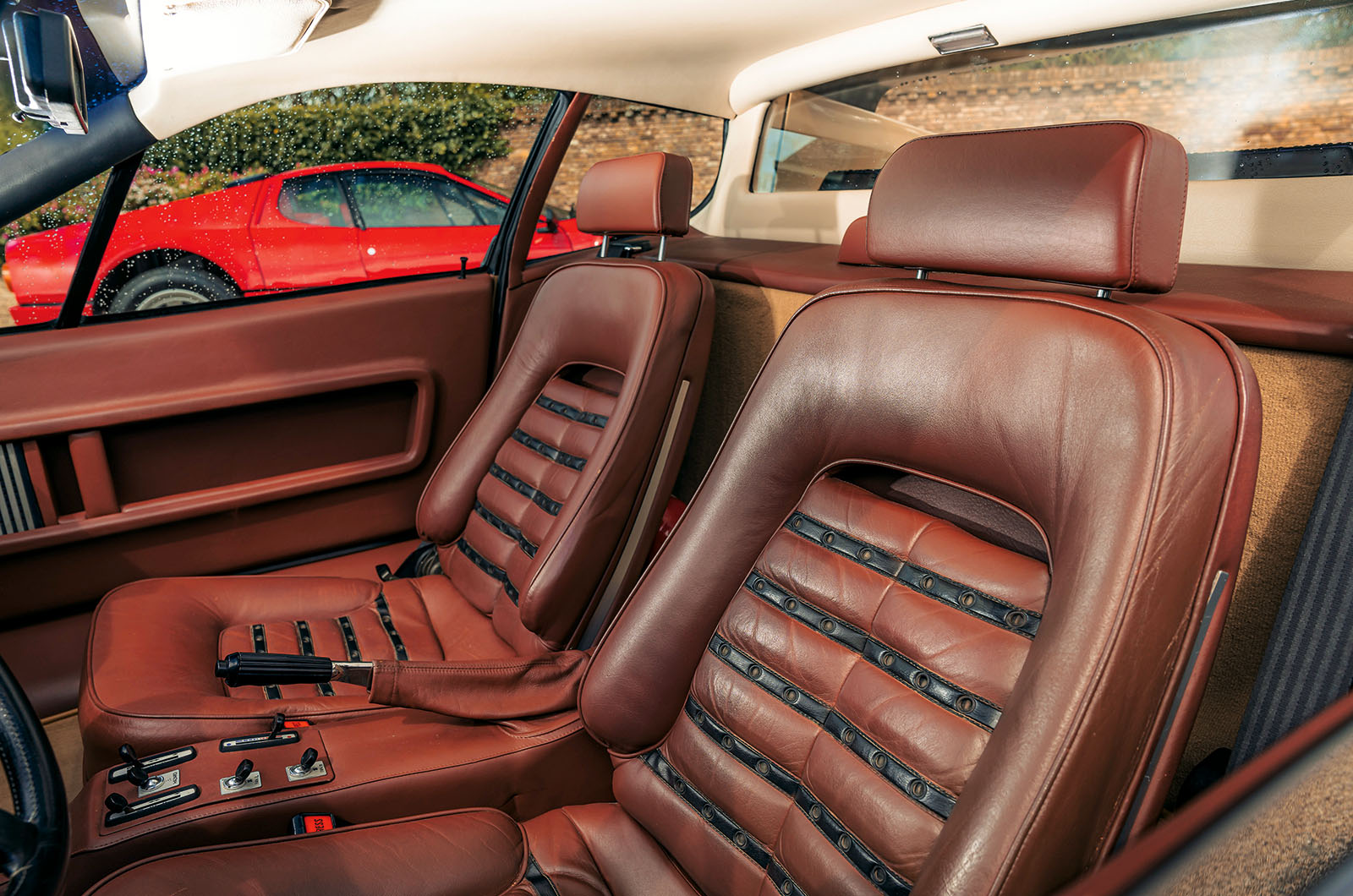
Get behind the wheel of a 365GT4 BB and the boon in interior space is immediately obvious.

There is no bulging transmission tunnel between the seats, only a small rectangular passage for the coolant pipes interrupting an otherwise flat floor – there isn’t even a center console.

With a radiator just ahead of your feet, hot coolant pipes in the middle and an engine behind, heat soak is inevitable, so air-con was standard in the BB from the off.

Despite the fairly large steering wheel and the mid-engined layout, the steering is still heavy – although contemporary road testers praised its lightness compared with the outgoing Daytona.

Ferrari was still refusing the corruption of power assistance at this stage, and the reward is brilliantly feelsome and direct steering once up to speed.

Classic & Sports Car – Ferrari 365GT4 BB vs 512BB vs 512BBi: boxing clever

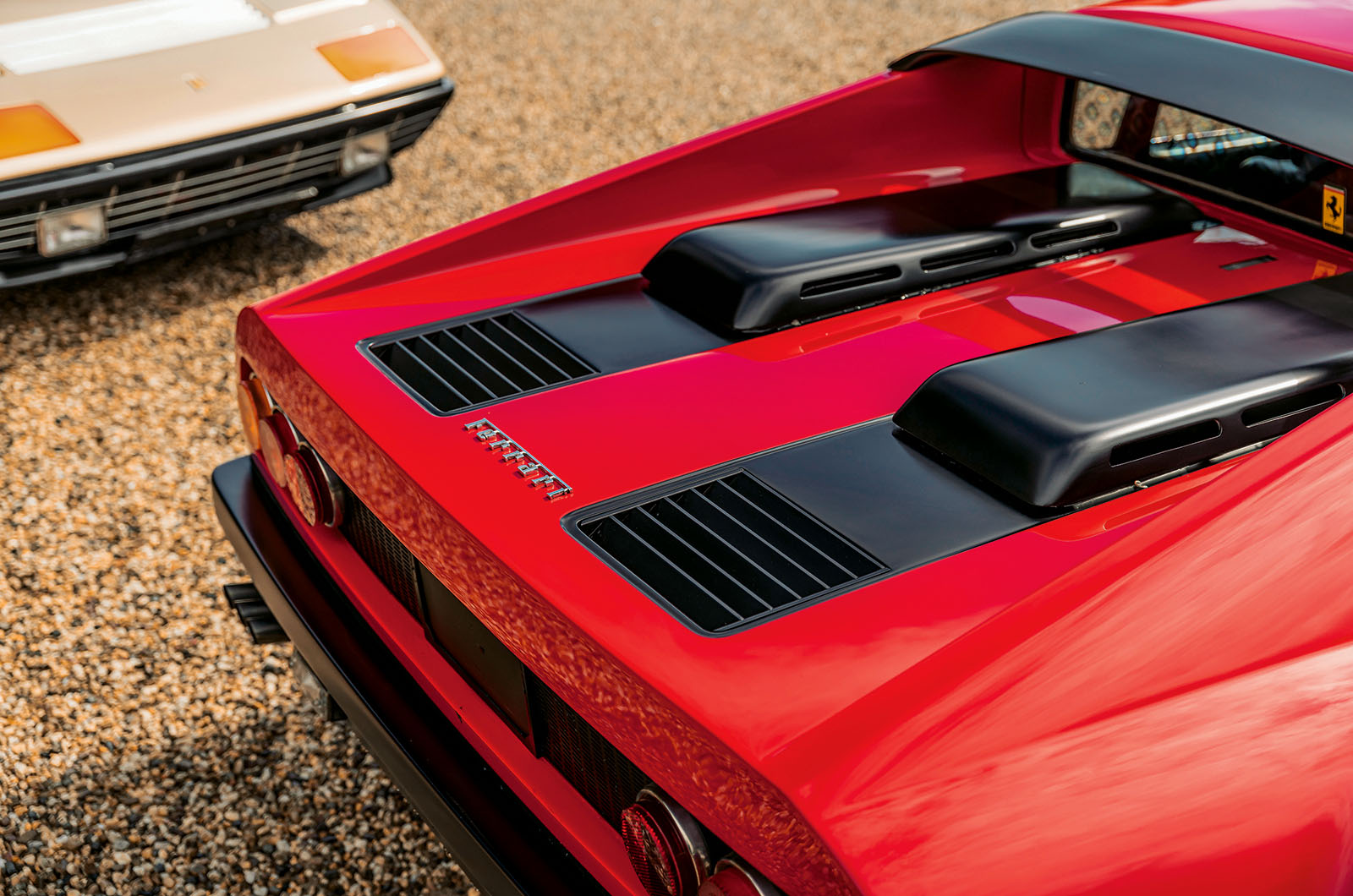
The Ferrari 512BB’s tail-light and exhaust-tip tally fell from the 365GT4 BB’s six to four

It’s a well-positioned wheel, though, not off-center or strangely angled like most early middies.

Only slightly offset pedals, pushed towards the center of the car to avoid the wheelarch, upset the comfortable driving position.

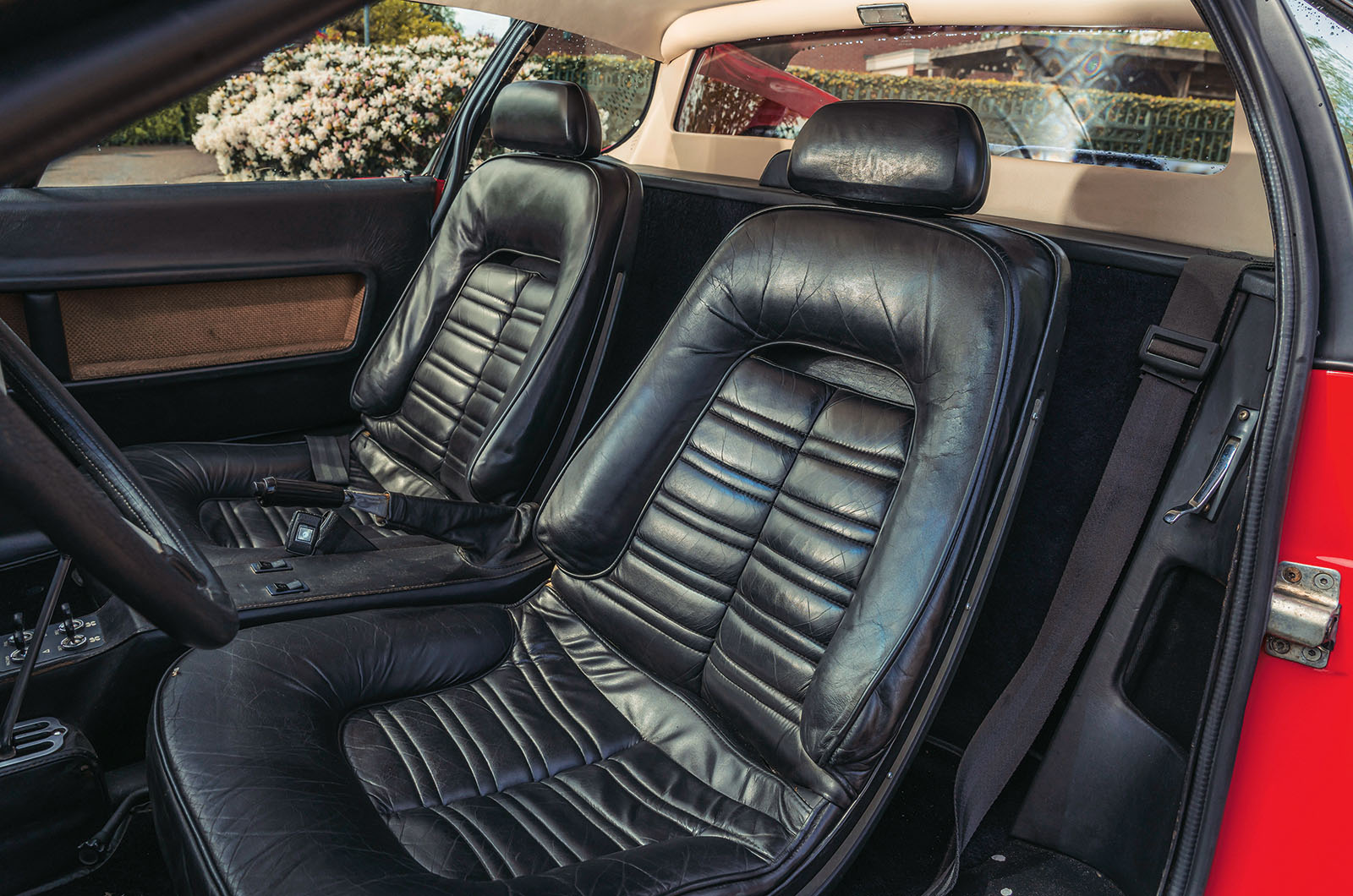
You are forced into a sporting, semi-reclined orientation – try to adopt an upright posture and you will find yourself too close to the wheel with your head against the ceiling – but it’s remarkable how uncompromised the interior is compared with rivals such as the Countach.

Vision is good in all directions, even behind.

Set off and the heavy clutch does dampen what is otherwise a friendly car to drive, but negotiating the open-gated manual lever is a joy.

This early car, the most worn-in of the group with 66,000km on the clock, has the best-feeling gearshift: light, yet still mechanical as it clacks around.

Gear whine is prominent at low revs, but as you approach 4000rpm or so, where the 12-cylinder unit begins to offer its peak torque, the engine pipes up.

With a few flat-spots lower down, the 365 doesn’t feel especially eager off the line, but its power once wound up is undeniable, providing ferocious and linear acceleration far beyond the UK’s legal limits.

Classic & Sports Car – Ferrari 365GT4 BB vs 512BB vs 512BBi: boxing clever

The Ferrari 365GT4 BB’s elegant interior

Gargling through its four triple-choke Webers, the sound of this flat-12 is impressive at idle, and outrageous at full chat.

Typical of the mid-1970s, in 1976 Ferrari was forced to elongate the stroke of the engine to meet emissions requirements without sacrificing performance.

Along with a raft of other improvements, that led to Ferrari designating the ‘new’ car the 512BB – 5-liter, 12-cylinder, Berlinetta Boxer – moving away from the traditional displacement designation.

In classic Italian fashion, Ferrari struggled to give a consistent answer to the question of whether power had remained the same or slightly dropped, but greater torque and a flatter power curve meant that the 512 was faster, whatever the numbers.

Classic & Sports Car – Ferrari 365GT4 BB vs 512BB vs 512BBi: boxing clever

The Ferrari 365GT4 BB’s low-slung seats give a reclined driving position

A new front spoiler and NACA ducts ahead of the rear wheels addressed the two criticisms of the 365 experience: front-end lift and brake fade. 

It’s the lighter clutch you notice first in the 512, however: Ferrari fitted a dual-plate item to lower the pedal pressure from Herculean to merely hefty.

Still carbureted, the flat-12 sounds largely the same as its predecessor, and most of the driving experience is similar.

Larger pedals make the footwell a bit tighter, but this remains a car that absolutely excels at autobahn-speed cruising and holding high cornering g-forces on sweeping curves – yet it feels a little clumsy at lower speeds.

Classic & Sports Car – Ferrari 365GT4 BB vs 512BB vs 512BBi: boxing clever

The central conduit housing coolant pipes is the only intrusion into the Ferrari 512BB’s otherwise roomy and comfortable cabin

Roll, which was quite pronounced in the 365, feels better contained here, but it’s still a relatively softly sprung car considering its rakish silhouette. 

Despite the relentless fight against emissions regulations in the 1970s and early ’80s, Ferrari held off applying fuel injection to the 512BB for as long as it could – the model was the last carbureted car from Maranello.

Ferrari’s hesitation was explained in 1981 when the 512BBi was revealed with a drop of 25bhp.

Exterior changes for the BBi were minimal: a revised grille, new wheels reflecting a switch to matching tire sizes all round, plus a restyled rear deck.

The biggest aesthetic difference was that the lower tub was now painted the main body color: it makes the car look more modern, no doubt, but also weightier.

Classic & Sports Car – Ferrari 365GT4 BB vs 512BB vs 512BBi: boxing clever

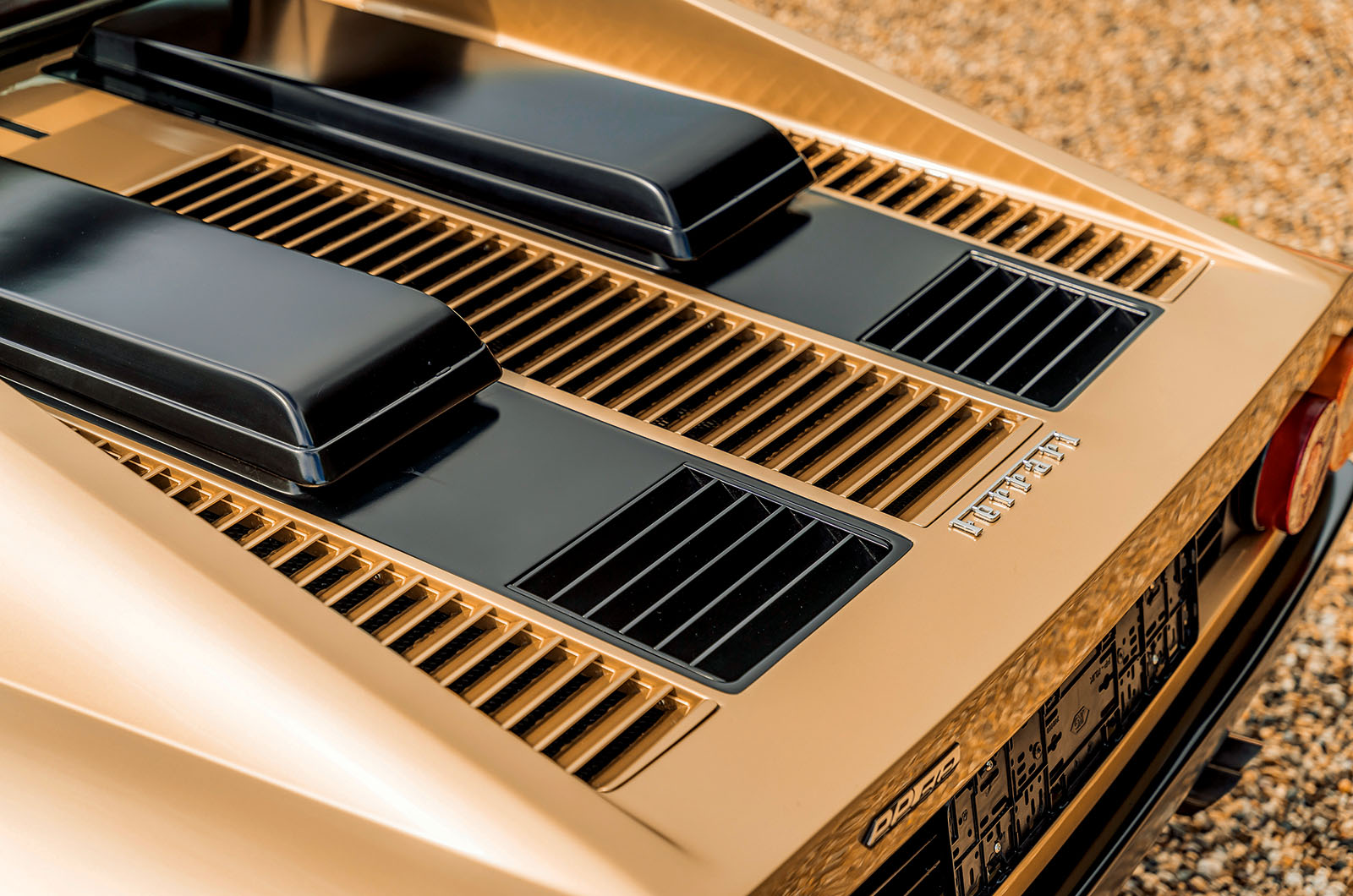
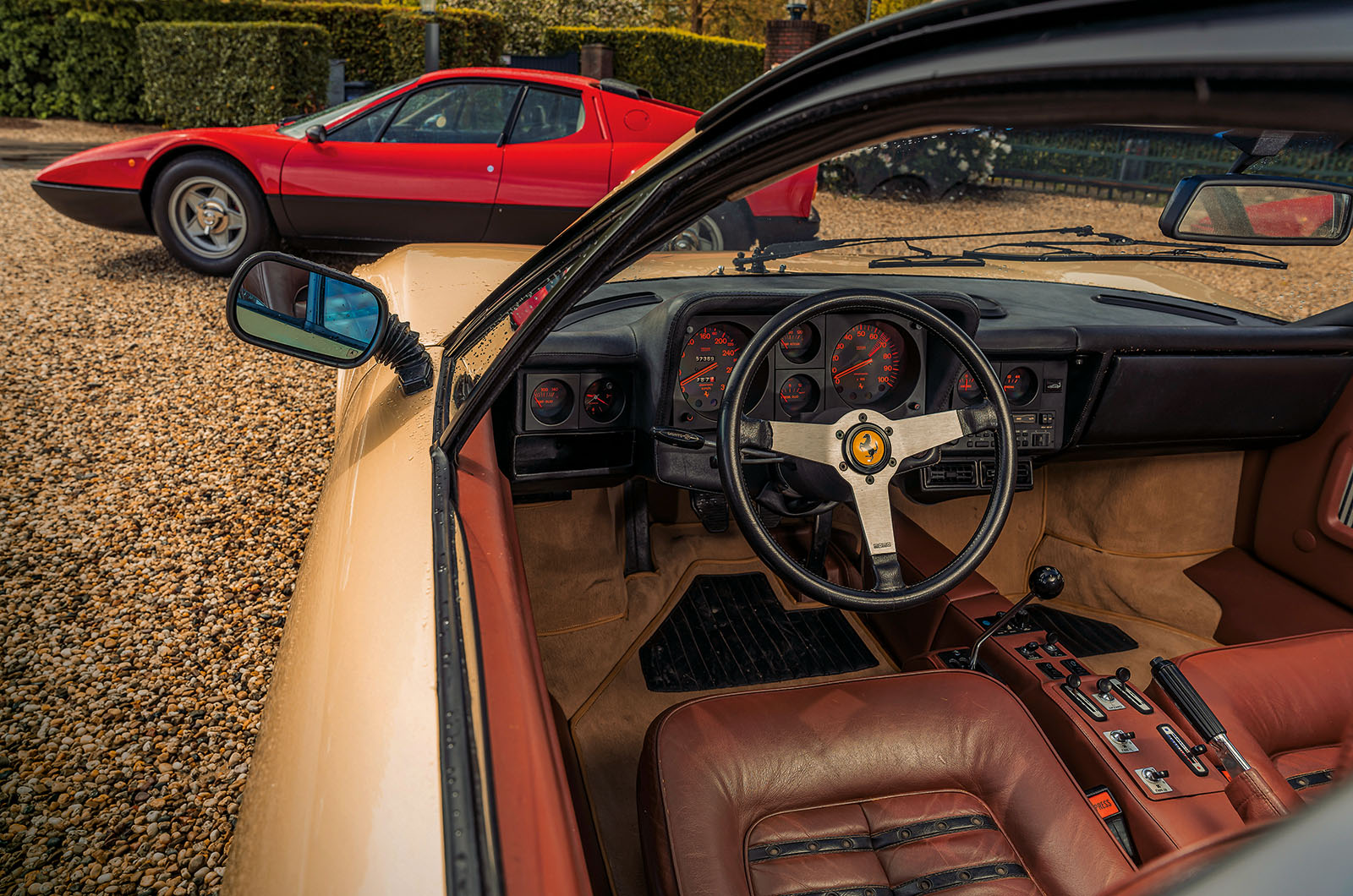
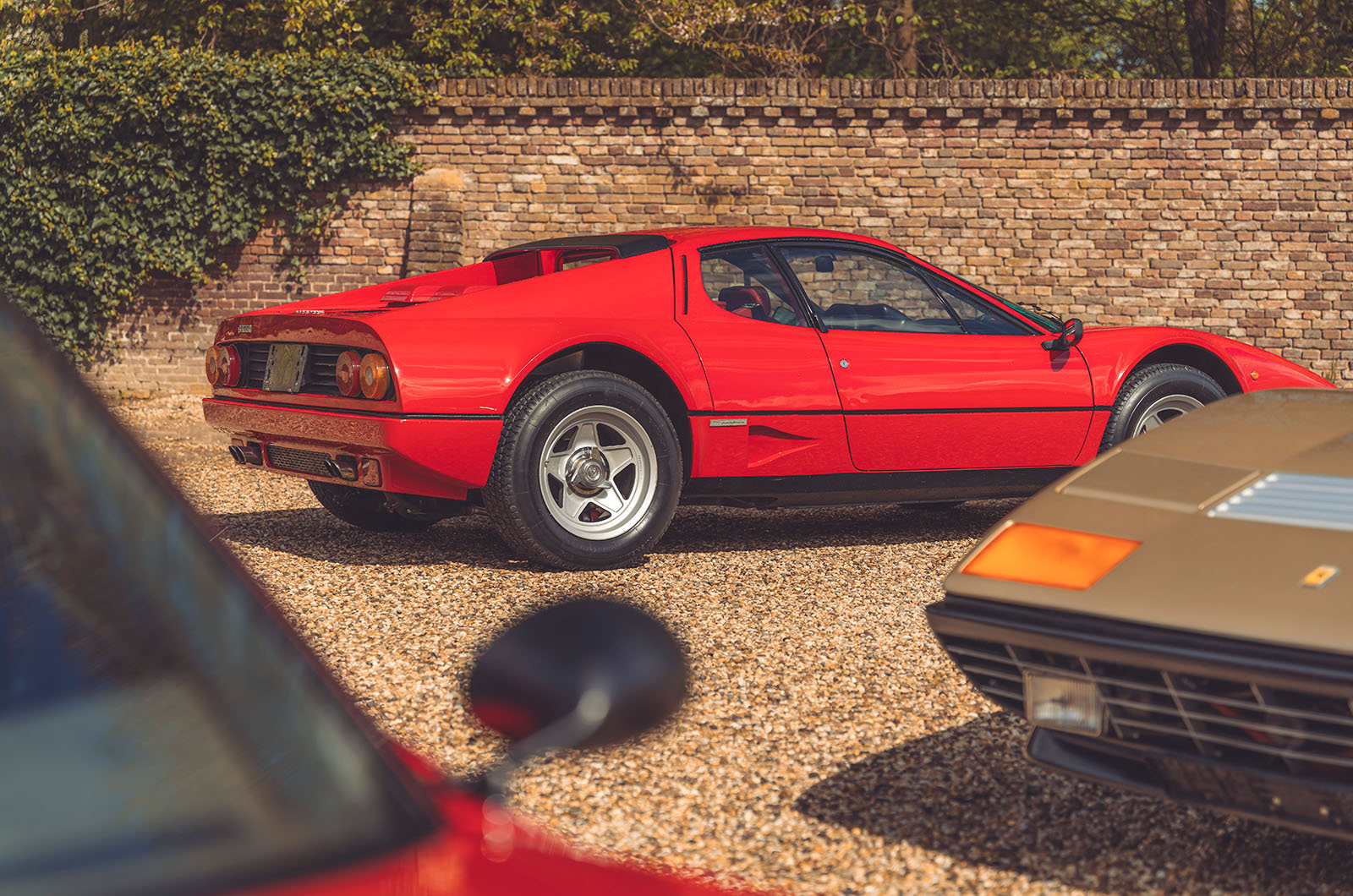
The ultimate ’70s spec? This gold Ferrari 512BB has a brown-leather interior

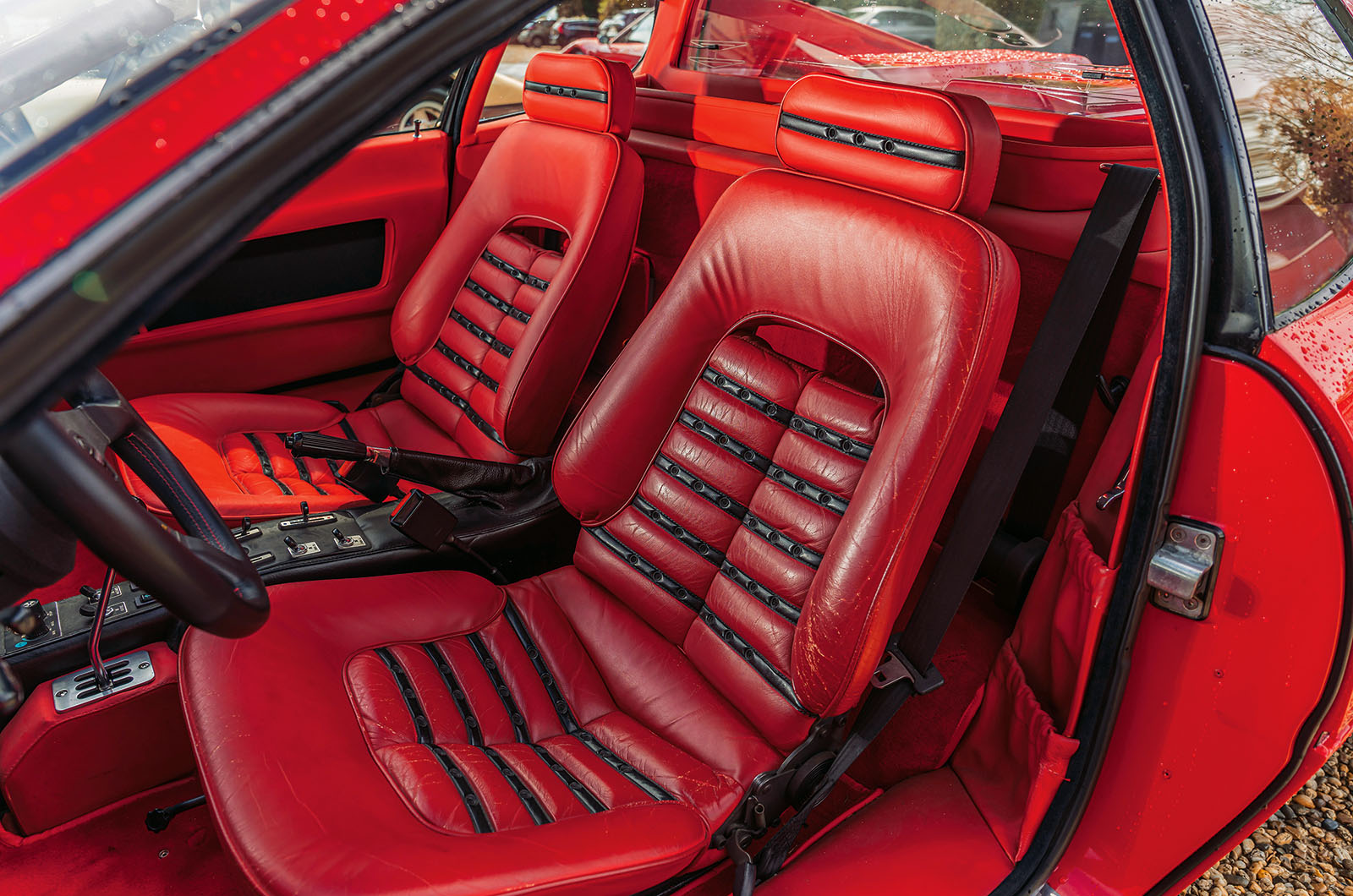
Moving from the cabin of a 1980 512BB to that of a 1983 512BBi makes the differences between these two siblings more obvious, however.

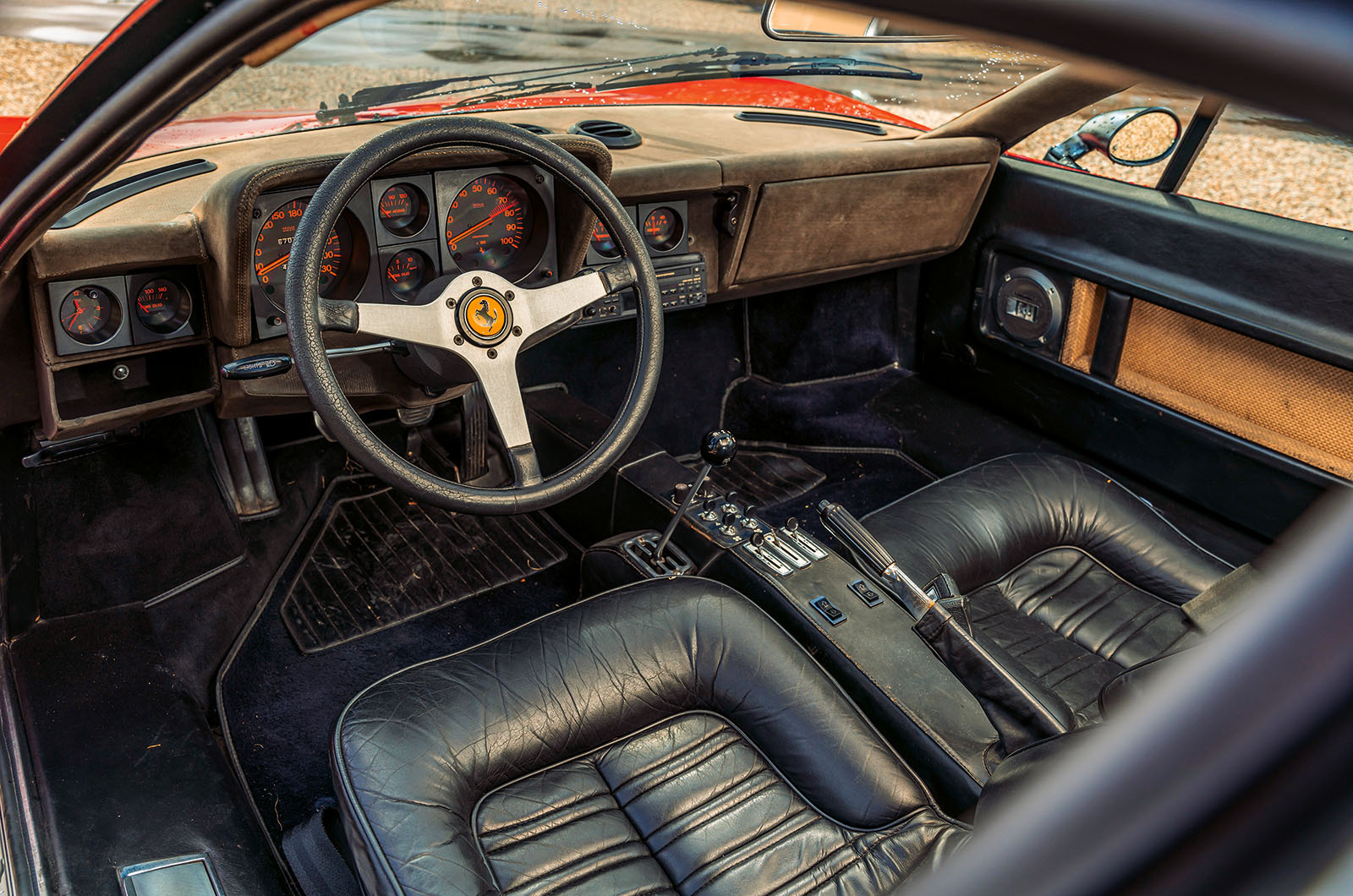
The color palettes, although entirely optional, signal the change: the golds, beiges and browns, hangovers of the late ’70s, give way to yuppie-baiting bright red, with red/black leather seats.

The dashboard has been partially redesigned, too, while this car’s racy – if slightly naff – aftermarket Momo wheel reflects the era’s growing ‘tuner’ culture (see below). 

It’s the eponymous fuel injection that marks the big change in the character of the 512BBi, however. Unlike its carbureted predecessors, it fires immediately and settles to a neat idle.

Classic & Sports Car – Ferrari 365GT4 BB vs 512BB vs 512BBi: boxing clever

The Ferrari 365GT4 BB (left) and 512BB are the carbureted versions of the 12-cylinder Berlinetta Boxer

It’s down slightly on power, but the flat spots are gone and it’s much smoother at low speeds.

You’ll notice little difference on a blast down the Route Napoléon, but for the next few days of cruising around Cannes, you’d take the BBi.

When it comes to identifying a sweet spot across the three generations of the Berlinetta Boxer, the market has decided on the 365GT4.

With its pure, unadulterated body, rarity and rev-happy engine, it certainly makes sense as the collector’s choice.

While the BBi has the other two beaten for drivability, you’ve got to love its shape to choose it over its immediate successor, the Testarossa, which majors on the same strengths for the same money or less.

The 512BB looks like the real pick of the litter: appreciably more refined, with an engine that’s more tractable than the 365’s, yet still offering most of the earlier car’s good looks.

It’s the best expression of this distinctly Modenese approach to the 12-cylinder supercar.

Conservatively styled, yet underpinned by a rip-roaring engine with racing pedigree, the BB took the concept outlined by the Miura and applied rigor.

Classic & Sports Car – Ferrari 365GT4 BB vs 512BB vs 512BBi: boxing clever

The evolution of the Ferrari Berlinetta Boxer’s cabin reflects changing tastes

Ferrari’s refusal to compromise on providing a comfortable, good-handling, driveable GT, no matter the engine position, created the first mid-engined 12-cylinder model that wasn’t a recipe for an aching back and ringing ears.

That it also does a fine impression of a howling 312B F1 car, with performance that’s still hair-raising today, makes it a true Maranello great.

Images: Max Edleston

Thanks to: Nick Aaldering (gallery-aaldering.com)


Koenig Specials: adding extra punch to the Berlinetta Boxer

Classic & Sports Car – Ferrari 365GT4 BB vs 512BB vs 512BBi: boxing clever

Koenig wasn’t afraid to give Ferrari’s supercar a wild makeover

Third-party tuning specialists were nothing new in the 1970s: Downton, Coombs and Alpina had all made names for themselves by the beginning of the decade, and some, such as Cooper and Abarth, were cooperating with auto makers directly.

But few had deigned to suggest they could improve on the work of Ferrari – until emissions regulations reared their head, that is.

Able to sidestep proper homologation, tuning specialists increasingly worked on high-performance models in the 1970s, unlocking the latent potential in often choked engines.

The BB was among the first exotics to receive such treatment, most notably from Koenig.

Willy König had won the German Hillclimb Championship in a Ferrari 250GT SWB, and it was his 365GT4 BB that inspired him to try tuning his own cars. 

Classic & Sports Car – Ferrari 365GT4 BB vs 512BB vs 512BBi: boxing clever

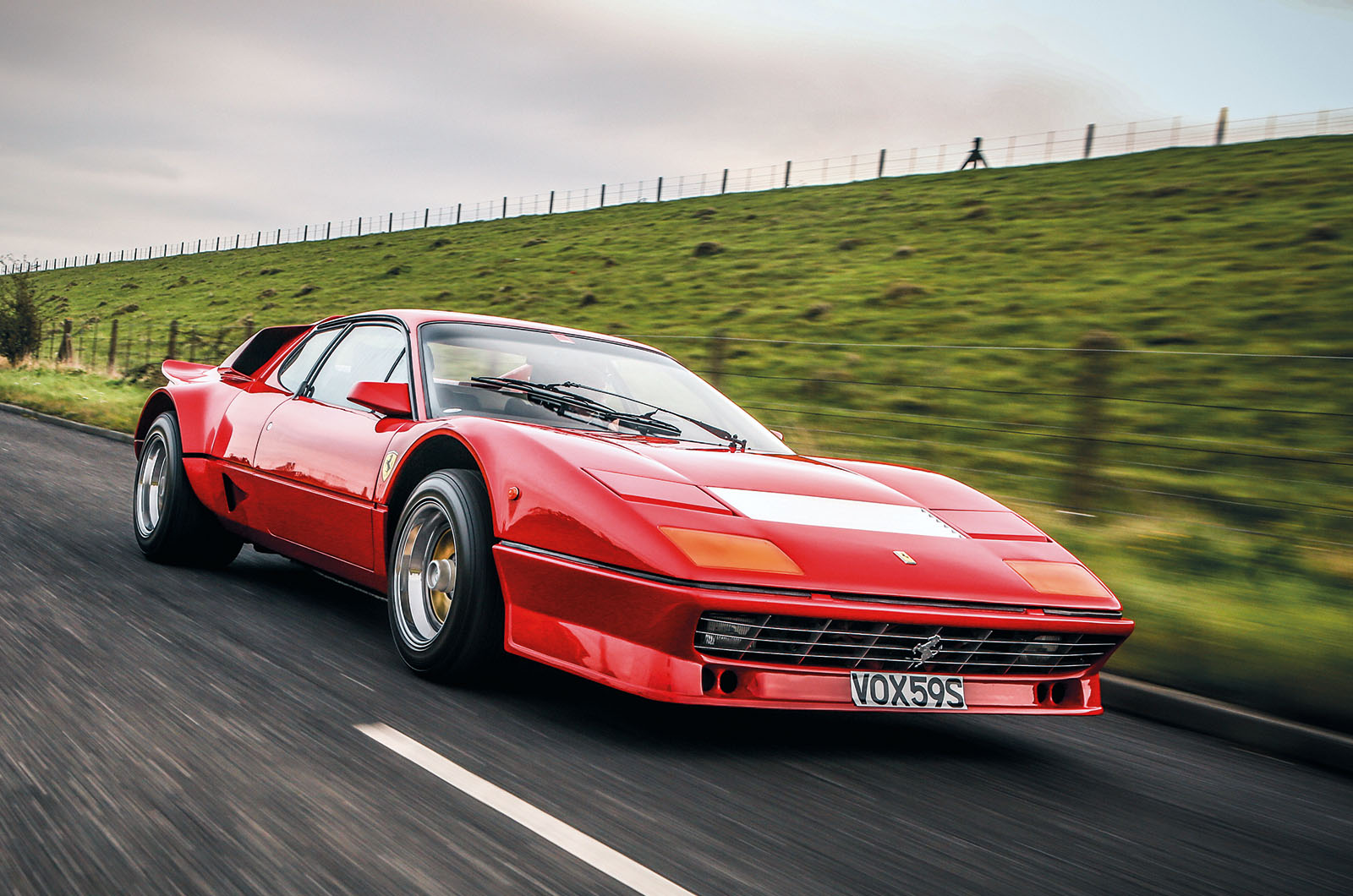
This Ferrari 512BB by Koenig is twin-turbocharged and makes 635bhp

By 1977 he’d set up Koenig Specials, and the BB was one of his central offerings.

There was no set Koenig BB. Instead, customers chose from a list of options and created their own specification, but big power increases via turbocharging, along with wider wheels and lairy, strake-sided bodykits, were the typical fare.

Approximately 50 Boxers received the Koenig tuning treatment, representing a significant portion of the 2323 built, with some making in excess of 600bhp.

Despite Enzo’s general disapproval of this, some Ferrari dealers even got in on the act: the famous Maranello Concessionaires in the English county of Surrey modified at least one 512BB, fitting it with wider bodywork and wheels, plus a freer-breathing intake system.

Images: Tony Baker


Factfiles

Classic & Sports Car – Ferrari 365GT4 BB vs 512BB vs 512BBi: boxing clever

Ferrari 365GT4 BB

  • Sold/number built 1973-’76/387
  • Construction tubular steel frame, aluminum and steel body 
  • Engine all-alloy, dohc-per-bank 4390cc flat-12, four Weber 40 IF3C carburetors
  • Max power 360bhp @ 7700rpm
  • Max torque 303lb ft @ 3900rpm
  • Transmission five-speed manual, RWD
  • Suspension independent, by unequal-length wishbones, coil springs, telescopic dampers, anti-roll bar f/r
  • Steering rack and pinion
  • Brakes vented discs, with servo
  • Length 14ft 4in (4360mm) 
  • Width 5ft 11in (1800mm) 
  • Height 3ft 8in (1120mm)
  • Wheelbase 8ft 2in (2500mm)
  • Weight 2877lb (1305kg)
  • 0-60mph 5.4 secs 
  • Top speed 186mph
  • Mpg 19
  • Price new £26,000 (1977)
  • Price now £200-400,000*


Ferrari 512BB
(where different from 365GT4 BB)

  • Sold/number built 1976-’81/929
  • Engine 4943cc
  • Max power 360bhp @ 6800rpm
  • Max torque 333lb ft @ 4600rpm
  • Weight 3086lb (1400kg)
  • 0-60mph 5.1 secs 
  • Top speed 188mph
  • Mpg 16
  • Price new £16,380 (1974)
  • Price now £150-280,000*


Ferrari 512BBi
(where different from 512BB)

  • Sold/number built 1981-’84/1007
  • Engine Bosch K-Jetronic mechanical fuel injection
  • Max power 335bhp @ 6000rpm
  • Top speed 179mph
  • Mpg 18
  • Price new £39,991 (1982)
  • Price now £160-300,000*

*Prices correct at date of original publication


We hope you enjoyed reading. Please click the ‘Follow’ button for more super stories from Classic & Sports Car.