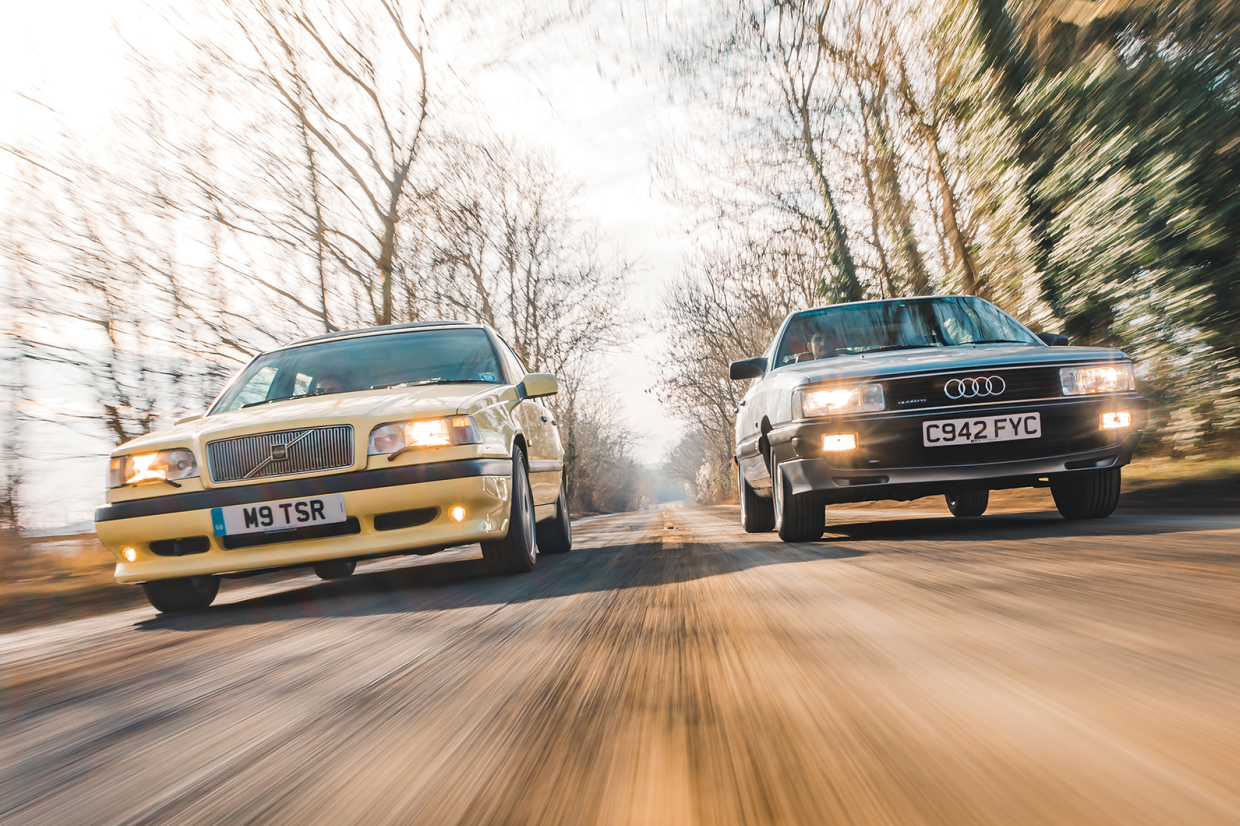
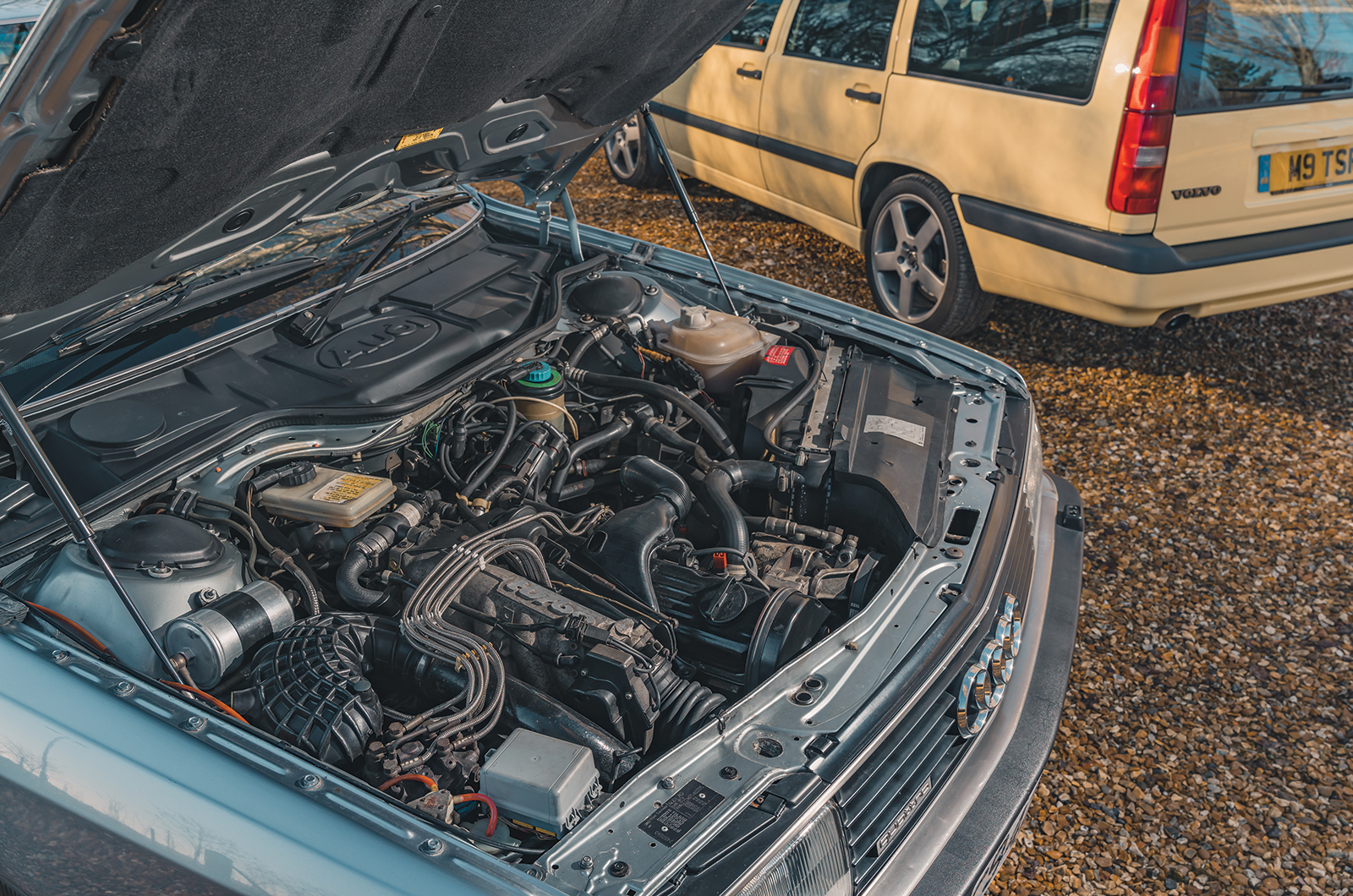
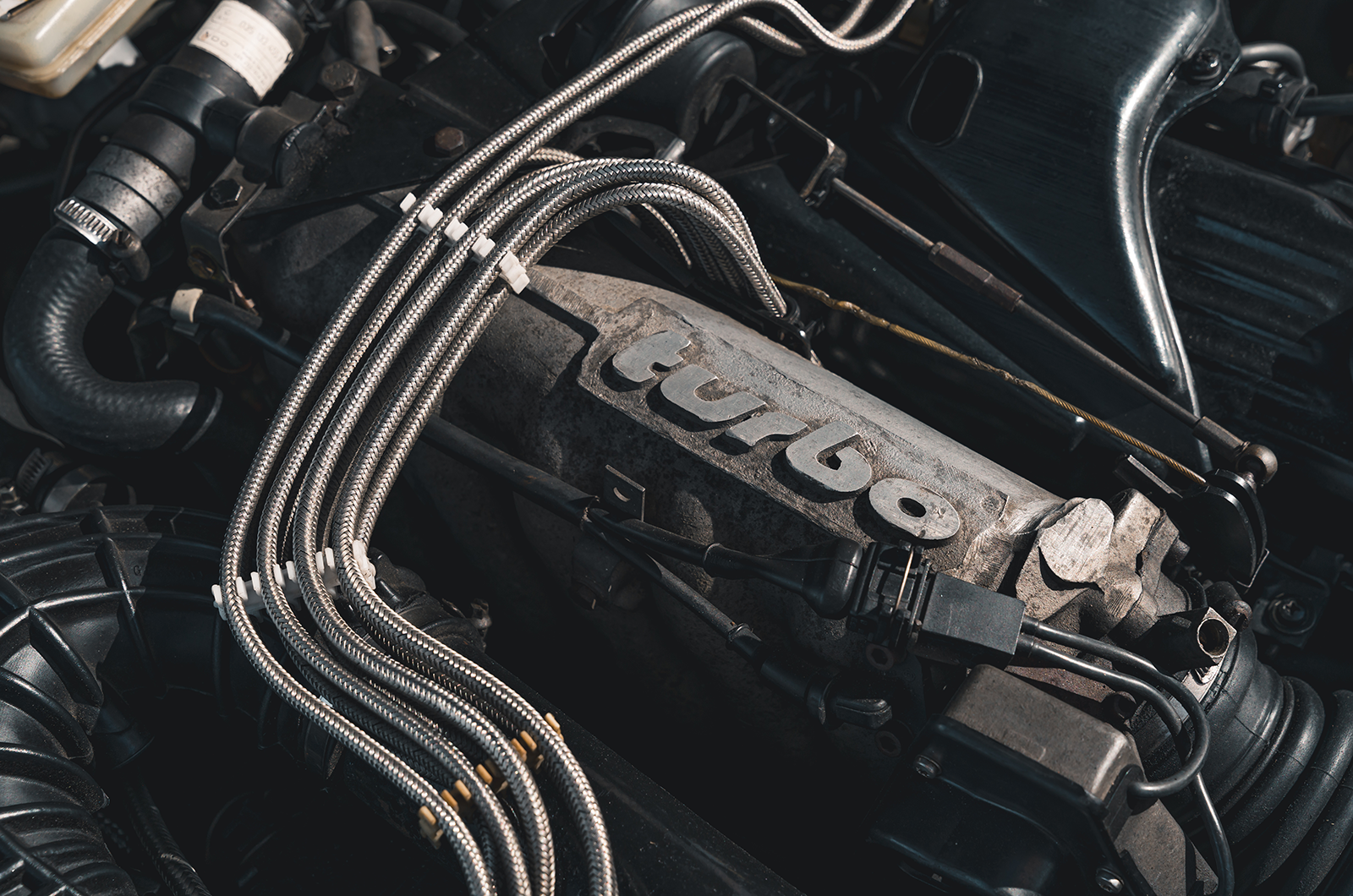
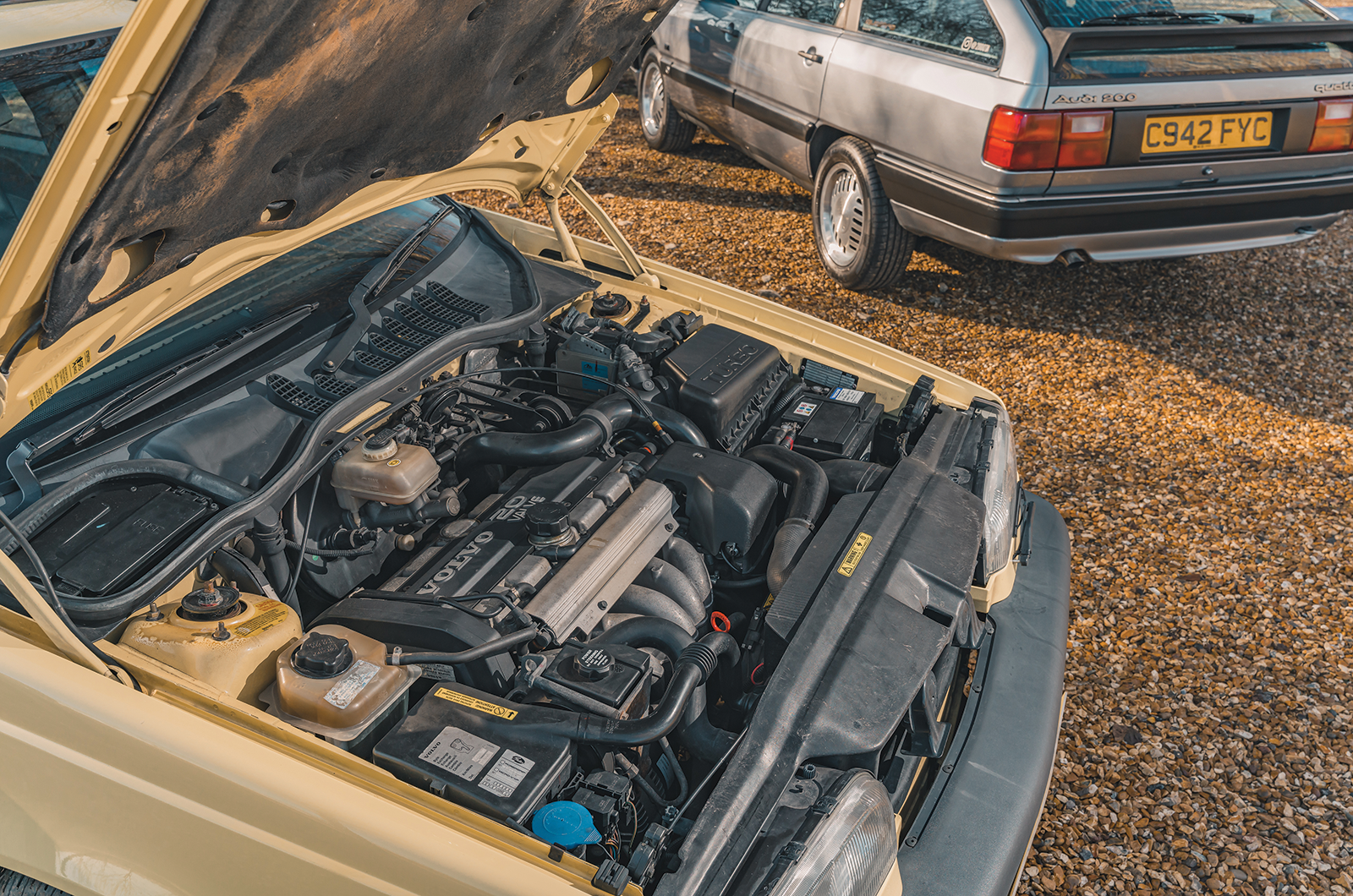
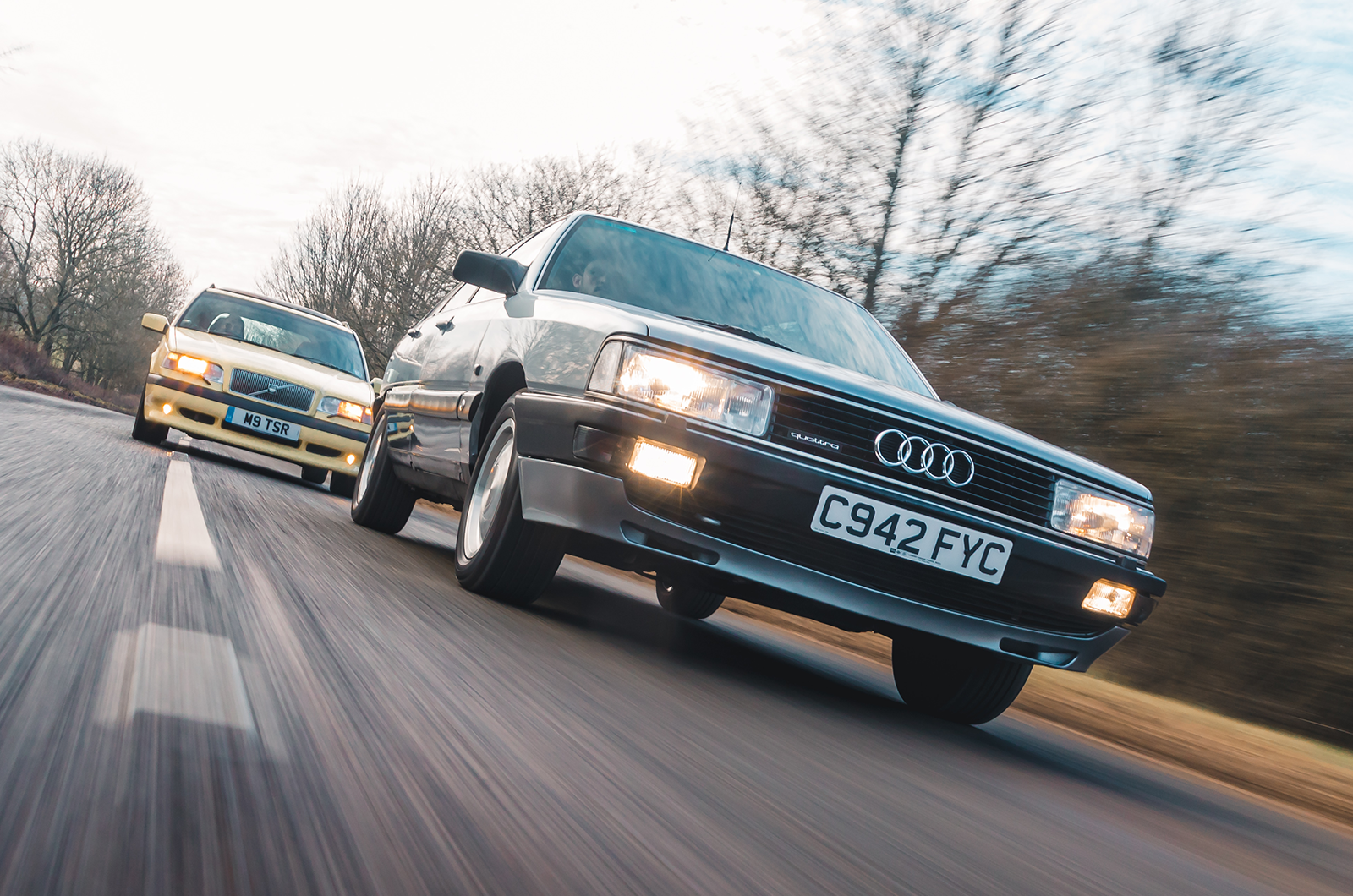
Their five-cylinder engines sound fantastic, too, pulsing through each combustion cycle with impatience.
The Volvo’s upright seats are at odds with its sporty ride
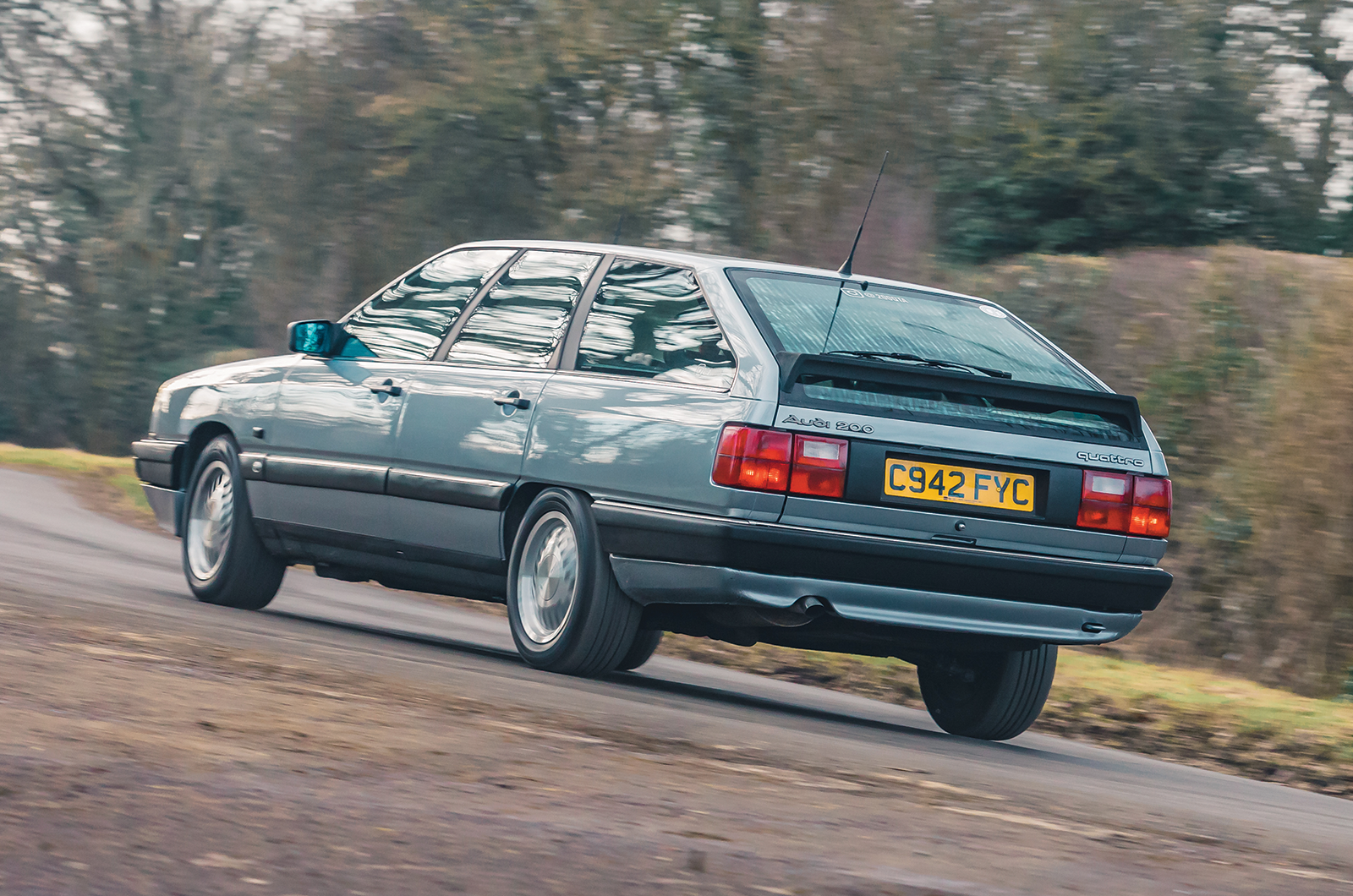
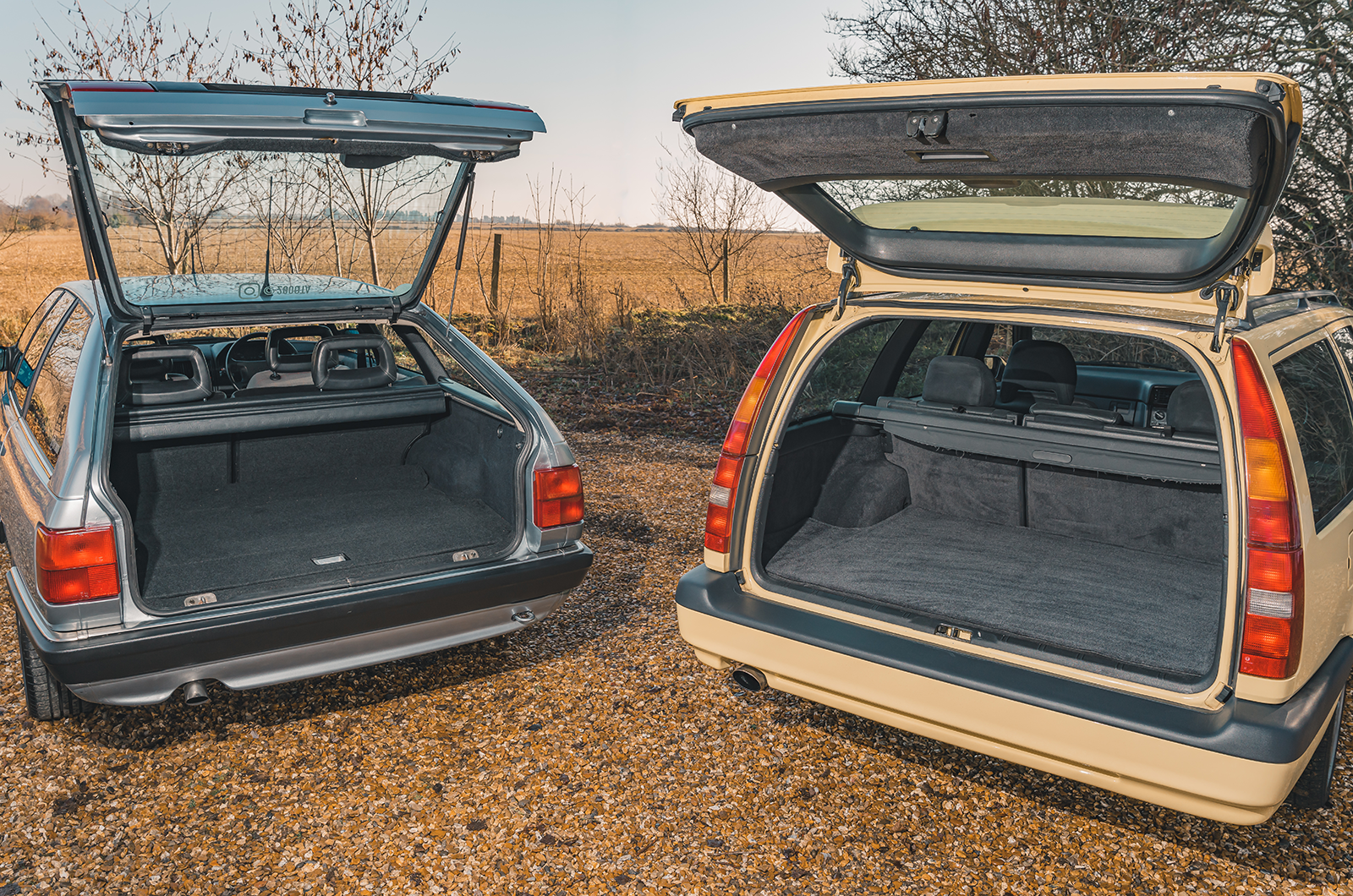
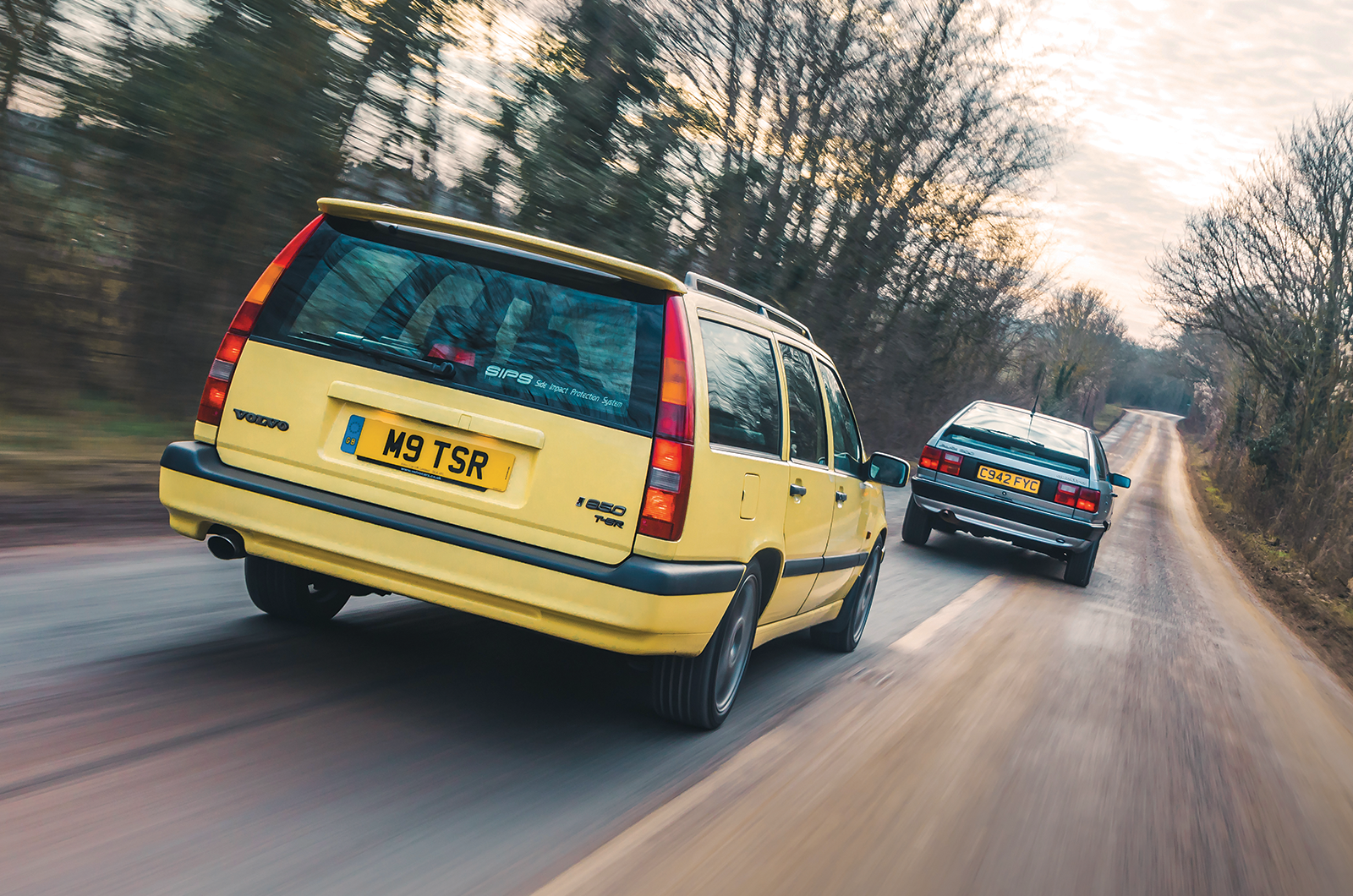
Both feel utterly vast inside, although mainly only when you glance into the rear-view mirror.
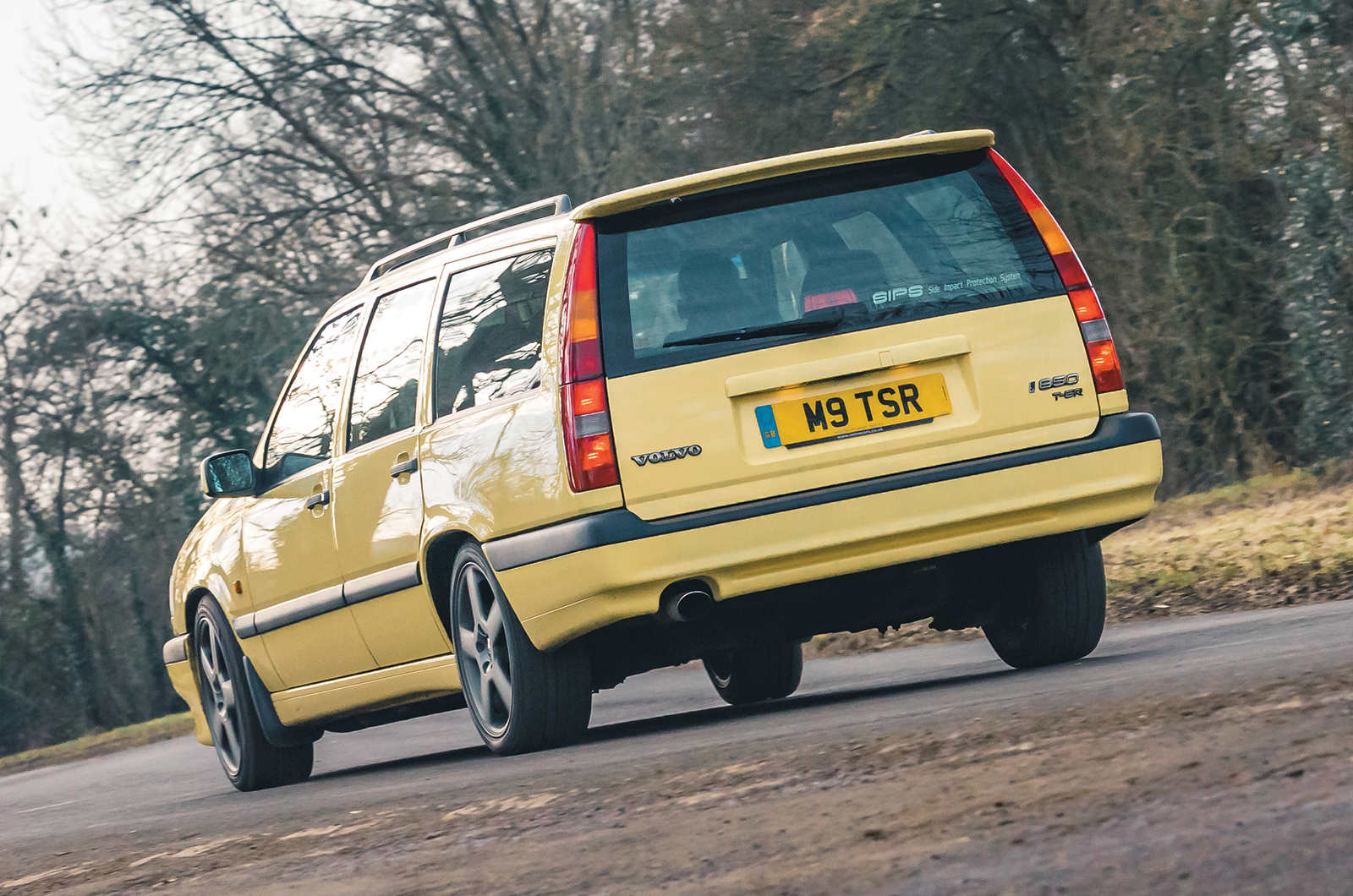
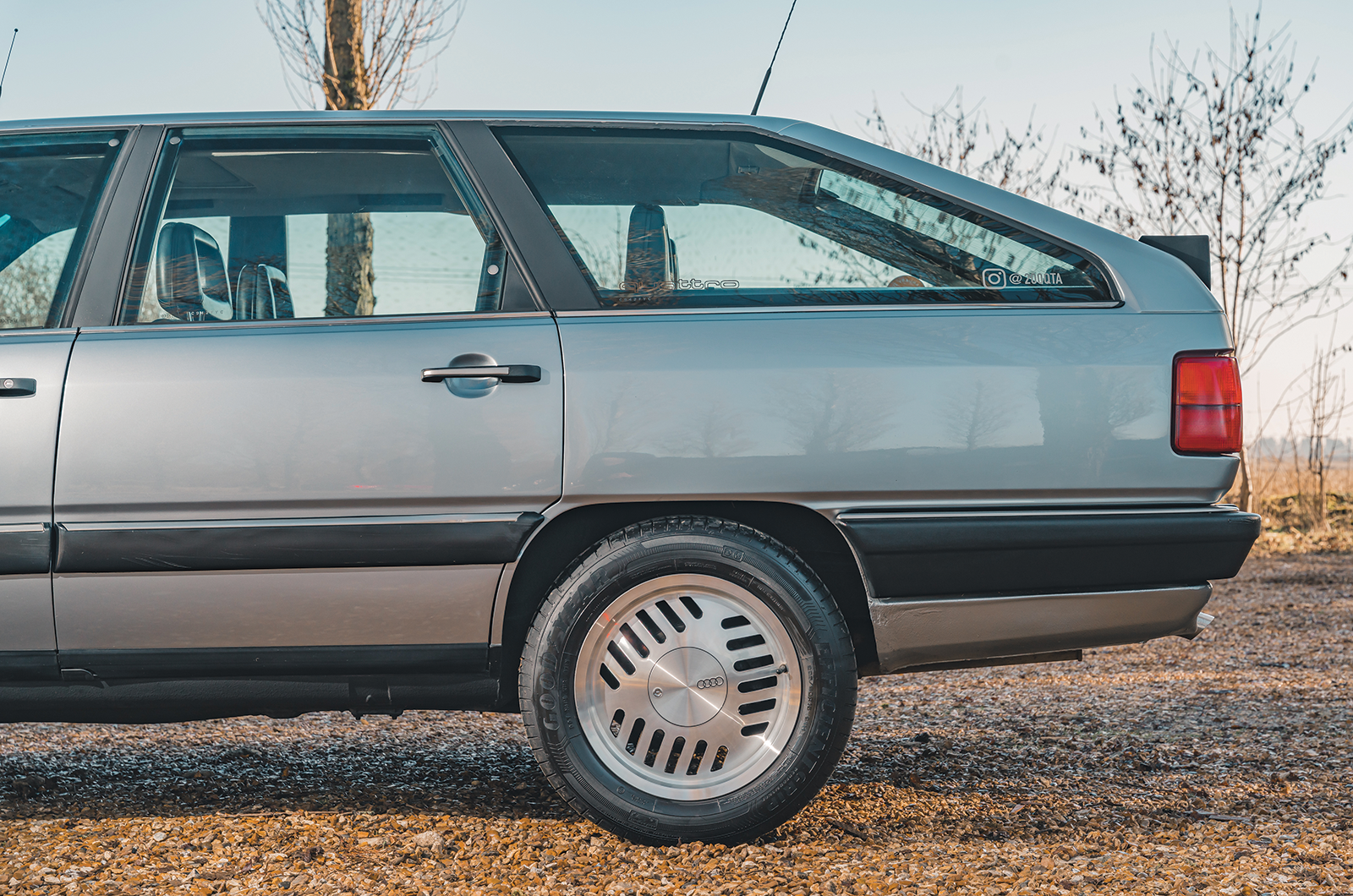
The rear window looks as though it should be part of the car behind, rather than your own, and in the Volvo the sunroof only adds to the exceedingly light, spacious feel.
Yet these wagons are also fascinating in their contradictions, almost as though the wrong shells are shrouding the wrong cabins.
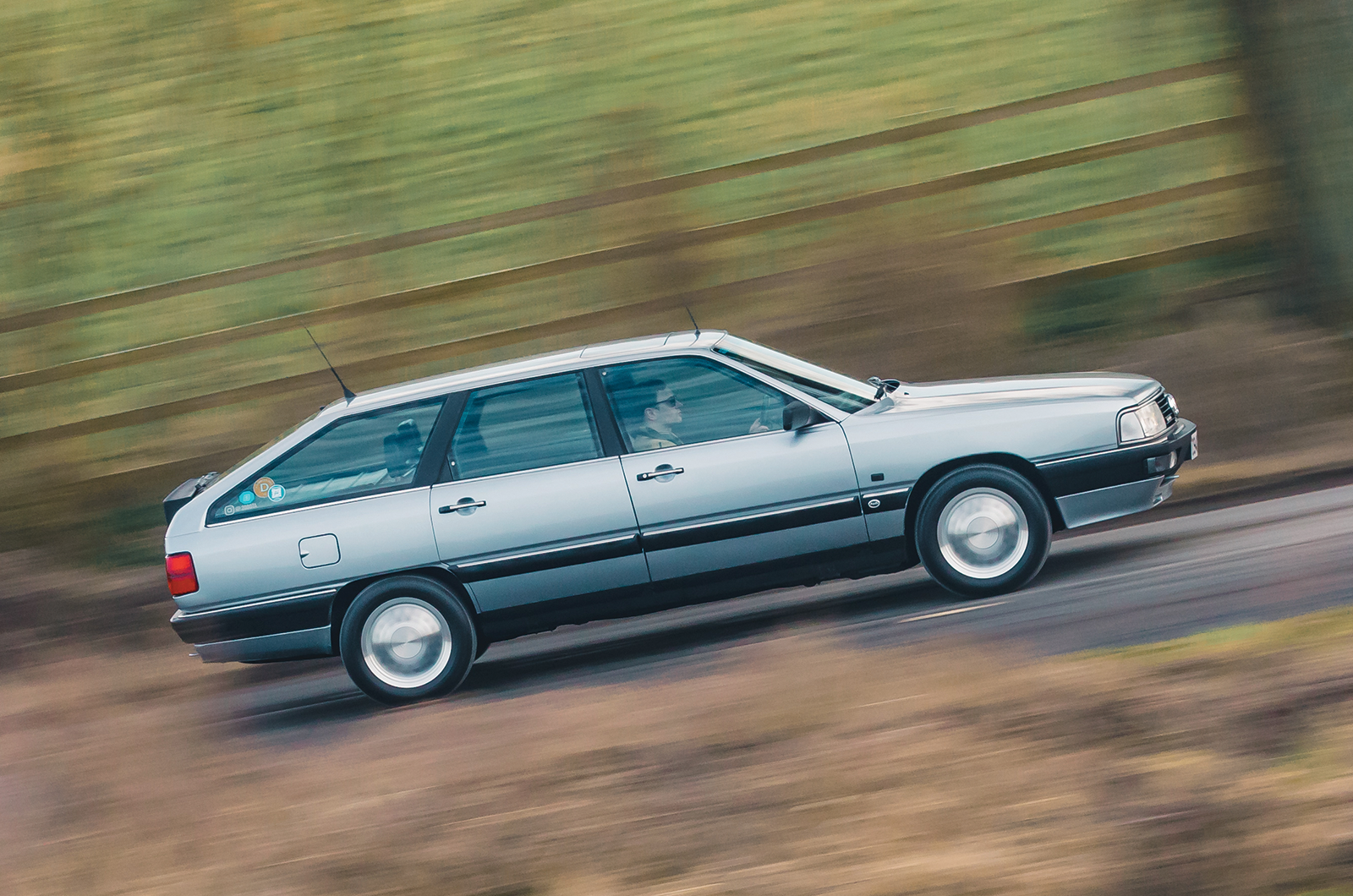
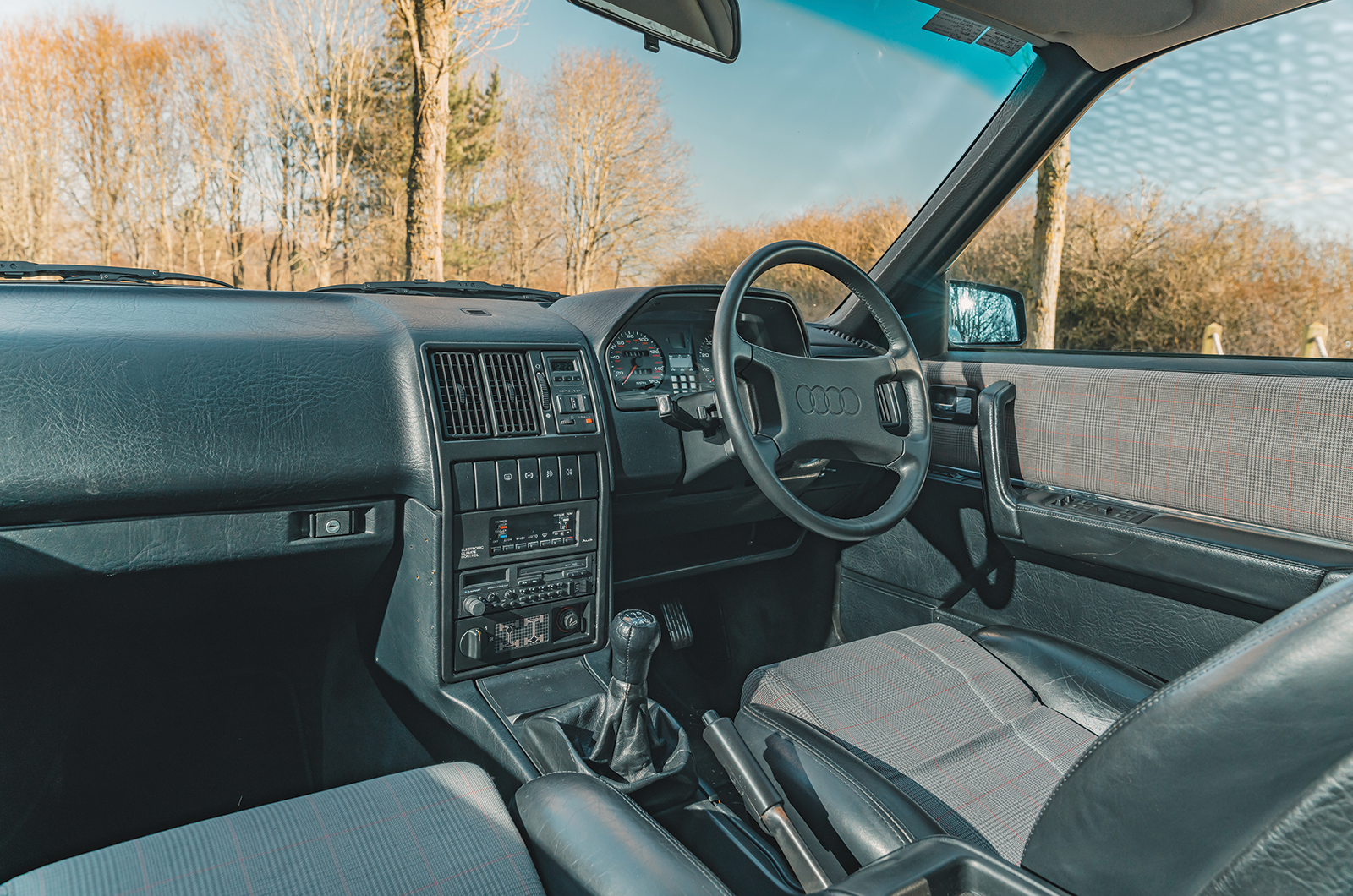
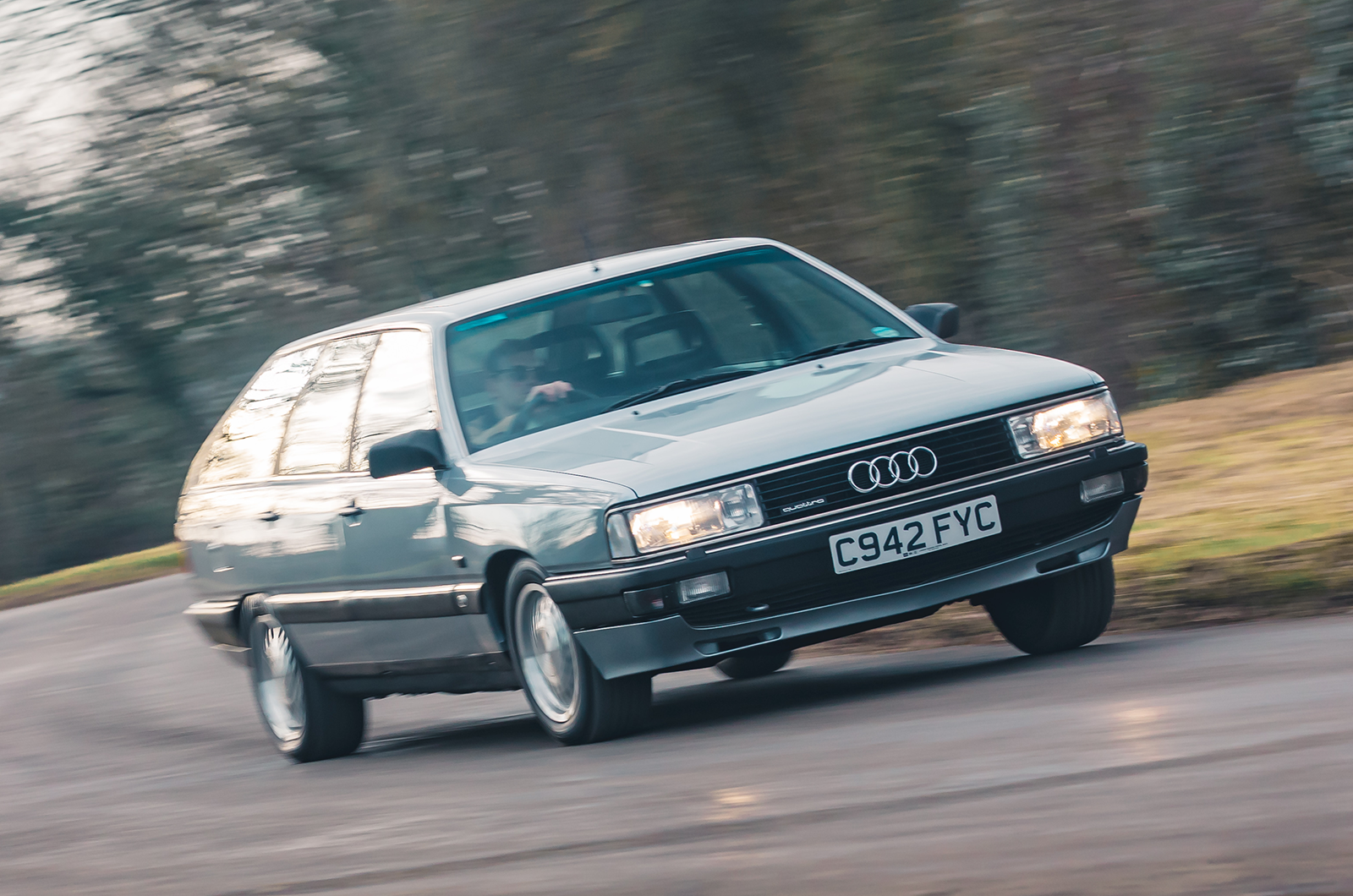
The Audi, the elder by all but a decade, mixes what is evidently an old-car shape with something that is packed with futuristic technology.
Fumbling around for a lever to adjust the seat ends at buttons on the seat frame.
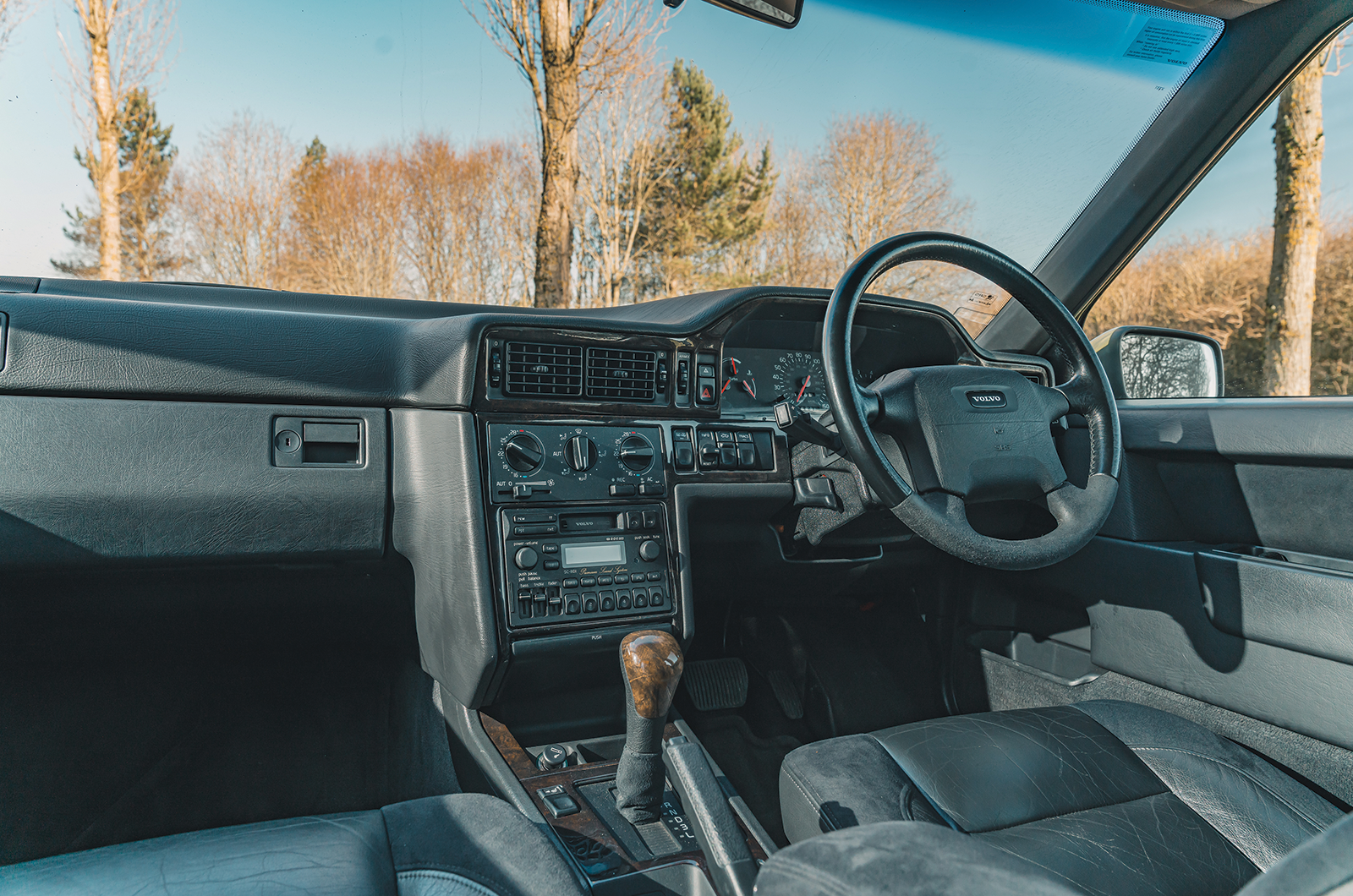
The Volvo 850 T-5R’s sombre dashboard is a ’90s button-fest
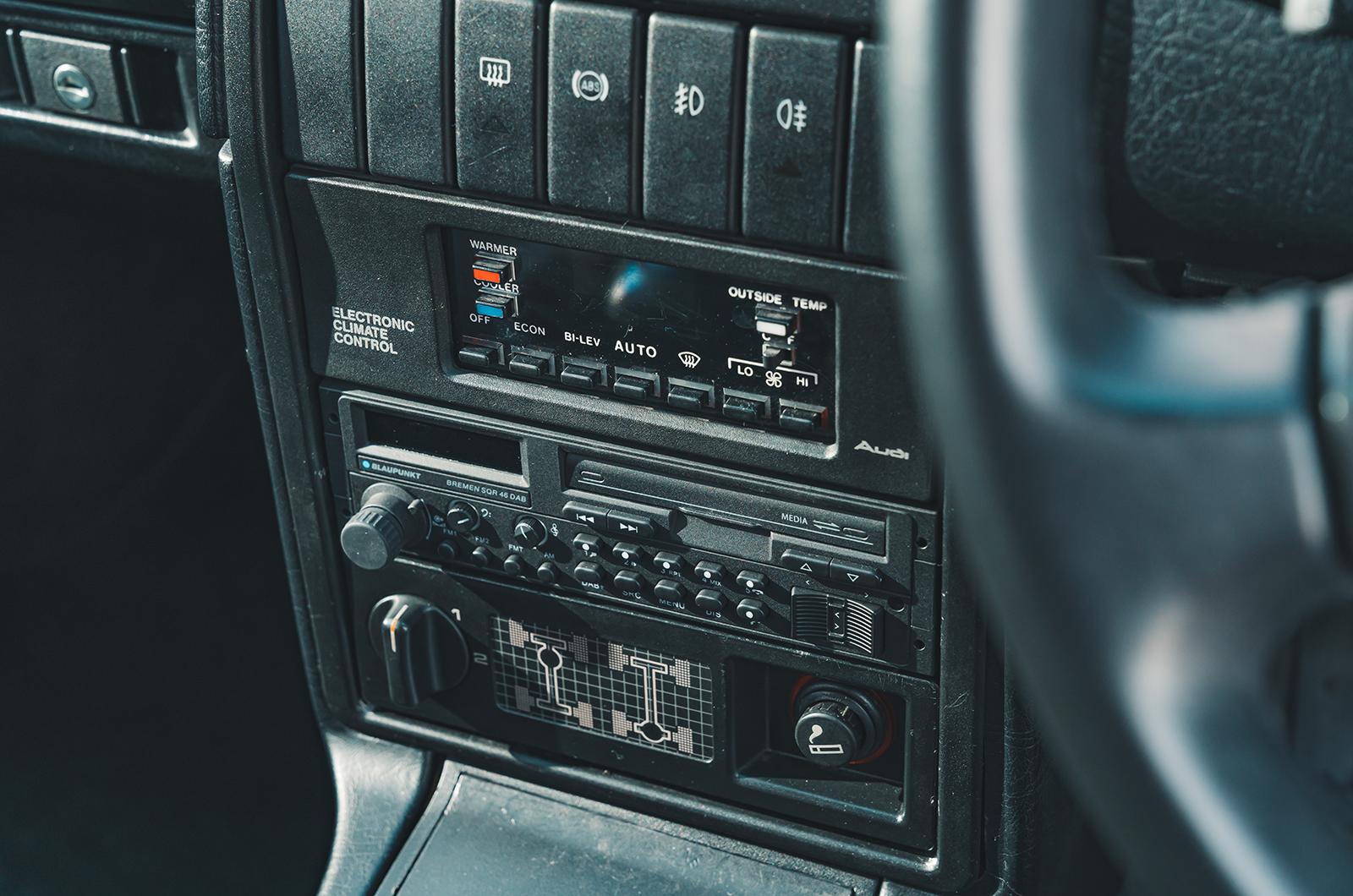
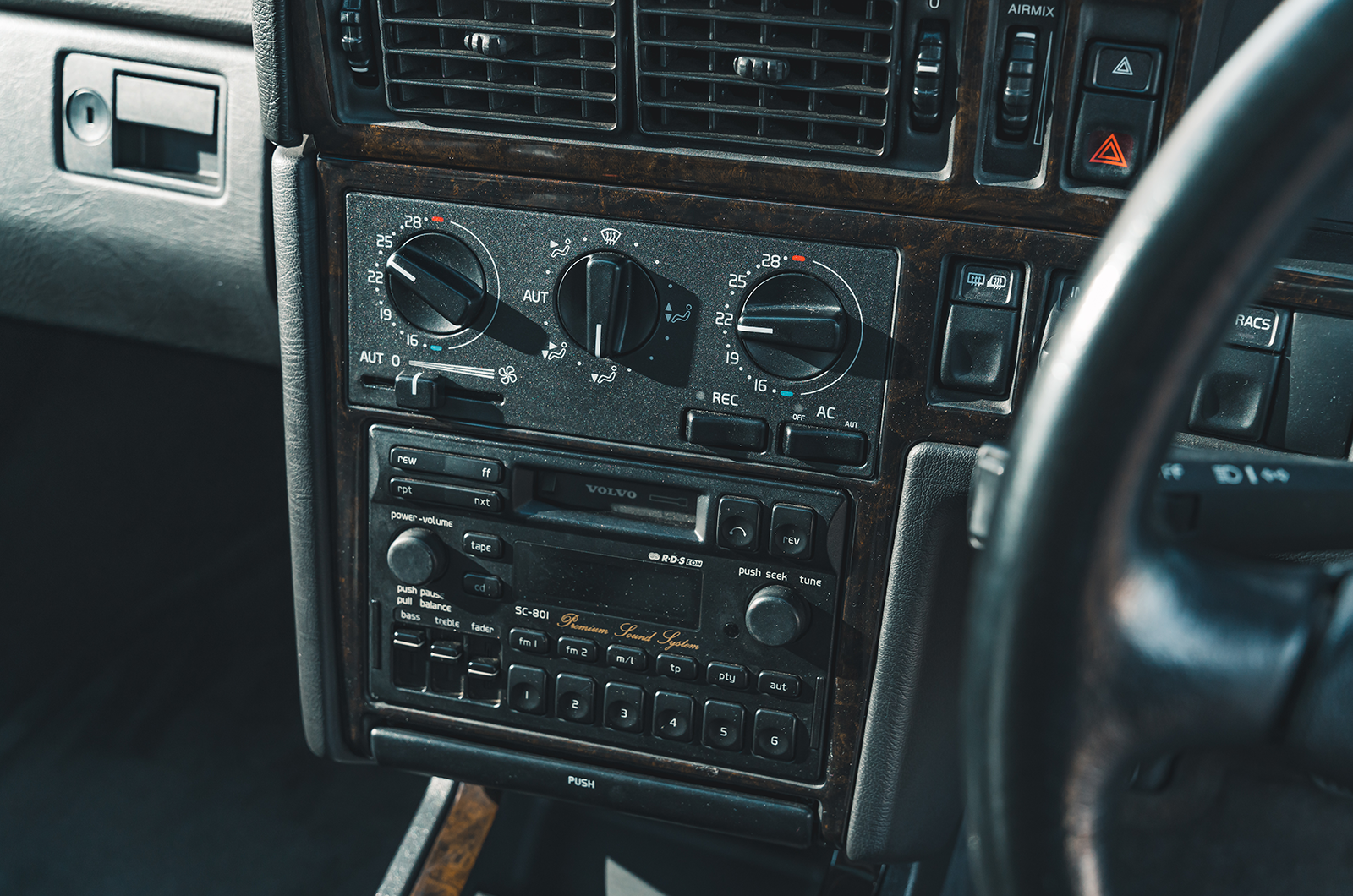
The dashboard, angled slightly towards the driver, is awash with switches and electronic climate controls.
Josh has added a Blaupunkt Bremen stereo, which fits perfectly with the car and also its ethos of modern fusing with old – the 1980s playlist transports you to its prime, too.
The boost gauge is digital, unlike the good old-fashioned needle of the 850.
Really, the Volvo interior looks barely updated from what came before, a dashboard with controls that make sense only when you know how, but it certainly feels executive.
The seating position is no different from that of any of its stablemates, so high and upright.
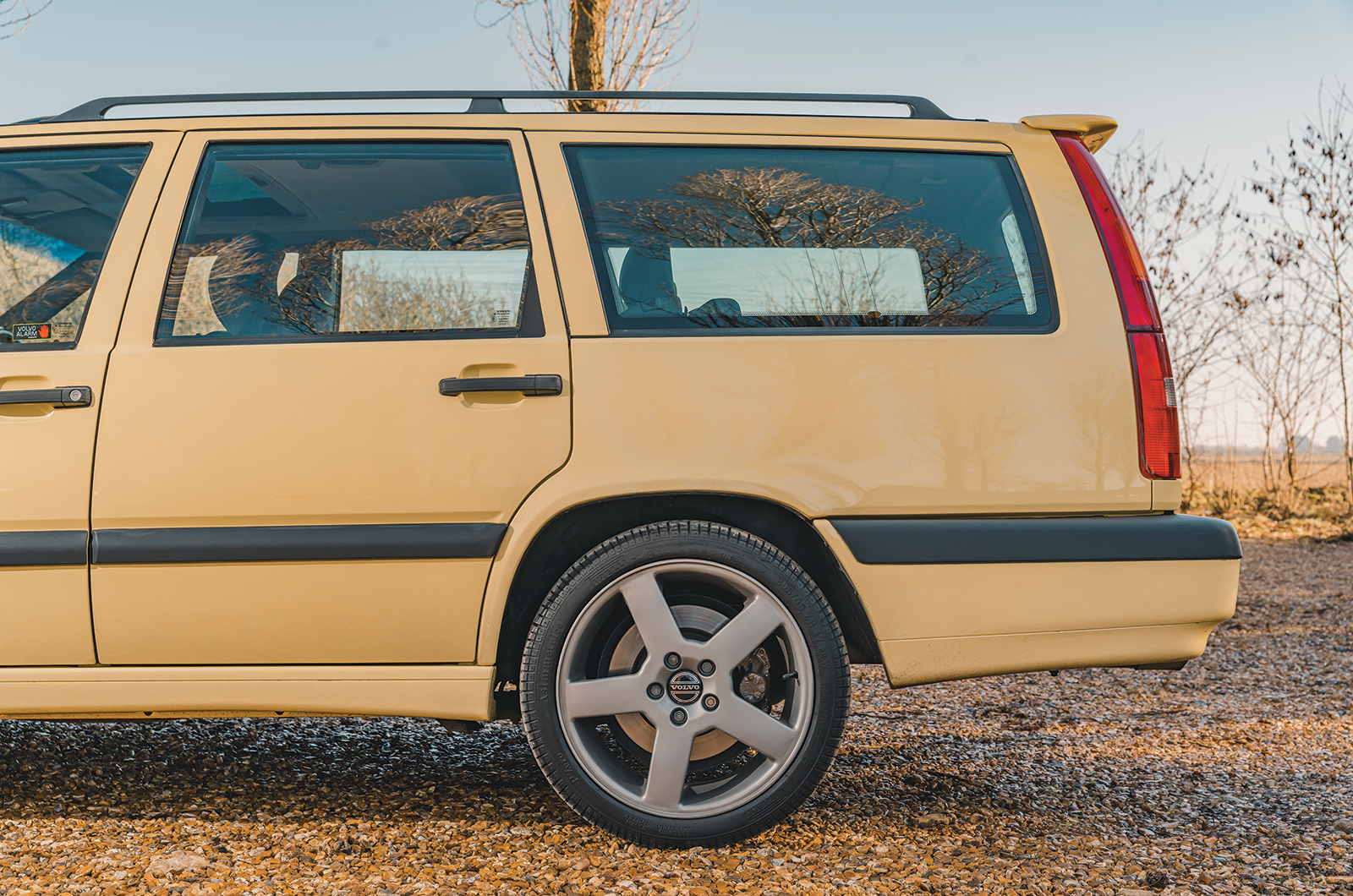
The familiarly boxy rear of the Volvo 850 T-5R
More contradictions, compared to the ‘low and laid-back’ that performance cars should be.
The Volvo’s timber inlays are particularly anachronistic – as though plucked from the cast-off bins left lying around from TWR’s Aston Martin and Jaguar work. (The V70 R from 1997 got carbonfibre trim.)
The huge steering wheel can’t escape your view, again contrasting with its sporting credentials.
Perhaps Volvo couldn’t truly shake off its practical default.
There’s no denying the T-5R’s pace and power, though, and it doesn’t take too heavy a prod of the accelerator to push the balance beyond the grip of the front wheels and chassis, and leave the tyres audibly scrabbling for grip.
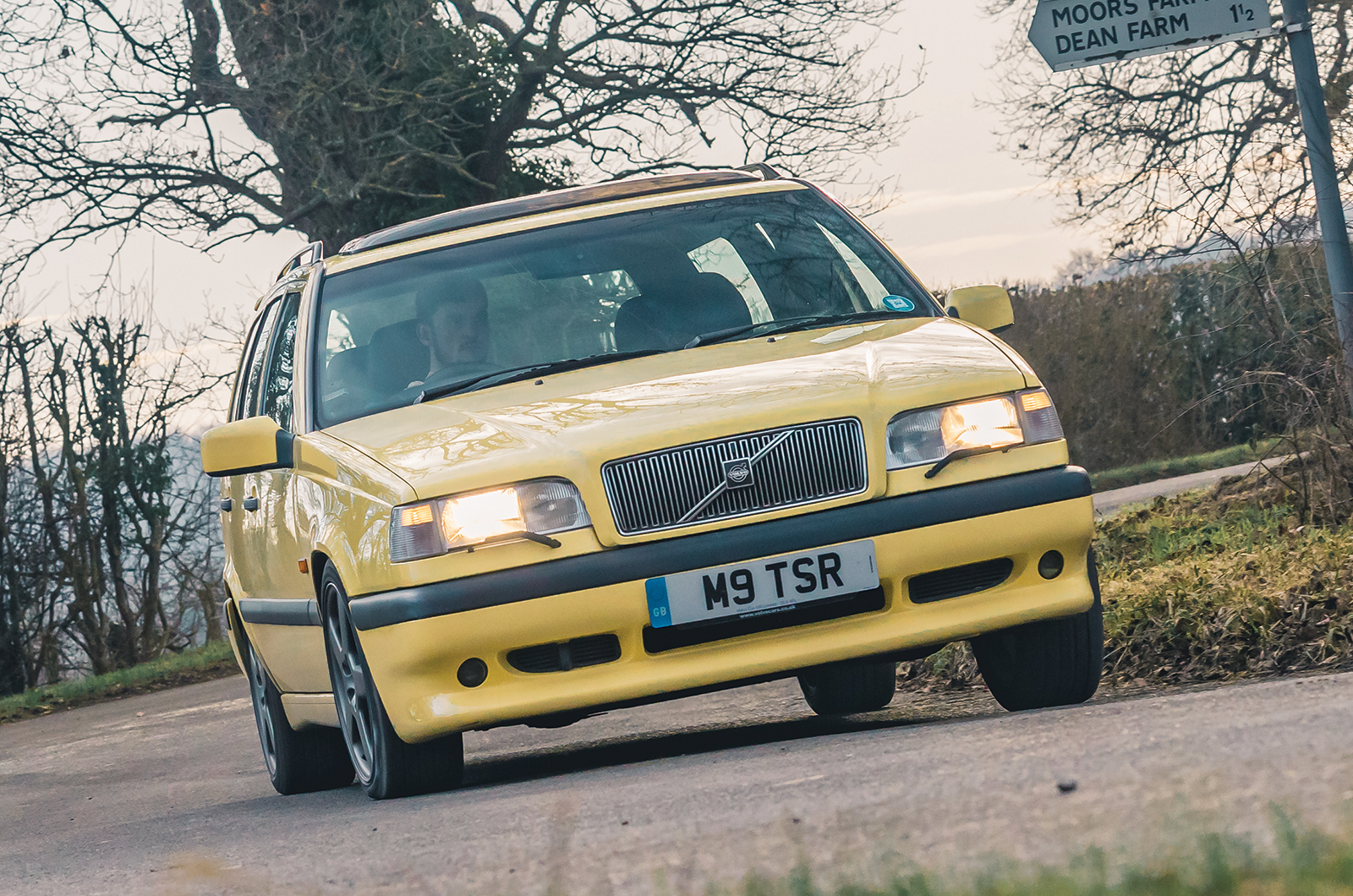
The Volvo 850 T-5R has a transverse ‘five’ that produces a rather potent 240bhp
The automatic gearbox of our test car is certainly willing enough, happy to creep towards the redline when it feels you want it to, and it lazily but brutishly delivers its torque.
On smoothly sweeping roads the Volvo works and flows together perfectly well, but on anything less every bump ripples through the chassis beneath you.
The suspension verges on too stiff, but any softer and the understeer would be insurmountable, despite the balance brought by the engine being set so low down and far back in the engine bay.
As a result, the Audi appears so much more in sync with itself than the Volvo does, and that scientist’s ski trips must have been a breeze across the Continent.
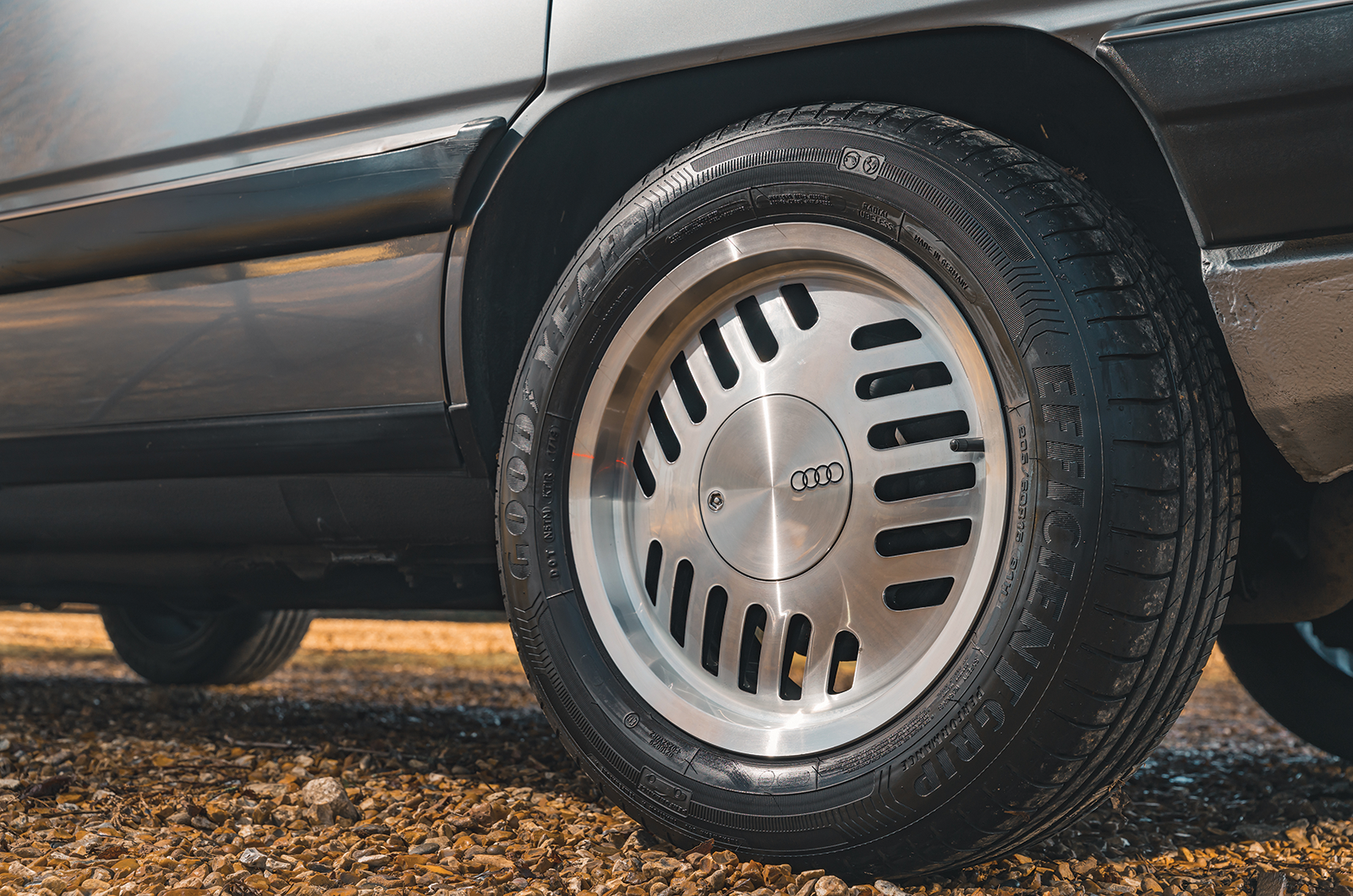
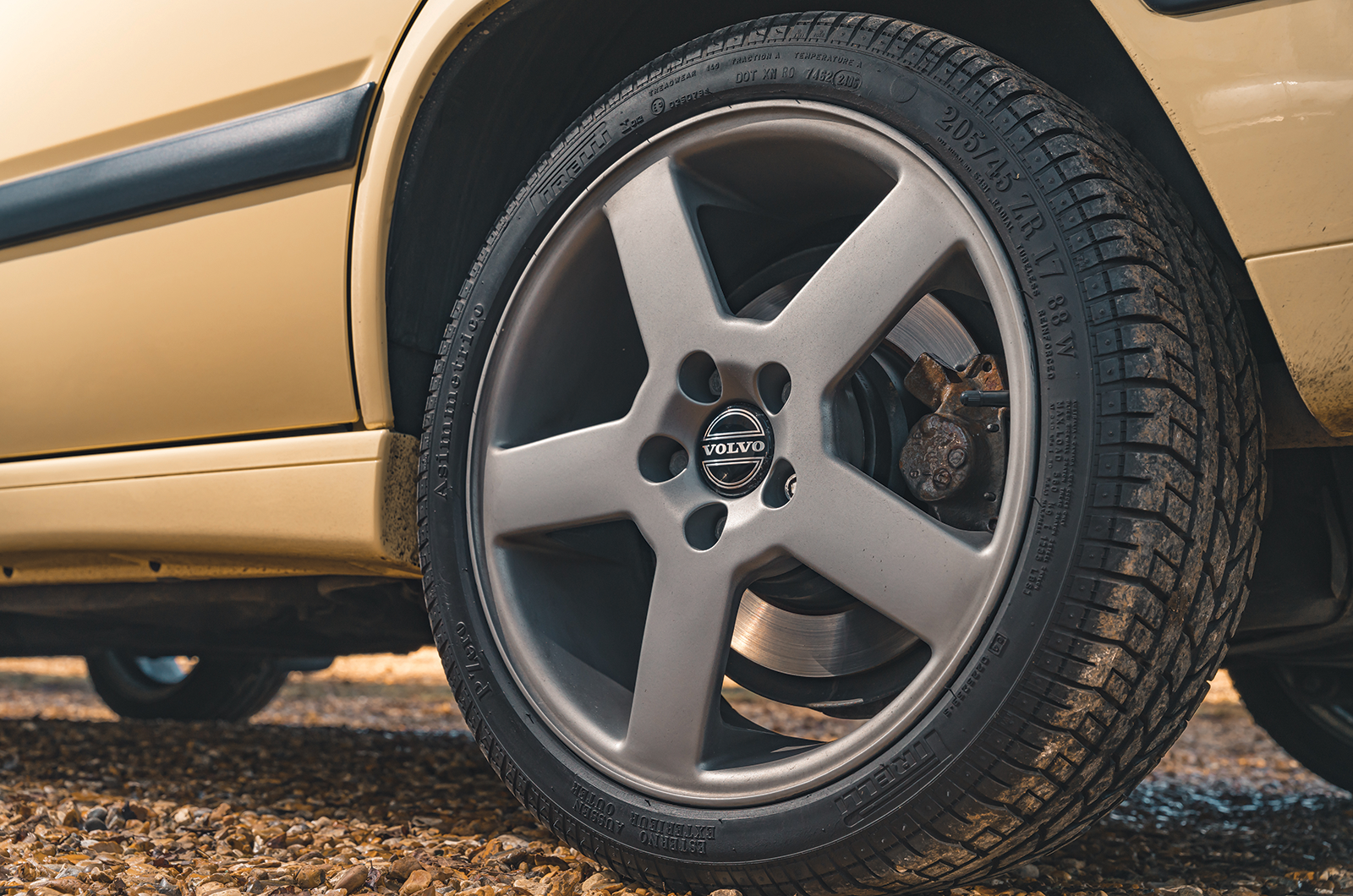
The Volvo’s Titan five-spoke wheels are simple but effective
They would have been aided by the four-wheel-drive system’s ability to smoothly deliver traction, too, because there’s never a feeling that the suspension and chassis are anything other than working in unison.
With that comes a confidence that is rather more fragile in the Volvo, which is exacerbated by it being an automatic.
The earlier Audi gives away 80bhp to the 240bhp Volvo – later 200s were closer to 200bhp – and in a straight line there is little contest, but when the roads get interesting the chase gets, well, interesting.
With the Volvo’s cult-hero status set aside and the cars considered equally, the Audi would undoubtedly be the car to take again and again.
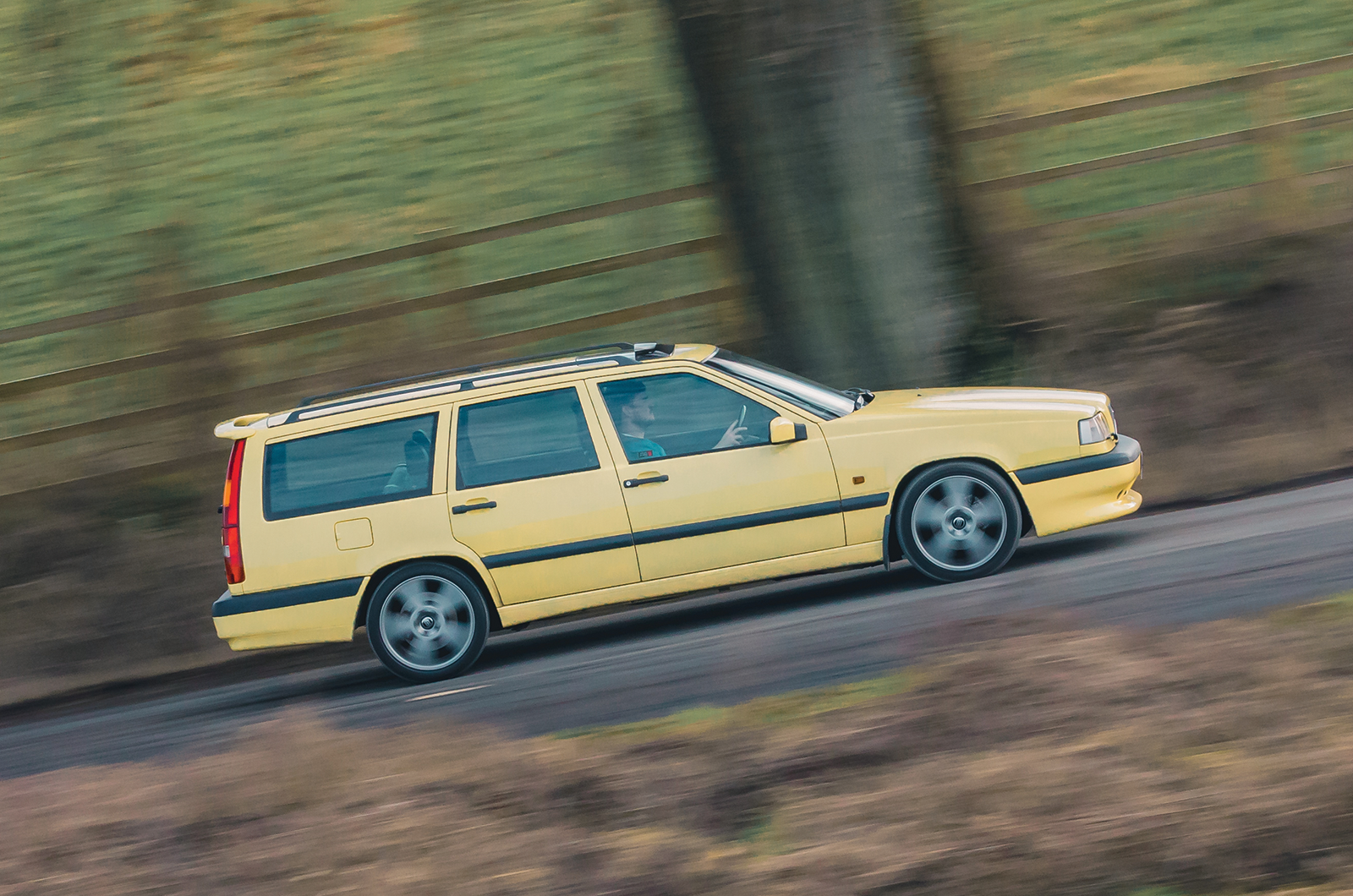
The Volvo 850 T-5R shines on smooth country roads
The playing field would be levelled by matching transmissions, so if round one can be awarded to the Audi, then round two might be claimed by a manual Volvo T-5R.
Which is sort of how it played out on the UK’s race tracks, in the BTCC.
Audi made its own splash of a different kind by winning its 1996 debut year, with the quattro S4 contender beating the 850 saloon.
Then Volvo’s S40 returned the favour two seasons later in 1998, as Rickard Rydell finally took the title for the Swedes.
Of course, that wonderful wagon body was long gone by then – and Group B even longer.
Gone, but never forgotten.
Images: Max Edleston
Factfiles
Audi 200 Avant quattro
- Sold/number built 1985-’91/6153
- Construction steel monocoque
- Engine iron-block, alloy-head, sohc 2144cc ‘five’, with turbocharger and Bosch K-Jetronic fuel injection
- Max power 165bhp @ 5500rpm
- Max torque 177lb ft @ 3000rpm
- Transmission five-speed manual or four-speed auto, 4WD
- Suspension independent, at front by MacPherson struts rear double wishbones, coil springs, telescopic dampers; anti-roll bar f/r
- Steering power-assisted rack and pinion
- Brakes ventilated front, solid rear discs, with servo and ABS
- Length 15ft 9in (4807mm)
- Width 5ft 11in (1814mm)
- Height 4ft 8in (1422mm)
- Wheelbase 8ft 10in (2687mm)
- Weight 3197lb (1450kg)
- Mpg 26
- 0-60mph 8.2 secs
- Top speed 132mph
- Price new £27,102 (1986)
Volvo 850 T-5R
- Sold/number built 1995-’96/6964
- Construction steel monocoque
- Engine all-alloy, dohc 2319cc ‘five’, with turbocharger and multi-point direct-port fuel injection
- Max power 240bhp @ 5600rpm
- Max torque 221lb ft @ 2300rpm
- Transmission five-speed manual or four-speed auto, FWD
- Suspension independent, at front by MacPherson struts rear trailing arms, coil springs, telescopic dampers; anti-roll bar f/r
- Steering power-assisted rack and pinion
- Brakes ventilated front, solid rear discs, with servo and ABS
- Length 15ft 6in (4720mm)
- Width 5ft 9in (1760mm)
- Height 4ft 8in (1415mm)
- Wheelbase 8ft 9in (2660mm)
- Weight 3113lb (1412kg)
- Mpg 31
- 0-60mph 6.9 secs
- Top speed 155mph
- Price new £28,840 (1995)
We hope you enjoyed reading. Please click the ‘Follow’ button for more super stories from Classic & Sports Car.
Jack Phillips
Volvo-owning Jack Phillips is a contributor to and former Deputy Editor of Classic & Sports Car