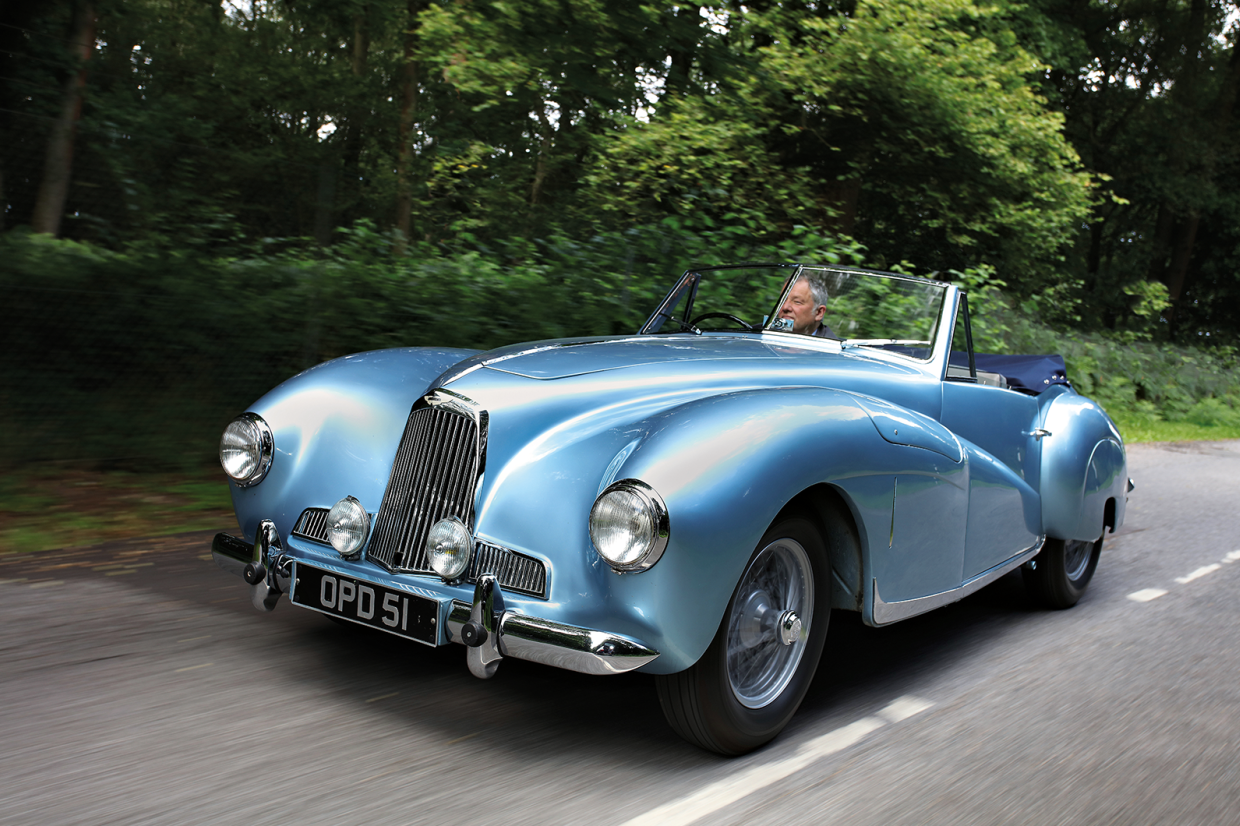
He persuaded his dad to part with the Aston (which was a garage-bound rolling chassis with the various parts piled up in boxes inside it) and went in search of professional help to get some momentum behind putting it back together, as and when time and funds allowed.
This wasn’t your usual think-of-a-figure-and-double-it, open-chequebook restoration.
Southward speaks particularly highly of Peter Pryce-Tidd and John Talbert of General Automobile Services, who, picking up where his dad left off, recommissioned the car.
He also received a great deal of support from Tim Cottingham of the Aston Martin Heritage Trust.
“It has taken 15-20 years to get it to this stage,” says Southward, who was busy raising a family. “It was more of a time thing than a money one.”
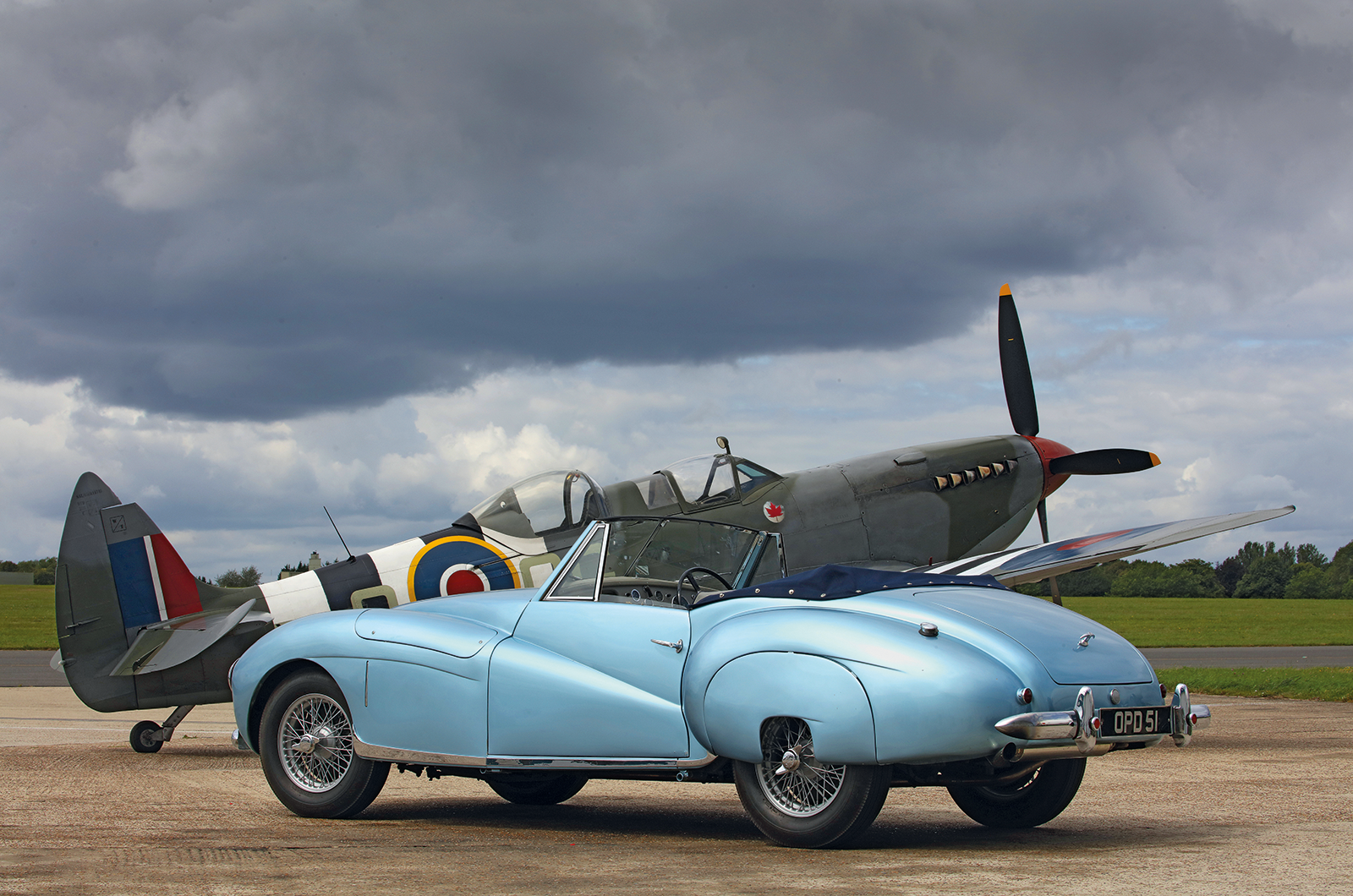
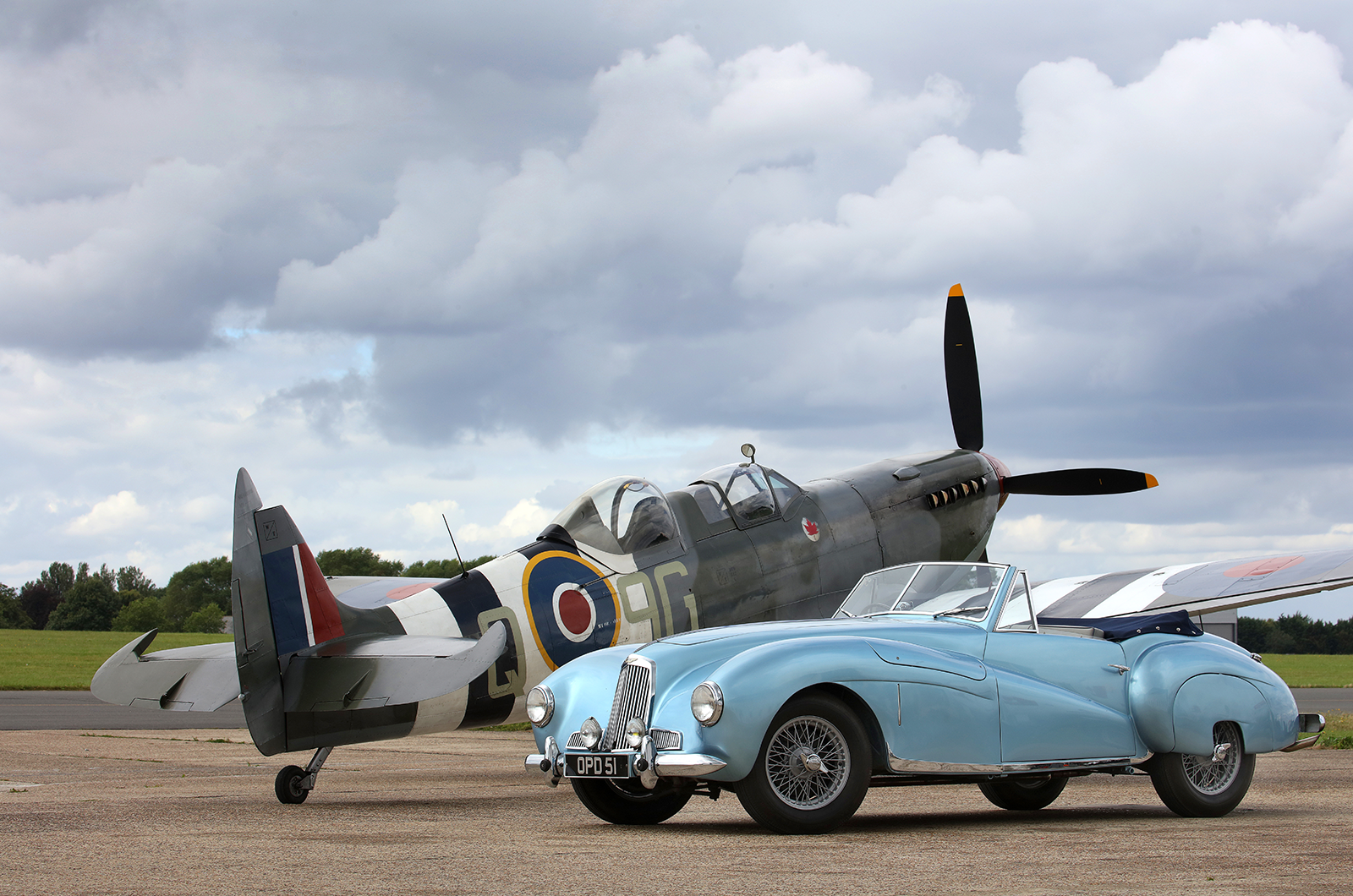
The car was back on the road in 2014 and appeared on the Cartier Lawn at Goodwood in 2017.
“At first, every time I drove it something would go wrong,” Southward says. “It seemed that a lot of Dad’s work was wasted due to the time it sat in the garage. Dad passed away in April 2019 but he was very happy to see it finished.”
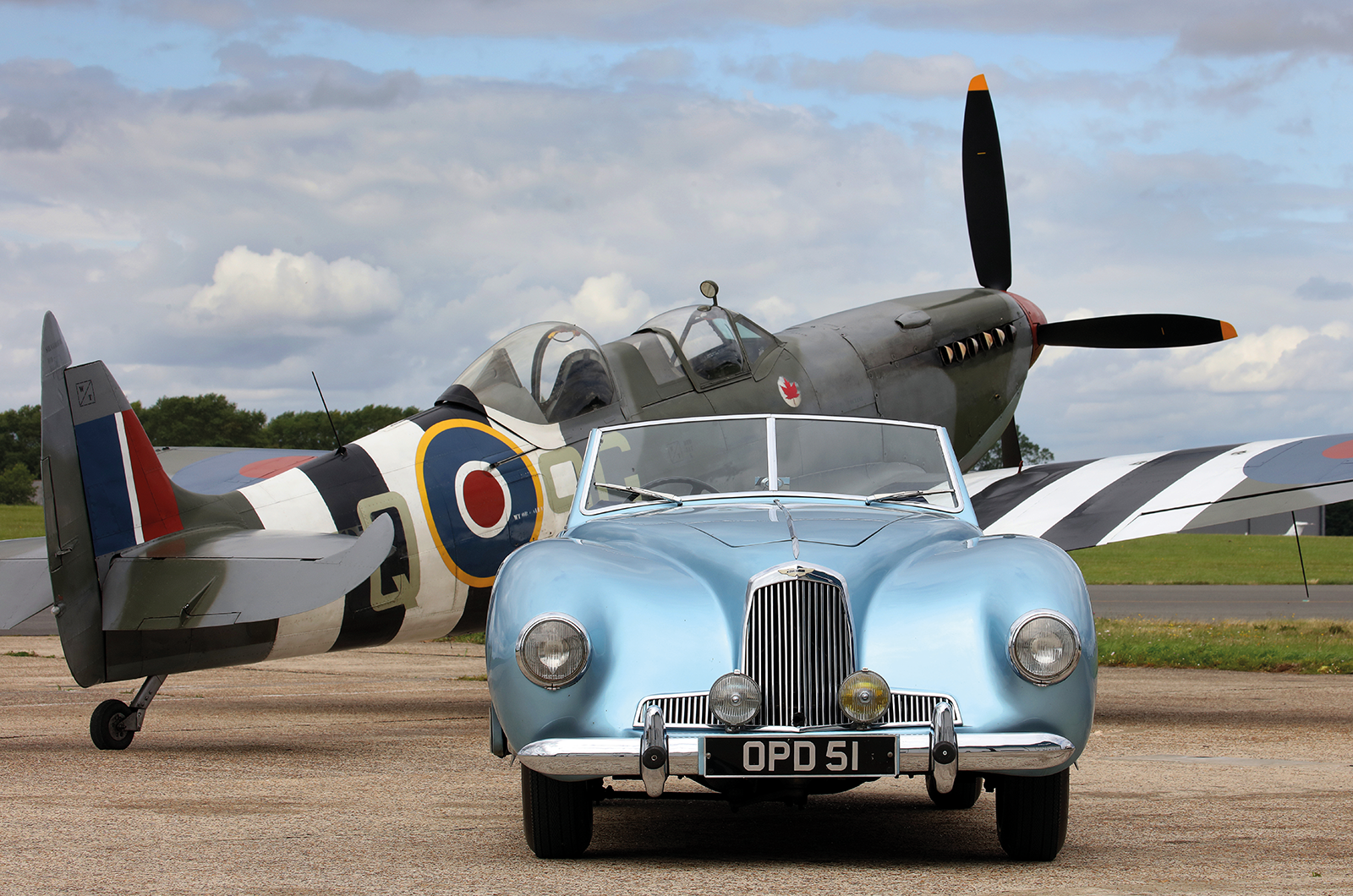
The DB1 has been Southward’s ticket to a variety of glamorous motoring events but he is enthusiastic enough to drive it himself to some of the more down-to-earth ones as well – I first encountered it at Bicester Heritage.
But he would be the first to concede that the Two Litre might not be your ideal choice of Aston for a trip to Scotland or a Continental tour.
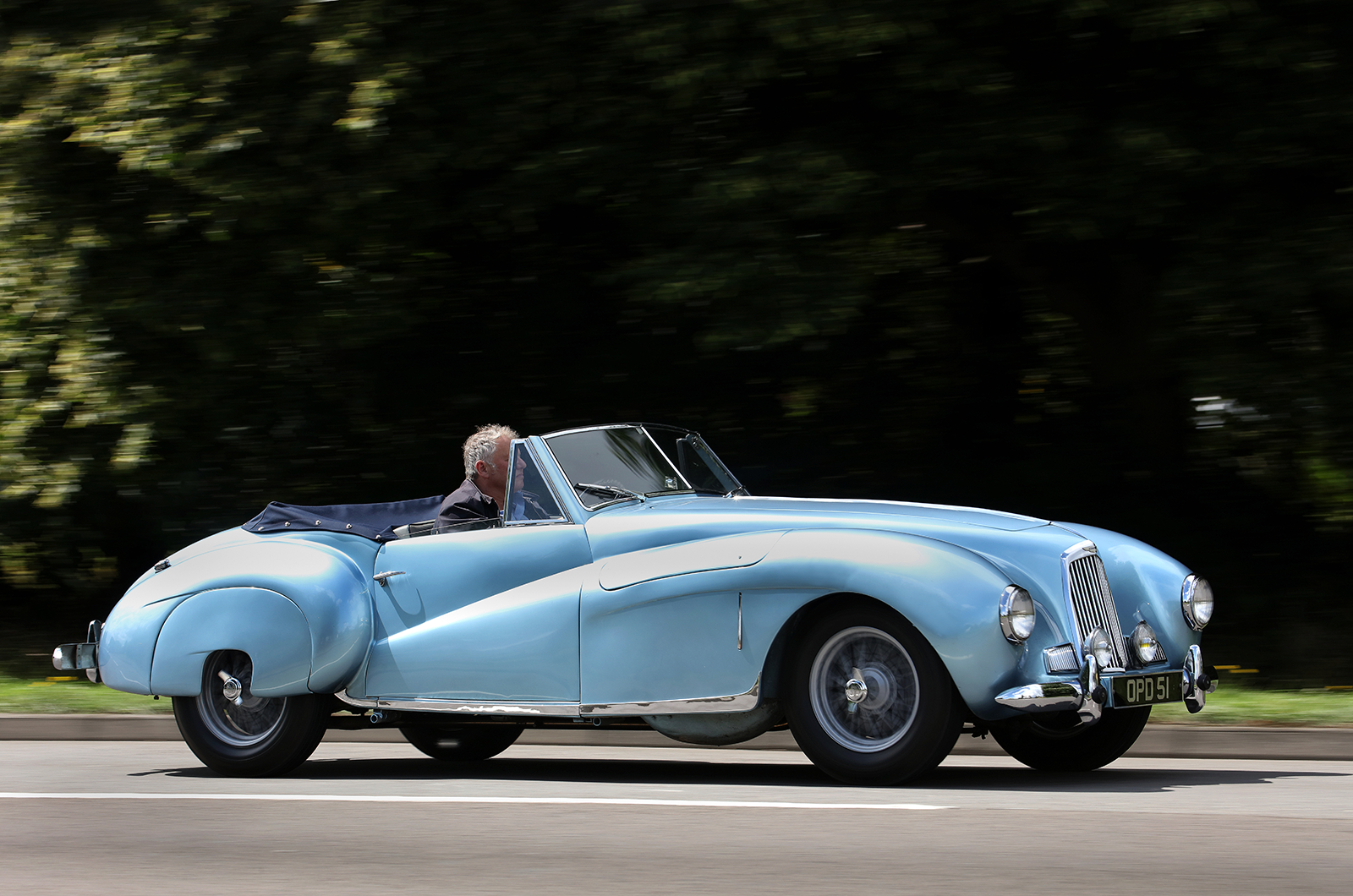
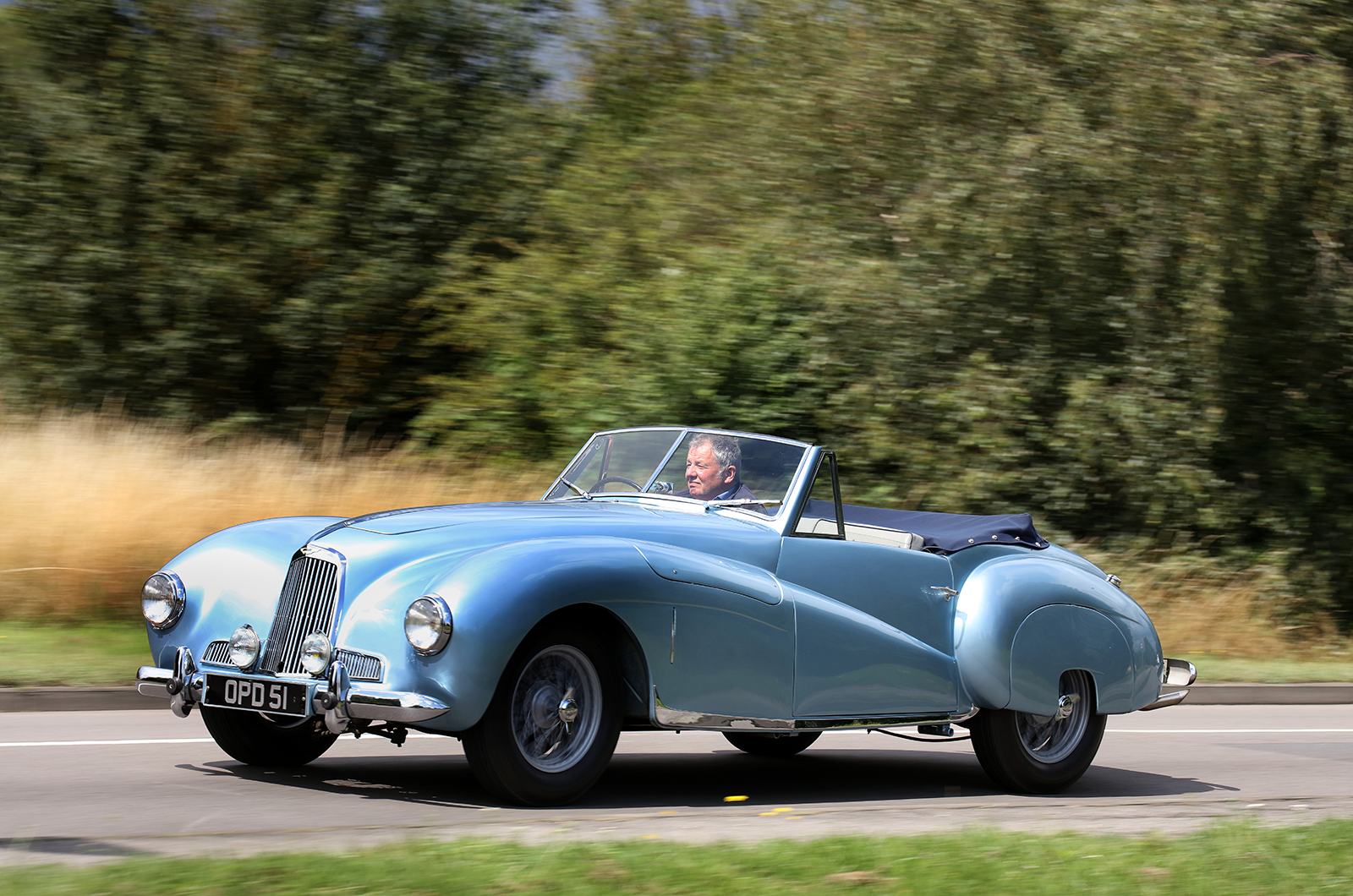
“You drive it defensively, like a motorcyclist,” he admits. “Concentration levels are much higher than in a modern car.”
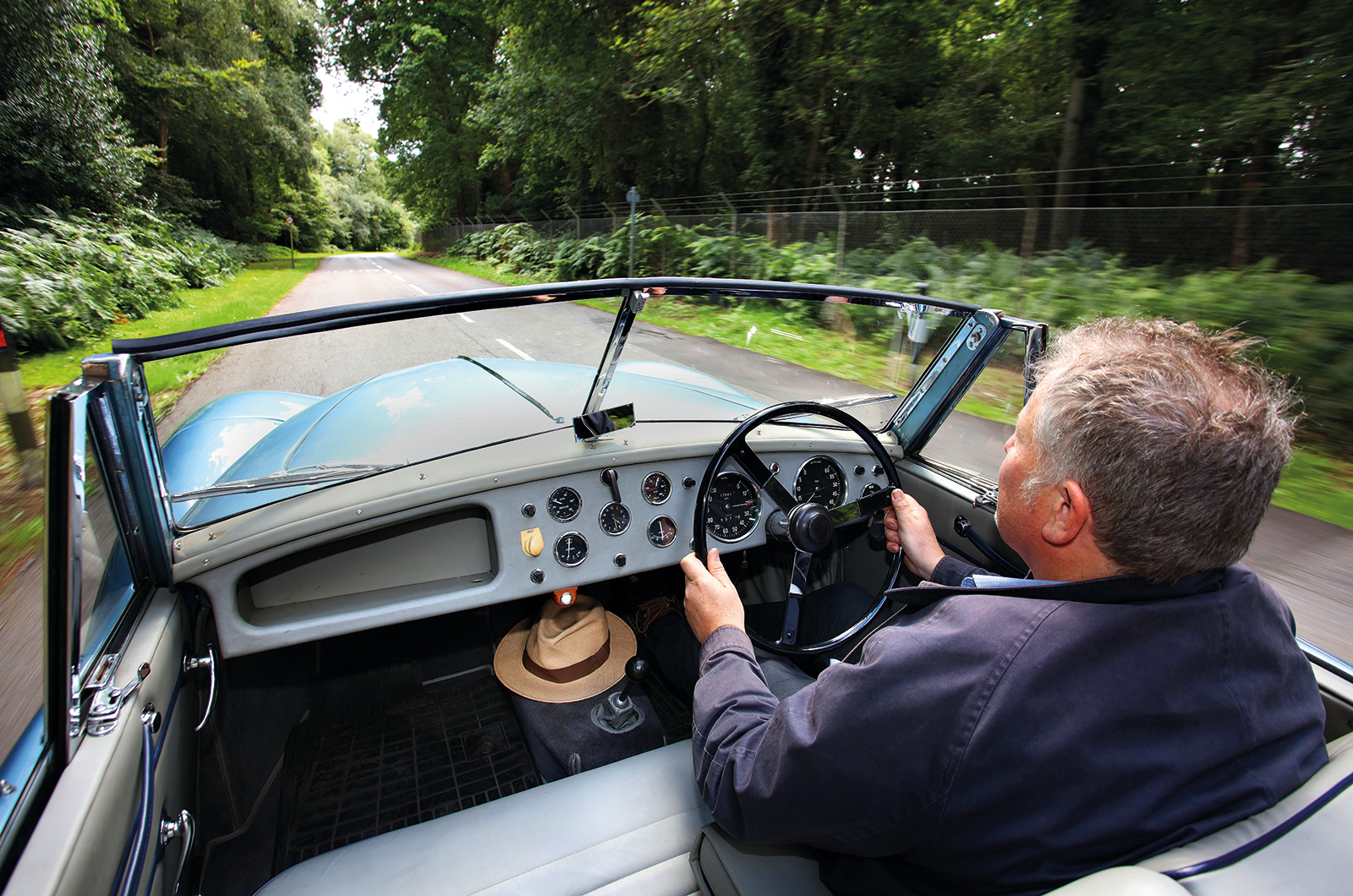
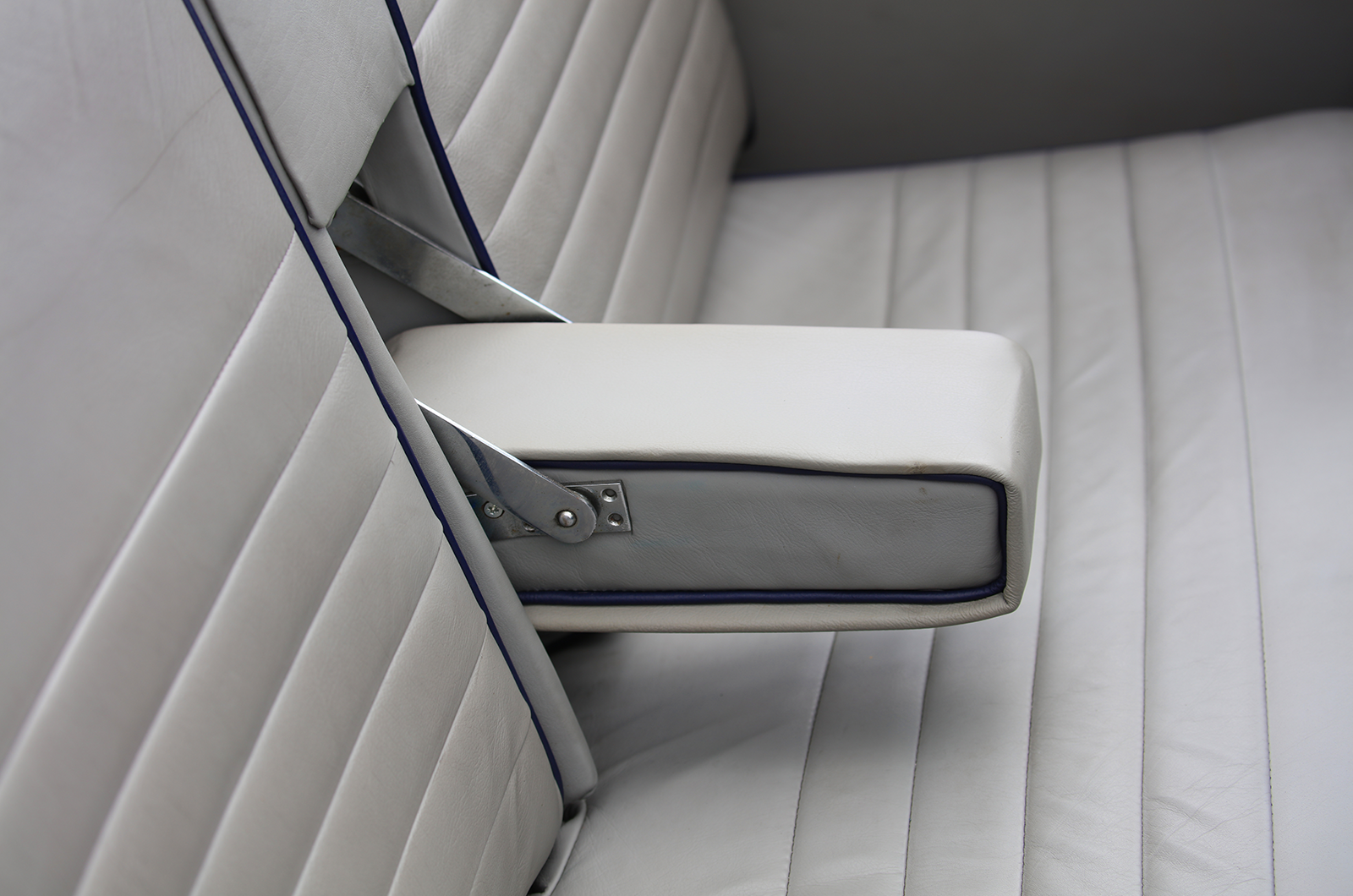
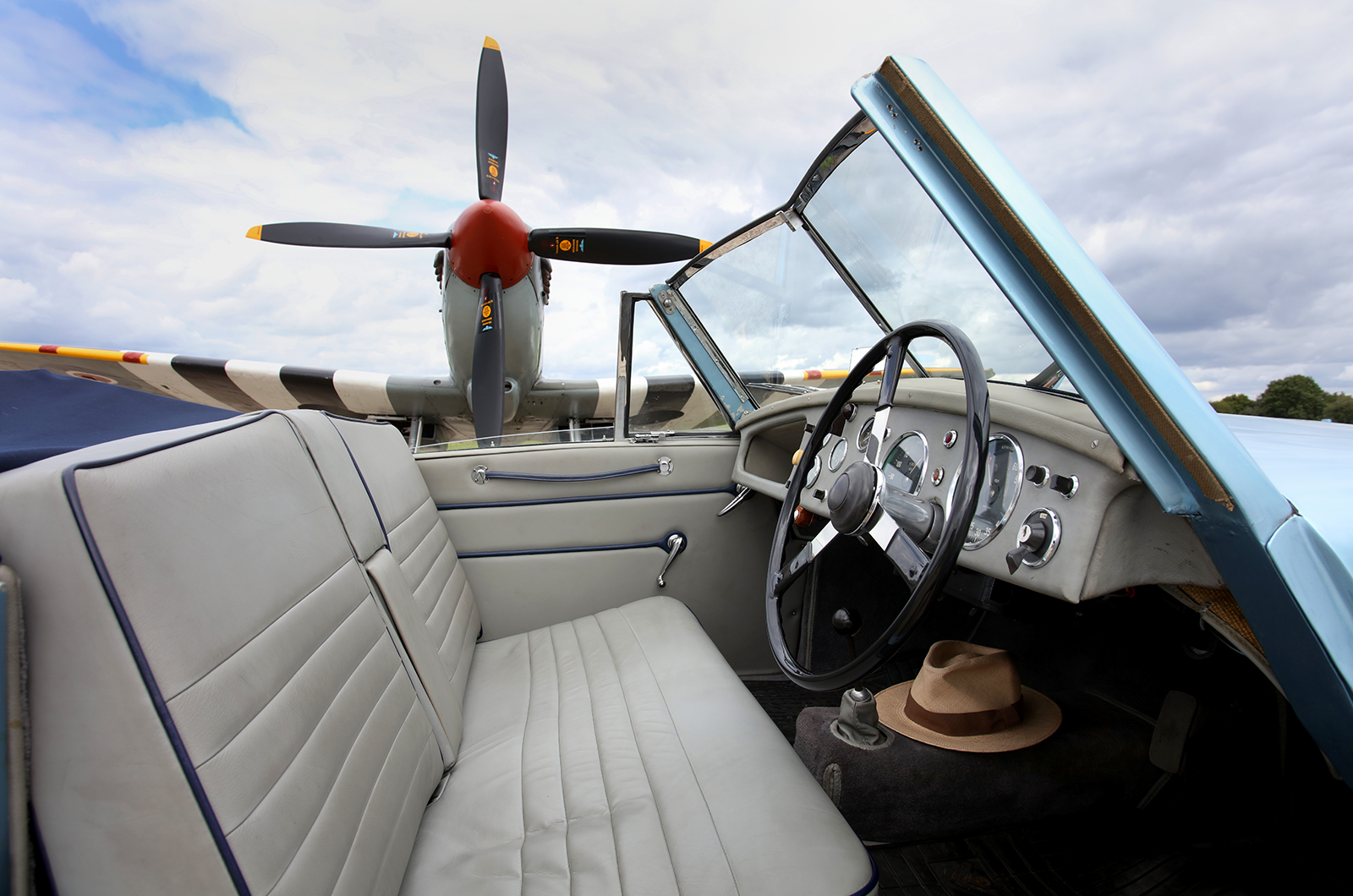
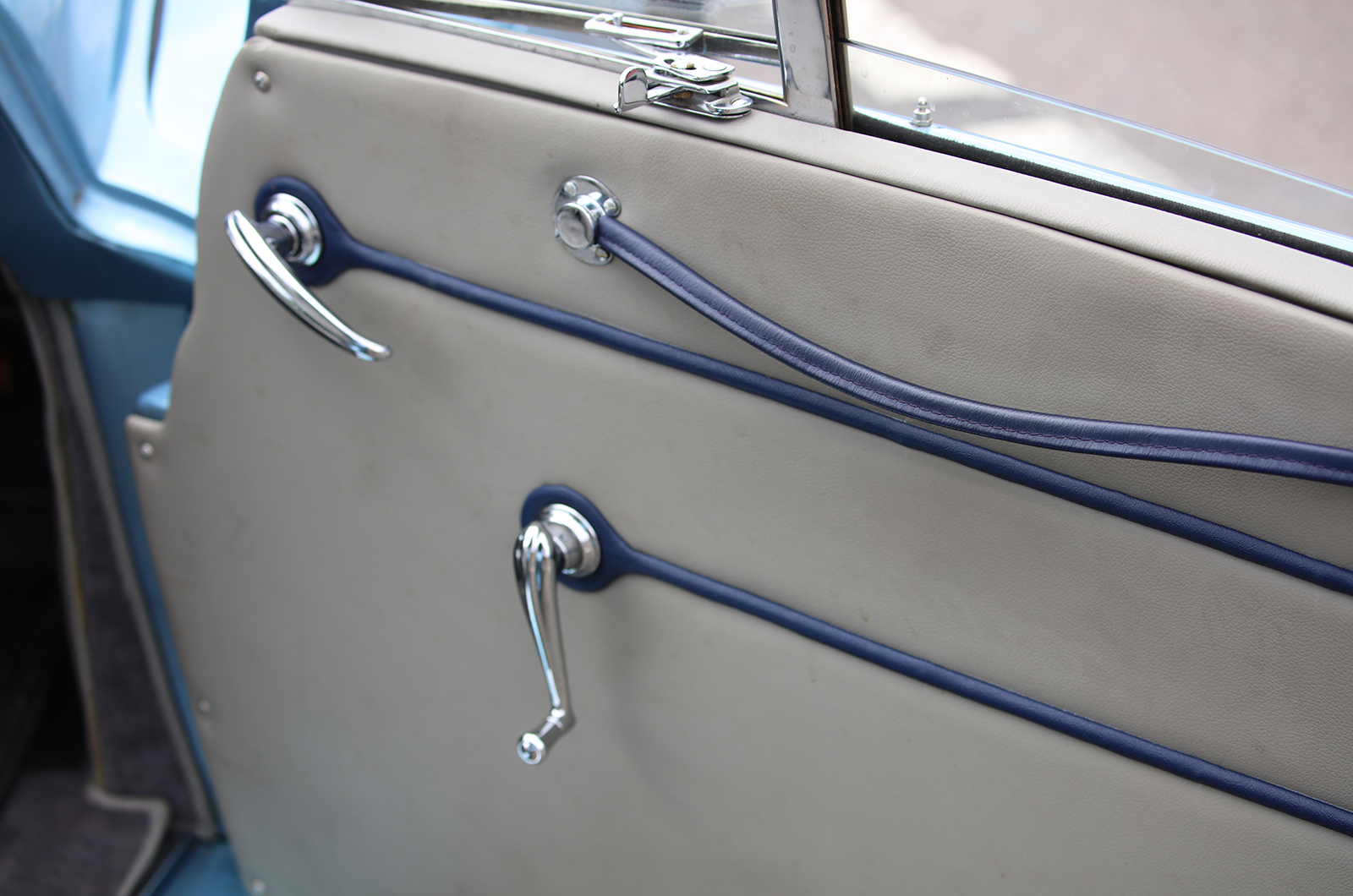
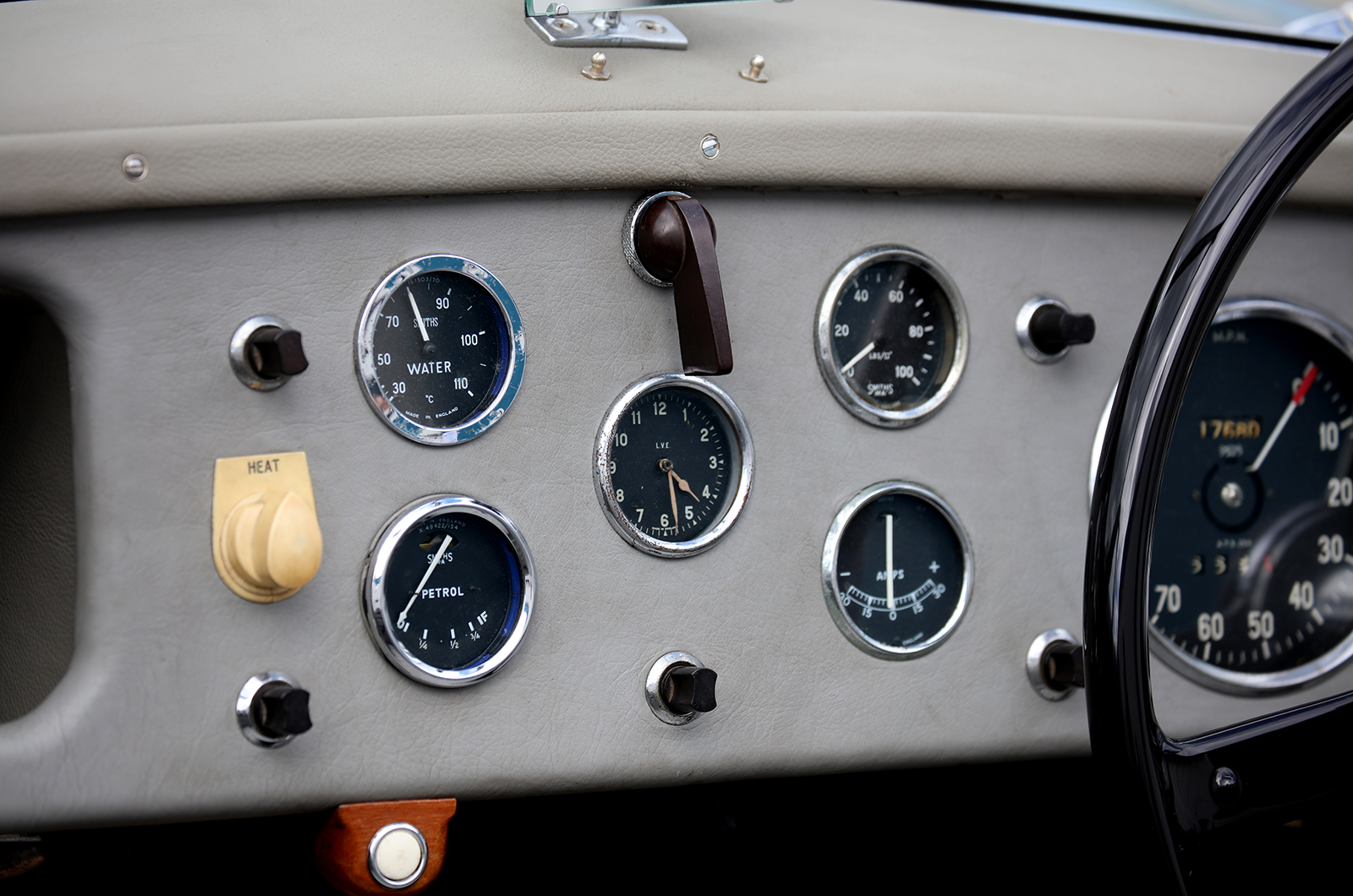
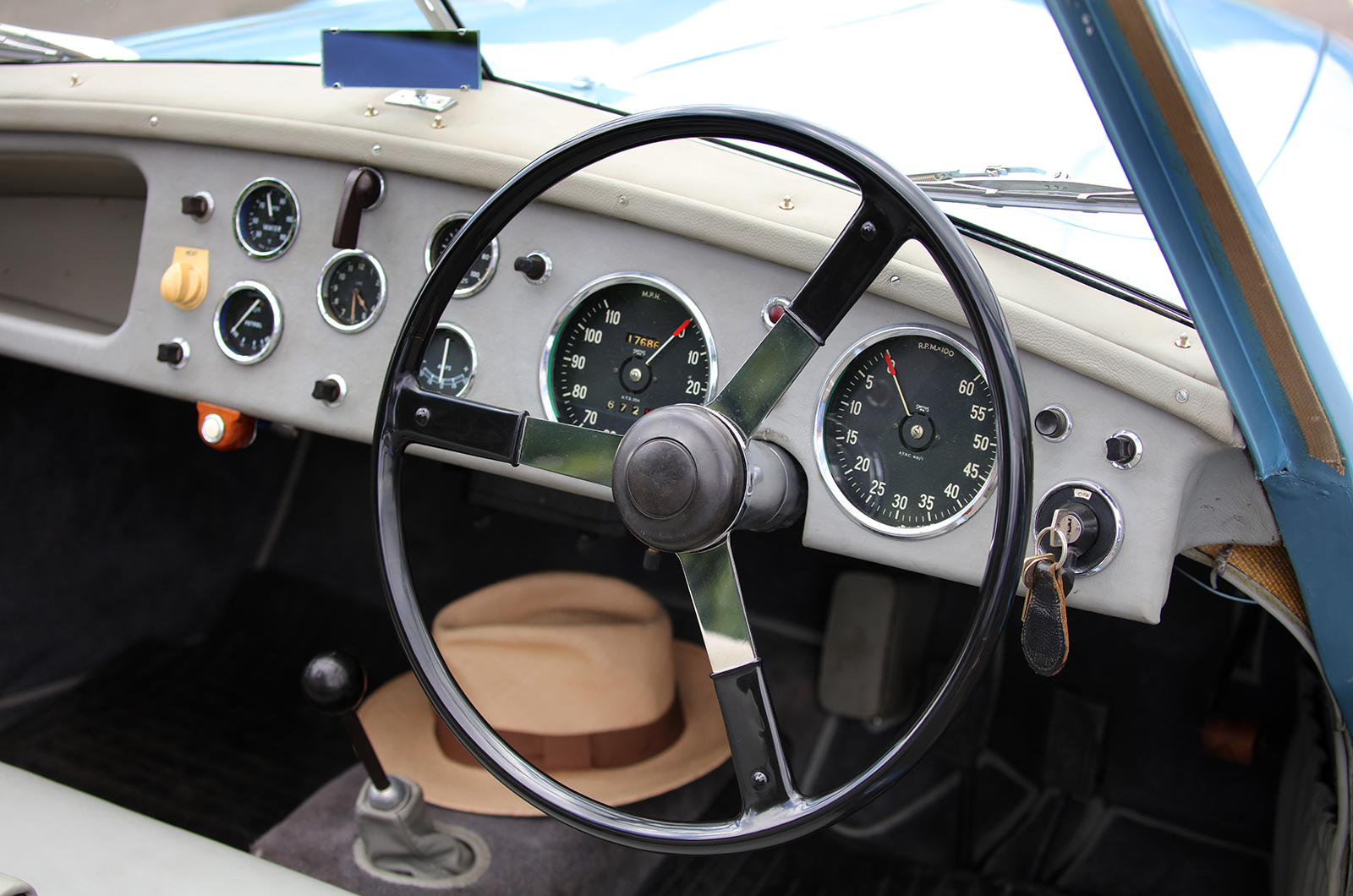
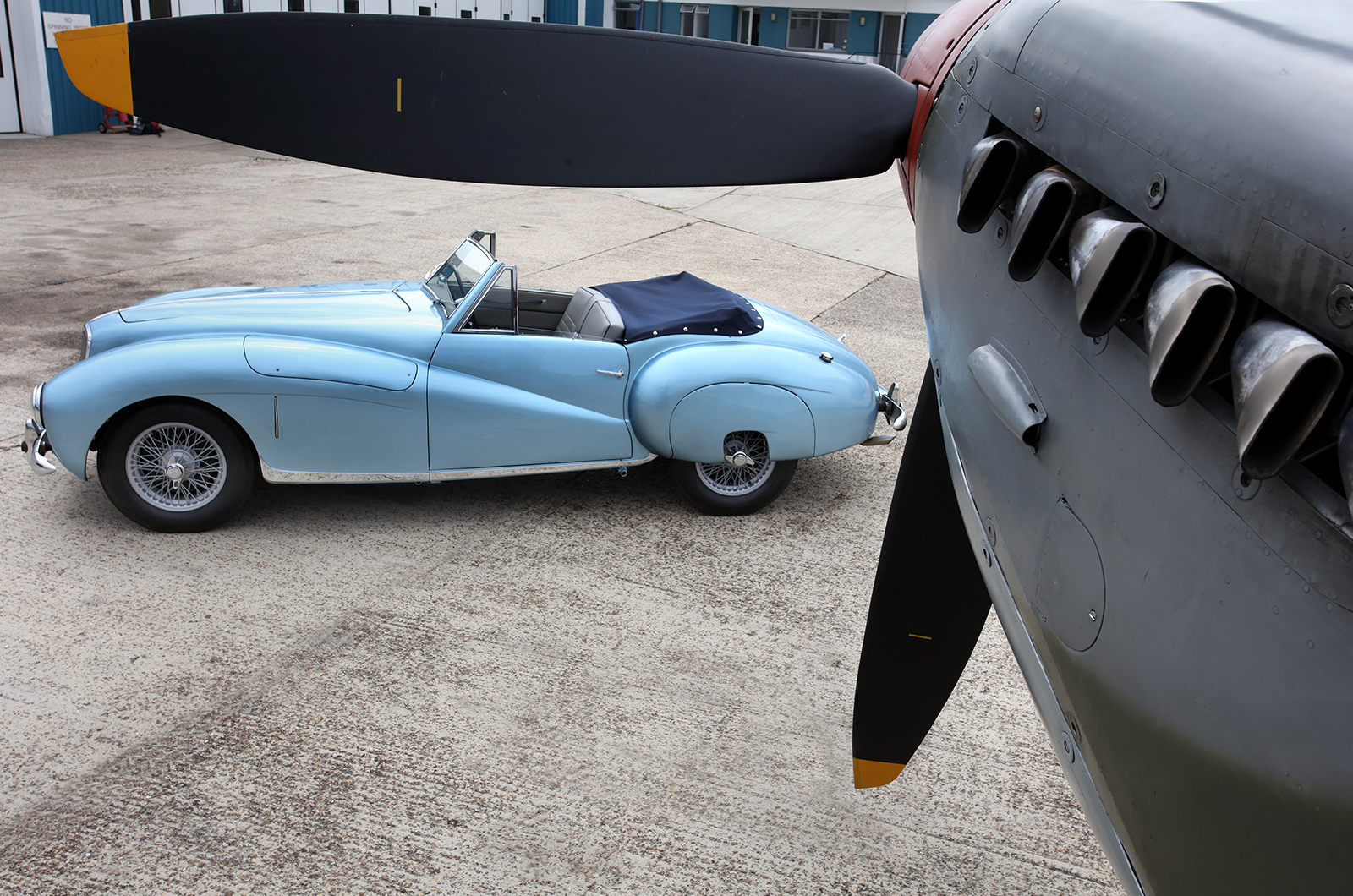
Attractively but rather plainly trimmed, the DB1 feels roomy with a flat and purely functional dashboard, a giant steering wheel and a neatly resolved hood arrangement.
The small, square, floor-hinged brake and clutch pedals are not particularly heavy, but the uninspiring brakes are doubtless the main cause of Southward’s anticipation anxieties. You really do have to keep a close eye on what is happening two or three cars ahead of you.
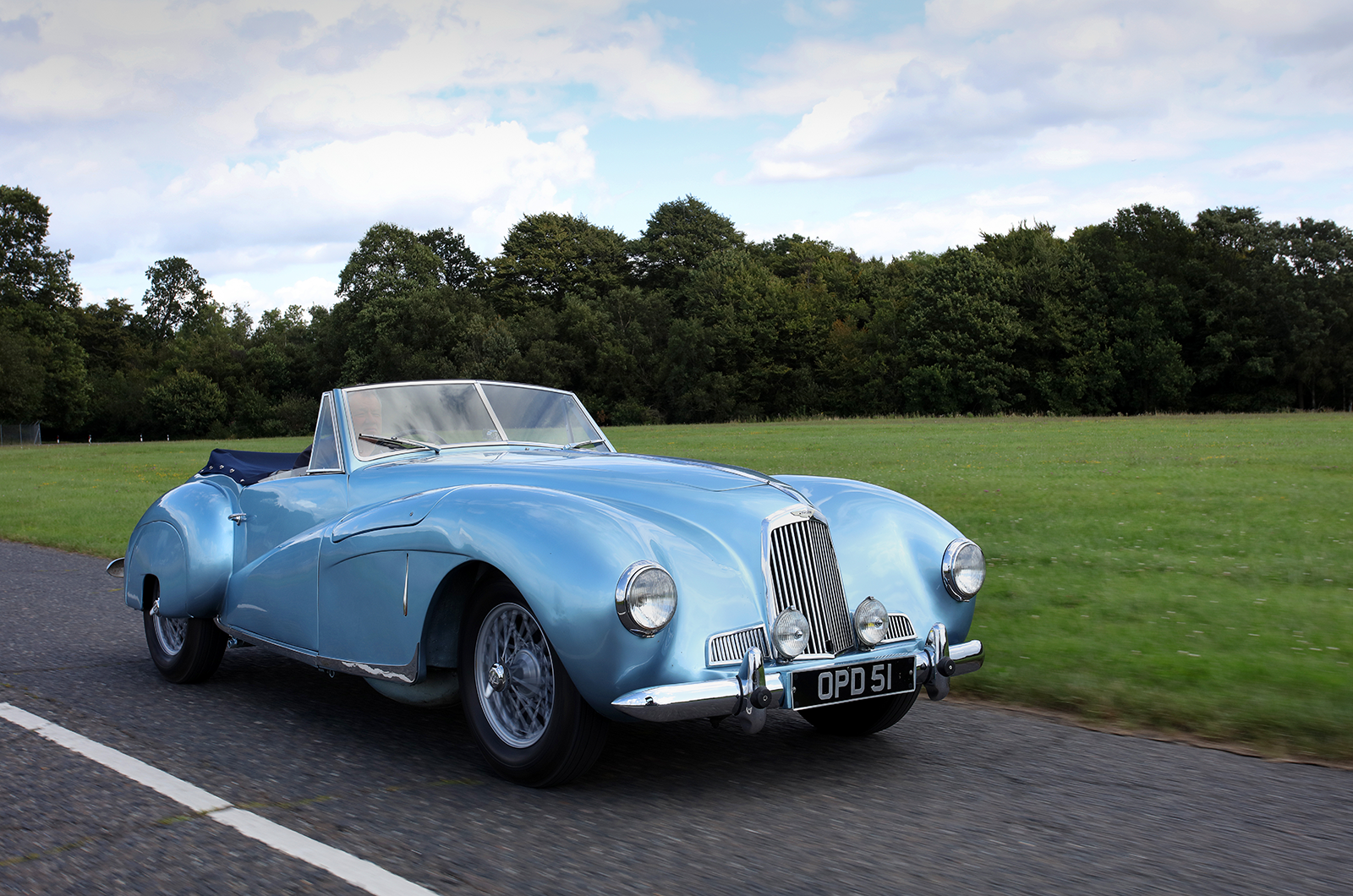
The throaty, offbeat exhaust makes no secret of the Aston’s four-cylinder credentials, a sound that somehow doesn’t chime with the car’s suave looks.
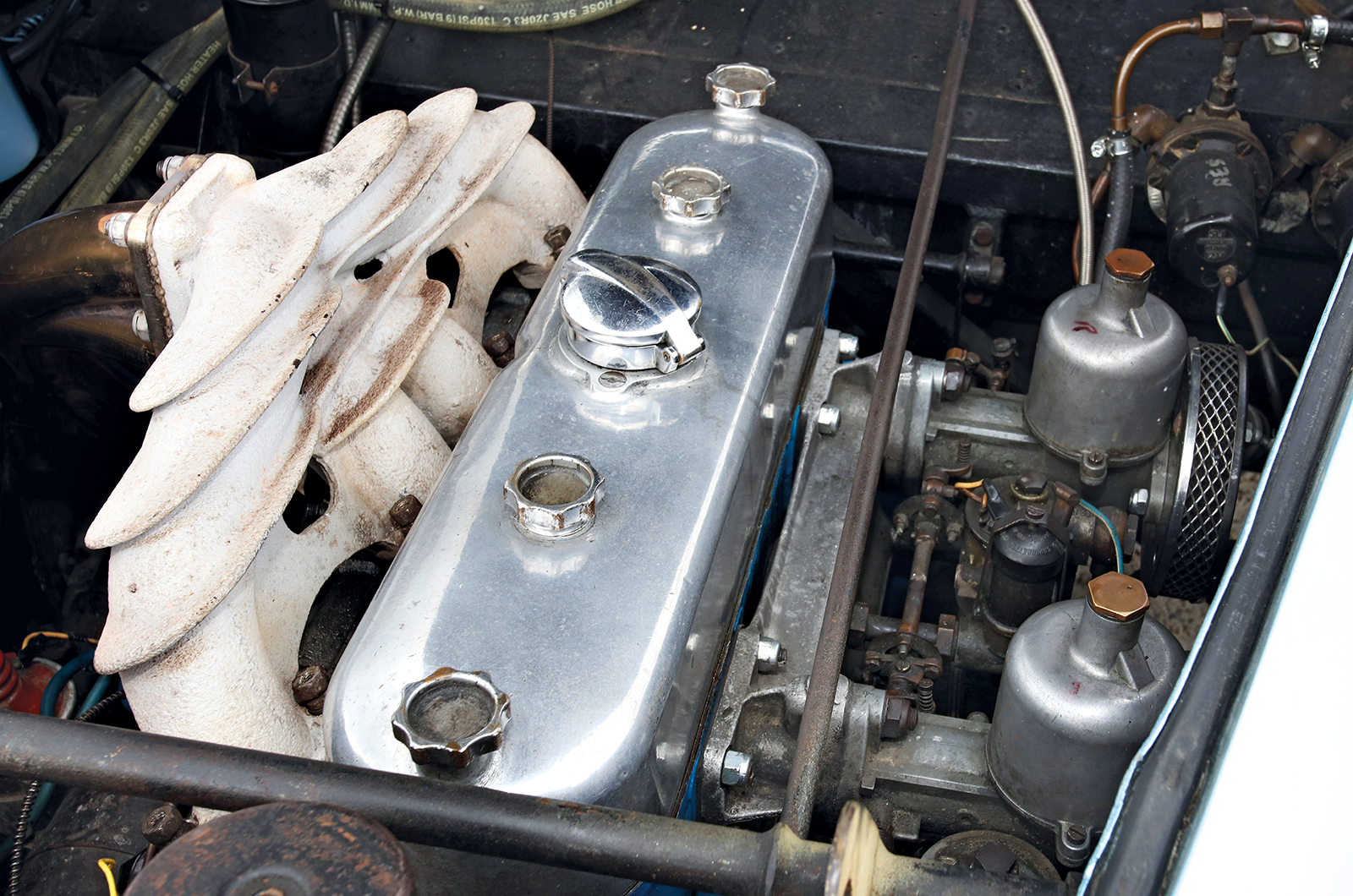
The motor sounds as ruggedly dependable as it appears: a tall, all-iron lump with that curiously finned manifold.
Brown understood the visual appeal of a twin-cam straight-six, but this doesn’t look anything like as special.
You urge it through the four fairly long ratios of the DB gearbox, which rewards patience with clean shifts, noting the long-stroke torque but missing the silky, eager responses of a ‘six’.
The acceleration is, in truth, fairly pedestrian; Southward thinks a rebuild might be in order but doesn’t relish the idea of disturbing the one-piece front ‘clip’ that comprises the body’s front end – a necessity if you want to take out the engine.
At pottering speeds the steering wanders slightly but it gets better as you pick up the pace, peeling away the understeer and feeling both stable and with a supple ride, a modern compromise Aston had not managed before.
A slightly uncertain and rather overlooked opening gambit in the marque’s post-war adventure, it established Aston’s credentials under DB for building well-groomed cars with good handling.
It is a pretty, pleasant car, yet not an exciting one in relation to what came after it: but you knew that already.
The point about the DB1 is its rarity and its place in history at the beginning of the marque’s most charismatic chapter.
Sometimes that’s enough.
Images: James Mann
Thanks to Biggin Hill Heritage Hangar
This was first in our January 2020 magazine; all information was correct at the date of original publication
Factfile
Aston Martin ‘DB1’
- Sold/number built 1948-’50/15
- Construction aluminium body, steel tubular semi-spaceframe chassis
- Engine all-iron, ohv 1970cc ‘four’, twin 1½in SU carburettors
- Max power 90bhp @ 4750rpm
- Max torque 135Ib ft @ 3000rpm
- Transmission four-speed manual, RWD
- Suspension: front independent by trailing arms rear live axle, parallel arms, Panhard rod, Watt linkage; coil springs f/r
- Steering worm and roller
- Brakes 12in (305mm) hydraulic Girling drums
- Length 14ft 8in (4470mm)
- Width 5ft 7in (1702mm)
- Height 4ft 7in (1397mm)
- Wheelbase 9ft (2743mm)
- Weight 2520Ib (1143kg)
- 0-60mph not disclosed
- Top speed 93mph
- Mpg n/a
- Price new £3000 (1948)
We hope you enjoyed reading. Please click the ‘Follow’ button for more super stories from Classic & Sports Car.
Martin Buckley
Senior Contributor, Classic & Sports Car