How Aston Martin tried to save the MGB

| 27 Feb 2026
Classic & Sports Car – How Aston Martin tried to save the MGB

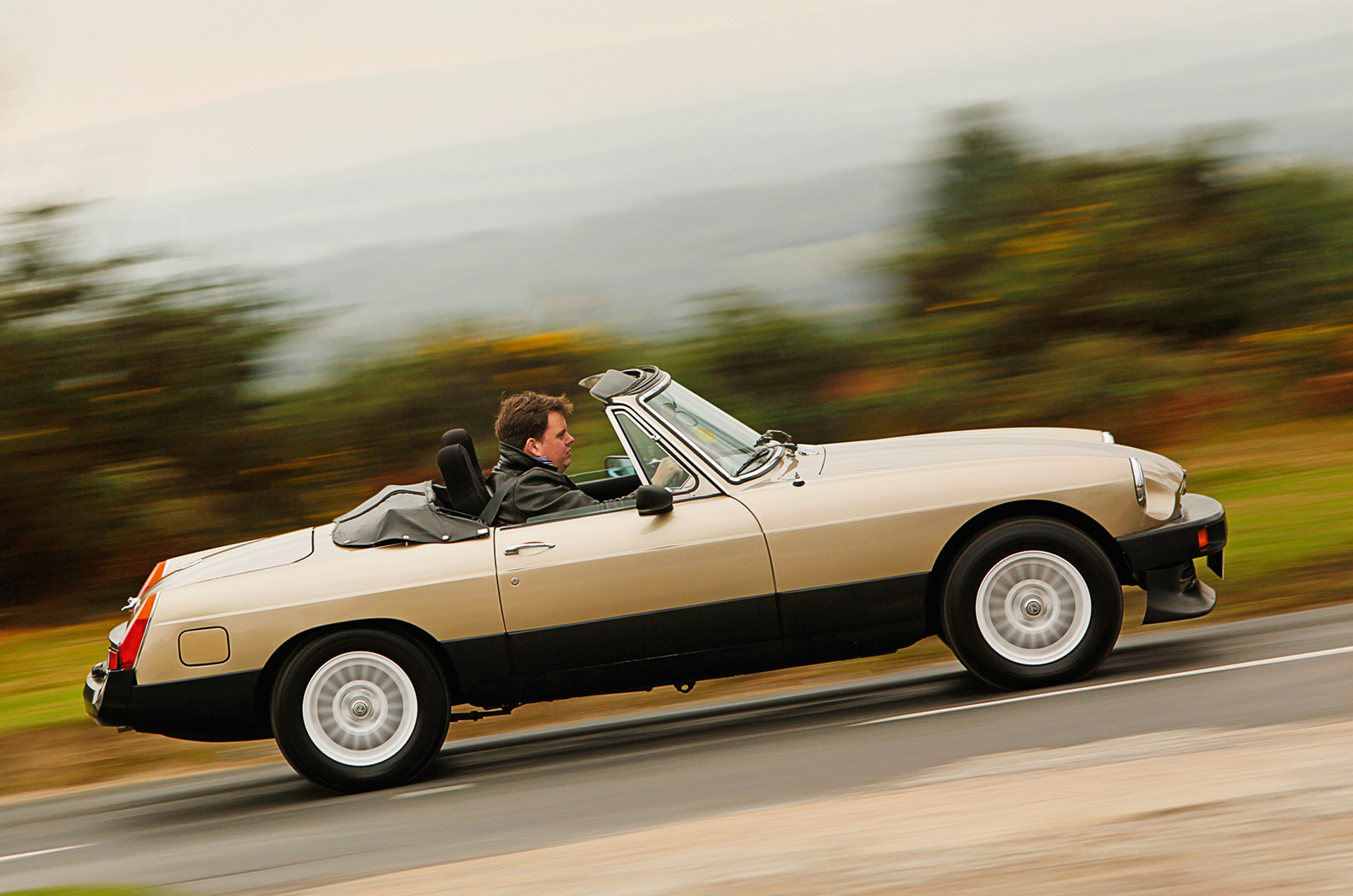
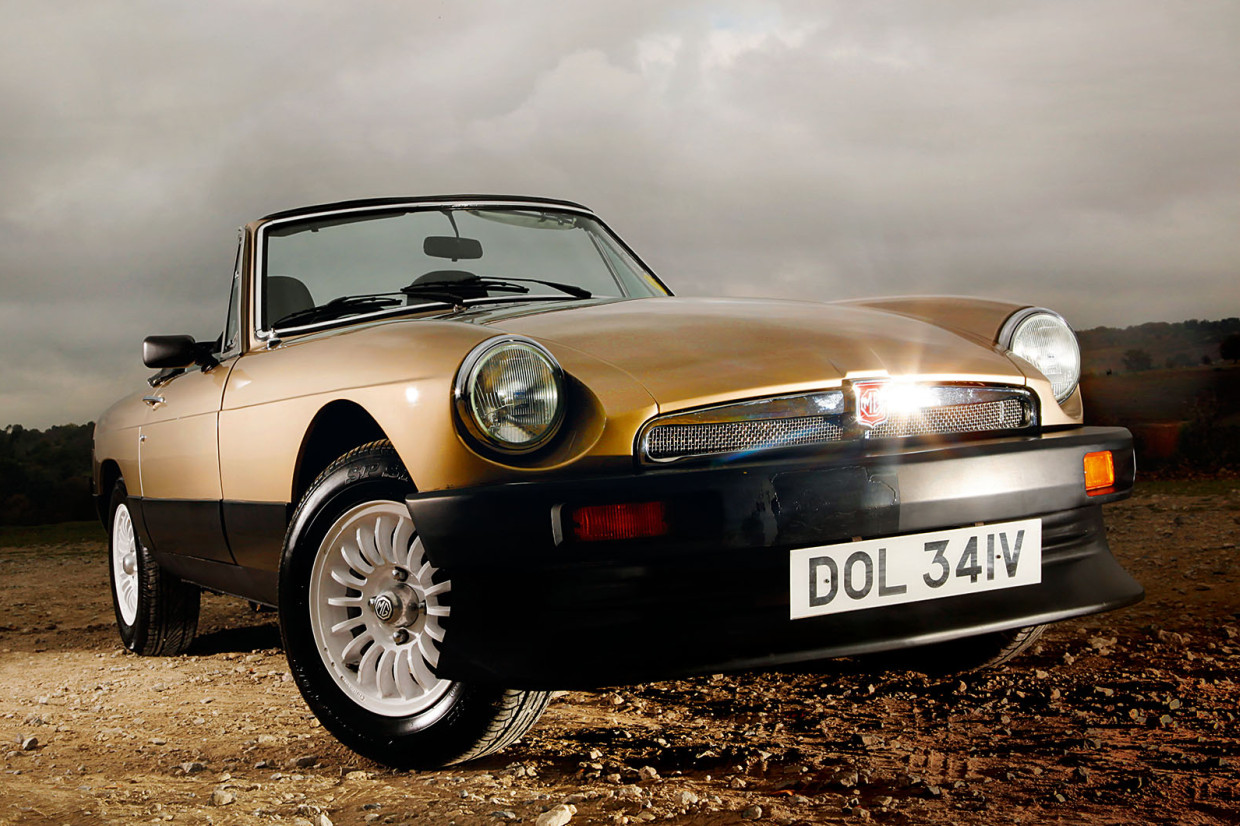
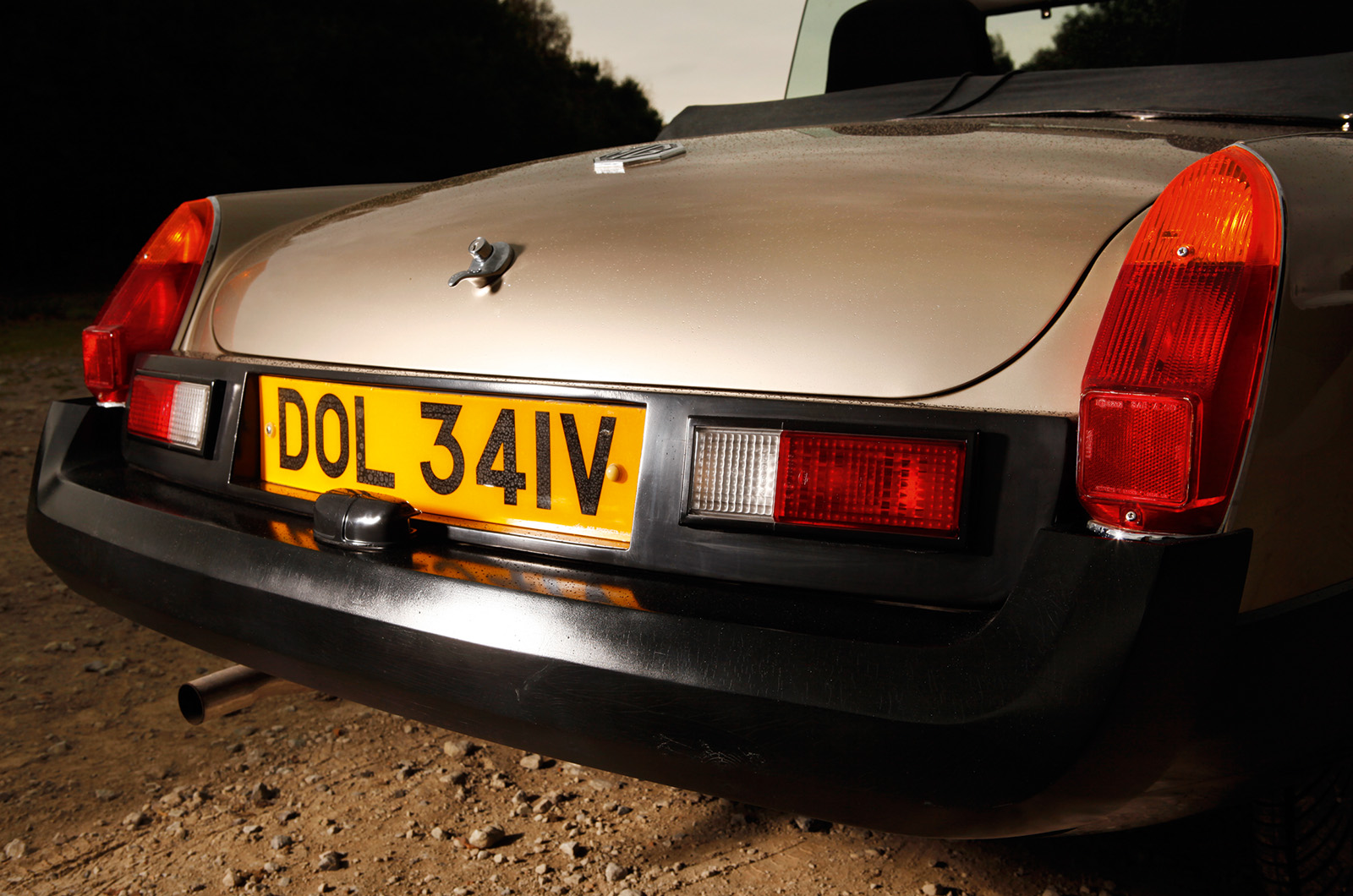
The cladding on the lower flanks, the relocated foglights and reversing lamps, Vitaloni door mirrors and white GKN Wolfrace alloys are the most obvious differences.

Less so are the taller, MGB GT-spec windscreen and doors, the shallow radiator grille, plus the modified bumper and front spoiler, while it takes a real octagonal savant to spot the relocated fuel-filler cap and the hidden panel seams between the scuttle and the front wings.

This Silver Sand MGB may look a bit like a refugee from a Human League video, but it represents a fascinating addendum to the MG story.
Classic & Sports Car – How Aston Martin tried to save the MGB

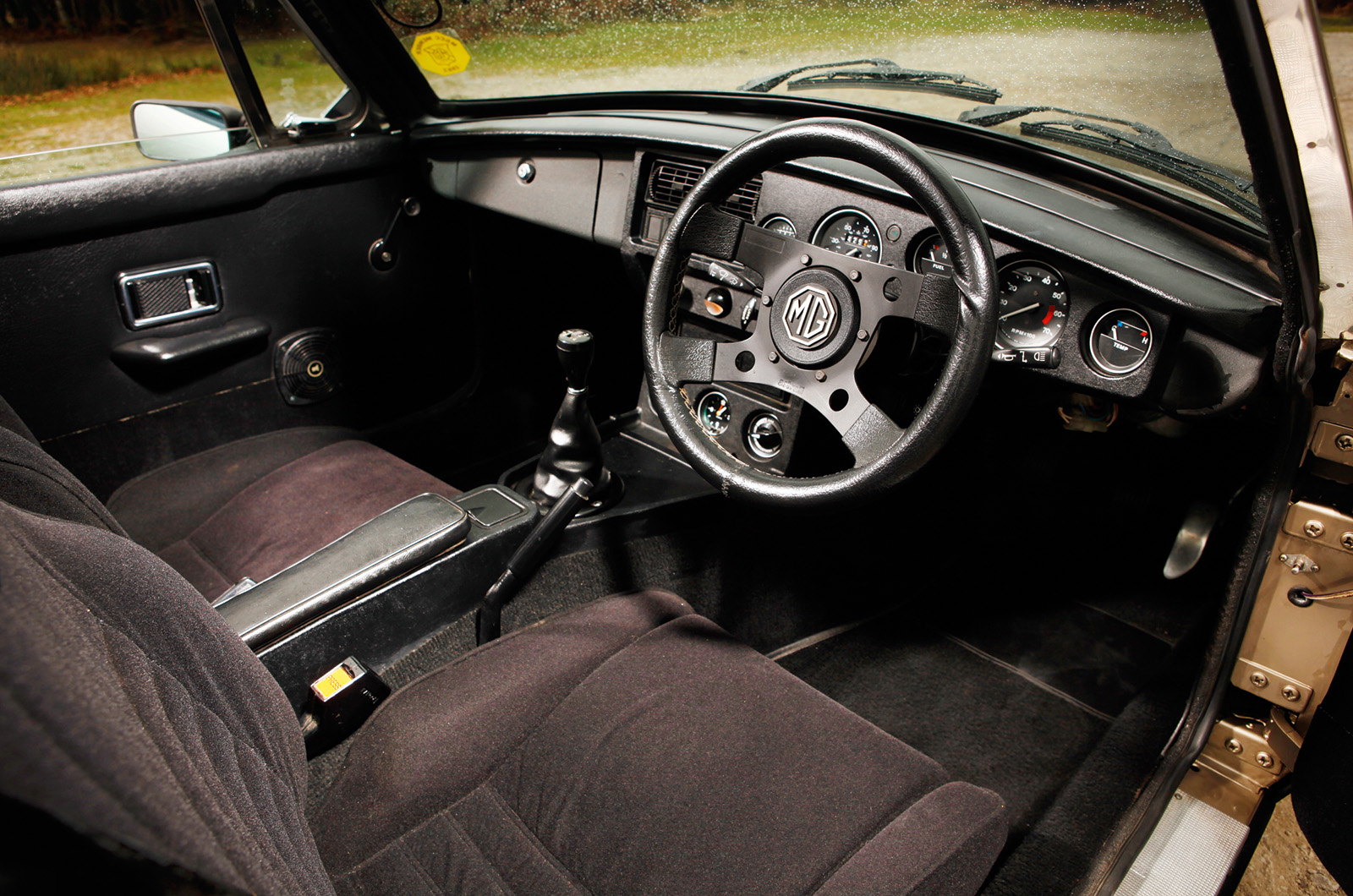
A chunky Astrali steering wheel completes the Aston-MGB’s cabin

On 10 September 1979, British Leyland announced that the division would close.

After the Conservative win at the General Election, Sterling had risen against the dollar and this coincided with a stock-market downturn caused by the Iranian oil crisis.

So BL needed to take drastic action to stay afloat.

The Abingdon and Canley plants would therefore shut as part of a programme to lose 25,000 jobs, and this plan was voted on and approved by 87% of BL’s workforce.
Chairman Michael Edwardes claimed that Abingdon had a deficit of £26m per year and that the poor pound-to-dollar exchange rate had resulted in MG losing £900 on each B sold in the USA.

That was a significant claim when the States accounted for 80% of production.

Classic & Sports Car – How Aston Martin tried to save the MGB

The MGB was given an ’80s makeover by designer William Towns

A lifeline was then thrown to the firm and its staff by a consortium headed by Alan Curtis from Aston Martin Lagonda, who felt that MG would complement its high-end business.

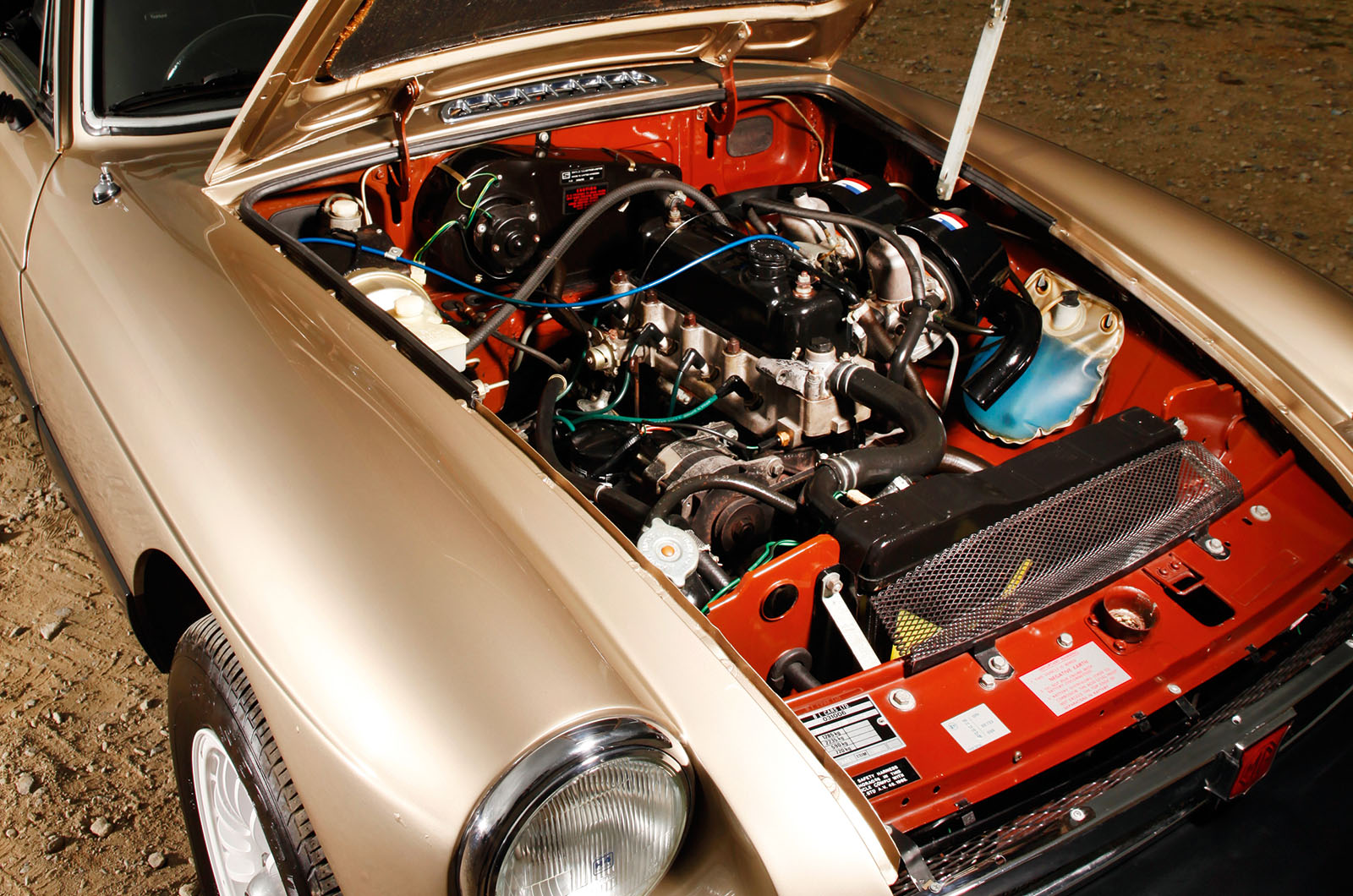
A Russet Brown 1980 MGB, sourced from BL Cars Ltd Sales & Marketing, would show BL that the group should be taken seriously by presenting ‘Stage I’ of its proposal.

Although similar to a previously suggested facelift, the ‘MGB 1981’ was styled by William Towns.

It was built in just six days by a small team led by Keith Martin and Steve Hallam (Ayrton Senna’s future race engineer at Lotus) in Aston Martin’s Special Projects workshop.

After the collapse of the bid, DOL 341V was stored until it was sold, first in 1984 and again in 1997.

The car wasn’t road-legal and lacked necessities such as an accessible fuel tank.

Classic & Sports Car – How Aston Martin tried to save the MGB

The MGB’s engine bay shows the original Russet Brown paintwork

These were sorted in the ’80s, but apart from that this 6844-mile MGB is as Aston built it.

There wasn’t time to fabricate Towns’ new interior, but the 1980s look endows the MGB with more class than some of BL’s revisions.

Dynamically, there are no surprises for the MGB driver.

The bores’ telegraph will have you believe that all rubber-bumper cars are blighted with the nimbleness and predictability of a mule with a migraine – but no.

Early models, with their raised suspension, were a backward step, but this was rectified in June 1976 with a host of revisions, including a fatter front anti-roll bar and the introduction of another astern.

Factor in the chunky Astrali wheel that, despite feeling like some sort of space-age salami sausage, encourages you to get into the groove when the road presents some tantalising shapes and it’s nimble, corners flat and is enjoyably predictable.

Classic & Sports Car – How Aston Martin tried to save the MGB

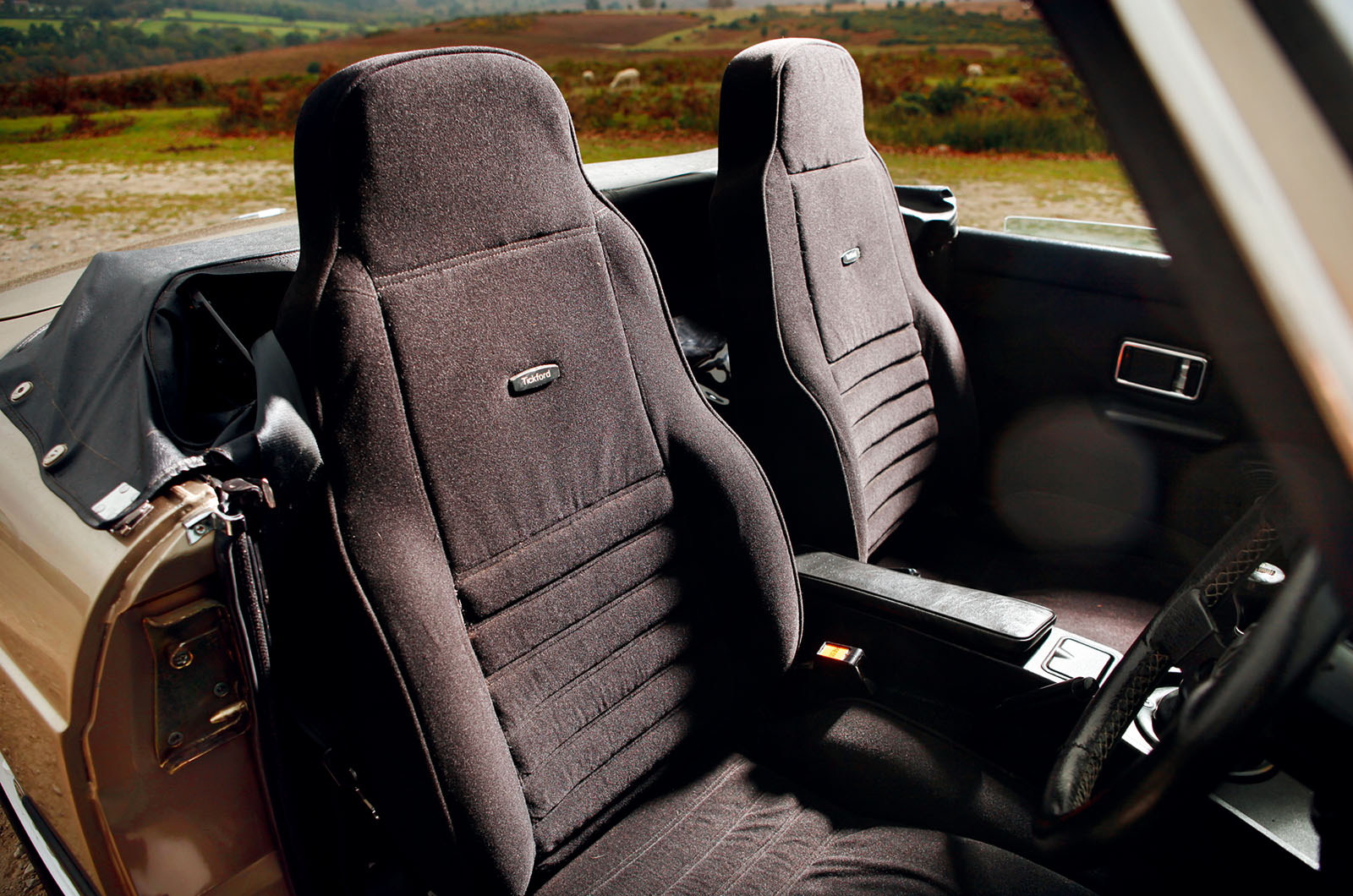
The MGB’s Tickford seats are fixed, so the interior is less roomy

Could a car sired in the era of the Mersey Beat, though, still be competitive in that of Bronski Beat?

Doubtless, the next generation of sports cars – the likes of the TVR S-series, the Reliant Scimitar SS1 and Mazda’s MX-5 – would have proved too much for the old hipster.

From the autumn of 1981, however, the consortium intended to sell the MGB with the overhead-cam O-series unit, too. 

It had been engineered, signed off and crash-tested by MG, and would have added a sparkle to its chassis. The O-series would then be engineered for the USA.

The B-series MGB would undergo a simultaneous facelift and, in ’83, the O-series car would have undergone a nip-and-tuck as well.

Then, in late 1983/early ’84, Stage II would have been launched. But, alas, the best laid schemes o’ Mice an’ Men…

Classic & Sports Car – How Aston Martin tried to save the MGB

Anti-roll bars at both ends improved the MGB’s handling

By the time both parties were happy with who was buying what and for how much – ie, whether it included the factory, the MGB design and the rights to the MG name – the consortium’s funding ran into problems.

Money that was there initially fell victim to unfavourable exchange rates and high interest figures in Britain and the USA.

They were circumstances former MG MD John Thornley described as: “The sudden and drastic deterioration of world finance.”

Such was the severity of the situation, Aston Martin Lagonda was starting to look vulnerable.

Abingdon was closed on 24 October 1980: a factory that had consistently headed BL quality tables and which had never experienced an official strike.

The feud between MG and Leyland’s blue-eyed toy Triumph is well documented, so it’s hardly surprising that many have since questioned the validity and sources of BL’s Abingdon losses.

Particularly given that Thornley highlighted that Abingdon was an assembly plant, and that its contribution to the cost of an MGB was, at most, £150.

As he concluded: “The plant is shut and the thing is at an end… We were up against an implacable enemy.” 

Twelve years later, though, thanks to Rover Special Products’ RV8, the MGB would have one final hurrah.

Images: Tony Baker

Thanks to: Nutley Sports & Prestige Centre

This was first in our January 2012 magazine; all information was correct at the date of original publication


Enjoy more of the world’s best classic car content every month when you subscribe to C&SC – get our latest deals here


READ MORE

MGB vs rivals: six alternatives take on Abingdon’s classic champion

Triumph Spitfire vs MGB vs Lotus Elan: a new dawn