Ford Mustang Boss 302 vs Mach 1: two-trick ponies

| 7 May 2026
Classic & Sports Car – Ford Mustang Boss 302 vs Mach 1: two trick ponies
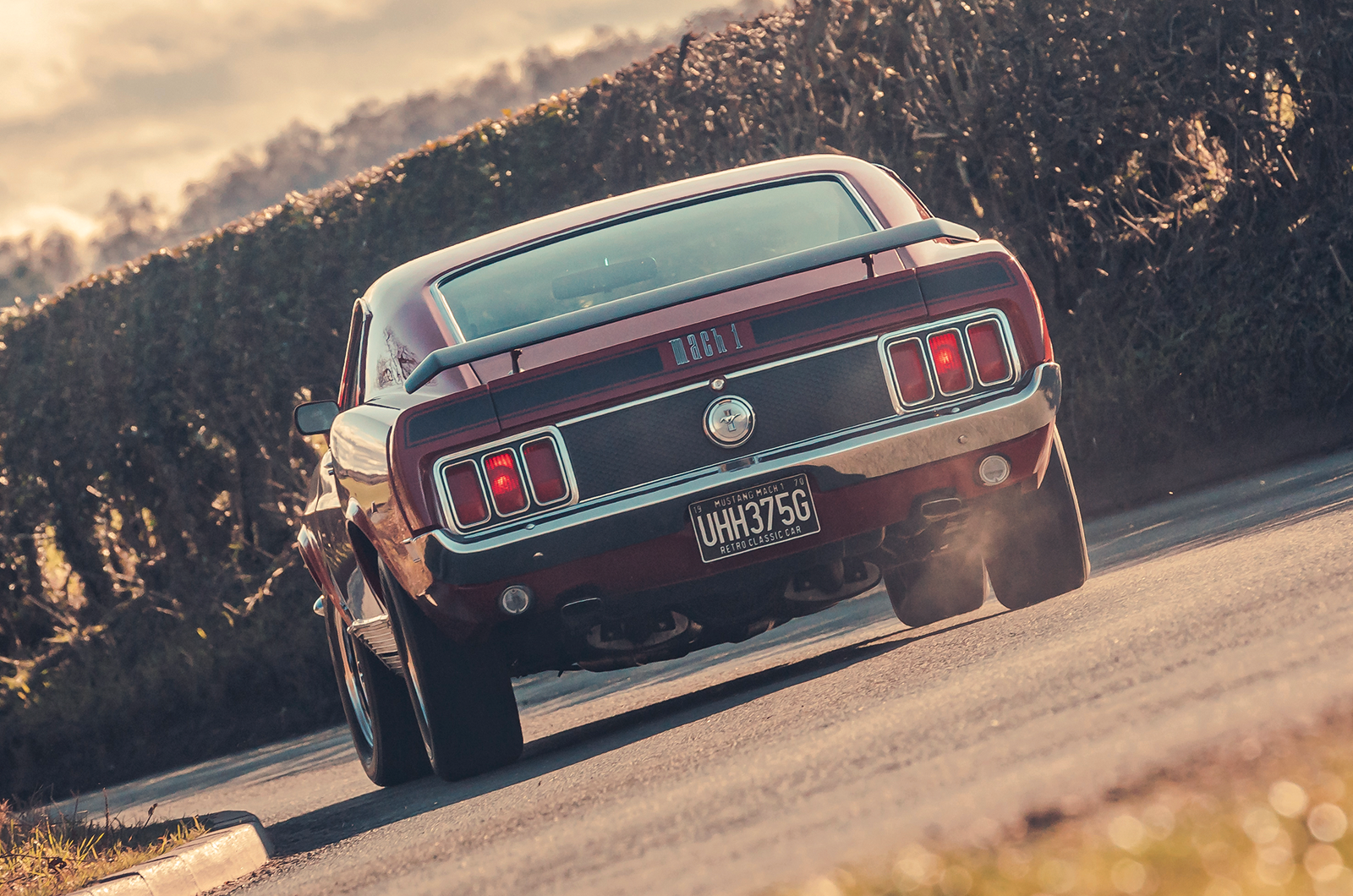
This doesn’t feel quite right.

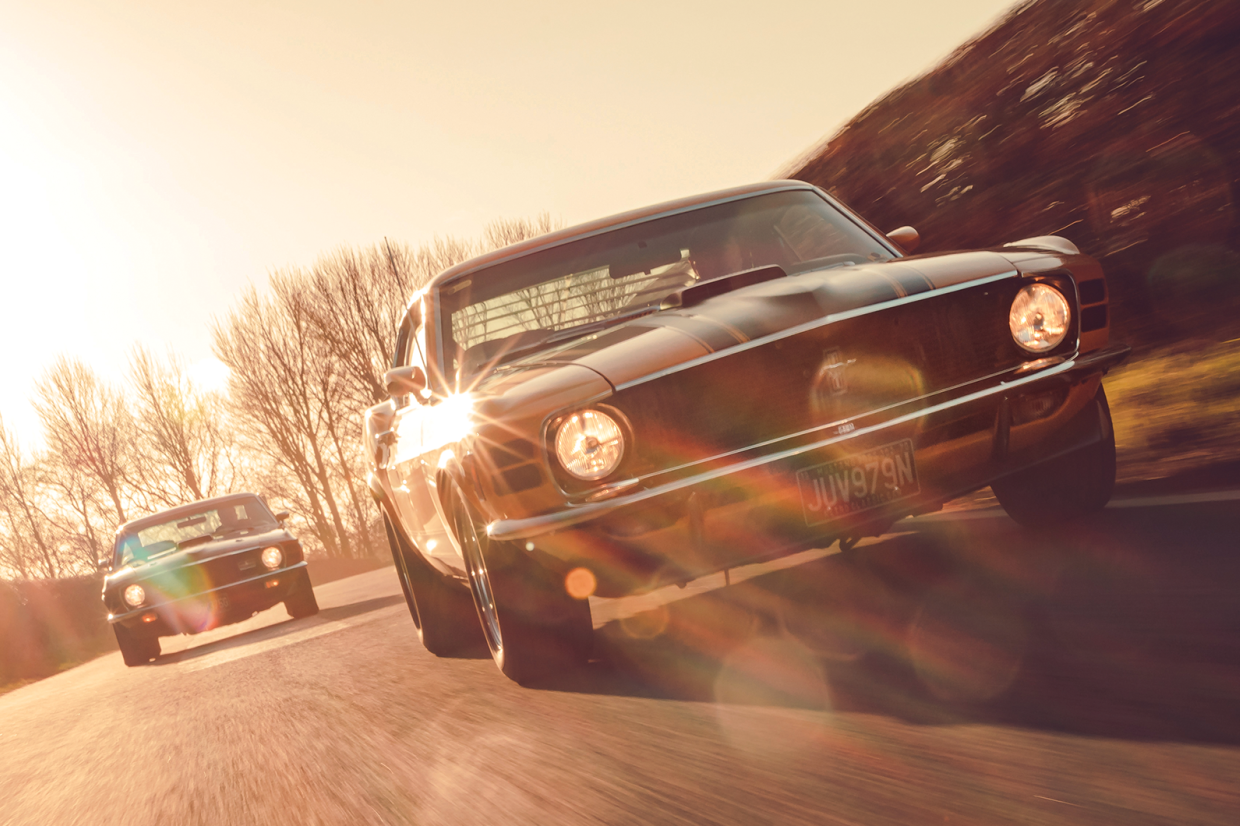
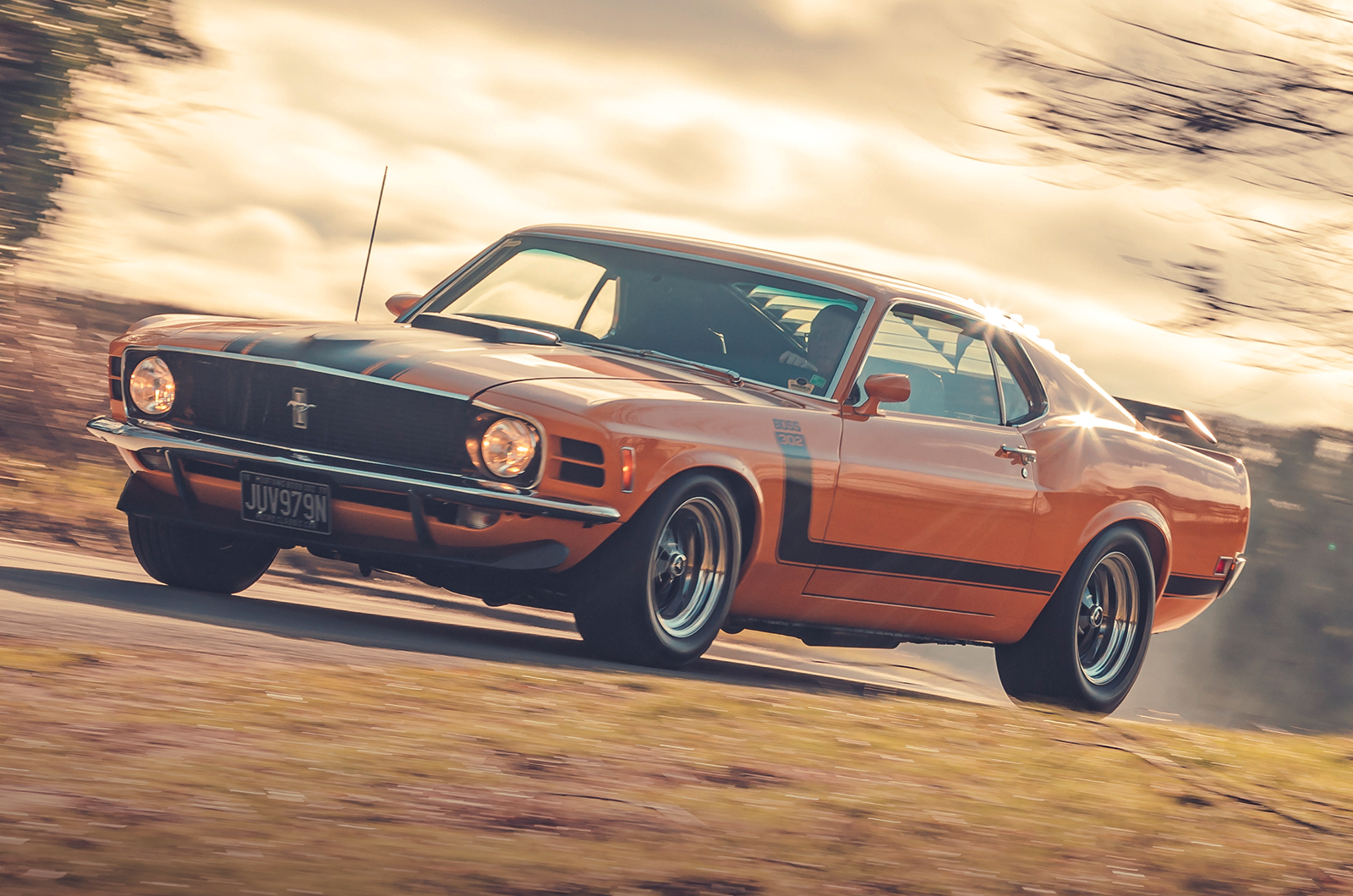
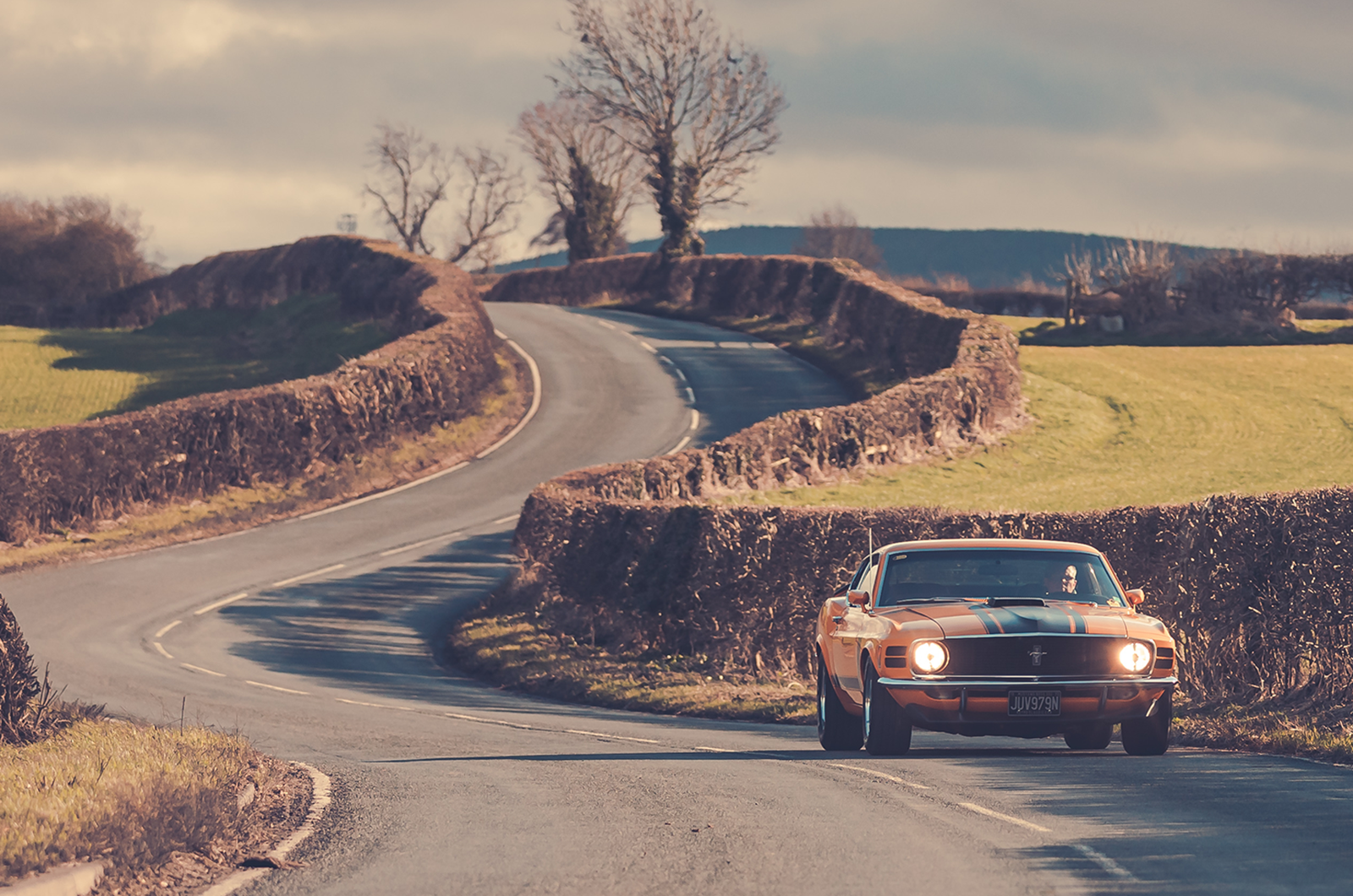
Like watching an episode of bucolic BBC TV programme Countryfile with incidental music by Motörhead, wrestling this 1970 Boss Mustang along sinuous roads against a rural English backdrop rankles a little.

It’s no fault of the car, a more perfect example of which would be hard to find.

It’s more that the Boss 302’s head-banging soundtrack conjures memories of epic car films – Bullitt, Gone in 60 Seconds (the ’74 original, of course) – or even Jim Morrison’s part-homage to his beloved GT500, HWY: An American Pastoral.

And none of those, as I recall, were set in North Yorkshire.

Classic & Sports Car – Ford Mustang Boss 302 vs Mach 1: two trick ponies
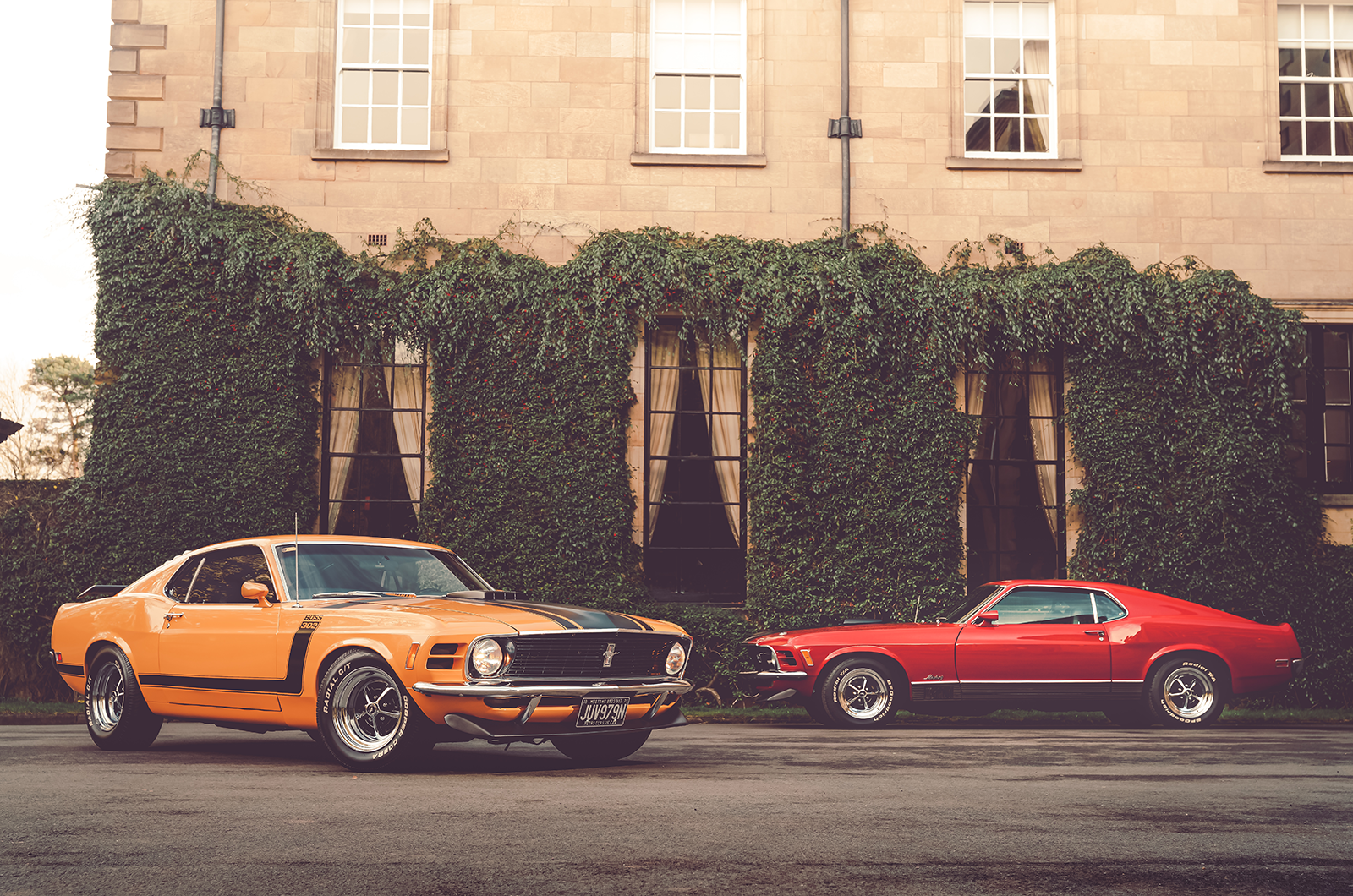
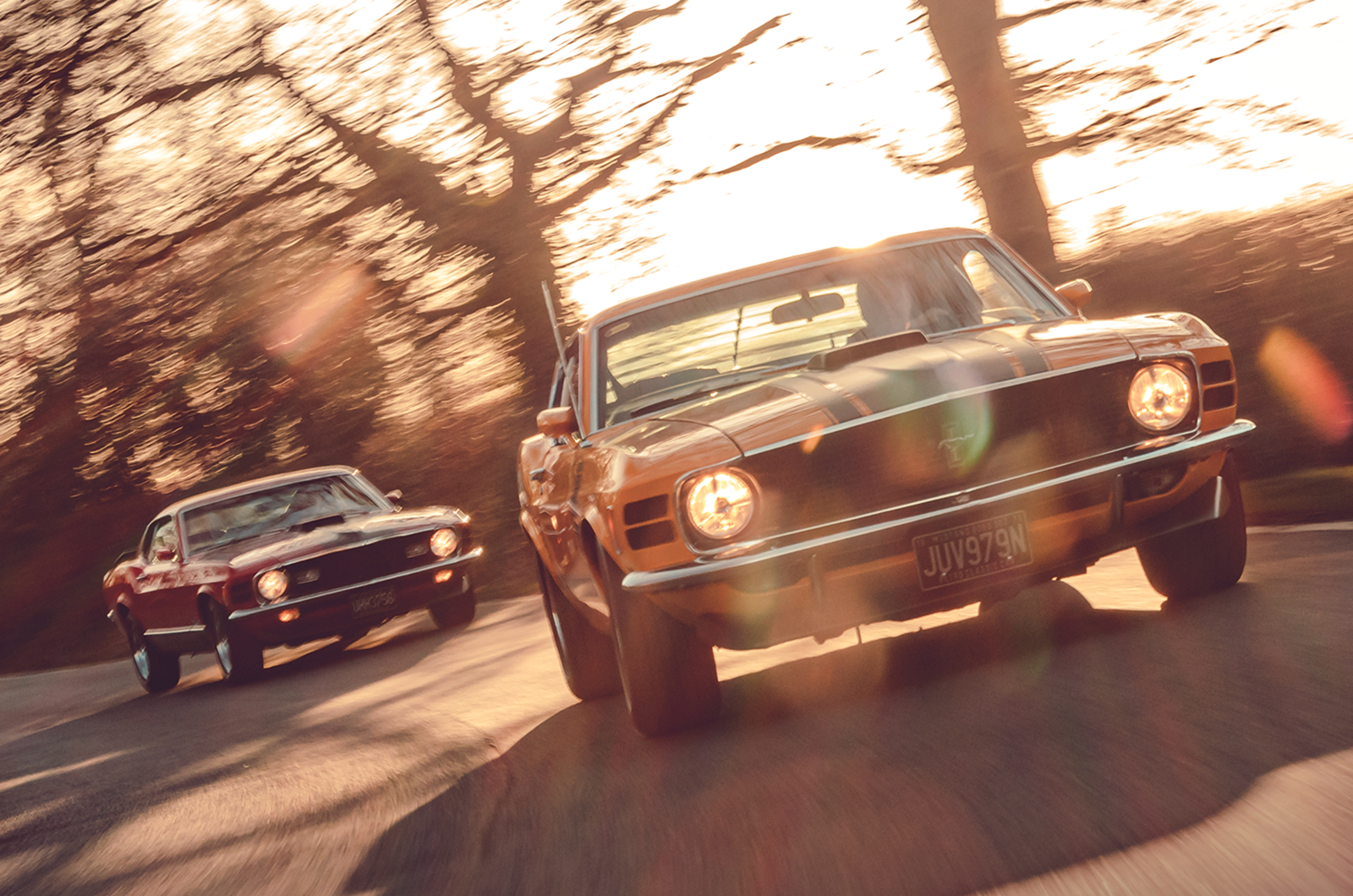
The Mustang Boss 302 (left) and Mach 1 represent a golden era for Ford’s famous pony car

Then you start to acclimatise to this heavy-metal American classic car.

Sure, there’s no vertiginous urban landscape to get it airborne, nor is there some vast, arid vista to admire from its vinyl Hi-Back bucket seat as you spool through The Doors’ songbook in your head.

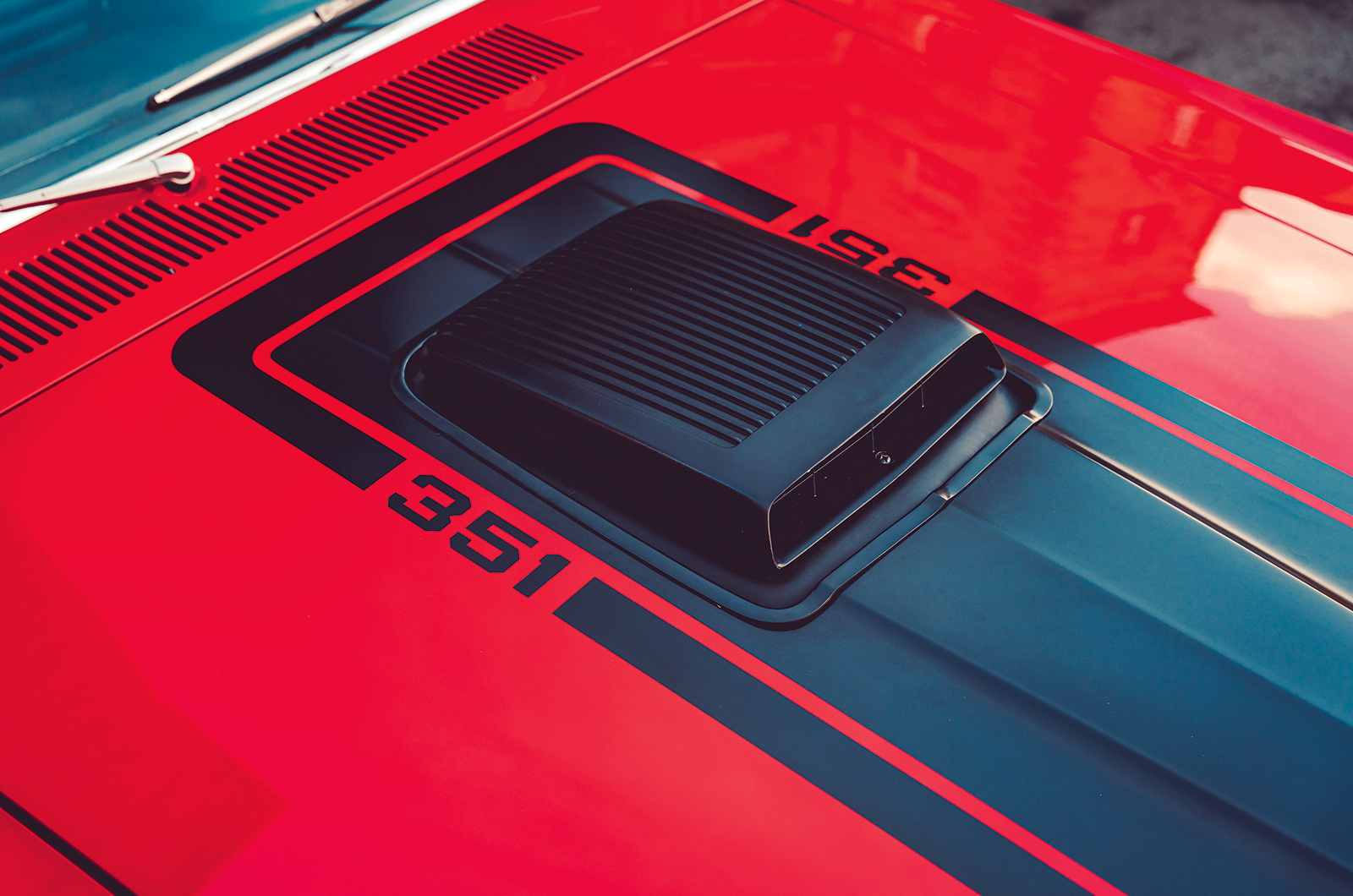
But its unruly appeal fast becomes infectious: just muscle the Hurst shifter into first, watch the Shaker bonnet-scoop snap to one side as you stab the throttle and then giggle inanely as the Boss unleashes a torrent of V8 mayhem down the road.

It’s no sophisticate, but my goodness is this Ford Mustang incredibly engrossing.

Classic & Sports Car – Ford Mustang Boss 302 vs Mach 1: two trick ponies
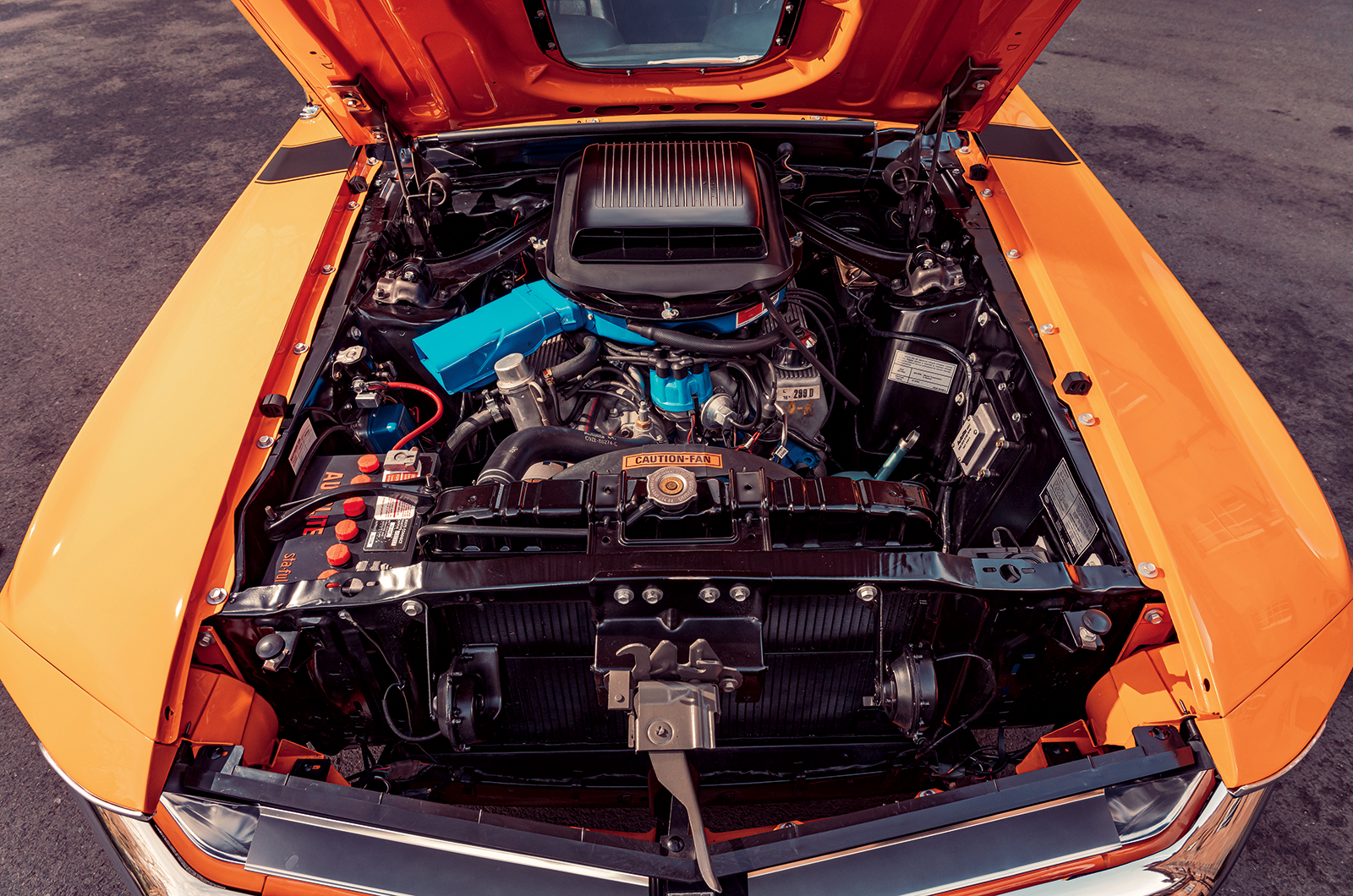
A race car for the road, the Boss’ 302cu in V8 met the requirements for the Trans-Am road-racing series

For the observant among you, this particular Mustang – a 1969-built, 1970-model-year Boss 302 – matches neither McQueen’s 1968 390 GT nor ‘Toby’ Halicki’s 1974 Mach 1, which were produced before and after this 1969-’70-series car.

But to me they all speak of that magical era, shortly before Detroit’s V8s were finally neutered by regulation.

Talking of Mach 1s, we also have one joining the Boss for our photoshoot today, equipped with a Cleveland 351cu in V8 and an automatic transmission: the same series and basic design as the 302 but, as we’ll find out, a demonstrably different car to drive.

Classic & Sports Car – Ford Mustang Boss 302 vs Mach 1: two trick ponies
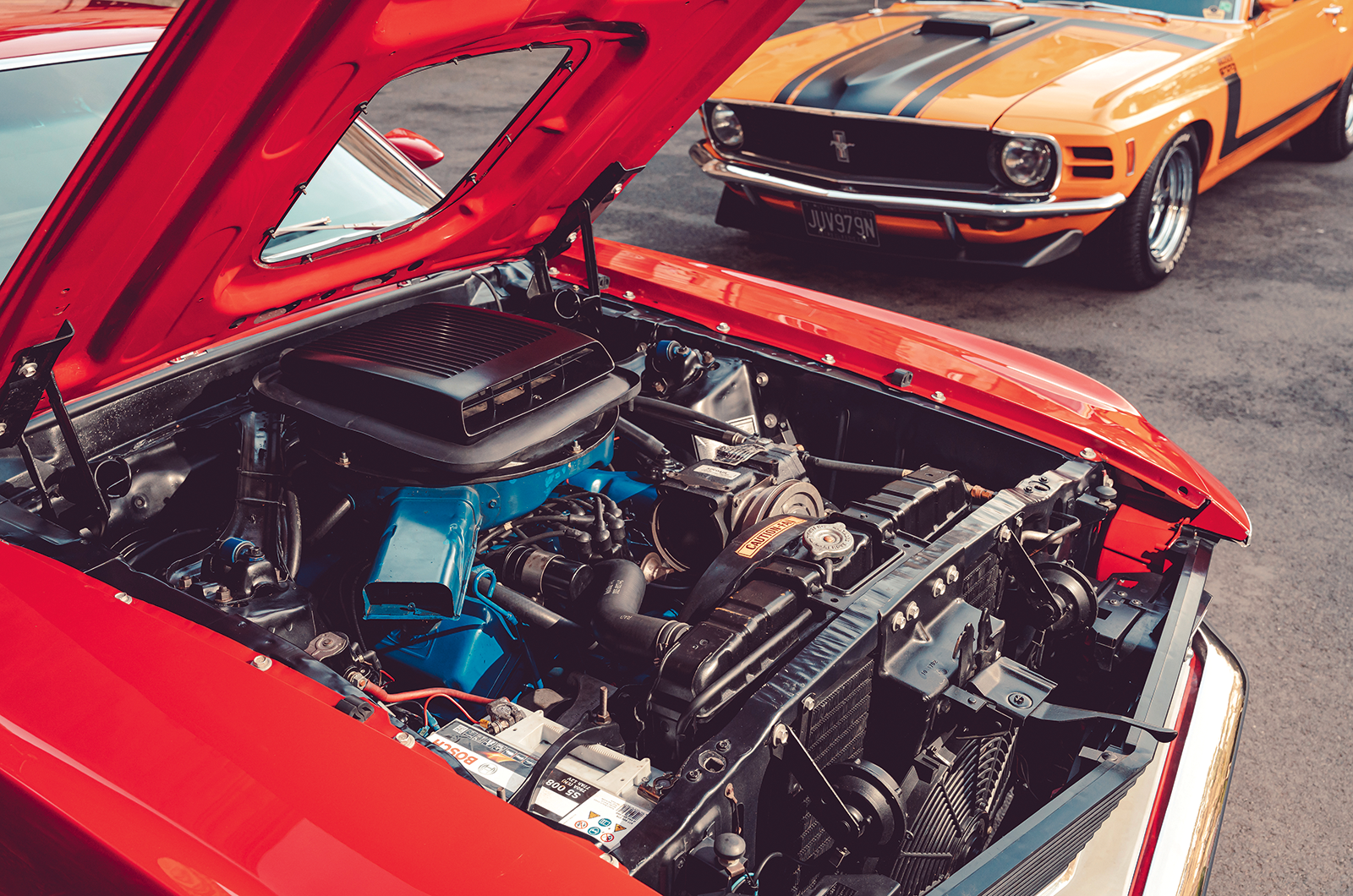
The Ford Mustang Boss 302’s V8 engine makes 290bhp and 290lb ft, and thrives on revs

Much of that contrast came from the Boss being a race-bred homologation special, versus the Mach 1 having a more user-friendly road set-up.

Following the initial, insatiable furore around the original launch of the Ford Mustang in 1964, the Blue Oval had started to lose ground to General Motors after it introduced the Chevrolet Camaro rival a few years later, in 1967.

Worse still, the Camaro Z/28 was beating the Mustang on the race track – an extremely important marketing arena for both car companies – including taking victory in the high-profile Trans-American Championship in 1968.

Something had to be done.

Classic & Sports Car – Ford Mustang Boss 302 vs Mach 1: two trick ponies
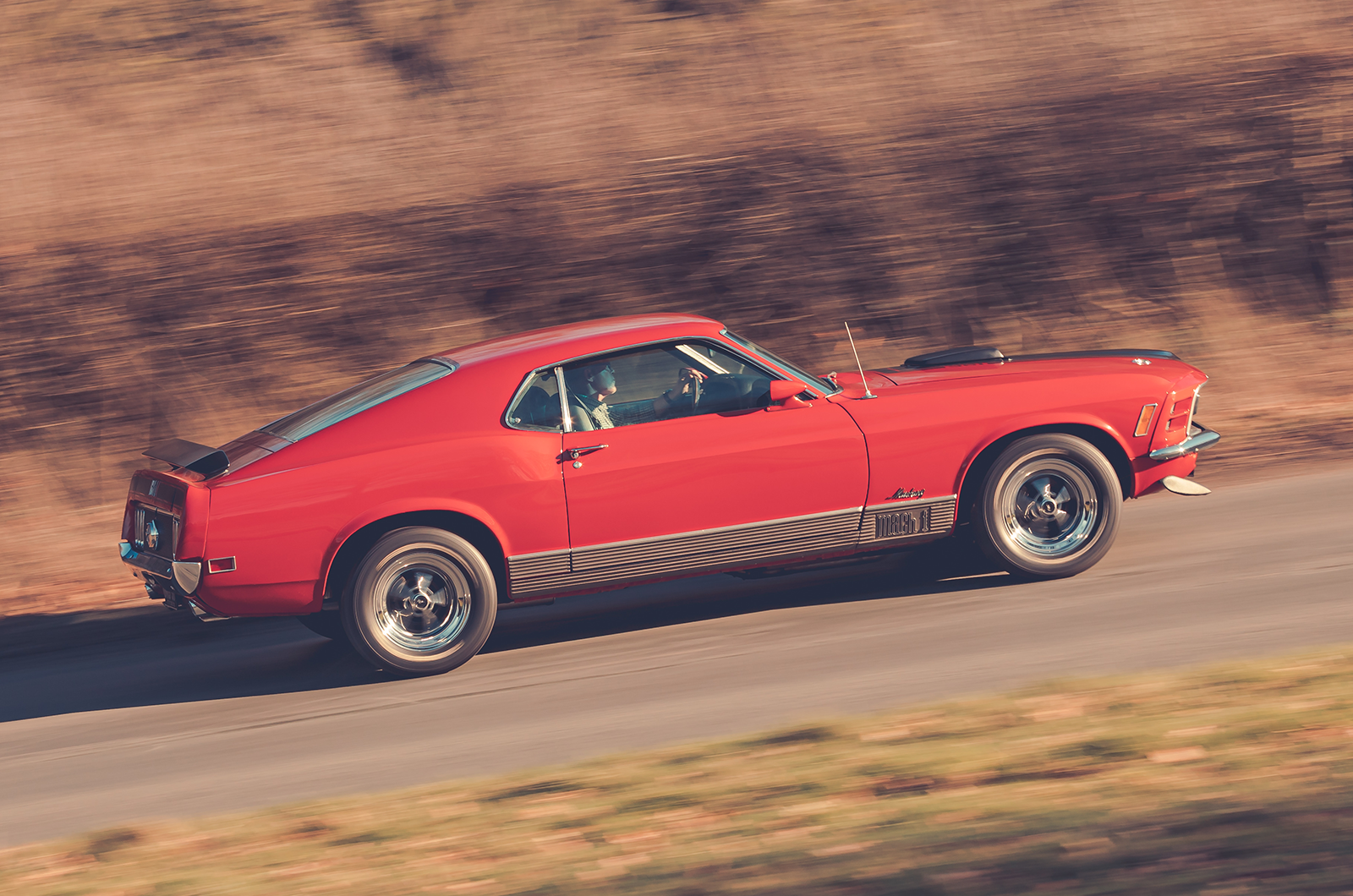
One the road, it’s clear that the Boss 302 was designed with racing in mind

Therefore, coinciding with the introduction of the new 1969 Mustang, Ford offered its own entrant for the Trans-Am road-racing series: the Boss 302.

Designed to meet the Sports Car Club of America regulations that dictated an engine displacement of under 305cu in, like the Z/28, the Boss 302 needed to spawn a roadgoing version to comply.

What emerged from Ford’s Metuchen, New Jersey factory in 1969 was in effect a racing car for the road.

The Boss engine was fully bespoke and, despite having a smaller capacity than any other performance Mustang of this generation, it was producing 290bhp at an unusually high 5800rpm, thanks to its solid lifters, and 290lb ft of torque at 4300rpm.

Classic & Sports Car – Ford Mustang Boss 302 vs Mach 1: two trick ponies
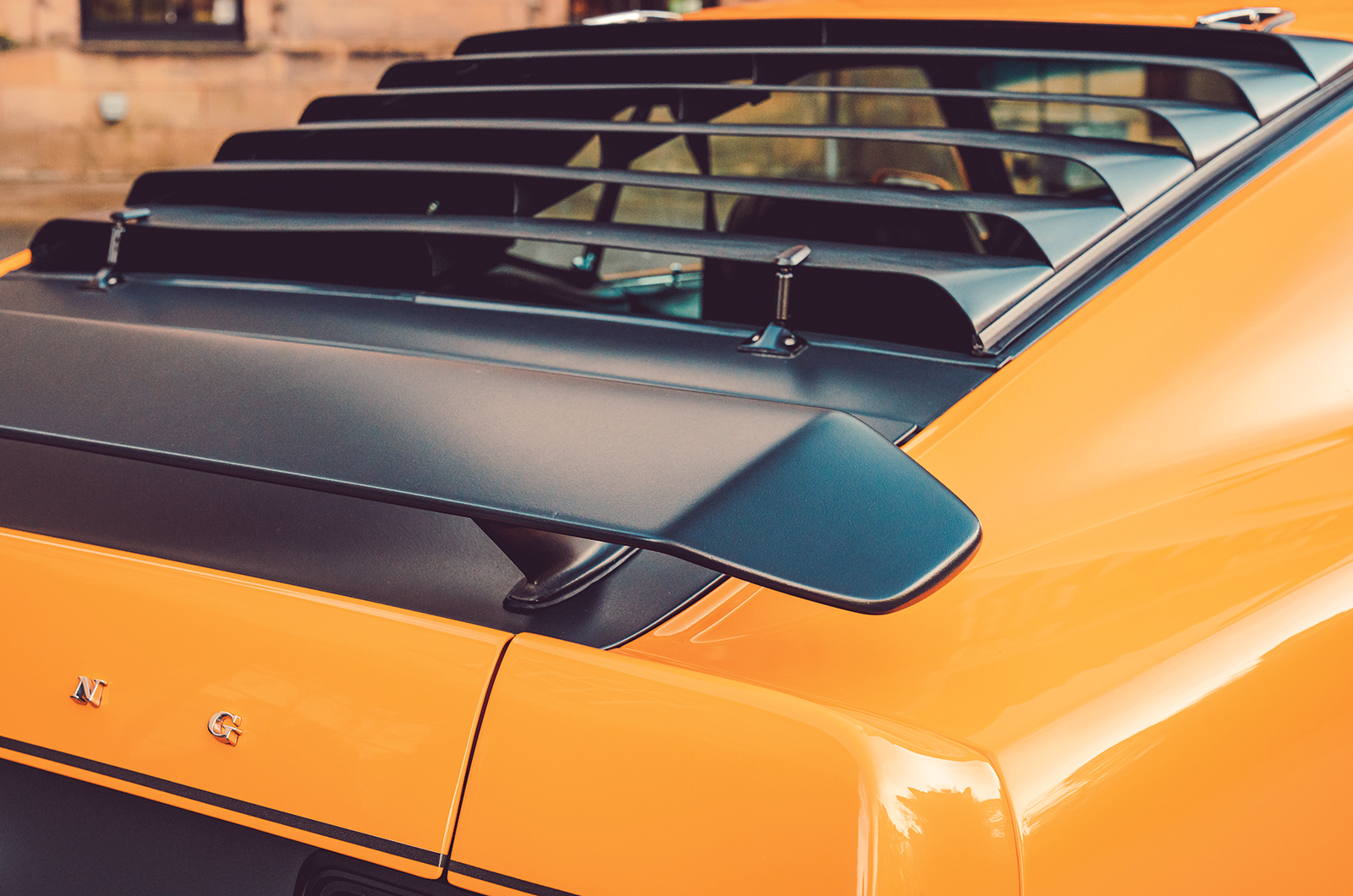
Optional Sports Slats and a matt-black spoiler are clues this is no ordinary Mustang

The engine’s thin-wall block and four-bolt main bearings combined with cylinder heads that were being developed for the following year’s Cleveland 351 motor.

The canted valves were larger than those from engines with a third more capacity and helped mitigate the 302’s comparatively meagre displacement.

A Toploader four-speed close-ratio gearbox with a Hurst shifter delivers drive, on our test car, to an optional Traction-Lok (limited-slip-differential-equipped) rear axle.

Using a small-block unit also meant less weight over the front axle, which meant handling benefits on both road and on track.

Classic & Sports Car – Ford Mustang Boss 302 vs Mach 1: two trick ponies
There’s some body roll at the rear, but the Mustang Boss 302 grips well and is entertaining to drive, despite lacking outright dynamic polish

Ford’s chassis chief, Matt Donner, was drafted in to align the dynamics of the Boss Mustang with its new-found performance.

He lowered the car’s ride height, developed optional front brake discs, fitted a thicker anti-roll bar and reinforced the shock-absorber turrets to cater for the extra loading.

But the Boss had to stand out visually, too, and Larry Shinoda, a recent GM émigré to Ford, was tasked with giving the Boss a more purposeful look.

Shinoda largely de-chromed the Mustang’s body, did away with the model’s fake rear air scoops and added a deep front spoiler and matt-black rear wing, along with optional Sports Slats for the rear window, à la Lamborghini Miura.

Classic & Sports Car – Ford Mustang Boss 302 vs Mach 1: two trick ponies

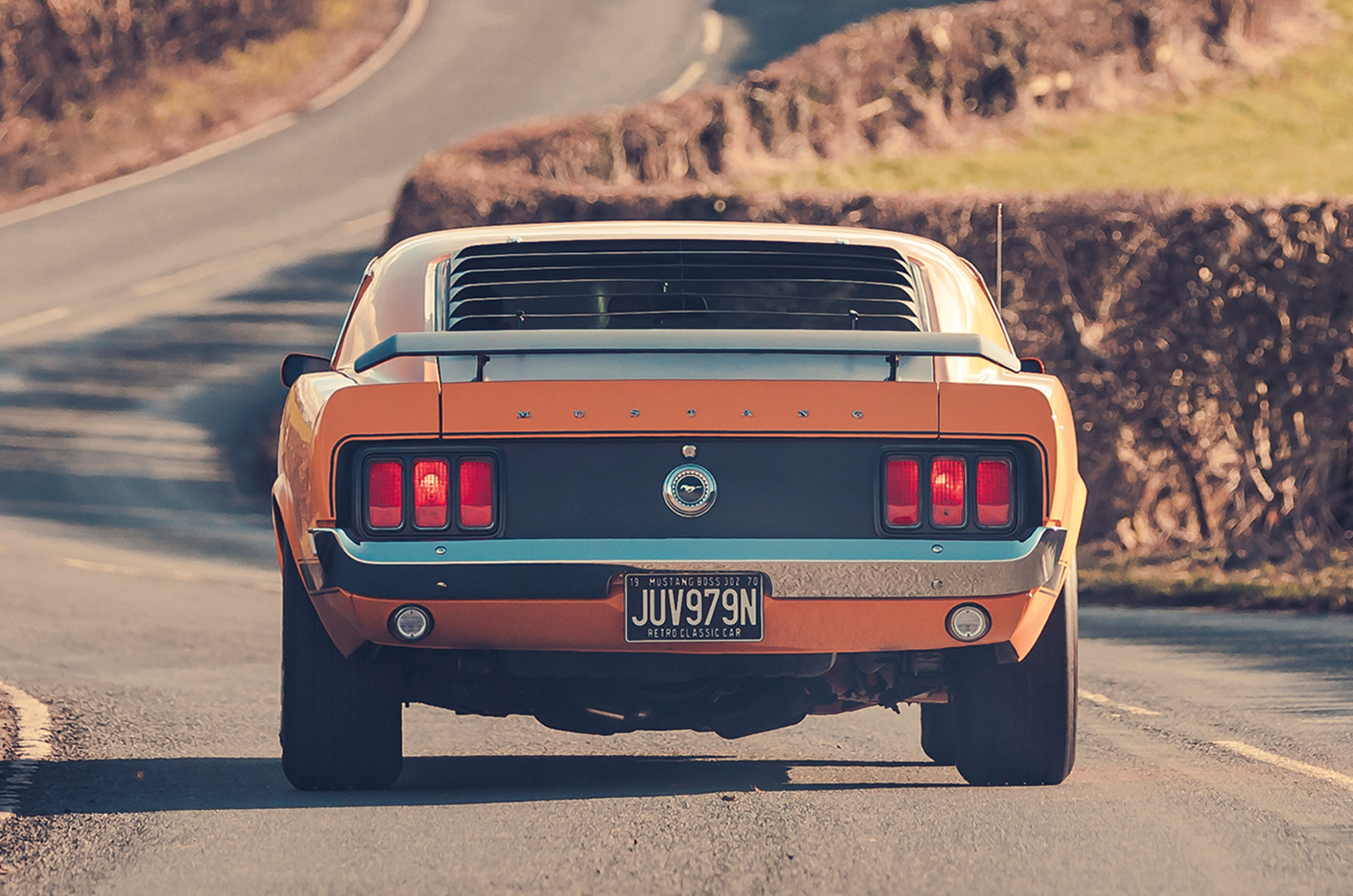
The Boss 302 wears front and rear spoilers as standard

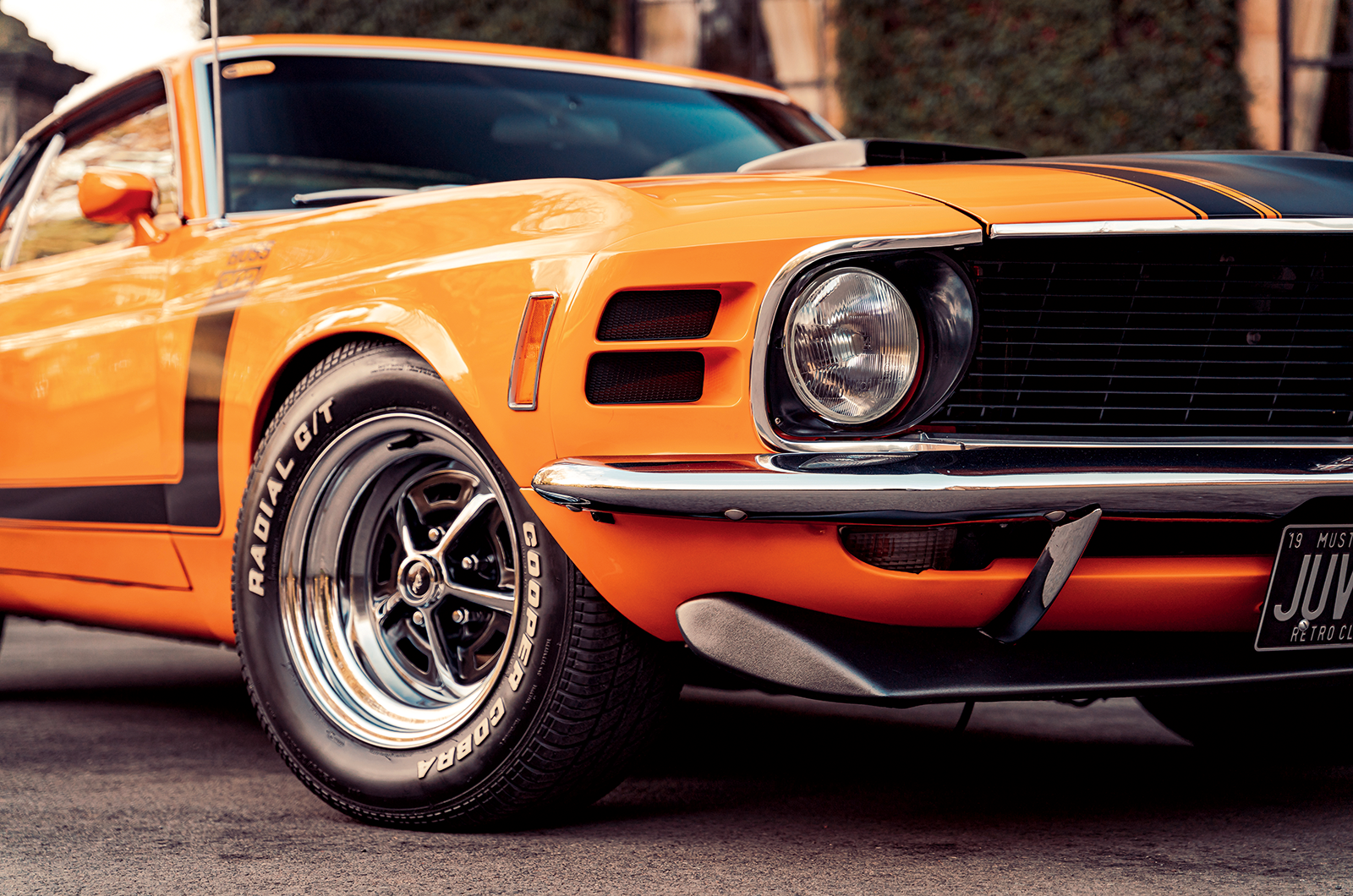
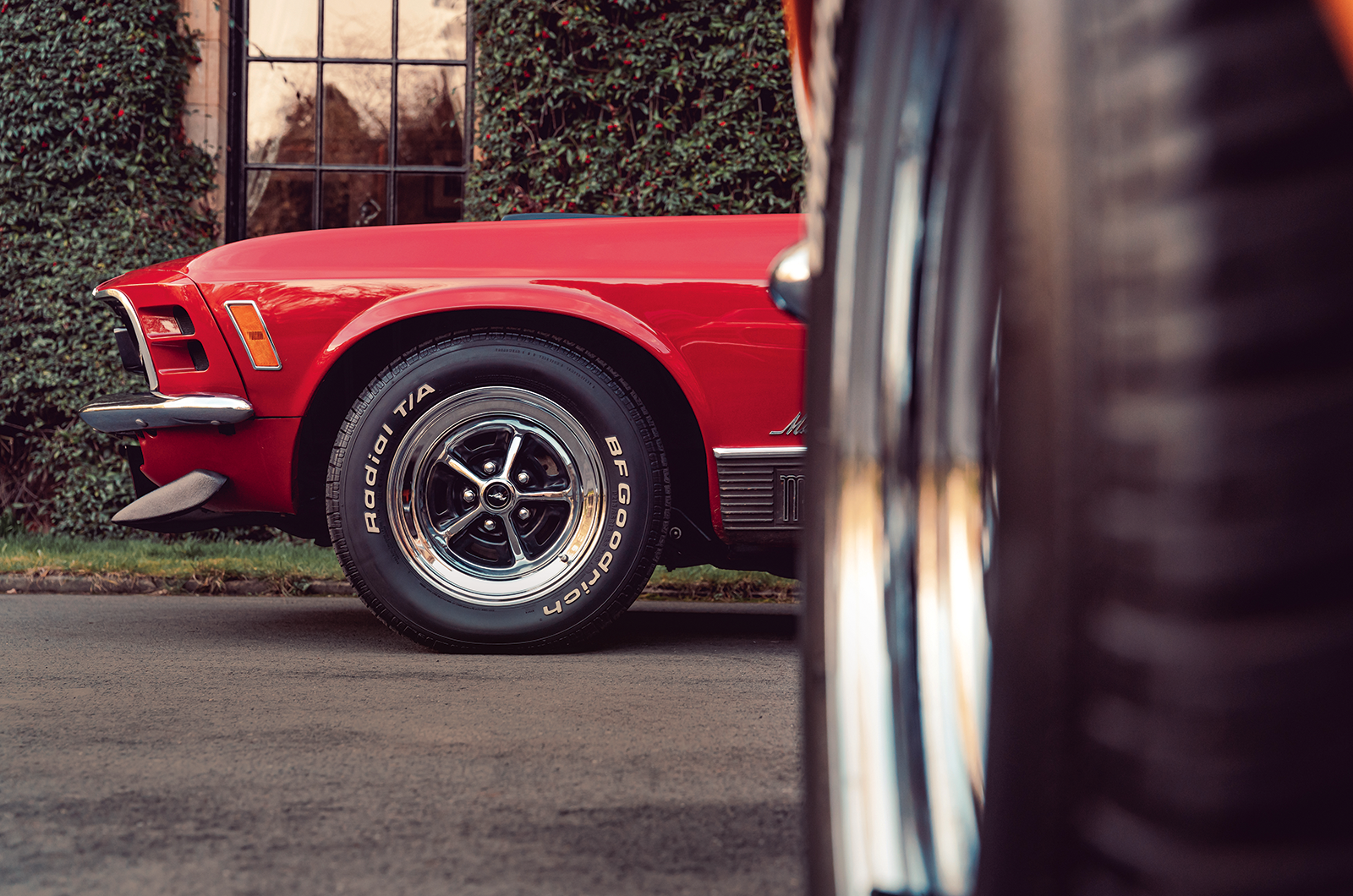
Meaty 15x7in Magnum 500 chromed wheels (a cost option unique to the Boss) completed the package.

Shinoda, coincidentally, was said to have given the model its name, ‘Boss’ being in deference to Ford’s president, Semon ‘Bunkie’ Knudsen, who had brought Shinoda with him from GM.

The Boss 302 impressed from the off.

In its 1969 road test, Car and Driver said: ‘Without doubt the Boss 302 is the best-handling Ford to come out of Dearborn and may just be the new standard by which everything from Detroit must be judged.’

The title also recorded early performance figures, achieving 0-60mph in 6.9 secs, the key quarter-mile in 14.6 secs, with 100mph arriving half a second later.

Classic & Sports Car – Ford Mustang Boss 302 vs Mach 1: two trick ponies

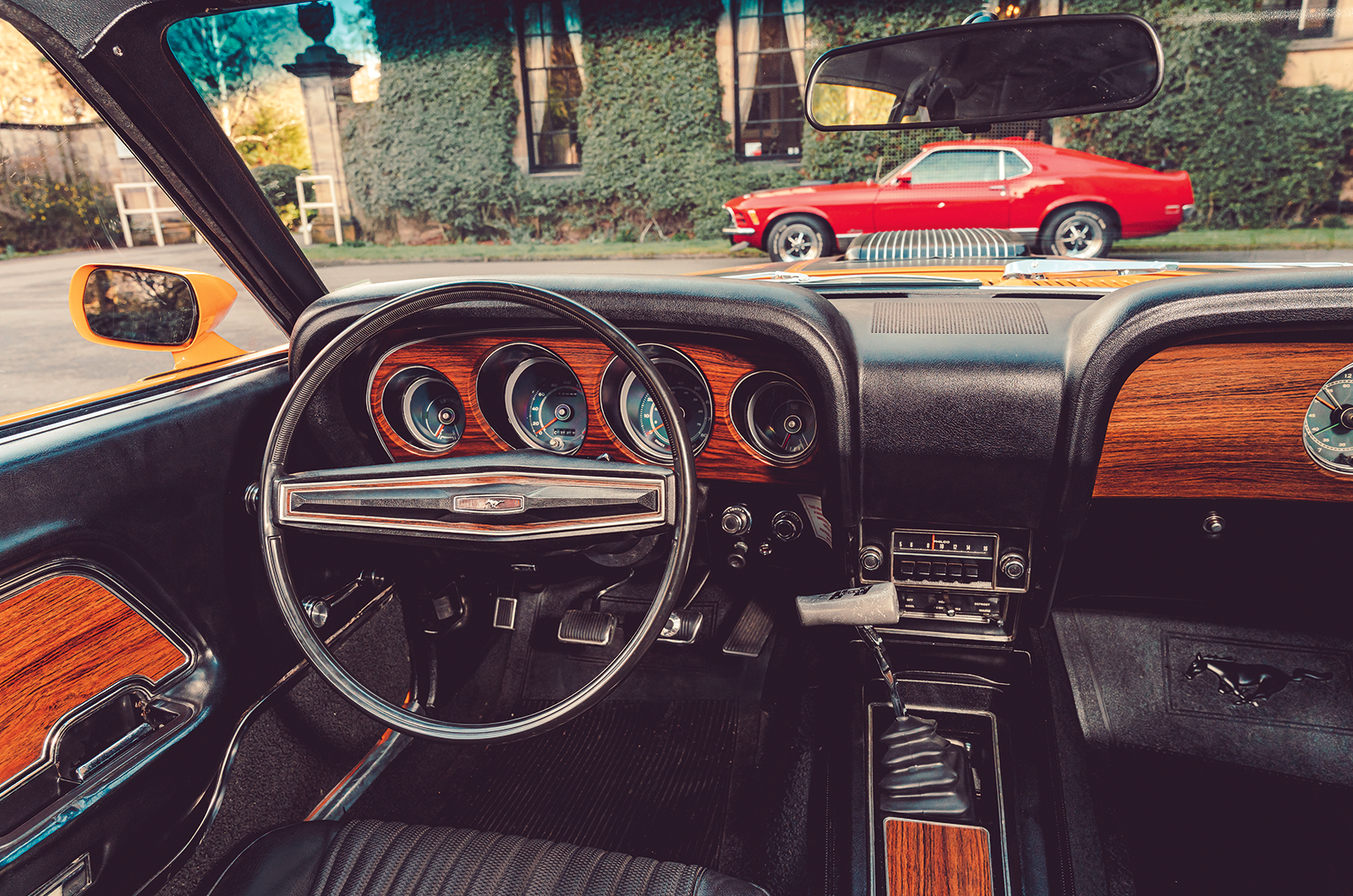
Only two spokes on the Ford Mustang Boss 302’s steering wheel, but a there’s a tacho as standard plus a four-speed manual ’box

This didn’t quite correlate with lacklustre on-track performance – at least initially.

Through no real fault of the car – and more because of pit-crew incompetence – General Motors snatched victory from Ford yet again in 1969.

But by 1970, the Ford team had found its feet, and by the end of the season the Boss 302 had taken overall honours in the Trans-Am race series.

The production Mustang Boss was never going to be more than a halo car for its maker, which in 1970 sold 191,522 Mustangs in all forms, but a total of 7013 302s were snapped up that year, helped by a tantalisingly accessible price of $3720.

Classic & Sports Car – Ford Mustang Boss 302 vs Mach 1: two trick ponies

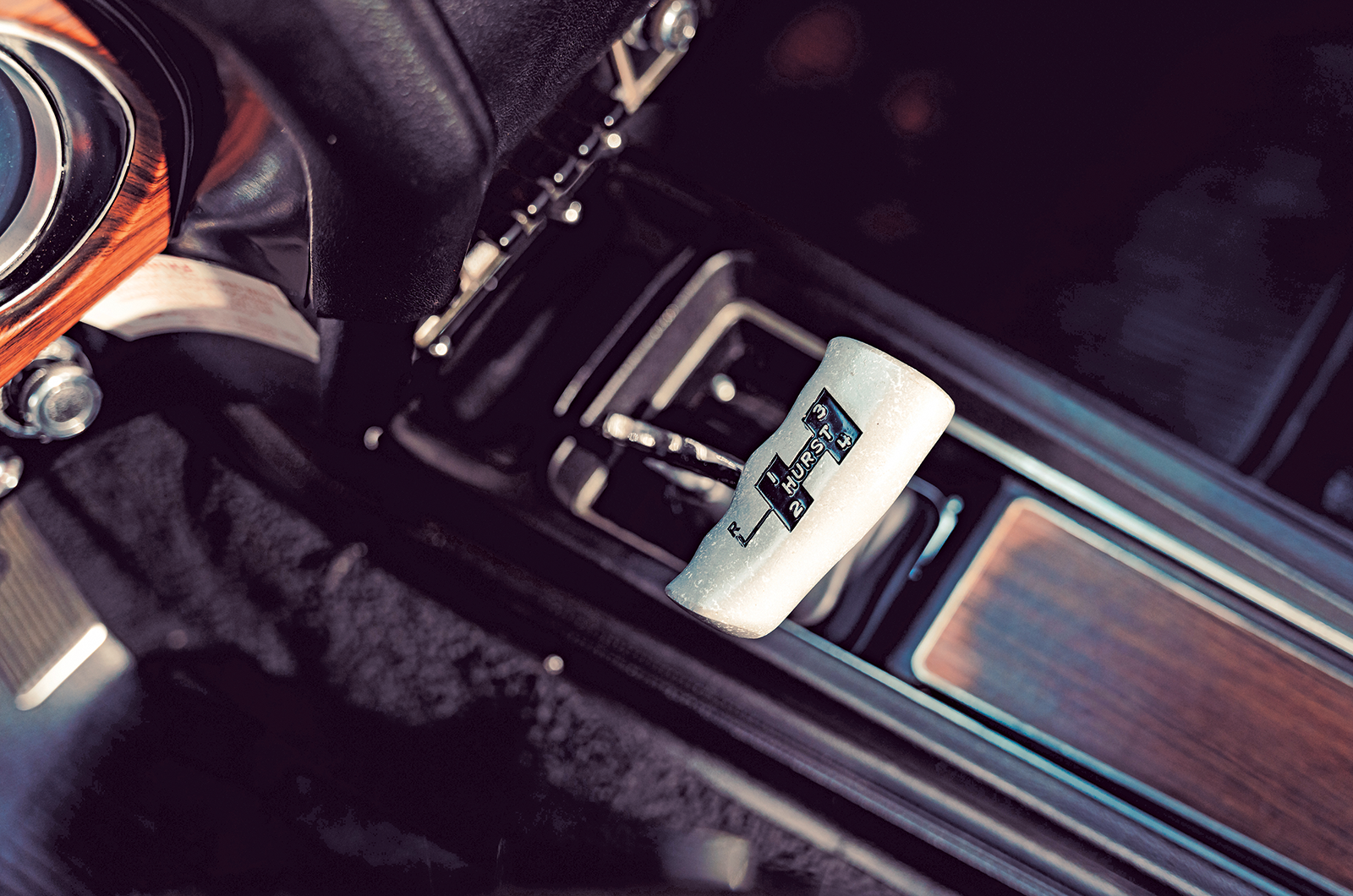
The Hurst manual shifter in this Ford Mustang Boss 302

As was the norm for most late-’60s muscle cars, the options list was extensive: rear spoiler, $20; tachometer, $65; Hi-Back bucket seats, $84.25; and 3.91 limited-slip rear axle, $13.

There were plenty more but, ironically, one of the most costly was an AM/FM radio at $214.

Even if the Boss didn’t appear on your Mustang shopping list, it may have enticed you into a lesser performance derivative – which was always the plan.

Until 1969, those choices had comprised the 390 GT, which had never cut it against street-racing rivals from Chevrolet and Pontiac, or the far more expensive Shelby GT350 and GT500.

There was also the feeling that ‘GT’ was not a powerful enough prefix to set enthusiasts’ hearts racing.

Classic & Sports Car – Ford Mustang Boss 302 vs Mach 1: two trick ponies

The Boss 302 is firm and sharp, but its steering lacks feedback

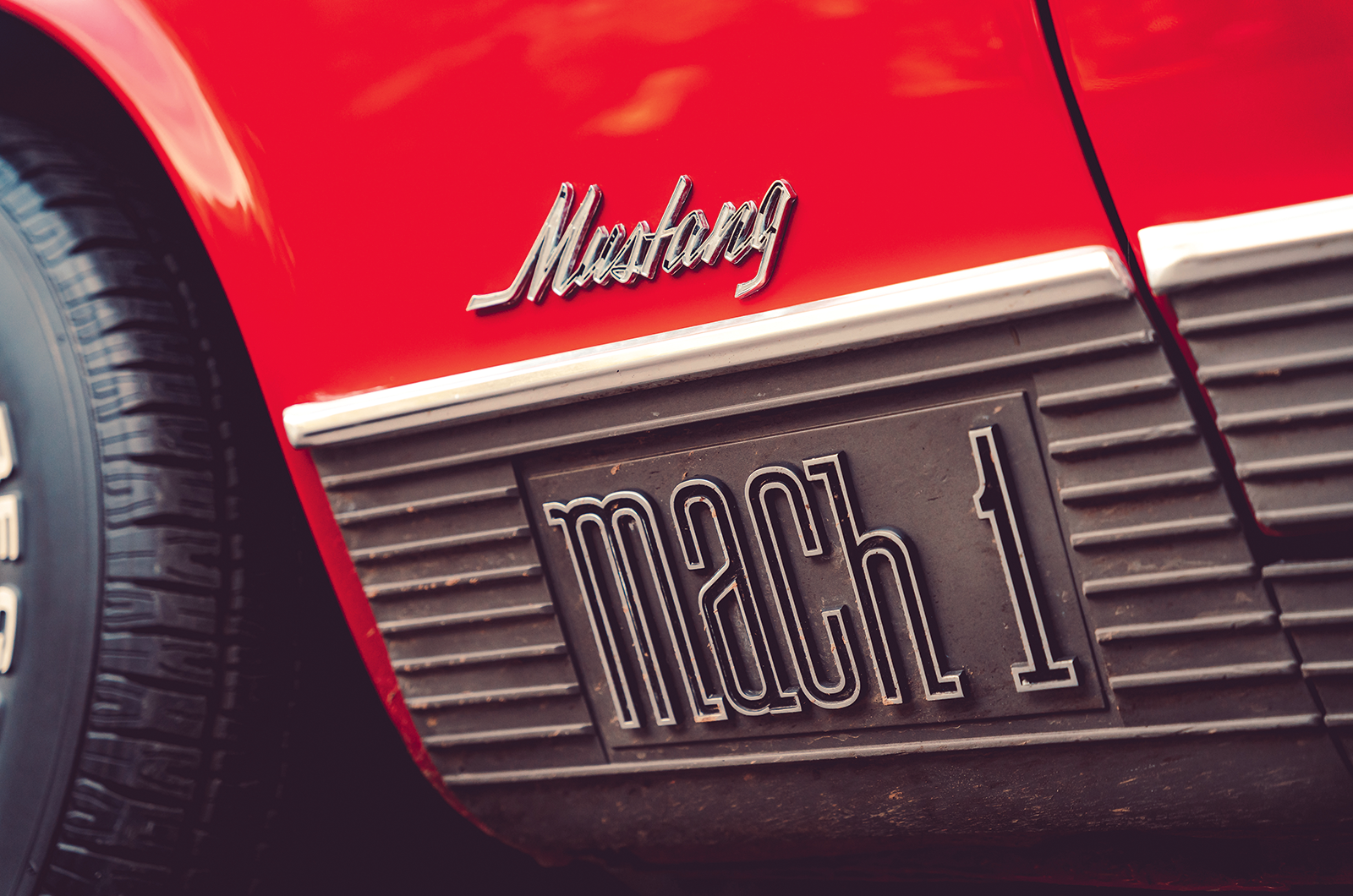
The solution came in the shape of the Mach 1, its name plucked from Ford’s 1969 ‘Levacar Mach I’ concept, which neatly combined a range of V8 engines with a generous smattering of standard kit for the 1969 model year.

It used the Mustang’s updated body design, though, like the Boss, only in SportsRoof (fastback) form.

Included in the Mach 1’s $3271 base price were the obligatory matt-black bonnet with non-functional hood scoop, side and rear body stripes, NASCAR-style bonnet pins, a ‘Rim Blow’ steering wheel (of which more later), Hi-Back bucket seats and a liberal spreading of simulated wood appliqué throughout the cabin.

Classic & Sports Car – Ford Mustang Boss 302 vs Mach 1: two trick ponies

The Mach 1 name comes from Ford’s 1969 concept, the ‘Levacar Mach I’

Initially, powertrain choices started with a 351cu in 2V Windsor V8 (with a two-barrel carburettor), mated to a three-speed manual gearbox sending drive to an open-differential rear axle.

An optional 351 4V (with a four-barrel carb) was available, in addition to 390cu in and 428cu in engines.

Transmission options extended to a four-speed manual or a three-speed FMX auto, driving through a choice of diff ratios or a ‘Traction-Lok’ (LSD) rear axle, the latter standard for the 428.

Retro Classic Car’s Ford Red Mach 1 with us today is from the 1970 model year, for which the Windsor V8 was swapped for the Cleveland 351, and therefore benefitted from the more advanced valvegear already previewed in the Boss the year before.

Classic & Sports Car – Ford Mustang Boss 302 vs Mach 1: two trick ponies

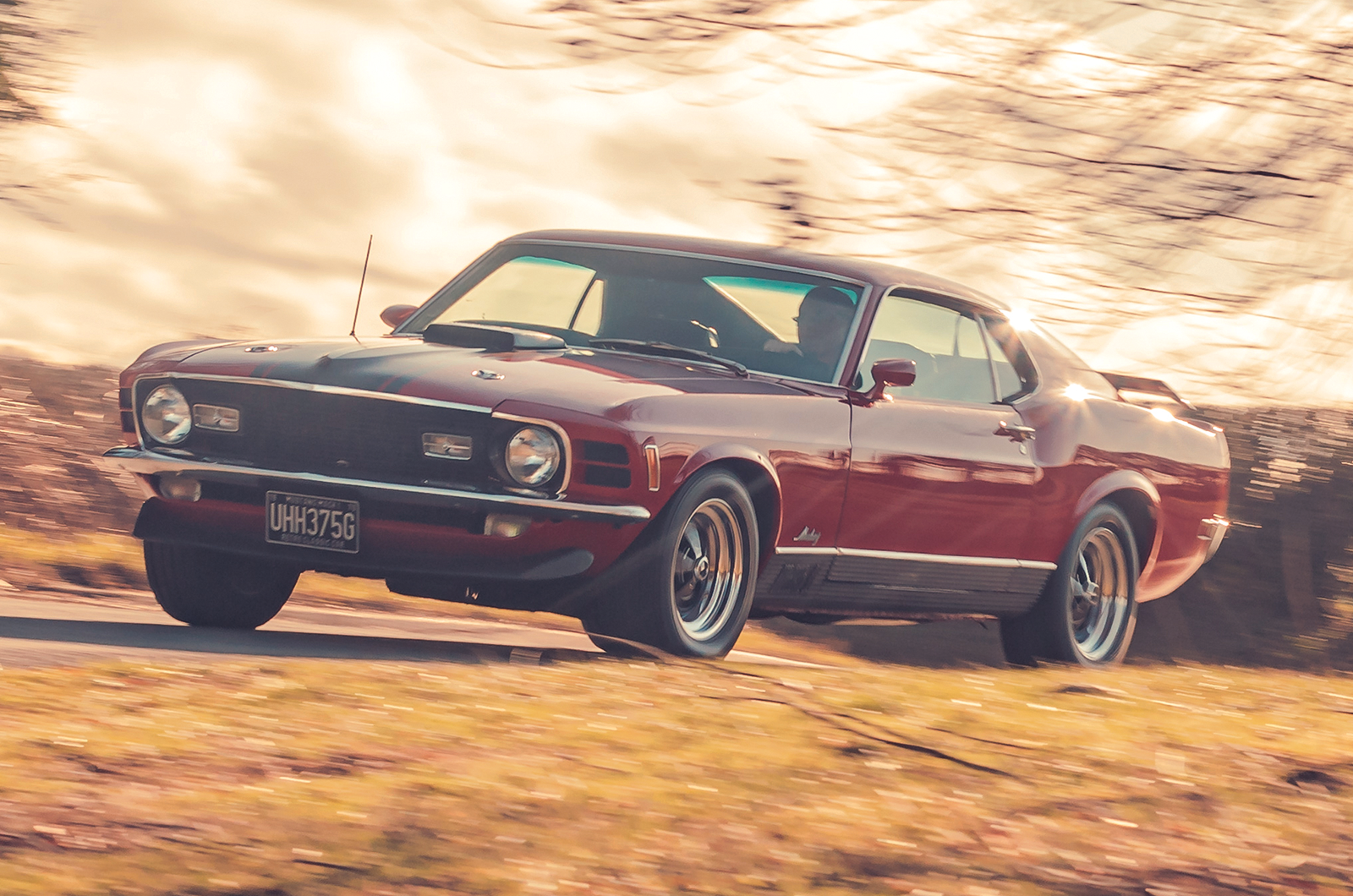
The Mustang Mach 1 looks the part, but it’s more civilised than expected

As with most performance Mustangs back in the day, this example was specified with a raft of options, although its engine remained in stock 2V, or ‘H-code’, form, producing 250bhp at 5400rpm and 355lb ft at 3400rpm.

The ‘Shaker’ hood is the most obvious tick-box, along with its boot spoiler and tinted glass.

And, as we soon find out, the easy-going mix of power-assisted steering, an open differential and the FMX automatic gearbox provide a very contrasting driving experience with that of the more full-on Boss.

Restored in 2009 at a cost of $75k, this near-perfect Mach 1 was imported to the UK in 2017.

Classic & Sports Car – Ford Mustang Boss 302 vs Mach 1: two trick ponies

The Mach 1’s 351 cu in V8 delivers its 250bhp and 355lb ft in rather lazier fashion than the Boss

Even by today’s standards this is a big car, but peering out of the windscreen – with the Shaker dominating your view – it’s easy to place, although rear vision is seriously compromised by the fastback slope of its C-pillar.

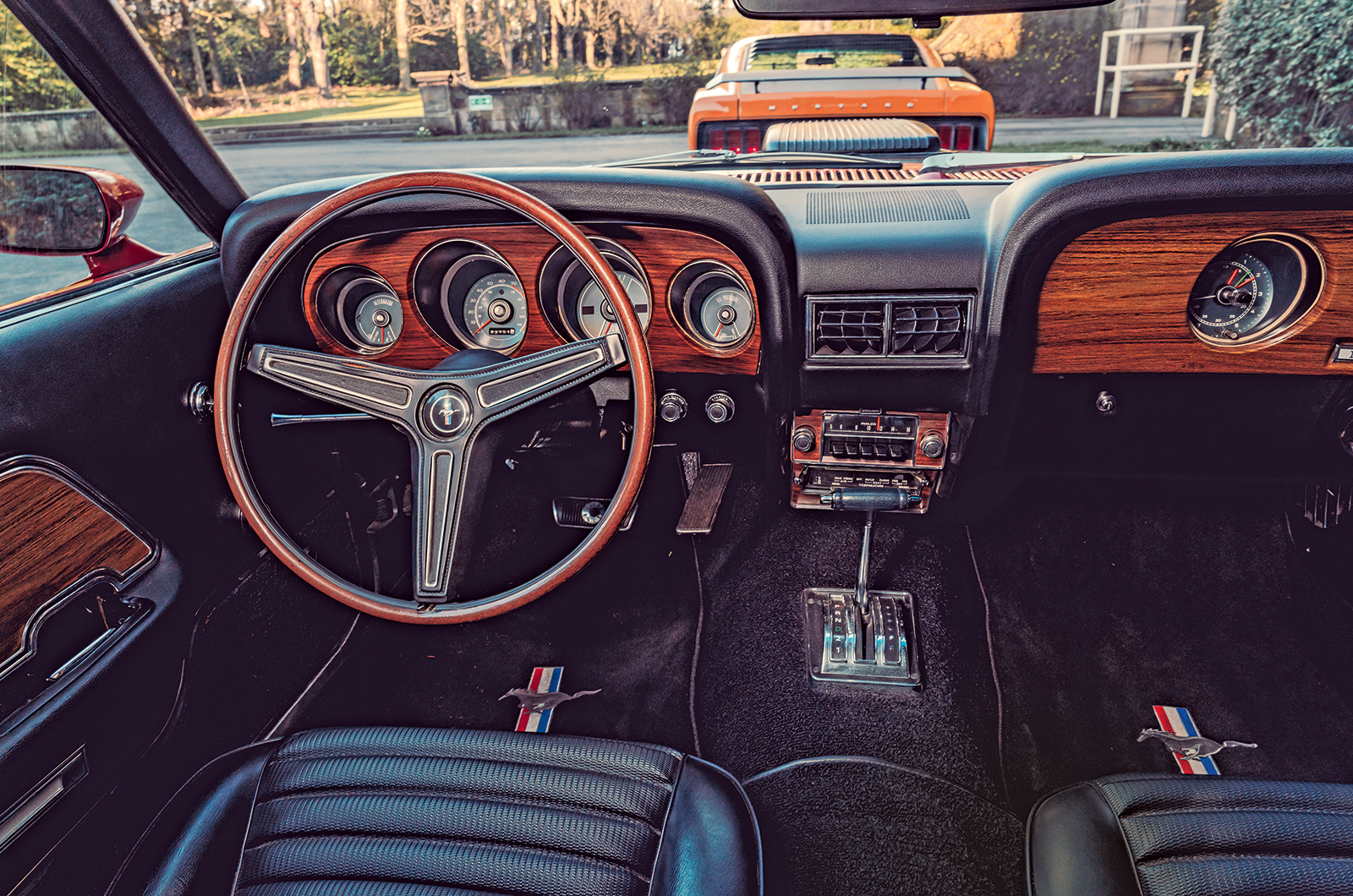
Matching ‘teak’-trimmed binnacles appear on either side of the dashboard.

The passenger’s is inset with a clock and a reminder of the model’s name, and the driver’s with four dials covering all the basic systems – speed, oil pressure, battery charge – but with no optional rev counter.

Fire up the V8 and there’s no musclebound bark from the exhaust, rather a more subdued but still unmistakably Detroit-born burble.

Classic & Sports Car – Ford Mustang Boss 302 vs Mach 1: two trick ponies

This Ford Mustang Mach 1 has the optional ‘Shaker’ hood

This example runs a standard production exhaust, although most buyers would have upgraded to something louder and prouder back in the day.

And this, allied to its smooth-shifting FMX three-speeder, gives the Ford Mustang Mach 1 a relaxed gait at odds with its aggressive appearance.

It rides with civilised aplomb on its 65-profile 15in BF Goodrich tyres, and while cop-show-style tyre-squeal at even moderate cornering speeds is par for the course, the large body is well controlled for an early ’70s American.

Steering is as you’d expect: light, with a dead zone just off centre, but reasonably accurate for a car modelled around the dragstrip.

Classic & Sports Car – Ford Mustang Boss 302 vs Mach 1: two trick ponies

This Mach 1 Mustang’s exhaust is somewhat muted

The single most annoying part of cornering, as you grip the wheel to turn in, is the ‘easy-honk’ (aka ‘Rim Blow’) function, which surrounds the inner diameter of the steering wheel.

None of that prepares you for the Boss, though.

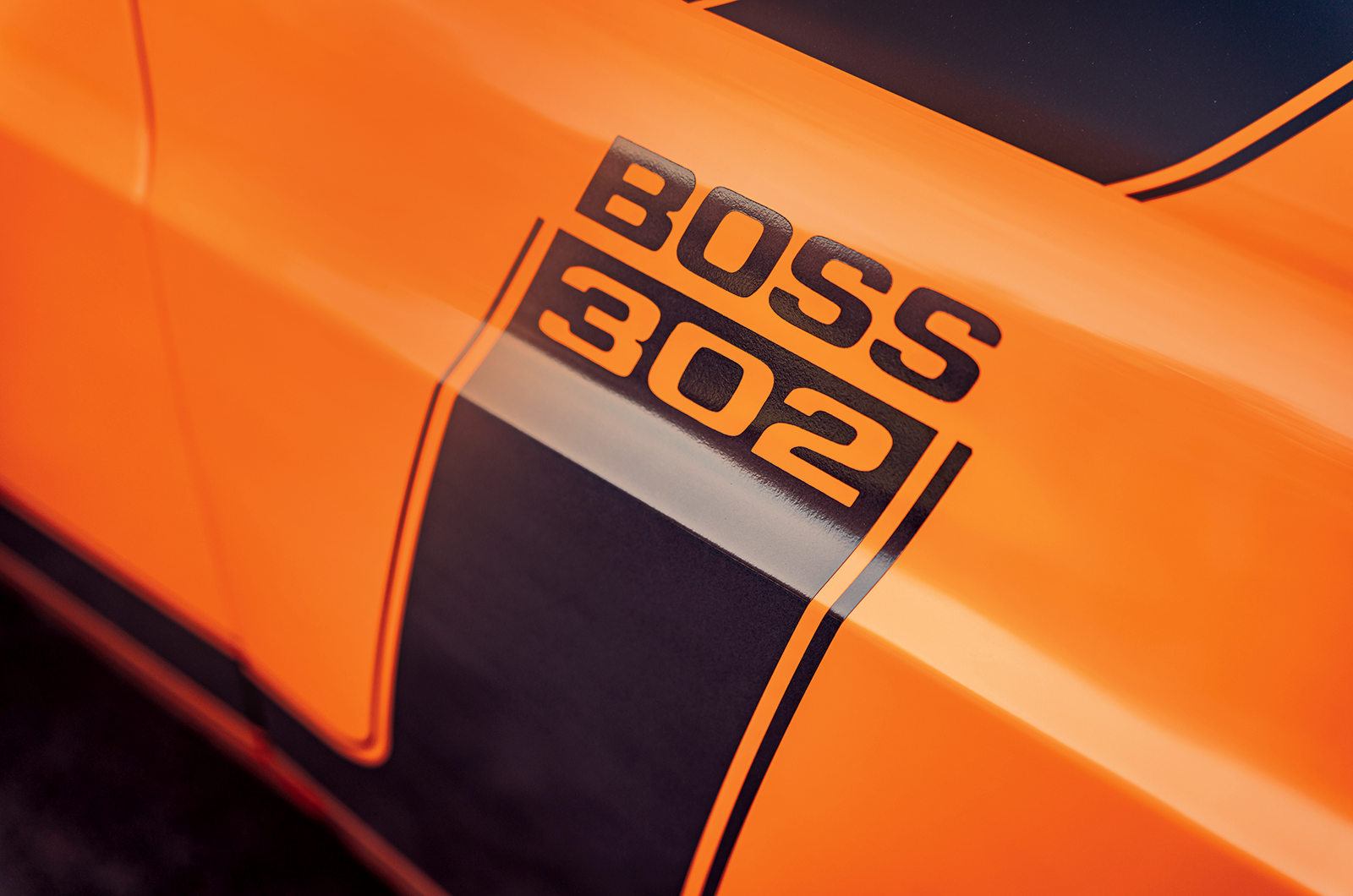
Sure, the Grabber Orange paint of this car, built for export and arriving in the UK in 1974 (hence the ‘N’ registration suffix), only covers subtly sportier bodywork, but from there the contrasts are more marked.

Inside, a rather prosaic-looking two-spoke steering wheel (thankfully, less the dreaded Rim Blow) is a disappointment after the Mach’s three-spoke, but the basic dashboard layout gains a rev counter.

Classic & Sports Car – Ford Mustang Boss 302 vs Mach 1: two trick ponies

The three-spoke wheel in the Mach 1 includes the added hazard of the ‘Rim Blow’ horn function

And replacing the Mach’s auto is the Hurst manual shifter sprouting from the centre console, its metal grip looking more like an inverted golf putter.

Start up, and the Boss soundtrack is raw and hearty, instantly beating the Mach’s decibel count.

Getting it off the line needs plenty of revs and noise, too, betraying its race-bred origins.

To drive it is a more physical experience, from the effort needed to select first to the heavyish, long-travel clutch.

There’s little action below 2000rpm, but then the hammering, hardcore V8 soundtrack grows to a rebel yell and you’re suddenly on track at Darlington.

Classic & Sports Car – Ford Mustang Boss 302 vs Mach 1: two trick ponies

It doesn’t take an excess of enthusiasm to get the Mach 1 squealing its tyres in corners

The Ford Mustang Boss 302 thrives on revs, its sweet spot between 4000 and 5000rpm, just below peak power.

The car feels more hunkered-down on the road and the ride is much firmer than that of the Mach 1.

But more engaging? It would be, but for steering that is curiously inconsistent: there’s a disconcerting lack of feedback just off-centre, making fast, tighter turns a guessing game at first – is it gripping or not? But it does.

Push harder and convince yourself that the Cooper Cobras are going to keep you on the black stuff and the car corners remarkably well for a 3392lb (1539kg) automobile.

Classic & Sports Car – Ford Mustang Boss 302 vs Mach 1: two trick ponies

The Goodrich tyres on the Ford Mustang Mach 1 give a supple ride

No tyre squeal, some roll over the rear axle – which feels right, somehow – and the only other challenge is the recalcitrant gearshift: it always needs a firm hand, but downchanging from third to second is a hit-and-miss affair, and to select any gear a stronger arm is required as heat builds up in the powertrain.

I’m not going to pretend that either Mustang provides driving nirvana on UK roads: both are pretty blunt tools, at odds with their apparent agility displayed in countless Hollywood car chases.

But they pack a brutalist charisma like few other classic cars, and if the Mach 1’s exhaust could be made a touch fruitier, I might just be tempted to adopt my first American.

Images: Max Edleston

Thanks to: Retro Classic Car for both Mustangs; Crathorne Hall Hotel

This was first in our June 2023 magazine; all information was correct at the date of original publication


Factfiles

Classic & Sports Car – Ford Mustang Boss 302 vs Mach 1: two trick ponies

Ford Mustang Boss 302

  • Sold/number built 1969-’70/7013
  • Construction steel monocoque
  • Engine all-iron, ohv 302cu in (4949cc) V8, single Holley four-barrel carburettor
  • Max power 290bhp @ 5800rpm
  • Max torque 290lb ft @ 4300rpm
  • Transmission four-speed manual, RWD
  • Suspension: front independent, by upper wishbones, single lower arms with drag struts, coil springs, anti-roll bar rear live axle, semi-elliptic leaf springs; telescopic dampers f/r
  • Steering power-assisted recirculating ball
  • Brakes vented discs front, drums rear
  • Length 15ft 7½in (4674mm)
  • Width 5ft 11¾in (1821mm)
  • Height 4ft 2¼in (1275mm)
  • Wheelbase 9ft (2743mm)
  • Weight 3392lb (1539kg)
  • Mpg n/a
  • 0-60mph 6.5 secs
  • Top speed 137mph
  • Price new $3720


Ford Mustang Mach 1

  • Sold/number built 1969-’70/113,428 (all Mach 1 derivatives)
  • Construction steel monocoque
  • Engine all-iron, ohv 351cu in (5752cc) V8, single two-barrel carburettor
  • Max power 250bhp @ 5400rpm
  • Max torque 355lb ft @ 3400rpm
  • Transmission three-speed auto, RWD
  • Suspension: front independent, by upper wishbones, single lower arms with drag struts, coil springs, anti-roll bar rear live axle, semi-elliptic leaf springs; telescopic dampers f/r
  • Steering power-assisted recirculating ball
  • Brakes drums
  • Length 15ft 7½in (4674mm)
  • Width 5ft 11¾in (1821mm)
  • Height 4ft 2¼in (1275mm)
  • Wheelbase 9ft (2743mm)
  • Weight 3406lb (1545kg)
  • Mpg n/a
  • 0-60mph 7.9 secs (manual)
  • Top speed 128mph (manual)
  • Price new $3271

We hope you enjoyed reading. Please click the ‘Follow’ button for more super stories from Classic & Sports Car.