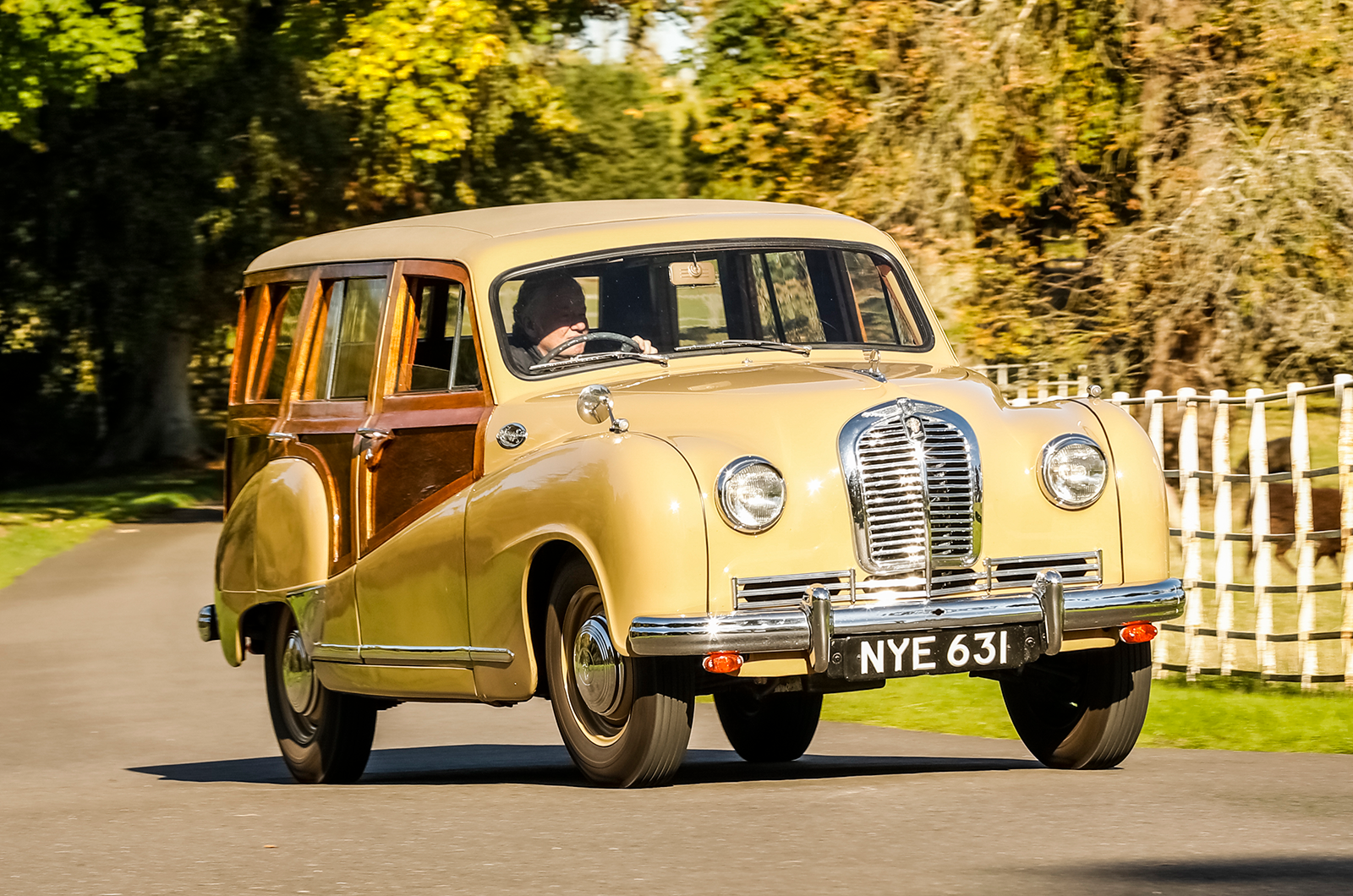
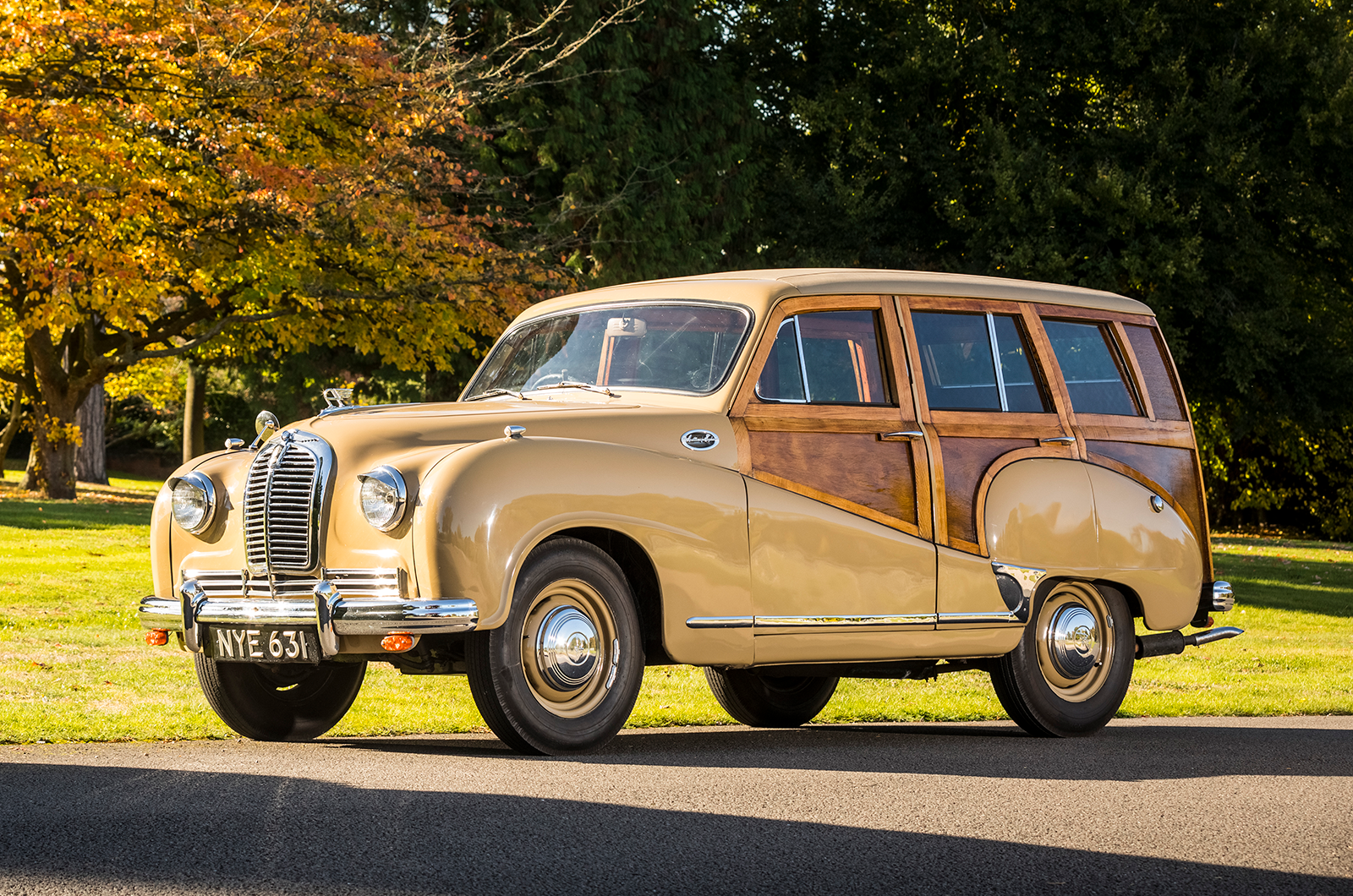
In the days before a visual kinship with cars in the same model family was seen as a positive thing, the Austin ‘counties’ saloons were lambasted for being styled in a Toby Jug idiom.
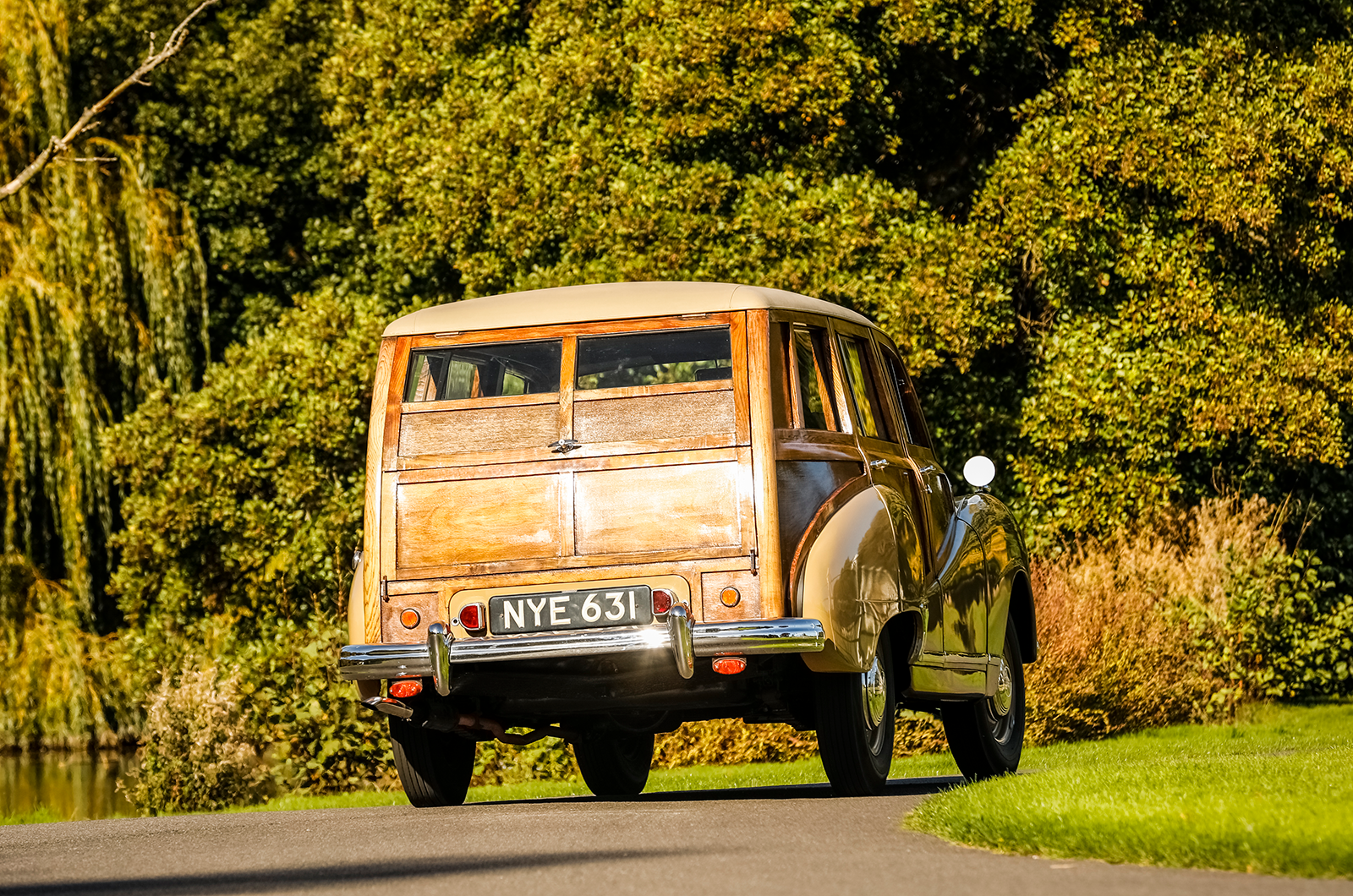
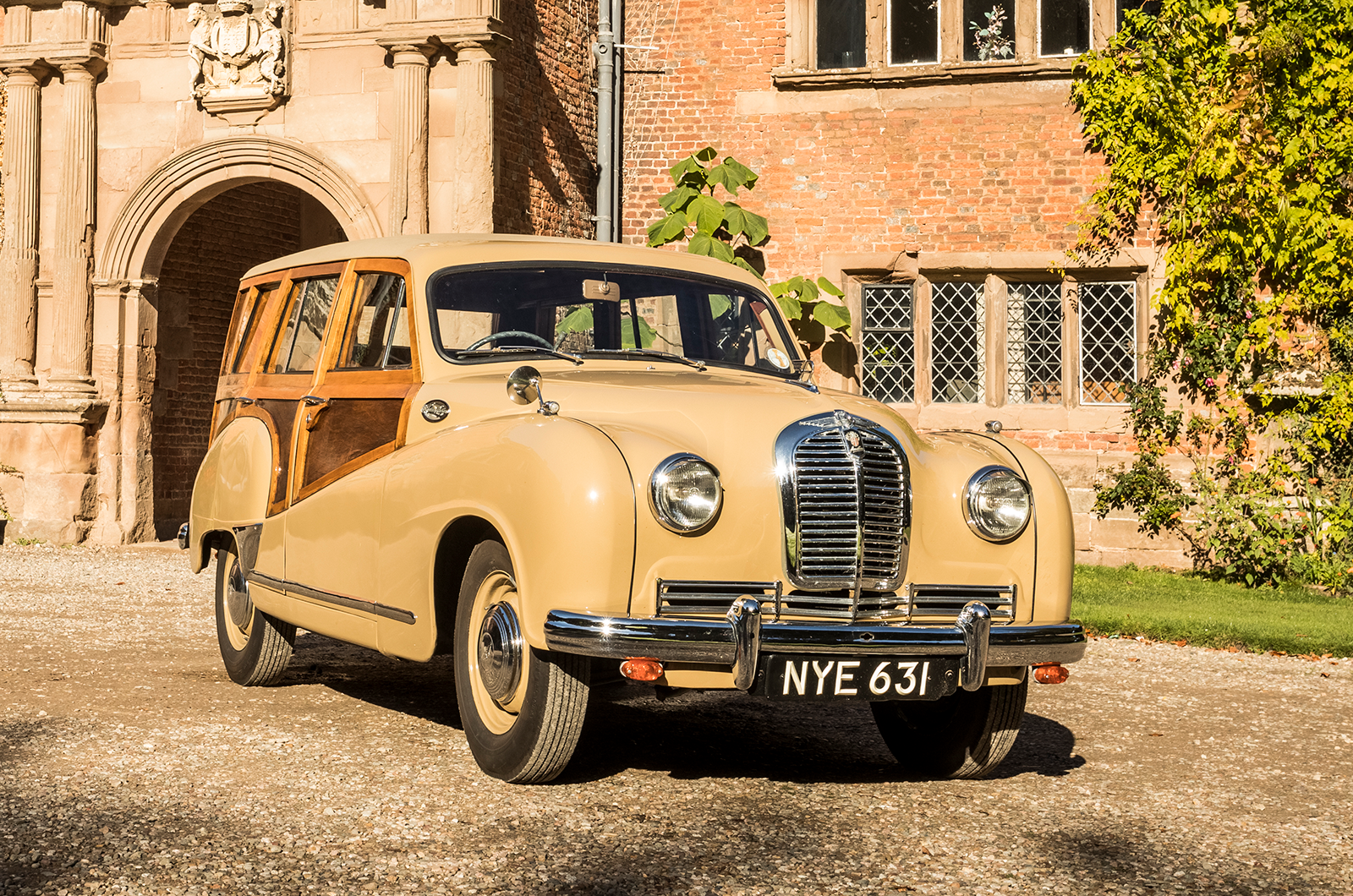
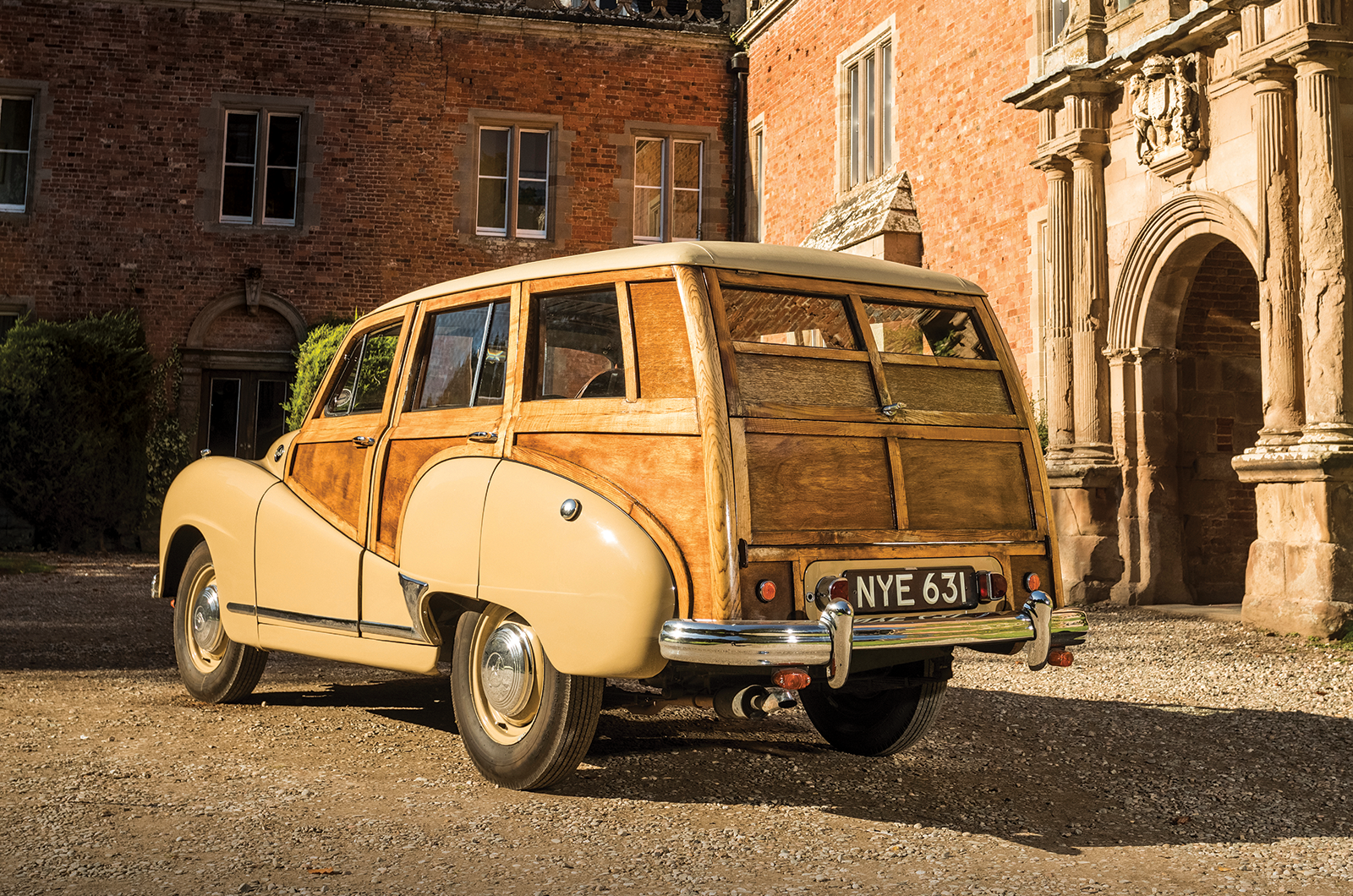
The Hereford saloon shares its doors with the smaller A40 Somerset and, at a glance, they are difficult to tell apart. Not so the Countryman.
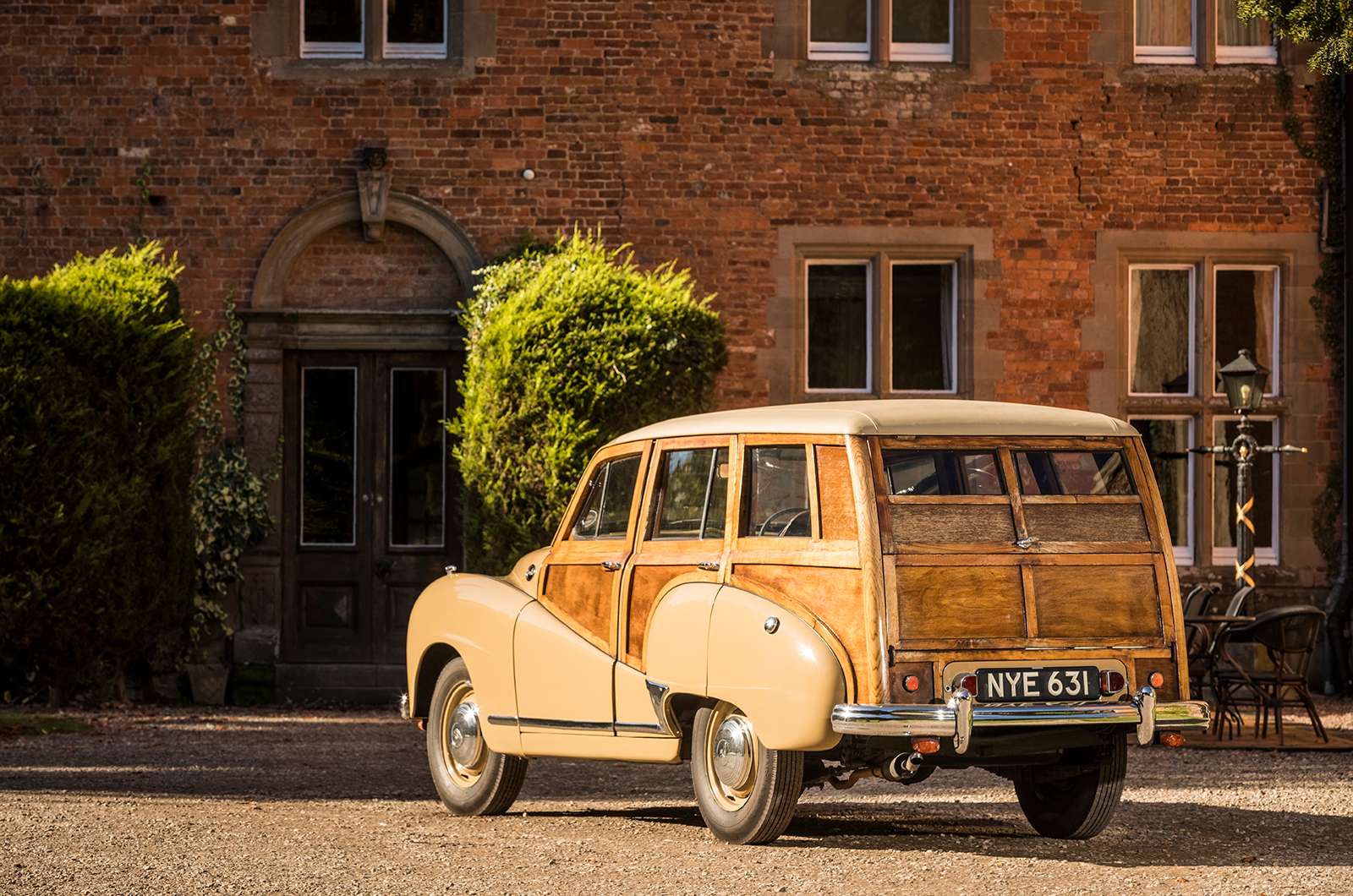
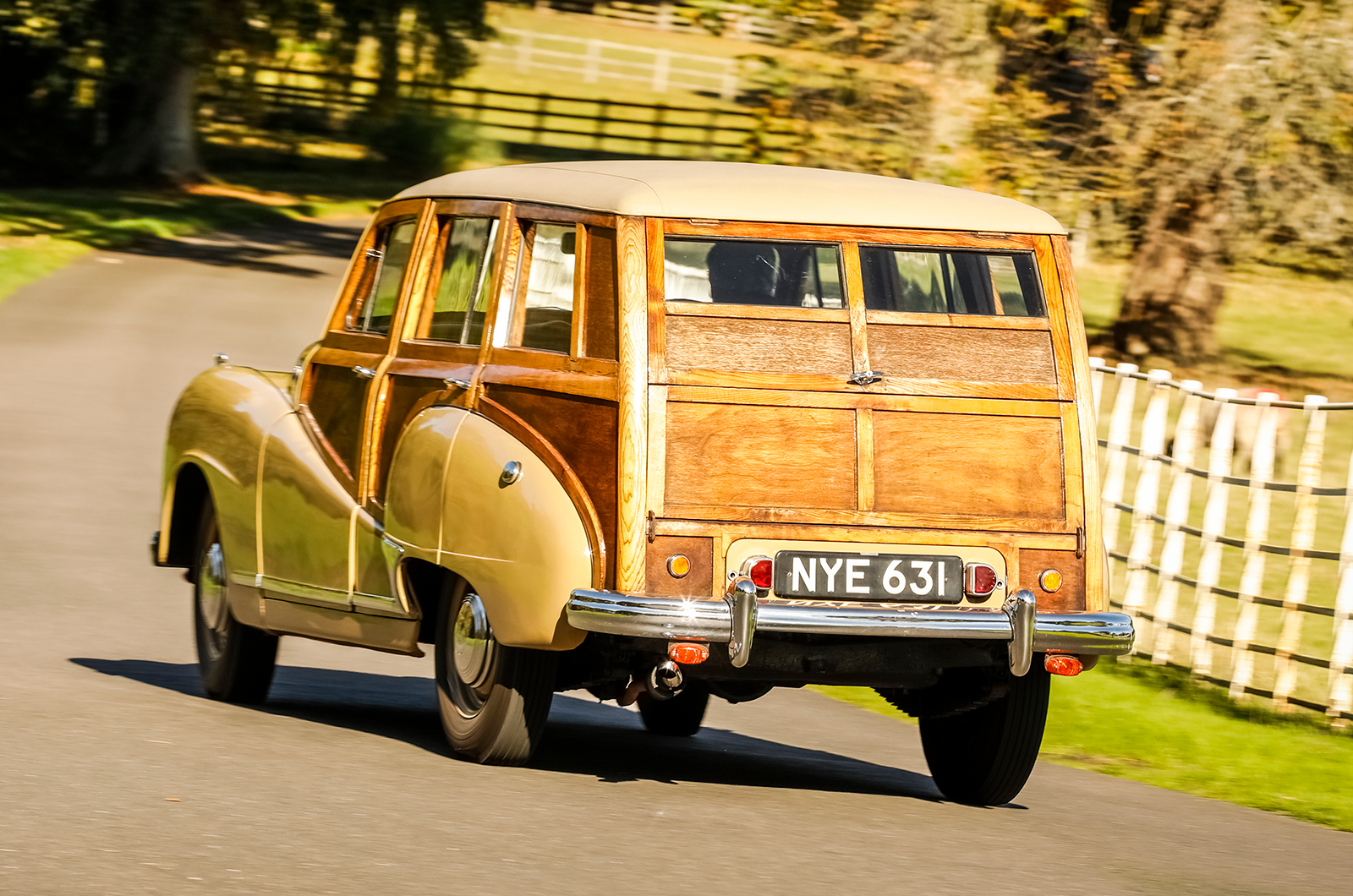
New woodies like the Austin A70 Hereford Countryman began to disappear as government restrictions eased in the early ’50s
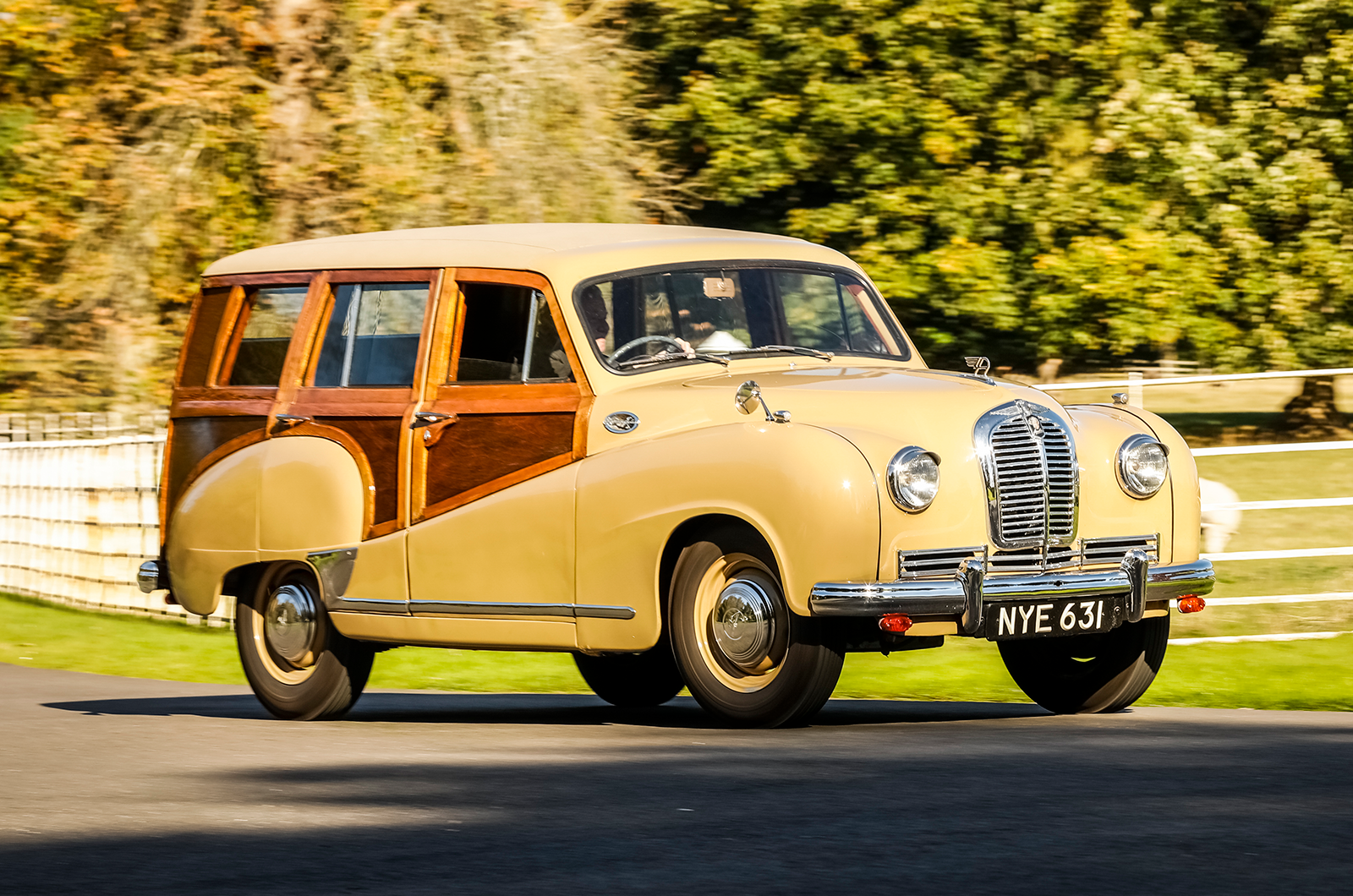
If the A70 Hereford saloons make you think of the drabness of the austerity years, there is something cheerful about the Countryman that seems to come from a world just moving out of monochrome into technicolour.
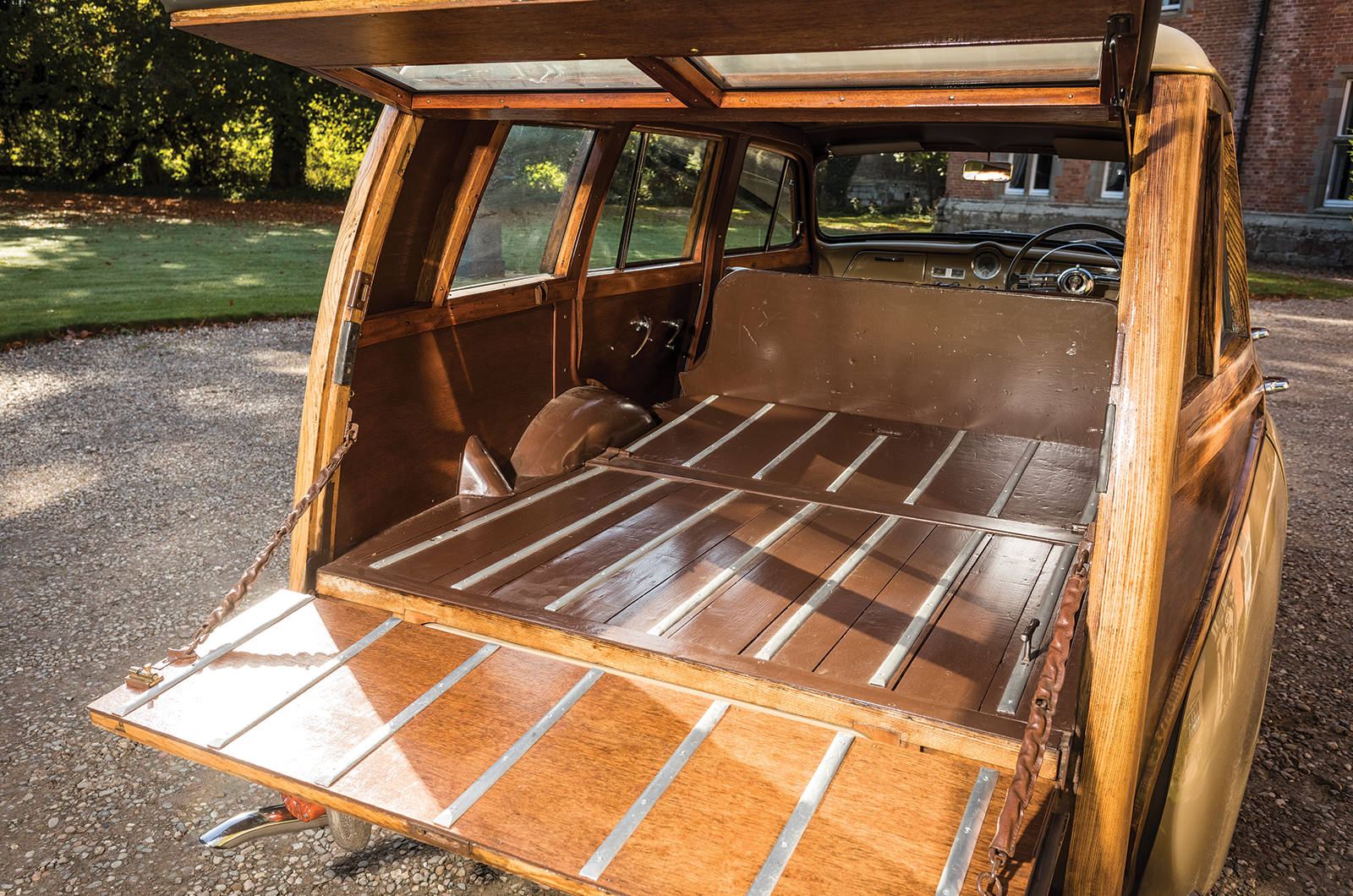
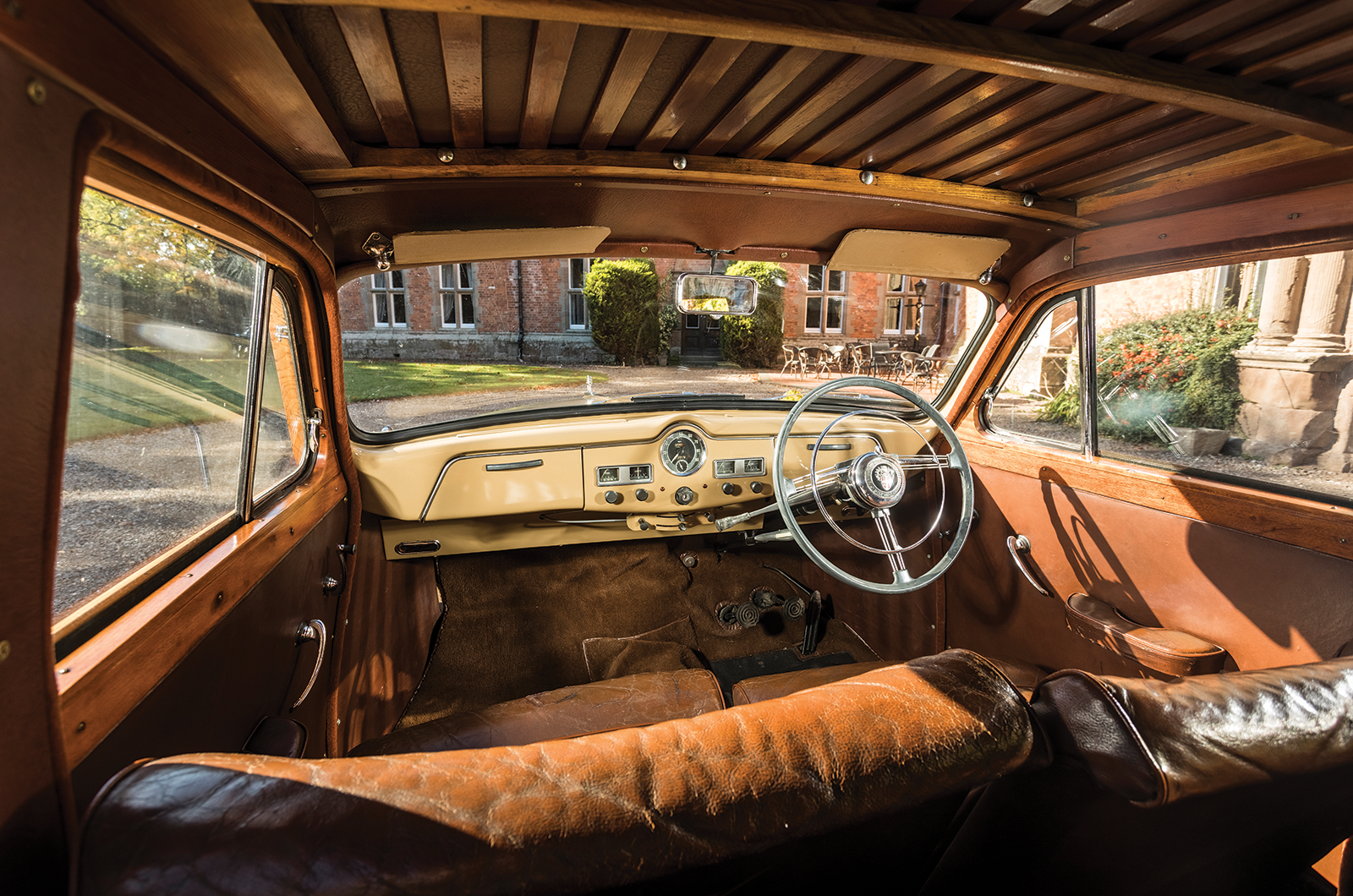
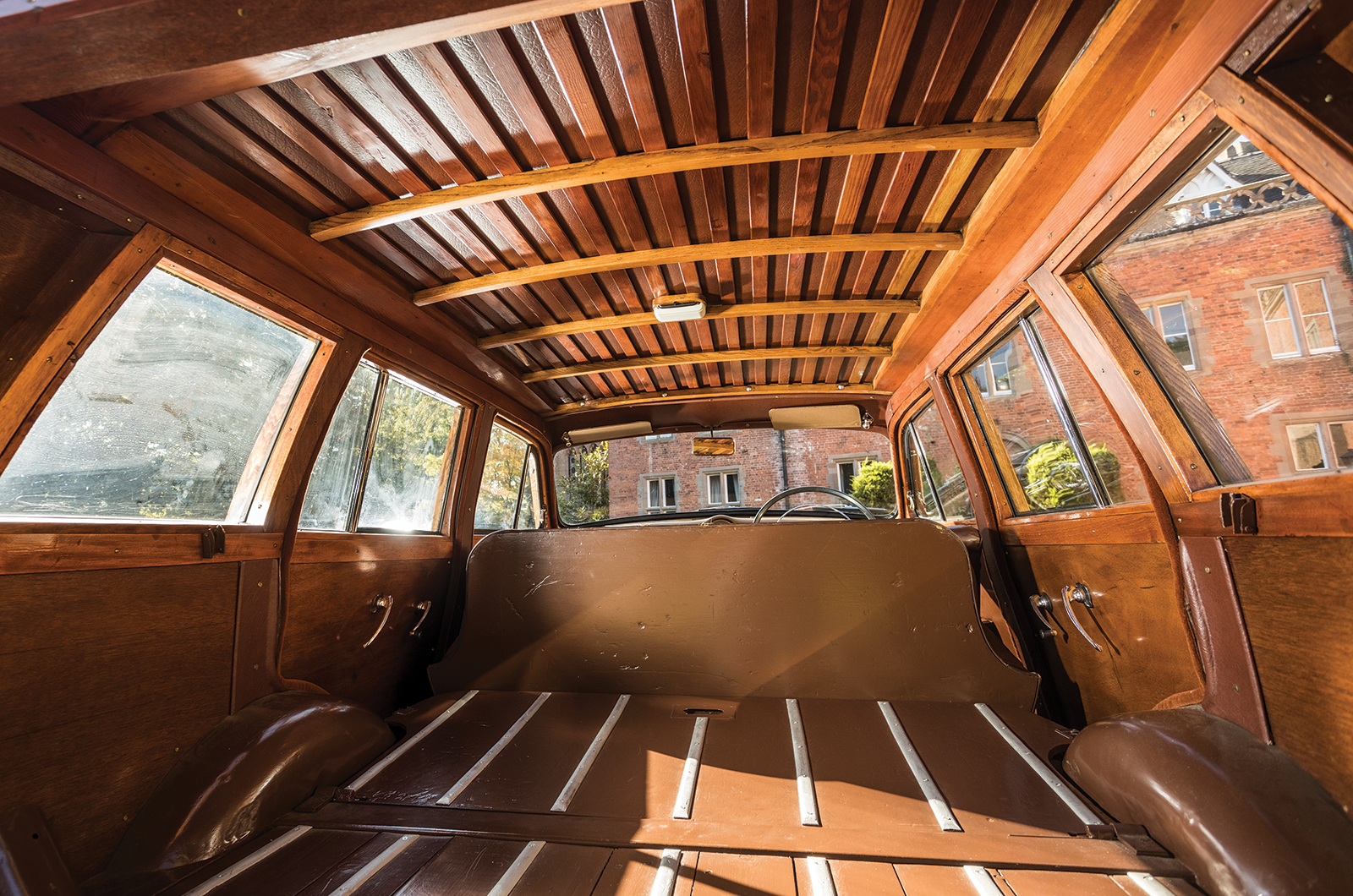
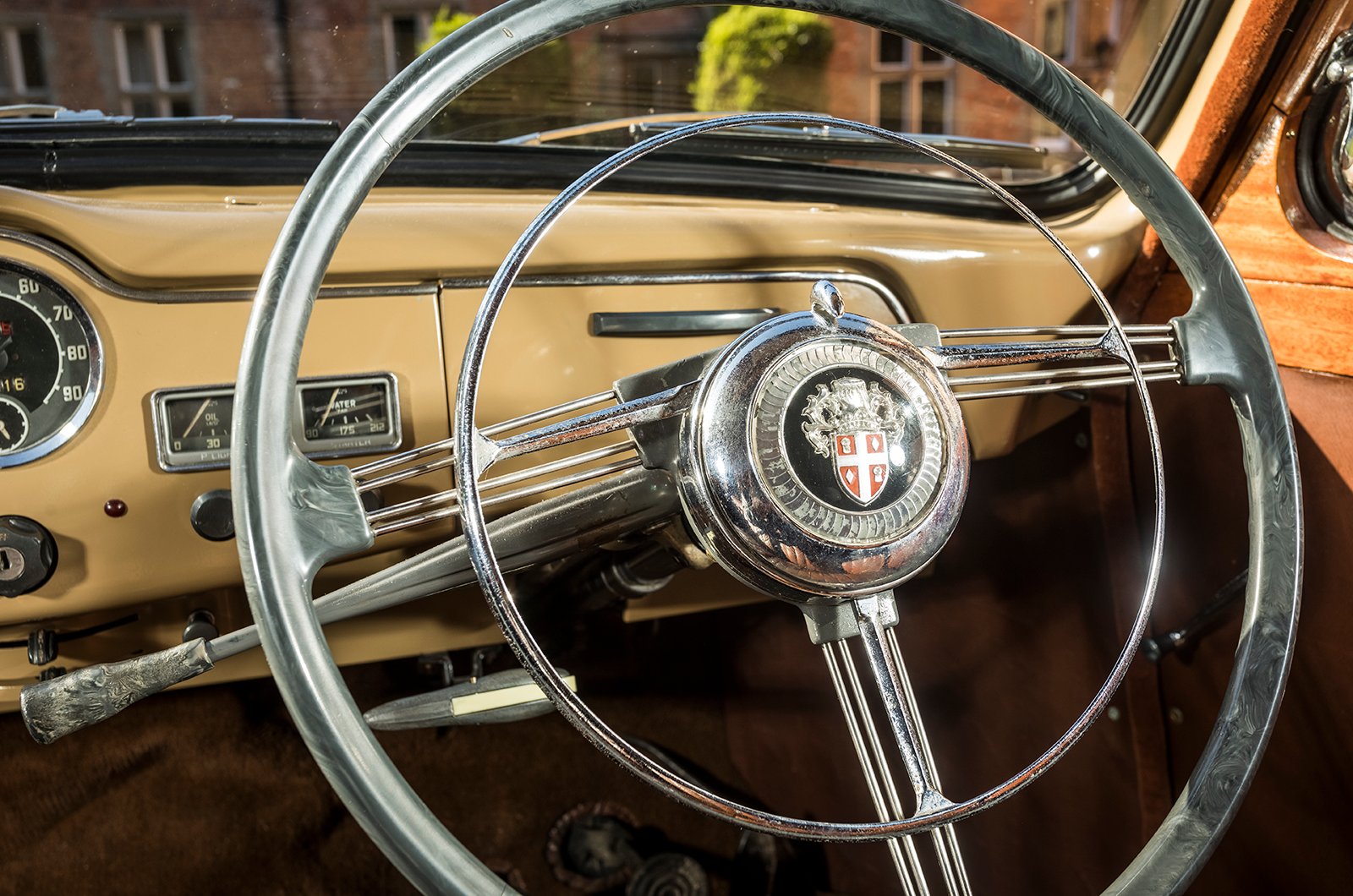
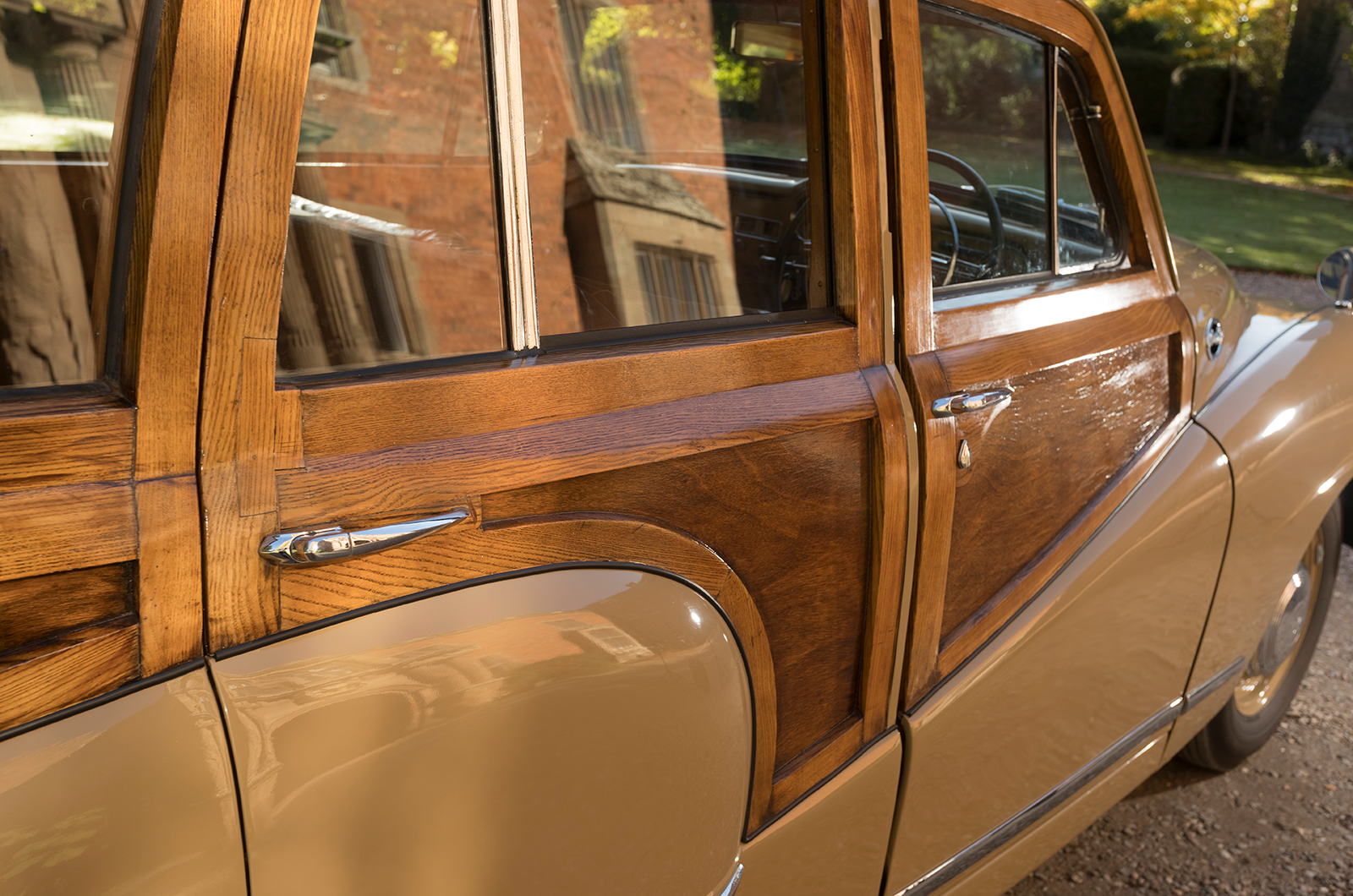
Like all woodies it has a certain country-house chic, with that beautiful split tailgate, its varnished load area and slatted wooden roof-lining, all somewhat at odds with the plain, painted-metal dashboard.
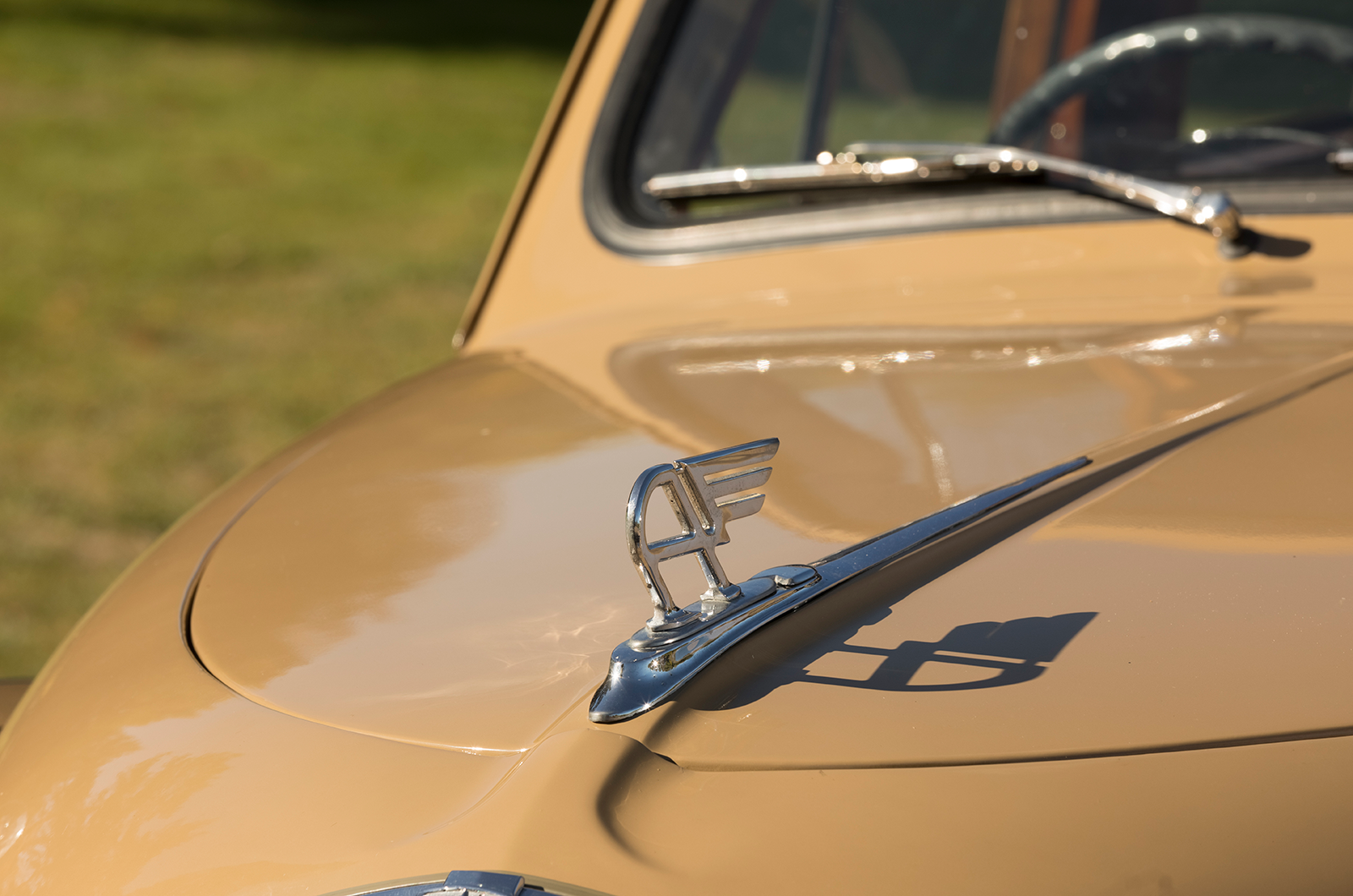
Through narrow windows you look out over the snub-nosed bonnet topped by the once-famous ‘Flying A’.
The front seat is a split bench made of Dunlopillo and covered in what looks to be faux-leather Rexine.
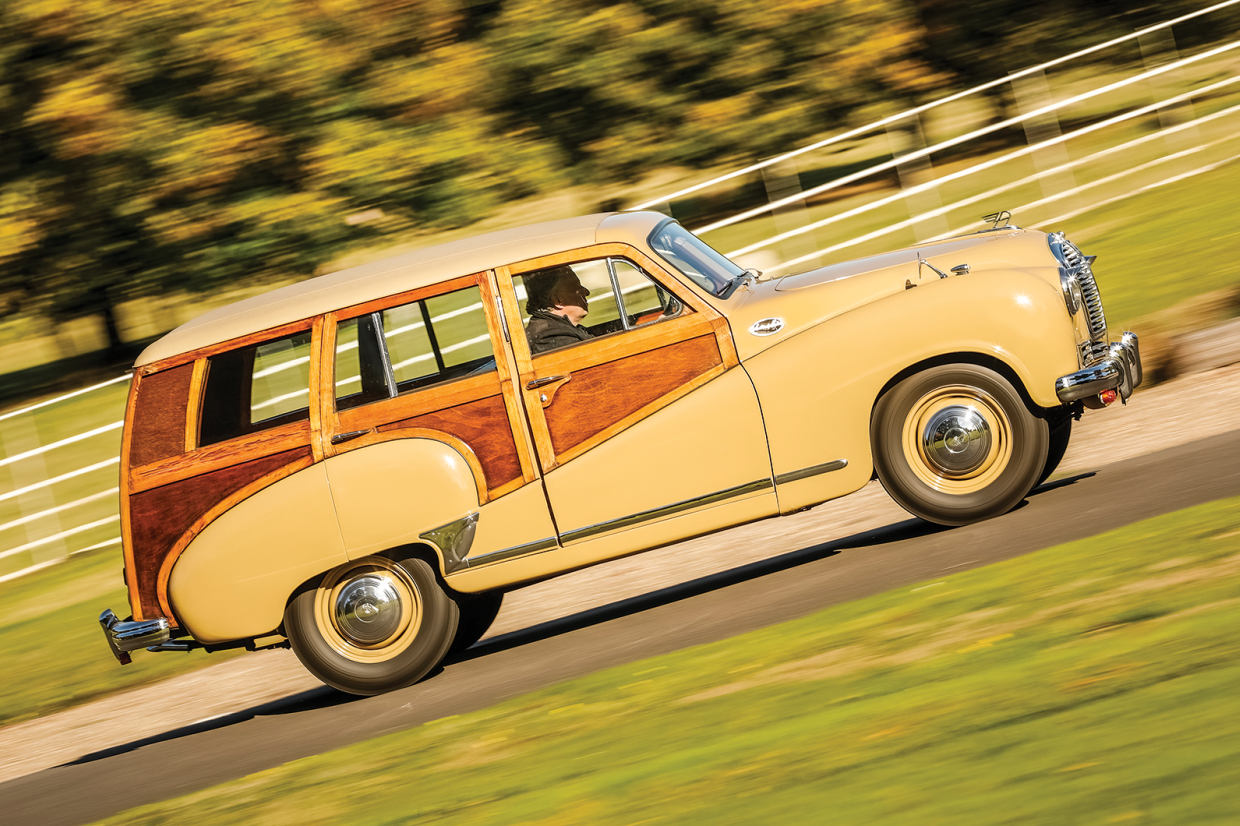
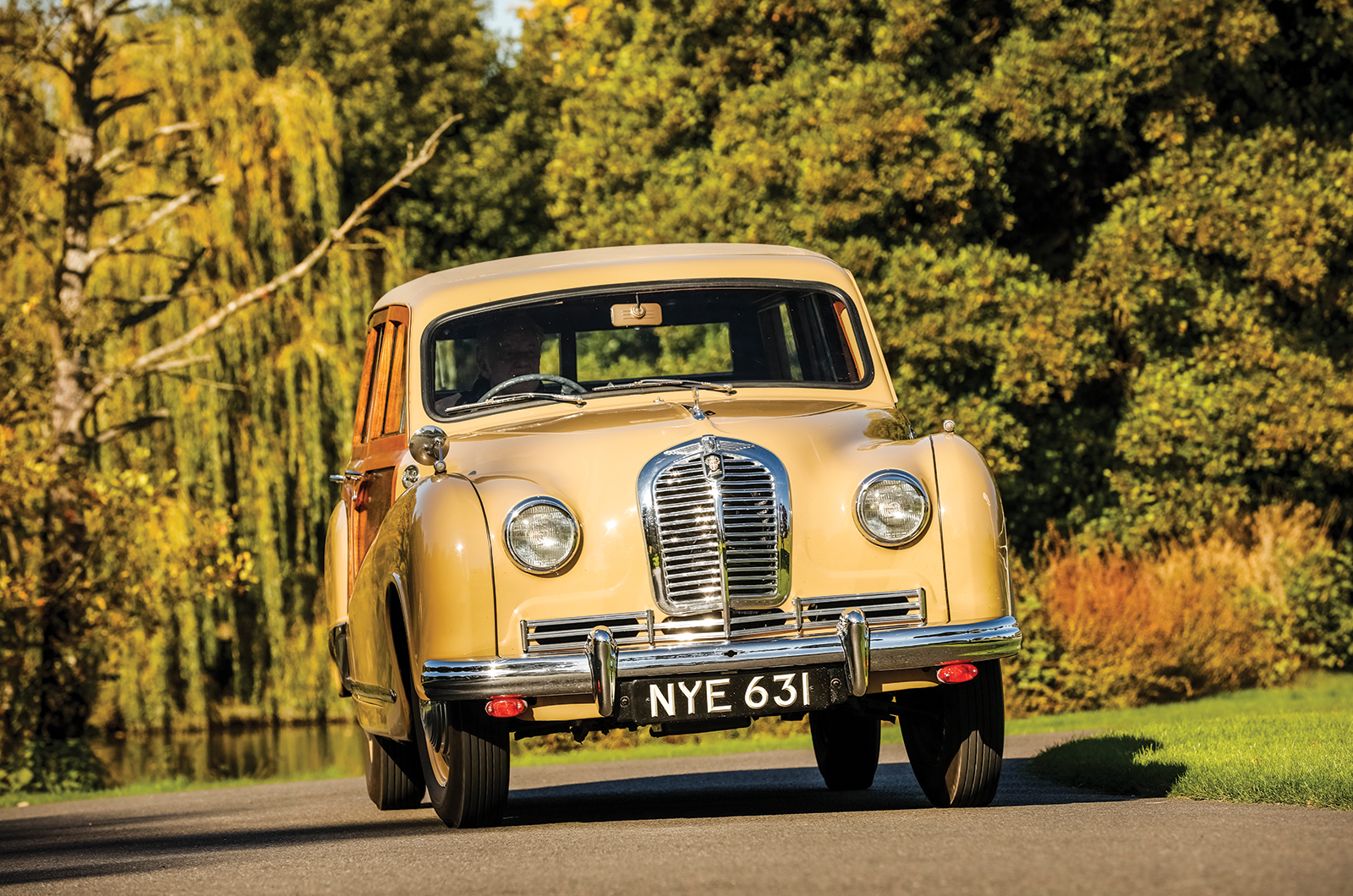
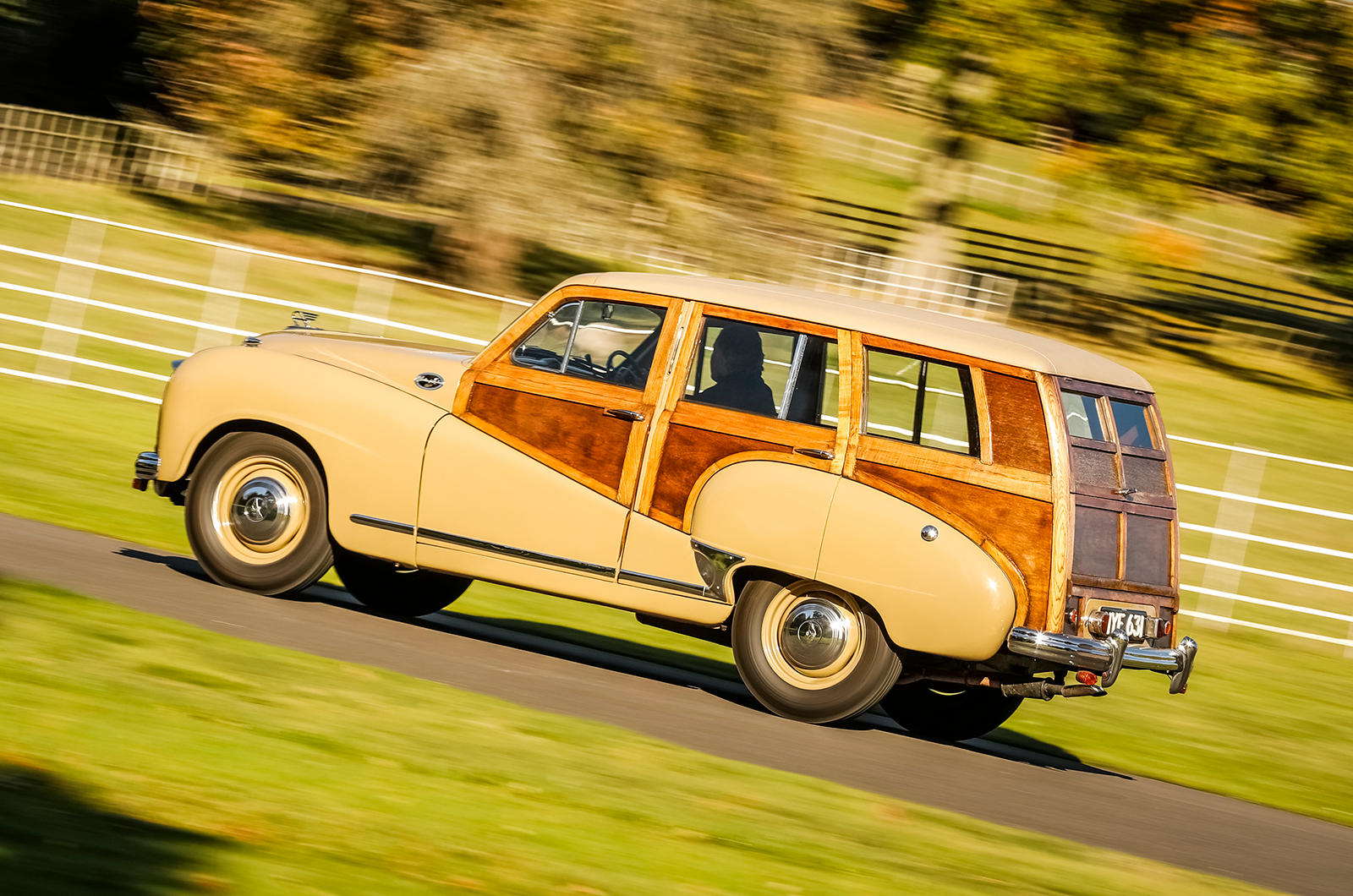
The timber-clad Austin appears confident in modern traffic
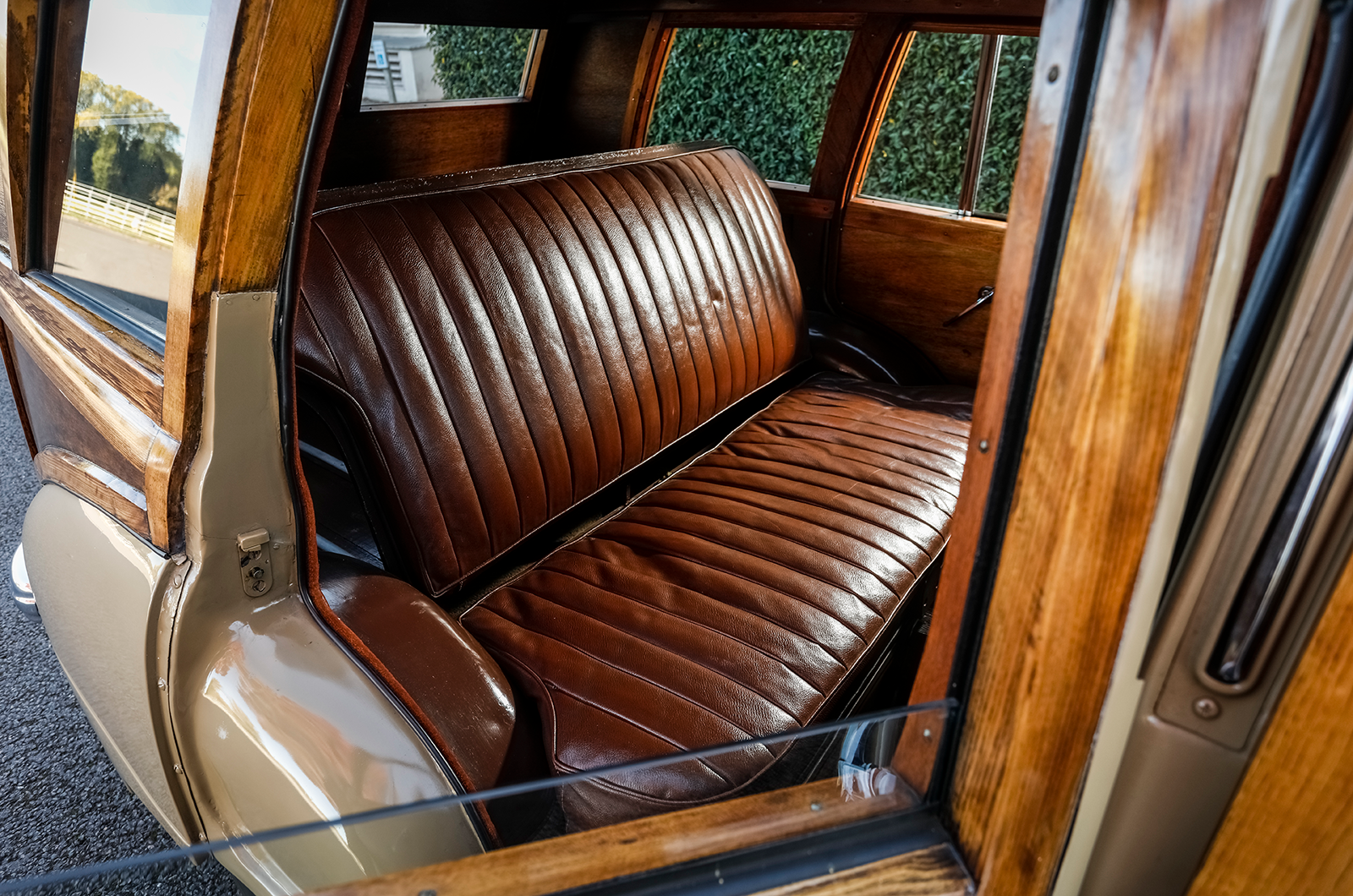
The slow-selling A70 Hampshire had been slated for its lack of rear legroom, but the Hereford has ample space to support its family-sized six-seater status. The rear seats fold to make a giant load area.
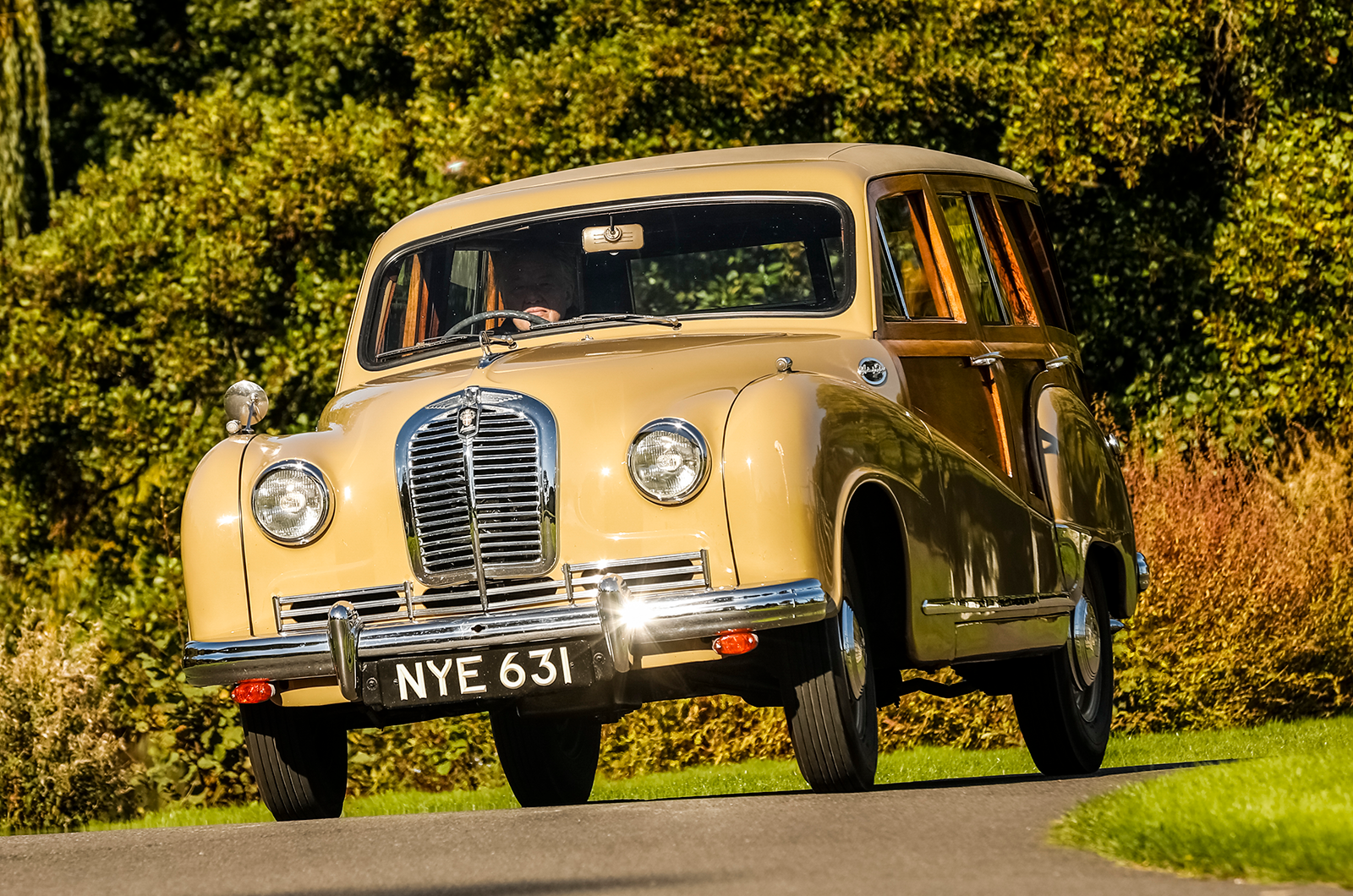
Viewed from the outside, the Hereford looks surprisingly confident mixing with modern A-road traffic and would probably top 80mph if you were feeling brave, but Brian deems 50mph or so to be sufficient, having faded the brakes coming down the occasional steep incline.
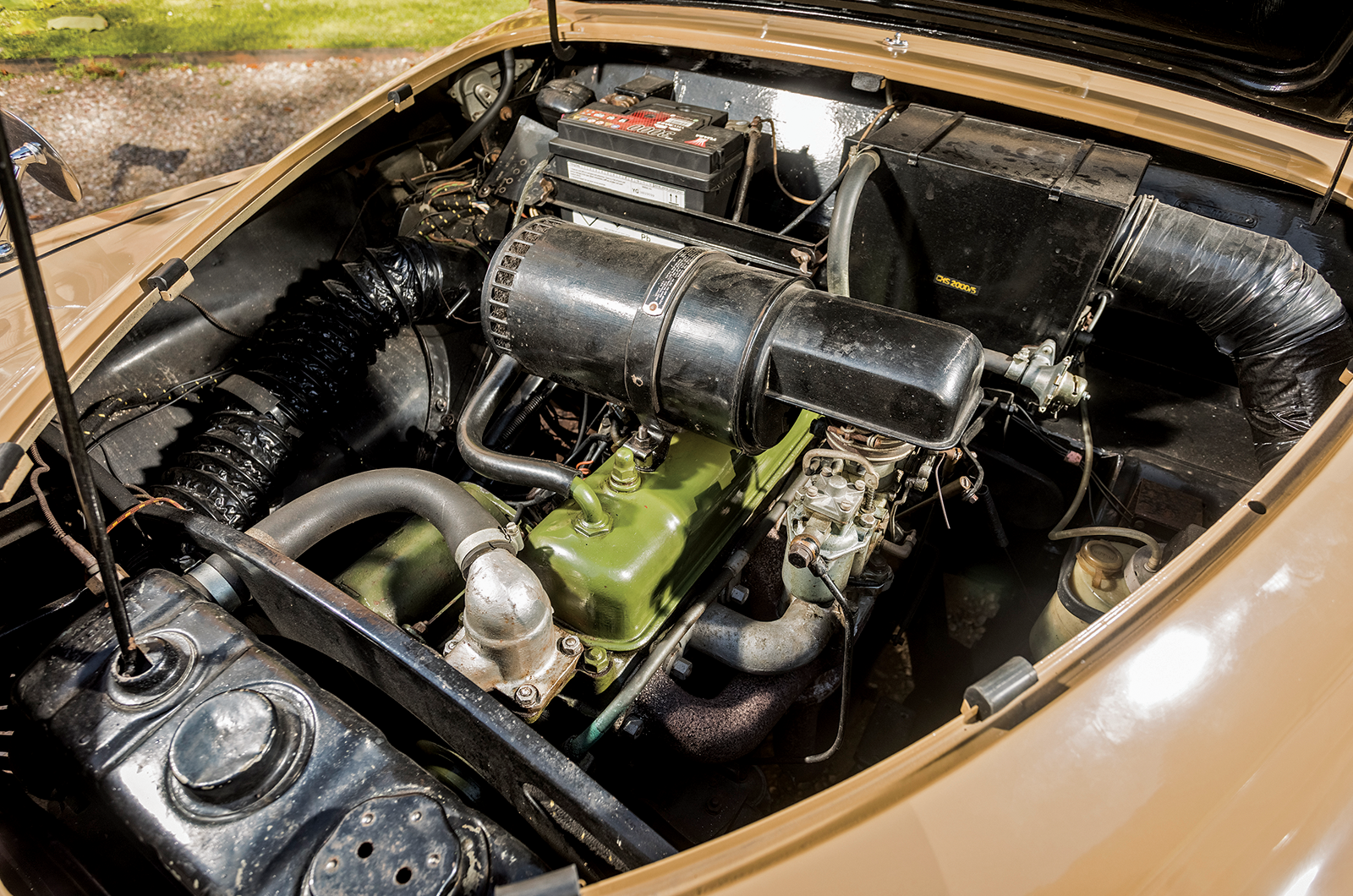
Big ‘fours’ are generally rough, but this one has a soft feel with prodigious low-speed torque that minimises encounters with the column gearchange, which in fairness isn’t bad as long as you don’t rush it.
Its commercial-vehicle attributes makes this little Austin useful for tip runs, too
Once you are under way, you really only need to use third and top gears, and you can miss changes completely and barely make any difference to the casual rate of acceleration.
Clutch judder is easy to provoke, but the big steering wheel takes most of the work out of low-speed manoeuvres by virtue of sheer leverage.
Braking and direction changes in this classic car need more anticipation than most of us are used to, but the Hereford isn’t quite the wobbling and imprecise blancmange its reputation perhaps suggests.
It traverses A-road corners – and rough surfaces – briskly and with surprisingly few rattles.
The Austin’s wood required continual maintenance from new
The Austin A70 Hereford represents the end of the coachbuilt shooting-brake era.
As government restrictions – and the tax burden – eased in the early 1950s, there was less of a case to be made for expensive-to-build and sometimes difficult-to-maintain utility cars.
Also, the Hereford was to be Austin’s last mainstream separate-chassis car, and the move to unitary construction made a half-timbered version of its next family saloon hard to justify.
Woodie enthusiasts would have to content themselves with short-lived three-door Traveller versions of the Morris Oxford/Cowley, or a Minor Traveller.
‘Today, with its chubby cheeks and tall, skinny tyres, it looks to be an entirely different species of automobile to the vehicles around it’
As for Papworth Industries, it produced station-wagon bodies on Lea-Francis chassis, a prototype Austin A40 woodie as well as an all-steel A70 wagon prototype, before going on to make vans for the Post Office and some of the famous Bedford ‘Green Goddess’ self-propelled pumps.
The Trust still exists, but the various individual businesses within it were sold off during the 1970s (most famously, its travel-goods division, Pendragon).
The remnants of its coachbuilding activities – which were by then operating as Papworth Specialist Vehicles – continued trading until 2013, when it went into liquidation.
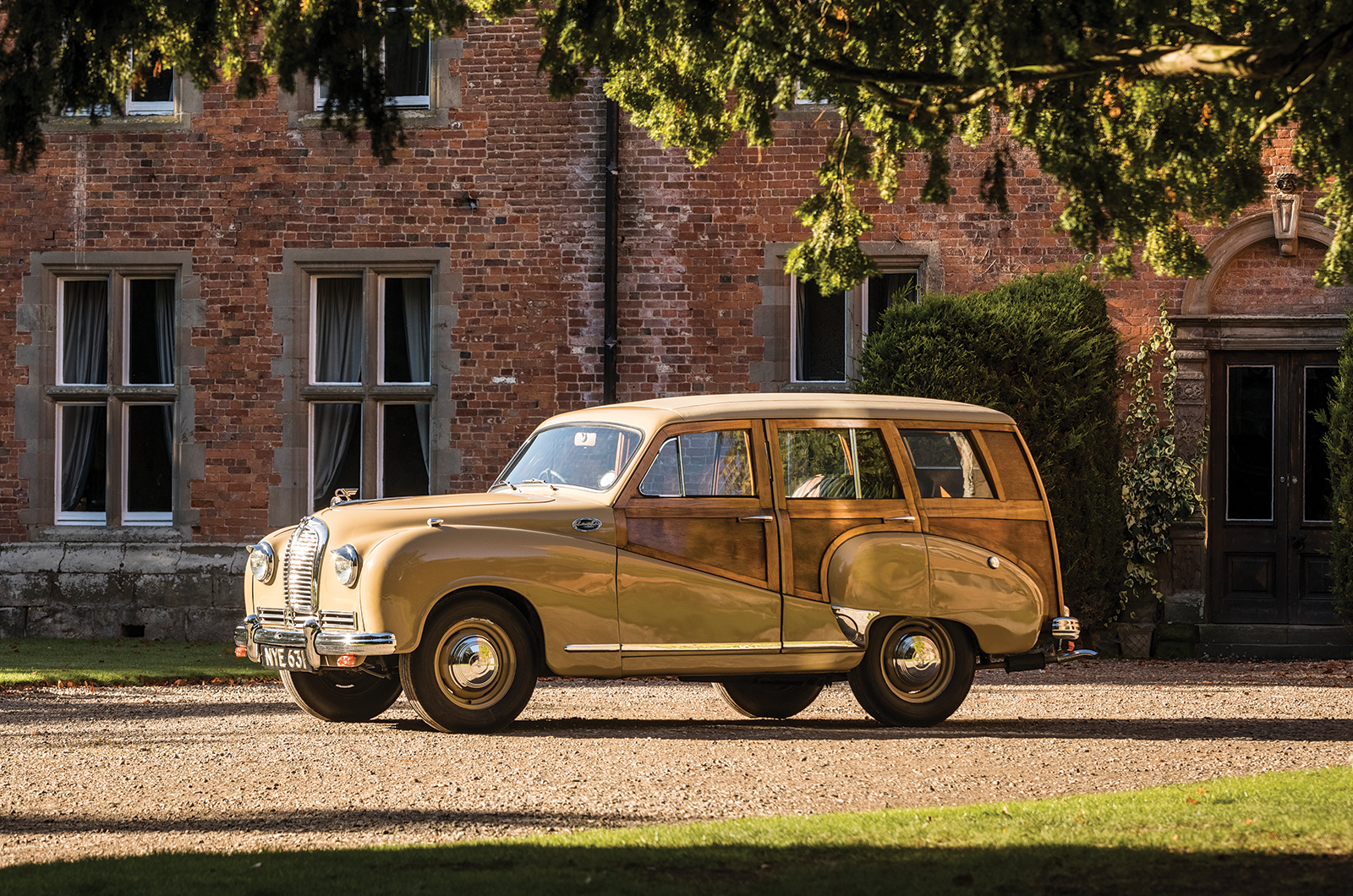
The cheerful shape of the Countryman sets it apart from the humdrum A70 Hereford saloons
Some cars have a near-universal charm factor that just draws people to them.
And with its cuddly styling coupled with its rustic, half-timbered construction, this is one such motor car.
This Austin A70 Hereford Countryman could gather a crowd of admirers absolutely anywhere, be it the local recycling centre (owner Brian uses it regularly for trips to his nearest tip), on the school run, or on the manicured lawns of the concours arena.
It is an enchanting classic car, inside and out, with the bonus of a good story to tell, too.
In fact, I would put this rare ’53 Austin as a crowd-pleaser up against almost anything.
Images: Tony Baker
Thanks to: Grafton Manor; Brockencote Hall Hotel
Factfile
Austin A70 Hereford Countryman
- Sold/number built 1951-’54/1500
- Construction steel chassis, with steel and timber body
- Engine all-iron, ohv 2199cc ‘four’, single Zenith carburettor
- Max power 68bhp @ 3800rpm
- Max torque 116Ib ft @ 1700rpm
- Transmission four-speed manual, RWD
- Suspension: front independent, by wishbones, coil springs rear live axle, leaf springs; telescopic dampers f/r
- Steering cam and peg
- Brakes drums
- Length 13ft 11in (4242mm)
- Width 5ft 9½in (1766mm)
- Height 5ft 5½in (1664mm)
- Wheelbase 8ft 3in (2515mm)
- Weight 2825Ib (1281kg)
- 0-60mph 21.4 secs
- Top speed 81mph
- Mpg 22
- Price new £818
We hope you enjoyed reading. Please click the ‘Follow’ button for more super stories from Classic & Sports Car.
Martin Buckley
Senior Contributor, Classic & Sports Car