Austin A70 Hereford vs Standard Vanguard: a life more ordinary

| 29 Jan 2026
Classic & Sports Car – Standard Vanguard vs Austin Hereford: a life more ordinary
It seems to me that old cars are the nearest thing we have to working time machines: they are ideal for triggering memories, or even the feel and flavour of a particular era.

Sports cars, of course, are great – who doesn’t love an XK120, a TR2 or an MGA? But it is the more mundane saloons that were much more significant in most people’s lives.

If you were alive in the 1950s, these were the cars that took you to school, to the shops or on holiday.

Classic & Sports Car – Standard Vanguard vs Austin Hereford: a life more ordinary
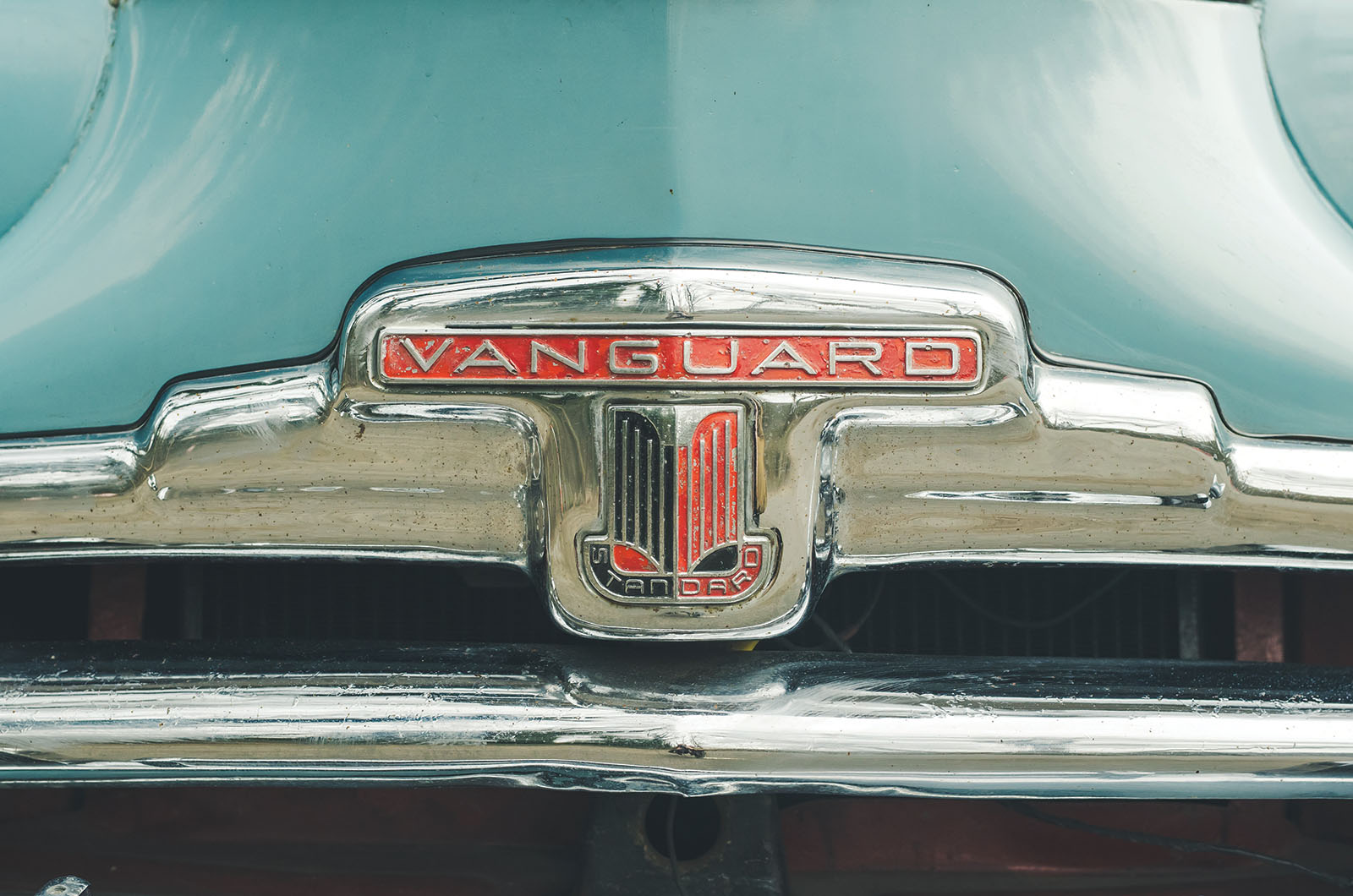
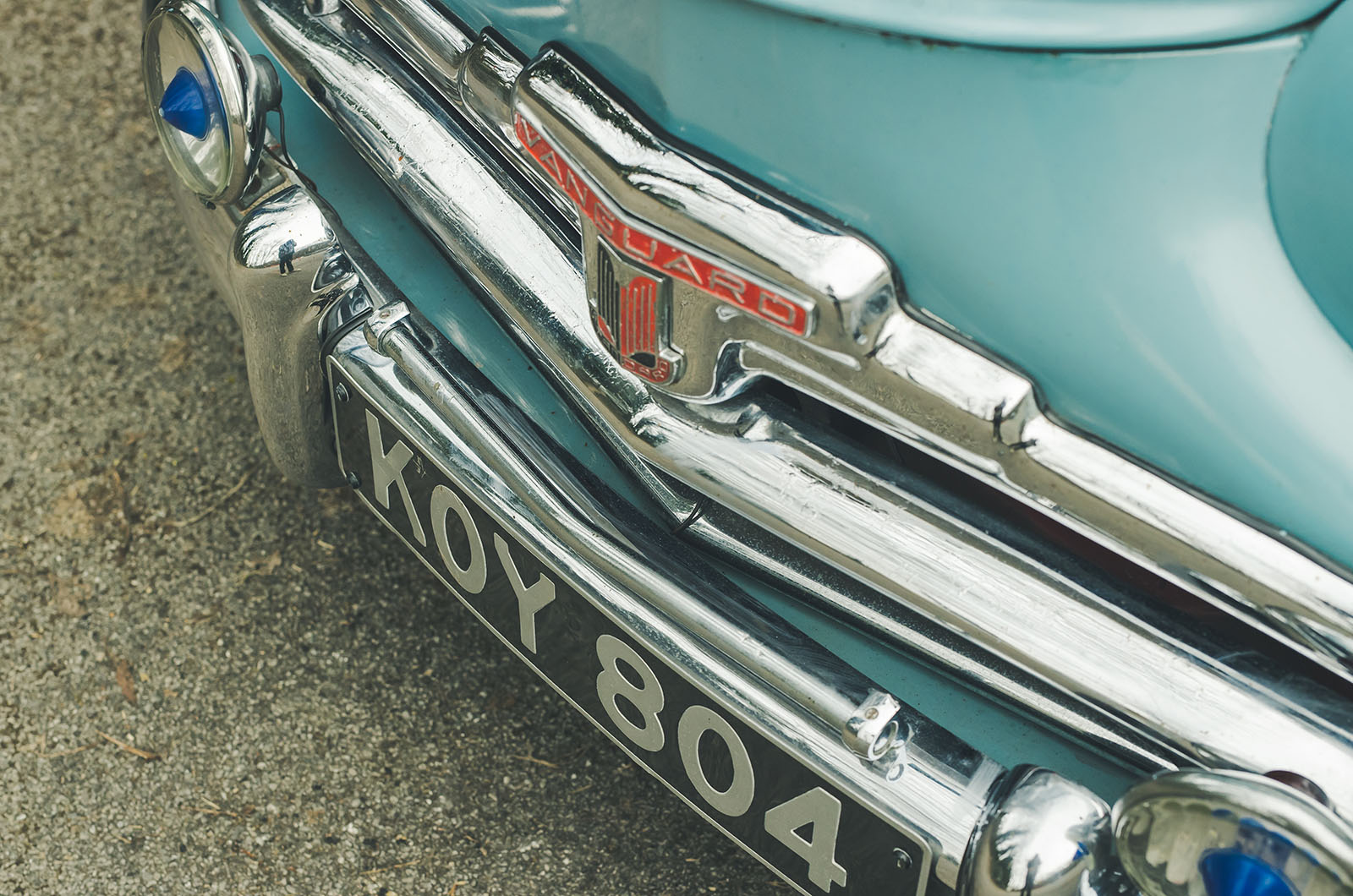
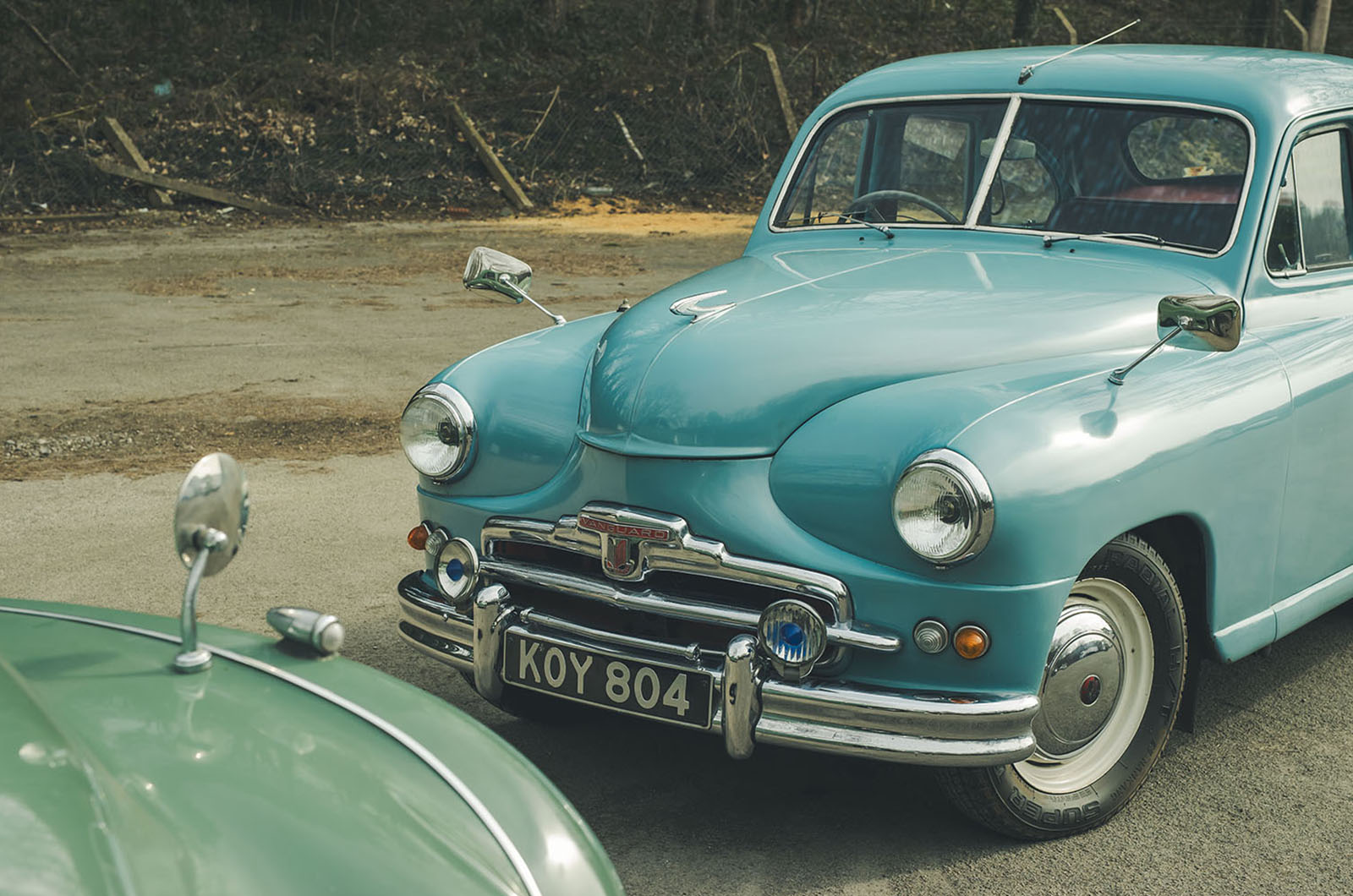
The Standard Vanguard badge tops the car’s chrome grille

It is the ordinary family saloons, the vehicles nobody gets very excited about, that become more fascinating with every passing year.

Much less celebrated, rarely restored or preserved, they combine ordinariness with rarity – and therein lies the fascination.

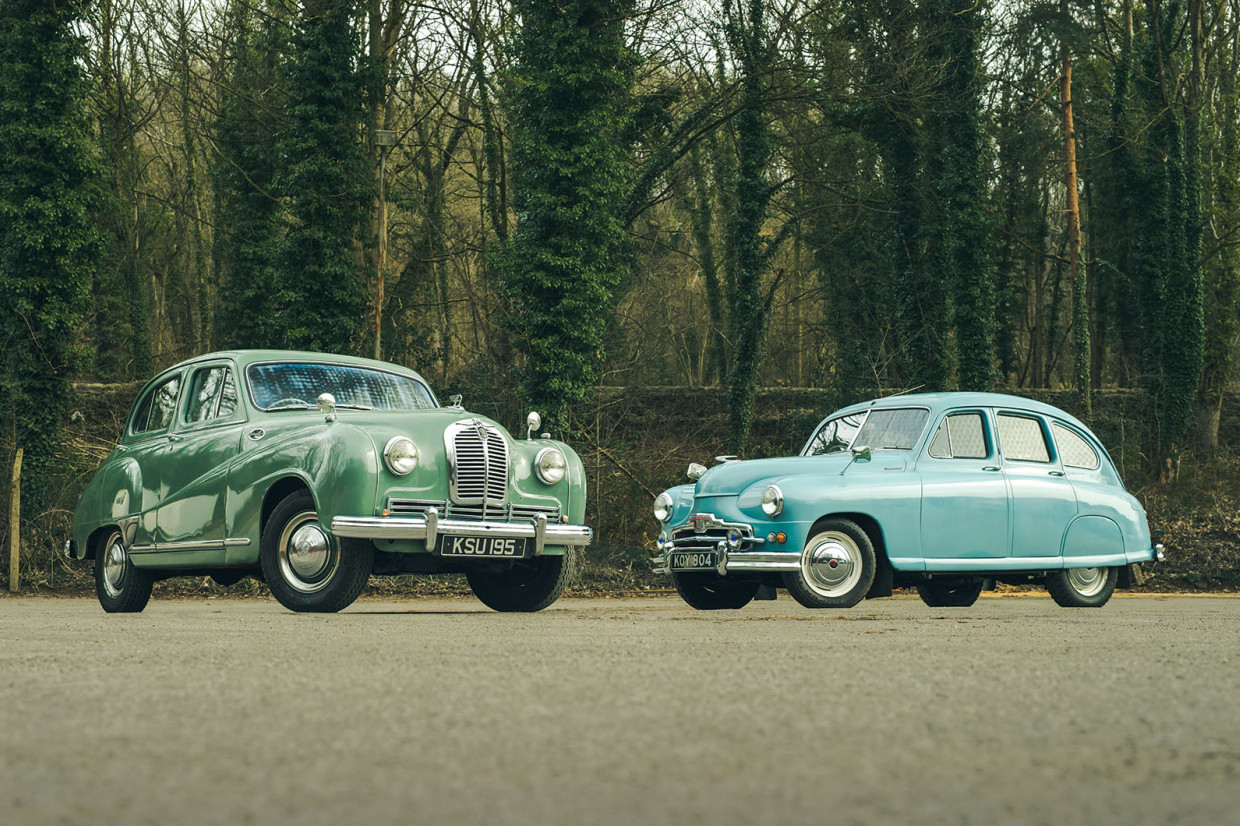
The bulbous and burbling Austin Hereford and Standard Vanguard are exemplars of the ‘car as time machine’ idea.

They are very old models now – older today than the veterans were in Genevieve – but without either the rustic charm of their pre-war ancestors or the two-tone, coffee-bar kitsch of a ‘shoebox’ Ford Zephyr.

They are semi-forgotten relics of a lost world of early ’50s British popular motoring.

Classic & Sports Car – Standard Vanguard vs Austin Hereford: a life more ordinary
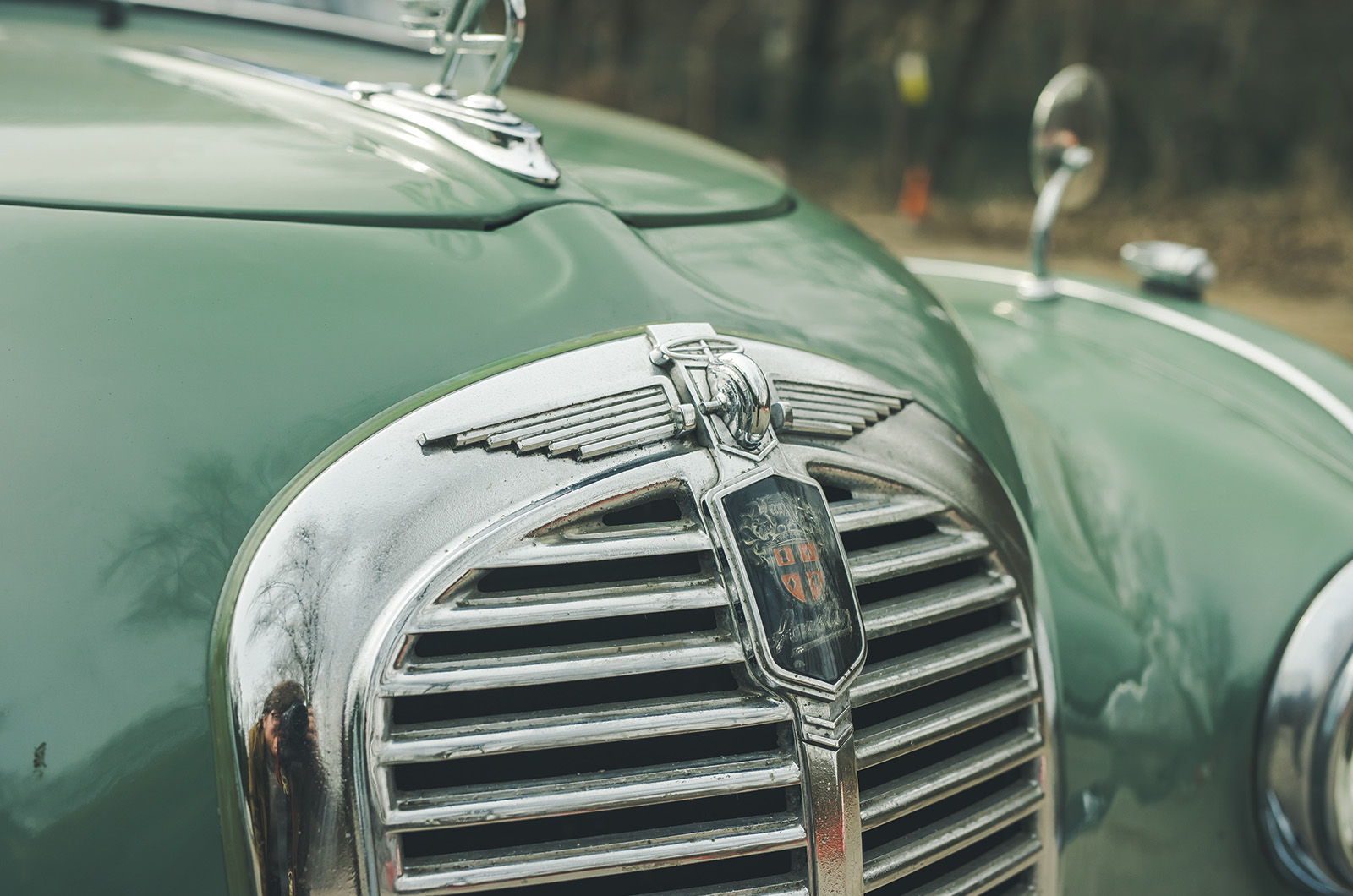
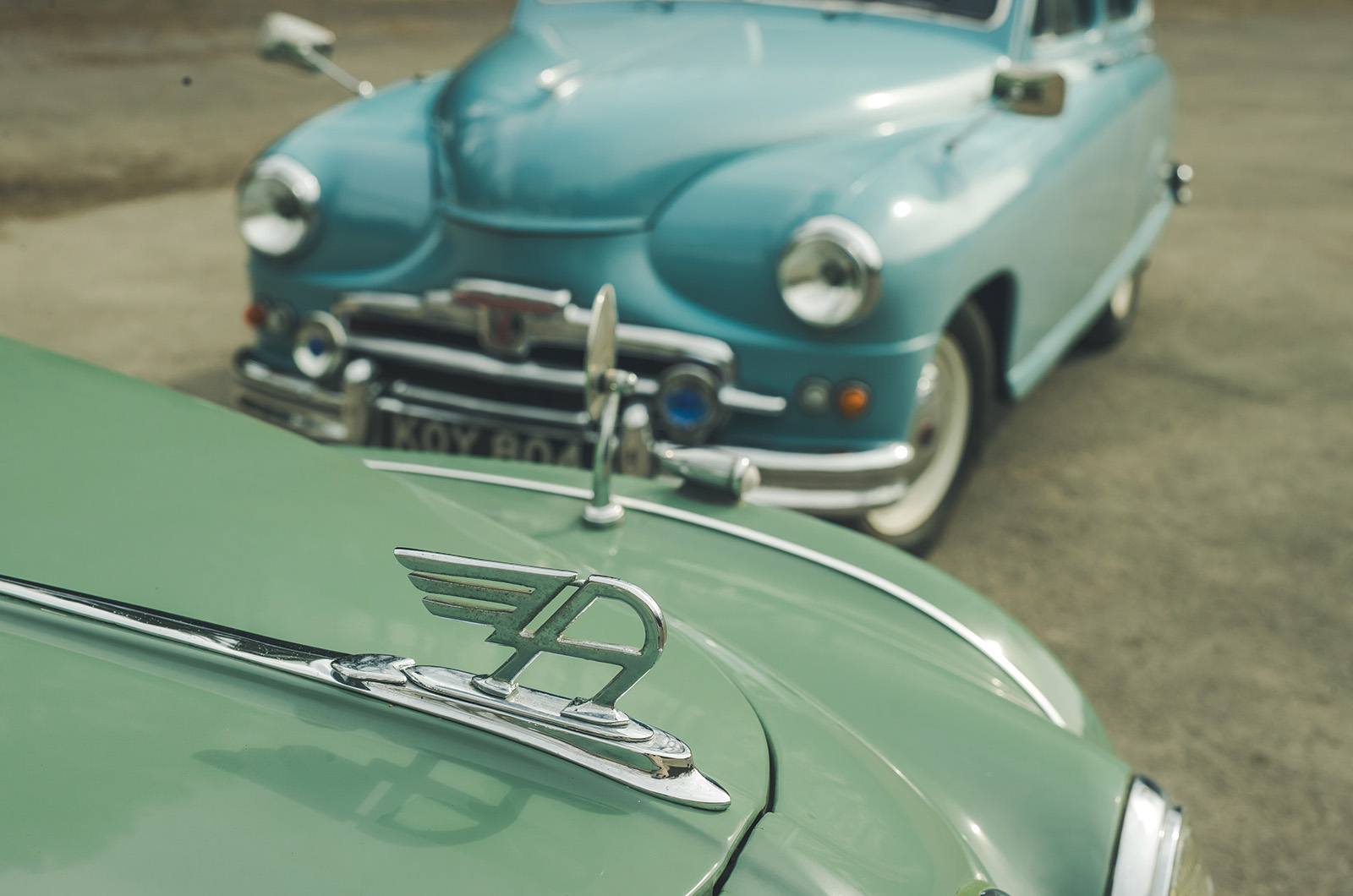
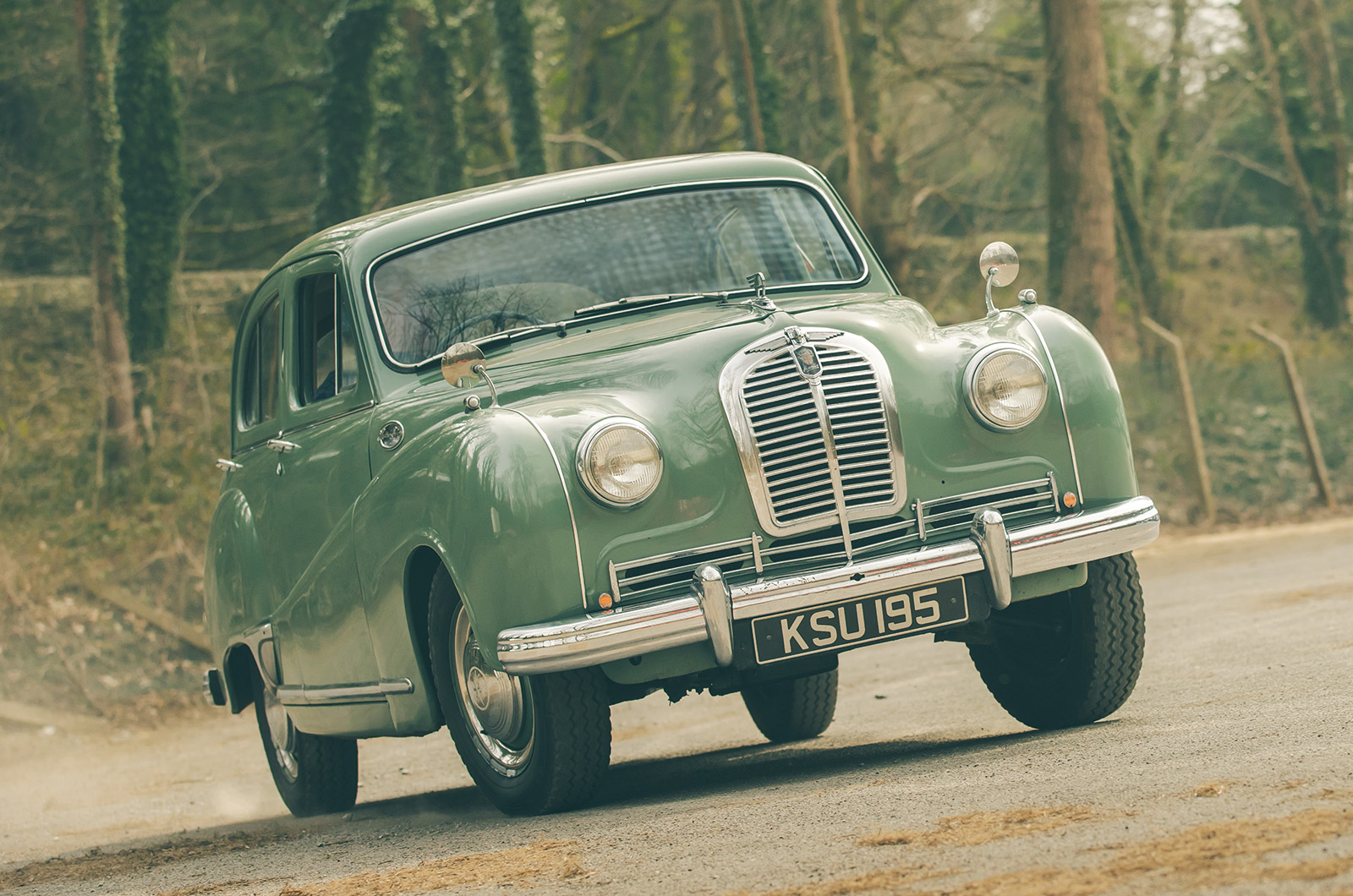
The Austin A70 Hereford’s winged grille badge

Priced below £700 (around £33,000 in today’s money, in an era before freely available credit) and good for about 80mph on 68bhp, the Hereford and Vanguard went bumper-to-bumper to win the favours of the middle-class buyer in both British and colonial markets.

They have family rather than sporting values (although in both cases their relatively lusty engines went on to find fame in sports cars) and conjure images of idealised post-war households in dimly lit parlours clustered around glowing radiograms.

Nothing about them speaks of sex appeal or glamour, yet they were important models that sold in important numbers – 184,799 in the case of the Phase 1 and 1A Vanguards between 1948 and ’52.

Classic & Sports Car – Standard Vanguard vs Austin Hereford: a life more ordinary
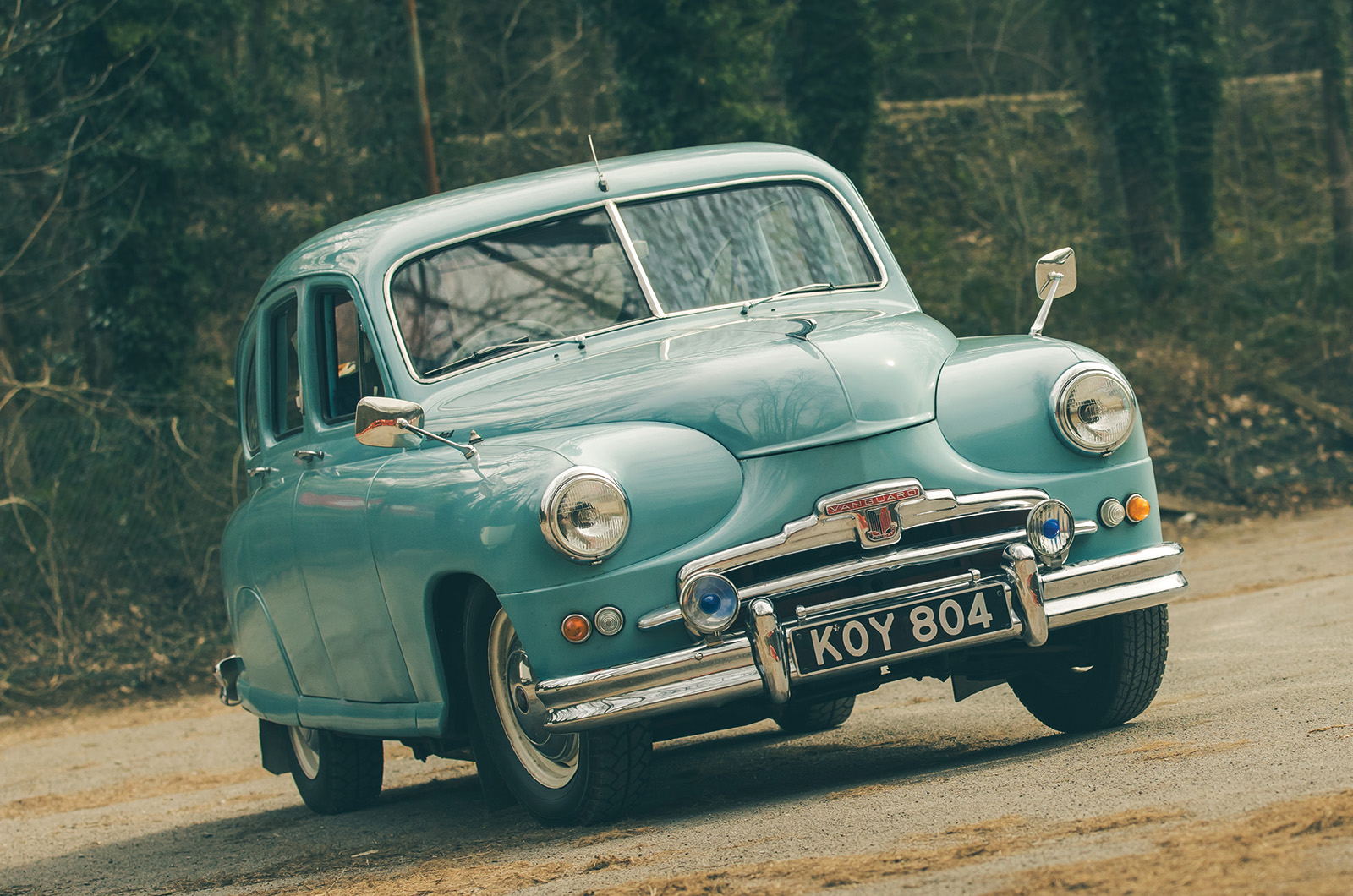
The Standard Vanguard’s cod-American looks were inspired by Plymouth

These were simple cars for simpler times. Even the range of colours was limited to five or six options – pick from red, blue, cream or green for the Austin A70.

But in the mind’s eye such cars were mostly austerity black. Equally, there were no ‘trim levels’ and few, if any, extras. 

Yet official alternative versions of both cars were produced: Vanguard ‘utes’ were popular with the RAF, and there was a van-with-windows estate.

Austin produced a drophead coupé version of the A70 (by Carbodies; it only found 266 buyers) and a woodie station wagon.

The three-box, Phase 2 Vanguard would be the first British car to offer a diesel option.

Classic & Sports Car – Standard Vanguard vs Austin Hereford: a life more ordinary
The Standard Vanguard’s flat front bench seats three

Both brands are now long dead, but they resonated as trusted, sensible choices in the 1950s. 

They were built for the buyer looking for a spacious, reliable saloon in the modern, post-war idiom, when niceties such as overhead valves, heaters and fully hydraulic brakes were starting to become the norm rather than the exception, and when independent front suspension was pretty much taken for granted (both cars had lever-arm dampers at the front doubling as top wishbones) and solid rear axles with semi-elliptic leaf springs were widespread.

Such details are discussed in full in the brochures for the Standard Vanguard and Austin A70.

Classic & Sports Car – Standard Vanguard vs Austin Hereford: a life more ordinary
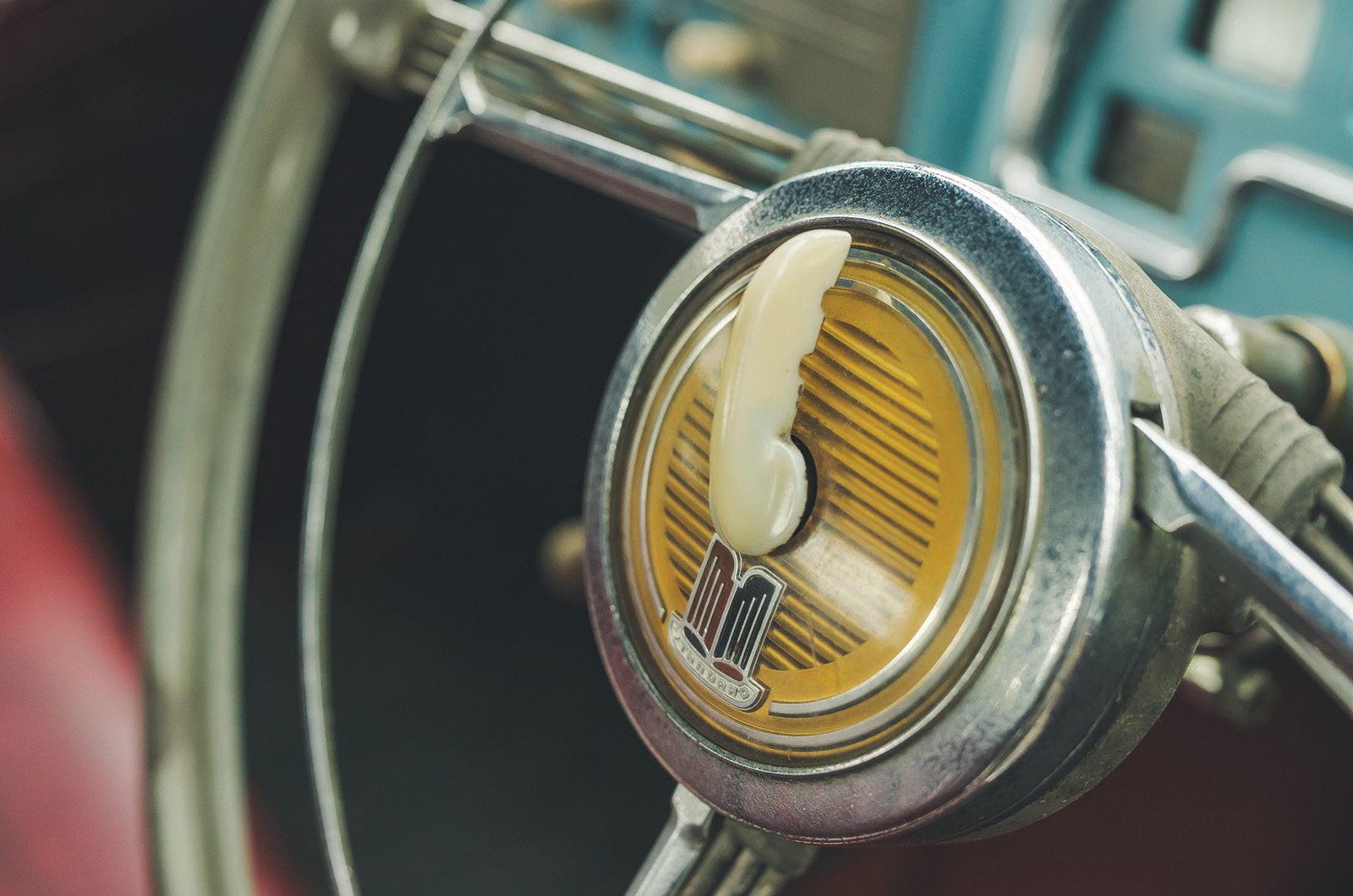
The Standard Vanguard’s trafficator switch is on the steering wheel boss

A level of technical interest on the part of the buyer was assumed, and the use of colourful artwork allowed the occupants of the cars to appear as emaciated pigmies to increase the impression of spaciousness.

The vehicles do not get off lightly at times in these wonderfully evocative documents: the depiction of the Vanguard in one early pamphlet is so distorted you wonder if the artist ever saw one in the metal.

In both cases, the copywriters are keen to note that these saloons are big enough for all the family, but not so large they would struggle to fit in an average domestic garage: this was an era when people still put the car away at night and lovingly washed it themselves on a Sunday.

Classic & Sports Car – Standard Vanguard vs Austin Hereford: a life more ordinary
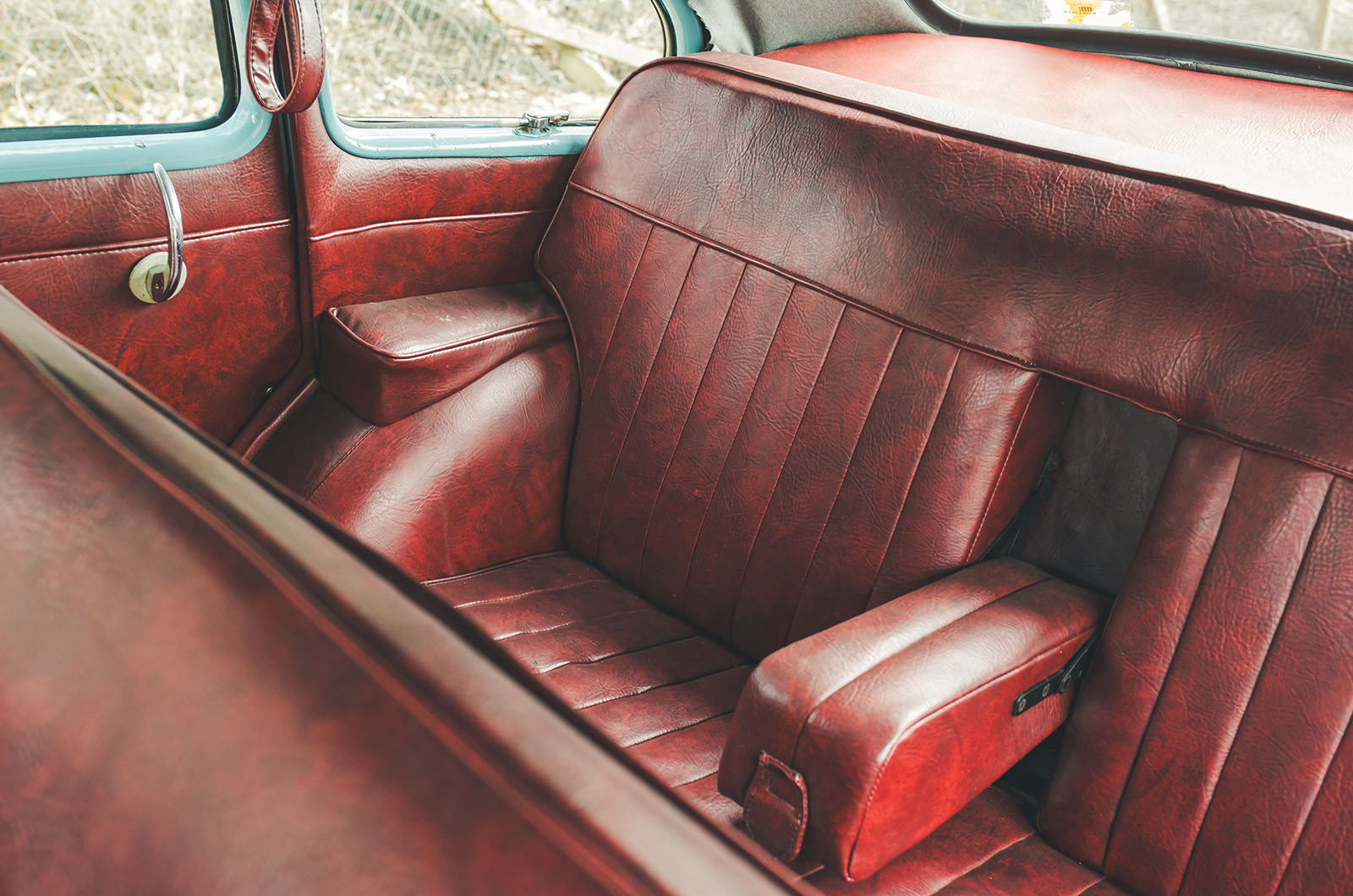
The Standard Vanguard’s back-seat passengers sit directly over the rear axle

They appeared up to date, but both A70 and Vanguard had two wheels in the past.

Under these modern, full-width bodies, they clung to separate, box-section chassis construction and long-stroke, low-compression but relatively large four-cylinder engines.

The latter was to cope with the low-octane fuels of the day, the former an expediency of production that favoured the adaptability of body-on-frame construction when it came to putting together knocked-down kits for crucial export markets.

Classic & Sports Car – Standard Vanguard vs Austin Hereford: a life more ordinary
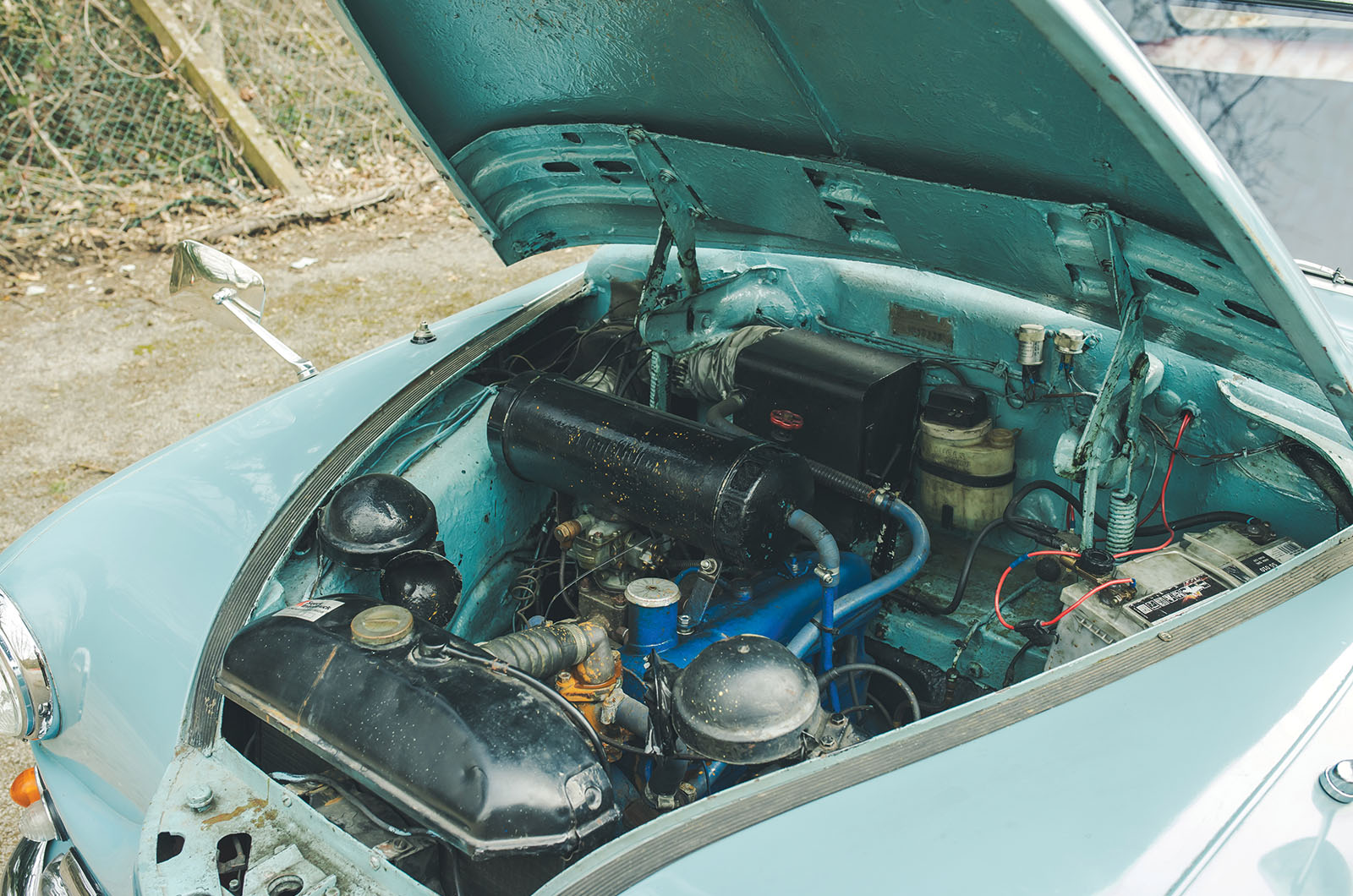
Standard’s long-serving 2088cc wet-liner ‘four’ proved durable in a variety of applications

Introduced in 1947 (for May 1948 export-only production), the humpbacked, Canley-built Standard Vanguard caused almost as much of a stir at the first post-war motor show as the Morris Minor and Jaguar XK120.

The ‘Made in Britain, designed for the world’ Vanguard had been conceived towards the end of the war by Standard’s Sir John Black specifically for export (only by shipping out 90% of production were car makers allocated steel).

It was designed, with 8in of ground clearance, to be as at home on the smooth American or Canadian highways as it was on rutted Australian or African tracks, while being equally at ease parked in an English market town.

Classic & Sports Car – Standard Vanguard vs Austin Hereford: a life more ordinary
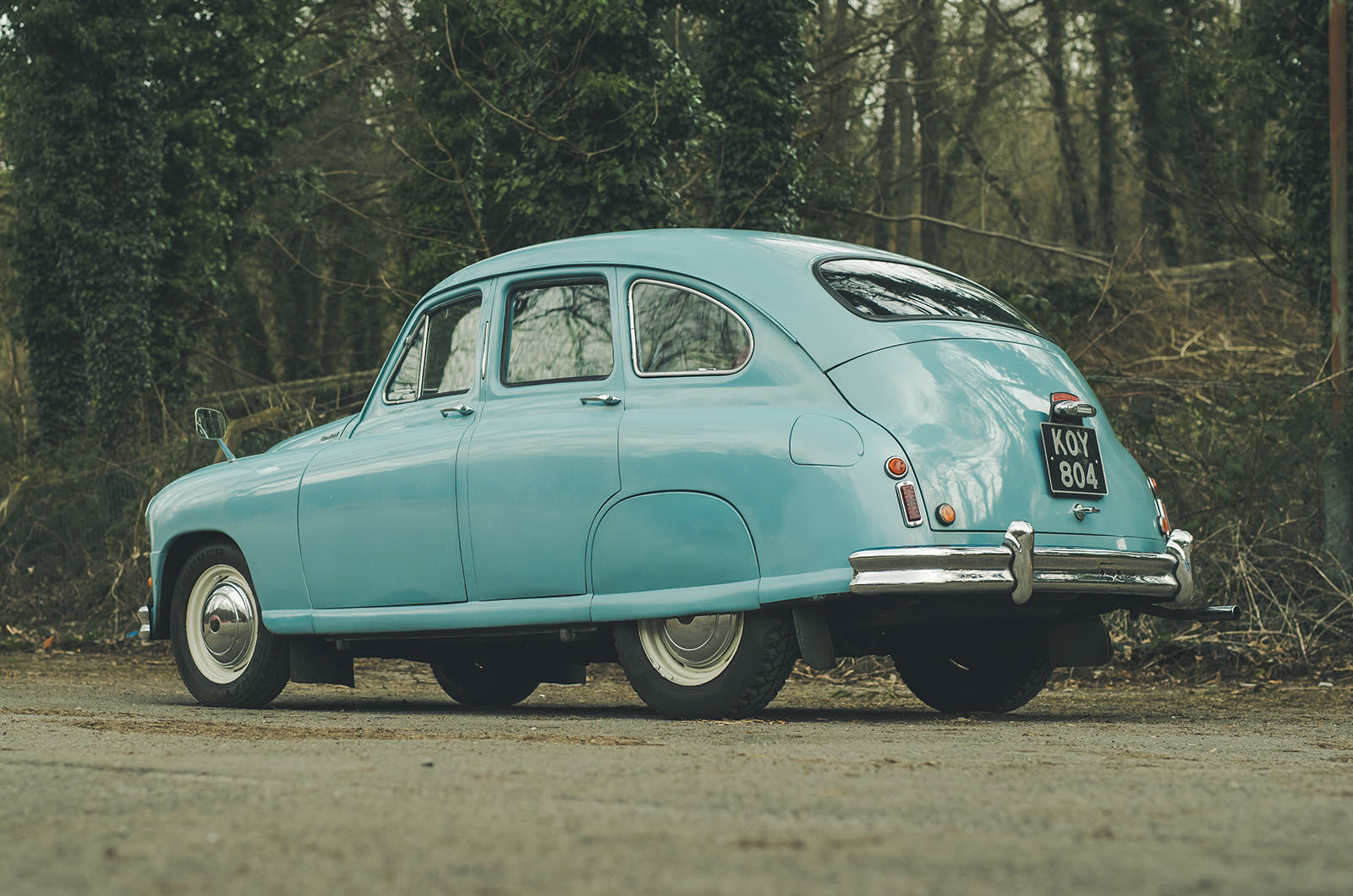
The Standard Vanguard’s short wheelbase and pronounced drooping rear give an awkward profile

Not that many Vanguards were seen in the UK before 1951 or ’52, and if you did manage to buy one you had to agree not to sell it for at least two years to discourage black-market profiteering.

British buyers ordering in 1948 were quoted delivery times as long as six years.

Cars were exported to 75 countries and, for some time, you were more likely to spot one in Germany, where it was a top-selling model of the early post-war years.

Vanguards were also popular in Sweden, Belgium and Australia, where they were assembled from kits.

Classic & Sports Car – Standard Vanguard vs Austin Hereford: a life more ordinary

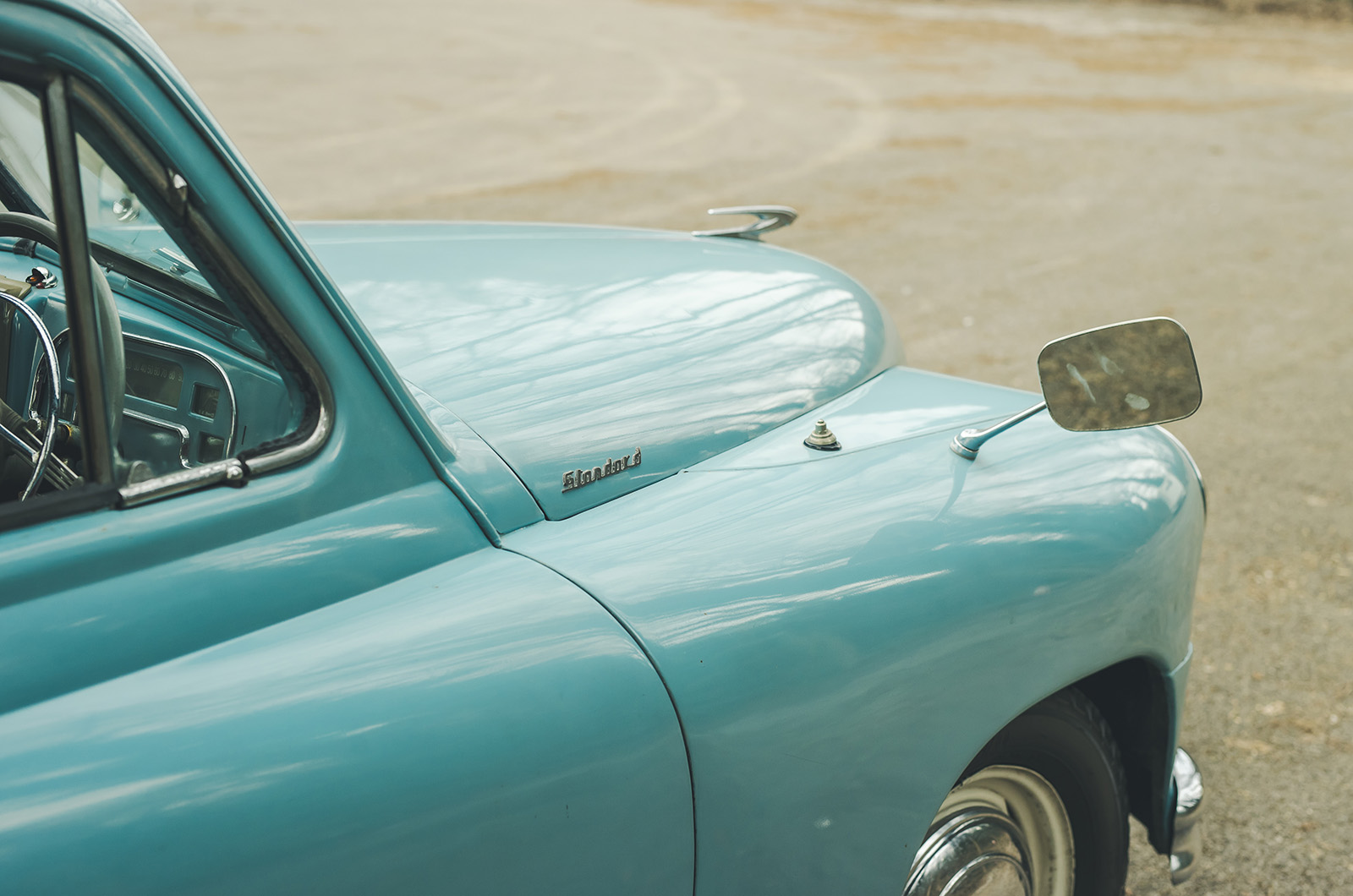
Standard Vanguard Phase 1As got a chunkier grille

Named after a famous Royal Navy battleship, the Vanguard was one of the first all-new British post-war cars.

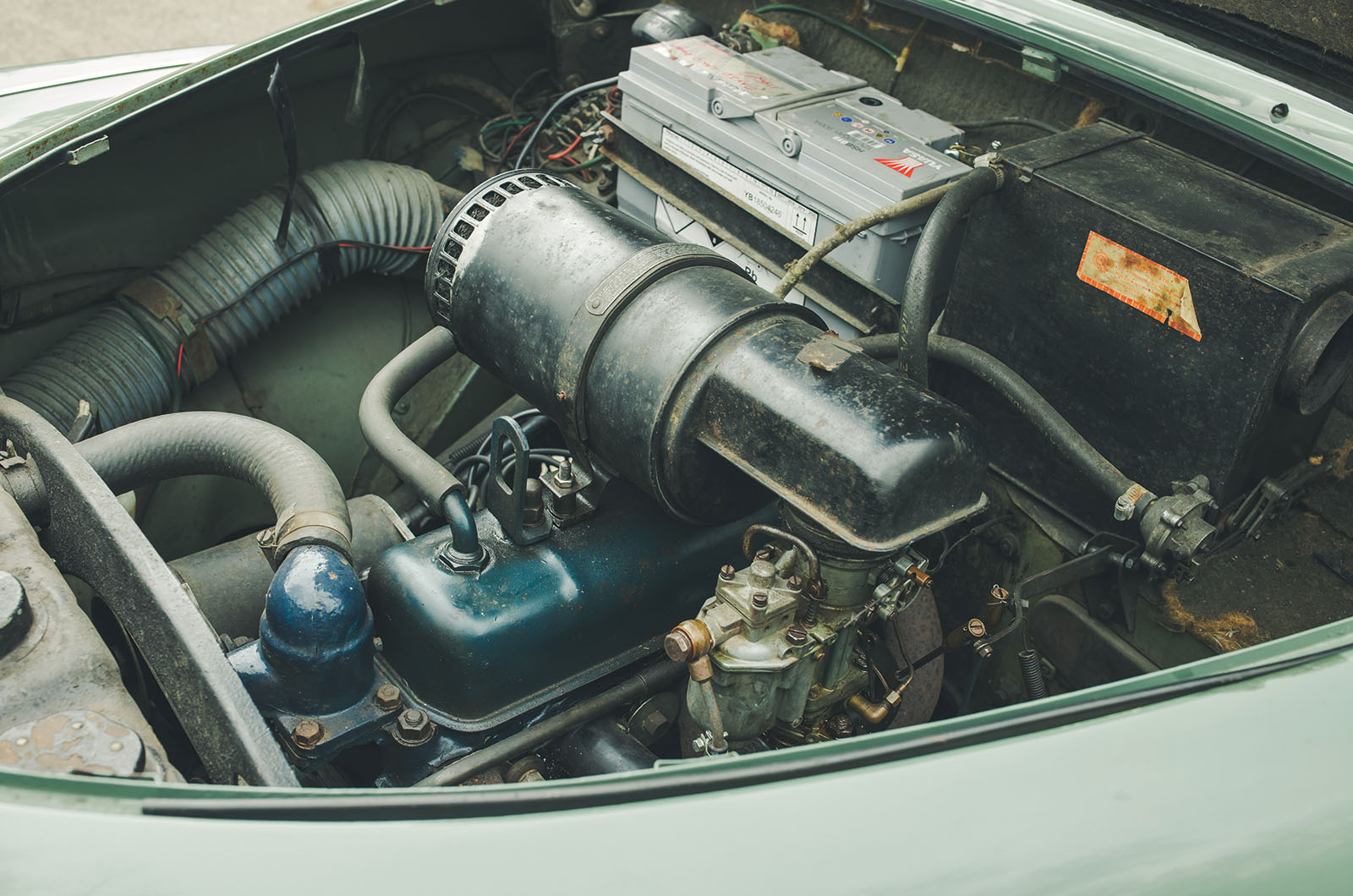
It had a new, wet-liner (no more rebores) 2088cc engine of legendary ruggedness with modern, replaceable thin-wall bearing shells; it was also to be found in Triumph’s TR sports cars and the ‘little grey’ Ferguson tractor.

This was teamed with a three-speed, all-synchro column change that moved from the right to the left of the wheel in 1950.

Around that time the Vanguard was the first car offered with Laycock overdrive, on second and third gears.

Classic & Sports Car – Standard Vanguard vs Austin Hereford: a life more ordinary

A Standard Vanguard was a perfect fit for a 1950s family

The American-inspired looks were no accident: Sir John Black had sent his stylist, Walter Belgrove, to London to sketch and take inspiration from the 1941 Plymouths parked on Grosvenor Square, near the US Embassy. 

Fisher and Ludlow then built the shell, which was updated to Phase 1A specification in 1952 with a lower bonnet line, a chunkier grille and a wider rear ’screen, as shown here.

That Austin sold only 50,000 Herefords has to be set against the fact that, while Standard was sticking to a strict one-model policy with the 500-a-day Vanguard, Longbridge was making an entire range of cars, from the A30 to the A135 Princess.

Even so, the Vanguard’s success seriously irked Sir Leonard Lord of Austin.

Classic & Sports Car – Standard Vanguard vs Austin Hereford: a life more ordinary

‘The Standard’s body falls away so abruptly at the rear that it could, in profile, be one of Dr Kamm’s experimental 1930s BMWs’

In truth, the 1950 Hereford was really his second attempt at taking on the Vanguard in the large-car market.

The 1948 Hampshire had the 2199cc overhead-valve four-cylinder from the 1945 16hp saloon it had replaced, and a beefed-up A40 Devon chassis clothed in a six-light body that wanted for rear legroom.

This put off buyers, plus the fact that its styling was too evidently derived from the smaller car.

If anything, the A70 Hereford and A40 Somerset compounded this latter sin by being almost indiscernible from each other at a distance – they even shared door pressings.

Classic & Sports Car – Standard Vanguard vs Austin Hereford: a life more ordinary

The Austin’s sleek bonnet mascot

When the A30 appeared in 1952, some unkind wags remarked that the Austin range now looked like a perfect family of matching Toby jugs.

However, by adding 6½in to the wheelbase, the senior model at least got decent rear passenger room; wider front and rear tracks, and fully hydraulic brakes (the Hampshire had mechanically operated rears) helped the road behaviour.

As before, the styling was by Dick Burzi, the Italian who had joined Austin from Lancia in the 1920s.

The rumour that the BMW 501’s lines were inspired by his A70 Hampshire is flattering and plausible.

Classic & Sports Car – Standard Vanguard vs Austin Hereford: a life more ordinary

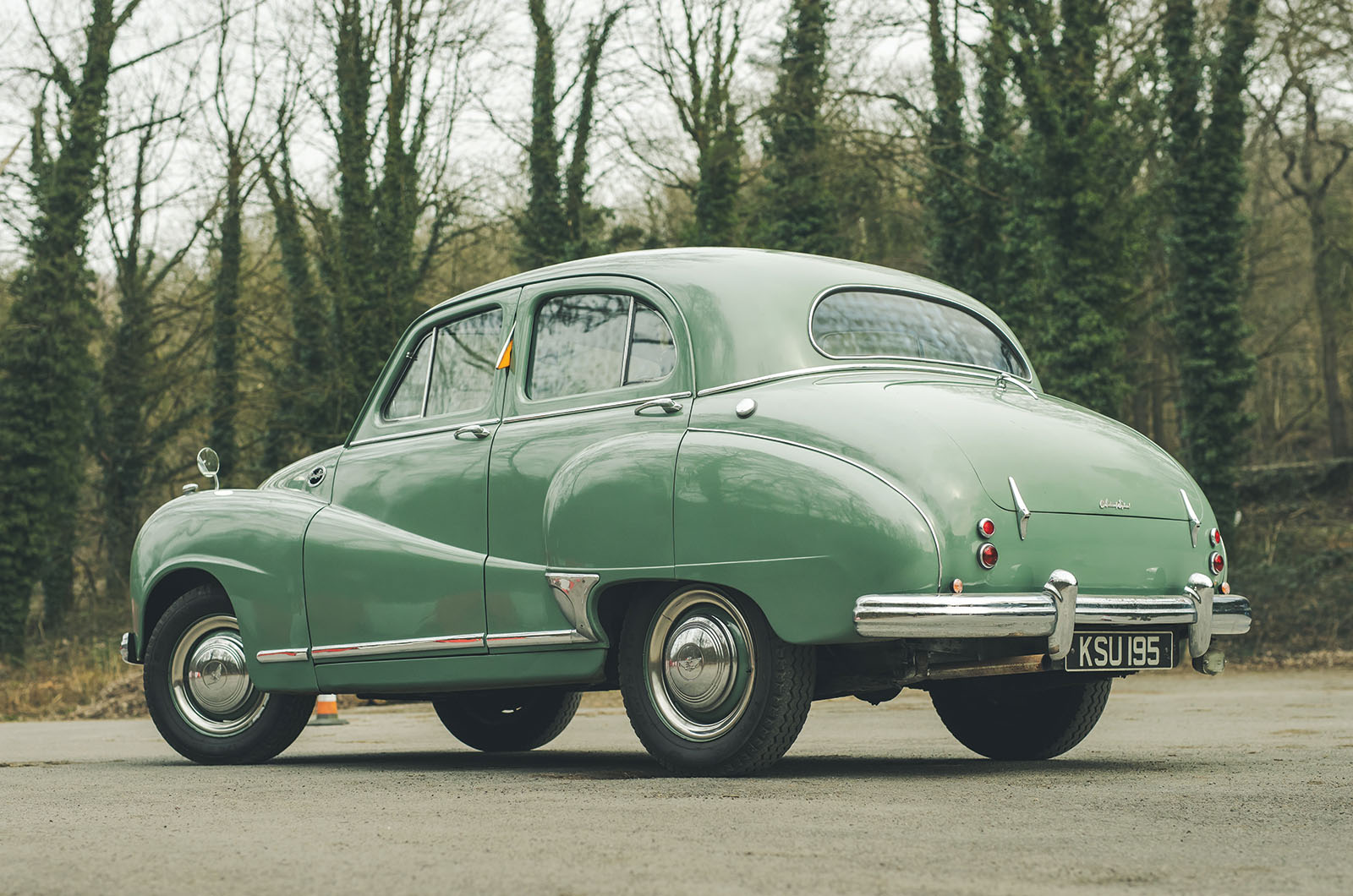
There are hydraulic brakes all round for the more conventionally styled Austin A70 Hereford

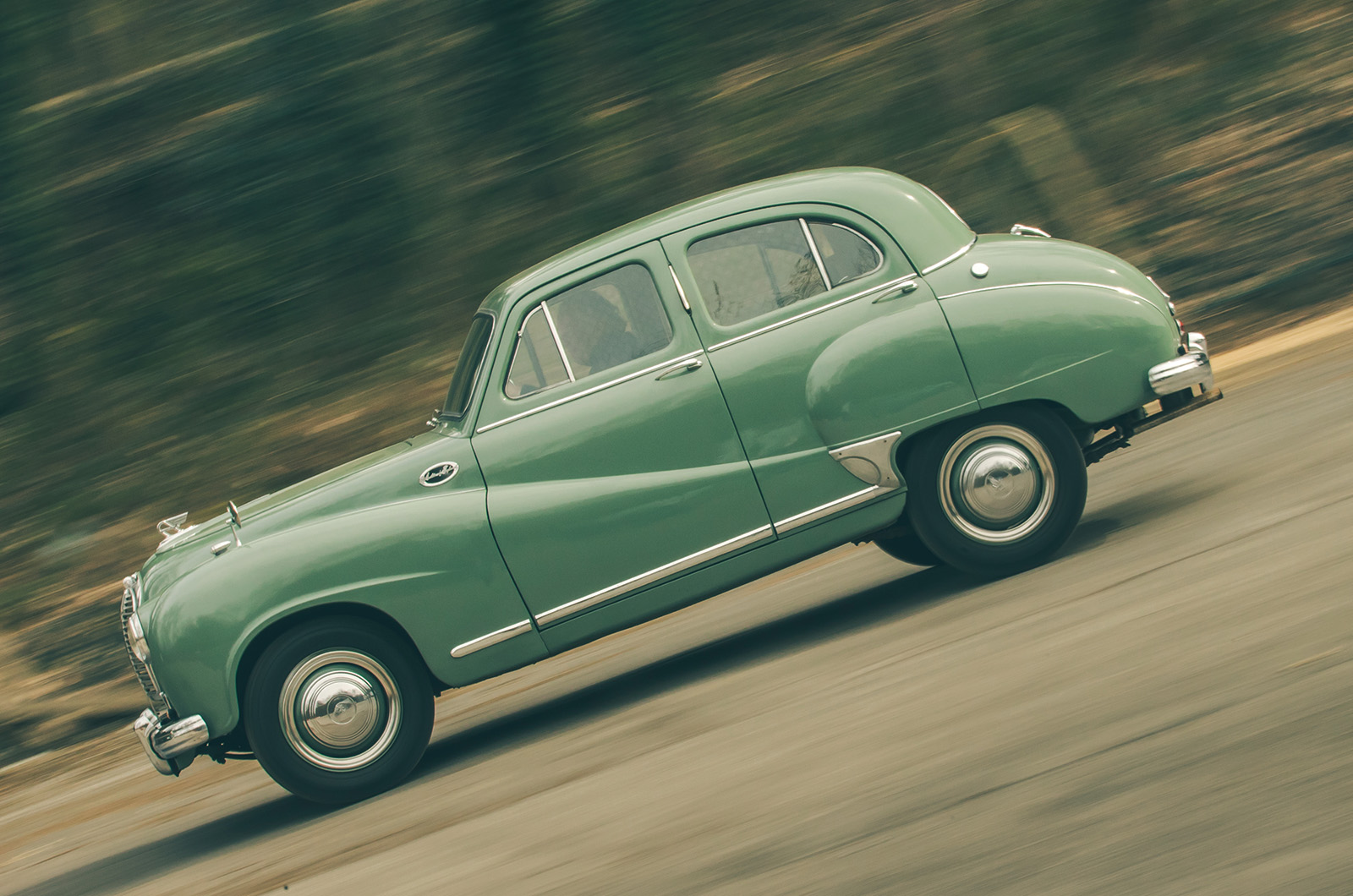
Sitting high and narrow on 16in wheels, and with hardly a straight edge in sight on their all-enveloping flanks, these cuddly six-seaters look somewhat unreal, like giant tin toys rather than objects in which people drove around.

Yet they were the road furniture of 70 years ago, a time when most people didn’t have a fridge, a television or even a home telephone line.

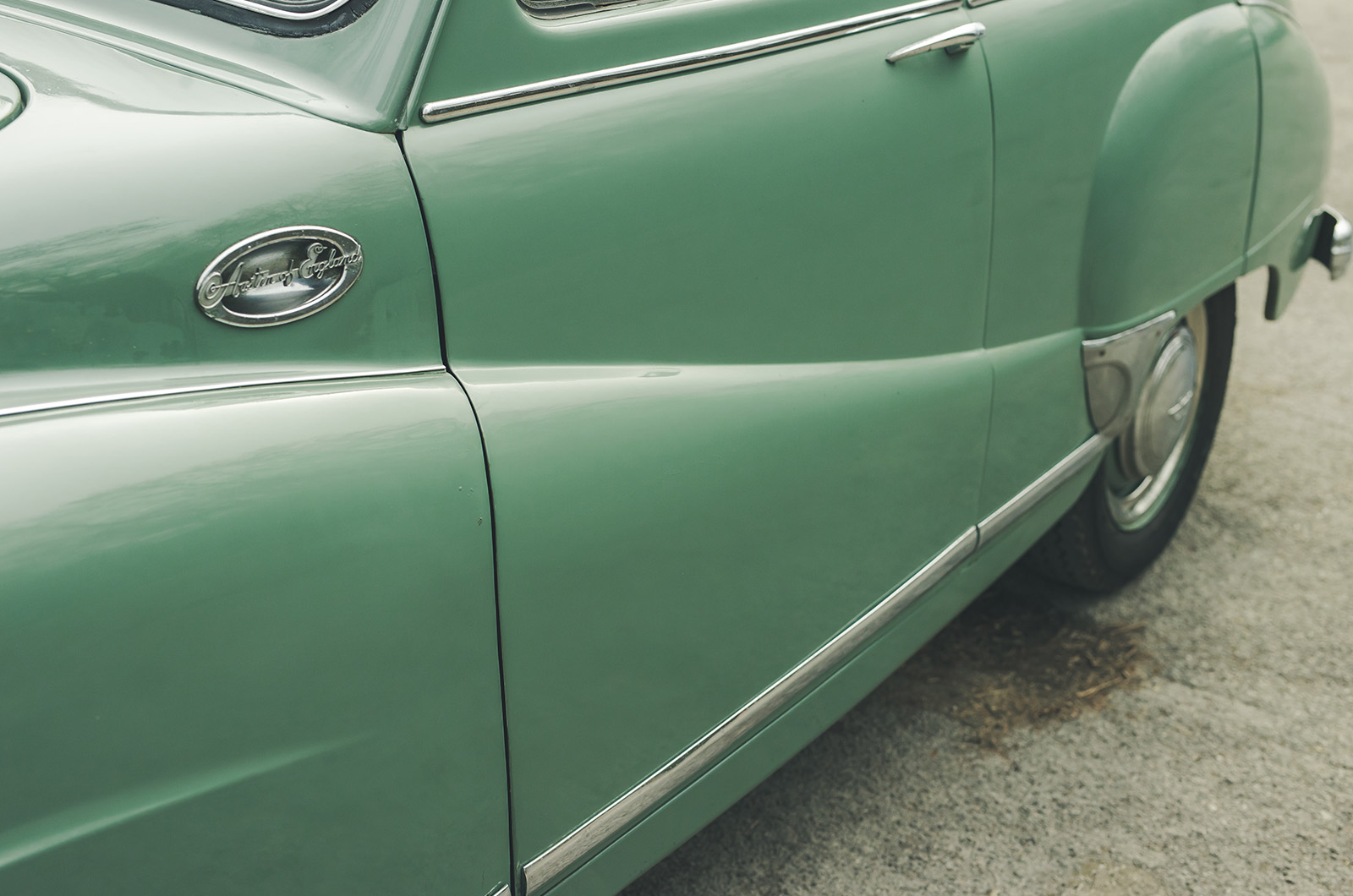
Unlike modern cars, they are at least easy to tell apart. The Hereford, with its ‘Flying A’ bonnet mascot, upright grille and bustle tail, is more obviously British and even has an ‘Austin of England’ script on either side of its bonnet.

The Vanguard, with its tall, domed roof and bullnose bonnet, is a less compromising shape. 

Classic & Sports Car – Standard Vanguard vs Austin Hereford: a life more ordinary

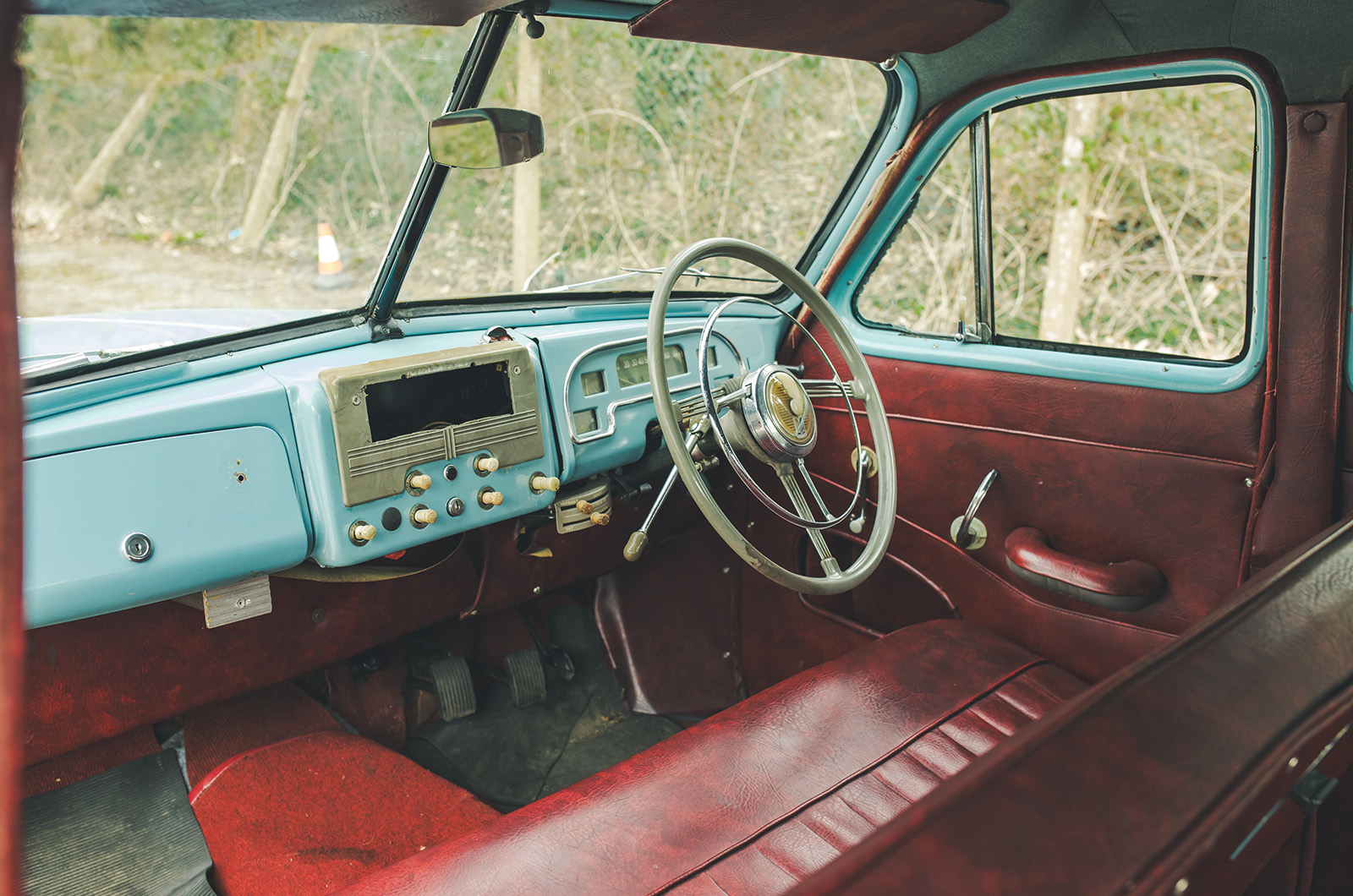
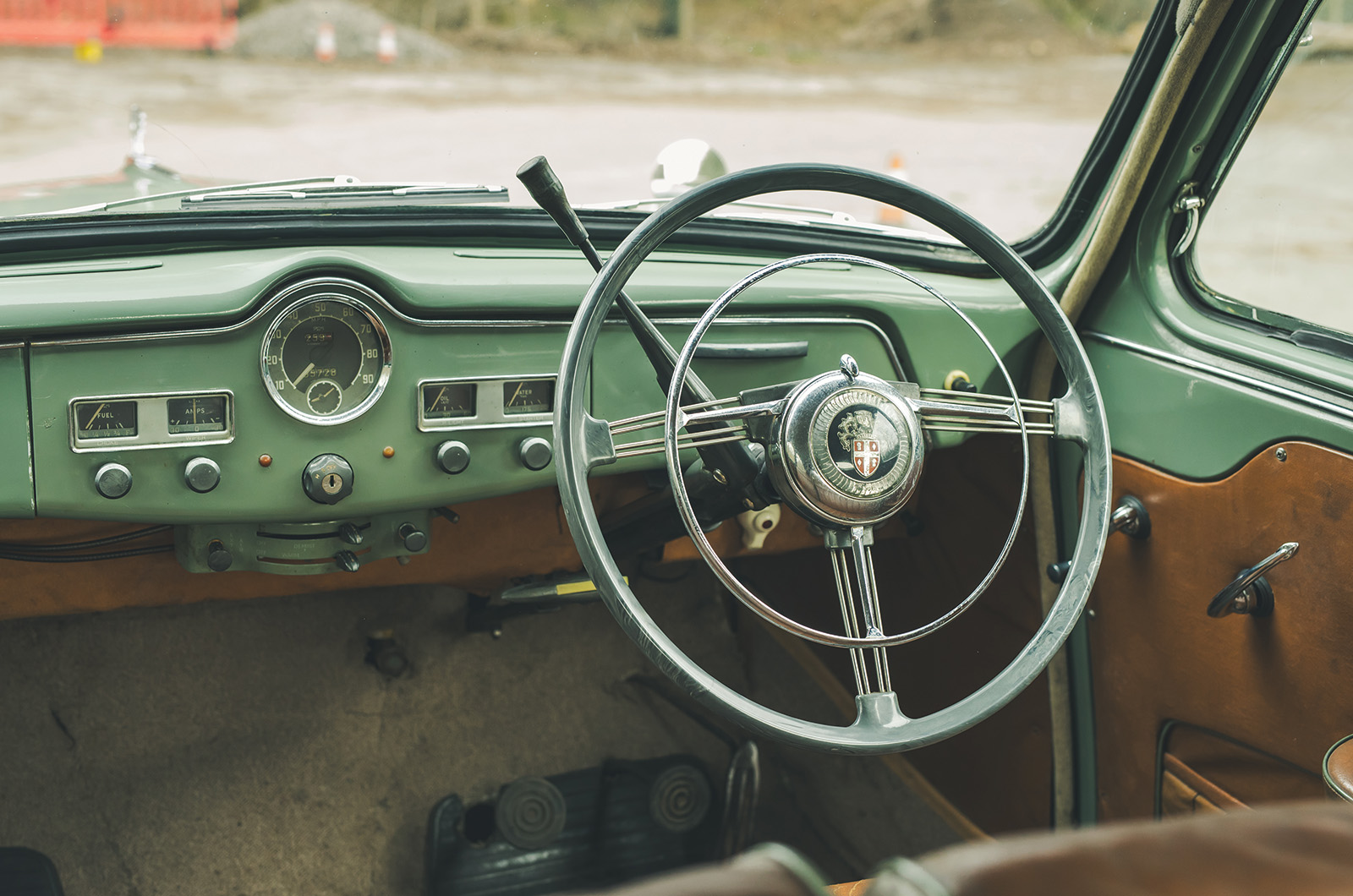
The Austin A70 Hereford’s body-coloured dashboard

Walter Belgrove was unhappy with the short wheelbase – the body falls away so abruptly at the rear that it could, in profile, be one of Dr Kamm’s experimental 1930s BMWs. The effect, particularly to modern eyes, is bizarre.

You are struck by how small both cars’ brake and indicator lights look on their big, rounded rear ends.

The Austin has the larger boot, but, oddly, the lid is bottom-hinged.

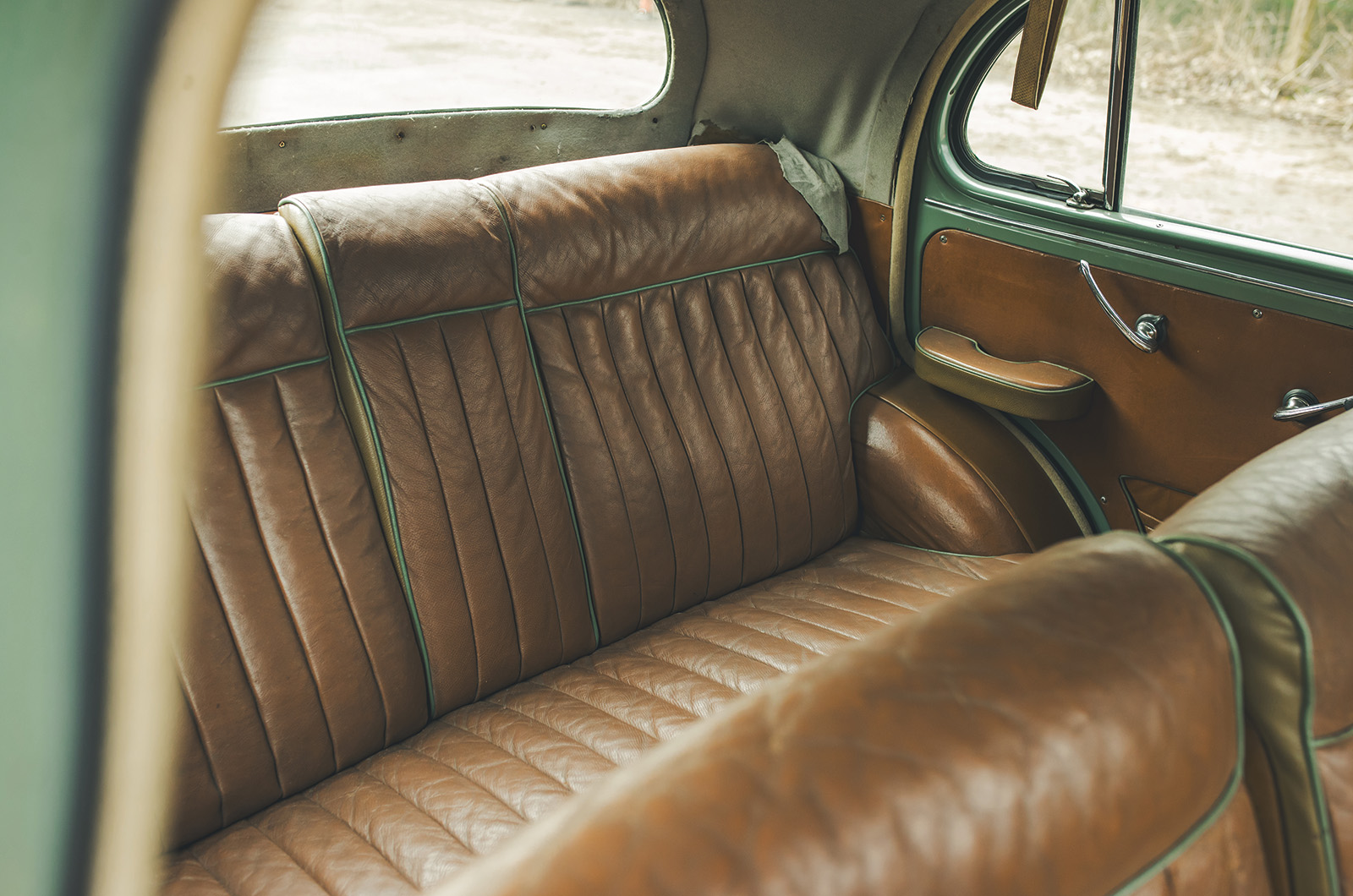
Inside, what once looked like decadence appears bleak today, with flat, unsupportive seats, plain door cards and modest instruments on unyielding metal dashboards.

Classic & Sports Car – Standard Vanguard vs Austin Hereford: a life more ordinary

The Austin A70 Hereford’s rear cabin is the more accommodating of the two cars here

These must be among the first British cars to have column changes and bench front seats so they could seat six at pinch.

Headroom is generous, too, so everyone could wear a hat.

The Austin is set up for left- or right-hand drive by dint of having its circular 90mph speedo, rectangular minor gauges and Bakelite switchgear in the centre; equally, the Standard’s instrument pack could be swapped easily to the left for export.

Both cars have separate starter buttons and oil-pressure gauges, along with trafficator switches on the wheel’s centre boss. The Austin is roomier in the back.

Classic & Sports Car – Standard Vanguard vs Austin Hereford: a life more ordinary

The Austin A70 Hereford’s central speedometer facilitates the conversion to left-hand drive

Looking out over the high scuttles and rounded bonnets of both cars, you notice how tiny their windscreen wipers are.

The Standard kept its distinctive split windscreen until the coming of the Phase 2 in 1953.

The driving positions in the Standard Vanguard and the Austin Hereford are pretty much ‘one size fits all’, with floor-hinged pedals and no backrest adjustment.

The transmission humps in both cars are prominent, and you must sit close to the big steering wheels to exert the necessary leverage when parking – the Standard has the tighter turning circle, but lower gearing.

Classic & Sports Car – Standard Vanguard vs Austin Hereford: a life more ordinary

The Austin A70 Hereford shared its door pressings with the smaller A40 Somerset

That said, despite their bulky appearances, neither the A70 nor Vanguard was hefty to handle by the standards of the day; today, the cars largely impress thanks to a general sense of spaciousness that is combined with a comfortable, lolloping ride on soft dampers and tall, skinny tyres.

The Austin rolls less than the Standard and nods its prow more under braking. Both cars are set up to understeer moderately but persistently.

The short-wheelbase Vanguard feels the least happy of the two being thrown about, and its brakes are less reassuring.

Classic & Sports Car – Standard Vanguard vs Austin Hereford: a life more ordinary

The Austin A70 Hereford has simple chrome embellishments

Torquey engines and low overall gearing keep the gearchanging to a minimum, and you can routinely pull away in second in each.

Bottom is ‘crash’ in the A70, and third would have taken you to almost 60mph in the cars’ prime, but you drive around in top for most purposes, and only when pulling away from low speeds do you notice this is a ‘four’ rather than a ‘six’.

The A70 was considered reasonably brisk in its day, capable of 70mph cruising, 30-50mph in 9 secs and able to take a 1-in-20 hill at 65mph in top.

With some justification, The Autocar called the A70 a ‘goer’.

Classic & Sports Car – Standard Vanguard vs Austin Hereford: a life more ordinary

The Austin’s 2199cc ‘four’ musters a modest 68bhp, but it’s gutsy and flexible enough once you’re on the move

The Vanguard is similarly sweet-sounding, with lusty mid-range pull that suits its gearing: the idea is that you get into top and stay there as long as possible.

It has the niftier gearchange, whereas you can sometimes get a bit lost in the Austin Hereford’s sloppy linkage.

In some ways the success of the Standard Vanguard is a reflection of the lack of plausible rivals.

That would change dramatically in 1950 when Ford introduced the first Zephyr, with its lightweight monocoque body, MacPherson-strut front suspension and short-stroke straight-six.

Classic & Sports Car – Standard Vanguard vs Austin Hereford: a life more ordinary

The Austin A70 Hereford better contains its body roll in corners

BMC countered the success of the Ford fairly effectively with its monocoque Cambridge and Westminster (from the mid-’50s on), but the monocoque Vanguards never recaptured the earlier models’ success.

Neither car set the heather alight even when they were new, yet they have too much period charm to be dismissed today as ‘grey porridge’.

Let’s call them austerity saloons: Festival of Britain cars that epitomise a time somewhere between Sir Stafford Cripps’ ‘export or die’ and the Suez Crisis – that now very distant, pre-motorway era of smog, steam trains and capital punishment, when few men stepped outside without a hat, everyone smoked, foul language was confined to the saloon bar of the local public house and rationing was still an everyday reality.

The Standard Vanguard and Austin A70 Hereford were rugged and fit for purpose at the very least in the context of their era.

Images: Jack Harrison

Thanks to: Great British Car Journey

Classic & Sports Car – Standard Vanguard vs Austin Hereford: a life more ordinary

Standard Vanguard Phase 1A

  • Sold/number built 1948-’52/184,799 (all Phase 1s)
  • Construction steel body and separate chassis
  • Engine all-iron, ohv 2088cc ‘four’, single Solex carburettor
  • Max power 68bhp @ 4200rpm
  • Max torque 108lb ft @ 2000rpm
  • Transmission three-speed manual with overdrive, RWD
  • Suspension: front independent, by wishbones, coil springs rear live axle, semi-elliptic leaf springs; anti-roll bar, lever-arm dampers f/r
  • Steering cam and roller
  • Brakes drums
  • Length 13ft 7in (4140mm)
  • Width 5ft 8½in (1740mm)
  • Height 5ft 3¼in (1607mm)
  • Wheelbase 7ft 10in (2388mm)
  • Weight 2800lb (1270kg)
  • 0-60mph 24 secs
  • Top speed 81mph
  • Mpg 26
  • Price new £630
  • Price now £7000*


Austin A70 Hereford

  • Sold/number built 1950-’54/48,640 (saloons)
  • Construction steel body and separate chassis
  • Engine all-iron, ohv 2199cc ‘four’, single Zenith carburettor
  • Max power 68bhp @ 3800rpm
  • Max torque 116lb ft @ 1700rpm
  • Transmission four-speed manual, RWD
  • Suspension: front independent, by wishbones, coil springs rear live axle, semi-elliptic leaf springs; lever-arm dampers f/r
  • Steering cam and peg
  • Brakes drums
  • Length 13ft 11½in (4255mm)
  • Width 5ft 9⅔in (4818mm)
  • Height 5ft 5⅔in (1668mm)
  • Wheelbase 8ft 3in (2515mm)
  • Weight 2825lb (1281kg)
  • 0-60mph 21 secs
  • Top speed 81mph
  • Mpg 22
  • Price new £668
  • Price now £7000*

*Prices correct at date of original publication


Enjoy more of the world’s best classic car content every month when you subscribe to C&SC – get our latest deals here


READ MORE

Austin A70 Hereford Countryman: tax brake

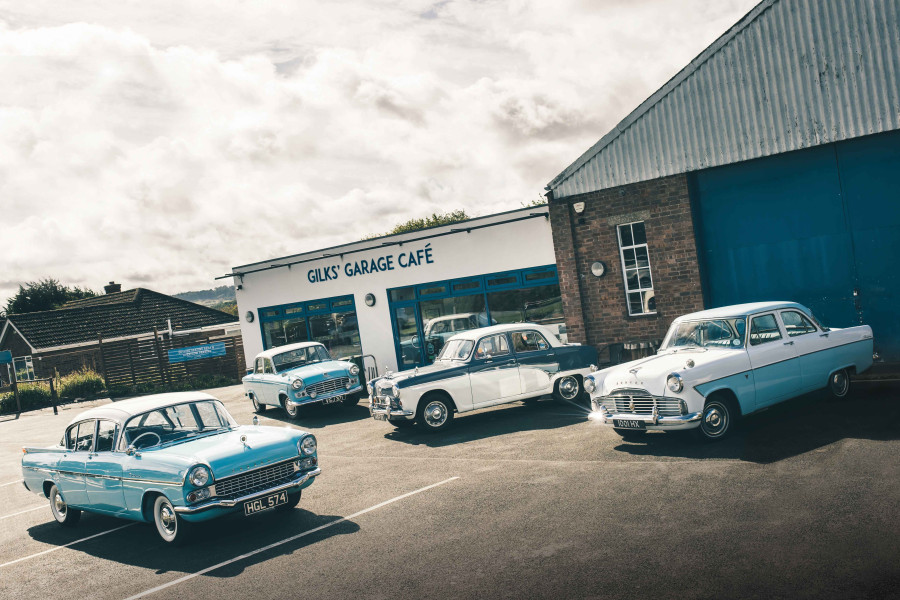
20 British saloons of the 1950s

Jaguar 2.4 vs Citroën ID19: do you dare to be different?