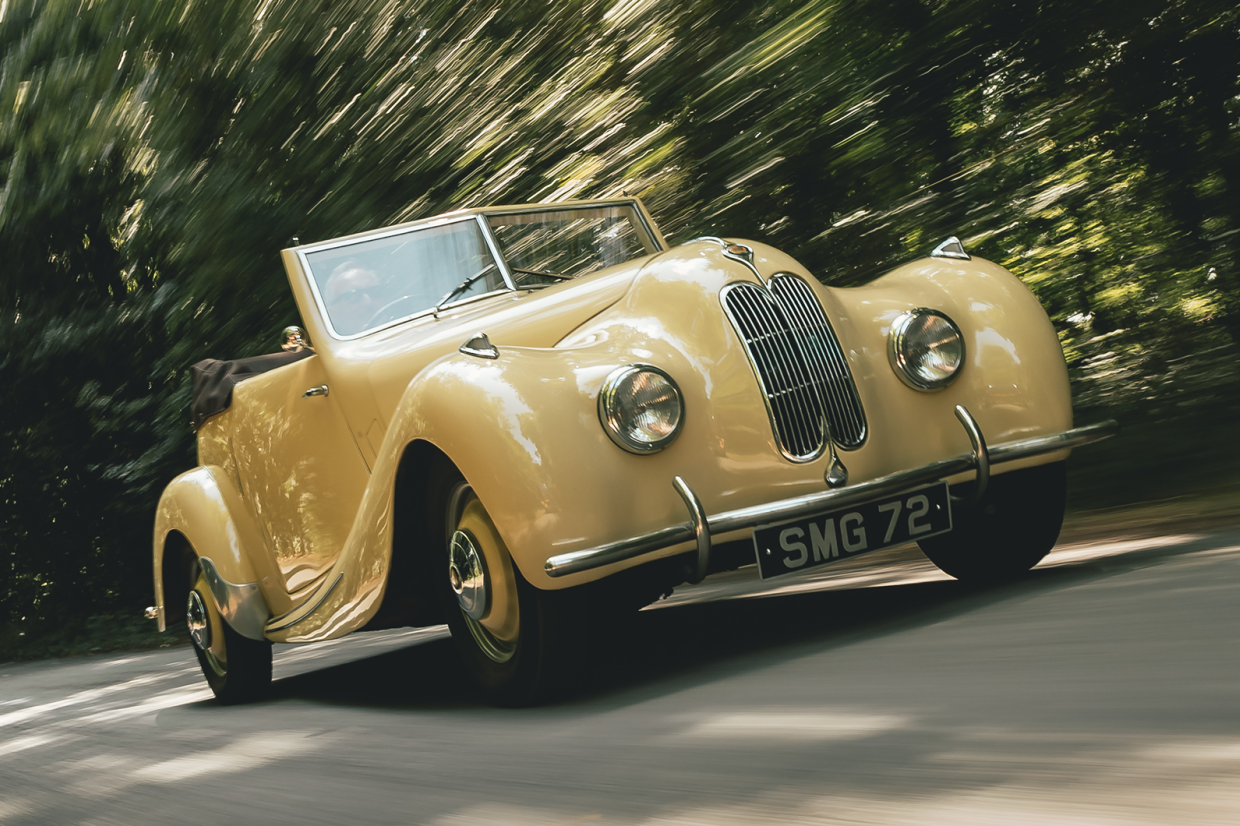
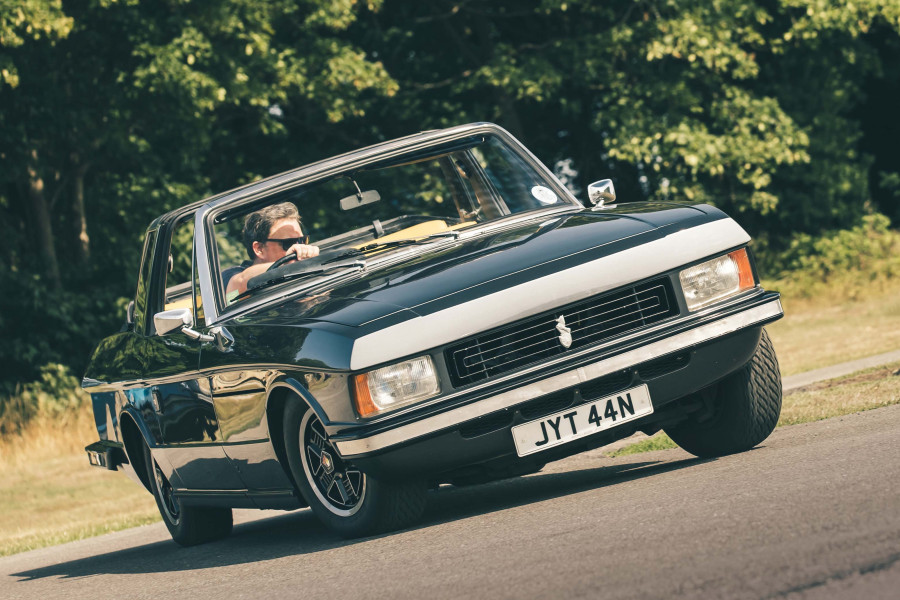
Just under a month earlier, chassis four had become the first Bristol ever to be sold.
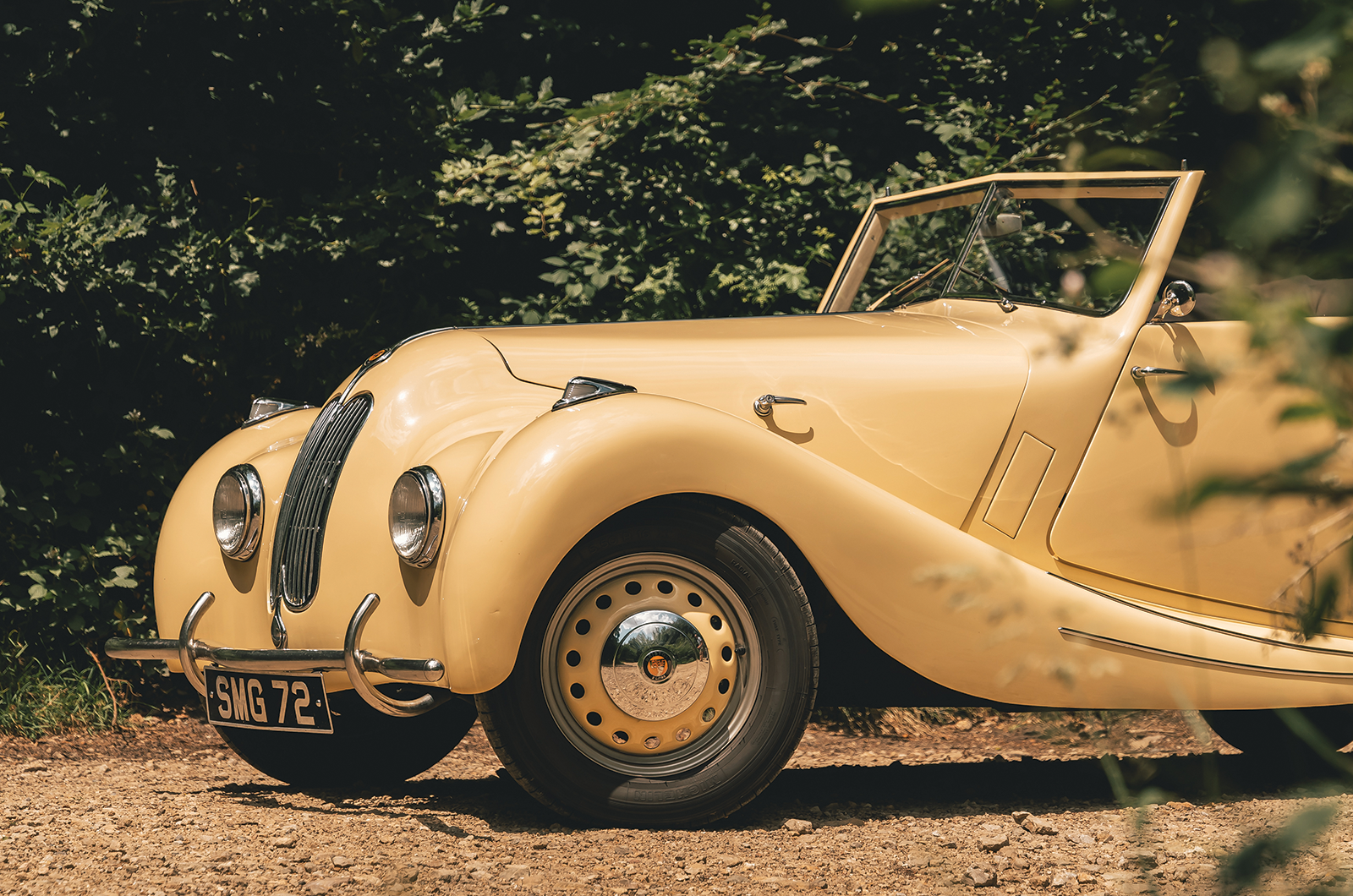
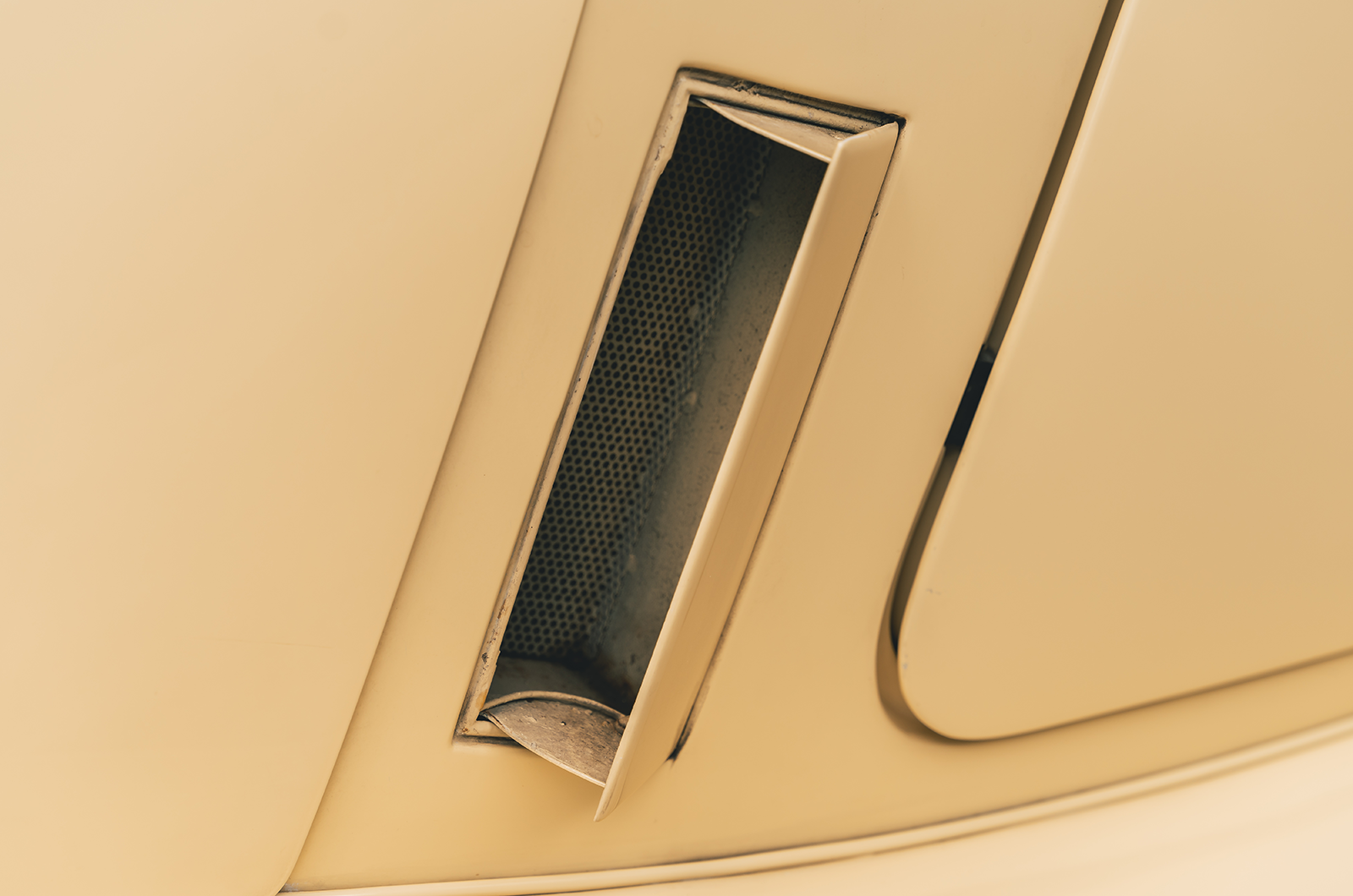
Flaps open to help cool the Bristol 400’s cabin
Liquorice magnate Alan Marshall was the lucky buyer.
The long-time BMW enthusiast received a 16.2% discount, offsetting a list price rise to £1500, before settling a bill for £1669 13s 4d once delivery and Purchase Tax had been factored in.
Perhaps due to his personal friendship with Harold Aldington, he let his new car disappear to Geneva free of charge.
It was back by summer and rapidly accumulating miles, clicking into five figures by the end of the year.
The following spring, the car made an appearance in print, when an image of two women, the 400 and an Alpine pass illustrated the contents page of The Motor issue 2432.
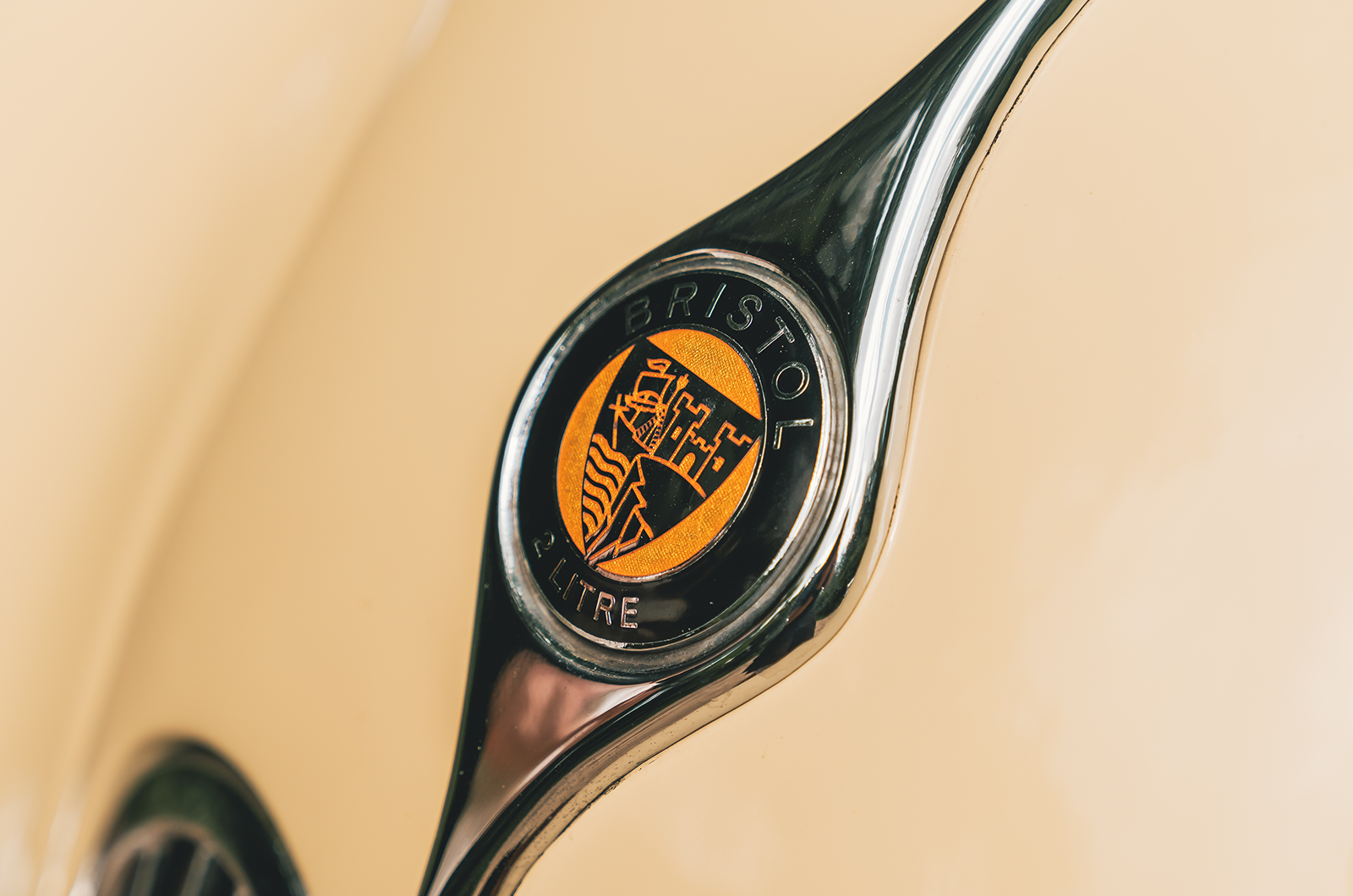
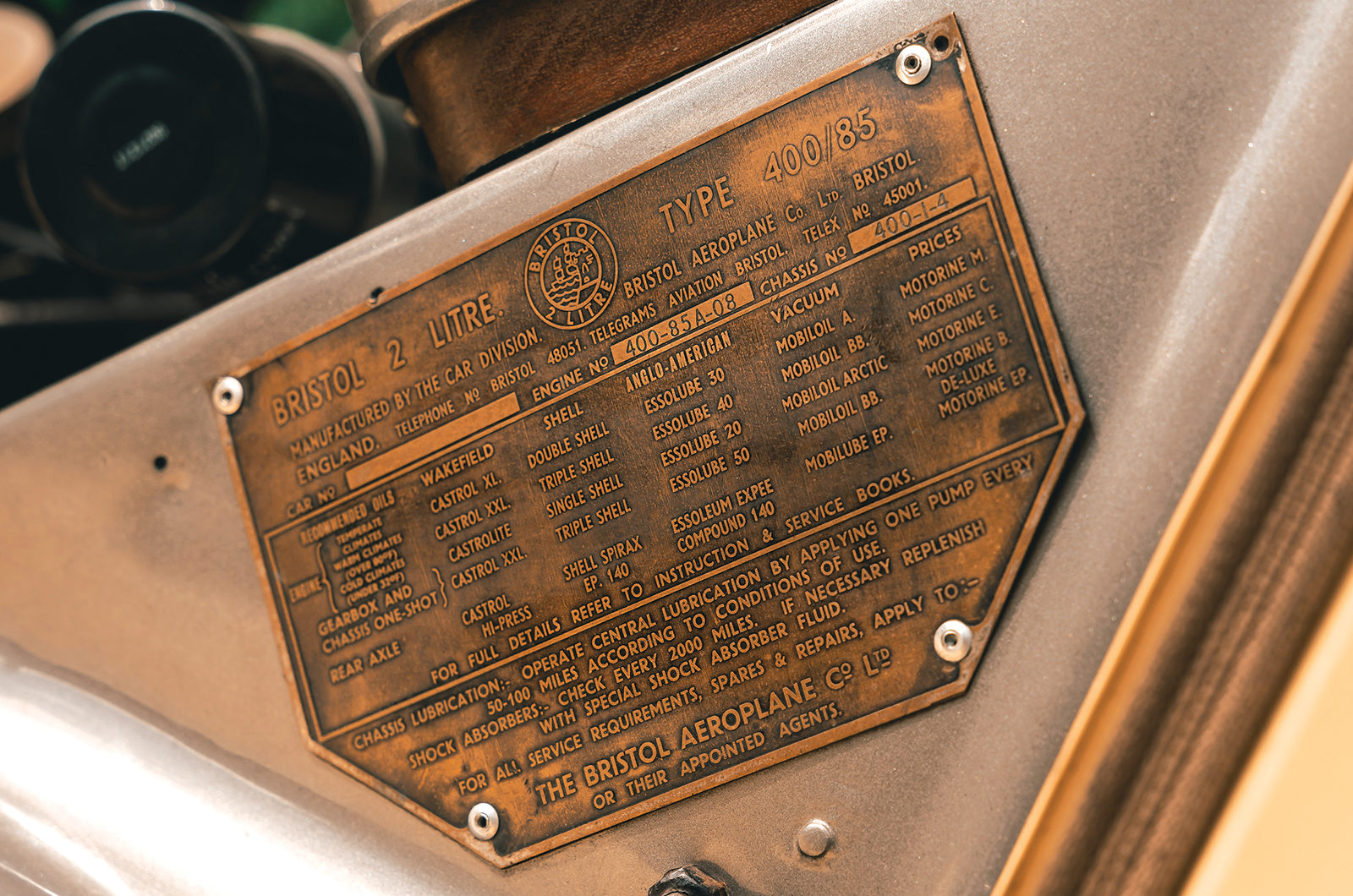
The Bristol Aeroplane Company plate reveals this 400 drophead coupe’s provenance
A substantial, six-figure mileage, multiple owners and several rebuilds, a crash, a repaint into a shade of blue, a return to cream and various modifications filled the ensuing decades, before marque enthusiast Dr Andrew Blow spotted the rare Bristol drophead in 1972.
He suspected he’d found something rather special, so set about proving it.
Between research trips to Cambridge and Oxford universities and a return to Bristol Cars, where developmental markings were uncovered on the steering rack, the car’s prototypical provenance slowly, but surely, emerged.
And then, in 1976, just four years later, he sold it.
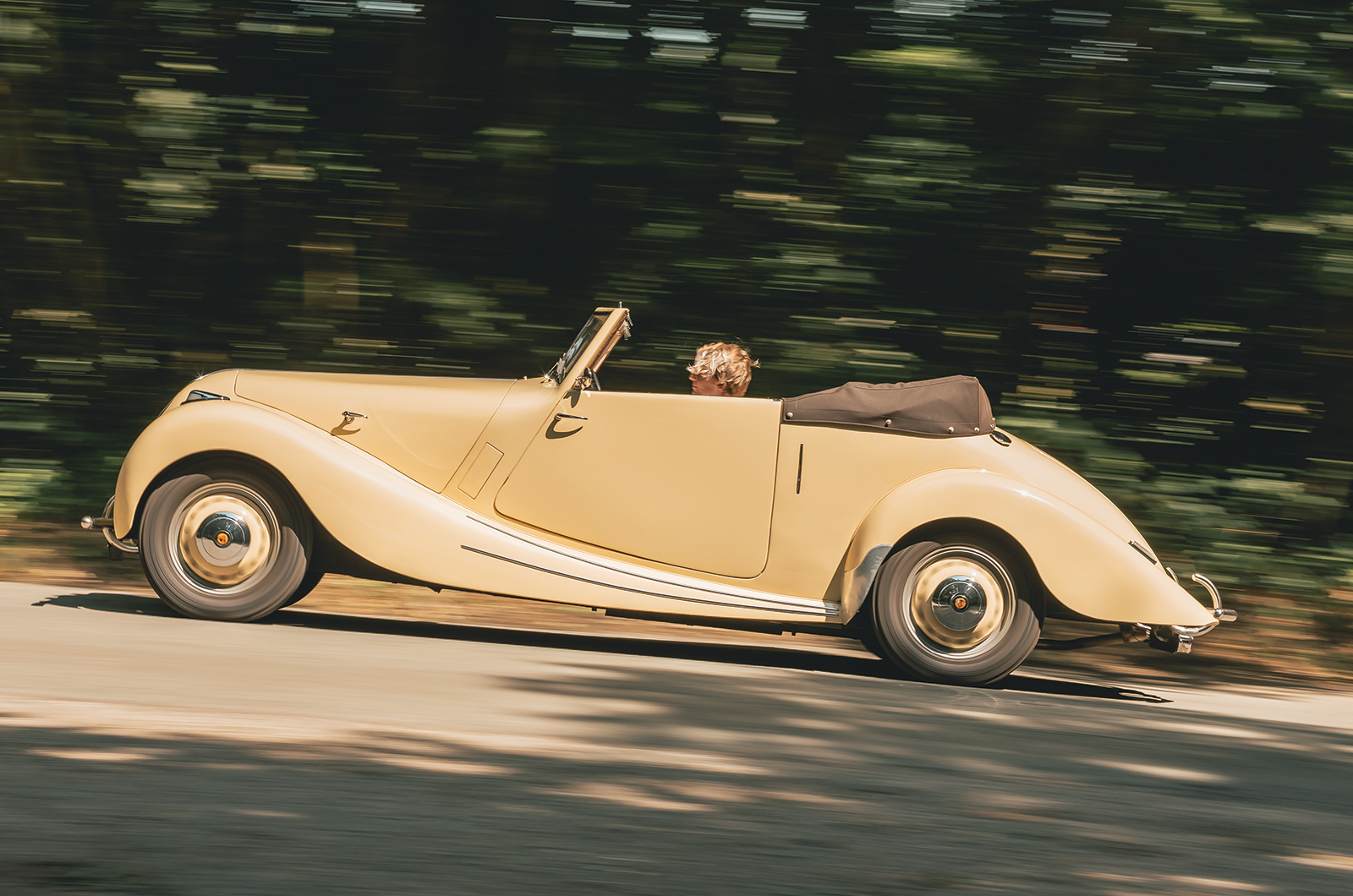
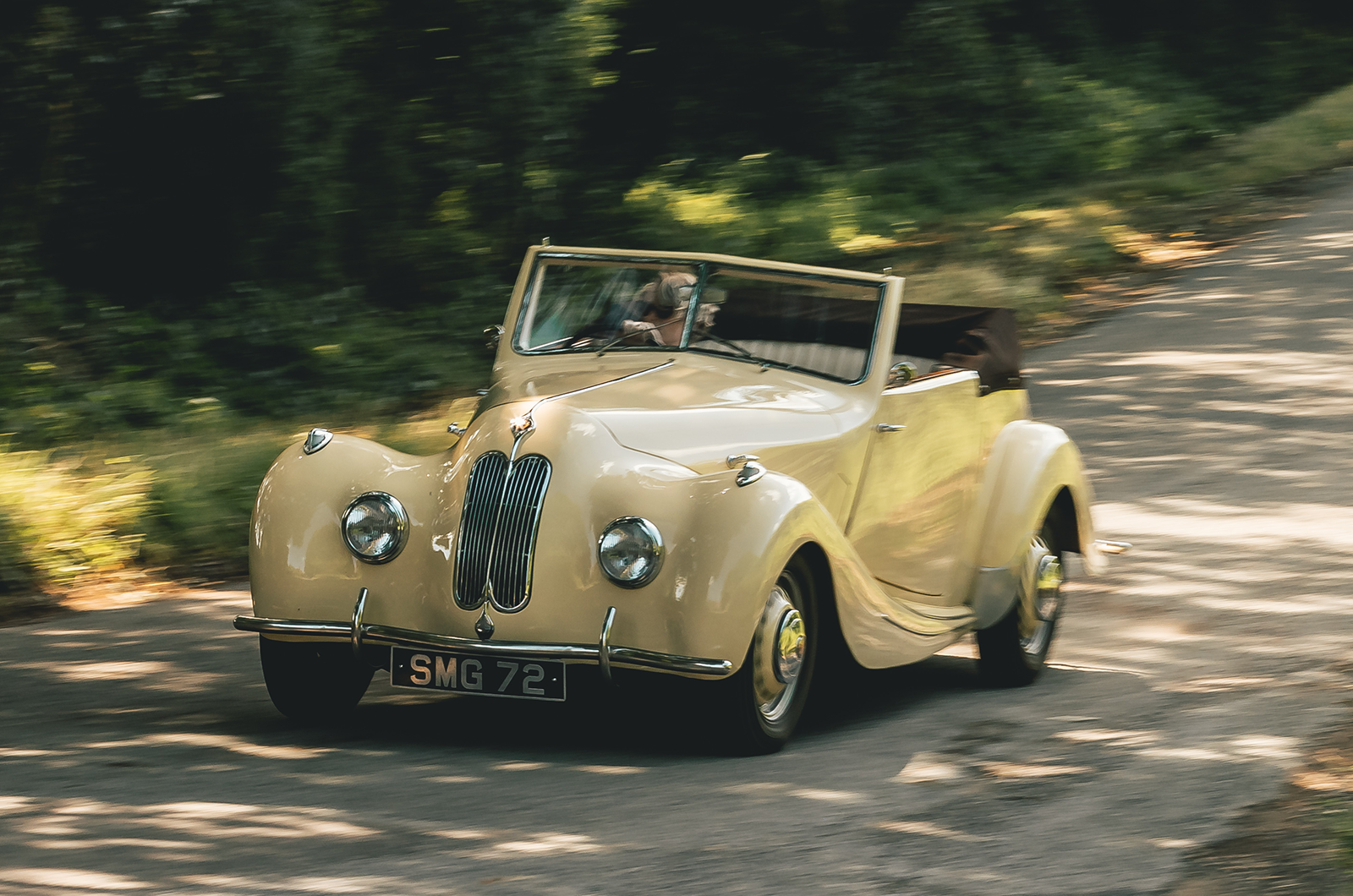
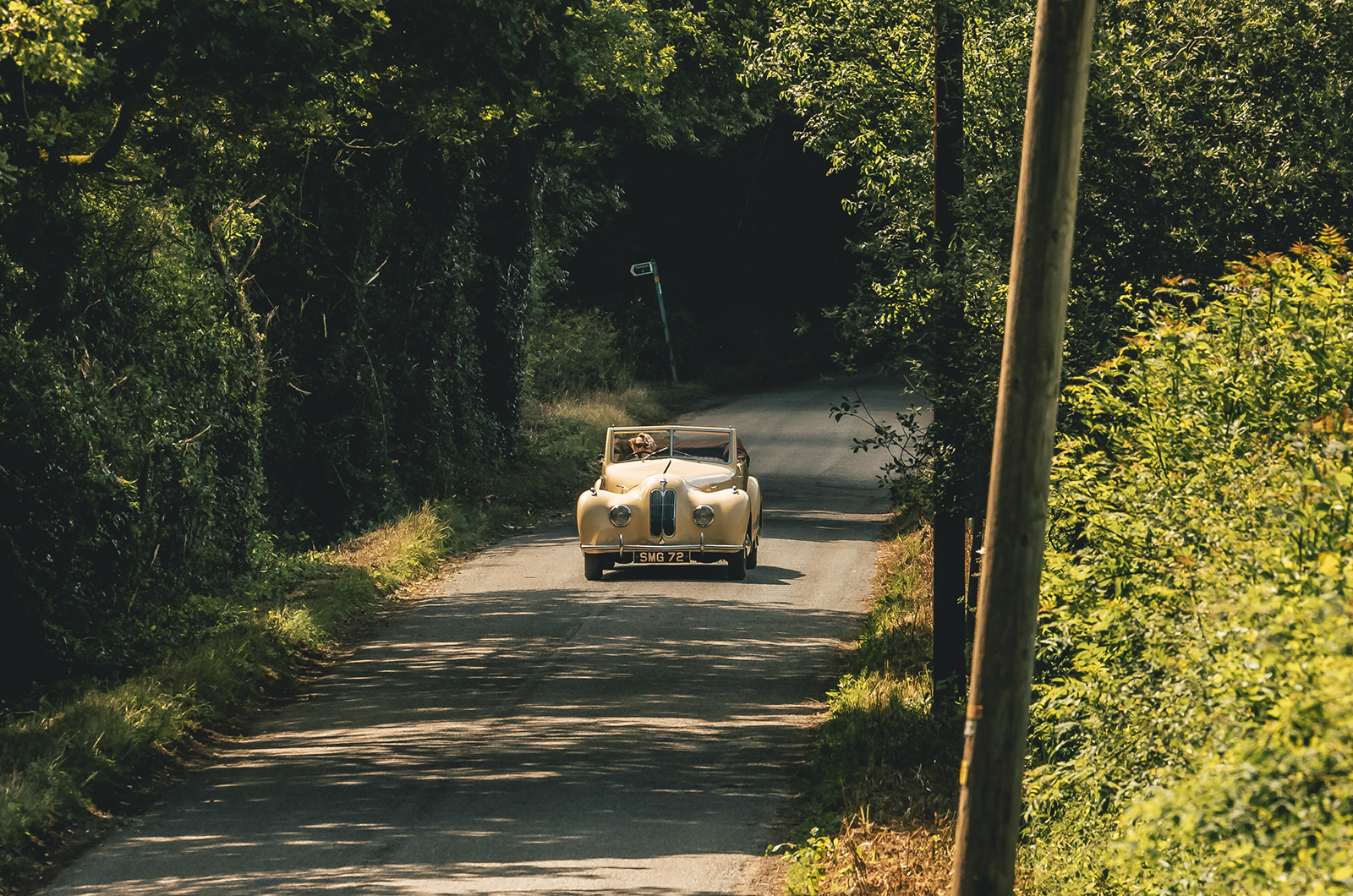
The Bristol 400 drophead coupe now enjoys weekly use
Shipped to Long Island in New York State, in the USA, 400/1/004 sadly spent the following decade deteriorating, until Robert Sillerman picked it up at auction.
The New Hampshire businessman enjoyed the Bristol as a low-stakes beach car and mulled over what to do next.
In December 1988 he found the answer, when Dr Blow sent him a letter.
The former owner had long regretted parting ways with the Bristol and agreed to buy the car back for $15,000.
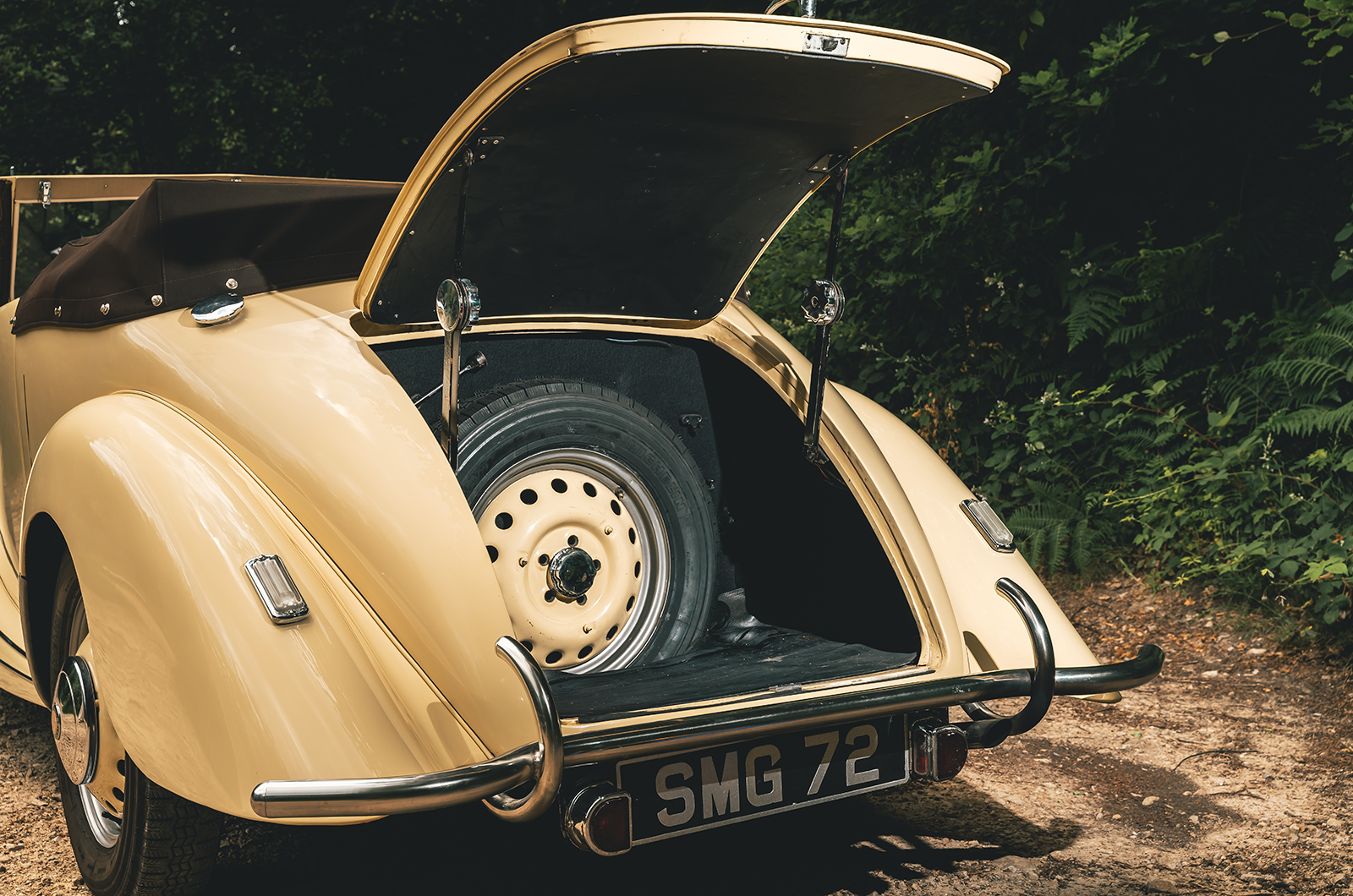
Appearing as a discovery in Classic and Sportscar, as it was then, soon after (July 1989), his cabrio began the long trip home, reunited with its original SMG 72 registration in 1991.
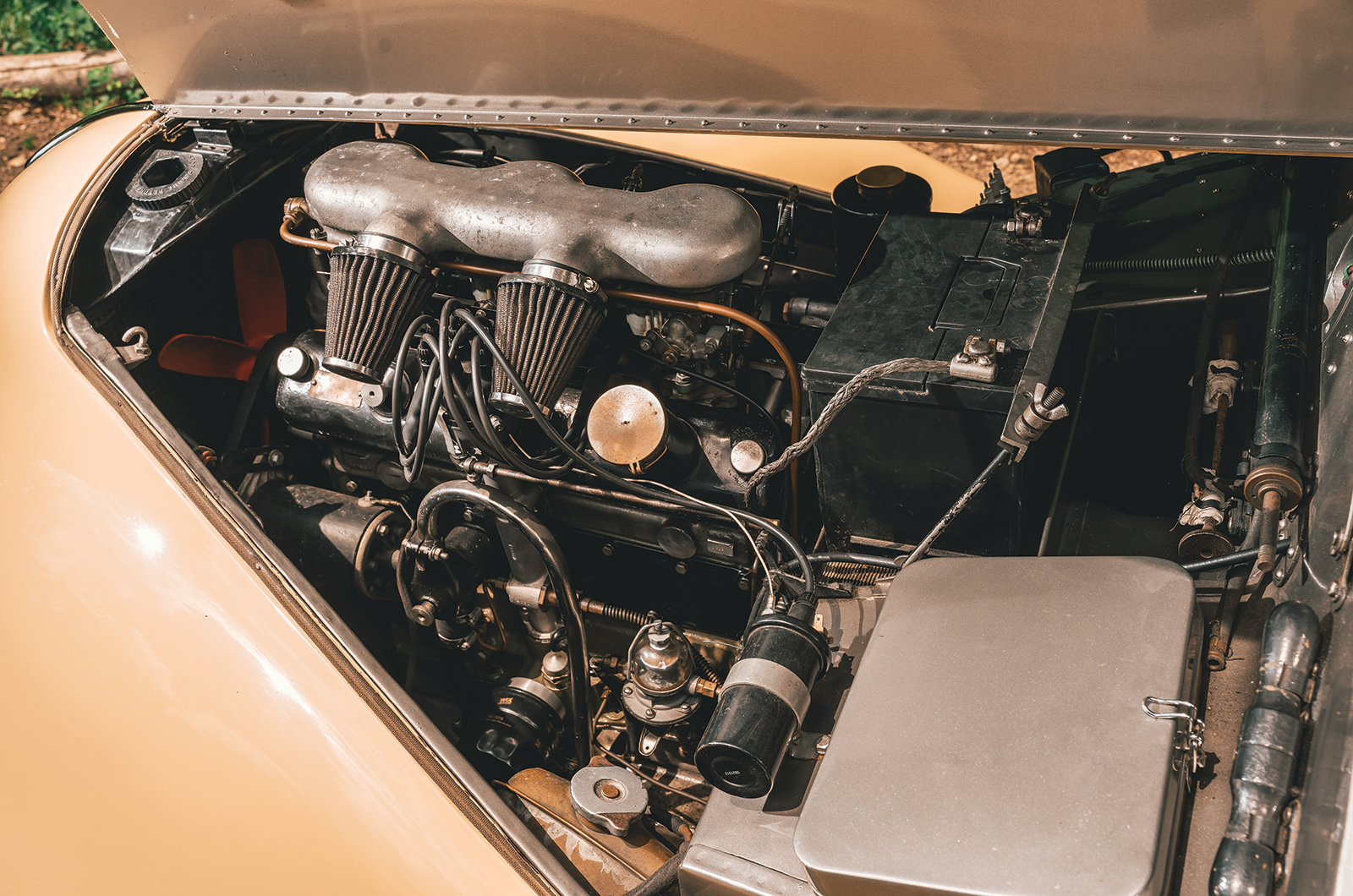
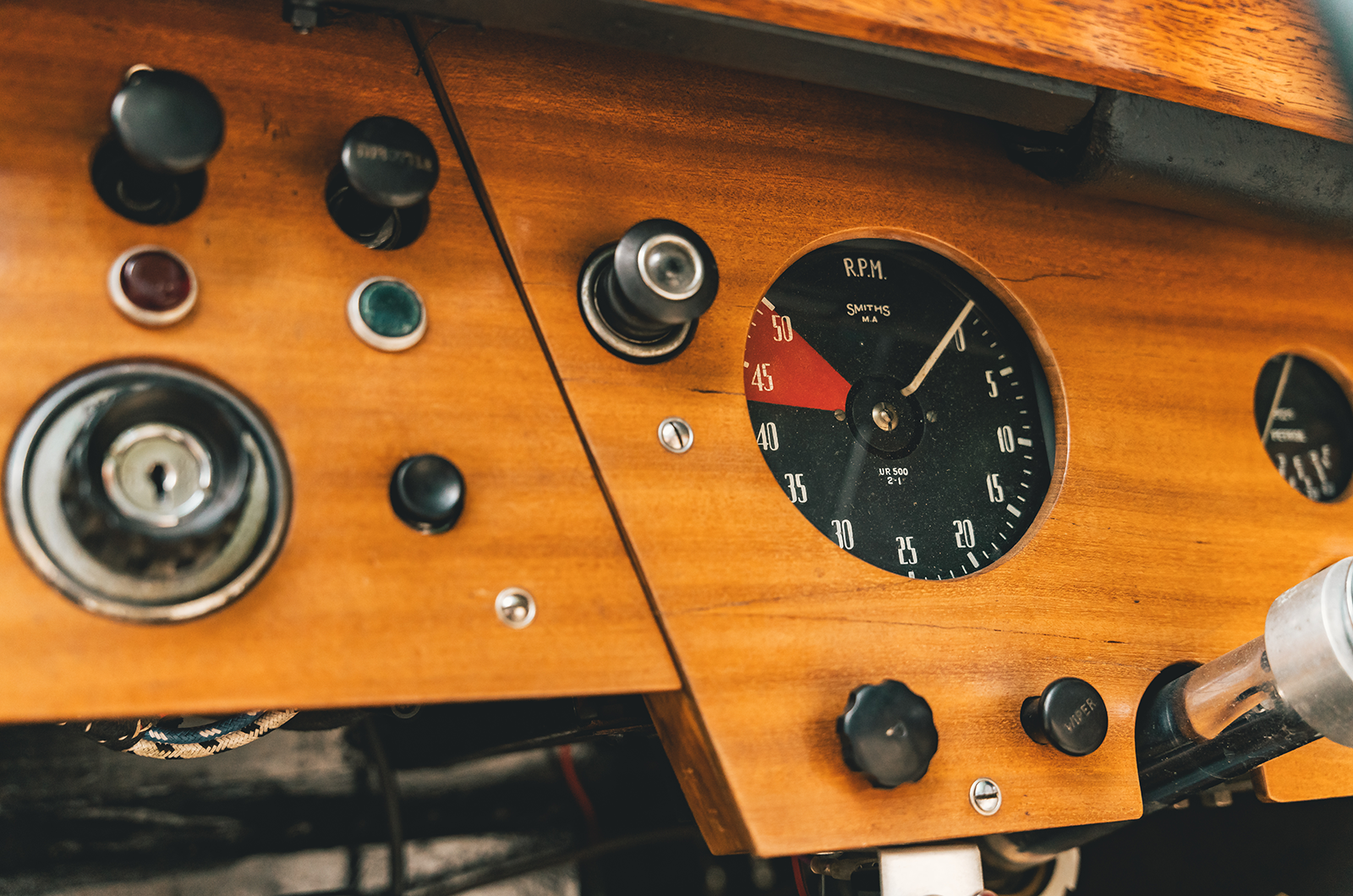
The Bristol’s 1971cc straight-six engine makes 80bhp at 4200rpm, just before the redline
Either side of the millennium, this Bristol 400 drophead coupe finally received the renovation it so deserved.
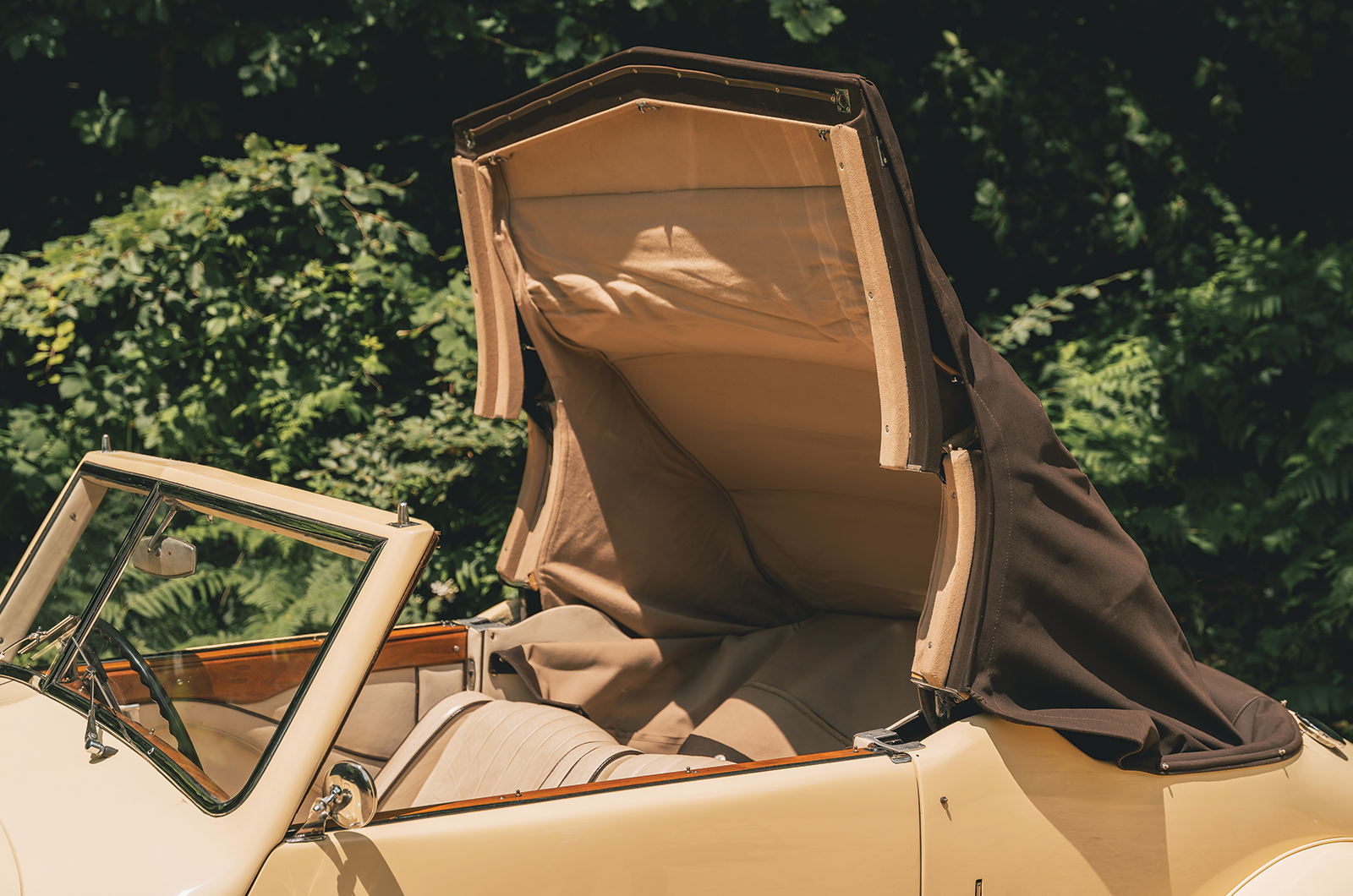
Alterations made to the car both during and since that five-year overhaul stop me short of drawing total conclusions, but my convictions are growing stronger by the mile, especially once I re-stow the roof.
Beneath the later, more powerful 100A engine, 1950s 403 BWCR transmission, servo-assisted disc brakes, door mirrors and overdrive, chassis four still has its considered, luxuriously usable bones intact.
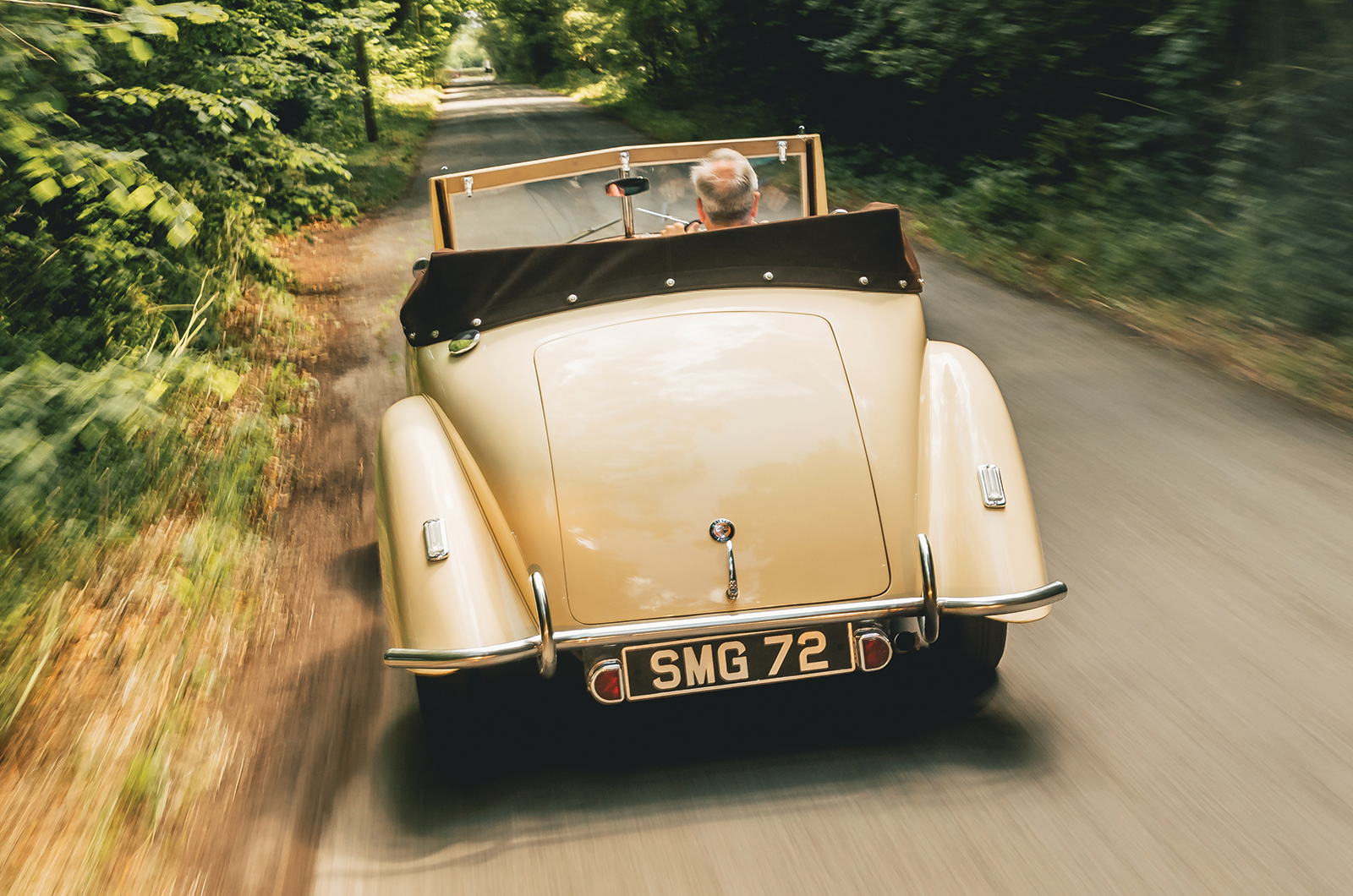
It’s no accident that current owner Steven Parker drives it every single week.
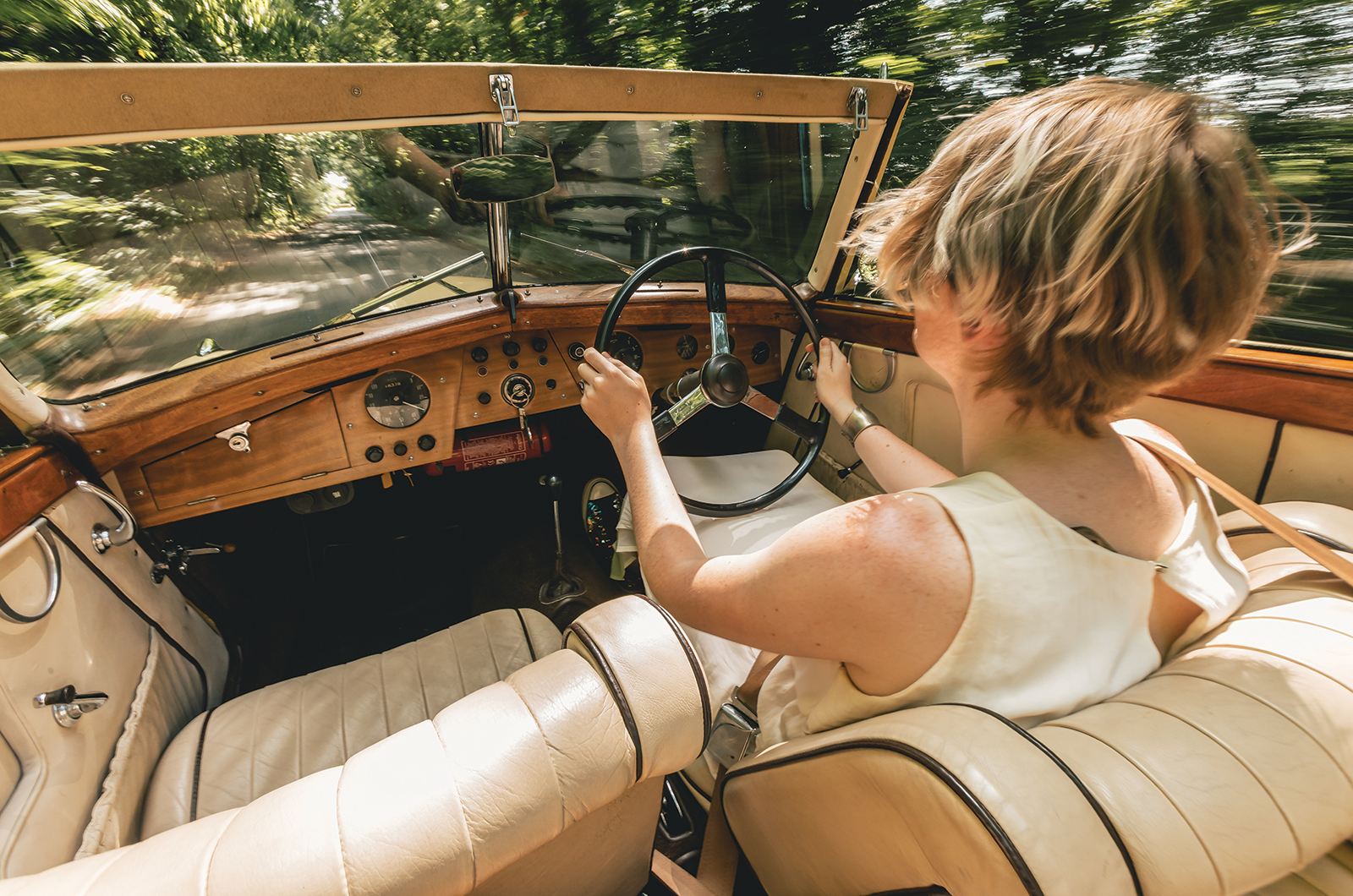
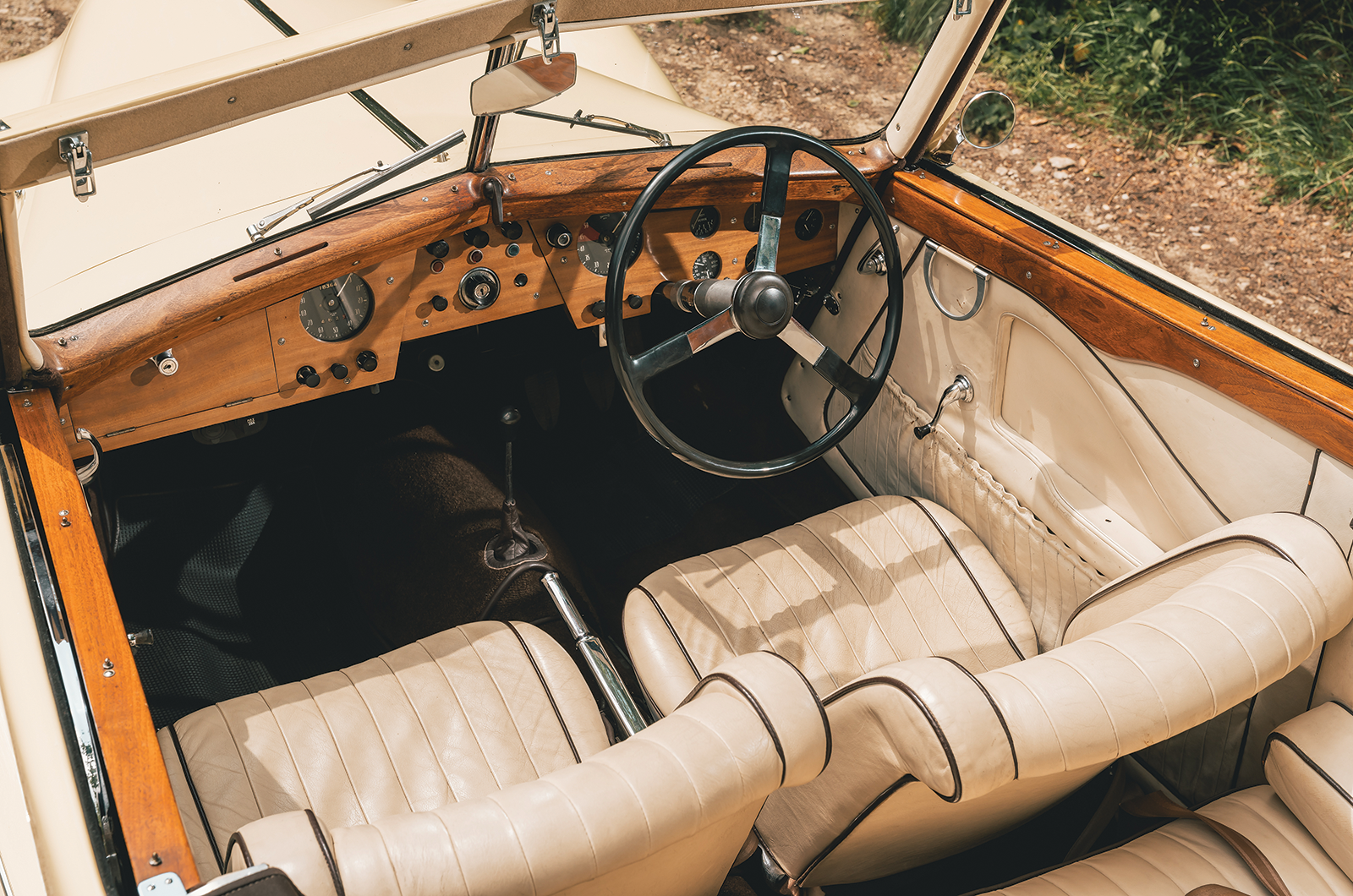
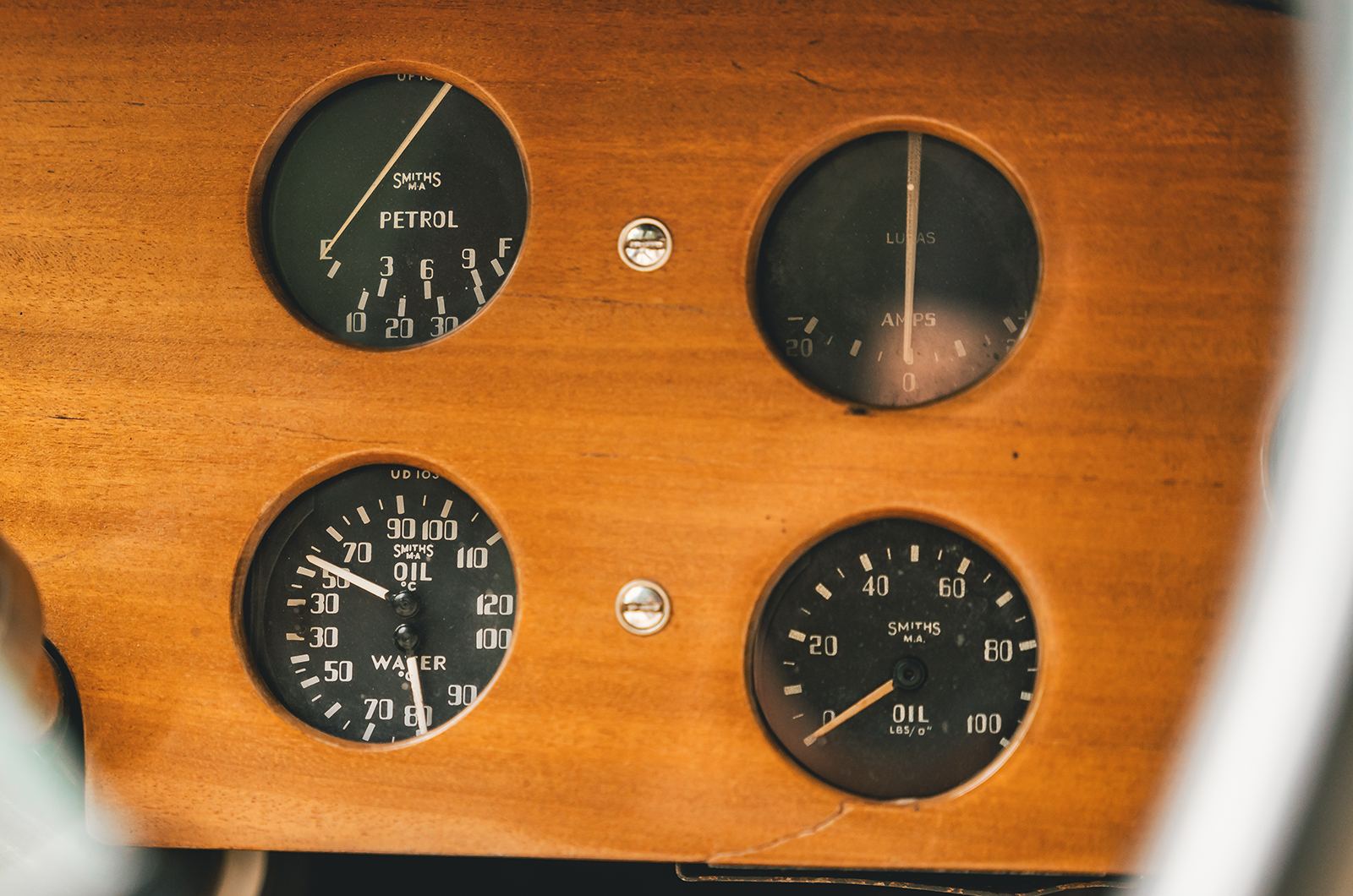
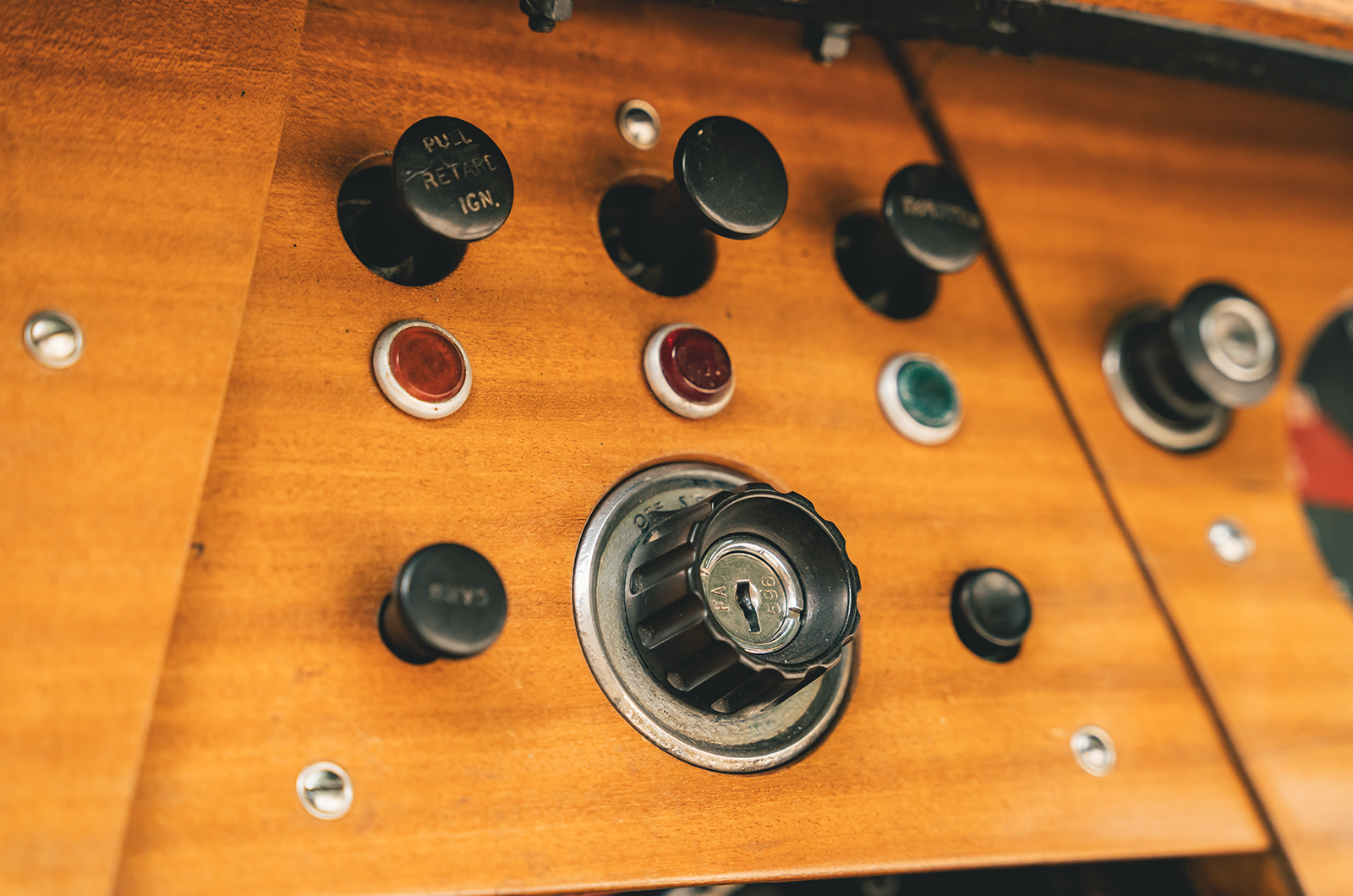
Important gages are behind the Bristol 400 drophead coupe’s three-spoke steering wheel
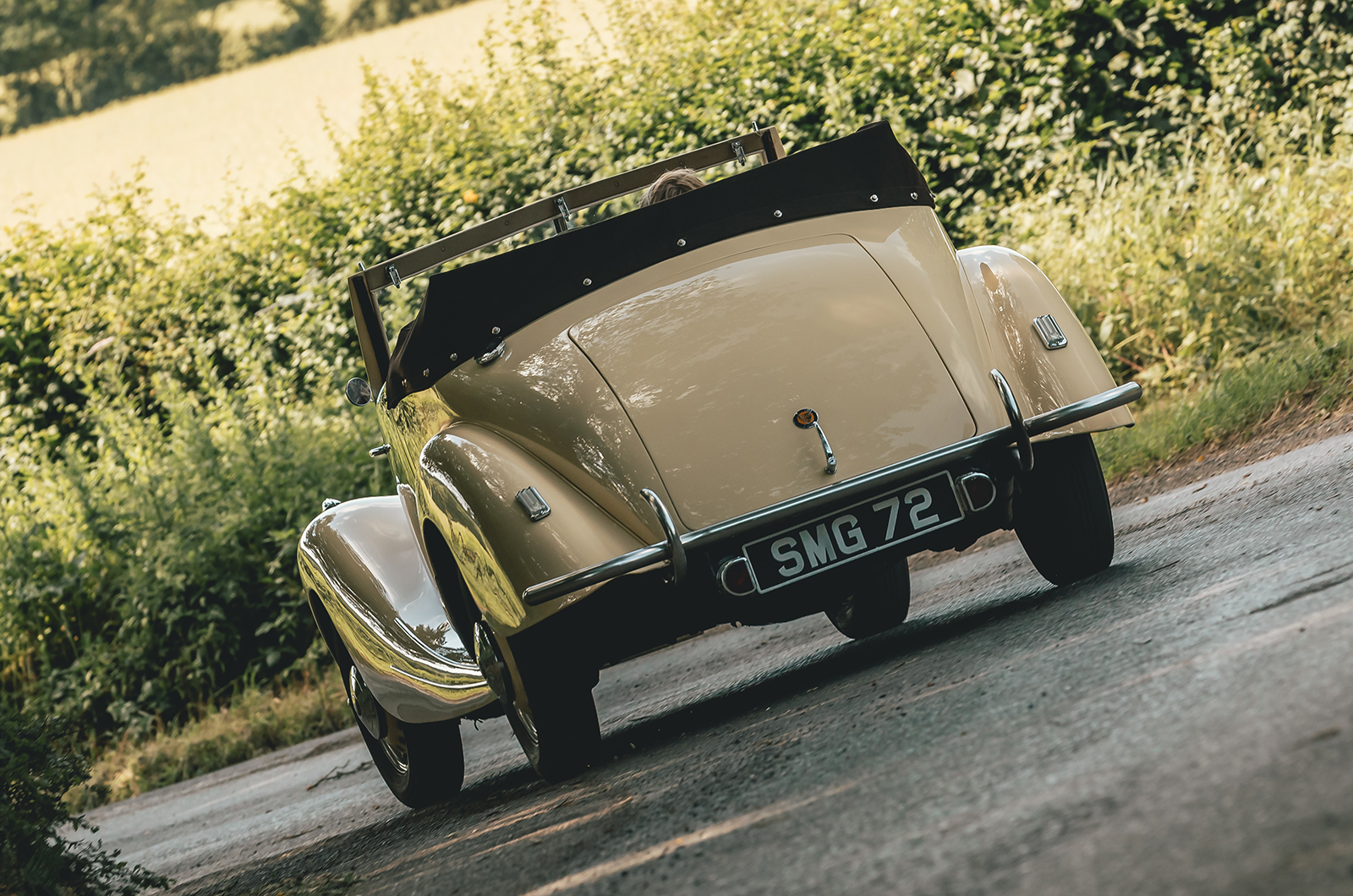
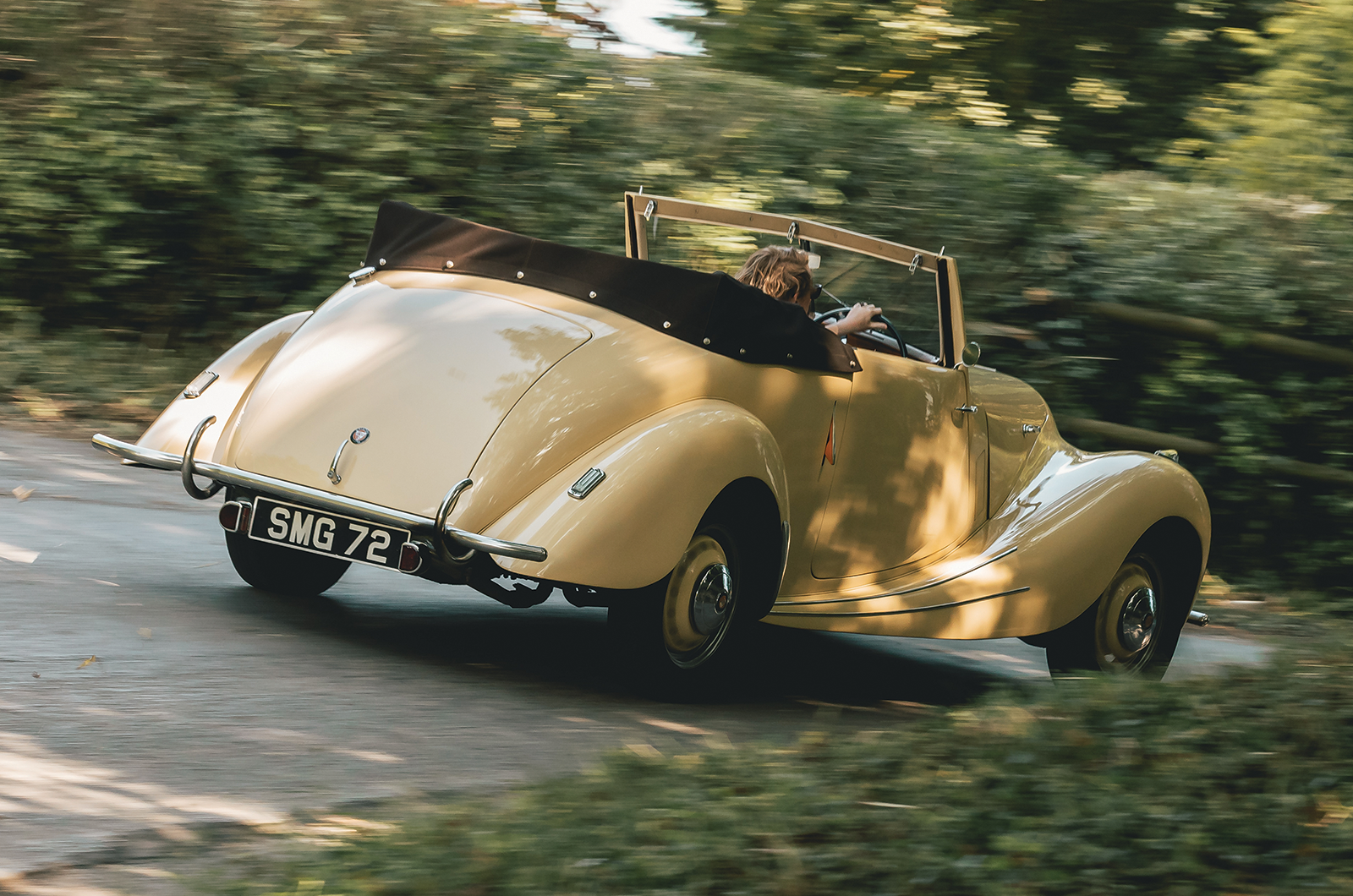
“I always marvel that this 76-year-old machine can fire straight up and sweep down the A2, fuss-free at 70mph,” he says.
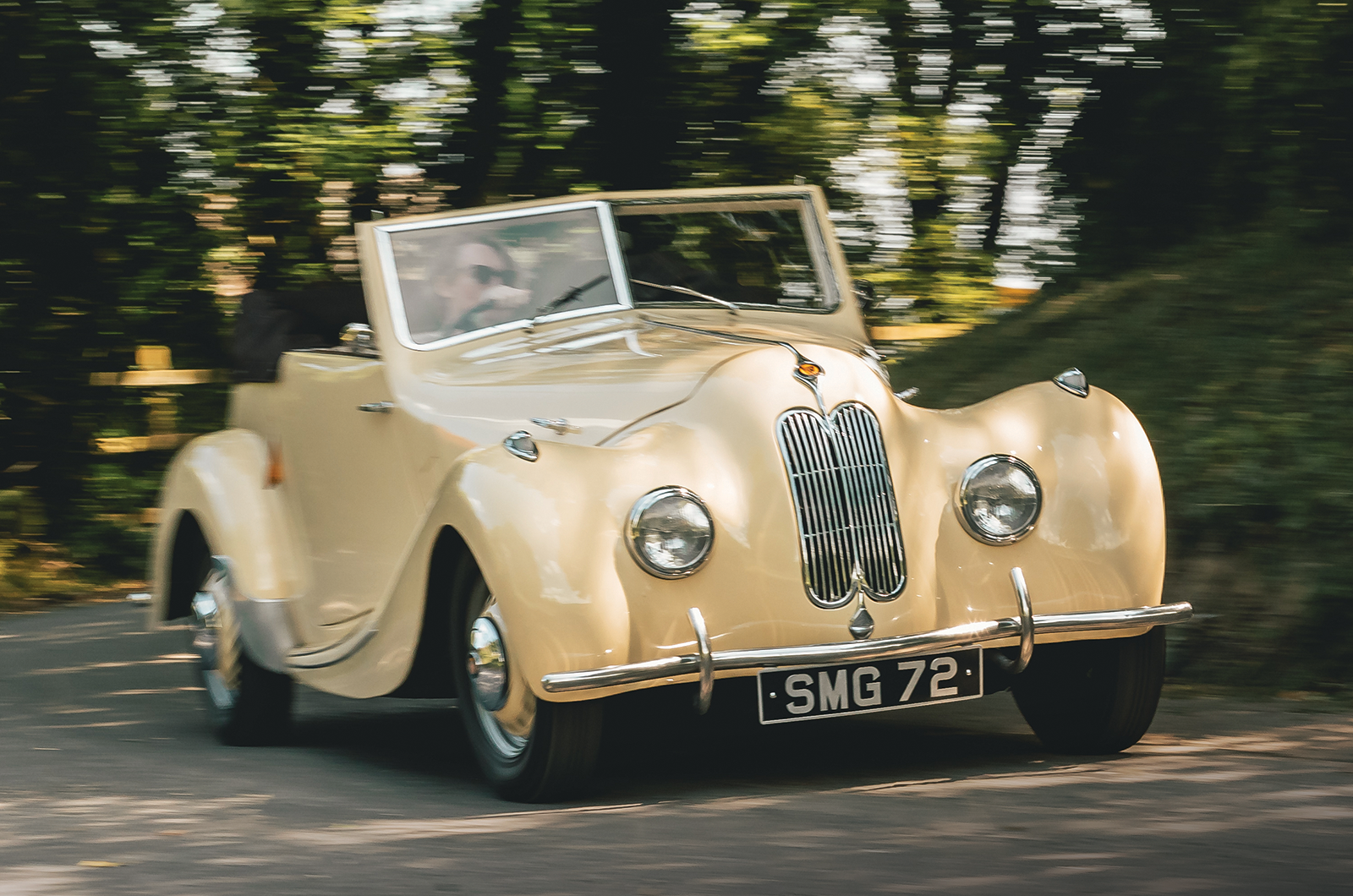
As charming as it is soothing, versatile and satisfying in equal measure, the Bristol 400 drophead coupe is an utter delight.
Bristol should have stuck to its guns.
Instead, the original open-top 400 fell casualty to a messy divorce.
Always on-trend and frustrated by the company’s conservatism, Aldy dispatched a brace of bare Bristol chassis to Italy in November 1946, briefing carrozzerie Touring and Farina to craft modish new bodies that would better catch buyers’ eyes.
‘Both more refined and more conservative than the German source material, the Bristol drophead’s cockpit is a very pleasant place to sit’
The first of them produced a slippery coupe to its Superleggera stressed-panel tubular framework principles, which BAC would ultimately redevelop into the 401 for 1948.
A convertible along Lancia and Alfa Romeo lines emerged from the second coachbuilder, and met with a frostier reception.
Tensions escalated. By April 1947, Frazer Nash-Bristol had dropped its first two names and become Bristol, reflecting an immediate untangling of BAC and AFN.
George White led his dream into production reality that summer, with BAC constructing 425 complete 400s to 1950.
Every last one of them was a sedan.
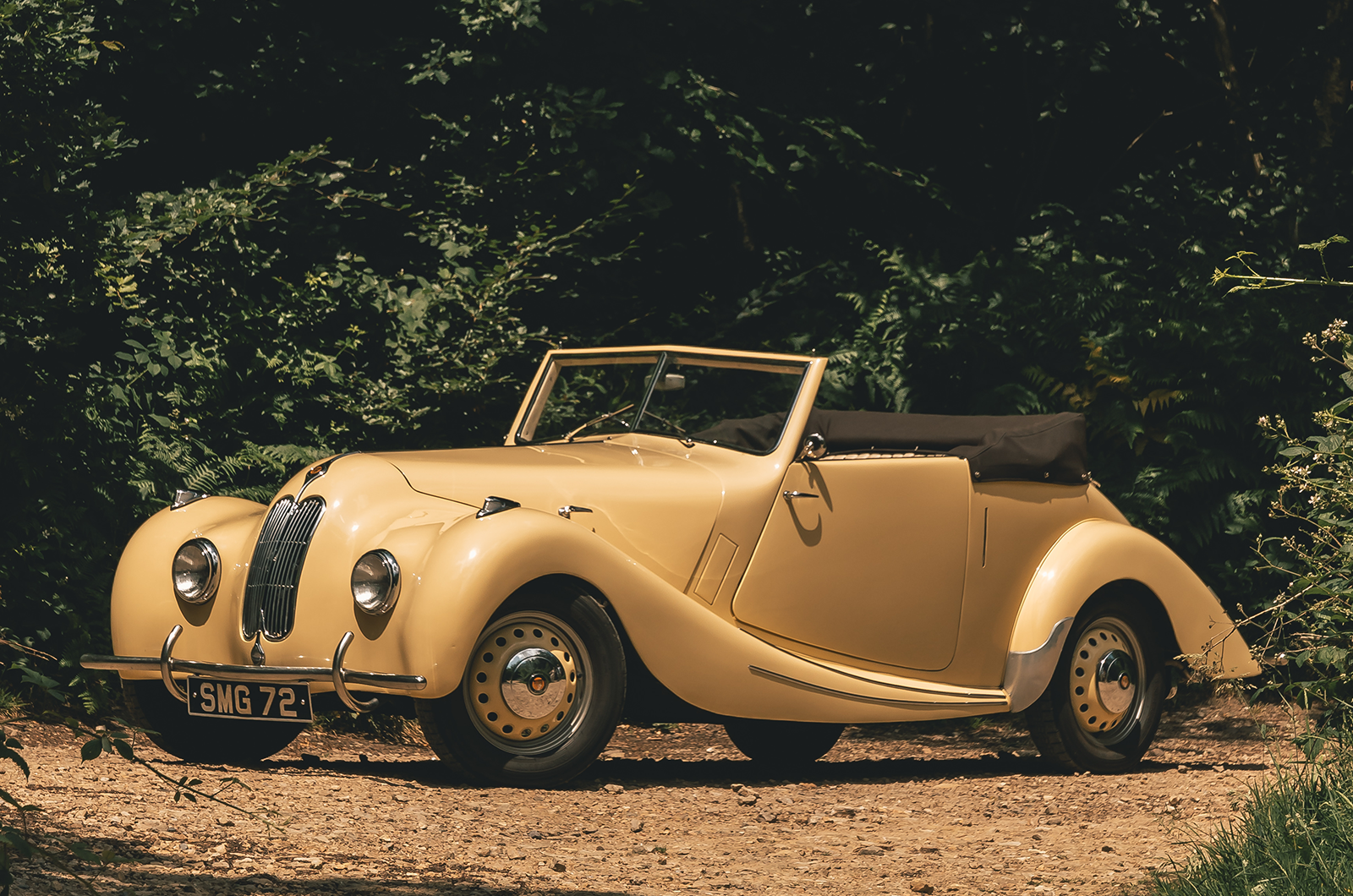
A missed opportunity? The Bristol 400 drophead coupe never reached production
Retaining their role as the new marque’s London agent, the Aldingtons went back to car sales and, steadfast in his convictions, Harold offered his Italian designs to order.
Among it all, the 400 drophead coupe somehow slipped through the cracks, with neither party making good on its prototype promise until Bristol leapfrogged to the 401-based 402 cabriolet.
As first link and missing link, 400/1/004 shows how much they were missing out on.
Images: Max Edleston
This was first in our January 2024 magazine; all information was correct at the date of original publication
Factfile
Bristol 400 drophead coupe
- Sold/number built 1947/2
- Construction steel, aluminum and timber body on box-section steel frame
- Engine iron-block, alloy-head, cross-pushrod 1971cc straight-six, triple SU carburetors
- Max power 80bhp @ 4200rpm
- Max torque 106lb ft @ 3500rpm
- Transmission four-speed manual, freewheel on first, synchromesh on top three gears, RWD
- Suspension: front independent, by wishbones, transverse leaf spring rear live axle, torsion bars; lever-arm dampers f/r
- Steering rack and pinion
- Brakes drums
- Length 15ft 3in (4648mm)
- Width 5ft 4in (1625mm)
- Height n/a
- Wheelbase 9ft 6in (2895mm)
- Weight 2604lb (1181kg)
- Mpg 21.4
- 0-60mph 14.7 secs
- Top speed 94mph
- Price new £1500 plus Purchase Tax
We hope you enjoyed reading. Please click the ‘Follow’ button for more super stories from Classic & Sports Car.