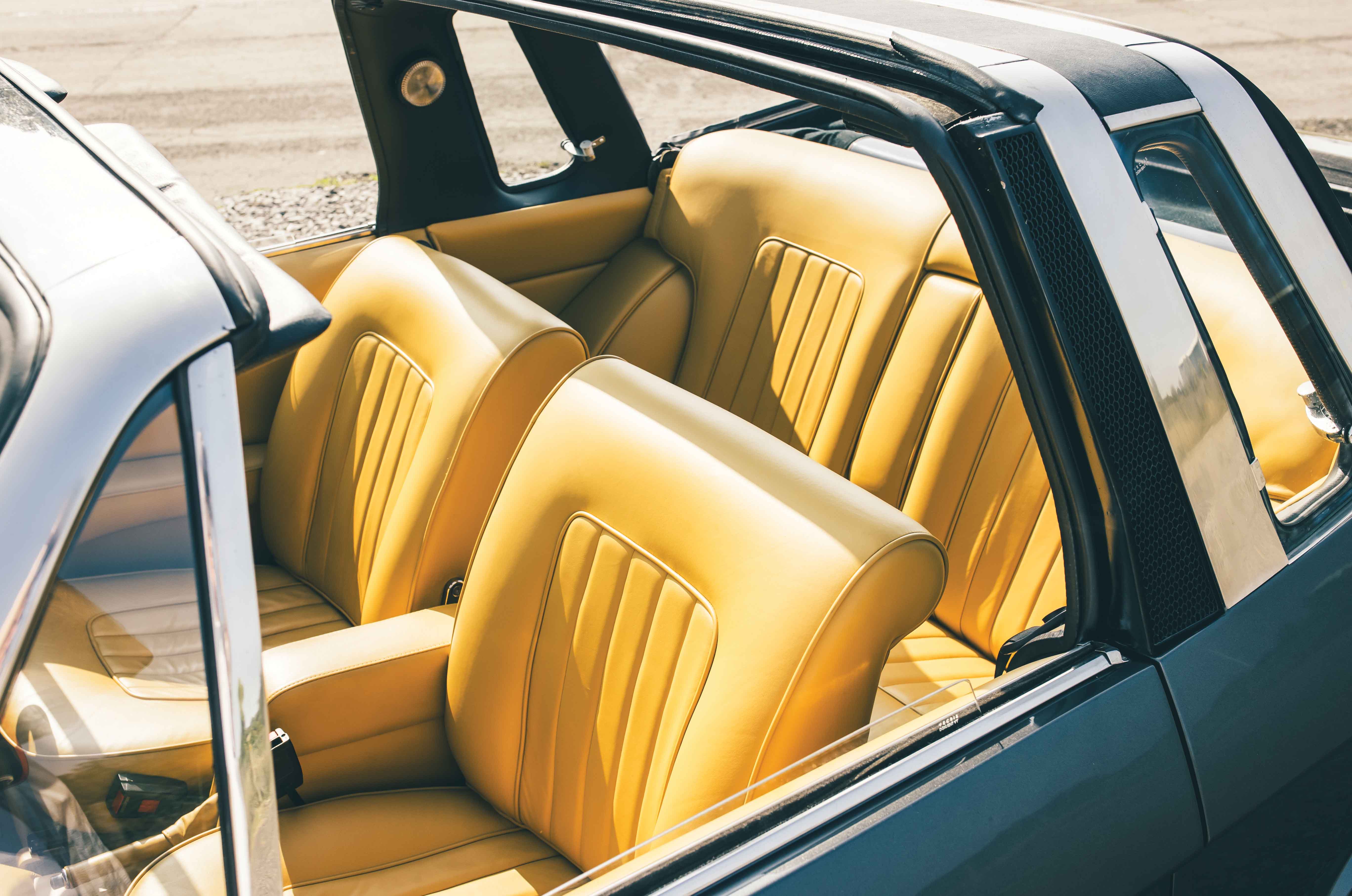
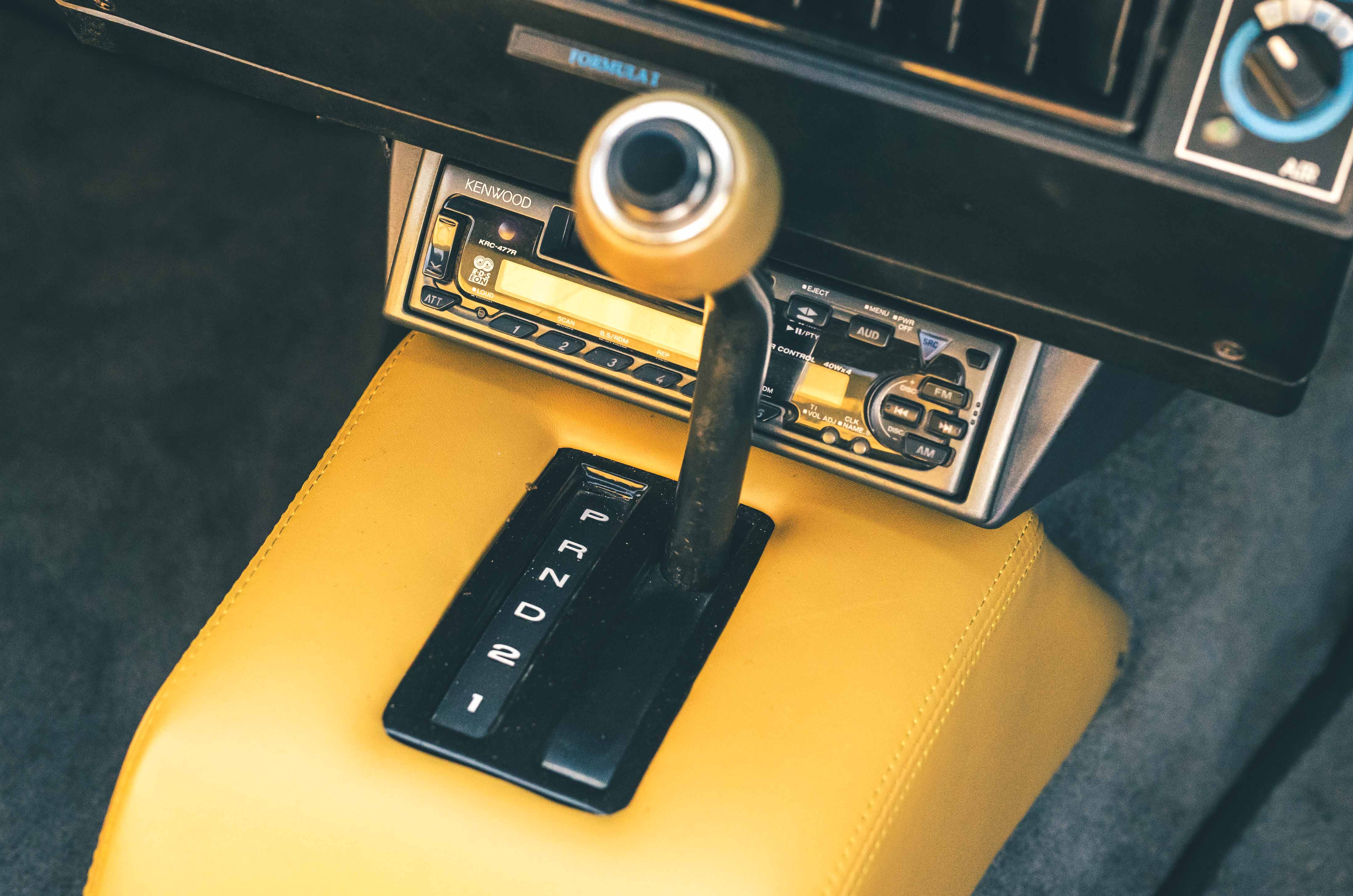
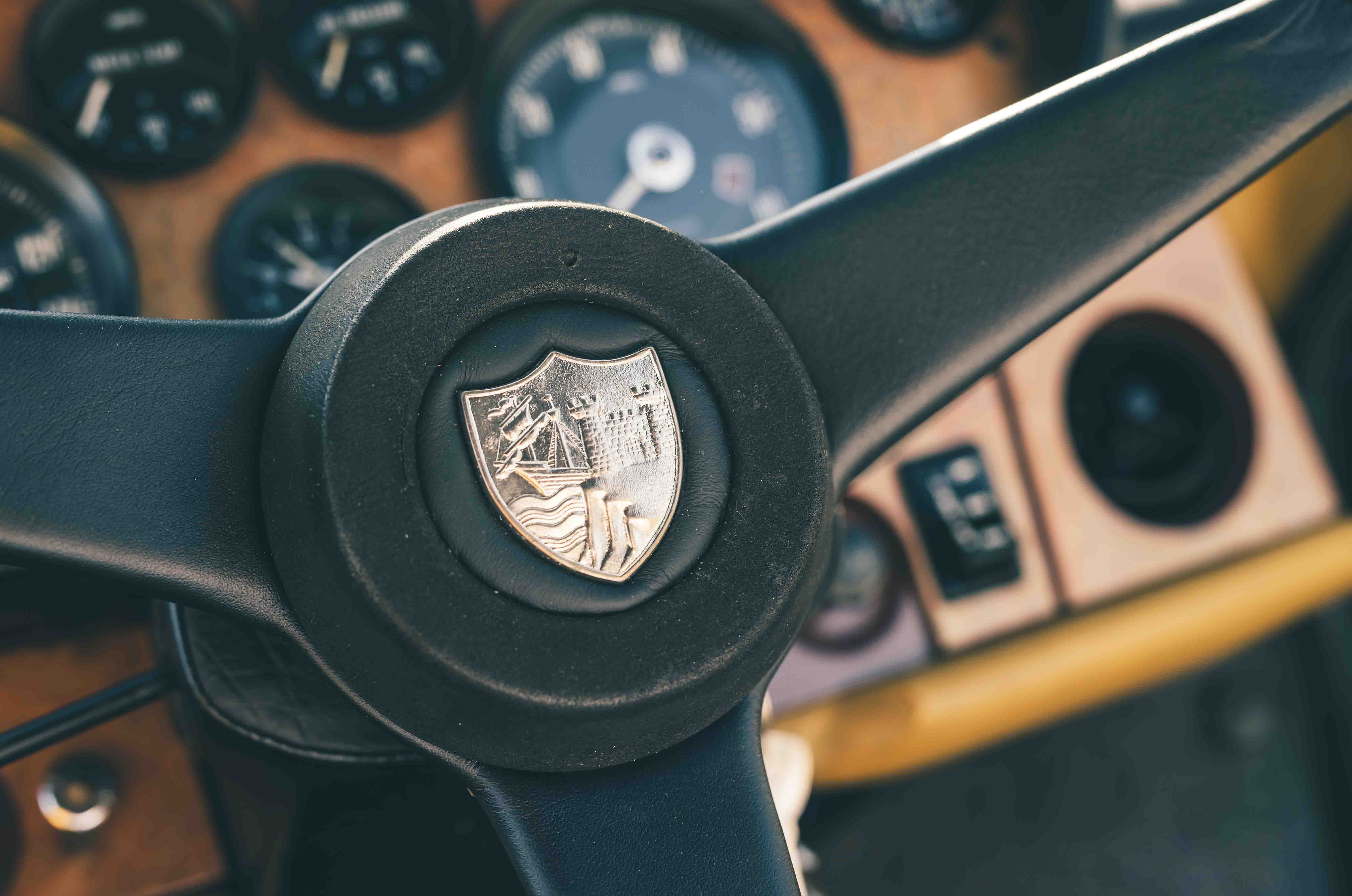
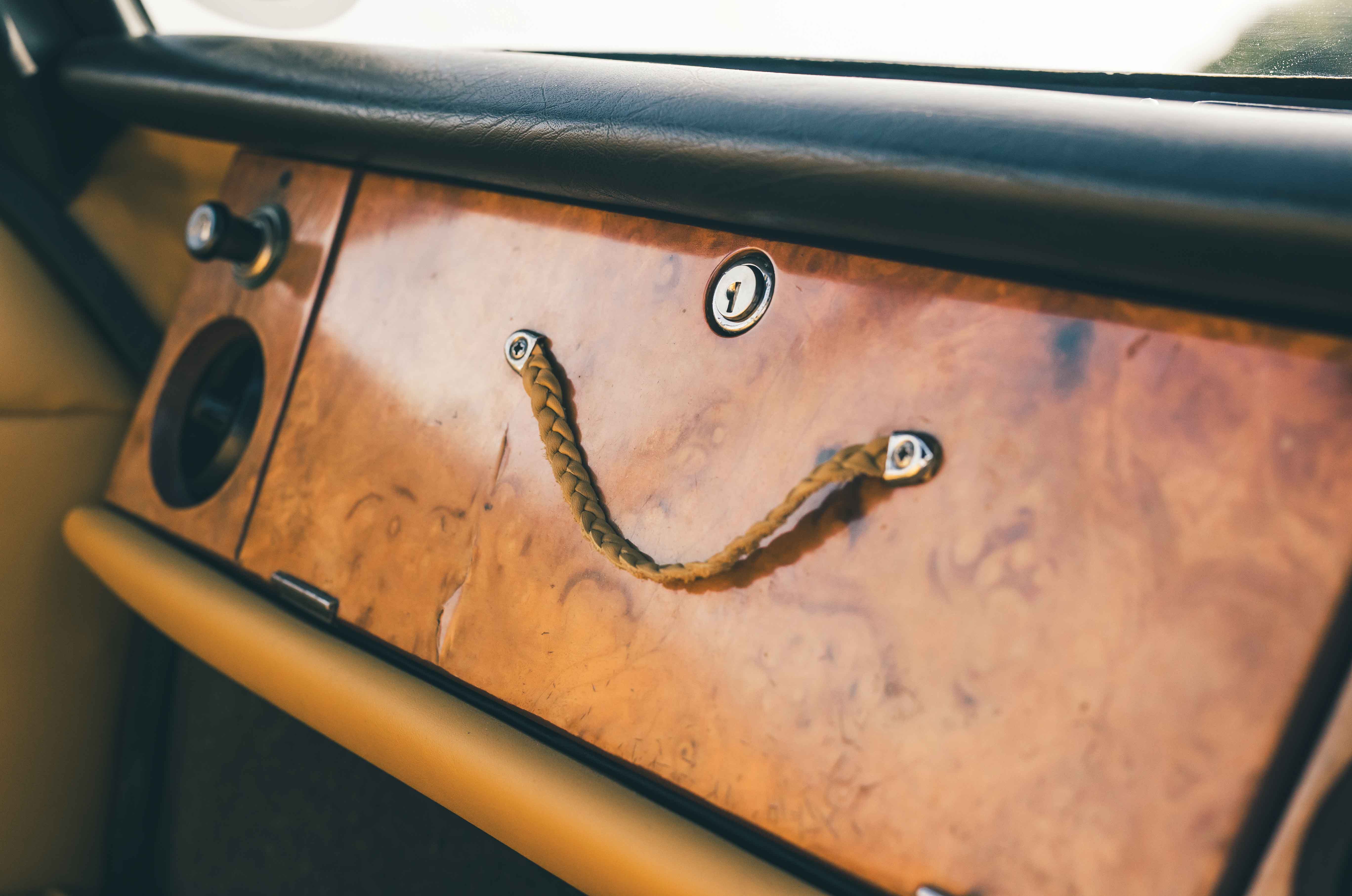
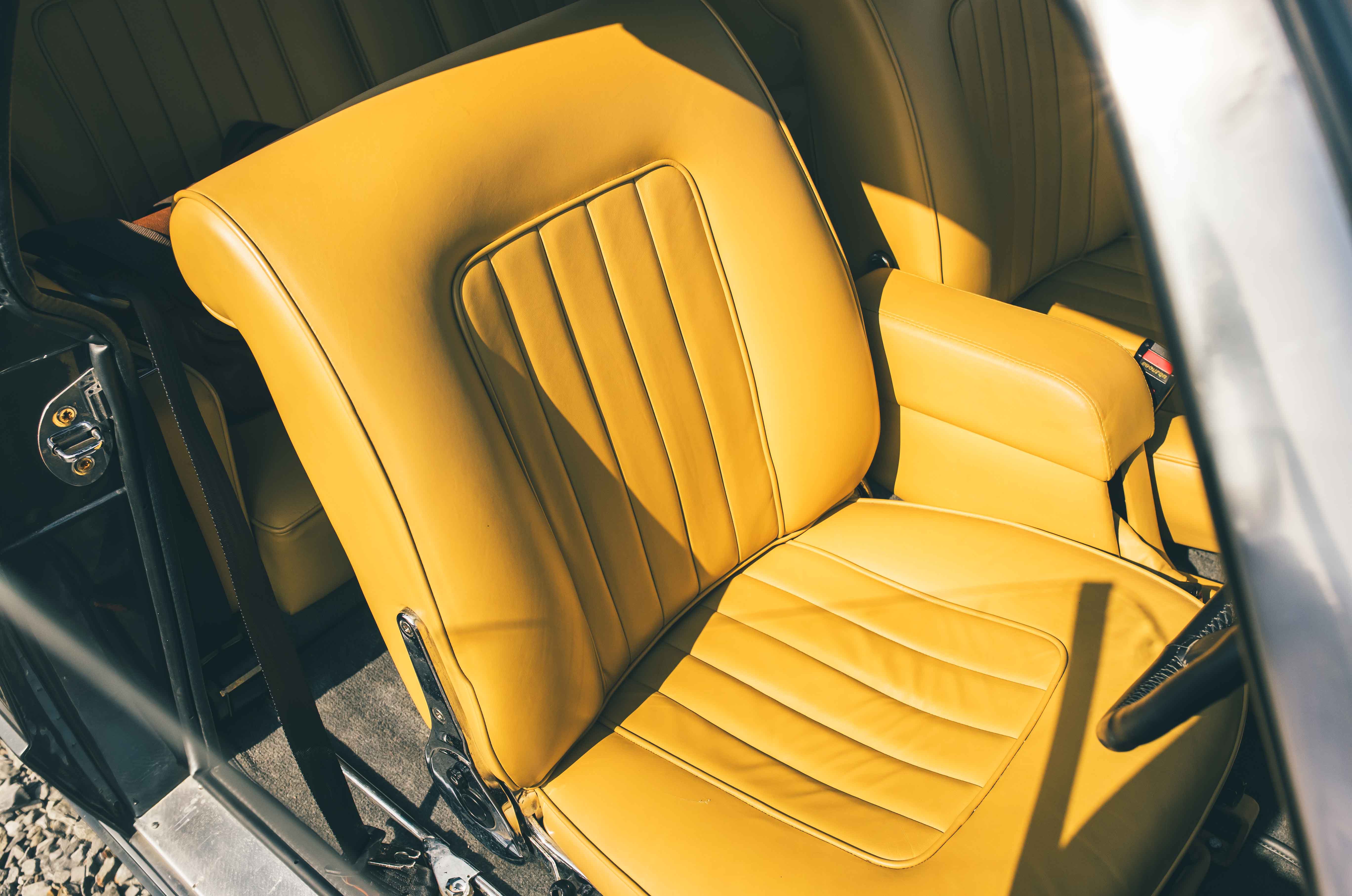
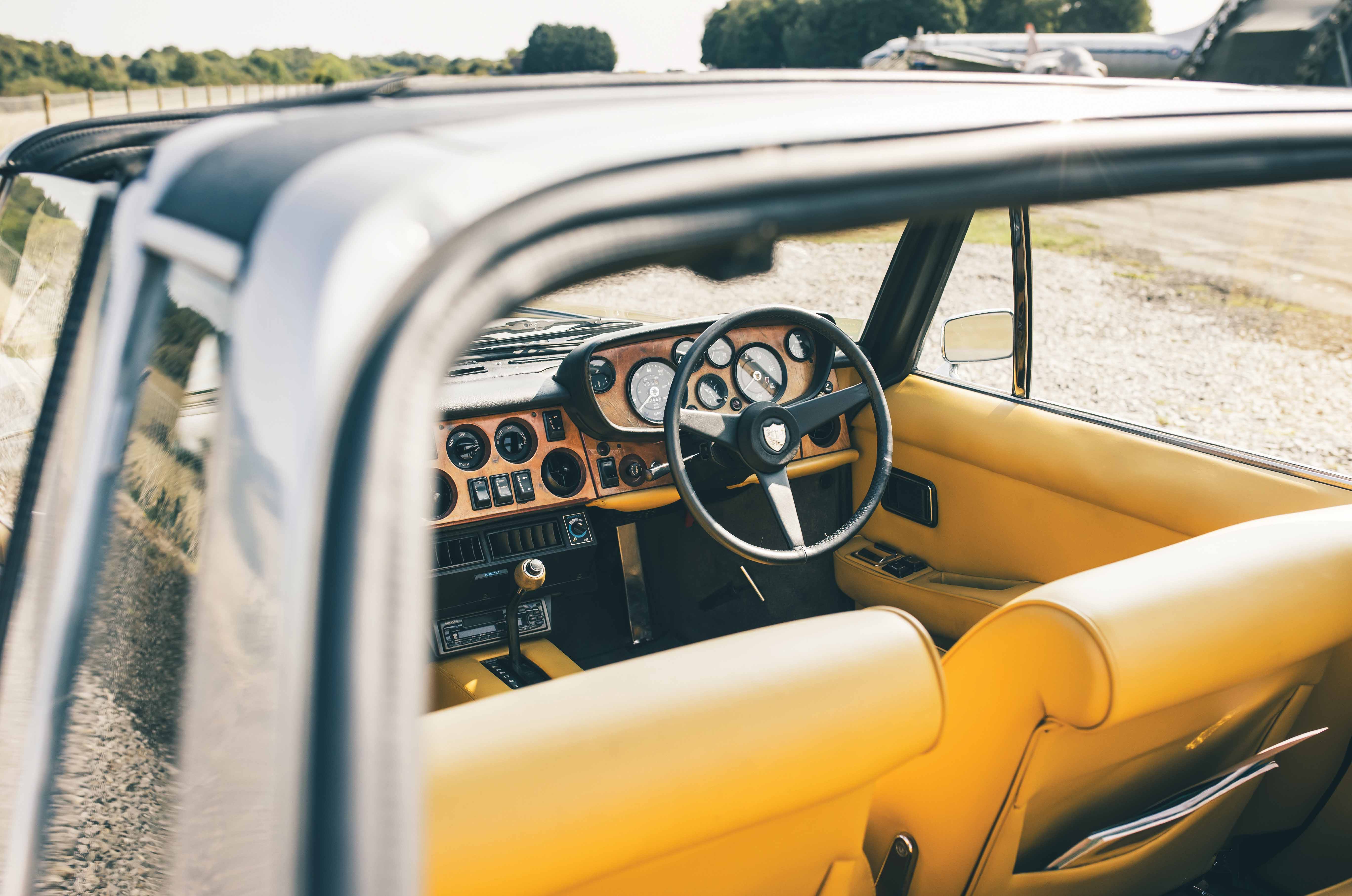
Inside, all is familiarly Bristol.
The blend of understated gunmetal paint and bright mustard-yellow leather gives it a cheeky wink of hip rebellion, like the vivid lining of a Paul Smith suit.
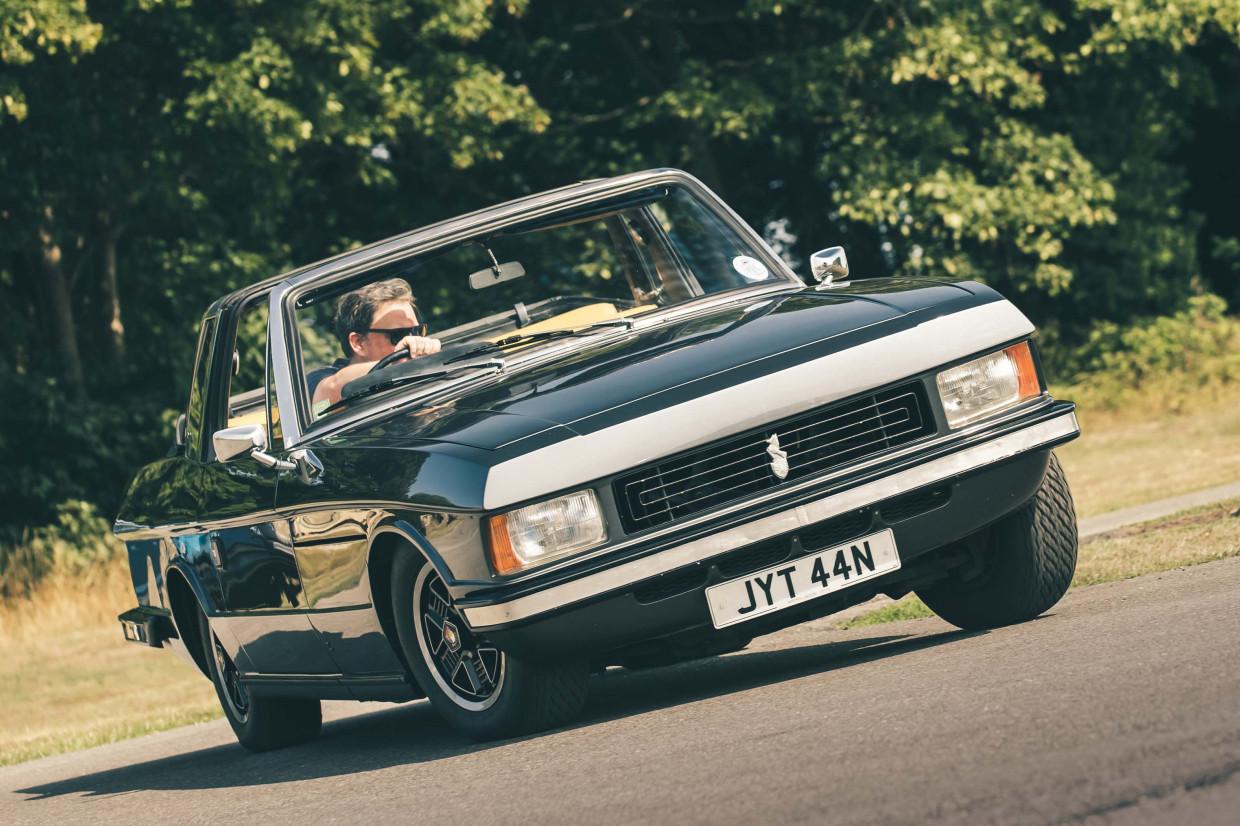
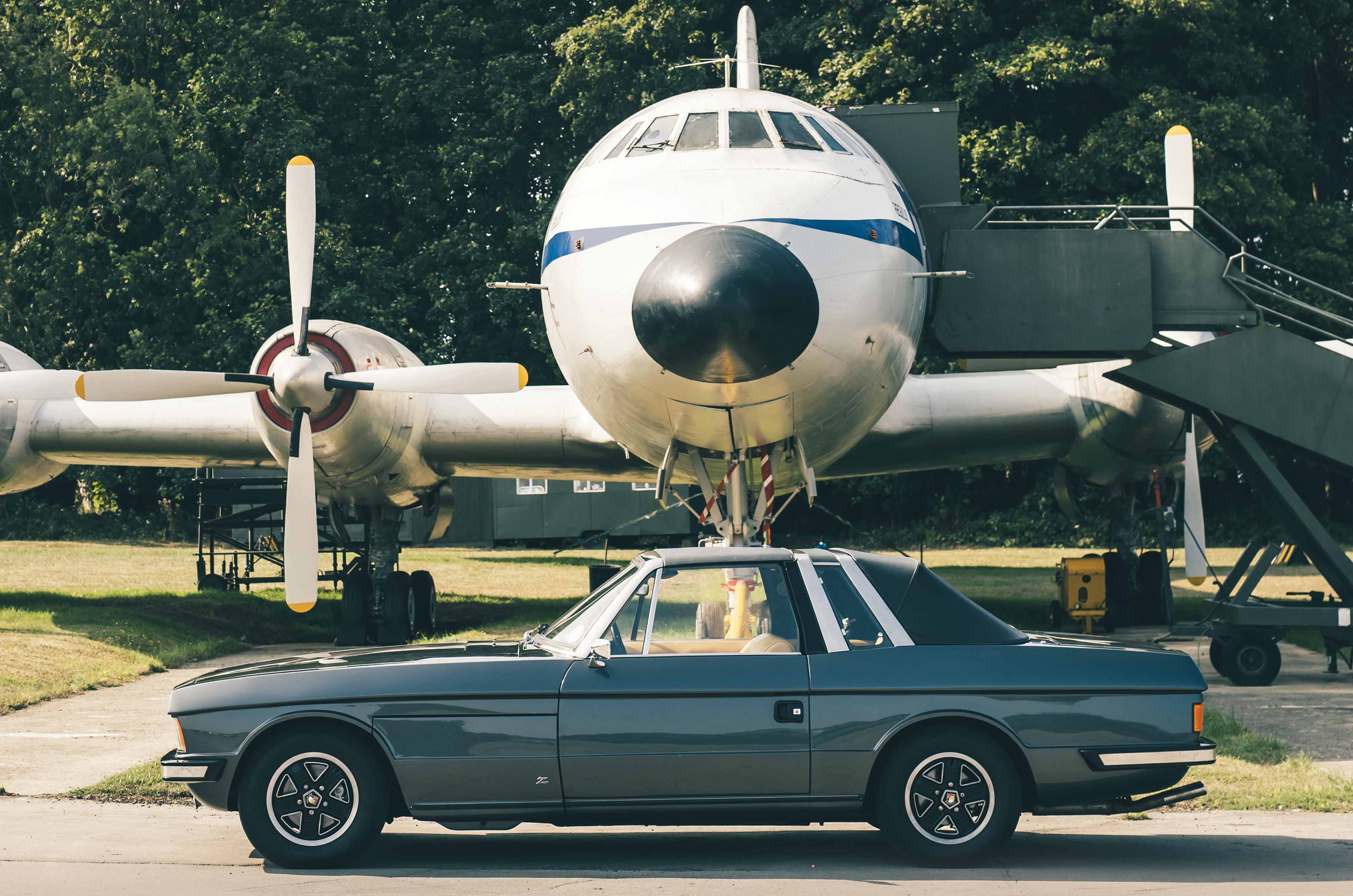
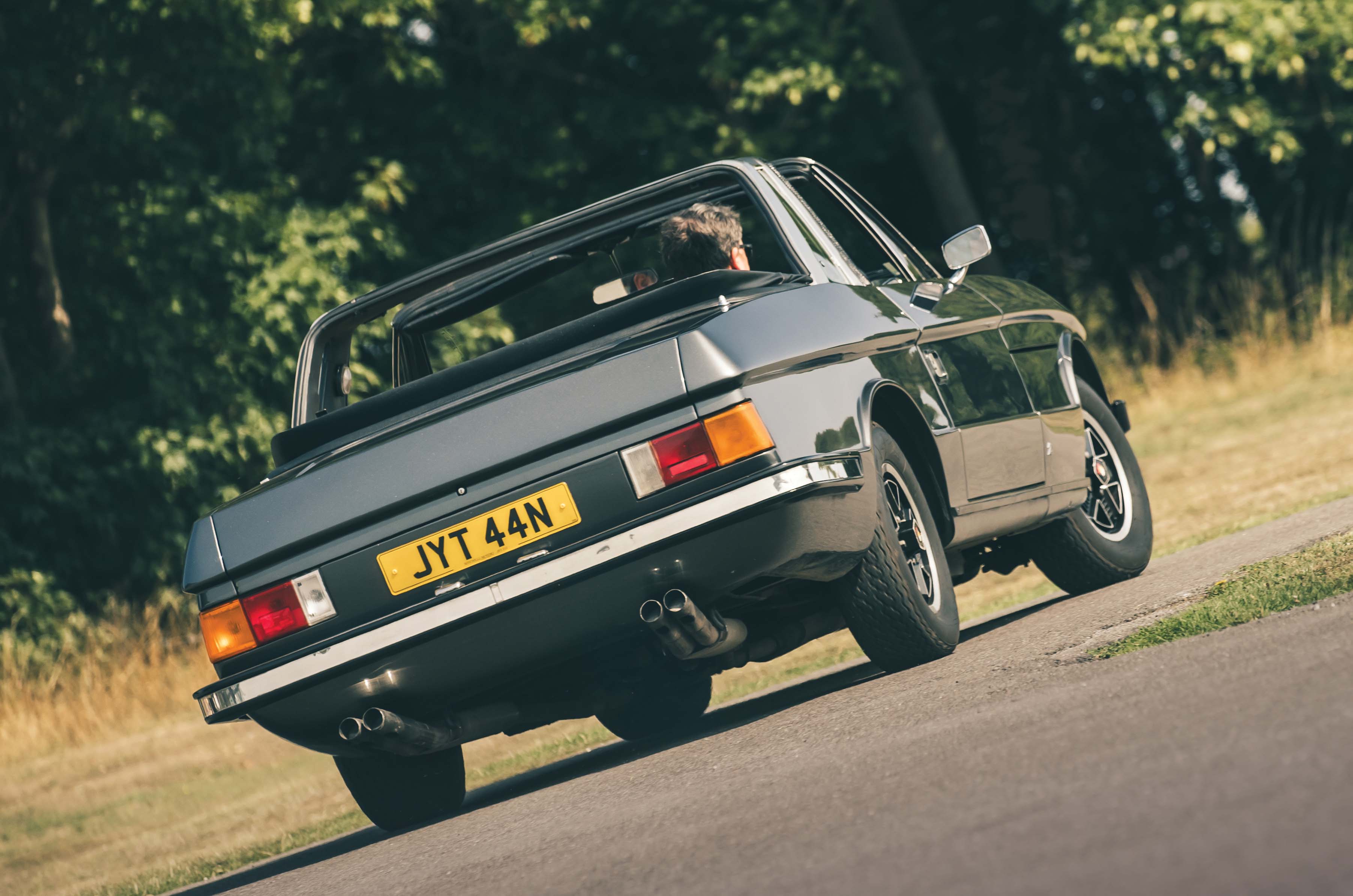
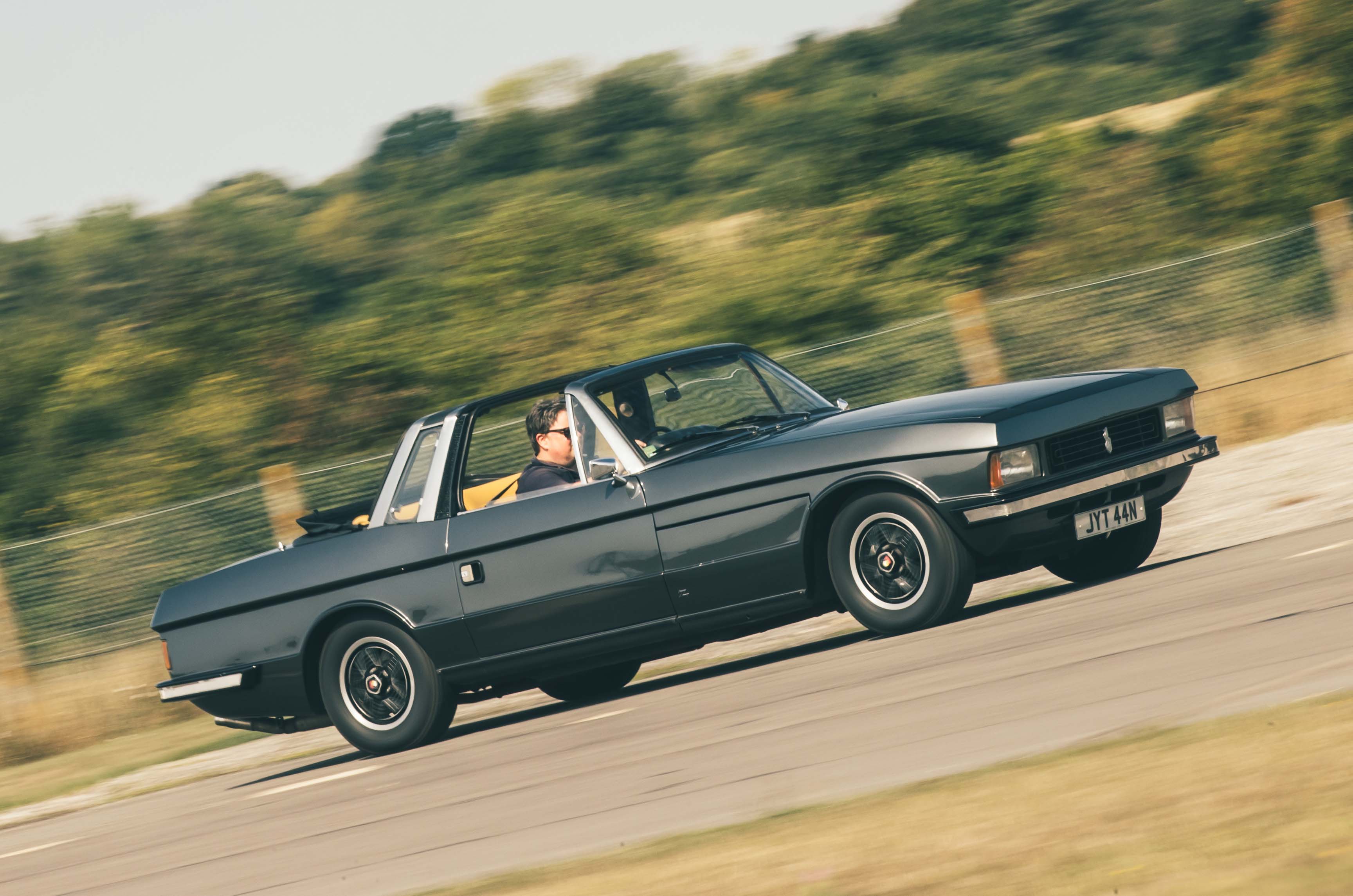
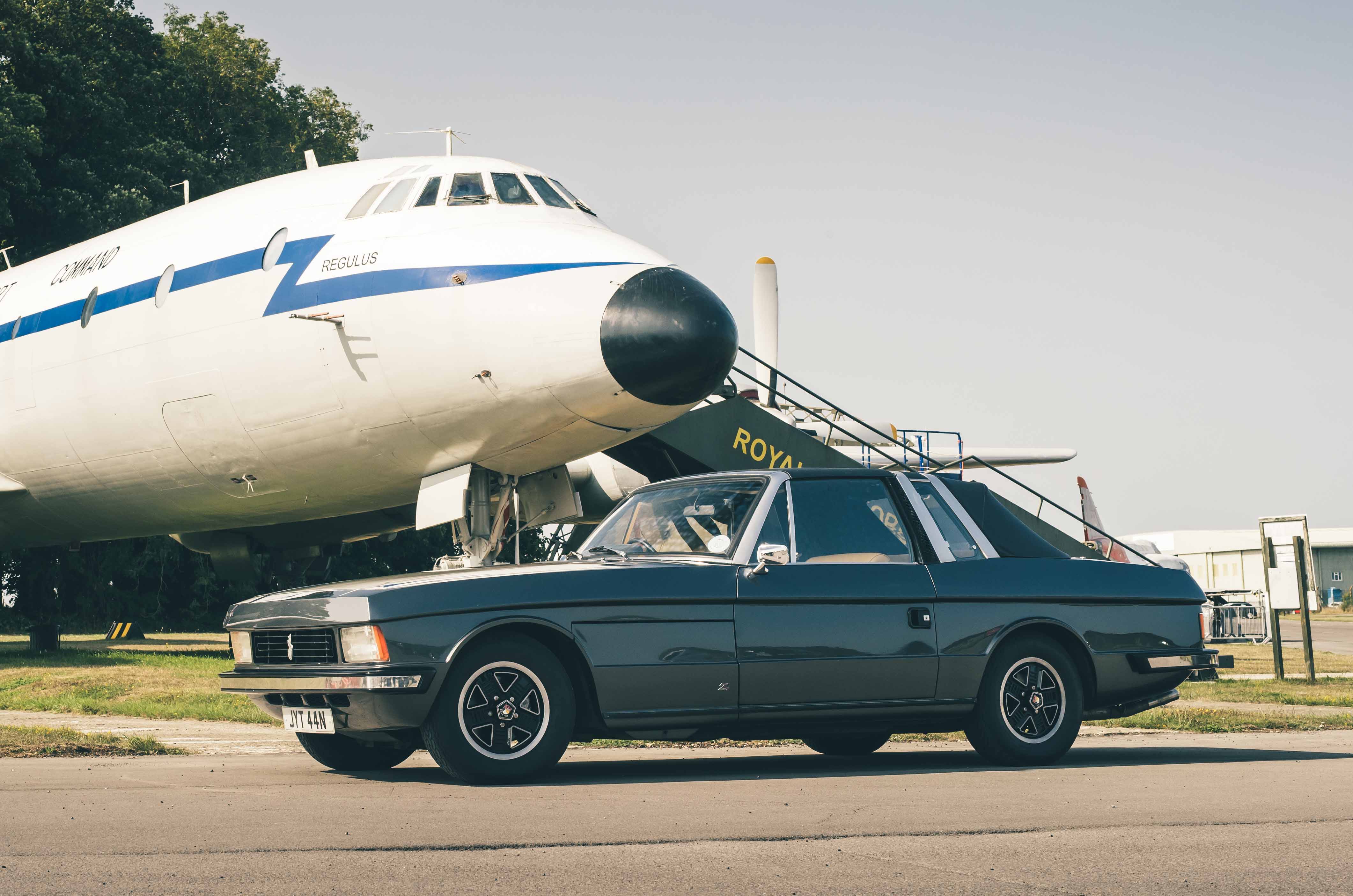
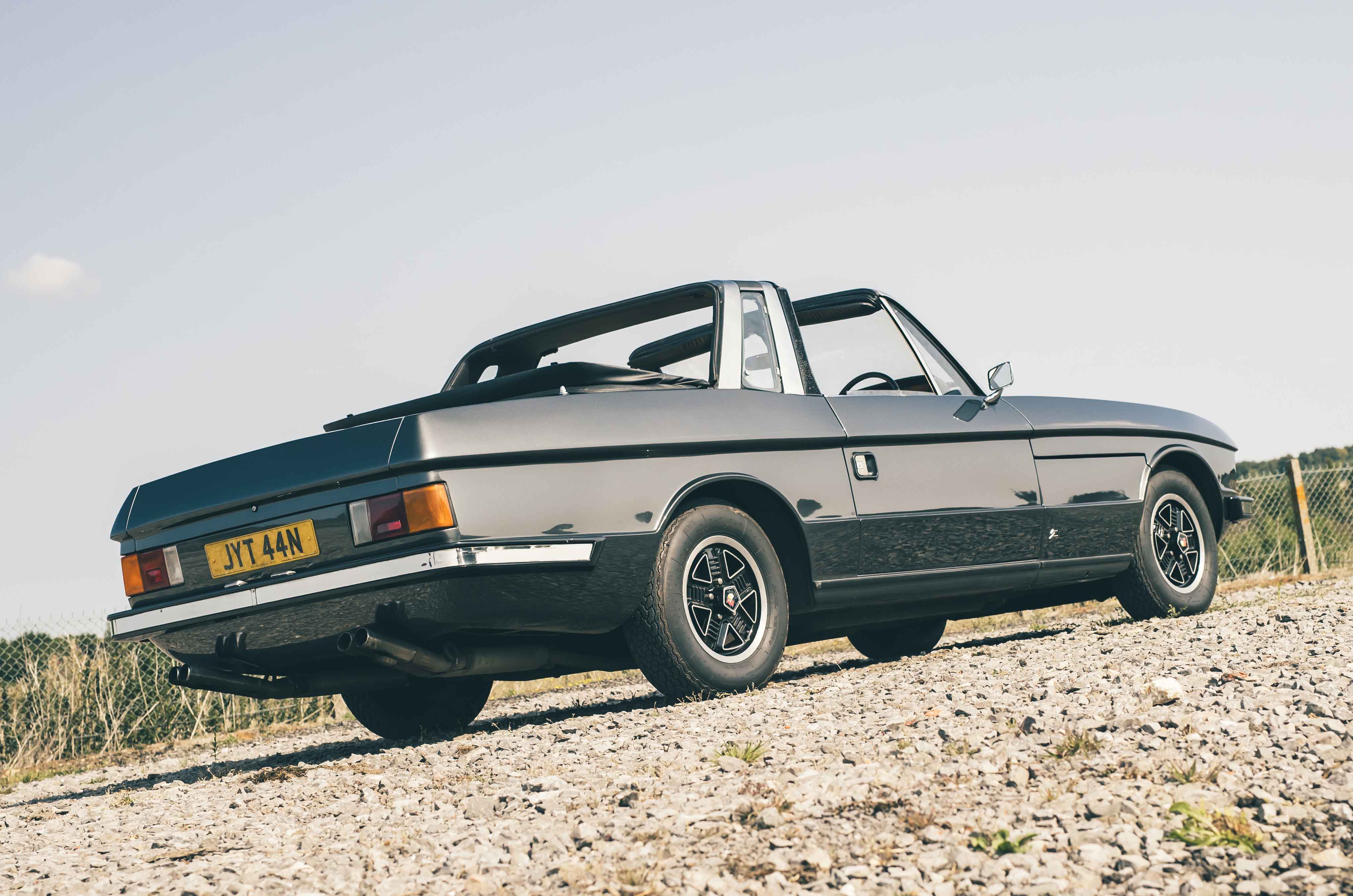
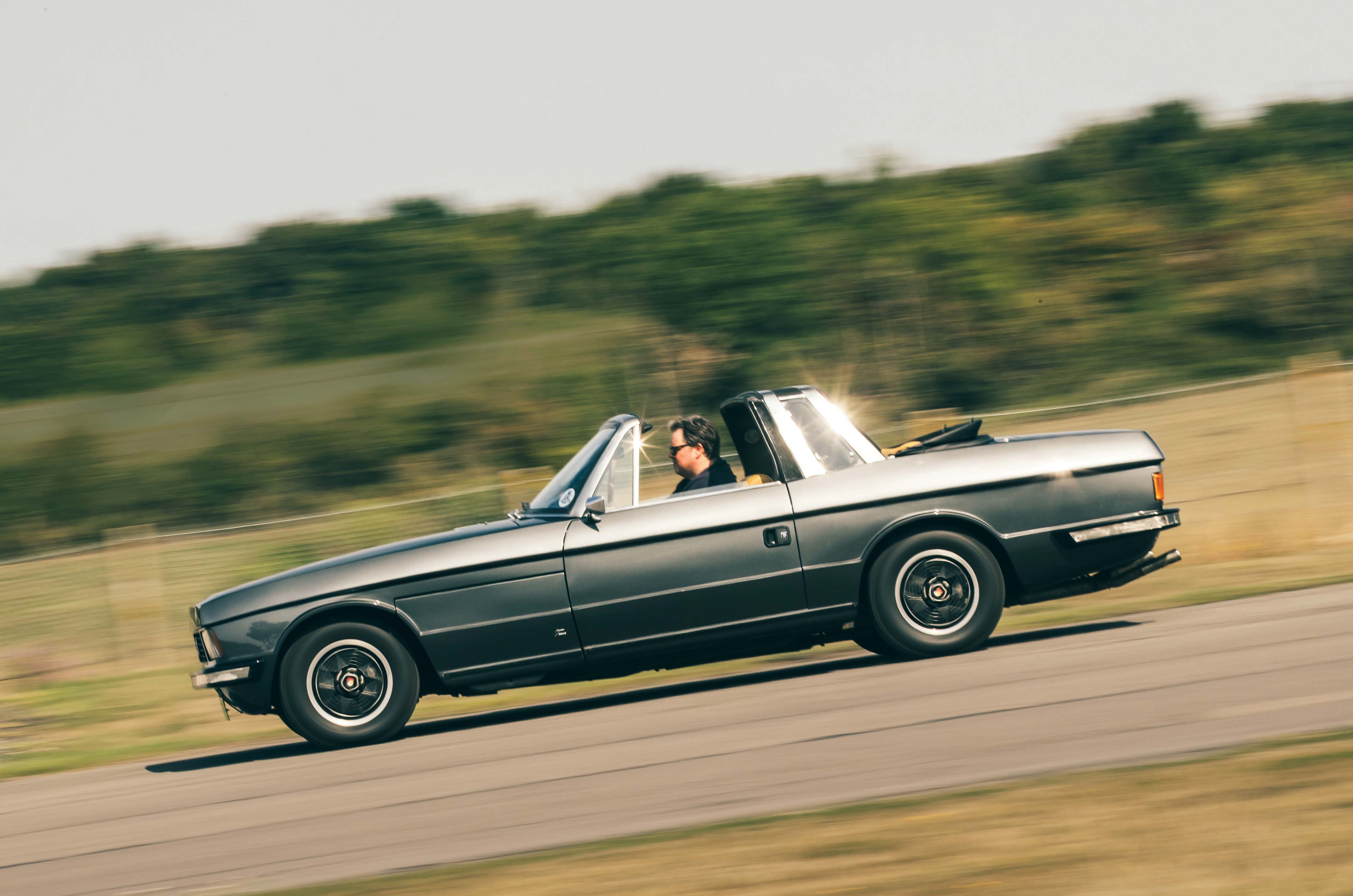
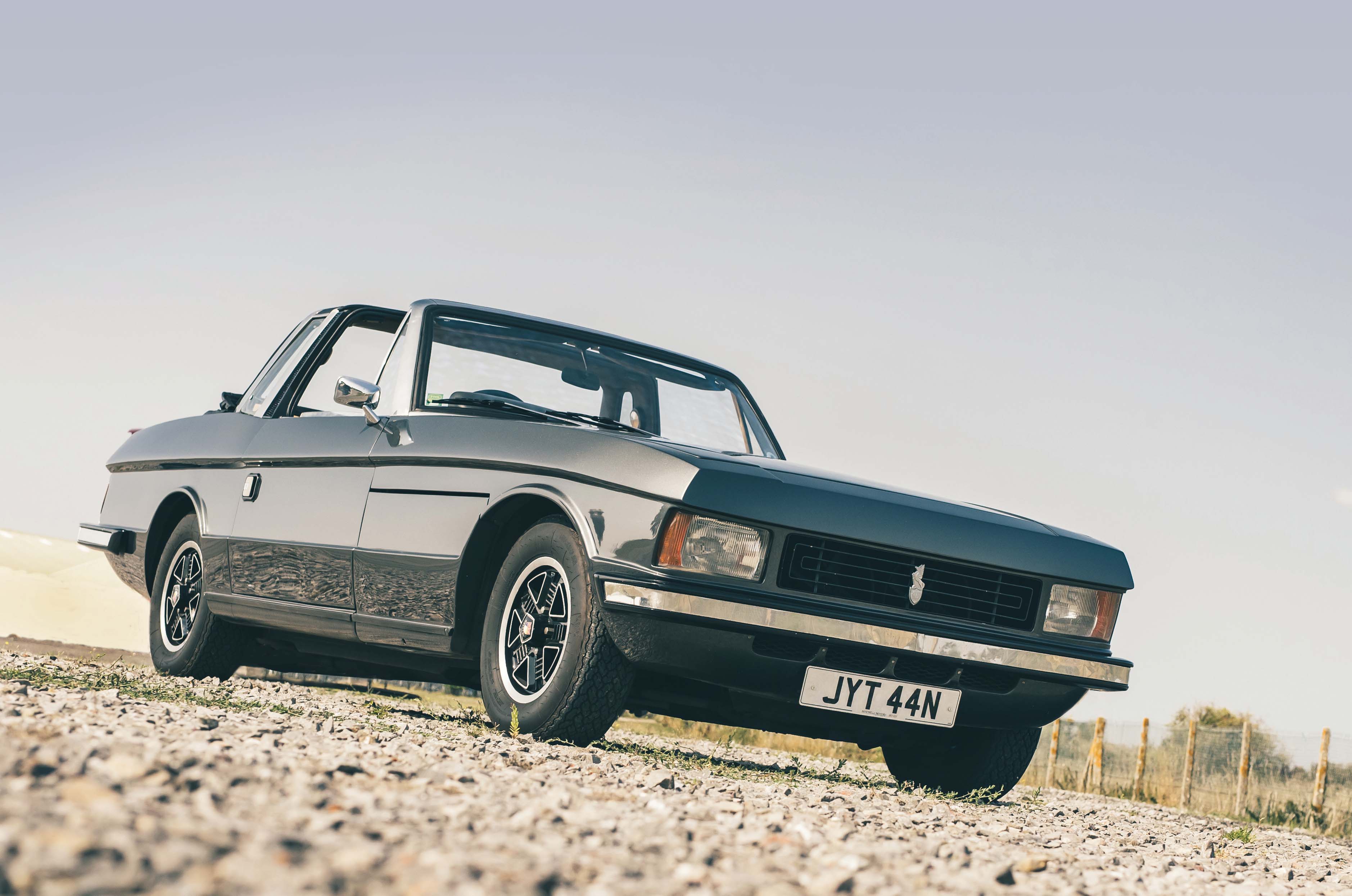
Roof panel off, rear hood down – the work of seconds – and the 412 is superb.
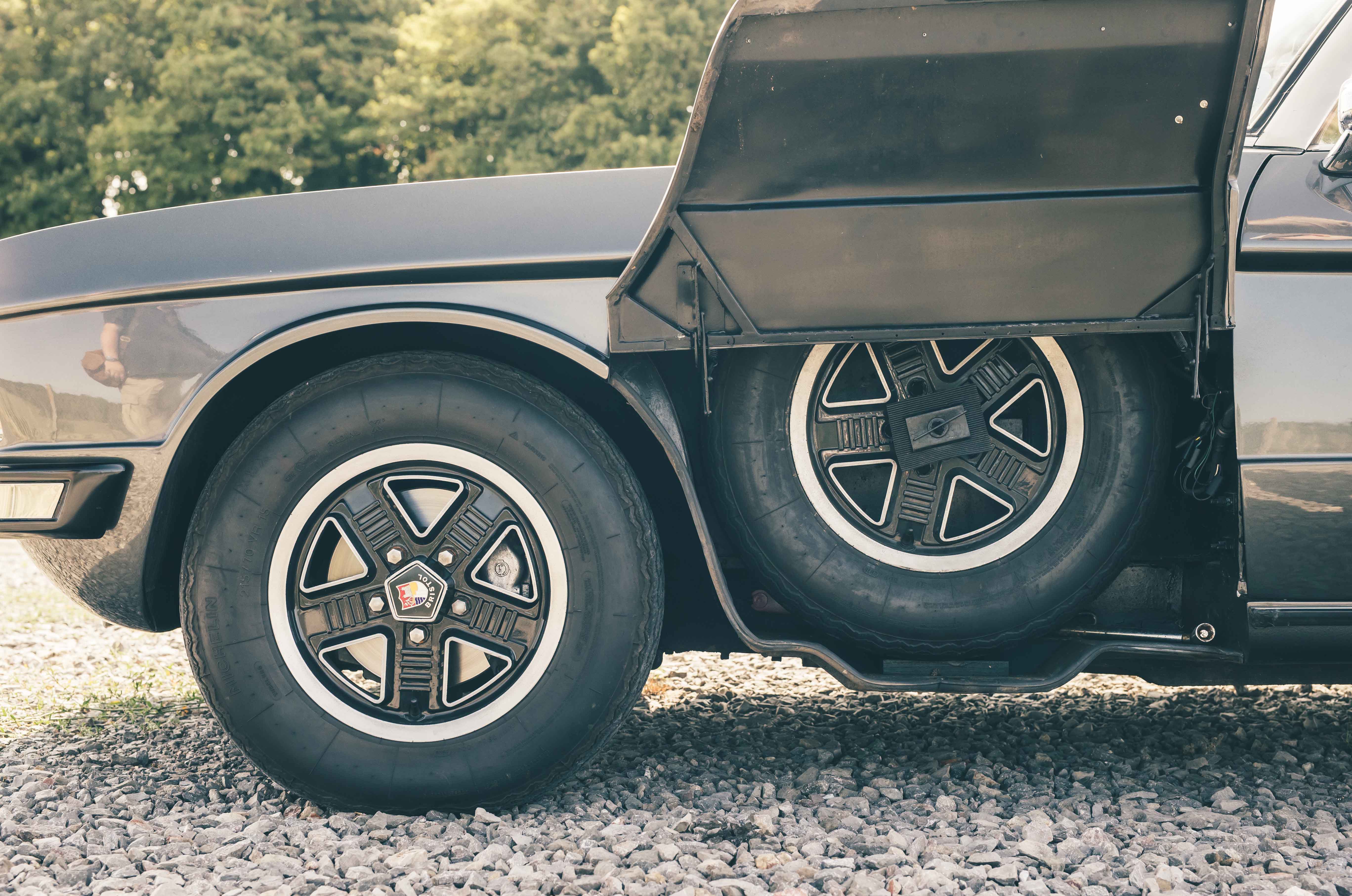
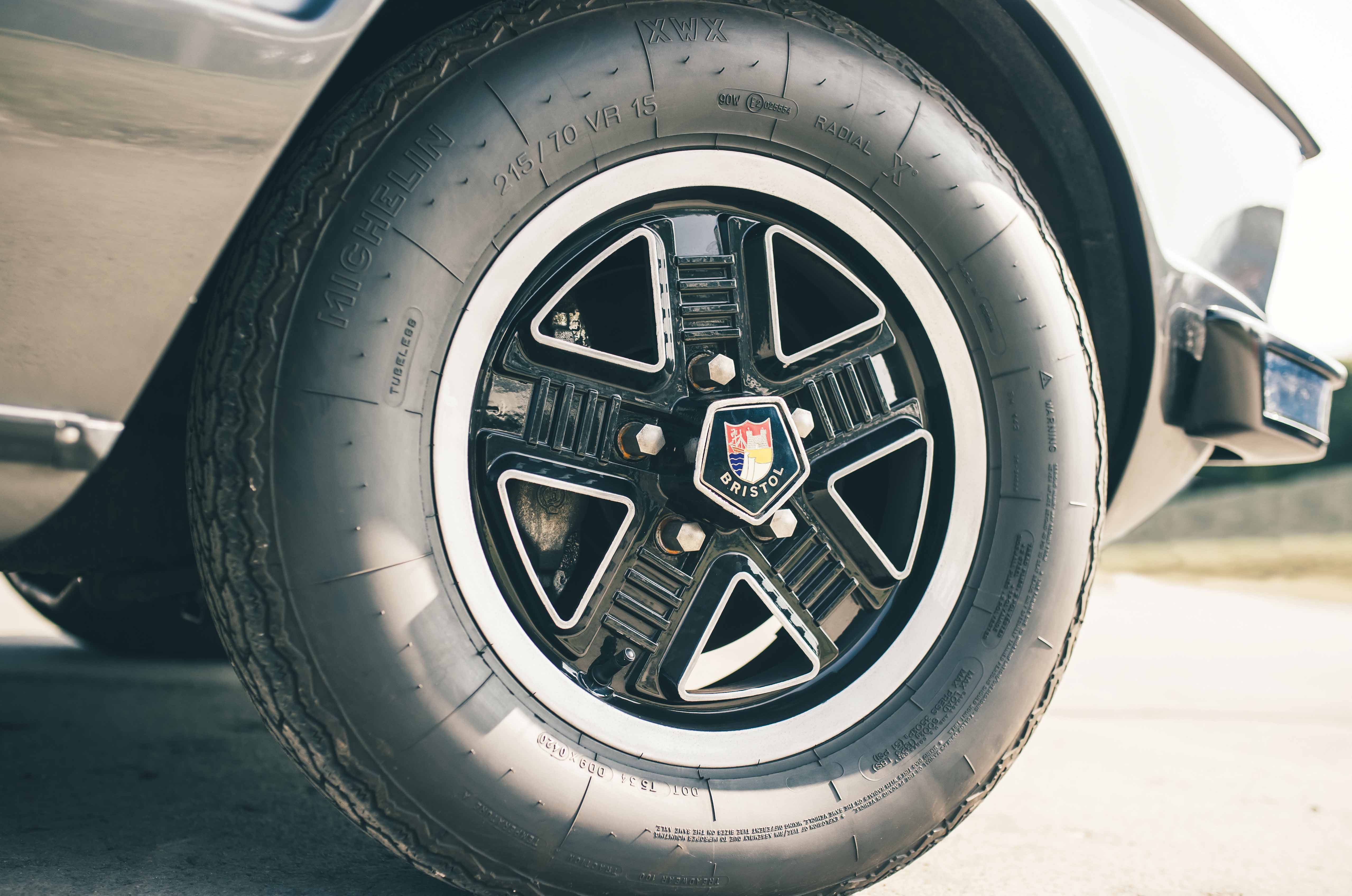
The effortless urge of the V8 suits the smooth Torqueflite automatic ’box, while the generous sidewalls of the 215/70 VR15s give a ride that ignores most road imperfections.
The Bristol 412’s traditional instrument pod looks out of place in this bright cabin
There is the odd shiver transmitted through the steering column (production 412s had additional chassis strengthening), but the power-assisted ZF steering is light and nicely geared.
It feels a trifle vague at the straight ahead, but it does make the keen front end do its bidding – impressing more than many luxury GTs of its era.
Sharp inputs generate immediate responses from the nose, then comes oodles of roll, even at low speeds.
Joining the Fosse Way from a standing start, and with the throttle pinned open it feels like hitching a ride on a tidal wave.
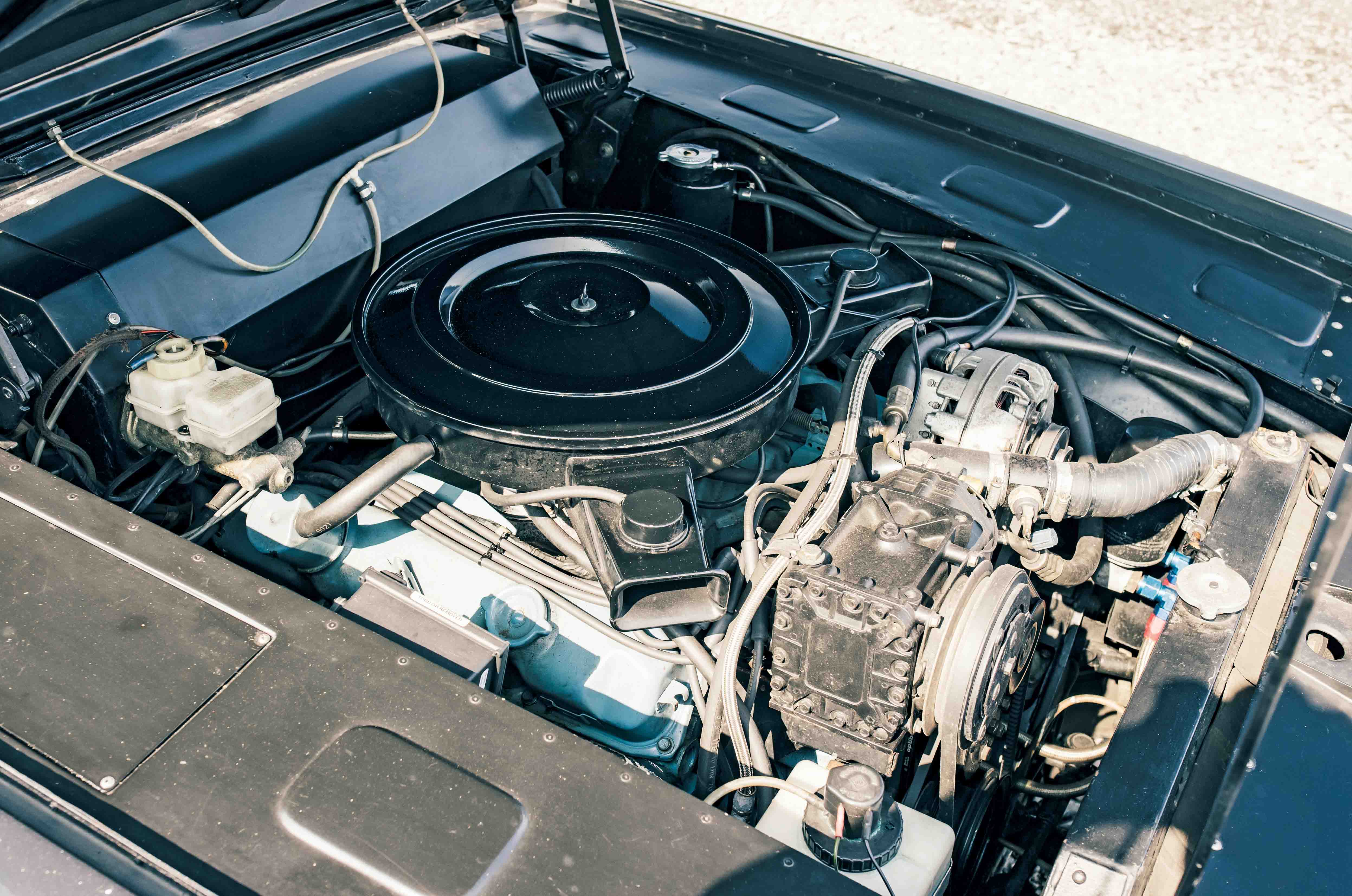
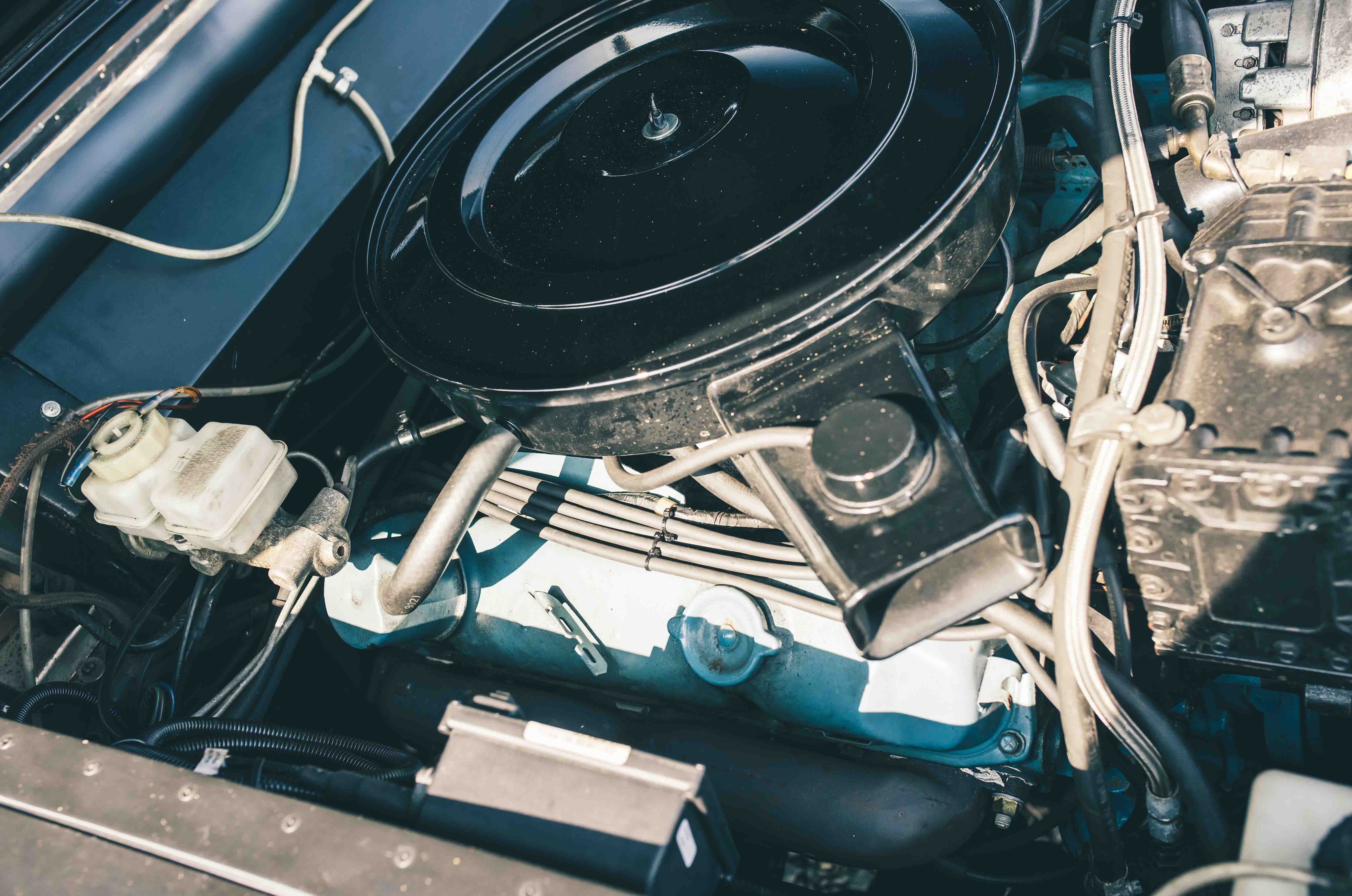
The Bristol 412’s 6556cc V8 makes 260bhp
Your ears bathe in the signature offbeat V8 burble.
The strict horizontal location of that live rear axle, which never tramps about, means you are punted up to traffic speed in little time and with even less drama.
The 412 then cruises as easily and as lazily as this wonderful summer afternoon. The brakes could be better, but you make allowances and, anyway, what’s the rush?
At 60mph, with a mere 1800-1900rpm spooling away, this svelte GT epitomises reassurance and relaxation.
You savour the world rushing past as the velveteen V8 murmurs and your hair is tousled by the warm breeze.
The Bristol 412 is still long, even though the prototype was trimmed by 1½ft
Among marque devotees, Tony Crook is very much like the 412 – both remain divisive, attracting supporters and critics.
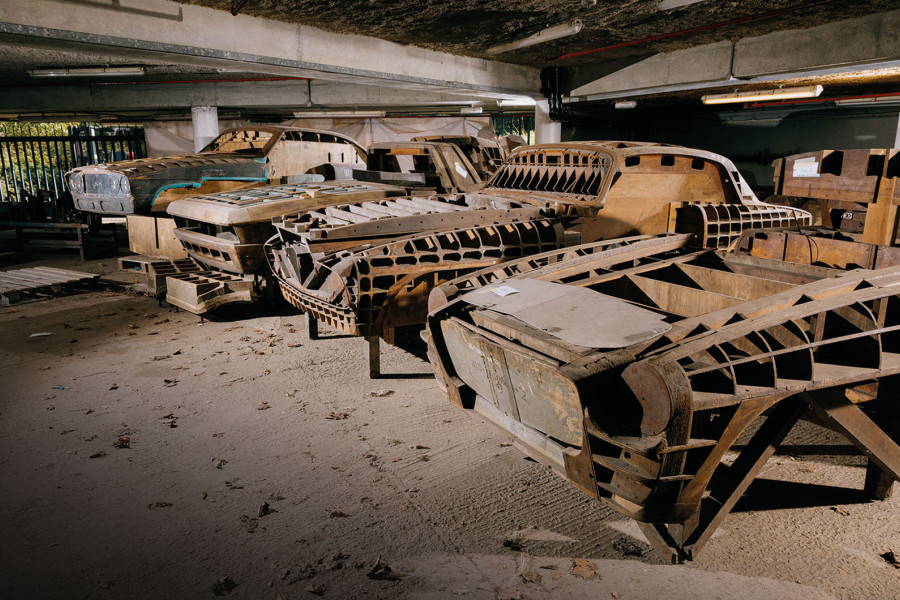
Certainly, working for him could make life far from a piece of cake – most of Bristol’s designers did not survive the 603’s development and Hobbs decided to retire in 1977.
But, as Jeff says: “I can’t knock him because he kept me in work for 25 years. Don’t get me wrong, he was harsh; but he was fair. I liked Crook.”
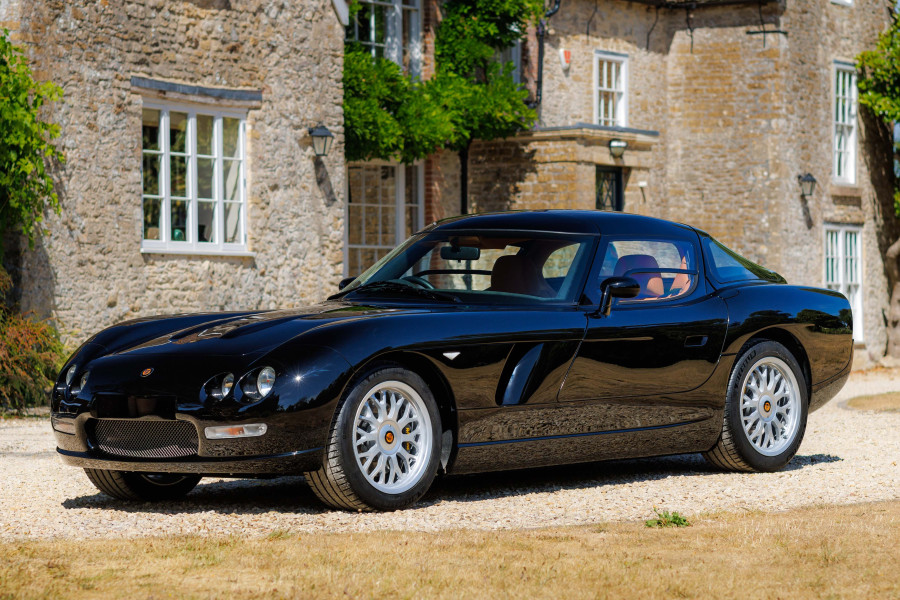
A stop-gap model the 412 may ultimately have been, but the classic world is a far more interesting place thanks to its unmistakable and unconventional presence. Especially so on a gloriously sunny day.
Images: Jack Harrison
Thanks to: James Calladine; Jeff Marsh; Sir George White; Cotswold Airport
Factfile
Bristol 412
- Sold/number built 1975-’82/61
- Construction steel chassis, aluminium body
- Engine all-iron, ohv 6556cc V8, four-choke Thermoquad carburettor
- Max power 260bhp @ 4800rpm
- Max torque 410lb ft @ 3200rpm
- Transmission three-speed automatic, RWD
- Suspension: front independent, by double wishbones, coil springs, adjustable dampers, anti-roll bar rear live axle, longitudinal torsion bars, top links, adjustable dampers with self-levelling, Watt linkage
- Steering power-assisted recirculating ball
- Brakes discs, with servo
- Length 16ft 2½in (4940mm)
- Width 5ft 9¾in (1770mm)
- Height 4ft 8½in (1435mm)
- Wheelbase 9ft 6in (2896mm)
- Weight 3780lb (1714kg)
- 0-60mph 7.4 secs
- Top speed 140mph (est)
- Mpg 13 (est)
- Price new £14,584 (1975)
- Price now £45,000*
*Price correct at date of original publication
Enjoy more of the world’s best classic car content every month when you subscribe to C&SC – get our latest deals here
READ MORE
Zagato Bristols: tri-nation turismo
Your classic: Bristol 410
Aston Martin Lagonda V8 vs Bristol 412 vs Rolls-Royce Camargue: eccentric excess
Simon Charlesworth
Simon Charlesworth is a contributor to Classic & Sports Car