Renault Sport Spider vs Lotus 340R: lighter, faster, better!

| 23 Jan 2026
Classic & Sports Car – Renault Sport Spider vs Lotus 340R: diet poke
It’s doubtful we will ever see the likes of the Lotus 340R and Renault Sport Spider again – at least, not from their modern-day parent companies.

Each was a courageous step into the unknown, led by a desire to create a pure and unadulterated driving experience unfettered by fripperies such as roofs, heaters and sound-deadening.

While four years separated their debuts, they remain two of a kind, which is why they bear comparison today.

But why and how they were conceived reveals two very different tales.

Few sports cars have created quite such a groundswell of positivity as the original Lotus Elise.

At its launch in 1996 it wowed with its extruded-aluminum chassis, rigidity, low weight and sub-£20k price.

Classic & Sports Car – Renault Sport Spider vs Lotus 340R: diet poke
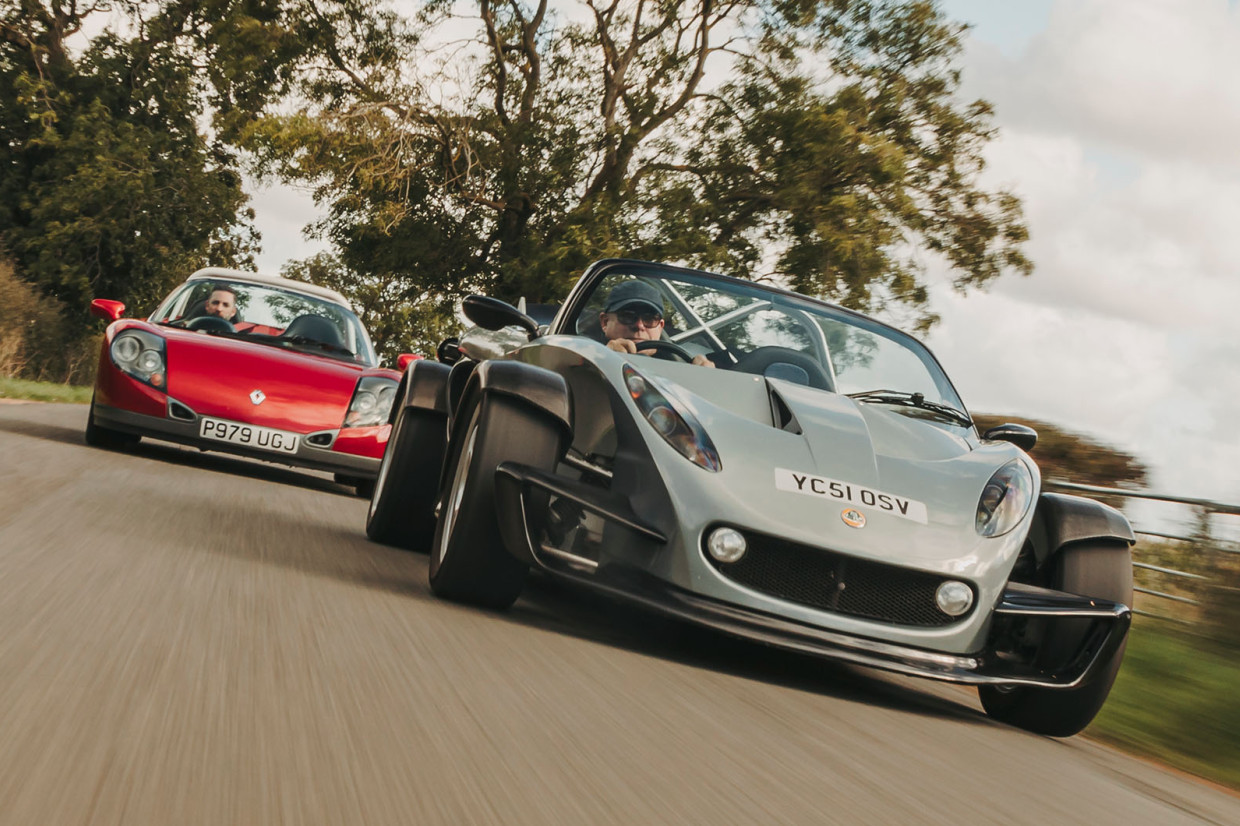
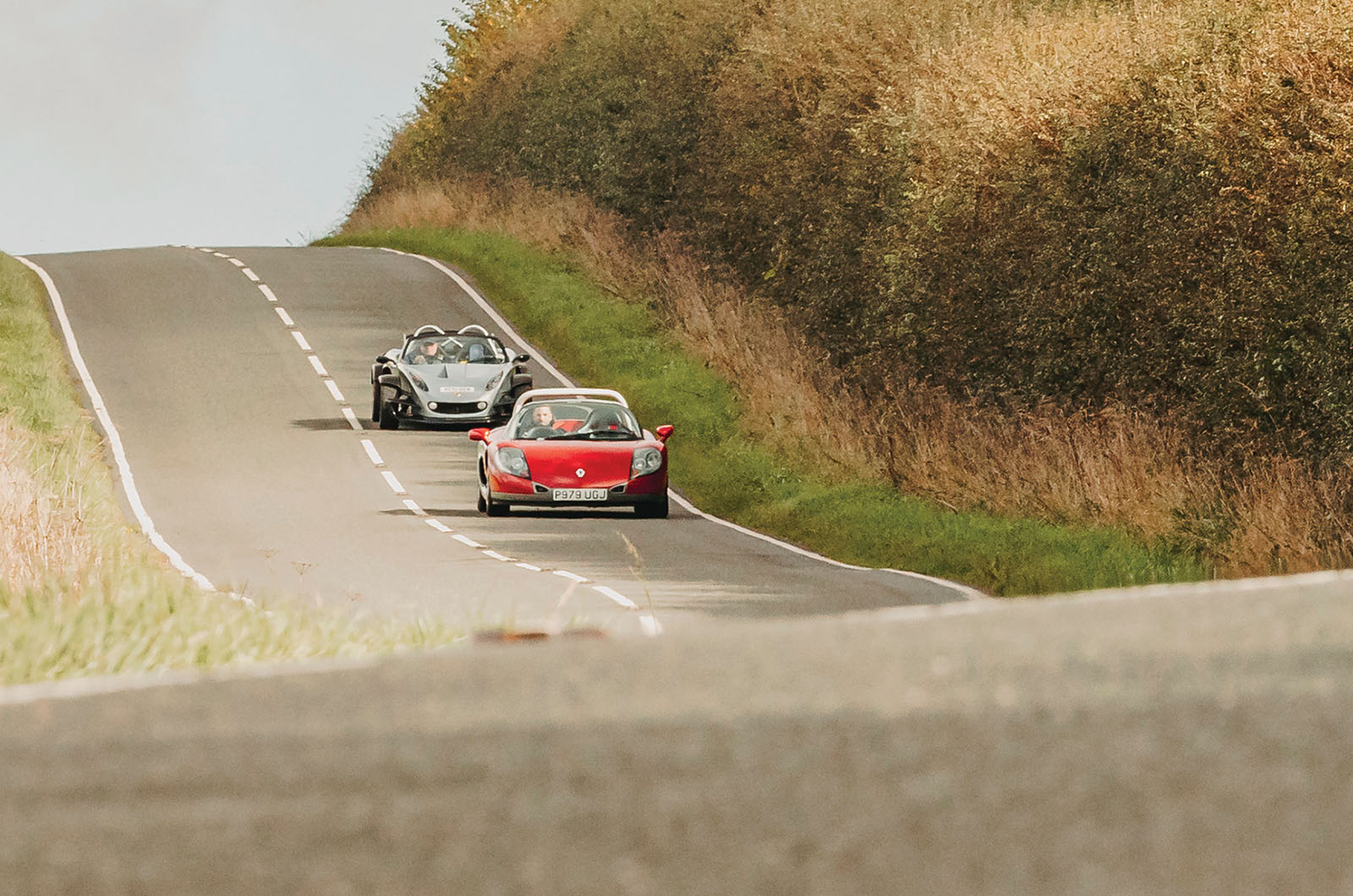
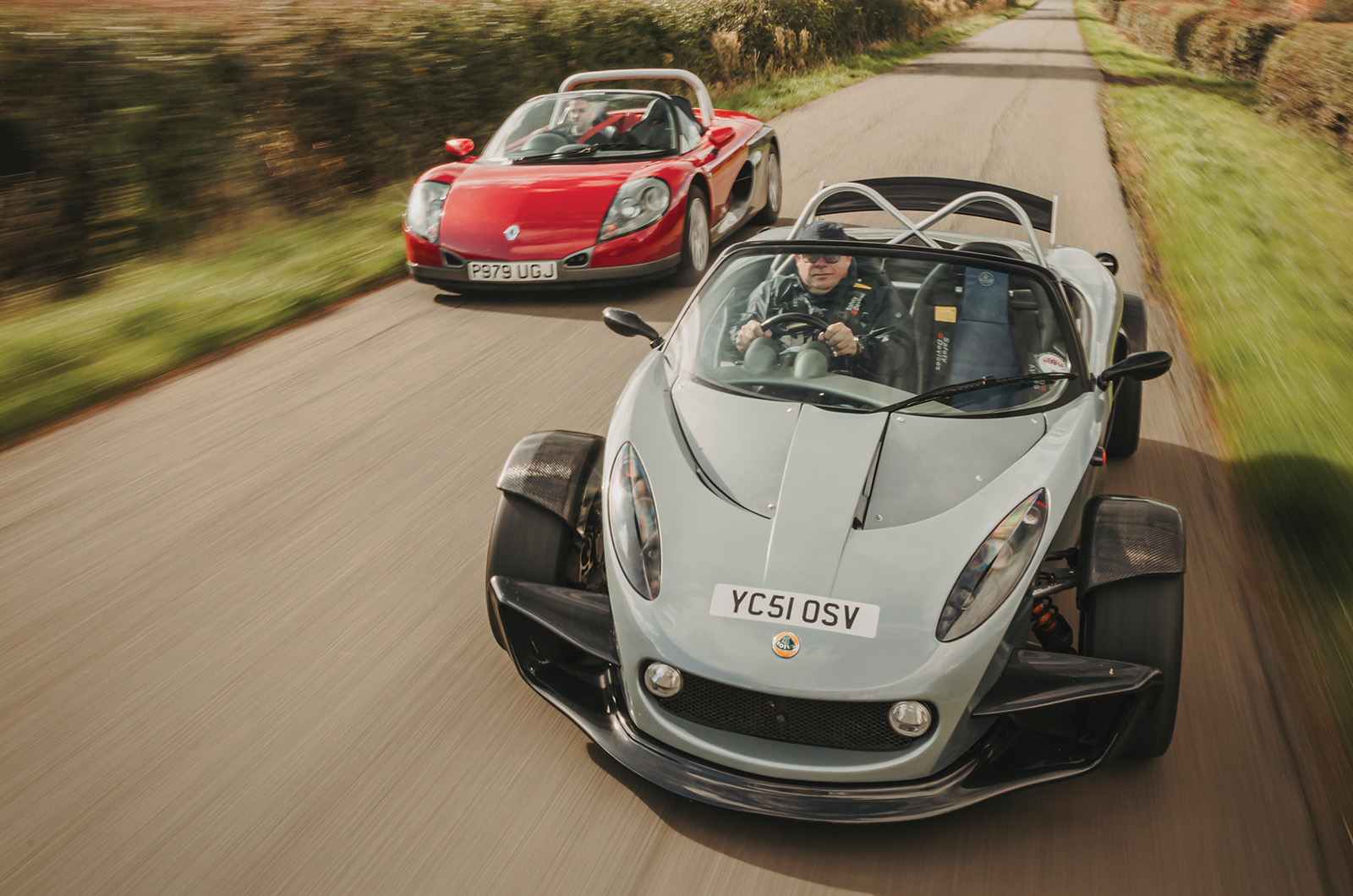
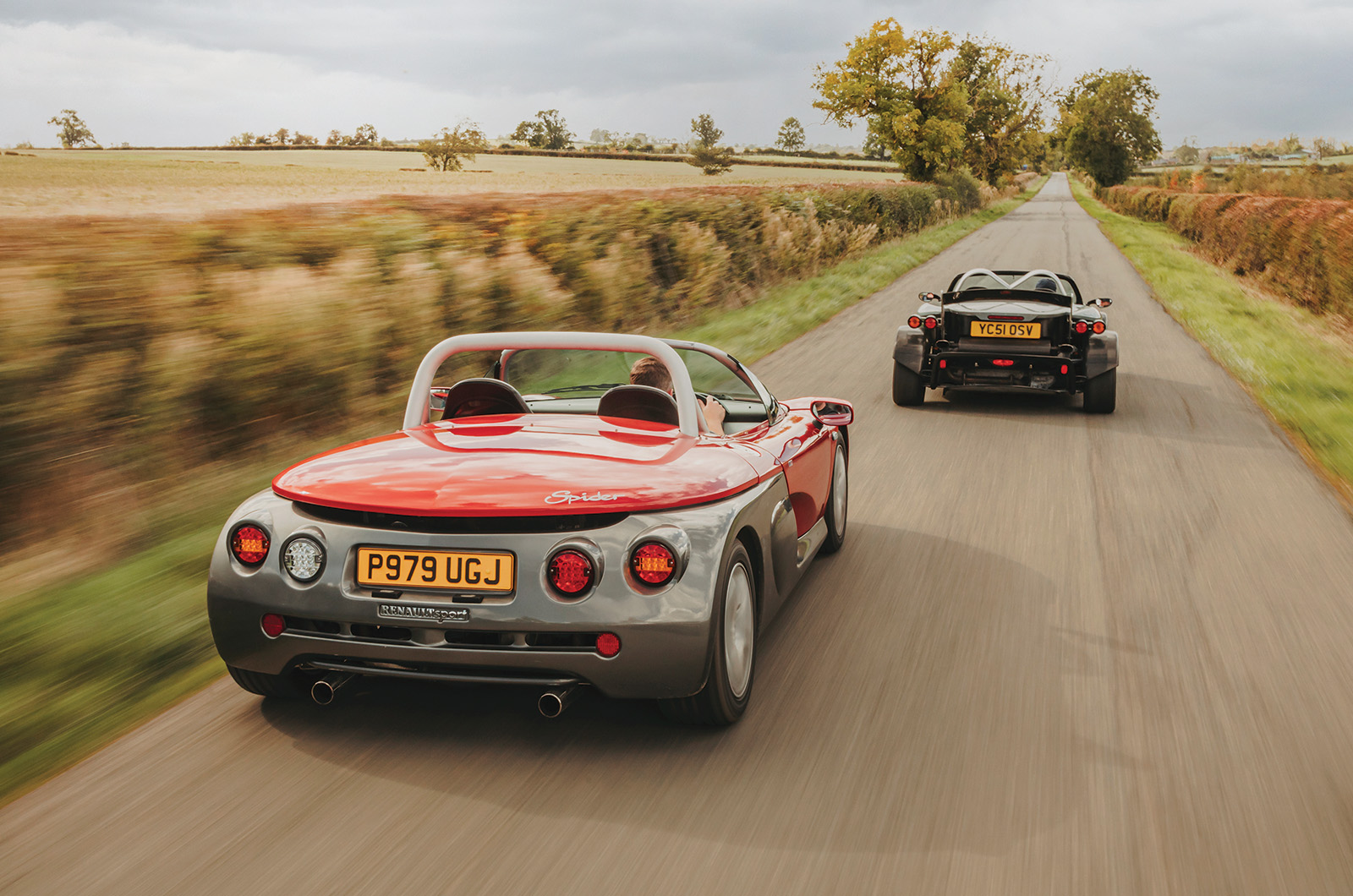
Stripped-out late-’90s roadsters didn’t come much more extreme than the Lotus 340R (closest) and Renault Sport Spider

But it was powered by a relatively humble four-cylinder Rover K-series engine with a mere 118bhp, so there was scope to further exploit its chassis by turning up the wick.

Sport 135 and 160 road models followed, but by 1998 something far more extreme was in the pipeline.

A sort of super-Elise – a derivative shorn of any vestige of practicality to starve it of yet more kilos, with its engine ramped up to 11.

Lotus managing director Chris Knight was also keen to have insight from outside the company about what such a leftfield creation should look like and how it should perform, and, in an unprecedented move, that led him to this magazine’s sister title, Autocar.

Classic & Sports Car – Renault Sport Spider vs Lotus 340R: diet poke
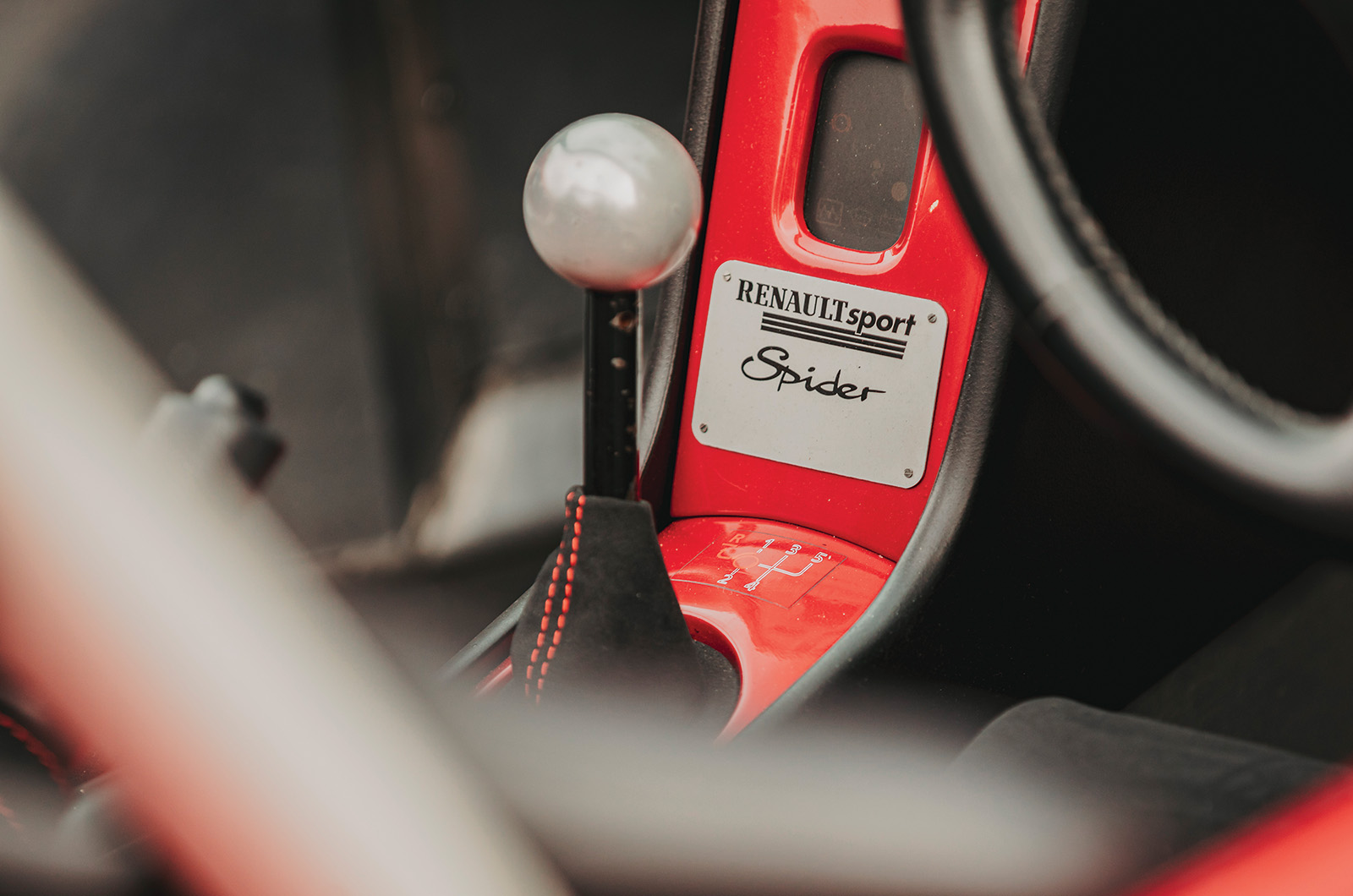
The Renault Sport Spider boasts an easy gearshift through its narrow gate

“The 340R came about because, having been big supporters of the Lotus Elise since its launch, the magazine was asked to take part in the creation of a more extreme version,” remembers Steve Cropley, Autocar’s editor in chief.

“We worked with the Hethel design staff, choosing between radical proposals and aiming to help create something that was even lighter than the original and thus faster.”

When Autocar first visited Hethel in October 1998, the Lotus design team, led by Russell Carr, was working with a full-sized clay body on a production Elise chassis.

The magazine’s original proposal had been for a 500KG (1102LB) target curbweight.

As Steve recalls: “We even came up with the name – ‘340’ for the power-to-weight ratio, followed by ‘R’ in honor of the Elan 26R.”

Classic & Sports Car – Renault Sport Spider vs Lotus 340R: diet poke
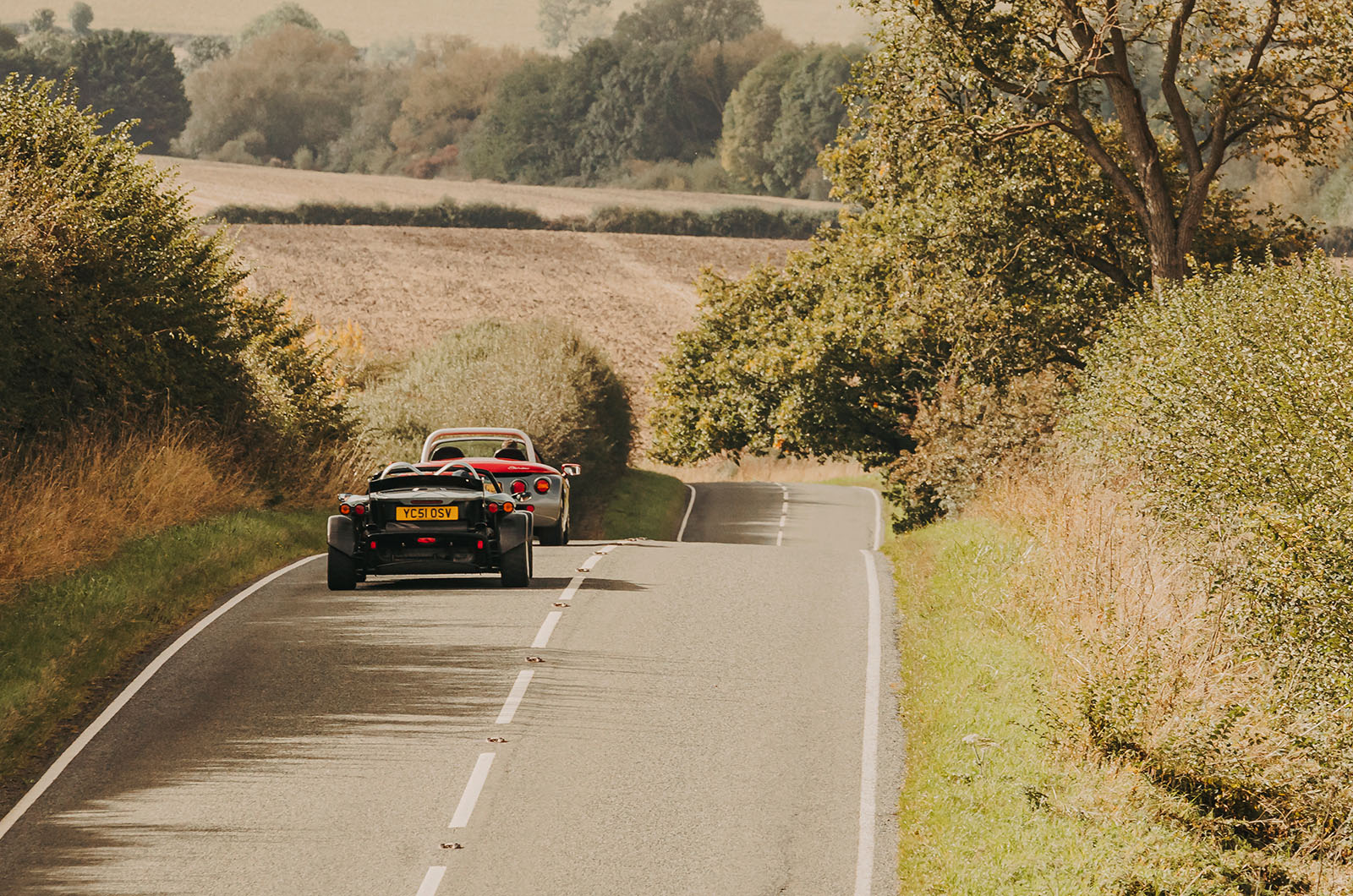
The Lotus 340R is very quick on a back road

But the need to meet Type Approval regulations raised the target weight to nearer 600-650kg (it finally hit 675KG (1488LB) in production guise), and the ‘340’ label was repurposed to mark the number of cars Lotus would build.

Given how pared down the 340R’s skeletal body was compared to the regular Elise, it was surprising that only 50KG (110LB) had been saved.

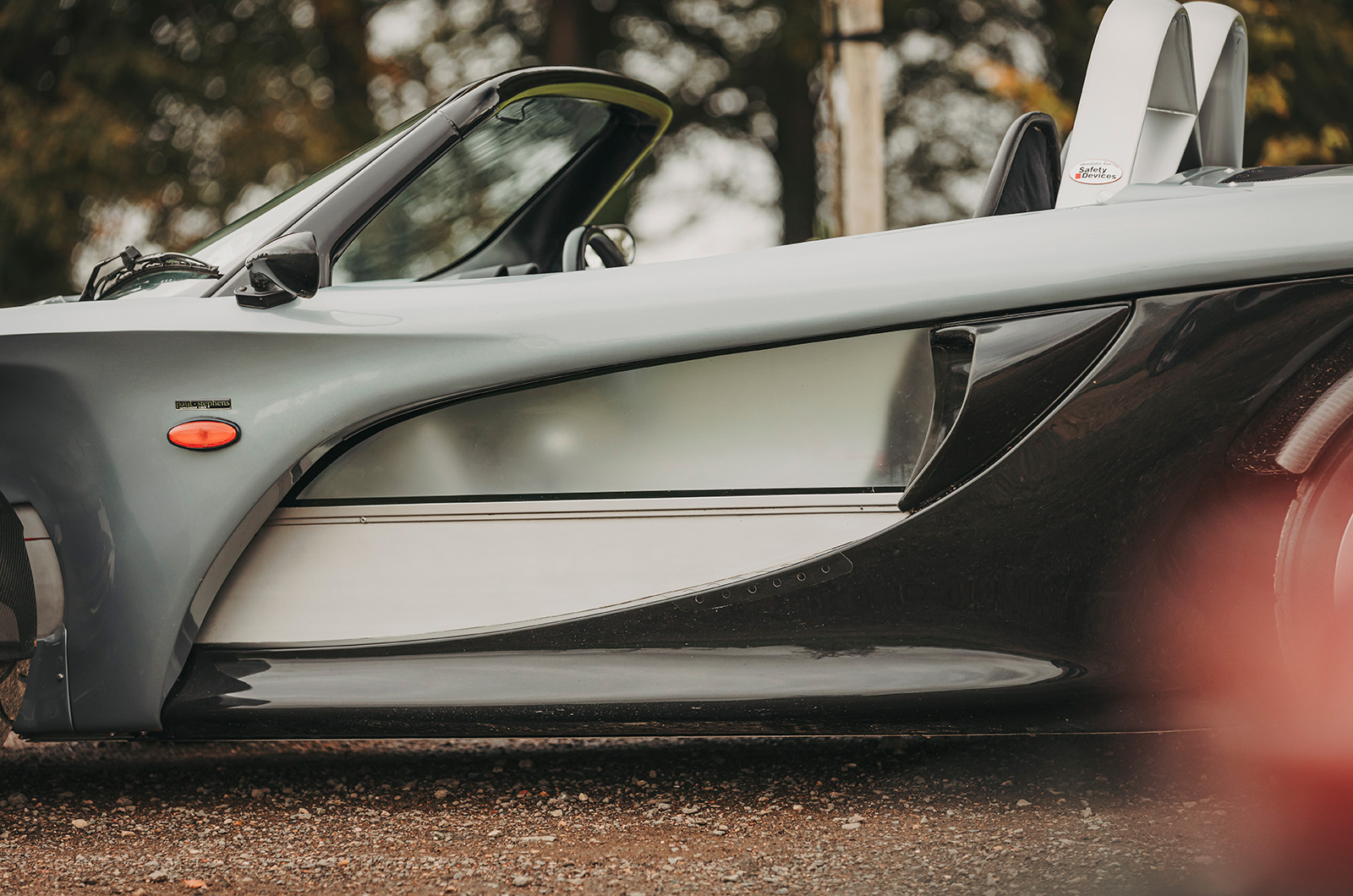
The new car’s composite body had no roof or doors, meaning a high step over the tub to enter the cabin.

There was even debate between the journalists and Lotus designers about the latter’s plans not to include a windshield.

But having had a poor experience with the original European-market Renault Sport Spider, which had nothing more than an ‘aeroscreen’, Autocar’s wish for one held sway.

Classic & Sports Car – Renault Sport Spider vs Lotus 340R: diet poke

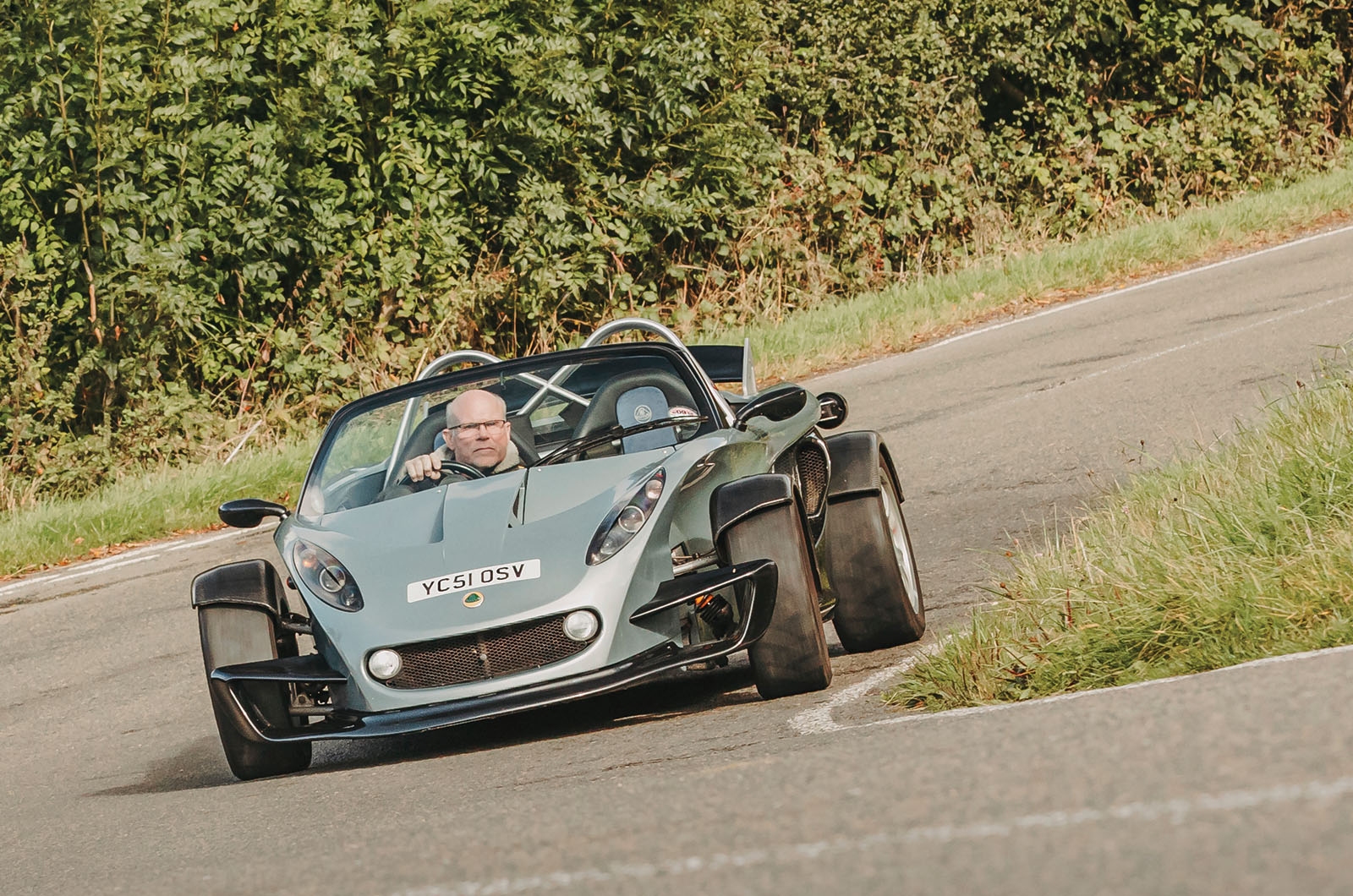
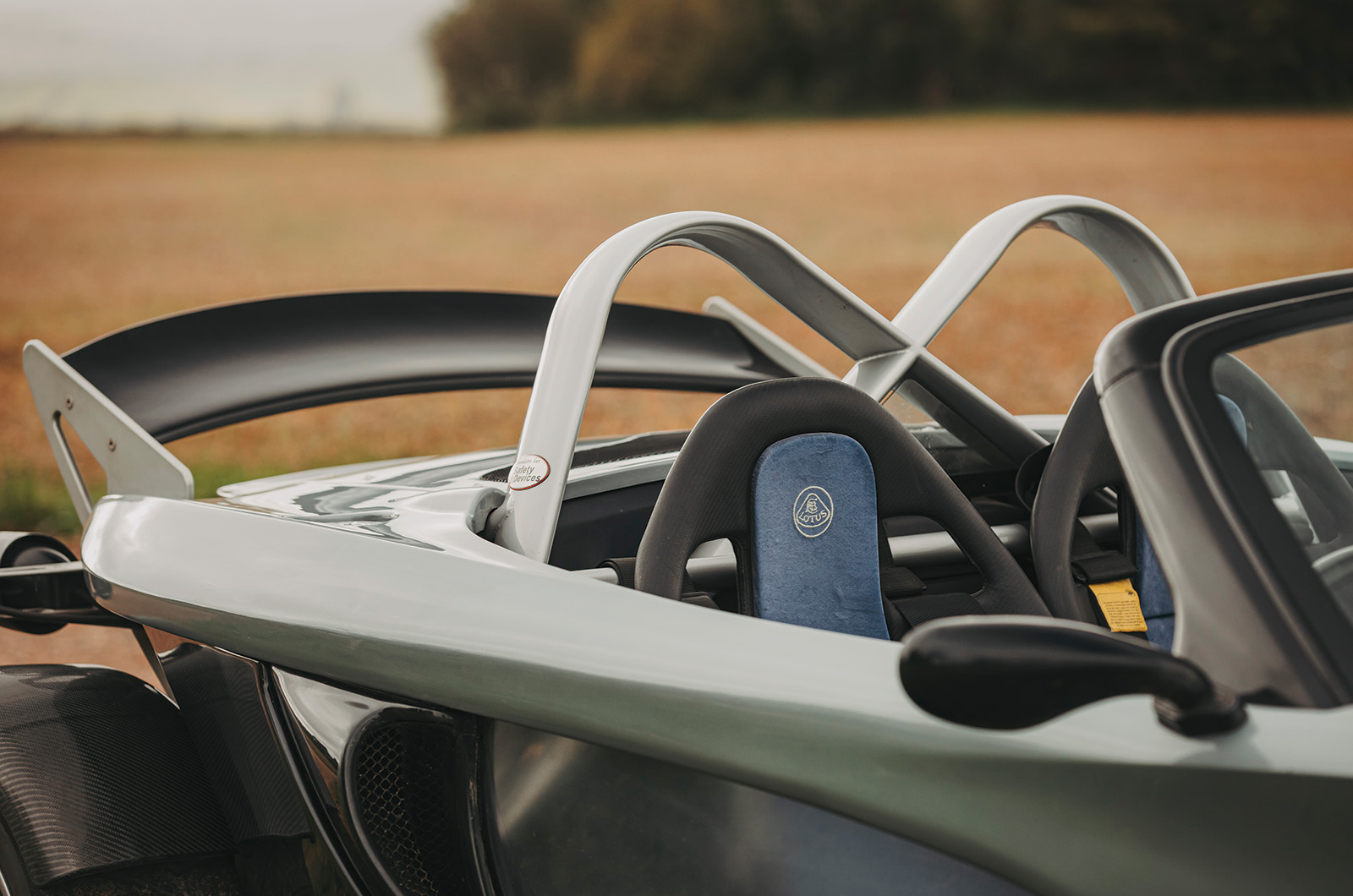
The Lotus 340R’s high side rails and twin roll-over hoops

Elsewhere, clever solutions to bodywork reduction abounded.

Homologation rules banned open-wheeled road cars, so the smallest clip-on mudguards allowed by law were used.

Formula One-style winglets on either side of the nose cone, a broad bib spoiler and an acutely angled rear wing created real downforce at speed.

The end result looked barely road-legal and, as Autocar would quip later in its first review, the 340R was like ‘an Elise in a bikini rather than a one-piece swimsuit’.

Underpinning the 340R was the Elise’s super-rigid extruded-aluminum chassis, but using the track-only Sport 190 model’s set-up, with lower and stiffer springs, and uprated dampers.

Classic & Sports Car – Renault Sport Spider vs Lotus 340R: diet poke
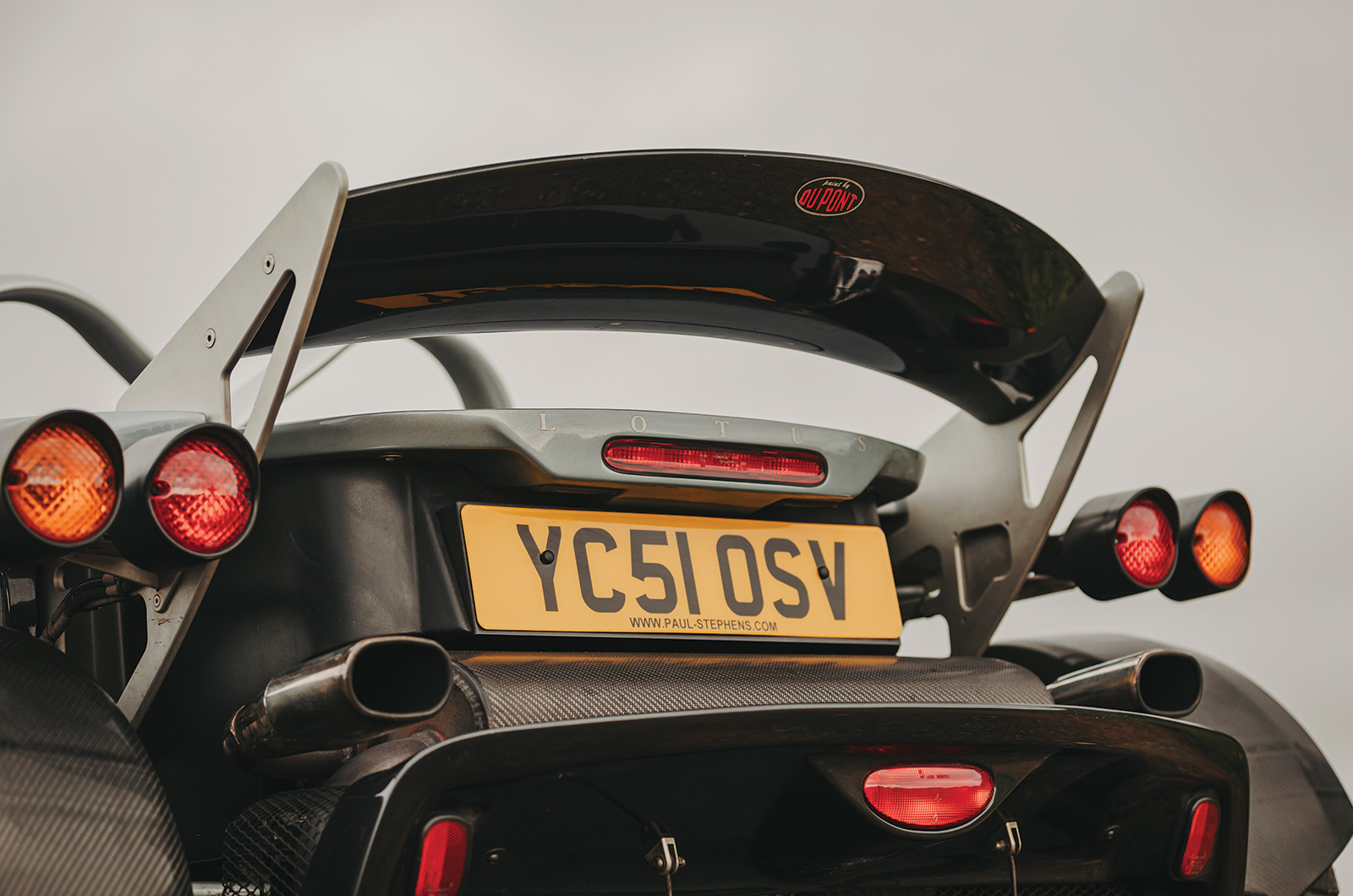
The Lotus 340R’s tail-lights are fixed directly to aluminum extrusions

Yokohama was approached to produce a bespoke version of its sticky A032 tire for the car, to be known as the A038 LTS, and the Lotus 340R wore 195/50s on 15in Tecnomagnesio wheels at the front and 225/45s on 16s at the rear.

Alas, the 190bhp Sport model’s engine – the highest-output K-series unit available – wasn’t type-approved (although it does power ‘our’ test car, of which more later), therefore the 177bhp engine was used.

It produced maximum power at an unruly 7800rpm, which, combined with the 340R’s higher-than-planned curbweight, resulted in a power-to-weight ratio of 262bhp per tonne.

Classic & Sports Car – Renault Sport Spider vs Lotus 340R: diet poke
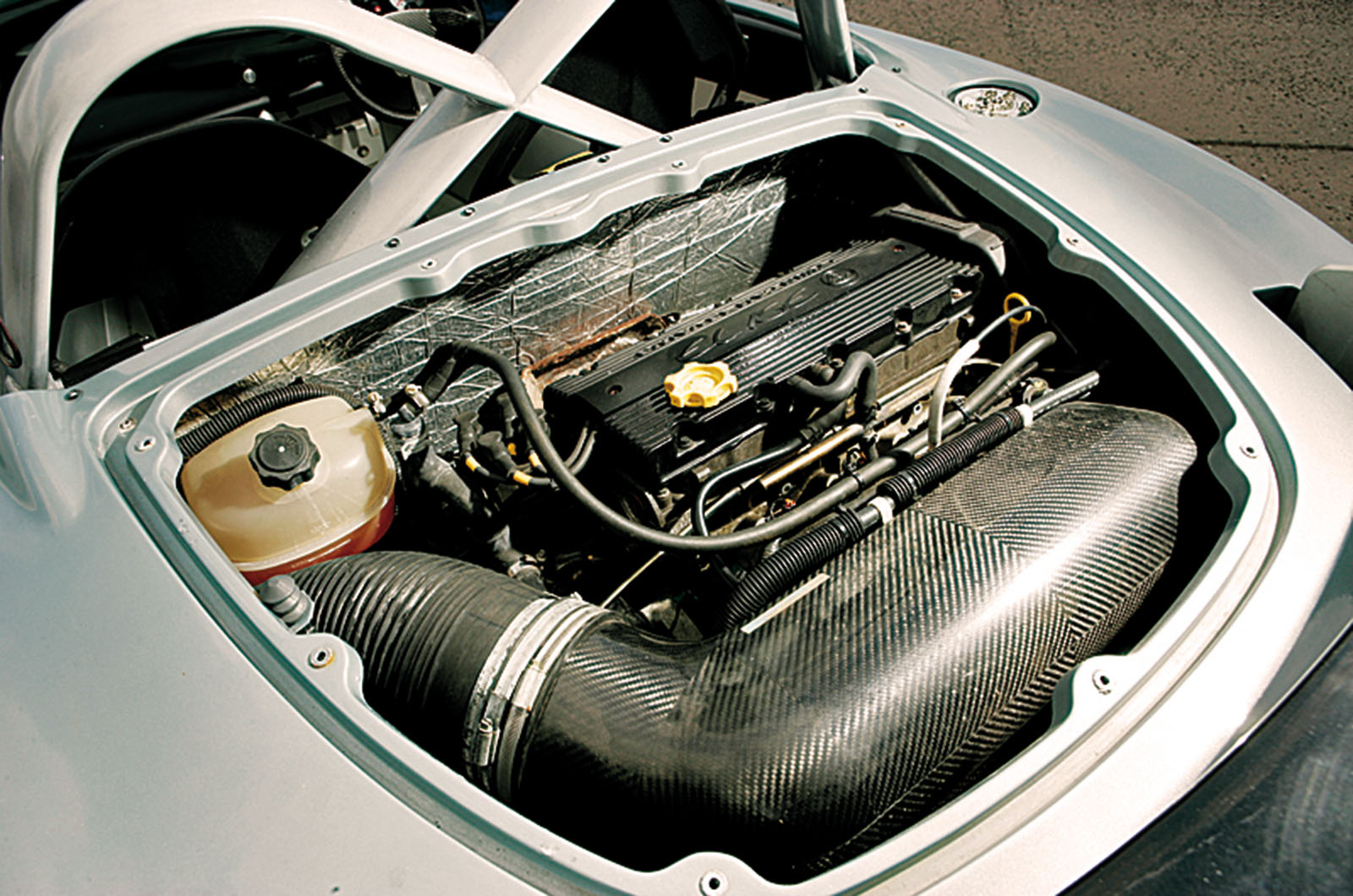
Lotus’ breathed-on Rover K-series engine makes 190bhp here

Drive went to the rear via the Sport 190’s uprated, close-ratio five-speed gearbox.

When the 340R was unveiled at the British Motor Show in October 1998, it hadn’t yet been signed off for production, but the overwhelmingly positive response it received sealed the deal.

Just over a year later, in December 1999, Autocar’s Chris Harris was first to drive it, declaring: ‘Few cars at any price provide similar sorts of thrills.’

By then, before production started two months later, all 340 340Rs had been sold, each costing £35,000.

You could proffer that such high demand for a limited-run Lotus was quite predictable.

Classic & Sports Car – Renault Sport Spider vs Lotus 340R: diet poke
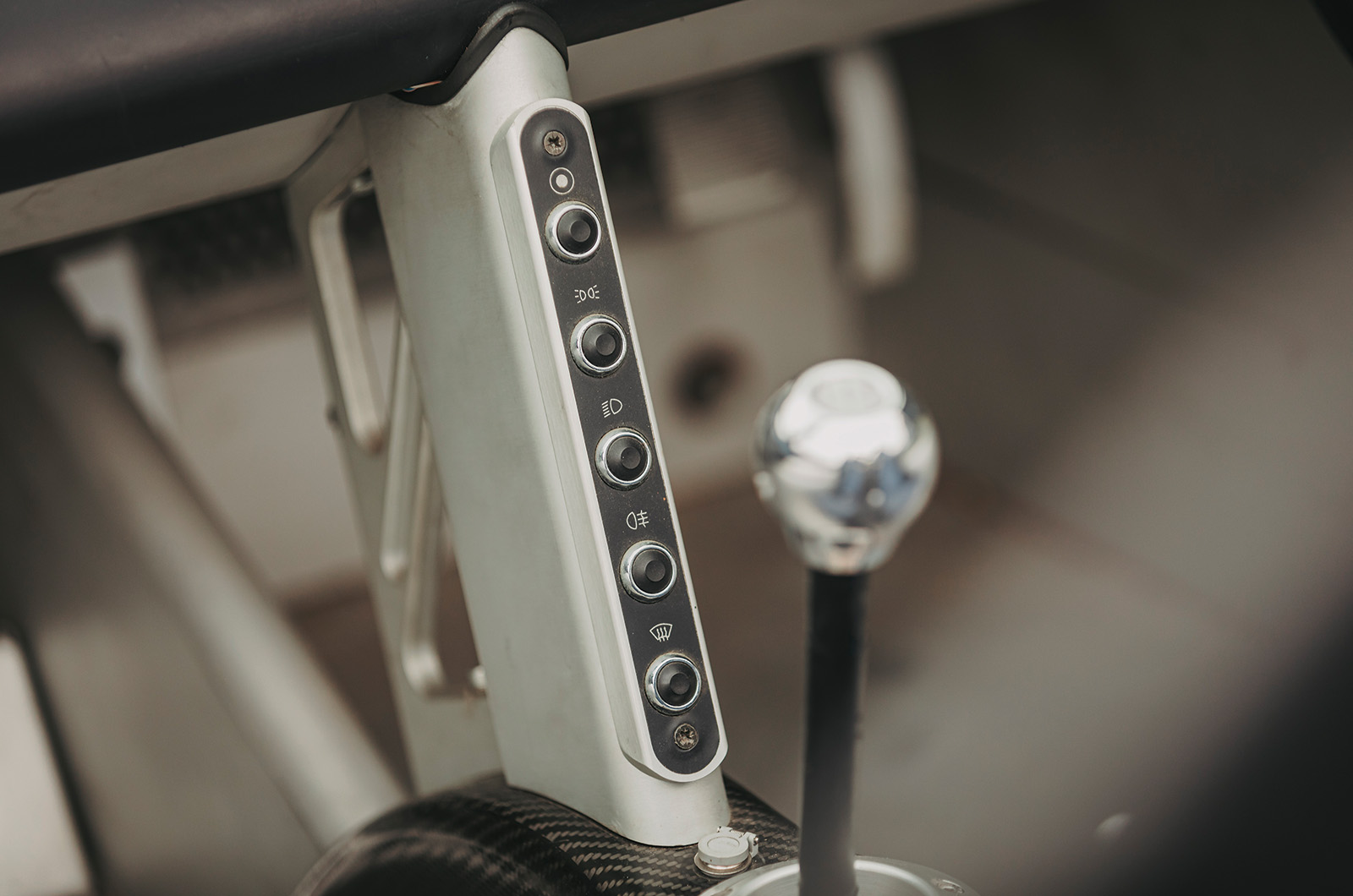
Simple controls in the back-to-basics Lotus 340R

But if something similar were to emerge from a mainstream auto maker? Surely not…

Yet, in 1993, Renault’s senior vice president for quality and corporate design, Patrick le Quément, argued otherwise.

With Renault then riding a wave of F1 success, le Quément collaborated with Renault Sport’s Christian Contzen about creating a low-volume sports car that could form the basis of a one-make race series and be homologated for road use.

The pair agreed it should be a modern-day interpretation of the Caterham Super Seven (giving both of our test cars a Colin Chapman link), and within nine months le Quément had styled a dramatic, quite un-Renault-like design for a two-seater, mid-engined roadster.

Classic & Sports Car – Renault Sport Spider vs Lotus 340R: diet poke
The Sport Spider (closest) was inspired in part by Renault’s success in F1; the Lotus 340R was developed with input from Autocar journalists

A full-sized model was created, from which Nogaro Technologies took a mold and started to develop a platform, working with Hydro Aluminum in Norway, soon to be the supplier of the new Lotus Elise’s extruded-aluminum chassis.

As with the 340R, the speed at which the Sport Spider project progressed was startling.

Series production was approved by October the following year, and a prototype appeared at Geneva in March 1995.

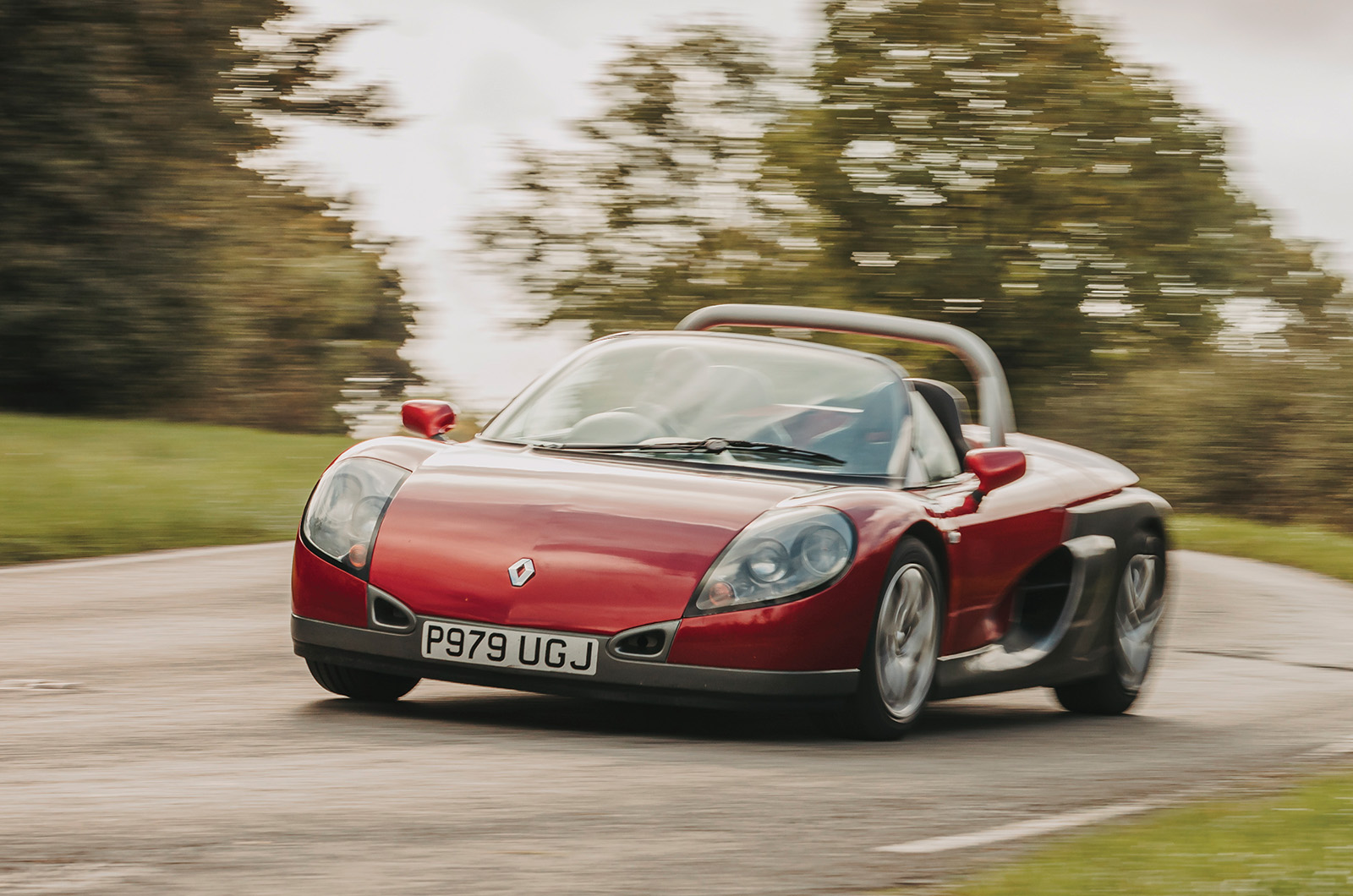
Renault’s concept of a car that would keep occupants ‘in touch with the elements and ensure a level of participation through feel and vision more generally associated with motorcycle riding’ was borne out in the design: the low and curvaceous Sport Spider truly played the track-car card with bravado.

Classic & Sports Car – Renault Sport Spider vs Lotus 340R: diet poke

The Renault Sport Spider is flexible and brisk rather than outright fast

Stealing a march on the yet-to-be-launched Lotus Elise, its composite fiberglass bodywork was underpinned by a welded aluminum spaceframe and front subframe, with 3mm (0.1in) aluminum extrusions providing exceptional torsional stiffness.

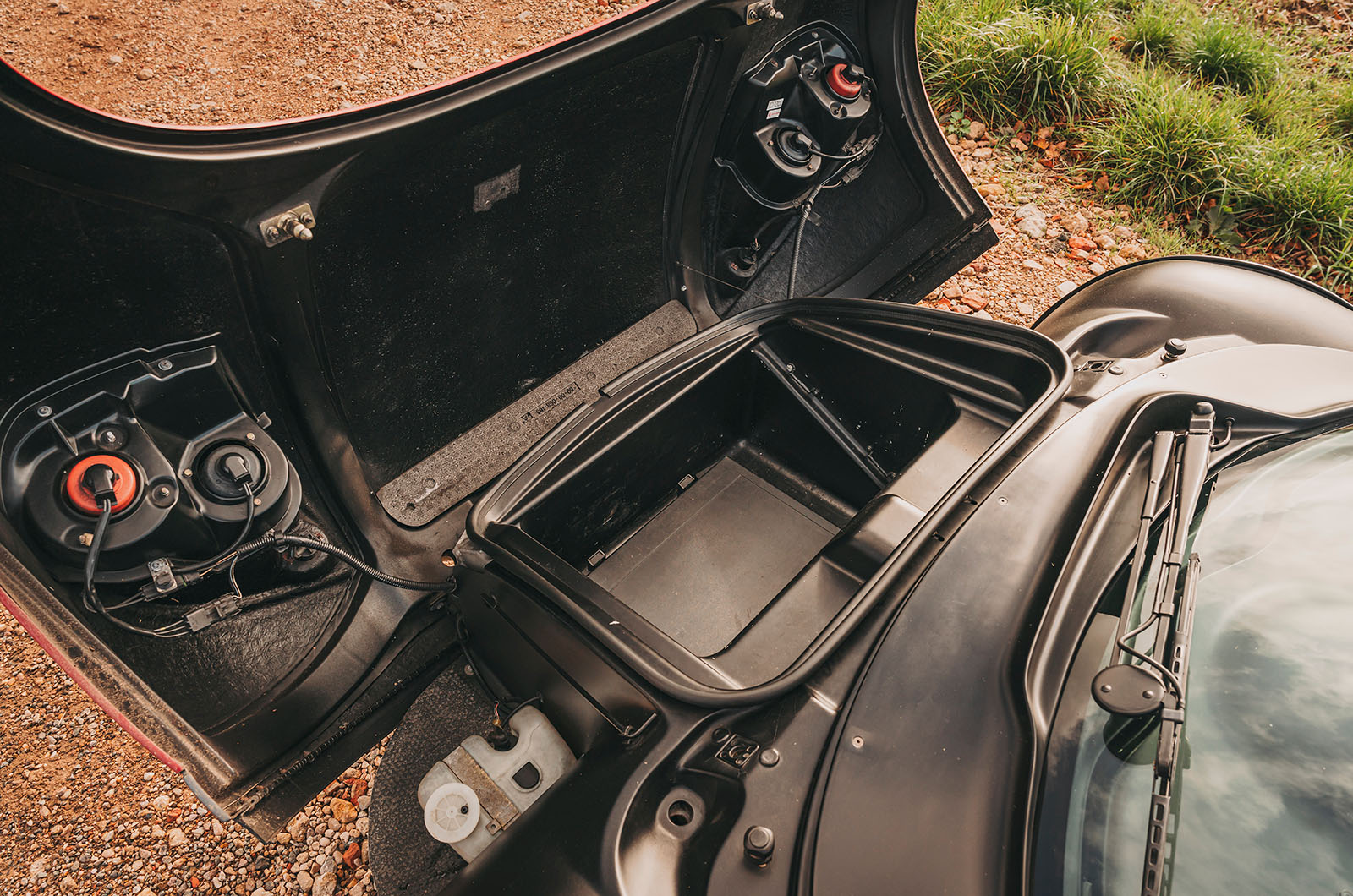
Unlike the 340R, though, the body had two doors, which opened skyward, and there was a ‘frunk’ above the front axle, also absent from the Lotus.

The Sport Spider, though, was only supplied with an aeroscreen (at least for most markets) – a curved wind deflector running across the car’s scuttle.

For the UK, cars were fitted with a proper windshield and glazed quarter panels to reduce buffeting.

Classic & Sports Car – Renault Sport Spider vs Lotus 340R: diet poke

‘Available in red, blue or yellow when new, with the lower section always painted gray, the Sport Spider’s overall finish is appealing’

There was an umbrella-style temporary roof, while Sport Spiders were also equipped with a tonneau cover for use when parked.

Renault raided its (or rather, Alpine’s) parts bin for suspension componentry, with most items common to the A610.

Rose-jointed, double unequal-length wishbones were employed at both ends.

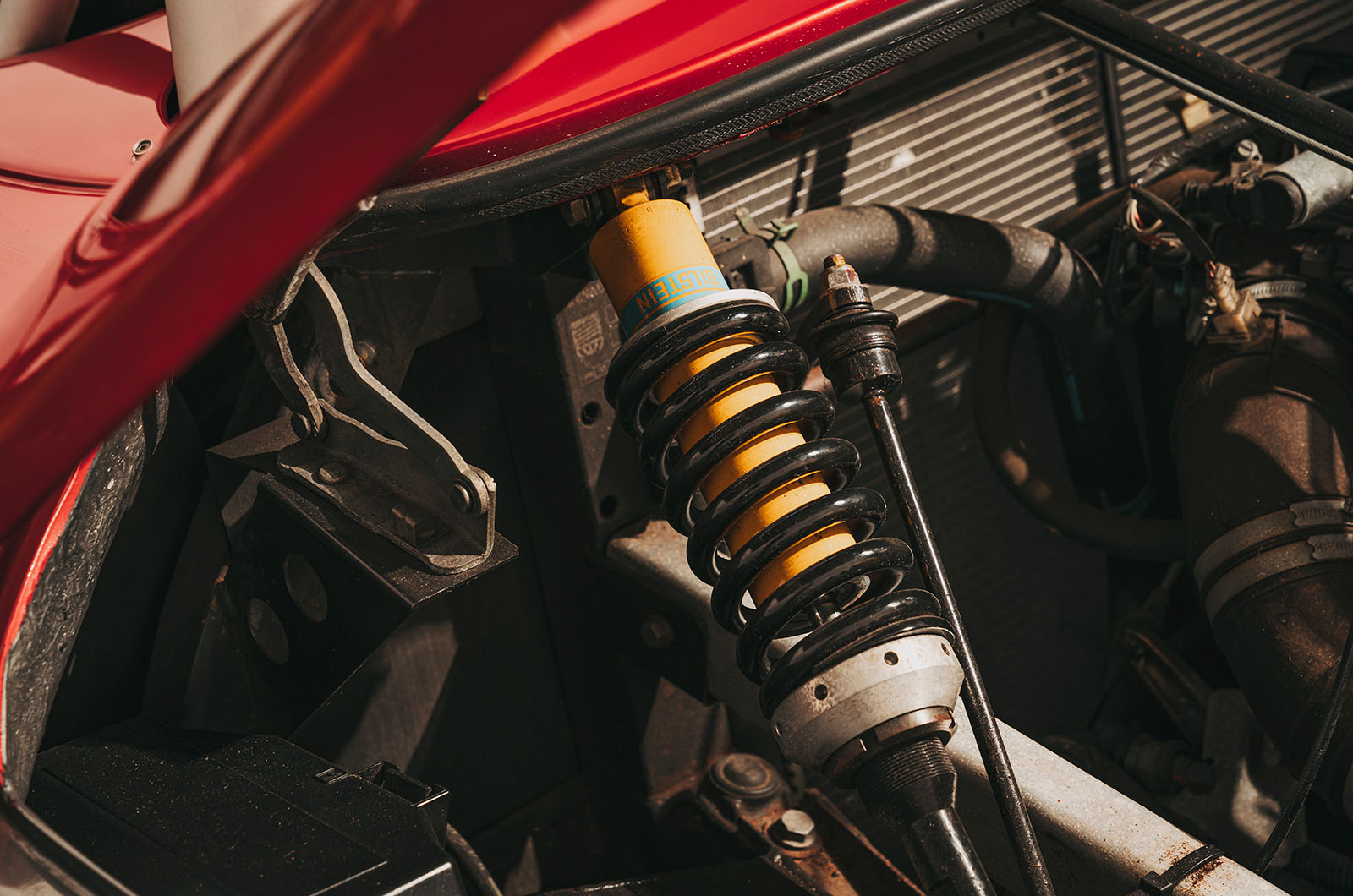
The dampers acted directly on the upper wishbones via rocker arms, and at the rear they were arranged almost horizontally across the upper chassis.

Ventilated brake discs were also pinched from the Alpine, and the Renault Sport Spider rode on 16in 205/50 Michelin Pilot SXs front and rear.

Classic & Sports Car – Renault Sport Spider vs Lotus 340R: diet poke

The Renault Sport Spider has a useful ’frunk’

All of which led to a car that, while more practical than the Lotus, was also longer by 175mm (9.6in) and wider by almost 500mm (c20in).

This translated into a whopping 255kg-greater (562lb) curbweight of 930kg (2050lb) and, today, a noticeable difference in performance between the pair.

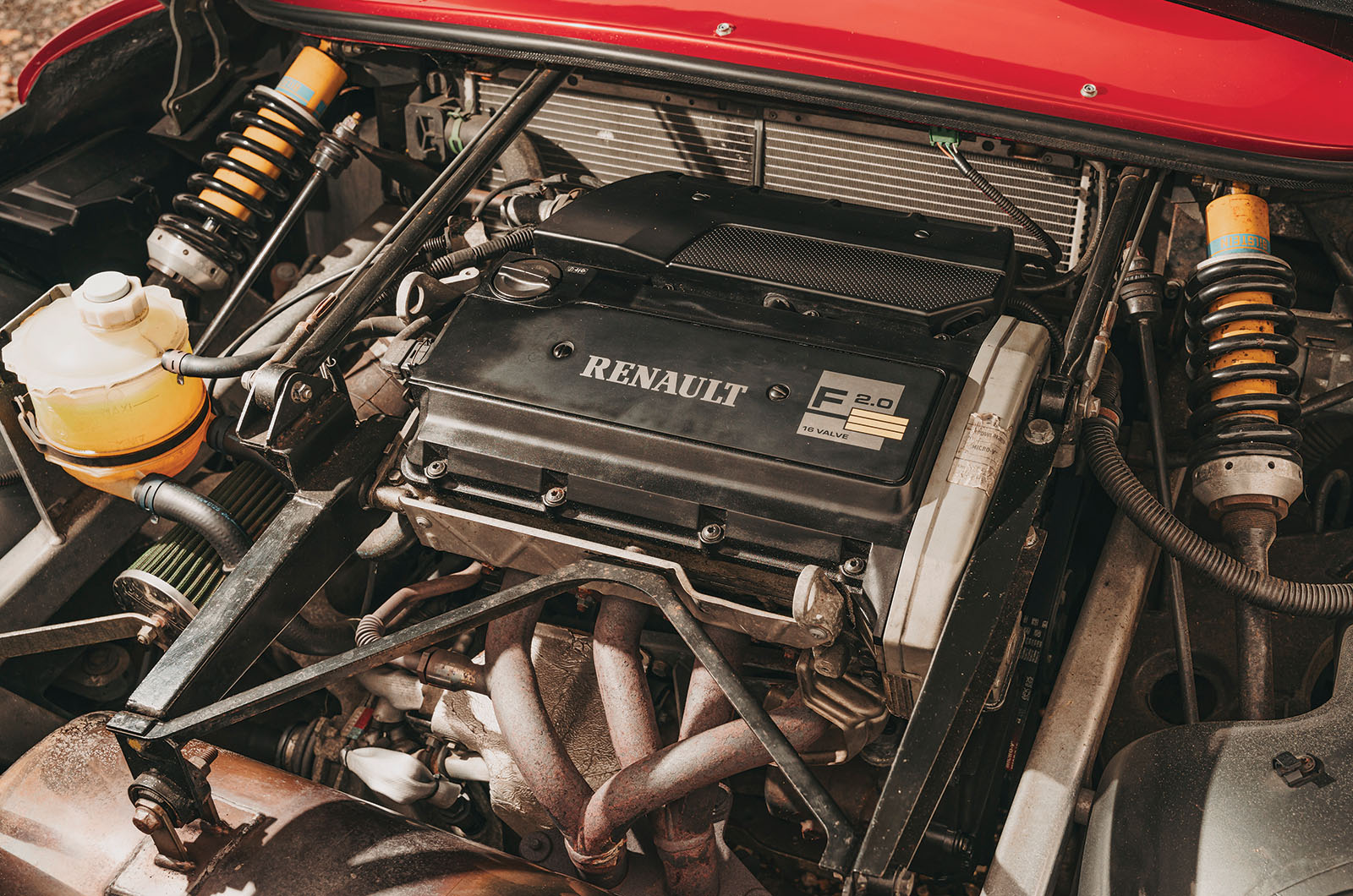
Renault installed the 1998cc 16-valve ‘four’ that had previously seen service in the Clio Williams, but which at the time powered the Mégane Coupe 16v.

With 150bhp peak power at 6000rpm, the Spider’s 0-62mph time of 6.9 secs stays well behind the 340R’s 4.5 secs, but it nudges ahead on top speed (134mph versus 130mph).

Classic & Sports Car – Renault Sport Spider vs Lotus 340R: diet poke

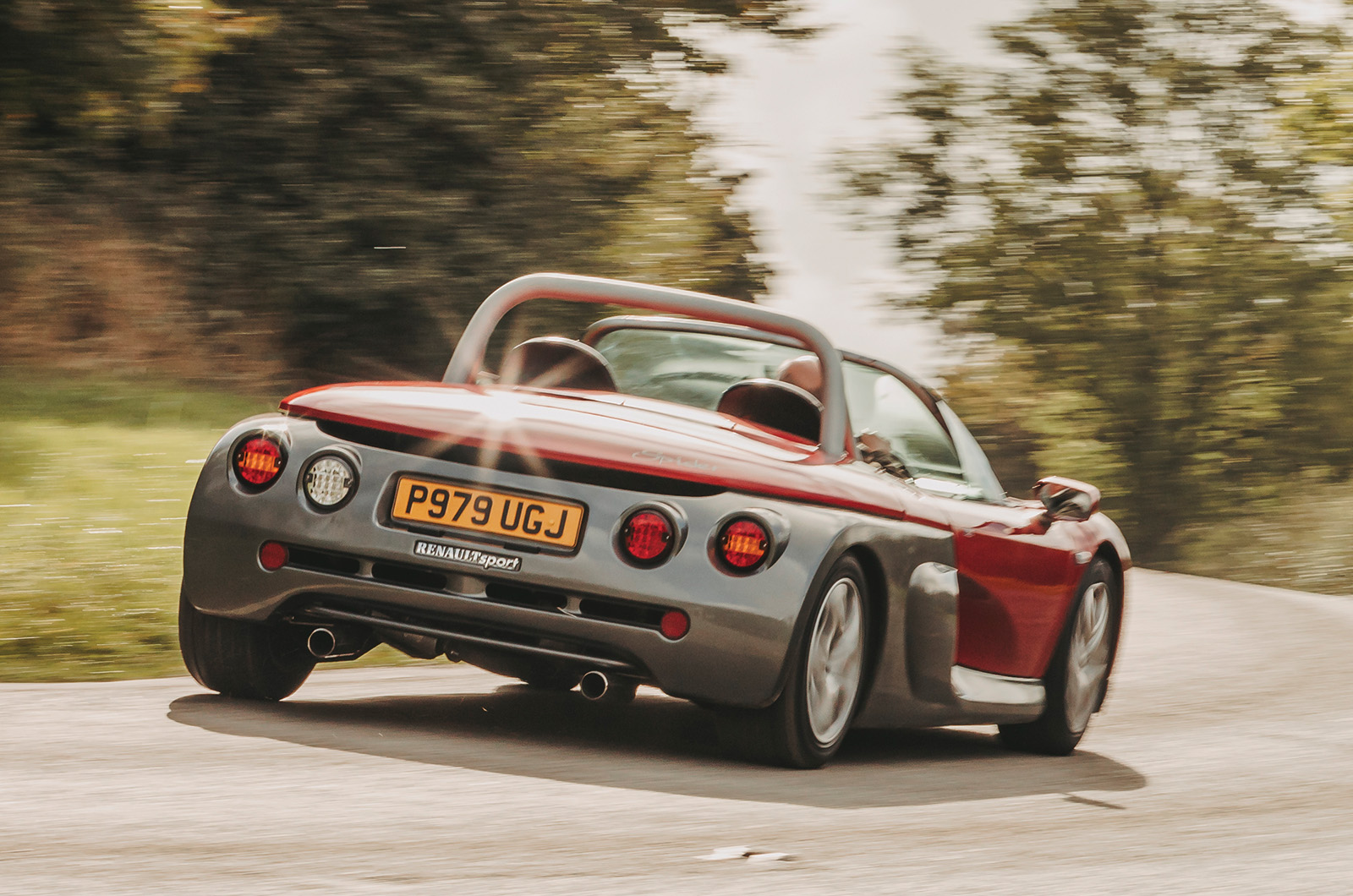
The Renault Sport Spider is benignly throttle-adjustable

For both cars, the latter figures are more governed by aerodynamics.

Approach Greg Birchall’s Renault from the front or rear and you’re struck by its width: it gives the impression of a four-square and ultra-chuckable little car.

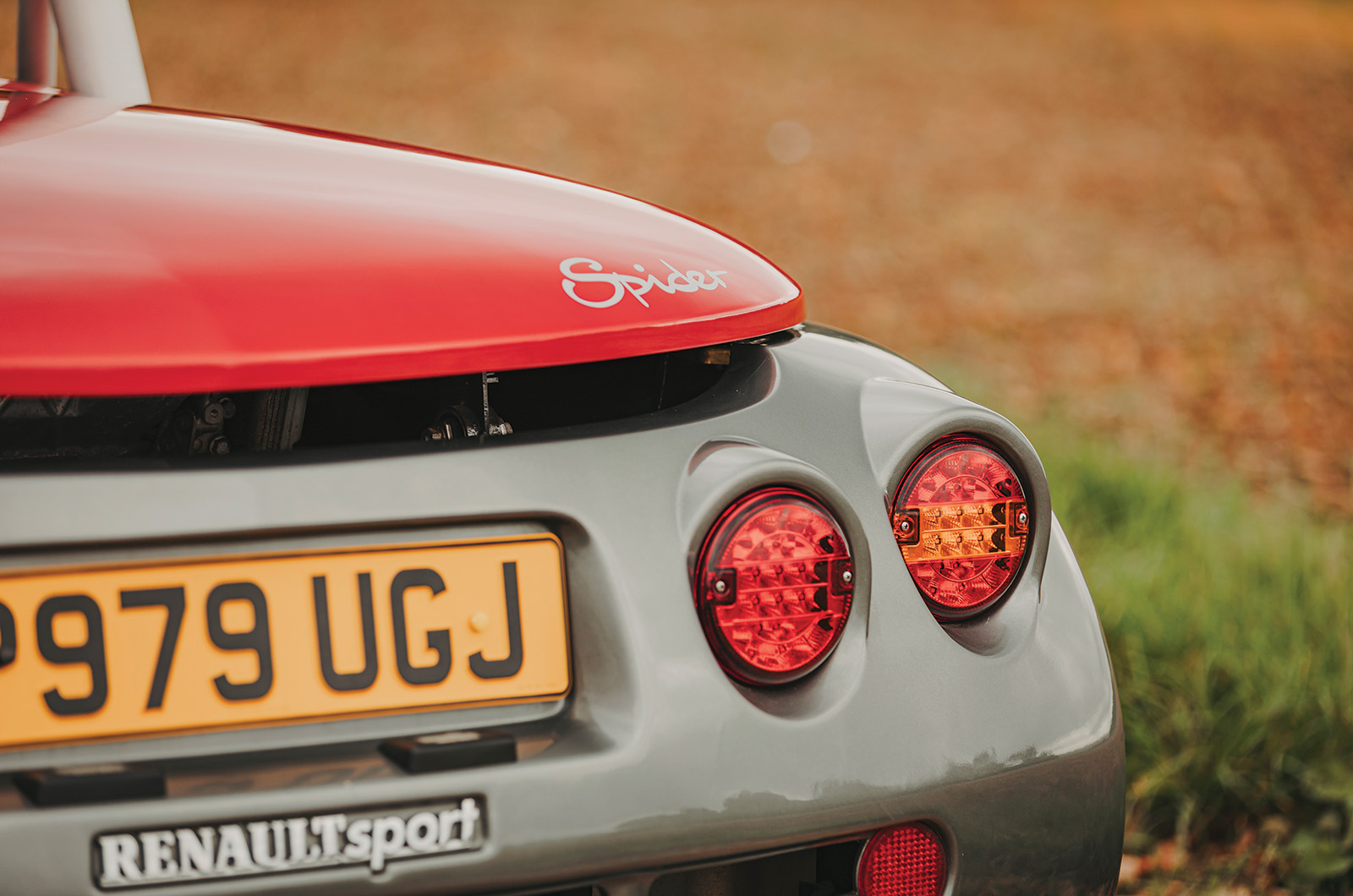
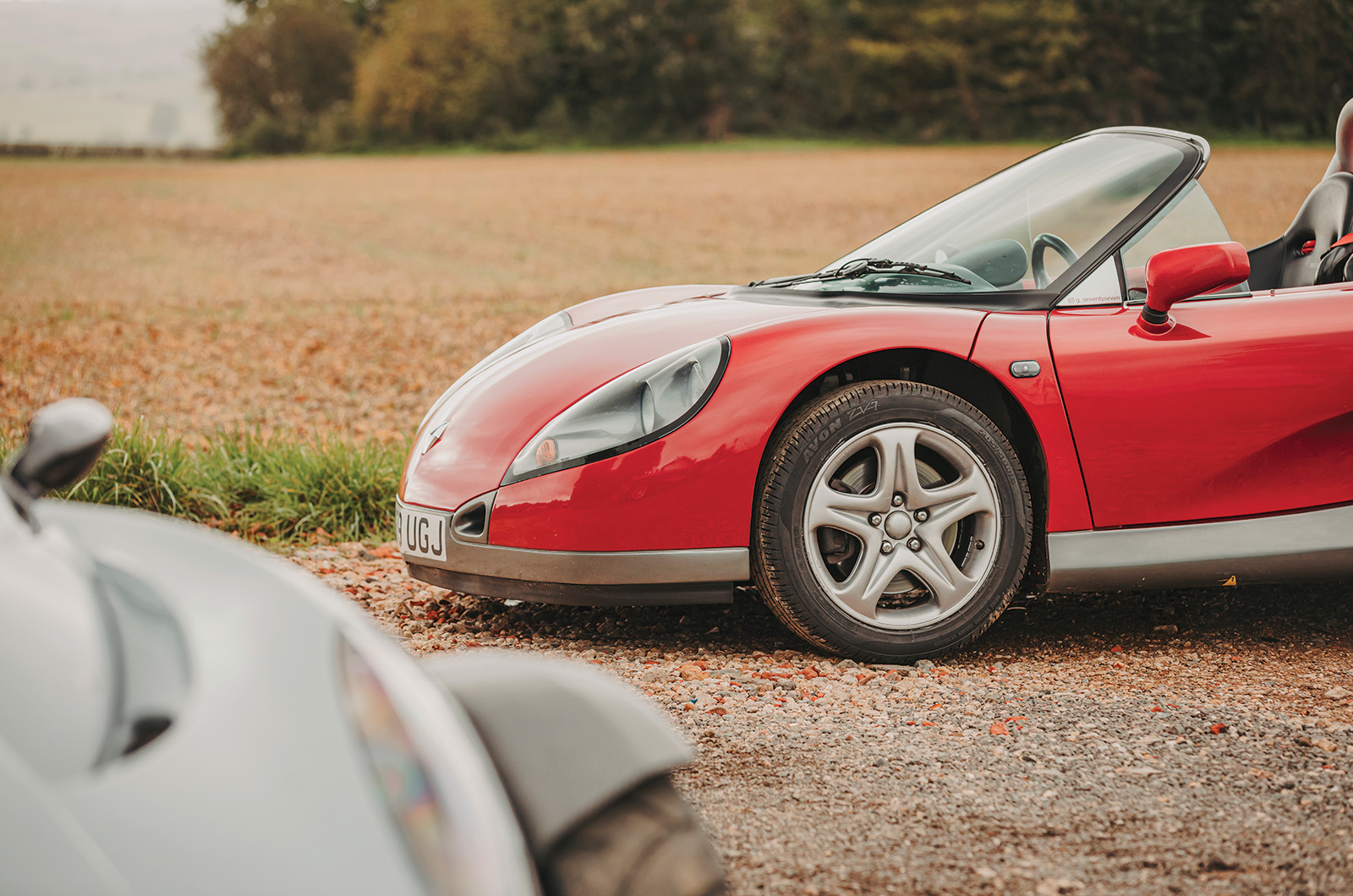
Available in red, blue or yellow when new, with the lower section always painted gray, the Sport Spider’s overall finish is appealing and enhances its appearance compared with the default gray/black of the Lotus.

Lift the rear clam and the transversely mounted engine sits relatively high in the chassis, with its four-branch exhaust manifold and those horizontally arranged dampers atop the chassis giving it motorsport credibility.

Classic & Sports Car – Renault Sport Spider vs Lotus 340R: diet poke

The Renault Sport Spider’s near-horizontal rear dampers stretch across the upper chassis

Lift the driver’s door (there’s no external handle, so you simply reach inside) and it rises with a nicely damped action, slowing to the end of its travel to avoid jarring against its stop.

Access to the Renault Sport Spider is quite easy, despite having to step over the high sill that forms part of the chassis.

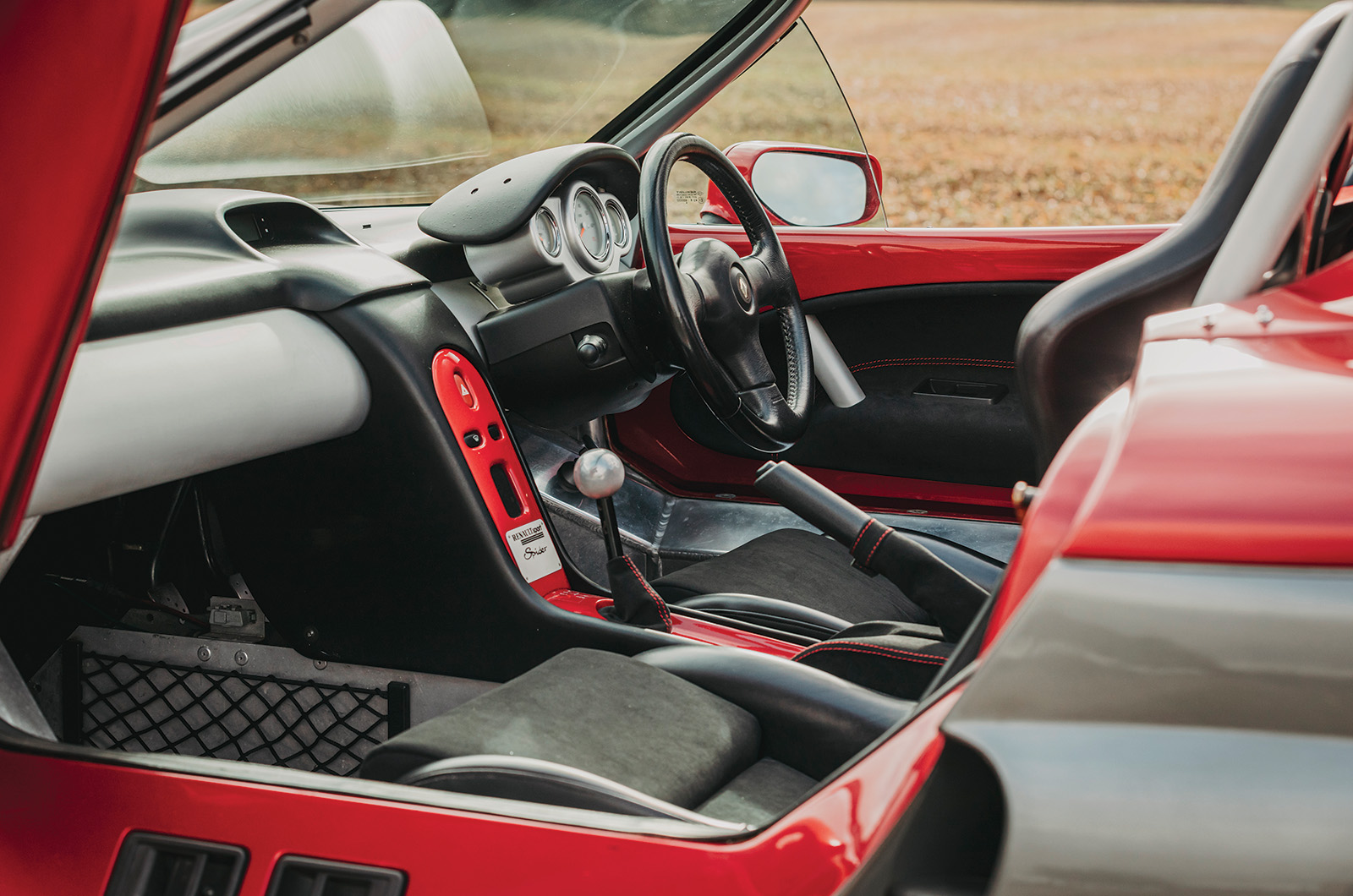
A deeply bucketed seat grips you, its facings trimmed in a waterproof, PVC-coated fabric; a neat aluminum pod behind the simple, three-spoke steering wheel holds dials for water temperature, oil pressure and revs, with a digital speedometer housed in a separate screen above the sweeping center console.

Other than basic controls, there is little else to look at, save the cross-bracing of the naked aluminum chassis.

Classic & Sports Car – Renault Sport Spider vs Lotus 340R: diet poke

The Lotus 340R (closest) and Renault Sport Spider were special projects developed my small teams

What Robert Johnson’s Lotus lacks in terms of a bright color palette, it makes up for in the sheer pared-back drama of its Minimalist bodywork.

You hardly see the black wheelarches from a distance, which almost kids you into thinking it’s an open-wheeled racer.

With rain threatening (a permanent preoccupation for both owners), we avoid unscrewing the eight allen-key fixings for the rear engine cover to view the K-series at first, but almost every other component is laid bare: suspension wishbones and Koni dampers; the double-arch Safety Devices rollcage, into which the world’s tiniest rear windshield is integrated (a type-approval must-have, apparently); the tail-lights supported on exquisite alloy arms for lack of bodywork; and the twin tailpipes from the Janspeed exhaust either side of their fully exposed silencer box.

Classic & Sports Car – Renault Sport Spider vs Lotus 340R: diet poke

The Renault Sport Spider’s 16-valve 2-litre ‘four’ makes 150bhp

Take a big step over the 340R’s bodywork and try to land feet-first on the aluminum floor ahead of the driver’s fabric-trimmed bucket seat.

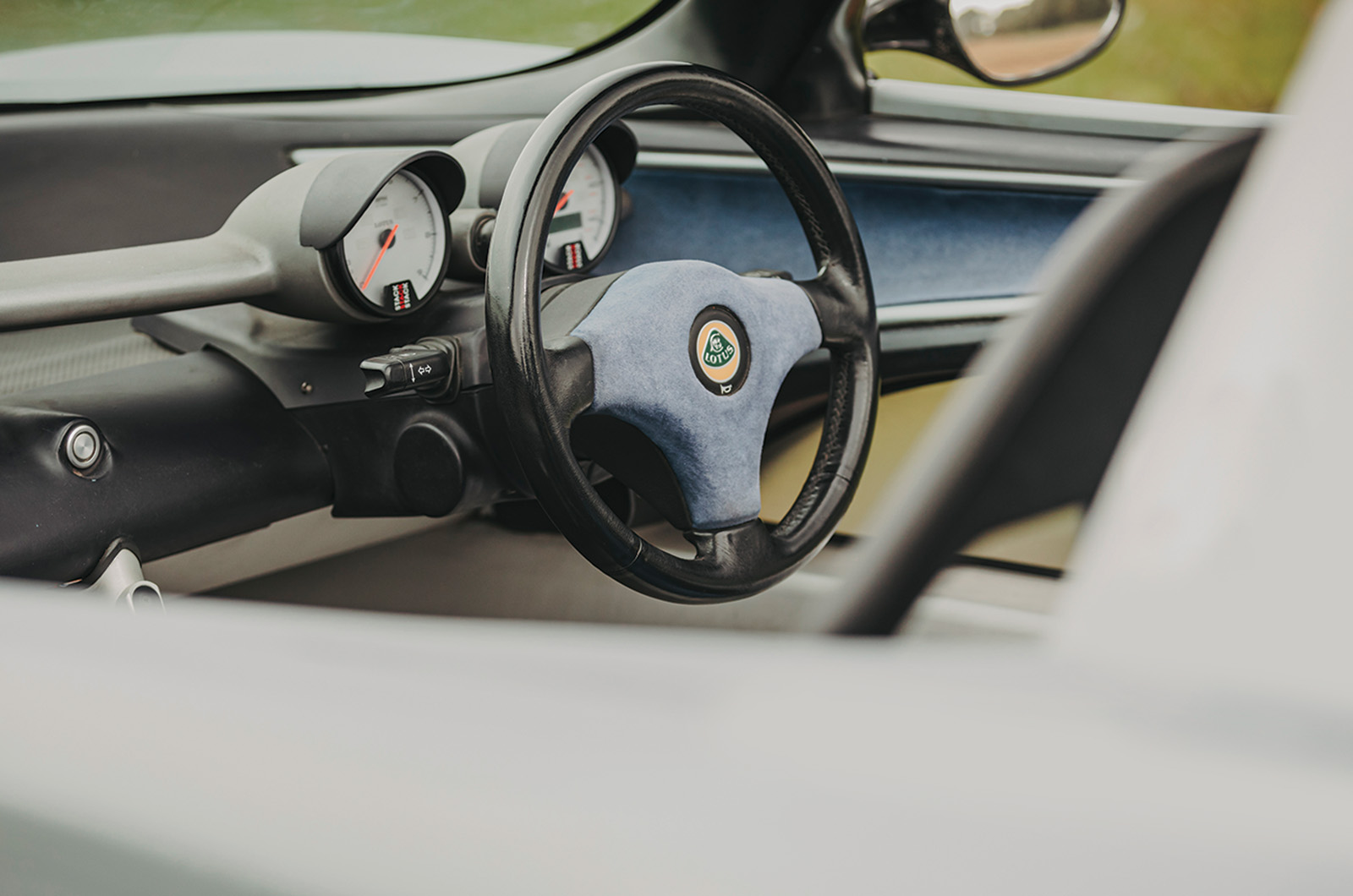
Instrumentation is even more basic than the Renault’s, with two shrouded Stack dials for revs and speed, the latter incorporating a digital readout for supplementary information.

Buttons for lights are mounted on an upright aluminum strut in front of the gearlever and, like in the Renault, you feel truly ensconced within the chassis of the car.

We’re driving the Sport Spider first. No aural fireworks on start-up, just the flat drone of its 2-liter ‘four’.

The main controls are light, with the gearlever moving through a very narrow gate, but the steering is heavy during parking maneuvers.

Classic & Sports Car – Renault Sport Spider vs Lotus 340R: diet poke

The Renault Sport Spider’s seat and pedals are adjustable, so it’s easy to get comfortable, but there is some pedal offset

At low speeds, the rose-jointed suspension rattles away as if in a race car, but it is actually quite compliant.

Pick up the pace and Renault’s Sport Spider feels instantly planted.

The steering retains a fair bit of heft and feels more alert off-center than its two and a half turns from lock to lock suggest.

It’s not the most talkative of systems, but it compensates for that in its overall stability and surefootedness.

The engine is hardly musical, either, and starts to sound quite gruff when you extend it above 4000rpm.

But its flatter torque curve provides more flexibility along twisty B-roads than the Lotus.

Classic & Sports Car – Renault Sport Spider vs Lotus 340R: diet poke

Minimal bodywork for the Lotus 340R

Grip – in the dry – is tenacious at the front and nicely adjustable via the throttle at the rear, allowing you to trim your cornering line without any rear-biased nastiness.

The unservoed brakes require a lot of effort from higher speeds and lack any depth of feel, even when worked hard.

So it’s with some relief that, while it is certainly rapid, the Renault never feels that fast – at least not as quick as its design and engineering would have you believe.

Not so the Lotus. Press the central starter button and the K-series fizzes away behind you, sounding as unremarkable as it does in a cooking Elise.

Classic & Sports Car – Renault Sport Spider vs Lotus 340R: diet poke

The Lotus 340R’s driver-focused, truly spartan cabin has nothing that isn’t needed

You’re forced to semi-recline in the fixed-back driver’s seat, but it’s easy to find an ideal position behind the 340R’s small, leather-rimmed three-spoke steering wheel.

No pedal offset here, but the narrow footwell lacks a rest for your left shoe.

Any niggles, though, are swept aside the second you find a national speed limit sign and a ribbon of quiet, well-sighted, sinuous back road: the 340R is untouchable, and not just in terms of outright velocity.

Its steering is light at all speeds, but packed full of information, and after a short distance you relax your grip and revel in how little effort is needed to drive at speeds that would have you breaking sweat in the Renault.

Classic & Sports Car – Renault Sport Spider vs Lotus 340R: diet poke

Both cars are fully open and expose their occupants to the elements

The car also feels far lighter than a standard Lotus Elise, relative to its modest weight loss.

Every response seems delicate and finely judged, particularly the springing and damping, which allow the chassis to breathe even over ravaged surfaces.

Grip is unimpeachable, too.

But this Lotus 340R is extra special.

Like many, Robert’s car has been subjected to the 190bhp conversion that was made available post-production using Lotus-approved accessories.

These tweaks included: remapped engine management; a revised inlet cam pulley for improved output and mid-range torque; removal of the resonator valve and secondary air filter; and a catalyst-replacement pipe.

Classic & Sports Car – Renault Sport Spider vs Lotus 340R: diet poke

‘While more practical than the Lotus 340R, the Renault Sport Spider is also longer, wider and heavier’

Consequently, performance is ballistic, and the K-series’ slightly anodyne soundtrack is replaced by something more brutal and deep-throated.

It still retains a good slug of low-rev torque, but its pace once above 4000rpm is in the high-performance Caterham league.

There’s no denying that the 340R is the better car here in almost every respect.

Its dynamics alone make it one of the very best point-to-point cars you will ever drive, if not the best.

But the fact that a huge conglomerate such as Renault could bring a similarly conceived automobile to market beforehand, and come relatively close to achieving what Lotus did, deserves just as much admiration.

Images: Max Edleston


Factfiles

Classic & Sports Car – Renault Sport Spider vs Lotus 340R: diet poke

Renault Sport Spider

  • Sold/number built 1996-’99/1640 (plus 80 Trophy racing cars)
  • Construction composite fiberglass body, welded extruded-aluminum chassis
  • Engine iron-block, alloy-head, dohc 1998cc ‘four’, mapped ignition, multi-point fuel injection
  • Max power 150bhp @ 6000rpm
  • Max torque 140lb ft @ 4500rpm
  • Transmission five-speed manual, RWD
  • Suspension independent, by double unequal-length wishbones, coil springs, telescopic dampers, anti-roll bar f/r
  • Steering rack and pinion
  • Brakes ventilated discs
  • Length 12ft 5in (3795mm)
  • Width 5ft 10in (1780mm)
  • Height 4ft 1in (1250mm)
  • Wheelbase 7ft 8in (2343mm)
  • Weight 2050lb (930kg)
  • Mpg 26.5
  • 0-60mph 6.9 secs
  • Top speed 134mph


Lotus 340R

  • Sold/number built 2000/340
  • Construction composite fiberglass body, bonded extruded-aluminum chassis
  • Engine all-alloy, dohc 1796cc ‘four’, Lotus engine management, electronic fuel injection
  • Max power 177bhp @ 7800rpm
  • Max torque 126lb ft @ 5000rpm
  • Transmission five-speed manual, RWD
  • Suspension independent, by double wishbones, coil springs, telescopic dampers f/r; front anti-roll bar
  • Steering rack and pinion
  • Brakes ventilated, cross-drilled discs
  • Length 11ft 10in (3620mm)
  • Width 5ft 7in (1702mm)
  • Height 3ft 8in (1123mm)
  • Wheelbase 7ft 6in (2300mm)
  • Weight 1488lb (675kg)
  • Mpg 25.8
  • 0-60mph 4.5 secs
  • Top speed 130mph

We hope you enjoyed reading. Please click the ‘Follow’ button for more super stories from Classic & Sports Car.