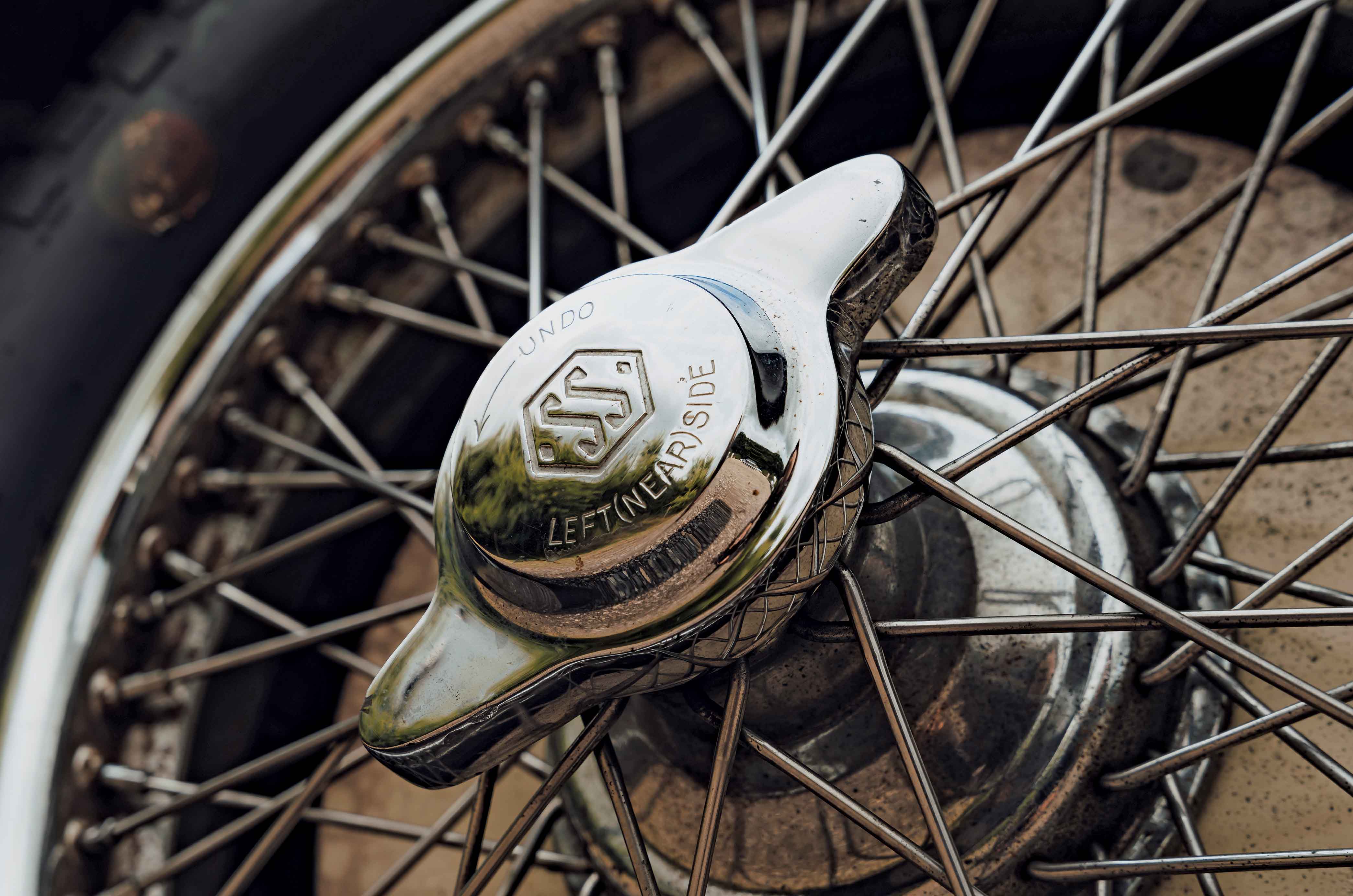
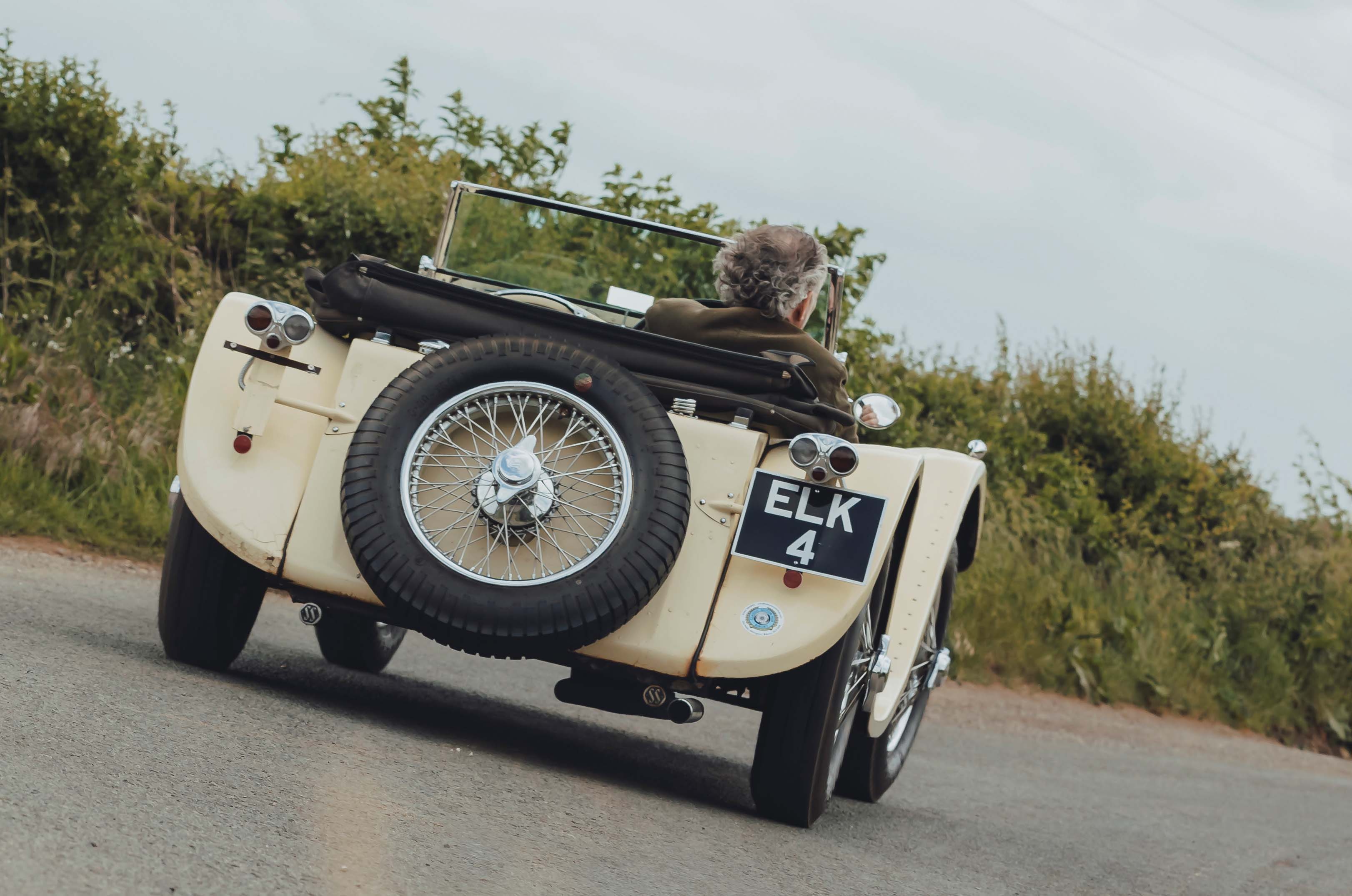
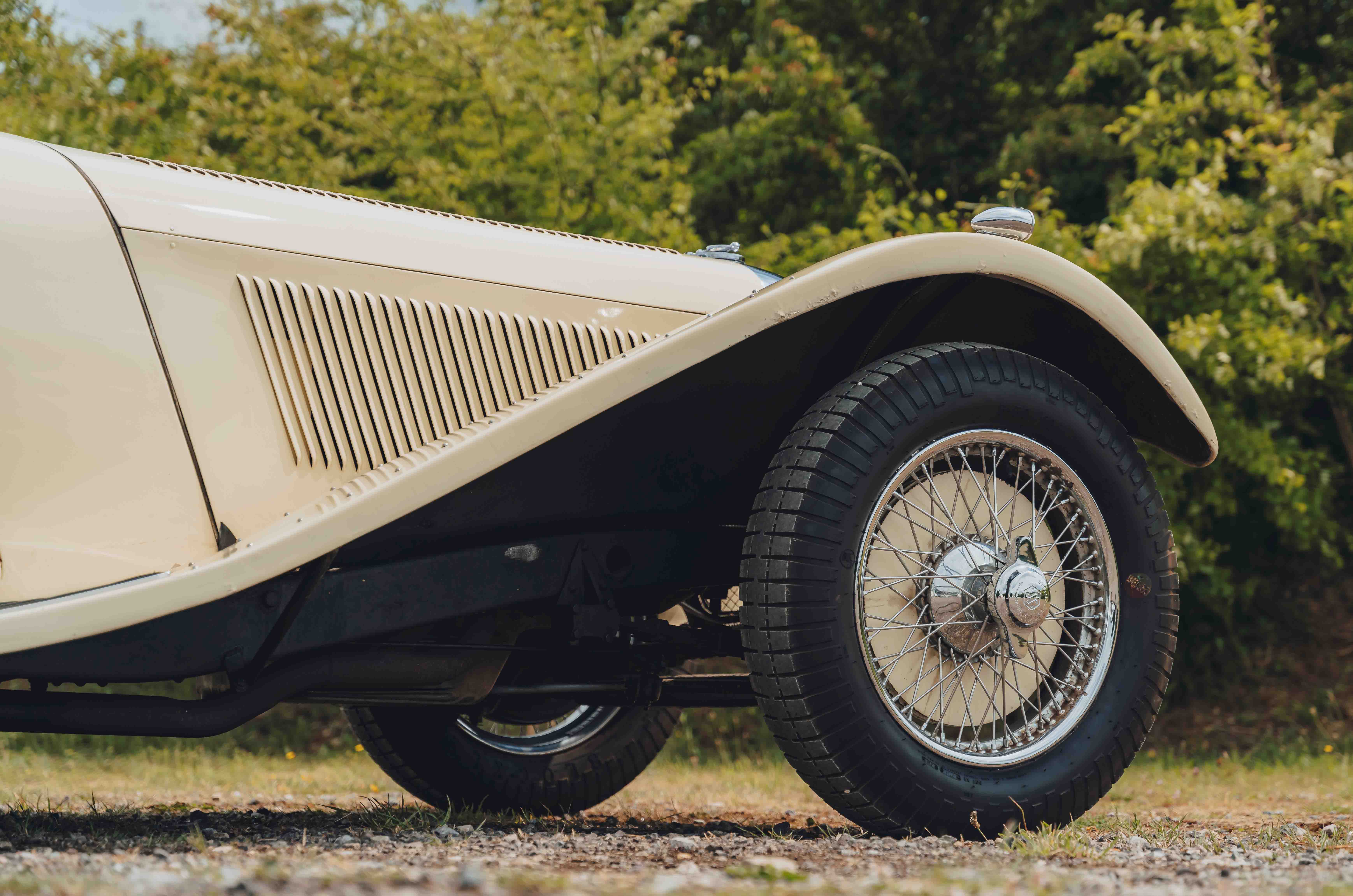
Those famously swoopy wings were fashioned by an outside company in Nottingham.
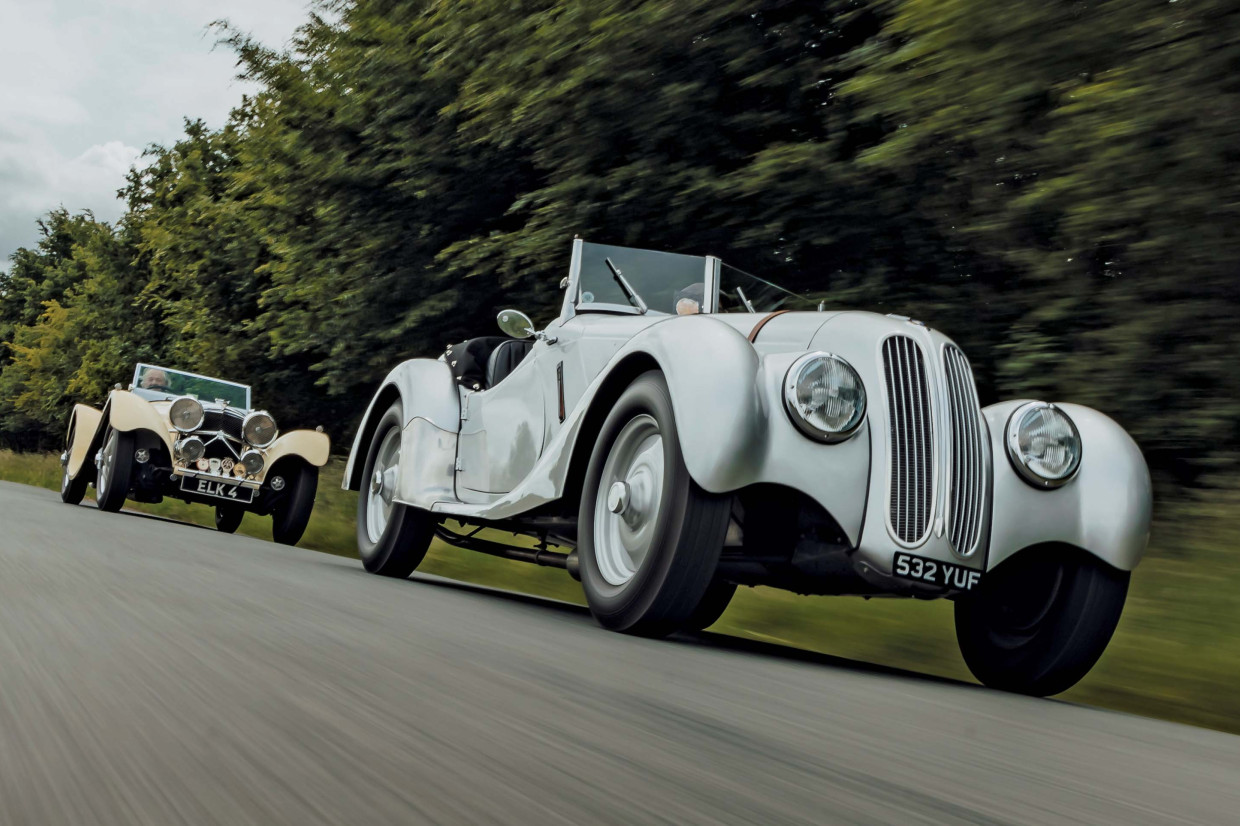
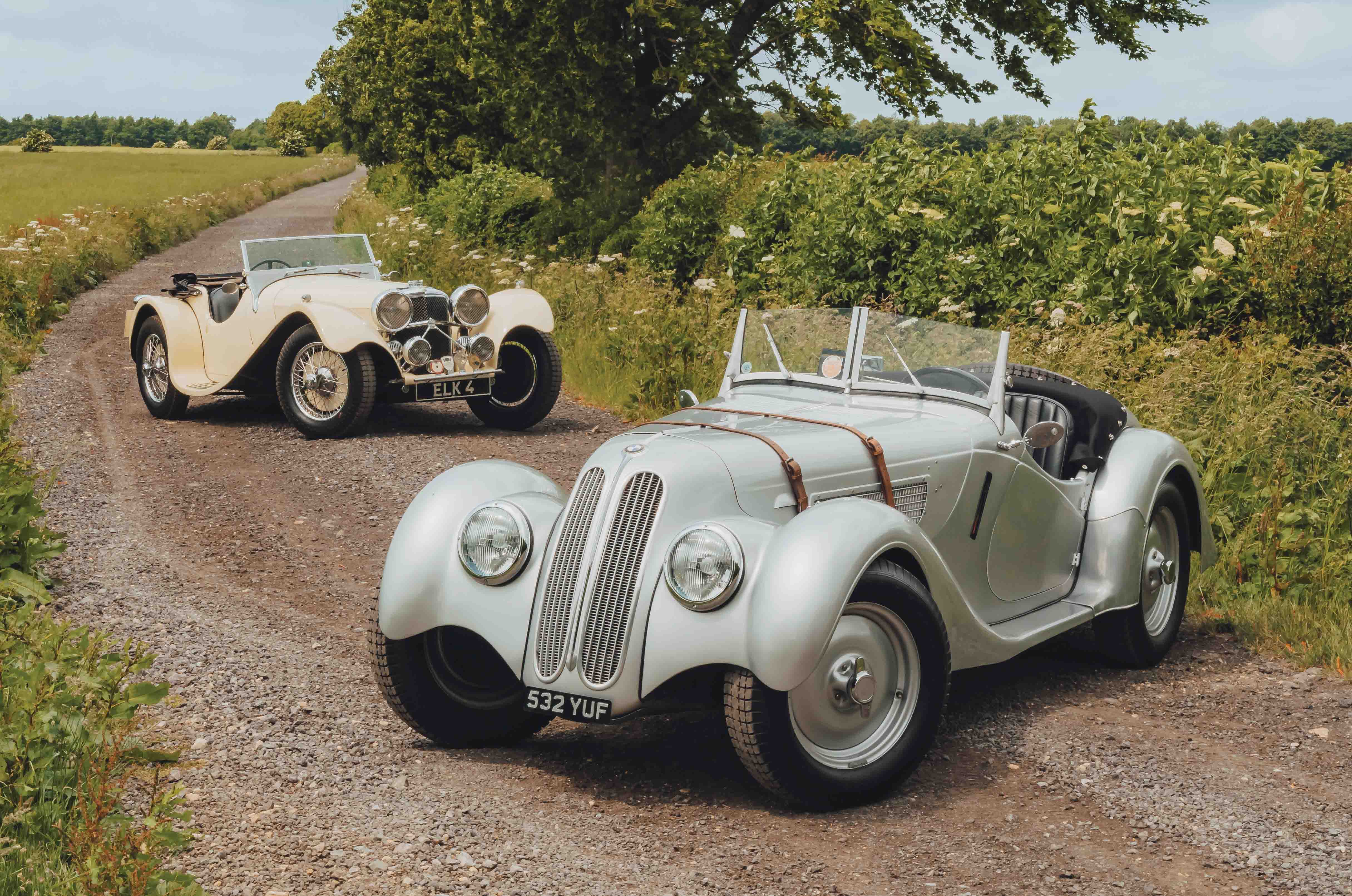
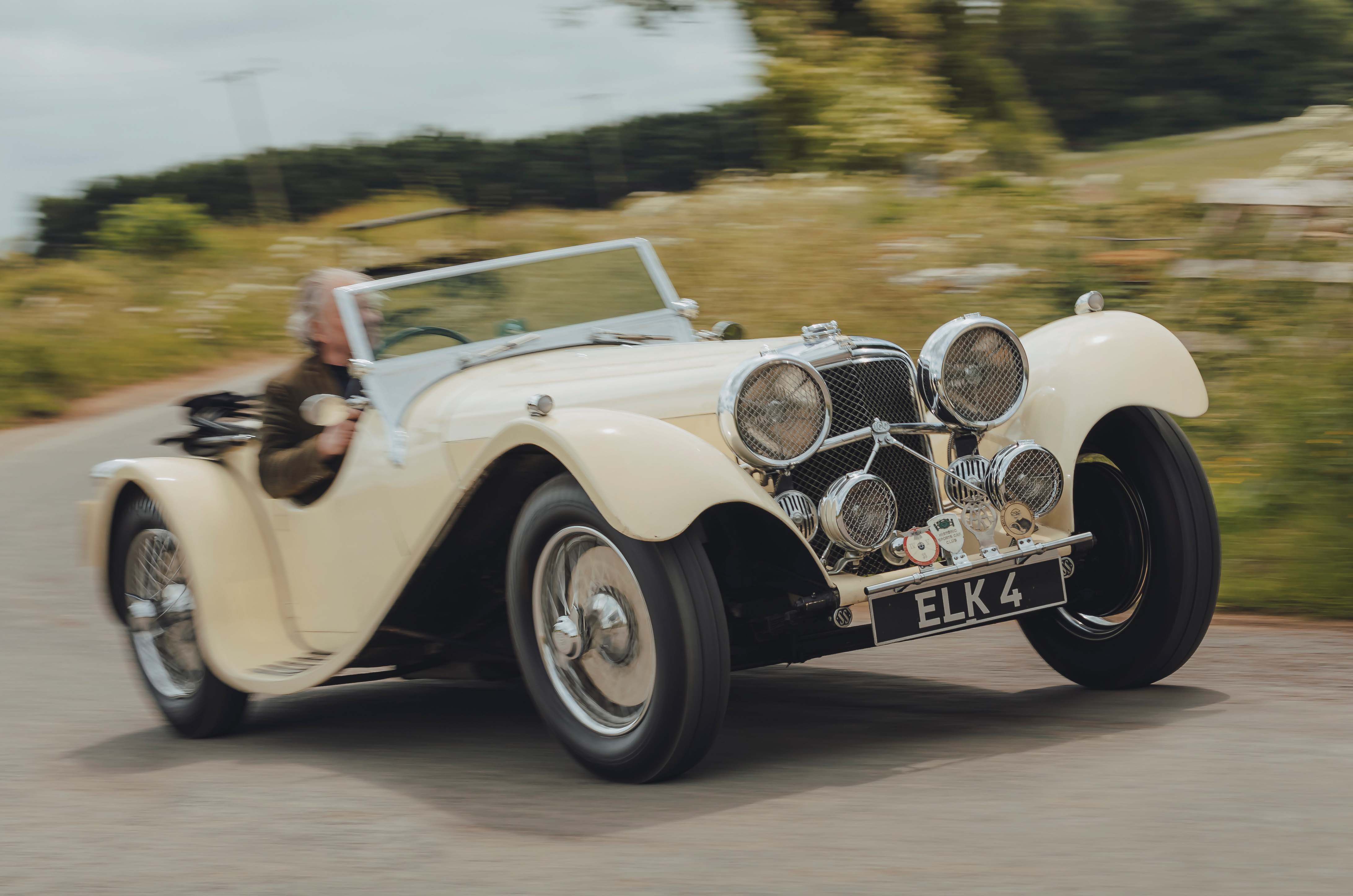
ELK 4, chassis 49002, was first registered in December 1937. It was sprinted at Brands Hatch in 1960, and soon appeared twice on the cover of club magazine Jaguar Driver.
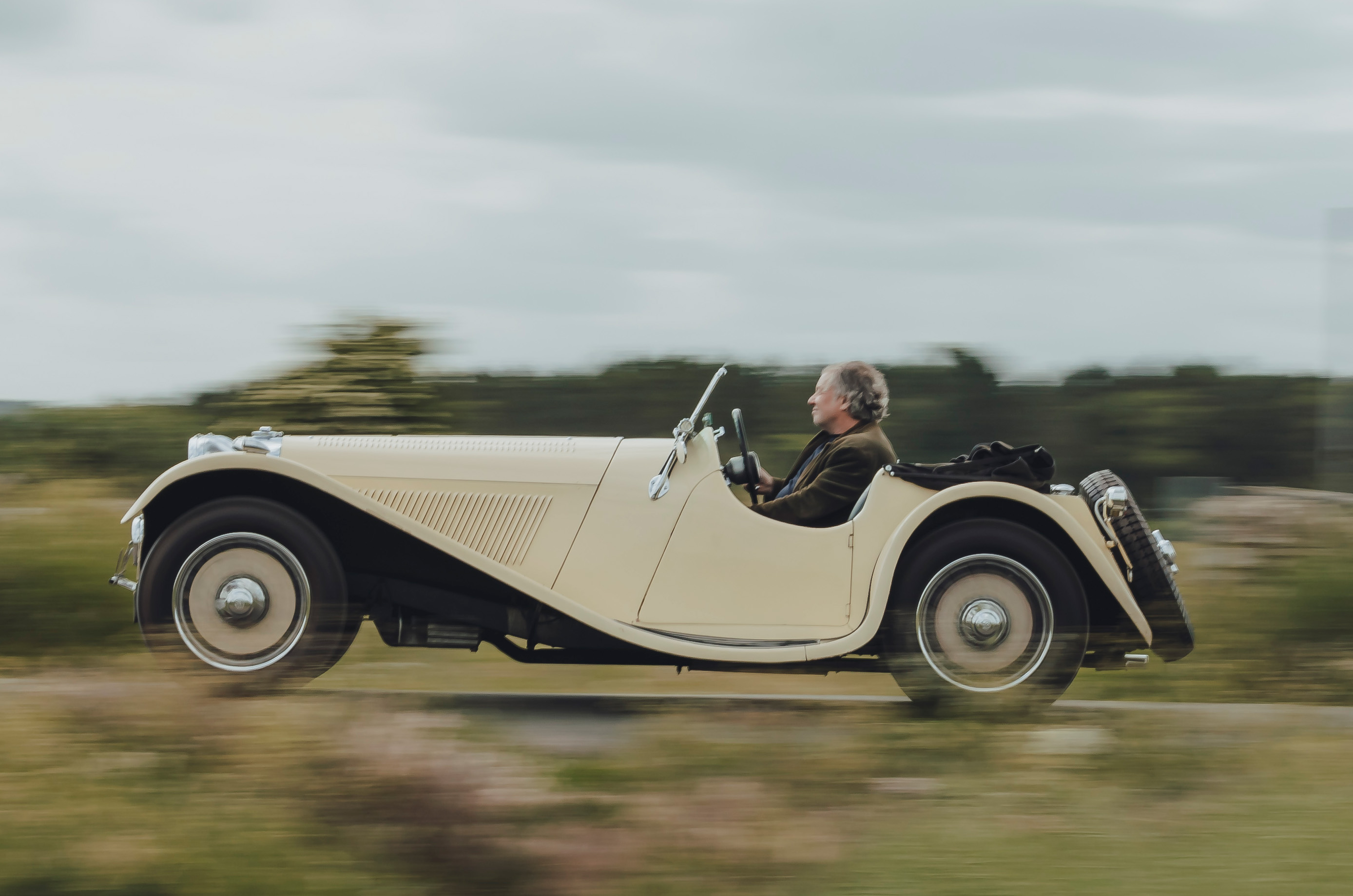
The SS Jaguar 100 is at its best in long, faster corners
After a spell in the USA, it returned to the UK in 1987.
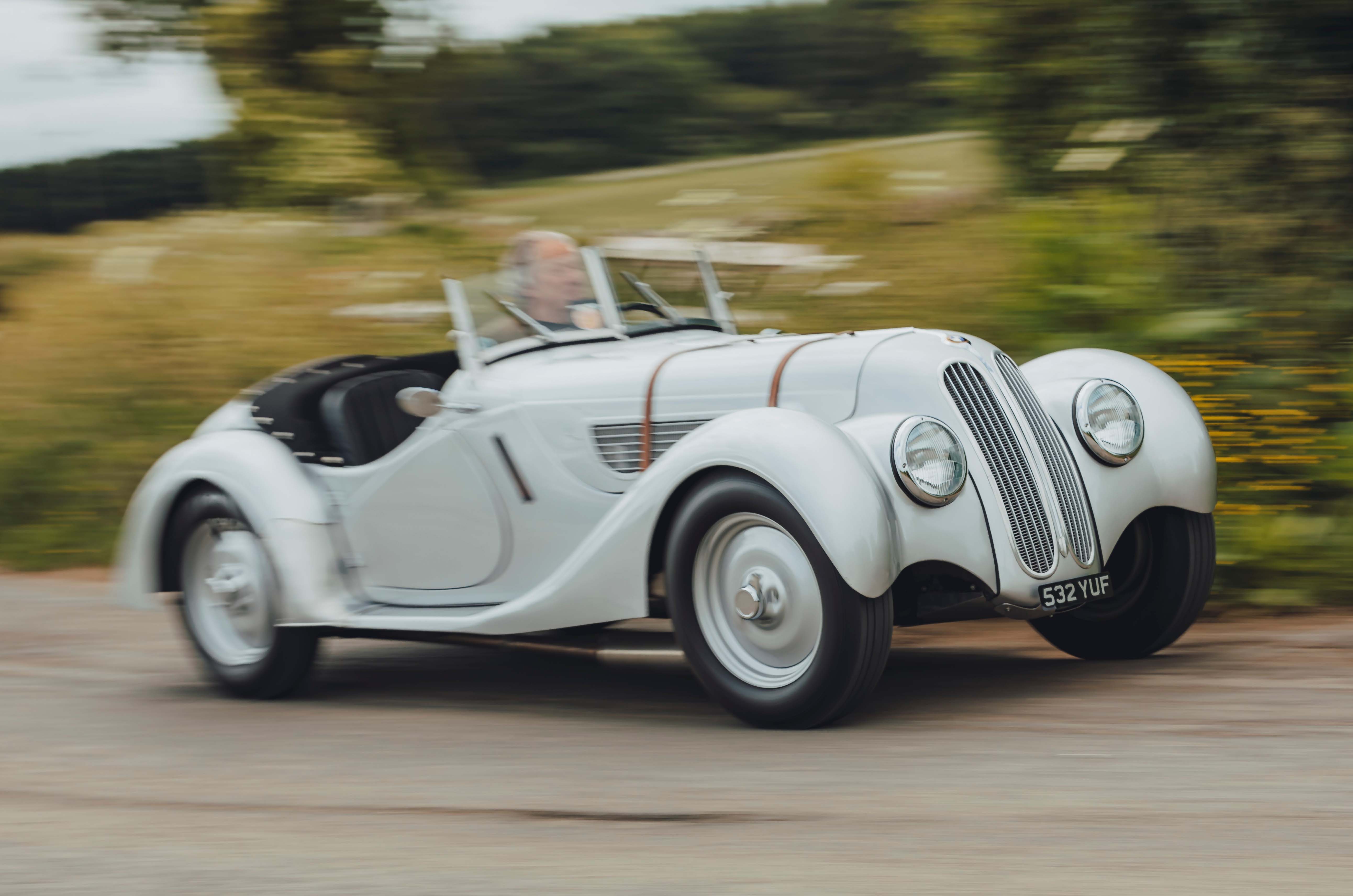
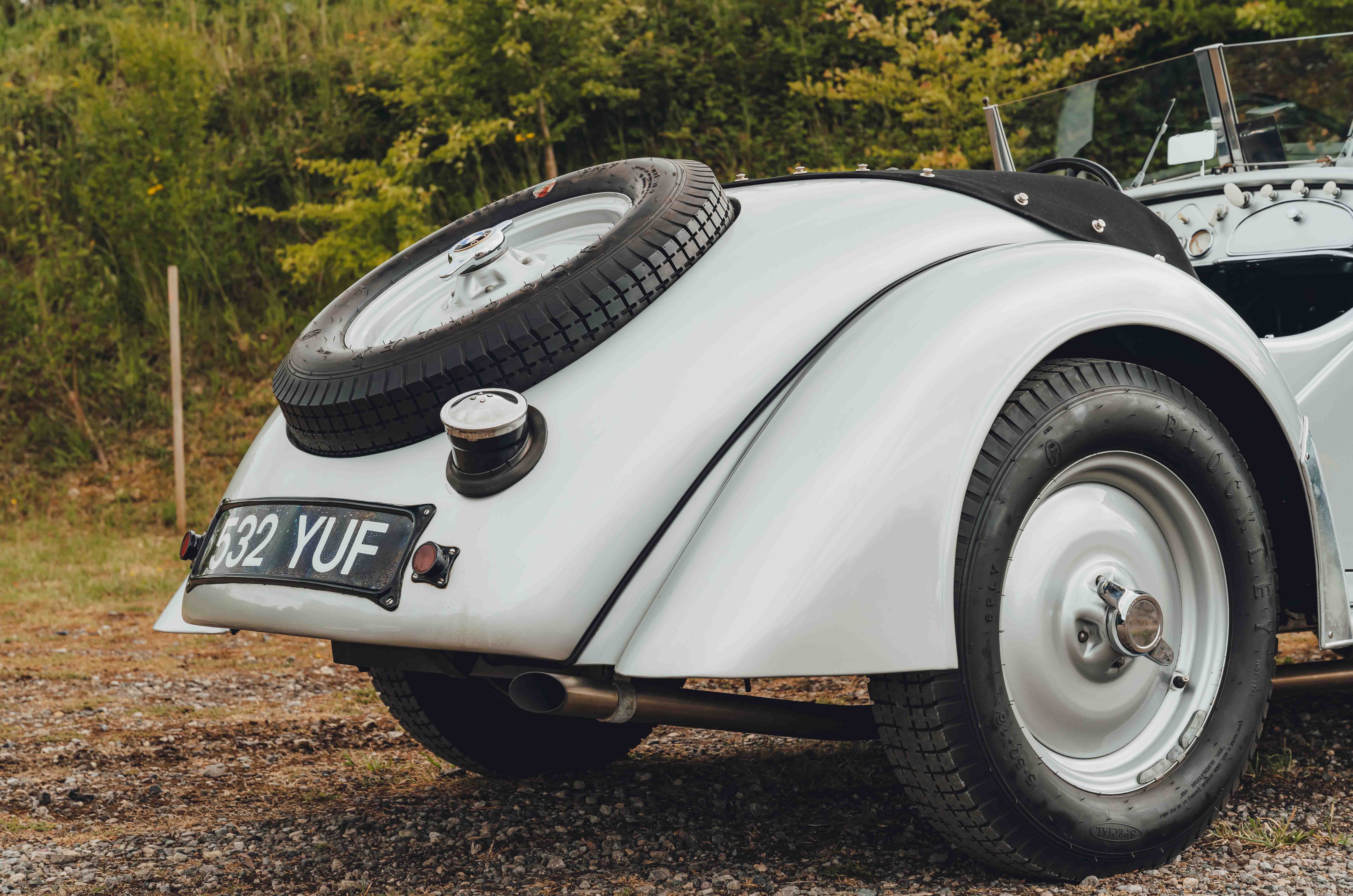
With its giant Lucas QK596 headlights, long wings and 14-gallon Le Mans slab fuel tank, the SS100 is almost a caricature of a 1930s sports car.
Stylishly cut-away doors, the rear-mounted spare and a squat windscreen add charm to a visual appeal that is a match for any of its thoroughbred rivals.
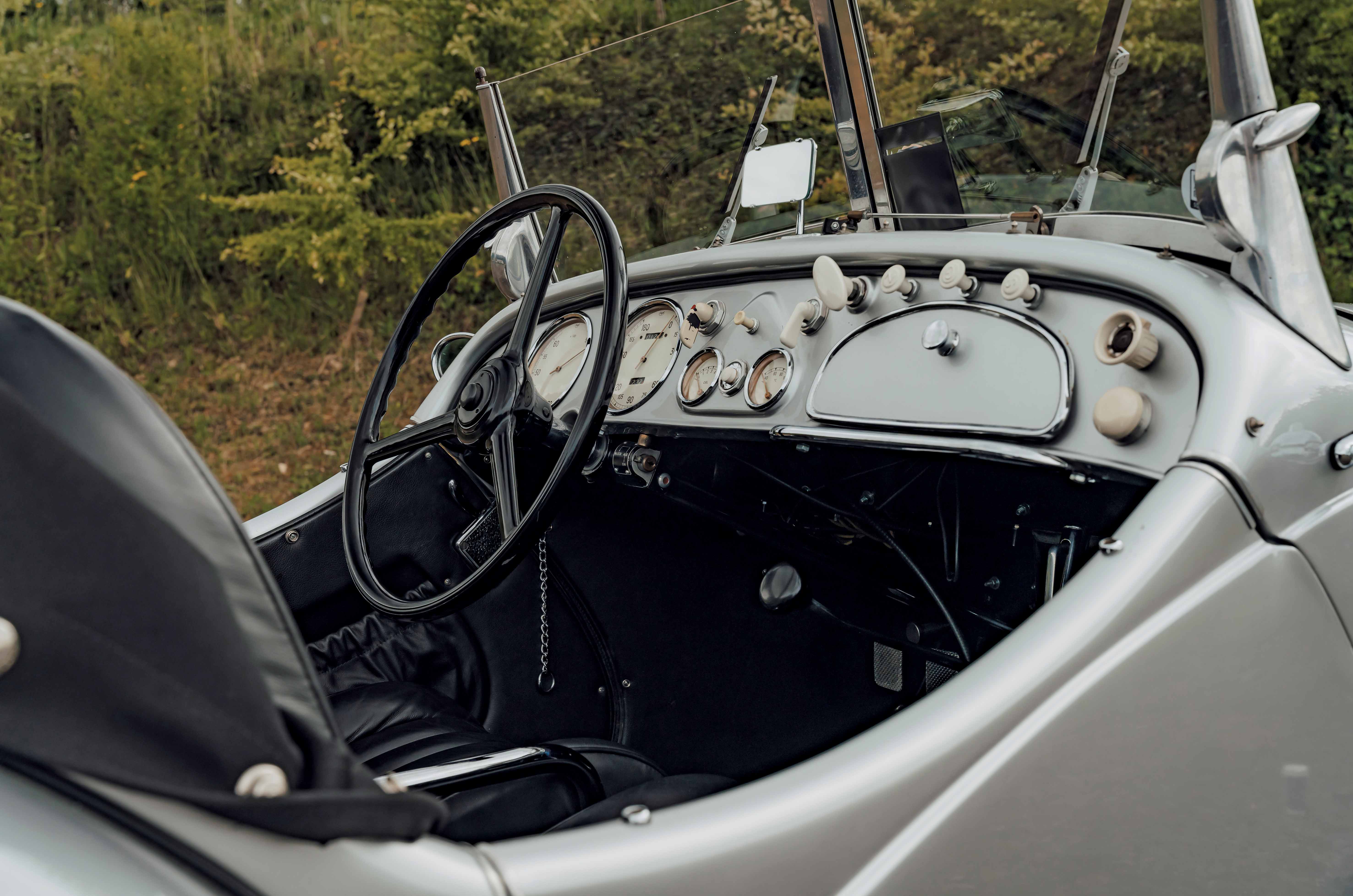
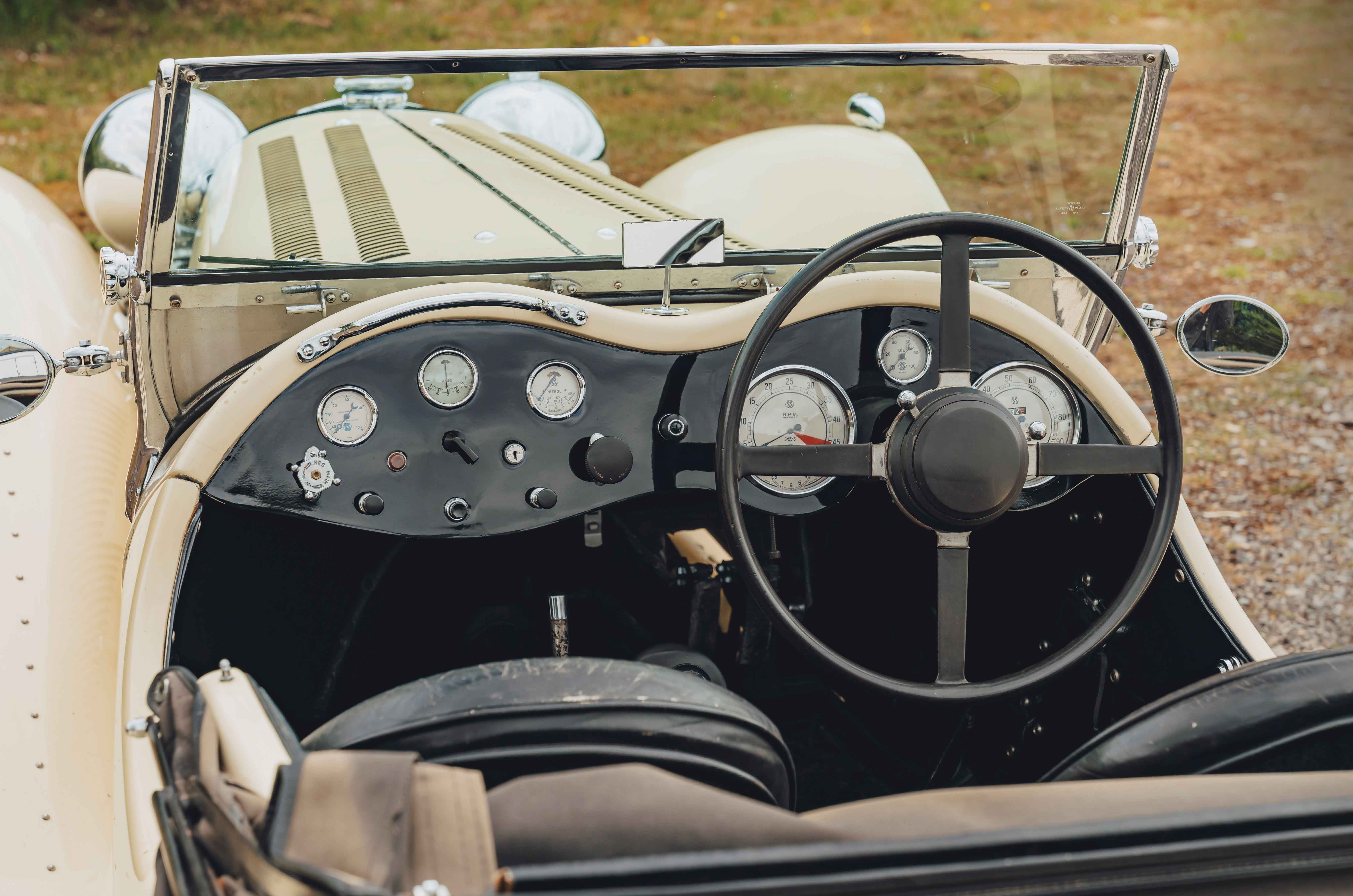
From inside, the view down the long, louvred bonnet is more romantic than a Barbara Cartland novel, but first you have to find a way of slipping your thighs under the Bluemel’s four-spoke wheel while finding space for your feet as you settle into the dinky bucket seat.
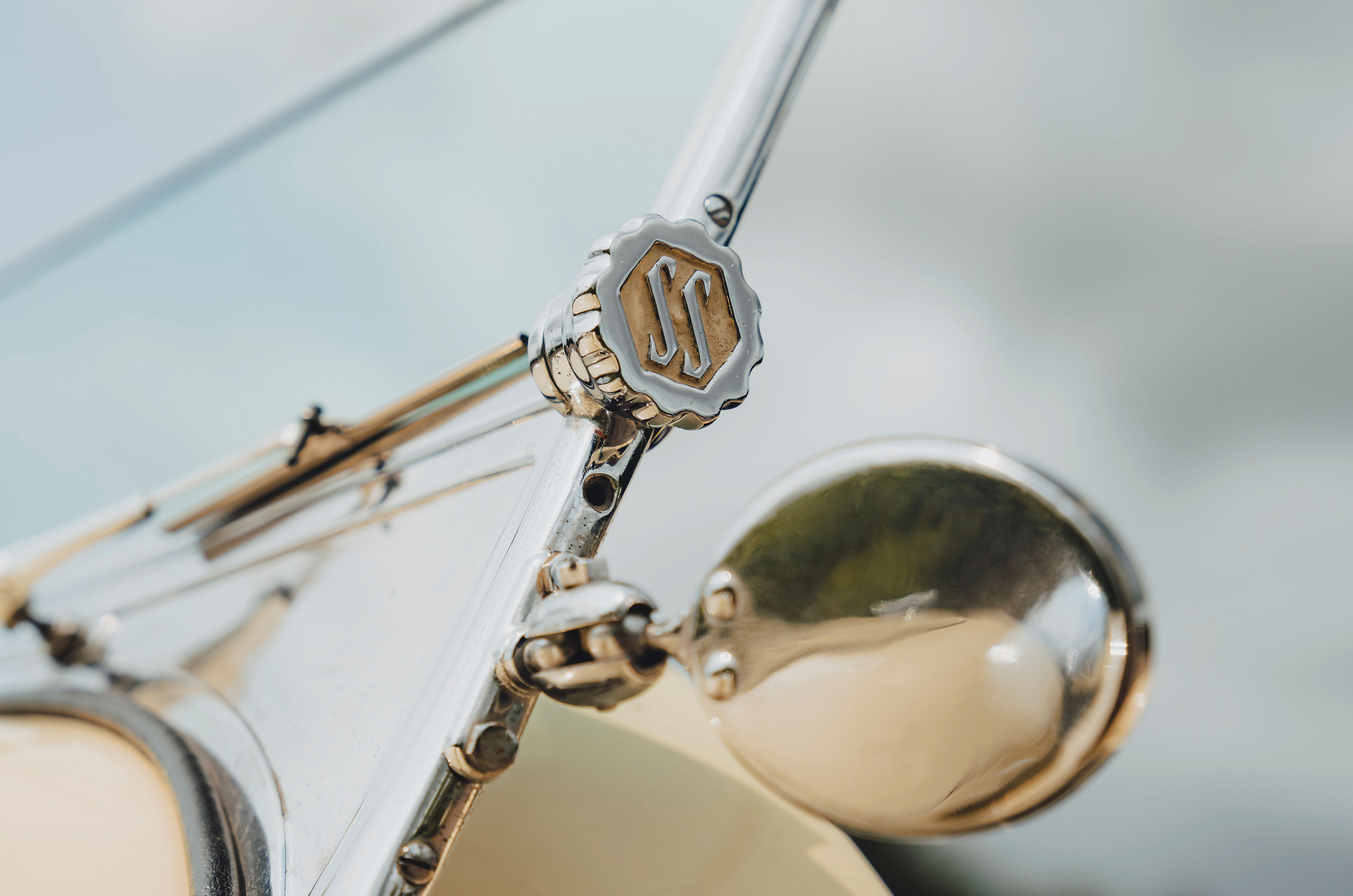
Fine detailing on the SS Jaguar 100’s windscreen surround
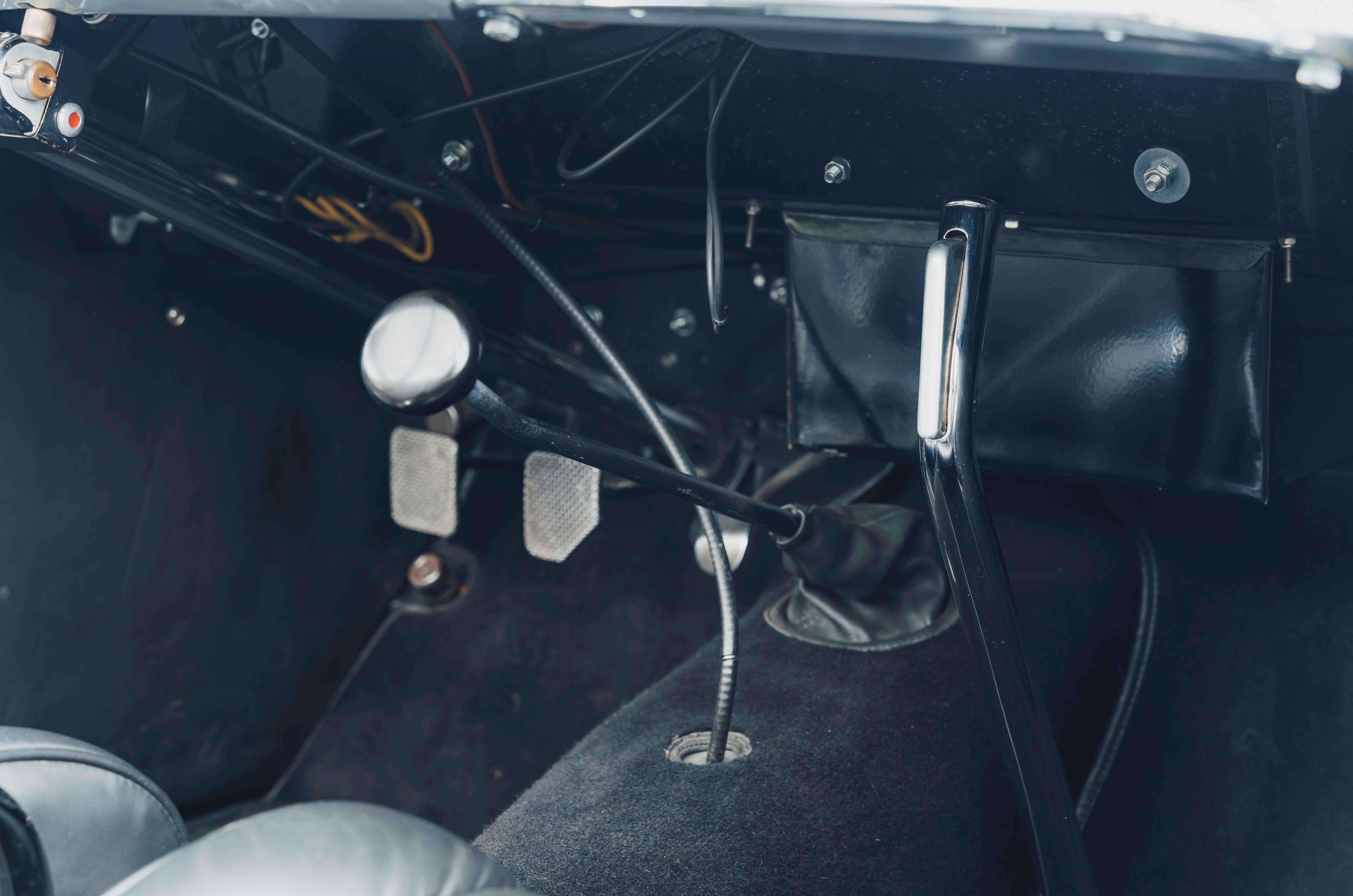
The pedals are close together and it’s easy to hit two at once if you have clumpy footwear.
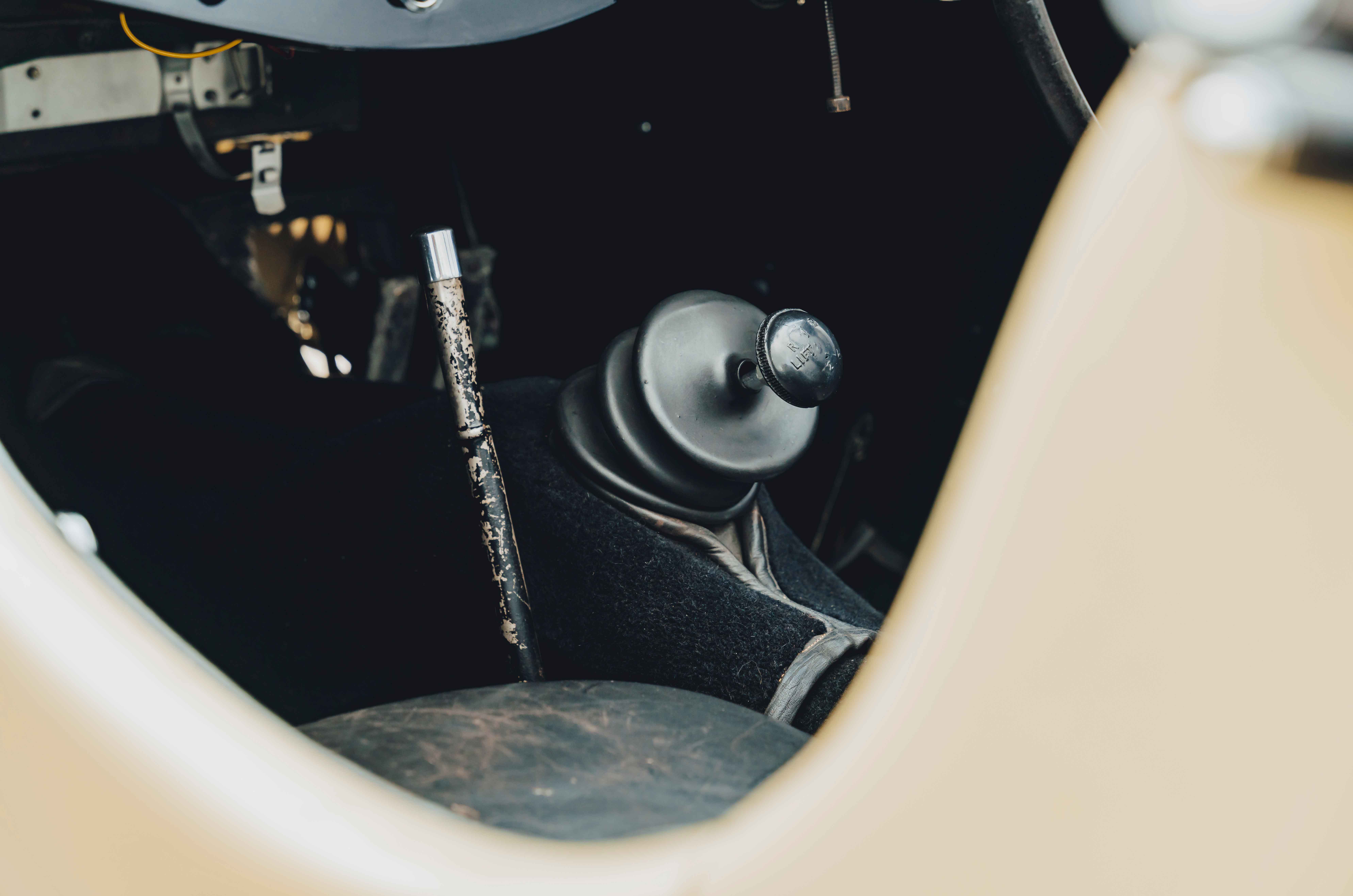
You sit close to the wheel, arms bent, feeling under the dashboard for the stubby gearlever.
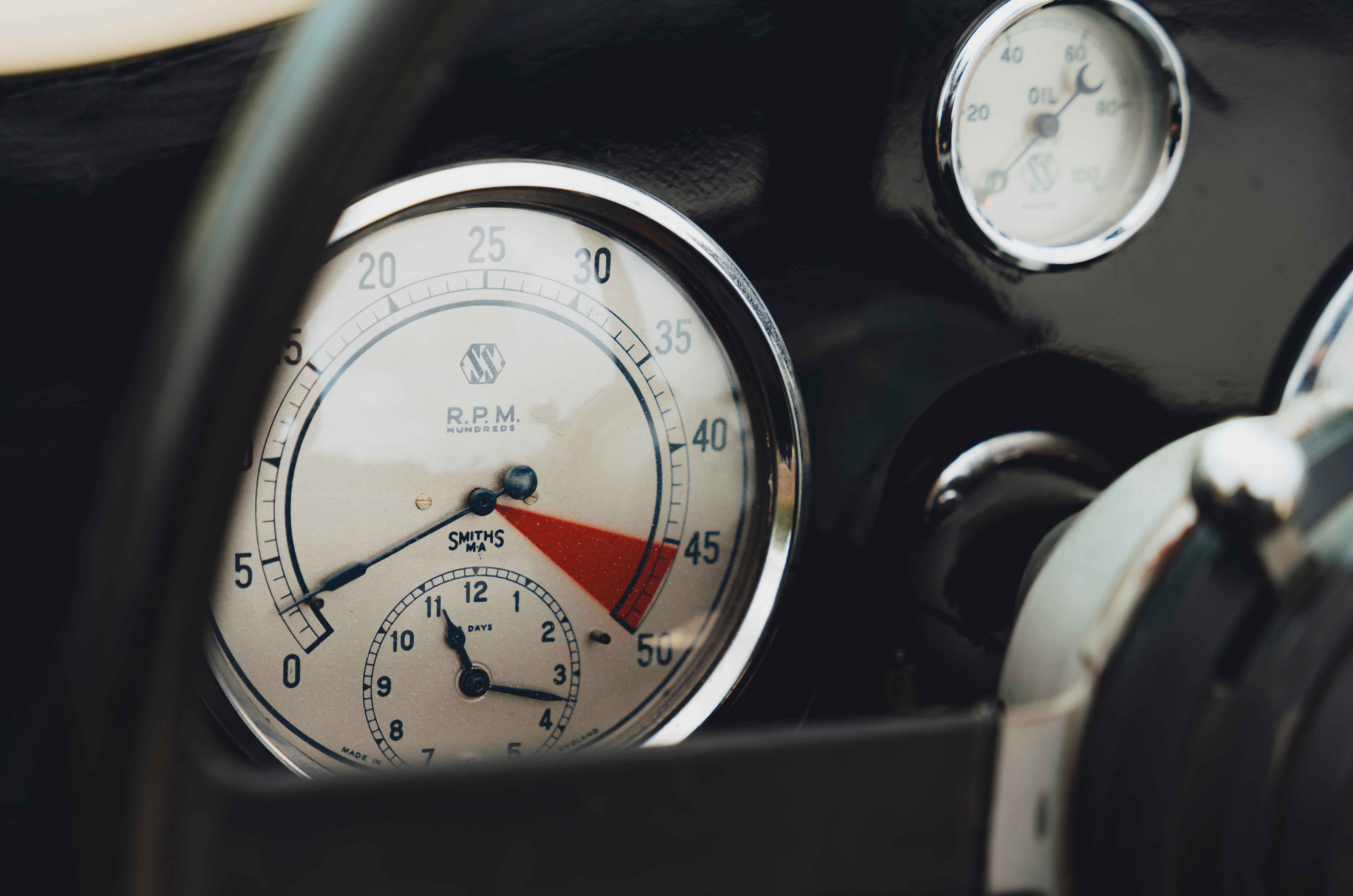
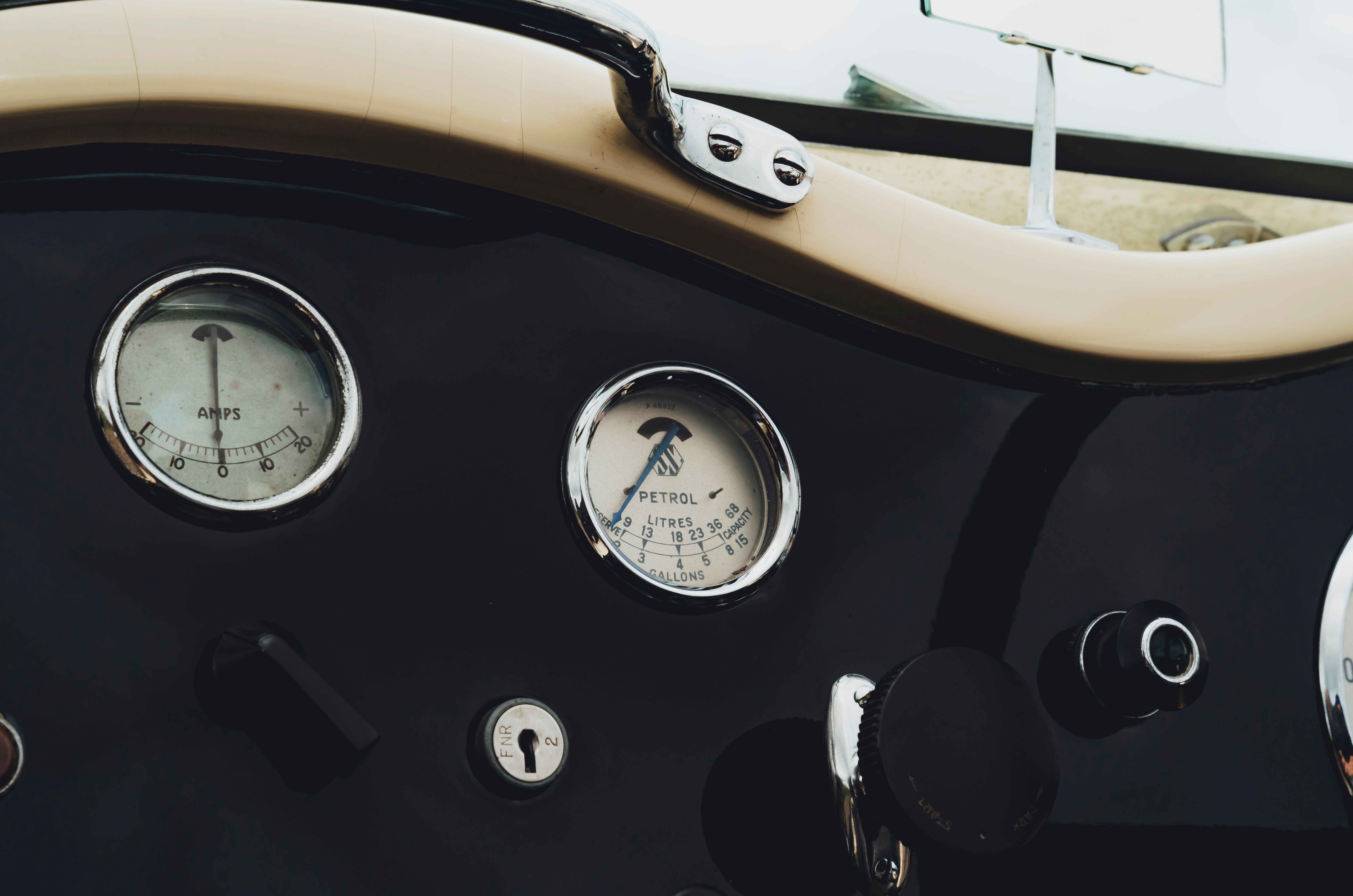
The curved twin cowls of the fascia are adorned with cream-faced Smiths instruments bearing ‘SS’ insignia, and there are advance and retard controls on the fat steering boss.
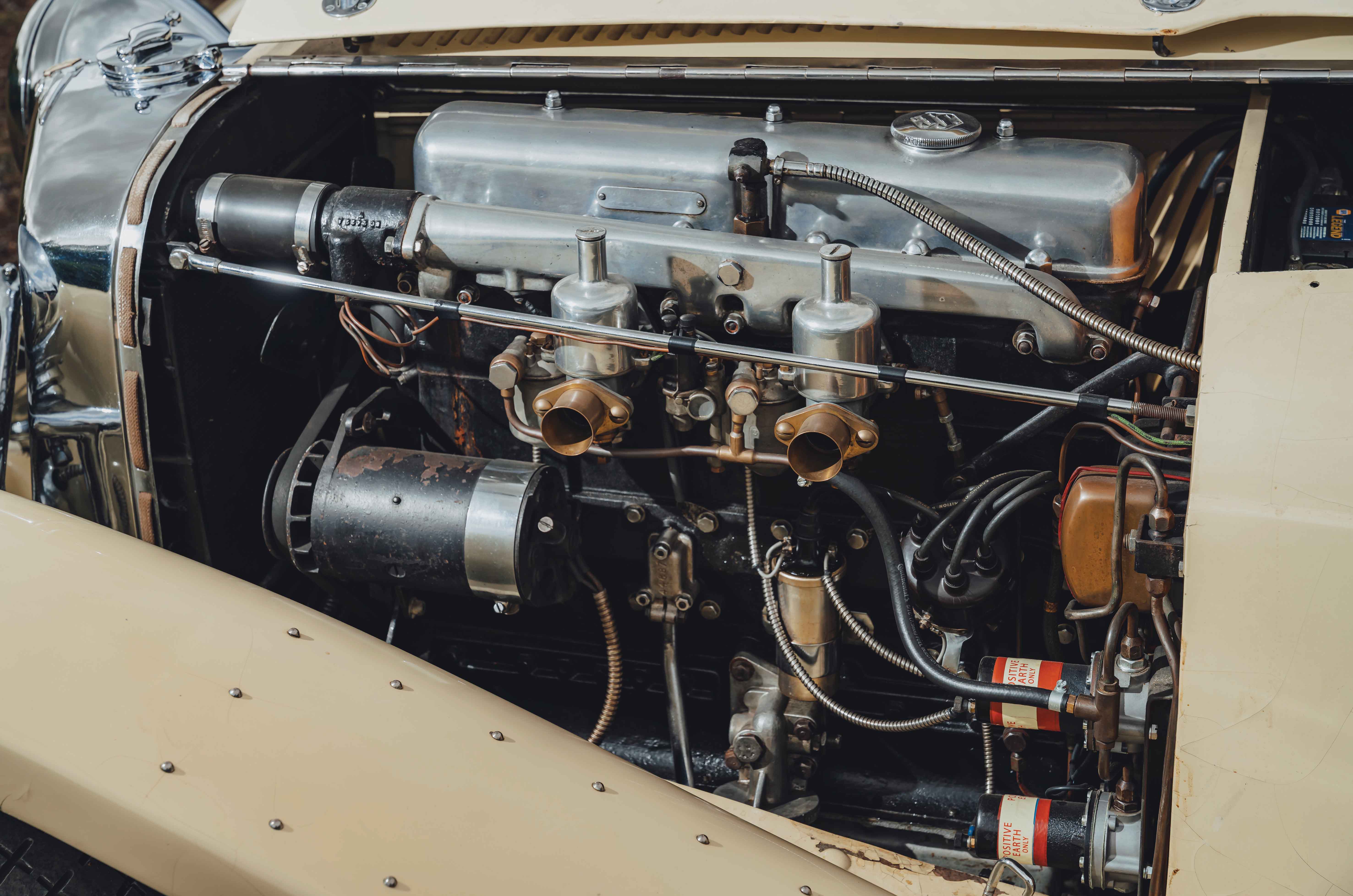
The straight-six starts at the first touch of the button with a fruity flutter from the exhaust.
The Jaguar’s straightforward dashboard
The clutch is light and progressive, and the engine produces very much the same warm growl as an XK unit, overlaid with that classic whine from the straight-cut bottom gear of the Moss ’box as you ease away.
It is very tractable, and gear-play is largely optional. You can go from second to top at 20mph and the SS100 simply romps up the road.
Yet it can’t match the exciting power delivery of the punchy, lightweight BMW 328, which is just getting into its stride as the SS100 is beginning to sound strained.
The SS Jaguar 100’s short gearlever controls a Moss ’box
Curiously – given the ponderous post-war reputation of the Moss four-speeder – the gearbox turns out to be one of the best things about the Jaguar: it finds its slots easily in a precise gate and is much less tricky to navigate than the BMW’s.
Not so the steering, the handling generally or the ride: it is like comparing ballet with Morris dancing.
It’s not that the SS100 is a bad or tricky car to drive. Far from it. It is just that the BMW is so extraordinarily good.
‘It’s not that the SS Jaguar 100 is a bad or tricky car to drive. Far from it. It is just that the BMW is so extraordinarily good’
You can motor the SS100 through corners quite quickly on those skinny tyres.
The hard springs do not allow roll to develop, and limits are sensed long before they are breached.
But steering that is nicely balanced on fast, smooth curves loads up rapidly on tight, slow turns taken ambitiously.
It also shudders in sympathy with the scuttle over rough surfaces and has a poor lock. It is high-geared, but nothing like as light and responsive as the BMW’s.
The BMW 328’s rack-and-pinion steering is accurate and nicely weighted
Accept these shortcomings as character and the car’s personality can shine through.
With the sun going down on a summer evening, enjoying the bark from the exhaust and the warm glow from the instruments, you might not care that this evocative car doesn’t quite give you that last 10% of feel and feedback.
It lacks the effortless composure that separates a great driver’s car from an all-time great.
The SS100 is not a brute, but neither is it a fine instrument.
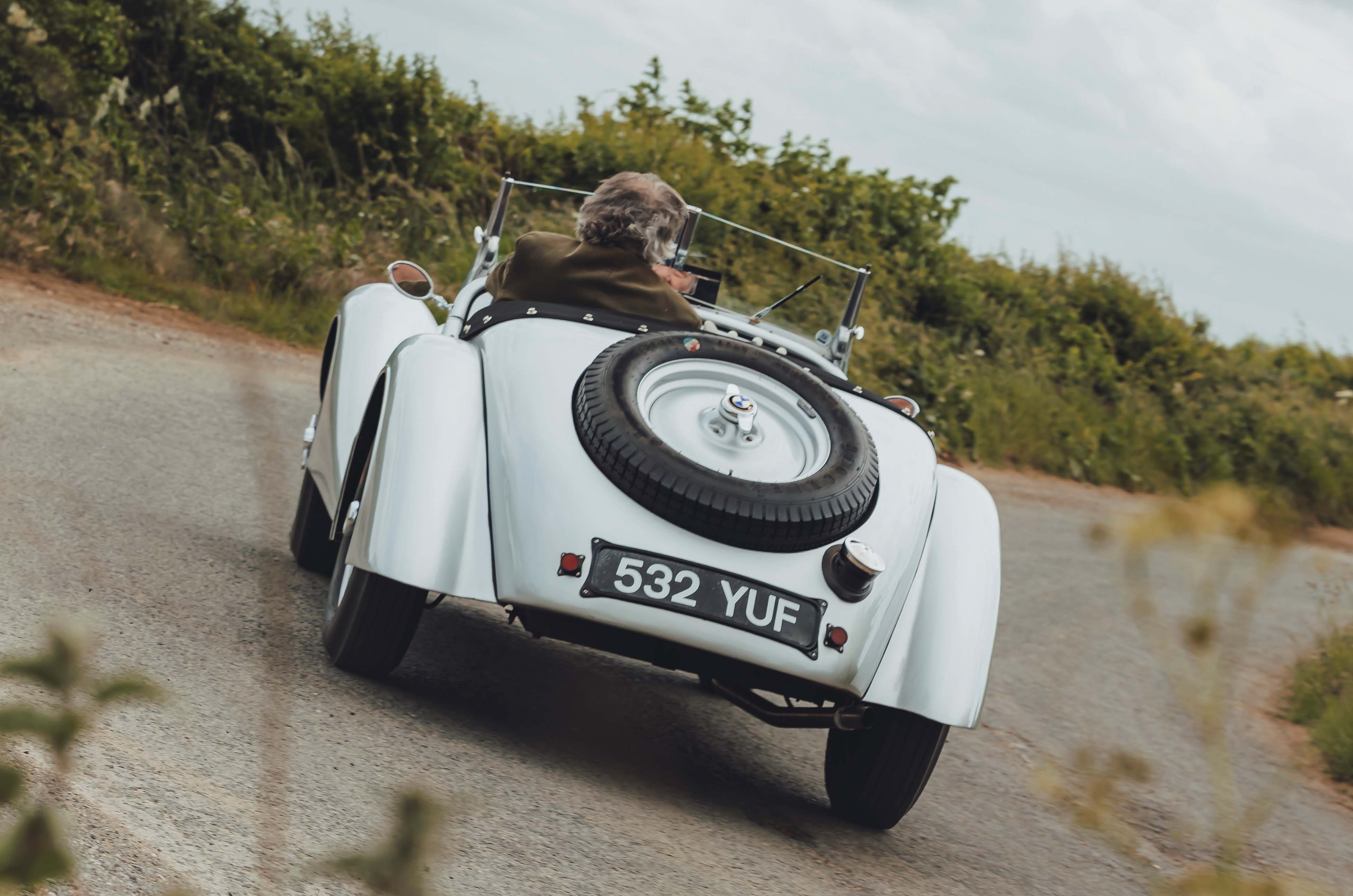
Compared to the Jaguar, the BMW 328 has a smoother ride and it’s more feelsome to drive
If the BMW feels hewn from solid yet light on its feet at the same time, each component sympathetic to its assigned task, the Jaguar feels like harder work, the product of a different generation.
You would learn to accommodate the British car’s shortcomings on longer acquaintance and enjoy it on smooth roads, going into corners slow, getting your steering sorted before coming out fast.
But you cannot go confidently in search of the Jaguar’s outer limits in the way the BMW invites, almost demands, you to.
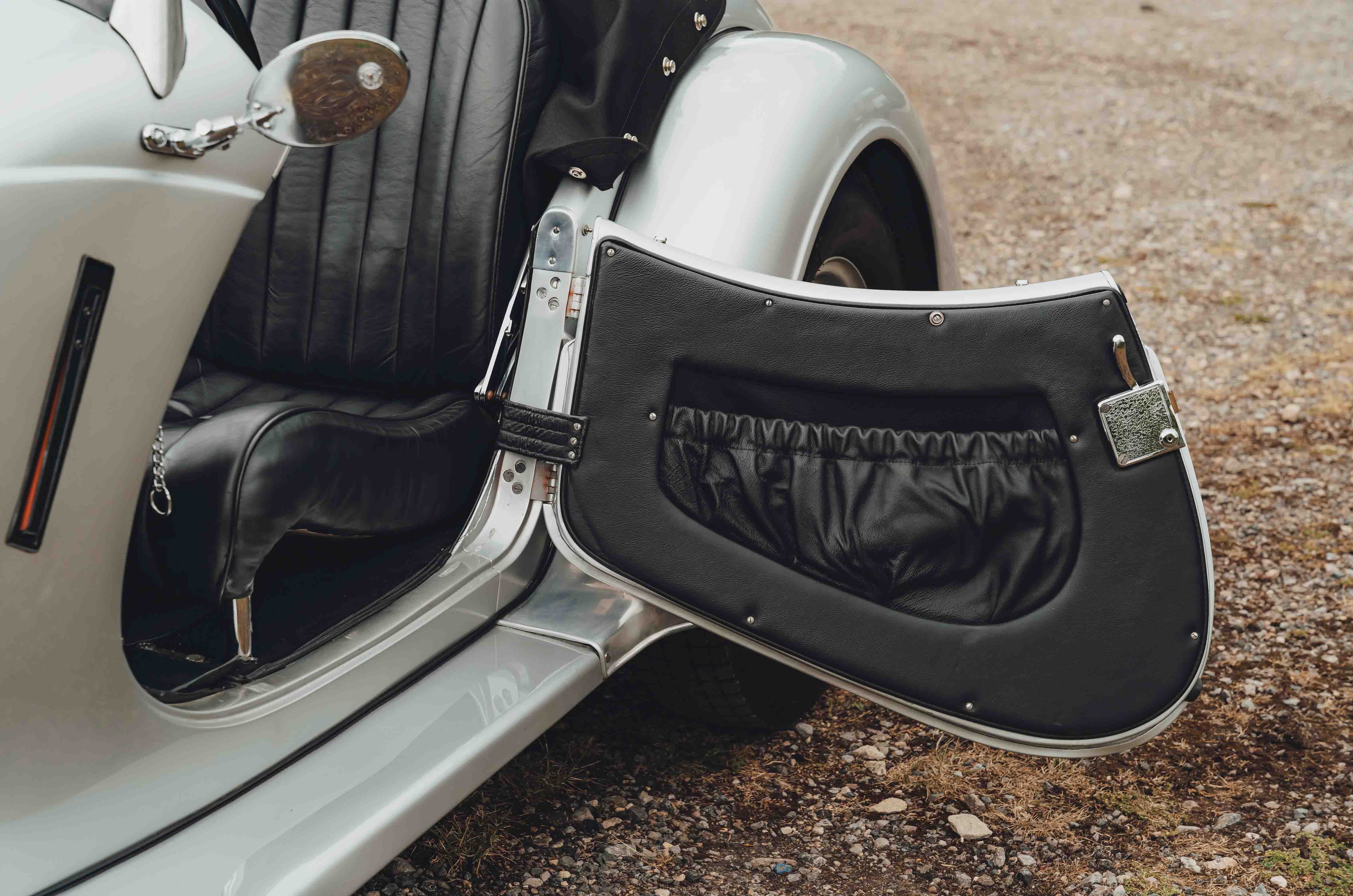
Ruched pocket in the BMW 328’s slender driver’s door
Some pre-war models make an unfamiliar driver second-guess themselves, but this one leaves you wanting more.
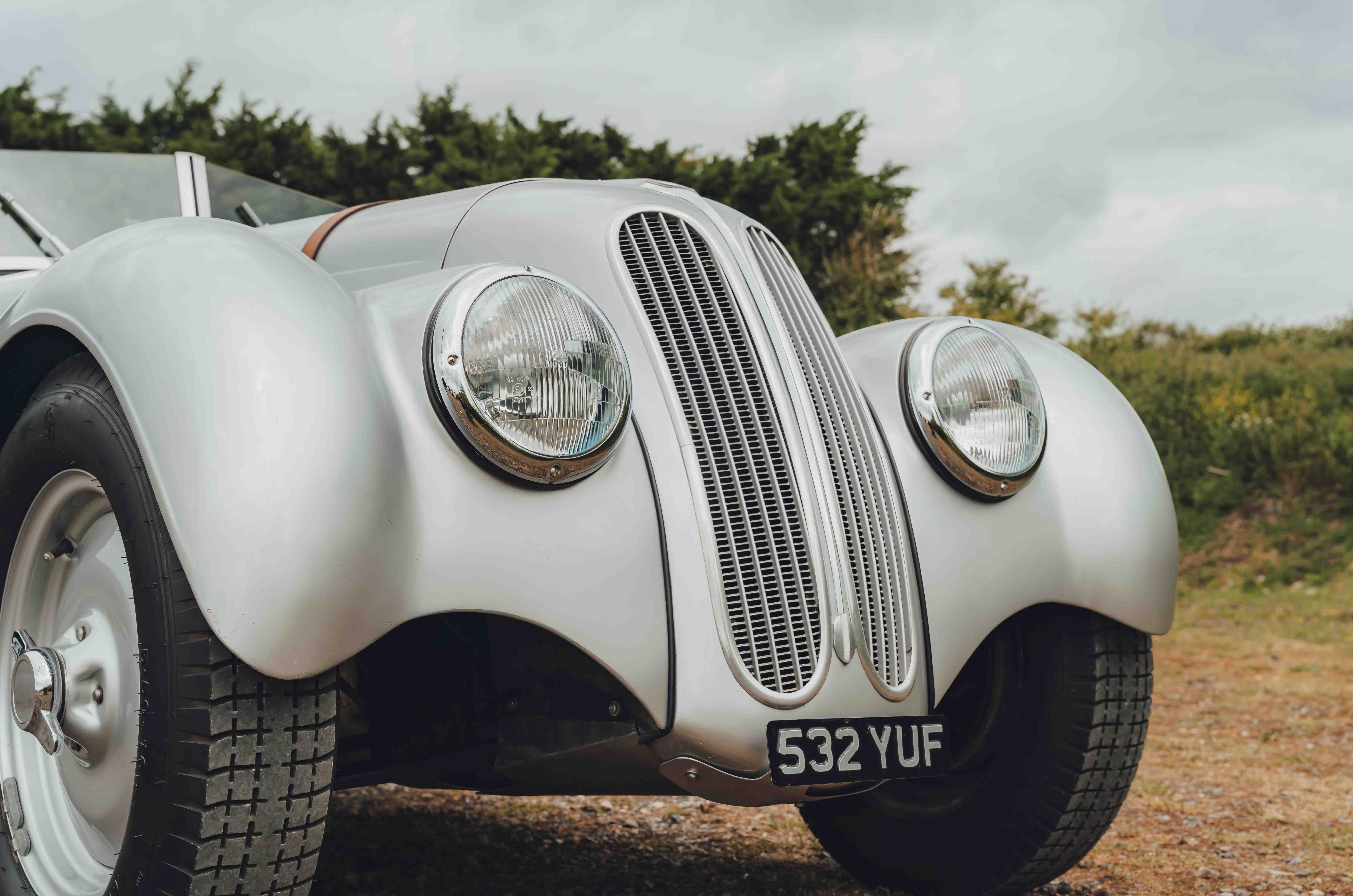
After five minutes at the wheel of the BMW 328 you can see why few – if any – negative words have ever been spoken or printed about this, the first modern sports car.
Modern? Yes, because it is compact, has a relatively small but high-specific-output engine (for its day) and can be driven quickly on any type of road surface, in relative comfort, in a way almost nothing else could – not even some of its very exotic French and Italian rivals.
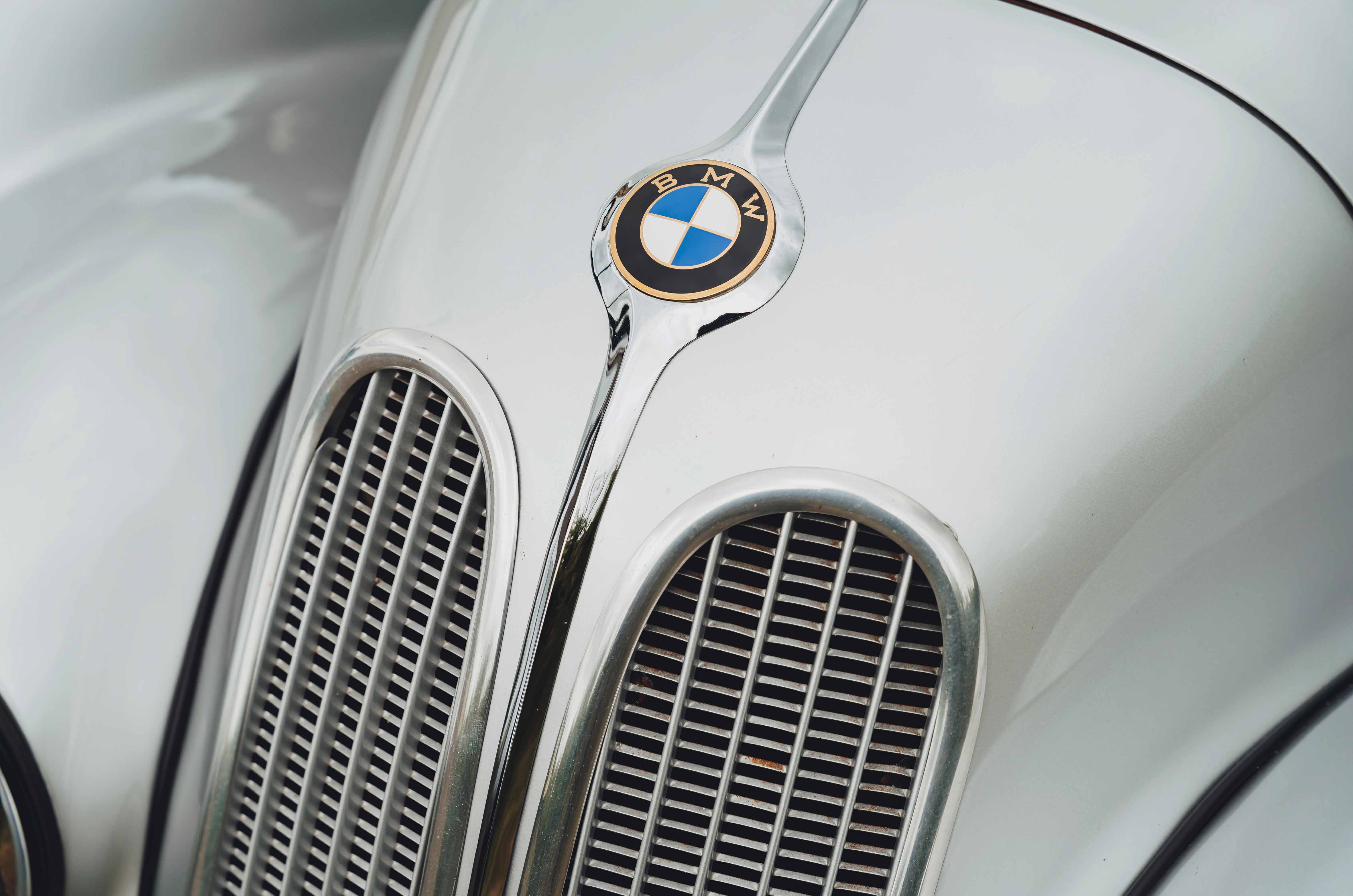
It is almost spookily excellent, setting standards of driver appeal that formed the basis of BMW’s post-war reputation.
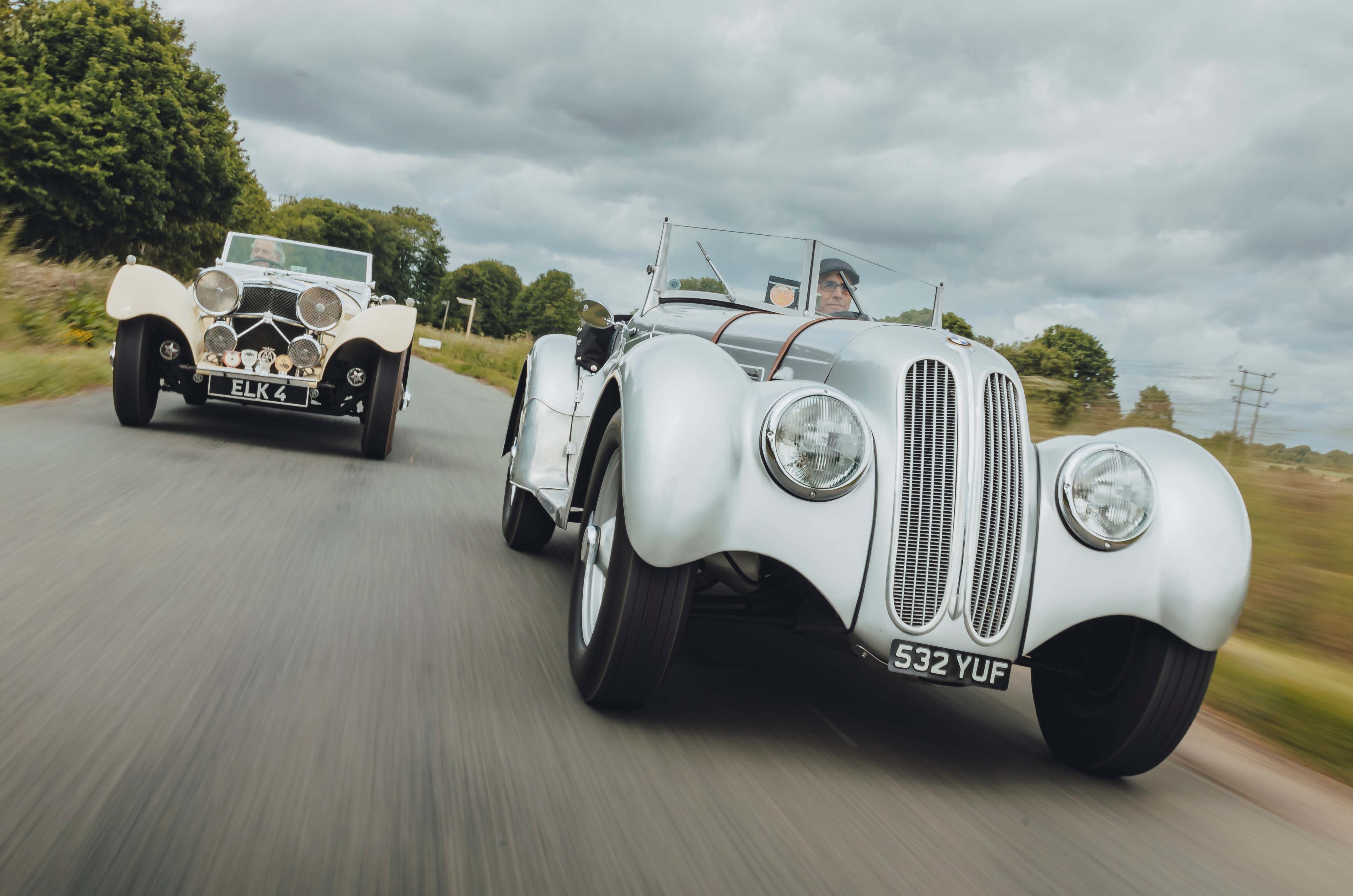
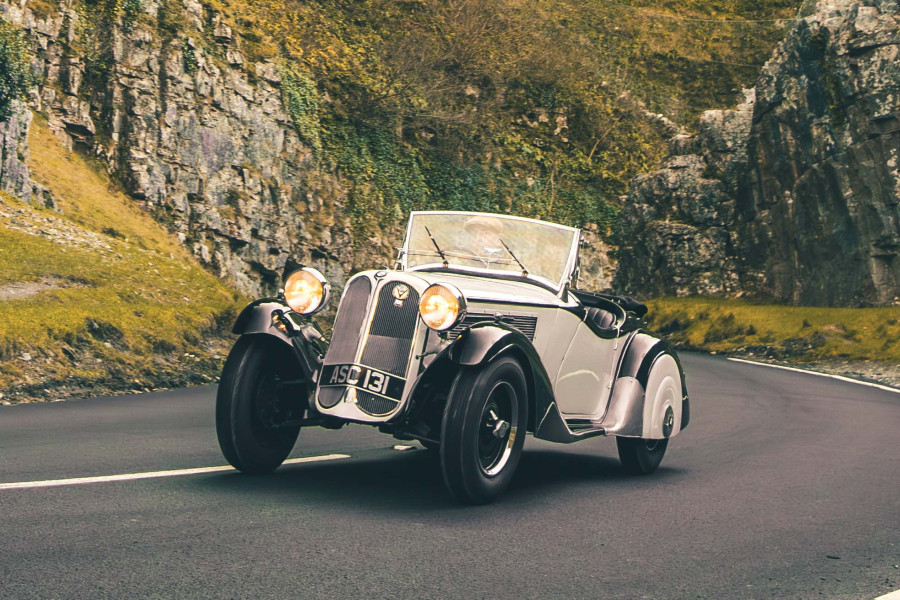
The BMW 328 remains a fantastic sports car, 90 years after it was introduced
Wealthy enthusiasts could buy a 328 on a Monday and win races the following weekend.
It romped away to win its first event at the Nürburgring, driven by Ernst Henne, in June 1936, and privateers were still competitive in their 328s well into the ’50s.
At the height of the model’s pre-war popularity, grids at many German events were completely dominated by the 328, resulting in a legacy of 405 wins (and 104 second places) in three years.
These included class victories at Le Mans and the Tourist Trophy; the special-bodied coupé 328 that won the 1940 Mille Miglia is a whole other story.
The BMW 328 has a reputation out of all proportion to the numbers built: just 459 from 1936-’40. It is richly deserved.
Images: Max Edleston
Thanks to: The Classic Motor Hub for both cars
Factfiles
BMW 328
- Sold/number built 1936-’40/459
- Construction tubular steel frame, steel body
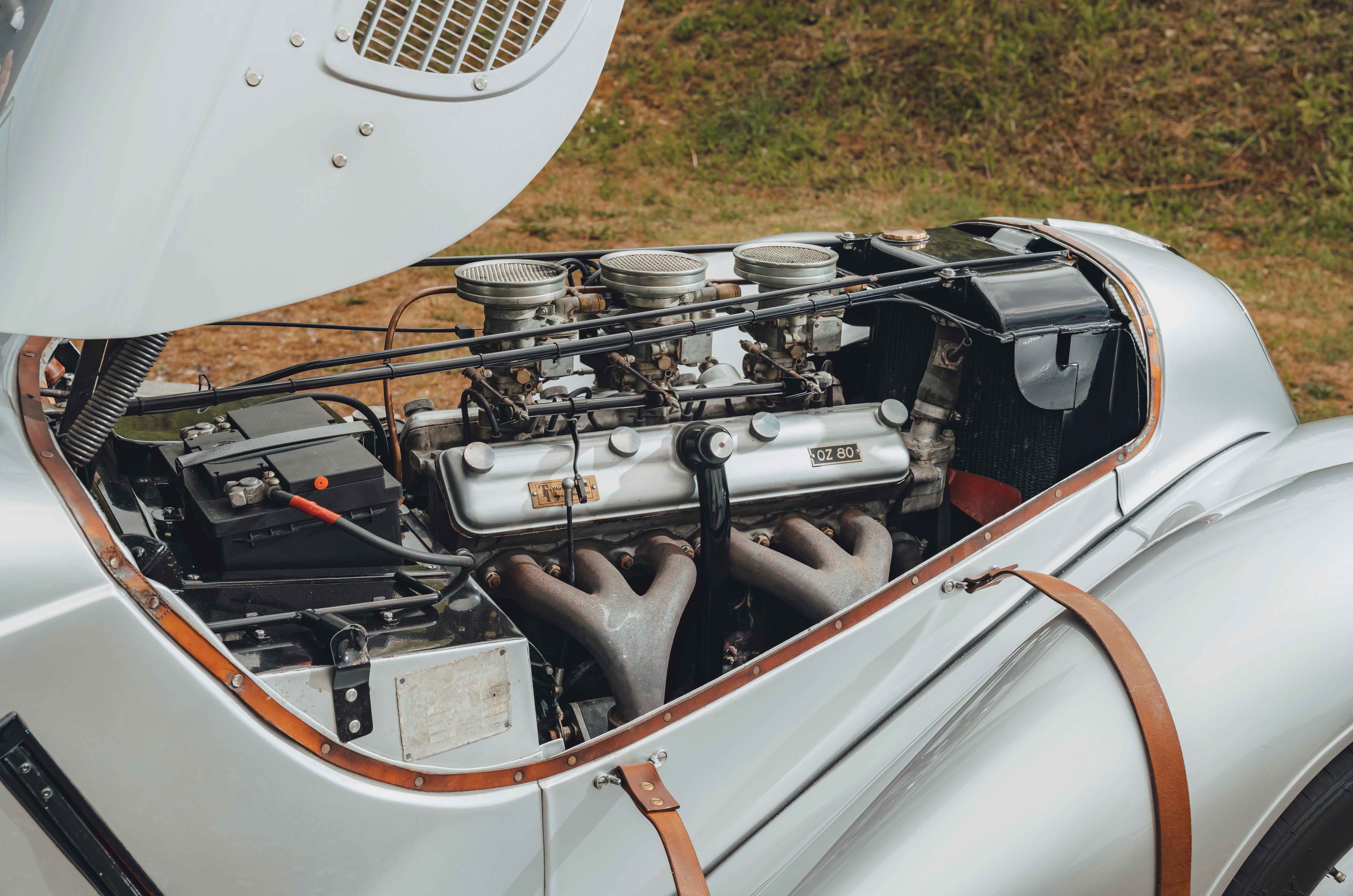
- Engine iron-block, alloy-head, ohv 1971cc straight-six, triple downdraught Solex carburettors
- Max power 80bhp @ 5000rpm
- Max torque 93lb ft @ 4000rpm
- Transmission four-speed manual, RWD
- Suspension: front independent, by transverse leaf spring, lower wishbones rear live axle, semi-elliptic leaf springs; telescopic dampers f/r
- Steering rack and pinion
- Brakes drums
- Length 12ft 10in (3912mm)
- Width 5ft (1524mm)
- Height 5ft 5in (1651mm)
- Wheelbase 7ft 8in (2337mm)
- Weight 1800lb (816kg)
- 0-60mph 12 secs
- Top speed 93mph
- Mpg 23
- Price new £695
- Price now £300-700,000*
SS Jaguar 100 2½-litre
- Sold/number built 1936-’39/314
- Construction steel ladder chassis, aluminium body
- Engine all-iron, ohv 2663cc straight-six, twin SU carburettors
- Max power 102bhp @ 4600rpm
- Max torque n/a
- Transmission four-speed manual, RWD
- Suspension: front beam axle rear live axle; semi-elliptic leaf springs, friction dampers f/r
- Steering worm and peg
- Brakes rod-operated drums
- Length 12ft 9in (3886mm)
- Width 5ft 3in (1600mm)
- Height 4ft 6in (1372mm)
- Wheelbase 8ft 8in (2641mm)
- Weight 2300lb (1043kg)
- 0-60mph 12.8 secs
- Top speed 95mph
- Mpg 20
- Price new £395
- Price now £250-600,000*
*Prices correct at date of original publication
Enjoy more of the world’s best classic car content every month when you subscribe to C&SC – get our latest deals here
READ MORE
BMW 328: welcome to the modern world
Jaguar SS100: Goodwood’s first winner
Driving John Surtees’ BMW 503 Cabriolet
Martin Buckley
Senior Contributor, Classic & Sports Car