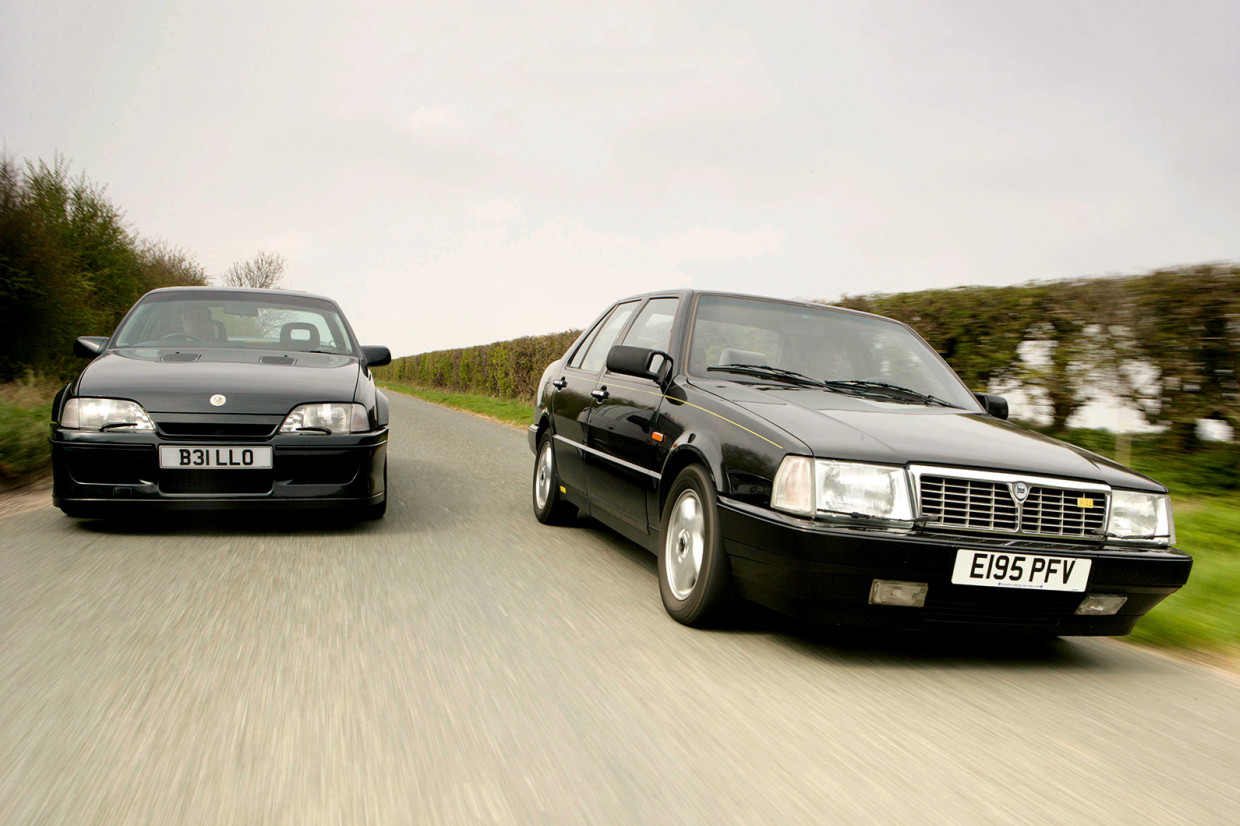
A positive shift across a clearly defined gate – not unlike a Ferrari’s, but with a long-legged nature – makes slapping it into fourth and pottering as easy as squeezing every last ounce of acceleration from each ratio.
It’s even set up for mile-munching: sixth is an economy overdrive good for ‘just’ 125mph.
Follow the same practice as the Thema – leaving it in third and keeping the right foot planted – and there’s a turbine-like scream from the twin Garrett AiResearch T25 turbos.
The torque of the straight-six massages out any lag, and the accumulation of speed is relentless.
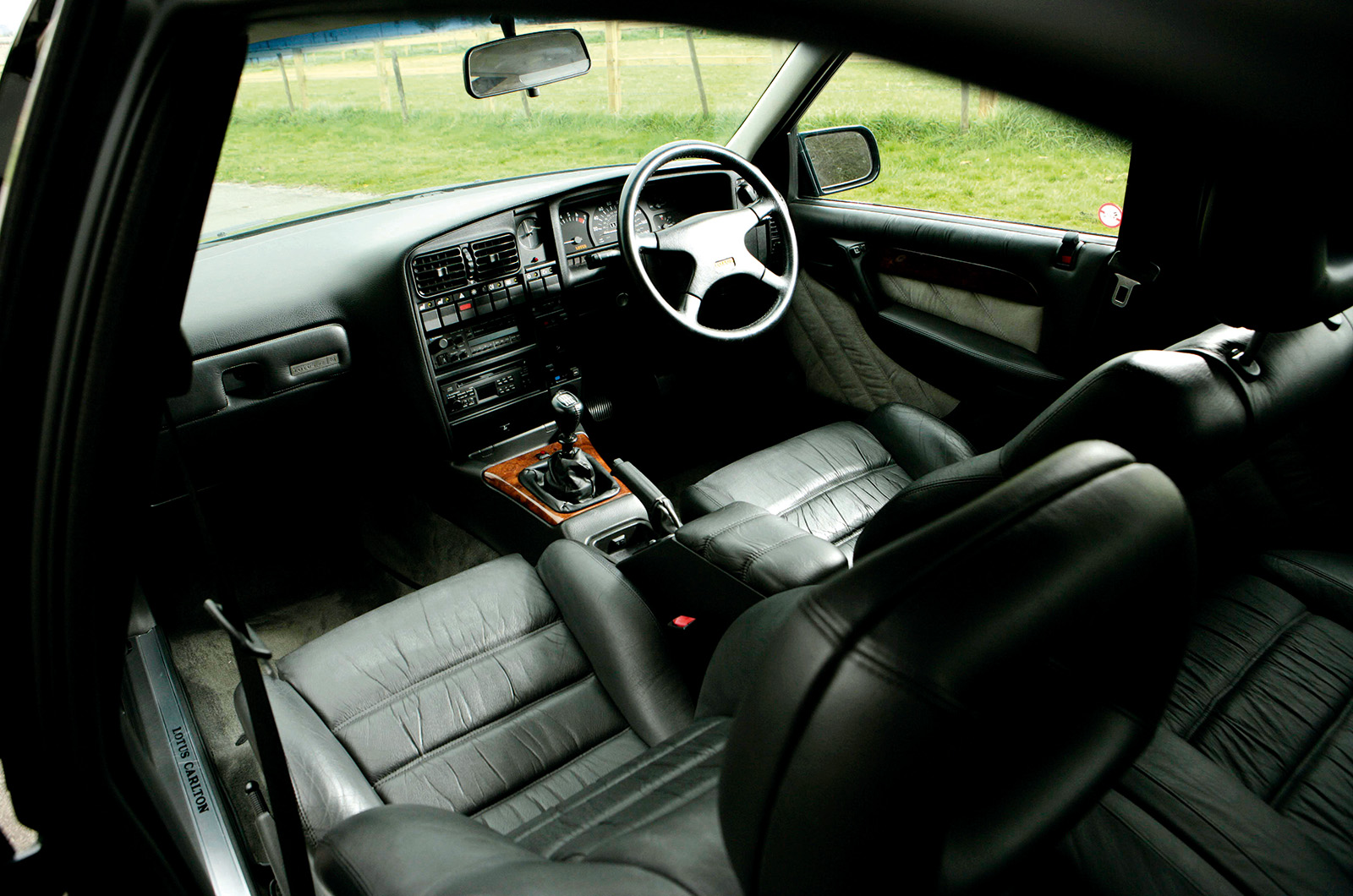
The Lotus Carlton’s cabin lacks character
Supercar road tests are full of such accelerative clichés as ‘face-bending’ and ‘neck-straining’, but in this case they are very much true.
Each stab of throttle has the same pressure-effect on your ears as take-off in an airliner.
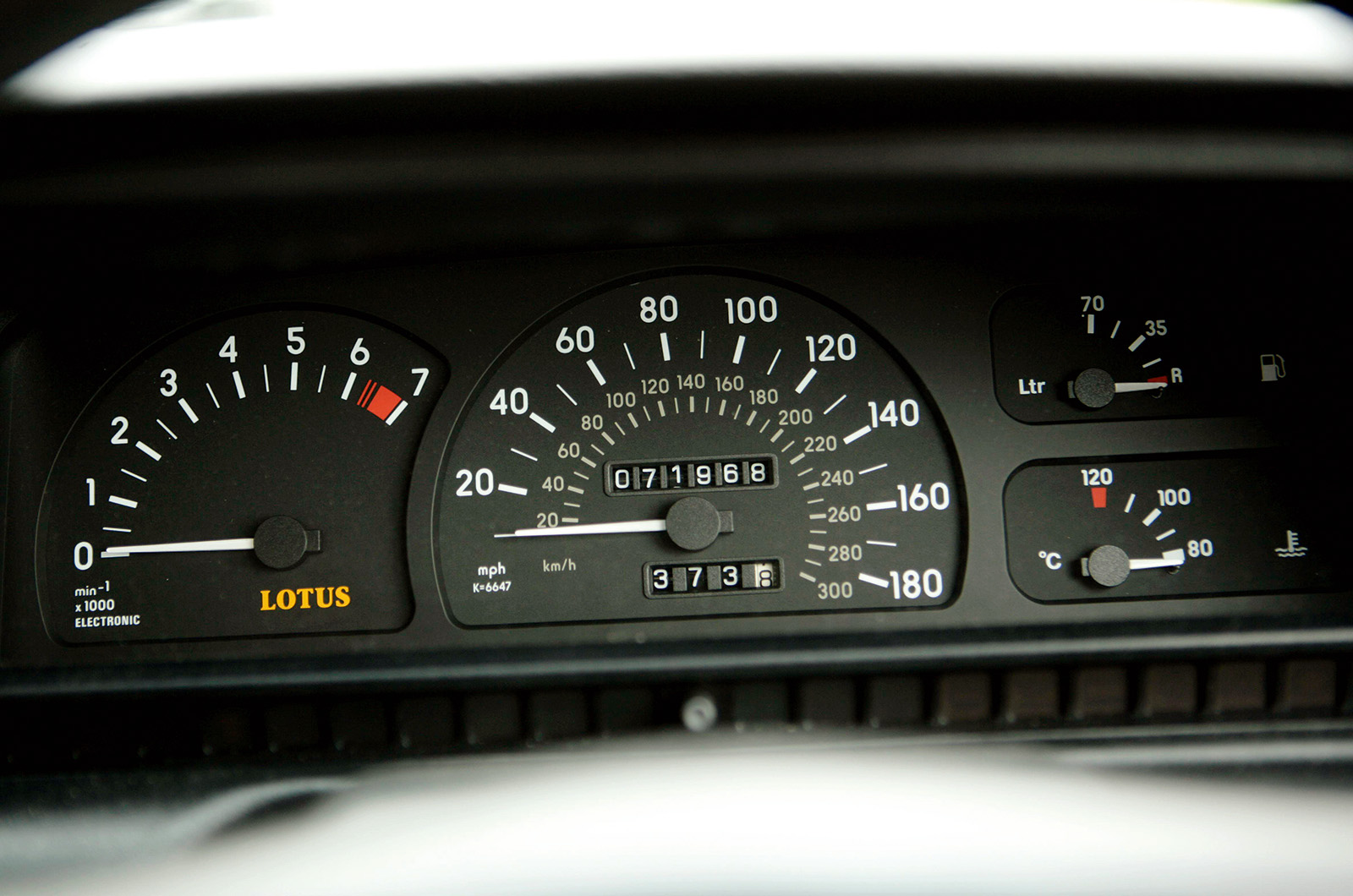
Third gear is good for 100mph-plus, fourth will see you to 150, and while full tilt in fifth was certified by Lotus at 177mph, it had run out of runway and was in enough trouble with the press already.
Some owners have allegedly run the needle off the clock on the autobahn, so genuine top speed is probably in the region of 190mph.
When you read – and experience – figures like that from a four-door saloon, you realise how shell-shocked the Lotus Carlton left the supercar industry in the early ’90s.
At the time, the only car Ferrari had in its line-up that could better the Carlton in a straight line was the F40.
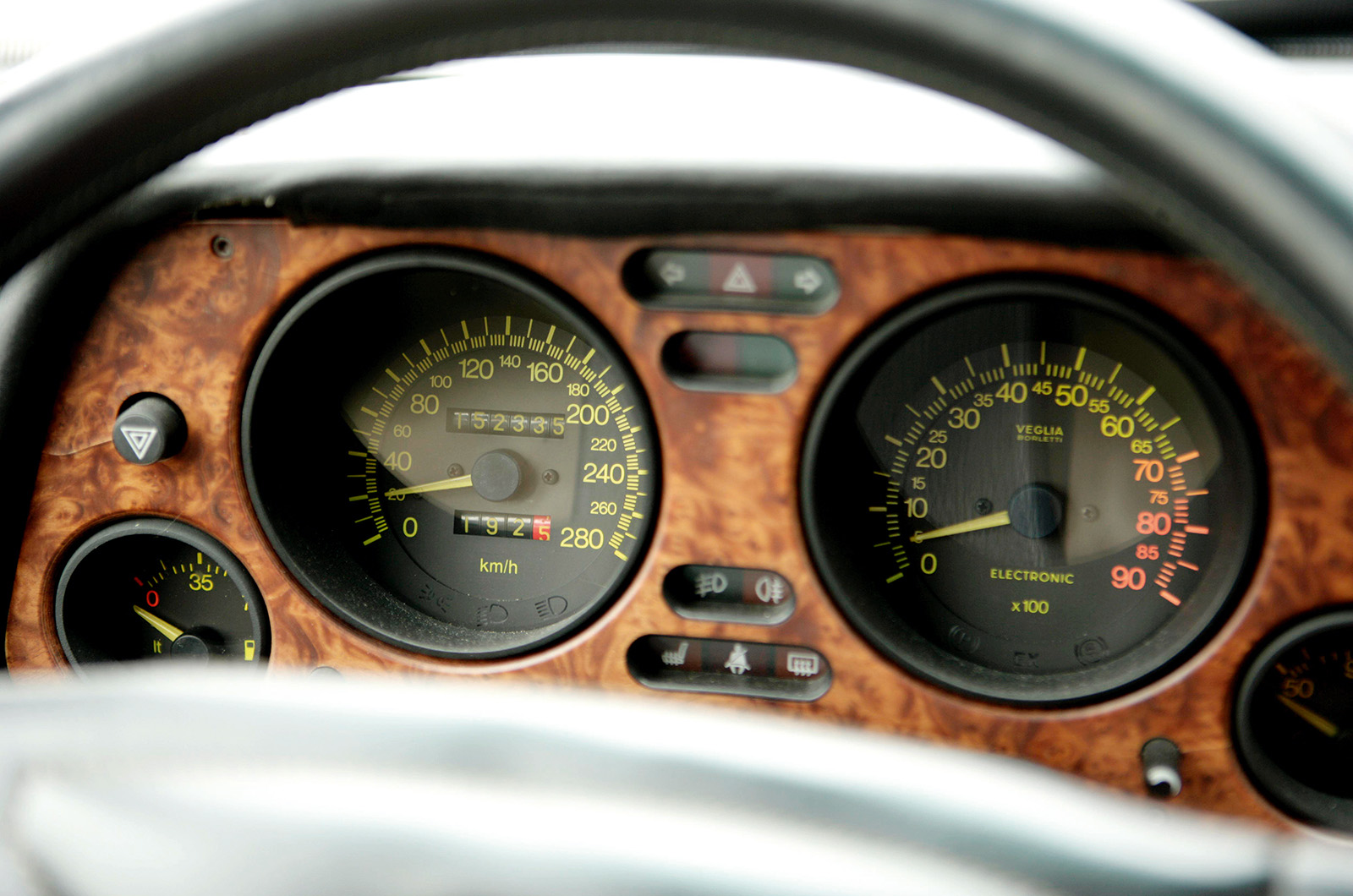
The Lotus Carlton is allegedly capable of running off the 180mph speedometer
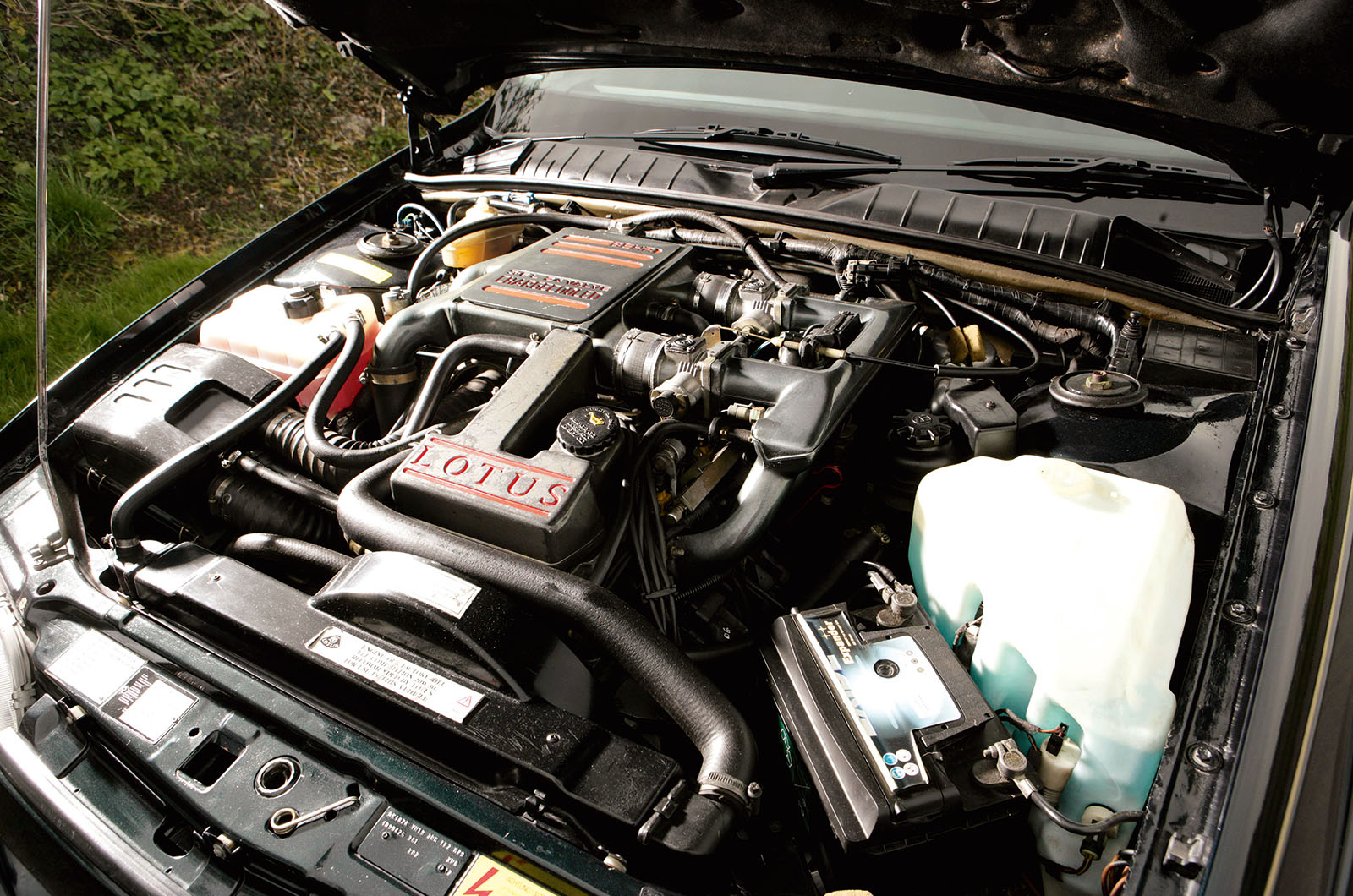
This car, with a mass-produced engine stroked to 3.6 litres and a pair of turbochargers also found on a number of more everyman performance Fords, was slaying without effort V12-engined trinkets of dubious taste and value while carrying four adults plus plenty of luggage – and looking fairly innocuous while doing it.
The age of supercar excess was over: the fact that today every major executive saloon has a bonkers sibling is testament to the impact of the Lotus Carlton. That’s not to belittle the Lancia Thema 8.32’s abilities.
As we find ourselves in another age of excess – tragically it’s now called ‘bling’, but it’s all very ’80s regardless of what its diamond-encrusted proponents might claim – and with Ferrari’s sense of brand awareness at an all-time high, a ‘new’ 8.32 smattered with Prancing Horses would be Lancia’s perfect foil to the likes of the BMW M5 and Mercedes-Benz E-Class AMG.
But that would be to ignore the subtle, V8-engined performance saloon already housed within the newly minted Stellantis stable: the Maserati Quattroporte, the Thema 8.32’s true successor.
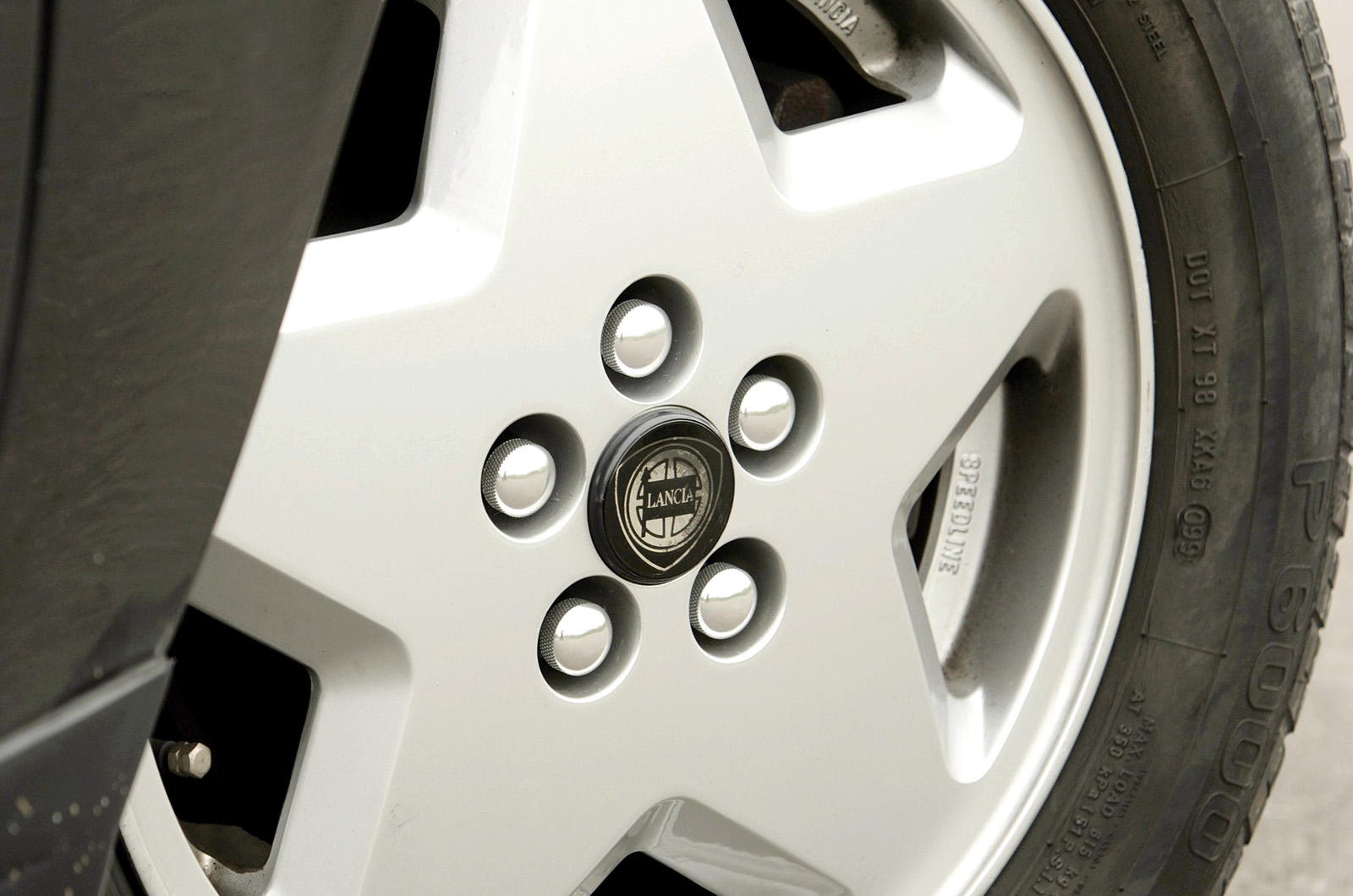
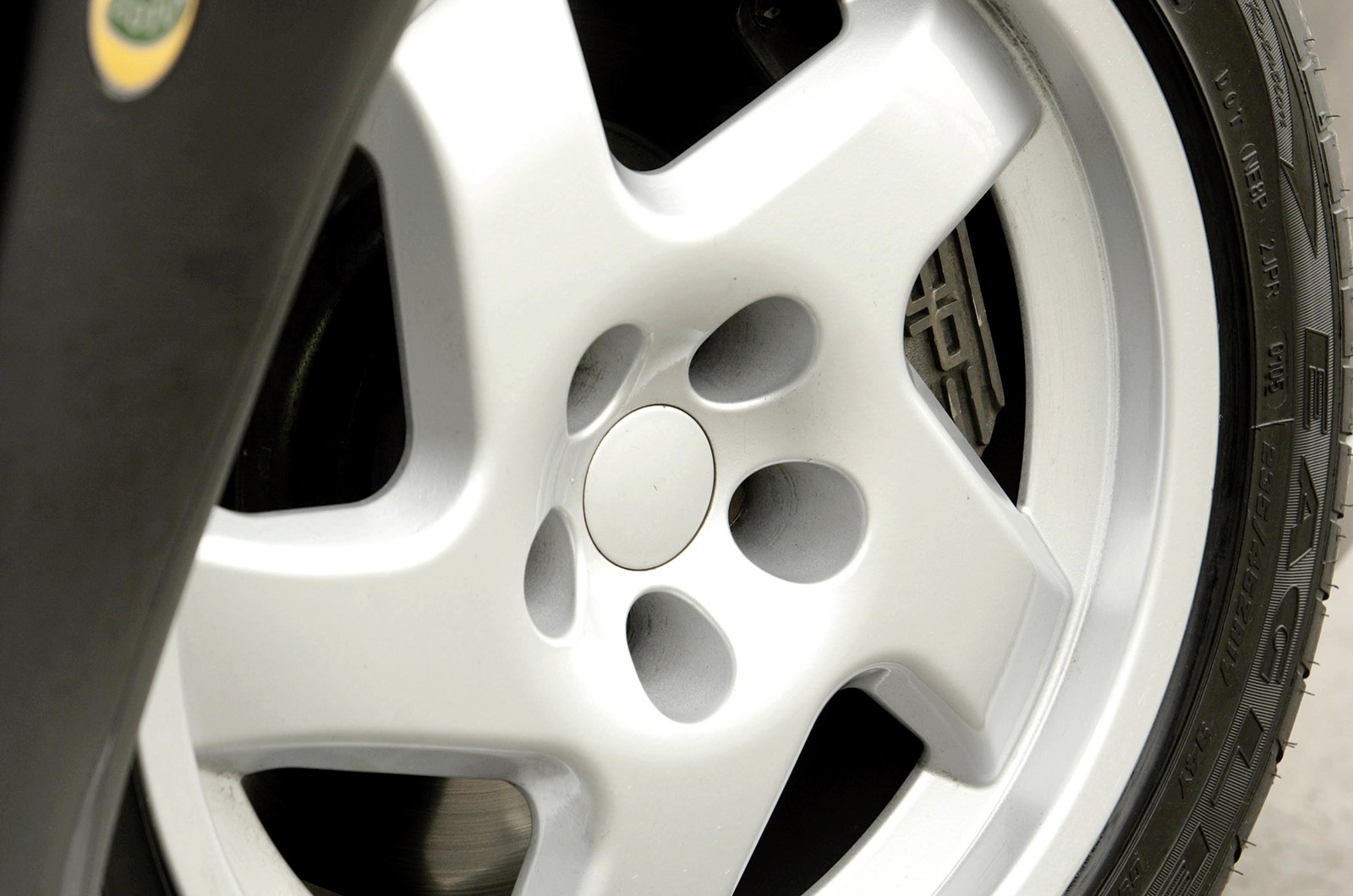
There are big ventilated discs behind the Lotus Carlton’s five-spoke wheels
Vauxhall also, after some length, found a worthy successor to the Lotus Carlton in the Australian-built VXR8.
However, its approach was rather more low-tech, with a big V8 in place of tuning and turbos.
Still, it fitted the bill, visually carrying off the same trick as the Carlton and leaving just enough performance addenda on show to remind people what it was capable of.
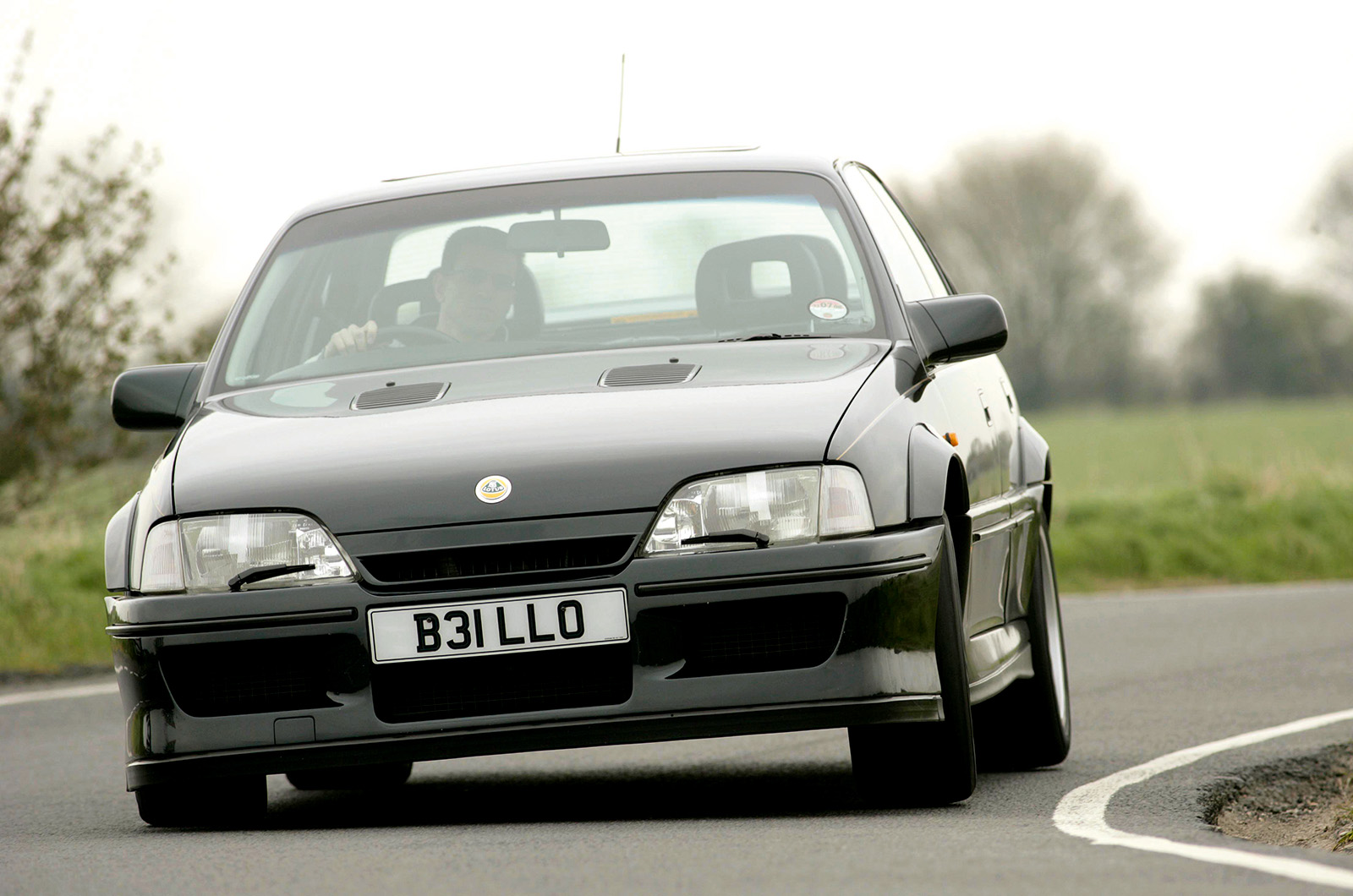
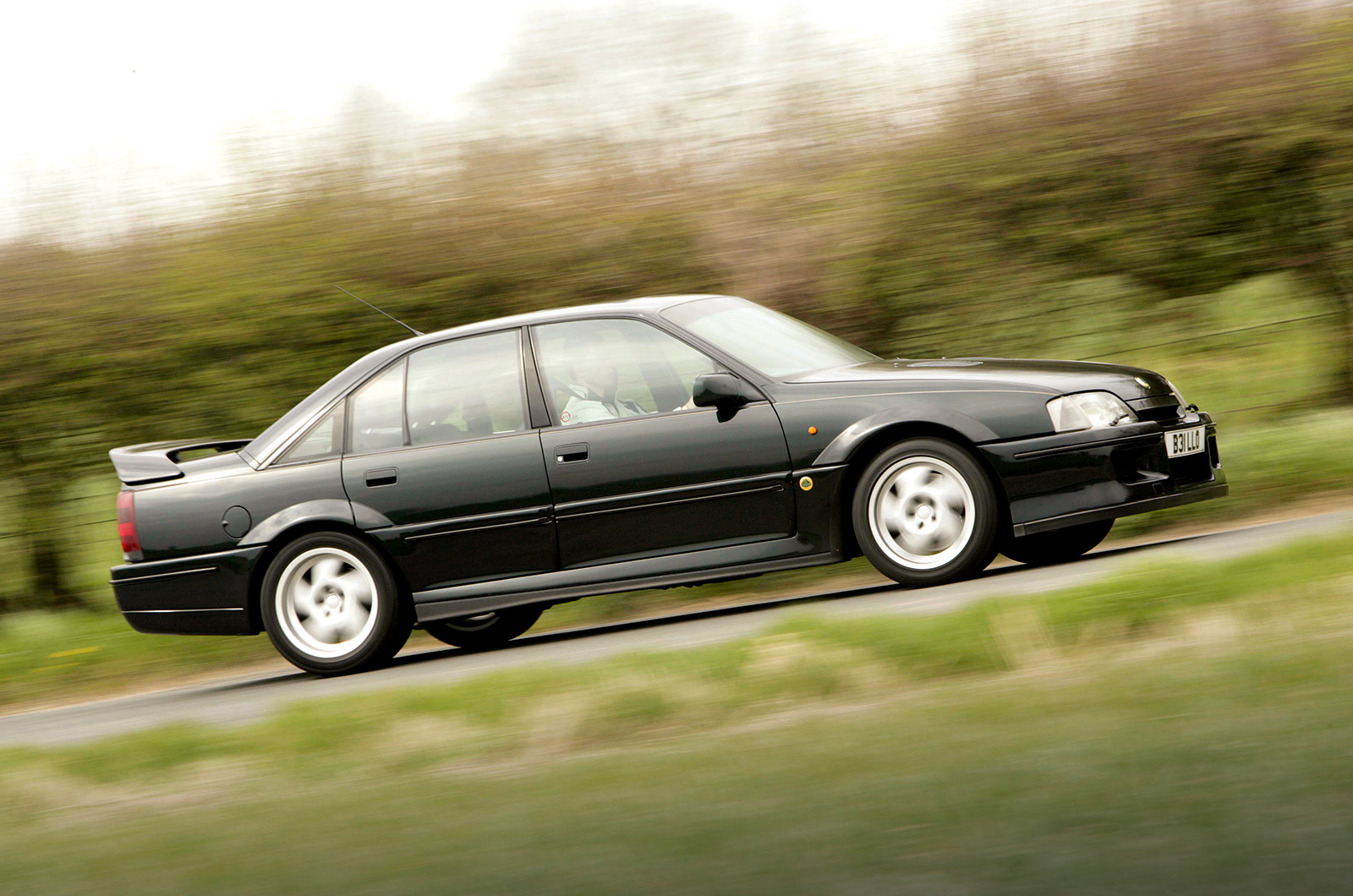
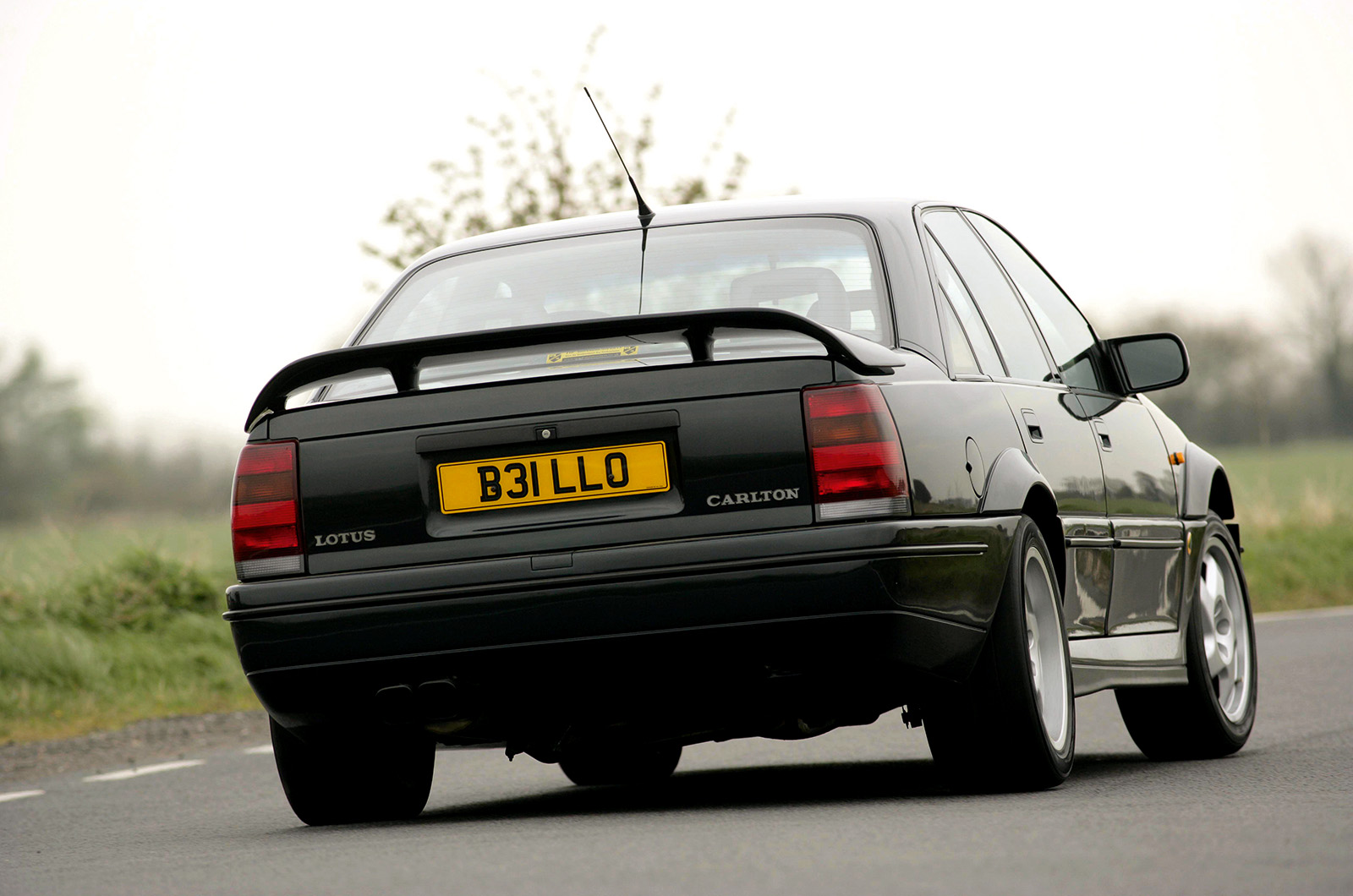
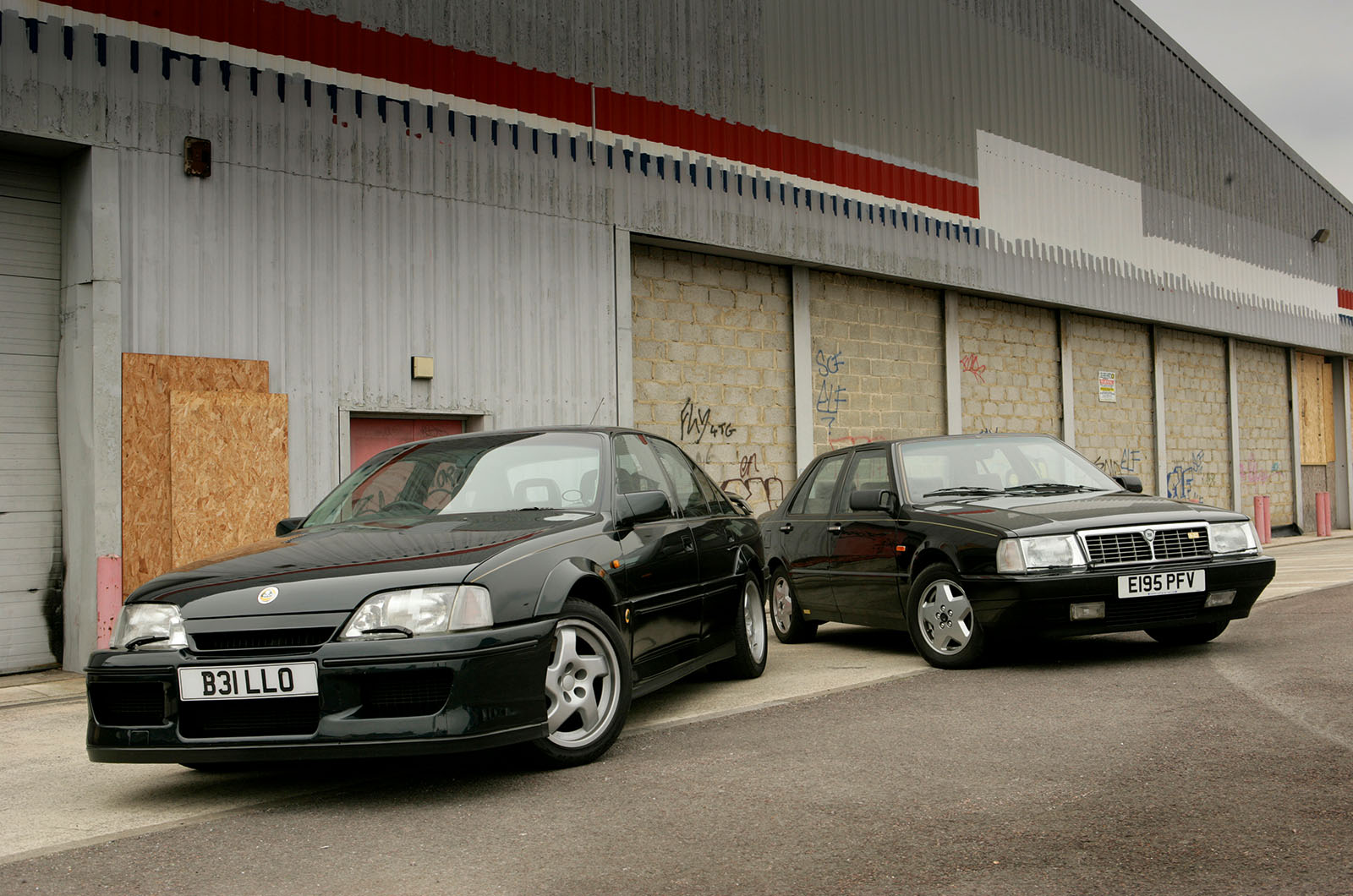
Even though many describe the Carlton as looking mad and aggressive, it still manages to appear as restrained as it does menacing, particularly beside the likes of the Ford Sierra RS Cosworth. Perhaps it’s down to that subdued Imperial Green paint.
There’s little point trying to pick a winner here. Although the Carlton clearly blitzes the Thema on the road, it’s the ‘because we can’ spirit in which these cars were created that is of ultimate importance.
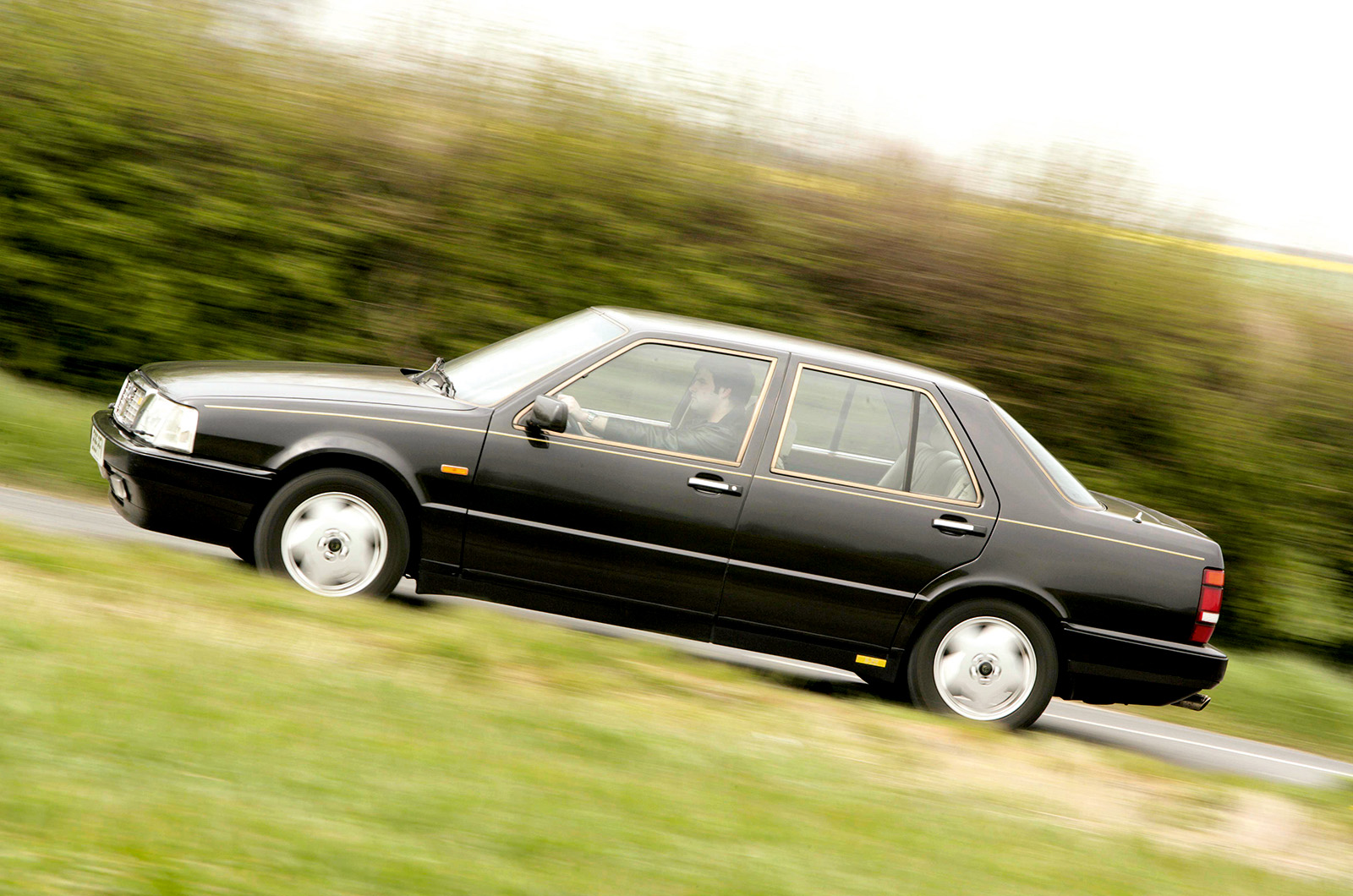
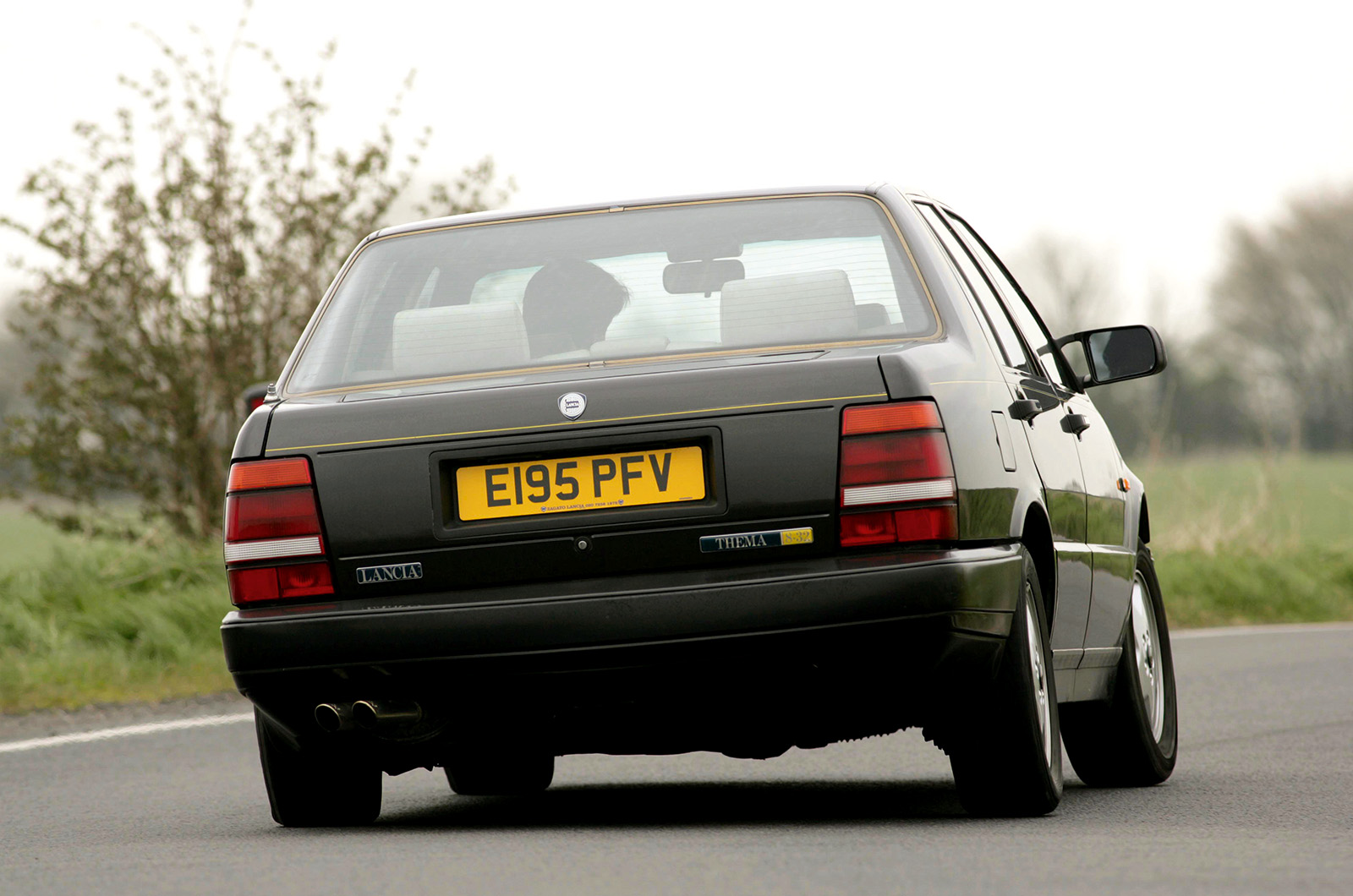
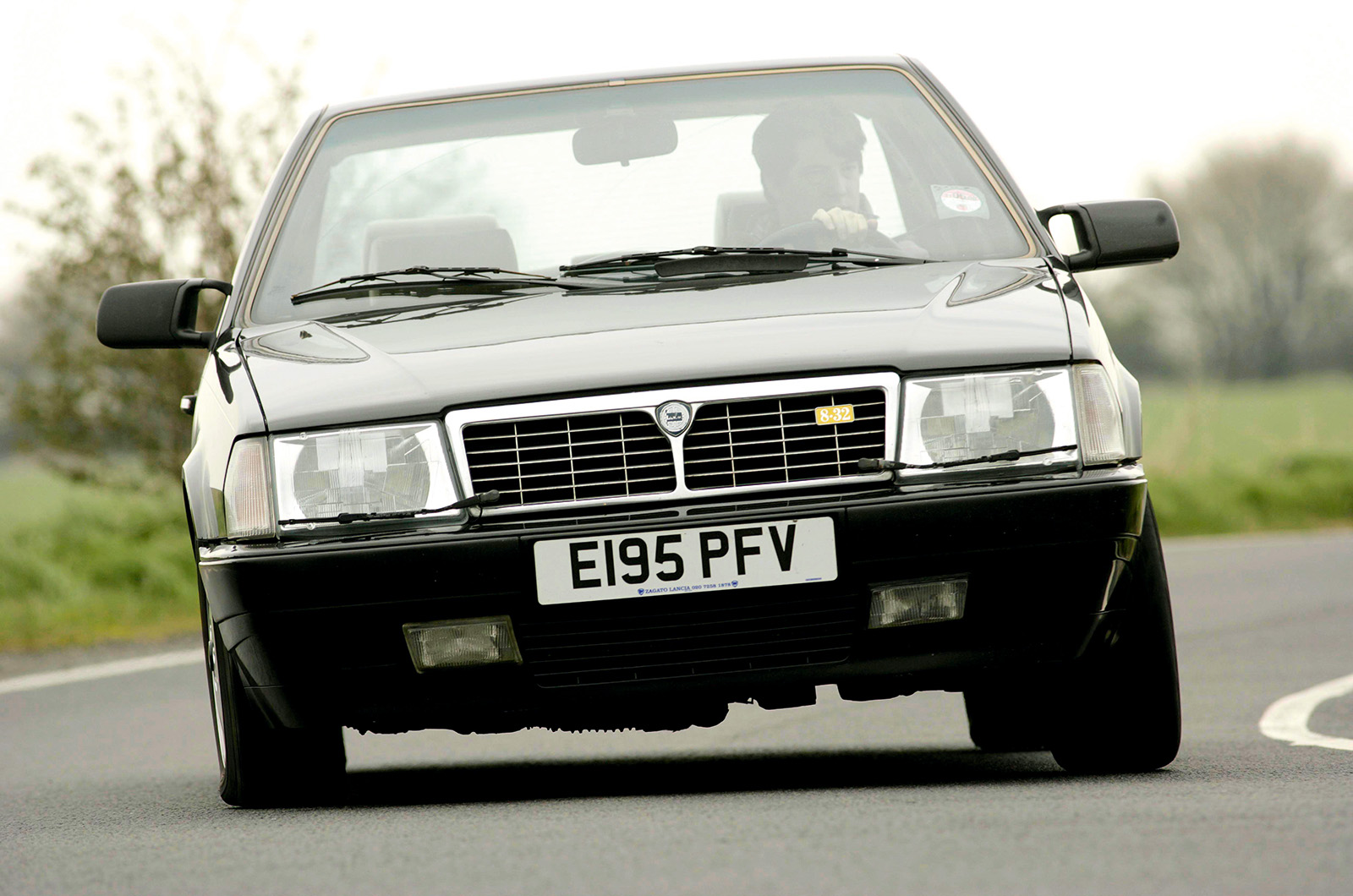
There are definite overtones of Citroën SM from the driving seat of the subtle, smooth-driving Thema, and it’s a civilised and entertaining place from which to eat mile after mile of continental autostrada.
The Lotus Carlton doesn’t hide Hethel’s ministrations
The Carlton, in contrast, is much harder work.
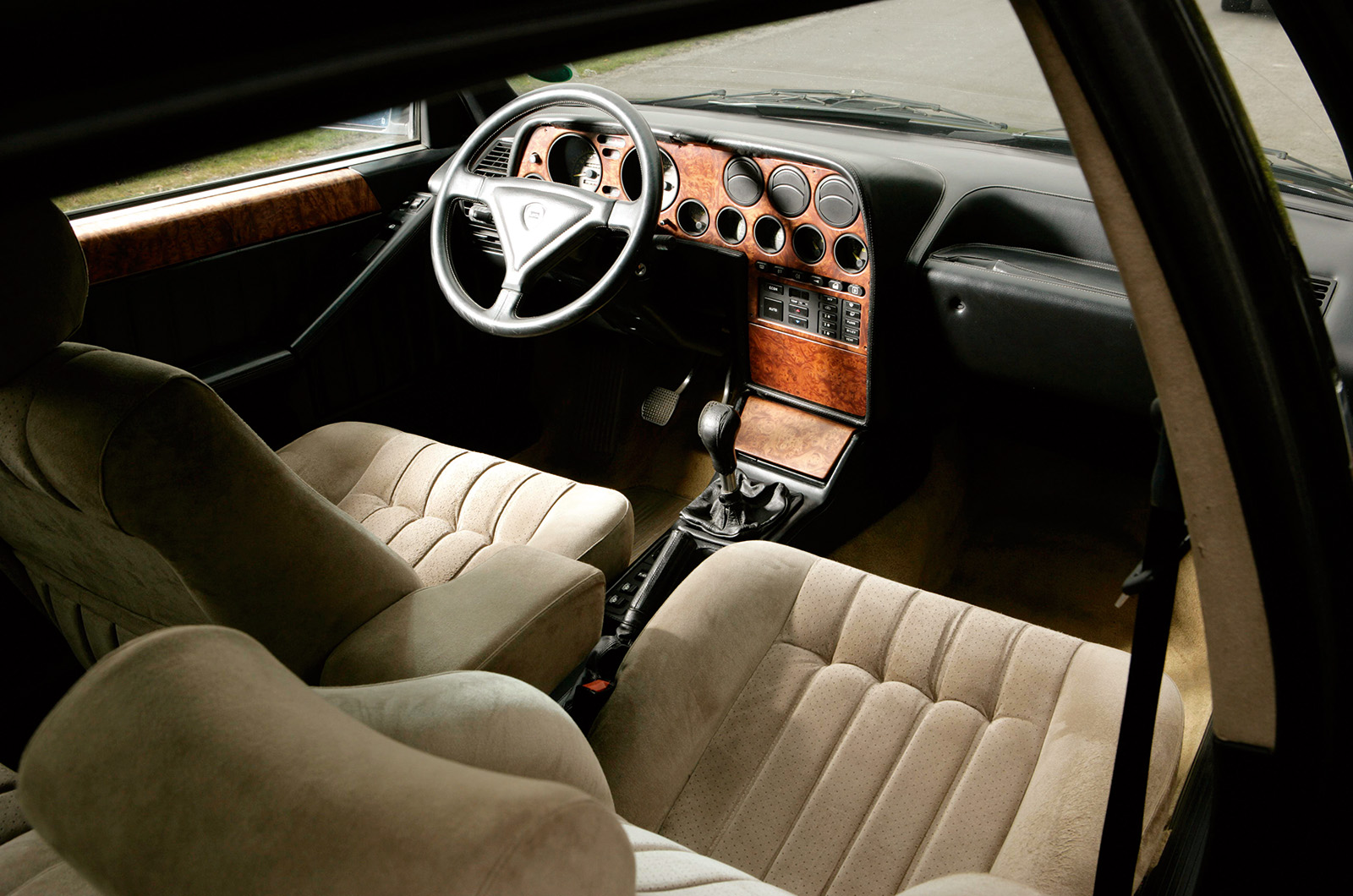
Modern executive saloons could learn much from the 8.32’s no-plastic approach to comfort, too.
Even the stereo is hidden behind a block of wood, a refreshing change from today’s ‘luxury’ dashboards dominated by computer screens: hardly a luxury if you’ve been staring at one in the office all day.
Perhaps if the prototype 4x4 Integrale version was put into series production and right-hand drive had been offered as an option, it would have sold better in Britain (just nine found homes here) and it would be worth more than half a Carlton today.
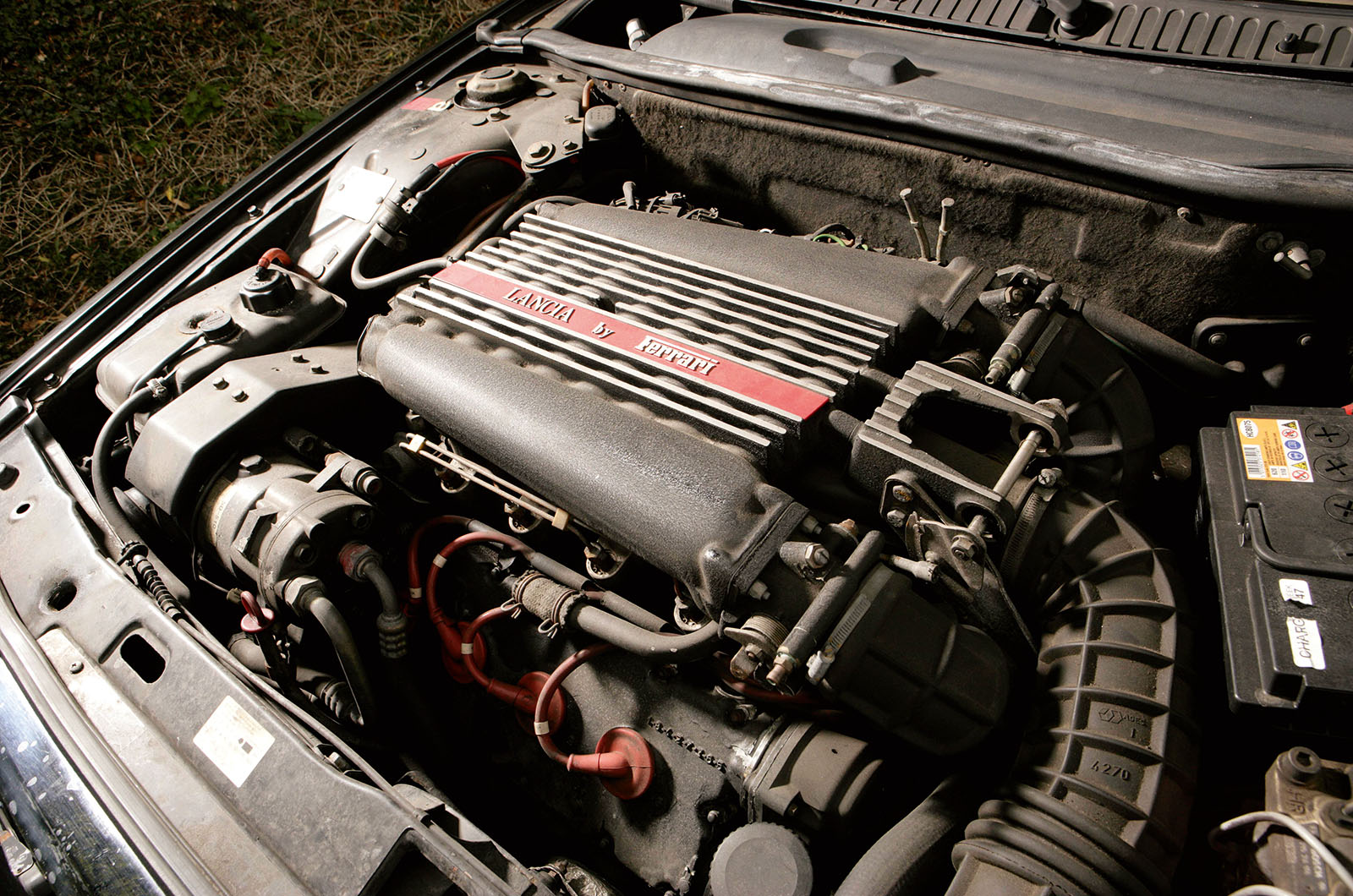
That said, it’s still the cheapest way into a car with a Ferrari engine.
However, if you want to spear up the outside lane, confident in your ability to out-drag everything from supercars to the pursuing police, look no further than the machine Lotus described as ‘the world’s most potent production saloon’ and the Daily Mail called ‘irresponsible’.
Hethel 1, Maranello – and Tunbridge Wells – nil.
Images: Tony Baker
This was first in our July 2008 magazine; all information was correct at the date of original publication
Factfiles
Lotus Carlton
- Sold/number built 1989-’92/284 (plus 666 Lotus Omegas)
- Construction steel monocoque
- Engine iron-block, alloy-head, dohc 3615cc 24v ‘six’, two intercooled Garrett T25 turbochargers and fuel injection
- Max power 377bhp @ 5200rpm
- Max torque 419lb ft @ 4200rpm
- Transmission ZF six-speed manual, RWD
- Suspension independent, at front by MacPherson struts, twin-tube dampers, anti-roll bar rear multi-link, semi-trailing arms, coil springs, self-levelling twin-tube dampers
- Steering power-assisted recirculating ball
- Brakes ventilated discs, with servo and anti-lock
- Length 15ft 7¾in (4768mm)
- Width 6ft 4in (1933mm)
- Height 4ft 8½in (1435mm)
- Wheelbase 8ft 11½in (2731mm)
- Weight 3649lb (1655kg)
- 0-60mph 5.1 secs
- Top speed 177mph
- Mpg 23
- Price new £48,000
Lancia Thema 8.32
- Sold/number built 1988-’90/2370
- Construction steel monocoque
- Engine all-alloy, dohc-per-bank 2972cc 32v 90° V8, Bosch KE-3 Jetronic fuel injection
- Max power 215bhp @ 6750rpm
- Max torque 209lb ft @ 4500rpm
- Transmission five-speed manual, FWD
- Suspension independent, at front by MacPherson struts rear struts, transverse and trailing links; anti-roll bar f/r
- Steering power-assisted rack and pinion
- Brakes vented front, solid rear discs, with servo
- Length 15ft ¾in (4591mm)
- Width 5ft 9in (1753mm)
- Height 4ft 8½in (1435mm)
- Wheelbase 8ft 10¾in (2711mm)
- Weight 3086lb (1400kg)
- Mpg 16
- 0-60mph 7.2 secs
- Top speed 150mph
- Price new £37,500
Enjoy more of the world’s best classic car content every month when you subscribe to C&SC – get our latest deals here
READ MORE
Lotus Carlton ‘40 RA’: public enemy number one
Ferrari 308GTS at 50: on top of the world
Supersaloon showdown: BMW M5 vs Jaguar S-type R vs Maserati Quattroporte vs Mercedes-Benz E55 AMG