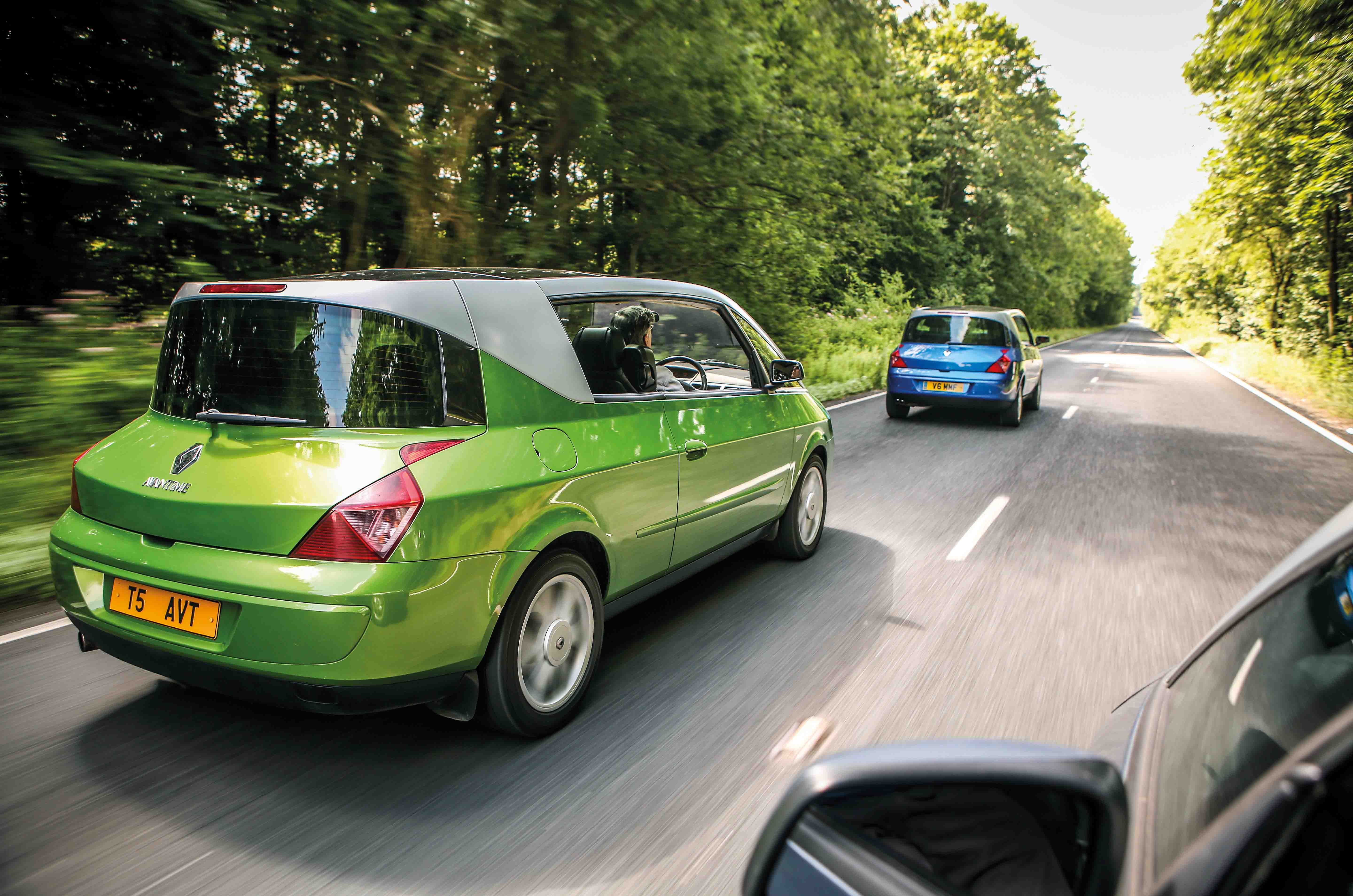
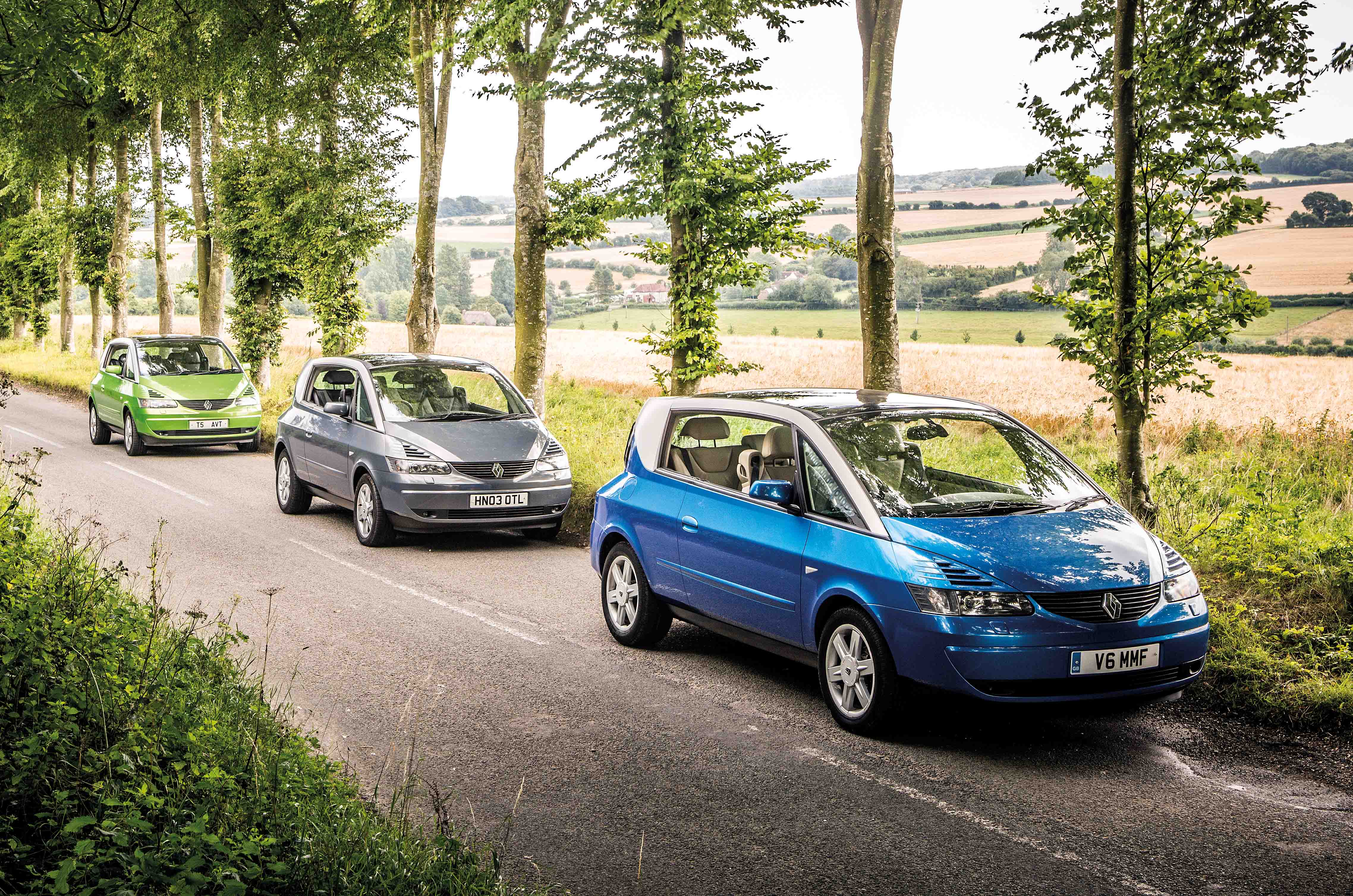
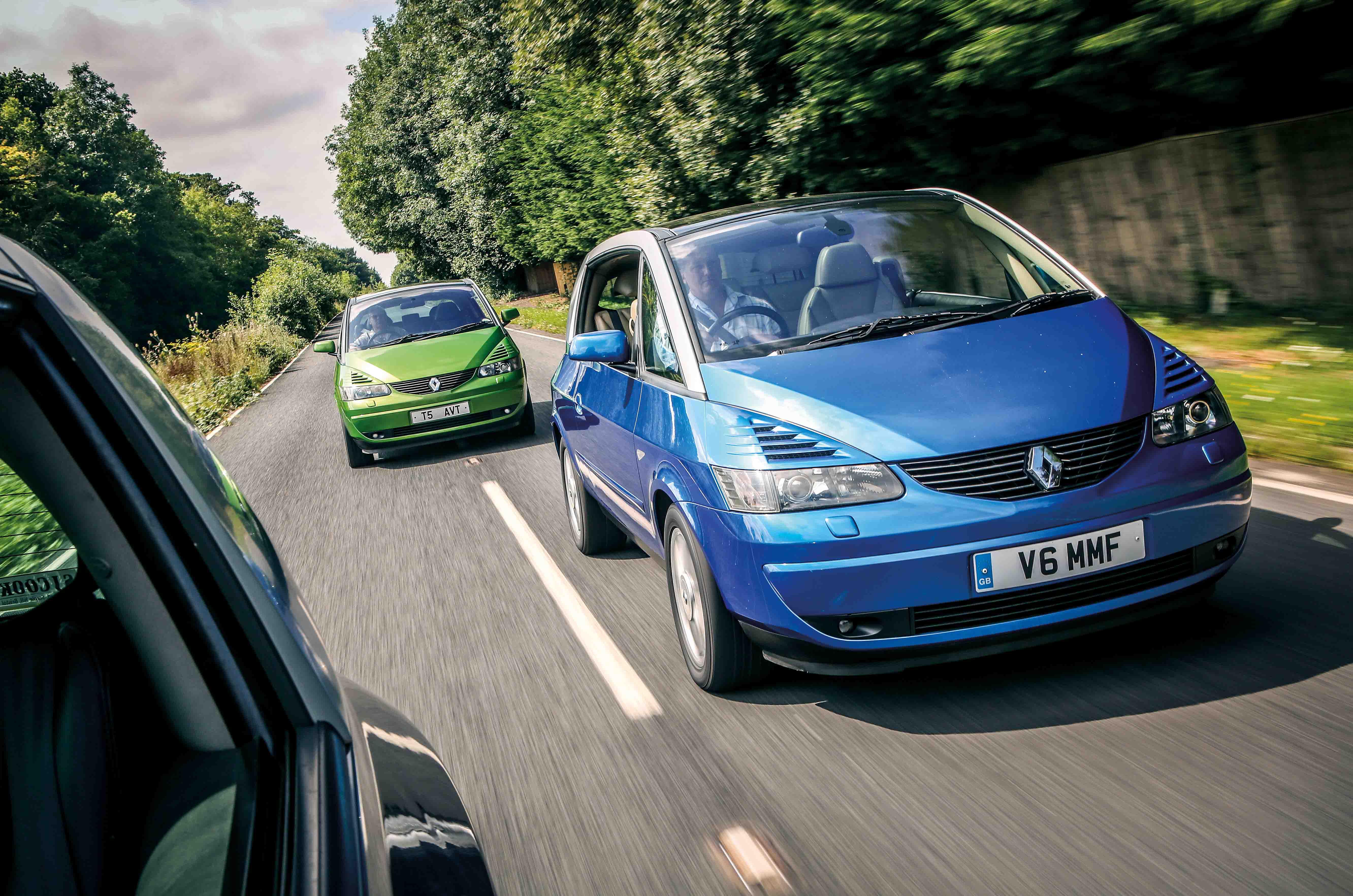
The heavy front end on the V6s makes them run wide slightly when pushed and, although stability control, ABS and brake force distribution keep everything tidy, the 3-litre versions don’t inspire really ambitious driving.
In the end, their front-wheel-drive chassis lacks finesse and they simply sit too tall, which is easily betrayed by the Espace underpinnings – even with suspension that was claimed to be some 30% stiffer.
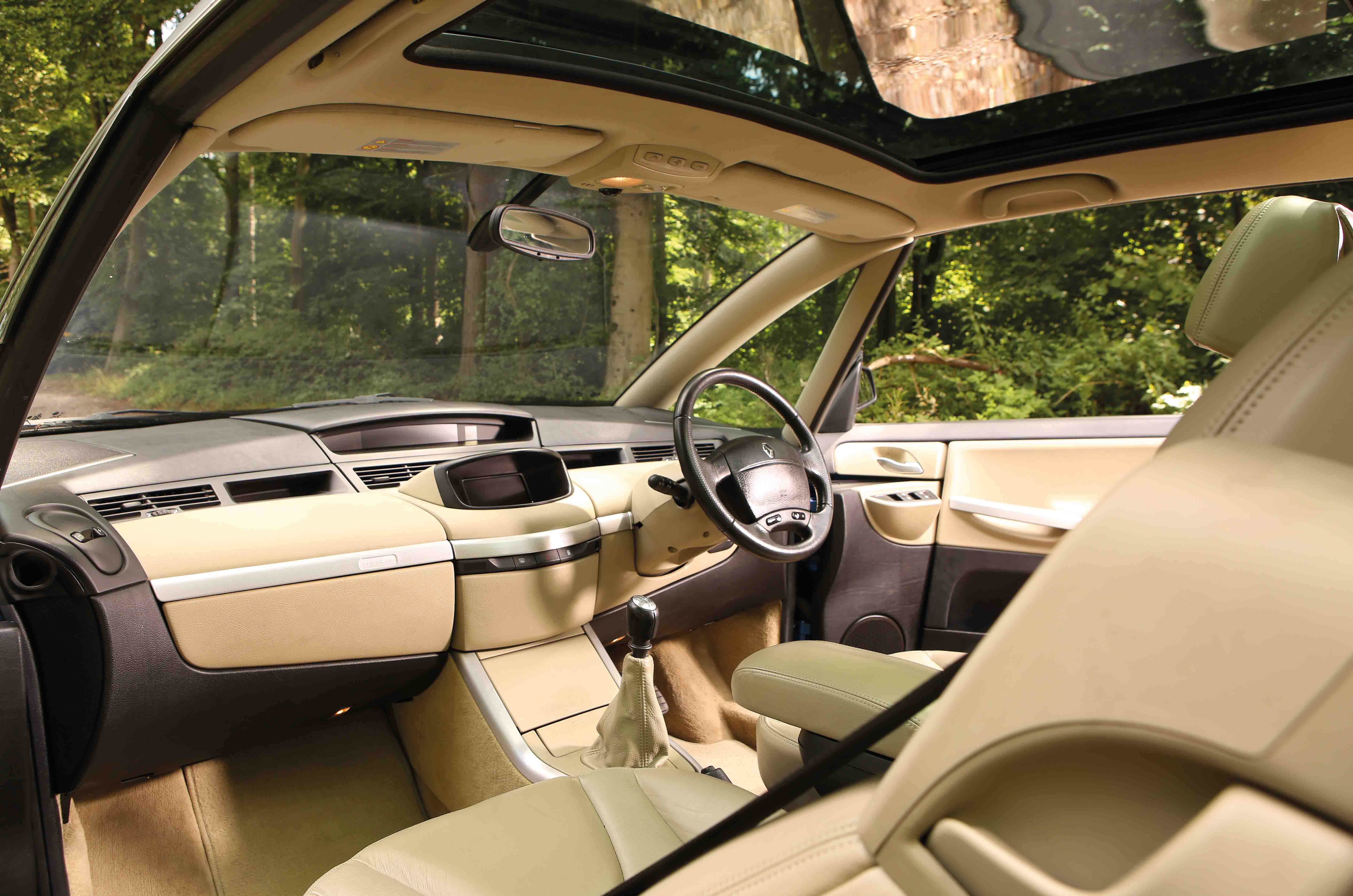
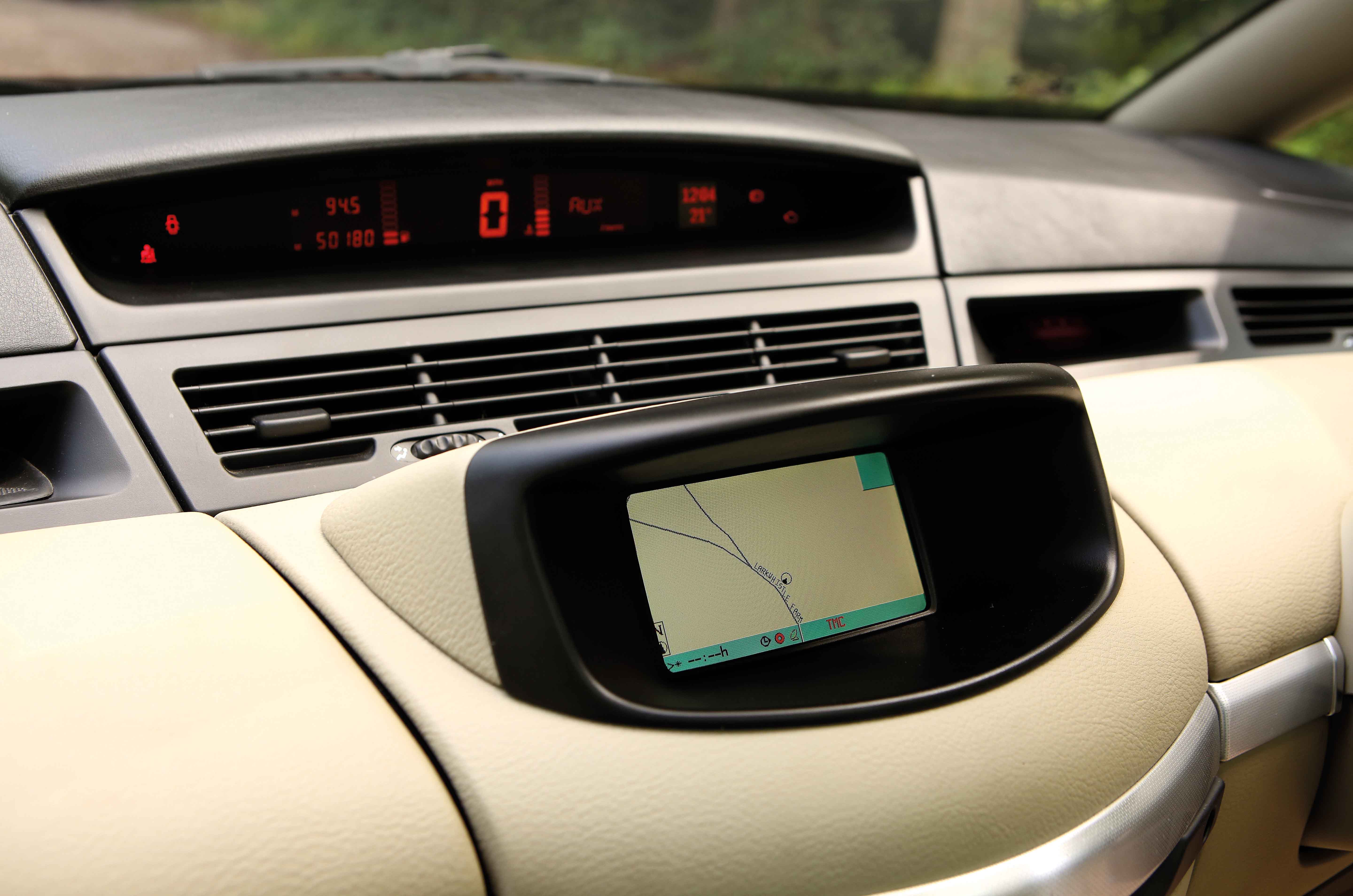
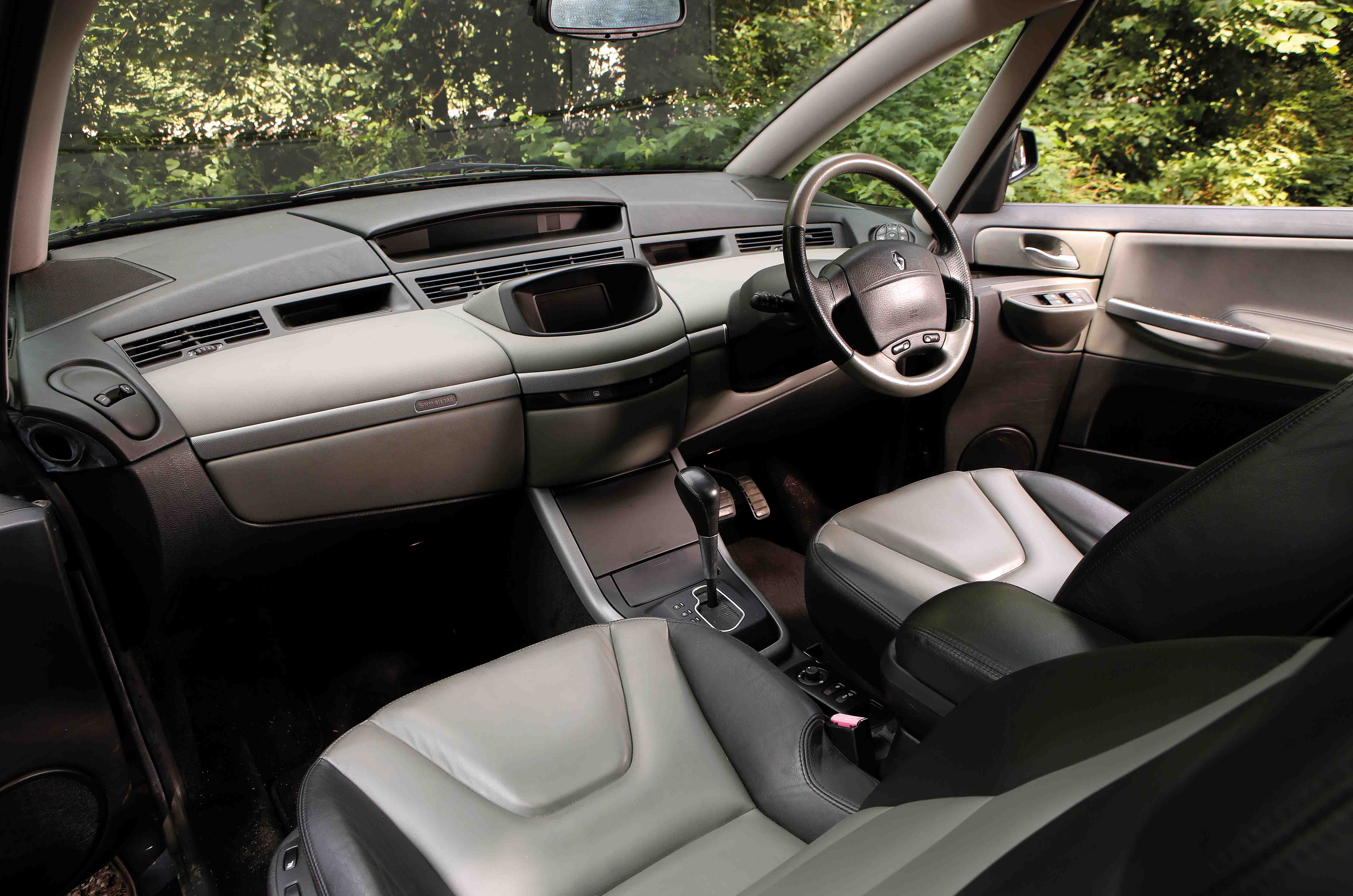
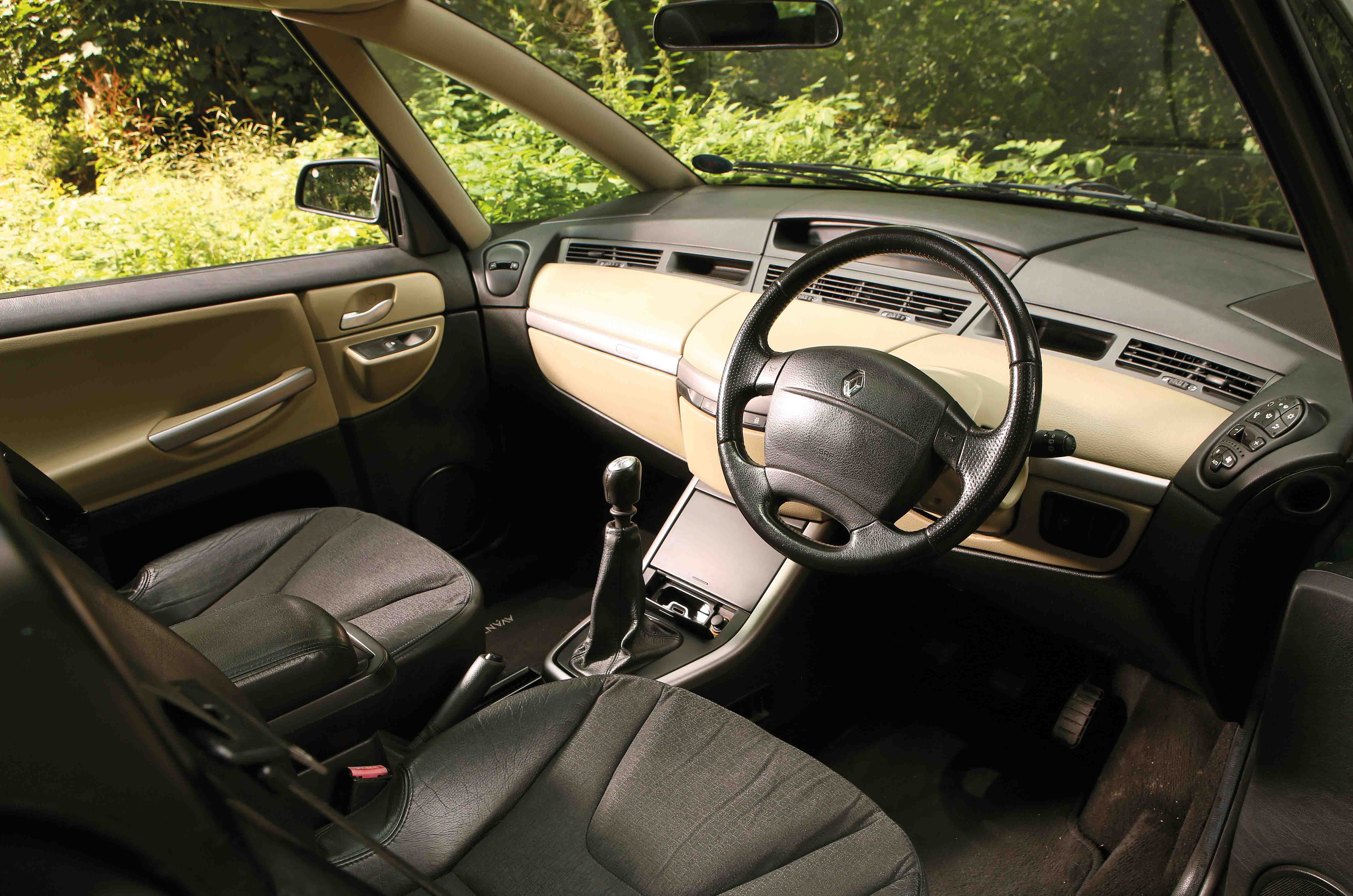
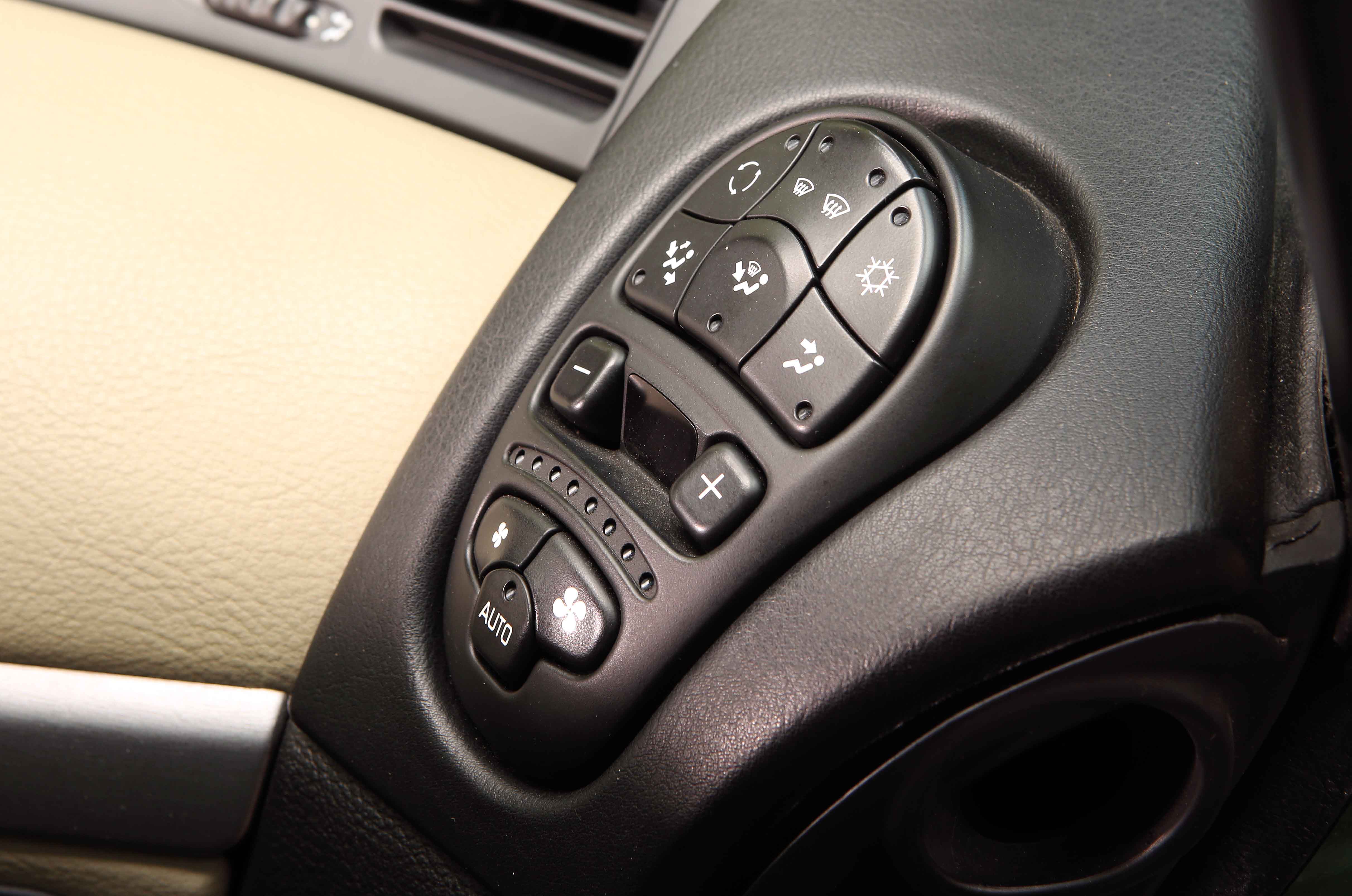
The Avantime’s heater controls are duplicated for driver and front passenger
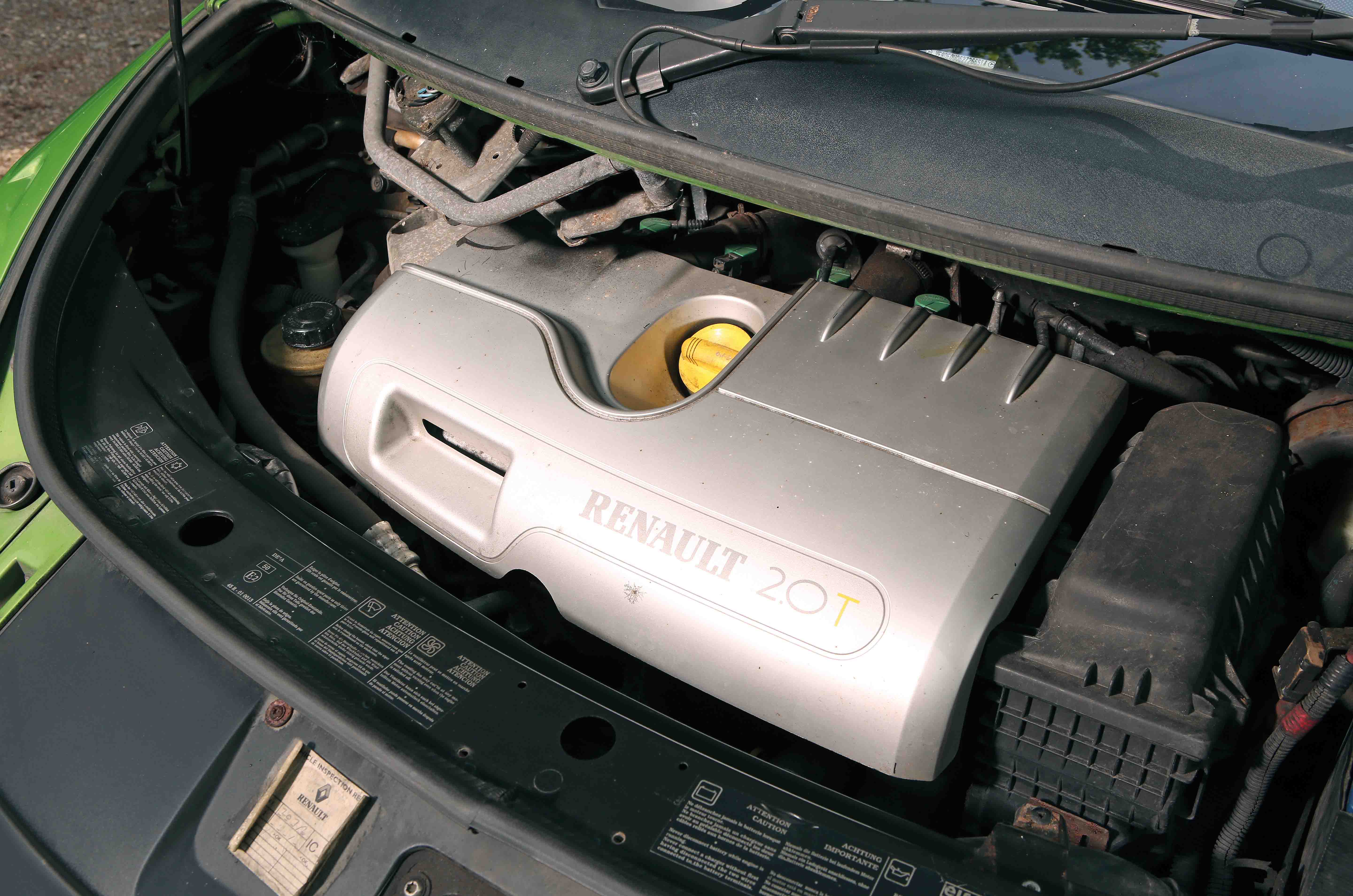
The 2-litre turbo is lighter on its feet, has better steering and in reality is hardly any slower.
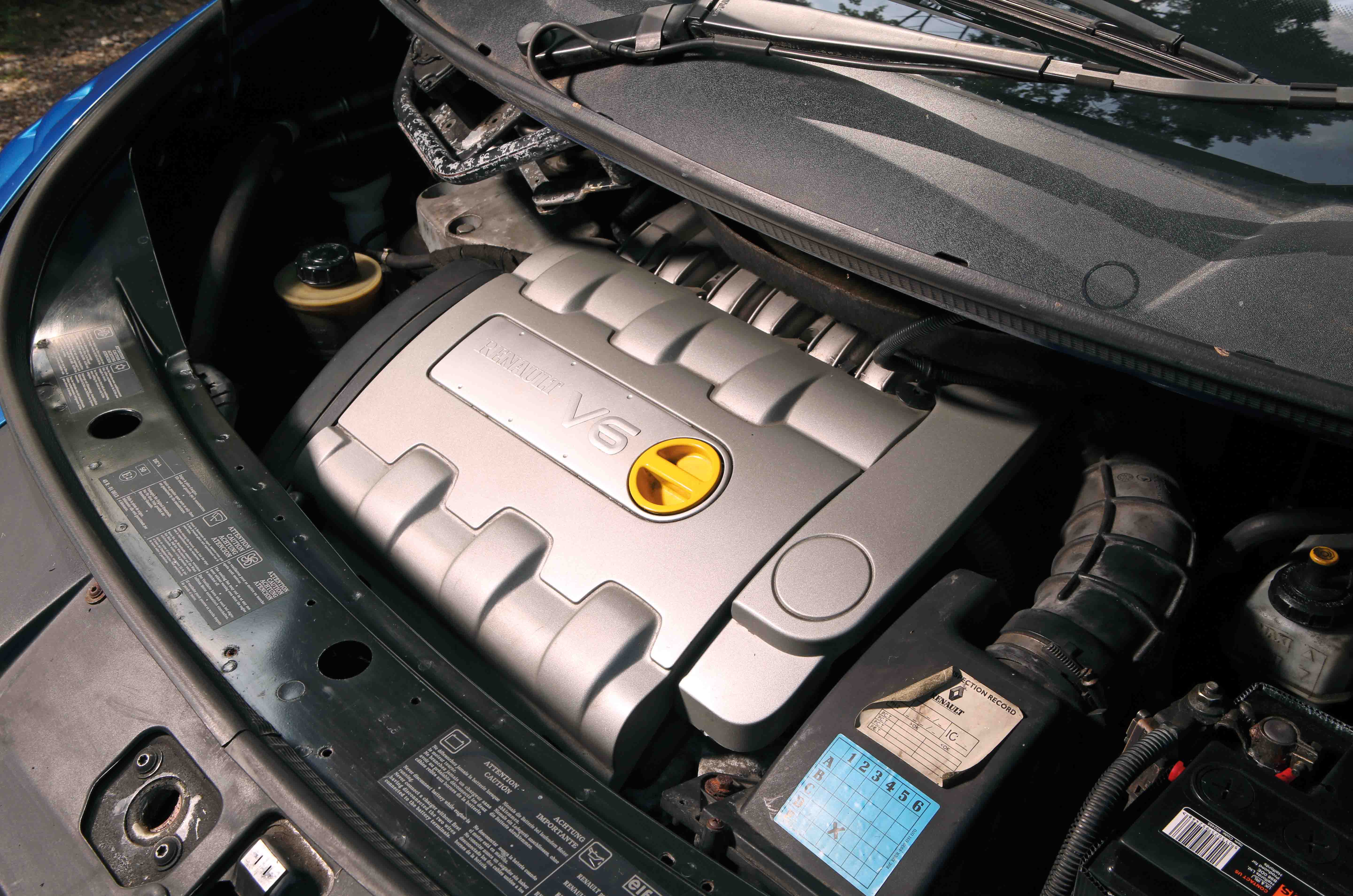
In fact, if you can live without the torque and majestic sound and smoothness of the sonorous 24-valve V6 unit, it may be the optimum choice.
With 165bhp, it feels plenty lively enough – even in this 1625kg lump – and returns 30mpg compared to the low 20s of the 3-litre cars.
Cruising in top, all versions are refined at the three-figure speeds that they will happily maintain all day.
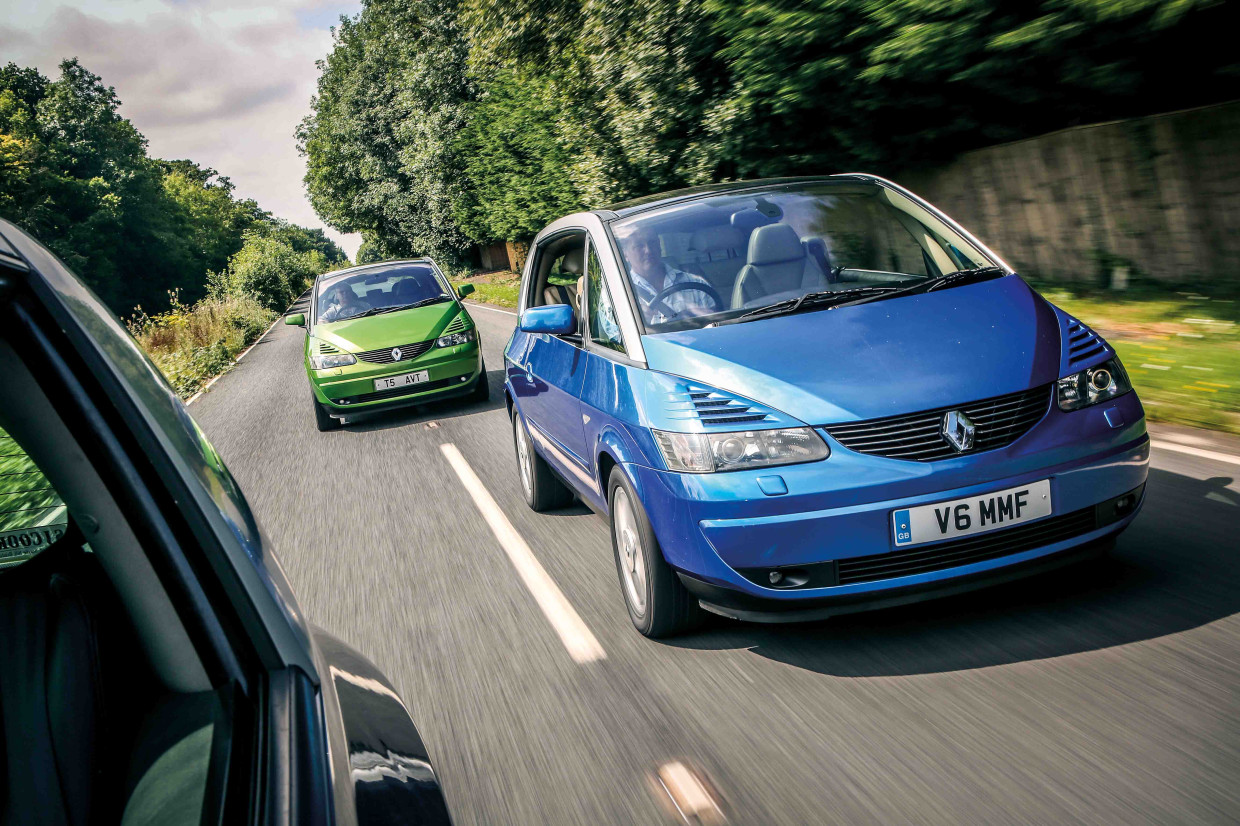
As you waft along in the outside lane – the edgy, cat-eyed form collecting multiple double-take stares from other motorists – you can appreciate how the Renault Avantime is a sort of communal experience rather than a selfishly driver-focused one.
It is about enjoying the process of the journey rather than simply getting there as quickly as possible.
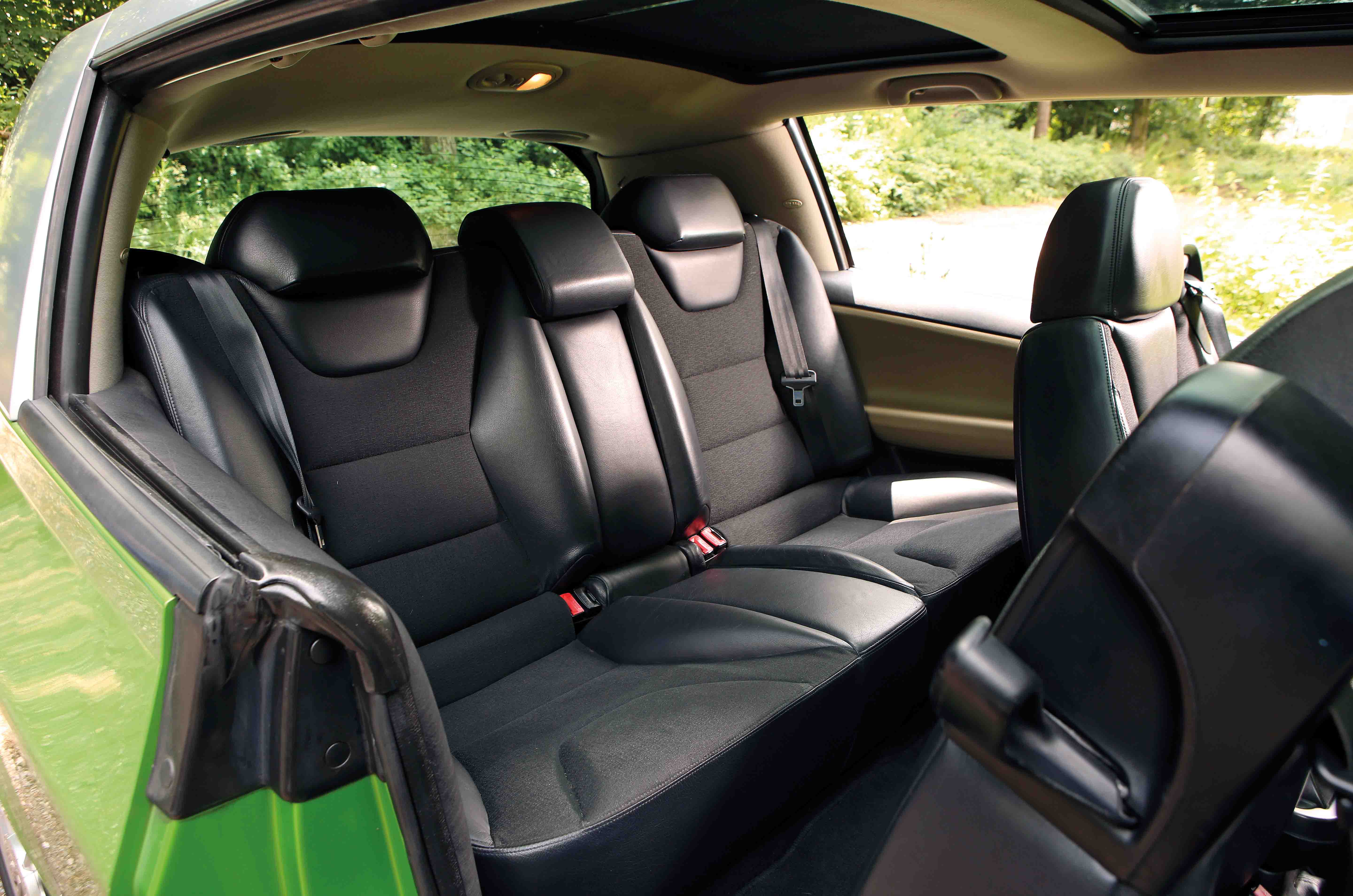
The Renault Avantime has comfy armchairs in the back
Somehow you wouldn’t want to disturb your rear-seat passengers with any high-speed cornering antics when all they want to do is lounge in those high-set leather armchairs, taking in the passing landscape through the big windows or finding a track on the CD with their own remote control.
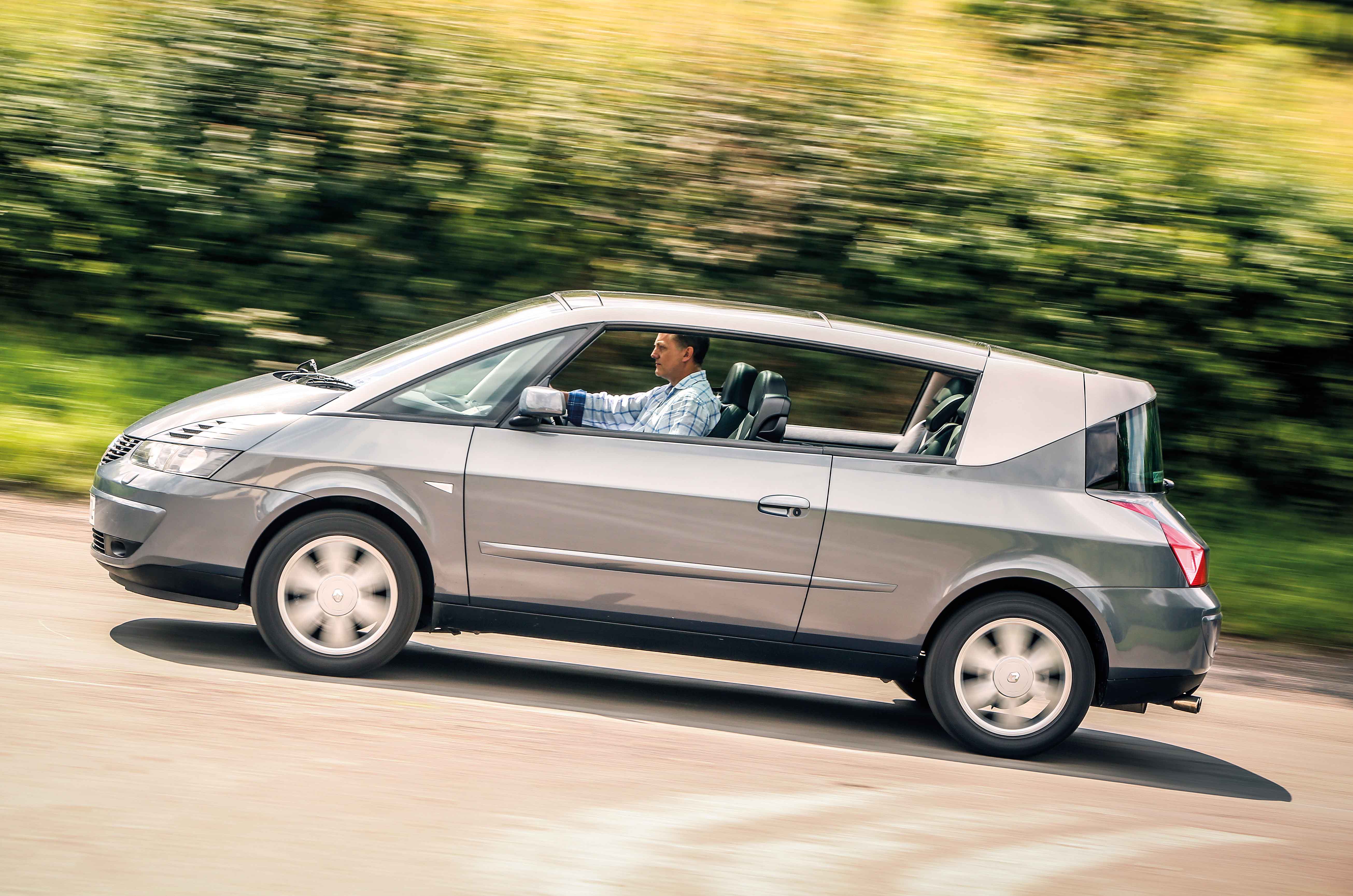
Press the overhead Grand Air switch and you cannot help but be impressed by the way in which the four side windows drop seamlessly into the body and the way one whole square metre of heat-resistant, anti-glare and shatterproof roof glass slides back in a single, perfectly choreographed action.
From here, the Avantime takes on another sensory dimension and assumes the personality of a large four-seater cabriolet.
If, at that moment, you don’t at least concede just how brave and inventive this car was, then you will probably never ‘get’ this big Renault.
These are cars that have always divided opinion and still do, leaving few unmoved. For every passionate Avantime advocate, there will be three or four for whom the whole idea of a luxury MPV-coupé just does not compute.
I have a friend who, having taken a ride in one of mine a few years ago, is convinced that the whole Avantime adventure was a sort of left-wing, cheese-eating conspiracy.
The Renault Avantime’s shape still looks fresh
It’s certainly true to say it is a car that could not be anything other than French.
You probably won’t be surprised to learn that they are a popular choice of everyday transport for Citroën DS owners.
For Renault itself, the pain of the losses that the Avantime incurred are a fading memory and the model now seems to have been welcomed into the inner circle of classic vehicles.
Like so much of the more interesting stuff out there, it has proved to be a much better old car than it was a current model.
As a goodwill ambassador for a make that is not exactly overwhelmed with a back catalogue of intriguing collectors’ items, I think it will look like a good long-term investment. Maybe that was the plan all along.
Images: Tony Baker
Thanks to: Jason Yorke-Edgell, Mark Lumsden and avantime-owners.com
This was first in our November 2017 magazine; all information was correct at the date of original publication
Factfile
Renault Avantime
- Sold/no built 2001-2003/8557
- Construction galvanised steel chassis, composite panels
- Engine iron-block, alloy-head, 16-valve turbocharged 1998cc dohc ‘four’ or all-alloy, dohc-per-bank 24-valve 2946cc 60º V6
- Max power 165bhp @ 5000rpm-210bhp @ 6000rpm
- Max torque 184lbft @ 2000rpm-210lbft @3750rpm
- Transmission six-speed manual or five-speed automatic, FWD
- Suspension independent all round, at front by MacPherson struts, anti-roll bar rear trailing arms, coil springs, telescopic dampers
- Steering power-assisted rack and pinion
- Brakes discs, with servo and ABS
- Length 15ft 2¼in (4629mm)
- Width 6ft (1829mm)
- Height 5ft 3in (1600mm)
- Wheelbase 8ft 8½in (2654mm)
- Weight 3583-3783lb (1625-1716kg)
- 0-60mph 10.2-8.7secs
- Top speed 127-137mph
- Mpg 22-30
- Price new £23,895-28,295
Enjoy more of the world’s best classic car content every month when you subscribe to C&SC – get our latest deals here
READ MORE
Renault Espace: a space oddity
Citroën vs Morris vs Fiat vs Saab vs Buick: people-carrier pioneers
Matra Jet: rocket science
Martin Buckley
Senior Contributor, Classic & Sports Car