50 years of the Lotus Esprit

| 26 Nov 2025
Classic & Sports Car – Lotus Esprit at 50: Norfolk’s supercar meets its creators
“Design is not a democracy.”

Such a bold statement, wonderfully out of tune with modern group-think, could only apply to a car as radical as the Lotus Esprit.

These words were only uttered today by Giorgetto Giugiaro, the man responsible for the look of Hethel’s mid-’70s Ferrari challenger that, 50 years ago, stunned Paris Salon showgoers at its production reveal.

It was a genuine breakthrough model for Colin Chapman’s maverick company and, well north of 10,000 sales and a remarkable 28-year lifespan later, no other competitor has been able to match its enduring appeal – other than a certain rear-engined German contender.

Classic & Sports Car – Lotus Esprit at 50: Norfolk’s supercar meets its creators
As the seminal Lotus supercar celebrates its 50th anniversary, the creative minds behind its birth reunite at Hethel, its spiritual home

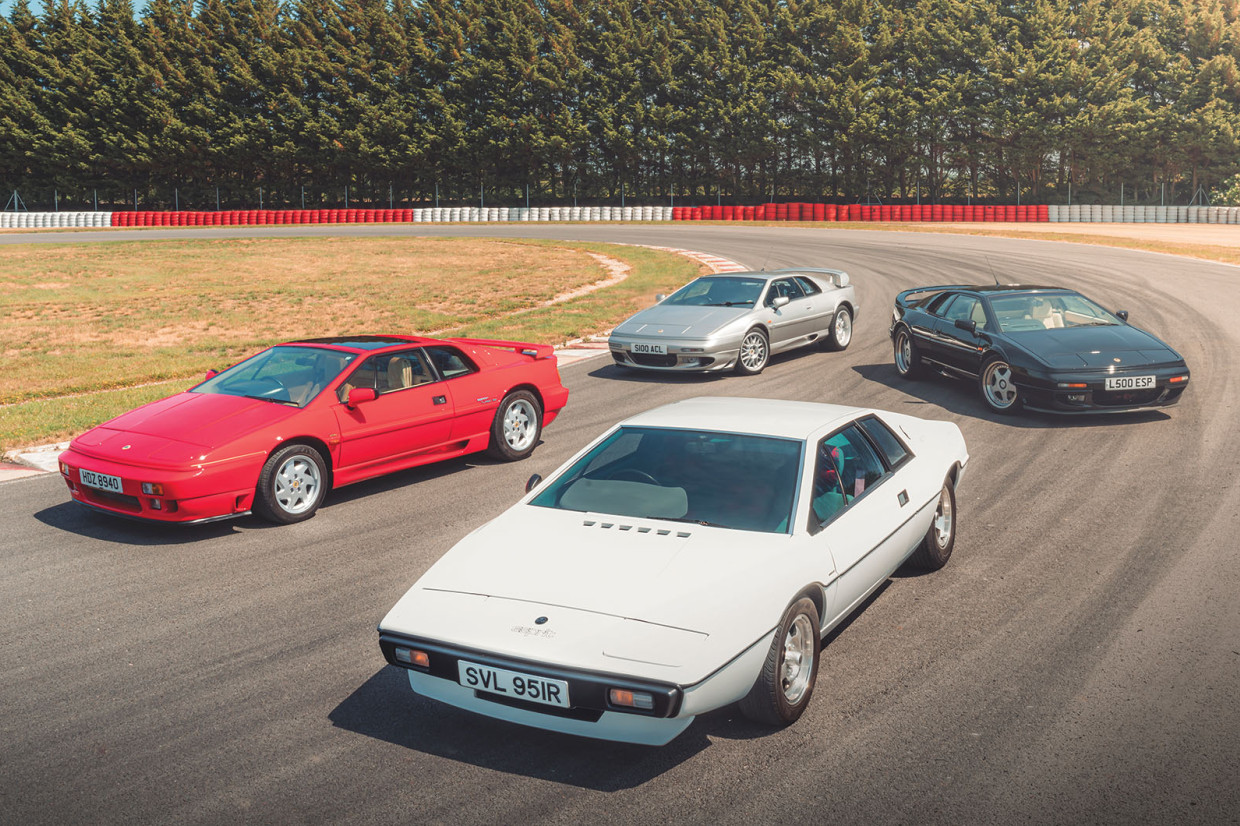
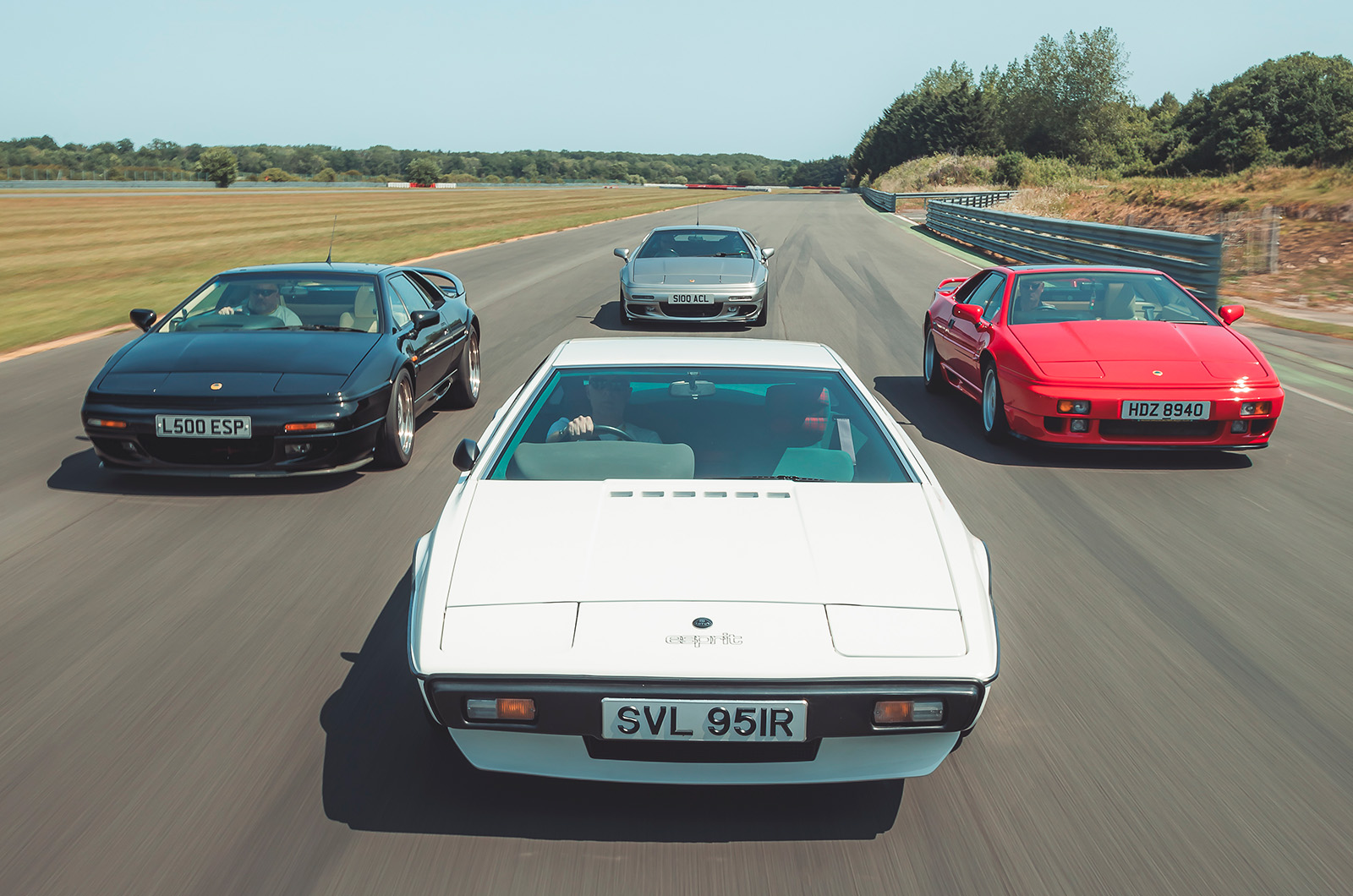
To tell the Lotus Esprit’s story, not only do we have with us four landmark models that chart its evolution, but also the designers responsible for each of them – including Signor Giugiaro, arguably the world’s most influential practitioner of his craft.

First, though, to set the scene and to provide some historical narrative, we are joined at Ketteringham Hall – the stately pile near Hethel where much of the Esprit’s design and modelling work was done – by Mike Kimberley.

This former chief executive of Group Lotus worked closely with Chapman and Giugiaro more than half a century ago to bring the Esprit project to fruition.

Classic & Sports Car – Lotus Esprit at 50: Norfolk’s supercar meets its creators
The Lotus Esprit name suggests agility

It all started, Mike tells us, in 1972 when he and Chapman visited the Geneva Salon.

They were introduced to Giugiaro, who expressed an interest in creating a show car for Lotus, which, given the designer’s back catalogue (Alfa Romeo Giulia GT, BMW 3200 CS and Maserati Ghibli, to name but a few), Chapman saw as “a great opportunity”.

However, after a small model was created by Giugiaro’s ItalDesign following the show, Chapman had second thoughts about the entire project.

But it failed to deter the Italian, whose response was: “We’re going to build it anyway!”

What emerged on ItalDesign’s stand at the Turin Salon that November was the ‘Silver Car’ concept, which already bore an uncanny resemblance to the production car into which it would eventually morph.

“I flew down with Colin and [designer] Oliver Winterbottom for the show,” recalls Mike.

“The car looked absolutely stunning. There were crowds five-deep at the stand. Colin was so pleased.”

He was pleased enough to see that Giugiaro’s show car could become the replacement for the Lotus Europa Twin Cam.

Classic & Sports Car – Lotus Esprit at 50: Norfolk’s supercar meets its creators
Former Lotus CEO Mike Kimberley was a key part of the Esprit team

“Colin said ‘let’s do it’,” continues Mike, “so when I got back I stretched the Europa Twin Cam’s chassis and plonked one of the [Type] 907 engine blocks and heads in it to send to Italy.”

Not only was it vital that Lotus’ four-valve-per-cylinder, all-aluminium engine powered the new car, but that the company’s then-new composites technology was adopted in its construction.

“The body was made in two halves,” says Mike. “When you ‘shoot’ the bottom half with the top half, it encapsulates the composite so that it runs in the direction you want it to for maximum strength.

“You could stand it on its roof… You could punch it on the side at 30 miles an hour, on the rear at 30 miles an hour.”

Classic & Sports Car – Lotus Esprit at 50: Norfolk’s supercar meets its creators
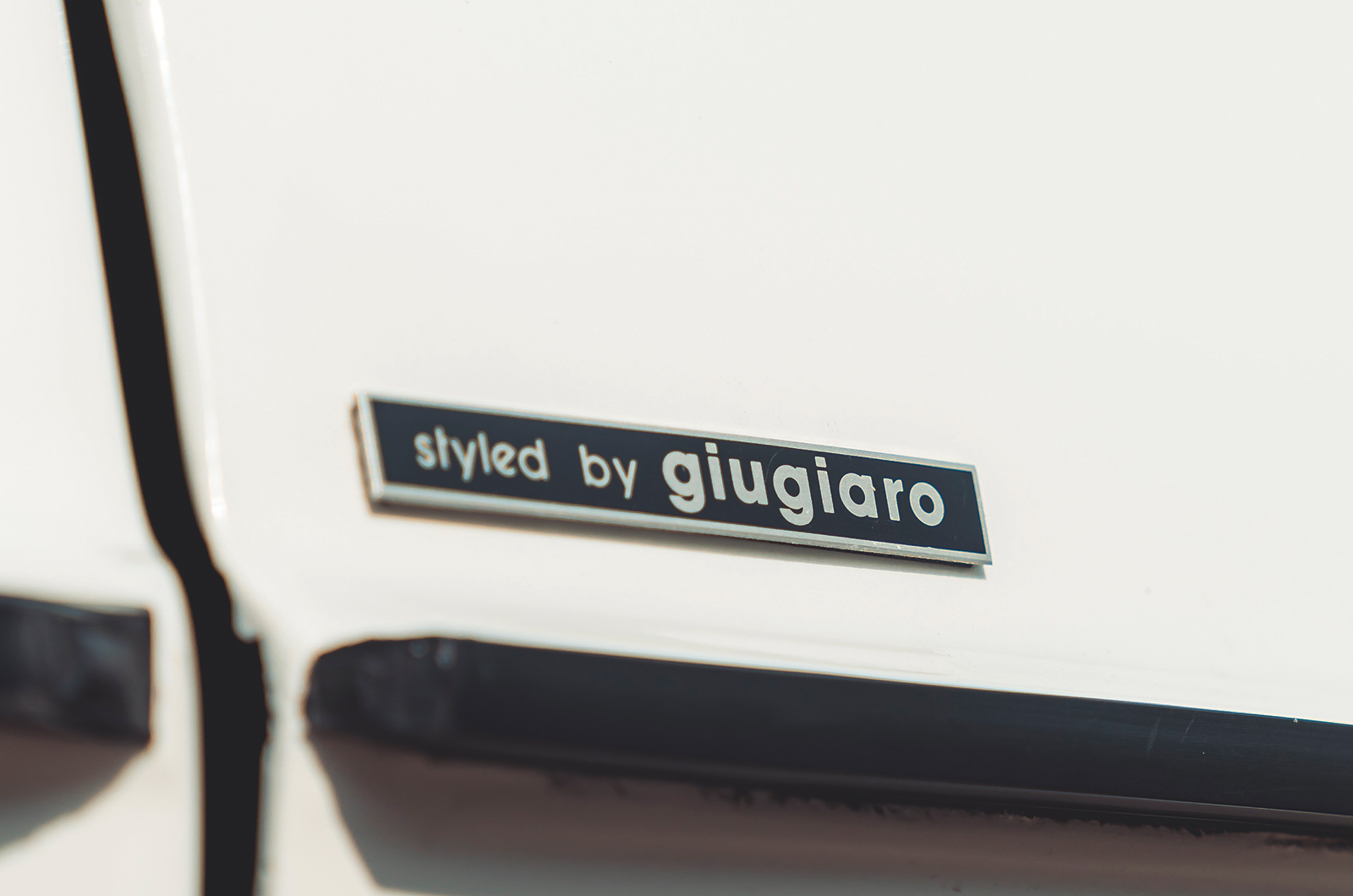
A subtle boast on the Lotus Esprit’s Giorgetto Giugiaro-designed body

Over the following three years, Mike, Chapman and Winterbottom often travelled thrice-weekly via ‘Lotus Airways’ (Chapman’s own aircraft) from Hethel to the ItalDesign studio in Turin.

“The relationship with Colin and Giorgetto was extremely good… they respected one another and got on extremely well,” Mike remembers.

Thanks to Chapman’s famed obsession with light weight (the production Esprit S1 weighed just 898kg) and the exceptional efficiency of the Type 907 engine, it easily met California’s ultra-tough clean-air regulations – crucial, with a third of Esprit production destined for North America.

However, productionising Giugiaro’s origami-style body, with its acute wedge design, presented its fair share of challenges.

Classic & Sports Car – Lotus Esprit at 50: Norfolk’s supercar meets its creators
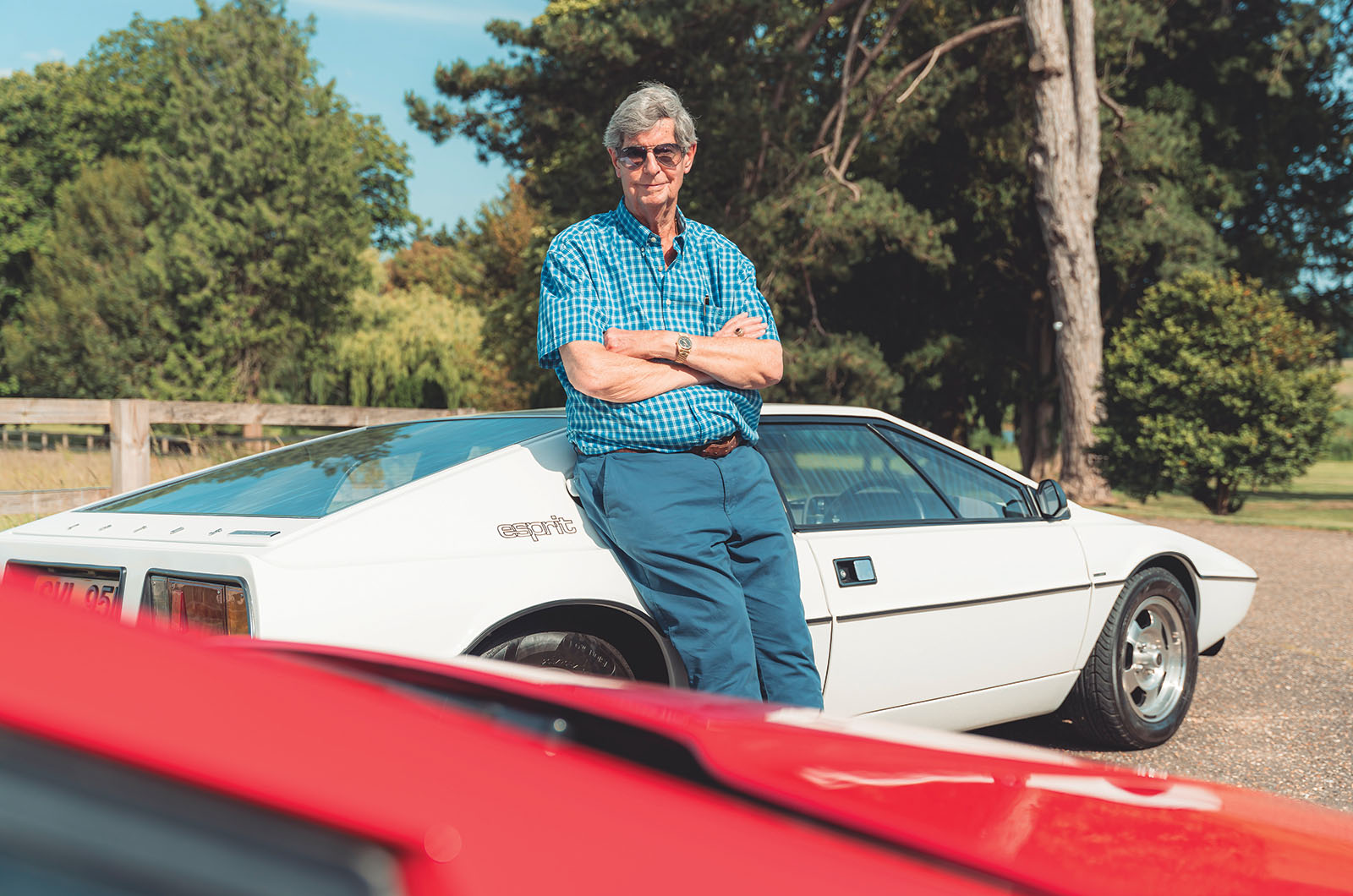
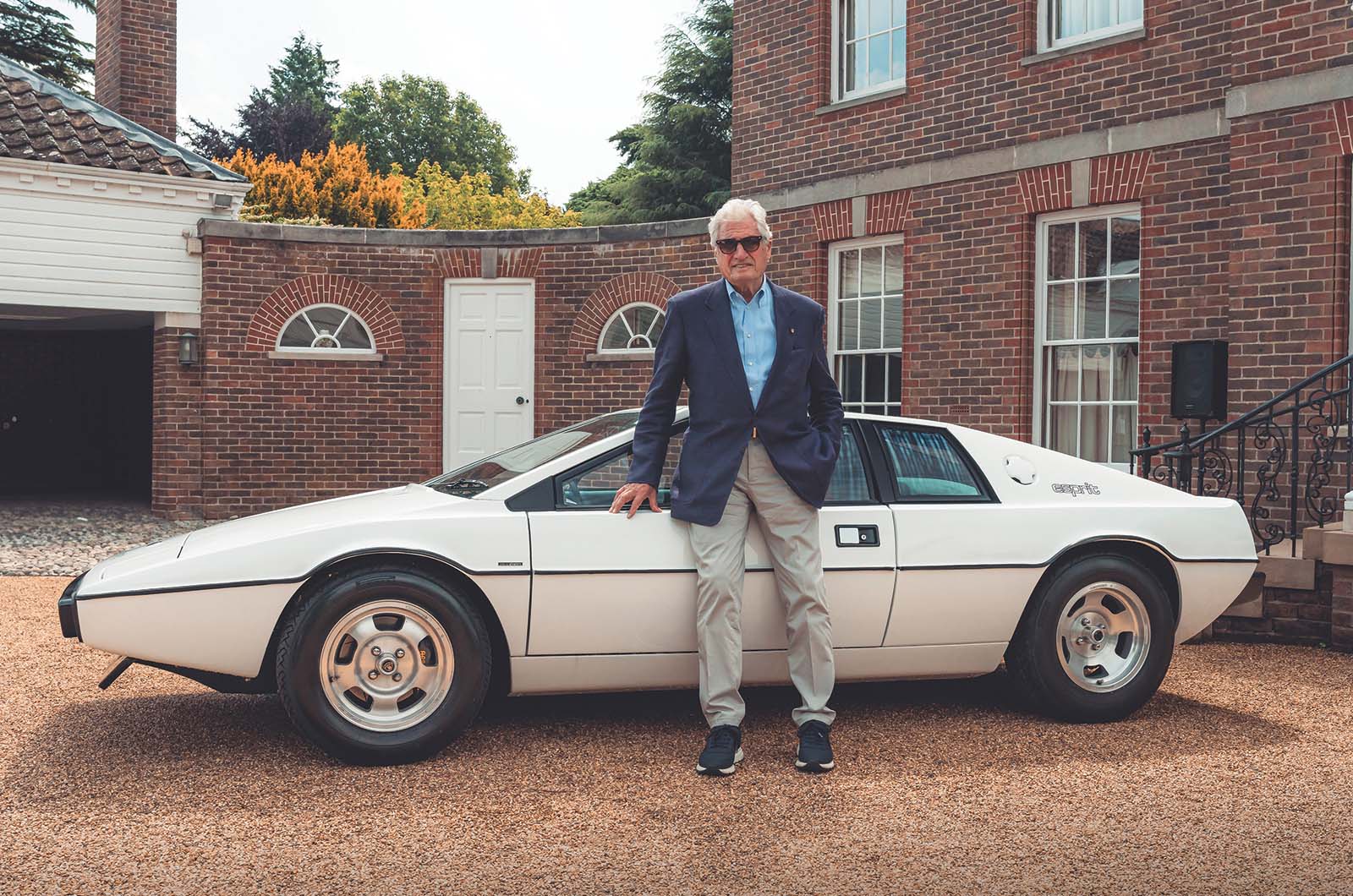
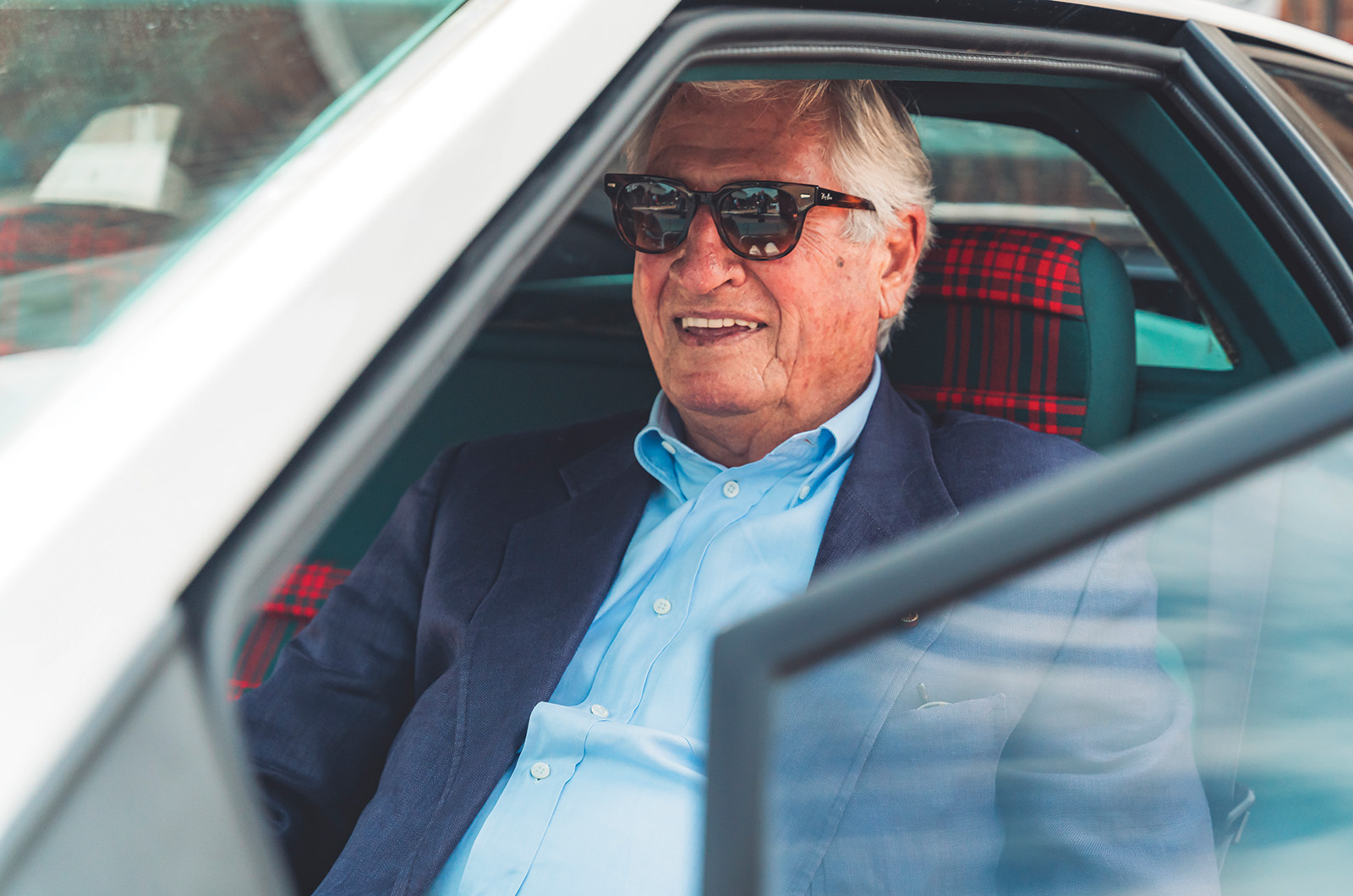
Lotus Esprit S1 designer Giugiaro, now 87, has mellowed his views on the final production version

“We were looking at the show car in the [ItalDesign] studio and the A-post was at 18°,” which, explains Mike, would have caused a parallax effect found at angles below 22°.

“So [Chapman and Giugiaro] took off their jackets and, with a large bastard file, filed away at the plaster of Paris – there was white dust everywhere!

“Colin wanted to go further, but he couldn’t because they’d hit the steel frame it was built on. But we managed to keep it at 22° with a completely flat ’screen.”

Sitting with Giorgetto alongside Jonathan Hackford’s wonderfully original Lotus Esprit S1 is perhaps partly reminiscent of when the first Esprit production car met its designer half a century ago at the 1975 Paris Salon.

Classic & Sports Car – Lotus Esprit at 50: Norfolk’s supercar meets its creators
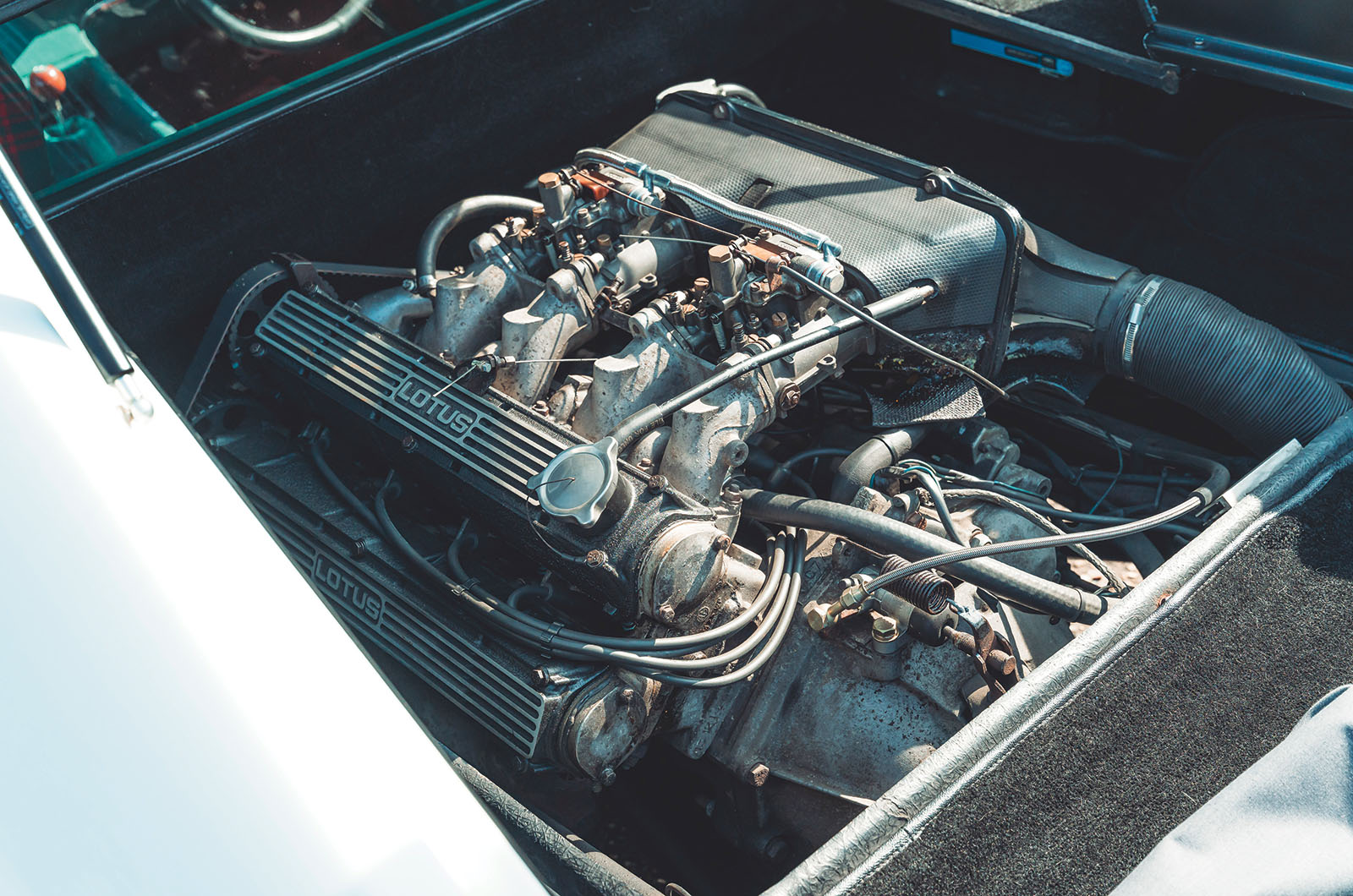
The Lotus Esprit S1’s efficient Type 907 engine easily met California’s clean-air regulations

I ask about his inspiration for the Esprit: “With this creative process, you are trying to do something different – it is an exercise in proportions, and changing and respecting what the shapes were at the time.

“It is not an inspiration from something specific… We design instinctively; we start designing when we have stimuli.”

Nonetheless, those stimuli tested some when it came to building the first prototype, which was revealed at the Geneva show in 1973.

As Giorgetto laments: “Creativity itself is not difficult, but creativity applied to production – that is what is difficult.

“For the original prototype, we tried to do our best from a static point of view, but there is a list of items that you cannot influence.

“For example, tail-lamps: they are really costly, so you have to go with something that is already productionised.”

Classic & Sports Car – Lotus Esprit at 50: Norfolk’s supercar meets its creators
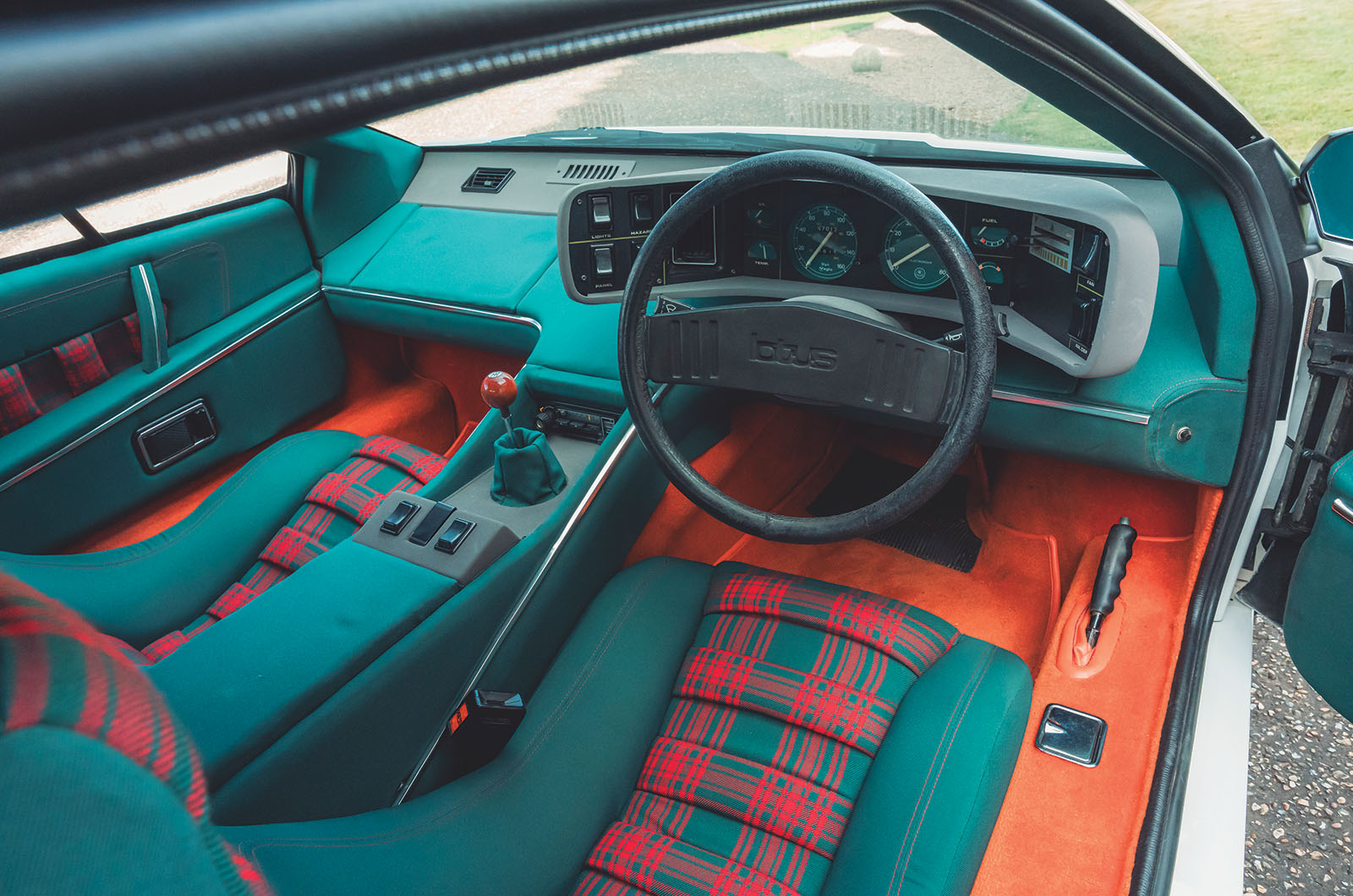
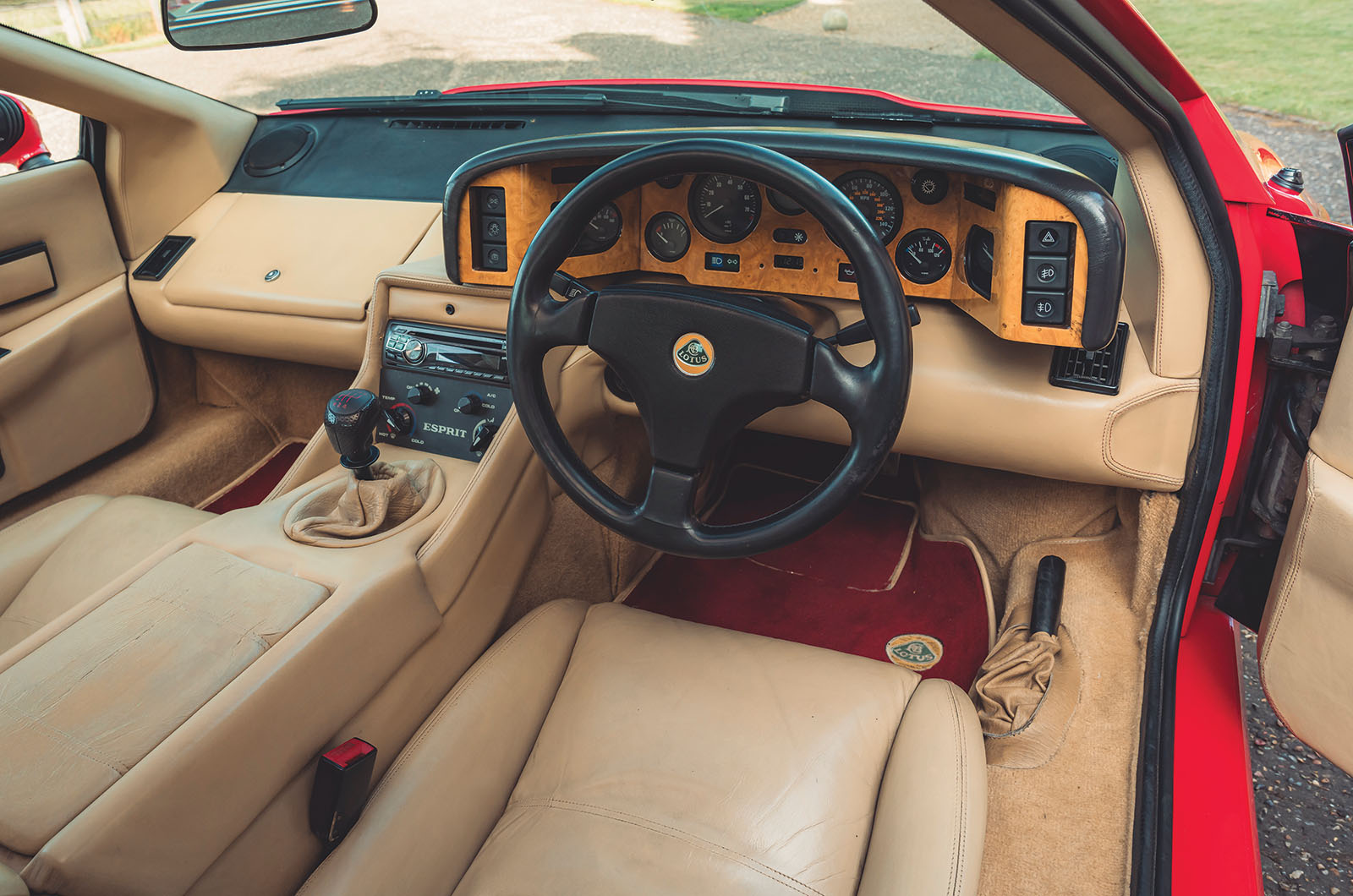
The Lotus Esprit’s fabulous tartan trim only features on the early cars, but the basic cabin architecture was carried through

If he did have frustrations about cost-compromised elements of the Esprit’s final incarnation – in a November 2001 Classic & Sports Car interview, he said “I’d rather not have had my name on it at all” – they appear to have softened over the years.
Even if Giorgetto has never driven an Esprit himself (he owns two, in one of which his son drove him to our interview today), I’m keen to experience this S1 first-hand.

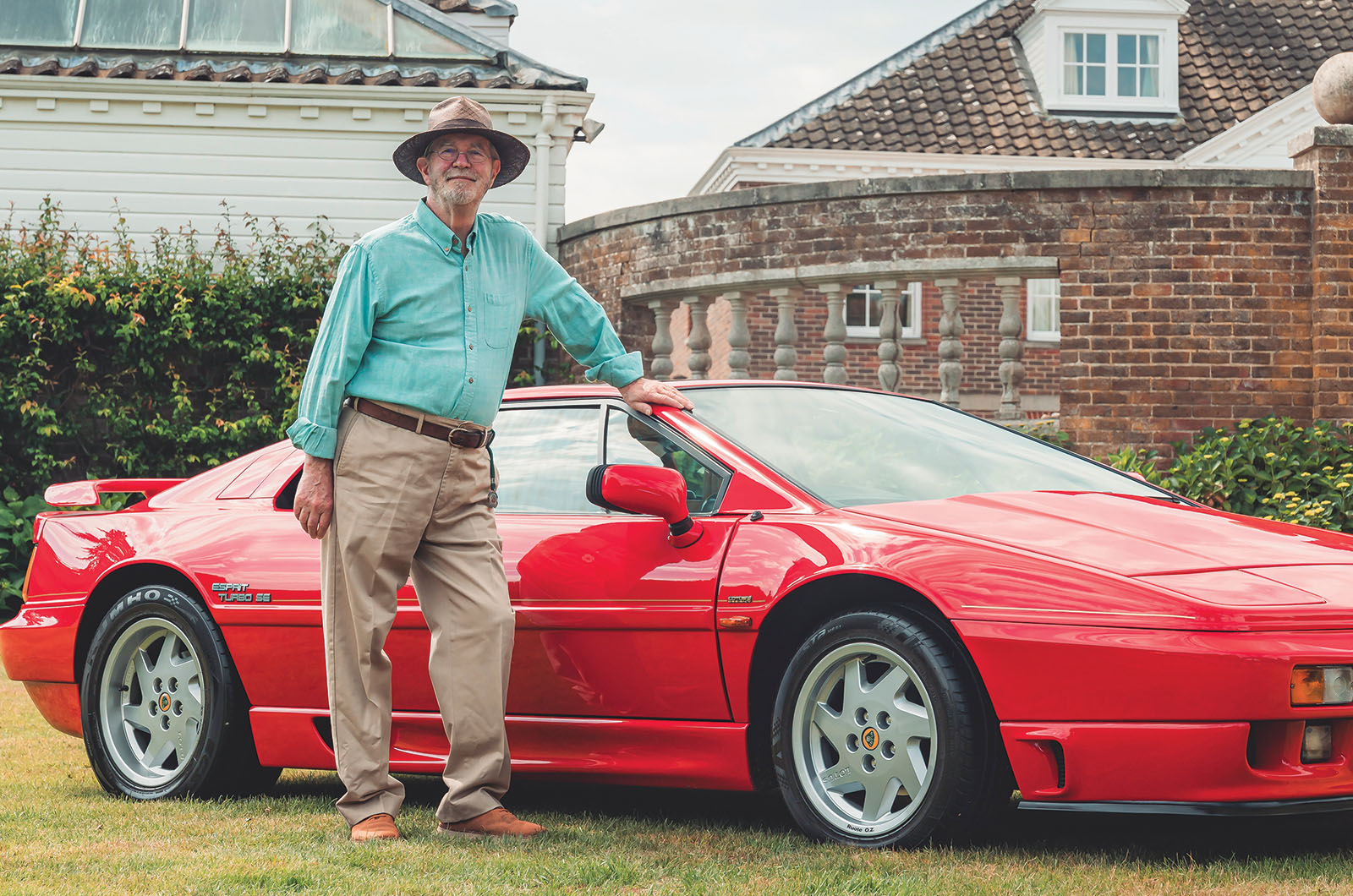
Jonathan bought the car as a barn-find 11 years ago, since when it has undergone a nut-and-bolt restoration, returning it to its original 1977 specification.

It really does look as if it has just driven off Giorgetto’s drawing board, so clean and daringly rakish are its lines.

Classic & Sports Car – Lotus Esprit at 50: Norfolk’s supercar meets its creators
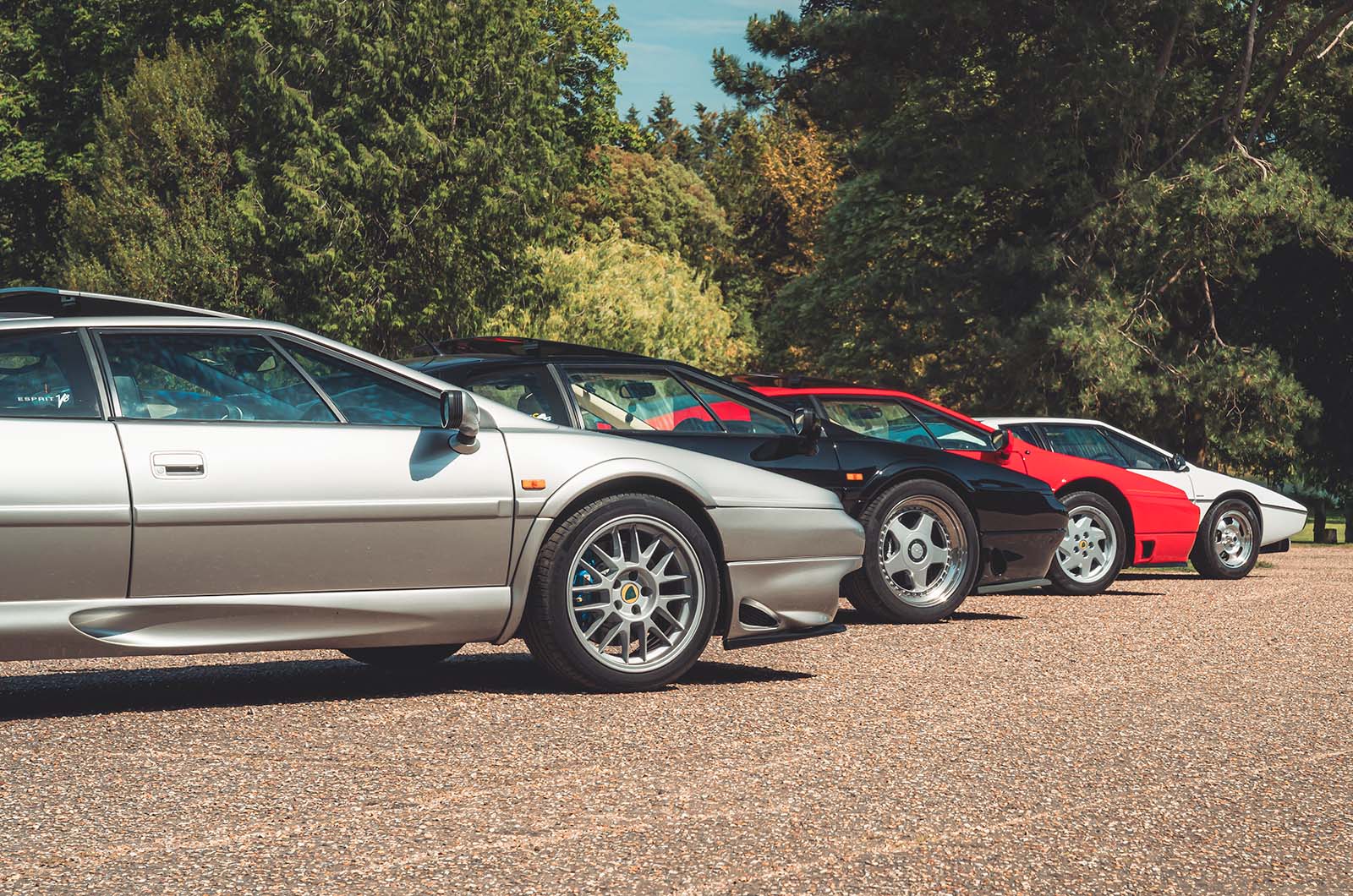
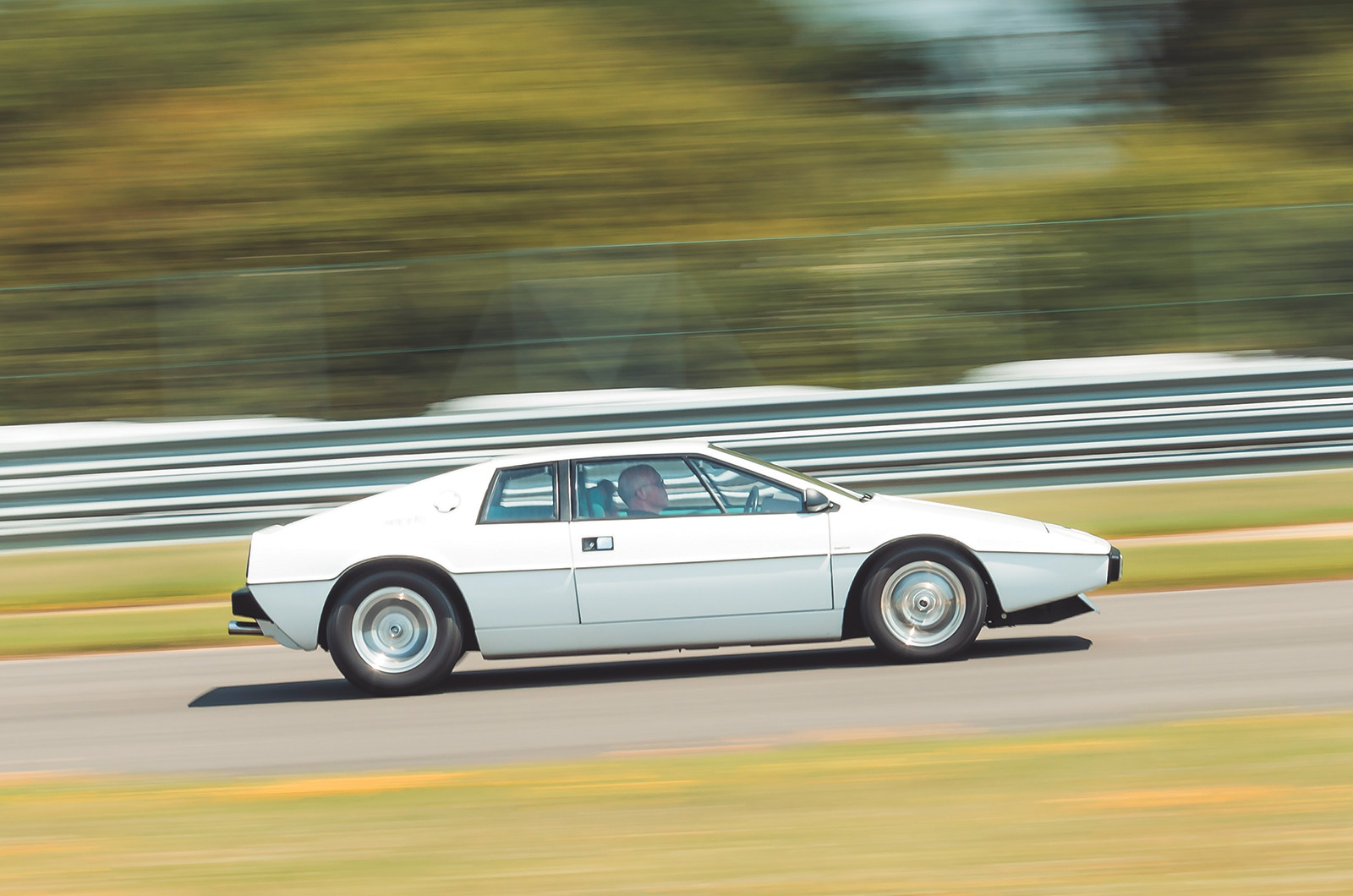
The S1’s extreme wedge shape is best appreciated in profile

Riding on its 14in Wolfrace alloys, you notice how perfect its proportions are; even the doorhandles and lights that were ‘borrowed’ from elsewhere are neatly integrated.

Mike told me earlier that the show car’s tartan interior and orange carpets “knocked their socks off” at the Turin Salon, and while only the early Esprits, such as this one, retained this trim (the tartan was prone to fading), you can see why.

It gives the cabin a uniquely avant-garde 1970s ambience, especially when applied to the wedge-like forms that proliferate throughout.

To drive, the Esprit conforms to Lotus type.

You’re perched low and reclined in the driver’s seat, facing the broad instrument pod that became an Esprit trademark.

Other than the closely spaced pedals, offset to the left, the driving position is superb, with good vision (other than to the rear) and a clear view of the instruments through the rather plain steering wheel.

Select first with the wooden-ball-topped gearlever and the Citroën-sourced ’box is nifty and precise, mated to an equally light clutch.

Classic & Sports Car – Lotus Esprit at 50: Norfolk’s supercar meets its creators
The Lotus Esprit S1’s tiny door mirror

Performance is peppy – but far from muscular – from the 160bhp, 16-valve ‘four’, and there’s an engaging warble from the twin Dell’Ortos as you accelerate through the gears.

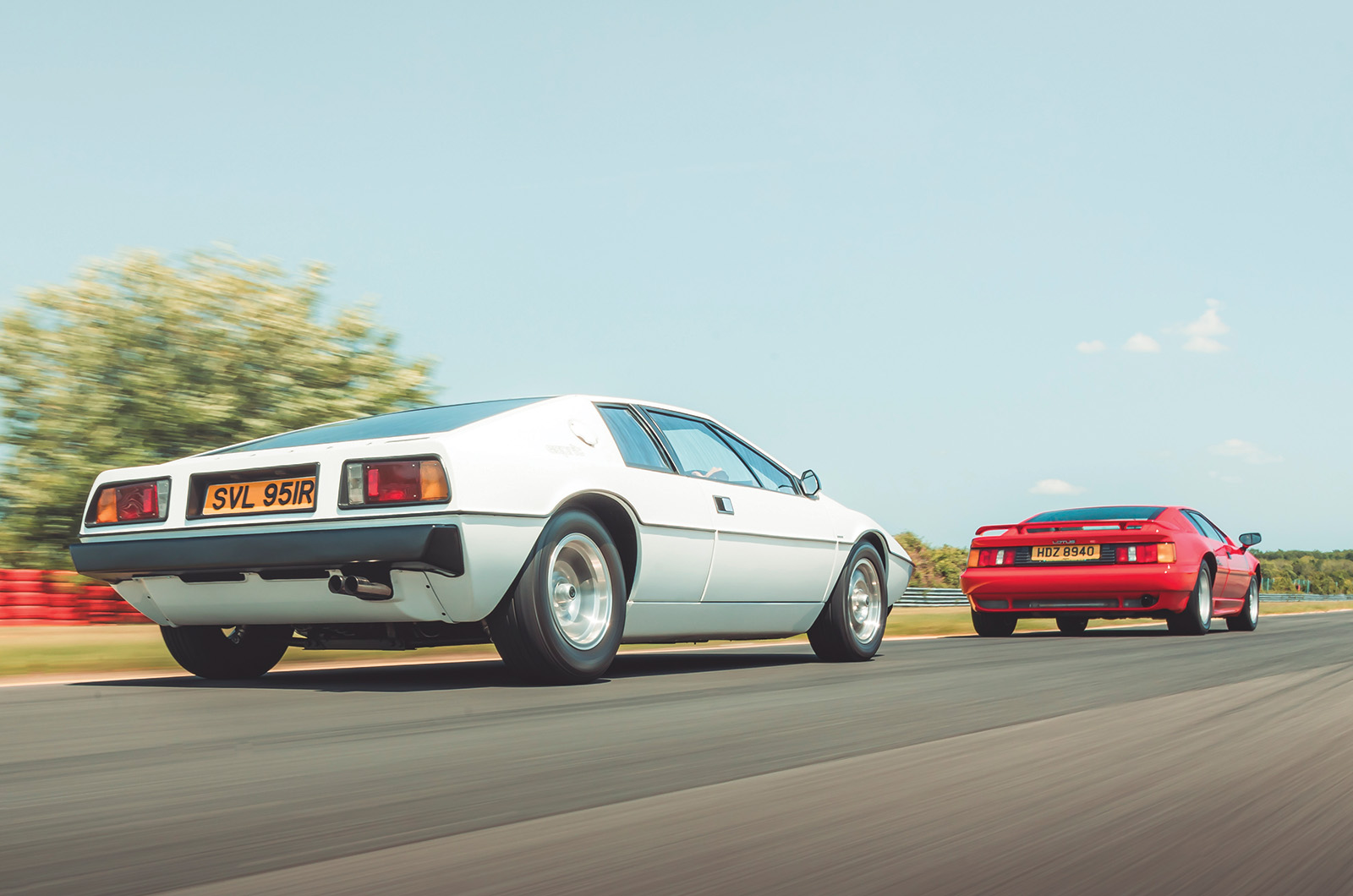
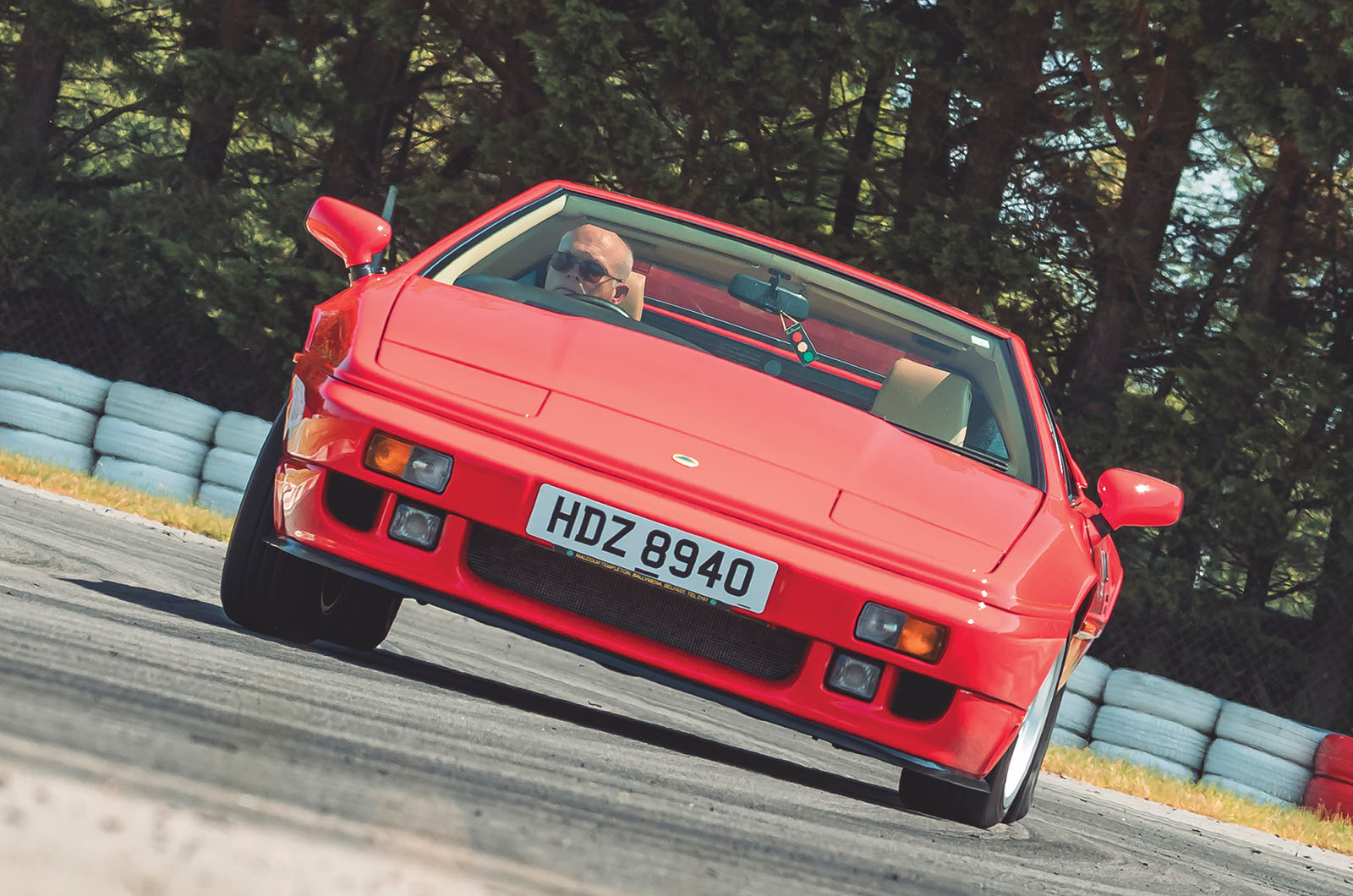
On the Hethel test track, the S1 Esprit is as sprightly as its name implies, responding with precision through the unassisted steering rack at every turn, and displaying such fine balance and stability that you forget that the motor is slung amidships (albeit longitudinally, for better weight distribution).

The S1 might have been a touch underpowered compared to its rivals, but when you consider that a Ferrari 308 weighed an extra 200kg, the Lotus only needed a minor power lift to bring its performance on to a level par with the Italian.

Classic & Sports Car – Lotus Esprit at 50: Norfolk’s supercar meets its creators
The jump from S1 (left) to X180 marked the biggest step-change in the Lotus Esprit’s design

Which is exactly what happened. Following the revised S2 model in 1978, the Type 912 2.2-litre arrived in 1980, alongside the 210bhp Type 82 Turbo Esprit.

The Type 85 Esprit S3 followed in 1981, which was to be the last of the Giugiaro-designed derivatives – although Giorgetto did propose a V8-powered Esprit replacement, codenamed Etna, which sadly never came to fruition.

The Esprit’s next design milestone arrived in the shape of the X180, designed by Peter Stevens.

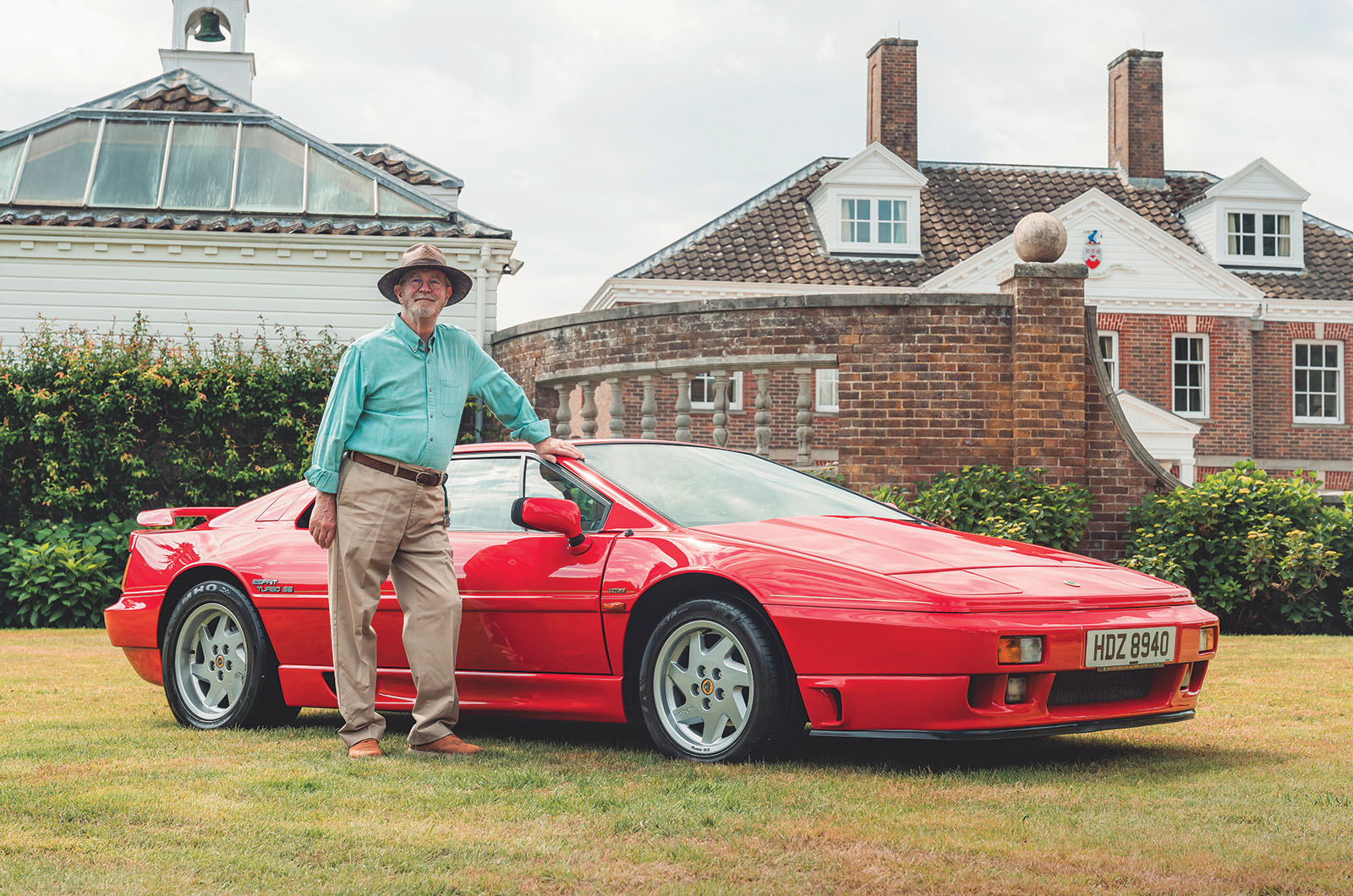
I’m joined by Peter alongside Stuart Mills’ pristine 1990 Turbo SE, which he bought less than a year ago.

Peter describes the S1 as “a show car for the road” and “brilliantly clever” as a flag-bearer for the Esprit.

Classic & Sports Car – Lotus Esprit at 50: Norfolk’s supercar meets its creators
Peter Stevens’ masterful Lotus Esprit rework joins an incredible design back catalogue

“But,” he notes, “I had to make the aerodynamics much better. I was told that the drag coefficient was 0.33, but I took one to the wind tunnel and it was 0.44Cd – which was dreadful.

“To get the X180 down to 0.33Cd was extremely hard work, while making it stable as well.”

Peter points to the smoothed-over C-pillar/rear buttress, where originally there had been a sharp edge, as one example of his aero tweaks.

 “The Esprit was becoming more mainstream,” he continues, “rather than what you might call a part-finished kit car, which then became a totally finished kit car.

“I remember Chapman saying: ‘The customers will do the final development for us.’”

Classic & Sports Car – Lotus Esprit at 50: Norfolk’s supercar meets its creators

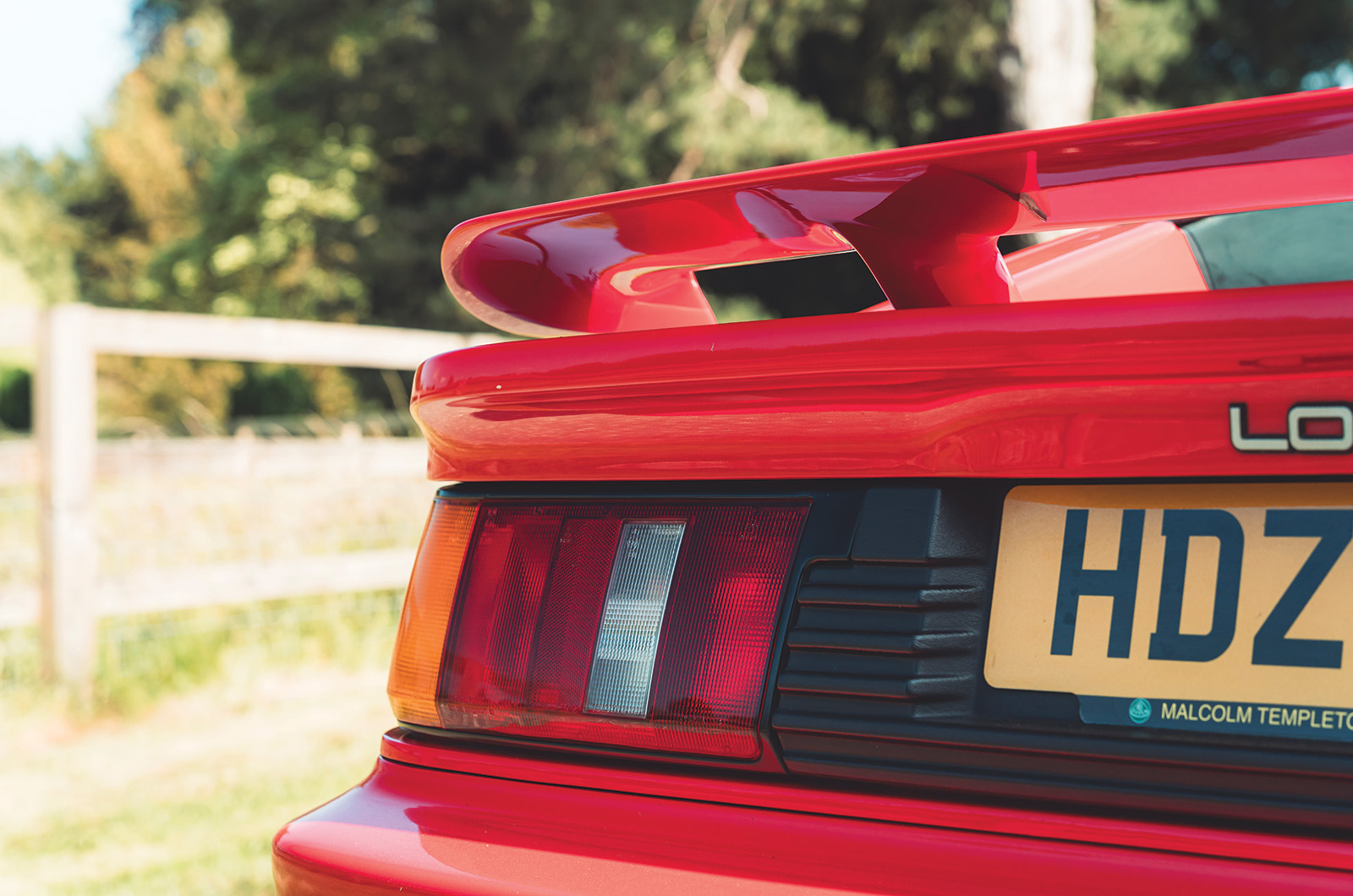
The Lotus Esprit SE’s discreet aero kit – a ‘High Wing’ was also offered

Peter found ways of giving the car a more grown-up appearance: “There was that black rubbing strip, which didn’t fit very well, so I invented a way of getting rid of that horrible bit of black plastic.”

There’s no doubting that Peter’s redesign gave the Esprit a fresh lease of life after the S1, which – in detail, at least – was so much a child of the ’70s.

While the X180 retained the essence of Giorgetto’s original wedge profile, it looks more cohesive, smoother-edged and, yes, more mainstream.

Drive Stuart’s 264bhp SE on the test track and the car also makes more sense dynamically, simply because the backbone chassis was always capable of harnessing so much more power.

Peter’s aerodynamic revisions clearly came into their own on a car that, in this guise, had a maximum speed of 163mph.

Classic & Sports Car – Lotus Esprit at 50: Norfolk’s supercar meets its creators

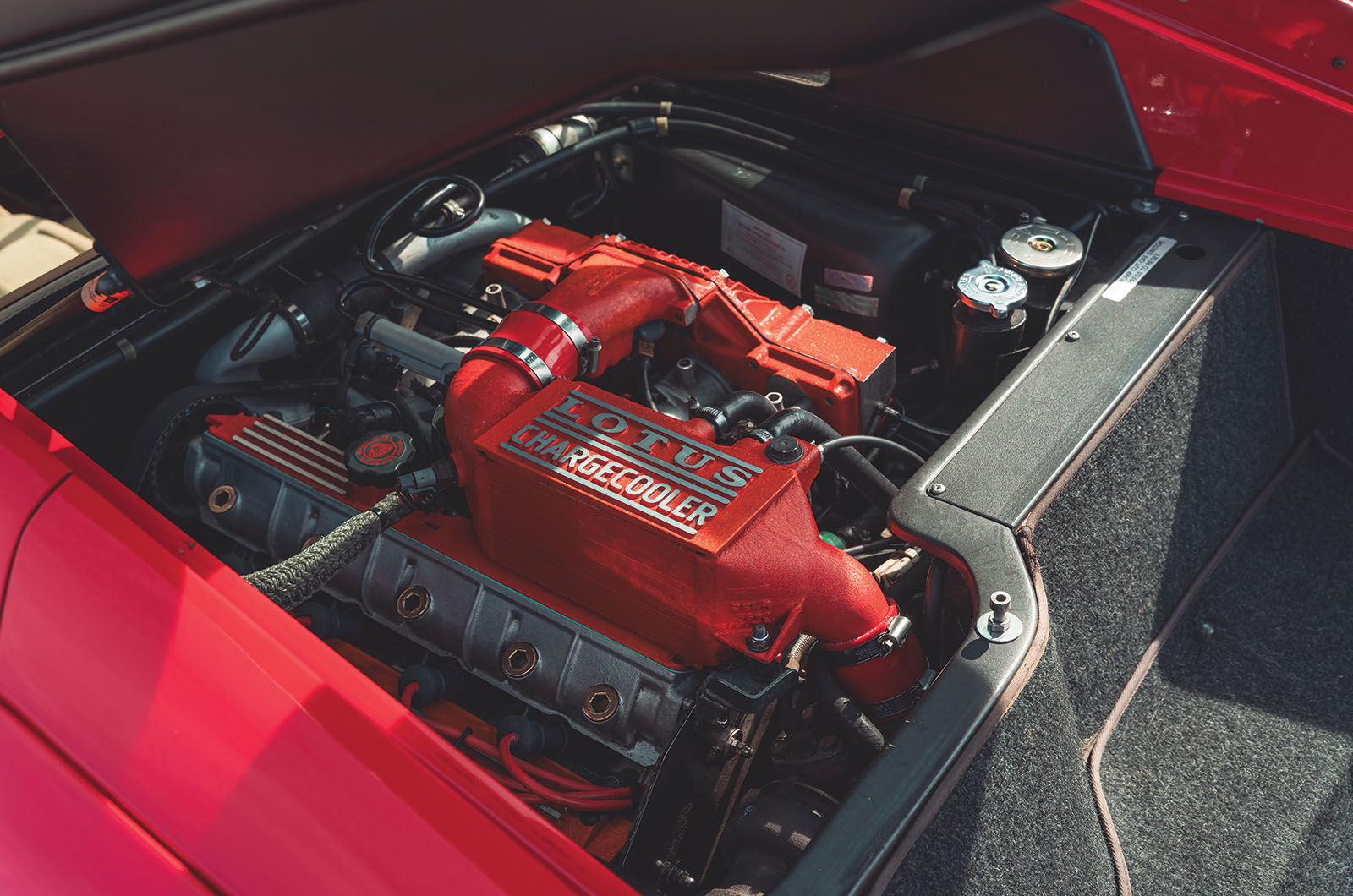
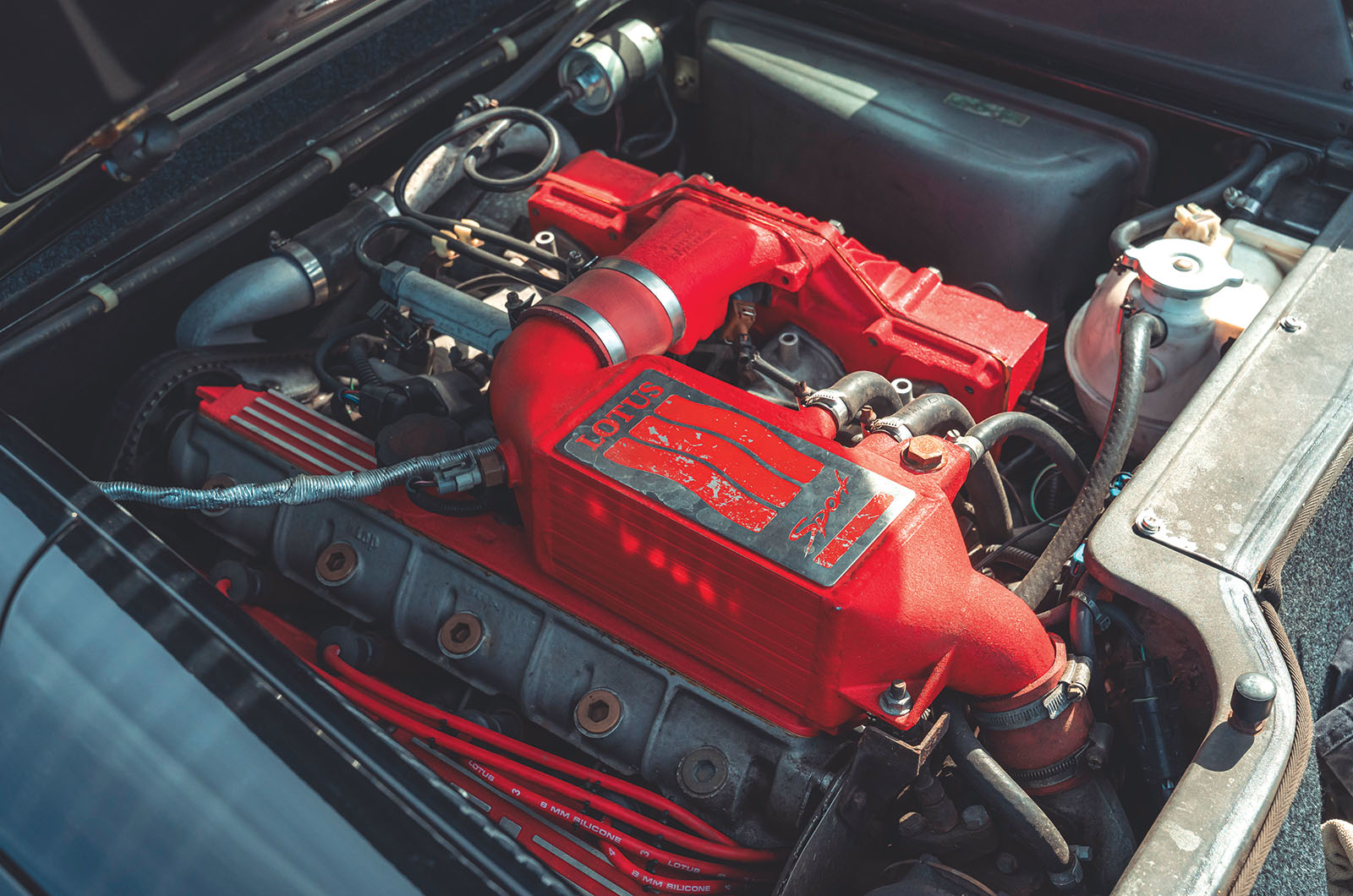
The Lotus Esprit SE’s turbocharged Type 910 engine makes 264bhp

But Mike’s demand for transverse links and radius arms for the rear suspension, to replace the earlier cars’ trailing-arm set-up, also makes it feel more surefooted at high speed.

With no power assistance, the SE’s steering is heavy at lower speeds.

The (now Renault-sourced) five-speed gearbox also has a weighty, rubbery shift that demands a firm hand, and is mated to an equally heavy clutch. 

As your pace climbs, these foibles are quickly forgotten.

There’s some old-school turbo lag (though not as much as I had expected), but the 2.2-litre ‘four’ is an aural joy, with a seriously infectious exhaust note.

Classic & Sports Car – Lotus Esprit at 50: Norfolk’s supercar meets its creators

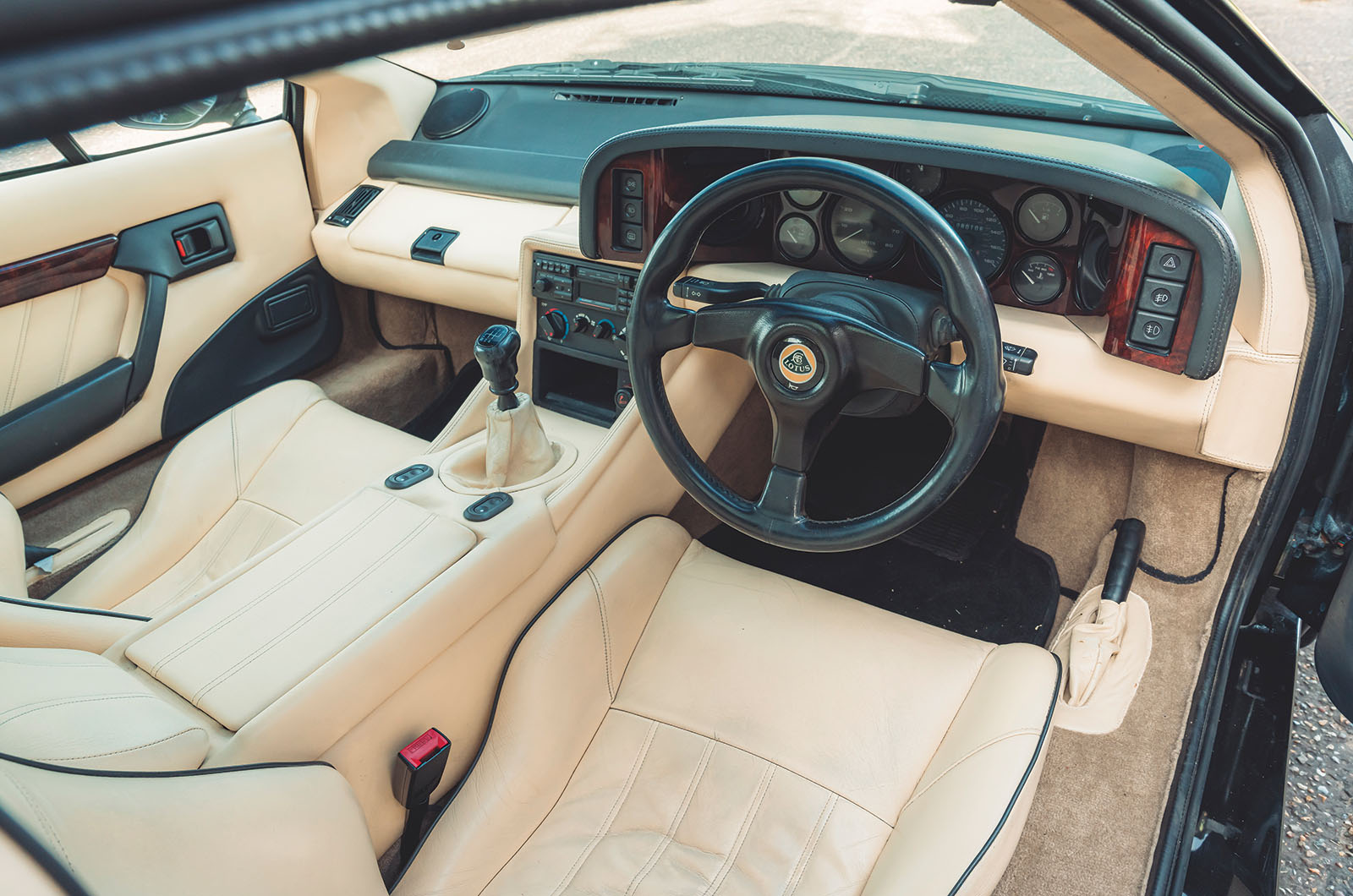
The Lotus Esprit SE’s cabin brings luxury but feels dated

You now begin to appreciate just how damned good the Esprit’s chassis is – even nearly 40 years on: superbly balanced, with minimal body movement and ample reserves of grip, even as you push the car’s natural envelope.

It would be another six years before Julian Thomson led the Esprit’s next design evolution.

He had joined Lotus from Ford just prior to the X180’s launch and was initially responsible for the design of that model’s road wheel, as well as the front and rear spoilers on the SE.

But in 1992, Julian was tasked with facelifting the Esprit “to get more life out of it”. And he did just that, with the S4 generation soldiering on until 2001.

Classic & Sports Car – Lotus Esprit at 50: Norfolk’s supercar meets its creators

Turbocharging gave the Esprit’s chassis the urge it deserved

“For me and Russell [Carr], we built a car,” recounts Julian. “We did the front bumpers, the rockers, the road wheel – it was meant to be a shopping list, because we thought ‘they won’t be able to afford everything’.

“In the event, they liked the car so much they decided to do it all.”

The only regulatory changes involved fitting a “pretty awful” airbag steering wheel, but, as the Esprit gained ever-higher outputs – as much as 300bhp now for the Sport 300 and S4S – there was more aero work.

“We did mess around with those wings a lot,” Julian says, “and the wings did have to work. The cooling at the front of the car was also critical.”

Classic & Sports Car – Lotus Esprit at 50: Norfolk’s supercar meets its creators

Julian Thomson’s smoother Esprit S4S adds muscle inspired by the limited-run Sport 300

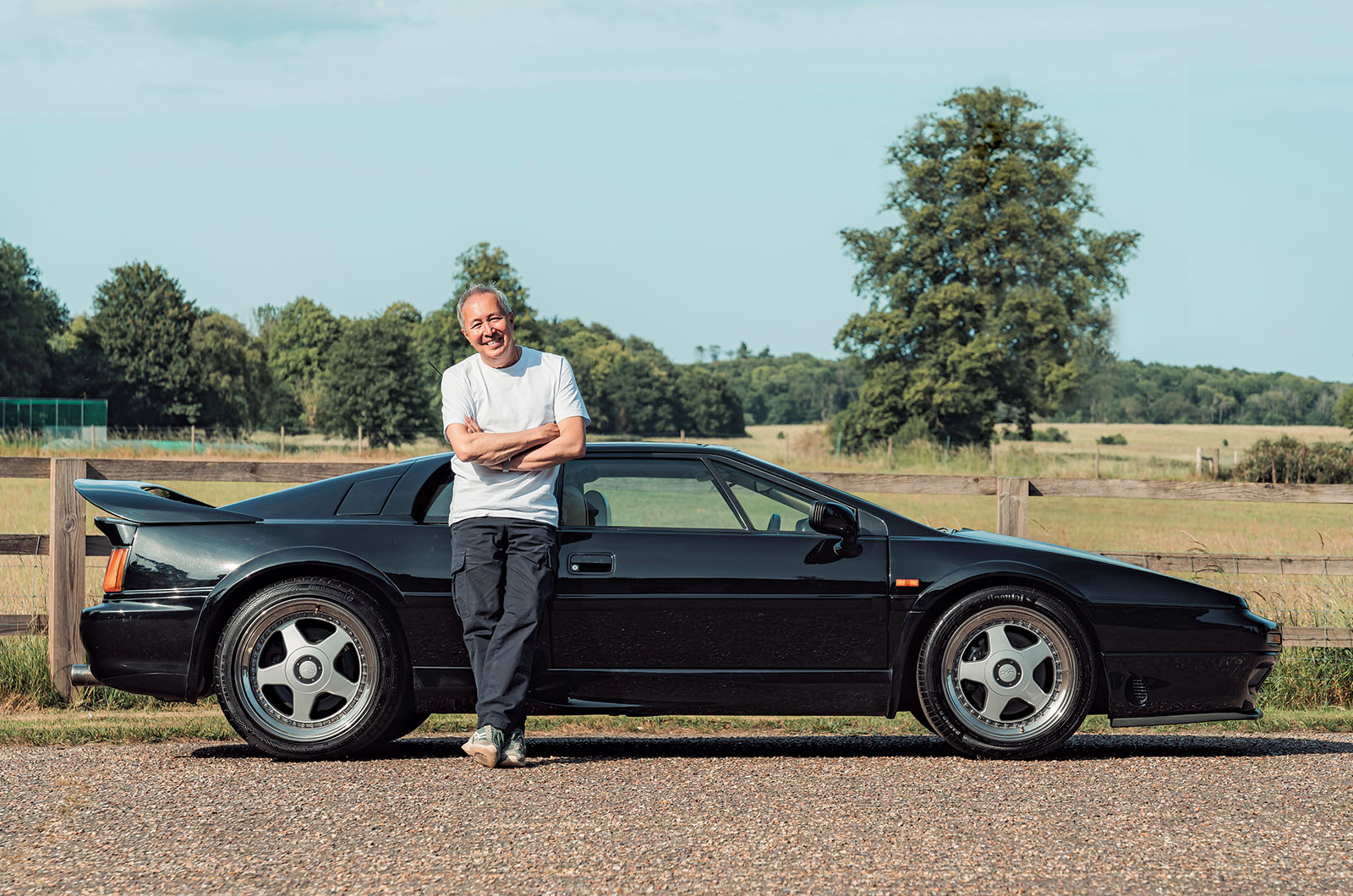
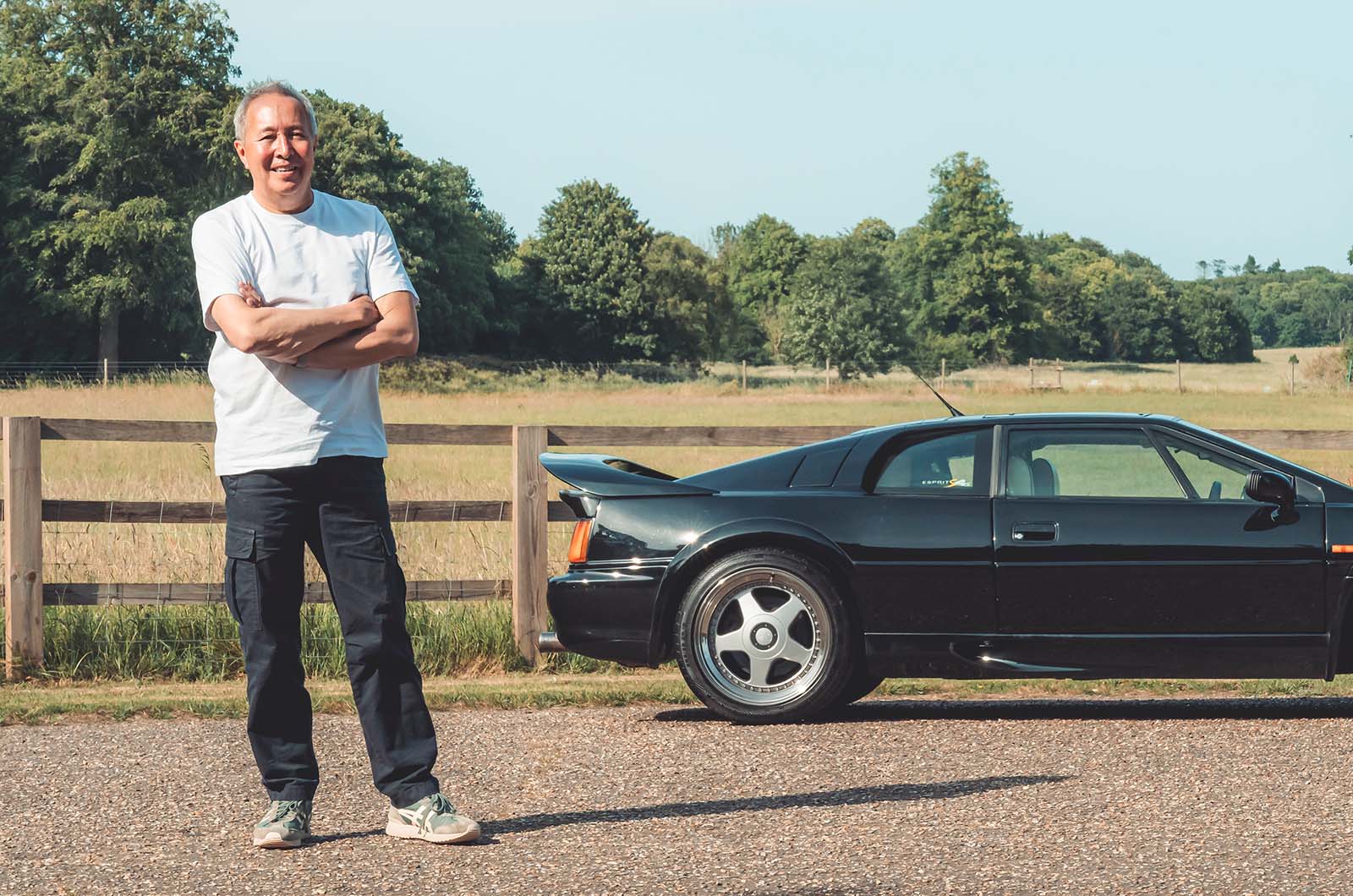
The S4S we’re standing next to was launched in 1994, and this black example belongs to Dan Andrews, who, like so many owners I’ve spoken to, caught the Esprit bug early on from its starring film roles with 007 in The Spy Who Loved Me and For Your Eyes Only.

On the one hand, this near-final iteration of the Esprit was smoothed-over to the extent it made its shape slightly generic, and nowhere as cutting-edge as Giugiaro’s original.

But, for me, it was a small price to pay for the aero benefits bestowed on the car, keeping it viable as a rival to cars such as Porsche’s 964 and Ferrari’s incoming F355.

Classic & Sports Car – Lotus Esprit at 50: Norfolk’s supercar meets its creators

The Lotus Esprit S4S feels roomier and adds powered steering at last

‘Our’ classic Lotus Esprit S4S, pictured here, packs 300bhp, and on the test track today it leads our group dynamically, hitting a sweet spot in terms of its power-to-weight ratio.

Its standard power steering brings a greater sense of agility, with hardly any loss of feedback.

The chassis of the S4S also somehow manages to mask that it weighs a few hundred kilos more than the S1, still feeling poised and adroit at speed.

However, while its turbo performance is more measured, and in general terms the car feels more refined than the SE, its powertrain perhaps lacks a little of the older car’s sparkle.

Classic & Sports Car – Lotus Esprit at 50: Norfolk’s supercar meets its creators

Power jumped to 300bhp for the Lotus Esprit S4S

By 2001, Russell Carr was heading up Hethel’s design department and was asked to make further visual and aerodynamic revisions to make the by then V8-powered Lotus Esprit match-fit for its final chapter.

“Although we look back fondly now,” explains Russell, “there was a period when that very flat-edged wedge design was out of vogue.

“So we were constantly trying to make the Esprit softer and more fluid.

“We had to do some work around the front bumper – we needed to get more air in there [to cool the V8], so we were having to pull the openings as much as possible. It also gave the car another presence.”

Classic & Sports Car – Lotus Esprit at 50: Norfolk’s supercar meets its creators

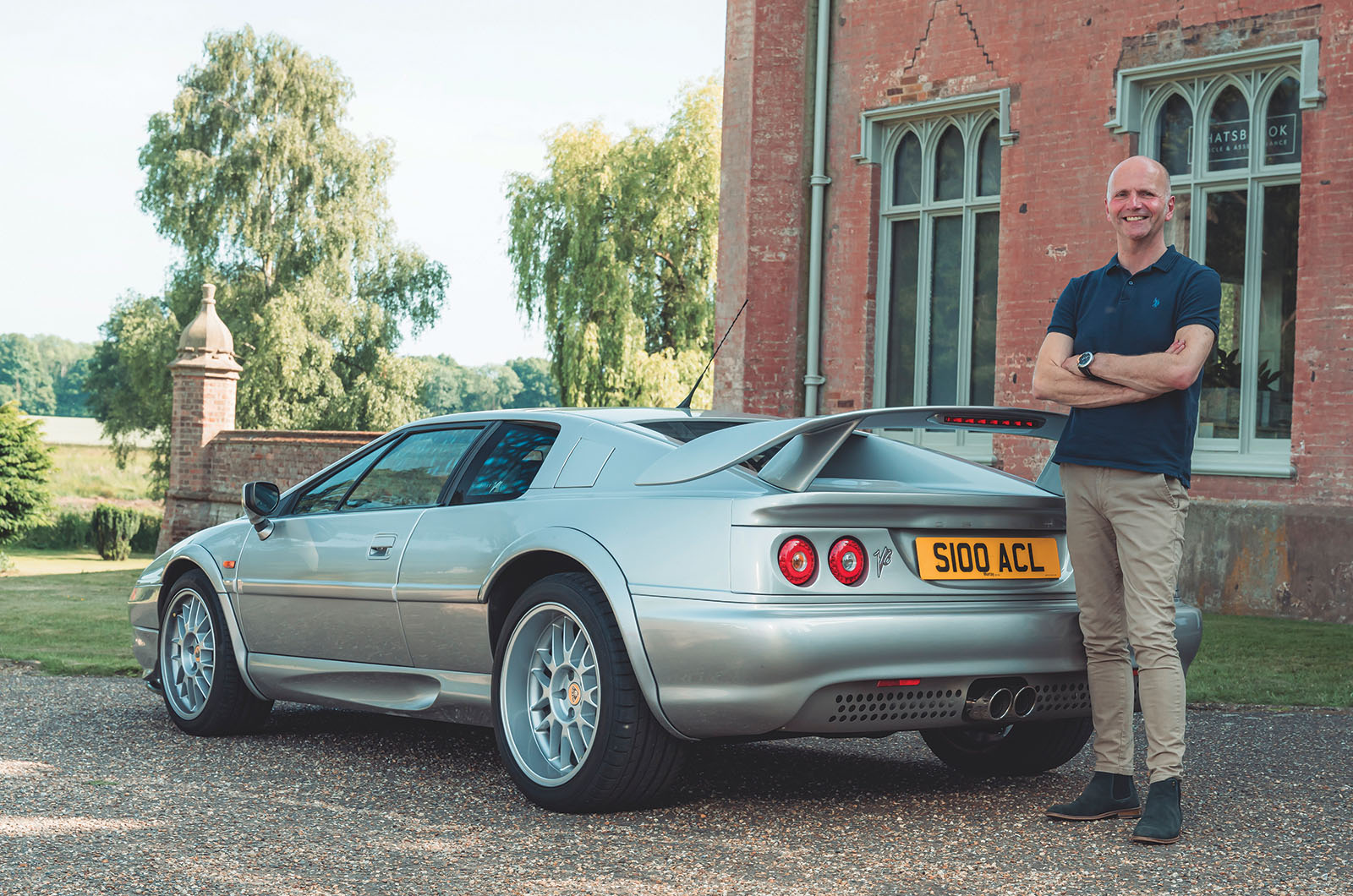
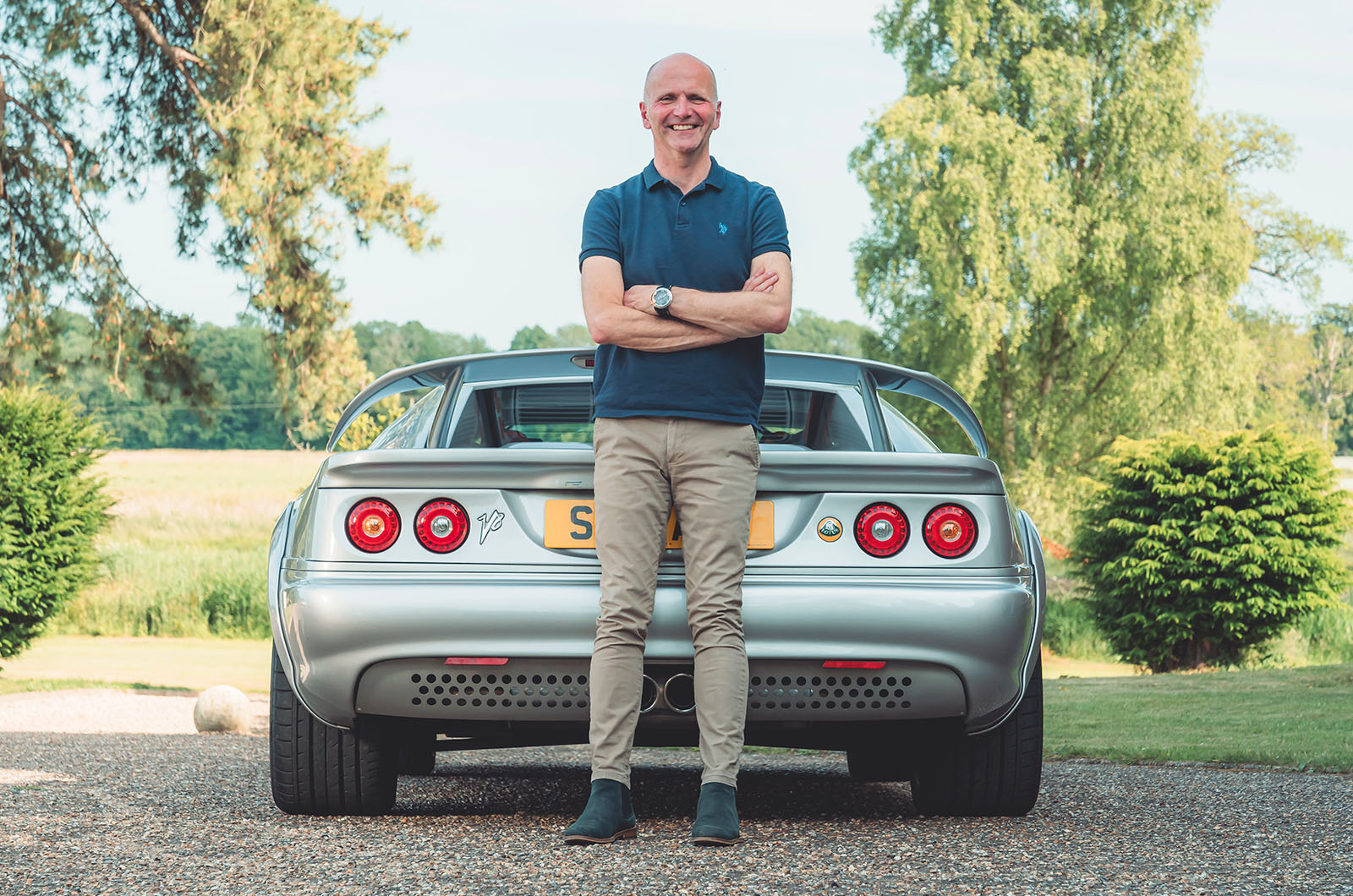
Current Lotus design boss Russell Carr added the quad-light rear and centre-exit exhausts to tie in with contemporary Elises

At the same time, the V8’s previous, Toyota-sourced tail-lights were in short supply, so they were replaced, giving this model its unique, four-light rear panel.

Andrew Laing has been the owner of this Final Edition V8 for 20 years, and has driven from Edinburgh to be with us at Hethel today.

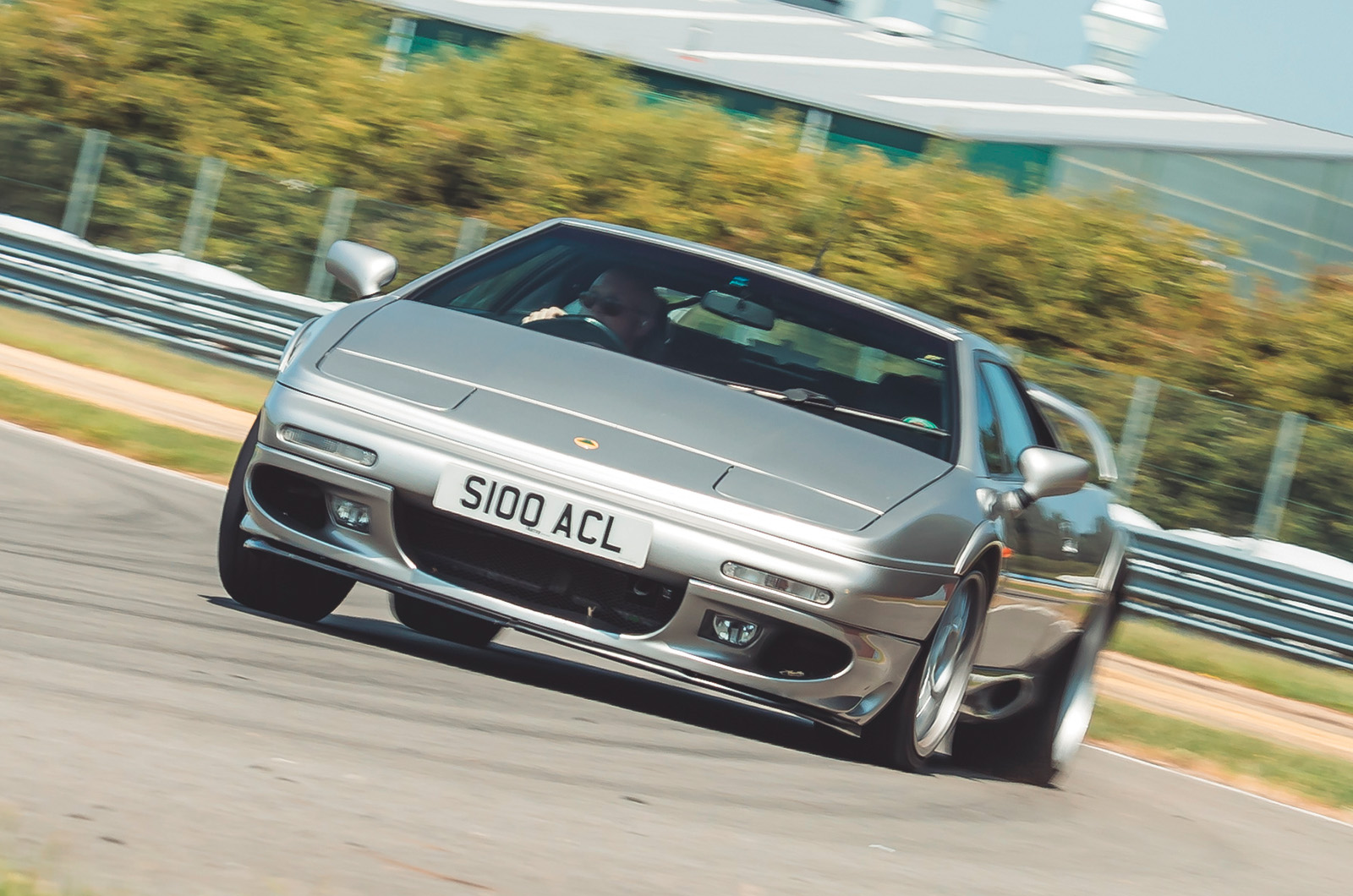
On track, it sounds every bit as feisty and aggressive as a 350bhp V8 should – which is a pleasant surprise after the earlier V8 I drove recently.

The Renault ’box’s change is lighter and more fluid, and you find yourself short-shifting through the circuit’s twisties, digging into the V8’s near-300lb ft of torque.

Classic & Sports Car – Lotus Esprit at 50: Norfolk’s supercar meets its creators

“We look back fondly now, but for a period that flat wedge design was out of vogue. We tried to make the Esprit softer and more fluid”

It’s brutal in some respects, and yet that familiar, user-friendly, sweetly balanced chassis still lurks beneath this most rumbustious of Esprits.

It’s an utter joy, and the only car here in which you feel that you could finally breach its chassis’ upper limits.

To this day the Lotus remains an undervalued gem, and that’s baffling.

But Russell sums up its legacy perfectly just before we part: “Through all of these Esprits, there’s still the thread of the original car: very planar surfaces, very raked ’screen, wedge shape.

“There are others, but the Esprit has a simplicity and purity. It’s got great proportions, and it drives fantastically.”

Images: Max Edleston

Thanks to: Alastair Florance at Lotus; AnneMarie Brien at Club Lotus


Lotus Esprit: meet the designers

Classic & Sports Car – Lotus Esprit at 50: Norfolk’s supercar meets its creators

Giorgetto Giugiaro styled the first Lotus Esprit

Giorgetto Giugiaro’s career highlights

  • Stylist, Fiat (1955-’59)
  • Stylist, Gruppe Bertone (1959-‘65)
  • Stylist, Ghia (1965-’67)
  • Founder, ItalDesign Giugiaro (1968-2015)
  • Founder, GFG Style (2016-date)
  • Car Designer of the Year, 1999
  • Inductee, Automotive Hall of Fame, 2002
  • Compasso d’Oro industrial design award (multiple)
  • Contributed to the creation of 250 cars
     

Classic & Sports Car – Lotus Esprit at 50: Norfolk’s supercar meets its creators

Peter Stevens gave the Esprit a more rounded shape

Peter Stevens’ career highlights

  • Royal College of Art, London (1963)
  • Founder, Peter Stevens Design (1976)
  • Chief designer, Lotus Cars (1985)
  • Designer, Jaguar XJR-15 (1989)
  • British Design Council Award (Elan, 1991)
  • Chief designer, McLaren F1 (1991-’93)
  • Consultant designer, BMW LM99 & Toyota Le Mans GT (1998)
  • Design director, MG Rover Group (2000)
  • Autocar Designer of the Year (2002)
  • Director of design, Rivian (2011-’12)
     

Classic & Sports Car – Lotus Esprit at 50: Norfolk’s supercar meets its creators

Julian Thomson’s Lotus Esprit soldiered on until 2001

Julian Thomson’s career highlights

  • RCA, London (1982)
  • Designer, Ford (1984)
  • Designer, Lotus (1986)
  • Head of design, Lotus
  • Chief of exteriors, VW Design (1998)
  • Various roles, ending as design director, Jaguar Land Rover (2000)
  • Design director, General Motors Advanced Design Europe (2022)
     

Classic & Sports Car – Lotus Esprit at 50: Norfolk’s supercar meets its creators

Russell Carr oversaw the Esprit’s design as it transitioned to V8 power

Russell Carr’s career highlights

  • Transport Design, Coventry (1988)
  • Designer, MGA Developments
  • Designer, Lotus Cars (1990)
  • Design director, Lotus Cars (1998)

Factfiles

Classic & Sports Car – Lotus Esprit at 50: Norfolk’s supercar meets its creators

Lotus Esprit S1

  • Sold/number built 1976-’77/718
  • Construction steel backbone chassis, glassfibre body
  • Engine Type 907 all-alloy, dohc, 16v 1973cc ‘four’, twin Dell’Orto carburettors
  • Max power 160bhp @ 6200rpm
  • Max torque 140lb ft @ 4900rpm
  • Transmission Citroën five-speed manual, RWD
  • Suspension independent, at front by unequal-length wishbones, anti-roll bar rear trailing arms, lateral link, fixed-length driveshafts; coil springs, telescopic dampers f/r
  • Steering rack and pinion
  • Brakes discs, inboard at rear, with servo
  • Length 13ft 9in (4191mm)
  • Width 6ft 1½in (1867mm)
  • Height 3ft 7½in (1105mm)
  • Wheelbase 8ft (2438mm)
  • Weight 1980lb (898kg)
  • 0-60mph 8.6 secs
  • Top speed 124mph
  • Mpg 26
  • Price new £7883 (1976) 


Lotus Esprit SE
(Where different from S1)

  • Sold/number built 1989-’93/1608
  • Engine Type 910, 2174cc, Garrett T3 turbocharger, chargecooler and multi-point fuel injection
  • Max power 264bhp @ 6500rpm
  • Max torque 261lb ft @ 3900rpm
  • Transmission Renault five-speed manual, RWD
  • Suspension independent, at front by double wishbones rear upper and lower transverse links, radius arms; anti-roll bar f/r
  • Brakes discs, with servo
  • Weight 2929lb (1328kg)
  • 0-60mph 4.7 secs
  • Top speed 165mph
  • Mpg 29
  • Price new £42,500 (1989) 


Lotus Esprit S4S
(Where different from SE)

  • Sold/number built 1995-‘96/367
  • Engine Garrett T3/60 turbocharger
  • Max power 300bhp @ 7000rpm
  • Max torque 290lb ft @ 3600rpm
  • Steering power-assisted rack and pinion
  • Brakes discs, with servo and anti-lock
  • Length 14ft 5¾in (4718mm)
  • Width 6ft 2in (1867mm)
  • Height 3ft 9¼in (1149mm)
  • Weight 2966lb (1347kg)
  • 0-60mph 4.6 secs
  • Top speed 168mph
  • Mpg 25
  • Price new £52,995 (1995) 


Lotus Esprit V8
(Where different from S4S)

  • Sold/number built 1996-2004/1483 (all V8s)
  • Engine dohc-per-bank, 32v 3506cc V8, twin Garrett T25 turbochargers
  • Max power 350bhp @ 6500rpm
  • Max torque 295lb ft @ 4250rpm
  • Weight 3040lb (1380kg)
  • 0-60mph 4.8 secs
  • Top speed 175mph
  • Mpg 21
  • Price new £49,950 (1999)

We hope you enjoyed reading. Please click the ‘Follow’ button for more super stories from Classic & Sports Car.