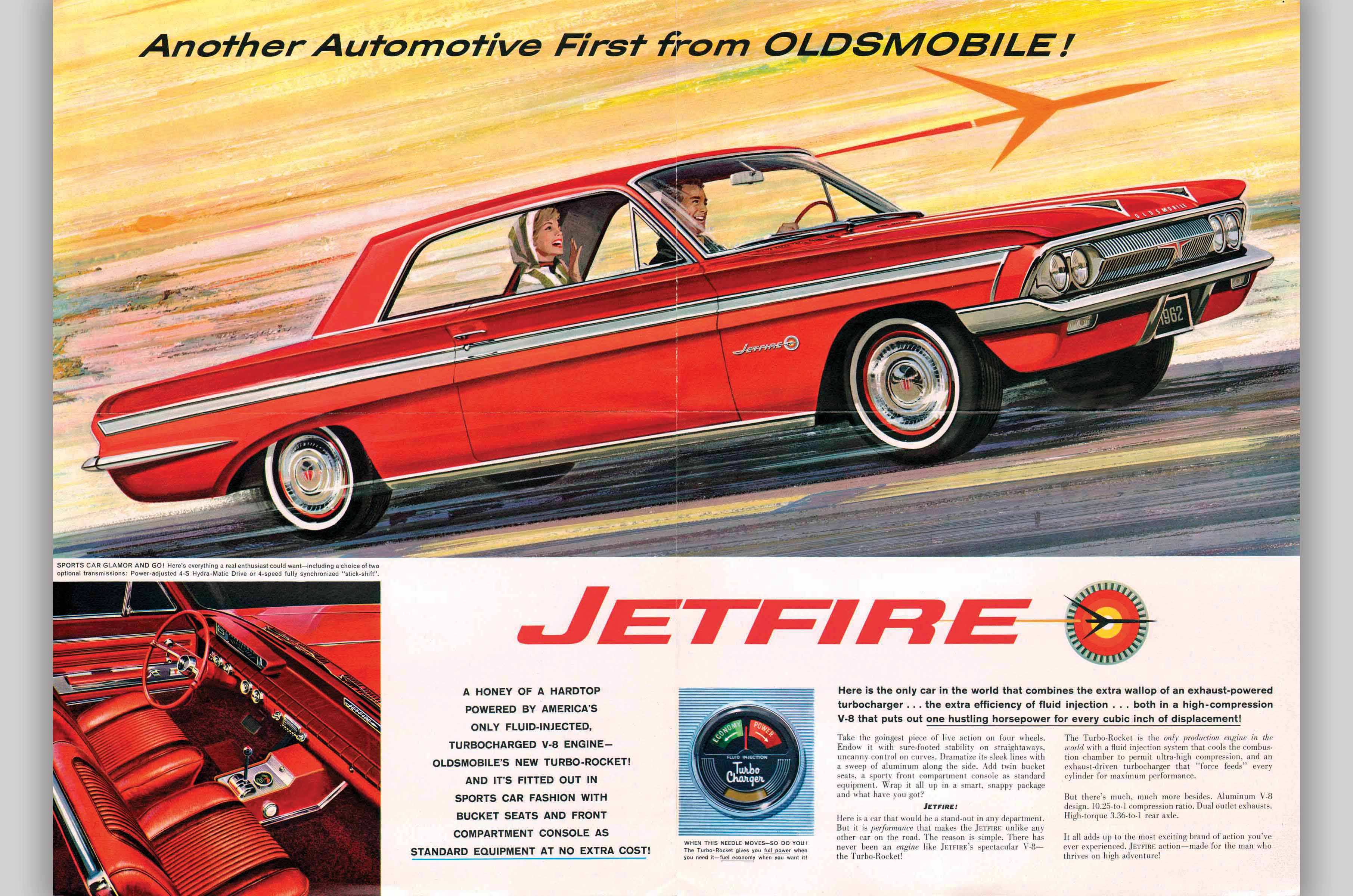
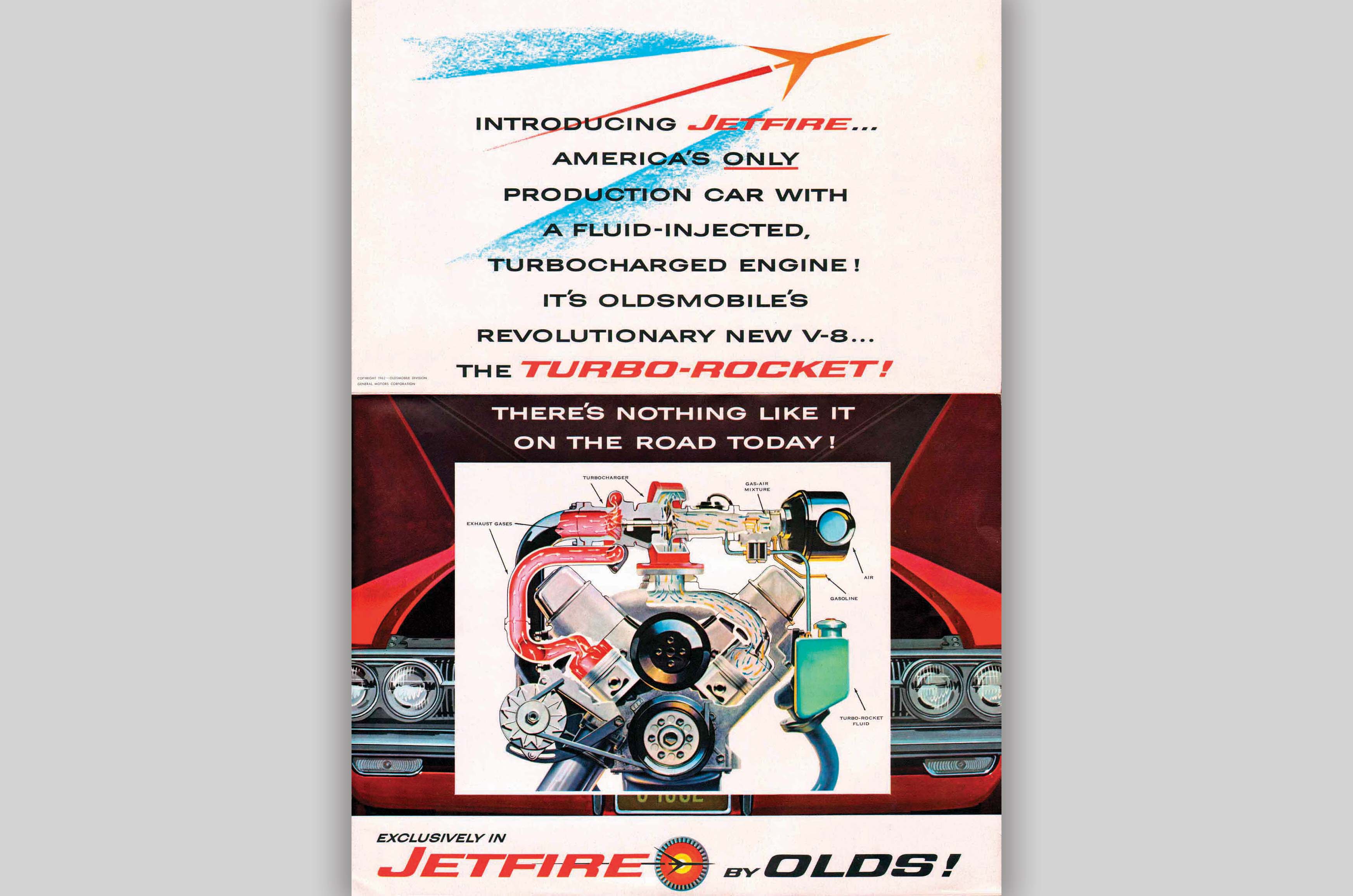
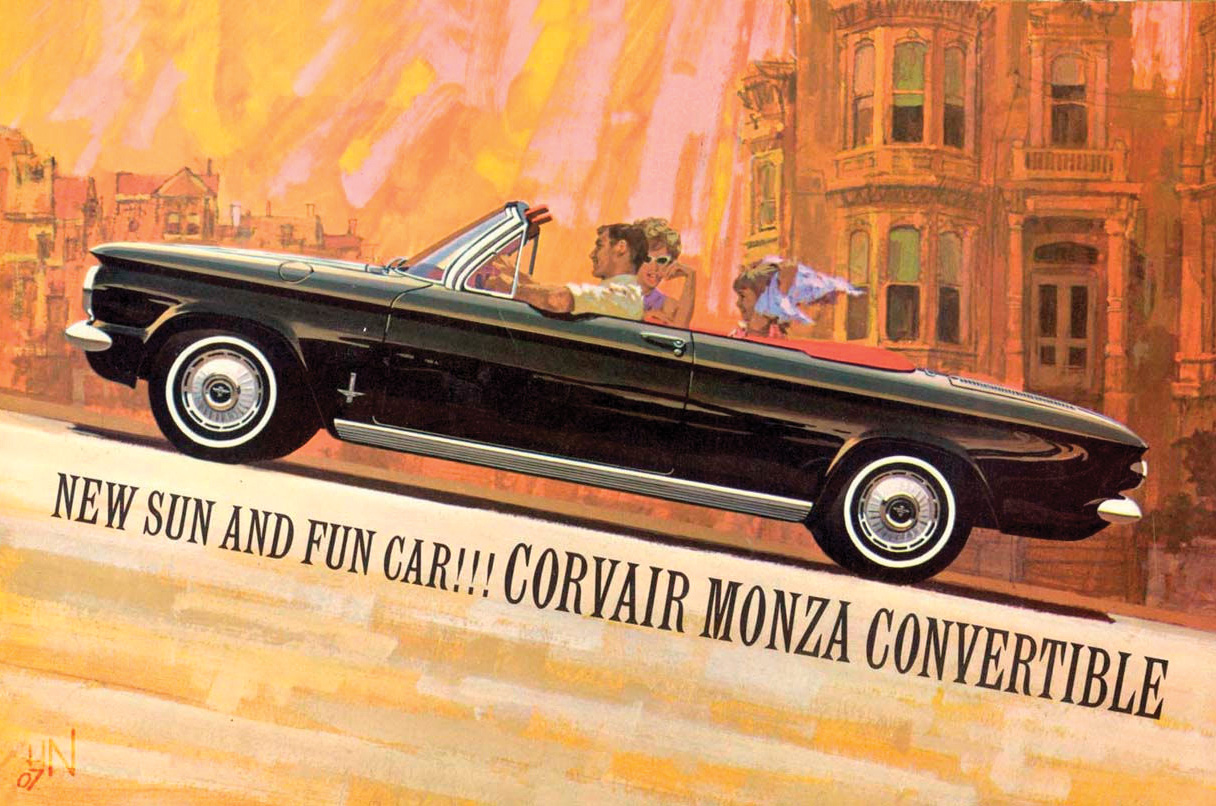
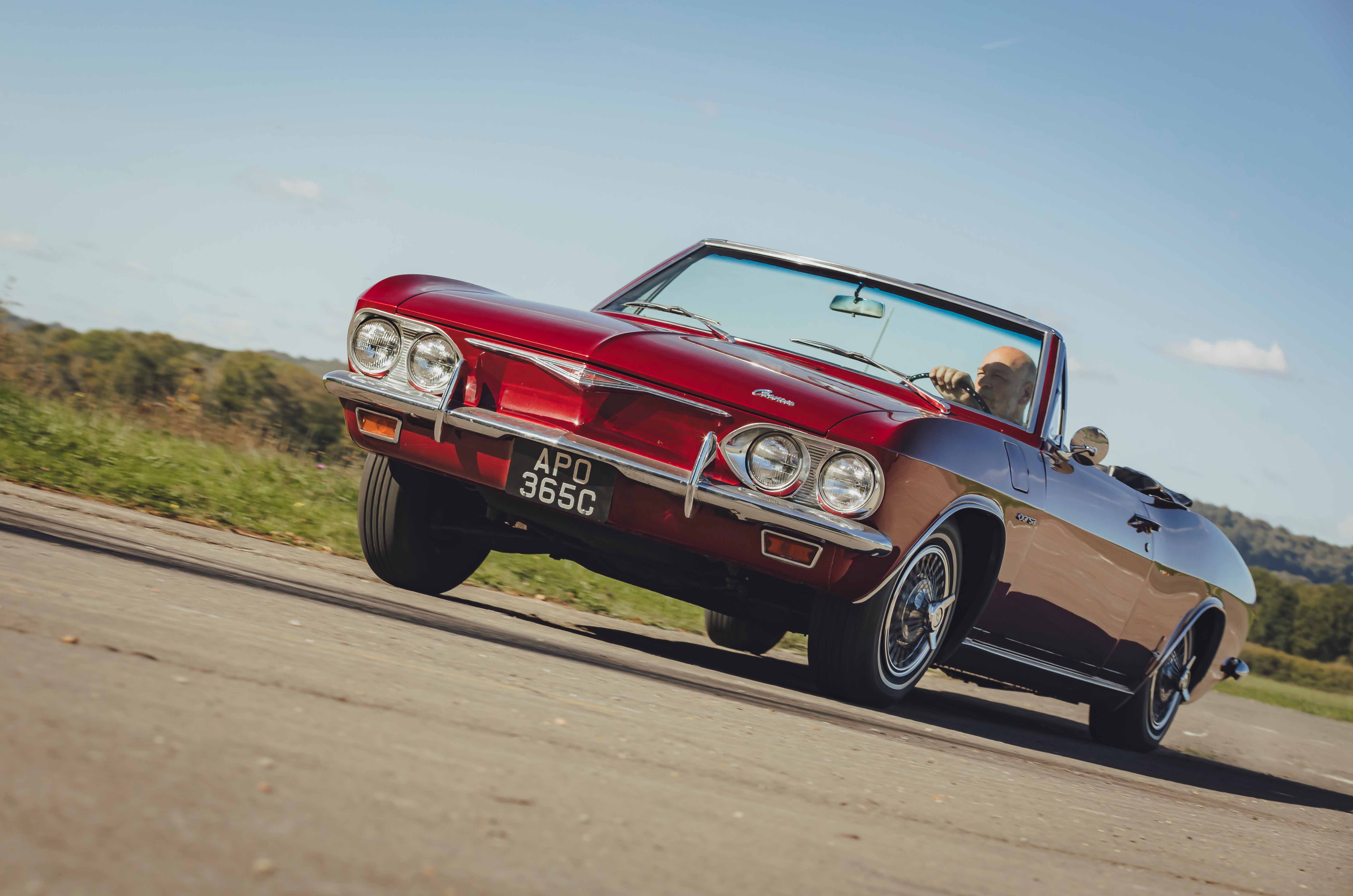
Although Chevrolet started about a year after Olds, it caught up with its rival for the 1962 model year.
While Oldsmobile sold 9607 Jetfires in two years, it took Chevy only four to deliver almost 50,000 Corvair Turbos.
Forecasters had prophesied a big future for turbos, but the American sales disappointed.
Their launches ran aground on a huge sweep towards much bigger, atmospherically fed V8s.
With triple carbs on a 7-litre V8, you didn’t need much more power.
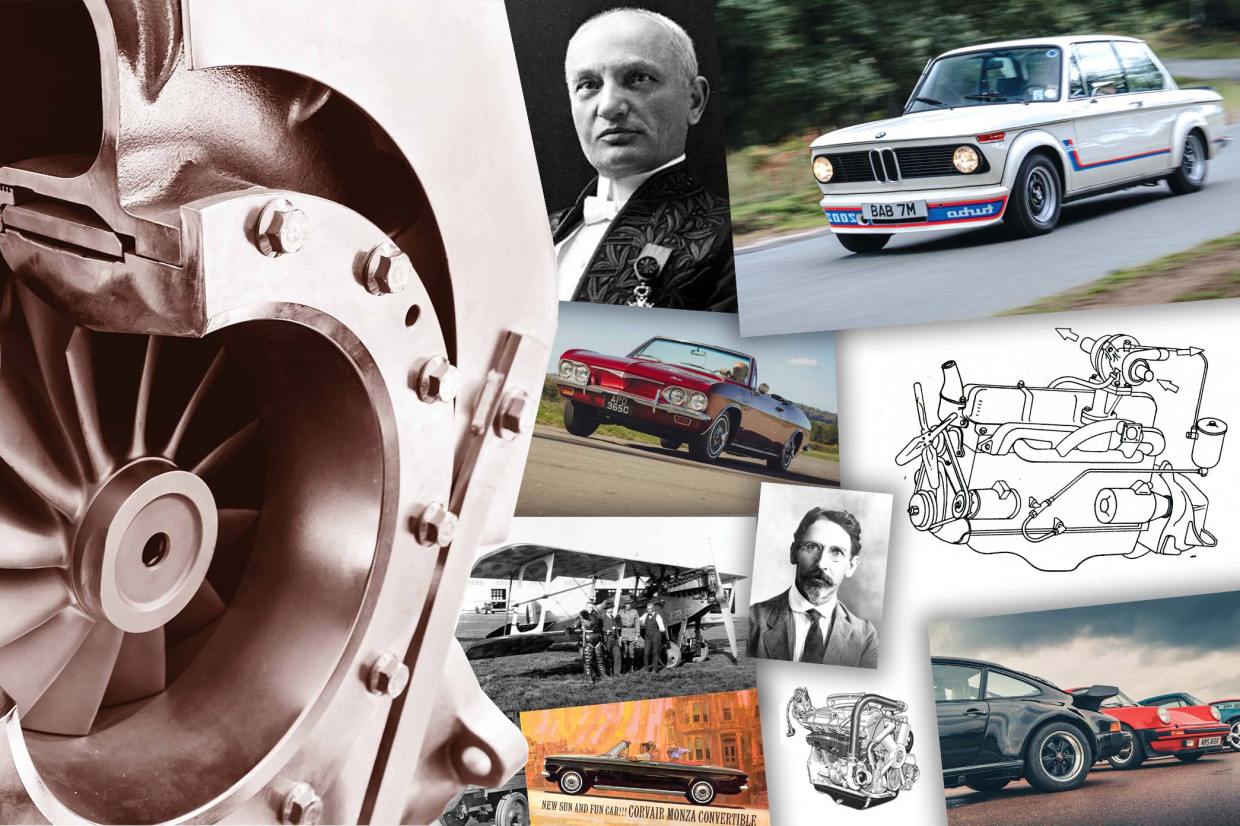
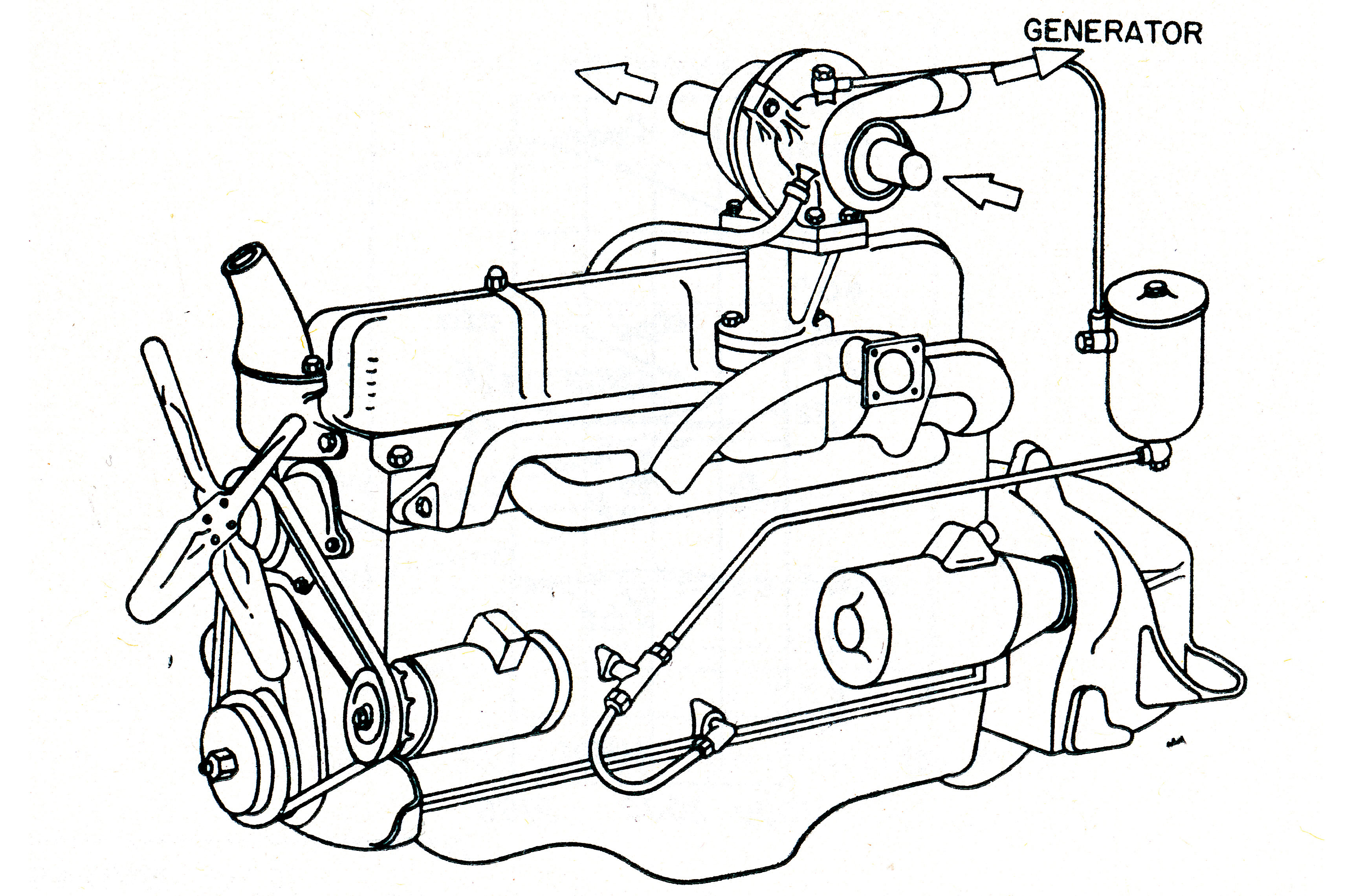
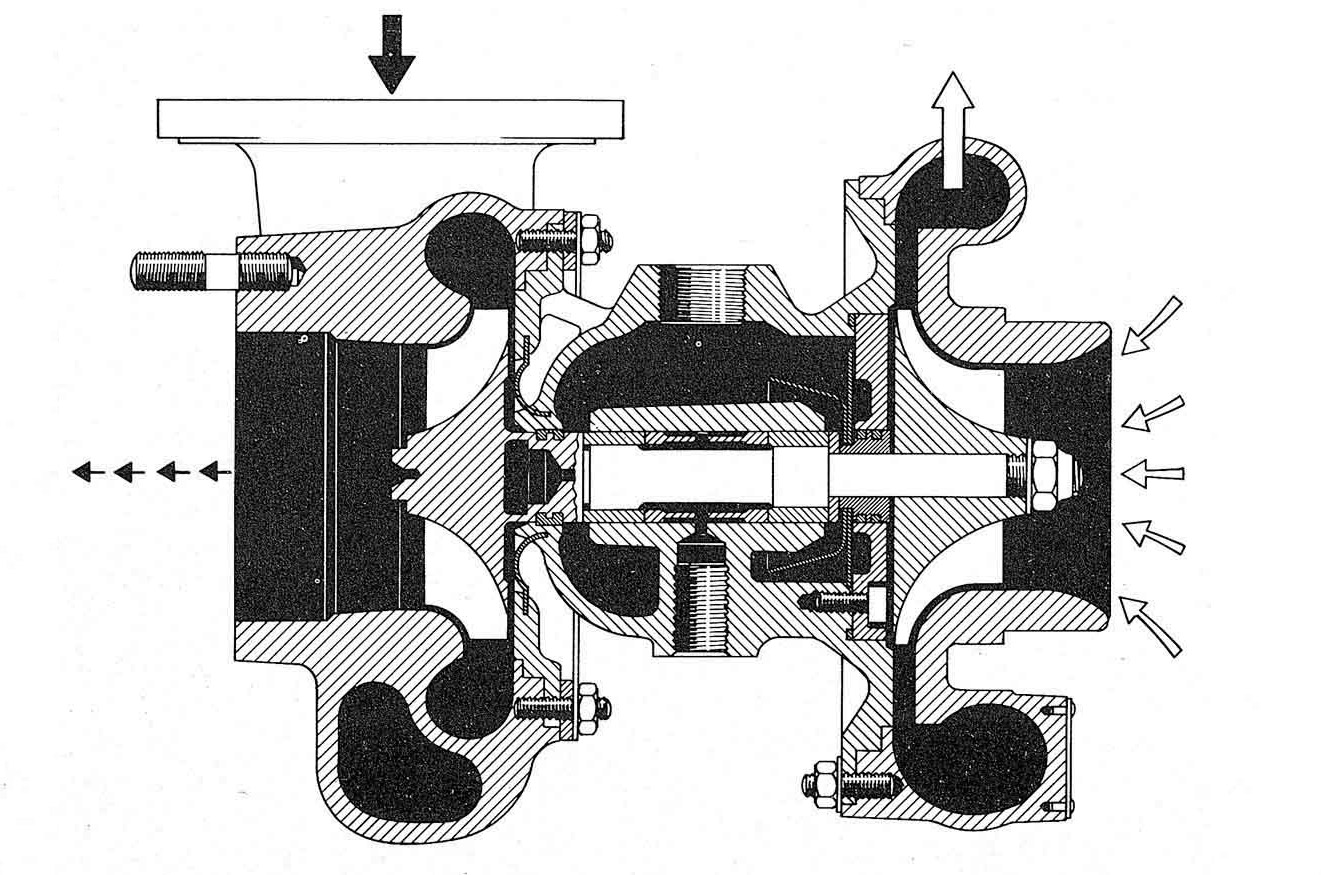
This diagram of a BMW 2002’s turbo reveals the concept’s relative simplicity – exhaust gases enter from the top left and spin the turbine, which shares a shaft with a compressor that draws in fresh air from the right
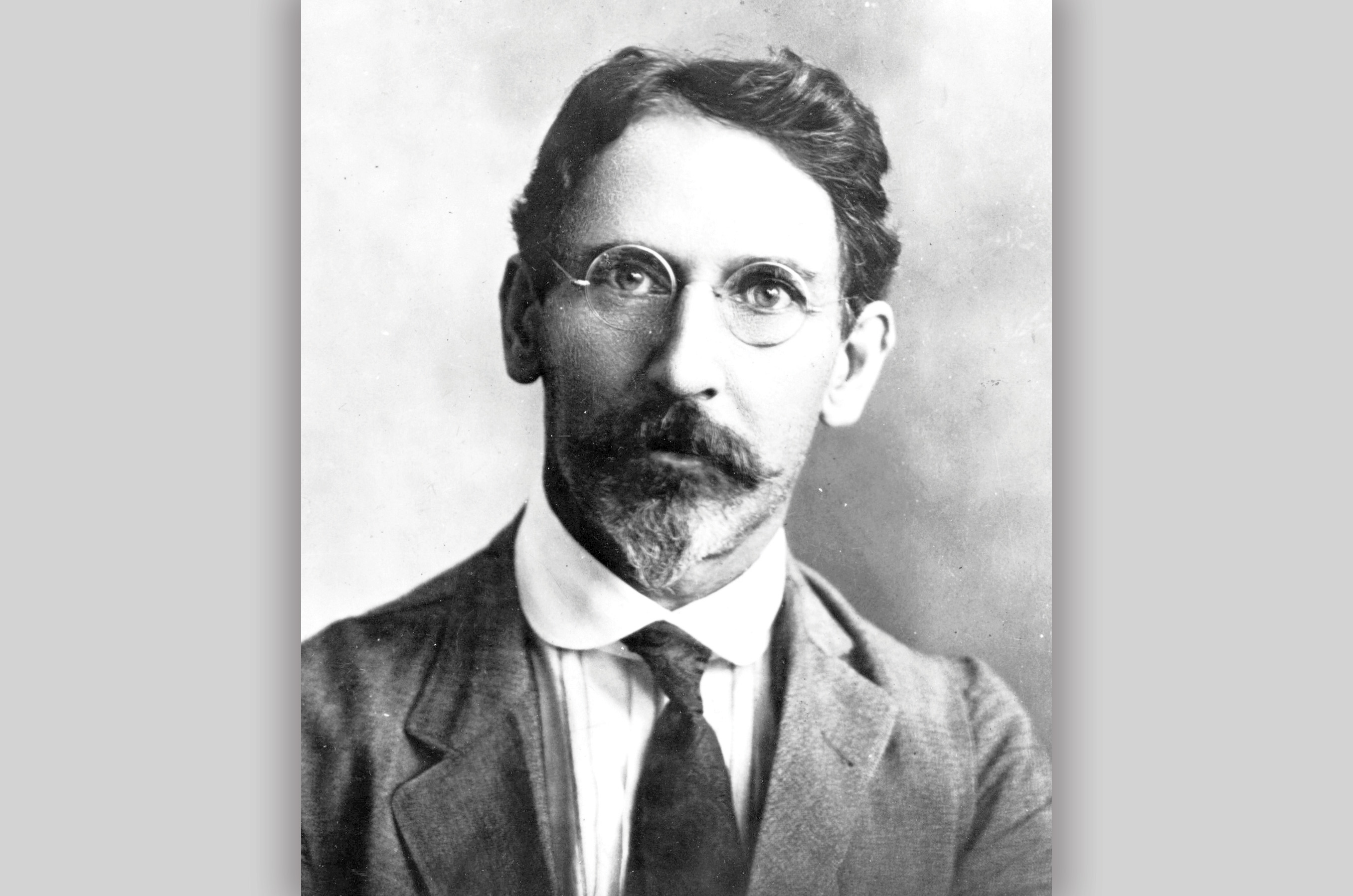
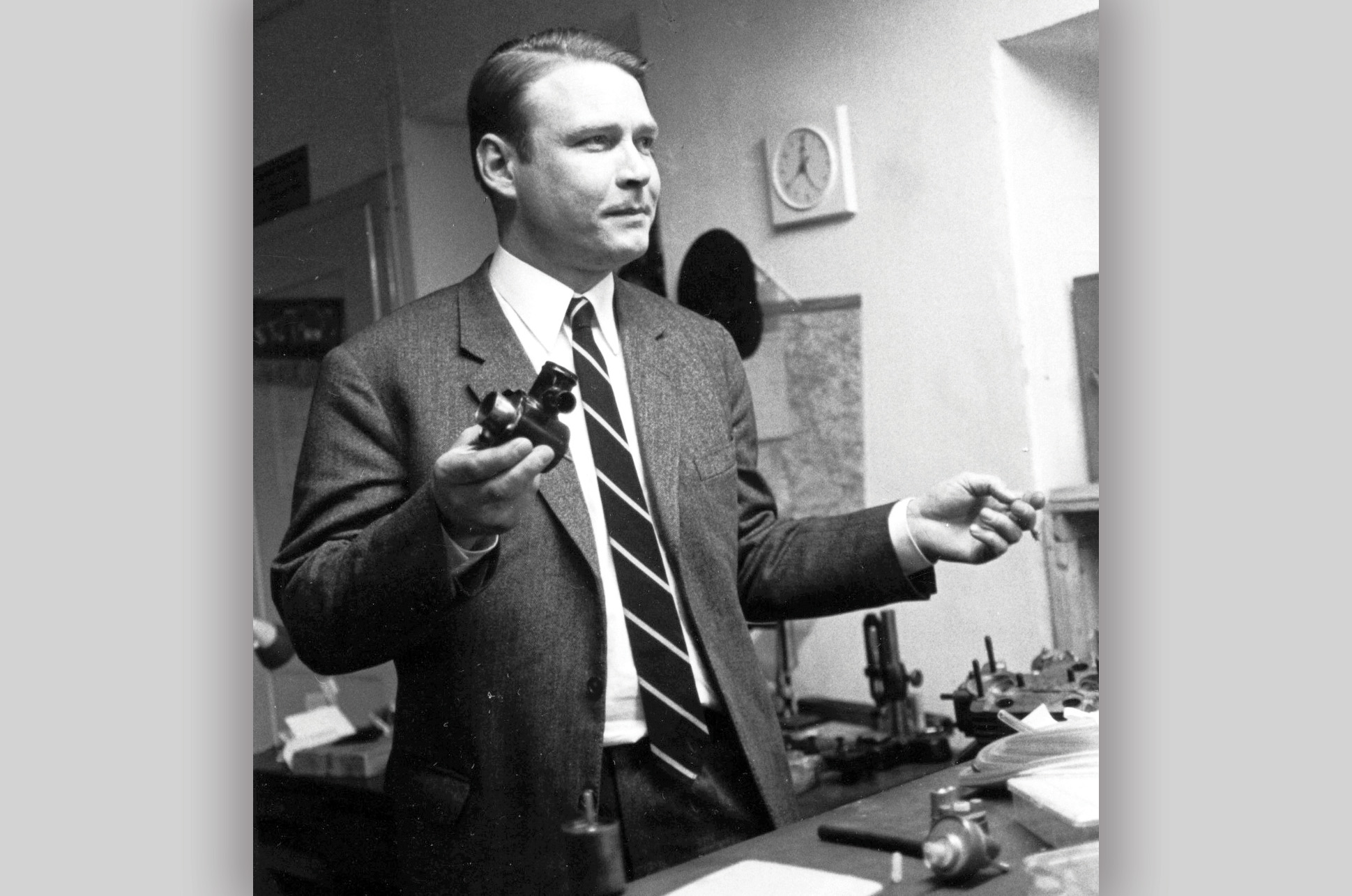
But Europe saw things differently, and its bellwether was Michael May.
This Swiss engineer kept the flame burning for turbo-boosting of Otto cycle engines at a time when car makers and their suppliers – struggling with emissions issues – were otherwise preoccupied.
May went in his own direction by designing kits for installation in Ford V6s by dealers, and he sold some 500 of them.
Then, in 1968, he responded to a call for help from BMW that resulted in going “from 150bhp to 320bhp in two days”.
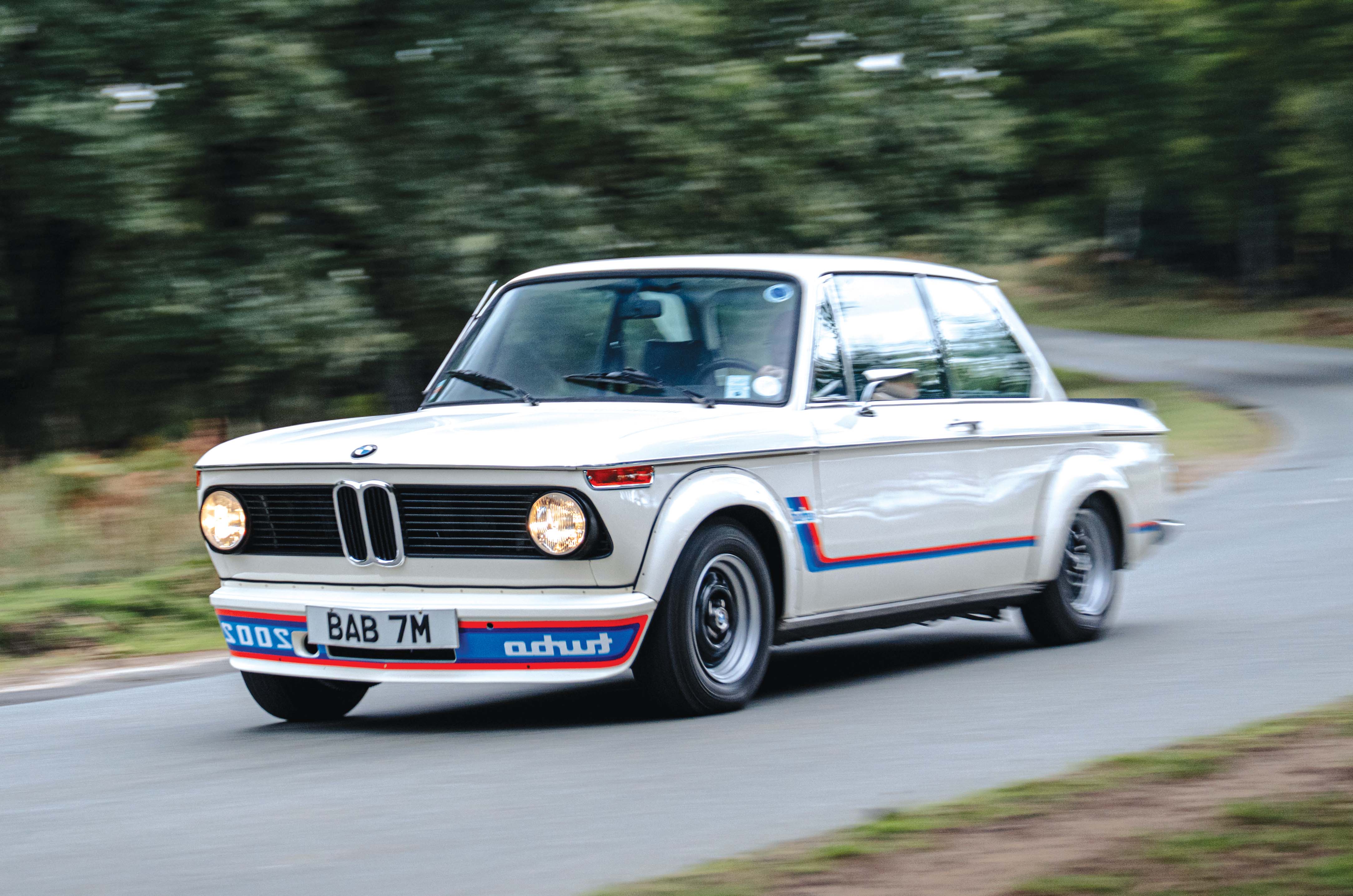
Michael May worked closely with BMW to introduce turbocharging in racing cars and on the road. The 2002 turbo’s reversed script, a Bob Lutz idea, annoyed higher-ups © Jayson Fong/Classic & Sports Car
Turbocharged BMW racers were successful, and a BMW Turbo concept car was also well appreciated.
Meanwhile, May helped others with tuning, including a formidable twin-turbocharged sports-racer for Toyota.
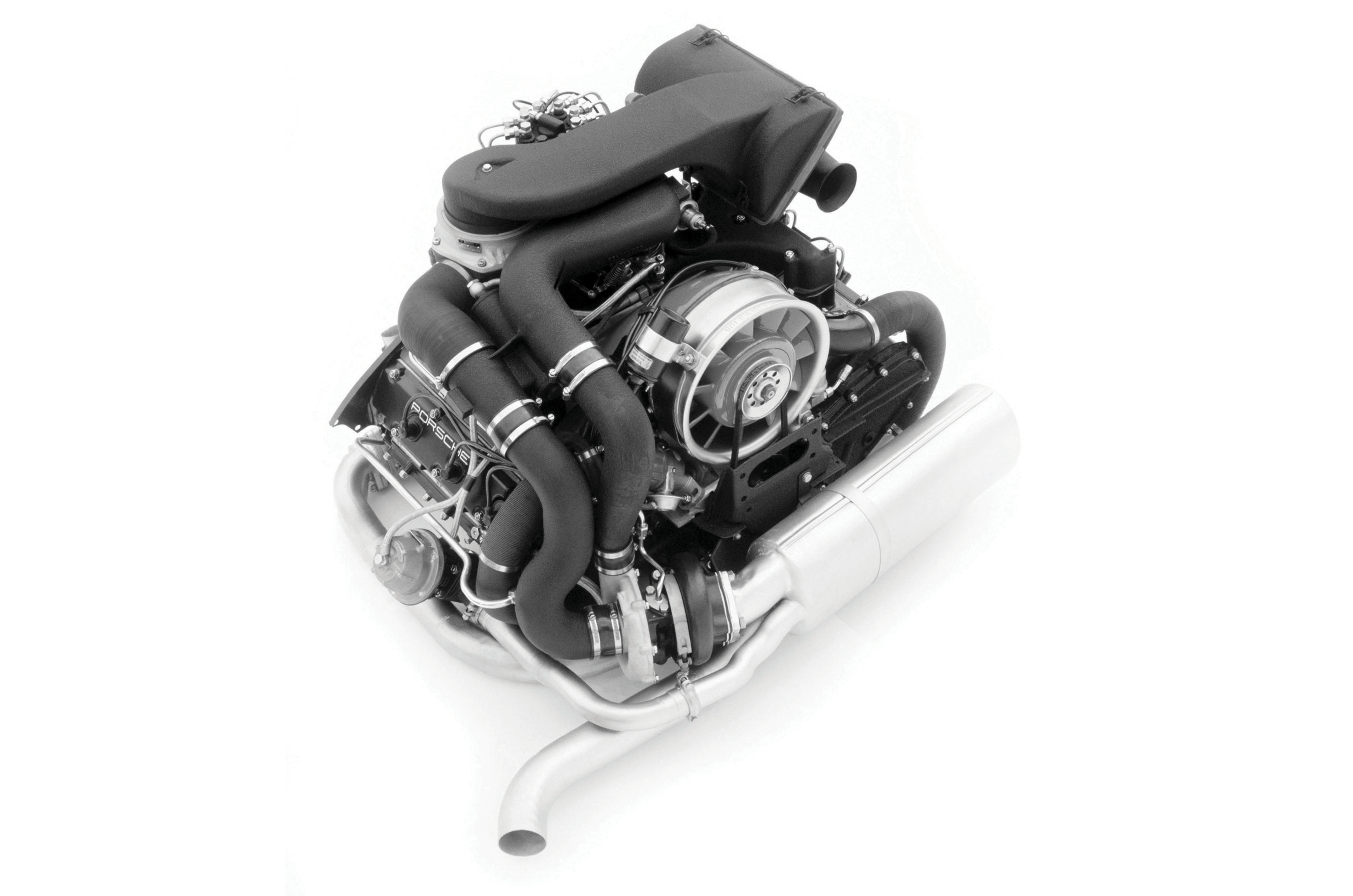
Porsche had been interested in turbocharging from the early 1970s, when the German marque swept the Can-Am Series so comprehensively that it was ruled out for the future.
Its new leader, Ernst Fuhrmann, wanted turbocharging for a possible roadgoing sports car: “I said to my people, ‘Why don’t we put this success into our cars?’
“They said, ‘Oh, this was tried already. There’s not enough room.’”
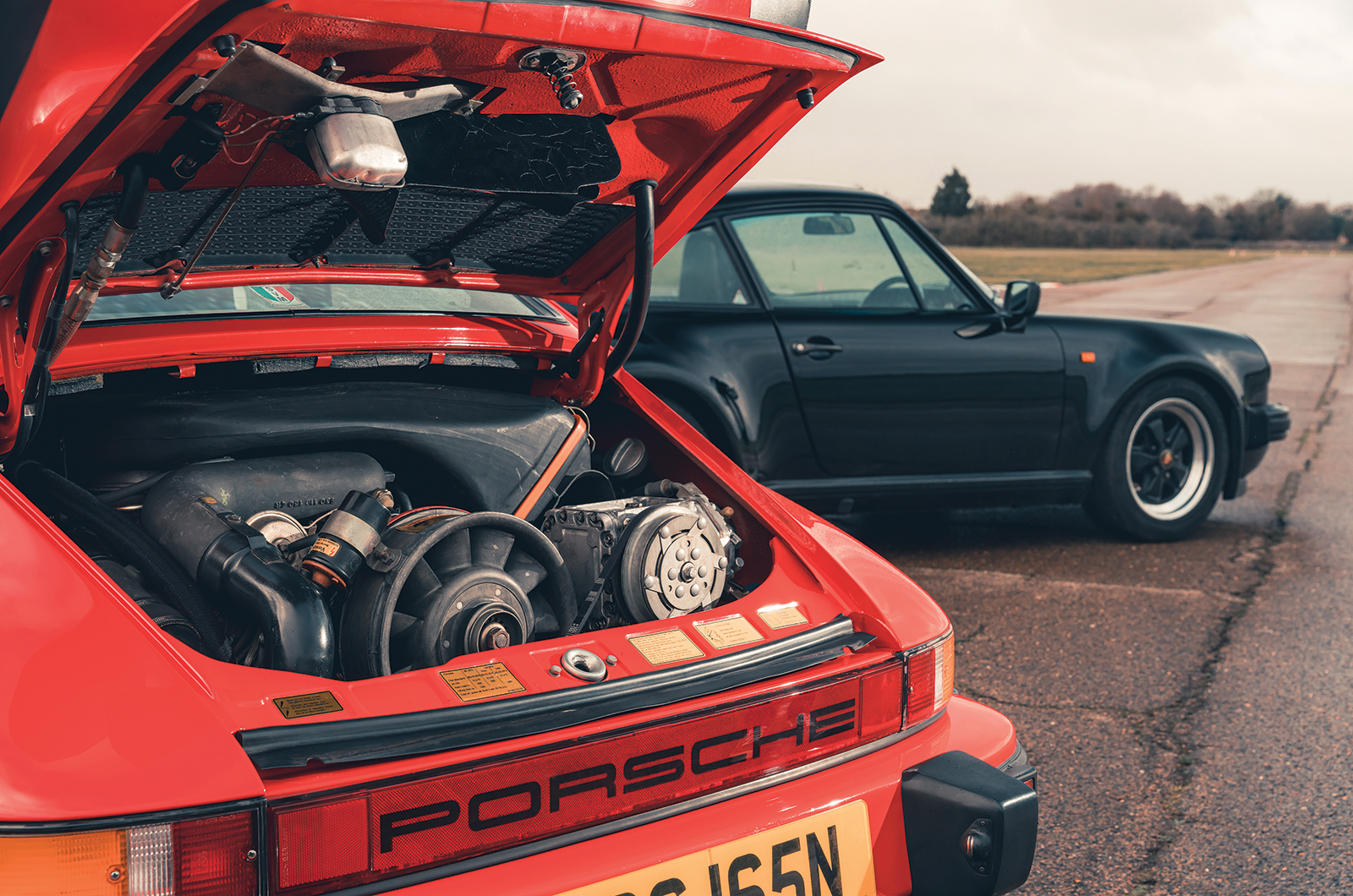
Installation of the first Porsche 911 turbo’s compressor confounded engineers who said it wouldn’t fit
“This was my contribution,” Fuhrmann recalled. “I looked in the engine bay and said, ‘There must be room!’”
This was the man who had found space in the back of a 356 for a four-cam engine with twin spark-plugs per cylinder.
Supervisory-board chairman Ferry Porsche was also convinced, not least by the economics of manufacturing: “If you have one engine in production and you want to use it in two kinds of cars, it’s the cheapest way.
“On one line you can make two kinds of engine! We also saw the turbo was good for reducing air pollution. You get high power with low noise.”
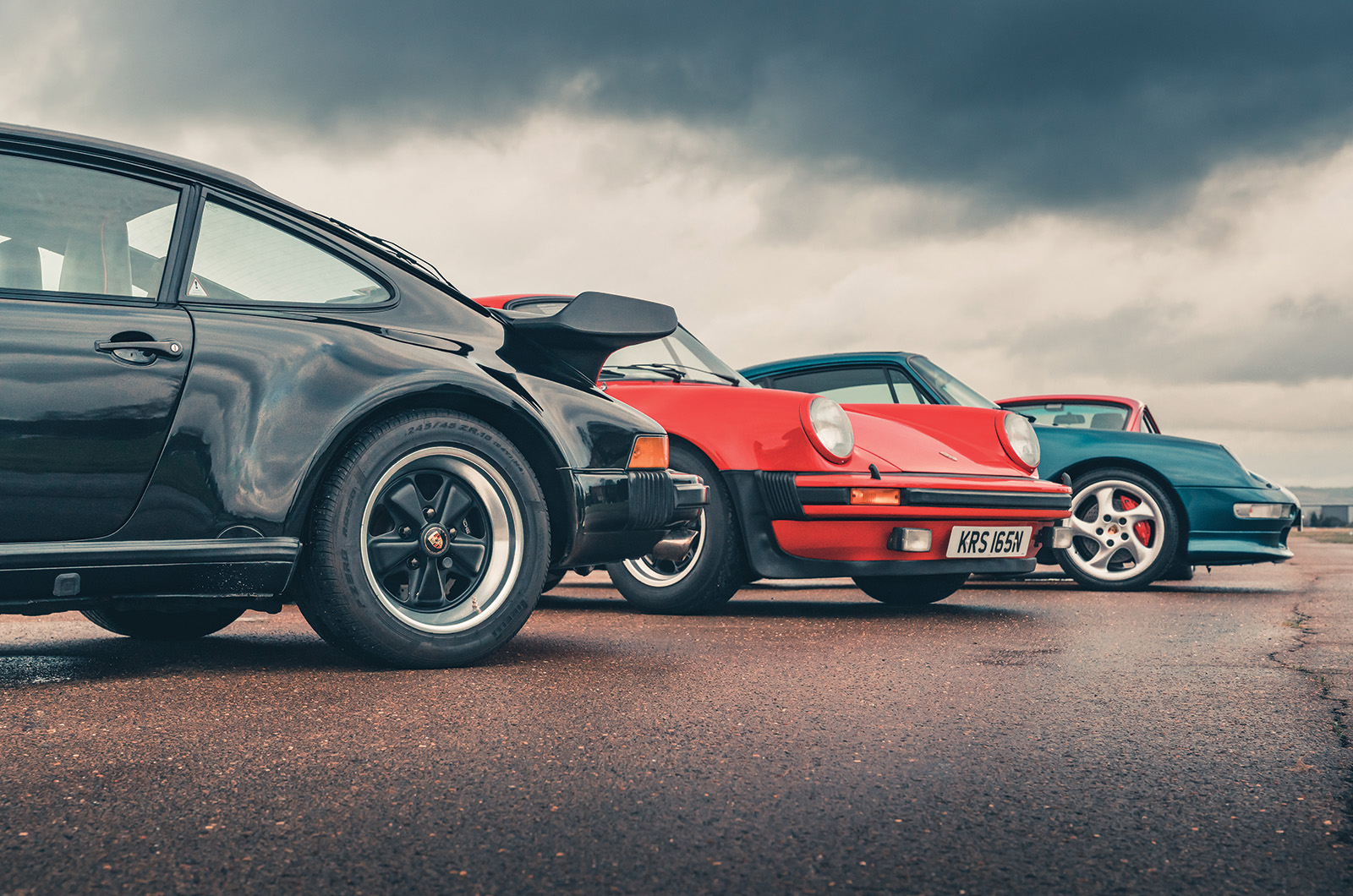
The Porsche 911 turbo still stands as a performance benchmark © Max Edleston/Classic & Sports Car
A massive blow to the programme and others like it was the OPEC oil boycott at the end of 1973 and its dislocation of the automotive world.
Suddenly, in the eyes of many, it was no longer socially acceptable to buy, drive or even build motor vehicles of high performance and fuel consumption, but this negative atmosphere didn’t halt the rise of the 911 turbo.
When the production model was introduced at the Paris Salon in October 1974, it was lacking nothing and priced accordingly.
Half a century has passed since the launch of the 911 turbo, and a like-minded descendant is still available from Porsche.
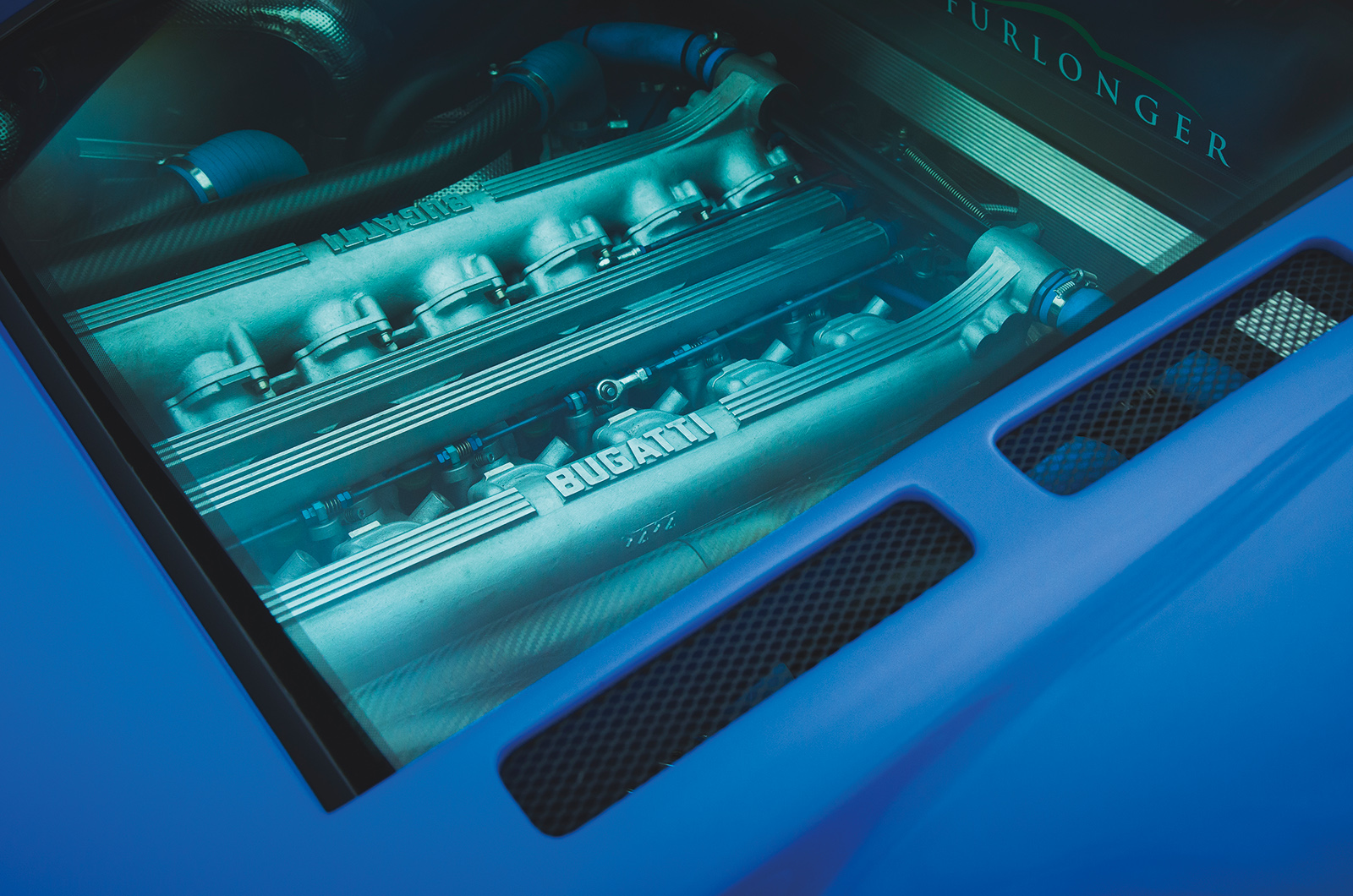
Four turbochargers help the Bugatti EB110 Supersport’s V12 take the car to 218mph © Luc Lacey/Classic & Sports Car
In the meantime, producers of turbochargers have changed hands many times and new technologies have been implemented.
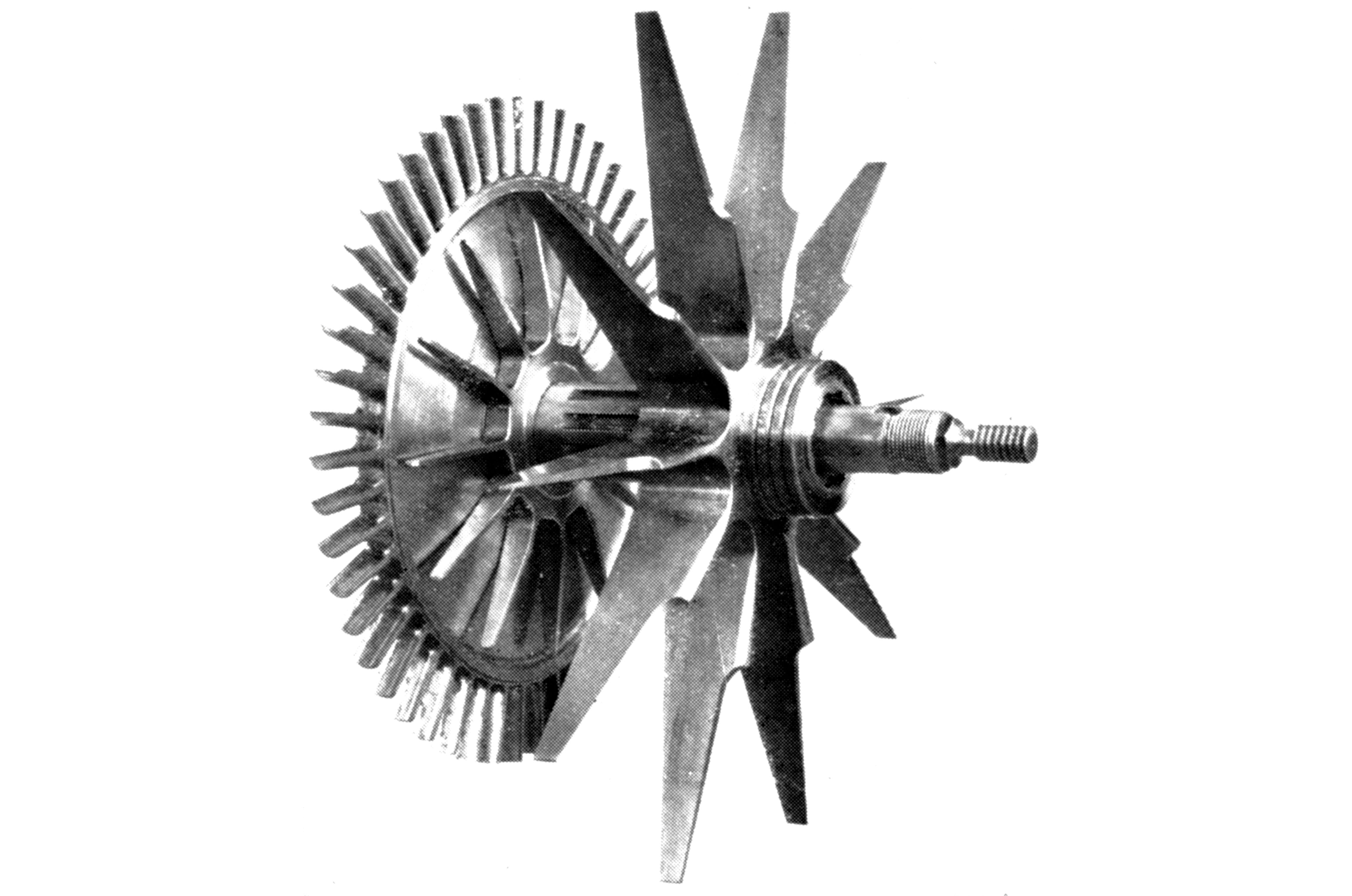
First to come forward was a system that could vary the angles of the blades at the fresh-air inlets of turbos in order to affect their operation favourably; far tougher was the creation of variable vanes for the turbo’s hot side, but this, too, was eventually achieved – and by Chrysler, of all brands.
Some turbocharged cars have made history.
Audi’s quattro was a five-cylinder rally legend; the Lotus Carlton set a high-speed benchmark at 169mph; the menacingly black GMC Syclone pick-up hit 60mph in 5.3 secs; Toyota’s Supra Turbo had ‘Two-Way Twin Turbo’ technology; the Supra-rivalling Nissan Skyline GT-R’s RB26-DETT ‘six’ set standards for ruggedness; and Romano Artioli revived dormant Bugatti with the EB110’s quad turbos and the stupendous engineering of Paolo Stanzani.
Today, the use of turbochargers is almost universal: what would we do without them?
Images: Karl Ludvigsen
Karl Ludvigsen’s three-volume masterwork on forced induction, Power Unleashed, is published by Evro and priced at £395; ISBN 9781910505373. Click here to find out more.
Enjoy more of the world’s best classic car content every month when you subscribe to C&SC – get our latest deals here
READ MORE
Maserati Biturbos: two’s a party
BMW 2002 turbo, E30 M3, Z3 M Coupé and 1M: small wonders
Porsche 911 turbo at 50: icons of the air-cooled era