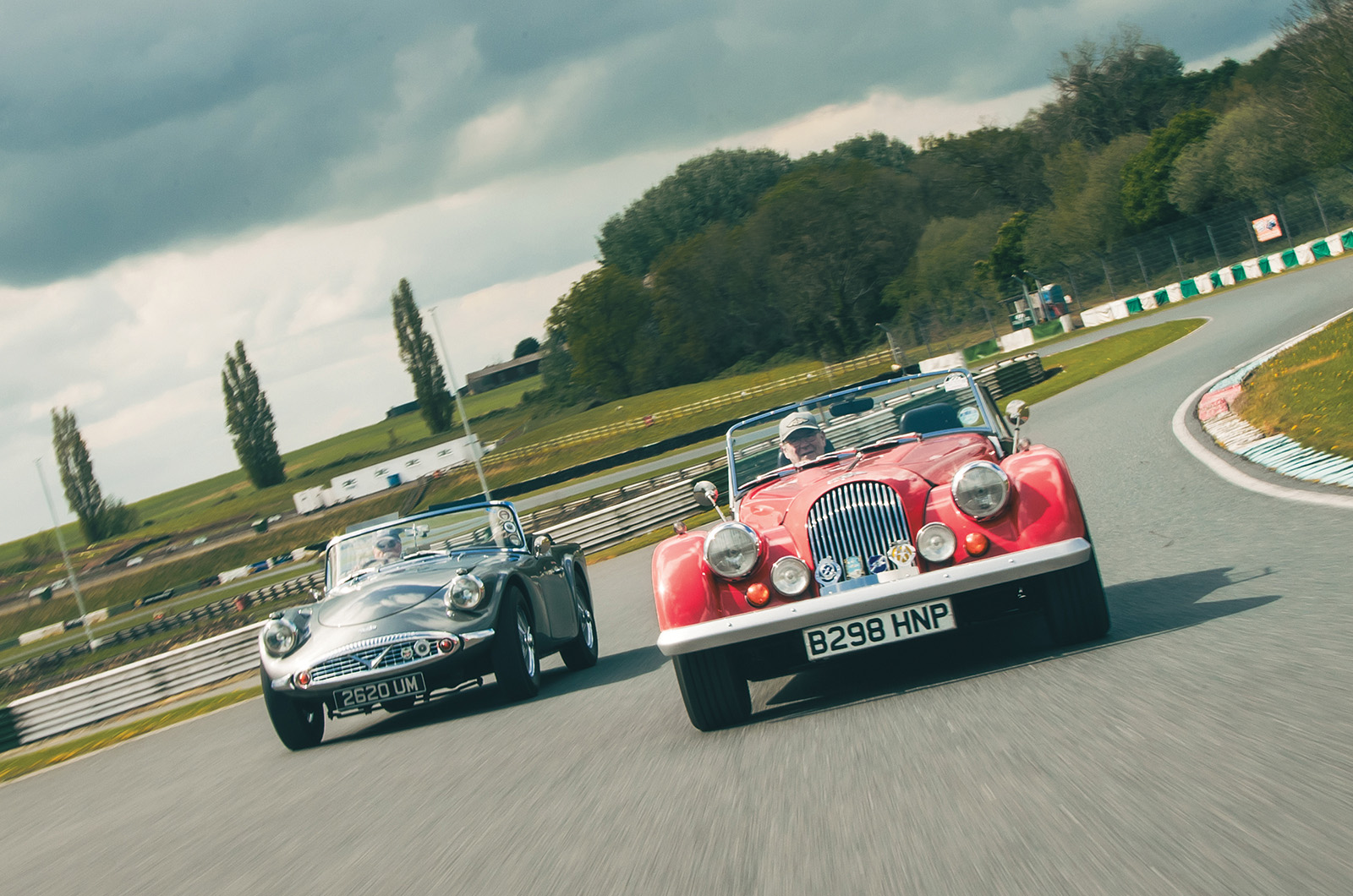
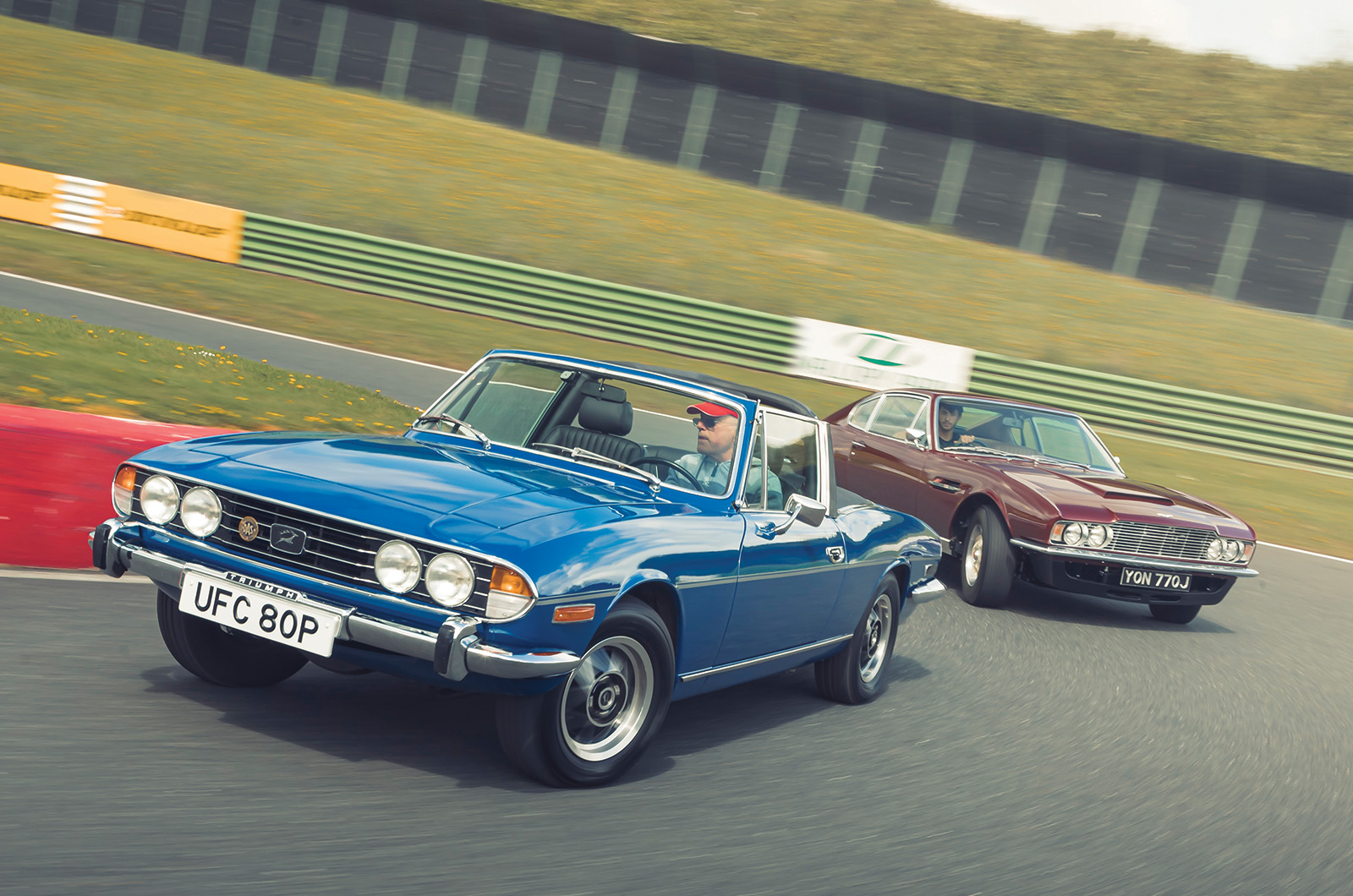
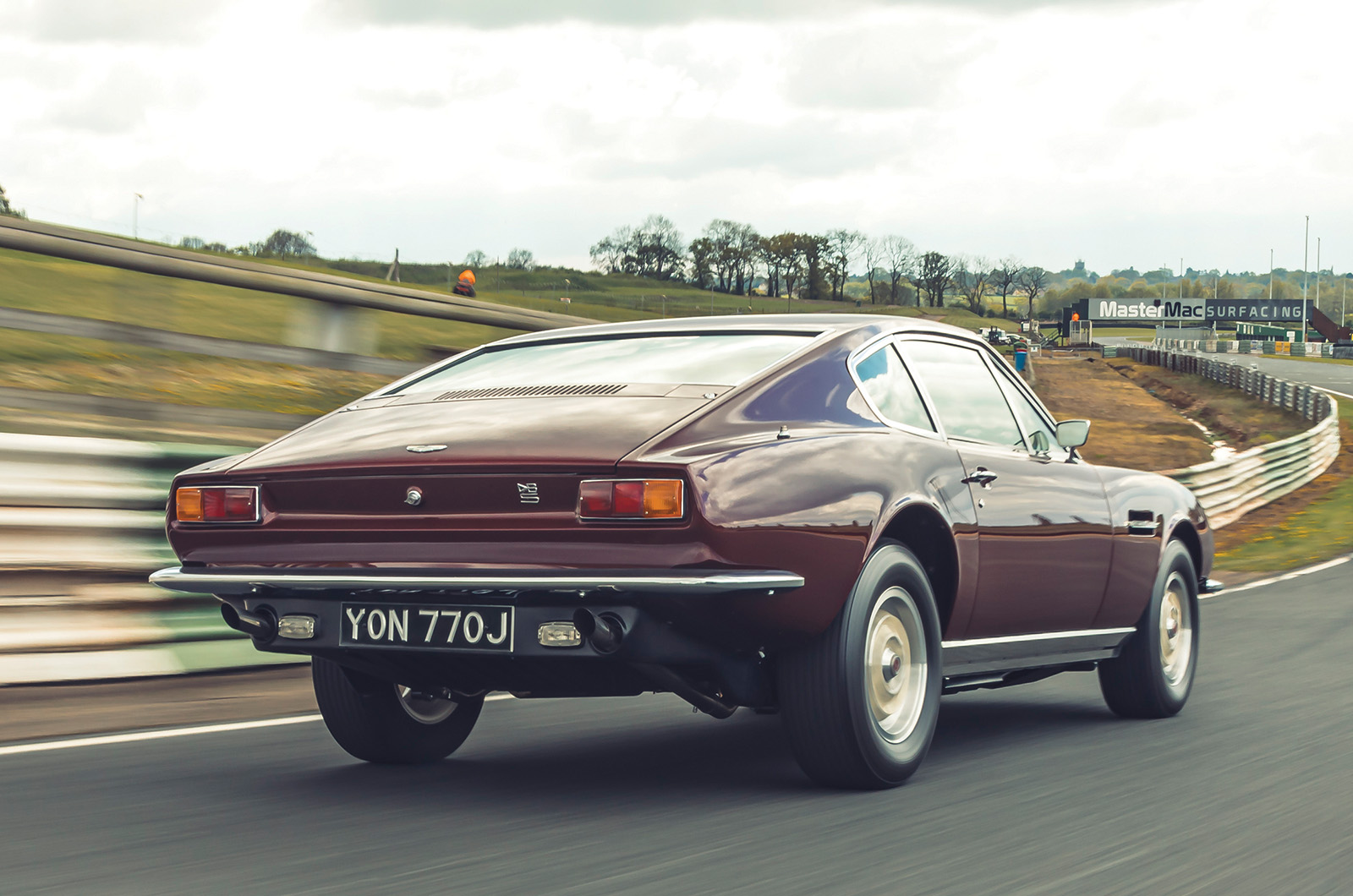
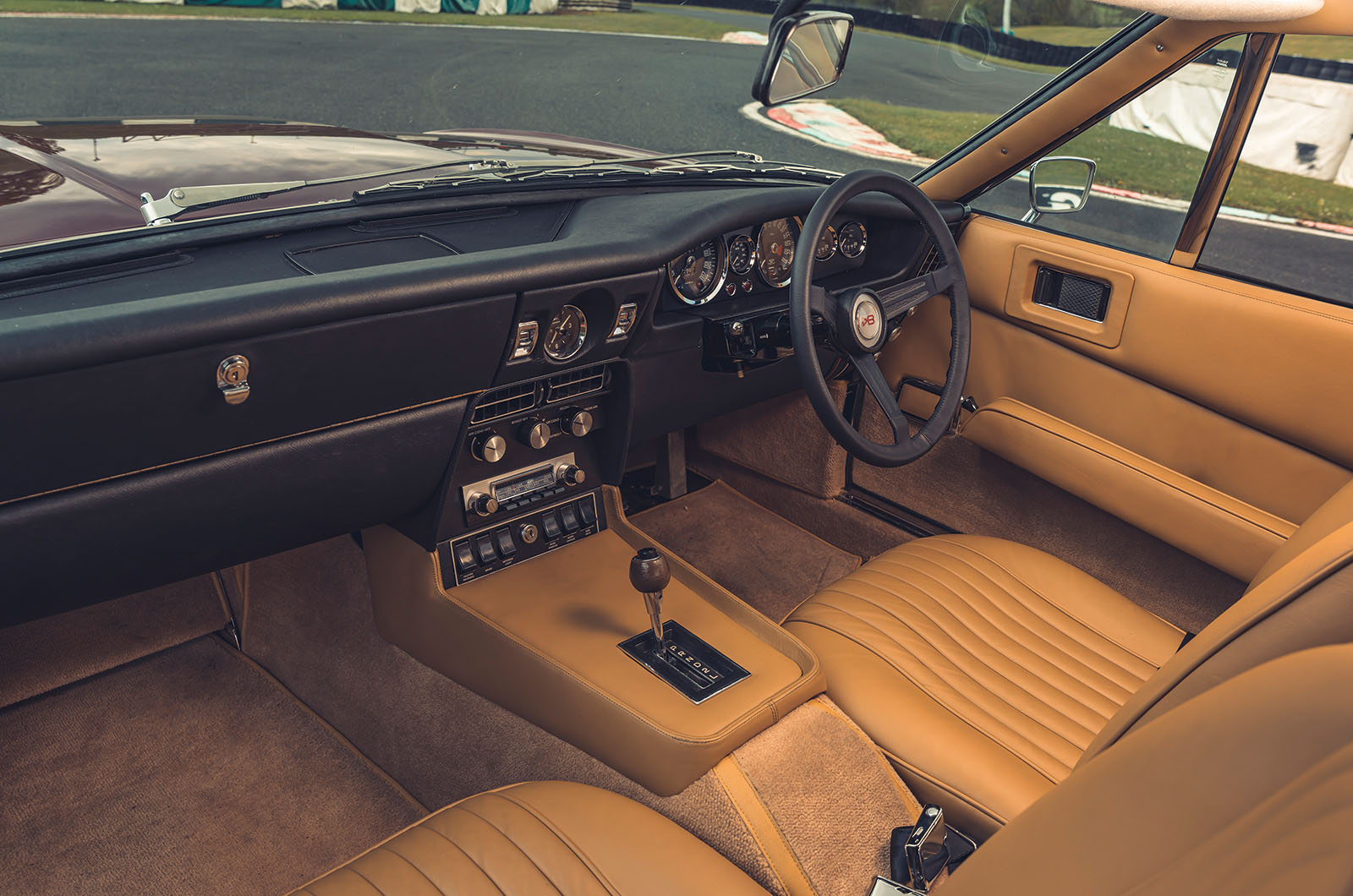
The surprisingly hefty power steering imparts a high degree of confidence in placing this gently understeering, handmade 4200lb car, and its de Dion rear digs in well on sharp corners while sorting out the worst of the bumps through fast, long ones.
Particularly when finished in this handsome Dubonnet Rosso hue, these quad-headlight V8s are, for me, the last of the truly good-looking Astons, even if they aren’t the most dependable.
With Weber carbs, reliability was restored at the cost of a little (but undisclosed) power.
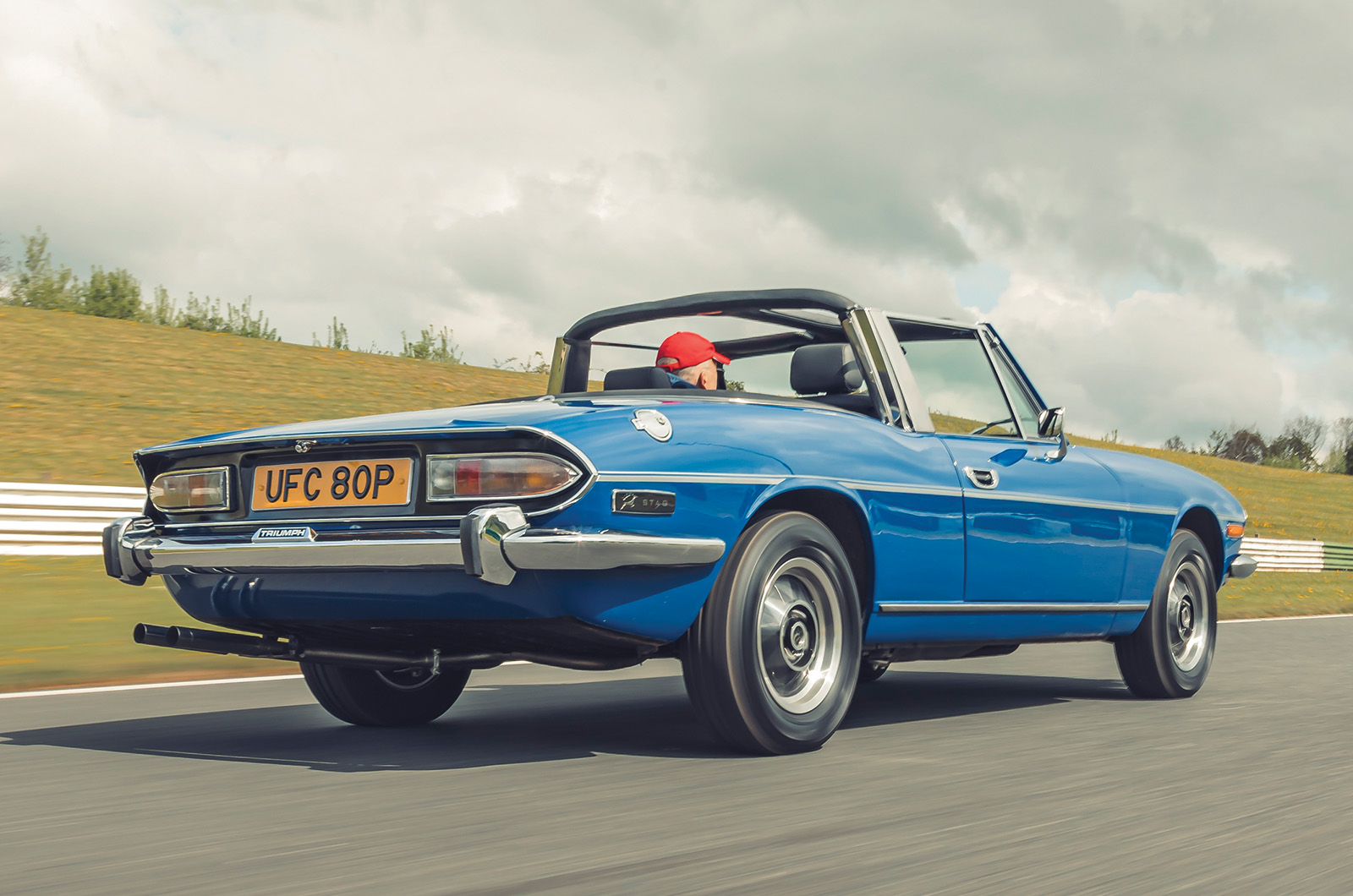
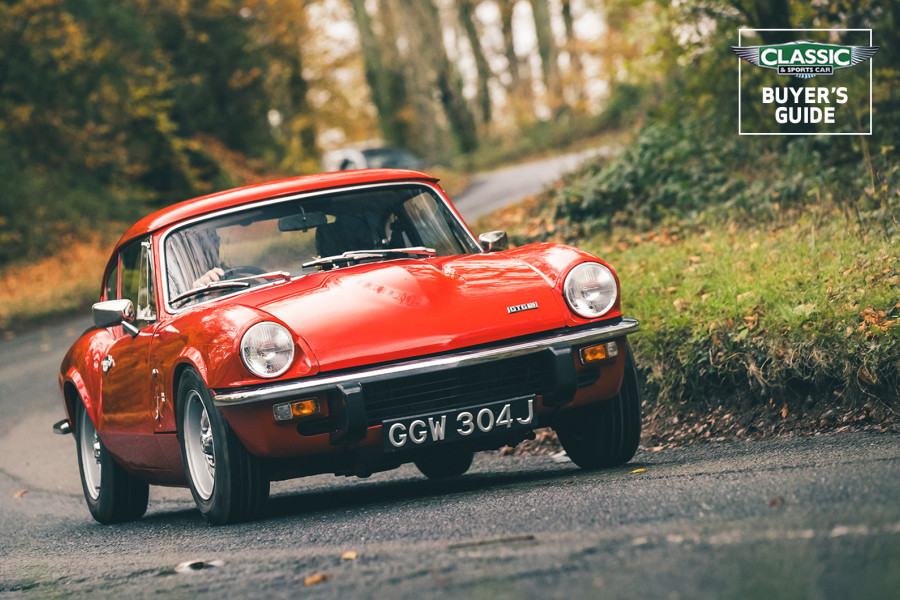
The Triumph Stag’s problems were profound and showed how buyers of cheaper cars are generally less tolerant than those who invest in exotica.
The tragedy of this car – better as a classic than it was a contemporary vehicle – is that it was a cleverly conceived and attractively packaged concept that should have cleaned up against overpriced German rivals.
In 1970, when the European motor industry was second-guessing US legislators on the future of convertibles, the Stag appeared to be a brave project.
But it was viewed as a move upmarket that would do no harm, either to Triumph’s image or its profit margins.
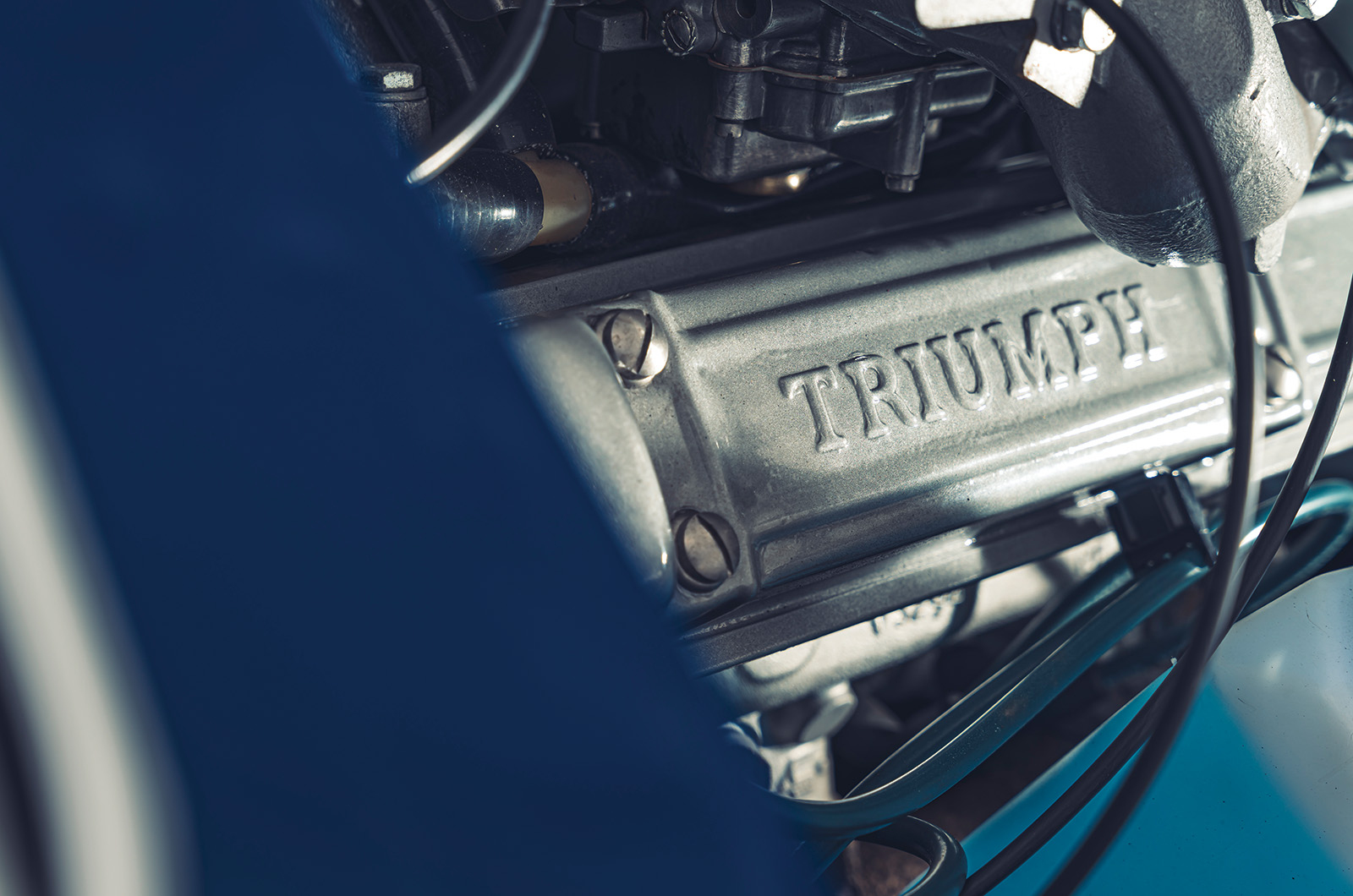
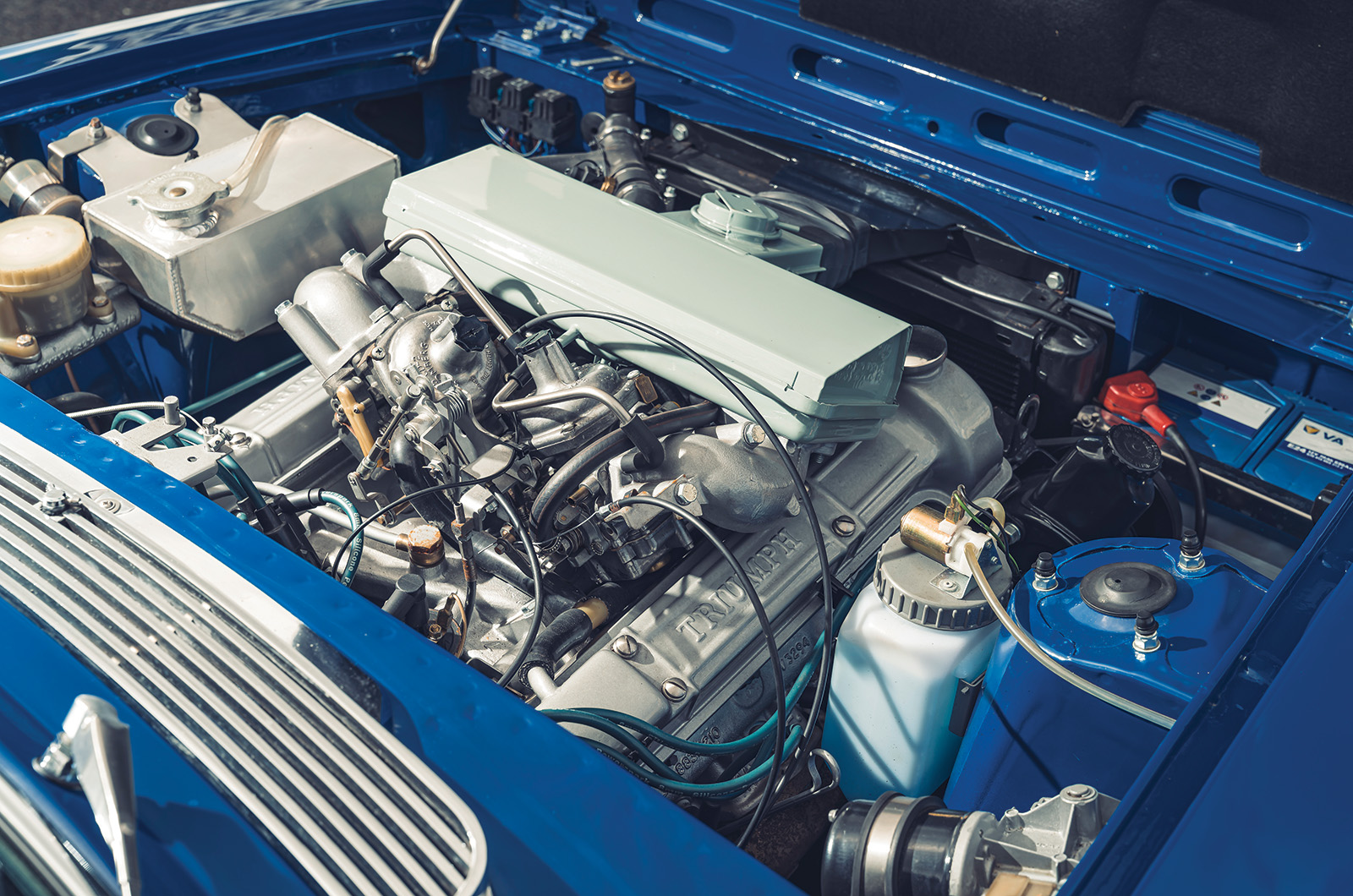
The Triumph Stag’s under-stressed V8 makes 145bhp
The T-bar roof was a clever and elegantly resolved way around the threatened new regulations.
Some 50 years ago, the Triumph didn’t have a rival in sight if you wanted a £2k, V8-powered open four-seater: the two-seater Mercedes-Benz 280SL that inspired it was well over twice the money.
The Giovanni Michelotti-styled Stag was conceived in the mid-’60s and sold to the tune of 26,000 cars through to 1977.
But it was underdeveloped mechanically, and a victim of boardroom infighting and the associated distractions of the freshly formed British Leyland: from promising beginnings it became a troublesome curiosity in the BL range.
Once the infamous overheating problems associated with the high-mounted, gear-driven water pump became common knowledge it was doomed, particularly in the US market for which it was intended.
Most Stags stayed in the UK, where today it has one of the highest survival rates of any British classic.
The concept began as a reskinned, shortened 2000 saloon with the same running gear and 2.5-litre injected straight-six, but its fate was sealed by a decision to go with an in-house, overhead-cam V8 that was too far down the line to stop when the Leyland merger happened.
This Swiss-market Triumph Stag was largely rot-free
The first specification was for a 2.5-litre unit with injection, but it emerged as an oversquare 3-litre on a pair of Zenith-Strombergs, giving an under-stressed 145bhp.
Triumph struggled to squeeze it into the relatively narrow body. It appears that nobody in period even tried to fit the more powerful – and far more reliable – Rover V8, but there may have been issues with supply and perhaps even marketing in the USA, given that powerplant’s Buick origins.
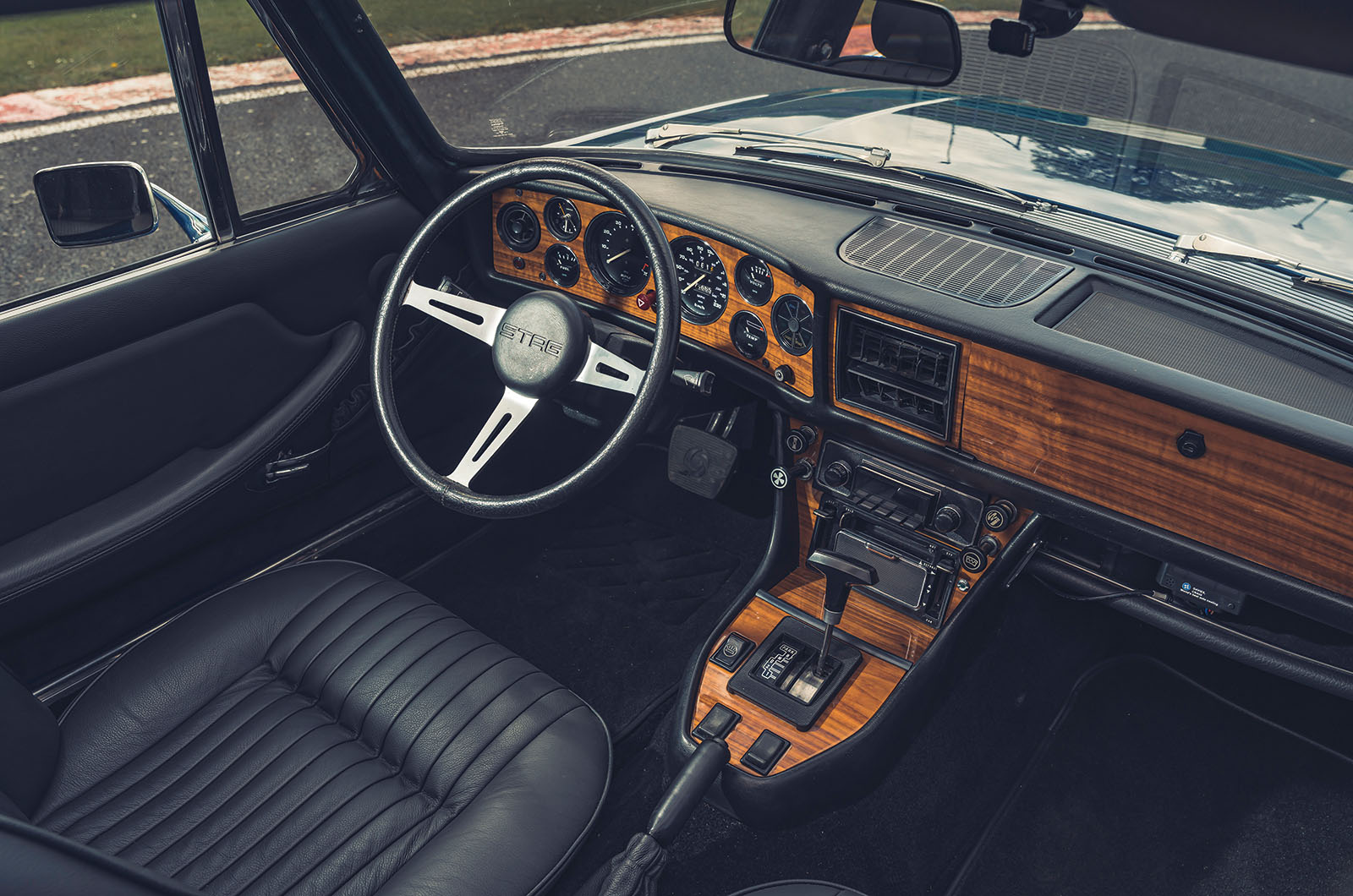
With its shallow footwells, the Stag makes you feel as if you are sitting on it rather in it.
But electric windows, an adjustable steering column and a seat-tilt mechanism were all standard, and Triumph led the way in its use of fingertip stalks and warning lights.
Like many Stags, this example (a rare left-hooker, sold new in Switzerland but recently restored in the UK) is an auto and thus a little low-geared for truly relaxed motorway cruising.
Owner Adriaan Goldberg captured it in 1983 and used the car until 1988, when a problem with the distributor took the car off the road.
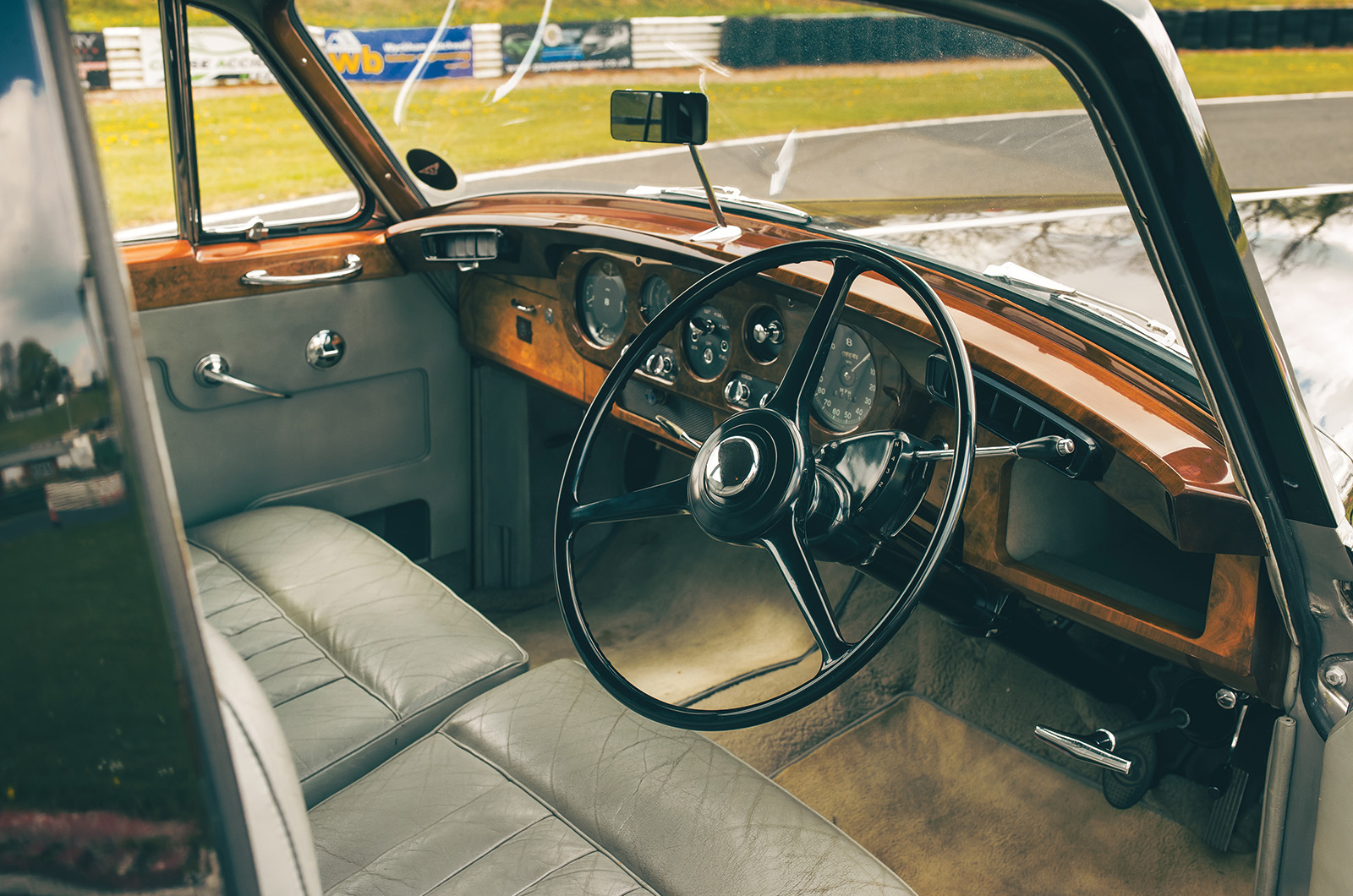
The Triumph Stag has lots of standard mod-cons (left); the Aston Martin DBS V8’s low-slung driving position
“Then I got married, had kids and ran out of money,” he says. “But three years ago I decided to get it restored.”
Under the bonnet, the V8 – essentially two Dolomite slant-fours on a common crank – is neatly presented and sounds distinctively fruity.
Having been fully rustproofed upon entering Switzerland, it turned out to be one of the least-crusty Stags specialist EJ Ward Motor Engineers – which restored it – had ever seen.
Crisp mid-range kickdown gives it a lively edge, and the feel-good burble is unmistakable. It sounds faster than it is, but the Stag’s general demeanour is well suited to its light steering.
There isn’t much feel or feedback, and while this isn’t a car that inspires you to find its limits, they are higher than you might imagine and the Stag handles neatly if driven in the brisk but relaxed manner its maker intended.
Had the Stag been reliable, and thus fit to be sold in sufficient numbers, then Triumph might have seen the benefits in sorting the rest of the car: the basics were very sound.
Words: Martin Buckley
Thanks to: Richards of England; Stag specialist EJ Ward Motor Engineers
Daimler Majestic Major & Bentley S2
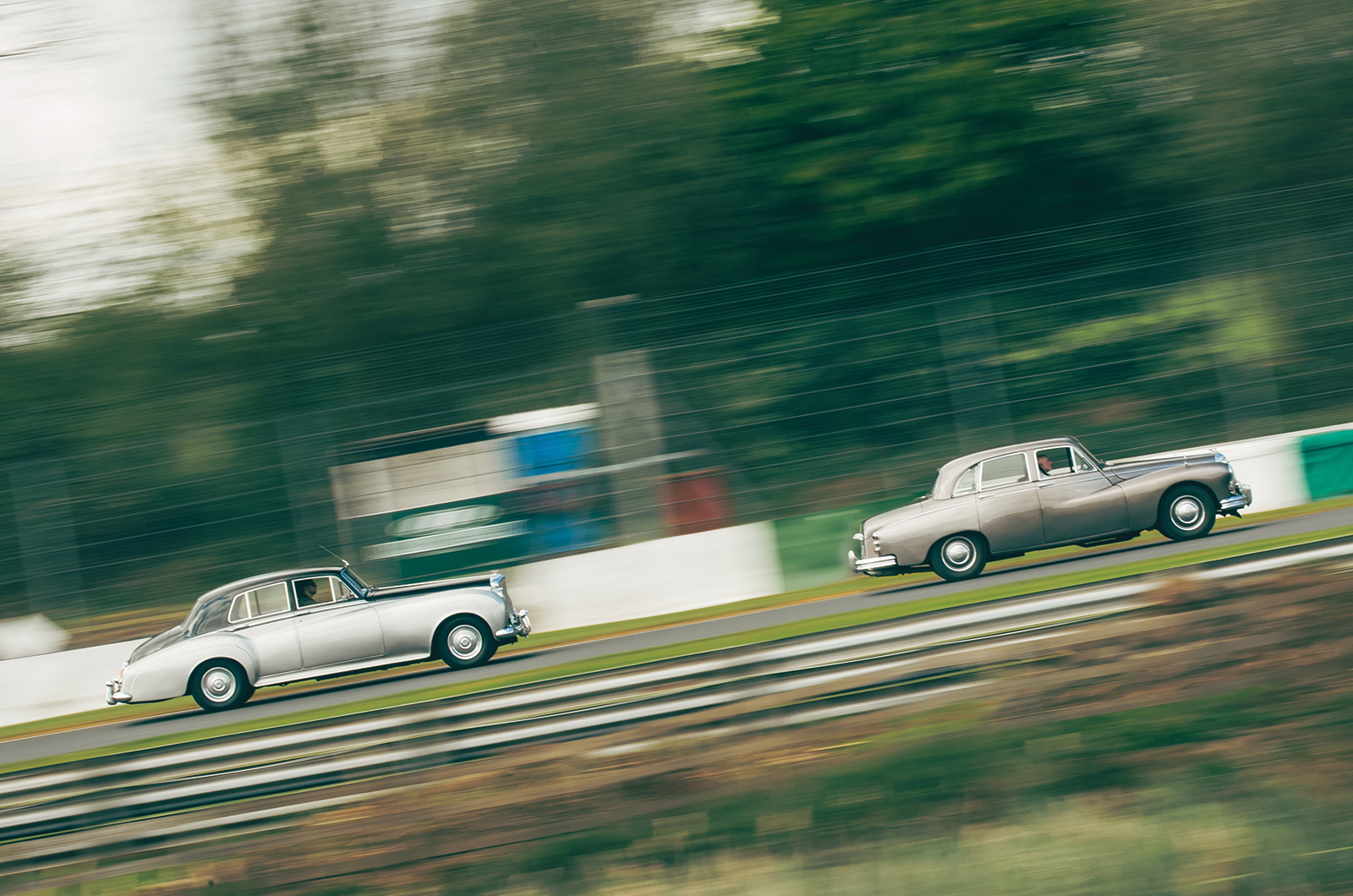
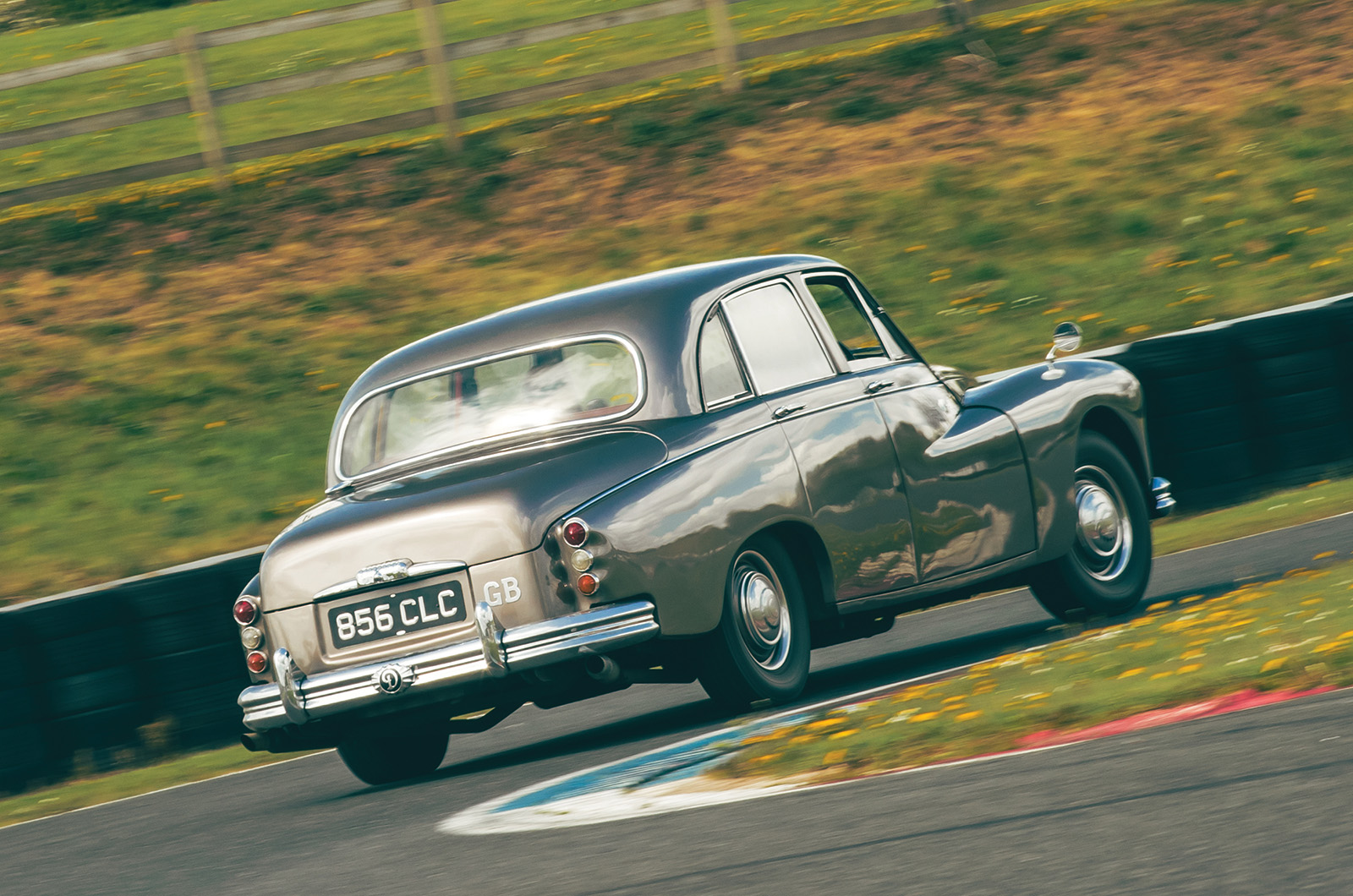
The Bentley S2 (left) and Daimler Majestic Major are big cars with big engines
Alongside the new 2.5-litre V8 fitted to the SP250, a surprise announcement at the 1959 Earls Court show was the Daimler Majestic Major.
Apart from the extended bootline and circular air vents on each side of the fluted grille, Daimler’s new ‘motorway car’ looked identical to the six-cylinder Majestic introduced a year earlier: a formal, body-on-frame five/six-seater saloon of an ilk the firm had made for decades.
The first DQ450 Majestic Majors were delivered around the time Jaguar bought Daimler in May 1960, and the model was kept until ’68.
In 19ft-long DR450 form it gave Jaguar a presence in the chauffeured limousine market. Of the 2004 built, 864 were limos.
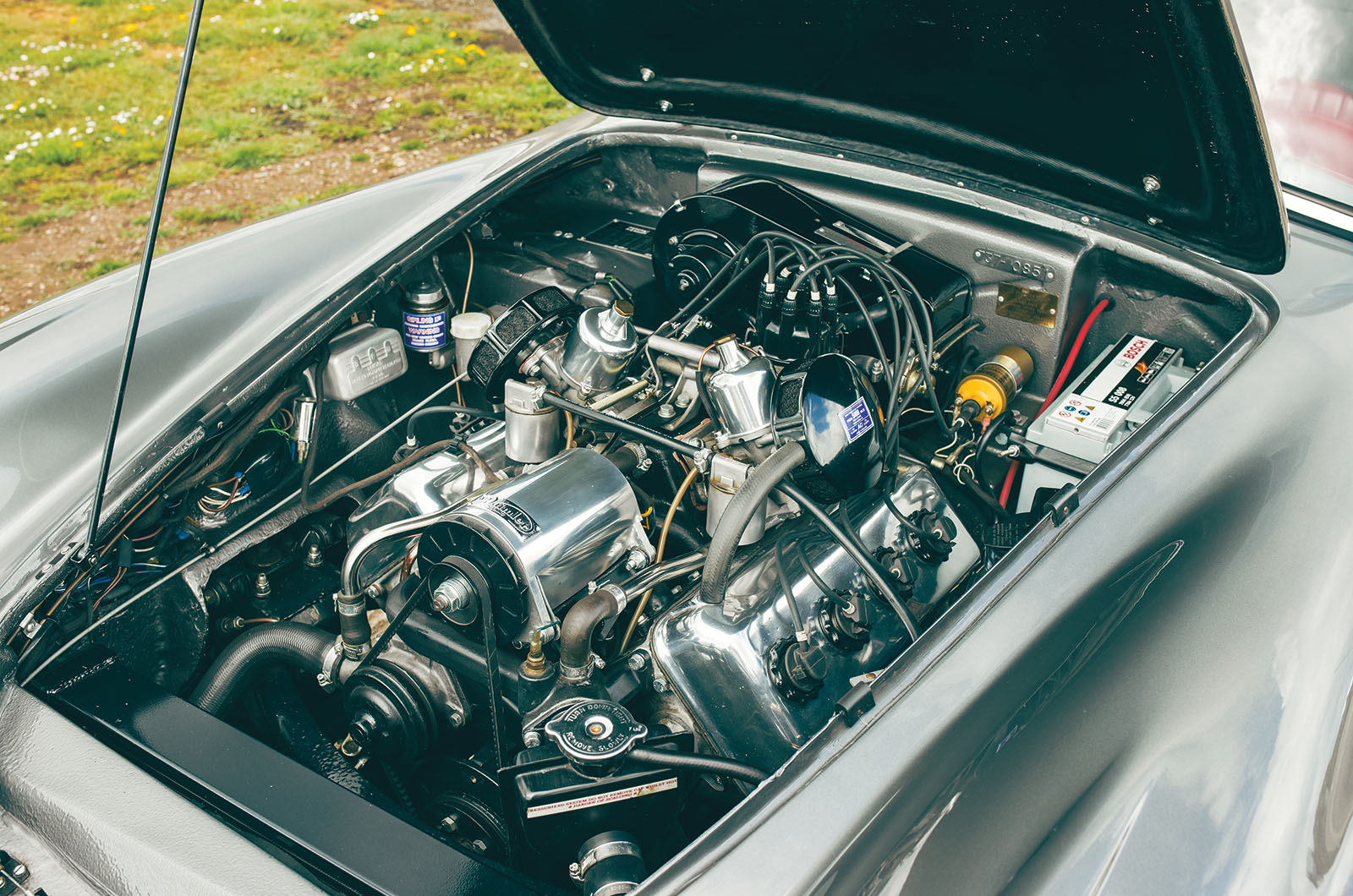
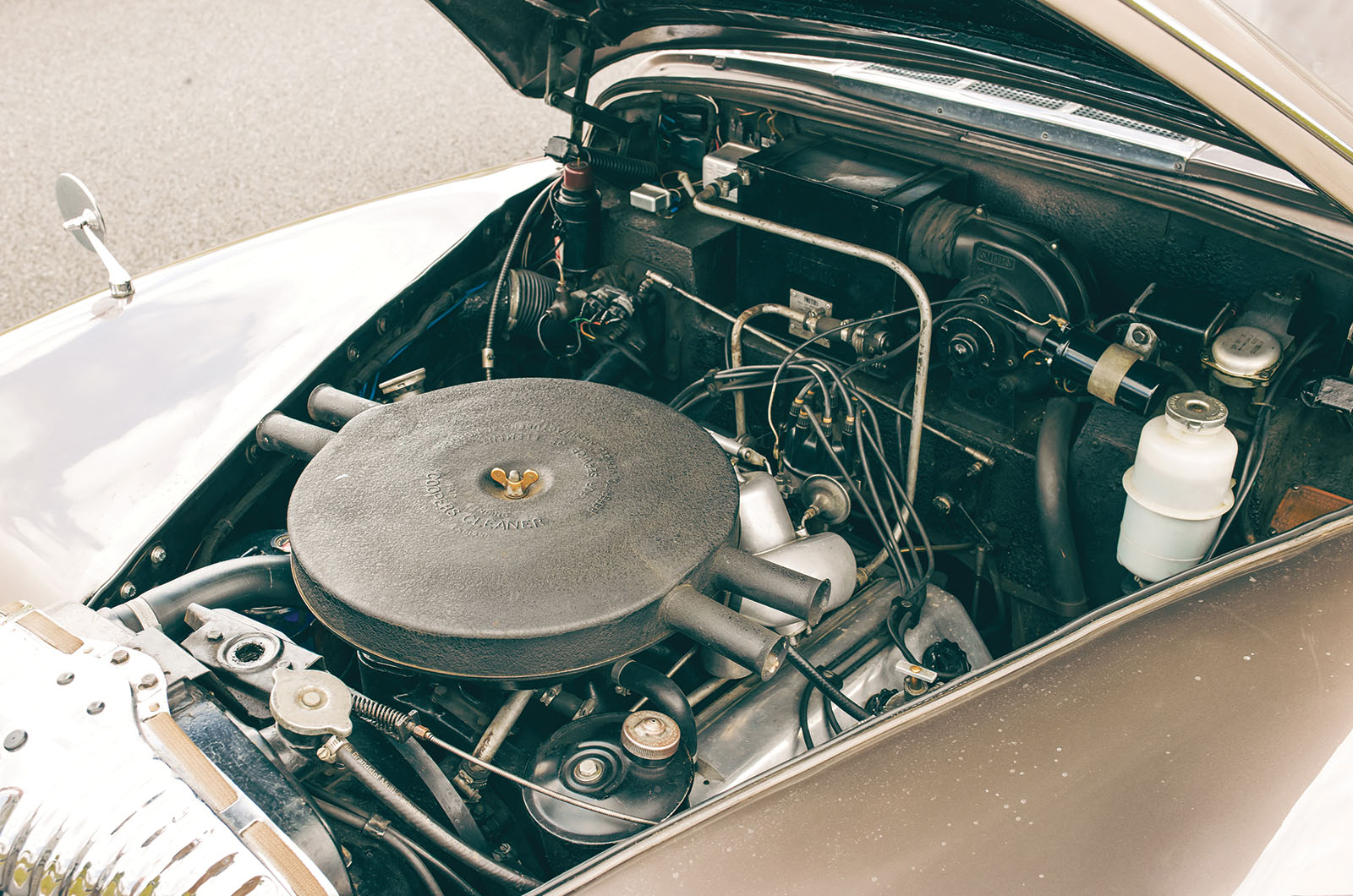
Edward Turner’s 4561cc 90° V8 was in essence a scaled-up sibling to the 2.5 in the SP250: 3in longer than the smaller unit, but 7in shorter and 29lb lighter than the old ‘six’.
The only change to the engine bay involved repositioning the steering box.
The Daimler Majestic Major makes a conservative 220bhp from its 4.5-litre V8
The cylinder heads featured centrally positioned spark plugs and so-called ‘segmental spherical’ combustion chambers, while the 8:1 compression ratio was fairly modest.
Yet the quoted 220bhp showed that, despite a conservative state of tune, this high-revving, short-stroke V8, with five generous main bearings, had urge in hand throughout its rev range, right up to its 6000rpm redline.
Even with its Borg-Warner DG auto ’box, the Majestic Major was among the fastest full four-seaters available – the big Jags couldn’t match its 0-60mph in 9.7 secs or 123mph top speed until the 4.2-litre engine was introduced.
The idea of a Daimler version of the MkX was contemplated, but likely dismissed because the 4.5-litre V8 wasn’t set up for volume production.
“The DG ’box was a weak link,” says Daimler owner Peter Bristow. “It was on the limit of its abilities with this engine – it should have had the General Motors Hydramatic.”
This DG has been rebuilt by guru Graham Whitehouse, with the change-up points tweaked to avoid the tendency to slot into top at the first opportunity.
It certainly gets off the mark smartly, with an exotic alternating burble emerging from its twin tailpipes.
The Daimler Majestic Major is a rare sight on the road today
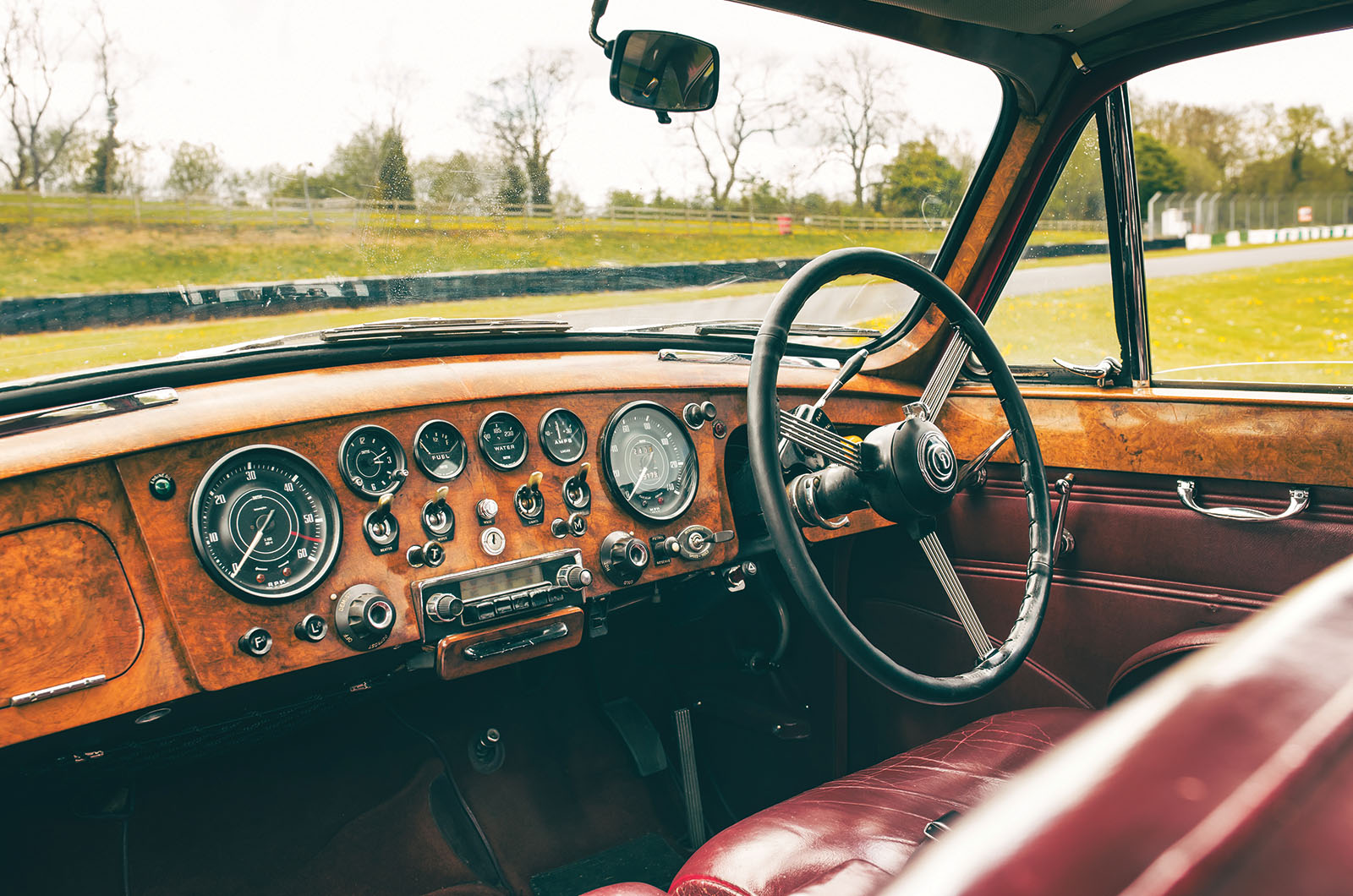
You can hang on to second with the ‘Speed Hold’ switch under the speedometer, set into an impressive walnut dash festooned with dials and flick-switches.
Your passenger is better positioned to read the rev counter, though, and this must have been among the last cars to have its directional indicator lever sited on the hub of the steering wheel.
Dunlop disc brakes all round, with Lockheed servo assistance, wipe off speed impressively, and the excellence of the Majestic Major’s roll- and understeer-free handling is almost as surprising as its straight-line performance.
If you fancy a big V8 Daimler, though, your first problem might be finding one. There are currently about 20 Majestic Majors on the road.
Peter has owned his 1964 example since ’67; it was his daily car until well into the ’70s and, having repainted it and rebuilt the engine, he reports that the only thing he has not repaired in the past 58 years is the rear axle.
Most service parts are available, but panels are not; even in the ’60s a new wing was £200, says Peter, who has done various upgrades including a heated rear window from a limo.
He adds: “I’m the second owner; the first was a builder who towed his yacht with it. It was already rusty – I gave £100 for it with a fresh MoT!”
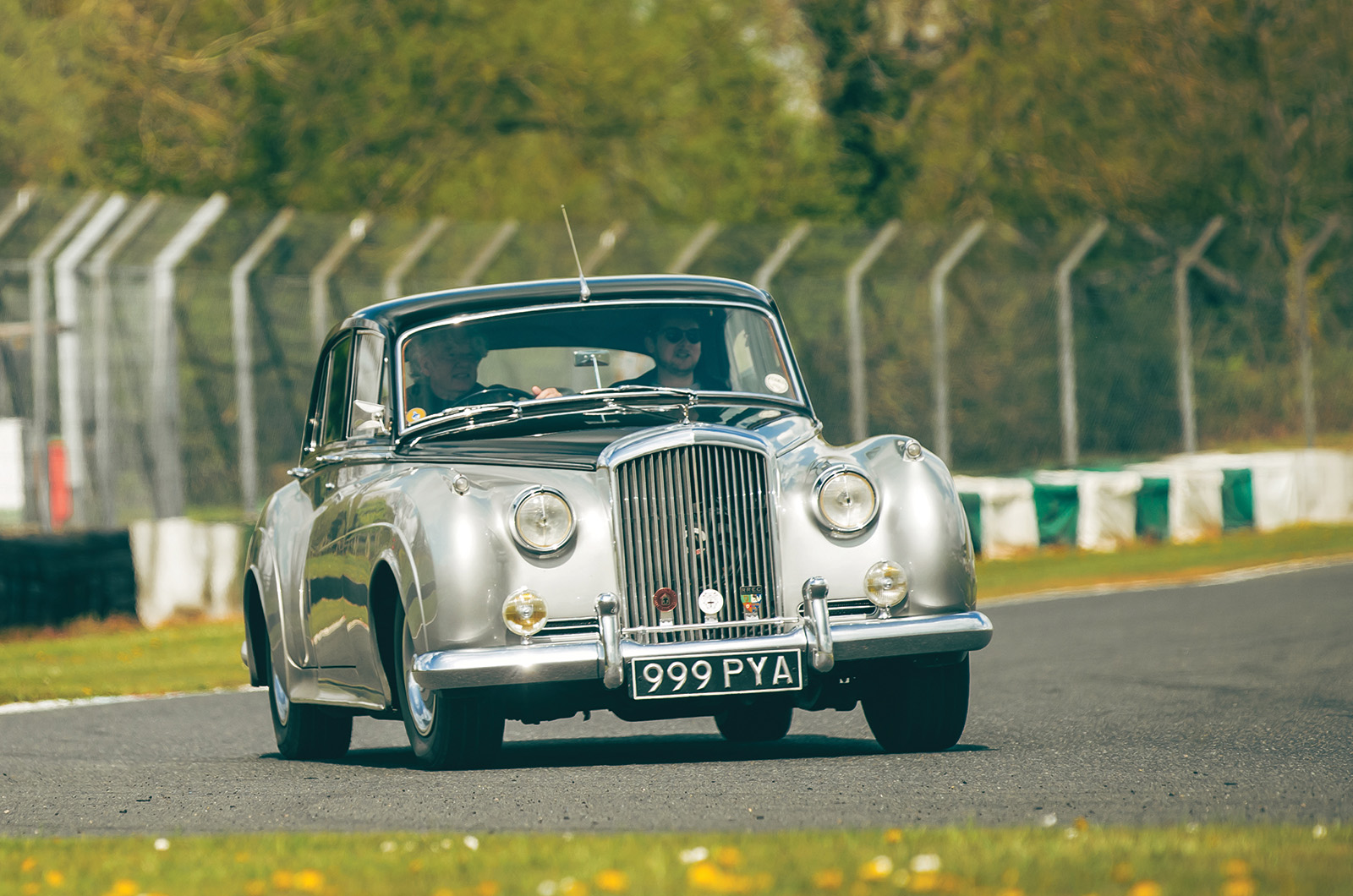
The Bentley S2 is unexpectedly agile
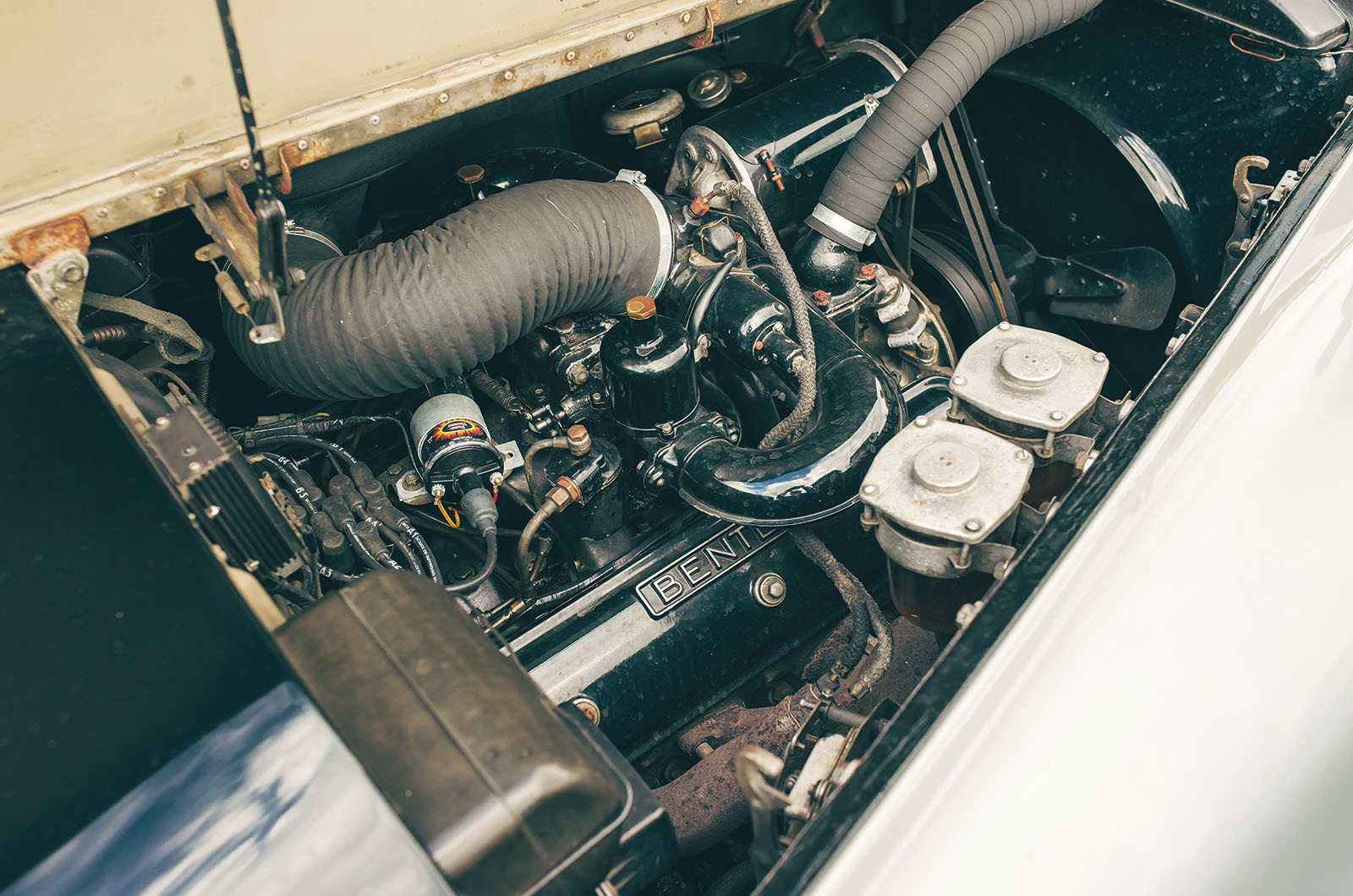
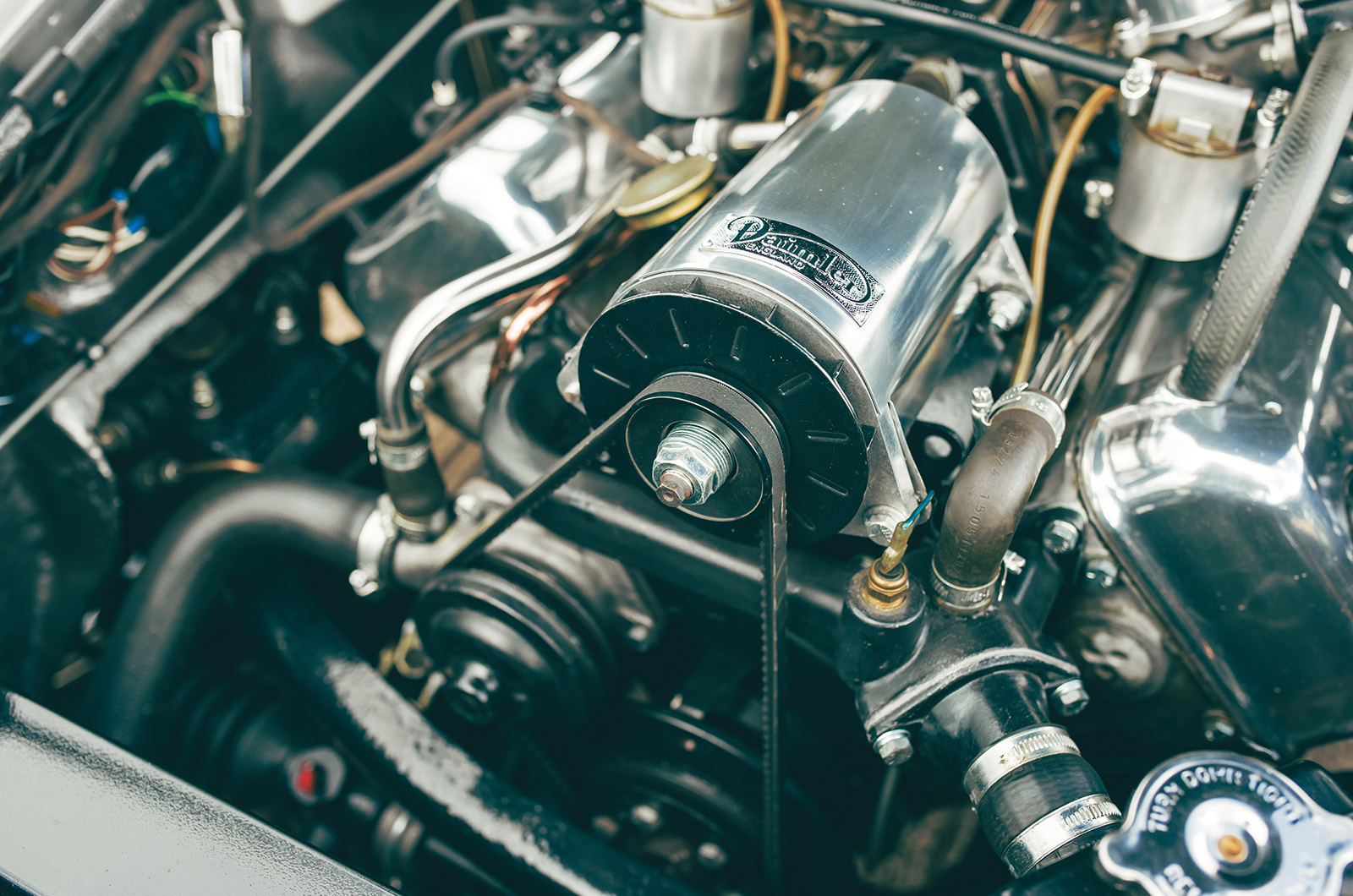
With its hydraulic tappets and all-aluminium construction, the 6230cc L-series V8 was introduced to give the Rolls-Royce Silver Cloud and Bentley S-series the effortless power owners of big cars increasingly expected, particularly in the crucial North American market where a straight-six was considered a ‘poverty’ engine.
The new V8 had 27% more displacement than the 4.9-litre ‘six’ it replaced, but it is doubtful if it was any quieter or, initially, as dependable.
It certainly wasn’t as simple to work on: to change the plugs you have to remove the front wheels. It was the same weight as the engine it replaced, but heavier than most American cast-iron V8s.
Rolls-Royce didn’t reveal power and torque figures, but the V8 was in an ultra-conservative state of tune in the name of refinement.
High revs just meant more noise as far as Crewe was concerned (the limit was pegged at 4500rpm), but fuel-consumption worries centred on range rather than overall quantities consumed: 12-14mpg still gave a 250-mile range from the 18-gallon tank, and that was deemed adequate.
A 113mph top speed and 0-60mph in 10 secs were incidental to an ability to cruise near silently at 100mph.
Bentley never disclosed how much power the 6230cc L-series V8 produced
What raw figures cannot convey today is the almost ethereal detachment from the outside world, the sense of command from sitting behind that long bonnet.
Road and wind noise are well suppressed, the engine just a remote source of aspiration that wafts you through the landscape. Only the gap between third and top gives an awareness of changing gear.
The S2 is more agile than you might expect, too, with silky power steering that castors back beautifully. It doesn’t roll much, and the big drum brakes are magnificent.
On a twisty road it feels natural to drive at a brisk canter as the sensation of bulk fades.
At £6000, a Bentley S2 was almost twice the price of most of its rivals. For that you got a car with many hidden – and some not so hidden – detail refinements in terms of fit, finish and materials.
The wood veneers, the feel of the switchgear and the overall standard of dynamic refinement are far superior to almost anything vaguely comparable.
Bentley made almost exactly 2000 Standard Steel S2s, but the survival rate of the Crewe machine is much, much higher than most big saloons from the 1960s.
The Bentley S2’s cabin isolates you from the world outside (left); the Daimler Majestic Major’s busy dashboard
This one is unrestored, but has recently been put back on the road for the family that owns it by specialist Hillier Hill.
“There are always plenty for sale, but there are fewer really nice ones than you might imagine,” says Connor Norton, electrician and project manager at Hillier Hill. “People don’t realise how good they can be to drive when properly set up.
“We sourced this one in 2000 for its owner, who did a lot of tours and rallies in it. Now his daughter and son-in-law use it: using them is the main thing.”
The firm has recently done a nut-and-bolt rebuild on an S3, and is currently restoring a long-wheelbase V8 Silver Cloud: “People are now starting to spend money on them because the values have gone up.”
Words: Martin Buckley
Thanks to: Hillier Hill; Laurence Jones
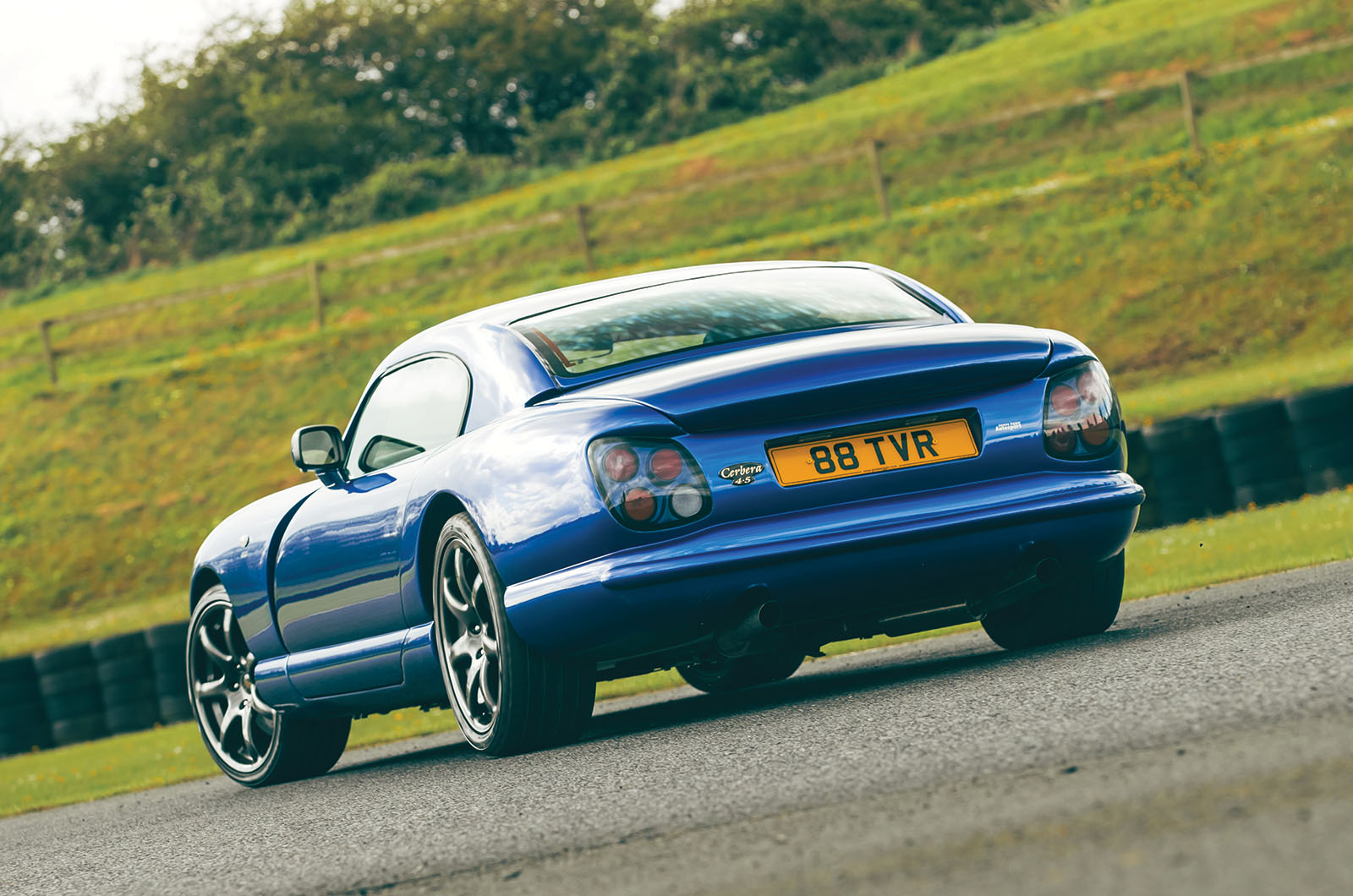
TVR Cerbera 4.5 & Jaguar XKR
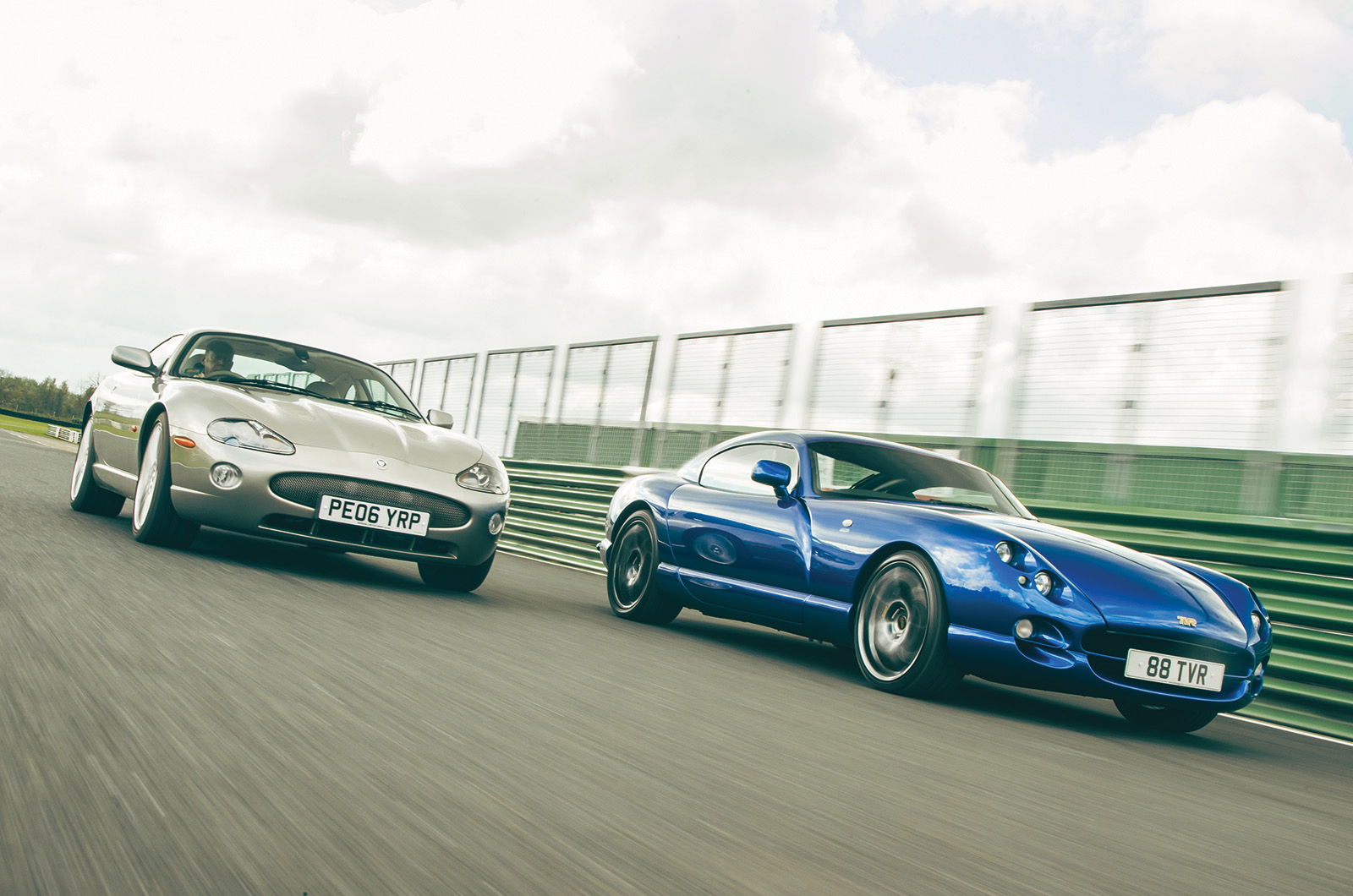
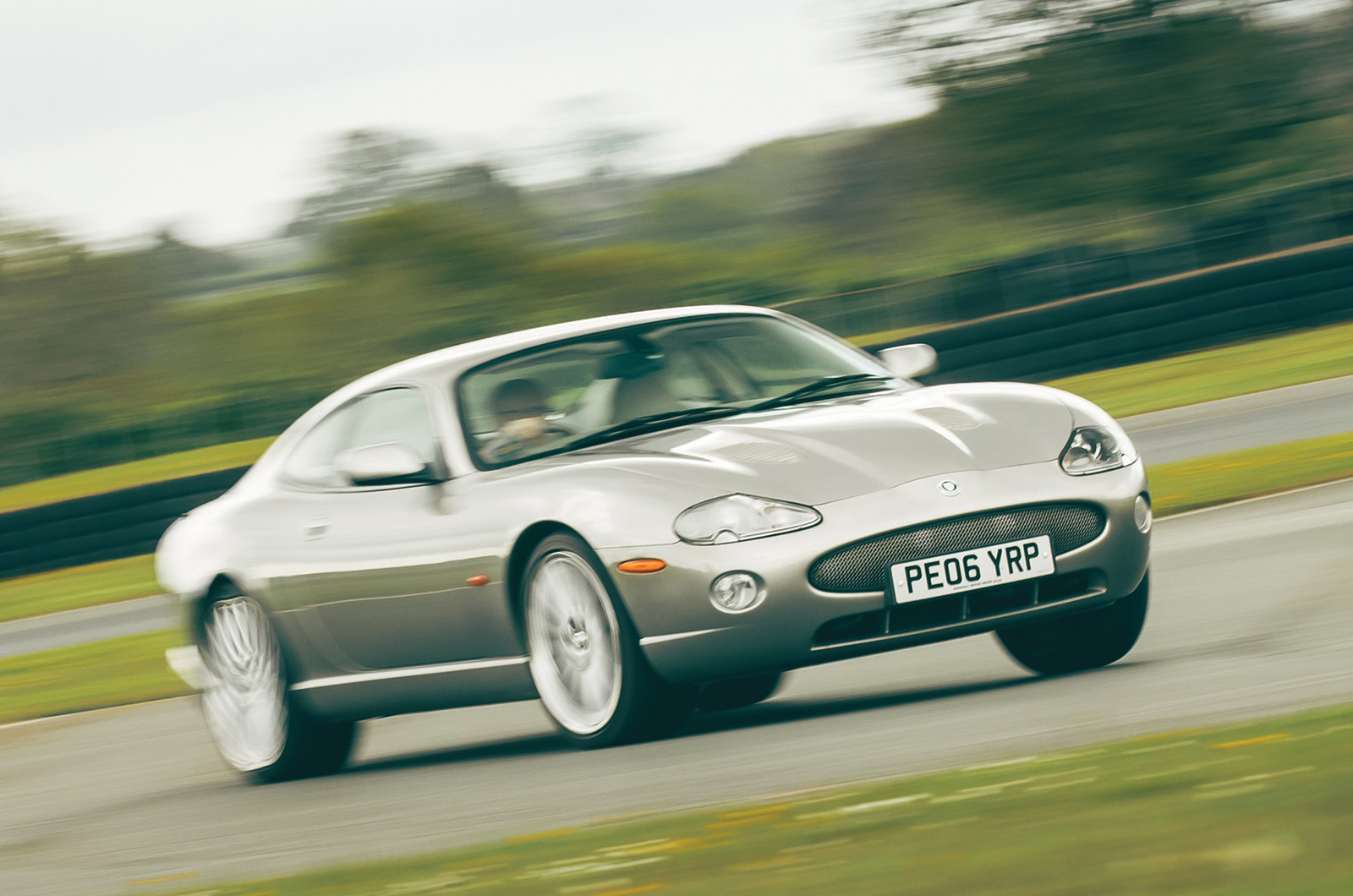
The supercharged Jaguar XKR (on left) takes on the naturally aspirated TVR Cerbera 4.5
TVR chief Peter Wheeler’s logic behind ditching Rover’s V8 for his own engine in the new Cerbera was sound.
“You couldn’t have a Ferrari or a Maserati with someone else’s engine in it, could you?” he reasoned with Autocar at the model’s launch in October 1995.
The Blackpool-brewed V8 was already being used in the company’s Tuscan racers, so with a little refining it made sense to adopt it in the long-awaited range-topper.
Officially known as the AJP8 (named for its creators, Al Melling, John Ravenscroft and Peter Wheeler), and originally displacing 4185cc, the all-aluminium, 75° V8 used a flat-plane crank but was otherwise devoid of tech, running single overhead cams on each bank and two valves per cylinder – not unlike the ex-Buick Rover mill TVR had used previously.
But it was essentially a race engine, making 360bhp at 6500rpm and 320lb ft at 4500rpm. That made its fit with the Cerbera – mooted as a more family-friendly 2+2 GT – a strange one.
Based on the Chimaera’s underpinnings, but with 11in added to its wheelbase to allow for a couple of vestigial seats for nippers, the model was designed to broaden TVR’s appeal.
Yet taking its Greek name from a three-headed dog that guarded the gates of hell would certainly have left you in no doubt that this was still a maximum-attack driver’s car.
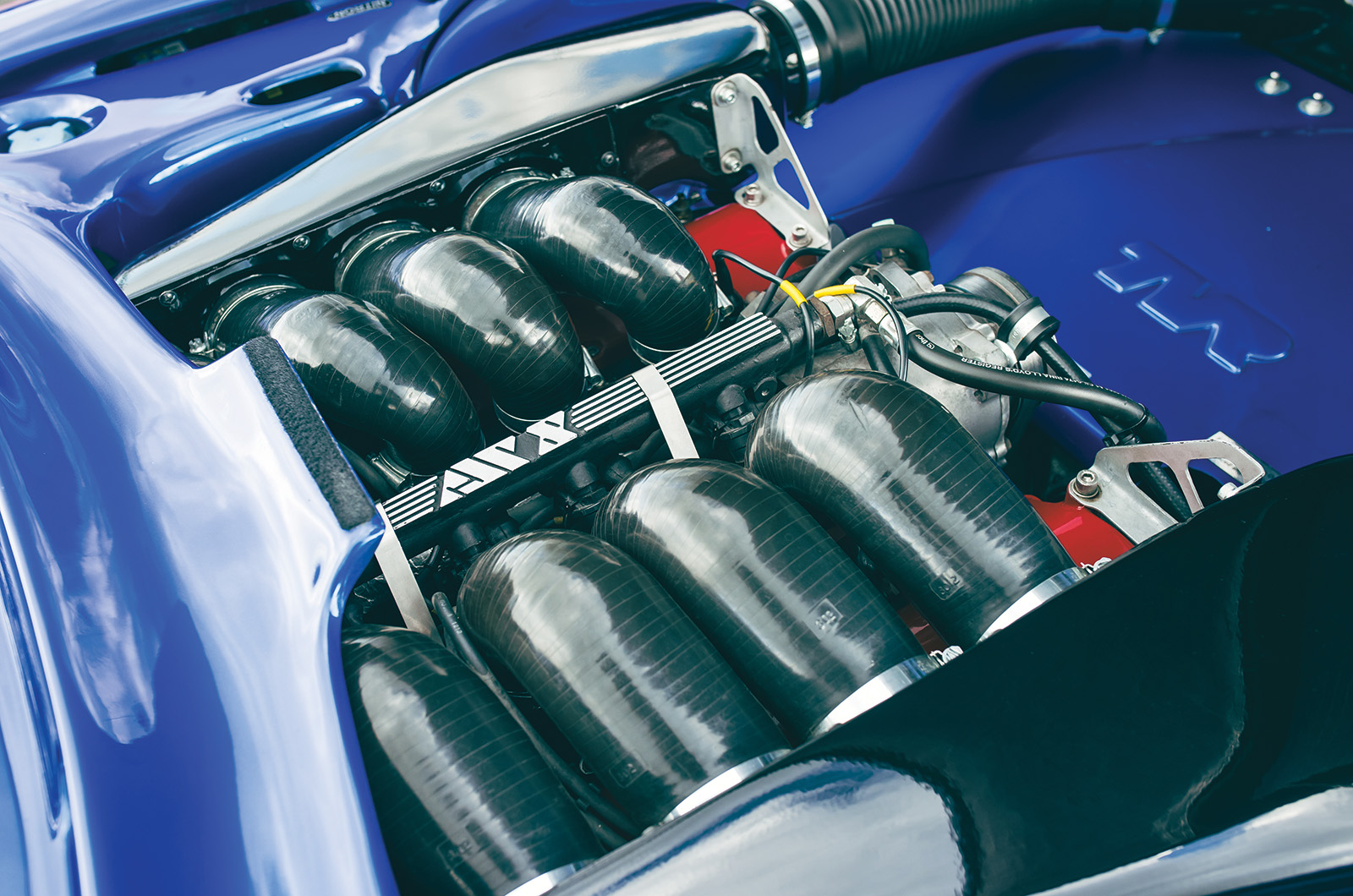
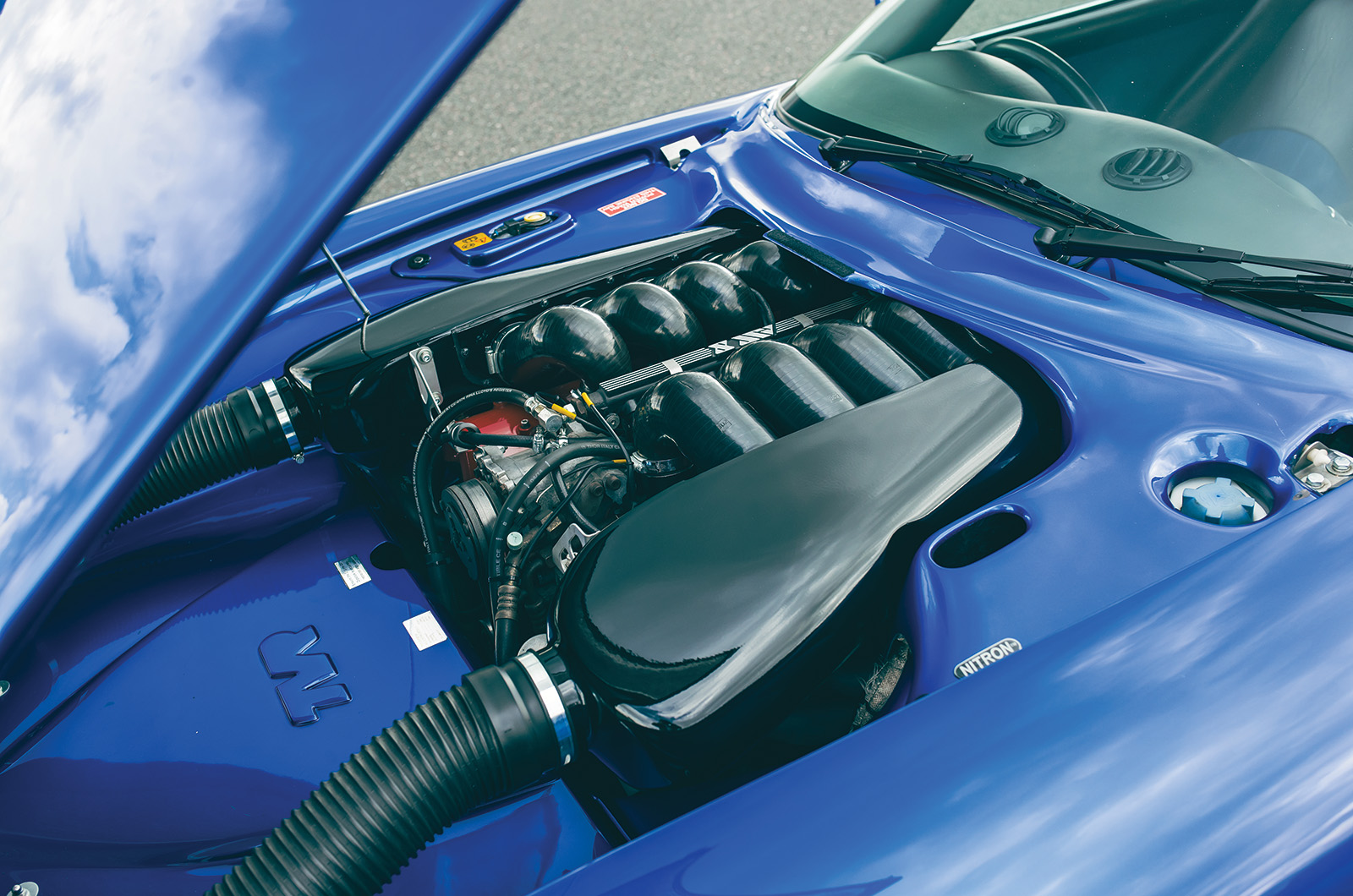
The TVR Cerbera 4.5’s raucous 4475cc V8 has its roots in racing
That perception was stretched further when two years later the AJP8’s capacity was raised to 4475cc, boosting its outputs to 420bhp and 380lb ft.
As ever, TVR’s press department went all creative with its performance claims, quoting 3.9 secs to 60mph, 8.3 secs to 100, and 17.9 secs to 150; the firm was crestfallen when Autocar ‘only’ achieved 4.3, 9.2 and 21.1 secs respectively when it tested the 4.5.
Perhaps the Red Rose version we have here, owned by Leicestershire-based TVR specialist James Agger, comes closer to those factory claims.
It’s said to produce an extra 20bhp when running on super unleaded, which means we have c440bhp on tap – and that feels about right when we start to explore its performance on the roads around Mallory Park.
Aurally, that flat-plane crankshaft gives the Cerbera’s V8 a harder edge from the off, although it’s never the most sonorous of soundtracks.
The main controls have a real meatiness to them, with the Borg-Warner five-speed gearbox’s short shifts needing a deliberate action.
Sitting surprisingly high in the driver’s seat, facing a typically TVR array of seemingly Jules Verne-inspired instruments, you peer through the pillar-box-style slot between the scuttle and bare header rail free from any sort of sunvisors (a weight-saving measure, apparently).
The TVR Cerbera 4.5’s superb chassis keeps the excess of power in check
In theory, we have just shy of 400bhp per tonne, so the Cerbera’s acceleration is very much in supercar territory.
Power is meted out in a linear spread, feeling strong from low down and positively brutal above 4500-5000rpm, where you would expect it to be tailing off.
A long-travel throttle pedal means you have to hunt for the last 20% of grunt, but when you find it, the Cerbera’s unexpectedly benign and well-controlled chassis, combined with its competition-grade brakes, do an admirable job of keeping the car honest.
To my mind, it’s the best-resolved Trevor of the 20th century.
You will note that ‘our’ Jaguar XKR, while still a late first-generation X100 model that was first seen in 1998, is the facelifted version that was launched in 2002.
I was on Autocar’s road-test desk at the time and, while the car had changed little cosmetically, its revised, Eaton-supercharged V8 was in a different league from that of the outgoing model.
It transformed Geoff Lawson’s design masterpiece – first seen as the unblown XK8 in 1996 – and we welcomed it with open arms.
The capable Jaguar XKR 4.2-S is rapid but refined when pushed
Ford money injected new life into Jaguar’s product portfolio, along with other brands in the Blue Oval’s Premier Automotive Group, and the refreshed XKR was now a worthy flag-bearer.
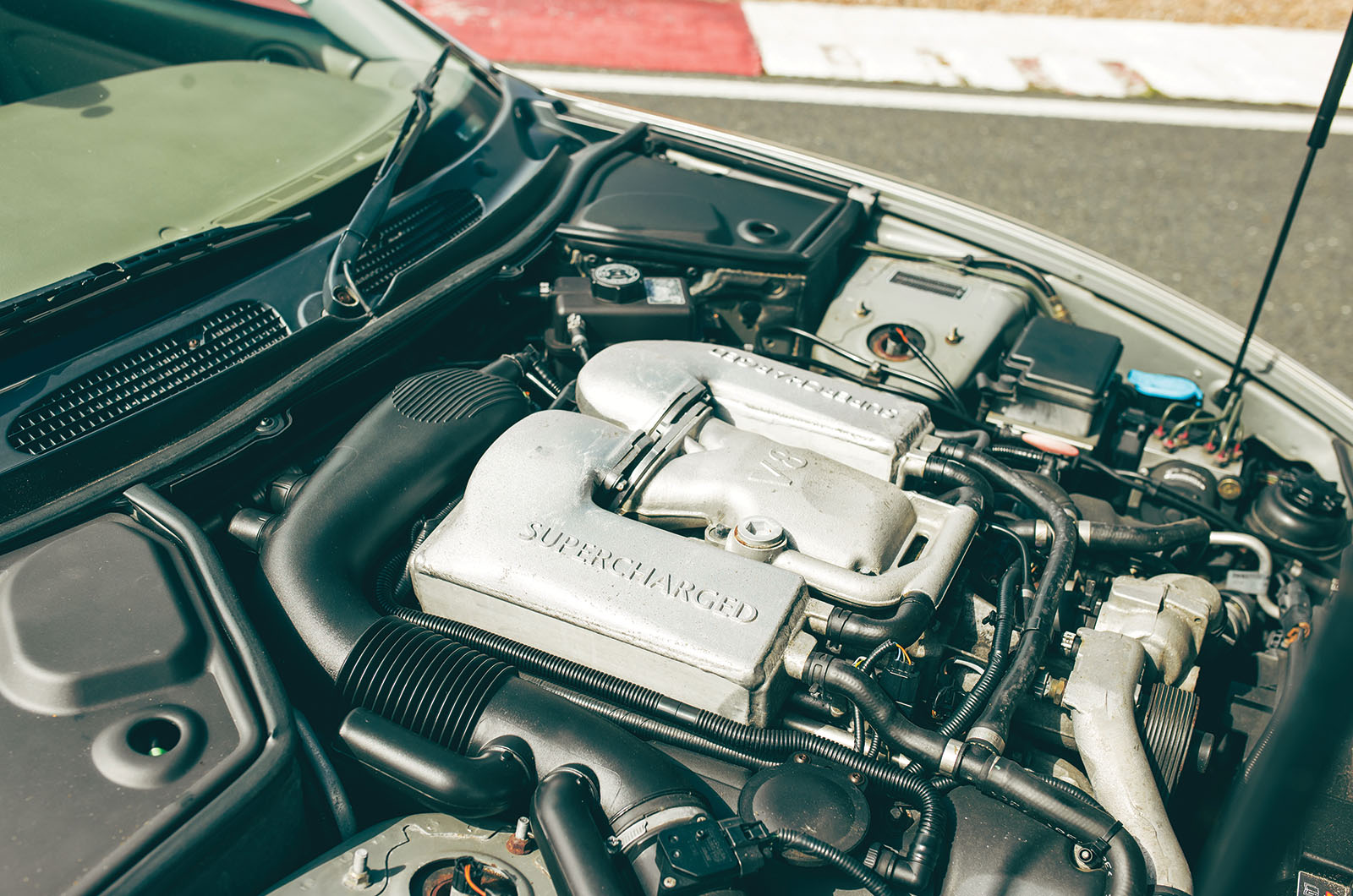
The previous model’s lacklustre 4-litre V8 had been replaced by an essentially new 4.2-litre unit, with only its 90° vee and Eaton blower carried over.
The crank, cylinder heads and exhausts were all new, resulting in a power increase from 366 to 395bhp, as well as a boost in torque from 387lb ft to 399lb ft.
The icing on the cake was the adoption of the S-type R’s six-speed auto ’box, with closer ratios and a top gear that pulled 40mph per 1000rpm, versus the 4.0 XKR five-speeder’s 32mph.
On paper there was little to choose between new and old: the benchmark 5.2 secs to 60mph and (limited) 155mph top speed were unchanged.
But the 4.2 was much fleeter of foot in the real world, with almost every 20mph increment between 40 and 100mph covered in a quicker time.
The Jaguar is the perfect foil for the relative madness of the Cerbera.
Dashingly styled, superbly refined (when you want it to be), and now temptingly affordable as a modern, usable classic GT, the revised XKR is the epitome of discreet performance.
The Jaguar XKR’s supercharged 4.2 V8
Ex-Jaguar PR man Tony O’Keeffe has owned his Satin Silver 4.2-S for 10 years. It hides its 90,000 miles well, perhaps testament to PAG’s push for improved quality.
Externally, the biggest R-defining giveaways are four tailpipes, the subtle boot spoiler and a small badge below the offside tail-light cluster.
Inside, there’s even less to distinguish the R, with swathes of beige leather and burr-elm veneers belying the hardcore underpinnings.
Cruise around at normal speeds and this could be a regular XK8, but move the gear selector into the manual part of its J-gate, floor the throttle and the XKR reveals its alter ego.
The supercharger pipes up, issuing a strident wail that dominates the Jaguar’s V8 rumble, accompanied by strong and sustained thrust from low down.
Above 3500rpm the car gets deeper into its stride, with performance only tailing off towards its redline, by which time you’re well into three figures.
And through it all, the Jag’s hand-me-down – but supremely capable – chassis remains largely unfazed, issuing admirable control and grip aplenty.
Words: Simon Hucknall
Thanks to: James Agger Autosport for the loan of the Cerbera; the Jaguar Drivers’ Club
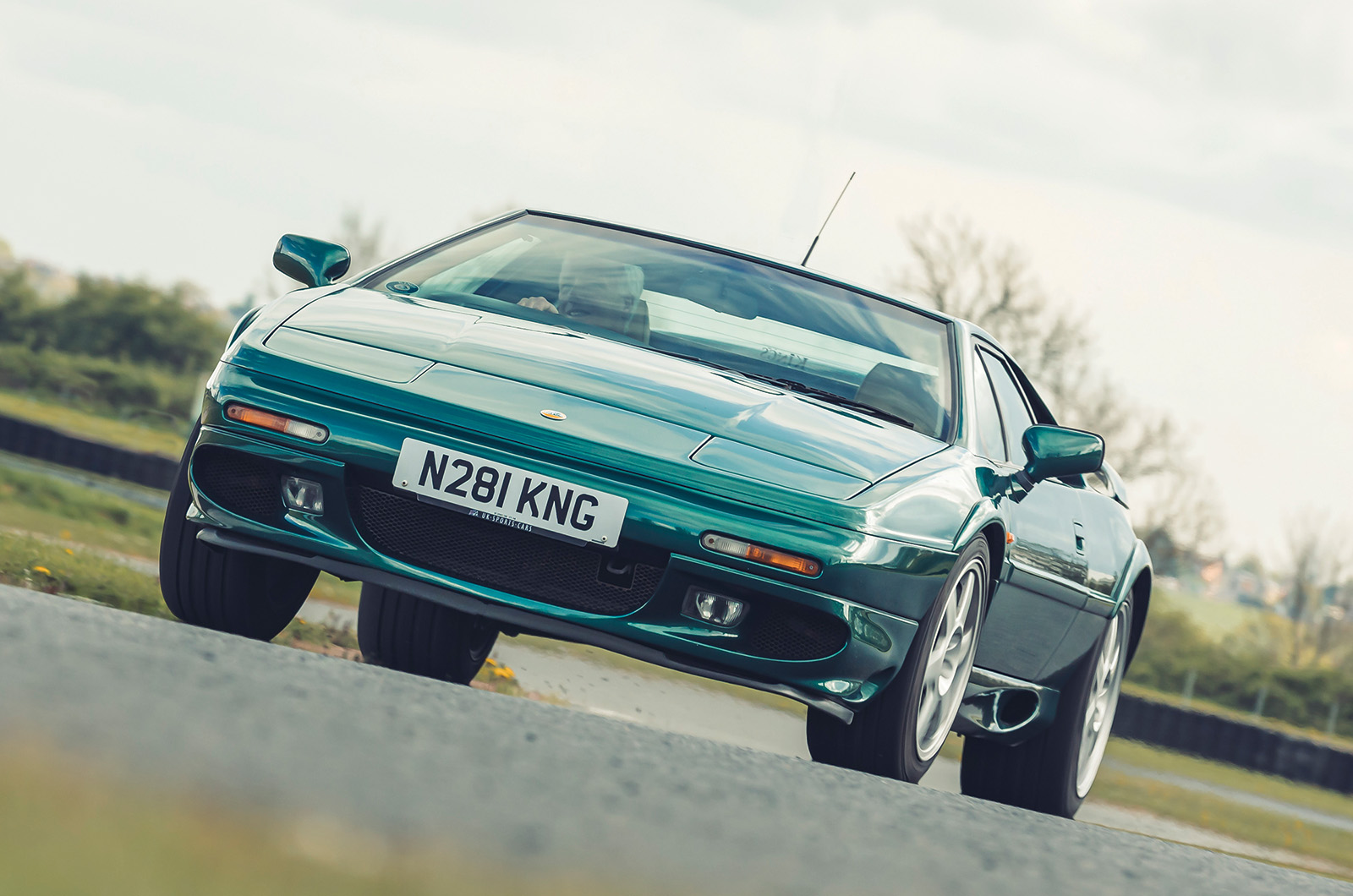
Lotus Esprit V8 & McLaren MP4-12C
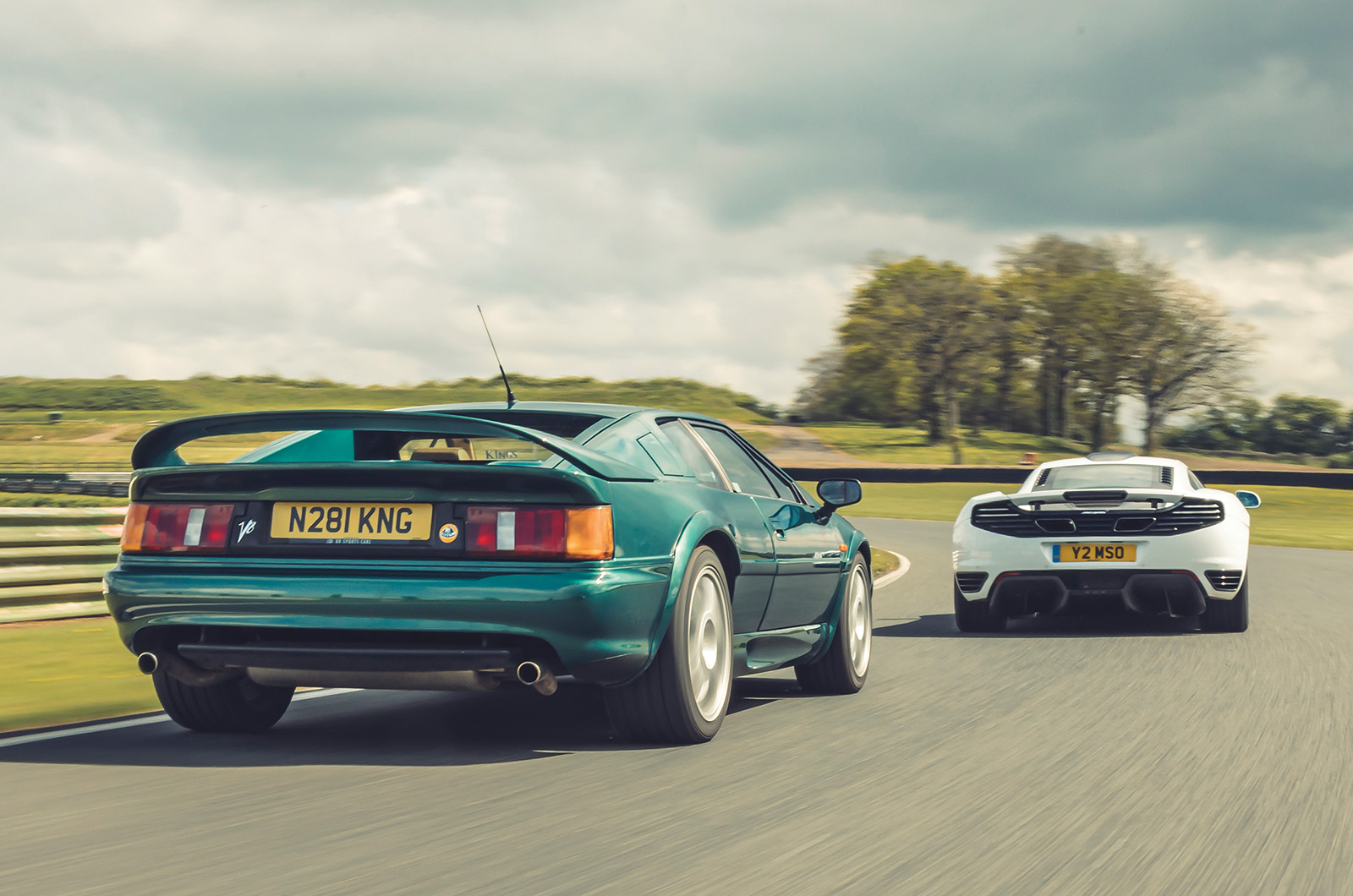
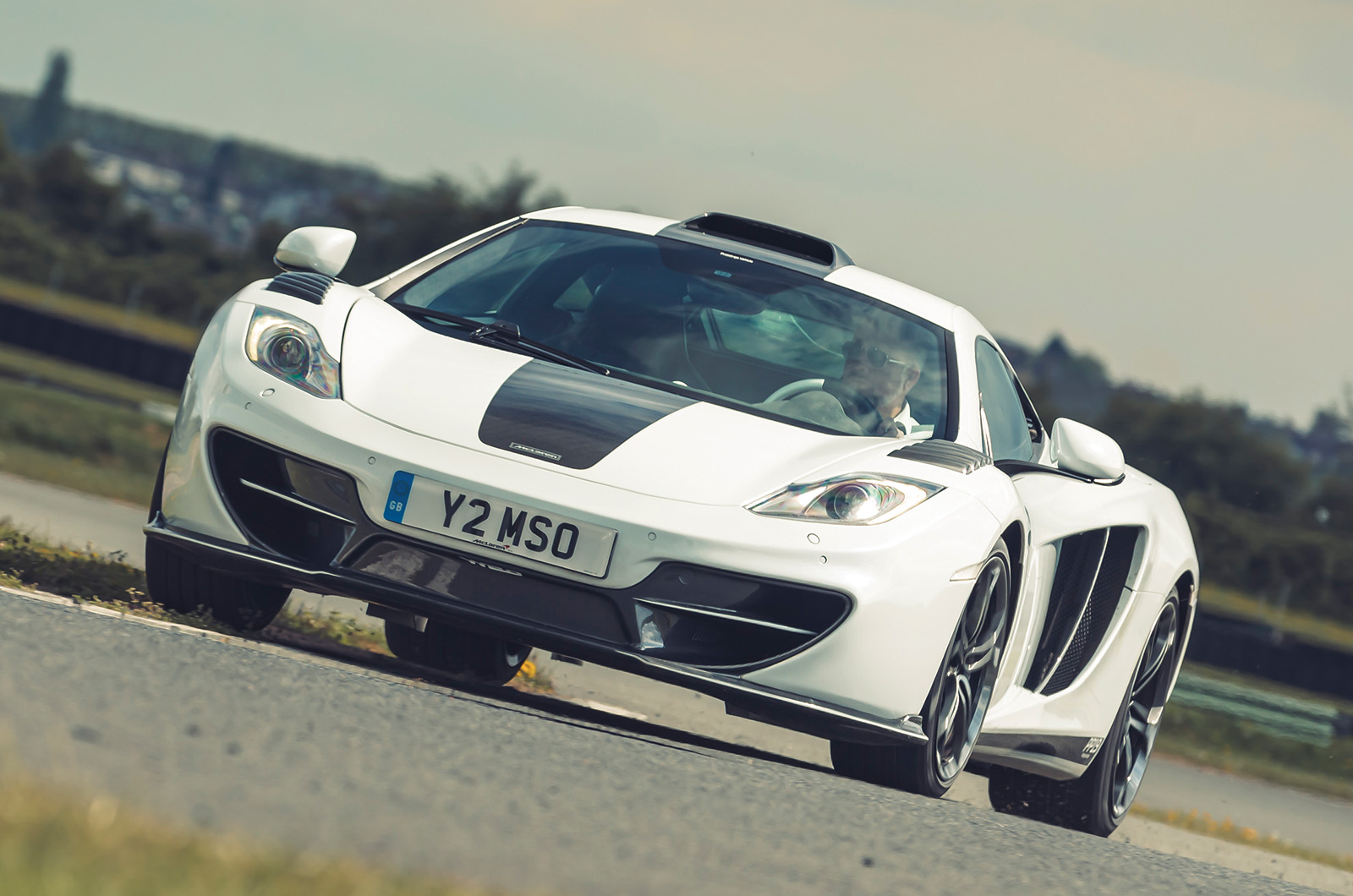
The Lotus Esprit V8 (closest) and McLaren MP4-12C show how much supercars developed between the 1990s and 2010s
The Lotus Esprit’s near three-decade production life is only topped in this group by that of the stalwart Morgan Plus 8.
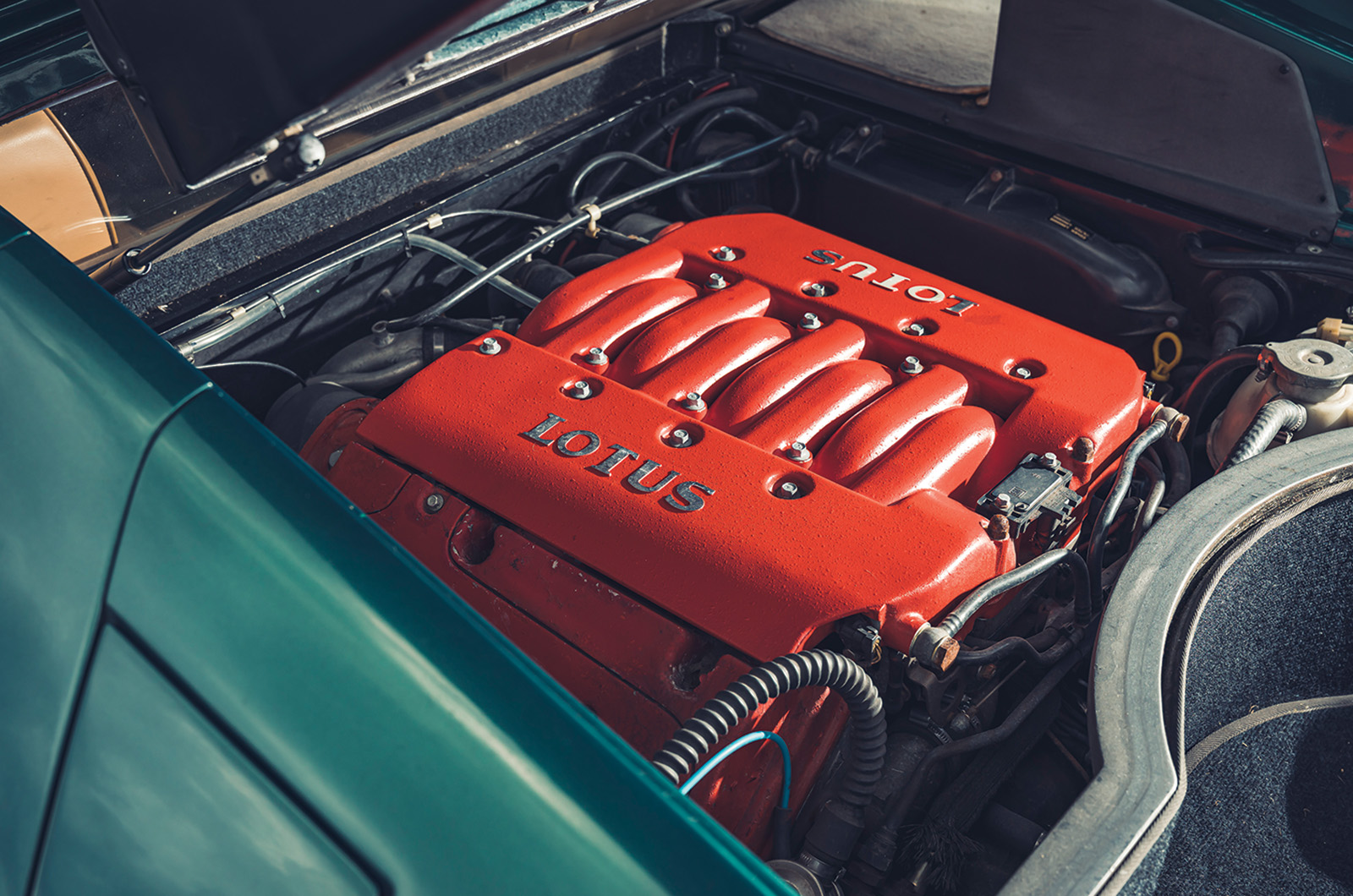
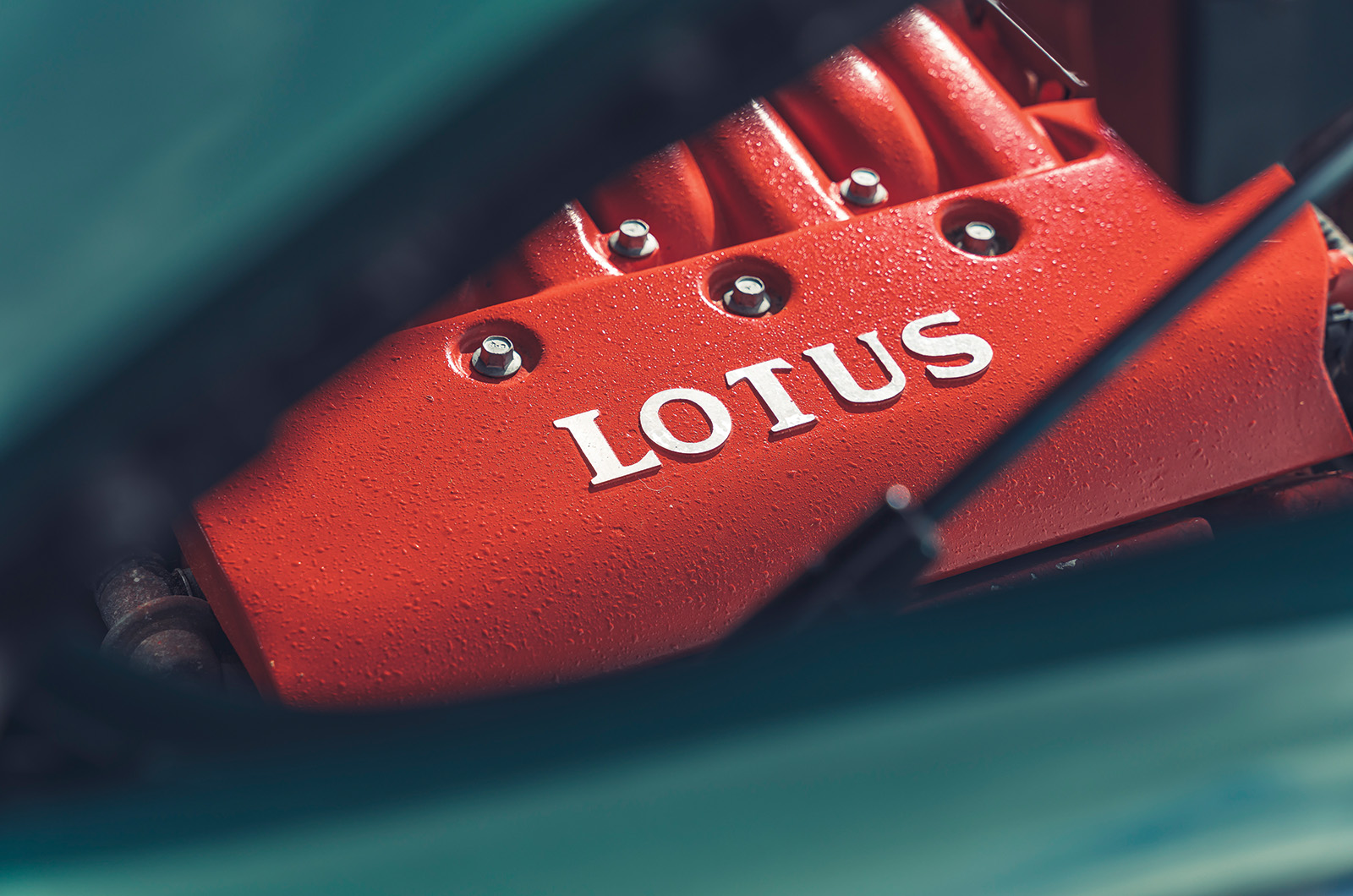
Key to the model’s longevity was the fitment of the new Type 918 twin-turbo V8, which in effect extended the Esprit’s run by eight years.
The in-house-designed engine was, Lotus said, a ‘clean-sheet’ effort, including a fully Hethel-developed engine-management system that controlled the fuel, ignition and emissions; it was one of the first in the world to be designed from the outset to comply with on-board diagnostics (OBD) legislation.
The hardware was no less impressive: a compact, all-alloy 3506cc 90° V8 that weighed just 214kg – only 50kg heavier than its four-cylinder predecessor – and which employed a flat-plane crank.
Twin overhead camshafts, four valves per cylinder and the addition of a pair of Garrett T25 turbochargers completed the package, which delivered a healthy 350bhp at 6500rpm and 295lb ft at 4250rpm.
Barry Clark’s early Esprit V8 was produced in 1996 and it still, to my eyes, would have looked contemporary when it was launched that same year, despite the Esprit then celebrating its 21st birthday.
Giorgetto Giugiaro’s wedgy form had already been softened, with Peter Stevens’ 1987 refresh giving the shape a new lease of life. It was tweaked again in ’94, by Julian Thomson, for the S4, which embraced the V8 Esprit.
The Type 918 twin-turbo V8 revitalised the Lotus Esprit
Enter the Lotus’ cabin across the broad sill and, other than pedals which are offset to the left and a gearlever mounted a little high on the central tunnel, the driving position is excellent: there is a nicely bolstered and supremely comfortable seat, a near-vertical three-spoke steering wheel and a well-stacked instrument binnacle.
Key the starter and you’re greeted by probably the least V8-sounding engine note of any car here today – quite refined, but hardly a portent for the configuration’s promised fireworks.
Low-speed pootling does nothing to improve your first impressions: the AP Racing clutch is heavy and the Renault gearbox’s shift is notchy and rubbery.
But then you find The Road, and the V8 starts to make sense. ‘Our’ car’s acceleration feels a little shy of the pace suggested by the official 4.8 secs time to the benchmark 60mph; even so, bury its throttle and you’re having to upchange through that recalcitrant ’box in short order, optimising a fairly flat torque curve that peaks nearly 3500rpm before the V8’s 7500rpm redline.
Allied to a creditable lack of turbo lag, it makes for quite dramatic progress, but amazingly there’s still as little evidence of a V8-sounding retort as there was at idle, with merely a slight chirrup from the Garretts between gearshifts to engage you with its anodyne soundtrack.
The Lotus Esprit’s V8 was an in-house design
Does that flaw taint the overall Esprit V8 experience, though? Not at all.
As we’ll see when we drive the McLaren, which is also afflicted by a lack of tonal theatre, the Lotus redeems with a chassis of rare brilliance, feeling agile, light and biddable as we duck and dive along these demanding Leicestershire back-roads.
And, given that this is a near-30-year-old car hailing from a range unveiled half a century ago, that’s no mean feat.
You could rightfully suggest that the McLaren is the outlier in this set; even compared with the Esprit V8’s commendable power-to-weight ratio of 254bhp per tonne, the MP4’s 418bhp per tonne puts the 15-years-older Lotus not just in the shade but also blindfolded and relegated to a darkened cave (although our earlier pairing’s TVR Cerbera actually runs it close).
That said, the V8 engines of the MP4-12C and Esprit are remarkably similar on paper: both are longitudinally mid-mounted; and both are all-aluminium, twin-turbocharged 90° V8s with double overhead cams, four valves per cylinder and flat-plane crankshafts.
But the McLaren alone shows what remarkable progress was made in supercar engine design in only a decade and a half.
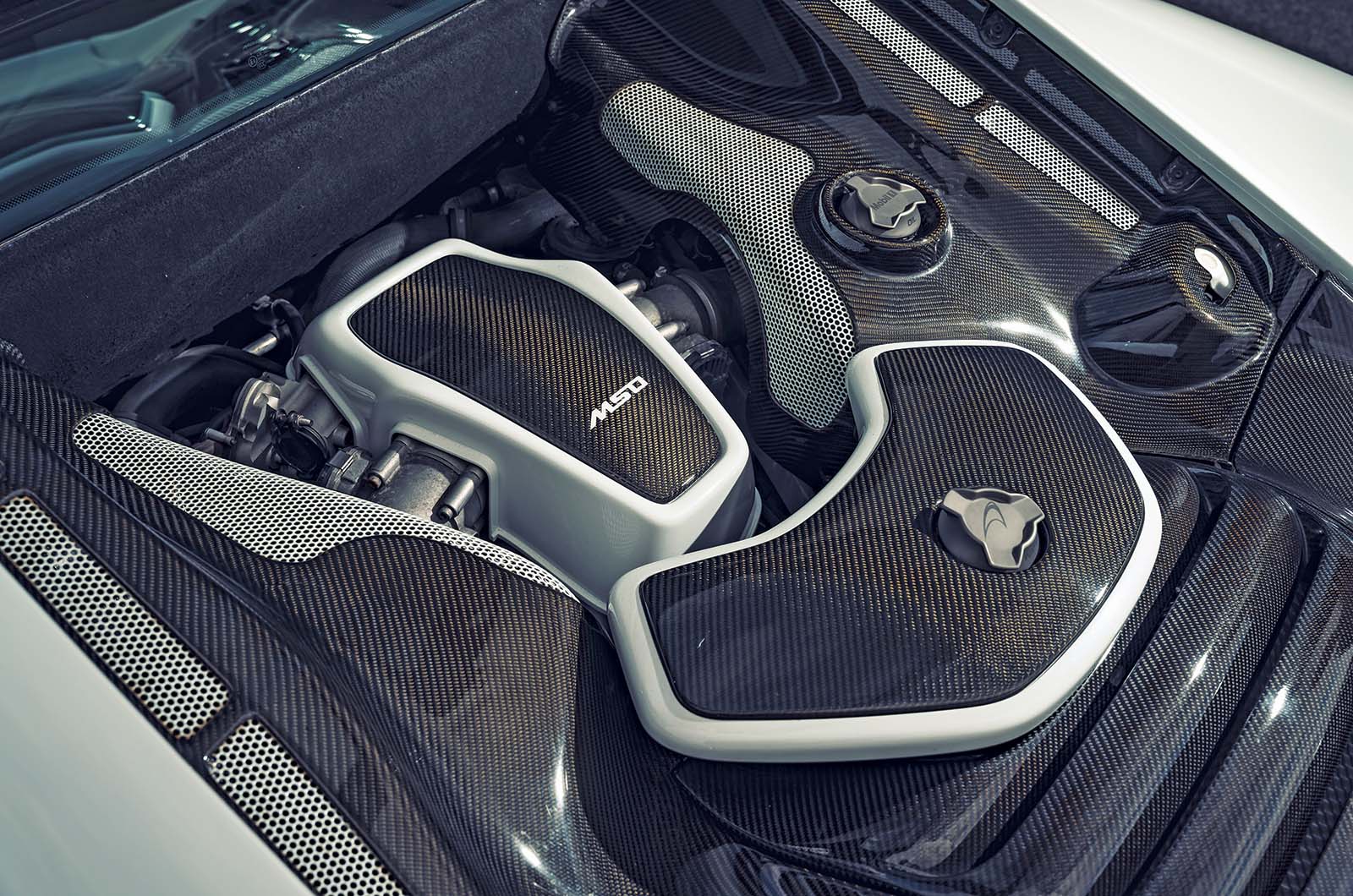
The 12C’s 3799cc V8 was loosely based on Nissan’s VRH35 unit that powered its 1998 Le Mans cars.
McLaren’s 3.8-litre V8 has up to 617bhp
McLaren purchased the rights to the engine and, with Ricardo Engineering, adapted it for use in what would be its first production road car since the legendary F1.
The engine was renamed M838T, and it was a compact and lightweight unit, its block’s wet liners also made from aluminium with a low-friction Nikasil coating.
Two fixed-geometry Mitsubishi turbos boosted maximum output to 592bhp at 7000rpm (although further software updates raised this to 617bhp), along with 443lb ft from 3-7000rpm, 80% of which was on tap below 2000rpm.
A dry sump allowed the M838T motor to be mounted low in the 12C’s chassis, and drive was delivered to the rear wheels through a seven-speed, dual-clutch automatic gearbox.
While the MP4’s engine does have a 293cc advantage over the Lotus, its specific output of 158bhp per litre is still more than a third greater than the Hethel car’s.
Much of the 12C’s performance lead (with 0-60mph in 3.1 secs and 0-124mph in 8.8 secs) over the Esprit is down to the Woking machine’s extensive use of carbonfibre in its construction, with McLaren quoting a minuscule 80kg for the ‘Carbon MonoCell’ chassis that underpins it; that contributes to a total kerbweight of just 1336kg – nearly 50kg lighter than the smaller, glassfibre-bodied Lotus.
The McLaren MP4-12C weighs just 1336kg
‘Our’ 12C – known as ‘Stormtrooper’ – was an original prototype car ahead of the 2011 launch. It’s now managed by McLaren Special Operations and used to test various options.
Push a hidden button and the dihedral door opens skyward, allowing easy entry to a cabin trimmed in leather, carbonfibre and Alcantara.
Thumb the starter and press a button marked ‘D’ for drive on the centre console, and you’re away, the slightly industrial-sounding V8 fizzing and whirring behind you.
We quickly engage ‘Active’ mode to take manual control of the gears via the wheel-mounted paddles.
Even at normal speeds, the McLaren is a cinch to drive, with its low scuttle and (for me) near-perfect driving position giving confidence from the start.
Just as well: find a long enough straight, and its acceleration is sustained and bombastic, accompanied by a hard-edged, guttural blare that, while not particularly soulful, is infectious enough for you to keep it on the boil whenever possible.
All of this, combined with a bewilderingly supple ride, unerring high-speed body control (both are down to McLaren’s clever, interlinked damping system) and transparent steering, makes the 12C a British V8-powered masterpiece.
Words: Simon Hucknall
Thanks to: McLaren MSO; Lotus specialist Allon White Sports Cars
Great British V8s: the verdict
Edward Turner’s 2.5-litre V8 is silky-smooth
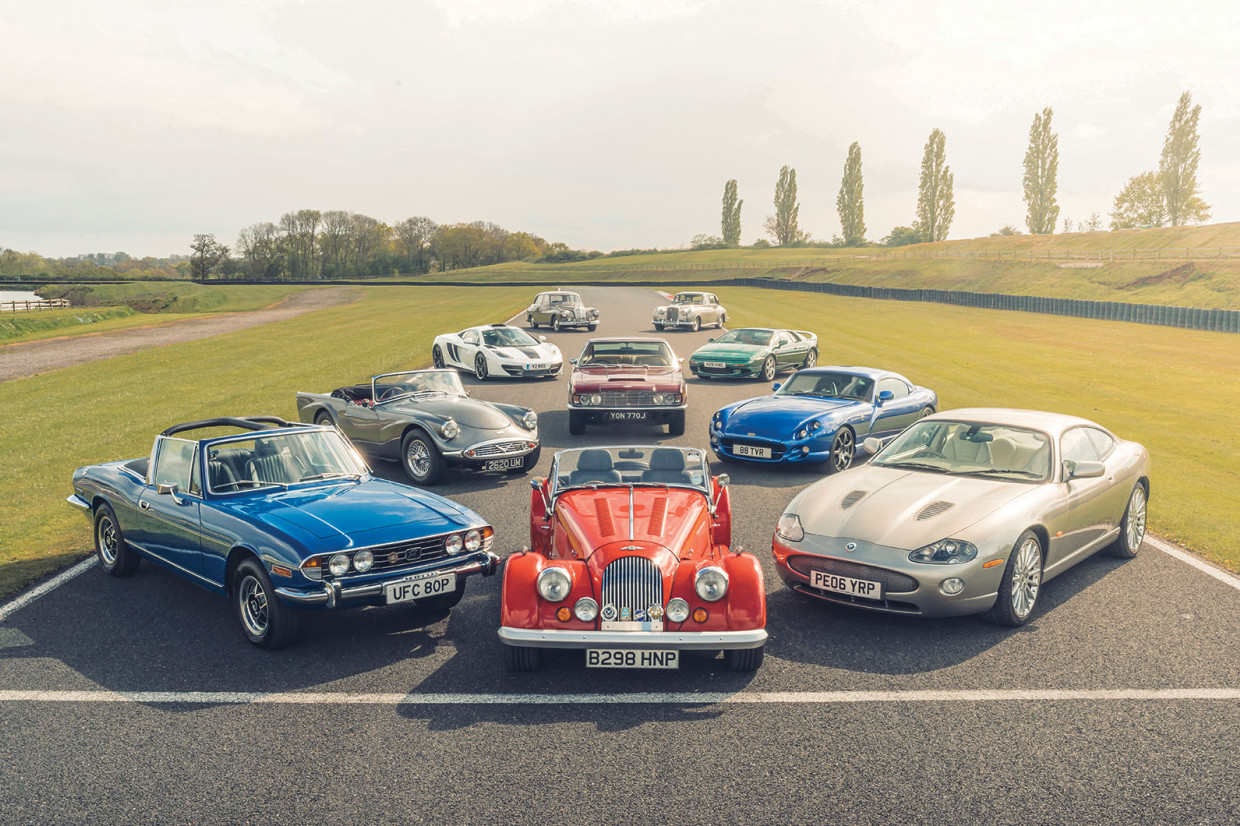
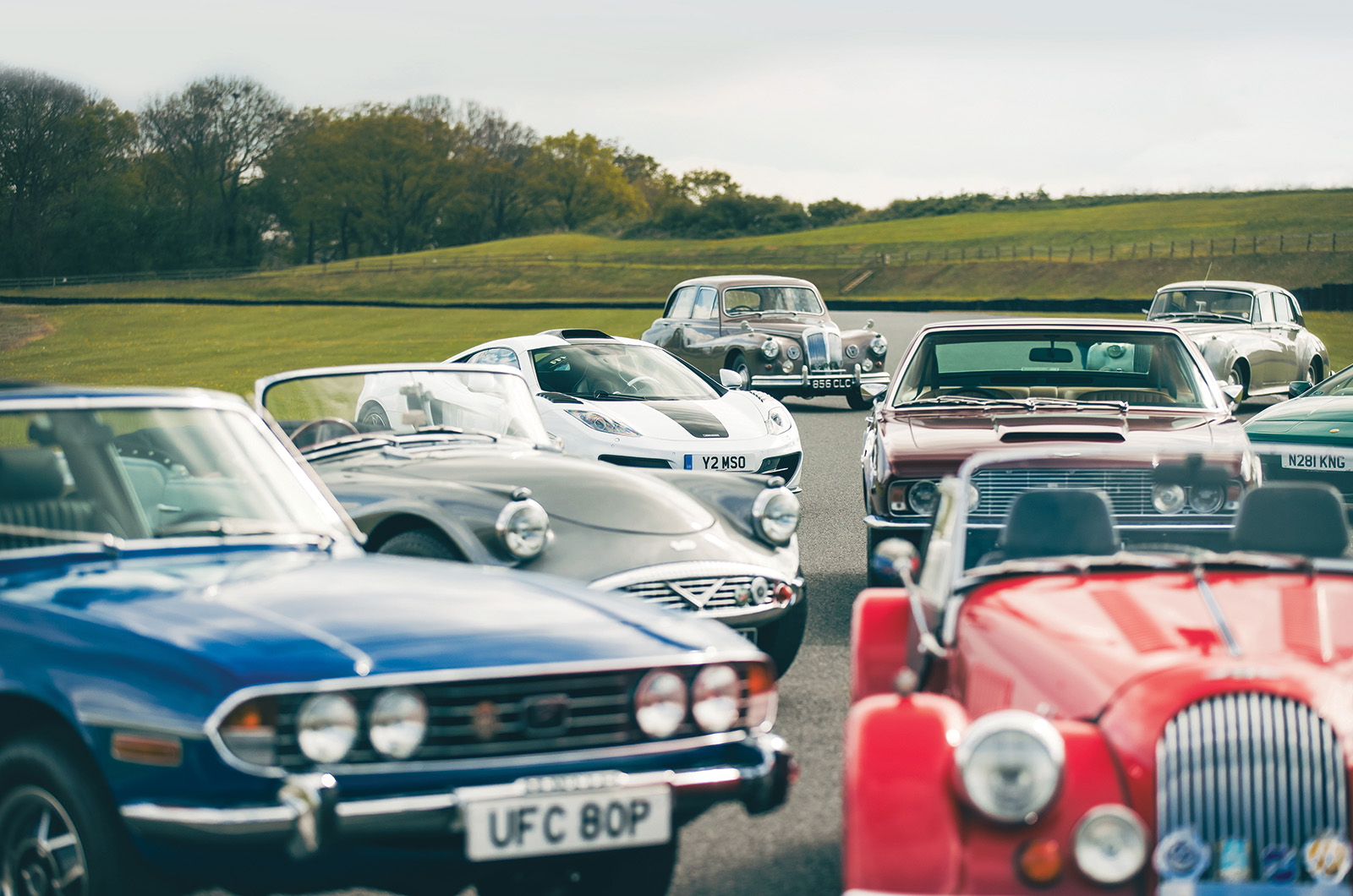
Spanning more than half a century, our selection of V8-powered Brits is as eclectic as the capacities displaced by their engines, from the Daimler SP250’s 2.5 litres to 6.23 litres in the Bentley S2.
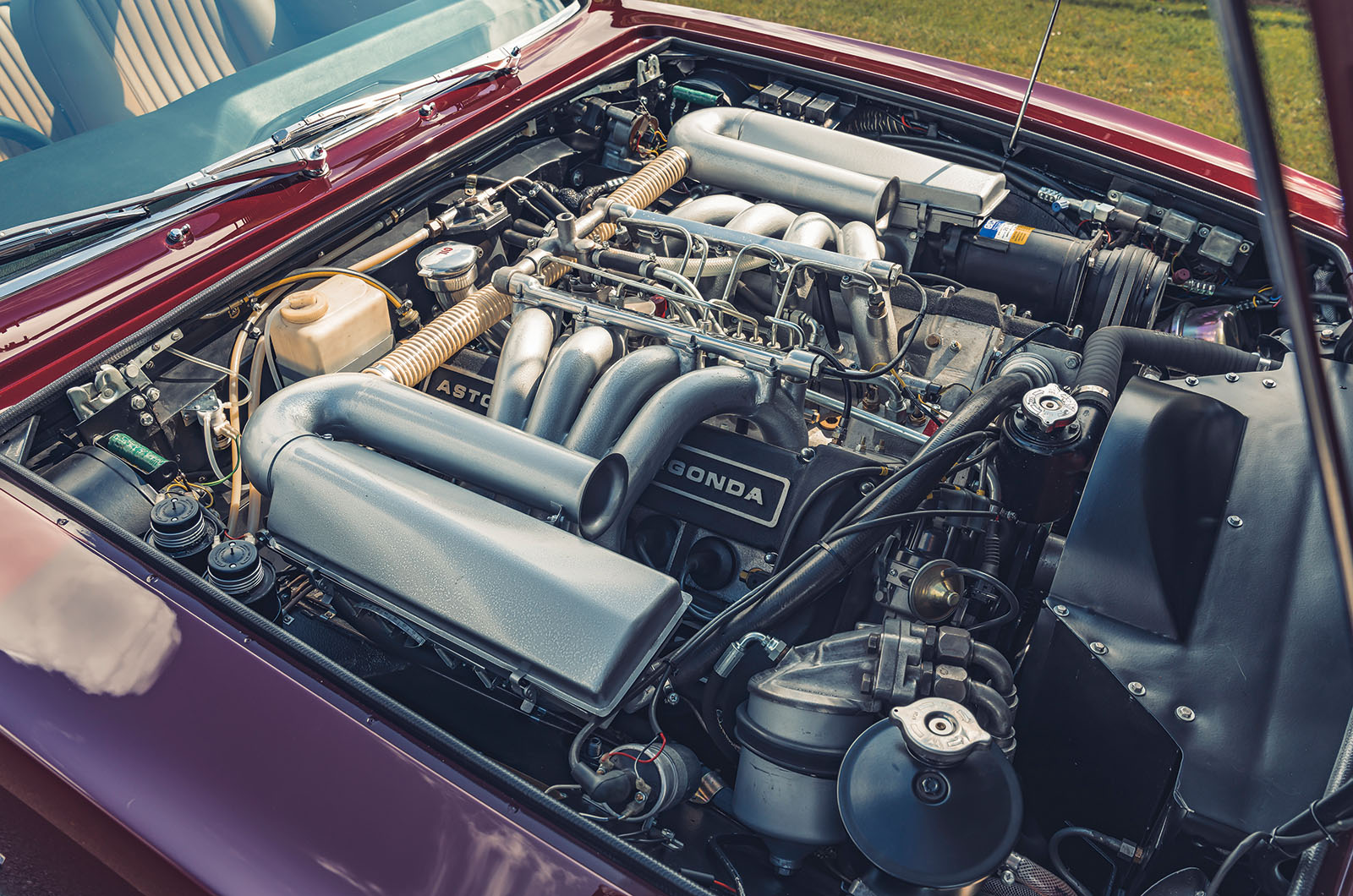
Our Aston Martin DBS V8 and Triumph Stag pairing shows how the wider adoption of V8s started to bridge the gap between rarefied cars and the mainstream, with the Aston’s quad-cam, hemi-head motor resoundingly high-tech and potent, while the Stag’s blue-collar V8 lent the car an aura of exoticism.
Or at least it would have done, had it not been for chronic reliability woes – which also afflicted the DBS, for different reasons.
But the faults in both cars’ engines were gradually ironed out, meaning that today we can perhaps appreciate them more as classics than when they were new.
The Majestic Major’s high-revving ‘hot rod’ V8 appears at odds with both the car and the brand’s urbane image, with Daimler inadvertently creating one of the best Q-cars of the previous century.
It was a perfect example of what happens when engineers get their way, and the result is now – quite literally – a rare treat as well as a shining example of early V8 innovation.
The Lotus V8 gave the Esprit’s chassis the power it deserved
This wasn’t a one-hit wonder for the company, either.
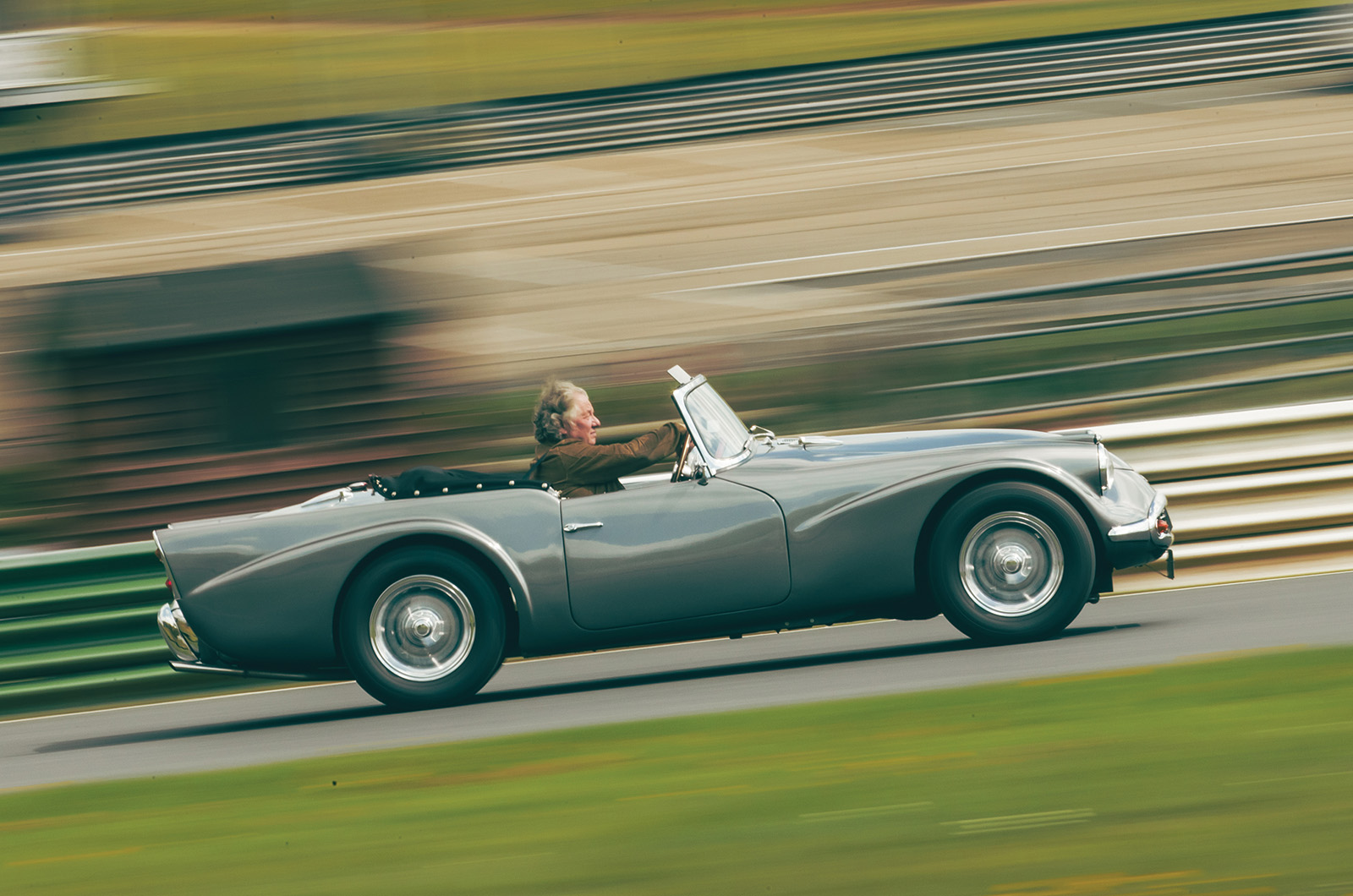
The 2.5-litre V8 in ‘our’ SP250 Dart was immensely smooth, flexible and durable – its weakest link was actually the design of the car it powered.
Not so the Lotus Esprit V8, TVR Cerbera 4.5 and Jaguar XKR 4.2.
By developing its own V8 engine and regulations-friendly operating system, Lotus revitalised the Esprit’s fortunes, adding years to its life and gifting it the performance its dazzling chassis so richly deserved.
TVR’s route to V8 nirvana was unashamedly old-school from a technology perspective – and, like the DBS V8 and Stag, it was only fully developed post-launch by owners and specialists.
But its blistering output and truly epic soundtrack – by far the most charismatic here – make the Cerbera a (flawed) gem.
In contrast, the Jaguar is arguably the most complete car in our set: its lusty, supercharged motor offers plenty of aural delights and modern-day high performance, combined with excellent all-round dynamics.
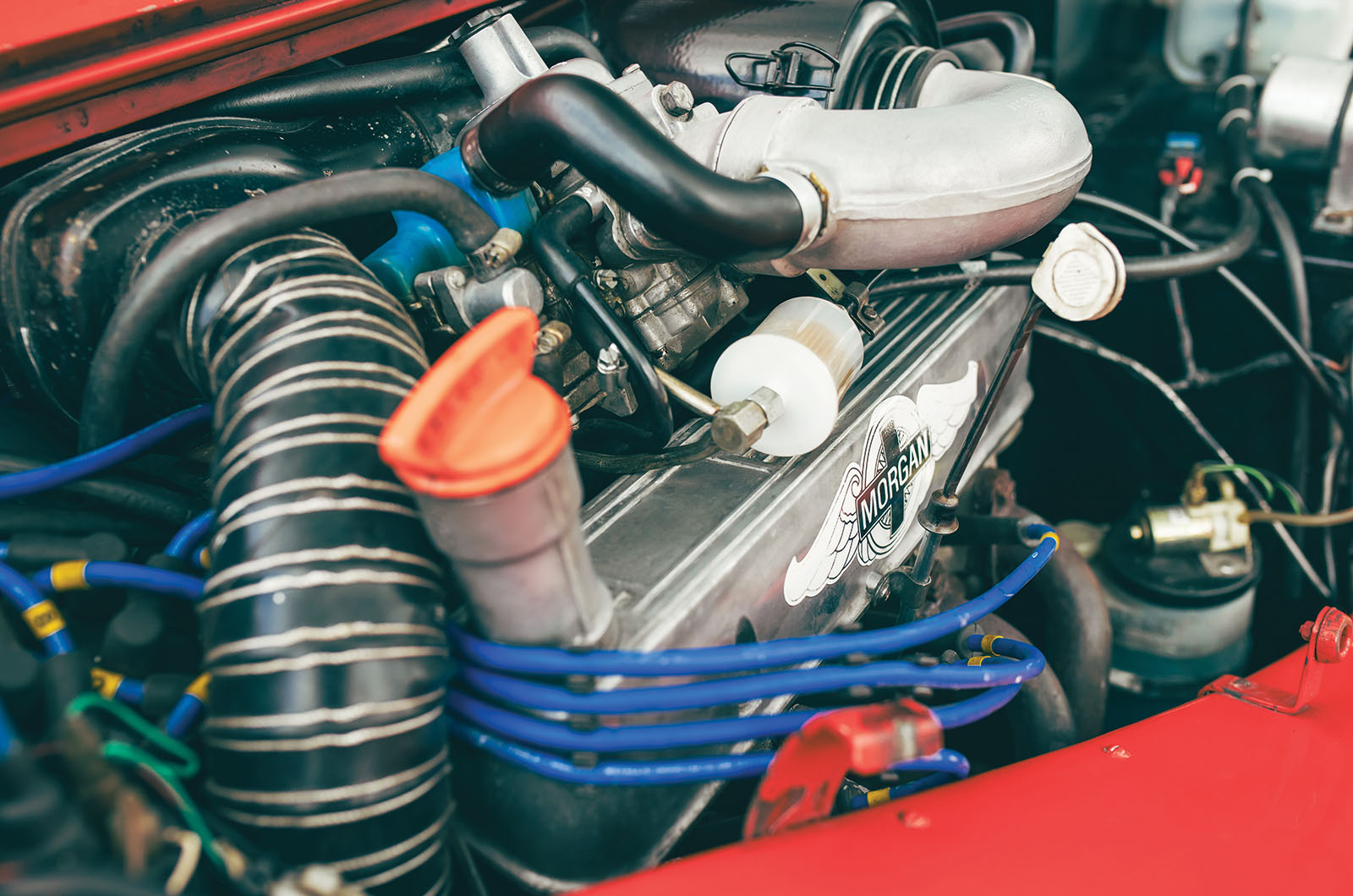
The Buick-derived Rover V8 introduced eight cylinders to the masses
The McLaren is objectively the most advanced machine here.
With its explosive pace, physics-defying chassis and almost bewilderingly unthreatening usability, it should be the poster-car for this group.
But if you’re looking for vehicles that are not only defined by their V8 engines, but which also have an entire legacy built around them, look no further than the Bentley S2 and the Morgan Plus 8.
The S2’s L-series unit was so right-sized for the model’s understated quality and need for effortless, discreet urge that, in various evolutions, it was to power the marque’s models for the following 61 years (plus Rolls-Royces until the early 2000s).
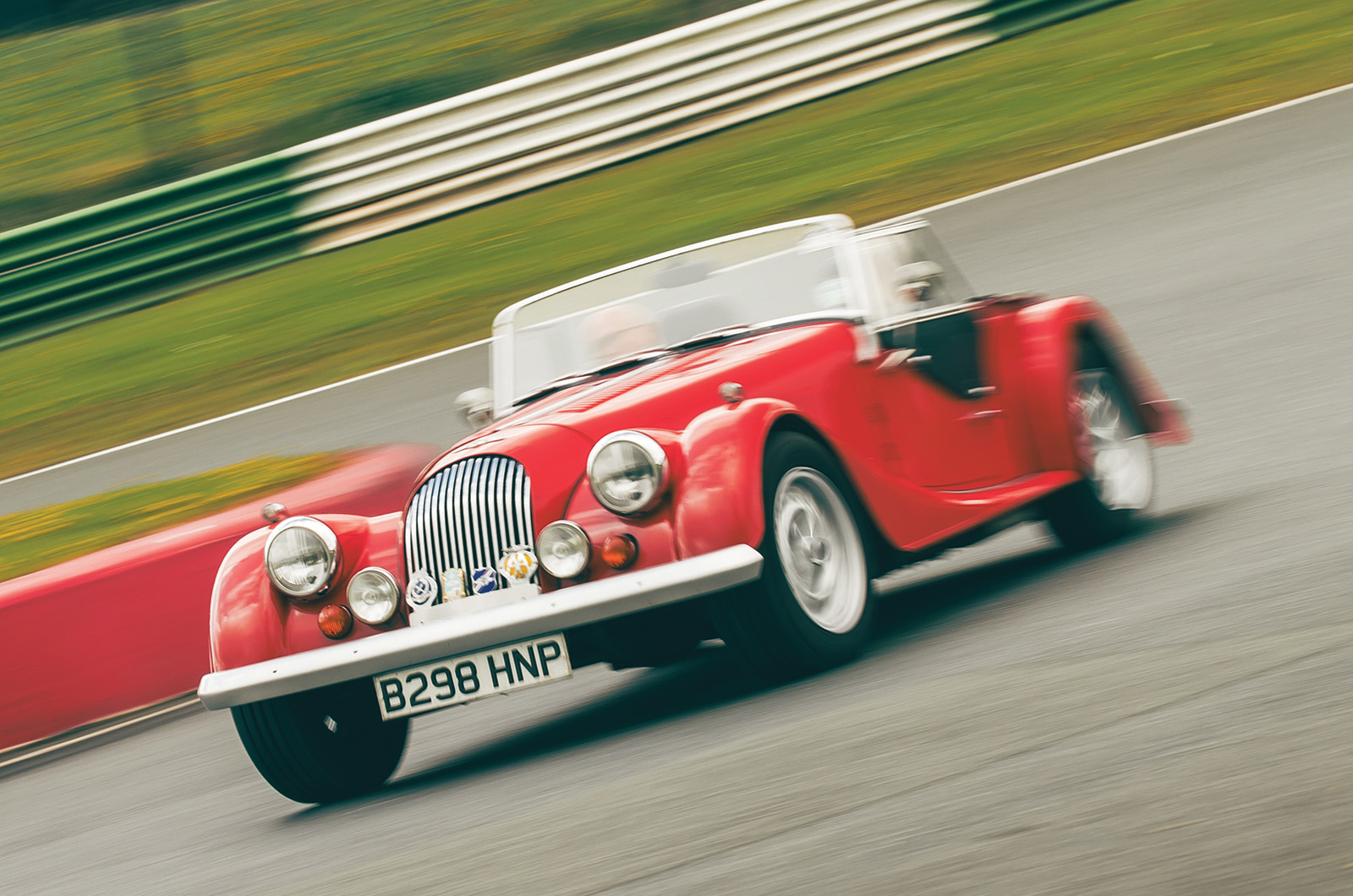
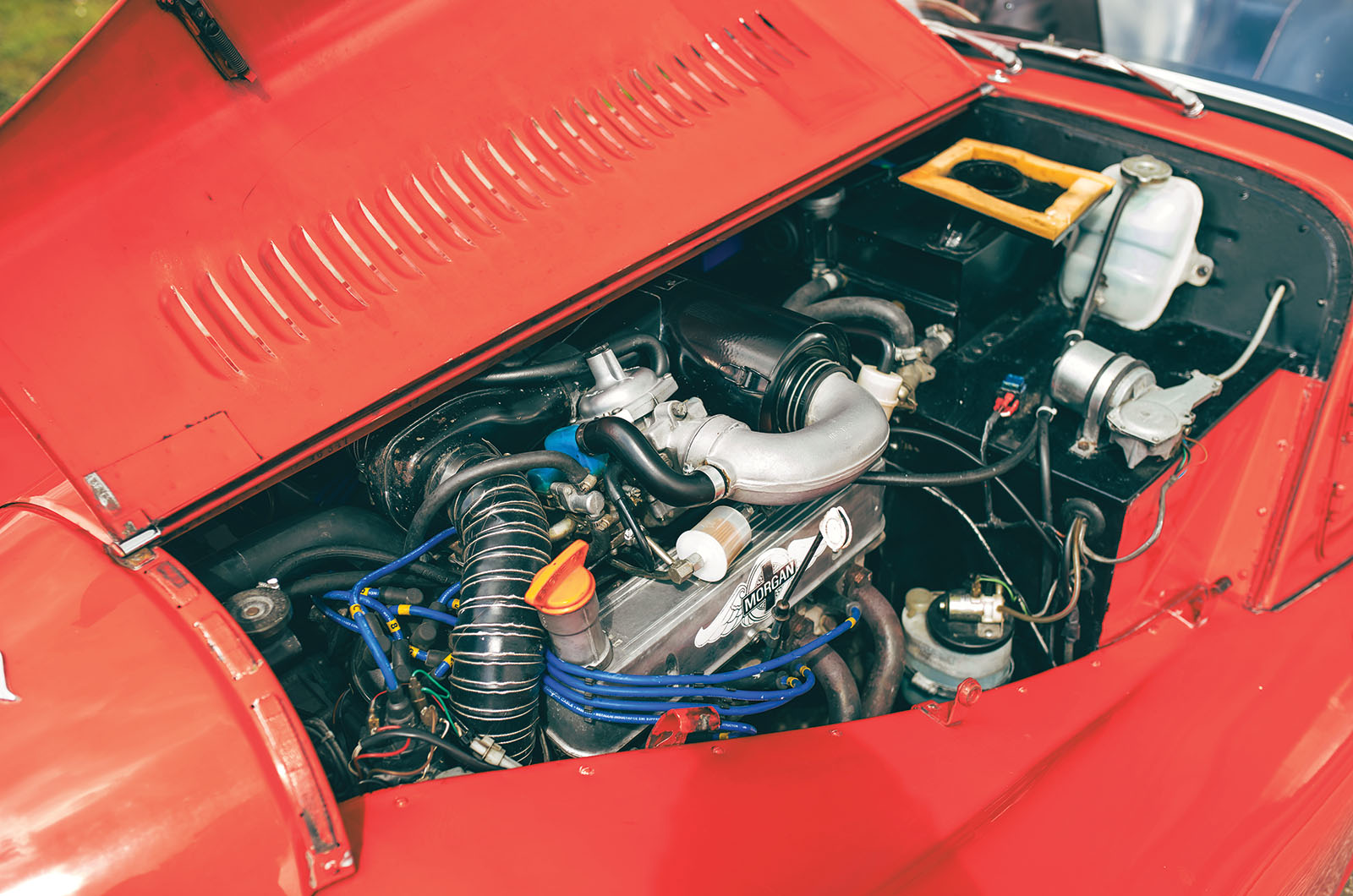
It was the evergreen Rover V8, though, that not only transformed Morgan’s fortunes, but also truly democratised V8 ownership across myriad car brands, by virtue of its lightness, simplicity, durability and tunability.
It may have been American by birth, but its upbringing and evolution were entirely British. And brilliant.
Factfiles
Daimler SP250
- Sold/number built 1959-’64/2648
- Engine iron-block, alloy-heads, ohv 2548cc V8, twin SU carburettors
- Max power 140bhp @ 5800rpm
- Max torque 155lb ft @ 3600rpm
- Transmission four-speed manual, RWD
- Weight 2268lb (1029kg)
- 0-60mph 8.9 secs
- Top speed 123mph
- Mpg 25
- Price new £1489
- Price now £25-40,000*
Morgan Plus 8
- Sold/number built 1968-2004/6000
- Engine all-alloy, ohv 3528cc V8, twin SU carburettors
- Max power 155bhp @ 5250rpm
- Max torque 198lb ft @ 2500rpm
- Transmission five-speed manual, RWD
- Weight 1875lb (850kg)
- 0-60mph 6.7 secs
- Top speed 125mph
- Mpg 22
- Price new £10,946
- Price now £25-50,000*
Aston Martin DBS V8
- Sold/number built 1969-’72/404
- Engine all-alloy, dohc-per-bank 5340cc V8, fuel injection
- Max power 325bhp @ 5000rpm
- Max torque 400lb ft @ 4500rpm
- Transmission three-speed auto, RWD
- Weight 4200lb (1905kg)
- 0-60mph 5.9 secs
- Top speed 162mph
- Mpg 12-14
- Price new £7501
- Price now £80-230,000*
Triumph Stag
- Sold/number built 1970-’77/25,939
- Engine iron-block, alloy-heads, sohc-per-bank 2997cc V8, twin Zenith-Stromberg carburettors
- Max power 145bhp @ 5500rpm
- Max torque 167lb ft @ 3500rpm
- Transmission four-speed manual/three-speed automatic, RWD
- Weight 2807lb (1273kg)
- 0-60mph 9.9 secs
- Top speed 112mph
- Mpg 21
- Price new £2685
- Price now £10-30,000*
Daimler Majestic Major
- Sold/number built 1959-’68/2044
- Engine iron-block, alloy-head, ohv 4561cc V8, twin SU carburettors
- Max power 220bhp @ 5500rpm
- Max torque 283lb ft @ 3200rpm
- Transmission three-speed auto, RWD
- Weight 4032lb (1829kg)
- 0-60mph 9.7 secs
- Top speed 123mph
- Mpg 14-20
- Price new £2554
- Price now £15-30,000*
Bentley S2
- Sold/number built 1959-’62/1922
- Engine all-alloy, ohv 6230cc V8, twin SU carburettors
- Max power n/a
- Max torque n/a
- Transmission four-speed auto, RWD
- Weight 4578lb (2077kg)
- 0-60mph 10 secs
- Top speed 113mph
- Mpg 24
- Price new £6000
- Price now £30-60,000*
TVR Cerbera 4.5
- Sold/number built 1997-2006/c1500 (all)
- Engine all alloy, sohc-per-bank 4475cc V8, electronic fuel injection
- Max power 420bhp @ 6750rpm
- Max torque 380lb ft @ 5500rpm
- Transmission five-speed manual, RWD
- Weight 2425lb (1100kg)
- 0-60mph 4.3 secs
- Top speed 143mph
- Mpg 19.8
- Price new £46,500
- Price now £25-50,000*
Jaguar XKR 4.2-S
- Sold/number built 2002-’06/9661 (all)
- Engine all-alloy, dohc-per-bank 4196cc V8, Eaton supercharger
- Max power 395bhp @ 6100rpm
- Max torque 399lb ft @ 3500rpm
- Transmission six-speed auto, RWD
- Weight 3825lb (1735kg)
- 0-60mph 5.2 secs
- Top speed 155mph
- Mpg 22.9
- Price new £56,700
- Price now £10-25,000*
Lotus Esprit V8
- Sold/number built 1996-2004/1483
- Engine all-alloy, dohc-per-bank 3506cc V8, twin Garrett T25 turbochargers, electronic fuel injection
- Max power 350bhp @ 6500rpm
- Max torque 295lb ft @ 4250rpm
- Transmission five-speed manual, RWD
- Weight 3040lb (1380kg)
- 0-60mph 4.8 secs
- Top speed 175mph
- Mpg 21
- Price new £49,950
- Price now £40-65,000*
McLaren MP4-12C
- Sold/number built 2011-’14/c3400
- Engine all-alloy, dohc-per-bank 3799cc V8, twin turbochargers, fuel injection
- Max power 592-617bhp @ 7000rpm
- Max torque 443lb ft @ 3-7000rpm
- Transmission seven-speed dual-clutch automatic, RWD
- Weight 2945lb (1336kg)
- 0-60mph 3.1 secs
- Top speed 207mph
- Mpg 22
- Price new £168,500
- Price now £60-110,000*
*Prices correct at date of original publication
Enjoy more of the world’s best classic car content every month when you subscribe to C&SC – get our latest deals here
READ MORE
Aston Martin vs Jaguar vs Triumph vs AC vs Austin-Healey vs Bristol: Britain’s best straight-sixes
22 cars powered by British V8 engines
MG RV8 vs TVR Griffith vs Marcos Mantara: power to the people