Other than the adoption of chromed door-window frames, the DM4 shape changed very little visually across its 17-year run; only near the end of production did Vanden Plas look at using quad-headlights and a curved windshield (without a split).
The Princess 4 liter was by then facing internal competition from the Daimler Majestic Major limousine and was eventually dropped in favor of the long-serving 1968-’90 Daimler DS420.
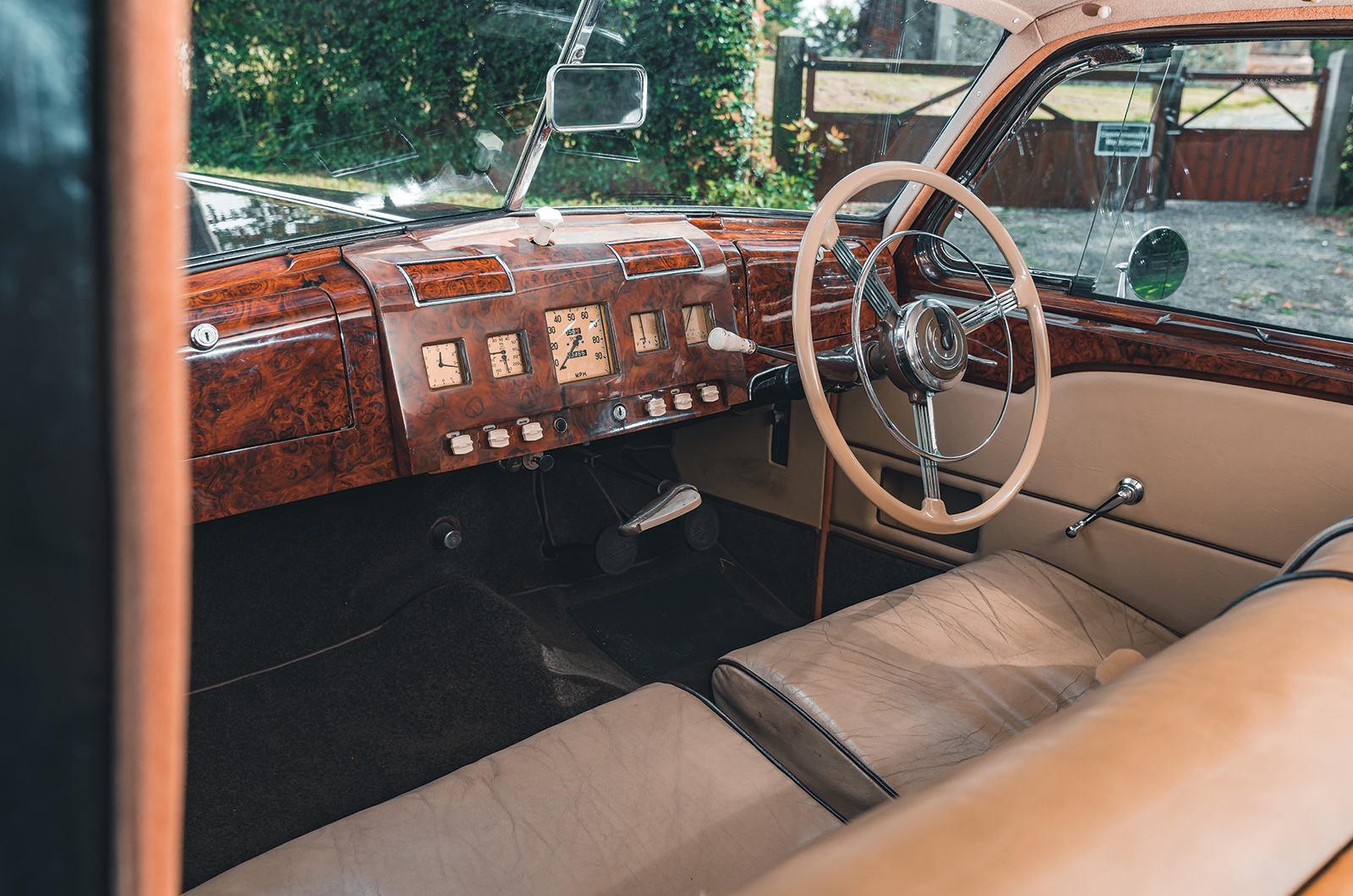
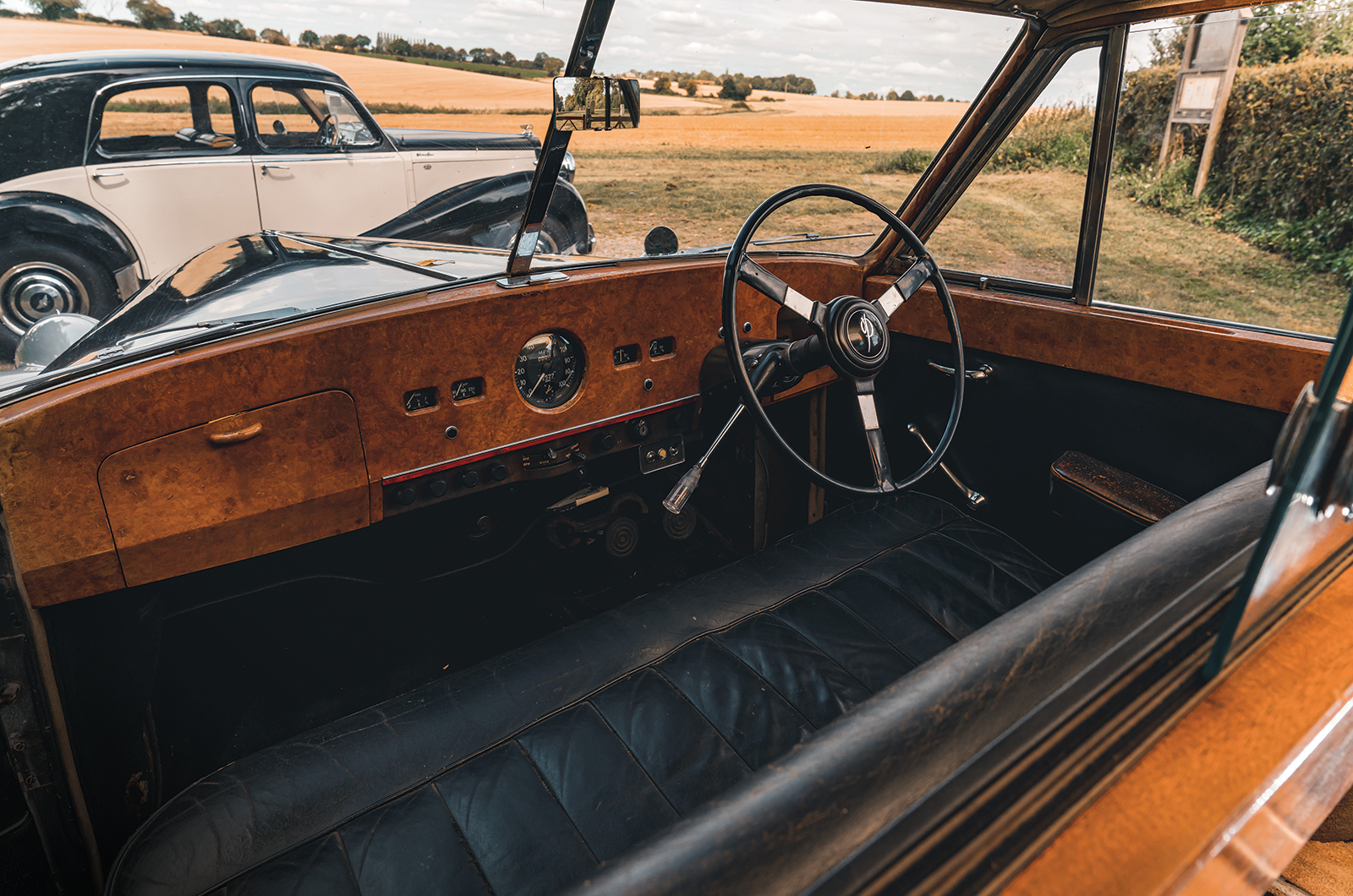
The rather austere finish marks the Vanden Plas Princess 4 liter’s cockpit as the chauffeur’s workplace
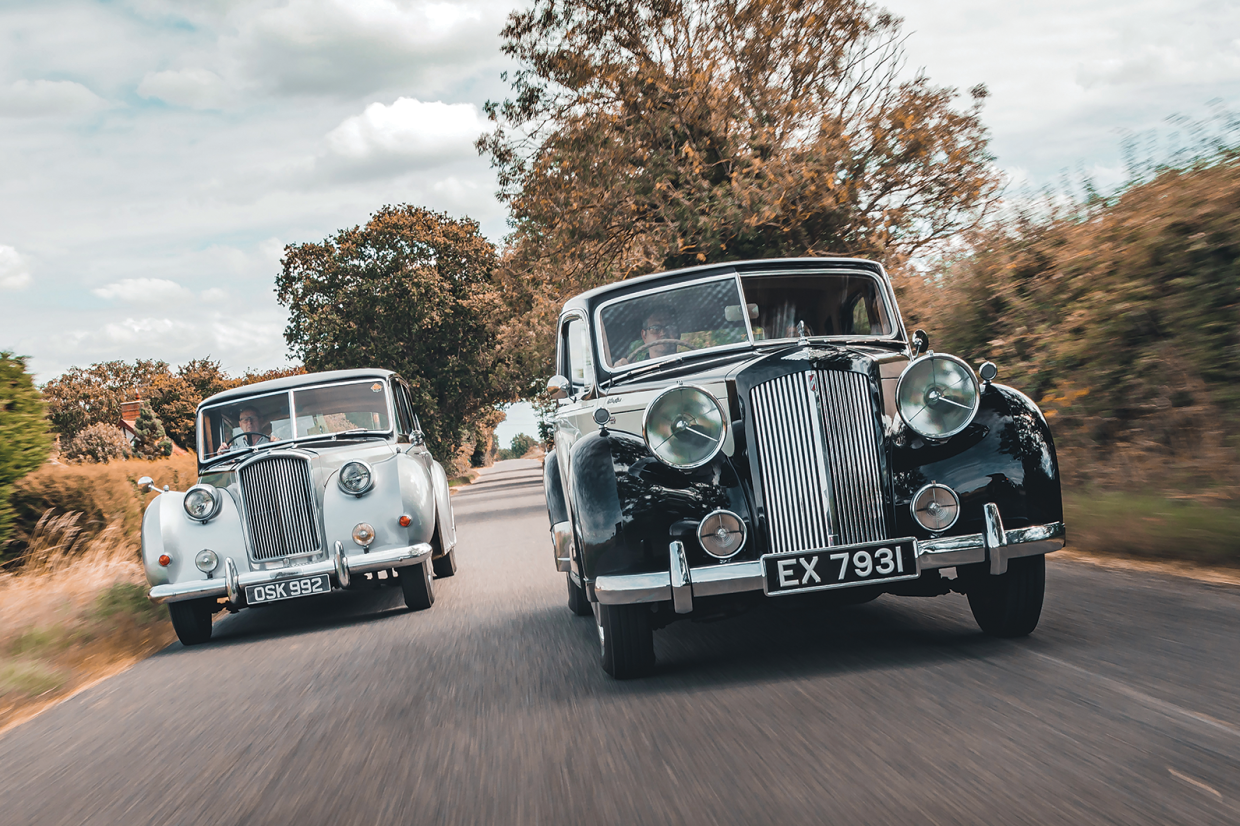
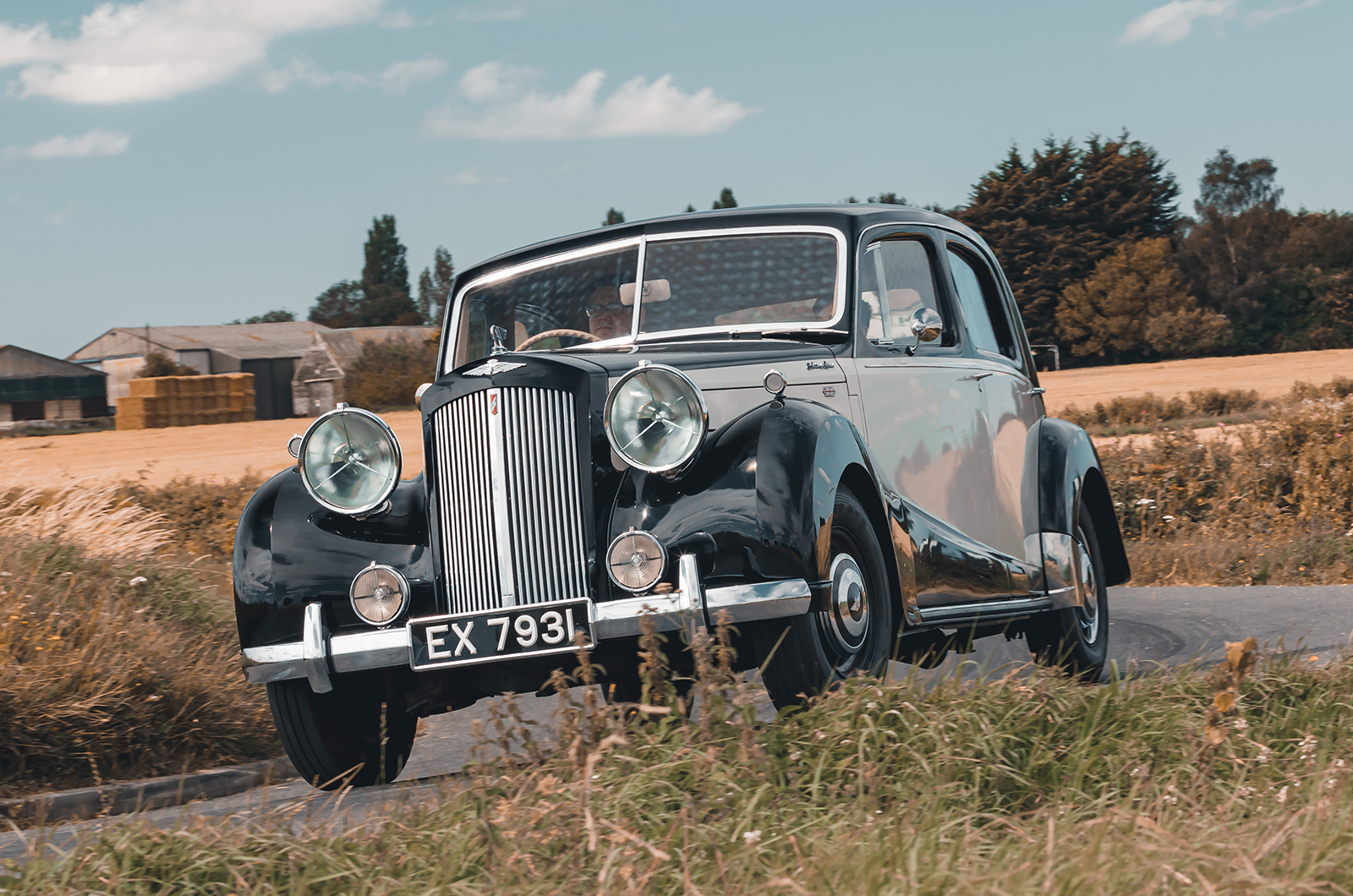
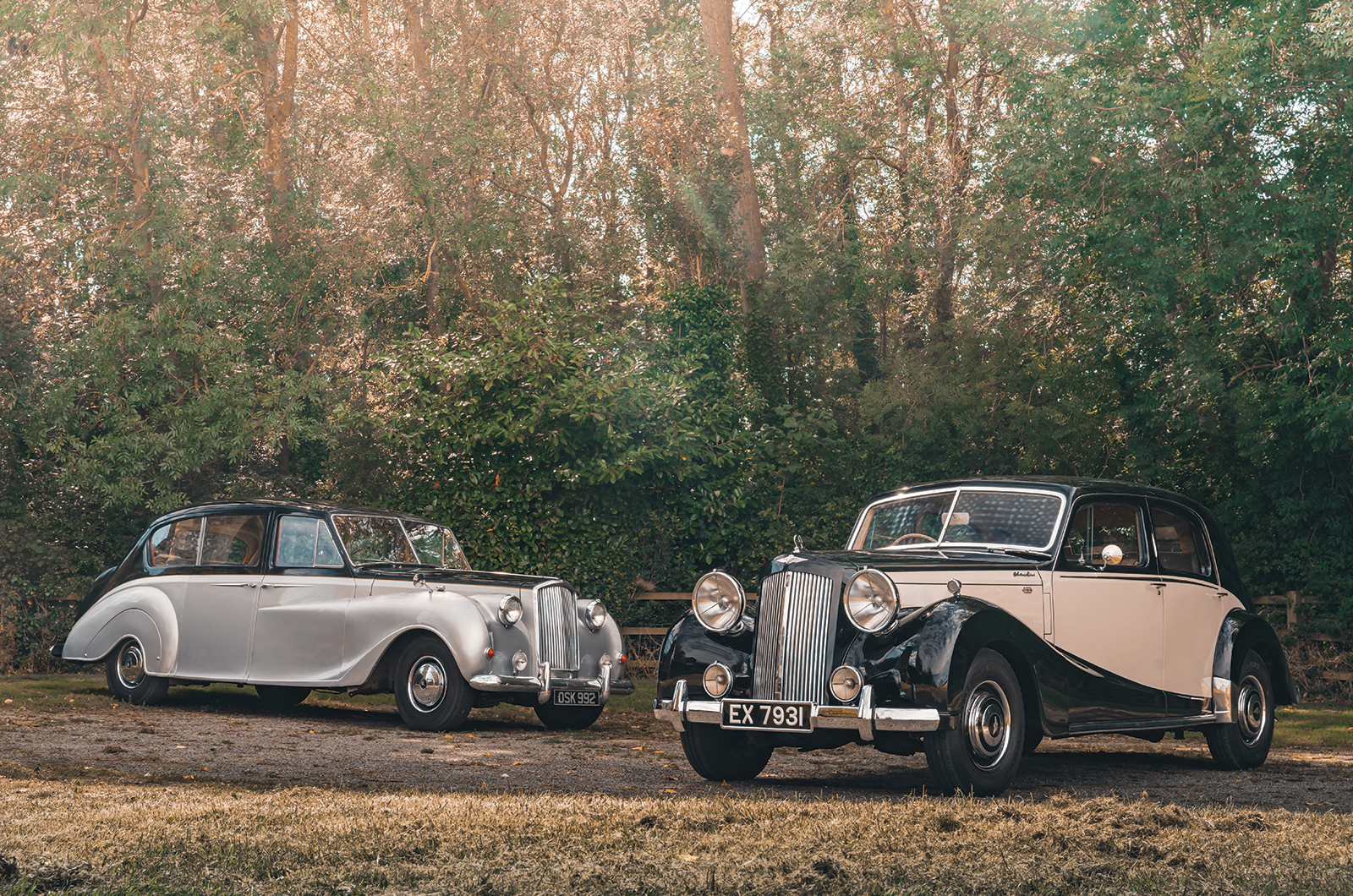
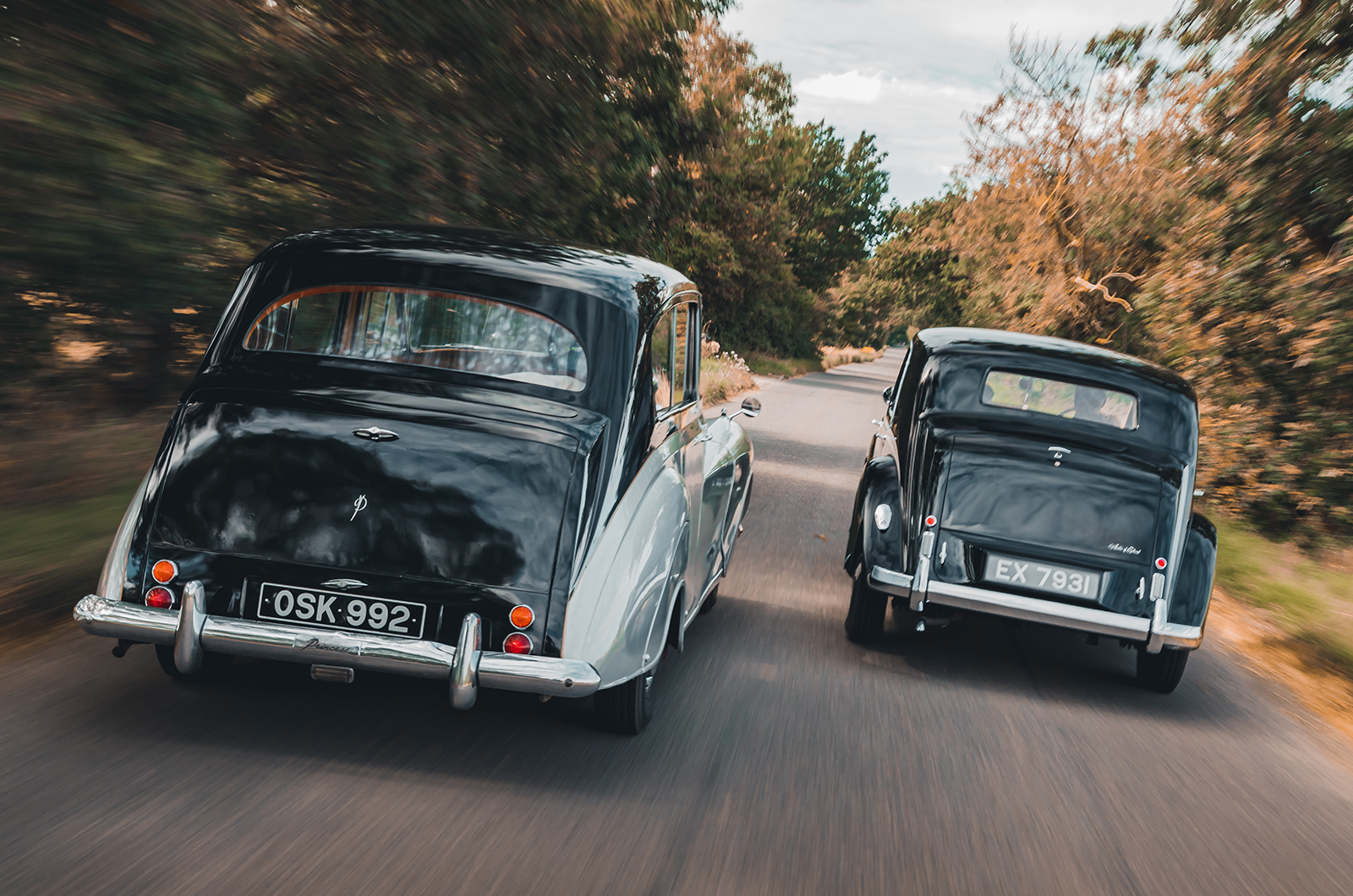
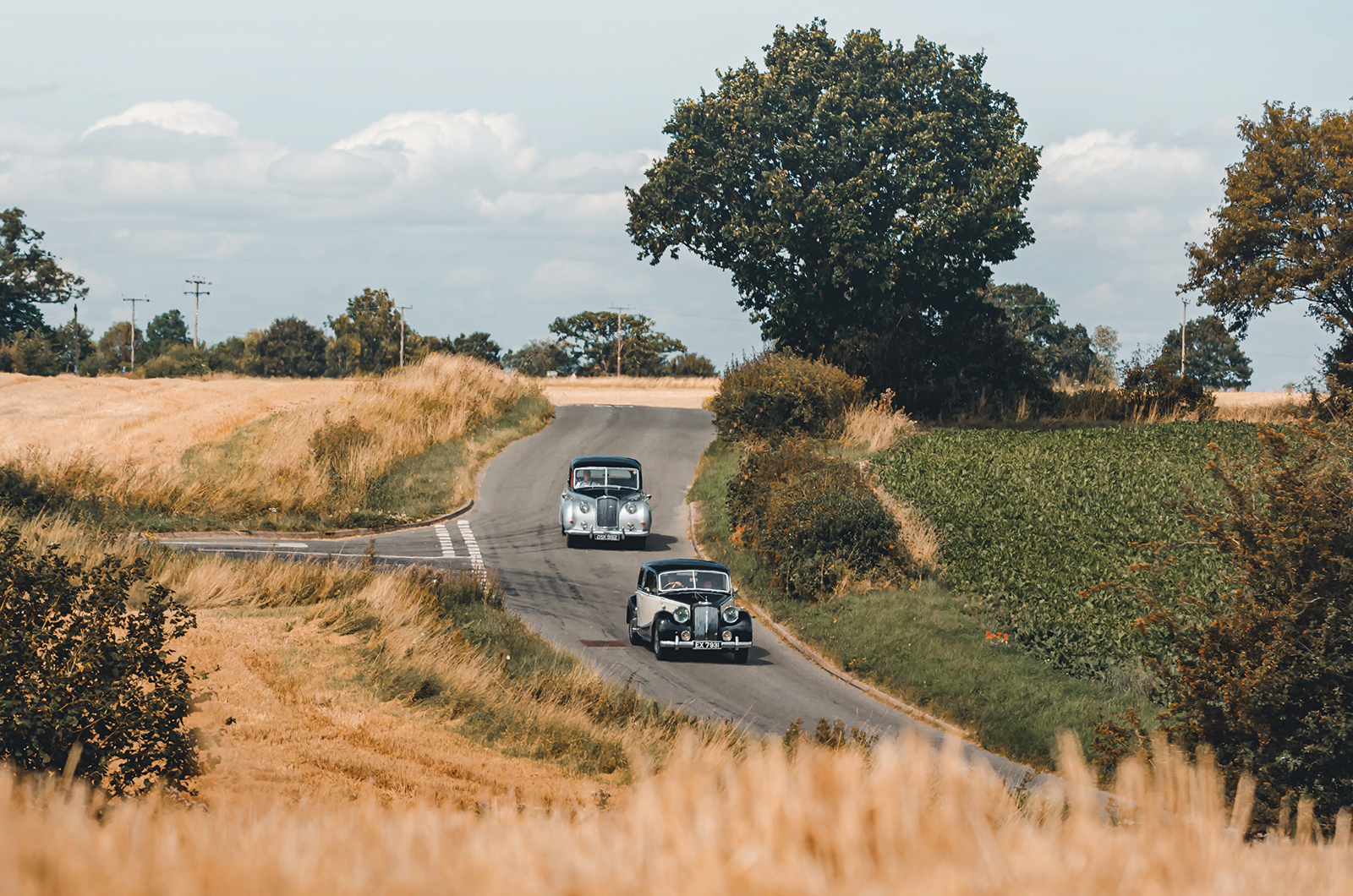
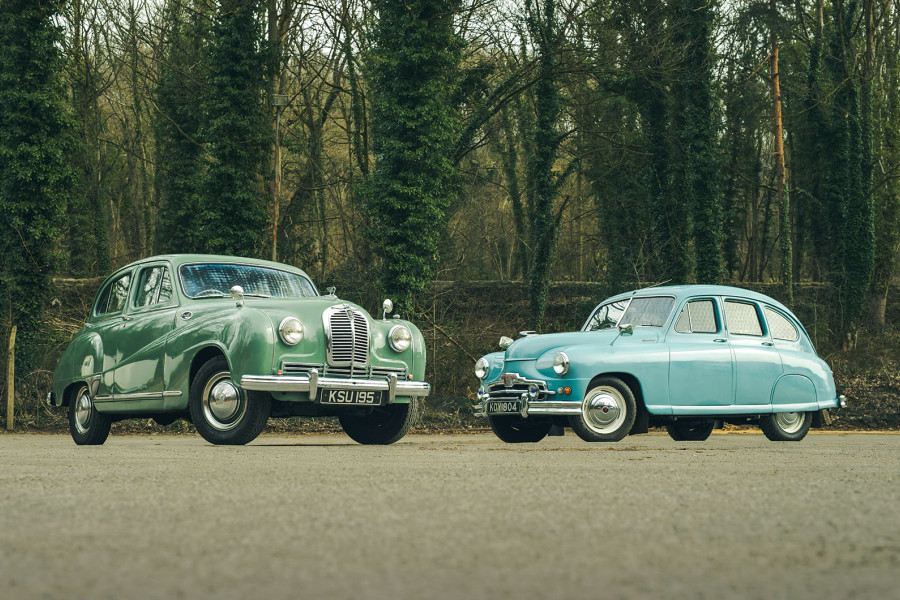
The two classic cars photographed for you here represent the two extremes of the 4-liter production run.
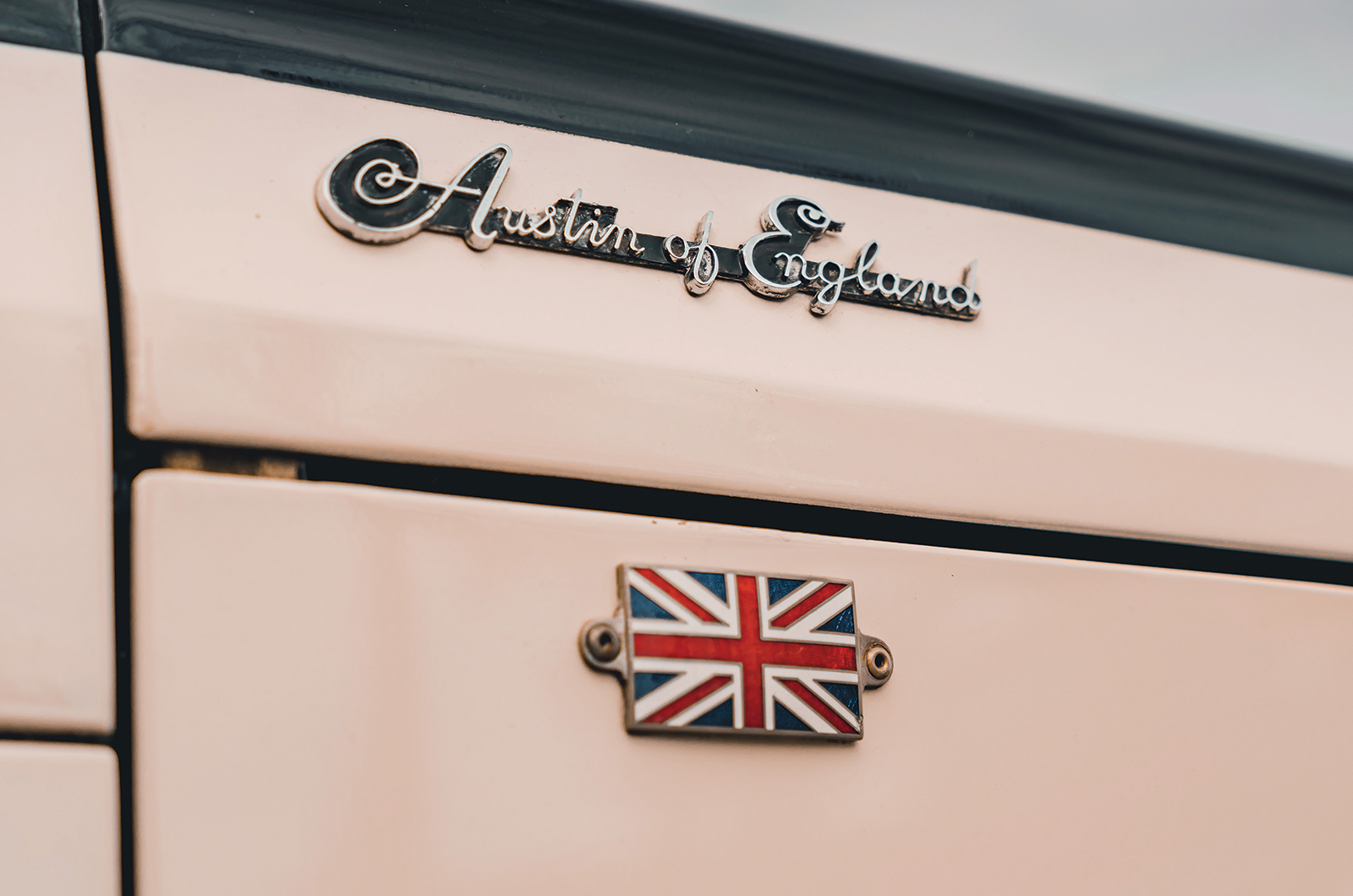
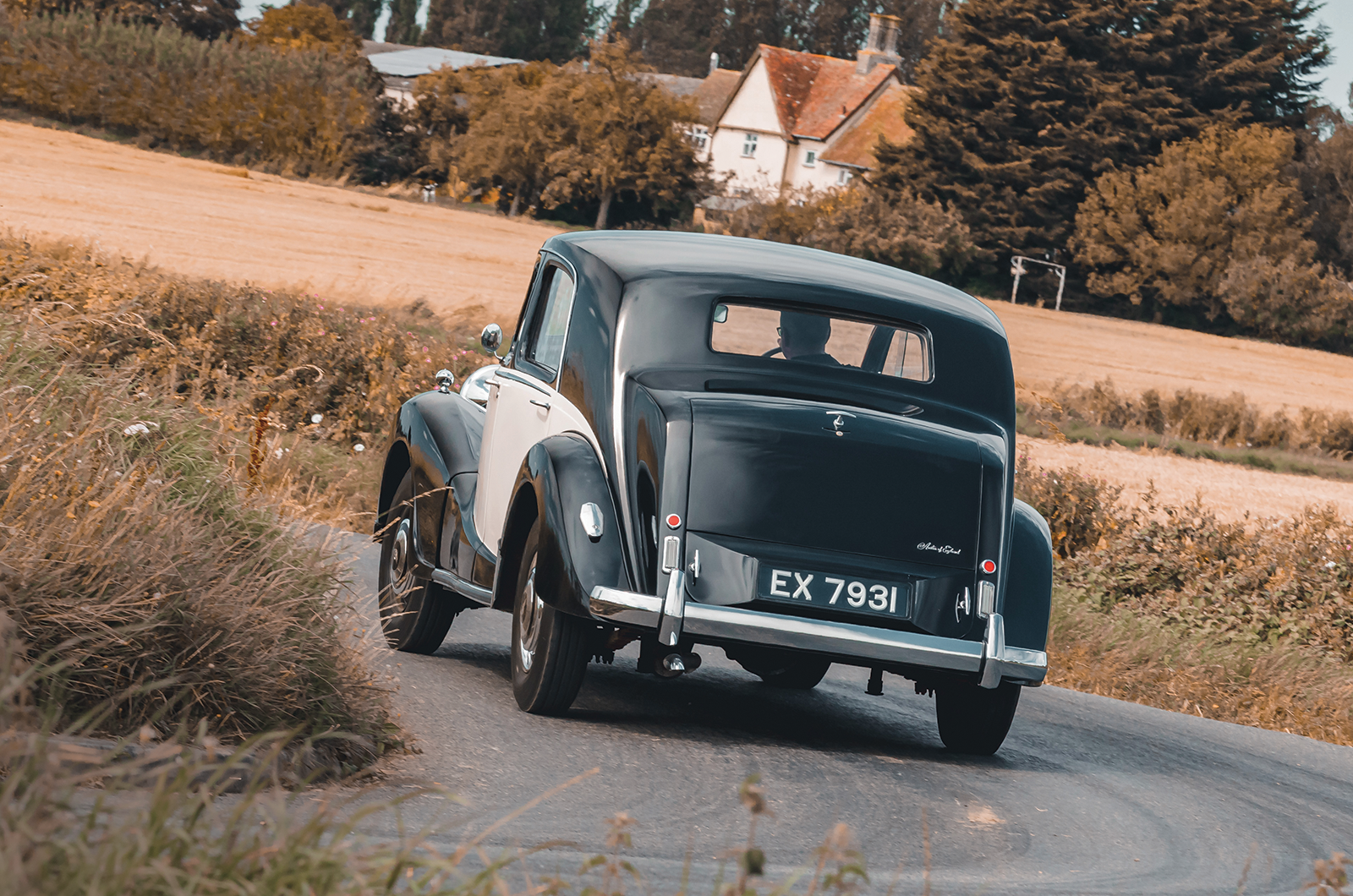
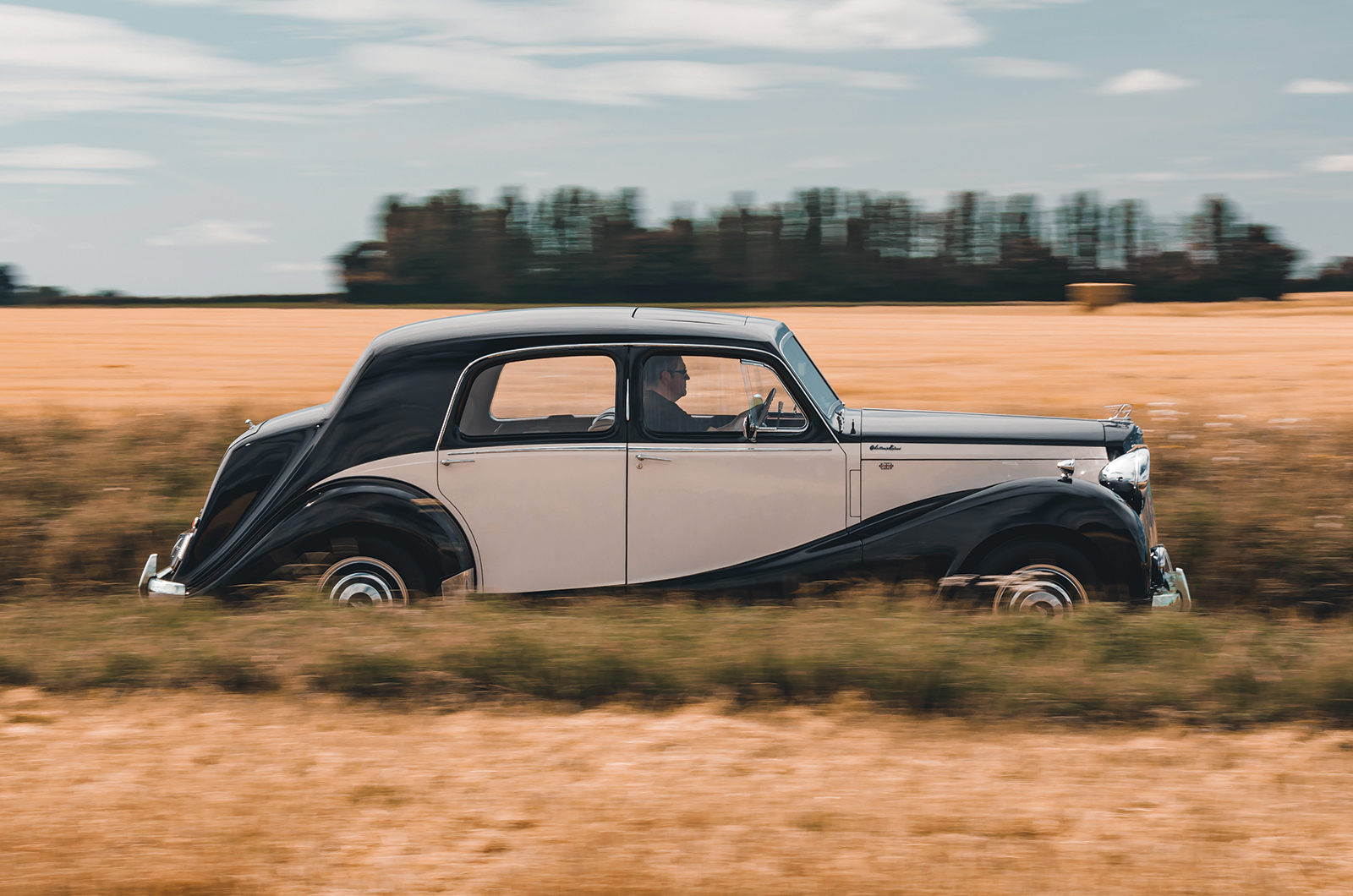
A125 Sheerline EX 7931 was originally registered in 1953 in Great Yarmouth, Norfolk, in the UK, just 12 miles down the road from where current owner Jonathan Read lives. Laid up in 1974, it was discovered in the mid-’80s by John Cummins.
He started rebuilding the car, but eventually passed ownership on to his nephew, Colin Cummins, who finished the restoration.
In the process, he turned it into one of the most beautiful examples remaining.
EX 7931 joined the Read family fleet three years ago, keeping two other Sheerlines company.
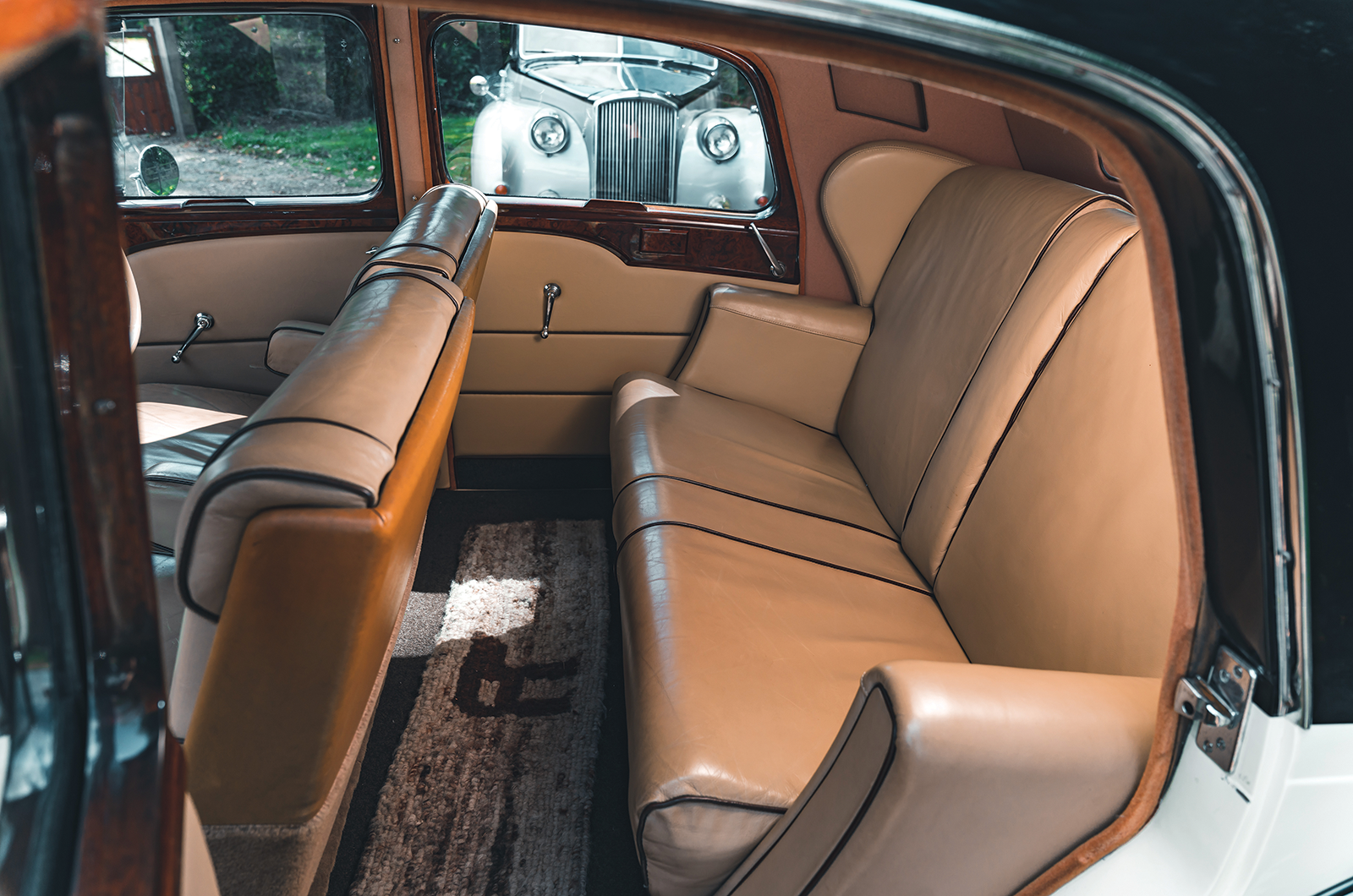
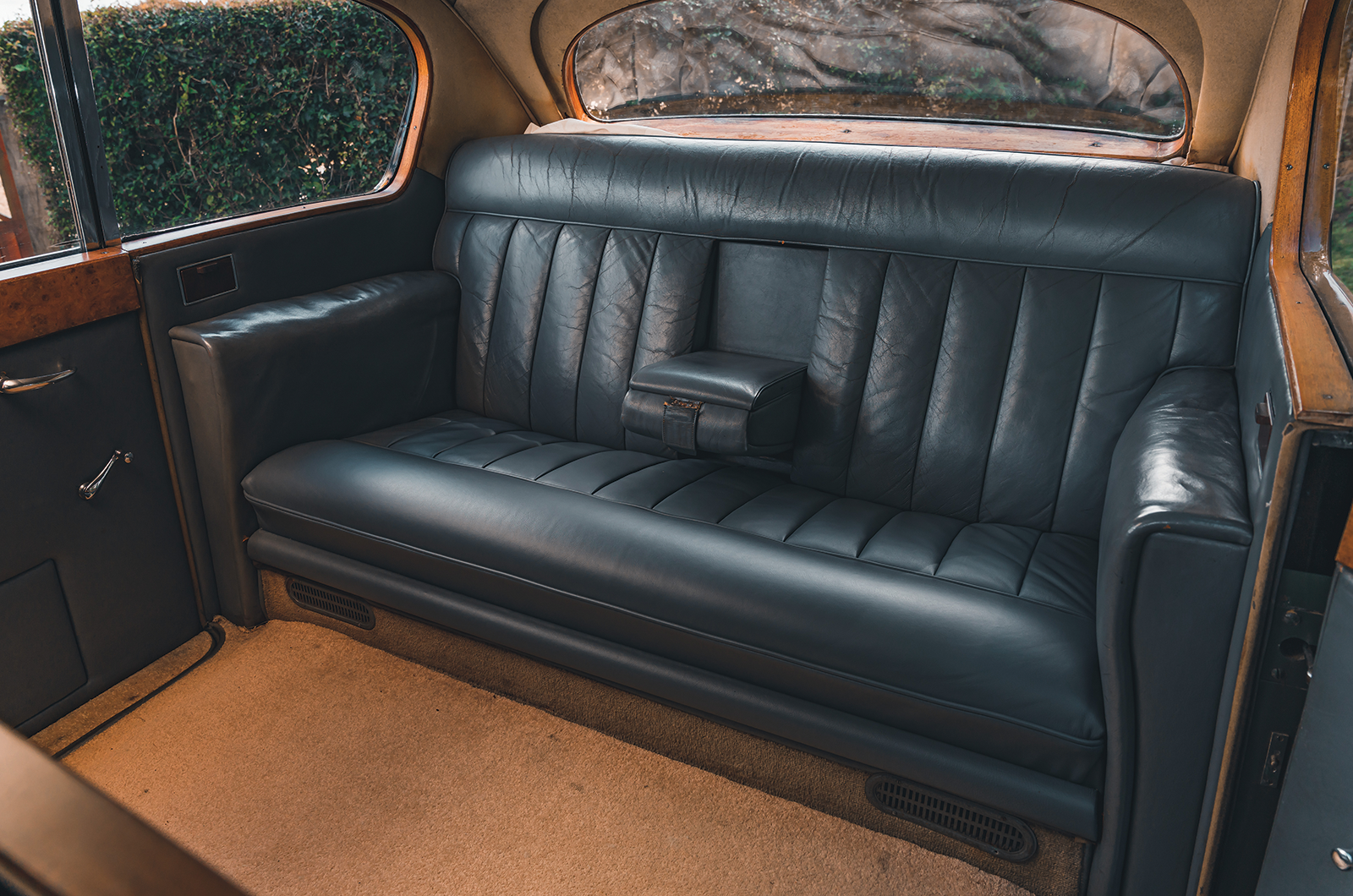
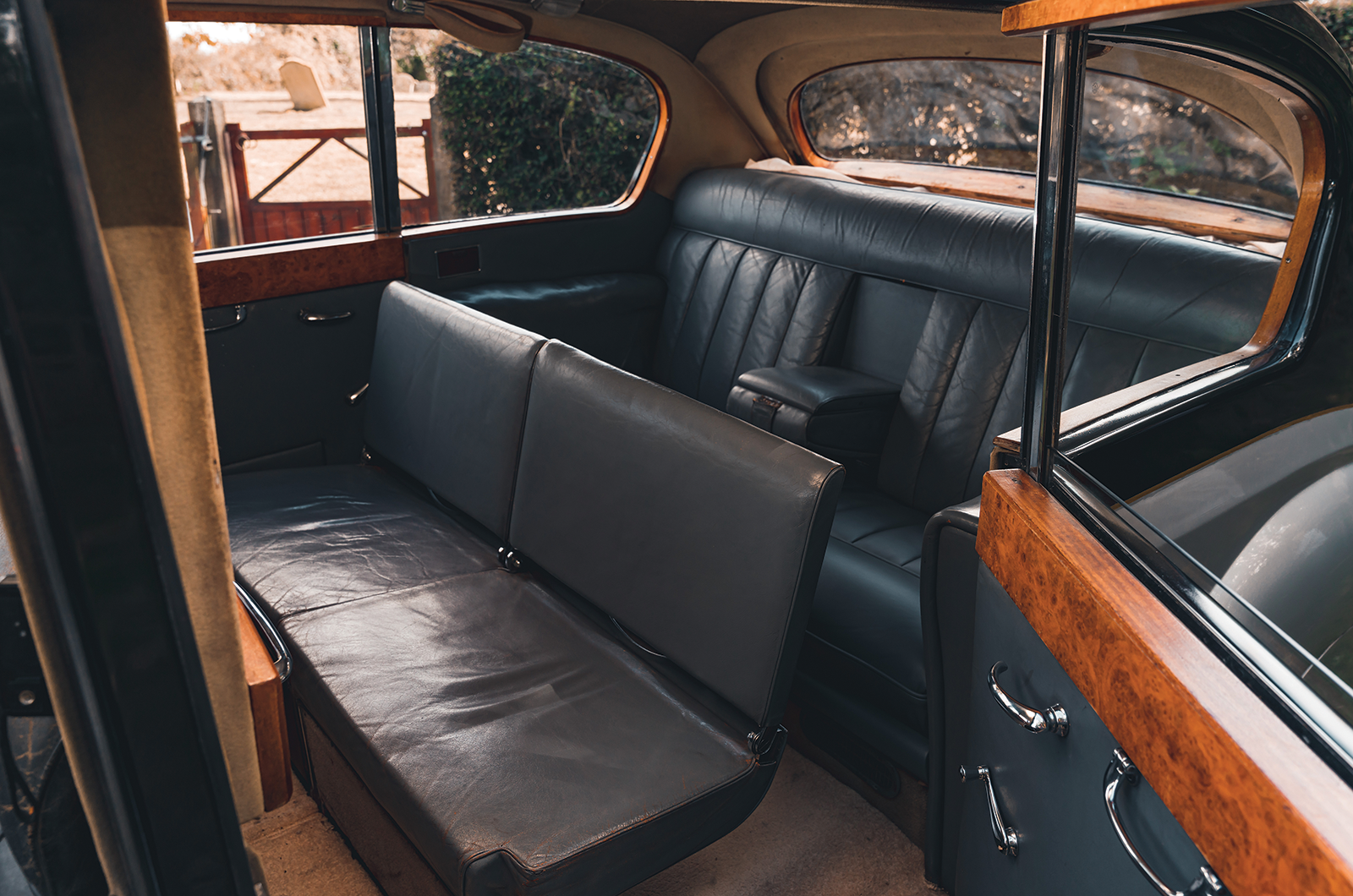
The commodious bench in the Vanden Plas Princess
“My father always talked fondly of Sheerlines, which is where my fascination for them comes from,” Jonathan tells us.
A wide variety of single- and two-tone finishes were available on Sheerlines and Princesses, but out of the 3238 DM4s built, a total of 2876 of them were black.
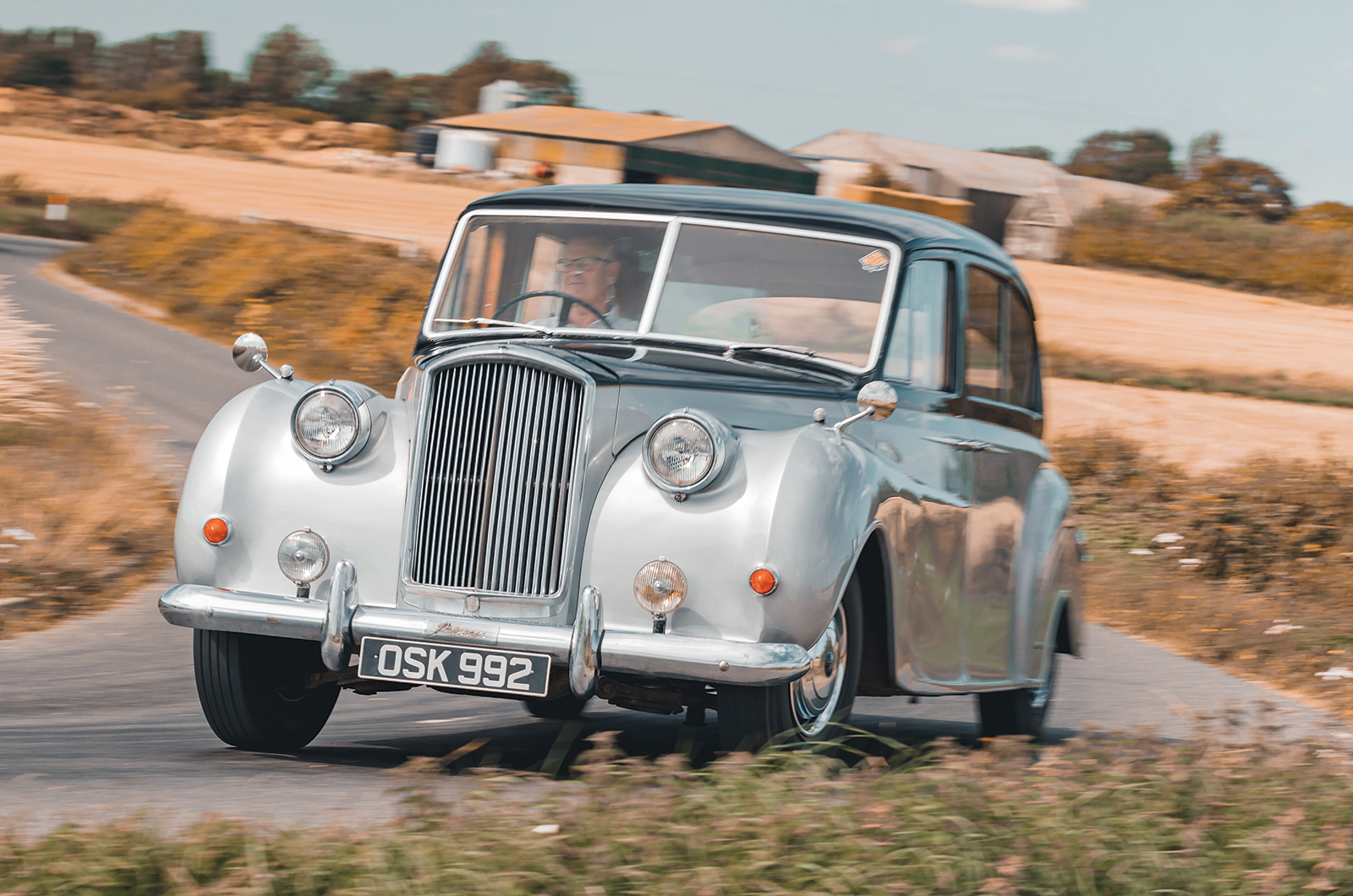
David Goodey’s DM4 Princess started life as a Yorkshire funeral director’s car, in black over Sherwood Green.
It later earned its living as a private-hire limousine with its second custodian, until the early 1980s when it was traded in at funeral-vehicle constructor Coleman Milne against one of its stretched Ford limousines.
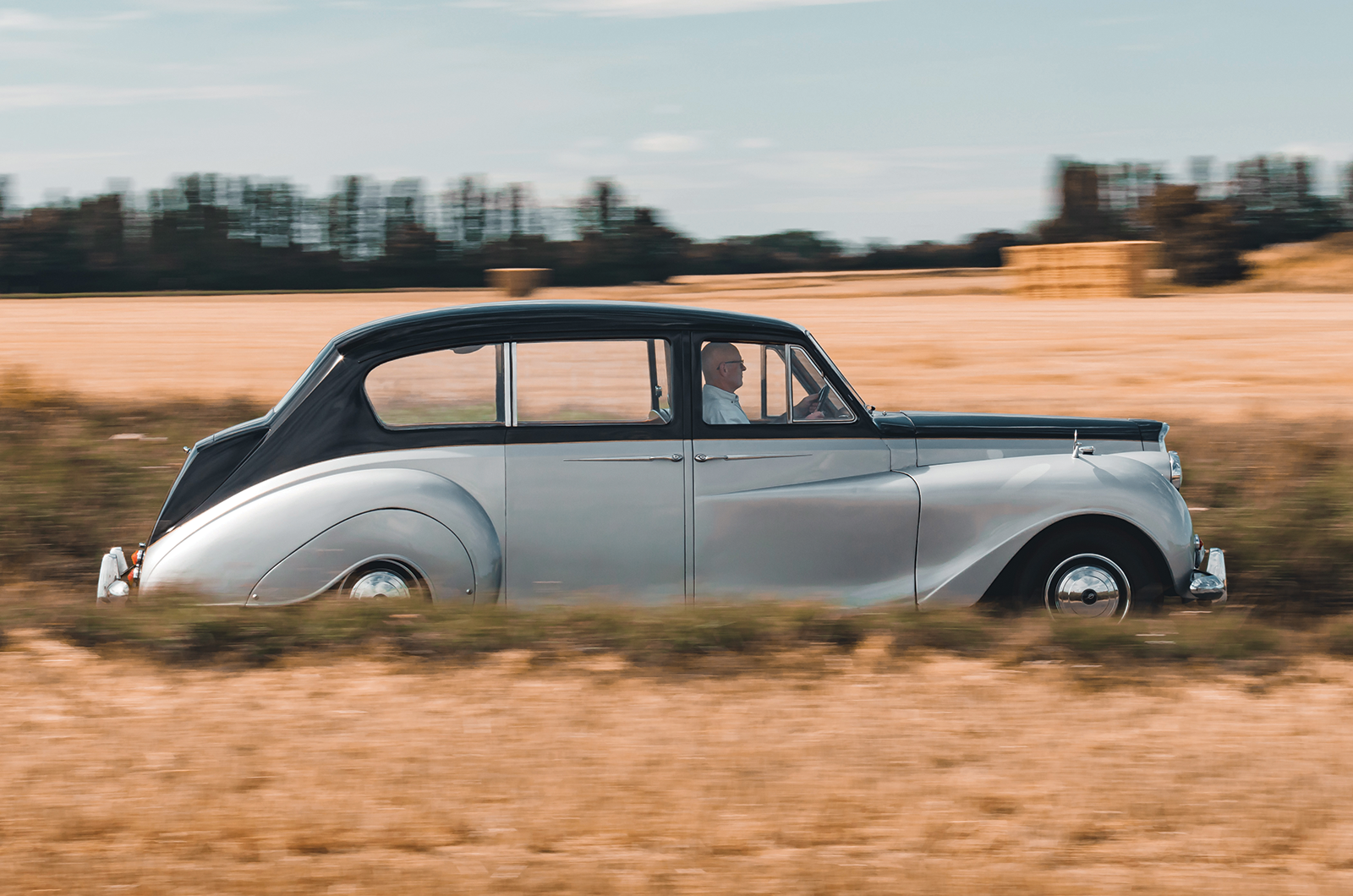
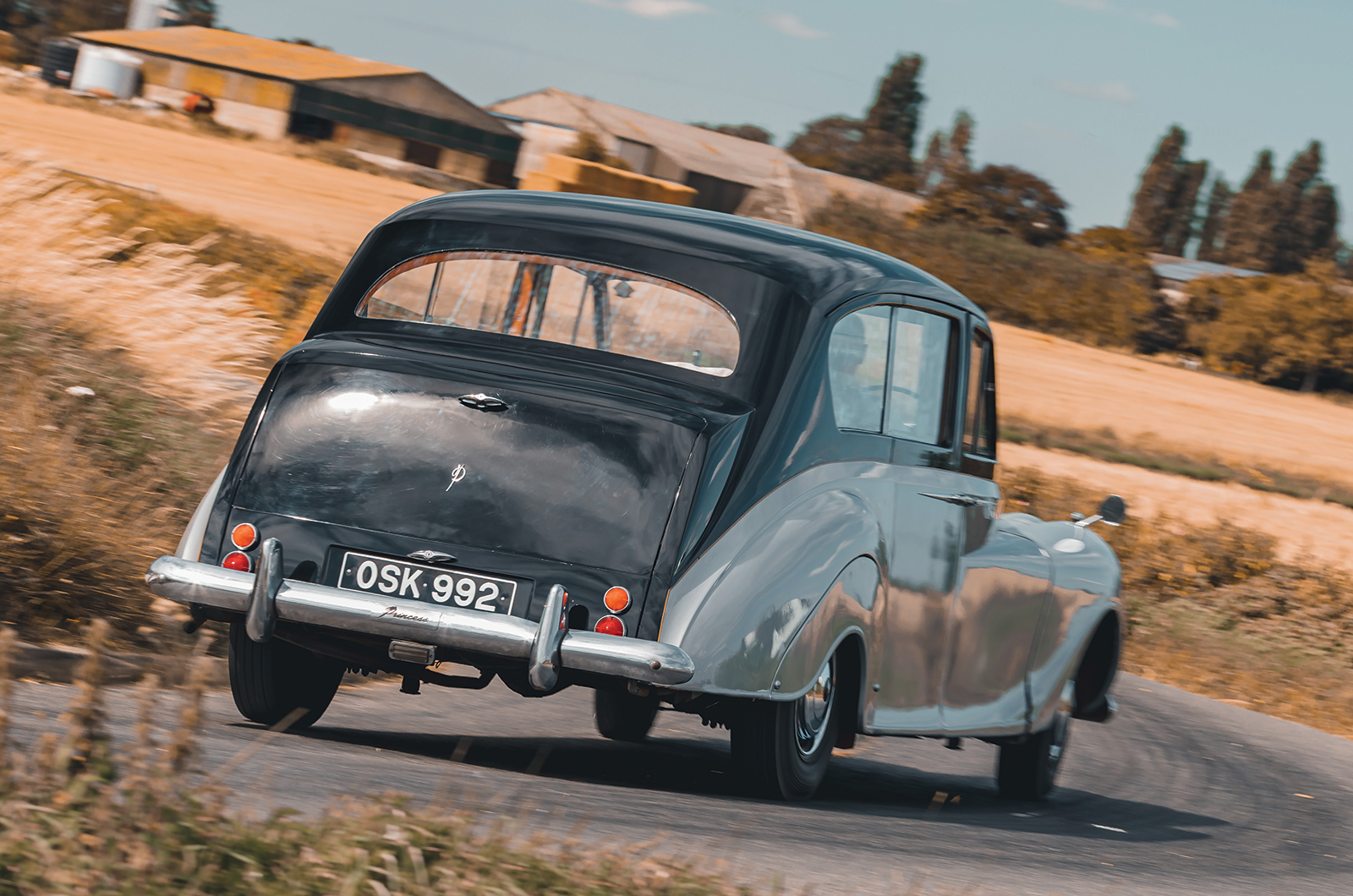
The Vanden Plas Princess is more understated than the Austin Sheerline
In 1984, David’s father bought the Princess from A135 specialist Don Kitchen and used it for wedding hire, until about 20 years ago.
In fact, the Princess, unrestored other than for attention to its wooden framework around the trunk, still does the odd wedding. It has even starred on the TV show Celebrity Antiques Road Trip.
With its fixed driving position, sliding division, simple fascia layout and lavish rear-seat space, the eight-seater Princess has the feel of a car built to do a job: a giant luxury taxi, albeit a graceful one in its own right compared to the slightly cartoonish looks of the Sheerline, which seems to have driven straight out of the world of Thomas the Tank Engine.
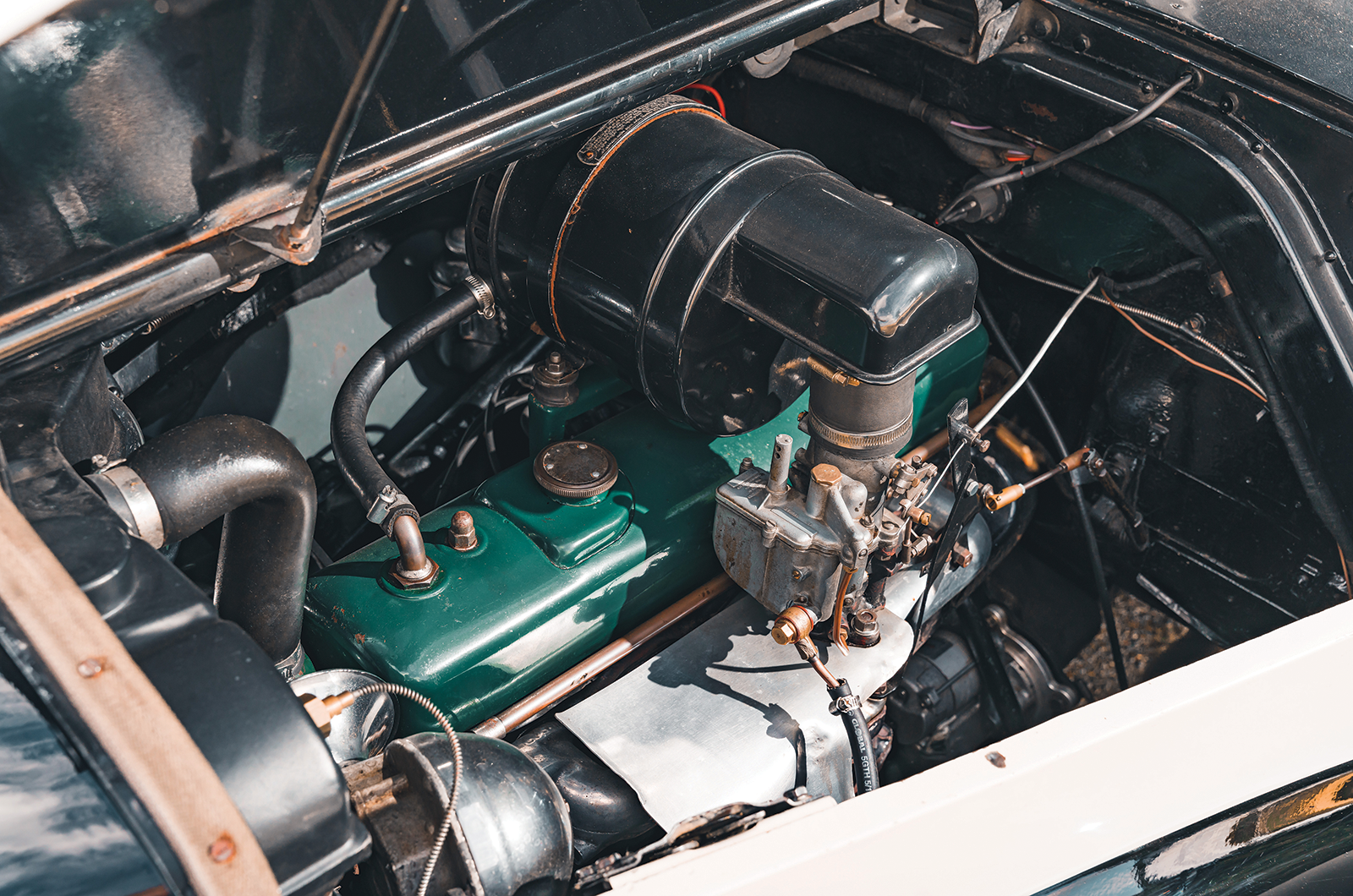
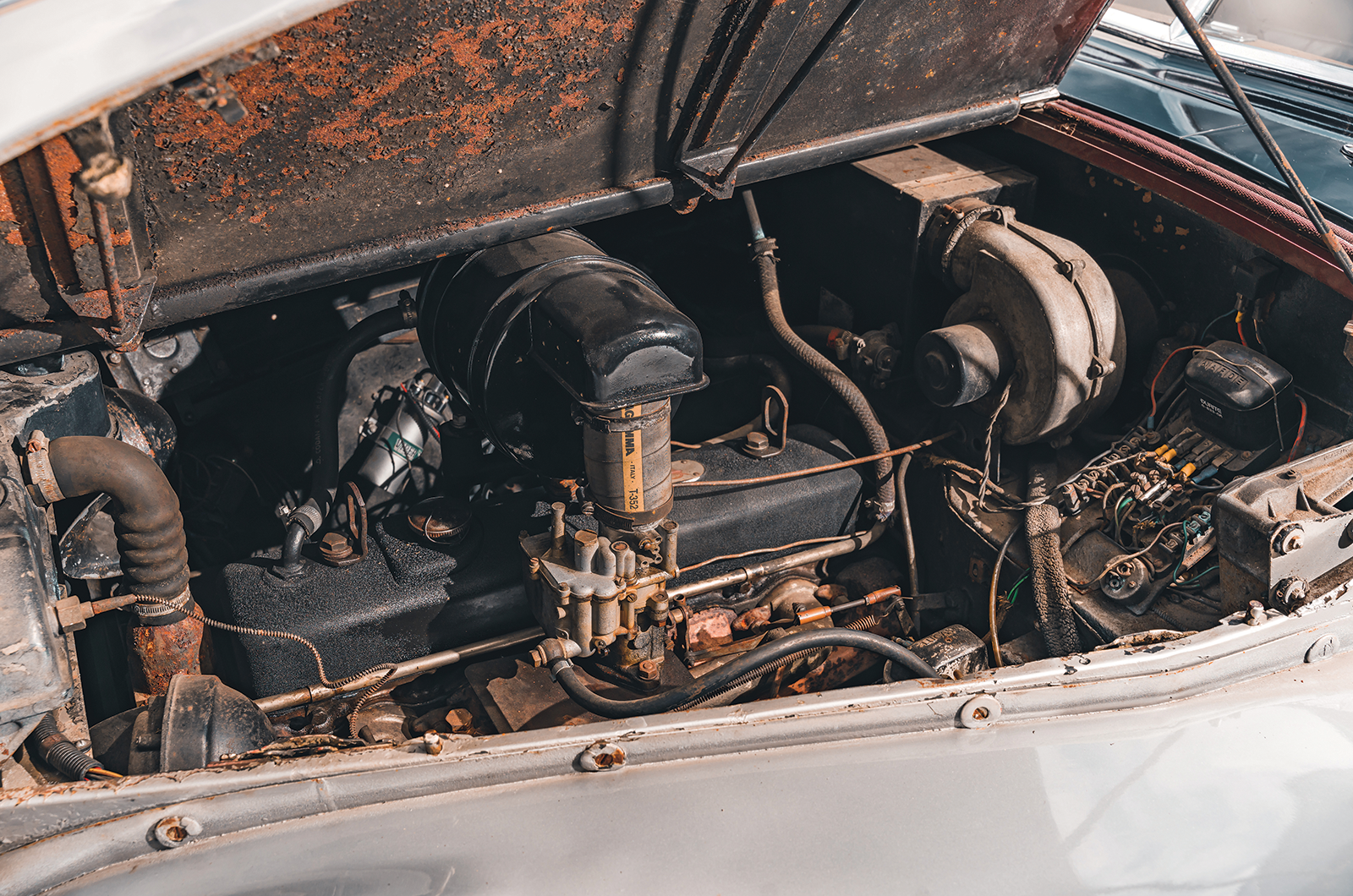
The Austin unit was uprated to 4 liters after the 3.5-liter pre-production cars
That is part of its charm, of course. The front doors open conventionally, despite many large English sedans still having B-pillar-hinged ‘suicide’ arrangements in the early 1950s.
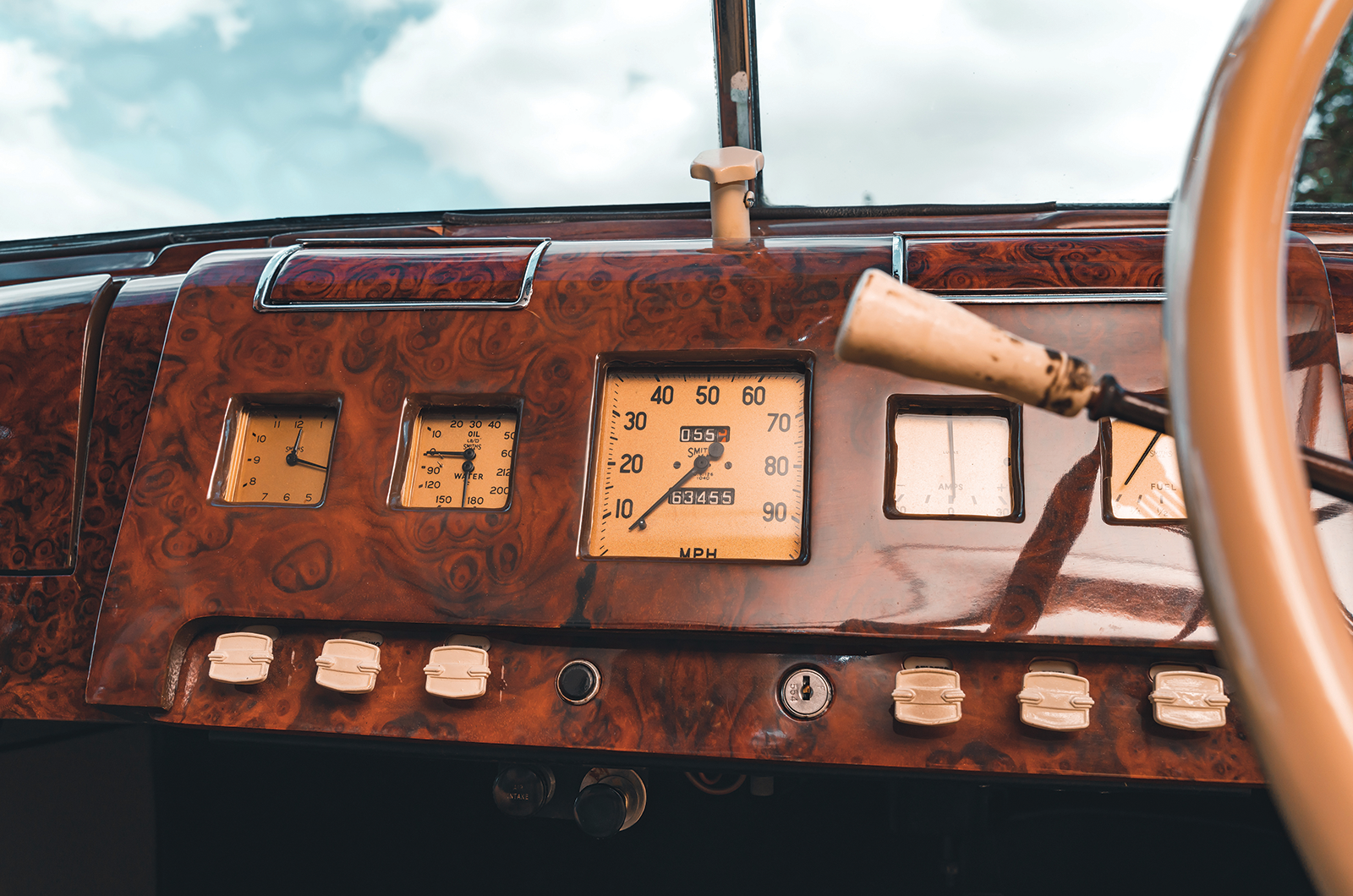
With its square, gold-faced instruments, the giant pearlescent steering wheel and wide, unpleated and individually adjustable front seats (a bench was optional), the owner-driver Sheerline doesn’t have the sparse, chauffeur’s quarters feel of the Princess up front, yet it has all the rear legroom you could wish for.
A rear-window blind – and the tiny back window – makes the Sheerline’s interior feel like a much more private space than the limousine, which is built high for ease of entry through its rear-hinged doors.
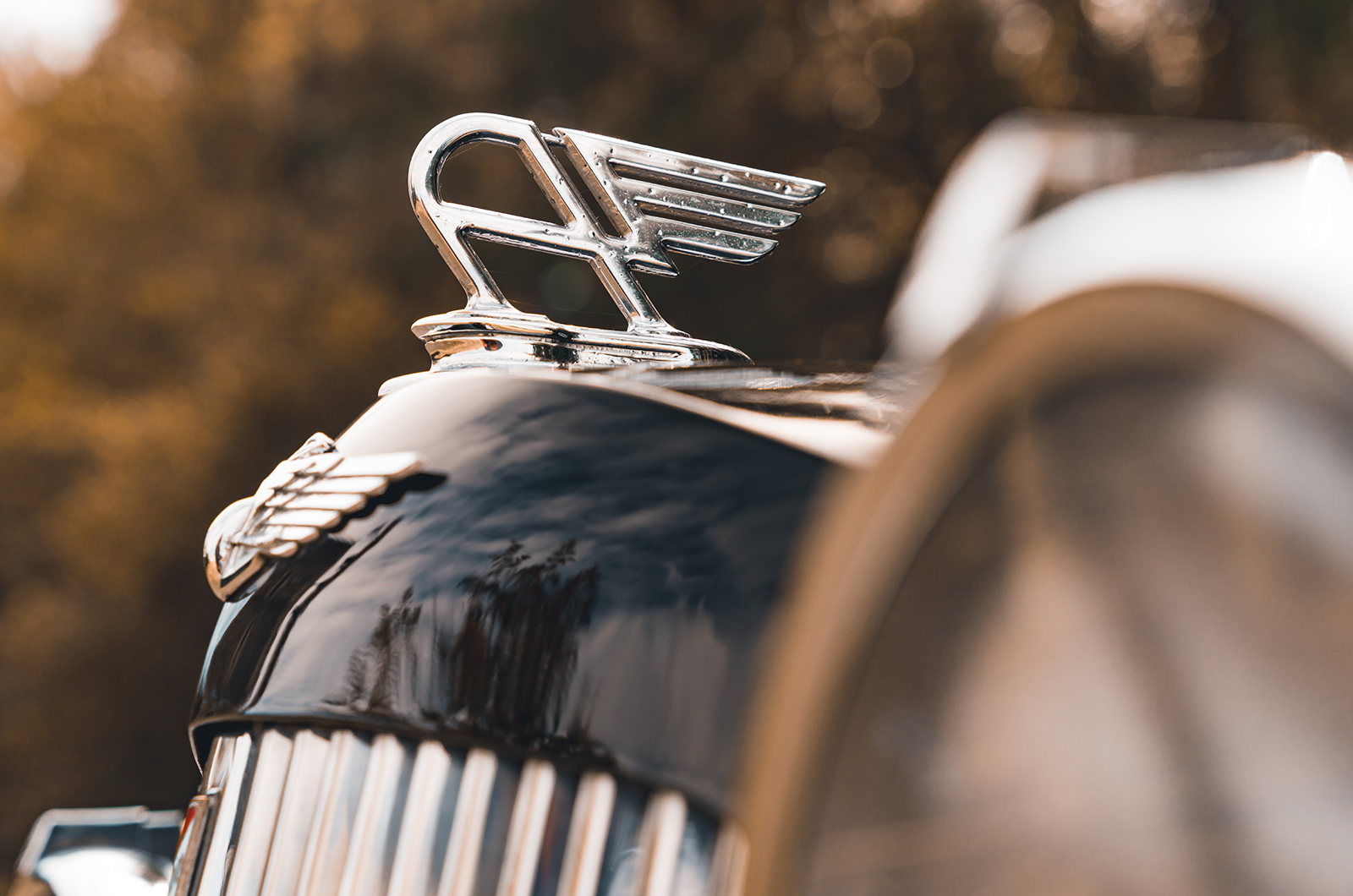
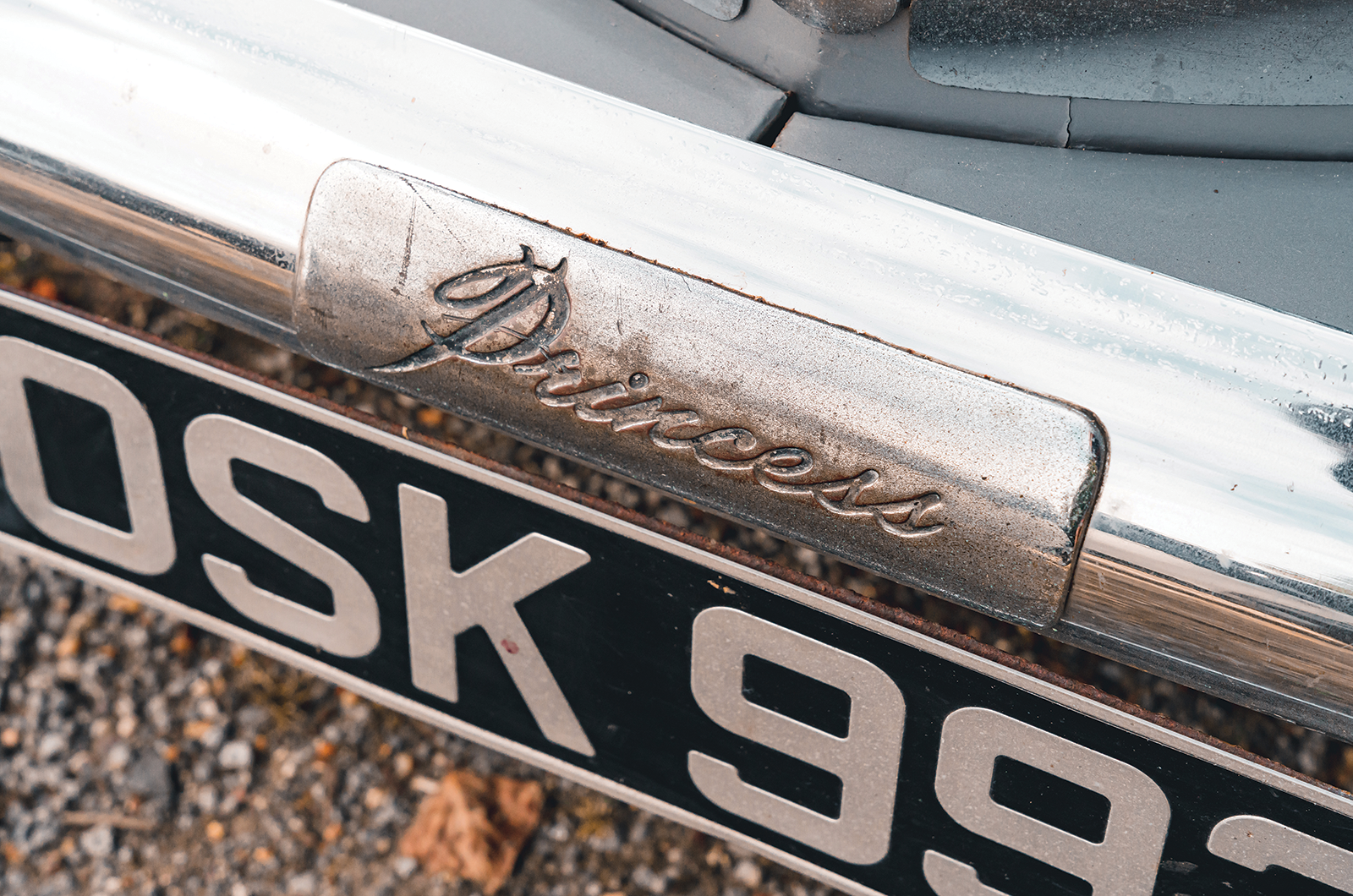
The Princess name was a Vanden Plas touch
Inside, with the jump-seats stowed, you sink back into its thickly padded leather (or West of England cloth) rear bench, offering commanding views of the dashboard and of the tapering hood.
Both of these classic cars have manual gearboxes and no power steering, so the driving characteristics are quite similar.
With a rustle from the tappets, they accelerate unobtrusively, although the unsynchronized first gear is best avoided, because it is noisy and tends to agitate clutch judder.
It’s so low that you change up to second gear almost immediately, anyway.
Given the ponderous nature of the gearchange, hindered by the slow-revving but massively flexible engine, there’s no real disadvantage in going straight from second to top.
There’s extra seating on hand in the Vanden Plas, if needed
Here, both cars accelerate smoothly from less than 10mph, giving their passengers an impression of effortless smoothness up to cruising speeds of around 70mph.
Vanden Plas advertised the 4 liter as ‘a magnificent town carriage’, and it does feel like a car that is destined to be driven from city boardrooms to stations and airports, rather than used as a long-distance machine.
In both cases, big road wheels, and general heft and mass, almost guarantee a well-damped but not soggy ride quality.
It seems superfluous to talk about ‘handling’, but what I can say is that anything above a brisk trot – be the road straight or twisty – requires not only focus, but also smoothness, anticipation and conscious wheel-feeding.
The Vanden Plas Princess 4 liter’s tall rear offers practicality
You hear the understeer – in the form of tire scrub – almost before you feel it through the car’s steering wheel, and at low speeds you instinctively get as much of your steering done while the wheels are rotating.
No doubt chastened by the failure of the Austin A90 Atlantic, Leonard Lord’s ambitions for the A125 and A135 were much more realistic by the middle of the 1950s.
A dozen years later, he must have been mildly surprised that the direct descendants of his post-war ‘poor man’s Bentley’ ego trip were still in production.
These big cars were not especially cutting-edge in 1947, and neither were they great beauties.
These stately classic cars from Austin and Vanden Plas recall a very different time
Nor do they feature on many automotive enthusiasts’ top 10 ‘must drive’ or ‘must own’ lists today.
Yet there is something honest and lovable about these classic cars, which possess a sense of dignity and capacity for work that demands your respect.
They have an earnest, solid worth, reminiscent of a country where things used to work.
As much as being cars, they are portals into a lost version of England, created to cater to the needs of a way of life that was a speck in the rear-view mirror even 50 years ago, and of a society so far removed from the one we live in today that it is almost unrecognizable.
Images: Max Edleston
Factfiles
Austin Sheerline A125
- Sold/number built 1948-’54/c7000
- Construction steel chassis, steel body
- Engine all-iron, ohv 3995cc straight-six, single Stromberg carburetor
- Max power 125bhp @ 4000rpm
- Max torque 185Ib ft @ 2000rpm
- Transmission four-speed manual, RWD
- Suspension: front wishbones, coil springs rear live axle, semi-elliptic leaf springs, anti-roll bar; lever-arm dampers f/r
- Steering cam and peg
- Brakes drums
- Length 16ft (4877mm)
- Width 6ft 1in (1854mm)
- Height 5ft 7in (1702mm)
- Wheelbase 9ft 11in (3023mm)
- Weight 4300Ib (1950kg)
- Mpg 15
- 0-60mph 20.6 secs
- Top speed 83mph
- Price new £1277
Vanden Plas Princess A135 4 litre limousine
- Sold/number built 1952-’68/3238
- Construction steel chassis, steel and aluminum body
- Engine all-iron, ohv 3995cc straight-six, single Stromberg carburetor
- Max power 125bhp @ 4000rpm
- Max torque 185Ib ft @ 2000rpm
- Transmission four-speed manual, RWD
- Suspension: front wishbones, coil springs rear live axle, semi-elliptic leaf springs, anti-roll bar; lever-arm dampers f/r
- Steering cam and peg
- Brakes drums
- Length 17ft 11in (5461mm)
- Width 6ft 2½in (1892mm)
- Height 6ft 2in (1880mm)
- Wheelbase 11ft (3353mm)
- Weight 4676Ib (2121kg)
- Mpg 13-16
- 0-60mph 26 secs
- Top speed 80mph
- Price new £3082
We hope you enjoyed reading. Please click the ‘Follow’ button for more super stories from Classic & Sports Car.
Martin Buckley
Senior Contributor, Classic & Sports Car