Fire up the V8 and there’s no musclebound bark from the exhaust, rather a more subdued but still unmistakably Detroit-born burble.
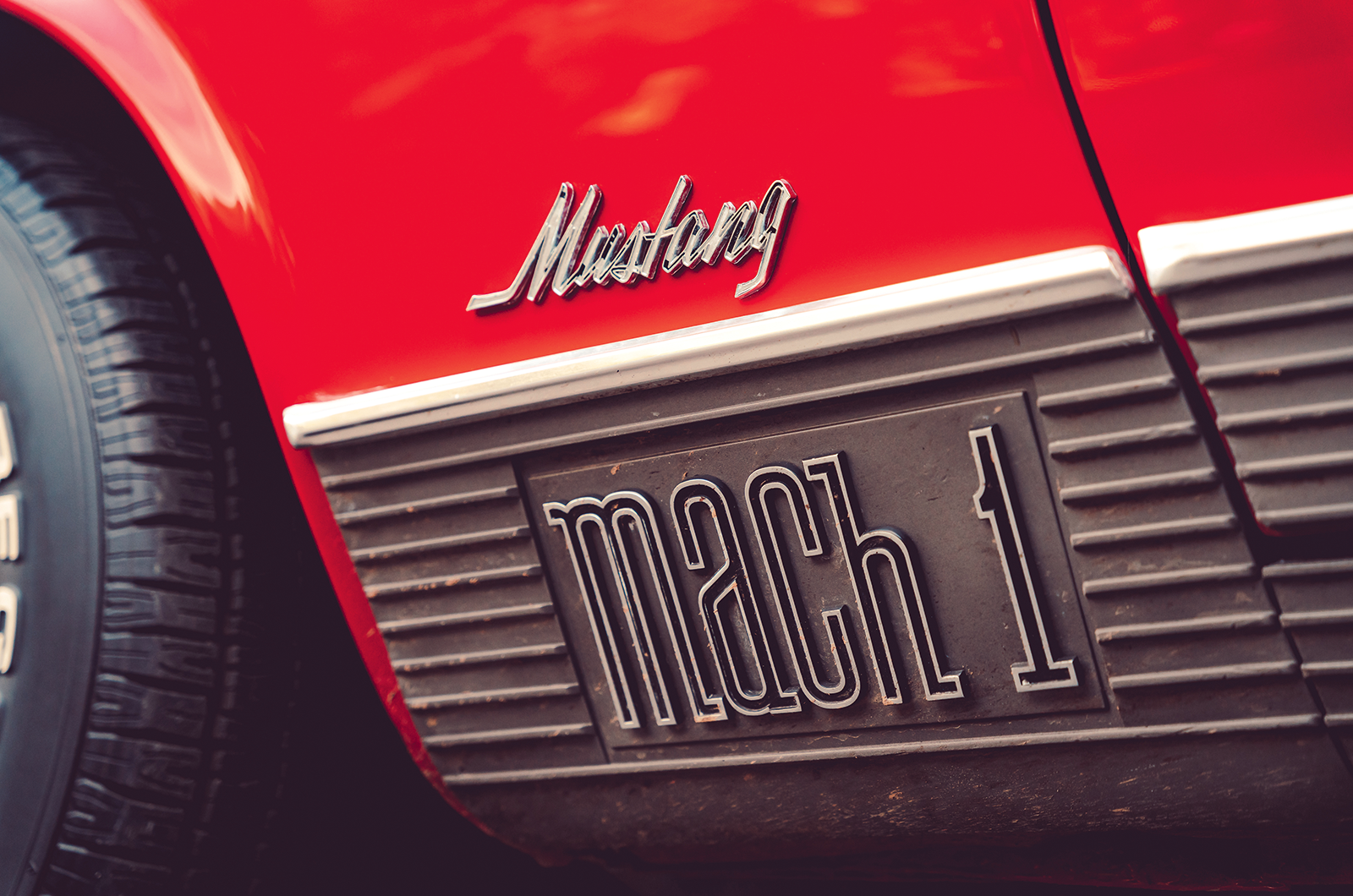
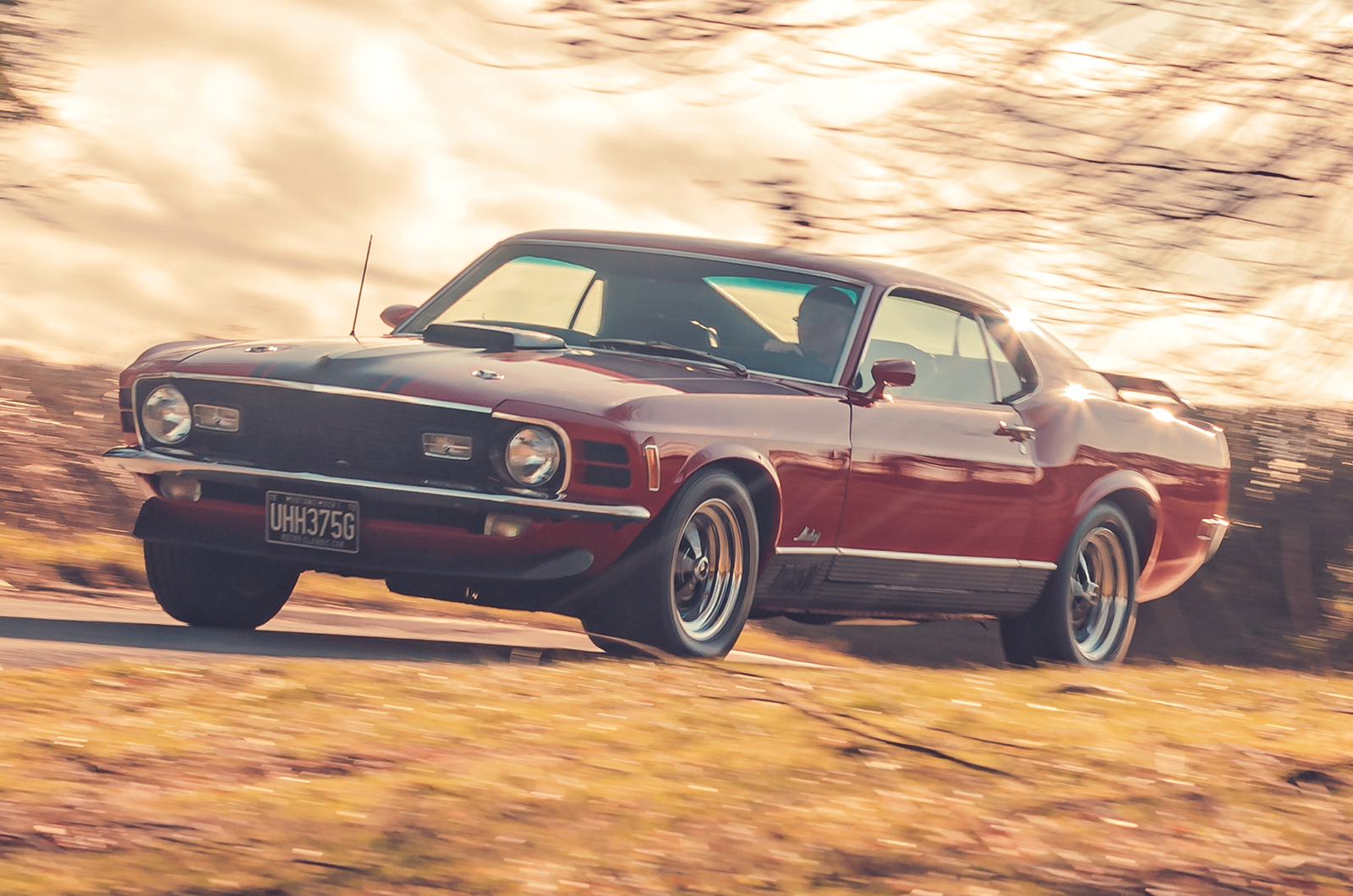
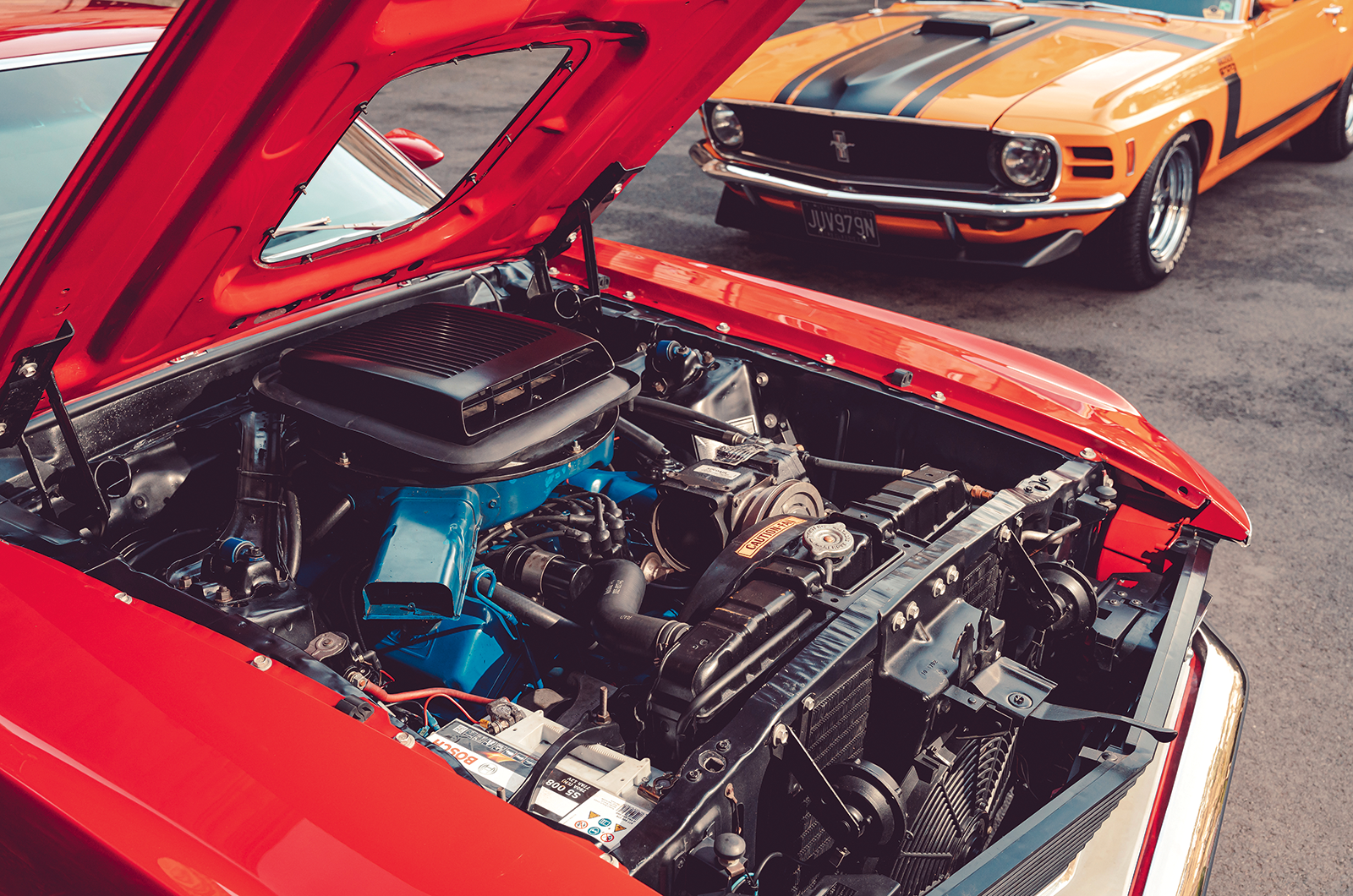
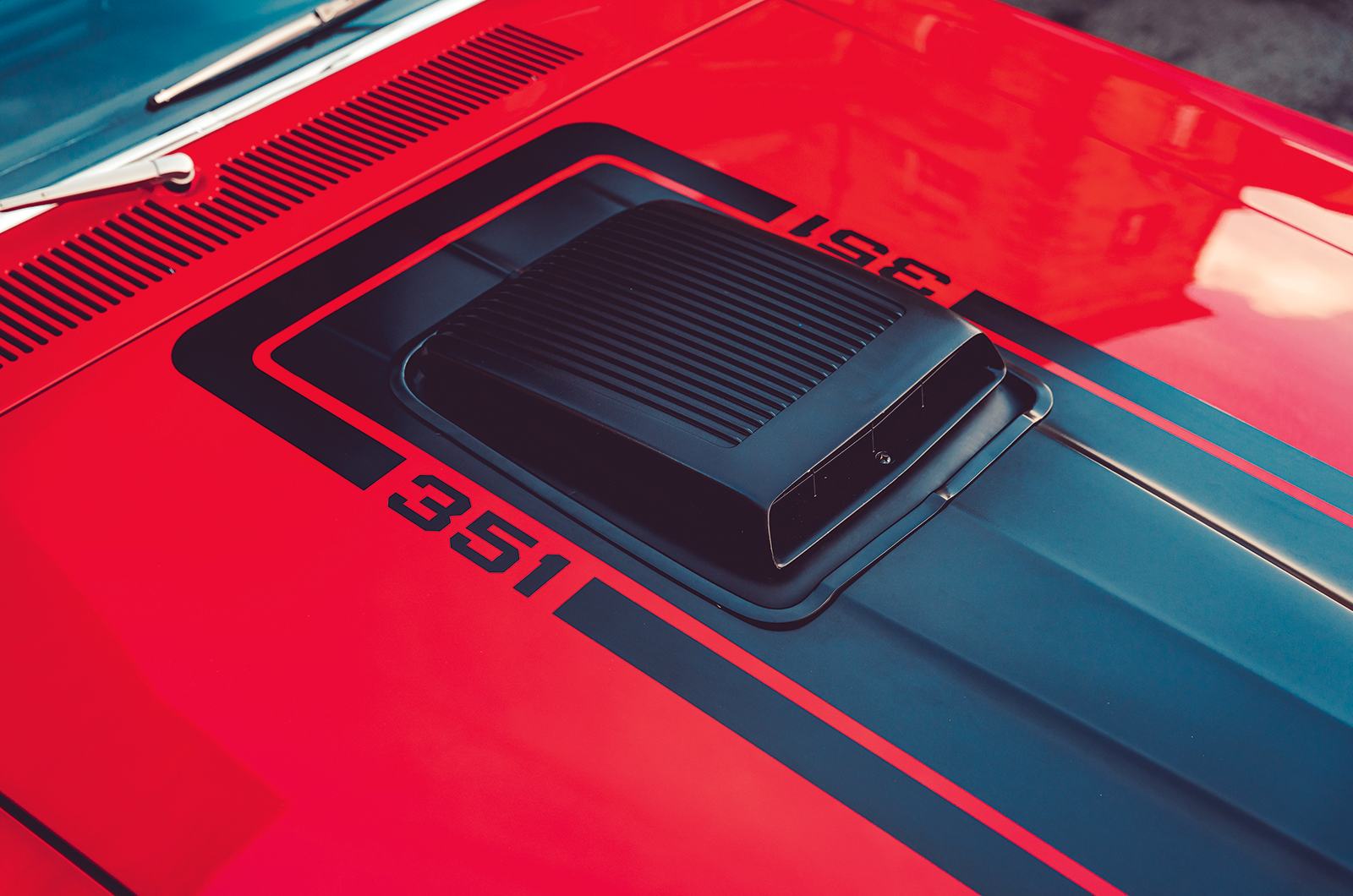
This Ford Mustang Mach 1 has the optional ‘Shaker’ hood
This example runs a standard production exhaust, although most buyers would have upgraded to something louder and prouder back in the day.
And this, allied to its smooth-shifting FMX three-speeder, gives the Ford Mustang Mach 1 a relaxed gait at odds with its aggressive appearance.
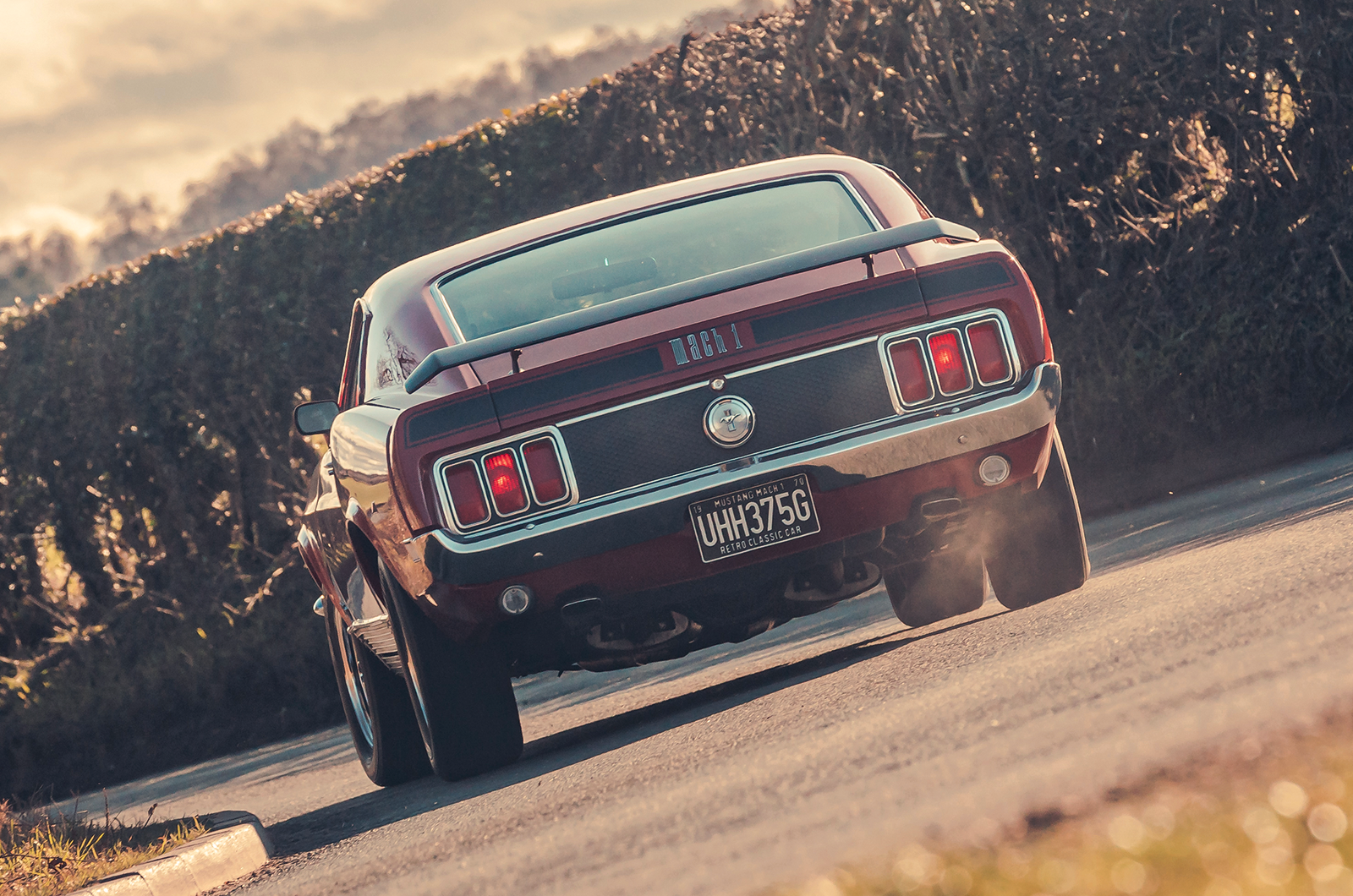
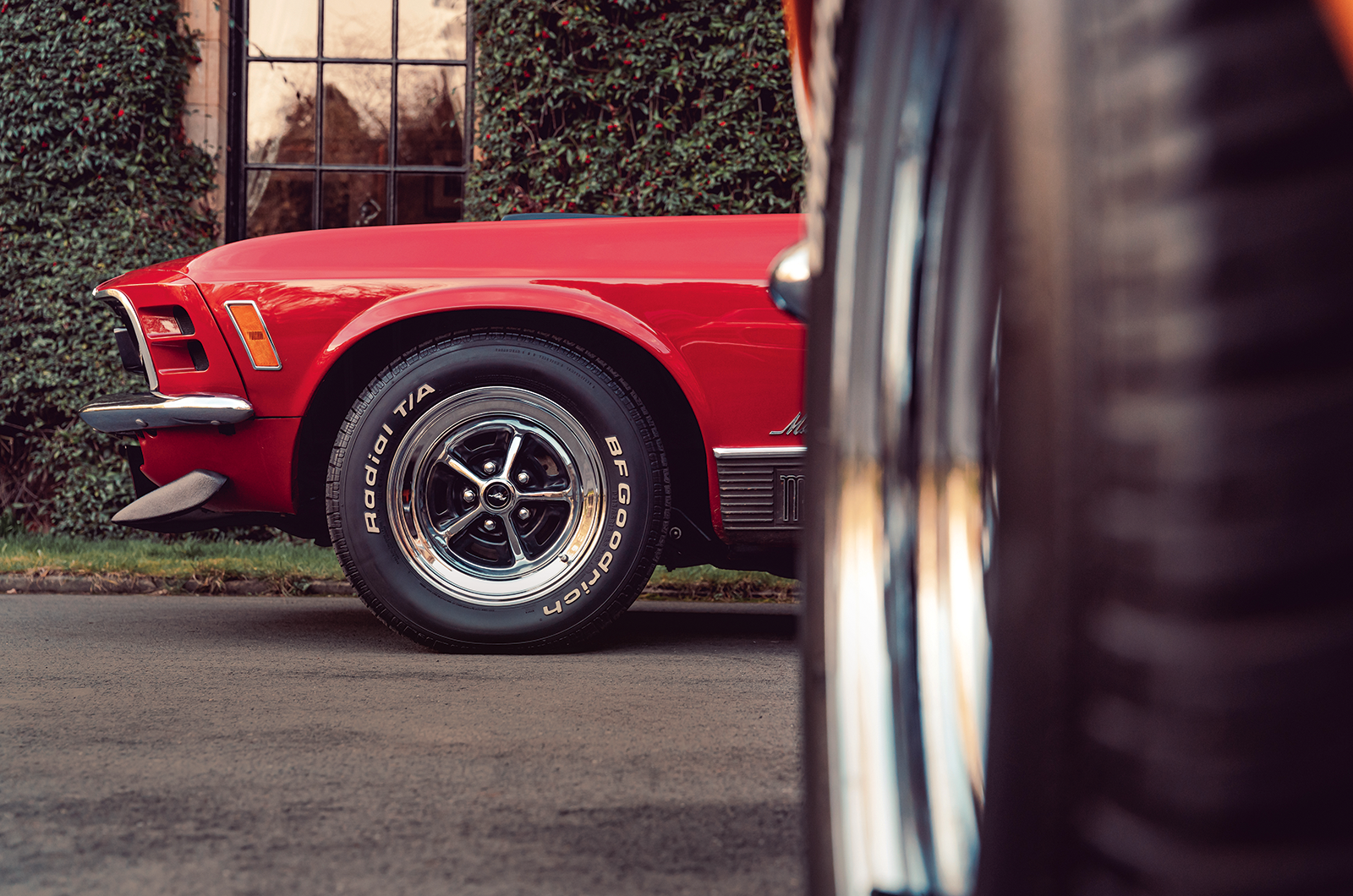
It rides with civilized aplomb on its 65-profile 15in BF Goodrich tires, and while cop-show-style tire-squeal at even moderate cornering speeds is par for the course, the large body is well controlled for an early ’70s American.
Steering is as you’d expect: light, with a dead zone just off center, but reasonably accurate for a car modeled around the dragstrip.
This Mach 1 Mustang’s exhaust is somewhat muted
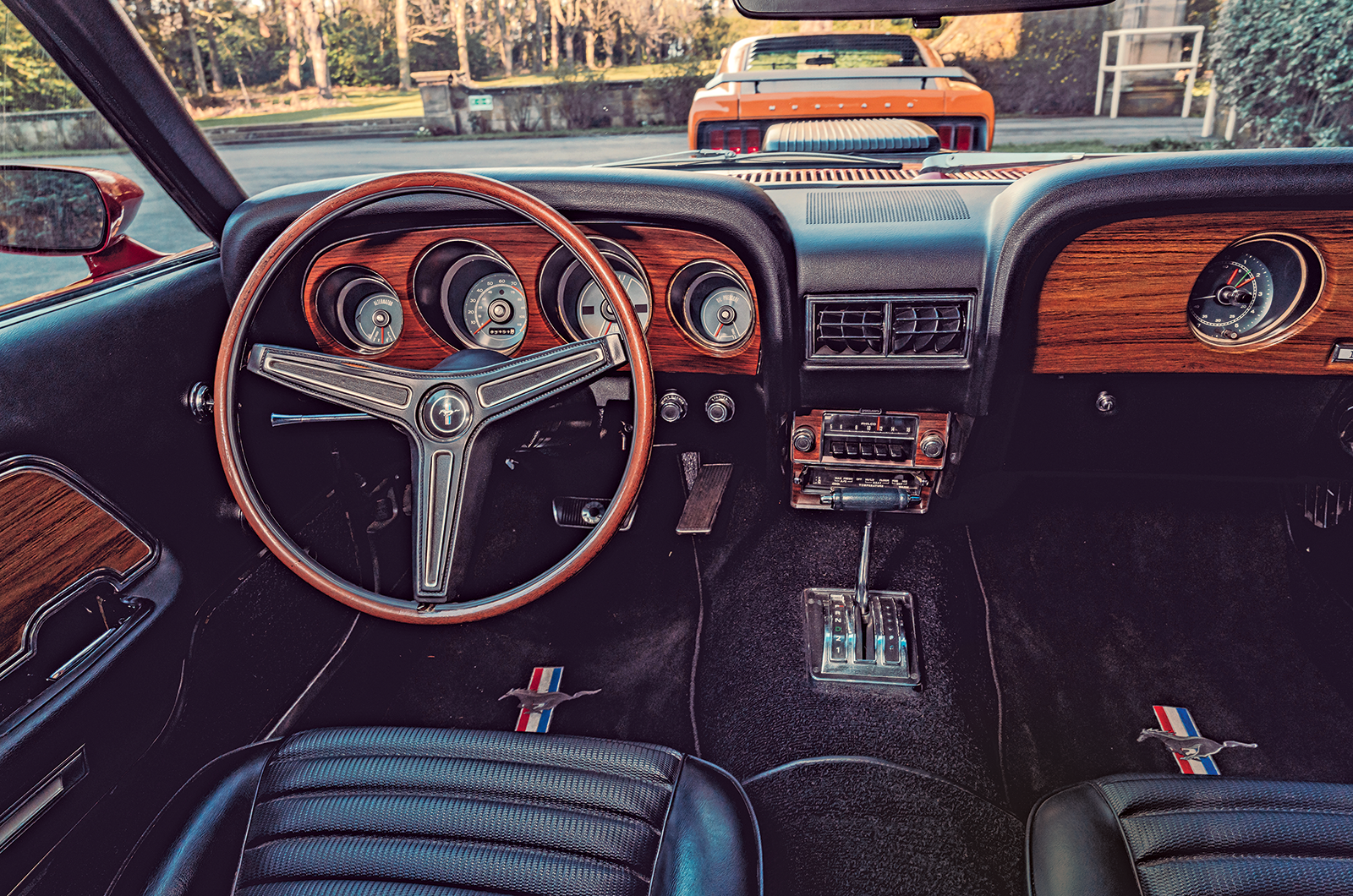
The single most annoying part of cornering, as you grip the wheel to turn in, is the ‘easy-honk’ (aka ‘Rim Blow’) function, which surrounds the inner diameter of the steering wheel.
None of that prepares you for the Boss, though.
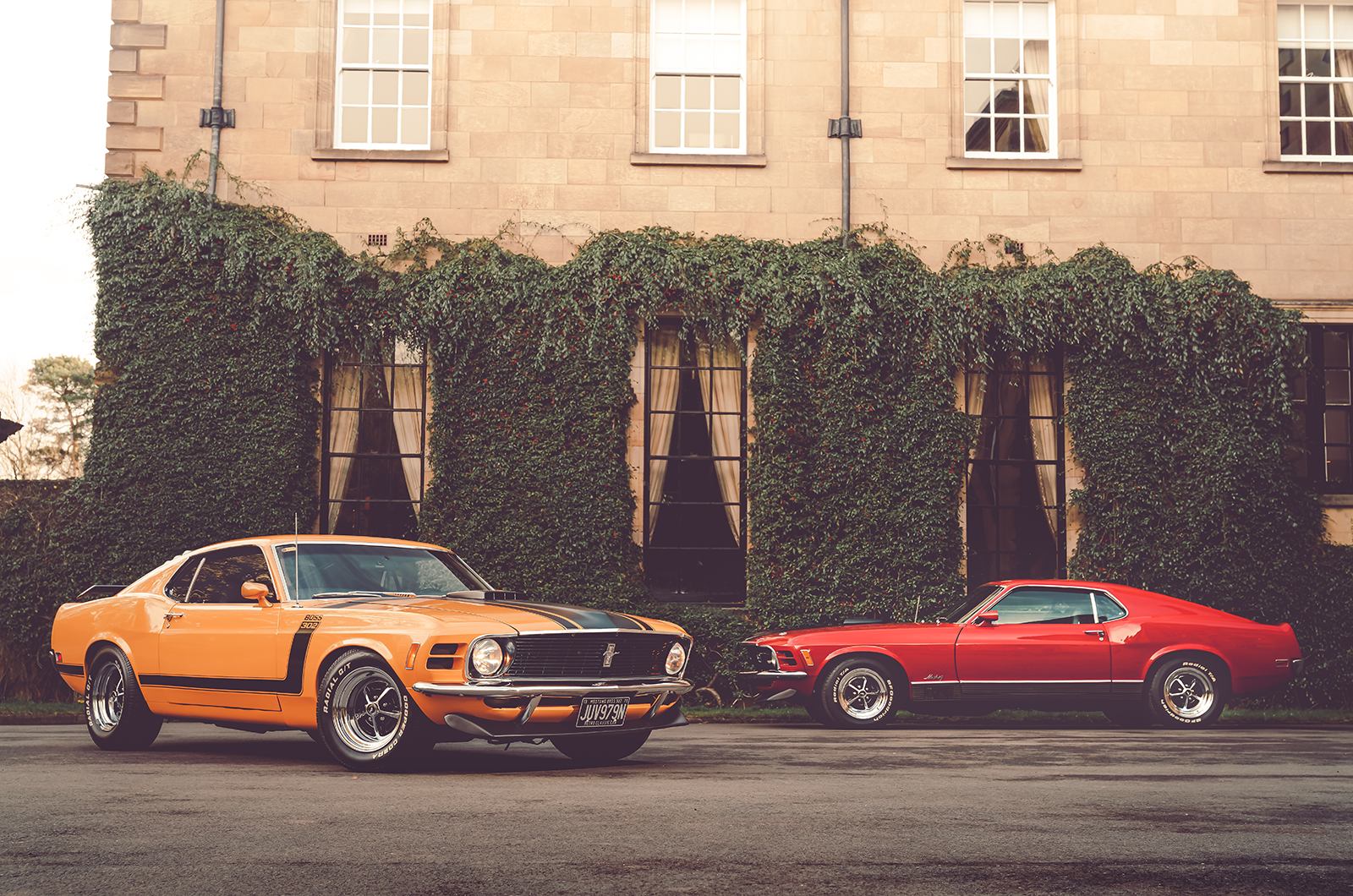
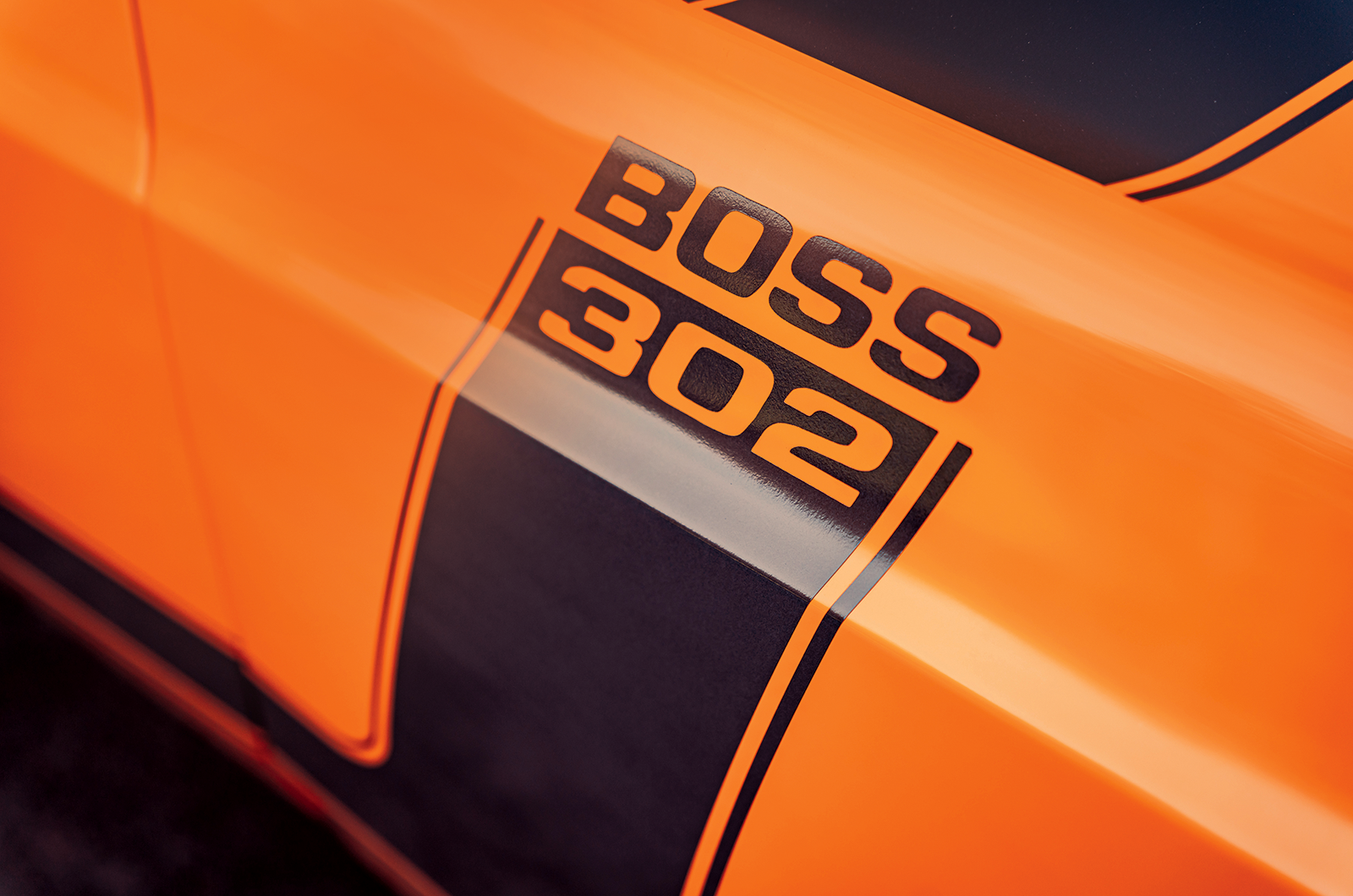
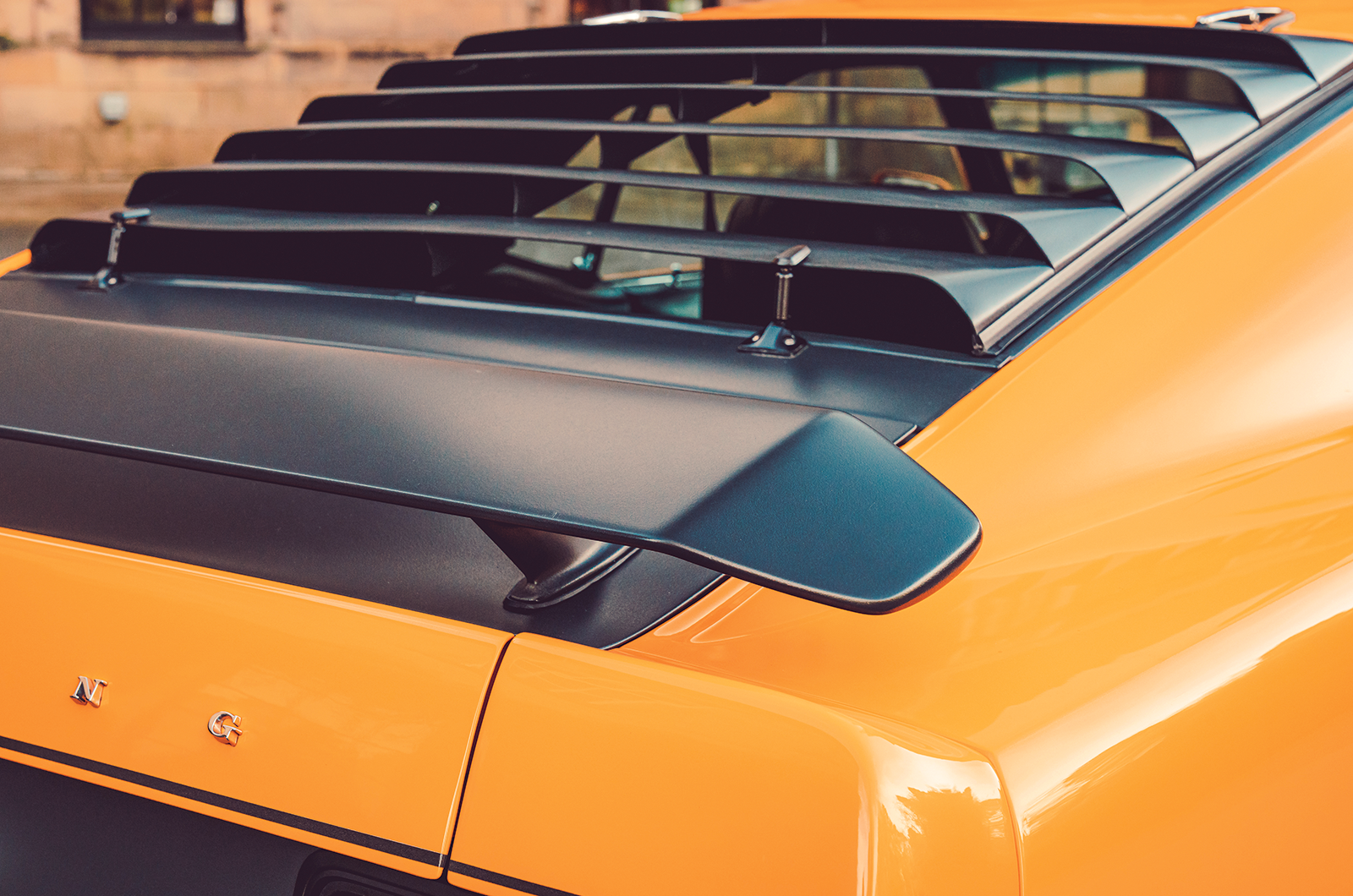
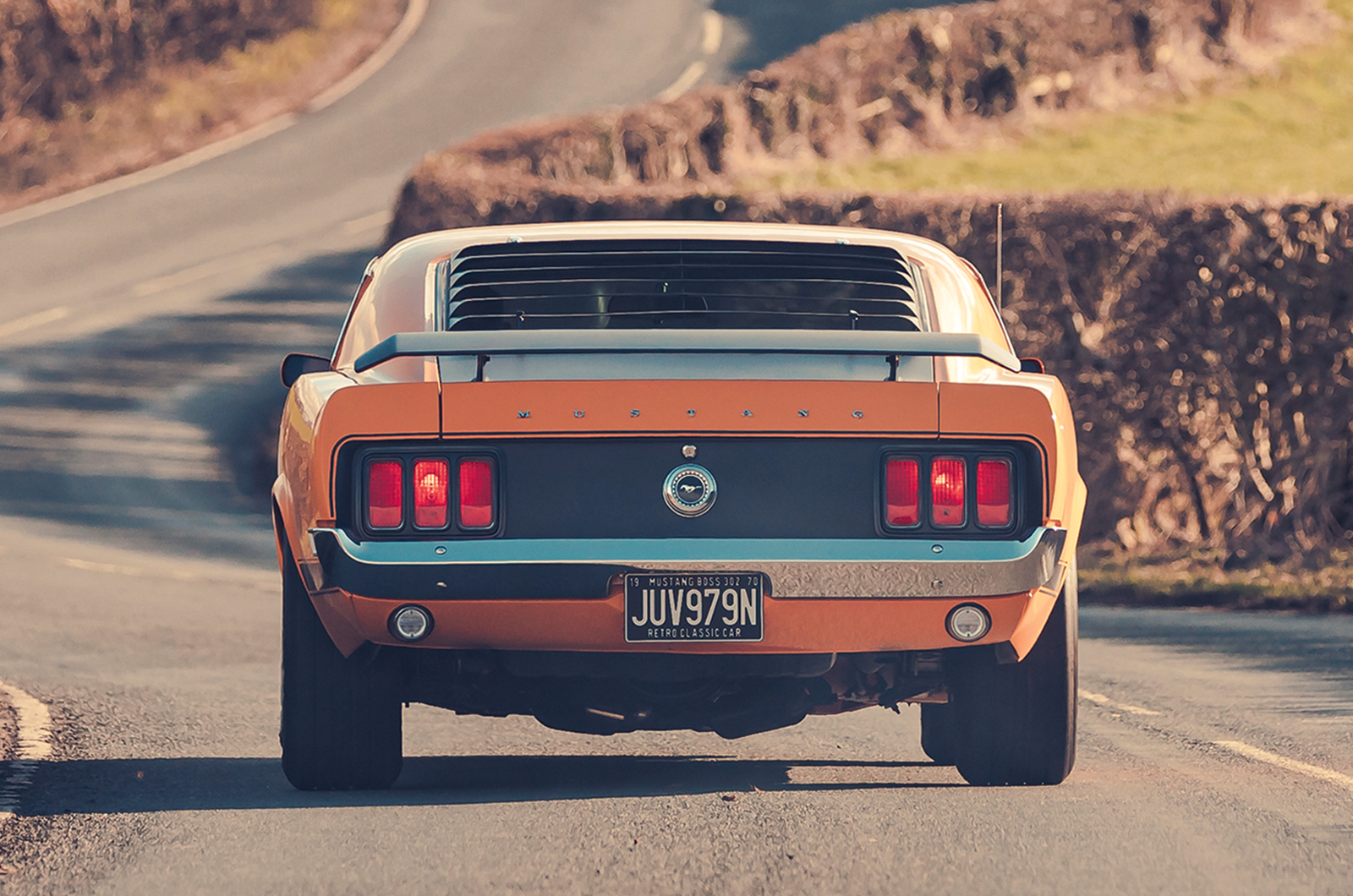
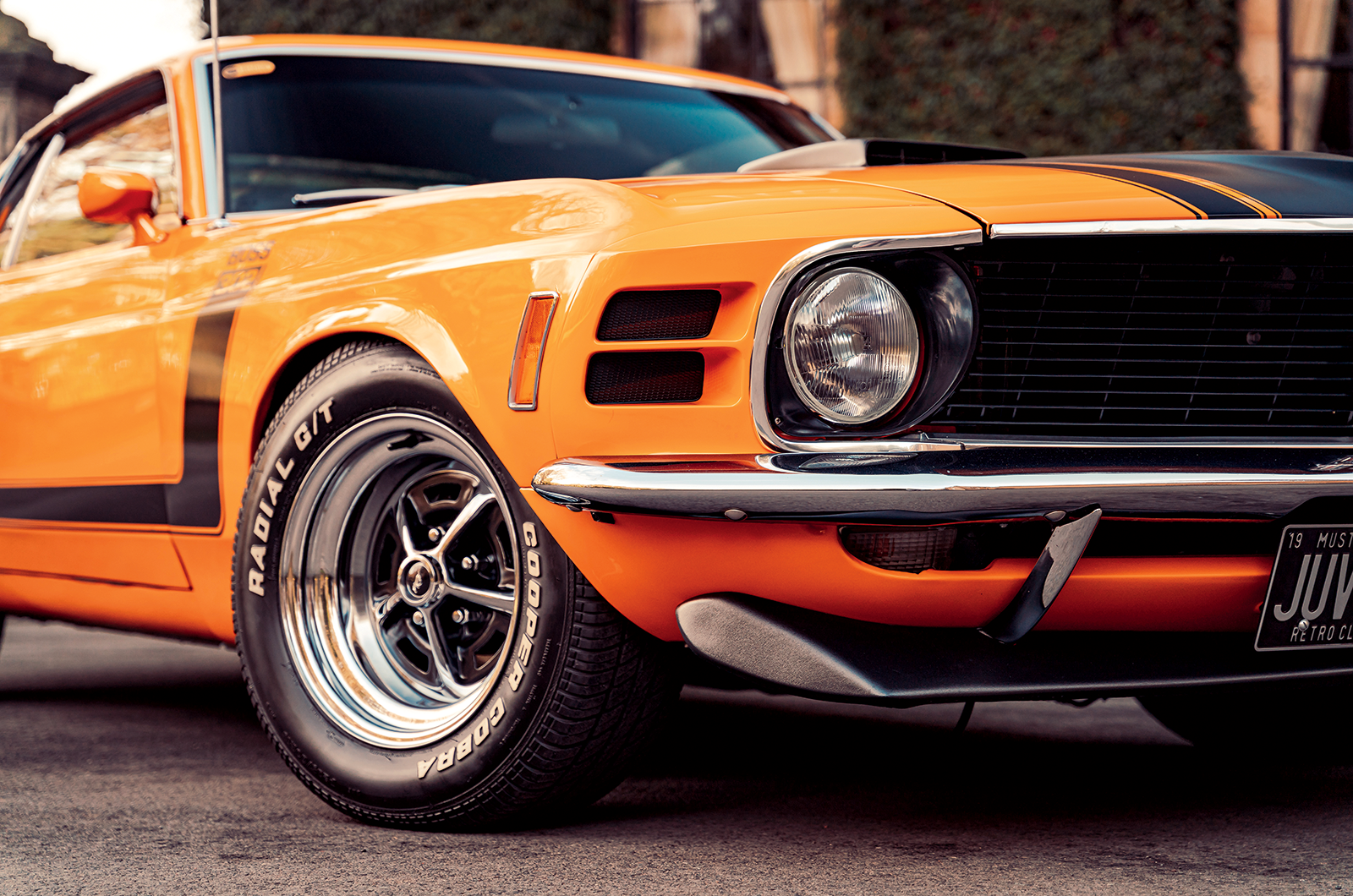
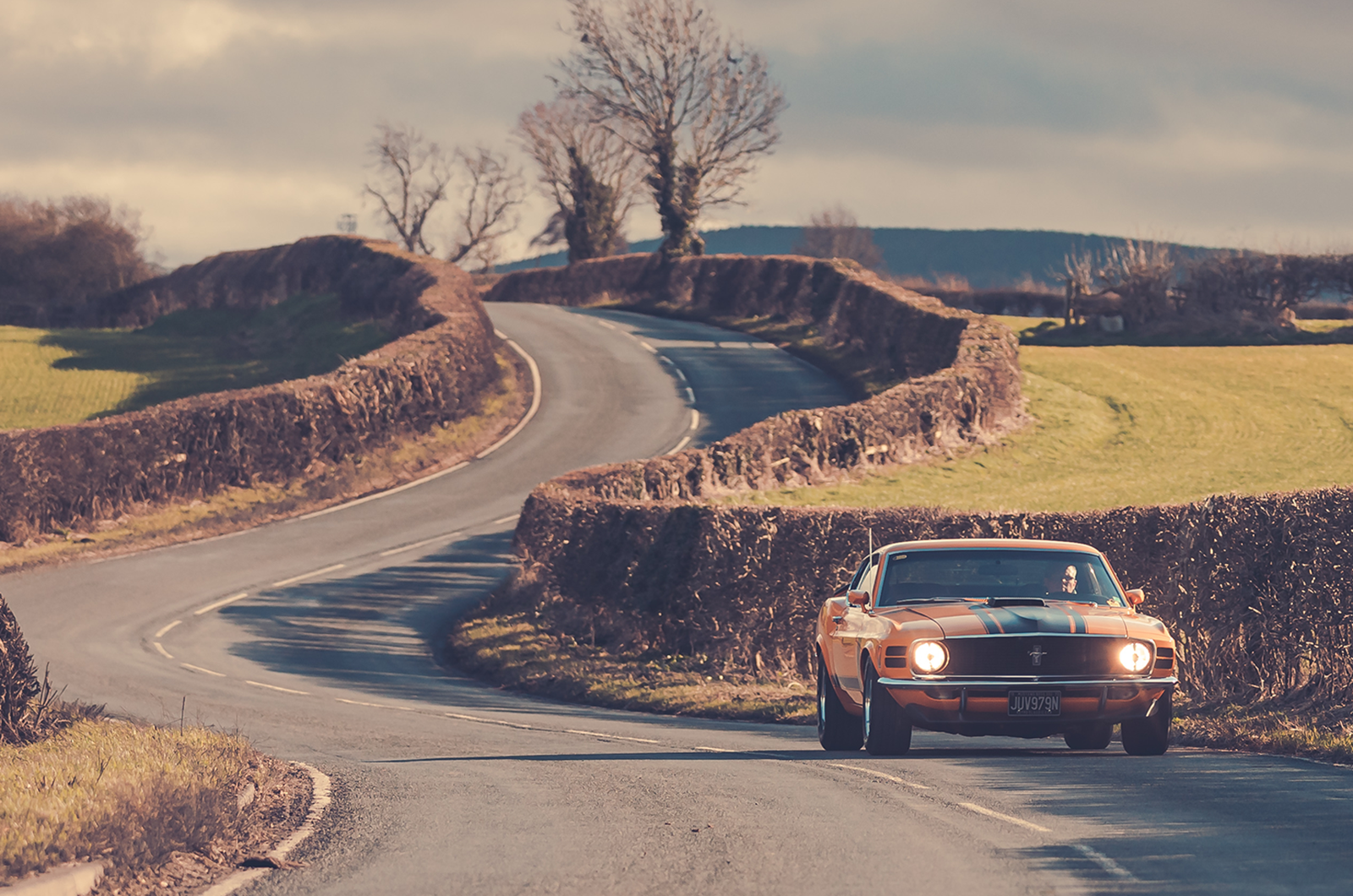
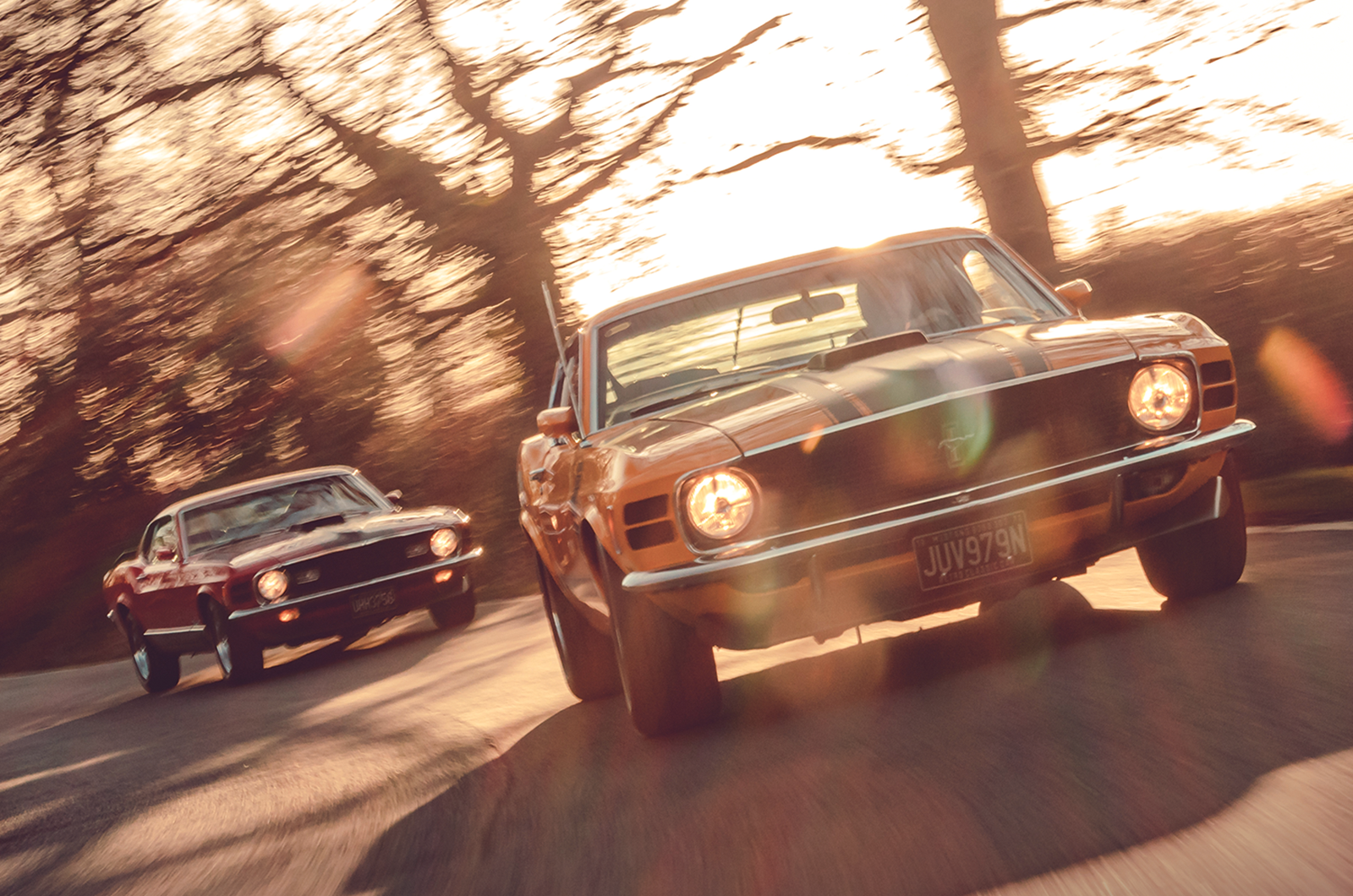
Sure, the Grabber Orange paint of this car, built for export and arriving in the UK in 1974 (hence the ‘N’ registration suffix), only covers subtly sportier bodywork, but from there the contrasts are more marked.
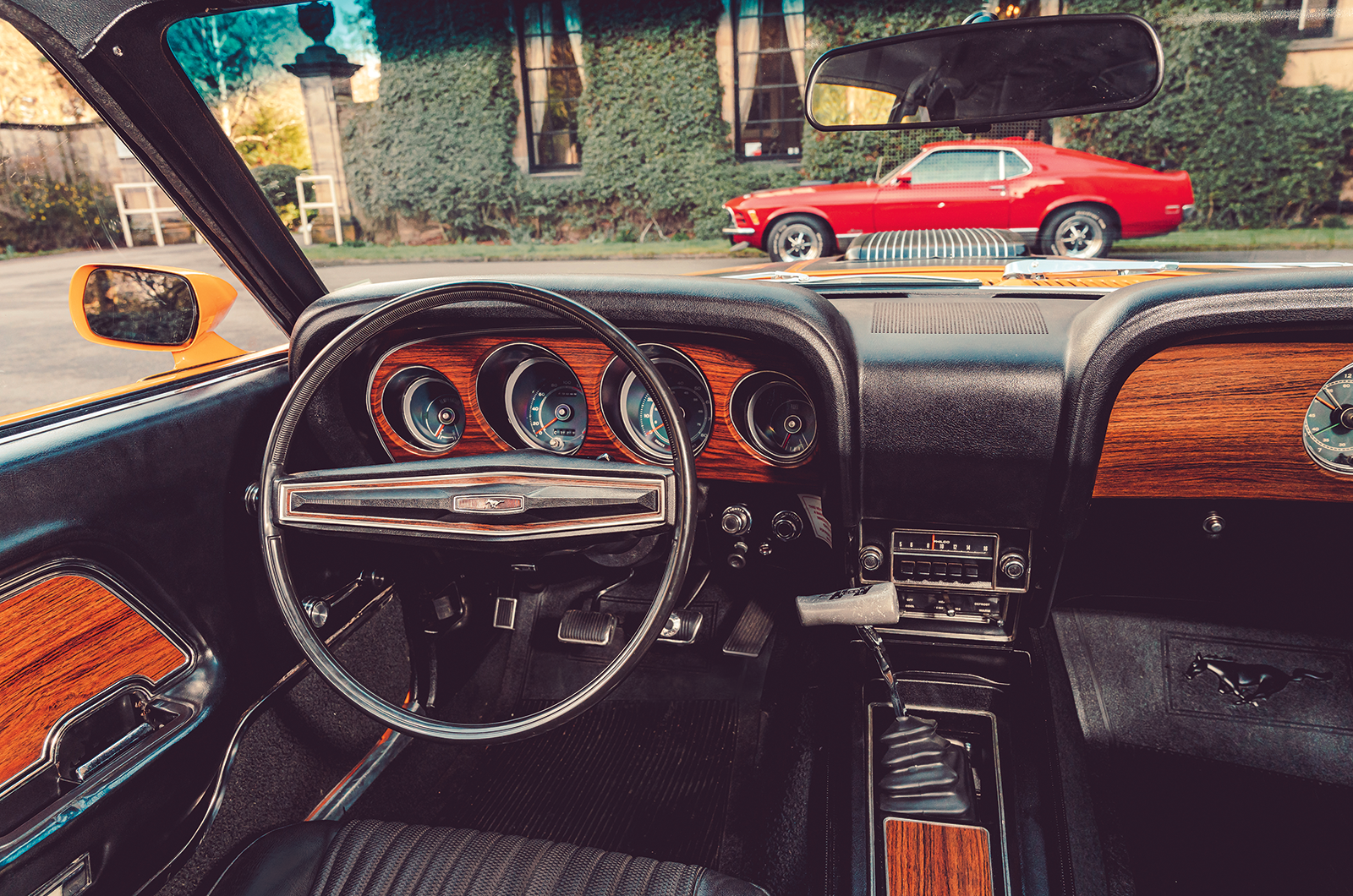
Inside, a rather prosaic-looking two-spoke steering wheel (thankfully, less the dreaded Rim Blow) is a disappointment after the Mach’s three-spoke, but the basic dashboard layout gains a rev counter.
The three-spoke wheel in the Mach 1 includes the added hazard of the ‘Rim Blow’ horn function
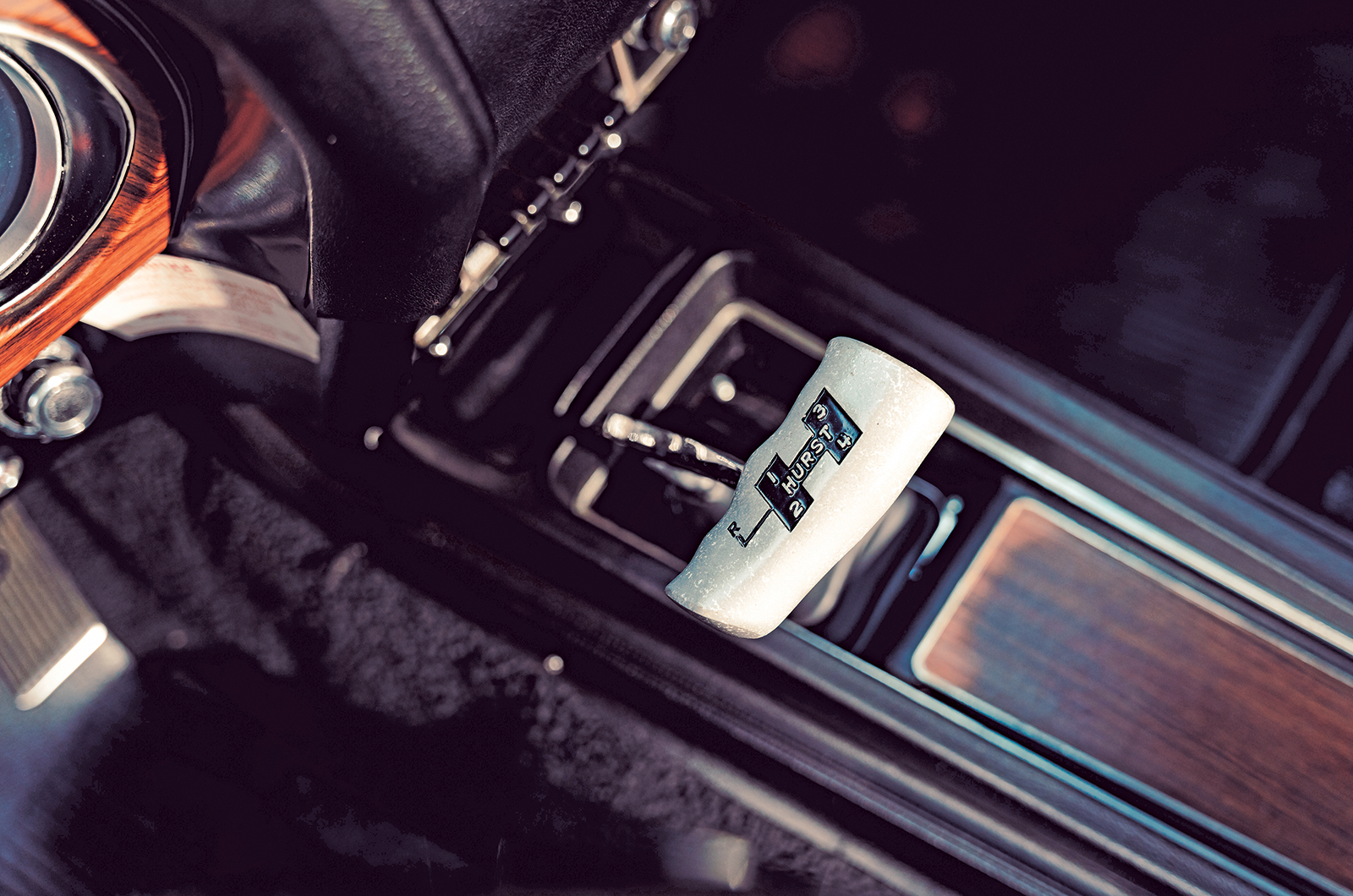
And replacing the Mach’s auto is the Hurst manual shifter sprouting from the center console, its metal grip looking more like an inverted golf putter.
Start up, and the Boss soundtrack is raw and hearty, instantly beating the Mach’s decibel count.
Getting it off the line needs plenty of revs and noise, too, betraying its race-bred origins.
To drive it is a more physical experience, from the effort needed to select first to the heavyish, long-travel clutch.
There’s little action below 2000rpm, but then the hammering, hardcore V8 soundtrack grows to a rebel yell and you’re suddenly on track at Darlington.
It doesn’t take an excess of enthusiasm to get the Mach 1 squealing its tires in corners
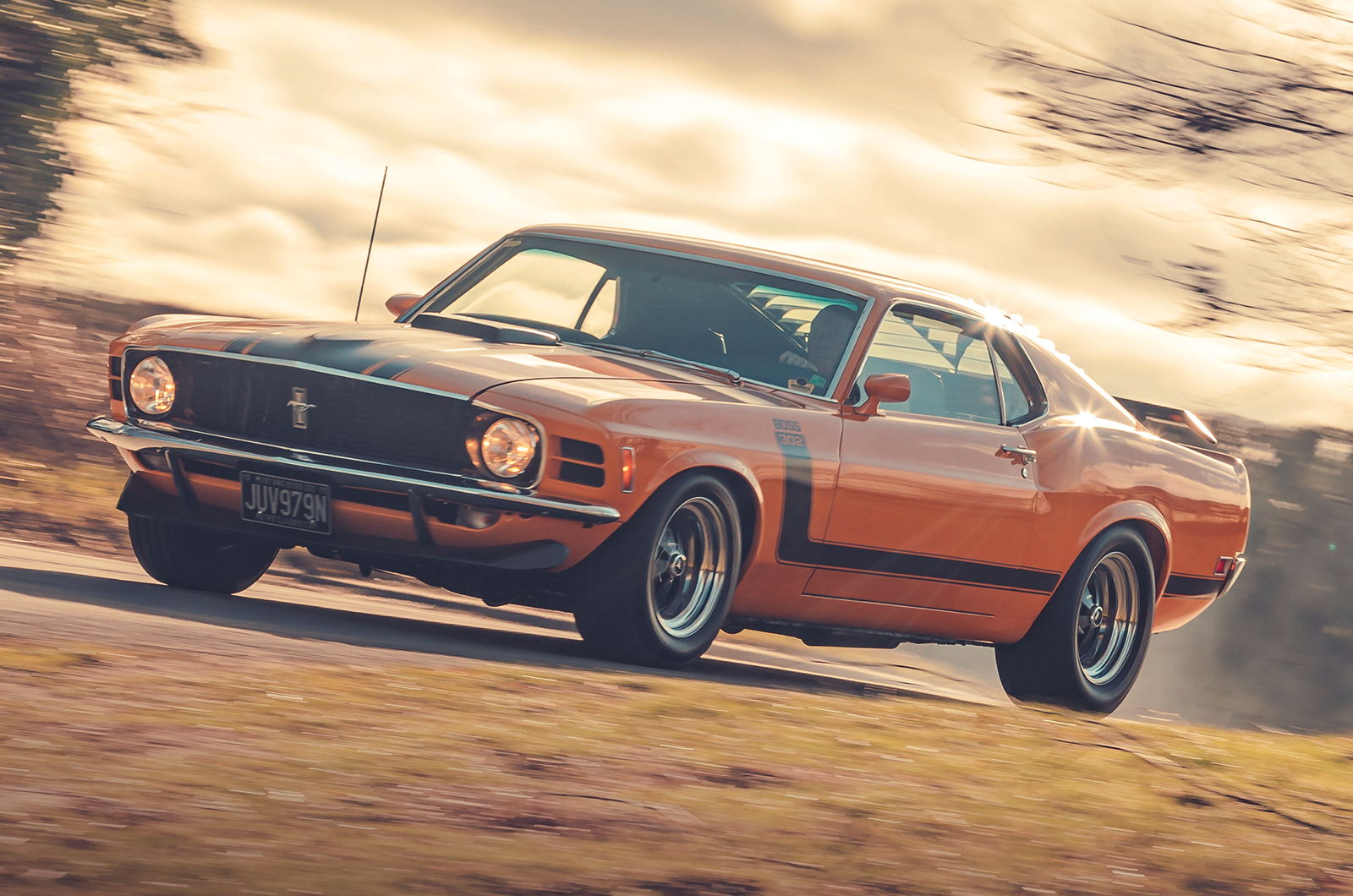
The Ford Mustang Boss 302 thrives on revs, its sweet spot between 4000 and 5000rpm, just below peak power.
The car feels more hunkered-down on the road and the ride is much firmer than that of the Mach 1.
But more engaging? It would be, but for steering that is curiously inconsistent: there’s a disconcerting lack of feedback just off-center, making fast, tighter turns a guessing game at first – is it gripping or not? But it does.
Push harder and convince yourself that the Cooper Cobras are going to keep you on the black stuff and the car corners remarkably well for a 3392LB (1539KG) automobile.
The Goodrich tires on the Ford Mustang Mach 1 give a supple ride
No tire squeal, some roll over the rear axle – which feels right, somehow – and the only other challenge is the recalcitrant gearshift: it always needs a firm hand, but downchanging from third to second is a hit-and-miss affair, and to select any gear a stronger arm is required as heat builds up in the powertrain.
I’m not going to pretend that either Mustang provides driving nirvana on UK roads: both are pretty blunt tools, at odds with their apparent agility displayed in countless Hollywood car chases.
But they pack a brutalist charisma like few other classic cars, and if the Mach 1’s exhaust could be made a touch fruitier, I might just be tempted to adopt my first American.
Images: Max Edleston
Thanks to: Retro Classic Car for both Mustangs; Crathorne Hall Hotel
This was first in our June 2023 magazine; all information was correct at the date of original publication
Factfiles
Ford Mustang Boss 302
- Sold/number built 1969-’70/7013
- Construction steel monocoque
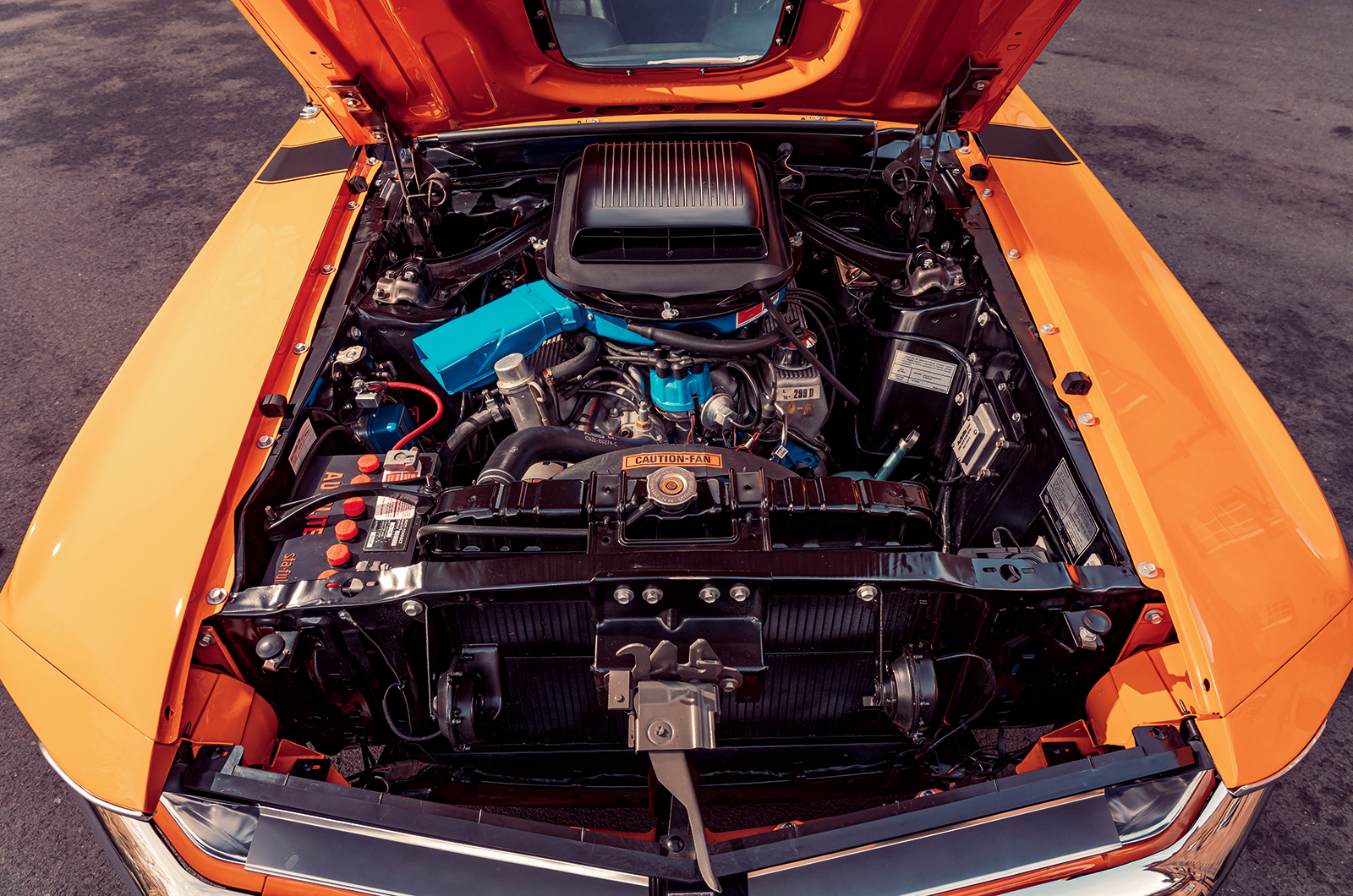
- Engine all-iron, ohv 302cu in (4949cc) V8, single Holley four-barrel carburetor
- Max power 290bhp @ 5800rpm
- Max torque 290lb ft @ 4300rpm
- Transmission four-speed manual, RWD
- Suspension: front independent, by upper wishbones, single lower arms with drag struts, coil springs, anti-roll bar rear live axle, semi-elliptic leaf springs; telescopic dampers f/r
- Steering power-assisted recirculating ball
- Brakes vented discs front, drums rear
- Length 15ft 7½in (4674mm)
- Width 5ft 11¾in (1821mm)
- Height 4ft 2¼in (1275mm)
- Wheelbase 9ft (2743mm)
- Weight 3392lb (1539kg)
- Mpg n/a
- 0-60mph 6.5 secs
- Top speed 137mph
- Price new $3720
Ford Mustang Mach 1
- Sold/number built 1969-’70/113,428 (all Mach 1 derivatives)
- Construction steel monocoque
- Engine all-iron, ohv 351cu in (5752cc) V8, single two-barrel carburetor
- Max power 250bhp @ 5400rpm
- Max torque 355lb ft @ 3400rpm
- Transmission three-speed auto, RWD
- Suspension: front independent, by upper wishbones, single lower arms with drag struts, coil springs, anti-roll bar rear live axle, semi-elliptic leaf springs; telescopic dampers f/r
- Steering power-assisted recirculating ball
- Brakes drums
- Length 15ft 7½in (4674mm)
- Width 5ft 11¾in (1821mm)
- Height 4ft 2¼in (1275mm)
- Wheelbase 9ft (2743mm)
- Weight 3406lb (1545kg)
- Mpg n/a
- 0-60mph 7.9 secs (manual)
- Top speed 128mph (manual)
- Price new $3271
We hope you enjoyed reading. Please click the ‘Follow’ button for more super stories from Classic & Sports Car.
Simon Hucknall
Simon Hucknall is a senior contributor to Classic & Sports Car