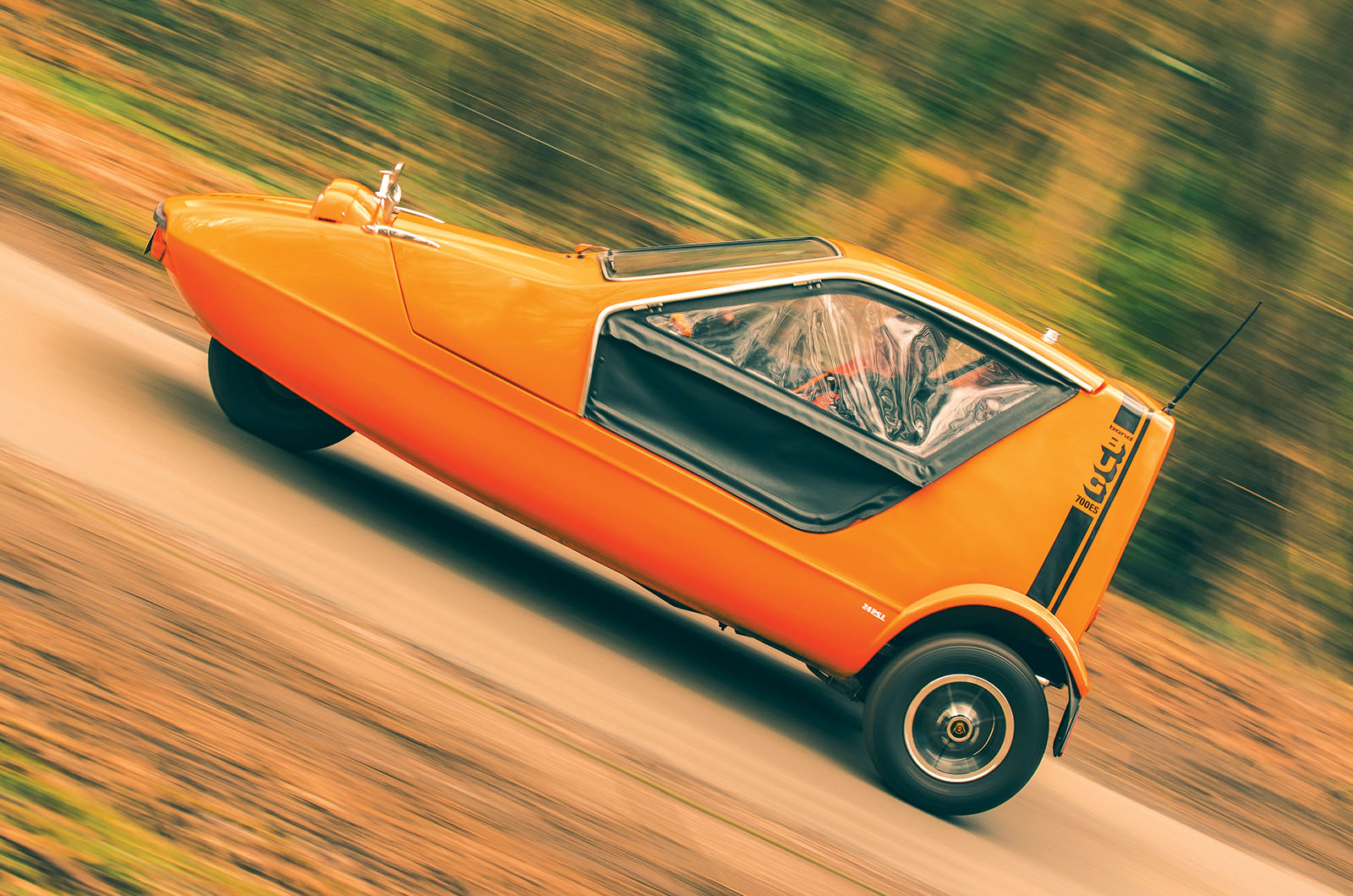
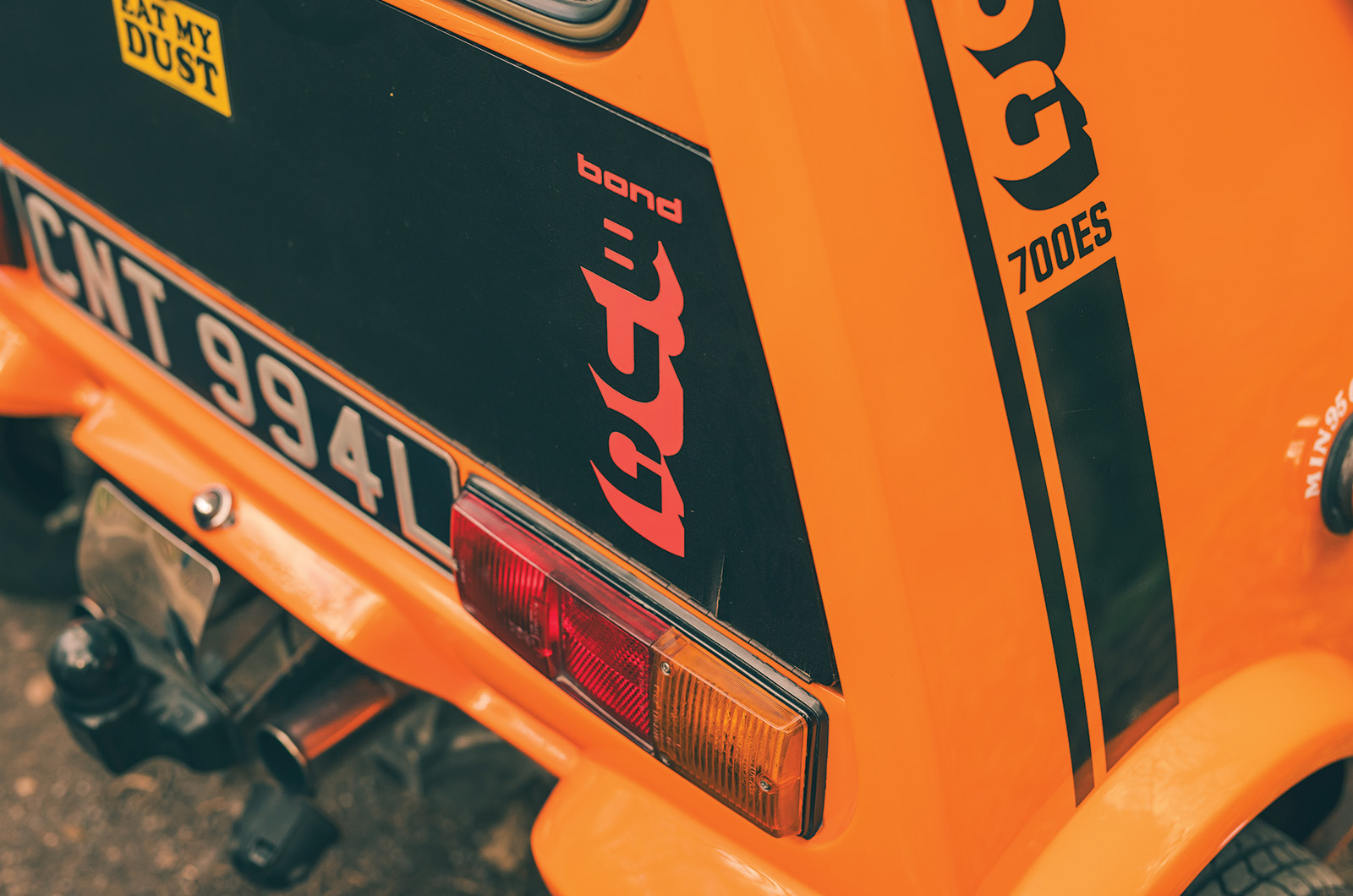
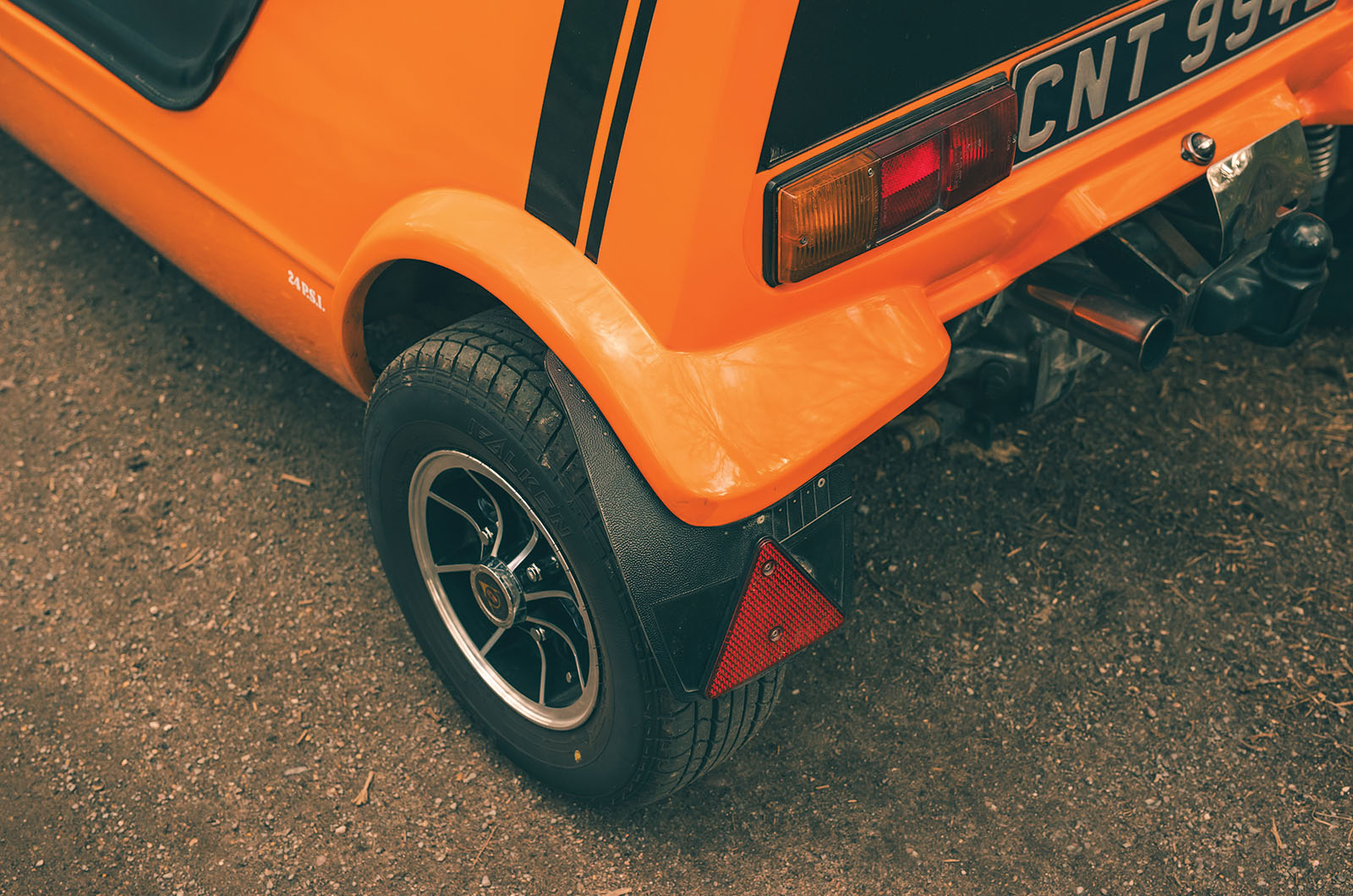
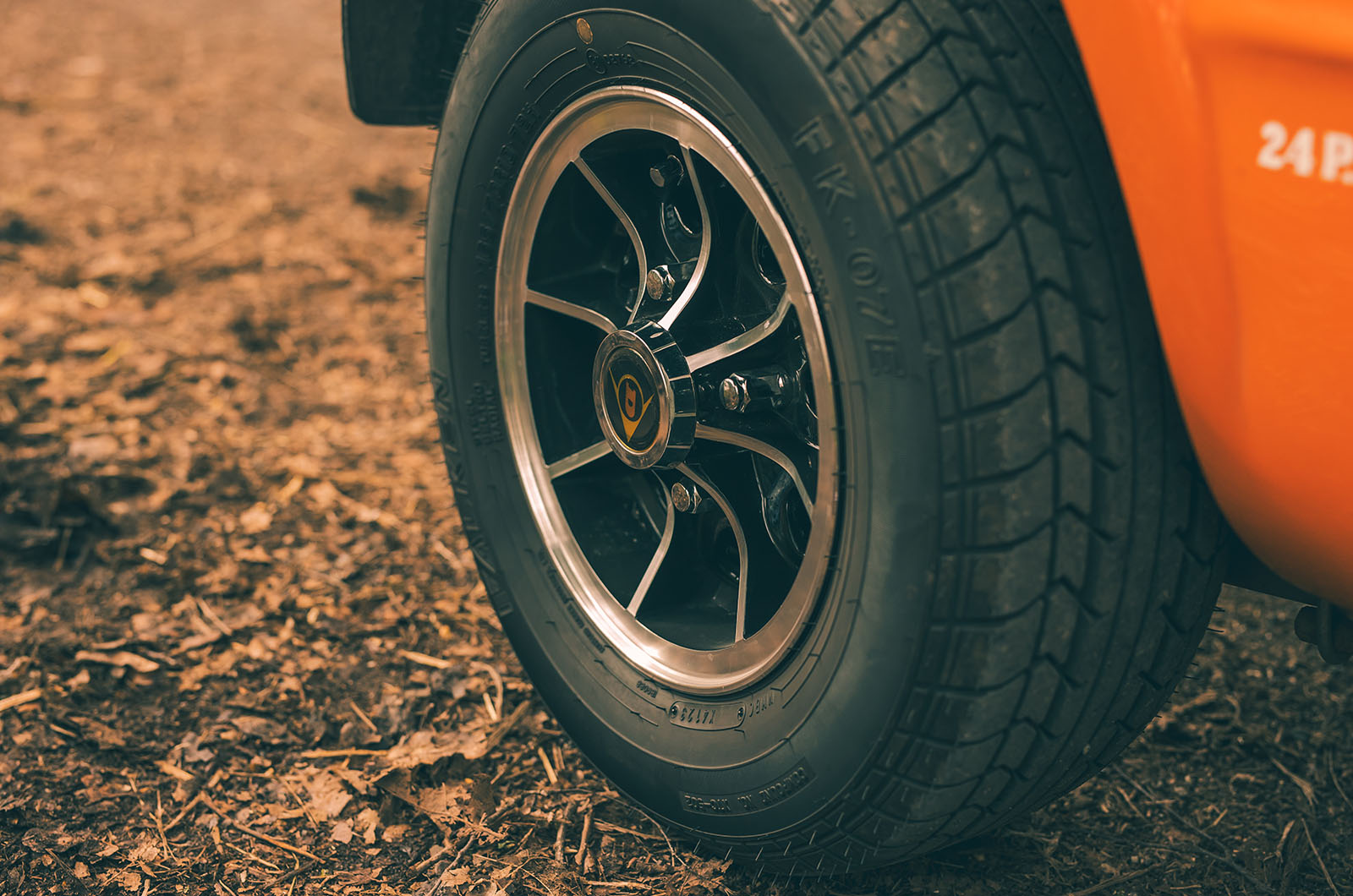
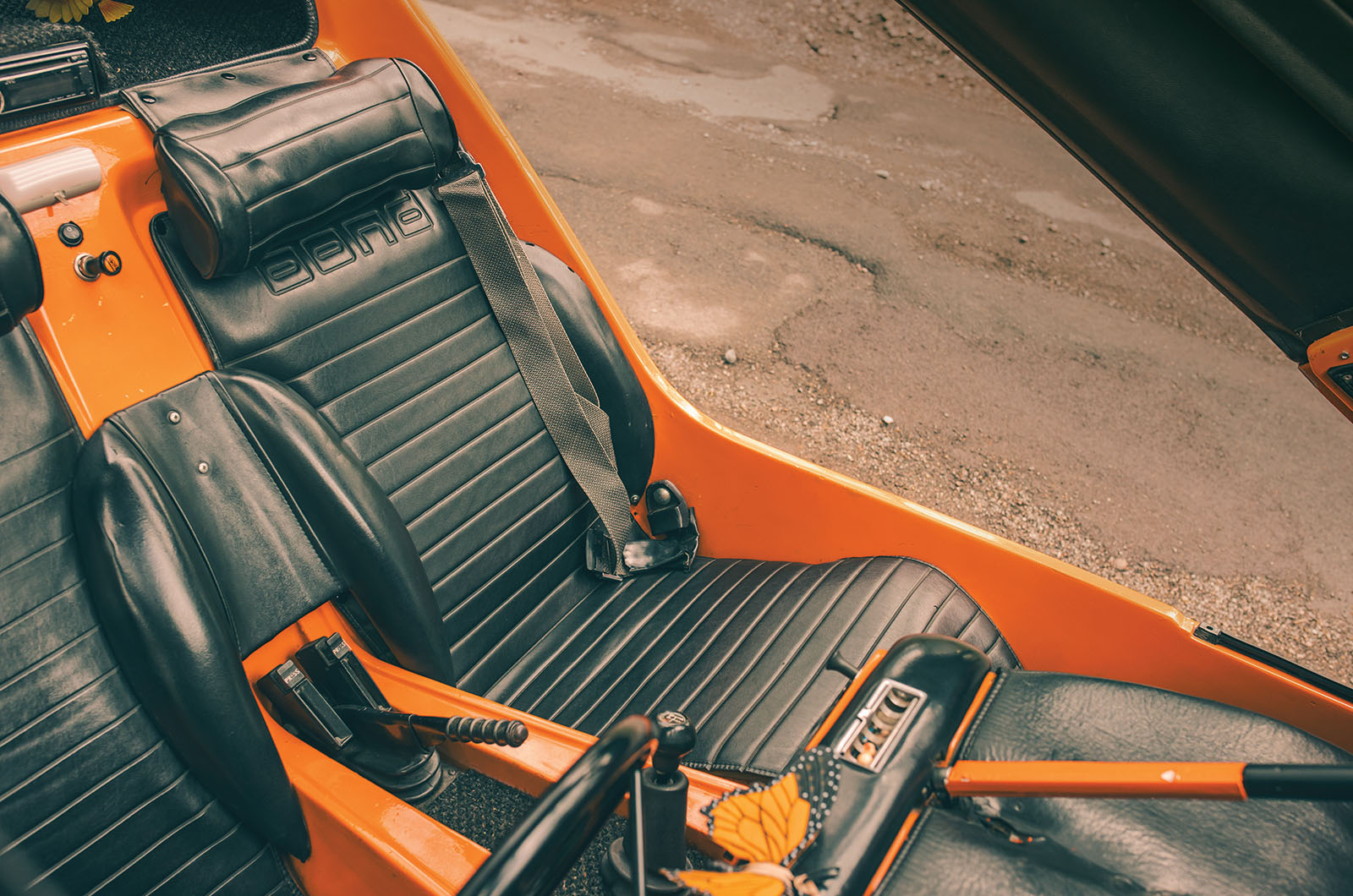
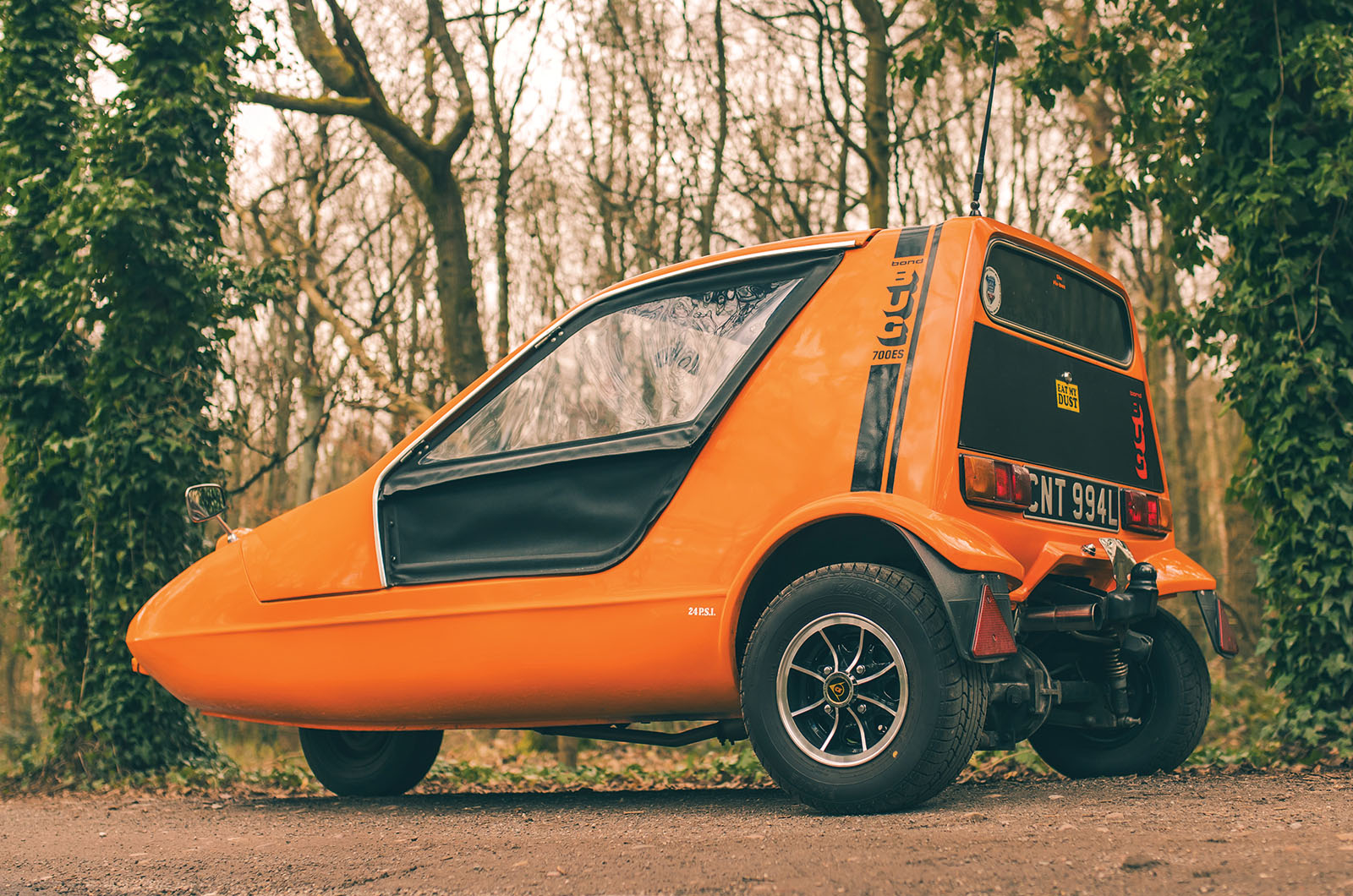
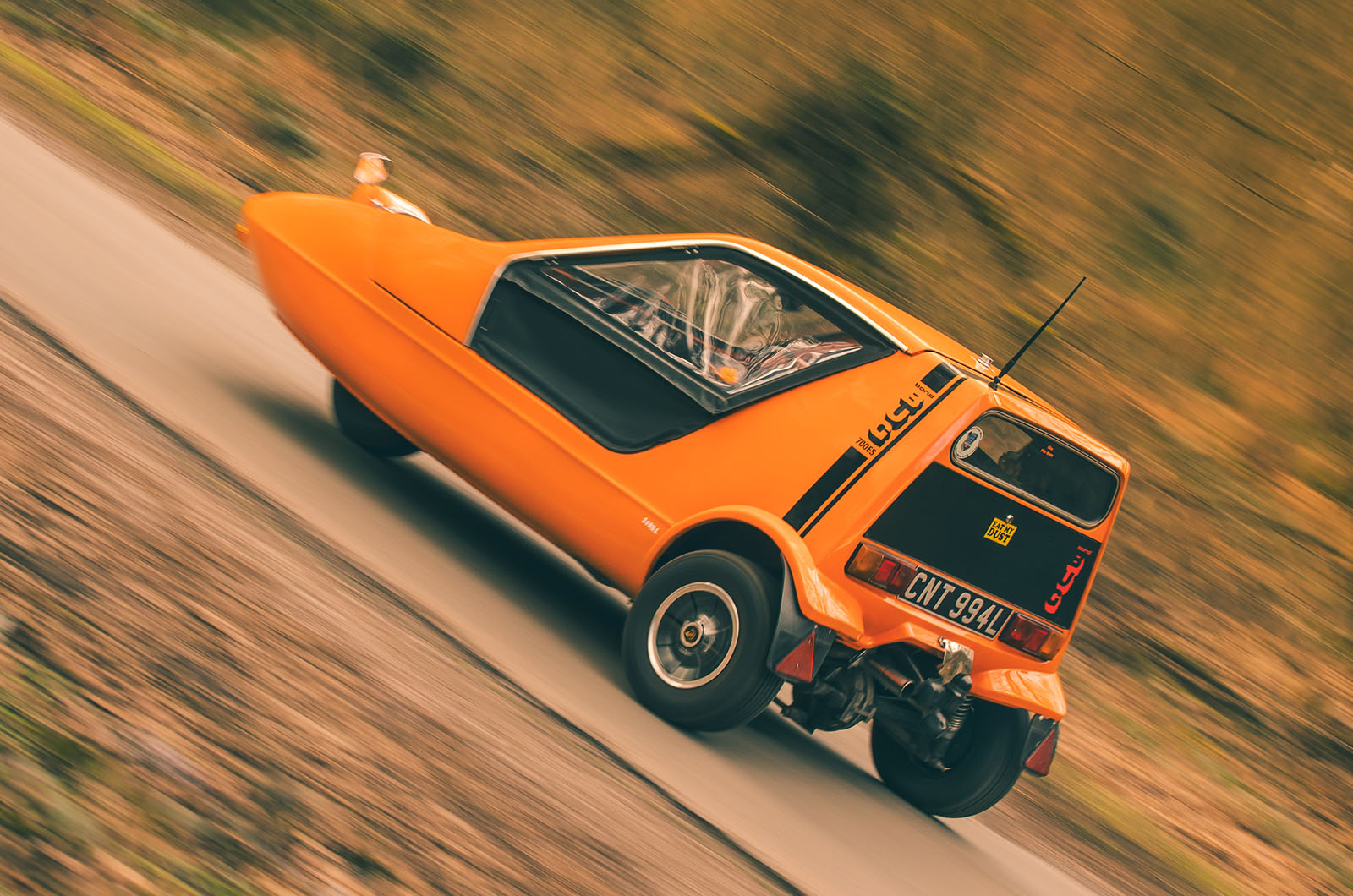
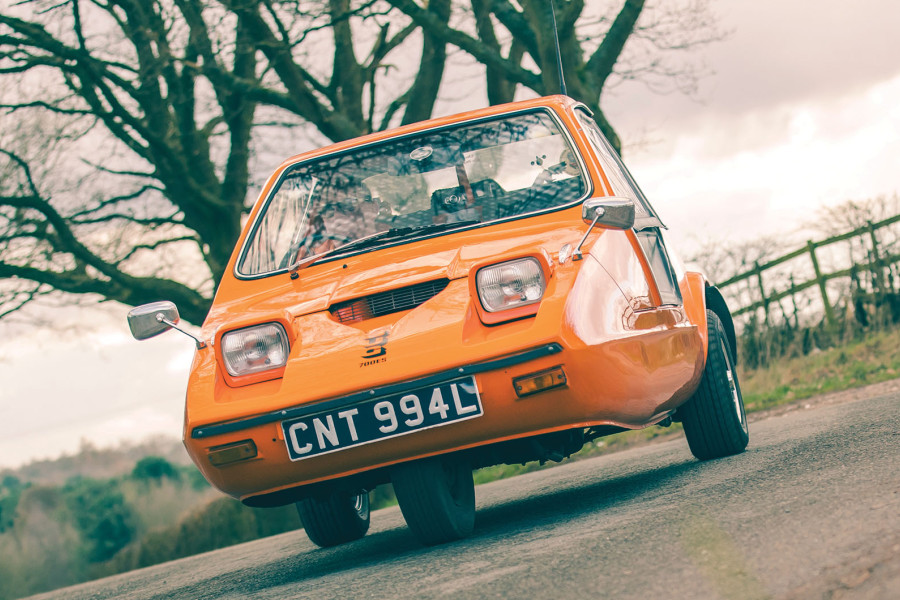
Factory seatbelts and two Exacton alloy wheels (costing £12 10s) were optional extras.
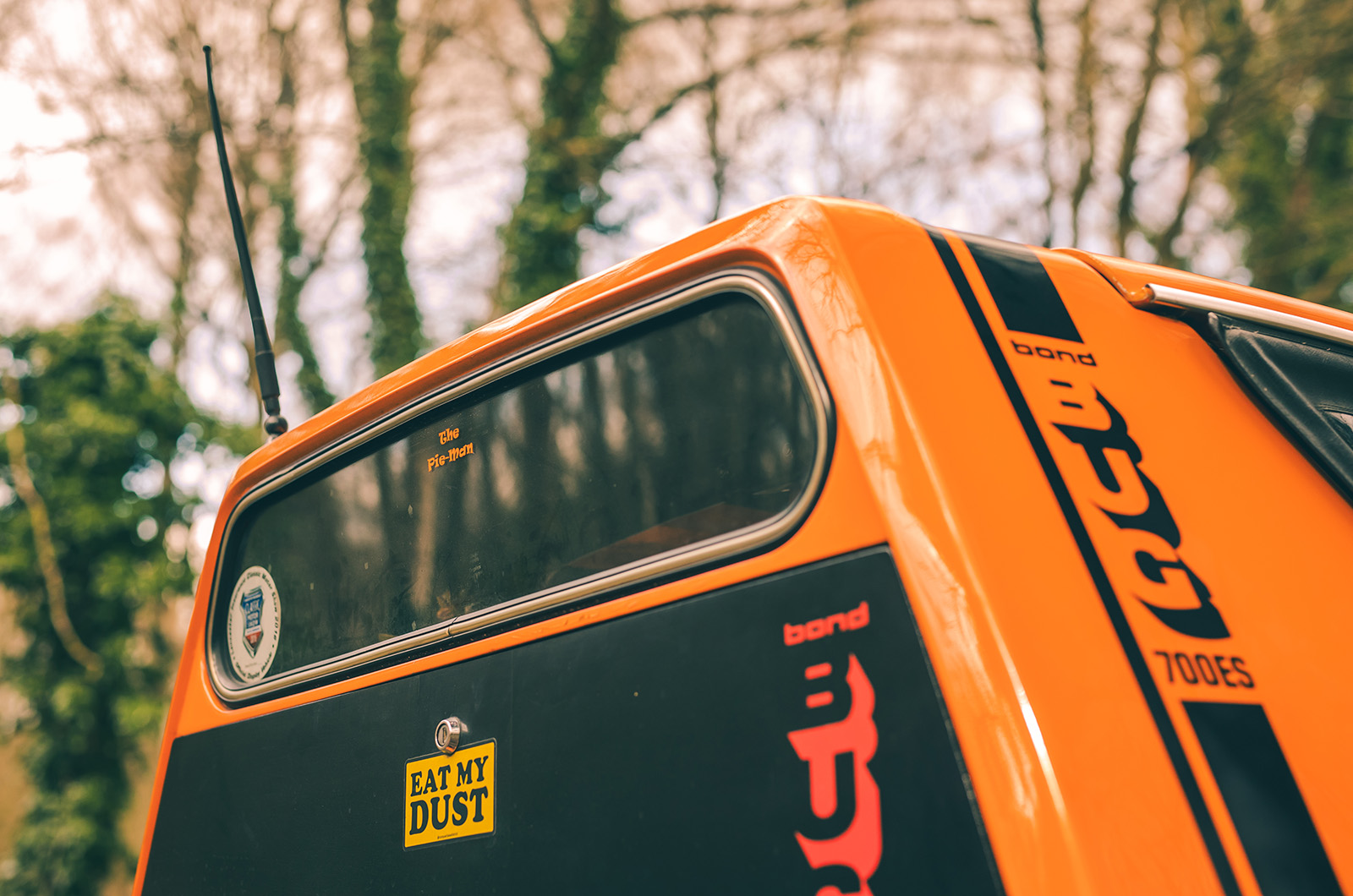
The latter, when combined with the ES B-pillar decals, ramp up the Bug’s cosmic grooviness to the maximum.
This Bond Bug’s alloy wheels were an option
The new Reliant Robin 750 was introduced in 1973, which was when the Bond Bug inherited the 748cc, 32bhp, lower-compression (7.5:1) engine.
Only the 750ES model continued until May 1974, when production came to an end after just 142 750ES versions had been built, making room for more Reliant Robin production.
Sadly, a total of just 2270 production Bond Bugs of all types were constructed, with most, but not quite all, being painted in the eye-catching colour of Tangerine Orange, as seen here.
Six were finished in white and six in lime green, for promotional purposes.
What wasn’t highlighted in the specification sheet was a few very clever touches.
The Bond Bug 700ES-spec seats have bolsters and headrests
Yes, Andrew makes some tongue-in-cheek remarks about the Bug’s “central locking”, “air-con” and deceptively capacious boot, but he then points out features that might otherwise be missed.
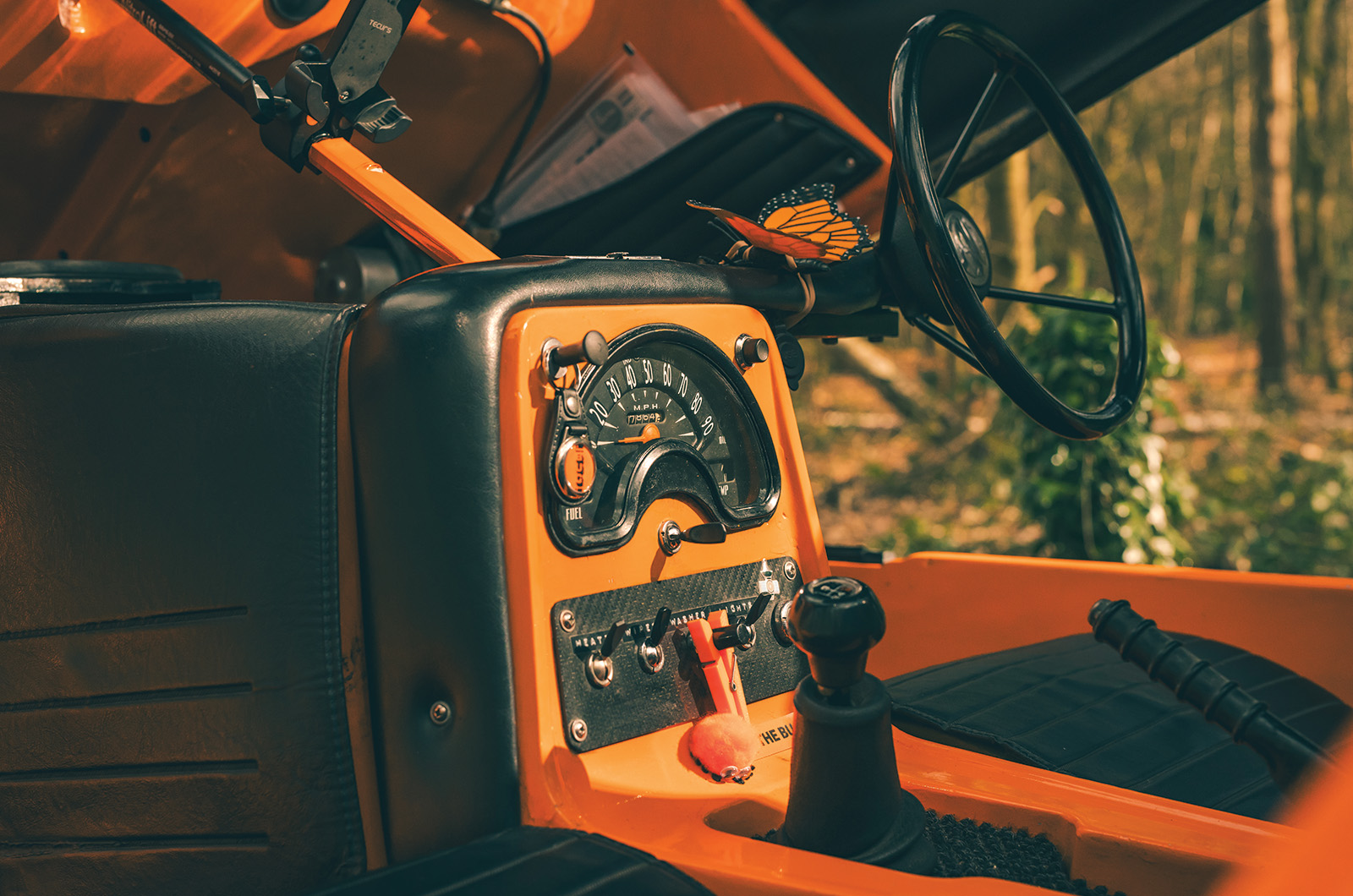
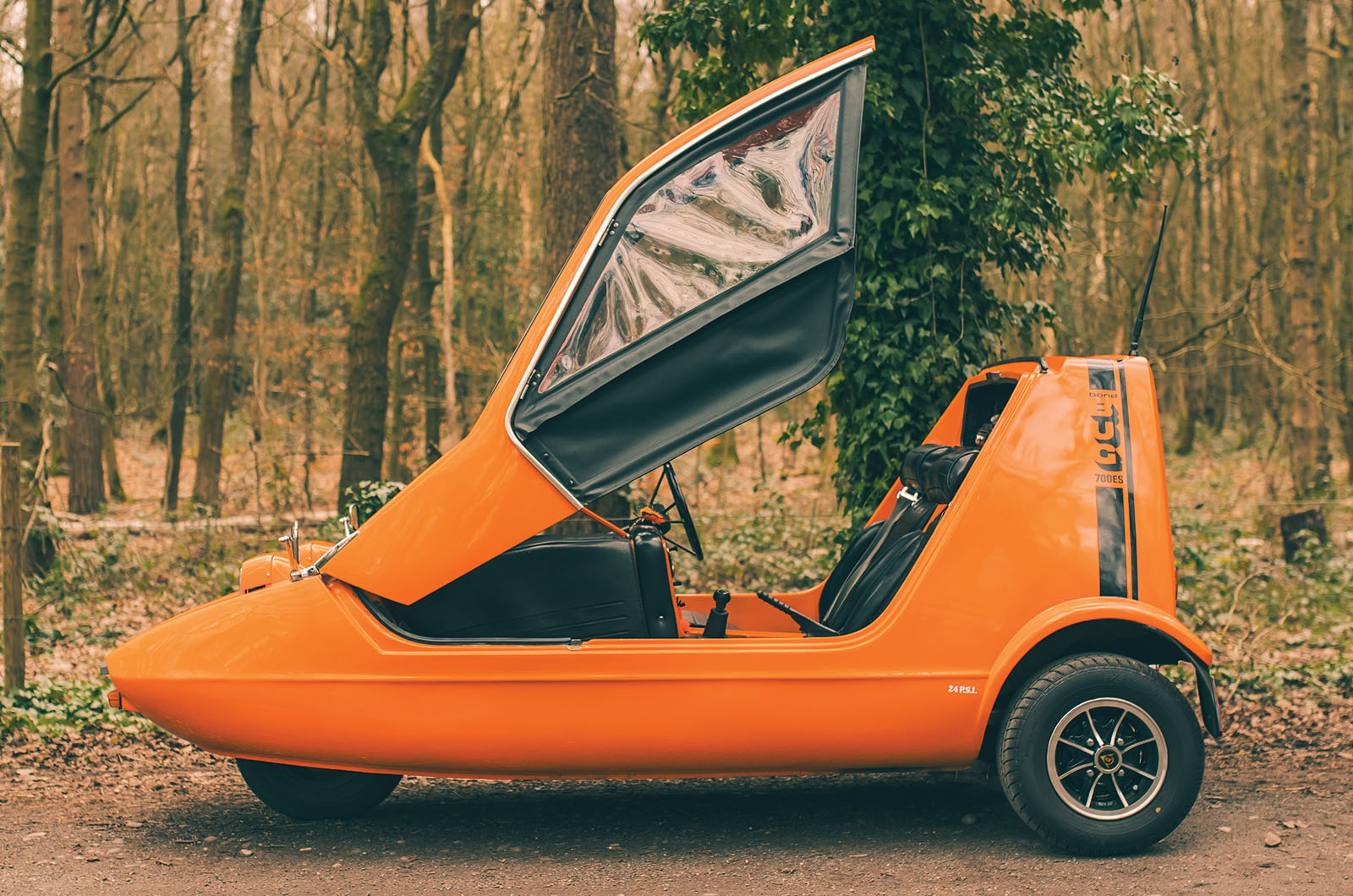
The seats consist of padded vinyl trim fixed directly to the shell; this not only saves cost and weight, but also gives the Bug a lower centre of gravity than the Robin.
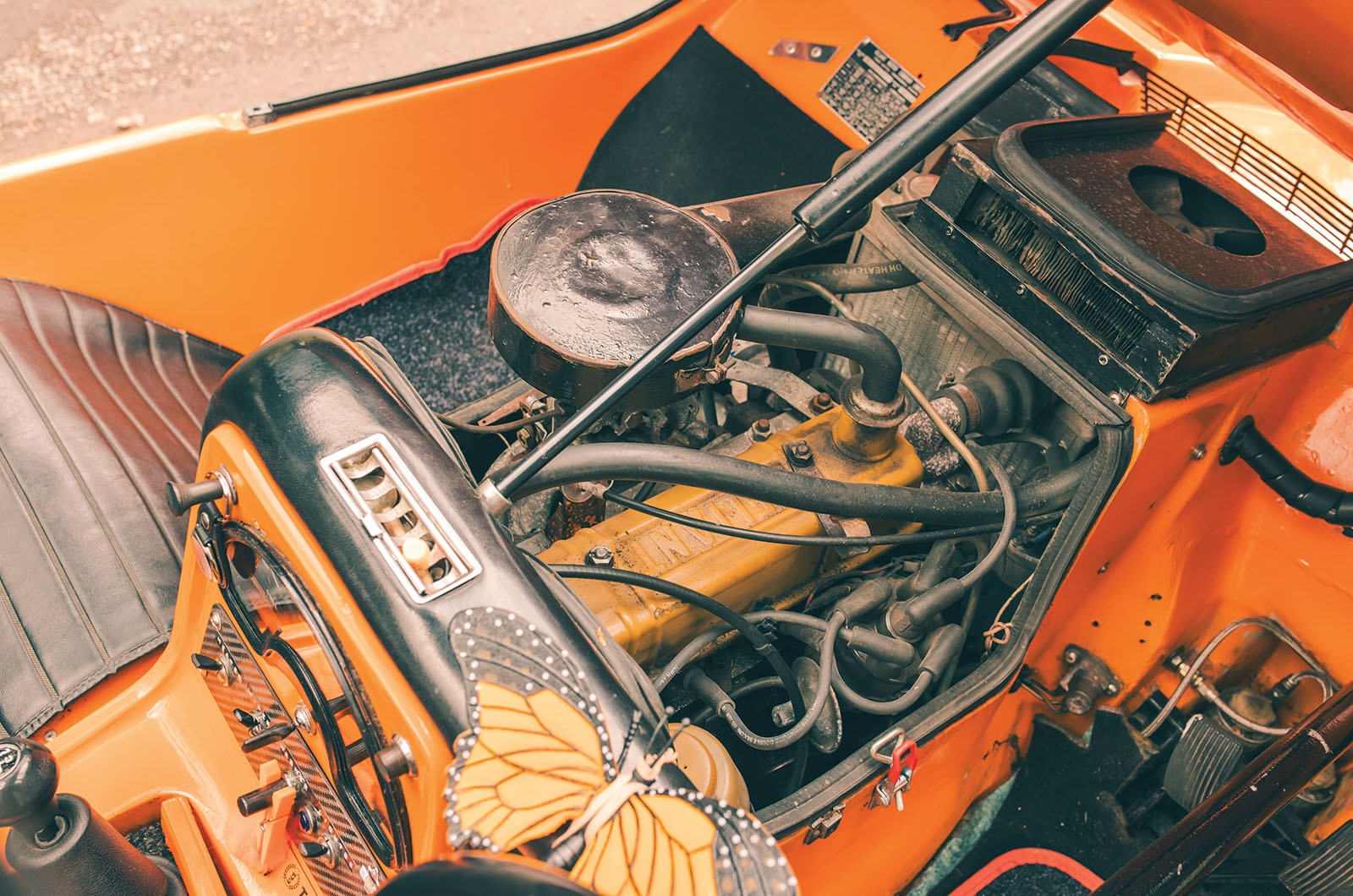
Look at the engine and you’ll notice that in plan view it veers diagonally toward the passenger footwell, to assist with weight distribution for solo driving.
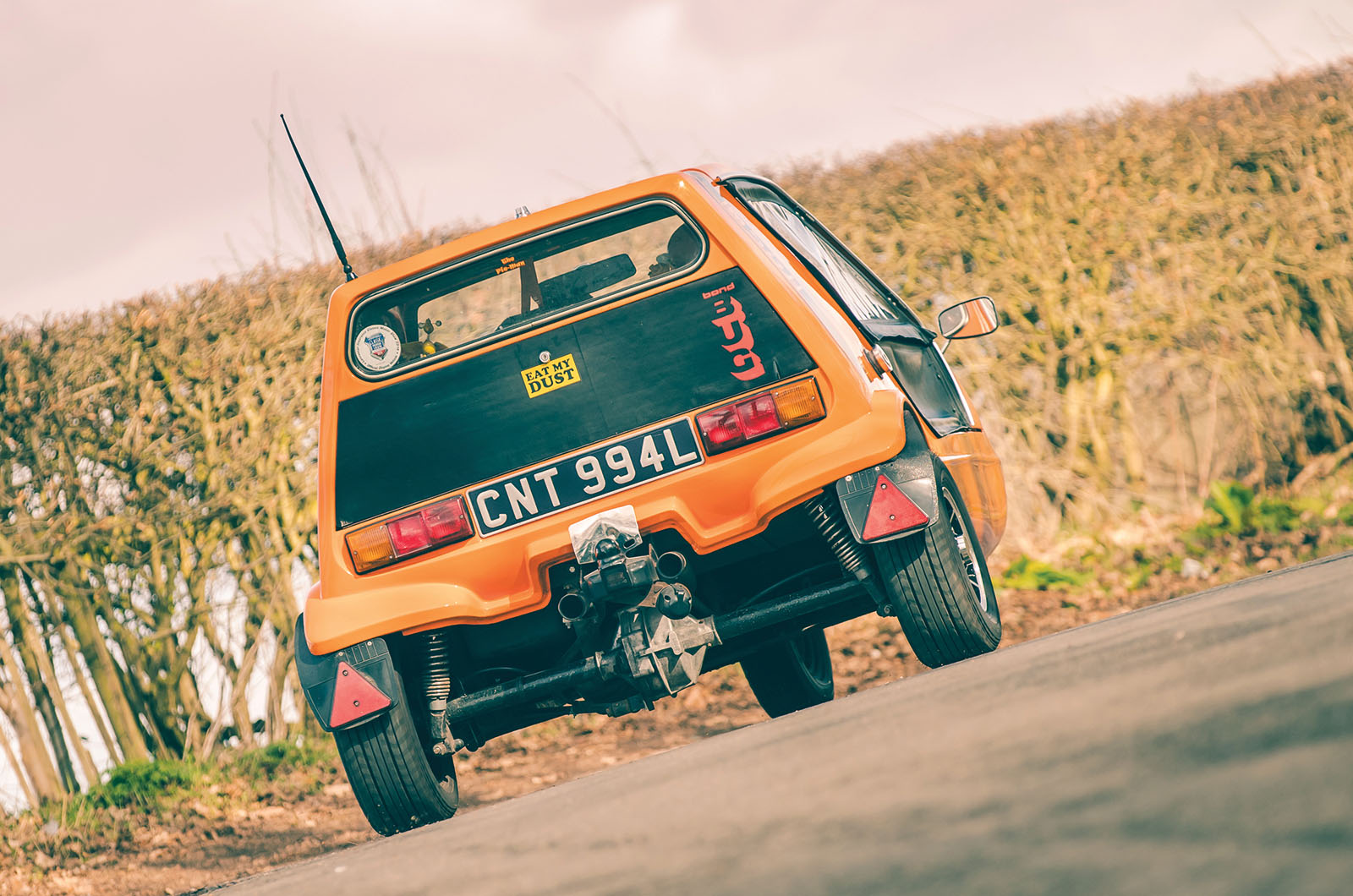
More surprisingly, the Bug was originally specified with bias-ply tyres to make the driving as fun and enjoyably sideways as possible.
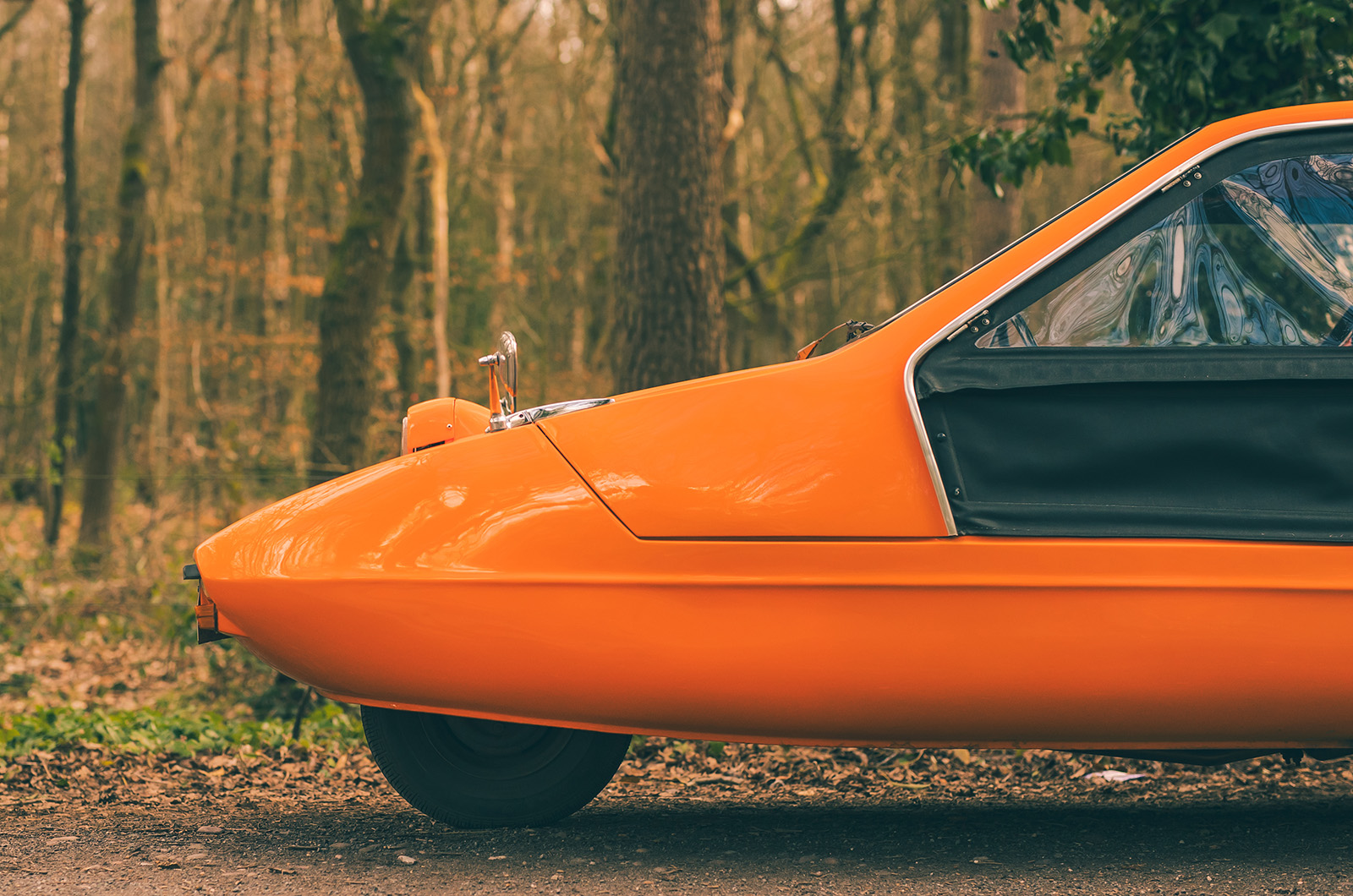
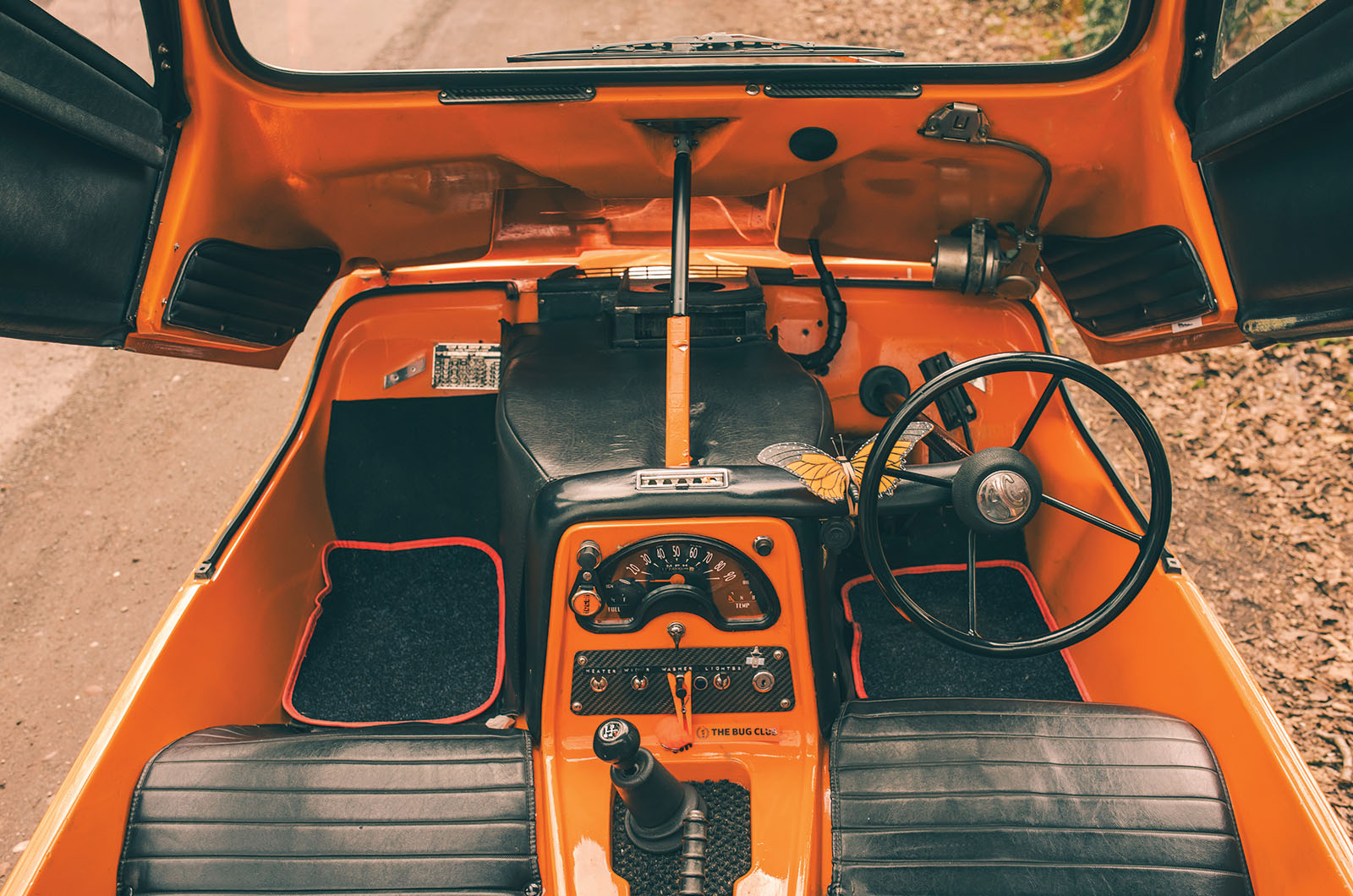
The Bond Bug’s exposed glassfibre bodywork keeps the cabin bright and colourful
Squeezing into the Bond Bug’s wedge-shaped body is certainly a challenge for someone tall and not rake thin.
The sidescreens and seating position make entry a blend of Fosbury flop and limbo dancing, but I have to make sure my backside is as far forward as possible to prevent my head from coming into contact with the closing canopy.
Once in, I feel much like a balloon that has squeezed its way into a traffic cone.
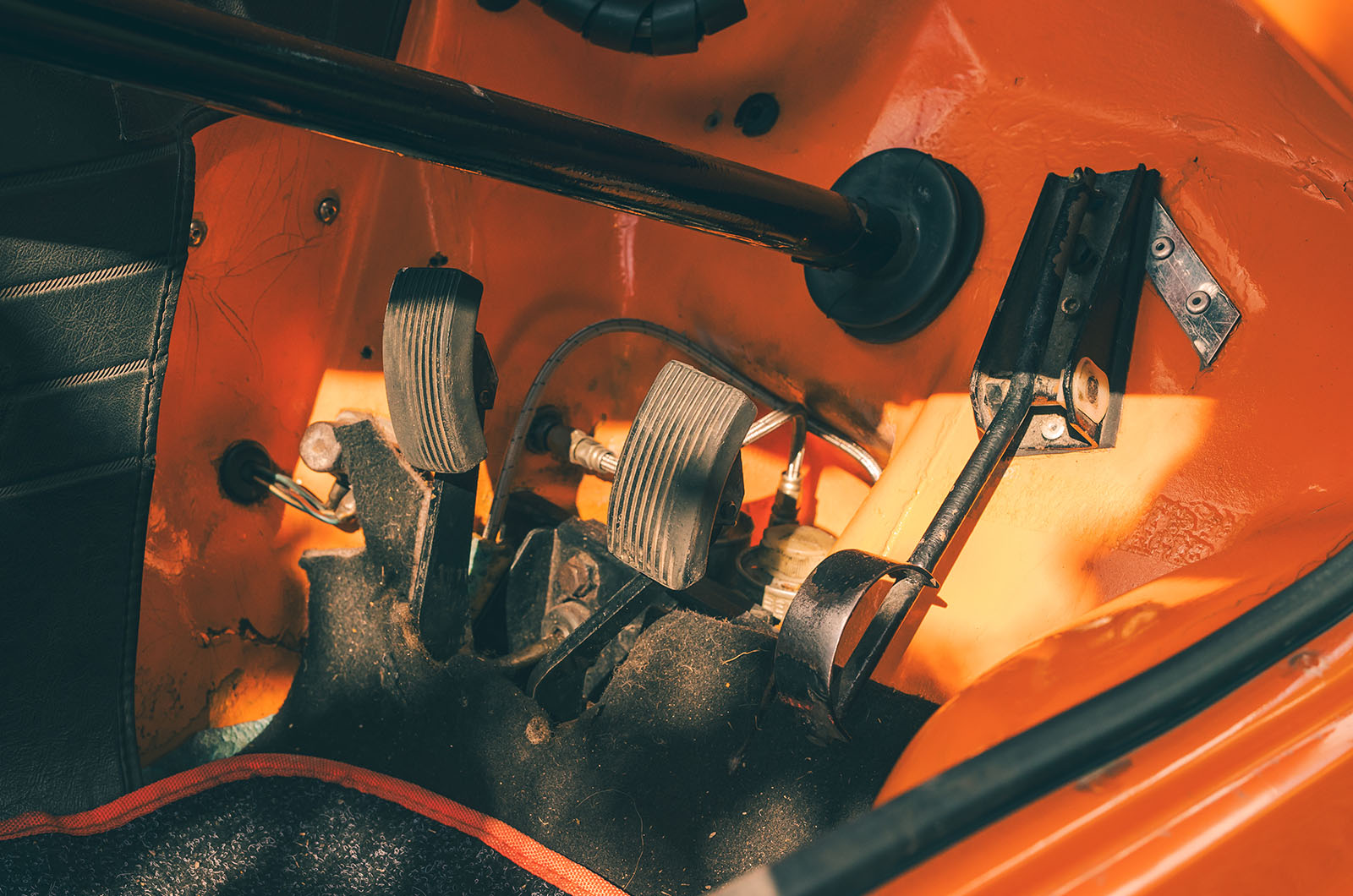
I am sorry to say that, even if I were to negotiate around the steering wheel and its column support, those pedals rob too many precious inches in the footwell to make a drive possible.
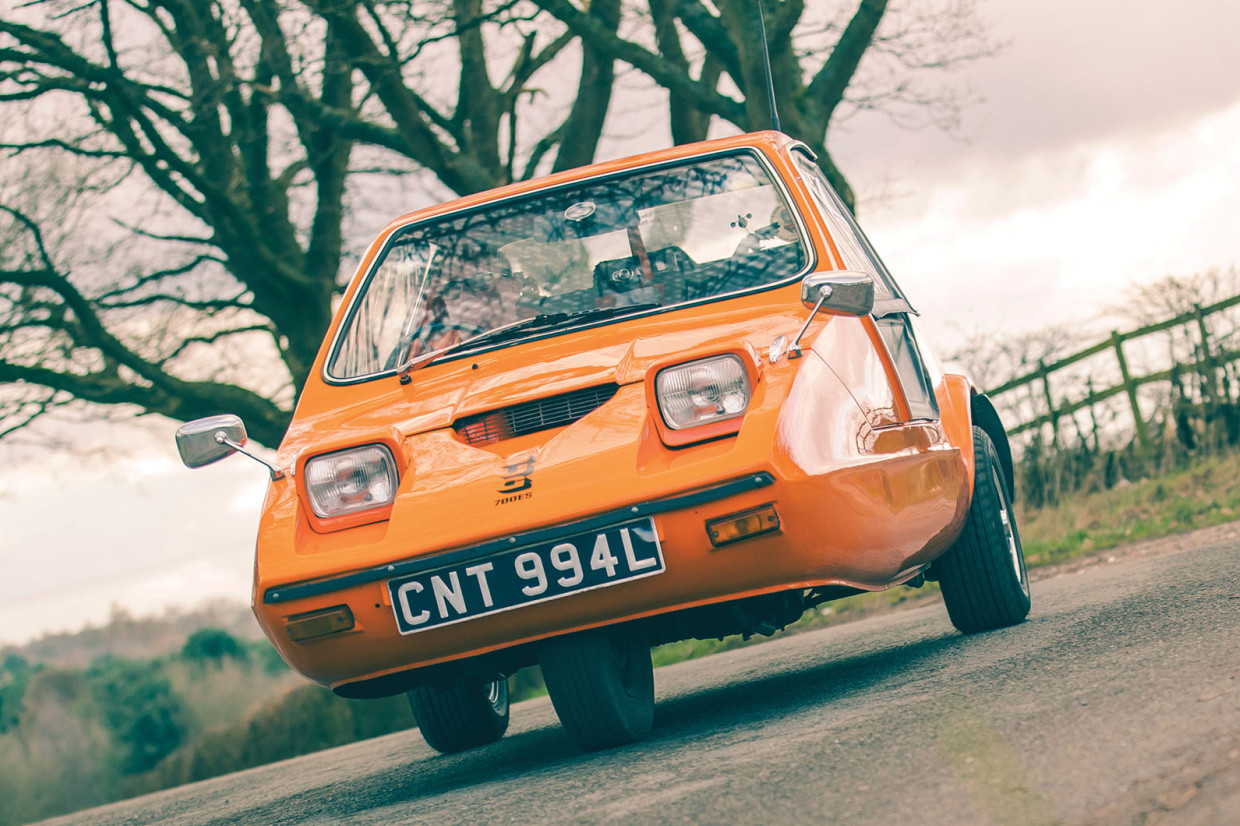
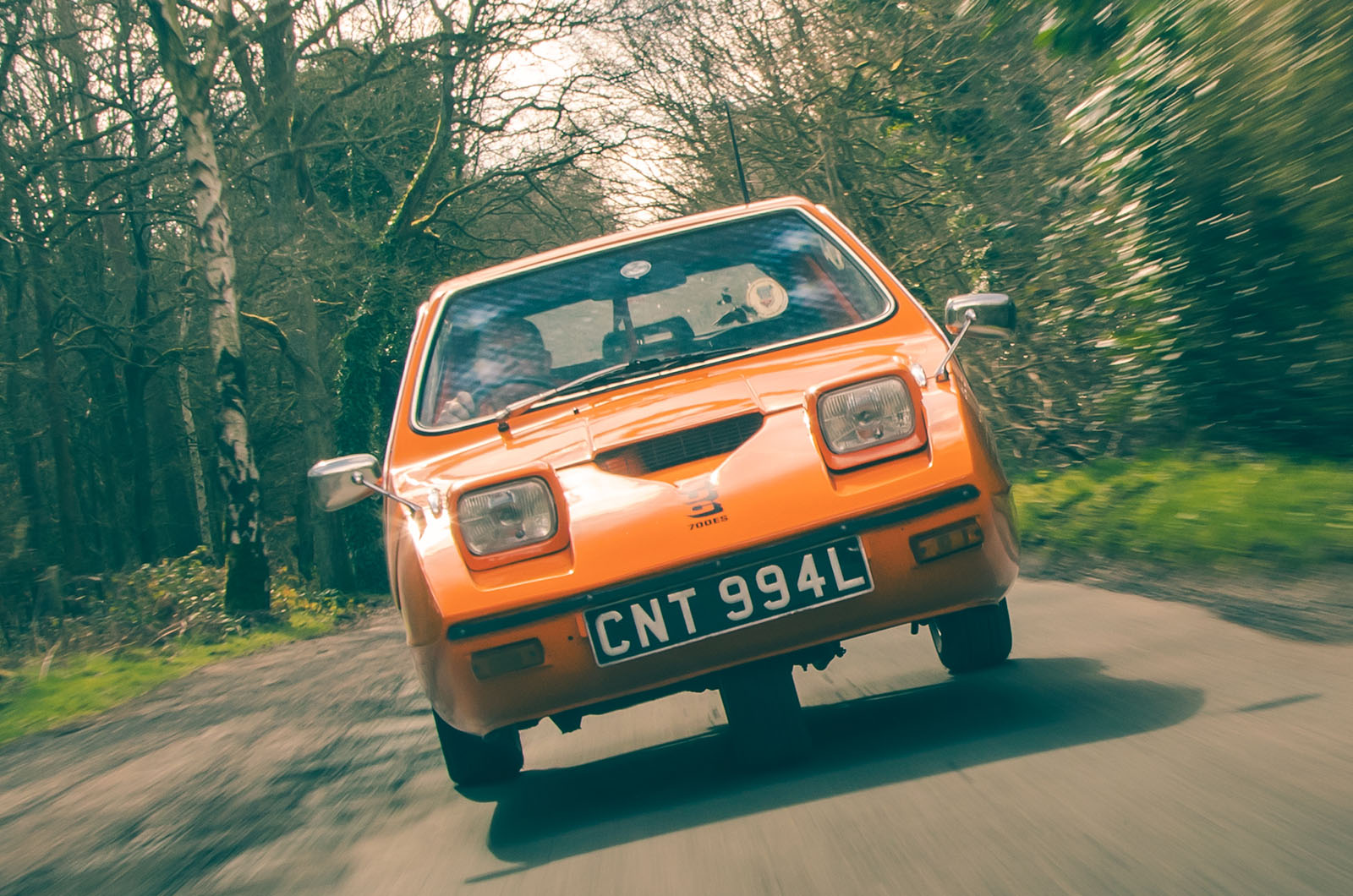
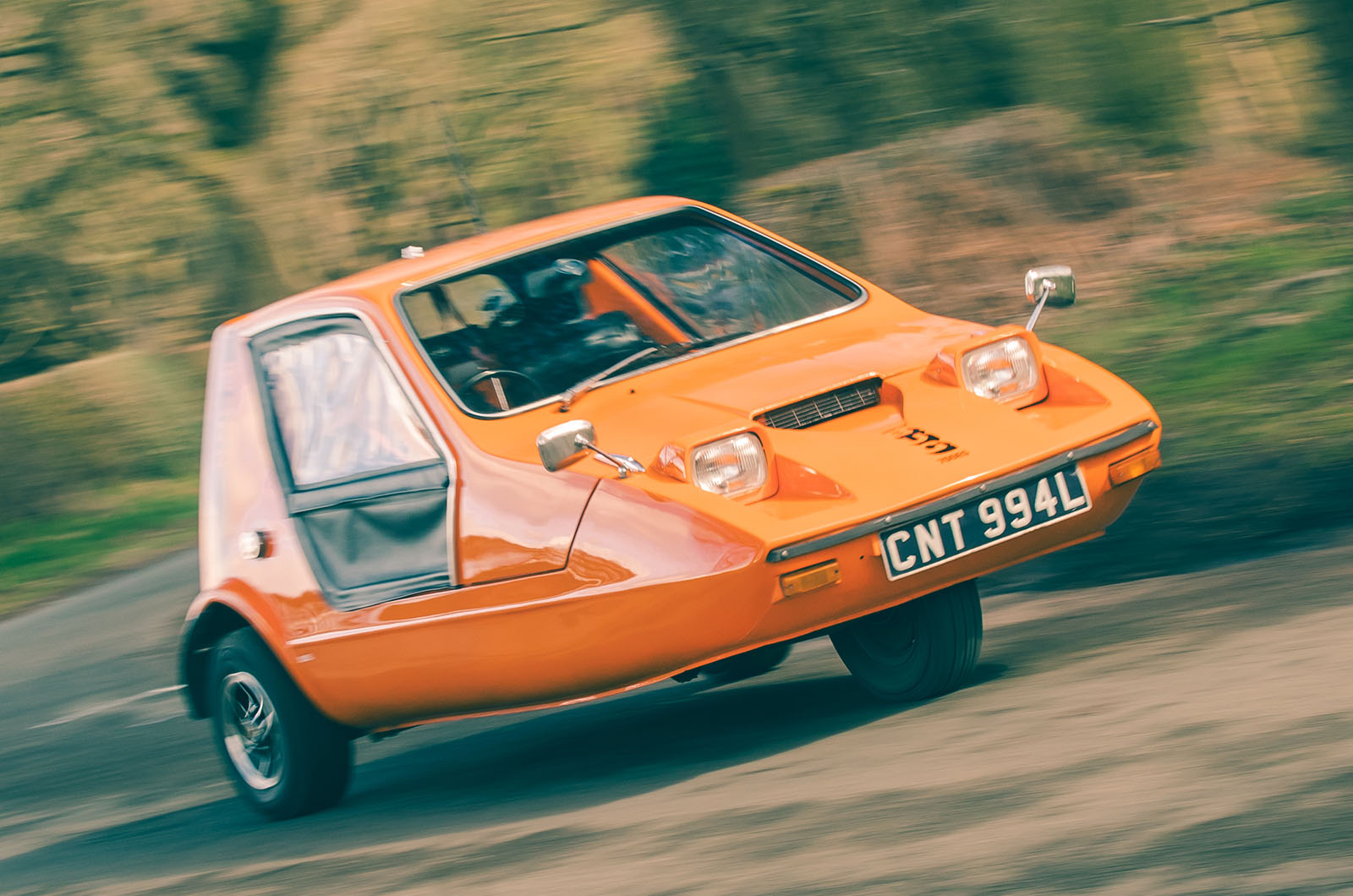
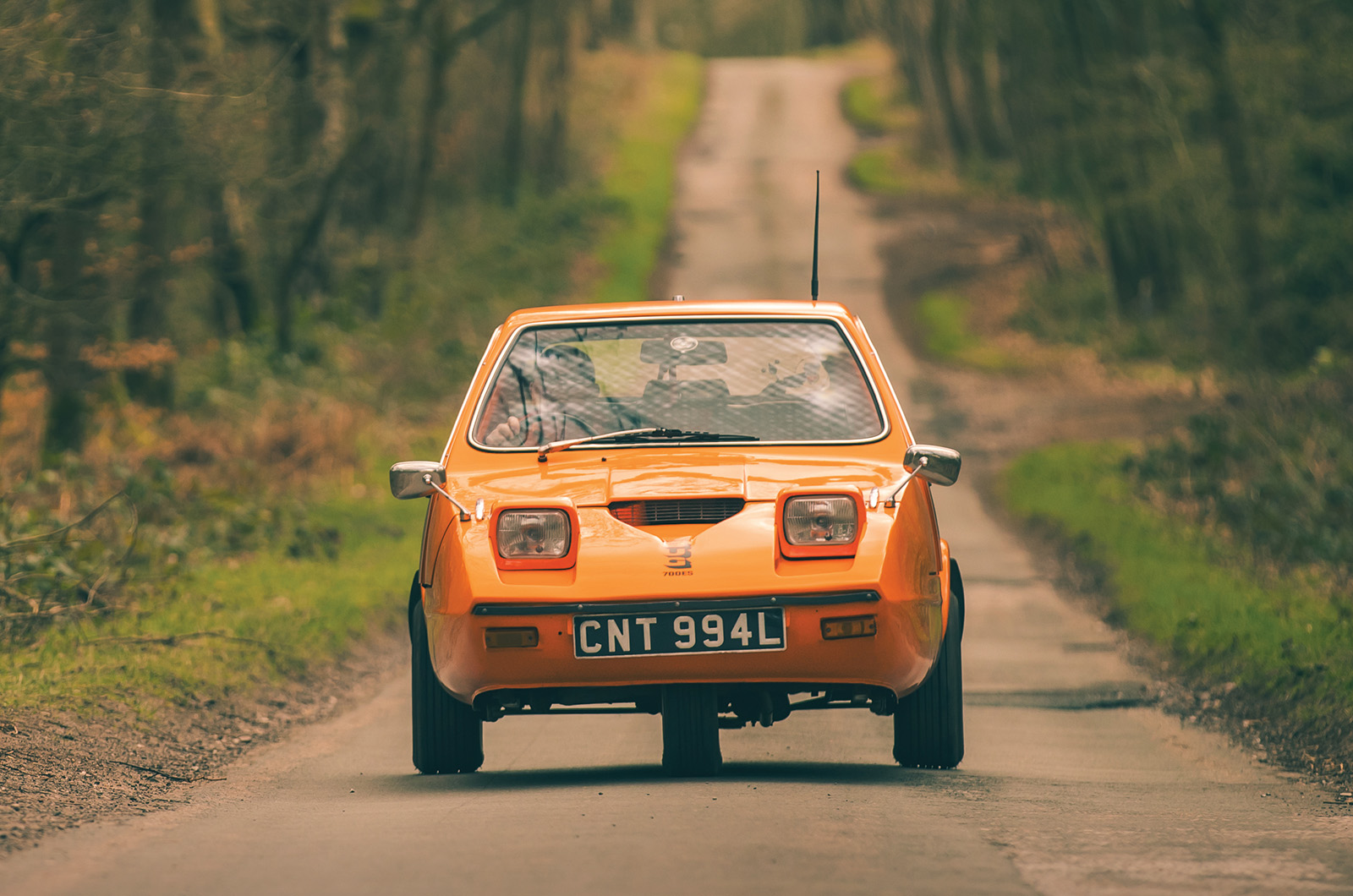
The Bond Bug is agile and fun to drive
That said, interior room might be tight, but it isn’t claustrophobic.
This example is fitted with an 848cc Rialto engine and gearbox, but even the original 701cc Bugs were nippy – coming second in Motor’s top speed and 0-60mph shootout against the likes of a Honda N600 (which was the fastest and quickest), a Hillman Imp, a Fiat 850, a MkII Mini, an NSU Super Prinz and a Renault 4.
It managed this while also being the most frugal on fuel.
The performance is really rather surprising, both on the straights and through the corners.
The engine sounds a bit harsh and its ride is firm on these terrible roads, but the direct steering (just 2.2 turns from lock to lock) and the four-speed gearbox’s positive change obviously make the Bug great fun to drive.
The Bond Bug’s cabin is spacious, but the driving position is cramped
No wonder this example’s loving custodian Andrew is such an advocate of both the car and also of The Bug Club.
Harold Hastings, a motoring journalist who was familiar with three-wheeling and was also the one-time sports editor of The Light Car, concluded his assessment in Motor as follows: ‘In all, this Bond Bug is a fascinating experiment and might well prove to be the missing link between the best of motorcycling and the minimum in car driving as up-to-now envisaged.’
Alas, it was not to be.
The Bug proved more popular with older buyers, and by the time production ended in 1974, Bond was no more.
Images: Jack Harrison
Thanks to: Andrew Cox; the Facebook group Nuts About Bond Bugs; The Bug Club
Factfile
Bond Bug 700ES
- Sold/number built 1970-’74/2272 (all, including two prototypes)
- Construction glassfibre body on welded, box-section steel chassis
- Engine all-alloy, ohv 701cc ‘four’, single Zenith downdraught carburettor
- Max power 31bhp @ 5000rpm
- Max torque 38lb ft @ 3000rpm
- Transmission four-speed manual, RWD
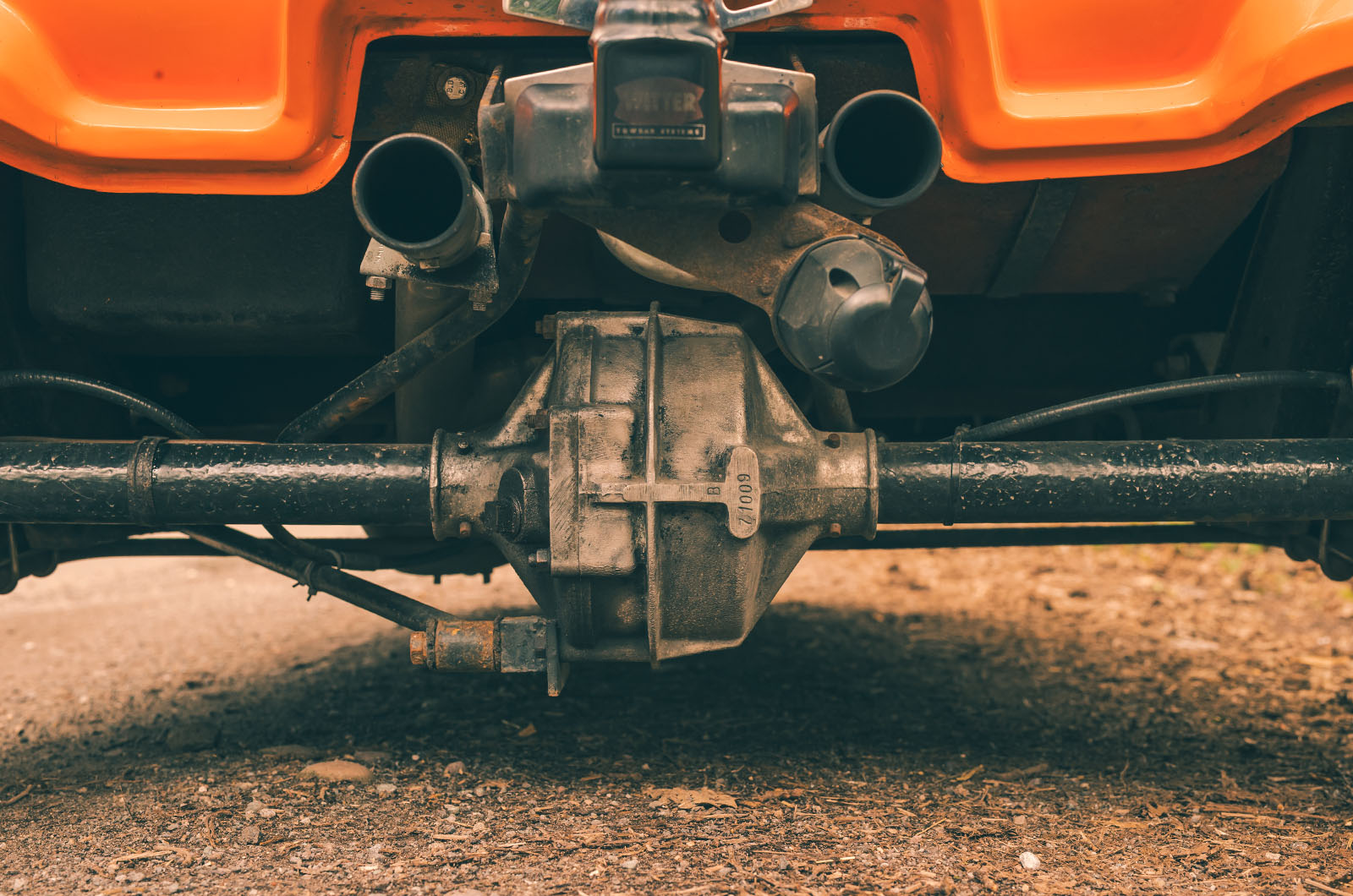
- Suspension: front independent, by leading arm rear live axle, anti-roll bar, four trailing links, Panhard rod; coil-over damper units f/r
- Steering Burman Douglas worm and peg
- Brakes Lockheed drums
- Length 9ft 2in (2794mm)
- Width 4ft 7in (1397mm)
- Height 4ft 2in (1270mm, canopy closed)
- Wheelbase 6ft 5in (1956mm)
- Weight 874lb (396kg)
- 0-60mph 23.7 secs
- Top speed 76mph
- Mpg 35
- Price new £628 19s 2d
We hope you enjoyed reading. Please click the ‘Follow’ button for more super stories from Classic & Sports Car.
Simon Charlesworth
Simon Charlesworth is a contributor to Classic & Sports Car