AMC Rambler Rebel: dawn of the muscle car

| 21 Aug 2026
Classic & Sports Car – AMC Rambler Rebel: dawn of the muscle car
In February 1957, Daytona Speedweeks attracted the cream of Detroit.

General Motors’ Bill Mitchell fielded the fuel-injected Corvette SR-2 racing car, clearing 152.8mph over the flying mile.

Ford went one better, with its 7-litre Thunderbird-based ‘Battlebird’ topping 160mph.

And then Chrysler, represented by its fearsome ‘Suddenly Plymouth Savoy’, trumped them all, setting an outright record of 166mph.

Classic & Sports Car – AMC Rambler Rebel: dawn of the muscle car
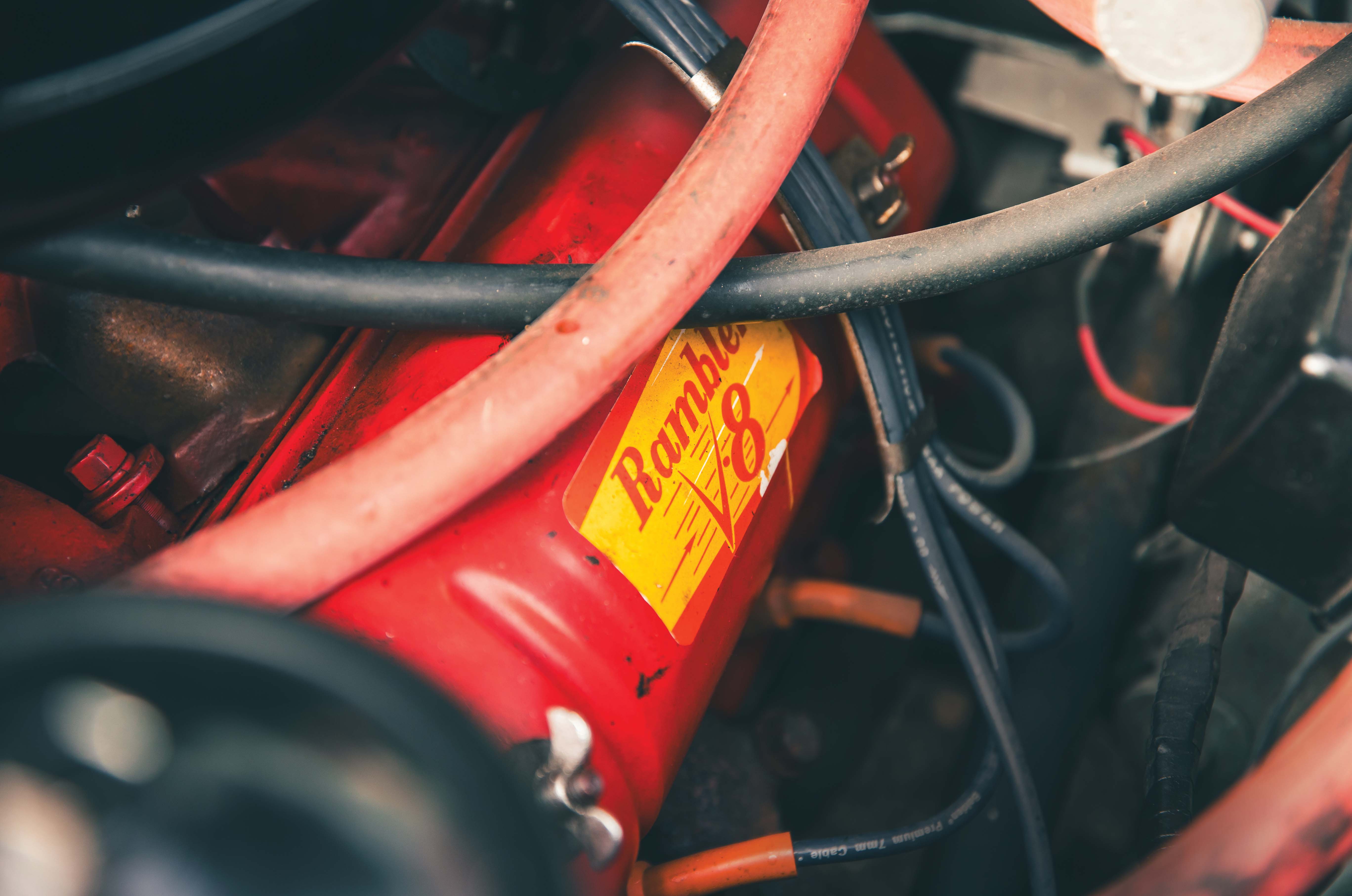
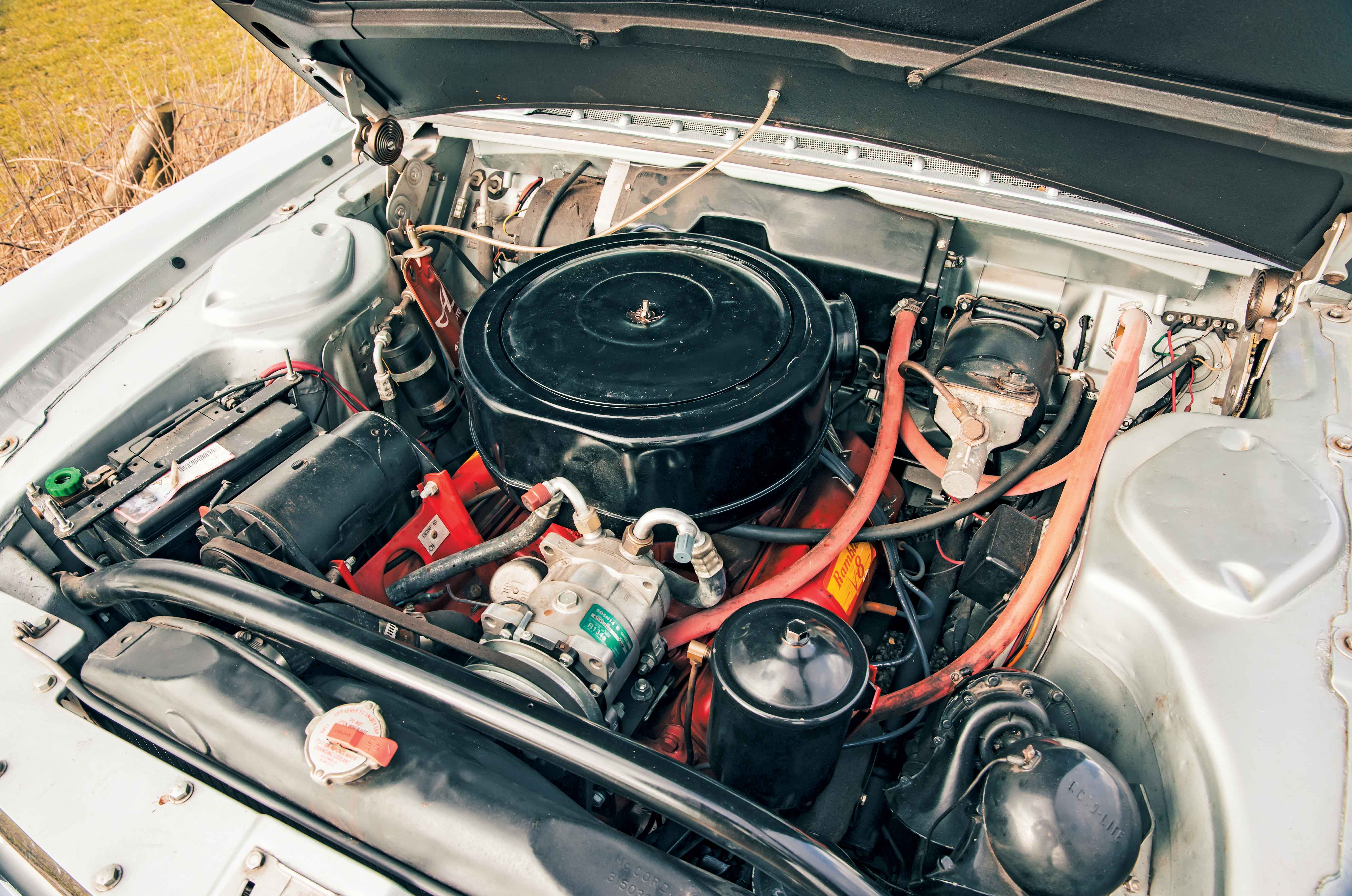
The Rambler Rebel’s V8 was AMC’s own design, bored out to 327cu in

Daytona was a power-fest for the Big Three, and each firm performed – predictably – with admirable excess.

Meanwhile, AMC, flag-bearer for the conservative and fuel-conscious Ma and Pa automobile buyer, chose the same venue to launch its new Rambler Rebel.

As incongruous as it must have appeared, what the invited motoring hacks were about to experience was the heralding of a new genre: the muscle car.

You might question the veracity of that last sentence, looking at this prosaically styled car, but 70 years ago the American Motors Corporation of Kenosha, Wisconsin, was desperately in need of a sales lift as interest in its staple Nash and Hudson marques began to fade.

Classic & Sports Car – AMC Rambler Rebel: dawn of the muscle car
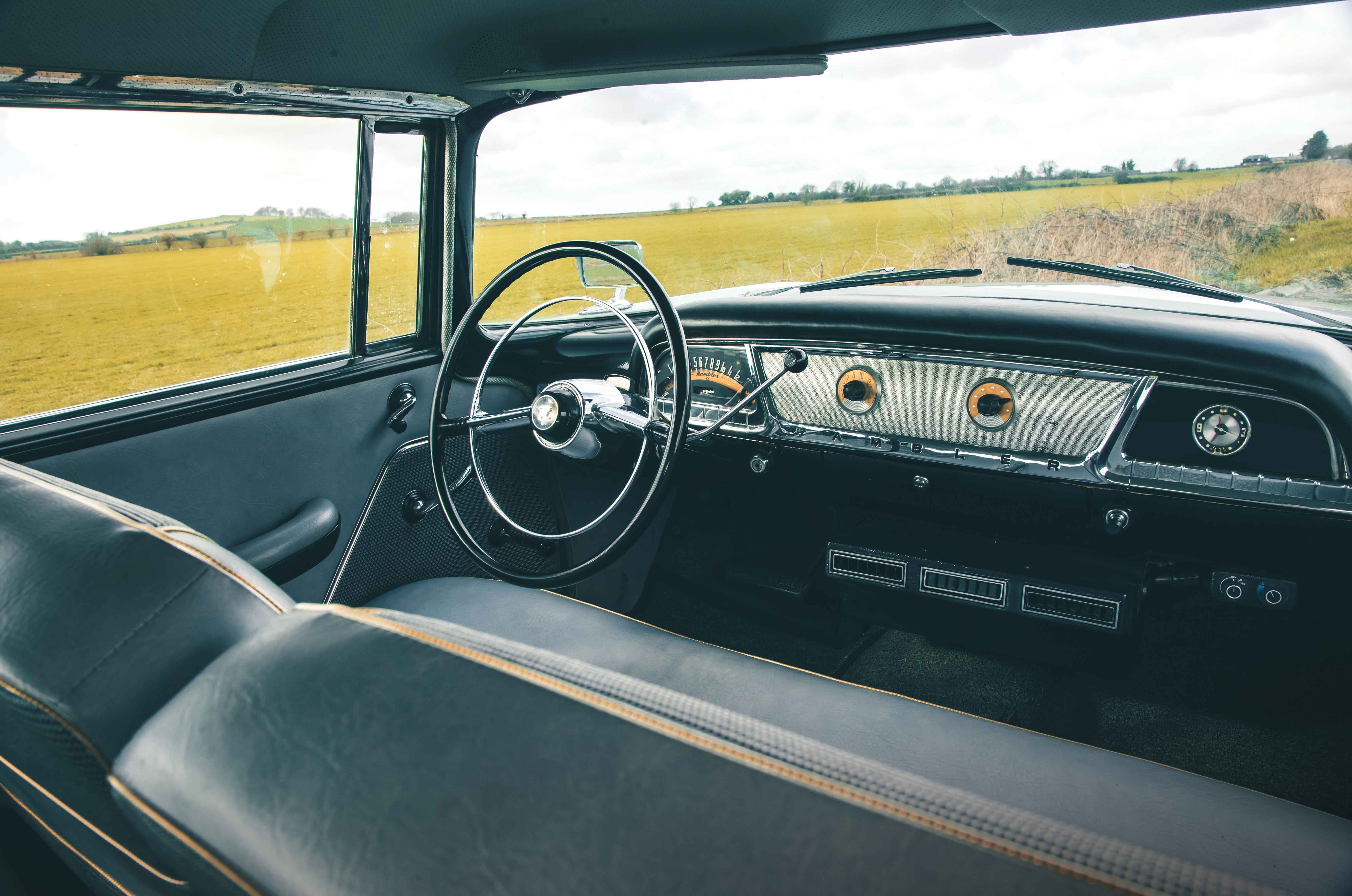
The AMC Rambler Rebel’s cabin, with thin-rimmed steering wheel, wide bench seat and optional padded dashboard top

AMC had been formed in 1954, merging the Nash-Kelvinator Corp and Hudson Motor Car Company.

The Nash Rambler, introduced in 1950, had been positioned to challenge the Big Three’s lower-priced models, but with its rather dumpy design and power from the company’s proven but tepid 2.8-litre L-head straight-six, it was far from inspiring, even for its intended customer base.

Furthermore, the colossal sales battle between Ford and Chevrolet through 1953 and ’54 drove prices down to such an extent that smaller players, such as AMC, struggled to compete.

Classic & Sports Car – AMC Rambler Rebel: dawn of the muscle car
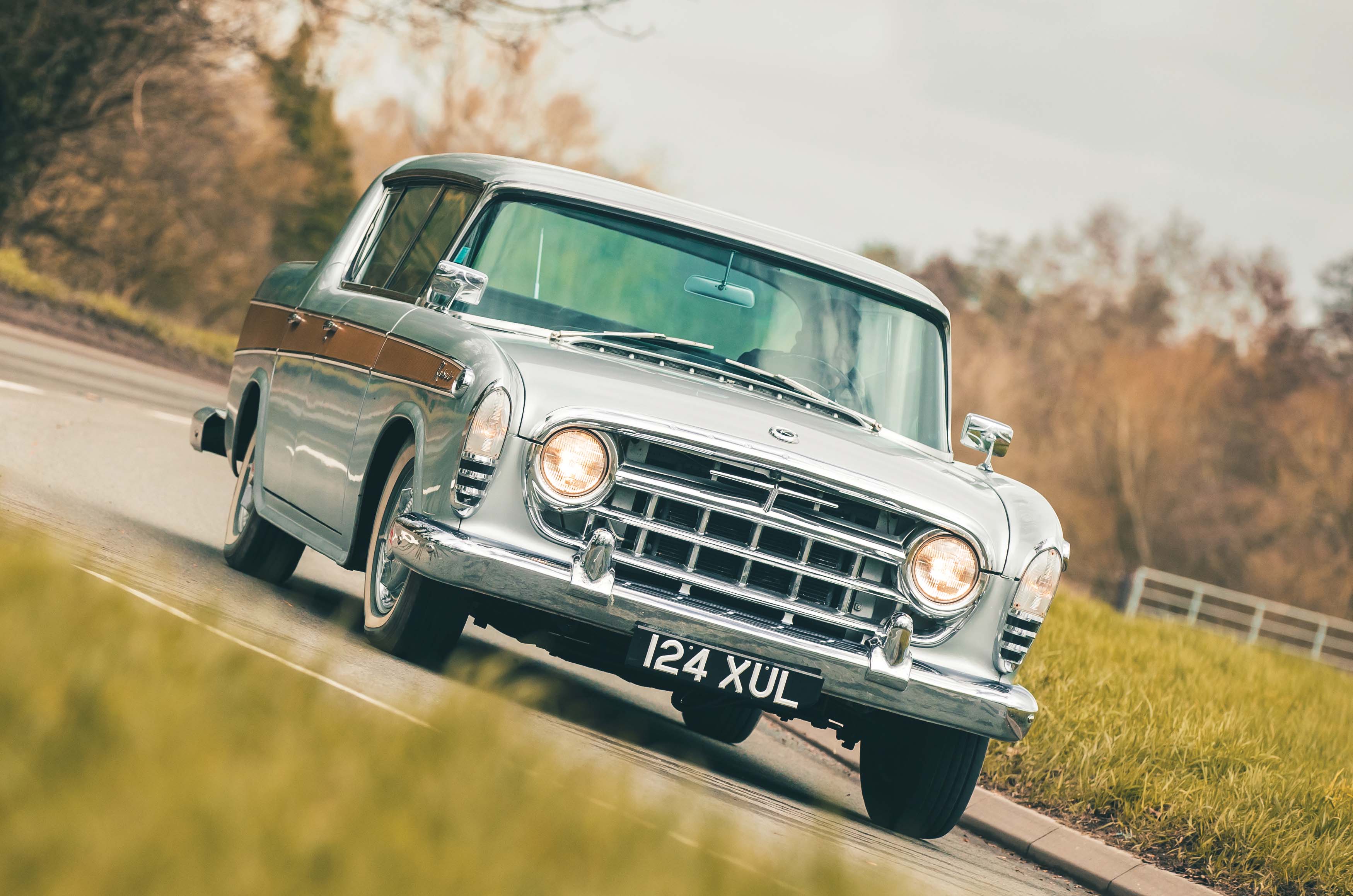
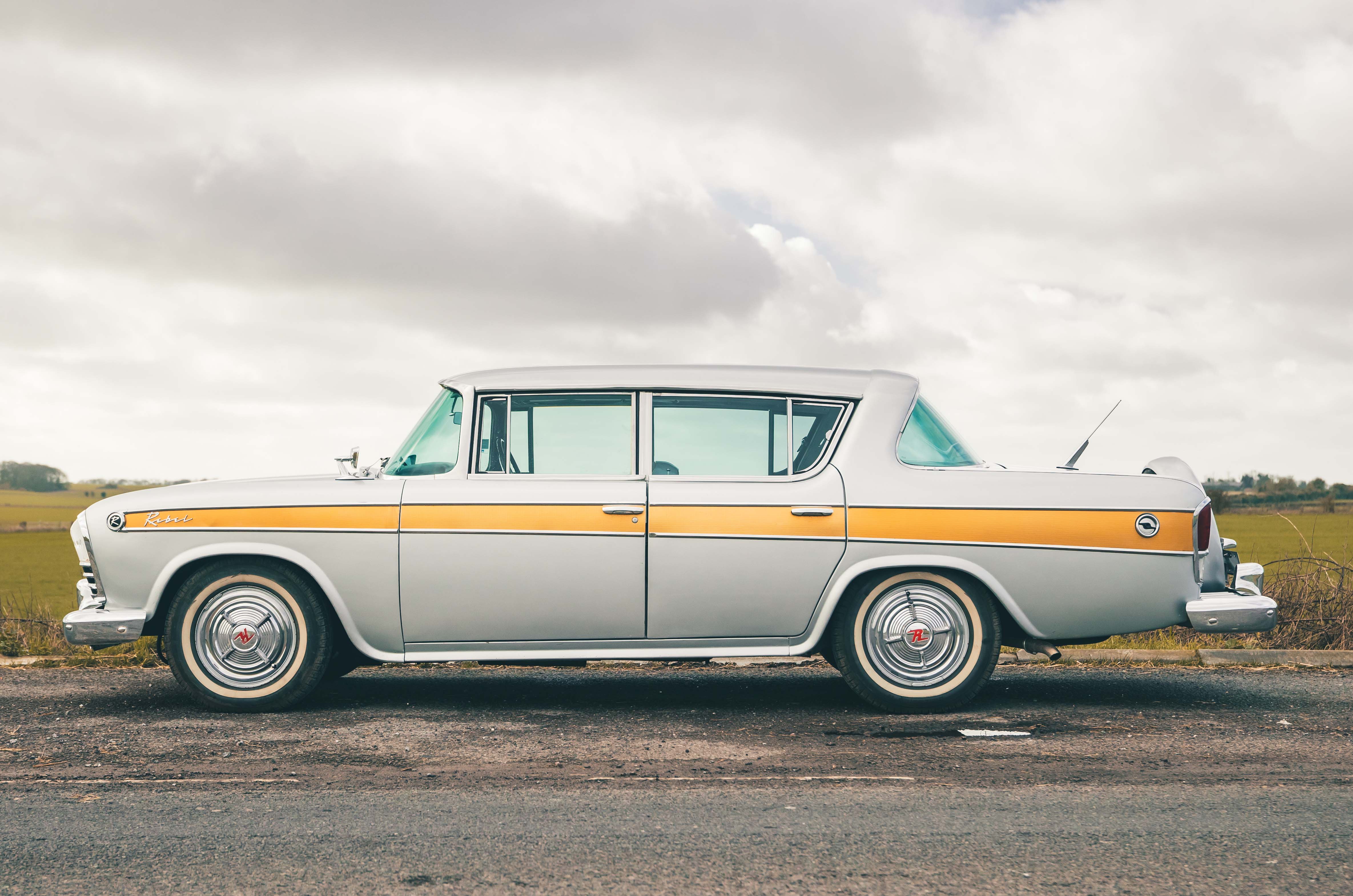
The immense AMC Rambler Rebel stretches 16ft 7in from front to rear

Meanwhile, GM’s Harley Earl and Chrysler’s Virgil Exner were trying to out-fin and out-chrome each other with every passing model year, and their products’ growing bulk and brashness resonated with the post-war zeitgeist that had consumed America’s car-buying public.

But AMC’s president, George Romney, felt there was potential for the Rambler – badged as both a Nash and a Hudson since the merger – to be so much more than an afterthought at the lower end of the car market.

The earlier model’s bathtub-like design, with faired-in front and rear wheels, and dependence on six- rather than eight-cylinder motors, polarised its appeal, but the underpinnings were relatively advanced.

Classic & Sports Car – AMC Rambler Rebel: dawn of the muscle car
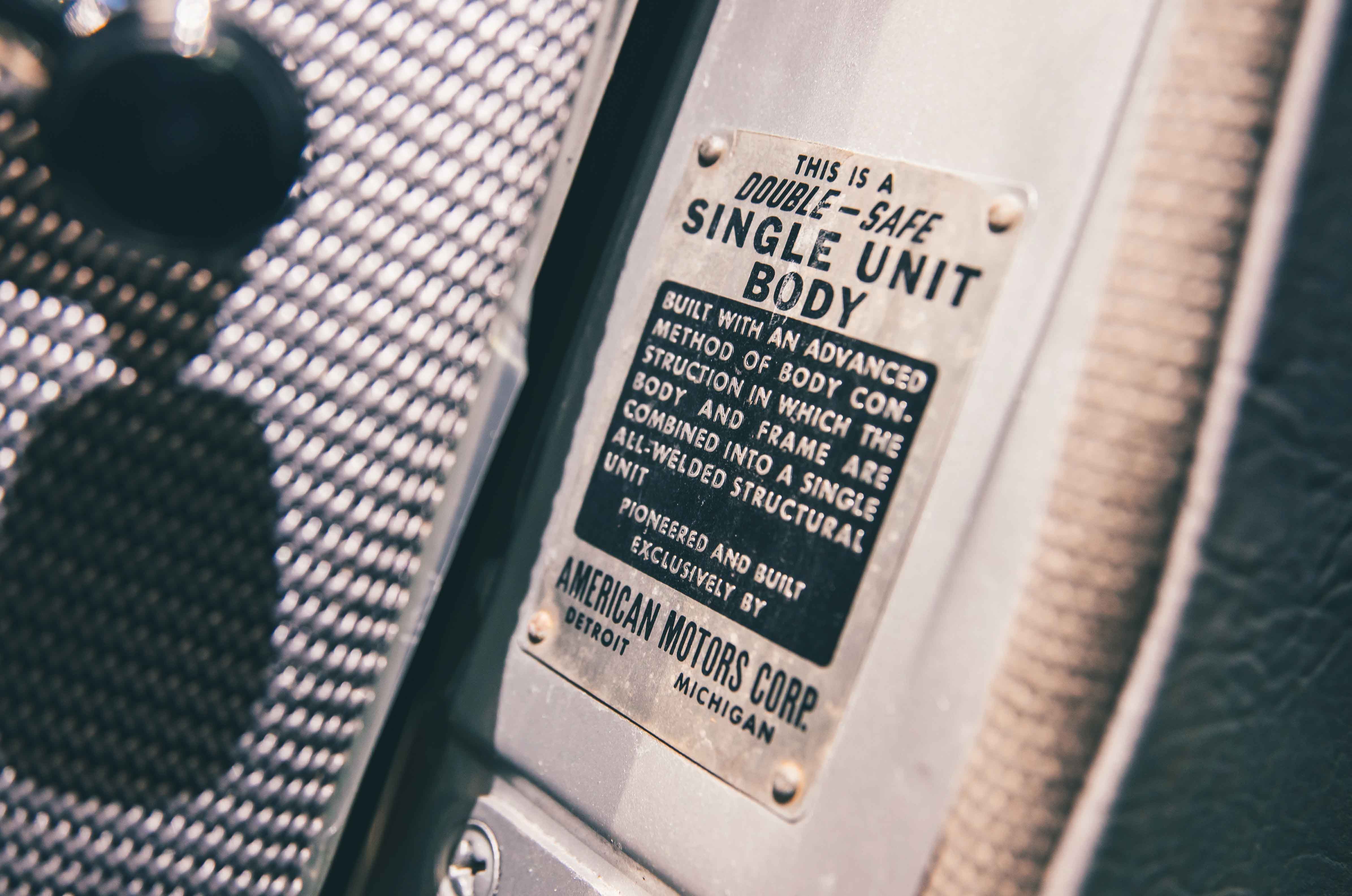
The AMC Rambler Rebel’s pioneering use of unitary construction is proudly proclaimed on the chassis plate

Since the mid-’30s, Nash had been experimenting with unitary construction, and when the first Rambler arrived it bucked the industry norm of a separate chassis; instead it used a well-executed, lightweight monocoque body.

Judging by the plate on the inside of our test car’s A-pillar, though, the benefits of such technology still needed to be reinforced: ‘This is a double-safe single unit body built with an advanced method of body construction in which the body and frame are combined into a single all-welded structural unit. Pioneered and built exclusively by American Motors Corp.’

The challenge for Romney was enticing more drivers into the car to find out for themselves.

Classic & Sports Car – AMC Rambler Rebel: dawn of the muscle car
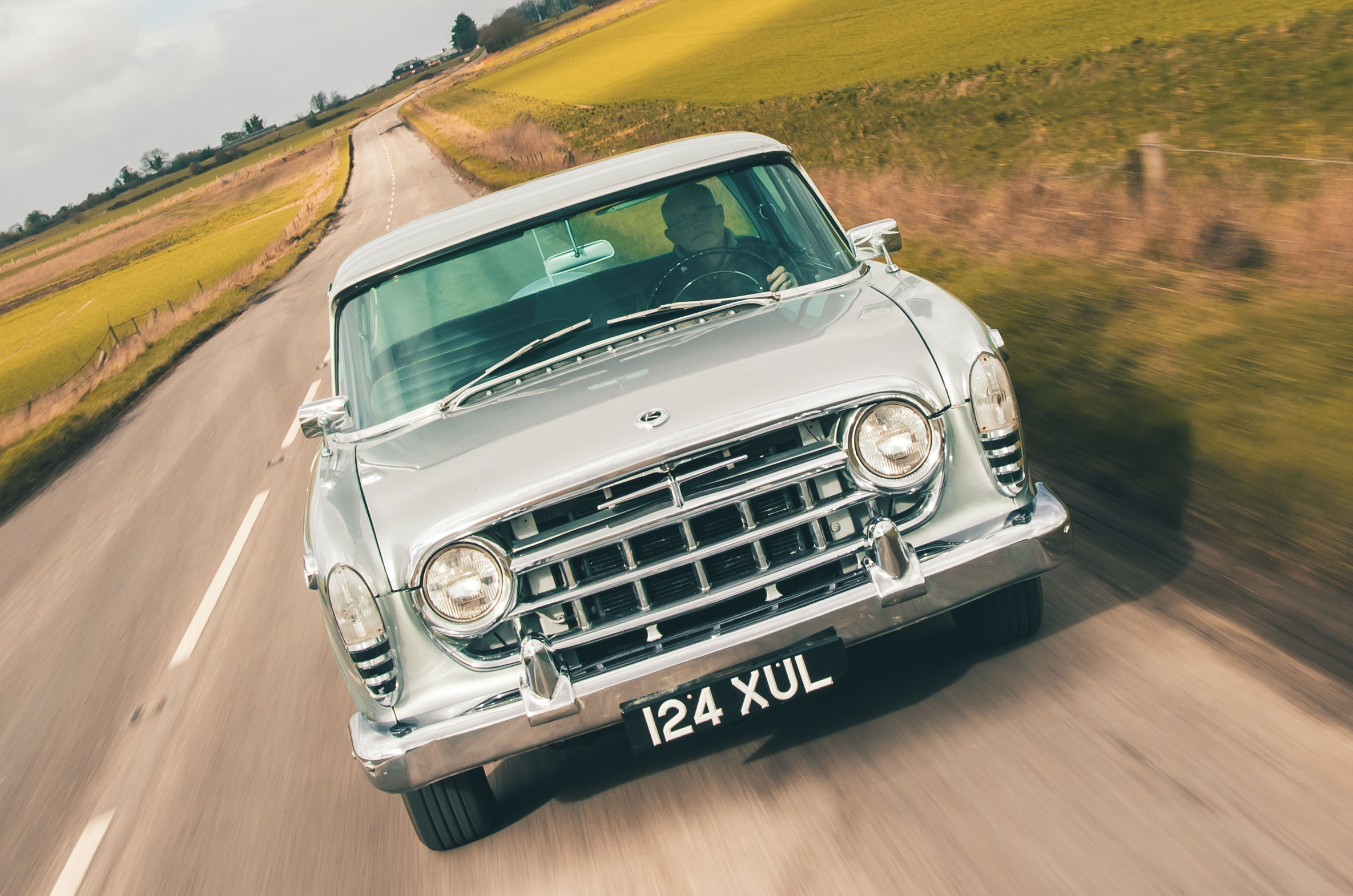
Ford, GM and Chrysler were the big players on America’s V8 muscle-car scene, but AMC was first to the party with the unlikely Rambler Rebel

A plan to do just that had started to reach fruition.

In 1954, following the termination of an agreement with Packard to supply its engines, AMC started development of its own V8, the project led by chief engineer Meade F Moore.

Using intel from a member of his team who had already worked on a cancelled V8 for Kaiser-Frazer, Moore was able to deliver this clean-sheet powerplant for production in a remarkable 18 months. 

While not exactly groundbreaking in design, the overhead-valve unit was well engineered, using a forged crank and conrods with a deep-skirted block to form a rigid crankcase gallery.

Classic & Sports Car – AMC Rambler Rebel: dawn of the muscle car

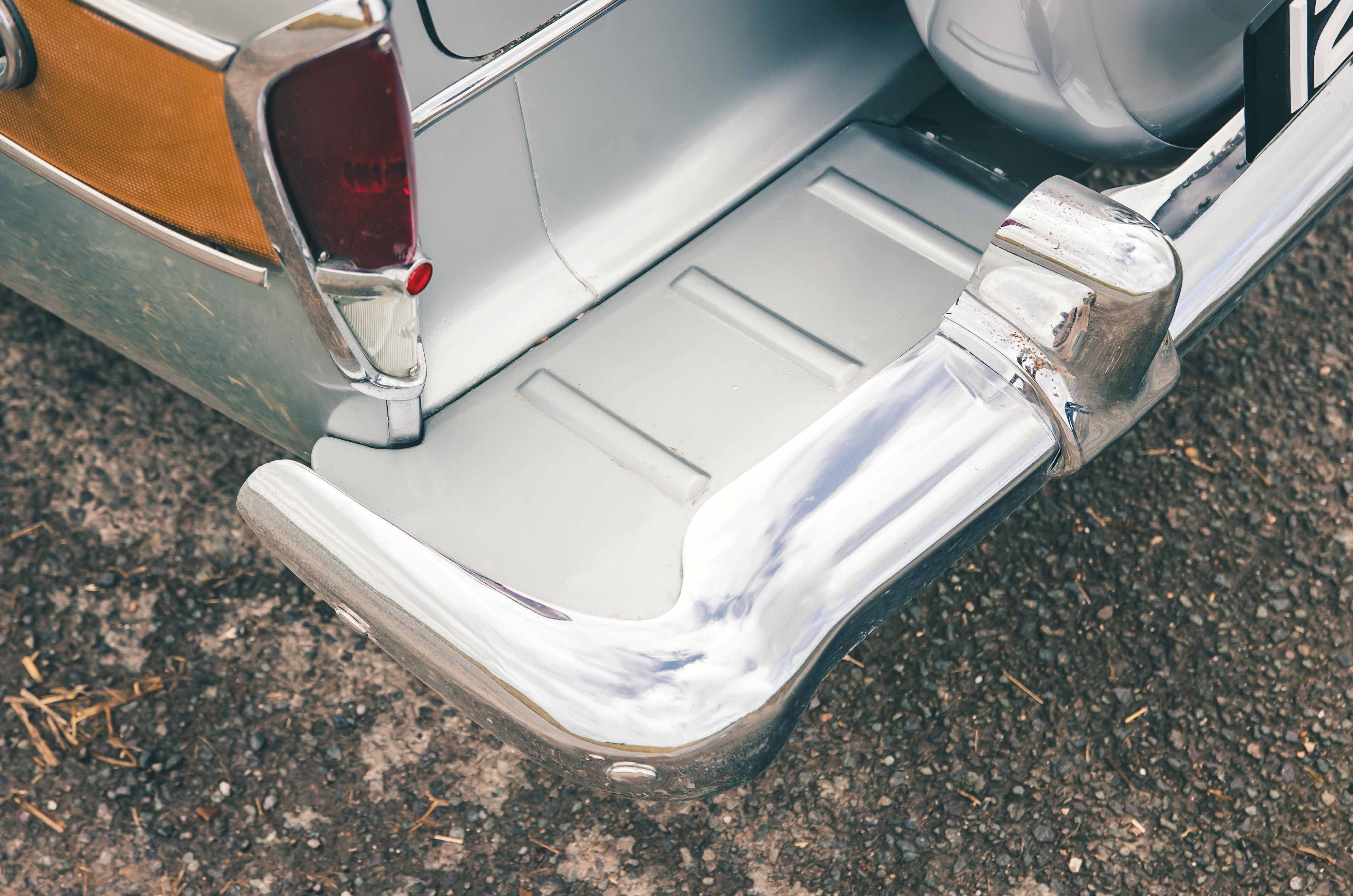
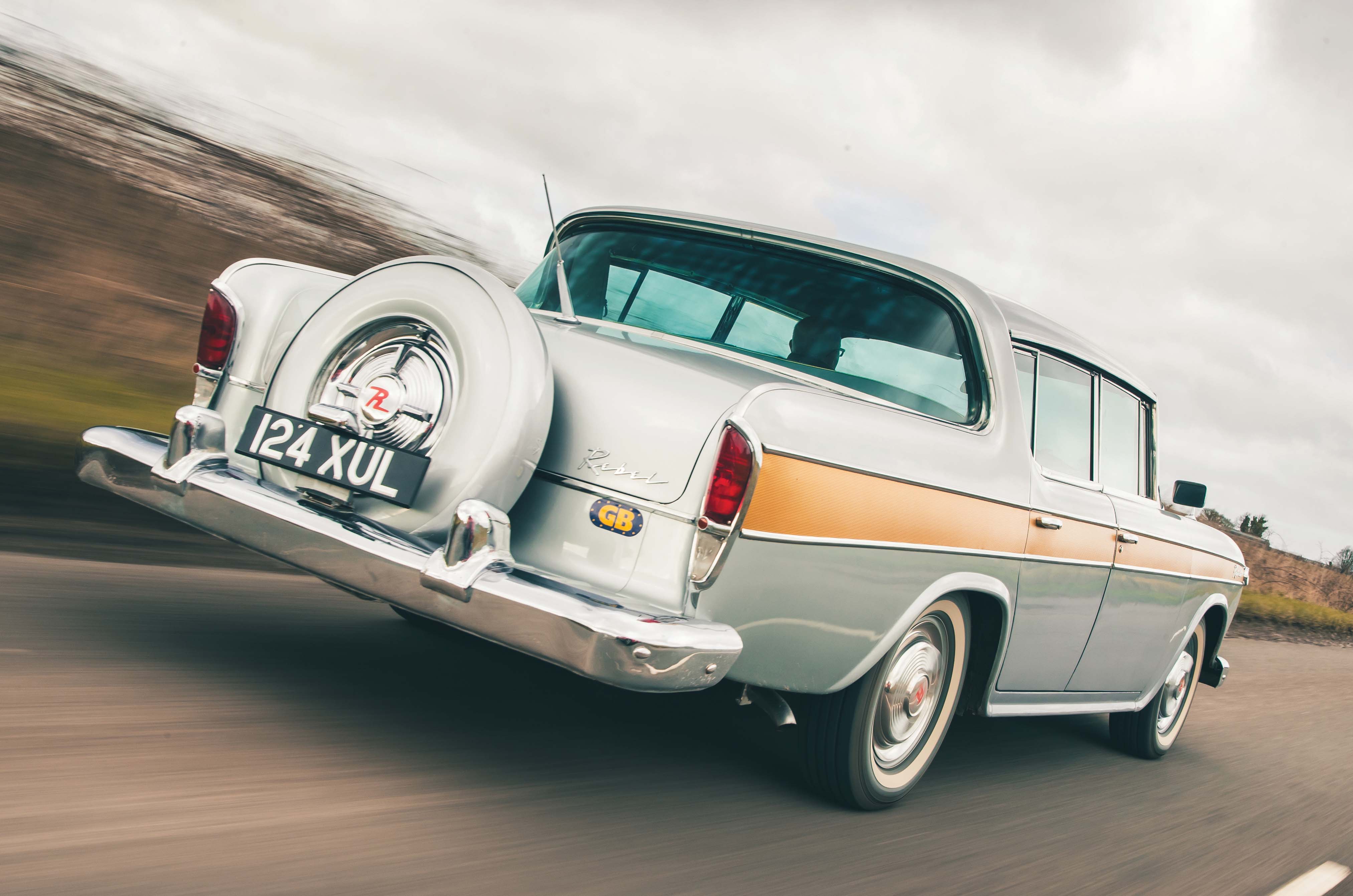
The AMC Rambler Rebel’s extended rear bumper

Initially the V8 was only available with a displacement of 250cu in (4.1 litres), and it was in this 190bhp form that it first broke cover in the Nash Ambassador and Hudson Hornet ‘Specials’ of 1956.

It wasn’t until the following year, though, that the new engine was installed (albeit as an option) in what was in effect an all-new Rambler.

Designed by AMC’s Edmund E Anderson and Bill Reddig, the model was a total departure from what had been offered before, and it shook off any ‘bathtub’ cues with a much more angular body on a larger, 108in wheelbase.

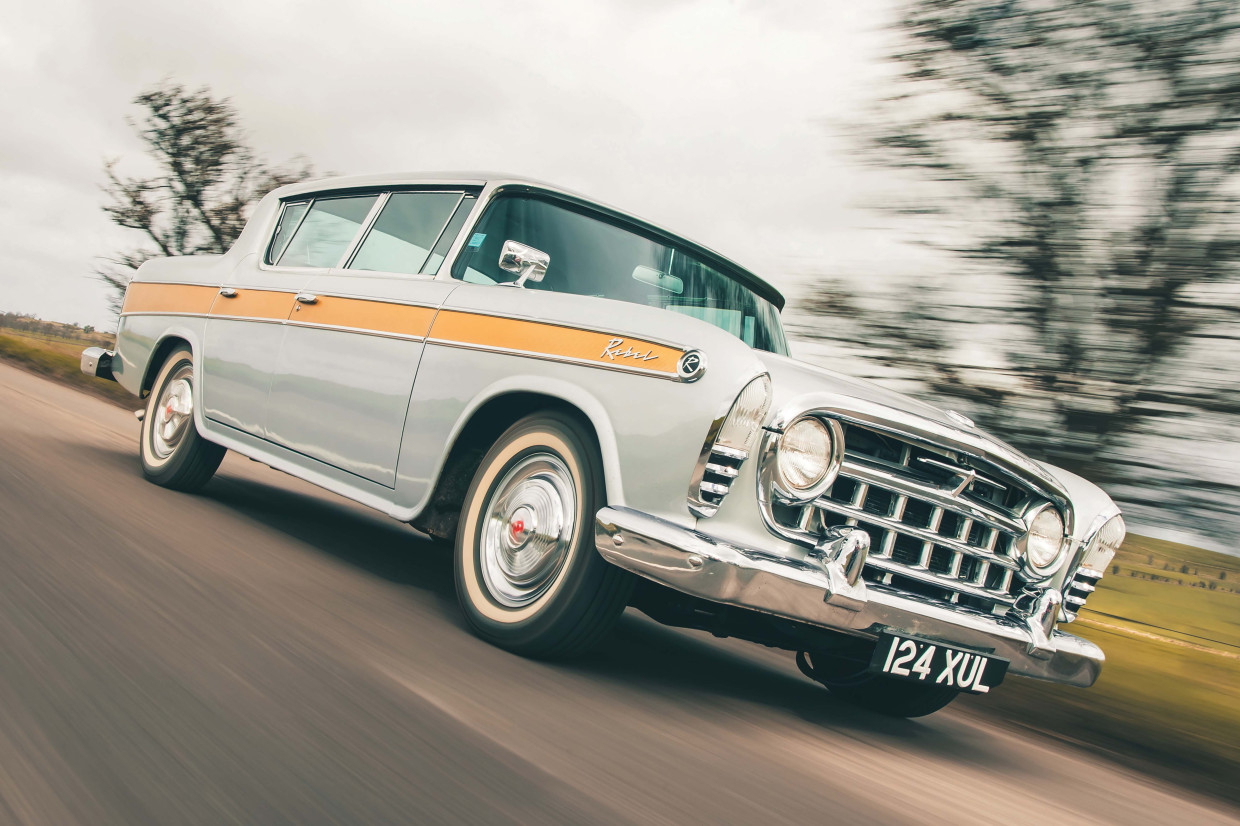
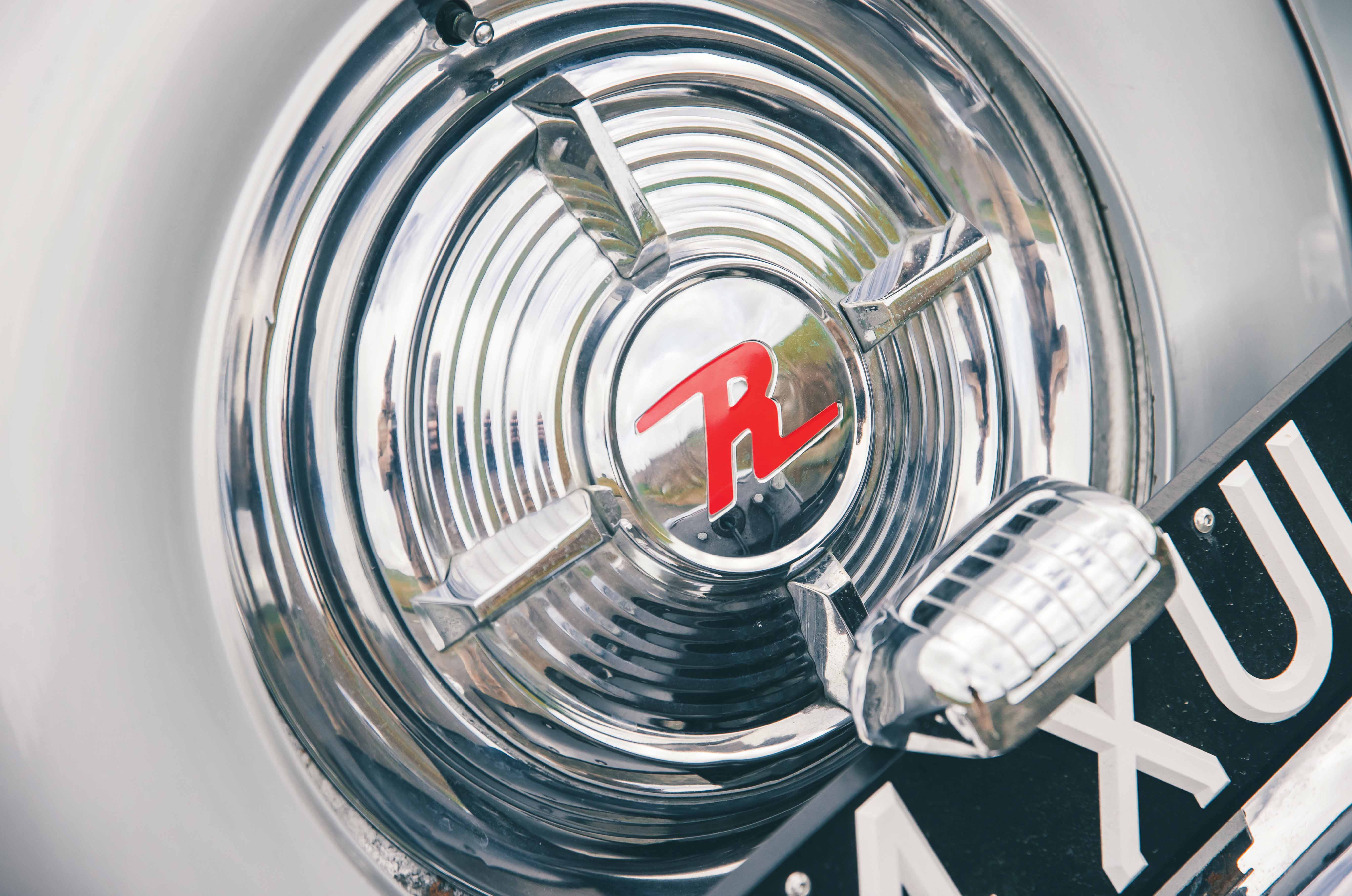
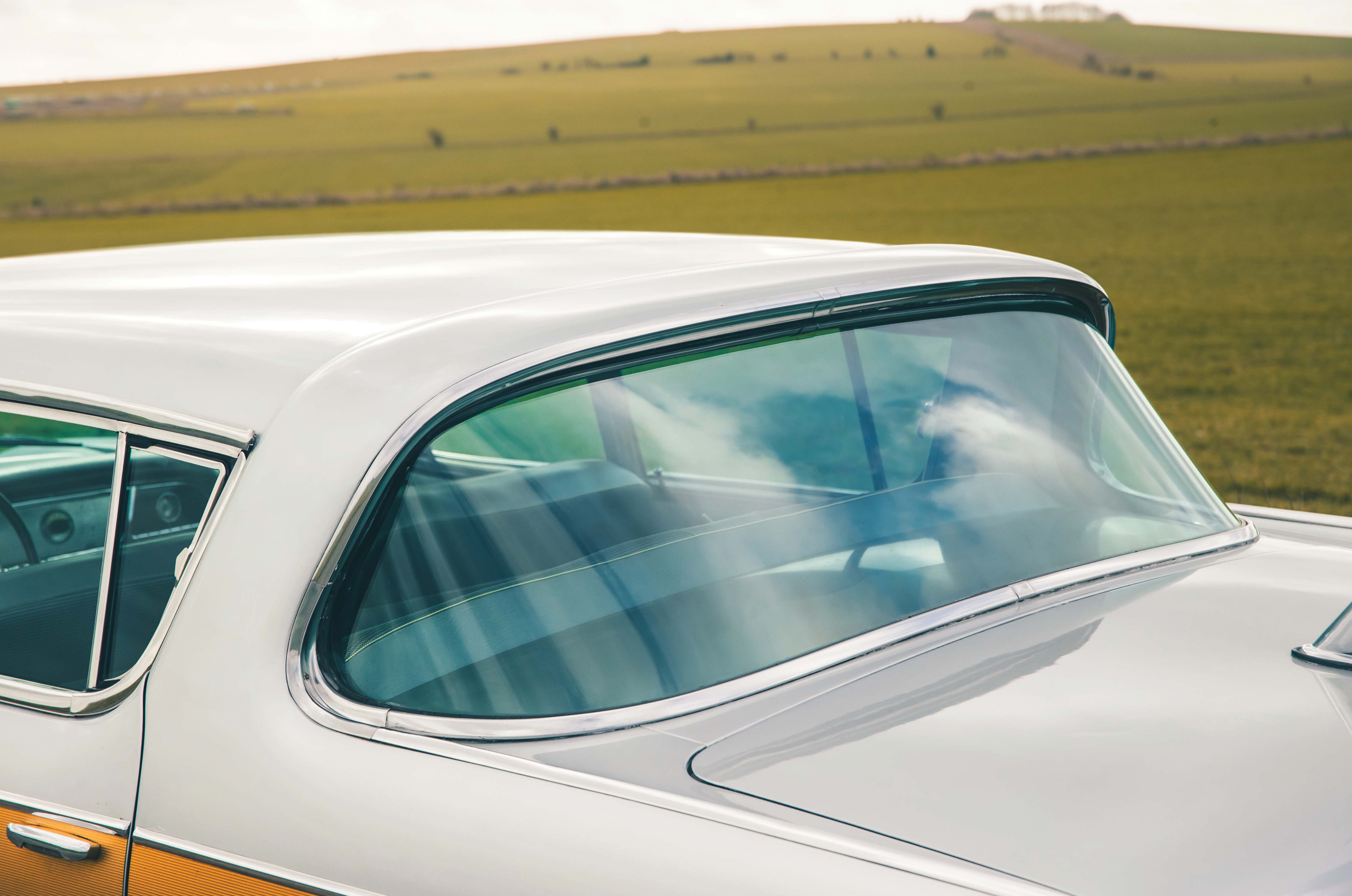
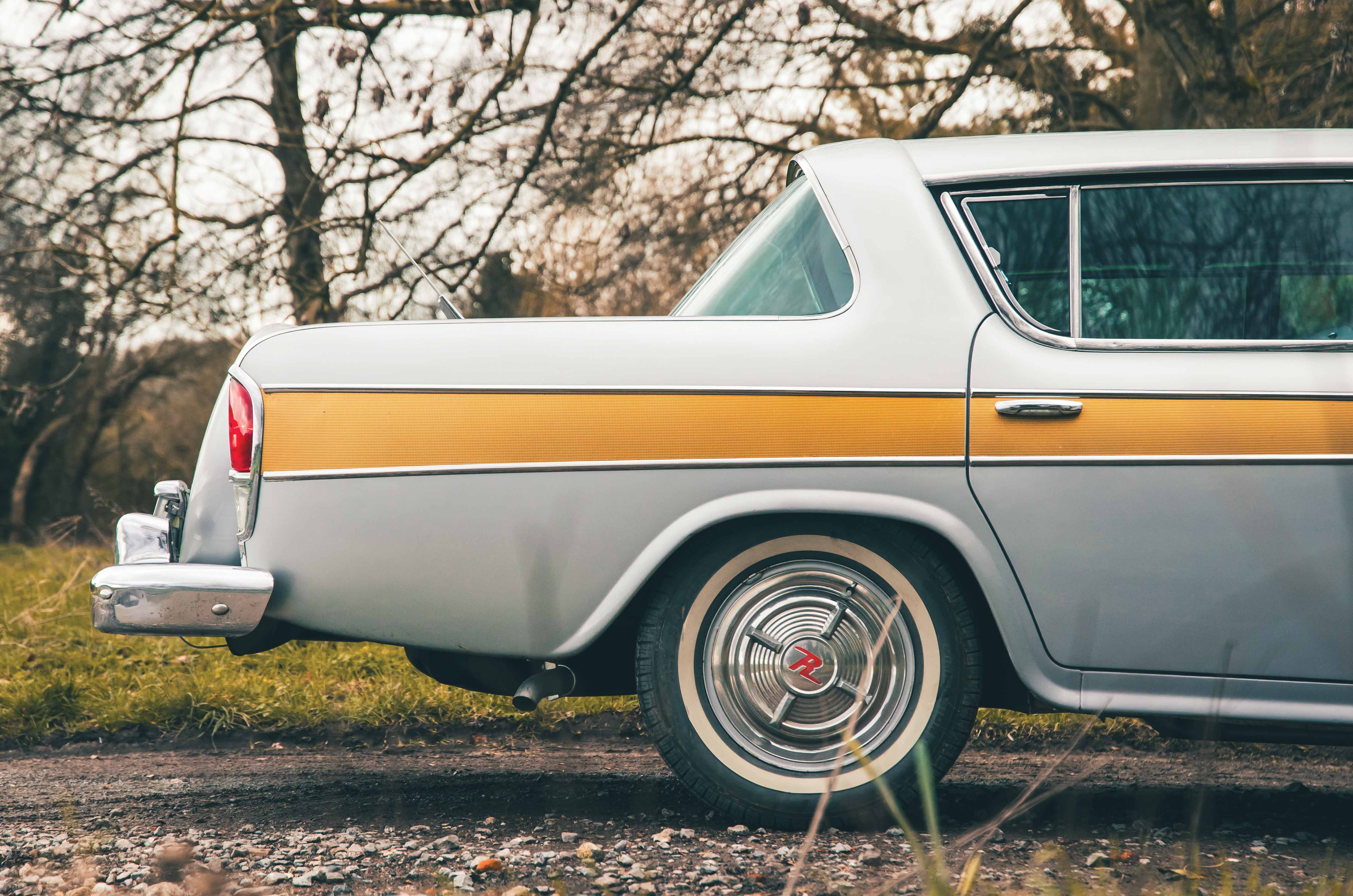
A wraparound front windscreen and Continental-style spare-wheel carrier perched on an extended rear bumper were very much of their time, but the eye-catching, reverse-sloped C-pillar was a clear departure from the exuberant, fin-laden rear ends trotted out by AMC’s Detroit rivals.

Classic & Sports Car – AMC Rambler Rebel: dawn of the muscle car

The AMC Rambler Rebel’s spare wheel sits beneath a stylish cover

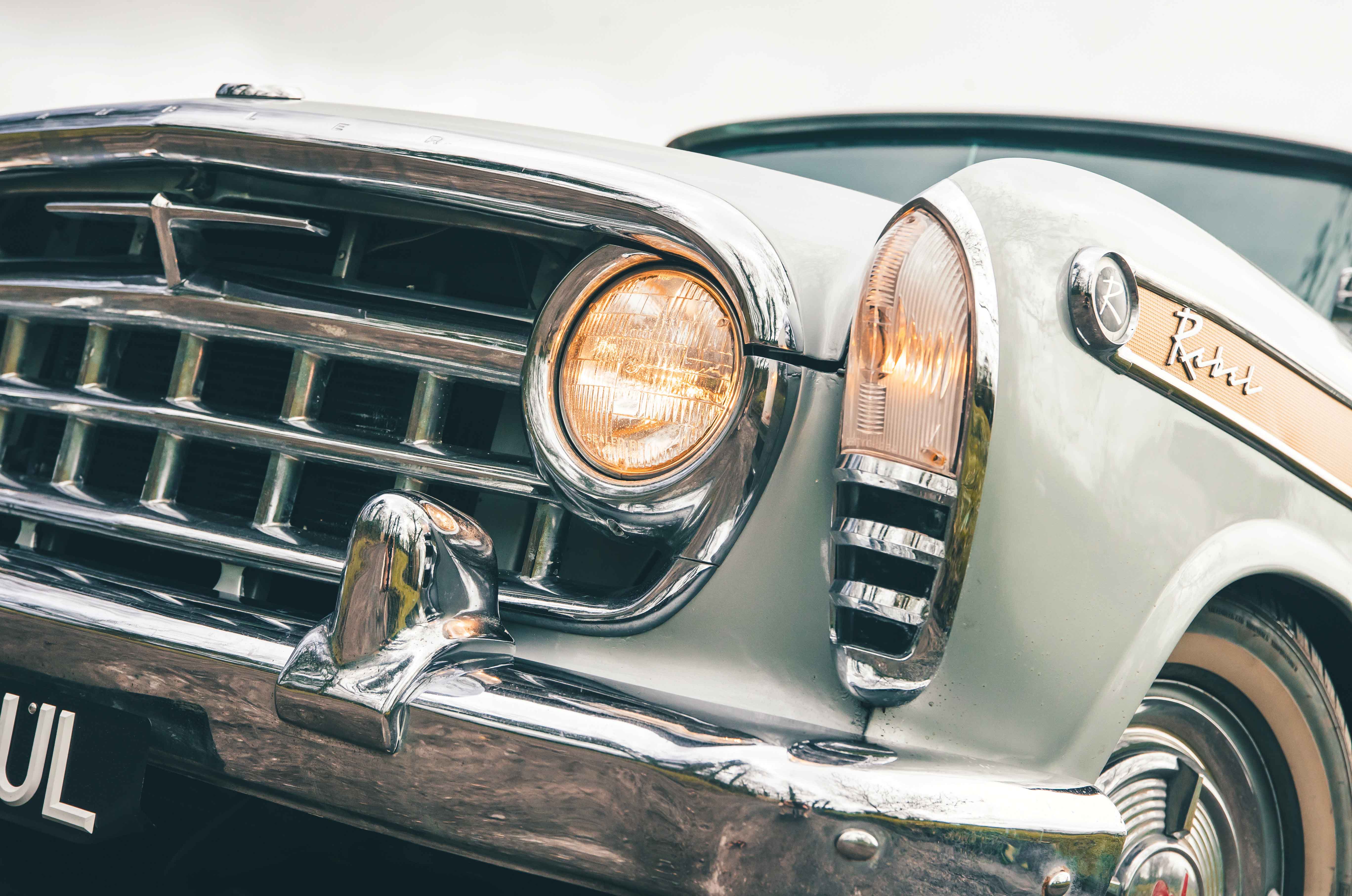
The Rambler’s front section was also a complete redesign, with its headlights now set into the grille – perhaps in a nod to the Nash-Healey sports car.

This heavily revised Rambler, now produced exclusively with a four-door body in saloon guise, would not only define the ‘mid-size’ market sector in the US, but would also become the first car of its class to receive a big-block V8.

Bored out from 88.9mm to 101.6mm, AMC’s new engine now displaced 327cu in (5.4 litres) and generated a fearsome 255bhp and 345lb ft – the latter at just 2600rpm.

Classic & Sports Car – AMC Rambler Rebel: dawn of the muscle car

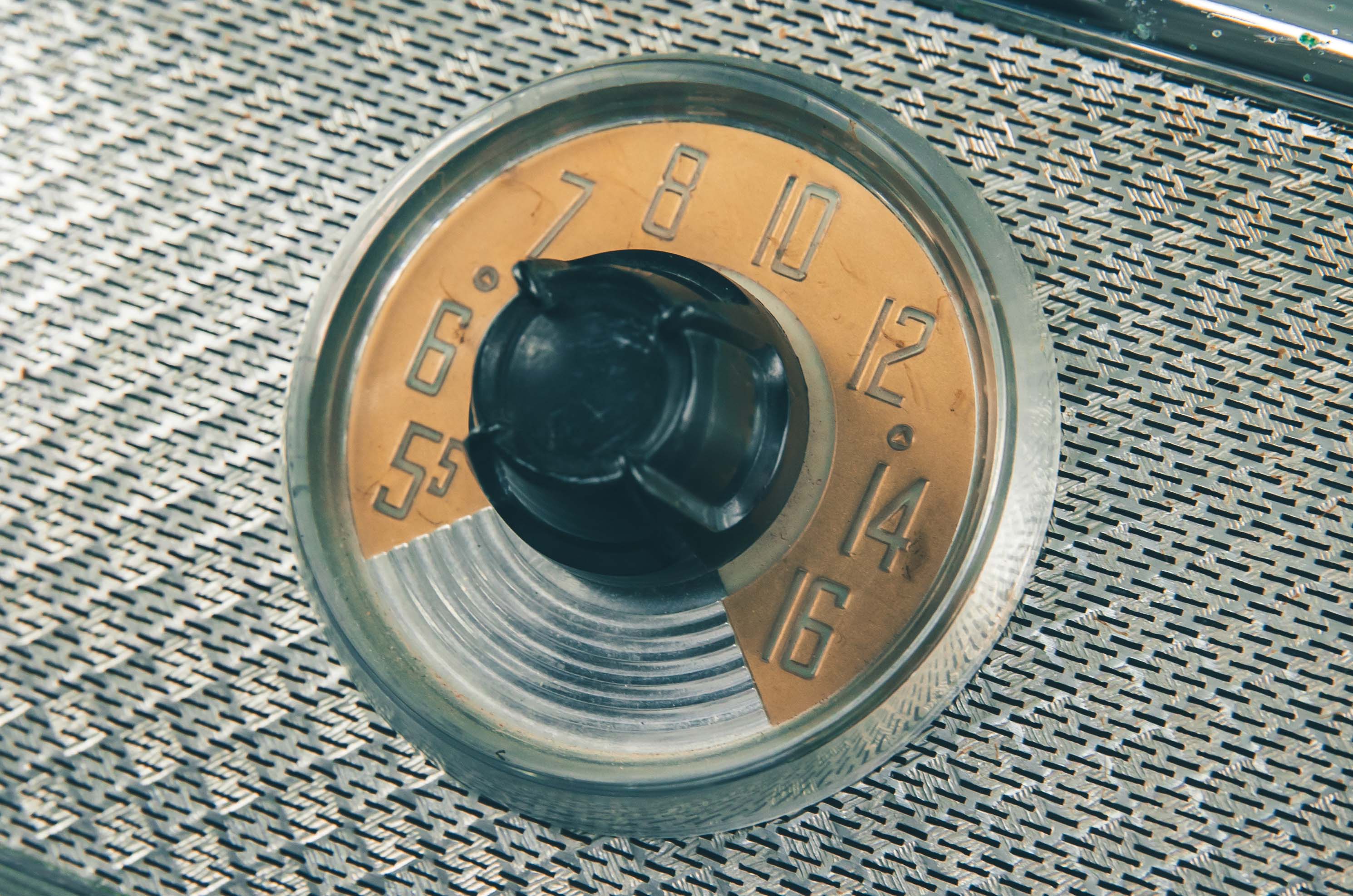
The Rambler Rebel’s simple radio dial

It was, said Romney, AMC’s opportunity “to split the market wide open with a mid-size model that featured aggressive styling and plenty of power”, and it was named the Rambler Rebel.

AMC’s Jim Moore and Carl Chakmakian had overseen the engine’s development work, which had also included fitting mechanical valve lifters and raising the compression ratio to 9.5:1.

Drive was delivered to the rear axle via either a three-speed manual gearbox with overdrive or GM’s four-speed Hydra-Matic auto (as in ‘our’ car).

Beneath its monocoque body, the Rebel received dual exhausts, stiffer road springs, a front anti-roll bar and three-setting Gabriel adjustable shock absorbers.

Classic & Sports Car – AMC Rambler Rebel: dawn of the muscle car

The AMC Rambler Rebel’s curved rear window mirrors the front ’screen

With a 0-60mph acceleration time of 7.5 secs and a top speed of 115mph, it was, claimed AMC, the fastest mid-sized saloon on the US market.

Had it not been for some teething problems, the Rambler Rebel could also have been the very first American mainstream production car with electronic fuel injection.

Bendix was to supply an electronically controlled, multi-point manifold injection system that AMC had branded Electrojector.

As an option against the standard four-barrel Motorcraft carburettor, it boosted the Rebel’s power to 288bhp and torque to 350lb ft, and all while refining the overall delivery.

Classic & Sports Car – AMC Rambler Rebel: dawn of the muscle car

The AMC Rambler Rebel’s huge airbox for its four-barrel carburettor, in place of the abandoned fuel-injection system

Alas, the technology proved too unreliable, and in the end only a few prototype Rebels were so equipped. (Bendix eventually sold the patents to Bosch, which in turn developed its D-Jetronic system.)

Ironically, it had been the promise of a drive in AMC’s industry-first fuel-injected car that had originally brought 20 of America’s leading motoring journalists down to Daytona Beach that February day in 1957.

But they weren’t short-changed: AMC had cleverly organised a quarter-mile drag-race contest, pitting the invited road testers against one another in a carburettor-equipped, manual-transmission Rebel to see who could set the fastest time over the sand.

Classic & Sports Car – AMC Rambler Rebel: dawn of the muscle car

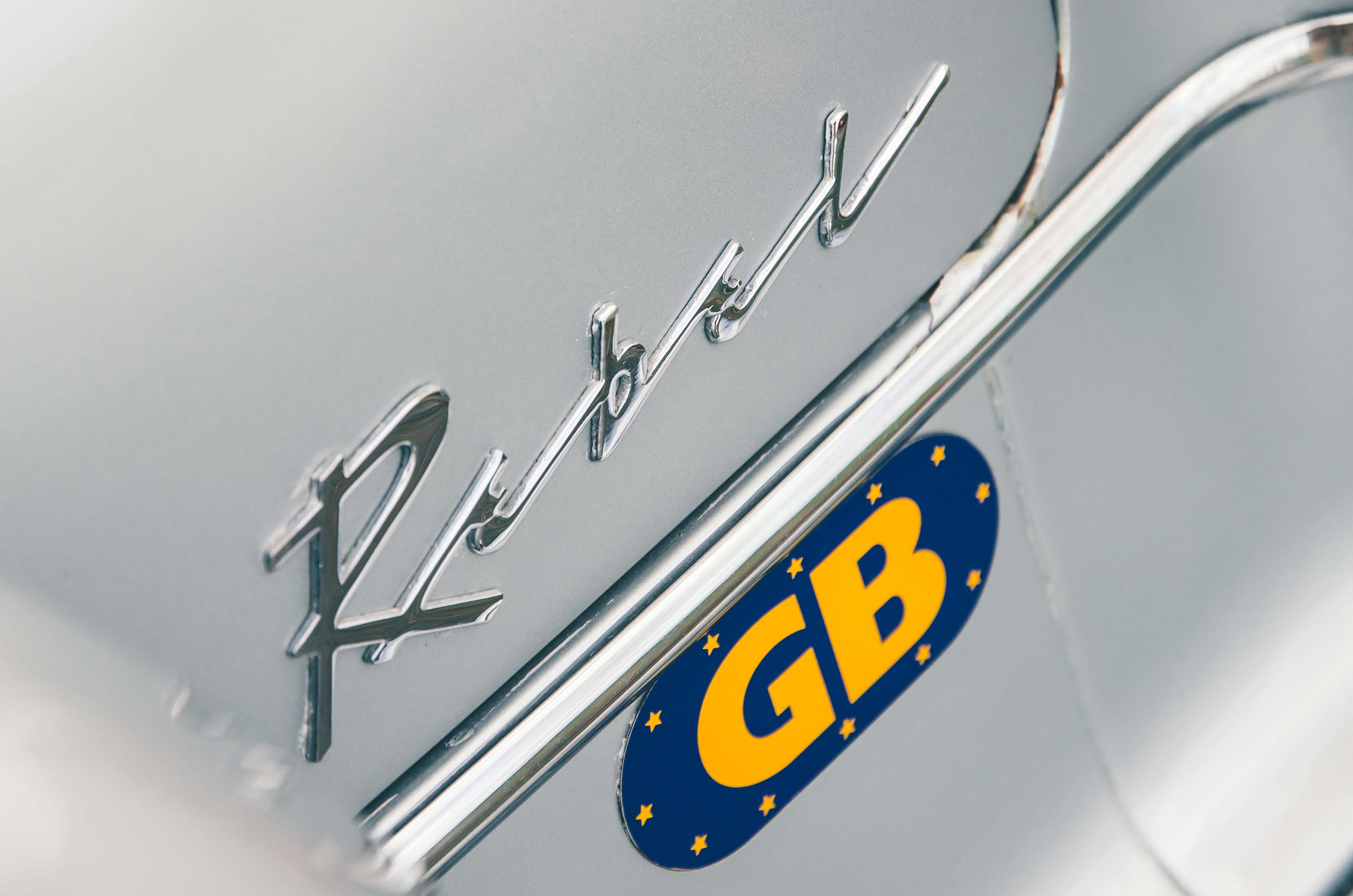
The AMC Rambler Rebel’s chromework was restrained by the standards of the day

The ‘Leadfoot Award’ finally went to Motor Life’s Ken Fermoyle from Detroit, who managed the quarter-mile in 17.87 secs – reckoning that if he’d been on a paved road he could have shaved three or four seconds off that time.

Almost all of the journalists managed 85-90mph terminal speeds, with Motor Trend editor Joe Wherry matching AMC’s claimed 0-60mph time of 7.5 secs out on the public road, then proceeding to clip 110mph.

‘A Rambler it is in essence,’ he reported, ‘but the Rebel represents a counter-revolutionary move on the part of AMC: they’re out to prove they can make ’em go fast as well as cheaply.’

Classic & Sports Car – AMC Rambler Rebel: dawn of the muscle car

There’s an eye-catching reverse rake to the Rambler Rebel’s C-pillar

In fact, costing $2786 – a $360 premium over the stock Rambler – the Rebel wasn’t exactly cheap.

While it was priced at $139 less than the larger Plymouth Fury, it remained a more expensive proposition than Chevrolet’s V8-equipped Bel Air, for example. 

AMC did, though, festoon it with plenty of goodies. Outside, all cars were finished in silver with gold-anodised aluminium inserts along the flanks.

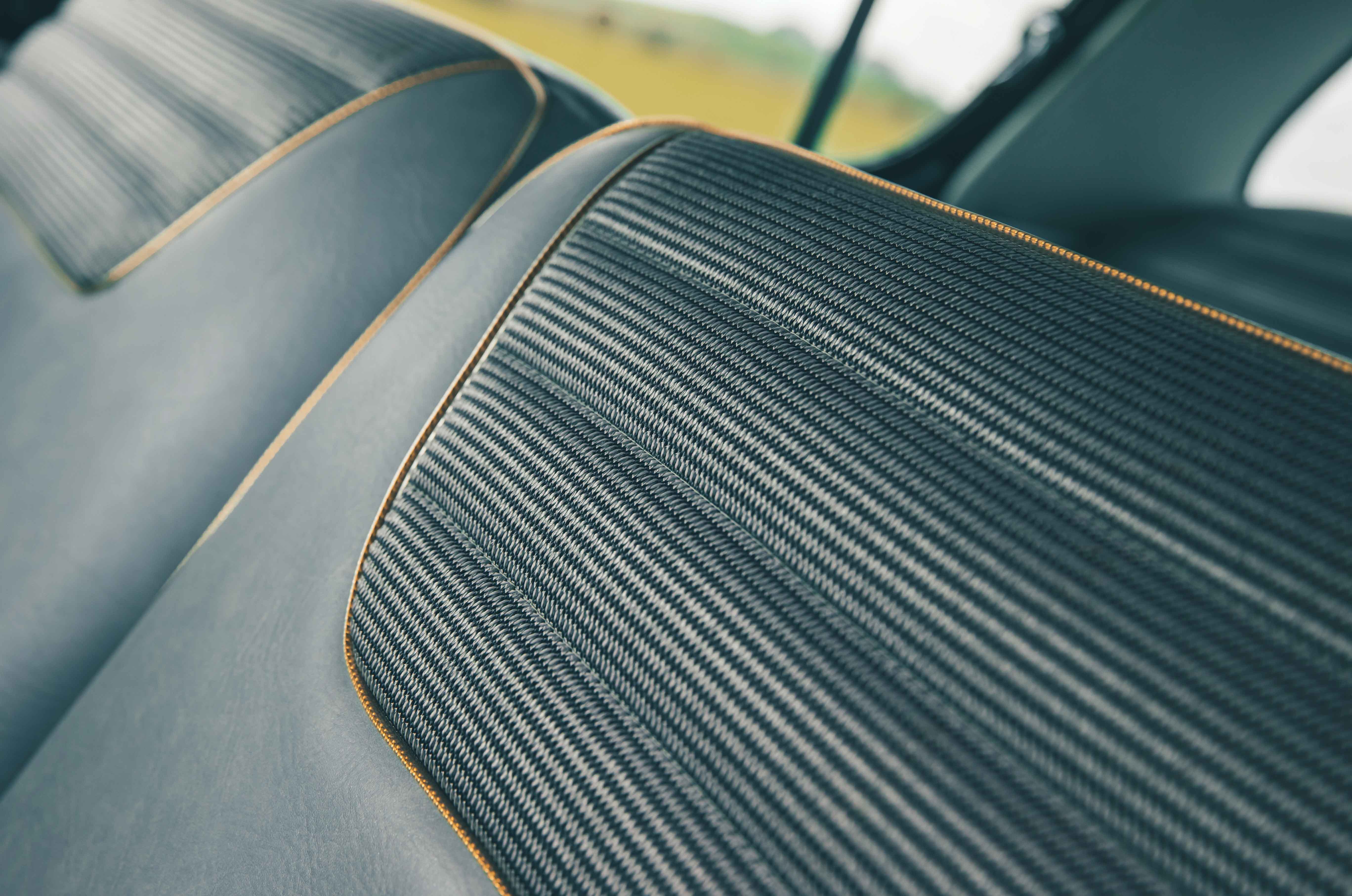
Inside, a radio, heater, electric clock and windscreen washers were all standard, along with reclining front seats trimmed in vinyl/nylon upholstery interwoven with metallic thread.

Classic & Sports Car – AMC Rambler Rebel: dawn of the muscle car

The AMC Rambler Rebel’s smart trim

Options included a padded dashboard and sunvisors (as featured here), seatbelts and childproof rear door locks. 

You could also, for an extra $345, have AMC’s ‘All-Weather Eye’ integrated air conditioning.

And when it came to performance, few V8s could match its 0-60mph acceleration.

The Bel Air, with a 283cu in mill, took 8.2 secs, and Studebaker’s 275bhp Golden Hawk required 8.7 secs; even the 290bhp Fury needed 8 secs, and only Chrysler’s larger and far dearer 300C came anywhere close to matching the Rebel, with a time of 7.6 secs for the dash.

Classic & Sports Car – AMC Rambler Rebel: dawn of the muscle car

The AMC Rambler Rebel is impressively rapid, but the steering needs constant correction to stay in a straight line

Without access to timing gear today, we won’t know if ‘our’ Rebel can still cut it, but it feels obscenely quick for a 70-year-old car.

Privately owned but on semi-permanent display at the fabulous Atwell-Wilson Motor Museum in Calne, Wiltshire, until its recent sale, this Rebel spent most of its life in southern California.

Around 14 years ago it was sent to Indiana, where it was repainted and fitted with a new, factory-correct interior.

The car then lived in Paris before coming to the UK. It is now thought to be the only Rambler Rebel in Europe, and one of only 20 survivors worldwide.

Classic & Sports Car – AMC Rambler Rebel: dawn of the muscle car

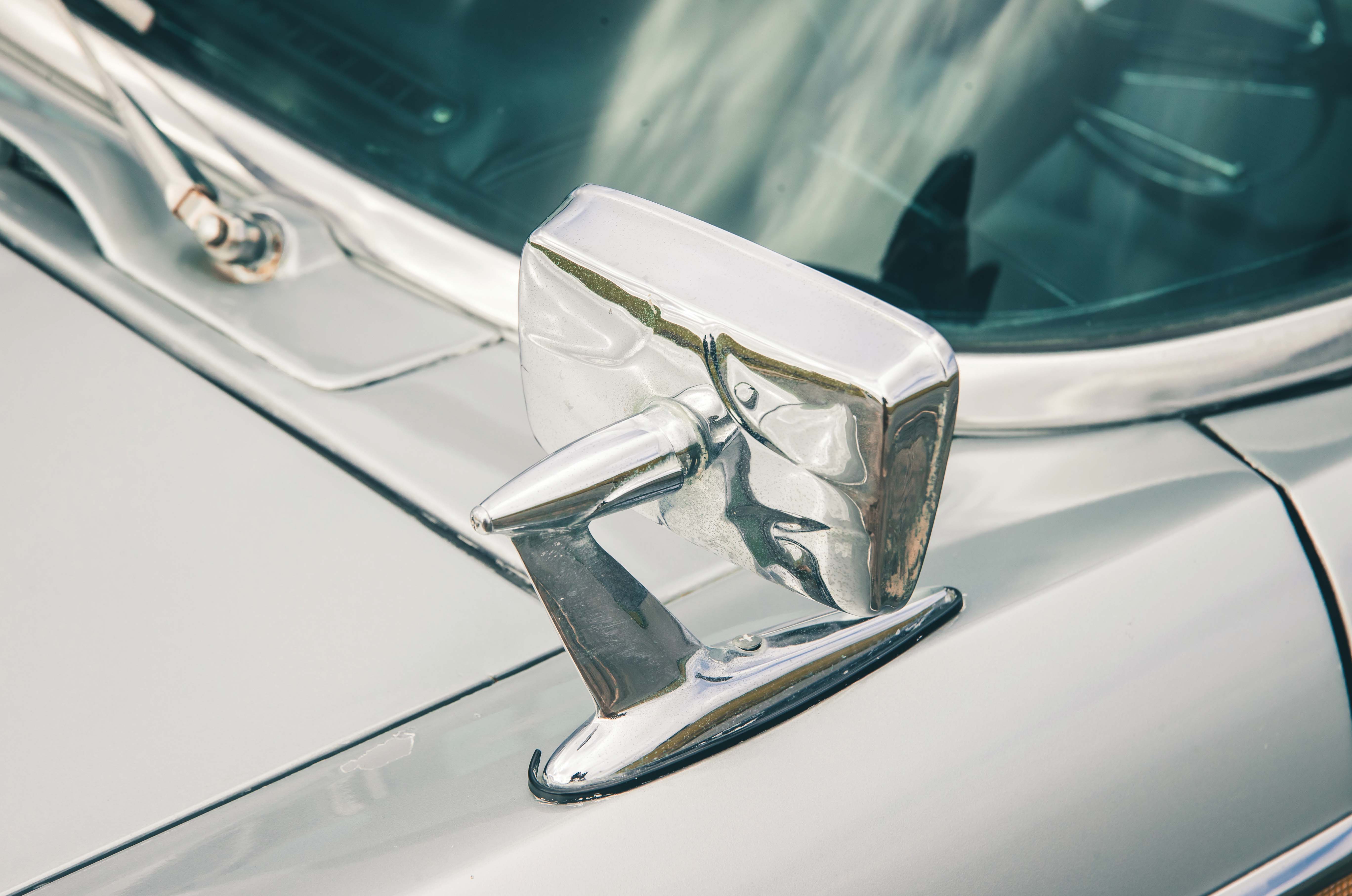
The classic AMC Rambler Rebel’s sleek wing mirror

There’s no denying that the Rebel cuts quite a dash wherever you drive it.

At more than 5m long (including its deck-like rear bumper) and nearly a metre and a half tall, this ‘mid-size’ machine brings fresh meaning to the word imposing.

But attractive? Some would argue that its restrained use of chrome and near-complete lack of fins make it more palatable to European eyes.

I’m not convinced, but while you’d never call the Rebel’s form graceful, its rather abrupt styling would have made it unmistakable among contemporary traffic.

Classic & Sports Car – AMC Rambler Rebel: dawn of the muscle car

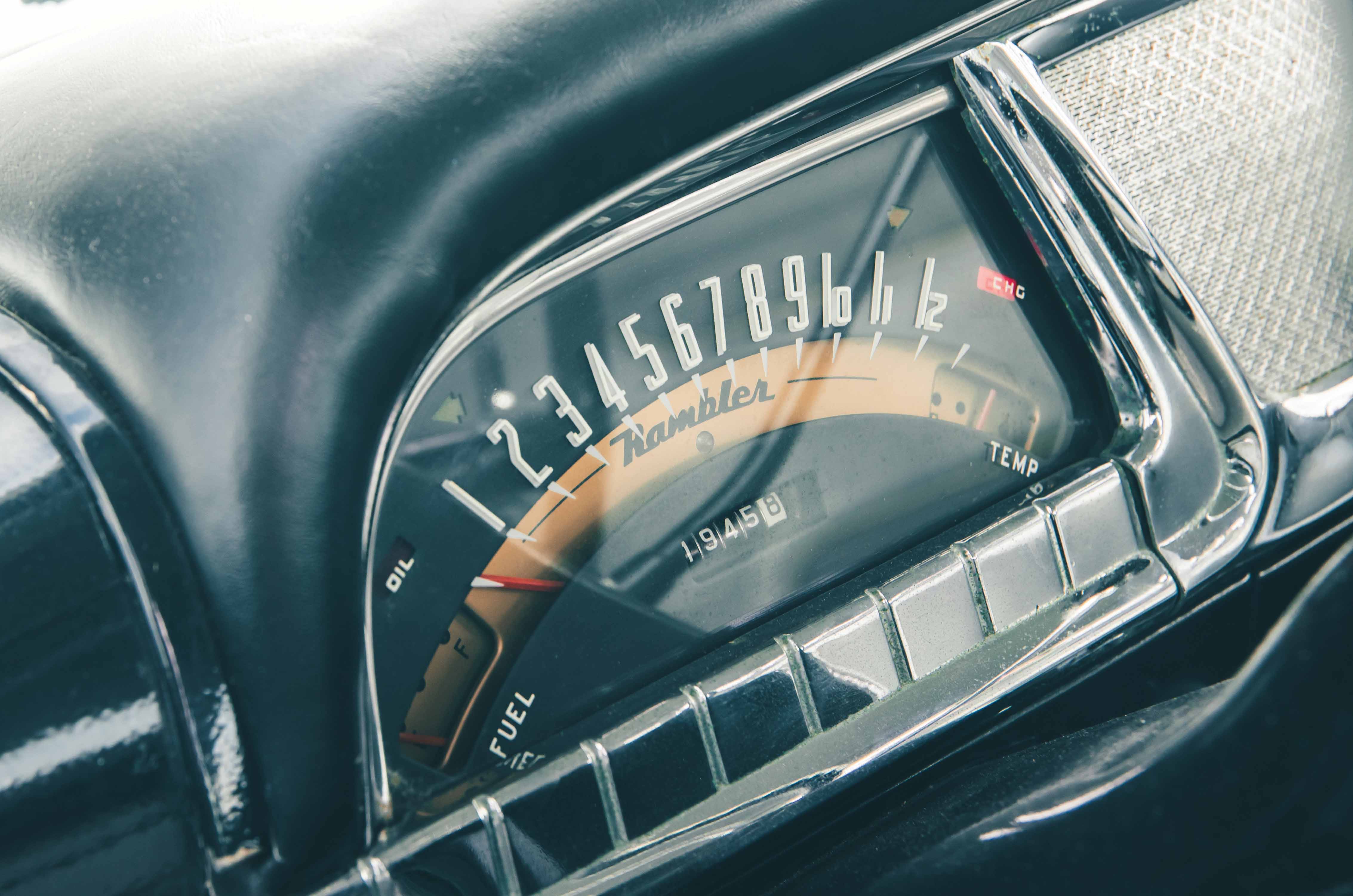
The AMC Rambler Rebel’s speedometer, with single-digit increments and fuel/temperature gauges

Inside, you luxuriate behind the large, horn-ringed, two-spoke steering wheel while perched on the Rebel’s broad front bench; I’m not an arm-on-the-window type, but somehow adopting that stance feels most appropriate in this car.

The optional roll-top padded dashboard dominates your view out, although the wraparound windscreen affords near-panoramic visibility.

A simple quadrant speedometer, with its 10mph increments curiously marked ‘1, 2, 3…’ is the only dial, which also incorporates a level for fuel and water-temperature gauges, along with warning lights for oil pressure and gear change-up.

Below that are chunky controls for the optional climate-control system, which AMC had pioneered; the original unit in this car has been replaced by modern gubbins, but in its day it was the first refrigerated system of its kind in an automotive application.

Classic & Sports Car – AMC Rambler Rebel: dawn of the muscle car

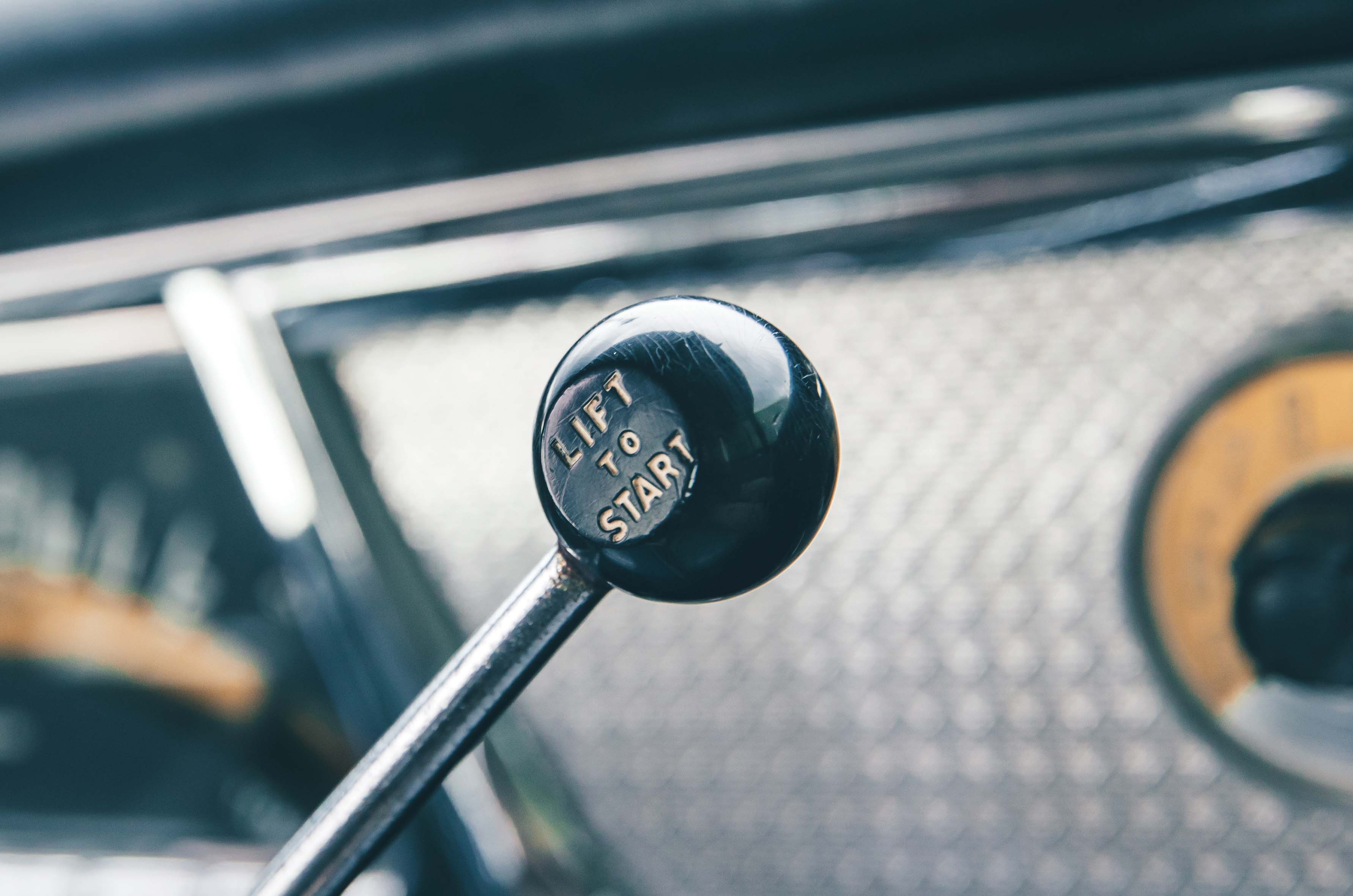
The AMC Rambler Rebel’s column shifter

You start the Rebel by turning a key on the dash and pulling the column shift towards you: what emanates from the dual exhausts is a surprisingly vocal V8 report, with a quick blip of the floor-hinged throttle twitching the softly sprung body before you move an inch.

As you pull away, the only gearchange you might feel is the Hydra-Matic selecting second, with the other shifts blurring through imperceptibly.

But if that suggests the Rebel is a paragon of refinement, think again: mash its throttle, and you’re right there at Daytona in ’57.

Its 327cu in V8 emits a full-fat holler that belies the saloon’s visually stoic persona, and that translates into vivid progress – too vivid to keep it nailed for long over these rural Wiltshire lanes.

Classic & Sports Car – AMC Rambler Rebel: dawn of the muscle car

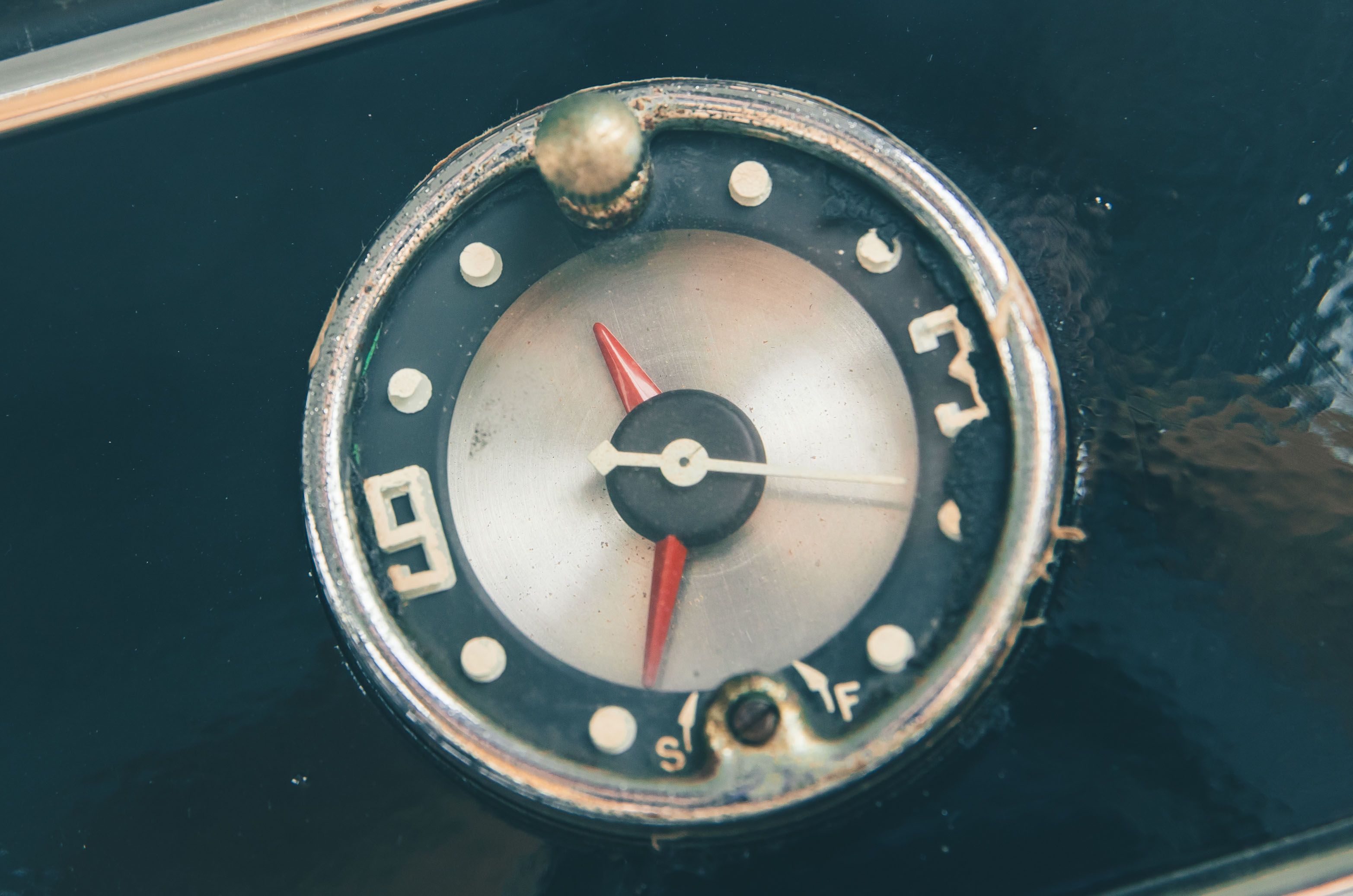
The stylish passenger-side clock in this classic car

As you can perhaps guess, the Rebel is no precision tool on the handling front.

The steering is oily-smooth in its action and not over-assisted, but even barrelling along in a straight line you discover that continuous adjustment is needed to take up the off-centre slack.

Where you do find reward is in the bends: sure, soft springing produces ample roll, but it is underscored by impressive control and neutrality once the car has settled, along with decent grip from both ends.

It is no Jaguar Mk1, but the AMC’s monocoque platform gives it a decisive edge over the clumsiness of any separate-chassis American from this era.

Classic & Sports Car – AMC Rambler Rebel: dawn of the muscle car

Just 20 AMC Rambler Rebels survive worldwide

The ‘power brakes’ – meaning servo-assisted – deliver strong retardation, although they did fade somewhat after cornering back and forth for photography (during which the Rebel lost an offside-front hubcap in a moment of over-exuberance – later recovered undamaged).

Less surprisingly, the Rambler’s ride quality is sumptuous and sublime, shrugging off surface irregularities without inducing nausea.

While the term ‘muscle car’ had yet to appear in the automotive lexicon by the late ’50s, the Rambler Rebel’s simple recipe of big V8 in a relatively small and lightweight body had shown what was possible.

Curiously, AMC had no intention of developing the concept: it marketed the Rebel as a ‘Limited Edition’ and built just 1500 in a single year.

By the time the company did return to something similar – a decade later, with the two-seater AMX – the muscle-car party was already in full swing, and AMC was a mere bit-part player.

Images: Jack Harrison

Thanks to: Atwell-Wilson Motor Museum


Factfile

Classic & Sports Car – AMC Rambler Rebel: dawn of the muscle car

AMC Rambler Rebel

  • Sold/number built 1957/1500
  • Construction steel monocoque
  • Engine all-iron, ohv 5358cc V8, single Motorcraft four-barrel carburettor
  • Max power 255bhp @ 4700rpm
  • Max torque 345lb ft @ 2600rpm
  • Transmission four-speed auto, RWD
  • Suspension: front independent, by unequal-length control arms, anti-roll bar rear live axle, trailing arms; coil springs, adjustable dampers f/r
  • Steering worm and roller, optional power assistance
  • Brakes drums f/r, with servo
  • Length 16ft 7in (5052mm, with optional spare-wheel carrier)
  • Width 5ft 11in (1812mm)
  • Height 4ft 10½in (1485mm)
  • Wheelbase 8ft 11in (2743mm)
  • Weight 3300lb (1496kg)
  • 0-60mph 7.5 secs (auto)
  • Top speed 115mph
  • Mpg 17.5
  • Price new $2786
  • Price now £10-20,000*

*Price correct at date of original publication


Enjoy more of the world’s best classic car content every month when you subscribe to C&SC – get our latest deals here


READ MORE

Pontiac GTO at 60: American hustle

Plymouth Belvedere ‘Max Wedge’: street fighter

Ford Mustang at 60: Route 66 in the original pony car