Bond Bug: a fresh angle

| 19 Aug 2025
Classic & Sports Car – Bond Bug: a fresh angle
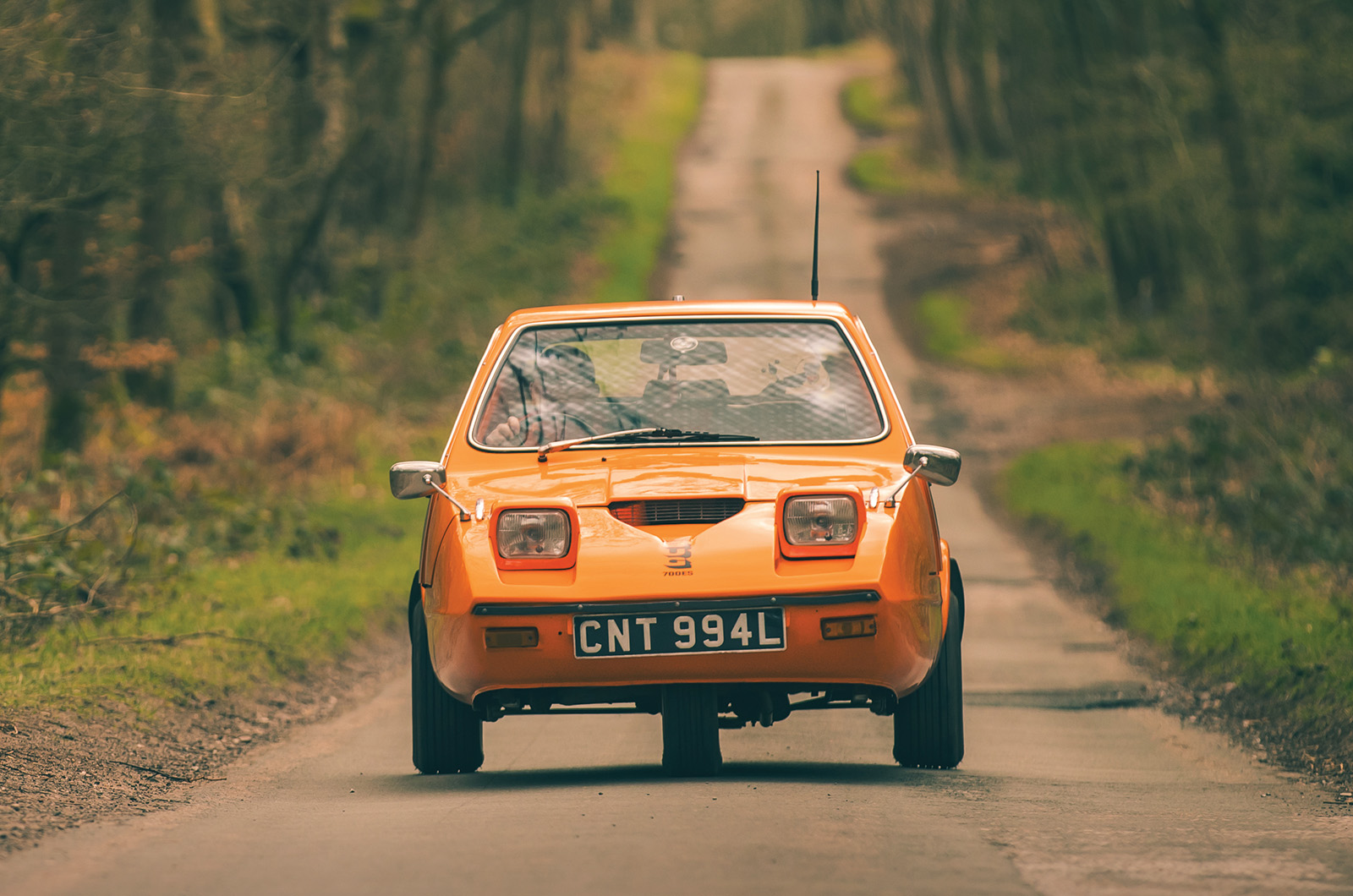
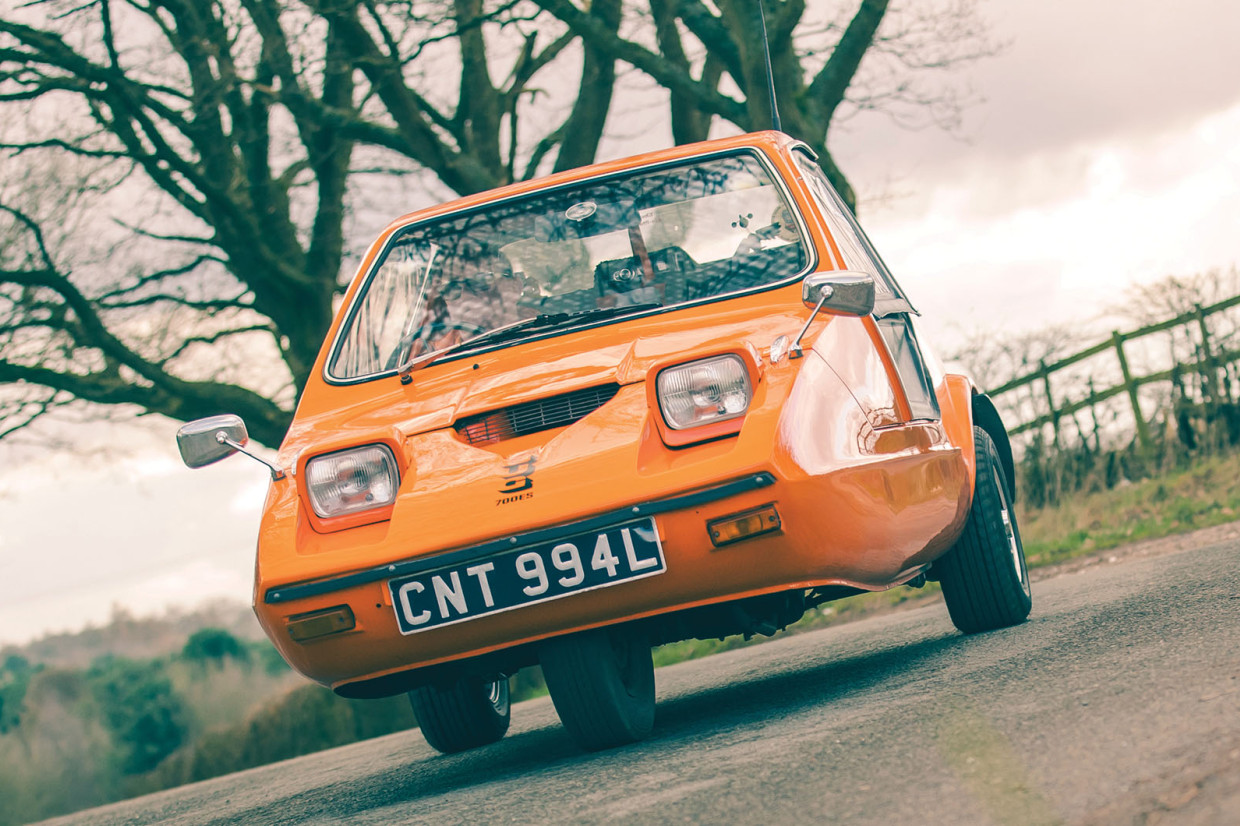
The Bond Bug belongs to the world of pure, monospace wedges.

As a design concept, this bold geometric approach usually hit home with a big ‘wow!’, but not in this case.

The Bug is one of those cars that is joyously whimsical, like a Messerschmitt KR175 or a Renault Twizy, only the Bond’s design is less compromised and more cohesive.

However, it is a model that has perhaps never really been taken seriously enough, and it is often overlooked.

Classic & Sports Car – Bond Bug: a fresh angle

The Bond Bug’s worm-and-peg steering is very direct

The wedge looked as if it had emanated from another world.

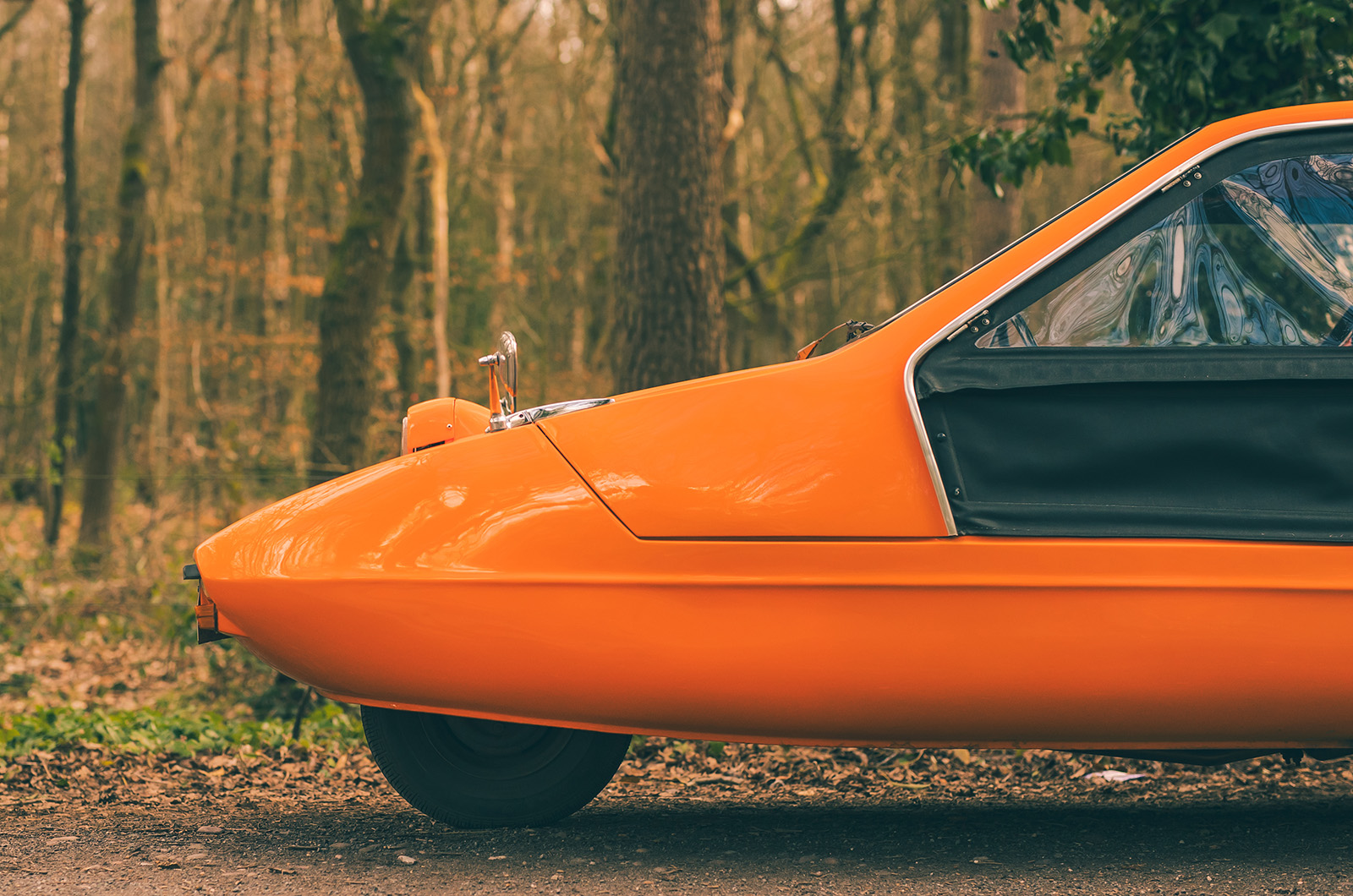
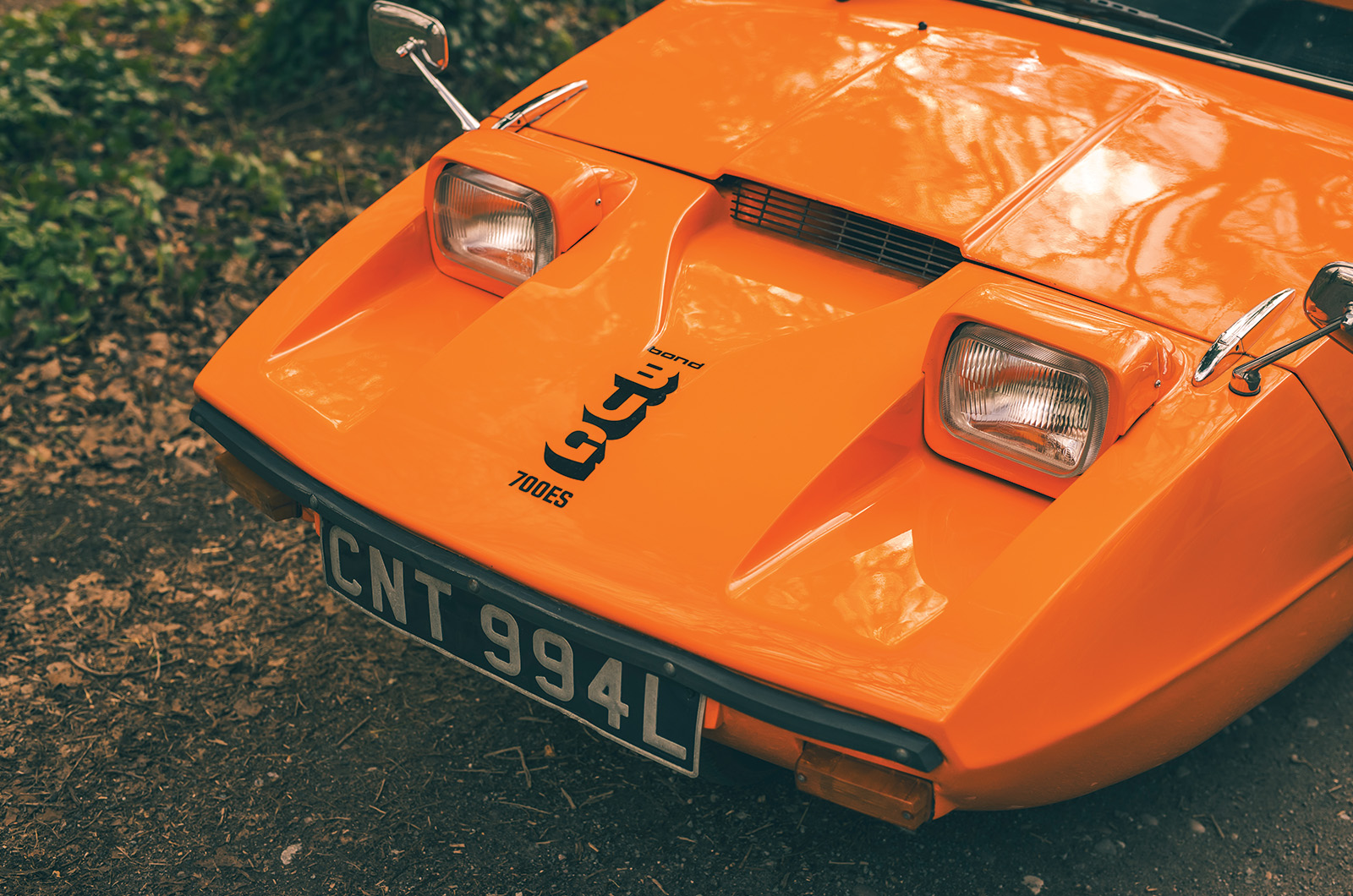
It was and remains a striking and uncompromising notion – the sharp incline of the front wing is continued by that of the A-pillar – whose influence has lasted to this day.

When it first arrived, it was as if the needle playing the record of automotive history had jumped several decades.

One minute everything was folksy Peter, Paul and Mary cosiness, the next it was the brave new electronic world of Delia Derbyshire.

Classic & Sports Car – Bond Bug: a fresh angle
‘Why is the Bond Bug omitted from wedge history? It must be its non-conformity in the wheel-count department’

Andrew Cox, the owner of this splendid 1973 700ES, recalls how he caught the, er, bug.

“I saw my first one in 1974,” he says. “It belonged to a friend of a friend who was a year older than me.

“They both turned up at home in this Bug and I thought, ‘I want one!’ – but it wasn’t possible back then.”

Today, just as in the ’70s, the Bond has lost none of its impact.

“We were at a show recently and I heard this young lad say, ‘Dad, look at this, a car of the future’,” Andrew smiles. “It was 45 years old then!”

Classic & Sports Car – Bond Bug: a fresh angle
Tom Karen’s Bond Bug design has truly stood the test of time

Marcello Gandini is credited with coining the wedge with his 1968 Alfa Romeo Carabo.

He cited a childhood fixation with Meccano for his design’s sharp, machine-driven look.

Certainly there are other concepts that predate the Alfa Romeo (some as far back as 1962), but none of them, Carabo included, reached series production.

It’s hard to think of any car of this shape that beat the 1970 Bond Bug to market.

Classic & Sports Car – Bond Bug: a fresh angle
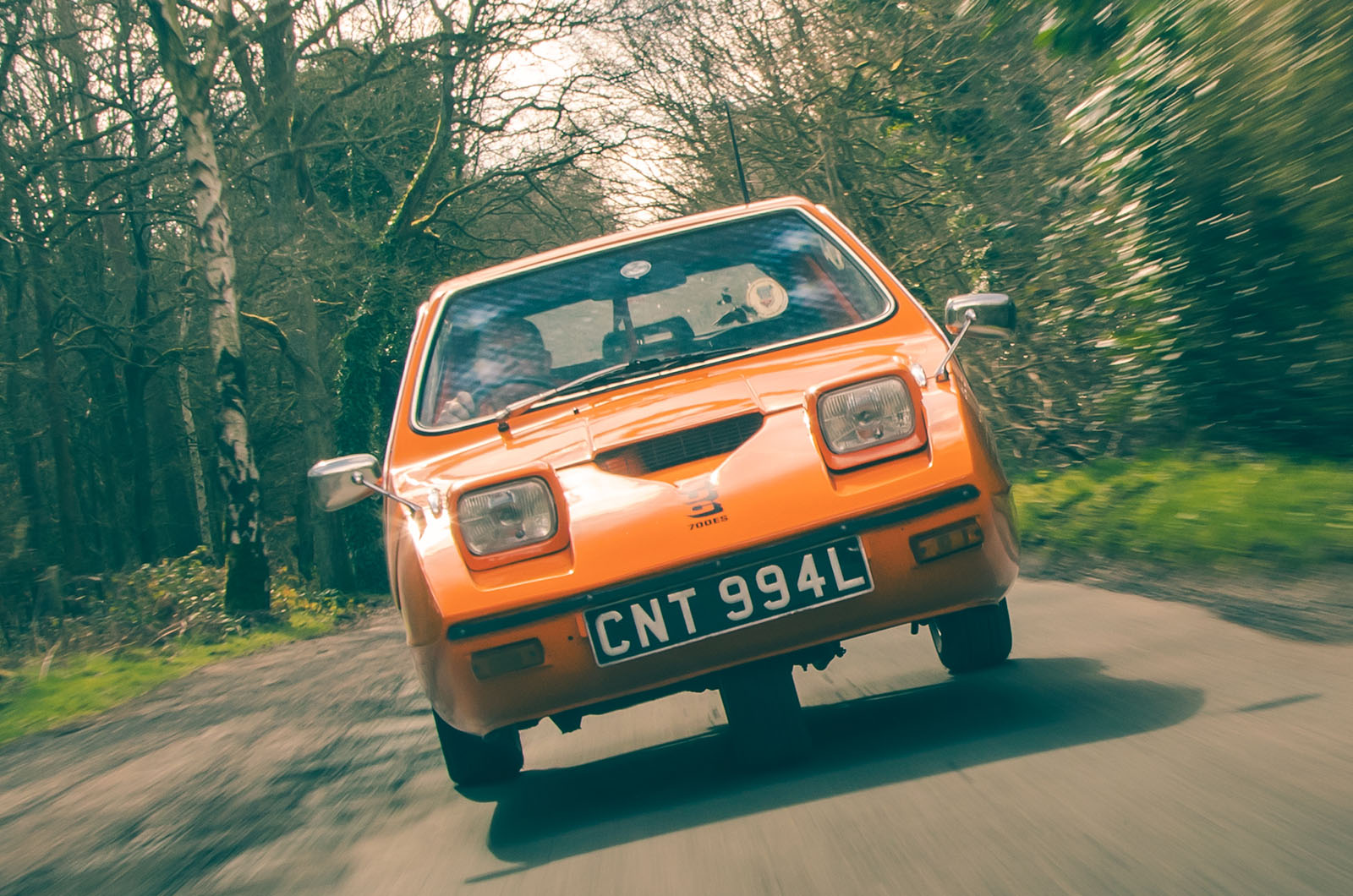
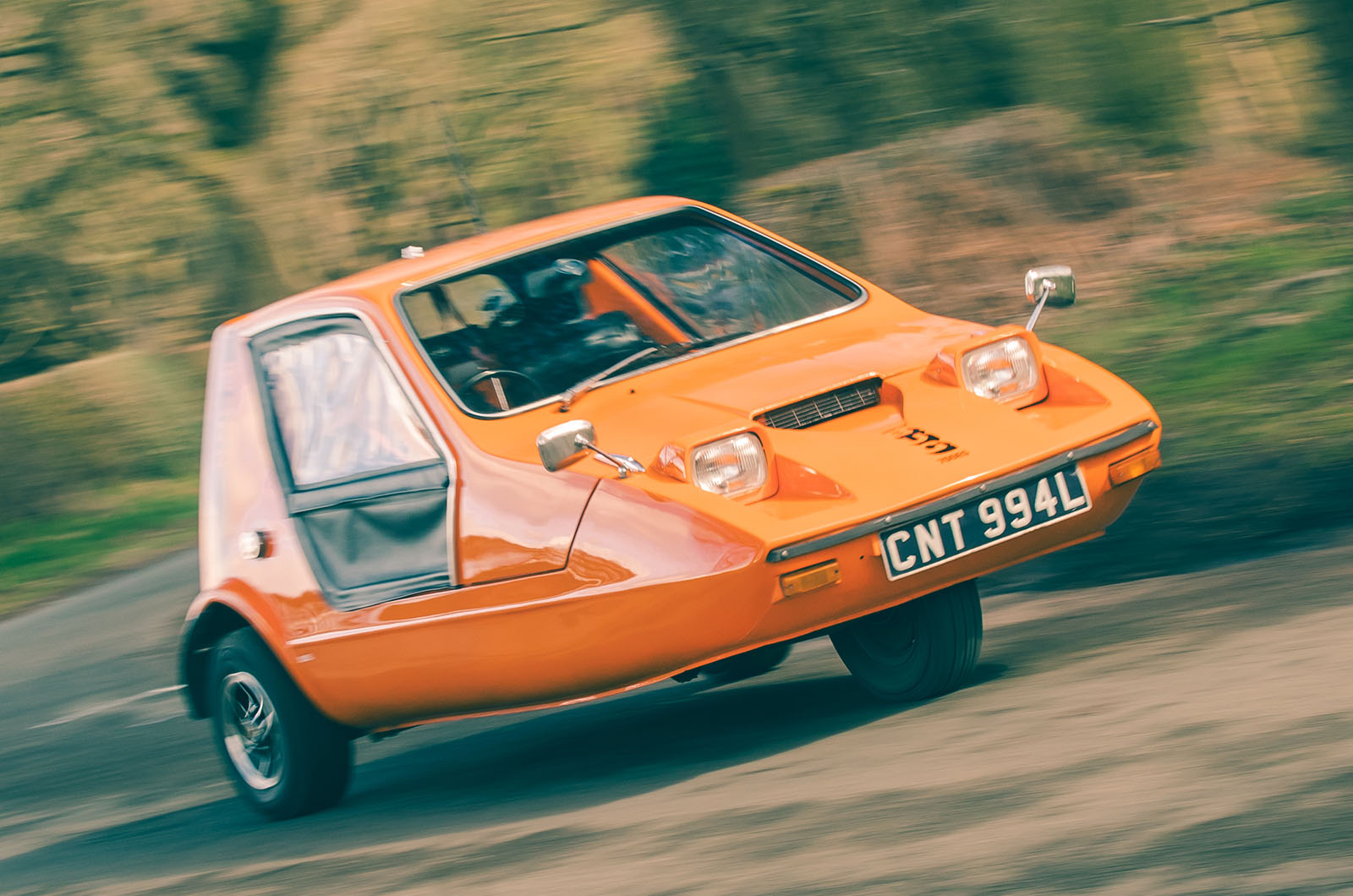
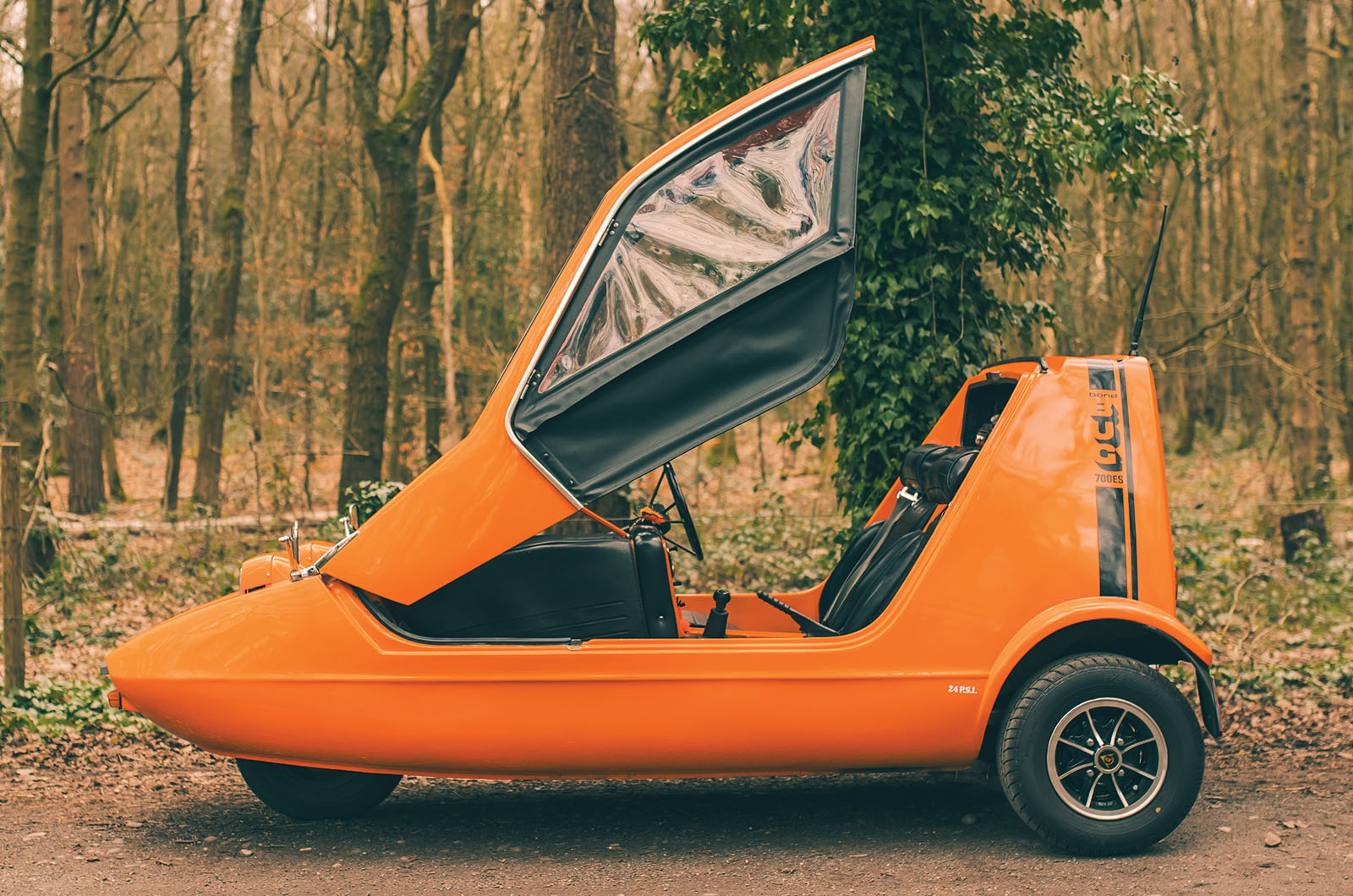
The Bond Bug followed the Reliant Robin’s three-wheel arrangement, but it has a lower centre of gravity

So why is it still omitted from wedge history? It must be its non-conformity in the wheel-count department.

It’s something oafs and wise-crackers latch on to for a cheap laugh, oblivious that you smile at the Bug, not laugh at it.

The argument has to be made that the Bug’s adhesion to Reliant’s layout (one wheel at the front) doesn’t act against it, but instead makes it one of the most uninterrupted, focused wedges around.

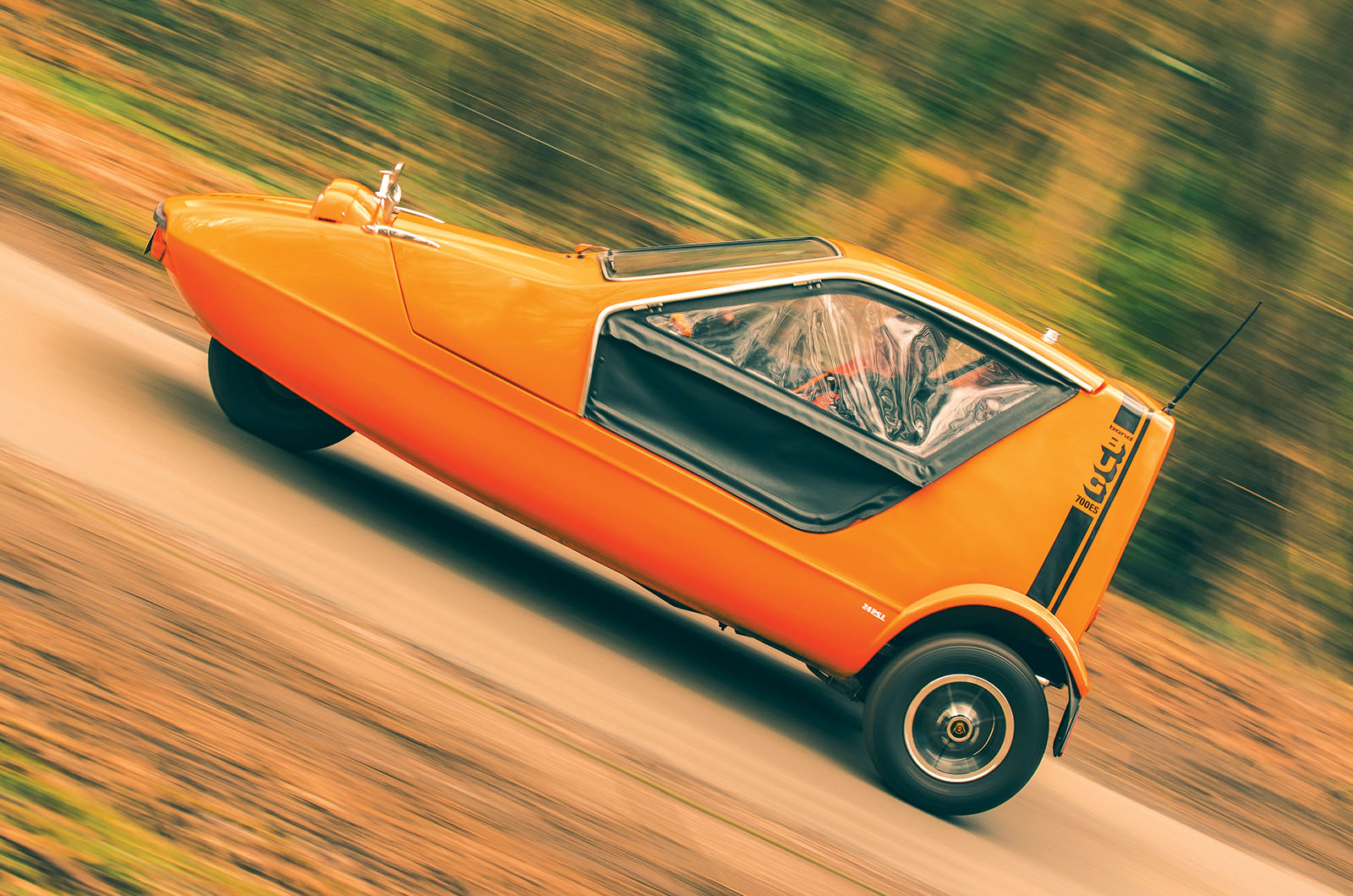
When you admire the Bond in profile, you see that it is uncompromised and devoid of hesitation or deviation.

Classic & Sports Car – Bond Bug: a fresh angle
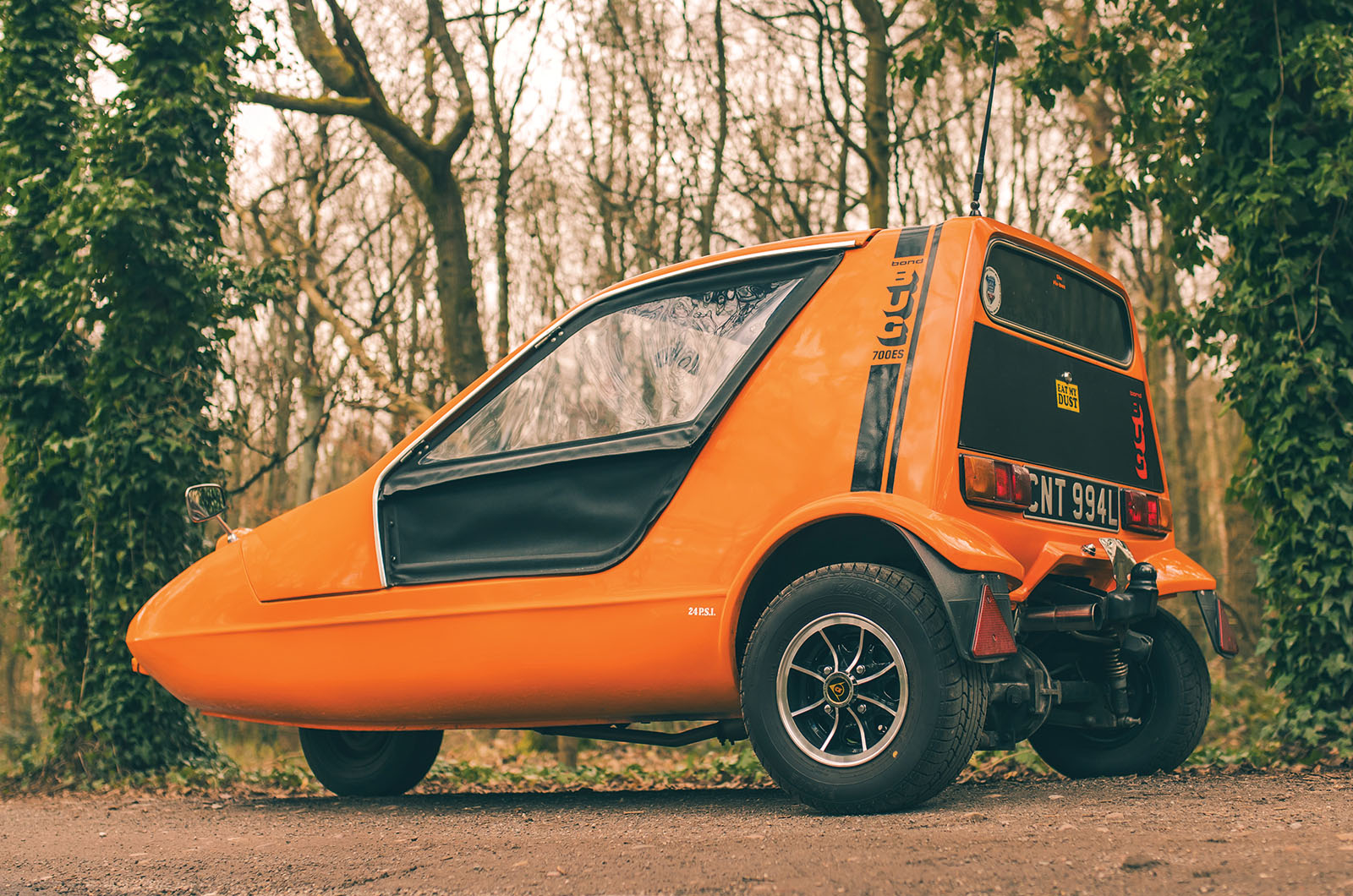
Most Bond Bugs were finished in Tangerine Orange, apart from six white and six lime-green cars

Does this undermine the Bond Bug in other respects?

Andrew dismisses any concerns about instability: “You have to treat it with respect, but you can turn over a four-wheeler.”

Given the mileage Andrew has driven in Bugs, he should certainly know. 

He restored his 700ES – a car he says had been “abused for 18 years and neglected for 21 years” – with help from family and friends.

Classic & Sports Car – Bond Bug: a fresh angle
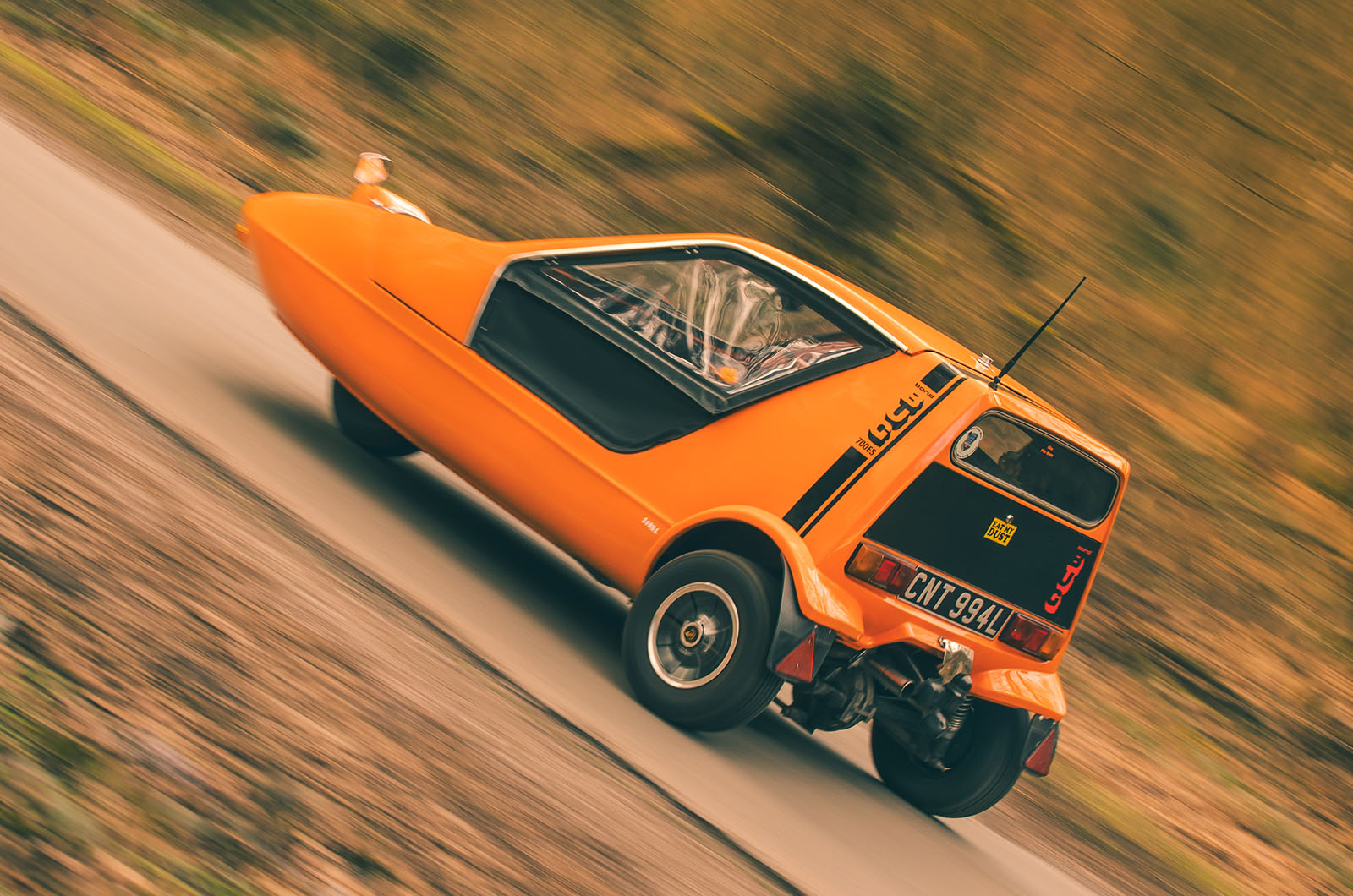
The Bond Bug is surprisingly nippy, thanks not least to its 396kg kerbweight

Regardless of season or weather, he has driven all over Britain and even to Paris – it took him 16½ hours.

He recalls: “I parked it in front of the Eiffel Tower, put up the canopy and then headed across the road to take a quick picture.

“Before I had reached the other side, there were tourists sitting in the driver’s seat!”

Classic & Sports Car – Bond Bug: a fresh angle
Designer Tom Karen’s goal was to use as few panels as possible for the Bond Bug’s bodywork

Does it live up to his 1974 moment? “And some,” Andrew beams. “Yeah, definitely. It’s a fantastic feeling, the number of smiles you get just by driving around.

“If I had a pound for every smile I’ve created… It just makes you feel good, and it’s contagious.”

The Bug might be 55 years old this year, but it remains a lovable little funkster that can still stop people in their tracks.

This pure slice of the 1970s oozes warmth rather than eliciting exclamations of shock, awe or even resentment.

Classic & Sports Car – Bond Bug: a fresh angle

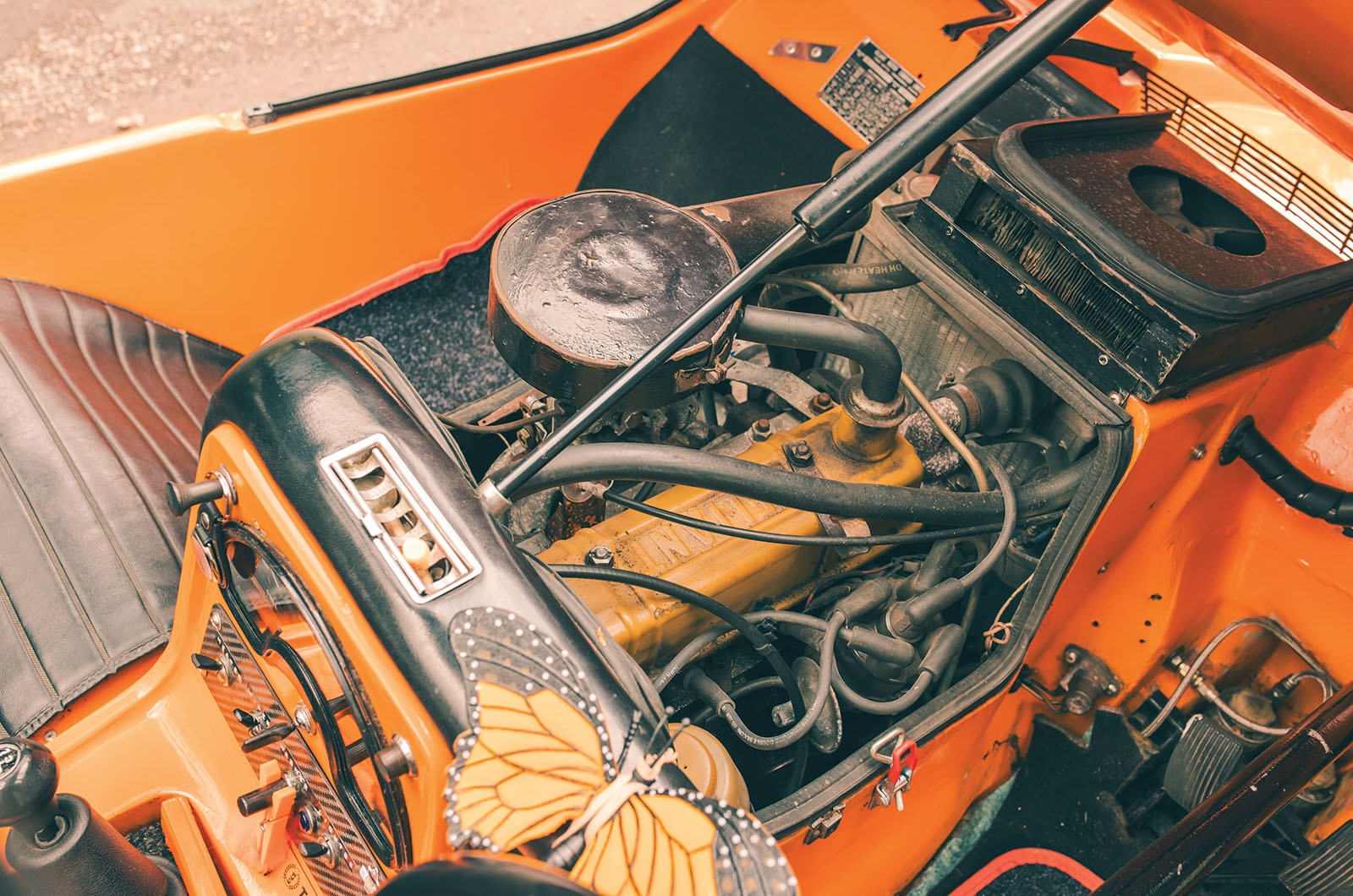
The Bond Bug’s engine is angled towards the passenger for better distribution of weight; this example has an 848cc Rialto unit

The coming together of Preston’s Bond and Tamworth’s Reliant happened in February 1969.

This took place following Bond’s dealership owner, the Loxham and Bradshaw Group, being bought by the Dutton-Forshaw Group.

Due to the car manufacturer not fitting into the new owner’s business stable, Bond was put up for sale in 1968.

Classic & Sports Car – Bond Bug: a fresh angle

Bond Bugs originally got bias-ply tyres, encouraging sideways shenanigans

A management buyout was attempted but unsuccessful; enter Reliant, then becoming the Reliant Motor Group.

Bond 875 production ceased in order to make way for the new Reliant-based Bug.

That was followed in July 1970 by the announcement that Bond’s manufacturing facilities would close.

Production of the Bug transferred to Tamworth, and Bond’s lines would shut permanently in October, with the end of the Equipe model.

Classic & Sports Car – Bond Bug: a fresh angle

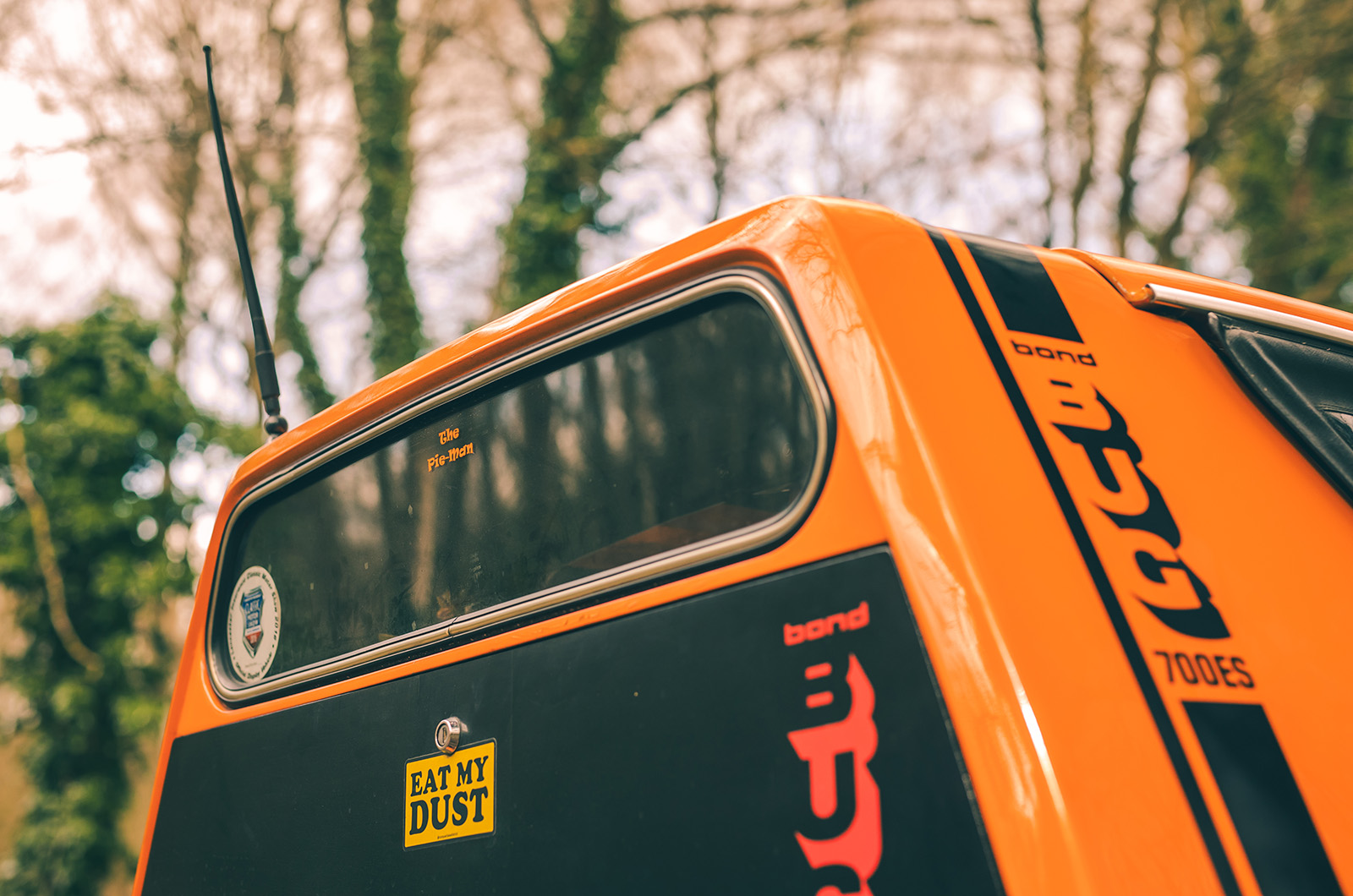
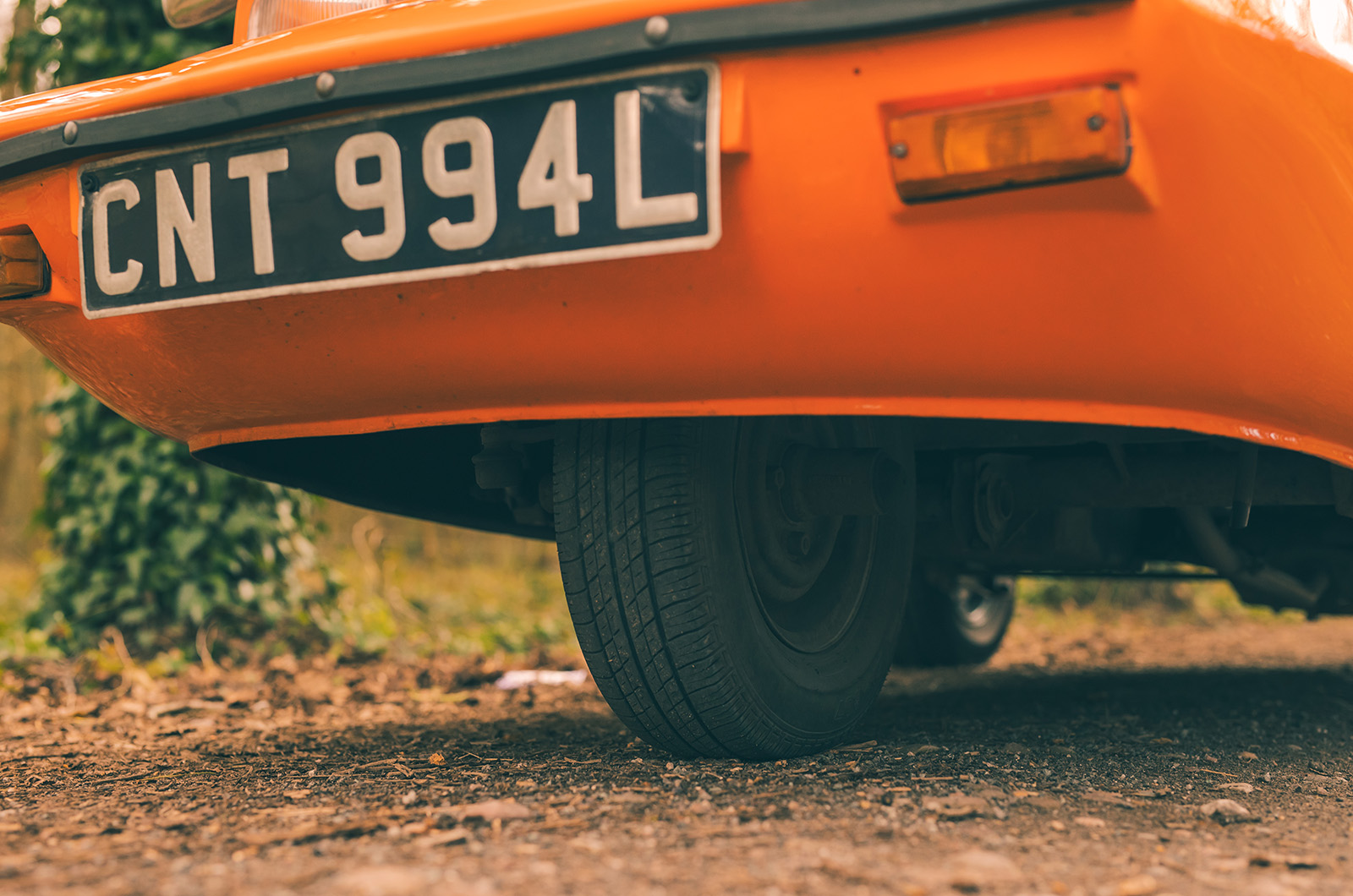
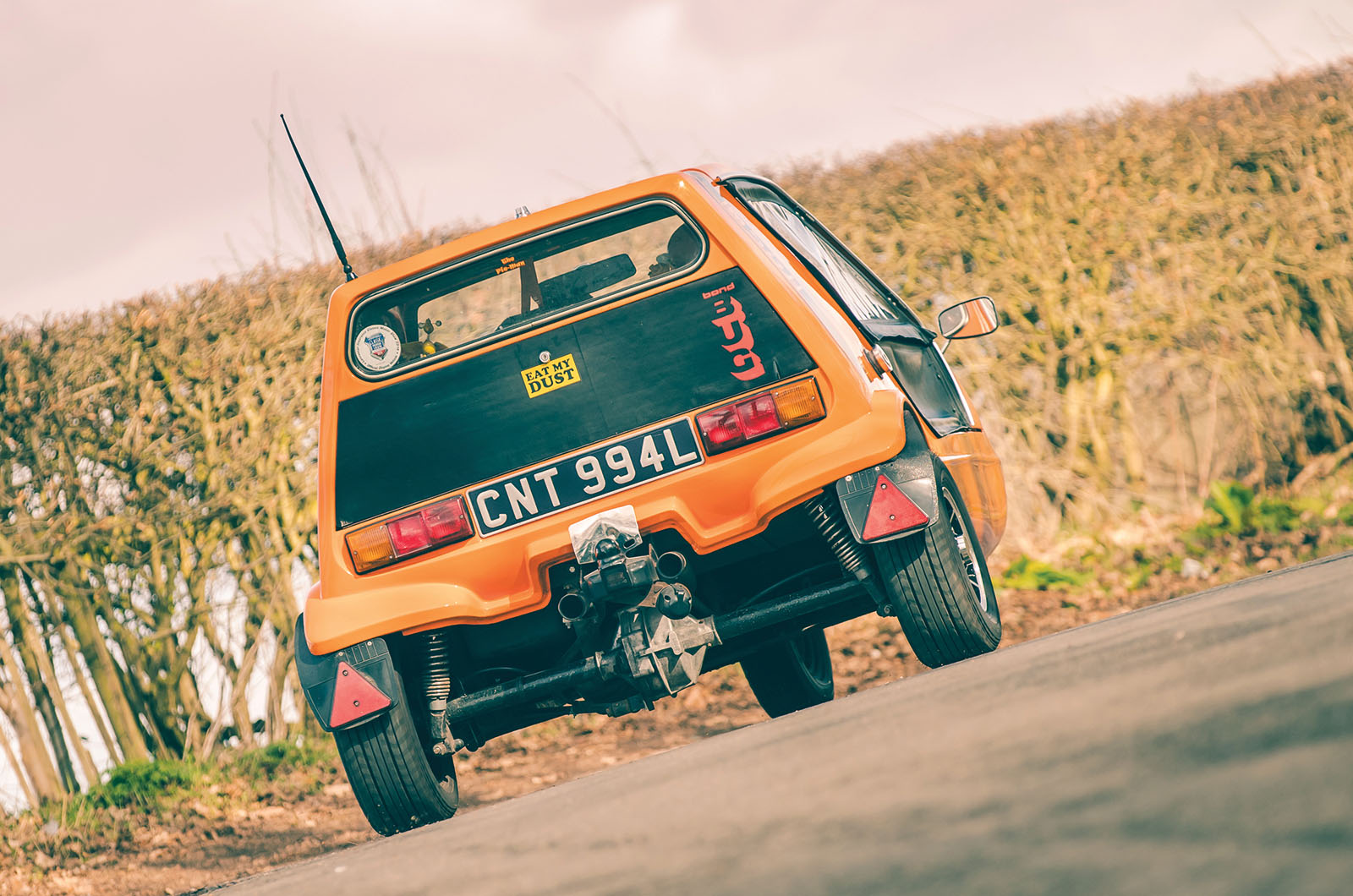
The Bond Bug’s rear bodywork ends abruptly; Tom Karen’s original sketches didn’t even have a boot

The Bond Bug had been conceived by Tom Karen during his second spell at Ogle Design.

The award-winning innovator had trained at the Central School of Arts & Crafts before working at the Ford styling studio, then with David Ogle, Philips and Hotpoint.

He subsequently returned to Ogle in 1962, following David’s untimely death, to run the company.

Classic & Sports Car – Bond Bug: a fresh angle

This Bond Bug 700ES, or ‘Super Bug’, has the higher-compression, all-alloy Reliant engine, plus luxuries like sidescreens and hubcaps

Karen later wrote: ‘I arrived at Ogle in 1962 after poor David had his fatal car accident.

‘A year later, we started working for Reliant on the Scimitar coupé.

‘I floated to them the idea of producing a two-seat, three-wheel sports car, and I even had two eighth-scale models made.

‘But Reliant wasn’t interested. My luck changed when Reliant bought out Bond and needed to put a new model in its range.’

Classic & Sports Car – Bond Bug: a fresh angle

Rumours of the Bond Bug’s instability are greatly exaggerated, says owner Andrew Cox

‘We were given a chassis, a shortened version of the one destined for the Robin, to produce a sporty two-seater,’ Karen continued.

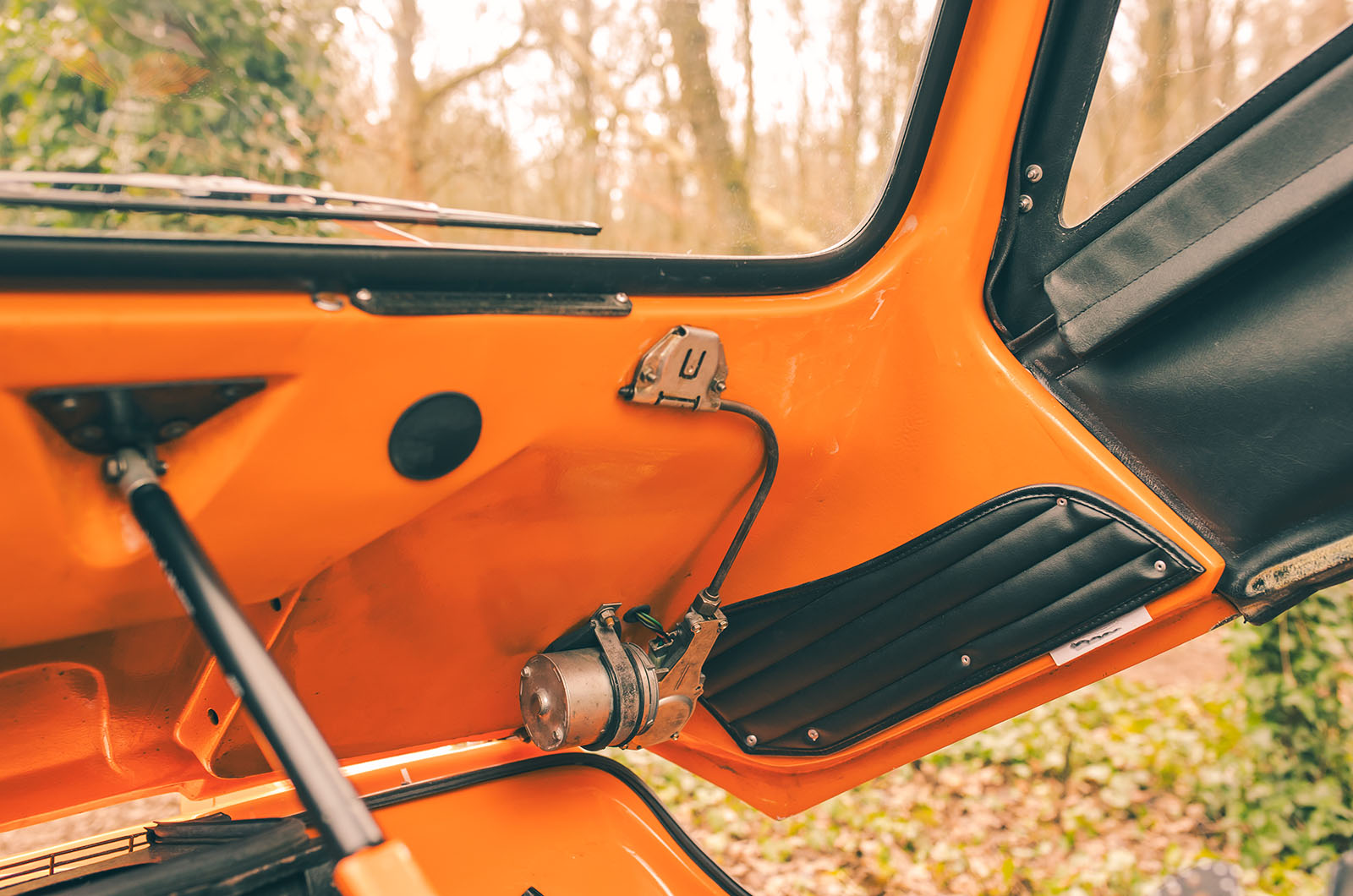
‘We developed the package around this. The challenge I set myself was to create a body of utmost simplicity: the fewest possible number of panels to build the body, all of them to come out of moulds without undercuts (I hated the bolting and unbolting of moulds practiced at Reliant) and a single ‘door’ with a flat windscreen.

‘The prototype, called Rogue, achieved all this, and the enthusiasm for the project at Ogle was palpable.’

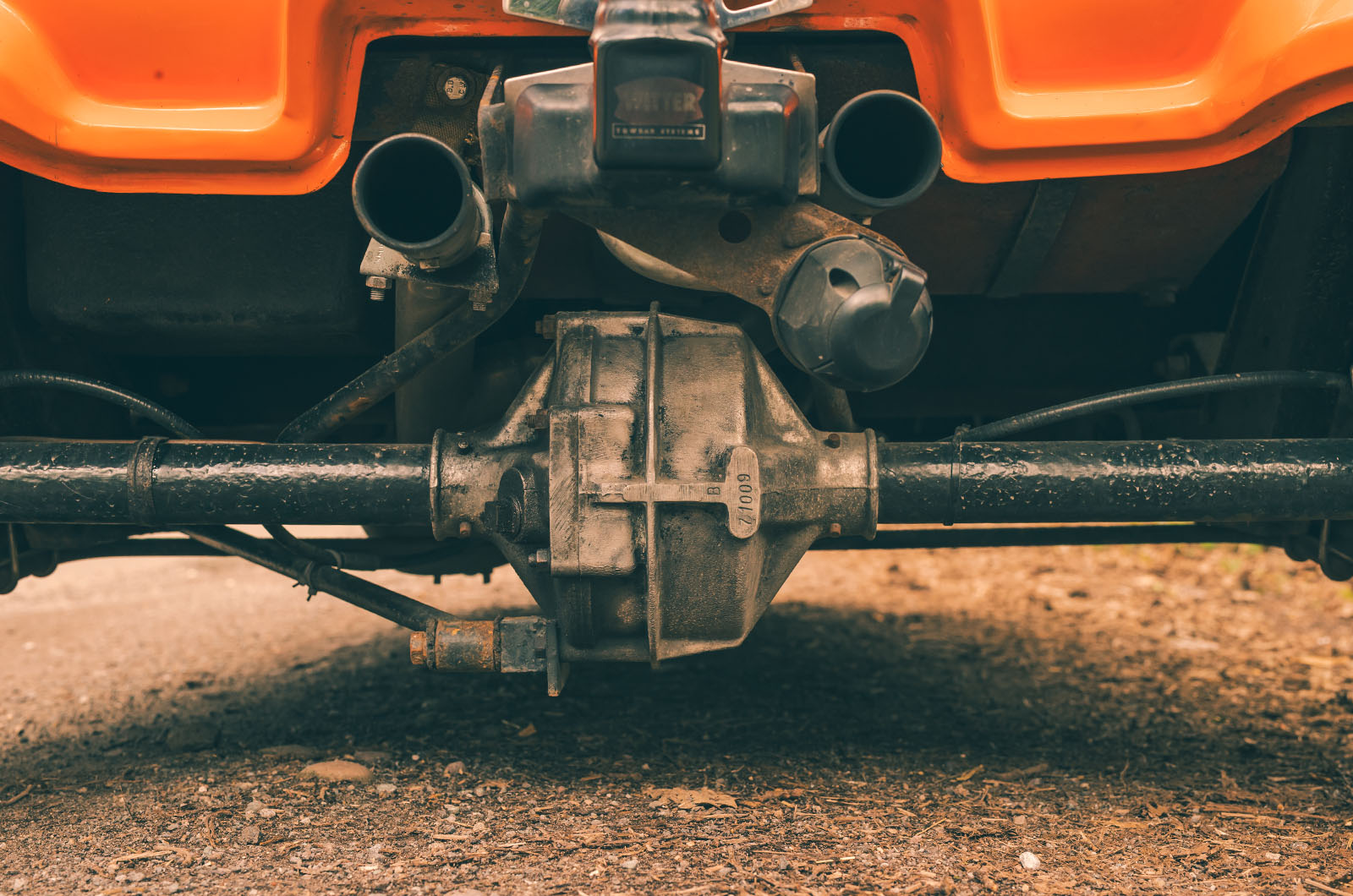
The Rogue, as named on Karen’s initial 1963 sketches, didn’t have a boot or even much rear bodywork, which left the spare wheel, the rear suspension and the axle exposed.

Classic & Sports Car – Bond Bug: a fresh angle

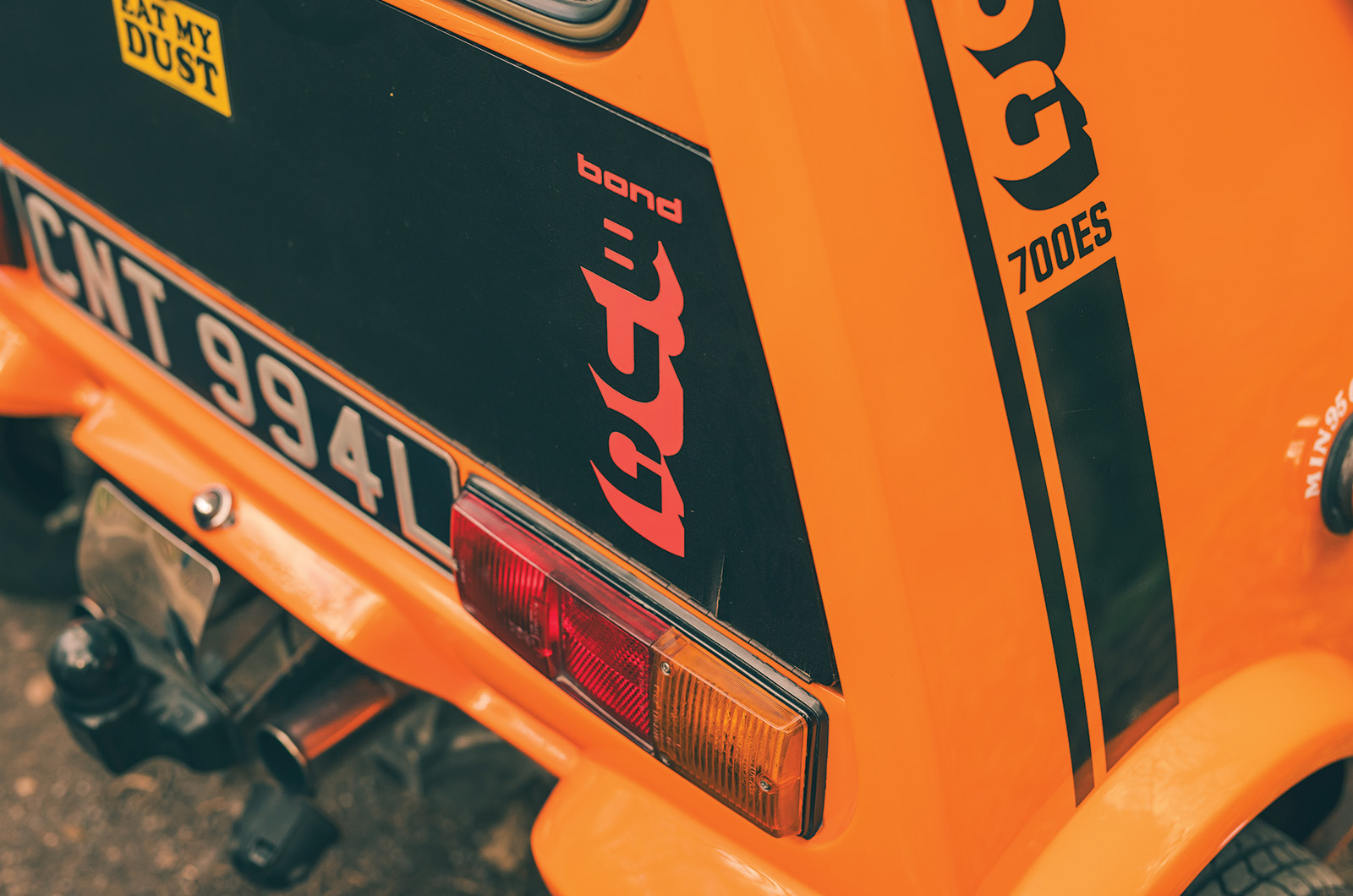
Tom Karen created the Bond Bug’s striking graphics

It also lacked doors, but had pop-up headlights similar to those of Vignale’s Fiat Samantha.

Karen continued: ‘Reliant approved what we had done, but sensibly asked for some boot space and widening of the front end. They also hit on the inspired name “Bug”.

‘I proposed a single colour for all the Bugs (another cost saving), and when I found someone trying to put a plastic badge on the front, I offered the bold Bug graphics it ended up with.

‘Development of the vehicle from start to finish took less than a year.’

Classic & Sports Car – Bond Bug: a fresh angle

The Bond Bug’s neat NACA duct

The Bug’s purpose was simple.

After the car’s launch at Woburn Abbey on 21 May 1970, Ray Wiggin, head of the Reliant Group, said: ‘The man we’re after is one who is full of sport, fun and energy, who wants a vehicle purely for fun purposes and fun transport. That’s what we were after in the first place.

‘Then, as the car started to develop, we began to feel that what we had got was not just a replacement for the motorcycle, but a new fun motor car.

‘The fact that it has three wheels is quite incidental. It’s a new form of transport.

‘So now, in fact, we think it is going to appeal to a much wider section of the market than we originally envisaged.’

Classic & Sports Car – Bond Bug: a fresh angle

Bond envisioned the Bug as a new form of transport

In its 6 June 1970 road test, Motor expanded on the thinking behind the Bug: ‘Though the total car and more particularly the motorcycle market is on a downhill run, the market for three-wheelers is steadily growing (at a rate of 5% each year) and has done so since around 1960.

‘At the moment it is running at some 12,000 units per annum. (The total car market in the UK is about 11 million.)

‘Because it only has three wheels, the Bug’s Road Fund Licence costs only £10, and of course a motorcycle driving licence covers three wheelers.’

Classic & Sports Car – Bond Bug: a fresh angle

The Bond Bug wasn’t built with six-footers in mind

Reliant’s business case was to get young buyers hooked on the Bug before trading up to more family-friendly models.

So serious was Reliant about snaring 18-25-year-old buyers that the company offered an ownership package which incorporated hire purchase, a two-year insurance policy, road tax and a one-year (or 24,000-mile) warranty.

Three models were planned: the 700, 700E and 700ES.

Alas, the £548 700 or ‘Bare Bug’ had little appeal: it lacked anything as decadent as sidescreens and hubcaps, so, unsurprisingly, only one was built.

Classic & Sports Car – Bond Bug: a fresh angle

‘The direct steering and the four-speed ’box’s positive gearchange obviously make the Bug a hoot to drive’

The equipment list for the £579 700E ‘Medium Bug’ was more generous: a hydraulic lifting strut for the canopy, sidescreens, hubcaps, chrome glazing trim, a courtesy light, driver’s sunvisor and heater.

Meanwhile, the £628 19s 2d 700ES ‘Super Bug’ had more welly from its higher-compression (8.4:1), all-alloy Reliant engine, which offered a healthy 31bhp at 5000rpm and 38lb ft at 3000rpm (up from the 700E’s 29bhp and 34½lb ft).

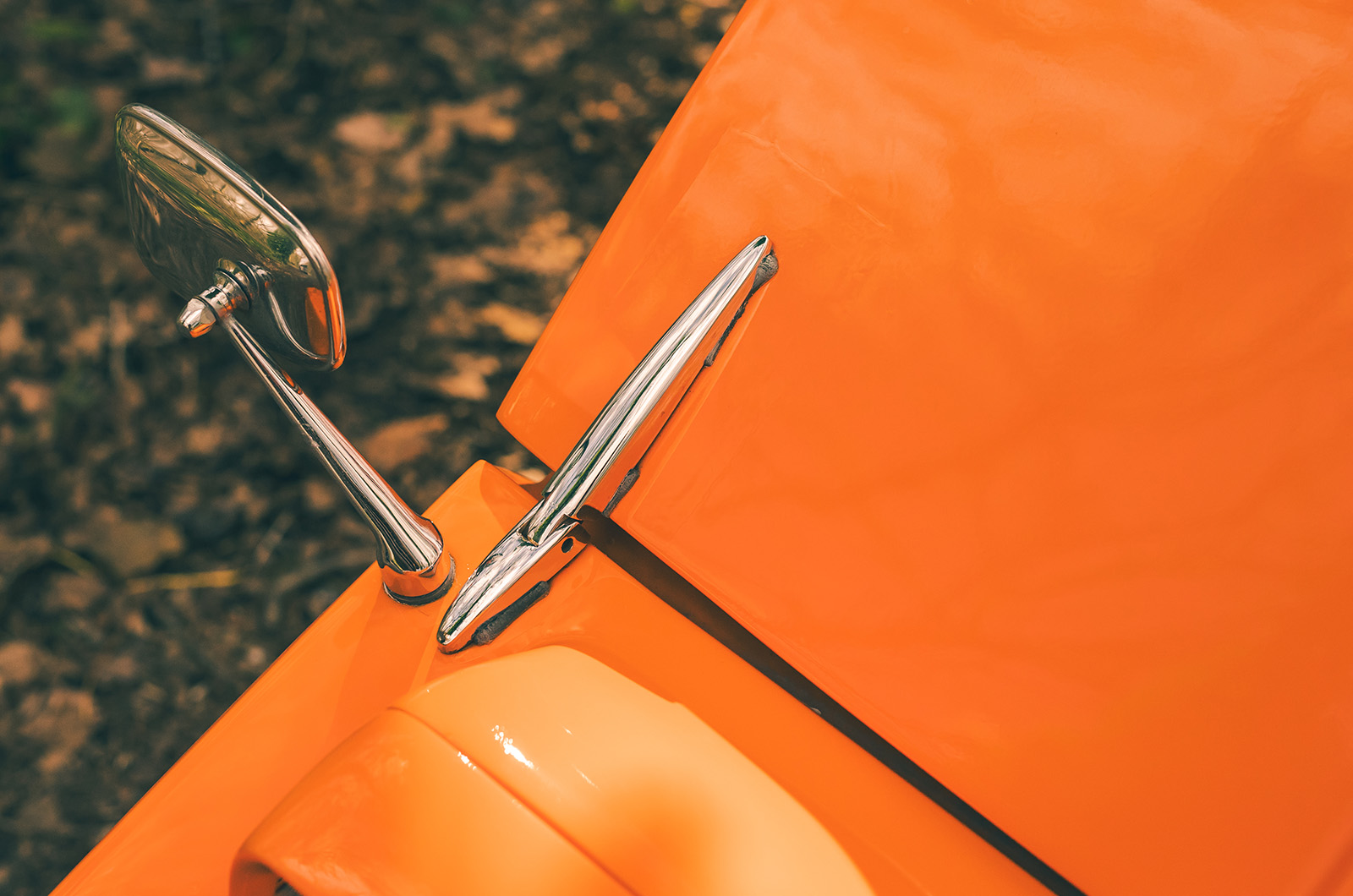
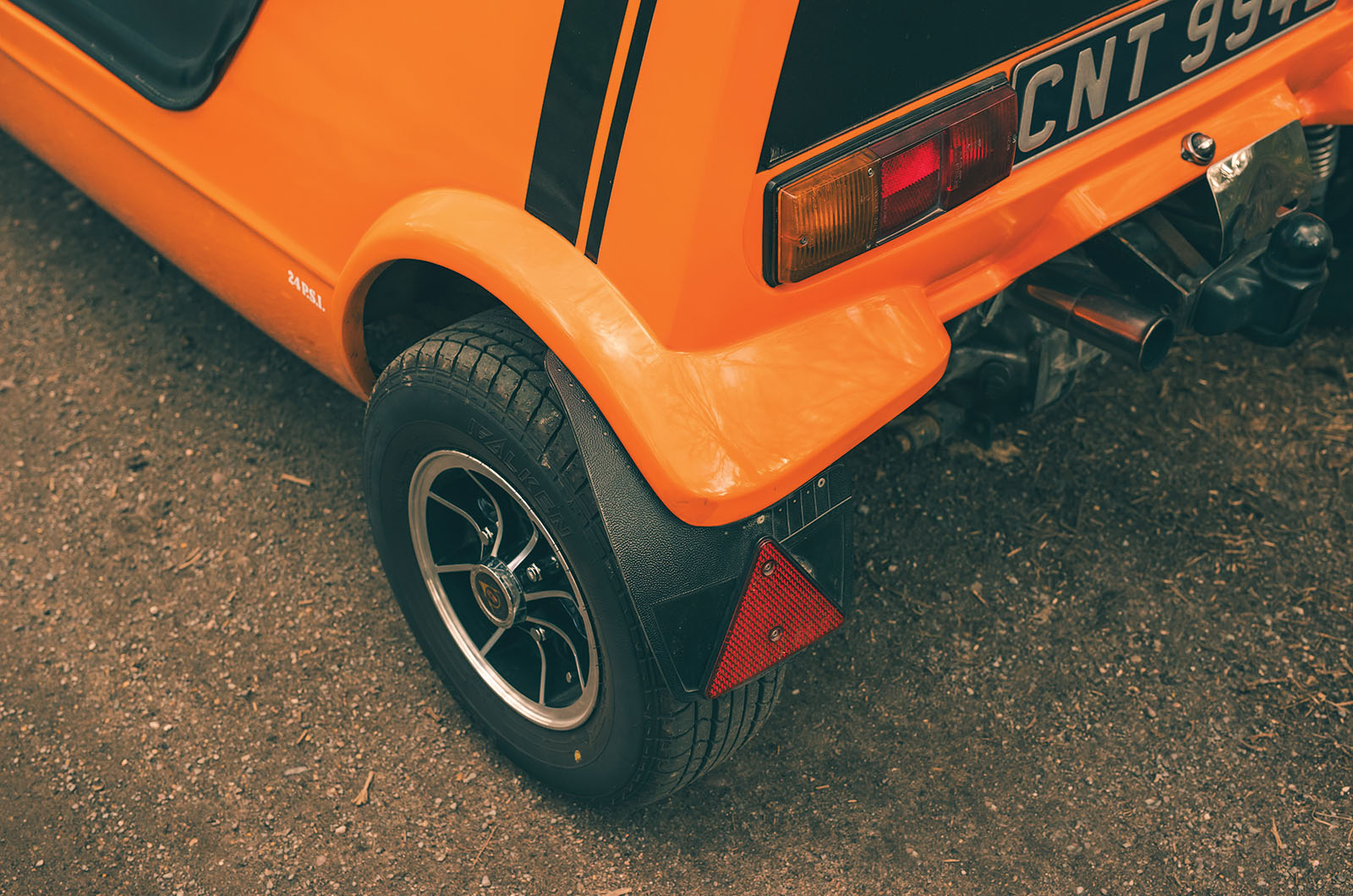
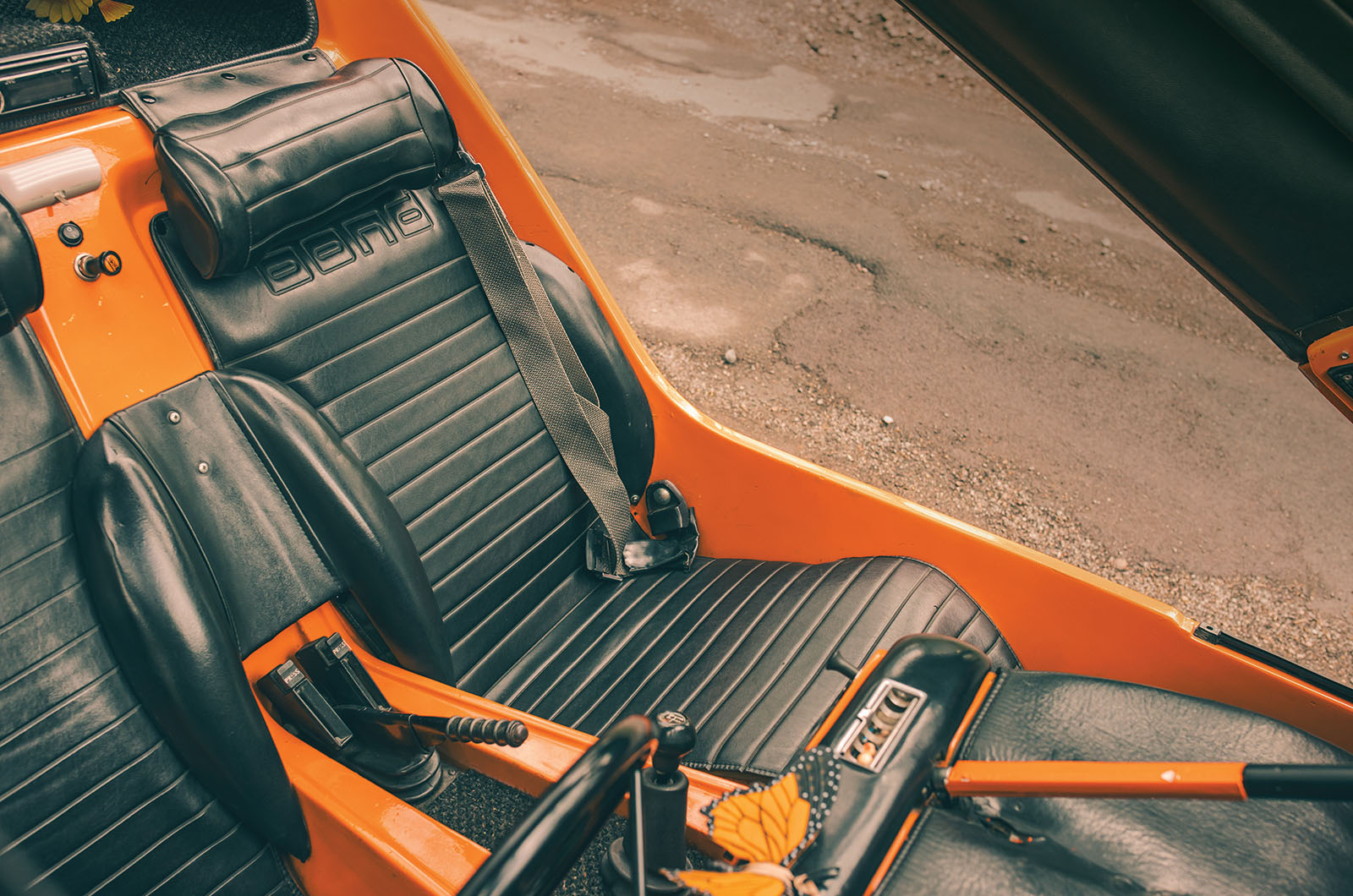
It also came with a rubber front bumper, low-profile tyres, a spare wheel, wing mirrors, mud flaps, seat headrests and side bolsters, a three-spoke steering wheel and B-pillar stripes.

Classic & Sports Car – Bond Bug: a fresh angle

This Bond Bug’s alloy wheels were an option

Factory seatbelts and two Exacton alloy wheels (costing £12 10s) were optional extras.

The latter, when combined with the ES B-pillar decals, ramp up the Bug’s cosmic grooviness to the maximum.

The new Reliant Robin 750 arrived in 1973, which was when the Bond inherited the 748cc, 32bhp, lower-compression (7.5:1) engine.

Only the 750ES model continued until May 1974, when production ended after just 142 750ES versions had been built, making room for more Reliant Robin production.

Classic & Sports Car – Bond Bug: a fresh angle

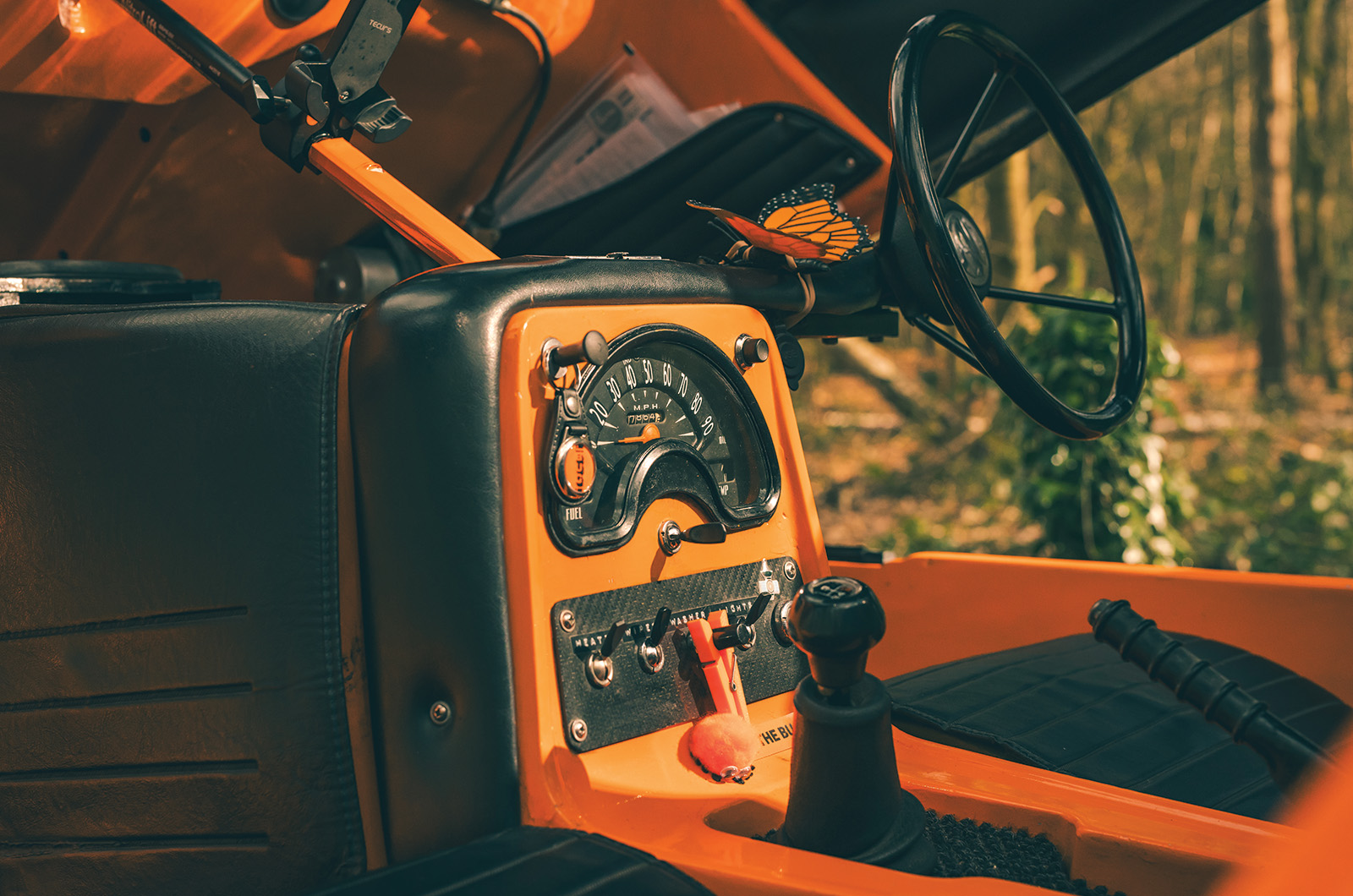
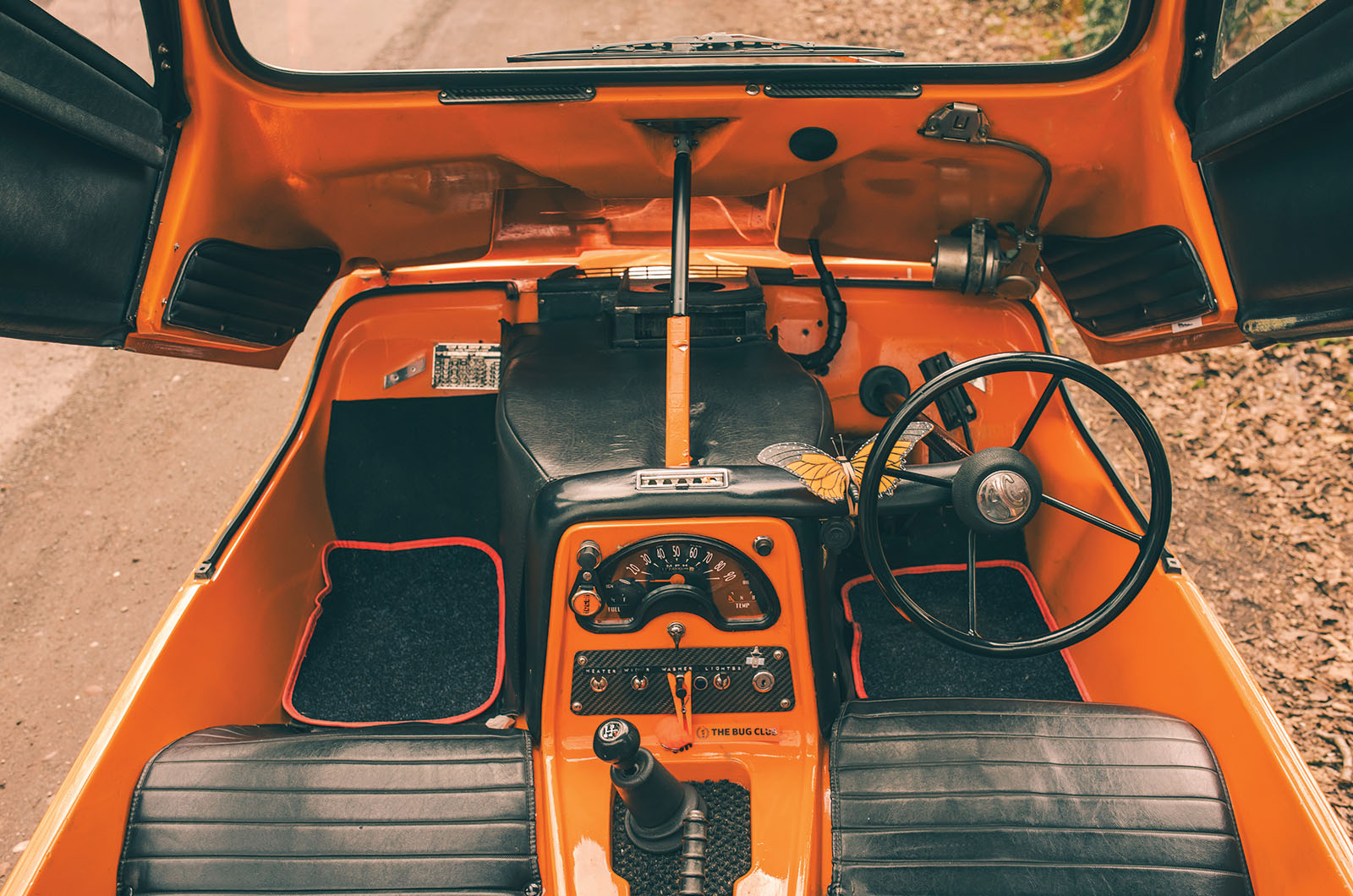
The Bond Bug’s padded panels stop occupants from bashing their knees

Sadly, a total of just 2270 production Bugs of all types were made, with most, but not quite all, being in Tangerine Orange.

Six were finished in white and six in lime green, for promotional purposes.

What wasn’t highlighted in the spec sheet was a few very clever touches.

Yes, Andrew makes some tongue-in-cheek remarks about the Bug’s “central locking”, “air-con” and deceptively capacious boot, but he then points out features that might otherwise be missed.

Classic & Sports Car – Bond Bug: a fresh angle

The Bond Bug 700ES-spec seats have bolsters and headrests

The seats consist of padded vinyl trim fixed directly to the shell; this not only saves cost and weight, but also gives the Bug a lower centre of gravity than the Robin.

Look at the engine and you’ll notice that in plan view it veers diagonally toward the passenger footwell, to assist with weight distribution for solo driving.

More surprisingly, the Bug was originally specified with bias-ply tyres to make the driving as fun and enjoyably sideways as possible.

Classic & Sports Car – Bond Bug: a fresh angle

The Bond Bug’s exposed glassfibre bodywork keeps the cabin bright and colourful

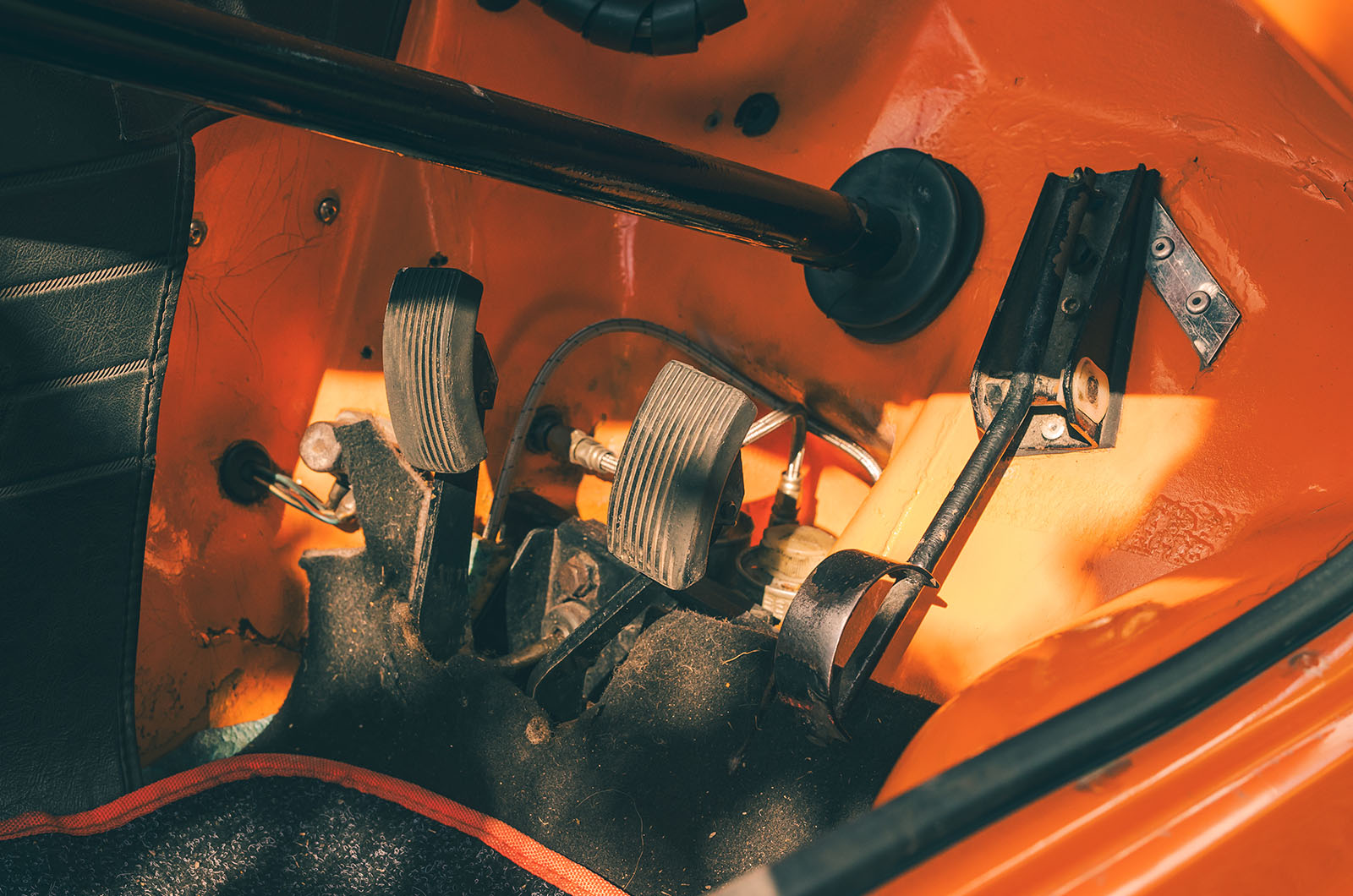
Squeezing into the Bond wedge is certainly a challenge for a well-upholstered six-footer.

The sidescreens and seating position make entry a blend of Fosbury flop and limbo dancing, but I have to make sure my backside is as far forward as possible to prevent my head fouling the closing canopy.

Once in, I feel much like a balloon that has squeaked its way into a traffic cone.

Even if I were to negotiate around the steering wheel and column support, those pedals rob too many precious inches in the footwell to make a drive possible.

Classic & Sports Car – Bond Bug: a fresh angle

The Bond Bug is agile and fun to drive

Interior room might be tight, but it isn’t claustrophobic.

This car is fitted with an 848cc Rialto engine and gearbox, but even the original 701cc Bugs were nippy – coming second in Motor’s top speed and 0-60mph shootout against the likes of a Honda N600 (fastest and quickest), Hillman Imp, Fiat 850, MkII Mini, NSU Super Prinz and Renault 4.

It managed this while also being the most frugal on fuel.

The performance is really rather surprising, both on the straights and through the corners.

Classic & Sports Car – Bond Bug: a fresh angle

The Bond Bug’s cabin is spacious, but the driving position is cramped

The engine sounds a bit harsh and its ride is firm on these terrible roads, but the direct steering (just 2.2 turns from lock to lock) and the four-speed gearbox’s positive change obviously make the Bug a hoot to drive.

No wonder Andrew is such an advocate of both the car and The Bug Club.

Harold Hastings, a motoring journalist familiar with three-wheeling and one-time sports editor of The Light Car, concluded his assessment in Motor thus: ‘In all, this Bond Bug is a fascinating experiment and might well prove to be the missing link between the best of motorcycling and the minimum in car driving as up-to-now envisaged.’

Alas, it was not to be.

The Bug proved more popular with older buyers, and by the time production ended in 1974, Bond was no more.

Images: Jack Harrison

Thanks to: Andrew Cox; the Facebook group Nuts About Bond Bugs; The Bug Club


Factfile

Classic & Sports Car – Bond Bug: a fresh angle

Bond Bug 700ES

  • Sold/number built 1970-’74/2272 (all, including two prototypes)
  • Construction glassfibre body on welded, box-section steel chassis
  • Engine all-alloy, ohv 701cc ‘four’, single Zenith downdraught carburettor
  • Max power 31bhp @ 5000rpm
  • Max torque 38lb ft @ 3000rpm
  • Transmission four-speed manual, RWD
  • Suspension: front independent, by leading arm rear live axle, anti-roll bar, four trailing links, Panhard rod; coil-over damper units f/r
  • Steering Burman Douglas worm and peg
  • Brakes Lockheed drums
  • Length 9ft 2in (2794mm)
  • Width 4ft 7in (1397mm)
  • Height 4ft 2in (1270mm, canopy closed)
  • Wheelbase 6ft 5in (1956mm)
  • Weight 874lb (396kg)
  • 0-60mph 23.7 secs 
  • Top speed 76mph
  • Mpg 35
  • Price new £628 19s 2d 
  • Price now £8-15,000*

*Price correct at date of original publication


Enjoy more of the world’s best classic car content every month when you subscribe to C&SC – get our latest deals here


READ MORE

20 forgotten classic three-wheeled cars

Reliant Scimitar GTE: Tom Karen’s landmark sports estate

Fiat Samantha: Vignale’s little beauty