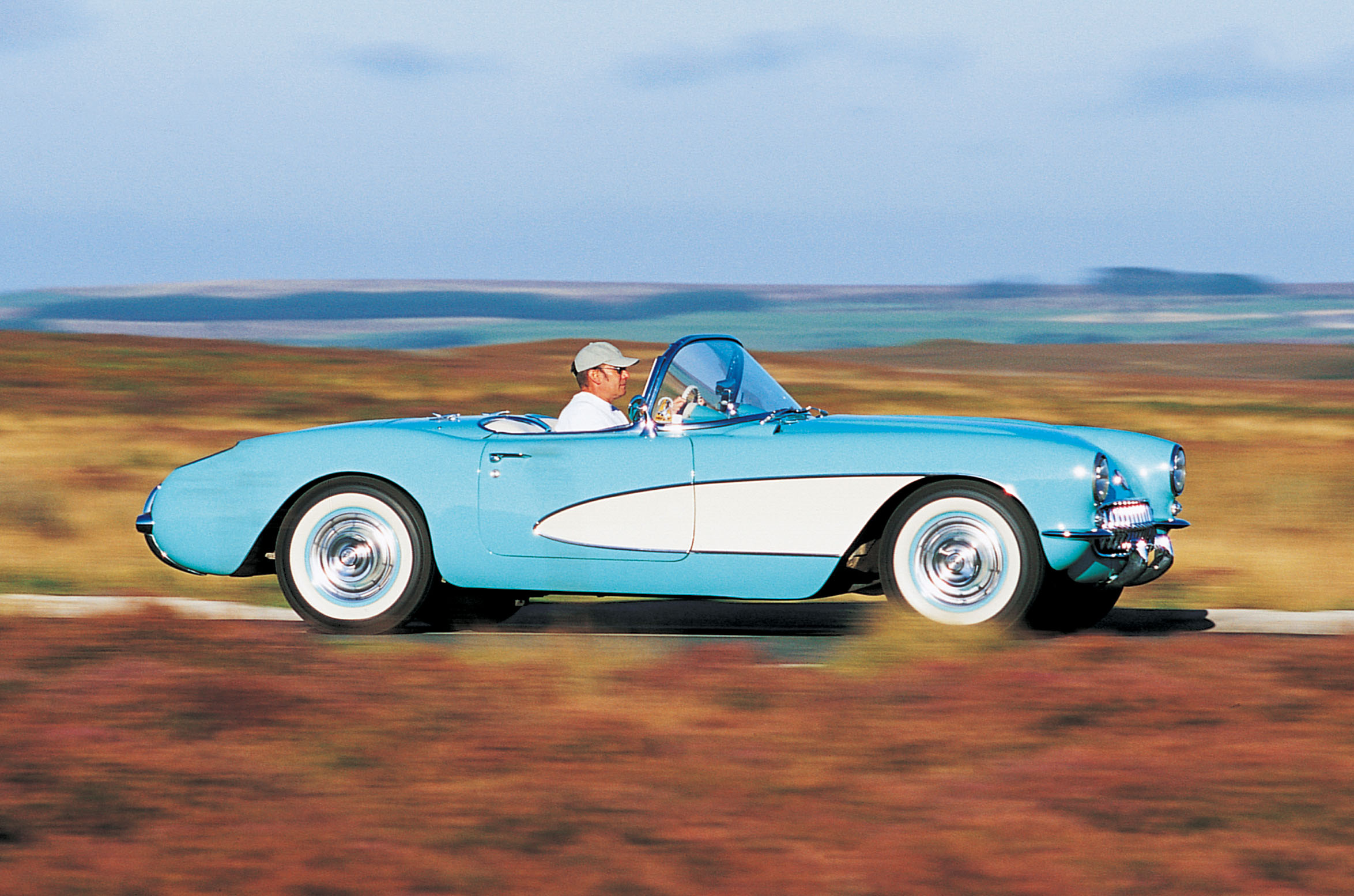
“With about 10 miles to go, a car in front of me slowed to turn right then stopped, but when I pressed the clutch pedal it went flat to the bulkhead.
“The AA came out again and fixed it temporarily with tie straps, then followed me home.
“I’ve been a member of the AA since buying the A40 Sports 13 years ago and I have certainly had my money’s worth.
“We were home by 8:30pm, but the following morning it happened again – the other end of the clutch linkage had come off.”
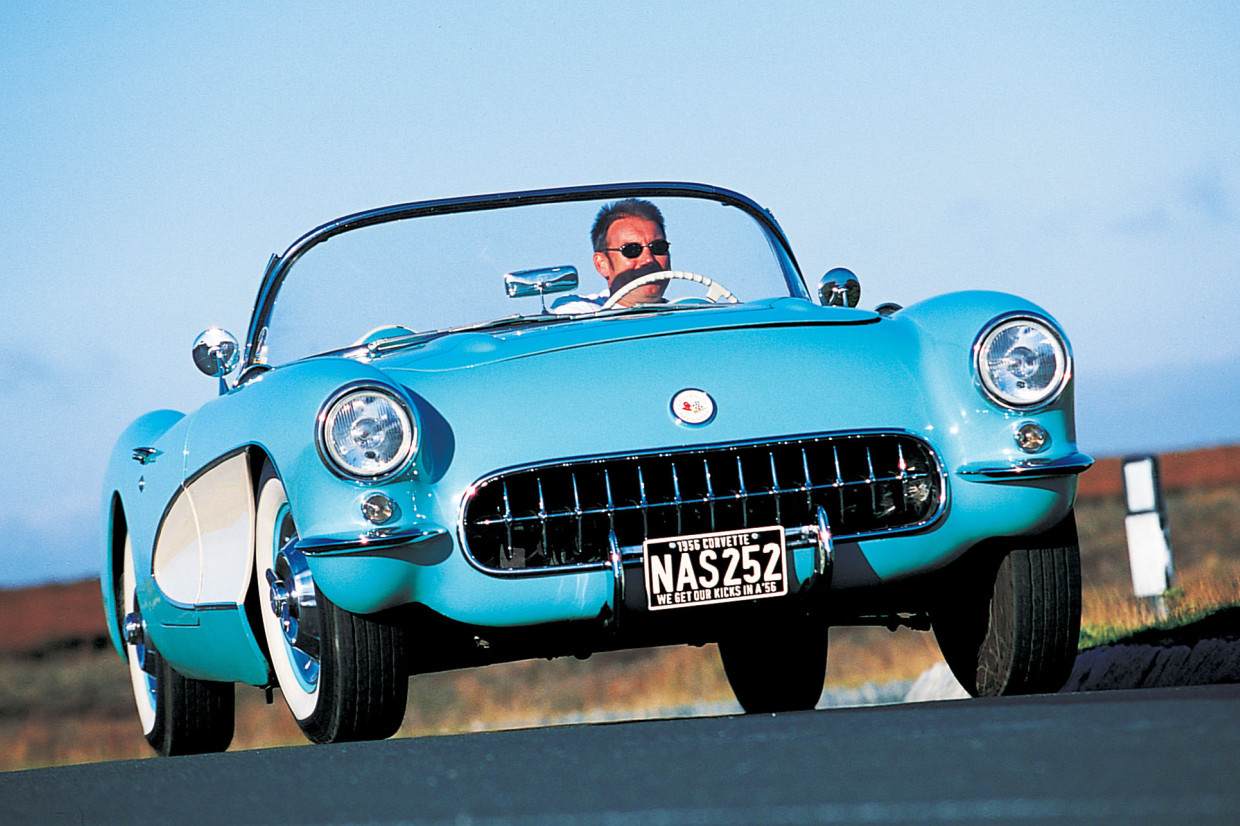
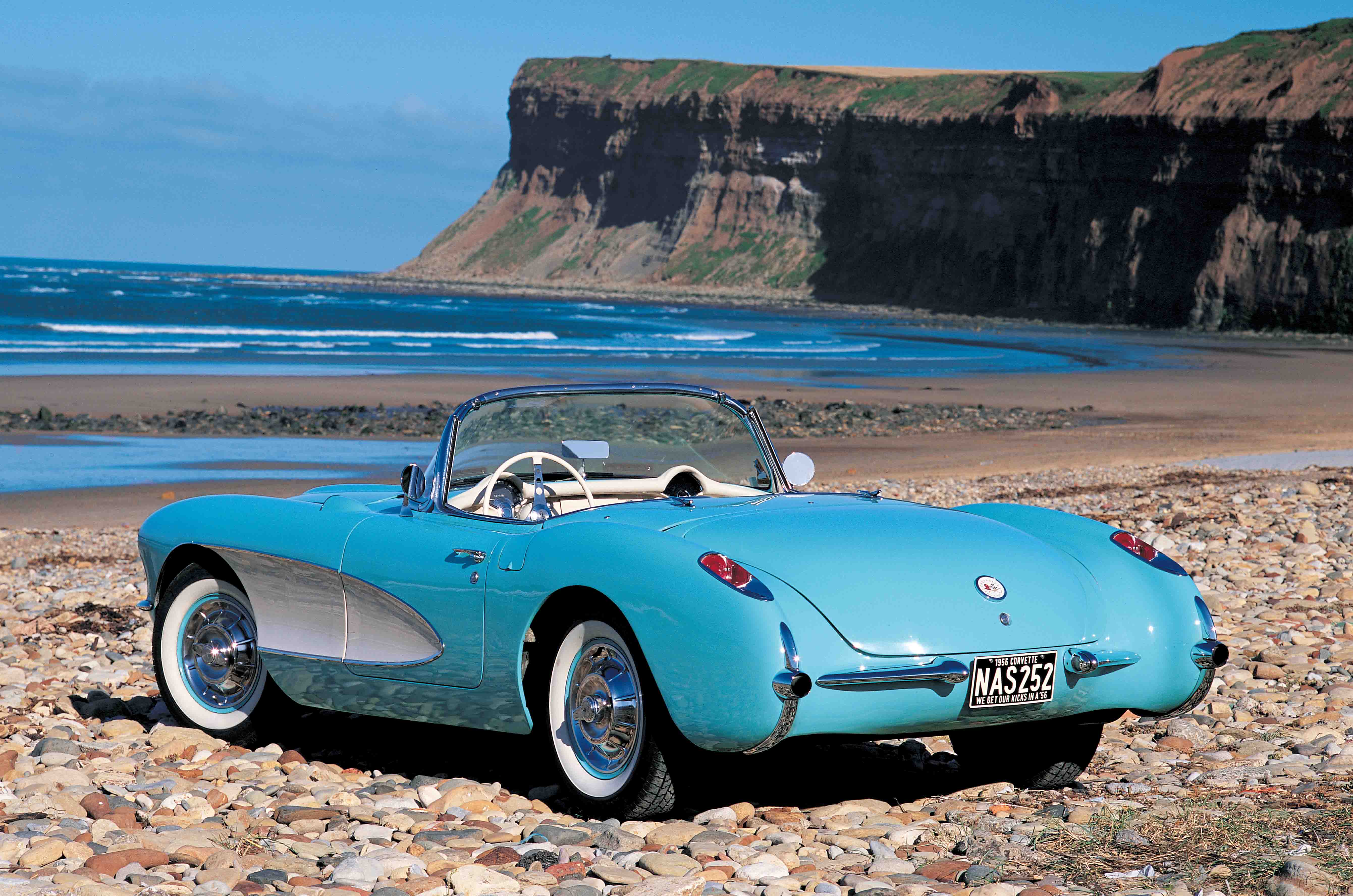
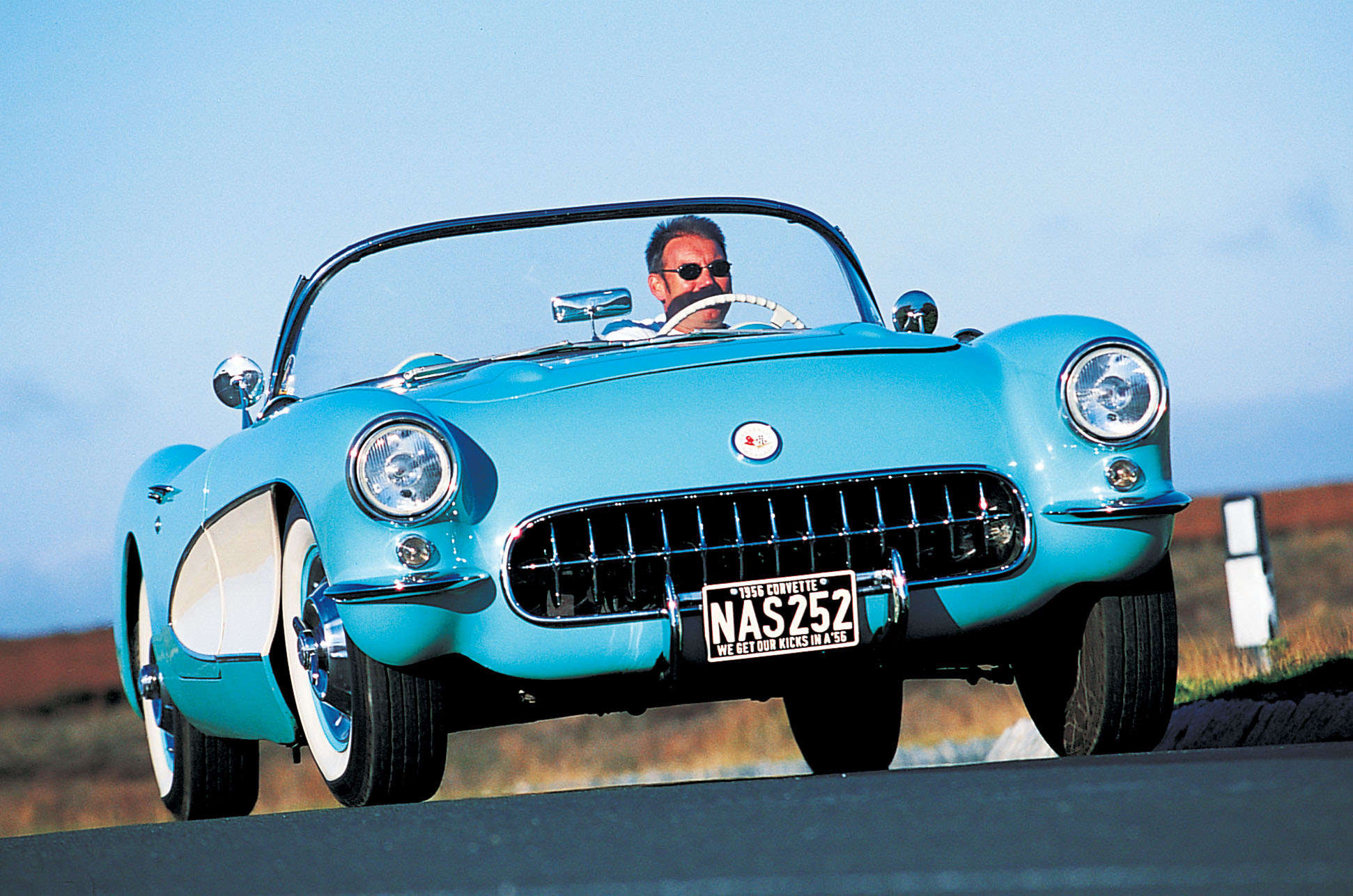
Howard has since rebuilt the engine and replaced some of the damaged chrome, but everything above the bumpers is original: “I go to Vette Gal for rare trim bits – Mary-Jo Rohner is tops for early Corvette parts.”
What’s important is that Howard plans to keep using the car – as a member of Teesside Yesteryear Motor Club, he travels to shows all over the UK.
Just don’t try to keep up with him.
Images: James Mann
This was first in our December 2004 magazine; all information was correct at the date of original publication
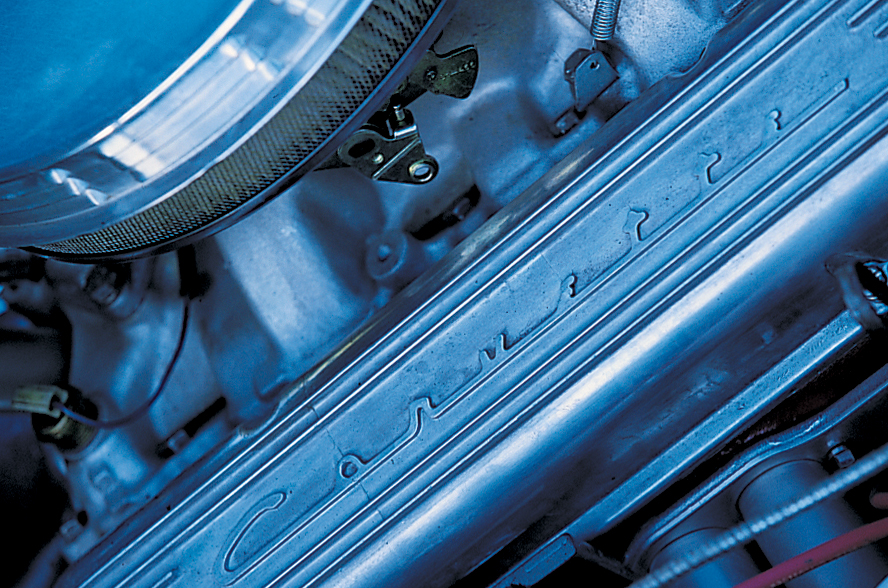
Chevrolet’s small-block: mighty motor
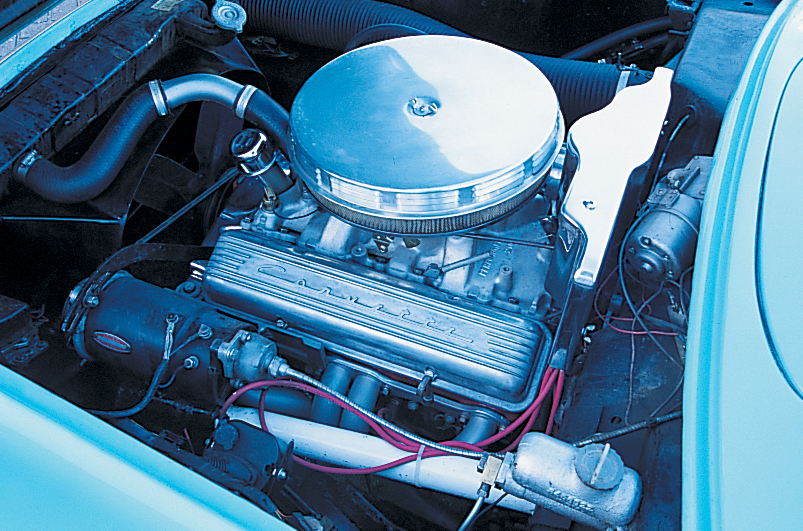
The Chevrolet Corvette’s iconic small-block V8
The small-block Chevrolet V8 was introduced to the Corvette and Chevy sedans in 1955, and it formed the backbone of NASCAR racing motive power for decades.
Designed by a team of 50 engineers led by Ed Cole, it is simple and strong, having individual rocker posts rather than shafts, and features deep crankcase skirts for stiffness.
Every version, from the weird 262cu in of 1975-’76 to the 400, is oversquare, starting with a bore of 3¾in and a stroke of 3in for 265cu in.
To reach 283cu in for the 1957 version was a simple matter of boring the block to 3⅞in and keeping the same crankshaft.
This capacity was also offered with fuel injection, proudly boasting 1bhp per cubic inch – although this was the first time Chevrolet had expressed power in anything other than 5bhp multiples, so it could have been more.
All engines had main bearings of at least 2.3in and 2in or 2.1in big-end journals.
Performance versions, for the Z/28 Camaro and LT-1 and L82 Corvettes, had four-bolt main-bearing caps and, in the more modern iteration, the LS1, still proudly running pushrods, has cross-bolted mains, too.
The evolution of the early Corvette
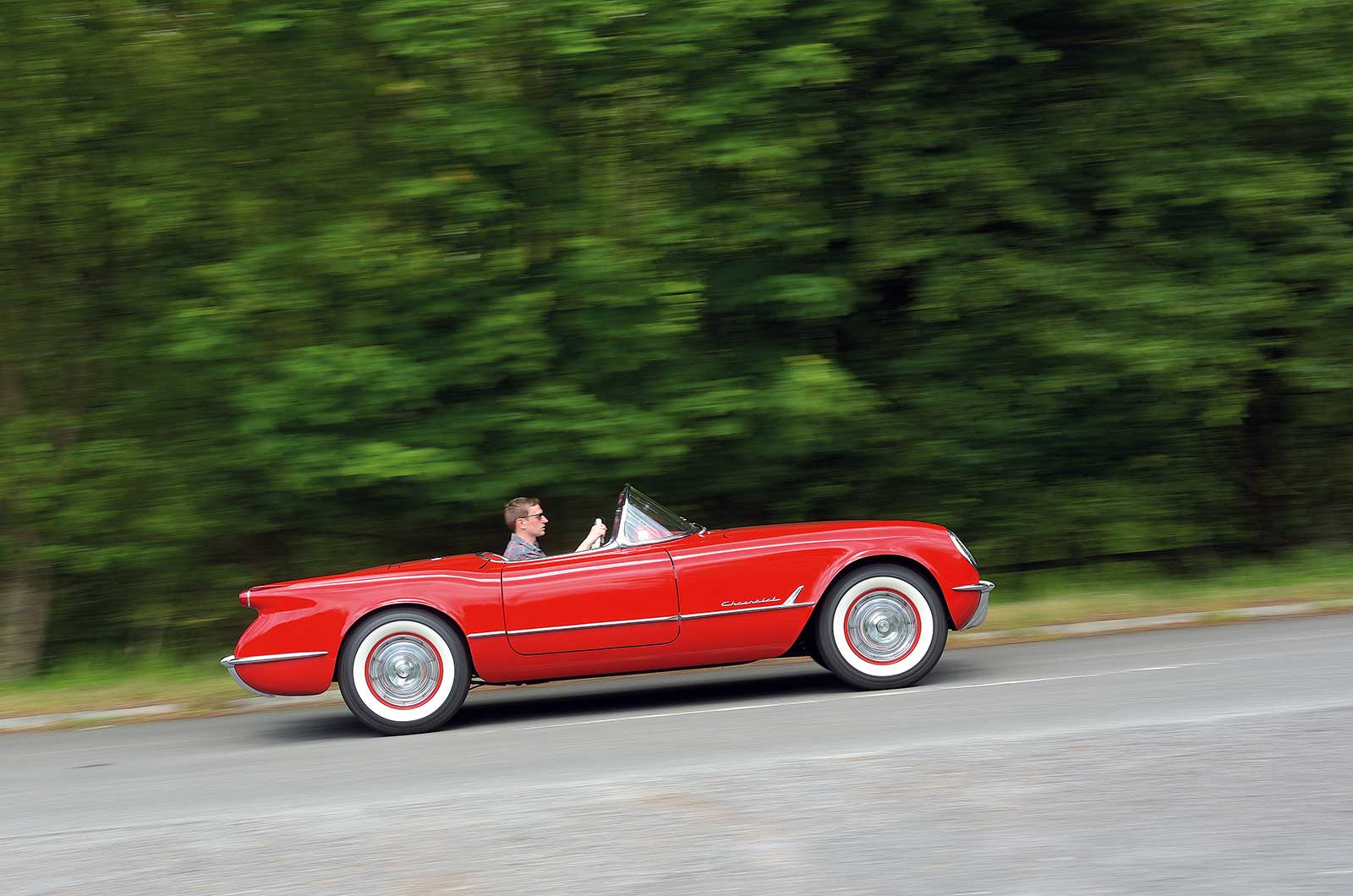
The early Chevrolet Corvette has a straight-six and no scalloped sides © Will Williams/Classic & Sports Car
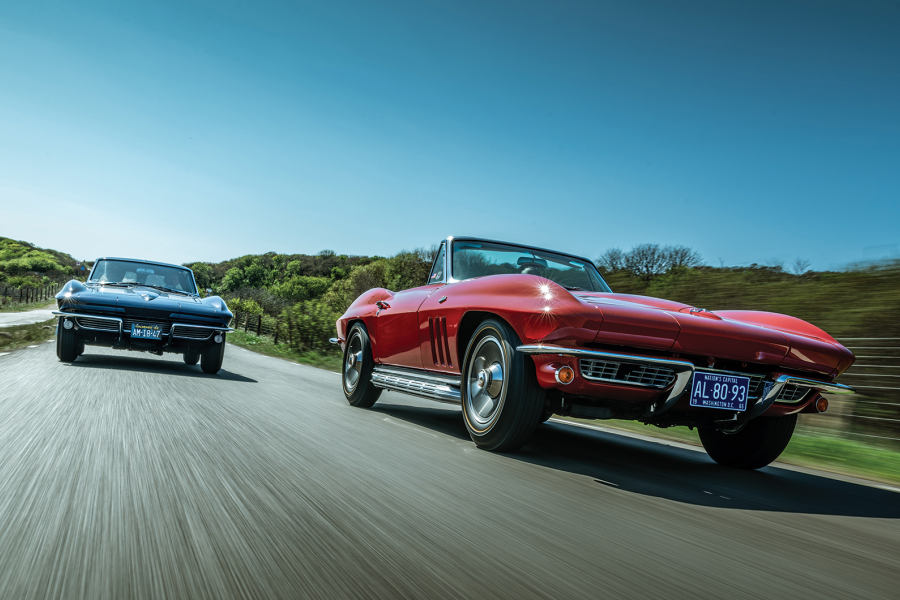
1953: Weedy combination of straight-six, two-speed auto and mushy handling. The 1954 and ‘55 cars look the same, but ’55 V8s – that’s most of them – have a larger ‘V’ in the side name script, 0-60mph in 9 secs and a 120mph top speed. A handful of late cars had three-speed manual ’boxes, as used on the ’56.
1958: Four headlights and now 10in longer, 3in wider, 100lb heavier. More fussy detail front and rear, including ‘gill’-type reverse scallop with three ‘teeth’ and fake louvres on bonnet, but rev counter moves to in front of the driver. For 1960, rear anti-roll bar was an American first. Rochester fuel-injected 290bhp 283 (first seen as a 283bhp unit in ’57) gives 6.9 secs 0-60mph, 118mph.
1961: First sight of the ‘ducktail’, previewing the flat-fronted ‘mid-year’ models that ran from 1963 to the end of ’67. Cleaner looks: simple grille replaces ‘teeth’; headlight rims now body colour. For ’62, black mesh grille infill, anodised sill panels and fine ‘blades’ in side scoops instead of strakes. Engine enlarged to 327cu in, with up to 360bhp, 5.9 secs 0-60mph and 140mph-plus.
Factfile
1956 Chevrolet Corvette
- Sold/number built 1956/3467
- Construction glassfibre body over steel ladder chassis
- Engine all-iron, ohv 265cu in (4638cc) V8, with four-barrel carburettor
- Max power 225bhp @ 5200rpm
- Max torque 270lb ft @ 3600rpm
- Transmission three-speed manual, RWD
- Suspension: front independent, by unequal-length wishbones, coil springs rear live axle, leaf springs; telescopic dampers f/r
- Steering recirculating ball
- Brakes drums
- Length 14ft (4267mm)
- Width 5ft 10½in (1791mm)
- Height 4ft 4in (1321mm)
- Wheelbase 8ft 6in (2591mm)
- Weight 2880lb (1306kg)
- 0-60mph 7.5 secs
- Top speed 120mph
- Mpg 16
- Price new $3120
Enjoy more of the world’s best classic car content every month when you subscribe to C&SC – get our latest deals here
READ MORE
Slow burners: Mercedes 190SL vs Corvette C1
Buyer’s guide: Chevrolet Corvette C3
Transatlantic tussle: Chevrolet Corvette vs Jaguar E-type
Paul Hardiman
Paul Hardiman is a regular contributor to – and former Deputy Editor of – Classic & Sports Car