140 years of motoring
From the beginnings of the Industrial Revolution, a combination of new technology and traditional inventiveness developed so rapidly that the arrival of what is now seen as the first car was more or less inevitable.
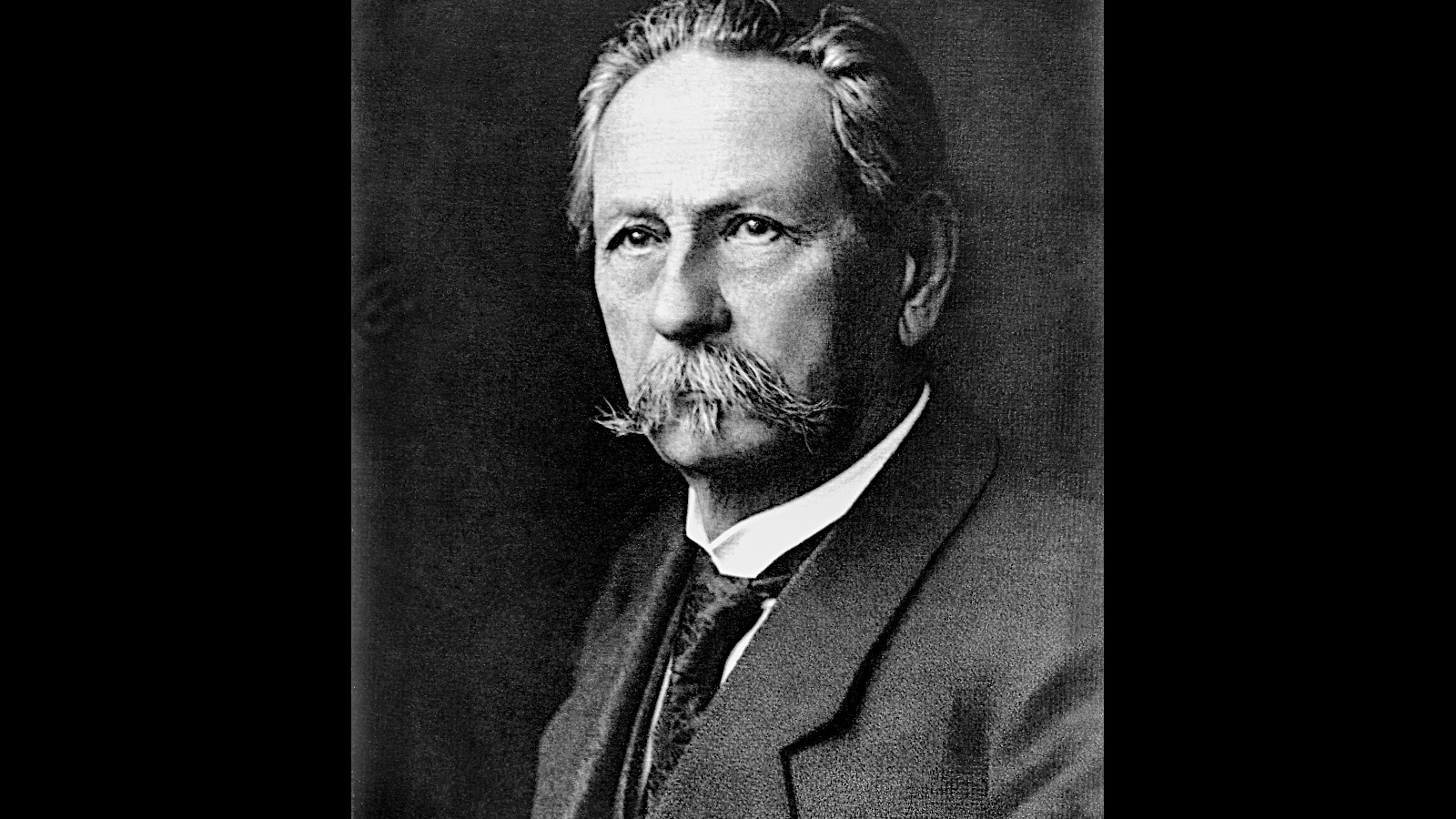
It’s customary in these cases to give credit to one person, and while a respectful nod can be given to Nicolas-Joseph Cugnot, who created a three-wheeled, steam-powered dray in around 1770, custom dictates that the honour goes to Carl Benz.
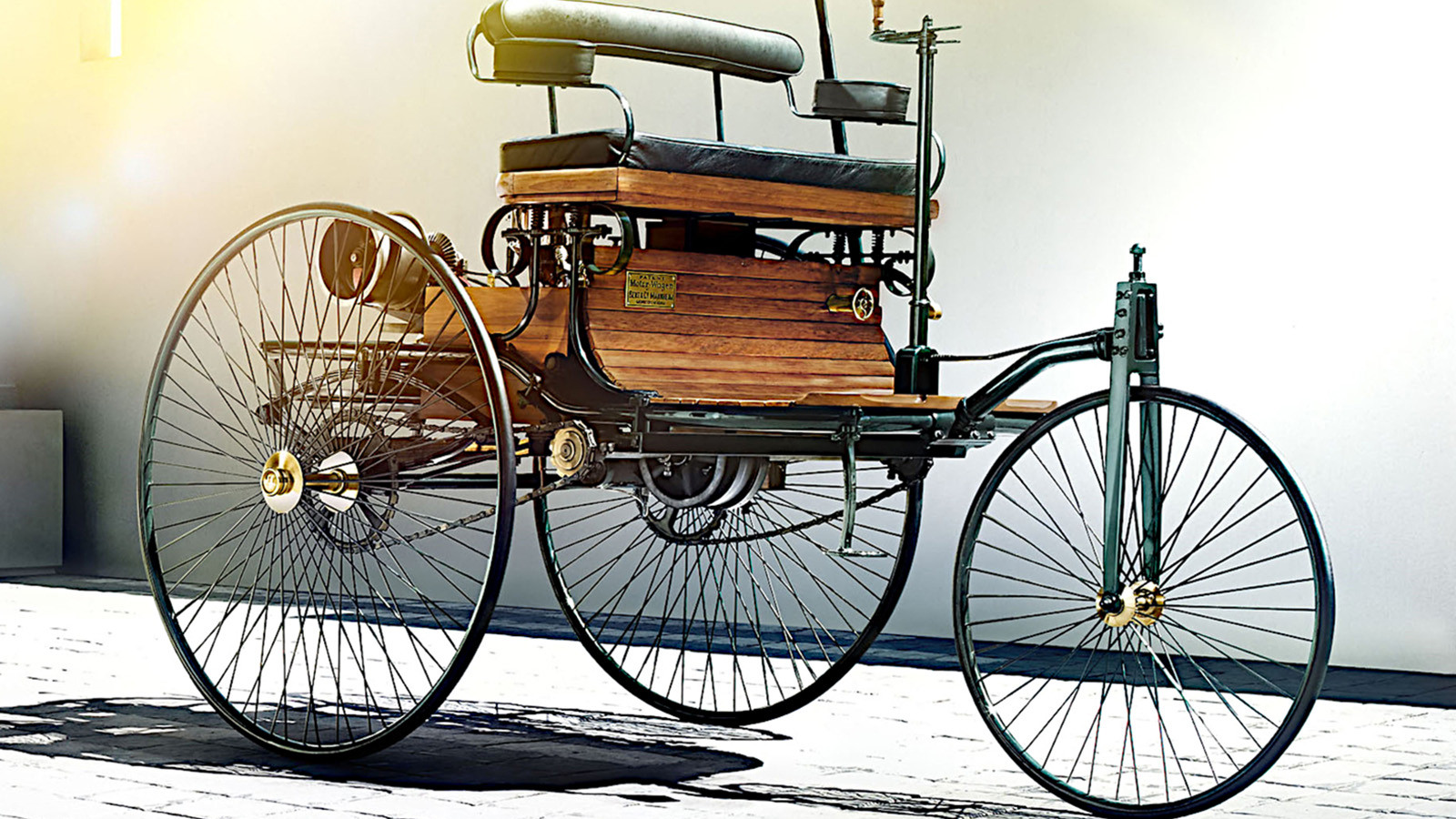
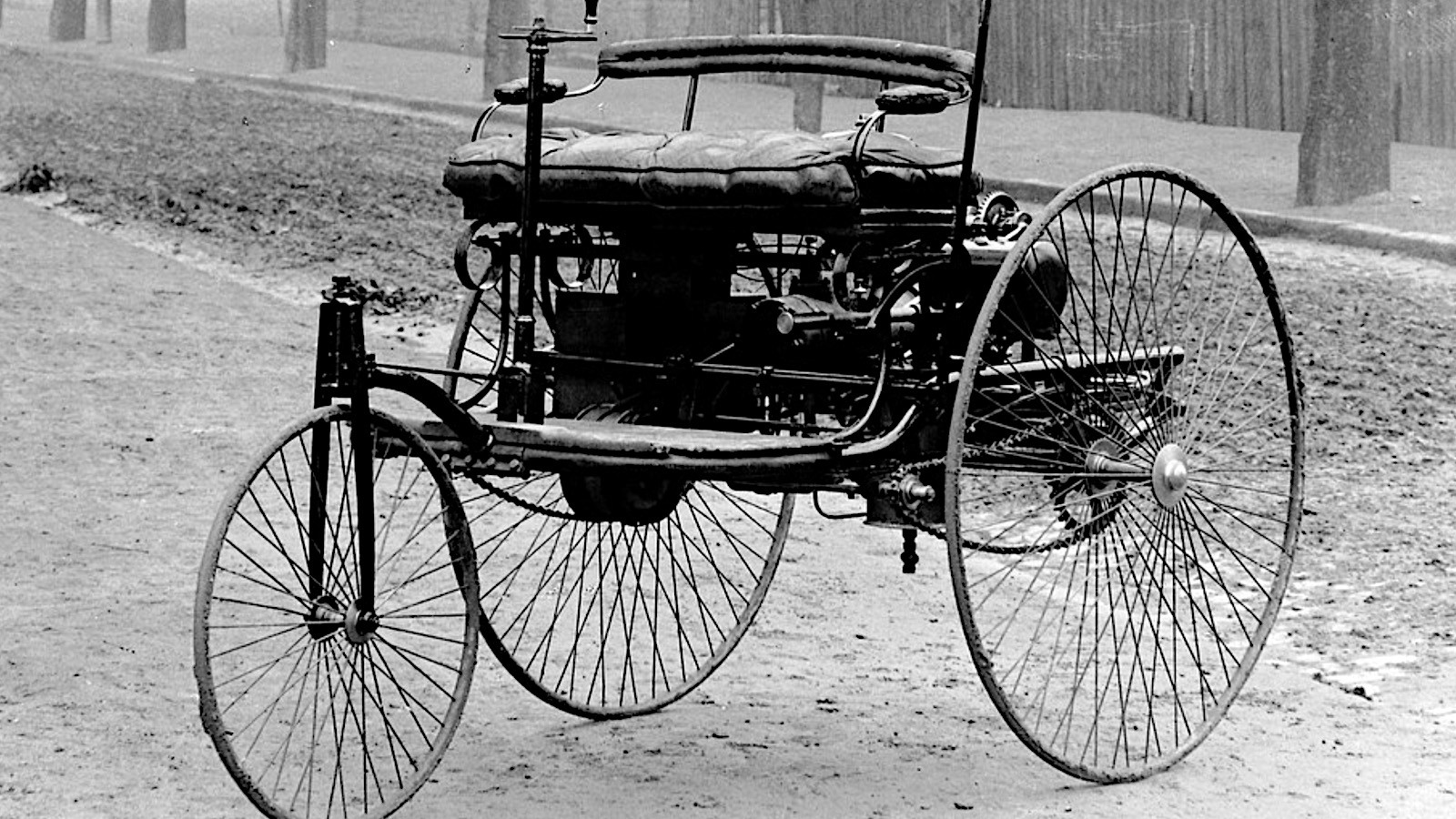
Benz built his first car (another three-wheeler, though with a petrol engine) in 1885, but it was patented in the following year, and that official recognition means that 1886 is usually considered to be when the motor industry properly began.
Now, 140 years later, we’re taking the opportunity to talk about Benz, his achievements and the further achievements of those around him, without which the story would simply not be complete.
Carl Benz’s early years
Carl Benz was born in Mühlburg, now part of the south-west German city of Karlsruhe, in 1844 – coincidentally not far from the birthplace of Karl Drais, who is regarded in some quarters as the inventor of the bicycle.
Foreshadowing Henry Ford, Benz had founded two companies by the time he turned 40, and in those days his interest was more in engines than in complete vehicles.
Designing something to put one of his engines into seemed like a wise move, though, and in 1885 Benz created his first car, which had just one wheel at the front because at the time he had not worked out a satisfactory steering mechanism for a vehicle with two.
The rear-mounted engine had a single, horizontal cylinder, a capacity of 954cc, a very modest compression ratio of just 2.7:1 and a maximum output of around three-quarters of a horsepower at 400rpm.
The patent
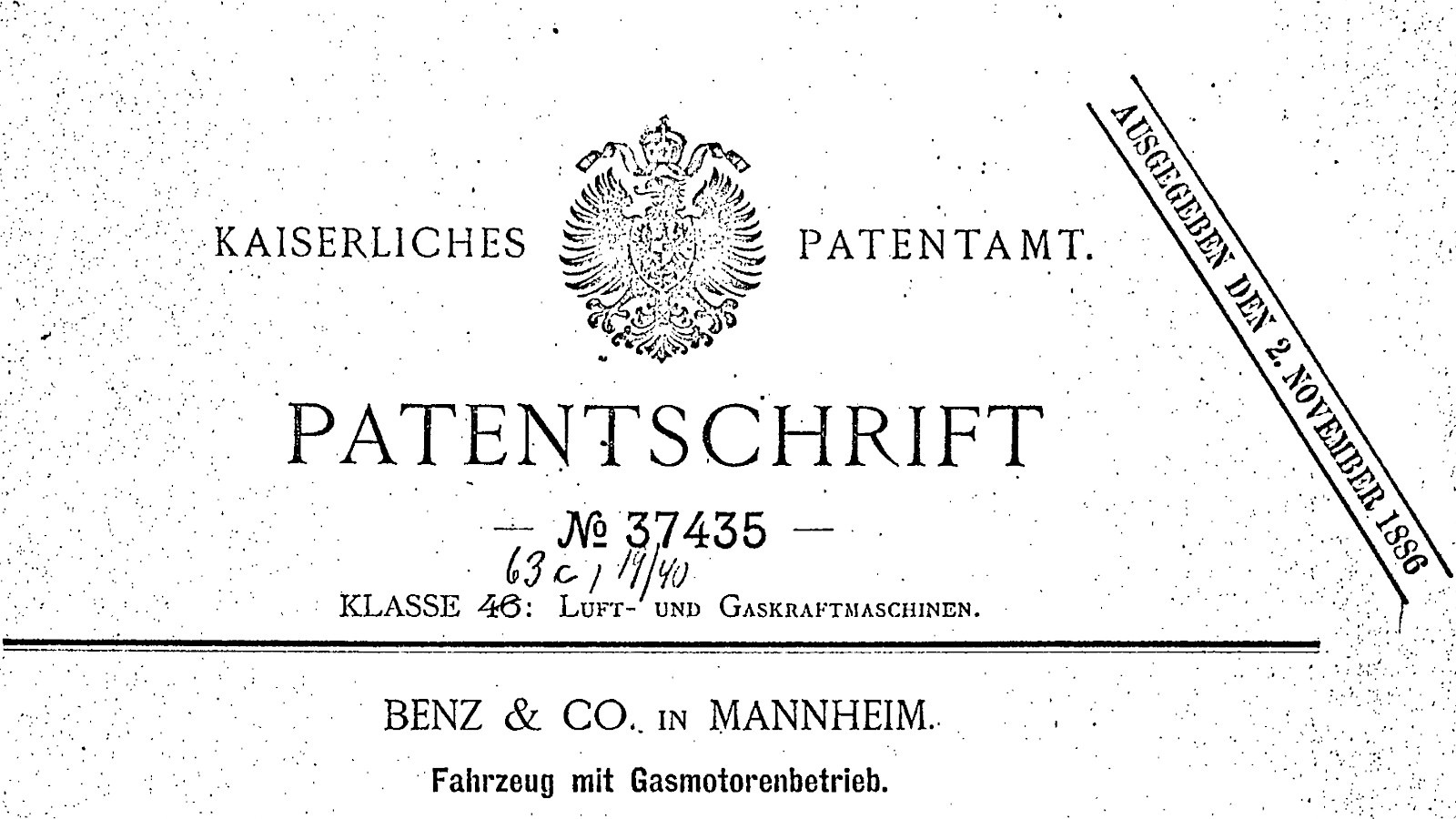
Benz & Co, Carl’s second company, applied for its most famous patent on 29 January 1886, and the patent was issued (made enforceable) just over nine months later, on 2 November.
According to the application, the design was ‘intended primarily for the operation of light and small vessels, such as those used for transporting one to four people’, and as an example of this Benz added a drawing of ‘a small vehicle, similar to a tricycle, built for two people’, which of course described the machine he had already built.
‘A small gas engine, of any type, serves as the motive power source’, the application continued, and the engine ‘receives its gas from a portable apparatus in which gas is generated from ligroin or other vaporising substances’.
The great drive
Benz had been understandably secretive about his invention, and reportedly tested it only at night to begin with, but on 3 July 1886 he drove it in daylight in Mannheim – ‘in the midst of baffled Sunday walkers’ as Mercedes-Benz describes it.
This minor publicity effort was completely eclipsed in August 1888 when, without Carl’s knowledge, his wife Bertha left Mannheim with her sons Eugen and Richard in a Model 3 version of the Patent Motorwagen and drove around 60 miles to visit her mother in Pforzheim.
They returned five days later, having completed the world’s first long-distance motoring journey.
Widely publicised, it made Carl and his car famous, but it also means that in 1888 there was only – and had only ever been – one great driver in the world, and that was Bertha Benz.
Gottlieb Daimler
Ten years older than Carl Benz, Gottlieb Daimler was an equally brilliant engineer and Benz’s closest rival, and it would have seemed out of the question that their names would one day be as closely linked as they are today.
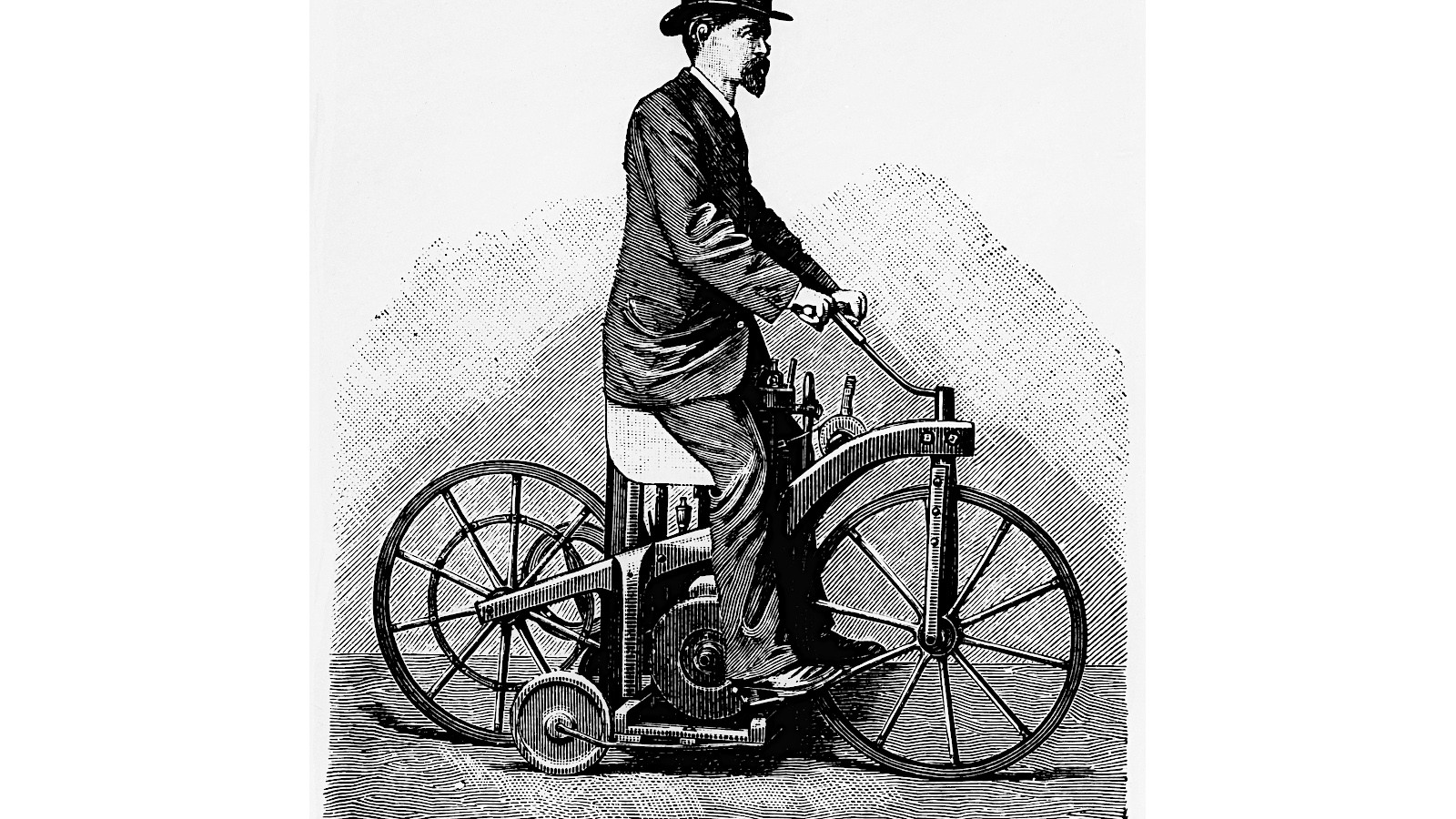
Daimler developed a single-cylinder, 264cc gas engine which, due to its vertical orientation and remarkably undersquare nature (58mm bore, 100mm stroke) was quickly nicknamed the ‘grandfather clock’.
This was fitted to a machine called the Riding Car (pictured), and although it was patented in 1885, before the Patent Motorwagen, it was a two-wheeler and therefore a motorcycle (the first with an internal-combustion engine) rather than a car as we would understand it.
Daimler’s first actual car, built in 1886, was a four-wheeler, but unlike the Patent Motorwagen it was simply a regular carriage powered by a 462cc, single-cylinder engine rather than being pulled by a horse.
Benz Victoria
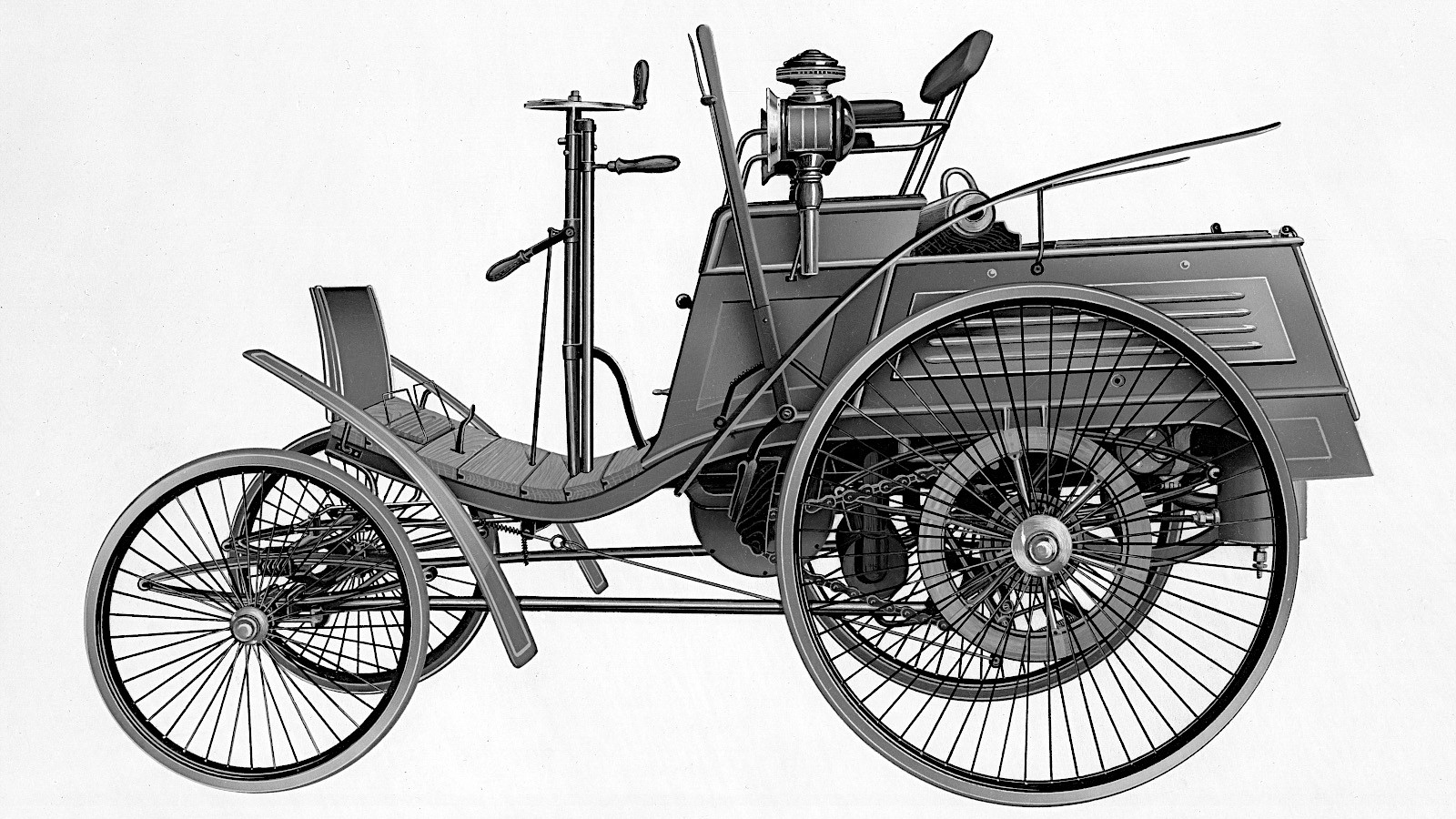
Benz eventually came up with what he considered to be a satisfactory steering system which could control two front wheels, and in 1893 his company introduced its first four-wheeler.
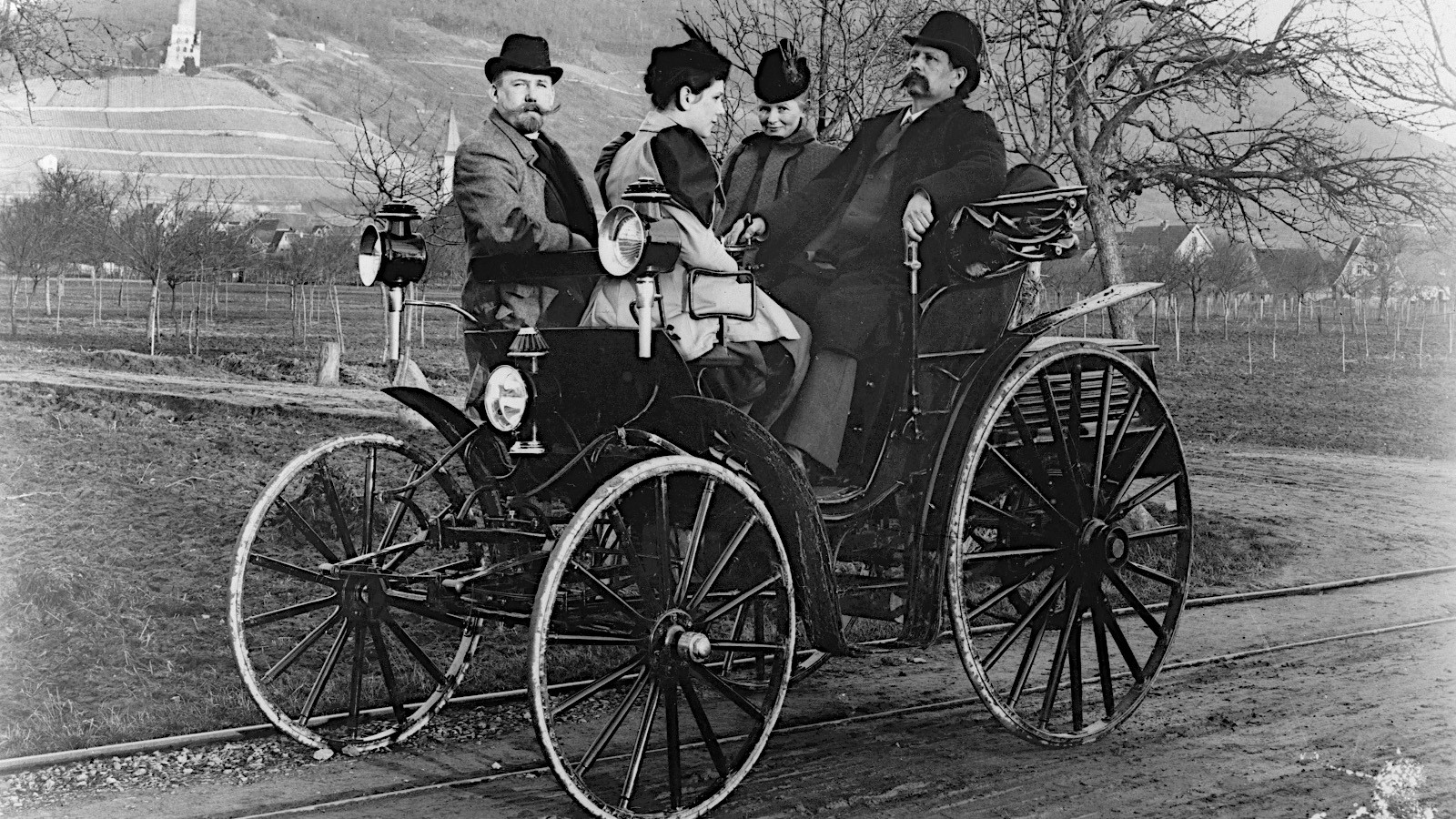
Known as the Victoria, it had either two seats or four, with the extra passengers in the latter arrangement sitting up front but facing backwards.
The four-seat version (pictured here with Carl and Bertha facing in the direction of travel) was appropriately known as the Vis-à-Vis, the French term for ‘face to face’.
Both had a single-cylinder engine, but this was reworked several times, and from a starting point of 1730cc and a maximum output of 3bhp, it reached 2915cc and 6bhp in 1898.
Another great drive
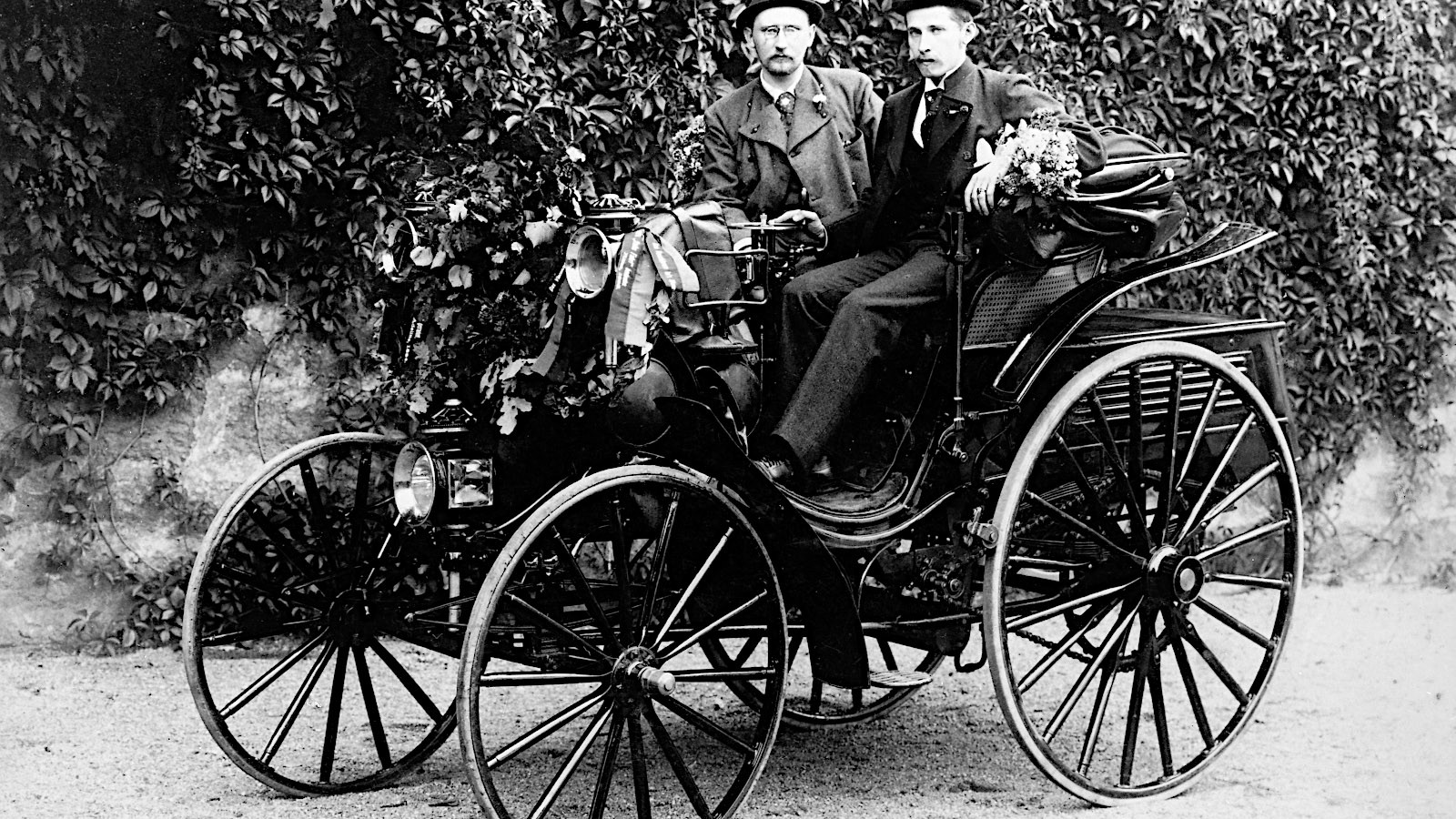
The first person to buy a Benz Victoria was the 21-year-old Baron Theodor von Liebieg, an early motoring enthusiast from what is now the Czech city of Liberec but was then Reichenberg in Austria-Hungary.
Accompanied by Dr Franz Stranský, von Liebieg embarked in July 1894 on a journey which greatly exceeded that of Bertha Benz in terms of distance, if not necessarily of significance.
Von Liebieg and Stranský left Liberec on 16 July and arrived in von Liebieg’s mother’s home town of Gondorf in Germany on 22 July, having stopped at Mannheim to visit Carl Benz on the way.
They had covered 939km (583 miles), and soon extended this to nearly 2500km (c1553 miles) by making several other trips before going back to Mannheim to have the car serviced, and eventually returning home to Liberec.
Benz Velo
Building and selling more than 1000 examples of a single model is considered a very minor feat in the 21st century, but in the final years of the 19th century it was extraordinary.
The Velo (short for ‘velocipede’ or ‘velociped’ depending on what language you are using) was cheaper than the Victoria, and probably for that reason so popular among customers that Mercedes-Benz considers it to be the first mass-produced automobile.
As well as developing the 1045cc, single-cylinder engine, whose power output ballooned from 1.5bhp to 3.5bhp, Benz introduced an upmarket version called the Comfortable.
Total production of the Velo, including Comfortables, from 1894 to 1902 amounted to around 1200 units.
The first bus
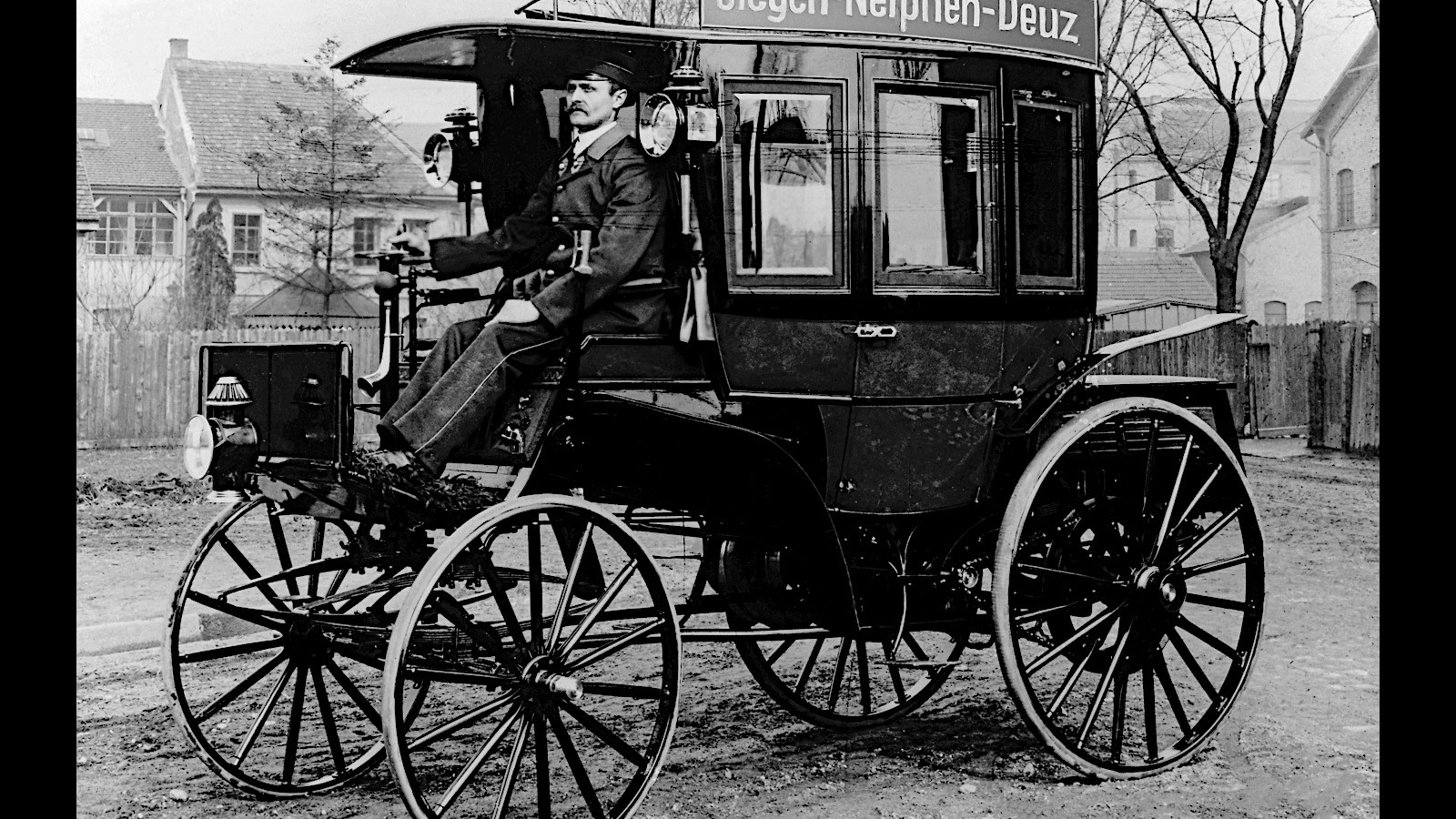
While Carl Benz is renowned above everything else for having created the first car, it’s less well known that his company also devised what is widely believed to be the first bus.
Commissioned in December 1894, it entered service on a route from Siegen to Deuz via Netphen in March 1895, all of these places being in western Germany and inconveniently far north of Benz & Co’s headquarters in Mannheim.
This made servicing difficult, which was a problem because the bus wasn’t particularly reliable, and to make matters worse its 5bhp engine struggled to power such a large vehicle up hills, obliging the passengers to get out on some occasions and push.
The bus was more successful on flatter ground, transporting people to and from hotels and railway stations, and although it was withdrawn from the Siegen-Deuz route in December 1895, it remained in production until 1898.
Delivery vehicles
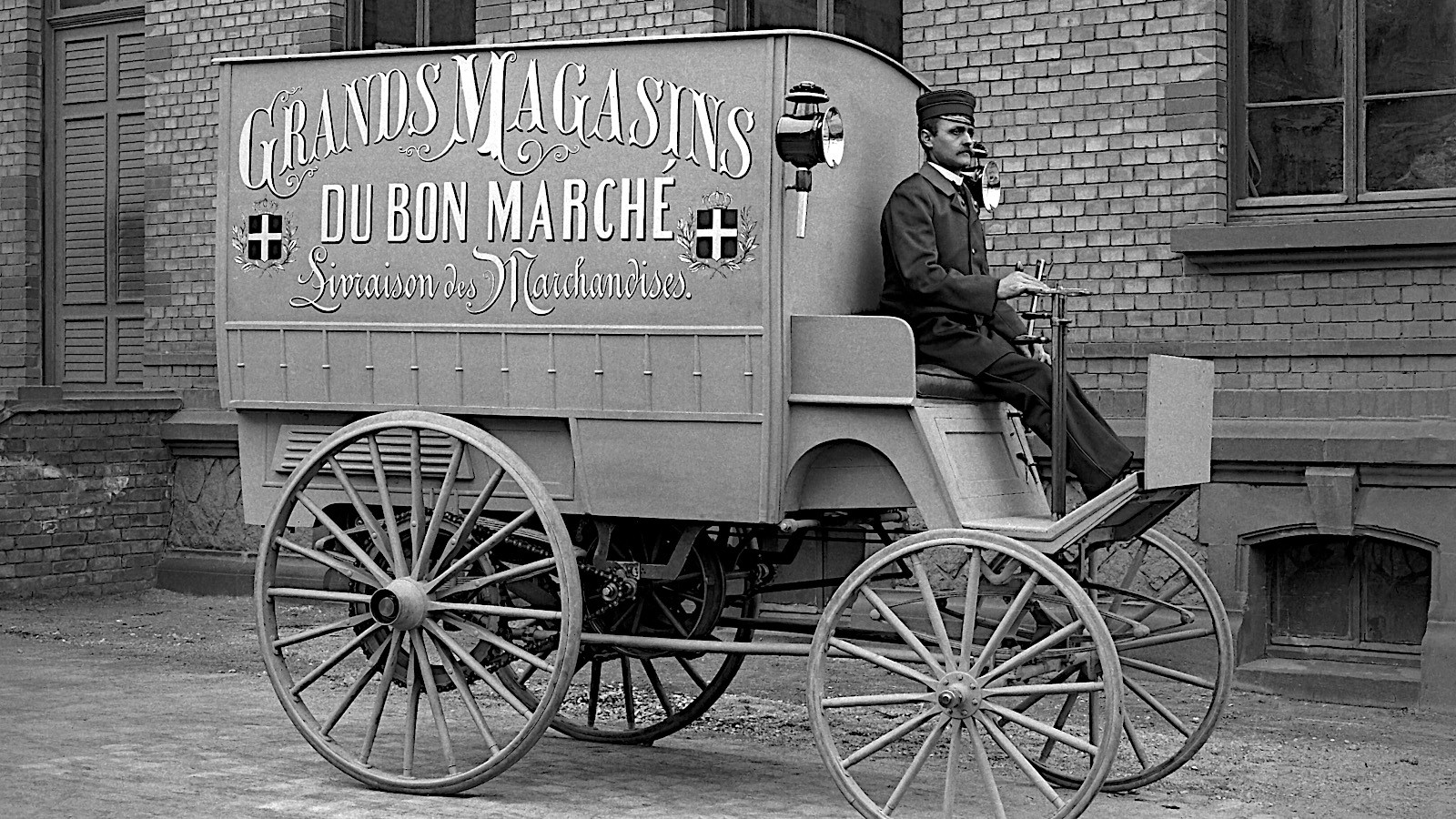
Always keen to find new ways of exploiting its technology, Benz began building vans in 1896.
One of these was based on the Victoria but had very different bodywork, and the first of all (pictured) was supplied to the Parisian department store Bon Marché, which had been founded in 1838 and is still operating successfully today.
The smaller Combination, which was based on the Velo and could be transformed into one by removing the detachable body, was considerably less practical, with a maximum payload of 300kg (661lb) compared with 600kg (1323lb) for its more substantial relative.
It seems to have found a larger audience, however, because although the original van was discontinued in 1900, production of the Combination lasted until 1902.
Twin-cylinder Benzes
Although they were comparable in their ingenuity, Benz lagged behind Daimler in one respect, continuing to produce engines with only one cylinder after Daimler had started building units with two or even four.
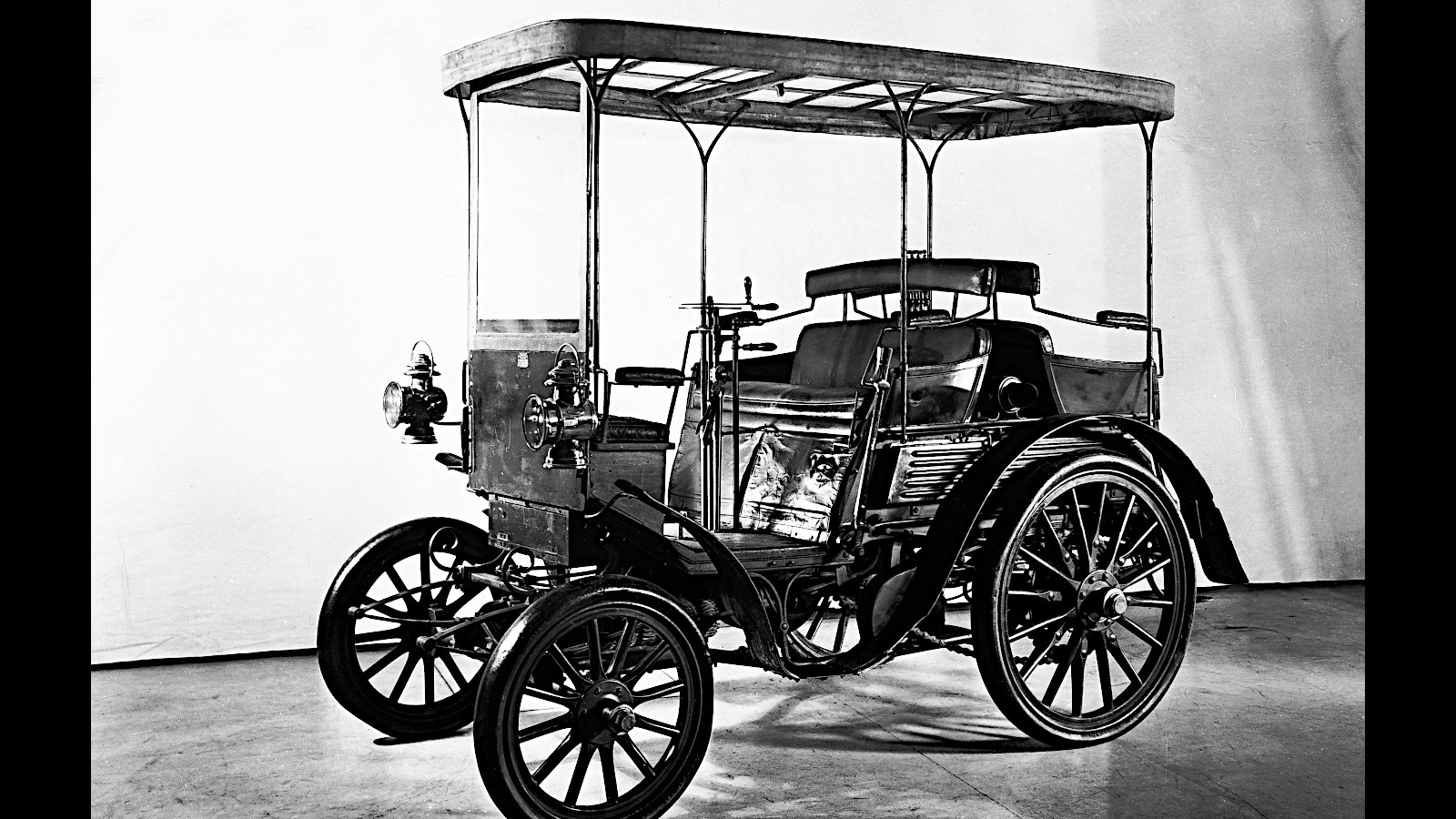
In the closing years of the 19th century, Benz finally began to catch up with the flat-twin Contra engine.
The basic design was adapted for many uses, and was manufactured with capacities ranging from 1710cc to 4245cc.
It was used first, in its smallest form, in the Dos-à-Dos (pictured), named after the back-to-back arrangement of its four seats, and later, in its largest, in the 12-seat version of the Break.
Productivity
At around the time Gottlieb Daimler died in March 1900, the company he had founded (with which his relationship had latterly become frosty) was more innovative than Benz’s.
At the suggestion of Emil Jellinek, it produced the epoch-making Mercedes 35hp designed by Daimler’s long-time associate Wilhelm Maybach, and followed this with the remarkable series of Mercedes-Simplex models.
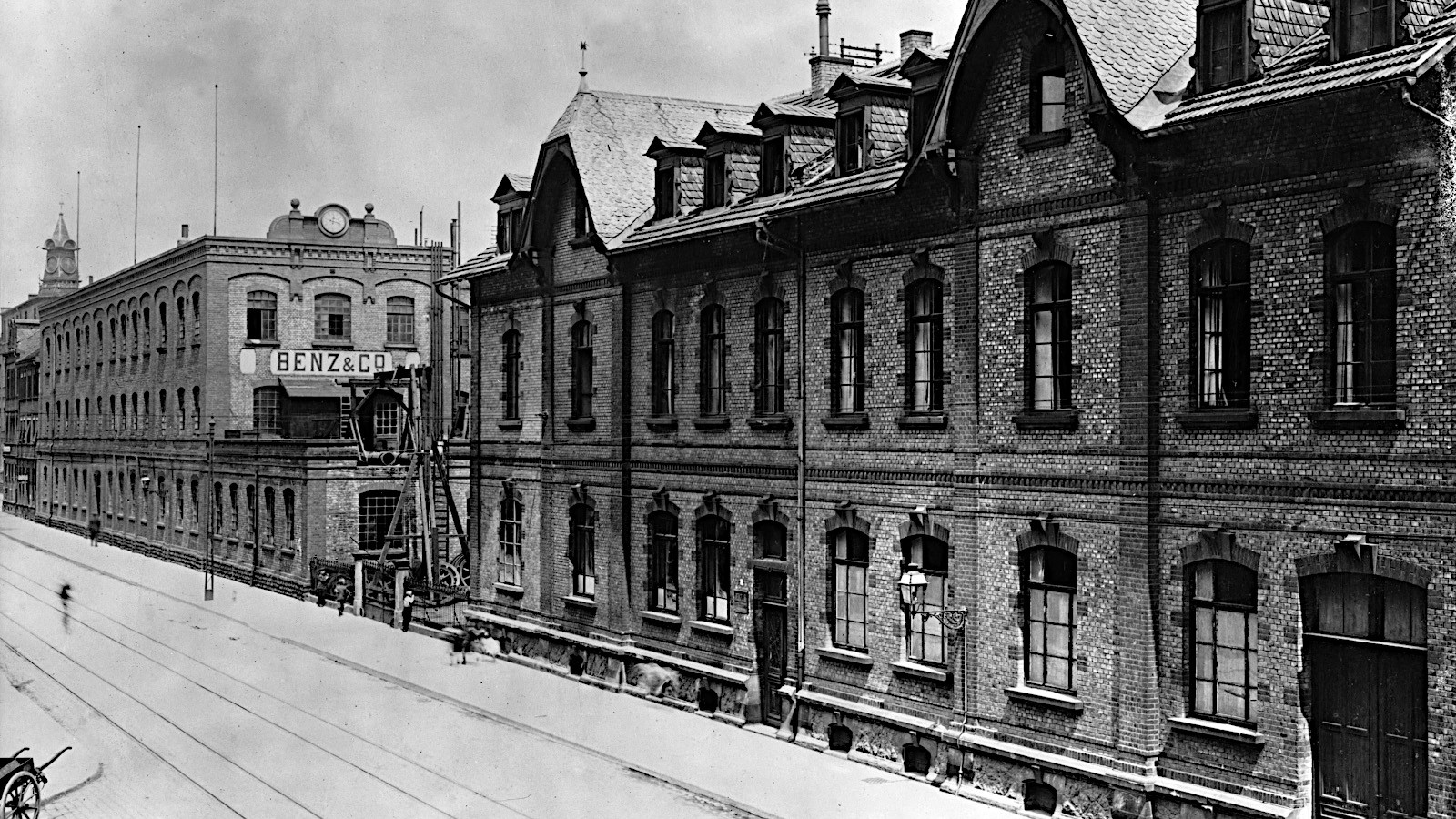
However, in the 1900-’01 financial year, Benz delivered 603 cars – of which 341 were exported – and also built many stationary engines, all manufactured at its premises (pictured) on Waldhofstrasse in Mannheim.
Researching industry-wide production figures a century and a quarter after the event is not easy, but Mercedes-Benz believes that the Mannheim plant was the world’s most productive factory in the world in that year.
Benz leaves Benz
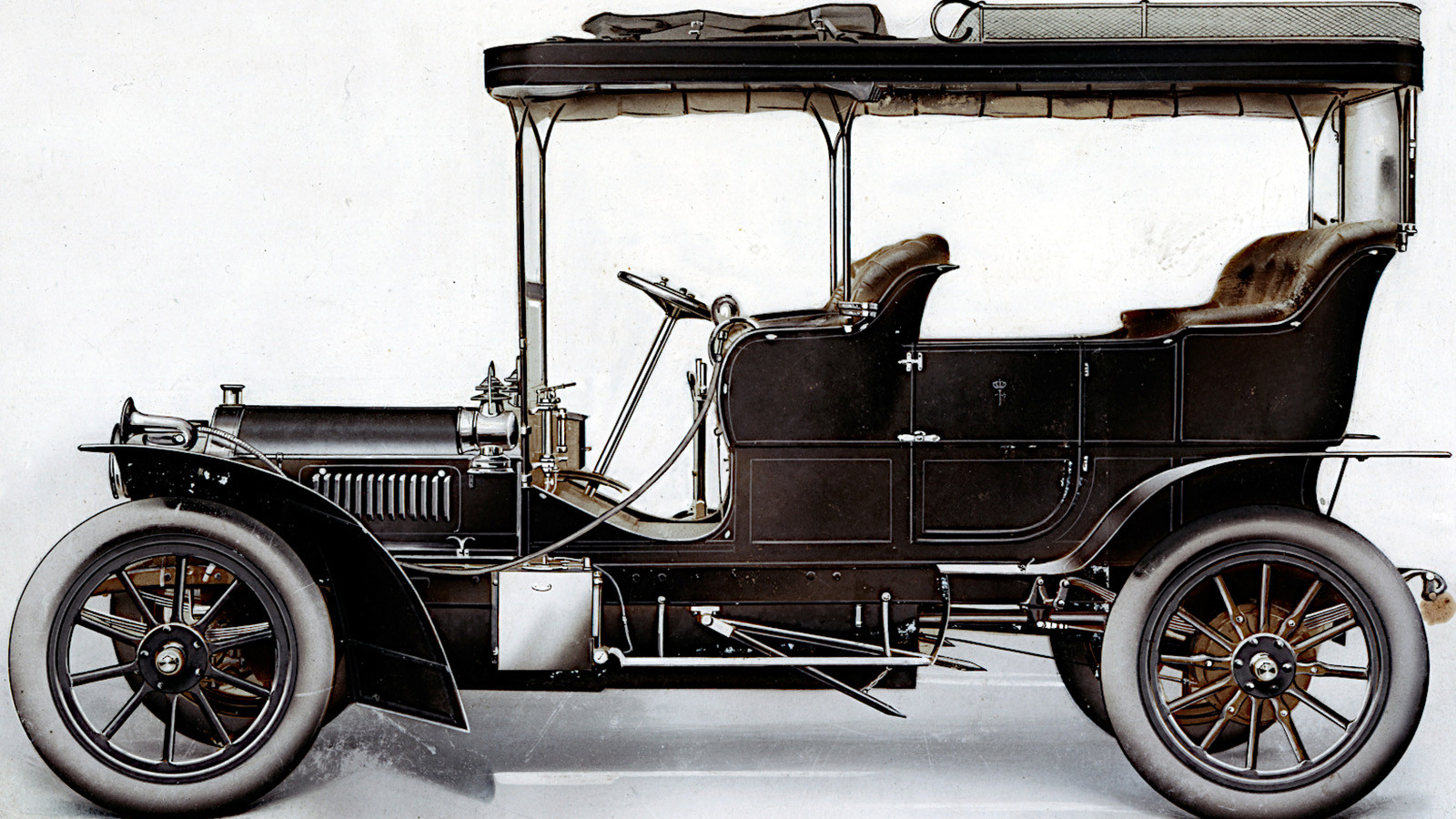
The success of Daimler’s Mercedes models and corresponding decline in Benz sales persuaded Benz & Co that it needed to raise its game, and in 1902 it brought in several French designers, including the young Marius Barbarou, who set up their own department within the company alongside the existing one staffed by Germans.
This quickly led to the production of the Parsifal (pictured), the first Benz with a front-mounted engine and the first with shaft drive, but having two competing design teams was a clumsy arrangement.
Carl Benz is known to have disliked it, and this is given as the reason why he resigned in January 1903.
Barbarou soon went back to France to join Delaunay-Belleville, whereupon – perhaps not coincidentally – Carl returned to his own company, becoming a member of the Supervisory Board in 1904.
Benz and Sons
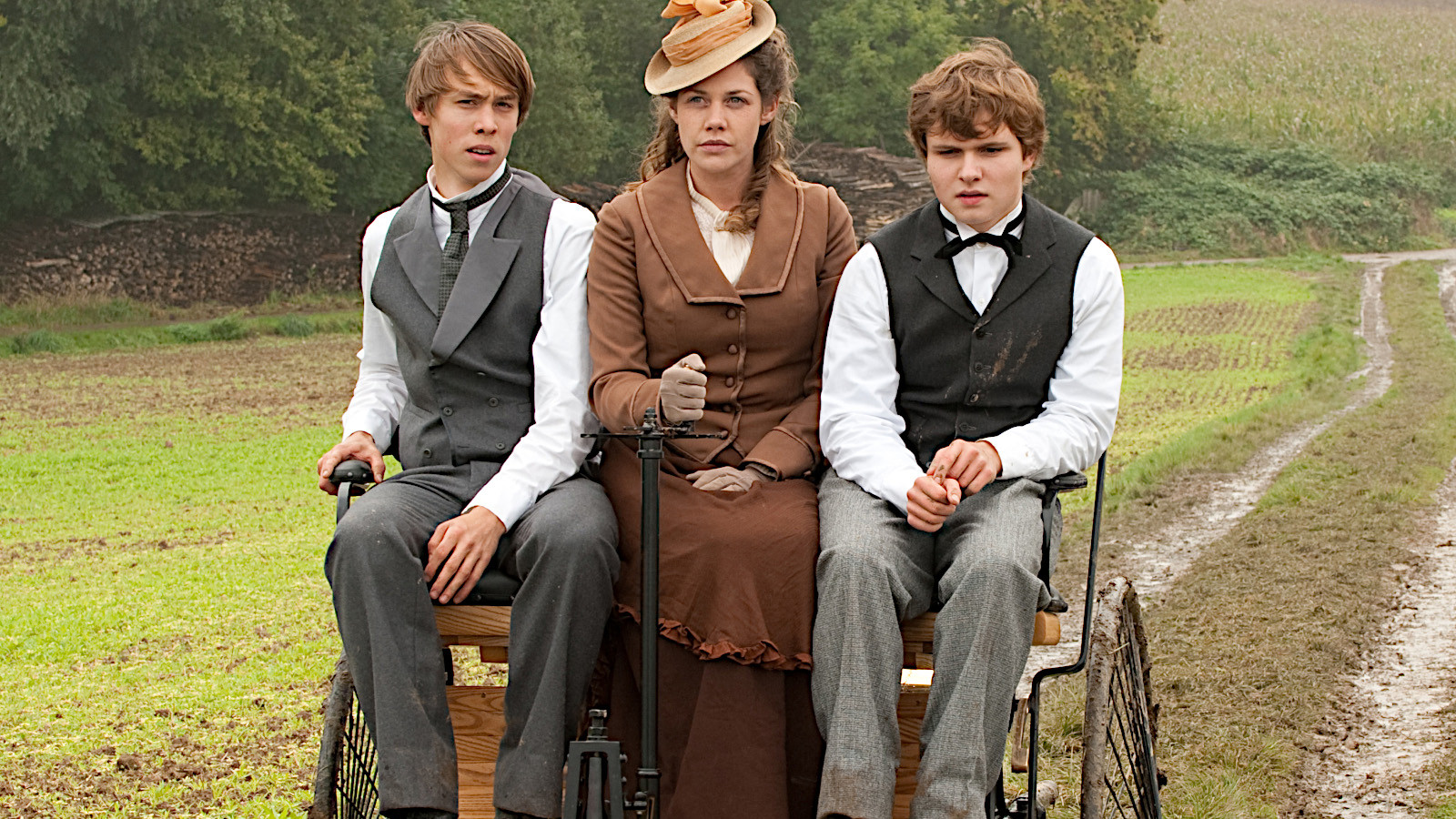
Eugen and Richard, the eldest of the five Benz children, who accompanied Bertha on her 1888 road trip (and are portrayed here, on either side of their mother, by actors in the 2011 film Carl and Bertha), both became involved in the motor industry, and worked for several years at Benz & Co.
In 1906 they moved to a new company, Carl Benz Söhne (approximately the equivalent of ‘Carl Benz and Sons’) in Ladenburg, near Mannheim, where Carl and Bertha had acquired a new home.
Carl Benz Söhne manufactured first engines and later cars, though only a small number of the latter (modern estimates range from 100 to 350) are believed to have been produced up to 1926.
Carl left the firm in 1912, leaving Eugen and Richard to run it themselves, but retained his seat on the Supervisory Board of Benz & Co.
Blitzen Benz
Although his role at the company he founded was a shadow of what it had once been by 1909, Carl Benz deserves to be remembered, among many other things, for having made one of the most exciting of all pre-First World War competition cars possible.
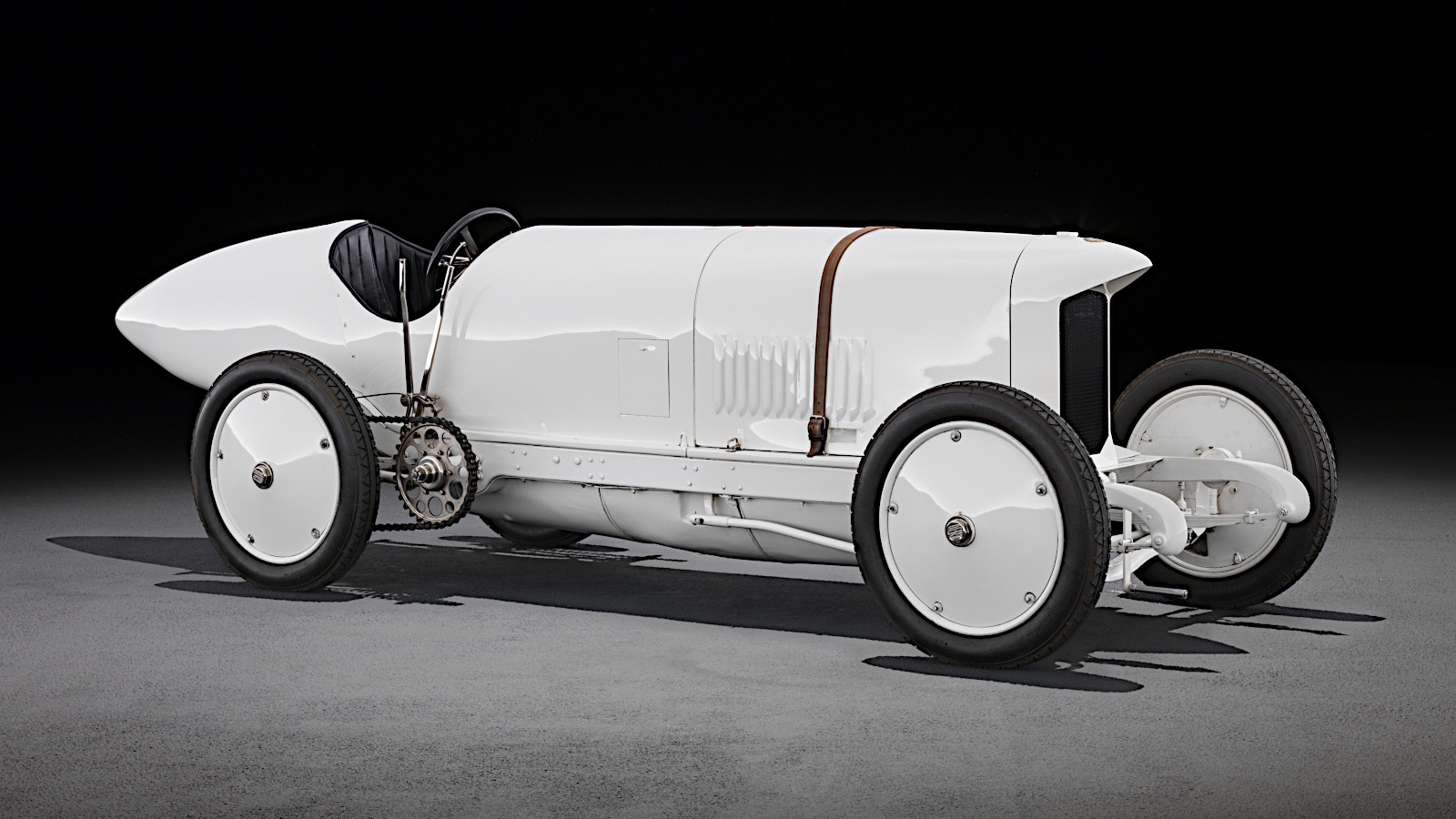
The four-cylinder engine in the Benz 200hp was derived from that used in a 1908 Grand Prix car, but with a capacity increase from 15.1 litres to 21.5 litres.
The resulting machine, of which six were made, broke records not only in Europe but in the United States of America, too, where it was nicknamed the Blitzen (or ‘lightning’) Benz.
In 1914, in the first Land Speed Record attempt involving two runs in opposite directions over a measured mile, Lydston Hornsted averaged 124.09mph (199.7kph), a speed which was not beaten in that format until 10 years later.
Benz and Karlsruhe
After leaving high school in 1860, Carl Benz enrolled at what was then the Karlsruhe Polytechnic, described by William Barton Rogers, founder of the Massachusetts Institute of Technology, as ‘the model school of Germany and perhaps of Europe’.
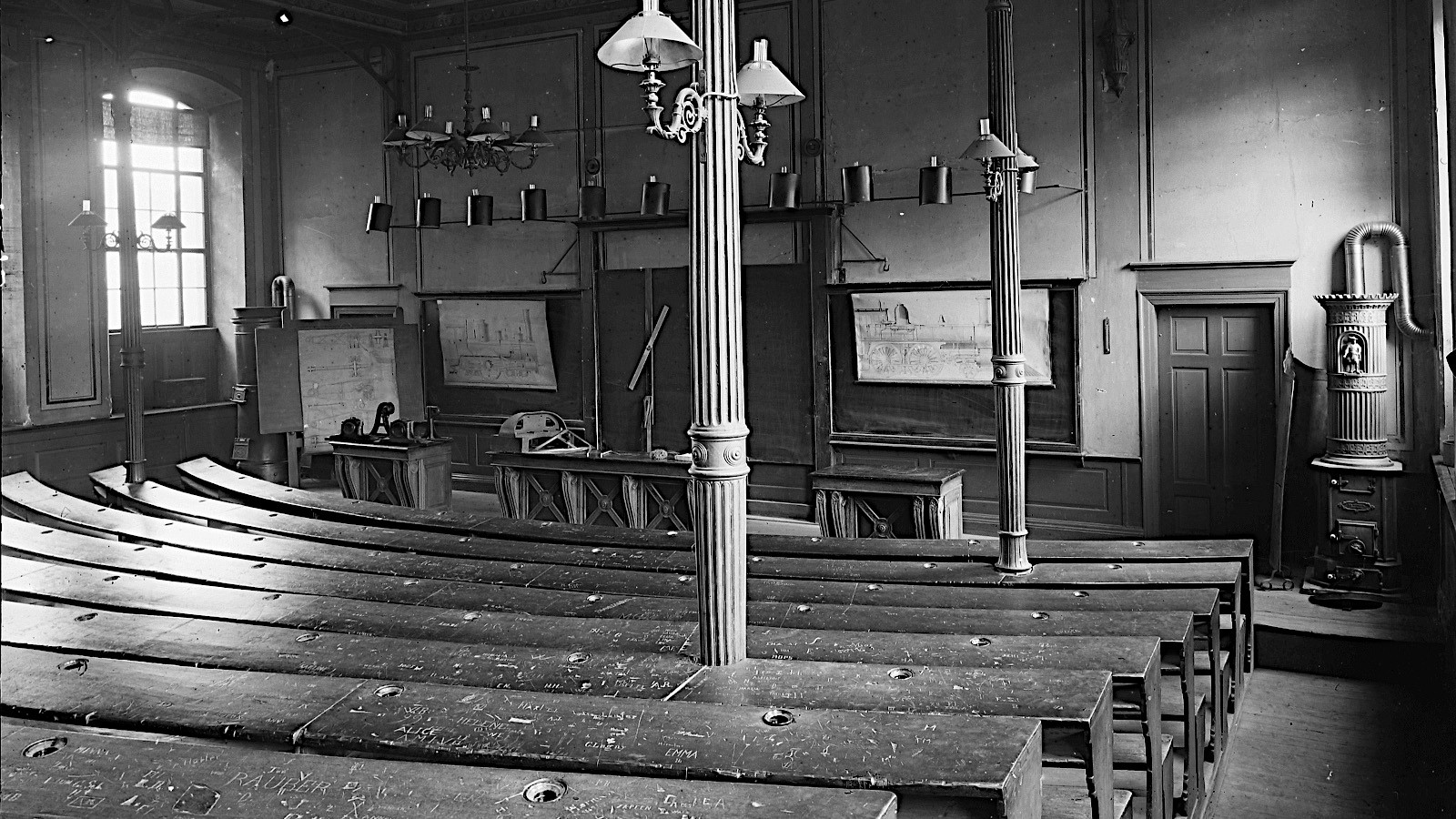
He studied mechanical engineering there for four years, possibly attending lectures in the hall pictured here.
In 1914, long after the same establishment had become the Karlsruhe Institute of Technology, it awarded Benz an honorary doctorate in recognition of his achievements.
In 2007, the Mechanical Engineering College of KIT was formally renamed the Carl Benz School of Engineering at a ceremony attended by Dieter Zetsche, then head of Mercedes-Benz, and Jutta Benz, great-granddaughter of Carl and Bertha.
The merger
In May 1924, something happened which both Carl Benz and Gottlieb Daimler would surely have thought impossible in the 19th century.
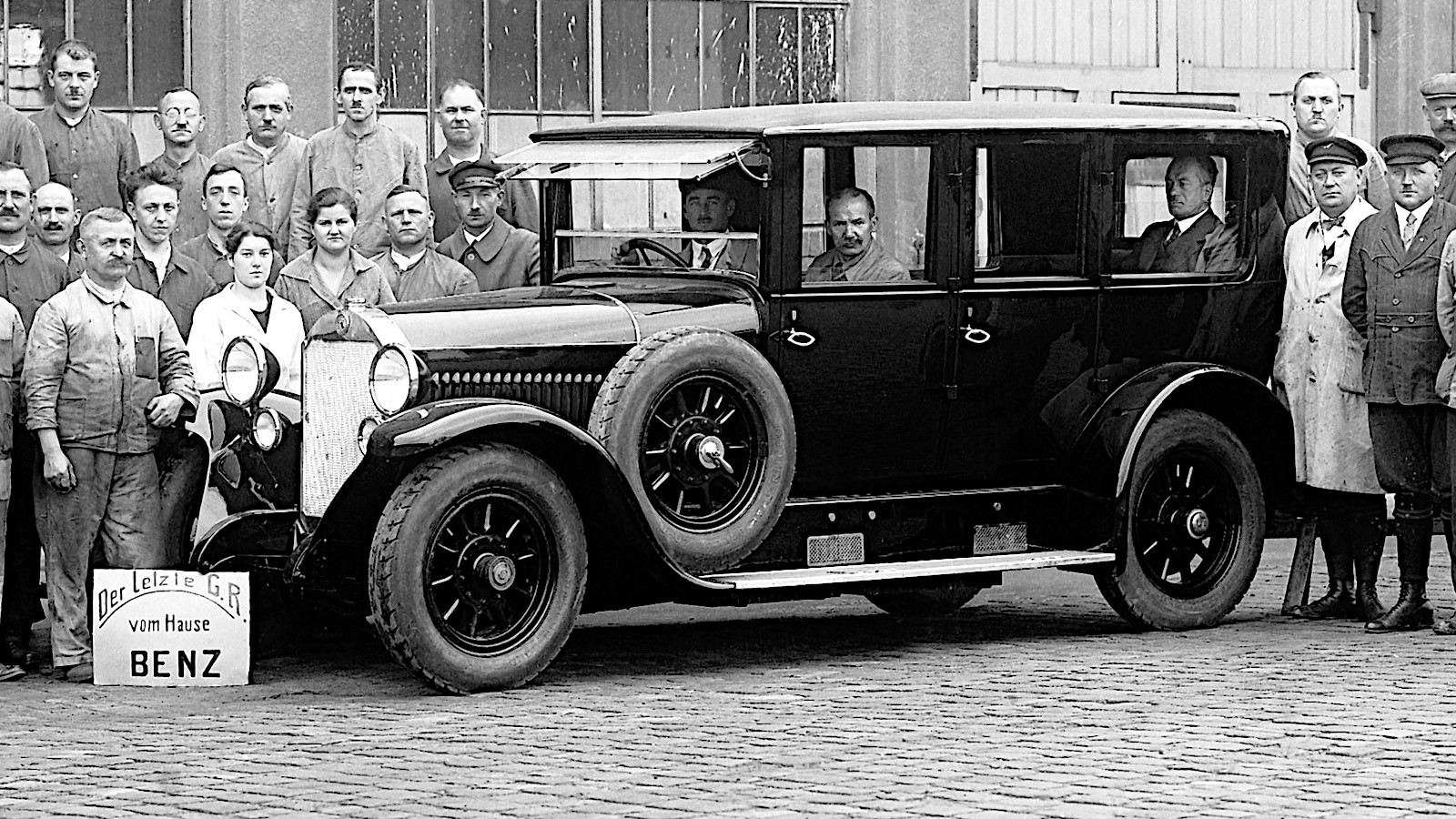
The marques they had created still built their own models (including, in Benz’s case, the six-cylinder 16/50hp pictured here), but the new Mercedes-Benz Automobil GmbH company would take responsibility for selling them.
This ‘community of interest’, as it was known, lasted until June 1926, when the marques were combined to form Daimler-Benz, which produced cars badged as Mercedes-Benz.
Carl Benz, now 81 years old, was given a place on the Supervisory Board of Daimler-Benz (having agreed, according to Jutta, that his name should come second because ‘Benz-Daimler’ sounded more awkward), and held it until his death less than three years later.
The death of Carl Benz
Carl Benz died at his home in Ladenburg in April 1929, aged 84, having both outlived Gottlieb Daimler by nearly three decades and established his place as one of the great pioneers in the history of motoring.
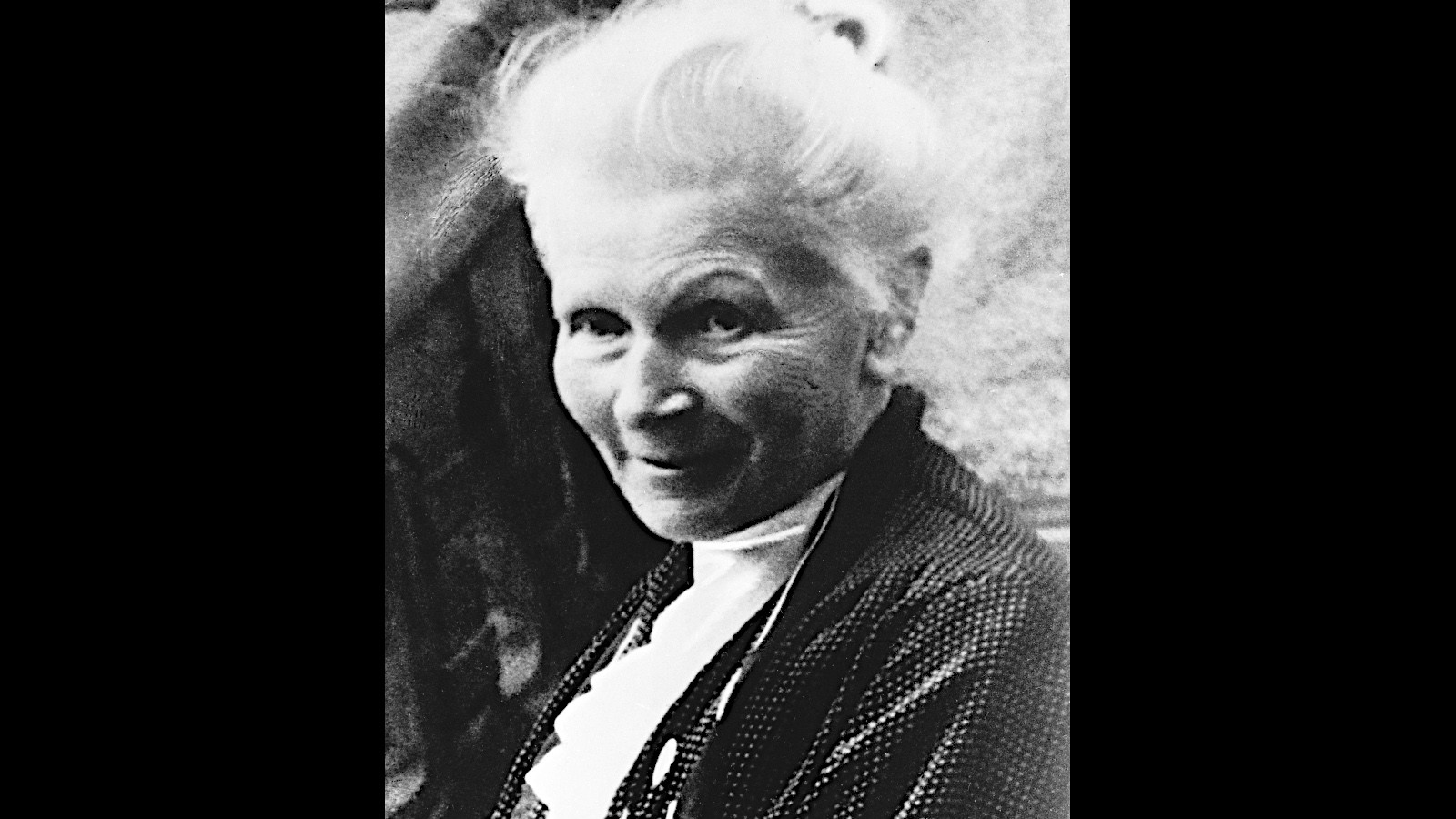
Bertha Benz, whose place in that history should not be underestimated, survived until 1944, dying (again in Ladenburg) two days after her 95th birthday.
Eugen and Richard, who had been part of the great adventure back in 1888, and became engineers and occasional competition drivers, died in 1958 and 1955, aged 82 and 80 respectively.
Less is known of the Benz daughters, Klara, Thilde and Ellen, though there is a picture in the Mercedes-Benz archive of Klara driving a Velo in 1895, with Thilde as her passenger.
Carl Benz legacy
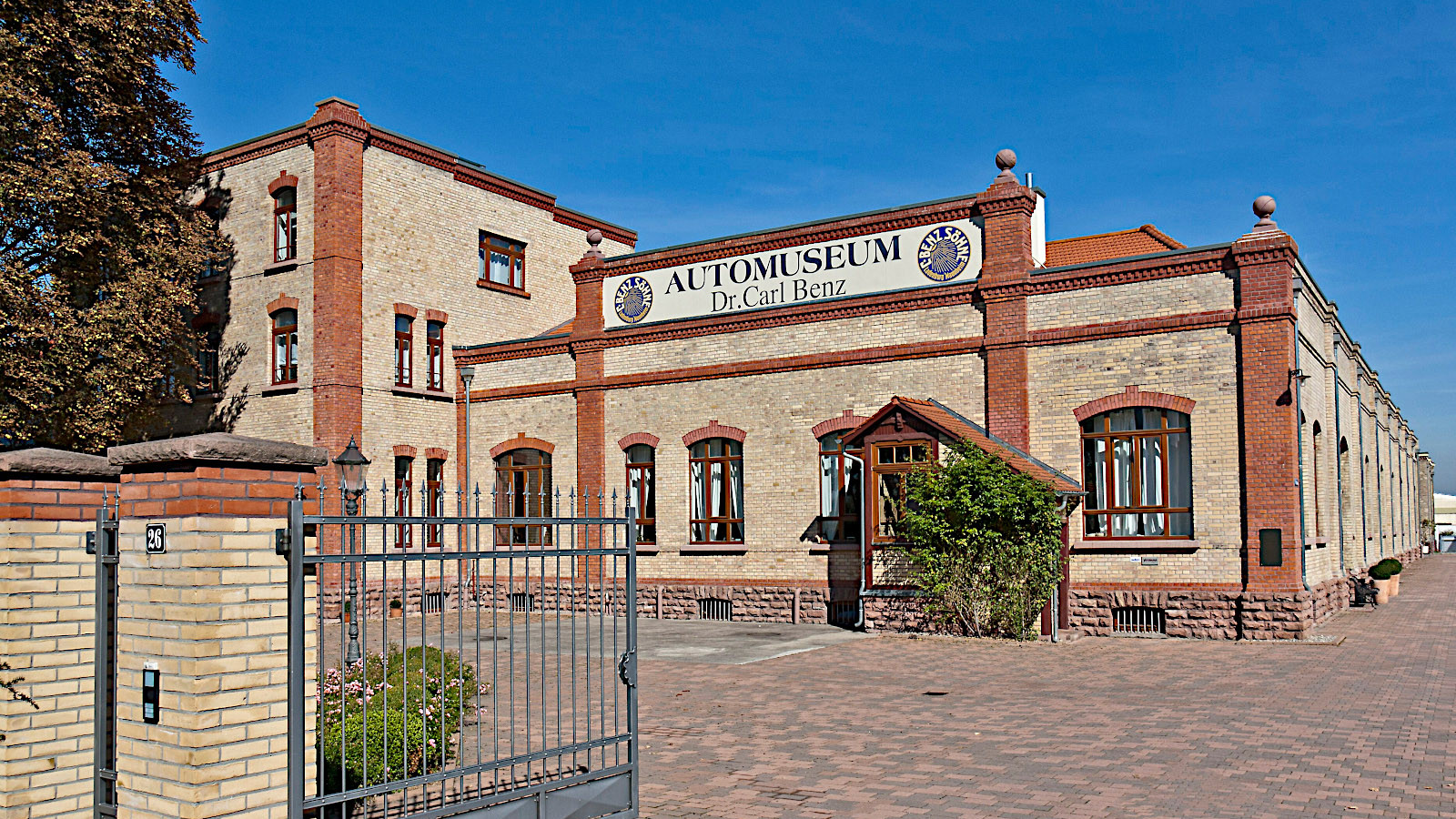
Benz is memorialised today in the names of a secondary school in Ladenburg and a technical college in Mannheim, and of the Automuseum Carl Benz, which moved in 2005 to the old Carl Benz Söhne factory (pictured).
The Carl Benz Stadium is the home ground of the football team SV Waldhof Mannheim.
In 1986, the Benz family home in Ladenburg (now Carl Benz House, located on Dr Carl Benz Platz) was repurposed to become the headquarters of what was then known as the Gottlieb Daimler and Carl Benz Foundation, though its name was shorted in 2010 to the Daimler and Benz Foundation.
It promotes the public perception of science in several ways, including inviting visitors to attend talks given by scientists and ask questions about them.
Bertha Benz legacy
As well as films, a live radio play and a memorial in the town of Wiesloch, where she became the first person ever to buy fuel during a car journey, Bertha is commemorated in the Bertha Benz Memorial Route, which was named in 2008 and follows the epic journey she made with Eugen and Richard in the Motorwagen 120 years earlier.
The Daimler and Benz Foundation annually awards a Bertha Benz Prize to a young female engineer who has ‘created added value for society’, and is nominated by her scientific institution.
As of the 140th anniversary of Carl’s patent application, the most recent recipient of the Prize was Dr.-Ing. Hatice Ceren Ates from the Technical University of Munich, who received the honour for her dissertation ‘Multi-plexed biosensors toward smart therapeutic drug management of antibiotics’.