
Tailored by Towns
William Towns, who died in 1993, was a prolific and independently minded British automotive designer who styled several high-profile models.
He also earned a reputation for his wedge-shaped cars and also for introducing new methods of construction.
Considered a maverick by some, Towns’ ideas often proved to be ahead of their time and his back catalogue of work is as varied as it is impressive.
In fact, Towns’ output spread much further than just cars, including street furniture and shopping centres, but here we are remembering and celebrating his automotive output, presented in chronological order.
1. 1964 Rover-BRM
Having started his career at Rootes in the 1950s, where he went on to help finalise the Hillman Hunter’s shape, William Towns moved to Rover in 1963.
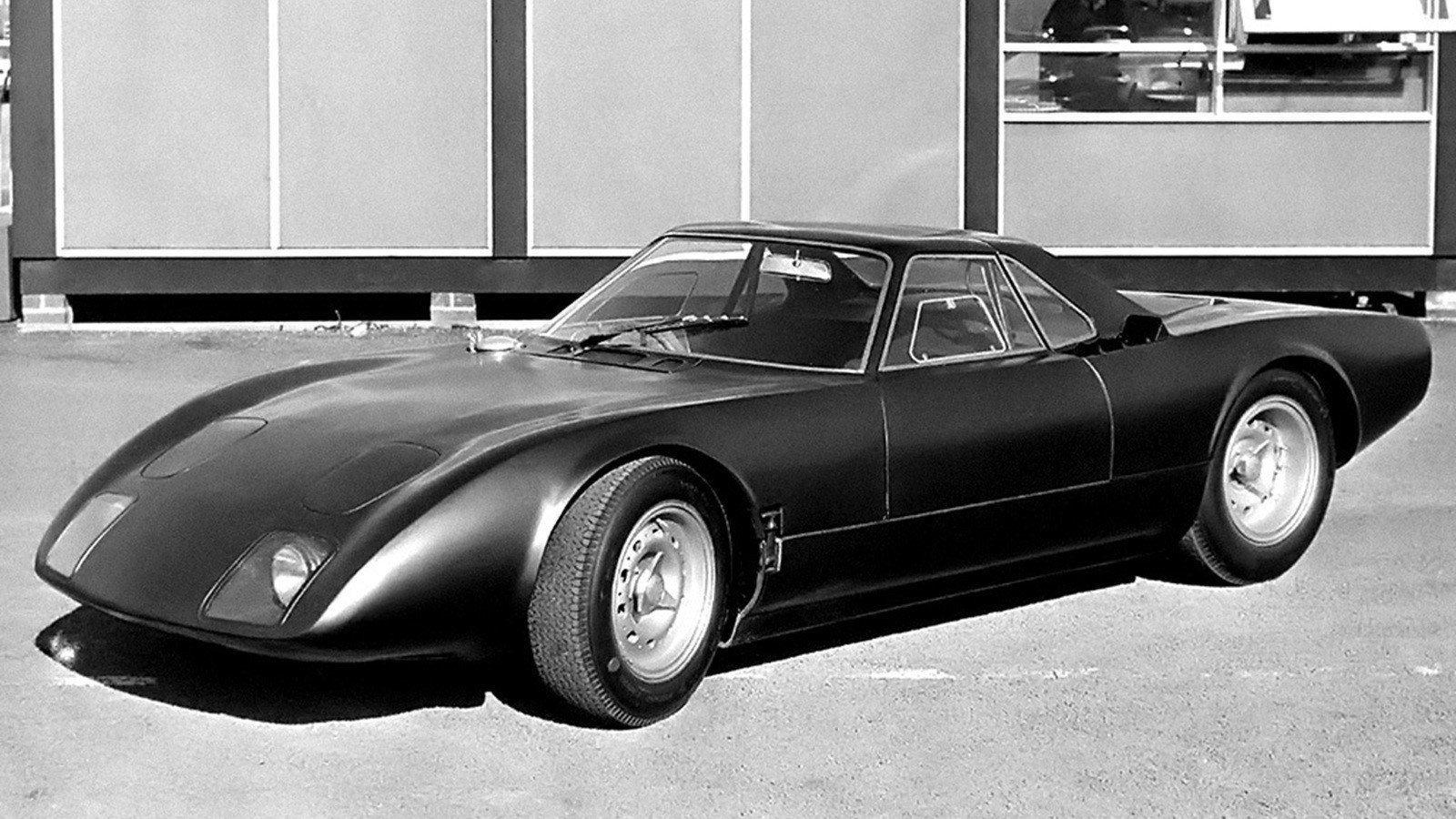
Working with David Bache, Towns’ first fully fledged design was the Rover-BRM gas-turbine car built to race at Le Mans.
The goal was to set an average speed of 150kph (93mph) during the 24-hour race and, following its successful run in the 1963 event, it came back for 1964 with a coupé body shaped by Towns.
However, the car didn’t make the 1964 Le Mans grid, but it did compete in the 1965 event with an average speed of 98.8mph, helped by Towns’ efficient body styling.
The car finished 10th overall, with Graham Hill and Jackie Stewart sharing the drive.
2. 1967 Aston Martin DBS
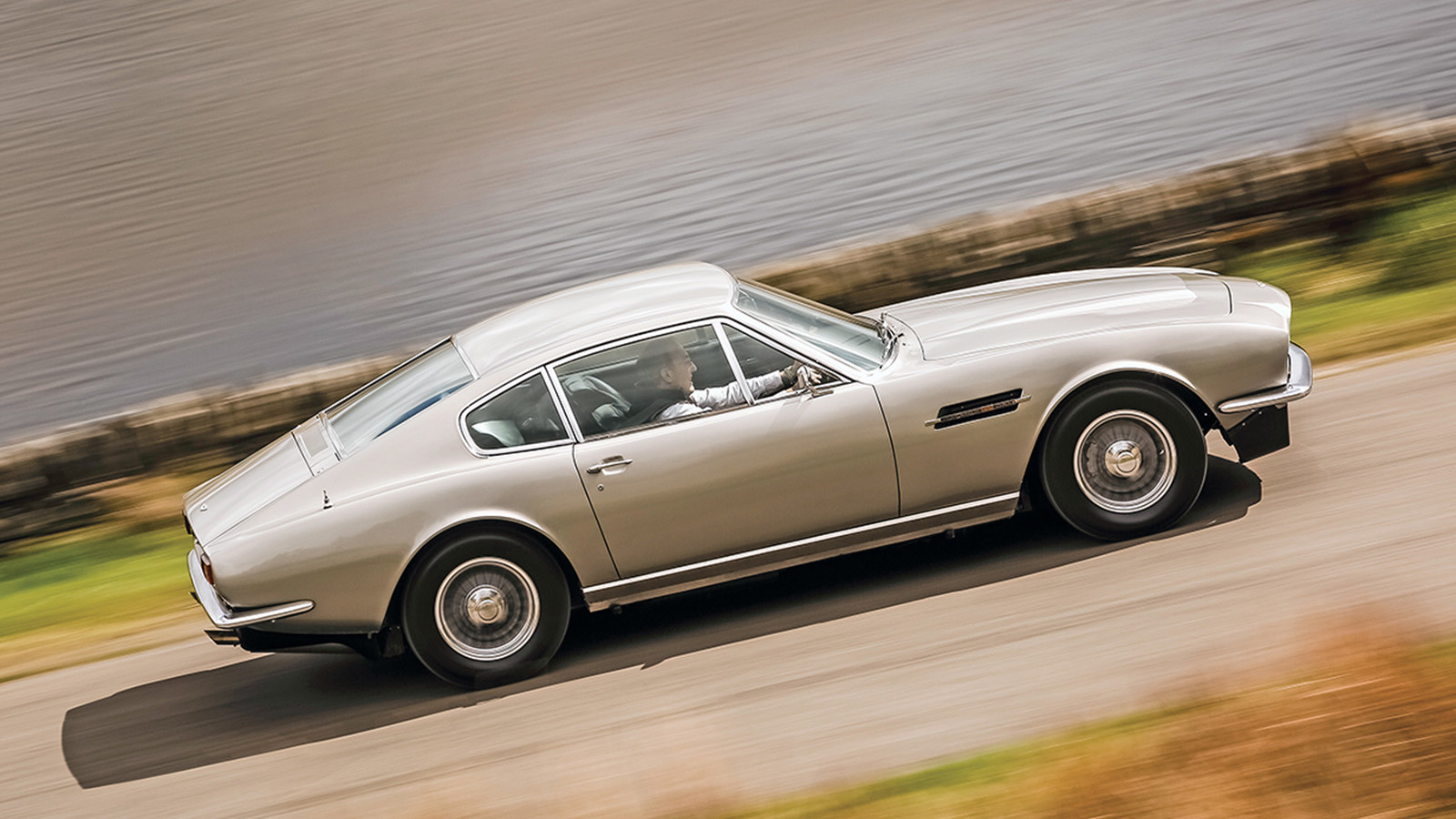
Never one to shy away from radical design, William Towns came up with a new, wedge-shaped style for the 1967 Aston Martin DBS.
He’d joined the British sports-car manufacturer in 1966 and was quickly put in charge of the DBS project to give the car greater appeal in the important American market.
The fastback coupé look that Towns introduced would go on to inform the look of Aston Martin’s sports cars for the following two decades.
The DBS was always intended to use Aston’s V8 engine, although earlier versions made do with the 4-litre straight-six from the DB6 until the new engine was ready in 1969.
3. 1969 Triumph Puma
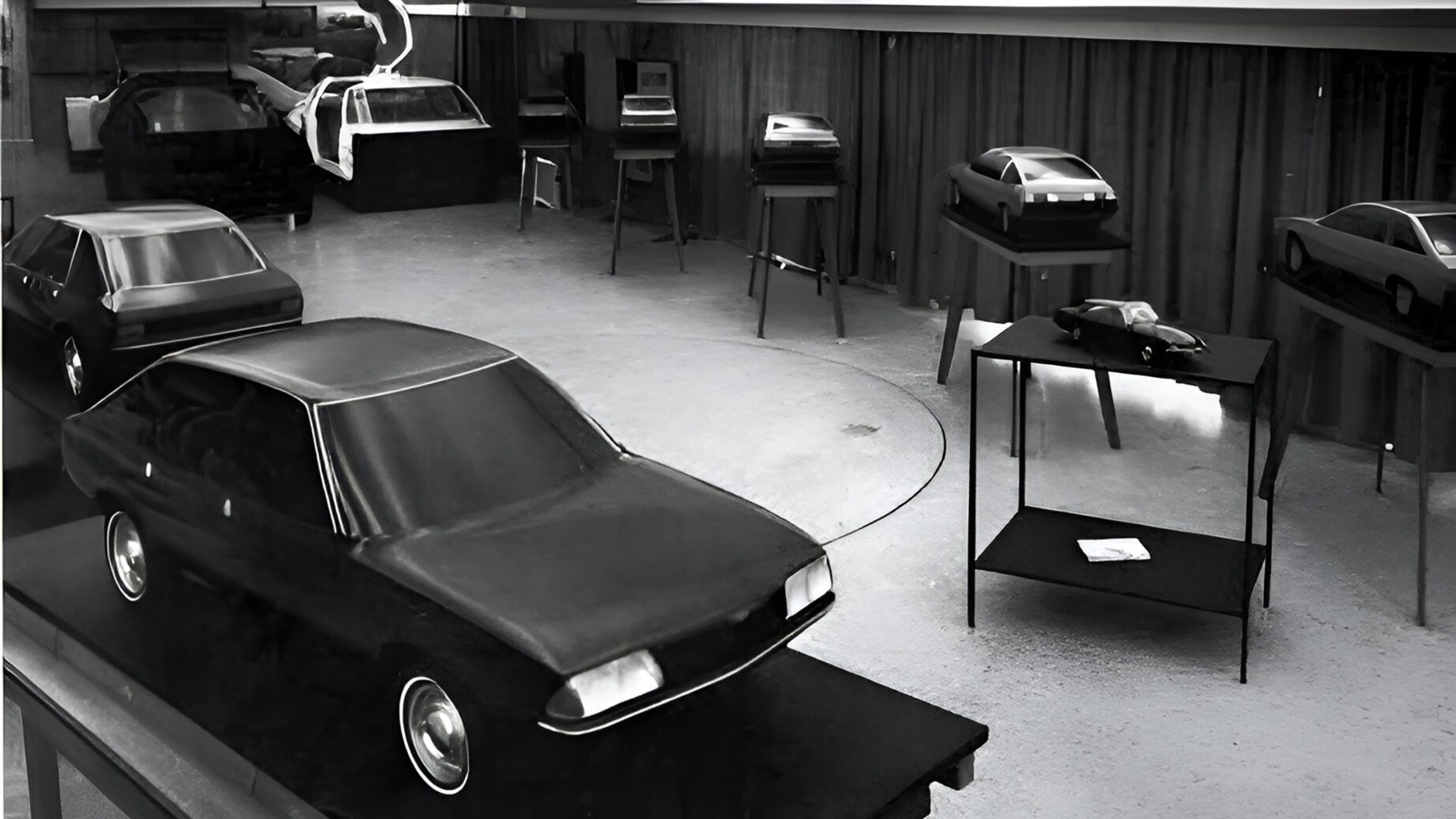
The Triumph Puma had something of a difficult birth as a potential replacement for the 2000 saloon.
Italian firm Michelotti took the initial lead for the car’s appearance, but Triumph’s design team preferred Towns’ more modern, fastback shape.
However, as time passed, the entire project was cancelled because of tensions with the British Leyland Motor Corporation.
However, the Towns fastback look, as well as much of the Puma’s engineering, would resurface in the Rover SD1 that was unveiled in 1976.
4. 1972 Jensen-Healey
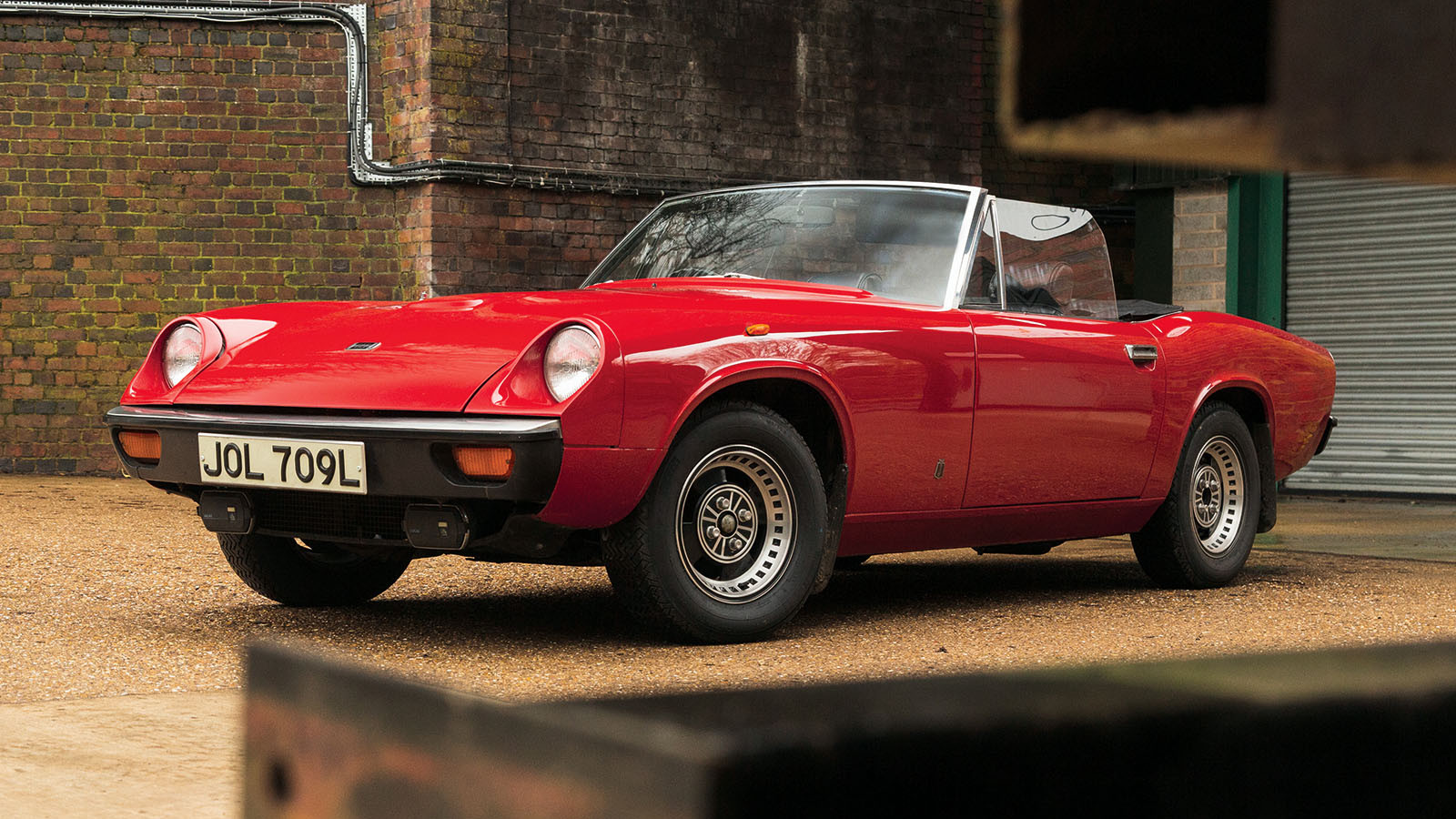
Perhaps William Towns’ most successful design in terms of sales, the Jensen-Healey was a move by Kjell Qvale to make the most of the Healey name.
The original styling work on the car had been completed by Hugo Poole, but Towns was brought in to give the roadster a more low-slung and contemporary look.
Towns also had to contend with making the Jensen-Healey comply with US safety regulations, hence the large bumpers front and rear.
The GT coupé of 1975 was styled by Kevin Beattie, but by then Jensen-Healey sales were drooping, after early reliability issues with its Lotus-sourced engine damaged its reputation.
5. 1972 Minissima
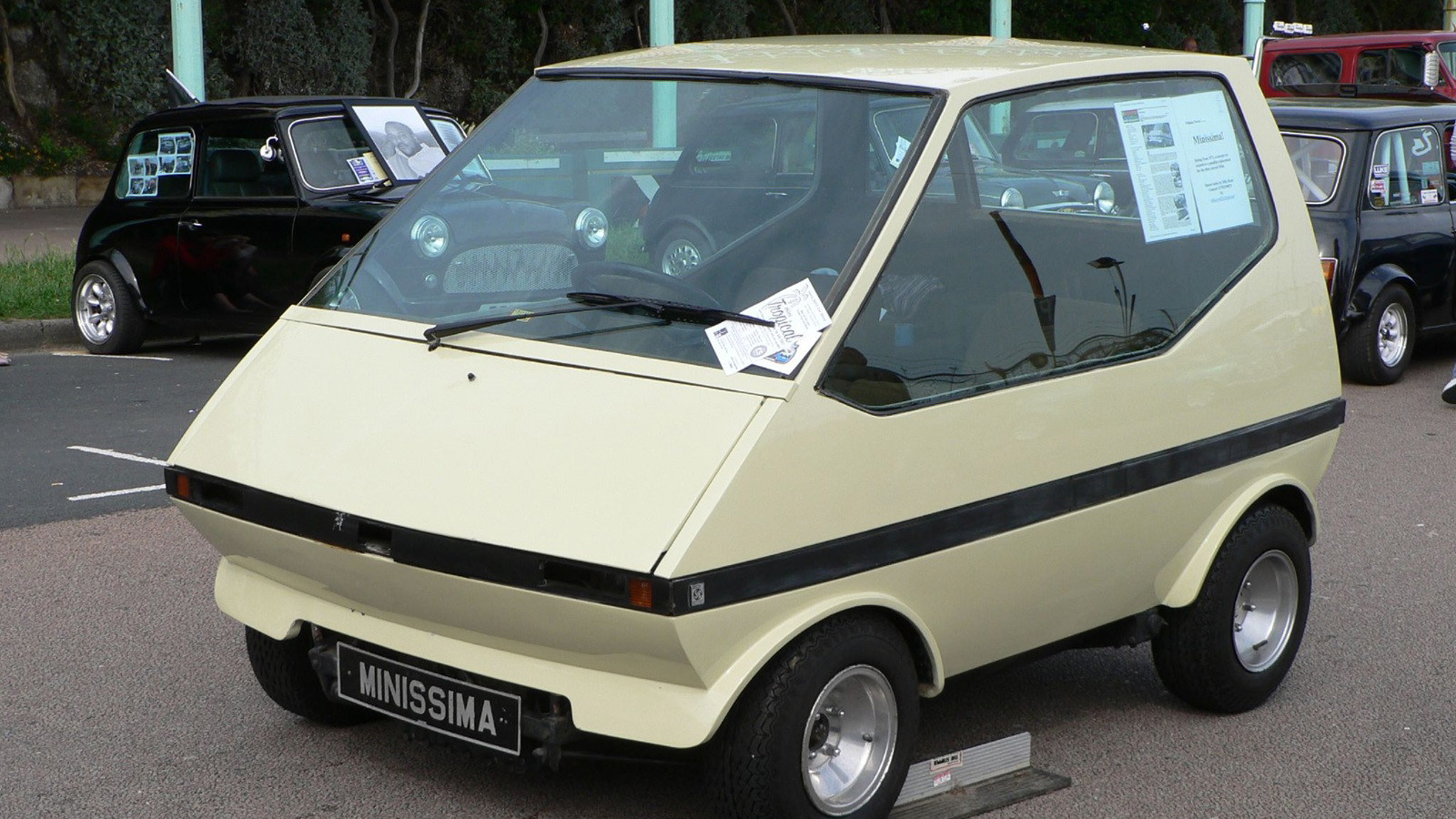
Originally named the ‘Townscar’ as a clever play on his own name, this William Towns design was a concerted move to update the original Mini.
Its neat, monobox design also incorporated wedge elements, which would become a Towns trademark.
When British Leyland was presented with the car, the company liked it so much it bought the commercial rights from Towns and renamed it Minissima.
The car was shown at the 1973 London Motor Show and received a positive reaction.
Using the original Mini as its base, the Minissima idea didn’t go any further with BL, but it did go on to see very limited production as the Elswick Envoy in the 1980s.
6. 1974 Aston Martin Lagonda
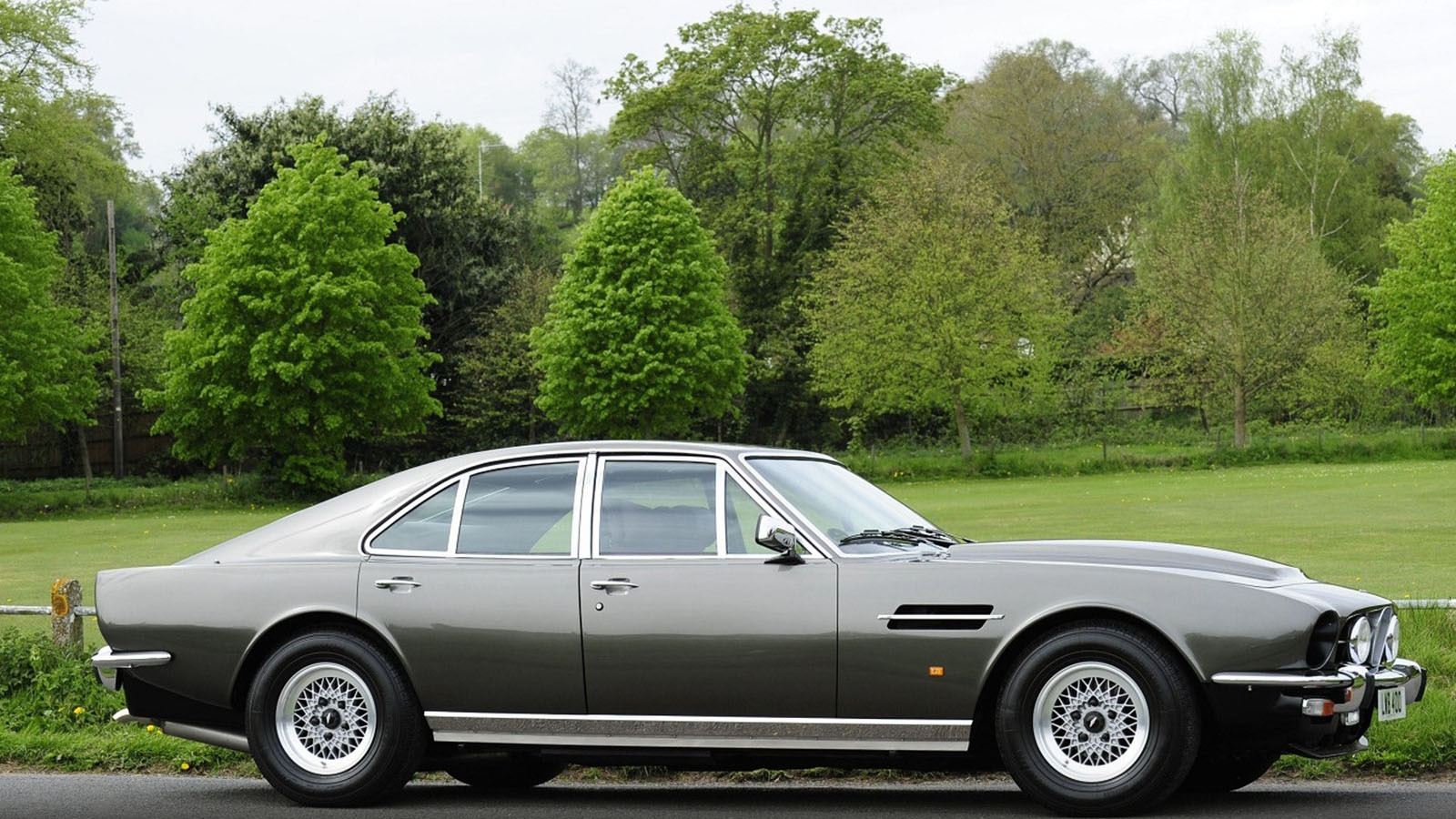
Taking his Aston Martin DBS design as a starting point, William Towns was tasked with creating a four-door model to revive the Lagonda badge.
The resulting saloon used a 114¾-inch (2910mm) wheelbase that created sufficient rear legroom for this luxury four-door.
While the rear end was largely the same as that of the DBS, the car’s front-end design was more fussy, its appearance derived from the earlier Lagonda Rapide of 1961.
A combination of awkward looks and the fuel crisis meant that only seven of this striking Lagonda model were made, although an eighth car was assembled from parts in 2007.
7. 1974 Guyson E12
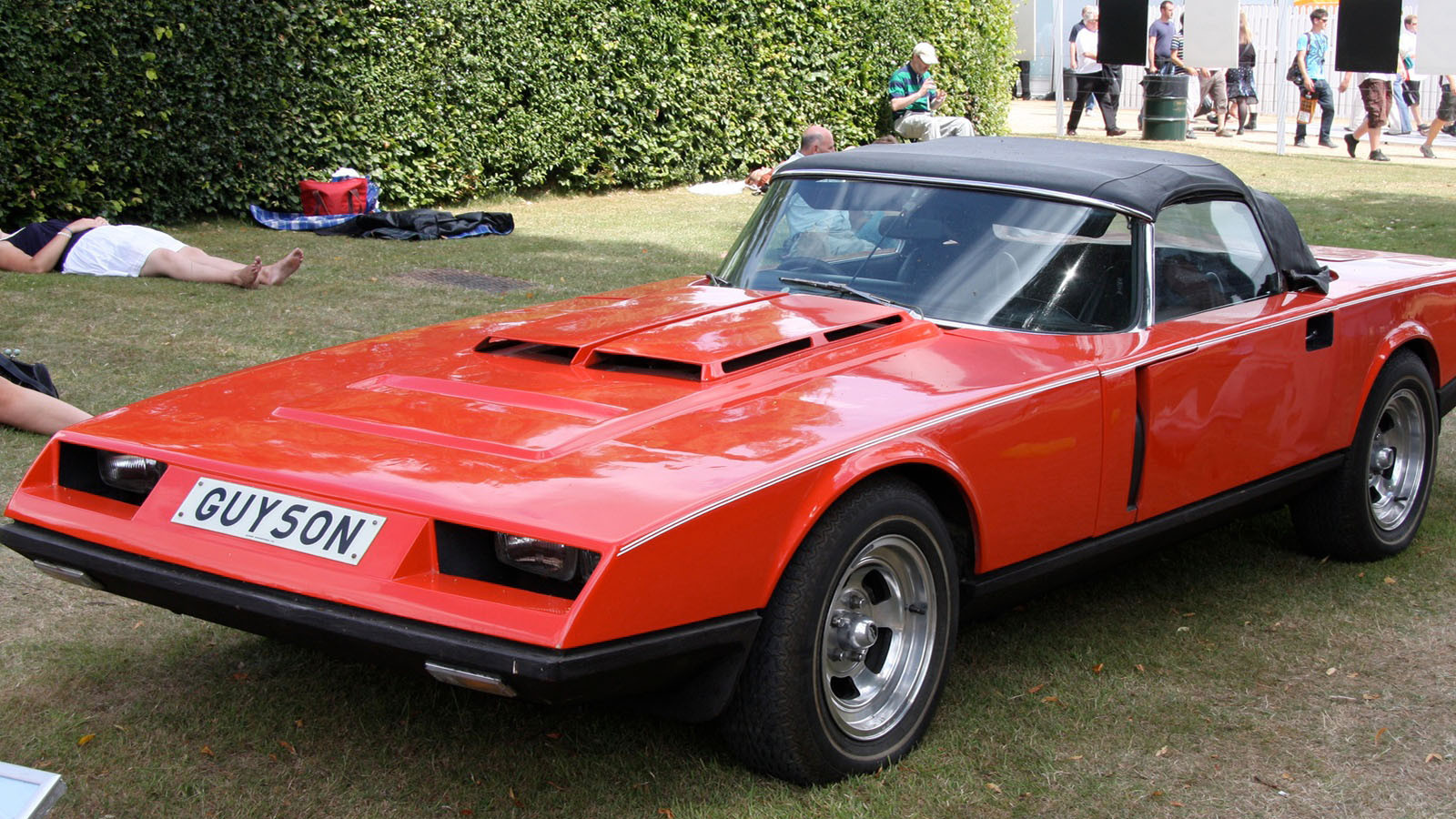
When British Hillclimb Champion Jim Thomson crashed his Jaguar E-type V12, it presented William Towns with an opportunity to style his own take on the luxury roadster.
The resulting shape was nothing if not bold with its slab sides, wedge nose and large, flat upper surfaces.
The central tub of the E-type was retained with its hood, while the glassfibre body panels were hung on the Jaguar’s underlying structure.
Towns built a second example for his own use and planned to offer the car as a conversion, but the huge cost of this put paid to that idea.
Thomson’s car, named after his company, featured a tuned V12 engine said to produce 345bhp that meant it could give a Ferrari Daytona a tough time.
8. 1976 Aston Martin Lagonda Series 2
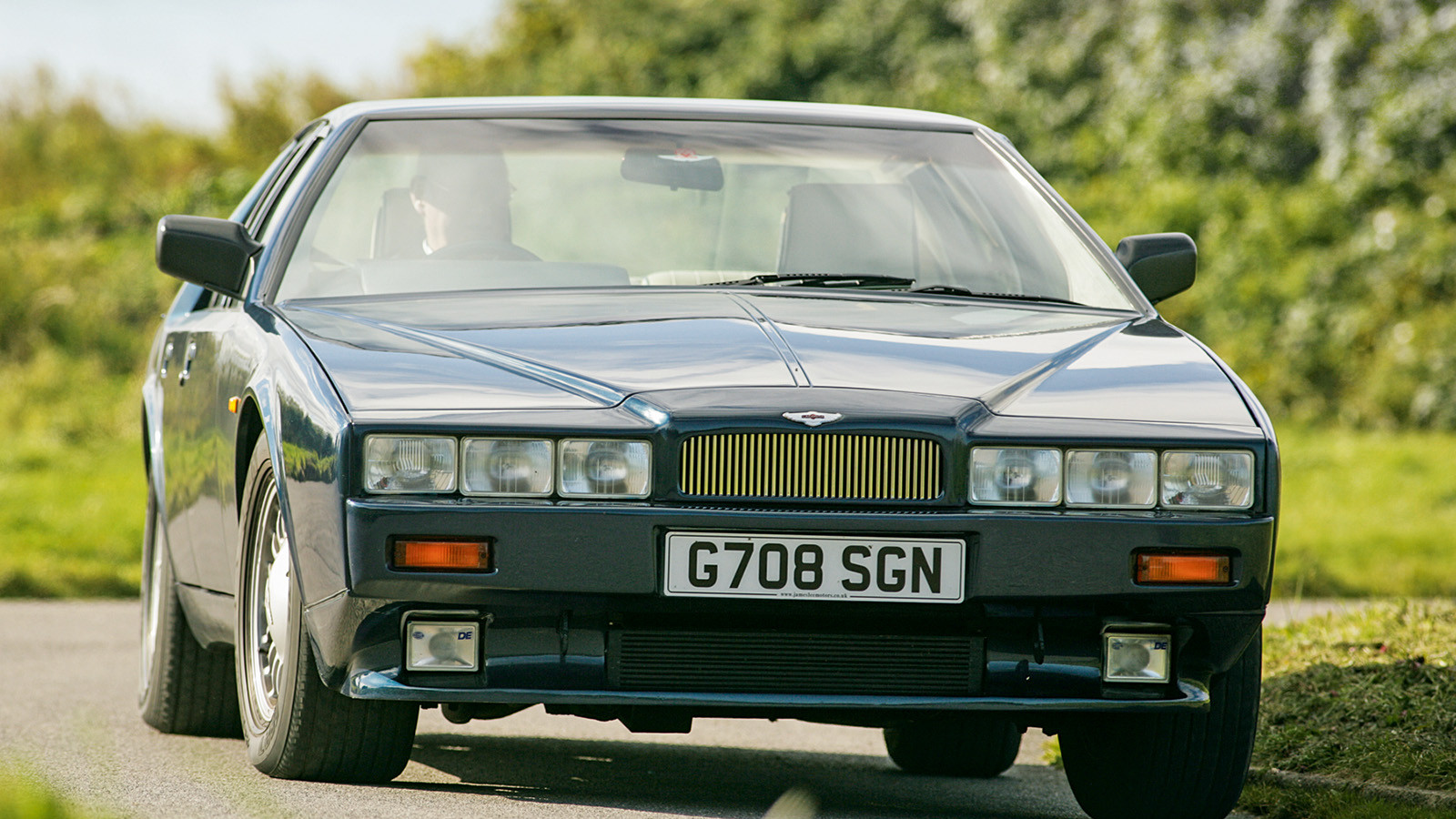
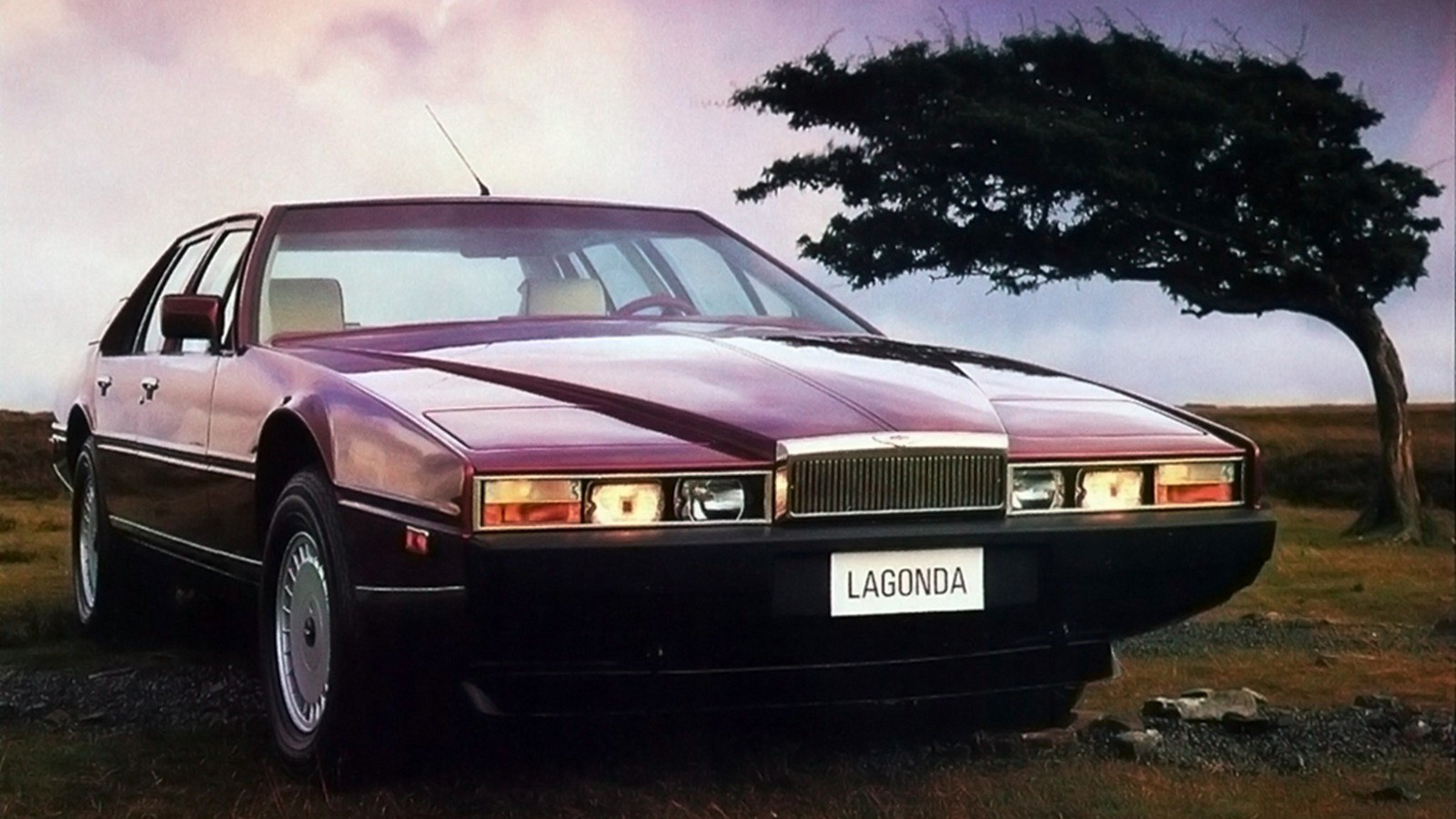
Of all William Towns’ designs, it’s the Aston Martin Lagonda of 1976 that he’s most famous for.
About as pure a wedge design as you could imagine, this Lagonda owed nothing to the style of its immediate predecessor and instead embraced a whole new look for the luxury saloon.
The long, low bonnet line was achieved by mounting the V8 engine as far back as possible, while pop-up headlights gave a clean profile.
While never a big seller, the Lagonda garnered plenty of attention for Aston Martin and Towns was brought back to give the car a makeover in 1987.
This saw the pop-up headlights replaced with six fixed lamps, plus the overall lines of the Lagonda were softened to help the car remain on sale up to 1990, by which time 645 examples had been produced.
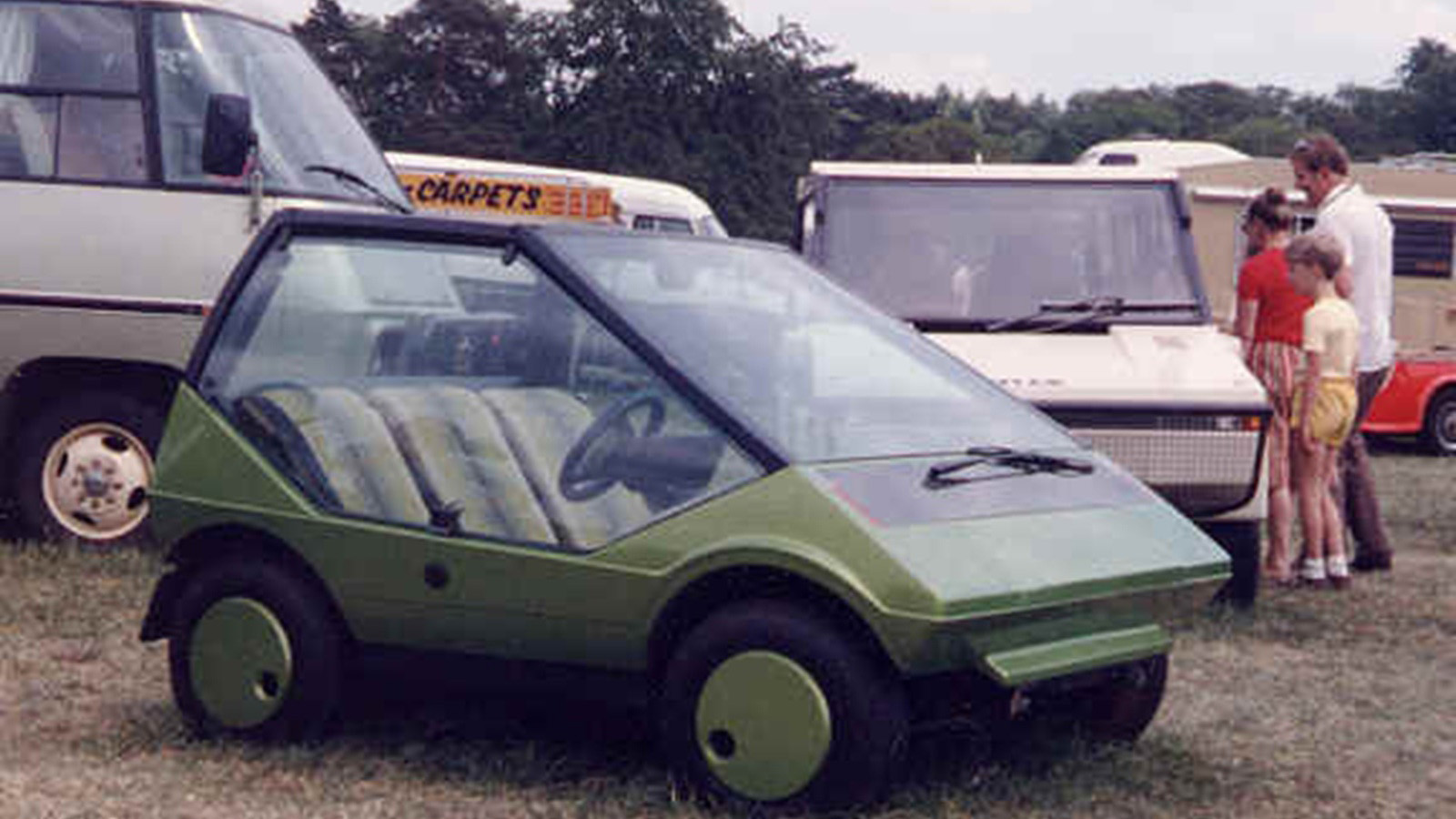
9. 1976 Microdot
The Microdot was similar in some ways to Towns’ earlier Minissima, because it used the British Leyland Mini as its base.
The exterior shape of the Microdot also had clear links to the Minissima, but Towns gave this new car a much larger glass area, including lift-up glass panels in place of traditional doors.
Inside, Towns pushed boundaries with the imaginative three-abreast seating, with the driver placed in the middle, and a simple dashboard.
Its power was just as left-field for the time, because the Microdot was intended to be built with a 400cc petrol engine that would power a generator to drive the wheels, making it an early attempt at a petrol-electric hybrid car.
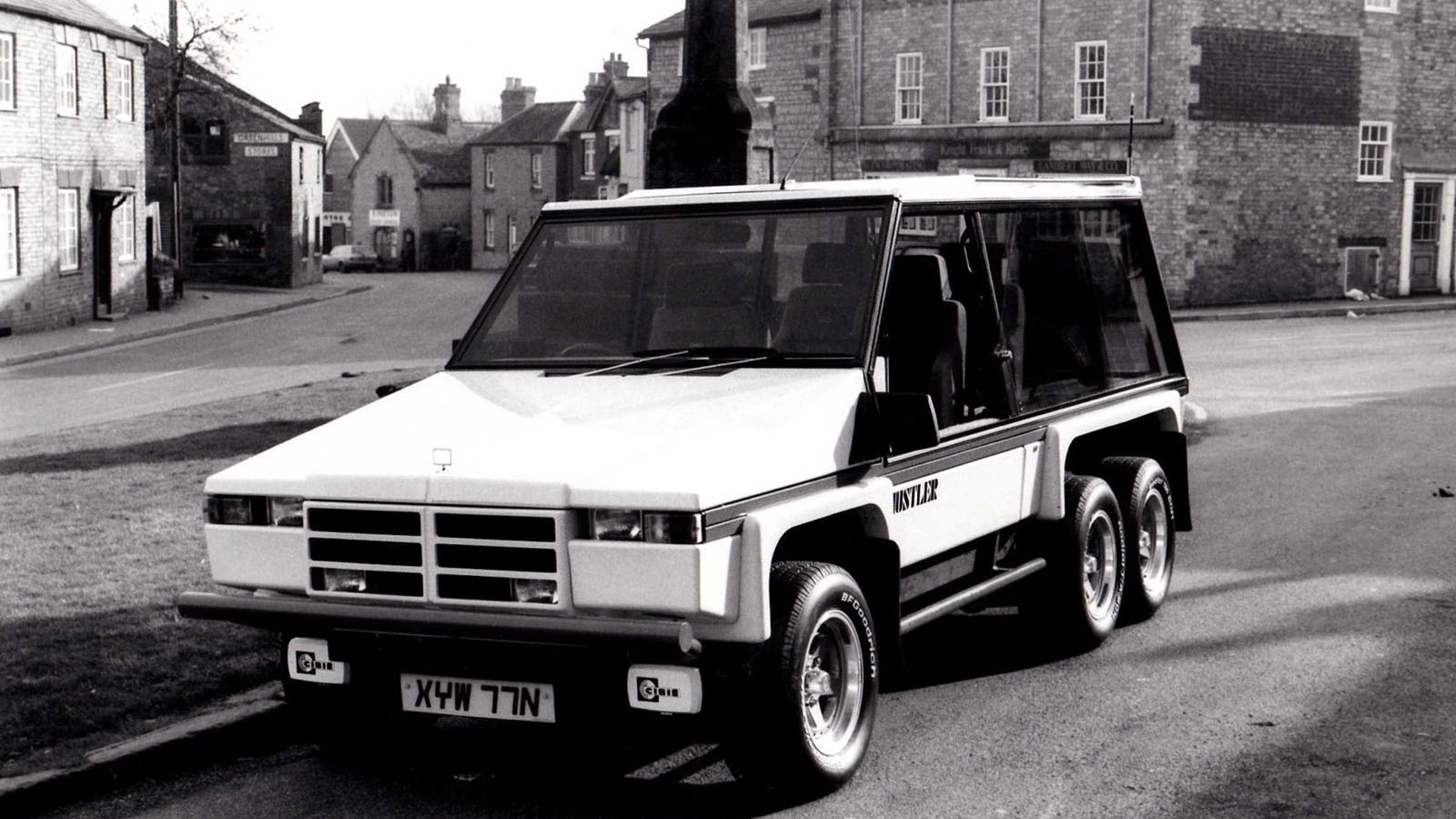
10. 1978 Hustler
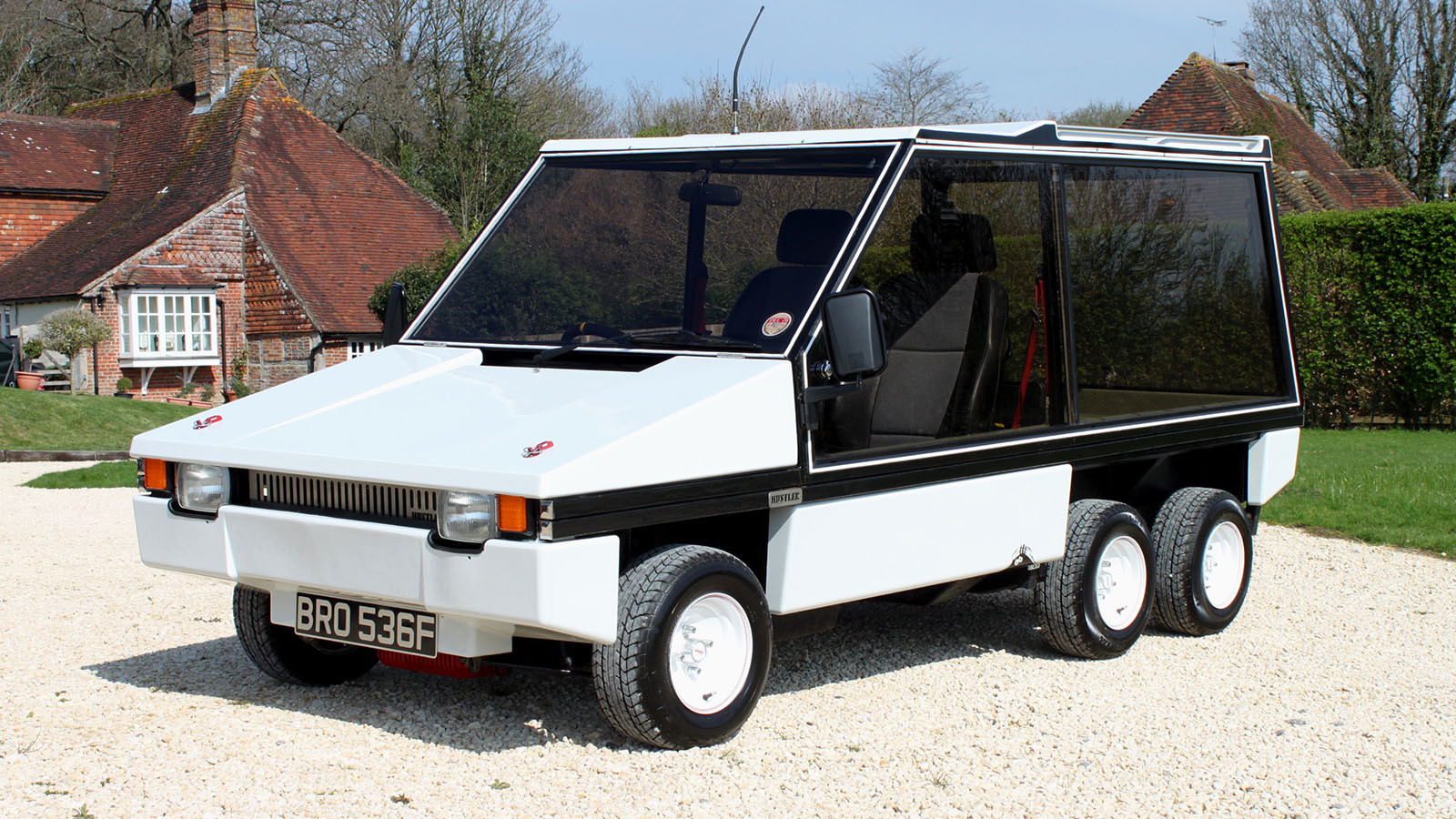
The Hustler concept was first conceived by William Towns as a project for Jensen, but when this didn’t go ahead he put the idea into kit-car production on his own.
The Hustler 4 was the first of more than a dozen variations on the theme and used the Mini as its base.
Like all Hustler models, the 4 used the upper and lower chassis sections to clamp the bodywork in place, and the sliding glass doors did away with the need for complex glassfibre mouldings.
A six-wheeler version was added in 1981, followed by larger models using the Austin 1100/1300 as their base, and there was even a Hustler with a wooden monocoque made from marine ply.
Towns’ inventiveness knew no bounds with the Hustler range and he even produced a model with a detachable roof that could be used as a rowing boat.
11. 1980 Aston Martin Bulldog
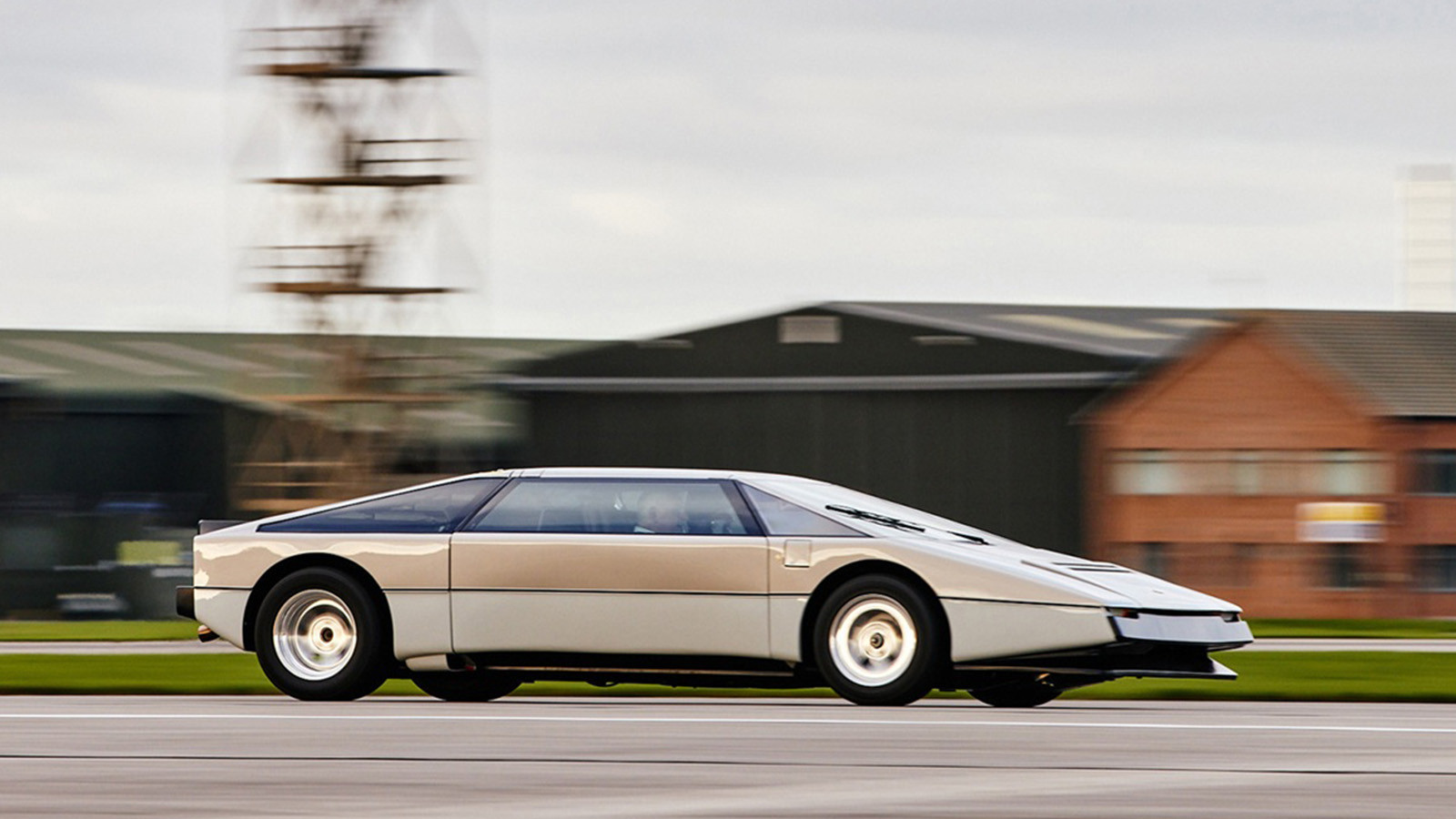
For many fans of William Towns’ designs, the Aston Martin Bulldog is the pinnacle of his career.
Arguably the ultimate expression of wedge-shaped design, the Bulldog took the themes of the Lagonda Series 2 and applied them to a mid-engined supercar.
The resulting Bulldog prototype stunned the gathered press when it was unveiled early in 1980, along with bold claims of a top speed in excess of 200mph.
It couldn’t quite manage that in period, despite a twin-turbo version of Aston’s 5.3-litre V8 motor.
Towns’ styled the Bulldog with that top speed in mind, so the two rows of triple headlights were hidden behind a panel that slid out of the way electrically.
The Bulldog eventually broke the 200mph barrier in 2023, when Le Mans class winner Darren Turner got behind the wheel and hit 205mph in the car on the Machrihanish airfield in Scotland.
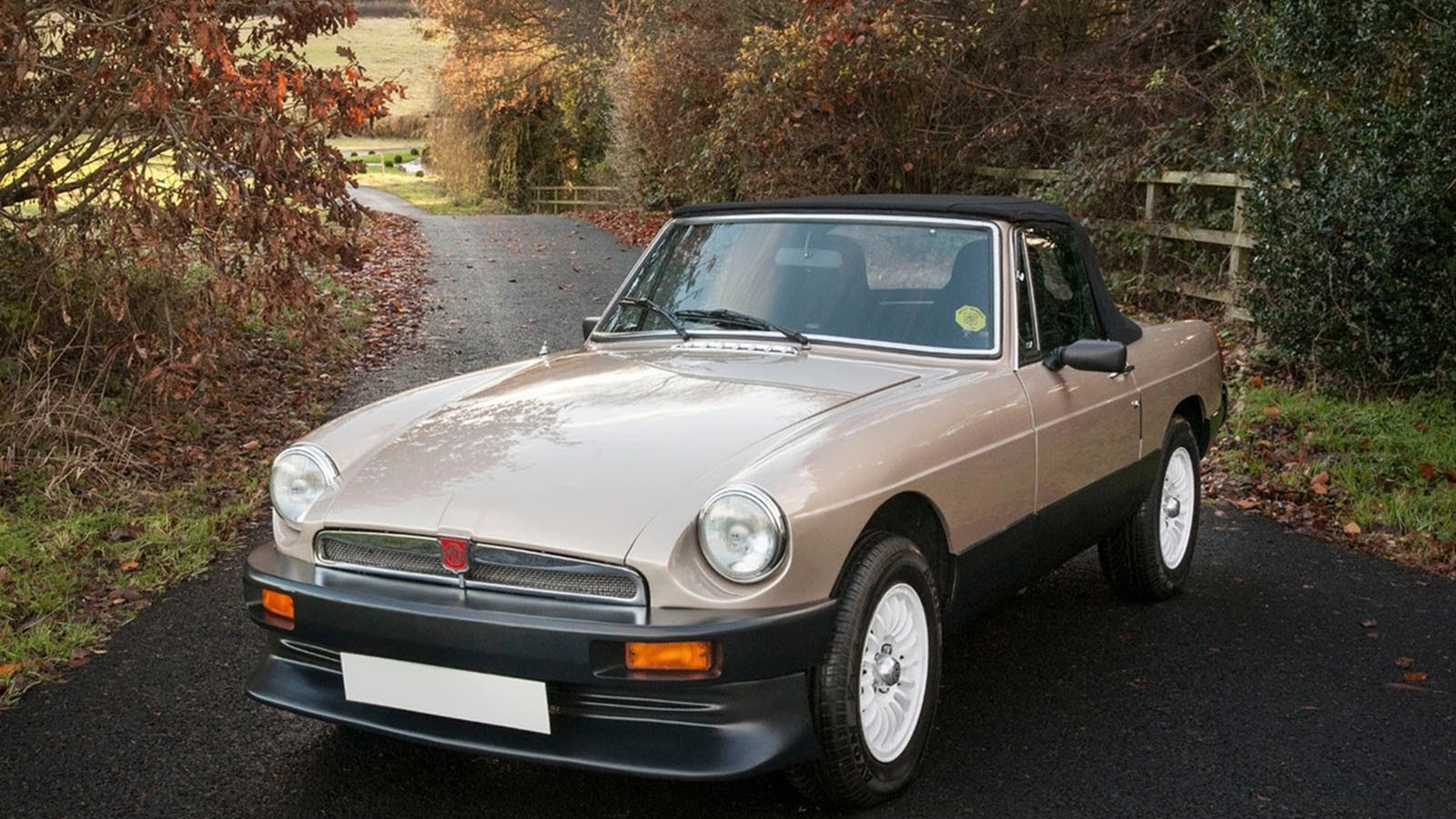
12. 1980 Aston Martin MGB
When the MGB reached the end of its life in 1980, Aston Martin’s Alan Curtis thought there was still life left in the model.
He put together a £30 million bid to save MG and the MGB, and William Towns was drafted in to give the car a hasty makeover.
The resulting Aston Martin MGB roadster retained the original car’s windscreen, but had reworked styling for a more modern look.
The revised bumpers were less bulky than the hefty items of later MG-built cars, while a two-tone colour scheme gave the Aston version a more svelte appearance.
The one prototype still exists, but the plan for an Aston Martin MGB faded rapidly when the finances didn’t fall into place.
13. 1985 Hustler Highlander
Taking the Hustler idea to another level, the Highlander was William Towns’ take on what a luxury car should be.
The Highlander was, perhaps, 15 years too early to make the most of the luxury SUV boom, but it had all the credentials in place.
The scaled-up Hustler shape came with sliding glass front and rear doors, plus a large boot area.
Although not all-wheel drive like a Range Rover, the Highlander looked the part, and used Jaguar XJ mechanical components and the 5.3-litre V12 engine to underline its luxury aspirations.
It’s reckoned eight of these six-wheeled machines were made between 1985 and 1989, complete with LCD dashboard displays inspired by Towns’ Aston Martin Lagonda interior.
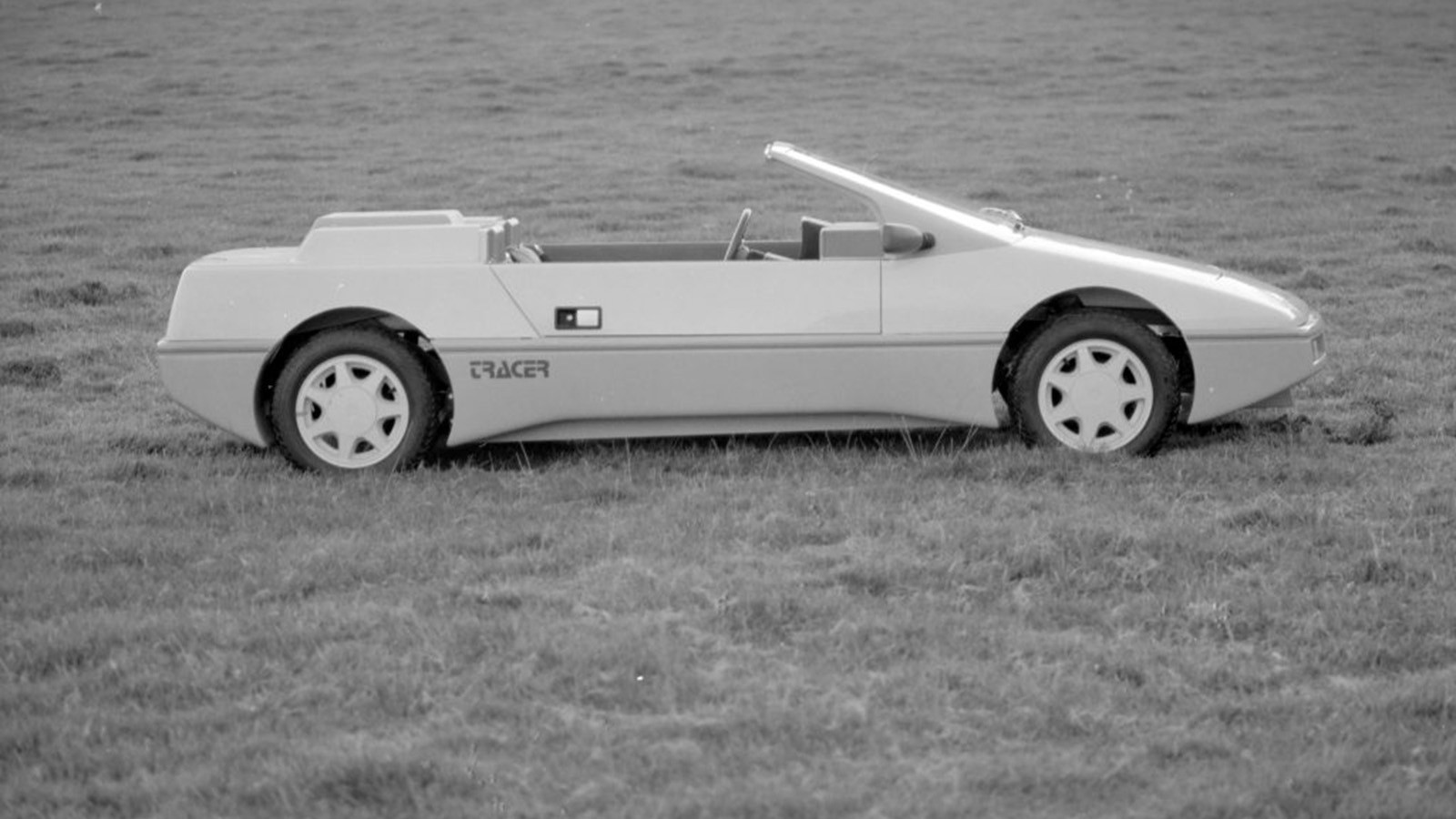
14. 1985 TXC Tracer
Again proving that William Towns’ fertile mind was often ahead of the pack, his plan for a modern MG Midget resulted in the TXC Tracer.
There are clear links to the looks of the Aston Martin Bulldog with the headlights mounted on the front bulkhead behind a drop-down panel.
However, the Tracer’s design was also dictated by its mid-mounted A-series engine lifted from the MG Metro, which predicted what Rover would do with the MGF a decade down the line.
A second prototype with doors and pop-up headlights refined the Tracer, but sadly this was another of Towns’ designs that didn’t get the go-ahead it richly deserved.
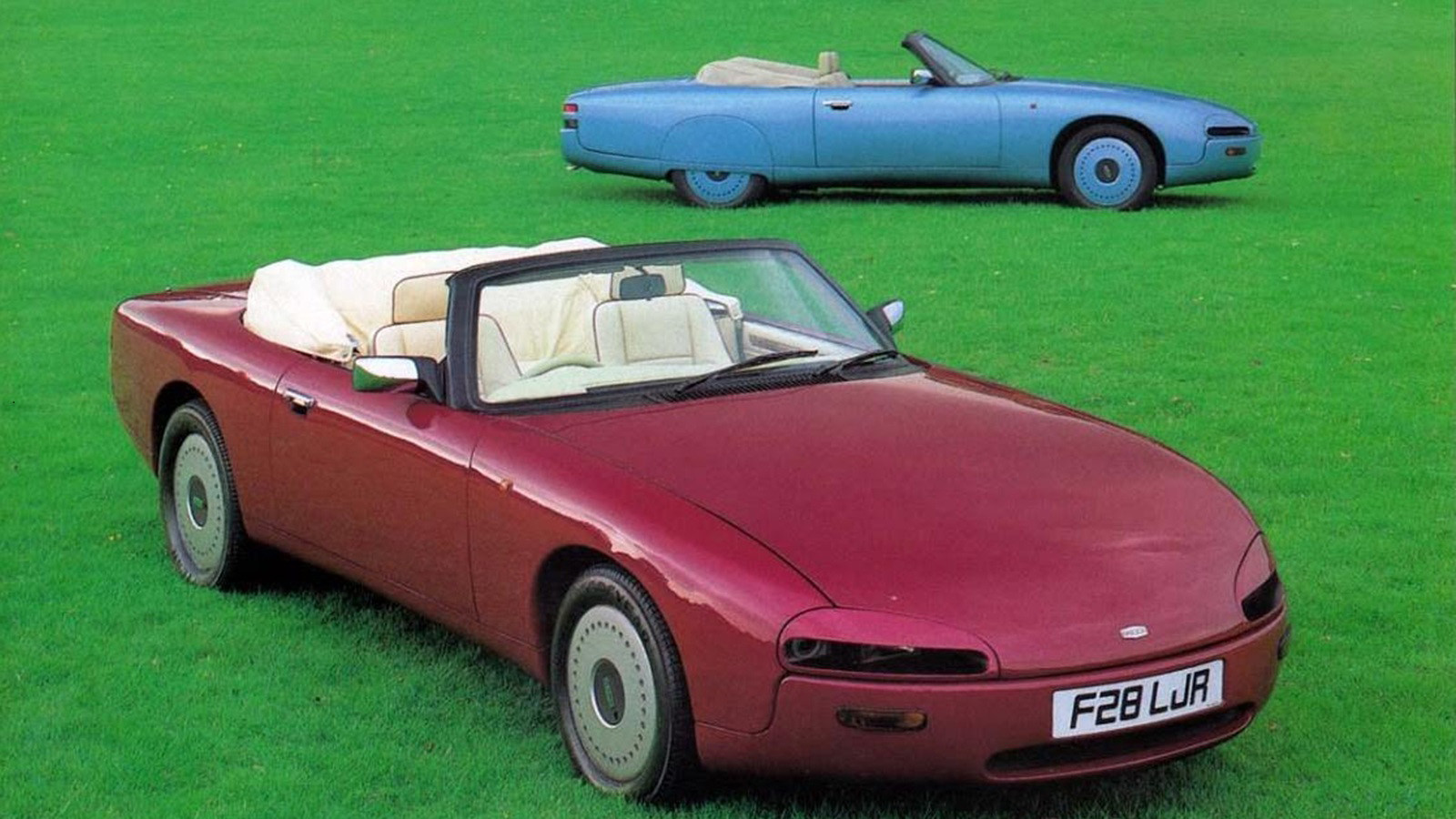
15. 1989 Railton F28 Fairmile
William Towns was instrumental in the revival of the Railton name in 1989 and, naturally, he designed the cars the company would offer.
The F28 Fairmile employed a Jaguar XJ-S as its base and there were hints of Towns’ Guyson E12 from the previous decade in the appearance of this low-slung, luxury roadster.
Intended as the sportier of Railton’s model range, the Fairmile’s rounded shape used eyebrow panels over the headlights as well as fully integrated bumpers to give a smooth look.
Wider wheels for the F28 Fairmile meant it had normal wheelarches, whereas the F29 Claremont had rear-wheel spats.
16. 1989 Railton F29 Claremont
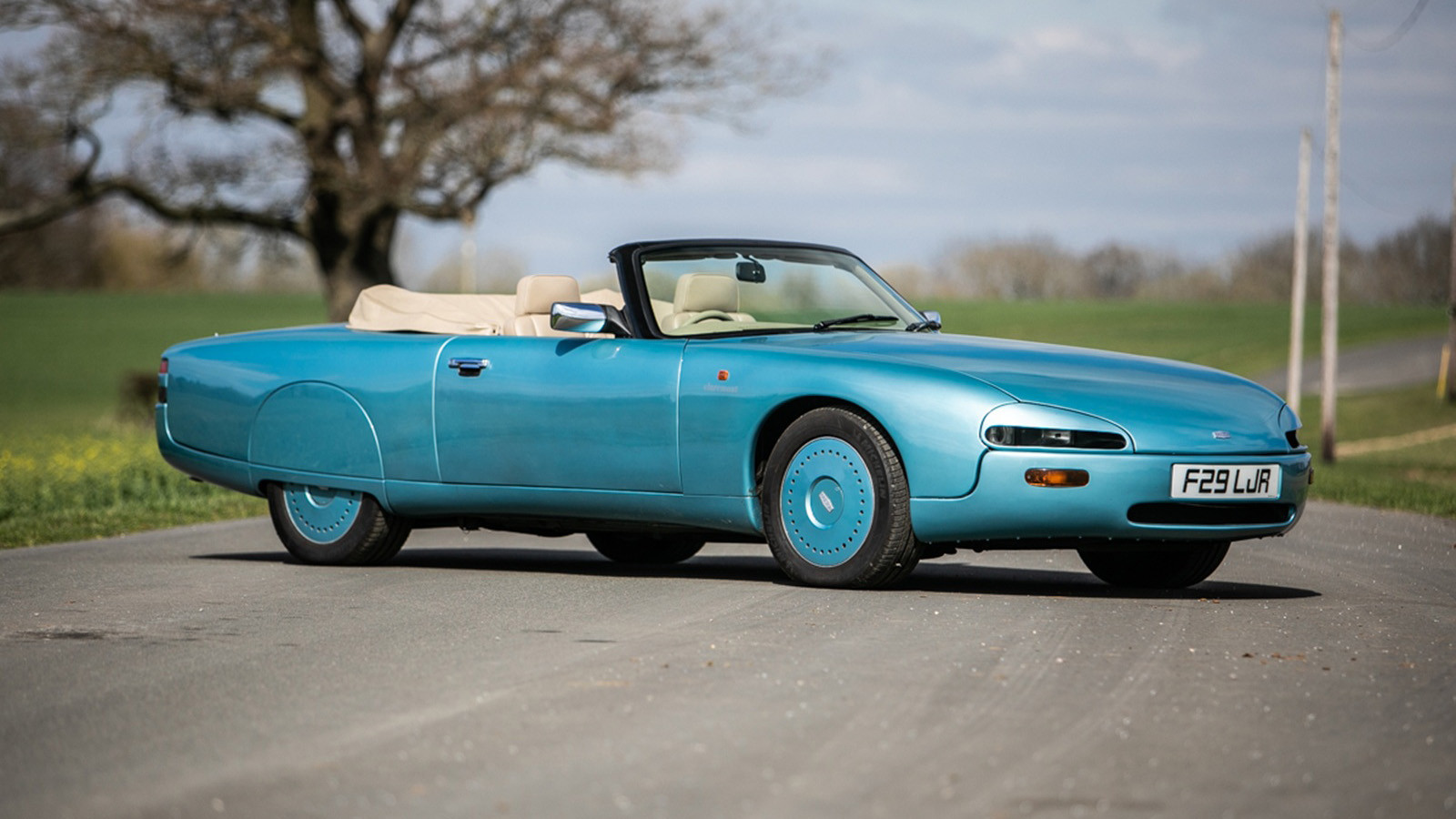
The second of William Towns’ ingenious, reskinned Jaguar XJ-S cars produced under the Railton banner was the striking F29 Claremont, which was intended to be a full-on, luxury roadster.
Largely the same as the Fairmile, the key difference for the Claremont was its faired-in rear wheels located behind detachable spats.
Sadly for both Towns and for the Railton project, the mammoth cost of the cars – £105,000 in 1989 for the Claremont – meant no orders came in as a global recession took hold.
Undeterred, Towns used the Claremont as his personal car and he kept it up to his death in 1993.
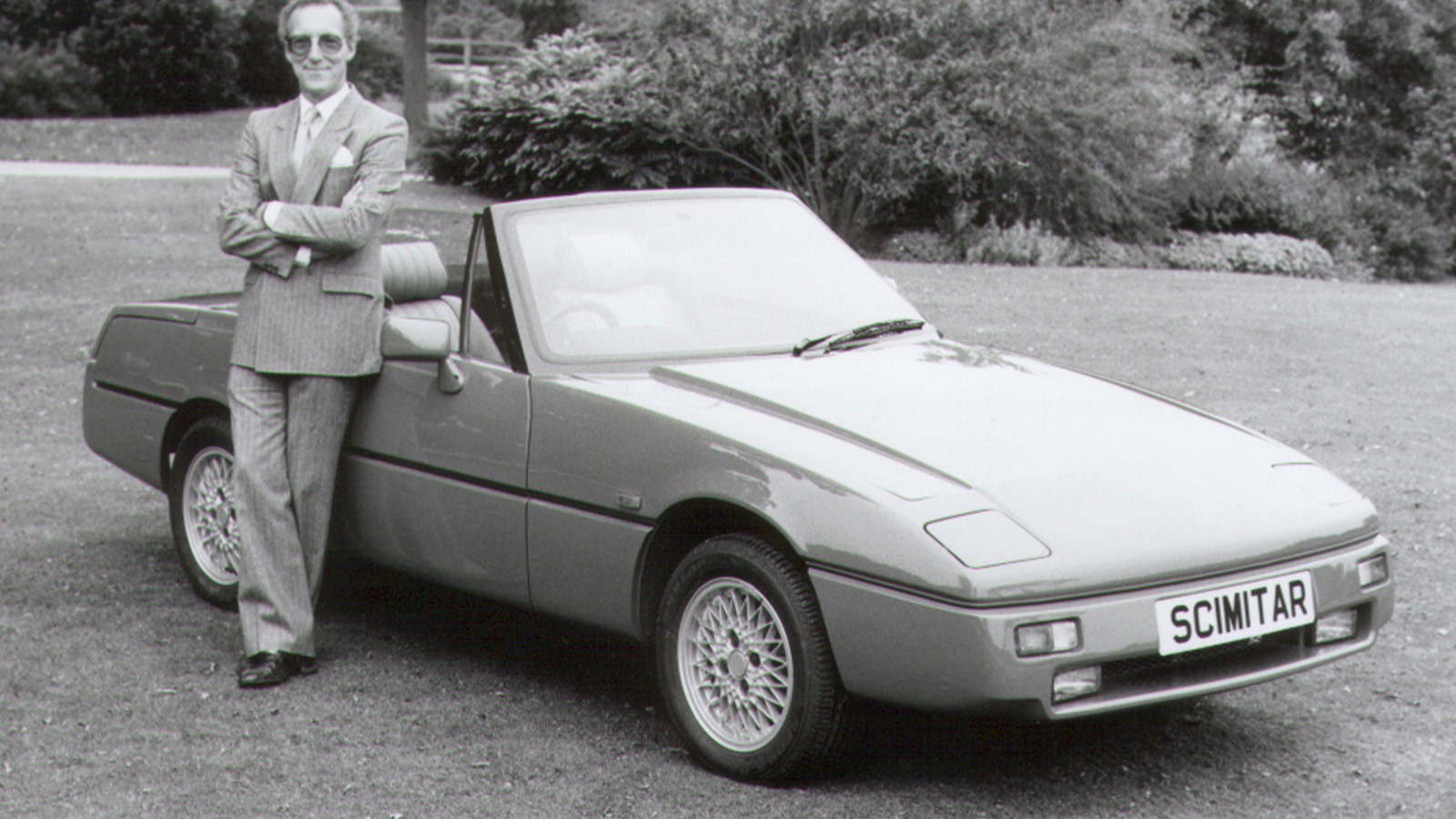
17. 1990 Reliant Scimitar SST
William Towns artfully restyled the Reliant SS1 to create the SS2 concept that was set to be a V8-powered roadster for the US market.
When this didn’t come about, Towns’ work was repackaged for the SST, with the ‘T’ paying tribute to the designer’s efforts.
The SST was a much prettier car than the original Michelotti-styled SS1 and introduced a simpler body-construction method of two large, semi-monocoque sections that mounted to the chassis.
As a result, the SST was stiffer and didn’t have the unsightly panel gaps of the SS1.
Power from the 1.8-litre turbocharged Nissan engine gave 0-60mph in 7.2 secs, but the SST was a slow seller in the face of budget competition from the Mazda MX-5.
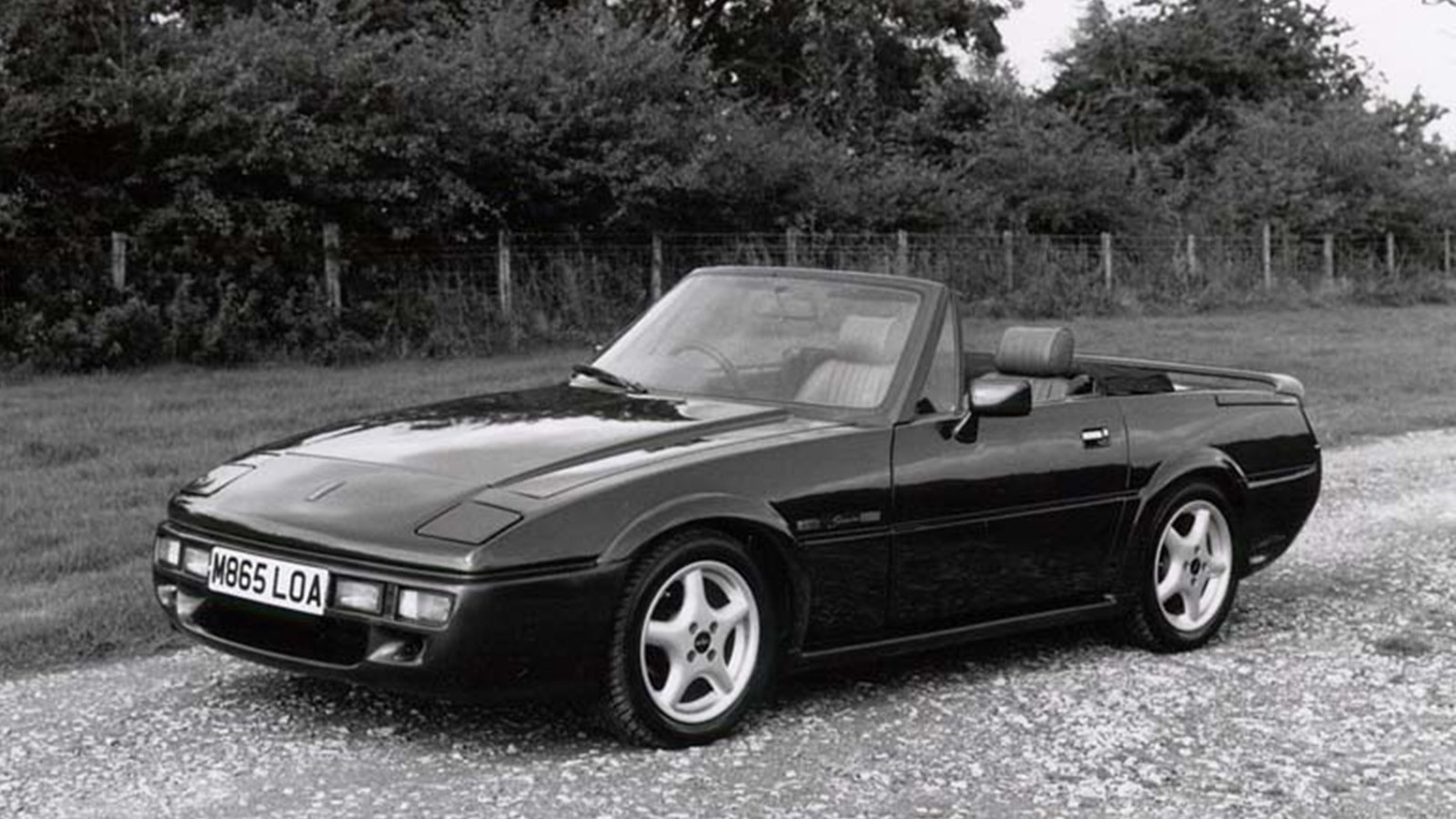
18. 1992 Reliant Scimitar Sabre
There was a finality to the Reliant Scimitar Sabre, because it was the final car produced by the company and the last car to be sold with styling by William Towns.
The designer took the SST as a starting point, and facelifted it to give it more presence and sporting attitude.
A deeper front air intake was reminiscent of 1980s TVRs, while the wheelarch extensions dealt with the wider OZ alloy wheels fitted to the Sabre.
Side skirts and a rear spoiler were the other updates deemed necessary by Towns for what was the final iteration of this roadster.
Even Towns’ clever revisions were not enough to stave off the sales slump and the last Sabres were built in 1993, though it took much longer for them to find buyers.