Fantastic ‘fours’
When you’re looking into the history of Triumph cars, it’s tempting to linger over the ones with straight-six or V8 engines, since they have the best performance and sound wonderful.
There’s nothing wrong with that, of course, but it’s a little unfair on the four-cylinder models, which made up the bulk of Triumph production.
In an attempt to restore the balance, we’re concentrating here on 19 Triumph classic cars with four-cylinder engines – including the very first and very last – which are listed here in chronological order.
1. Triumph 10/20 (1923)
After importing and later building bicycles, and then becoming a very successful motorbike manufacturer, Triumph put its first car on the market in 1923.
The 10/20 was named after its RAC horsepower rating and the amount of power its Harry Ricardo-designed 1393cc engine actually produced.
Five body styles, from a Sports to a four-seat Tourer, were available, but no matter which one you picked it was going to be expensive, although at least you got a high level of quality for your money.
Larger four-cylinder units were fitted to the 13/35 and the Fifteen, both of which were derived from the 10/20.
2. Triumph Super Seven (1927)
Occupying a market space only slightly above the Austin Seven, the Super Seven was Triumph’s first high-volume model, with production estimated at around 15,000 over five years.
The sidevalve engine, with a capacity of 832cc in most cases but 747cc if supercharged, was notable in either case for its willingness to rev, and there was a generous range of body styles, some offering space for two occupants and others for four.
Donald Healey, still several years away from becoming a manufacturer himself, drove Super Sevens in the 1929 and 1930 editions of the Rallye Monte-Carlo, finishing (appropriately enough) seventh overall on the latter event.
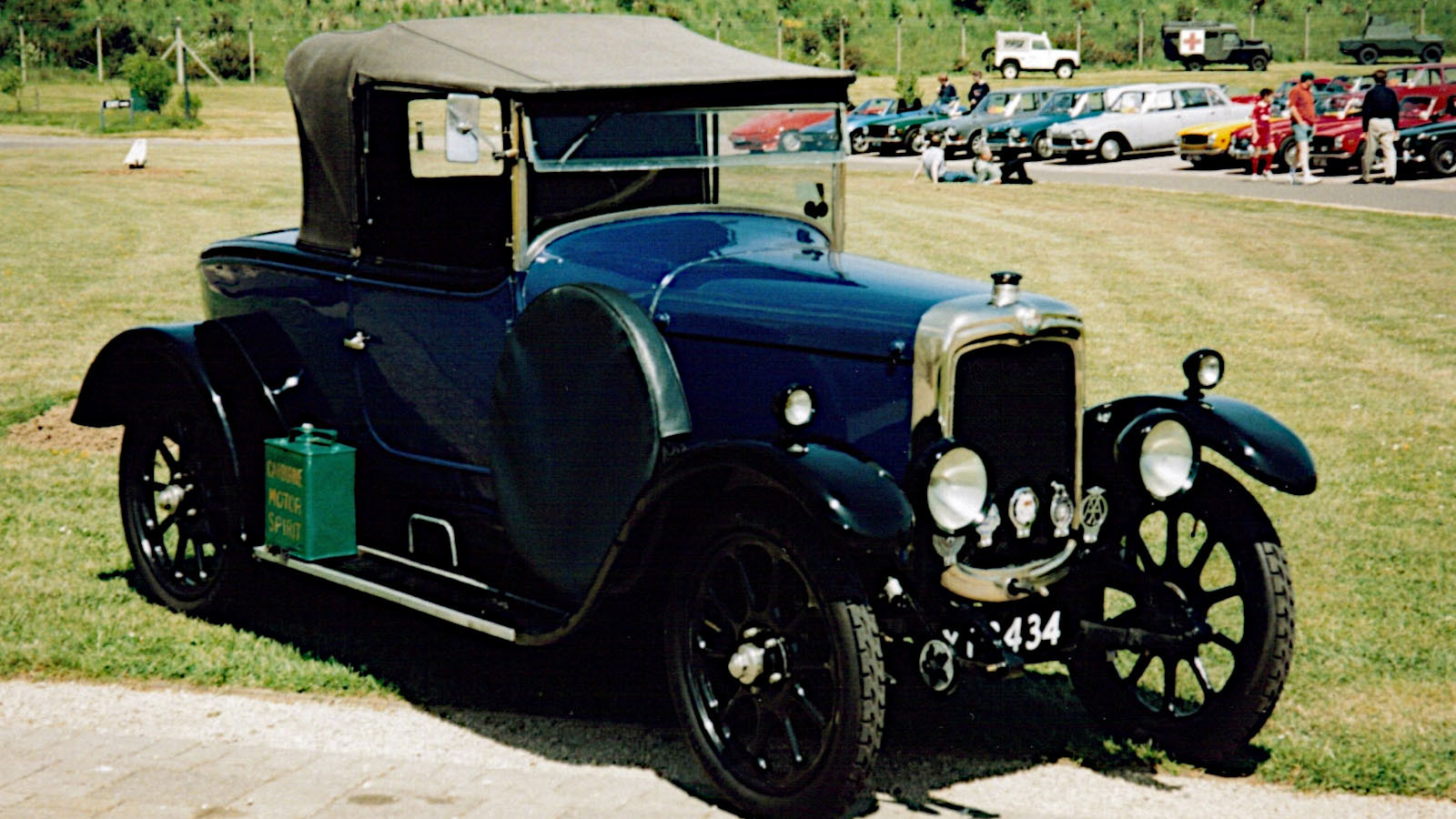
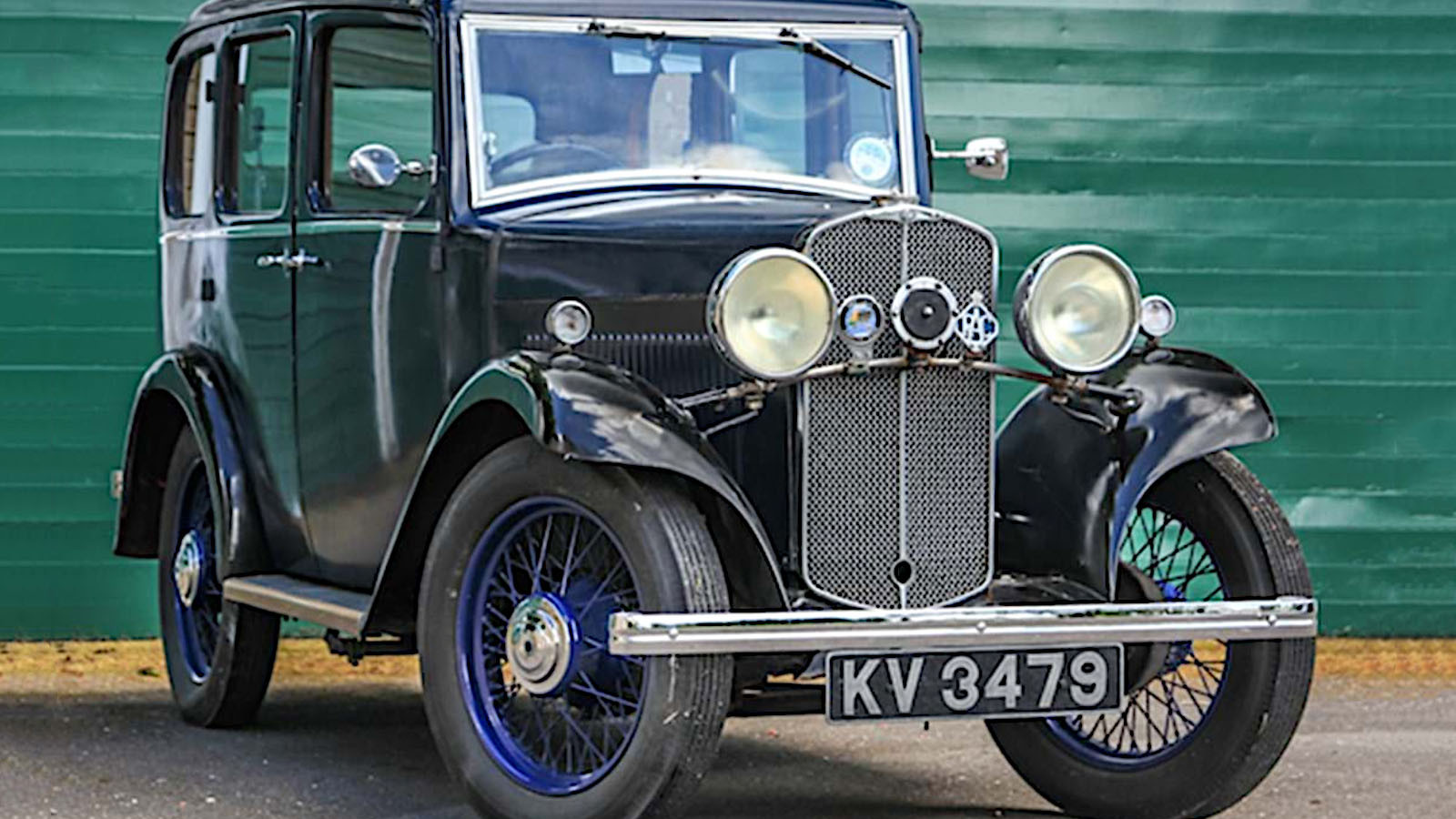
The Super Seven went through several stages of development, and in 1932 reached the point where it was worth calling it the Super Eight (pictured), though fewer than 2500 examples of this car are believed to have been built before production came to an end in 1934.
3. Triumph Super Nine (1931)
Described as ‘the last of the cheap Triumphs’ (at least in the context of the 1930s), the Super Nine had a 1018cc engine based on a Coventry-Climax design and featuring overhead inlet and side exhaust valves.
It was replaced in 1933 by the Ten, which was more or less the same thing apart from being a little longer and having a slightly larger version of the same engine, and did not survive beyond 1934.
Derivatives of both the Super Nine and the Ten, with the same engine and chassis but different bodywork, were marketed during the same period with the name Southern Cross.
4. Triumph Gloria (1933)
Gloria, a name Triumph also used for bicycles and motorbikes, refers here to a startlingly complicated range of cars available with many different bodies and engines.
Of the engines, some were straight-sixes and therefore outside our field of interest for now, but there were also several four-cylinder motors.
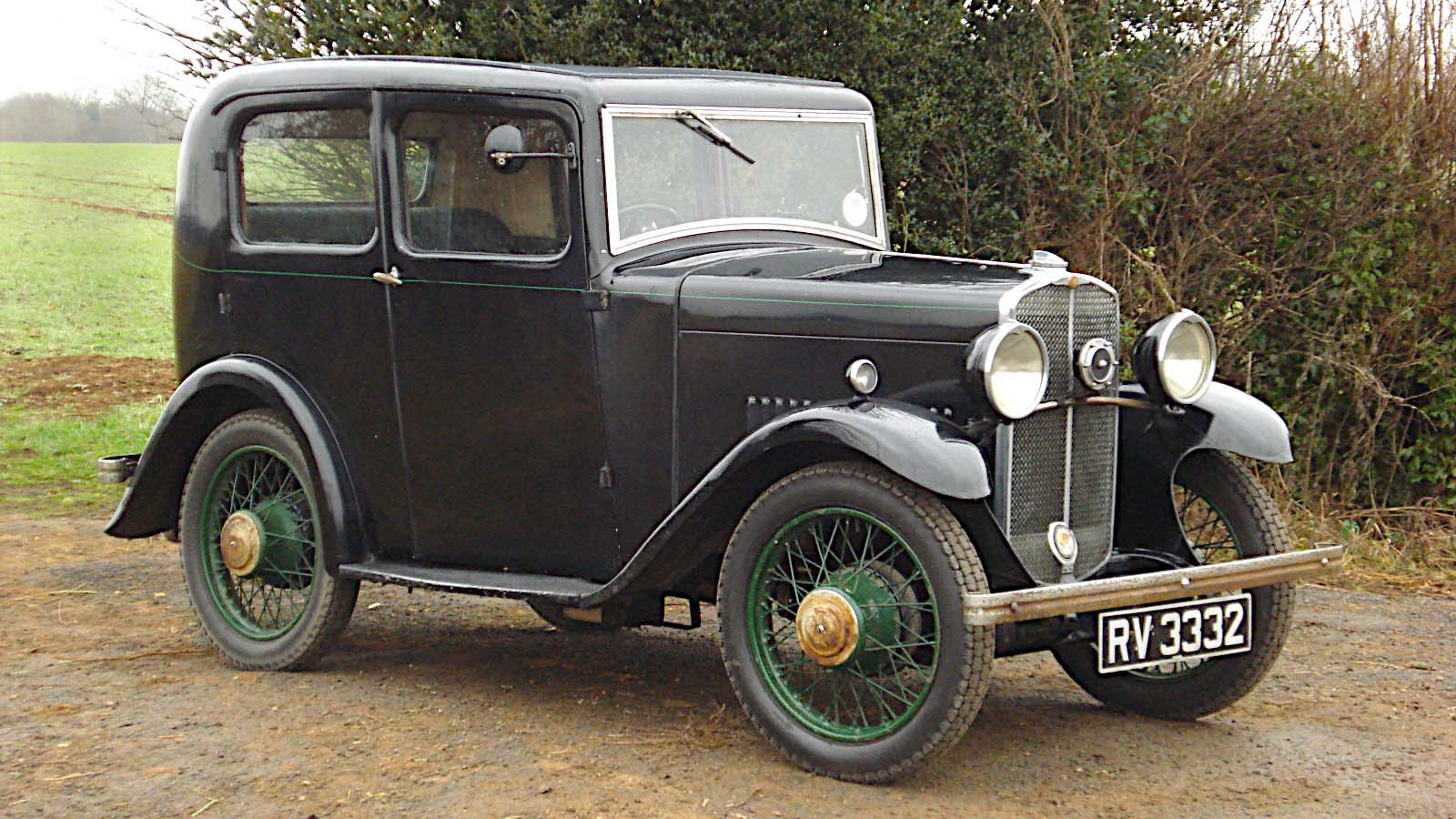
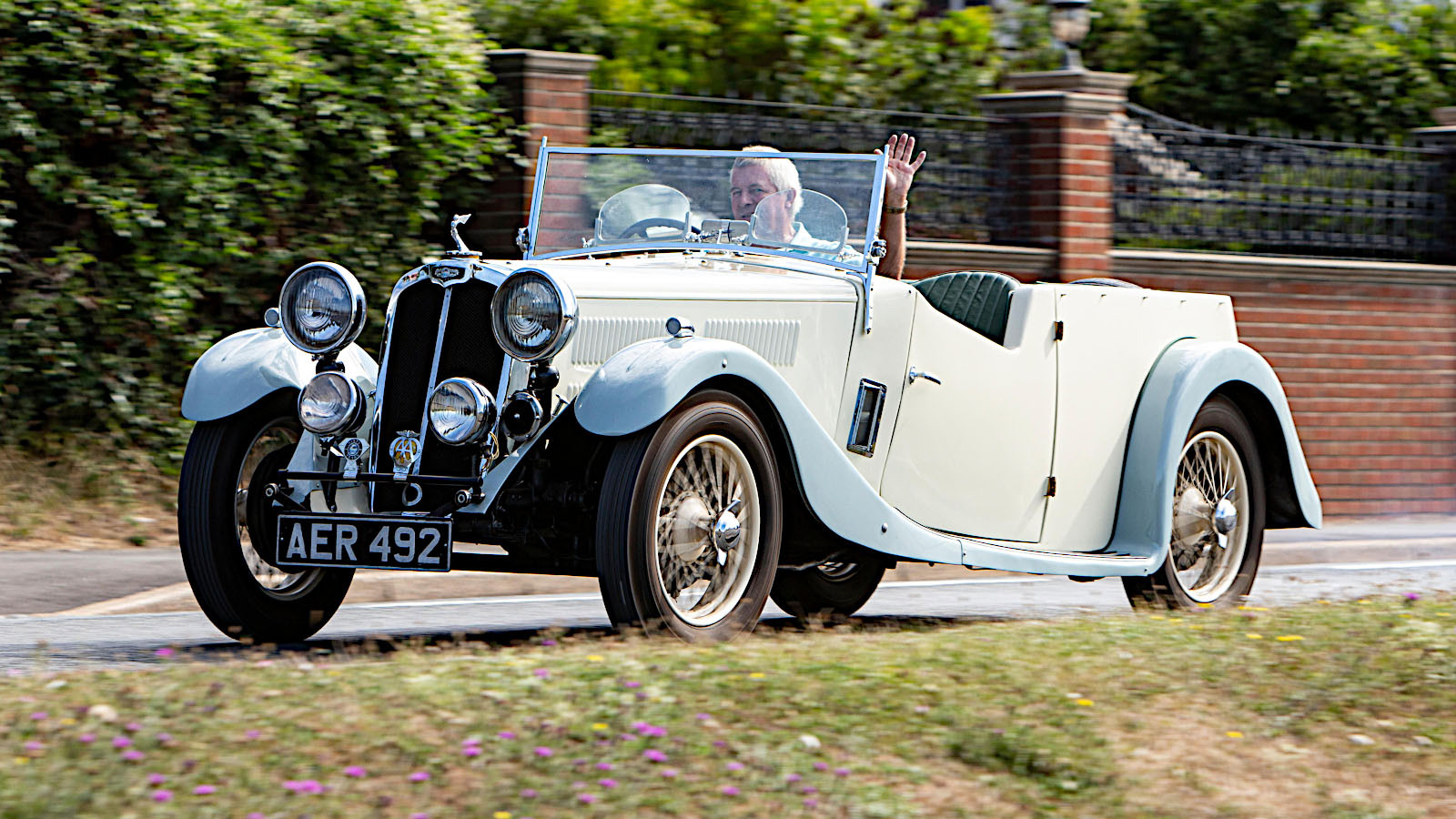
Some of these were the Coventry-Climax unit (as used in the 1934 10hp Sports Tourer pictured here), which Triumph would abandon after 1937, but others were 1496cc and 1767cc versions of a new overhead-valve engine.
The 1767 was fitted to the last model in the Gloria line which was discontinued in 1938, a year before Triumph went into receivership.
5. Triumph Dolomite (1936)
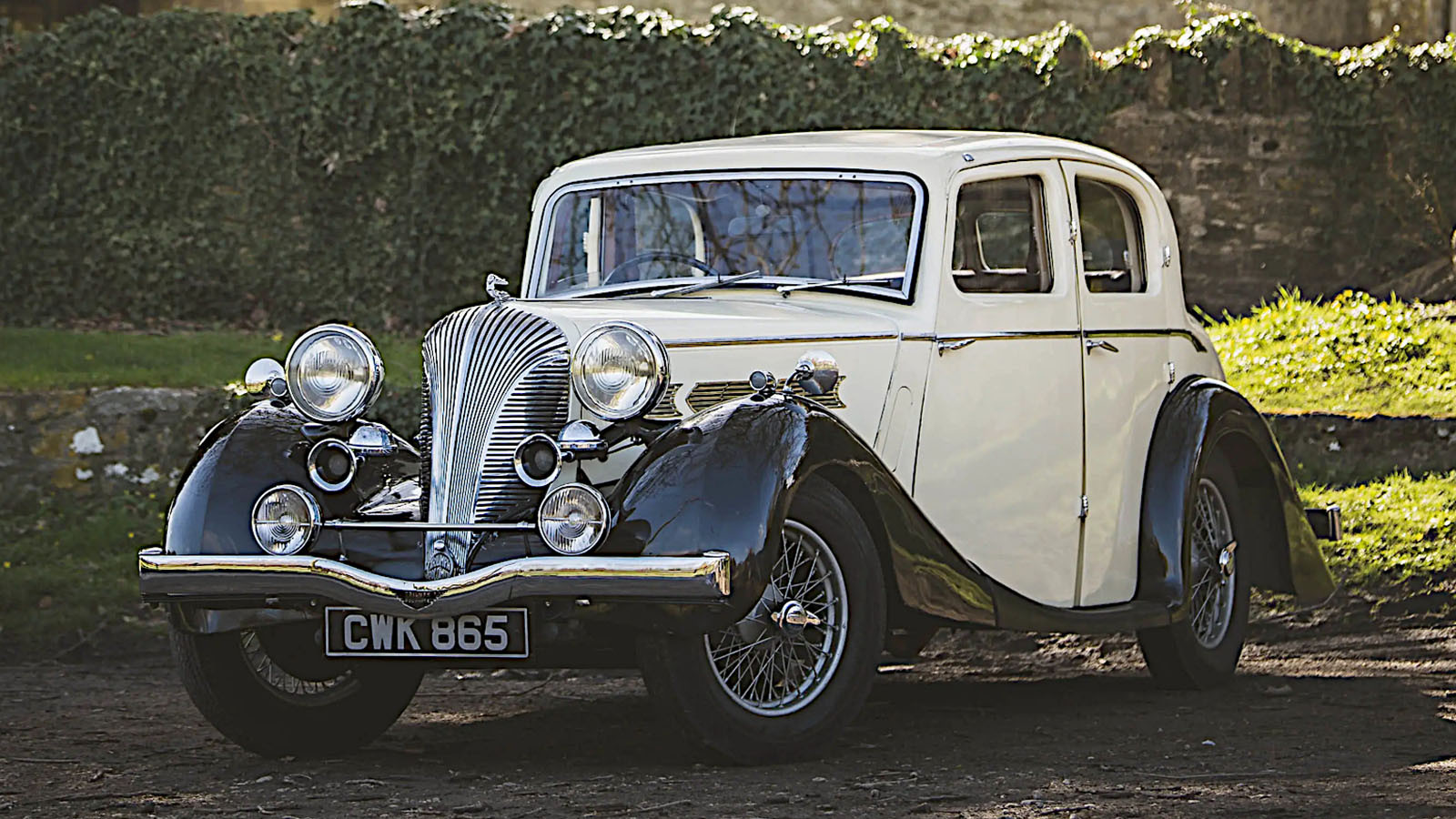
Almost as complex in its variety as the Gloria, the Triumph Dolomite range included a saloon, a drophead coupé and a roadster, along with an impressive number of engines.
The straight-sixes, and the straight-eight of an earlier car of the same name (very similar to the Alfa Romeo 8C, and created with Alfa’s approval, but built in tiny numbers) will have to wait for another time, but there were ‘fours’ too.
Perhaps unsurprisingly, these were the same 1496cc and 1767cc variants of the overhead-valve, four-cylinder motor also used in the Gloria.
Regardless of engine or body style, the Dolomite featured a dramatic and clearly American-influenced radiator grille whose contribution to the car’s appearance is a matter of opinion.
6. Triumph Roadster (1946)
By the time it became part of the post-war motor industry, Triumph had been saved from oblivion by the Standard Motor Company.
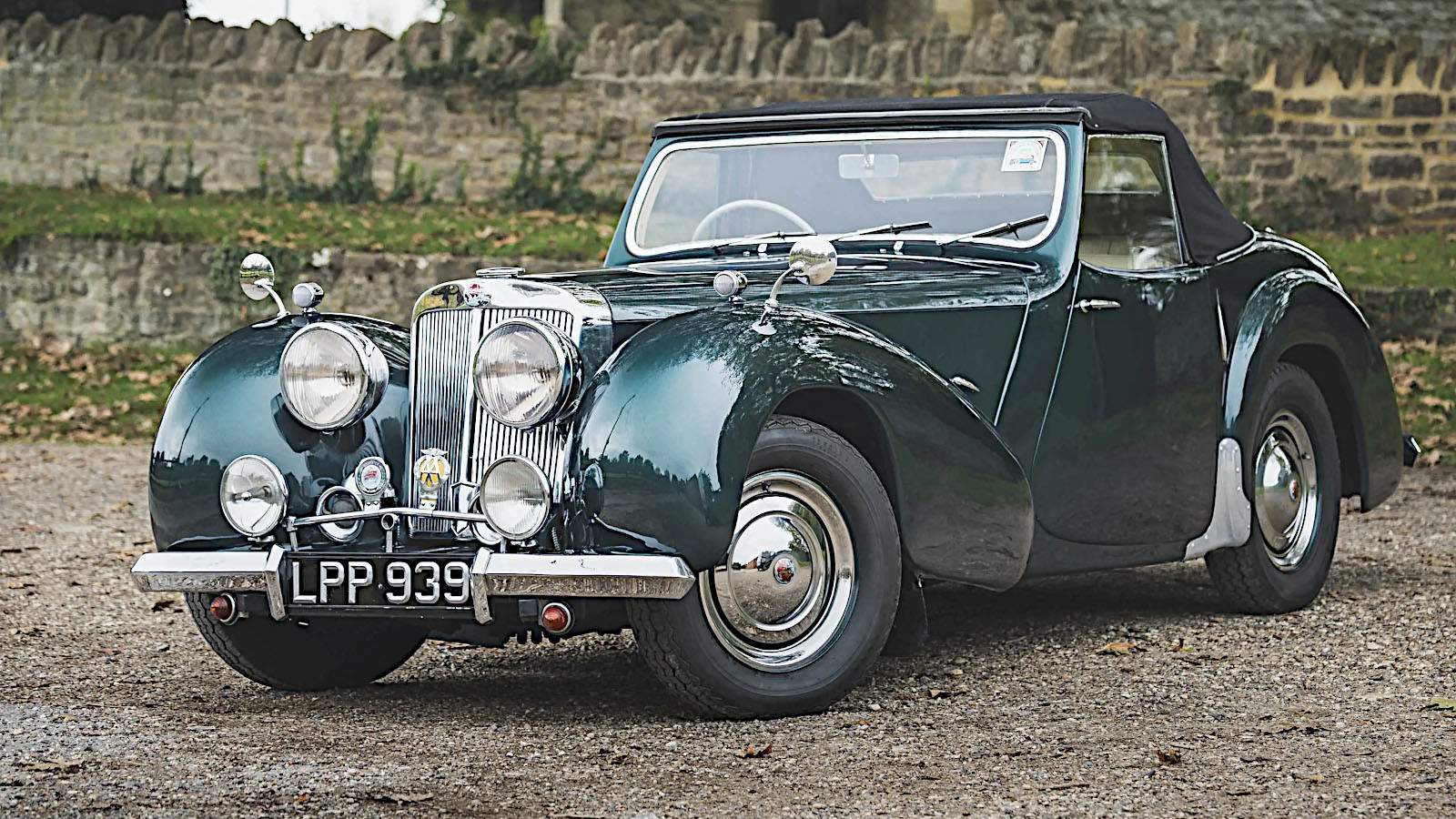
One of its first models in the new era was the Roadster, a notably curvy sports car powered by a 1776cc ‘four’ which Standard had not only been using for its own models, but also supplying to SS (the marque which became Jaguar) since the 1930s.
Roadsters built from late 1948 onwards had another Standard engine known as the ‘wet liner’, originally developed for use in tractors and with a significantly larger capacity of 2088cc.
This didn’t save the Roadster, which was gone by the start of 1950, but it would appear in several other Triumph cars in the following years.
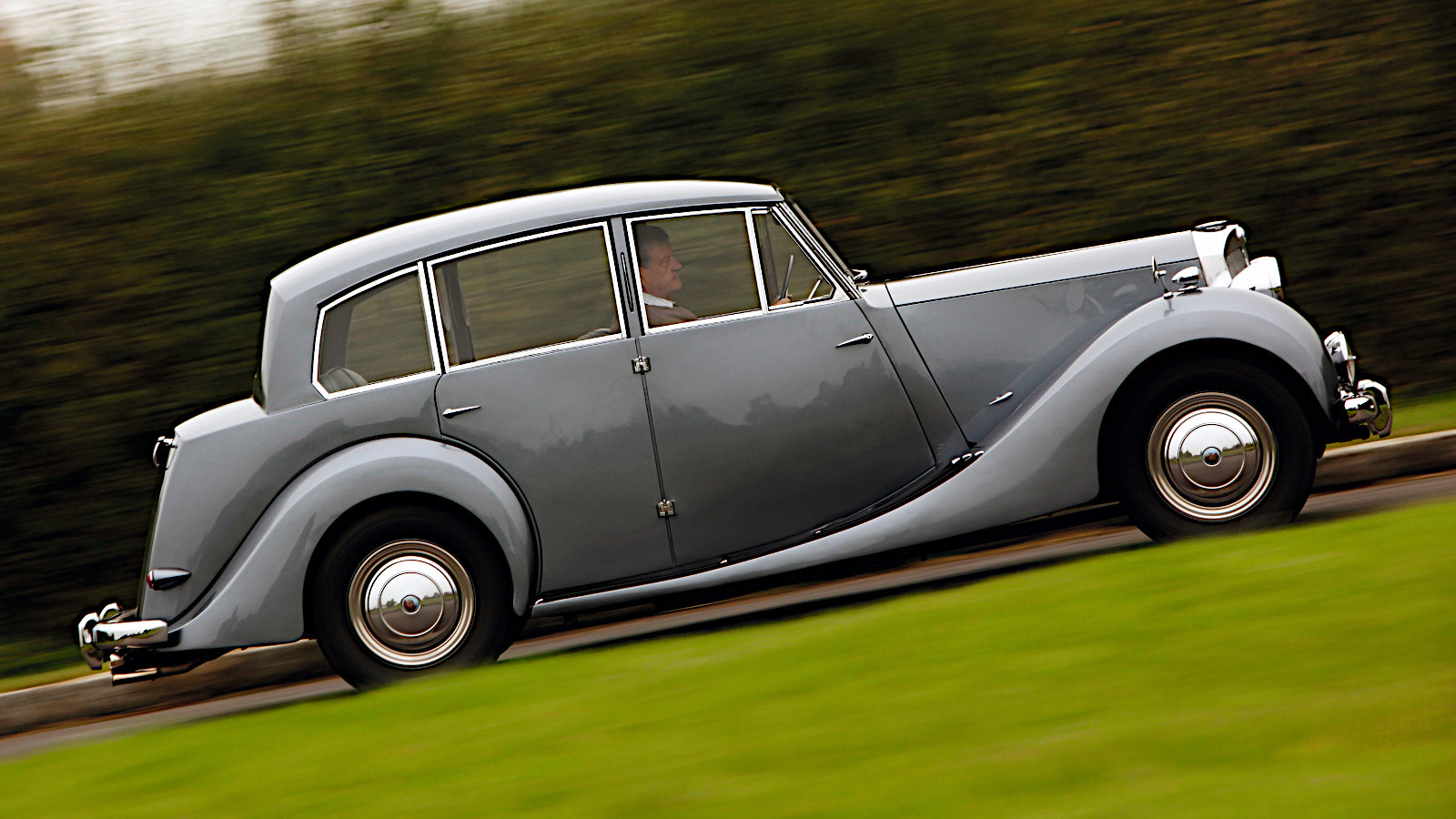
7. Triumph Renown (1949)
Along with the Roadster, Triumph produced the 1800 and 2000 saloons which followed the Roadster’s development very closely, including the switch from one Standard engine to the other.
In late 1949, the 2000 was given several updates, including a new chassis, and became known as the Renown.
A limousine version was 3in (76mm) longer, and the new dimensions were carried over to an updated Renown in 1952.
All of these cars, referred to as ‘razor-edge’ due to some elements of their styling, had four-cylinder engines, and the Renown was only ever powered by the 2088cc unit.
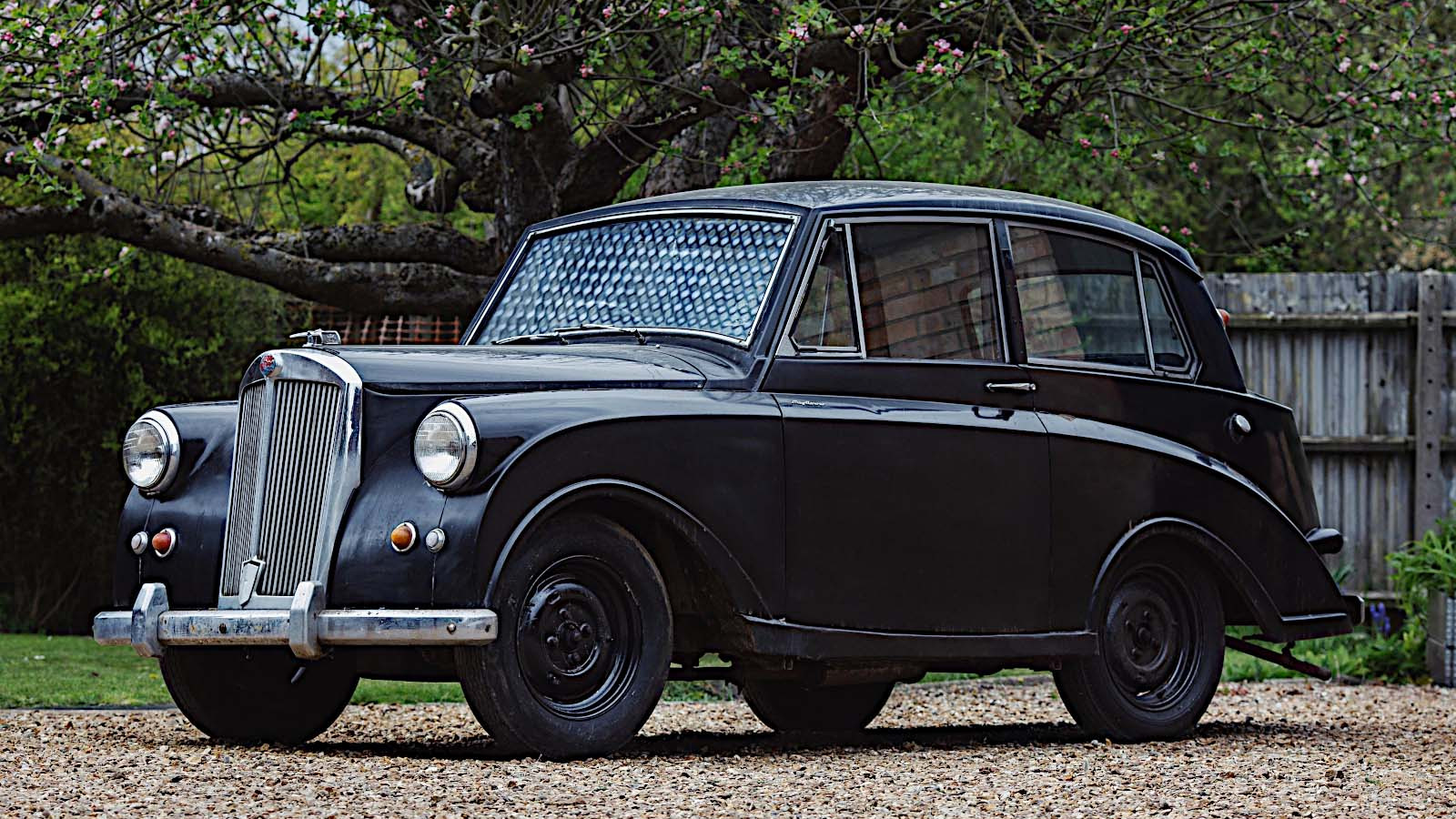
8. Triumph Mayflower (1950)
The Triumph Mayflower was developed in the hope that there might be a lot of interest in an upmarket small car, particularly in the USA.
Unibody construction and independent front suspension were suitably modern, but the sidevalve layout of the 1247cc engine decidedly wasn’t.
Extra pressure on the model’s sales potential was applied by the body styling, which was even more razor-edged than that of the Renown and preceding saloons.
Lack of public enthusiasm led to the Mayflower being cancelled in 1953, and there would not be another Triumph saloon until nearly the end of the decade.
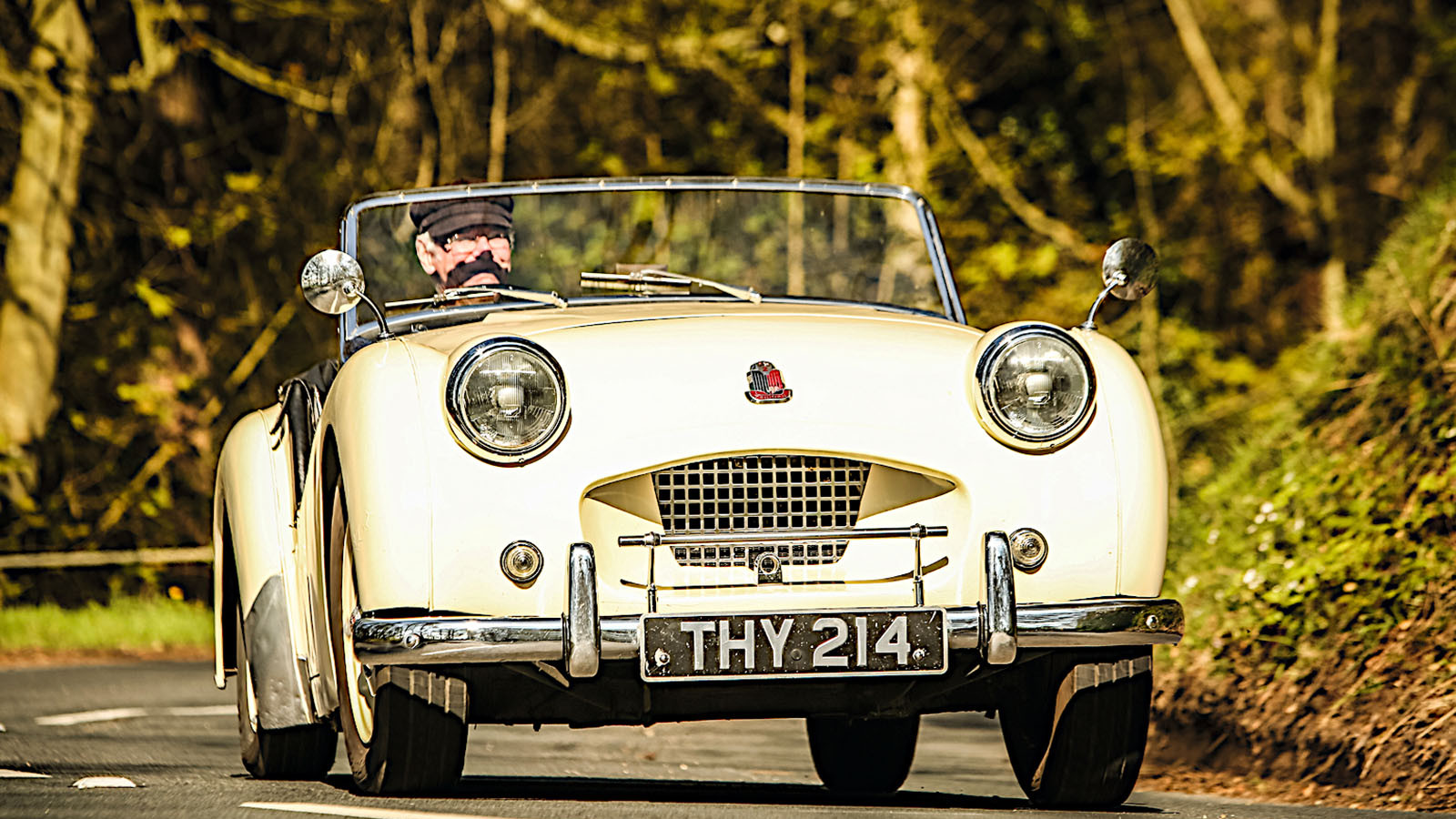
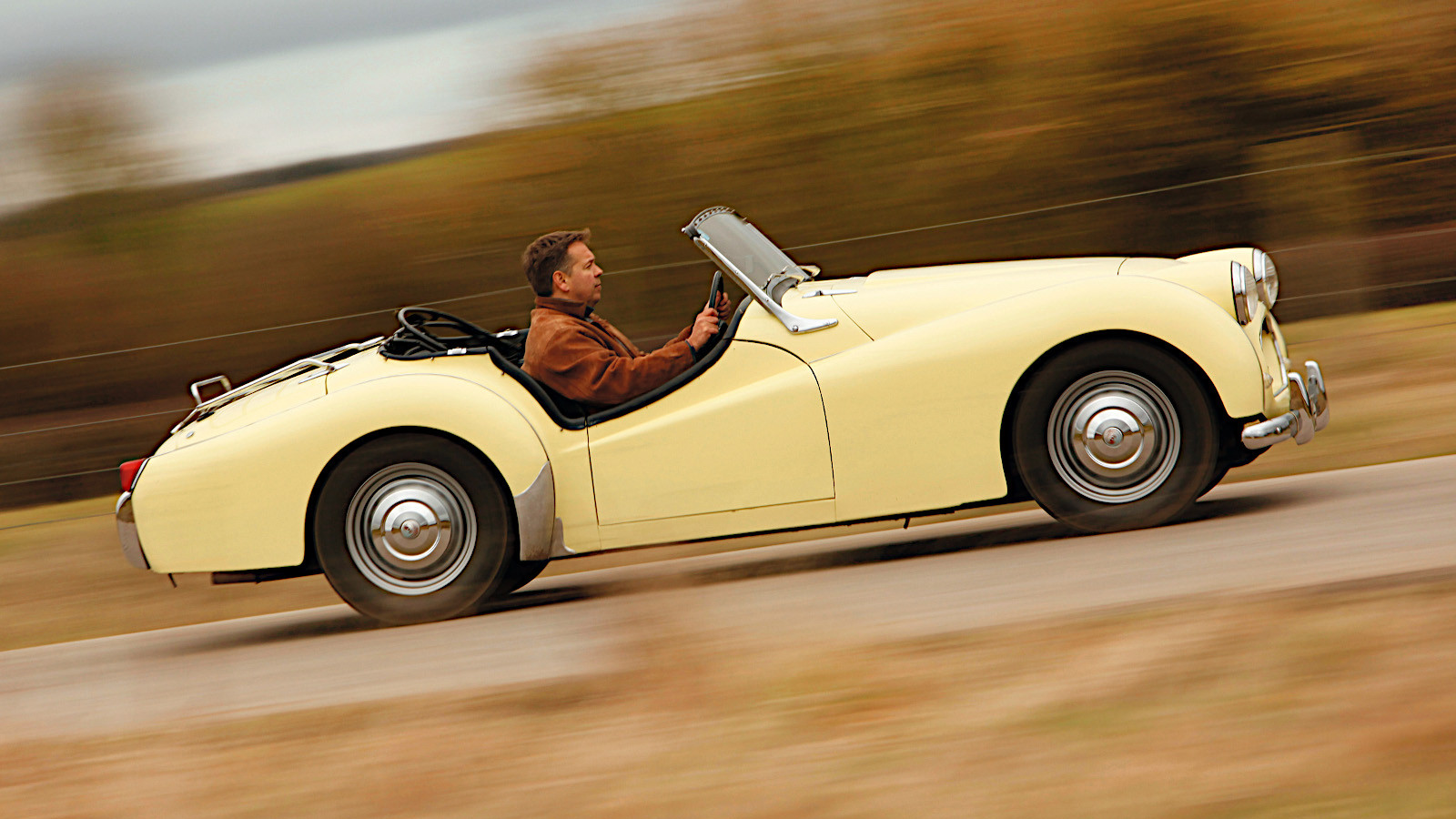
9. Triumph TR2 (1953)
The TR2 was the first in a long line of TR sports cars which, for a large part of the 1950s, were the only models in the Triumph catalogue.
The wet-liner engine already used in later Roadsters, the 2000 saloon and the Renown had its bore reduced, lowering the capacity to 1991cc, but thanks to several modifications it was actually more powerful than the 2088cc version with an output of 90bhp.
Reportedly the cheapest British car capable of more than 100mph, it quickly became both popular and successful in motorsport, notably finishing first, second and fifth in the 1954 RAC Rally.
Perhaps more importantly, the Triumph TR2 was a big hit in the USA at a time when exports across the Atlantic were vital to the fortunes of almost every British car maker.
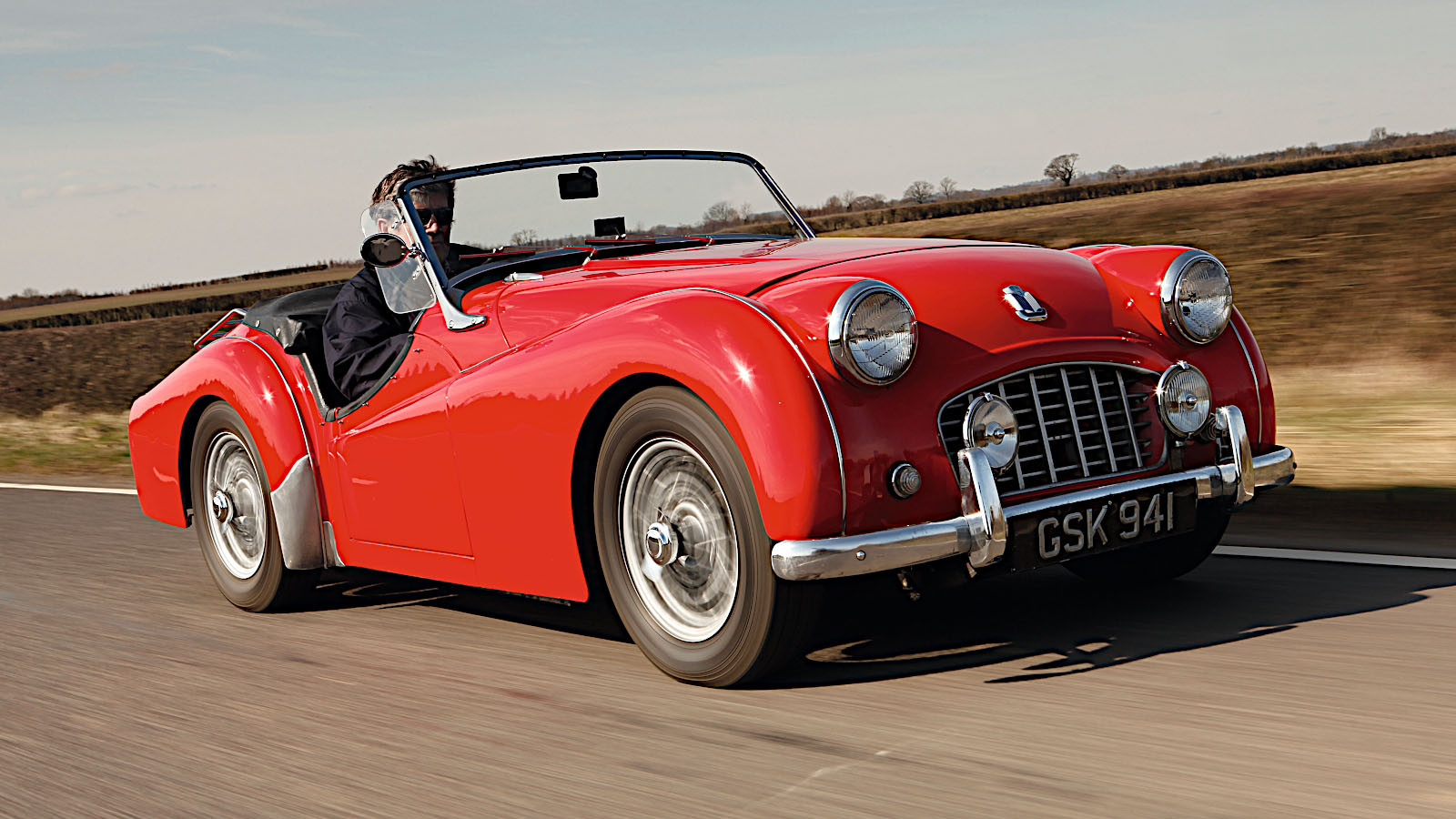
10. Triumph TR3 (1955)
Although the dates suggest that the TR2 was replaced after only two years, it would be more accurate to say that Triumph simply changed its name during one of several updates.
The 1991cc wet-liner engine was still used, though it now produced more power, and close to the end of TR3 production its capacity was increased (by another change in bore size) to a highest-ever 2138cc.
To a casual observer, the last TR3 looks very much like the first TR2, but that could not be said of the Triumph Italia 2000 Coupé.
Built in Italy, this car was mechanically identical to the TR3 but had a body designed by Giovanni Michelotti, who would subsequently contribute his skills to nearly every Triumph model thereafter.
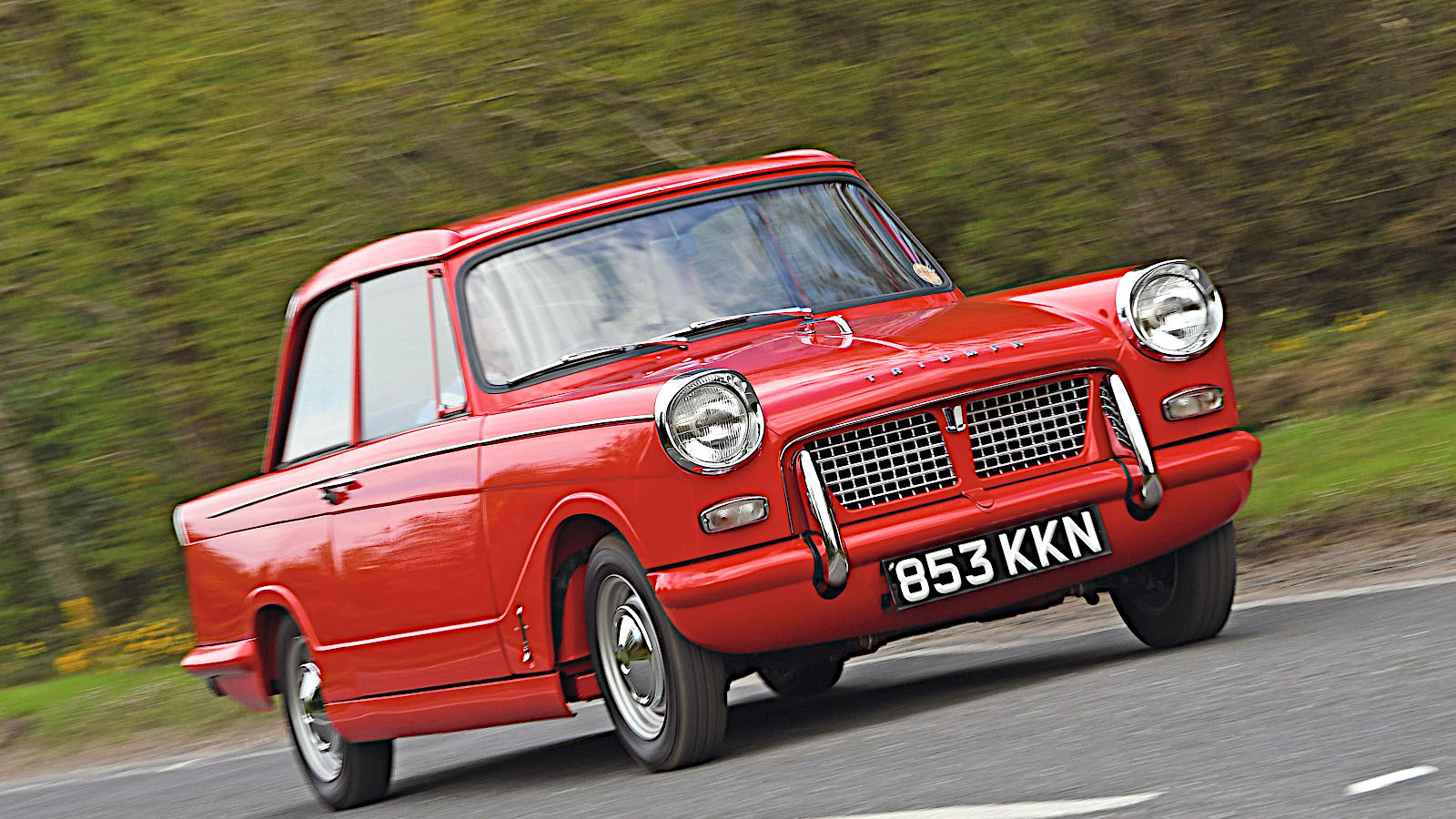
11. Triumph Herald (1959)
The Herald was Triumph’s first saloon since the Mayflower, and in a sense a backward step from that car in that its body was attached to the chassis rather than those items being part of the same structure.
The advantage of this arrangement was that making the Herald available also as a coupé, a convertible, an estate and a van was relatively straightforward.
Its engine, first used in 803cc form in the Standard Eight of 1953, was the Standard SC, though by the time the Herald came along it had been enlarged to 948cc.
Further developments saw its capacity rise still further, first to 1147cc and then to 1296cc, though the Herald (unlike other Triumphs) was never fitted with the largest version of all.
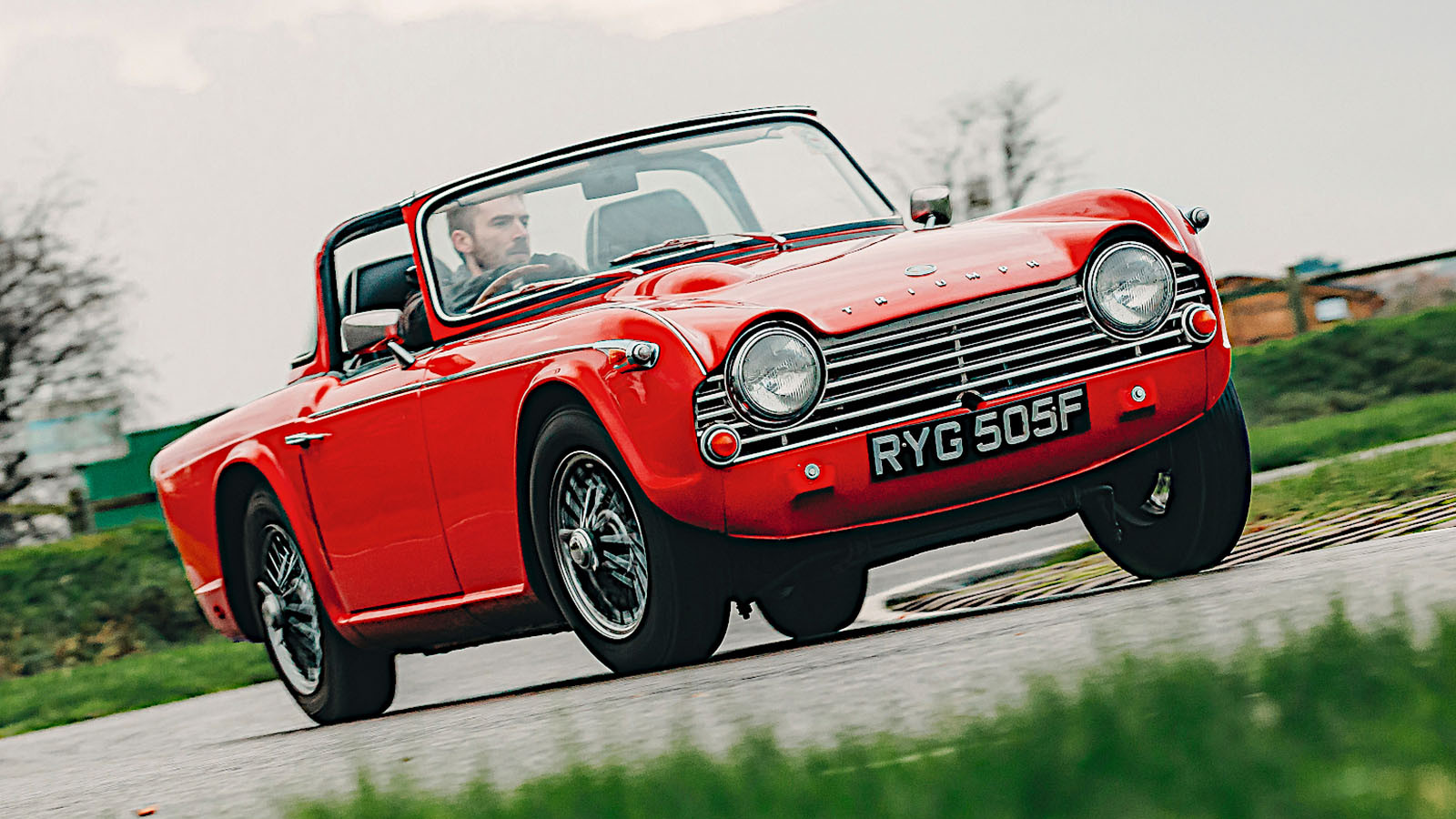
12. Triumph TR4 (1961)
A few months after Standard and Triumph were acquired by Leyland, the TR3 was replaced by another sports car which looked very different thanks to its Michelotti-designed body.
Wider than the earlier TR models, and with more space, and without the characteristic ‘cutaway’ doors, the TR4 was mechanically similar, being powered by the 2138cc version of the by now well-established Standard wet-liner engine.
Independent rear suspension was introduced in 1965, though in the USA the original live-axle arrangement remained popular.
The Triumph TR5 launched in 1967 looked very much like the TR4, but its engine was a 2498cc straight-six, and from then until the middle of the next decade there would be no more four-cylinder TRs.
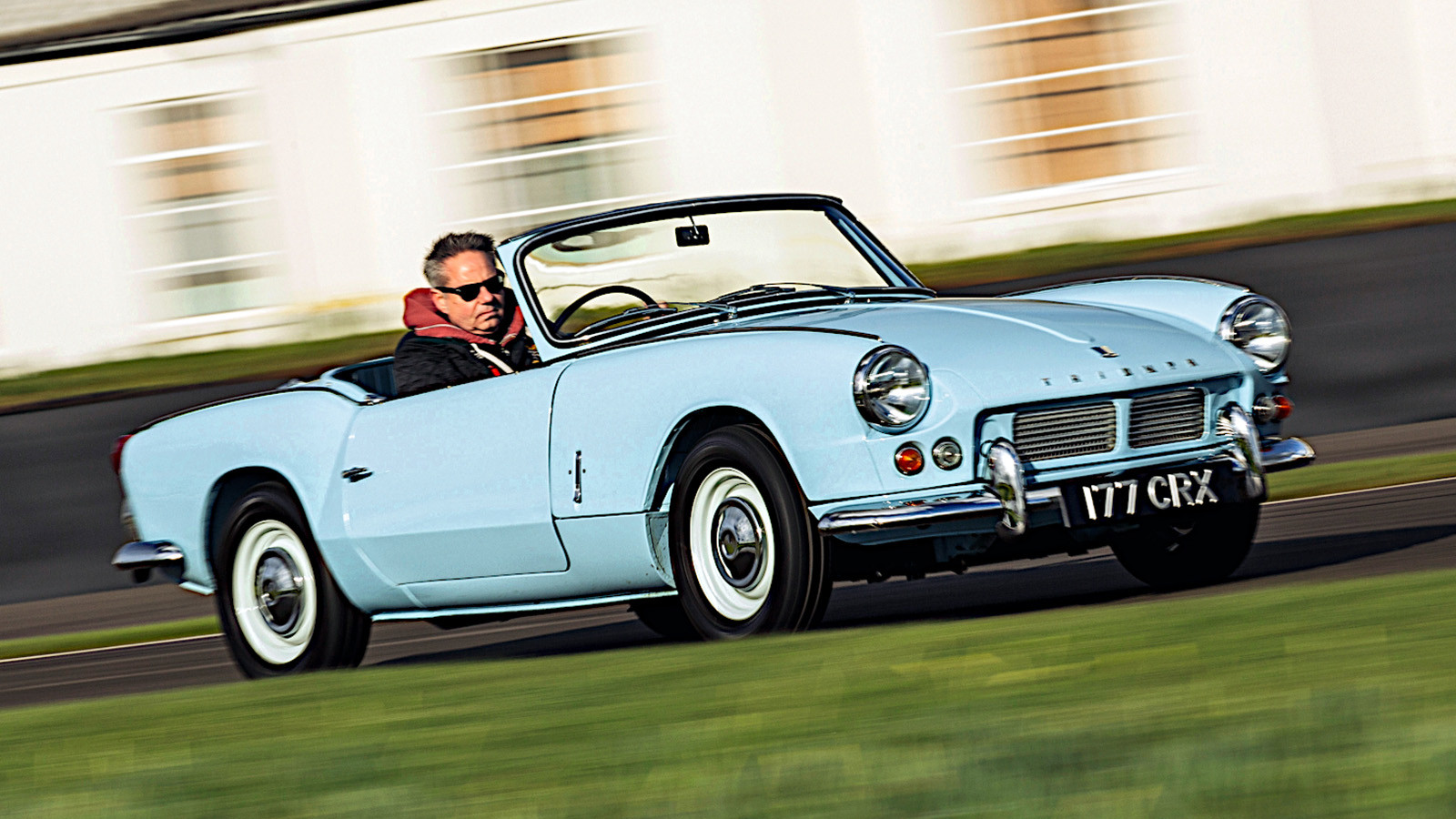
13. Triumph Spitfire (1962)
The Triumph Spitfire was closely related to the Herald, with a shortened version of that car’s chassis, the same body-on-frame construction and the same Standard SC engine.
Over a long production run lasting until 1980, the Spitfire was updated several times, though its attractive appearance was altered only in detail.
Similarly, the SC developed gradually, starting out with a capacity of 1147cc (the Herald’s original 948cc version was never used) and growing first to 1296cc and eventually to 1493cc.
The Spitfire was a strong rival to the Austin-Healey Sprite and MG Midget, and as unlikely as this would have seemed in the early years of all three, the SC engine eventually replaced the Midget’s BMC A-series, a move made possible after MG and Triumph became siblings within British Leyland.
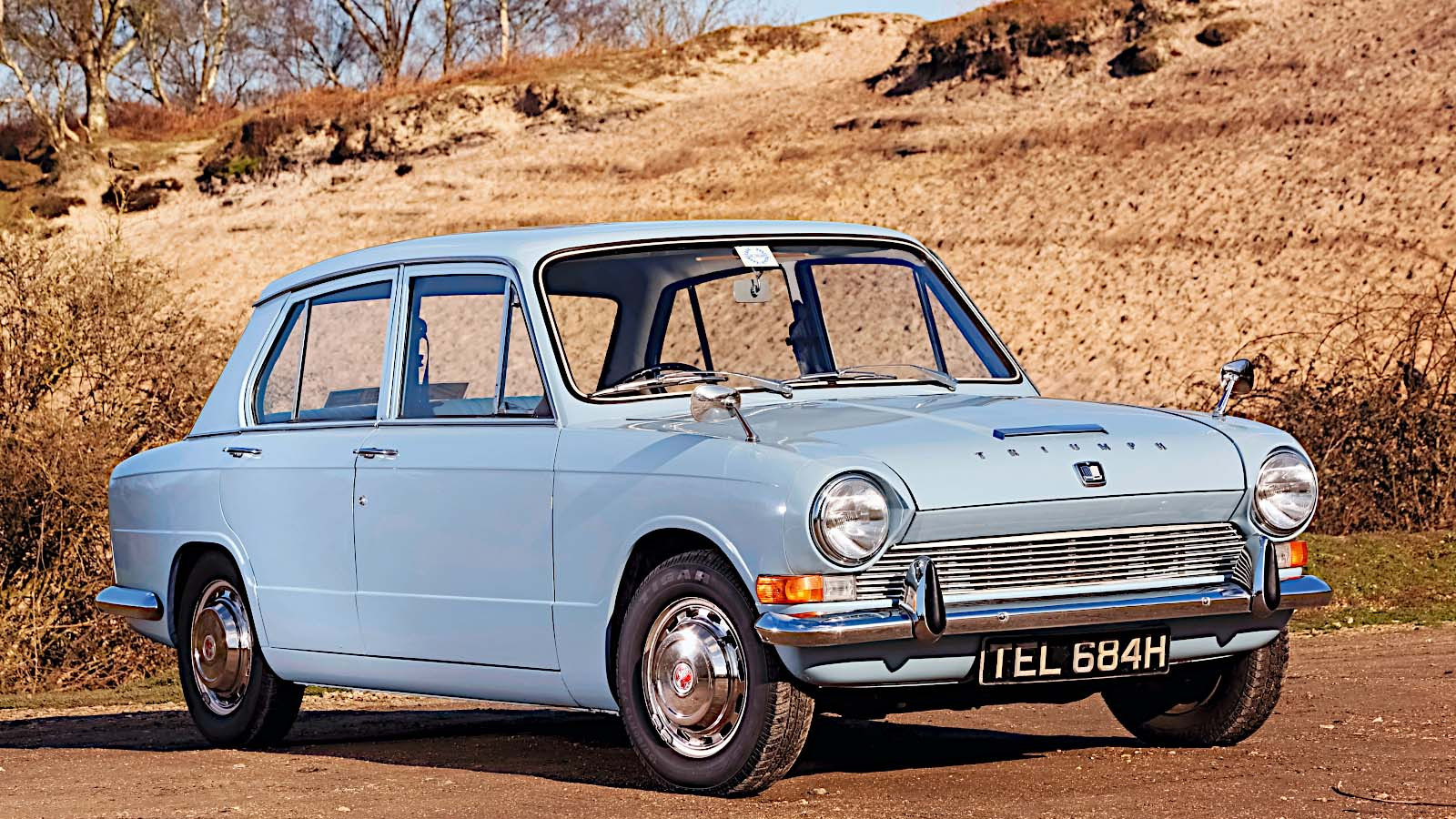
14. Triumph 1300 (1965)
Although Michelotti made it look rather like a junior version of the earlier six-cylinder 2000, the 1300 was a landmark car in its own right, being Triumph’s first model with front-wheel drive.
This high-quality, three-box saloon with unibody construction was powered by the 1296cc Standard SC engine which, unusually though not uniquely for a FWD car, was mounted longitudinally, with the gearbox sitting underneath it.
For the 1300TC of 1968, the SC motor was given twin carburettors, a move which, in addition to other changes, raised its power output significantly from 60bhp to 75bhp.
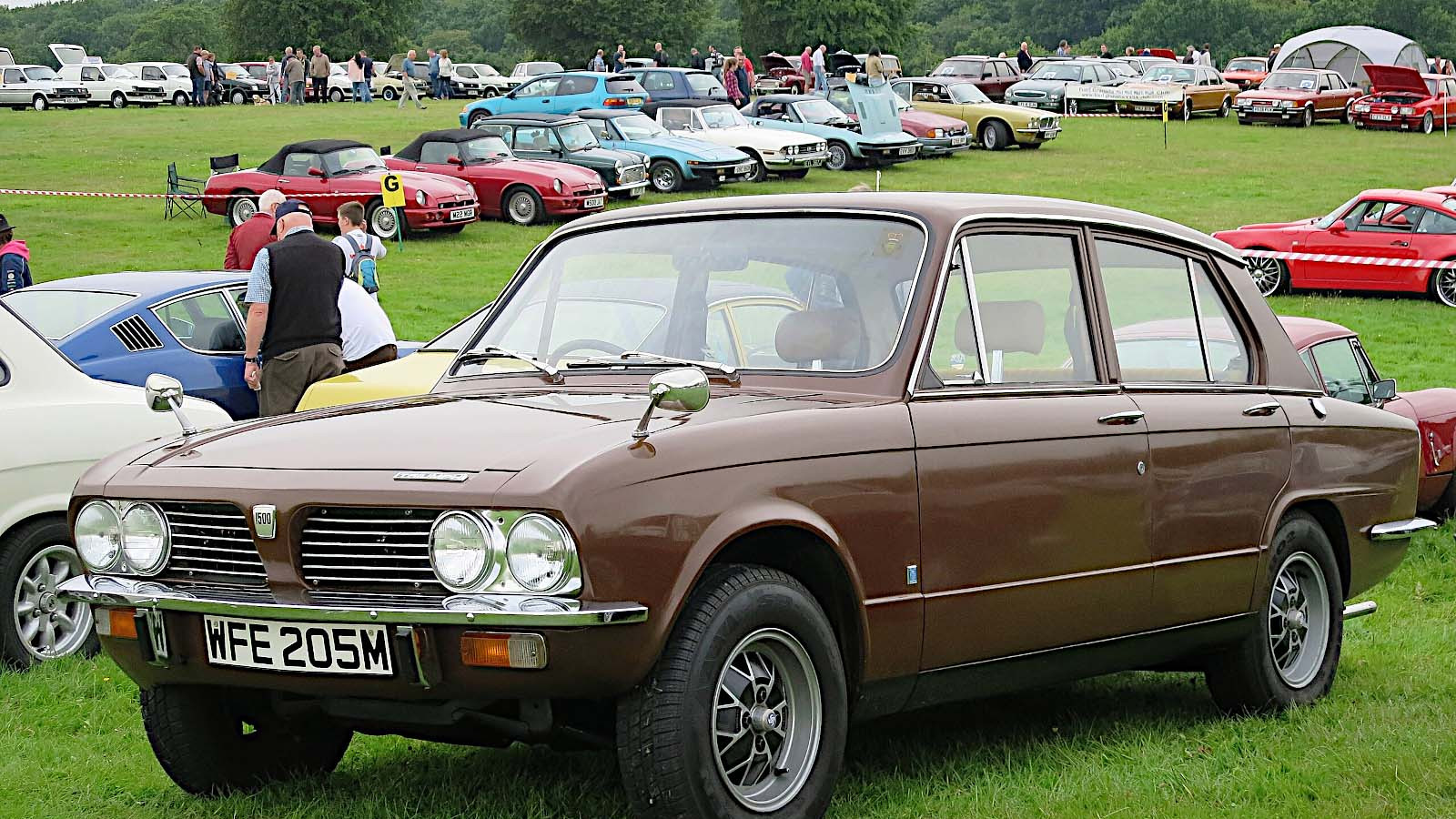
15. Triumph 1500 (1970)
In its original form, the Triumph 1500 was broadly speaking a more powerful version of the 1300, with the 1493cc version of the same Standard SC engine.
The front and rear styling were significantly different, however, one of the changes being a quad-headlight arrangement, and there was also a switch from independent rear suspension to a less sophisticated (but cheaper) beam axle.
In the 1500TC form introduced in 1973, the car not only had the twin carburettors implied by its revised name but was also – in one of the most startling mid-life updates in motoring history – re-engineered to have rear- rather than front-wheel drive.
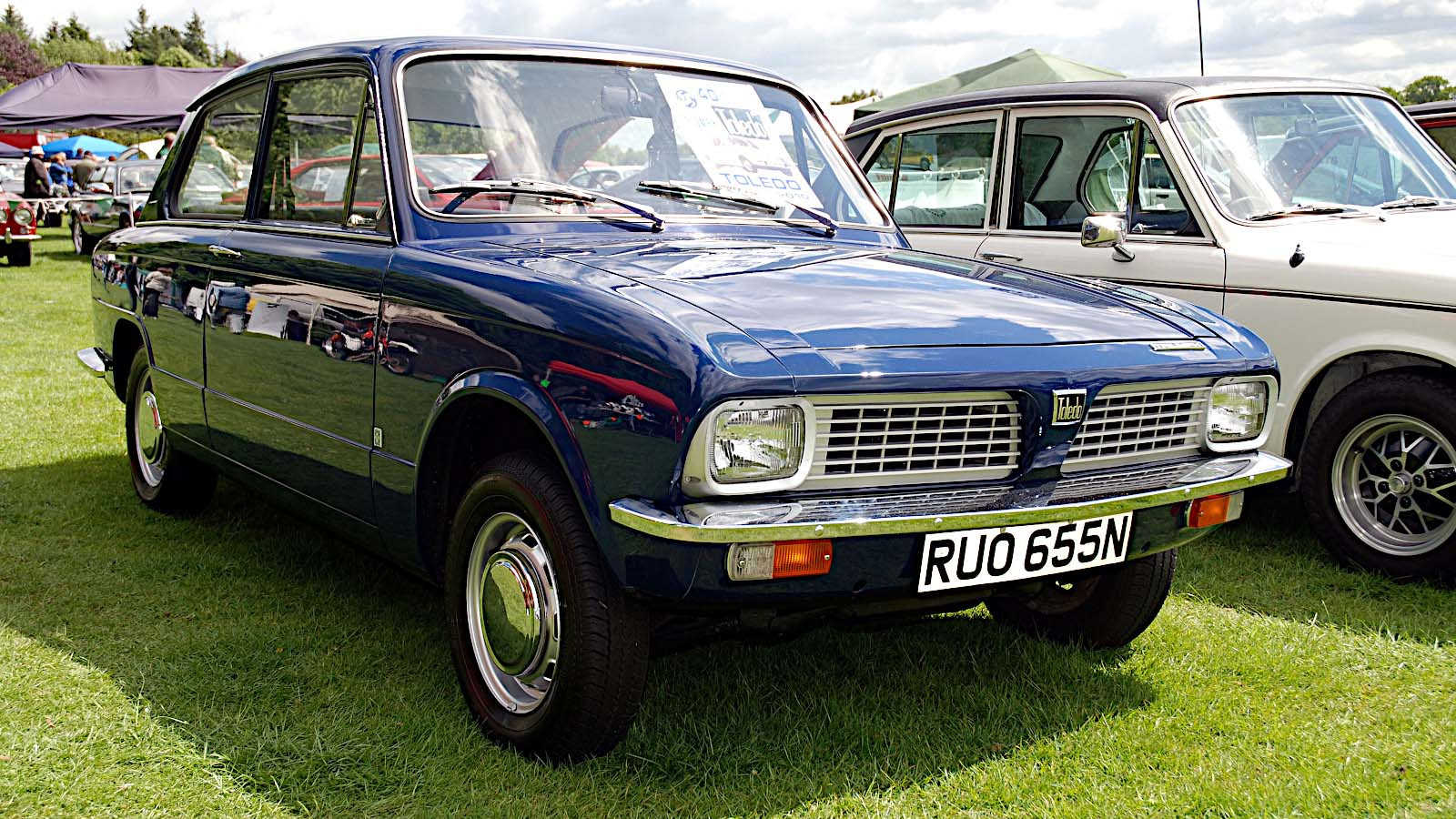
16. Triumph Toledo (1970)
The 1500’s astonishing transformation was previewed three years earlier with the introduction of the Triumph Toledo.
To a large extent, this was an update of the existing 1300, but with the conventional (for the time) rear-wheel-drive layout rather than the 1300’s front-wheel drive.
Described in UK advertisements as ‘the natural successor to the Triumph Herald’, the Toledo was only ever offered as a two-door saloon with the 1296cc SC engine on its home market, but it was available elsewhere with four doors and the 1493cc SC.
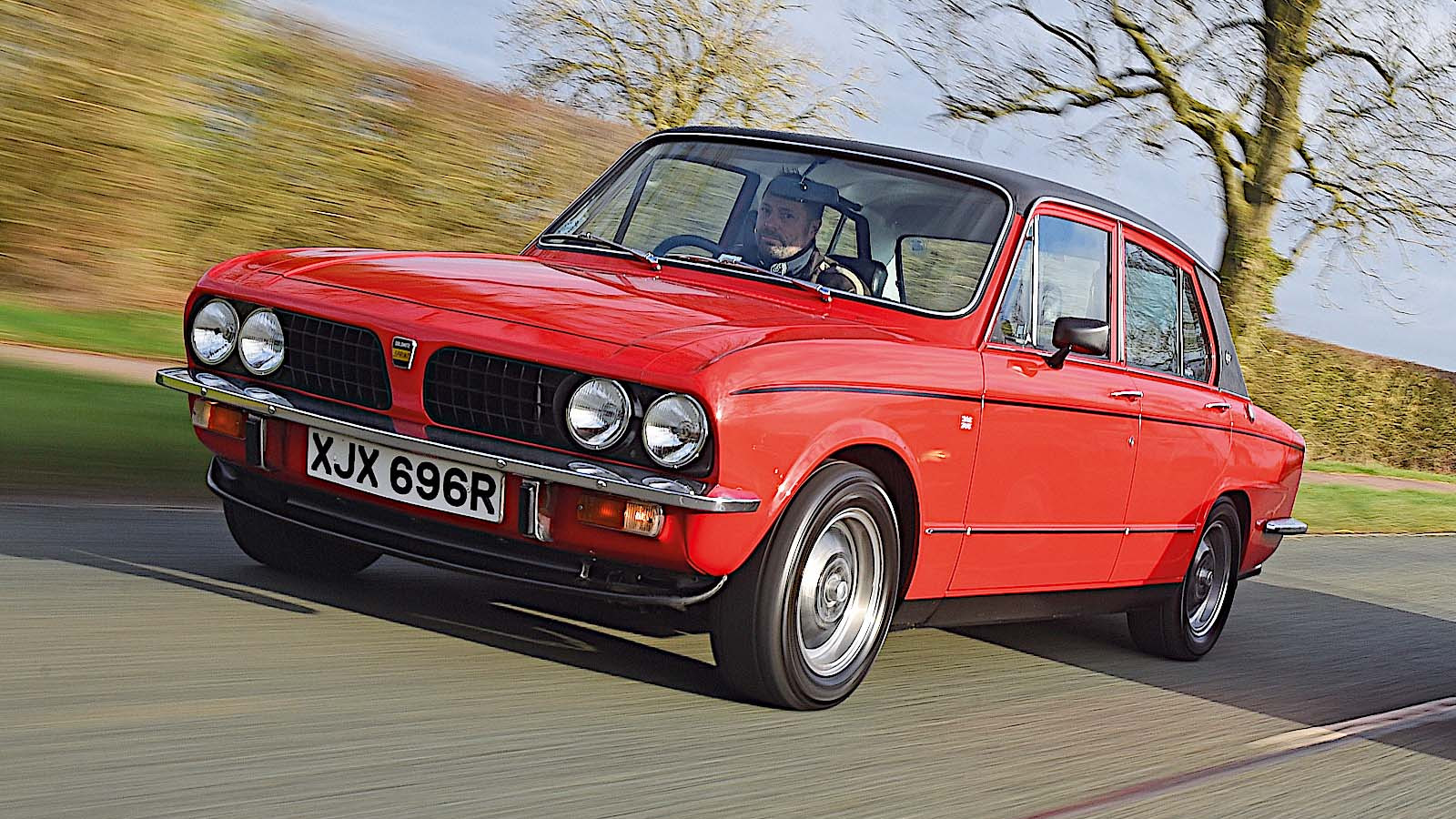
17. Triumph Dolomite (1972)
The second of the Dolomite models was the first four-cylinder Triumph saloon since the Mayflower not to be powered by the Standard SC engine in any of its forms.
Instead, it was fitted with an 1854cc version of Triumph’s slant-four, which had been developed for Saab and was used exclusively by the Swedish marque from 1968 until the arrival of the Dolomite.
A 2-litre derivative of this unit with four valves per cylinder – making 16 in total, all of them operated by a single camshaft – was used in the Triumph Dolomite Sprint (pictured), which soon gained a reputation as a fine sporting saloon, and performed splendidly in racing and rallying.
Despite all of the above, the SC engine eventually found a place in the range when the Triumph saloon line-up was rationalised and the 1300 and 1500 became known as Dolomites.
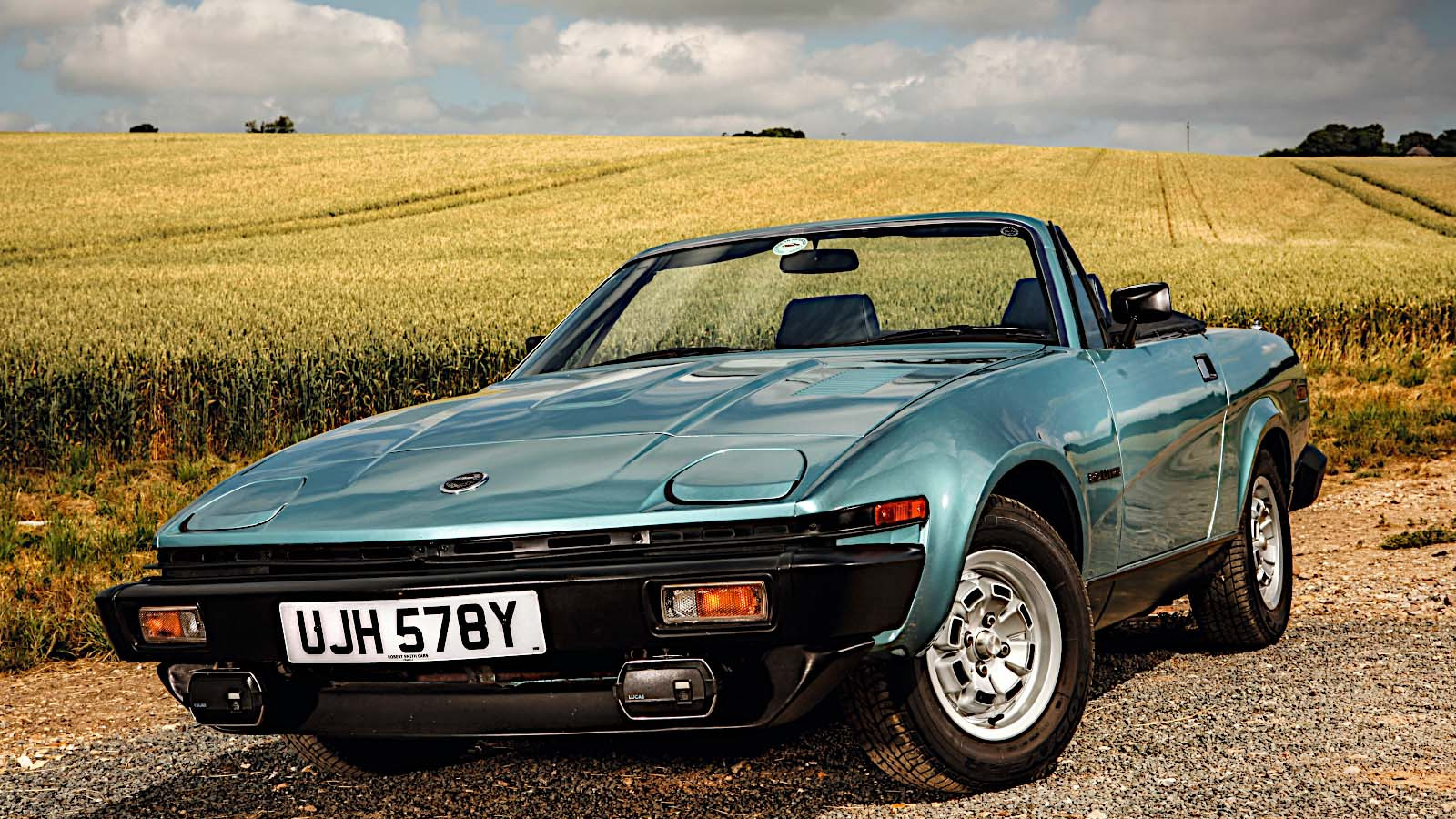
18. Triumph TR7 (1975)
After nearly a decade of building the straight-six TR5 and TR6, Triumph reverted to a four-cylinder engine for the TR7 – effectively the last car in the series, because the Rover-powered TR8 was derived from it rather than being a completely separate model.
The old Standard wet-liner used in the earliest TRs was long gone by now, but there was a suitable replacement in the form of the slant-four, which in this application had a capacity of 1998cc.
The wedge-shaped styling of both the original hardtop and the later convertible (pictured) was controversial, but that didn’t prevent the car from finding more than 100,000 customers, a figure unmatched by any other TR.
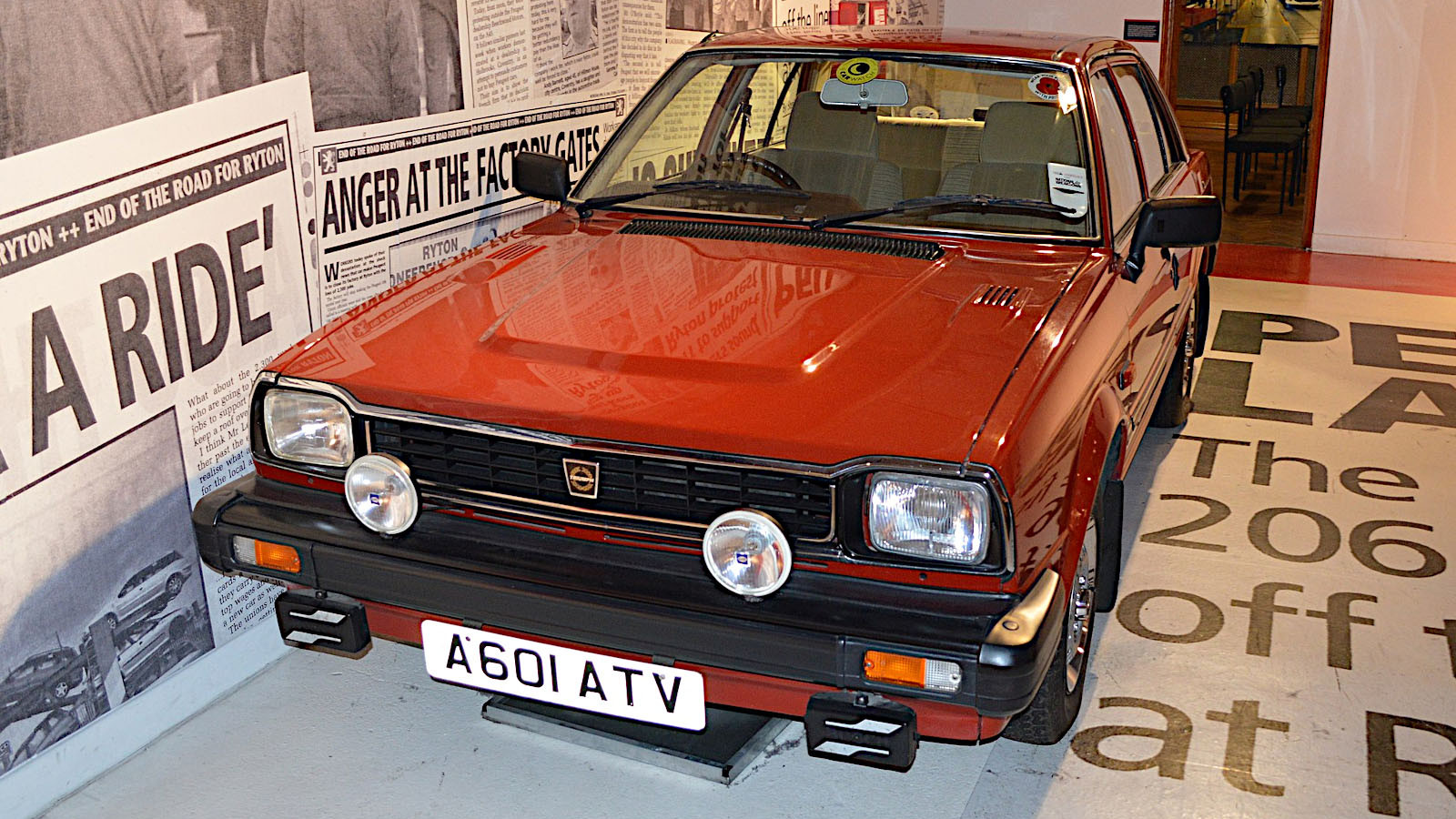
19. Triumph Acclaim (1981)
Created during a period of tremendous difficulty for British Leyland, the Acclaim was a UK-built version of the Honda Ballade (a four-door saloon very closely related to the second-generation Civic) and powered by a 1335cc Honda engine.
The tie-up was viewed with suspicion at a time when Japanese cars were far less popular among British motorists than they have since become, but it was maintained for several years as BL was transformed first into Austin Rover and then the Rover Group.
The Acclaim itself was short-lived, lasting only until 1984 when, along with Morris, and after Austin, Riley and Wolseley, the Triumph marque was retired.
In an exact reversal of the 10/20 situation six decades earlier, the last four-cylinder Triumph was therefore also the last Triumph car of any kind.