
The fabulous ’50s
It’s possible, and perhaps forgivable, to look back today on the period from 1950 to 1959 as rather dull, but it wouldn’t have seemed like that at the time.
This was the first full decade since the Second World War, when the world in general – and the motor industry in particular – was rebuilding itself and looking towards the future.
Car manufacturers, many of which no longer exist today, produced an incredible variety of new models, and here we are examining that by restricting ourselves to saloon cars designed and built in the UK.
There are so many examples that we’ve made life difficult by choosing just 20 and applying a rule that no marque appears more than twice in the list, which we feel is still enough to demonstrate the point.
The cars are presented in alphabetical order.
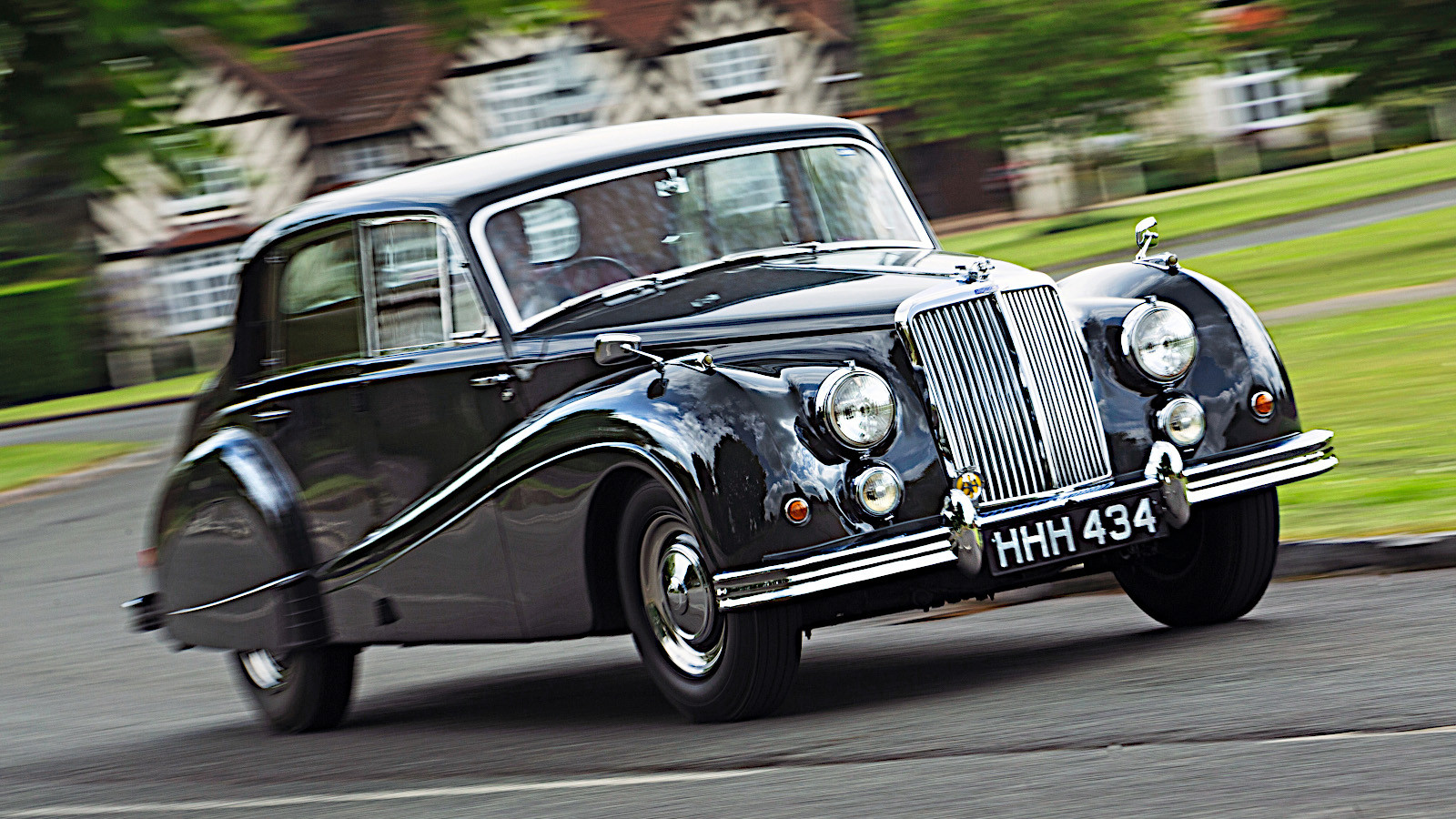
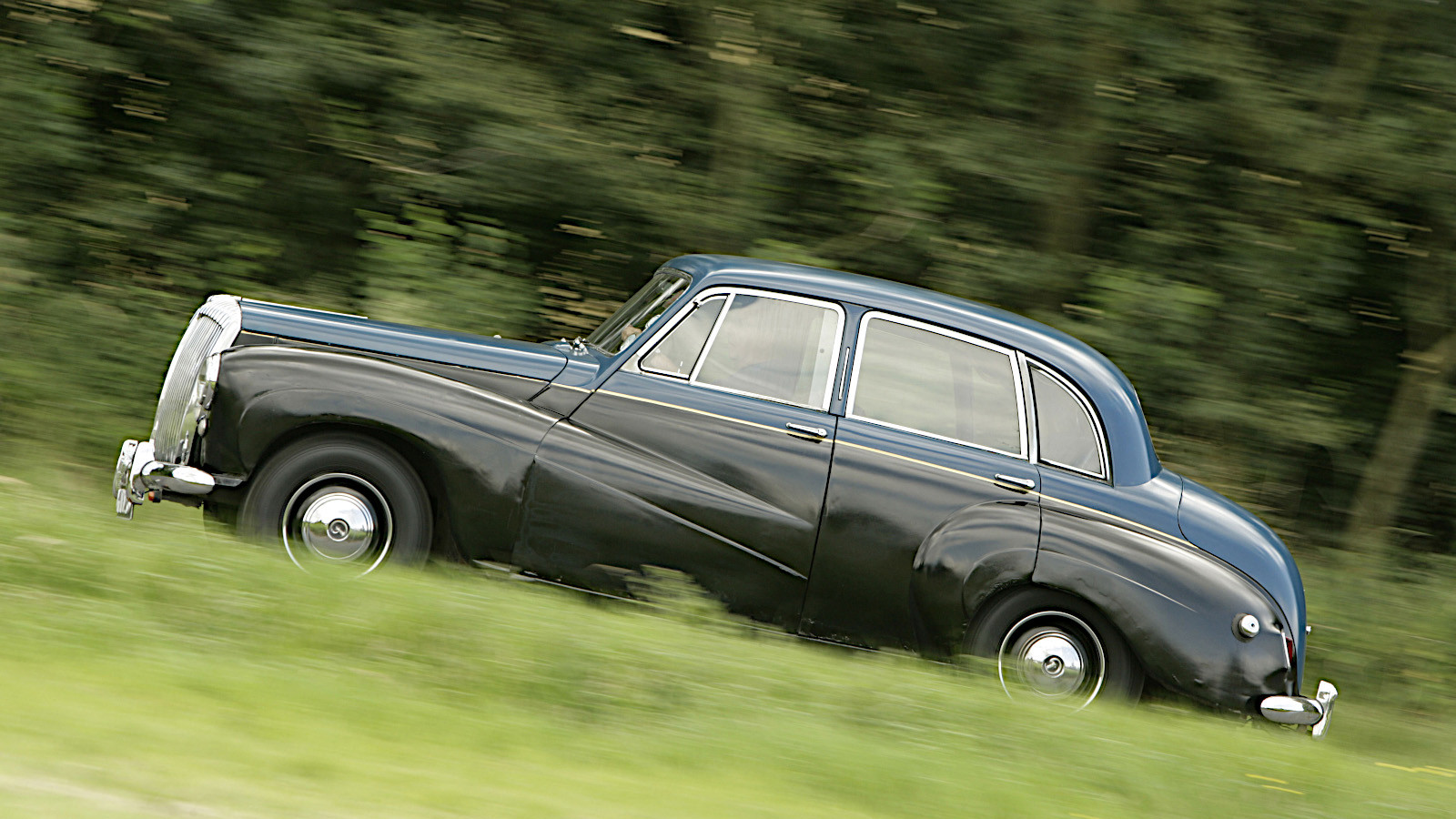
1. Armstrong Siddeley Sapphire 346
The Armstrong Siddeley company was created in 1919 through a merger of the former Siddeley-Deasy and Armstrong Whitworth.
In the 1950s, it produced several models known as Sapphire, the first being the 346 of 1953 which was powered by a 3.4-litre, straight-six engine.
Very much a luxury model, it could just about be thought of in the same terms as the Bentley MkVI, though it was considerably cheaper and somewhat less powerful.
The Sapphire name was also used for the 234 and 236 (two versions of the same car with either a four- or a six-cylinder engine) which had a far more modern appearance due to the lack of the 346’s extravagantly curved front and rear wings.
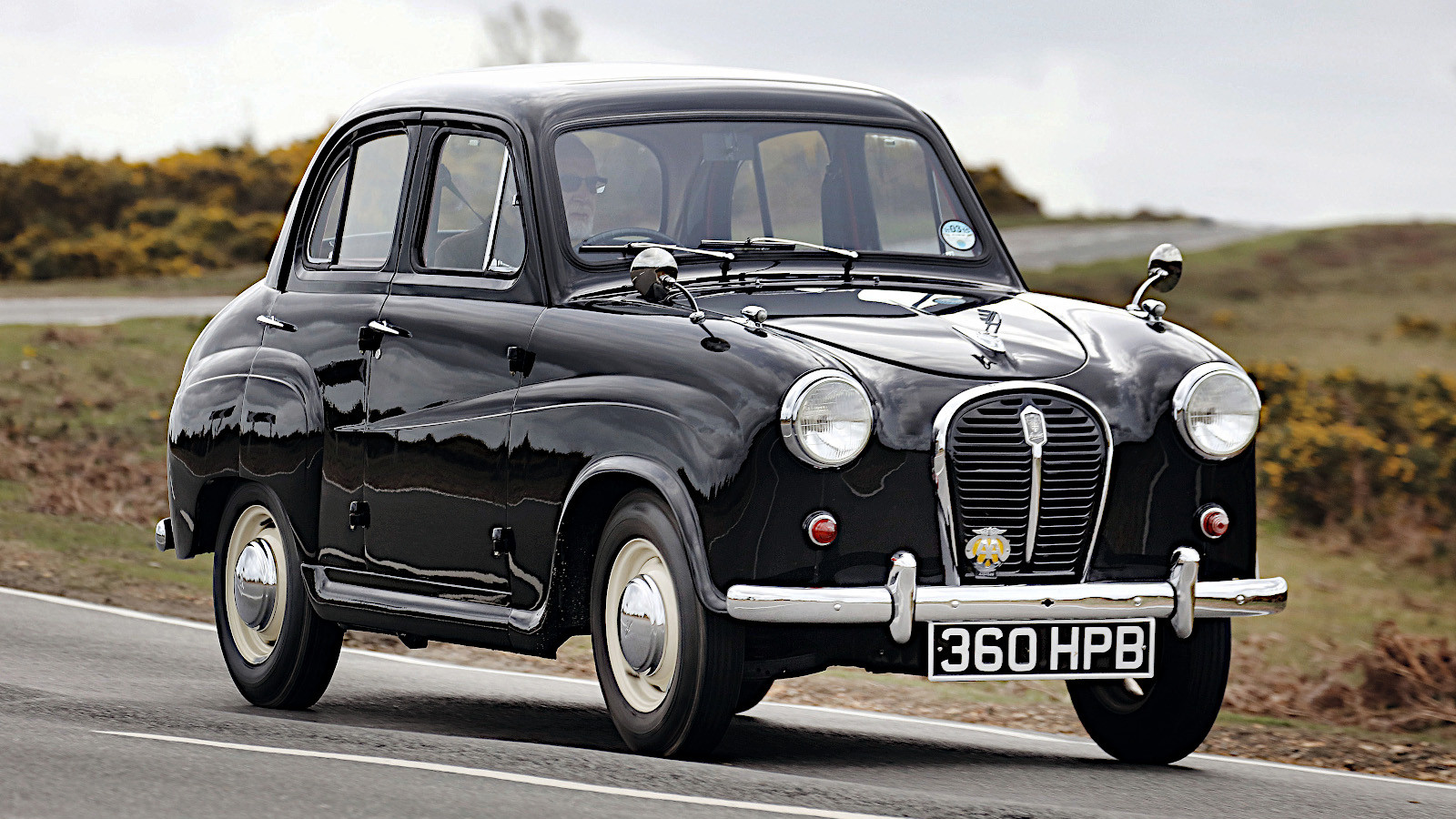
2. Austin A30 and A35
The Austin A30 was introduced in 1951 and was particularly notable for two things: remarkably stiff (for the time) unibody construction and an engine which would become very famous indeed.
The engine, now known as the BMC A-series but in fact Austin’s own work, would remain in production for decades, and reach a capacity of 1275cc for standard road cars (or nearer 1.5 litres for motorsport purposes), though in its original form it measured just 803cc.
The A30 was replaced in 1956 by the A35 (pictured), which was in most respects the same thing.
Changes included slightly revised styling (the rear window, for example, was larger than before) and a capacity increase to 948cc.
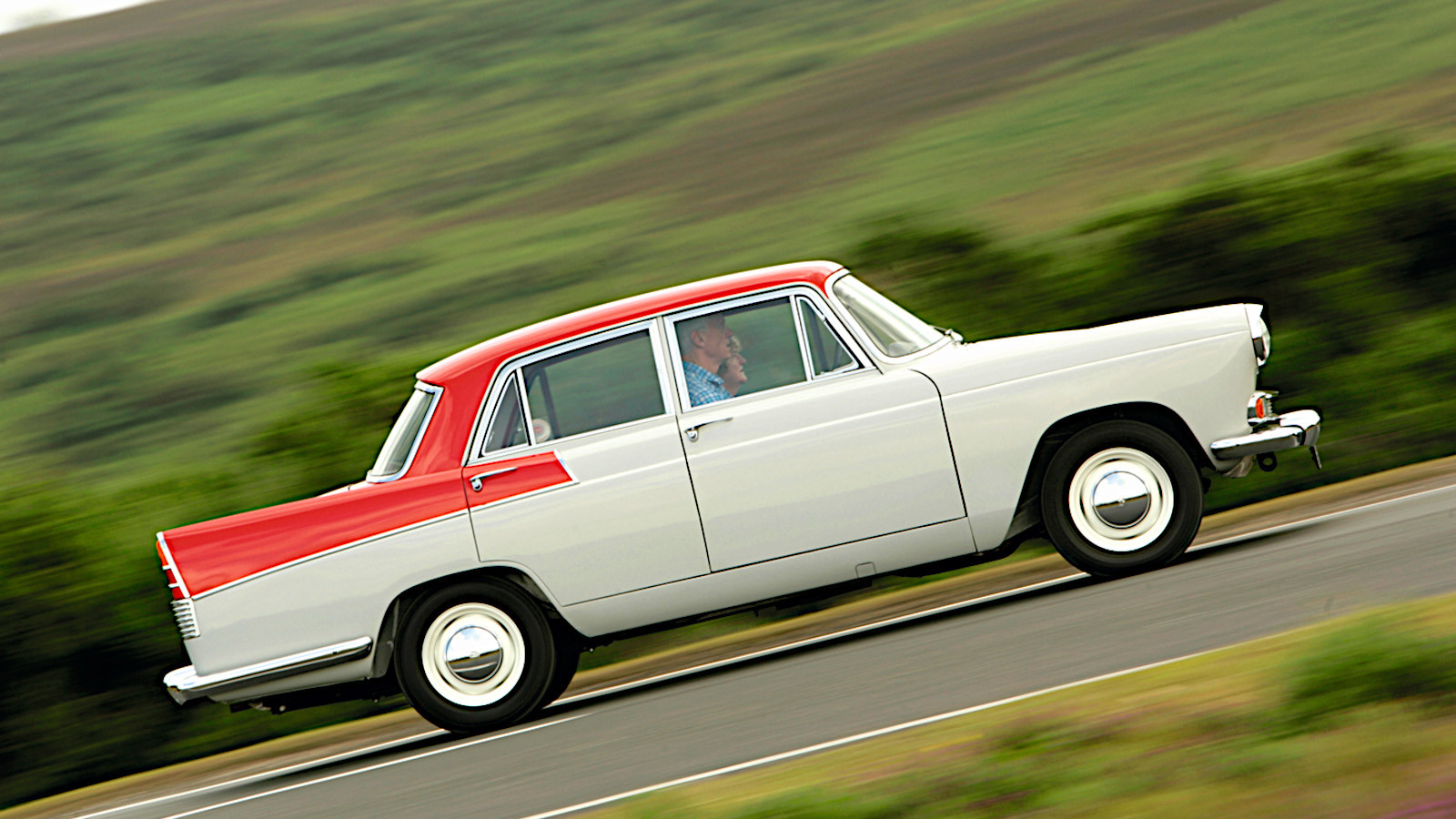
3. Austin A55 Cambridge
In well under a decade, Austin introduced five models whose names included a reference to the city of Cambridge.
All were powered by the Austin-designed, BMC B-series engine (measuring 1.2 litres at first but later 1.5), and the first three, known as the A40, A50 and A55, all looked broadly similar.
In 1959, the A55 name was used again for one of what are now known as the medium-sized Farina cars (pictured), a range which also included very similar models branded as MG, Morris, Riley and Wolseley.
Among other developments, the prominent rear wings they all shared were toned down substantially in 1961, at which point the Austin version became known as the A60 Cambridge.
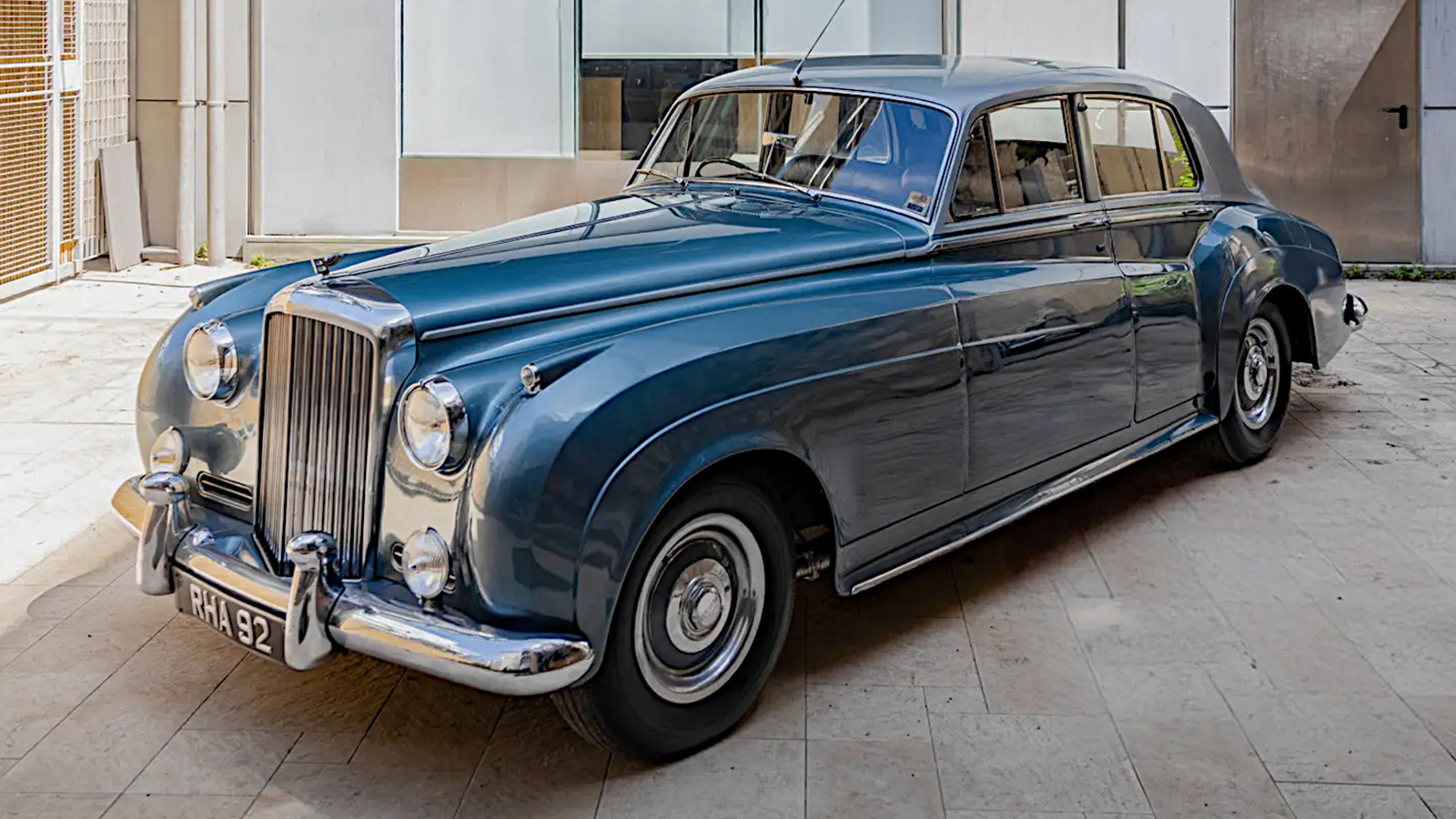
4. Bentley S2
Unimaginable as this would be today, or would have been a century ago, Bentleys of the 1950s were little more than mildly altered Rolls-Royces.
The S2 introduced in 1959, for example, was simply a Rolls-Royce Silver Cloud II with a different radiator grille, mascot and badging.
It’s noteworthy, however, in that it was the first Bentley powered by the then-new, 6230cc, L-Series V8 engine which, in twin-turbocharged 6750cc form, was still being fitted to the Mulsanne as late as June 2020.
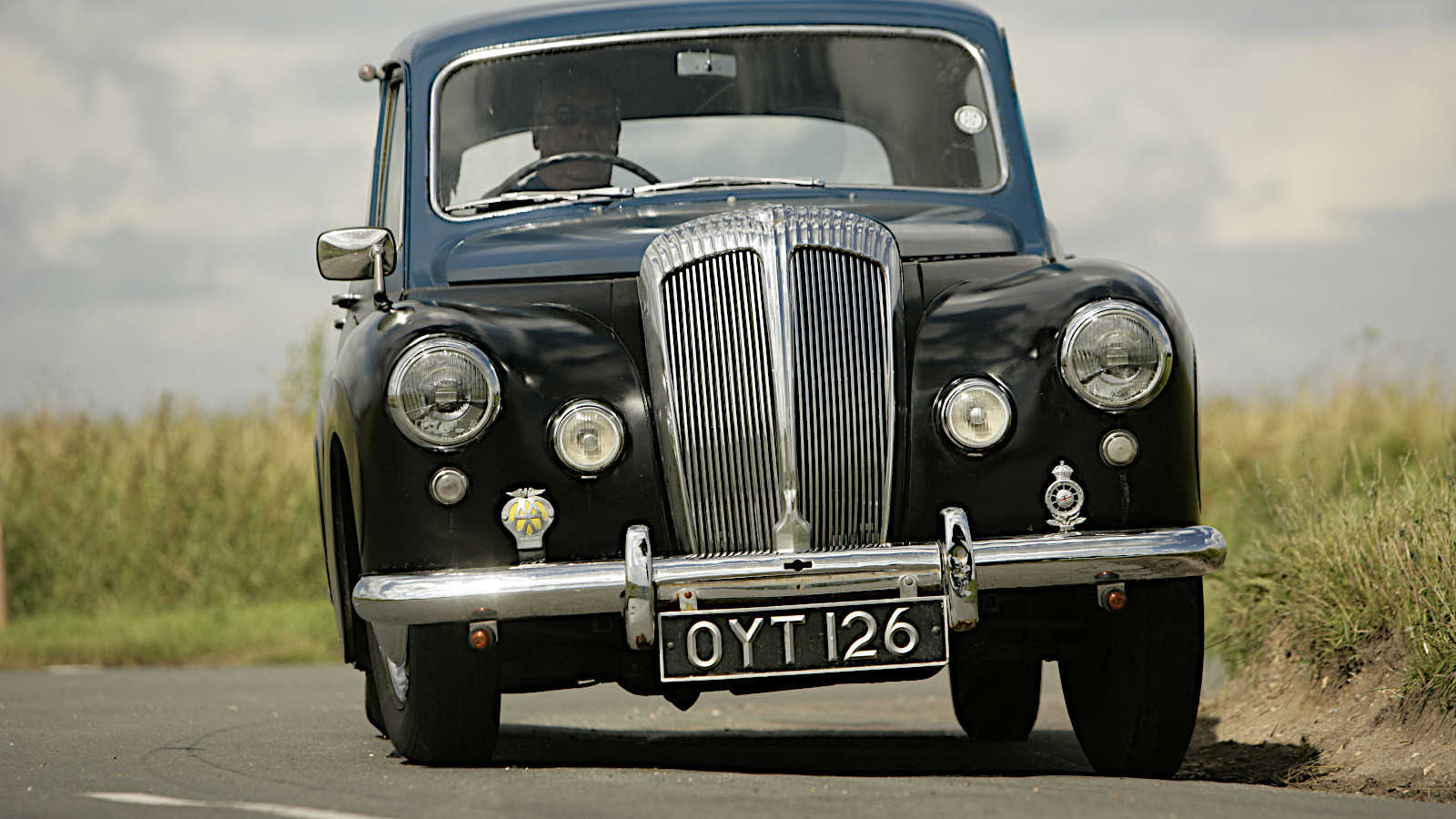
5. Daimler Conquest
On sale from 1953, the Conquest was closely related to the slightly earlier Fourteen and Leda models produced by Daimler’s subsidiary, Lanchester.
The main difference was that the Daimler had a 2433cc, straight-six engine rather than Lanchester’s 1968cc ‘four’.
The Conquest was available with roadster and drophead-coupé bodies, but the majority of the examples built were saloons.
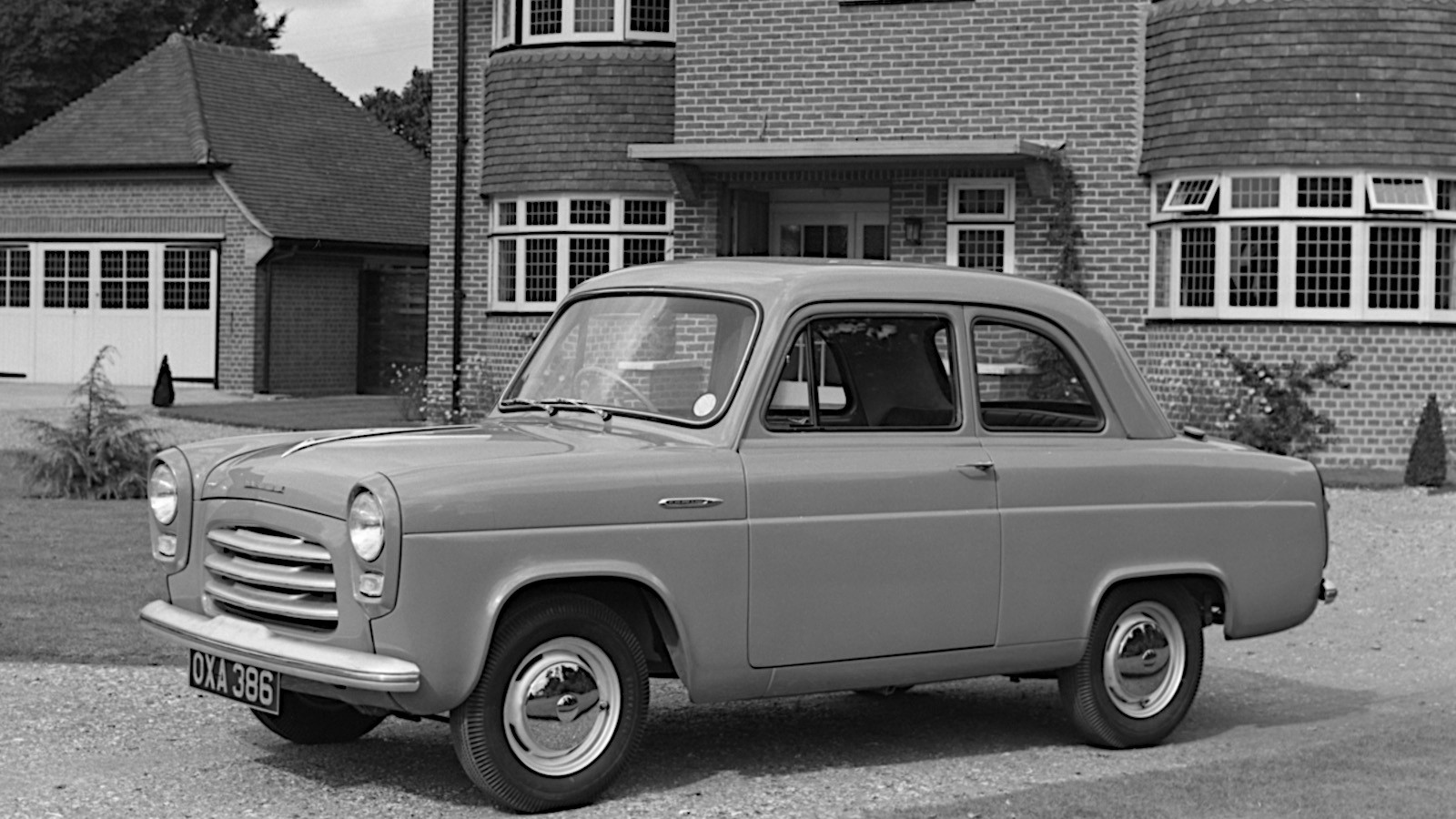
6. Ford Anglia
Ford of Britain used the Anglia name for small cars from just after the outbreak of the Second World War until 1967.
The only version whose production both began and ended in the 1950s (with a caveat which will appear two sentences from now), was the model codenamed 100E, one of a great many European Fords powered by the 1172cc sidevalve engine.
‘Anglia’ referred to the two-door saloon in the 100E range, while the more upmarket four-door was called Prefect, and estate derivatives were named Escort and Squire.
A new Anglia, the last of the line, came along in 1959, but the 100E version carried on for another three years, now badged as a Popular.
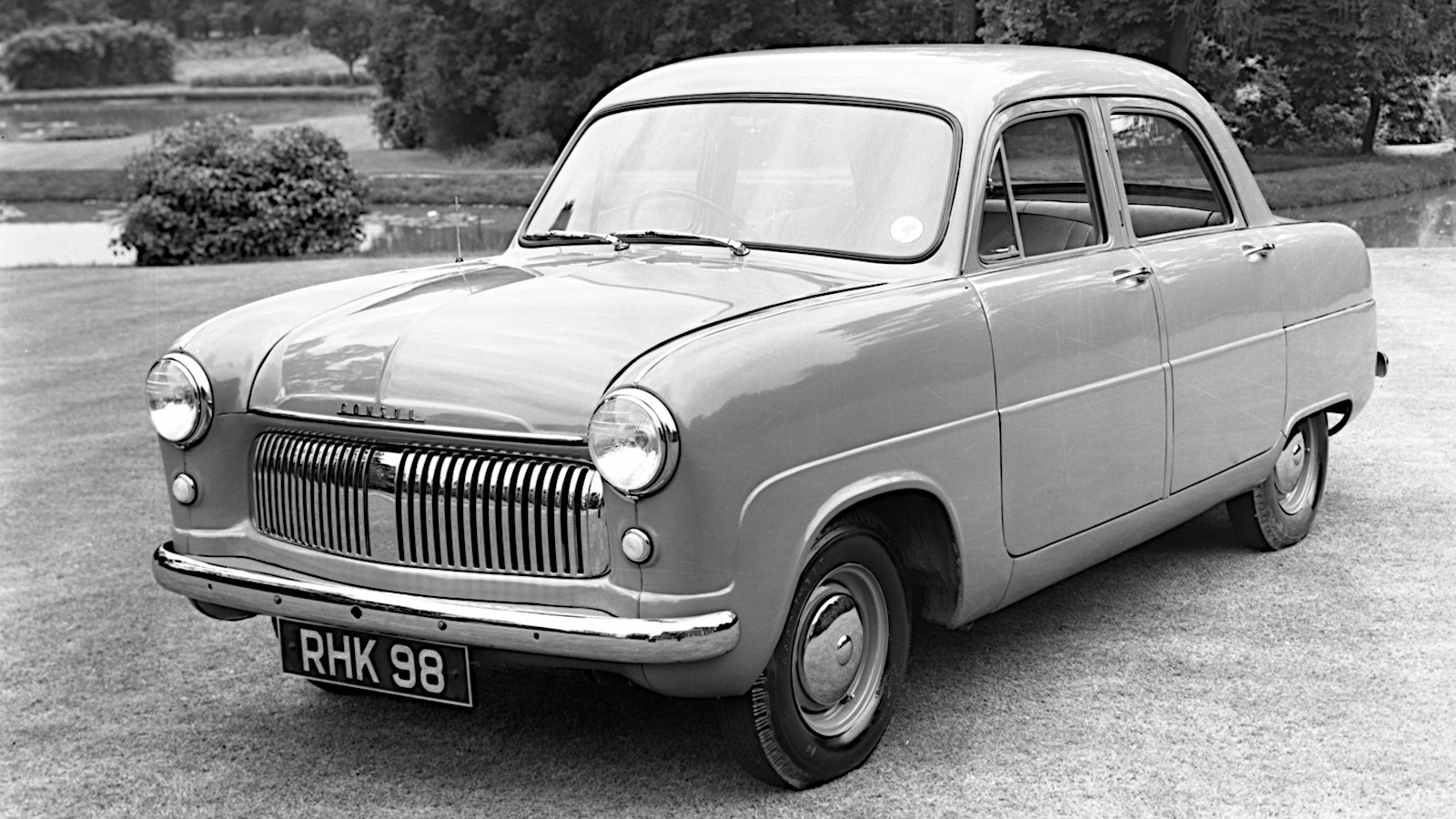
7. Ford Consul and Zephyr
At the 1950 London Motor Show, it became clear that Ford’s UK outpost was entering a new era.
The new Consul had an excitingly modern, US-influenced appearance, and featured unibody construction, independent front suspension, a hydraulic clutch and an overhead-valve engine, none of which had been seen on any previous British Ford.
The engine, a 1508cc, in-line, four-cylinder unit, was replaced by a 2622cc straight-six in the otherwise similar Zephyr of the same period, whose nose had to be extended by several inches to make room for it.
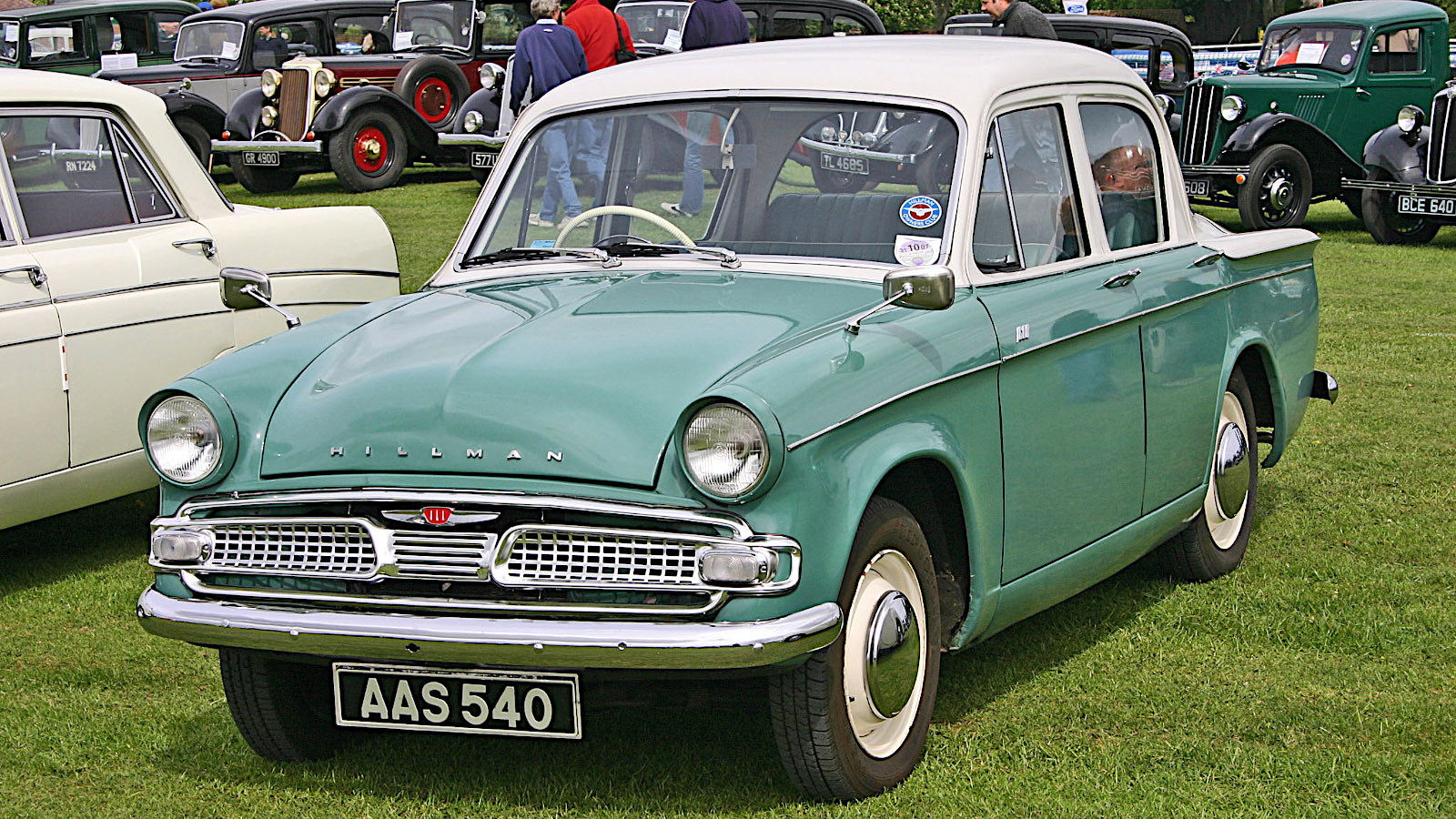
8. Hillman Minx
Like several other model names mentioned here, Minx already had a long history by the middle of the century, having first been used by Hillman in the early 1930s.
The earliest of what became known as the Audax-bodied Minxes appeared in 1956, looking very similar to the previous year’s Sunbeam Rapier and not unlike a smaller, toned-down version of the 1953 Studebaker Champion.
Updates occurred almost every year until production ended in 1967, and included a gradual rise in engine capacity from 1390cc to 1725cc.
The Super Minx of the 1960s was a different, larger model, while the replacement for the Audax car was part of the Rootes Arrow range which also included the Hillman Hunter.
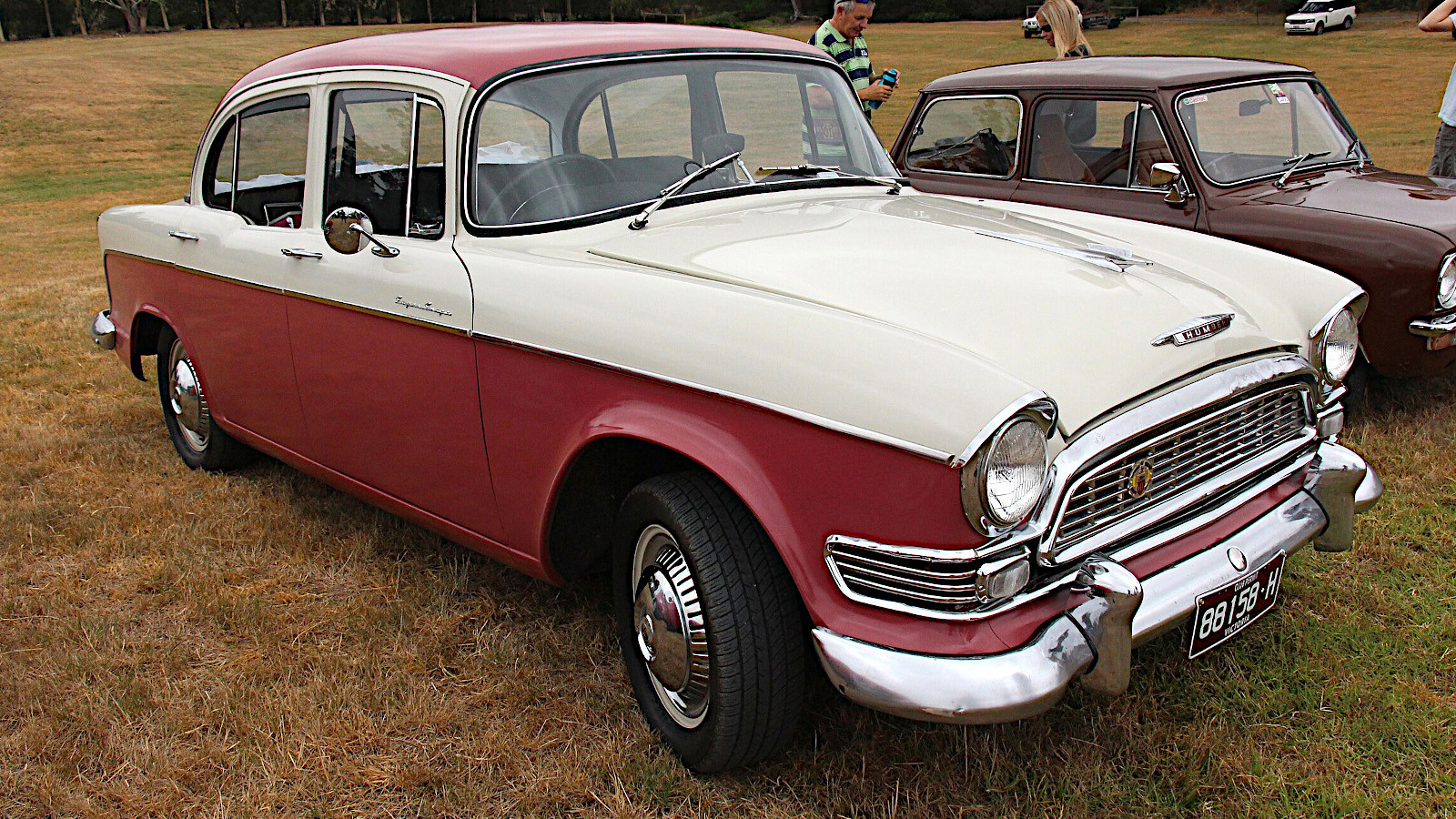
9. Humber Super Snipe
To use a term which would have made no sense to anyone at the time, Humber rebooted the Super Snipe in 1958.
In that year, the MkIV, the last of the immediately post-war line, was replaced by the Series I, which looked far more modern (and not unlike some Chevrolets of the period) and featured unibody construction.
The body was the same as that of the Humber Hawk introduced the previous year, but instead of the Hawk’s 2267cc, four-cylinder engine the Super Snipe had a larger and more powerful 2651cc ‘six’.
With several updates, the car remained in production until 1967, by which time the engine’s capacity had been raised to 2965cc and the front end had been made to look more glamorous thanks to the introduction of quad headlights.
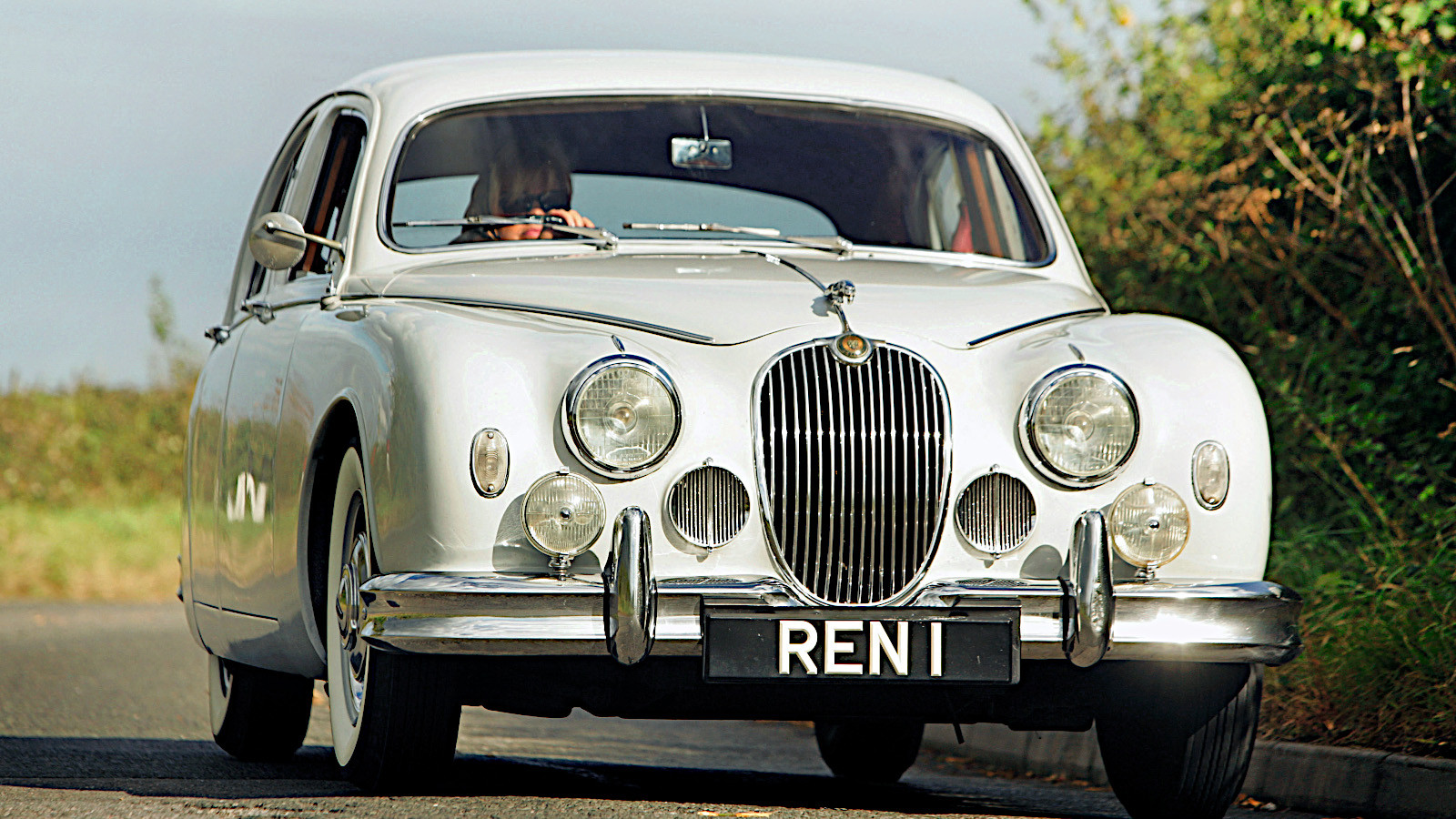
10. Jaguar 2.4 Litre
The Jaguar 2.4 Litre of 1955 was a compact, unibody saloon which occupied the considerable space between the much larger MkVII and the XK140 sports car.
It was named, slightly inaccurately, after the capacity of its engine, the smallest (2483cc) version of the celebrated XK straight-six.
Fairings which almost completely concealed the rear wheels were soon abandoned, and did not appear on the 1957 3.4 Litre or any of the similar-looking MkII models which replaced both and remained popular for most of the 1960s.
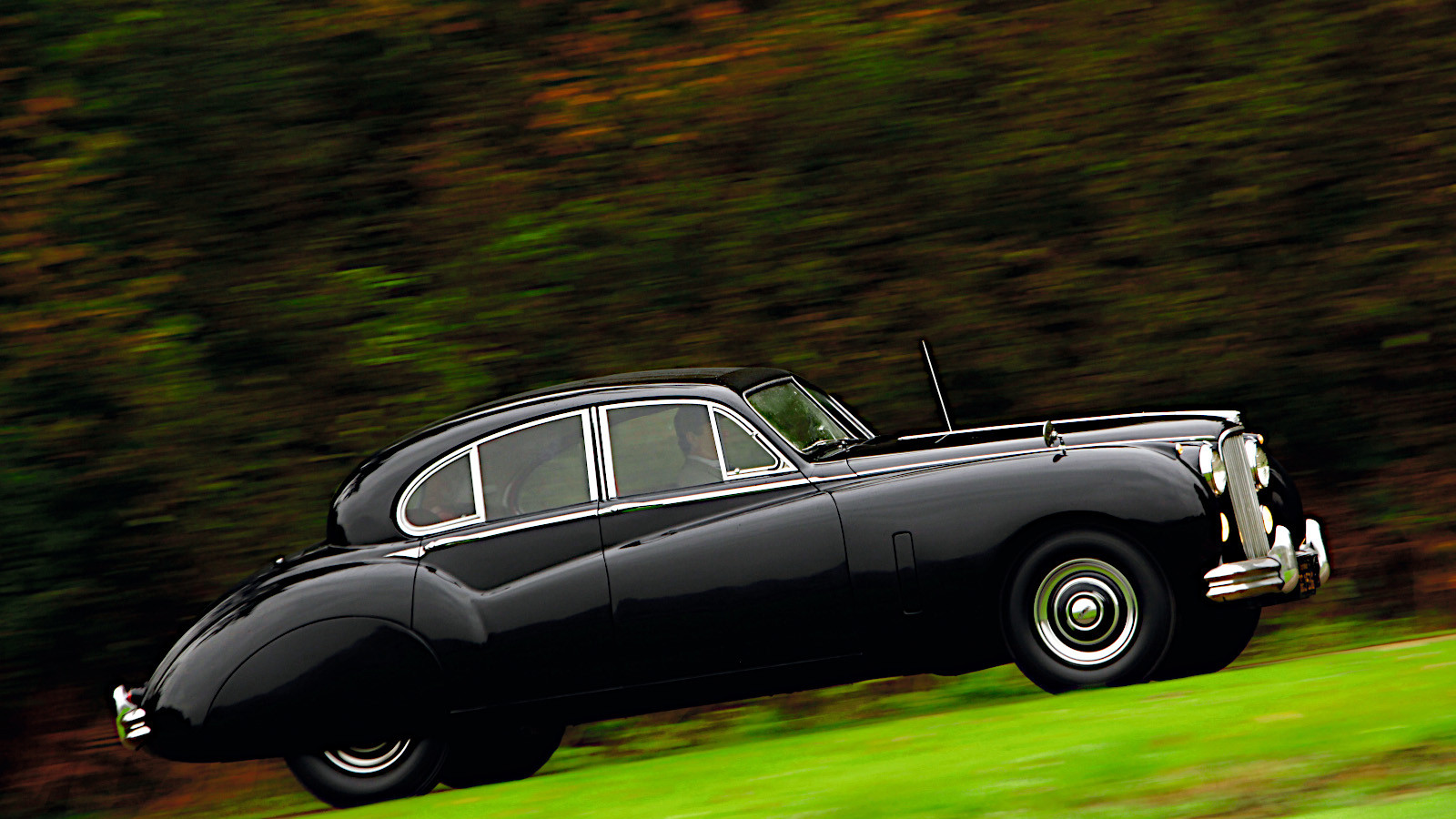
11. Jaguar MkVII
The Jaguar MkV introduced in the 1940s, powered by an old, overhead-valve, straight-six engine, was replaced in 1951 by the considerably larger MkVII (there was no MkVI) which benefitted from the far more modern, overhead-cam XK unit.
It was immediately praised for its elegant styling, fine handling, sturdy performance, relatively low price and the option of an automatic transmission, and reportedly attracted $20 million worth of orders when it was displayed at the New York motor show.
An update in late 1954, which led to the car being renamed MkVIIM, included raising the engine’s output from an already satisfactory 160bhp to a rather remarkable 190bhp.
It’s tempting to suggest that this was partly why Jaguar achieved its first, and so far only, victory on the Rallye Monte-Carlo in 1956, but since that year’s event has been described rather sniffily as ‘a test of accurate timekeeping’, the extra power might not in fact have made much difference.
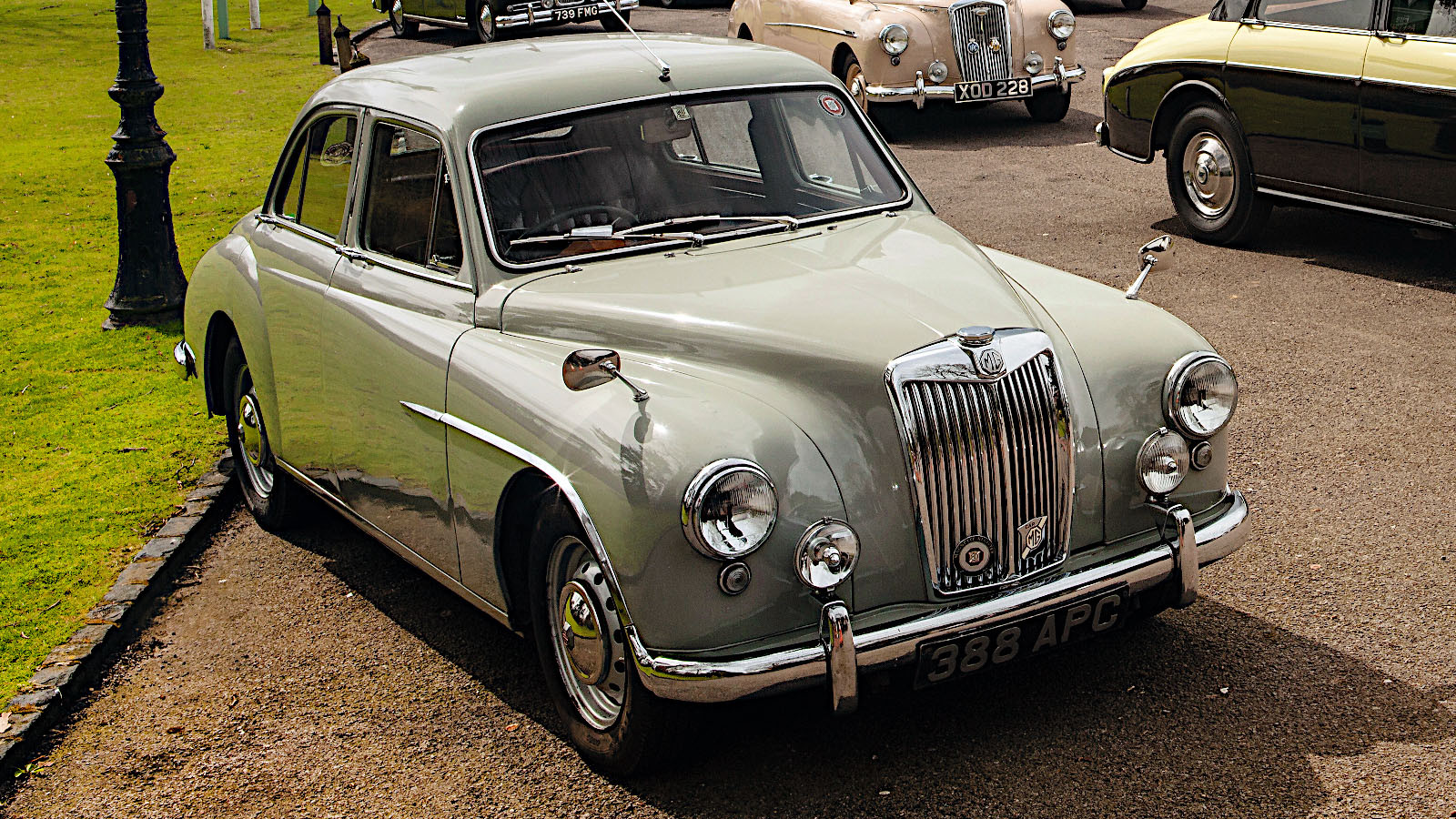
12. MG Magnette
Having previously been used by MG for sports cars of the 1930s, the Magnette name was applied to a new saloon which was unveiled in late 1953 and went into production the following year.
‘New’ in this context means ‘new to MG’, because the car was very similar to the existing Wolseley 4/44, a fact which reportedly did not go down well with MG enthusiasts.
There was some consolation in the fact that the Magnette was very much the sportier option. The Wolseley’s 1250cc engine was abandoned in favour of the more potent 1489cc BMC B-series, and the suspension set-up was revised.
The next MG Magnette was one of the many medium-sized Farina models launched in the late 1950s, and not sporty at all.
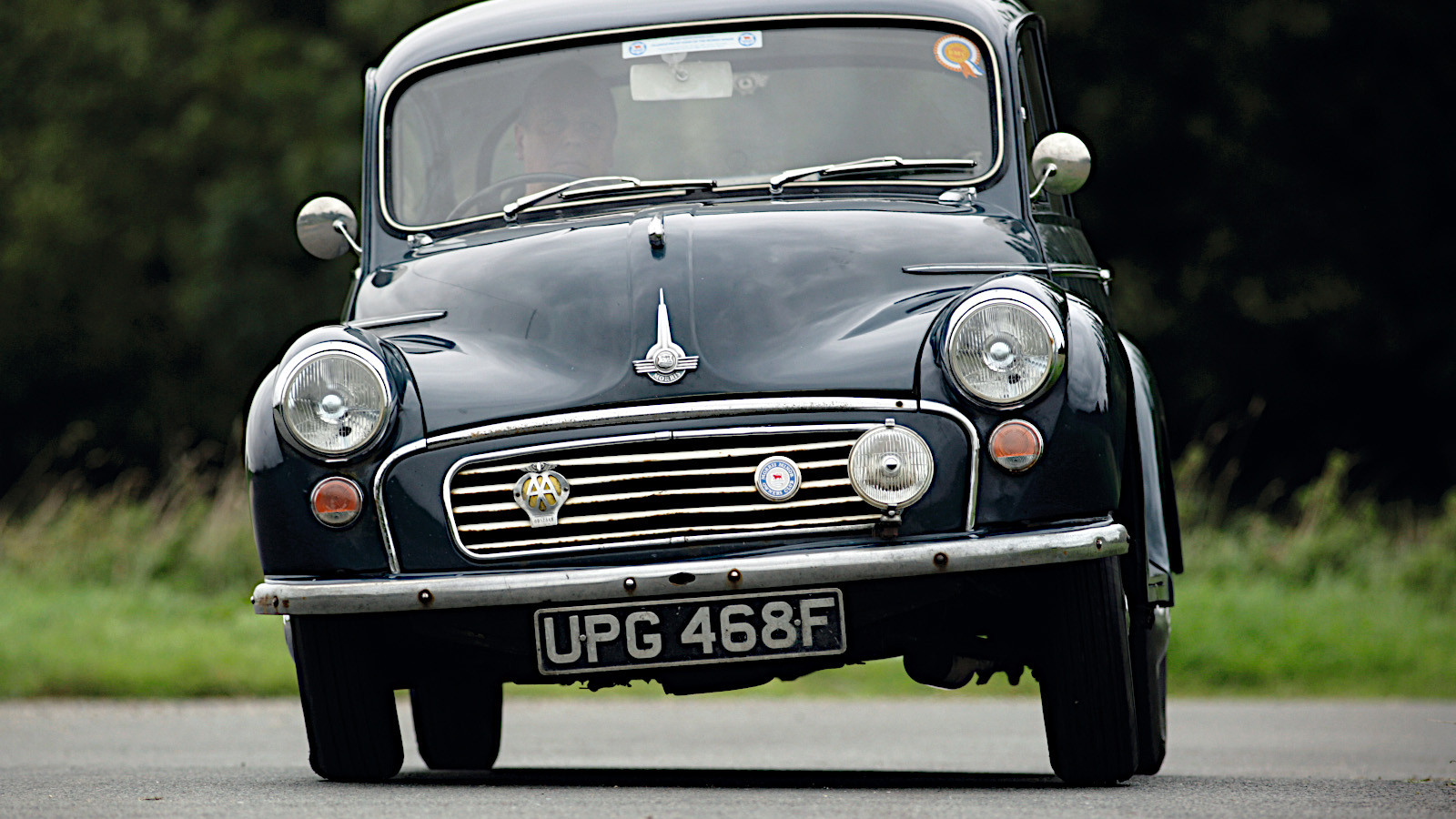
13. Morris Minor
Strictly speaking, the Minor should not be included here because it was introduced in the 1940s, but it attained its best-known form in 1952.
That was the year of the Austin-Morris merger which created the British Motor Corporation, and one result of this was that Morris now had access to Austin’s A-series engine, which it used to replace the Minor’s original sidevalve unit.
Other changes made at the same time included moving the headlights up into the front wings, well above their former position on either side of the radiator grille, giving the car a close resemblance to the contemporary Morris Oxford.
There would be many other developments, but at a quick glance there was very little reason why an uninformed observer would be able to tell a 1952 Minor apart from one of the final models built nearly 20 years later.
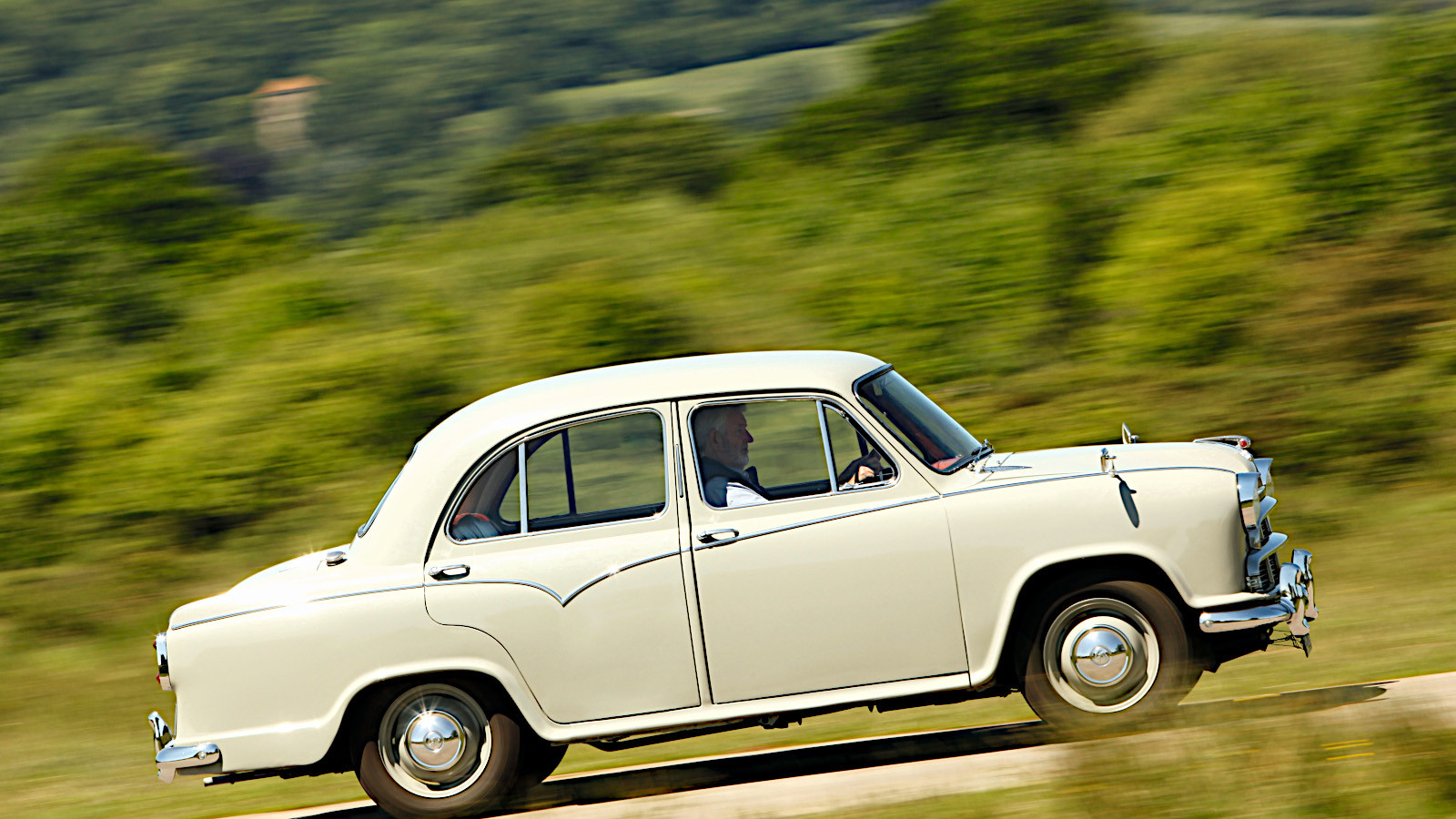
14. Morris Oxford
Morris produced no fewer than five distinct Oxford models during the 1950s.
The MO (the one that, in retrospect, looks like an enlarged Minor even though it was on sale four years before the Minor was updated) was replaced in 1954 by the Series II, which was powered by the 1489cc B-series engine, now available due to Austin and Morris becoming partners within BMC.
The Series II was revised to become the Series III (pictured) two years later, the changes including something very like Buick’s Sweepspear along each side, while the Series IV of 1957 was an estate version of the Series III.
At the end of the decade, the Oxford name was transferred to the first of the Morris marque’s mid-sized Farina models.
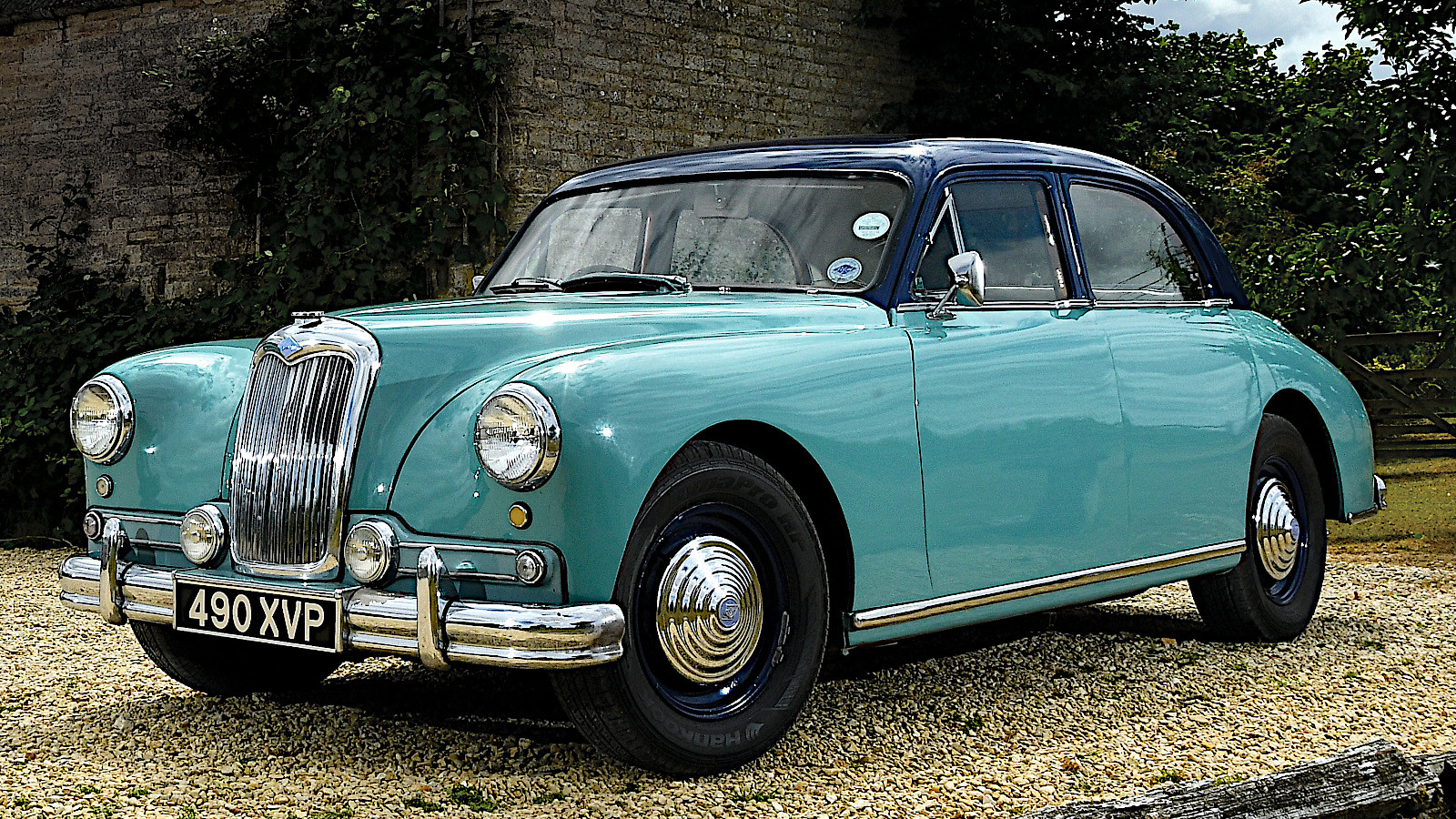
15. Riley Pathfinder
Introduced in the year following the establishment of the British Motor Corporation, the Pathfinder is the subject of some poignancy among Riley supporters, since it was the last car for which the marque was wholly responsible.
It was also the final car fitted with Riley’s Big Four engine, a 2443cc twin-cam motor which dated back to the immediate pre-war period.
The Riley Pathfinder was replaced in 1957 by the short-lived Two-Point-Six, a variant of the third-generation Wolseley 6/90 and powered by the same overhead-valve, 2639cc, BMC C-series straight-six used in that car.
After the discontinuation of the Two-Point-Six in 1959, no future Riley would have an engine with a capacity of more than two litres, and all would essentially be slightly altered versions of cars also available from other BMC (later British Motor Holdings, later still British Leyland) makes.
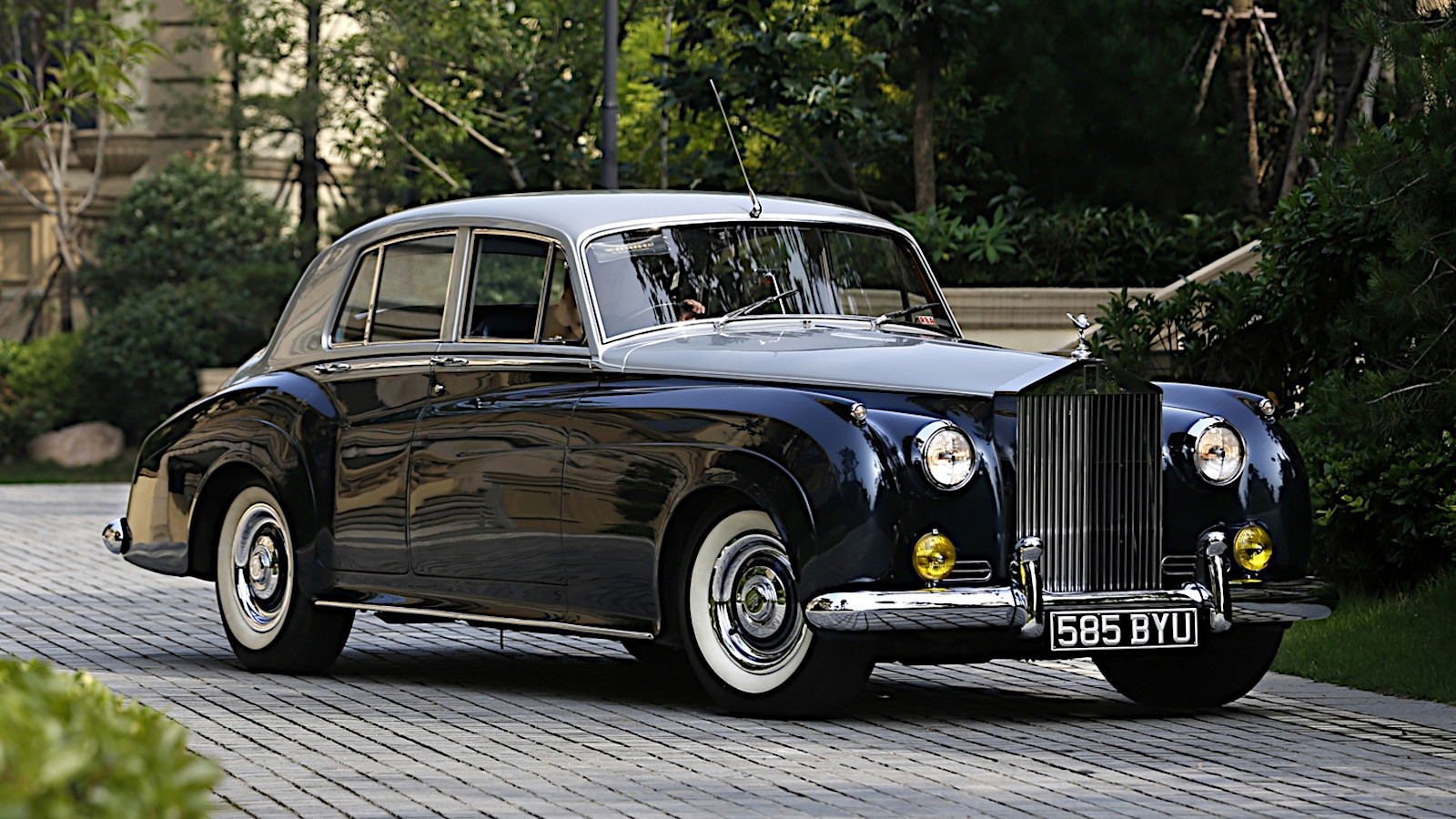
16. Rolls-Royce Silver Cloud
In retrospect, the Silver Cloud introduced in 1955 was a transitional model for Rolls-Royce in two ways.
First, it separated the earlier Silver Dawn, whose proud-standing headlights made it look rather old-fashioned, from the unibody Silver Shadow of the 1960s.
Second, it marked the introduction of the 6230cc, L-Series V8 engine, whose arrival in 1959 (replacing a 4.9-litre straight-six) prompted a minor name change to Silver Cloud II.
As mentioned earlier, the Silver Cloud II had an almost exact equivalent in the form of the Bentley S2, just as the original Silver Cloud had been barely distinguishable from the Bentley S1.
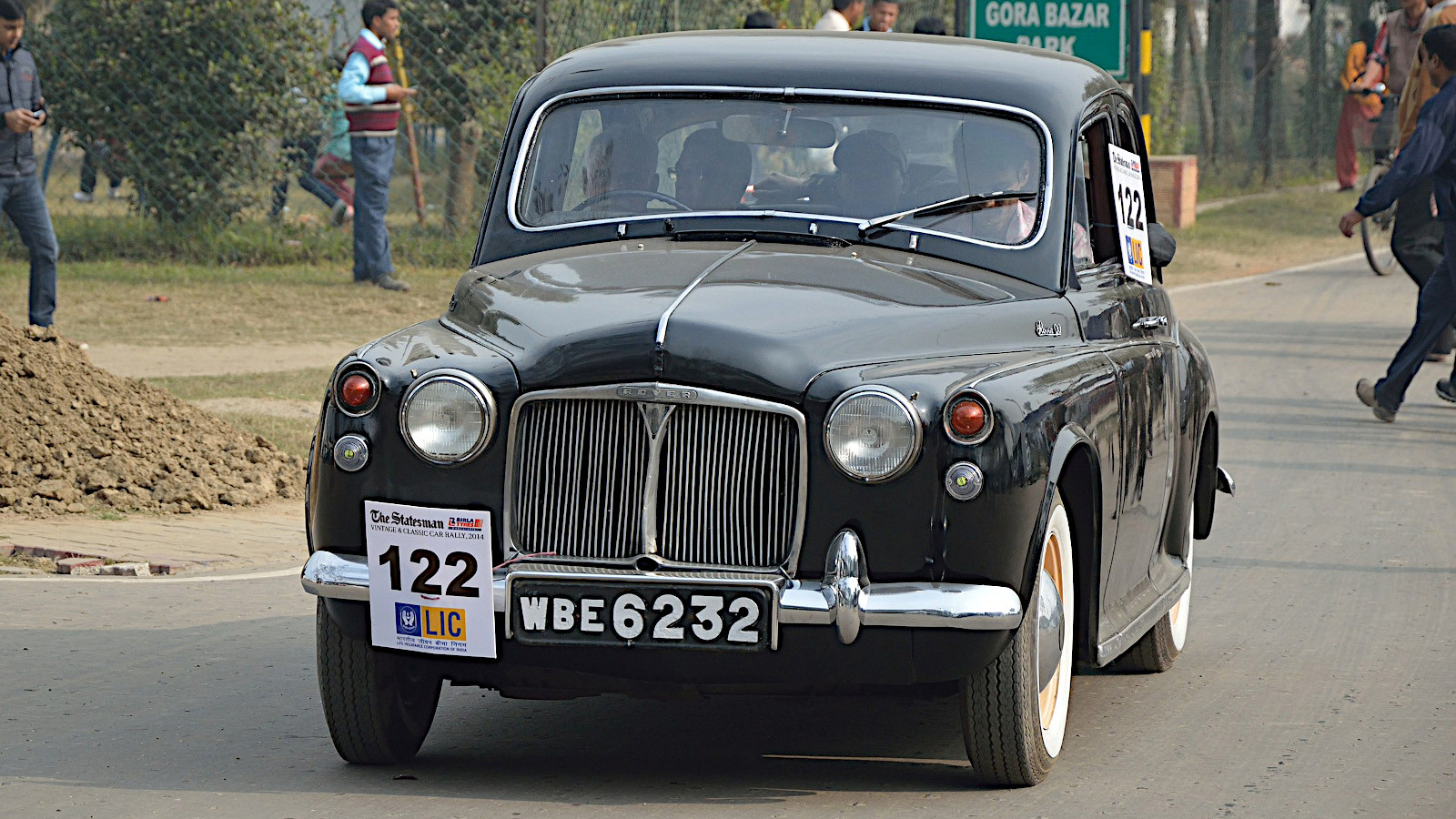
17. Rover 90
On its introduction in 1953, the 90 was the highest-performance version so far of the Rover P4 series, which had been launched in 1949.
Power came from a 2638cc, straight-six engine, considerably larger than the ‘six’ used in the original 75 and the ‘four’ fitted to the 60 in the same year that the 90 appeared.
This engine was used in the later 105 models but replaced by a slightly different 2625cc unit in the 95, 100 and 110.
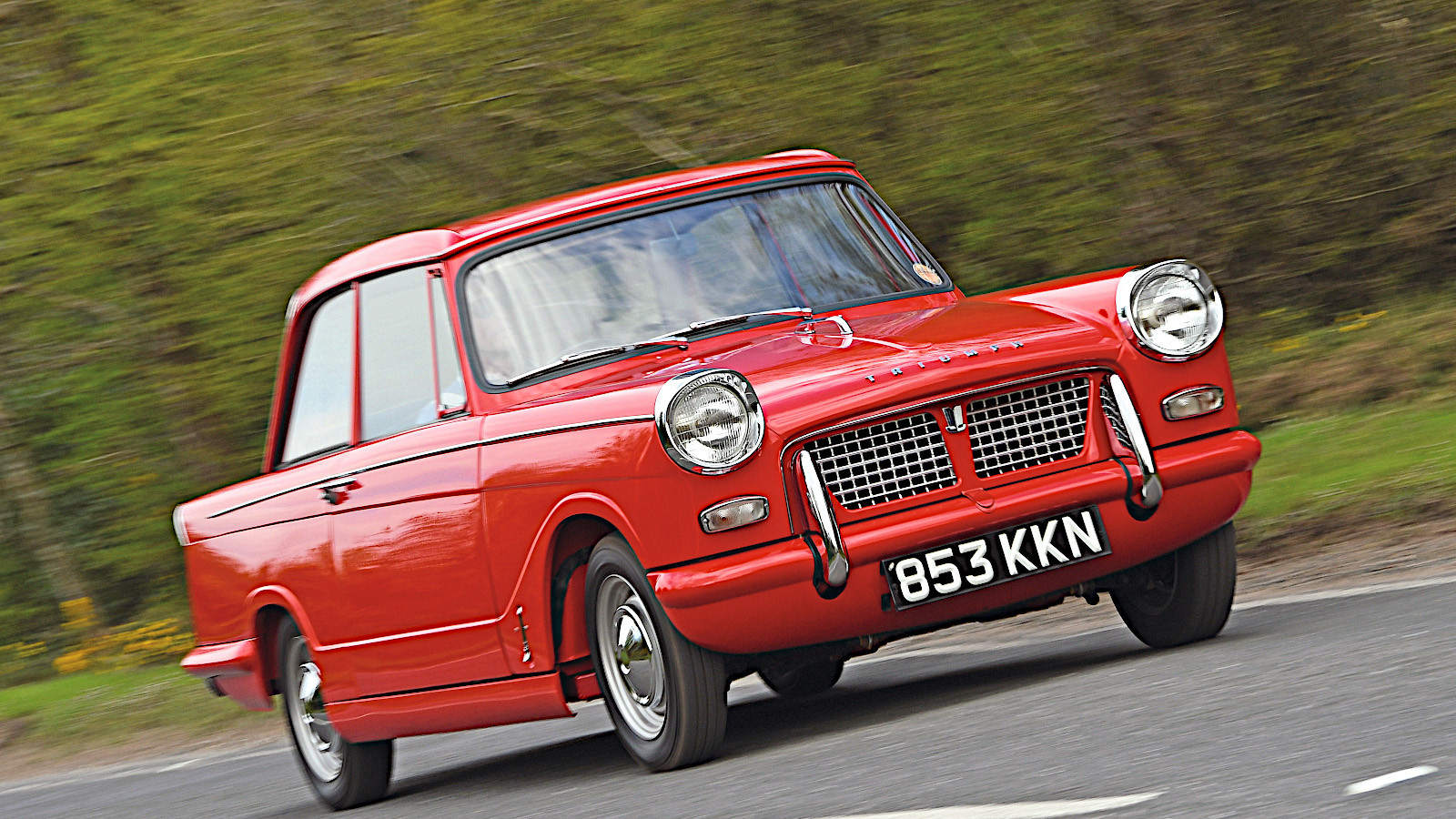
18. Triumph Herald
After the discontinuation of the unsuccessful Mayflower saloon in 1953, Triumph built nothing but sports cars until nearly the end of the decade.
The Herald, which arrived in 1959, was old-fashioned in the sense that its body and chassis were bolted together rather than being a single item, but this had the advantage of making it relatively simple to produce saloon, coupé, convertible, estate and van versions.
Notable for its extremely tight turning circle, the Triumph Herald was always powered by the Standard SC engine, which in this application grew from 948cc to 1296cc before the car’s production run ended in 1971.
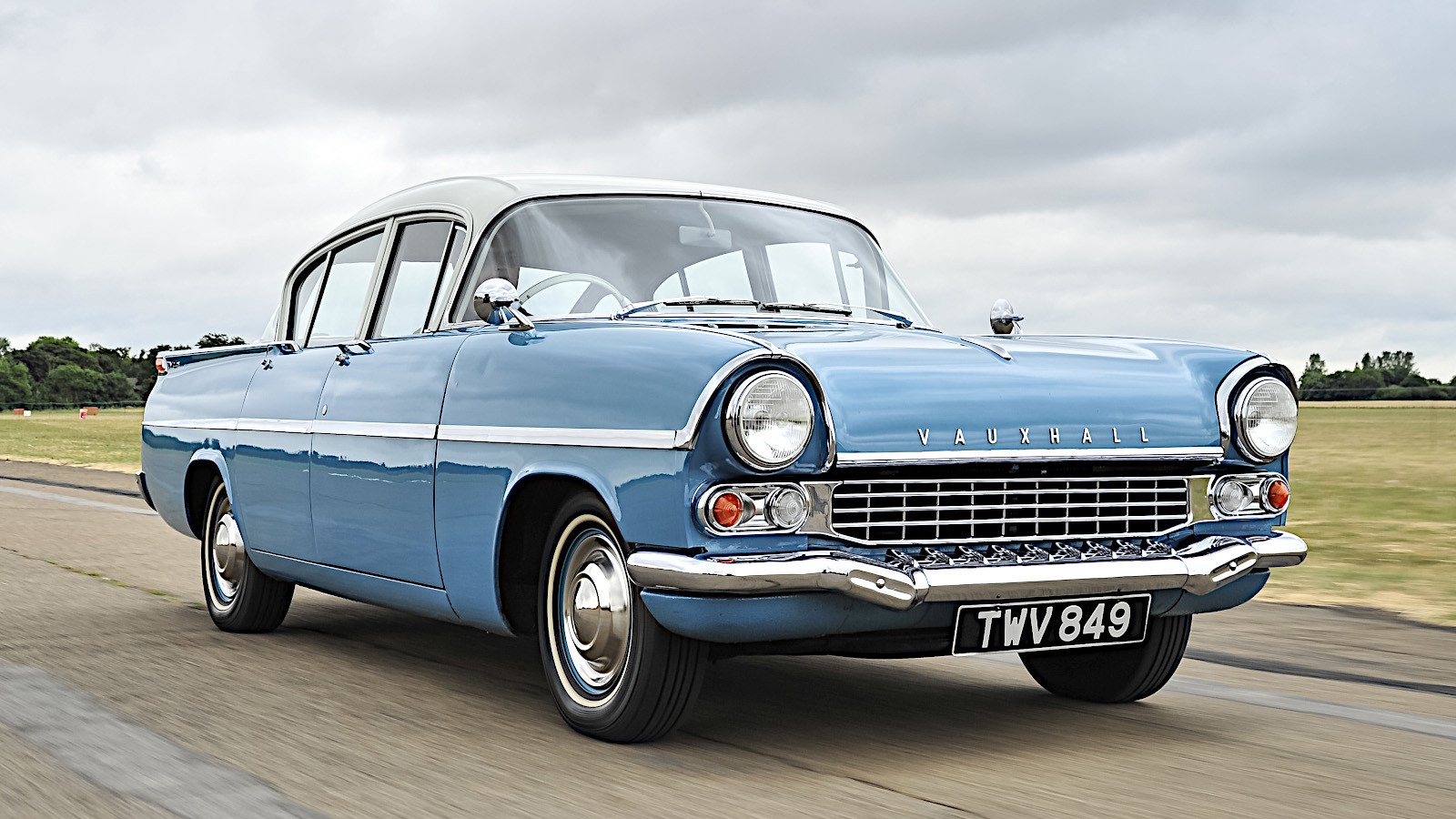
19. Vauxhall Velox and Cresta
The Vauxhall Velox and Cresta of the PA generation launched in 1957 were really the same car, the most significant difference being in the matter of equipment.
The Cresta was supplied as standard with a heater, a two-speed blower fan, a cigarette lighter and a lockable glovebox, and had the option of two-tone exterior paint, whereas none of this applied to the cheaper Velox (though, confusingly, the car pictured here is a Velox which was given a two-tone colour scheme long after it left the factory).
American influence meant that the cars looked not unlike the contemporary Chevrolet Bel Air, which was in turn influenced by the Cadillac Park Avenue concept car unveiled in 1954.
The original 2262cc capacity of the straight-six engine was raised to 2651cc in 1960, and at the same time the overall gearing was made higher, making the Velox and Cresta more suitable for the emerging UK motorway network which had not existed when they first went on sale.
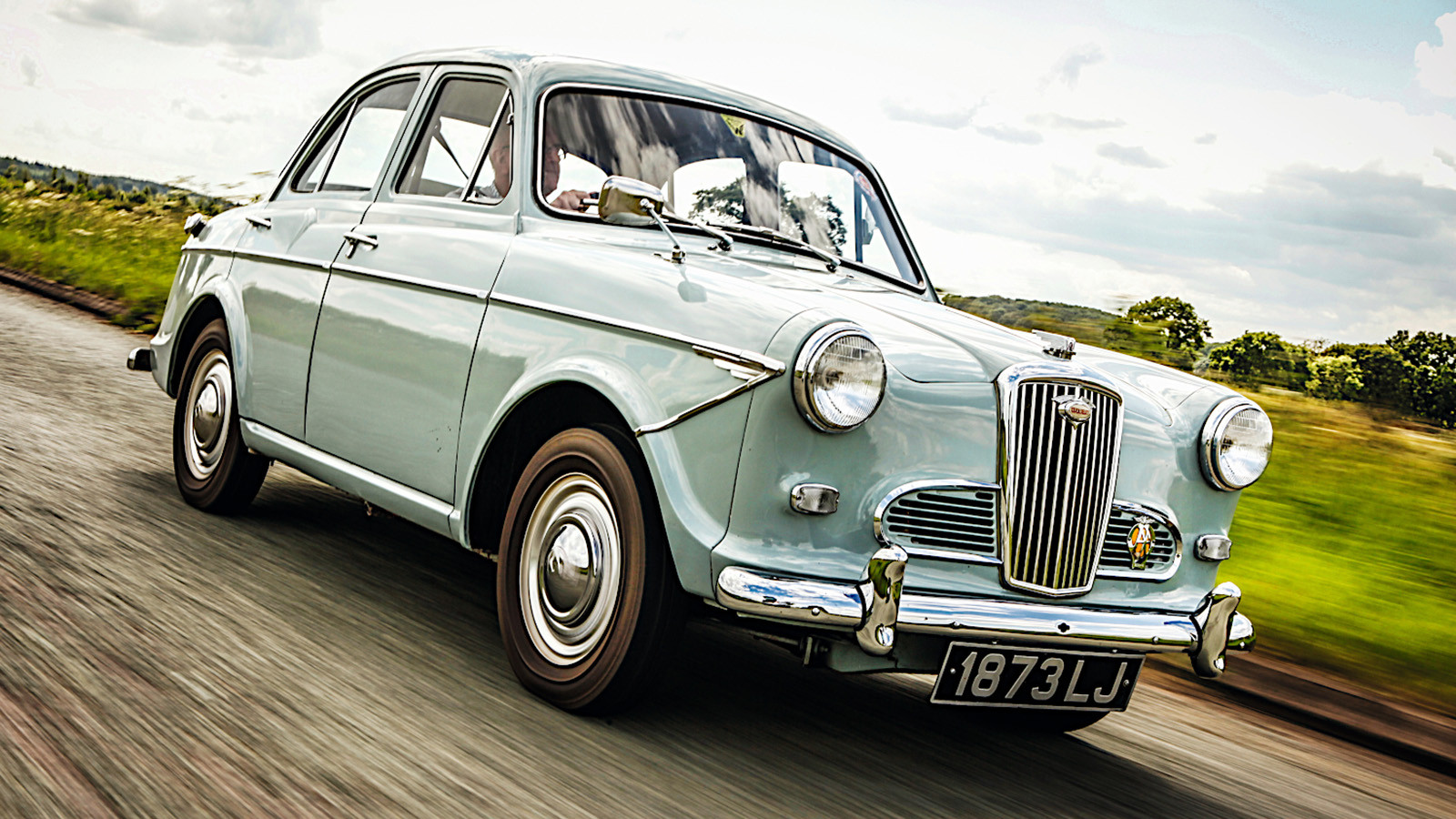
20. Wolseley 1500
In an early example of BMC rationalisation, the Wolseley 1500 introduced in 1957 was an almost exact counterpart of the Riley One-Point-Five.
Both were fitted with the 1489cc, B-series, four-cylinder engine (quite a substantial unit for a car whose overall dimensions were almost identical to those of the Morris Minor), but it was tuned to produce considerably more power in the Riley.
The Riley One-Point-Five was therefore quite a bit quicker than the Wolseley 1500, but it was also more expensive to buy and less economical, which worked in the latter’s favour.
By the time these two models were discontinued in 1965, more than 100,000 examples of the Wolseley had been built, a figure its Riley equivalent could not come close to matching.