A Riley retrospective
Riley’s current status as a trademark owned by BMW gives almost no clue about its history.
In its heyday, it was a British car manufacturer (promoted triumphantly, if not quite accurately, as being ‘as old as the industry, as modern as the hour’) which faded into retirement before 1970.
There have been several suggestions that it might one day make a comeback, but for the purposes of this gallery we’re leaving those to one side and concentrating on Riley classic cars, arranged in chronological order.
1. Riley Tri-Car
Teenager Percy Riley, son of the founder of a Coventry-based bicycle manufacturer, completed the construction of a four-wheeled voiturette in 1898, but it did not lead directly to any production model.
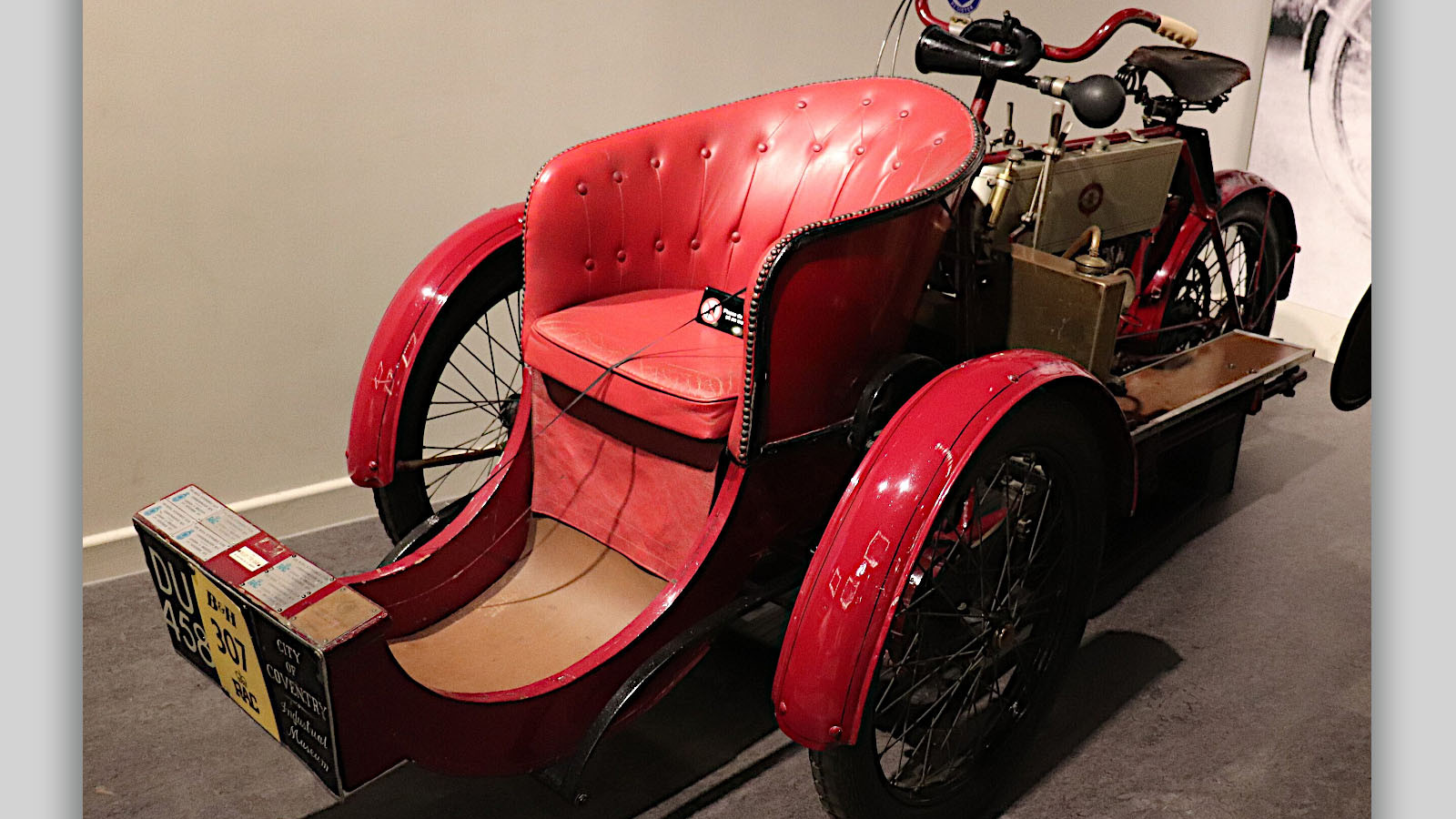
The first Rileys sold to the public and powered by engines were tri-cars, each of them essentially the back half of a regular motorcycle to which two front wheels and a passenger seat were added.
In early cases, the unfortunate driver had nothing more special than a saddle to sit on, but they were later given a proper seat, too.
The engine was either a 517cc single-cylinder unit or a 1034cc V-twin formed by combining two of the singles.
2. Riley 9hp
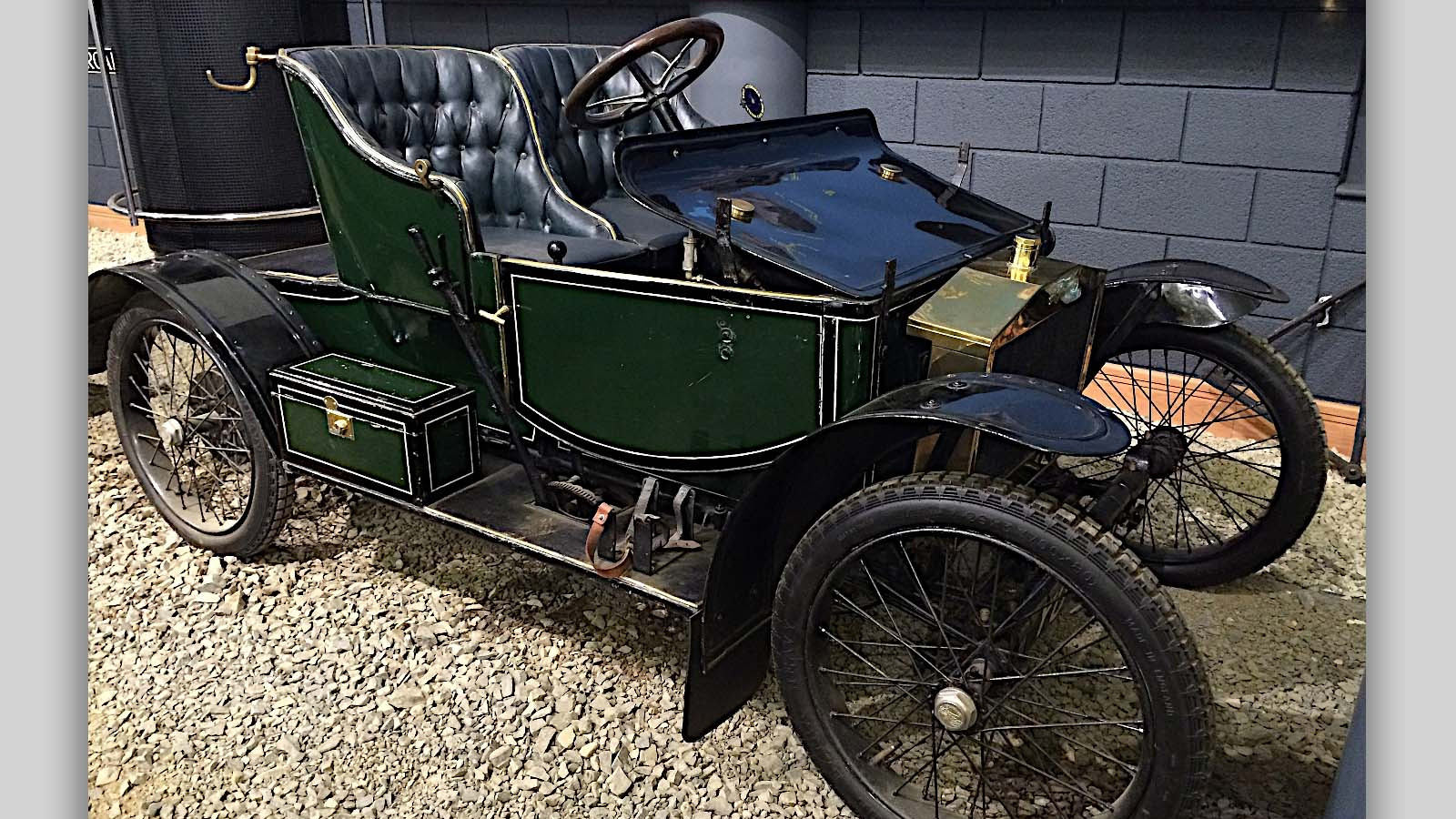
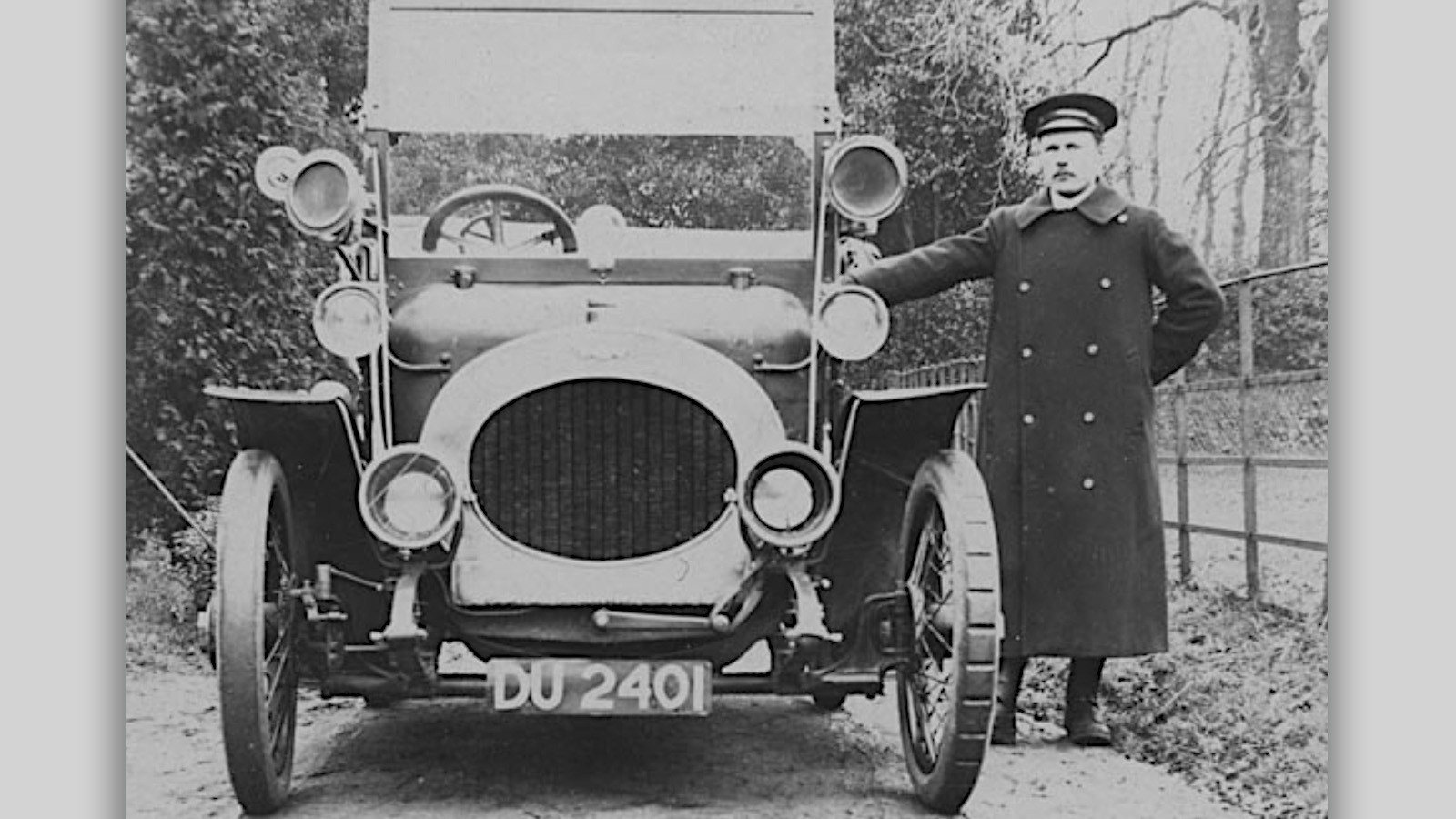
The prototype of Riley’s first four-wheeler intended for sale to the public was built in 1905, and production models followed soon afterwards.
Unlike Percy Riley’s earlier voiturette, whose engine design is a subject of some mystery, the 9hp was powered by the 1034cc V-twin used in the Tri-Car.
In this application, though, it was mounted transversely under the seats, which made it a simple matter to send its modest power to the rear axle via a chain.
3. Riley 12/18hp
In common with most manufacturers, Riley made tremendous progress in the early years of the 20th century.
Launched only a year after the 9hp, the 12/18hp was very much larger, and although its engine was still a V-twin the capacity had almost doubled to 2035cc.
For the first time in Riley history, this unit was mounted ahead of the occupants, a feature carried over to the slightly later 10hp.
The 10hp, whose V-twin measured around 1.4 litres, was essentially a scaled-down 12/18hp, and became Riley’s entry-level model after the 9hp was discontinued.
4. Riley 10.8 and 11.9
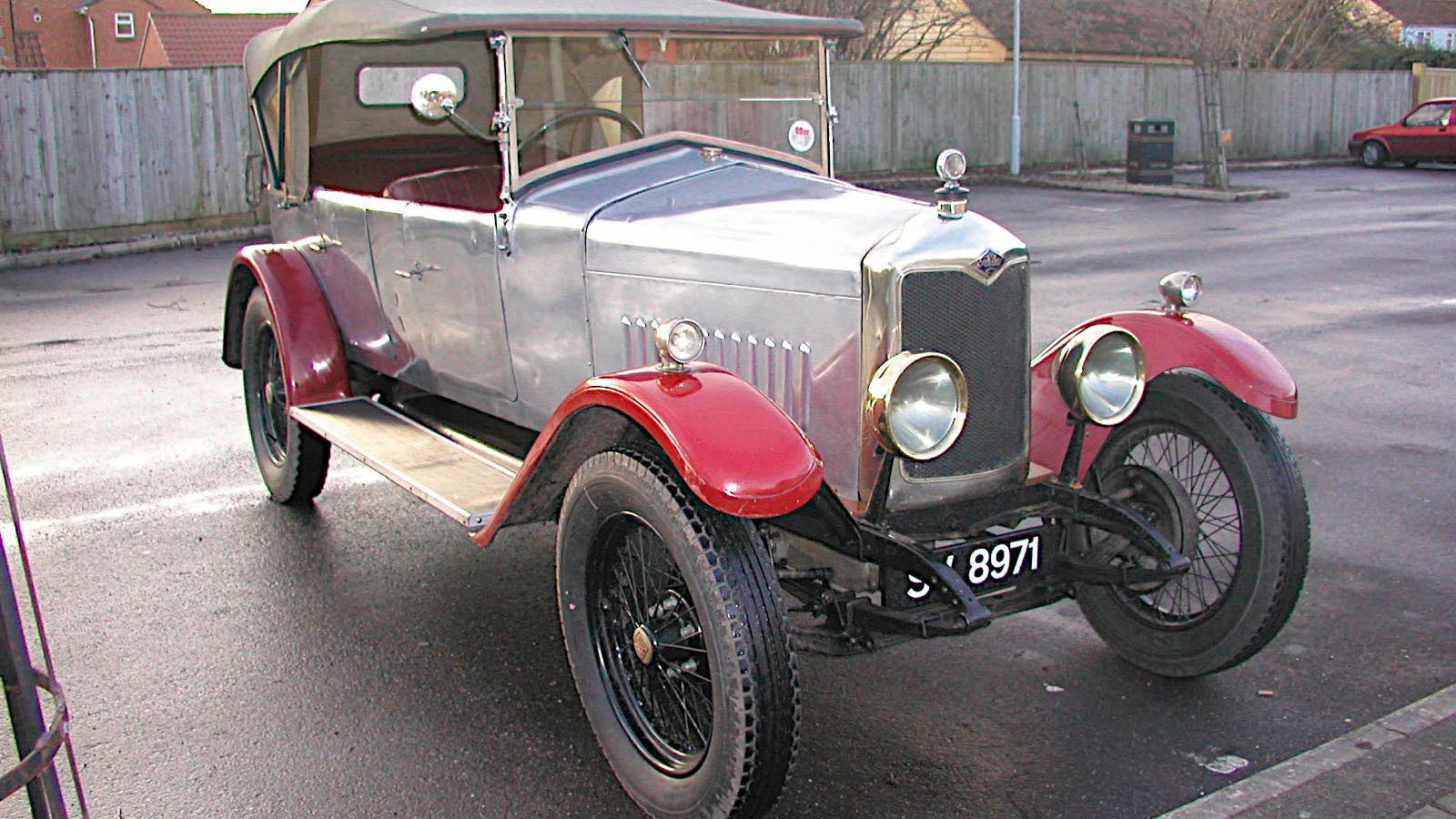
The first Riley cars introduced after the First World War were powered by a new, four-cylinder, sidevalve engine measuring either 1496cc (in the 10.8) or, thanks to a larger bore, 1645cc (in the 11.9).
As would become a Riley feature, many different body styles were available, along with a varying number of seats.
To begin with, braking was on the rear wheels only, but front brakes were added in 1925, three years before the sidevalve models went out of production.
5. Riley Nine
Perhaps the most significant of all Riley motor cars was first revealed in 1926.
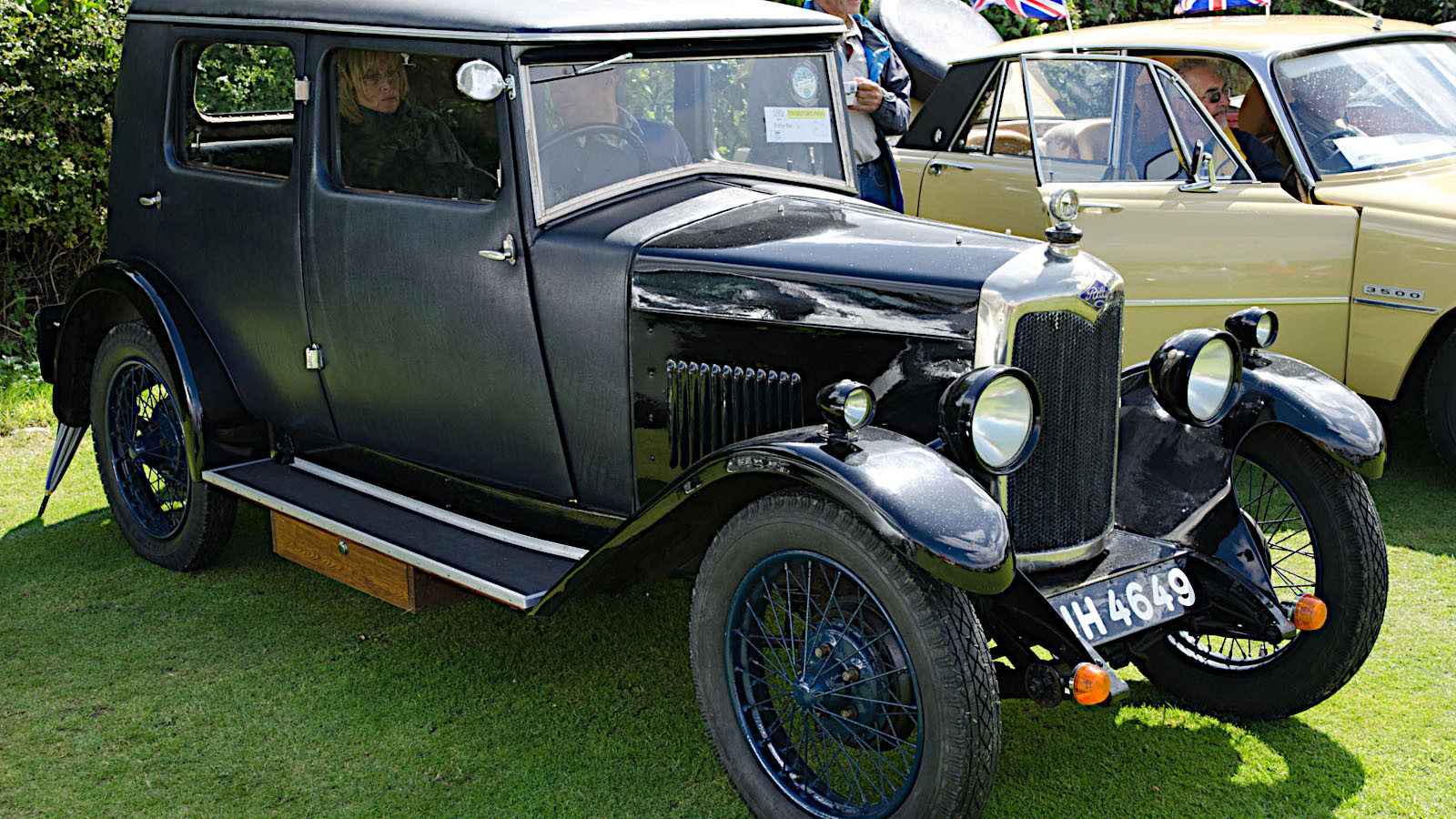
Available in many forms over the years that followed, it was originally a fabric-bodied, four-door saloon known as the Monaco and powered by a remarkable new engine.
This 1087cc, four-cylinder unit featured two camshafts and a crossflow cylinder head with hemispheric combustion chambers – an unusual specification, to say the least, for a small British car of the inter-war period.
6. Riley Brooklands
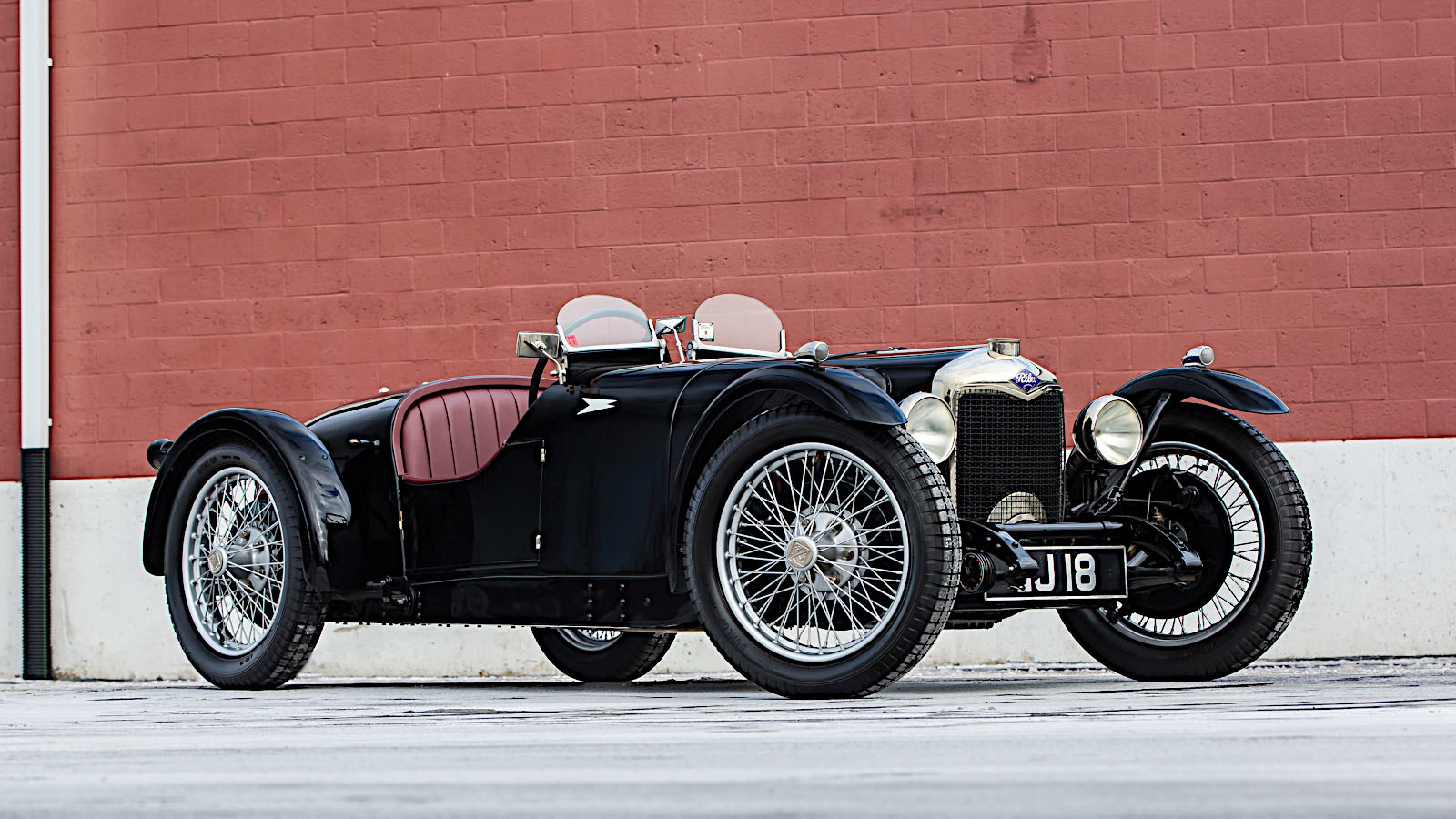
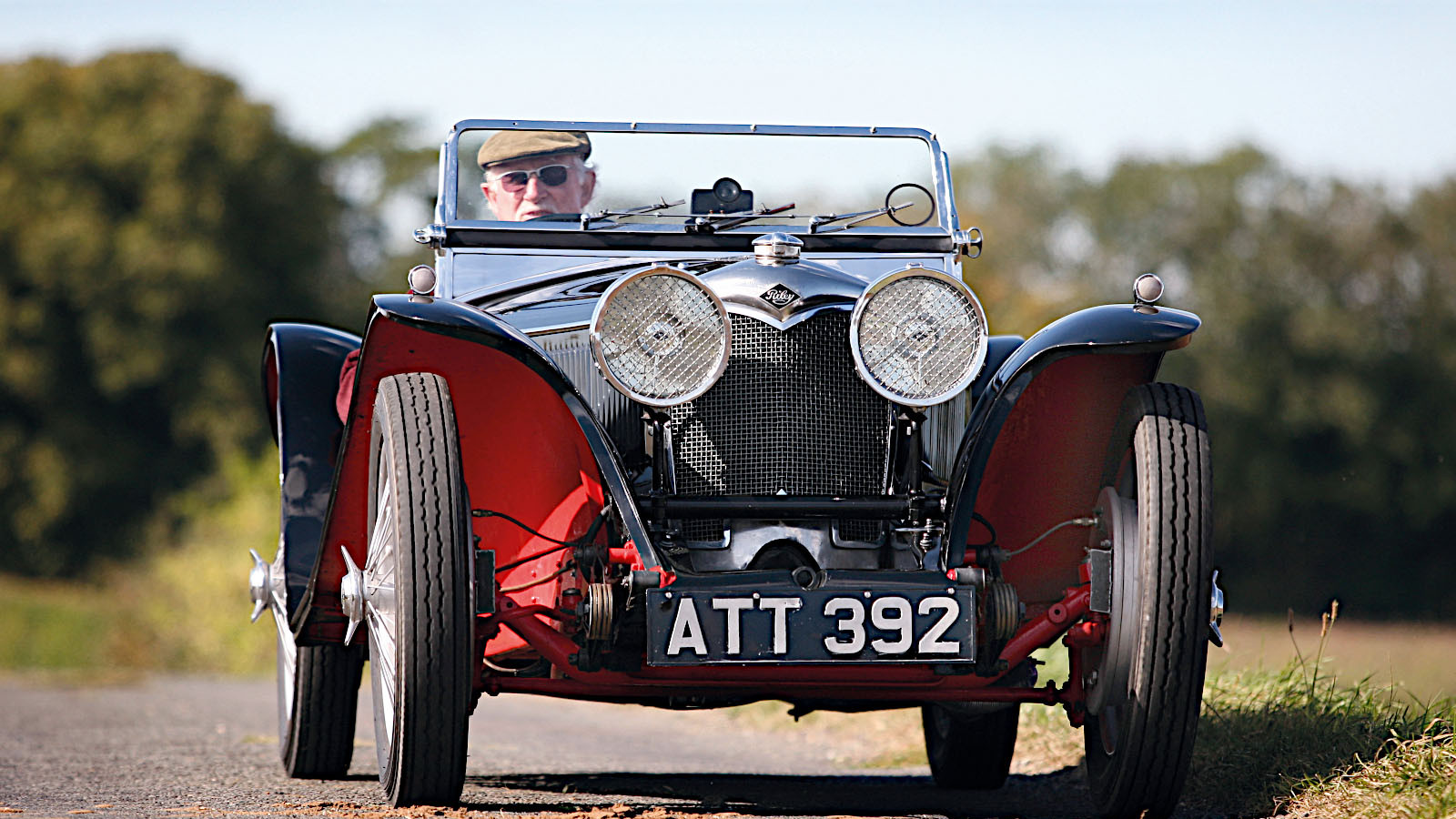
Named after Britain’s first purpose-built race circuit, the Brooklands was, despite appearances, derived from the Nine.
It was, however, much lower and lighter, and had room for only two seats, while the 1087cc engine was modified substantially.
The combination of all those improvements led to great success in motorsport, including, appropriately enough, at Brooklands itself.
7. Riley Imp
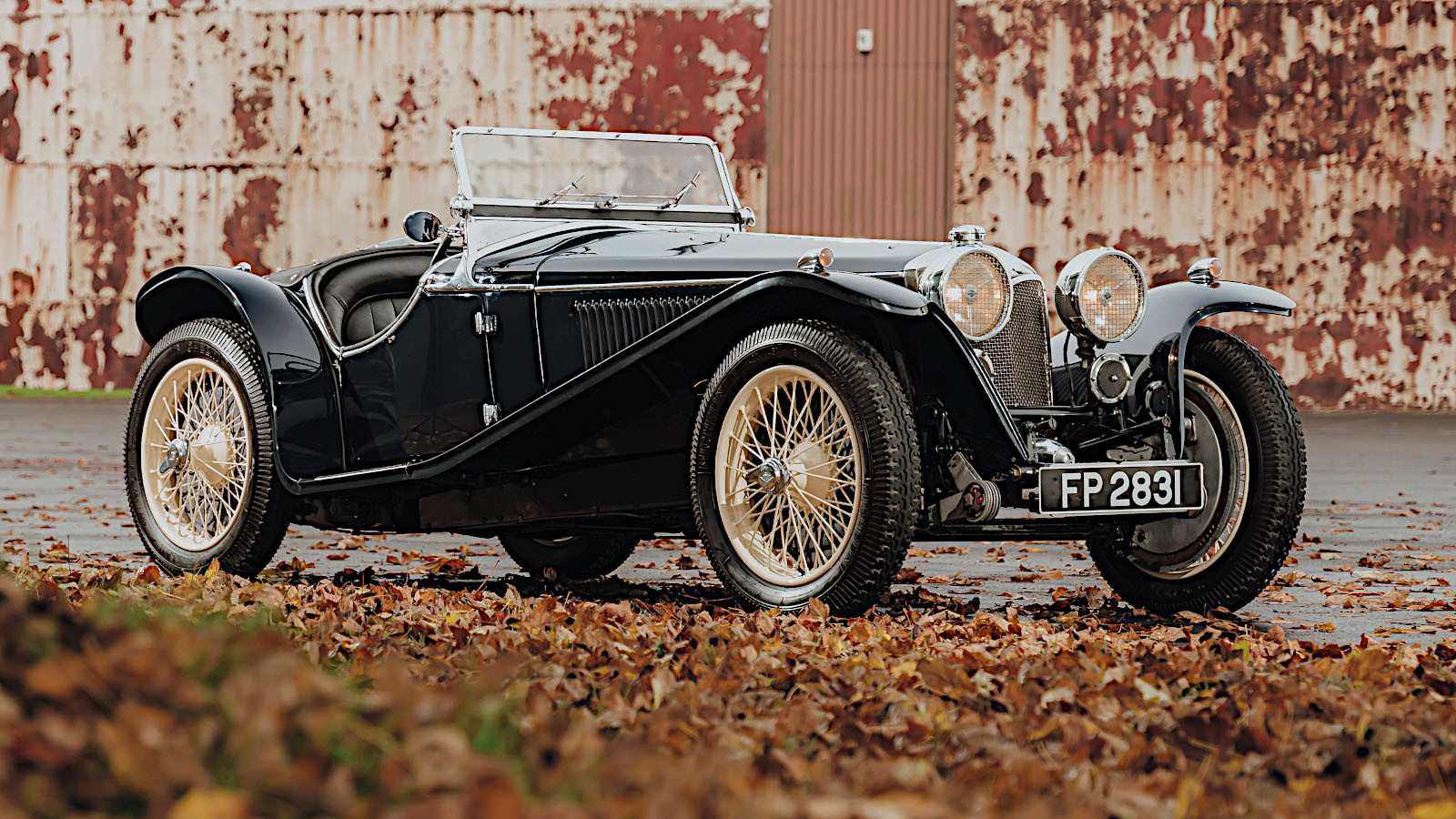
Entirely unconnected to the Rootes Group’s saloon of the 1960s and ’70s, Riley’s Imp of 1934 was similar in concept to the earlier Brooklands, being yet another of the many cars based on the Nine.
The main difference was that, while the Brooklands was specifically intended to be used in racing, the Imp was not.
Some owners did take their Imps on to circuits, and in fact there was a competition version called the Ulster Imp, but the regular Imp was more of a sports car than a racer, and an obvious rival to the exactly contemporary (but smaller-engined) MG P-type.
8. Riley MPH
A step up from the Imp available during the same period, the MPH was fitted with a straight-six engine (derived from the Nine’s ‘four’) which, with various capacities ranging approximately from 1.5 to 1.7 litres, had been used in Rileys of one sort or another since the late 1920s.
Any hope of large sales was dashed right from the start by the car’s enormous price, but racing success must at least have brought Riley a lot of favourable publicity.
MPHs finished second and third overall behind an Alfa Romeo 8C in the 1934 Le Mans 24 Hours, a race in which all six of the Rileys entered made it to the finish and four were classified in the top 10.
A supercharged, 1.5-litre ‘six’ of the type used in the MPH powered the Raymond Mays ‘White Riley’ hillclimb special, the progenitor of the ERA racing cars which performed so well in the 1930s.
9. Riley 12/4
Riley’s next new engine was a 1.5-litre ‘four’, approximately the same size as the ‘six’ and once again similar in concept to the 1087cc unit used in the Nine.
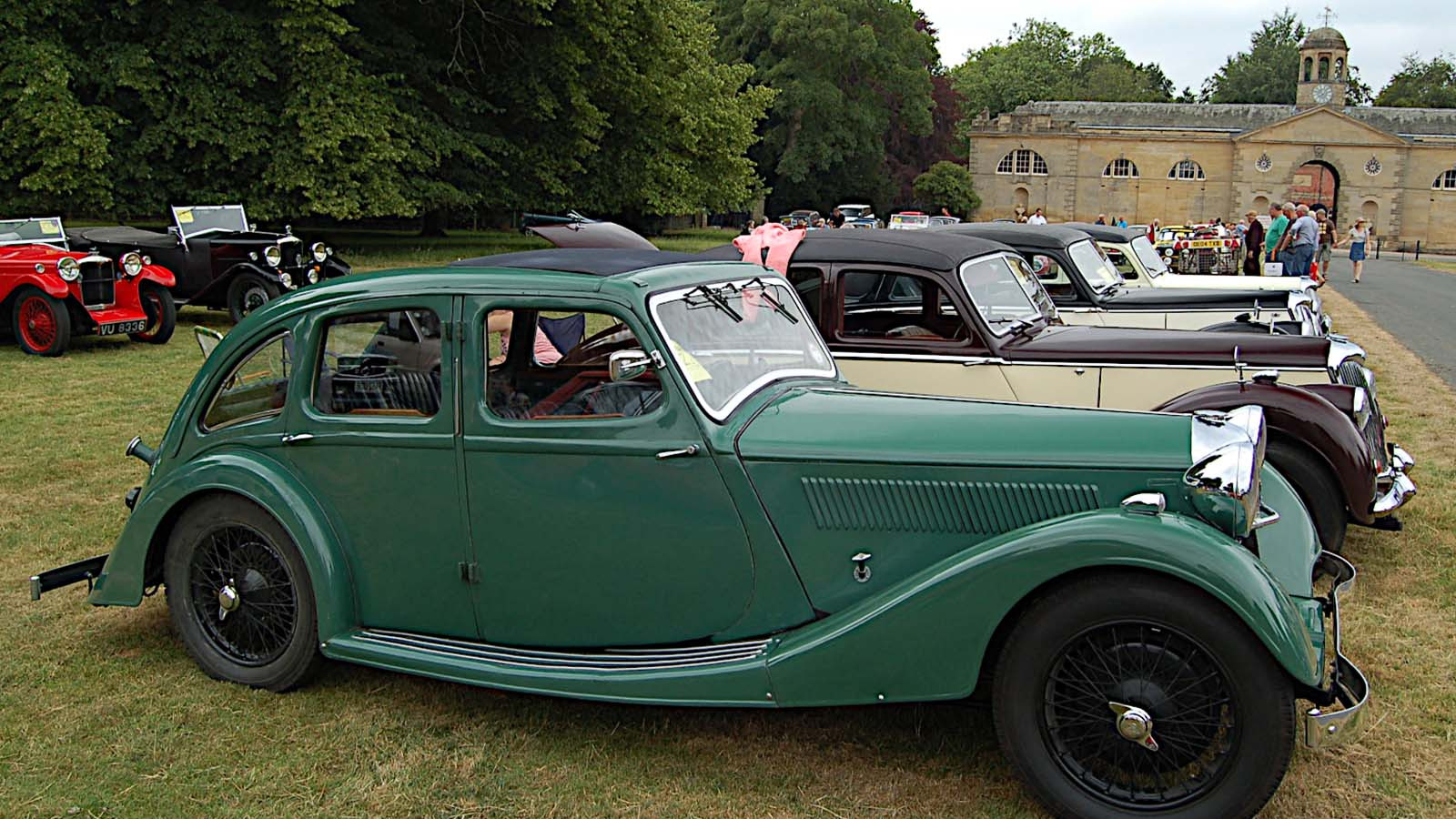
Cars fitted with it were known at first as 12/4, and later as 1½ Litre, and there was quite a variety of them based on different chassis and with a comprehensive range of body styles.
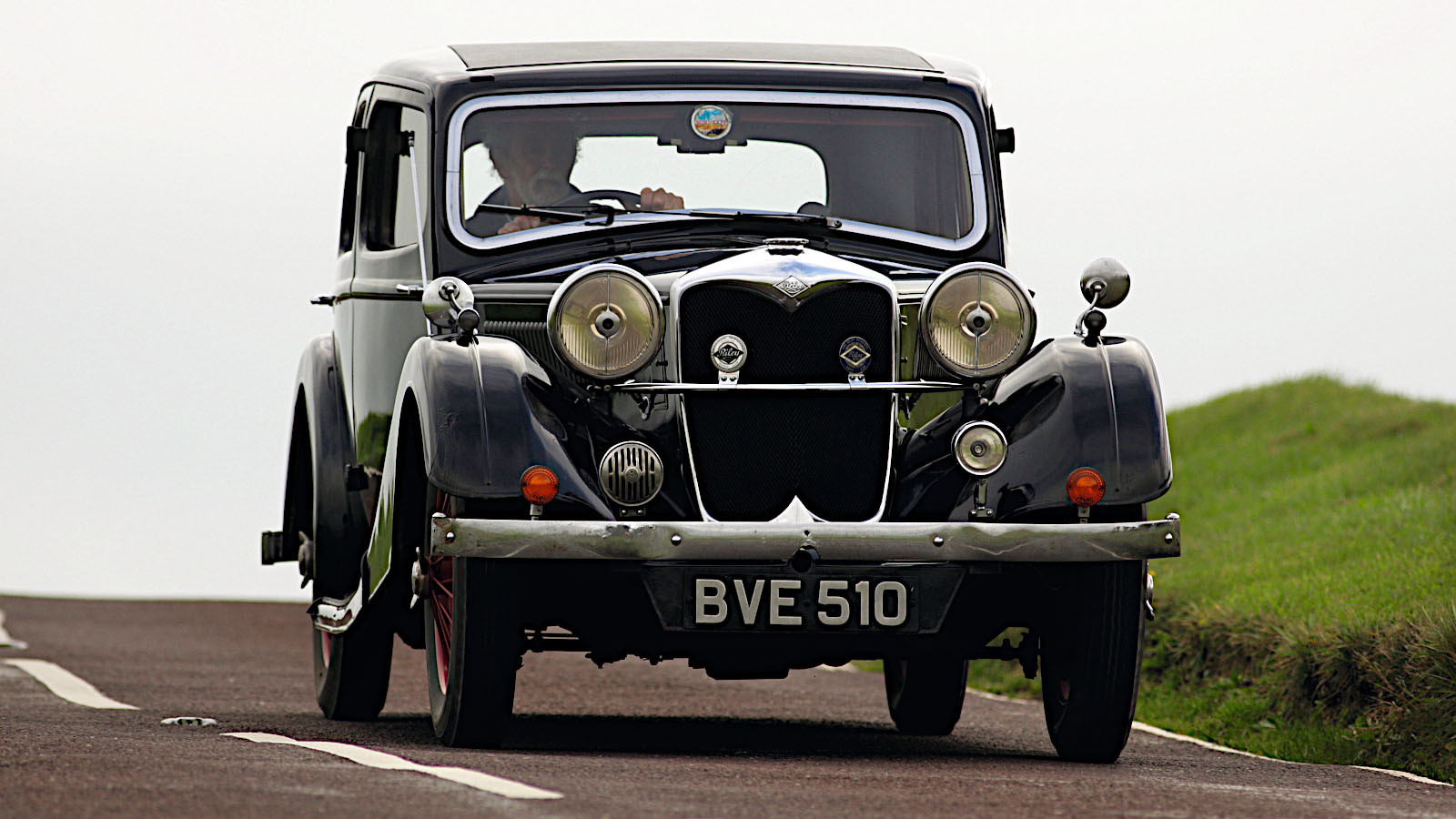
One of the rarest variants was the Touring saloon (pictured), which occupied the same market space as the more powerful but cheaper, and rather more successful, MG VA.
10. Riley Sprite
The Sprite (a name which would be taken up much later by Austin-Healey) was another sports car, replacing the MPH and generally fitted with the 1.5-litre, four-cylinder engine.
Some early Sprites looked very similar to other sporting Rileys of the time, but later versions had a very different appearance.
Those cars had full (rather than cycle-type) wings, and the radiator grille, usually more or less flat, was in this case distinctly cowled, which inspired not necessarily complimentary references to a fencer’s mask.
11. Riley 8/90
The 8/90 stands alone as being the only Riley-badged car with a V8 engine.
Relatively small, at 2.2 litres, it could reasonably be described – though of course there’s more to it than this – as two of the 1.1-litre Nine units set at 90 degrees to each other.
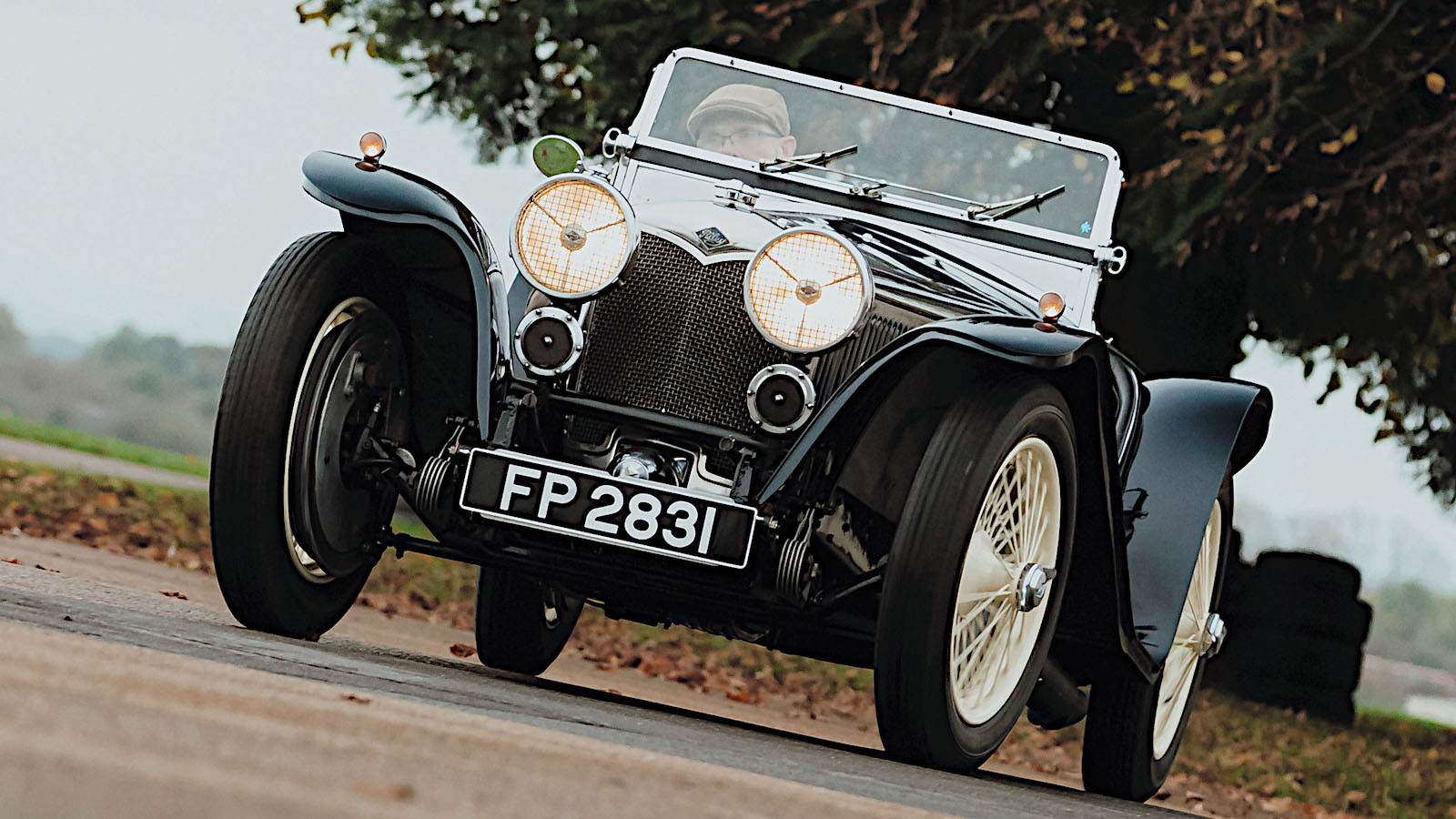
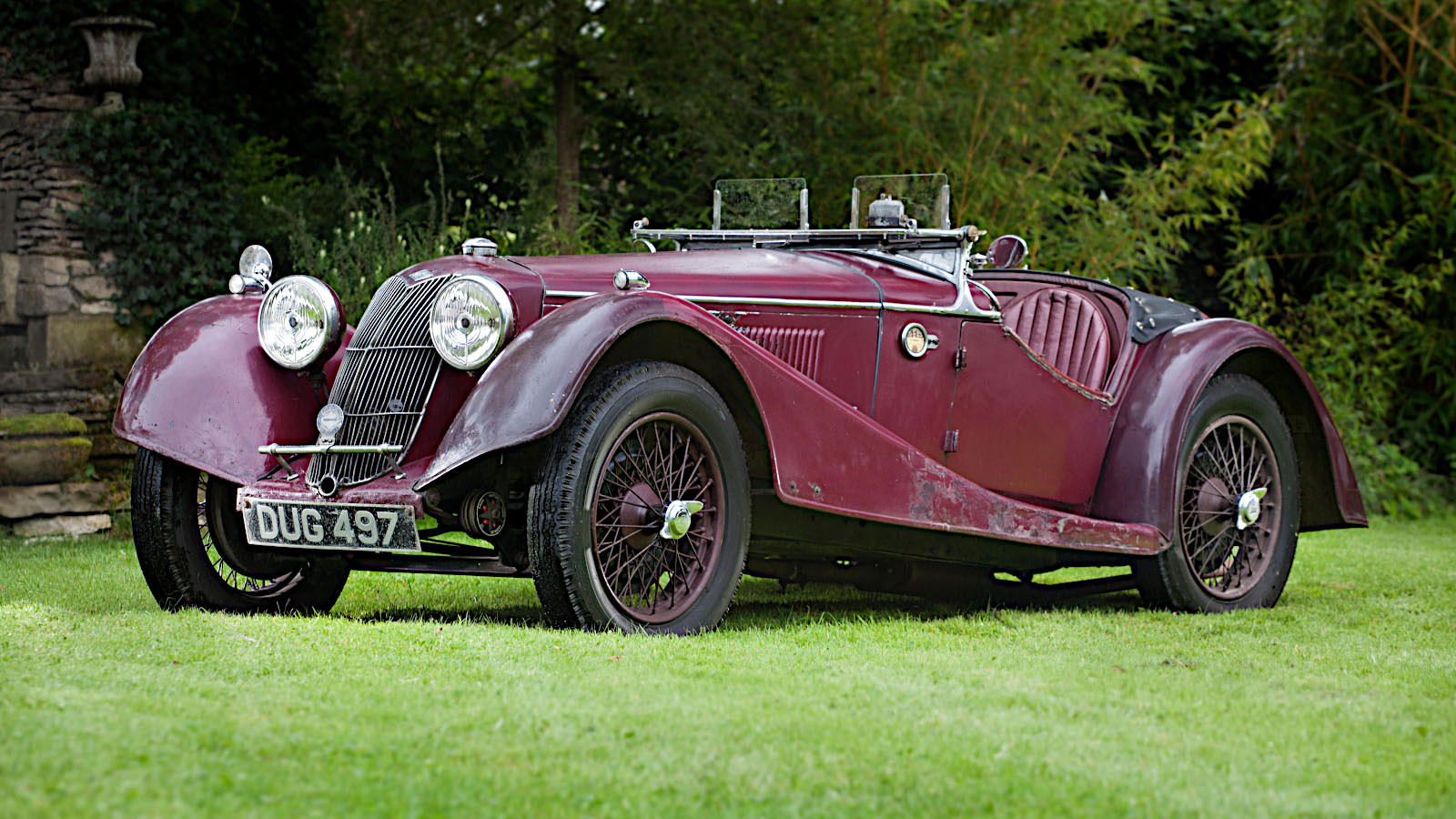
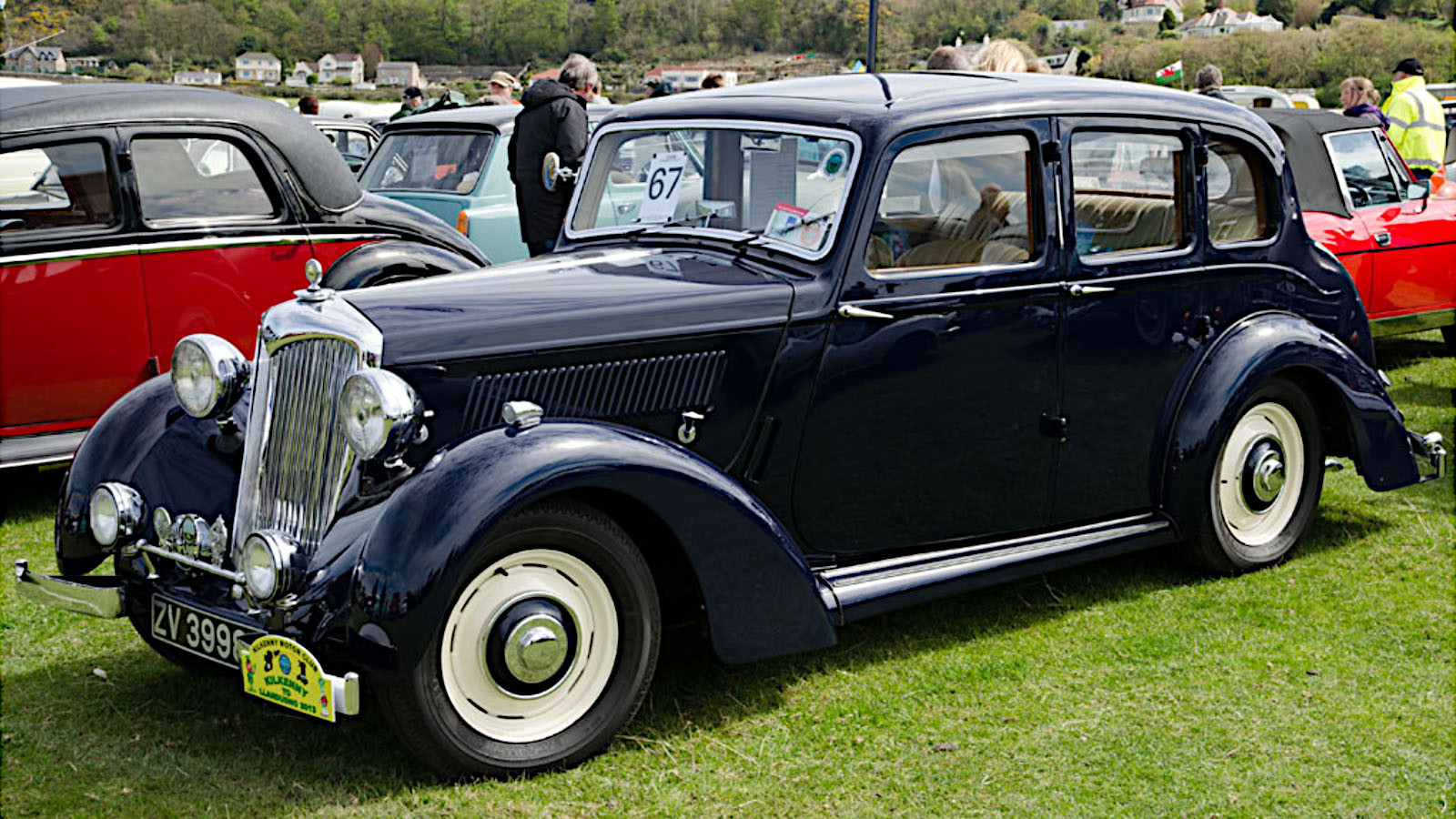
Available only briefly from 1936, the 8/90 was offered with Kestrel (pictured) or Adelphi bodies, both of which were also used on other models.
A larger, 2.9-litre V8 was used in the luxury cars sold by Autovia, Riley’s short-lived luxury brand.
12. Riley 12 and 16
In 1938, following a period of financial decline, Riley was acquired by Lord Nuffield and became part of the same stable as MG, Morris and Wolseley.
The range was immediately rationalised, and in 1939 two new models, both of them certainly Rileys but with some components brought in from elsewhere in the Nuffield empire, were introduced, only to be dropped shortly afterwards due to the outbreak of war.
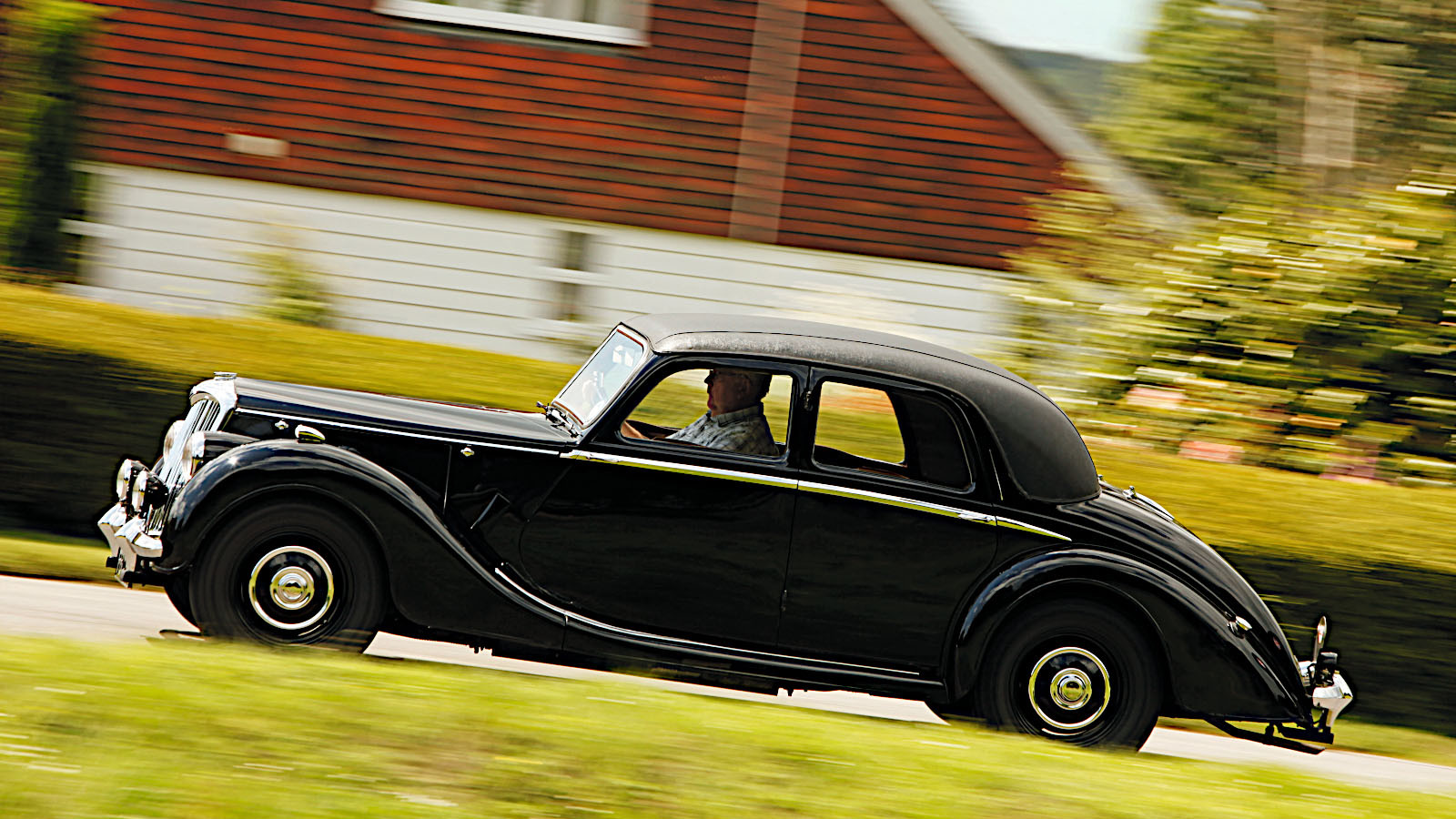
The 12 (pictured with an Adelphi saloon body) was powered by the familiar 1.5-litre, four-cylinder engine, while the 16 had a unit called the Big Four.
Still relatively new at the time, this had a capacity of 2443cc, making it significantly larger than the V8 in the 8/90, and indeed the largest British four-cylinder motor since the discontinuation of the Bentley 4½ Litre.
13. Riley RM Series (1.5-litre)
After the end of the Second World War, Riley resumed production quite rapidly with the new RM models, which we can divide into two groups.
The first of these were only ever available as four-door saloons and with the 1.5-litre engine which dated back to the days of the 12/4.
It was replaced in 1951 by the RME, which was more or less the same car with some mechanical upgrades and a larger rear window, and which was restyled (without having its name changed) two years later.
With redesigned wings and no running boards, the RME remained on sale until 1955, by which time what had once seemed quite an elegant car was looking rather old fashioned.
14. Riley RM Series (2.5-litre)
The 2.5-litre Riley RMs were physically larger than the 1.5s, and significantly more powerful thanks to their Big Four engines.
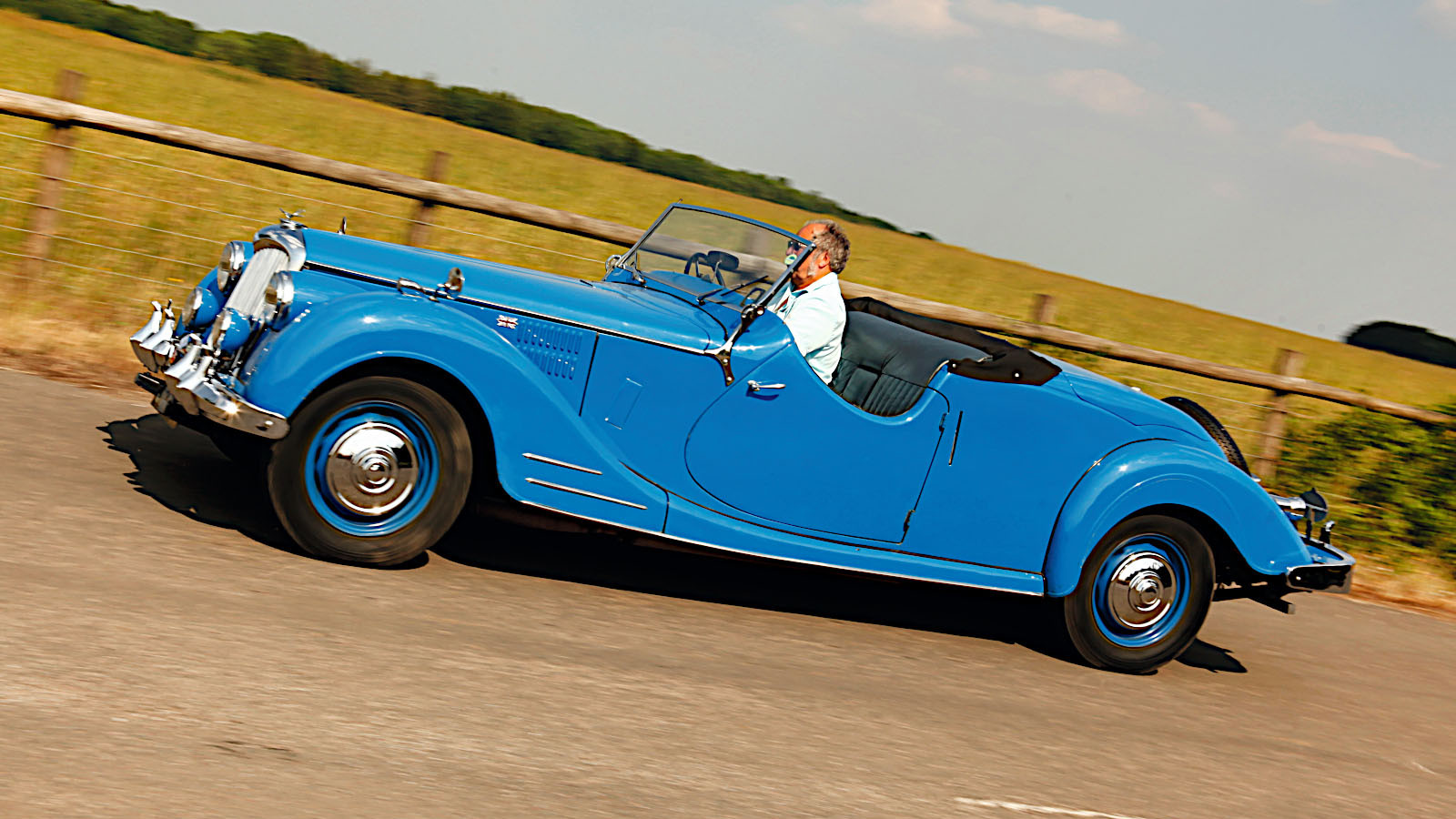
They also had a greater variety of body styles. The RMC (pictured) was a roadster capable of carrying either two or three people, if fitted with individual seats or a bench respectively, while the RMD was a convertible with room for more passengers.
Neither of them was particularly successful, and they both came and went during the lifetime of the mechanically similar RMB saloon.
The RMF saloon replaced the RMB in 1952, and attracted so little interest that it was dropped the following year.
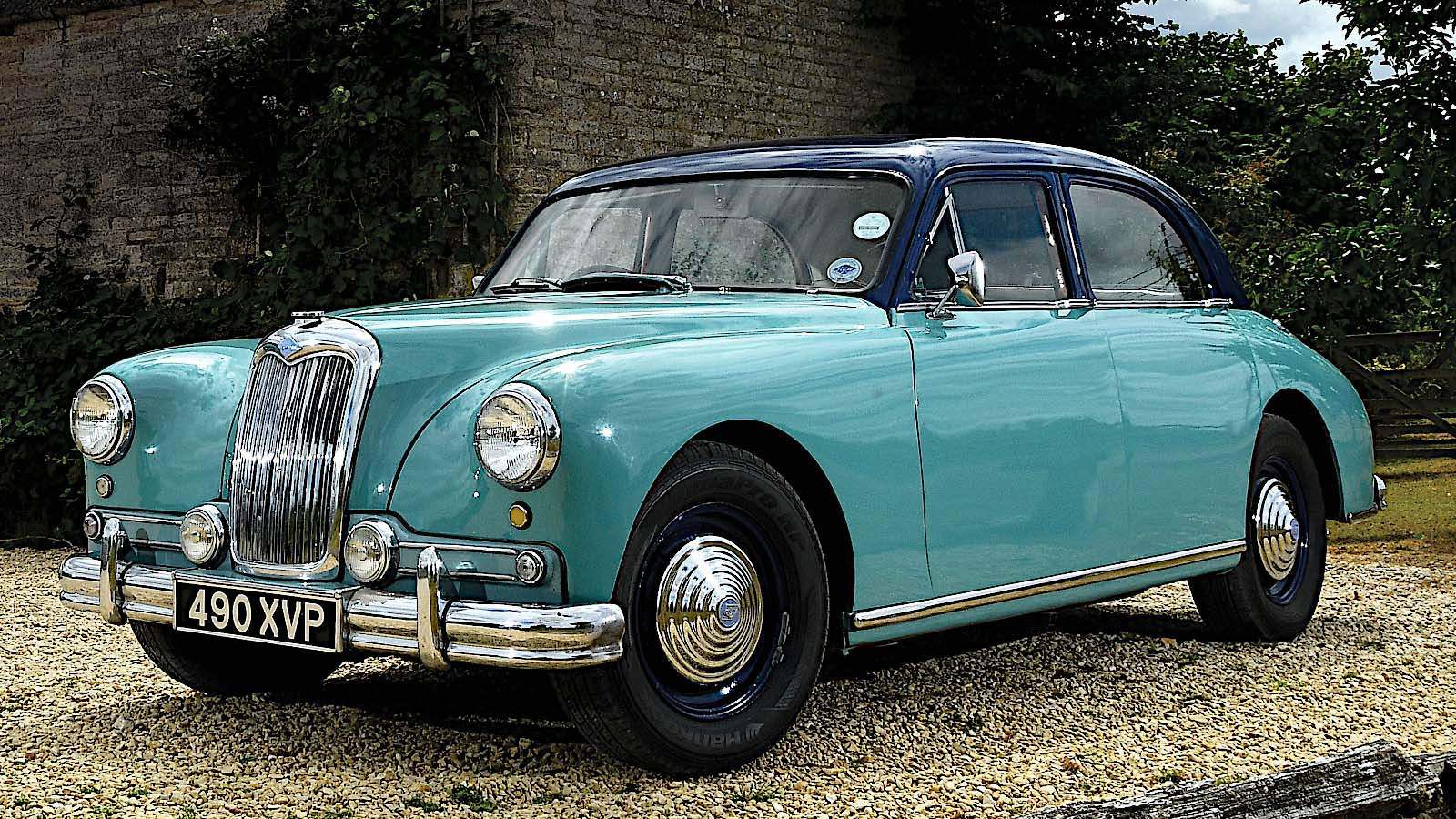
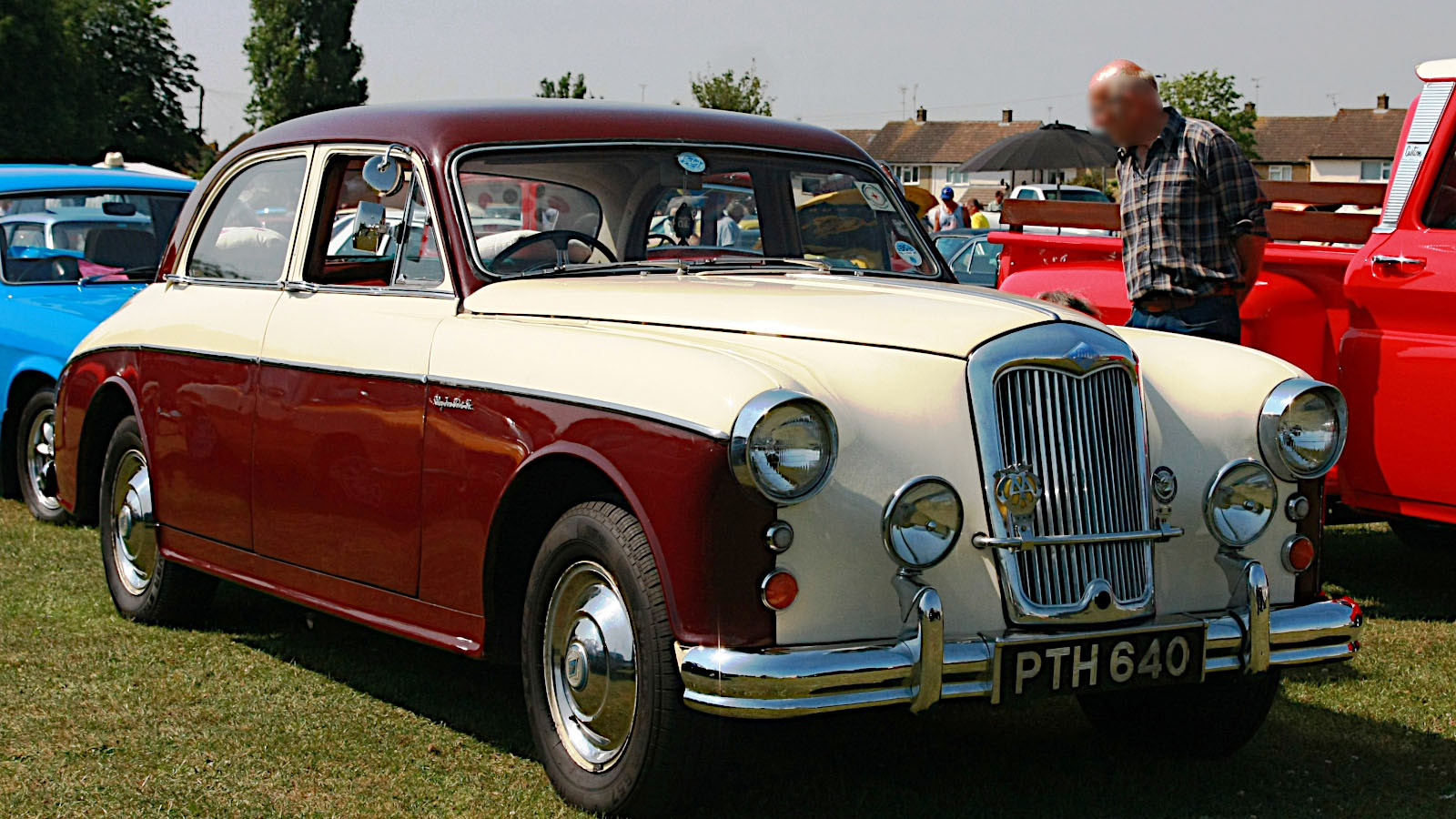
15. Riley Pathfinder
The first Riley to go on sale after the Nuffield marques were merged with Austin to form the British Motor Corporation, and the last not directly related to any BMC model, was originally going to be called the RMH but was renamed Pathfinder before it went to market.
Far more modern-looking than any of the RM cars, it nevertheless retained the Big Four engine, and was indeed the last Riley ever to use it.
Production lasted from 1953-’57, and for a short period after the discontinuation of the RME this was the only Riley anyone could buy new.
16. Riley Two-Point-Six
The Riley Pathfinder was replaced by the Two-Point-Six, which was named after the capacity of its engine.
The straight-six was in no way a Riley design, being simply the BMC straight-six which had made its debut in the 1954 Austin A90 Westminster and Wolseley 6/90.
In fact, the Two-Point-Six as a whole was little more than a third-series Wolseley 6/90 with different branding.
Launched in August 1957 and cancelled less than two years later, it was the last Riley with an engine capacity of more than 2 litres, and the first to be all but indistinguishable from one or more BMC companions.
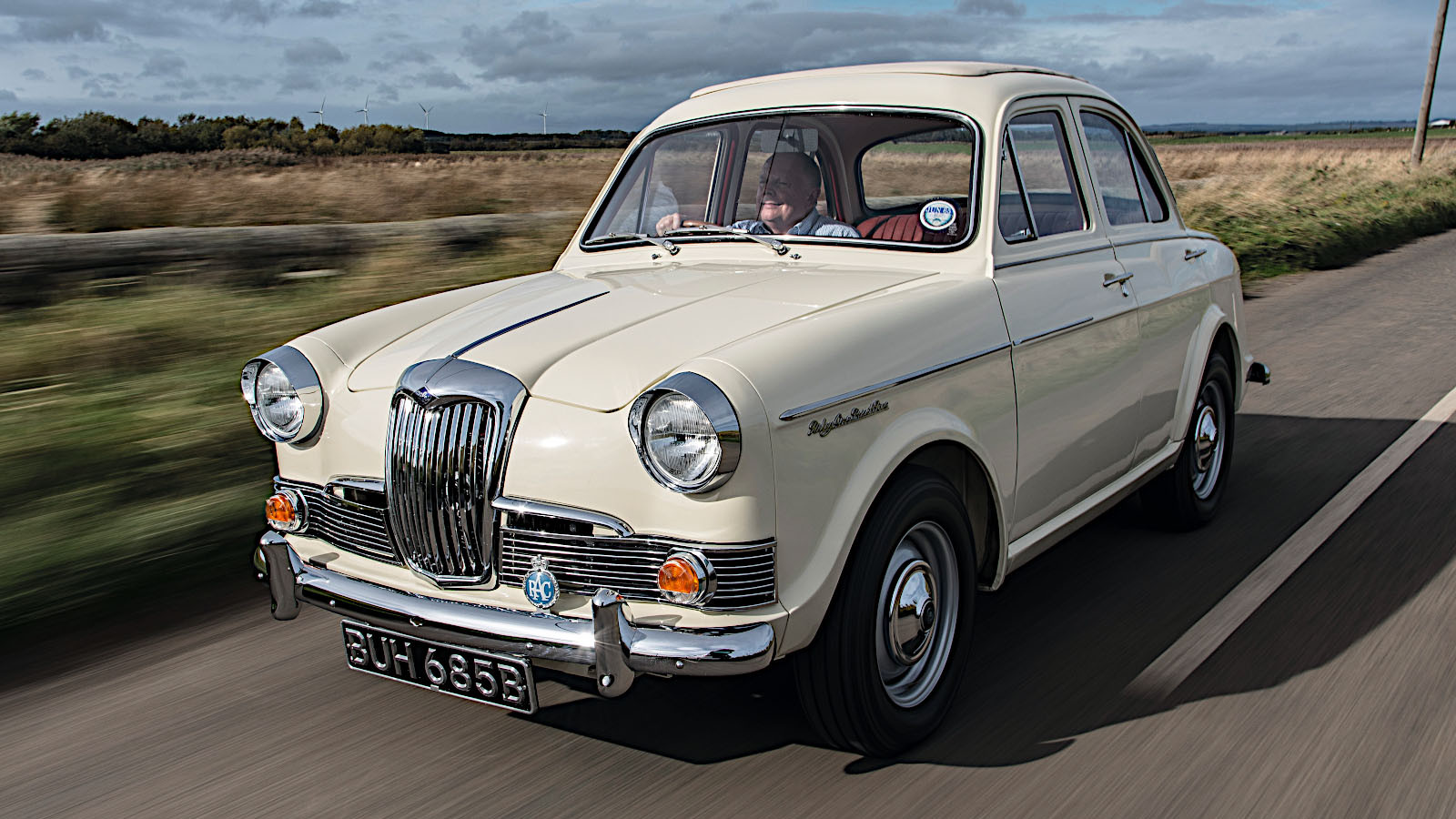
17. Riley One-Point-Five
The One-Point-Five which joined the Riley range in late 1957 was a compact saloon powered by the 1.5-litre, BMC B-series, four-cylinder engine also used in such diverse vehicles as the MGA, the Morris Oxford and the Nash Metropolitan.
It had an almost exact counterpart in the Wolseley 1500, but in accordance with the two marques’ places in the BMC portfolio, the Riley was both more powerful and better equipped.
It was more expensive, too, and that helped to give the 1500 an advantage of around two and a half to one in terms of sales.
Despite that, nearly 40,000 One-Point-Fives were built – an astonishingly high figure for any Riley.
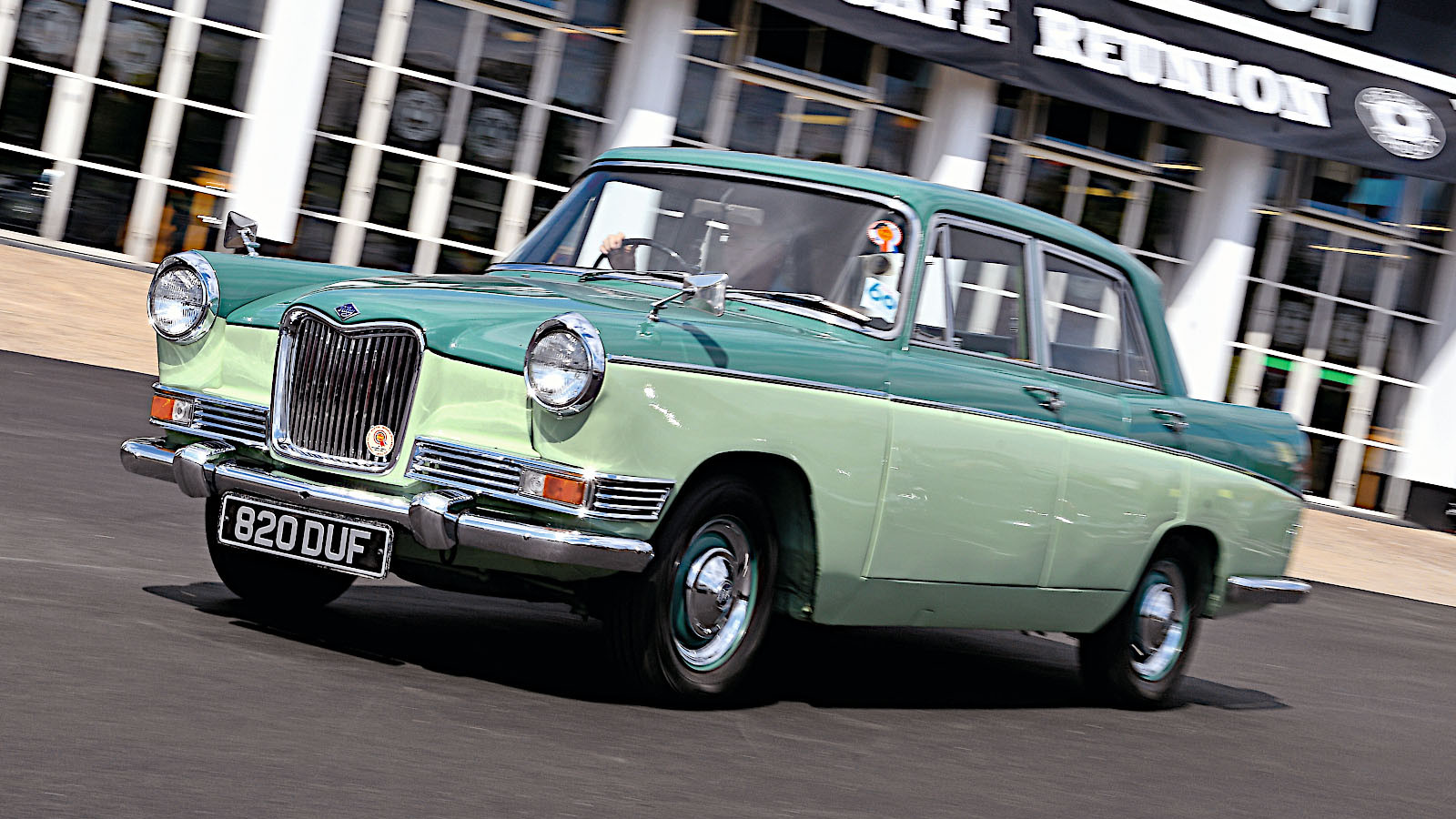
18. Riley 4/68 and 4/72
The first of the mid-sized BMC Farina models was the Wolseley 15/60 launched in late 1958, and it was followed closely by the latest versions of the Austin Cambridge, MG Magnette and Morris Oxford.
The range was completed in April 1959 by the Riley 4/68, which shared the bodyshell and the 1.5-litre, B-series engine used by the other four models, but had distinctive styling details and an above-average amount of power.
All the Farina models were updated in 1961 – changes including a slightly longer wheelbase, updated suspension and a rise in engine capacity to 1.6 litres – and at this point the Riley was renamed 4/72.
By the time the 4/72 was discontinued in 1969 (a year of considerable significance in Riley history, as we’ll see), total production of both models had reached approximately 25,000.
19. Riley Elf
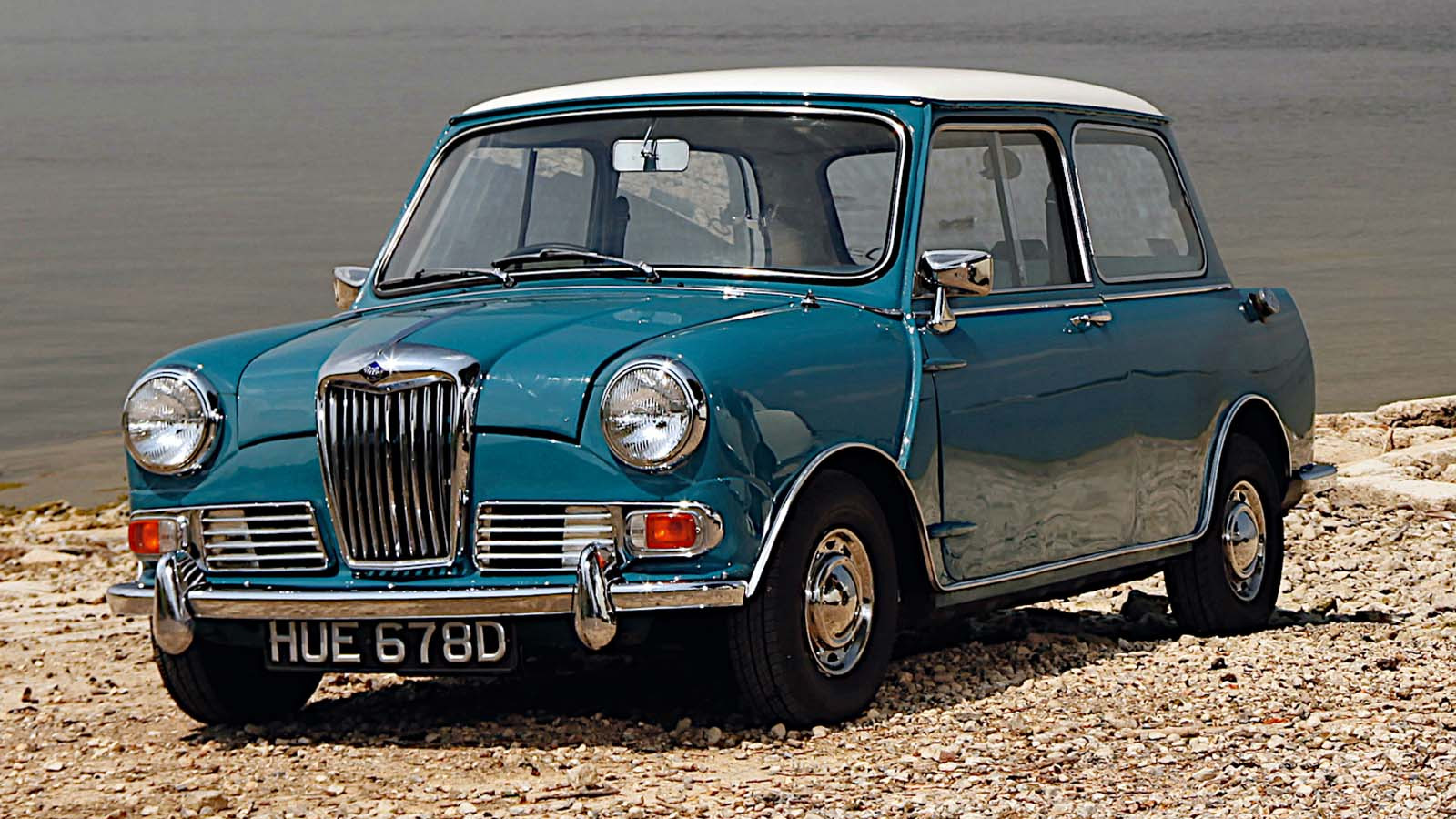
The penultimate Riley was a three-box saloon derivative of the Mini, introduced two years after that model in 1961.
In its original form and through two updates, it was mechanically identical to the companion Wolseley Hornet, both of which were viewed with suspicion both in the motoring press and within BMC itself.
Within reasonable limits, they were luxury models, with impressive interiors and ornate front-end styling.
If the history of the Riley One-Point-Five and Wolseley 1500 had been repeated, the Hornet would have been far more popular, but in this case the Elf proved to have greater customer appeal (with a reported production run of 30,912 up to 1969 as opposed to 28,455 Hornets) even though it was more expensive.
20. Riley Kestrel
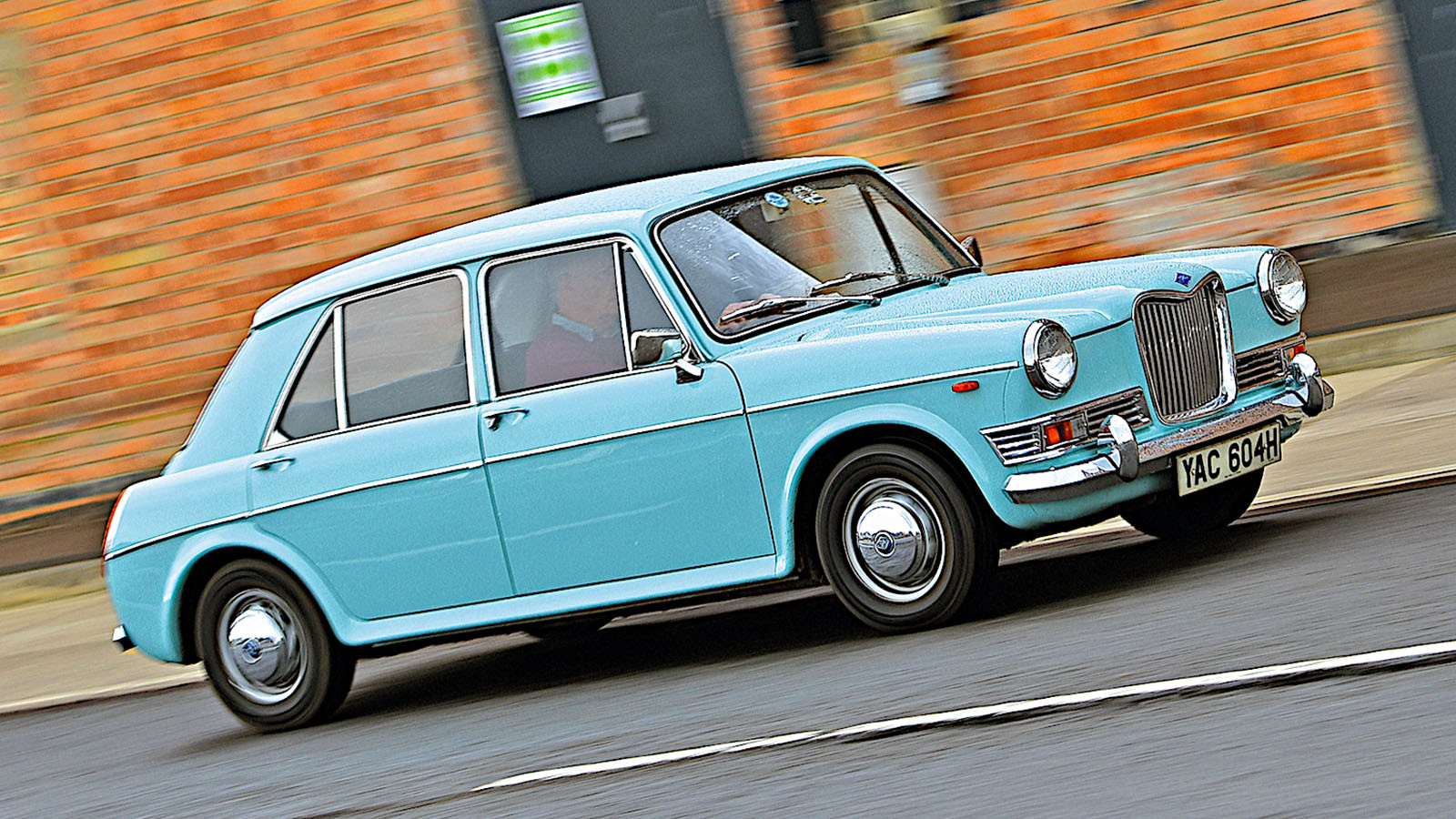
If the events of the previous eight years hadn’t already broken the hearts of Riley enthusiasts, the introduction of the Kestrel in 1965 surely must have done.
Not only did it have a companion model (or in this case a whole cluster of them) elsewhere in the BMC line-up, it wasn’t a new car even to the limited extent that the Elf had been, but was simply the latest member of the ADO16 range which at the time was already three years old.
One of the more upmarket versions, it didn’t last long, being discontinued – along with the 4/72 and Elf – in 1969, by which time it was known simply as the Riley 1300.
Once an innovative manufacturer but now merely one BMC brand too many, Riley at this point disappeared from the motor industry, perhaps never to return.