Not your everyday classic car sale…
On 13 June 2026, Bonhams|Cars is hosting a huge, no-reserve auction at the National Automobile Museum in Reno, Nevada, USA.
The 122-lot sale includes 90 cars, trucks and more that were once displayed in the museum, which opened in 1989.
Most of the exhibits came from the late Bill Harrah’s mighty stash. The American businessman spent years buying and preserving some of America’s rarest, most important and unusual vehicles – from record breakers to one-off concepts.
Thankfully, the National Automobile Museum isn’t closing its doors; instead, this clear-out is part of a multi-million-dollar revamp – and your opportunity to buy some fascinating motors.
The other 32 cars have come from The Minden Automobile Museum, also in Nevada, another repository of uncommon classics in the USA.
Here, presented in chronological order, we’ve selected some of our favourite vehicles from both collections.
Prices are given GBP£, US$ and EUR€; all conversions were correct at the time of writing
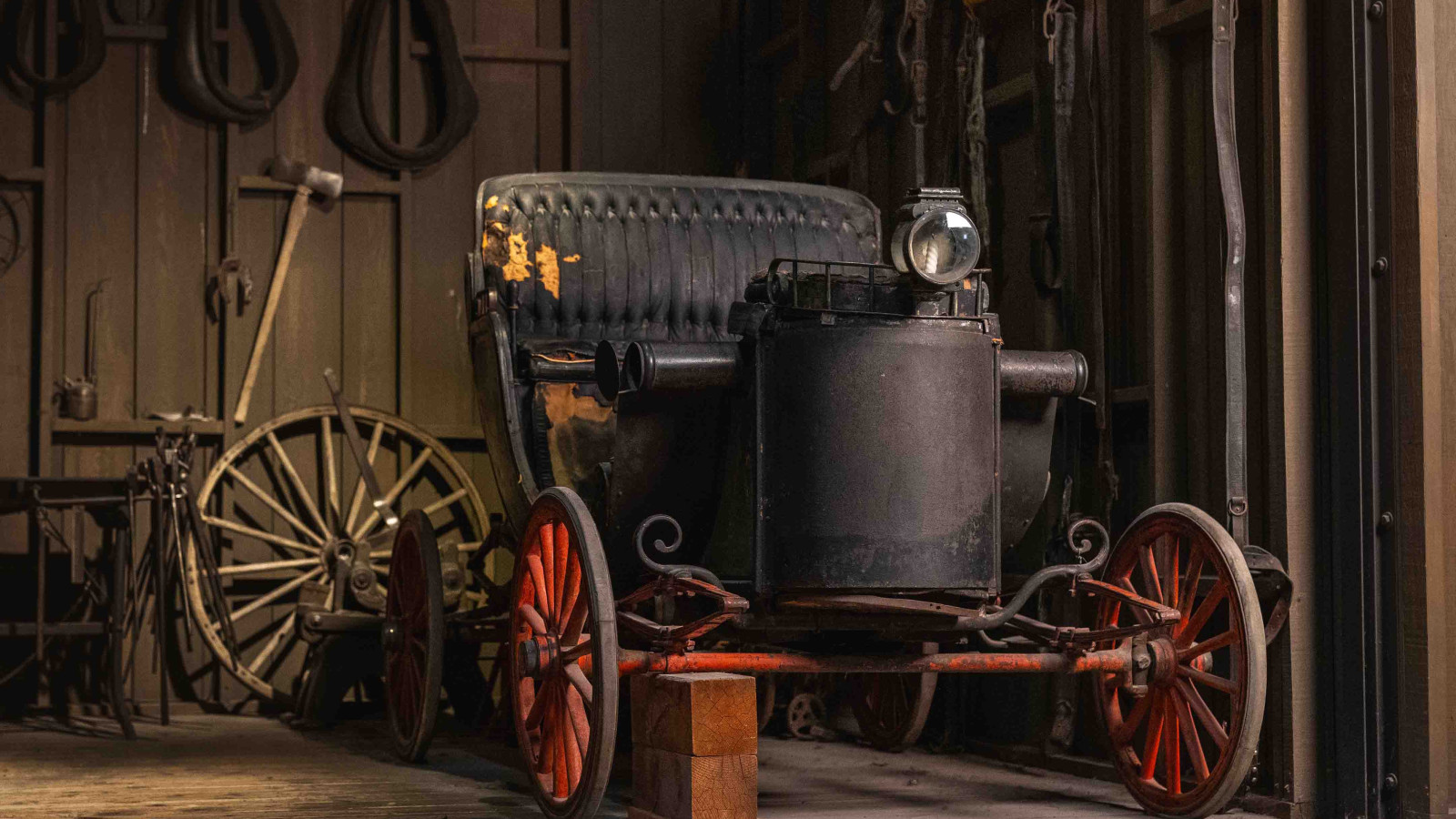
1. 1902 Capitol Chariot Steam Car (est: £37-52,000/$50-70,000/€43-60,000)
This steam-powered veteran is called the Capitol Chariot. It certainly would not have looked out of place racing around Rome in the second century AD, with a hairy-chested gladiator at the helm.
Granted, the Romans would have probably been perplexed by the Capitol’s twin-cylinder motor. Witchcraft, you say?
This unrestored, chain-driven carriage makes around 6bhp.
Frank Goodwin built it in 1889. The pioneering vehicle remained in his family’s ownership until Bill Harrah bought it more than 50 years ago.
The four-seater has a bench for three passengers, plus a padded, rear-facing chair for one person on top of the boiler. Expect a toasty bottom.
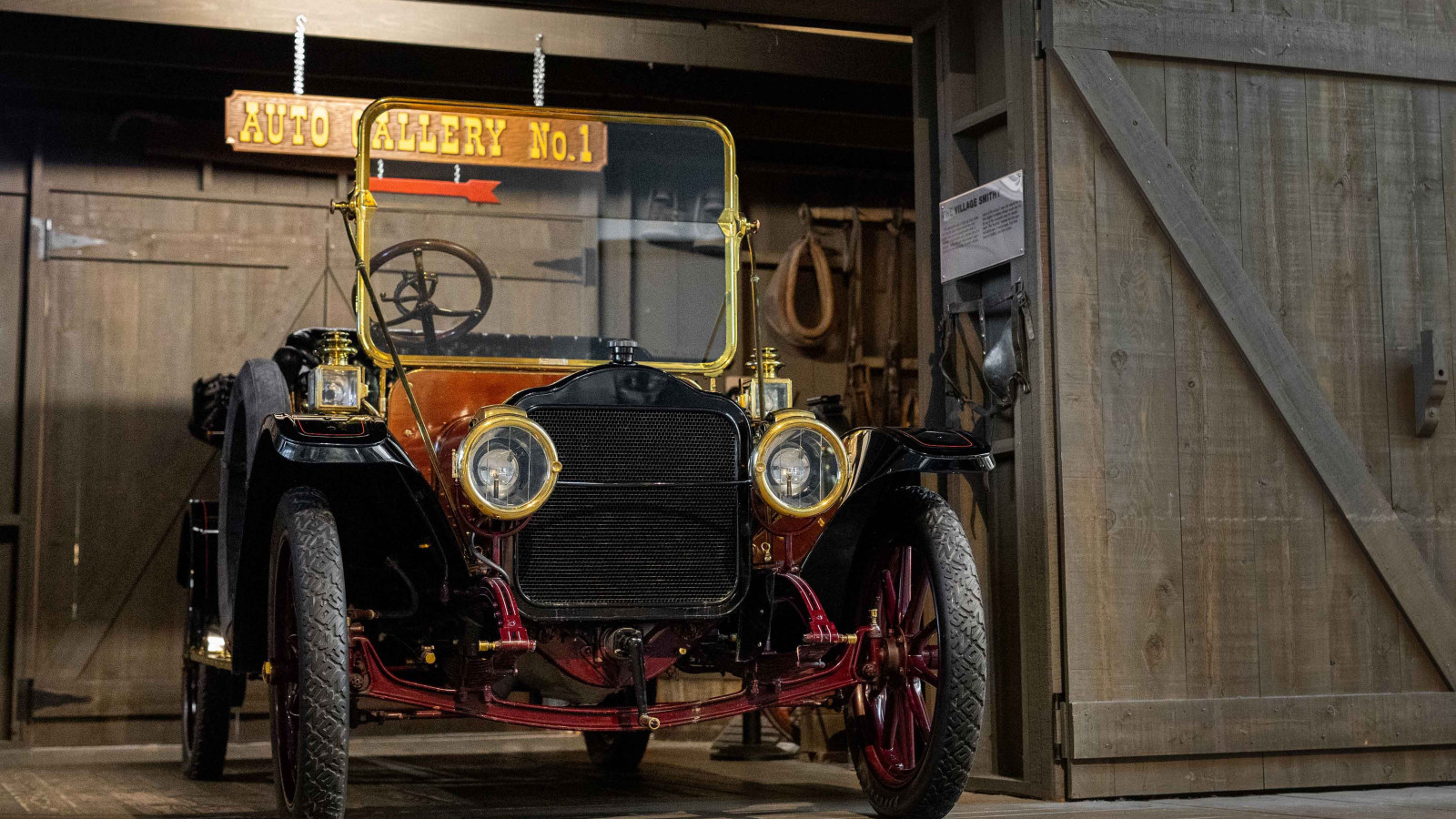
2. 1910 White G-A Touring (est: £37-45,000/$50-60,000/€43,000-51,500)
White might be a forgotten marque today, but the former car manufacturer and sewing-machine maker was a big name in the early 20th century.
The firm’s earliest vehicles were steam-powered (in 1905, it produced a 73.75mph record-breaker), but it switched to internal-combustion engines around 1909.
This 1910 G-A Touring, propelled by a 30bhp four-cylinder, is one of the earliest examples of the company’s gasoline machines.
According to Bonhams|Cars, this 116-year-old White was restored some time ago – most likely while it was part of the National Automobile Museum’s collection – but it still presents well.
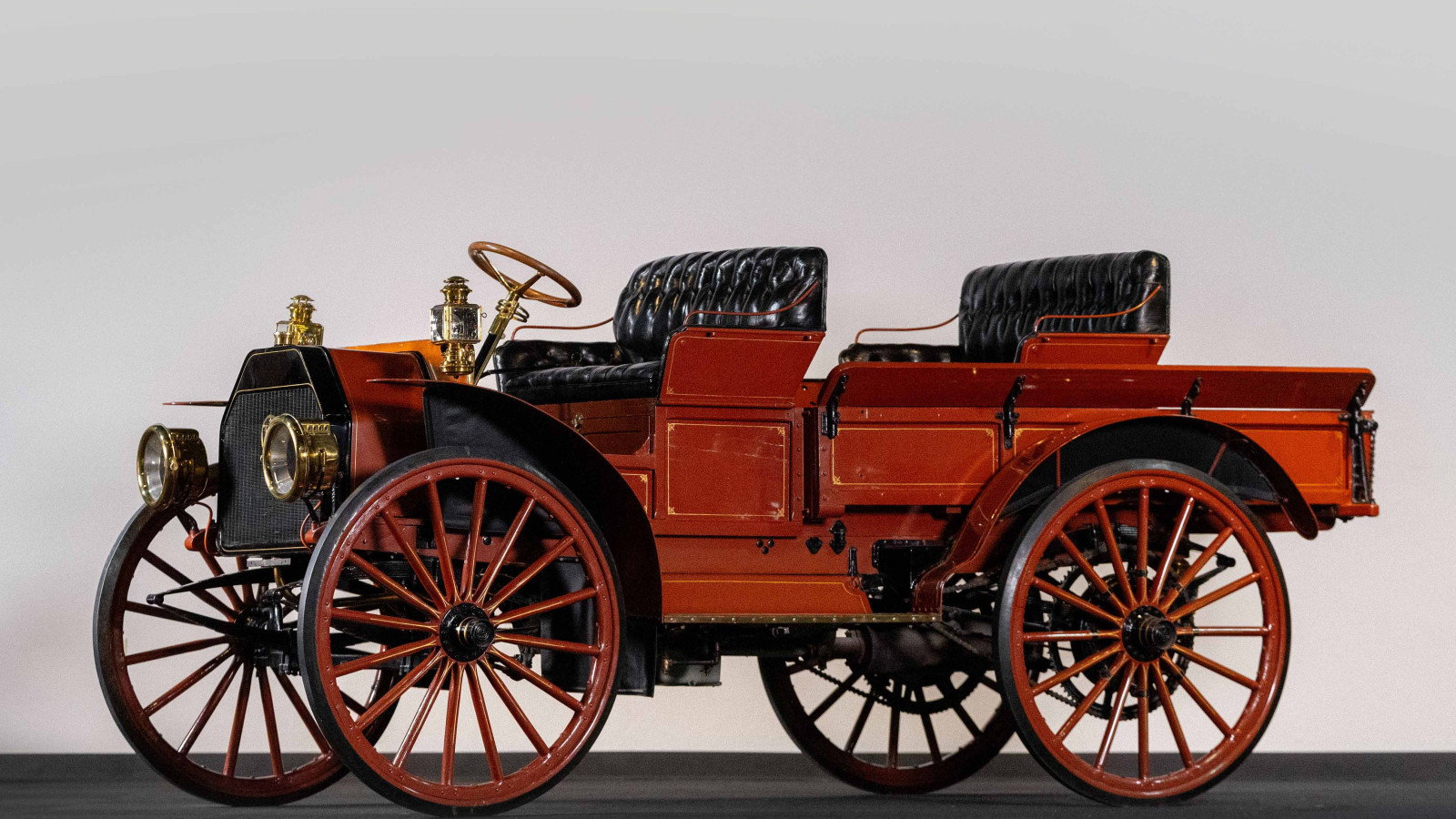
3. 1912 International MW Panel Express (est: £19-26,000/$25-35,000/€21,500-30,000)
If you’re a fan of farming, you might associate the International nameplate with the iconic Farmall tractor, whereas automotive enthusiasts might remember it for the Scout, an American mud-plugger that brought a bit of luxury to the off-road segment.
The latter wasn’t the firm’s first vehicle designed for the road, though: it started building trucks and light commercials in the early 1900s.
The MW Panel Express has huge, wagon-like wheels which measure 38in in diameter, plus a c20bhp flat-twin engine and a chain-driven rear axle.
The International joined Harrah’s collection around six decades ago and it’s been part of the museum since it opened.
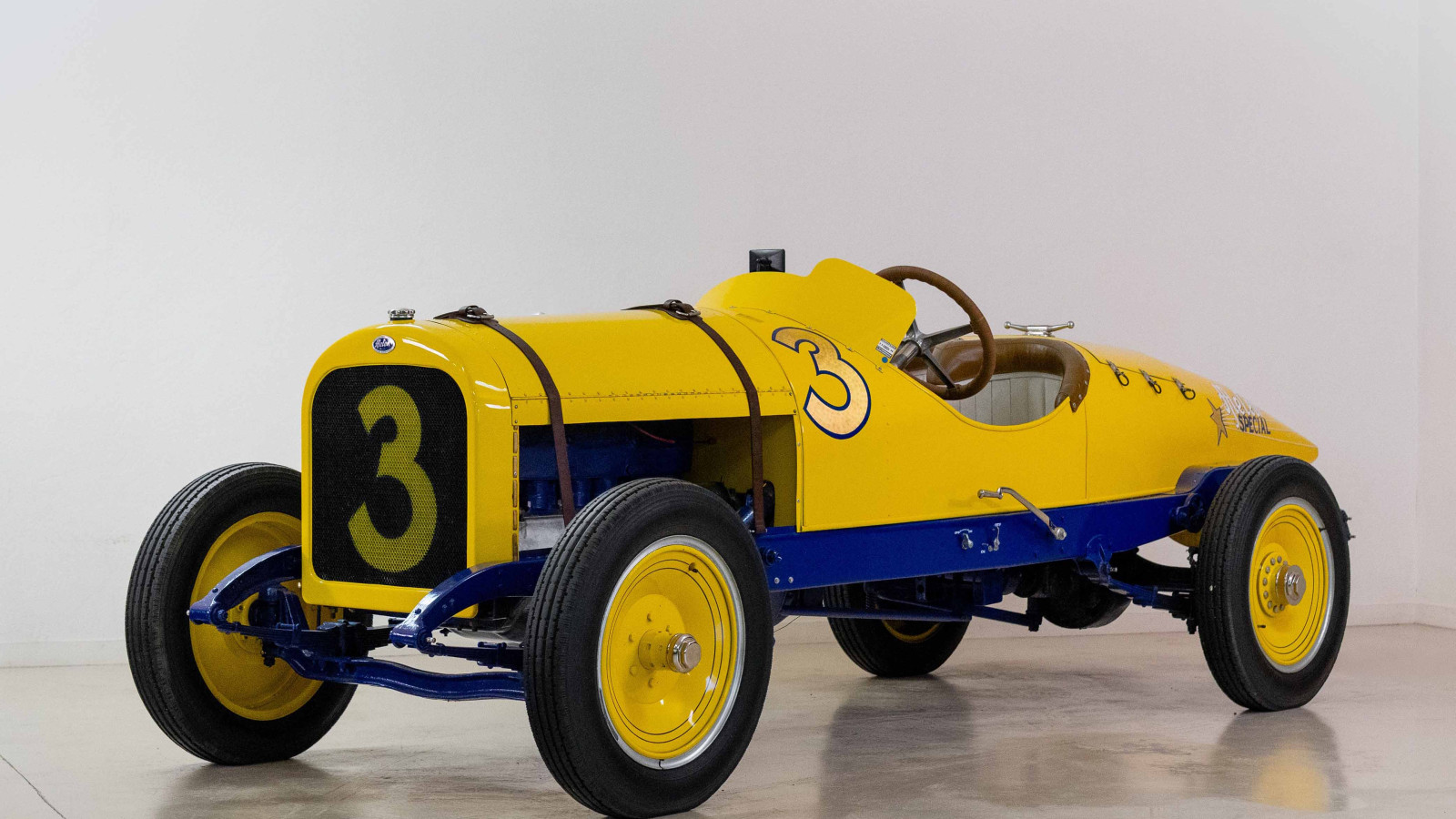
4. 1922 Meteor 6TA (est: £22-30,000/$30-40,000/€26,000-34,500)
This Meteor is a handbuilt Special constructed by a father-and-son team in the 1980s, and later displayed in The Minden Automobile Museum.
Acquired from an auction in California, the pair transformed the old racing car into a custom two-seater, inspired by Indianapolis 500 competitors of the 1920s.
The Meteor’s chassis and Continental engine were wrapped in streamlined bodywork.
Inside, there are padded seats, an engine-turned dashboard and a twine-wrapped steering wheel.
The six-cylinder motor was upgraded with twin Rochester carburettors. Apparently, it makes around 100bhp.
This Special isn’t an amateur effort, either: the upgraded Meteor raced at Monterey Historics and it was even displayed at the Pebble Beach concours.
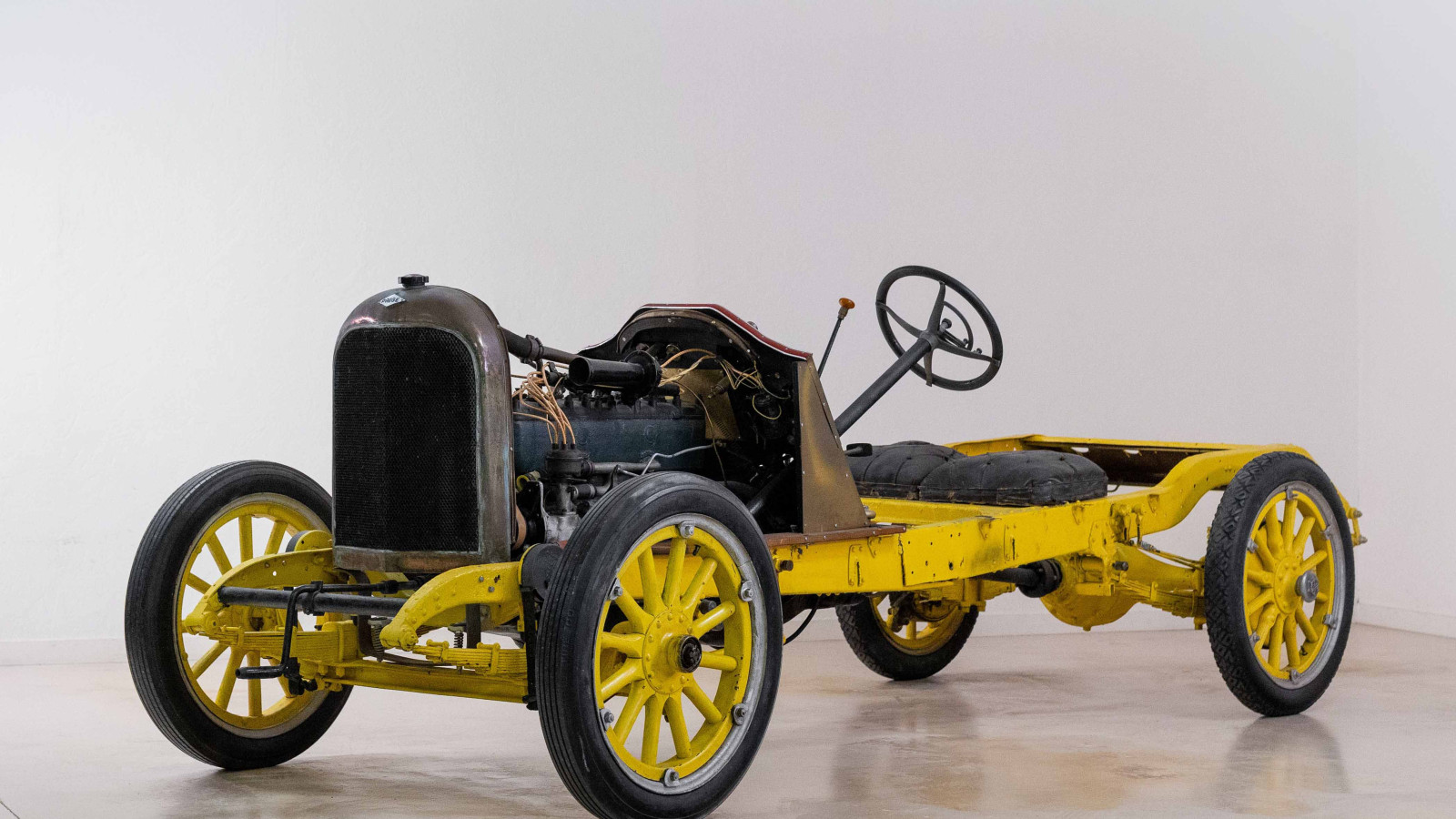
5. 1922 Paige 6-66 Daytona Speedster (est: £26-34,000/$35-45,000/€30,000-38,500)
Fancy a project? This unfinished Paige might be a rewarding – but potentially challenging – restoration.
Bonhams|Cars cannot find the vehicle’s chassis number (it’s usually located under the driver’s seat), so the auction house cannot confirm what model it is.
However, everything points towards this Paige 6-66 being a Daytona Speedster, a roadster powered by a c70bhp six-cylinder engine built by Continental.
The name was inspired by Ralph Mulford’s record-breaking run in 1921, in a different Paige 6-66.
The American racing driver covered a measured mile on Daytona Beach, Florida, in just 35.01 secs, averaging 102.8mph. The Detroit-based car maker renamed its top-of-the-range roadster to celebrate.
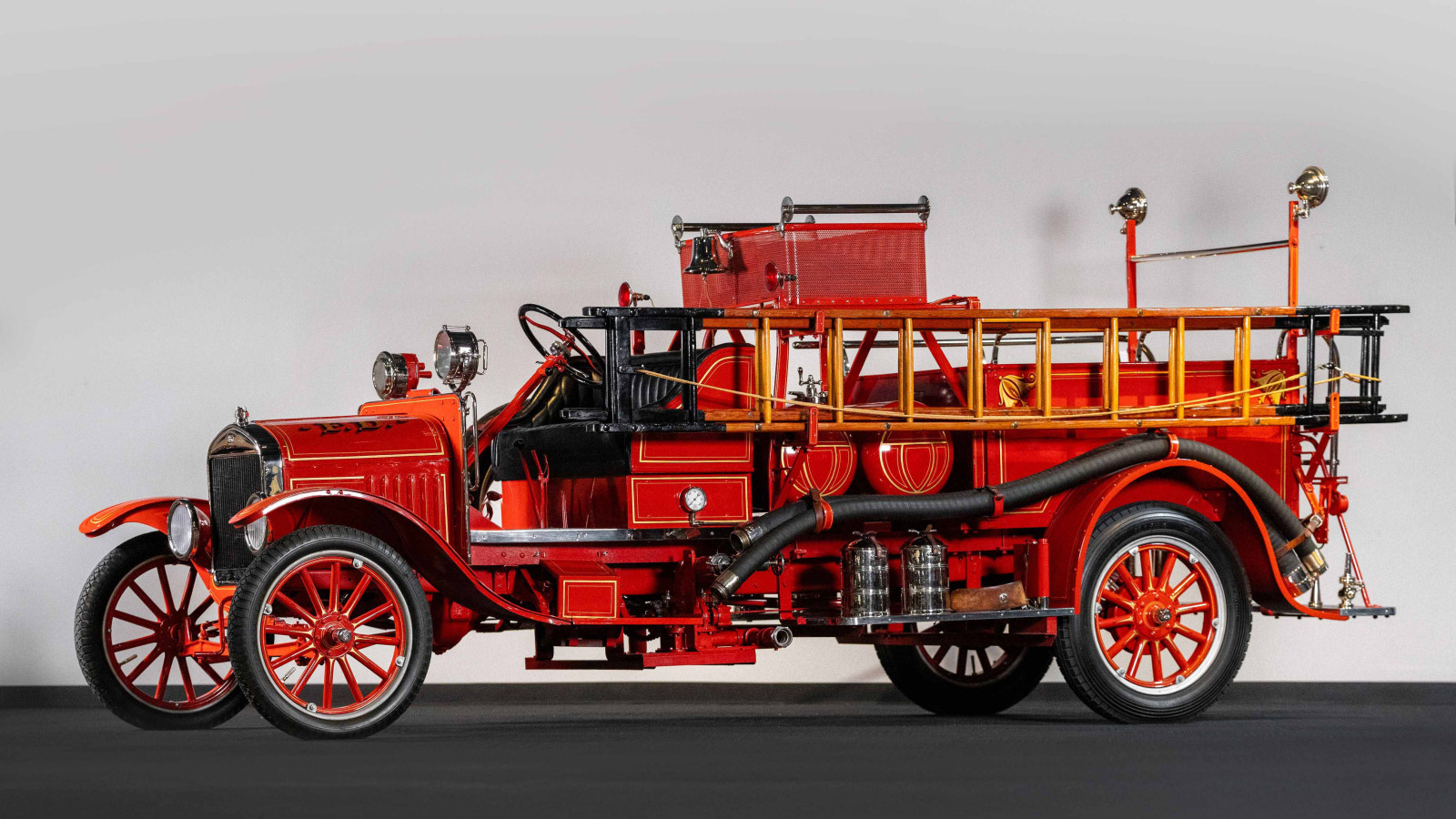
6. 1926 Ford Model TT fire engine (est: £34-41,000/$45-55,000/€38,500-47,000)
Nobody needs a vintage fire engine, but how cool is this restored, flame-busting Ford?
It comes with a hand-operated siren, an extendable ladder, a searchlight, hoses and much more.
When it was new, this bright-red Ford Model TT (the commercial version of the Model T) joined the Soledad Fire Company’s fleet, helping to fight fires in California’s Salinas Valley.
The Ford was restored in 1963, after it was acquired by Bill Harrah in 1958.
The fire engine has a big, 224cu in flathead ‘four’ that’s good for c22bhp.
It was a much-loved exhibit in the National Automobile Museum, featuring on postcards and in a 1975 book about the collection.
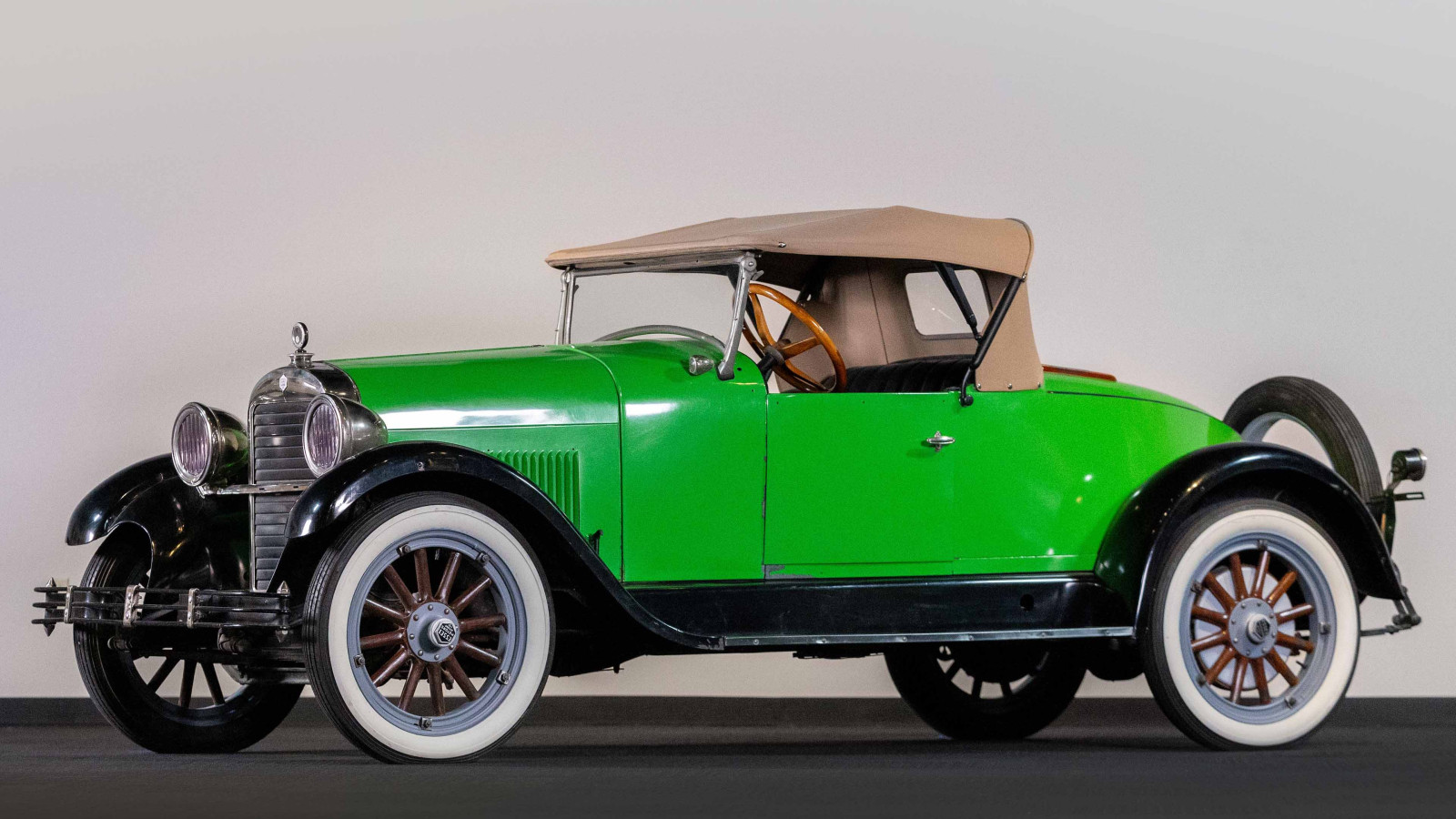
7. 1927 Essex Super Six Speedabout (est: £11-15,000/$15-20,000/€13-17,000)
It’s not often you see a 1920s car in Kermit the Frog green.
If you haven’t heard of Essex, you’ll probably be familiar with its parent company, Hudson.
The former was created as a more affordable alternative to high-priced Hudsons.
This six-cylinder-engined example has wood-spoked wheels, whitewall tyres, a three-speed manual gearbox and drum brakes on the rear wheels only. It makes 55bhp.
Although it didn’t leave the factory with this bright-green paintwork, the chassis and engine are original – but this boat-tailed Essex will need some work before it’s back on the road.
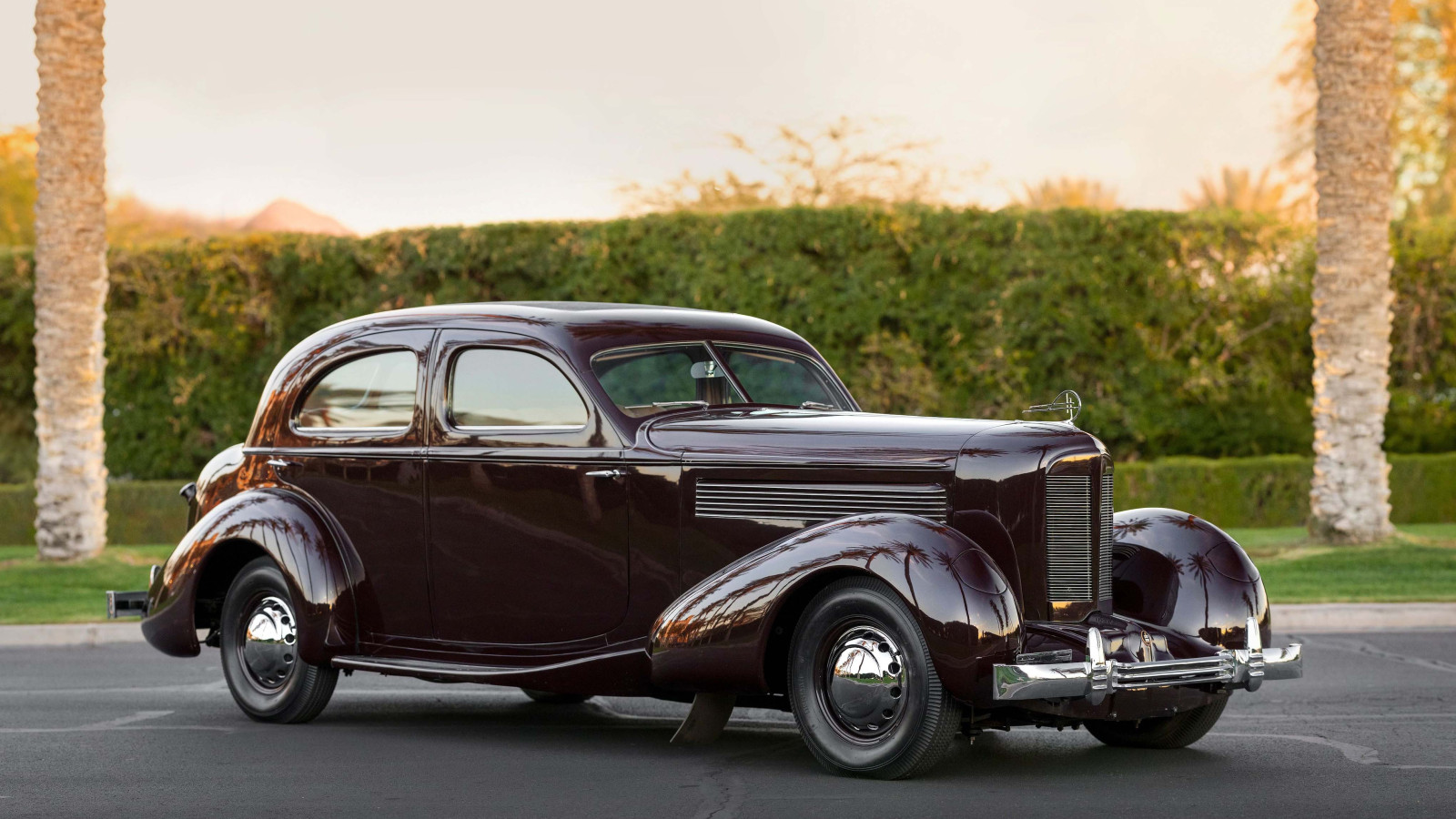
8. 1936 Cord Experimental Limousine (est: £340-480,000/$450-650,000/€386,500-558,000)
This LeBaron-bodied Cord is a supercharged V8 prototype that was used by marque founder Errett Lobban Cord.
The front-wheel-drive car is one of five or six Experimental Limousines built, according to Bonhams|Cars.
Between 1936 and 1940, it was driven often by the Cord family around Chicago and Beverly Hills.
The ‘Baby Duesenberg’ project was abandoned, though. Errett Lobban Cord concluded that, after the Wall Street crash of 1929, the market for such a car had not recovered.
Eventually, Errett Lobban’s son, Charlie, decided to use this Experimental Limousine (an assortment of various Cord components) for parts, to restore a Cord 812.
Bill Harrah acquired it for $650 in 1964. Immediately, Harrah sent it to his restoration shop, where it was brought back to life.
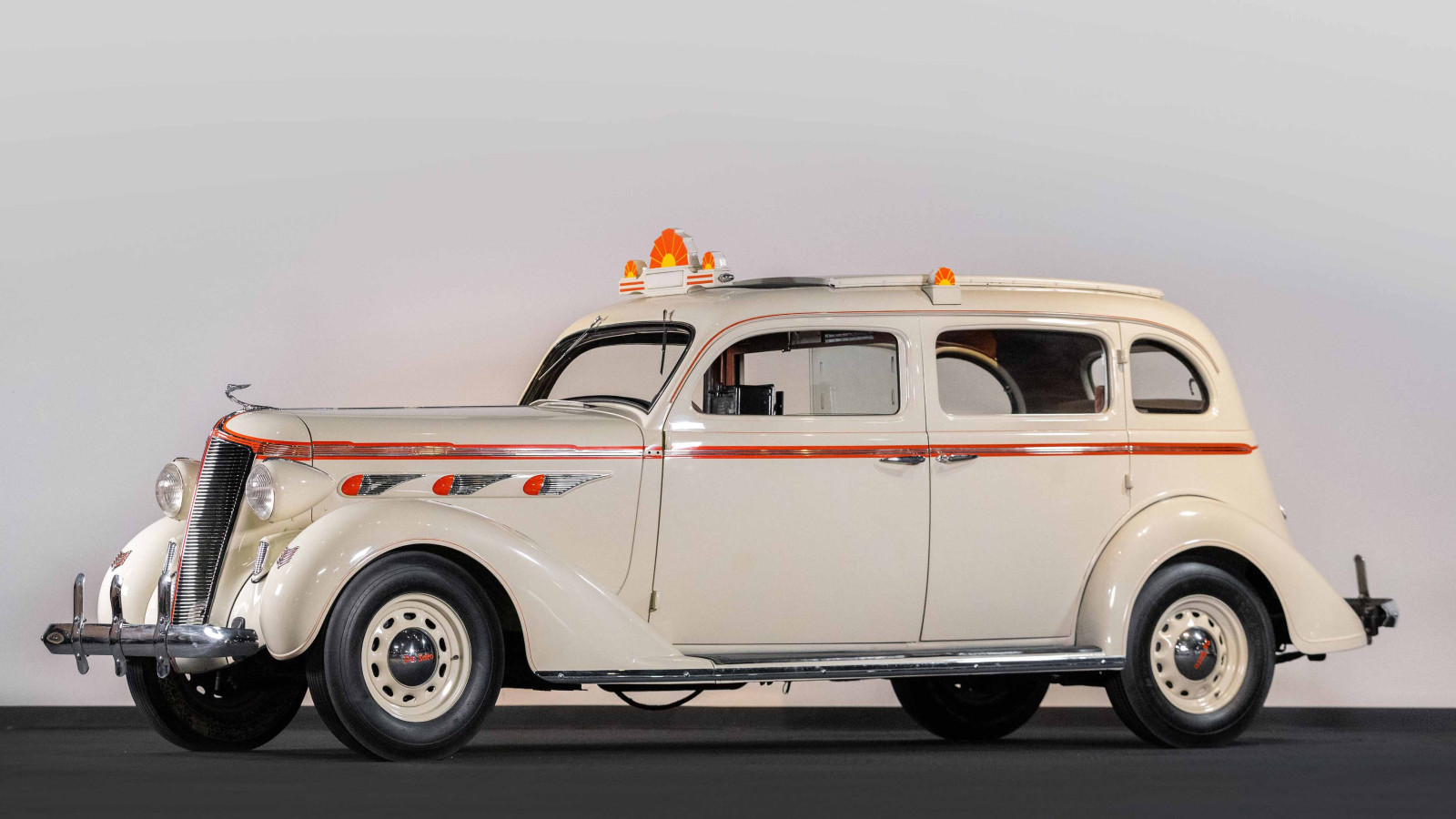
9. 1936 DeSoto Custom Airstream S-1 (est: £15-22,000/$20-30,000/€17-26,000)
Imagine picking up your family and friends in this DeSoto taxi.
It’s one of 2200 custom cabs that were ordered by New York-based Sunshine Radio Systems in 1934.
The 130in (3302mm) wheelbase is one foot (305mm) longer than the standard DeSoto chassis. This improved legroom and made space for a pair of jump-seats in the back.
This highly original example has an Ohmer taxi meter, a sliding divider to separate the passenger compartment and Art Deco-style roof lights.
The DeSoto was treated to a cosmetic restoration in 1974, five years before it joined Bill Harrah’s hoard of unusual classics.
It’s been on static display for many years, and the heater and air filter are missing, so Bonhams|Cars says it will need ‘comprehensive recommissioning’.
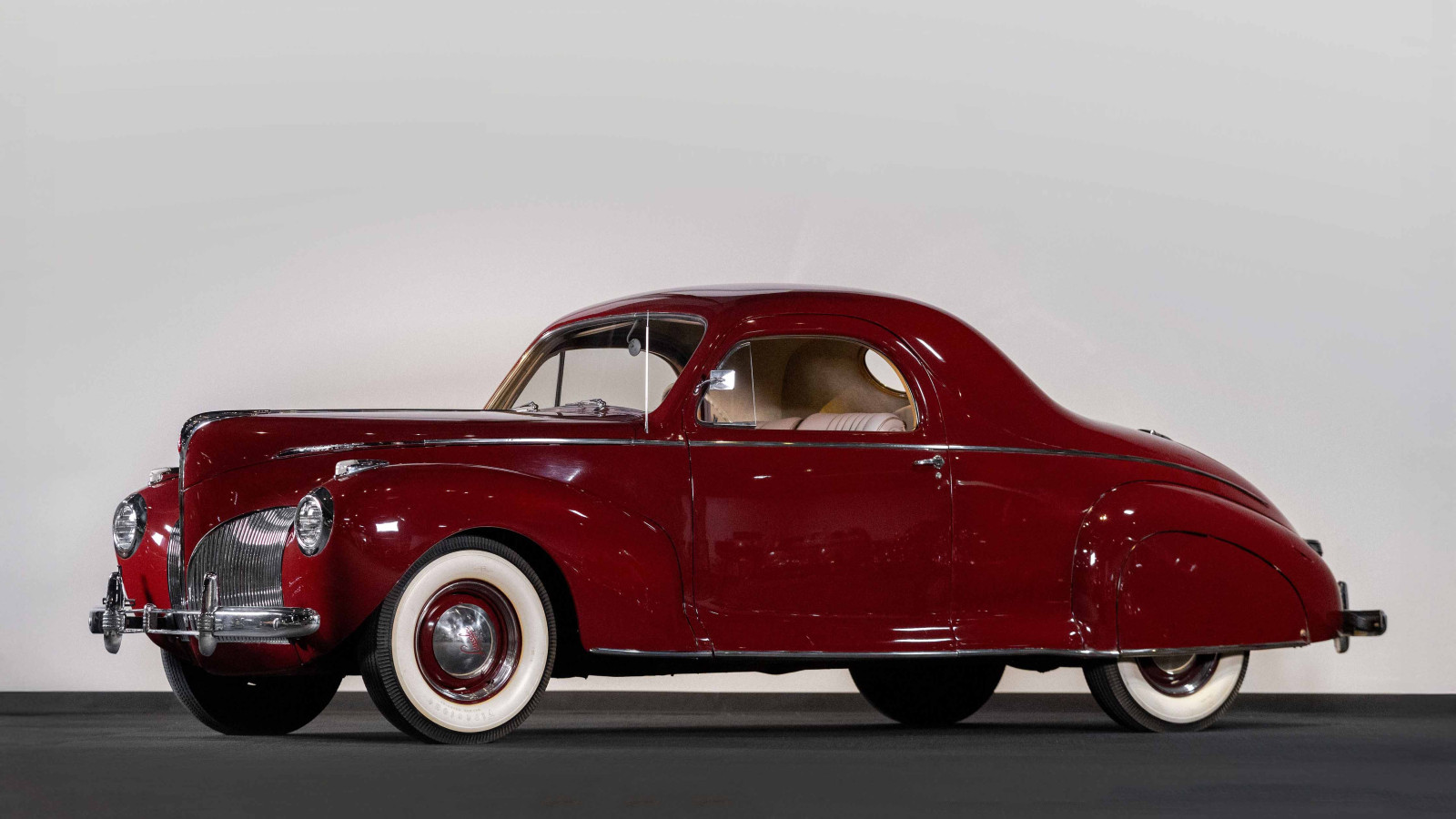
10. 1941 Lincoln-Zephyr V12 (est: £41-56,000/$55-75,000/€47,500-64,000)
This Lincoln-Zephyr V12 has been lovingly preserved by the National Automobile Museum since its previous owner donated it in the 1990s.
Powered by a c120bhp sidevalve V12 based on Ford’s flathead V8, this Lincoln-Zephyr has a three-speed manual gearbox and a two-barrel Holley carburettor.
The Lincoln-Zephyr V12 was styled by John Tjaarda whose son, Tom, later designed the De Tomaso Pantera, Fiat 124 and more.
This one is finished in Volanta Coach Maroon, with grey cloth and beige leatherette inside.
It was restored at some point and Bonham|Cars says ‘the engine compartment and chassis appear to be original’.
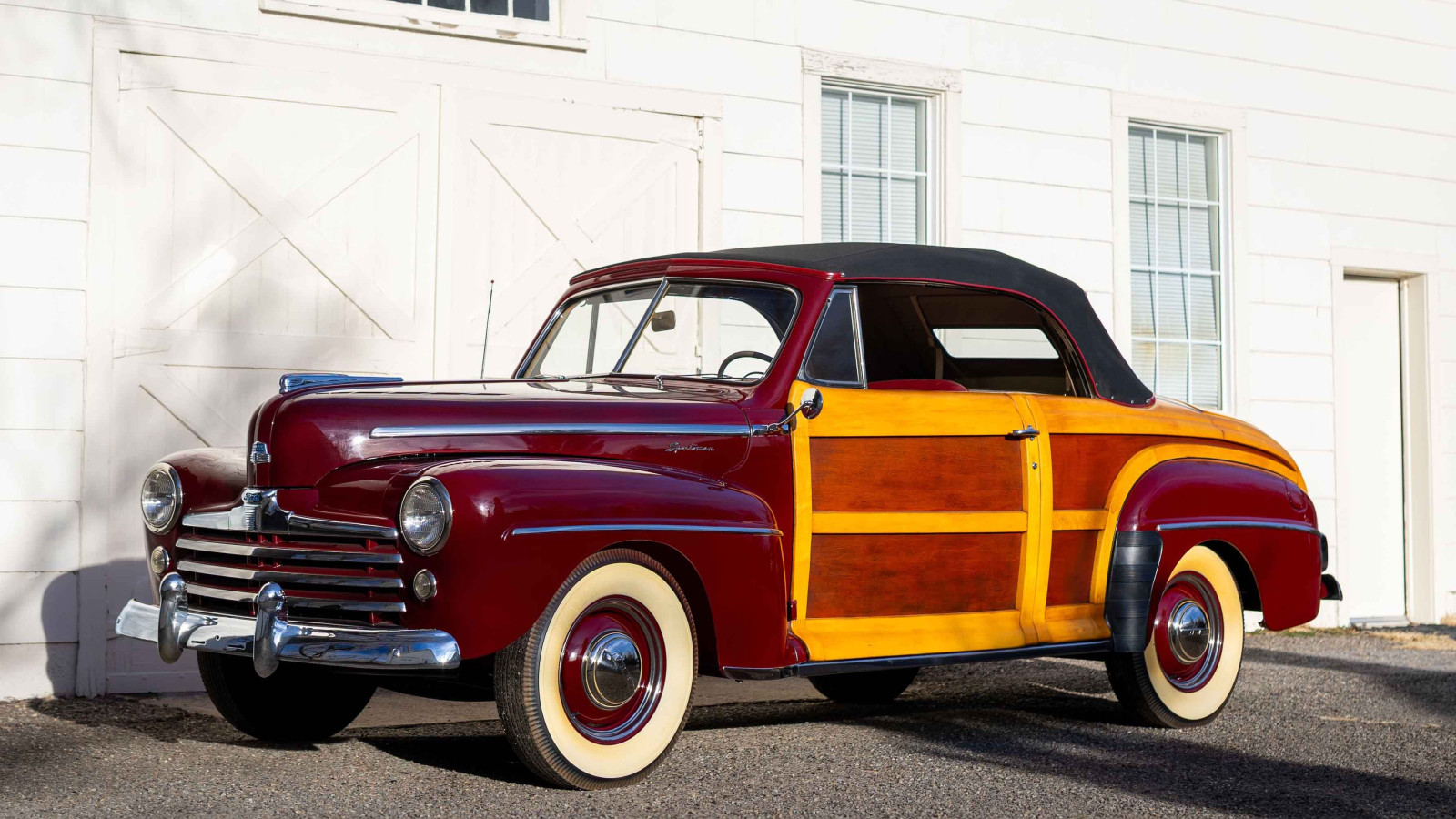
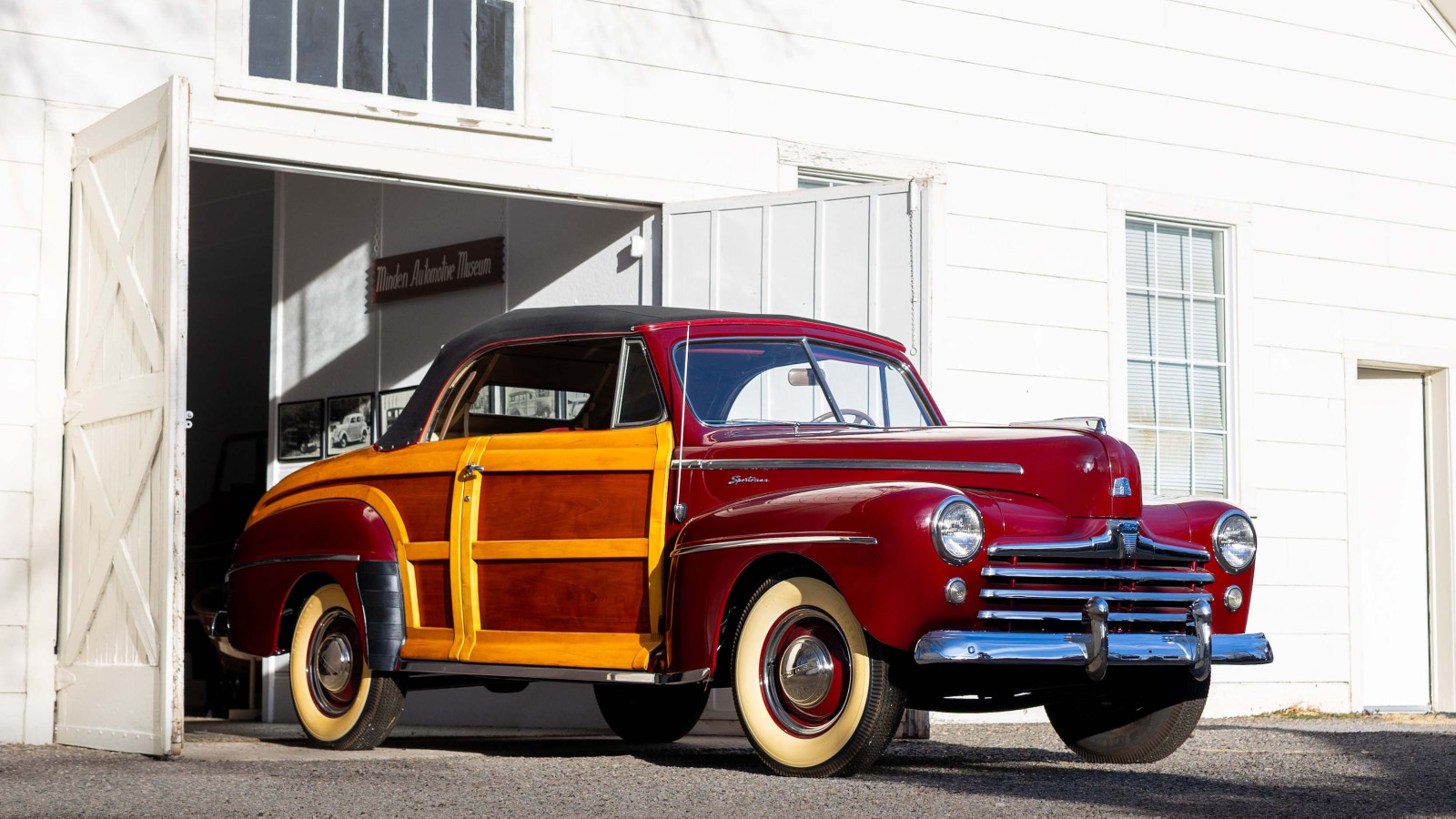
11. 1947 Ford Super Deluxe Sportsman Convertible (est: £67-90,000/$90-120,000/€77,500-103,000)
Ford built Super Deluxe Sportsman Convertibles between 1946 and 1948.
It’s a rare example of a drop-top ‘woodie’, a body style popularised by American wagons and some British estates.
It was an opportunity for the Blue Oval to demonstrate the work of its skilled craftspeople at the marque’s Iron Mountain sawmill and workshops in Michigan, where the American giant owned thousands of acres of forest.
This example became part of The Minden Automobile Museum’s fleet in 1984.
It required a full restoration, having spent years parked outside in Santa Barbara, California.
Hendricks Classic Restoration was commissioned to rebuild the Ford, with instructions to preserve the original Iron Mountain timber. The car hasn’t been driven since the work was completed.
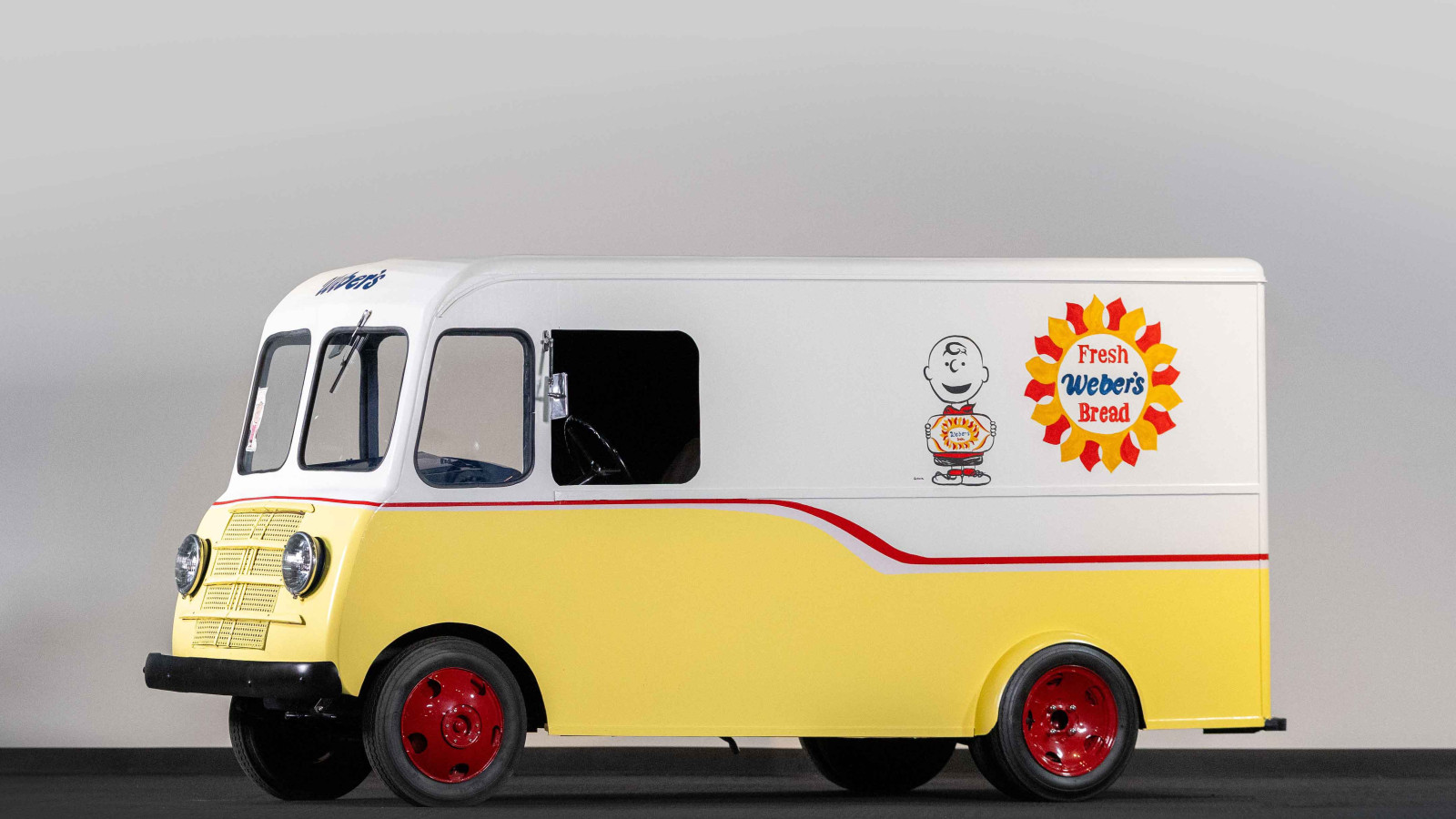
12. 1948 Crosley CC van (est: £15-22,000/$20-30,000/€17-26,000)
This Crosley CC started life as a station wagon. It’s one of five custom-built vans that were used as promotional vehicles for the Weber Bread Company in Los Angeles.
These vehicles were often spotted in parades, handing out miniature loaves of bread.
The illustration on the side of the van was designed by Peanuts creator Charles Schultz.
The American cartoonist hand-drew the originals; however, this example’s panels were replaced during a restoration and the cartoon character was recreated by local artist Lowri McGill.
Under the body, the Crosley has some clever packaging: the commercial-style coachwork didn’t leave room for a conventional radiator and fan; instead, the van’s creator mounted an electric fan behind the motor, designed to draw air from the engine bay and direct it under the chassis.
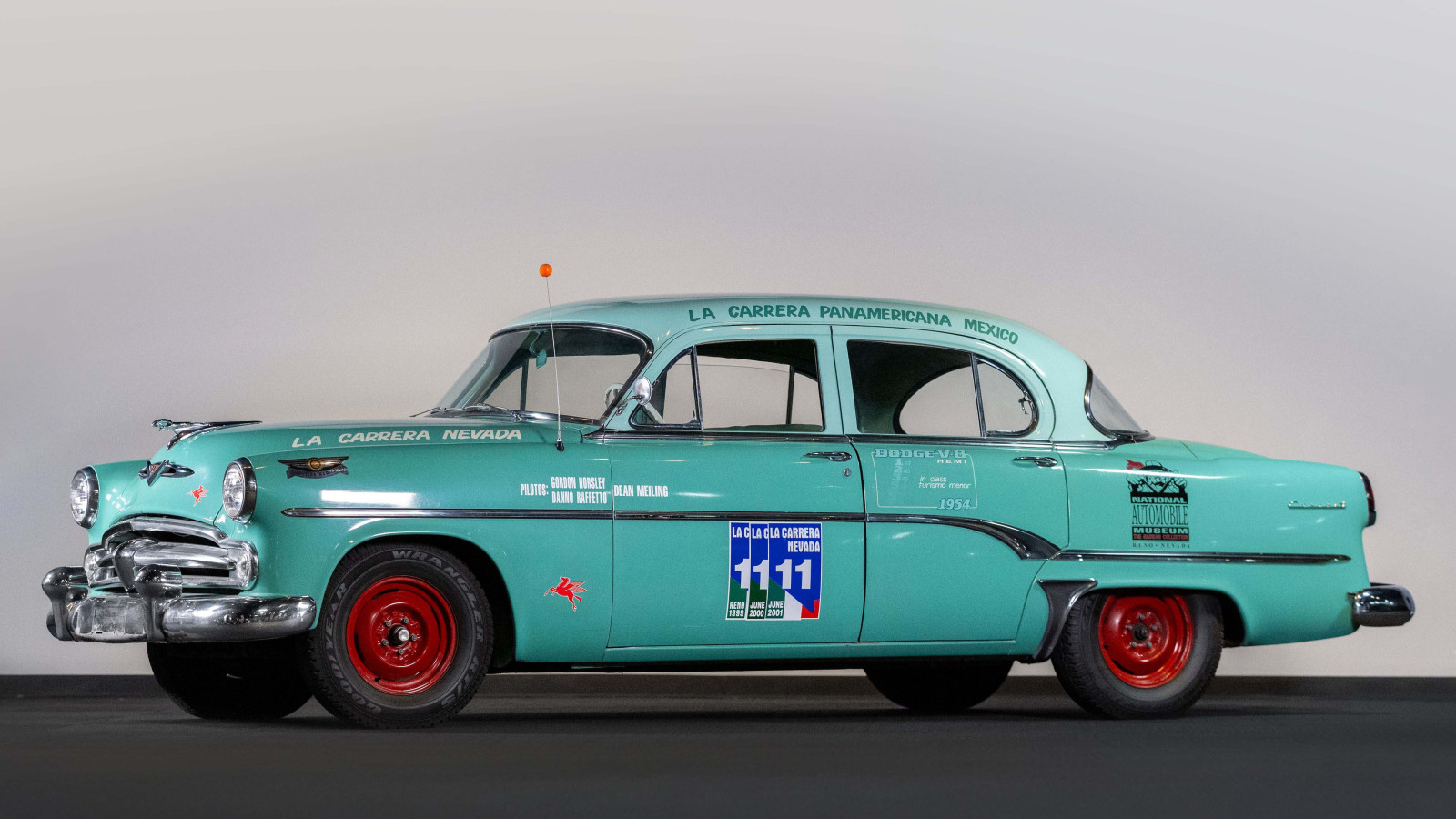
13. 1954 Dodge Coronet (est: £15-22,000/$20-30,000/€17-26,000)
This Dodge Coronet is a tribute to the cars that completed the 1954 Carrera Panamericana, a gruelling, cross-country race in Mexico.
Enthusiasts Gordon Horsley and Danno Raffetto donated this Dodge to the National Automobile Museum in 1999, so that it could take part in La Carrera Nevada, a classic car endurance rally that aimed to reignite the spirit of the 1950s original.
Power comes from a 241cu in Red Ram V8 with a Stromberg carburettor.
This light-blue Coronet has four-wheel drum brakes and a PowerFlite automatic gearbox – perfect for long-distance rallies.
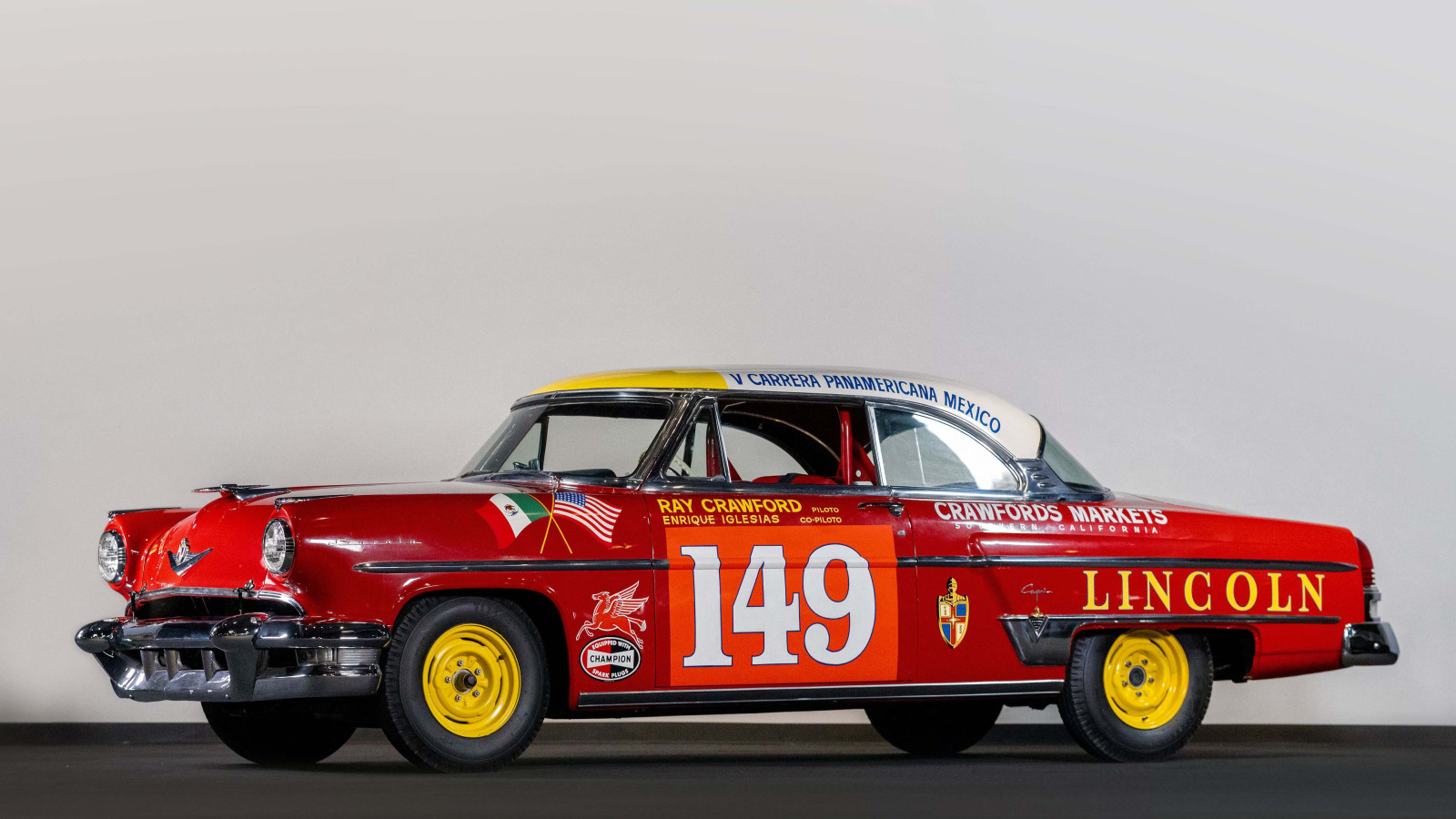
14. 1954 Lincoln Capri Coupe (est: £110-190,000/$150-250,000/€129-215,000)
If it’s a real Carrera Panamericana competitor you’re after, then how about this Lincoln Capri?
For the 1954 race, Lincoln prepared six cars in Bill Stroppe and Clay Smith’s Californian workshop.
Local grocery store owner Ray Crawford – a keen amateur racing driver who finished eighth in the 1951 Carrera Panamericana – convinced Lincoln to let Stroppe and Smith prepare his own Capri, too (provided he supplied the car and paid for the work). Crawford’s car became Lincoln’s unofficial seventh entry.
In the end, only two Lincolns finished the race and Crawford crossed the line first in class.
After the Carrera Panamericana, Lincoln repainted all the entrants in the bright-red livery of Crawford’s car, for promotional purposes.
Unfortunately, there’s no paperwork to tell which car was campaigned by which driver, so, this Lincoln Capri’s history remains a mystery. Perhaps the next owner can uncover the full story.
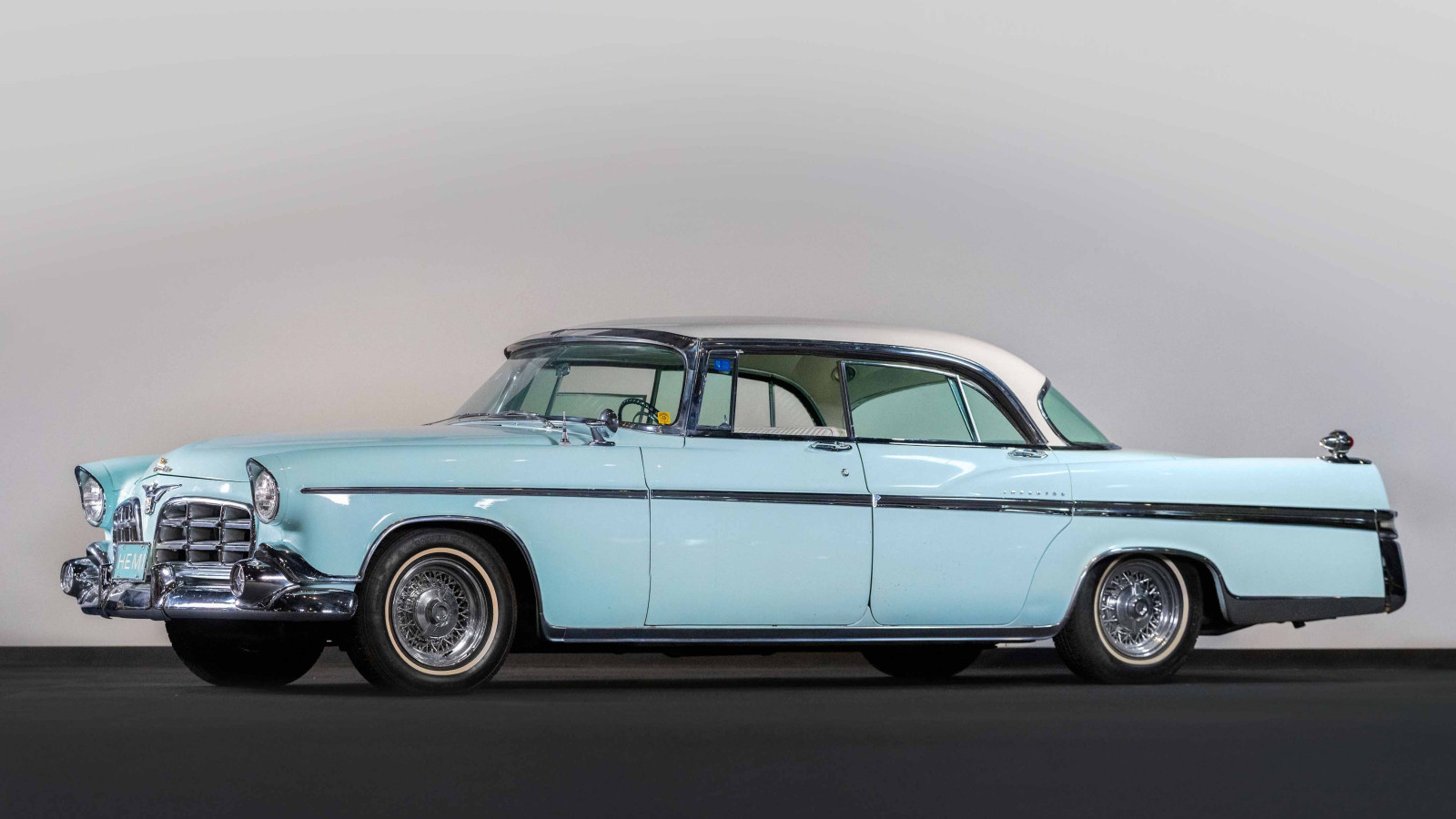
15. 1956 Chrysler Imperial Southampton (est: £22-30,000/$30-40,000/€26,000-34,500)
Chrysler’s 1955 restyle was dubbed the ‘$100 Million Dollar Look’.
A year later, the American marque released the top-of-the-range Imperial Southampton, and it’s perhaps this model that best embodies that slogan.
The Virgil Exner-designed saloon features tailfins, whitewall tyres and lots of chrome. Underneath the ‘power dome’ bonnet, the Hemi V8’s capacity was increased to 354cu in.
However, it’s the Southampton’s gargantuan proportions that really stand out: this pillarless saloon was one of the longest cars in America at the time.
In fact, you could almost fit an Austin A35 within the Imperial’s 11ft 1in (3378mm) wheelbase.
This Glacier Blue car was one of 1543 Chrysler Imperial Southamptons built in 1956. It’s been in the National Automobile Museum’s collection since 2023.
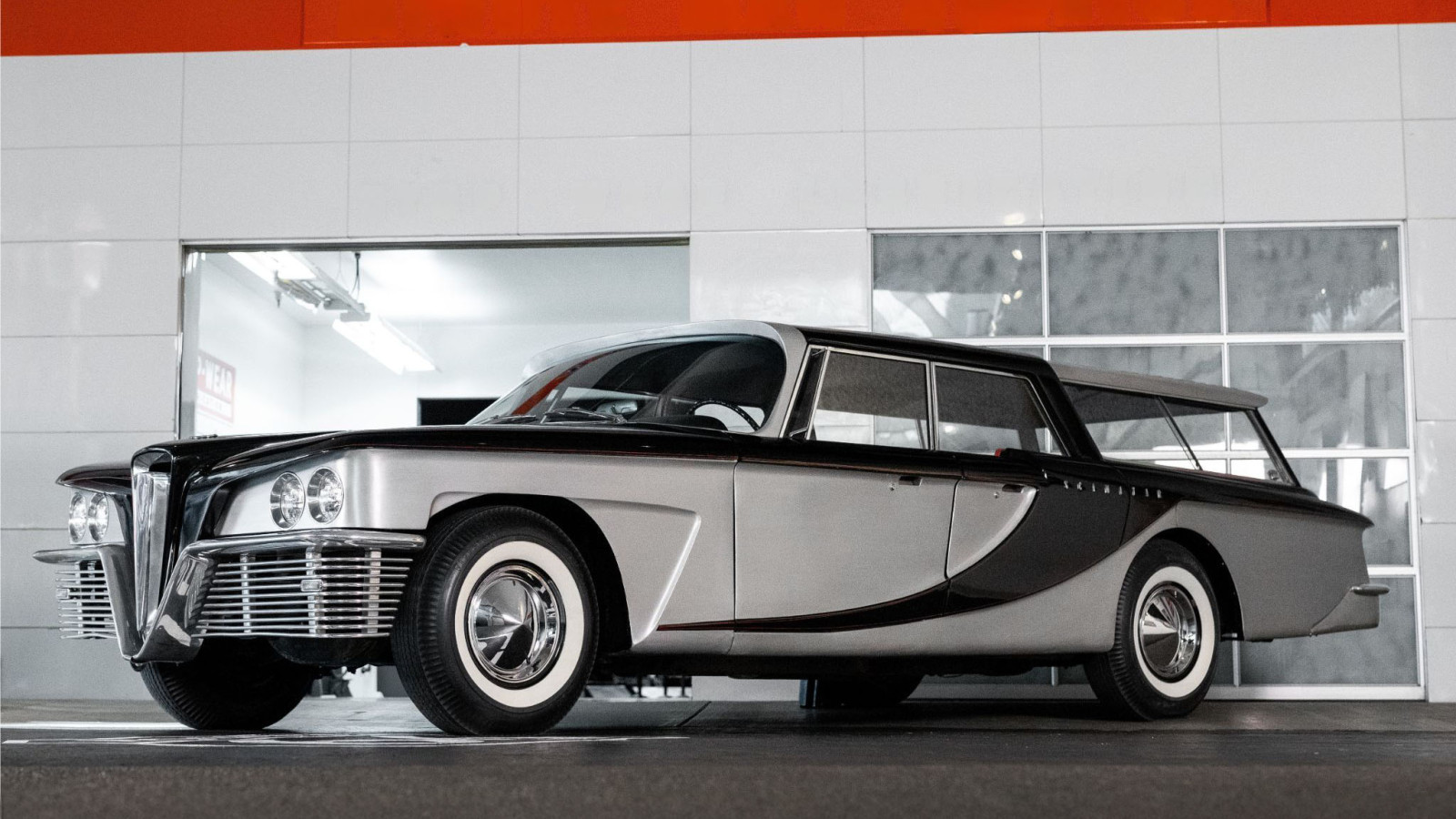
16. 1959 Scimitar EX All-Purpose Sedan (est: £93-130,000/$125-175,000/€107,500-150,500)
Have you ever seen one of these? This is one of three Scimitar EXs ever built.
The Brooks Stevens-penned wagon is based on a Chrysler New Yorker and powered by a 413cu in Chevy V8.
It was designed as a show car to promote the use of aluminium car bodies.
Three were constructed: one convertible, one drop-top limousine and this car, the sole All-Purpose Sedan. All three used aluminium in their most rust-prone areas.
Apparently, the Scimitar name was chosen because the black curve on the door panels reminded Stevens of the sword.
This car – which features a retractable sunroof above the passenger compartment – was added to Harrah’s collection in 1965.
In 2020, it was reunited with its Scimitar siblings for a display at the Amelia Island concours.
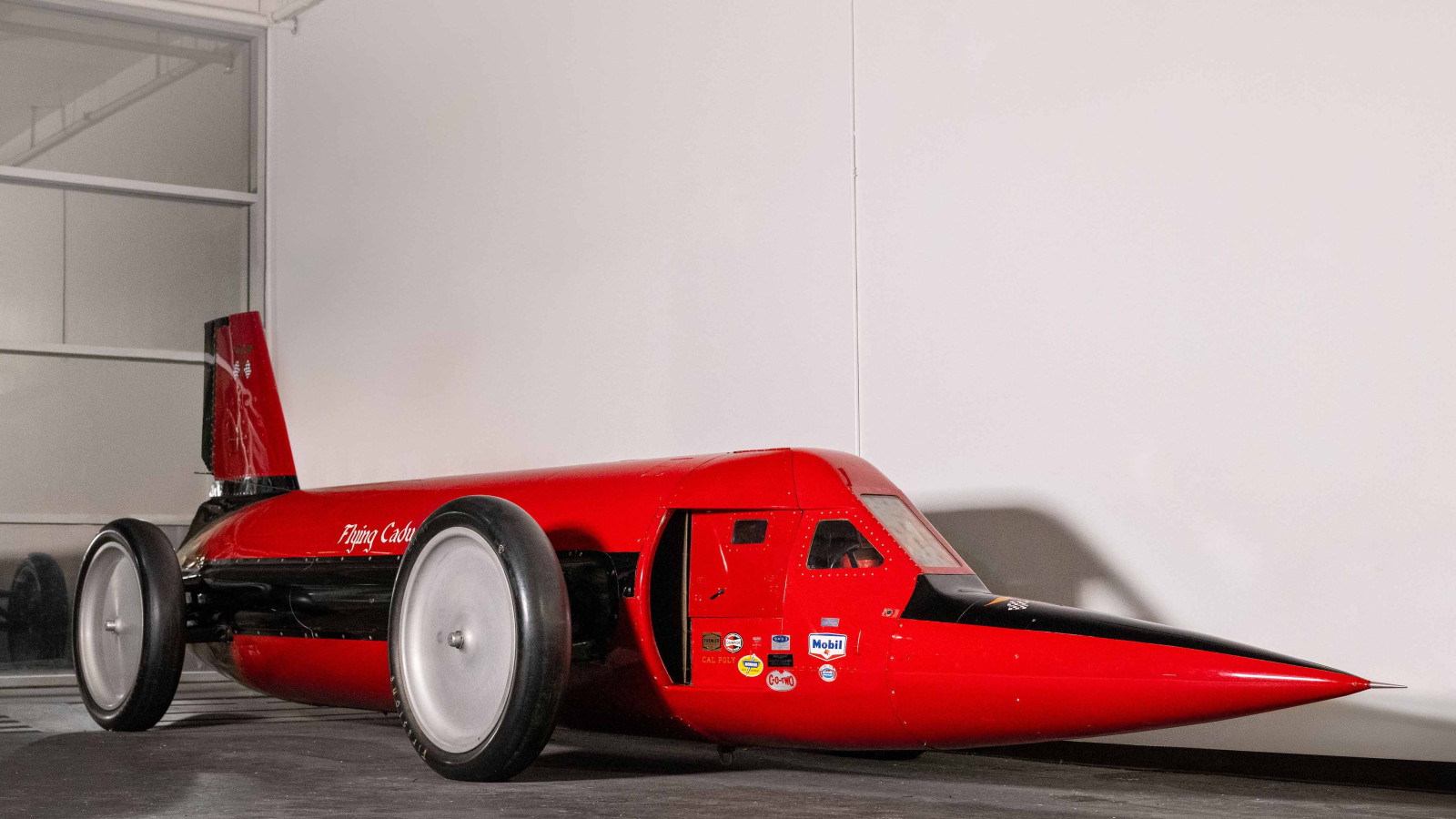
17. 1960 Flying Caduceus (est: £52-67,000/$70-90,000/€60,000-77,500)
When Dr Ostich gathered with his hot-rodding pals for dinner in 1957, he asked them if they thought it was possible to build a 500mph car.
They decided the biggest hurdle would be finding tyres that could withstand the force.
So, Dr Ostich paid Firestone to develop special wheels and tyres for the project.
Propelled by a General Electric J47 turbojet that makes around 7000bhp, this is comfortably the most powerful vehicle in this slideshow.
It was fitted with 14in disc brakes and an 8ft-wide parachute (2438mm).
Firestone delivered a set of 34in aluminium wheels wrapped in 48in tyres, tested in the firm’s own laboratory.
Sadly, the Flying Caduceus never set a Land Speed Record; its best attempt was 359.7mph on the Bonneville Salt Flats in 1963.
However, it established the template for the jet-powered record-breakers that followed.
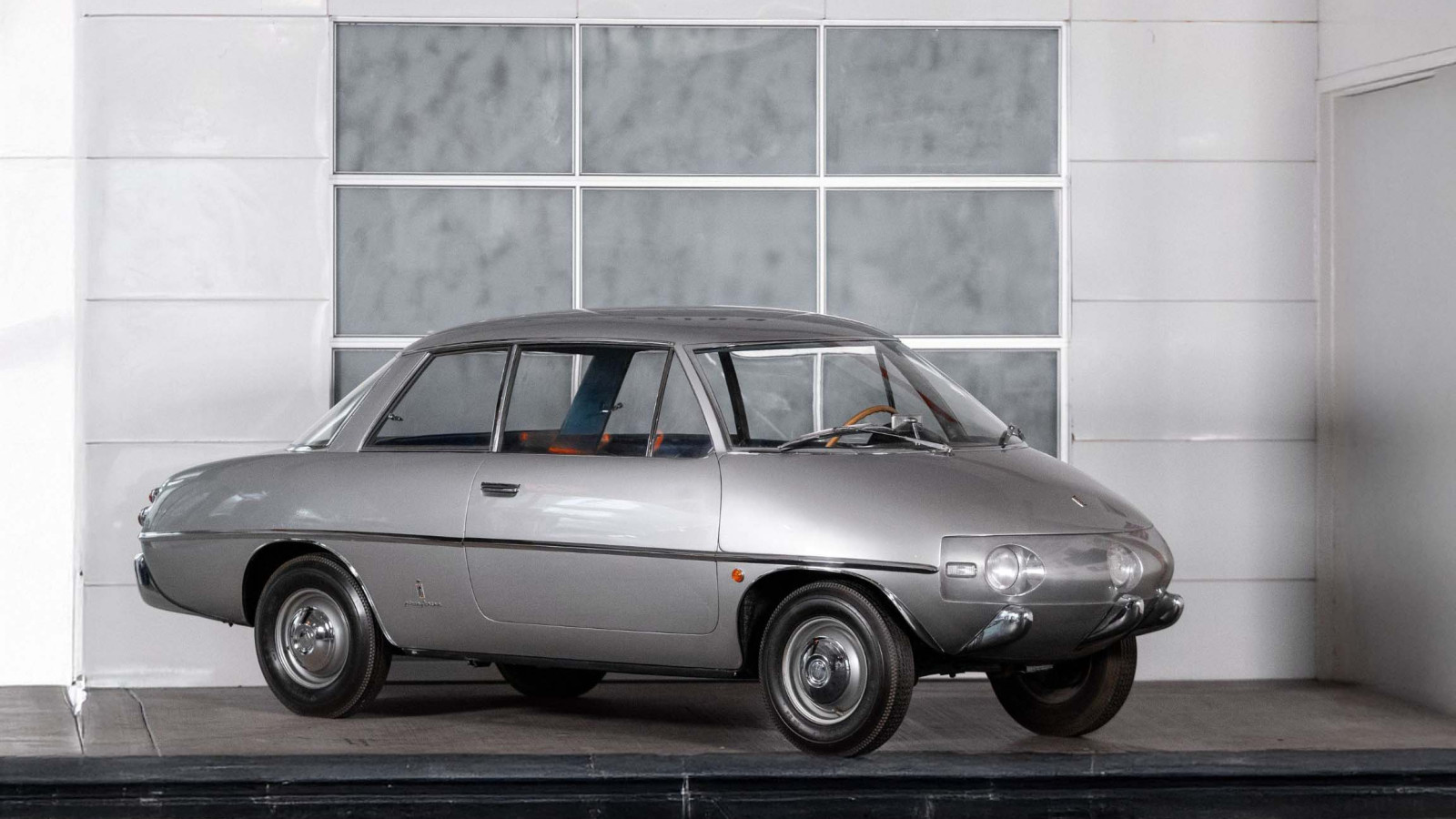
18. 1961 Fiat 600D Pininfarina Y Berlinetta (est: £75-150,000/$100-200,000/€86-172,000)
In the early 1960s, coachbuilder Pininfarina explored aerodynamic shapes underpinned by Fiat mechanicals.
Following 1960’s Fiat 1100-engined Pininfarina X (a radically shaped concept that claimed a drag coefficient of 0.23Cd), the Italian firm applied its experience in wind-cheating bodies to create a more practical vehicle based on the Fiat 600D.
This unique prototype was the result. The Y Berlinetta has enclosed headlights, a wraparound windscreen and more.
Meanwhile, Pininfarina’s focus on passenger safety led to the decision to store the spare wheel up front.
Apparently, the streamlined Y Berlinetta’s top speed is 128kph (80mph), 18kph (11mph) faster than the original Fiat 600D it’s based on.
The coachbuilder donated the Y Berlinetta to the Harrah collection in 1970. Today, it has just 8032km (4991 miles) on the clock.
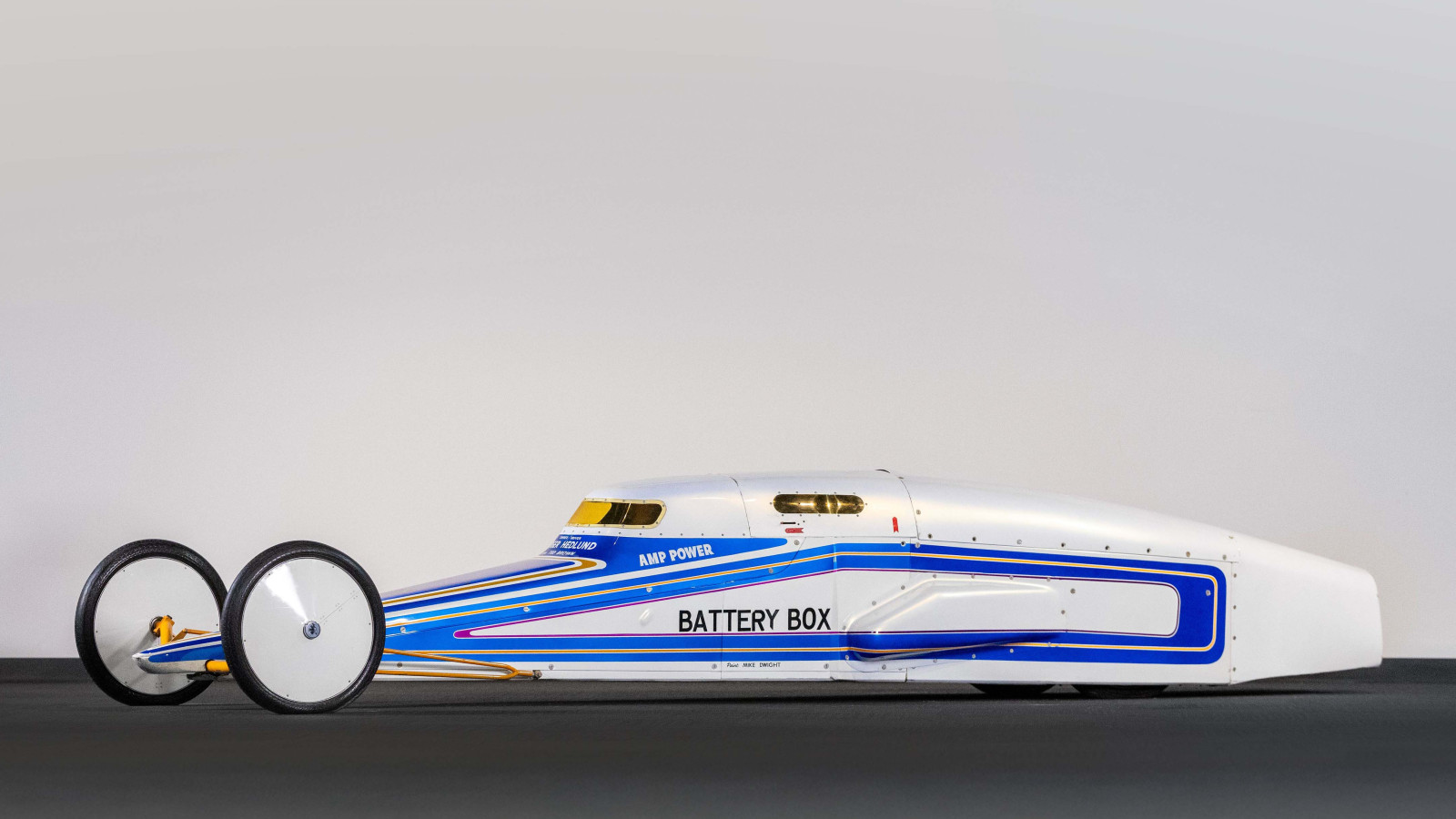
19. 1973 Battery Box Electric Streamliner (est: £15-22,000/$20-30,000/€17-26,000)
This streamlined single-seater held a Land Speed Record from 1974 to 2013.
The chain-driven, all-electric Battery Box reached 174.981mph (281.6kph) on the Bonneville Salt Flats.
The lightweight car has a tubular steel frame, disc brakes on the rear wheels only and no suspension.
Aptly, the Battery Box is fitted with 32 12V batteries, which supply power to a motor under the driver’s seat.
Designed by Jack Hagemann, the record-setter weighs around 826kg (c1821lb).
It was donated to Harrah’s collection in 1976, three years after its historic run in Utah. The bodywork is highly original, but it’s missing its 32 batteries.
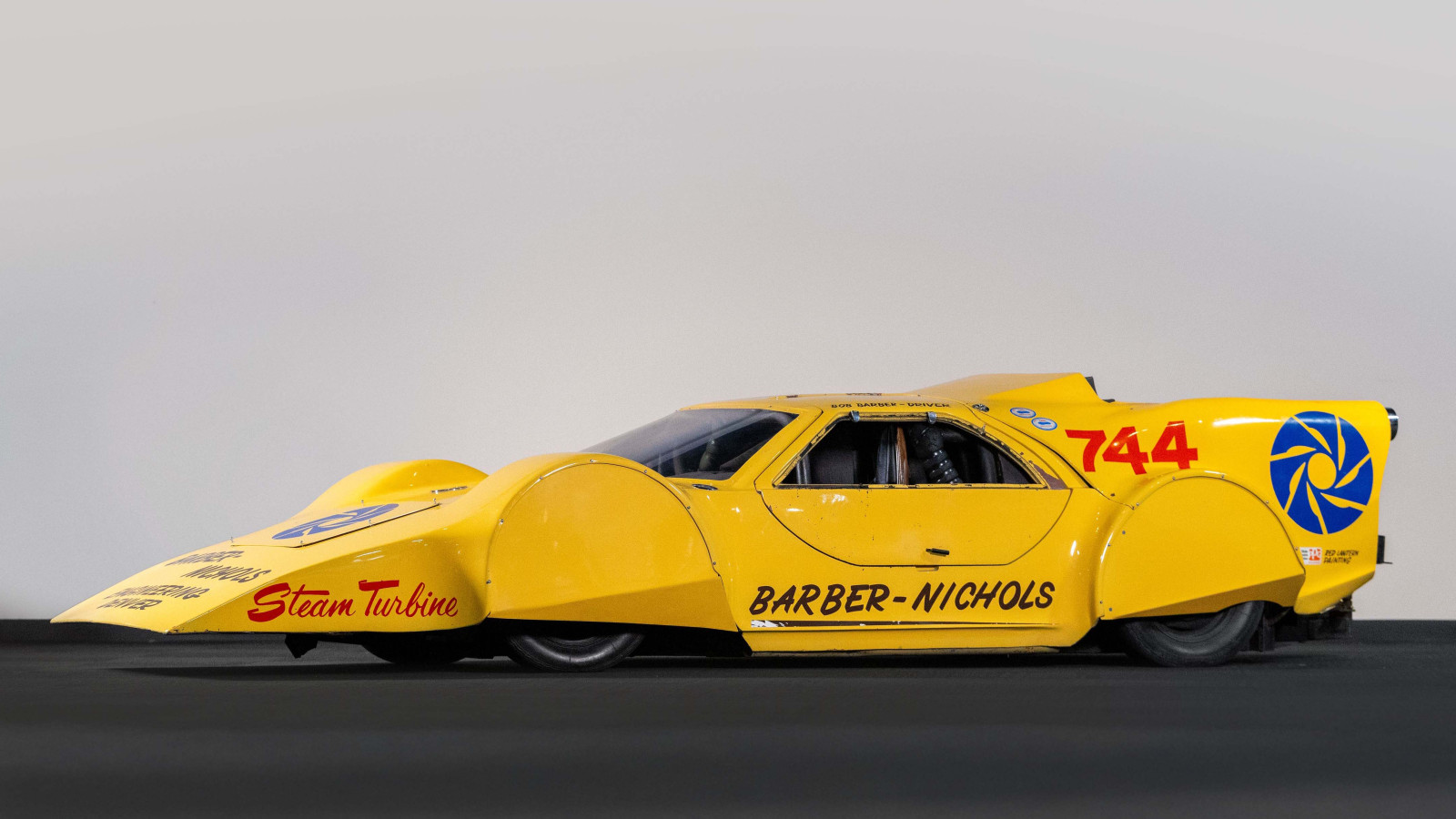
20. 1977 Steamin’ Demon Steam Streamliner (est: £30-45,000/$40-60,000/€34,500-51,500)
The Steamin’ Demon Steam Streamliner’s name might be a bit of a tongue twister, but this vehicle is a very serious record-setter.
It toppled the Stanley steam car’s near-eight-decade, top-speed record for a steam-propelled vehicle when it achieved 145.607mph (234.3kph) on the Bonneville Salt Flats in 1985.
Based on the technology developed for an abandoned turbine-powered bus project, the Steamin’ Demon’s record attempt wasn’t plain sailing: one of the gullwing doors fell off during the run and the Vapor Generator caught fire.
You can still see scorch marks from the latter on the back of the car.
If you’re interested in this or any of the other vehicles in this slideshow, click here to view the full Bonhams|Cars catalogue.
The sale at the National Automobile Museum in Nevada, USA, takes place on 13 June 2026.