
Expect the unexpected
If the 1938 Buick Y-Job is accepted as the first of its type, the USA takes the credit for having created the concept car, but other nations soon followed it.
Japan, with a thriving motor industry containing several very productive manufacturers, has of course presented many concept cars to the public, and we’ll be looking at a selection of those here.
We don’t have enough space to cover all of them, and in one of various attempts to keep things manageable we’re including only those concepts which were built at least 15 years ago.
They’re listed in chronological order, and in those cases where two or more appeared in the same year they are presented alphabetically.
1. 1962 Toyota Publica Sports
The first-generation Toyota Publica, launched in 1961, had a 697cc, air-cooled, flat-twin engine and was available as a saloon, an estate, a convertible and a pick-up.
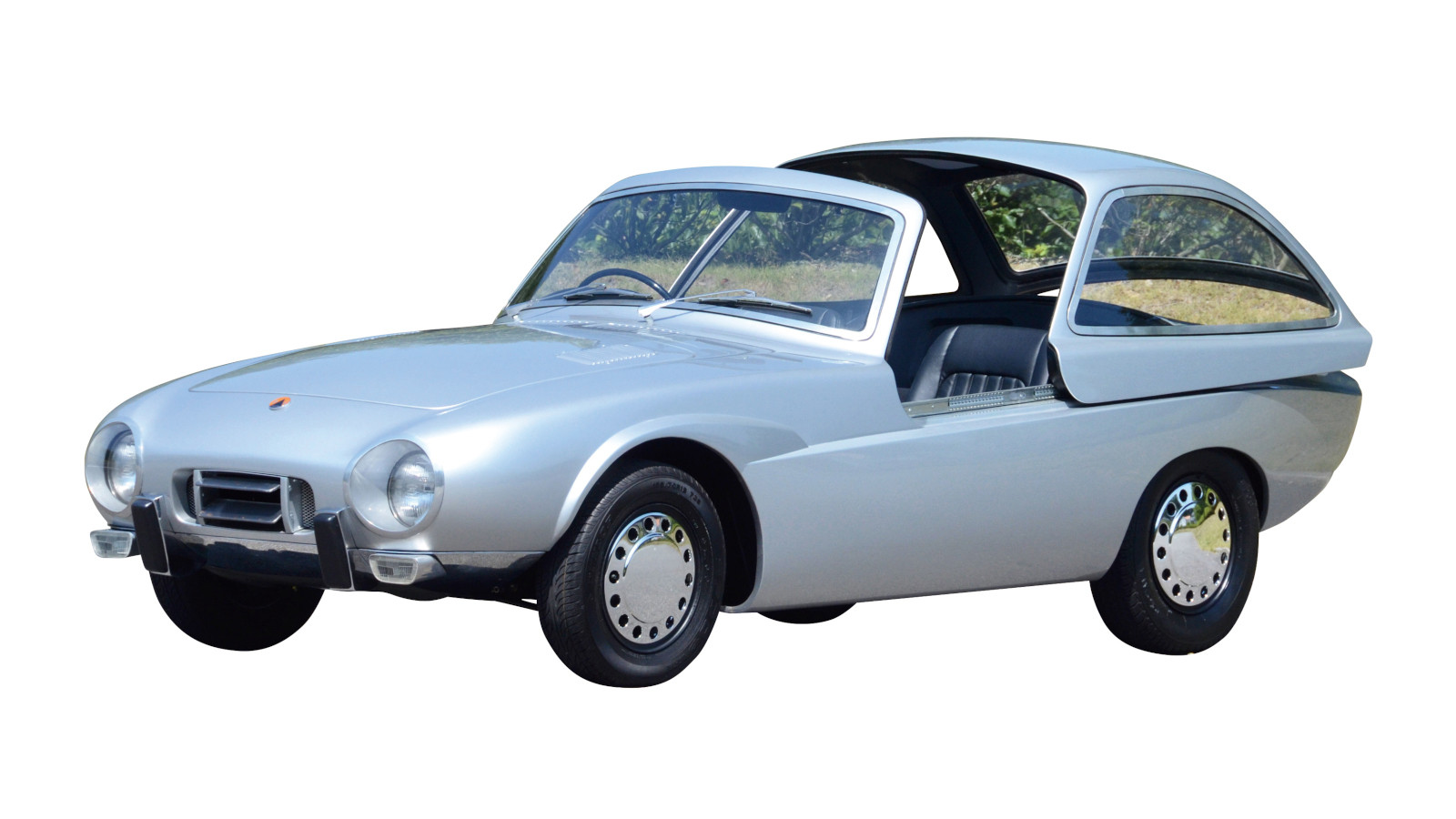
As its name suggests, the Publica Sports concept of 1962 was a sporting derivative, and featured a 790cc version of the same engine, a very aerodynamic body and a rather daring sliding canopy.
Like many, though by no means all, concept cars, this one was a preview of a production model, except that the canopy idea was abandoned for the Sports 800 and replaced with conventional doors and a removable roof panel.
The Toyota Publica Sports pictured here is not the original concept car, but a replica of it.
2. 1967 Mazda RX-87
The RX-87 was one of several Mazda concepts of the 1960s powered by the rotary engine with which the company had become (and would remain) so enamoured.
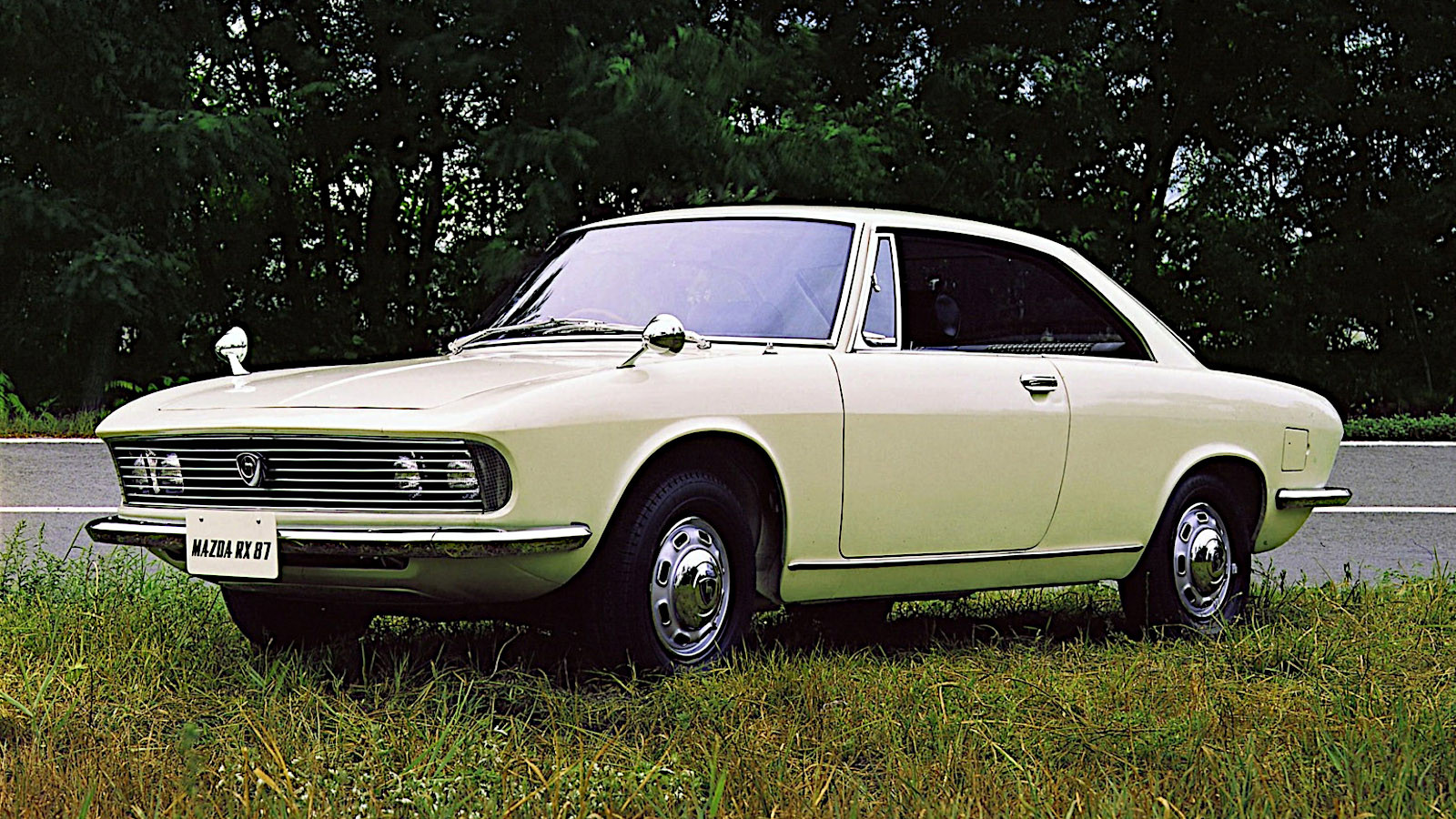
Designed by Giorgetto Giugiaro at Bertone, this elegant coupé also had front-wheel drive, a technology Mazda had not previously used in a production car.
To an even greater extent than the Toyota Publica Sports, the RX-87 was very close to being available to the public.
Mazda’s R130 Luce, introduced in 1969, was almost identical to this concept, with the exception of a few details such as removing the horizontal bars mounted in front of the headlights and radiator grille.
3. 1970 Mazda RX-500
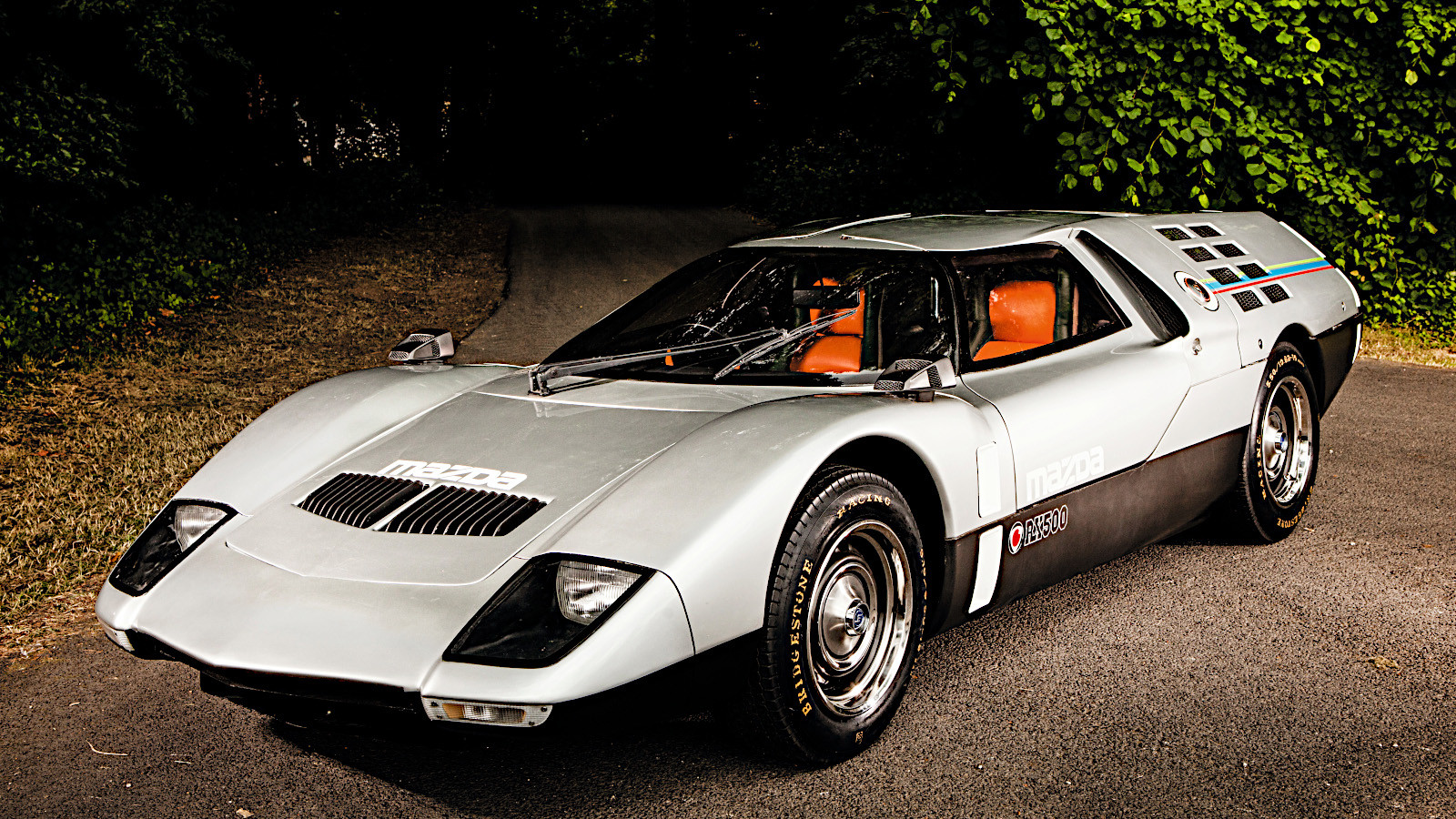
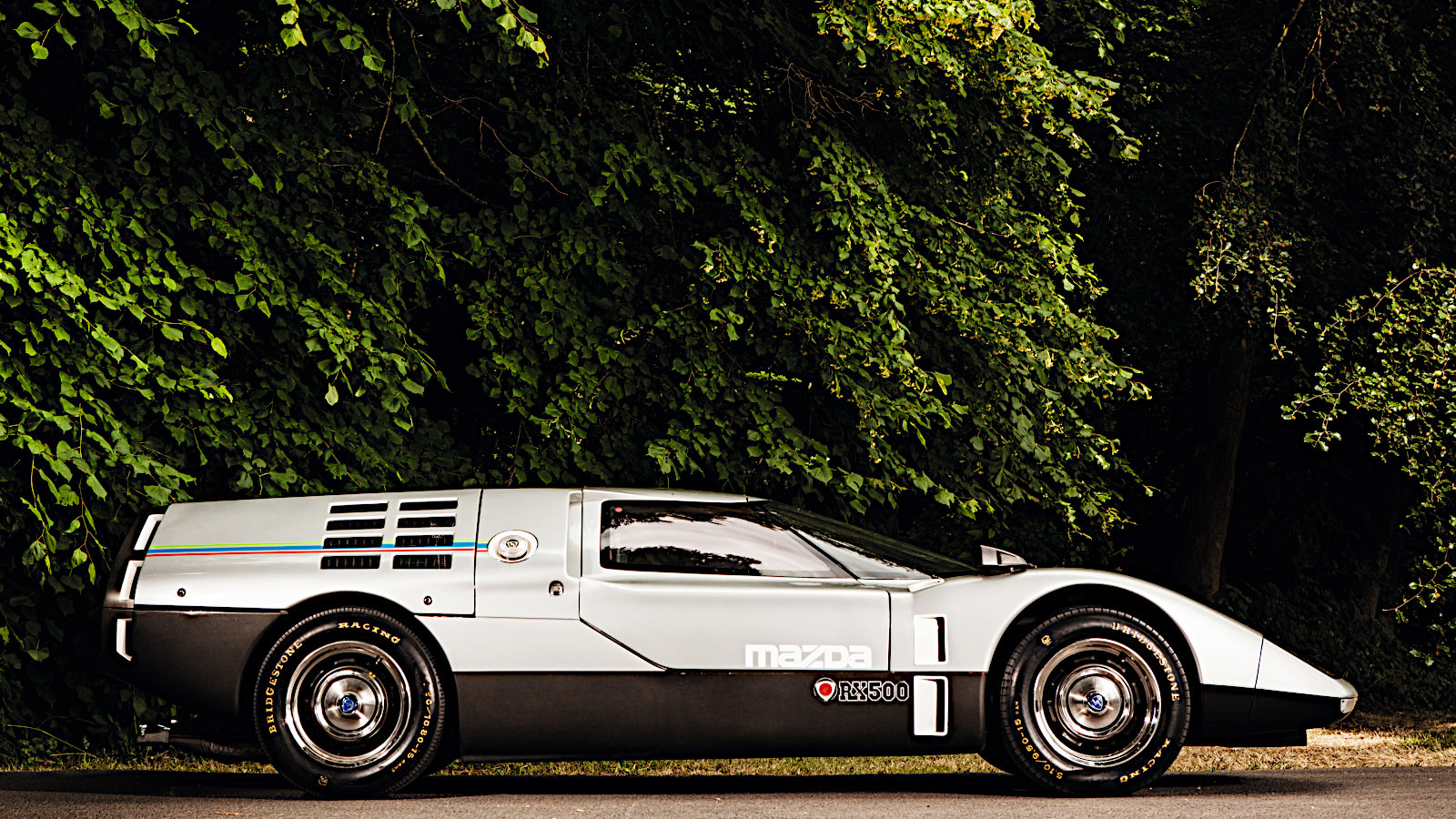
Despite appearances, the mid-engined Mazda RX-500, whose rotary unit lay below two gullwing-style covers, was primarily a testbed for safety equipment.
This extended even to the rear lights, whose colours indicated to any theoretical following driver whether the car was accelerating, braking or maintaining speed.
Be that as it may, the wedge-shaped RX-500 was also a performance car, with a claimed power output of around 250bhp.
It would be true to say that, unusually for a concept, the RX-500 was built in very large numbers, but nearly all of them were scale models produced by the UK-based Matchbox company.
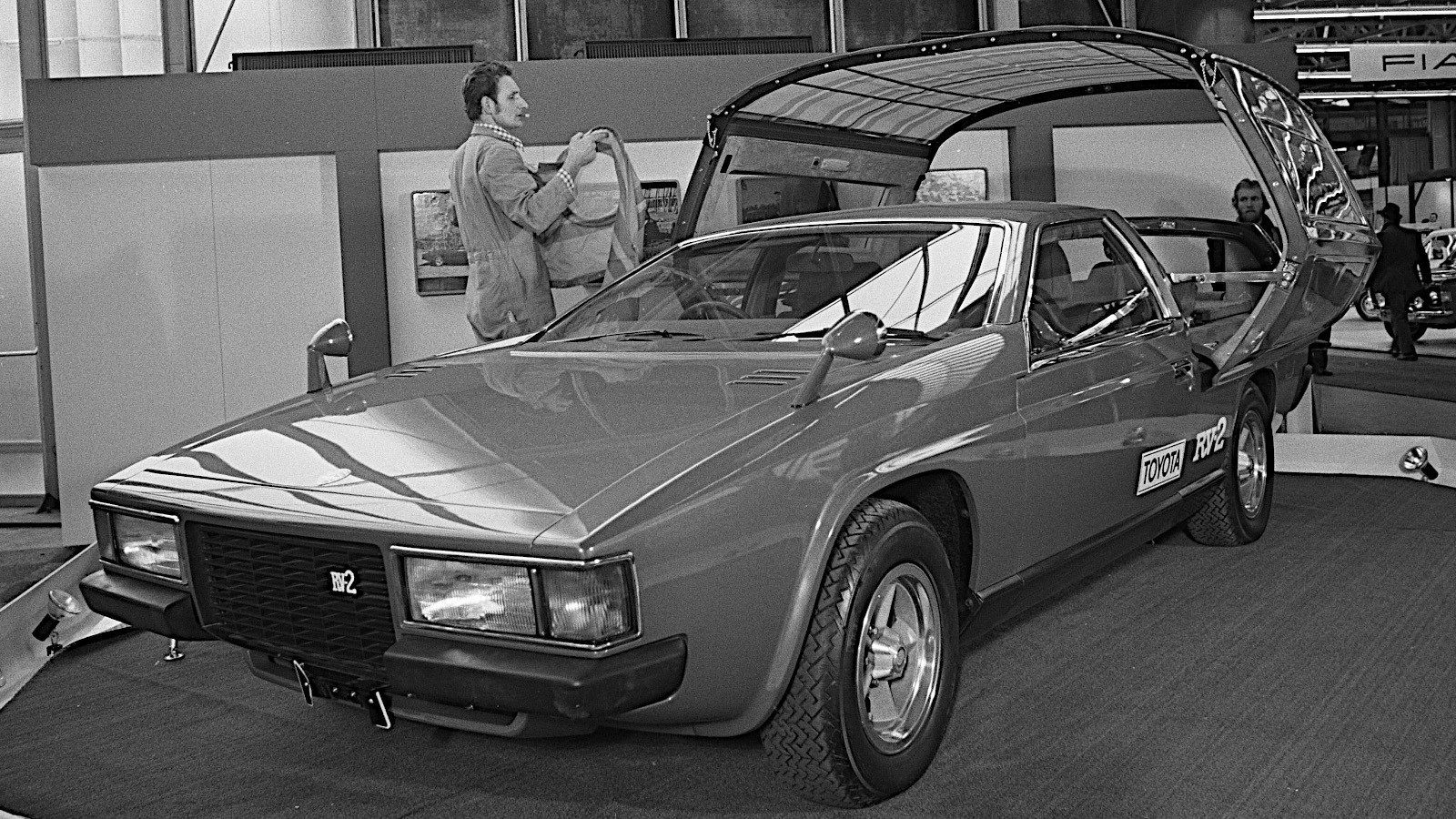
4. 1972 Toyota RV-2
The term ‘crossover’, now generally used to describe a combination of an SUV and a conventional hatchback, might have been applied more than half a century ago to the Toyota RV-2 concept.
In this case, however, the vehicle was an attempt to combine a sleek station wagon with a campervan, presumably because somebody thought this might be a good idea.
When the clamshell rear doors were opened, they could support a canvas structure which essentially acted as a tent, under which there was reportedly space for four people to sleep or, according to choice, not sleep.
The RV-2 attracted quite a lot of publicity, but Toyota decided not to base a future production model on it.
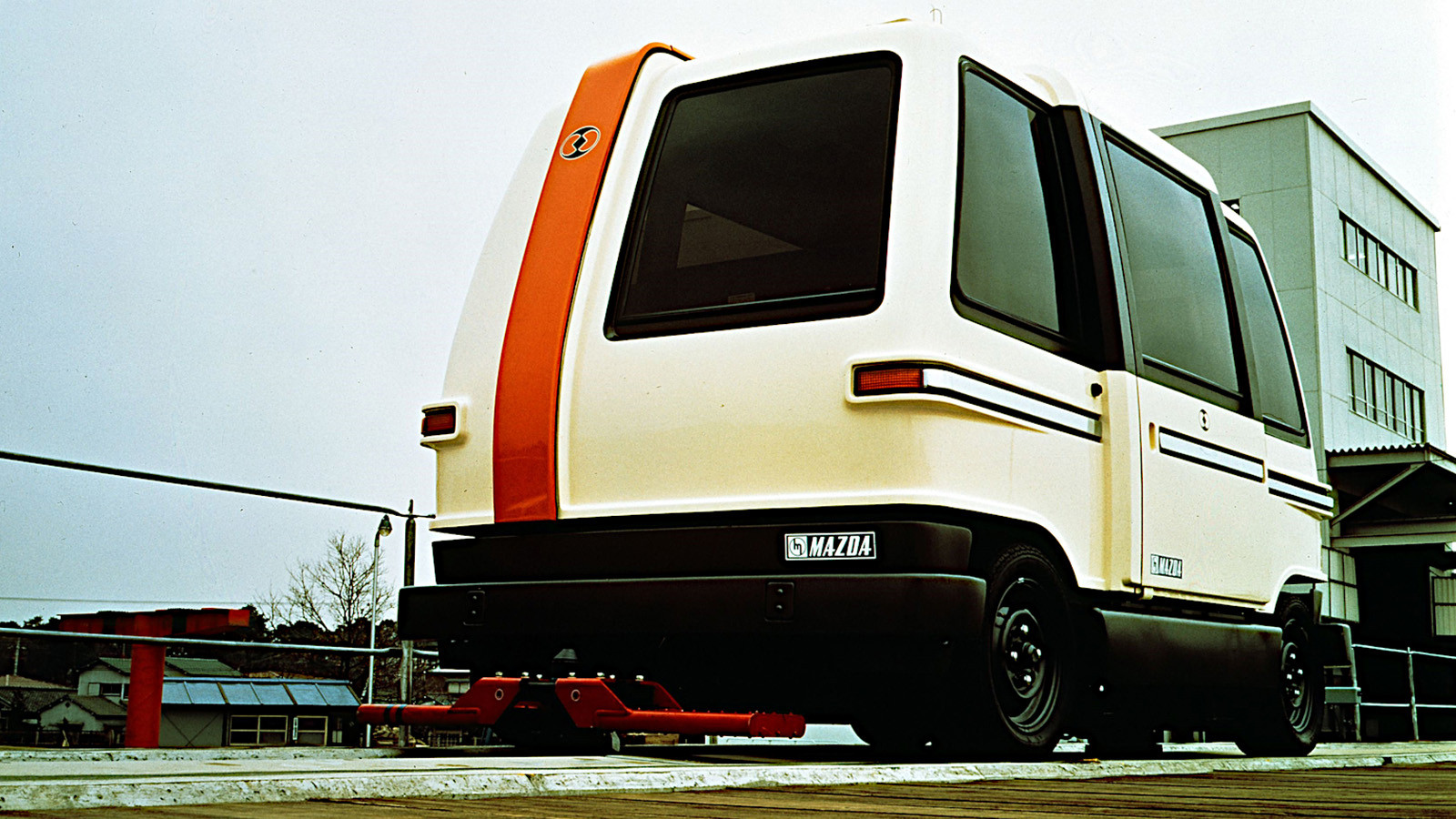
5. 1973 Mazda CVS
More than a quarter of the way through the 21st century, vehicle autonomy still seems like a very modern idea, exciting or alarming depending on your point of view, and still not a part of everyday life either way, but Mazda was working on it back in 1973.
The CVS (standing for ‘computer-controlled vehicle system’) was, in Mazda’s own words, ‘a wheel-at-each-corner box’ with sliding doors, leather seats and, of all the unimaginably futuristic things, a telephone.
It was intended to drive itself and, according to Mazda, it was tested on a specially built rail.
No doubt some people thought that one day all cars would be like this, but after all these years they still aren’t.
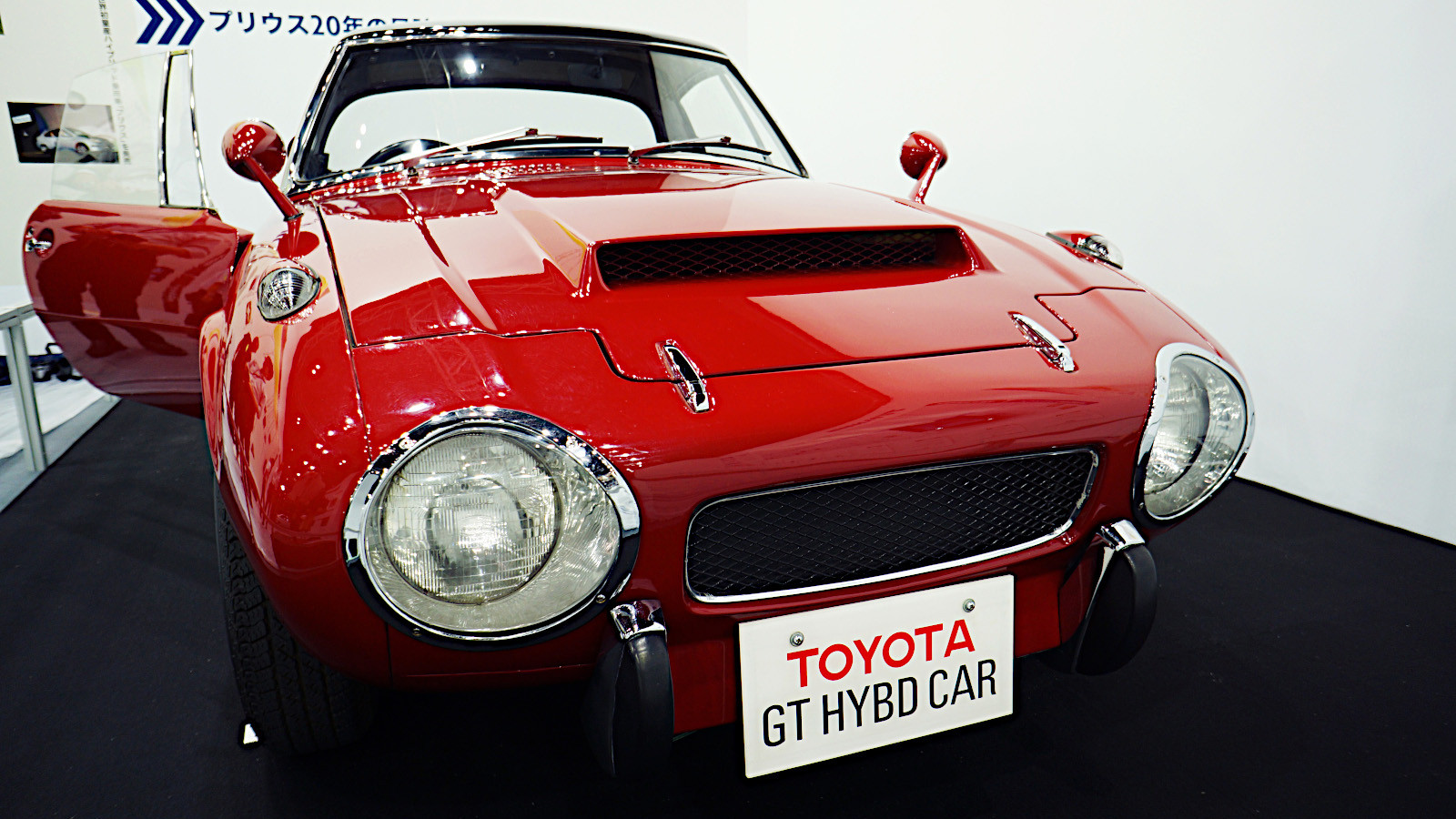
6. 1977 Toyota Sports 800 Gas Turbine Hybrid
The Toyota Sports 800, which had been derived from the Publica Sports, itself became the basis for a concept car in 1977, long after it had gone out of production.
This machine used much the same technology (though in a simpler form) as a development version of the Century saloon revealed two years before, namely a gas-turbine engine which did not directly drive the car but charged the battery, whose power was transferred to an electric motor.
Intriguing though it was, the concept was much heavier than the regular Sports 800 (1000kg/2205lb rather than 580kg/1279lb) and substantially less powerful (30bhp as opposed to 45bhp).
The car is pictured here at the 2009 Tokyo motor show, 32 years after its initial reveal, by which time it had gained a bonnet vent, alloy wheels and a black roof panel.
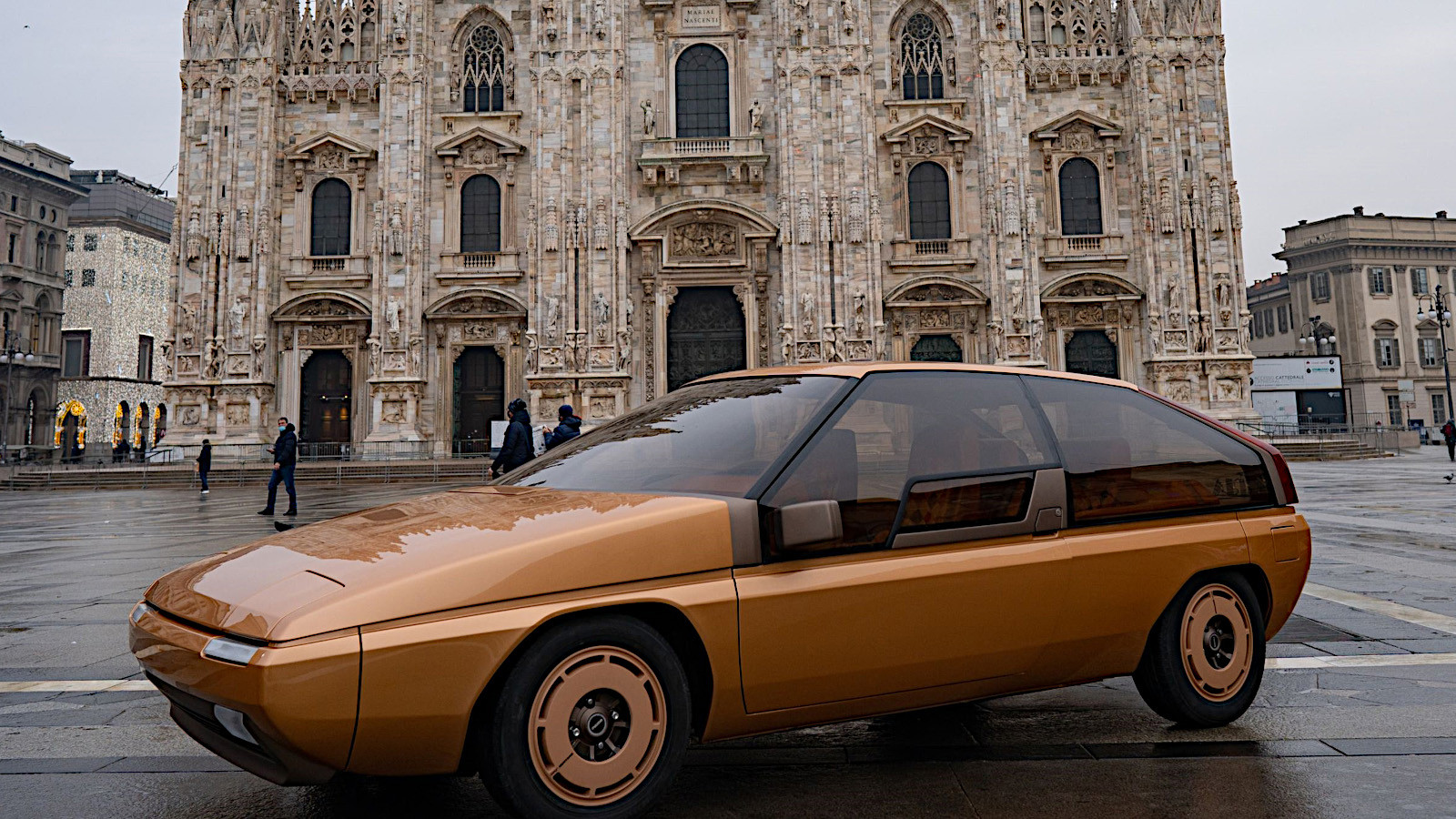
7. 1981 Mazda MX-81 Aria
The first of many Mazdas with MX in their names was a wedge-shaped coupé concept based on the 323 hatchback and designed by Marc Deschamps at Bertone.
There’s no question that it was an arresting-looking car, with pop-up headlights and a phenomenal amount of glass giving a level of visibility almost unimaginable today, but if anything the interior was even more radical than the exterior.
Its features included a square, recessed steering wheel, a TV screen and front seats which could be made to swing to the side if required.
In 2019, the MX-81 Aria was found in a warehouse at Mazda’s headquarters in Hiroshima, and two years later it was revealed to the public for a second time after a full-scale restoration by the company’s Italian division.
8. 1985 Nissan MID4
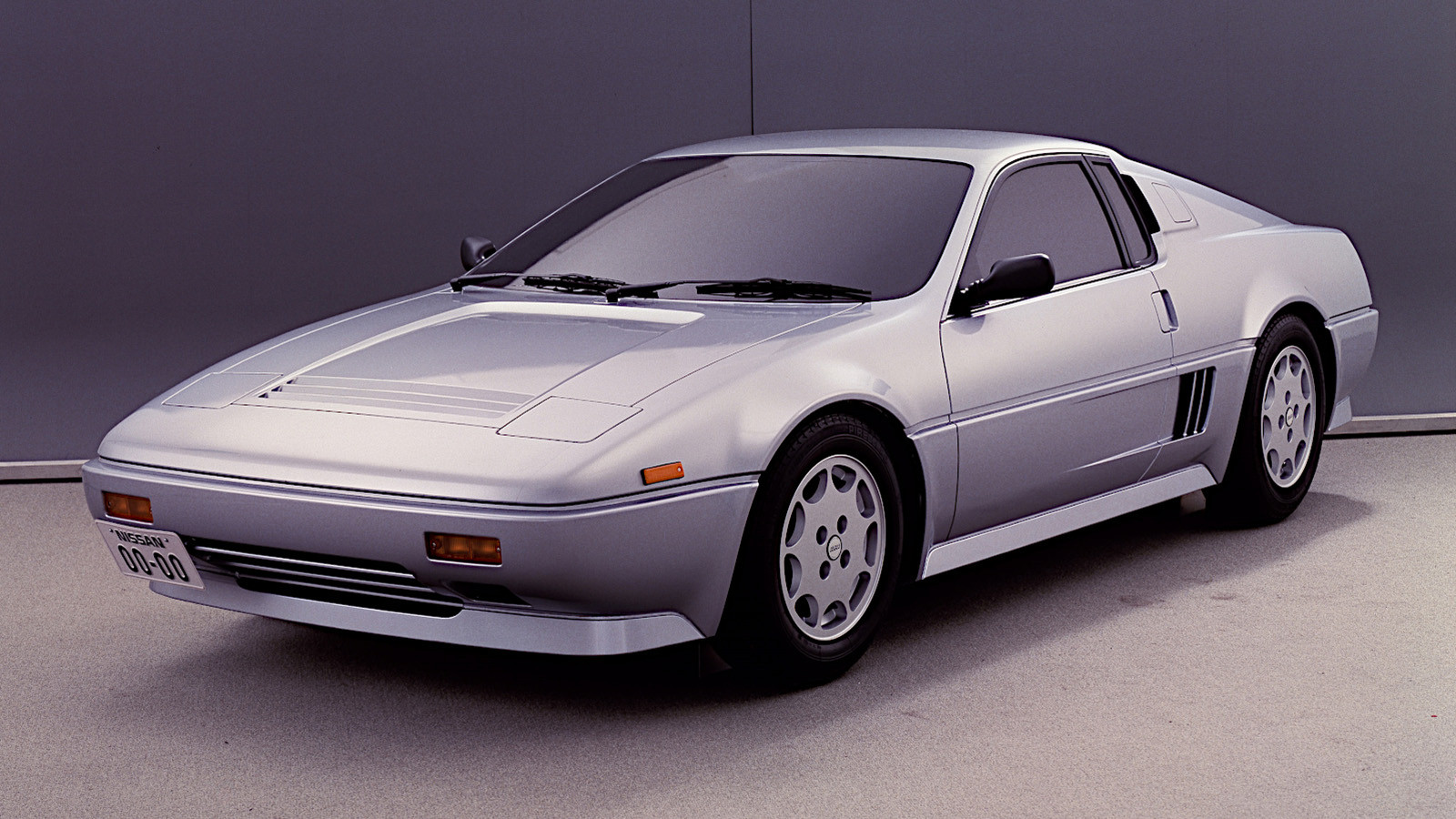
The MID4 name refers both to a mid-engined layout, and to four-wheel drive and four-wheel steering.
The engine in question was a 3-litre V6, and the coupé body style was very sporty, if noticeably less curvy at the rear than at the front.
The Nissan MID4 was displayed at the Tokyo motor show in October 1985, and two years later it was followed by the MID4-II, whose similar V6 engine had been given two turbochargers.
Neither concept led directly to a production vehicle (you’d already know about it if they had), but Nissan says that much of the technology was transferred to the 300ZX and Skyline GT-R introduced in 1989 and 1992 respectively.
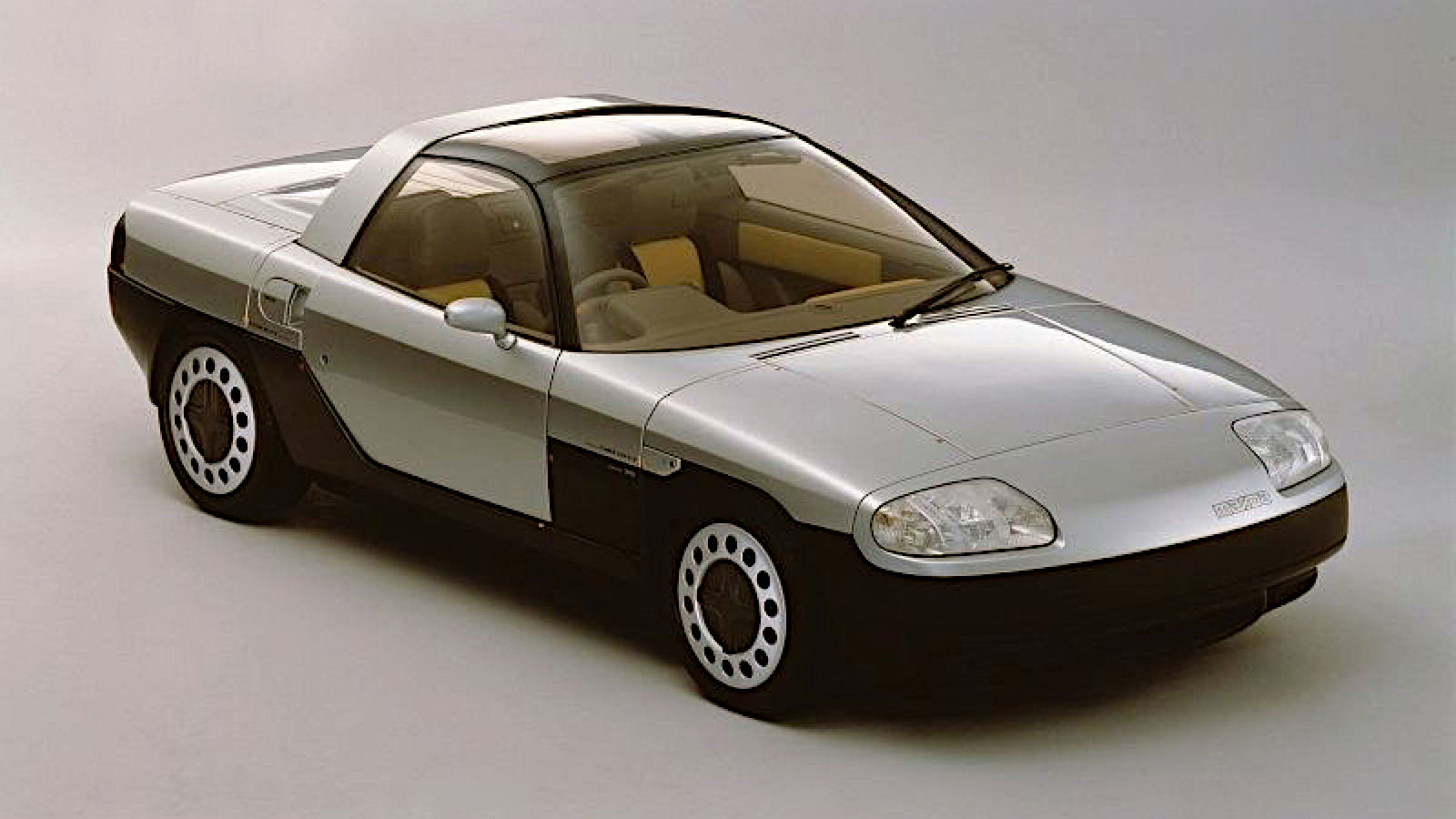
9. 1987 Mazda MX-04
If you had attended the 1987 Tokyo motor show, it would not have taken you long to walk from the Nissan MID4-II to a very different sporting concept dreamed up by Mazda.
The MX-04 was less dramatic technically, but it featured two sets of removable body panels, giving theoretical owners the opportunity to convert it from a coupé with a transparent domed roof (as pictured here) to an open-sided, beach buggy-style roadster – or vice versa.
Mazda also took the opportunity to display its continuing enthusiasm for rotary engines by fitting one to the concept.
Nothing exactly like it ever entered production, but in a way it foreshadowed the immensely successful MX-5 which went on sale two years later.
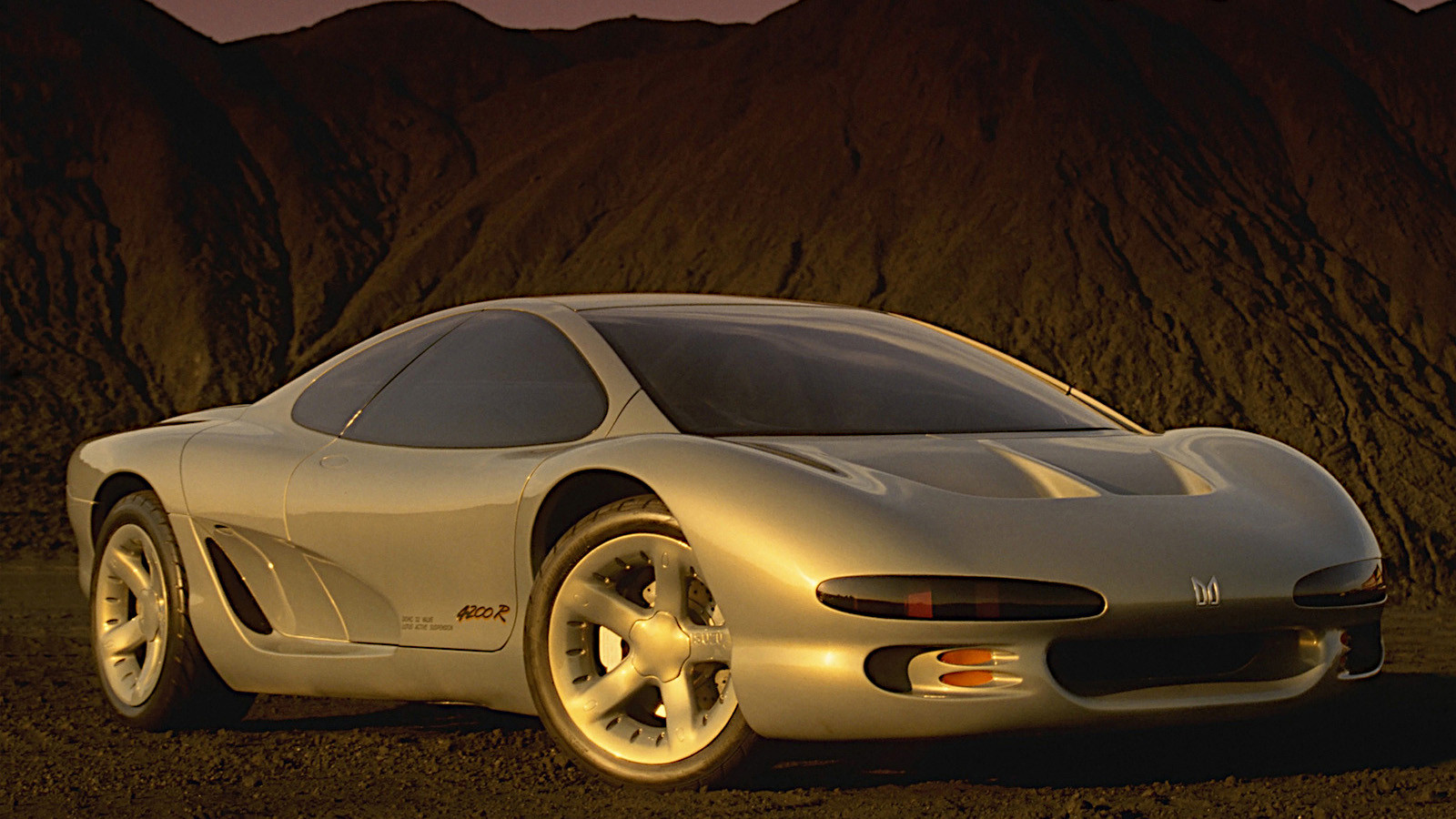
10. 1989 Isuzu 4200R
Associating Isuzu with high-performance sports cars might be no easy matter, but it becomes at least possible with the help of the remarkable 4200R concept.
Developed in association with Lotus (both marques were part of General Motors at the time), it featured a 4.2-litre, V8 engine which was mounted transversely, thereby allowing enough room in the cockpit for four occupants.
It also produced around 350bhp, significantly more than the Honda NSX which would be along shortly, and drove through all four wheels.
The suspension was actively controlled, but in retrospect perhaps the most startling feature of the 4200R was that its specification included a fax machine.
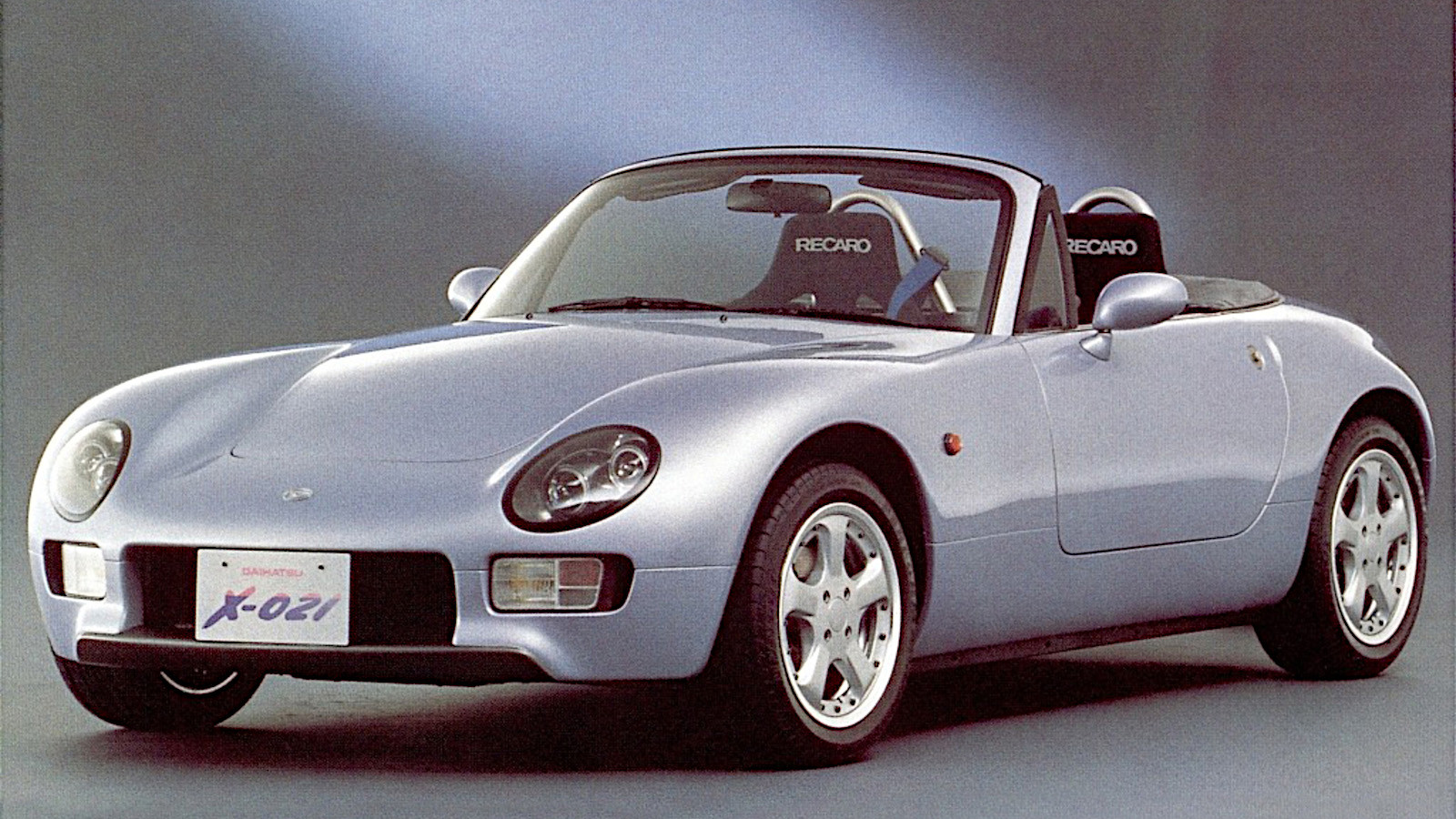
11. 1991 Daihatsu X-021
Although it was definitely a concept, the X-021 looked very much like a production-ready car, and one that might prove to be a serious challenger to the Mazda MX-5.
A 1.6-litre engine sat behind the front wheels in an advanced chassis and drove the rear wheels, and while its power output of around 140bhp wasn’t enormous, the whole car was reported to be impressively light.
With much tooth-gnashing and garment-rending, journalists have since moaned that this could have been a wonderful addition to Daihatsu’s portfolio if it had gone on sale, but that never happened.
While the much later Copen bore some resemblance to the X-021, it was technically unrelated – and not nearly as sporty.
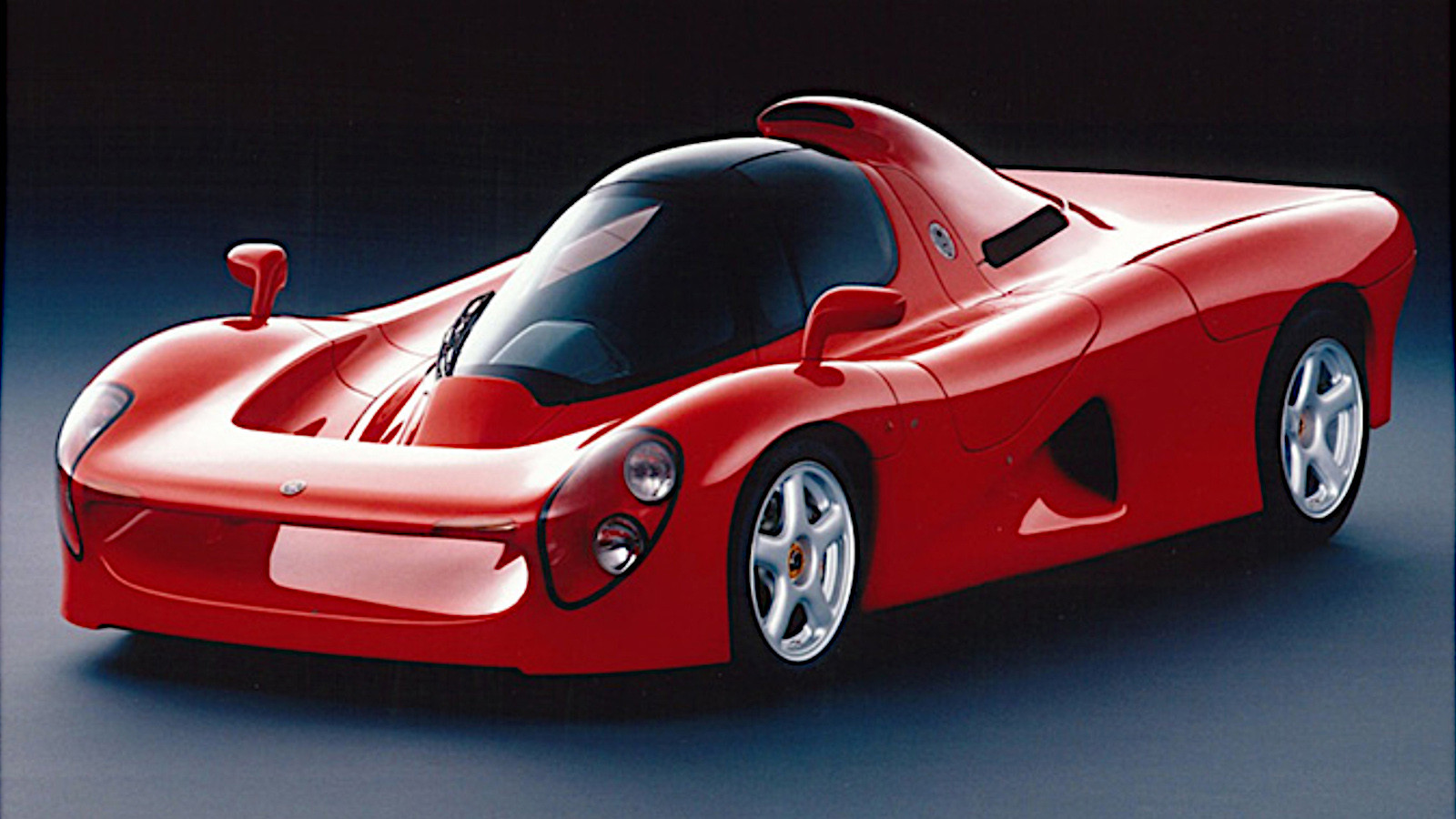
12. 1992 Yamaha OX99-11
Apart from the absence of a rear wing, the OX99-11 gives the impression of being what an early 1990s Formula One car would have looked like if the race teams hadn’t had all those pesky regulations to worry about.
Its engine was actually an F1 unit, a 3.5-litre, 60-valve V12 which hadn’t distinguished itself in Grand Prix racing but, even when detuned to produce c400bhp, was a formidable thing to put in a road car weighing 1000kg (2205lb).
It sat just ahead of the rear axle in a structure built by Yamaha’s UK outpost Ypsilon Technology, which also featured central tandem seating.
One of the most remarkable Japanese concept cars ever, it was intended to go on sale in 1994, but an economic recession persuaded Yamaha that this wasn’t such a good idea after all.
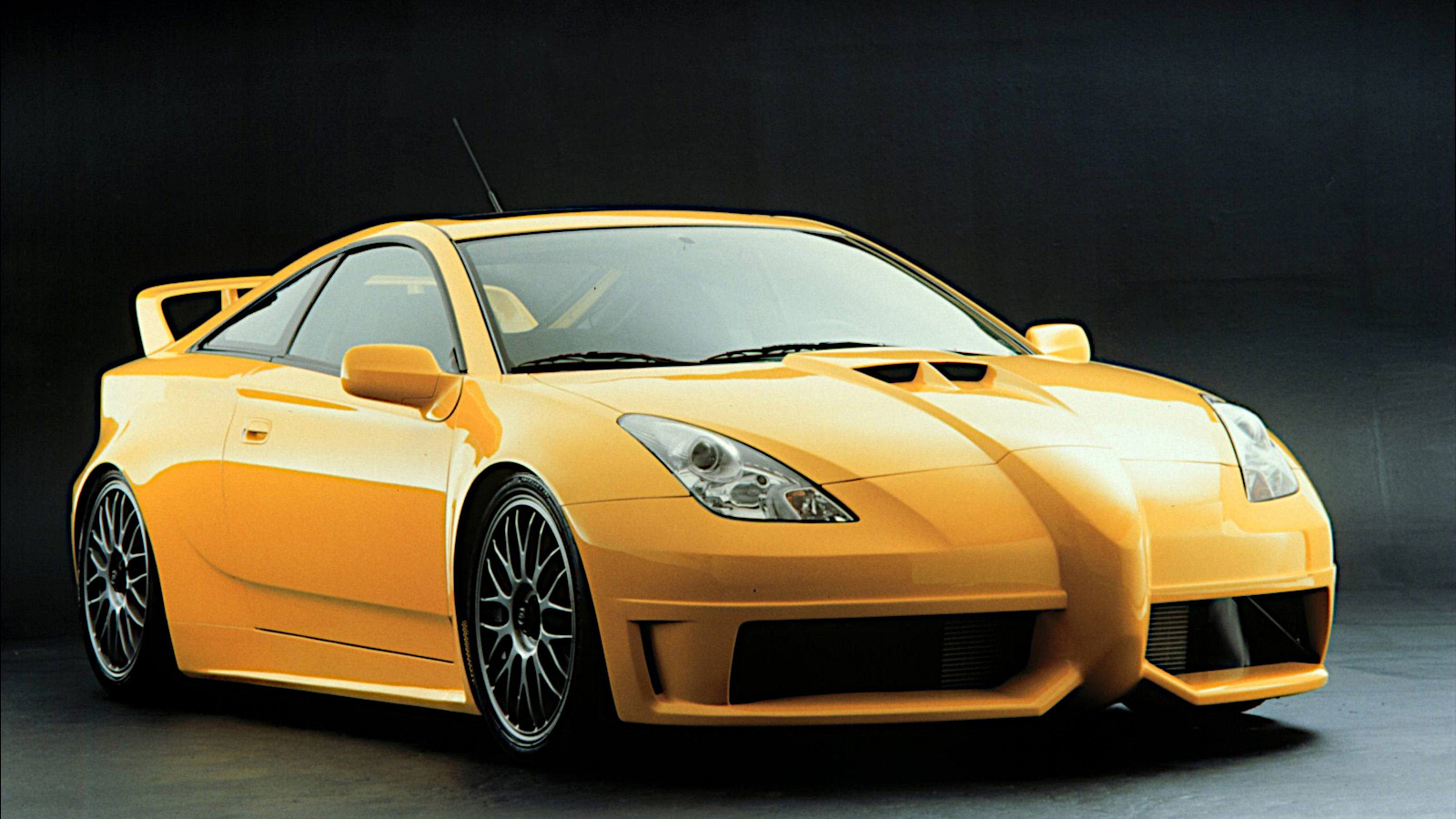
13. 2000 Toyota Ultimate Celica
Just a few months after starting production of the seventh-generation Celica in 1999, Toyota revealed a concept version dreamed up in the US rather than Japan.
Co-developed by Toyota USA, Toyota Racing Developments, Rod Millen Motorsports and Calty (Toyota’s California-based design house), the Ultimate Celica had a development of an existing engine used in IMSA GTP racing which, in its new form, produced 493bhp at 8000rpm.
This would have been a bit much for a car with front-wheel drive, so Toyota fitted a four-wheel-drive transmission instead.
Naturally, the suspension was uprated, larger brakes were used and the stiffness of the standard bodyshell was increased by fitting an integral rollcage.
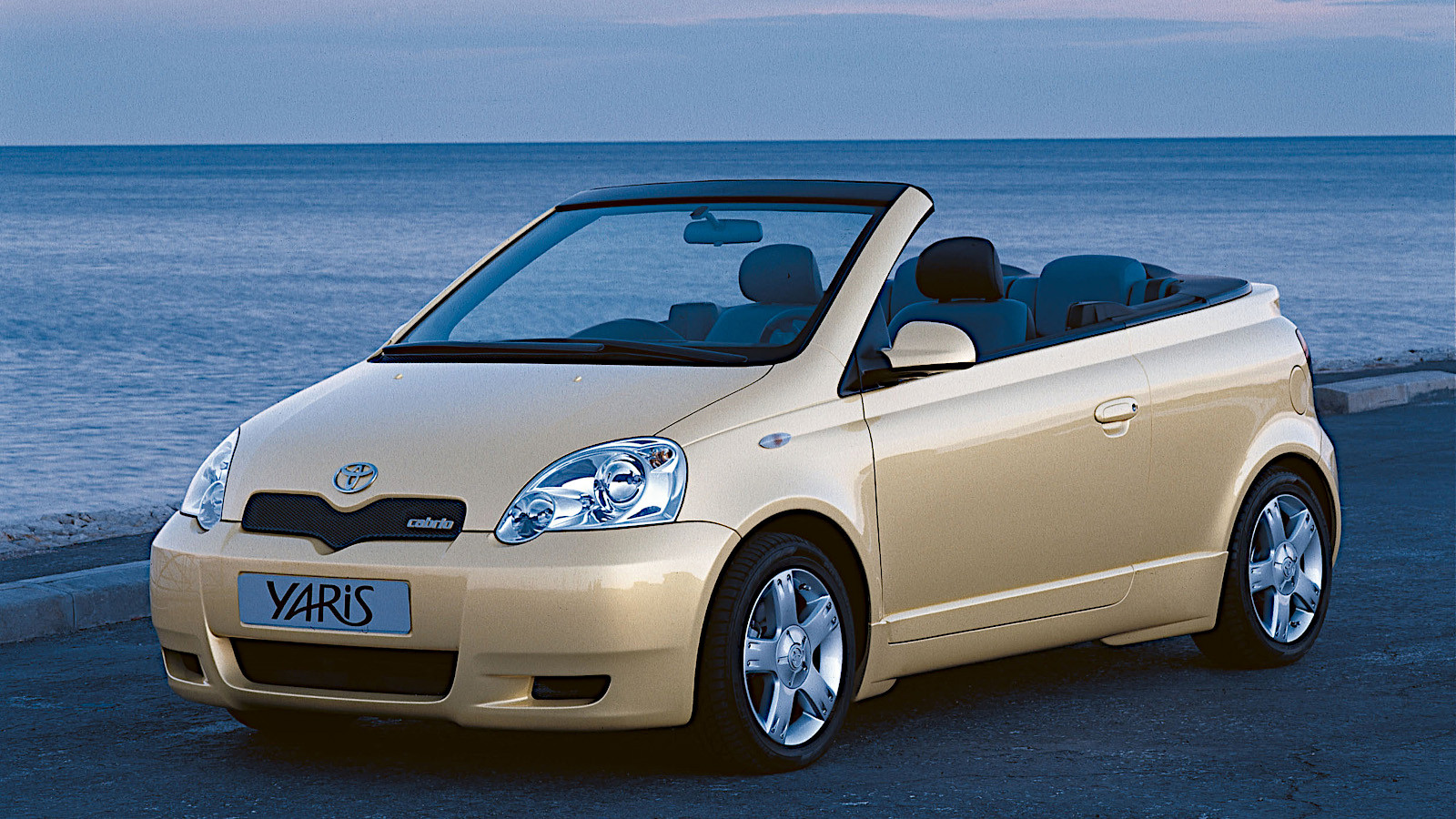
14. 2000 Toyota Yaris Cabrio
Utterly unlike the Ultimate Celica revealed in the same year, the Yaris Cabrio was exactly what its name said it was – a derivative of the little Yaris hatchback without a roof.
Mechanically identical to the regular Yaris, it was designed to appeal to younger buyers, although because it never got any further than the concept stage, Toyota presumably thought this was not an idea worth pursuing.
The non-standard headlights did go a step further, however, since they were similar to those used in the higher-performance Yaris T Sport of 2002, and introduced across the range during a facelift the following year.
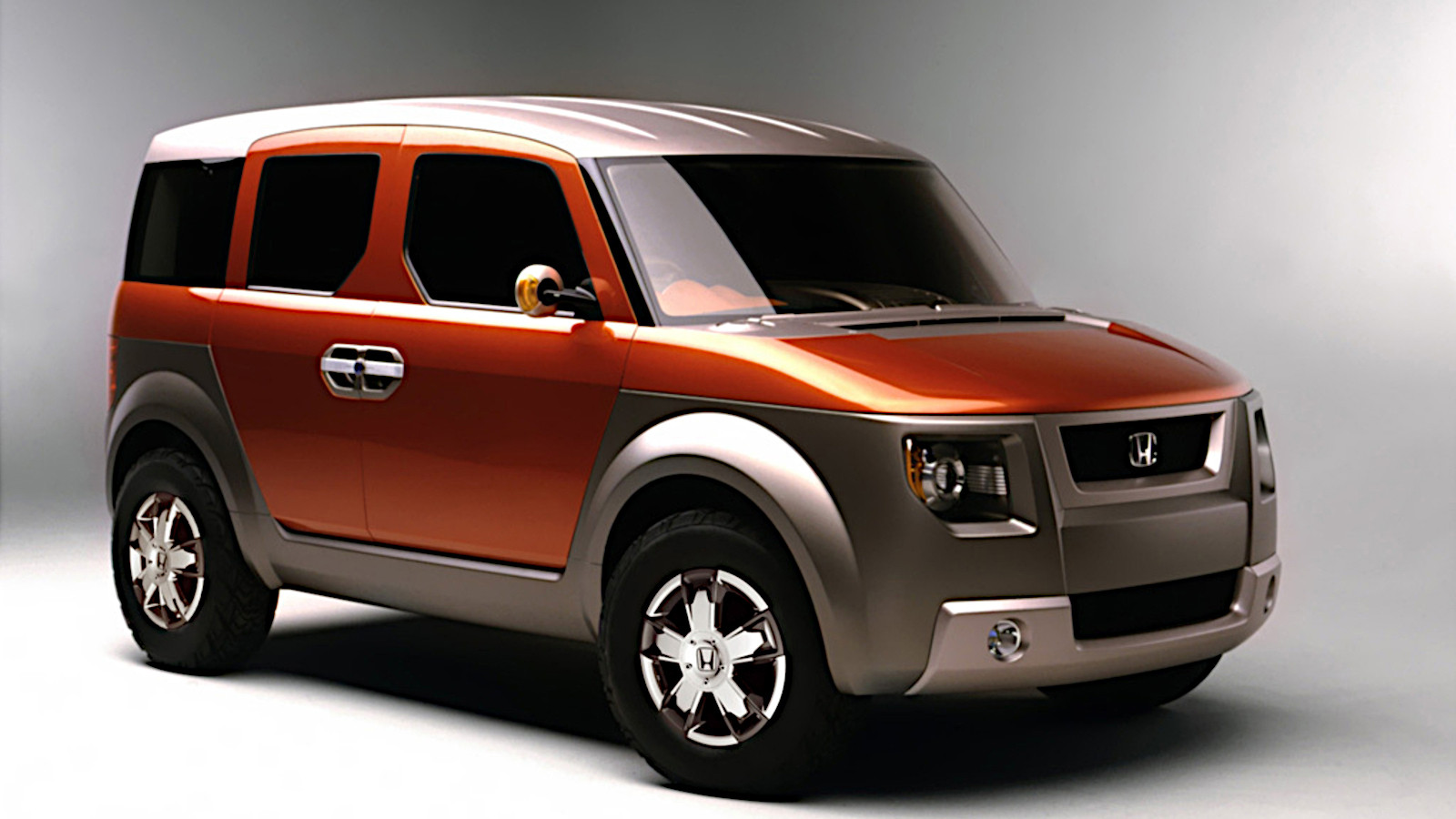
15. 2001 Honda Model X
In a move that must have sat more easily with the public consciousness at the time than it would now, Honda R&D Americas set about developing a vehicle specifically for young males.
The team conducted its research by visiting frat houses, Californian surf beaches and the X Games, and going camping and mountain biking, which sounds very jolly.
The result of all this was the Model X, a compact SUV with a large, flat load area, wide-opening side doors and no central pillar.
According to Honda, ‘If the designers had to choose one word to describe Model X, it would be “freedom”’.
If that choice had been extended by four words, they might have been ‘able to carry surfboards’.
16. 2001 Suzuki GSX-R/4
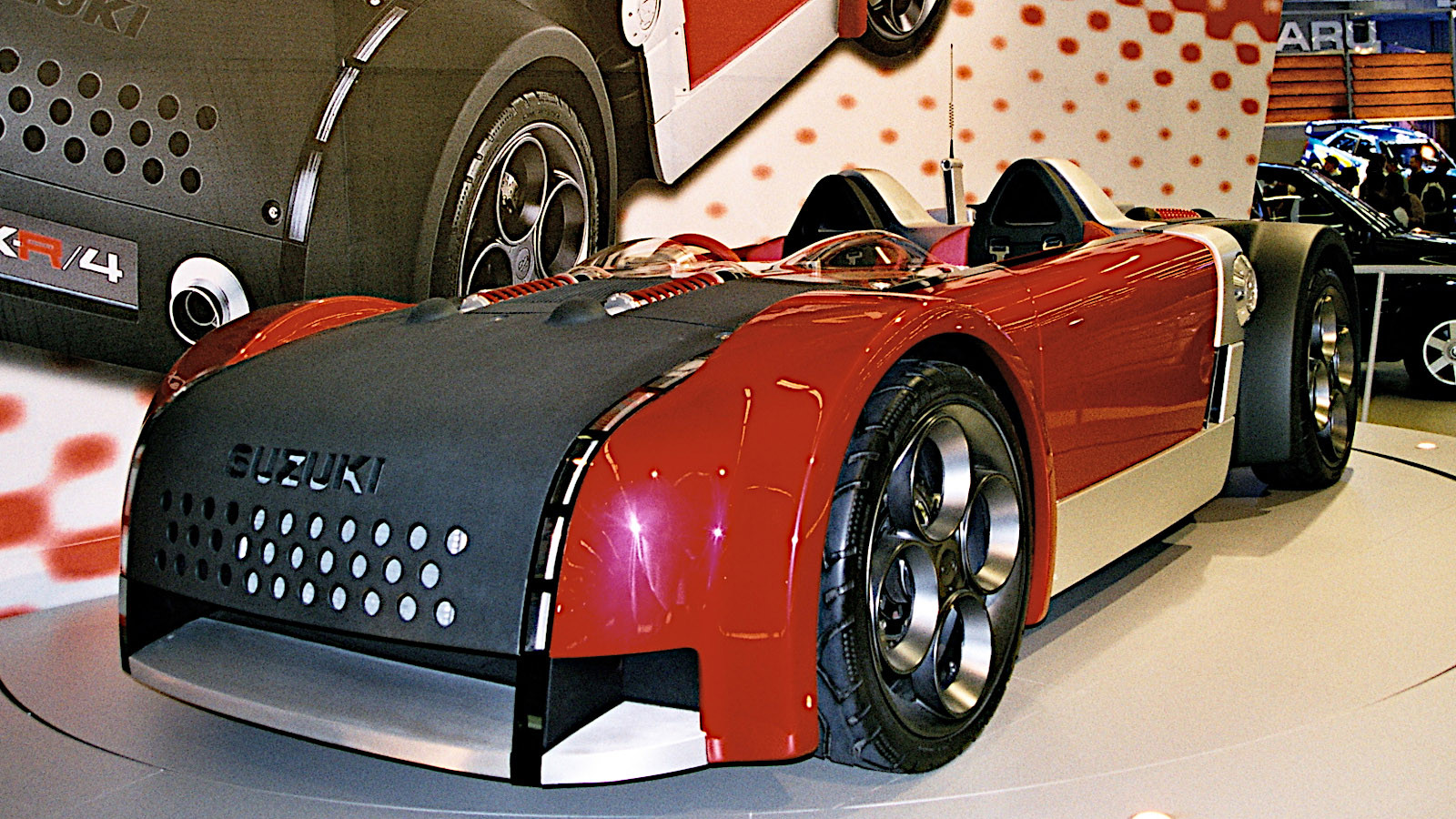
Suzuki’s experiences with both cars and motorcycles were evident in the GSX-R/4.
This very racy-looking, open, two-seat roadster, featuring partly exposed springs and shock absorbers, was powered by the 1.3-litre engine fitted to the GSX1300R Hayabusa motorbike.
Mounted in the mid-rear position, the engine produced 173bhp at 11,000rpm, which gave the ’bike extraordinary performance and would certainly have made the little concept car shift, too.
Power was taken to the road by what Suzuki described as ‘a smooth, hand-shifted, six-speed sequential transmission’ – presumably the same one used in the Hayabusa.
17. 2001 Toyota ES3
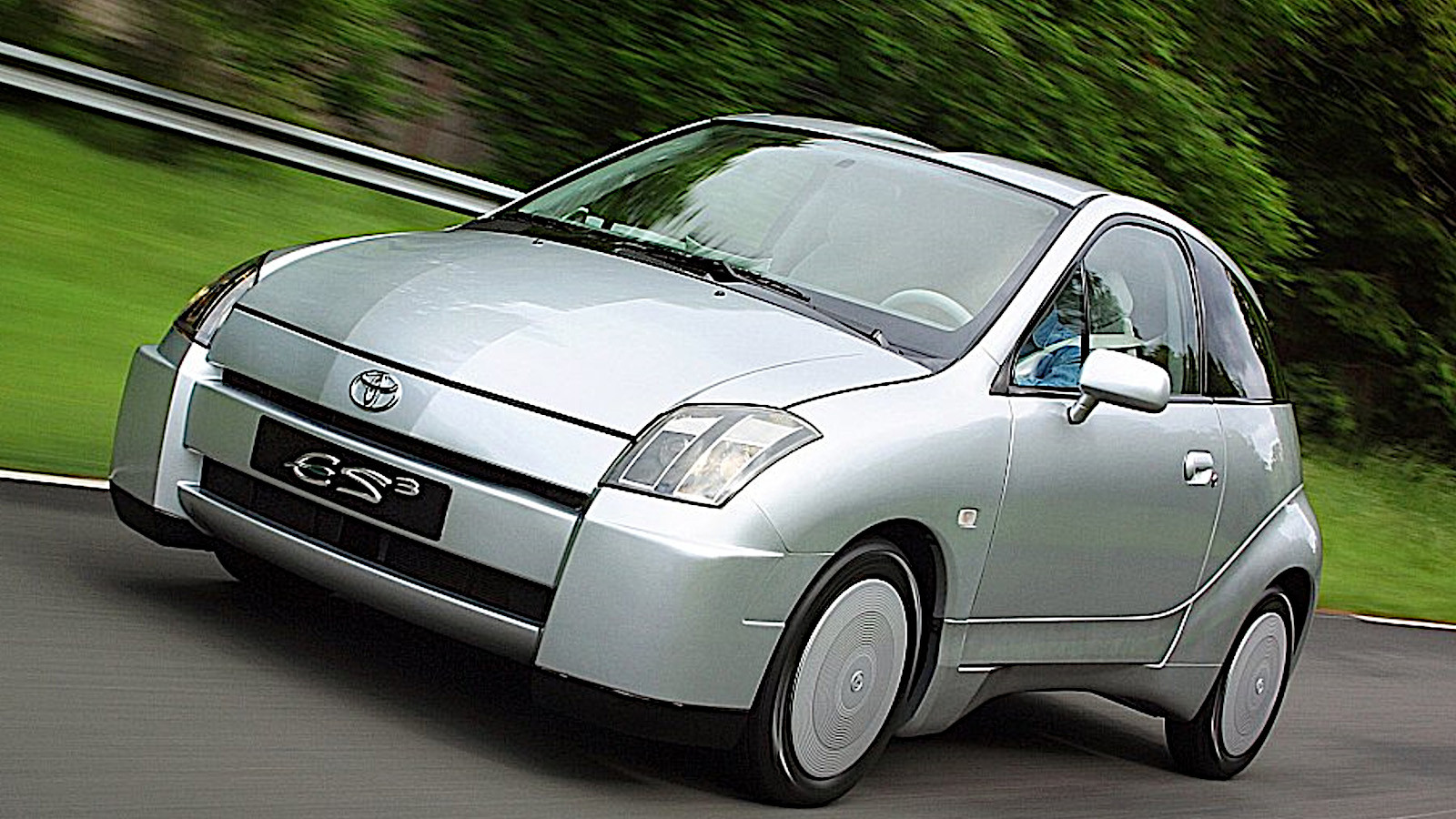
The Car of the Near Future, as Toyota called it, was a response to increasing demands for better fuel consumption, lower CO2 emissions and the maximum possible recyclability.
Marginally smaller than the contemporary Yaris, it weighed just 700kg (1543lb), thanks partly to the use of aluminium and biodegradable plastic in the bodywork, and with its 1.4-litre, turbocharged diesel engine it achieved European-standard economy and CO2 figures of 104.6mpg and 71g/km respectively.
Other features included a continuously variable transmission (CVT), a stop-go system and regenerative engine braking, the last of these providing electricity to be stored in a capacitor and used later for restarting and auxiliary electric loads.
18. 2001 Toyota Pod
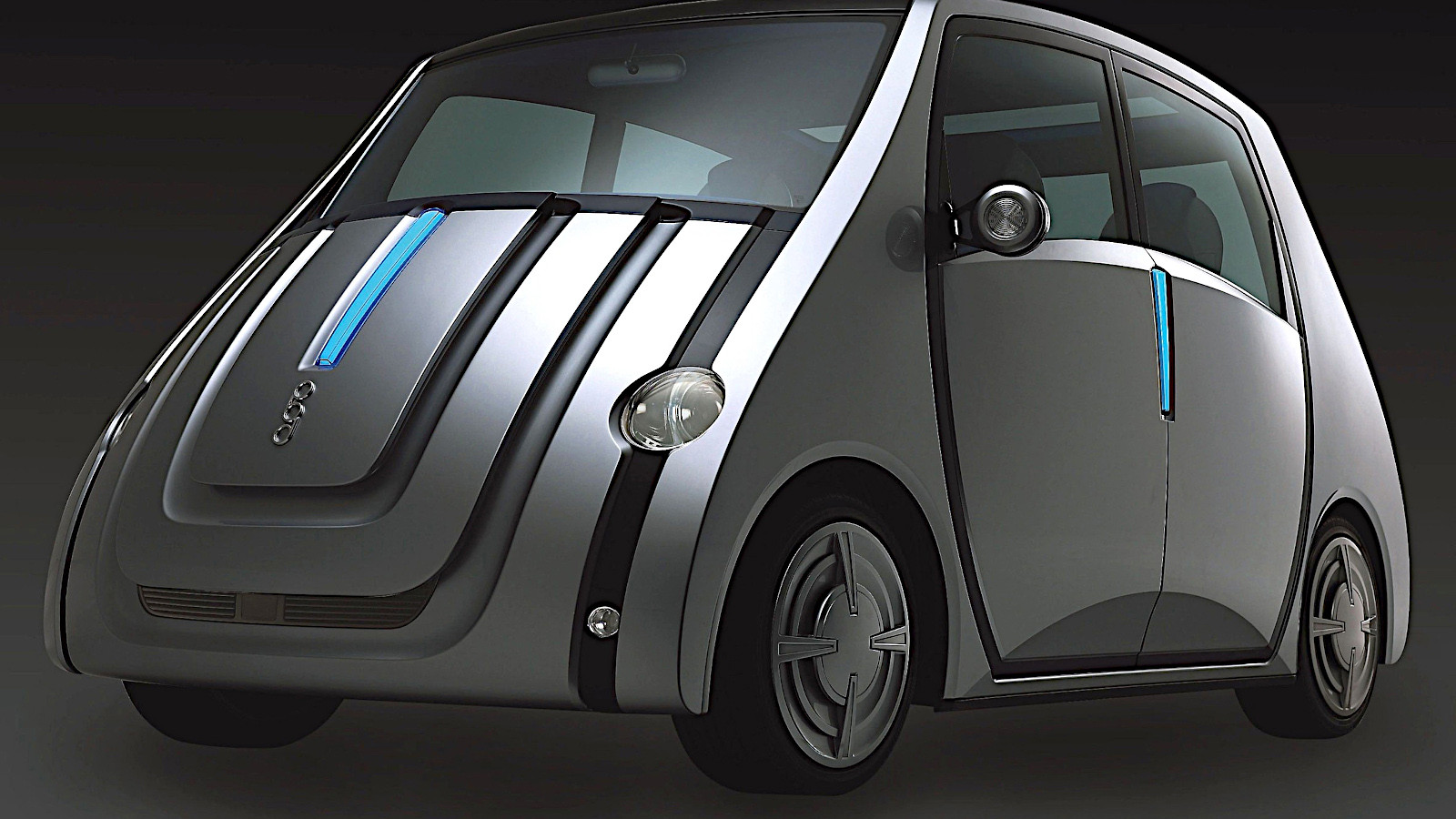
As must have become apparent by now, 2001 was a particularly strong year for Japanese concept cars, and perhaps the most inventive of them was Toyota’s little Pod.
Co-developed with Sony, it featured flexible seating and a joystick which was given responsibility for duties normally taken care of by a steering wheel and pedals.
Part of Sony’s contribution, and arguably the feature of the concept most likely to try anyone’s patience, was to allow the Pod to express emotions it could not possibly have felt, including sobbing gently as the occupants walked away after it had been parked.
The car could also measure the pulse and perspiration rate of the driver, and advise caution if these exceeded normal parameters.
19. 2001 Toyota RSC
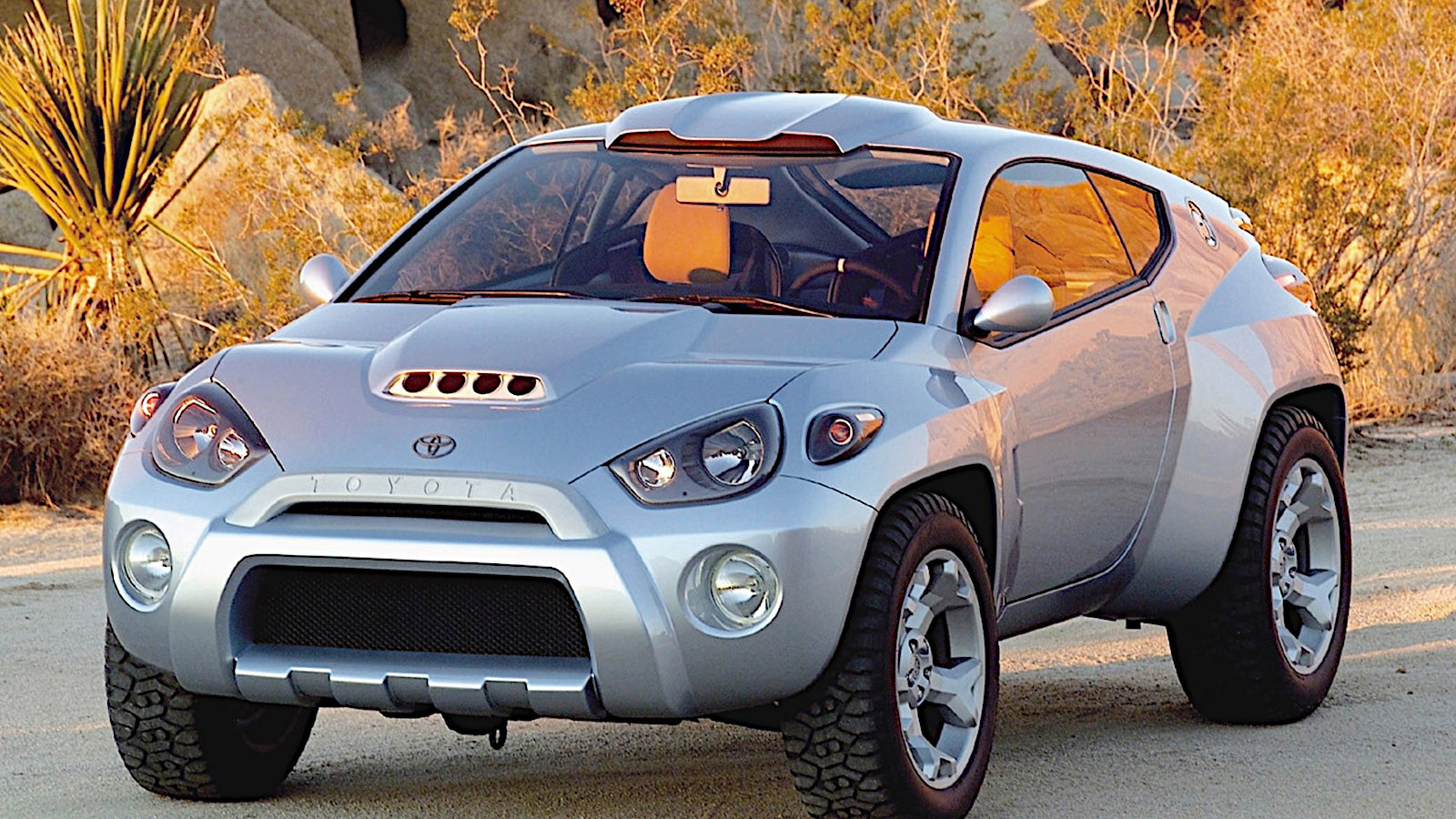
Like the Honda Model X of the same year, and the Ultimate Celica of the previous one, Toyota’s Rugged Sport Coupe was created by a US offshoot of a Japanese manufacturer.
Calty’s rather daring intention was to develop a ‘purely visual statement … that, intentionally, is not meant for everyone to understand, or appreciate’.
The RSC was a sports car, but one influenced by off-track motorsport (Toyota’s participation in the World Rally Championship was mentioned in a press release), and had a deliberately racing-car-like interior, along with chunky, 19in wheels and purposeful-looking tyres.
Comparisons, of an aesthetic rather than technical nature, were made with the Corolla-based Matrix hatchback which arrived in the 2002 model year, though that car was far less adventurous (and probably had to be) than the RSC.
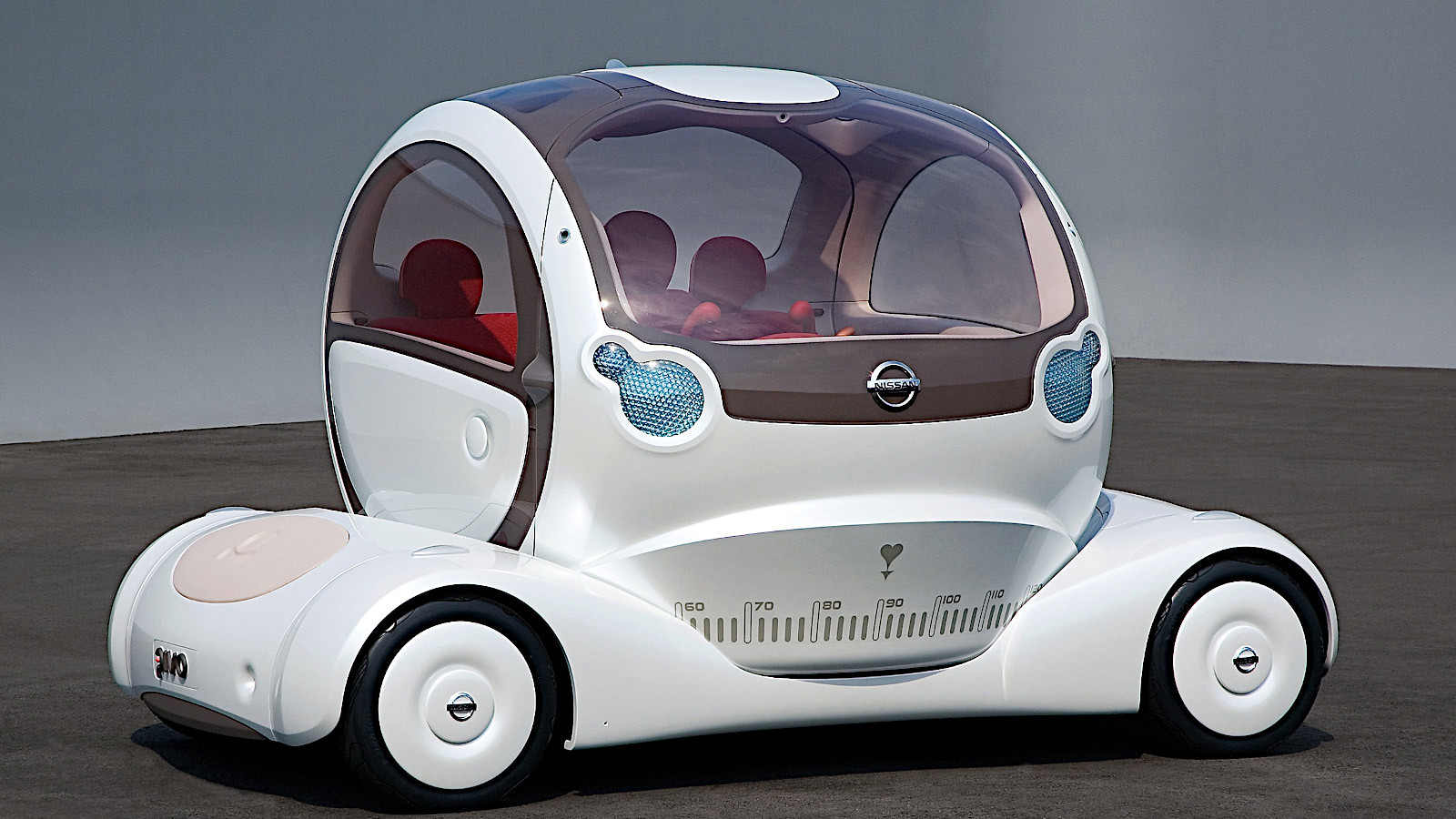
20. 2005 Nissan Pivo
The Pivo was an electric city car with two motors, one driving each axle.
The use of various drive-by-wire technologies meant there was no need for mechanical steering or braking links between the cabin and the chassis, and this allowed Nissan to make the former fully revolvable.
Reversing therefore became a thing of the past and parking a matter of unusual simplicity, because if you needed to drive backwards you could simply turn the cabin through 180 degrees and drive forwards, which amounted to the same thing.
Nissan followed the concept with the similar Pivo 2, and later the very different Pivo 3, which could park itself.
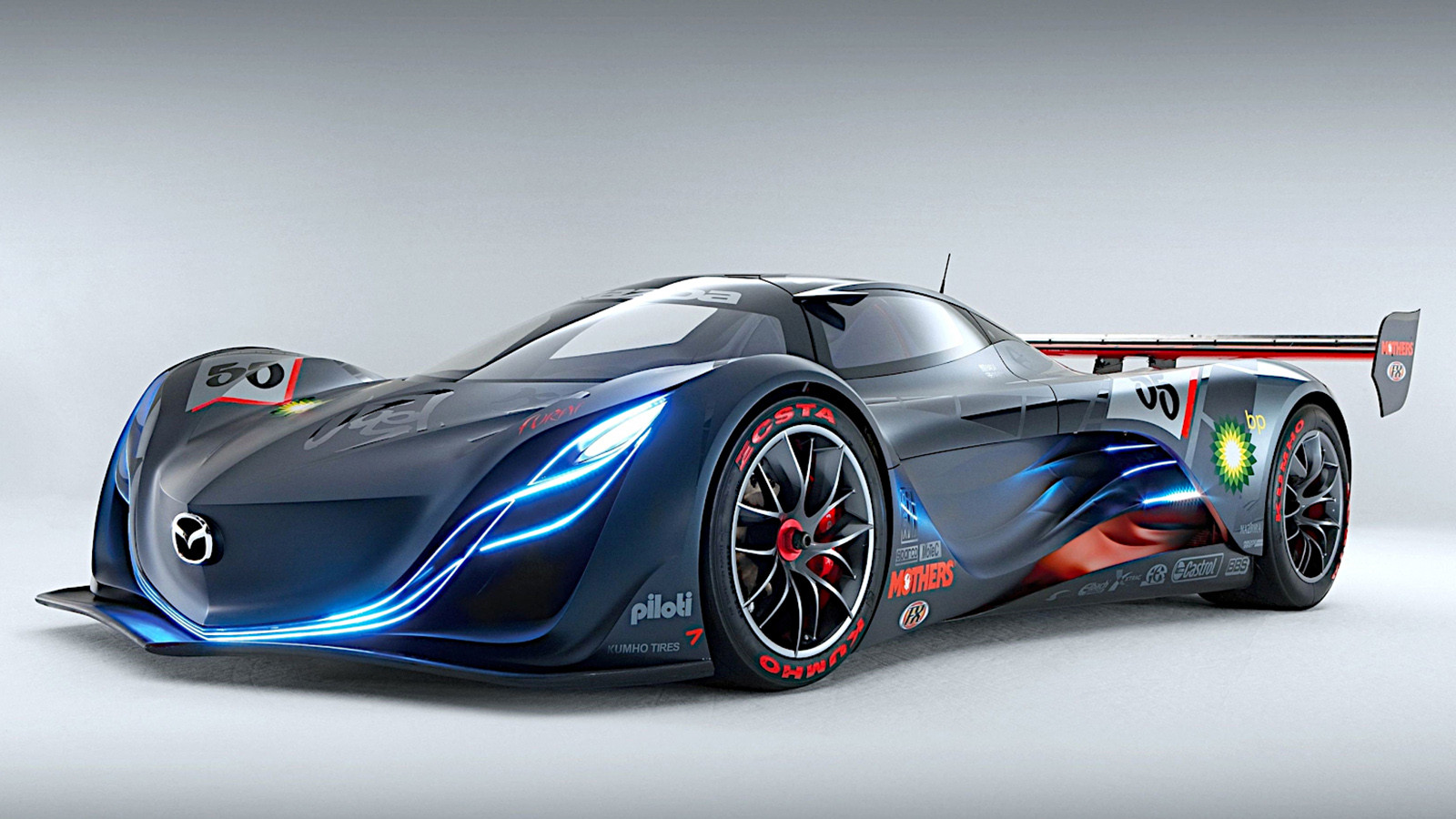
21. 2007 Mazda Furai
Billed as bridging the gap between purpose-built competition vehicles and street-legal supercars ‘like no car has ever done before’, the Furai was essentially a Courage C65 racing car fitted with a three-rotor engine (one of several it used in its motorsport career), but given a completely new body.
As used in the Furai, the engine ran on ethanol and produced 451bhp, somewhat less than it would have done on the tracks, though for a road car its aerodynamic features were outstanding.
The car did not appear anywhere after August 2008, and it wasn’t until five years later that it was revealed to have been destroyed by fire during a filming session.
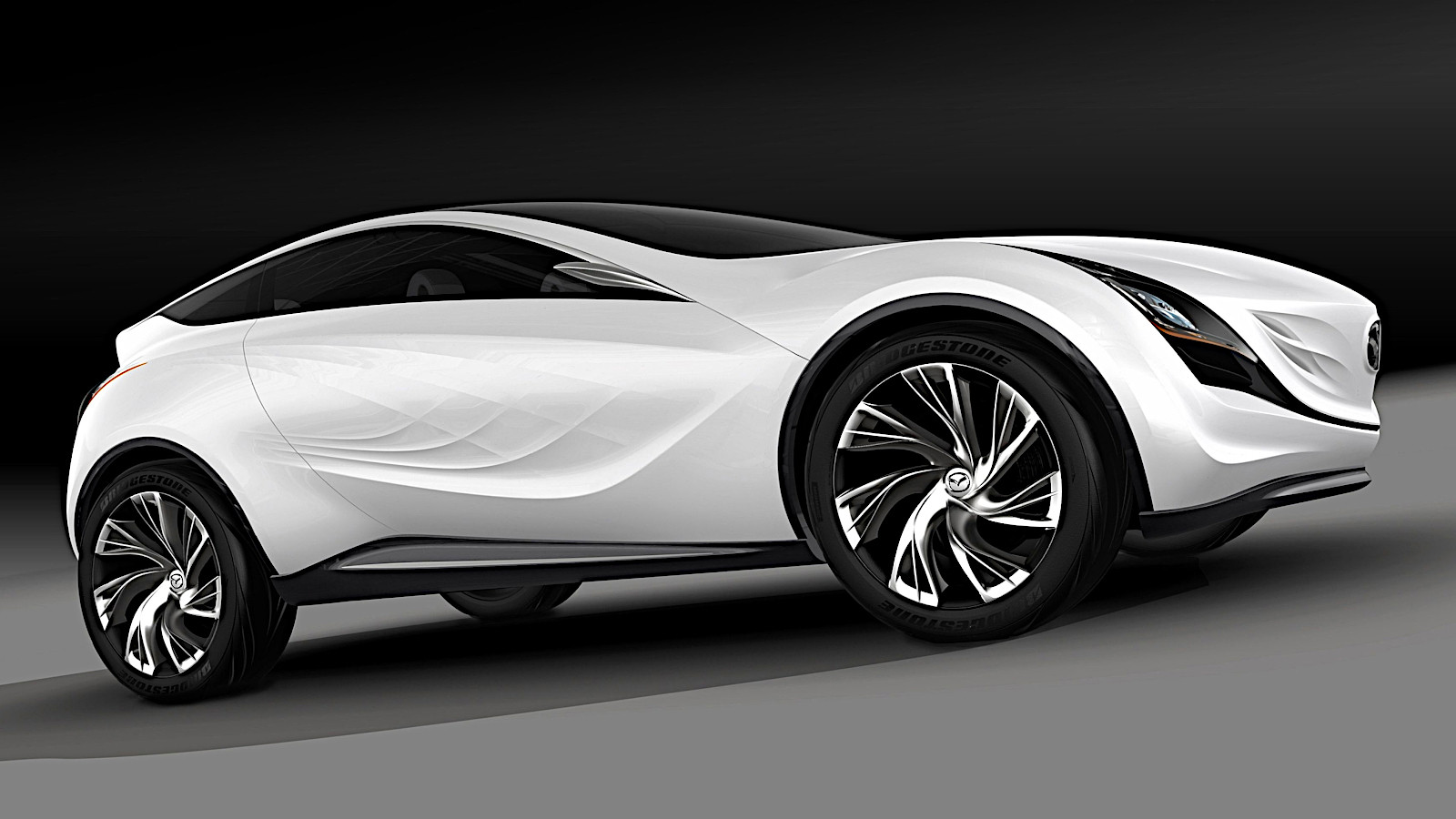
22. 2008 Mazda Kazamai
In the first decade of the 21st century, SUV crossovers were an inescapable feature of every international motor show.
At Moscow in August 2008, Mazda’s contribution to the trend was the Kazamai, whose name can be translated as ‘swirling winds’ – a reference to the complex arrangement of curves which covered every part of the vehicle.
The concept car was said to have four-wheel drive, a next-generation, direct-injection petrol engine and a newly developed transmission, and to have a bodyshell which was both lightweight and robust.
‘If it were to be built,’ according to a press statement issued several weeks before the show, ‘Mazda’s latest show car would deliver exciting driving dynamics, frugal fuel consumption and greatly reduced CO2 emissions’.
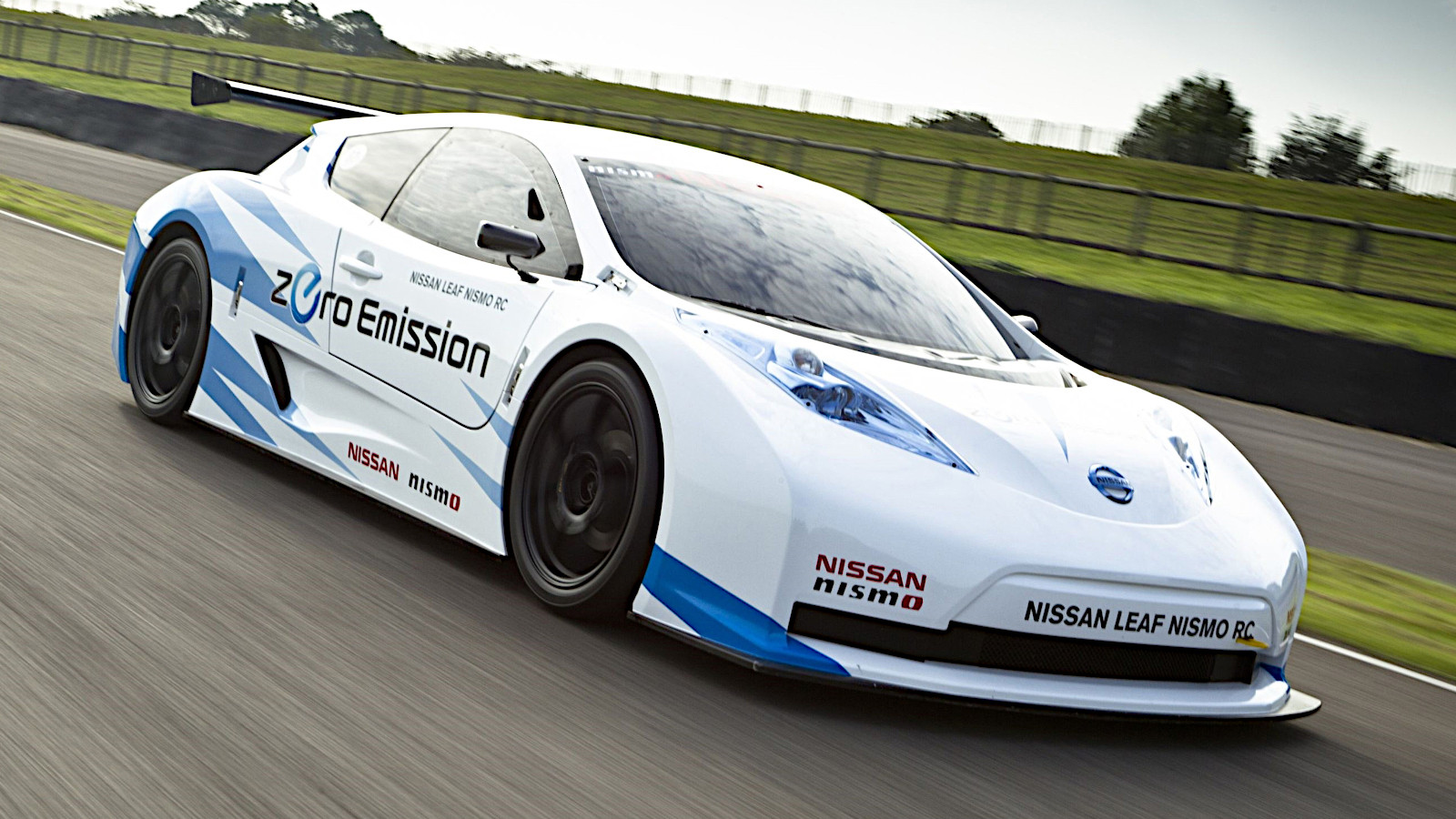
23. 2011 Nissan Leaf Nismo RC
Within months of the launch of the first-generation, all-electric Leaf, Nissan revealed a concept version which looked vaguely similar to the production vehicle, and had the same powertrain, but was in most respects completely different.
Based on a carbonfibre monocoque, it was 170mm (6.7in) wider, 20mm (0.8in) longer (but with a wheelbase reduced by 99mm/3.9in) and 350mm (13.8in) lower, weighed approximately 40% less, and had both a rear wing and a front splitter.
Although the power output was still a modest 106bhp, the Leaf Nismo RC could accelerate much faster than the car it was based on, with a reported 0-62mph time of 6.85 secs, although it couldn’t do much more than 90mph flat out.
A much more powerful Nismo RC, based on the second-generation Leaf, was unveiled in Tokyo in November 2018.