Feel the wind in your hair
Except during occasional heatwaves, British people tend not to experience sunshine as much as they would like, and welcome opportunities to do so even when they are driving.
On the other hand, rain is never usually much more than a few days away, so if you have an open car it’s best to have some protection, even temporary, from the elements.
For both reasons, convertibles have generally been popular cars in the UK, despite issues of expense, weight and structural rigidity compared with solid-roofed models, and British manufacturers have been providing them for many decades.
In this alphabetical list of cars on sale before 2000, we’re using a wide definition of convertible, meaning that anything which can be driven with the roof either up or down may be included, even if in some cases a term such as ‘roadster’ might also be appropriate.
Enjoy!
1. AC Ace
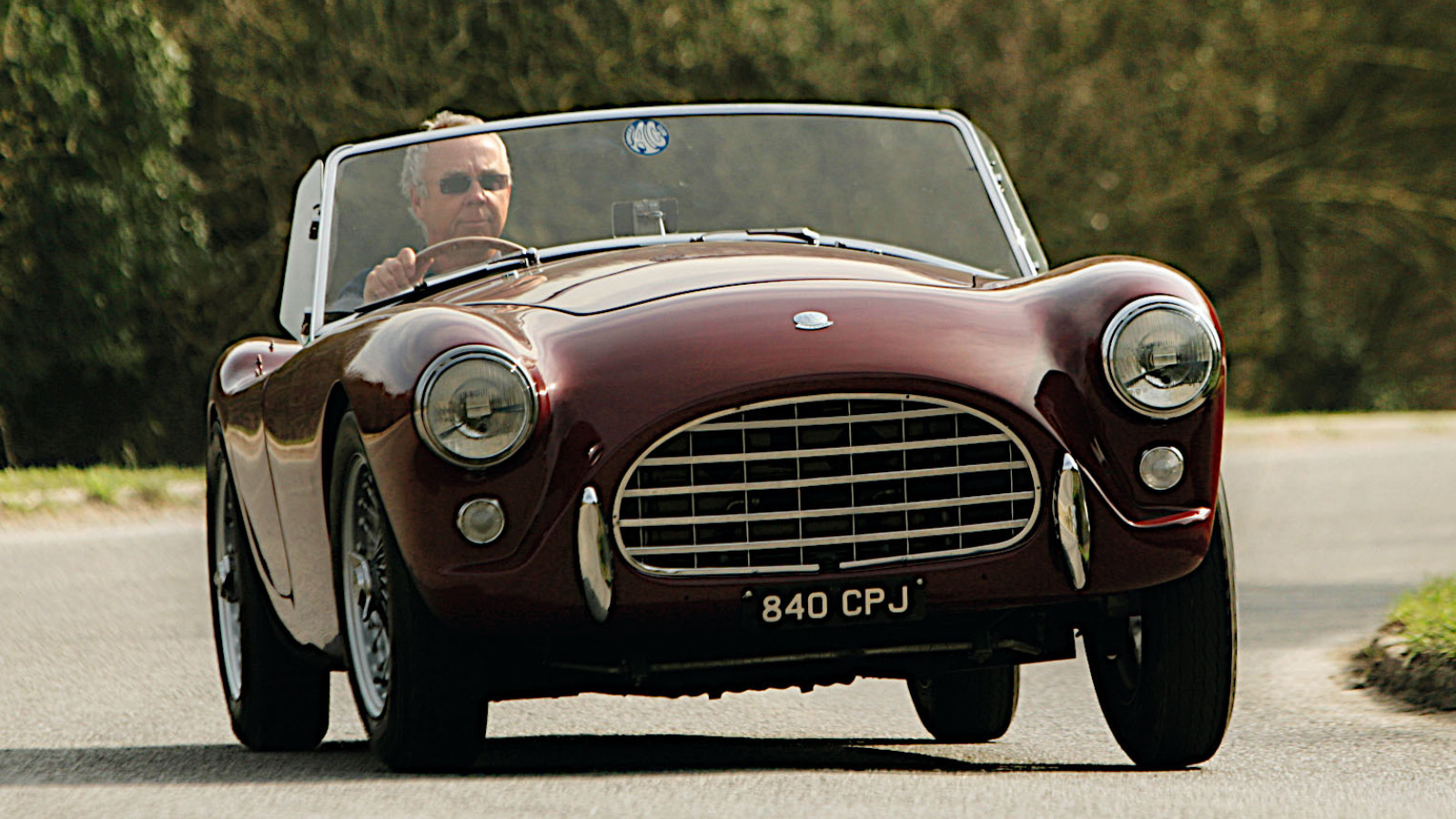
The Ace was introduced in 1953 with AC’s venerable 2-litre, straight-six engine, and would later become available with Bristol’s development of the similarly sized, pre-war BMW engine and with the 2.6-litre unit used in the Ford Zephyr.
Carroll Shelby liked the car but thought it would be even better with a Ford V8, an inspiration which led to the development of the Cobra.
Aces are usually pictured without roofs, but AC supplied hardtops and soft-tops, the latter, in the opinion of many, doing very little to improve the car’s appearance.
An Ace with a detachable hard roof is not the same thing as an AC Aceca, a related model of the same period whose roof was part of the body structure.
2. AC Brooklands Ace
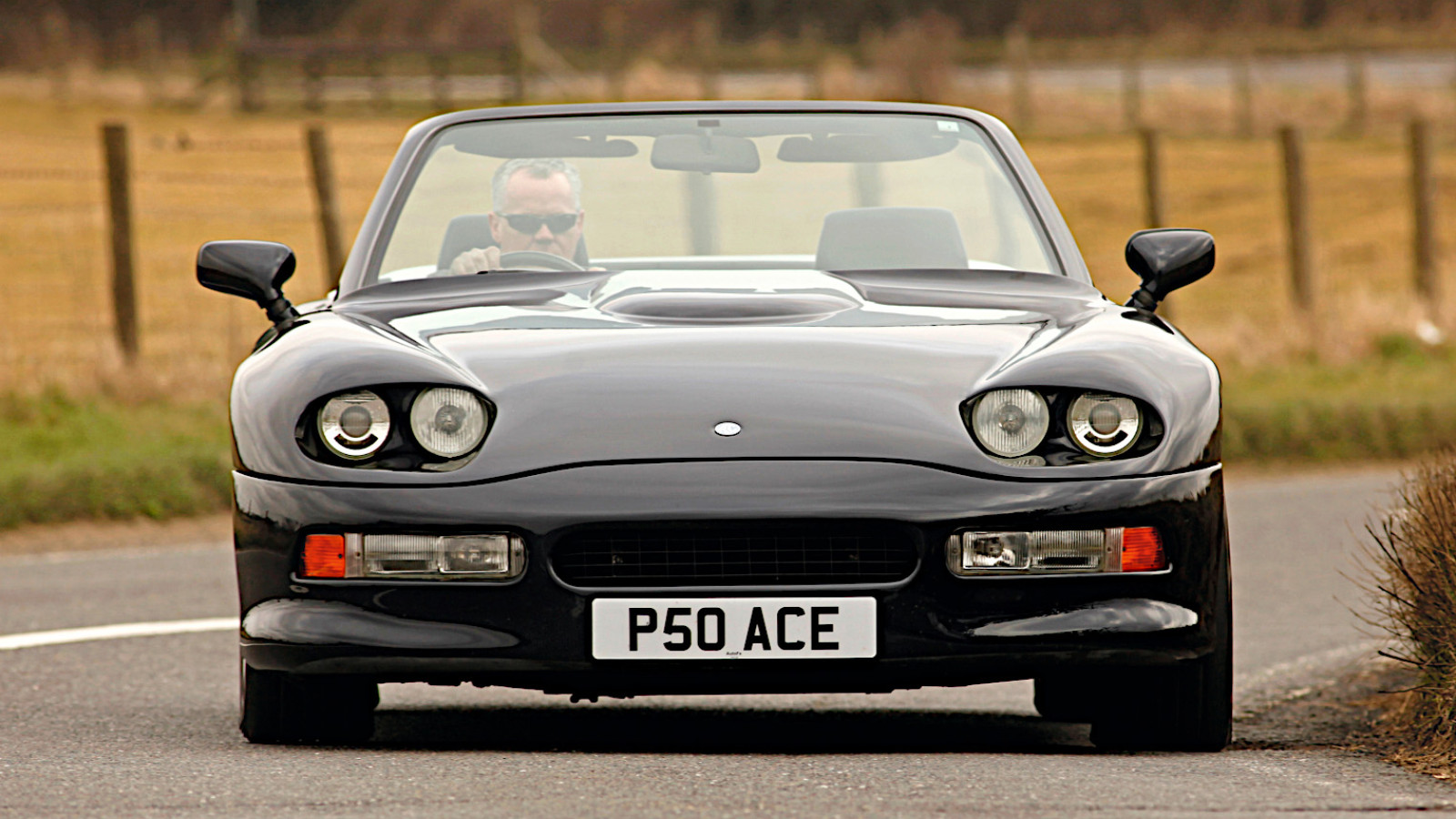
After several years of development, a new AC Ace roadster with the word ‘Brooklands’ added to its name went into production in 1993.
Like the AC Cobra, though unlike the original Ace, it was powered by a Ford V8, in this case a 4.9-litre unit from the long-running Windsor small-block family, and Ford also supplied the five-speed manual gearbox.
Following a change of ownership, AC redesigned the Ace and dropped the Brooklands reference, and the new version went on sale in 1998.
The revitalisation was unsuccessful, however, and by the time production came to an end fewer than 60 examples of both modern-day Aces put together had been built.
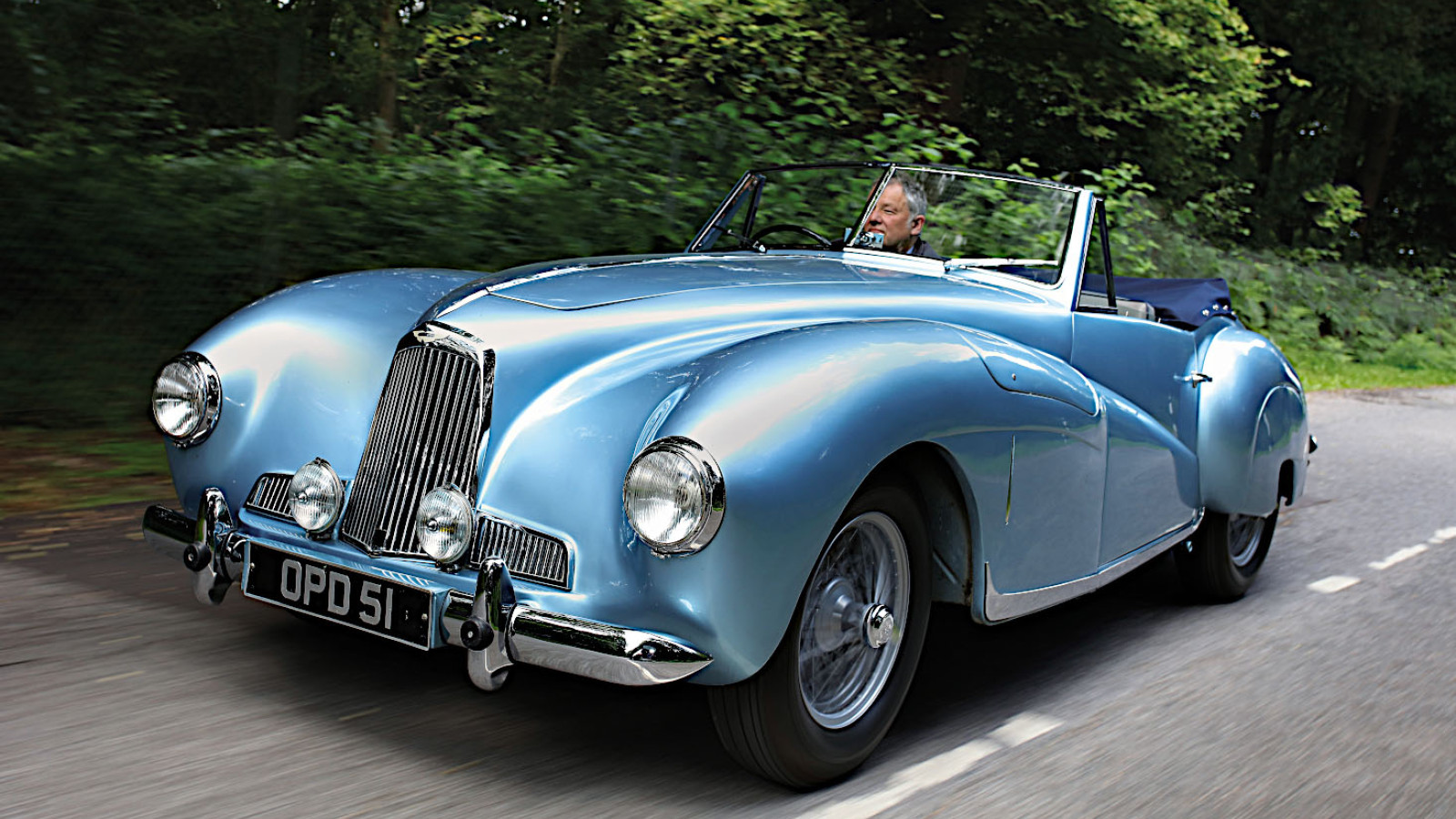
3. Aston Martin 2-Litre Sports
The first Aston Martin to go on sale after the company had been acquired by tractor and gearbox magnate David Brown is sometimes known retrospectively as the DB1, but was marketed in its day as the 2-Litre Sports.
This name was descriptive, if not particularly imaginative, and indicated that this was a sports car with a 2-litre engine previously used in the Atom concept car.
The Atom had featured a closed roof, but of the 15 2-Litre Sports models built between 1948 and 1950, 13 were convertibles.
The more powerful DB2 which followed was mostly built as a solid-roofed coupé, but was also available in drophead form.
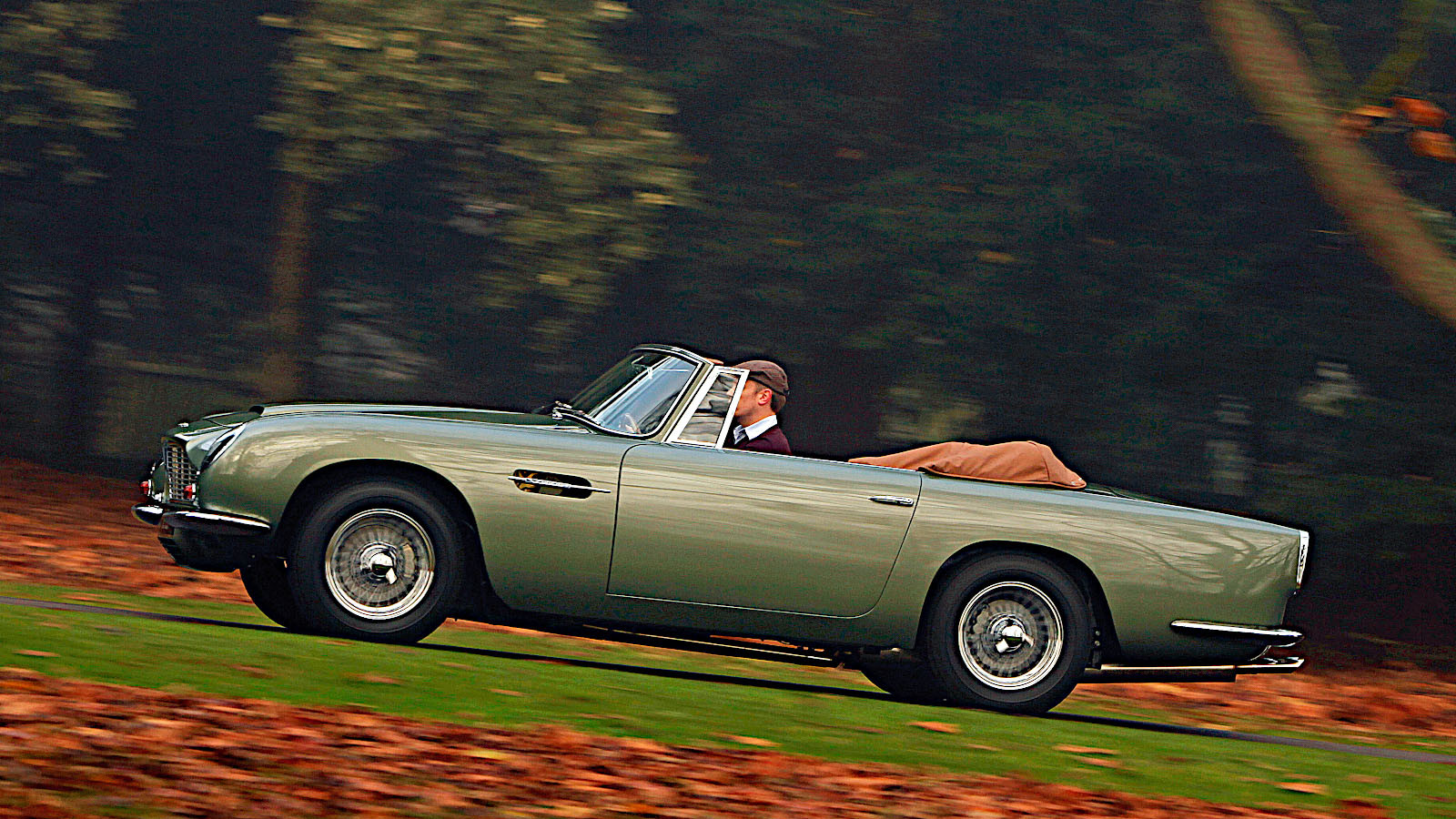
4. Aston Martin Short Chassis Volante
Aston Martin’s long tradition of calling its convertible models Volante began in 1965 with a car whose name can otherwise cause confusion.
It looked very like the DB6, which was introduced in the same year, but was actually based on the chassis of the outgoing DB5.
This chassis was unchanged, but it was nearly 4in (102mm) shorter than that of the DB6, so the ‘Short Chassis’ part of the name refers to the difference between this car and the DB6, and not to any shortening of the chassis itself.
In a sense, the Short Chassis Volante was a convertible version of the DB5, but no actual DB5 convertible was ever marketed as a Volante.
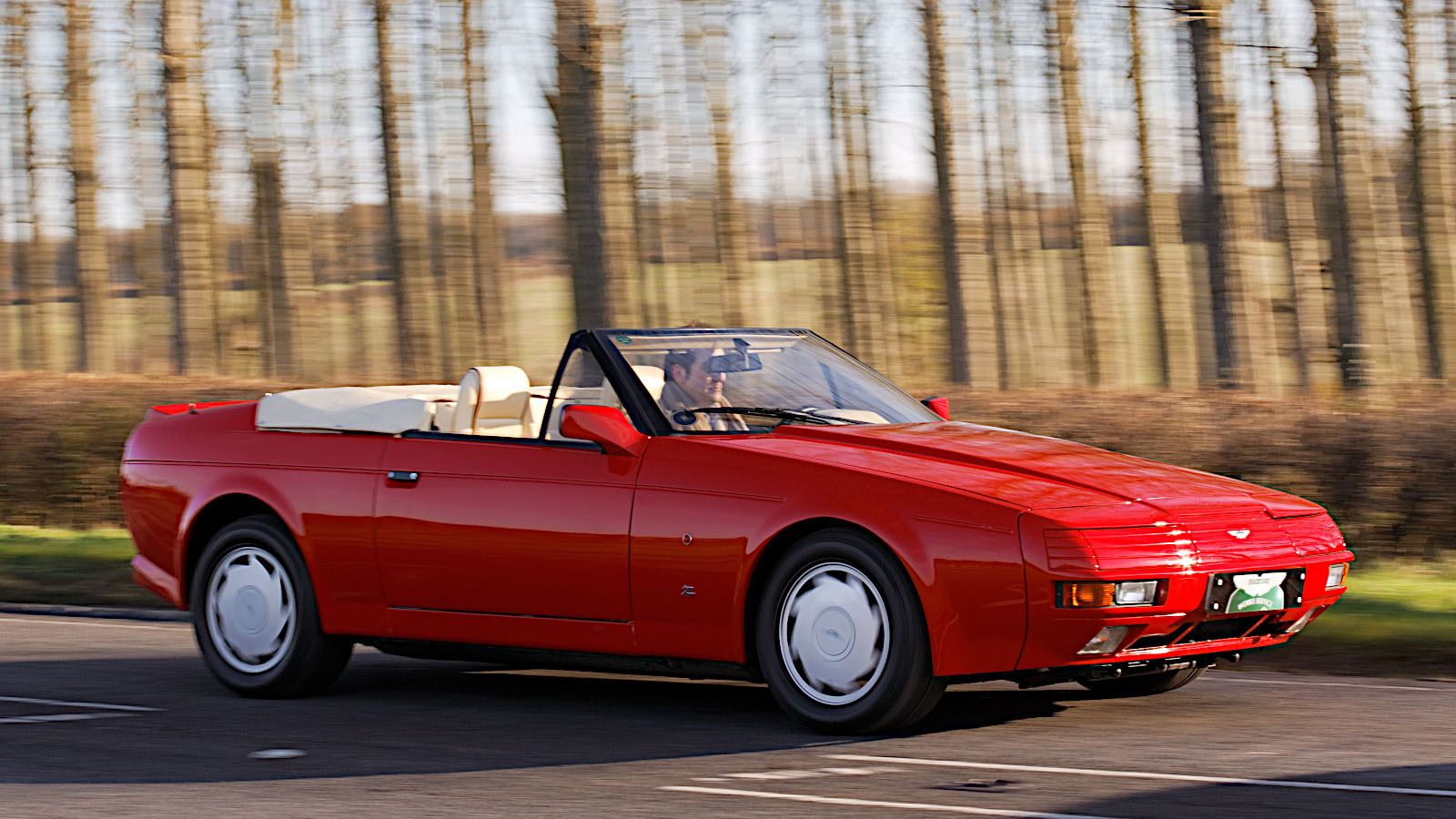
5. Aston Martin V8 Zagato Volante
One of several Aston Martins with bodies designed by the famous Italian coachbuilder, the V8 Zagato was based on the regular V8 Vantage and initially available, from 1986, only as a coupé.
The Volante version announced at the 1987 Geneva motor show wasn’t simply the same car in convertible form but looked significantly different, with concealed headlights, no radiator grille and a bonnet without a bulge in it.
There was no need for the bulge, which was necessary on both the V8 Vantage and the Zagato coupé to clear the engine’s quadruple downdraught carburettors, because the Volante had a more compact fuel-injection system instead.
This, however, reduced the power output by around 100bhp, and customers who found the situation suboptimal requested the carburettor set-up, which forced Aston Martin to bring back the bulge.
Aston’s original intention was to manufacture only 25 Zagato Volantes, but because all of them had been sold by the time production began, the figure was later raised to 37.
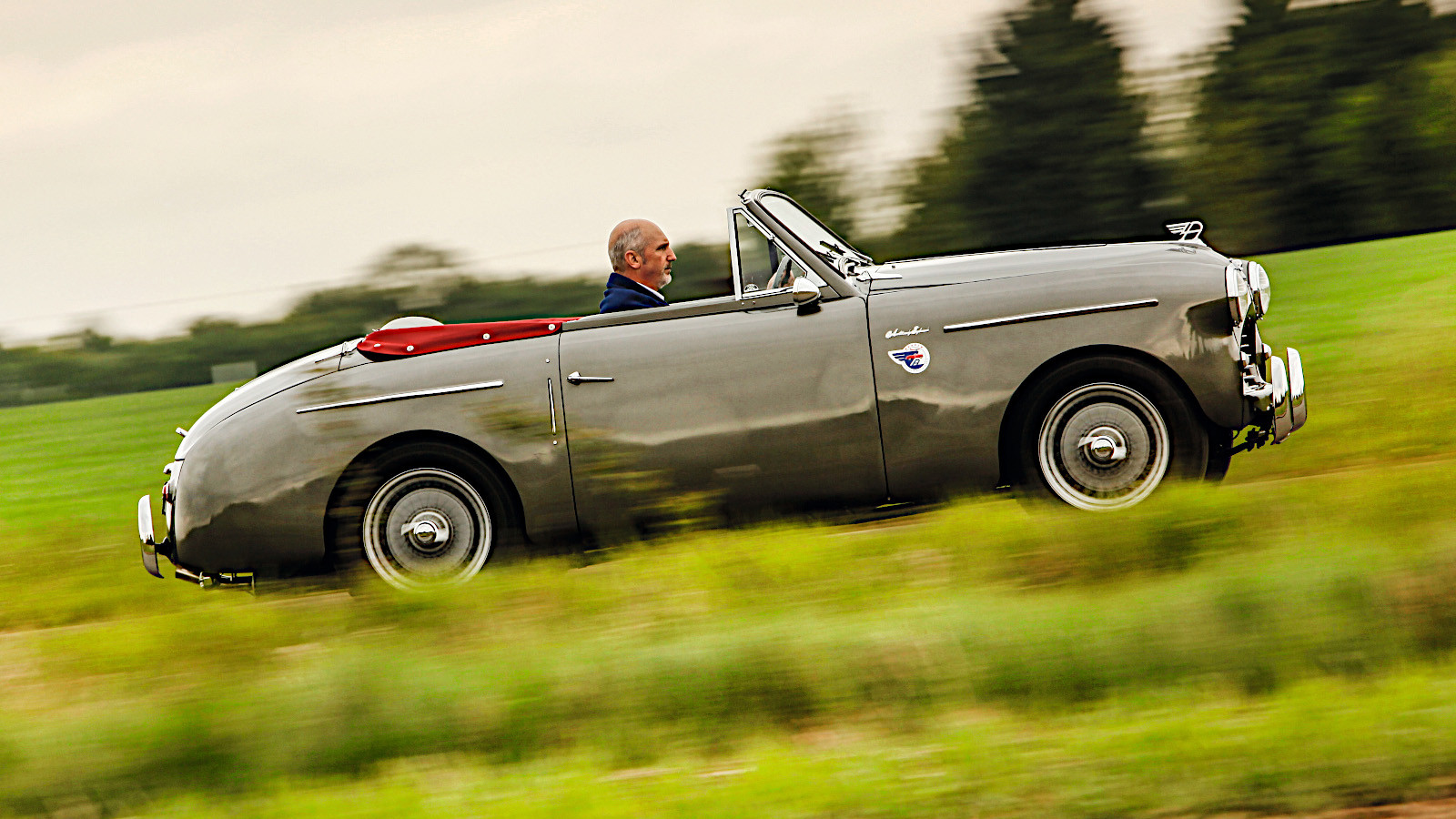
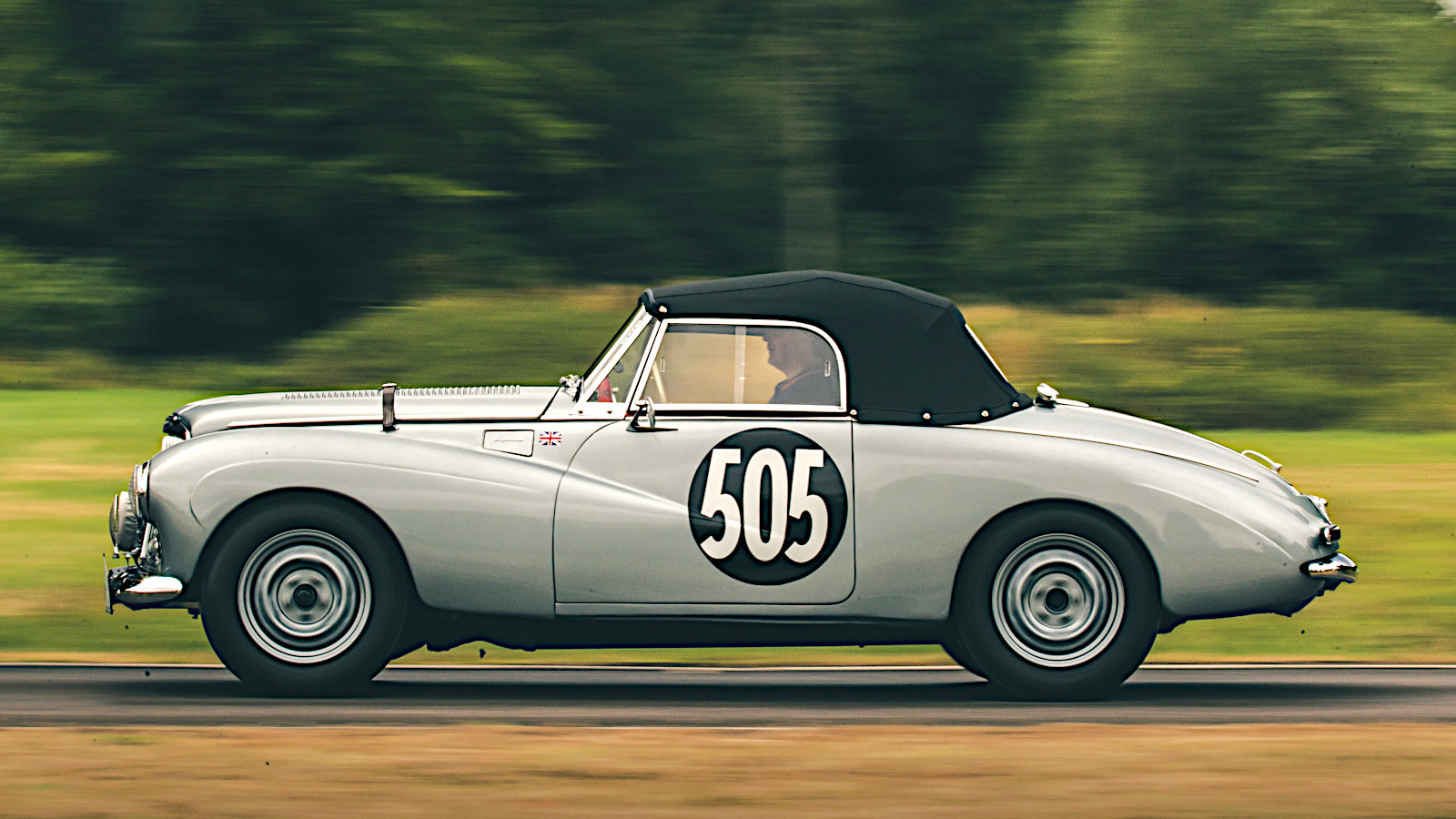
6. Austin A40 Sports
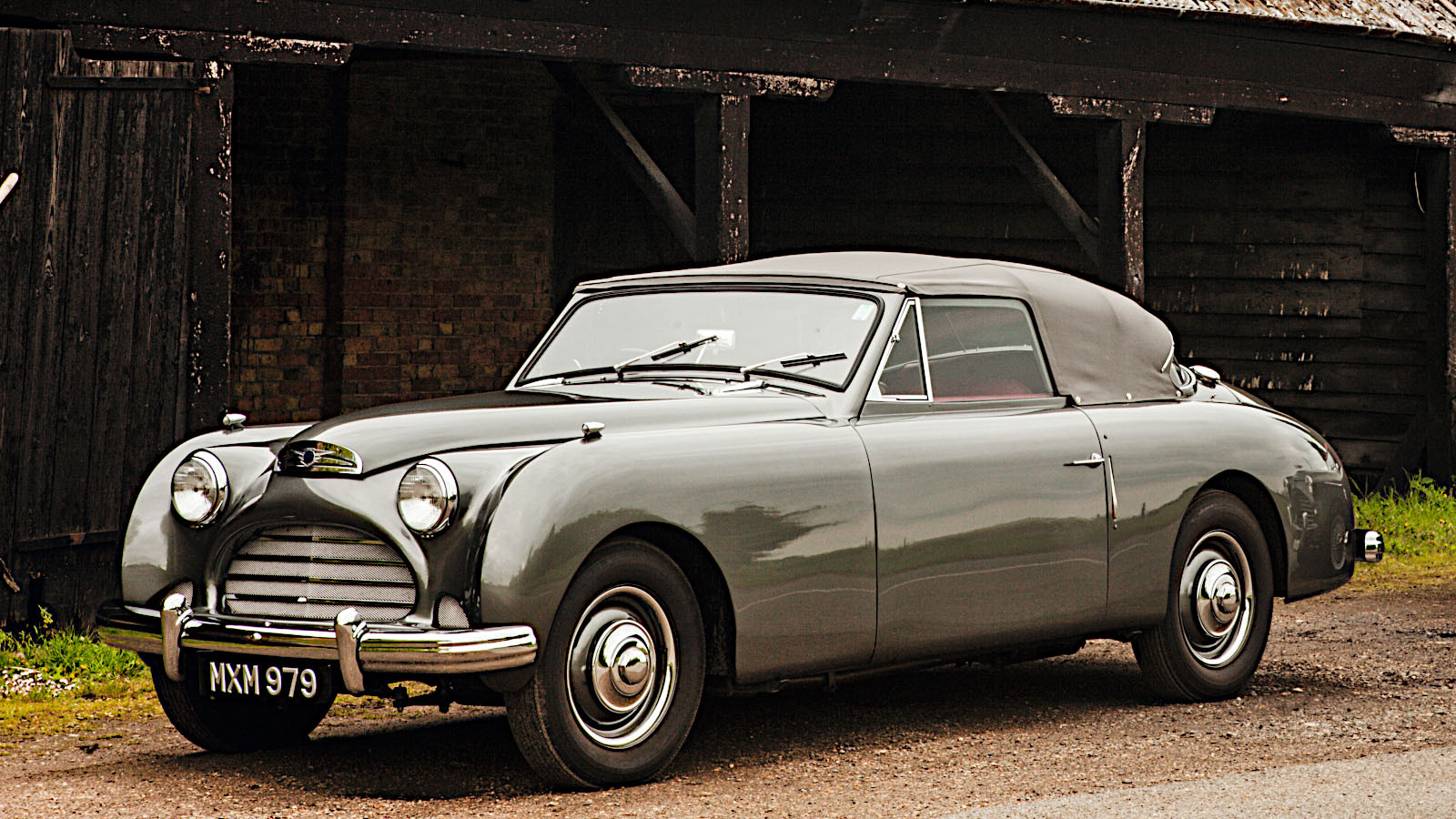
Based on the immediately post-war A40 saloon (known as the Dorset if it had two doors or Devon if it had four), the Sports was a collaboration between industry giant Austin and the much smaller Jensen car company.
As part of an arrangement that also led to production of the first-generation Interceptor, which will be discussed later, Jensen designed and built a two-door convertible body with an impressively large luggage compartment, and Austin fitted it to the chassis of the A40.
Production lasted only from 1950 to 1953, but 4011 examples were built in two series – a relatively trifling matter for Austin, but a big deal for Jensen.
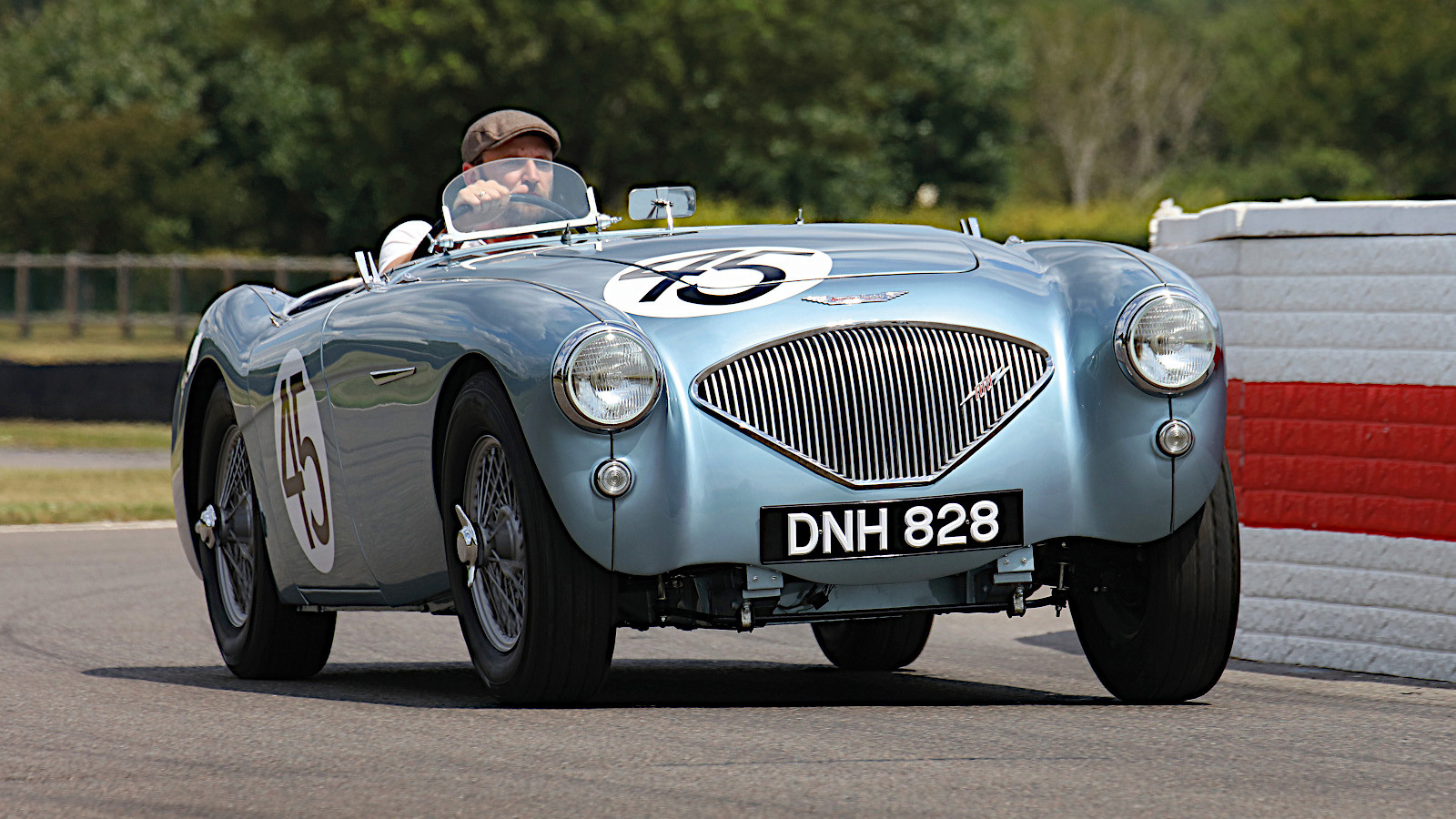
7. Austin-Healey 100
In addition to Jensen, Austin also entered a partnership with Healey, another British sports-car manufacturer, in the early 1950s.
The first fruit of this was the 100, a Jensen-bodied convertible powered by Austin’s 2660cc, four-cylinder engine.
This was replaced in 1956 by the 2639cc BMC C-series straight-six, which was later enlarged to 2912cc, leading to the car being renamed first the 100-6 and then the 3000.
Along with the original 100 (sometimes referred to as the 100-4), these models are known collectively as the Big Healeys to distinguish them from the much smaller Austin-Healey Sprite.
All three made their mark in motorsport, and the 3000 in particular was very effective in both rallying and circuit racing.
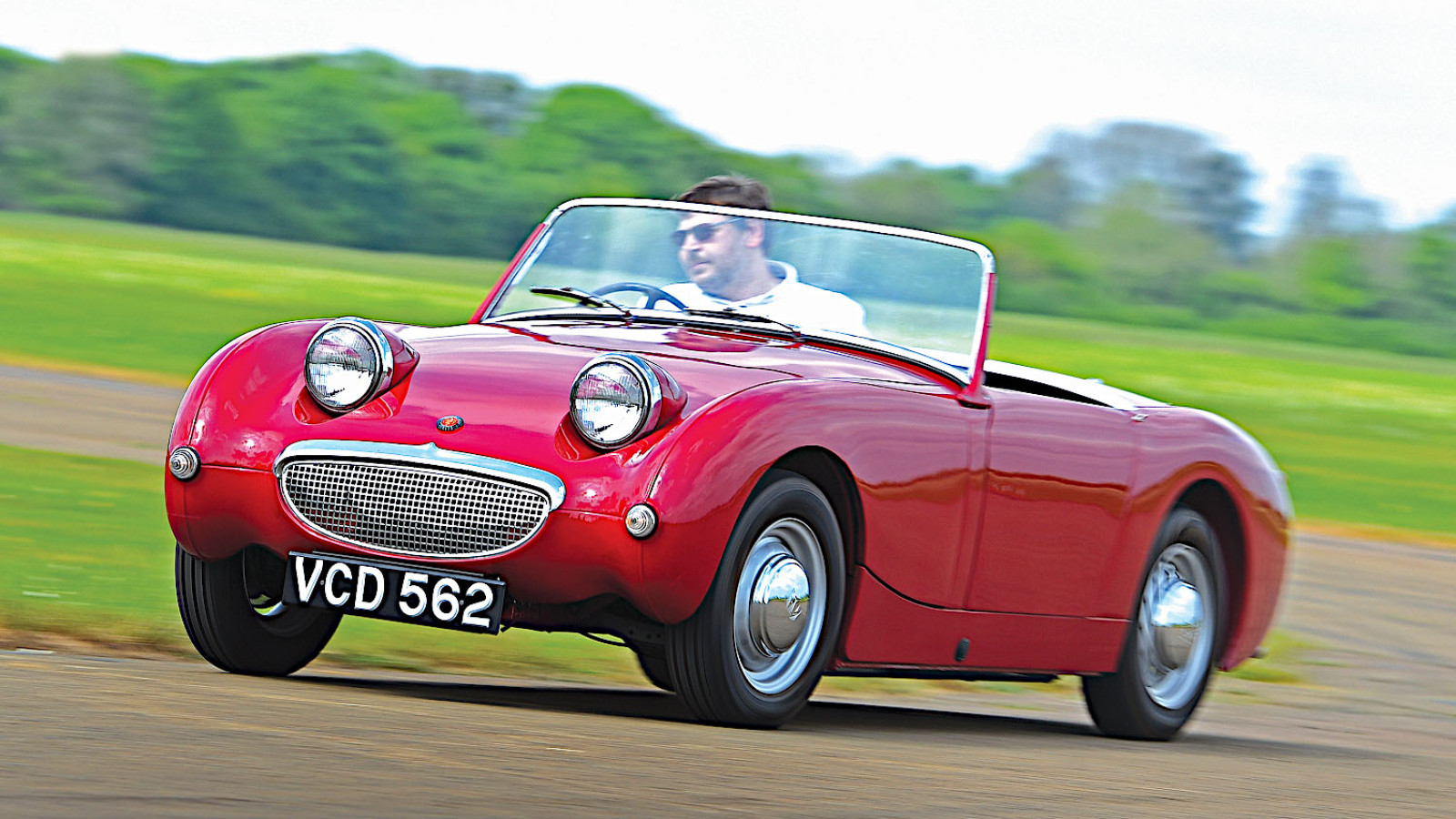
8. Austin-Healey Sprite
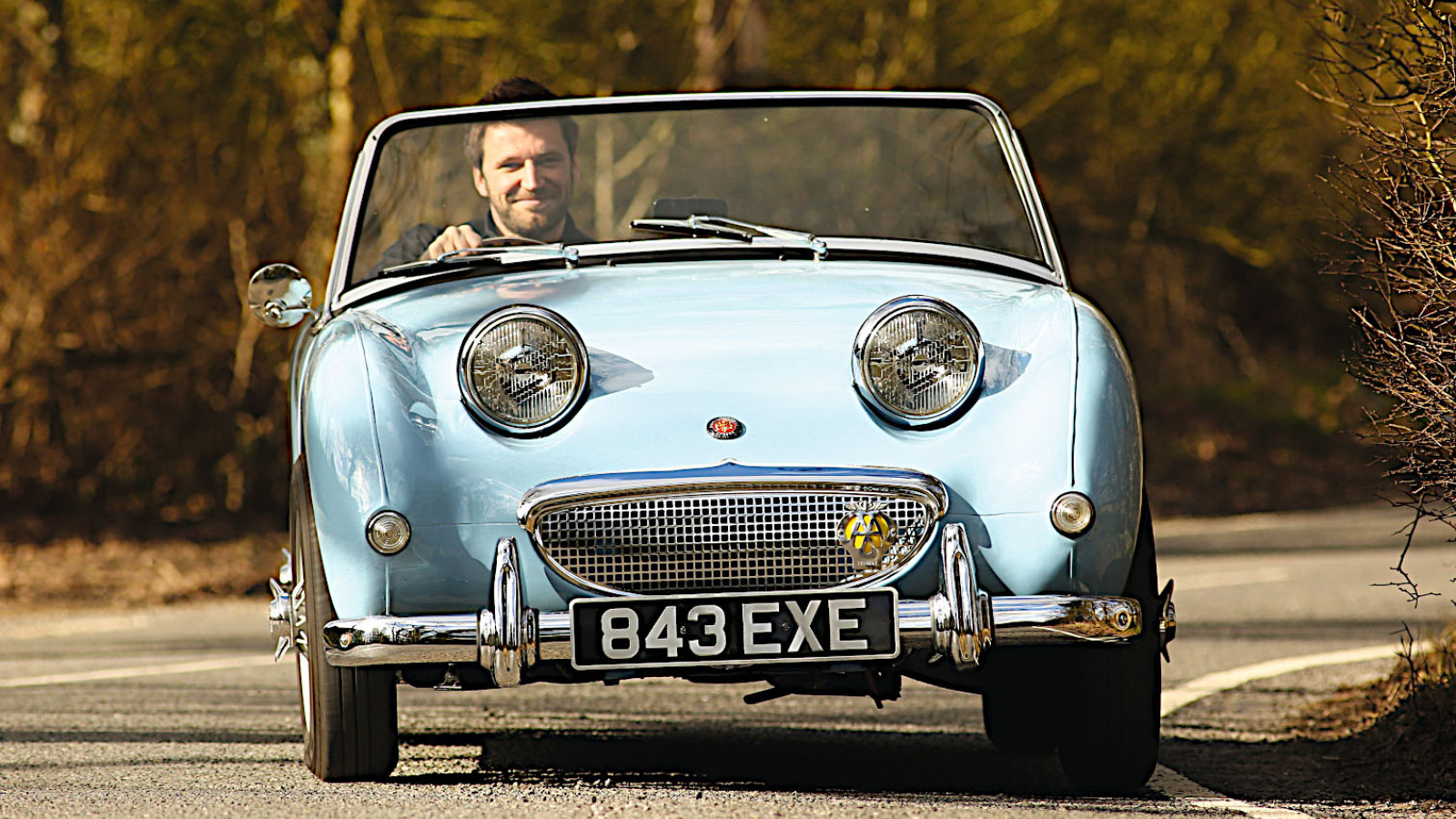
Smaller, cheaper and less powerful than the 100, the original Austin-Healey Sprite was powered by the BMC A-series engine in 948cc form, and looked unlike almost anything else, with the possible exception of the earlier Crosley Hotshot.
Its prominent headlights led to it being known in the UK as the Frogeye and in North America as the Bugeye.
This generation of the Sprite was produced only from 1958 to 1961, and the three which followed it over the next 10 years had a different design almost indistinguishable from that of the MG Midget.
The Midget continued until 1979, latterly with a 1.5-litre Triumph engine, but the partnership between Austin and Healey had long since evaporated by then, and all Sprites left the factory with the A-series (latterly measuring 1275cc) under the bonnet.
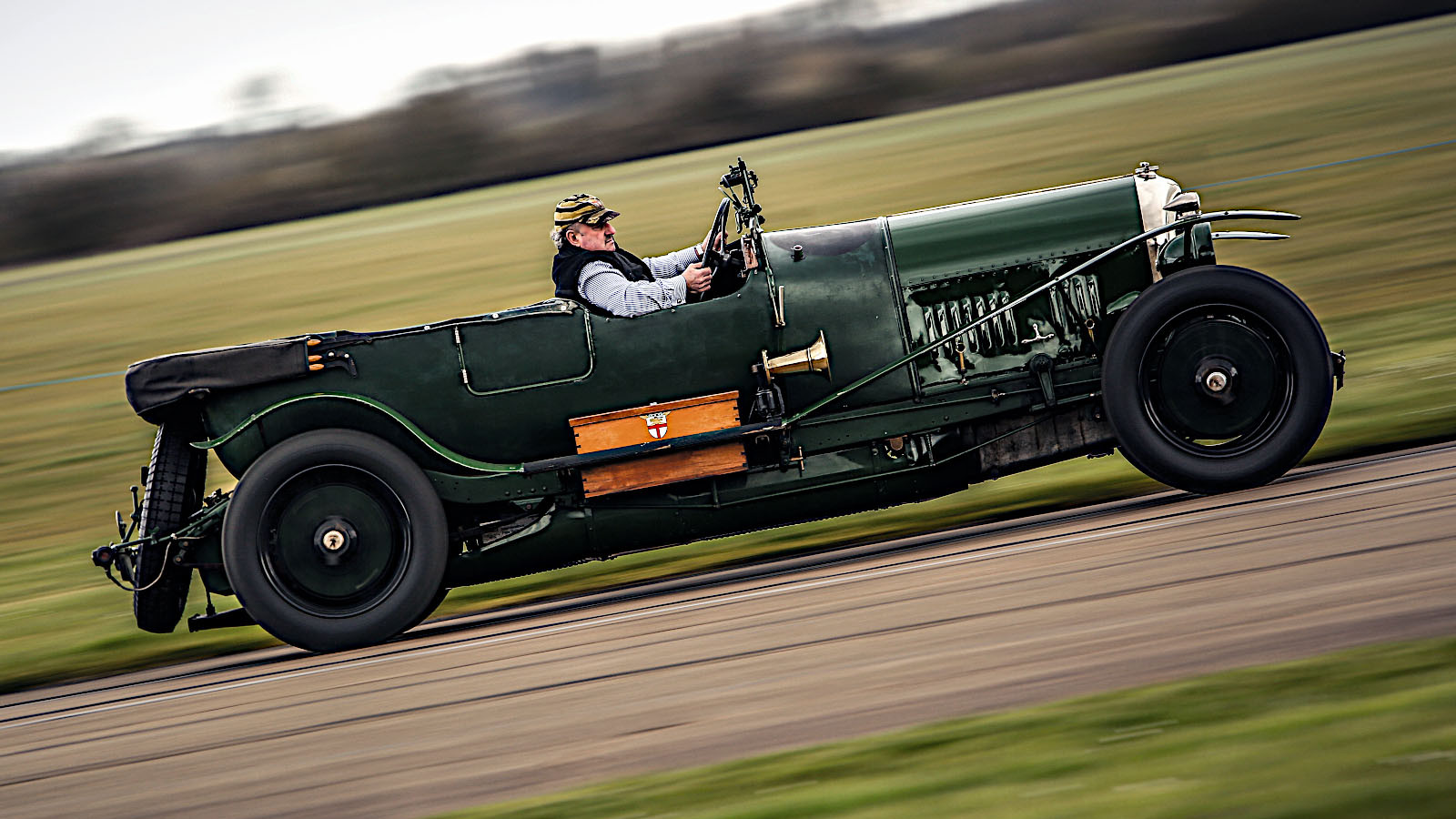
9. Bentley 3 Litre
Investigating upmarket convertibles built in the first half of the 20th century is complicated by the fact that many manufacturers provided rolling chassis to which bodies would later be added by the customer’s favourite coachbuilder.
Bentley’s first car, the 3 Litre, was a twice Le Mans 24 Hours-winning sports model with an advanced, 2996cc, four-cylinder engine (featuring an overhead camshaft and four valves per cylinder), and was best suited to a relatively light convertible body, such as the Vanden Plas one pictured here.
However, some owners preferred to think of it as a limousine, and commissioned large, closed-roof bodies which weighed a great deal and ruined the performance.
Bentley’s response was to develop a 6597cc, six-cylinder engine which was introduced in 1925 and intended to overcome the disadvantages of a saloon body.
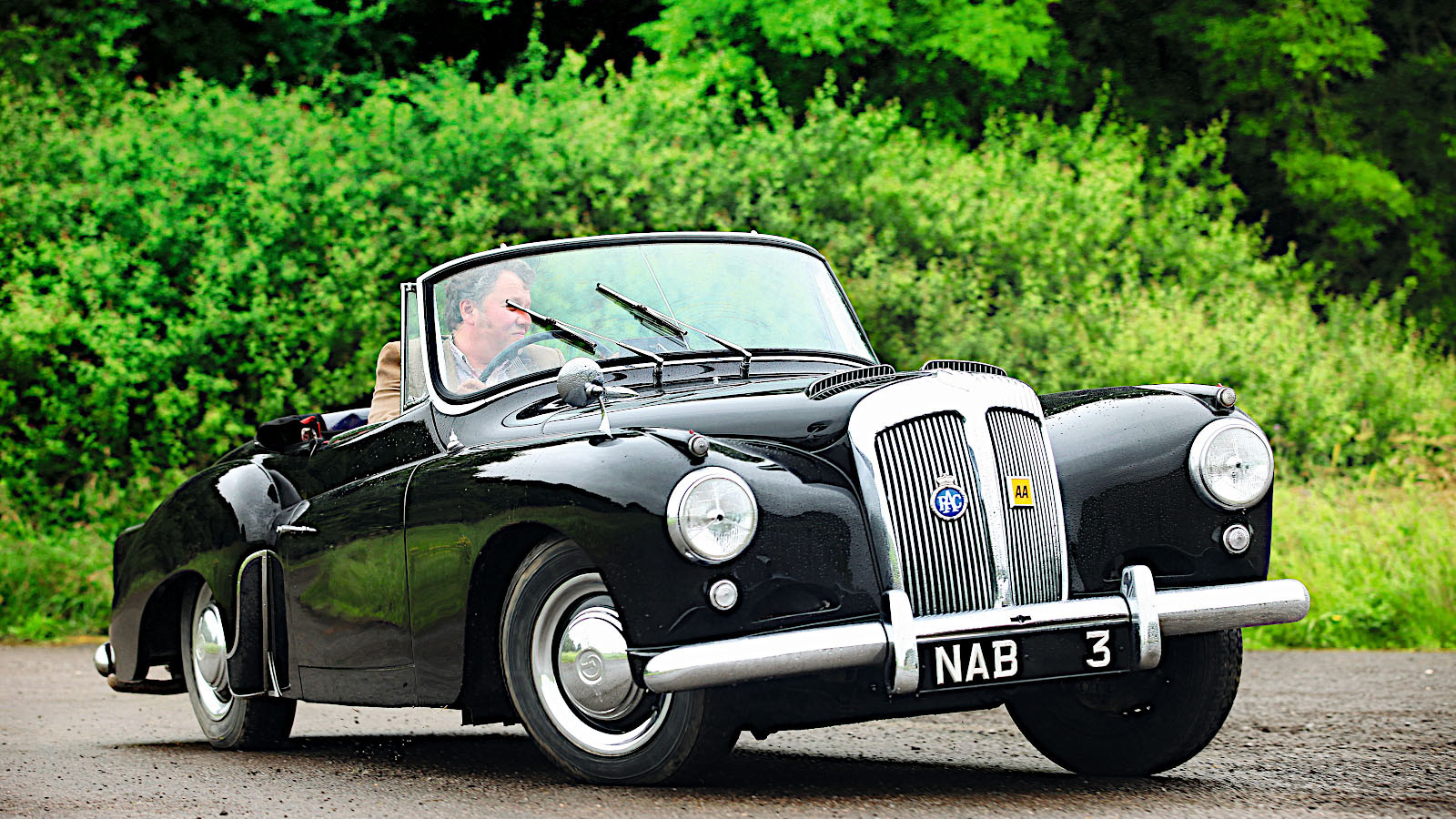
10. Daimler Conquest
Derived from the short-lived Lanchester Fourteen, the Conquest was, in its most usual form, a stately, mid-sized saloon manufactured from 1953 to 1958 and powered by a 2433cc, straight-six engine.
There were convertible derivatives, though, and the first of these, revealed to the public at the same time as the saloon, was the two-seat Roadster, which was reviewed favourably in the press but attracted very little public interest.
Daimler replaced it with the New Drophead Coupé (pictured), whose improvements over the Roadster included a sideways-facing third seat.
This car is not to be confused with the slightly earlier Conquest Drophead Coupé, a four-seat convertible which was essentially just the Conquest saloon with a folding roof.
11. Daimler SP250
Daimler’s last convertible, and indeed its last sports car of any kind, was powered by a V8 engine slightly larger than the Conquest’s straight-six at 2548cc.
Not generally celebrated for its beauty, the SP250 was produced from 1959 to 1964, and its demise is sometimes attributed to Daimler’s purchase in 1960 by Jaguar, which had enough sports cars of its own.
Its engine had a longer production life, however, because it was used in the Daimler 2.5 V8 (later V8-250), a car barely distinguishable – at least until you heard it running – from the Jaguar Mk2.
The SP250 was originally called the Dart, and is sometimes still referred to as that.
However, when the car was displayed in New York in 1959, Dodge, which already had a model called Dart, insisted that if the Daimler was going to be sold in the US it had better be called something else.
12. Ford Consul
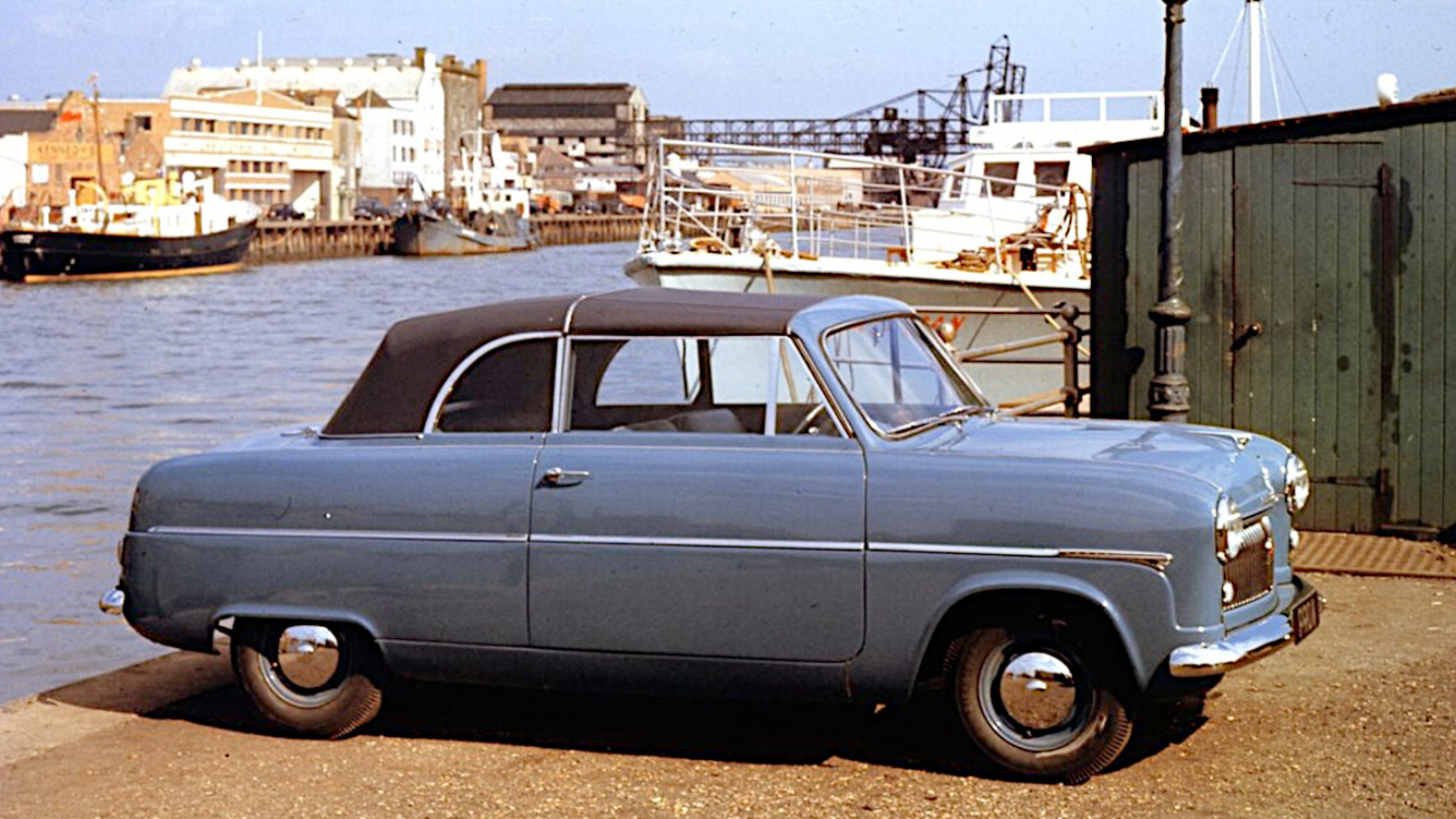
With its unibody construction and modern appearance, the Consul was one of two related cars that moved Ford of Britain into a new era.
Powered by a new, overhead-valve, 1508cc engine, it was sold mostly as a four-door saloon from 1951, but a two-door convertible was added to the range two years later.
Work on the structure was farmed out to Carbodies of Coventry, and the car – whose roof could be raised and lowered manually or, as an option, electro-hydraulically – was produced from 1953 to 1956 (the car pictured dating from approximately the middle of this period).
The Consul entered its second generation in the latter year, now with a 1702cc engine, and once again Carbodies was given the job of creating a convertible version.
13. Ford Zephyr
The Ford Zephyr was the more expensive counterpart to the Consul, and immediately distinguishable from it because it was several inches longer to make room for a straight-six engine, which at first measured 2262cc.
As with the Consul, the first-generation Zephyr was adapted into convertible form by Carbodies, and went on sale in 1953.
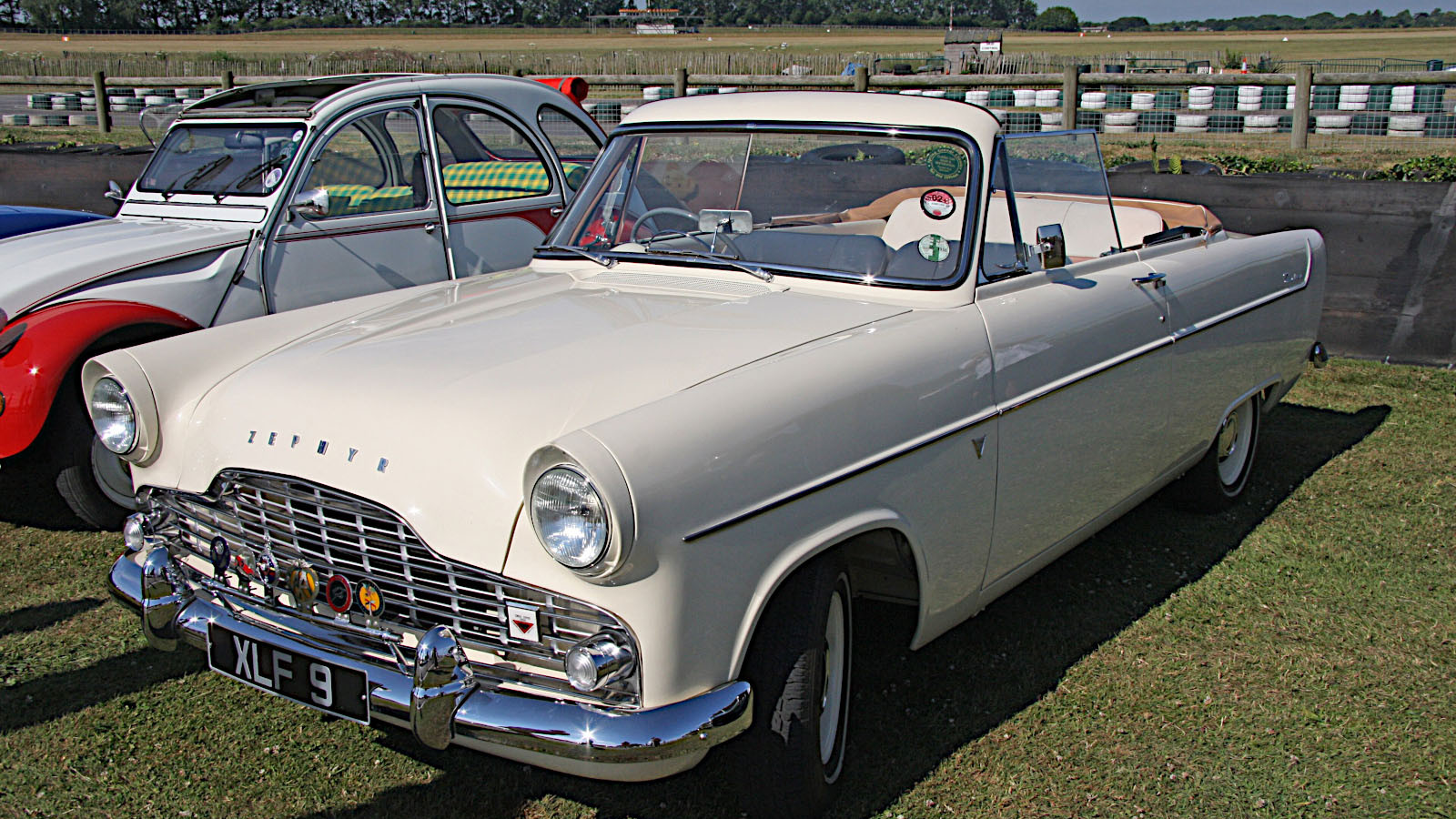
A new body style was introduced for the second Zephyr (pictured) in 1956, and the capacity of the engine was raised to 2553cc.
Ford of Britain would use the Consul and Zephyr names for later models, but in each case there were no more convertibles after the second generation was replaced in 1962.
14. Jaguar E-type
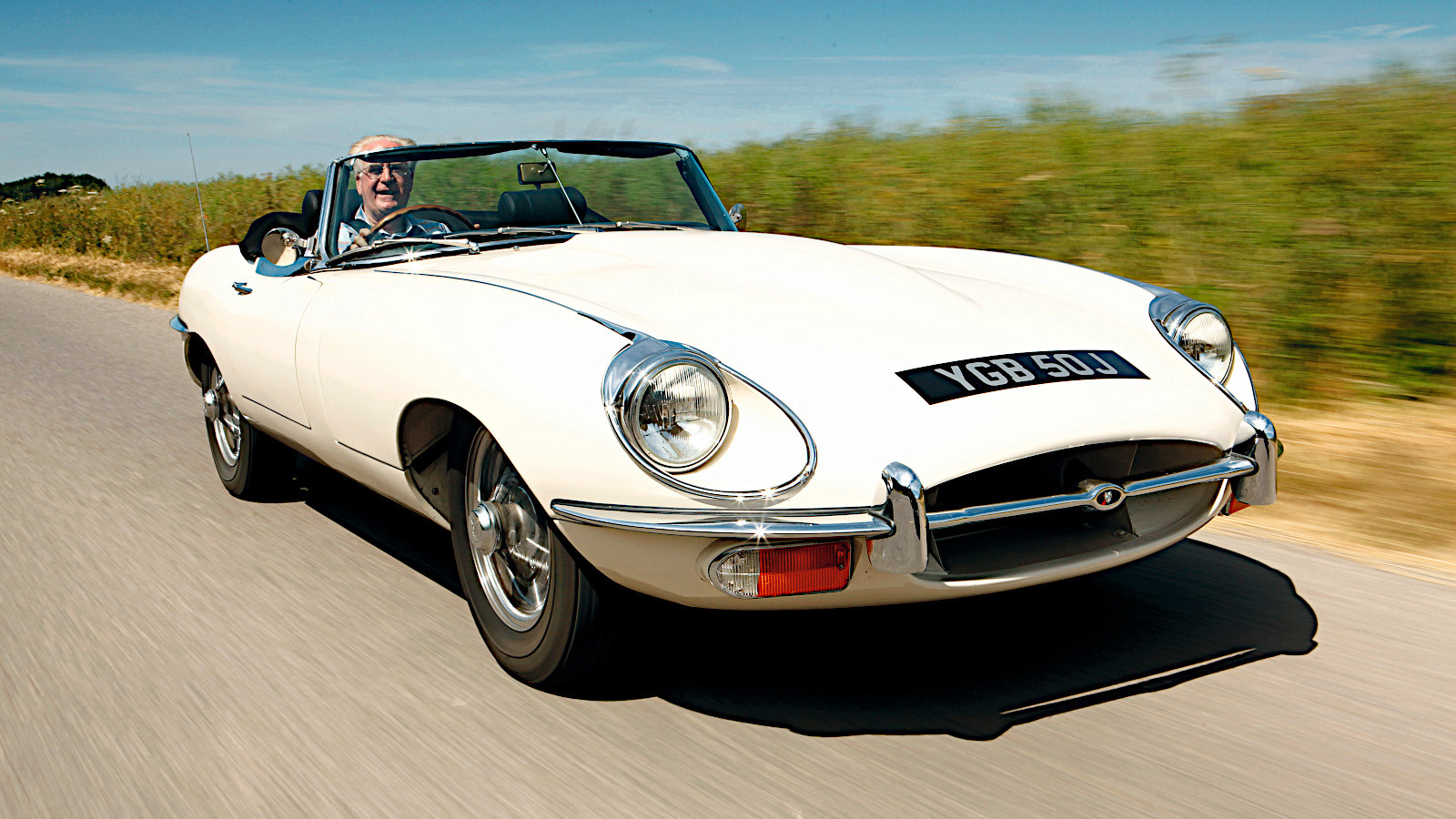
The Jaguar E-type, or XK-E as it was marketed in North America, was available right from its introduction in 1961 in both fixed-head coupé and convertible forms.
According to one historian, the former ‘was sleek, practical, exquisitely proportioned and had useful luggage space’, but the latter ‘had splendour’, and was of course the one to go for if you enjoyed open-top motoring.
While there would be many developments before production ended in the mid 1970s, including replacing the celebrated XK straight-six engine with a new, 5.3-litre V12 in 1971, Jaguar never abandoned its policy of making the E-type available with both a solid and a folding roof.
15. Jaguar XK120
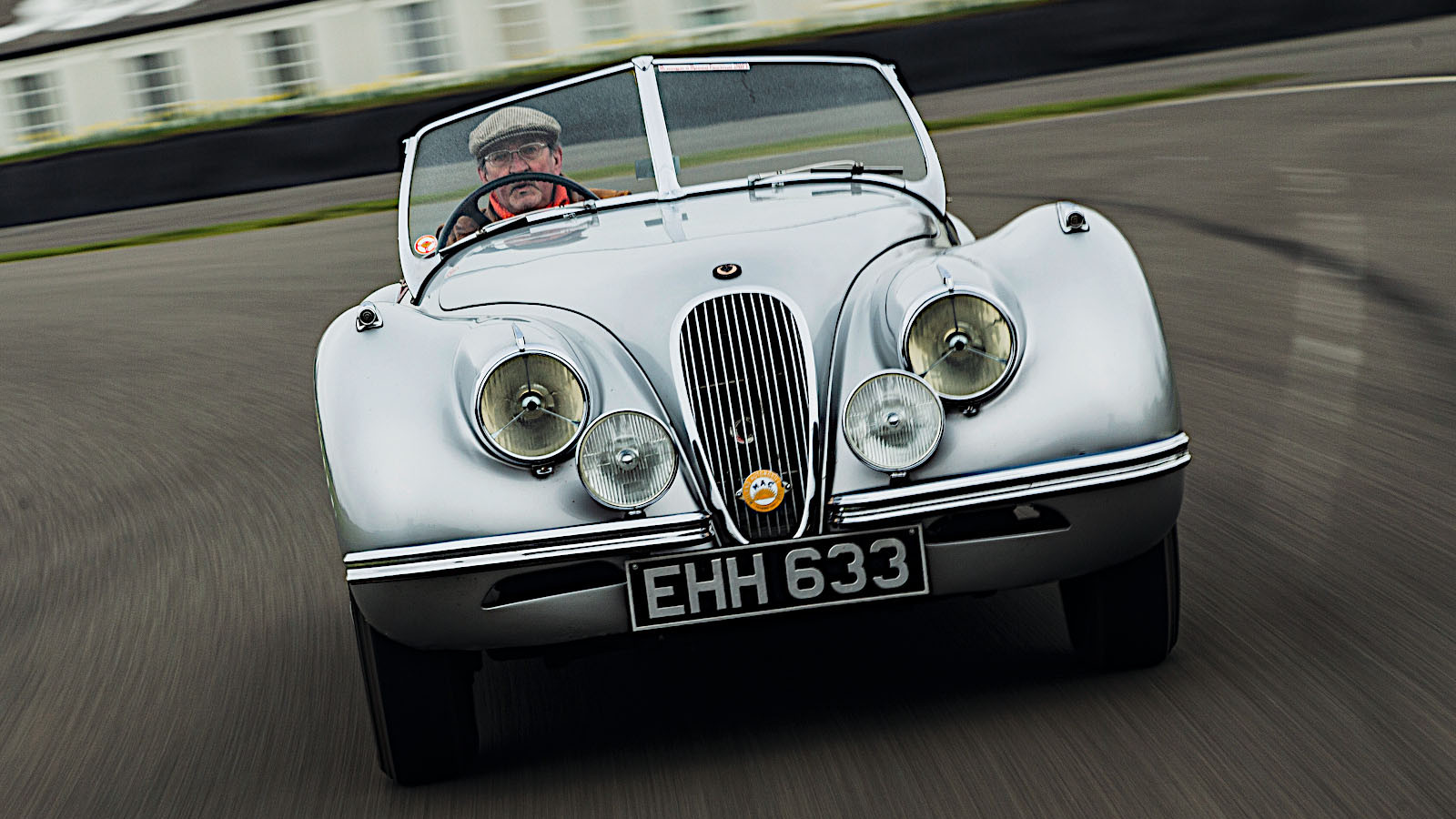
The XK120 was Jaguar’s first sports car after the marque was renamed from the original SS (which now carried unfortunate connotations) following the Second World War, and the first car of any kind to be powered by the XK straight-six engine.
It was originally available only as a drophead coupé, which we’re counting as a convertible for our purposes here, and was offered with a solid roof only from 1951.
The car’s design and appearance remained the same in principle, though they differed in detail, for over a decade, despite its name changing first to XK140 and later to XK150.
The XK150 was the last in the series, and was replaced in 1961 by the E-type.
16. Jaguar XK8
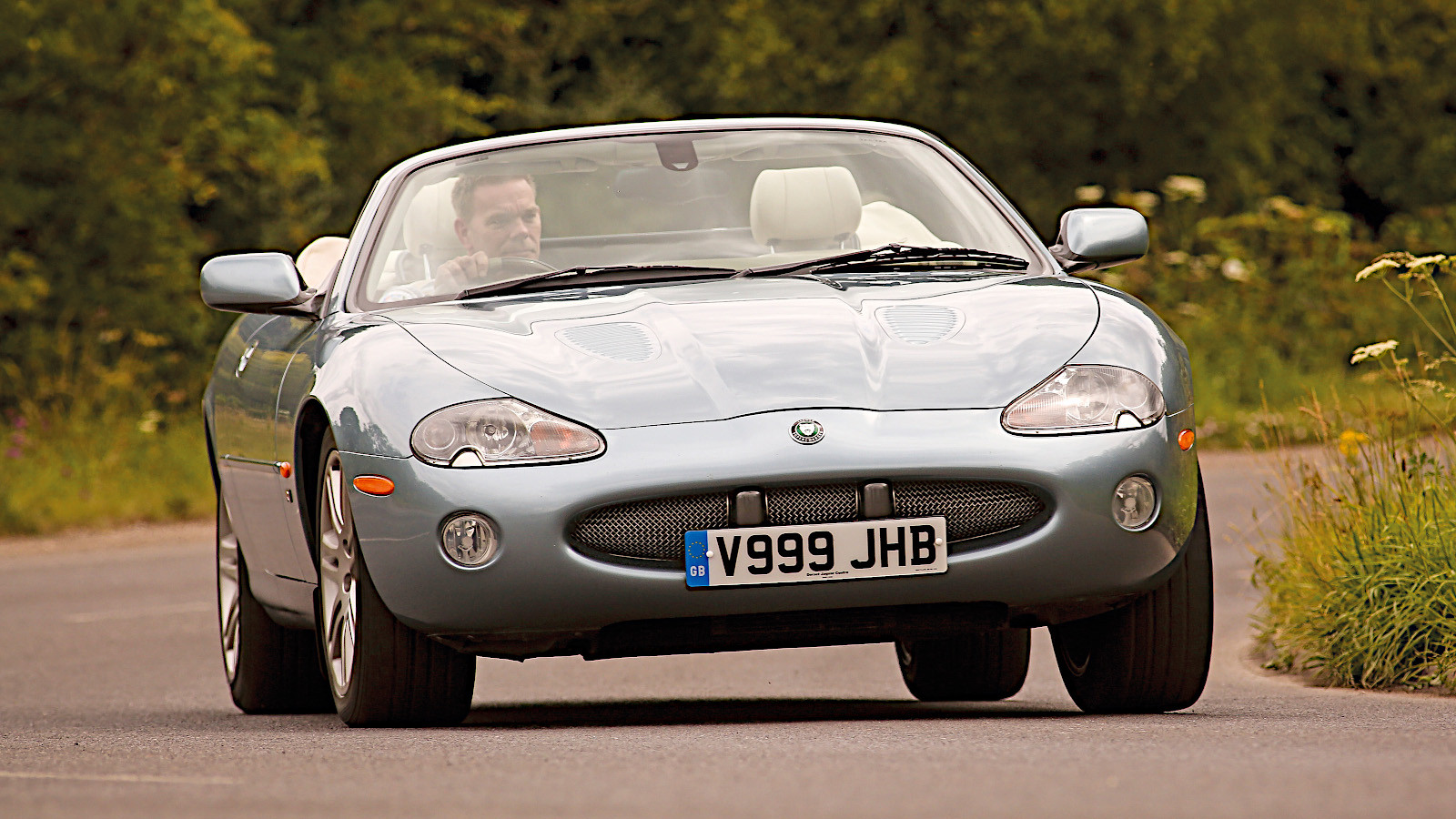
Essentially the long-delayed successor to the E-type (though the F-type name would not appear until several years later), the XK8 was introduced in late 1996 as both a fixed-head coupé and, of more interest to us here, an inevitably heavier convertible.
Both were powered by the new, 4-litre, AJ V8 engine, whose production was moved from Ford (Jaguar’s owner at the time the XK8 was launched) to Jaguar itself in 2020.
The engine became available in supercharged form in 1998, and with this version fitted the XK8 was known as the XKR (pictured).
Both were discontinued when a second-generation XK was launched in 2006.
17. Jensen Interceptor (first generation)
As part of the same arrangement that gave rise to the Austin A40 Sports mentioned previously, Jensen relied substantially on Austin technology for the first of two cars named Interceptor.
Introduced in 1949 (as stated by the Jensen Owners’ Club, though other sources claim 1950), the Interceptor was based on an adapted Austin chassis and powered by a 4-litre version of Austin’s D-series straight-six, also found in the larger marque’s Princess and Sheerline.
The low and powerful Interceptor was a full four-seater, and was sold in both saloon and convertible forms.
One of the higher-profile convertible customers was the composer Benjamin Britten, who bought his example in 1957, the model’s final year of production.
18. Jensen Interceptor (second generation)
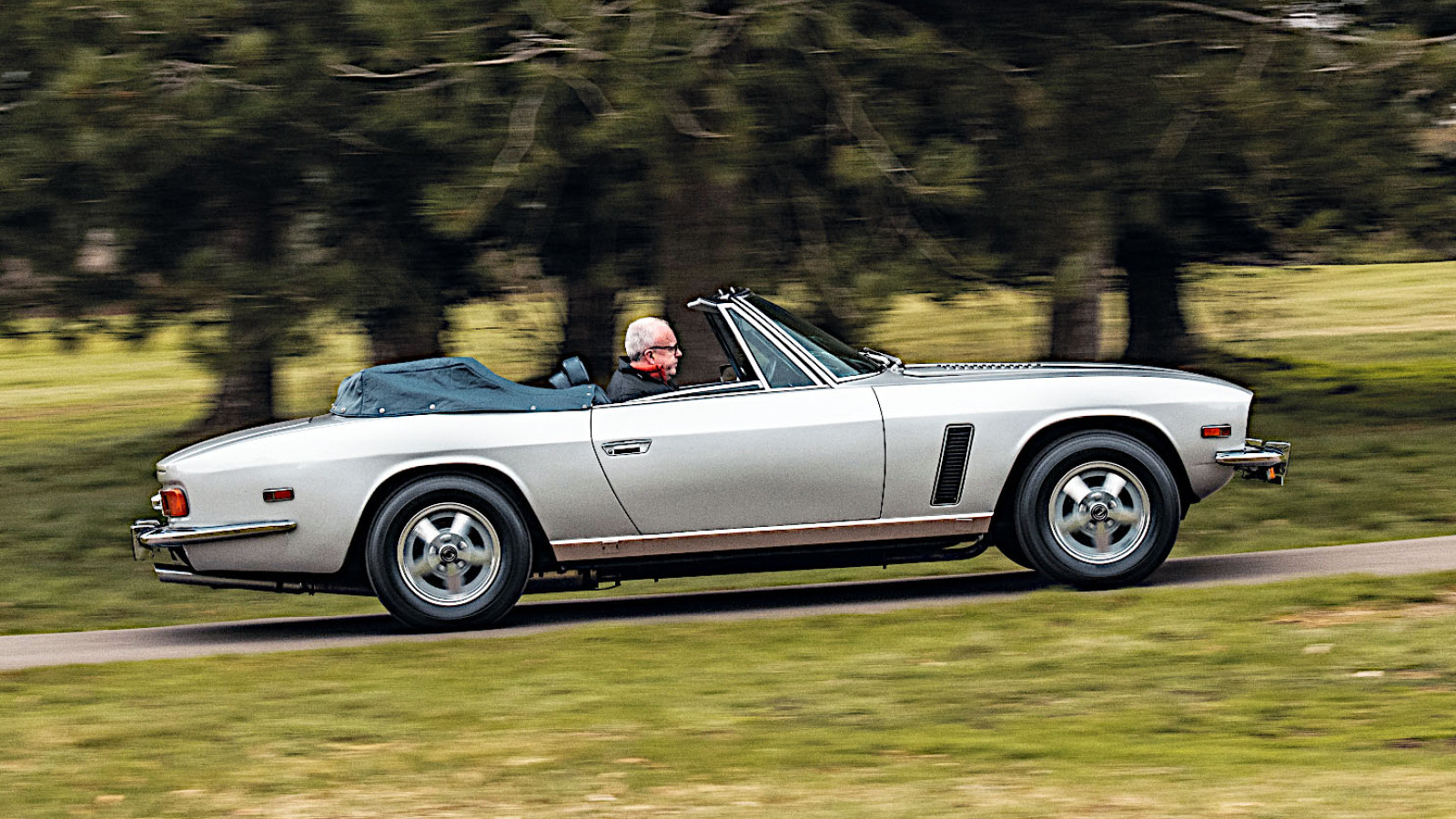
The second Interceptor had a body designed by Touring and built initially by another coachbuilder, Vignale, before Jensen brought that part of the project in-house.
For the full production run from 1966 to 1976, the engine was always a Chrysler V8 of some sort, and in most cases the Interceptor was available only with a solid roof.
Another option was offered from 1974, when Jensen introduced a convertible largely intended for sale in the US.
To the extent that an expensive and thirsty niche model could possibly be during a global oil crisis, it was successful, but it couldn’t save Jensen, which went into receivership shortly afterwards.
19. Jensen-Healey
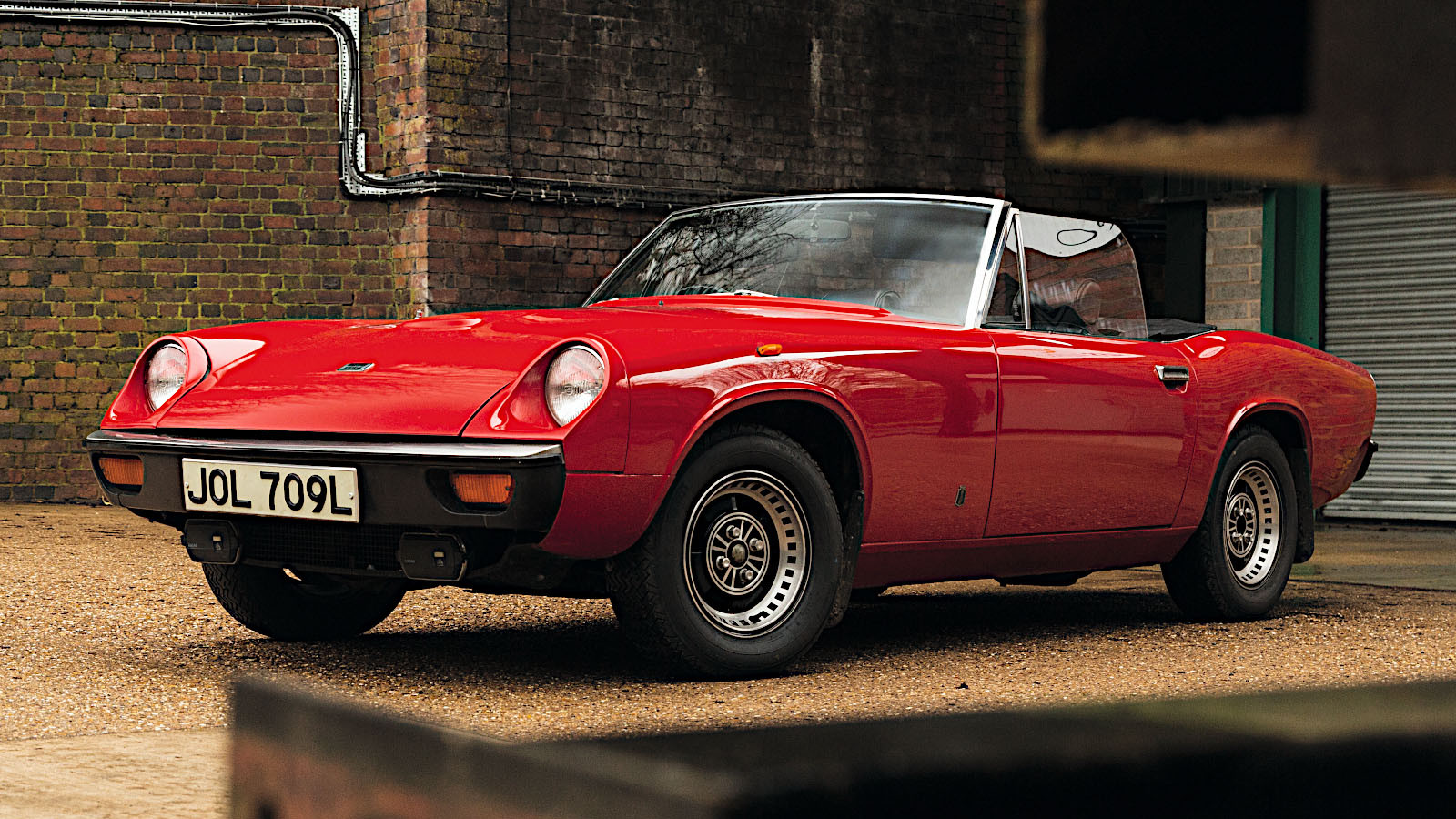
Having collaborated separately with Austin on earlier projects, Jensen and Healey teamed up to create a new convertible sports car which made its debut in 1972.
The Jensen-Healey was the first production car fitted with the 2-litre, 16-valve Lotus 907 engine, which Lotus itself did not use in one of its own models until two years later.
At the opposite end of another historical scale, the car was the last to be manufactured with a badge honouring Donald Healey.
A solid-roofed derivative, introduced only a few months before Jensen collapsed, made its debut after Healey had withdrawn from the arrangement, and was therefore known simply as the Jensen GT.
20. Lotus Elan (first generation)
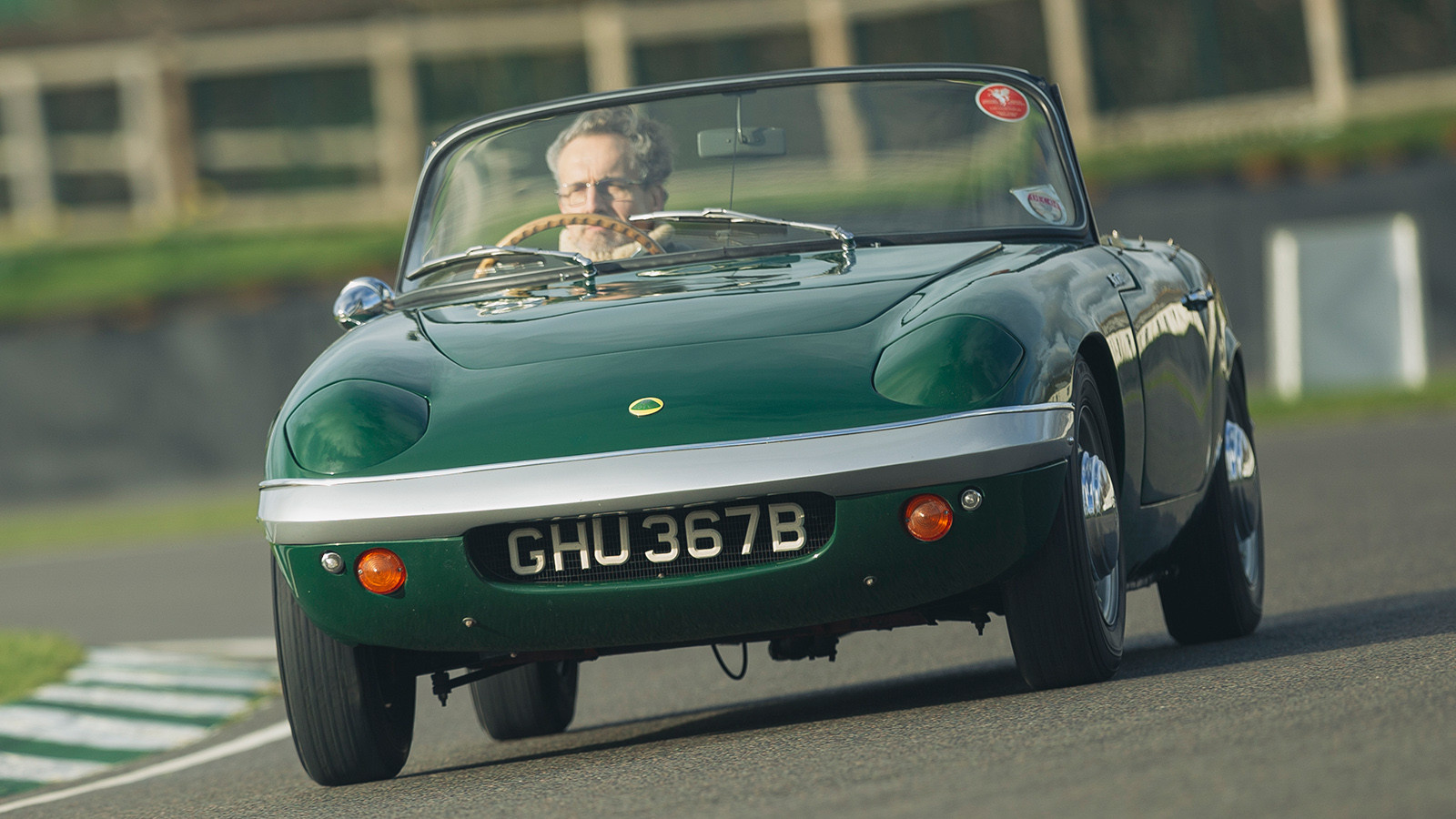
The Lotus Elite is rightly celebrated as one of the finest British sports cars of the 1950s, but the car that followed it was far more commercially successful, largely because it was simpler.
Instead of the Elite’s glassfibre monocoque, the Elan had a glassfibre body mounted on a separate backbone chassis (an arrangement Lotus would return to several times in later years), and in place of an all-aluminium, Coventry Climax engine there was the Lotus Twin Cam, comprising the bottom half of the Ford Kent unit and a cylinder head designed by Lotus itself.
Hailed right from its introduction in 1962 as being superb to drive, the Elan later became available as a fixed-head coupé, but most examples were convertibles offered either with a folding roof or with a removable hardtop.
21. Lotus Elan (second generation)
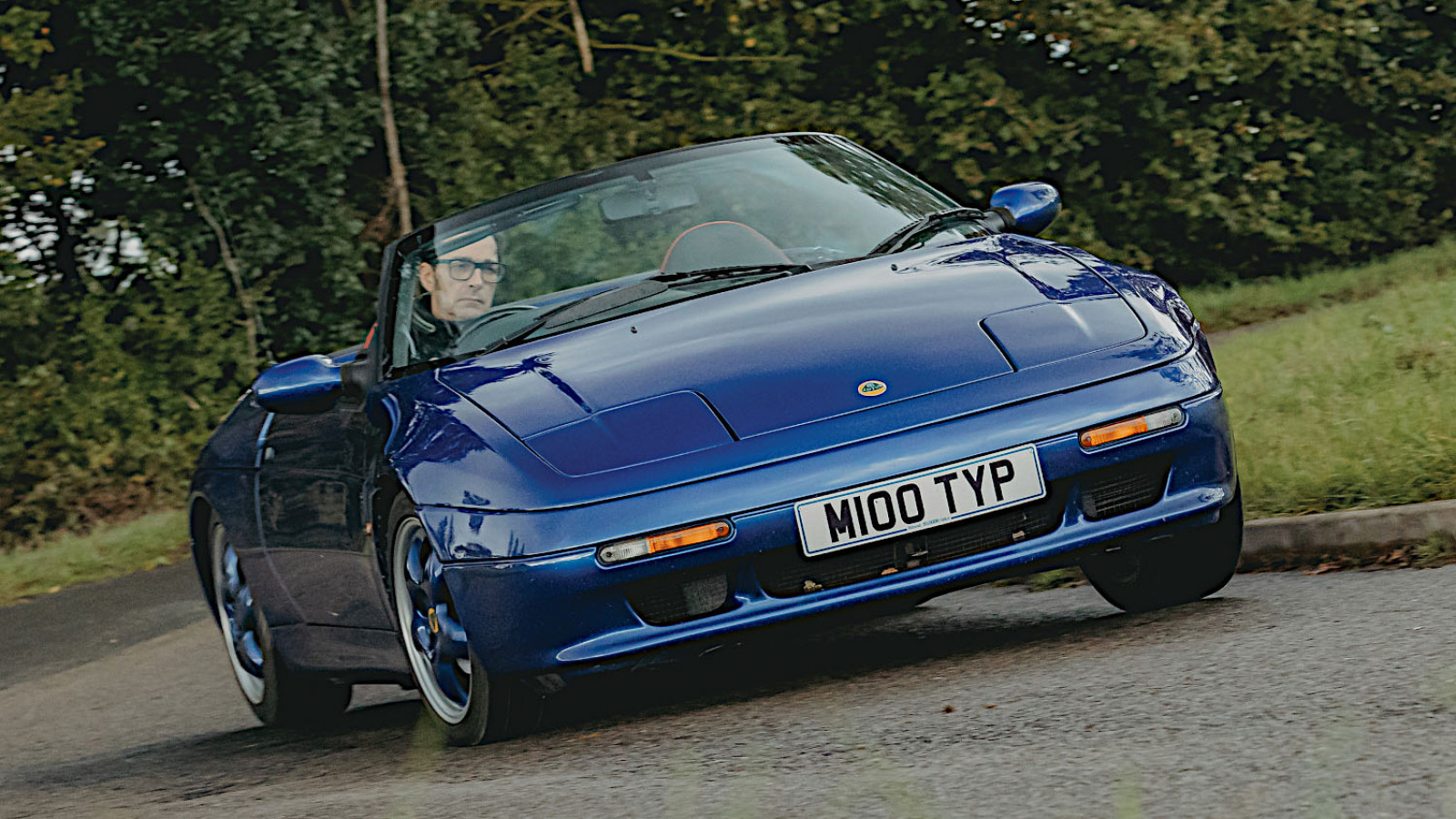
Unlike the first Lotus Elan, the second, introduced in 1989, was only ever available as a convertible.
It was also the only production Lotus with front-wheel drive, and was powered by an Isuzu engine (with or without turbocharger), features which would have been beyond imagining at any point during the lifetime of the original Elan.
A development of the front-wheel-drive car called the Elan S2 (pictured) was introduced in 1994, and 800 examples were built.
After that, Lotus sold the design and manufacturing rights – though not the use of the engine – to Kia, which manufactured its own version in South Korea.
22. Lotus Elise
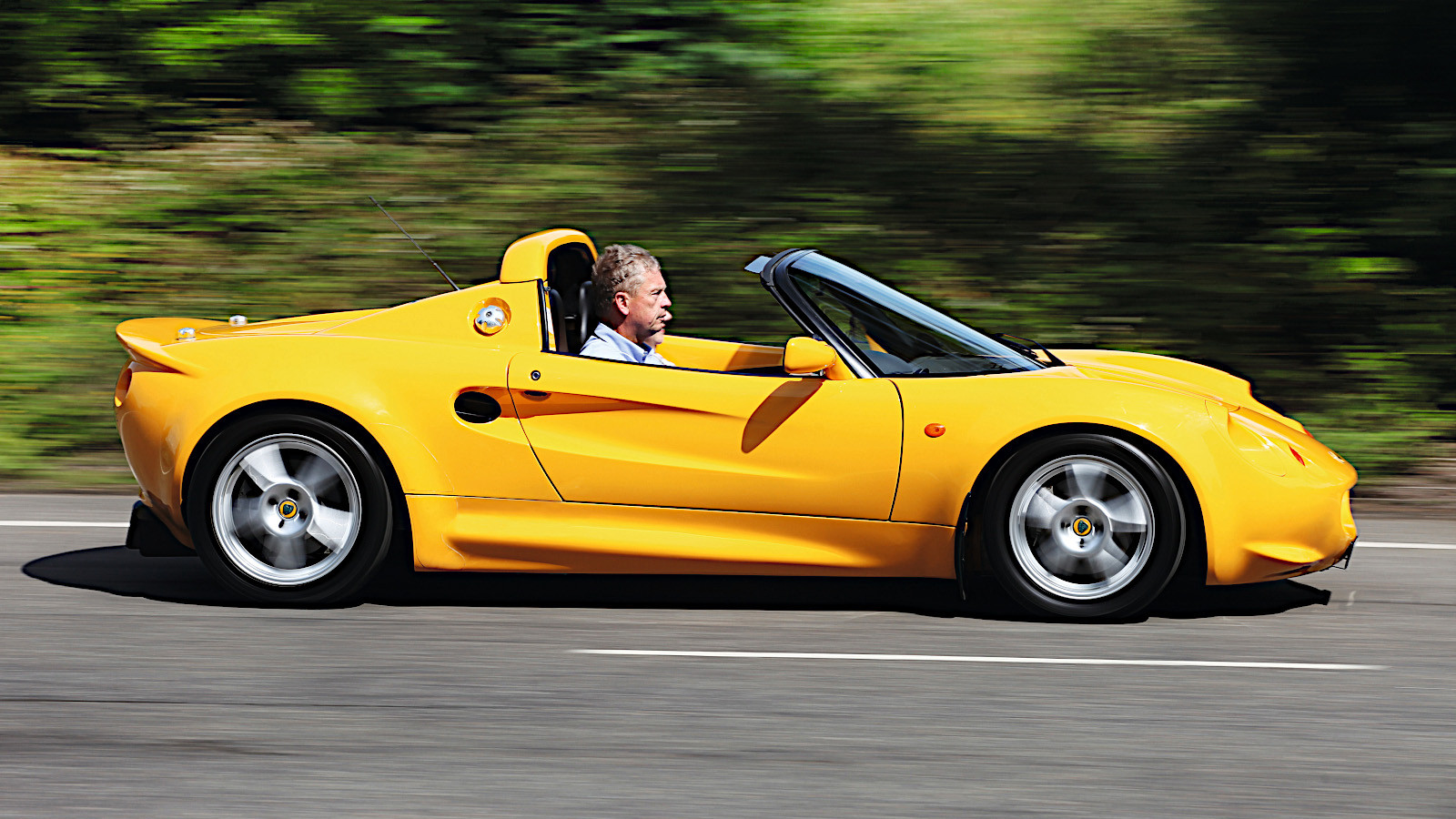
The Lotus Elise was essentially the successor of the Elite and the two Elans, though it differed from all of them in having a mid-mounted engine.
In first-generation form, available to the public from 1996, that engine was a Rover K-series, available in several states of tune.
A second-generation Elise had to be designed to take into account new safety regulations.
This was funded partly by General Motors, which led to more or less the same car (though with different styling) being marketed as both the Opel Speedster and, in the UK, as the Vauxhall VX220.
While the original Lotus Elise was a convertible, two derivatives of it were not.
The Exige had a solid roof, while the limited-edition 340R had no roof at all, and indeed no doors either.
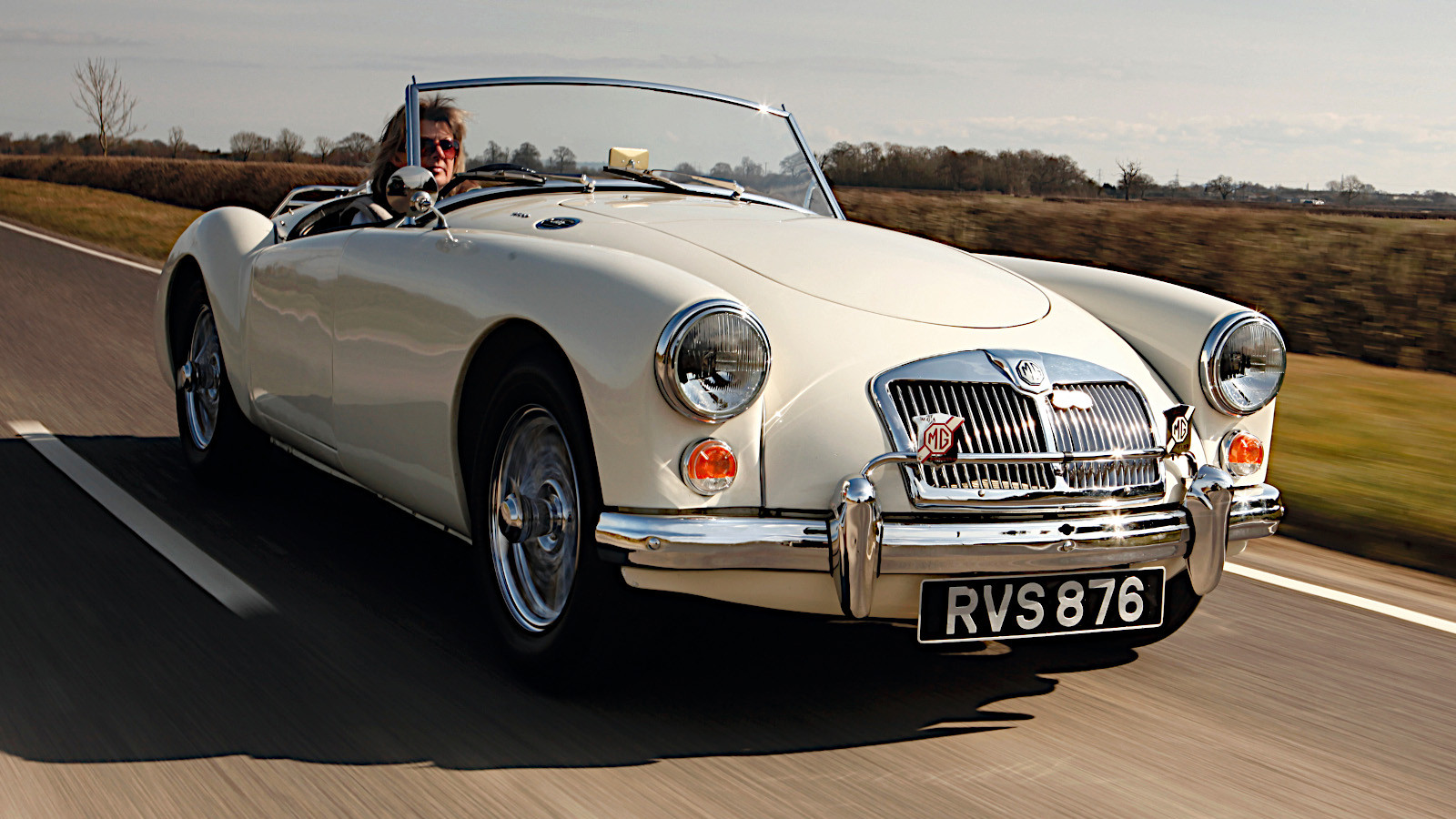
23. MGA
At the start of 1955, MG’s most sporting model was the TF, whose basic design dated back to the 1930s.
By the end of the year it had been replaced by the MGA, which was astonishingly modern by comparison and featured the new BMC B-series engine, measuring 1489cc at first, 1588cc later and eventually 1622cc, and briefly available with a twin-cam cylinder head.
No doubt aided by the promotional benefits of achieving success in racing and rallying, the MGA (always available as a convertible and, from 1956, also as a fixed-head coupé) was a huge success for the marque.
In seven years, more than 100,000 examples were built, a figure not even approached by any previous MG.
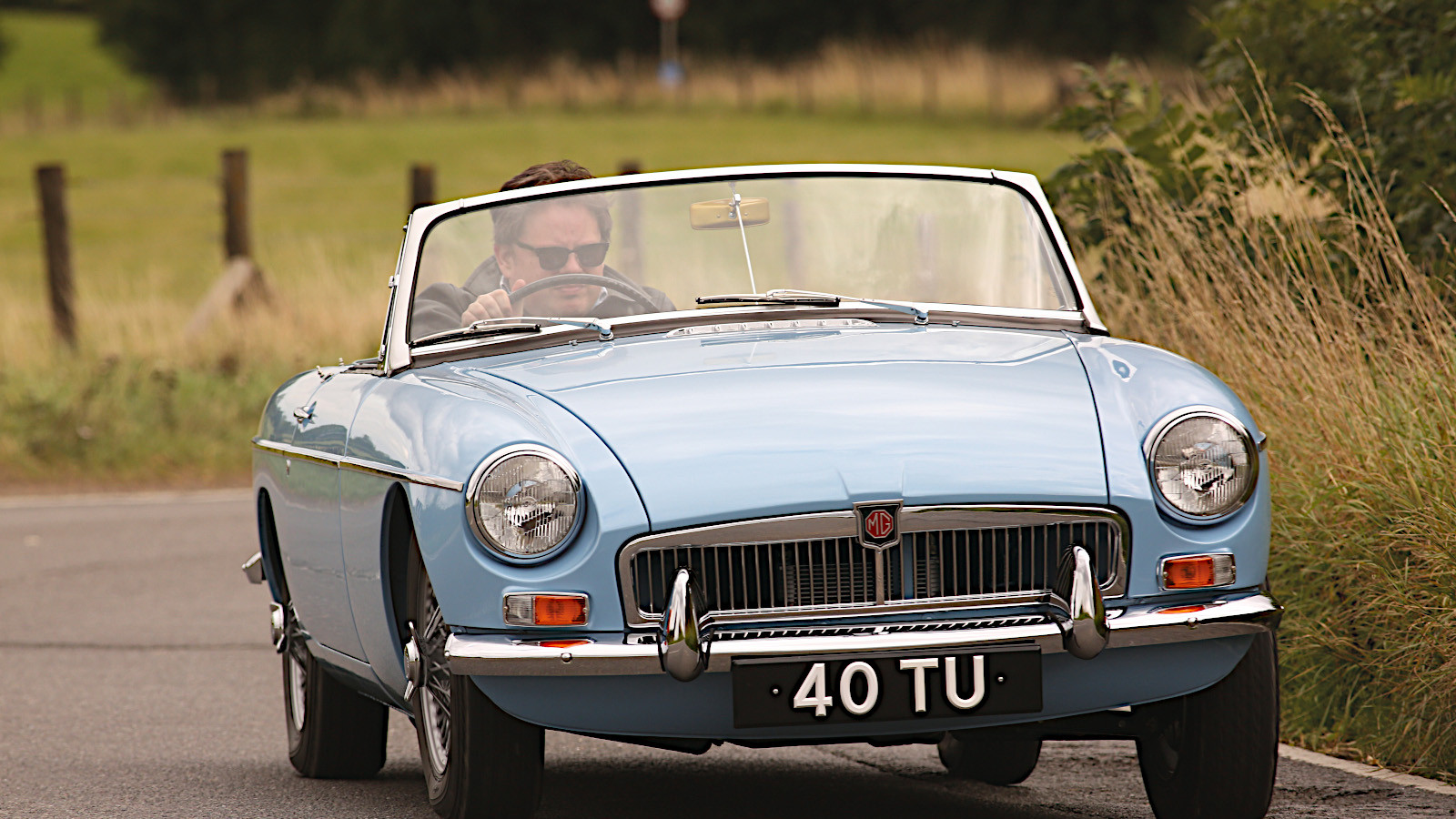
24. MGB
The MGA was replaced in 1962 by a car called – not entirely surprisingly – the MGB, which was also powered by the BMC B-series engine, though now in 1798cc form.
A fixed-head coupé derivative called the GT became available in 1965, but throughout the MGB’s 18-year run customers were always able to buy a convertible.
Both body styles were also used for the related MGC, which had a 2912cc, straight-six, C-series engine, but the 3.5-litre Rover-powered MGB GT V8 was only ever sold as a coupé, so it gets no more than a passing mention here.
By contrast, however, the MG RV8, produced in the early to mid 1990s and using the MGB bodyshell and a 3.9-litre version of the Rover engine, was produced only as a roadster, and is therefore the closest thing to a V8 MGB convertible that ever left the factory.
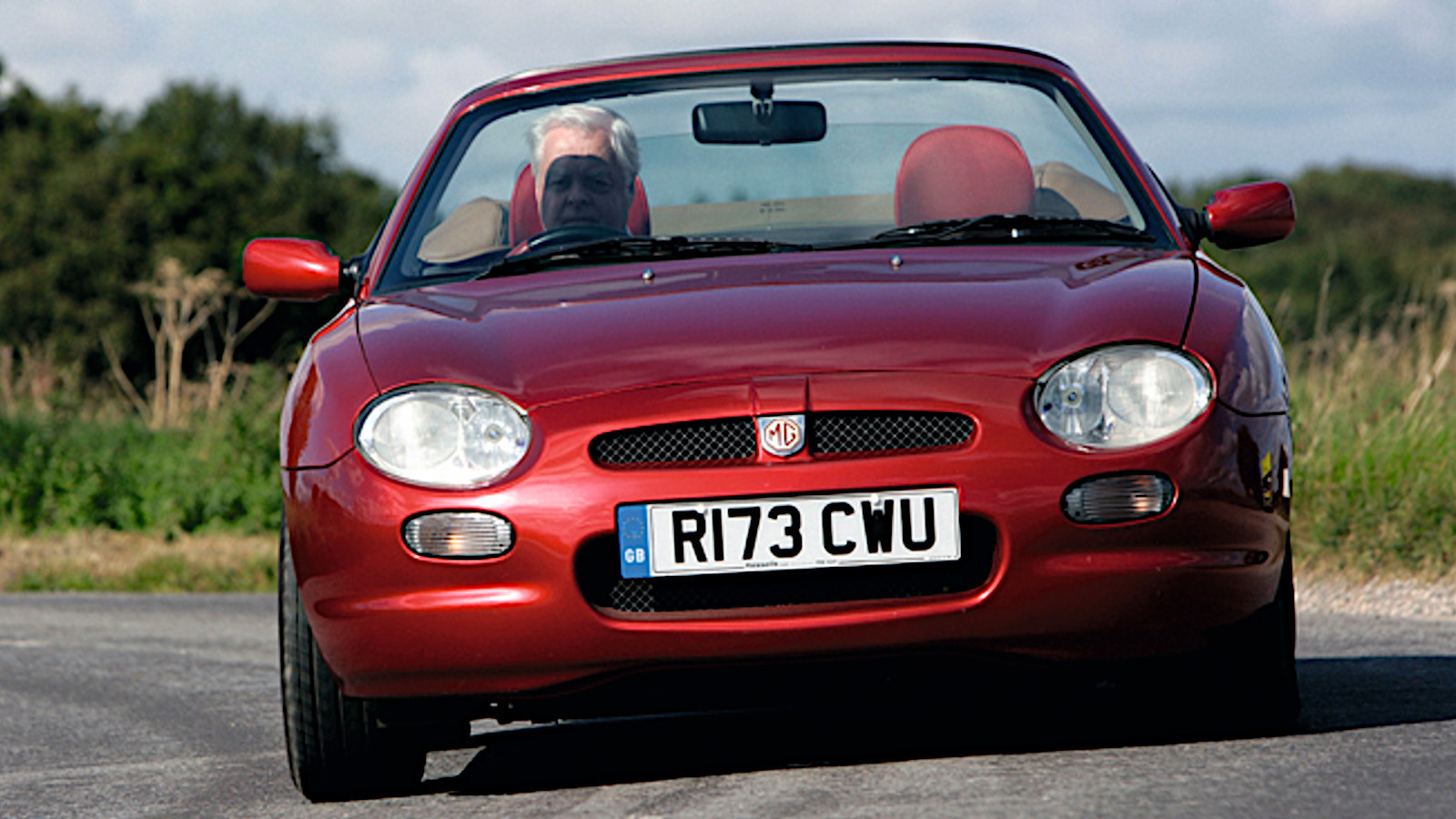
25. MGF
If we discount the RV8 on the grounds of being a continuation model, the MGF was the marque’s first new convertible since production of the B ended in 1980.
Entering, in 1995, a roadster market revitalised by the Mazda MX-5 six years earlier, the MGF featured Hydragas suspension and a Rover K-series engine mounted transversely on the rear axle, making this the second, mid-engined production MG after the Metro 6R4.
It was replaced in 2002 by the MG TF, similar to the original in most respects but with conventional springs and dampers rather than the Hydragas system.
The TF lasted until the collapse of MG Rover in 2005, and was brought back by the company’s new Chinese owners for a few years before being discontinued in 2011.
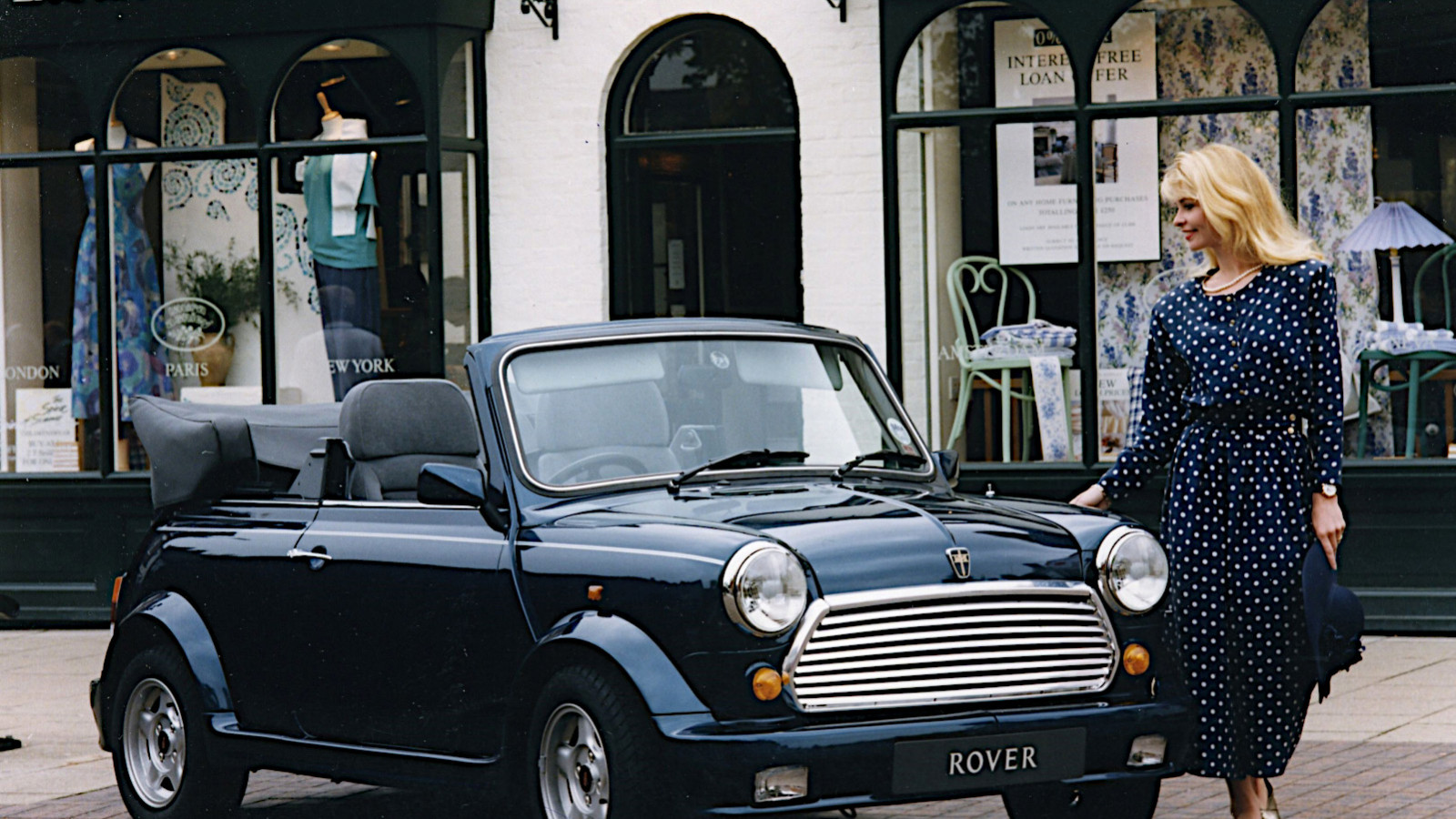
26. Mini Cabriolet
Innumerable Minis over the years have had their roofs chopped off either for styling reasons or to make them competitive in forms of motorsport such as autotesting and autocross.
The first official convertible Mini was commissioned by Rover in 1991 from one of its German dealers, Lamm Autohaus, which already had experience in this line of work.
Although very expensive, and much slower than a regular Mini due to the extra weight of its body strengthening, the Lamm cars sold out very quickly, so Rover decided to create its own version.
This was revealed in late 1992 and remained in limited production until 1996.
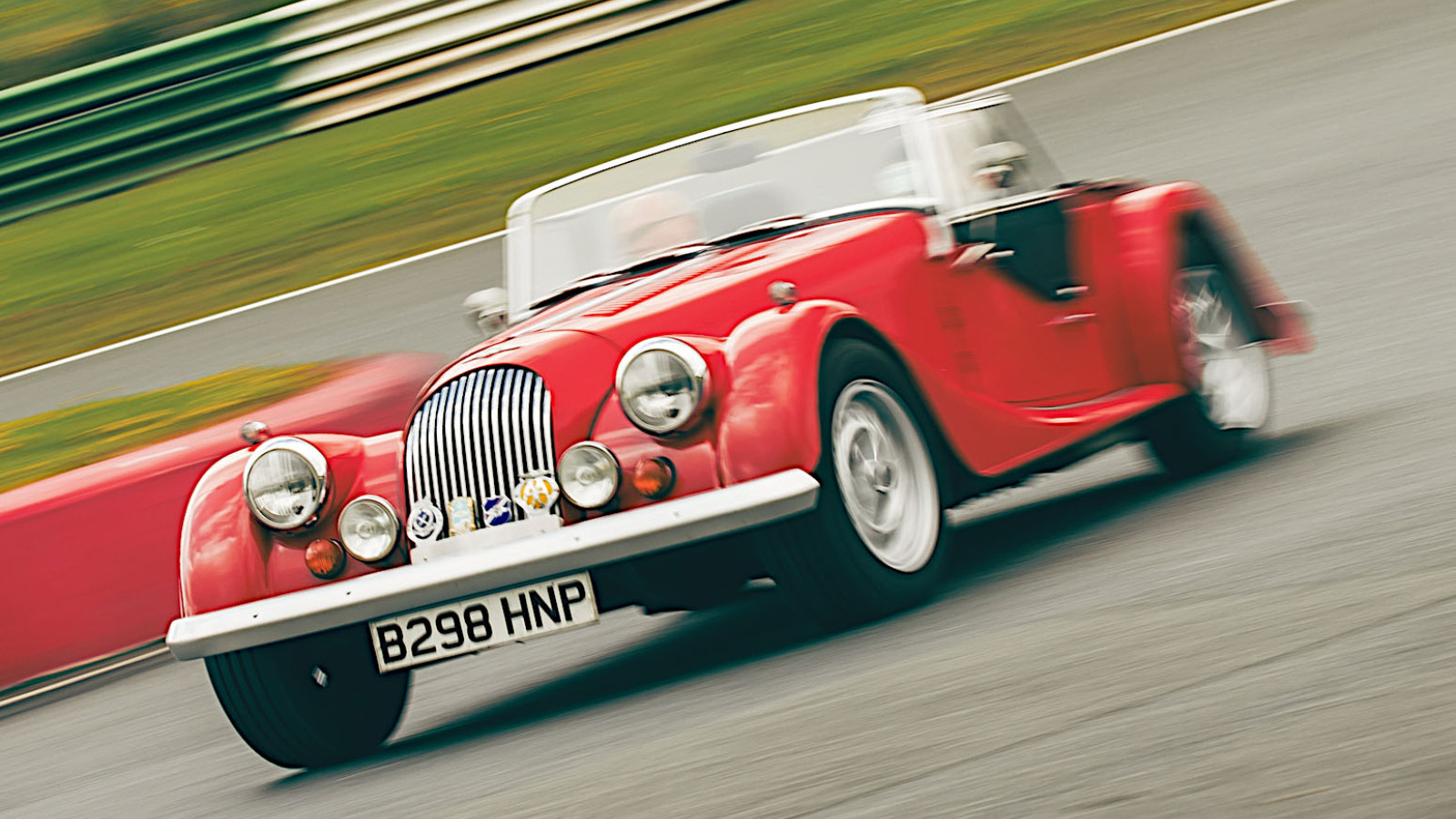
27. Morgan Plus 8
Almost every car Morgan has produced in its long history has been a convertible, so picking a representative model requires making an arbitrary choice.
We’re going with performance here, and that immediately brings us to the Plus 8, so named because it was always powered by a V8 engine.
For 36 years, that engine was supplied by Rover, and had a capacity of 3.5 litres from launch in 1968, then 3.9 litres and finally 4.6 litres up to 2004, when Rover simply didn’t have any left.
Production ended then, but resumed in 2004 when Morgan decided to use a 4.8-litre BMW V8, and came to a final halt in 2012.
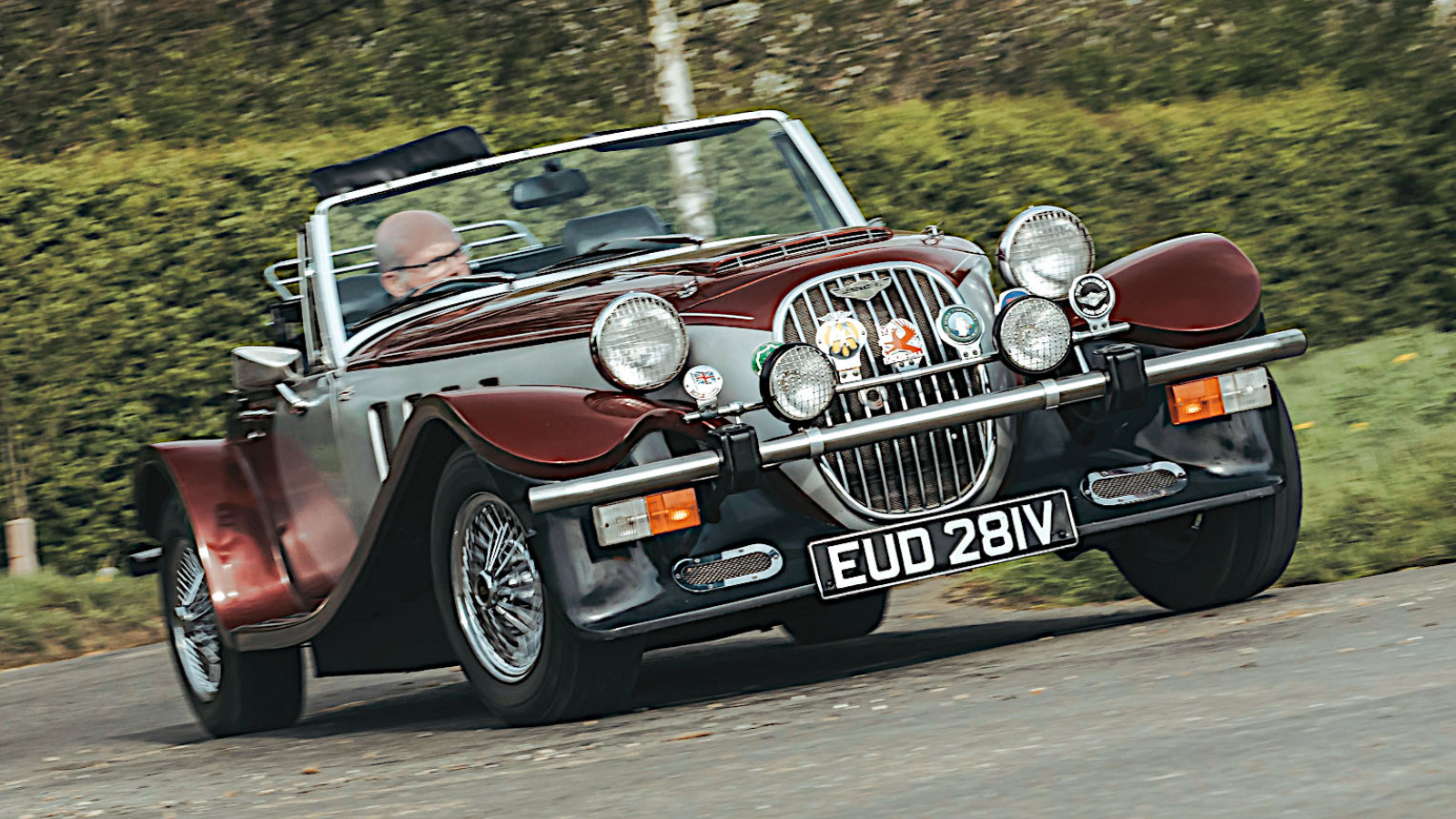
28. Panther Lima
To someone who was vaguely aware of 1930s sports cars but didn’t know much about them, the Panther Lima roadster might have looked like a representative example.
Mechanically, though, it was a thoroughly modern car on its launch in 1976, using many Vauxhall parts including a 2.3-litre, slant-four engine and the floorpan of the Magnum.
The floor was replaced by Panther’s own chassis for the Mk2 (pictured), and after the company’s ownership had moved from the UK to South Korea the car was reworked into the Kallista, which made its debut in 1982.
By that time, the Vauxhall parts had become rather old-fashioned, so the Kallista used Ford mechanicals instead.
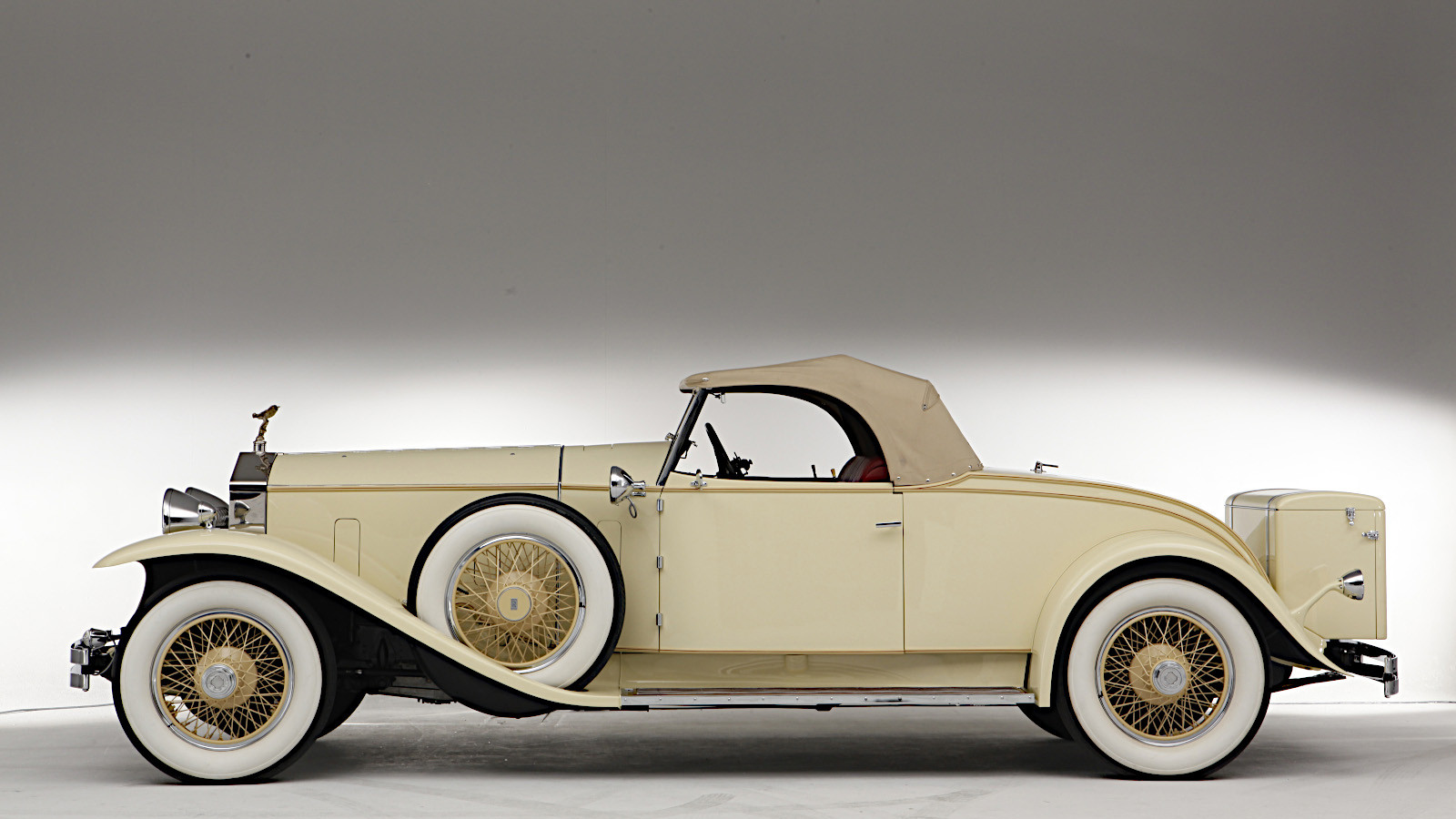
29. Rolls-Royce Phantom
As with Bentley, early Rolls-Royces were supplied as rolling chassis, leaving customers to find a coachbuilder who could finish the job.
Body styles varied enormously, from conventional, stately saloons to more unexpected contrivances such as the 1931 Brewster-bodied Phantom Playboy Roadster pictured here, one of 13 made.
It’s difficult to imagine this going down well in the UK of the 1930s, but it made more sense in the US.
In fact, not only were the body and the first owner American, the rest of the car was, too.
There is no question that the Phantom was a British model, and therefore appropriate to include in our list, but some examples, including this one, were manufactured at the Rolls-Royce factory in Springfield, Massachusetts.
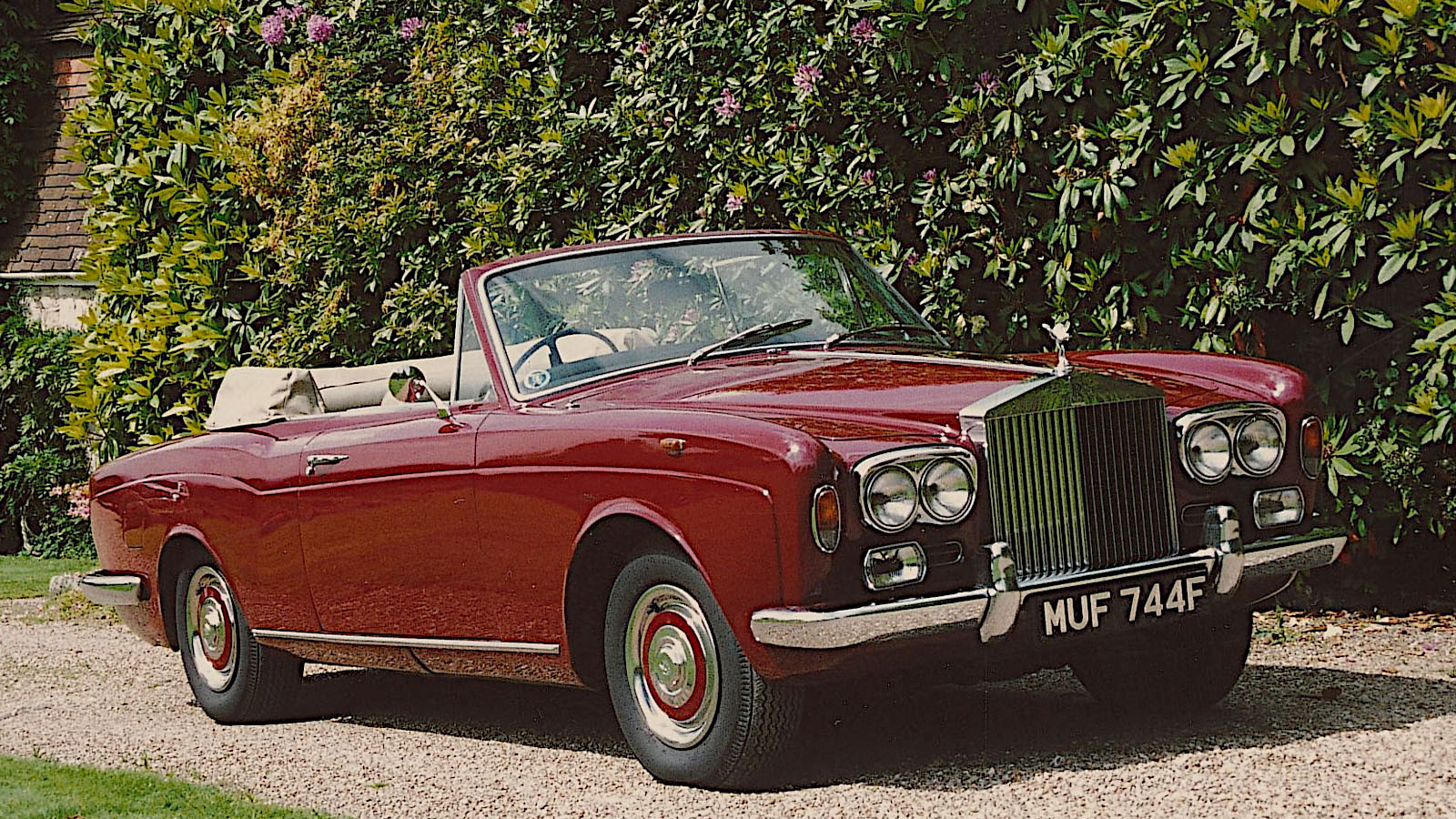
30. Rolls-Royce Silver Shadow
By switching to unibody rather than body-on-chassis construction with the Silver Shadow four-door saloon introduced in 1965, Rolls-Royce made it impossible for independent coachbuilders to have any involvement unless the manufacturer specifically asked them to.
In the case of the two-door convertible, which made its debut in 1967, Rolls-Royce took the obvious step of asking its own subsidiary, Mulliner Park Ward, to do the job.
At the time, Bentleys were little more than Rolls-Royces with different badging, so it followed that a Bentley T-series convertible went on sale in the same year.
The Silver Shadow convertible was updated in 1971, and was renamed (along with the two-door saloon model) as the Corniche.
31. Sunbeam Alpine
Having achieved good results in the Alpine Rally in the early 1950s, Sunbeam used the event’s name for three cars whose production lasted for more than 20 years.
The first (pictured) was a convertible in the strictest sense, being a drophead coupé version of an existing saloon.
Both were discontinued in 1957, and two years later Sunbeam brought back the Alpine name for a two-seat roadster which went through five series and was the basis of the Ford V8-engined Sunbeam Tiger.
We’re counting those cars as convertibles, too, but we can’t do the same for the final Alpine, a fastback coupé version of the Rootes Arrow saloons.
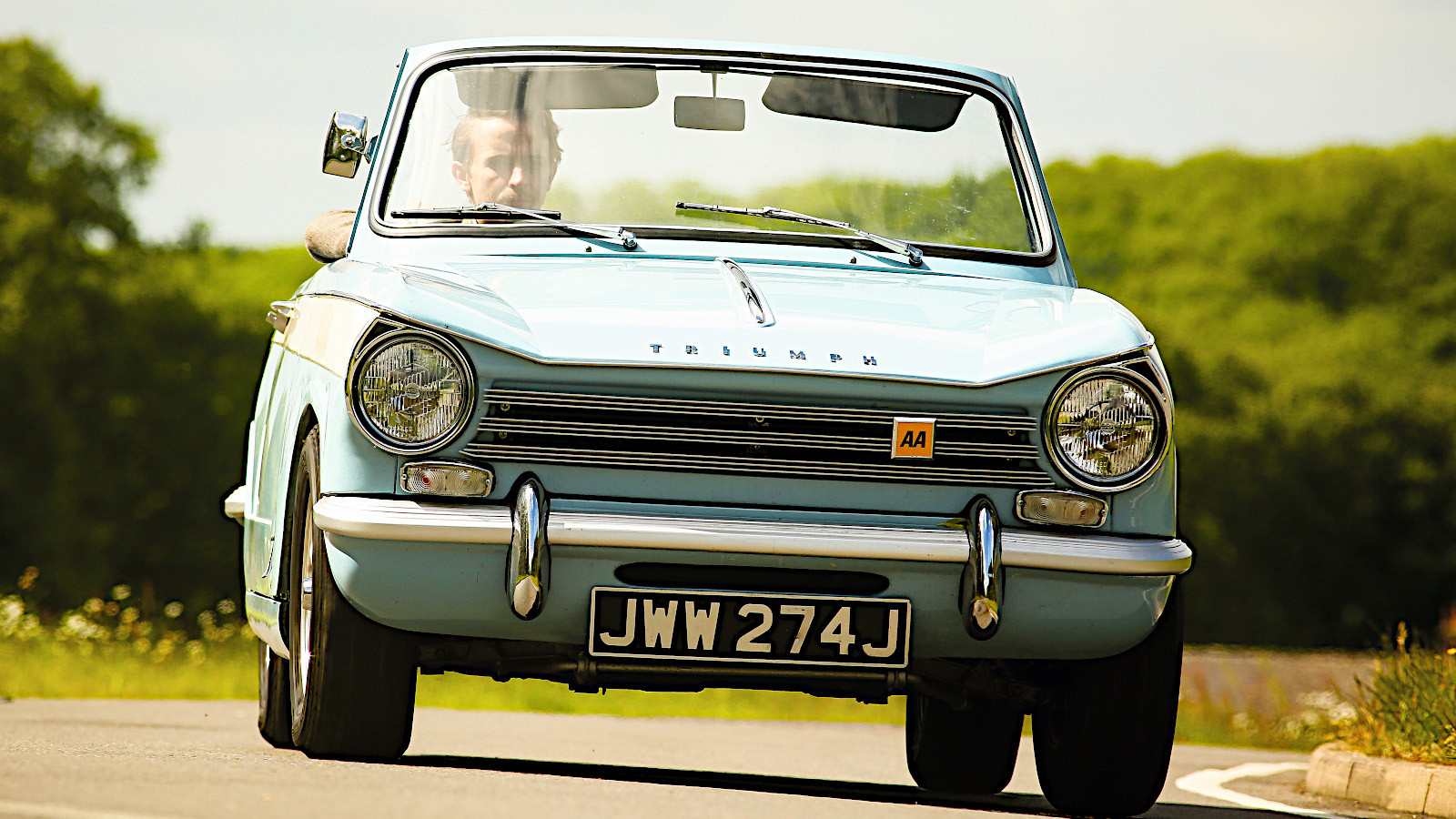
32. Triumph Herald
Body-on-chassis construction was hardly state-of-the-art technology when the Triumph Herald was introduced in 1959 (the Mini and the Ford Anglia launched in the same year were both unibodied), but it did allow the car manufacturer to offer a wide range of options to suit the differing requirements of potential customers.
Heralds were available as saloons, coupés, estates and vans, and because we’re mentioning the car here you could easily guess, if you didn’t already know, that Triumph also developed a convertible version.
The drop-top body style was offered again with the Vitesse, a Herald-adjacent model with a straight-six engine rather than the four-cylinder Standard SC.
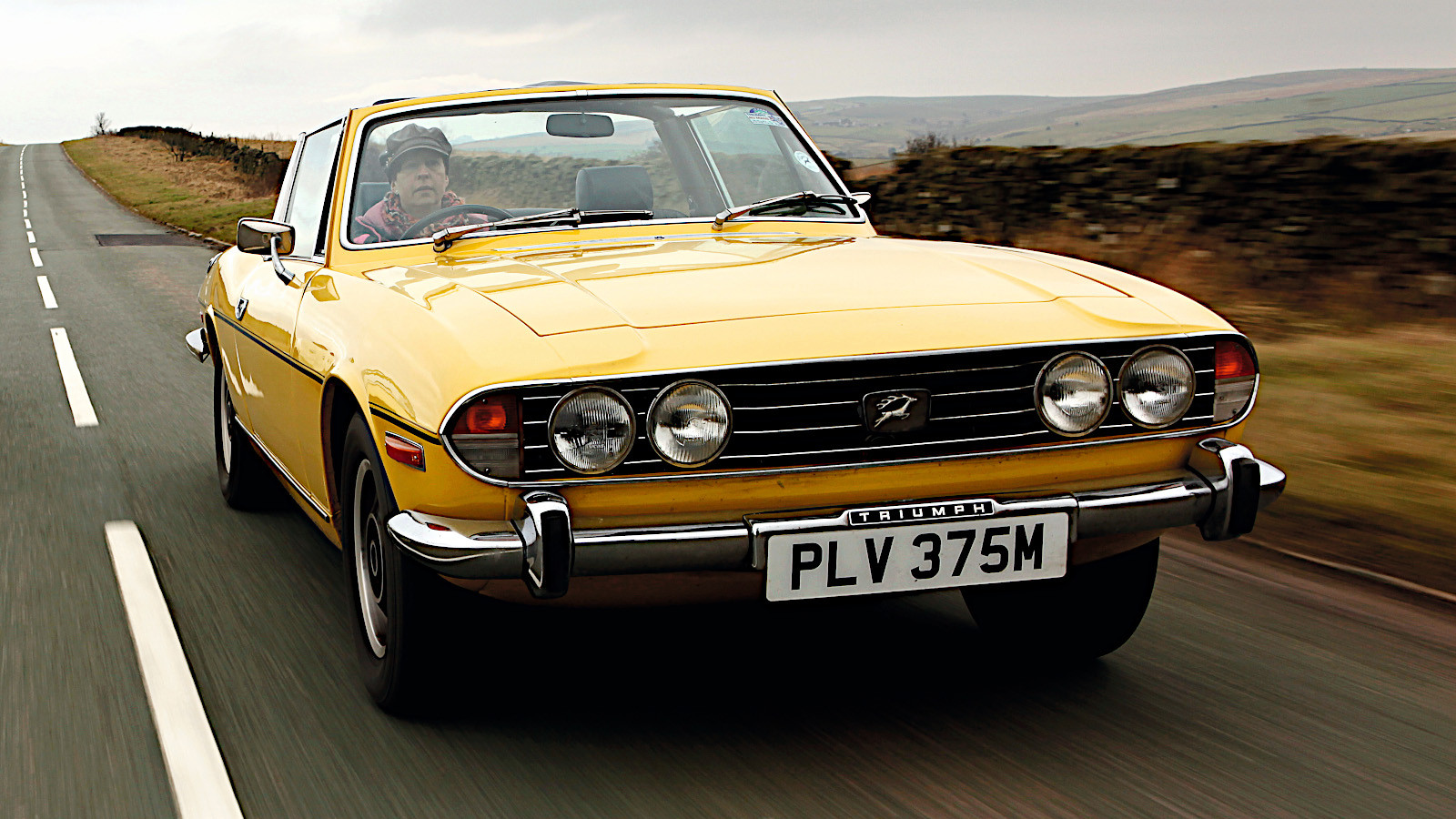
33. Triumph Stag
With its beautiful, Michelotti-designed bodywork and a previously unseen 3-litre V8 engine (though half of it was already powering four-cylinder Saabs and would later be used in more conventional Triumphs), the Stag was the kind of car that would fail to appeal only to people who had no interest in motoring or whose hearts were made of stone.
Unfortunately, only a short time after its 1970 launch it became perhaps the most controversial of all British convertibles.
The problem was the engine, which had a tendency to fail disastrously and expensively, with devastating effects on the Stag’s reputation during its seven years of production.
The causes of the fragility have since become understood and acted upon, and surviving Triumph Stags are now considered to be reliable as long as they are maintained well.
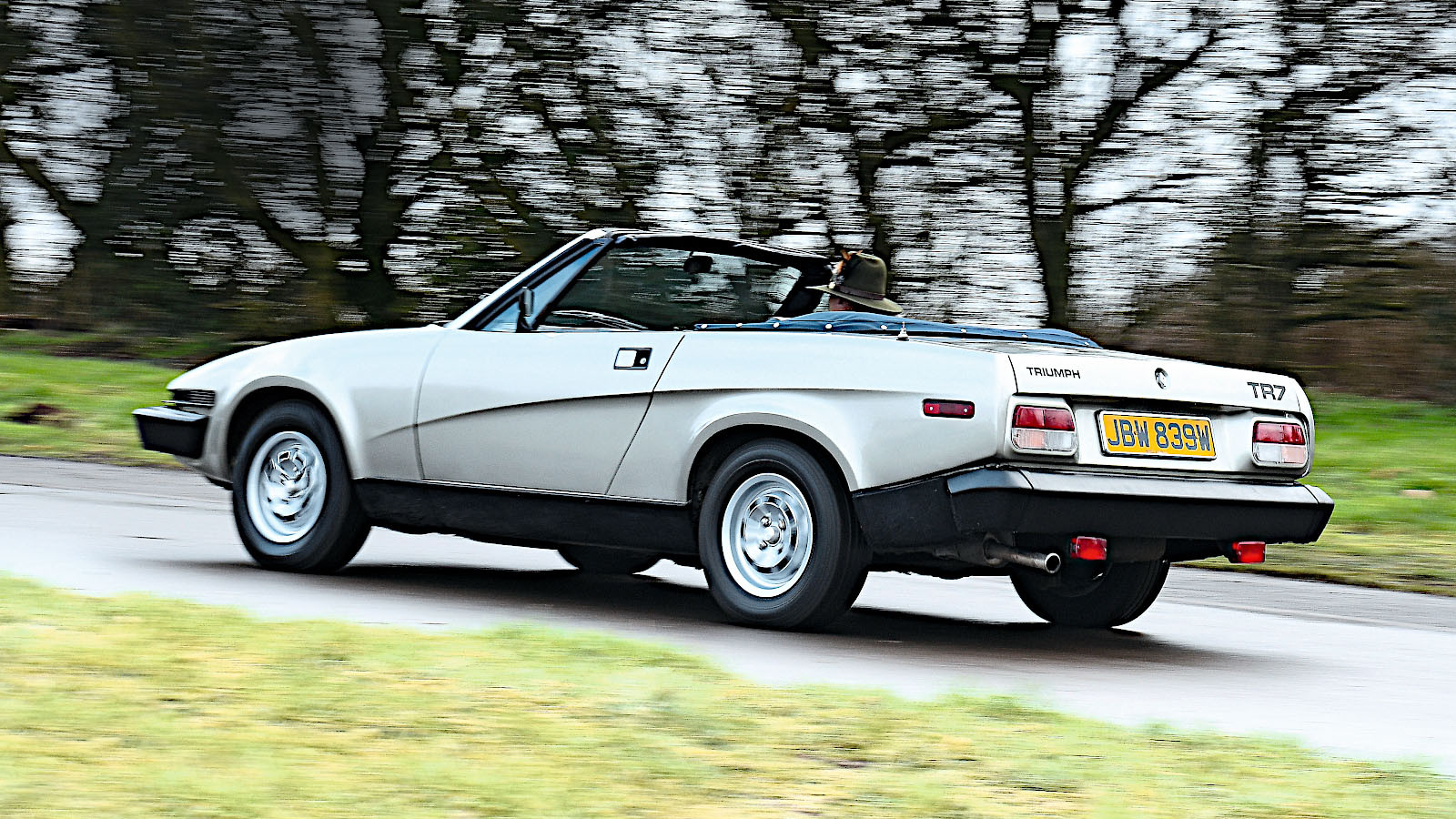
34. Triumph TR7
While all the Triumph TR sports cars from the TR2 to the TR6 were roadsters, the last and best-selling of them all was available for most of its production run only as a fixed-head coupé.
A convertible, sometimes regarded as looking more elegant than the original, was launched in the US in 1979 and in the UK a year later.
The TR8 derivative, powered by a 3.5-litre, Rover V8 engine rather than the half-a-Stag-2-litre-slant-four and aimed at the North American market, was mostly manufactured as a convertible, though enough coupés with the same engine were built to homologate it for international motorsport.
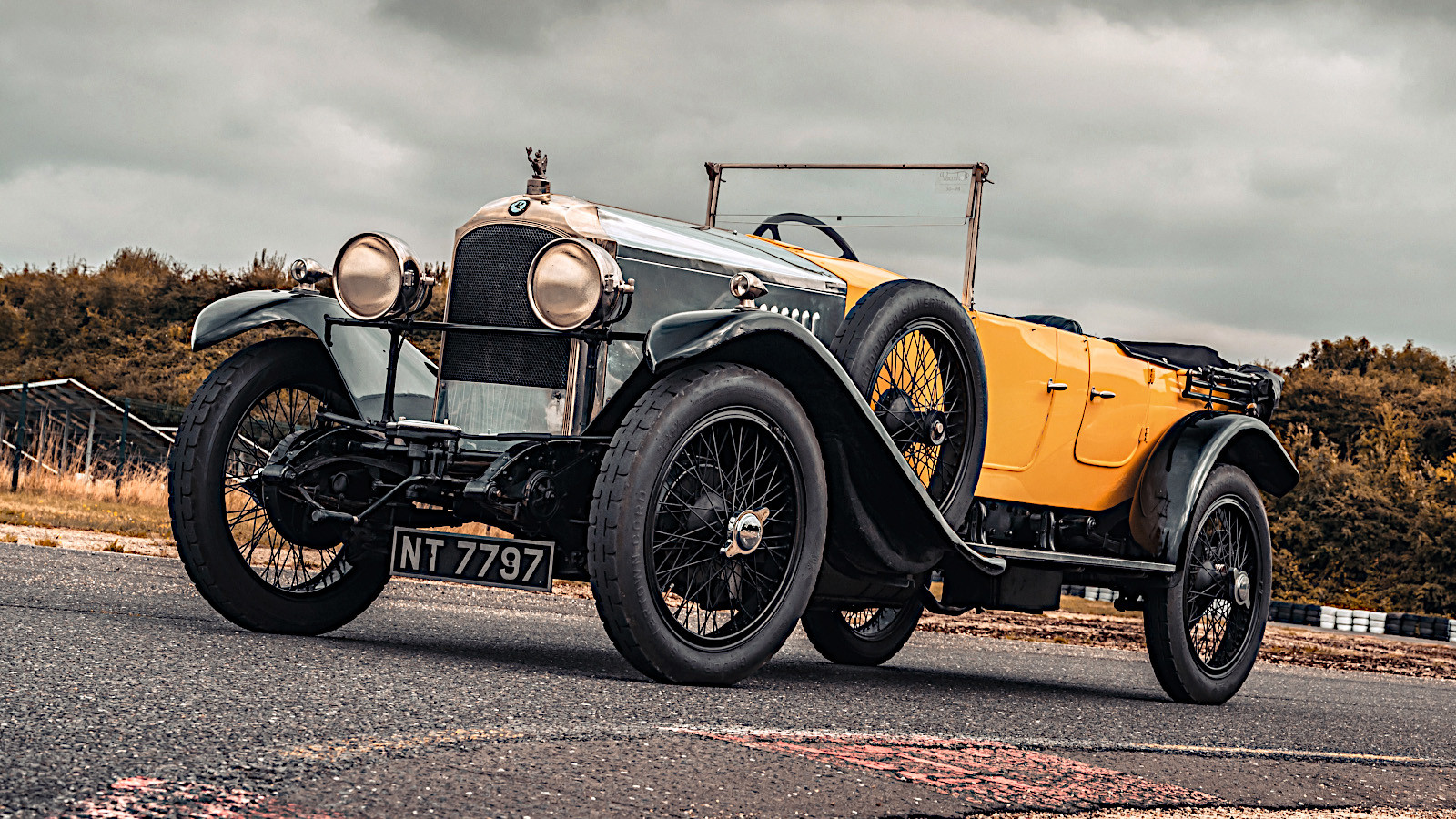
35. Vauxhall 30-98
Very unusual for its time in being able to reach 100mph, the Vauxhall 30-98 caused quite a stir by setting a new outright record at the Shelsley Walsh hillclimb in 1913, but was mostly produced after the First World War.
Different body styles were available (including, in a small number of cases, a closed-roof saloon), but the most popular was the Velox, as fitted to the car pictured here.
Built by Vauxhall itself rather than an independent coachbuilder, the Velox body made the 30-98 what is unarguably, by any standards, a four-seat convertible.
The car’s engine was originally a sidevalve four-cylinder measuring 4.5 litres, but was later converted into an overhead-valve unit which produced more despite having its capacity reduced to 4.2 litres.