
Half a century of history
Think of the five-cylinder engine, and it’s almost inevitable that within a few seconds you’ll be thinking of Audi.
This is partly due to the Audi quattro, which in competition guise performed and sounded like no other rally car before it, and led some people to feel that every later five-cylinder car sounds like a quattro, regardless of who built it.
But the story is more complicated than that. Audi was not the first company to produce a five-cylinder engine – and at one stage it abandoned the layout for 12 years.
Despite that, the connection remains robust. And because 2026 is the 50th anniversary of the first Audi ‘five’, we’re going to investigate it now.
Why five?
If you read a technical article about the five-cylinder engine, you will be bombarded with reasons why it’s not a great idea.
There are issues with balance, fuelling and the exhaust, most of them caused by the fact that there is no firing order which does not result in two adjacent cylinders performing their power strokes one after the other.
On the plus side, a ‘five’ can be more powerful than a ‘four’ because it has a larger capacity (not important now, but very much so back in the days when turbocharging was uncommon), and is both shorter than a straight-six and narrower than a V6, and therefore easier to package than either.
Earlier five-cylinder engines
Audi’s use of a five-cylinder engine in the mid 1970s was unusual, but not unique.
Four decades earlier, Lancia developed a 6875cc diesel ‘five’ for its 3Ro heavy-duty truck, which was available in both civilian and military forms.
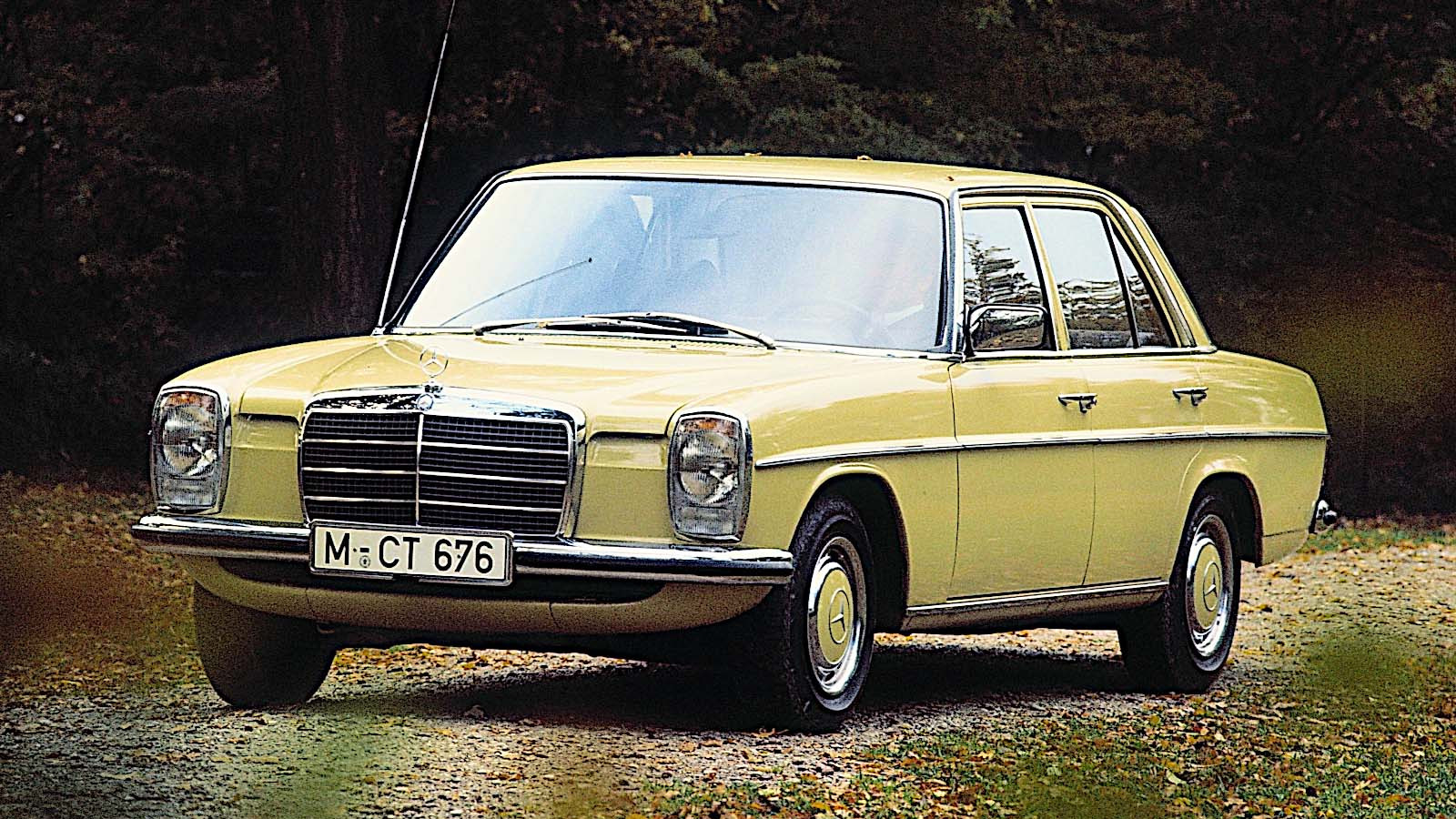
The credit for putting the first five-cylinder passenger car into production goes to Mercedes-Benz, which in 1974 put a 79bhp, 3-litre, diesel engine of that layout (codenamed OM617) into the W115 240D, a car normally powered by a 2.4-litre ‘four’, the five-cylinder version known as the 240D 3.0 (pictured).
In 1981, by the time the W123 had replaced the W115, this OM617 engine became available in this new range with a turbocharger, which raised its output significantly to 119bhp and then, from October 1982, to 123bhp.
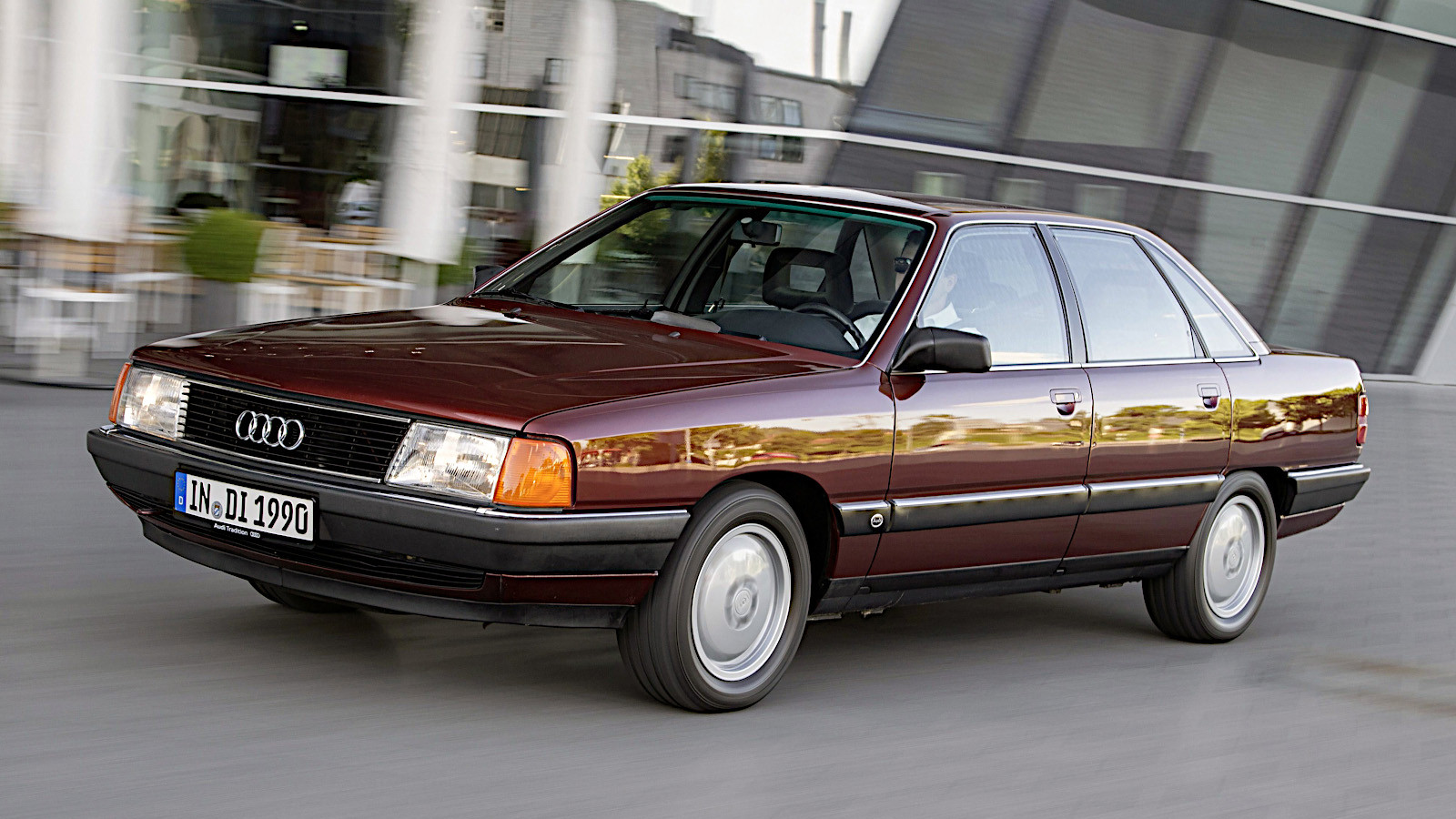
Audi 100
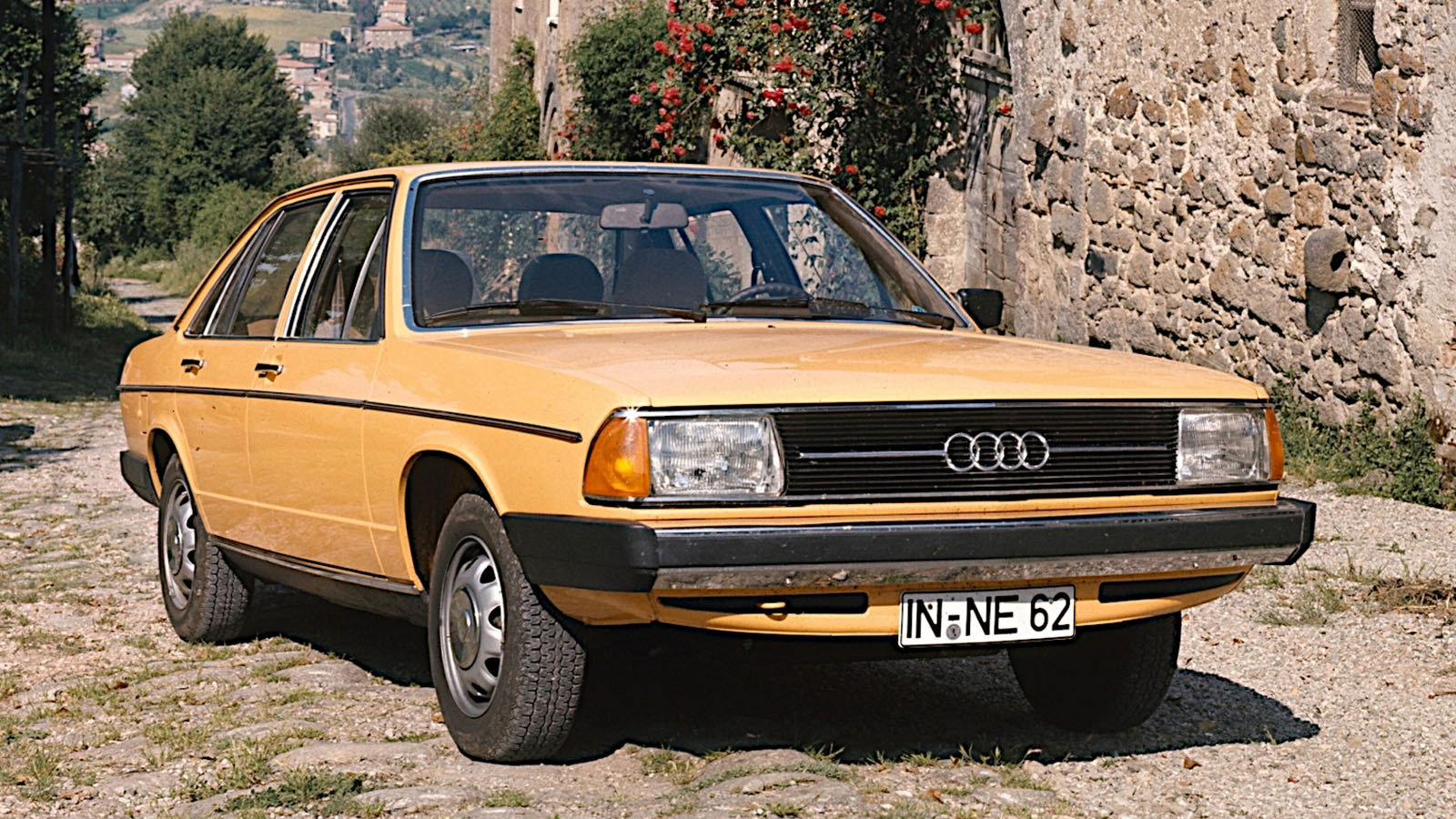
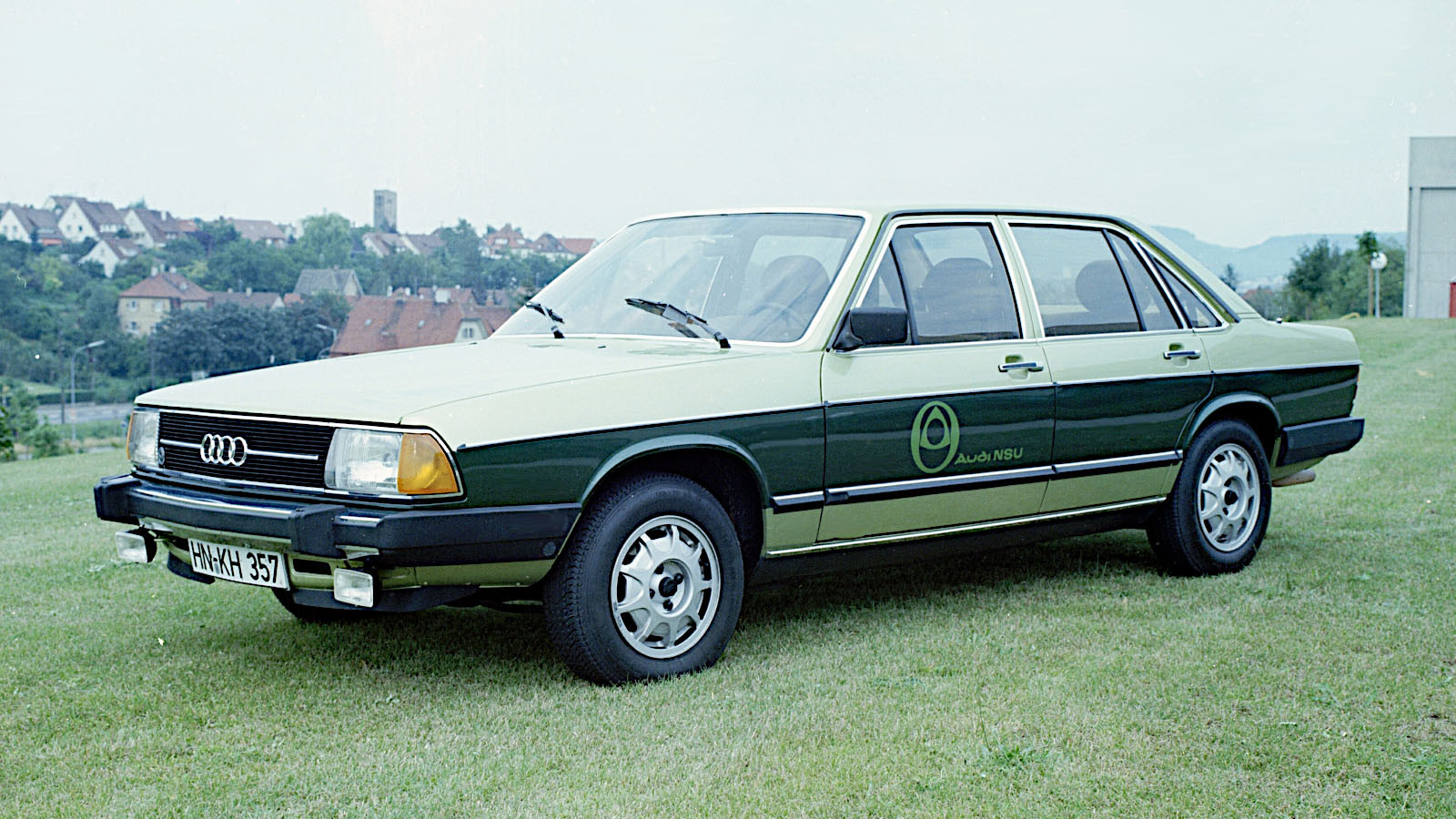
The second-generation 100 (pictured) was intended to be a more upmarket car than the model it replaced, and Audi felt that it should therefore be available with more power.
Both 84bhp 1588cc and 114bhp 1984cc four-cylinder units were included in the range, but for the highest-spec 100 Audi wanted more than any available ‘four’ could provide.
Since the engine was mounted ahead of the front axle, a long straight-six would create an unacceptable forward weight bias, so Audi decided to use a ‘five’ instead.
Developing a new engine is never easy, but Audi made the project a little more straightforward by deriving this one from the existing EA827 ‘four’.
Engine details
Different sources tell different stories about the exact nature of Audi’s first ‘five’, but the company’s modern-day account is backed up by brochures published in 1976, which puts the matter beyond doubt.
It was far more undersquare than either of the four-cylinder engines in the range, with the same cylinder bore (79.5mm) as the 1.6 and a significantly longer stroke (86.4mm) than either the 1.6 or the 2.0.
Measuring 2144cc, it had a Bosch K-Jetronic fuel-injection system, and despite its long-stroke nature it produced its maximum output (134bhp) at slightly higher revs (5700rpm) than the smaller engines (5600rpm and 5500rpm respectively).
The diesel
Although Audi was slower than Lancia or Mercedes-Benz to offer a vehicle with a five-cylinder engine, it had made history by creating one which ran on petrol rather than diesel.
In a decade when fuel economy was of more concern than ever before, however, a diesel ‘five’ was deemed advisable, and Audi put one in the 100 in 1978.
A narrower bore (76.5mm this time) and the same 86.4mm stroke gave a capacity of 1986cc.
Driven as hard as possible, the 68bhp 100 diesel took 17.5 secs to reach 62mph from a standstill, but the upside was that it was much more economical than any of the petrol versions.
The turbo petrol
More history was made when Audi launched the 200 (an upmarket version of the 100) in 1979.
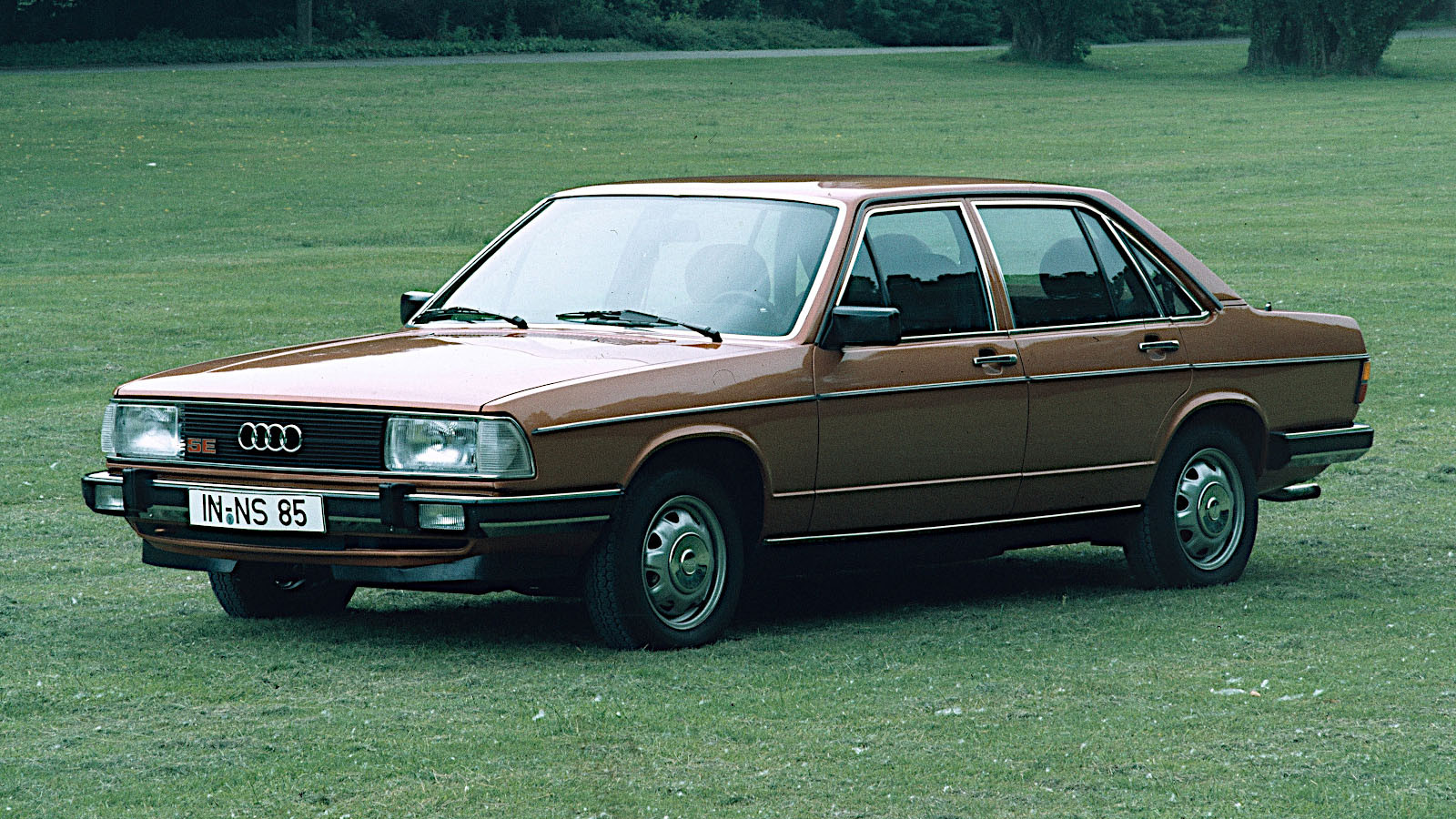
It came in two forms, the 5E being powered by the 2144cc ‘five’ which had by now been on the market for three years.
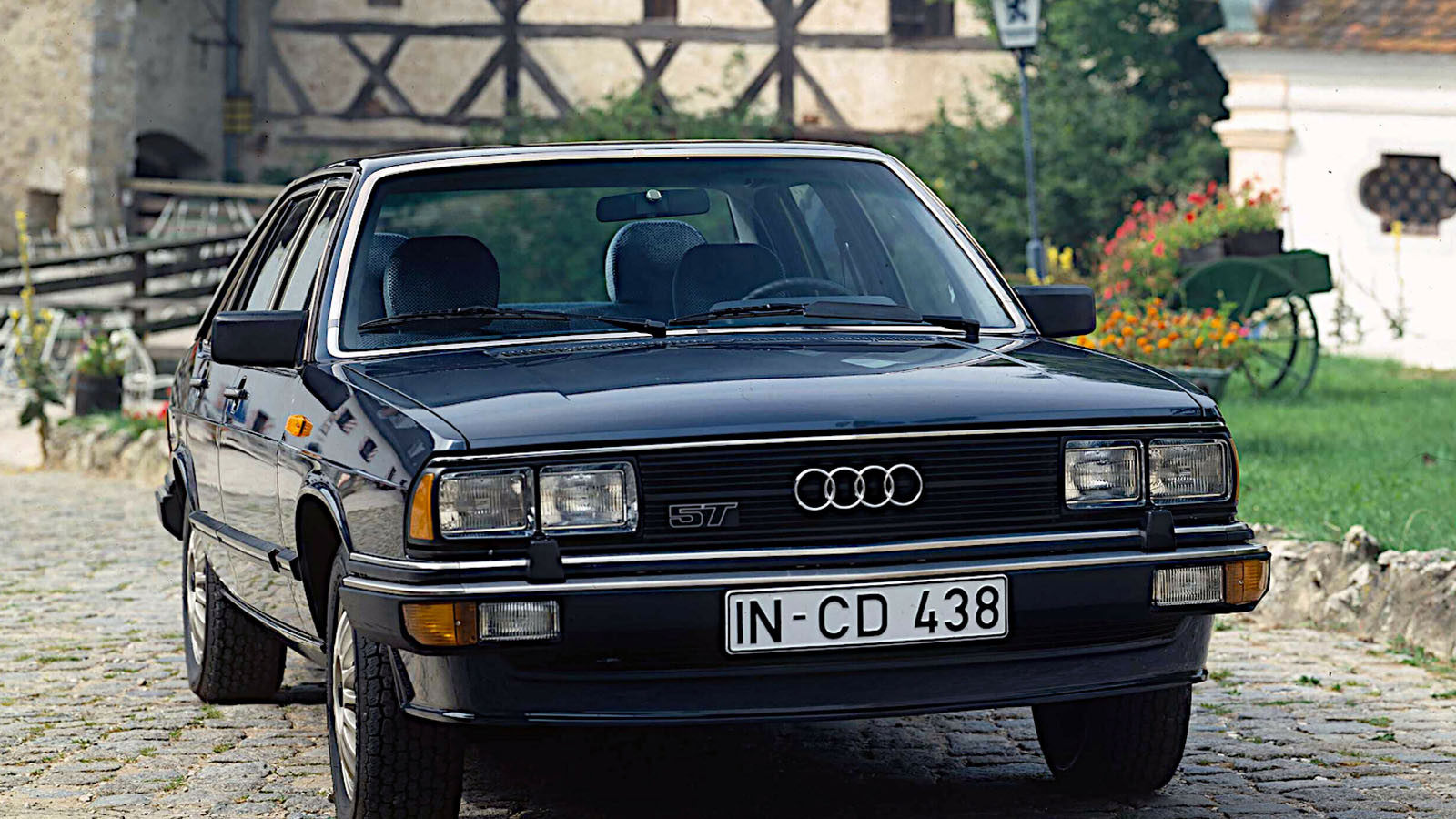
The 5T (pictured) had a turbocharged version of the same unit, the world’s first commercially available, forced-induction, five-cylinder engine running on petrol.
The turbo raised the unit’s output, meaning that a 200 5T with a manual transmission was capable of accelerating from 0-62mph in 8.7 secs, a considerable advance over the 5E’s 10.5 secs when fitted with the same gearbox.
Audi quattro
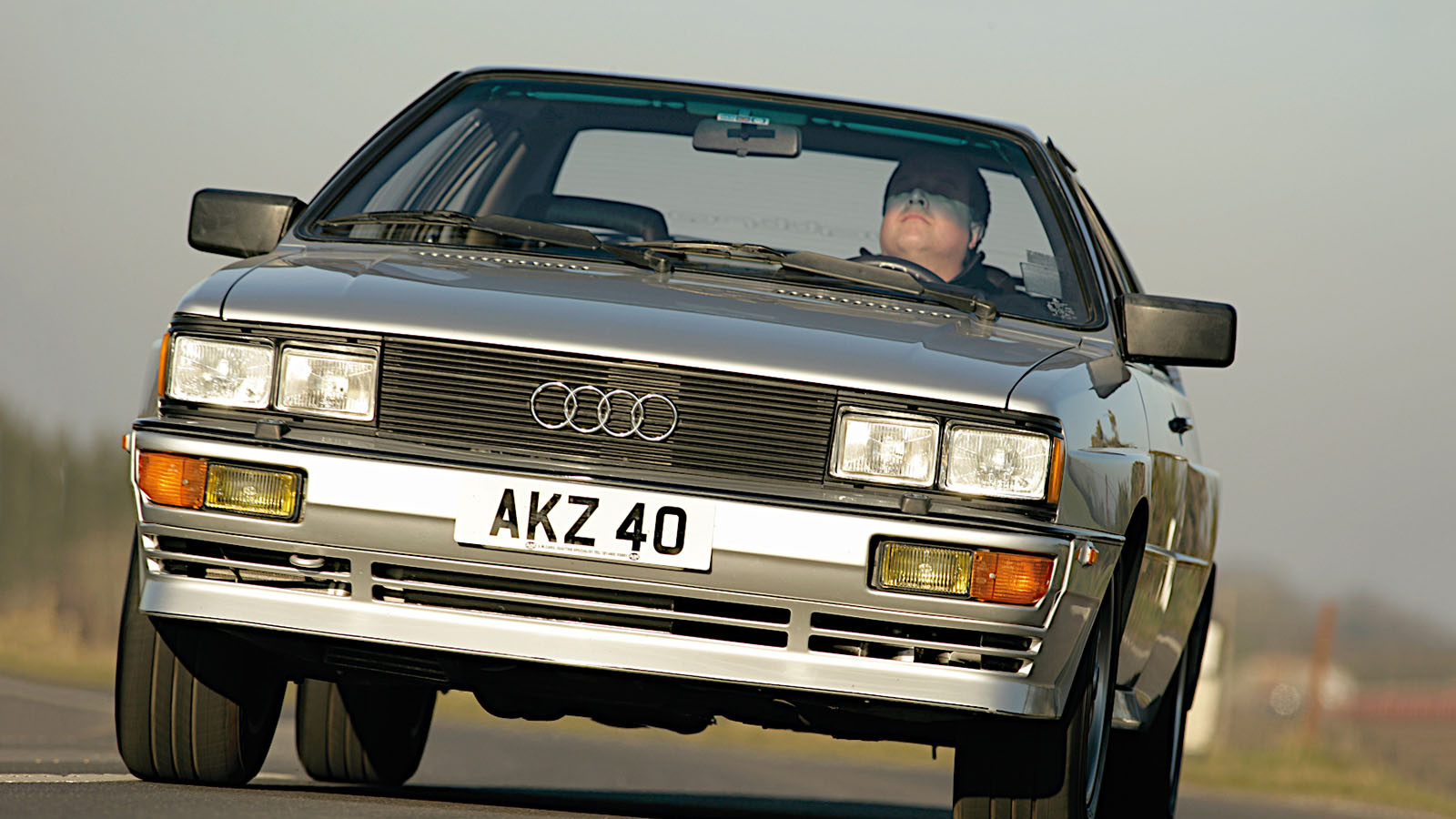
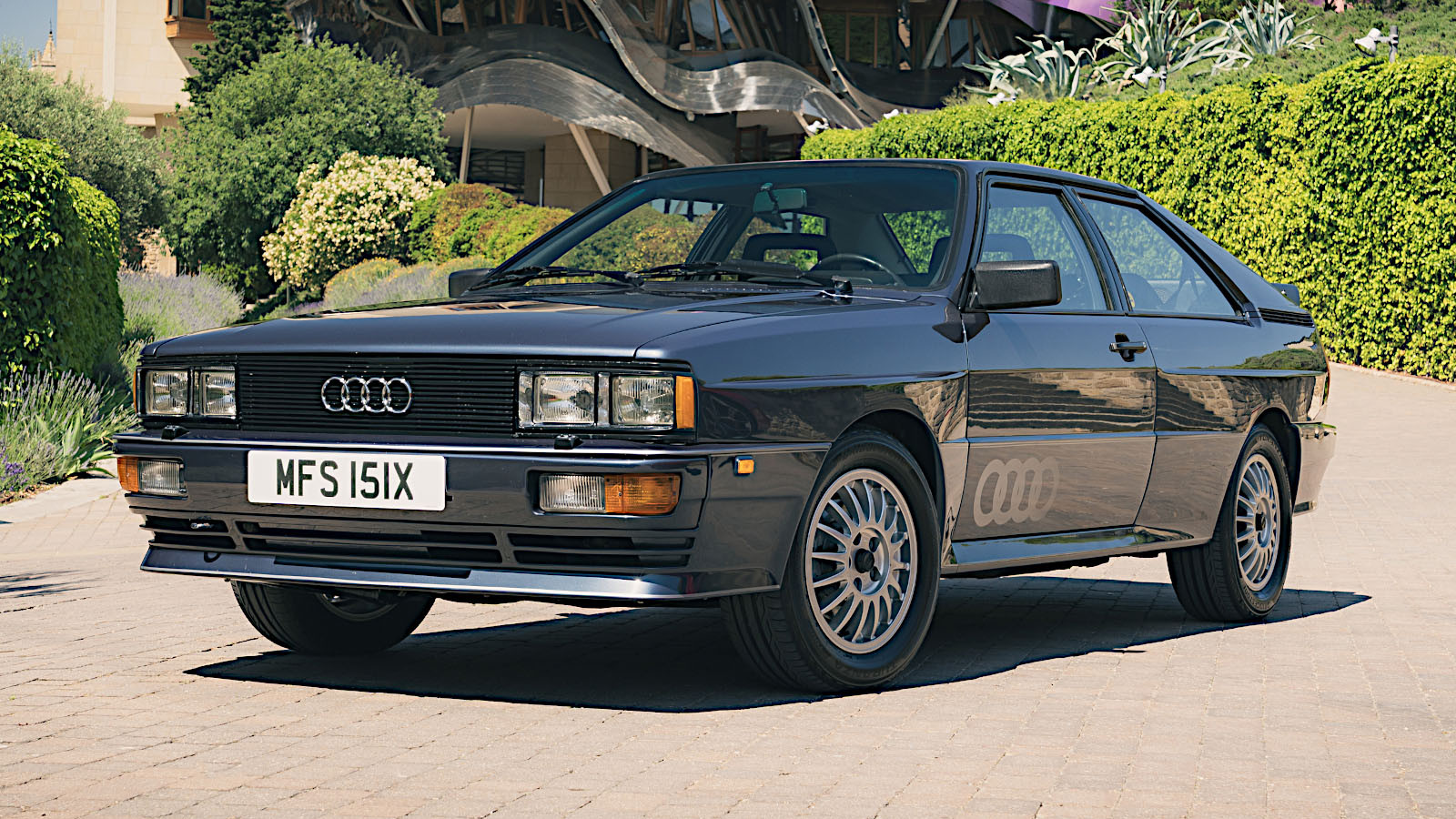
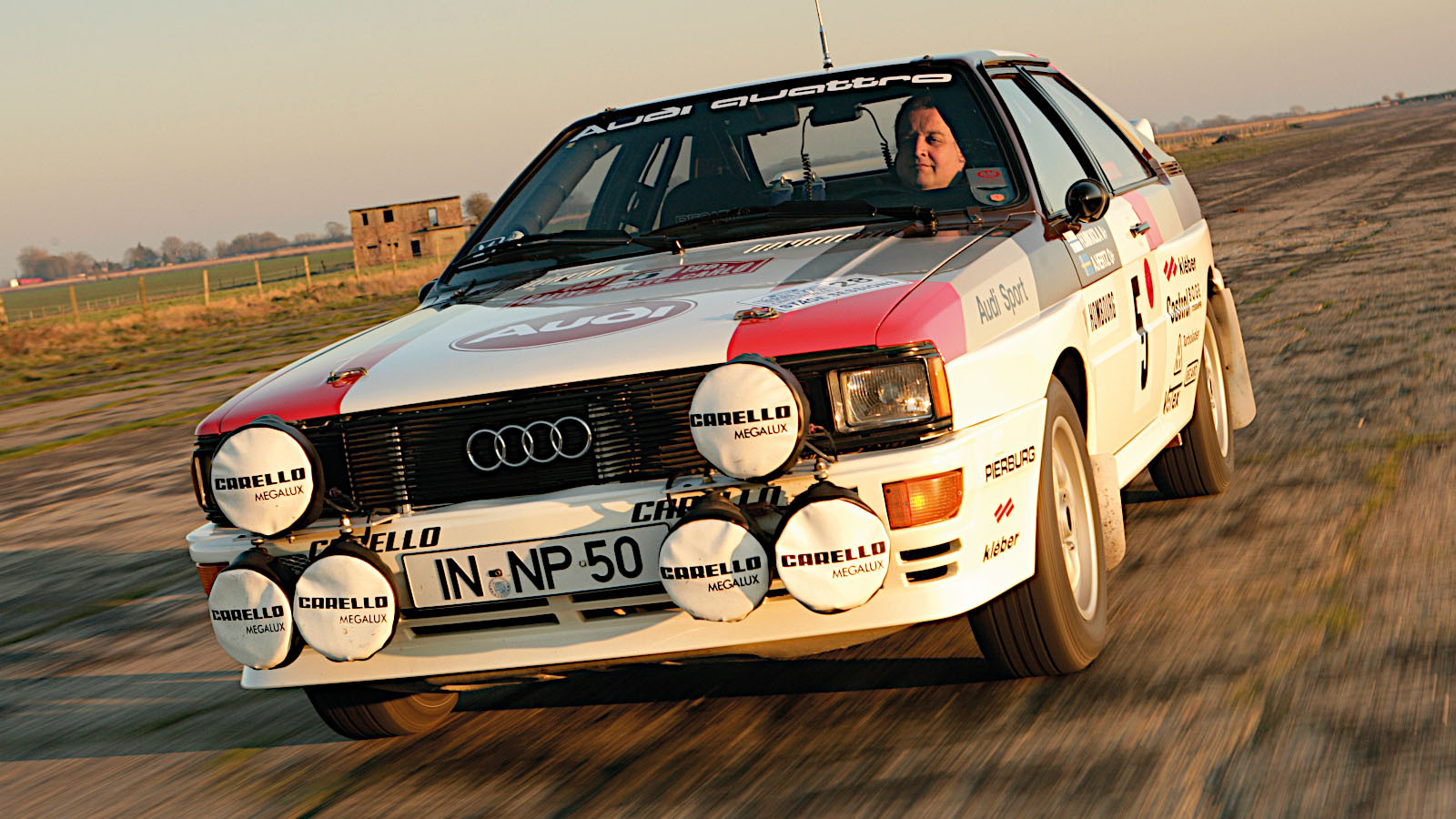
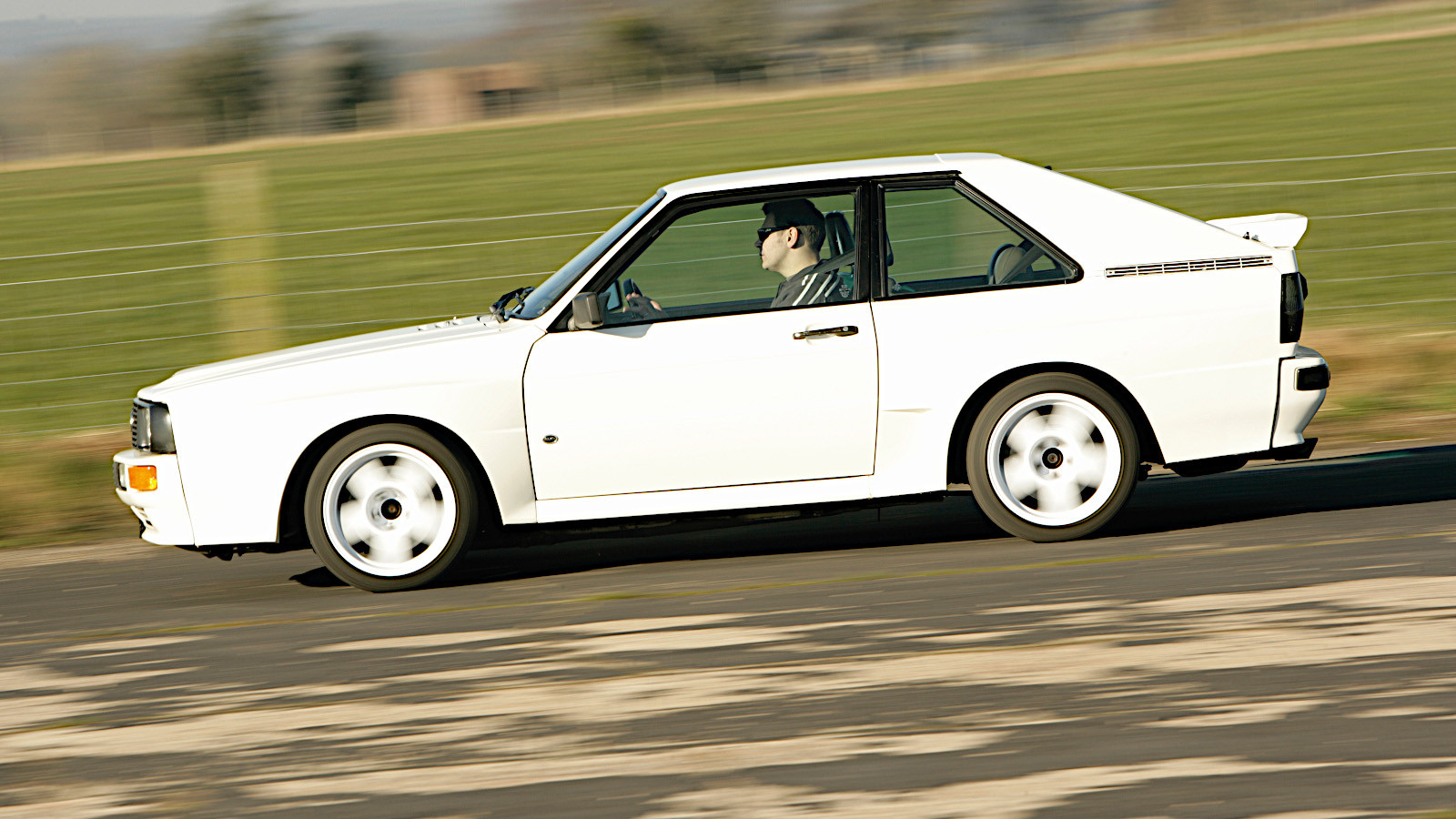
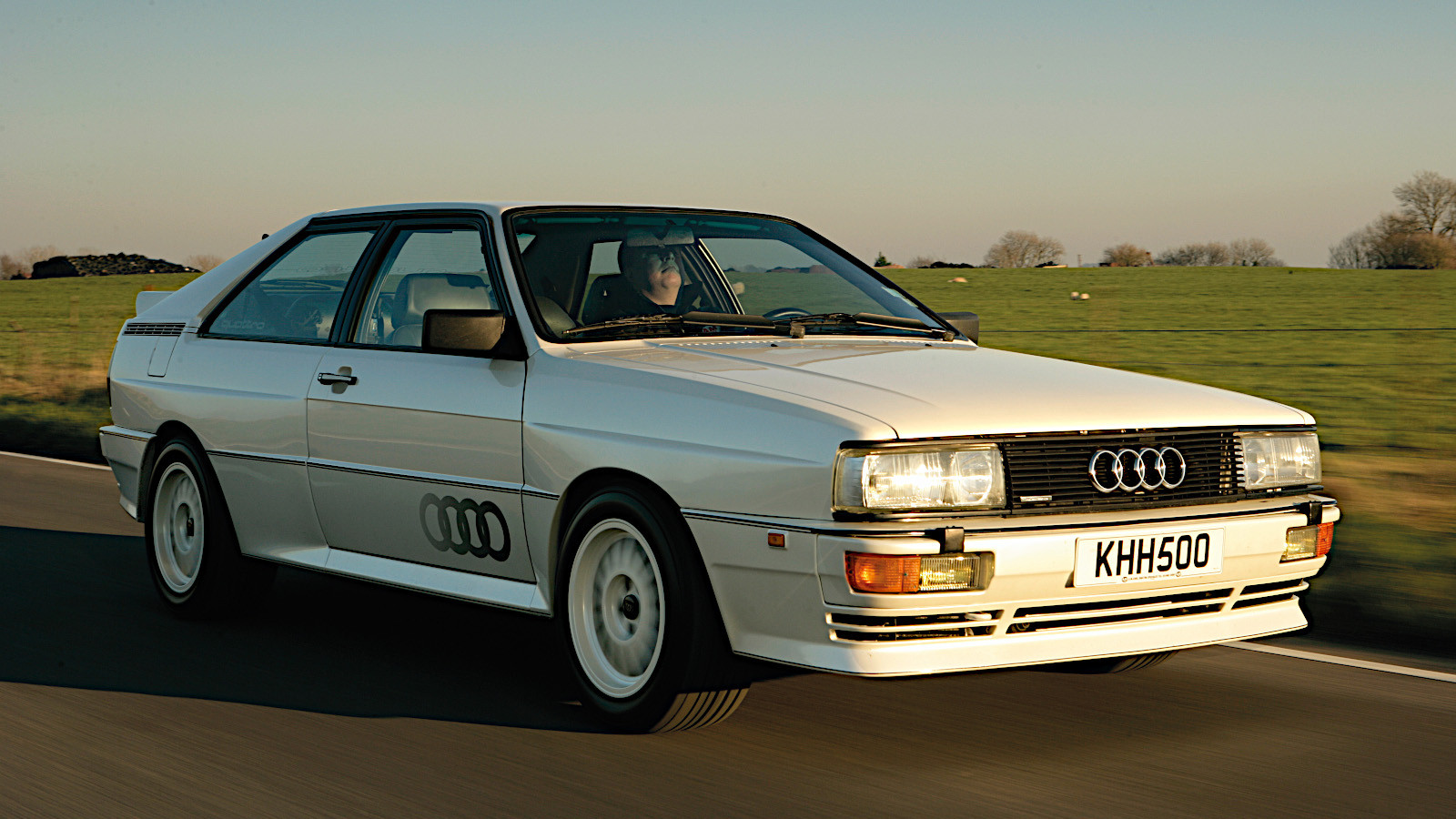
The most famous of all five-cylinder Audis made its debut in 1980.
Its key feature was permanent four-wheel drive, an astonishing thing for a conventional road car to have in those days, but it also needed a powerful engine.
The 2144cc, turbocharged unit used in the 200 5T was an ideal basis, though Audi improved it (in performance terms, at least) by adding an intercooler which reduced the temperature of the incoming air and thereby made it more dense.
As fitted to the standard Audi quattro, it produced 197bhp – and there was scope for much higher outputs in versions built for motorsport use.
The Audi quattro in rallying
Groundbreaking as it was as a road car, the Audi quattro really came to public attention through its performances in rallying.
It was only moderately successful in the 1981 World Rally Championship, though it did win three rounds when driven by Hannu Mikkola (twice) and Michèle Mouton (once).
Remarkably, Walter Röhrl withstood the challenge presented by his Audi rivals to become the champion driver in 1982 with his Opel Ascona, but Audi won the manufacturers’ title with 116 points to Opel’s 104.
Lancia was top manufacturer in 1983 with its 037, but Hannu Mikkola became the first person to win the drivers’ crown in an Audi quattro.
The Sport quattro
The Audi quattro achieved the World Rally Championship double in 1984, when Audi and Stig Blomqvist finished the season as top manufacturer and driver respectively, but it was already clear that, whatever its other merits, the car’s manoeuvrability was open to question.
In response to this, Audi built the 200 examples of the Sport quattro necessary for homologation.
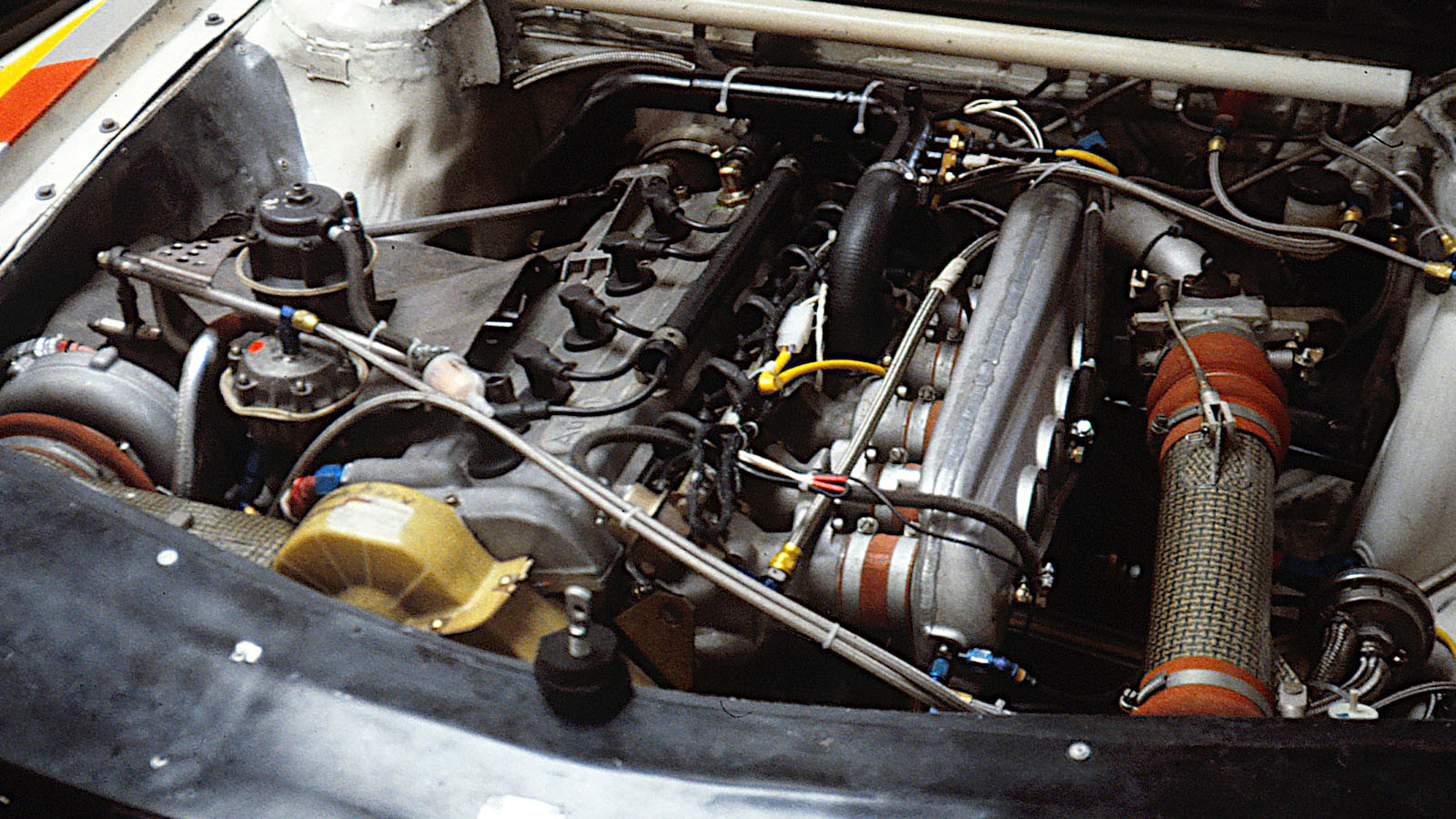
The new model had a wheelbase 320mm (12.6in) shorter than the existing one and was powered by the latest derivative of the five-cylinder engine, now measuring 2133cc, having four valves per cylinder (making 20 in all) and producing, in standard form, 302bhp.
Rallying the Sport quattro
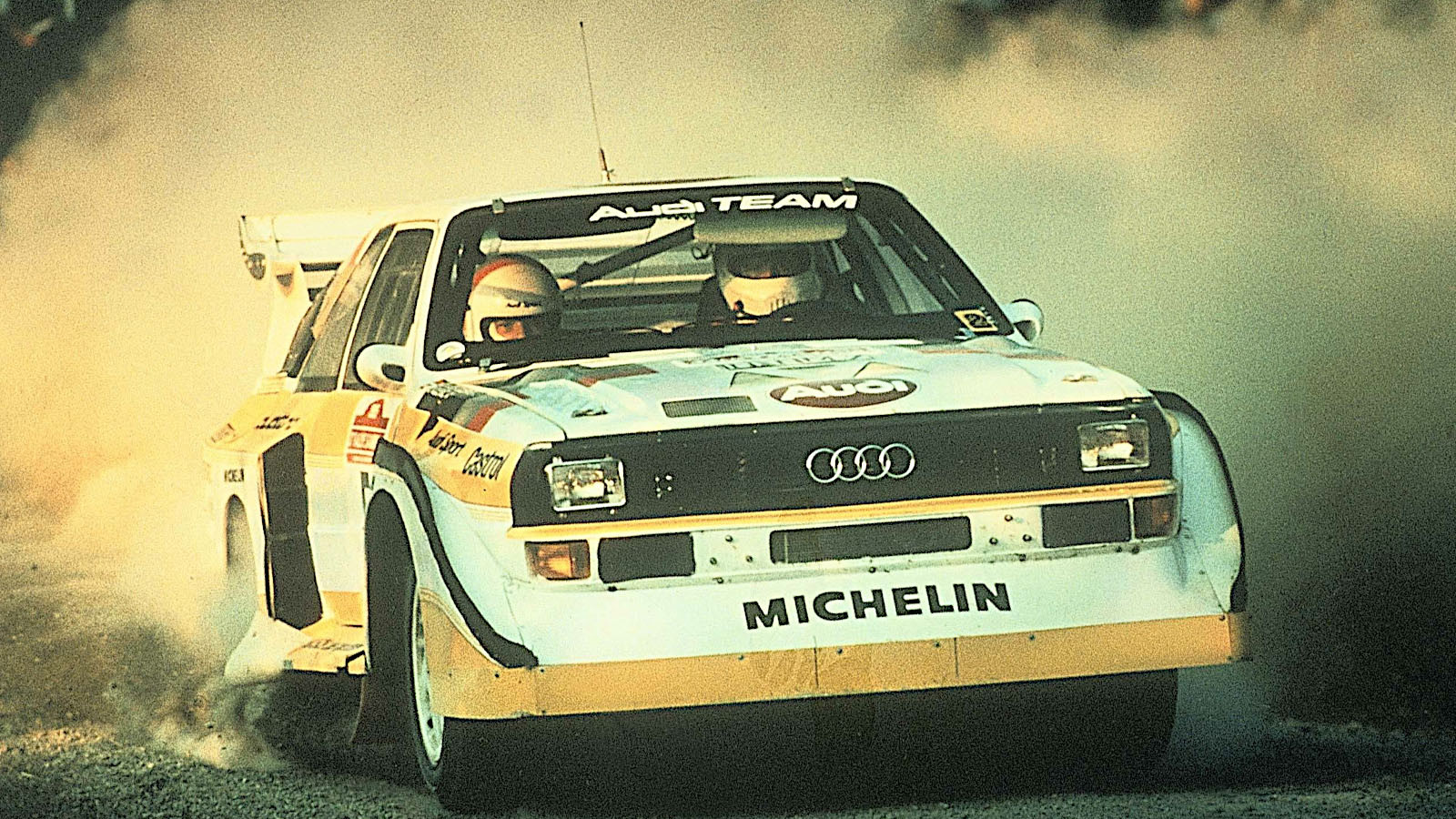
One of Stig Blomqvist’s victories in the 1984 World Rally Championship was in the Sport quattro which produced 444bhp in competition at the time, and would go on to produce much more than that.
It became Audi’s main rally challenger the following year, but by then the mid-engined, four-wheel-drive Peugeot 205 T16 was dominating the sport, and the conceptually similar Lancia Delta S4 was rising through the ranks.
Even in its new form, the quattro was no longer the force it had been only very recently, and although there were some more event wins, Audi’s competition future lay in other forms of motorsport.
Audi 200 quattro
The second-generation Audi 200 was available in several forms, including one with the 2144cc, five-cylinder engine and a four-wheel-drive system named quattro, after the car which had caused such a stir in 1980.
The 200 quattro, available as either a saloon or an estate, was marketed as a luxury car, but with 180bhp on tap it performed more than respectably.
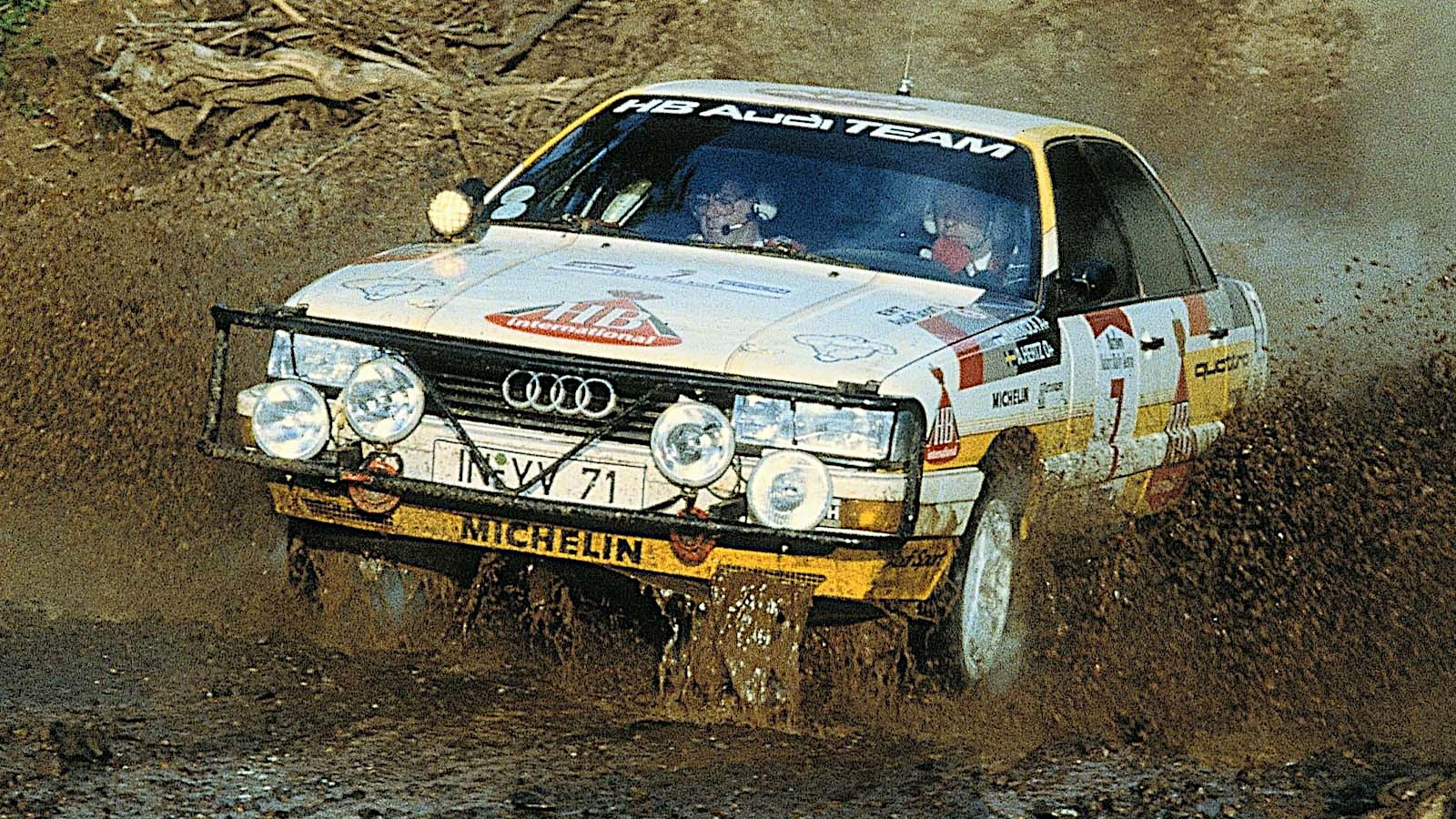
In 1987, when the old Group B motorsport category was replaced by the more production-based Group A, Audi created a competition version of the 200 quattro.
Only modestly successful in general, it dominated that year’s Safari Rally, with Hannu Mikkola and Arne Hertz (pictured), and Walter Röhrl and Christian Geistdörfer finishing first and second respectively for Audi.
Audi RS 002
Group A was not the originally intended replacement for Group B because Group S was.
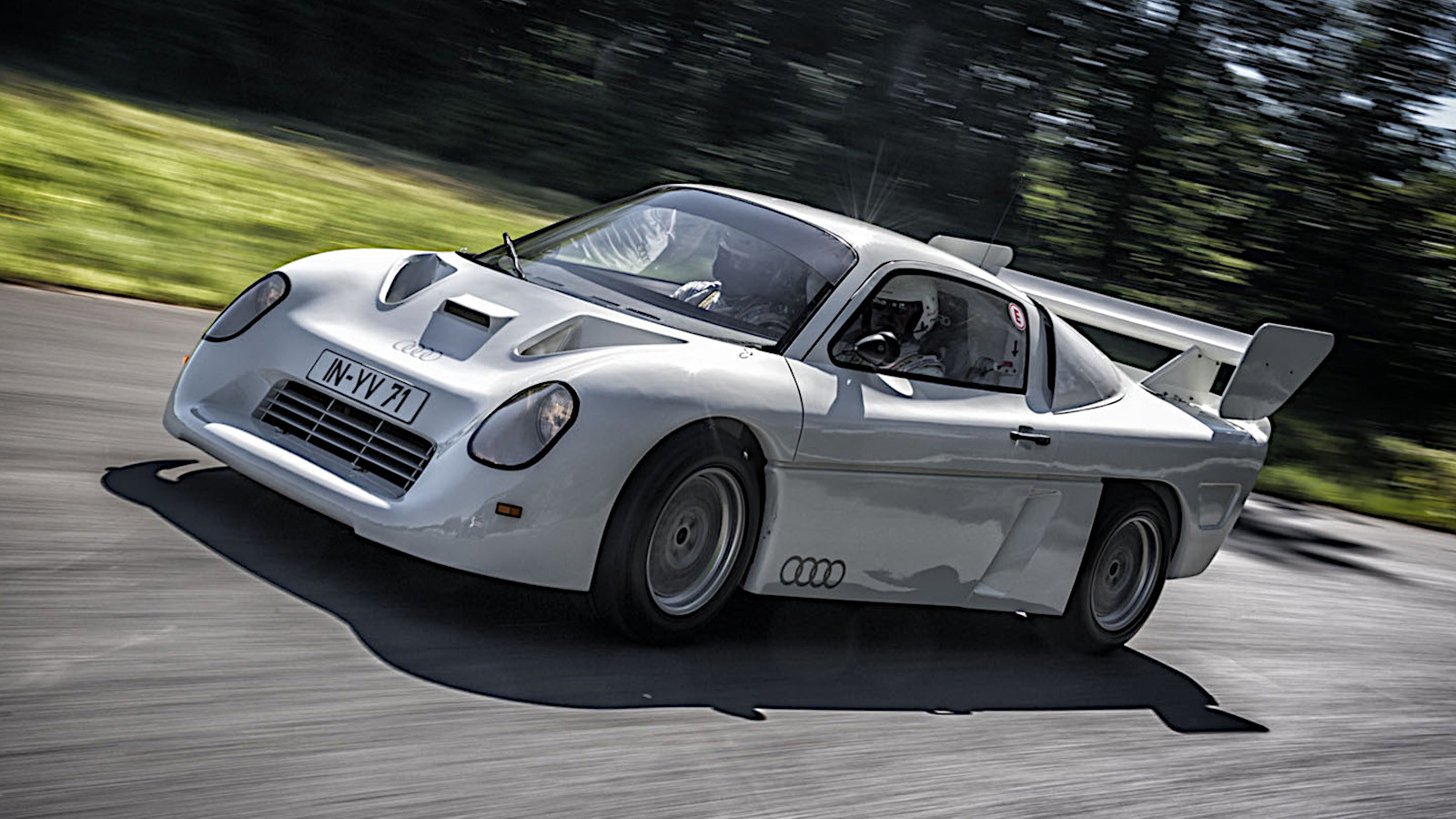
This proposed category required far fewer customer cars to be built than was the case in Groups A or B, and several manufacturers (including Lancia, Opel and Toyota) came up with prototypes, perhaps the most dramatic of which was Audi’s RS 002.
This small, mid-engined coupé was powered, of course, by the turbocharged ‘five’ for which, in this application, claims of outputs up to 1000bhp have been put forward, though not by Audi.
The car has been demonstrated in recent years, but never competed in period because Group S was abandoned before a single event for it had been held.
Audis at Pikes Peak
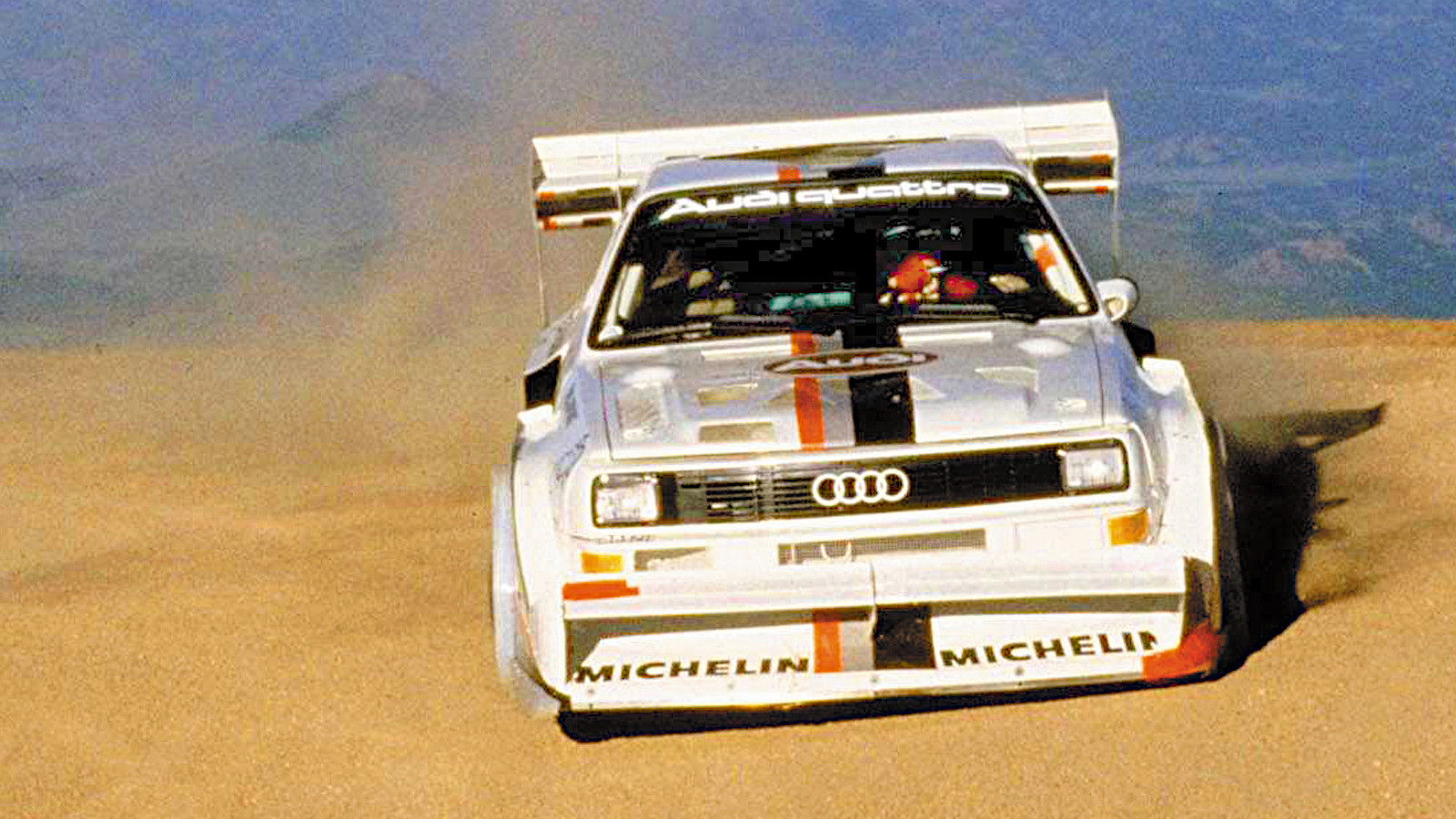
For most of the 1980s, five-cylinder Audis competed with dazzling success at the annual Pikes Peak hillclimb in the US state of Colorado.
John Buffum was the fastest rally car driver in 1982 with an Audi quattro, a feat which he repeated the following year and was matched by Michèle Mouton in 1984.
From 1985 to 1987, Mouton, Bobby Unser and Walter Röhrl (pictured) all won the event outright in Sport quattros, each of them setting a new course record.
Such was the pace of development in this period that, while Mouton was the first driver to climb the hill in under 11 mins 30 secs, Röhrl reduced the record to 10 mins 47.850 secs just two years later.
Trans-Am victory
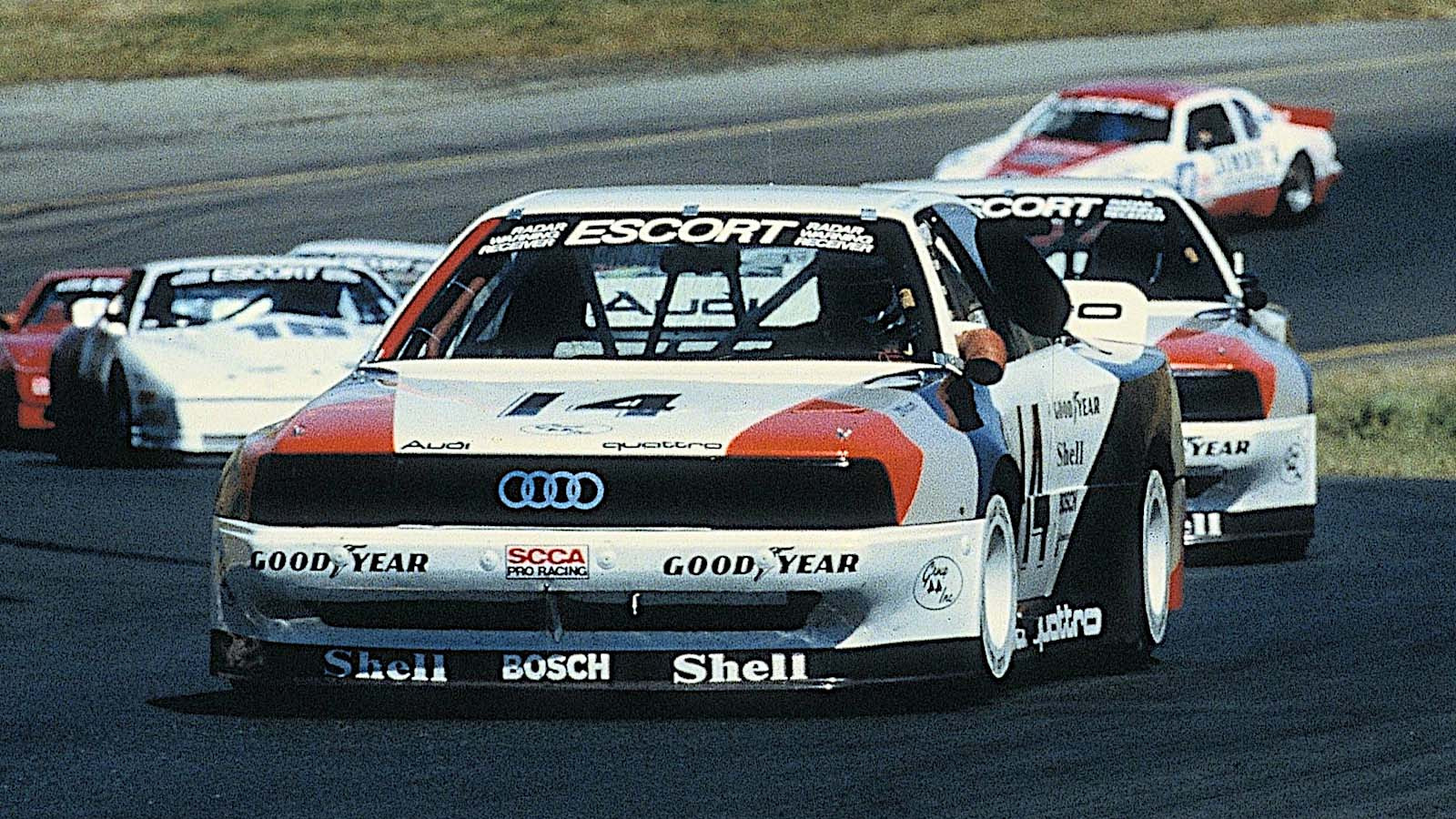
In 1988, Audi 200s run by the Group 44 race team and powered by the turbocharged, five-cylinder engine (with two valves per cylinder in this case and producing c505bhp) competed in the North American Trans-Am series, in which they were the only cars with four-wheel drive.
Hans-Joachim Stuck won four rounds and Walter Röhrl won two, but they were being employed on a part-time basis.
Hurley Haywood, on the other hand, drove in every race, and despite calamities in the last two rounds his pair of wins and four other podium finishes were enough to make him drivers’ champion, while Audi took the manufacturers’ title.
Four valves per cylinder
The Sport quattro was the first production Audi with a 20-valve engine, but others were to follow soon afterwards.
Essentially the same unit, though with a rather more modest 217bhp – around 10% more than the output of the standard 10v – was carried over to the regular-wheelbase quattro (pictured) in 1988, and used in it for the remaining three years of the car’s lifetime.
Despite some technical similarities, the 200 was a very different type of car from the quattro, aimed more at the luxury – or at least premium – market, but it, too, received the 20v unit in the same specification when fitted with four-wheel drive.
The IMSA 90
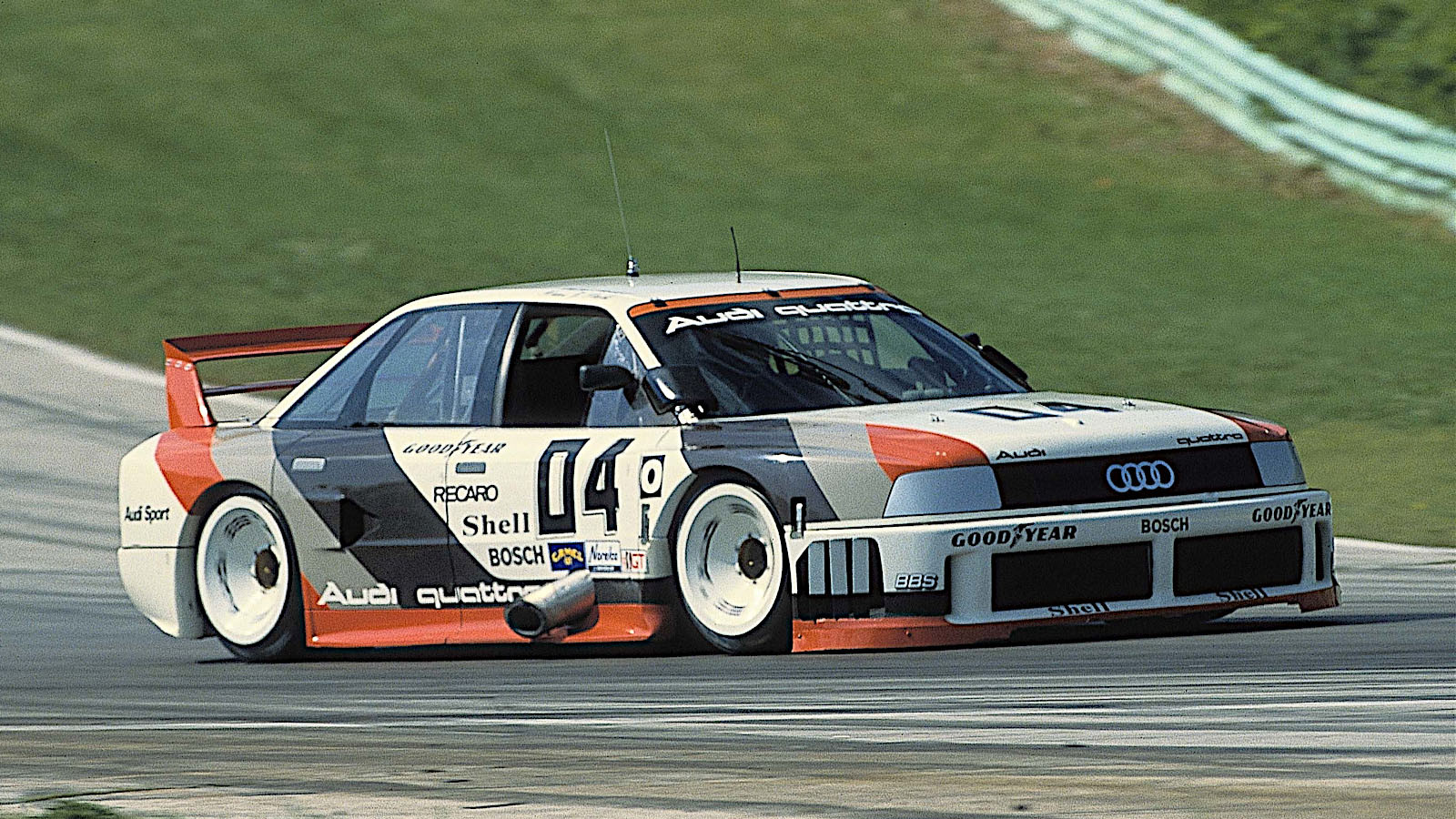
Even in comparison with the most formidable of the rallying or hillclimbing quattros, the Audi 90 which competed in the GTO class of the 1989 IMSA series was on another level entirely.
Based on a racing chassis, on which something resembling a 90 body was fitted, the car had, as might be expected, a turbocharged, five-cylinder engine which, as might not be expected to quite the same extent, produced c710bhp.
It was not entered in all the rounds (those at Daytona and Sebring, for example, were missed), so although Hans-Joachim Stuck won the class several times, there were no championship trophies at the end of the season.
Audi 100 TDI
At the 1989 Frankfurt motor show, Audi unveiled a 100 with a new type of engine.
This was the first of the Volkswagen Group’s many TDI diesels, in which fuel was injected directly into the combustion chambers rather than being mixed with the intake air well before it reached the cylinders.
Very similar to a system already being used by Fiat (though in that case in a four-cylinder engine), it was applied to the 2.5-litre ‘five’ fitted to the third-generation 100.
The 100 TDI, as it was known, immediately became the most powerful diesel-engined car in the range, with what was considered at the time to be an impressive maximum output of 118bhp.
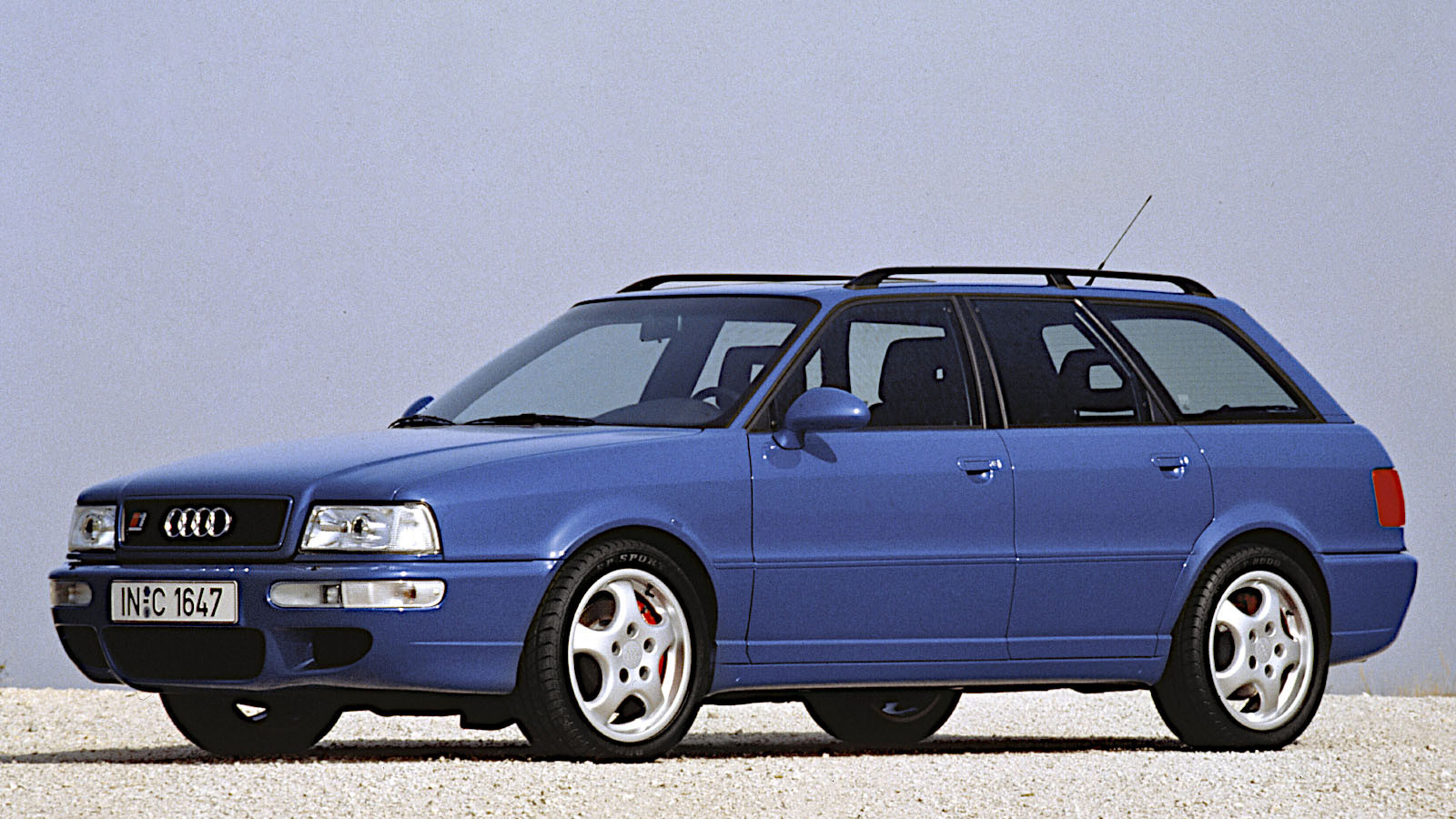
Audi RS2 Avant
Produced in collaboration with Porsche, the RS2 Avant launched in 1994 was based on the contemporary Audi 80, but had far more power than any model in that range.
Its 2.2-litre, turbocharged, five-cylinder engine produced 311bhp and drove all four wheels via a six-speed manual gearbox.
As the ‘Avant’ part of the car’s name suggests, the only body style available was an estate, which gave the RS2 an unusual combination of high performance (greater than that of any standard-production quattro) and practicality.
The S2 of around that period had a slightly less-powerful version of the same engine, but was offered as both an estate and a saloon.
Sunset of the ‘five’
Despite the introduction of the RS2 Avant, and use of the ‘five’ in other models of the time, Audi began to drift away from this type of engine in the 1990s.
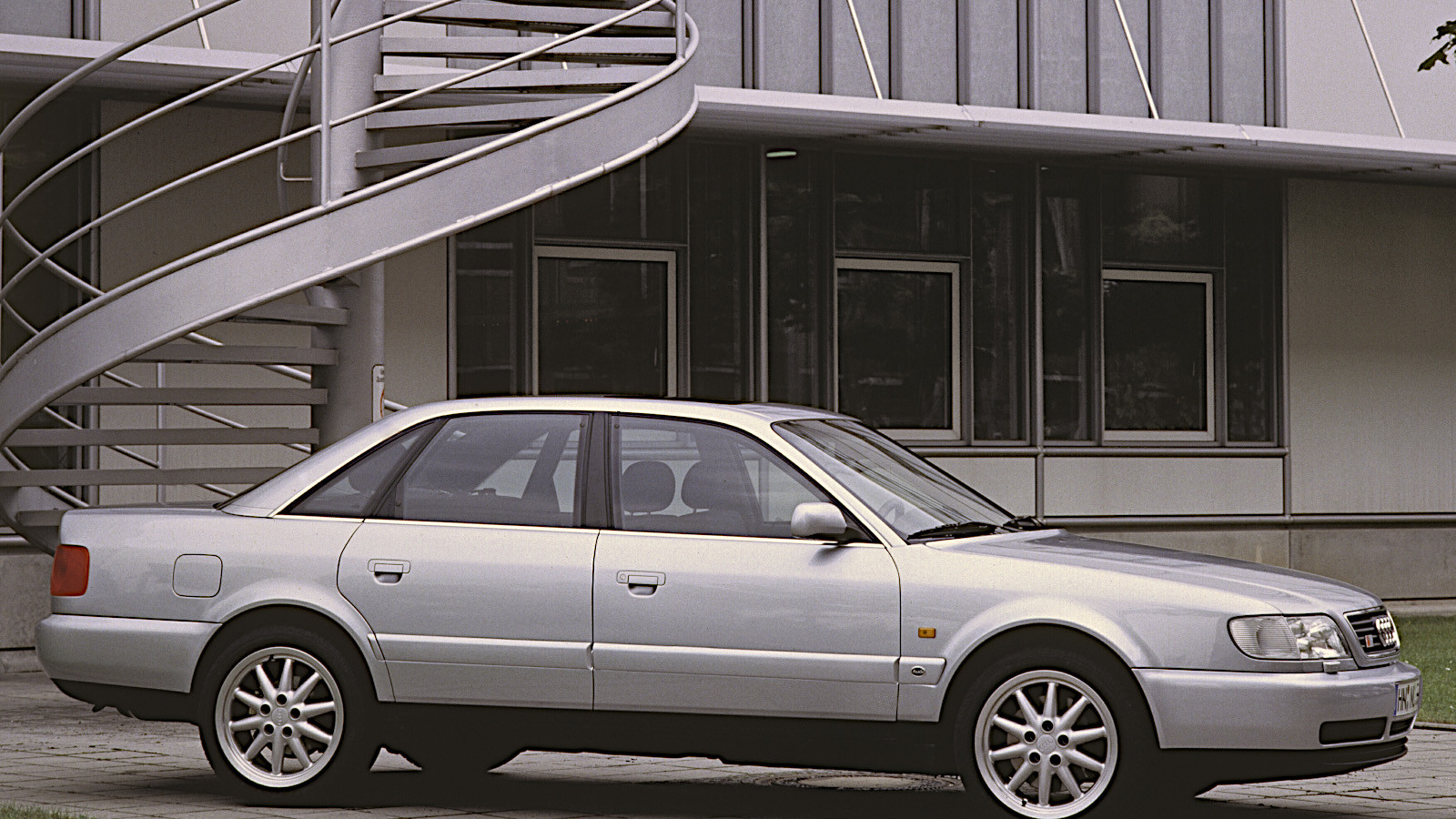
It was completely absent from the A4 range, which arrived in 1994, but the 2.5 TDI was used in the A6 launched in the same year, while the 20-valve, 2.2-litre, petrol turbo was one of two units fitted to the S6 (pictured), the other being a 4.2-litre V8.
From 1997, however, the S6 was powered only by the V8, and in the same year the TDI was dropped from the A6 range.
There were now no five-cylinder Audis of any kind in production, and for several years it seemed that there never would be again.
The ‘five’ returns
Thirty-three years after the introduction of the first five-cylinder Audi, and 12 after the discontinuation of the most recent two, another one hit the market in 2009.
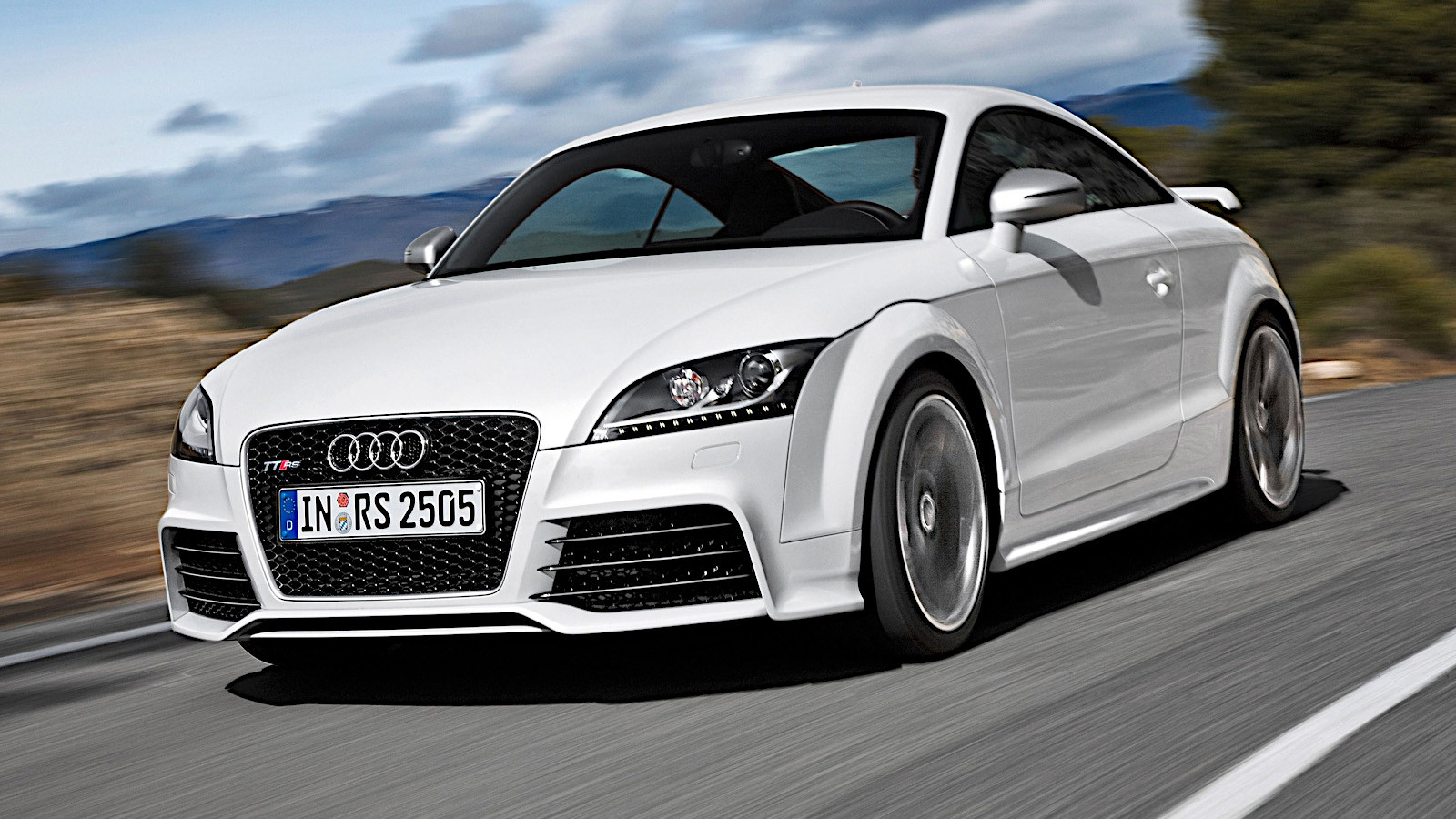
The TT RS was the high-performance version of the second-generation sports car, and was powered by a new, turbocharged, direct-injection, 2480cc engine.
Exceeding even the admittedly smaller 2.2-litre unit in the RS2 Avant, it produced 335bhp, and was available in both coupé and roadster versions of the car.
The roadster was inevitably the heavier of the two, and therefore at a slight performance disadvantage, but each of them could accelerate from 0-62mph in under 5 secs.
Audi quattro concept
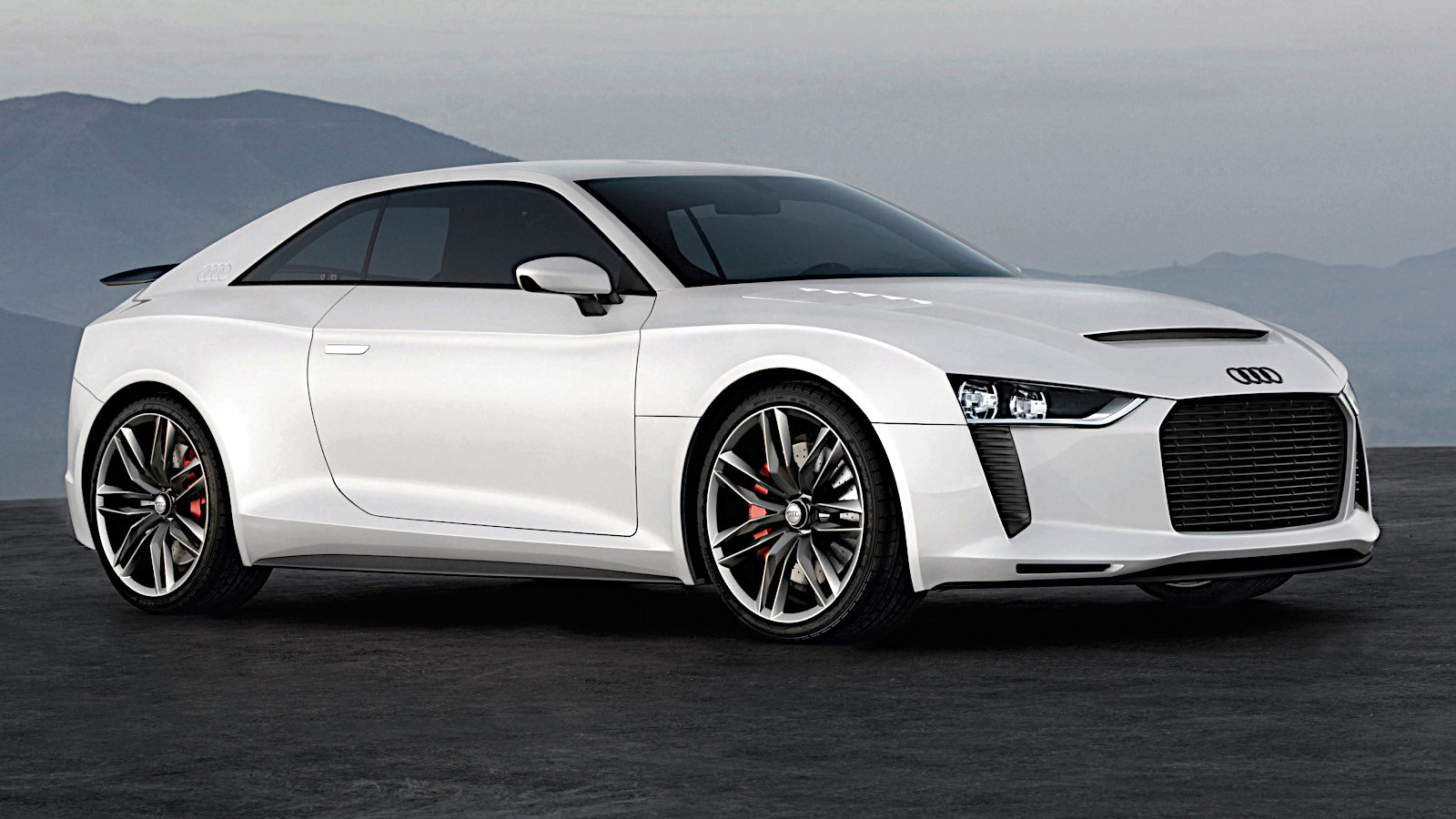
The quattro concept unveiled at the Paris show in October 2010 was based on the contemporary RS5 Coupé, but its body was 150mm (c6in) shorter and had a 40mm (1.6in) lower roofline.
The RS5 was powered by a 4.2-litre V8, but for the quattro concept this was replaced by the 2480cc ‘five’, which in this application was mounted longitudinally (because that was what the platform demanded) rather than transversely, as in the TT RS.
It was also significantly uprated, with a new output of 402bhp – enough, Audi said, to allow the car to accelerate from 0-62mph in 3.9 secs.
There was talk at the time of a limited production run, but this never happened.
Audi RS3 Sportback
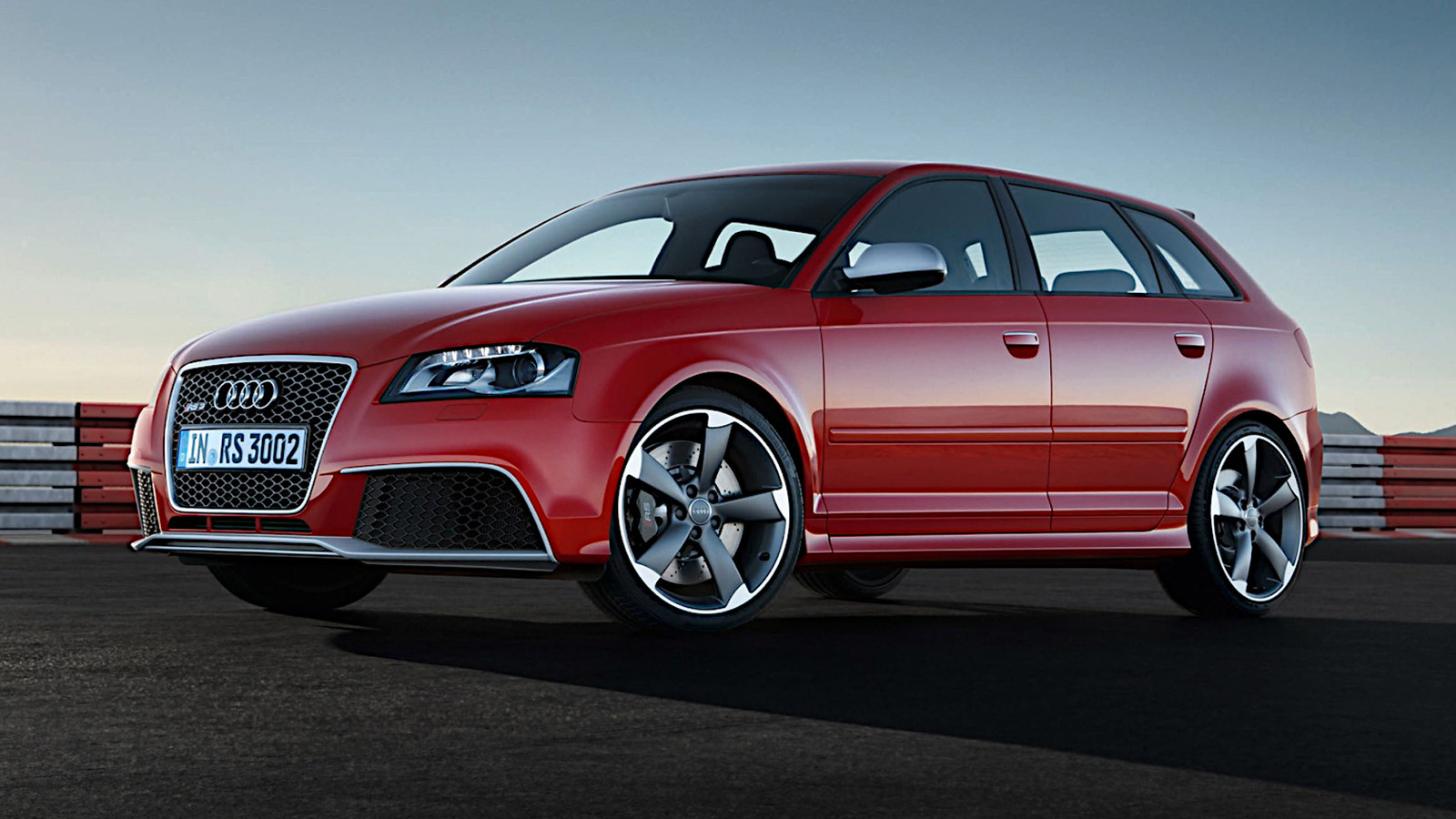
In 2011, the new, 2.5-litre engine was offered to the public for a second time in a high-performance version of the Audi A3.
Of the three body styles available, which included the original three-door hatchback and a two-door convertible, Audi chose the least obviously sporting one, namely the five-door Sportback.
The engine of the RS3, as it was called, was exactly the same as that used in the TT RS, and it gave the car a claimed 0-62mph time of 4.6 secs and a top speed of 186mph.
This made it the ultimate A3 derivative so far, ahead of the four-cylinder S3 and another version with a 3.2-litre VR6 engine, but still quicker versions were to come later.
Audi TT RS plus
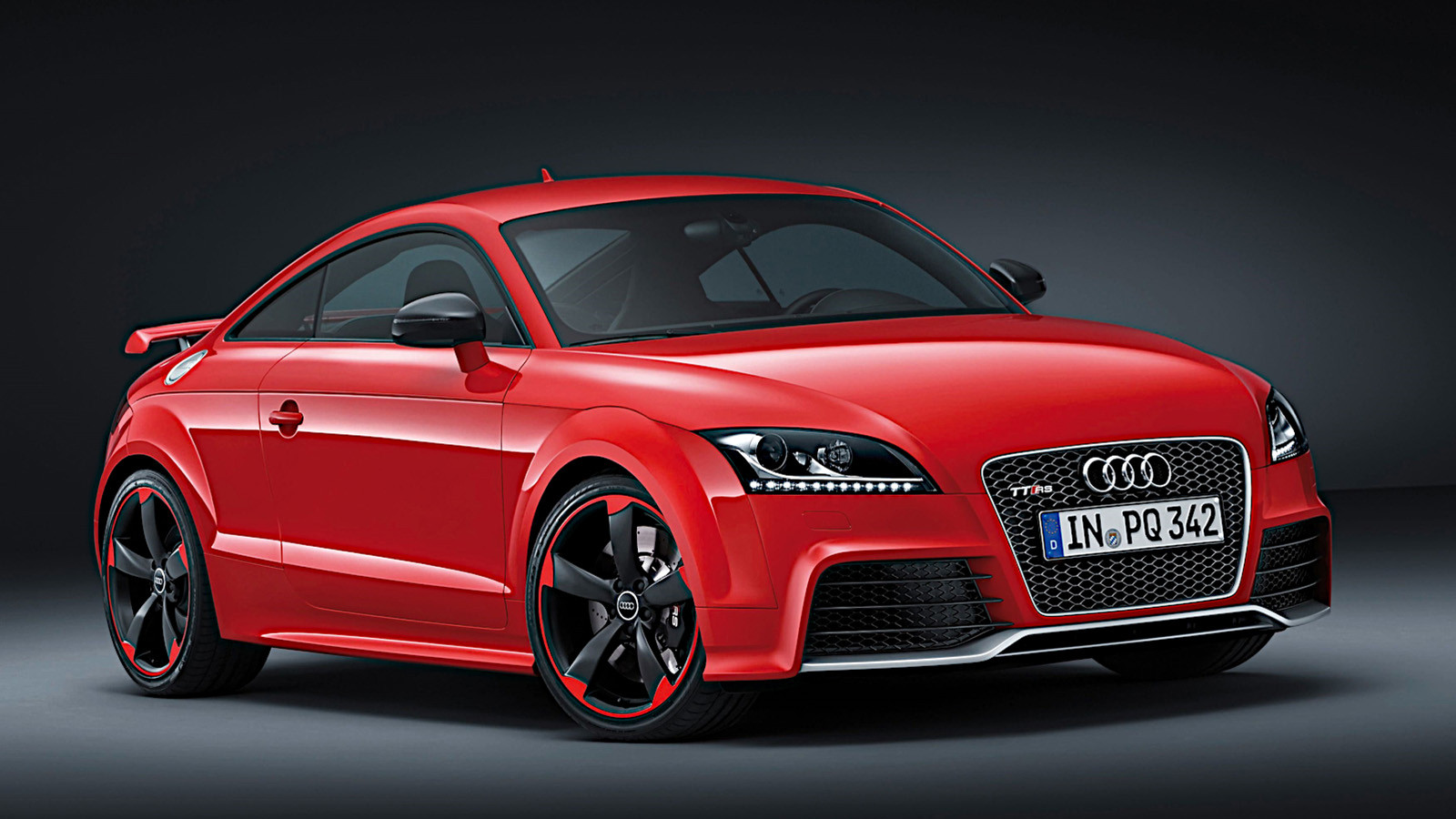
Audi announced in late 2012 that the TT RS was about to become even more potent.
The 2480cc engine was not upgraded to quite the extent it had been for the quattro concept, but in the TT RS plus it produced a still formidable 355bhp.
The 0-62mph times varied according to body style and transmission, ranging from 4.1 secs for a coupé with a seven-speed S tronic semi-automatic gearbox, to 4.4 secs for a roadster with a six-speed manual.
In this period the ‘five’ had a run of success in the International Engine of the Year awards. It had been winning the 2- to 2.5-litre class since 2010, and would continue to do so until 2018, after which the capacity-based categories were abandoned.
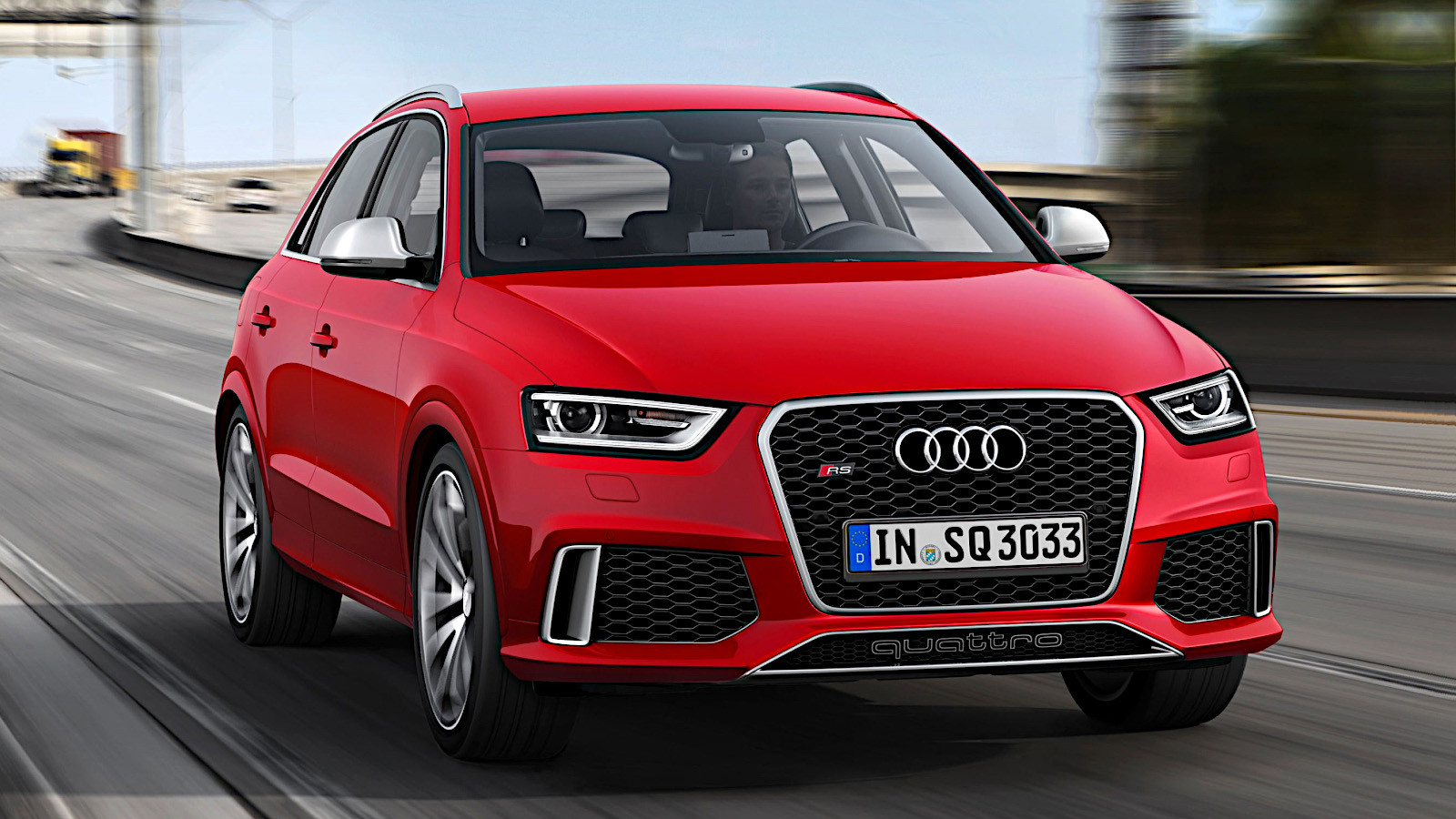
Audi RS Q3
The RS Q3 of 2013 was the first SUV whose name included the RS tag, which Audi has traditionally used for its highest-performing road vehicles.
Perhaps in deference to the Q3’s higher centre of gravity, the output of the 2480cc, turbocharged ‘five’ was reduced to 306bhp for this application.
This, however, was still enough for a 0-62mph time of 5.5 secs and a top speed of 155mph, which could in fact have been higher if Audi hadn’t added an electronic speed limiter.
Furthermore, keeping the output down to this level soon became a moot point, because there would be more powerful RS Q3s within just a few years.
Later TTs
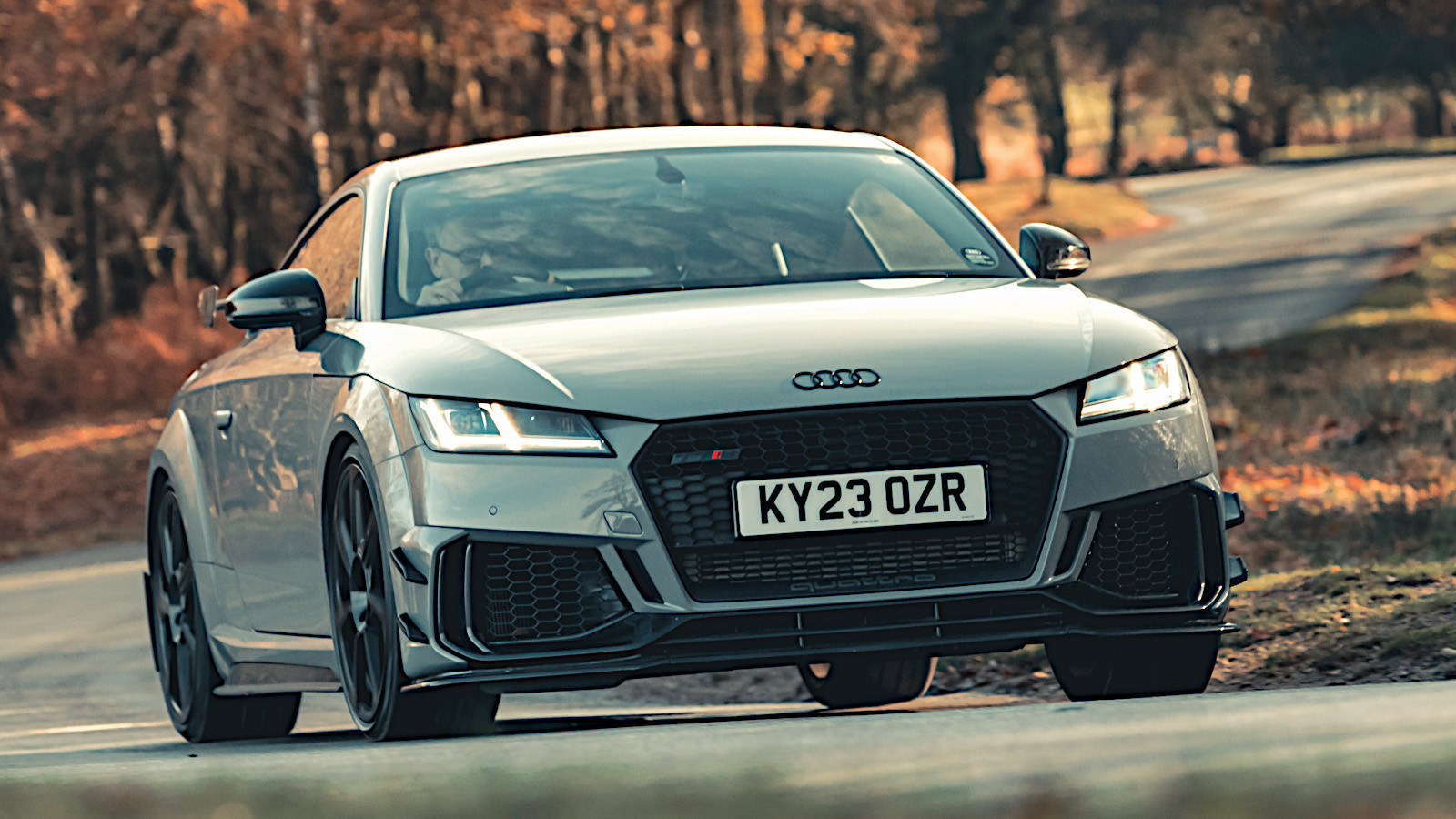
A new version of the 2480cc, five-cylinder engine became available in the TT RS in 2016.
It was 26kg (57lb) lighter than the unit it was derived from (mostly because it had an aluminium crankcase), and it was also substantially more powerful, with a peak output of 394bhp.
The 0-62mph time was now down to 3.7 secs for the coupé and 3.9 secs for the roadster, and the top speed was once again limited to 155mph, though customers who felt they really needed more than that could buy the Dynamic Package Plus option, in which case the limit was 174mph.
This engine was still included in the range when the TT was discontinued in 2023, 25 years and two re-generations after its launch in 1998.
Later RS Q3s
Suspicions that Audi thought giving a compact SUV much more than 300bhp might be unwise were dispelled first in 2014, when the output was raised to 335bhp, and then again two years later.
The RS Q3 performance of 2016, which sat above rather than replaced the regular RS Q3, produced 362bhp, which led to improvements in the top speed and 0-62mph time to 4.4 secs and 167mph respectively.
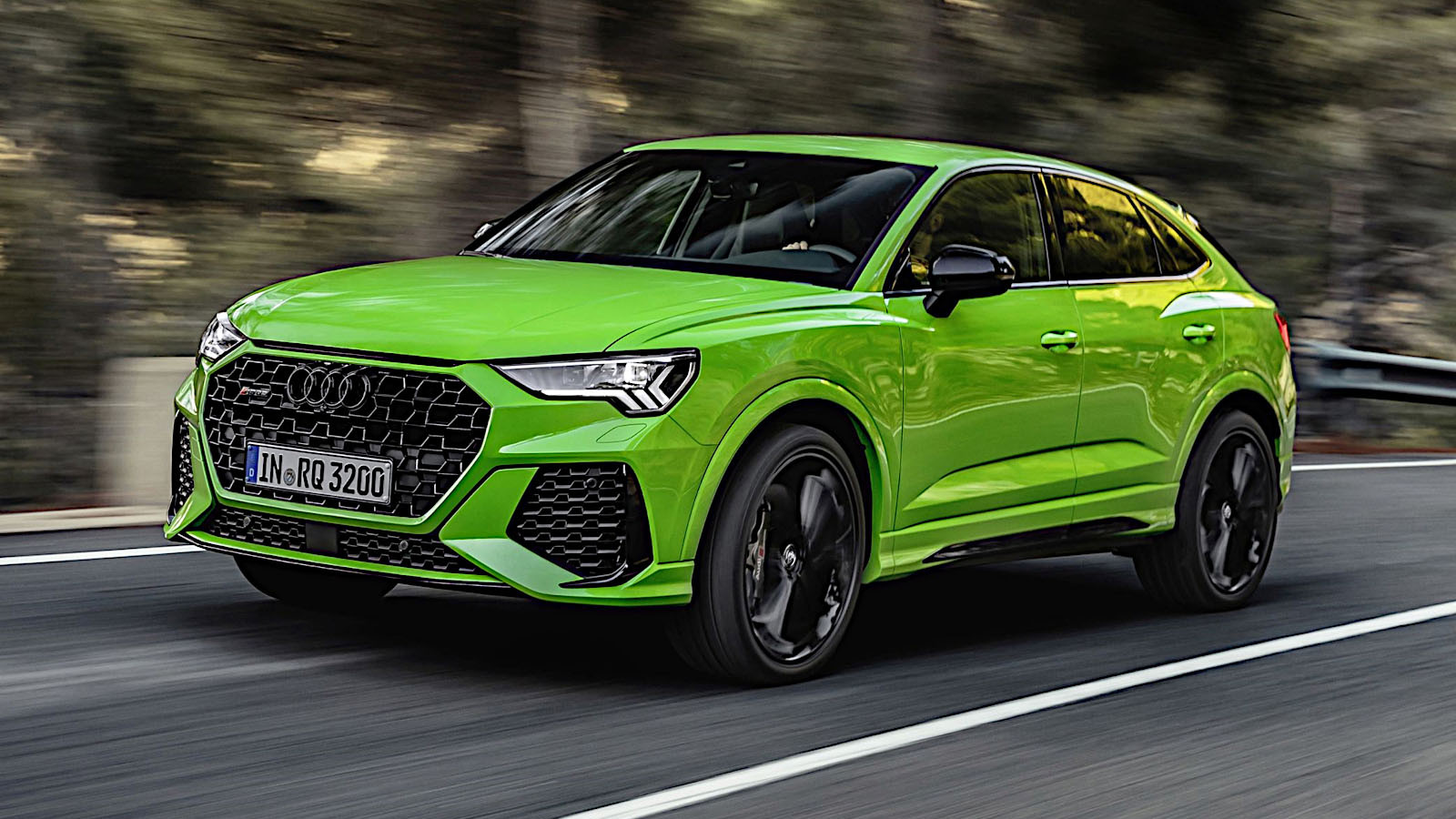
A further increase was introduced in 2019, when the RS Q3 (in standard and Sportback forms) received the ‘lightweight’ ‘five’ as used in the TT, with the same output of 394bhp.
Later RS3s
The five-cylinder engine continued to be fitted to the high-performance version of the A3 long after its introduction in 2011.
Maximum power of the RS3 reached 394bhp in 2017 and stayed there into the anniversary year, though peak torque rose in 2021 from the original 354lb ft to 369lb ft.
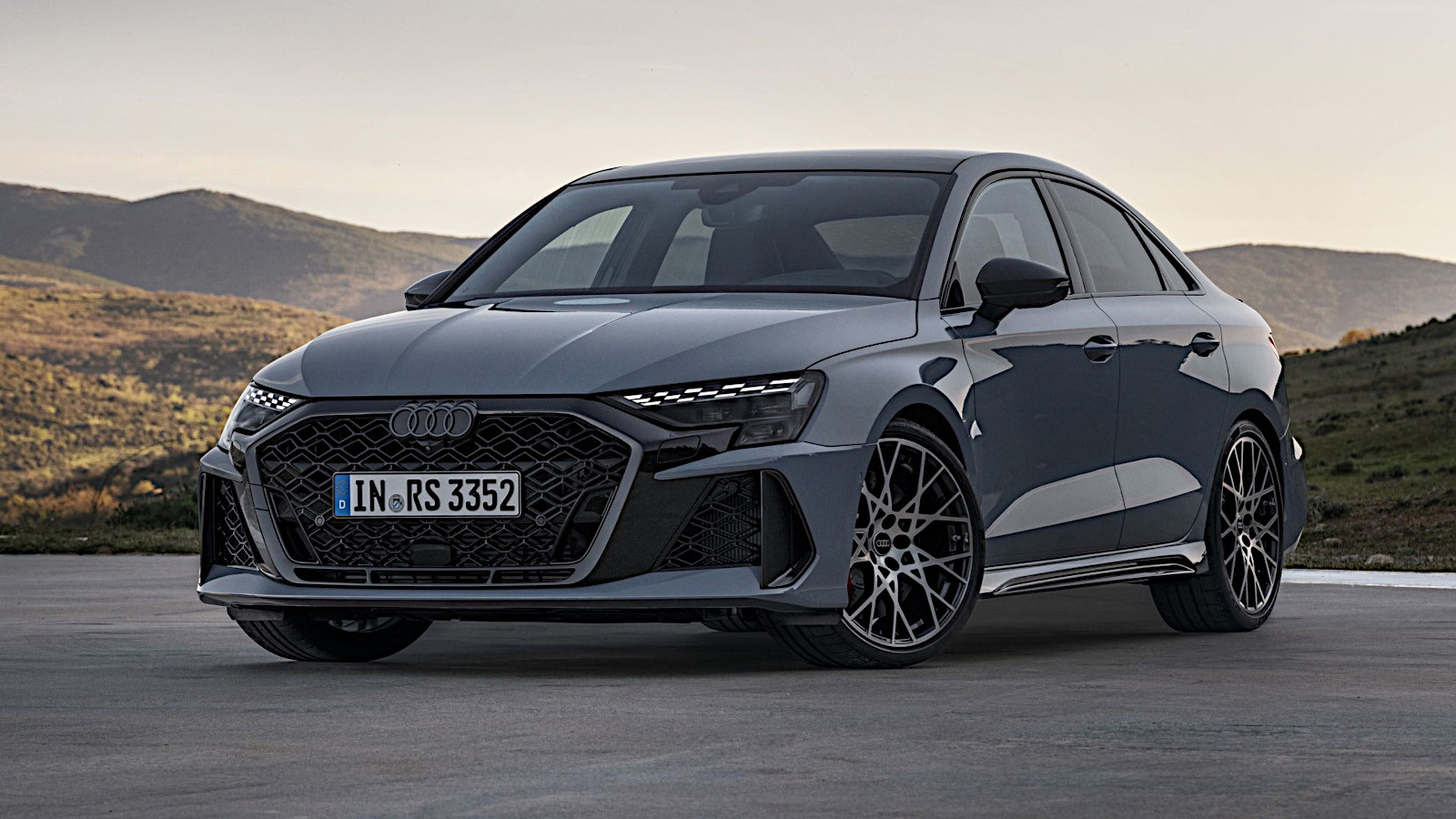
As things stood half a century after the introduction of Audi’s first ‘five’ in the 100, the RS3 was available as both a Sportback and a saloon, the latter body style having been introduced in 2017.
The saloon (pictured) was the more expensive of the two, but although it had the same official 0-62mph time of 3.8 secs as the Sportback, it was marginally superior in terms of fuel economy and CO2 emissions.