
A new dawn
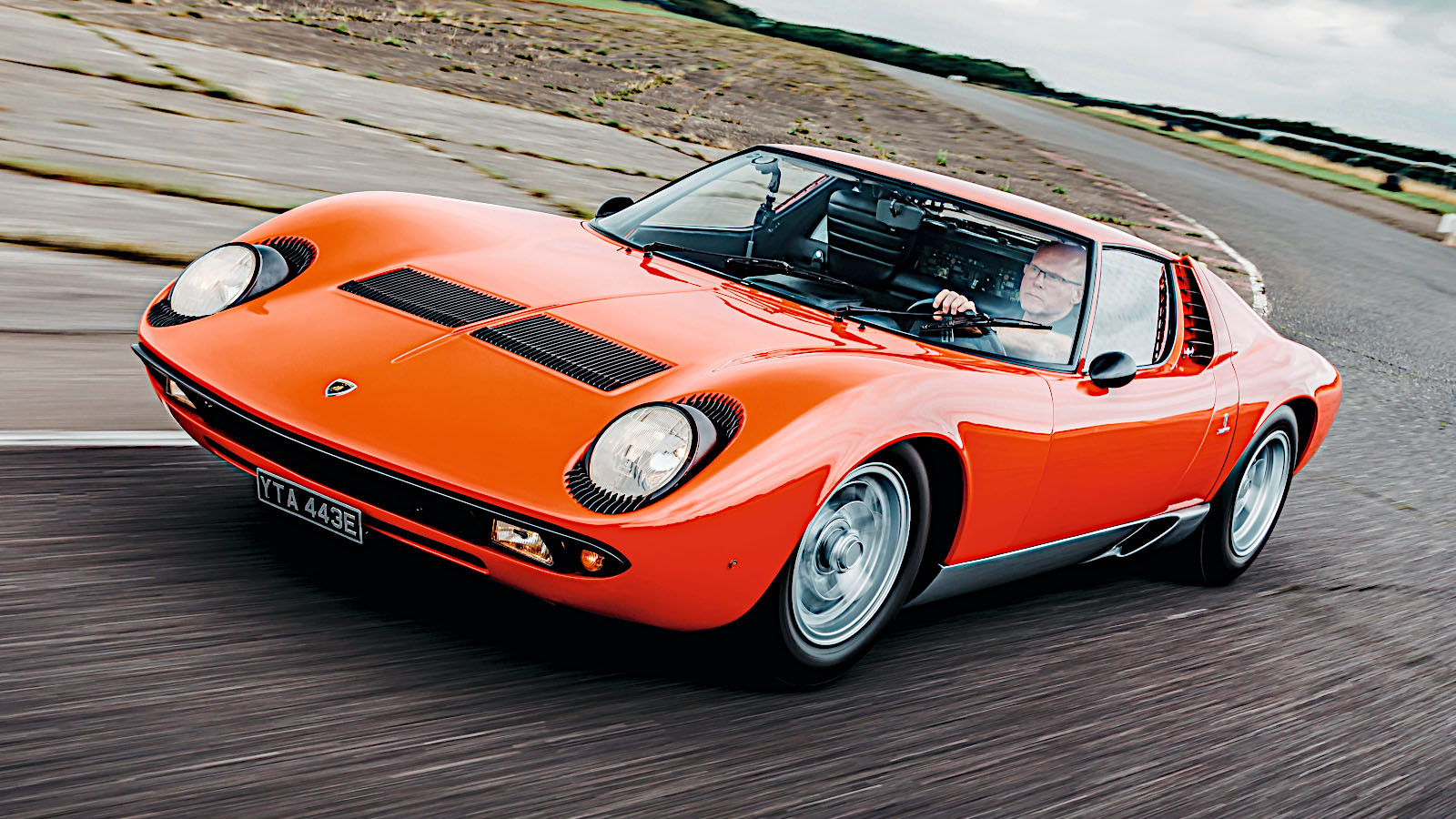
In 1966, an Italian marque which had been created only three years earlier put on sale a model which set the motoring world in a new direction.
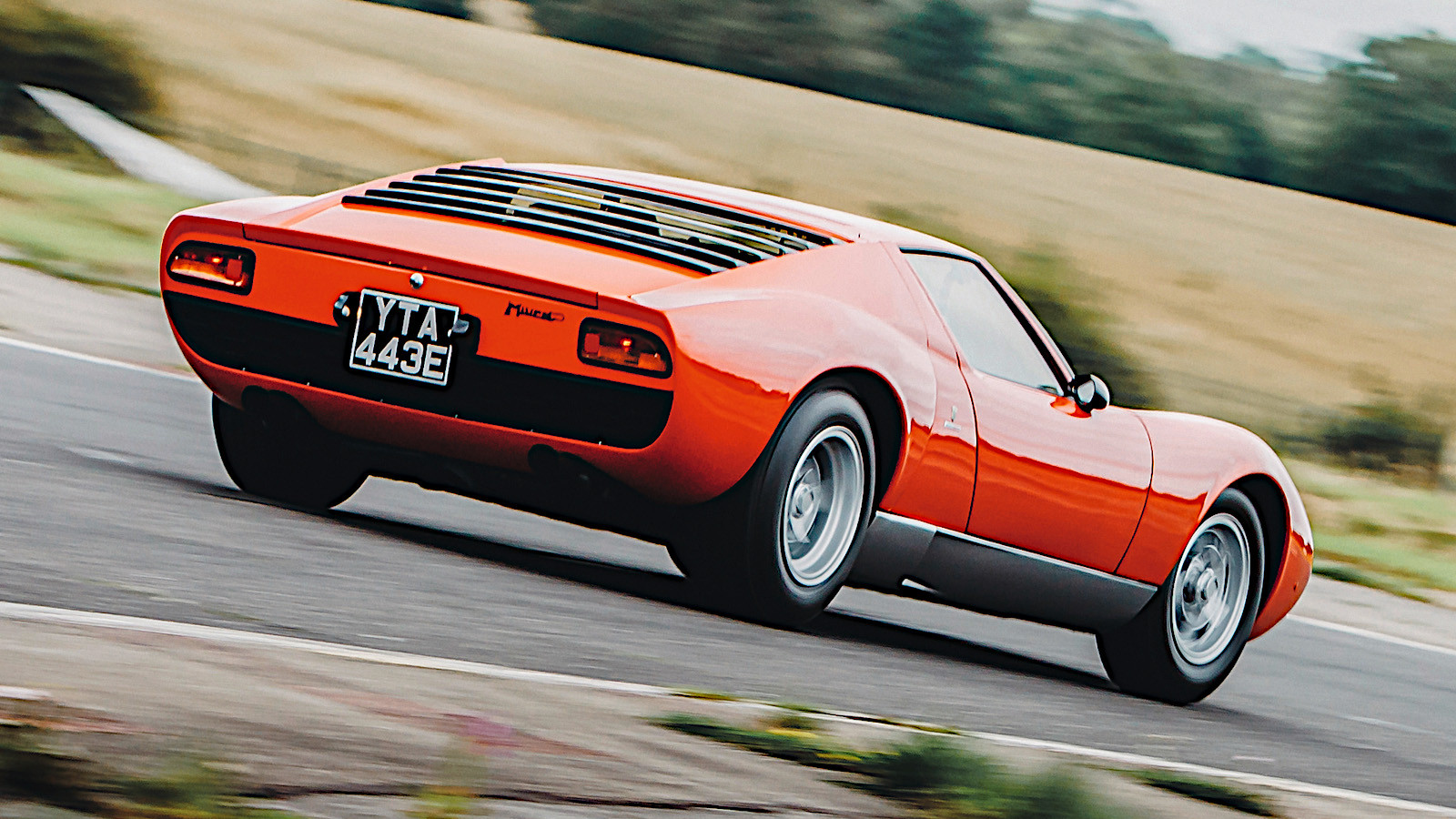
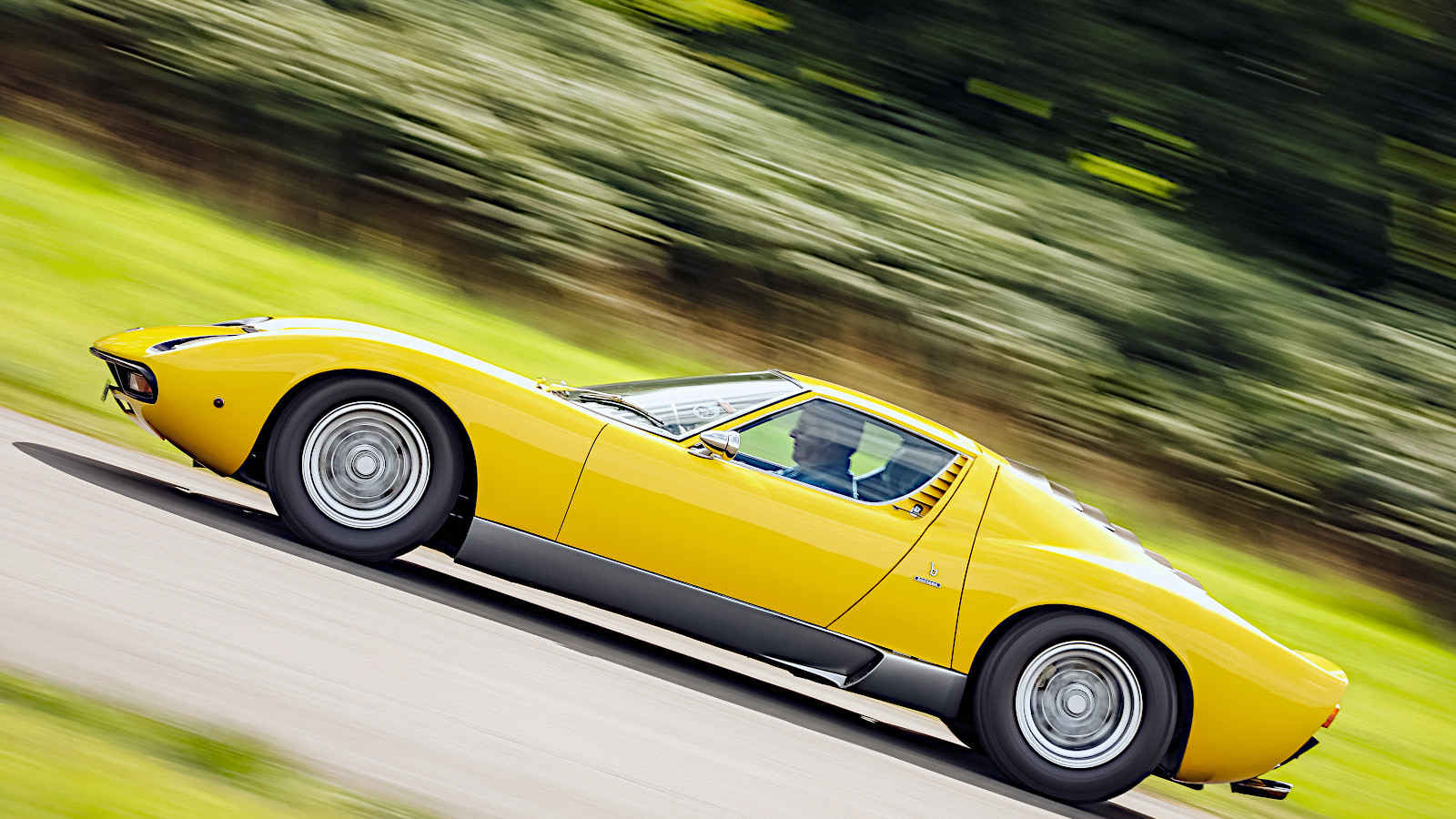
The Lamborghini Miura was, by general agreement, the first mid-engined, roadgoing, high-performance car ever to go into production (with a caveat which we’ll be dealing with in due course), and its basic layout has been used in almost every supercar that followed it.
Simple subtraction demonstrates that the Lamborghini Miura reaches its 60th birthday in 2026, which is the perfect excuse for us to take a closer look at its background and history.
Before the Miura
Car maker Lamborghini was not originally in the business of producing anything that might be described as a supercar.
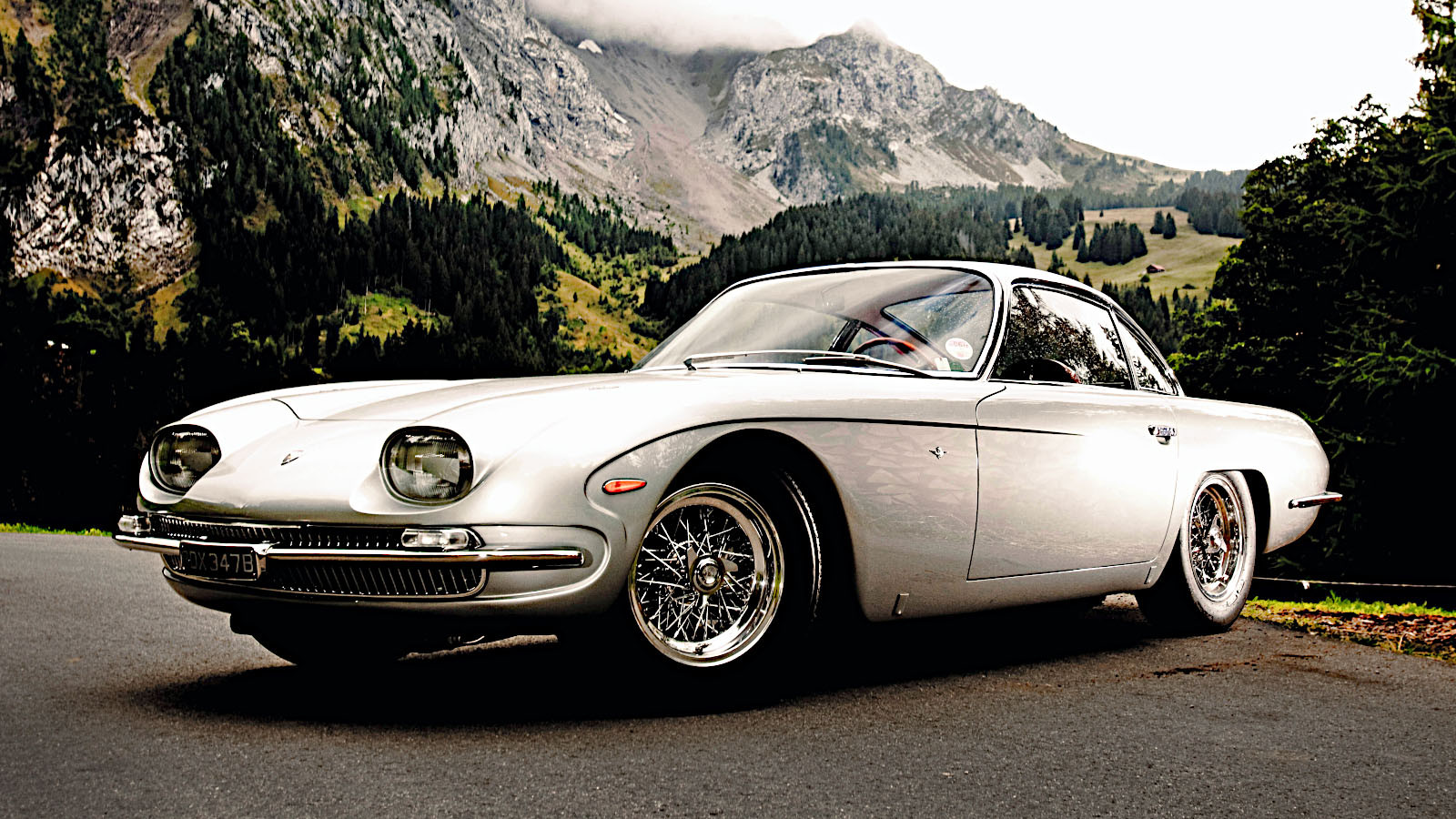
Its debut model, launched in 1964, was the 350GT grand tourer, available as either a coupé or a roadster and in both cases with a front-mounted engine.
It was replaced in 1966 by the 400GT, which was also offered in two forms (both of them coupés this time) and had a larger-capacity version of the motor used in the 350GT.
That engine is the only significant connection between the early cars and the Miura, so it’s worth investigating further.
The Lamborghini V12
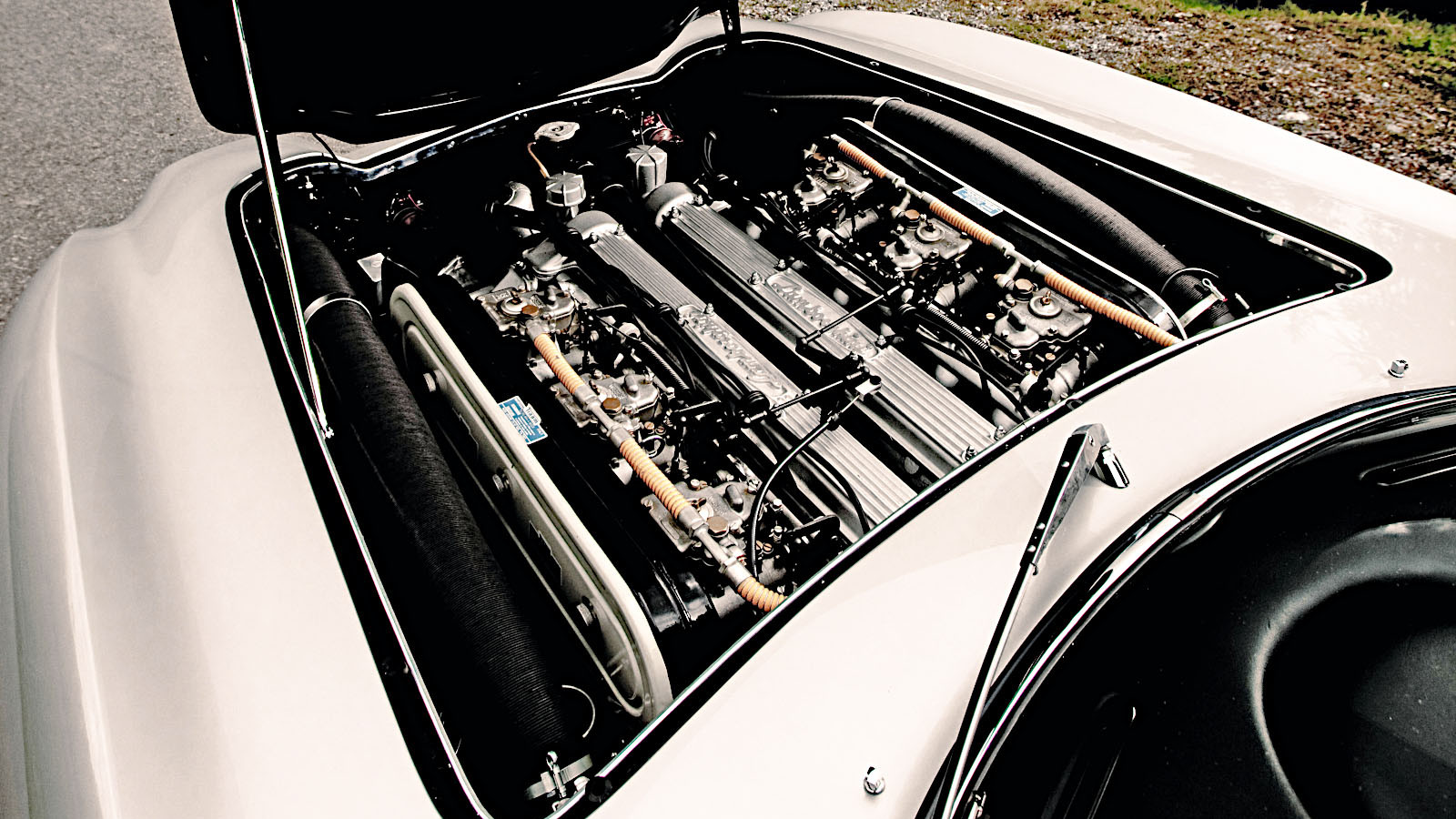
All early Lamborghinis were powered by a V12 engine designed by Giotto Bizzarrini, who reportedly disappointed company founder Ferruccio Lamborghini by creating something which seemed more suitable for a racing car than a tourer.
As fitted to the 350GT, it measured 3465cc, but due to what the motoring author Karl Ludvigsen has described as ‘generous cylinder-centre spacing’ there was no difficulty in making it larger.
Sure enough, Lamborghini soon added 5mm to the bore, bringing the capacity to 3929cc.
This was the form in which the engine was used in the 400GT, and also in all versions of the Miura.
The mid-engined layout
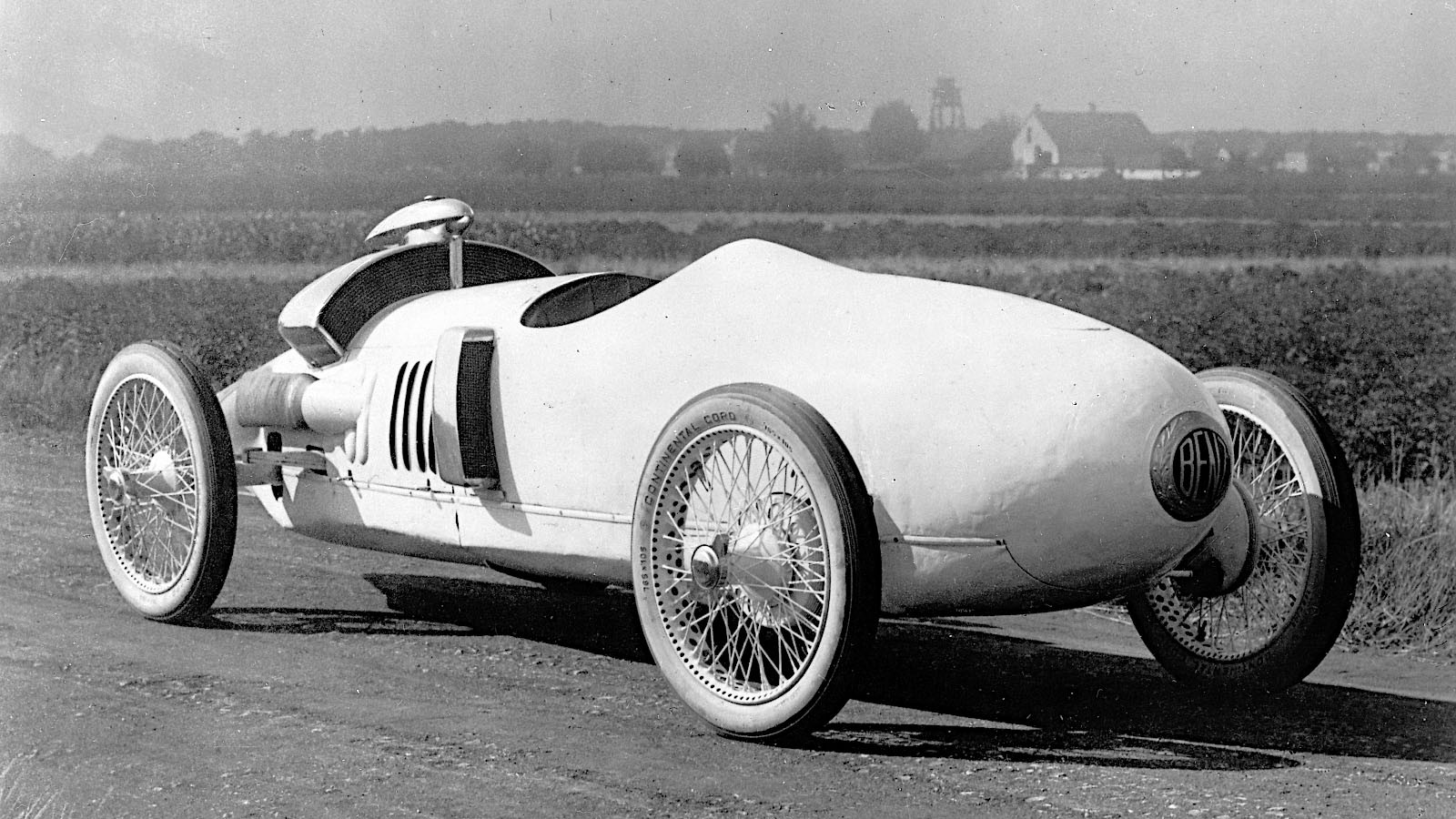
This layout was not new, and was in fact used as long ago as 1921 in Edmund Rumpler’s remarkably aerodynamic Tropfenwagen, which was soon followed by the Benz Tropfenwagen Grand Prix car (pictured).
The Auto Unions, with engines mounted between the driver and the rear wheels, were among the most spectacular and fascinating racing cars of the 1930s, but even these weren’t enough to persuade other builders to adopt the same layout.
It was only when Cooper brought it to Formula One in the later 1950s that the idea became fully accepted, and by the time the Miura entered production all new Grand Prix cars were mid-engined.
Mid-engined road cars
Even if you discount the Rumpler Tropfenwagen, the Lamborghini Miura was beaten to the title of world’s first mid-engined road car by two vehicles which went on sale earlier in the 1960s.
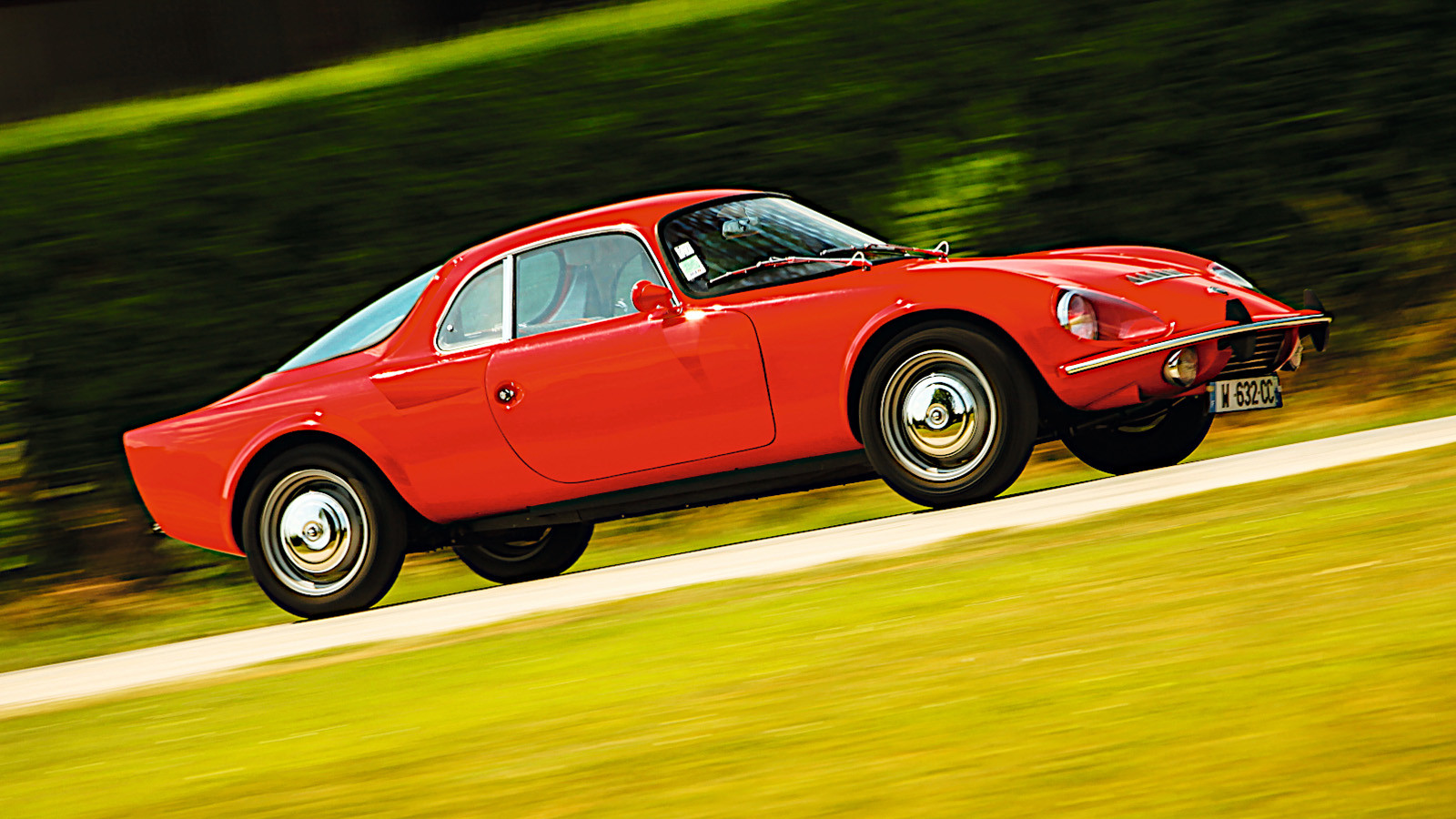
The first was the René Bonnet Djet, later renamed Matra Djet (pictured), whose Renault Cléon-Fonte engine was mounted immediately ahead of the front axle, while the second was the De Tomaso Vallelunga powered by a 1.5-litre version of the pre-crossflow Ford Kent.
However, while the Miura was introduced later than either of them, it’s clear from their engines that neither the Matra nor the De Tomaso could be considered a supercar.
Another contender
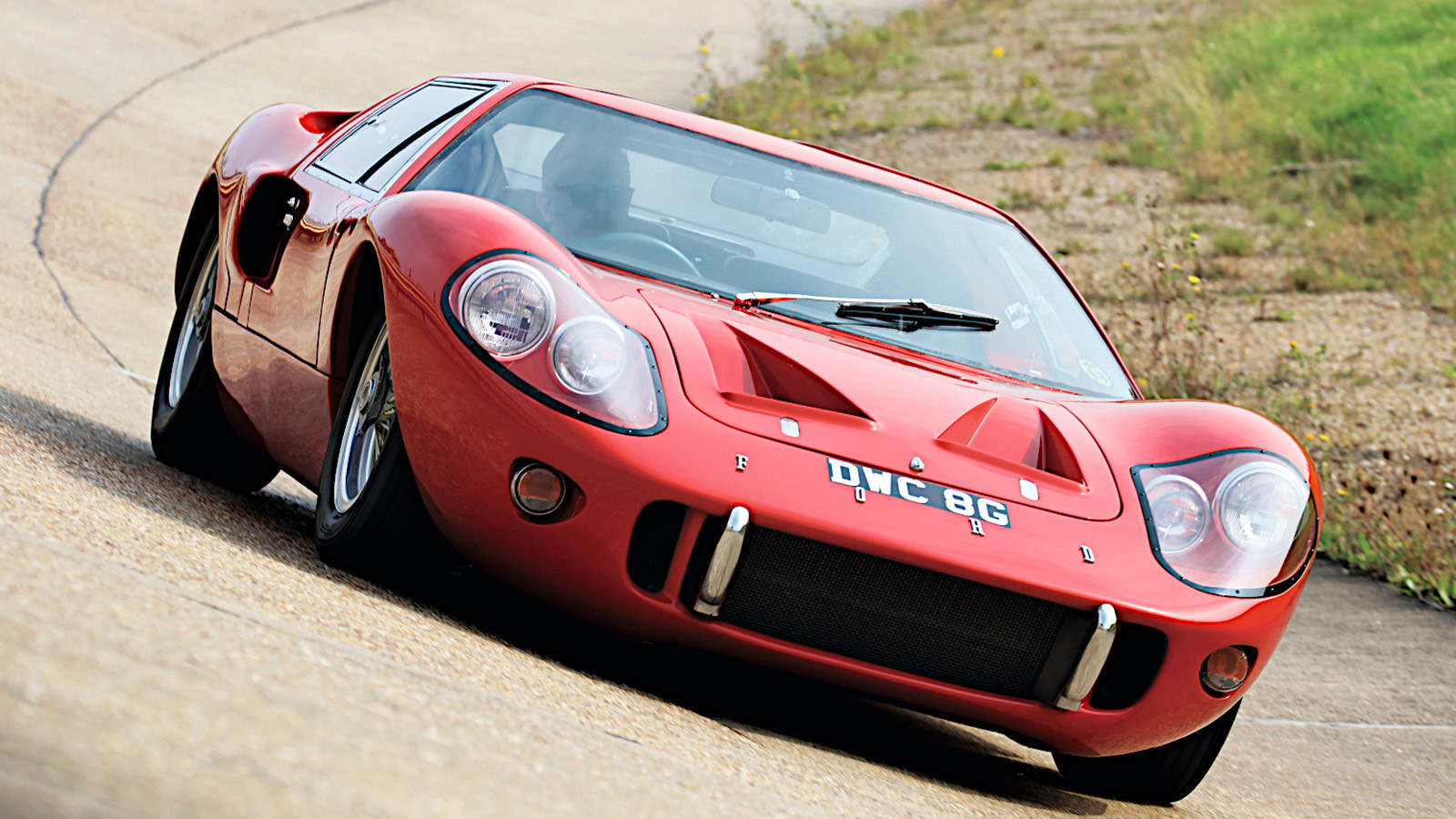
In terms of the claim that the Miura was the first of its kind, there are several elephants in the room such as the Ford GT40 (pictured), whose V8 engine – either a Windsor or a larger-capacity FE – was mounted longitudinally ahead of the rear axle.
It was being built as early as 1964, well before even the bare chassis of the Miura was revealed for the first time, and it could certainly be made road legal.
However, the Ford GT40, like the contemporary Ferrari 250P, was designed specifically for racing, whereas the Miura was only ever intended to be a road car and is therefore in a distinctly different category.
The chassis
The Miura was largely the work of Giampaolo Dallara, Paolo Stanzani and Bob Wallace, all of them in their 20s when they created its chassis.
They liked racing cars and had come up with something as close to that as they thought Ferruccio Lamborghini (who was not particularly interested in motorsport) would tolerate.
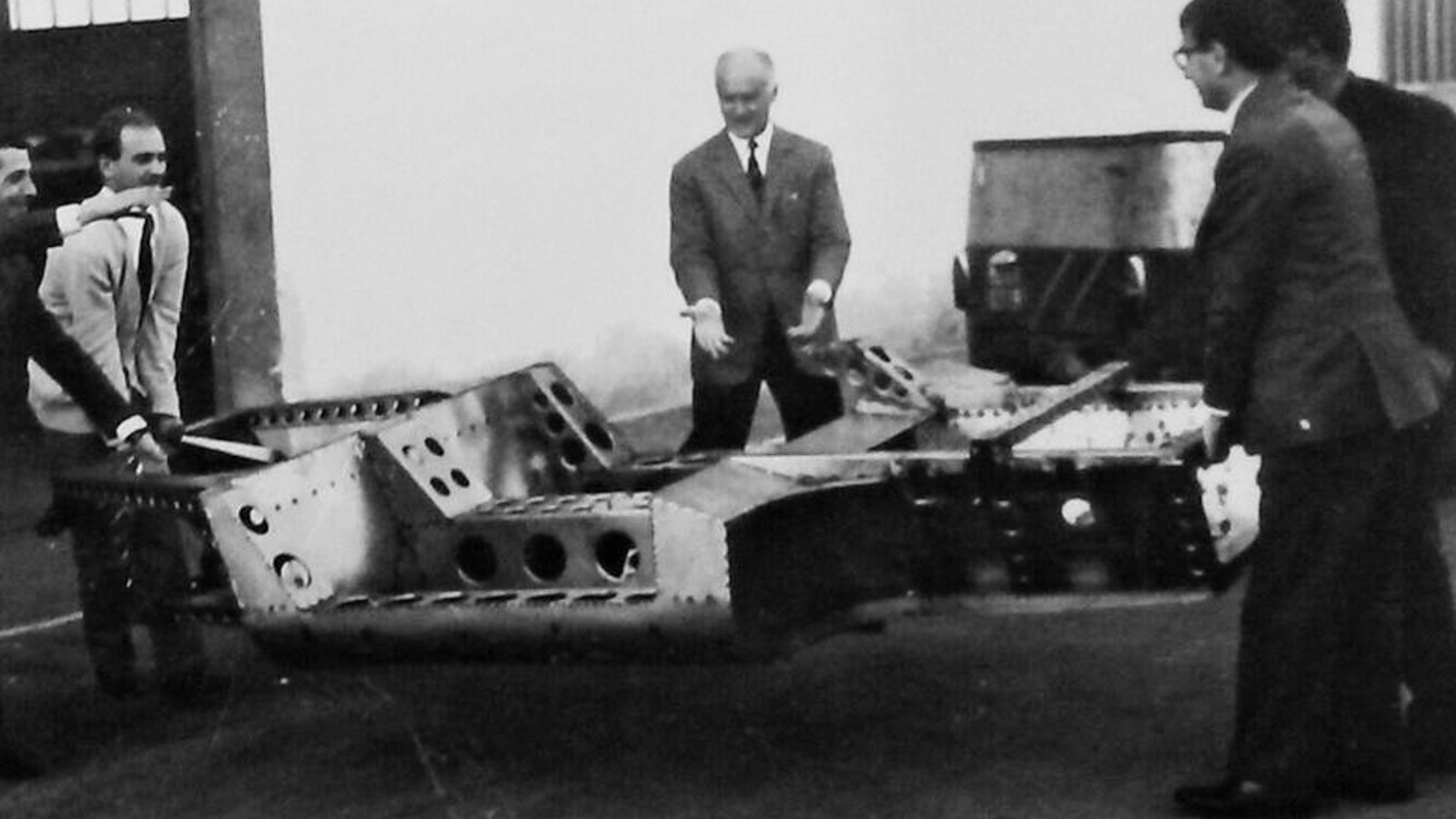
The central tub as well as the front and rear subframes were all made of folded steel, liberally drilled to reduce weight.
This was certainly effective. By Lamborghini’s own figures the entire structure weighed just 120kg (265lb).
The Miura arrives
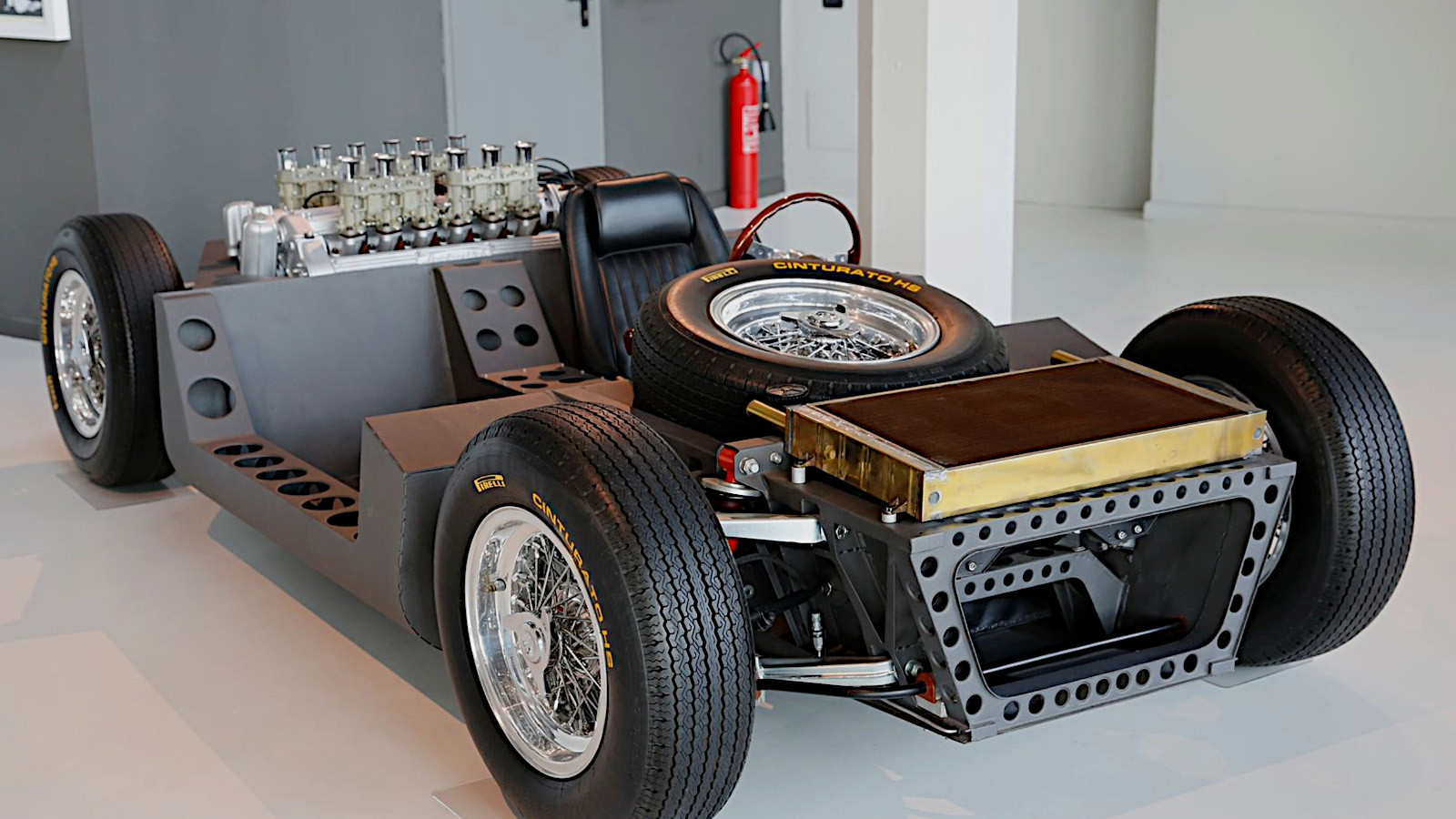
The Miura was first presented to the public at the Turin show in November 1965, before a body had been designed for it.
At this point it was still basically a chassis, but now with double-wishbone suspension, Girling disc brakes, Borrani wire wheels and a drivetrain added.
The only major item common to previous Lamborghinis was the 3929cc V12 engine, as used in the 400GT.
However, instead of being placed at the front, as the 3465cc version in the 350GT also was, it was mounted transversely on the rear axle line, a very compact arrangement which allowed the whole car to be relatively short.
Miura with a body
According to company legend, Ferruccio Lamborghini teased Nuccio Bertone when he came for a look at the chassis in Turin by saying, “You are the last of the coachbuilders to show up”.
Be that as it may, the Bertone company was commissioned to design a body for the car.
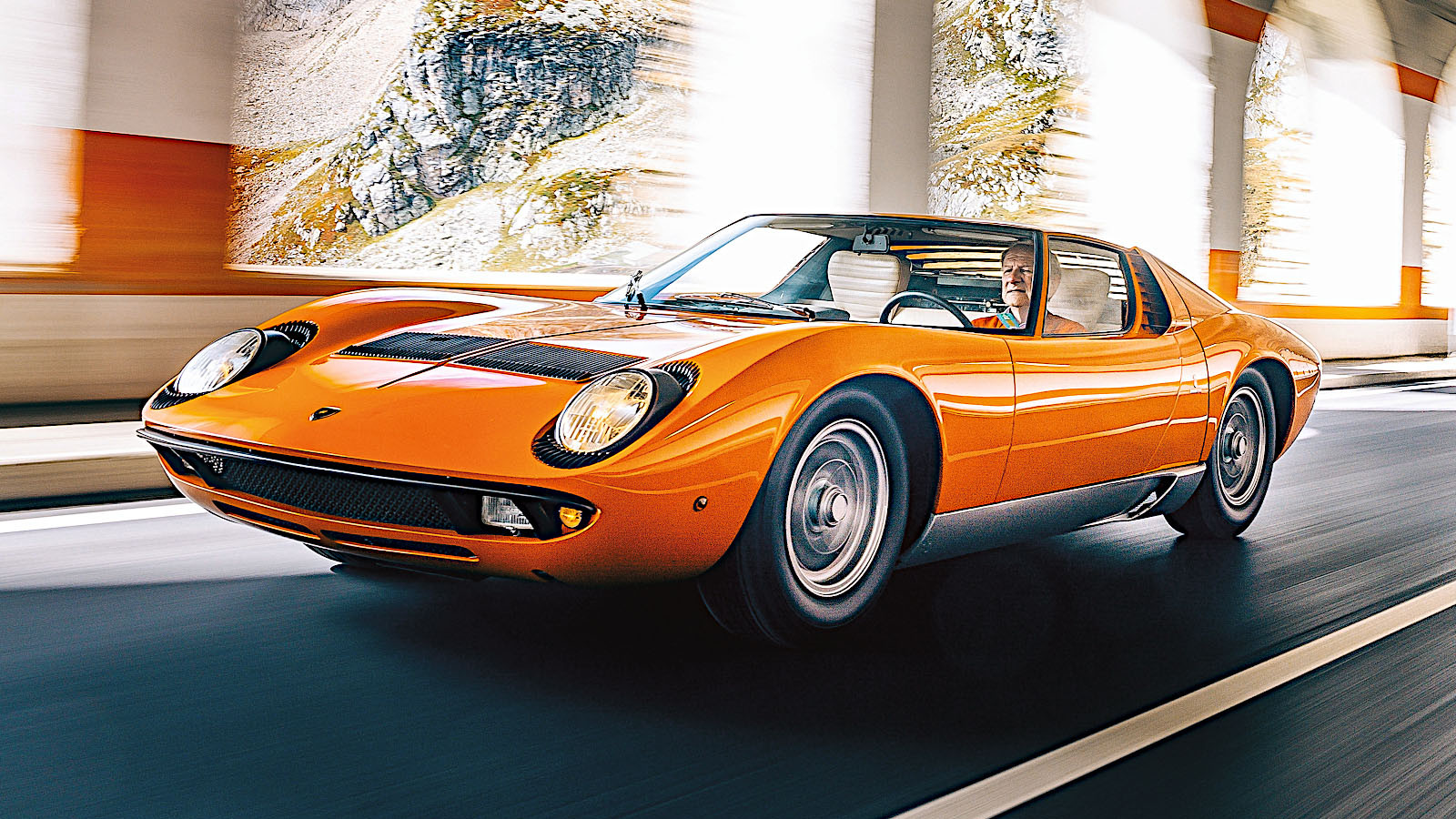
Work seems to have progressed quickly, because the complete car was shown for the first time at Geneva in March 1966, just four months after that conversation.
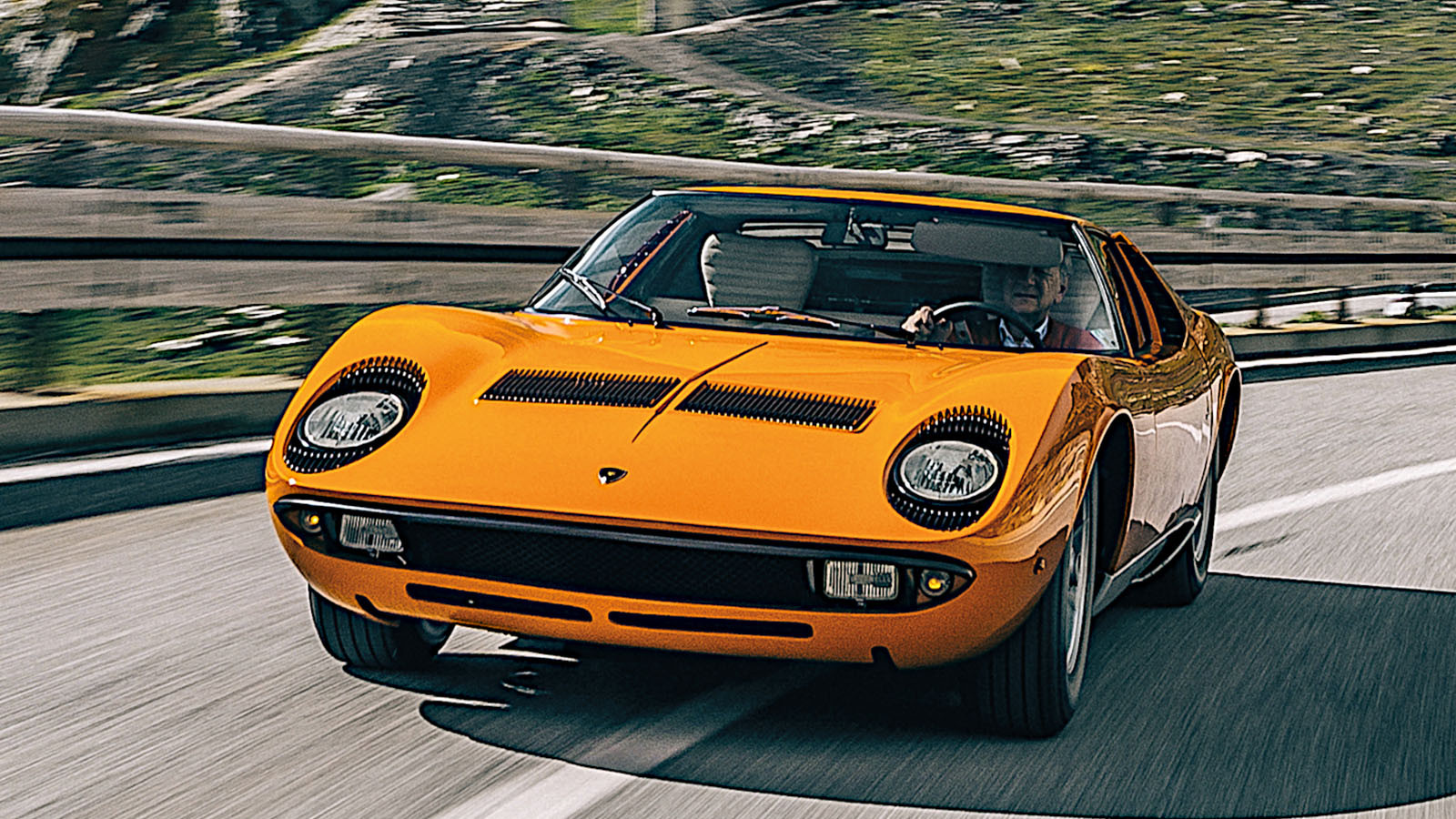
One slightly whimsical detail in an otherwise imposing shape was the series of vertical lines which, placed above and below each of the headlights, gave the impression of eyelashes.
P400
Ferruccio Lamborghini was fascinated by bullfighting, and this interest was reflected in the names he chose for his cars.
The new model was named after a farm in Spain which breeds fighting bulls (and which is turn named after the family that owns it), but the earliest Miura was also referred to as the P400.
P indicates the position of the engine – posteriore, meaning ‘rear’ in Italian – and 400 is a close approximation of its capacity in decilitres, though 393 would be closer still.
The V12 produced 345bhp at 7000rpm, which was no small accomplishment in the mid 1960s, but the output would exceed that in later years.
P400 production
Although it was quite expensive and only minimally practical (a definition which could be applied to all subsequent supercars), the Lamborghini Miura certainly attracted customers.
It remained in its original form until a new version was revealed towards the end of 1968, and in that time 265 examples were manufactured.
This level of popularity is said to have surprised both Ferruccio Lamborghini (who, you’ll remember, had intended his company only to build grand tourers) and Nuccio Bertone, though it seems safe to assume they would both have been pleased about it.
The Miura Roadster
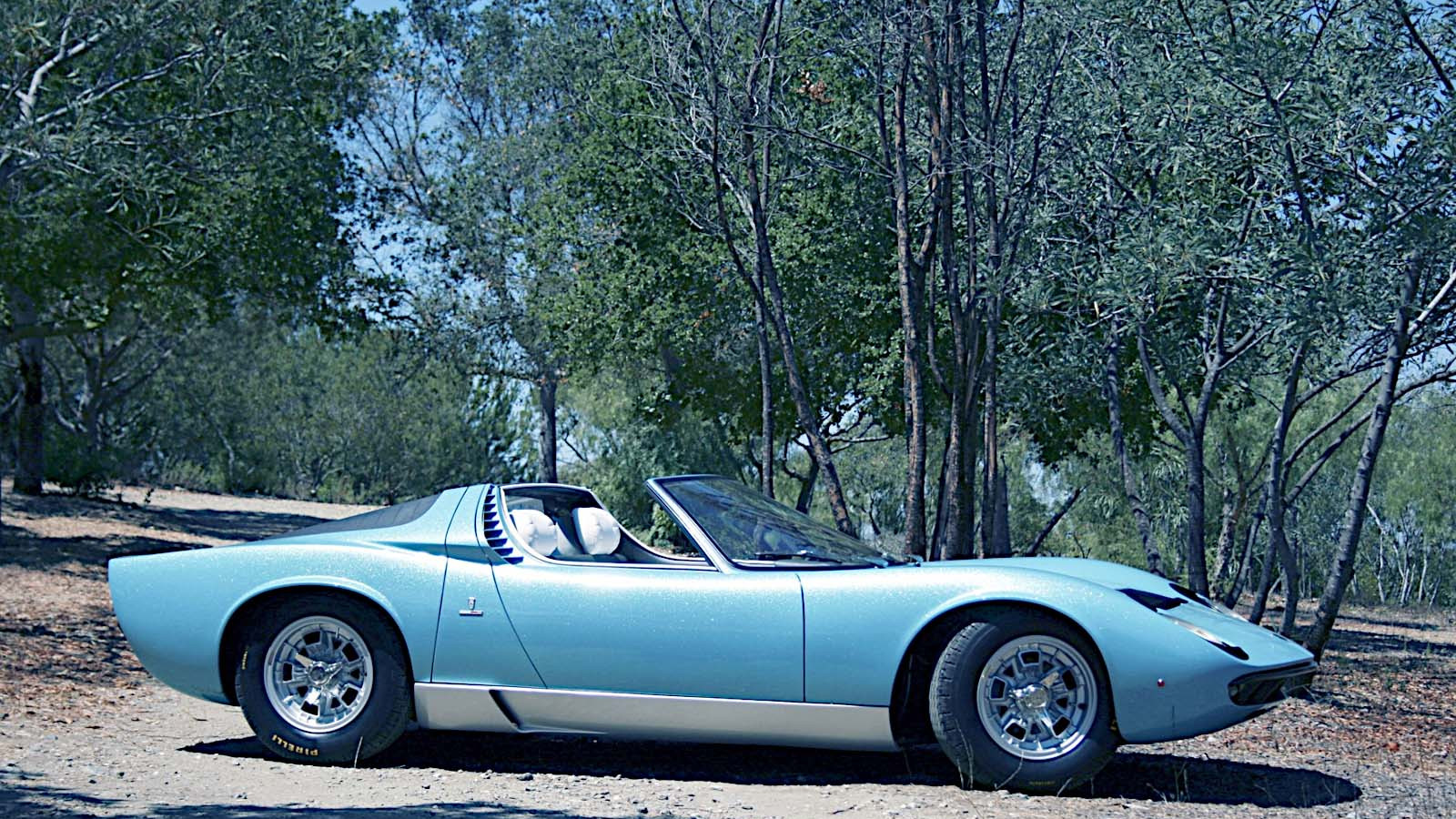
The only Miura Roadster ever built was displayed on the Bertone stand at the Brussels motor show in 1968, and appeared again at the Geneva show a few weeks later.
Unique in that it had no roof (even a removable one) or side windows, it was later purchased by the International Lead and Zinc Research Association, which decided to have it painted in olive green.
In 2007 and 2008 it was thoroughly restored, a process which included returning it to its original colour of light-metallic blue.
The Italian Job
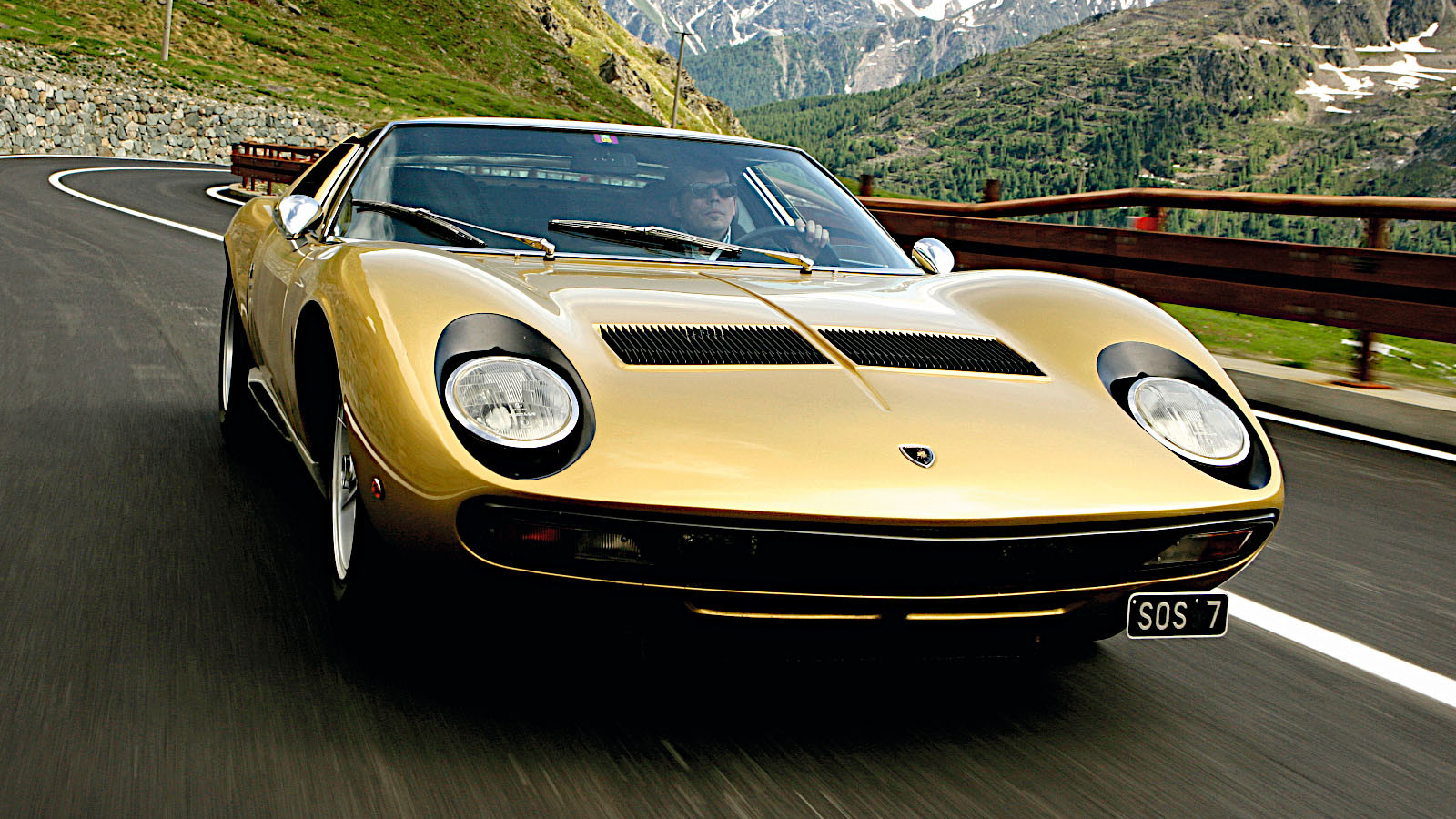
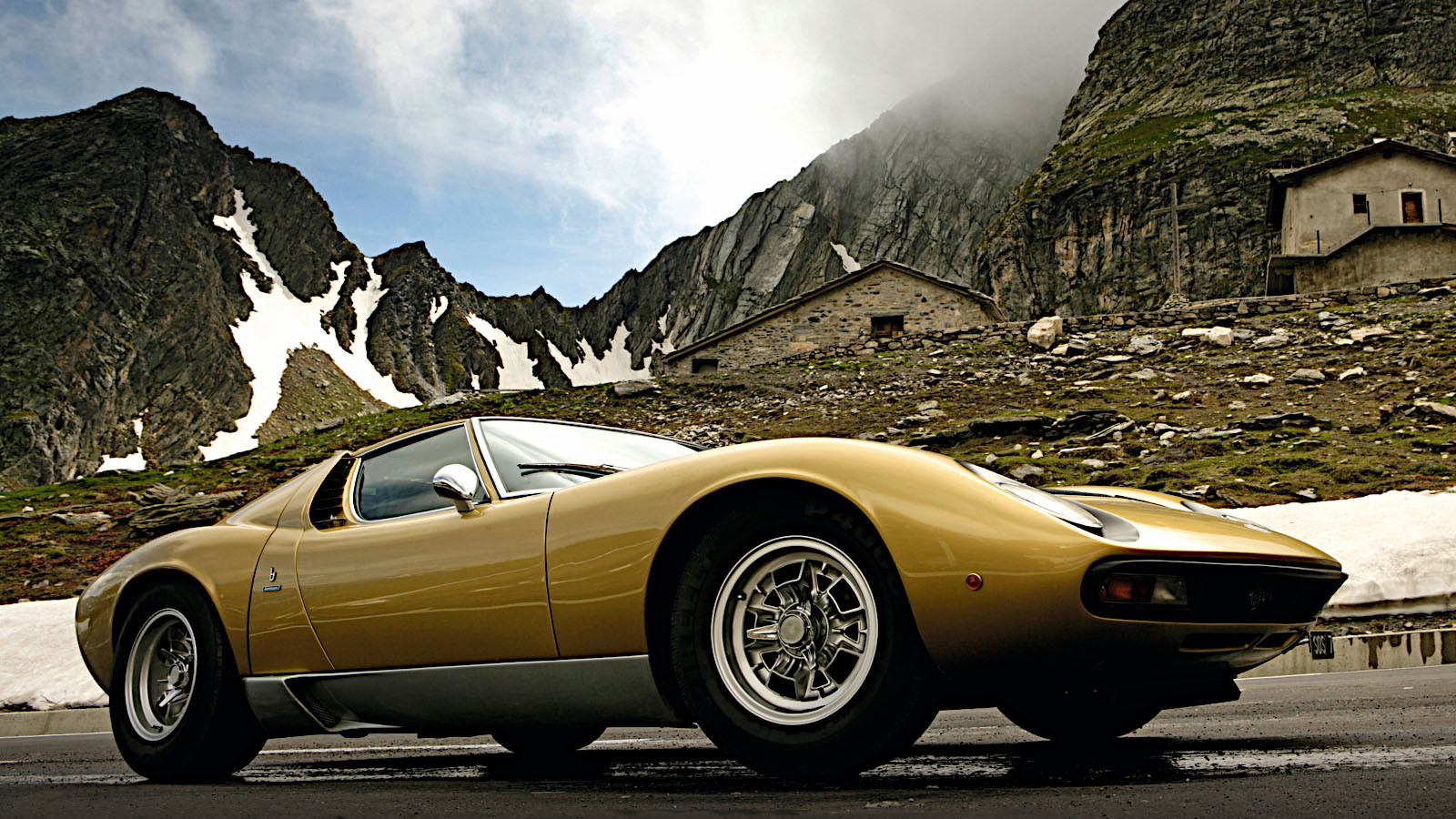
Footage taken in 1968 of a Miura P400 being driven through the Great St Bernard Pass was used as the opening scene of The Italian Job film, released the following year.
According to the story, the car met its end against the front of a bulldozer, which then pushed the remains into a nearby ravine.
In fact, there were two cars – the one being driven, which survived, and the one destroyed by a surfeit of gravity, which was already beyond economic repair when it was supplied to Paramount Pictures.
Similarly, the body which exited the Miura during its final plummet was a dummy, and not that of Enzo Moruzzi, who did most of the driving as a stand-in for actor Rossano Brazzi.
Different seats
The Miura used for The Italian Job was standard in every respect but one.
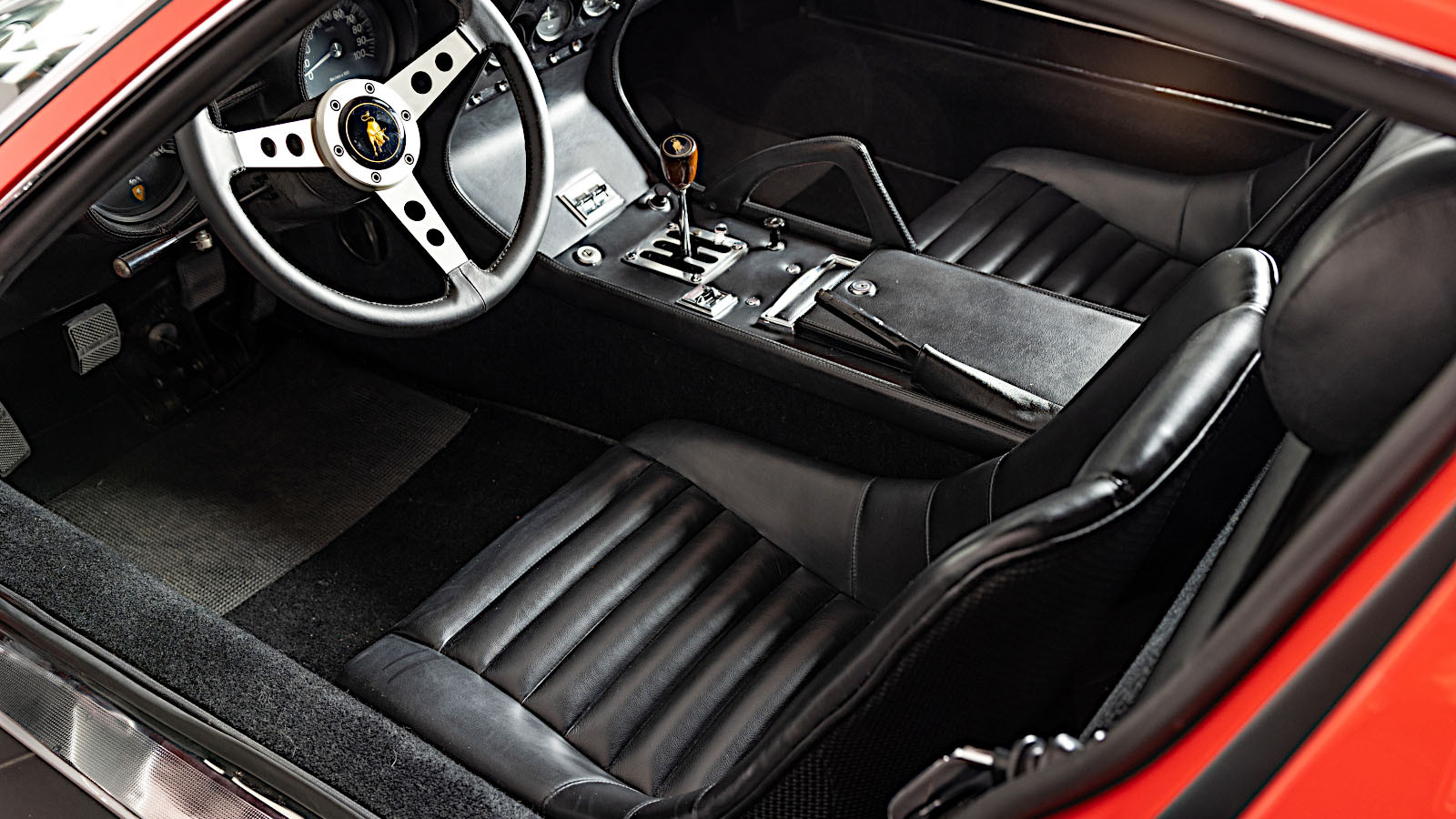
According to Enzo Moruzzi, there was some concern that the white-leather seats would become damaged during the filming session, so they were replaced by a set trimmed in black leather, which were normally used during testing and were therefore slightly worn.
The headrests, however, were mounted not on the seats but on the glass panel separating the passenger and engine compartments.
There wasn’t enough time to change those, so they remained, as can clearly be seen in the in-car shots.
The actual car
After being used for the film session, the most famous Miura of all was delivered to its first owner in Rome, and passed through many hands thereafter.
Its identity became unclear until Liechtenstein-based collector Fritz Kaiser wondered if the car he bought in 2018 was the one he thought it was.
Lamborghini Polo Storico, the marque’s heritage department, started an investigation, and announced in May 2019, almost exactly 50 years after The Italian Job was released, that Kaiser’s car and the one used in the film were indeed the same, with the chassis number 3586.
The Miura S
After the filming of The Italian Job, but before the movie had been released, Lamborghini announced the first update to the Miura.
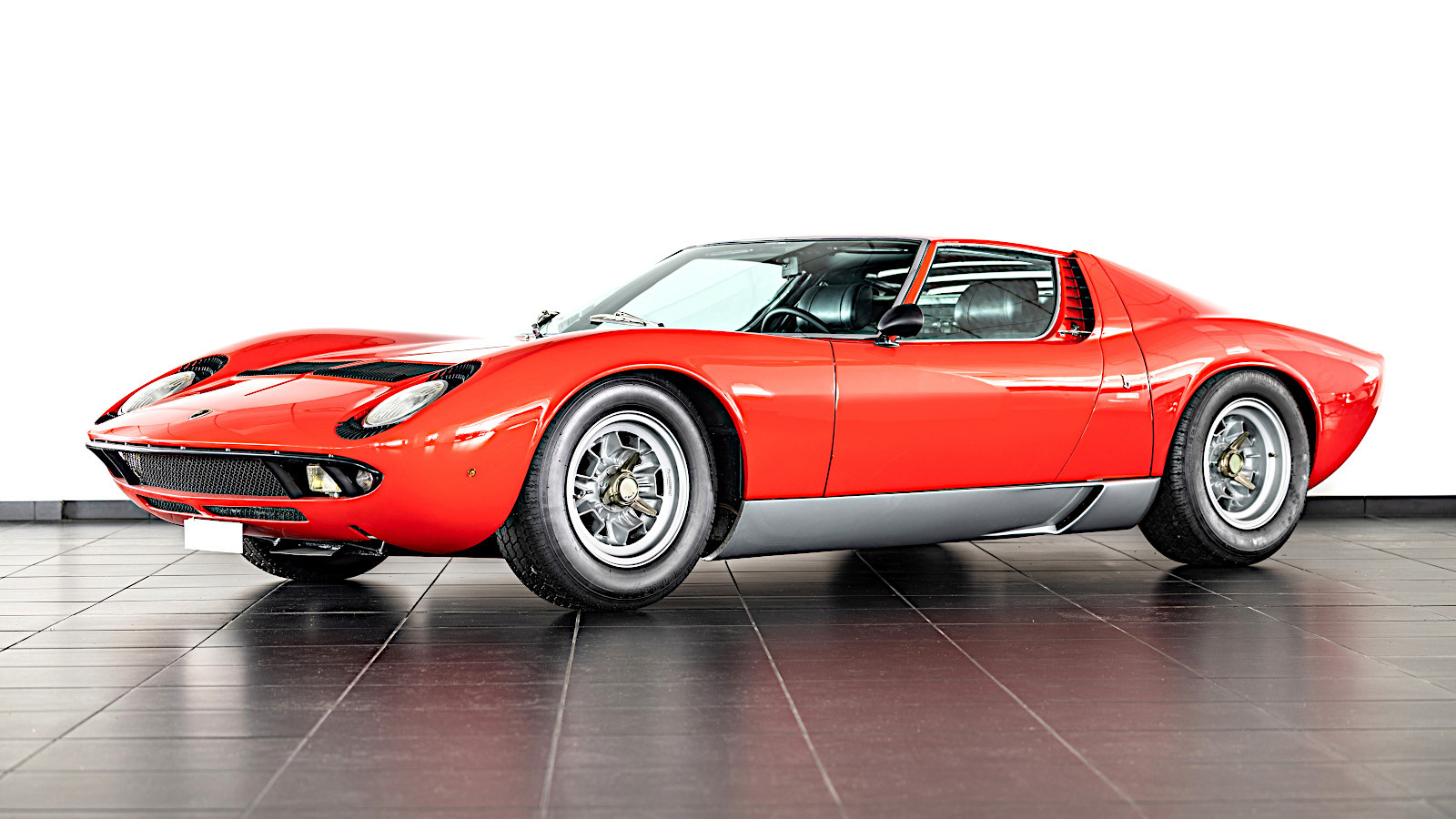
The name was changed only slightly to Miura S, and there was very little difference between this car and the one revealed three years before.
The engine was still the same 3929cc V12, but as part of the update Lamborghini decided to make it even more powerful than it had been before.
Its maximum output was therefore raised from the original 345bhp at 7000rpm to a still more purposeful 365bhp at 7700rpm.
Miura S production
In addition to the power increase, the car had what Lamborghini describes as ‘slightly different aesthetics’ and a revised interior with more equipment available as standard.
The update seems to have been very successful, because the S would become the highest-selling of all Miuras.
On sale from 1969 to 1971, or about the same length of time as the original Miura, it found 338 customers compared with the previous 265, an increase of around 28%.
A more radically altered Miura would follow the S, but although this would become perhaps the most celebrated version of all, it did not sell as well as either of its predecessors.
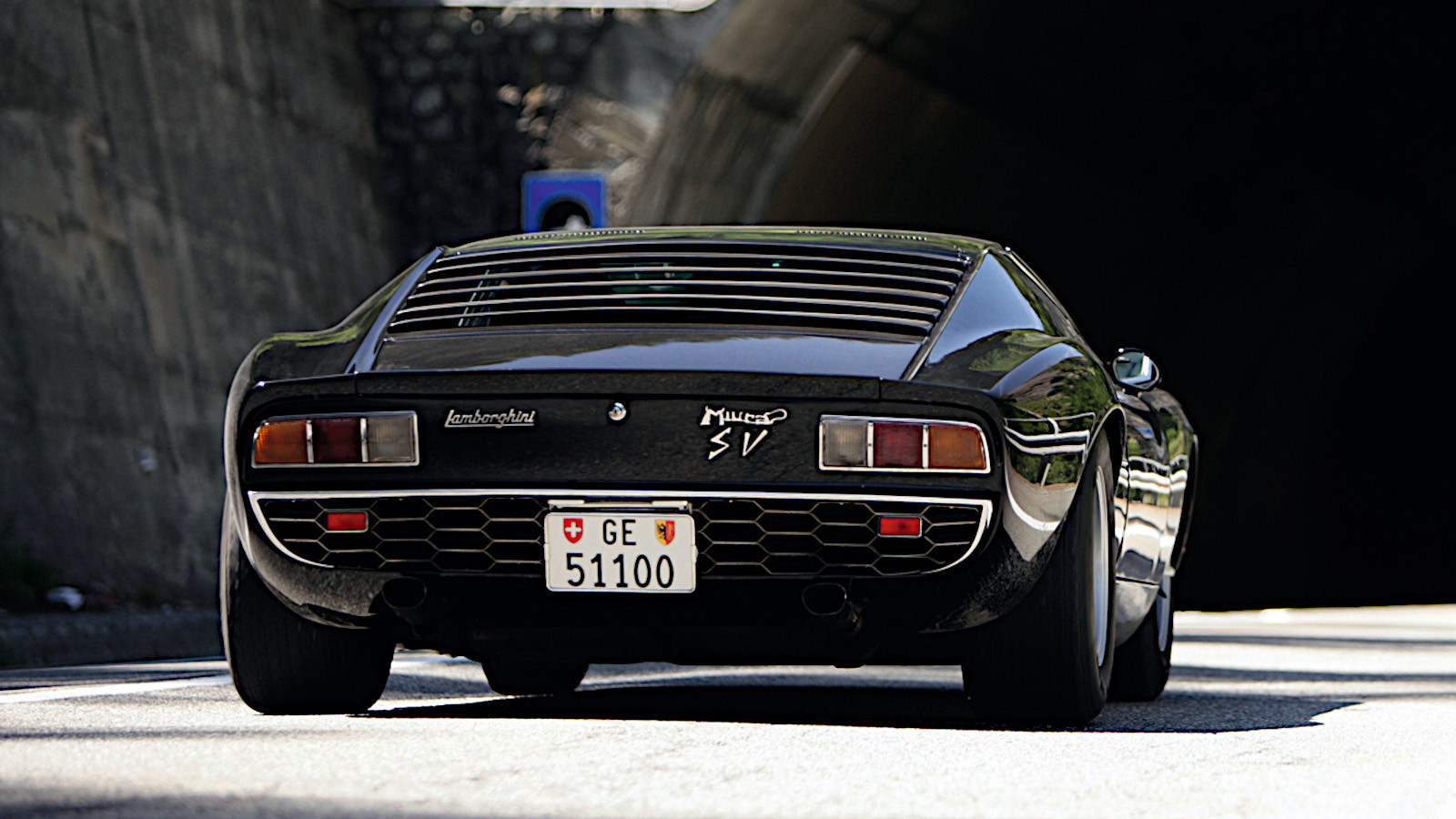
The Miura SV
The more radical of the two updates to the Miura was revealed at the Geneva show in 1971.
By Lamborghini’s account, the SV (the initials for the Italian term meaning ‘super fast’) was intended to join the S, but ended up replacing it.
In the new version, the V12 engine produced 380bhp at 7850rpm, and to begin with it shared a casing with the transmission, both items being lubricated by the same oil as they were in the P400 and the S.
During production, however, Lamborghini came up with a new system, and later SVs had separate oil supplies for the engine and gearbox.
Chassis changes
Although the SV had the same basic layout as previous Miuras, there were several quite significant detail changes.
The central tub was stiffened, while at the rear, the suspension was redesigned and the track widened.
For the first time, the front and rear wheels had different widths, the fronts remaining at 7in while the rears now measured 9in, and wore 255-section tyres.
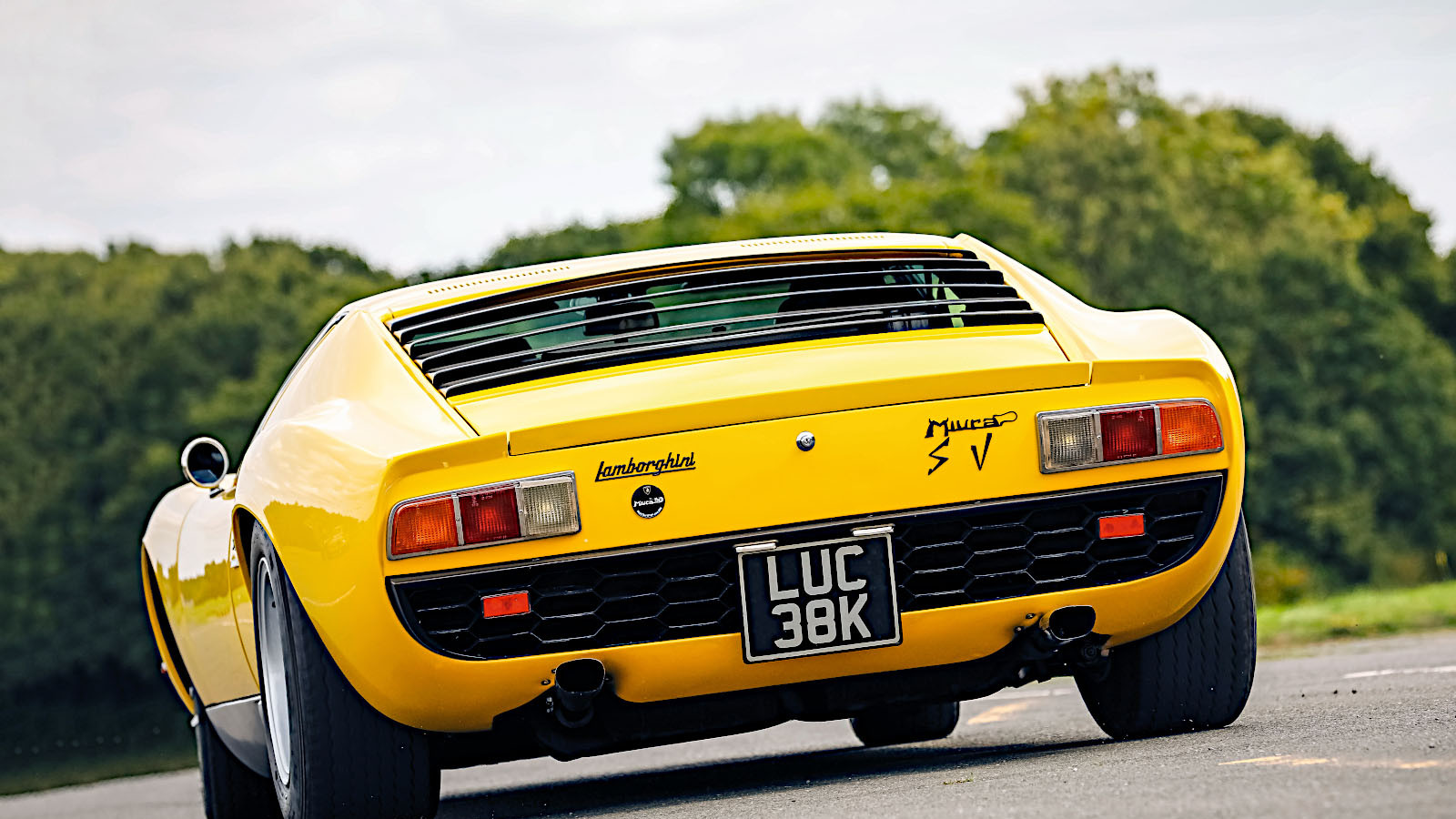
More trivially, the ‘eyelashes’ around the headlights were removed in order to reduce the car’s production time, though Ferruccio Lamborghini made sure they were retained for his own SV.
Design details
The wider rear tyres would not have been able to fit under the original wings, so larger ones were designed and fitted.
These, along with the eyelash deletion, make it relatively easy to distinguish an SV from an earlier Miura, but there are other clues, too.
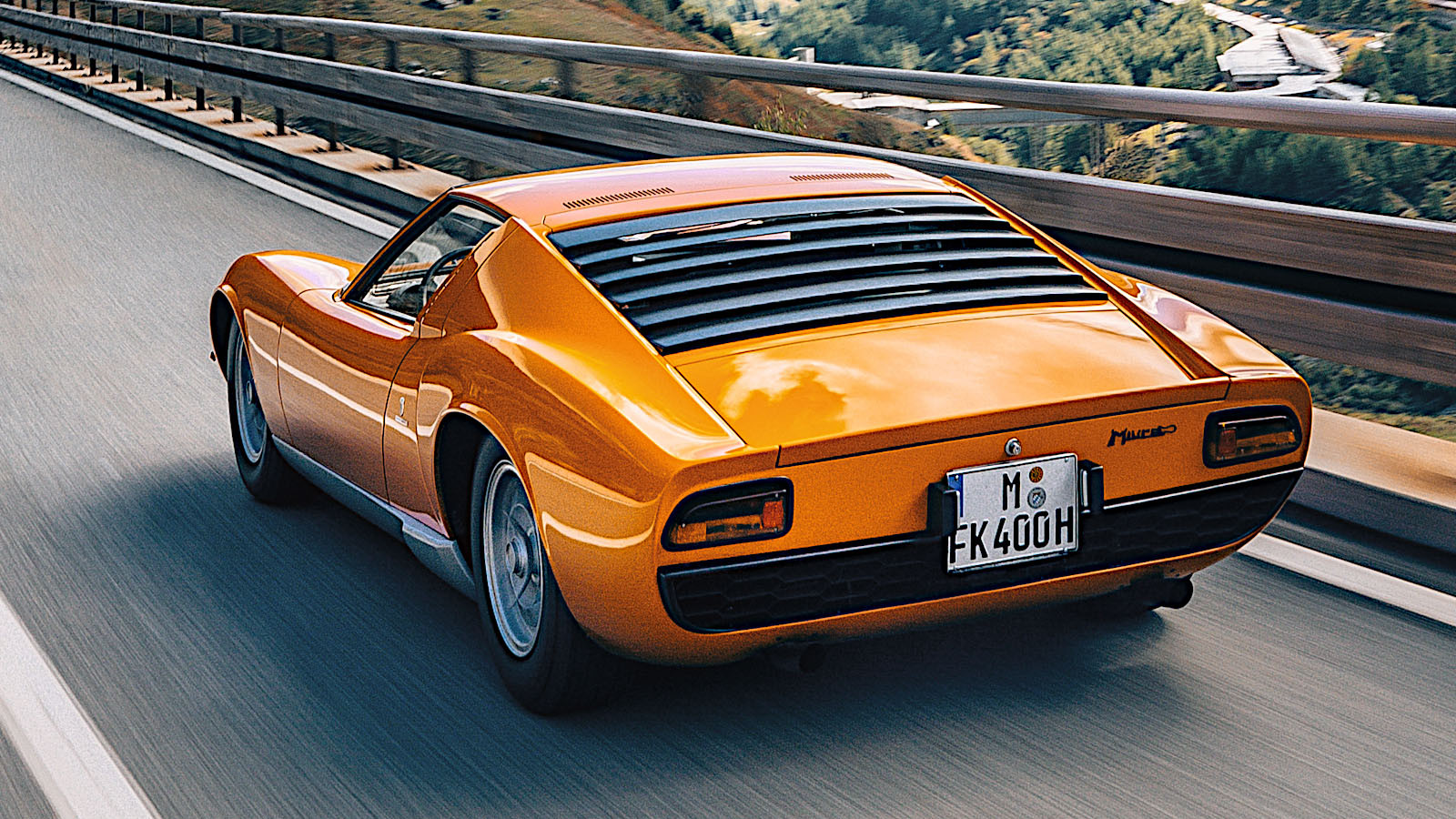
The rear lights were redesigned, plus there was a slight change to the shape of the intake for the front-mounted radiator.
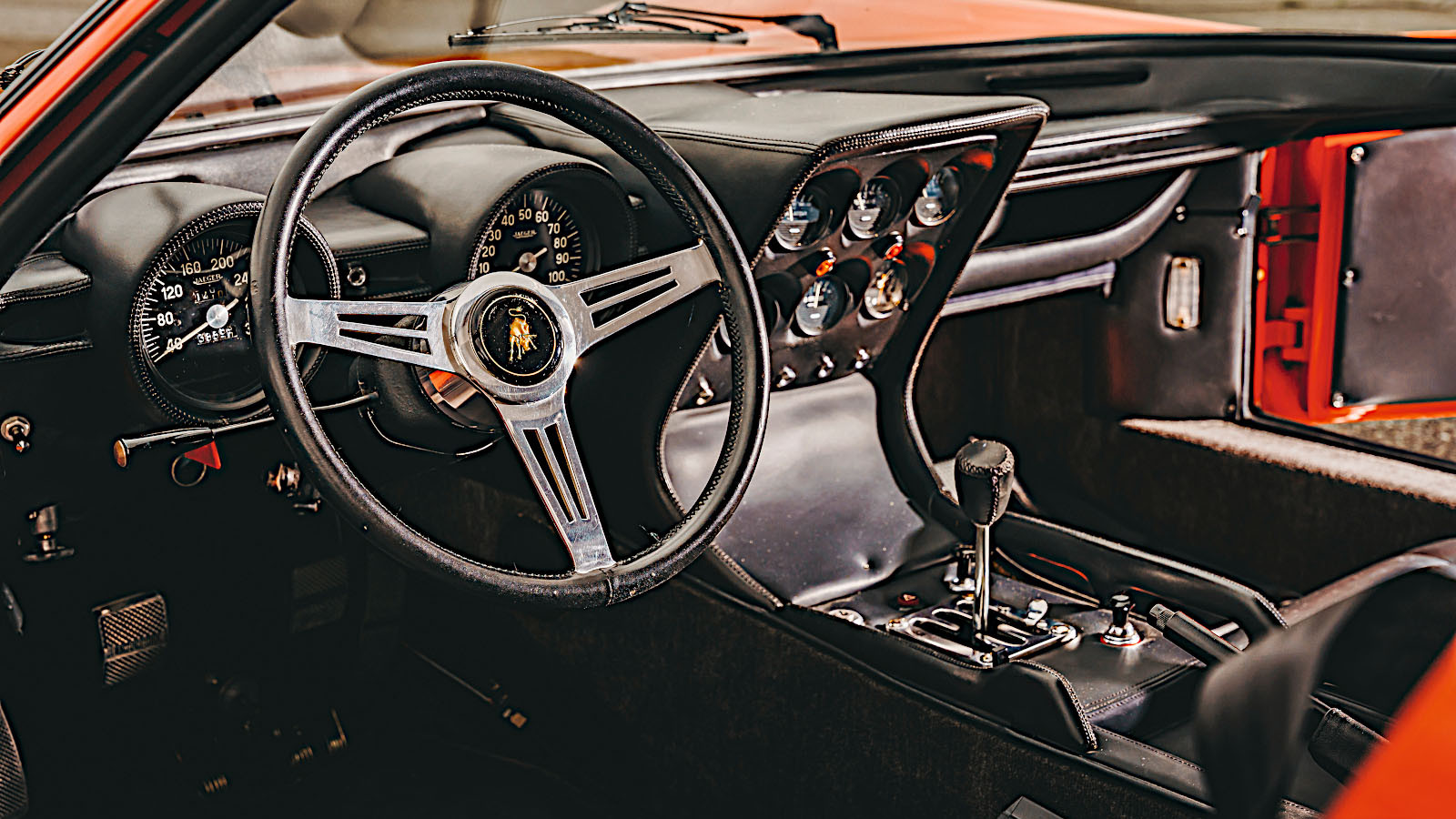
Lamborghini also took the opportunity to update the interior, which now featured more leather and more chrome detailing than before.
The end of the Lamborghini Miura
Being the most powerful, the SV was also the fastest of the regular Lamborghini Miuras.
The official top speed was 290kph, or around 180mph, and Lamborghini quotes a standing kilometre time of just under 24 secs.
With the new Countach (which had been revealed in prototype form in 1971) nearly ready for production, Lamborghini stopped building SVs in early 1973, just under two years after this final version had made its debut.
In all, 150 had been manufactured, but that wasn’t quite the end of the story, because Lamborghini built one more in 1975 for businessman and F1 team owner Walter Wolf.
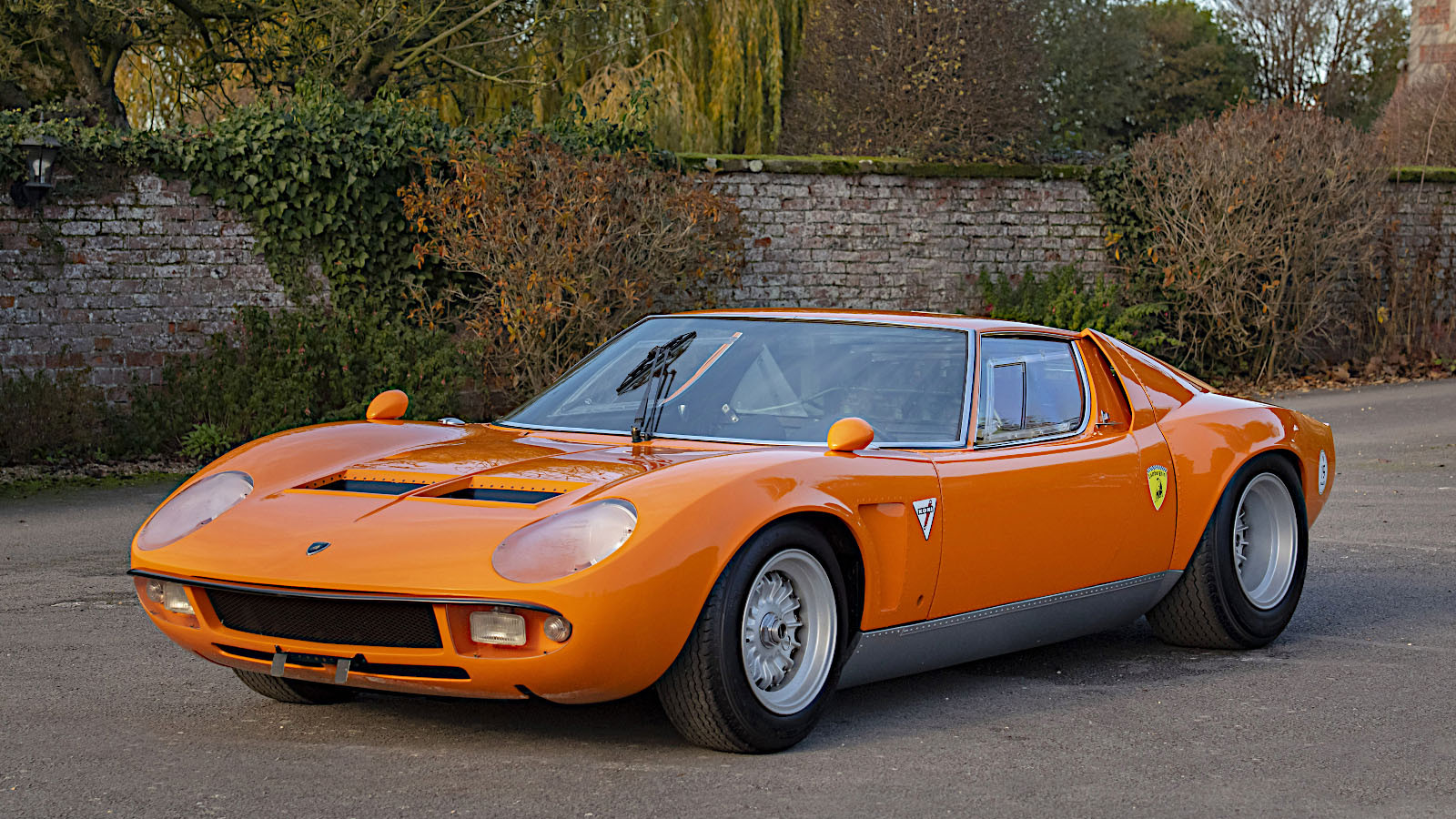
The Miura Jota
In 1970, Bob Wallace revealed what was really a personal project, though one sanctioned by Ferruccio Lamborghini.
Wallace had taken a Miura S and modified it into what was essentially a race car meeting the FIA’s Appendix J regulations.
He called it the Jota, because this is the Spanish word for the letter ‘j’ – a reasonable choice partly because Miura, as mentioned earlier, is also a Spanish name, and partly because ‘j’ is not included in the standard Italian alphabet.
The Jota was irreparably damaged in an accident (the car shown here is a recreation), but it did lead to a small number of special editions.
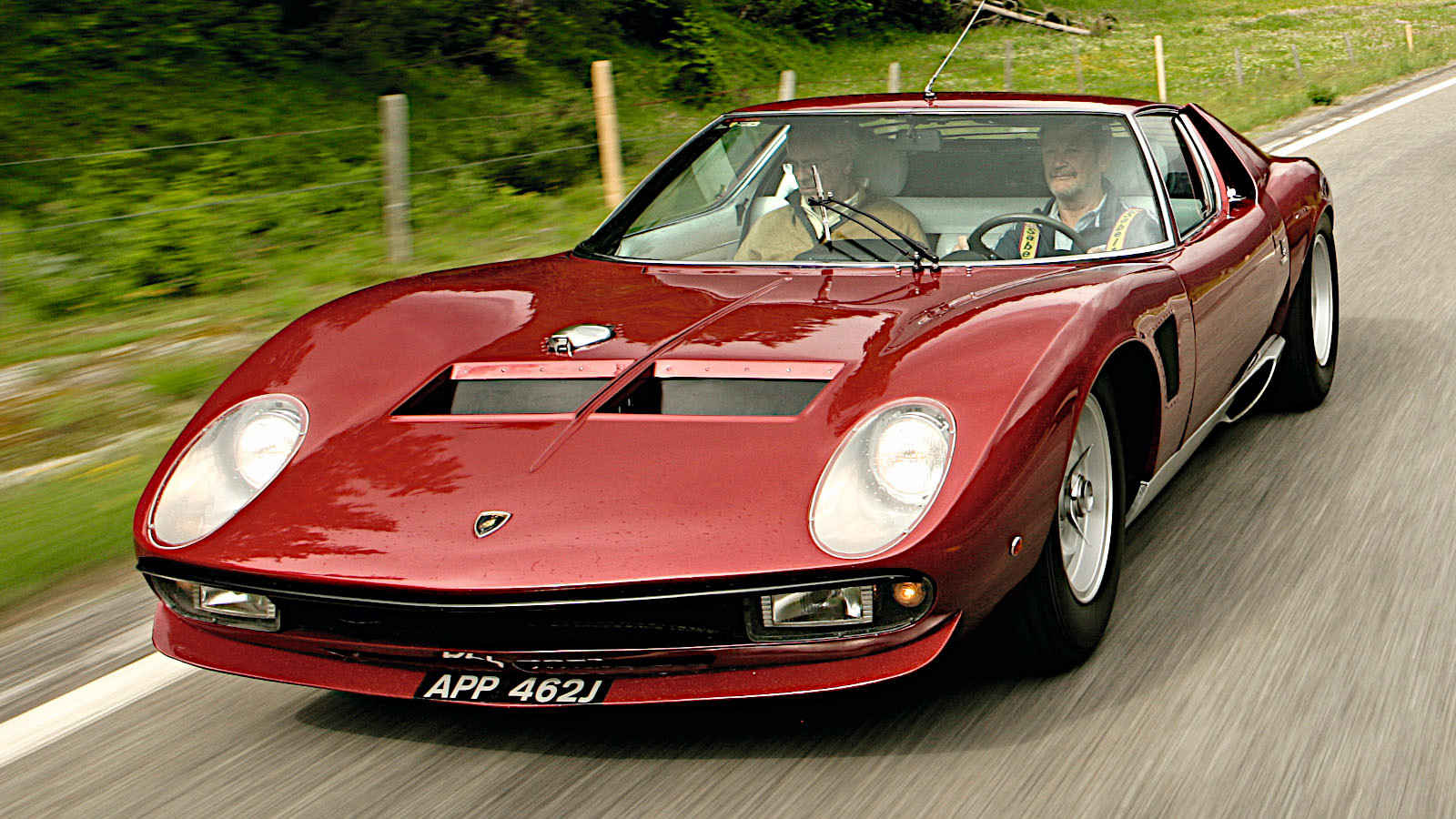
The Miura SVJ
Once the brief existence of the Jota became known, it was inevitable that some people would express interest in having something like it for themselves.
Lamborghini still wasn’t interested in building a racing car, but it did produce a very limited series of Miuras inspired by the Jota.
These were known as SVJ (for ‘super veloce Jota’), or perhaps SV-J or even SV/J, depending on which source you believe.
With customers including Mohammad Reza Pahlavi, the then Shah of Iran, the SVJ has clear references to possible motorsport use, including a front splitter and headlights protected by aerodynamic covers which follow the curves of the wings.
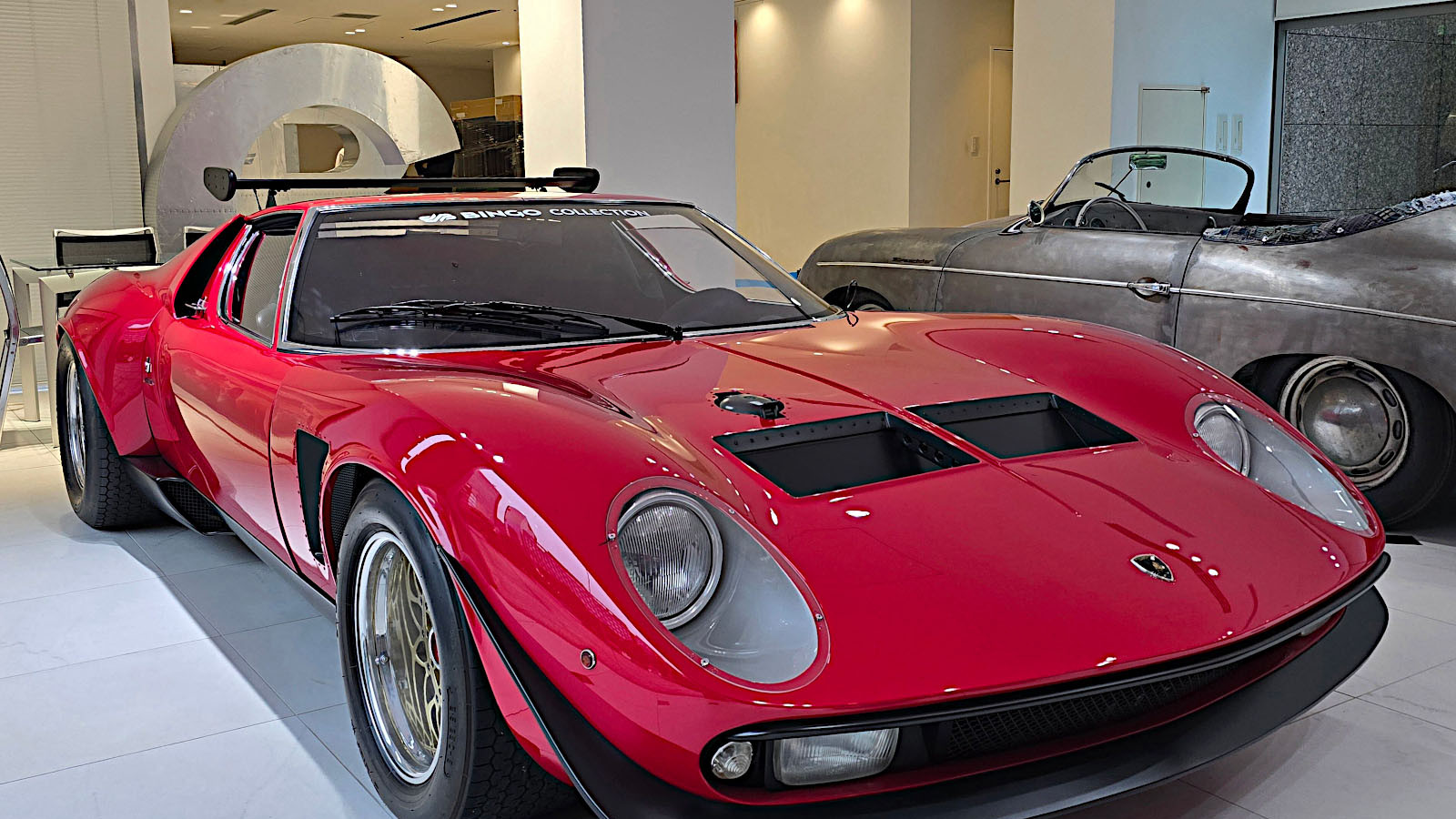
The (one and only) Miura SVR
The car which became known as the SVR started out in 1968 as a standard Miura S, and was returned to Lamborghini six years later – some considerable time after the Miura had been discontinued – to be converted into something very much more like the Jota.
It was subsequently sold to an owner in Japan, where it became very well known, due to both its appearance in the manga comic Circuit no Ōkami (‘circuit wolf’) and the production of a 1:18-scale model by Kyosho.
In 2018, Lamborghini completed a thorough restoration of the SVR which had lasted 19 months, one month longer than the original conversion.
The Miura concept
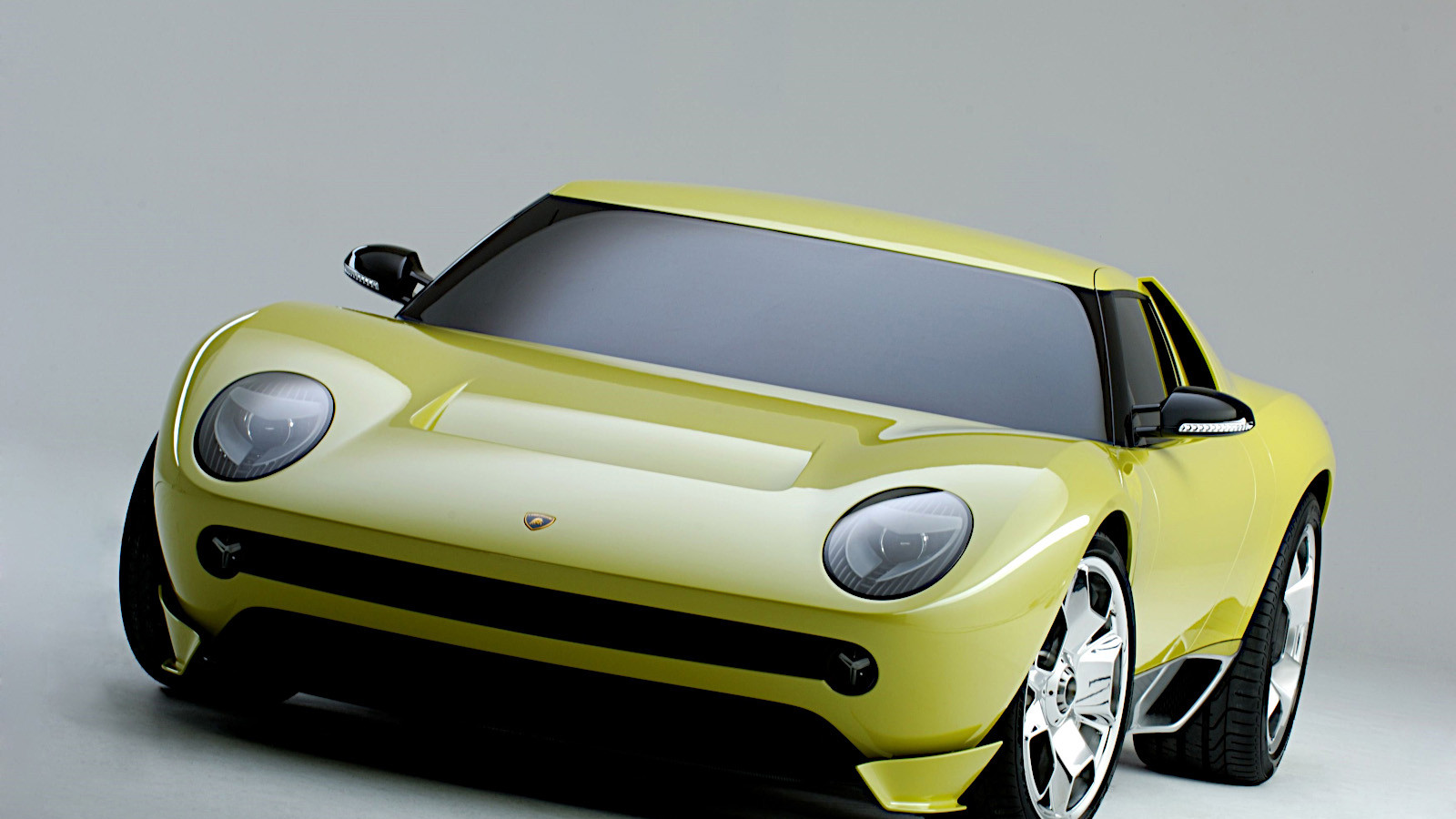
In 2006, Lamborghini commemorated the Miura’s 40th anniversary by revealing a concept car designed by Walter de Silva.
Every part of the original model was changed, but the basic shape was immediately recognisable, and de Silva avoided making it look too up to date by, in Lamborghini’s own words, ‘refining the contours and eliminating any superfluous detail, in order to enhance the clean, simple lines and perfectly balanced proportions of the original that so impassioned enthusiasts’.
The company added that the car was, ‘strictly a concept with no firm date set for its production launch’, and CEO Stephan Winkelmann soon confirmed that there would never be one.
The Aventador Miura Homage
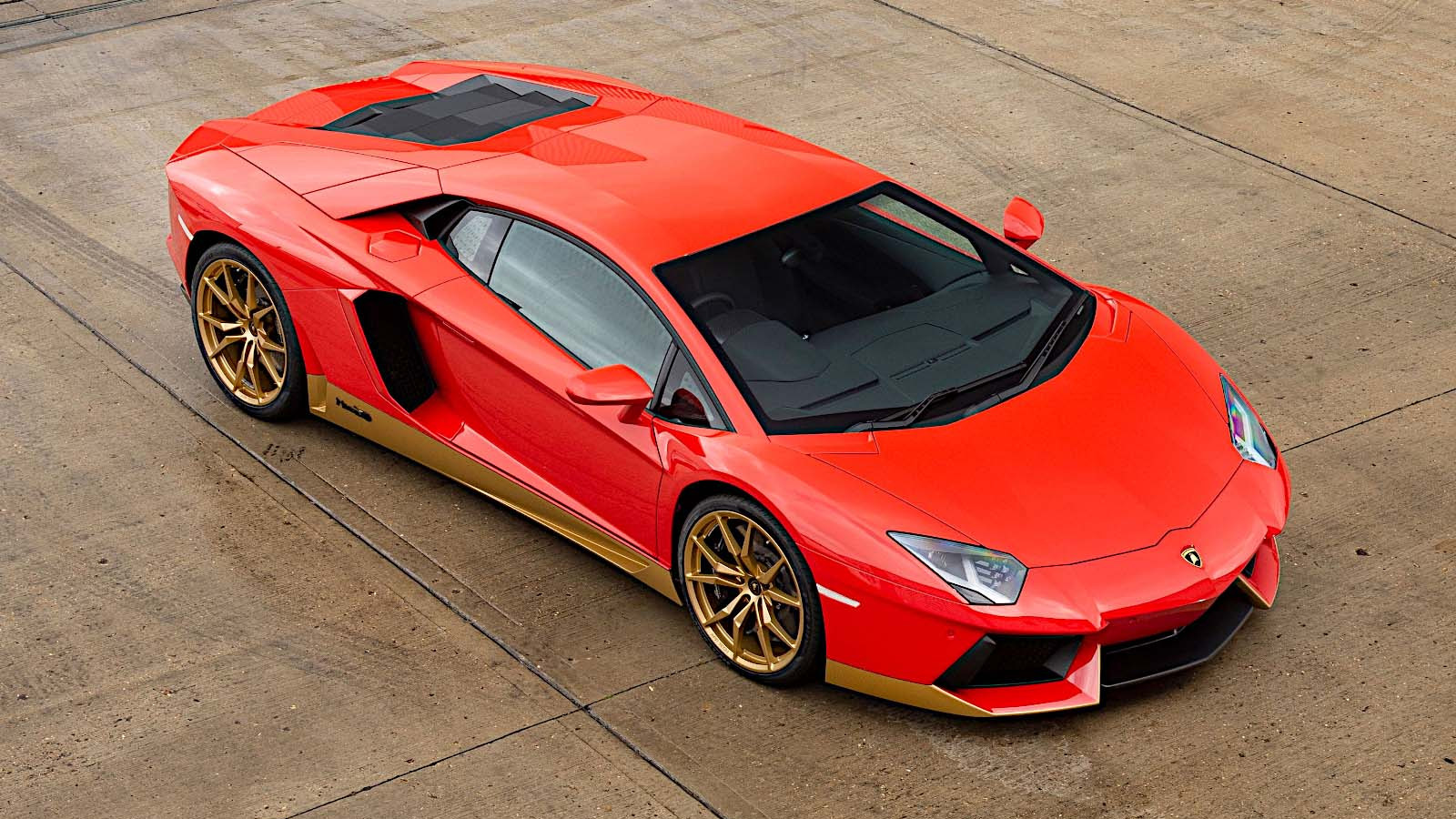
A decade after the concept, Lamborghini gave a nod to what was now the Miura’s half-century anniversary by creating a special version of its distant successor, the Aventador.
Also powered by a V12 engine, though this time one measuring 6.5 litres and having an output of around 700bhp, the Aventador Miura Homage had two-tone paintwork, a choice of either gold or matt silver wheels and a ‘Miura 50th’ logo embroidered into the seat upholstery.
Appropriately, only 50 examples were built, most of which had already been sold when the car was announced in June 2016.